
Albany, New York, carries more than four centuries of documented history within its streets. English sea explorer Henry Hudson first claimed the area in 1609, opening it up to European settlement along the Hudson River. Nearly two hundred years later, in 1797, Albany was named the official capital of New York State, a status it holds to this day. That combination of geographic position and political importance set the city on a course of steady, remarkable growth.
By the 19th century, Albany had grown into a major transportation hub. The arrival of railroads and highways transformed the city into a critical link between the northeastern coast and the interior of the country. Its main exports during this era included beer, lumber, published works, and ironworks — industries that drove commerce and shaped the character of its neighborhoods. The railroad stations that served Albany became some of the busiest and most architecturally impressive buildings in the region.
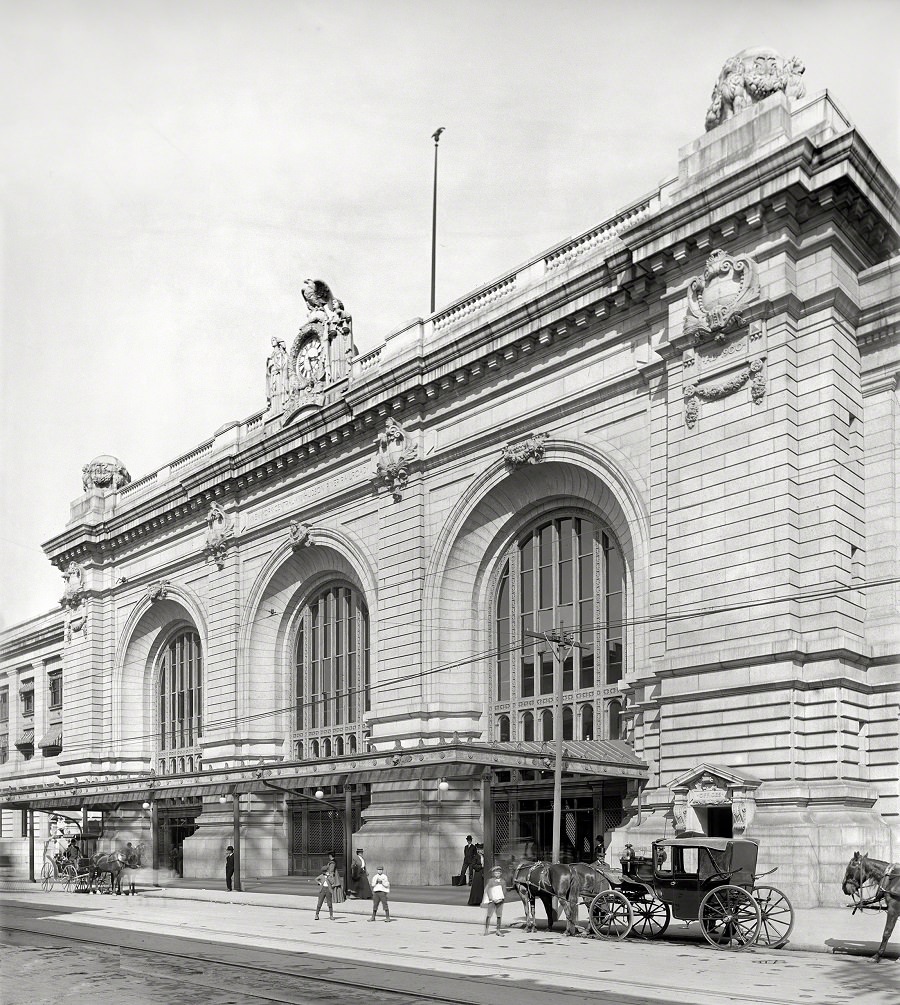
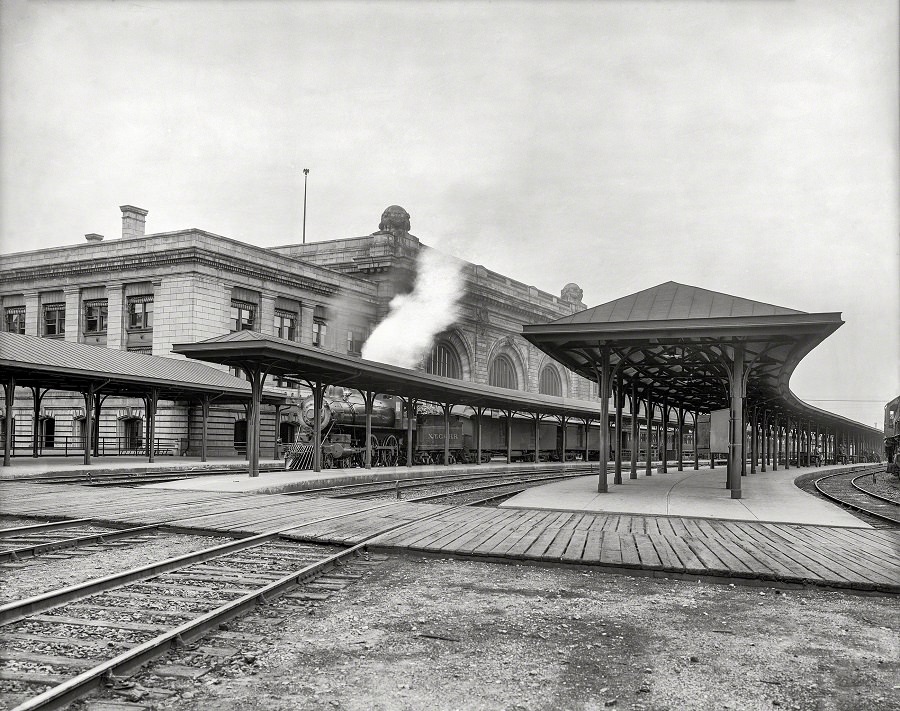
The New York Central and Hudson River Railroad was central to Albany’s identity at the turn of the century. Passengers and freight moved through its grand stations daily, connecting Albany to New York City and beyond. These terminals were not simply functional buildings — they were civic landmarks that announced Albany’s importance as a commercial and political center.
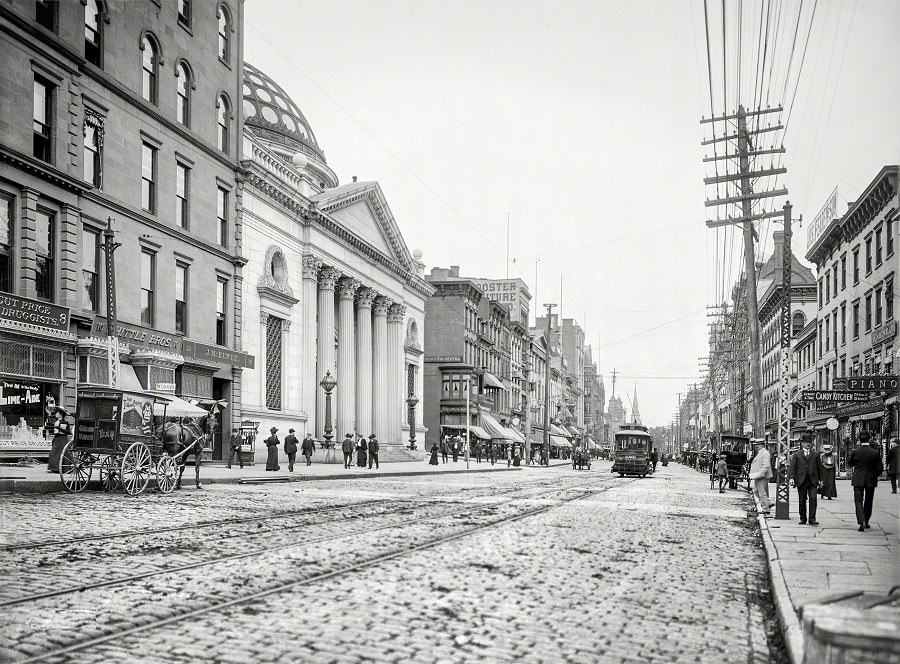
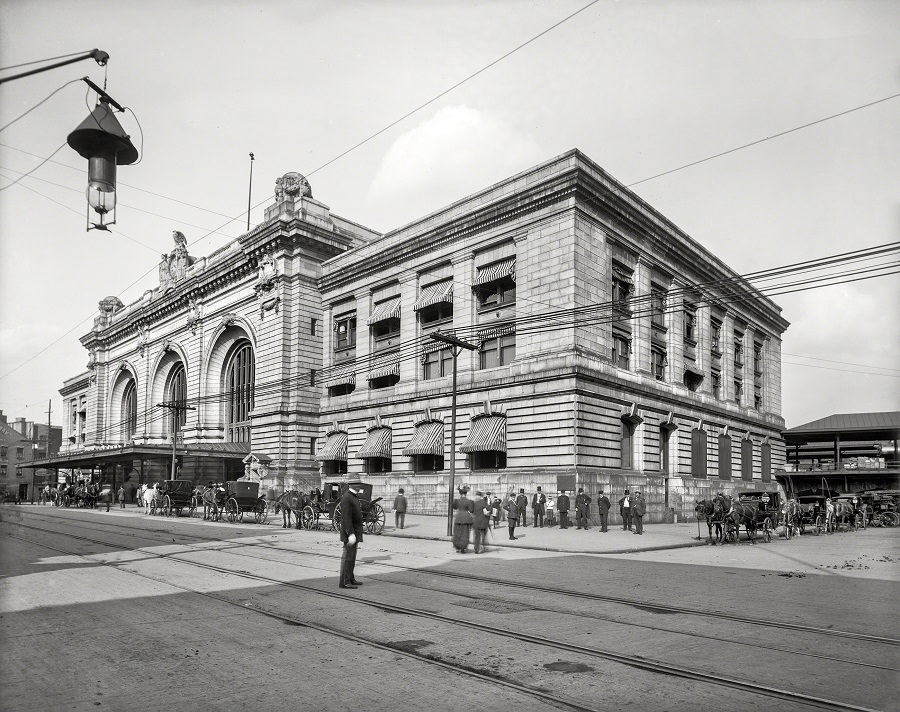
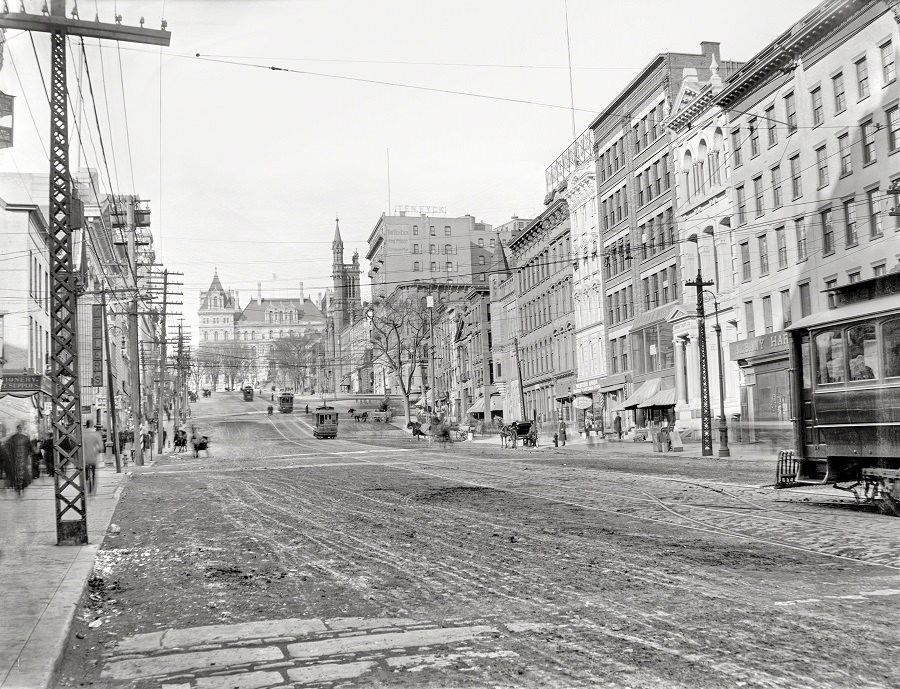
The streets of early 1900s Albany reflected a city in full commercial stride. Pearl Street, running north from State Street, was lined with storefronts, pedestrians, and horse-drawn vehicles, a scene typical of a thriving American city of that era. The railroad stations, photographed multiple times by visiting and local photographers alike, stood as proud symbols of an age when rail travel was the backbone of American life.
Albany’s population grew steadily throughout the 1800s, driven largely by waves of European immigration. Irish, German, and Jewish communities established themselves throughout the city, each bringing distinct cultural traditions that shaped Albany’s social fabric. After World War One, African Americans began arriving in significant numbers, with a second, larger wave following World War Two. These migrations added new layers to the city’s already diverse character.
At the heart of Albany stood the State Capitol building, one of the most recognized structures in New York. State Street, leading directly to the Capitol, served as the city’s main ceremonial corridor. Photographed in 1900, the view of State Street and the Capitol captured Albany at the precise moment it was stepping into the 20th century — a city with deep roots preparing for modern growth.
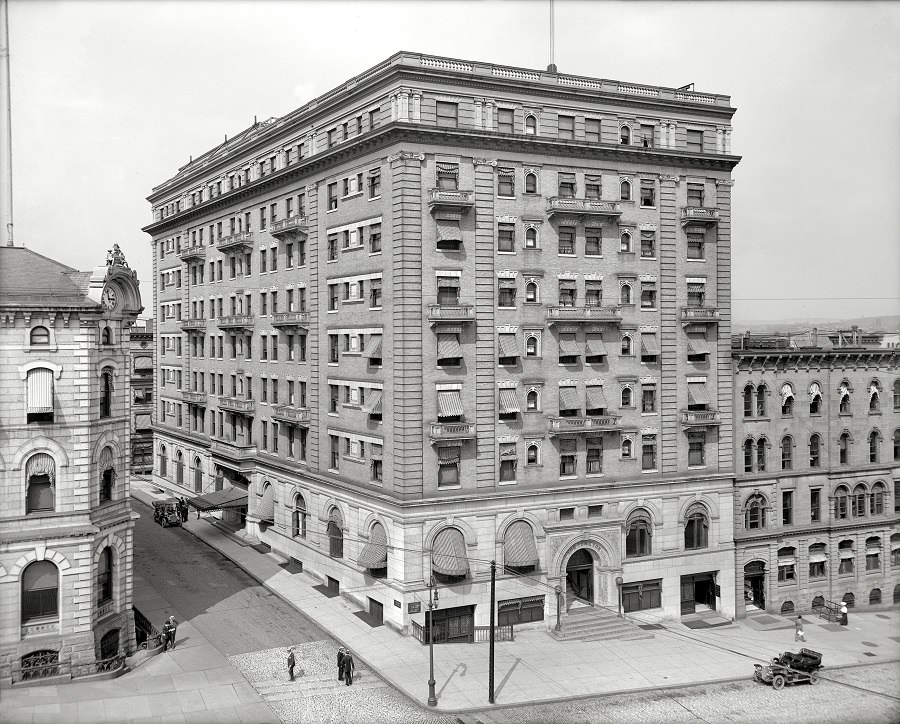
Albany also made its mark in aviation history. In 1908, the city opened one of the first commercial airports in the world, a facility that would eventually grow into Albany International Airport. That same forward-looking spirit was visible across the city — in its public buildings, its hotels, and its institutions of higher learning. Albany Law School, founded in 1851, made Albany an early center for legal education in the United States.
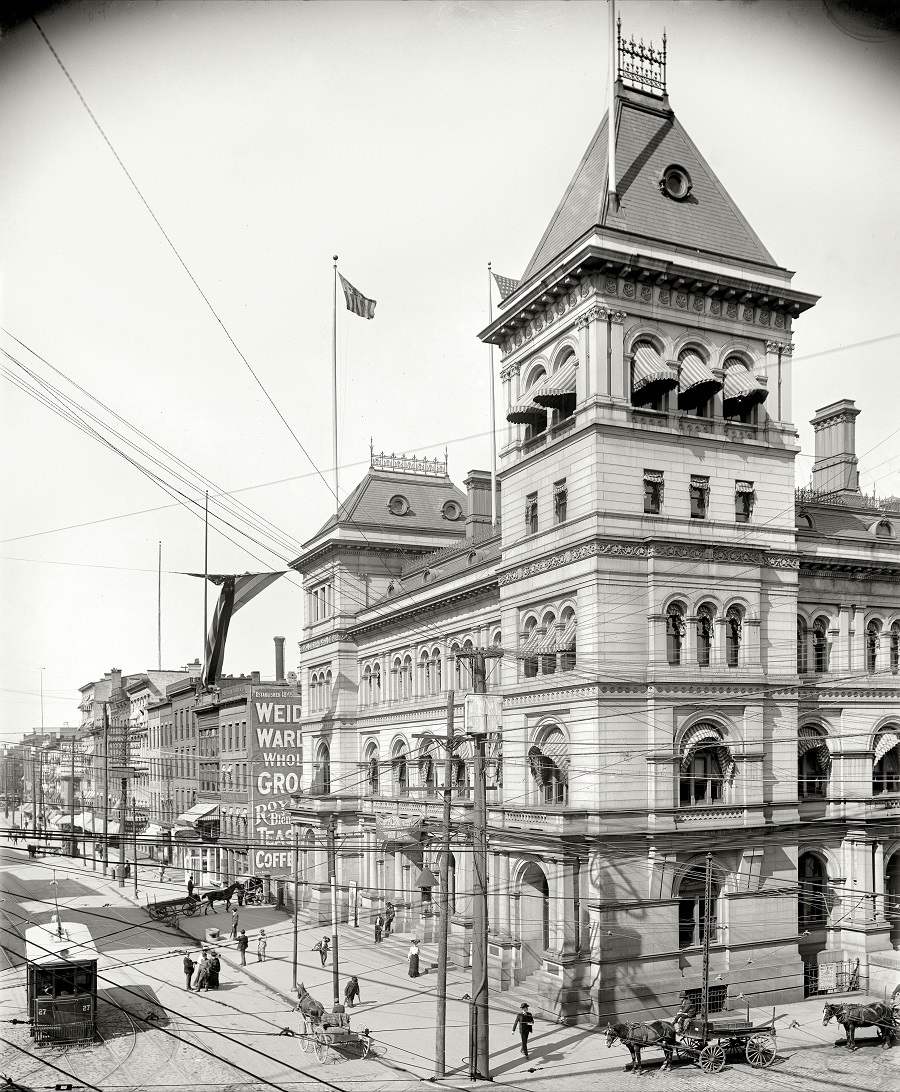
Public buildings in early 1900s Albany were built to impress. The post office, photographed in 1906, exemplified the federal architectural style common to government buildings of the period — heavy stone construction, ornate detailing, and a sense of permanence. These structures communicated civic pride and institutional authority to everyone who passed through the city.
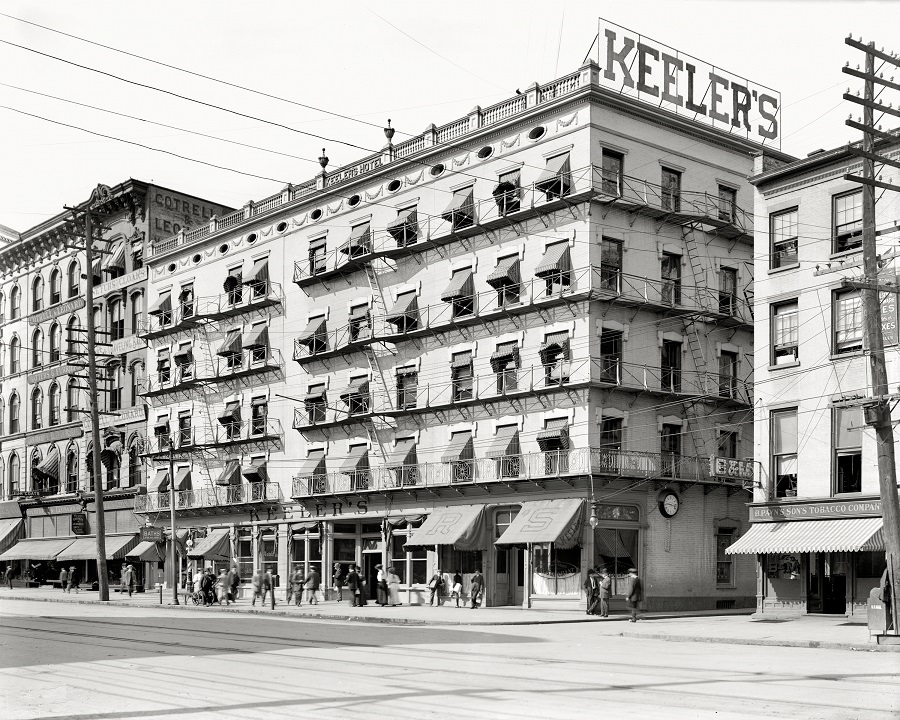
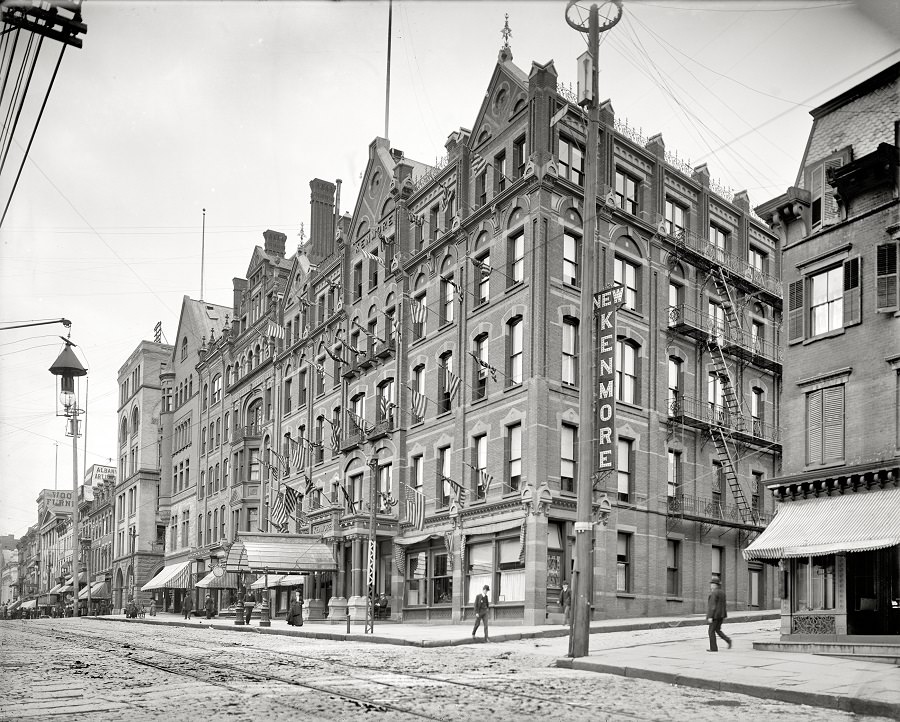
Albany’s hospitality industry also flourished during this period. Hotels like Keeler’s and the New Kenmore served politicians, businessmen, and travelers passing through the state capital. Keeler’s Hotel was particularly well known, drawing prominent guests and functioning as a social hub for Albany’s professional class.
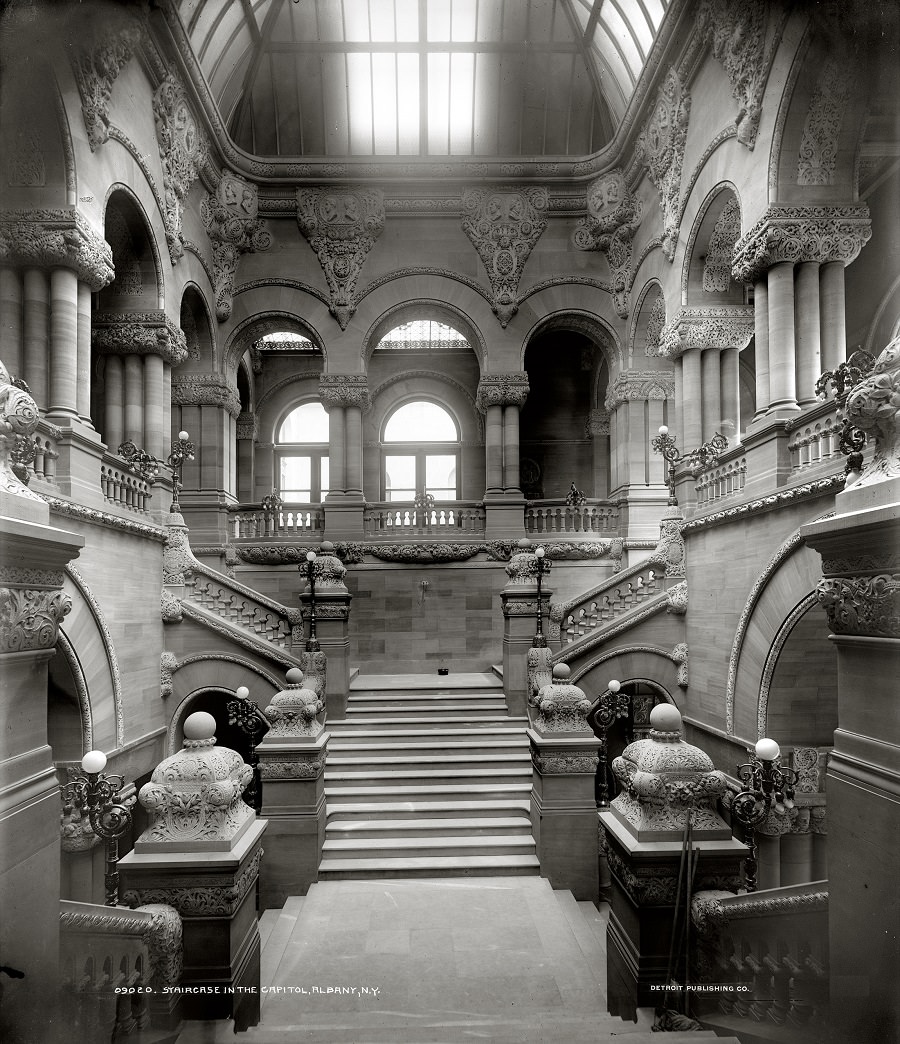
Inside the State Capitol, the grand staircase stood as one of the most celebrated interior spaces in all of New York. Carved from sandstone in elaborate detail, the so-called Million Dollar Staircase took workers 14 years to complete and featured the carved faces of notable figures from history and public life. It remains one of the most photographed spaces in the building.
These photographs from the early 1900s document Albany at a pivotal moment — a city already rich in political history that was rapidly modernizing through transportation, immigration, education, and industry. Each image captures a street, a building, or a space that tells part of a larger story about one of America’s oldest and most historically significant cities.





Wow, these are really nice images of Albany
It always makes me sad to look through old pictures of the city. Albany was an intact 19th century city up until the 1950s, and we willingly destroyed much of our architecture in the name of progress. Not that Albany was alone in this, but the city continues to do a miserable job celebrating or highlighting what remains of it.