When World War II broke out, it changed almost everything about how aircraft were built, flown, and used. Before the war ended, the skies belonged almost entirely to the military. Airlines were grounded or drastically reduced, and most aircraft were redirected toward combat, transport, and reconnaissance missions. But the war didn’t just pause civilian aviation — it accelerated it. Engineers developed faster, stronger, and more reliable aircraft under the pressure of wartime demand, and those advances would soon transform commercial flying.
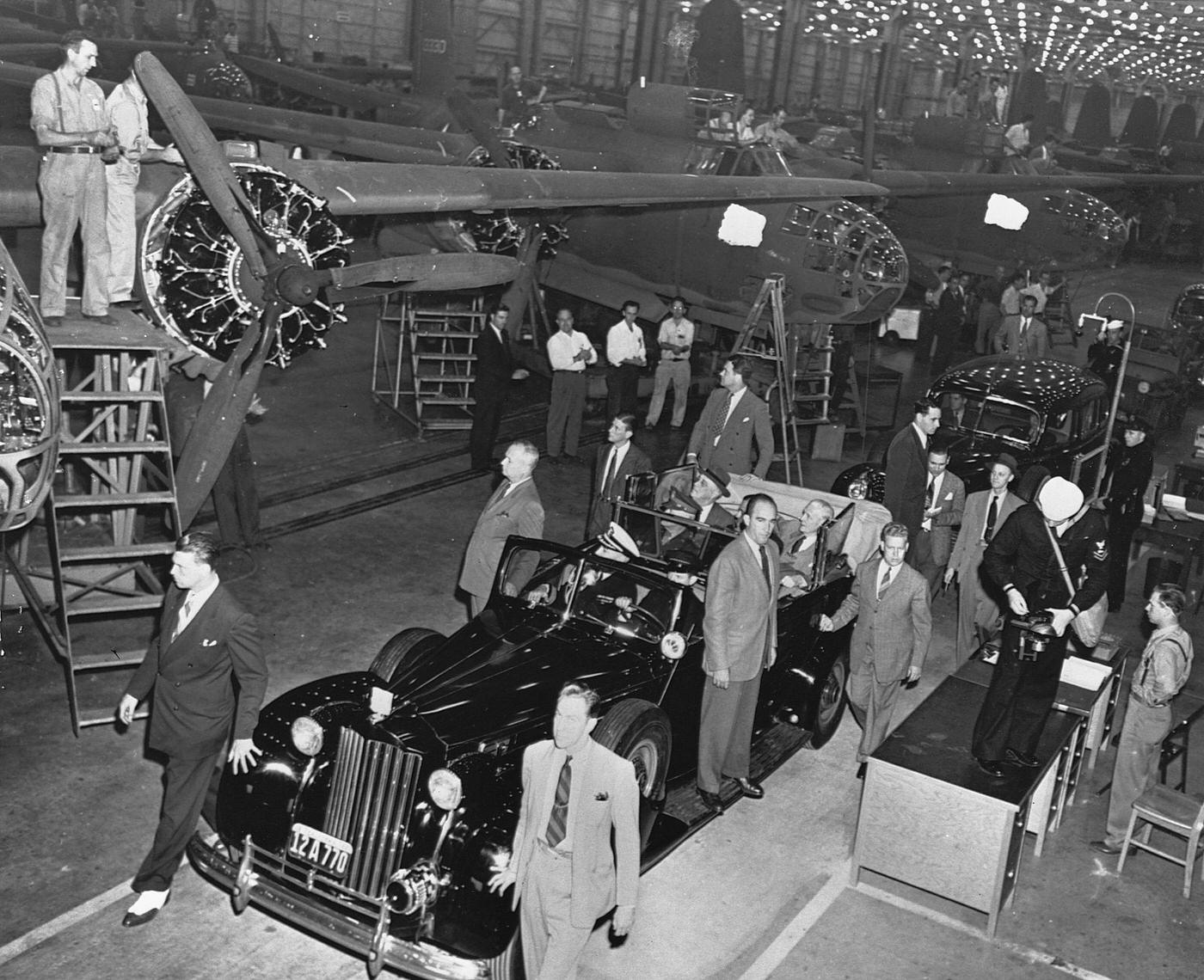
US President Franklin D. Roosevelt is pictured on an inspection tour of the Douglas Aircraft Company’s factory in Long Beach, California, USA.
Factories like Douglas Aircraft in Long Beach, California, ran at full capacity during the war years, producing planes at a scale never seen before. The same industrial machine that built bombers and transport planes for the military would later be retooled to meet the surge in peacetime demand for commercial aircraft.
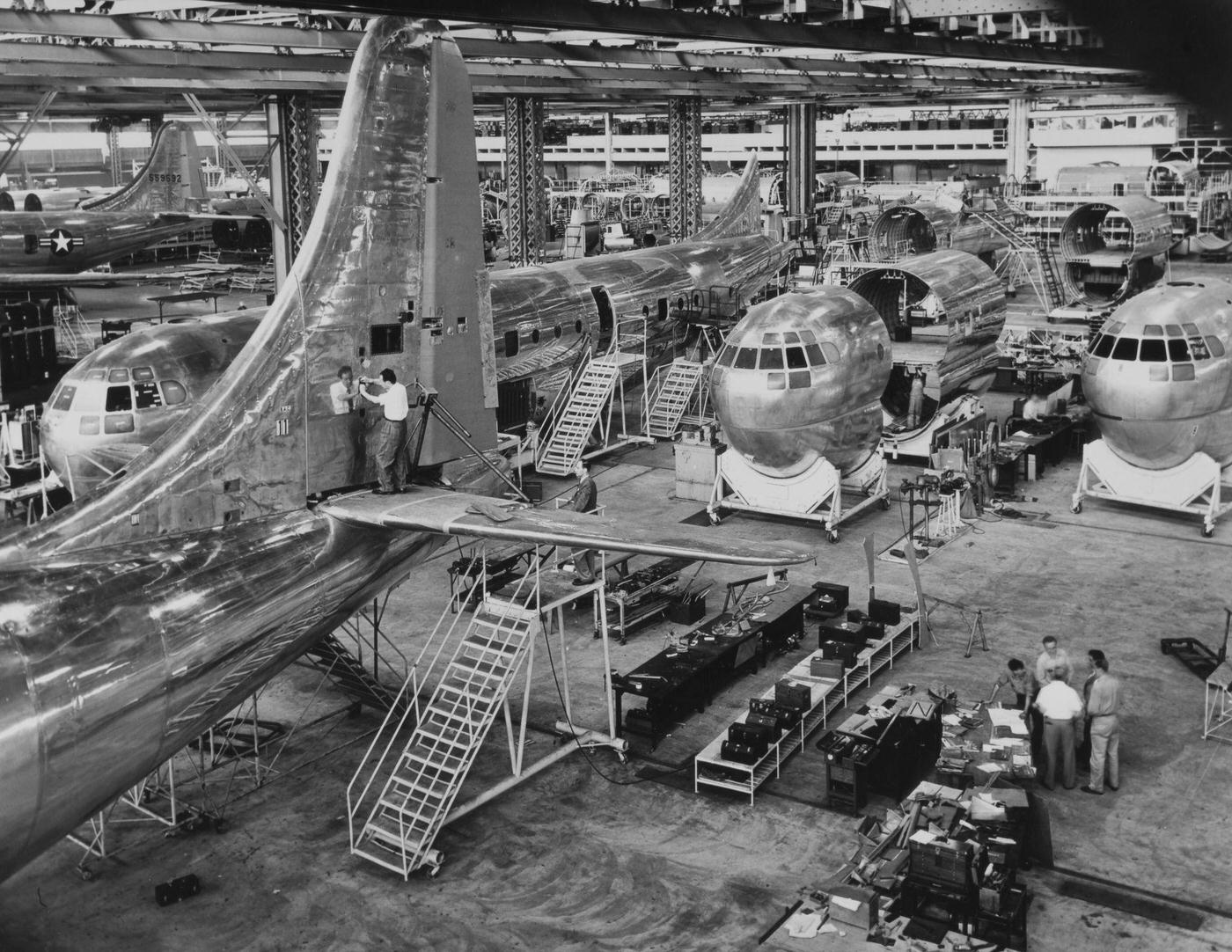
The factory floor of the Boeing Aircraft Company is shown featuring the manufacture of their Stratocruiser airliner.
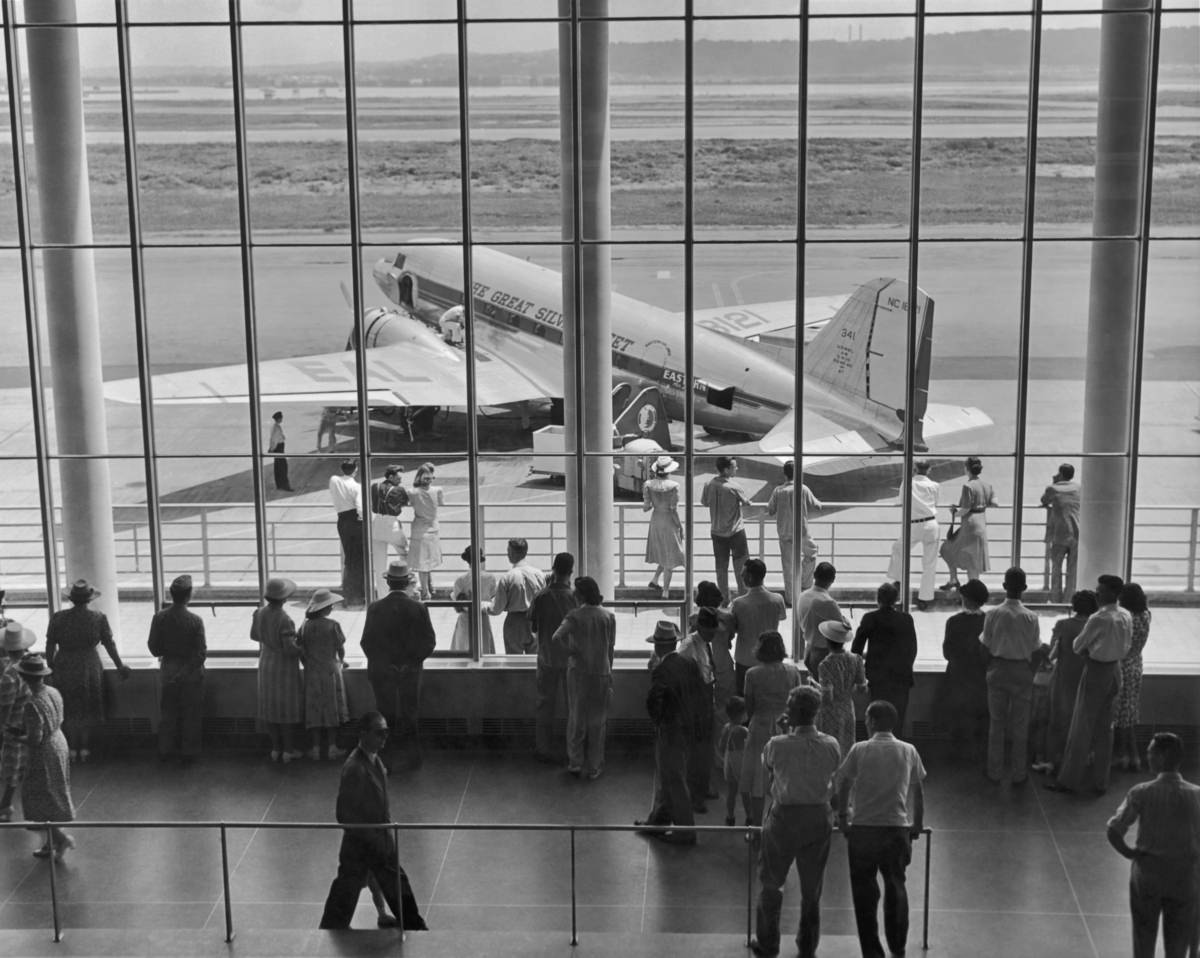
The Douglas DC-3 was the backbone of commercial aviation heading into the 1940s. First introduced in 1936, it earned a reputation for reliability and comfort that few aircraft could match. Airlines around the world relied on it. By the mid-1940s, however, newer designs were entering service that pushed the boundaries of range and passenger capacity.
In 1945, a viewing gallery at an airport shows a Douglas DC-3 airliner of Eastern Airlines (‘The Great Silver Fleet’).
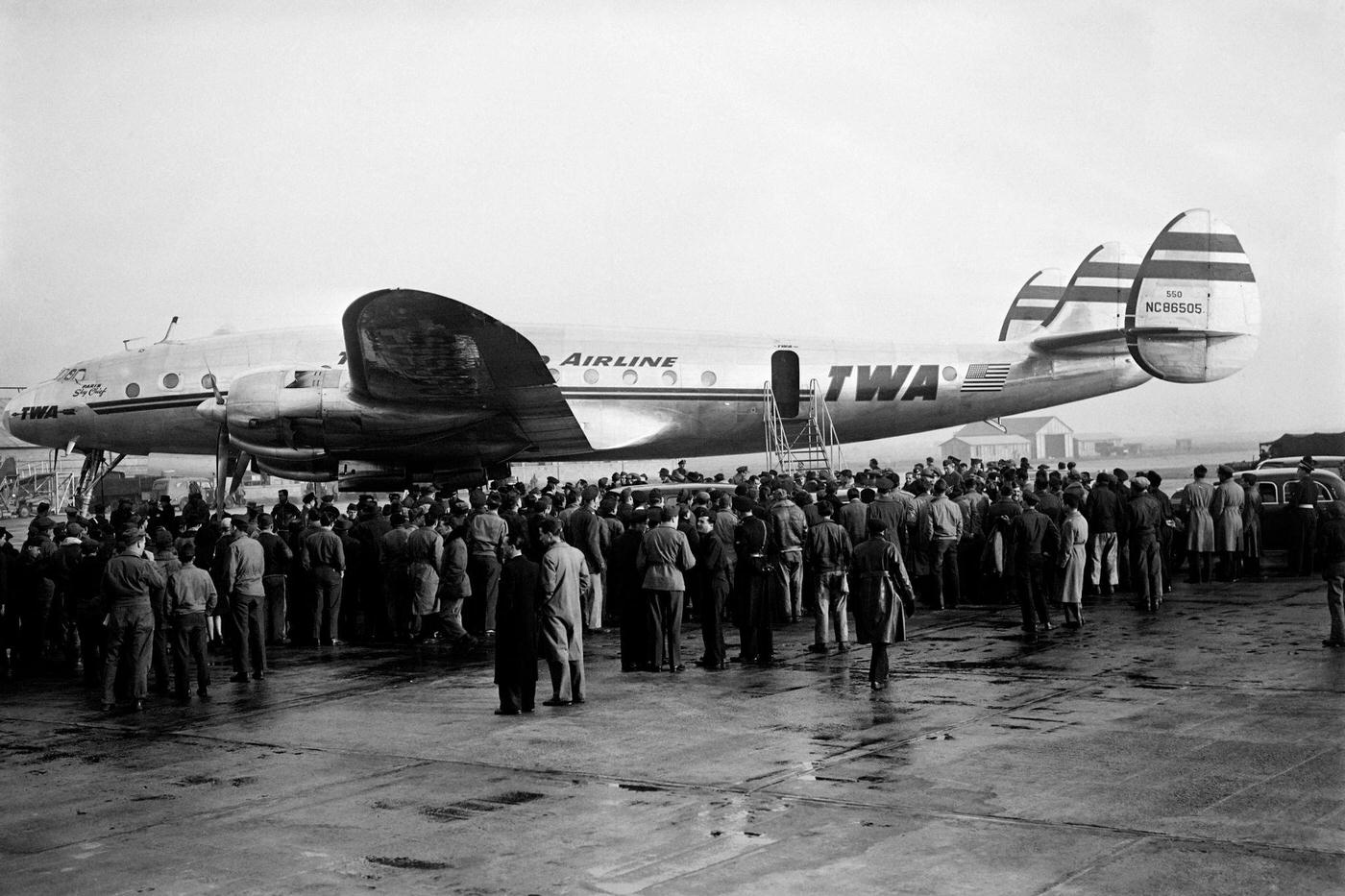
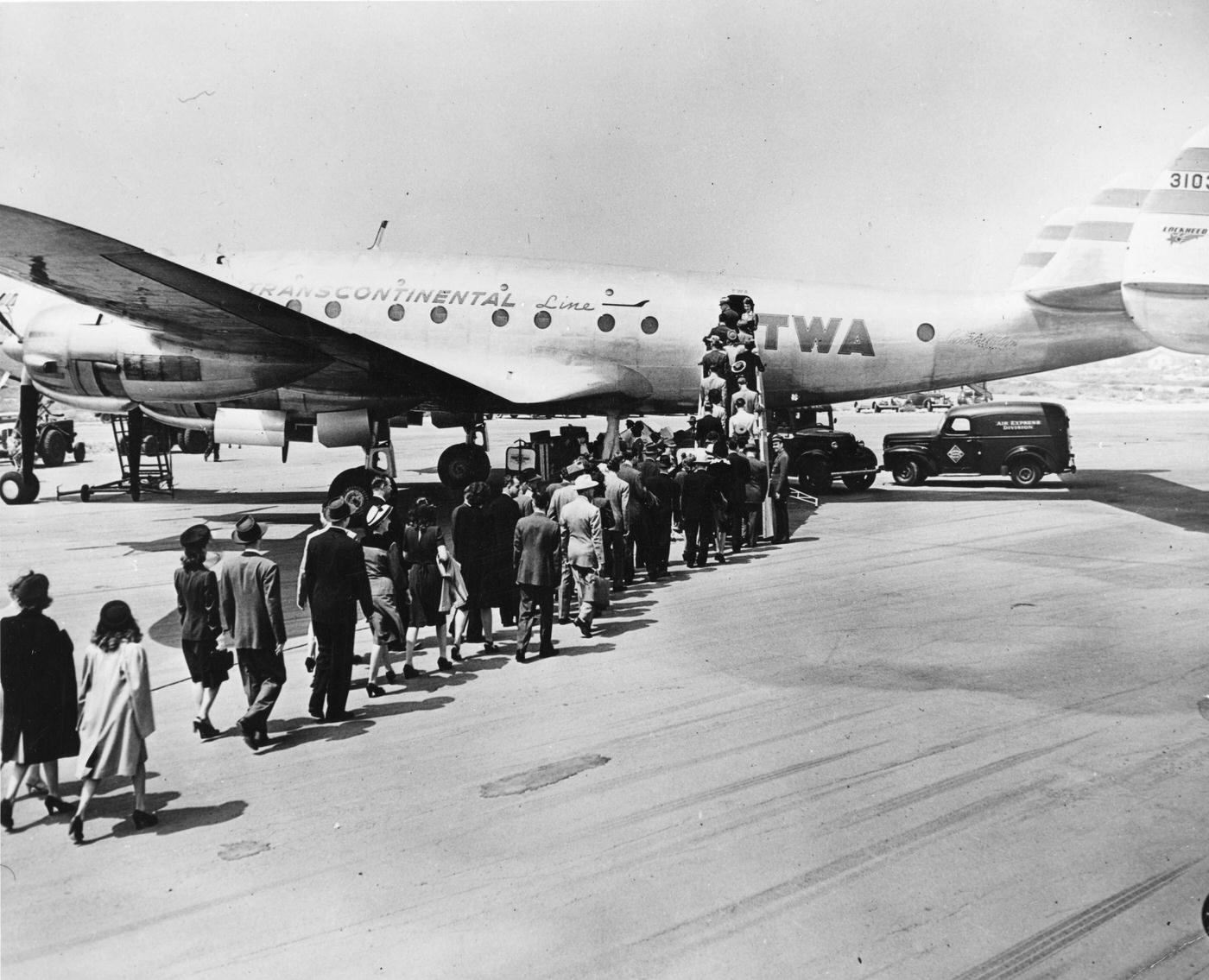
The Lockheed Constellation was one of those newer aircraft. Sleek and pressurized, it could carry 57 passengers and fly coast-to-coast in under seven hours. TWA’s Constellation — bearing names like “Paris Sky Chief” — began appearing at major airports in Europe and North America, signaling a new era in long-haul travel.
The Transcontinental & Western Air airlines (T&WA, TWA from 1950) Lockheed Constellation named “Paris Sky chief” with registration number NC86505 arrives at Orly airport near Paris.Passengers are boarding a Lockheed ‘Constellation’ on the tarmac at an unidentified airport in 1946. The plane could accommodate 57 passengers and a crew of seven and fly coast-to-coast in 6 hours, 58 minutes.
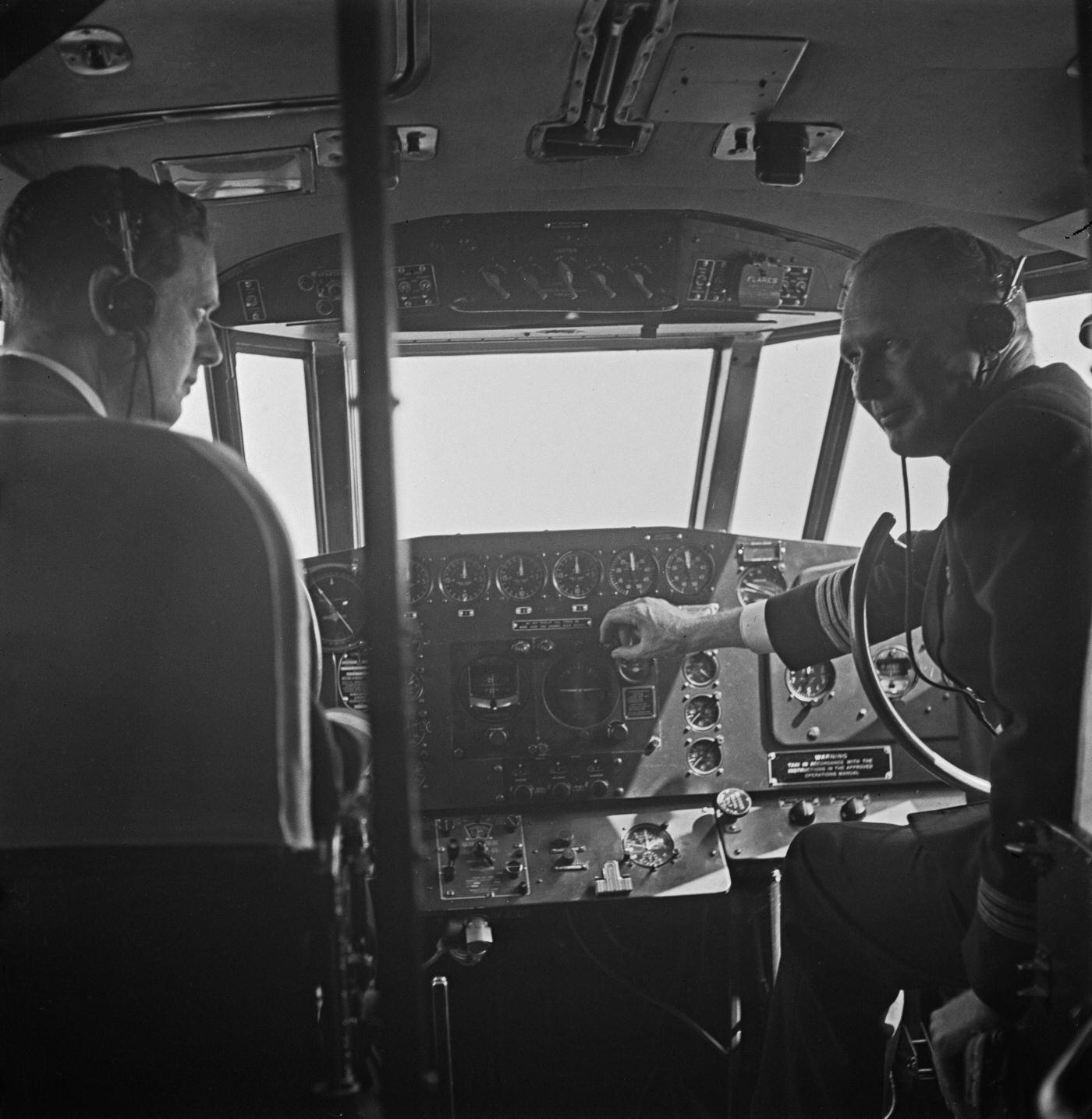
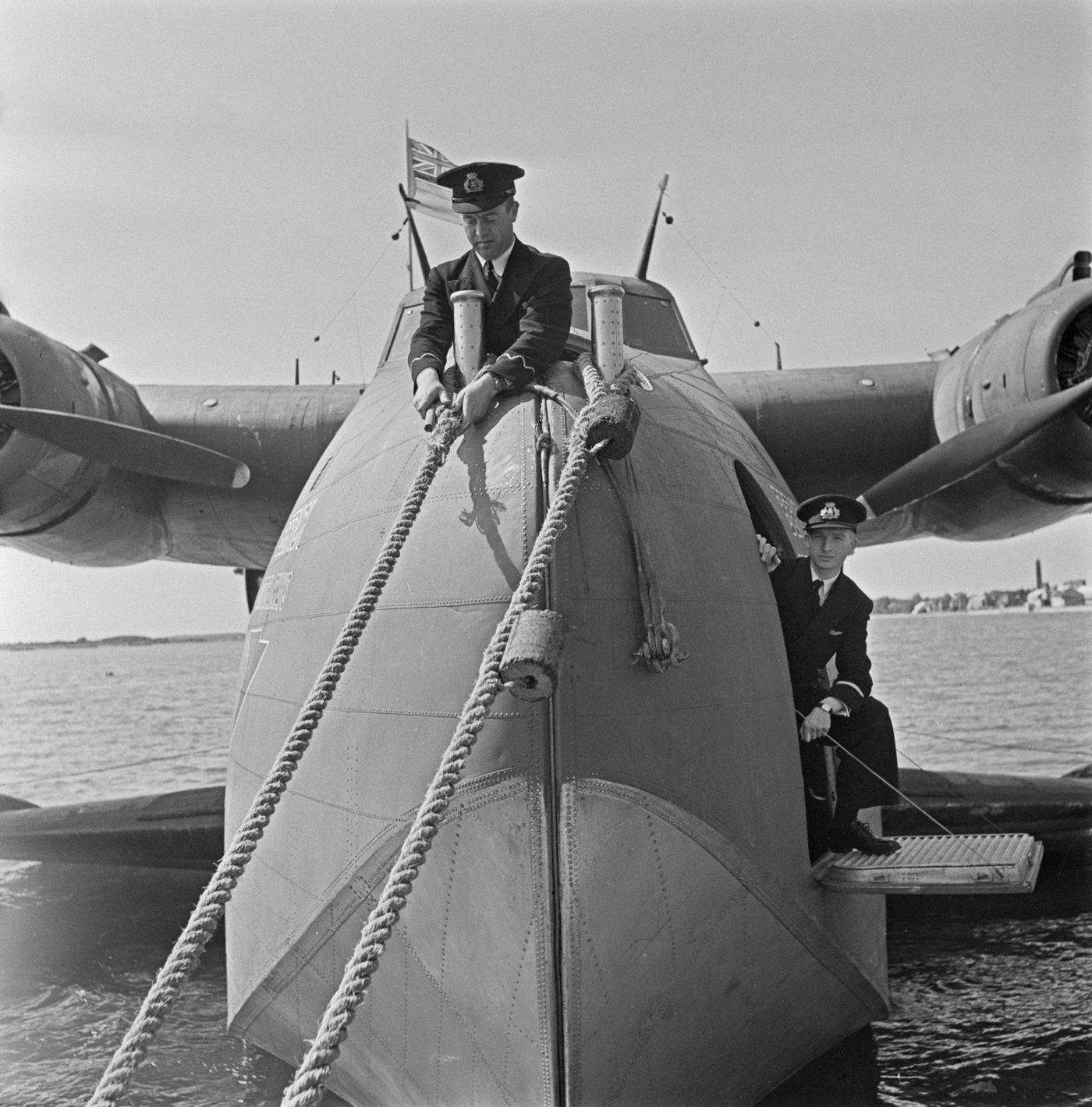
While the war was still ongoing, a small number of civilian flights continued — especially on transatlantic routes operated by carriers like the British Overseas Airways Corporation (BOAC). These wartime flights were far from ordinary. Passengers included diplomats, journalists, military officials, and others with urgent reasons to travel. BOAC operated Boeing 314A Clipper flying boats on international routes out of England, with full cabin crews managing documentation, meals, and passenger comfort even in the middle of a global war.
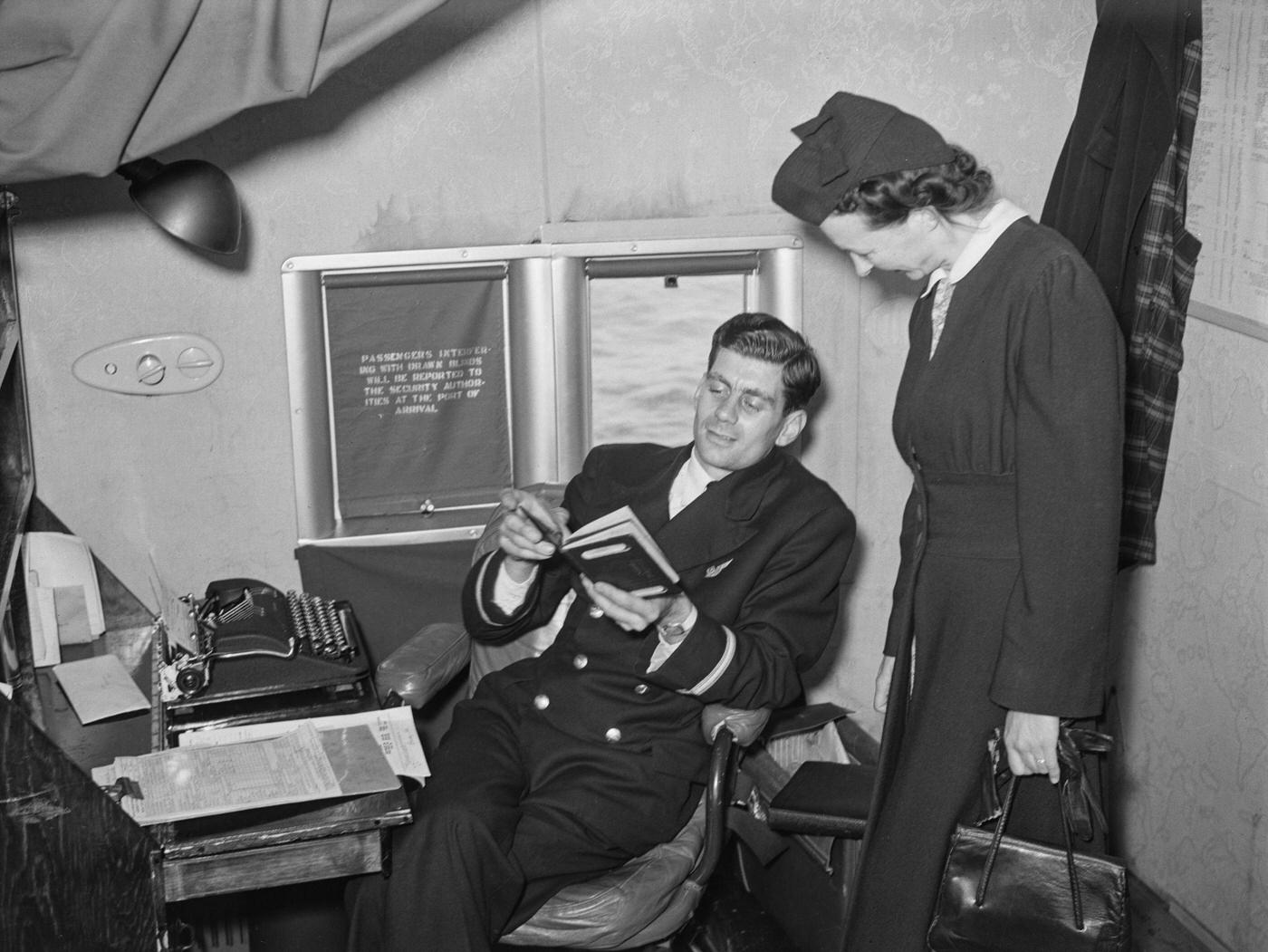
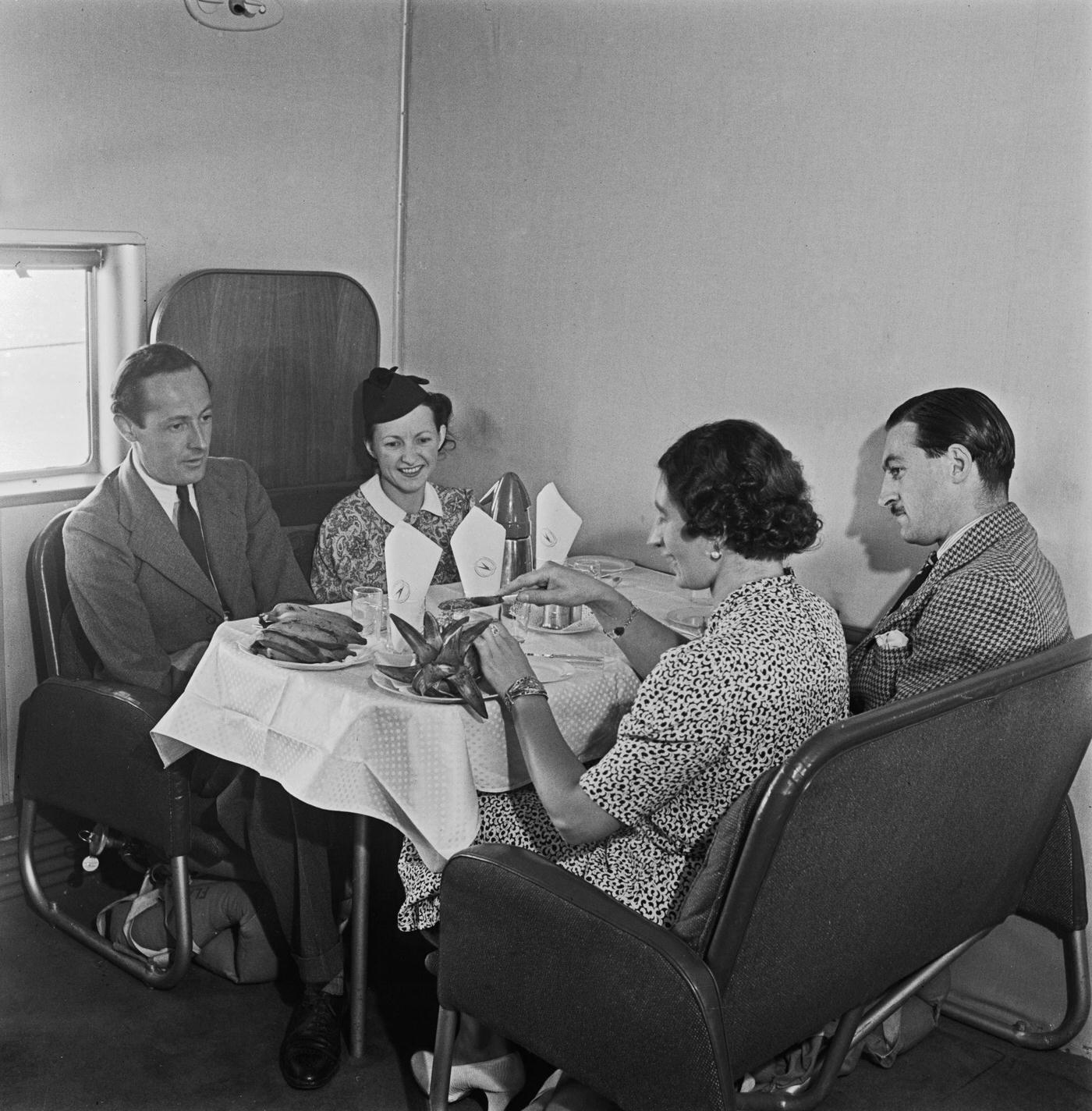
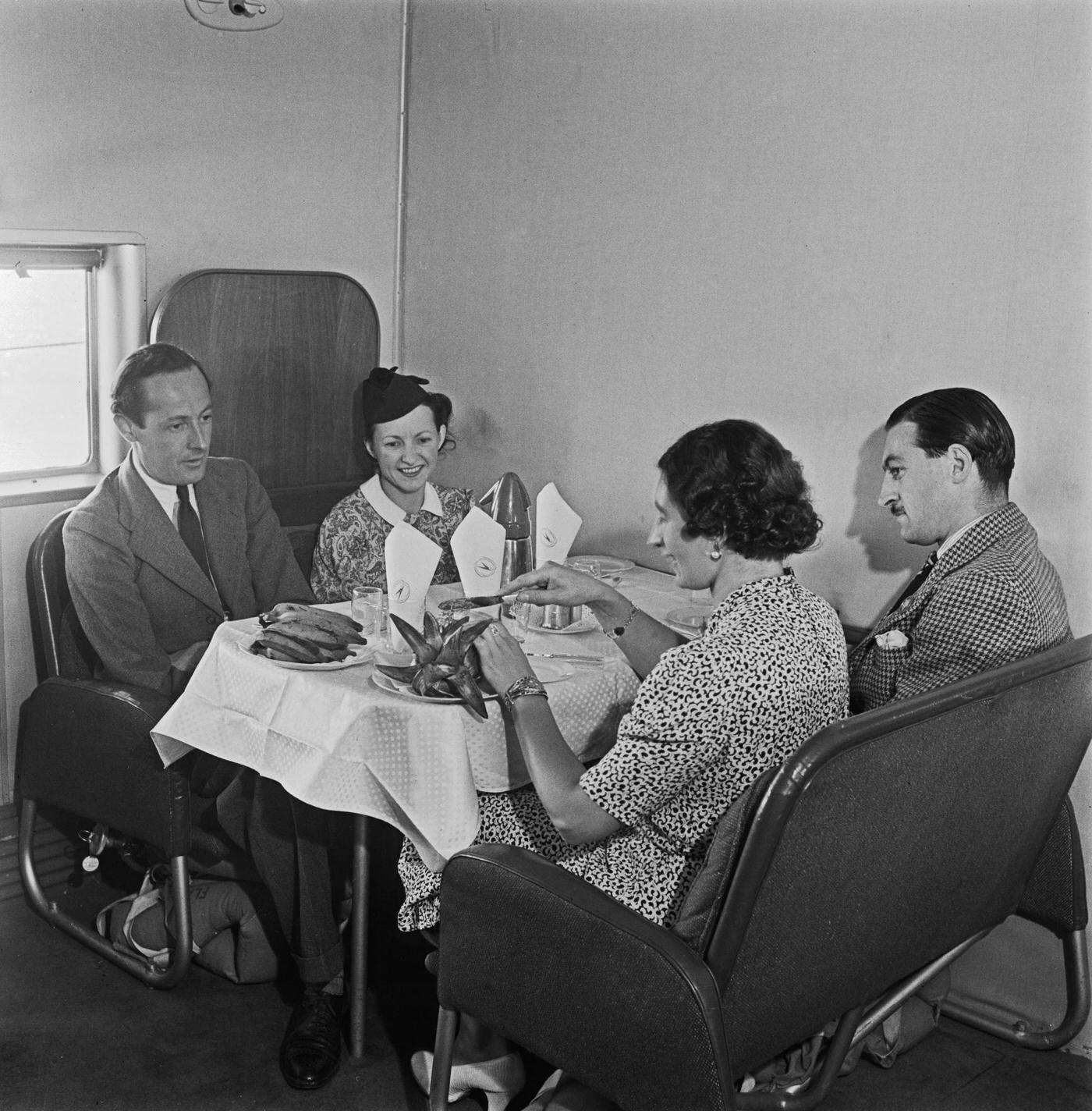
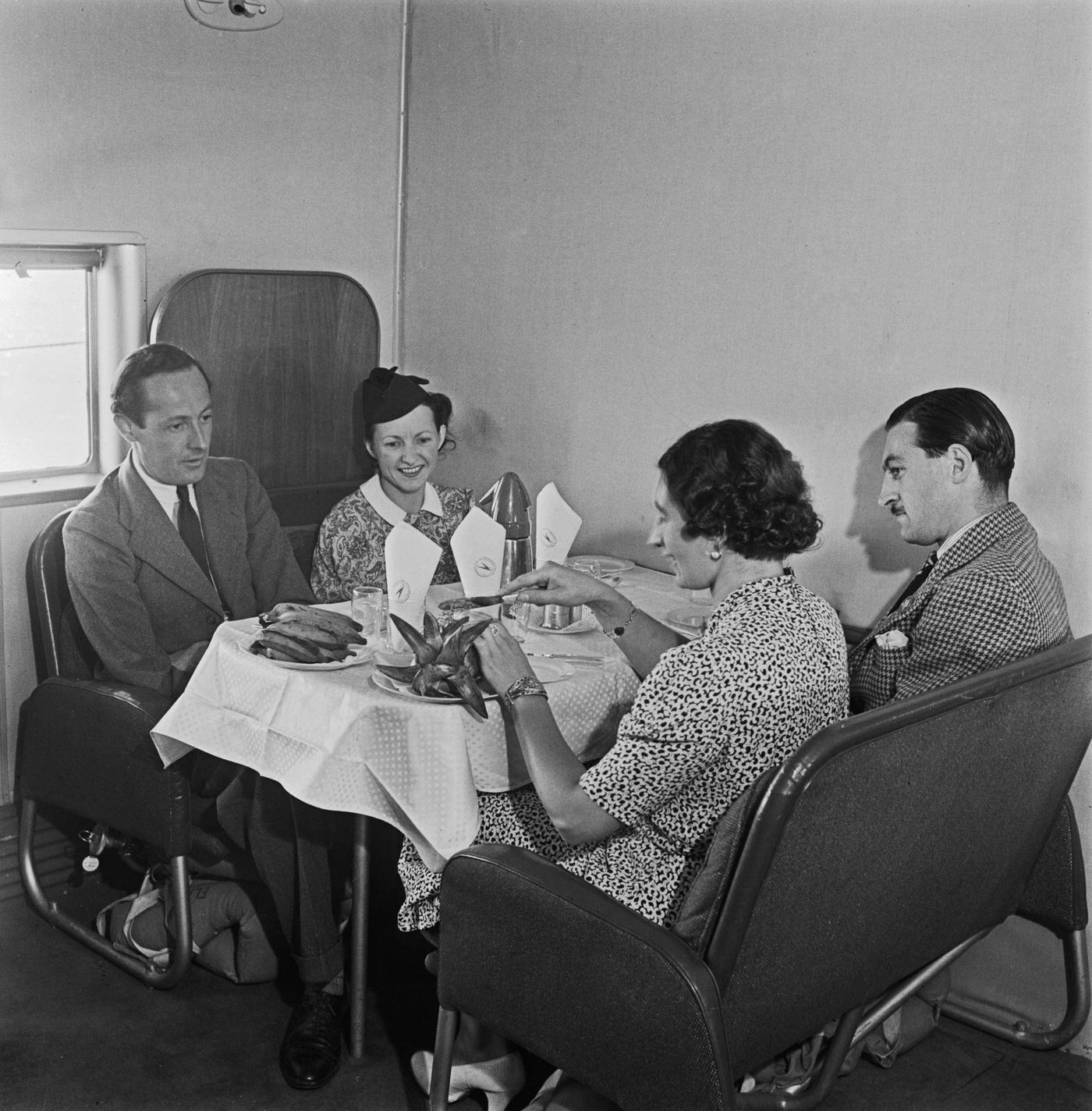
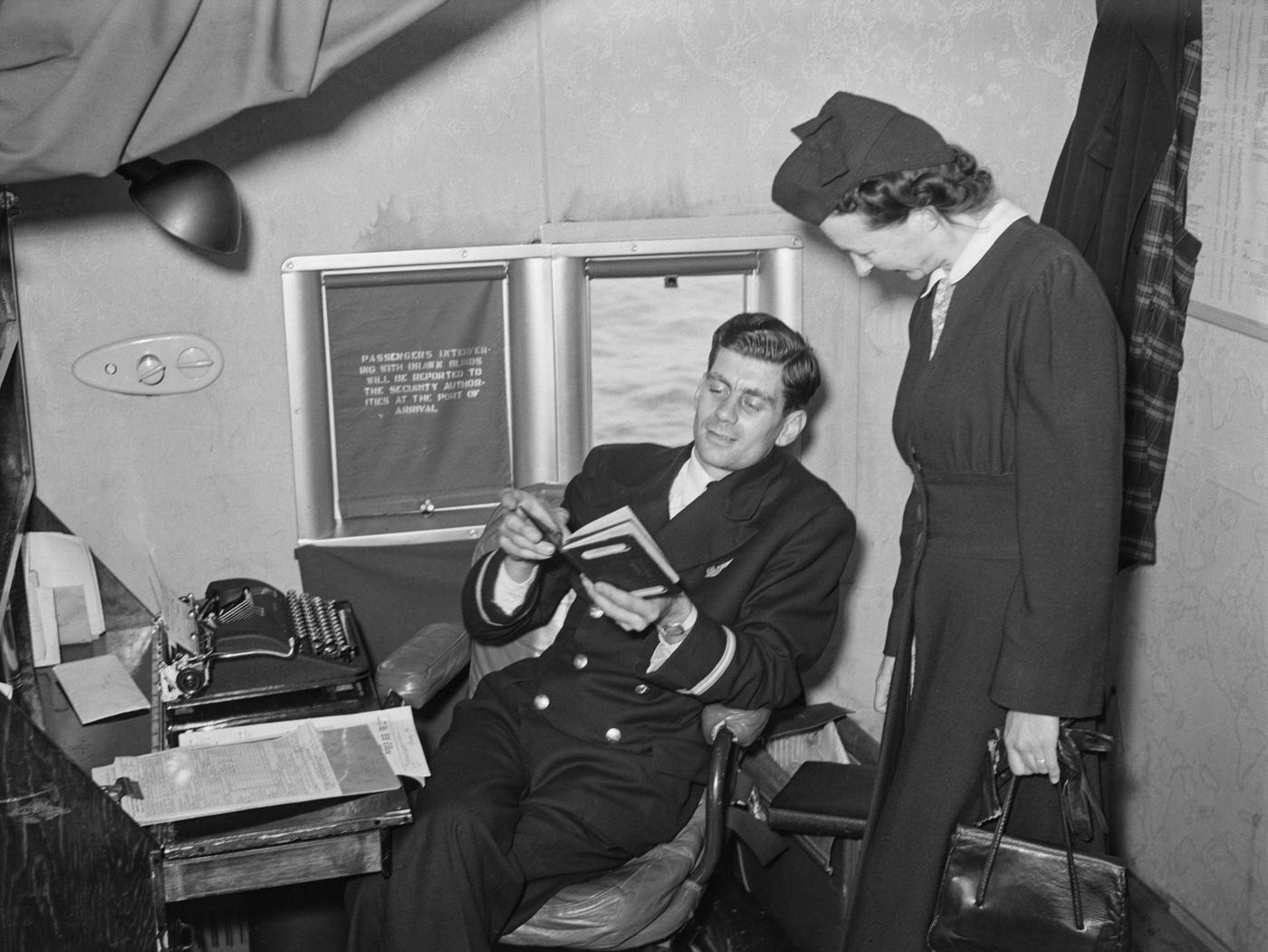
Captain D Peacock (on the left) and Captain Bill Craig are seated in the cockpit of the British Overseas Airways Corporation (BOAC) Boeing 314A Clipper flying boat Berwick (registration G-AGCA) prior to flying the aircraft on an international flight from England in 1942.In 1942, two members of the cabin crew are casting off the mooring ropes from the British Overseas Airways Corporation (BOAC) Boeing 314A Clipper flying boat Berwick (registration G-AGCA) prior to an international flight from England.Purser K Everall is assisting a female passenger with a passport query aboard a British Overseas Airways Corporation (BOAC) flying boat flight from England during World War II on 31st August 1942, while aboard the plane.Four passengers are enjoying a meal at a table aboard the British Overseas Airways Corporation (BOAC) Boeing 314A Clipper flying boat Berwick on an international flight from England during World War II on 31st August 1942.Four passengers are enjoying a meal at a table aboard the British Overseas Airways Corporation (BOAC) Boeing 314A Clipper flying boat Berwick on an international flight from England during World War II on 31st August 1942.Four passengers are seen enjoying a meal at a table aboard the British Overseas Airways Corporation (BOAC) Boeing 314A Clipper flying boat Berwick on an international flight from England during World War II on 31st August 1942.
After the war ended in 1945, commercial aviation expanded rapidly. Pilots, navigators, and radio operators who had trained and served in the military moved into civilian cockpits. A standard flight crew in the late 1940s included a pilot, co-pilot, navigator, and flight engineer — a larger and more specialized team than had been common in the previous decade. Many of these men had logged thousands of hours during the war, and their experience brought a high level of skill to the flight deck.
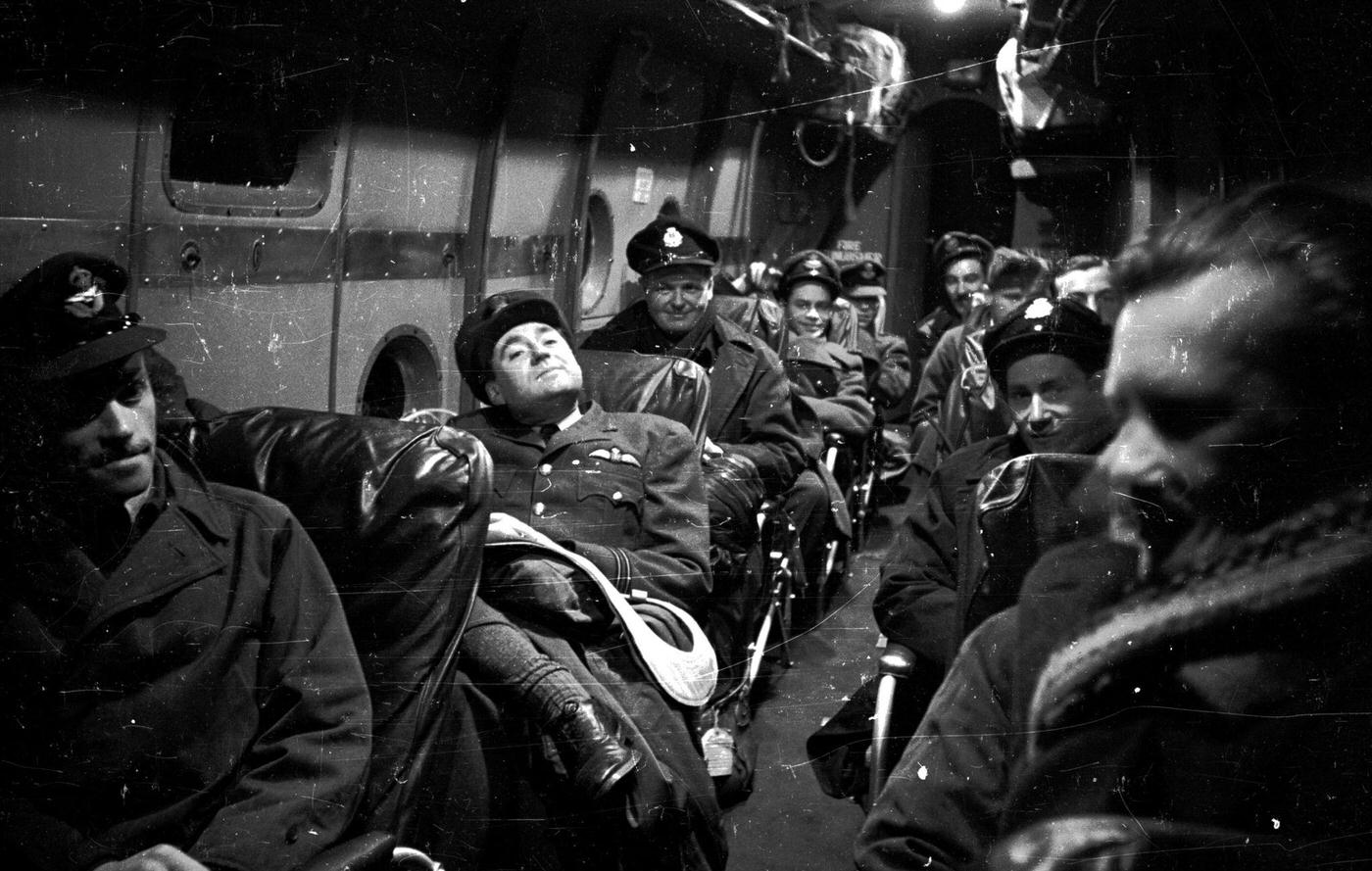
In 1945, Flight Lieutenant Maurice Crump catches a flight from Prestwick Airport in Scotland to Canada, to ferry another Liberator bomber across the Atlantic to Britain.
On the ground, airports were expanding to keep up with growing demand. At London’s Heathrow, staff used motor-tricycle scooters to move quickly between buildings and planes on the tarmac. Passengers arrived from across the world — emigrants heading to Canada, royals boarding at Hampshire, newspaper editors circling the globe, and film actresses stepping off the latest transatlantic flight.
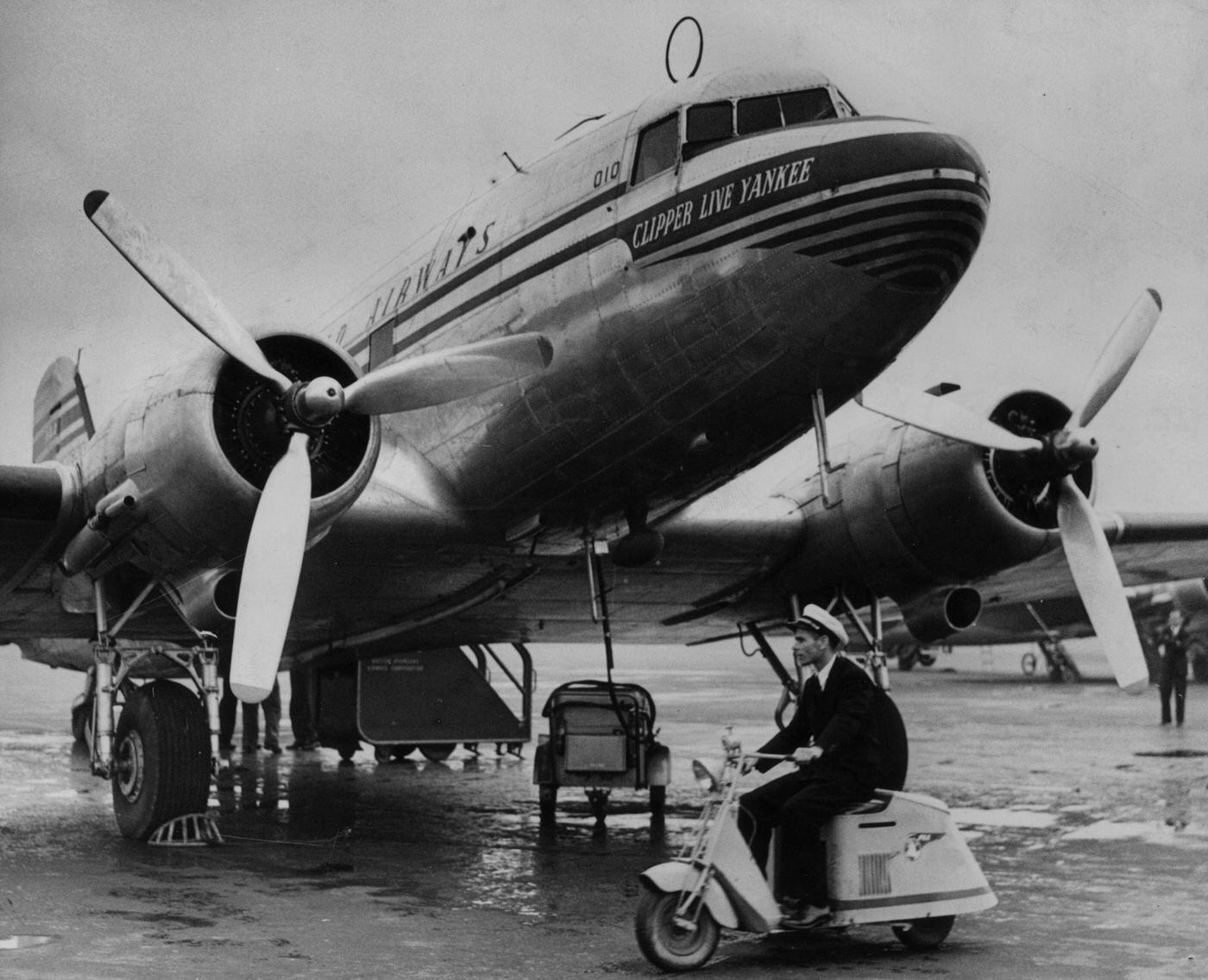
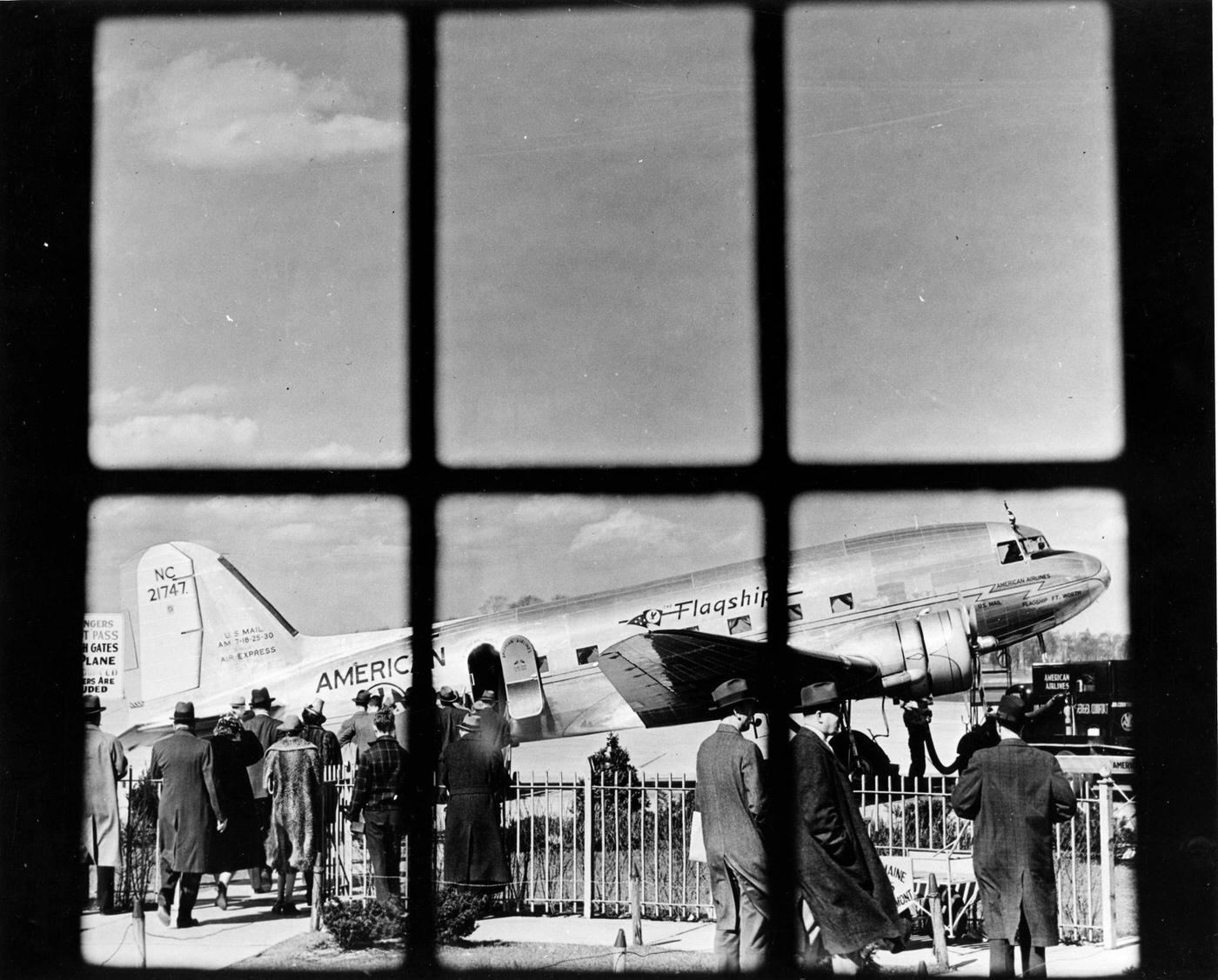
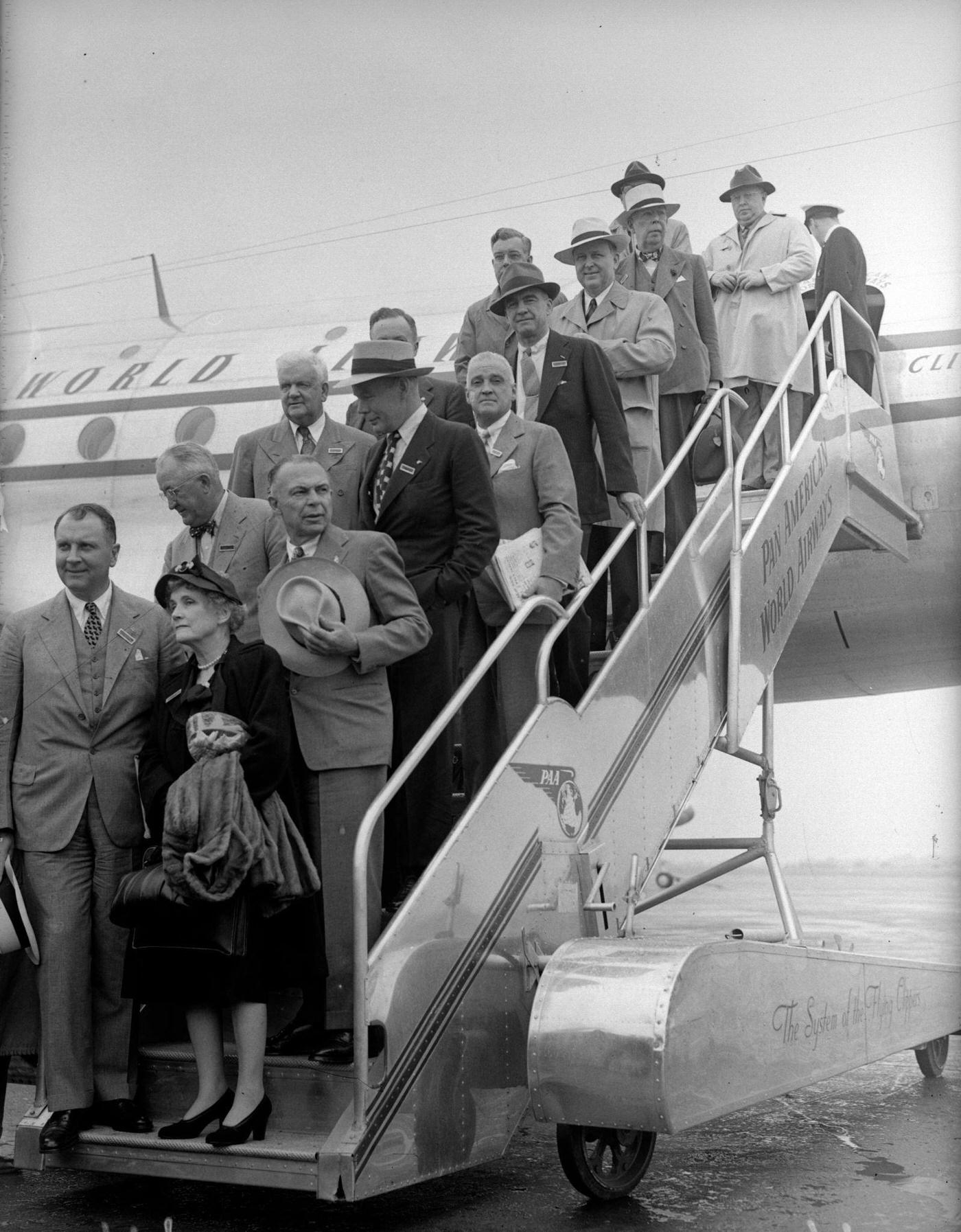
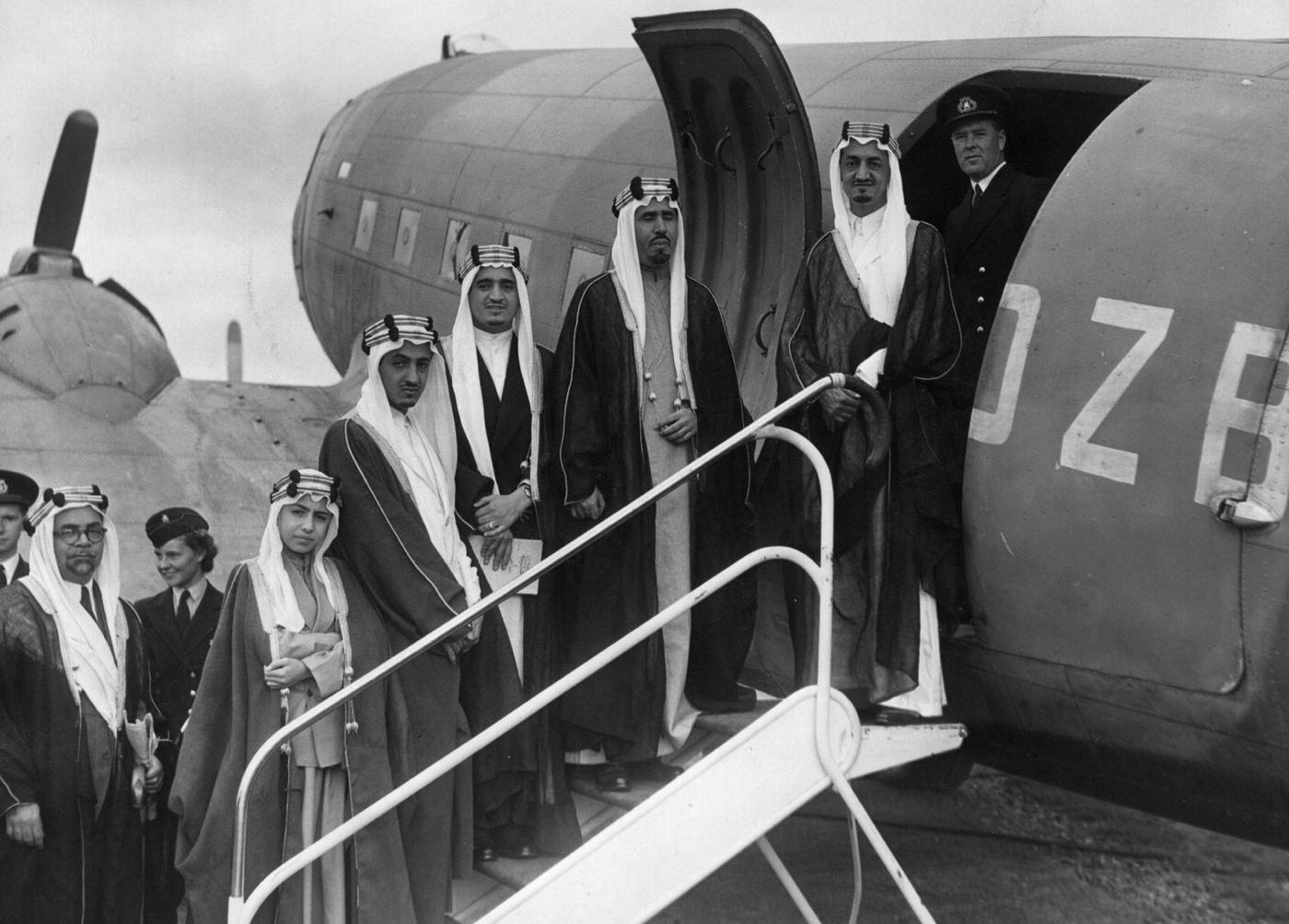
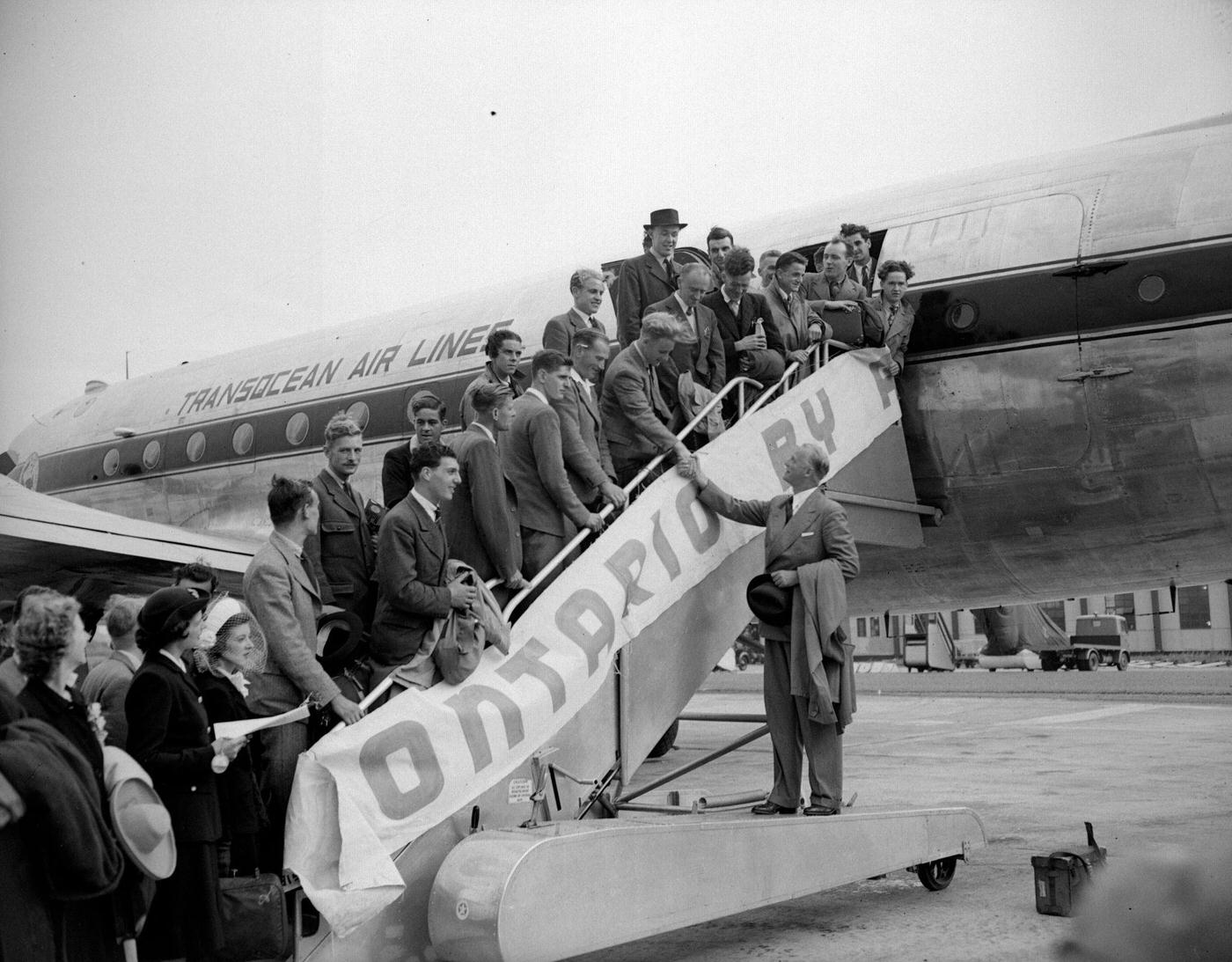
A motor-tricycle ‘scooter’ is being used for quick communication between airport buildings and planes at London Airport (Heathrow). One of the planes on the tarmac is a Pan-Am Clipper Line Yankee.Through a window of the terminal at LaGuardia Airport, passengers are boarding an American Airlines’ ‘Flagship’ plane on the tarmac in 1946.American newspaper editors are shown arriving in London during a round-the-world trip in 1947.Five sons of King Abdul Aziz Ibn Saud of Saudi Arabia are shown boarding a plane at Herne Airport in Hampshire.In 1947, J S Armstrong of the Canadian consulate is saying goodbye to a group of emigrants leaving for Ontario.
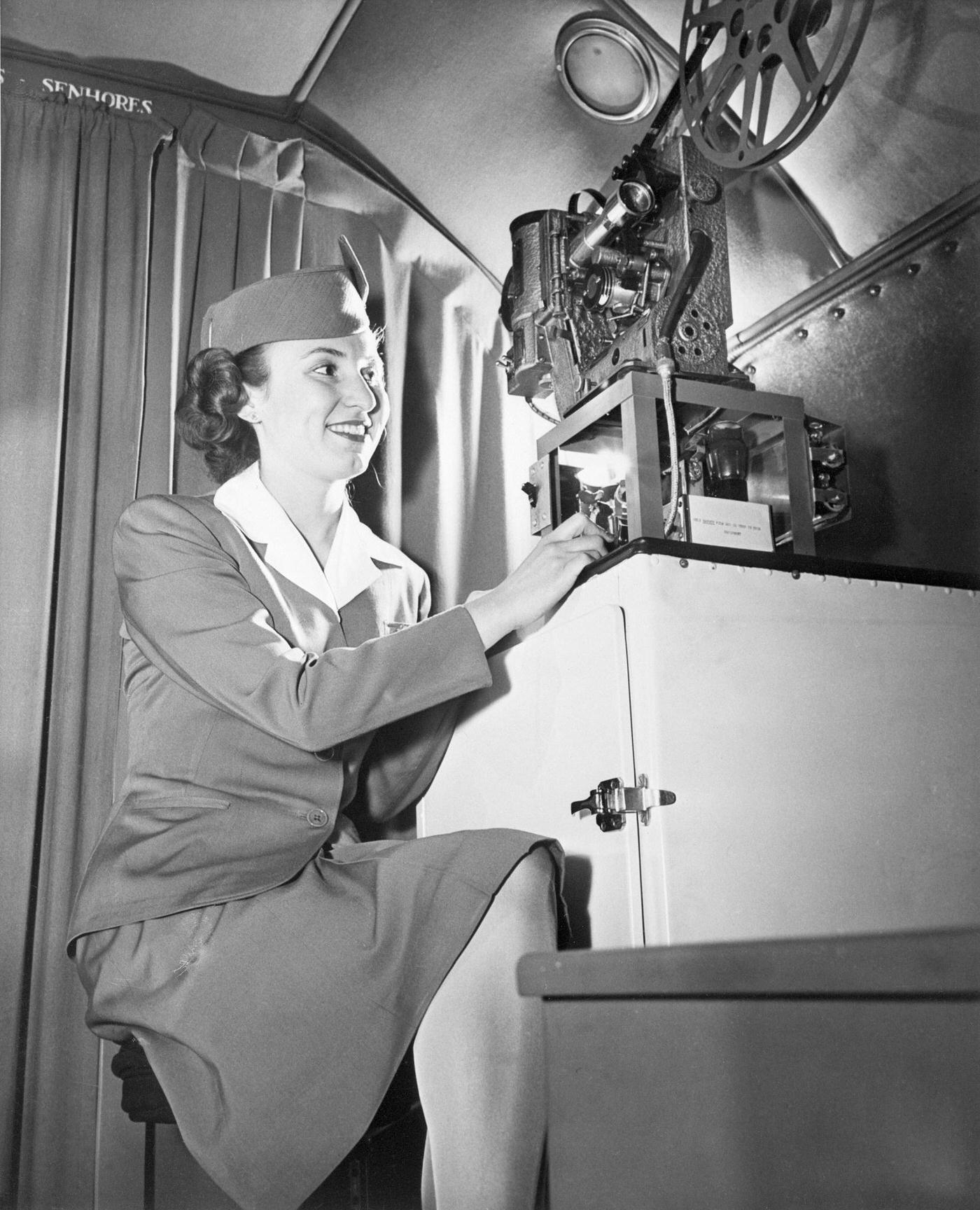
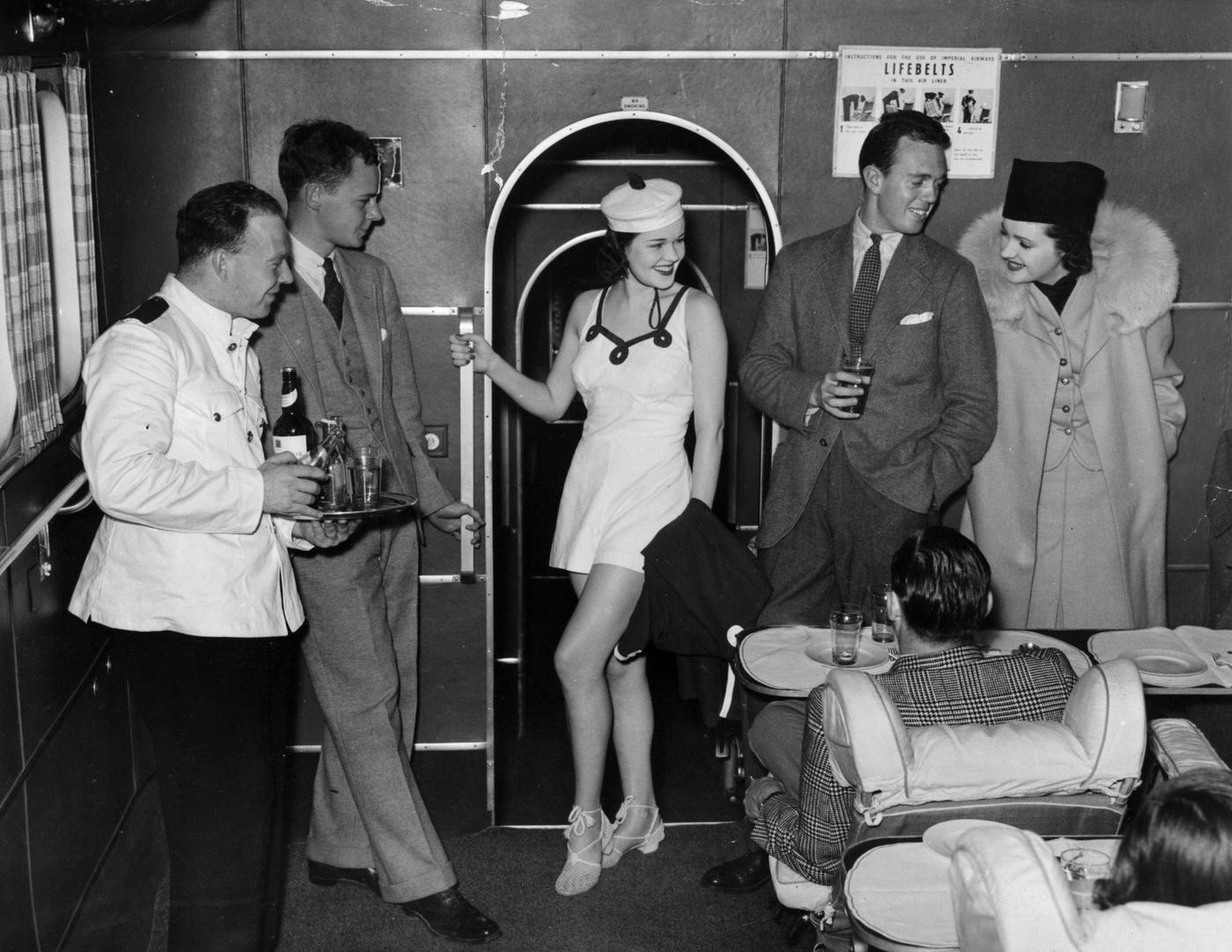
The passenger experience in the 1940s was defined by a level of service that reflected aviation’s status as a luxury mode of transport. In-flight meals were standard on long routes, and some airlines even offered full dining service with seated table settings. By 1945, Pan American was screening full-length sound movies for passengers on Transatlantic Clipper flights — a novelty that made long journeys more comfortable.
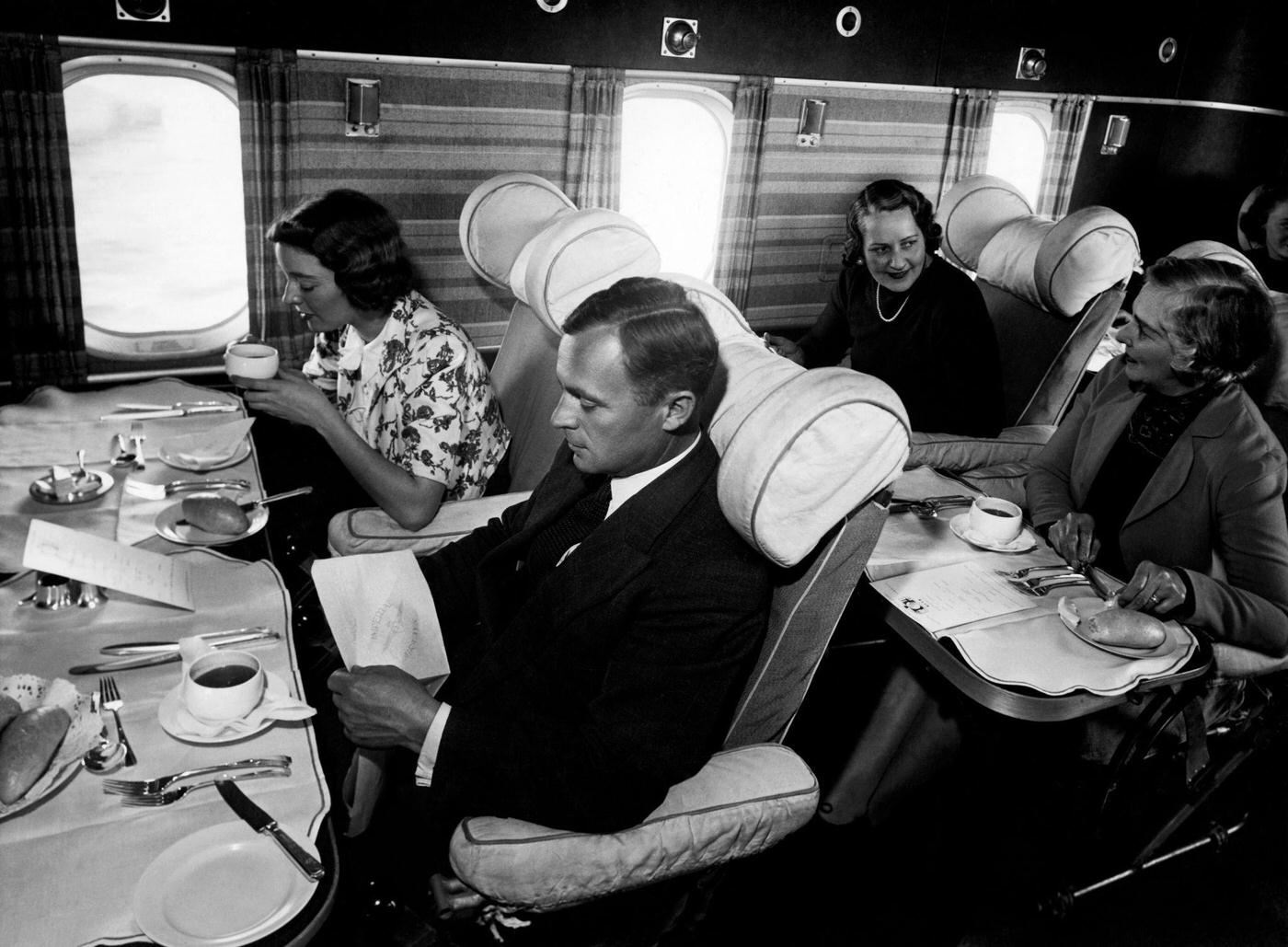
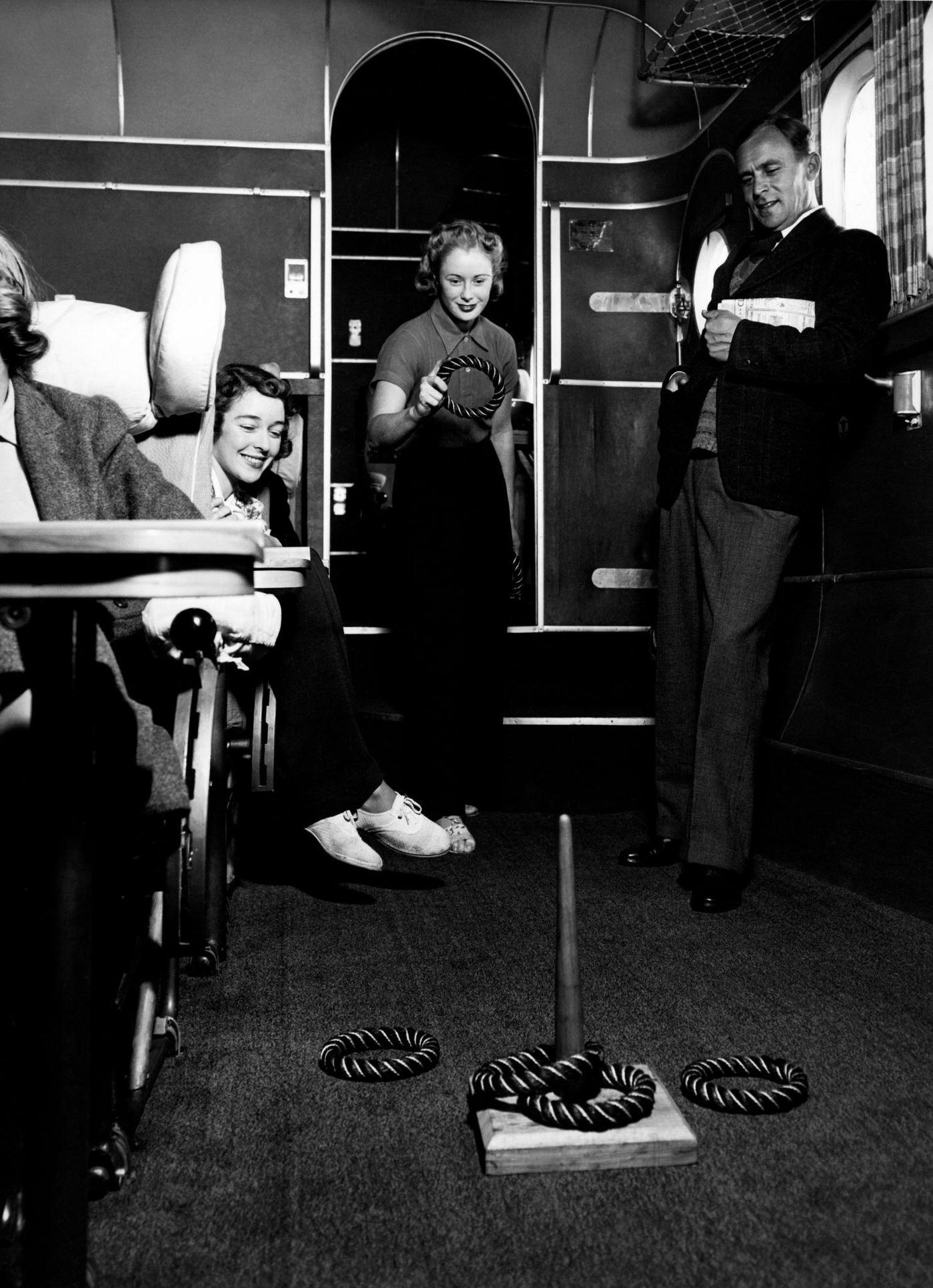
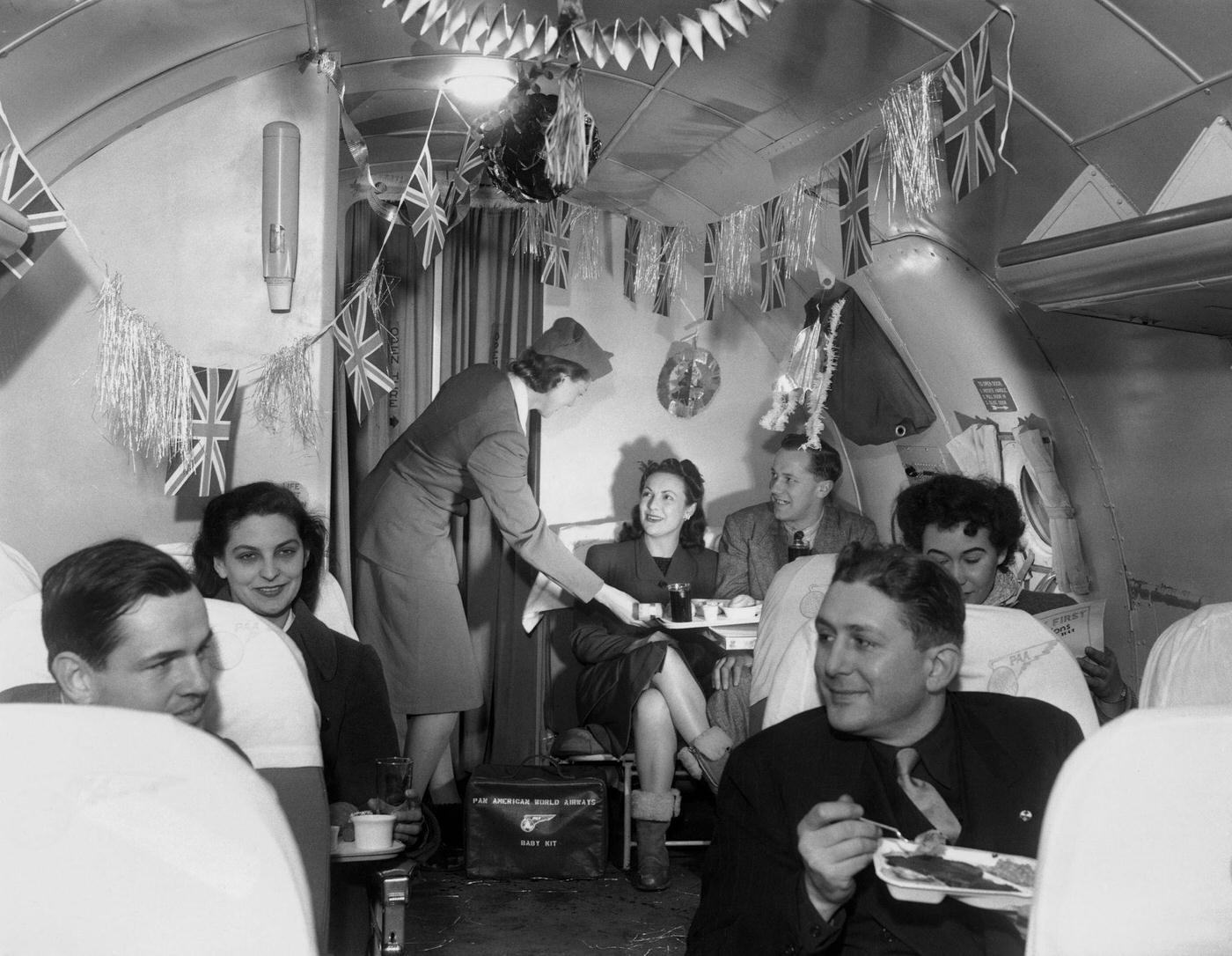
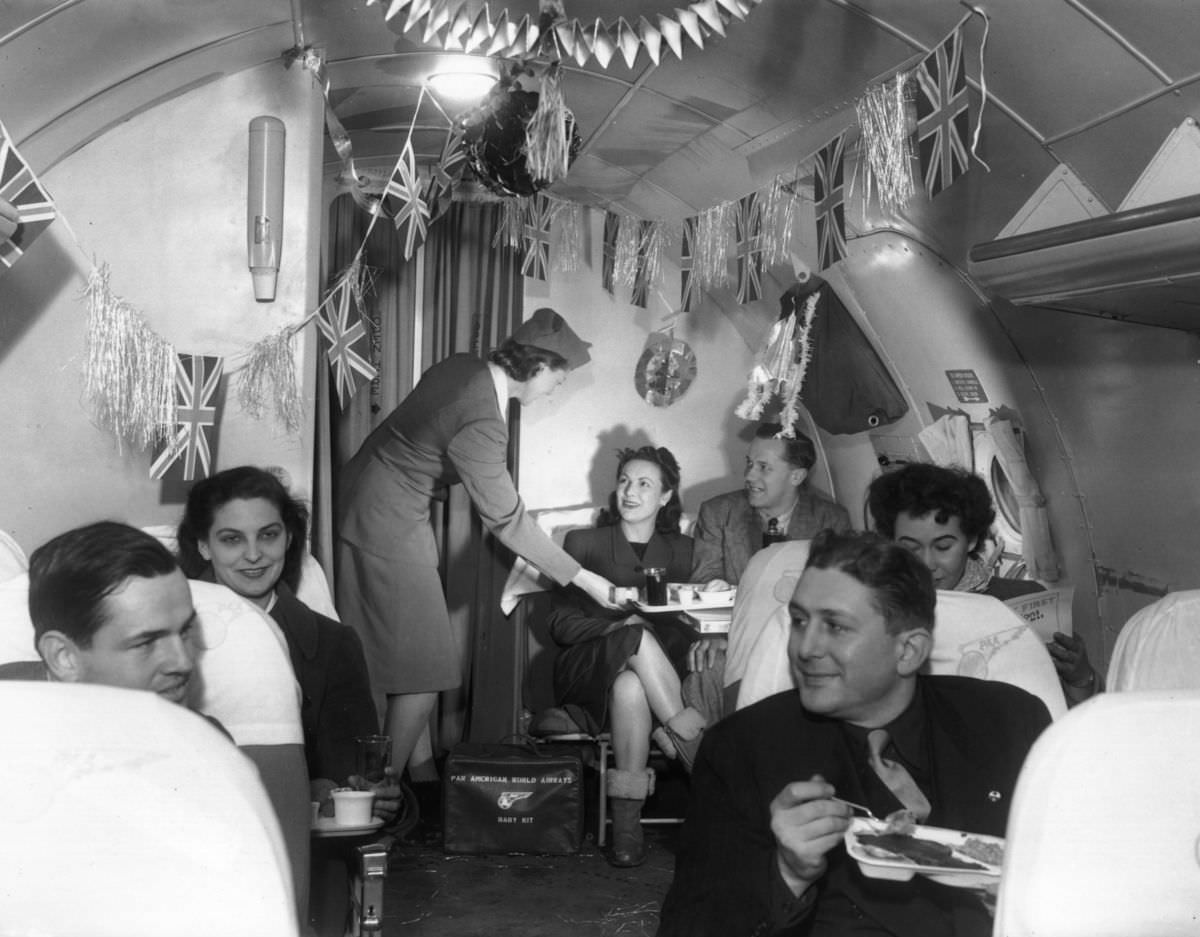
In 1945, flight stewardess Isle Berger of Pan American World Airways is showing the first full-length sound movies to passengers aboard a Transatlantic Clipper.Passengers are seen dining on the Empire in 1940.Passengers are shown playing on the Empire.Air hostess Patricia Pelley is serving an in-flight meal to passengers traveling across the Atlantic on board a festively decorated, Pan-American aeroplane.On December 23, 1946, air hostess Patricia Palley attends to passengers in the decorated cabin of a Pan-American airliner over the Atlantic.
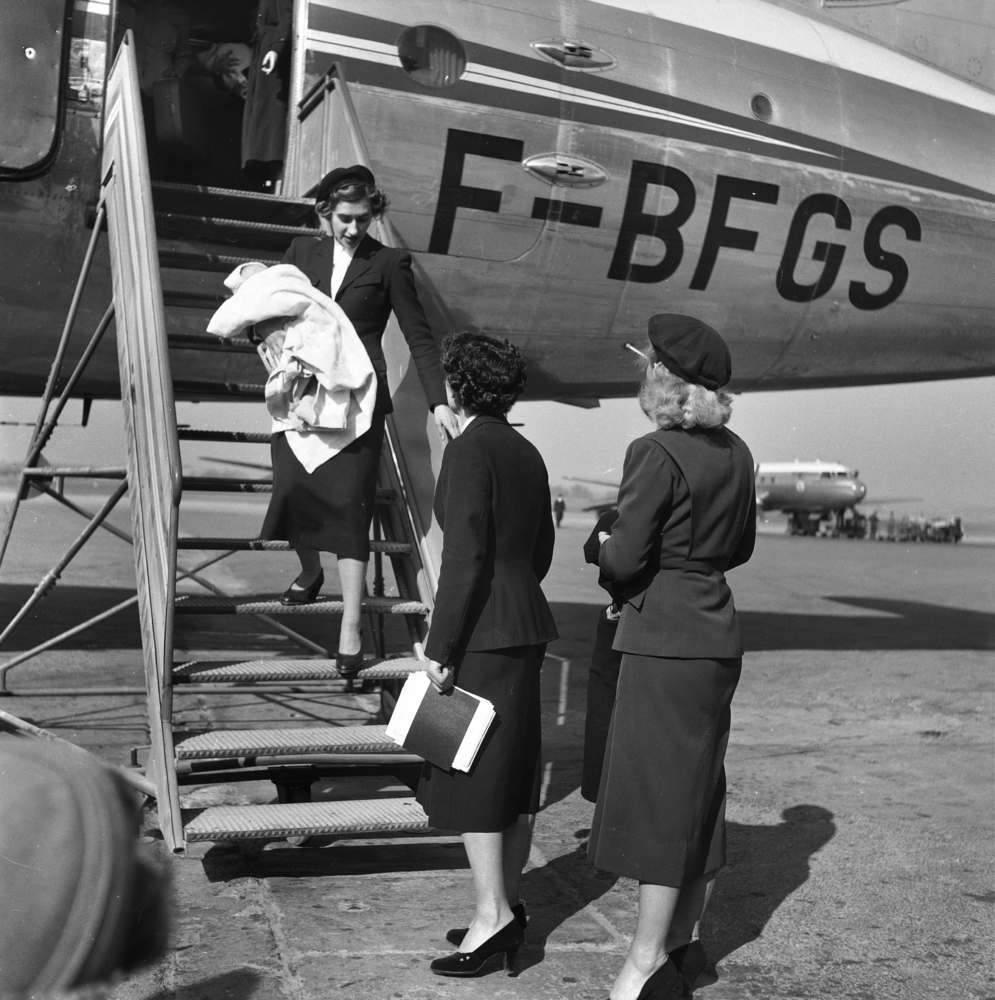
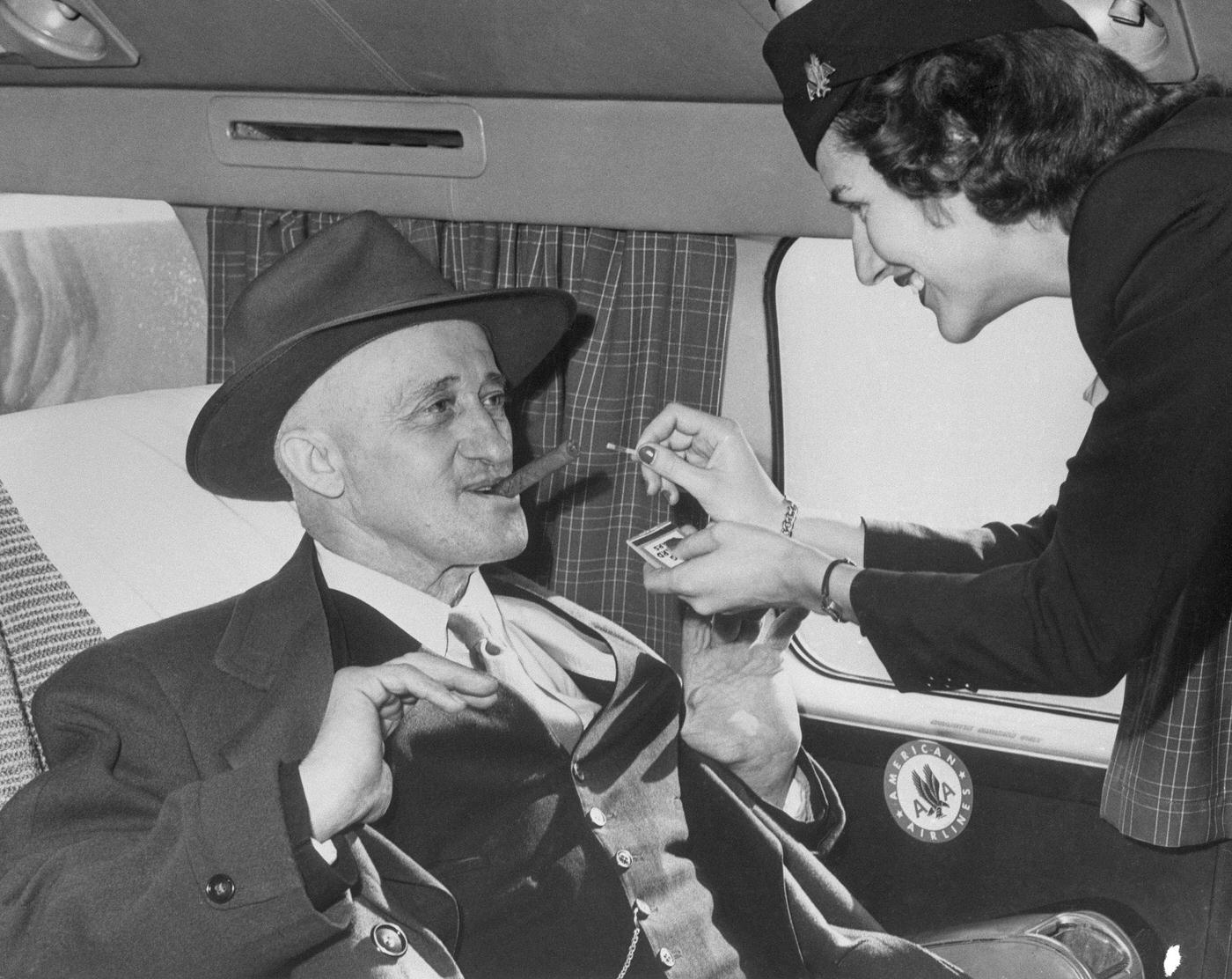
Flight attendants — known at the time as stewardesses, stewards, or air hostesses — took on an increasingly important role throughout the decade. They handled everything from serving meals and lighting cigars to assisting passengers with customs paperwork and managing emergencies. Their presence became a defining feature of the commercial flight experience.
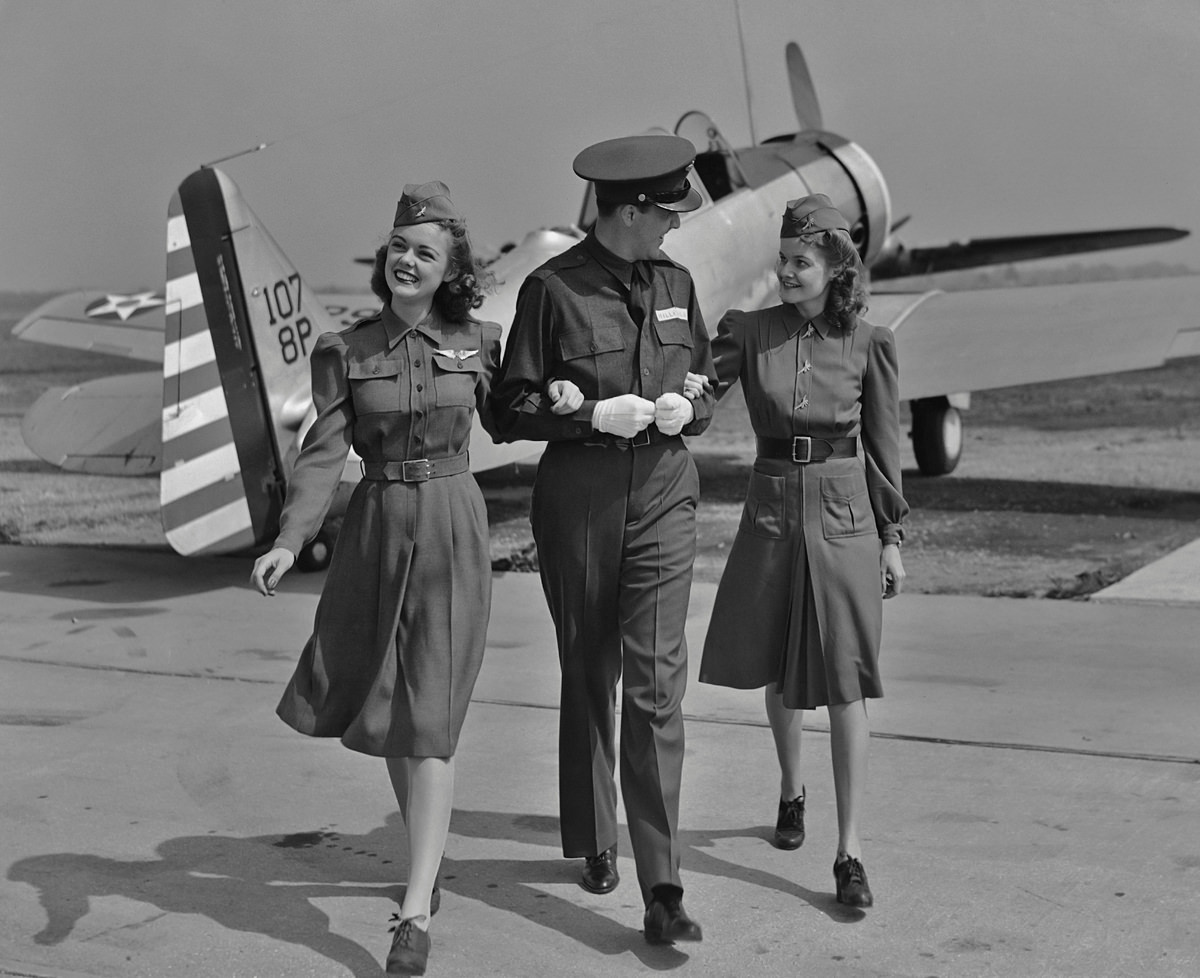
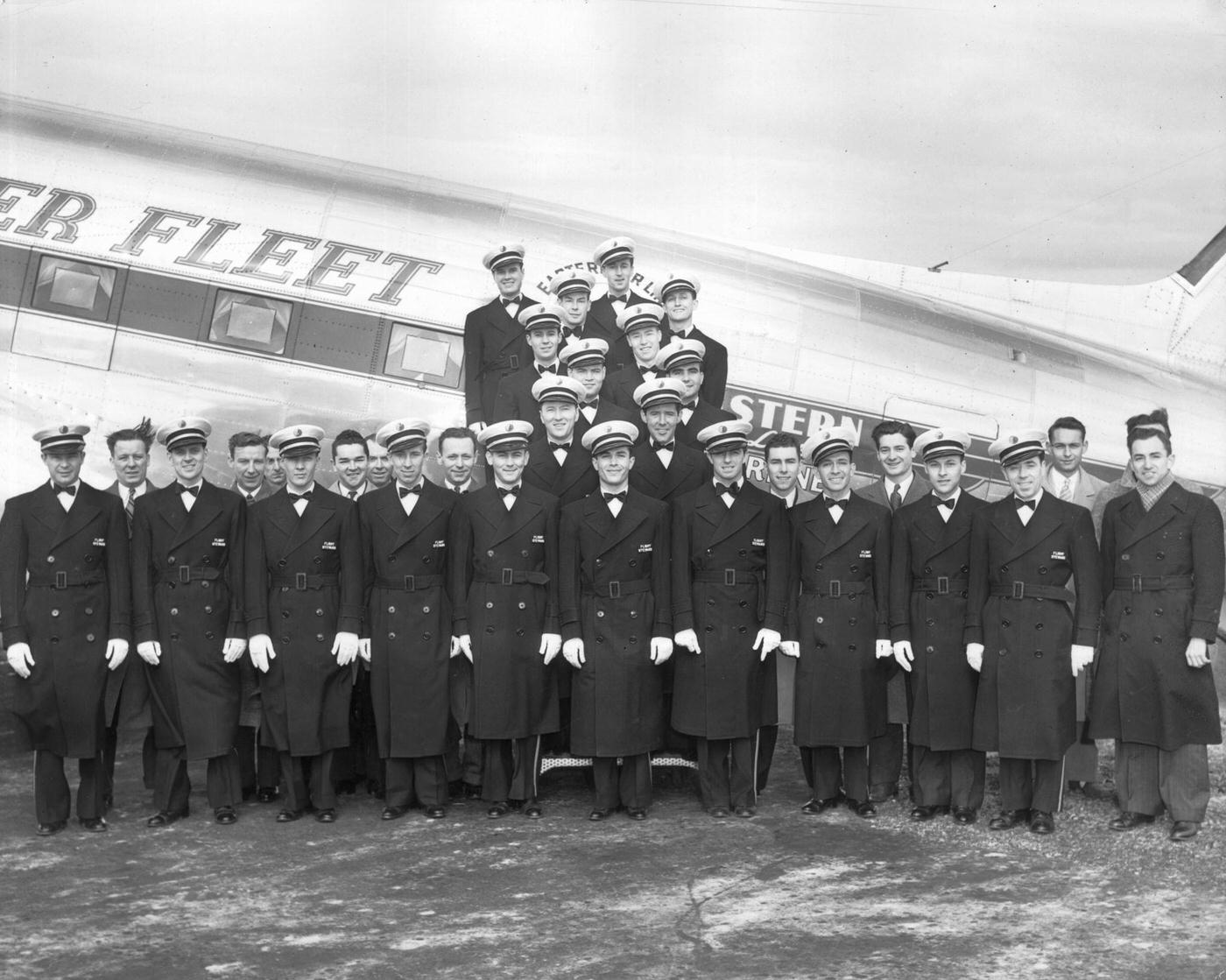
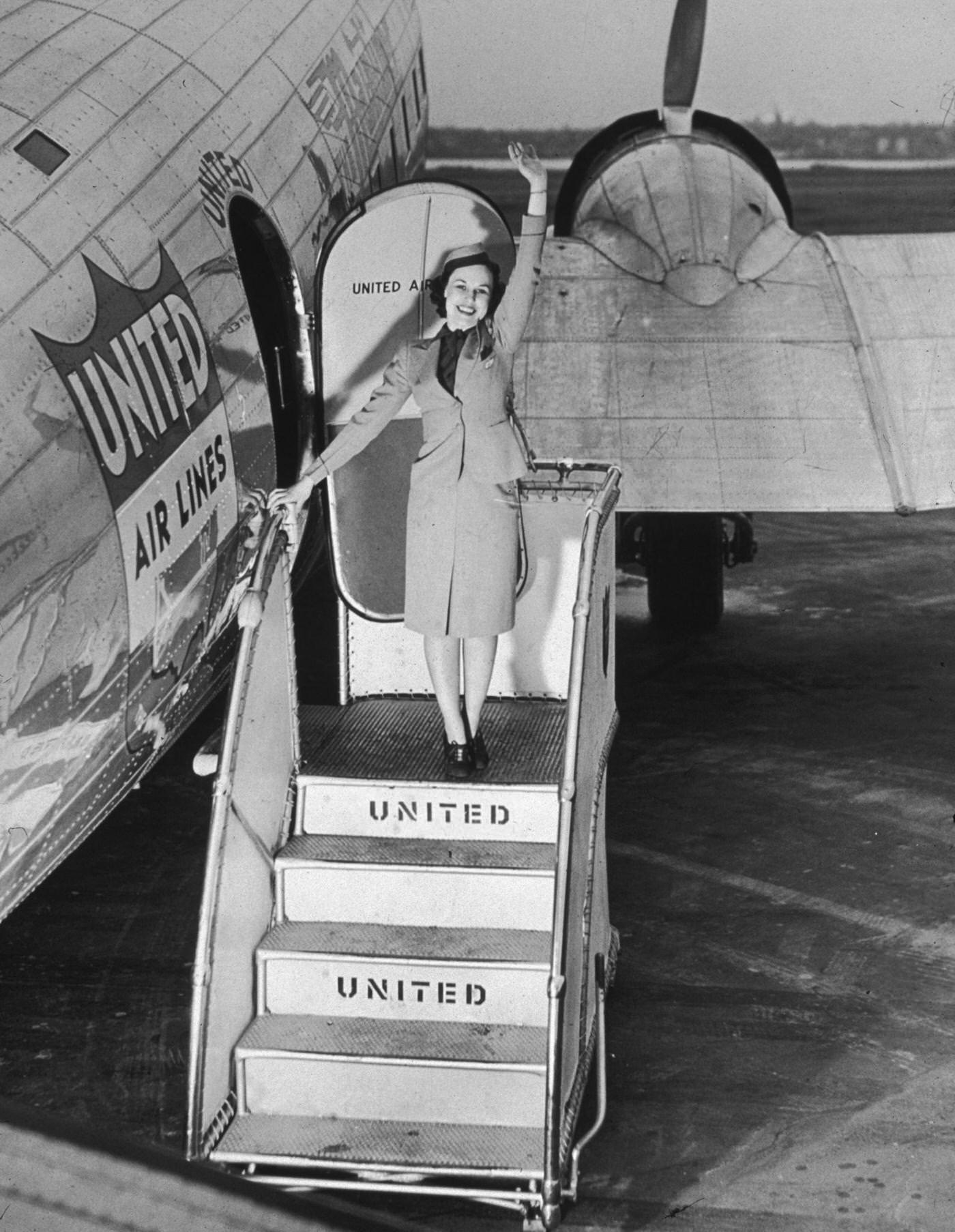
In the 1940s, a male flight attendant walks with his arms linked with two female flight attendants in front of a small plane.A group portrait shows uniformed flight stewards posing in front of the Eastern Airlines ‘Silversleeper’ airplane, a passenger and mail delivery plane.In 1945, a female flight attendant is standing on the stairway of a United Airlines airplane, waving.Around 1945, a stewardess is pictured in Le Bourget (Seine-Saint-Denis).In 1945, stewards are shown serving passengers on board an airplane.Stewardess Jane Driscoll lights a cigar for airline passenger Carl Graulein, 68, of East St. Louis, as he prepares to depart for his native Germany aboard an American Airlines overseas flight.Purser K Everall is assisting a female passenger with a passport query aboard a British Overseas Airways Corporation (BOAC) flying boat flight from England during World War II on 31st August 1942.
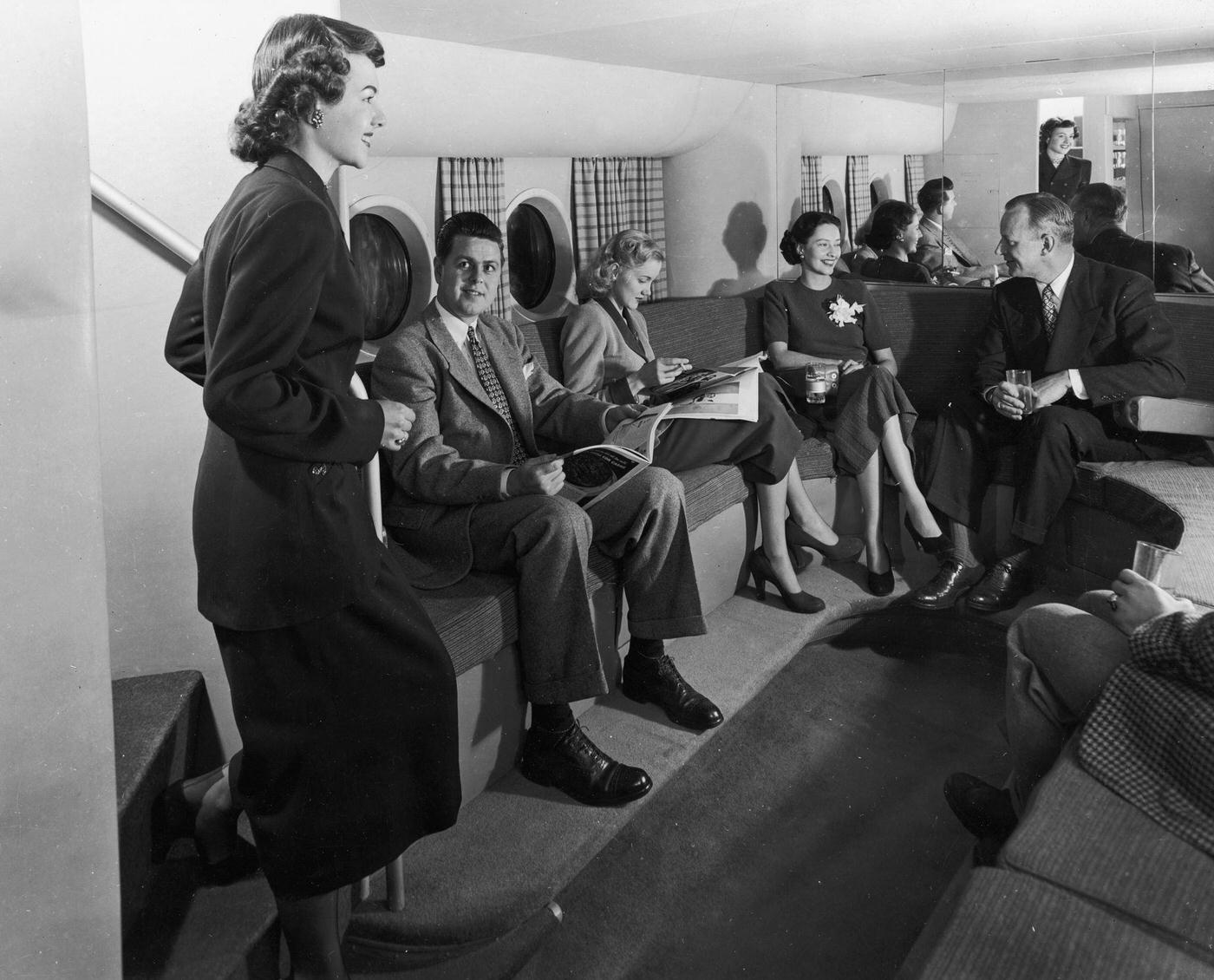
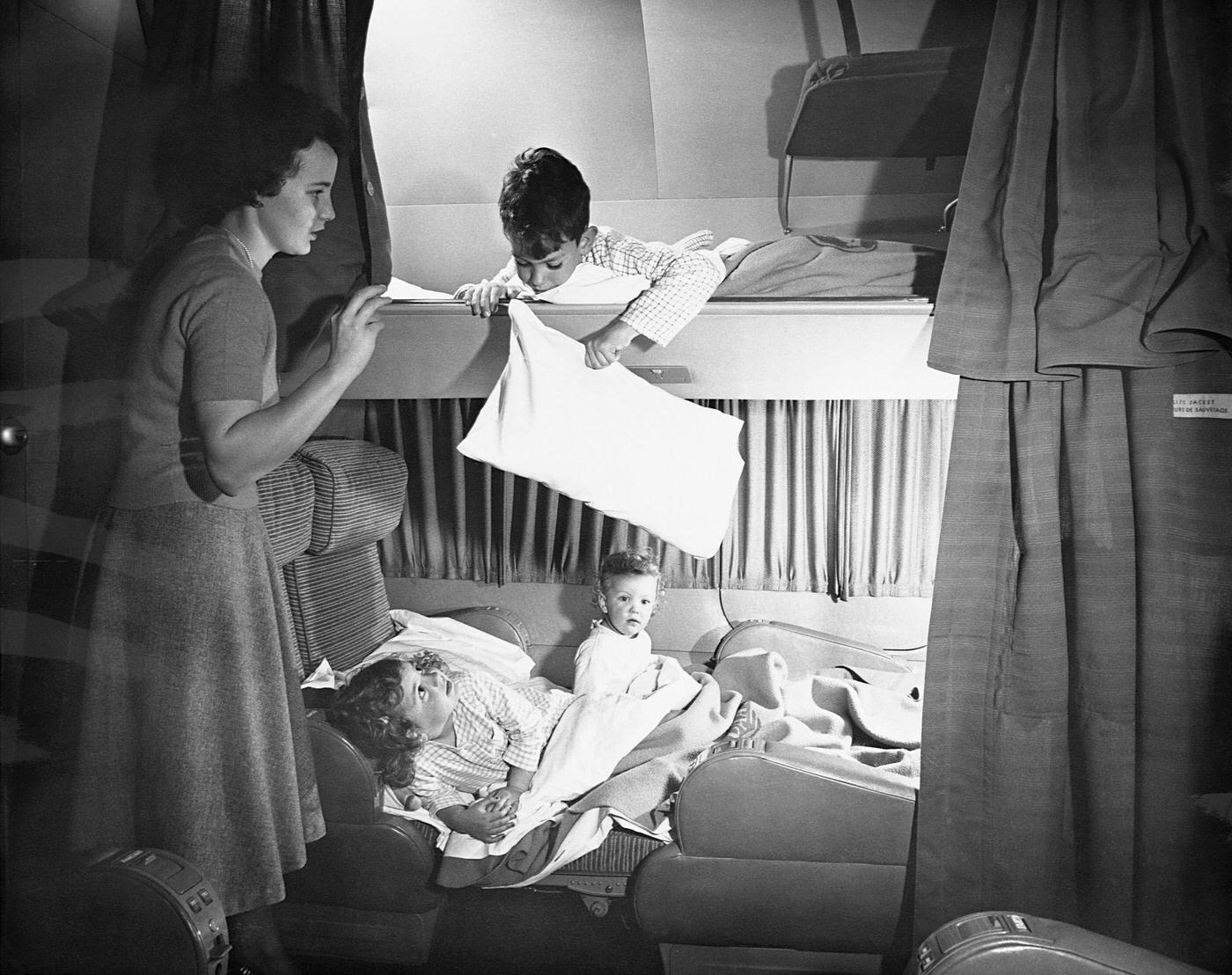
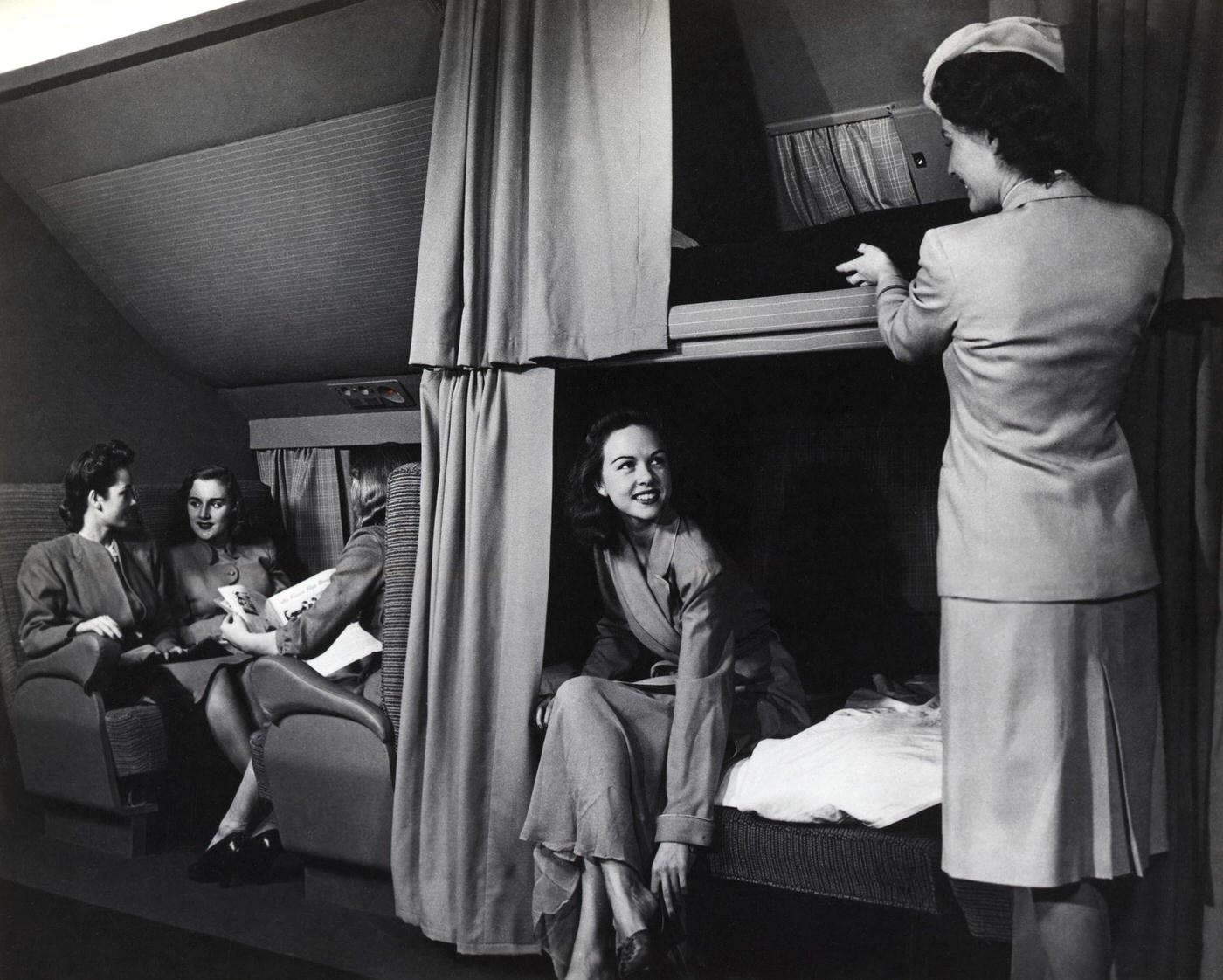
Toward the end of the decade, newer aircraft like the Boeing 377 Stratocruiser pushed luxury even further. The Stratocruiser featured a lower-deck lounge and sleeping bunks for overnight passengers — a setup that allowed families to tuck their children into beds mid-flight over the Atlantic. It was a far cry from the cramped military transports of just a few years earlier.
Passengers are relaxing in the luxury lounge of a Boeing airplane in 1945.Passengers are seen in the cabin of a Boeing 377 Stratocruiser.In 1949, a mother is pictured tucking in her children in bunks aboard a Pan American Airways’ Boeing 377 Stratocruiser.
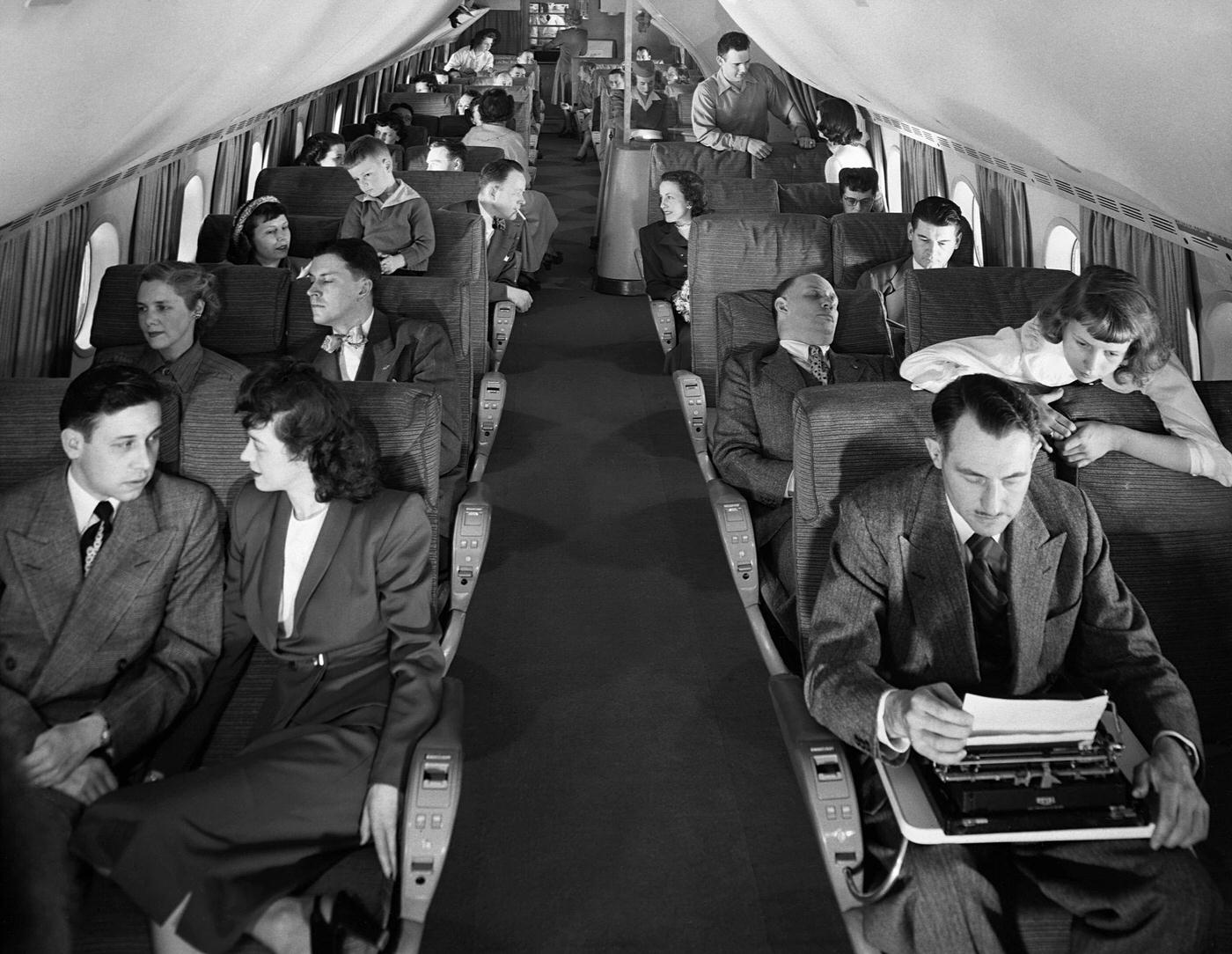
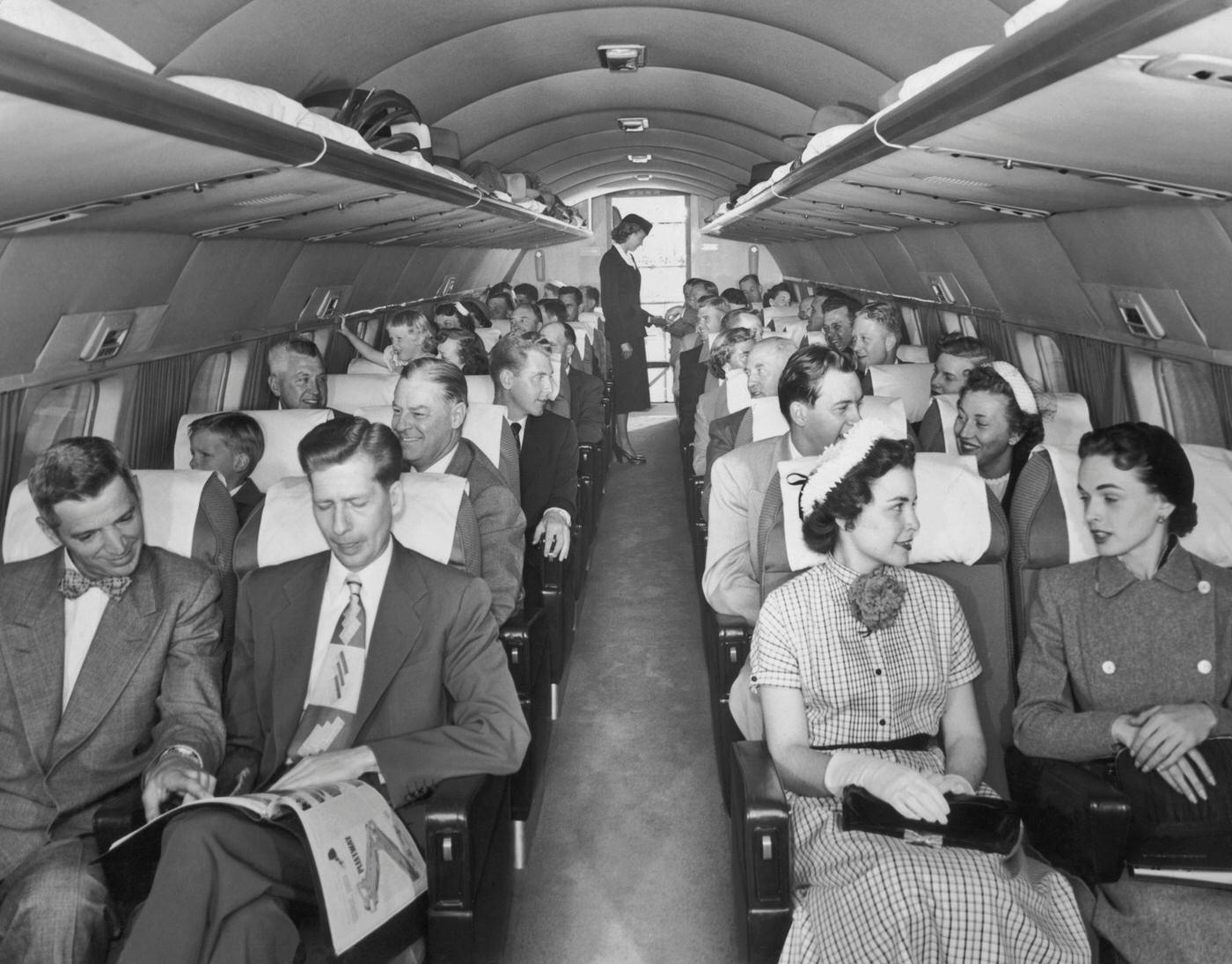
Despite being a luxury product, air travel was reaching a wider audience. Families, children, emigrants, and tourists all began appearing in the passenger cabins of 1940s airliners. Seats were arranged two to a row on some aircraft, encouraging conversation between travelers. The cabin was a social space as much as a transit one.
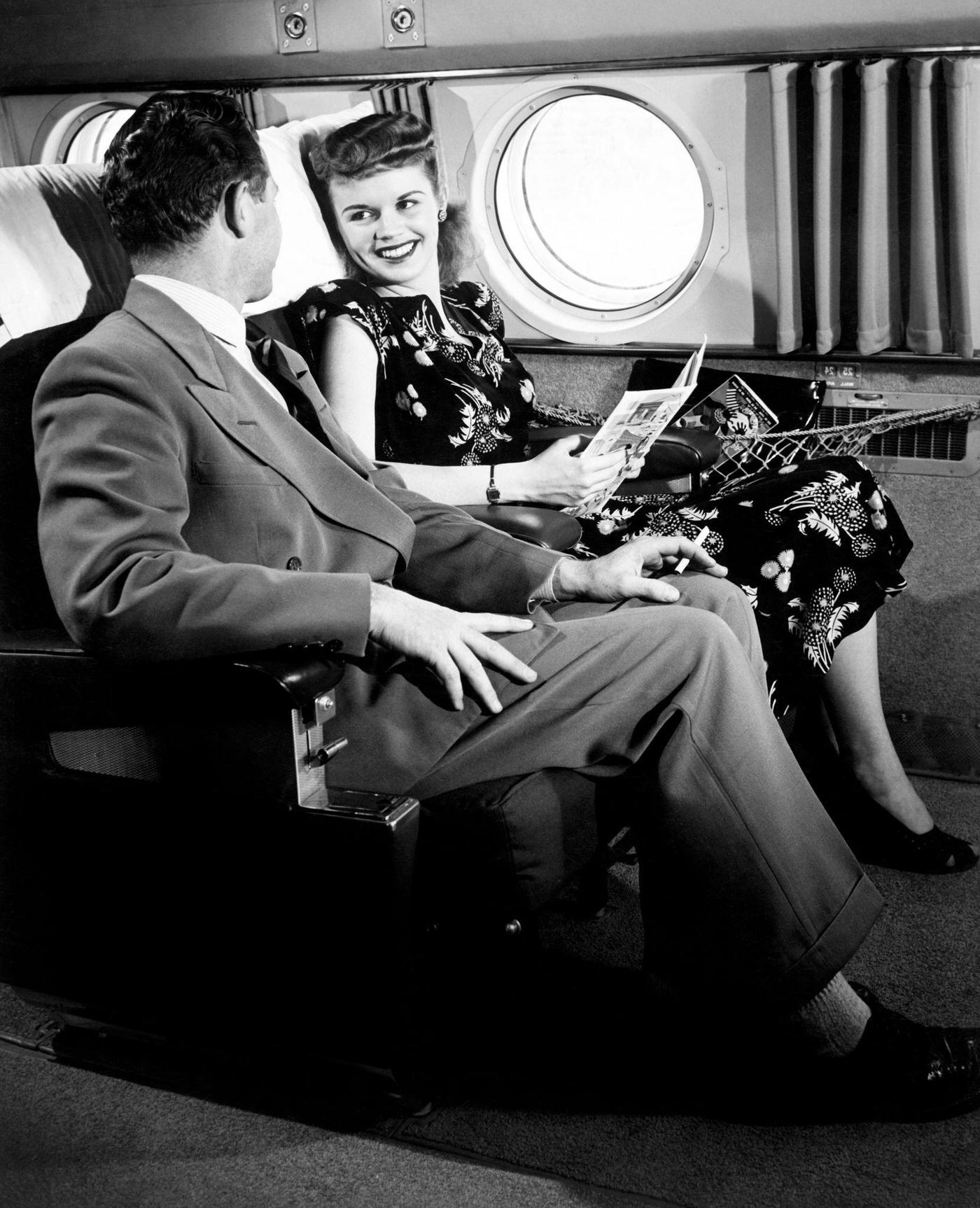
A couple is pictured on a plane in 1940.
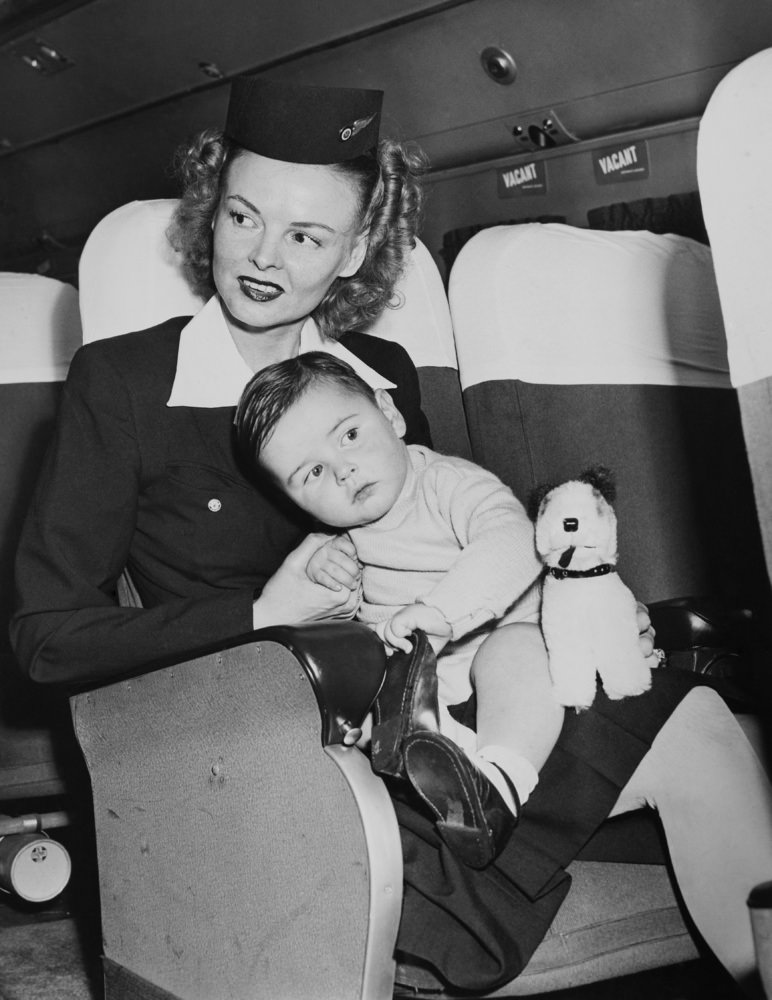
In July 1945, a baby travels by plane in New York.
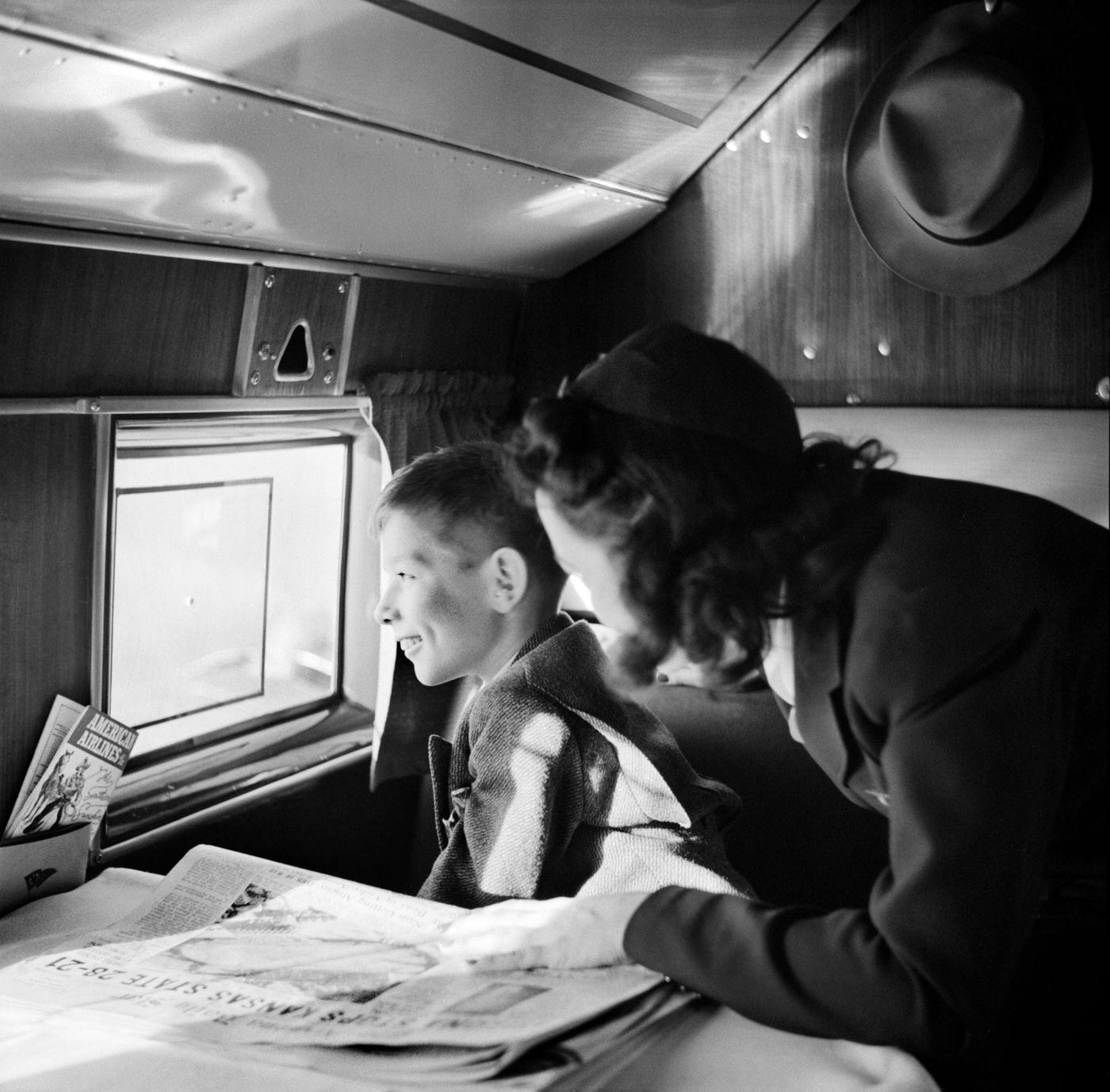
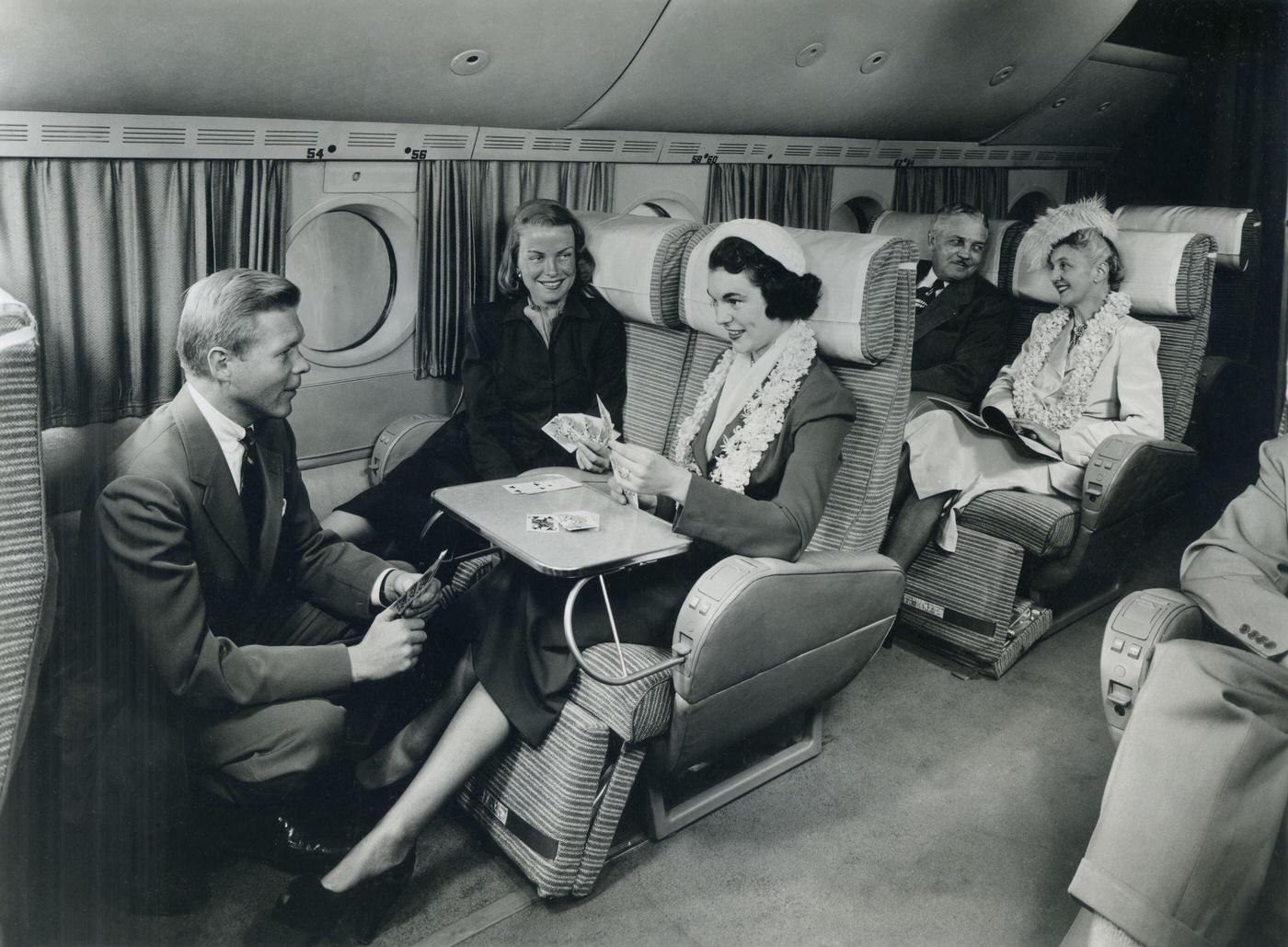
In December 1941, a child passenger and a female flight attendant are pictured during an American Airlines flight from Washington to Los Angeles.Passengers are shown seated two to a row, talking with their inflight neighbors aboard a Mainliner Convair aircraft, while the flight attendant works at the back of the plane in the late 1940s.In 1949, in-flight passengers are shown playing cards and making conversation on a spacious airliner.
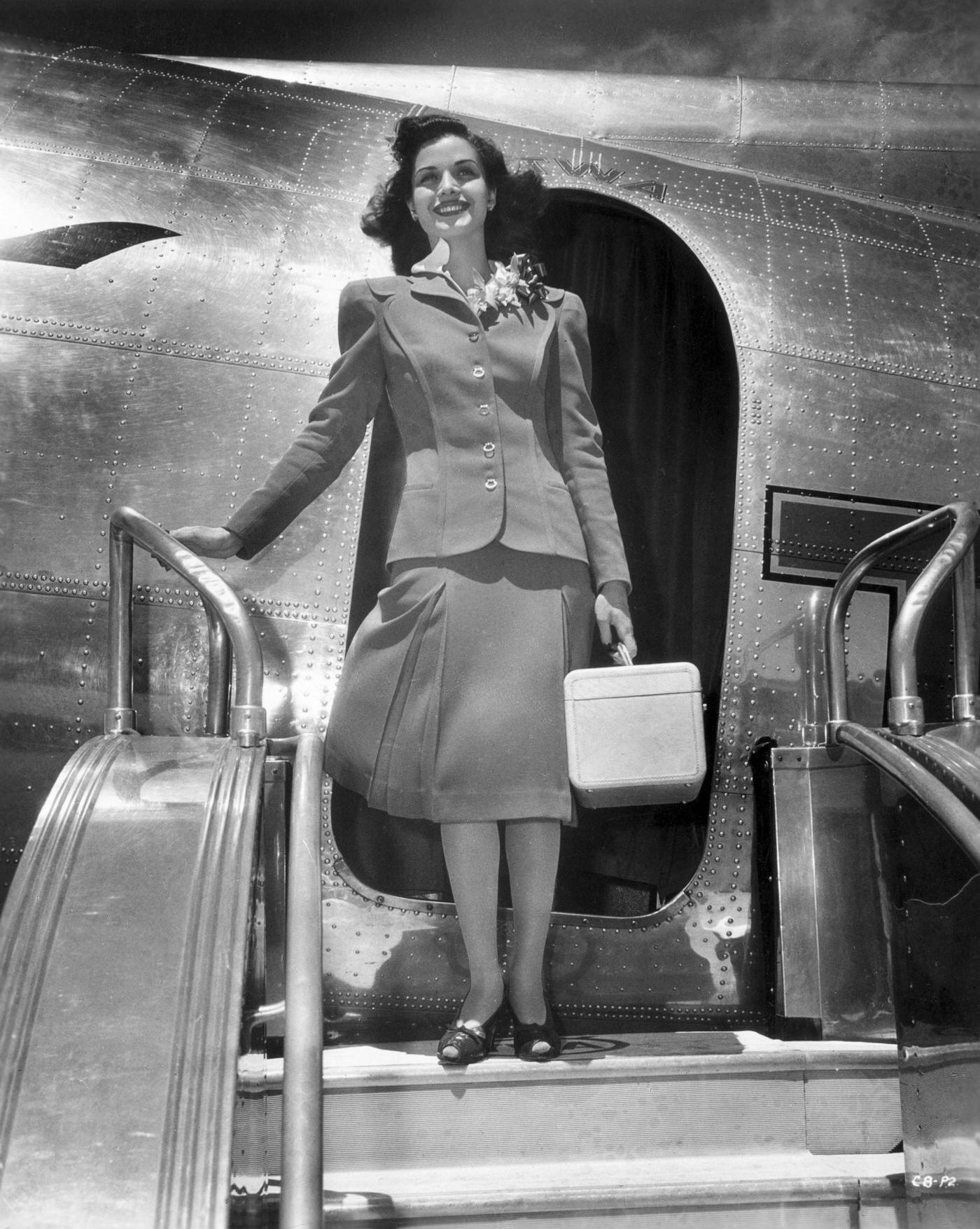
Aviation also became a stage for fashion and culture. In July 1946, Pan American Airways held a fashion show mid-flight on a transatlantic Clipper, with model June Fogg showcasing a lounge suit at 30,000 feet. Film actress Carol Bruce flew into Los Angeles Airport to begin work at Universal Studios, treating the tarmac like a red carpet. Air travel had become part of public life in a way it never was before the war.
In July 1946, June Fogg models a black-and-white lounge suit during a fashion show staged on board a Pan American Airways Clipper aeroplane during its transatlantic flight from the USA.
American stage and screen actress Carol Bruce is seen arriving at Los Angeles Airport to make her film debut at Universal Studios.
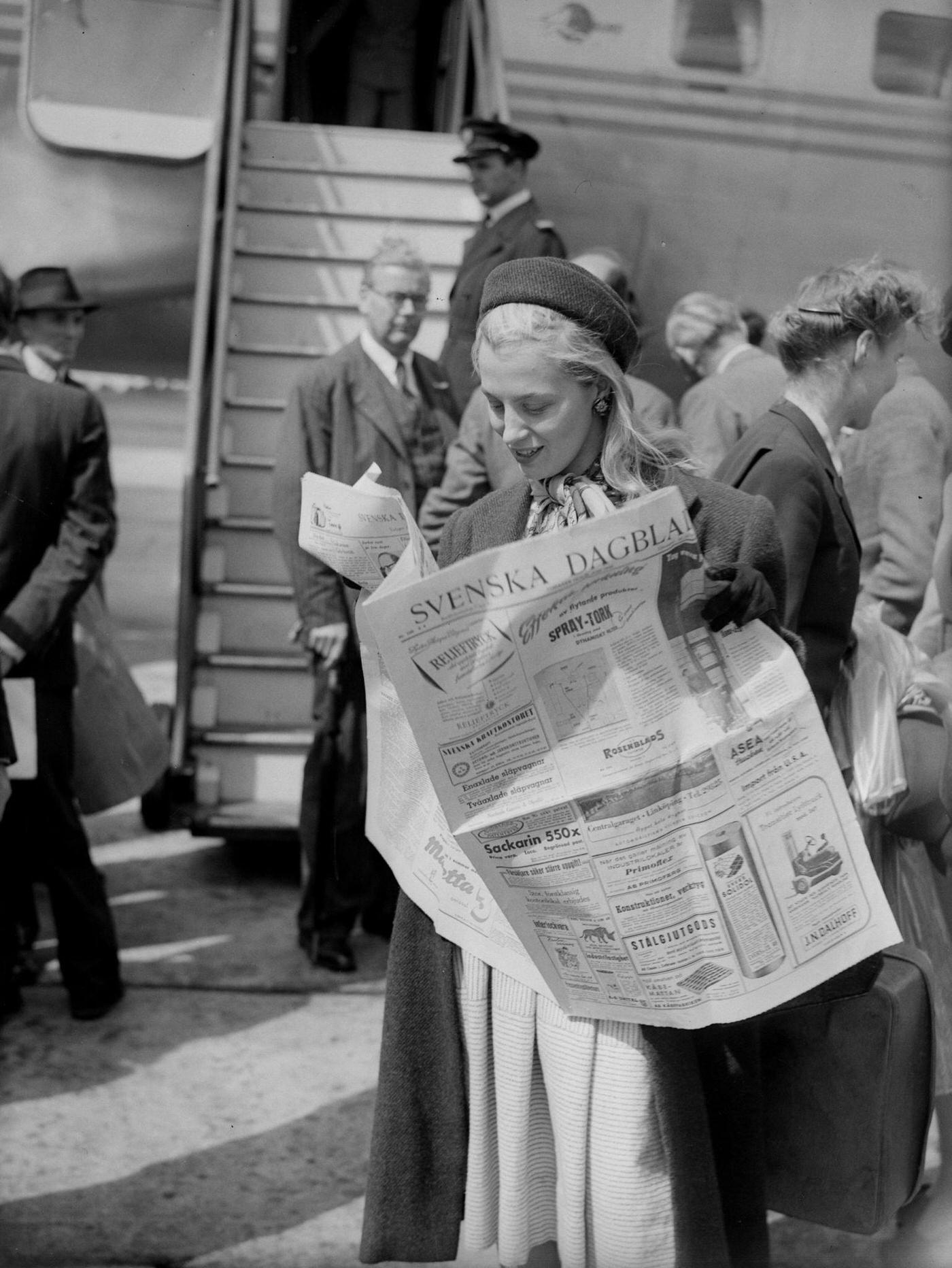
Swedish film actress Mai Zetterling is pictured reading a newspaper brought over from Sweden on the first passenger plane to arrive at Northolt Airport, England, since the merging of the Swedish, Norwegian, and Danish airlines.
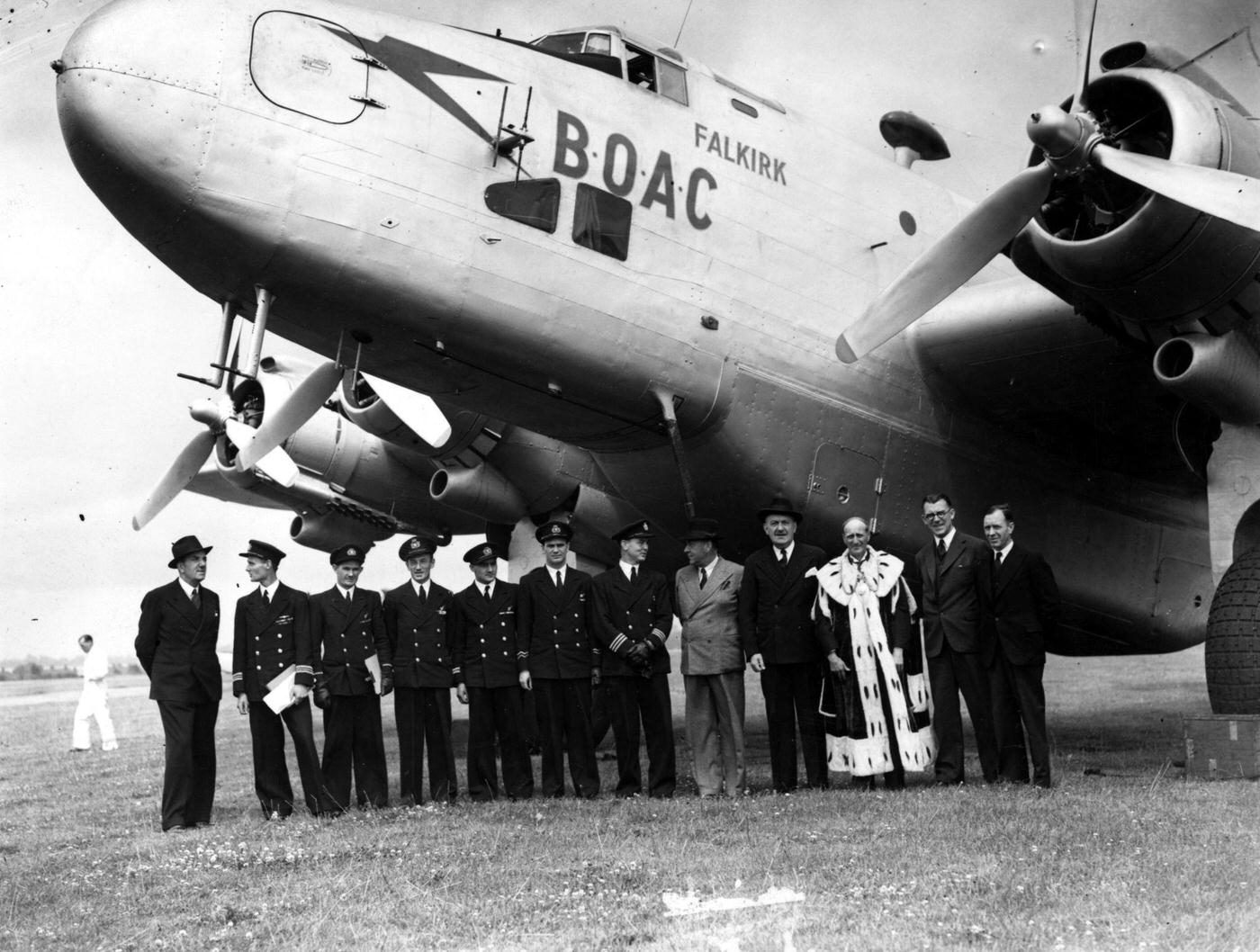
Not every aircraft in the postwar fleet was purpose-built for passengers. Britain converted wartime bombers into civilian transports out of necessity. The Handley Page Halifax bomber became the Halton, reconfigured with passenger accommodation and christened into BOAC service in 1946 under names like the “Falkirk.” The Douglas DC-6 and other new designs also began filling airline routes as manufacturers raced to meet the growing demand.
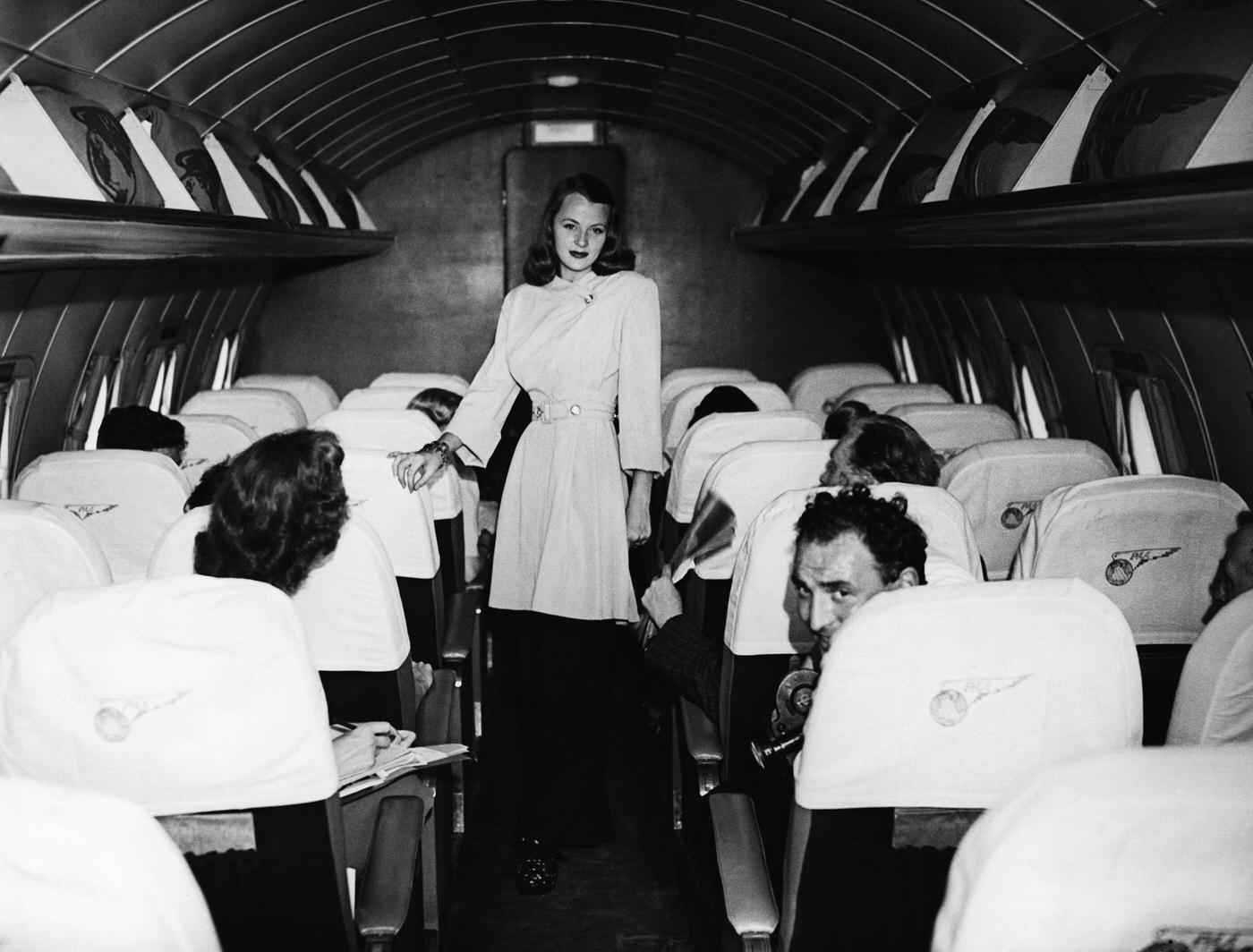
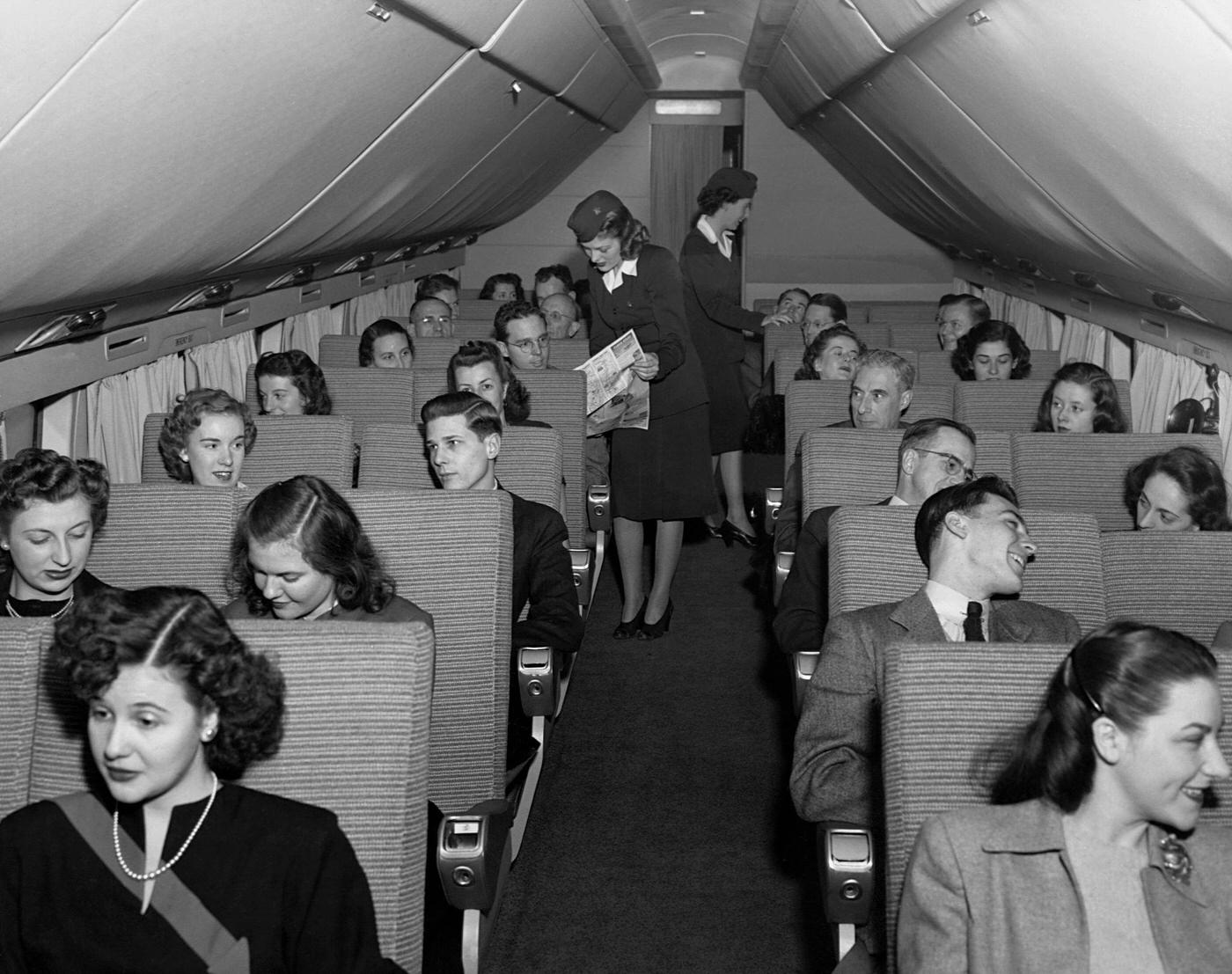
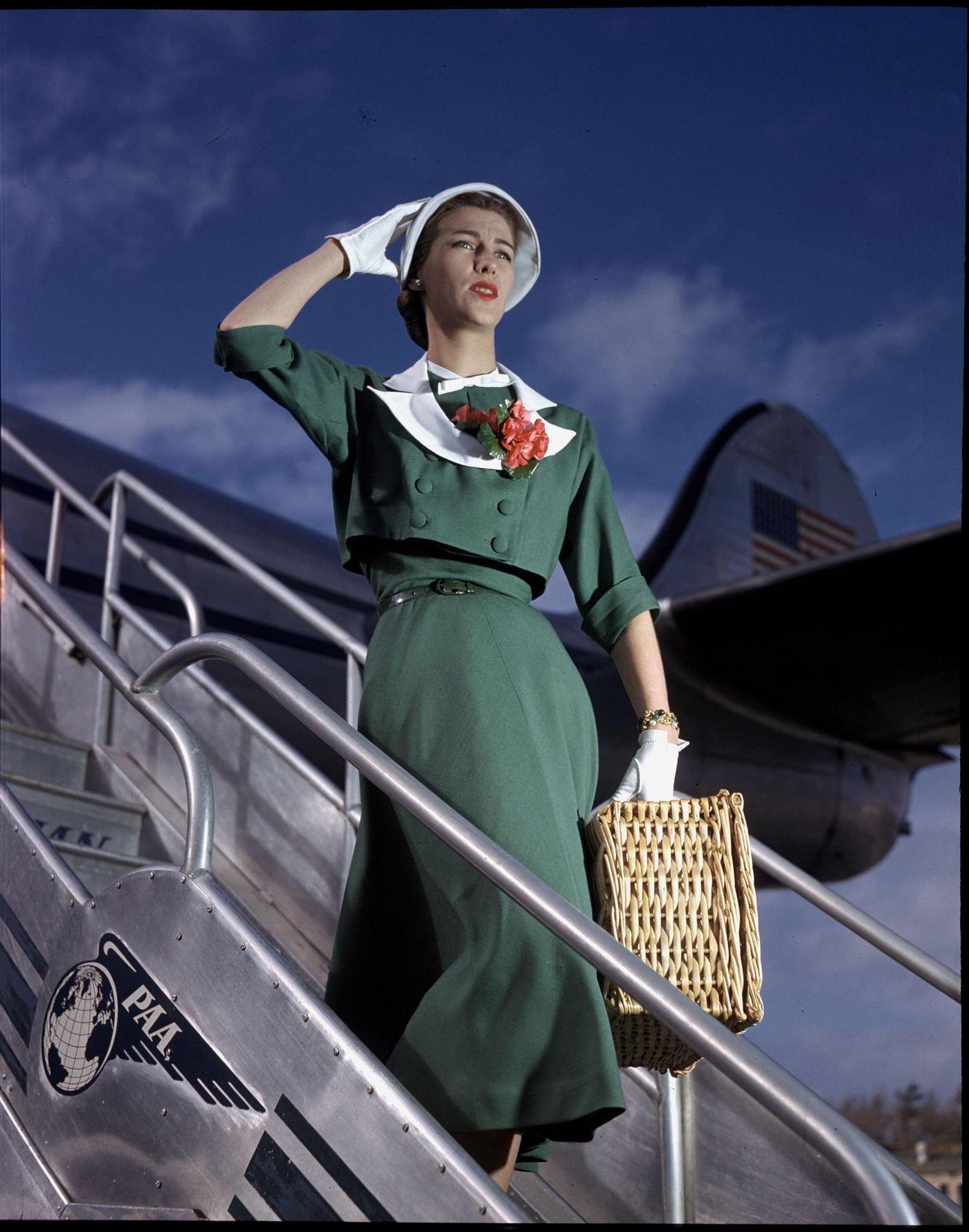
The first of the Handley Page ‘Halton’ aircraft, the civil transport version of the Halifax bomber, with its interior changed for passenger accommodation, is christened the BOAC ‘Falkirk’ in 1946.The interior of a Douglas DC-6 passenger airliner is shown, featuring passengers and flight attendants on a flight.The interior of a McDonnell Douglas DC-6 is shown with flight attendants working with passengers to make the cabin comfortable.In 1947, a model poses as a passenger walking off the Pan American Clipper “Challenge” Lockheed 1049 airliner.
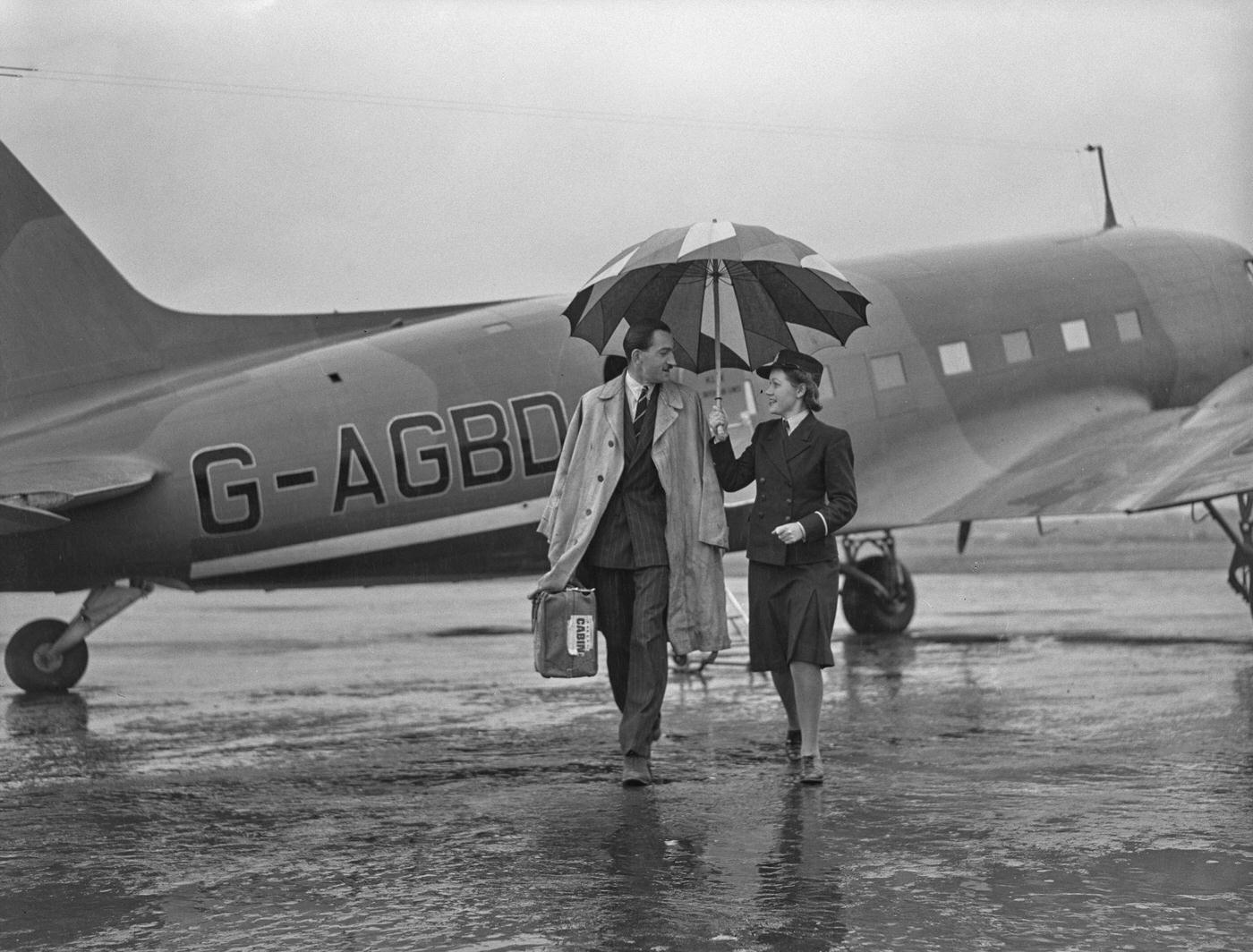
Ground services expanded alongside the aircraft themselves. Passengers arriving in poor weather were met by staff with umbrellas on the tarmac. Airports across Britain and America added viewing galleries where the public could watch planes arrive and depart. Air travel was becoming a spectacle, not just a service.
A female travel clerk with a large umbrella provides shelter for a passenger arriving during heavy rain on an incoming British Overseas Airways Corporation (BOAC) flight at an airport in England.Employes are shown assembling and packing 20,000 bags in the candy shop at Baur’s in scene 2050.Four men are shown sitting on stools at a counter, with a man behind the counter.