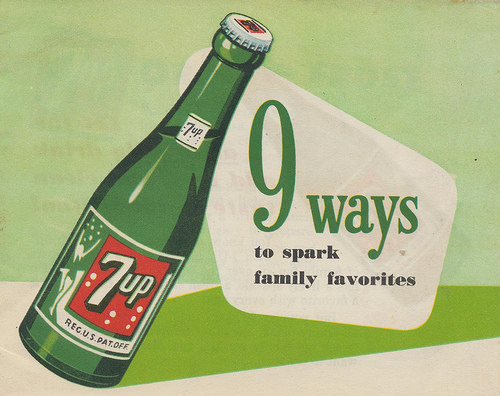
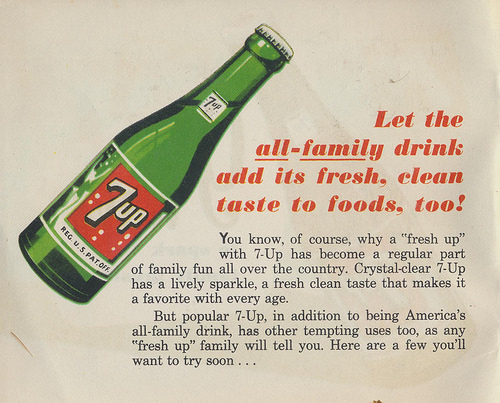
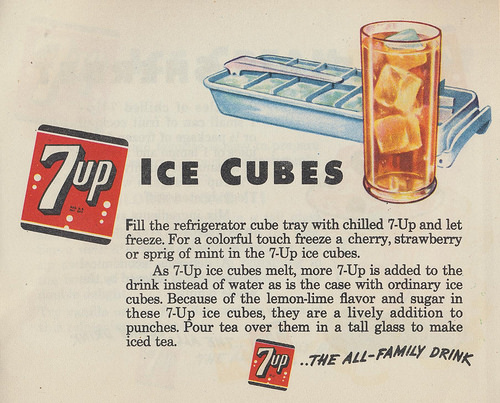
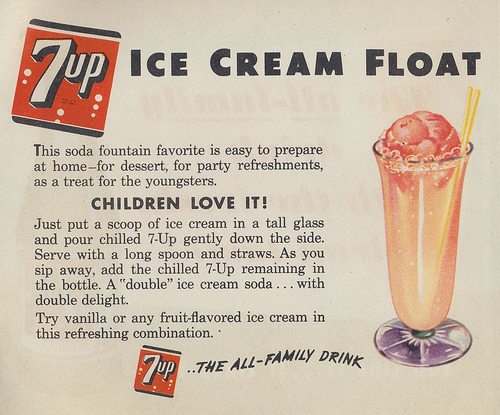
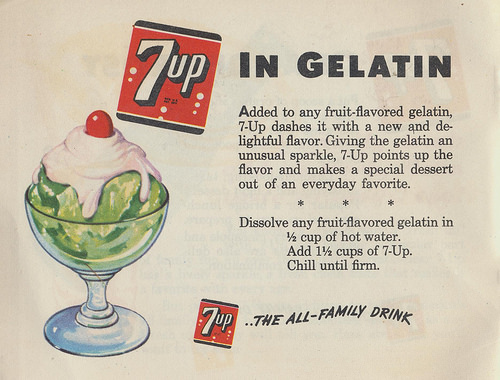
Forget just sipping it! In 1948, 7UP wasn’t just a refreshing drink; it was a secret ingredient to liven up your family meals. This fizzy beverage starred in its own cookbook, offering creative ways to use it in everyday cooking. From glazes for your holiday ham to perking up fruit salads, this booklet showed how 7UP could add a special touch to classic dishes.
The cookbook, titled “7UP – 9 Ways to Spark Family Favorites,” was a guide to entertaining and creating memorable meals. It offered tips on party planning, table setting, and even suggested games for family gatherings. It reflected a post-war desire for normalcy and family togetherness, with 7UP positioned as a key ingredient in creating happy memories.
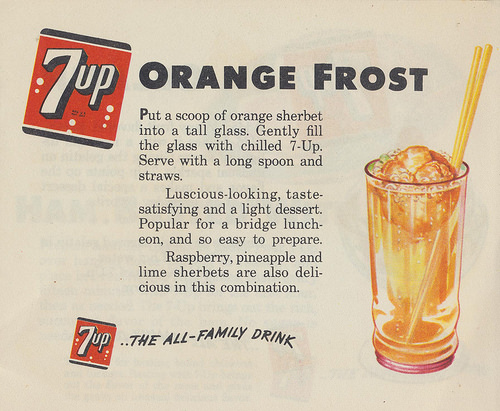
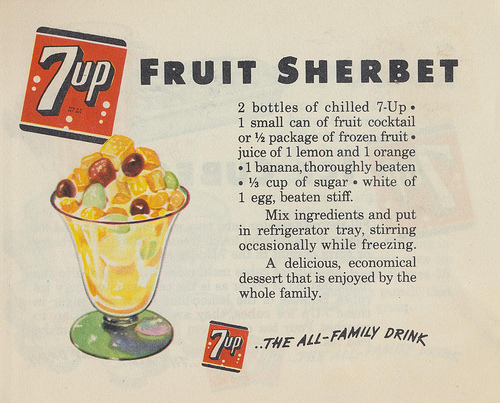
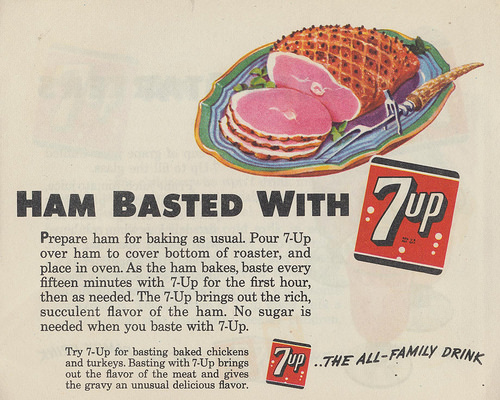
The recipes themselves were surprisingly diverse. 7UP was used to enhance the flavor of meats, like ham and chicken, creating unique glazes and marinades. It added a zesty twist to salads, both fruit and vegetable, and it even found its way into desserts, like a refreshing 7UP sherbet. The cookbook emphasized the versatility of this bubbly drink, showcasing its ability to complement both sweet and savory dishes.
One of the most intriguing uses for 7UP was in preserving the color and freshness of fruits. The cookbook explained how soaking fruits in 7UP could prevent them from browning, keeping them vibrant and appealing for salads and desserts. This was a practical tip for home cooks, especially at a time when fresh produce might have been less readily available.