The year 1954 was a turning point for American car design. The country was deep in its love affair with the Space Age, and automakers were racing to show the public what the future might look like on four wheels. Ford answered that call with one of the boldest concept cars ever built — the FX-Atmos.
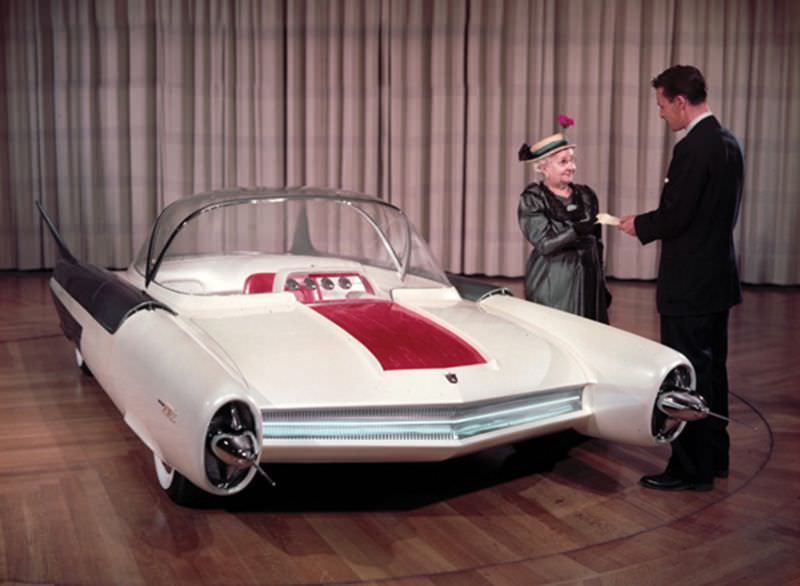
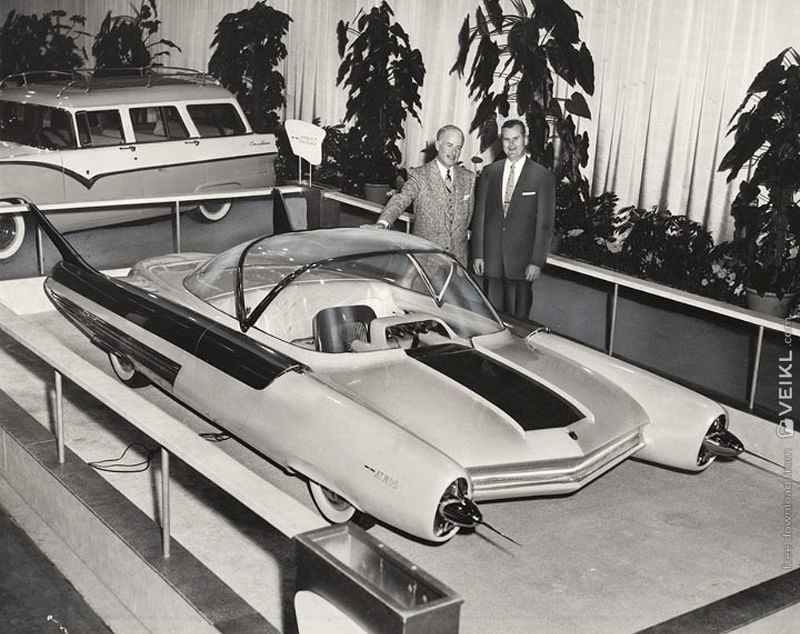
Ford unveiled the FX-Atmos at the 1954 Chicago Auto Show, and it stopped people in their tracks. At a glance, it looked less like a car and more like something that had just landed from another planet. Every design choice on the FX-Atmos was deliberate, and every one of them pointed toward the future.
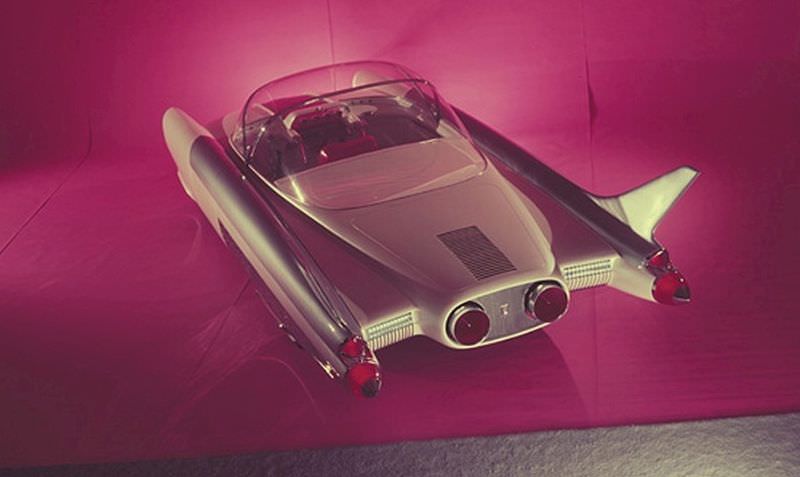
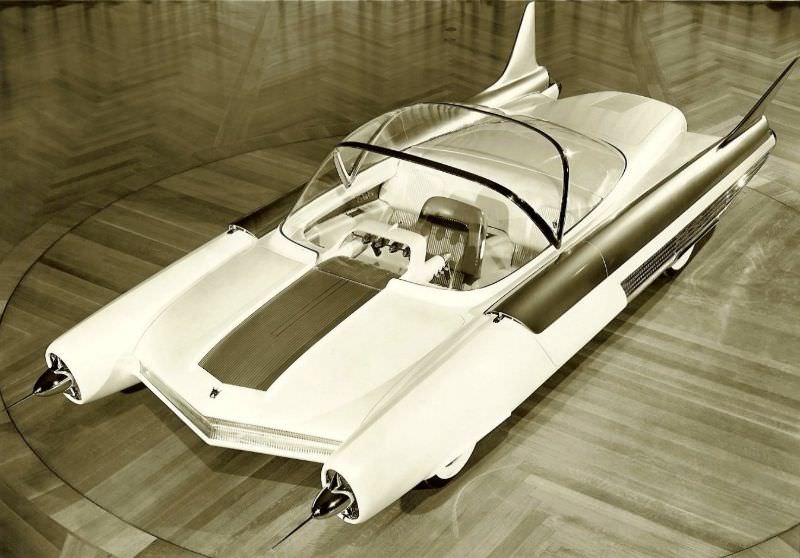
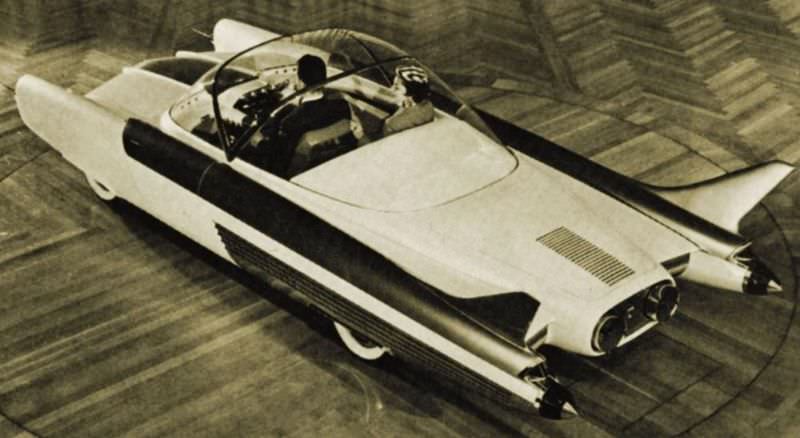
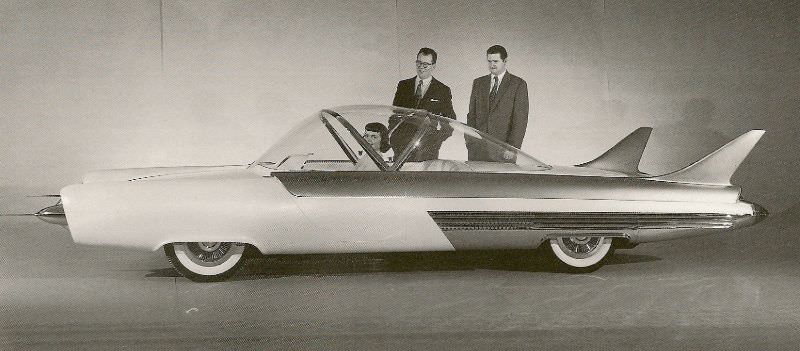
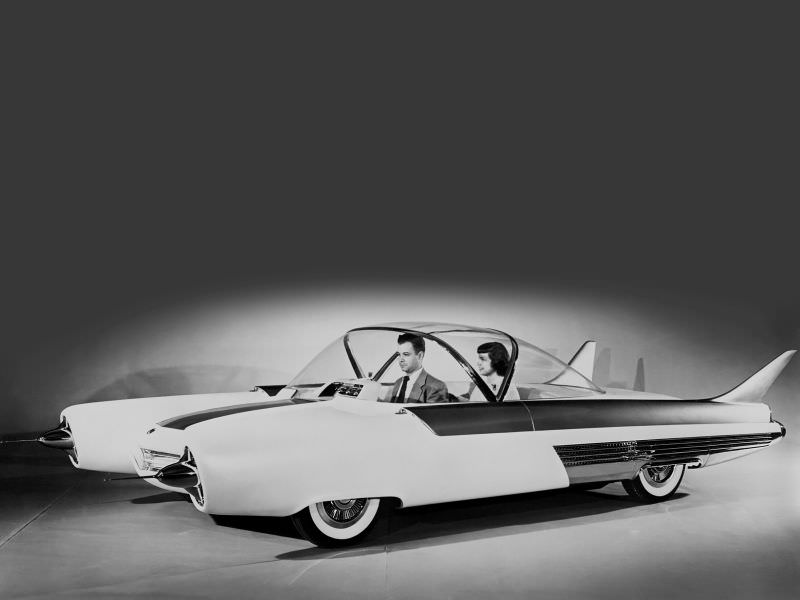
The most striking feature was the full glass dome roof that enclosed the entire cabin. Rather than a traditional hardtop or a folding convertible roof, the FX-Atmos gave its occupants a panoramic, bubble-like canopy. Visibility was nearly unobstructed in every direction. It was the kind of design that made onlookers feel the car belonged in a science fiction film.
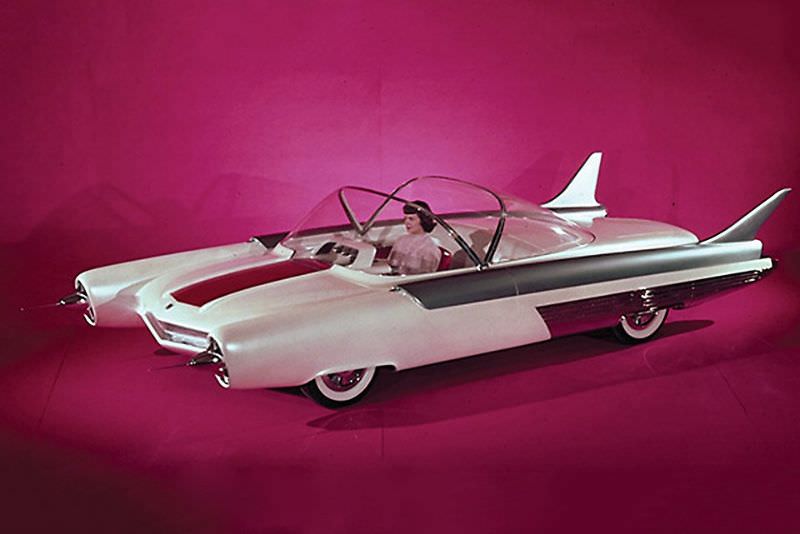
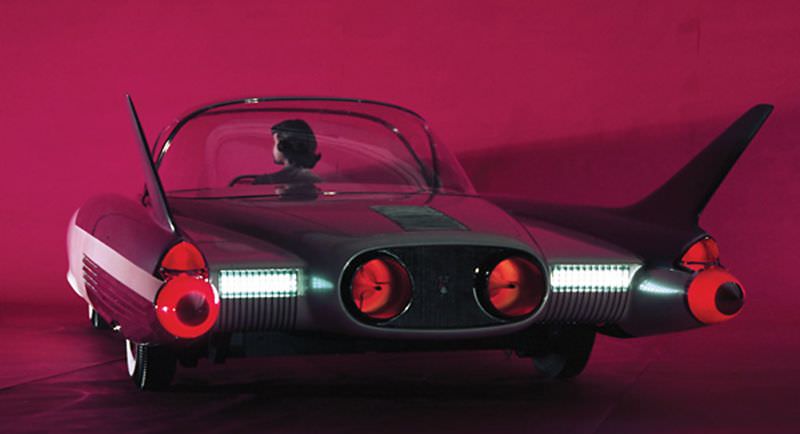
The tail fins swept dramatically upward and backward, echoing the shape of jet aircraft that were redefining aviation at the time. Those fins weren’t the only aeronautical nod on the car. The taillights were designed to look like rocket exhaust ports, glowing at the rear of the vehicle as if the car were propelled by thrust rather than an engine.
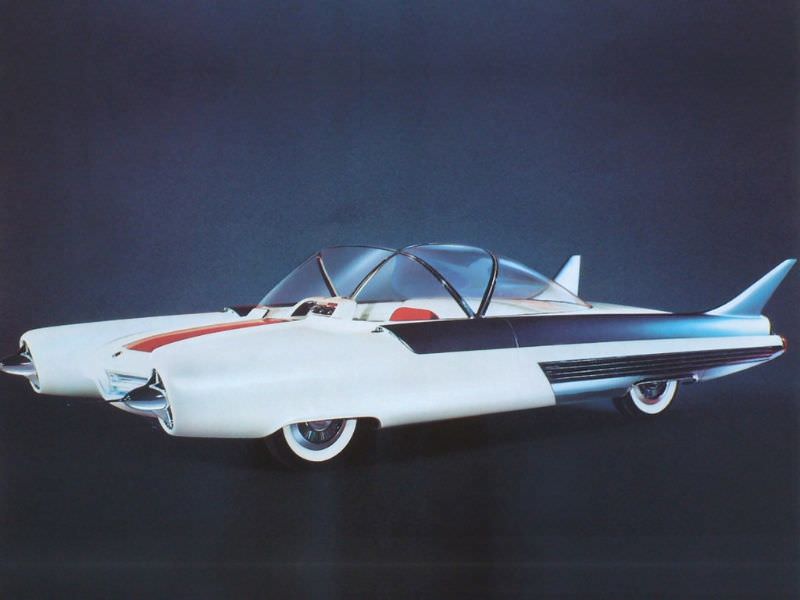
Running along the fender pods were needle-like radio antennae, adding to the car’s sharp, bristling silhouette. Up close, the FX-Atmos was dense with details. Nothing about it was plain or understated.
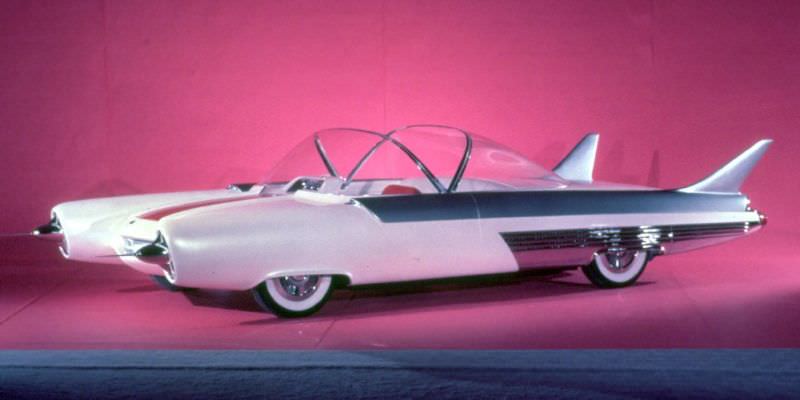
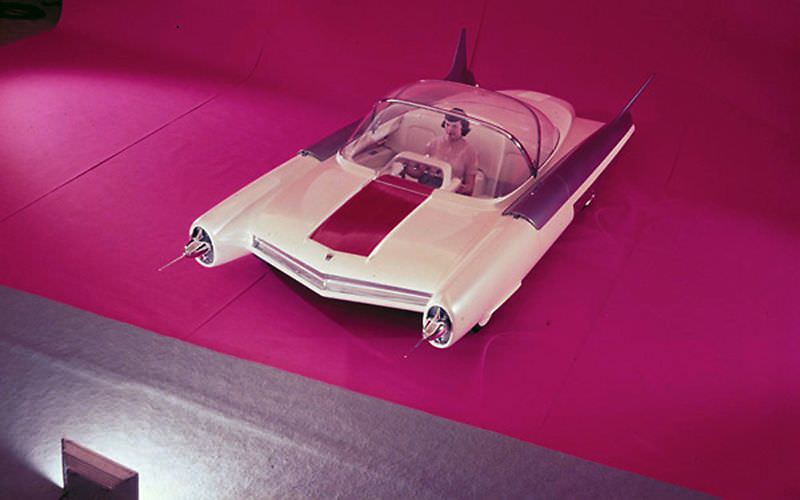
Inside, the seating arrangement broke from every convention of the day. The driver sat in a single center-mounted seat at the front of the cabin, positioned in the exact middle of the car — not offset to the left or right as in a standard vehicle. Behind the driver were two rear passenger seats. This layout gave the interior a cockpit-like feel, reinforcing the aircraft and spacecraft themes running throughout the design.
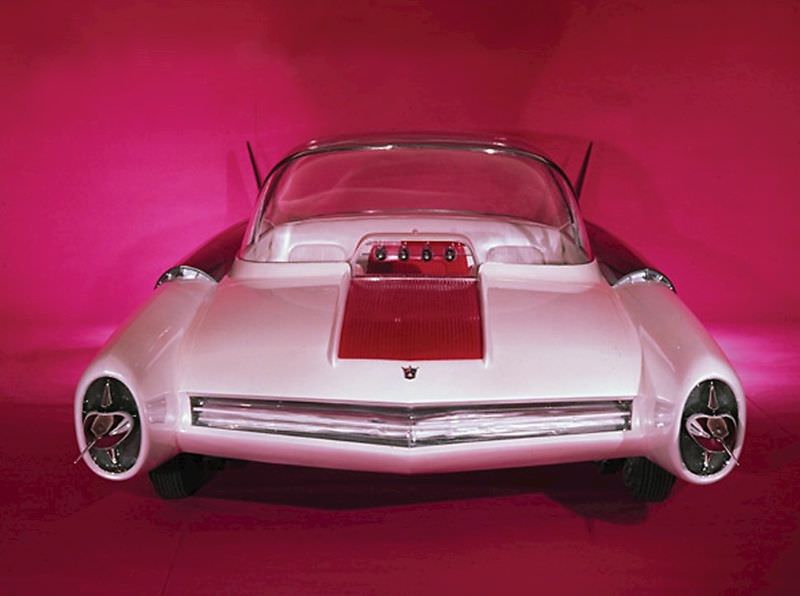
Perhaps the single most radical element of the FX-Atmos was what sat in place of a steering wheel. There wasn’t one. Instead, Ford installed a device called the “Roadscope” — a radar screen mounted directly on the dashboard. The Roadscope was designed to give the driver real-time highway information, feeding data about the road ahead rather than requiring the driver to grip a wheel and physically steer in the traditional sense.
This concept pointed toward ideas that engineers and futurists were genuinely discussing in the early 1950s — the possibility that highways of the future would be electronically guided, removing much of the burden of driving from the person behind the wheel. The FX-Atmos wasn’t just a styling exercise; it was a physical argument for a particular vision of transportation.
The car was also considered as a candidate for a nuclear power plant. Atomic energy was a serious topic of conversation in the mid-1950s, with scientists and engineers publicly exploring whether nuclear reactors could one day power vehicles. The FX-Atmos existed in that same speculative space, a rolling showcase of technologies that were either emerging or being imagined.
Beyond the automotive world, the FX-Atmos left a mark on popular culture. It has been argued that the car served as a significant inspiration for Gerry Anderson’s television series of the same name. Anderson’s work frequently featured sleek, futuristic vehicles, and the visual language of the FX-Atmos aligned closely with the kind of design vocabulary that defined his productions.
Ford built the FX-Atmos as a show car, not a production model. It was never intended for sale or road use. Its purpose was to generate excitement, demonstrate design ambition, and invite the public to think about what driving might look like decades down the road.
Concept cars of this era often served as testing grounds for public reaction. Automakers watched closely to see which ideas drew crowds and which ones fell flat. The FX-Atmos drew crowds. Its combination of the glass dome, the rocket exhaust taillights, the center driver’s seat, and the radar screen created a package that was genuinely unlike anything else on the show floor.
The 1950s produced dozens of American concept cars, many of them wild and heavily finned. But the FX-Atmos stood apart because it pushed beyond mere styling. Its Roadscope radar system and its nuclear power consideration connected it to real technological conversations happening in laboratories and research institutions at the time.
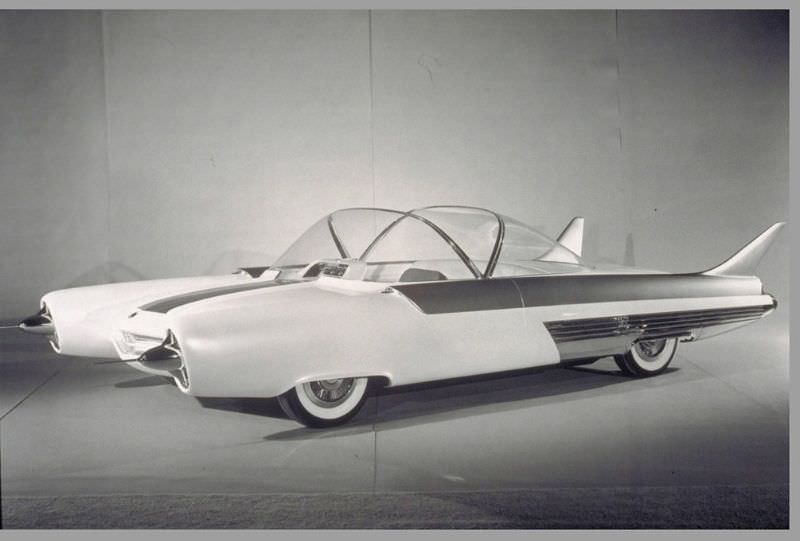
The Chicago Auto Show gave Ford the perfect stage. Crowds filled the exhibition hall, and the FX-Atmos sat under the lights as a full-scale model of a world that hadn’t arrived yet — a world where radar guided your route, atomic energy powered your engine, and a glass dome above your head let you watch the sky as you drove.