In the 1950s, Spain was a country living under tight control. Francisco Franco had ruled as dictator since the end of the Spanish Civil War in 1939. Political parties were banned. Labor unions were illegal. Any form of political activity was forbidden. The government controlled prices, restricted trade, and kept Spain largely cut off from the rest of the world. The country stayed out of World War II but paid a price for its isolation — the economy stagnated and many Spaniards lived in deep poverty.
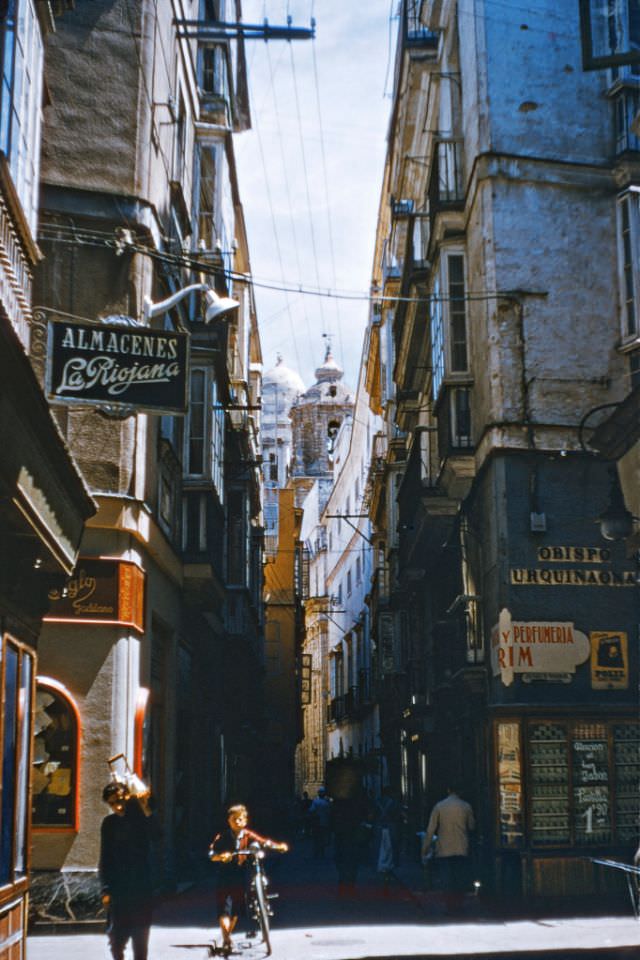
The ancient city of Toledo was one of Spain’s most striking urban settings. Its narrow, winding streets had changed little over centuries, and daily life played out in the shadows of medieval stone walls.
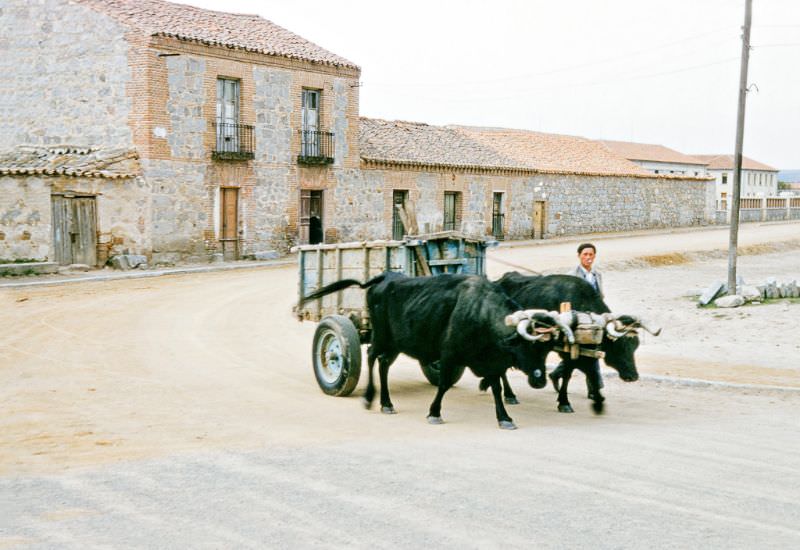
Away from the cities, smaller towns and rural roads told a different story. The landscape between villages was dotted with simple structures and unpaved paths. Life moved slowly, often on foot or by animal-drawn cart.
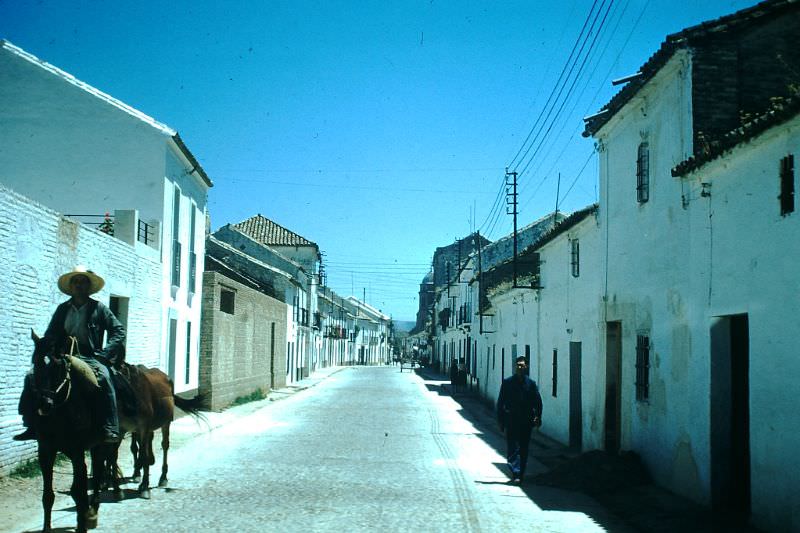
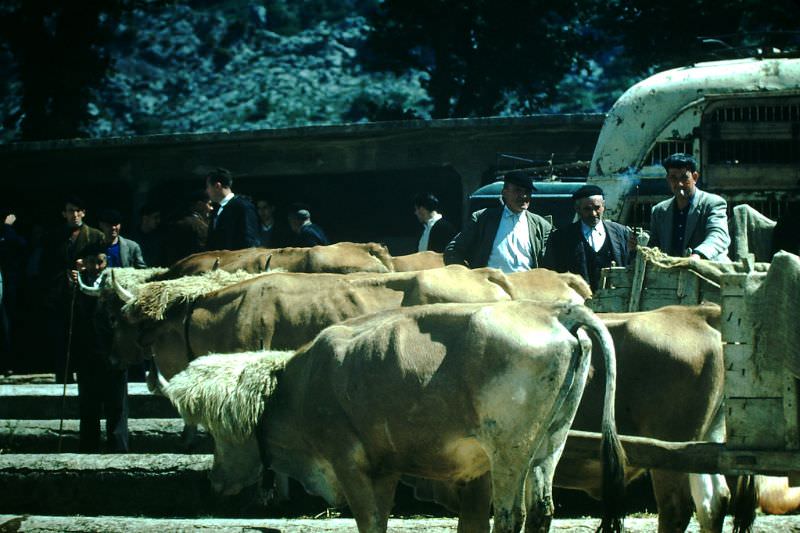
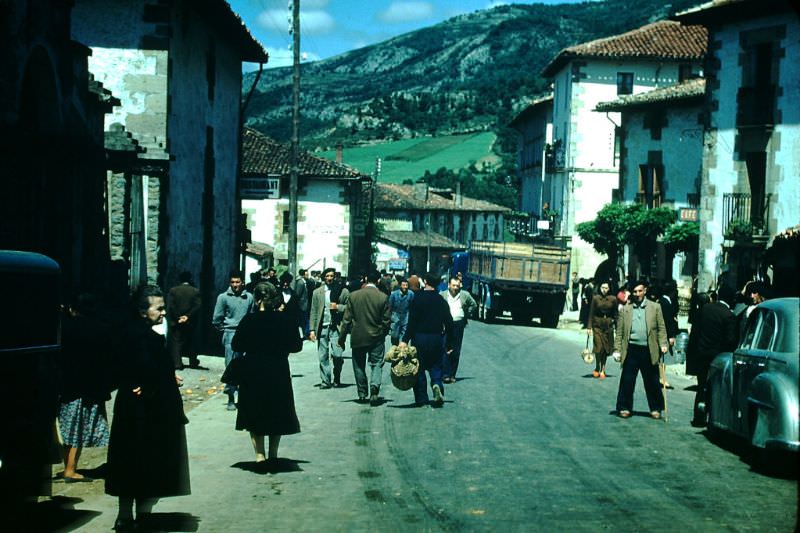
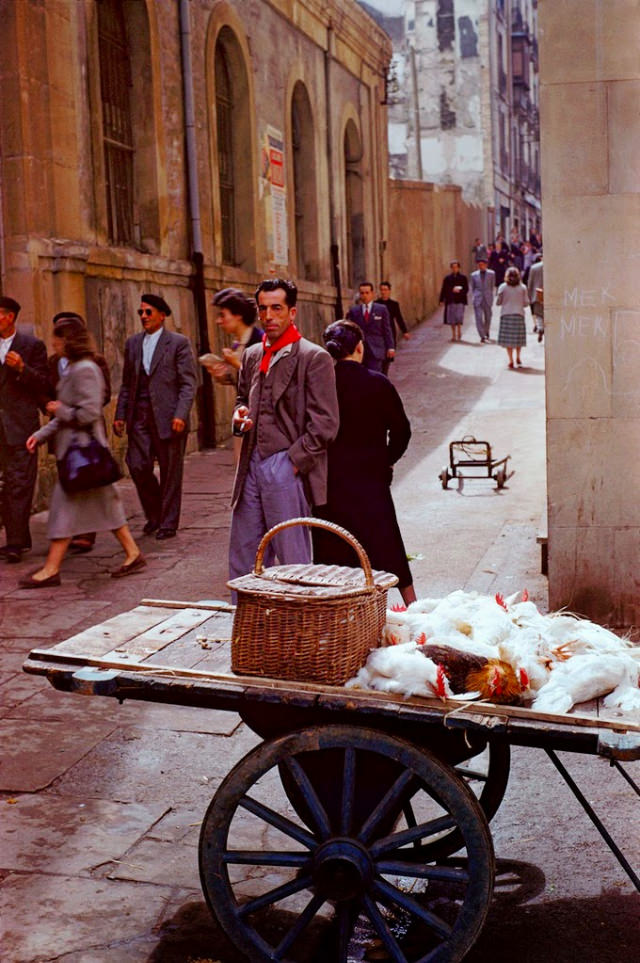
In the Basque Country, market days were a central part of community life. Towns like Lecumberri drew farmers, traders, and families who gathered to buy and sell goods. These markets were not just economic events — they were where news traveled and neighbors reconnected.
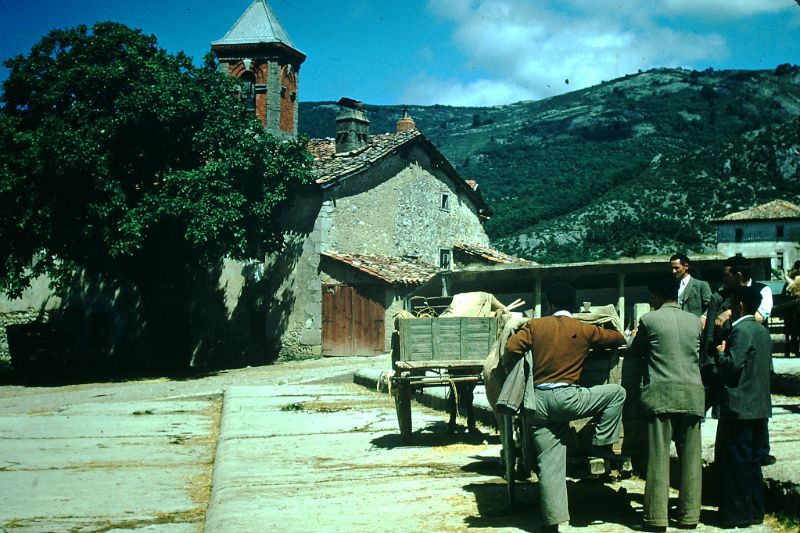
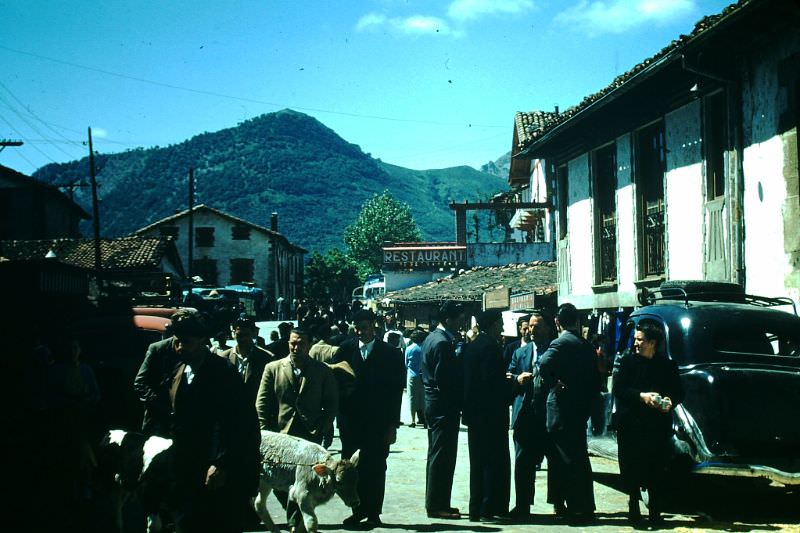
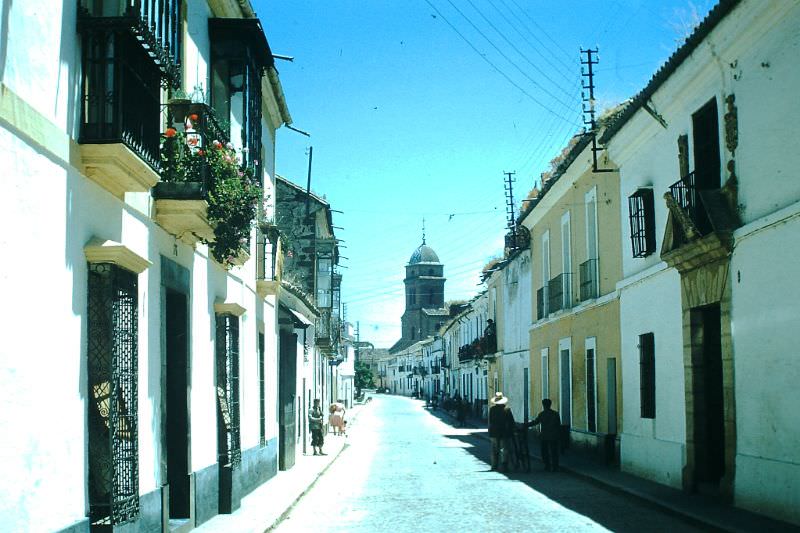
Nearby Irurzun showed a quieter side of Basque life. Its streets were calm and orderly, framed by traditional architecture typical of northern Spain.
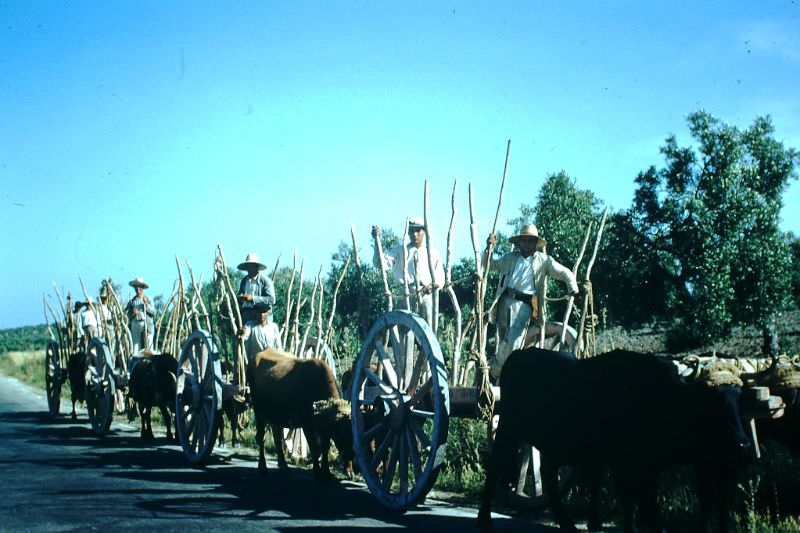
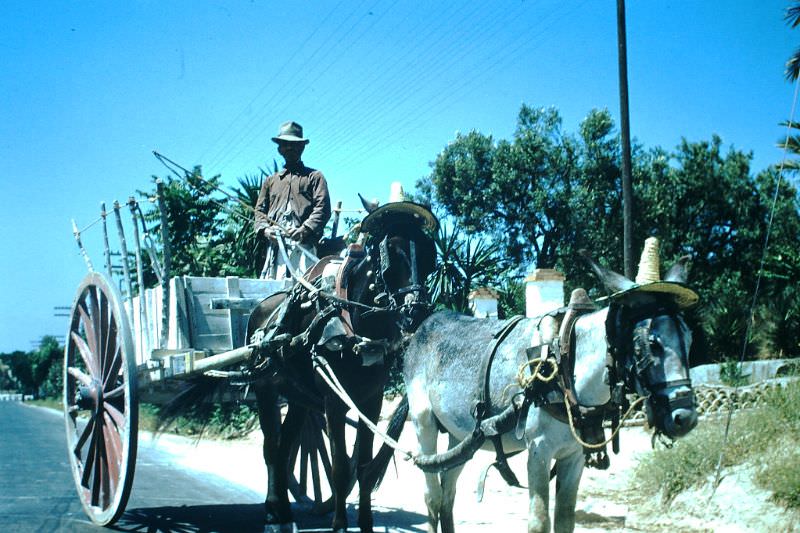
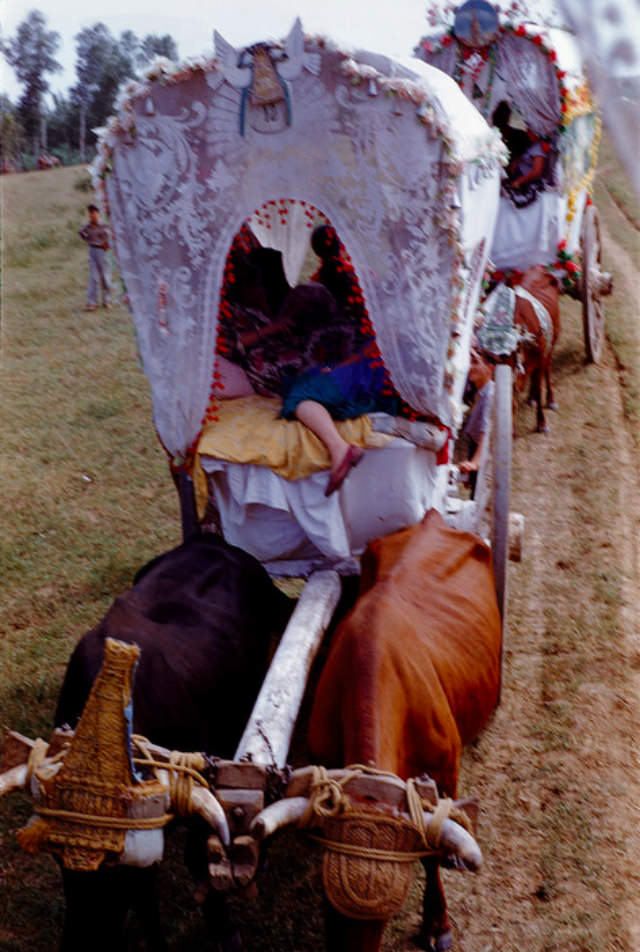
Transport across rural Spain in the 1950s still relied heavily on animal power. Ox-drawn carretas — wooden carts — were a common sight on the roads leading into Seville, carrying goods and families across long stretches of open land.
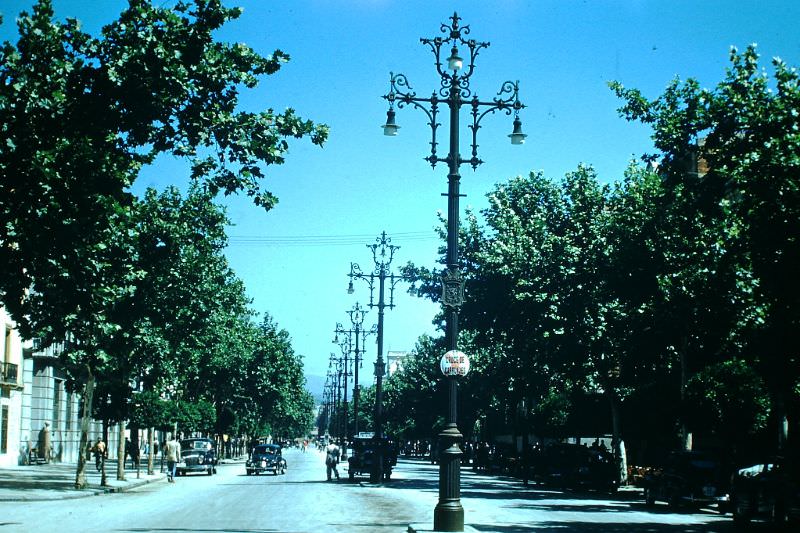
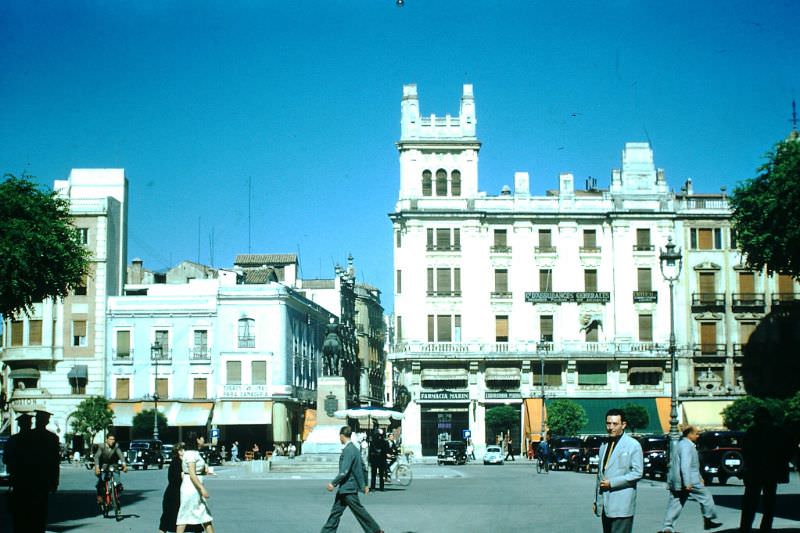
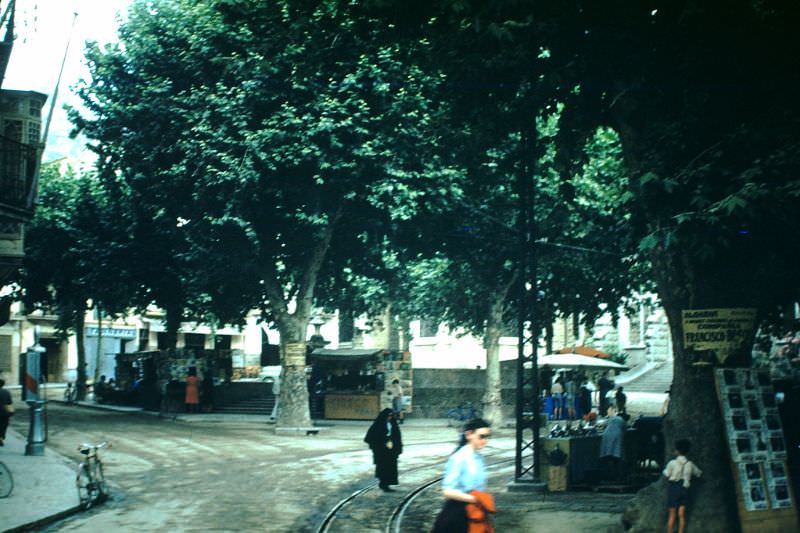
Córdoba’s main thoroughfare, the Calle Gran Capitán, showed the more prosperous face of Andalusian city life. Shops and cafés lined the wide boulevard, and pedestrians filled the sidewalks.
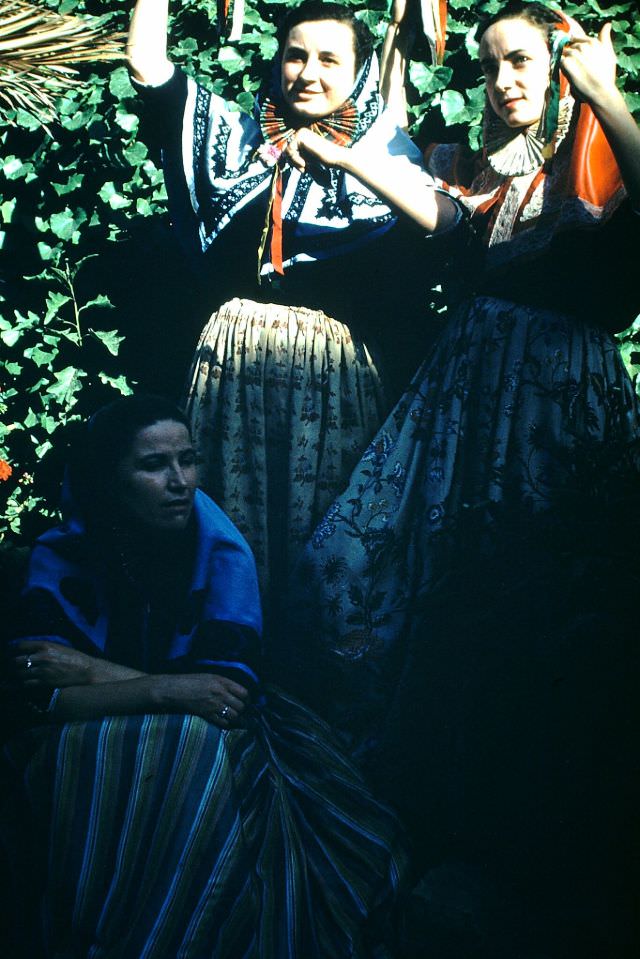
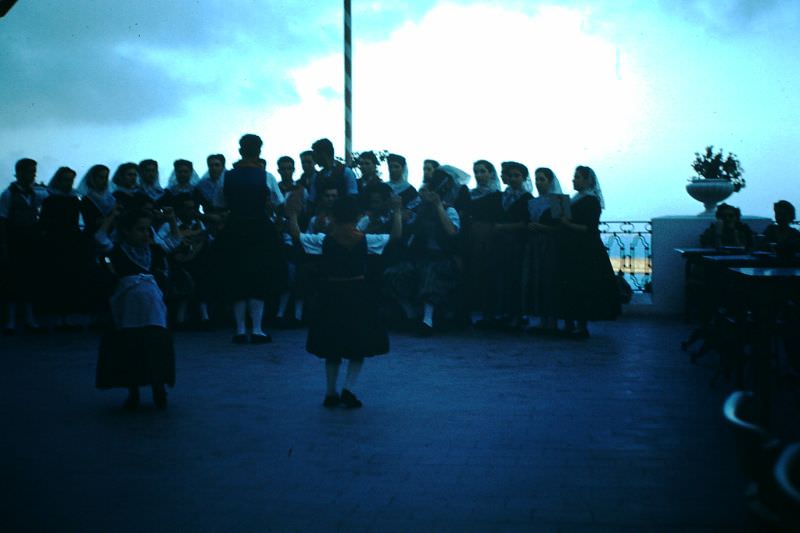
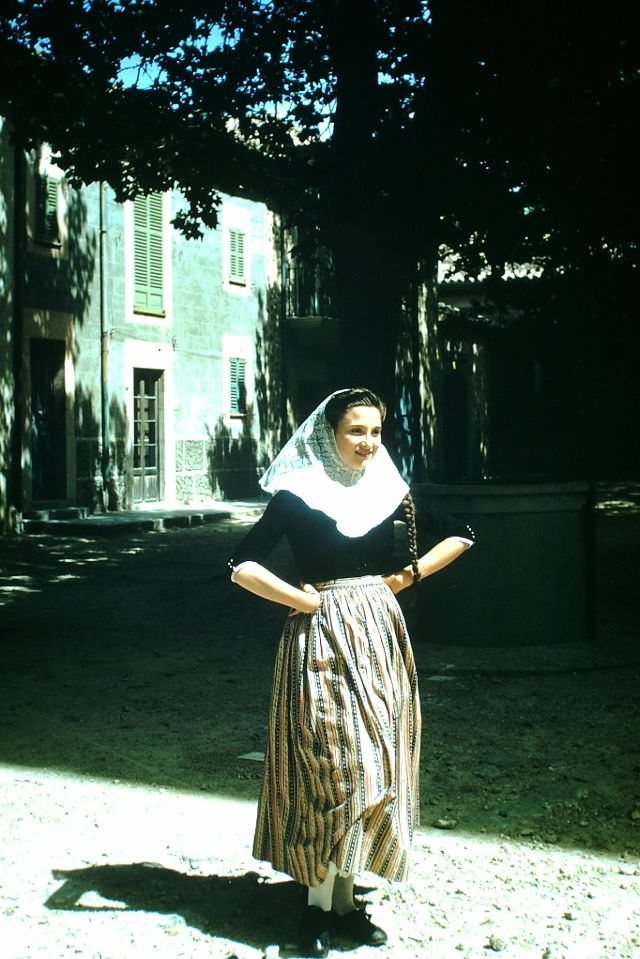
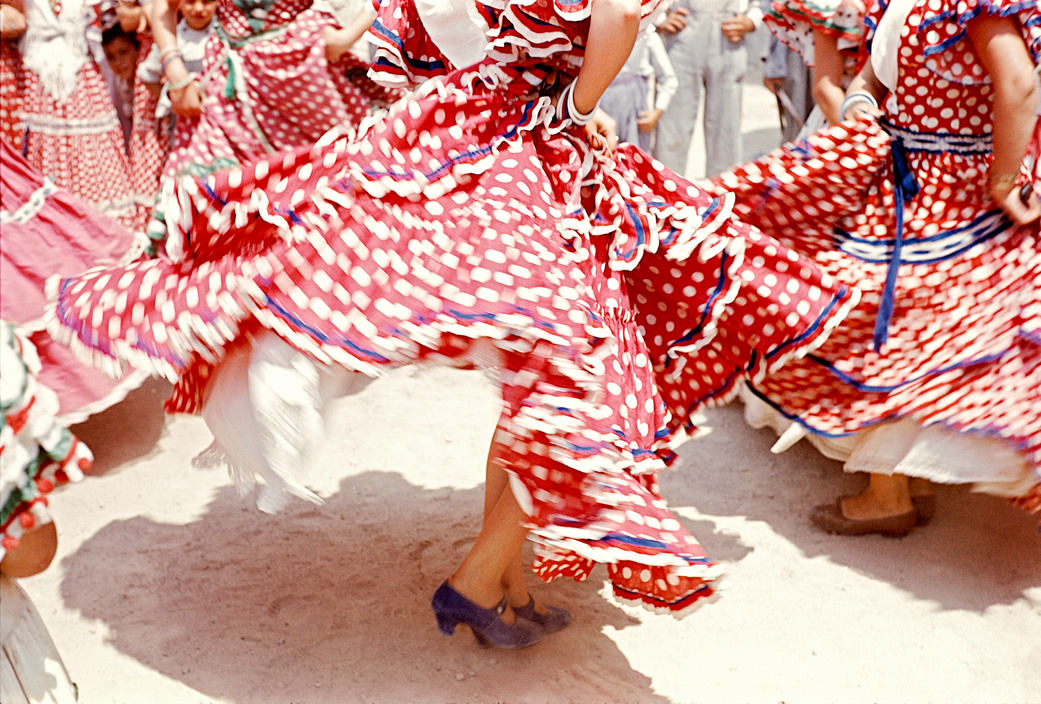
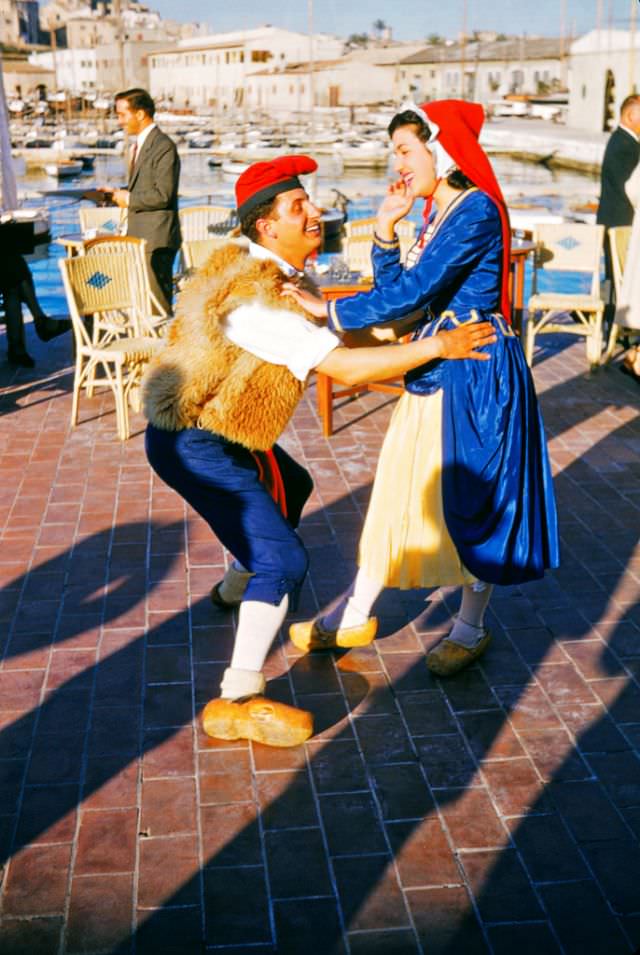
On the island of Mallorca, traditional culture was kept alive through folk dancing. Performers in regional costumes carried on centuries-old traditions at festivals and local celebrations.
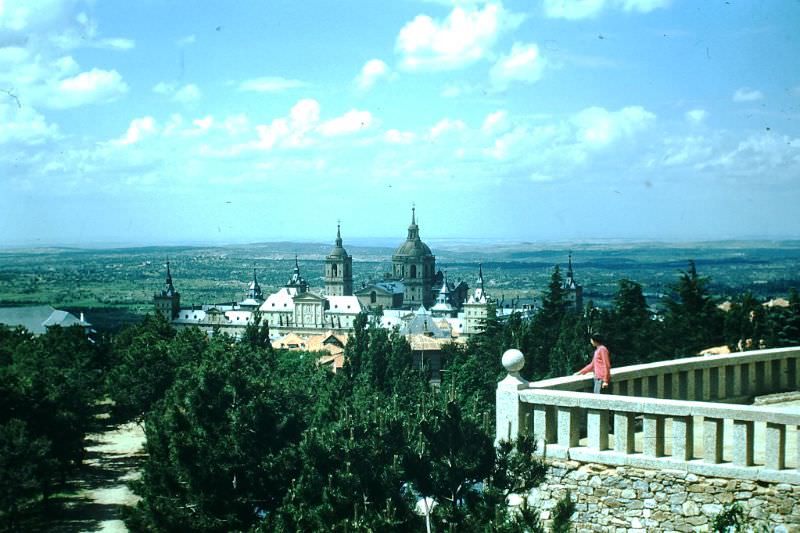
Just outside Madrid, the Royal Monastery of El Escorial stood as one of Spain’s most imposing landmarks. Built in the 16th century, it served as a royal residence, monastery, and mausoleum for Spanish kings.
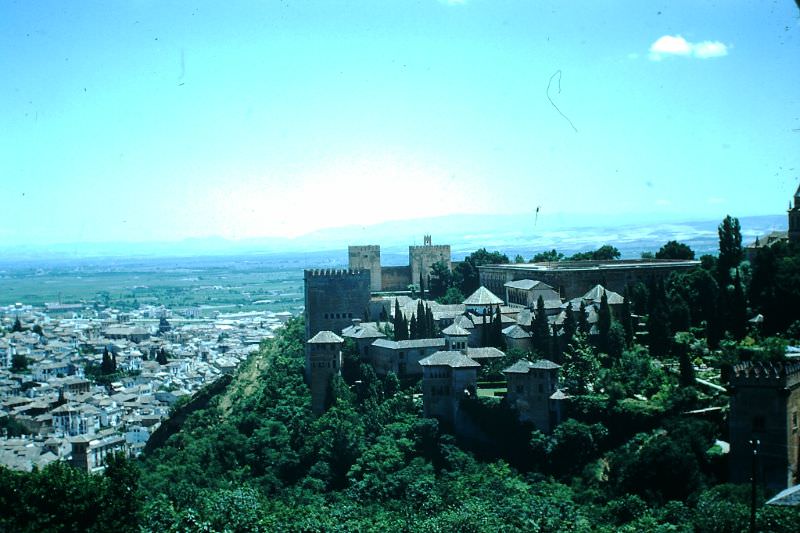
Granada’s Alhambra was a fortress-palace complex originally built by the Moorish rulers of Al-Andalus. By the 1950s, it was one of Spain’s most visited historic sites. The surrounding area around the Alhambra was home to Romani communities who had lived in the region for generations.
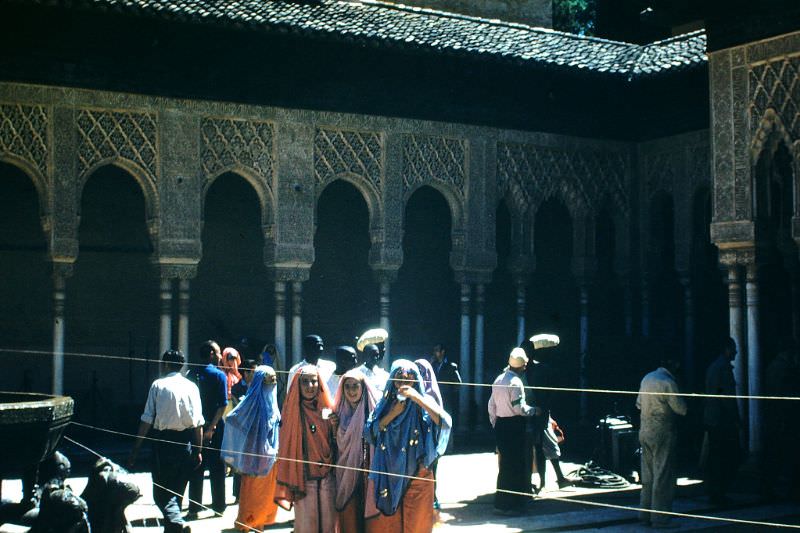
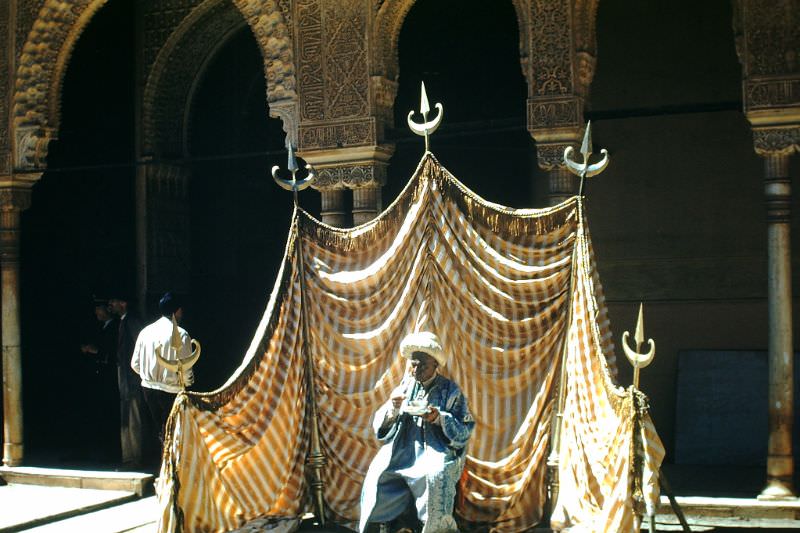
The Alhambra’s dramatic architecture also attracted film crews. Its courtyards and towers made it a natural backdrop for productions shooting on location in Spain during the decade.
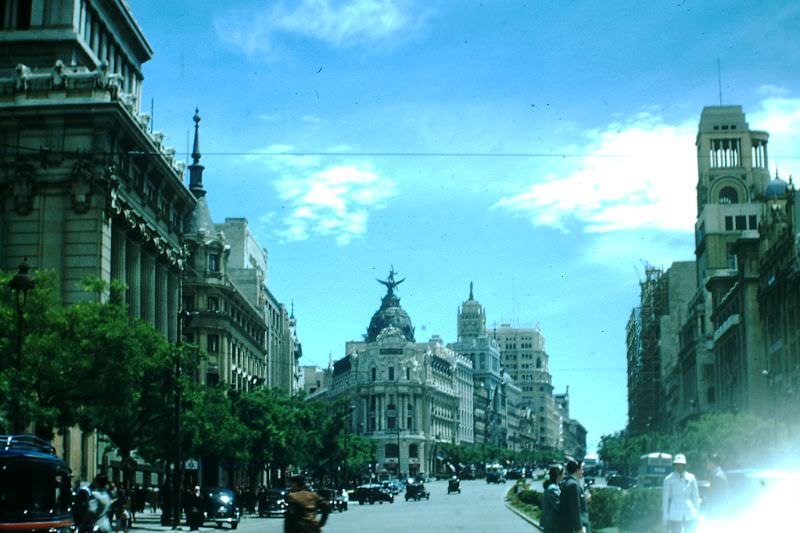
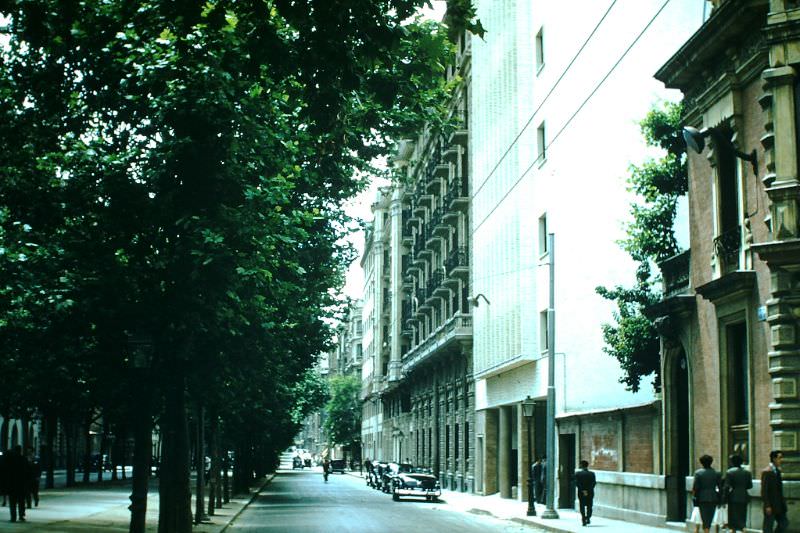
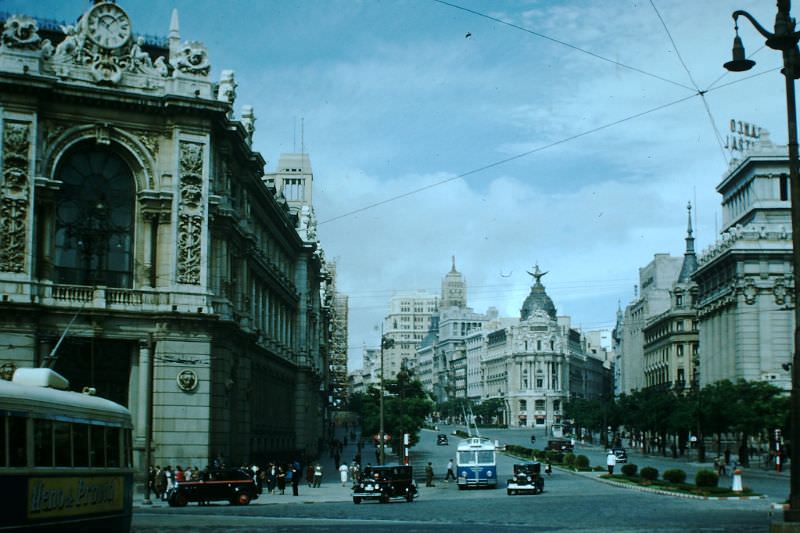
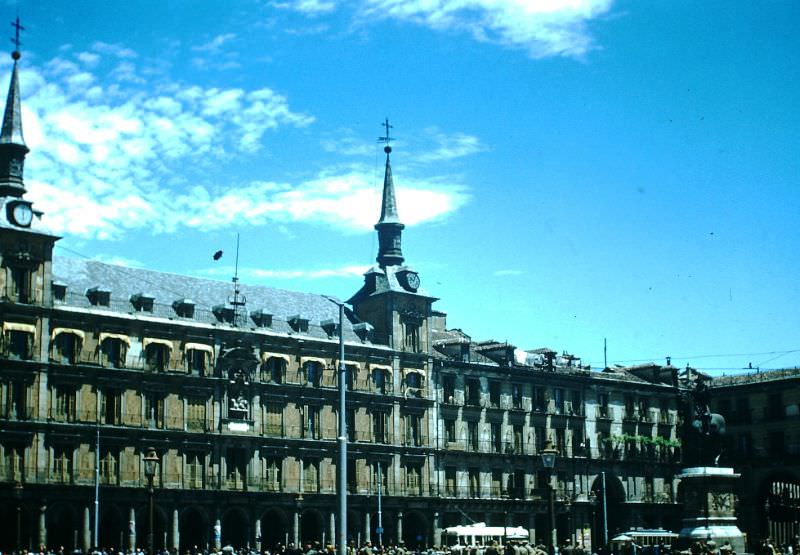
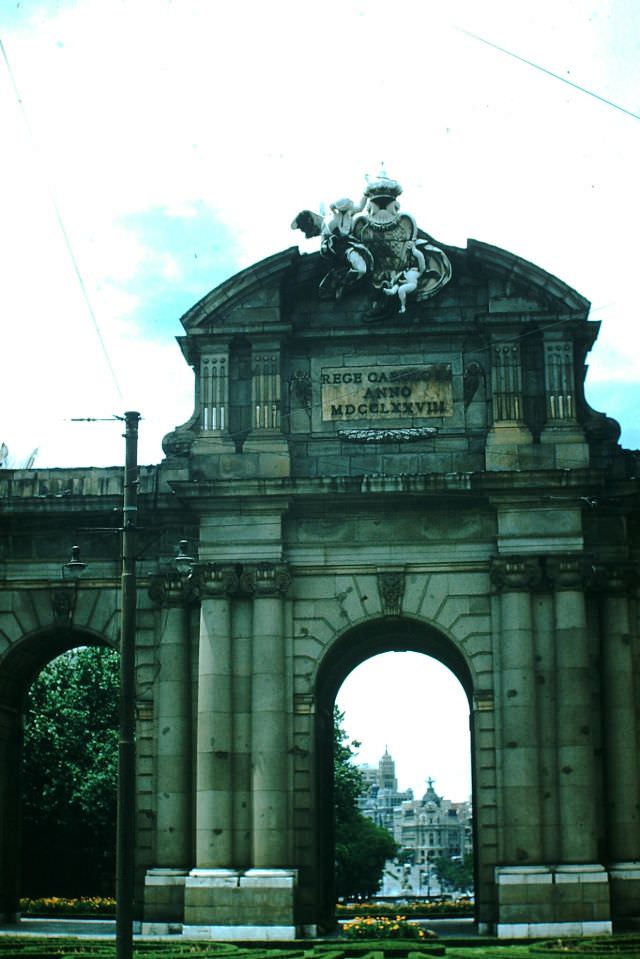
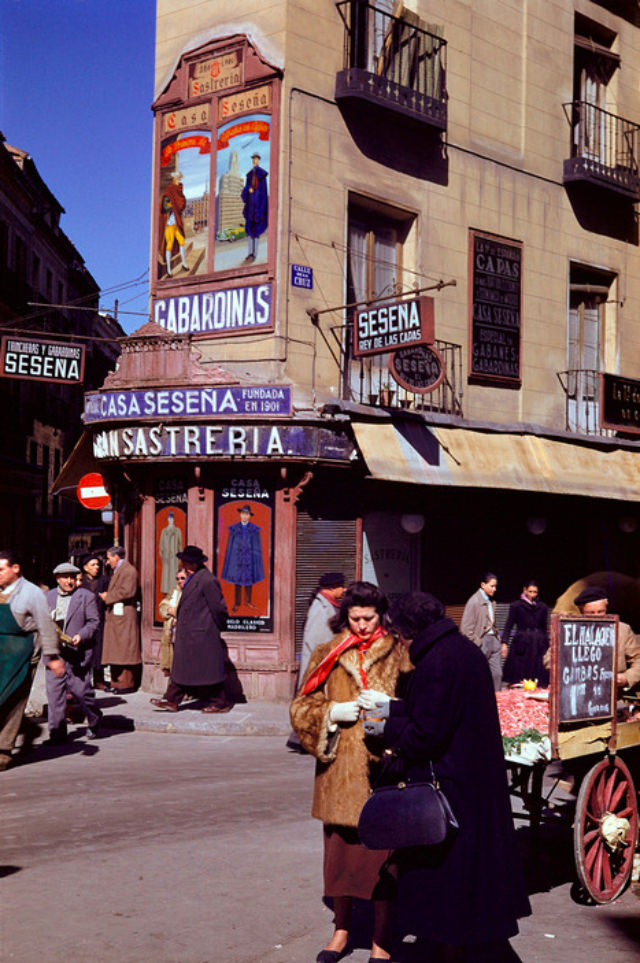
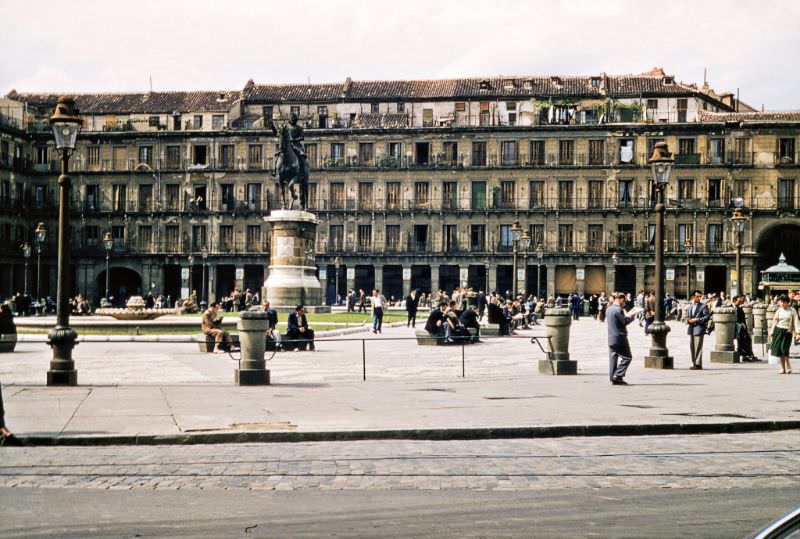
Madrid was the political and cultural heart of Franco’s Spain. The capital showed a stark contrast between official power and ordinary life. Government-built housing blocks went up to accommodate a growing population, while the city’s famous streets hummed with commerce and foot traffic.
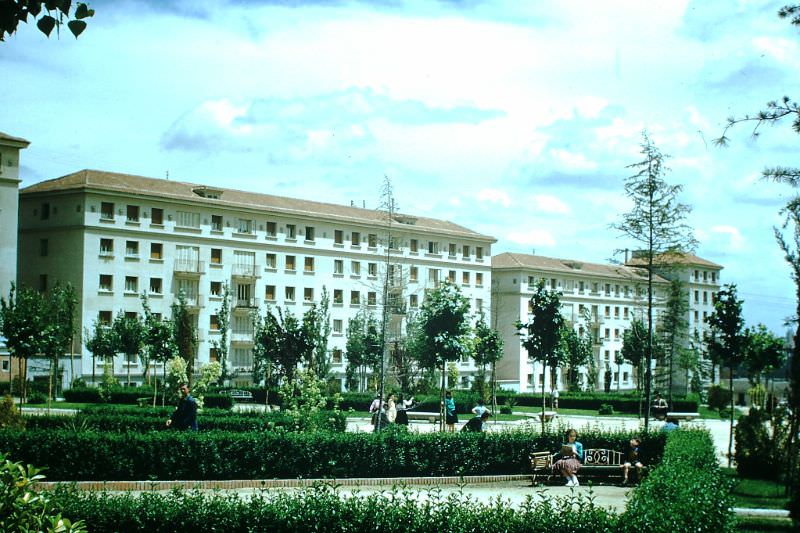
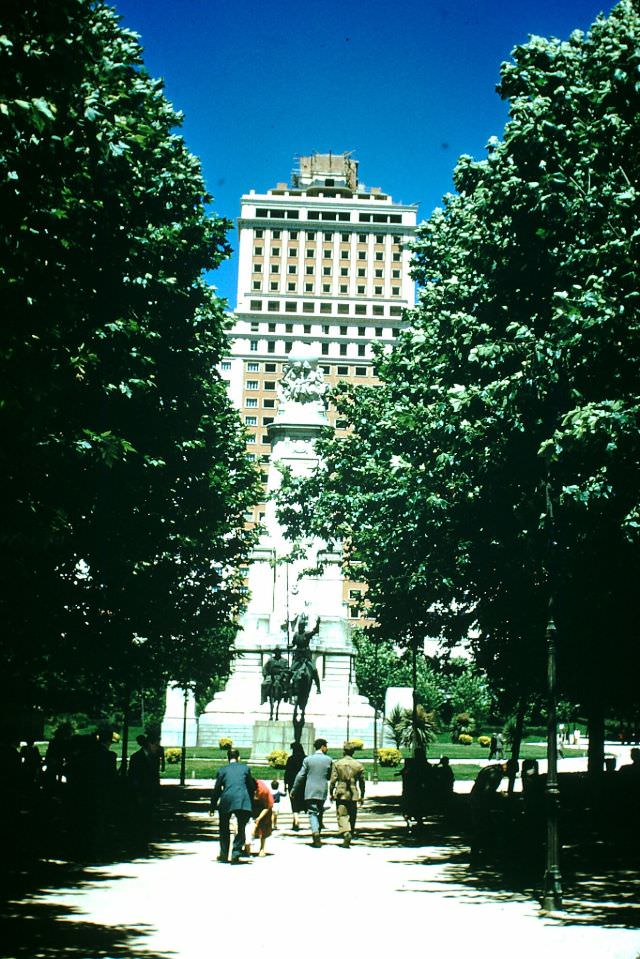
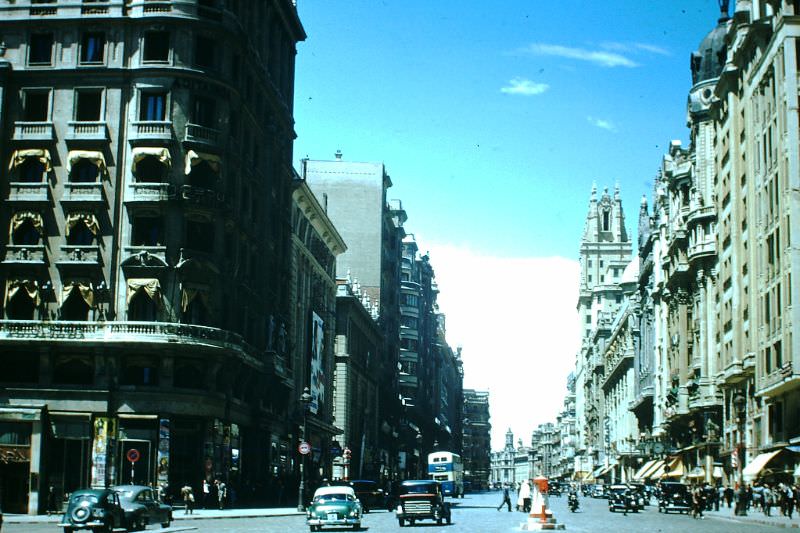
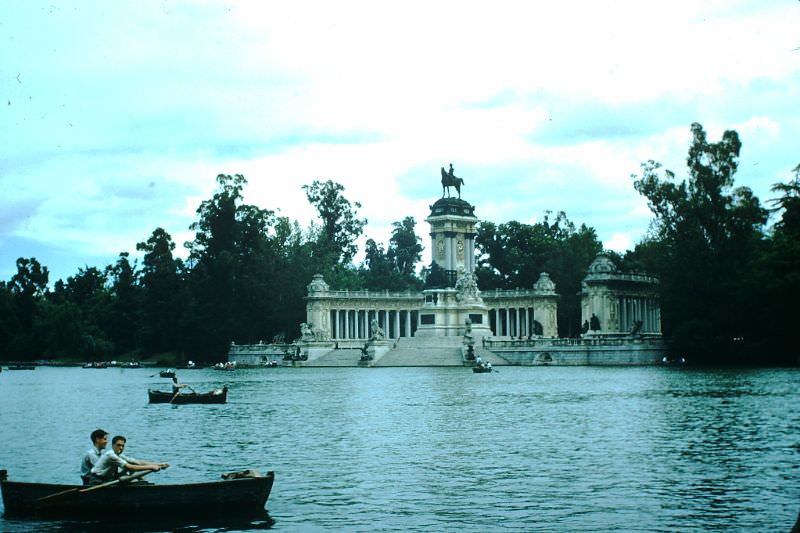
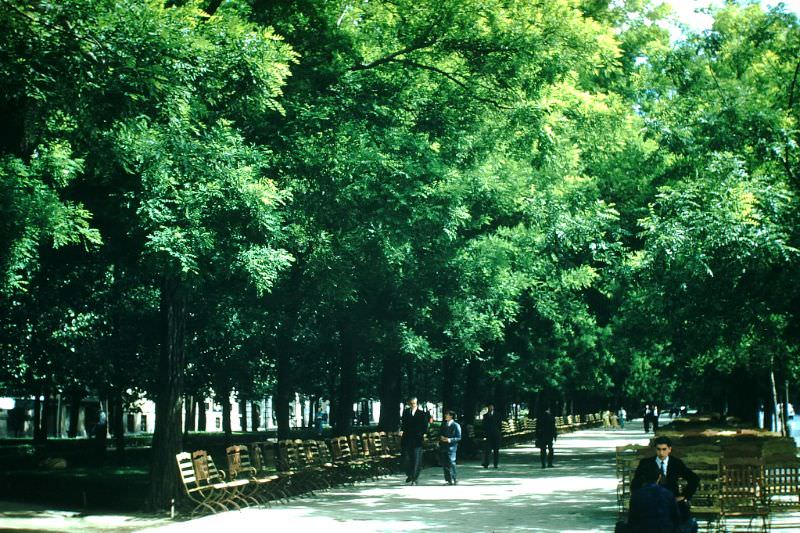
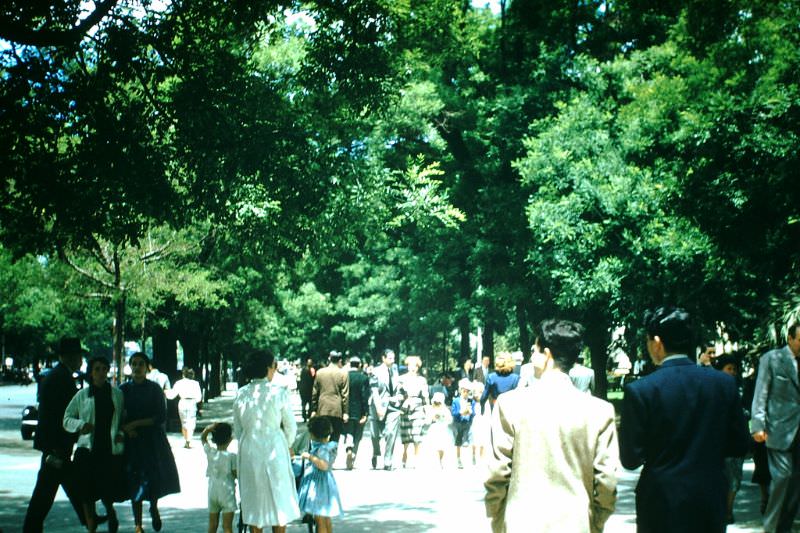
Madrid’s Retiro Park offered residents an escape from the city’s density. The large artificial lake at the park’s center, flanked by the statue of King Alfonso XII, was a popular gathering place for families on weekends.
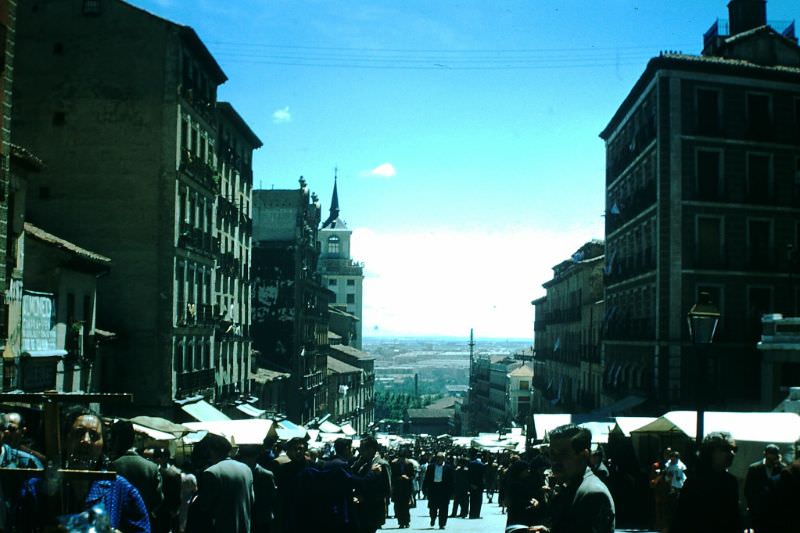
Old Madrid had its own informal economy. Second-hand markets drew buyers and sellers trading everything from tools to clothing. The Rastro, Madrid’s famous flea market, was a fixture of working-class city life.
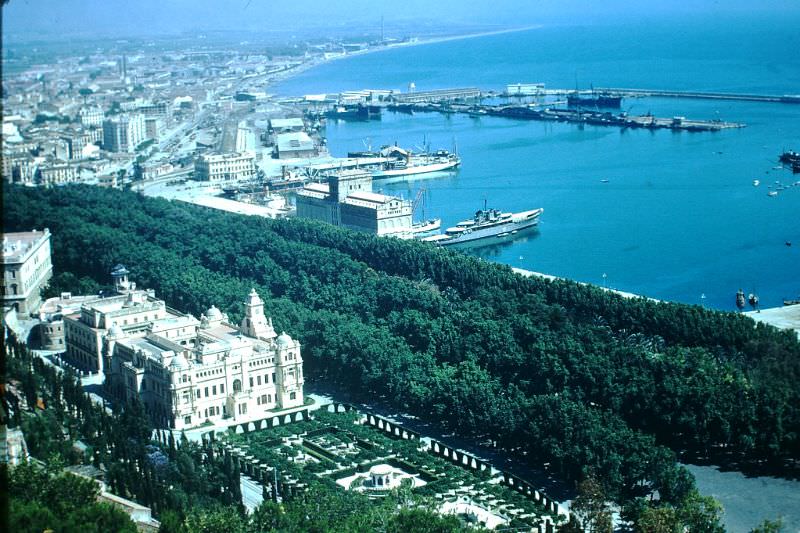
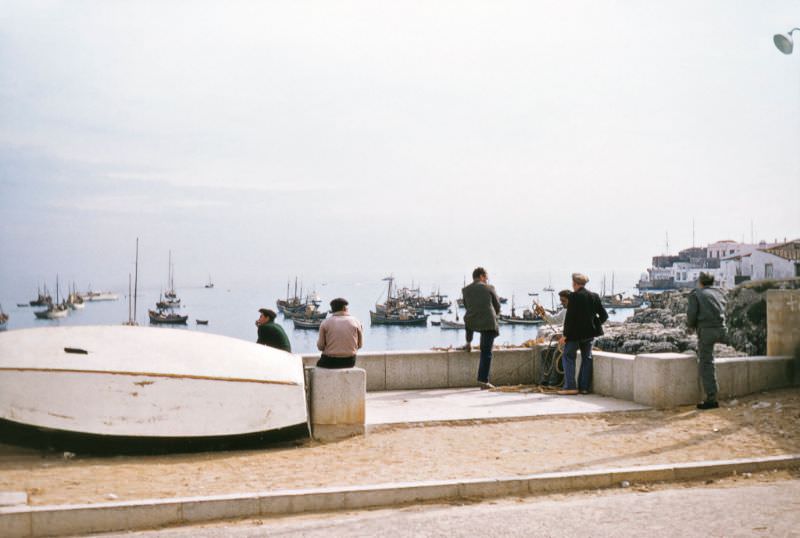
On Spain’s southern coast, Málaga served as both a working port and a growing tourist destination. Its harbor was busy with fishing vessels and cargo ships, while the city climbed the hillside behind it.
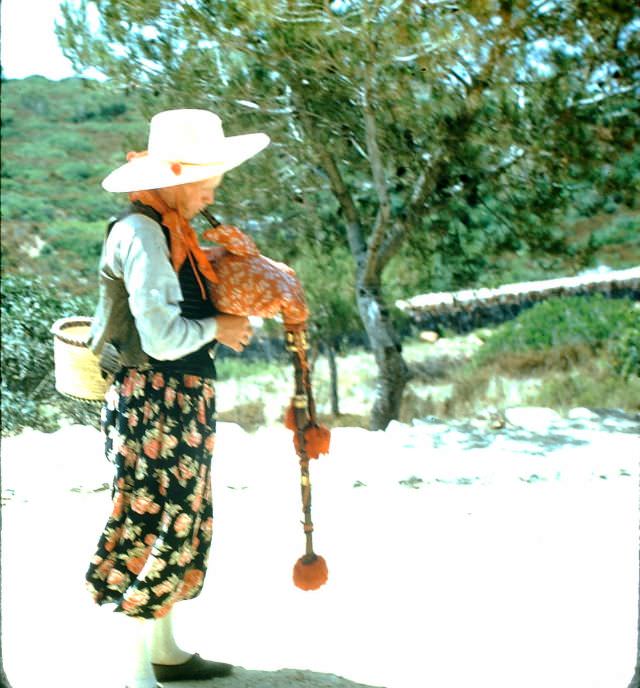
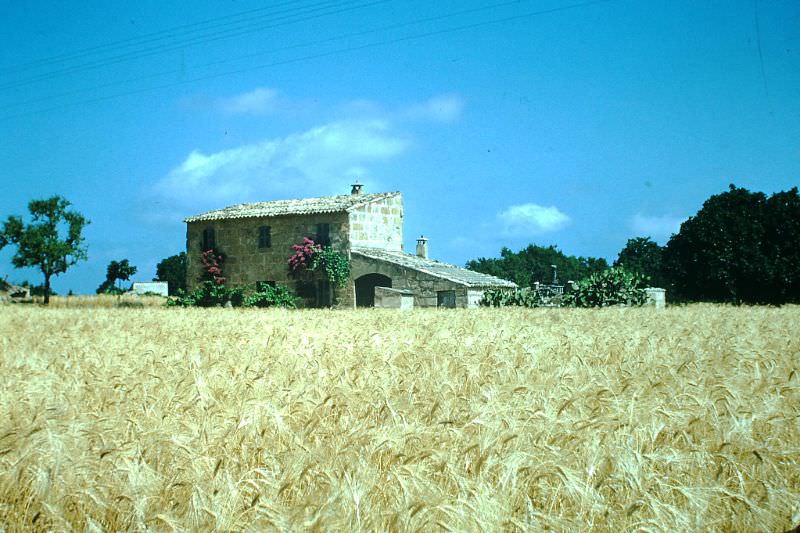
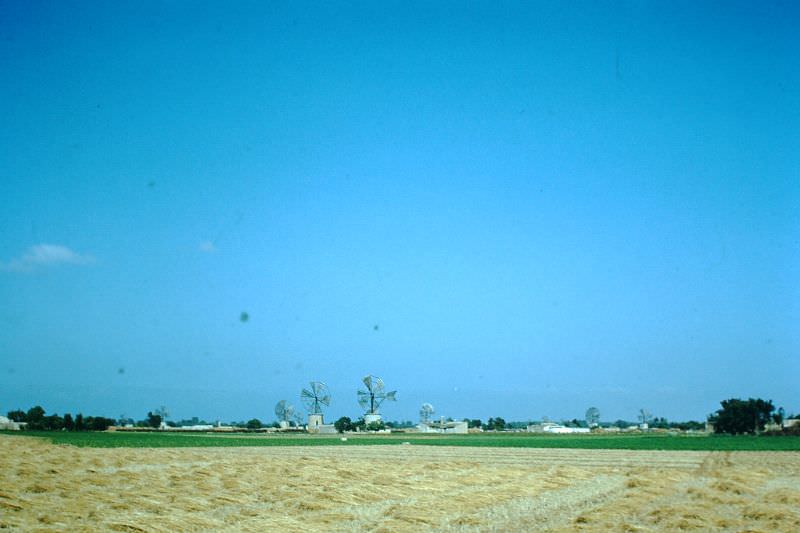
Majorca, the largest of the Balearic Islands, mixed rural tradition with early signs of tourism. A bagpiper at Puerto Cristo, windmills near Puebla, and a traditional farmhouse near Pollensa all captured a slower, older way of life that was beginning to change as the decade progressed.
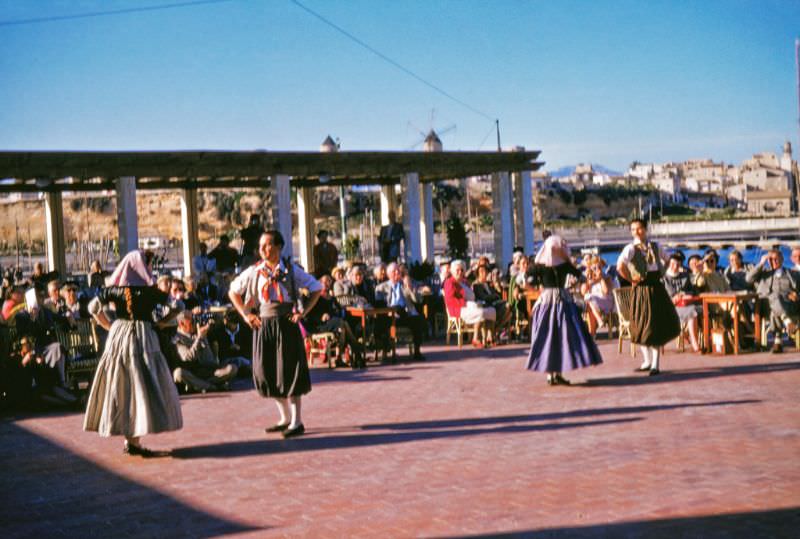
Palma, the island capital, was already showing signs of the tourist boom that would reshape the Balearics in the coming decades. Hotels lined the coast, and visitors from northern Europe arrived in growing numbers. Traditional dancing at the Palma Yacht Club mixed local culture with the new leisure economy.
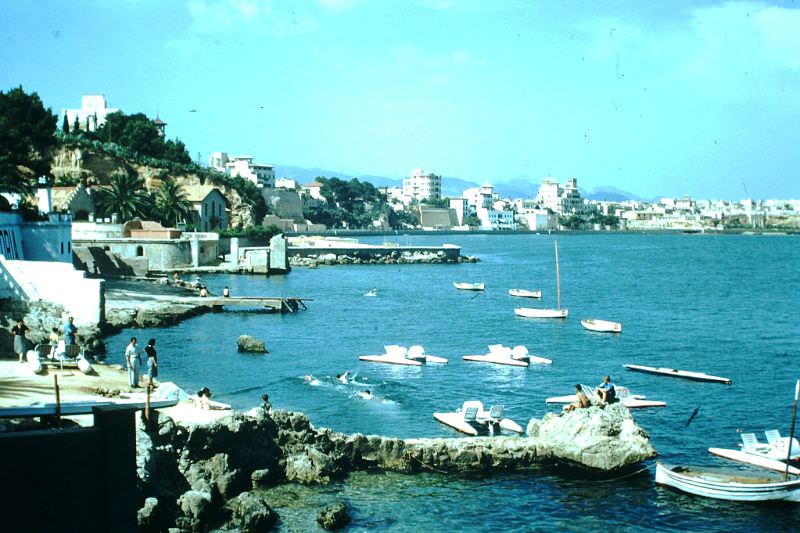
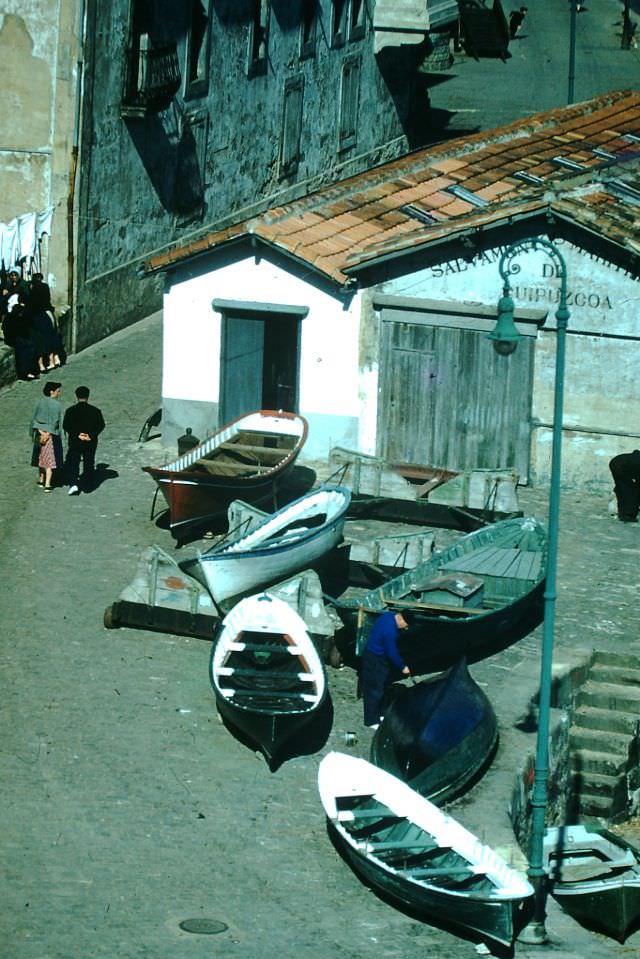
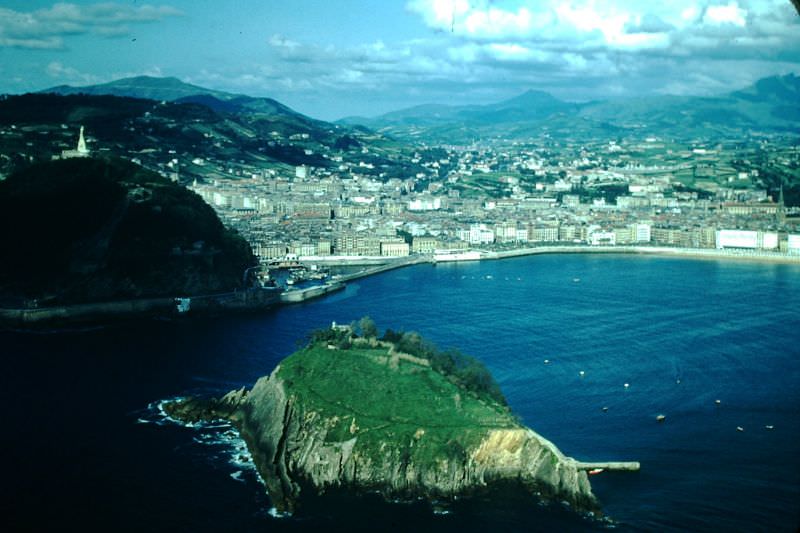
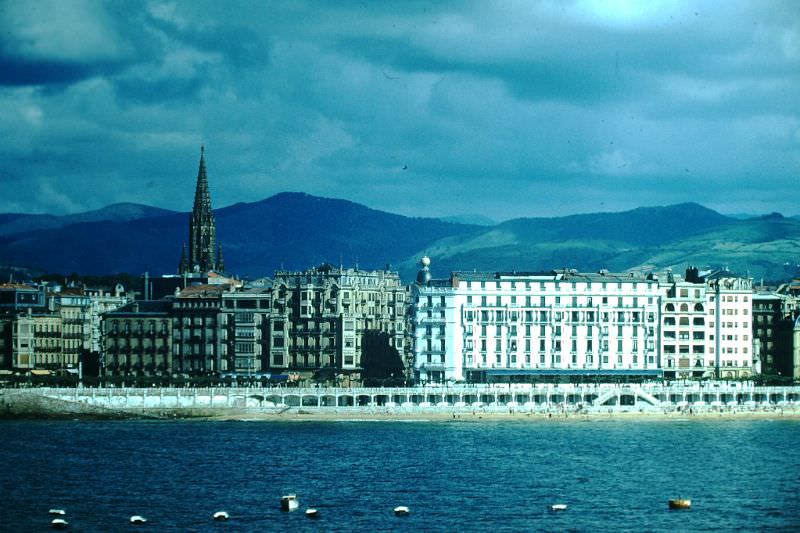
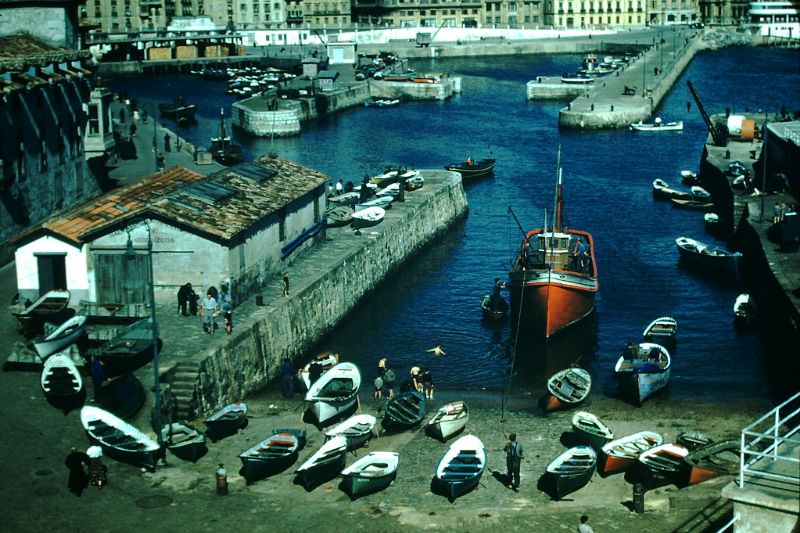
San Sebastián, in the Basque Country, was one of Spain’s most elegant coastal cities. Its sheltered harbor, grand hotels, and scenic views from Monte Igueldo made it a preferred destination for Spain’s upper class and a center of Basque cultural identity.
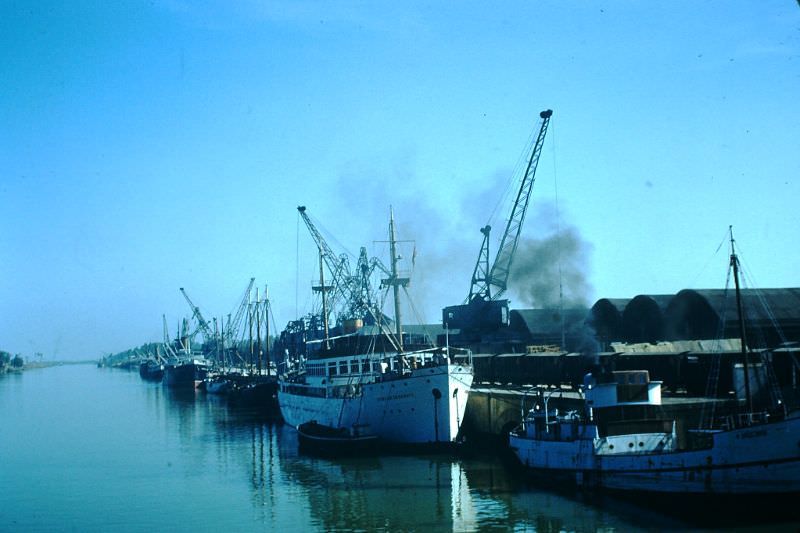
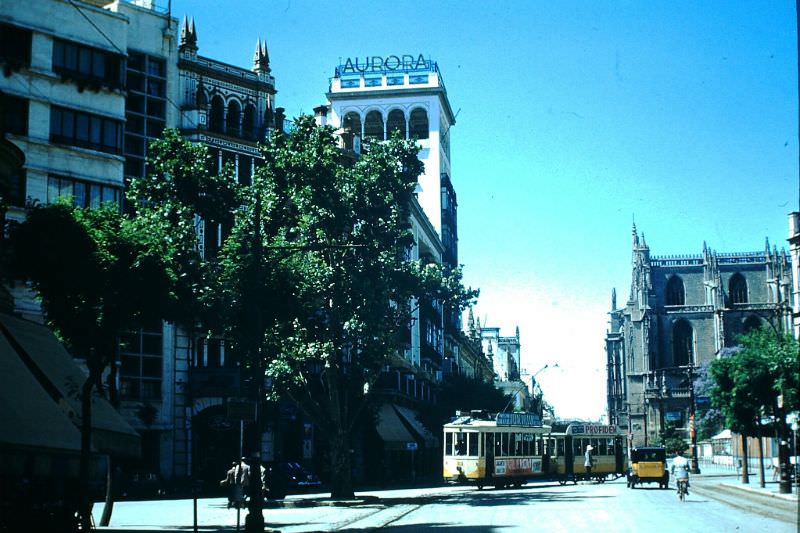
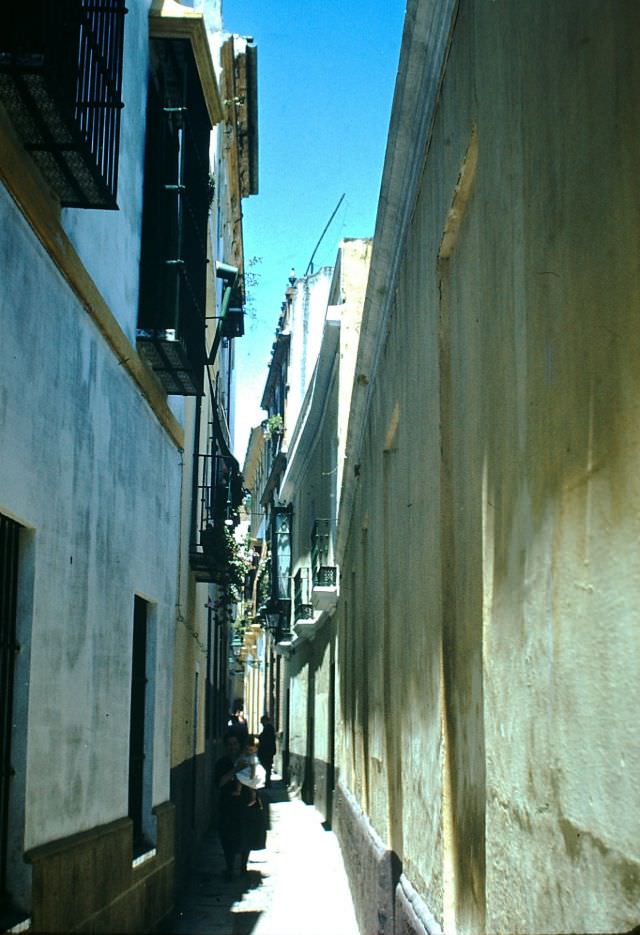
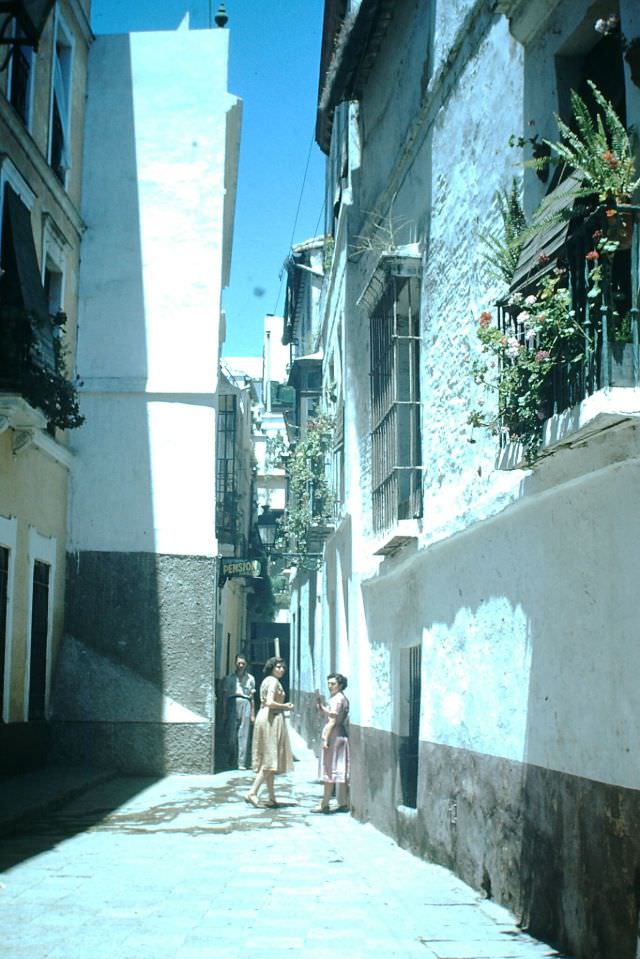
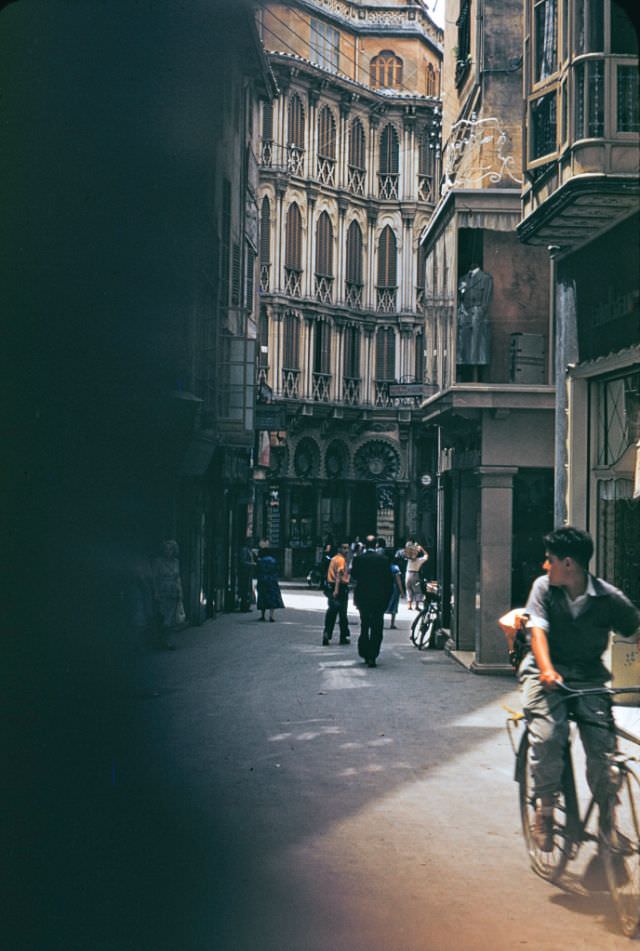
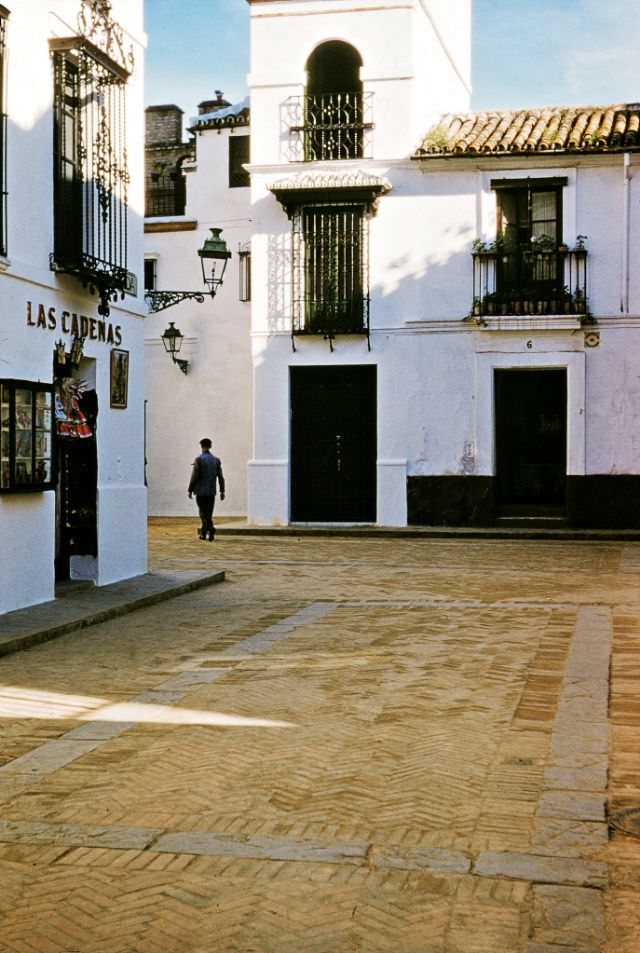
Seville, one of Andalusia’s great cities, combined a busy river trade with rich religious and cultural traditions. The docks along the Guadalquivir River handled goods moving in and out of the interior, while the famous Barrio Santa Cruz preserved the labyrinthine street layout of the old Jewish quarter.
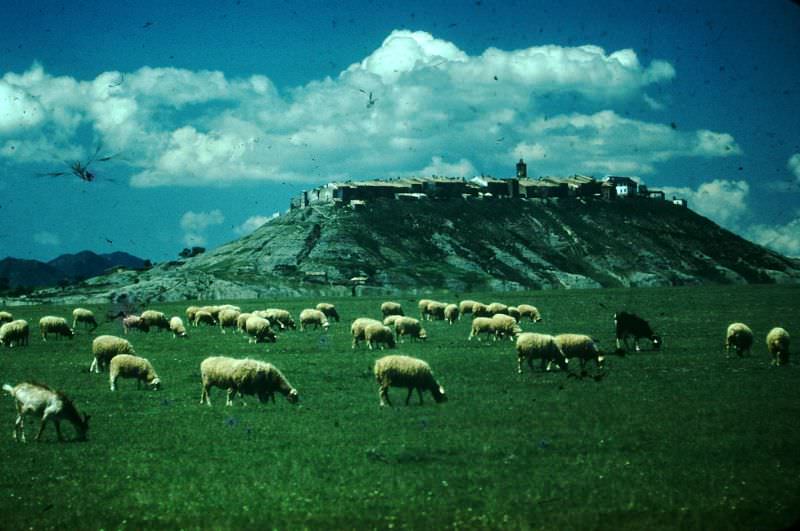
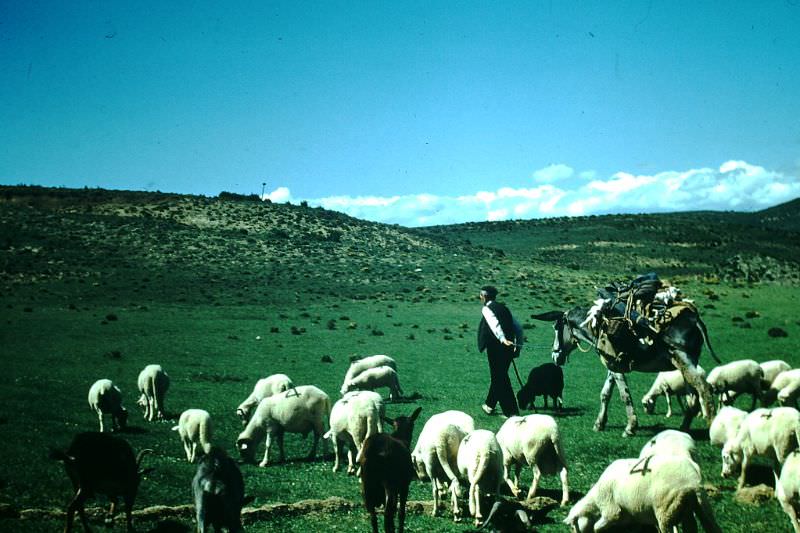
In the northeastern region of Aragon, shepherds still moved flocks across rugged terrain near Huesca. This kind of pastoral life had been practiced in the region for centuries and continued largely unchanged through the 1950s.
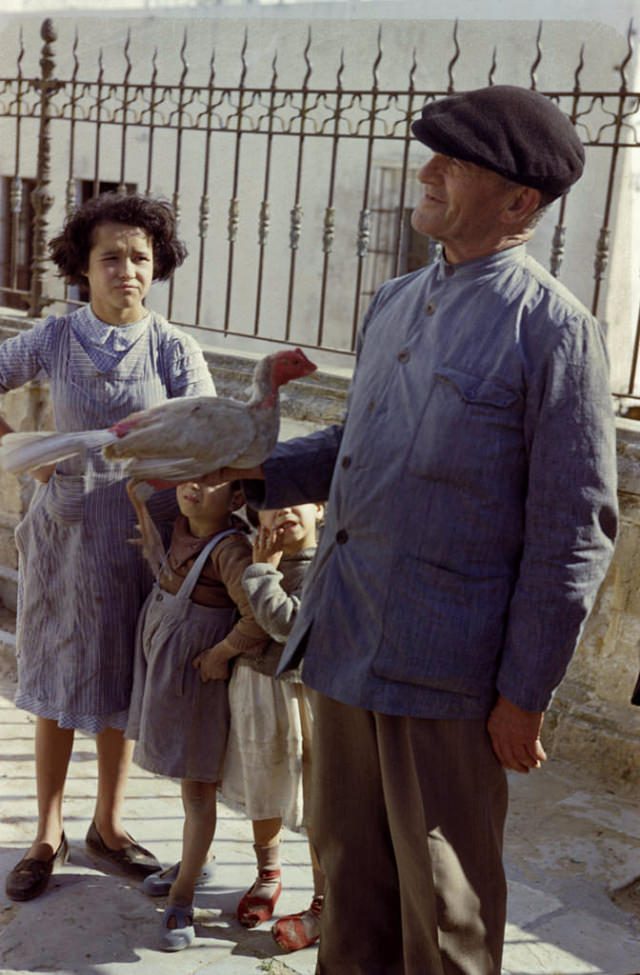
Cockfighting was a practiced tradition in parts of Spain during this era. In San Fernando, a fighting rooster was photographed in 1954, reflecting a rural pastime that was both a sport and a social event in certain communities.
Pamplona, famous for its annual Running of the Bulls, was captured in 1954 during what appears to be festival time. The city’s streets filled with crowds during the Fiesta de San Fermín each July, drawing Spaniards from across the country.
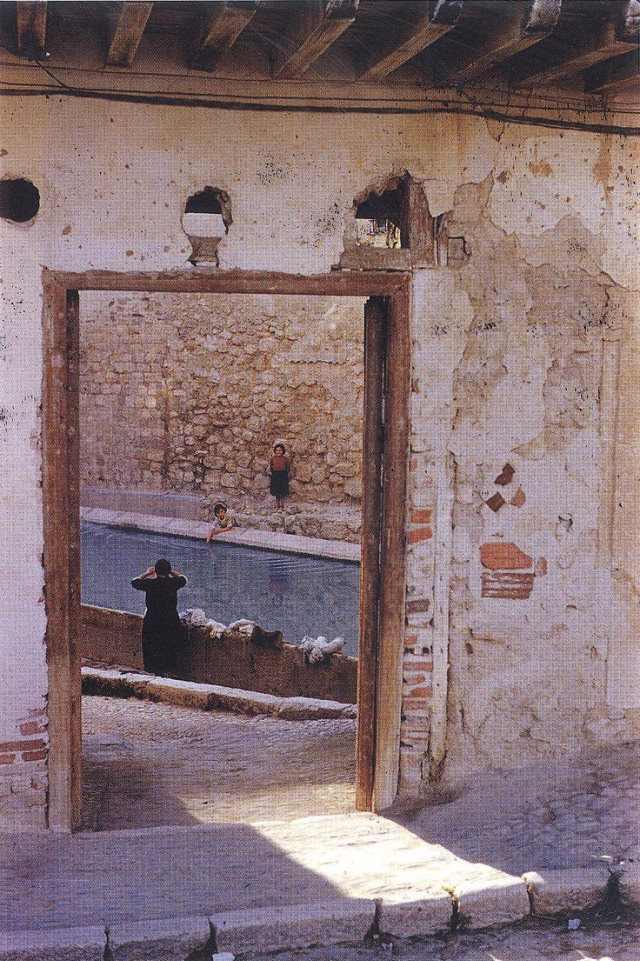
Running water and household plumbing were not available to everyone in 1950s Spain. In Chinchón, women carried out washing in public communal spaces, a common sight in smaller towns and villages where domestic infrastructure lagged behind the cities.
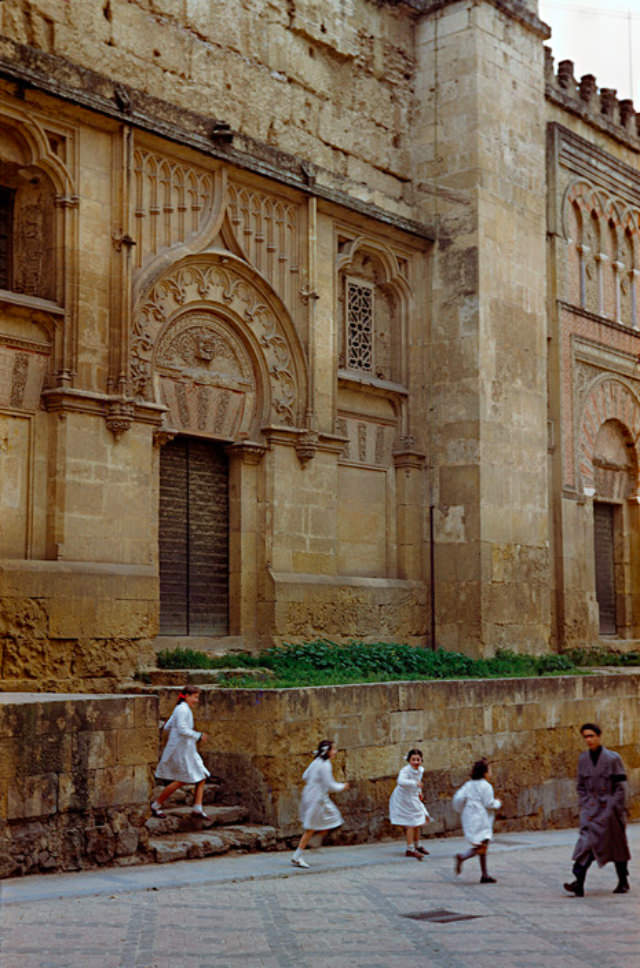
The Mosque-Cathedral of Córdoba, known as the Mezquita, was one of the most remarkable buildings in all of Spain. Originally constructed as a mosque during Moorish rule, it was later converted into a Roman Catholic cathedral. A photograph from 1954 captured its iconic striped arches still drawing visitors from across Europe.
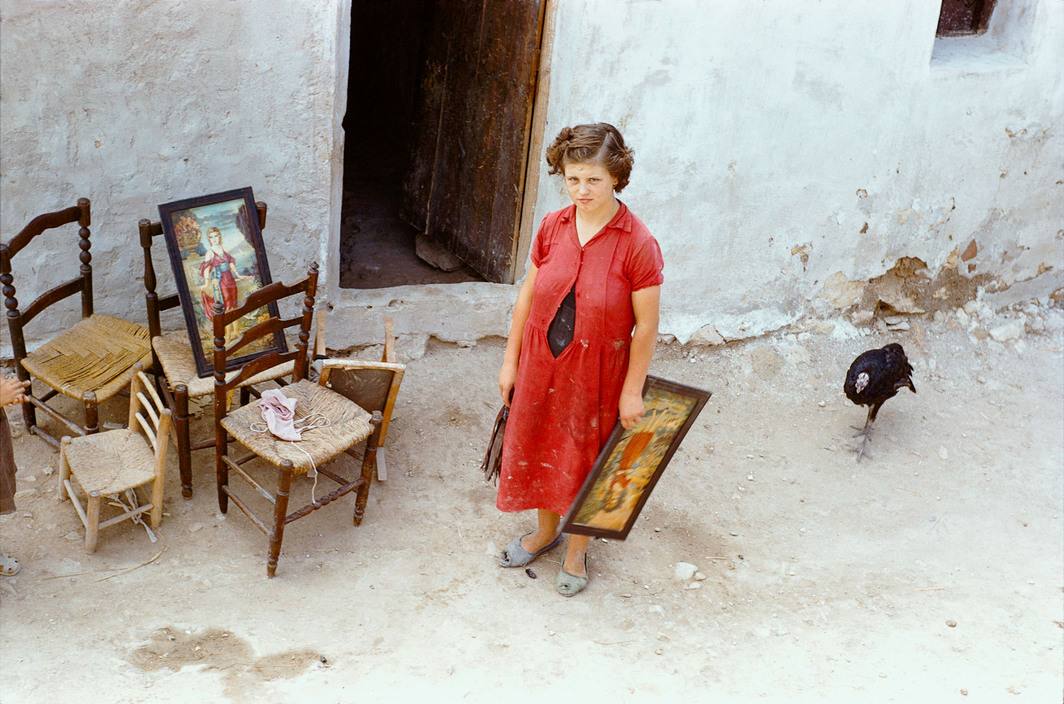
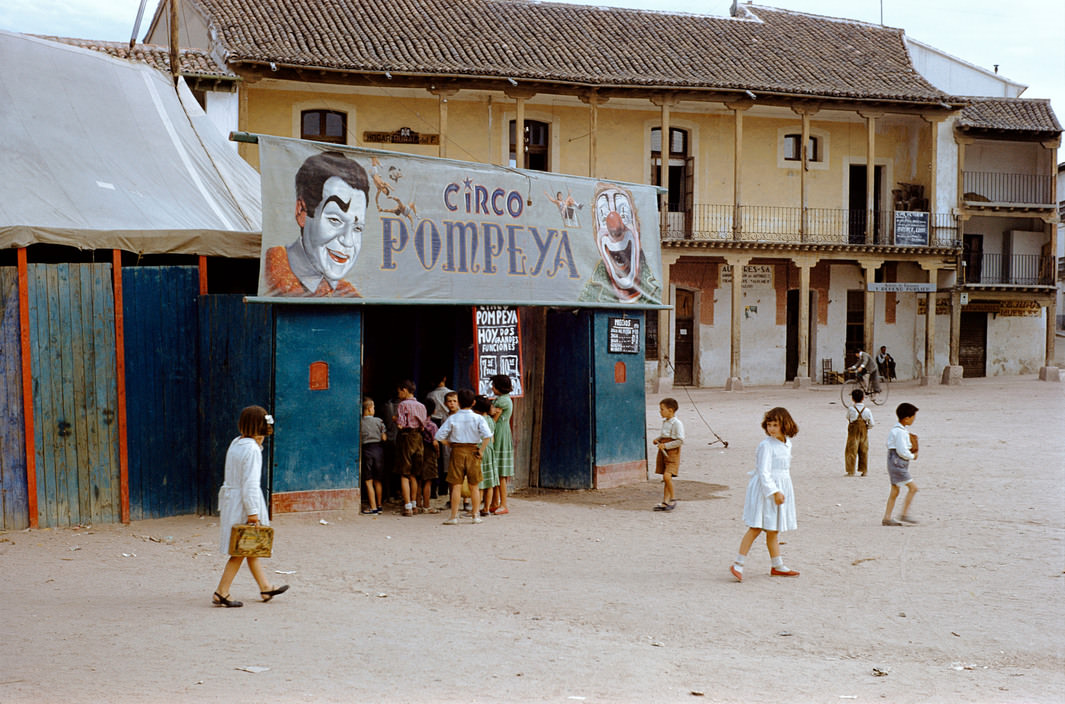
Entertainment in rural Spain was often homegrown. A traveling village circus set up in Ciempozuelos, near Chinchón, in 1955 — a small but lively spectacle for a community with few other diversions.
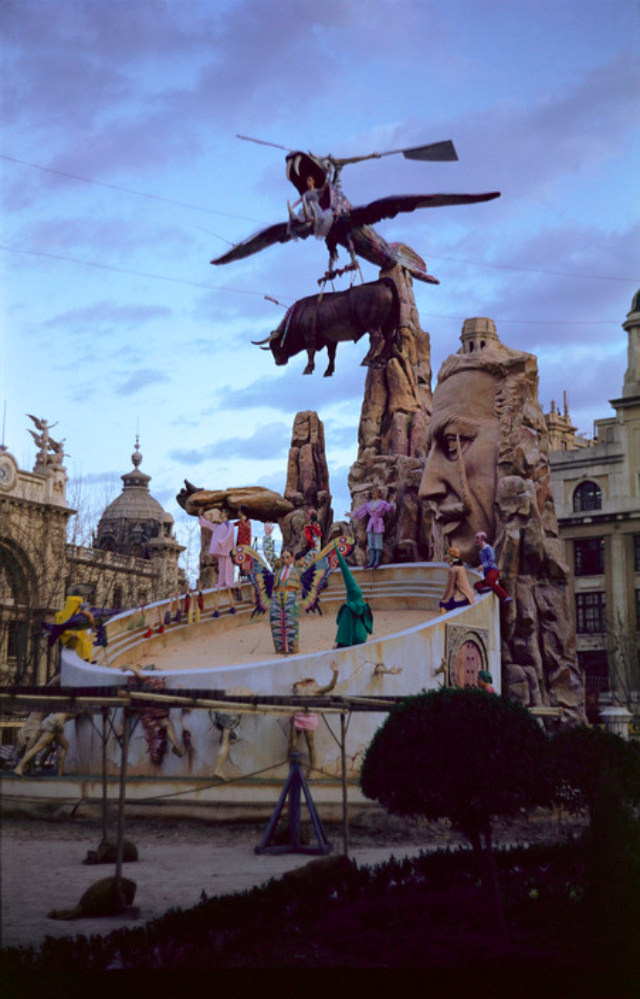
Valencia’s Las Fallas festival was a spectacular annual event involving giant papier-mâché sculptures that were paraded through the streets before being burned. In 1954, the surrealist artist Salvador Dalí contributed one of the elaborate falla figures, blending high art with popular tradition.
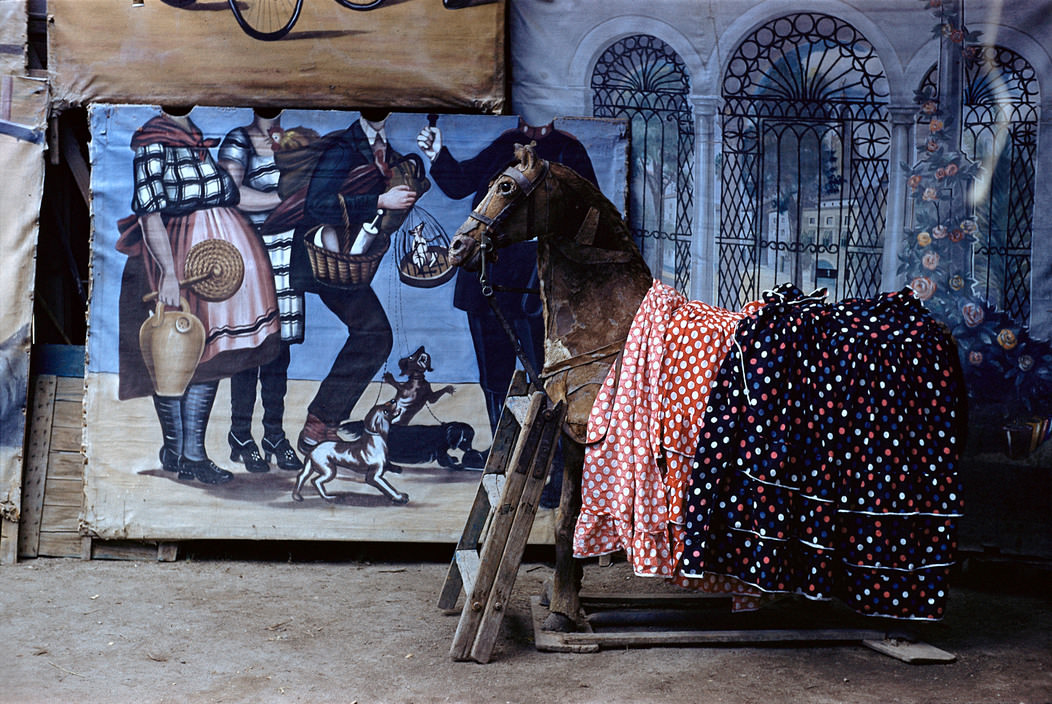
Madrid’s Verbena de San Isidro, held each May in honor of the city’s patron saint, was one of the capital’s most beloved popular festivals. Street photographers set up props and backdrops to take portraits of festival-goers, turning the celebration into a moment to be preserved.
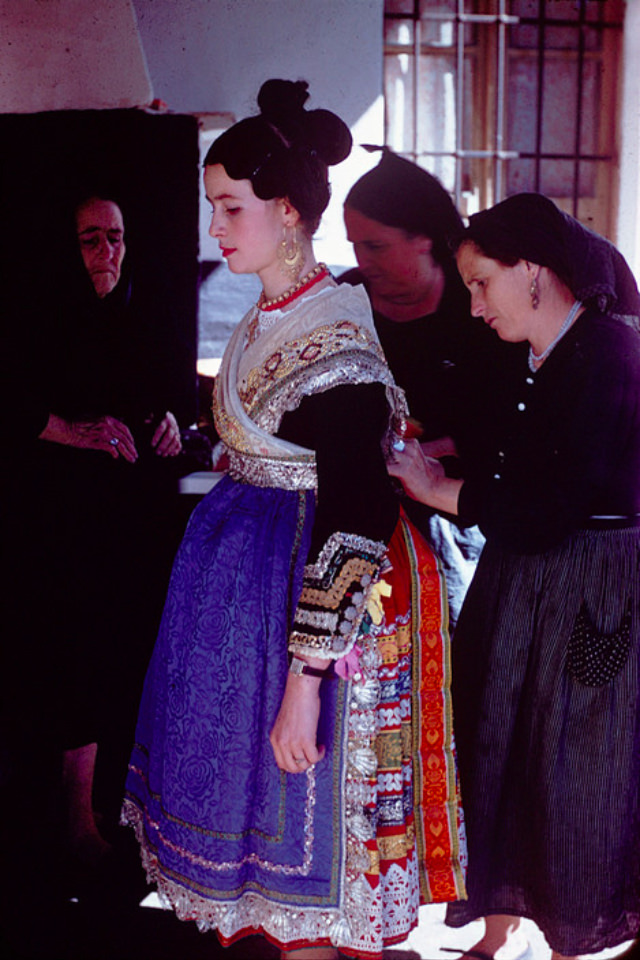
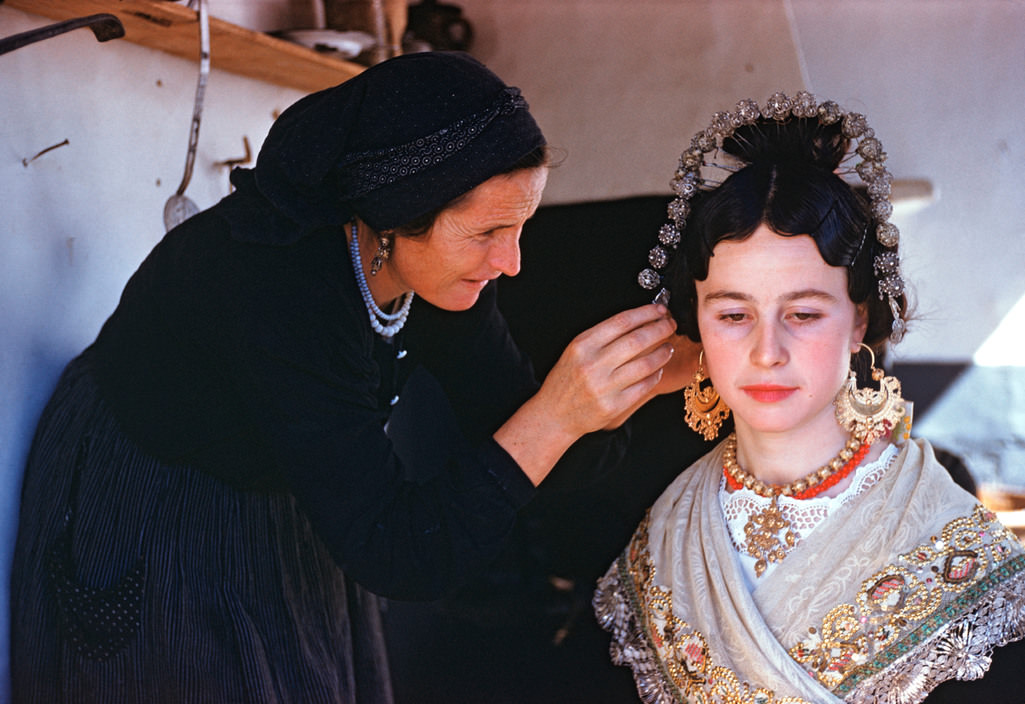
In the small town of Navalcán in 1955, a wedding was photographed in detail — from the fitting of a bridesmaid’s dress to the careful styling of her hair. These images document the care and ceremony that surrounded even modest celebrations in rural Spain.
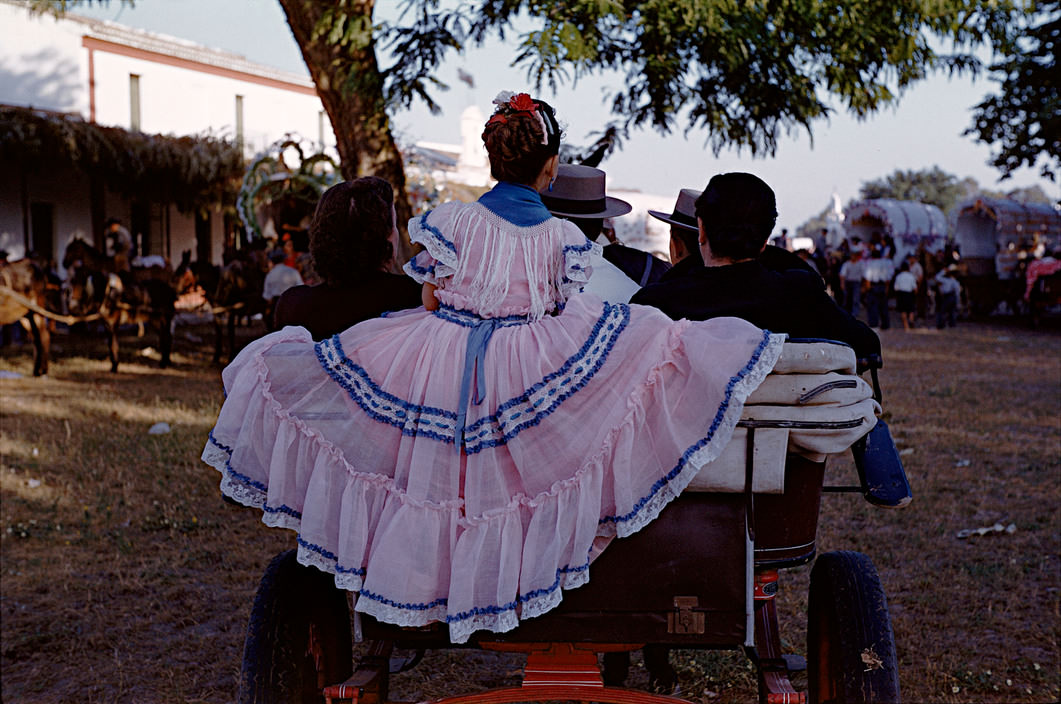
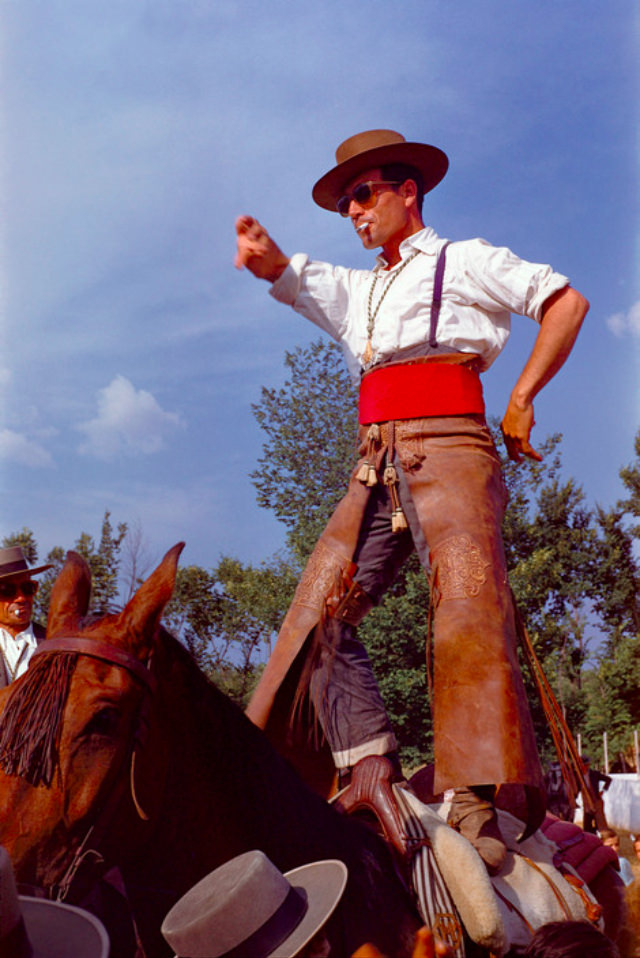
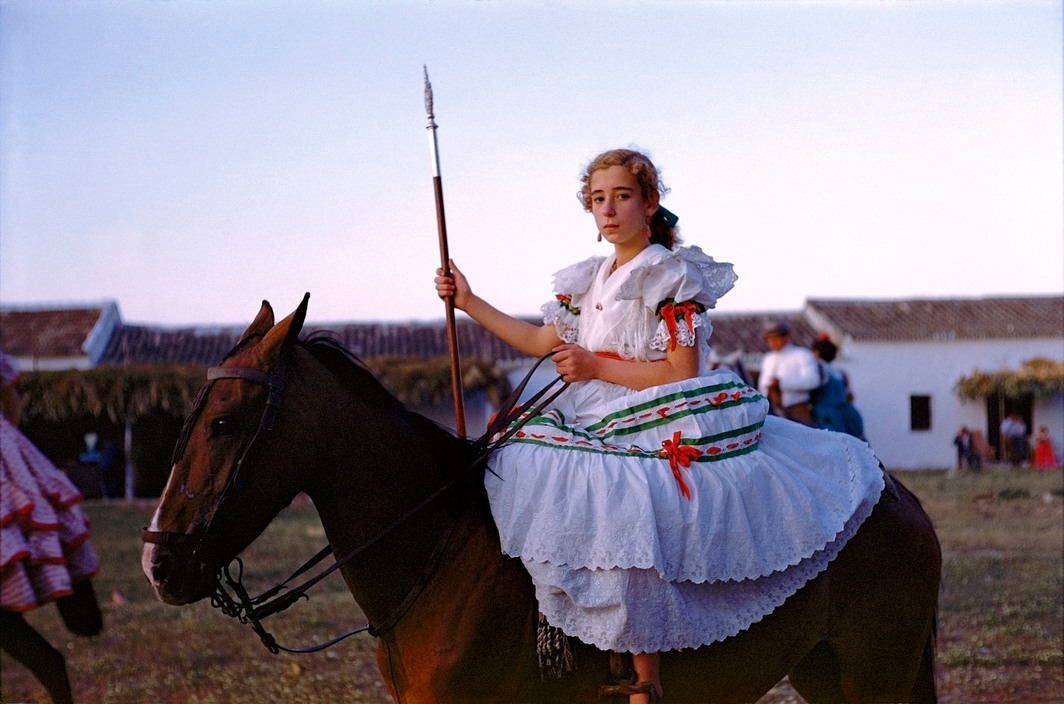
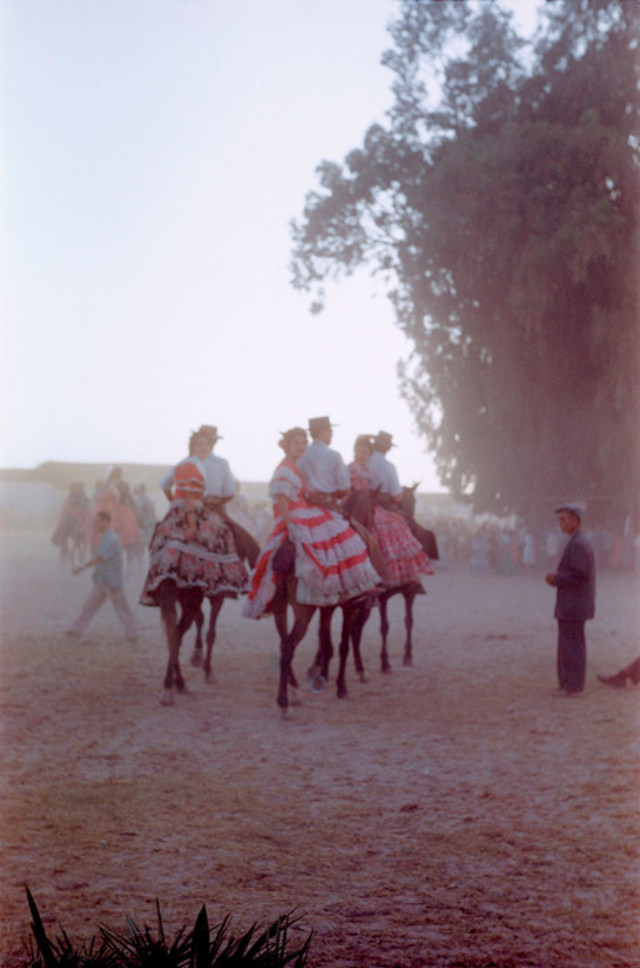
The Romería del Rocío was — and remains — one of the largest religious pilgrimages in the world. Each spring, hundreds of thousands of devotees traveled to the village of El Rocío in Andalusia to honor the Virgin of El Rocío. The 1955 photographs capture the processions, costumes, decorated ox-carts, and the intense collective devotion that defined this event.
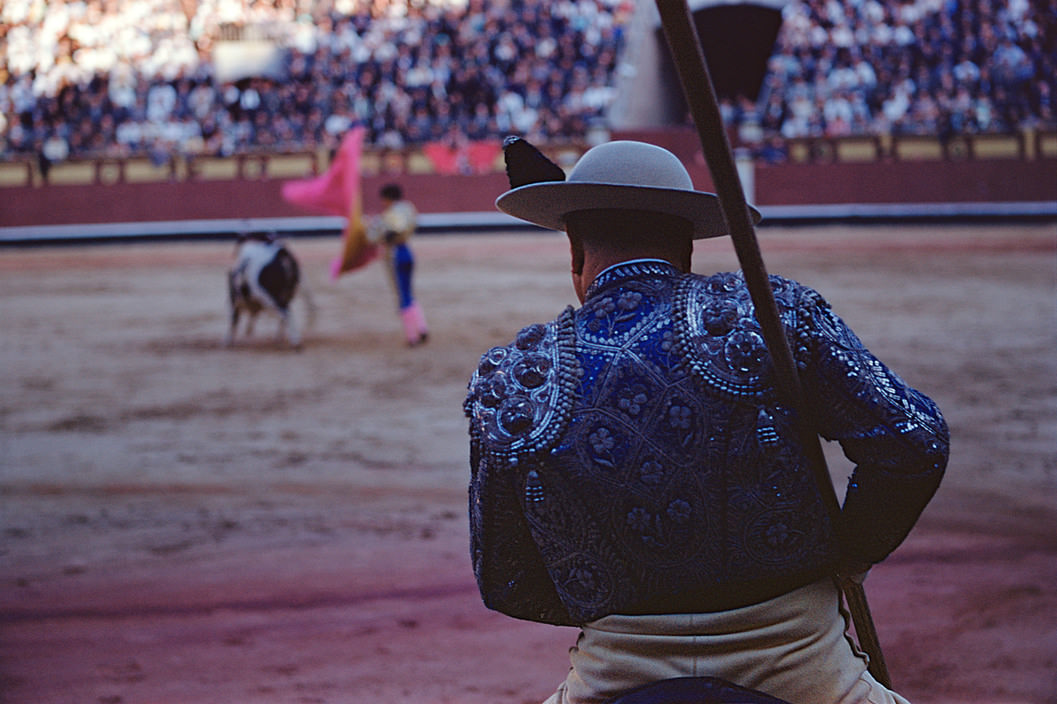
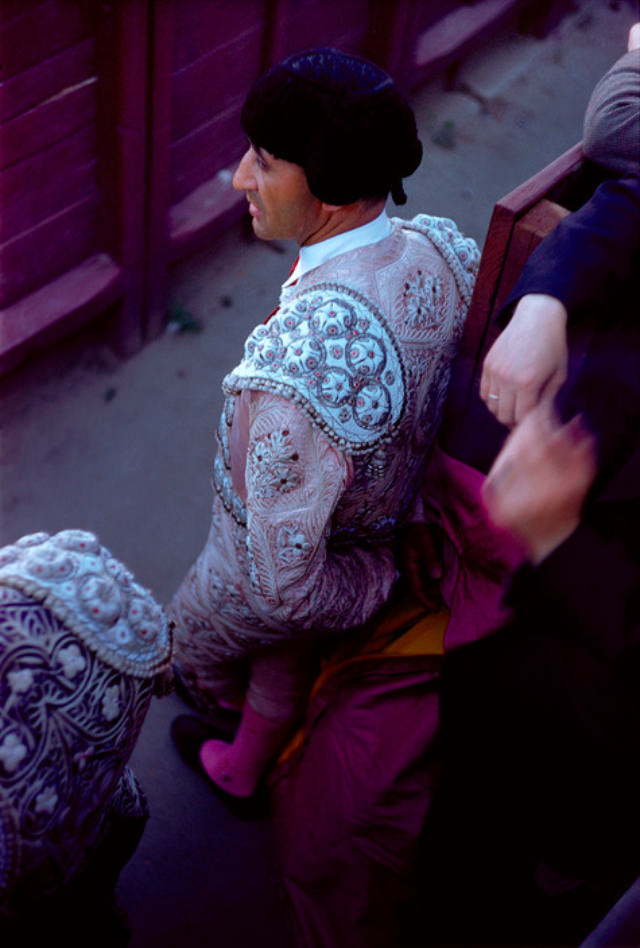
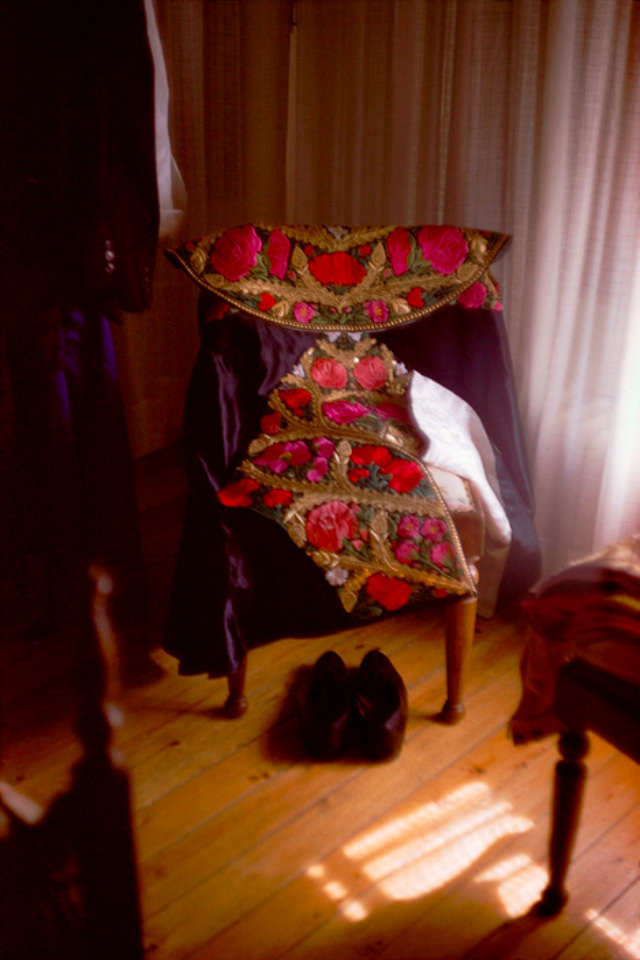
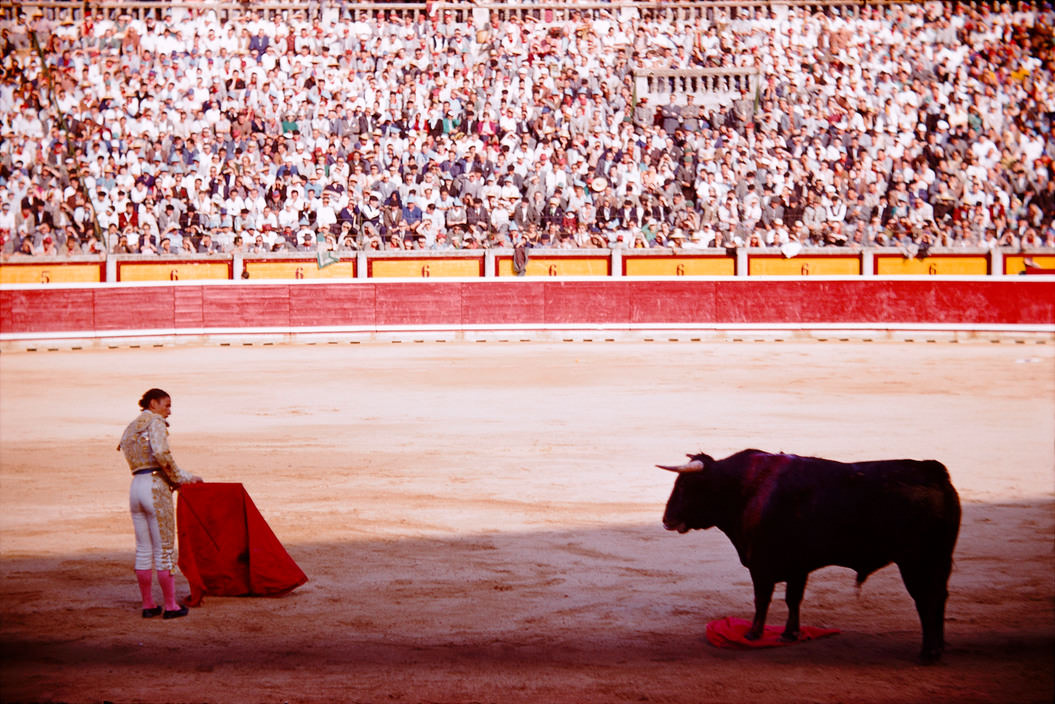
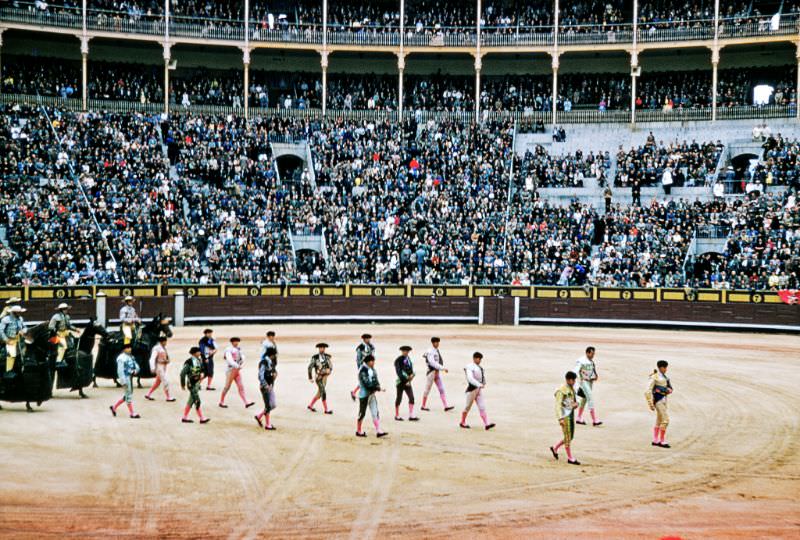
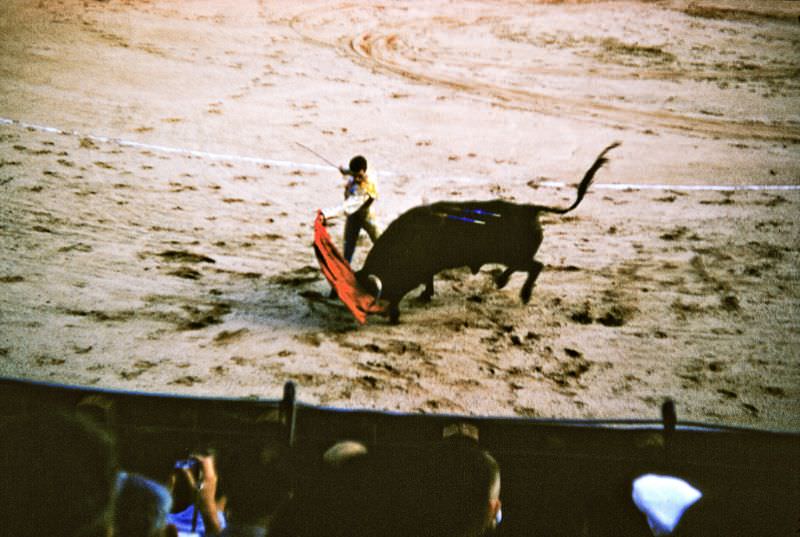
Bullfighting occupied a central place in Spanish culture under Franco, who promoted it as a symbol of national identity. The Plaza de Toros in Madrid, known as Las Ventas, hosted some of the country’s most important corridas. Matadors, picadors, and banderilleros each played a defined role in the ritual. César Girón, a Venezuelan-born matador who became one of Spain’s top fighters in the 1950s, was photographed at the Pamplona bullring in 1954. Antonio Ordóñez, considered one of the greatest matadors of the 20th century, was captured in action at Pamplona in 1955.
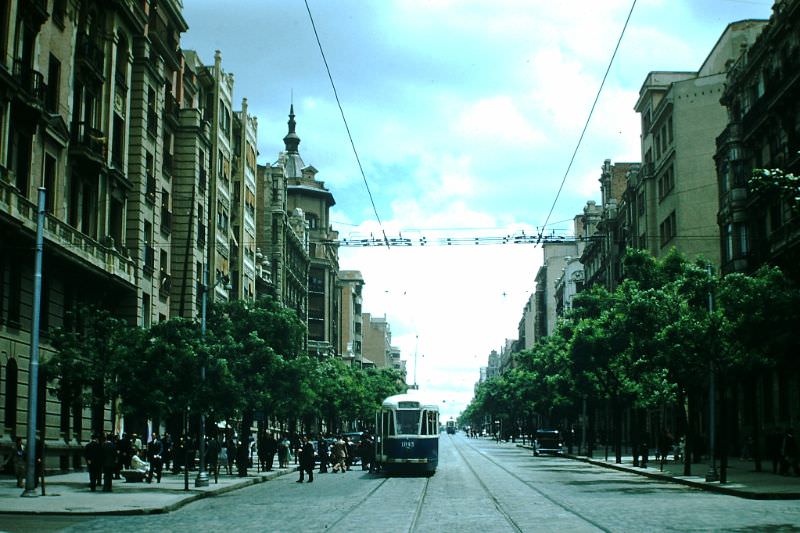
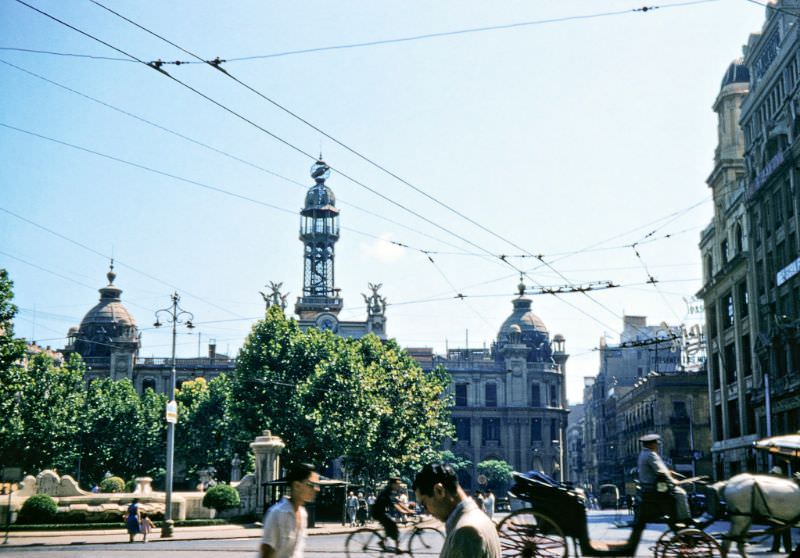
Back in Madrid, the city’s streets showed a mix of old and new. Calle Goya was a busy residential and commercial artery, while the Plaza de Cibeles — anchored by its famous fountain — remained one of the capital’s defining landmarks.
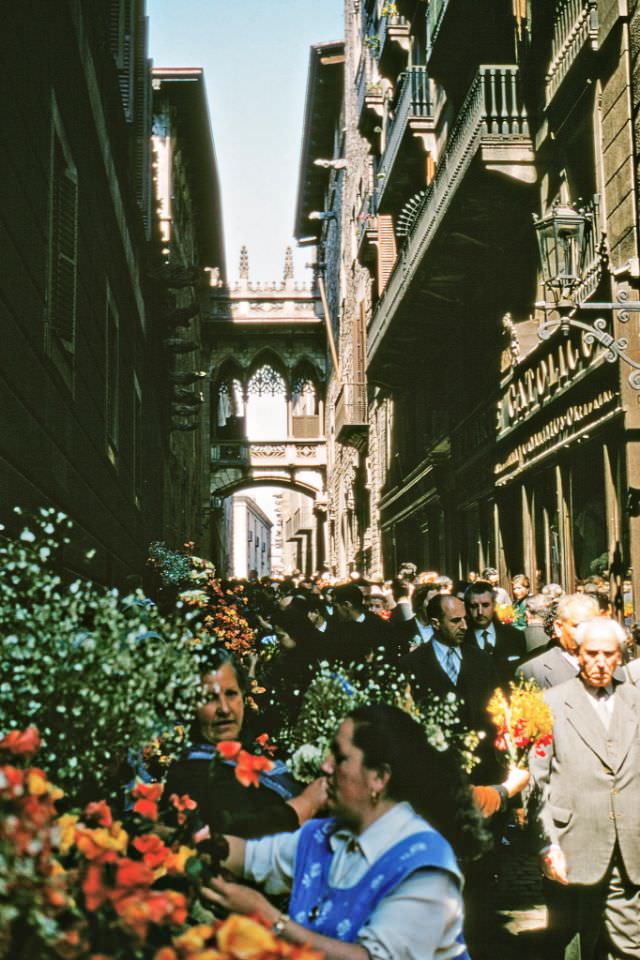
Barcelona’s Gothic Quarter was one of the oldest and densest urban neighborhoods in Spain. The decorative Bridge of Sighs spanning Carrer del Bisbe connected two sections of the Generalitat of Catalonia, though under Franco, Catalan identity and language were actively suppressed.
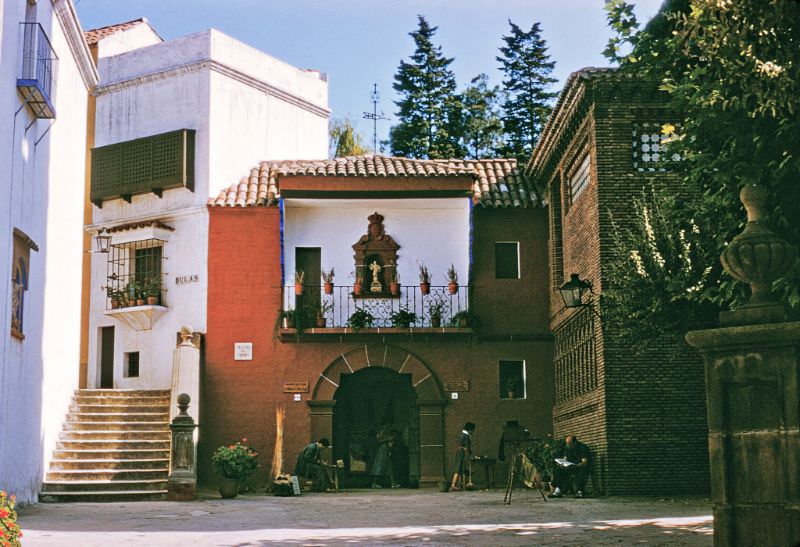
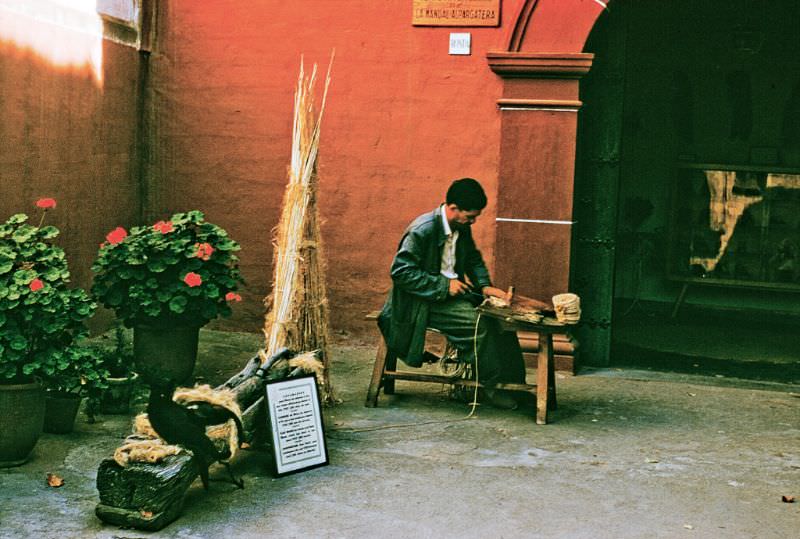
Barcelona’s Poble Espanyol, an open-air architectural museum built for the 1929 World’s Fair, contained replicas of buildings from across Spain. Shops inside it sold traditional crafts, including the espadrilles made at La Manuel Alpargatera, where an artisan worked alongside his two cats.
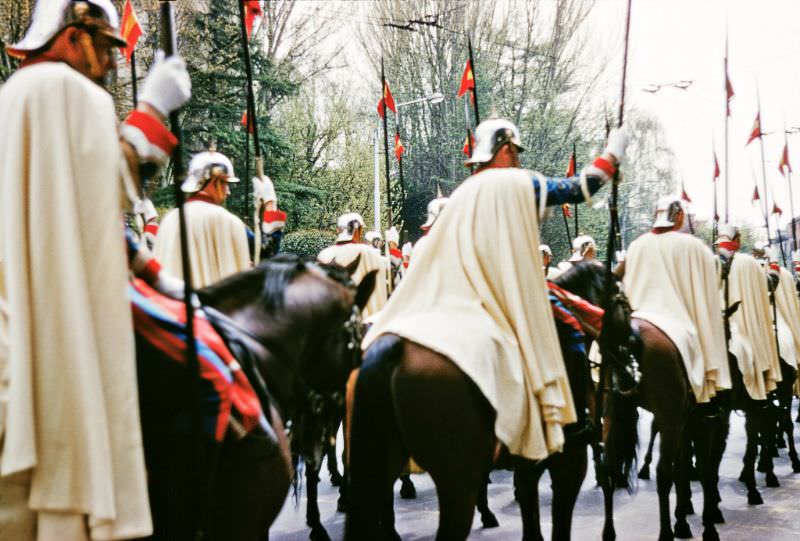
In Madrid, the Changing of the Guard at the Royal Palace was a formal military ceremony carried out on the Plaza de la Armería. The palace, the official residence of the Spanish royal family, was used largely for state ceremonies during the Franco years.
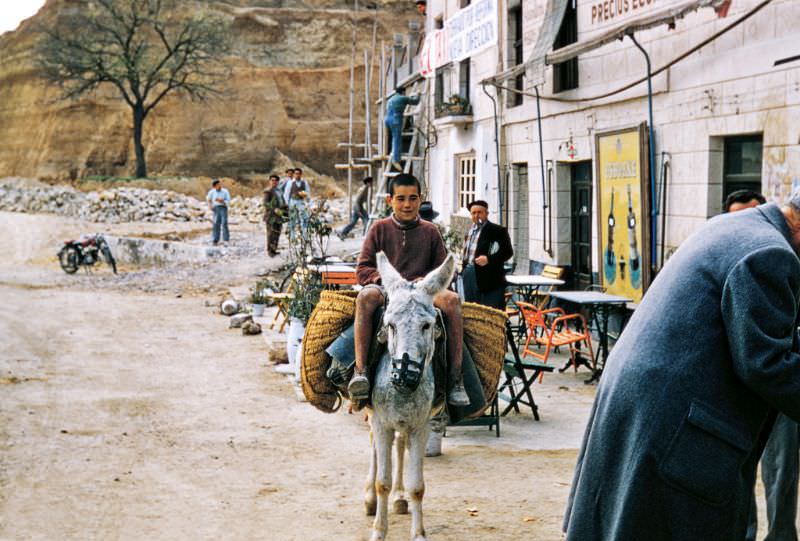
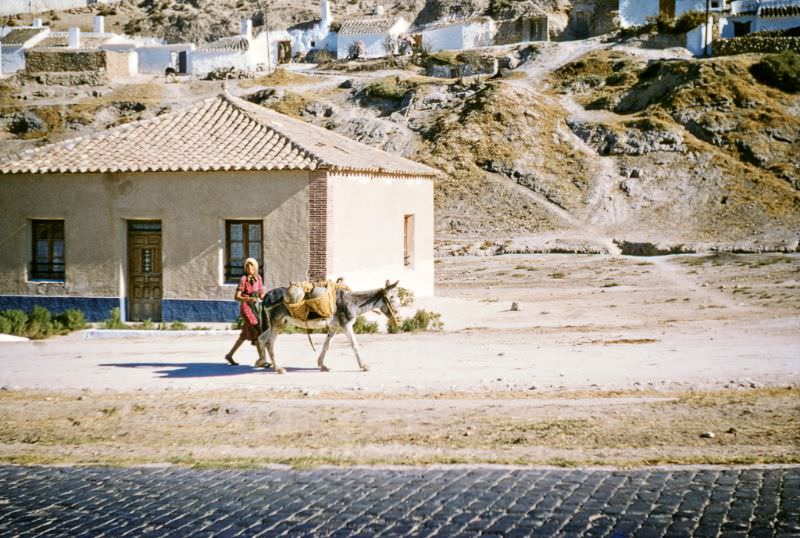
Between Madrid and Granada, cave houses carved into hillsides were home to some of Spain’s poorest rural residents. A woman and her donkey photographed in front of these dwellings captured the extreme poverty that persisted in parts of the country throughout the decade.
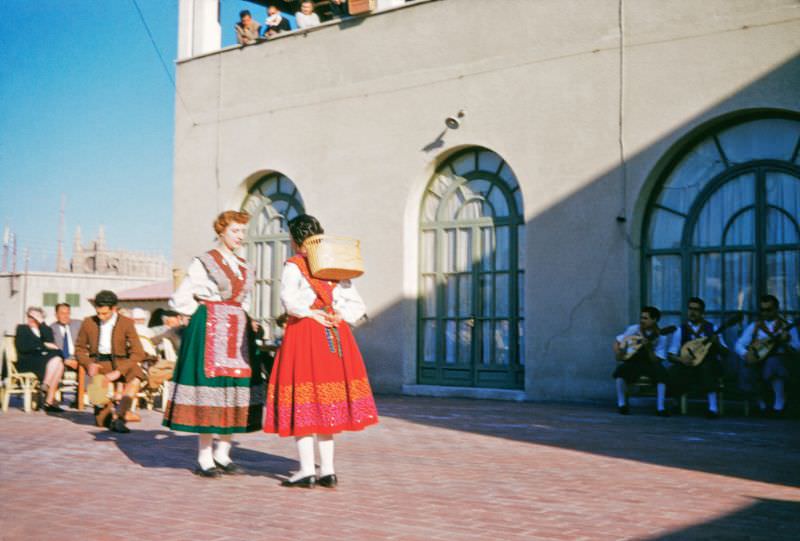
Traditional Mallorcan dance was performed at the Palma Yacht Club, a venue that mixed upper-class leisure with regional folk culture. The performances kept alive dances that had been passed down through generations on the island.
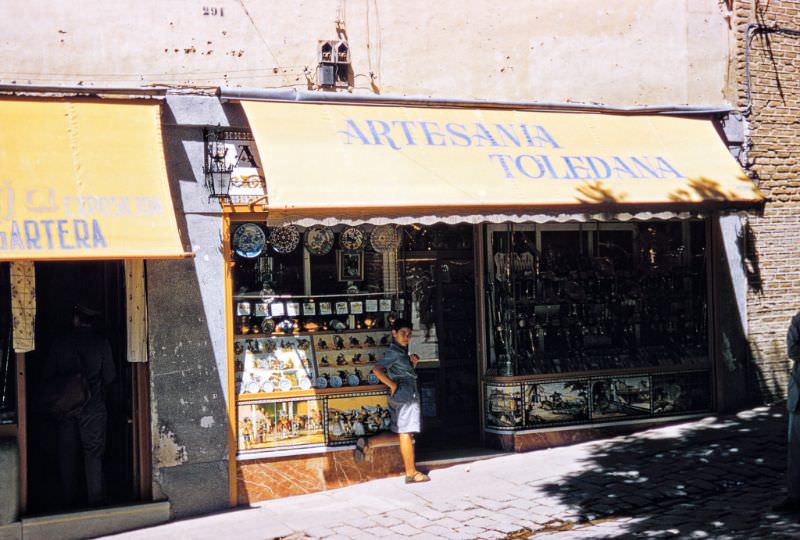
Toledo was not only famous for its streets — it was also known for its craftsmanship. The Artesanía Toledana shop sold the city’s signature damasquinado metalwork, a technique involving inlaid gold and silver patterns on steel that Toledo artisans had practiced since the Middle Ages.
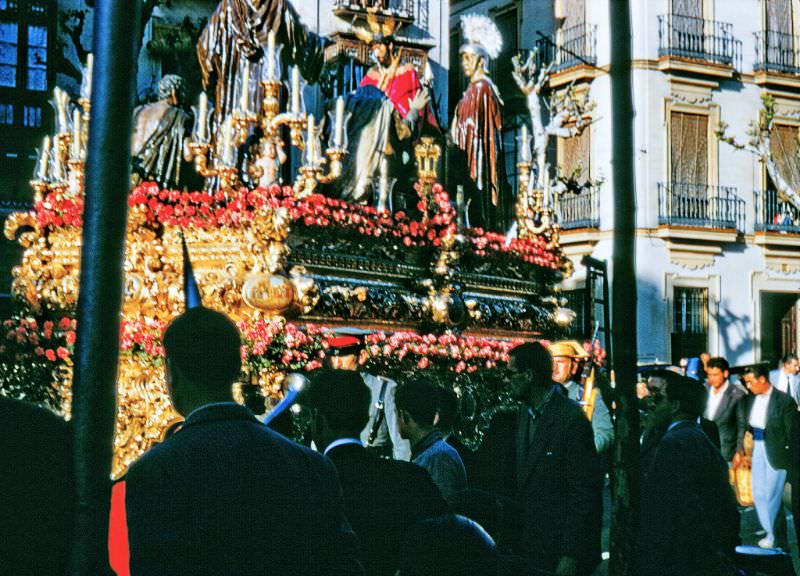
Seville’s Semana Santa, or Holy Week, was one of the most visually intense religious events in all of Europe. Brotherhoods carried enormous floats bearing religious figures through the city’s streets in candlelit processions that lasted through the night. The penitents, wearing tall pointed hoods, were a defining image of Andalusian Catholicism.
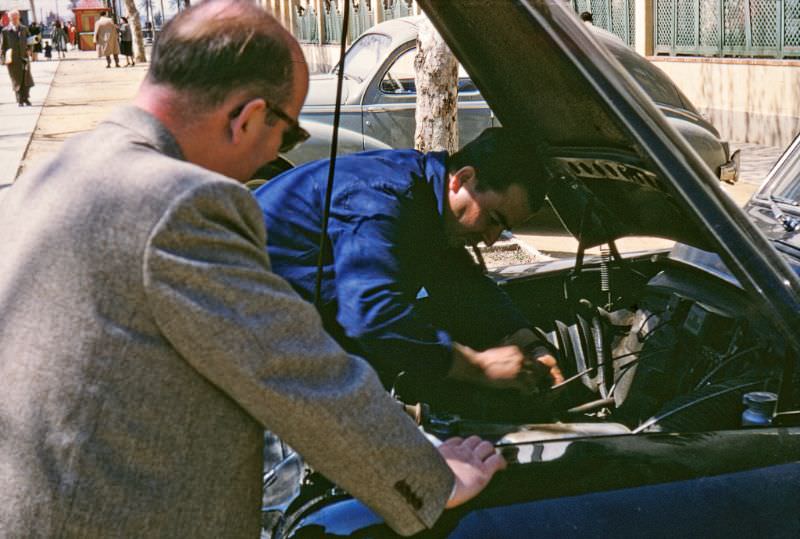
As the decade wore on, Spain began opening to foreign visitors. An American tourist photographed alongside a Spanish mechanic illustrated the tentative arrival of outside contact that the Franco government began to allow as it sought foreign currency and investment.
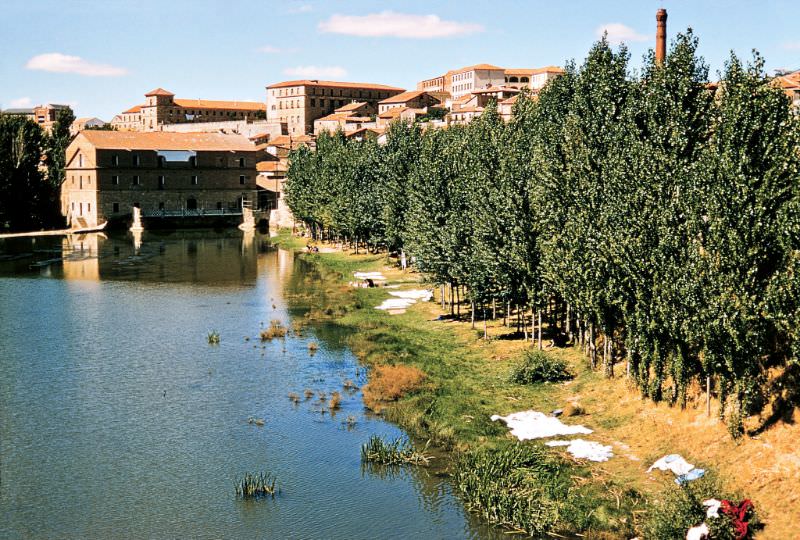
In Salamanca, laundry day was a public affair. Women brought their washing to the banks of the Tormes River and scrubbed clothes on the flat stones below the Puente de Enrique Esteban. The scene, photographed from the bridge above, showed how domestic labor was performed without modern conveniences.
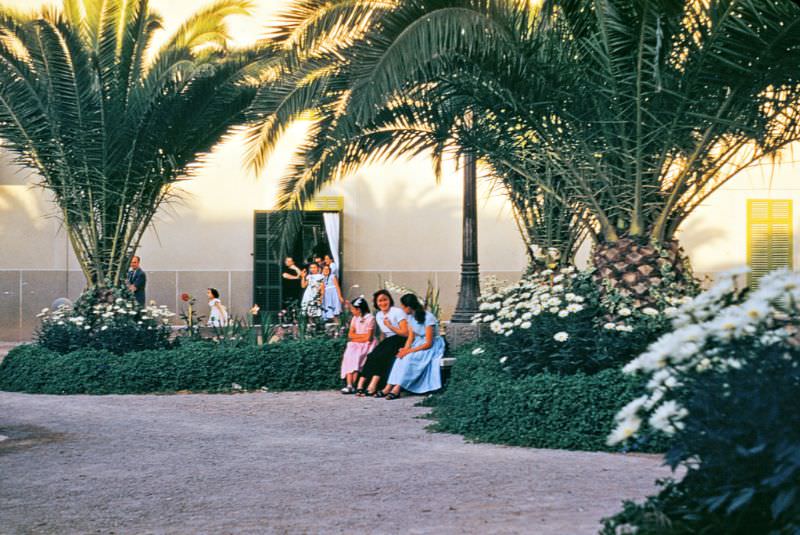
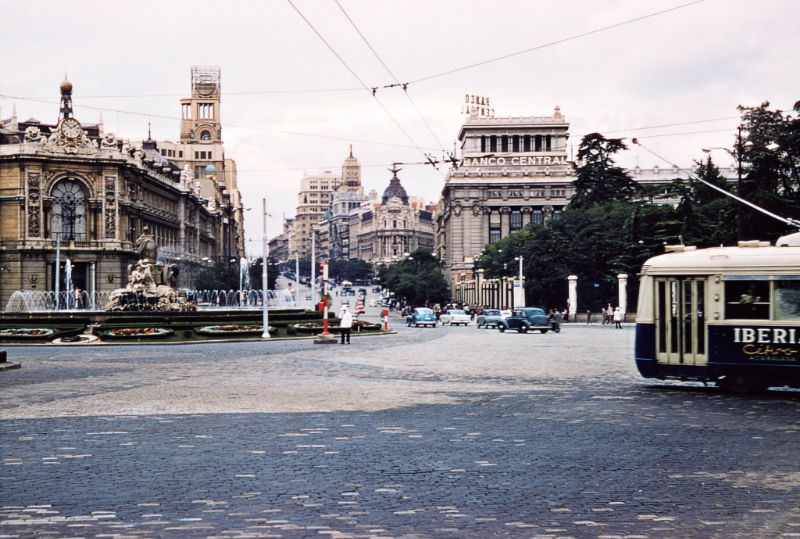
The Plaza de Cibeles, with its spectacular Cybele Fountain at the center, was one of Madrid’s most iconic public spaces. The fountain depicted the Roman goddess Cybele seated in a chariot drawn by lions and had been a symbol of the city since the 18th century.
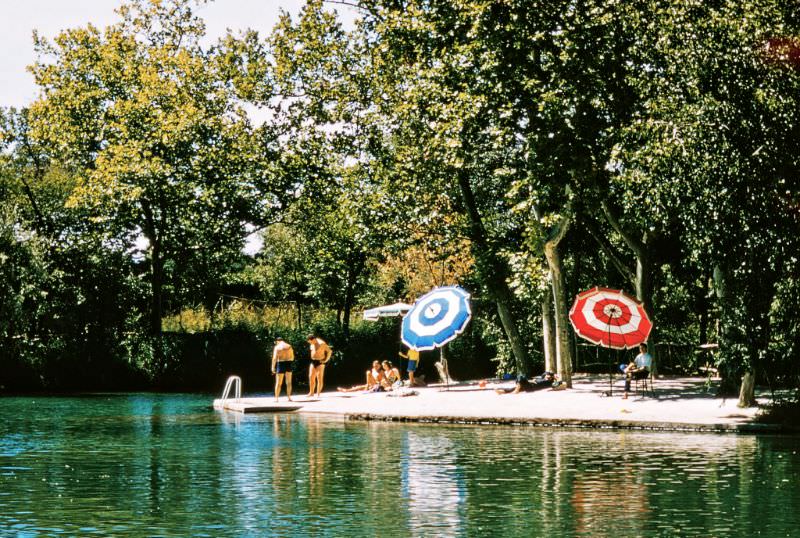
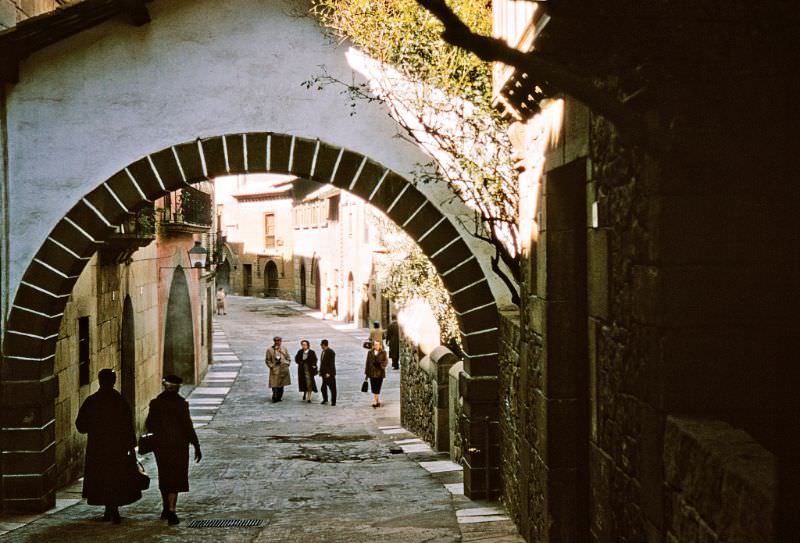
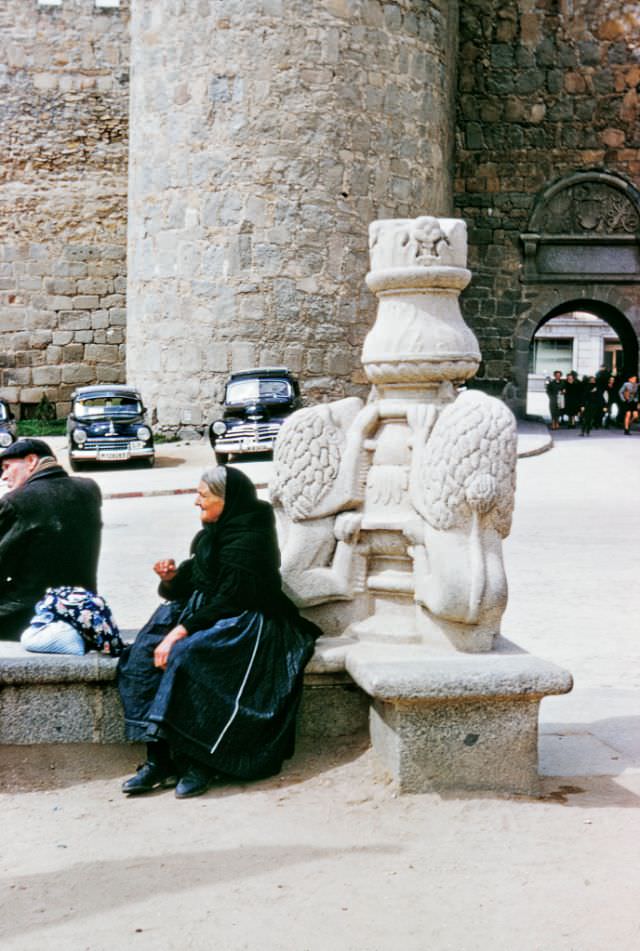
Ávila, one of Spain’s best-preserved medieval cities, was still enclosed by its original 11th-century walls in the 1950s. The city sat high on a plateau in Castile and was known for its cold climate and austere character — a sharp contrast to the sun-soaked Andalusian cities to the south.
Across the Balearic Islands, traditional dancing continued to be a source of community pride. At the Palma Yacht Club, performers in folk costume repeated movements that had been part of Mallorcan celebrations for generations.
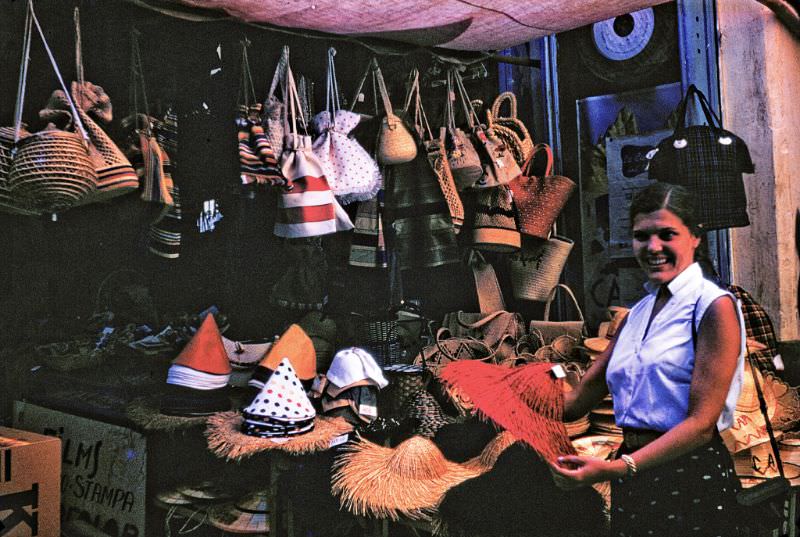
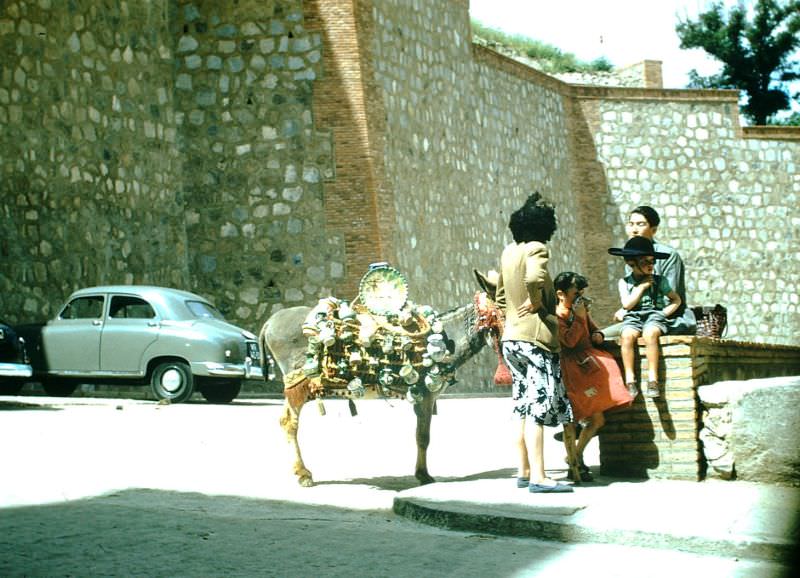
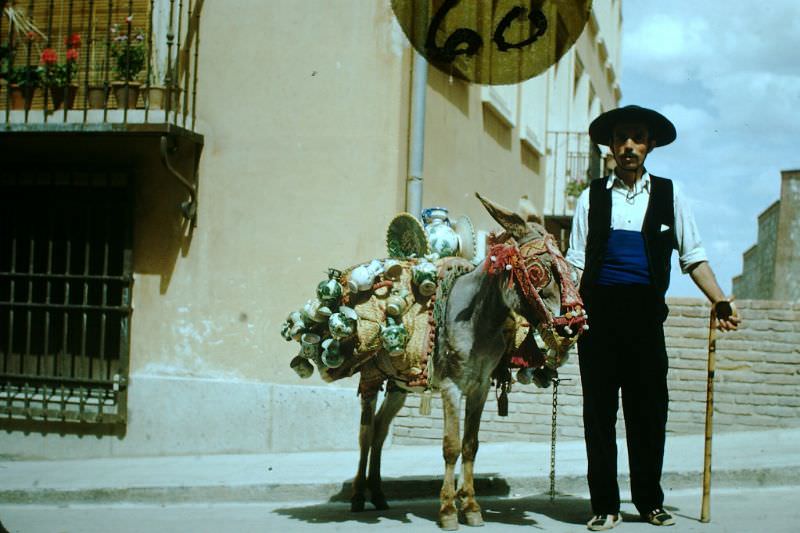
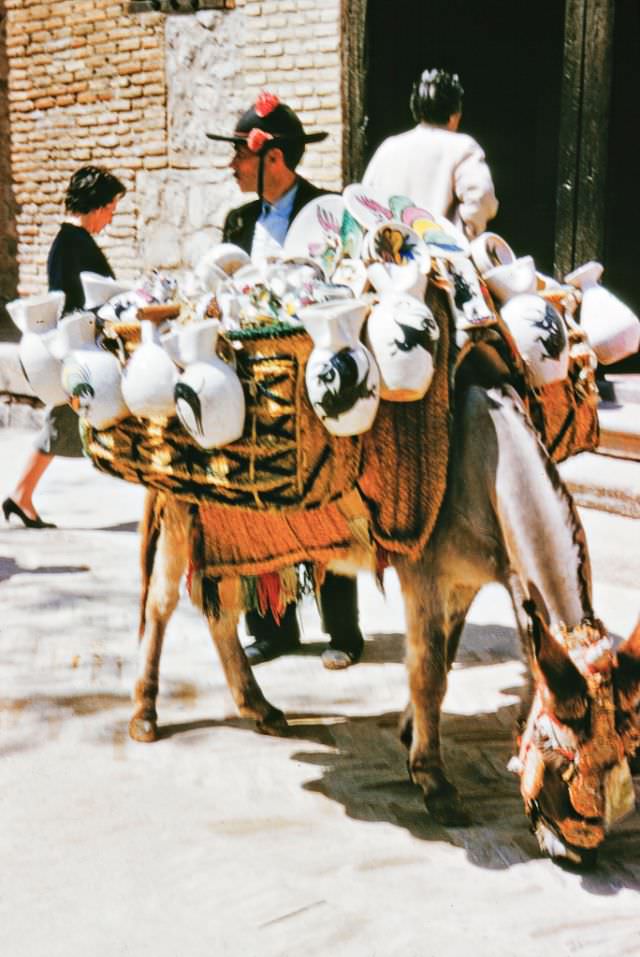
Toledo’s souvenir trade catered to the trickle of tourists who visited Spain even during its most isolated years. Sellers displayed miniature swords, ceramic pieces, and metalwork near the city’s historic gates, offering visitors a token of the city’s famous craftsmanship.
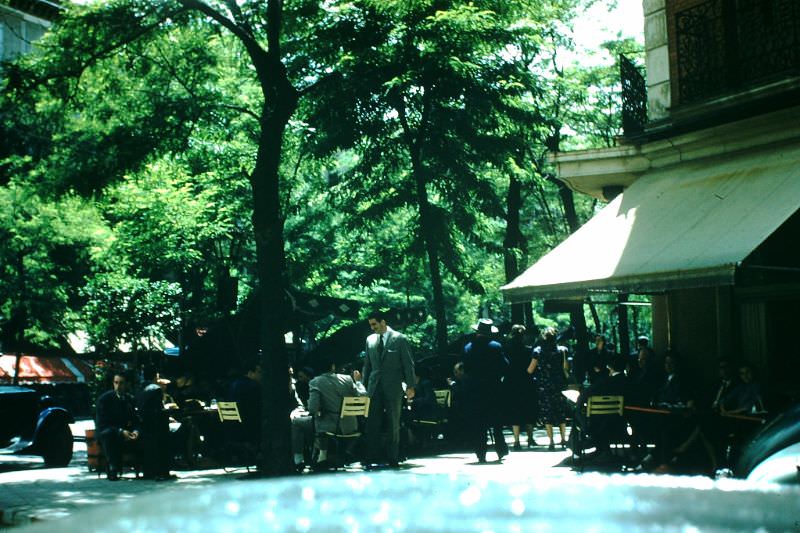
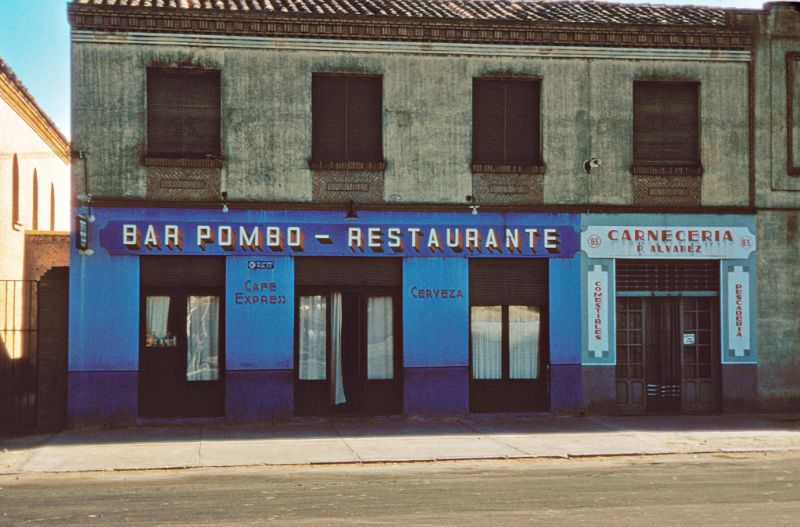
Bars and cafés were the social hubs of Spanish life. Bar Pombo, photographed somewhere in Spain during the decade, showed the kind of gathering place where men — and it was predominantly men — spent hours talking, drinking, and playing cards.
Ávila’s massive stone walls stretched for 2.5 kilometers around the old city. The Alcázar Gate was one of the main entry points, flanked by towers that had stood for nearly a thousand years. The walls were so well preserved that they appeared almost unchanged from medieval times.
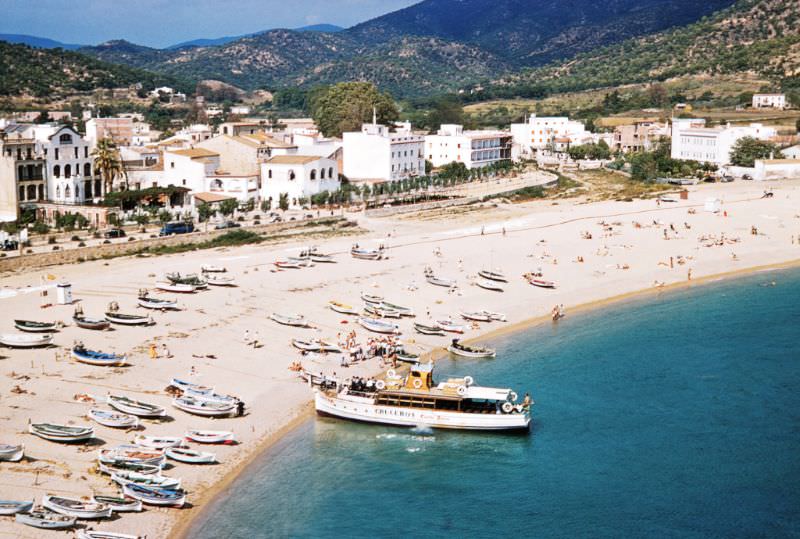
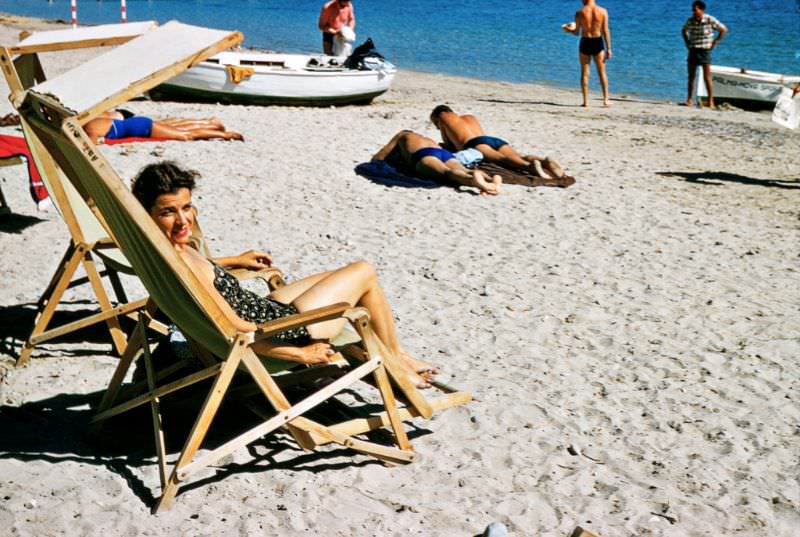
On Catalonia’s Costa Brava, the clifftop town of Tossa de Mar combined a medieval walled old town with a working fishing harbor and sandy beaches below. By the mid-1950s, it was beginning to attract European tourists, particularly from France and Britain.
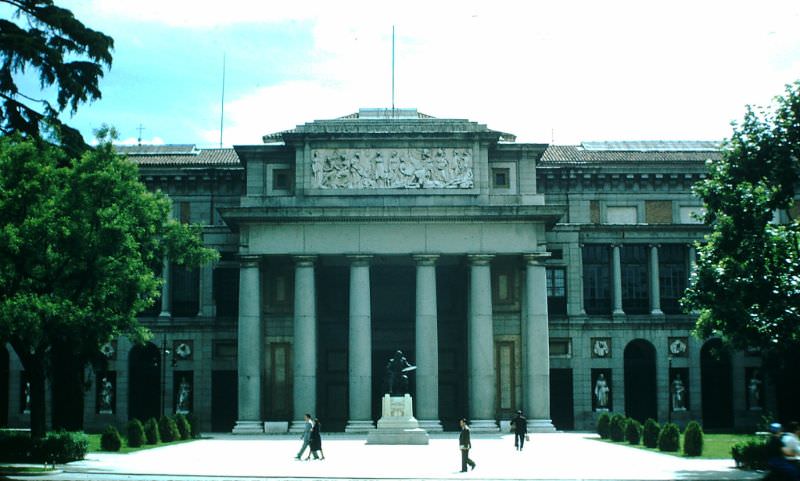
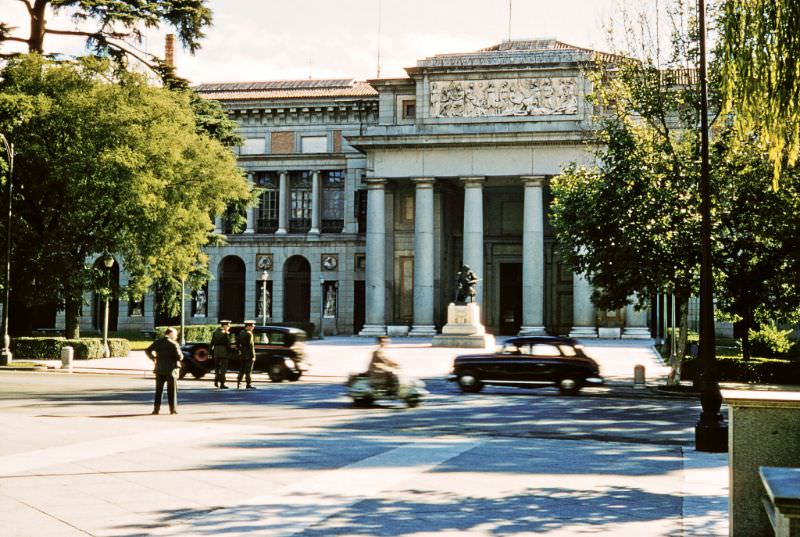
The Prado Museum in Madrid held one of the world’s great collections of European art, including major works by Velázquez, Goya, and El Greco. Despite Spain’s isolation, the Prado remained open and continued to draw art scholars and visitors throughout the decade.
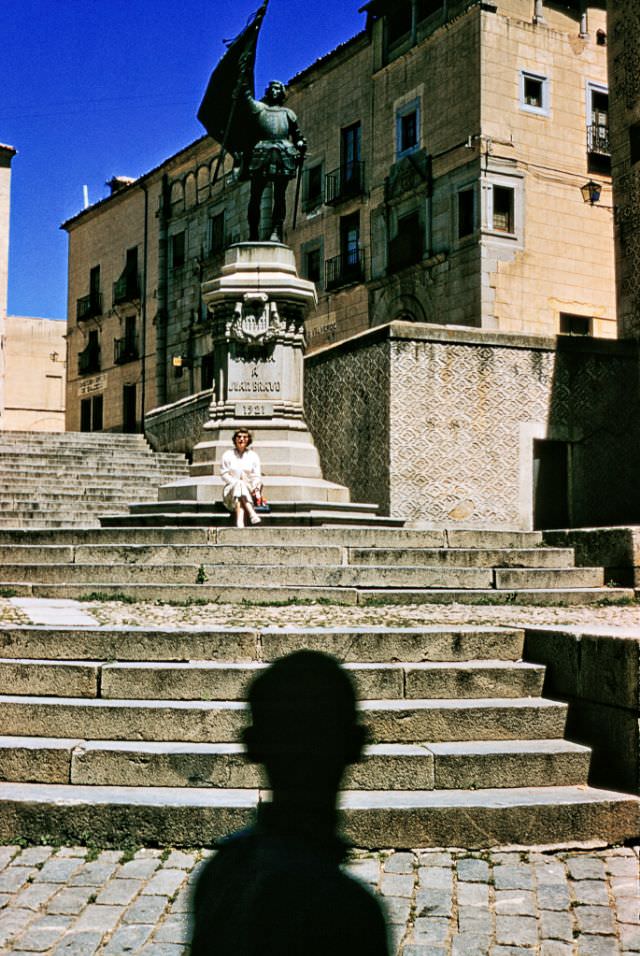
In Segovia, the bronze statue of Juan Bravo stood in the Plaza de San Martín. Bravo was a 16th-century comunero — a rebel leader who rose against the authority of King Charles I. The statue, erected in 1921, remained a point of civic pride in the Castilian city.
By the end of the 1950s, Spain’s economic isolation was formally ending. In 1955, Spain joined the United Nations. In 1958, it joined the World Bank. The Stabilization Plan of 1959 lifted trade restrictions, removed government price controls, and opened the Spanish economy to foreign investment for the first time in two decades. The photographs from this era capture a country on the edge of transformation — still deeply traditional, still tightly controlled, but no longer entirely closed to the world.