
Bali in the 1950s was a world largely untouched by mass tourism. The island’s volcanic mountains, terraced rice paddies, coral reefs, and dense tropical landscape formed the backdrop of a deeply spiritual society. Nearly every aspect of daily life — from farming and fishing to cooking and craftsmanship — was woven together with religious ceremony and artistic tradition. These photographs, taken between 1950 and 1958, offer a rare and direct look at that world.
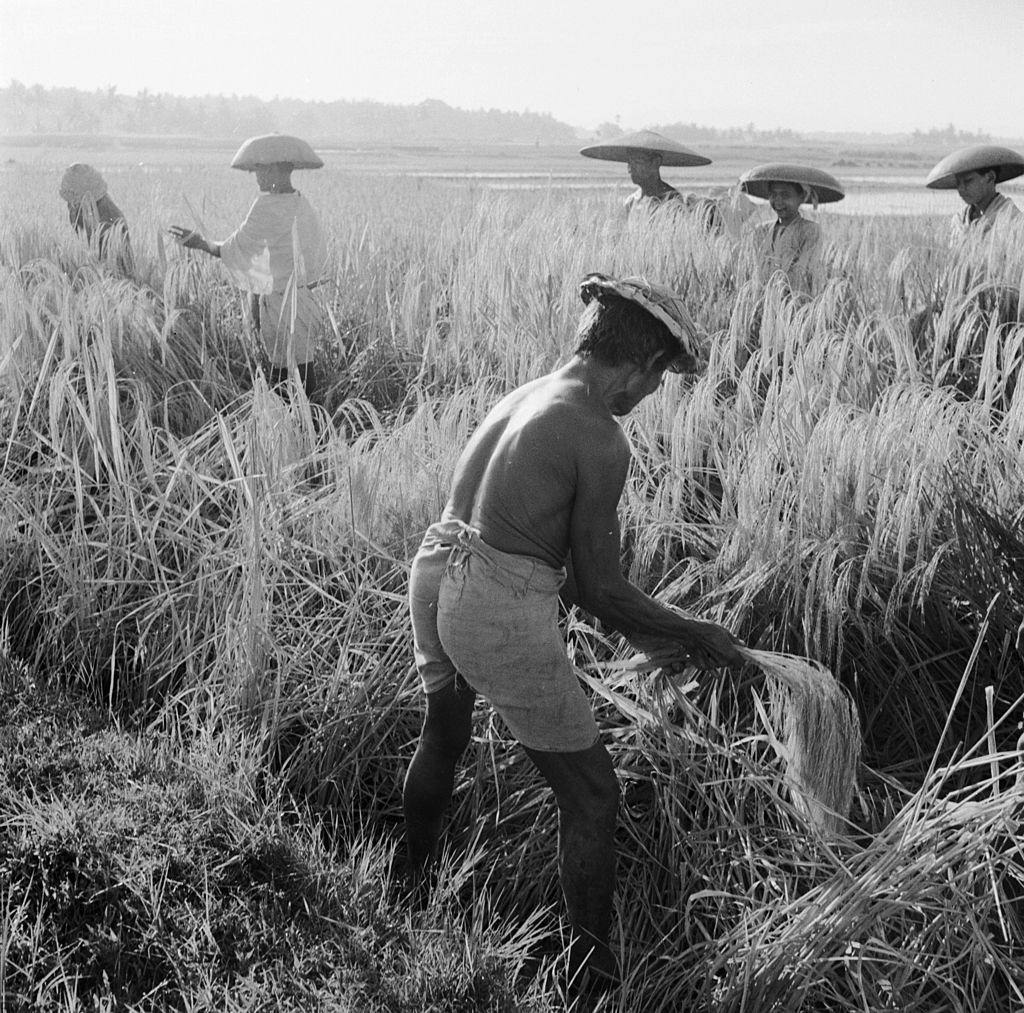
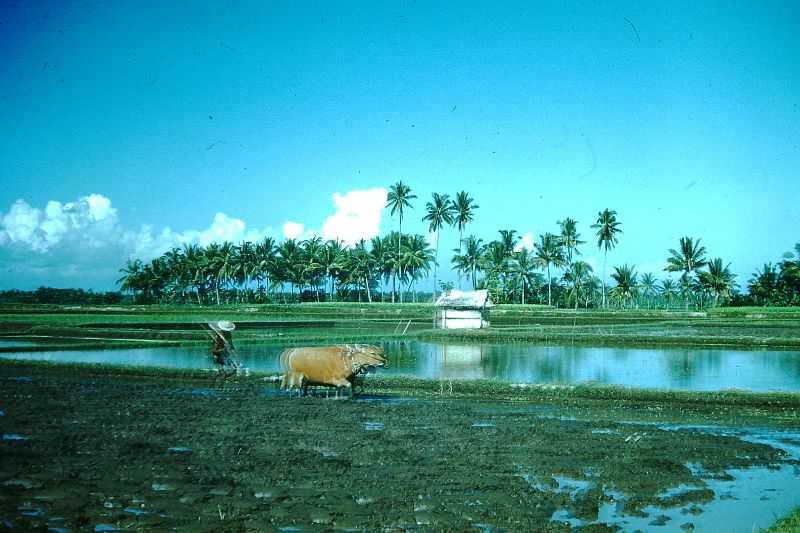
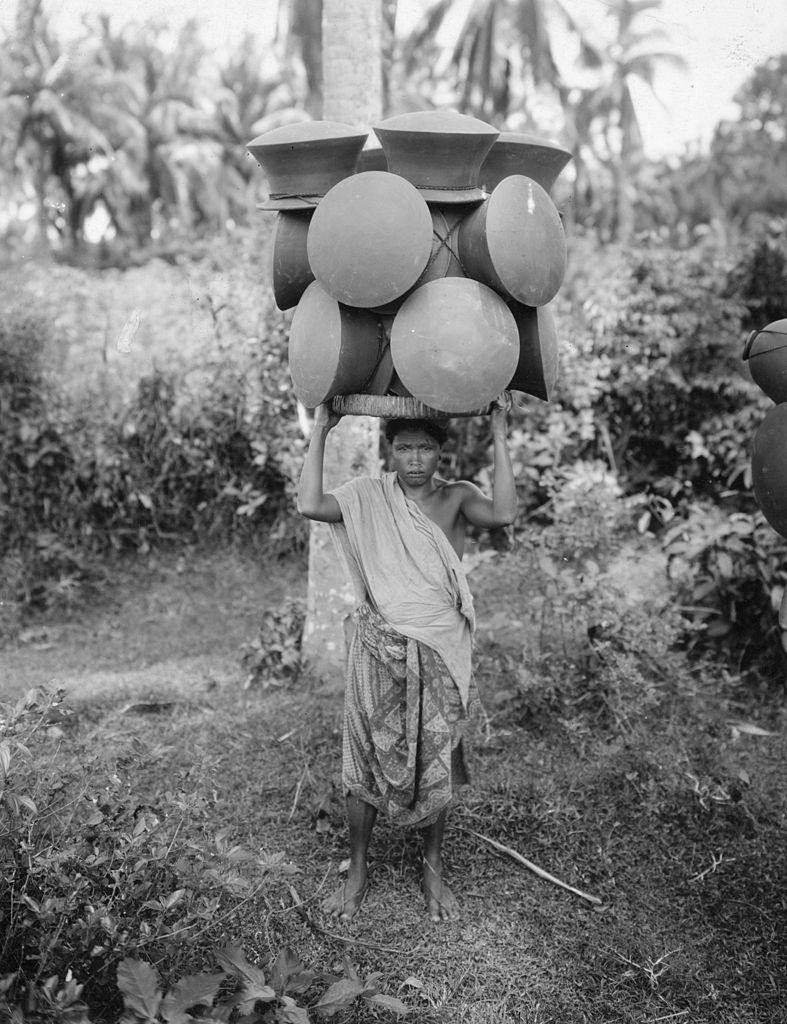
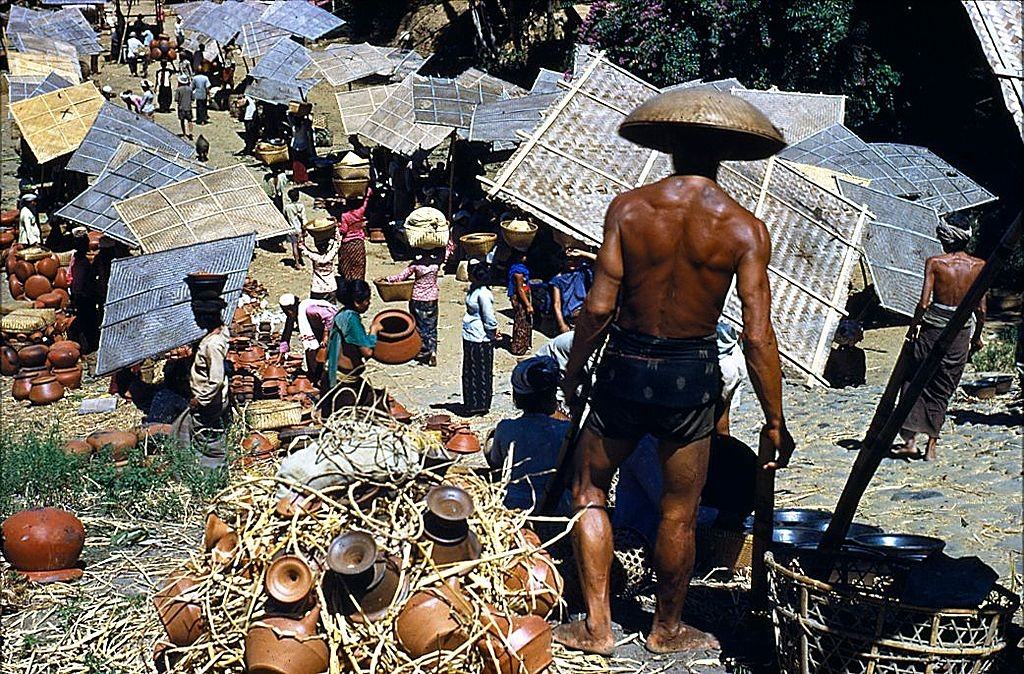
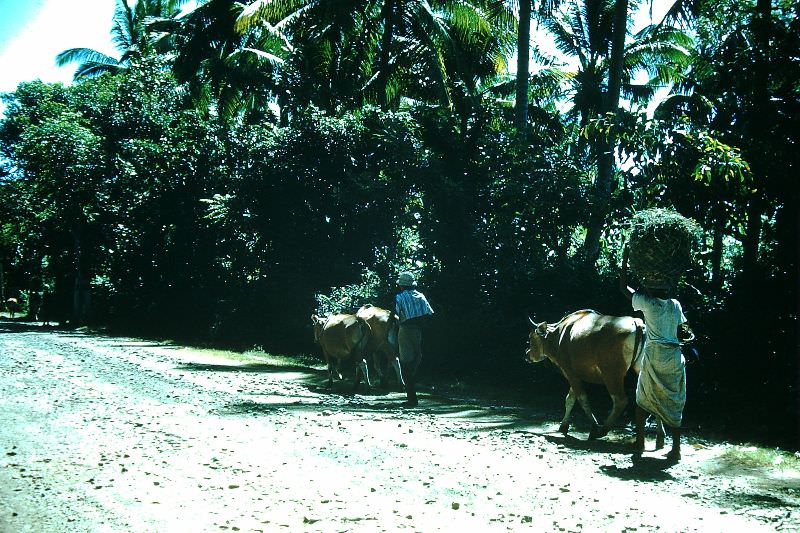
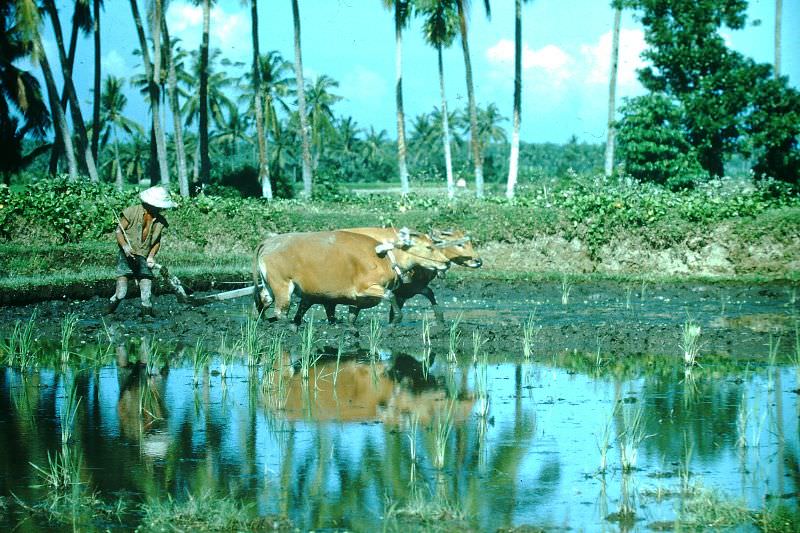
For most Balinese families in this era, daily life revolved around agriculture. Rice was the island’s most important crop, and its cultivation carried both economic and spiritual meaning. The entire family took part in the harvest, though planting was reserved strictly for men. Oxen pulled plows through the paddies, and women hauled goods — including handmade clay pots — on their heads, sometimes traveling great distances to reach market.
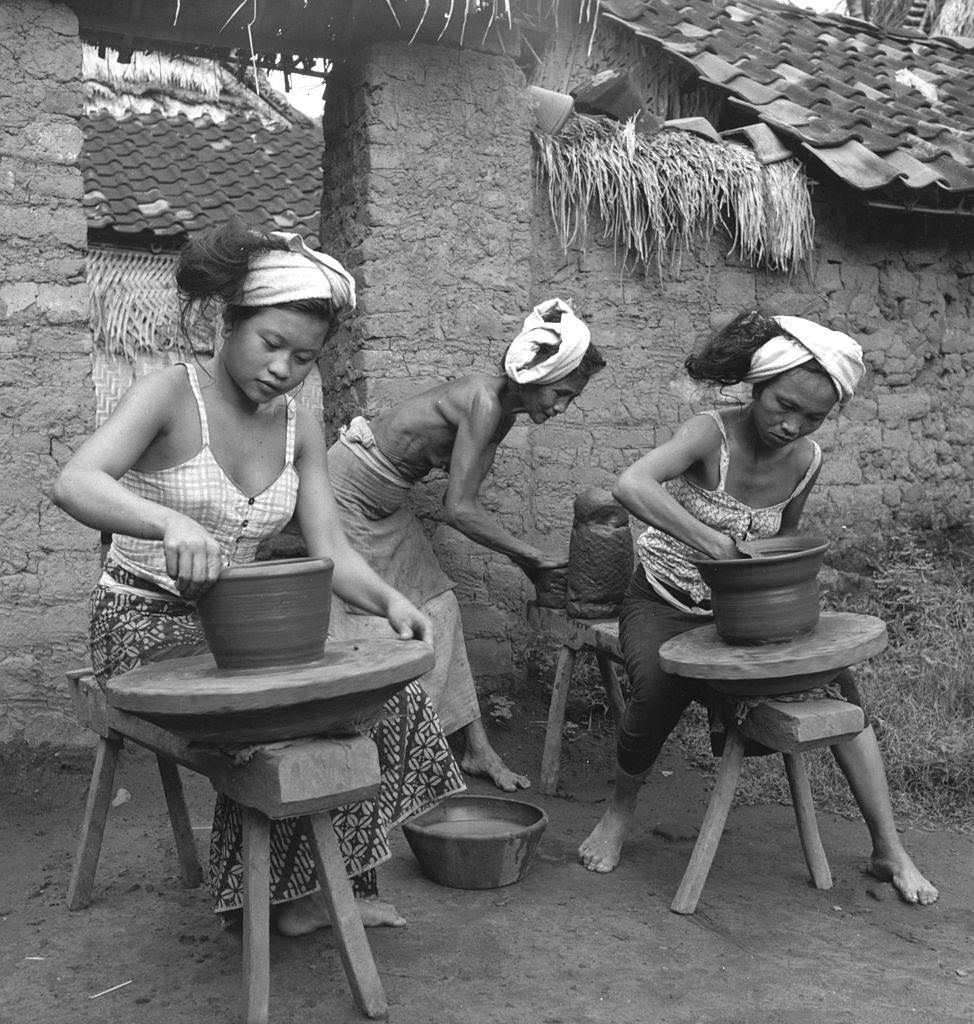
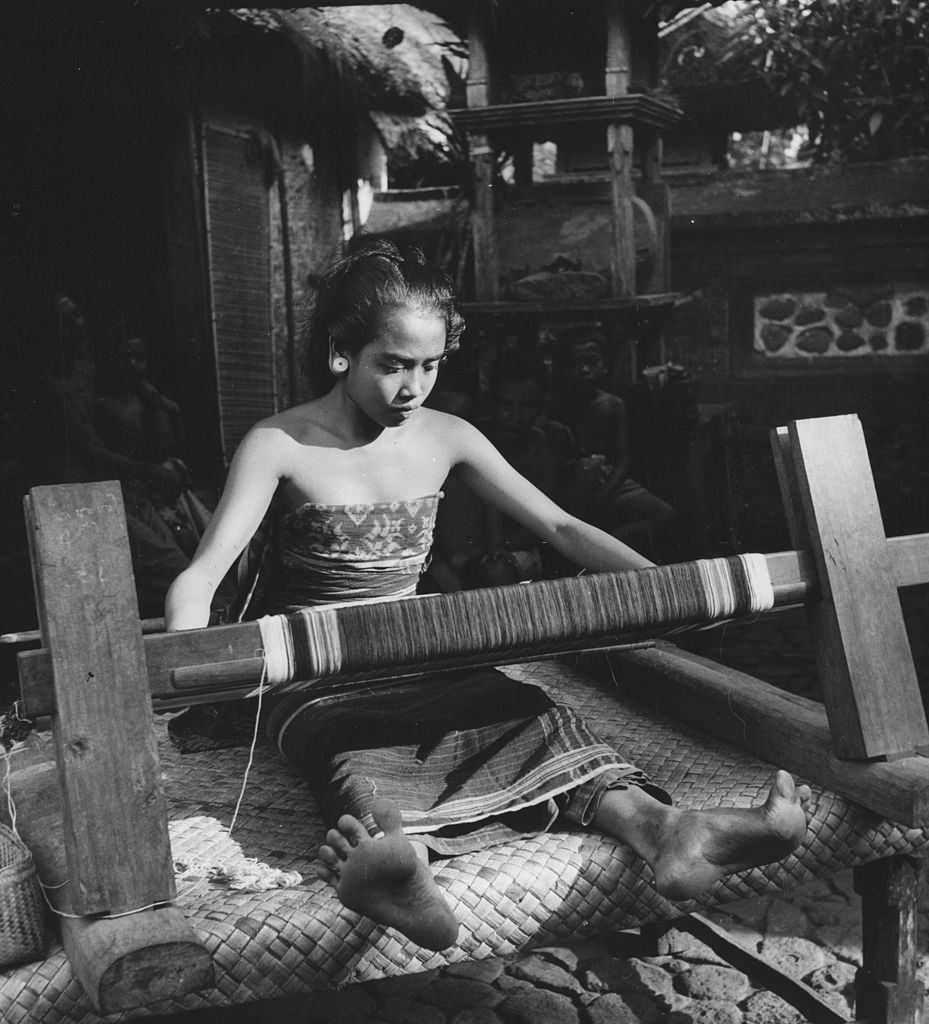
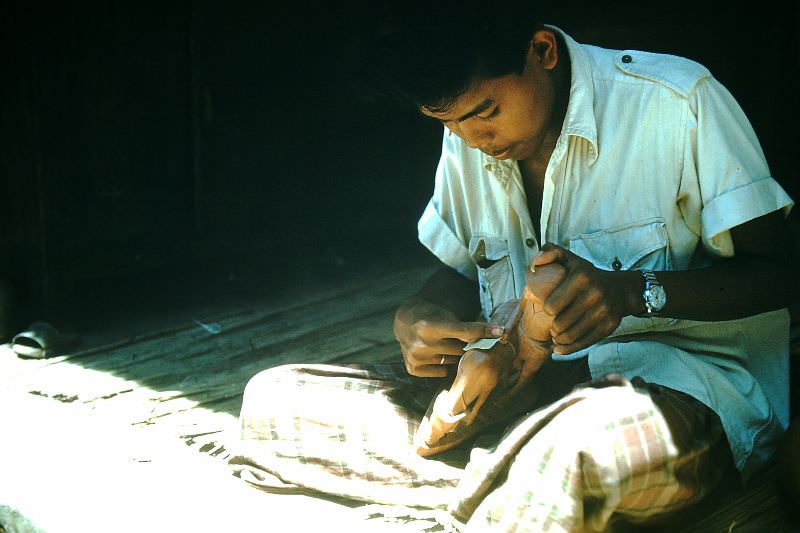
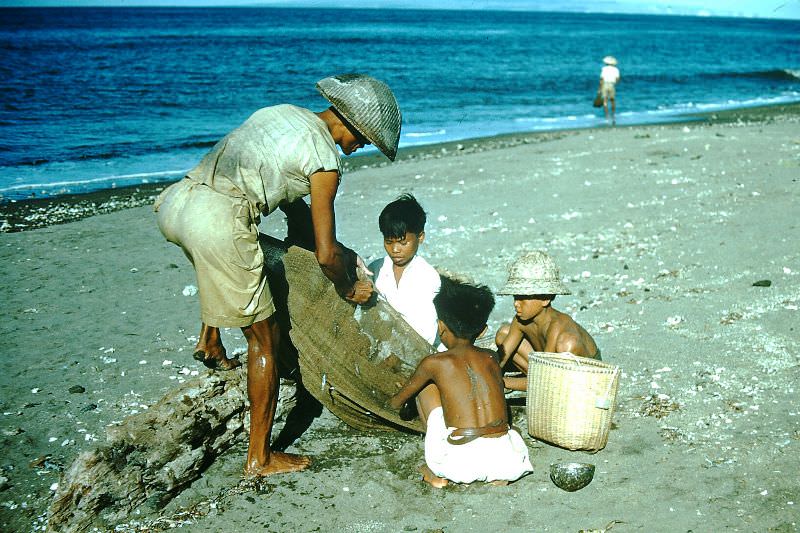
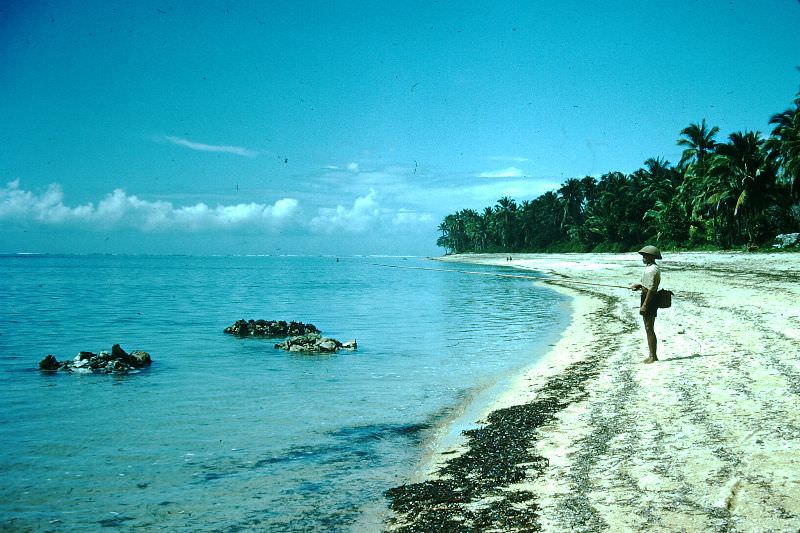
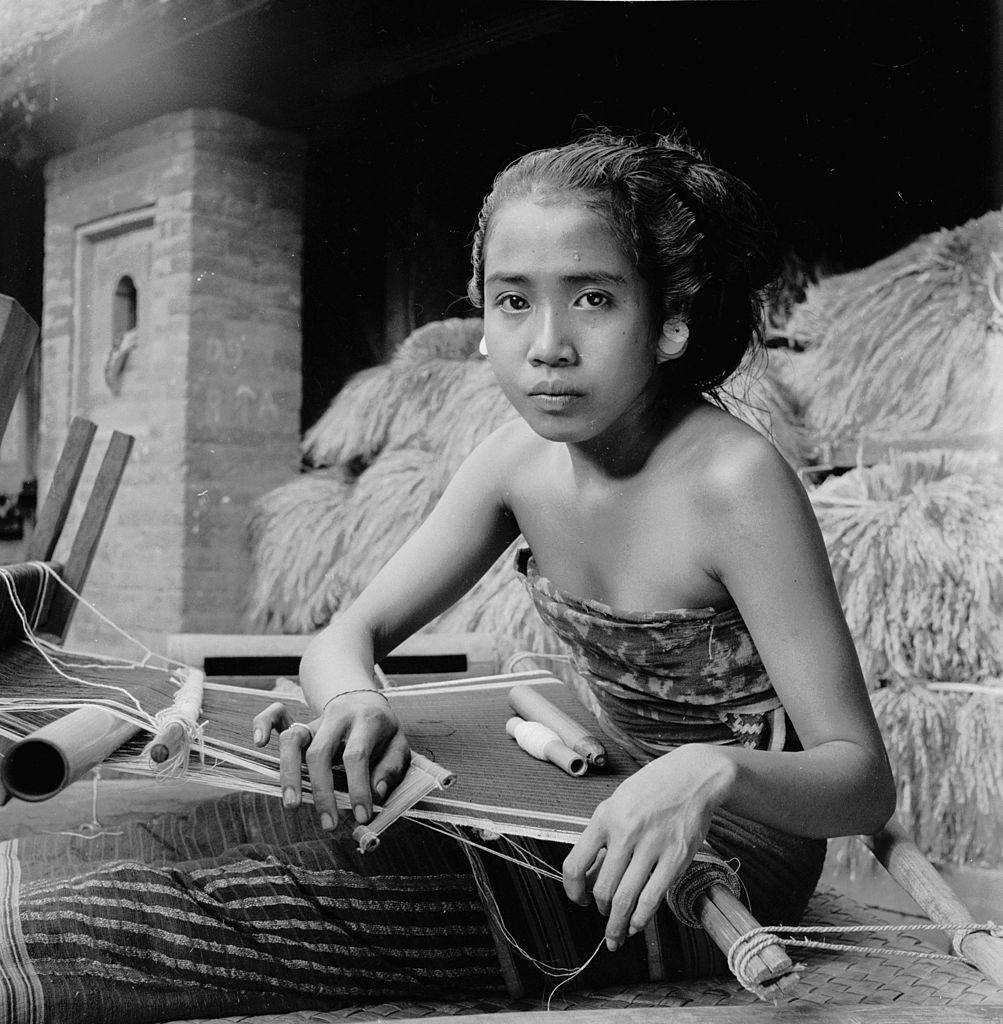
Cottage industries were central to Balinese village life. Women turned pots by hand and wove sarongs on traditional looms, skills passed down through generations. Wood carving was another respected craft — artisans polished their carvings to a fine finish, producing work that was both decorative and ceremonial. In the coastal village of Sanur, fishermen worked the sea with nets and small boats, while markets in towns like Denpasar bustled with pottery, food, and everyday goods.
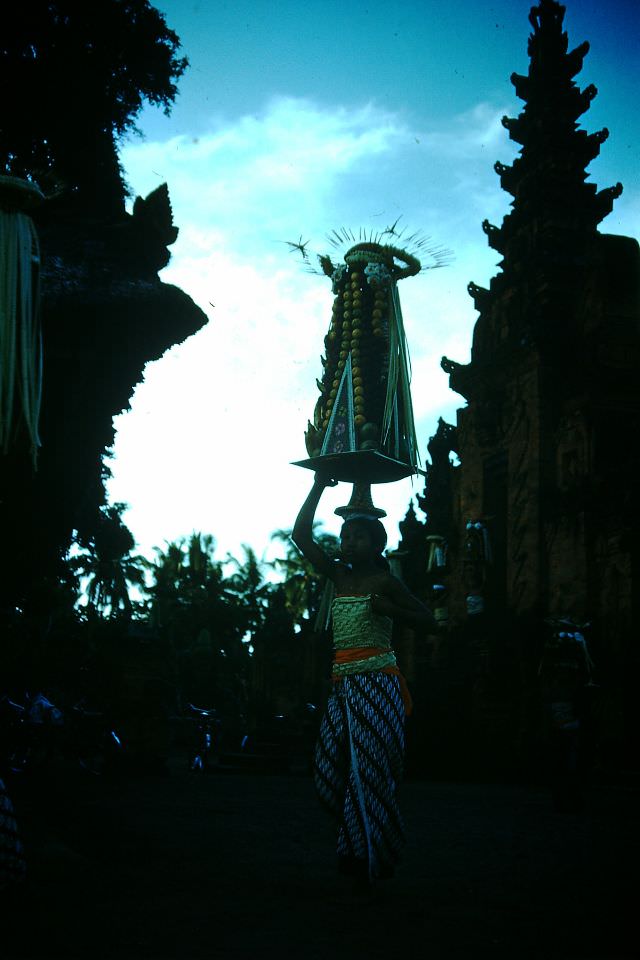
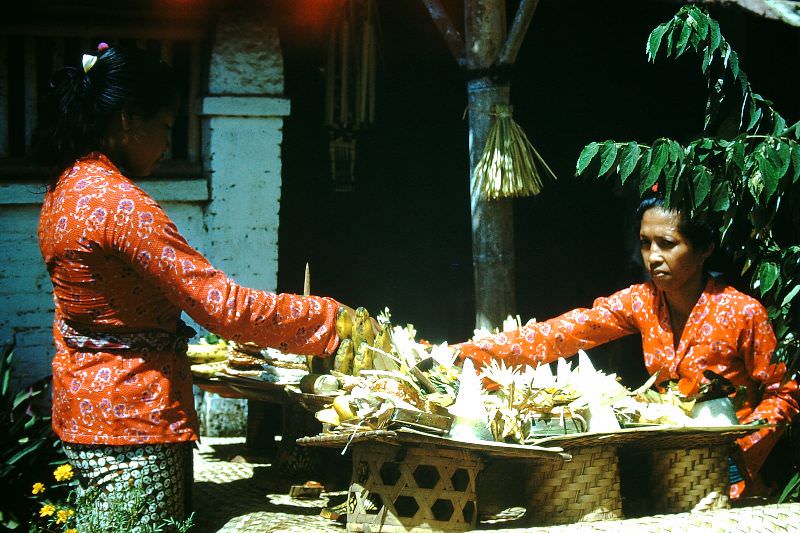
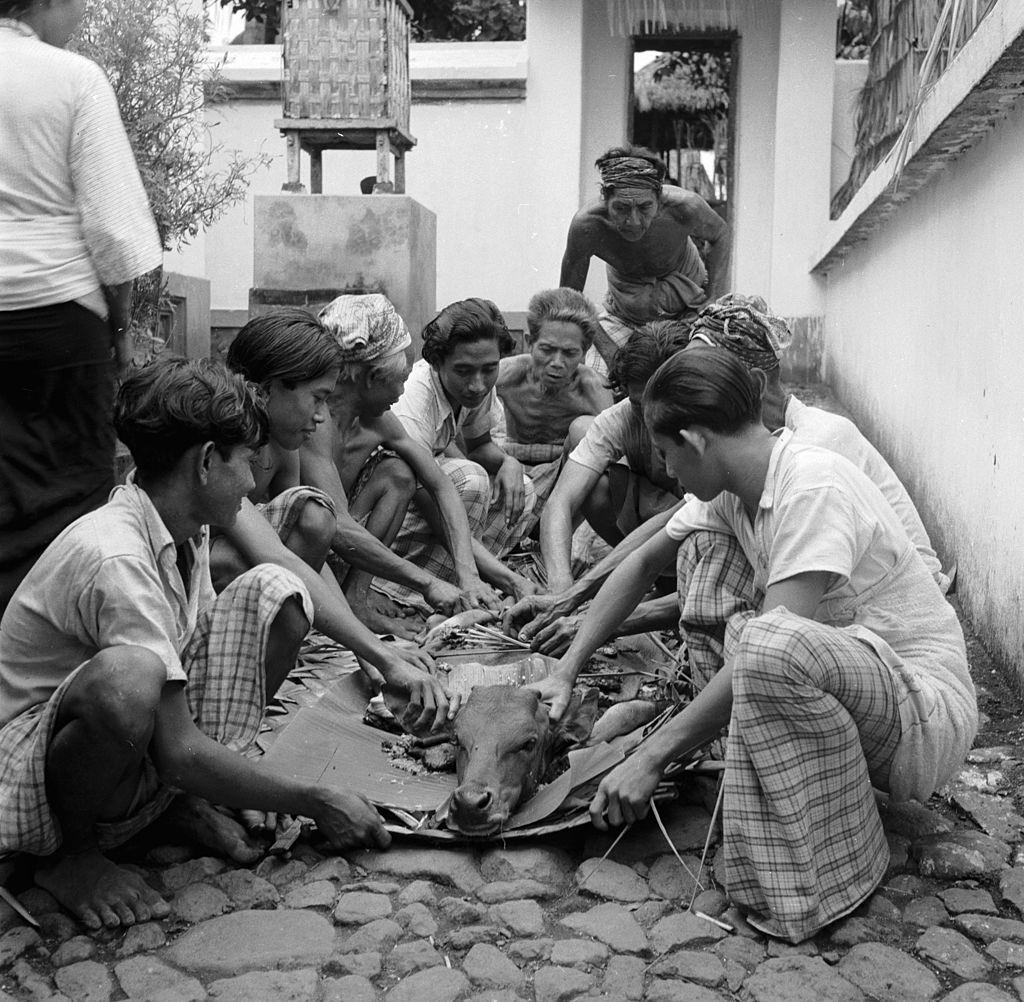
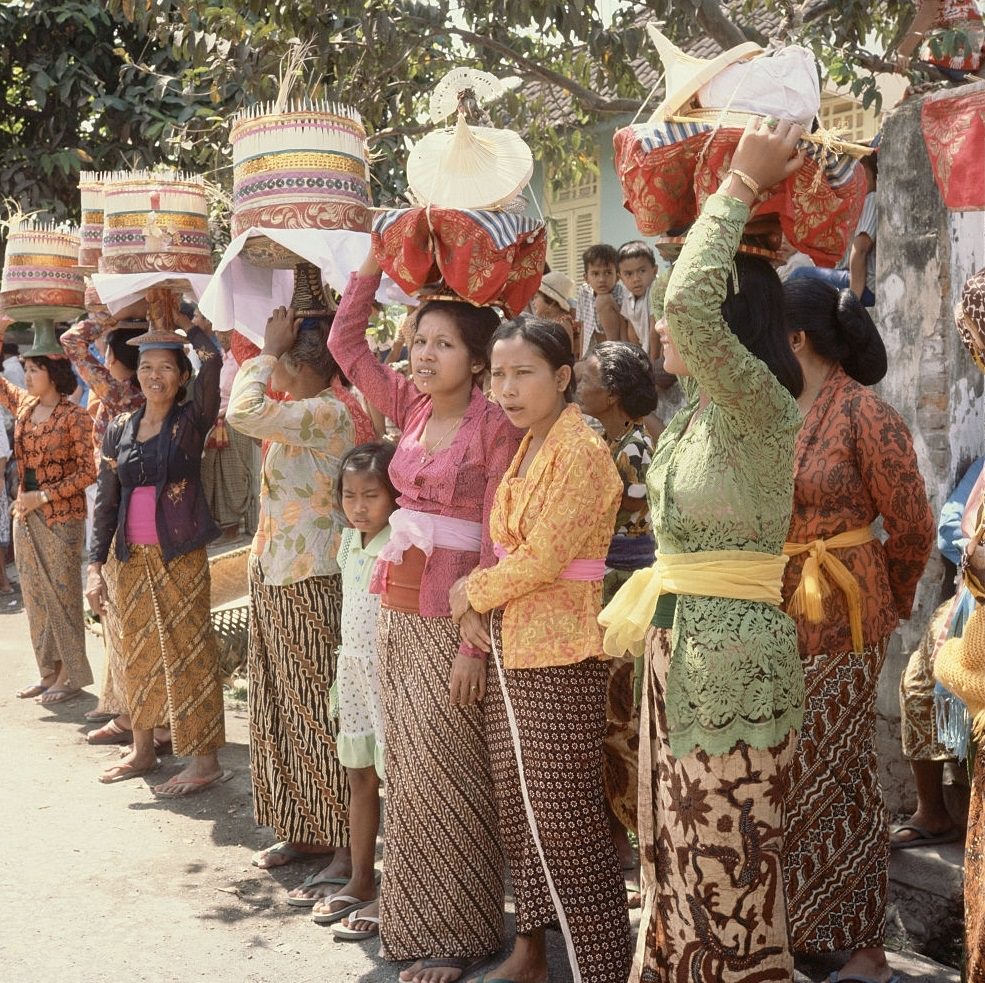
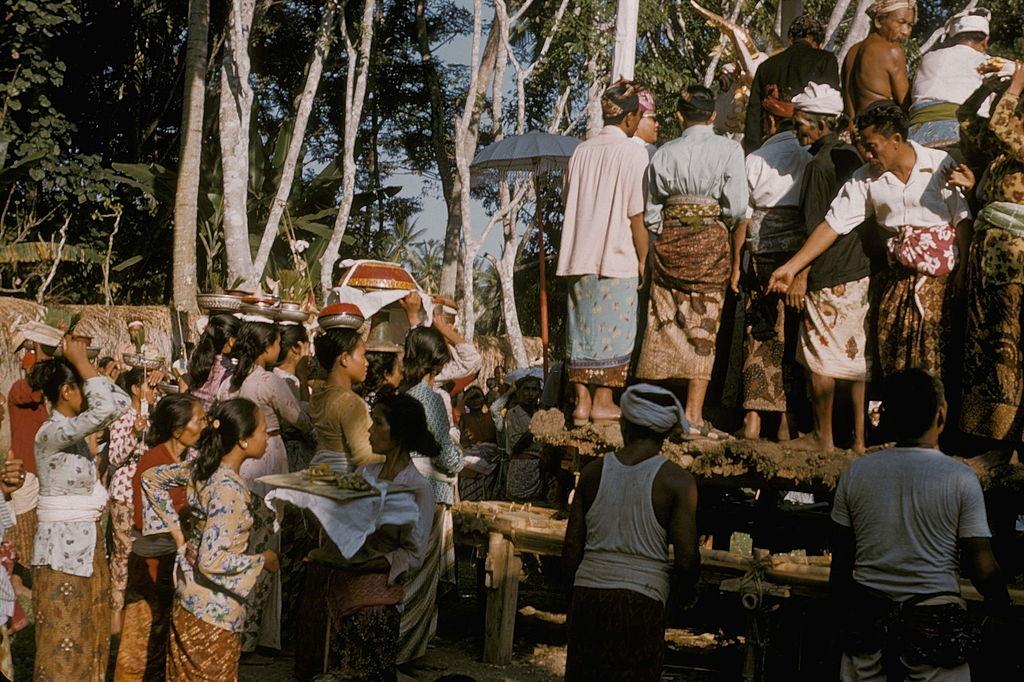
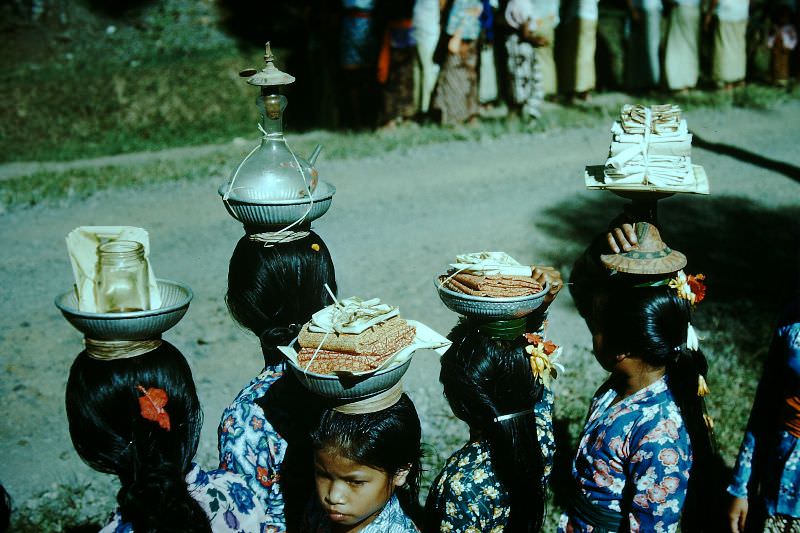
Religion shaped everything in Balinese society. The island’s majority Hindu population marked the calendar with elaborate rituals, offerings, and festivals. New Year celebrations drew crowds to temples, with decorative displays erected throughout villages. Shrines were carried to the seashore during annual religious festivals, and offerings of fruit, flowers, and slaughtered animals were made at temple purification rites. Women balanced ornate ceremonial containers on their heads during processions — a skill that required both strength and training.
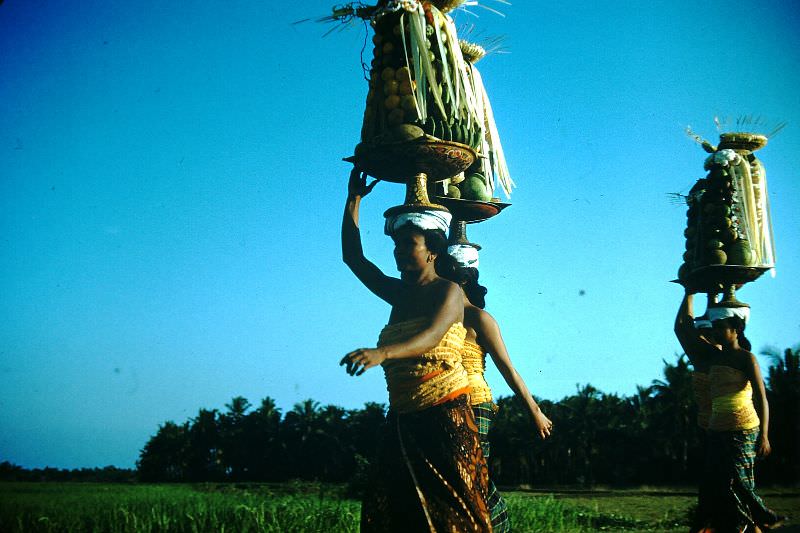
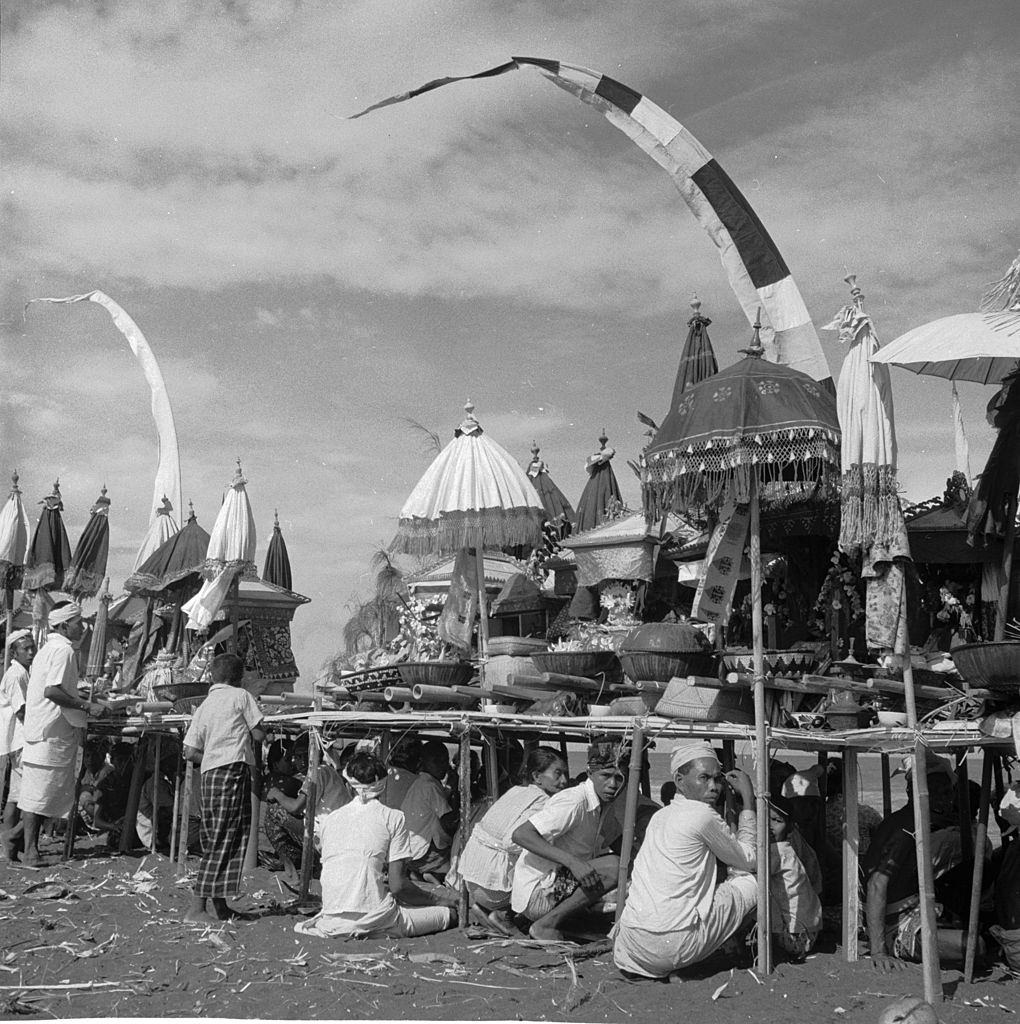
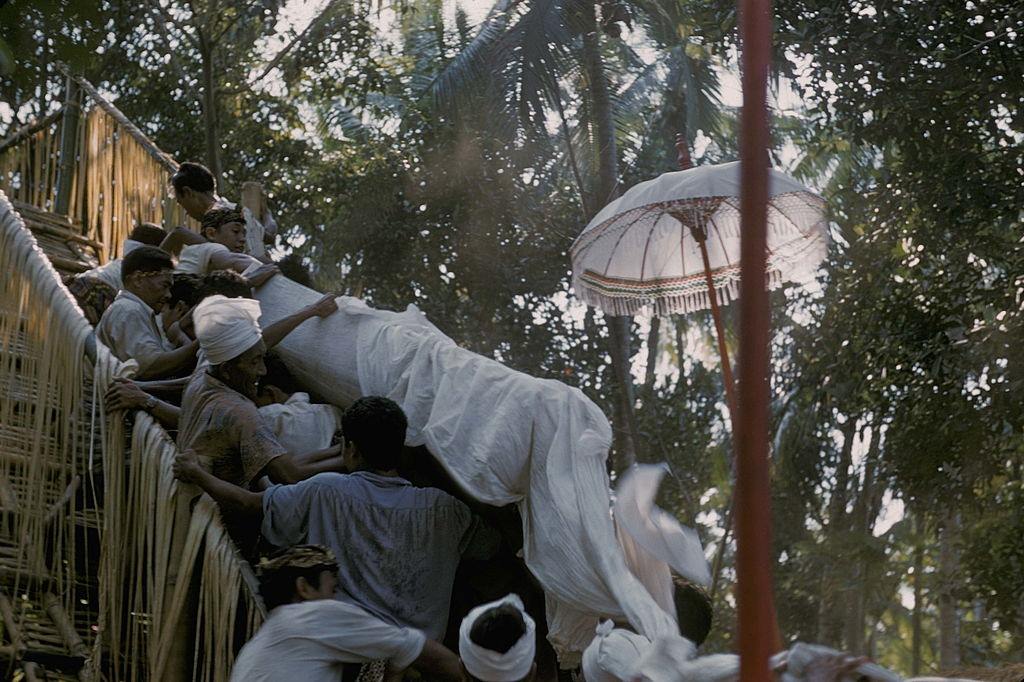
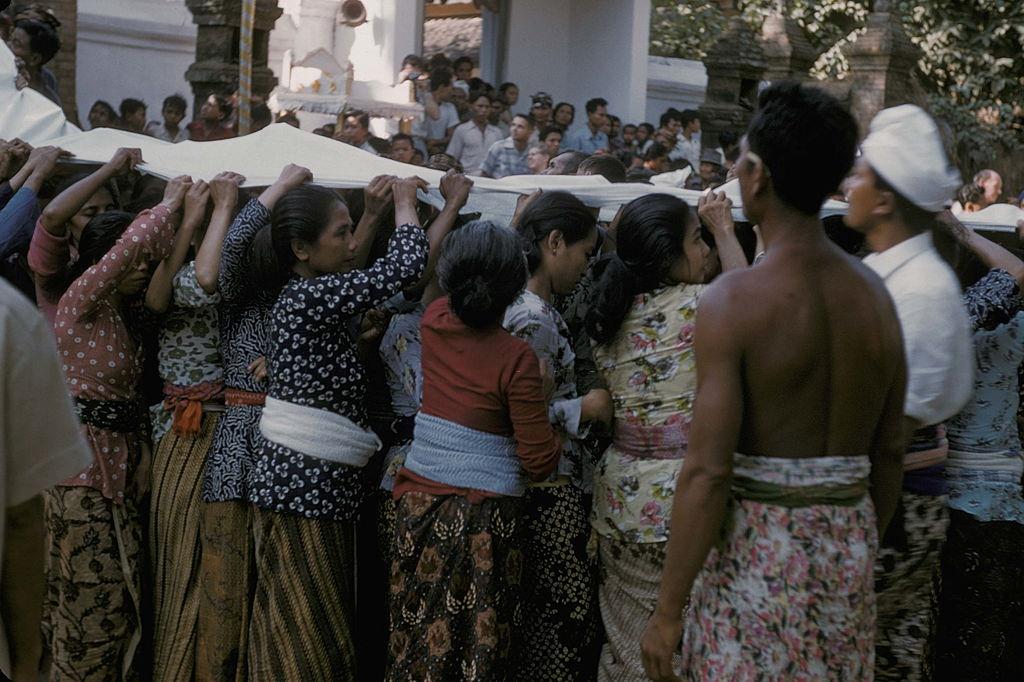
Cremation ceremonies were among the most significant events in Balinese Hindu life. They were public, communal affairs involving entire villages. Participants carried the coffin through the streets, held long white cloths, and balanced decorative containers in procession. The preparations were extensive, and the ceremony itself was treated not as a moment of grief but as a religious obligation — a means of releasing the soul for its next journey.
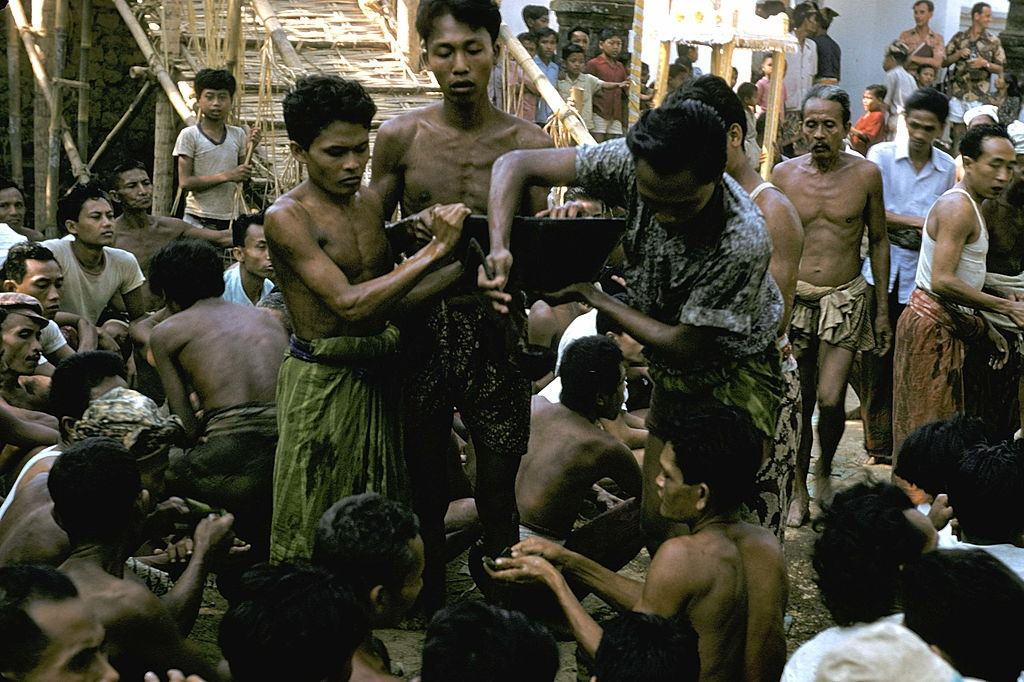
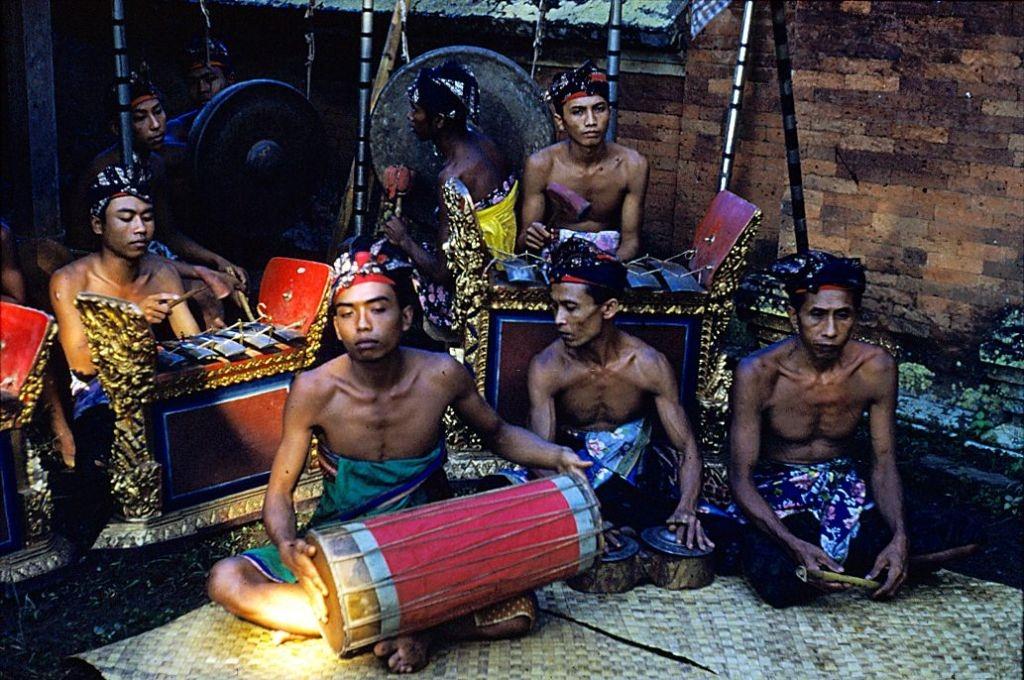
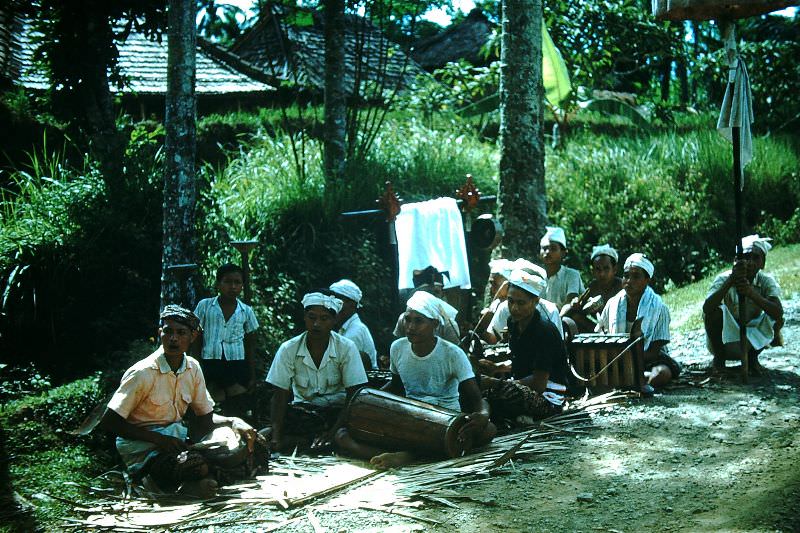
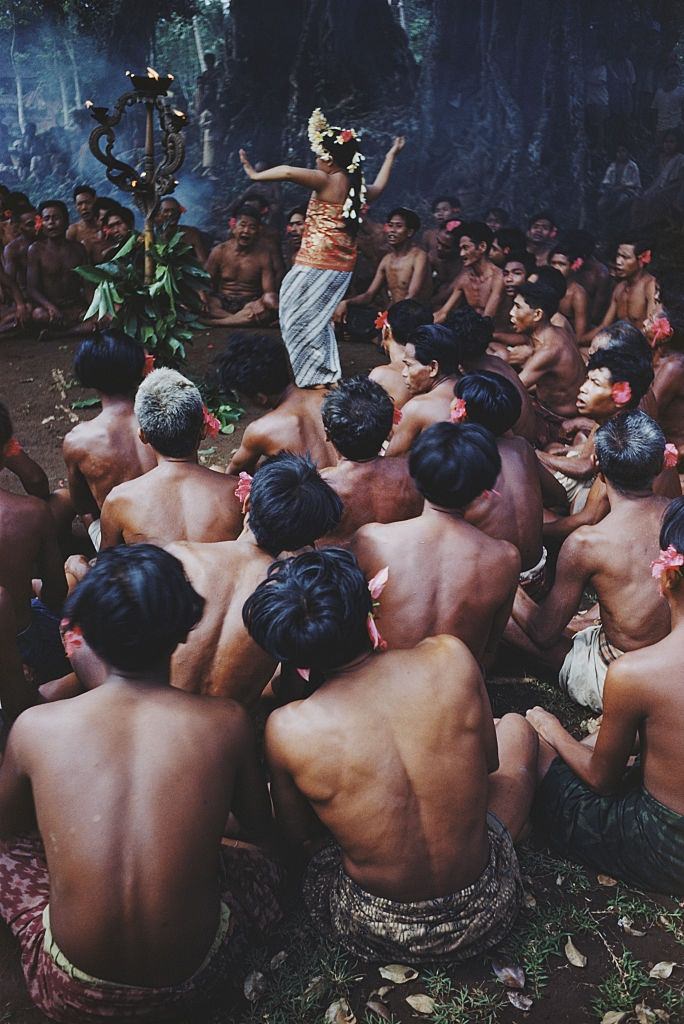
Balinese performing arts were inseparable from religious life. Dance, music, and drama were not entertainment — they were acts of devotion. The Kecak dance involved large circles of men swaying together in unison, their chanting rising over smoke from burning green leaves. The dance traces its roots to the ancient Sanghyang trance ritual. Musicians playing percussion instruments provided the rhythmic foundation for many of these performances.
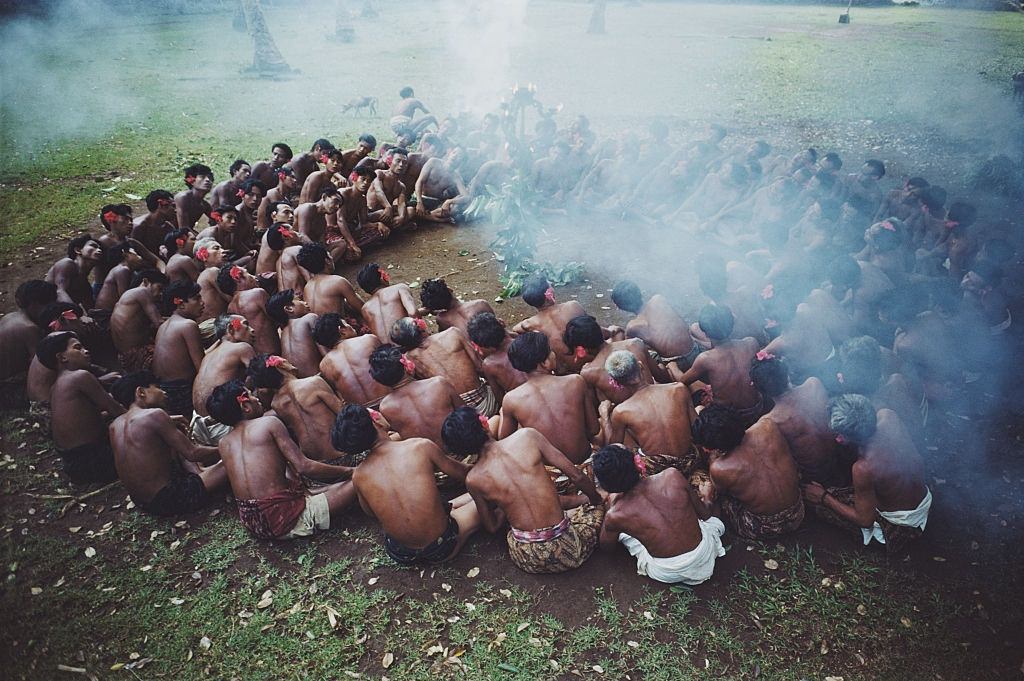
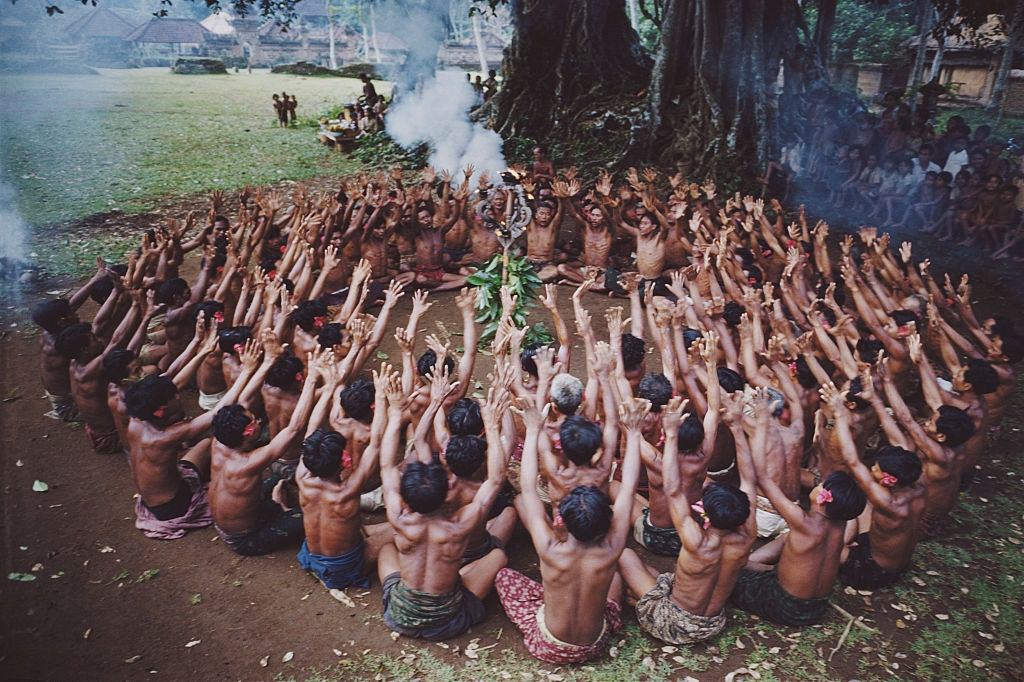
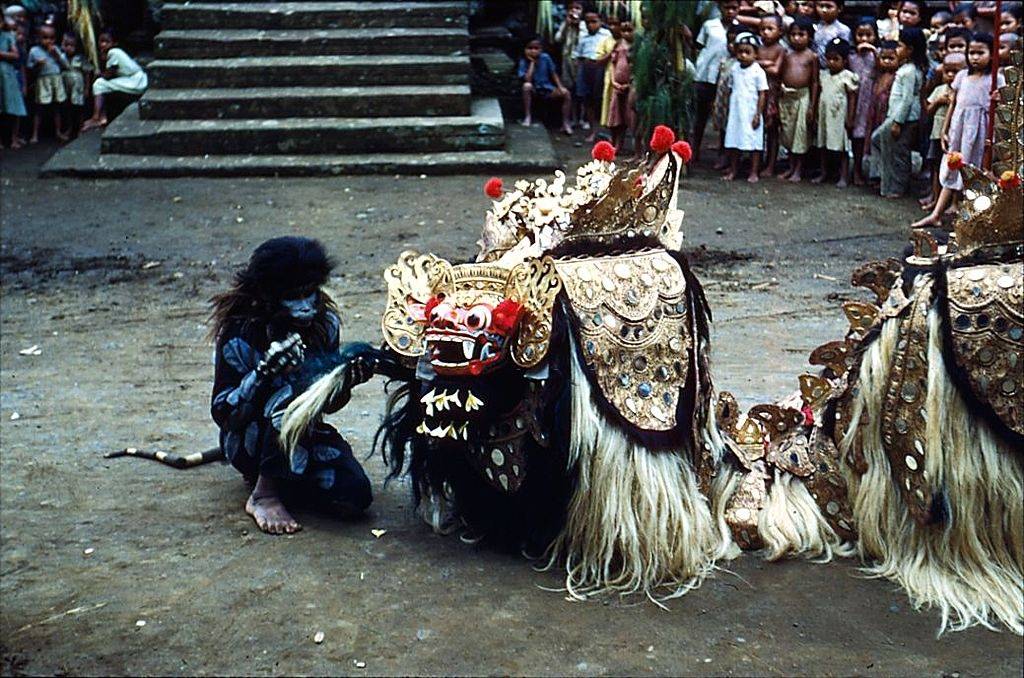
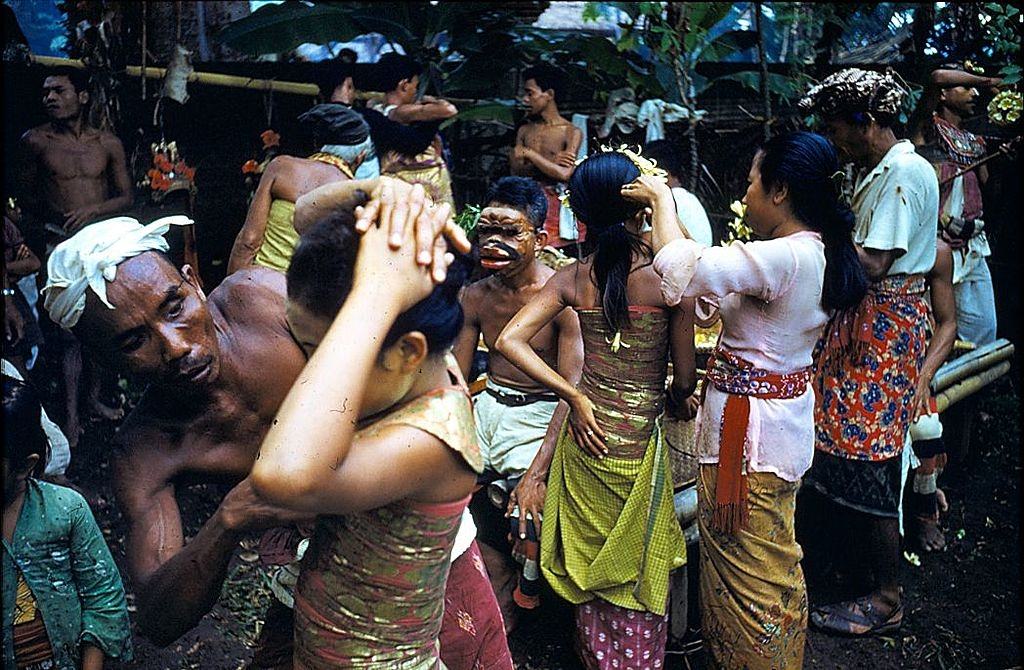
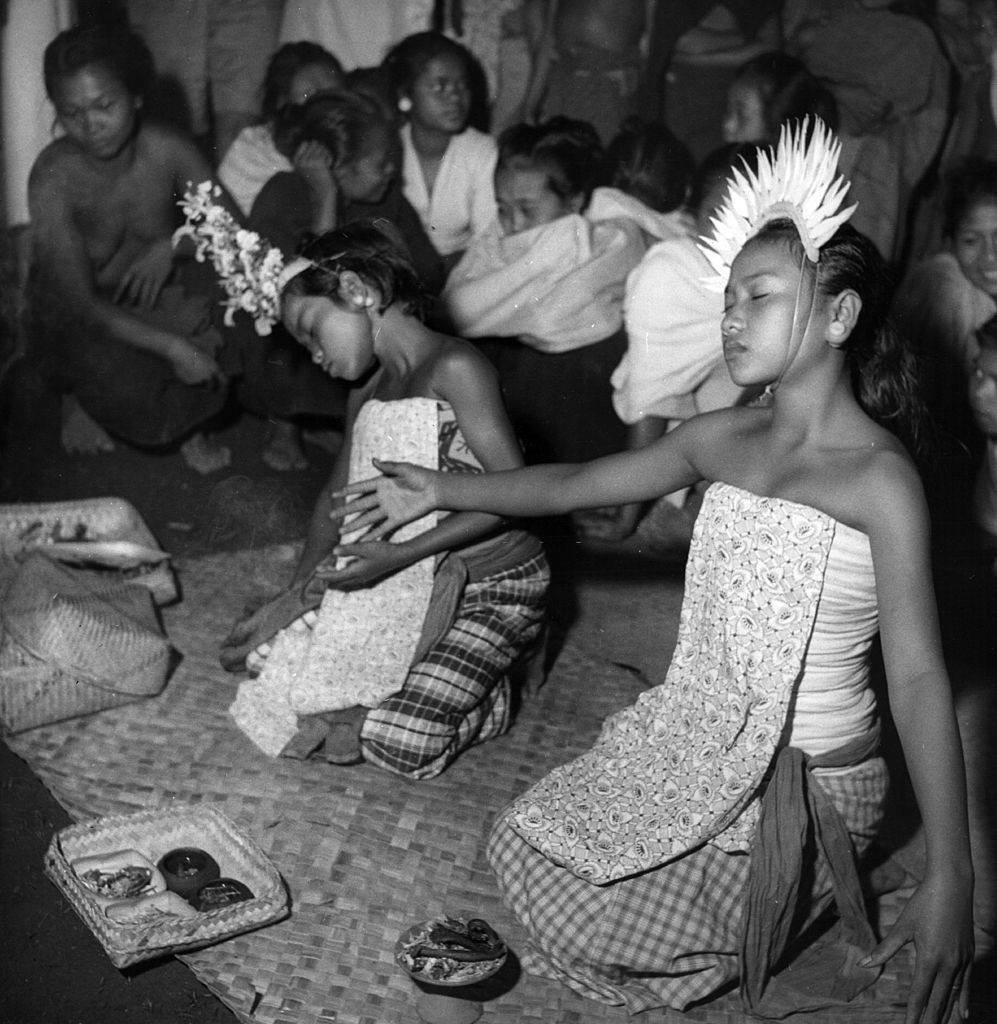
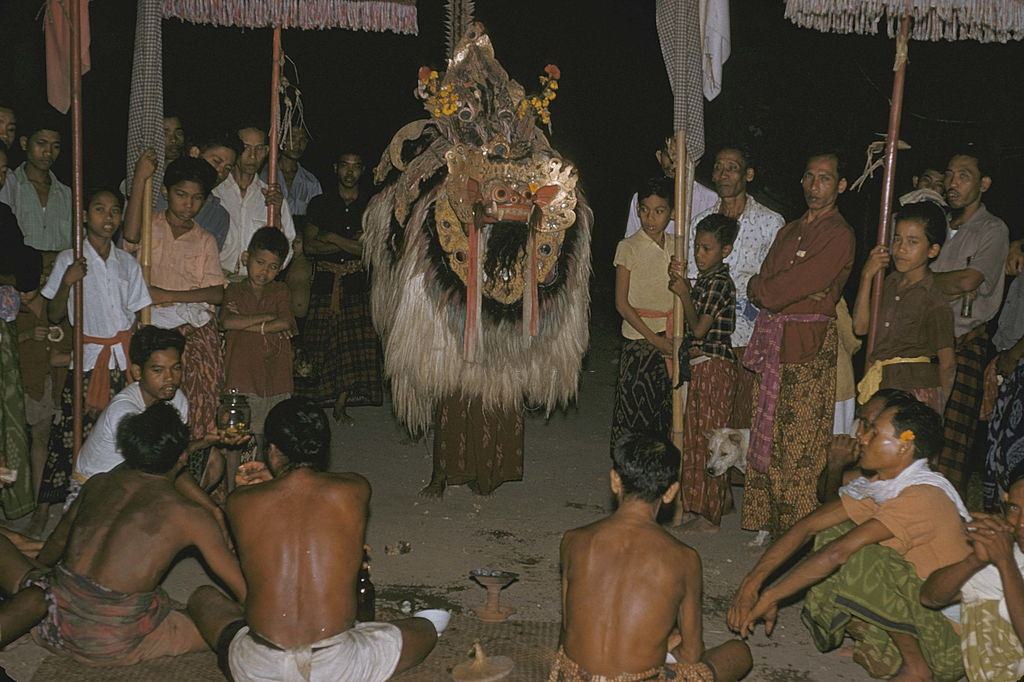
Trance states were a recognized and accepted part of Balinese ritual performance. In one documented scene from 1958, a female dancer bent backwards over a pole held by two boys while in a hypnotized state, believed to be possessed by the spirit of a god. In another ritual, men gripped knives while performing in a trance-like state. Devotees fell into trances before onlookers, including performers in elaborate painted-face and monkey masks.
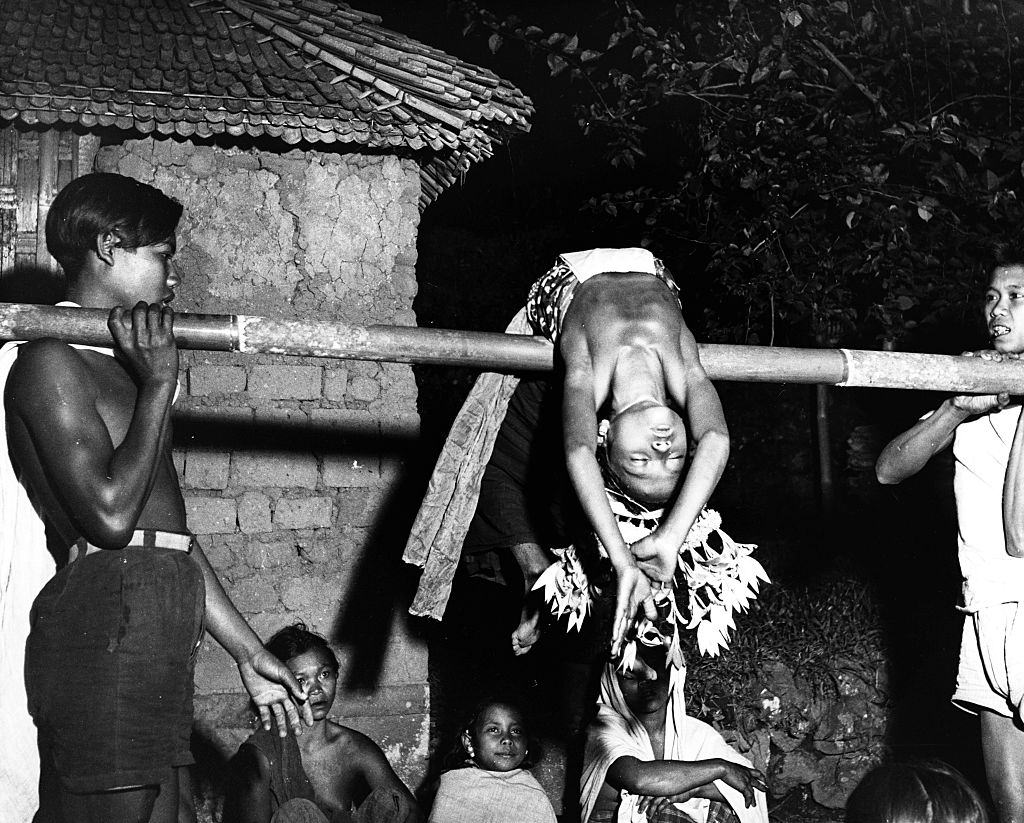
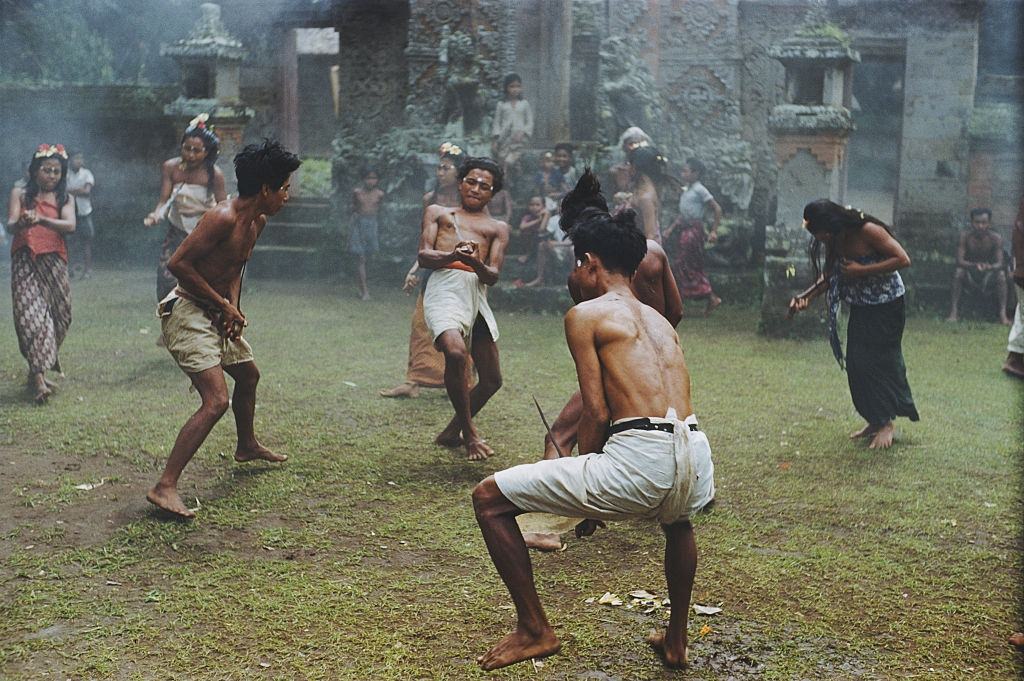
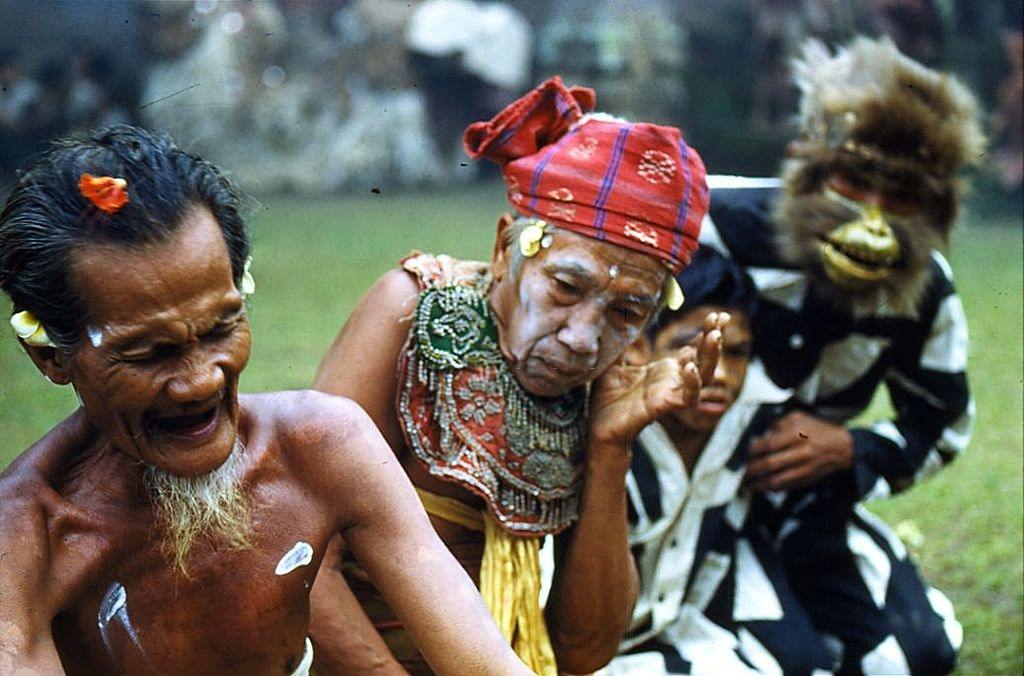
The Barong — a mythical lion-like creature — appeared at the center of several ritual spectacles. Performers dressed in elaborate leonine costumes with hair reaching to their feet faced off against lines of male dancers. Crowds gathered to watch figures dressed as monkeys interact with the masked Barong, a performance that dramatized the eternal struggle between good and evil in Balinese cosmology.
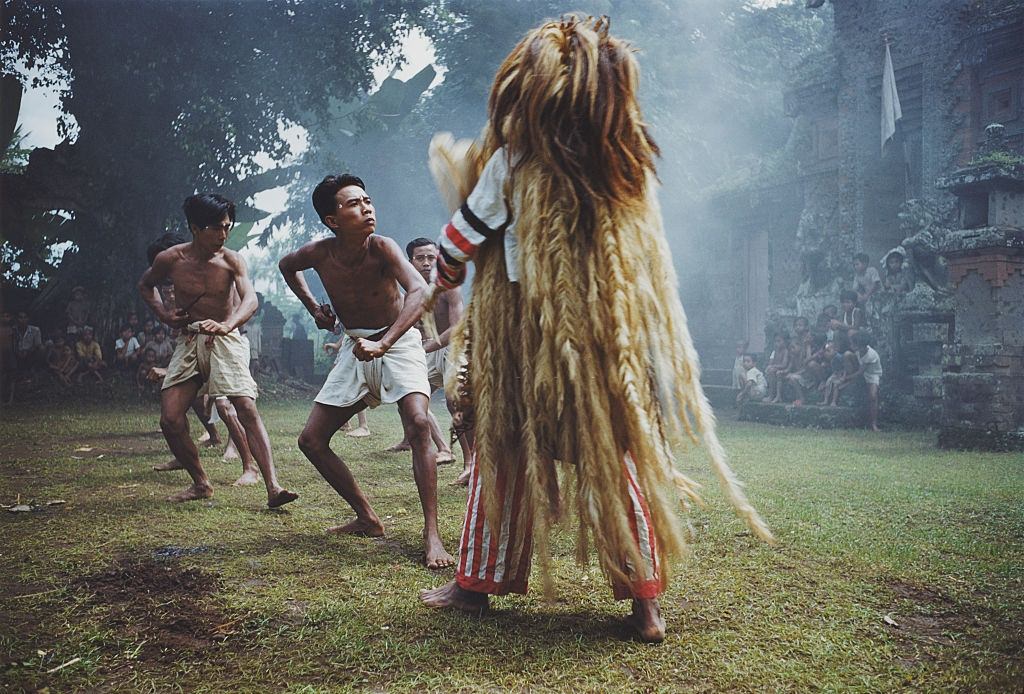
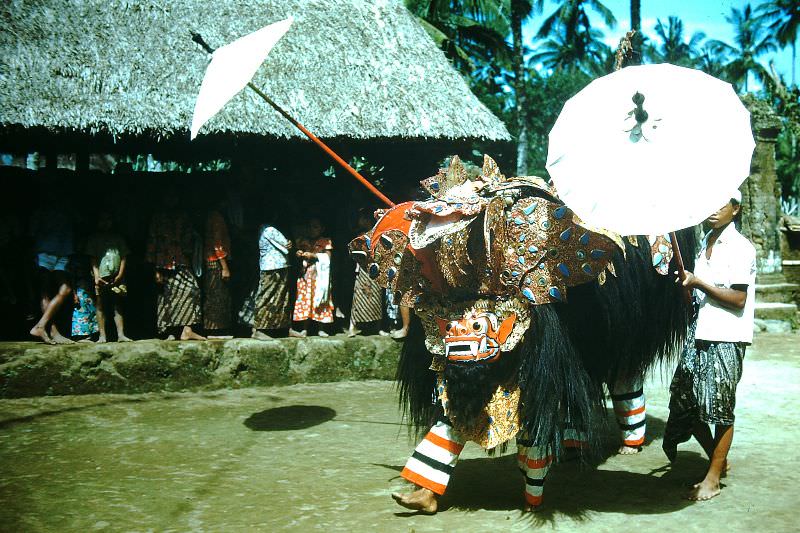
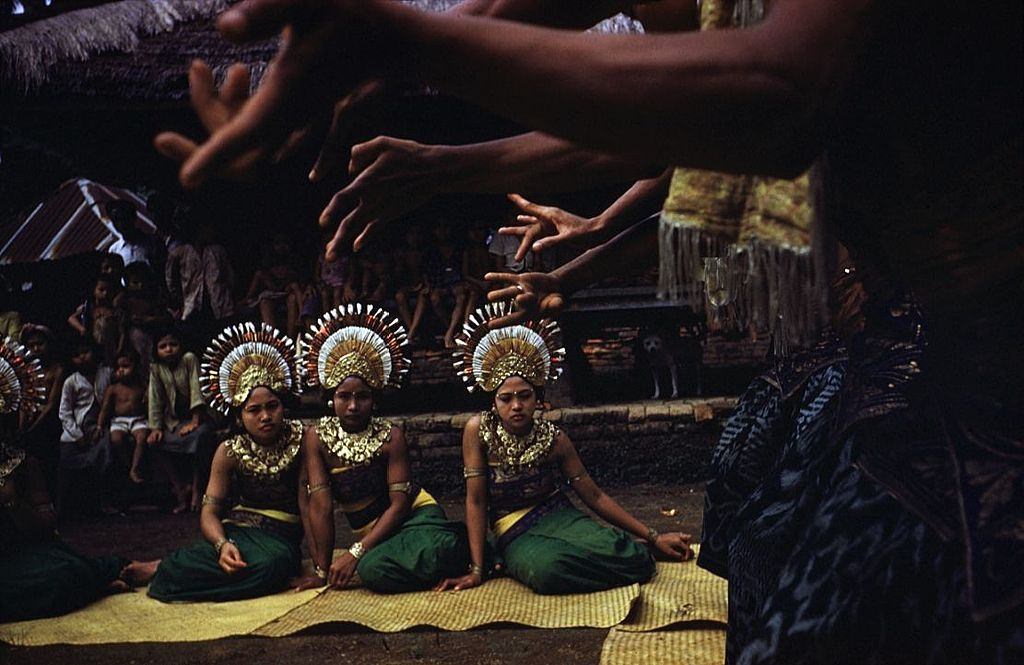
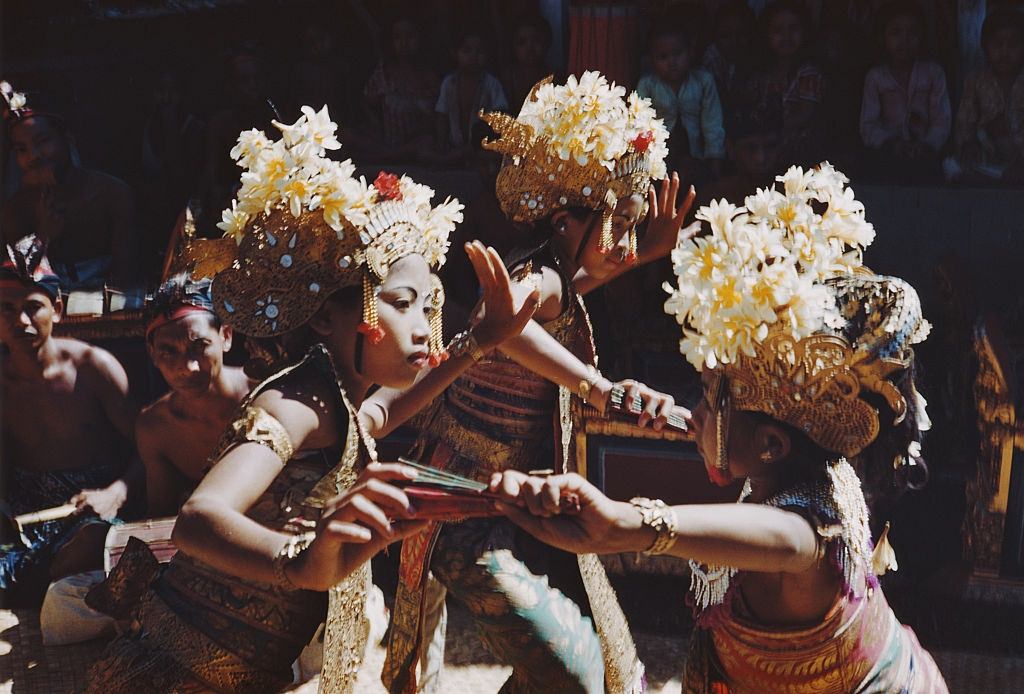
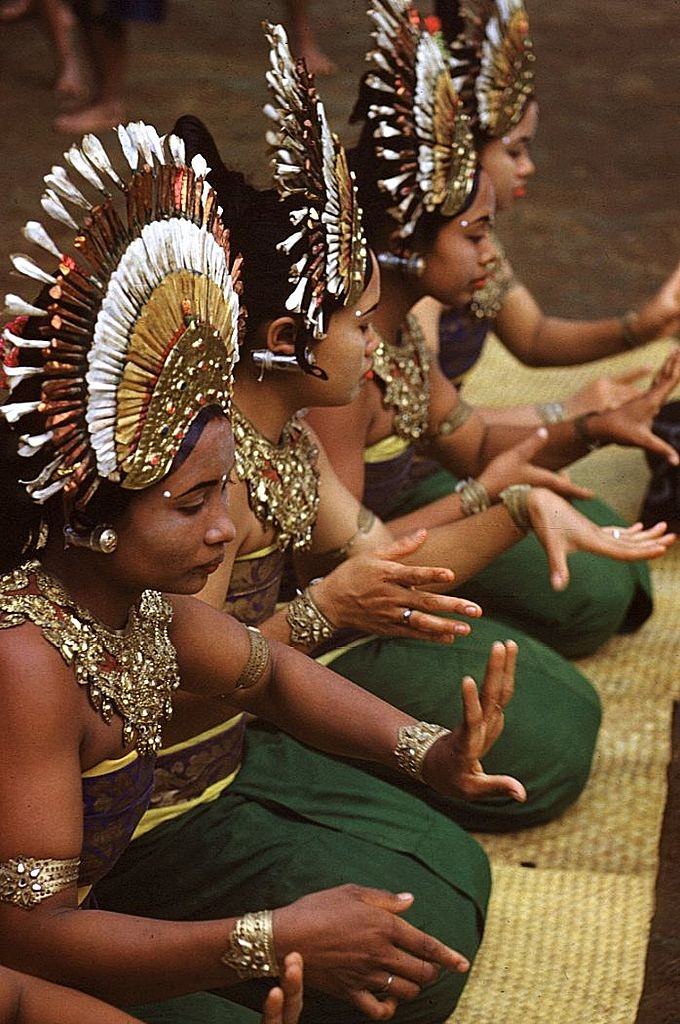
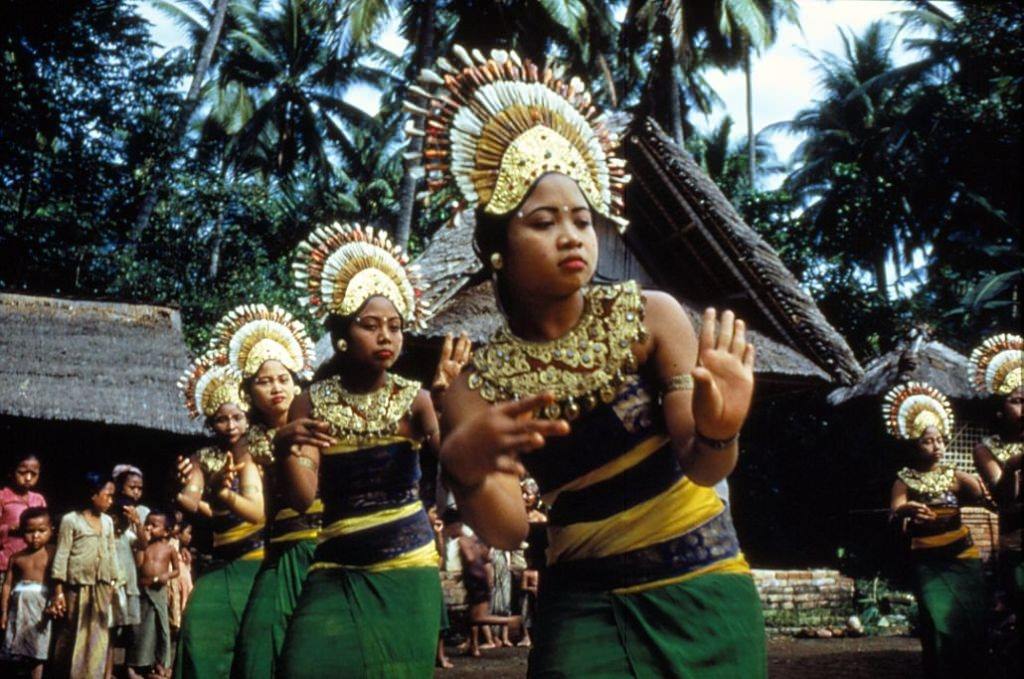
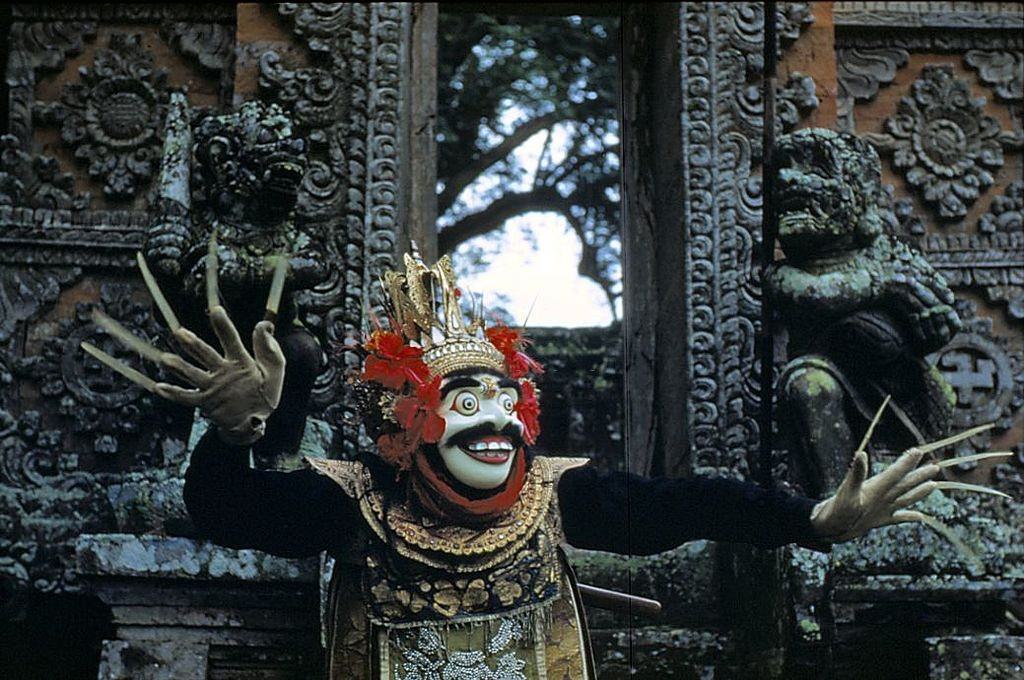
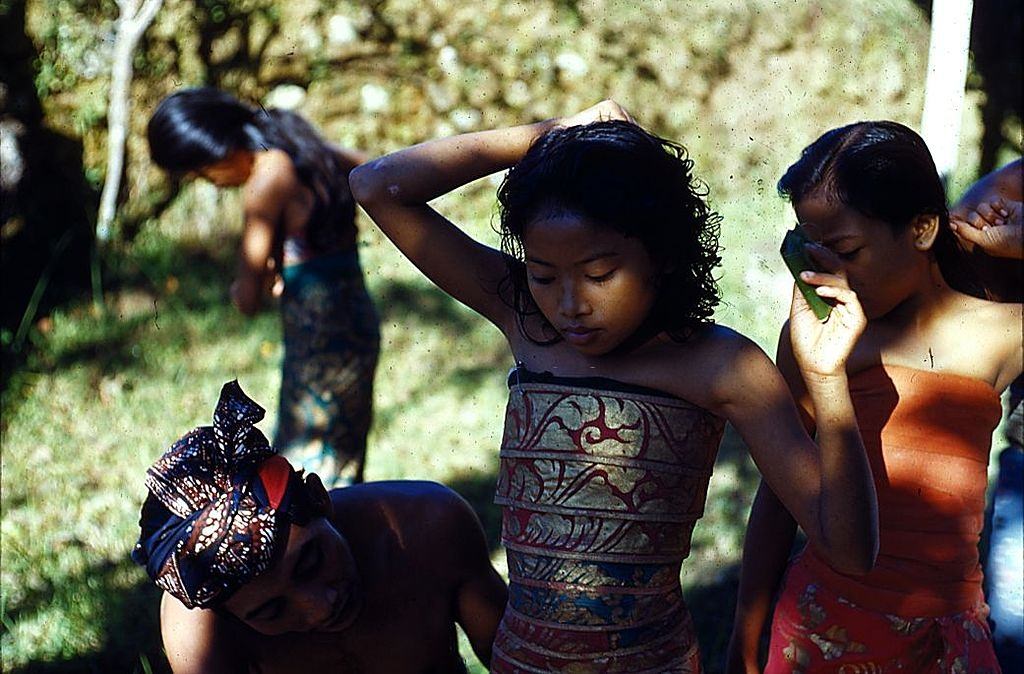
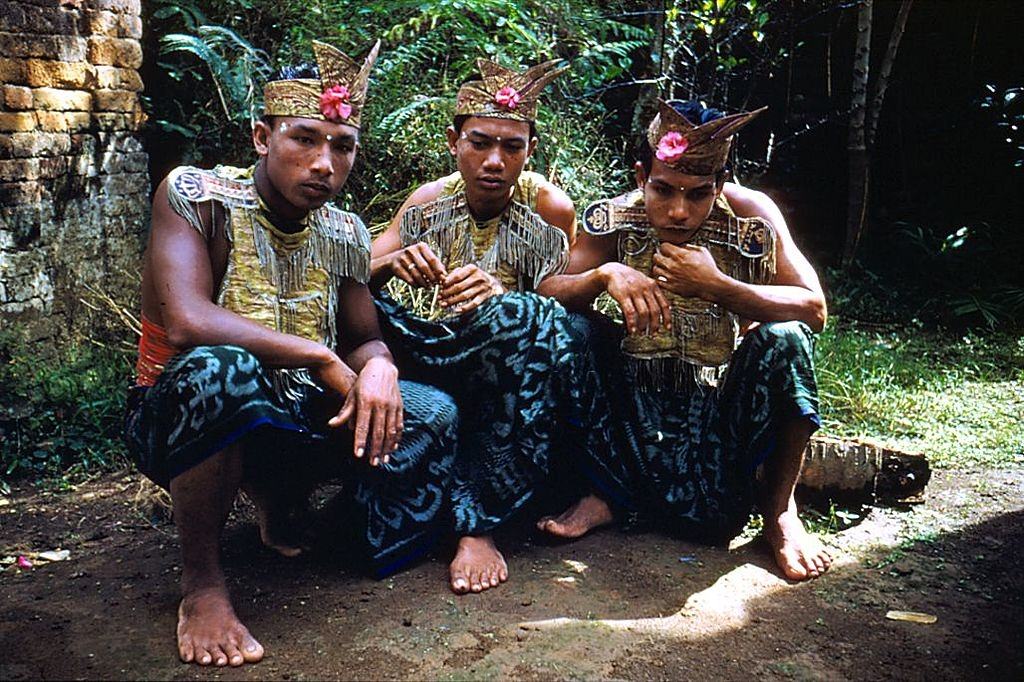
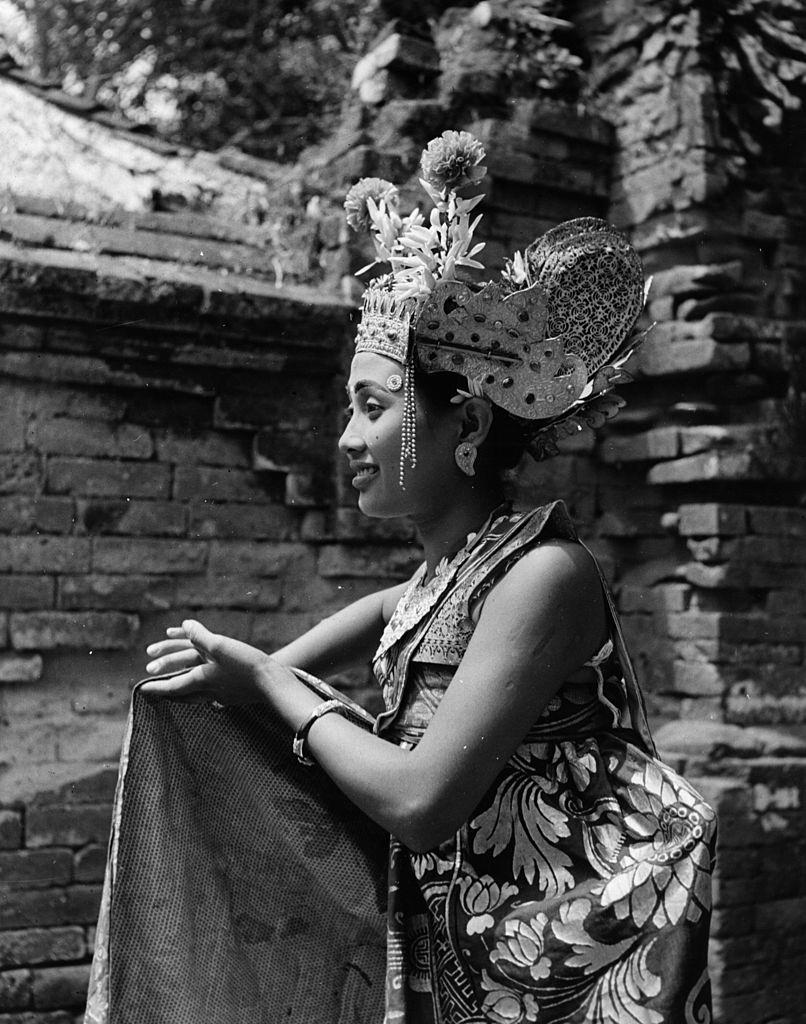
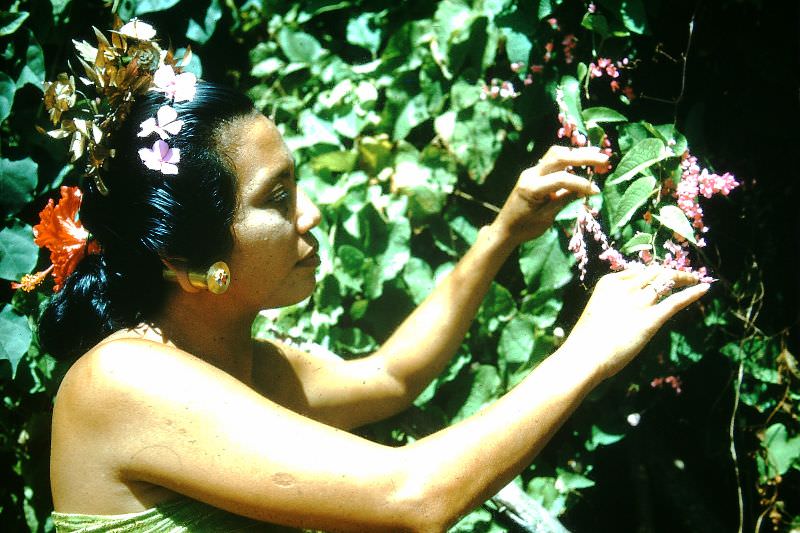
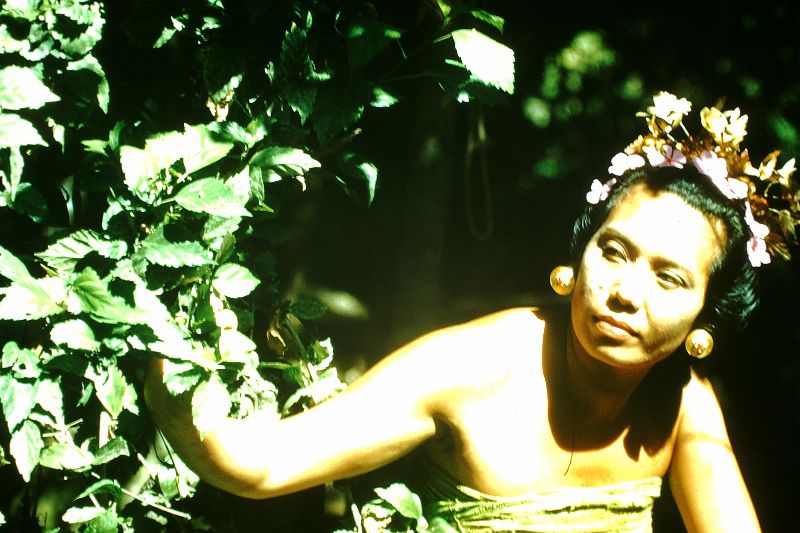
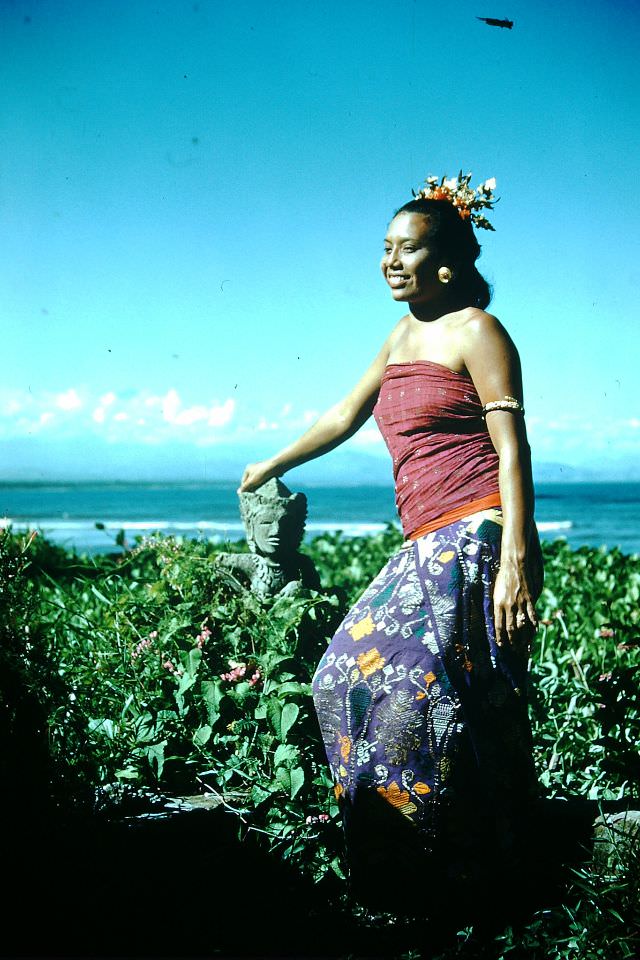
Costume and adornment were taken seriously in every performance tradition. Female dancers wore intricate headdresses decorated with creamy white flowers. Young Janger dancers dressed in full ceremonial costume performed precise hand dances. Topeng, or masked dancers, stood before ornately carved temple doors in elaborate headdresses. Before any performance, dancers were helped by attendants who dressed them and applied their makeup by hand.
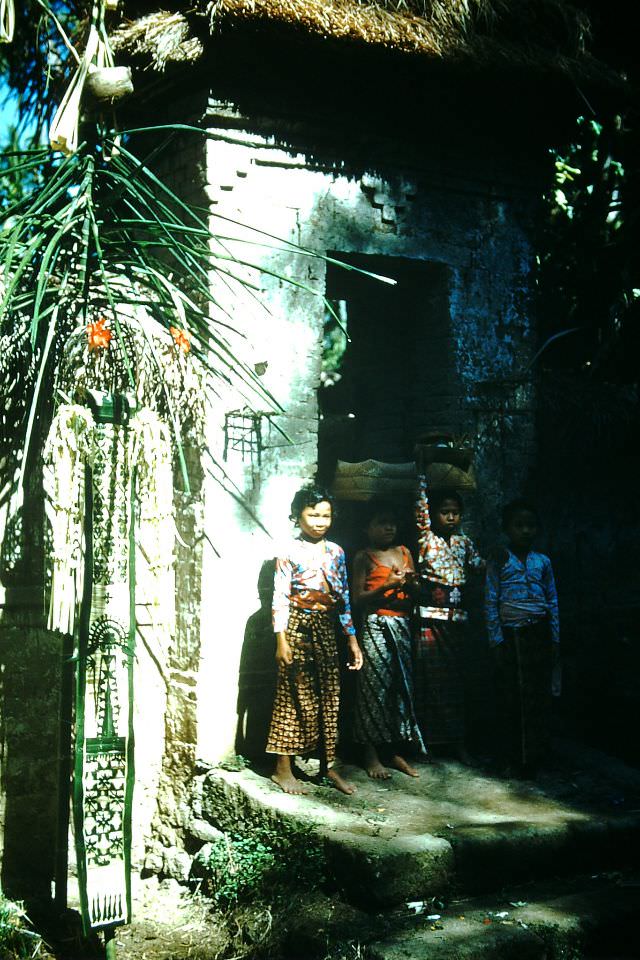
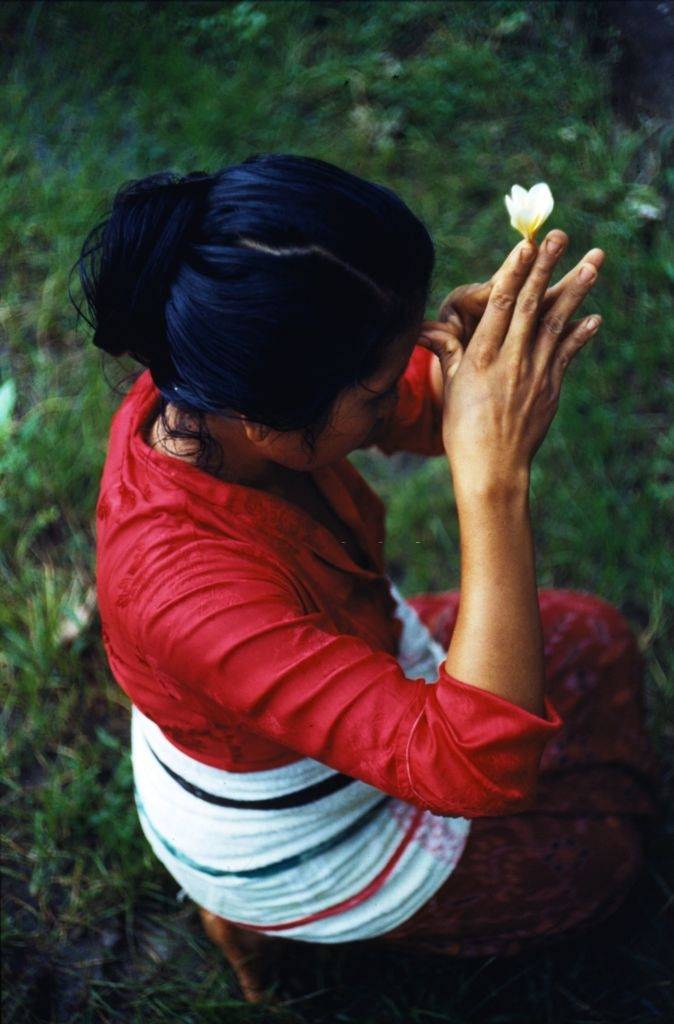
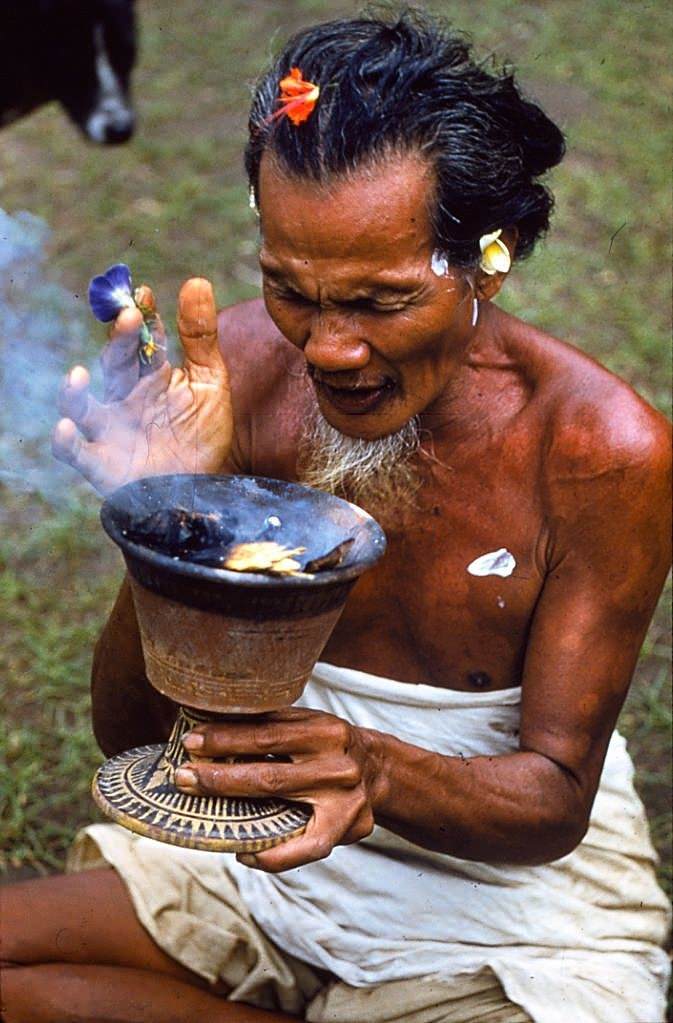
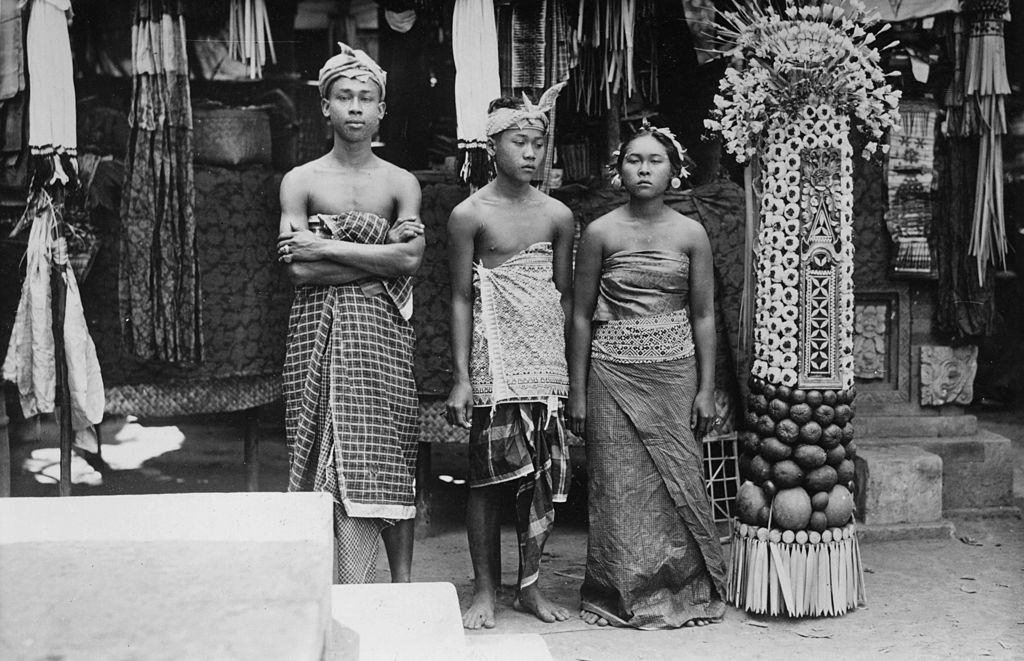
Religious devotion showed up in quiet, personal moments as well as public spectacle. A woman photographed in 1956 held a flower between her fingertips in prayer. In another image, a Balinese man inhaled fumes rising from smoking ashes held in a cup — a private ritual act. Three young Indonesians stood beside a votive constructed from fruit and flowers, a common form of offering in Balinese Hindu practice.
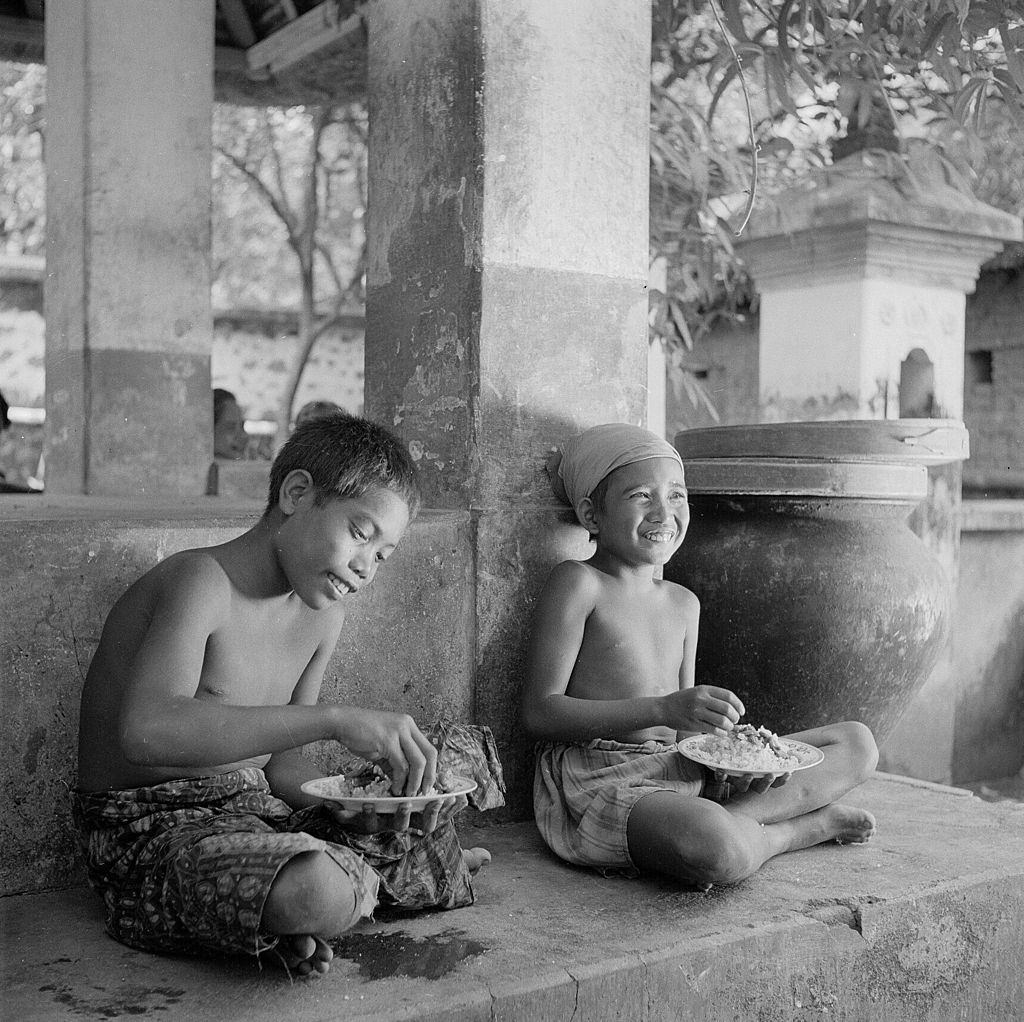
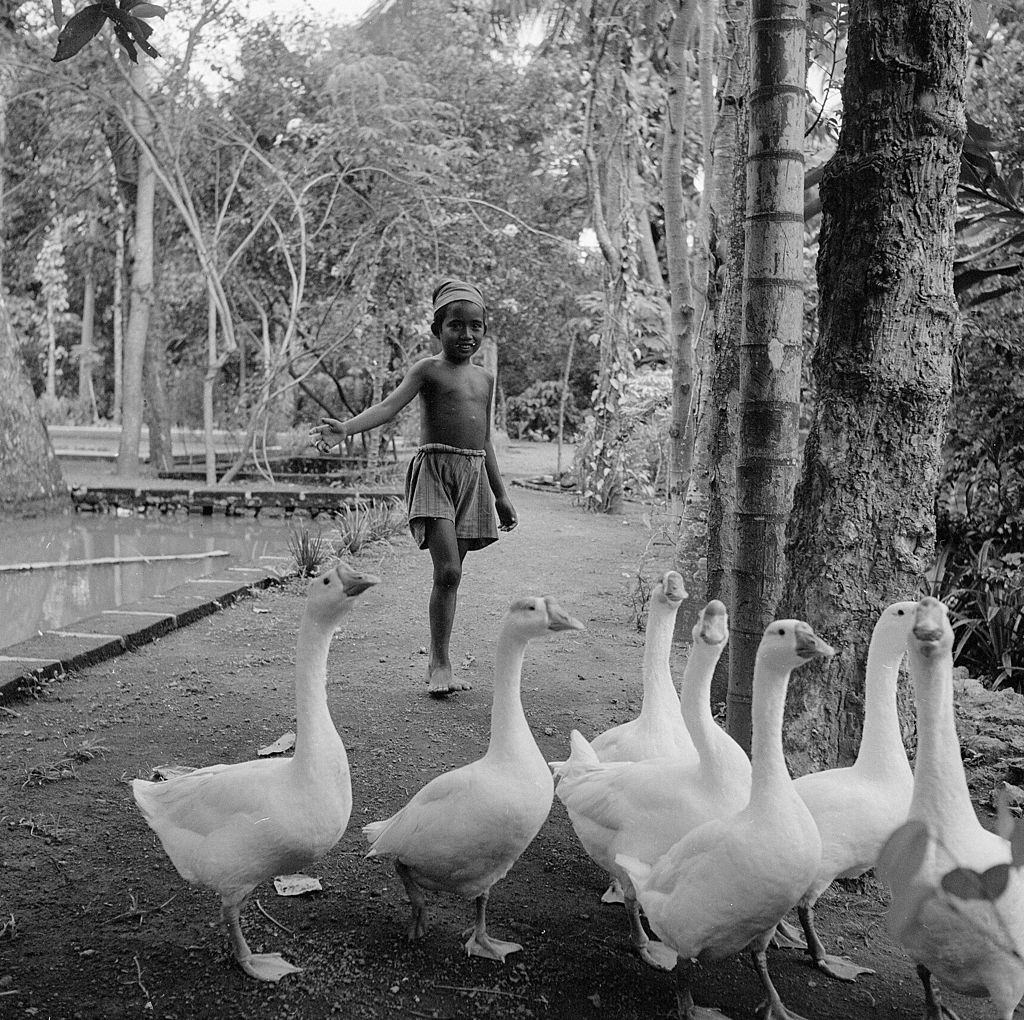
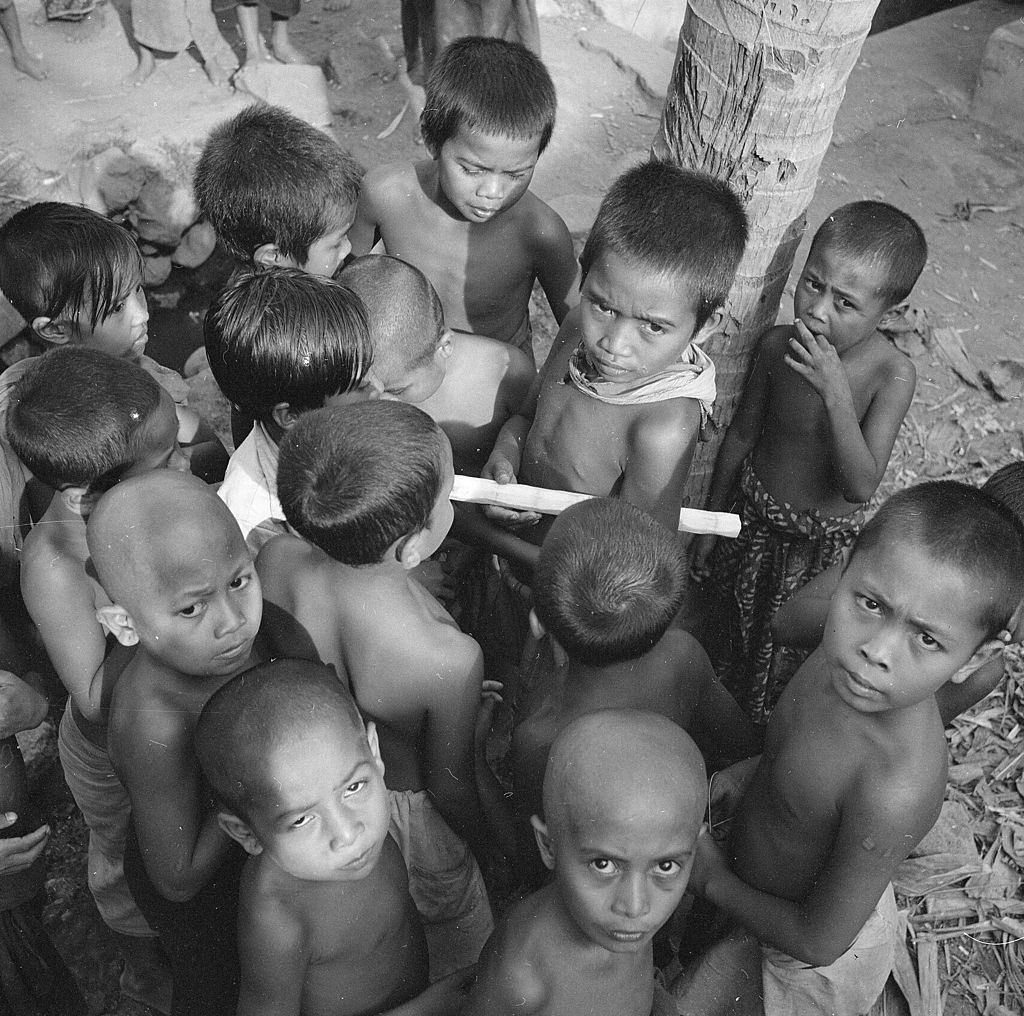
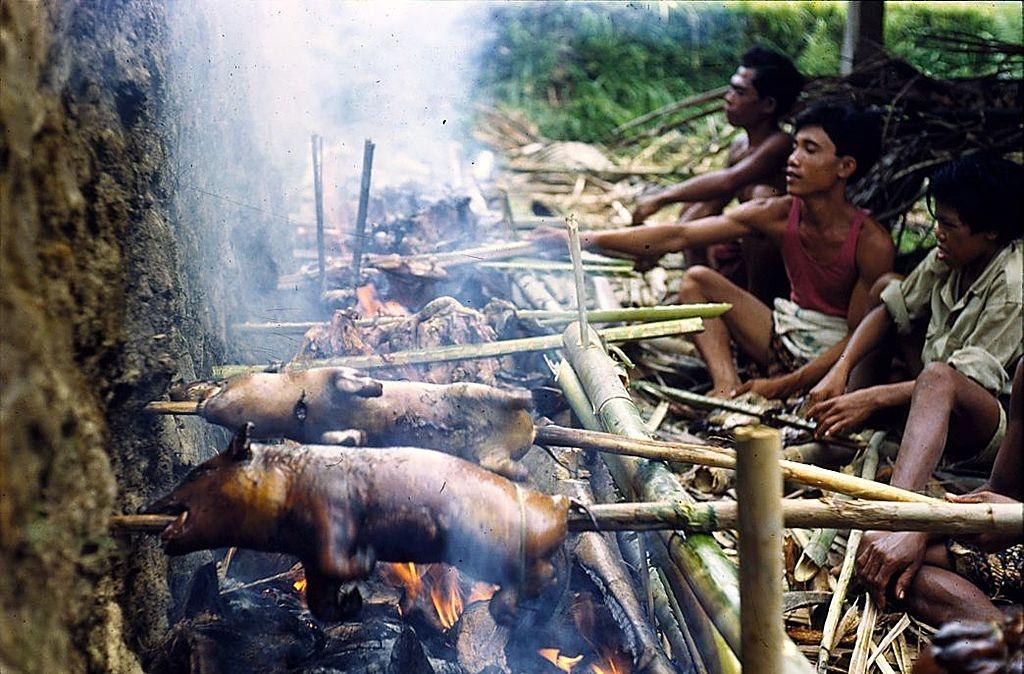
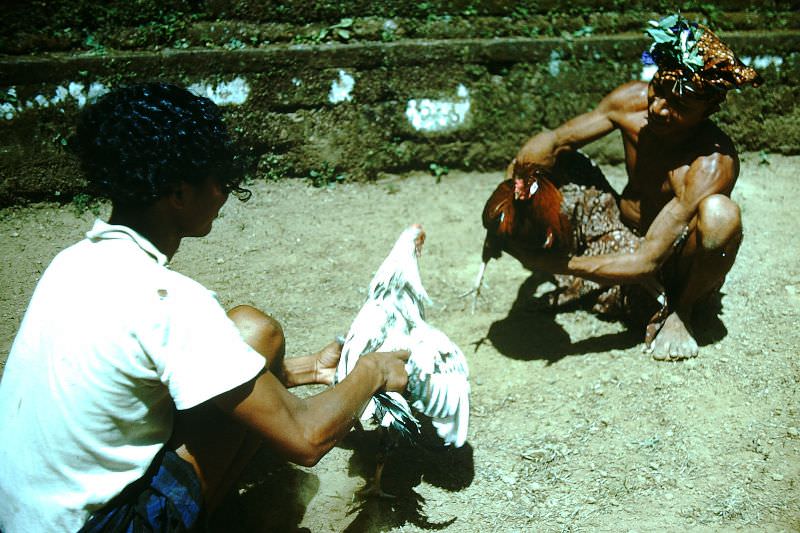
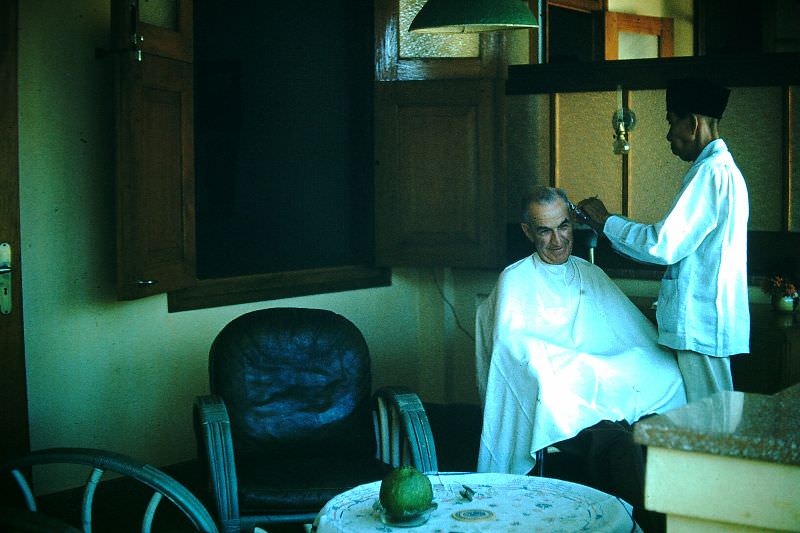
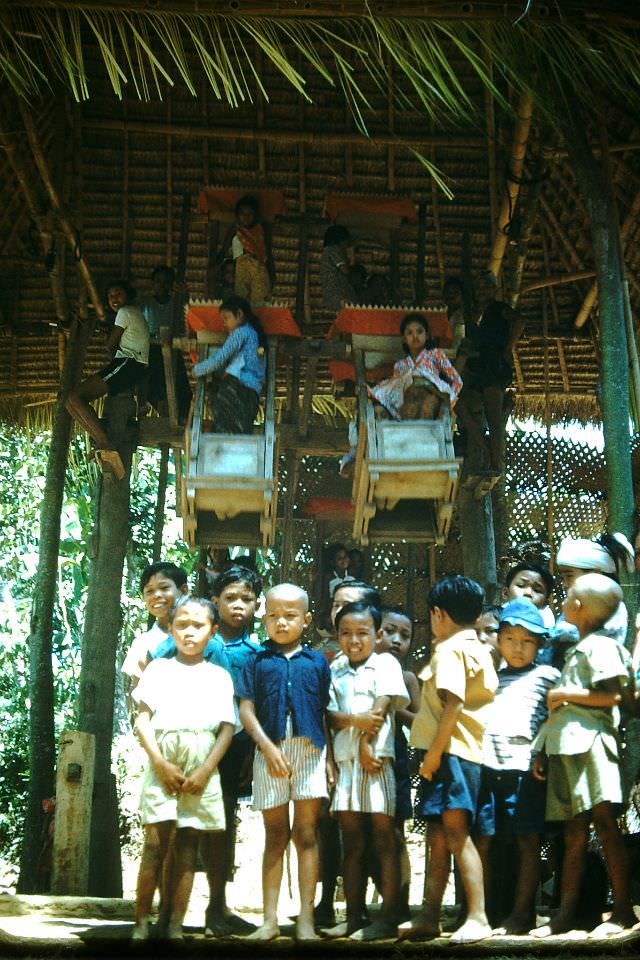
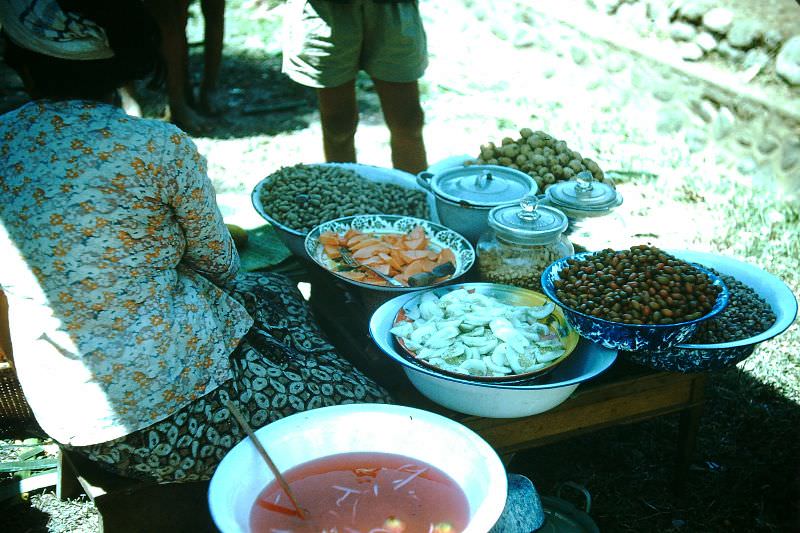
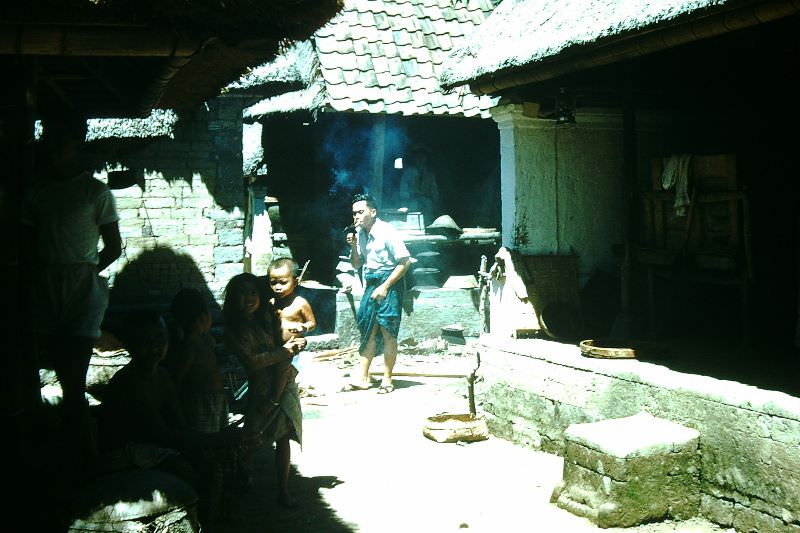
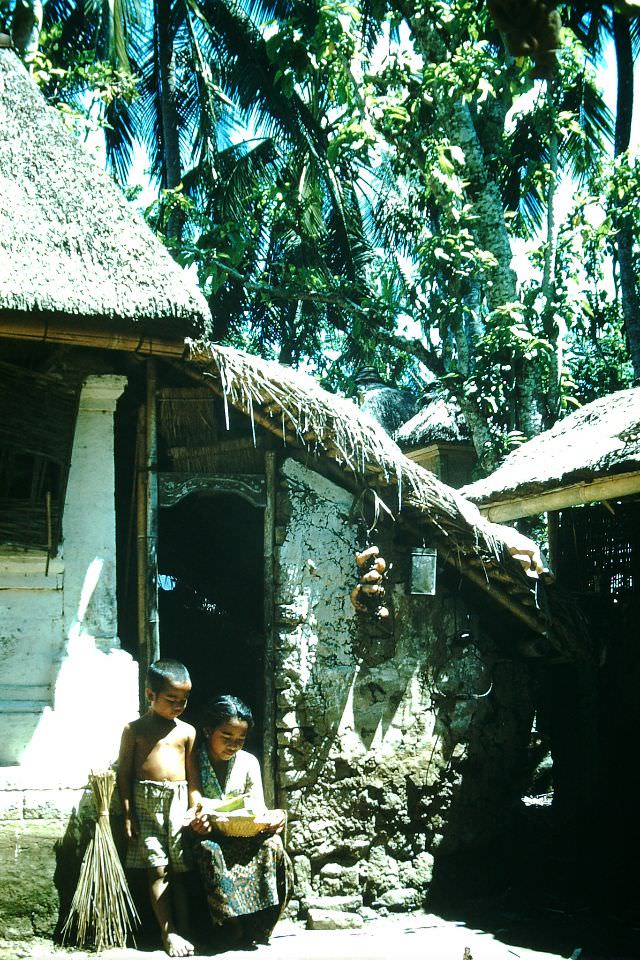
Outside the ceremonies, village life had its own rhythms. Children gathered in marketplaces and shared midday meals. A boy herded geese through the countryside. Women chatted at street food stalls while children gathered nearby. Pigs were roasted on open spits in preparation for community feasts. Cockfighting, a long-practiced tradition in Bali, drew spectators in 1952. A roadside haircut in Denpasar, a ferris wheel at New Year celebrations, and a refreshment stand on a dusty street all captured the ordinary texture of daily life.
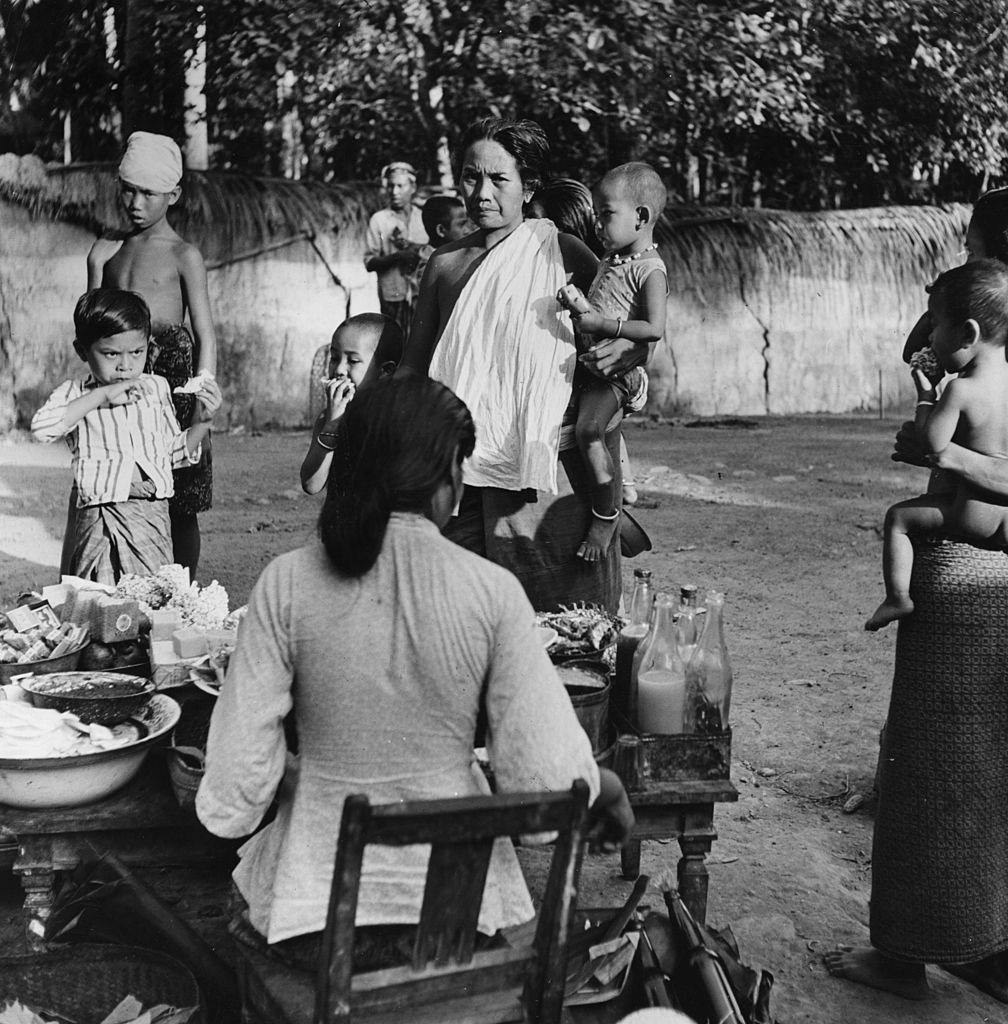
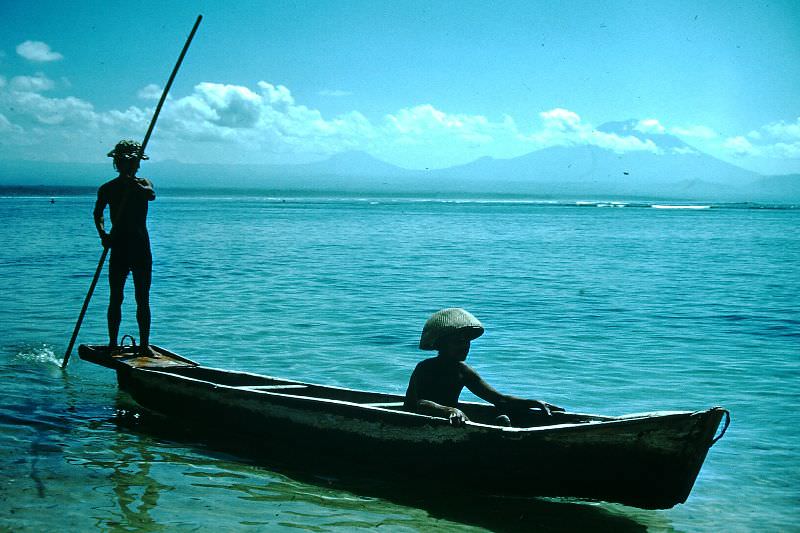
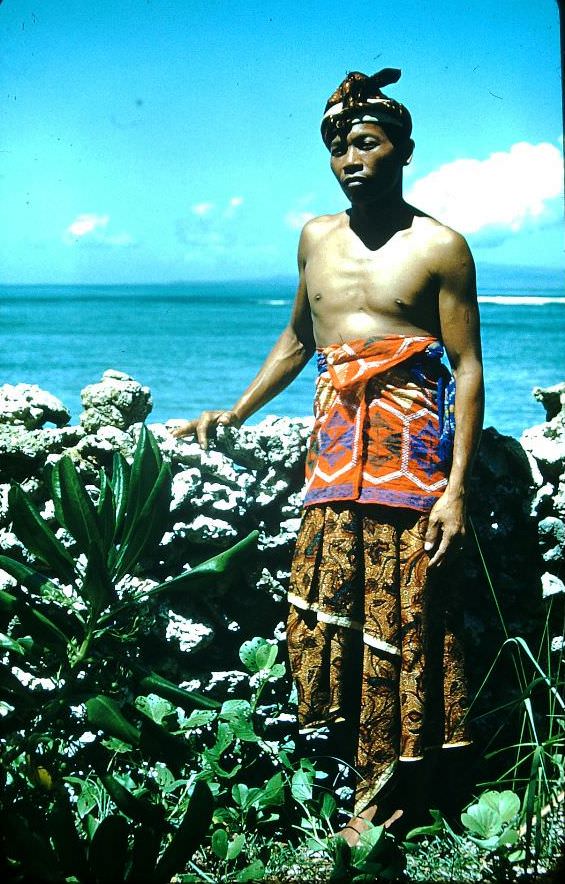
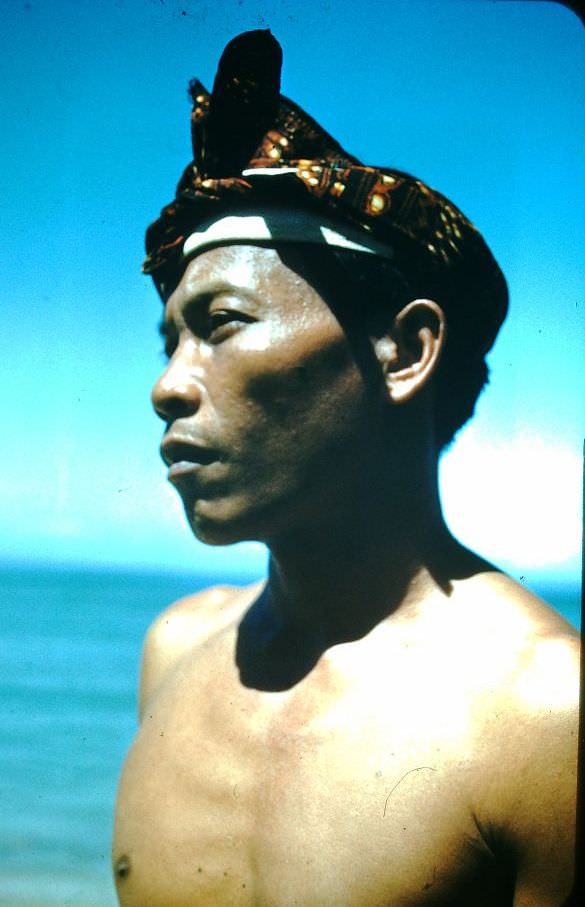
The coastal village of Sanur appears in several photographs from 1952. Boatmen worked the shoreline, and local men were photographed simply as themselves — portraits of people going about their lives rather than performing for any occasion. The roads near Sanur were narrow and lined with tropical growth. These images from Sanur, alongside portraits labeled only ‘Balinese beauty’ and ‘Balinese dwelling,’ form a documentary record of a specific place at a specific moment in time.





Incredible collection.
I love the photos, but I feel like some aren’t from the 1950s.
I like Balinese people still carry all the traditions. Clothes, ceremonies are all the same now
I didn’t see a gojeck jacket
All those dudes were shredded
The island looked great before the white man showed up bringing evil inventions such as Tinder, Starbucks and capitalism.
Not to mention .. Aussie bogans.
Didn’t realise Balinese shunned capitalism prior to white man showing up. Did they only have traditional markets post-white man arrival?
In the 1900s, Bali was governed by the native kingdoms, invaded by the Dutch (1906), invaded by the Japanese (1942), retaken by the Dutch (1945), and independent from 1949).
The oldest people in these photos have seen all of that.
Indonesia has just got their independence and yet these pictures so stunning.
While the culture is still there, this picture makes us realize that so much has changed in so little time.
“Carrying the pots hundreds of miles to the market” is a stupid exaggeration unless shes doing laps around the island. Bali isnt even 100 miles long.
white Europeans ruined Bali.
Last time was ausie, now russian… european done nothing, they re good.