

At Glacier Point in Yosemite National Park, a slab of granite juts out from the cliff’s edge 3,200 feet above the valley floor. This is Overhanging Rock, and from the moment trails reached Glacier Point in 1857, visitors were drawn to its terrifying edge. There were no guardrails. No safety barriers. Just open air and a straight drop to the valley below.
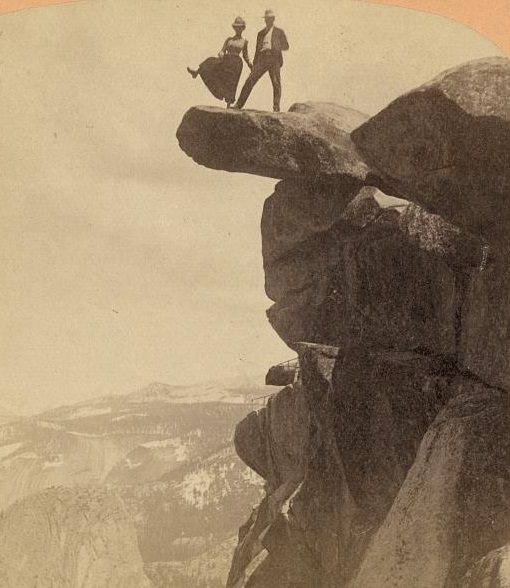
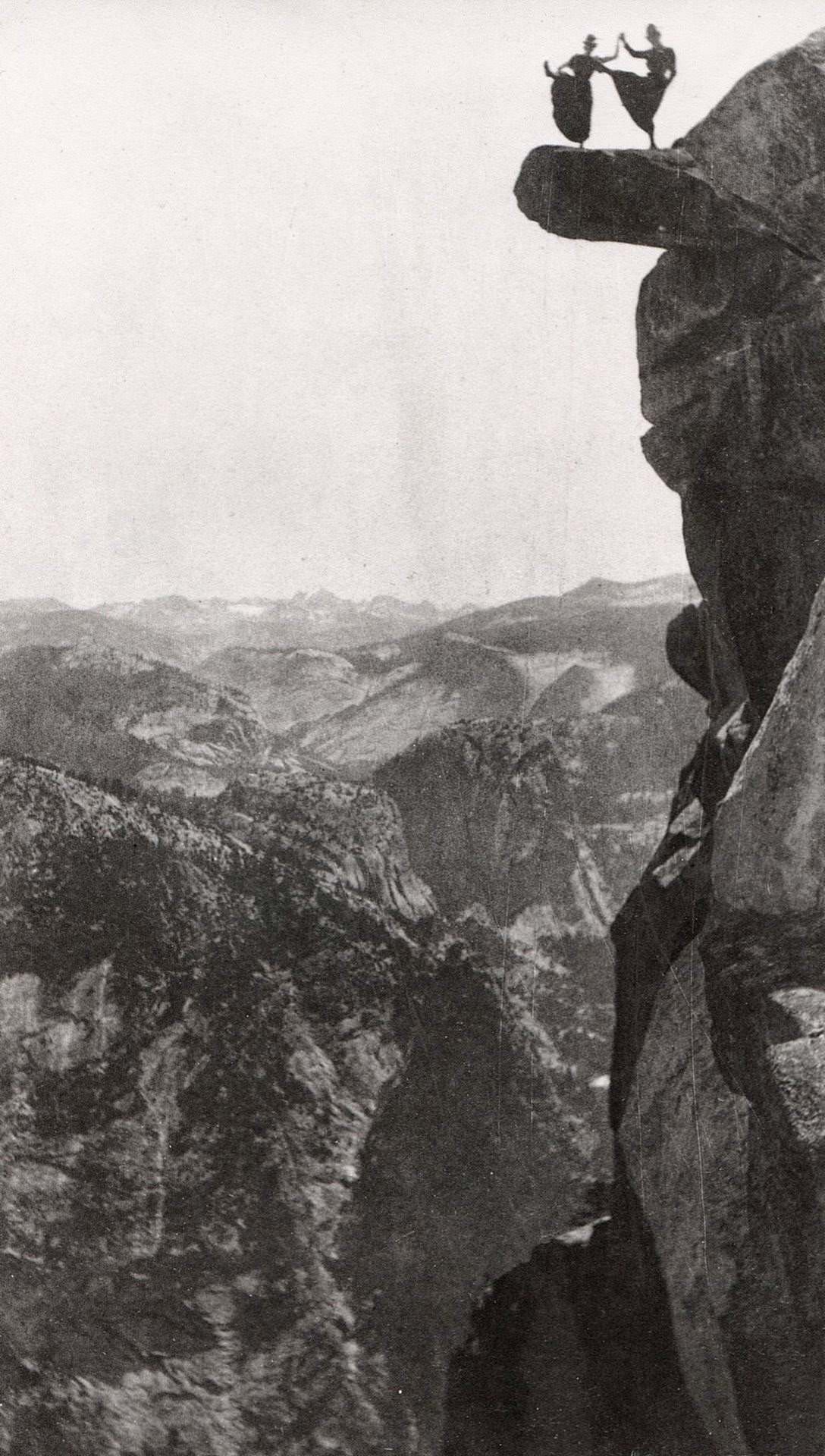
Early visitors turned the rock into a stage. Standing on the edge was not enough — they kicked, posed, and balanced for the camera. These “I was there” photos were often printed as postcards and sent home as proof of their daring. George Fiske, Yosemite’s first resident photographer, captured many of these scenes throughout the 1880s and 1890s.
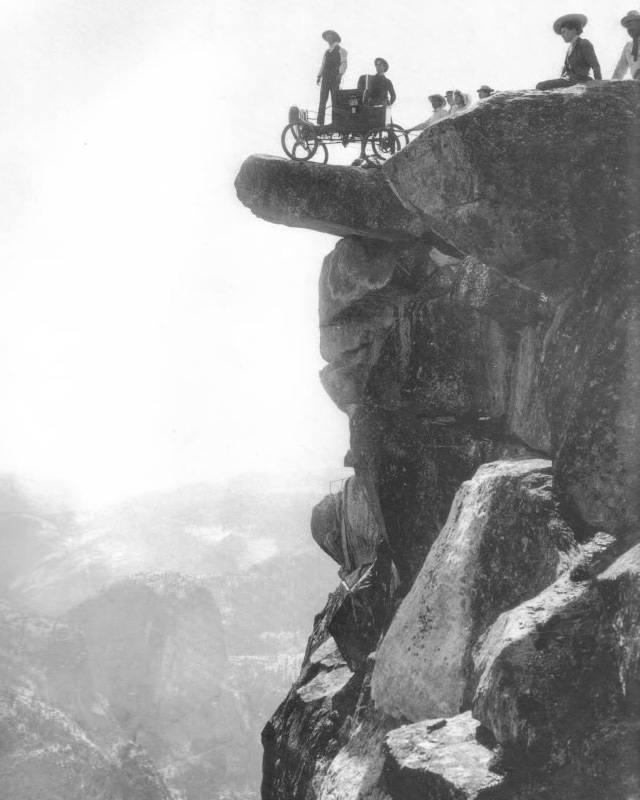
One of the most striking images from Overhanging Rock involves a car, not a person. In 1900, Oliver Lippincott drove a Locomobile steam car into Yosemite Valley — the first automobile ever to enter the park. The following morning, workers hauled the car onto Overhanging Rock using ropes for a single photograph.
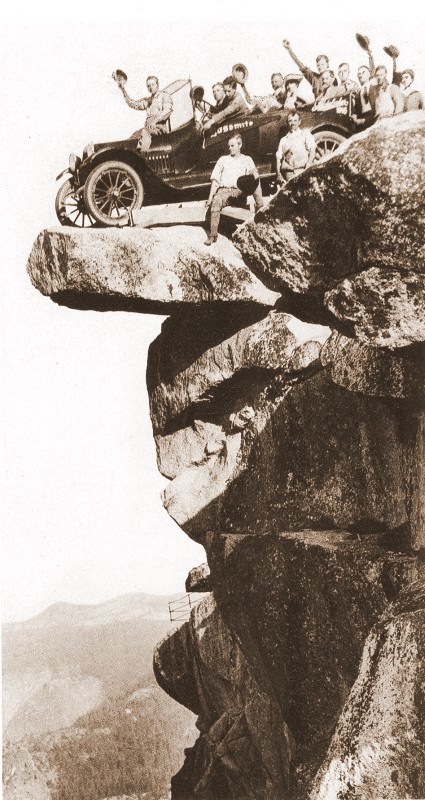
That image set a trend. Car manufacturers saw the dramatic backdrop as the perfect advertising tool, using Overhanging Rock to showcase vehicle power and durability. Studebaker was among those who sent cars up the winding road for publicity shots.
Not far from Overhanging Rock, another Glacier Point tradition ran alongside it. James McCauley, who built a trail and hotel at Glacier Point in the 1870s, began pushing burning embers over the cliff’s edge each night. The glowing cascade, known as the Firefall, continued off and on until 1968. Meanwhile, the stunts on Overhanging Rock kept drawing crowds.
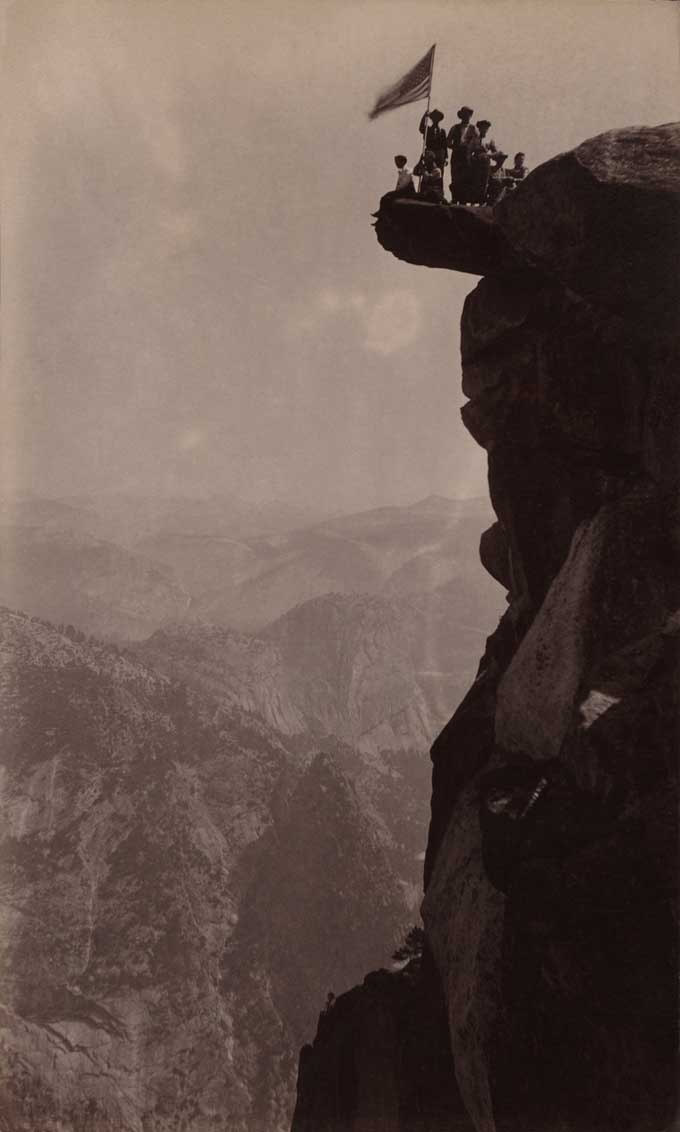
Even Galen Clark, the first official guardian of Yosemite Park, was photographed standing on the rock. He was a figure of authority, yet he stood at the same precarious edge as every other visitor.
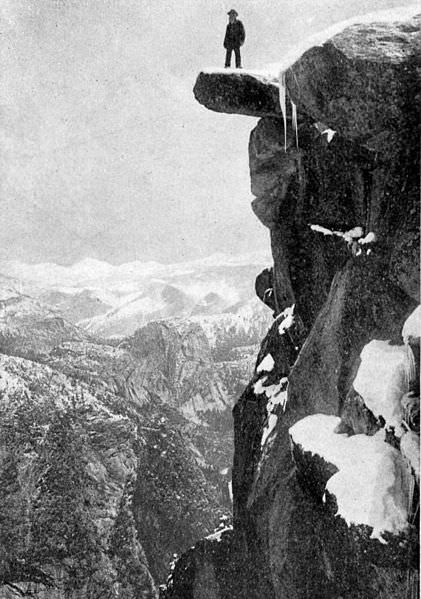
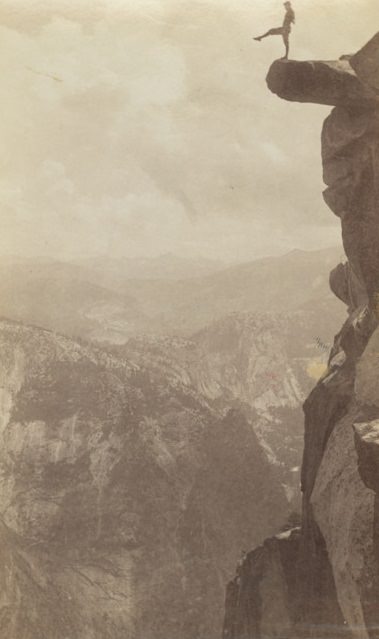
After Fiske’s death, Ansel Adams printed several of his glass plate negatives, preserving these early images for future generations. The photos document an era when visitors had direct, unguarded access to one of the most exposed ledges in the American West.
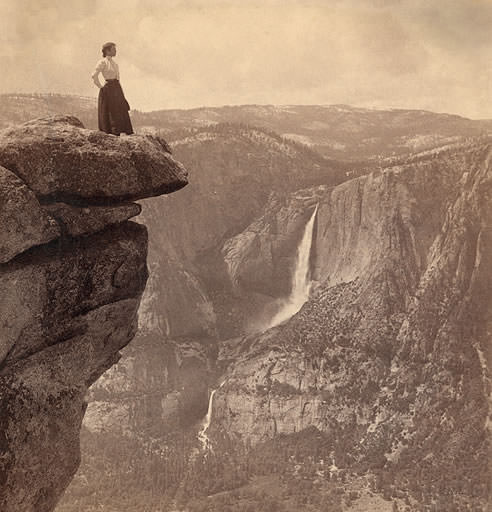
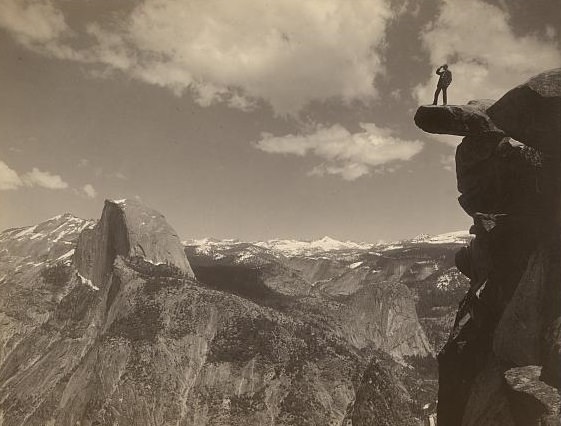
The photographs below span decades of visits to Overhanging Rock. Each one captures a moment when a person — tourist, waitress, guardian, or daredevil — chose to stand at the very edge of the continent and look down.
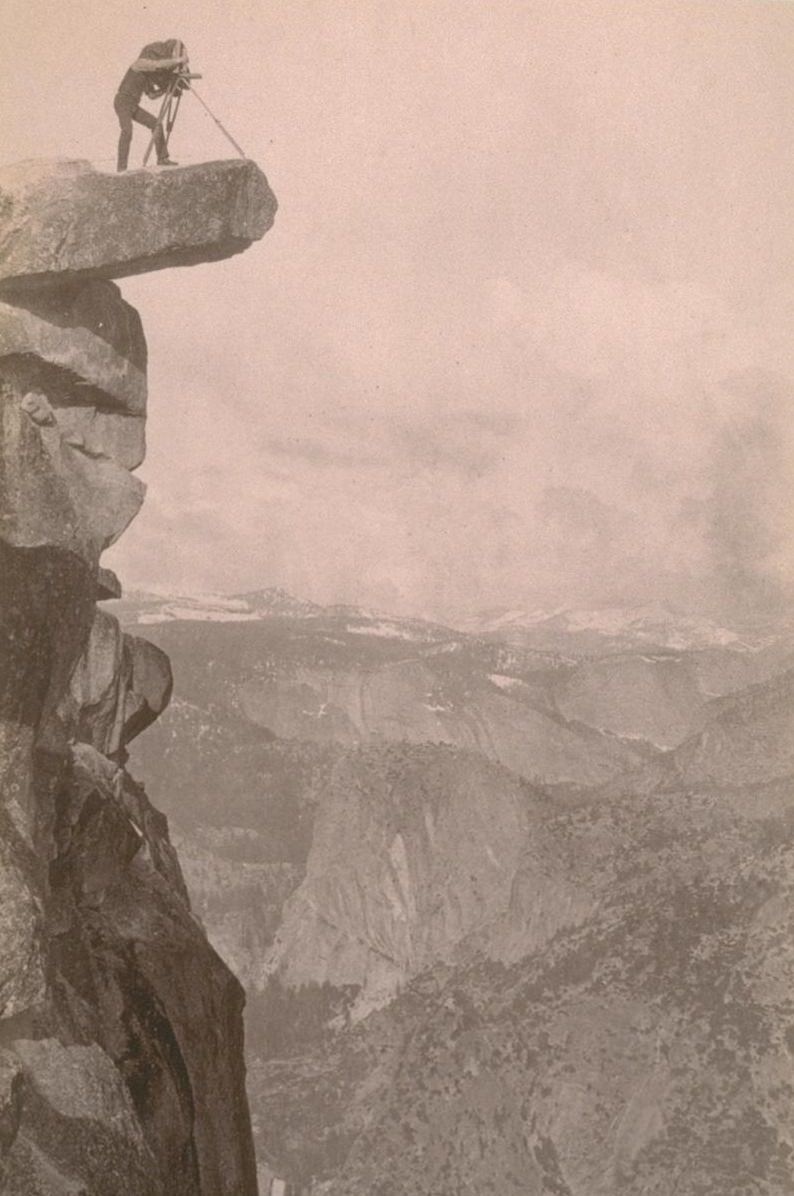
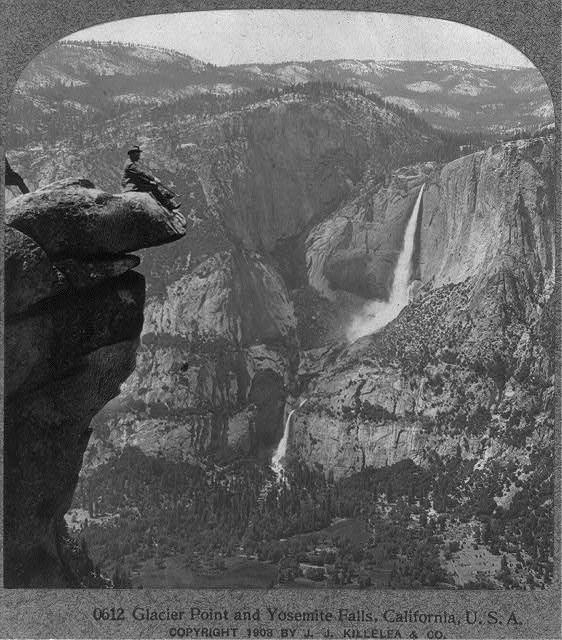

Isn’t there two overhanging rocks just a few yards apart? I can see it from the valley floor. Is there a name to it?