World War I trenches were built to keep soldiers alive. They provided cover from enemy fire, offered defensive positions, and gave troops precious seconds to pull on gas masks when poison gas drifted across the battlefield. The German army constructed especially large and elaborate trench networks during the Battle of the Somme, some stretching for miles in every direction. But staying alive in a trench meant more than dodging bullets. It meant sharing your living space with one of the war’s most persistent and disturbing problems: rats.
These were not ordinary rats. Soldiers described them as enormous — some reportedly growing to the size of small cats. The trenches gave them everything they needed to thrive. There was no proper waste disposal system in trench life. Human waste, rotting food scraps, and the bodies of soldiers killed in battle all accumulated in and around the trench lines. When heavy rain fell or artillery shells churned up the ground, buried bodies would resurface, drawing rats in large numbers. Two or three rats were commonly found feeding on a single corpse.
The rats showed no fear of the men around them. Soldiers regularly woke up to find rats crawling across their faces and bodies in the middle of the night. The creatures raided food supplies, gnawed through equipment, and bred at an extraordinary rate. With millions of men dug into static positions across hundreds of miles of front, the rat population had an almost unlimited food source and no natural predators large enough to control it.
Shooting rats was considered a waste of ammunition, and commanders generally discouraged it. That said, some soldiers did fire at them out of frustration, and bayonets were also used when the opportunity arose. The more practical and widespread solution was to bring in animals trained specifically to hunt rodents. Cats were kept in some trenches, but they proved to be limited hunters — a cat typically pursues one target at a time and will stop to eat before moving on to the next. Terriers were far more effective.
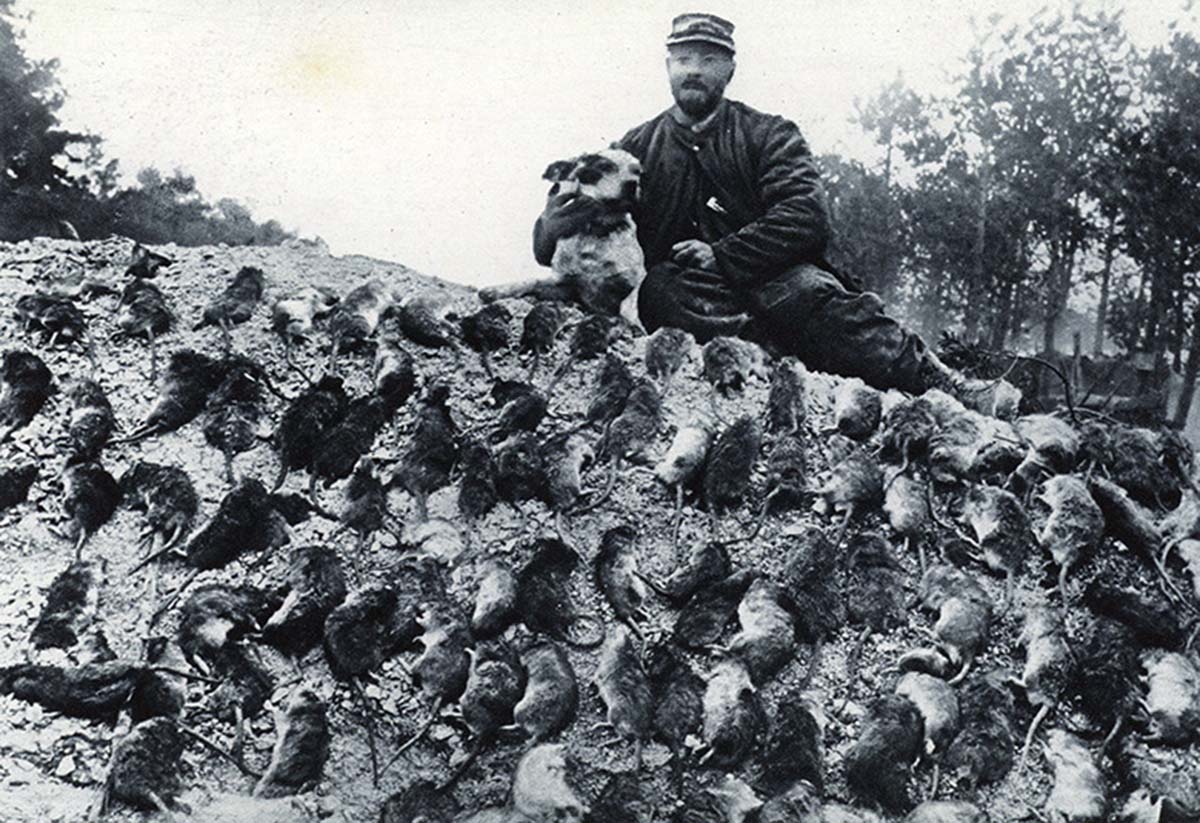
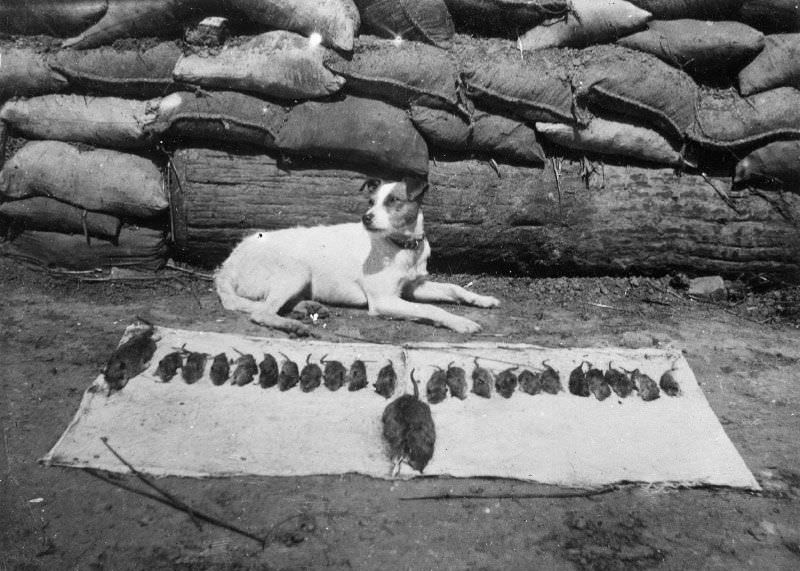
A well-trained terrier operated with a relentless efficiency that cats simply could not match. Rather than stopping to eat after each kill, a terrier would dispatch one rat and immediately move to the next. The dogs could scatter large groups of rats and kill dozens in a short session. Some units kept official rat-catchers — men assigned specifically to manage the infestation, working alongside trained dogs. These hunting sessions became a routine part of trench life, and soldiers often took pride in the numbers they tallied.
Veteran soldiers on both sides noticed something unusual about the rats’ behavior: before a heavy enemy artillery barrage, the rats would vanish. They seemed to sense the incoming shelling before it began. Many troops came to treat the sudden disappearance of rats as an informal warning system, though no one could fully explain how the animals detected what was coming. It was one of the stranger details of daily trench life — soldiers looking to vermin for advance warning of an attack.
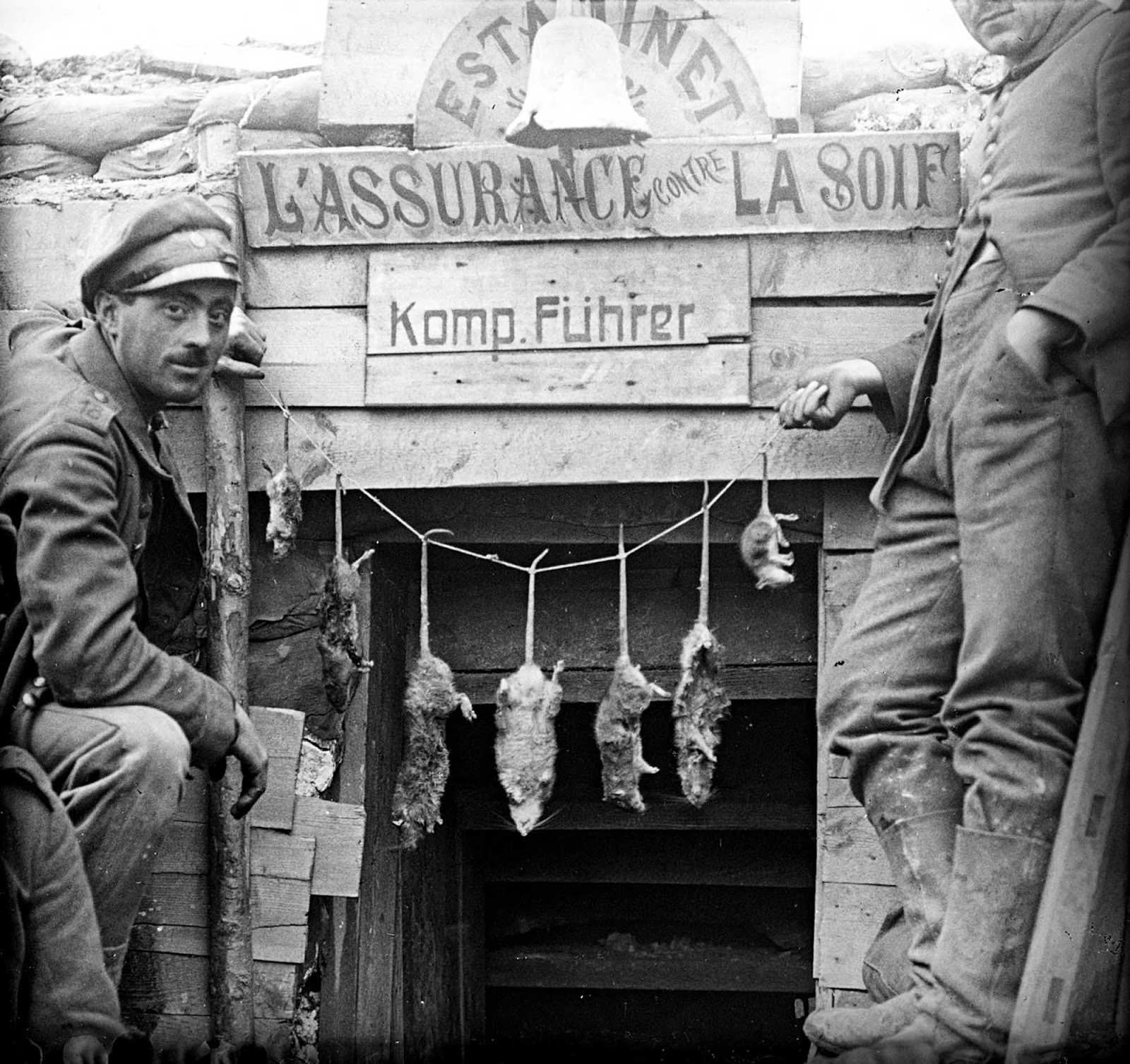
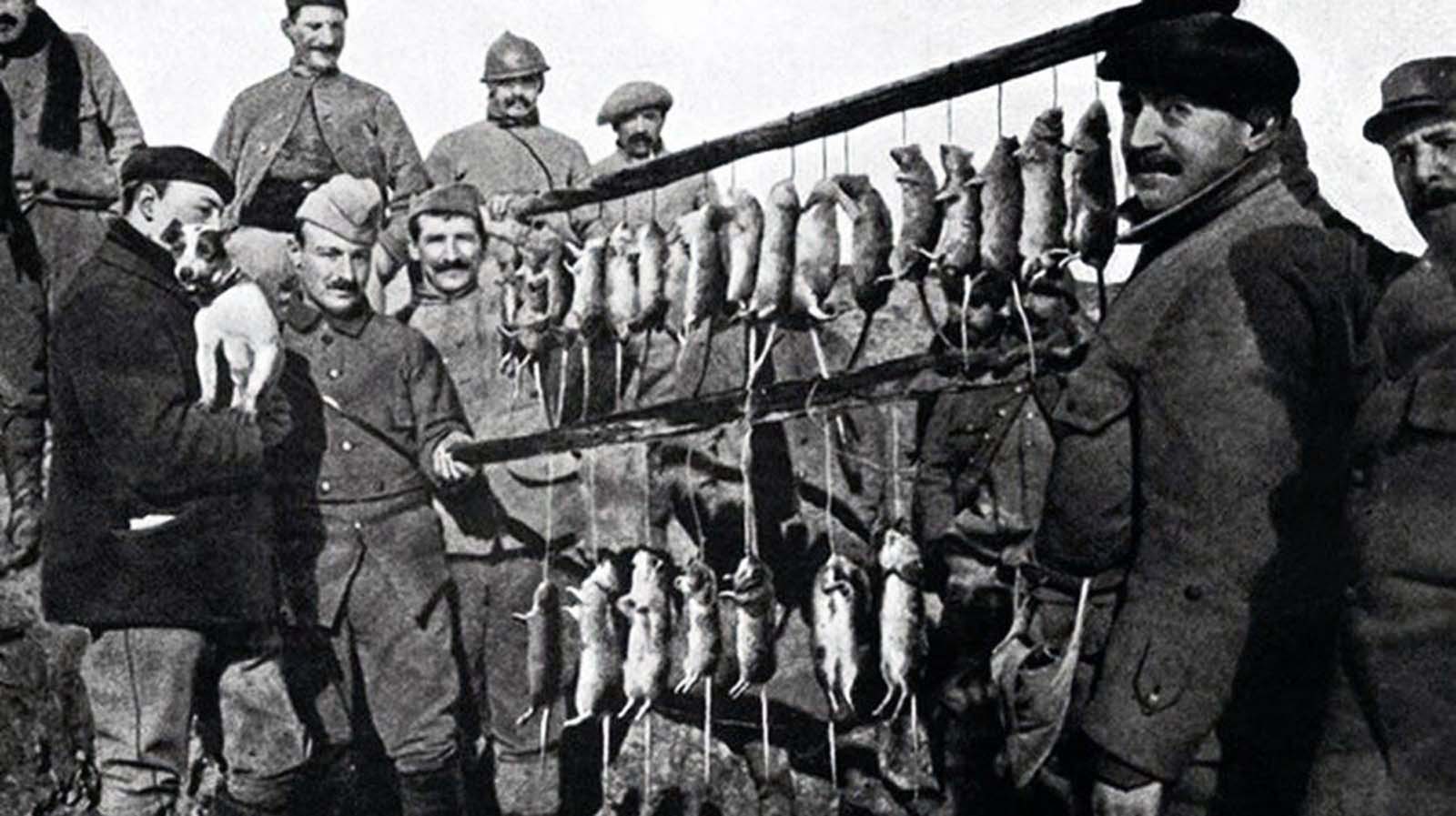
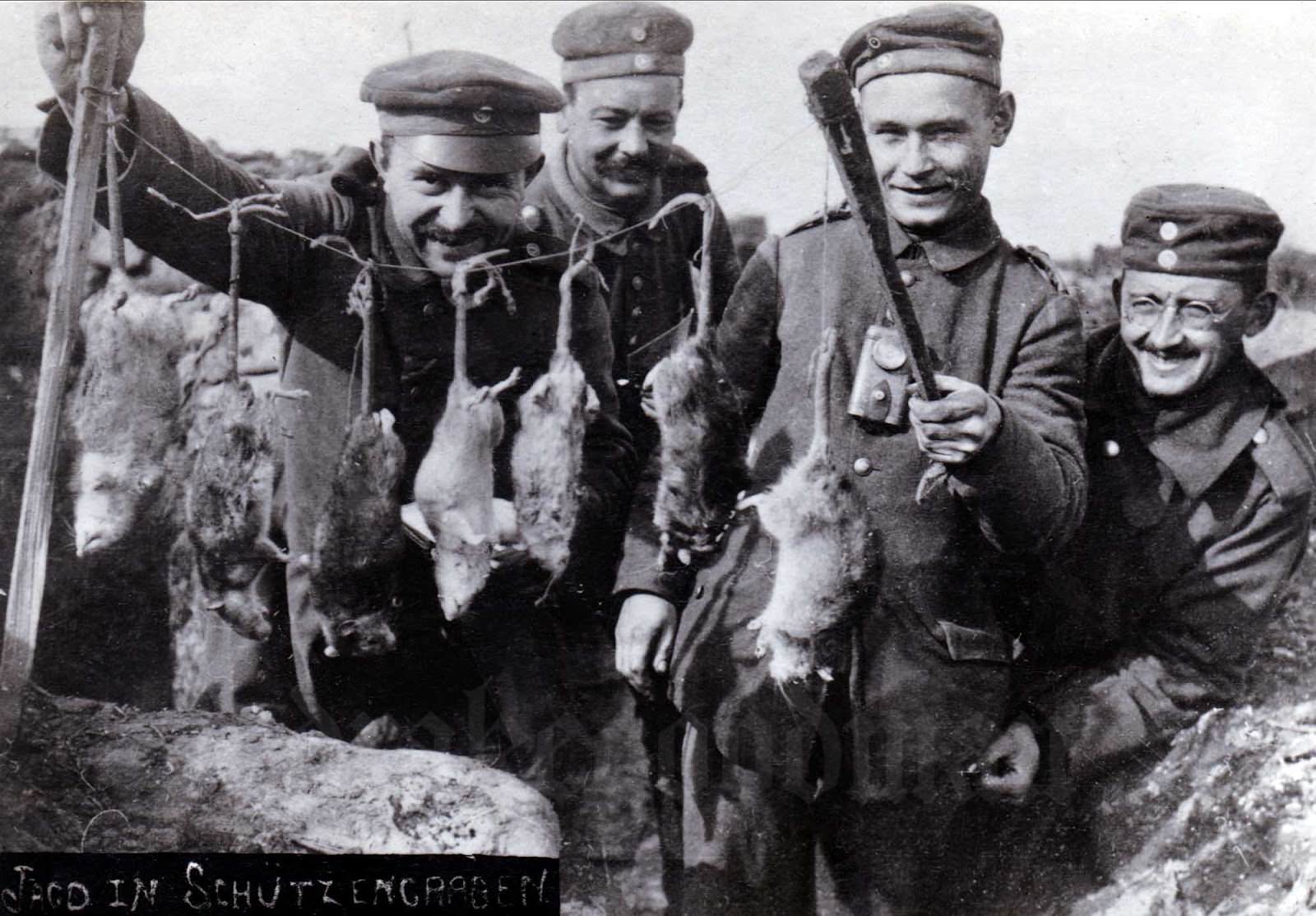
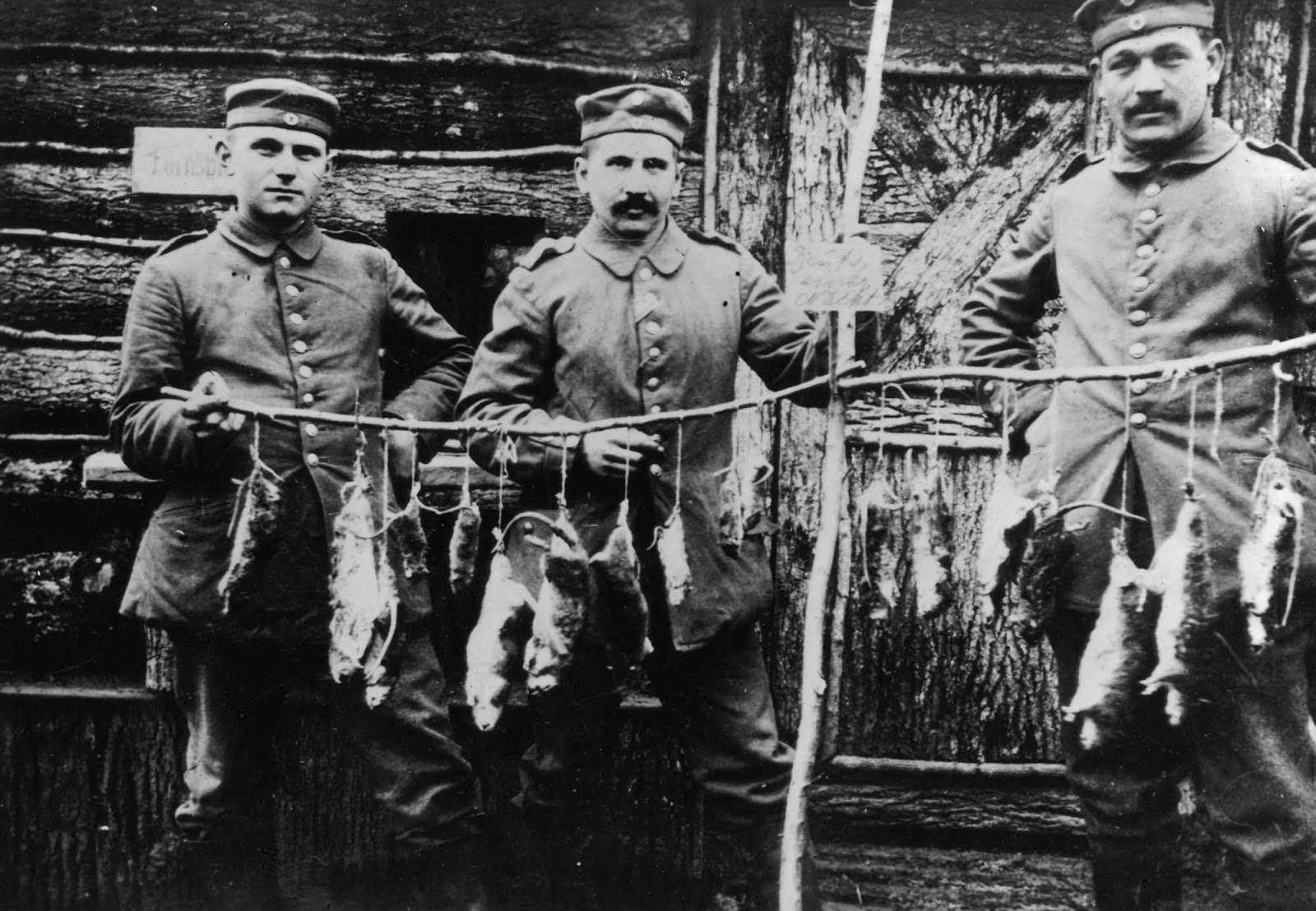
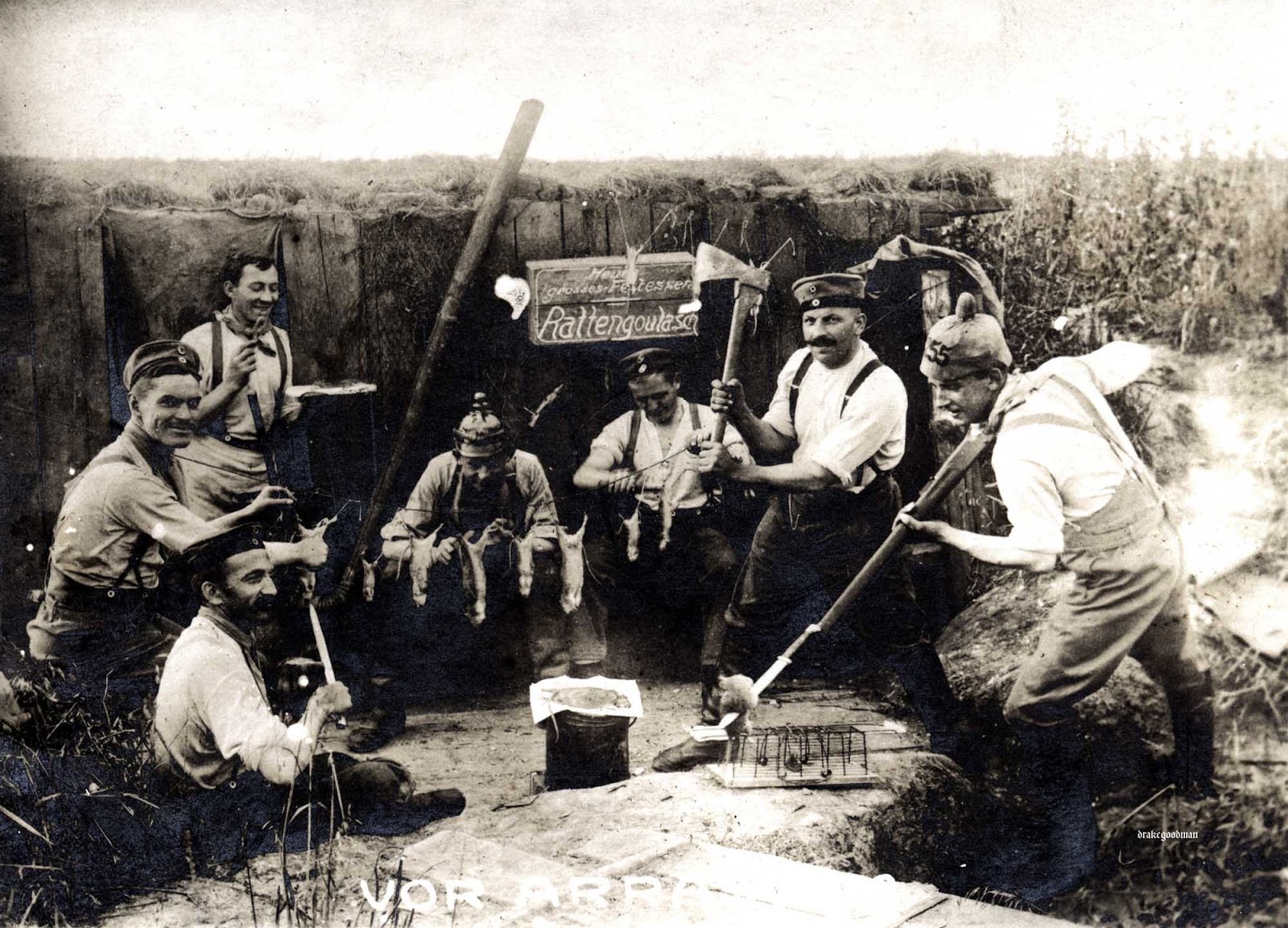
Photographs from both Allied and German trenches show soldiers holding up dead rats after hunting sessions, sometimes with broad smiles. These images were not unusual. Killing rats was a point of pride and a practical necessity. For many soldiers, a successful rat hunt offered a small but genuine sense of control in an environment where very little could be controlled. German soldiers used the word ‘Rattenjagd’ — rat hunt — to describe these sessions, and groups of men armed with shovels and improvised clubs would sweep through the trench together.
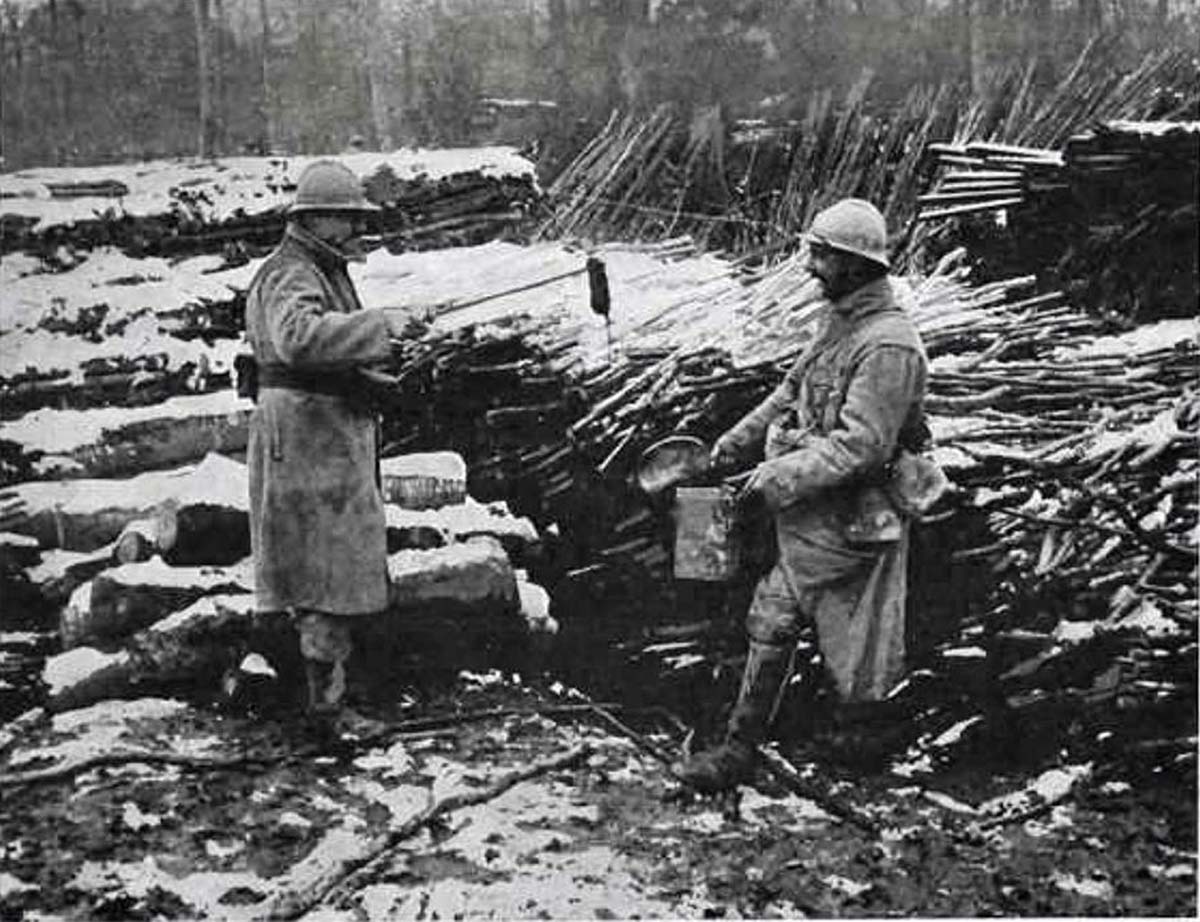
Food was scarce in the trenches, and rats were not always just a nuisance to be disposed of. Some soldiers, particularly German artillerymen, cooked and ate them. A photograph survives showing German artillery soldiers preparing dead rats — and at least one mouse — as an evening meal. This was not widely practiced, but it reflects the desperate and resourceful nature of trench survival. When rations ran short and a protein source was available, some men made use of it.
The rat problem was never fully solved. No matter how many were killed during a night’s hunting, more always appeared. The conditions that produced the infestation — mass casualties, poor sanitation, and miles of static earthworks — did not change for the duration of the war. Soldiers adapted and developed their own methods for coping, but the rats remained a constant feature of trench life from 1914 through to the armistice in 1918.
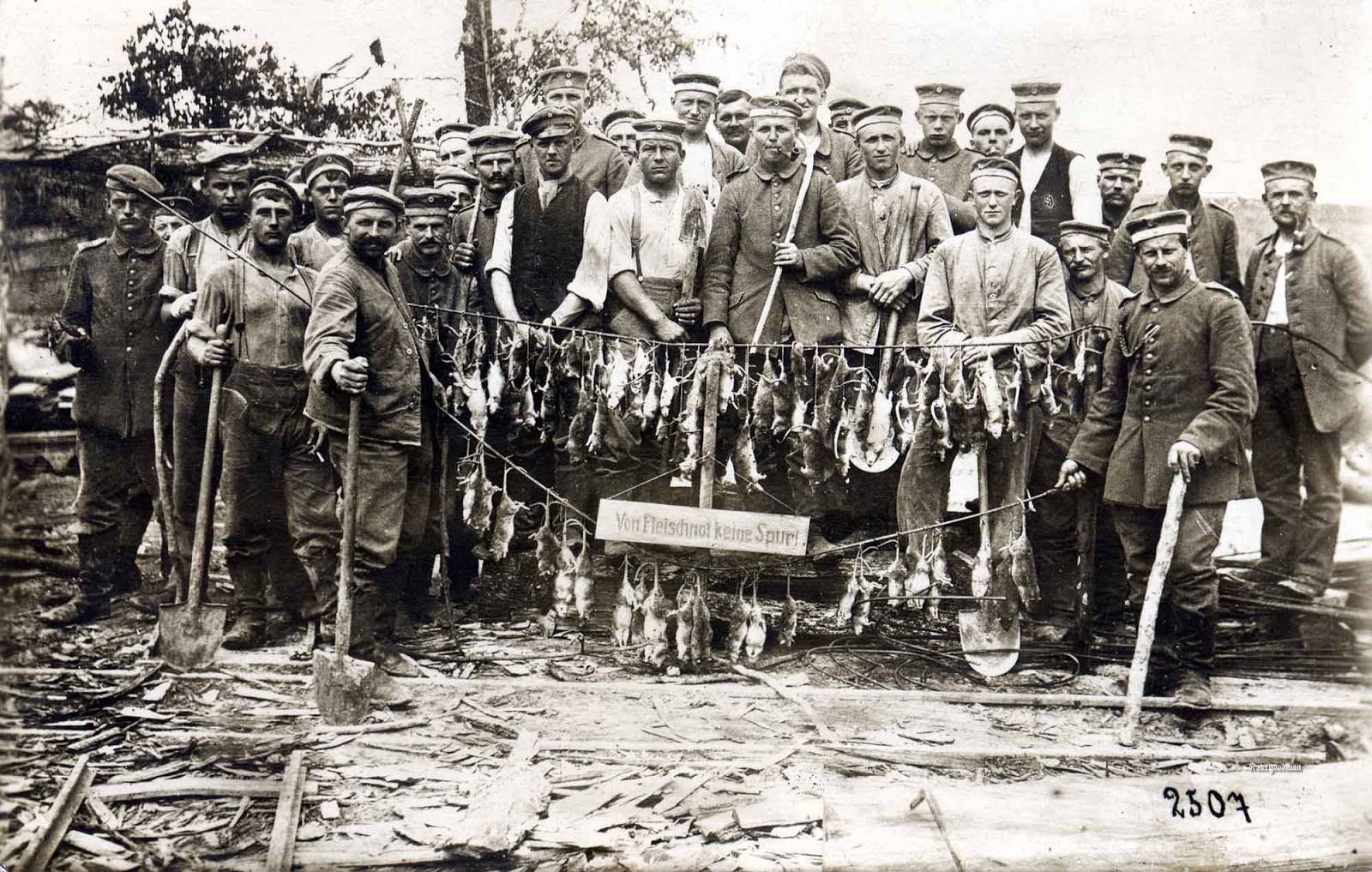
The photographs soldiers took during these rat hunts give us a direct window into the reality of daily trench life. They show men on both sides of the war — French, German, British — holding up their catches with the same matter-of-fact pride. The scale of the kills shown in some images, with dozens of rats laid out after just a short hunt, makes clear just how severe the infestation was. These were not isolated incidents. They were a routine part of surviving the Western Front.