After World War II left Germany in ruins, West Germany rebuilt itself with remarkable speed. By the late 1950s, it had become the world’s third-largest economy — a rise so dramatic that economists called it the Wirtschaftswunder, or “economic miracle.” But by the 1960s, that pace had begun to slow. The growth rate dropped to 4.7% in 1962 and then to just 2.0% the following year. A brief recovery followed, but by 1967, the economy had stalled completely, with zero growth recorded that year. Politically, the decade also brought change. Chancellor Ludwig Erhard stepped down in 1966, and Kurt Georg Kiesinger took over as the new head of government. Despite the economic and political turbulence, daily life across West Germany carried on — in the markets, streets, rail stations, and town squares that defined the country. These vintage photographs capture that everyday world in striking detail.
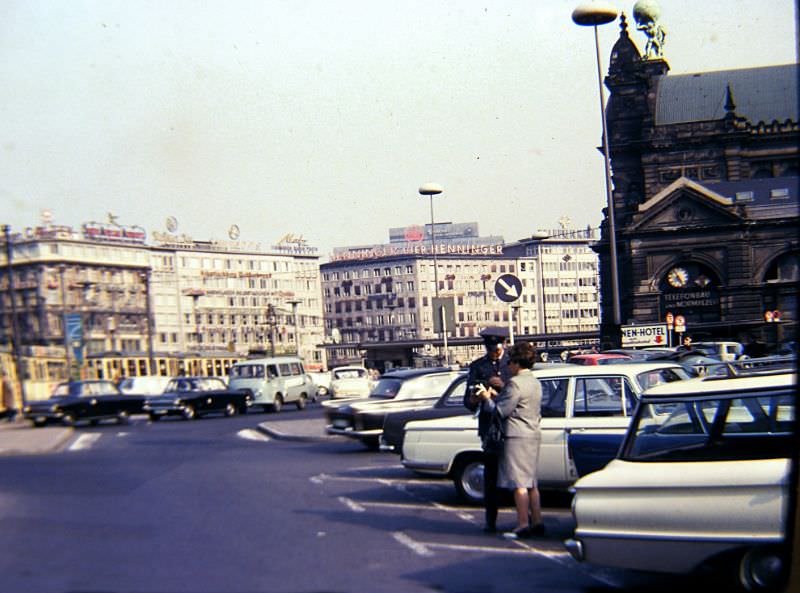
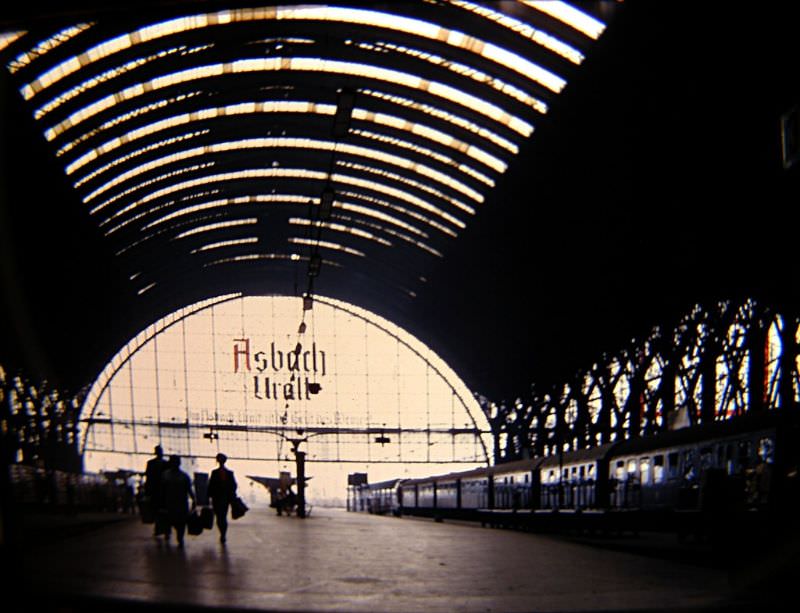
Frankfurt’s main train station was one of the busiest transit hubs in all of West Germany. In the 1960s, it served as a central artery connecting the country’s major cities, and the scenes around it reflected the energy of a nation still finding its postwar footing.
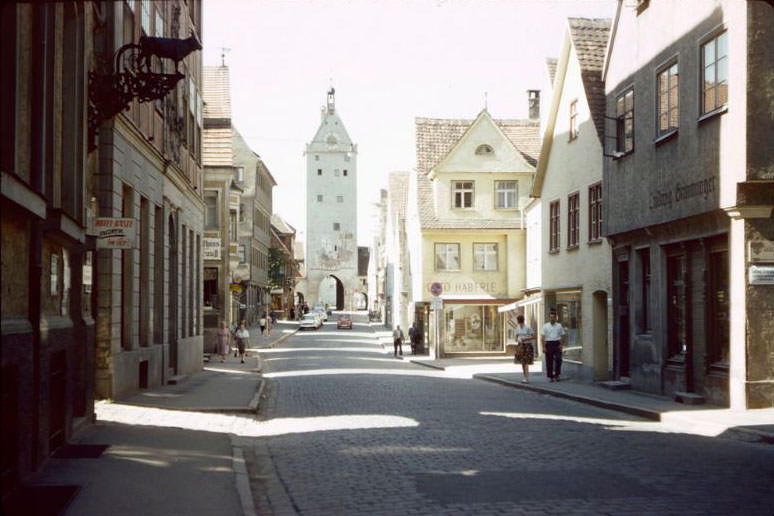
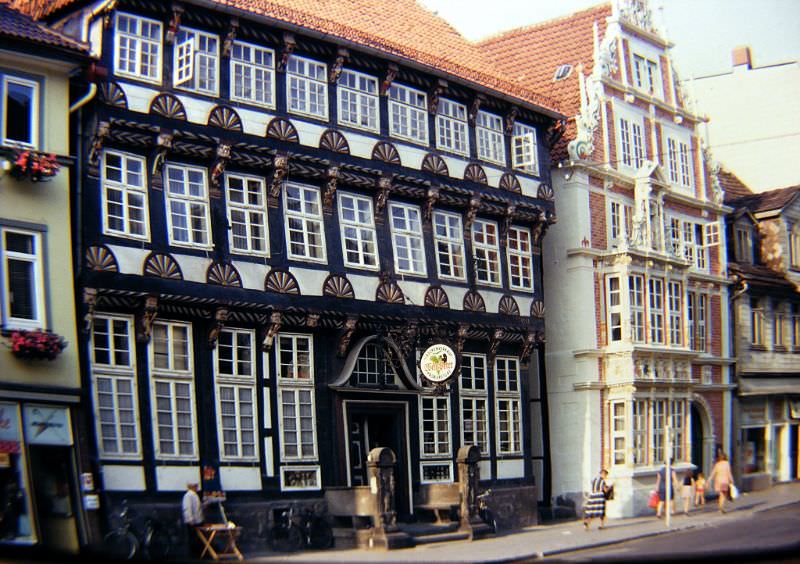
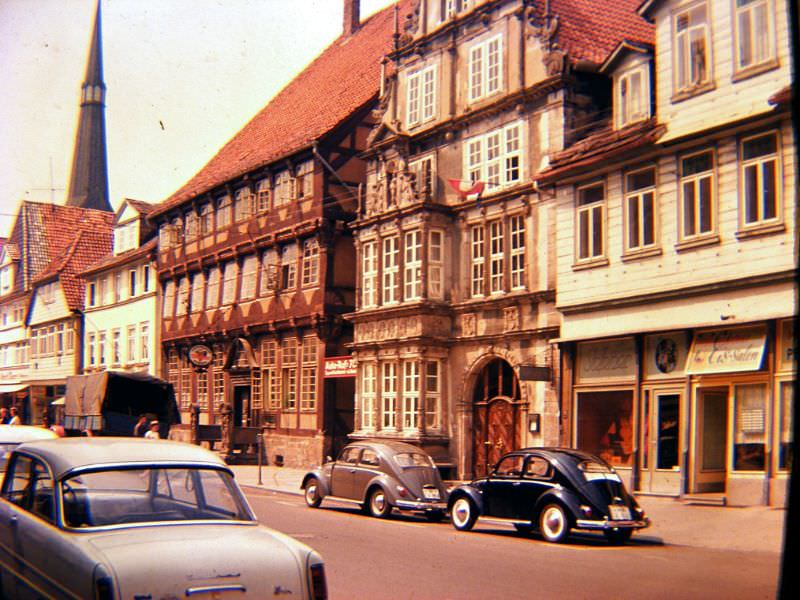
Away from the big cities, smaller towns and rural areas told a quieter story. The Alfeld area, located in Lower Saxony, offered a glimpse of provincial West German life — half-timbered buildings, narrow lanes, and a slower pace that stood in contrast to Frankfurt or Munich.
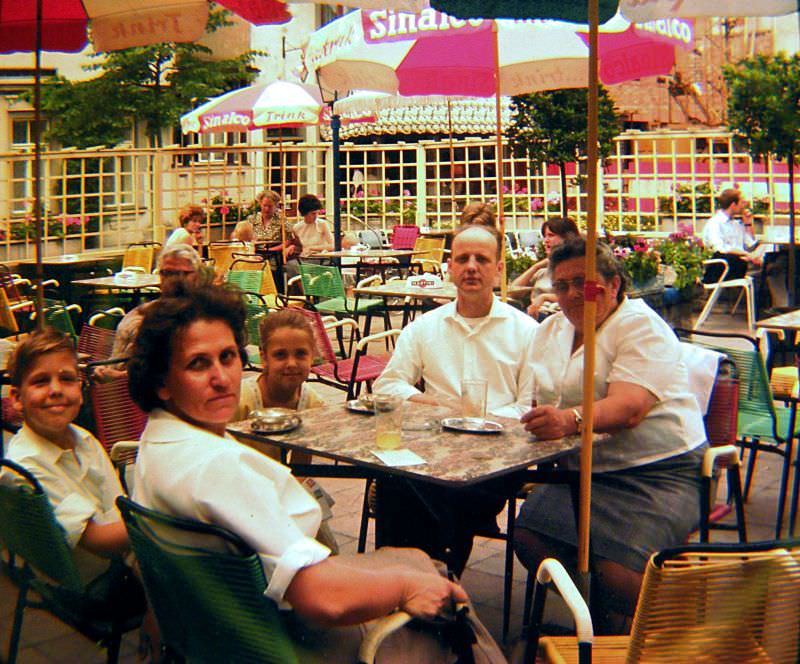
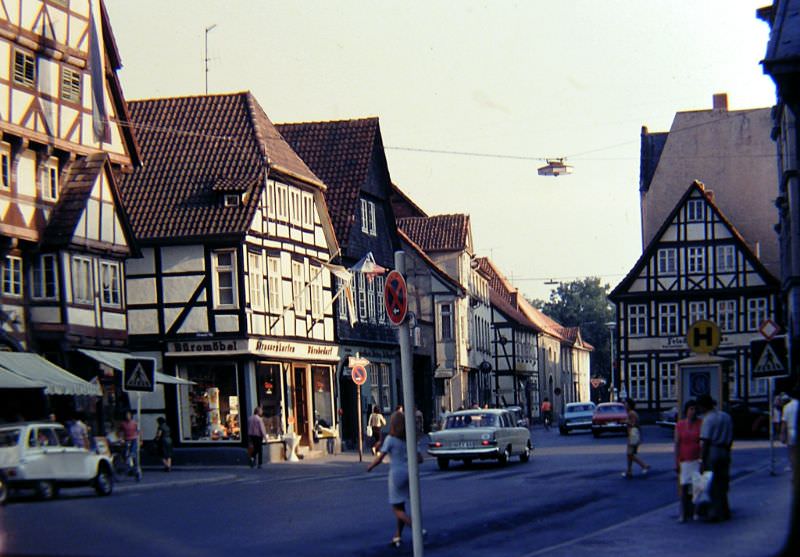
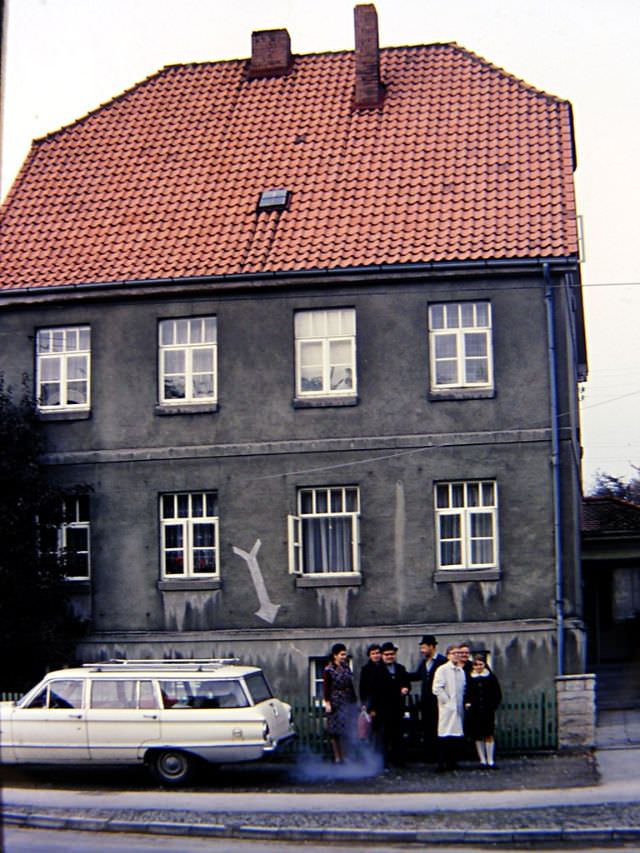
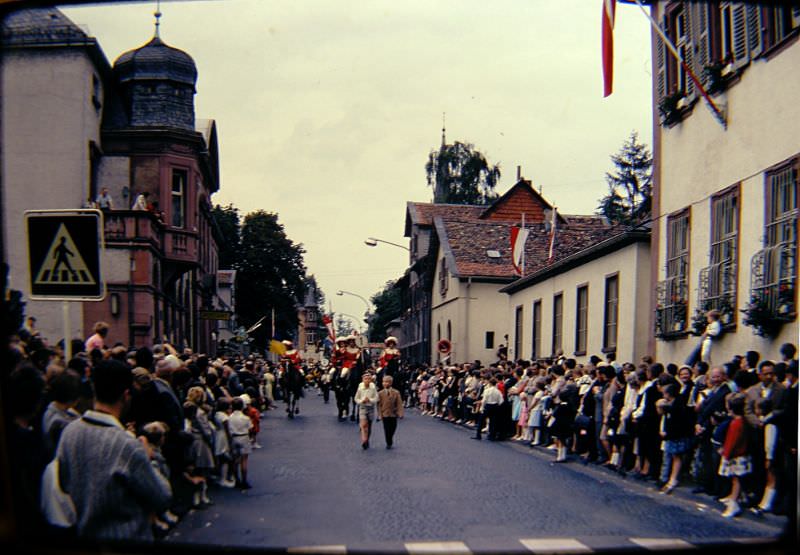
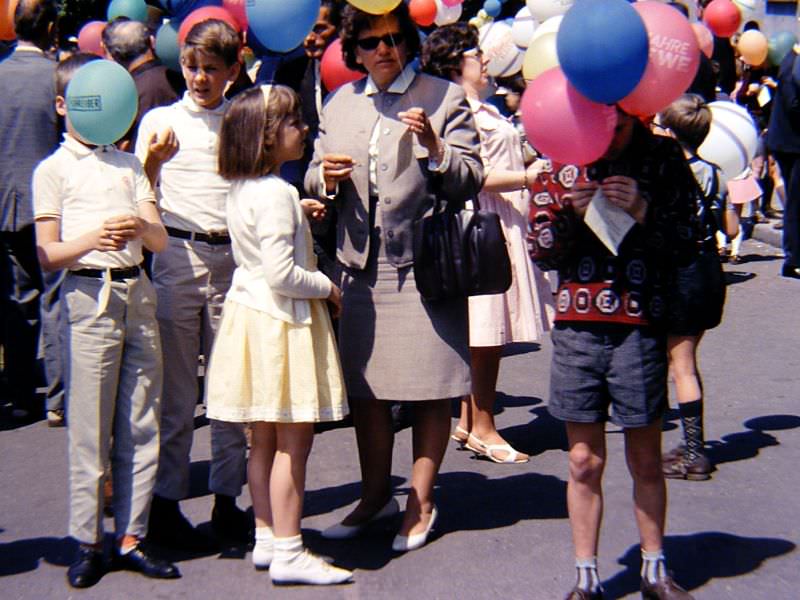
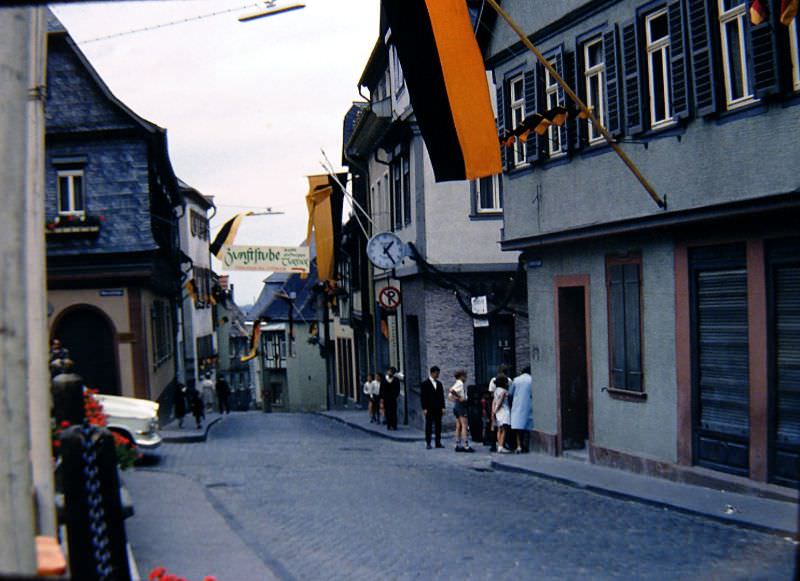
Public gatherings and local celebrations were a regular part of West German community life. In Bensheim, a town in Hesse, parades brought residents out into the streets and gave photographers a chance to document the color and energy of civic tradition.
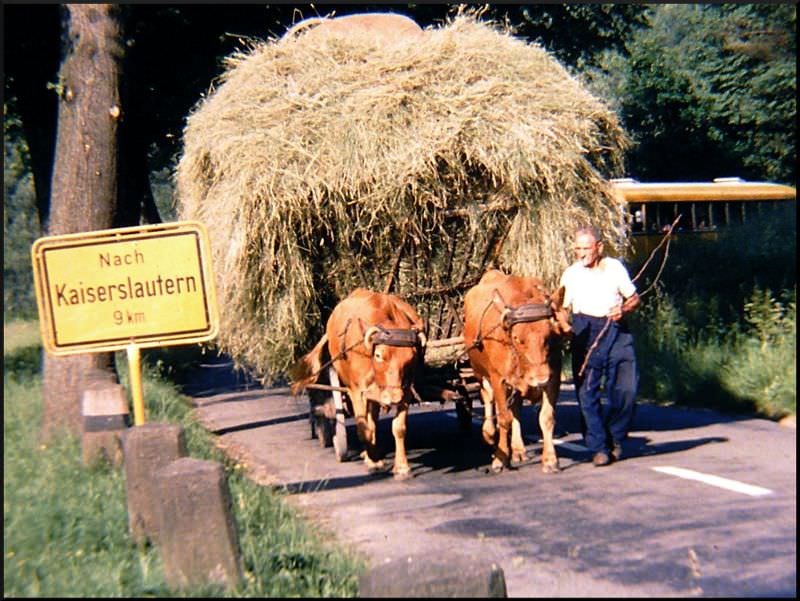
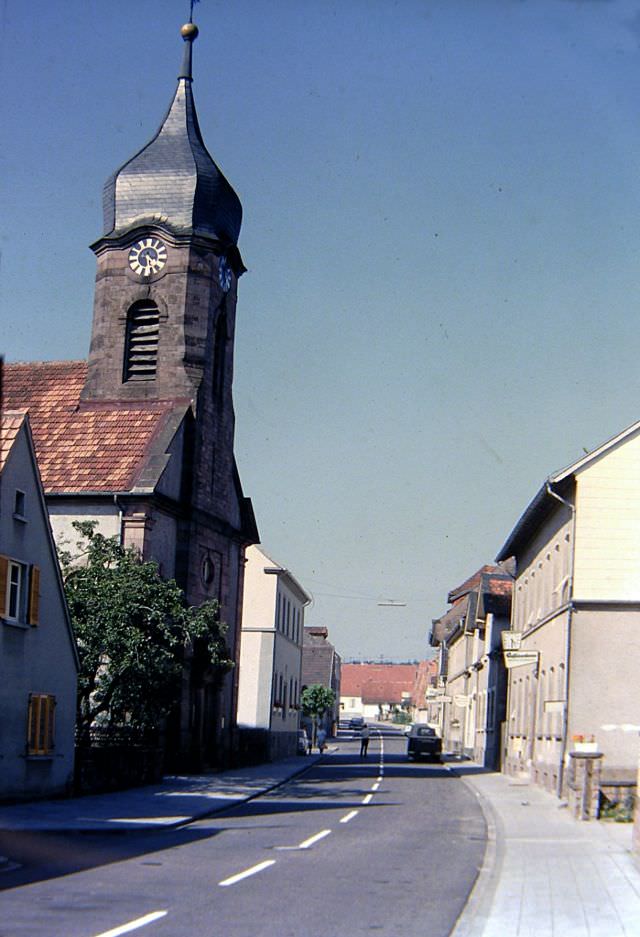
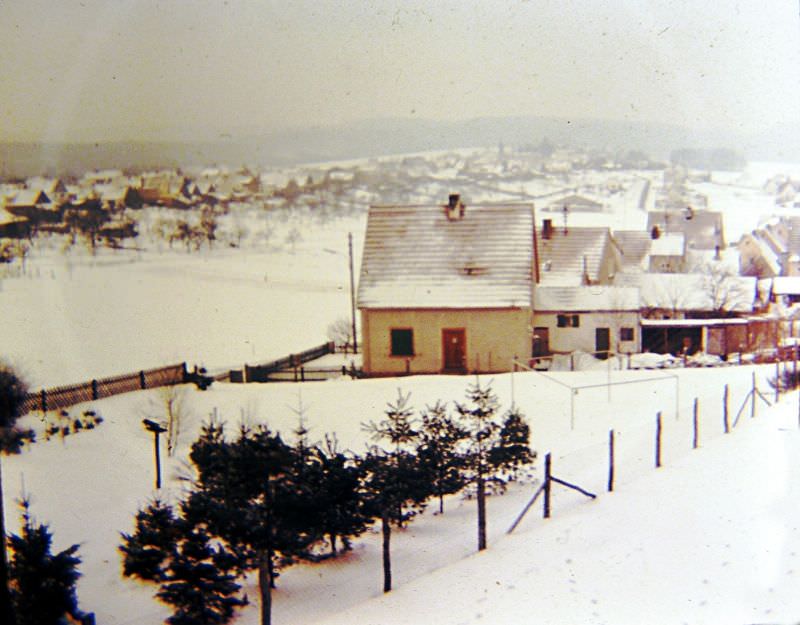
Traveling through West Germany in the 1960s meant passing through dozens of small villages that looked much as they had for centuries. Stelzenberg, a tiny settlement in the Palatinate Forest, was one such place — a brief stop along a road lined with old stone and timber.
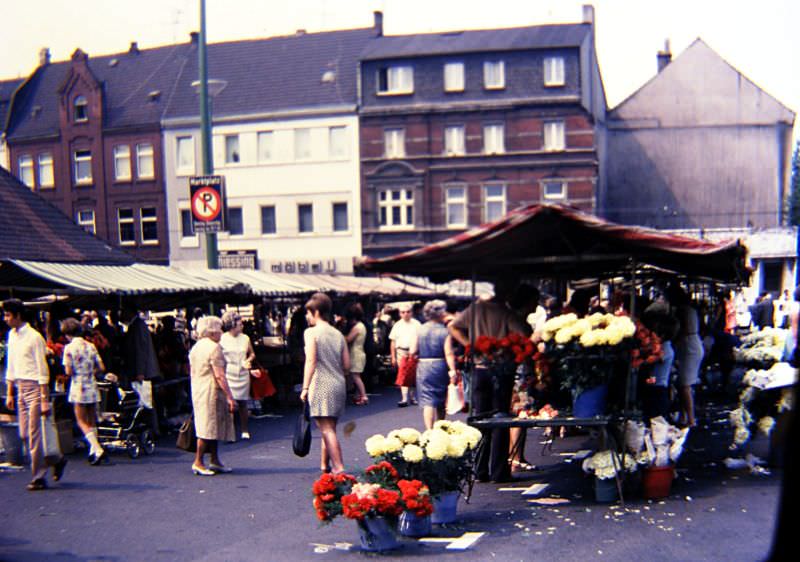
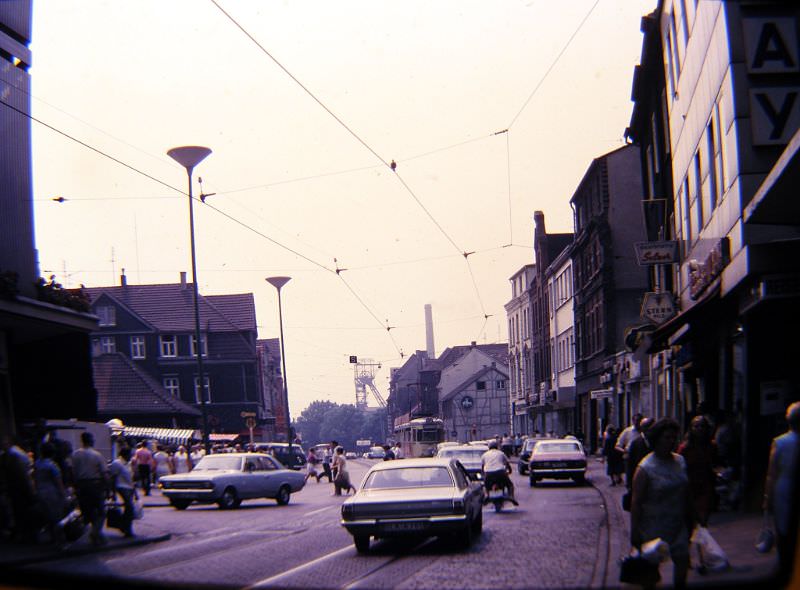
Gladbeck, an industrial city in the Ruhr region, was one of West Germany’s working-class heartlands. Its marketplace and street scenes from the 1960s show a town built on coal and steel, where workers and families moved through their daily routines among storefronts and tram lines.
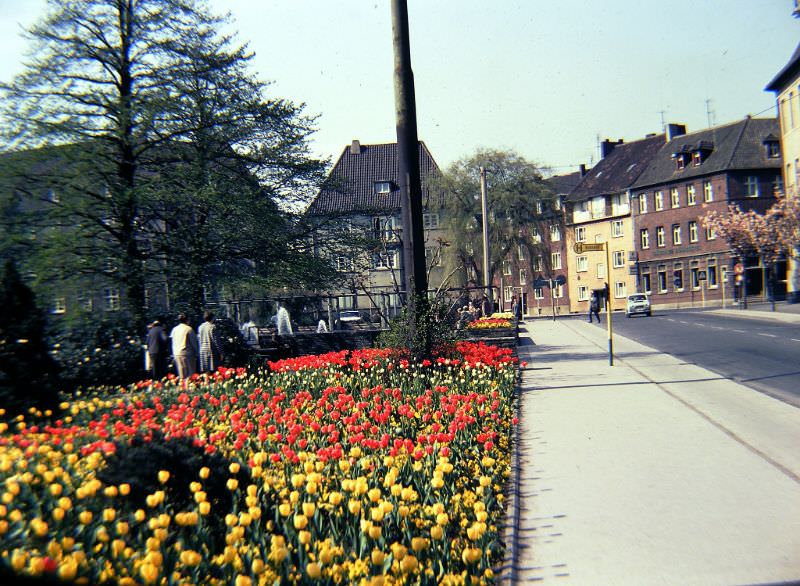
The Palatinate region offered a different landscape entirely. Trippstadt and its surroundings sat within a dense forest area, and the Hauptstraße — the main street — running east through the village gives a clear picture of small-town West German architecture and daily rhythm.
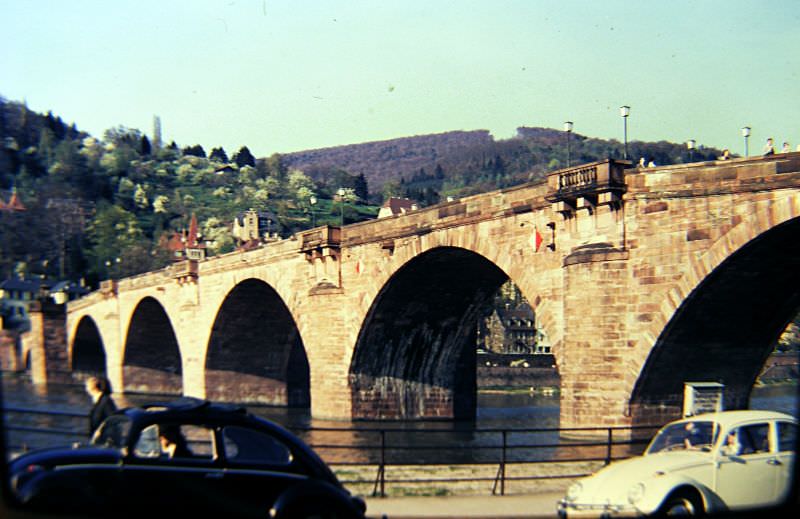
Heidelberg was already a well-known destination for visitors by the 1960s, and its bridge over the Neckar River was one of the most photographed spots in the country. The Old Bridge, or Alte Brücke, connected the old town to the riverbank and offered a view of the hillside castle that defined the city’s skyline.
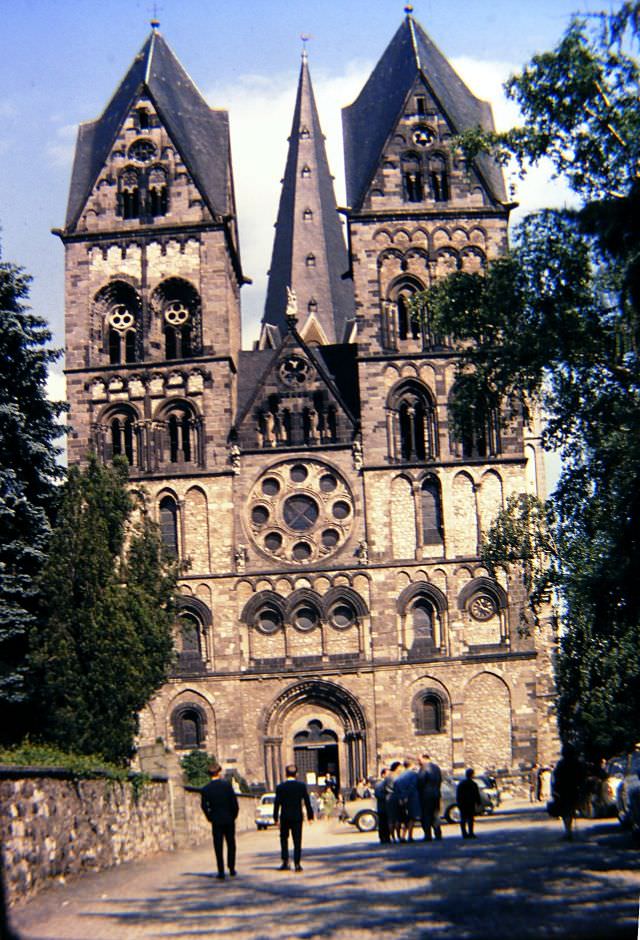
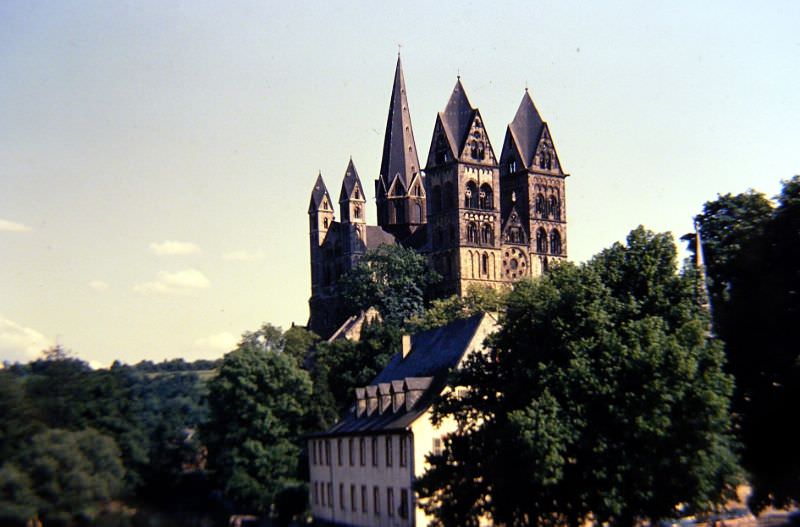
Limburg an der Lahn was a city that blended medieval architecture with modern West German life. Its cathedral stood high above the river, and the view from the Autobahn — West Germany’s famous highway network — made it one of the most recognizable skylines along the road between Frankfurt and Cologne.
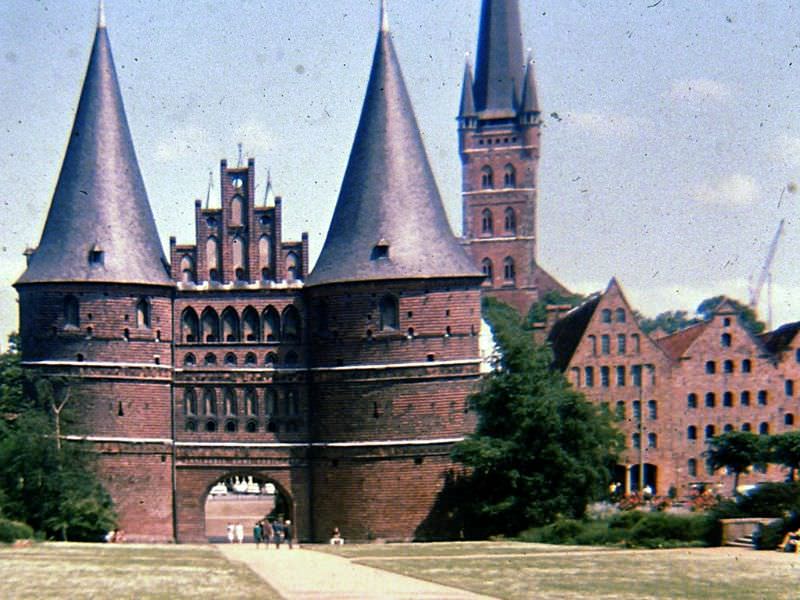
Lübeck, in the far north of West Germany near the border with East Germany, was home to the Holstentor — a massive medieval gate that had become one of the country’s most iconic structures. By the 1960s, it appeared on the West German 50-mark banknote, making it one of the most recognized images in the country.
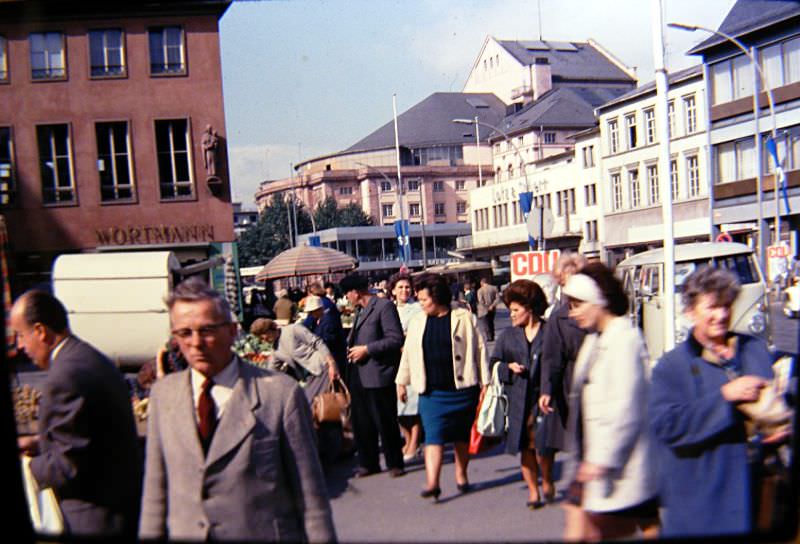
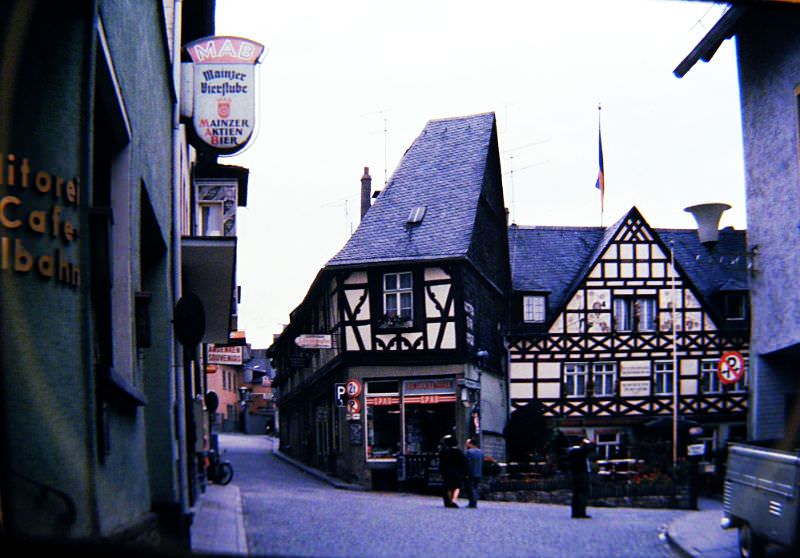
Mainz, the capital of Rhineland-Palatinate and home to one of West Germany’s oldest universities, had a street life shaped by its position on the Rhine River. Its historic center had been heavily damaged in the war and rebuilt through the 1950s, so by the 1960s, old and new architecture often stood side by side.
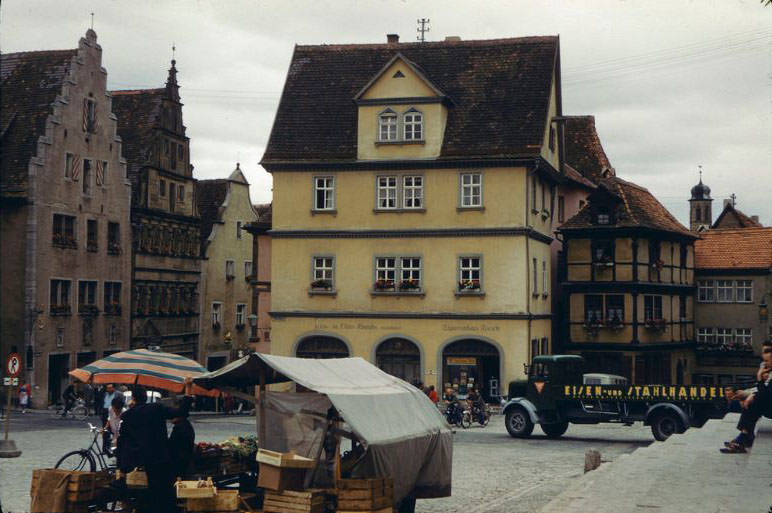
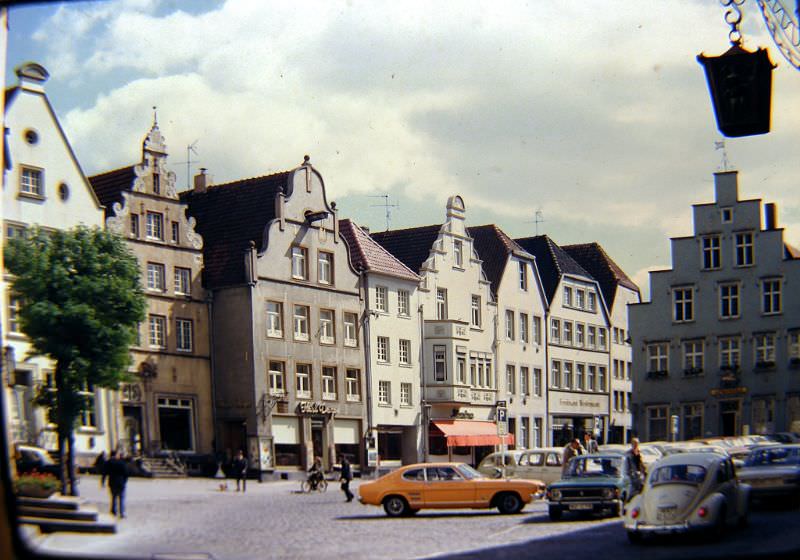
The Marktplatz in Warendorf, a town in Westphalia, preserved the look of a traditional German market square. Surrounded by historic facades and open to pedestrians, it was the kind of central gathering space found in hundreds of West German towns — places where commerce and community life overlapped naturally.
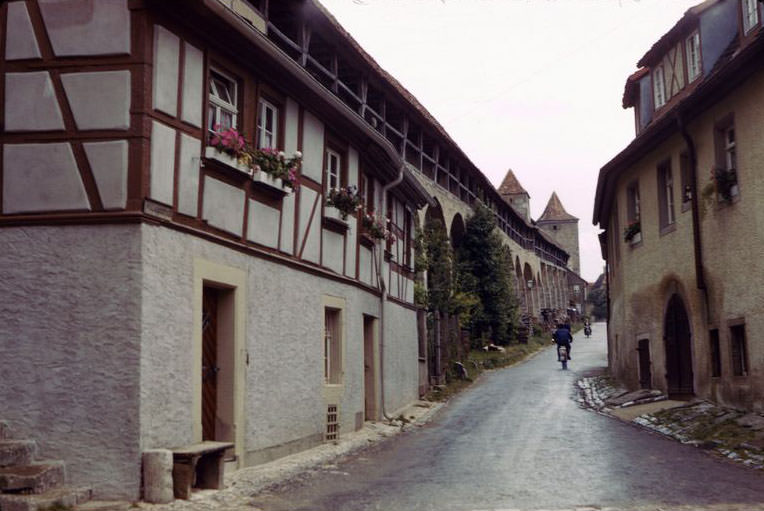
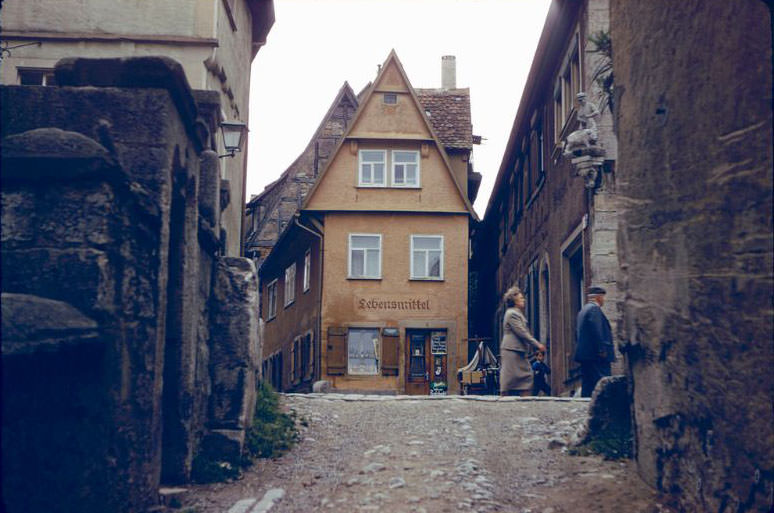
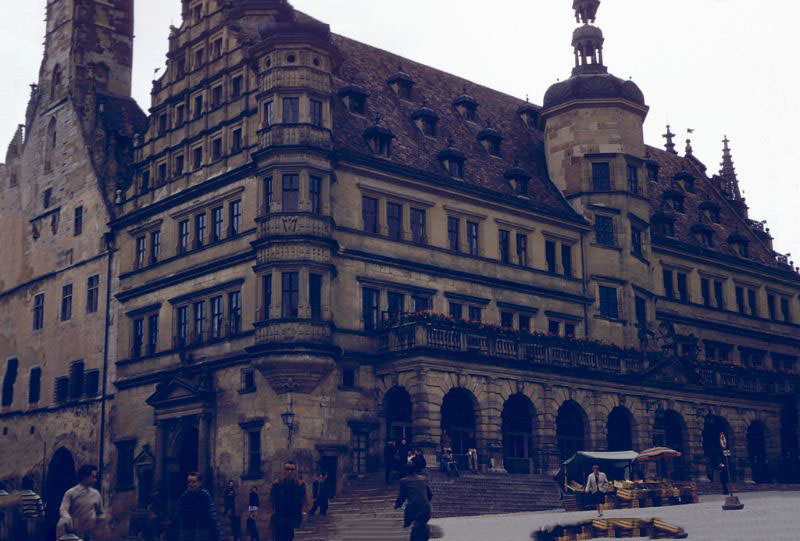
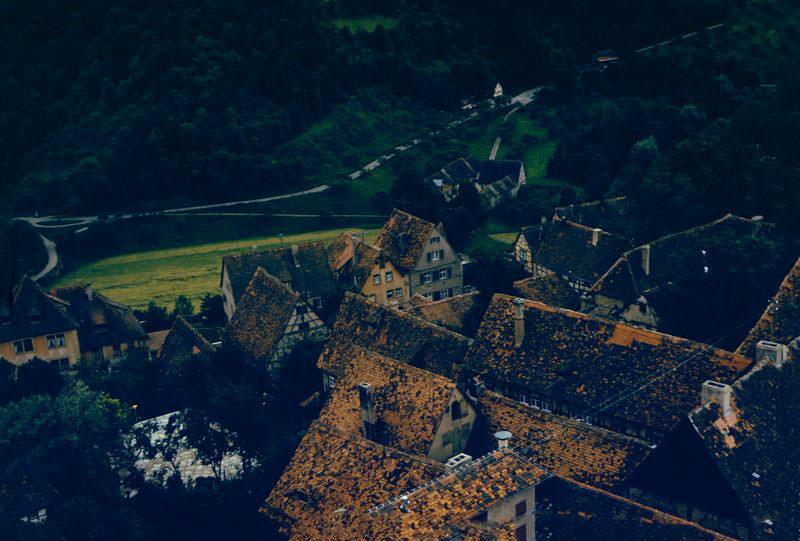
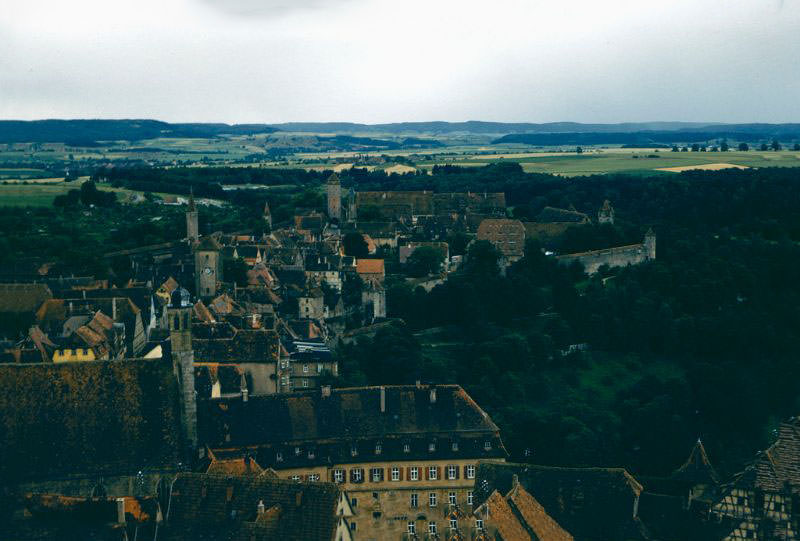
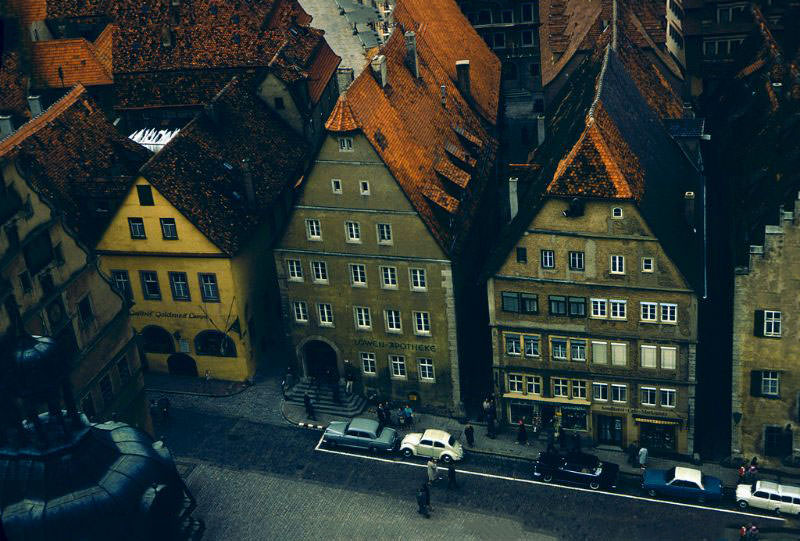
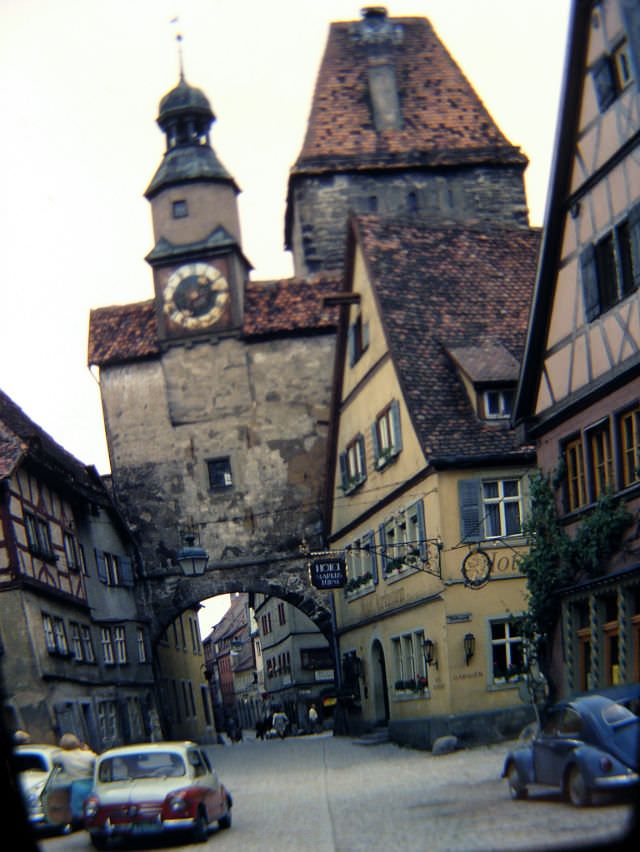
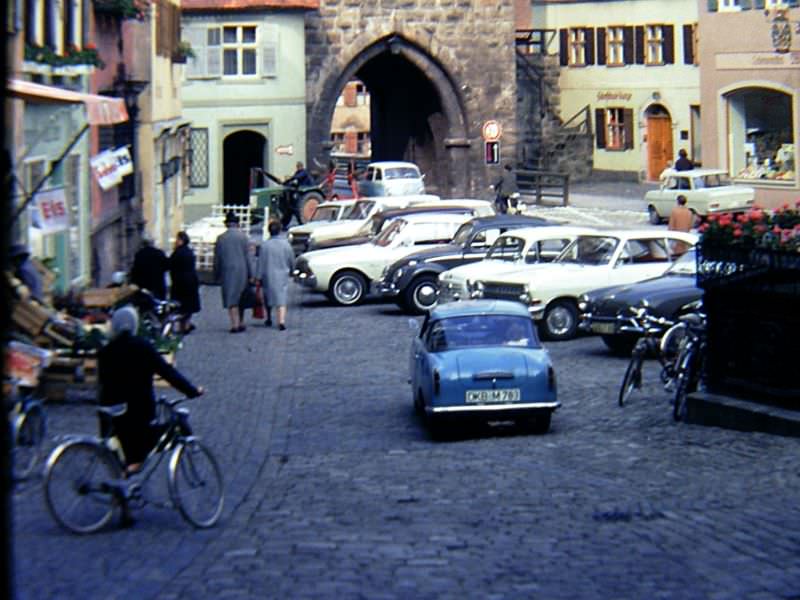
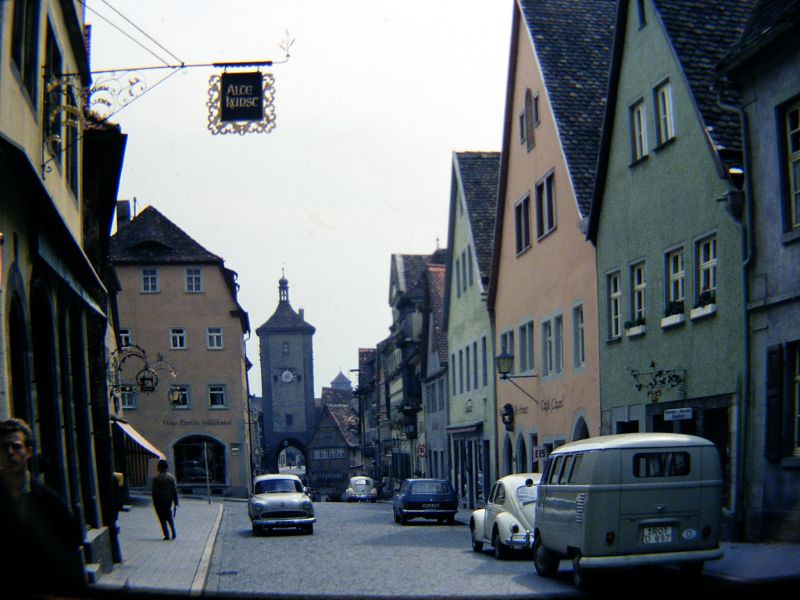
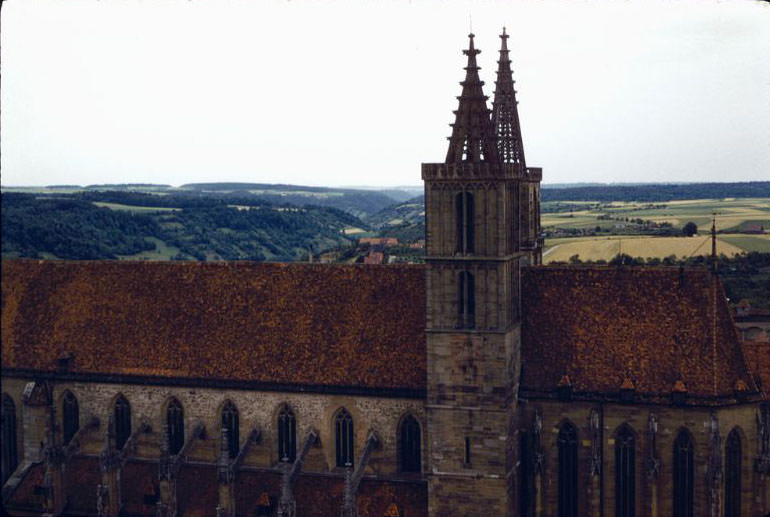
Rothenburg ob der Tauber was one of the best-preserved medieval towns in all of West Germany. Its walls, towers, cobblestone streets, and timber-framed buildings had survived the war largely intact, and by the 1960s, it had become a major draw for visitors from across Europe and North America.
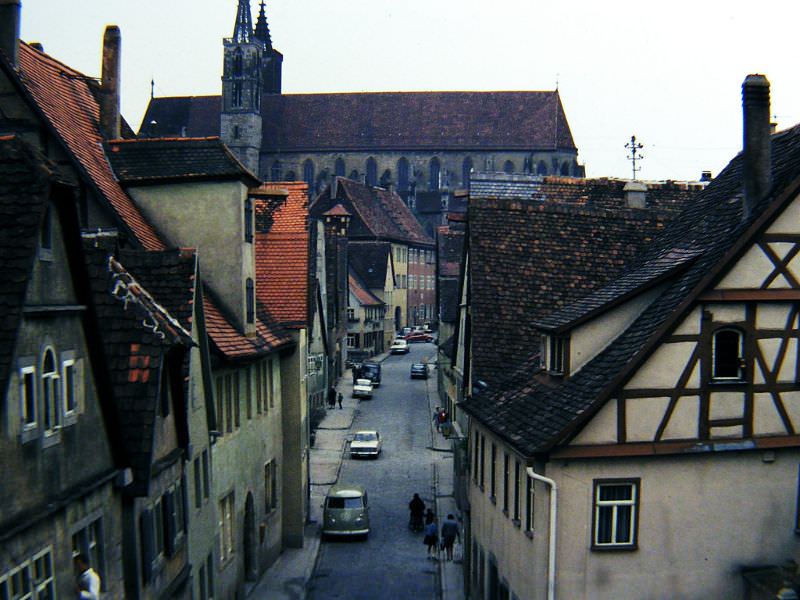
The Rhine valley town of Lorch offered yet another face of West Germany — vineyards on steep slopes, river views, and old stone buildings that had anchored the community for generations.
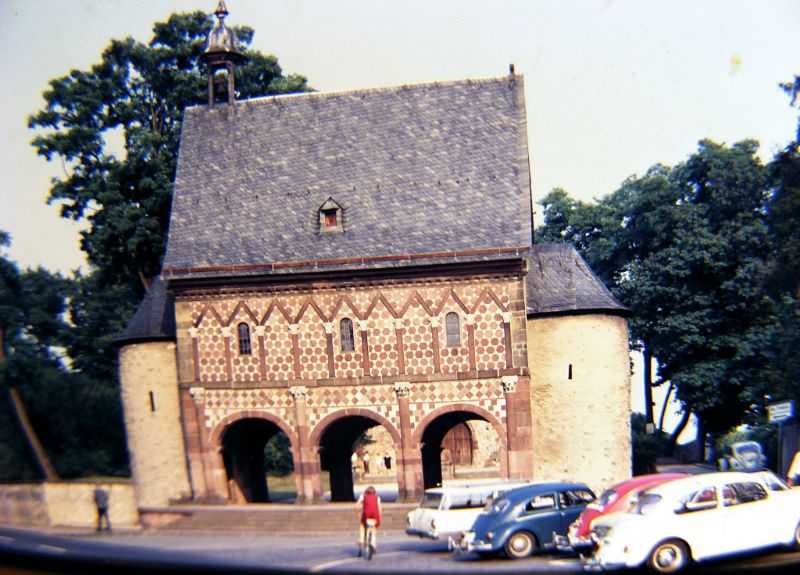
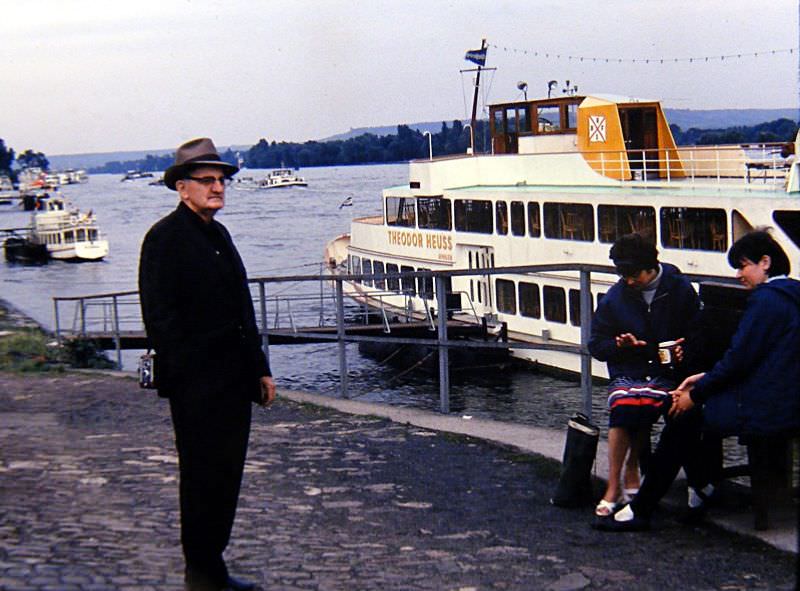
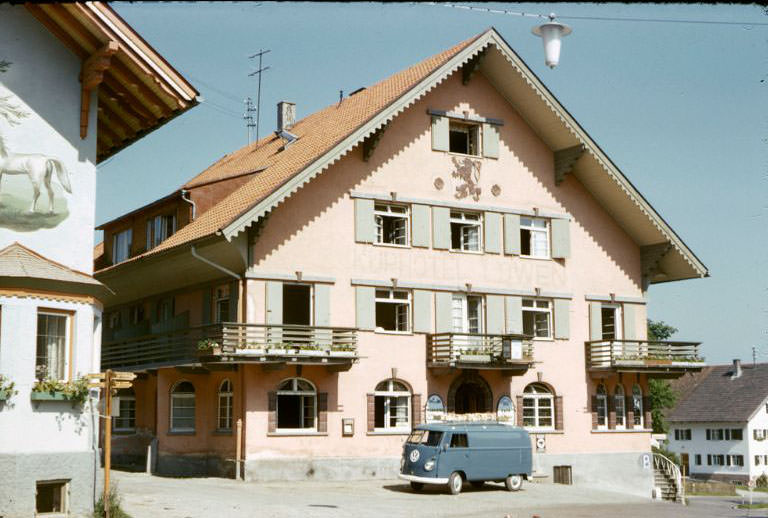
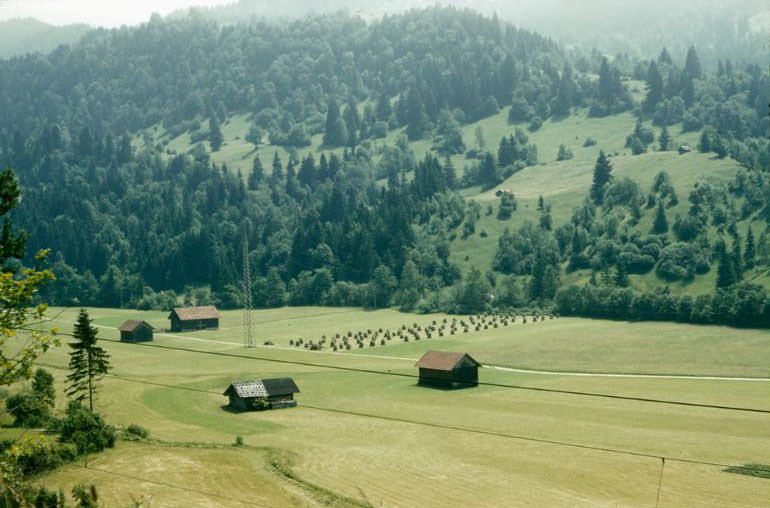
The Bavarian Alps formed the southern boundary of West Germany. Their peaks, valleys, and alpine villages were a world apart from the industrial Ruhr or the rebuilt city centers. In the 1960s, the Alps were already a popular destination for West German families looking for weekend and summer escapes.
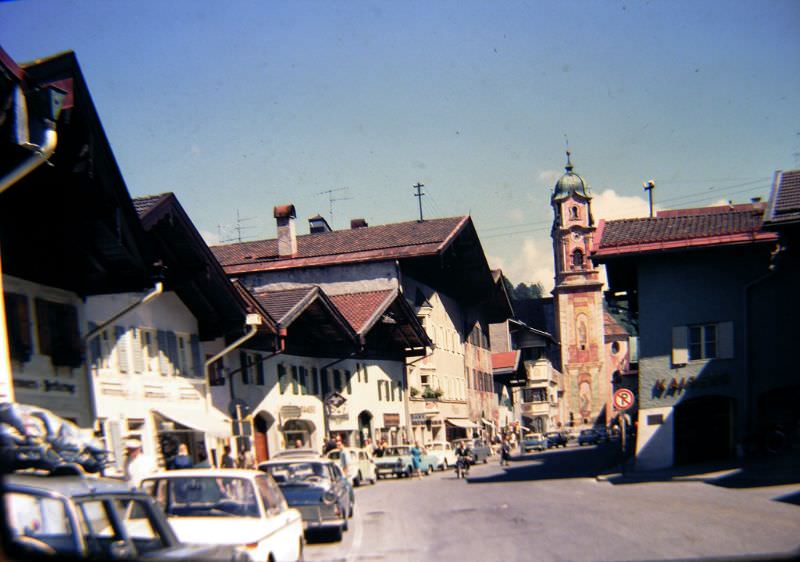
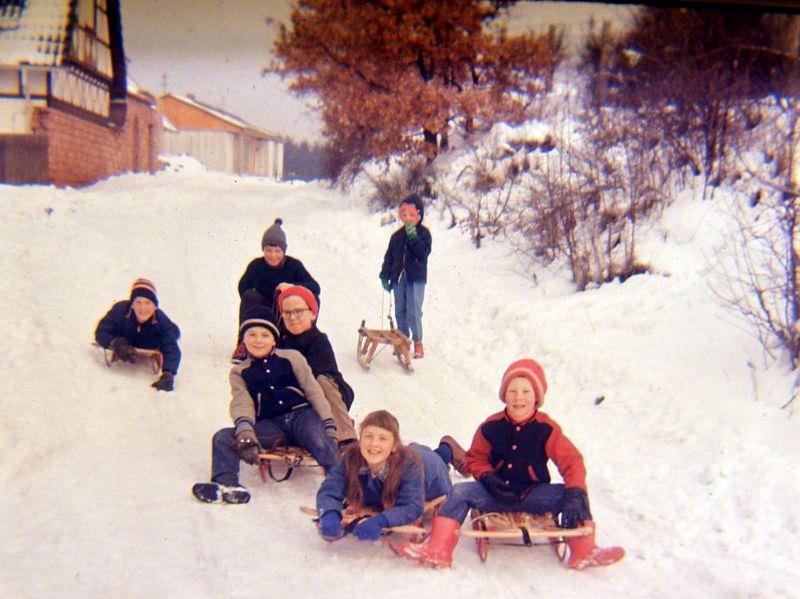
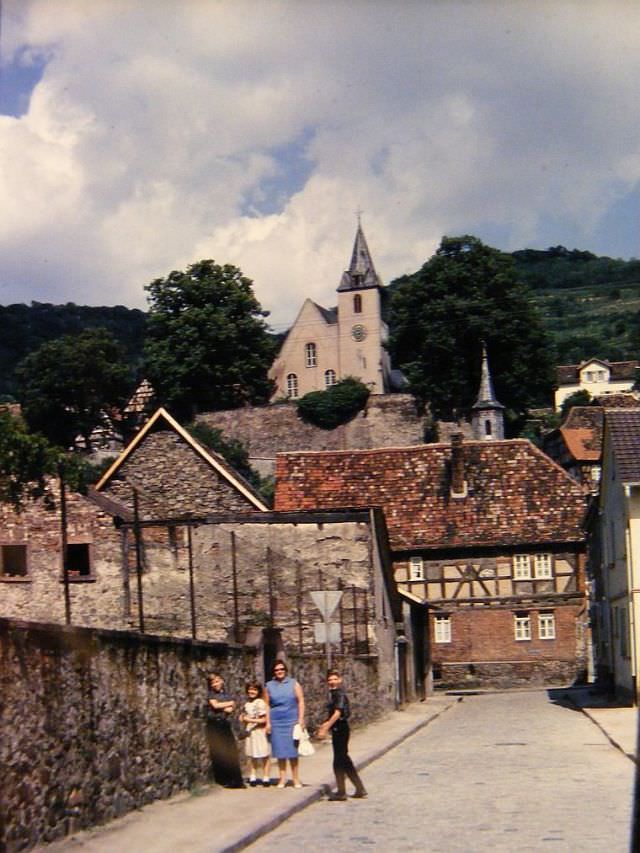
Children in Trippstadt going about their day offer one of the most personal glimpses into 1960s West German life. Away from the politics and economics, childhood in a small Palatinate village had its own texture — outdoor play, familiar streets, and a tight-knit community.
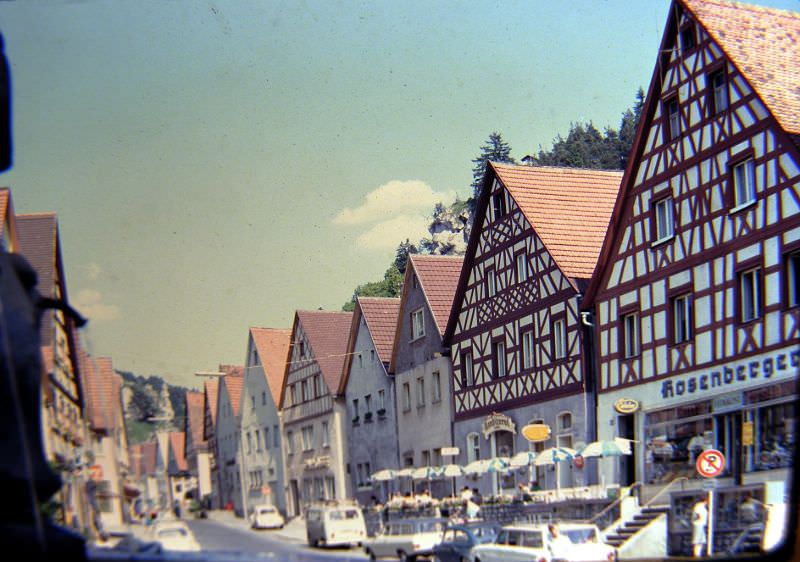
Tüchersfeld, in the Franconian Switzerland region of Bavaria, was one of the most visually dramatic villages in West Germany. Houses were built directly against and on top of enormous limestone rock formations, creating a settlement unlike almost anything else in the country.
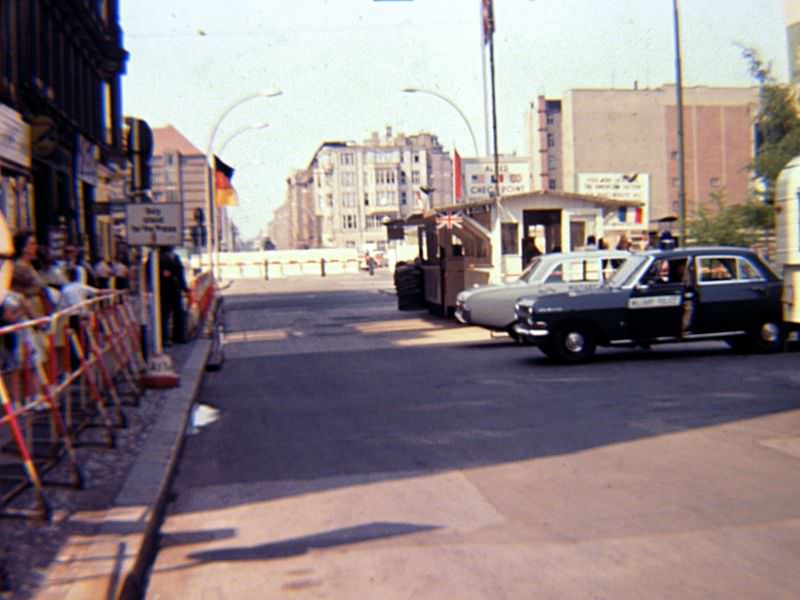
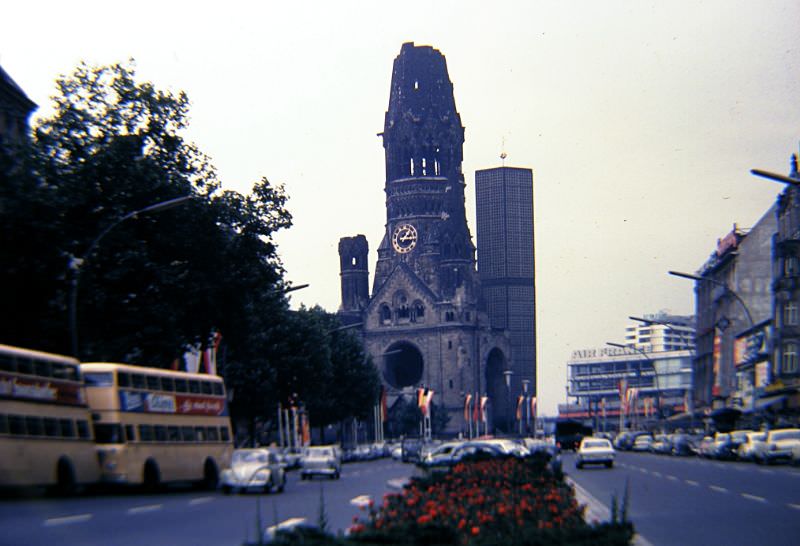
West Berlin existed as a separate political entity — an island of the Western world surrounded by East German territory. Checkpoint Charlie, located on Friedrichstraße, was the main crossing point between West Berlin and the Soviet-controlled east. After the Berlin Wall went up in August 1961, it became one of the most tense and closely watched border crossings in the world. The Kaiser Wilhelm Memorial Church, partially destroyed by Allied bombing in 1943, was left deliberately unrestored as a monument to the destruction of war. Its bombed-out tower stood as a constant reminder in the middle of the rebuilt city.
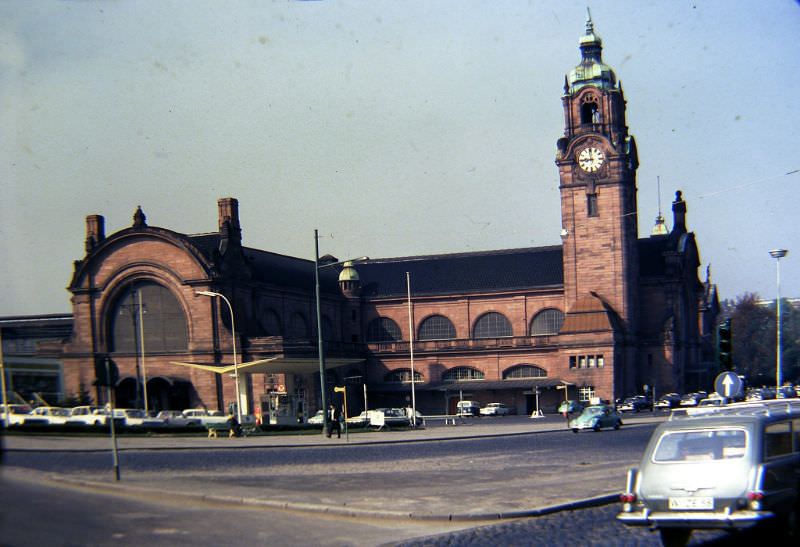
Wiesbaden, the capital of Hesse, was a prosperous city with a long history as a spa town. Its streets, children, and train station in the 1960s reflected a city that was comfortable and well-established — less industrial than Gladbeck, more polished than many of its neighbors.
Ulm, on the Danube River in Baden-Württemberg, was home to one of the tallest church steeples in the world. The Ulm Minster dominated the city’s skyline, and the open plaza in front of it was used for markets and public events. A carnival set up in its shadow was a common sight, blending the sacred and the festive in a way typical of West German civic culture.
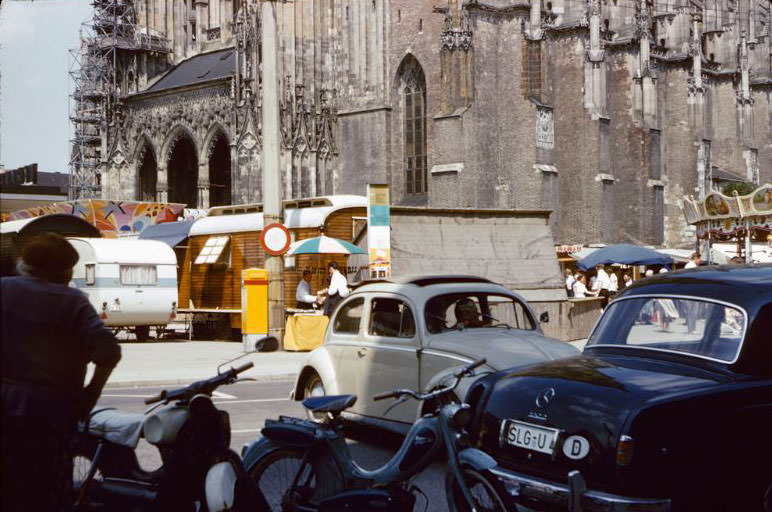
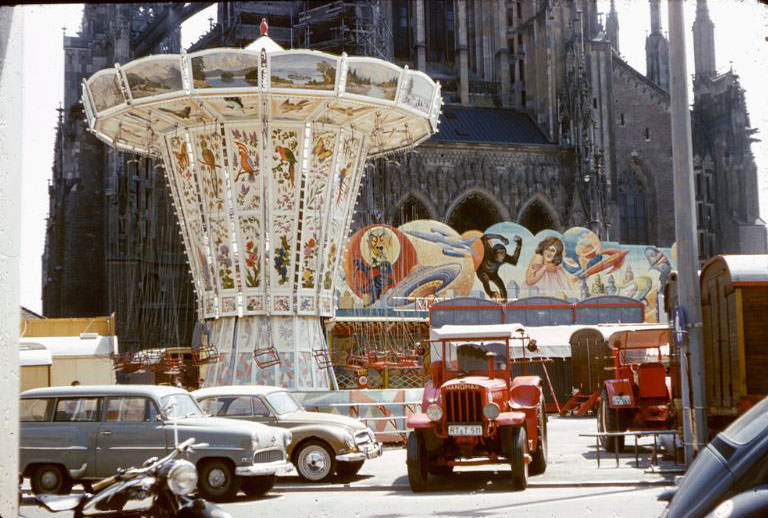
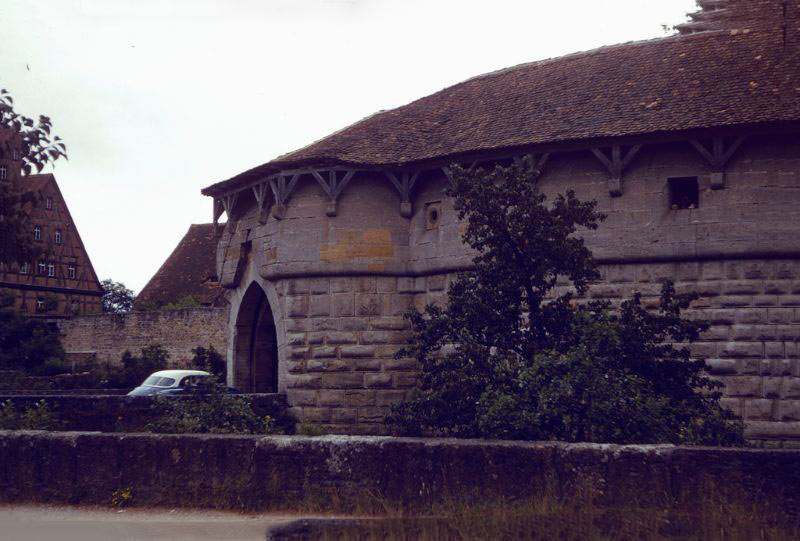
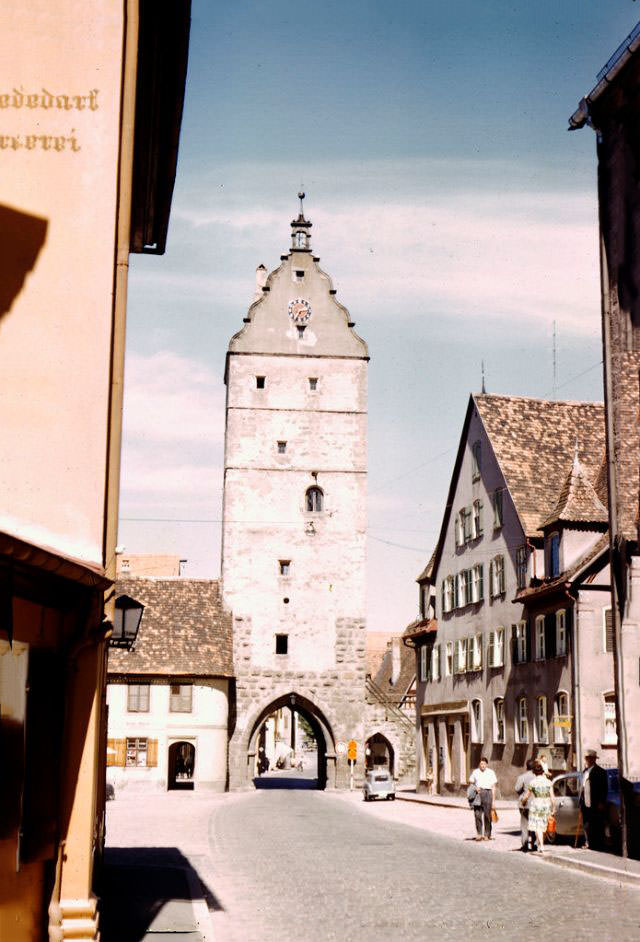
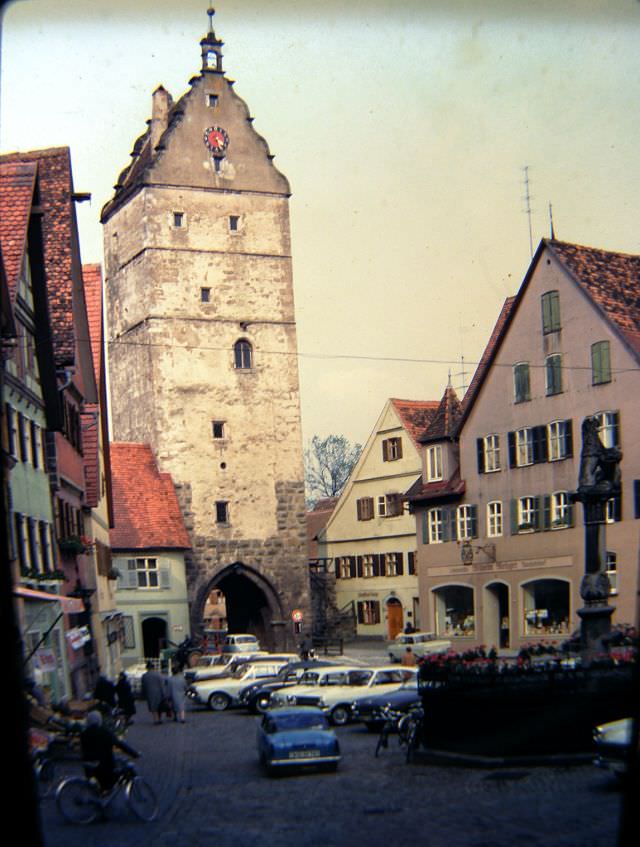
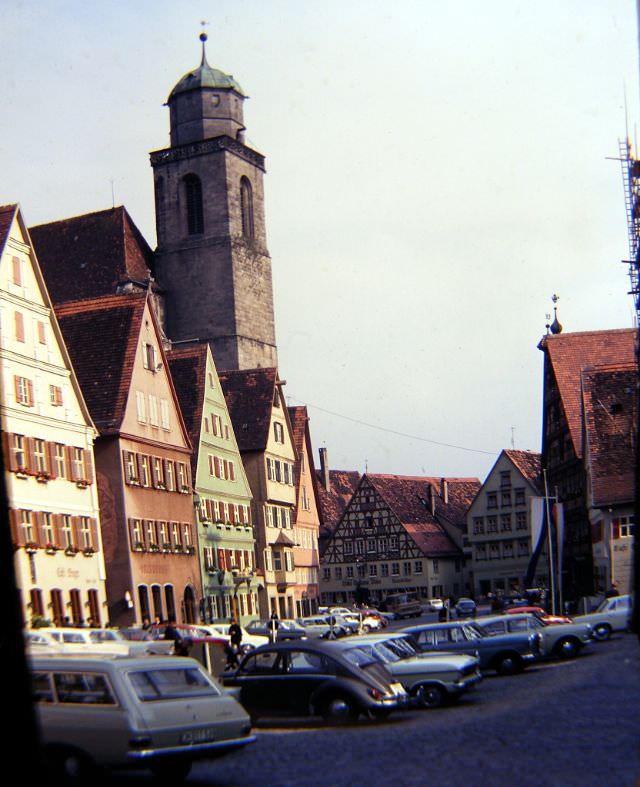
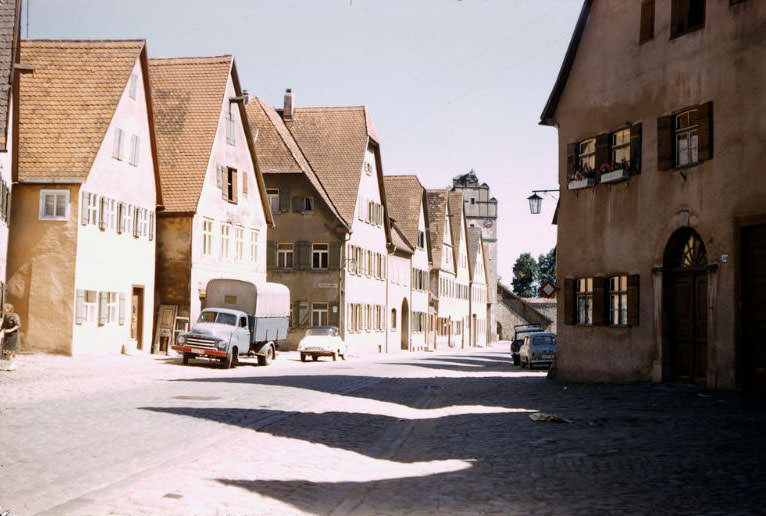
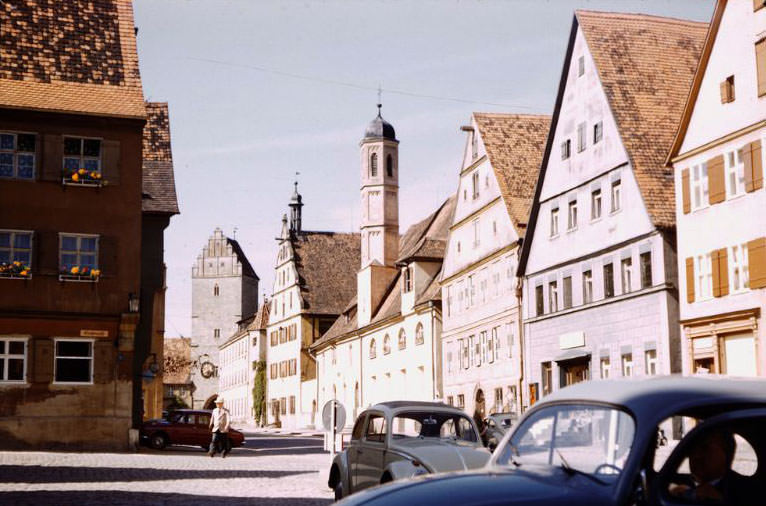
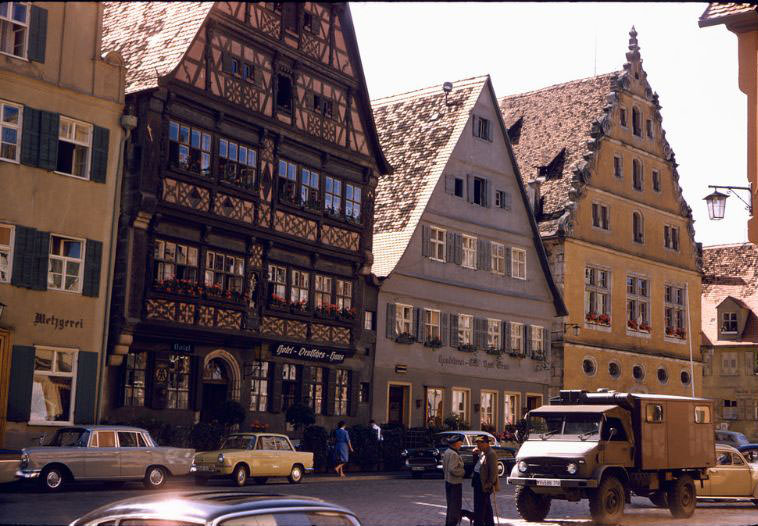
Dinkelsbühl, like Rothenburg ob der Tauber, was a walled medieval town that had escaped major war damage. Its towers, gates, and half-timbered buildings made it a textbook example of preserved German medieval architecture, and the Wörnitz Gate stood as one of its most recognizable landmarks.
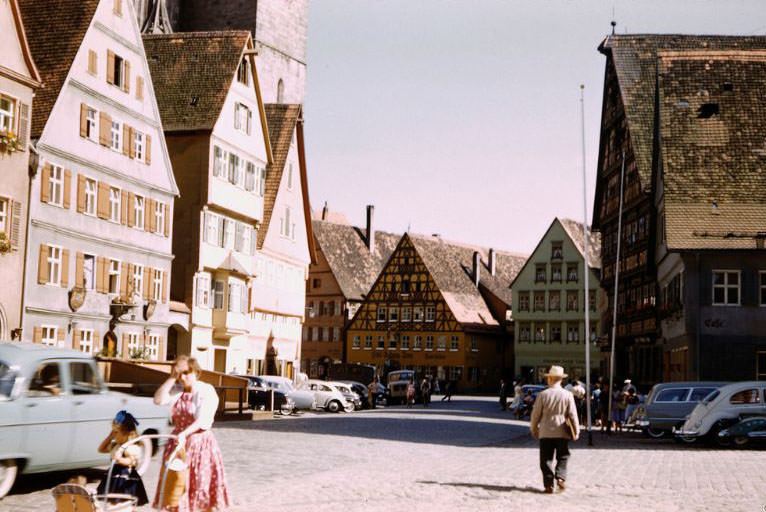
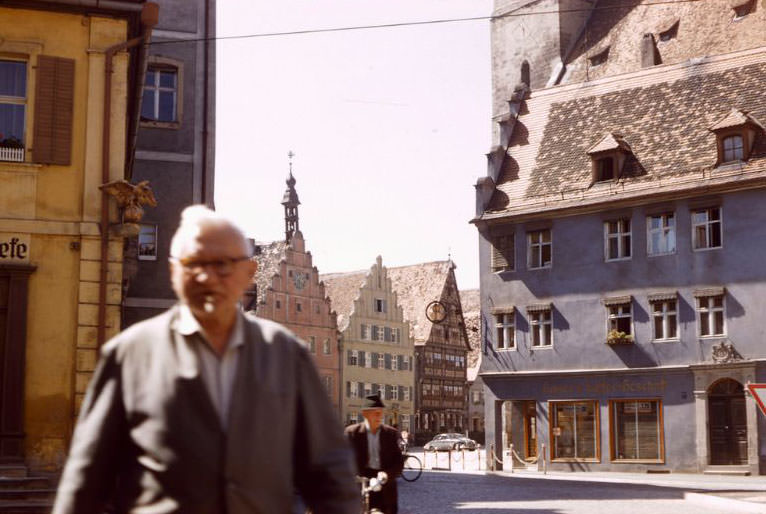
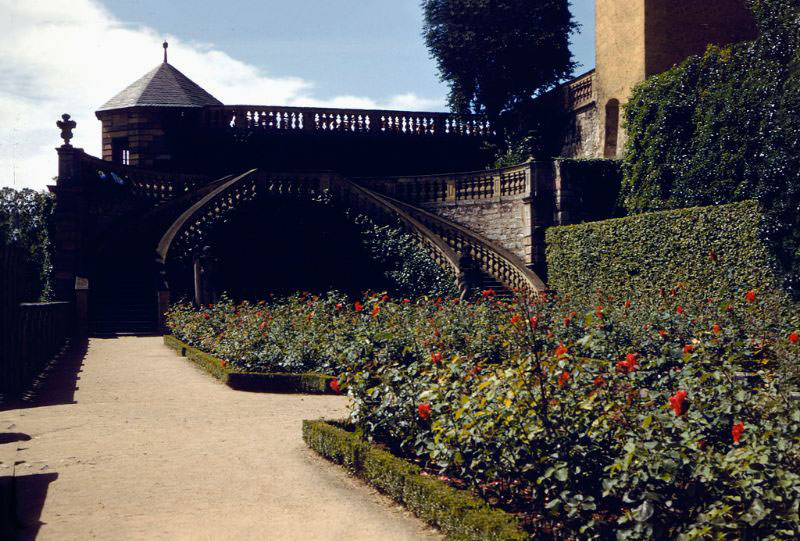
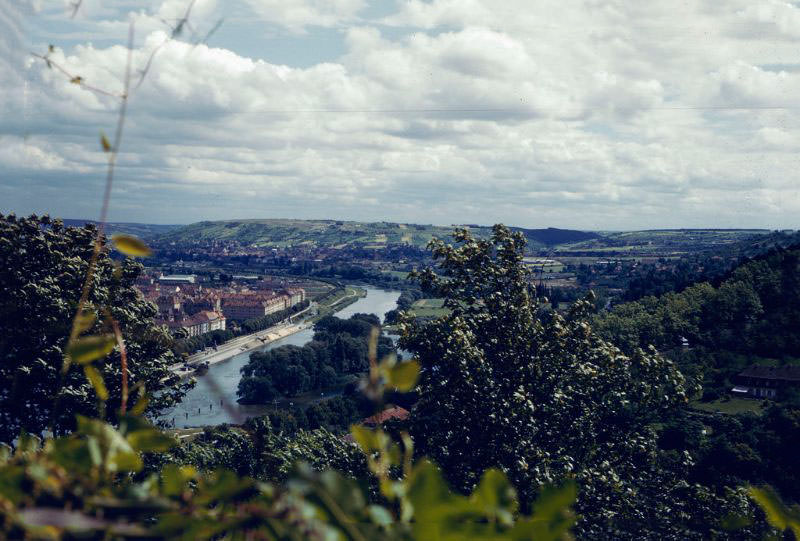
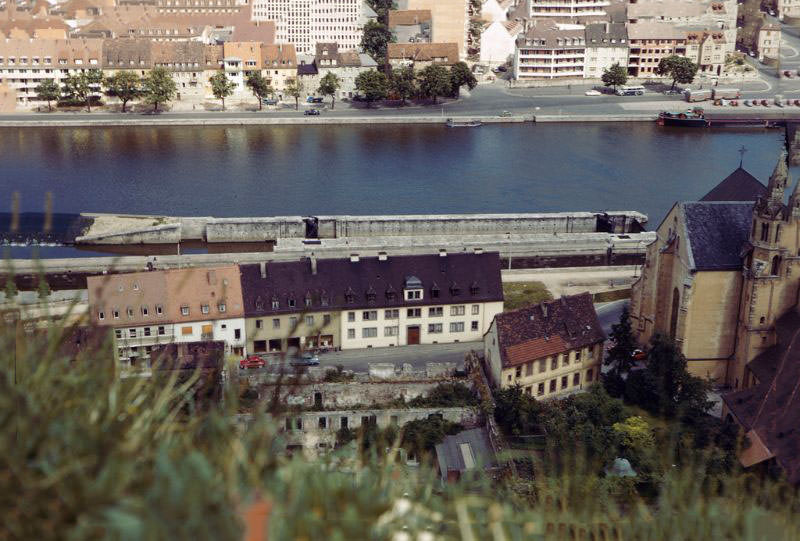
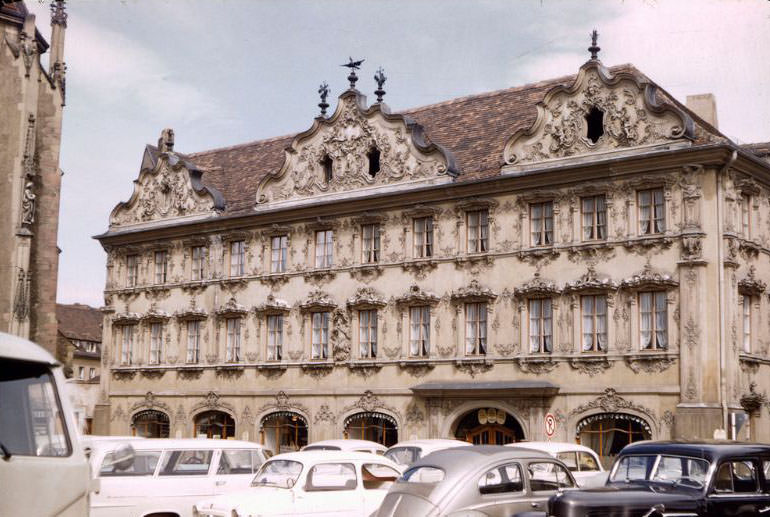
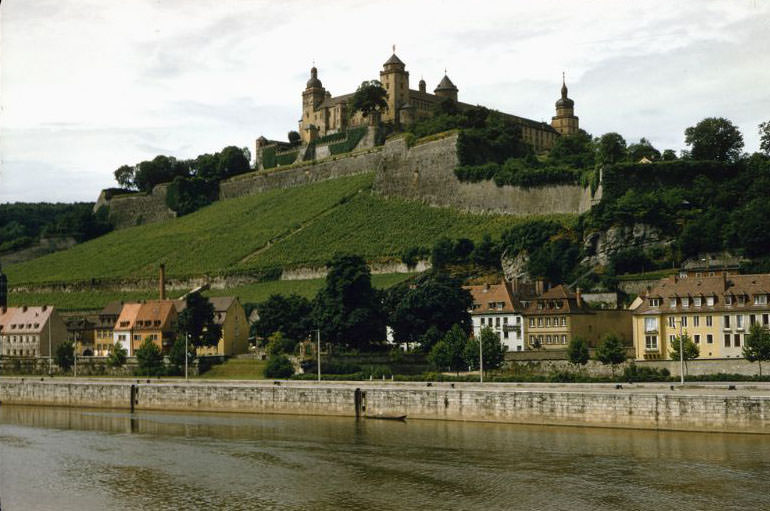
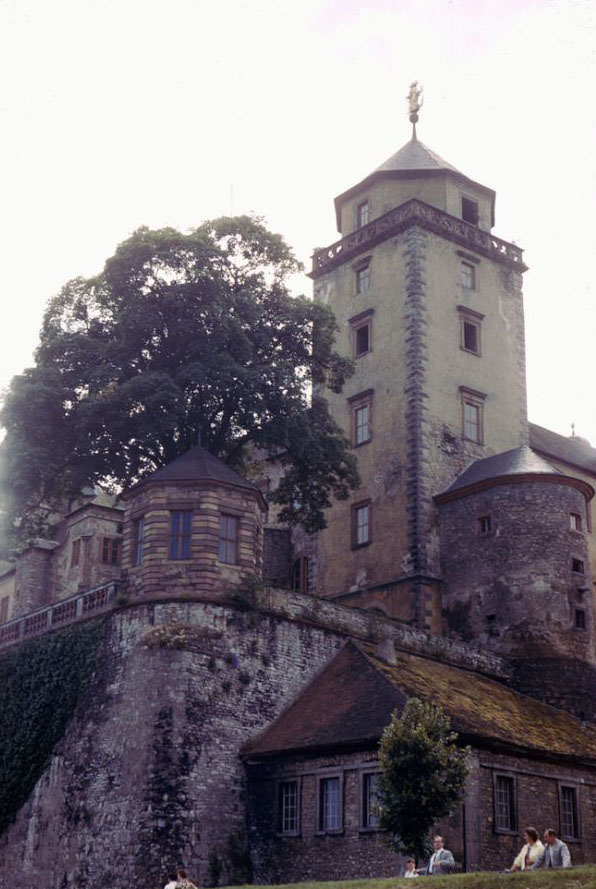
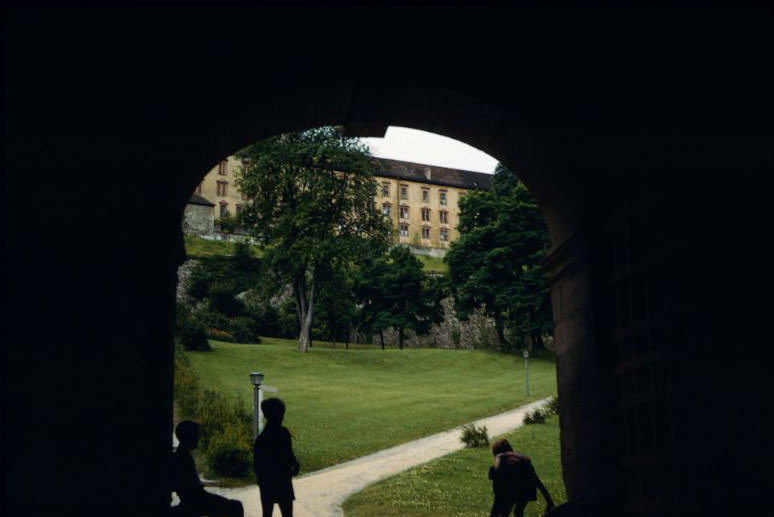
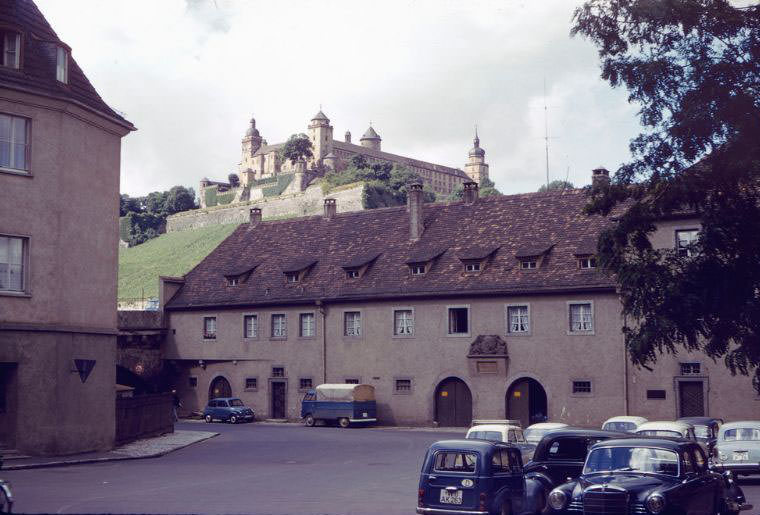
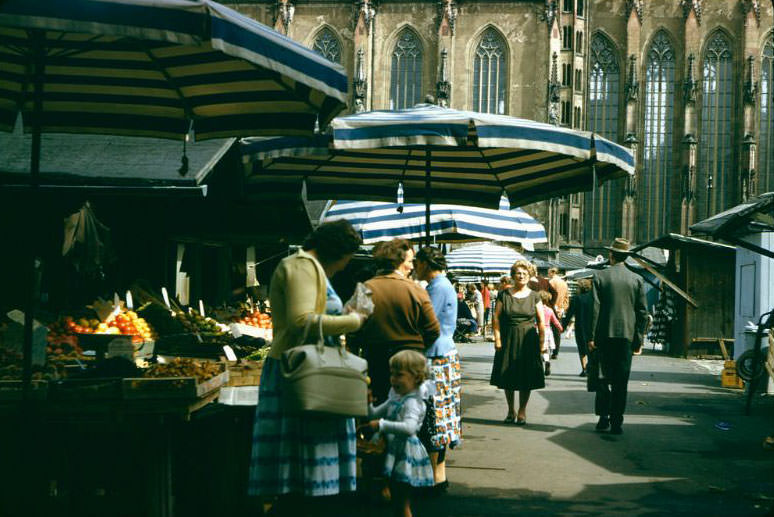
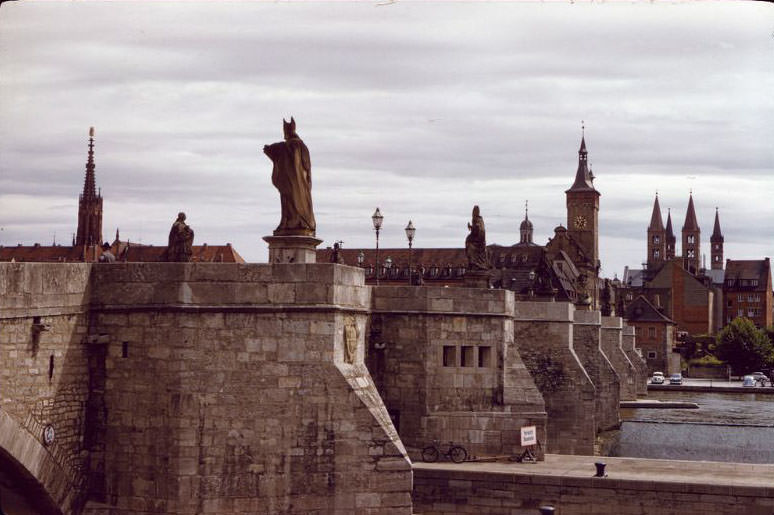
Würzburg, in northern Bavaria, was a city of considerable historical depth. Heavily bombed in March 1945 — just weeks before the war ended — it had been rebuilt through the 1950s, but landmarks like Marienberg Fortress and the Old Main Bridge had survived or been restored. The fortress, perched on a hill above the Main River, had served as the residence of the prince-bishops of Würzburg for centuries. By the 1960s, it was open to visitors and offered sweeping views of the city below. The market by the Marienkapelle, a Gothic chapel in the city center, was a hub of commercial life.
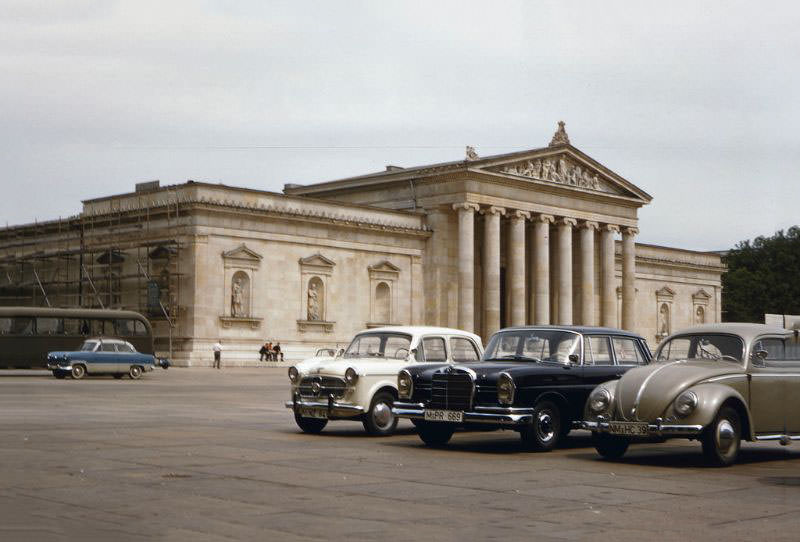
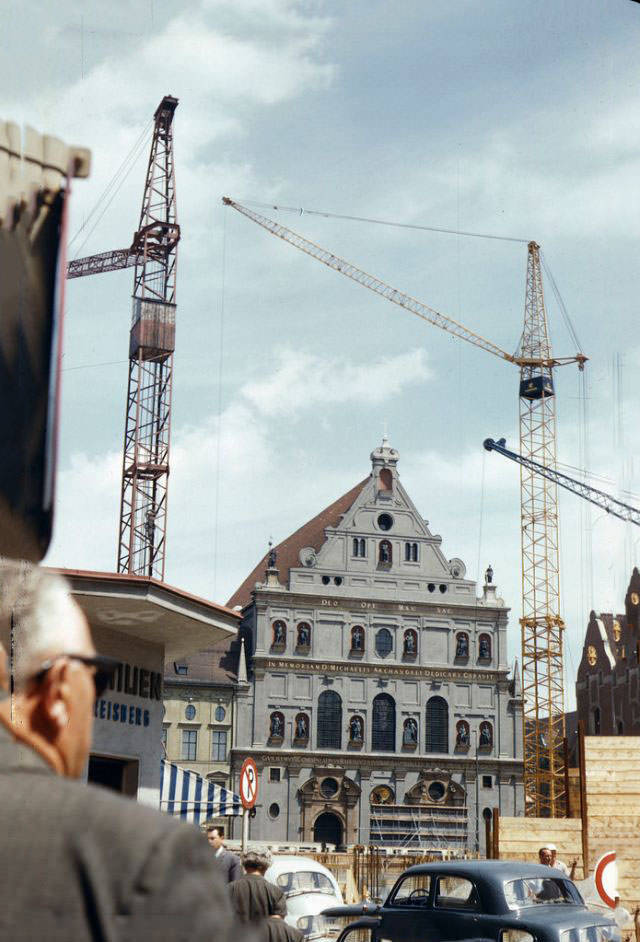
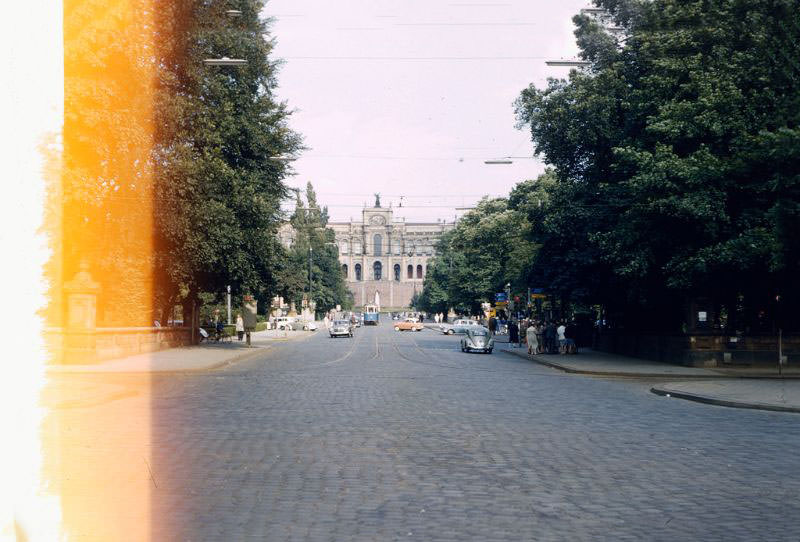
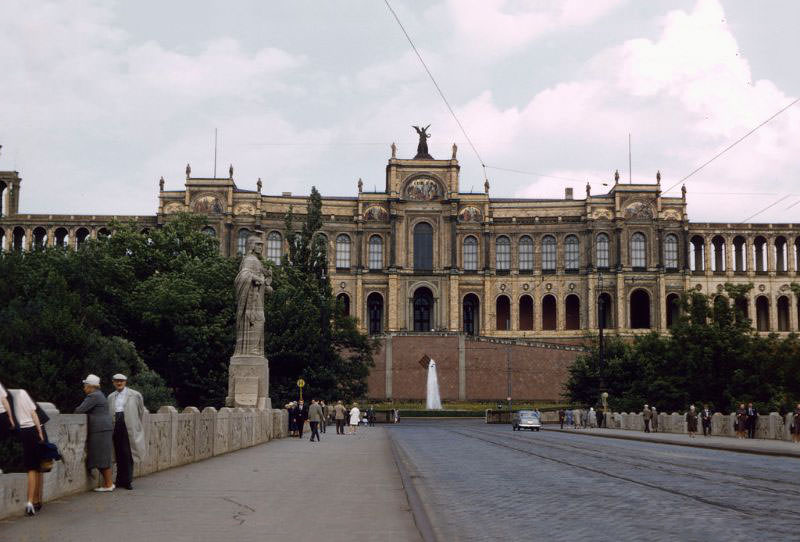
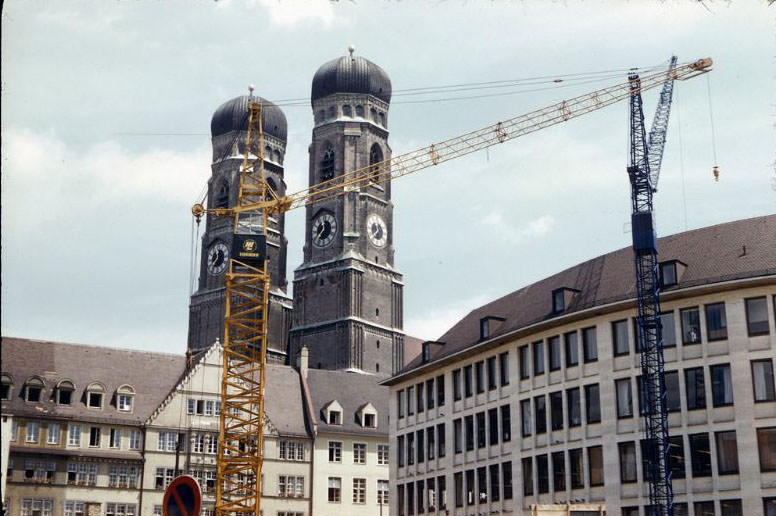
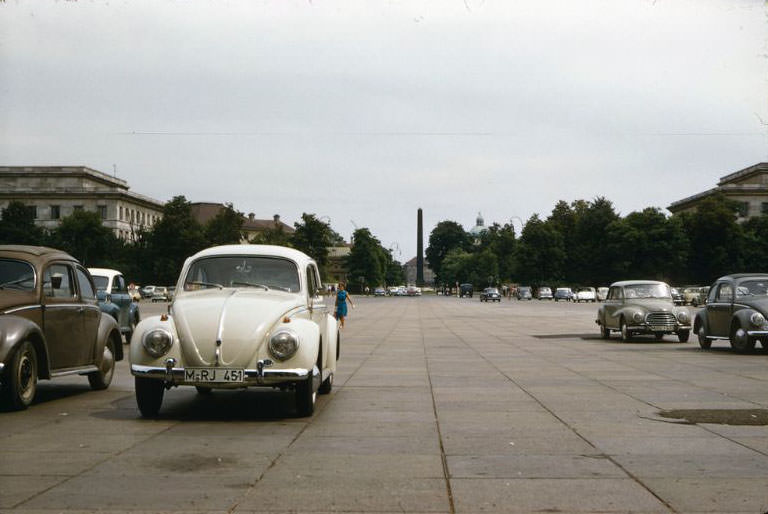
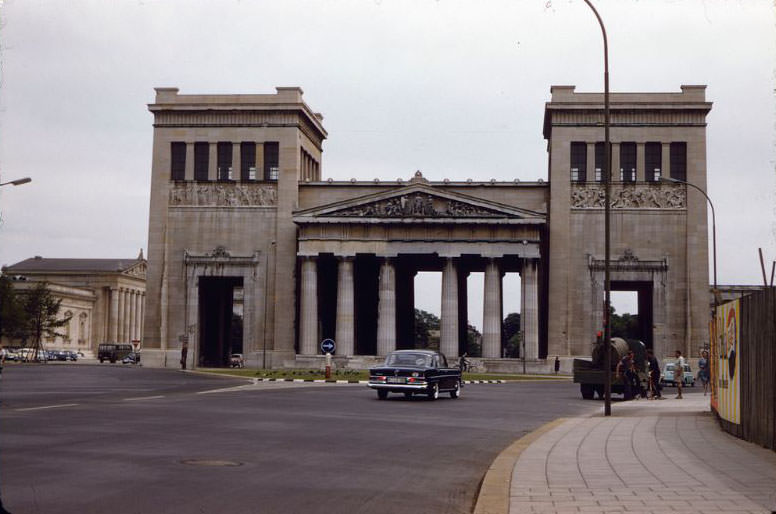
Munich was West Germany’s third-largest city and the capital of Bavaria. Its landmarks — the Frauenkirche with its distinctive twin onion domes, the Königsplatz flanked by neoclassical buildings, the Propyläen gate, the Glyptothek museum, the Maximilianeum parliament building, and the Jesuit Church of St. Michael — all gave the city a monumental character unlike anywhere else in the country.
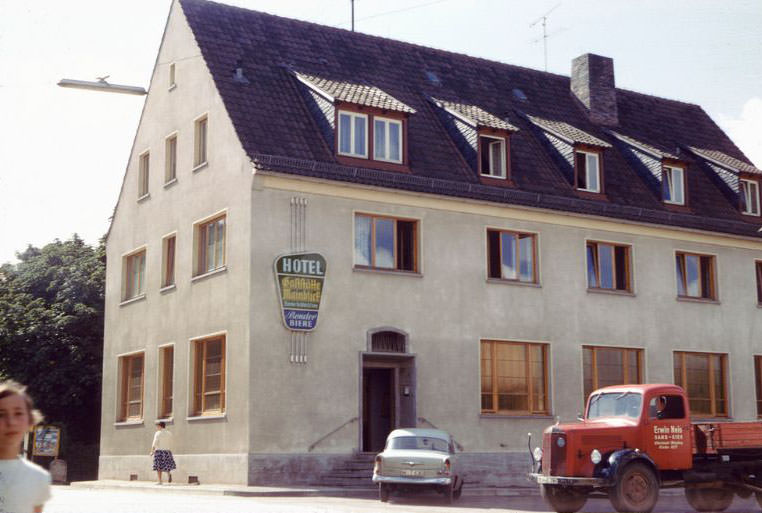
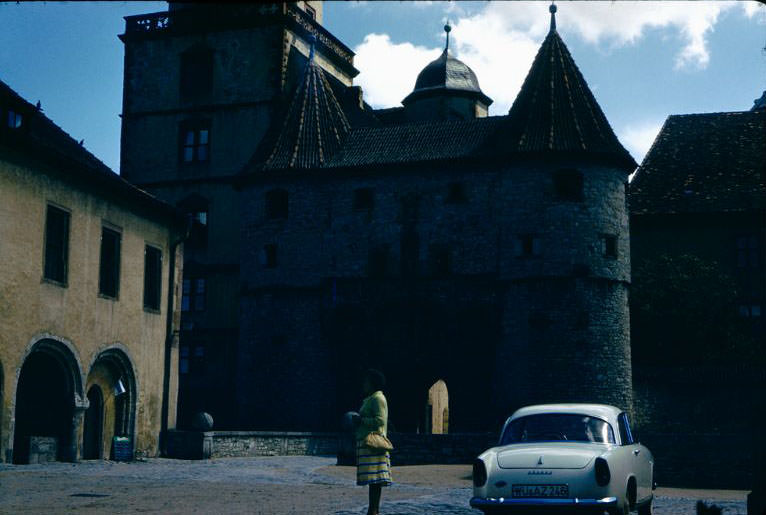
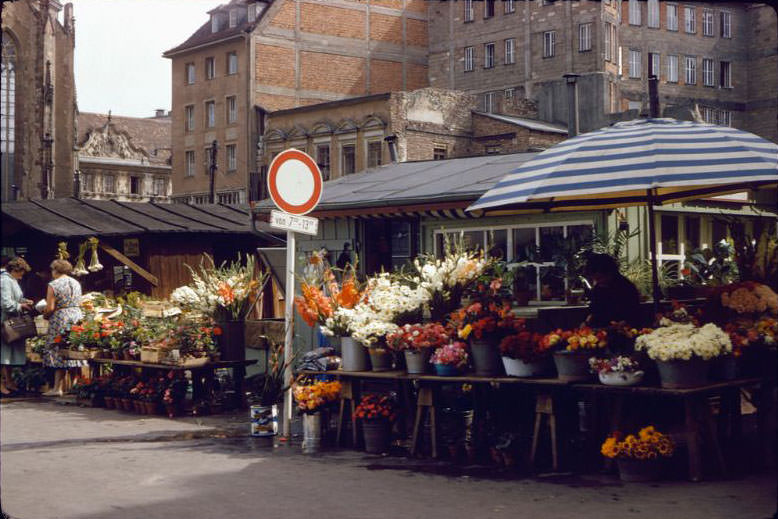
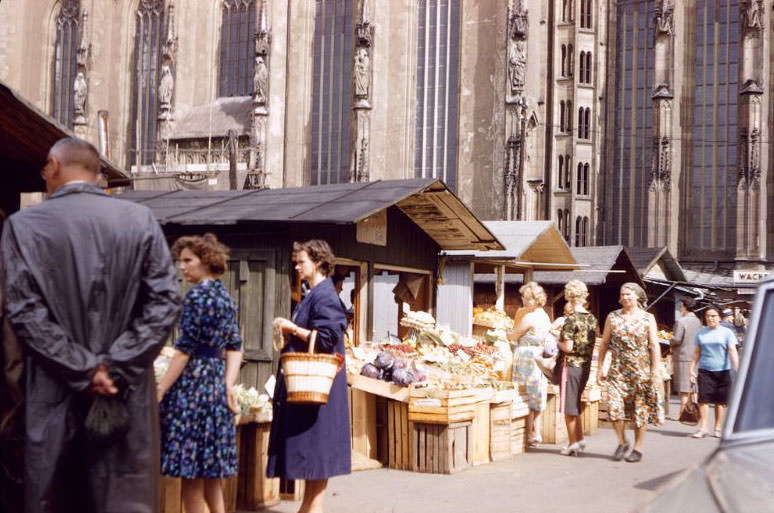
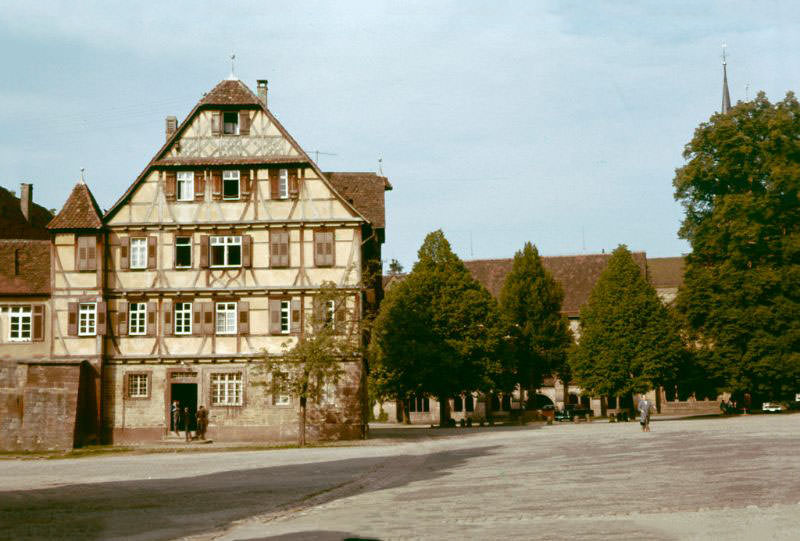
Maulbronn Abbey, in Baden-Württemberg, was one of the best-preserved medieval monasteries in all of Central Europe. Its cluster of Romanesque and Gothic buildings had been in continuous use since the 12th century, and in the 1960s, the surrounding town square still bore the quiet, orderly character of a settlement that had grown up around religious life.
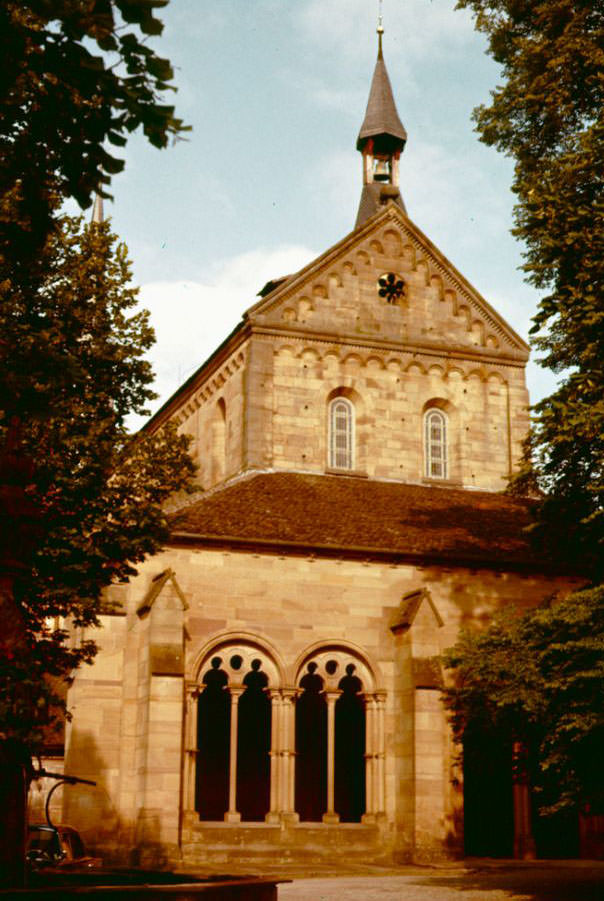
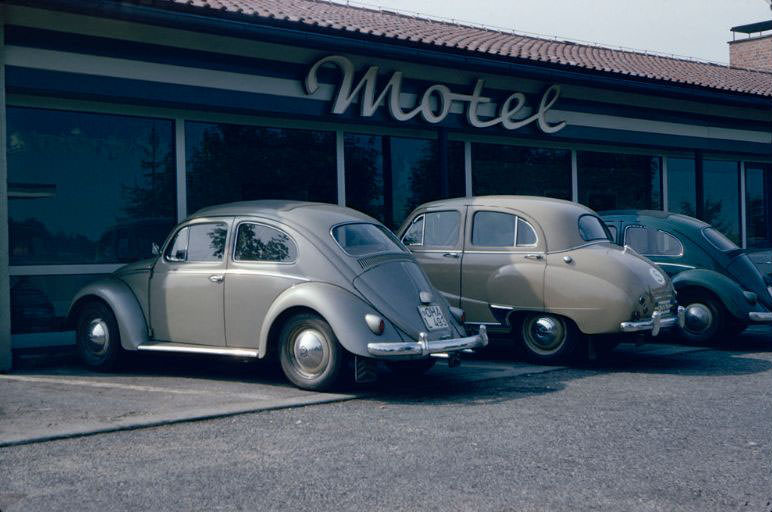
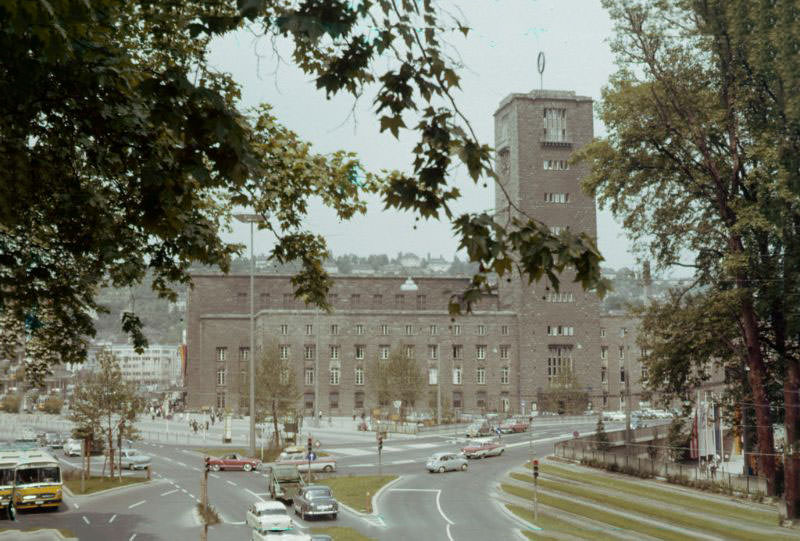
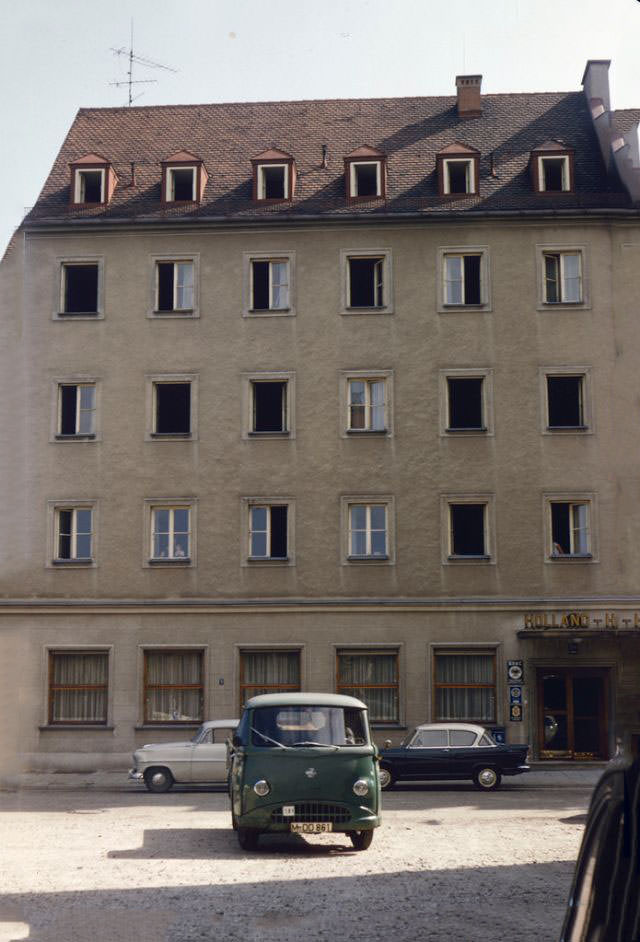
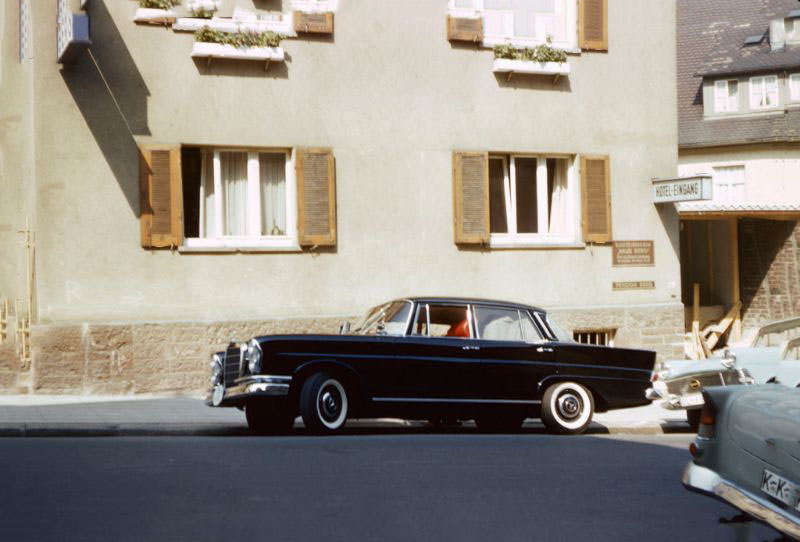
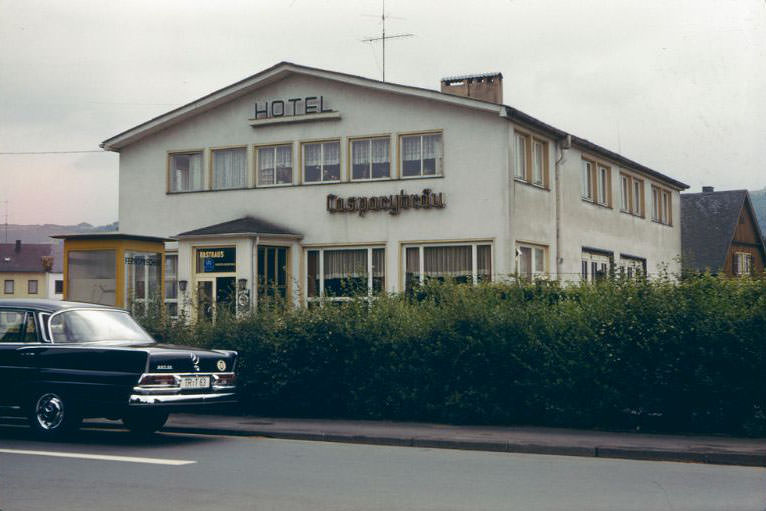
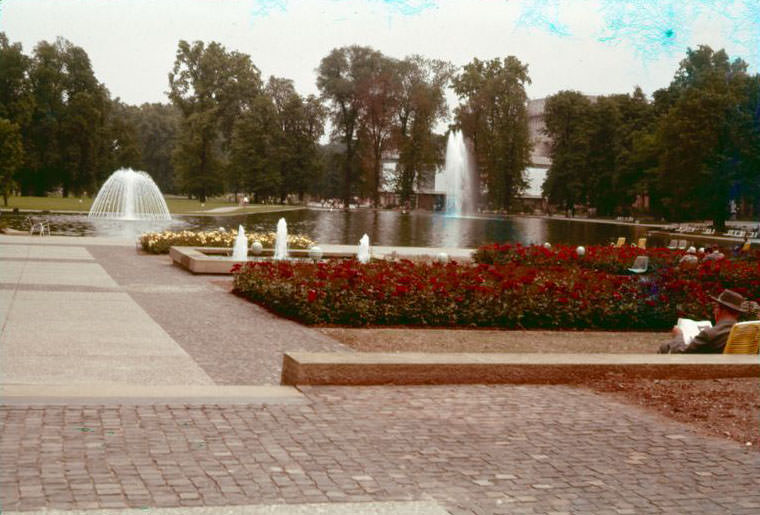
Stuttgart, the capital of Baden-Württemberg and home to Mercedes-Benz and Porsche, was one of West Germany’s wealthiest cities. Its central station, parks, and streets in the 1960s reflected a city with money and ambition. A Mercedes 220 parked in front of Haus Berg, a Stuttgart hotel, was a fitting symbol of the city’s character.
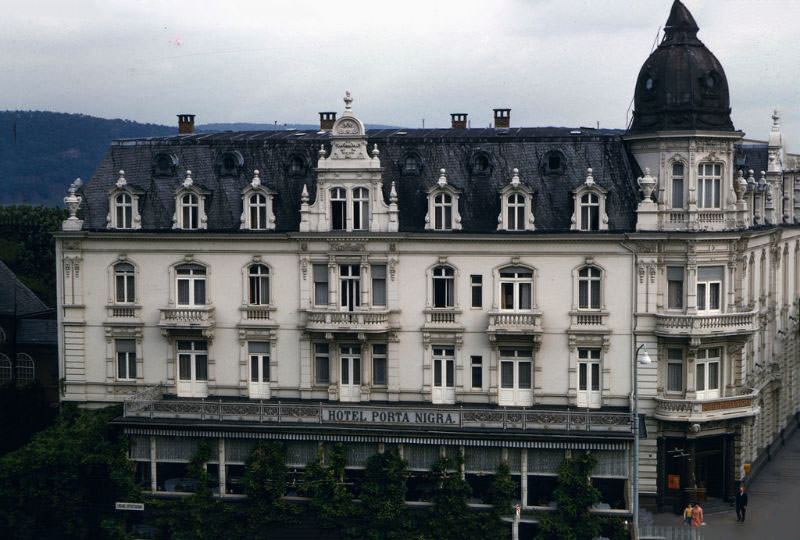
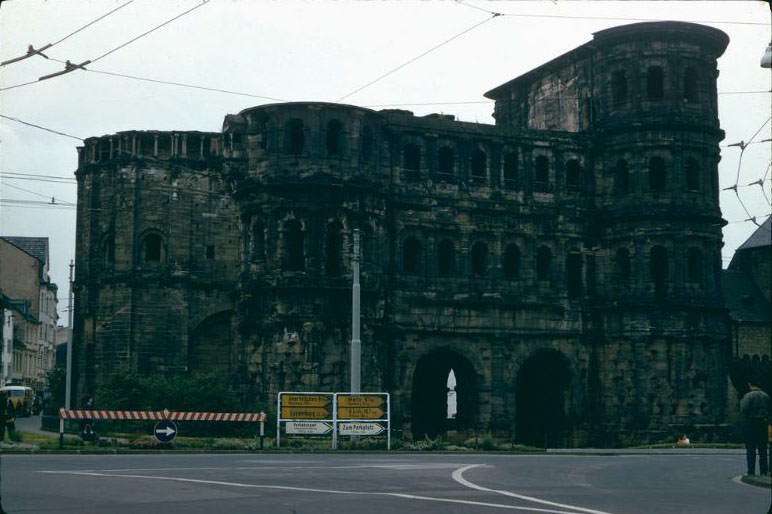
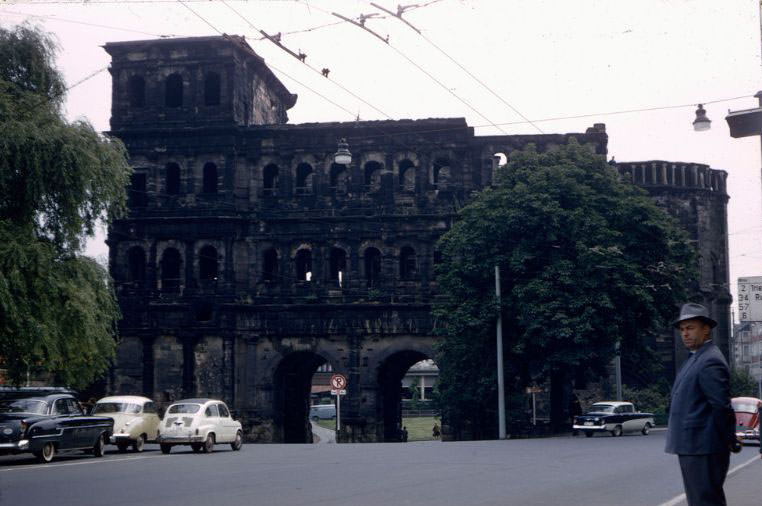
Trier, in the far west of West Germany near the border with Luxembourg, was home to some of the most significant Roman ruins north of the Alps. The Porta Nigra — a massive Roman gate built in the 2nd century AD — dominated the northern entrance to the old city and drew visitors from across the country and beyond.
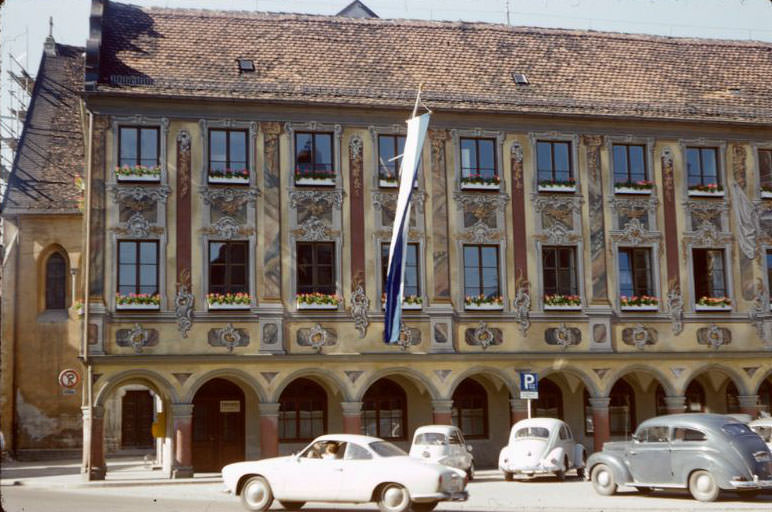
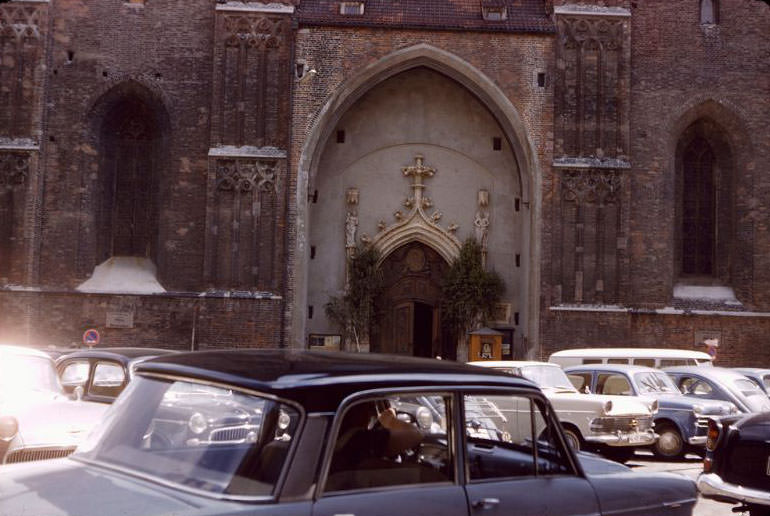
Memmingen, in Swabia, was another of Bavaria’s well-preserved historic towns. The Steuerhaus — a late Gothic building that once served as the town’s tax office — anchored its central square, and the surrounding streets gave a clear sense of what a mid-sized Bavarian town looked like in the 1960s.