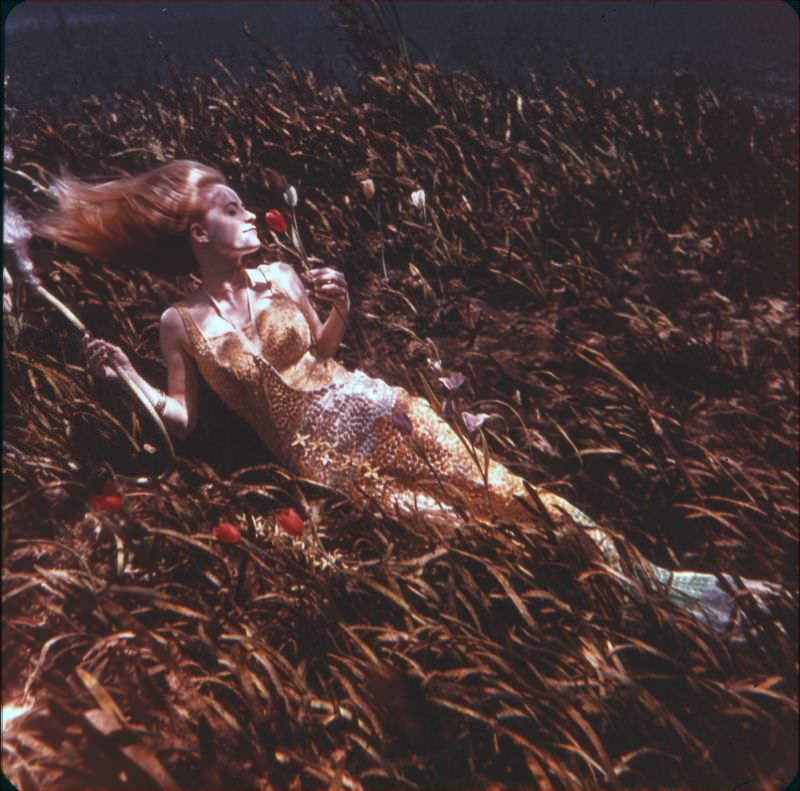
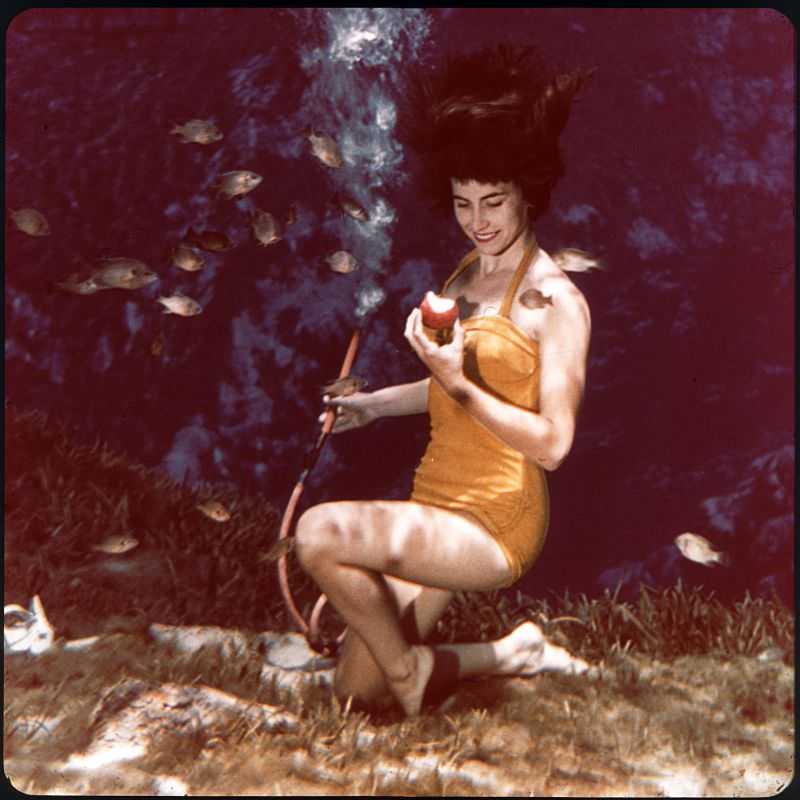
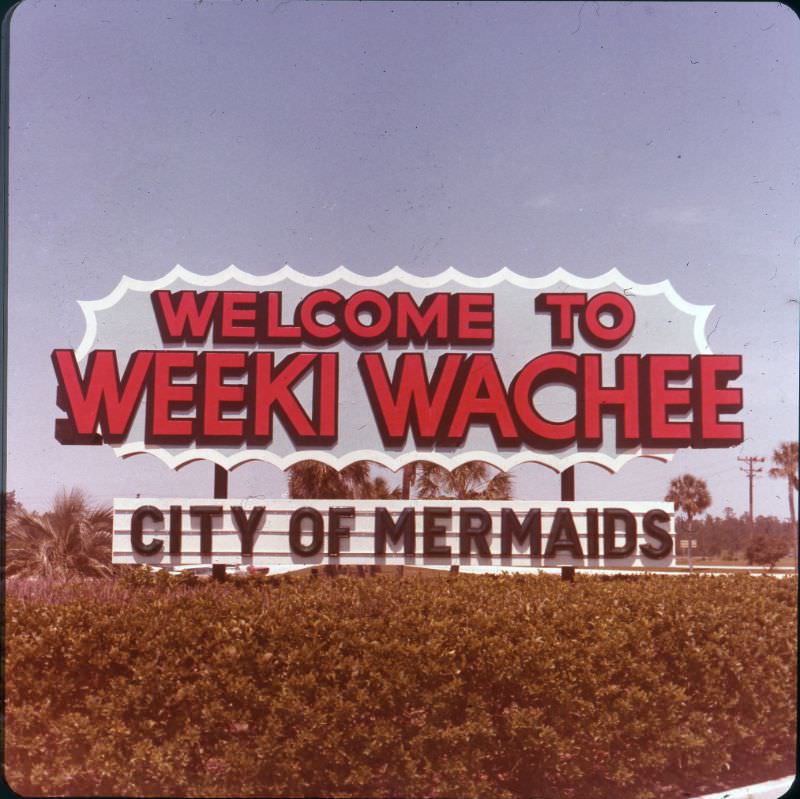
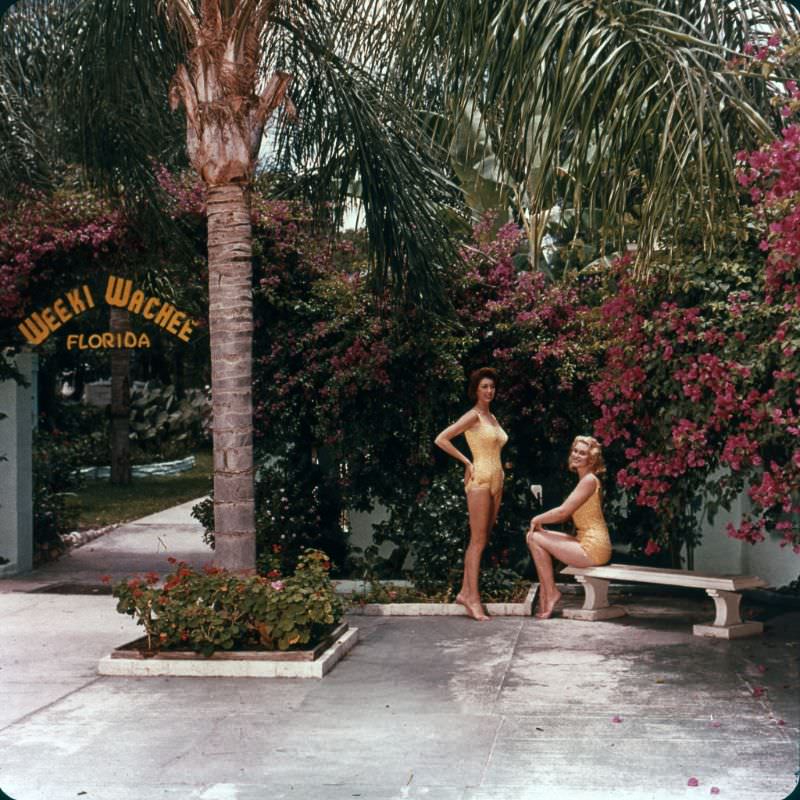
Weeki Wachee Springs sits in Weeki Wachee, Florida, and has drawn crowds since 1947. Former Navy swimmer and showman Newt Perry founded it, turning a natural freshwater spring into one of the most unusual roadside attractions in American history. From the very beginning, the heart of the place was its mermaid show — and by the 1970s, it had grown into a full-scale underwater spectacle.
The spring pumps out around 117 million gallons of water per day, keeping the water crystal clear and a steady 74°F year-round. That clarity was essential. Audiences sat in a 400-seat underwater theater, separated from the performers by nothing more than a large plate-glass window. The water was so transparent that every move the mermaids made was visible in sharp detail.
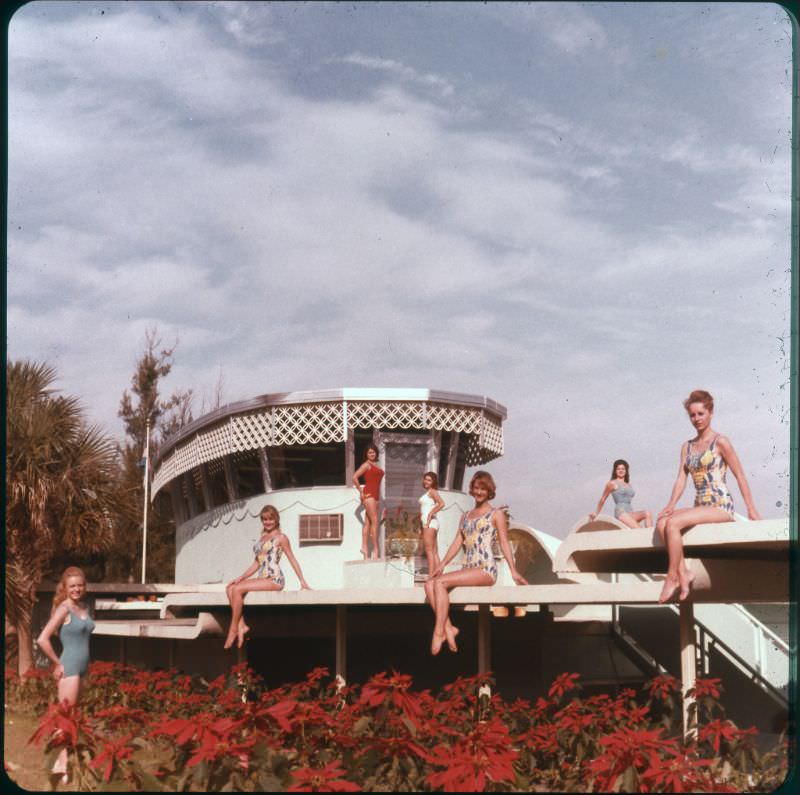
The shows were carefully choreographed and demanded serious athletic ability. Performers wore fitted fishtail costumes and stylish outfits designed to look striking underwater. They trained to breathe from air hoses fed through the spring floor, which let them stay submerged for long stretches while still smiling, waving, and executing complex routines. The 1970s shows featured themed performances, including one called ‘What the World Needs Now,’ which matched synchronized underwater movement to popular music of the era.
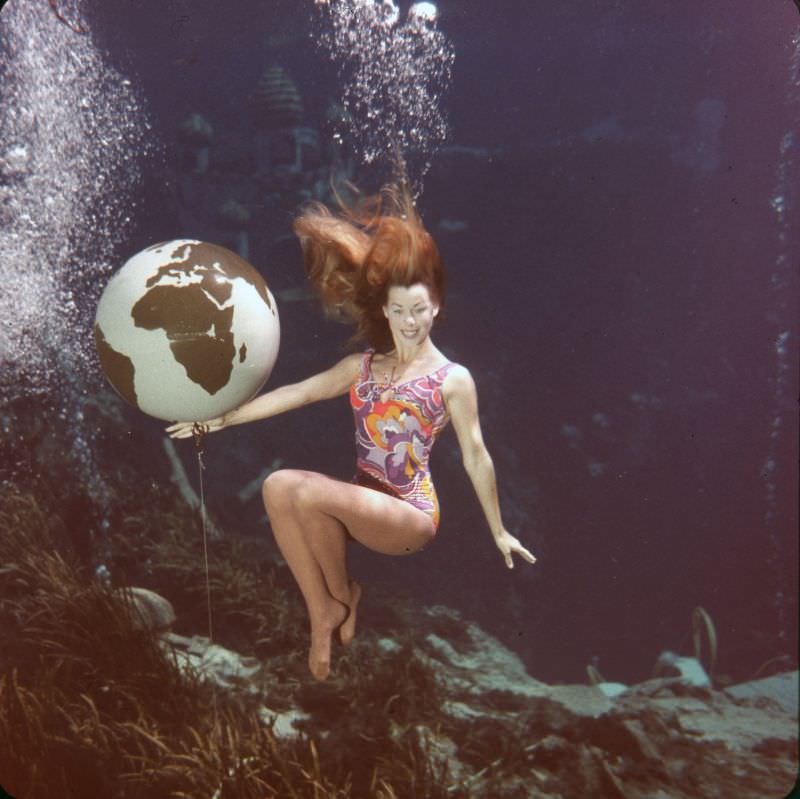
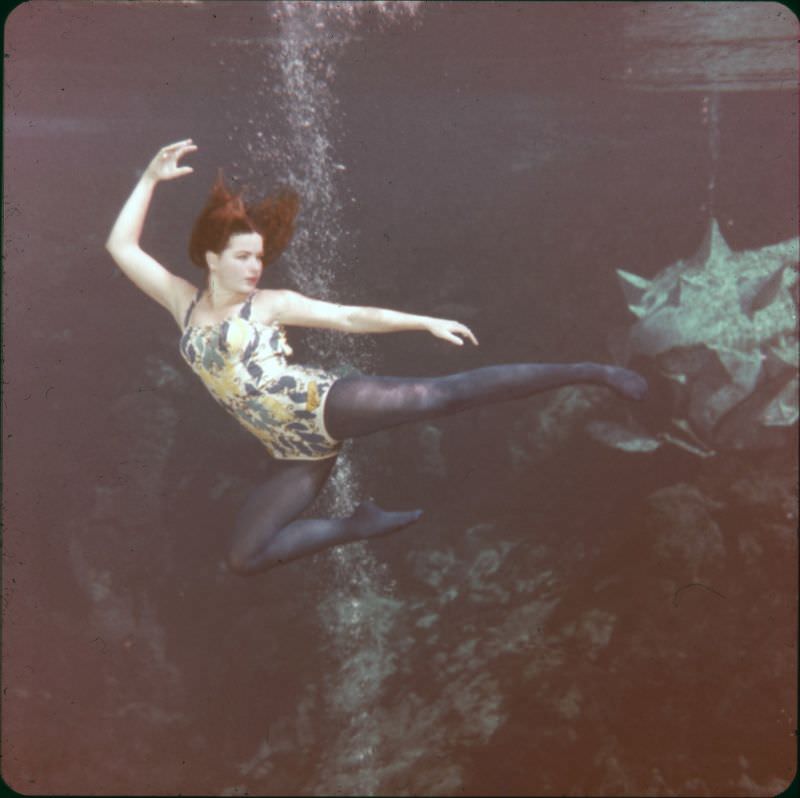
Individual routines had names that described exactly what the performer was doing. The ‘Double Pin Wheel’ involved two mermaids spinning in a coordinated circular motion beneath the surface. The ‘Double Pussycat’ was a paired act requiring tight timing between two swimmers. Each routine was rehearsed to look effortless, even though performing at depth — while smiling for an audience through glass — required considerable discipline.
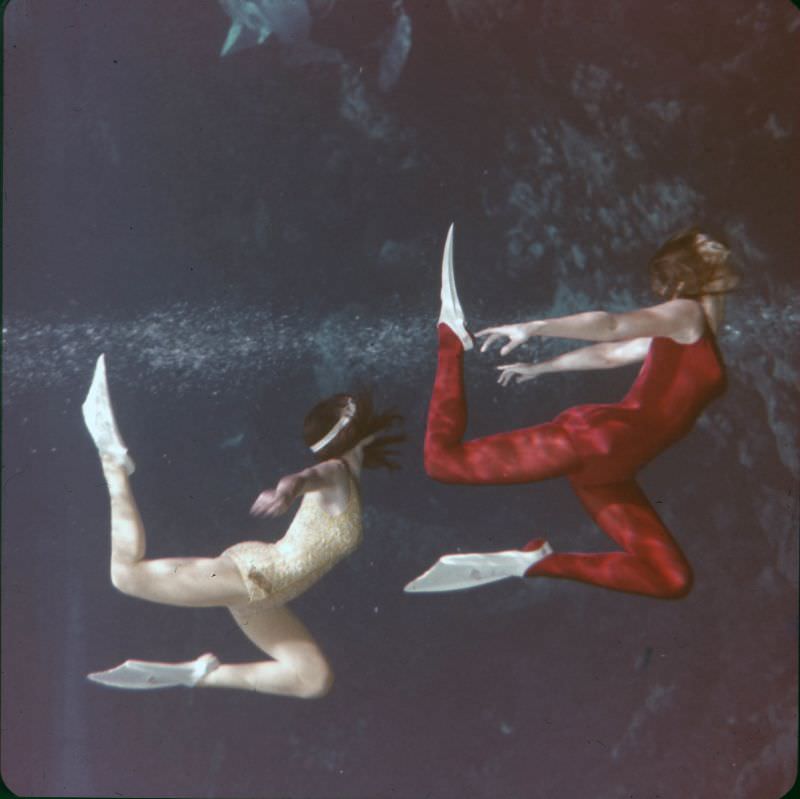
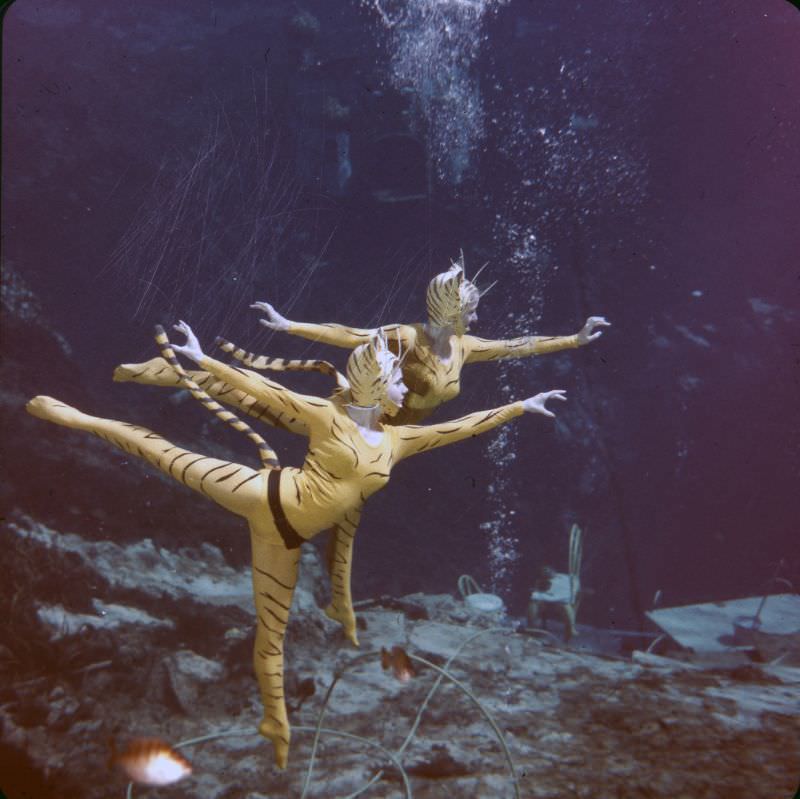
Ballet-style sequences were a staple of the shows. Performers executed slow, sweeping movements that the buoyancy of the water made possible in ways no stage performance could replicate. The ‘Graceful Ballet’ segment highlighted this, with mermaids moving through arcs and extensions that would be impossible on land.
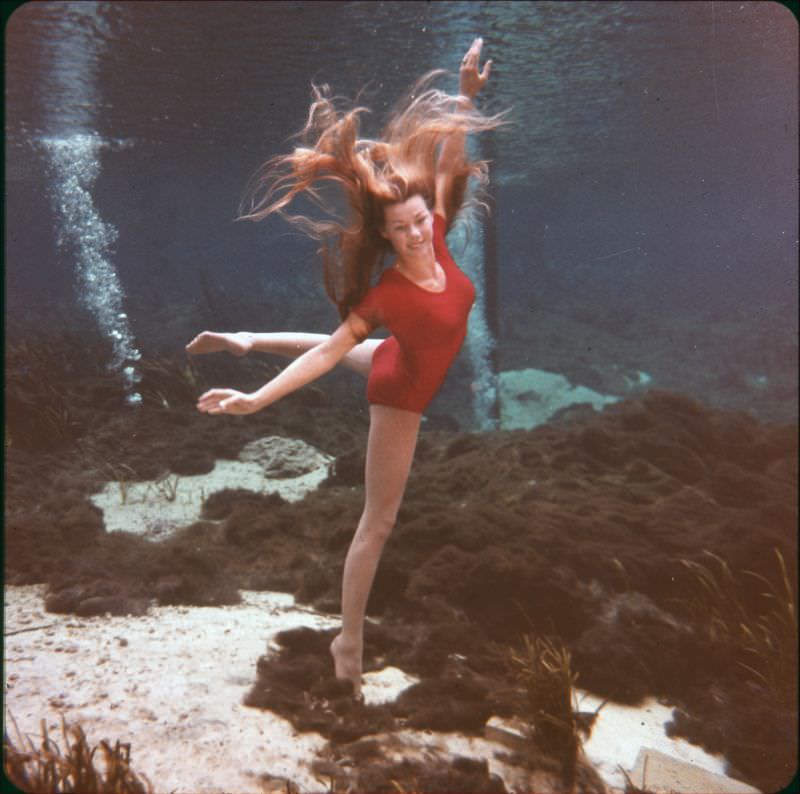
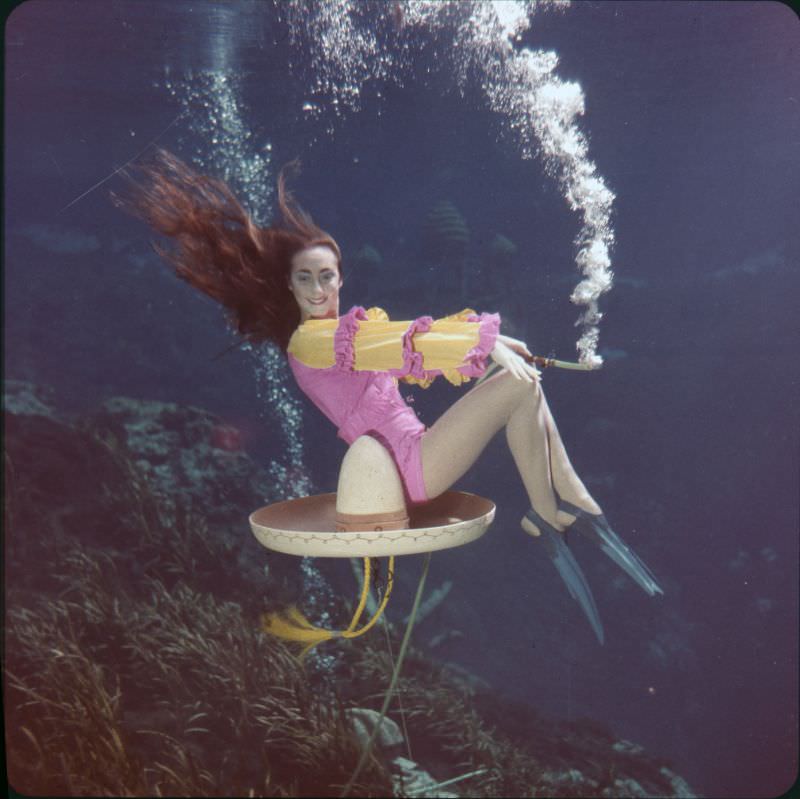
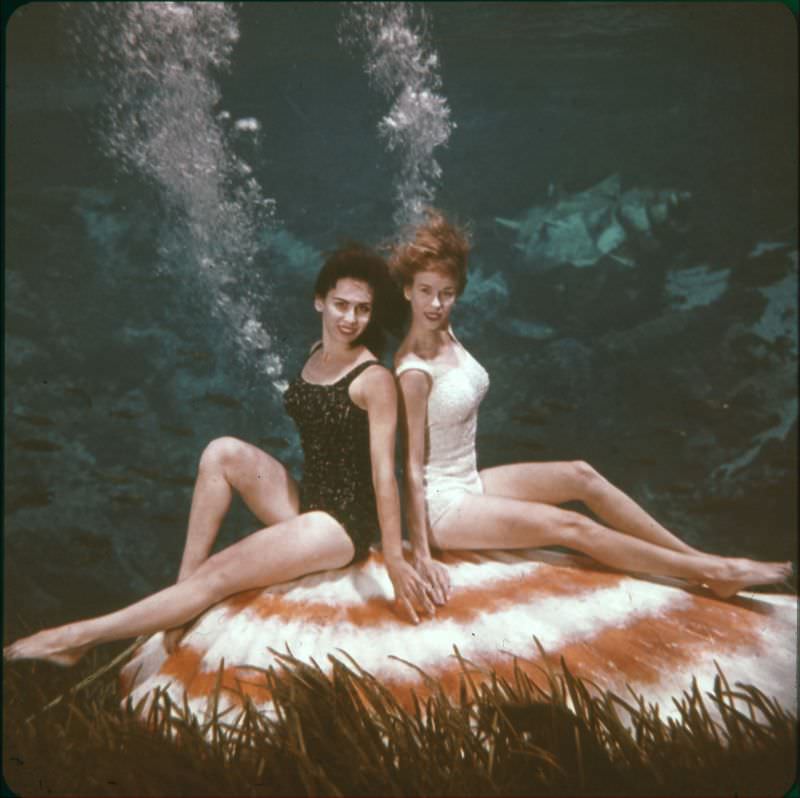
Props played a big role in making the shows visually dramatic. One well-known act featured performers posed on a giant clamshell — a direct nod to classic mermaid imagery. Others involved comedy-style skits, where a mermaid character would appear to apply makeup underwater, playing up the fantasy for the audience on the other side of the glass.
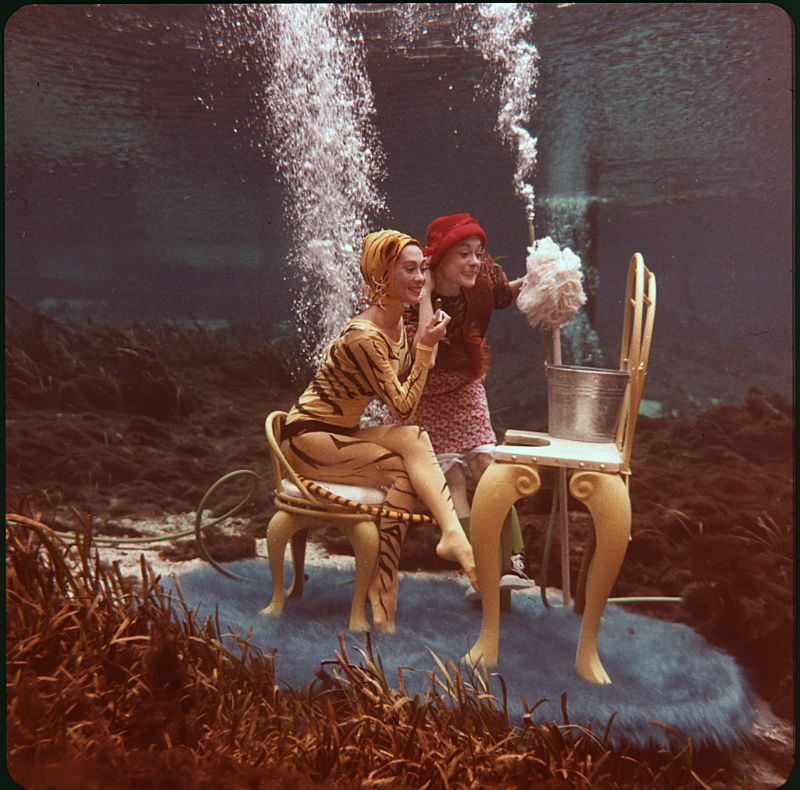
Some acts leaned into pure absurdist humor. The ‘Sunbathing Underwater’ routine had a performer stretched out as though lounging on a beach — but fully submerged, surrounded by bubbles and fish. It was exactly the kind of playful, tongue-in-cheek staging that made Weeki Wachee stand apart from more conventional tourist attractions of the decade.