Washington, D.C., was not born from an existing city. It was purpose-built as the seat of the new American government, authorized by Congress on July 16, 1790. From the very start, it was meant to be something different — a capital city belonging to no single state, answering to the nation as a whole. The man responsible for its layout was Pierre Charles L’Enfant, a French-born engineer who had served in the Continental Army. On April 4, 1791, he requested maps of London, Madrid, Paris, Amsterdam, Naples, Venice, and Florence from Thomas Jefferson to draw inspiration for the new city’s design. What he produced was a sweeping plan of wide diagonal avenues, public parks, and designated sites for the President’s House and the Capitol building.
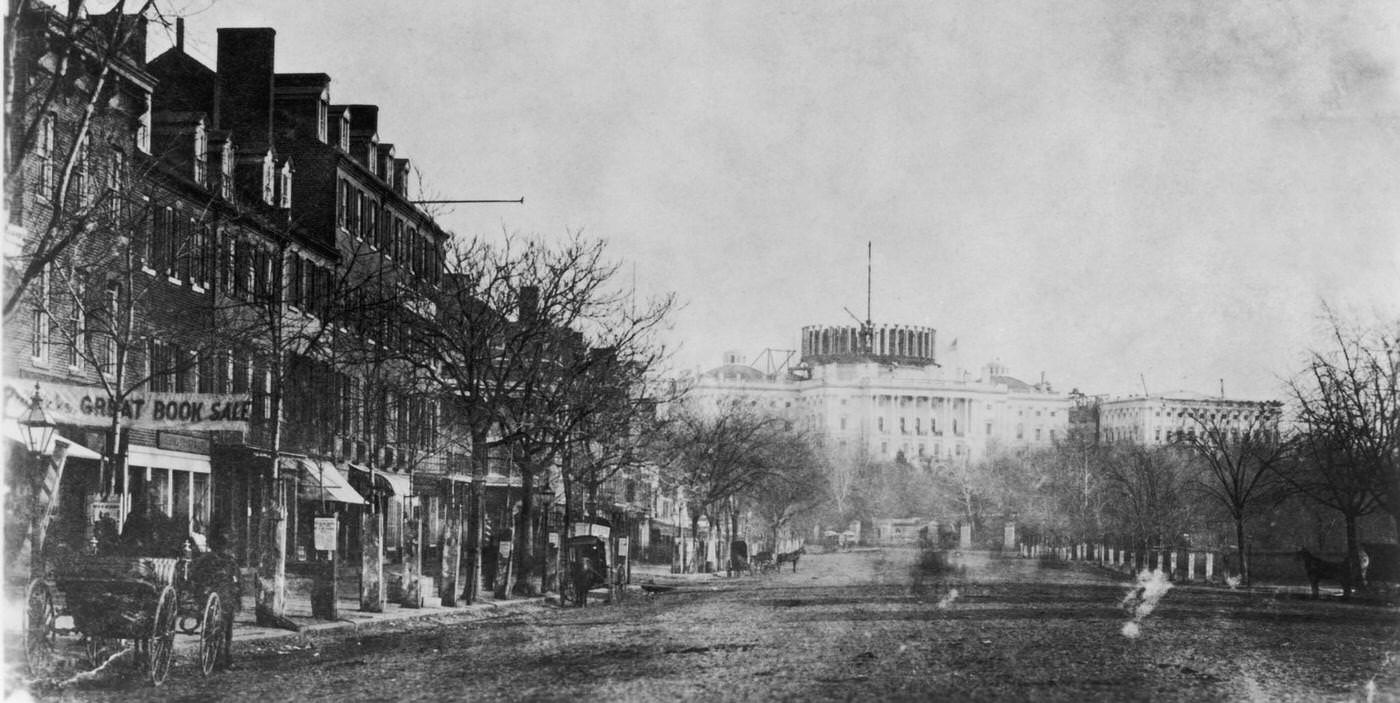
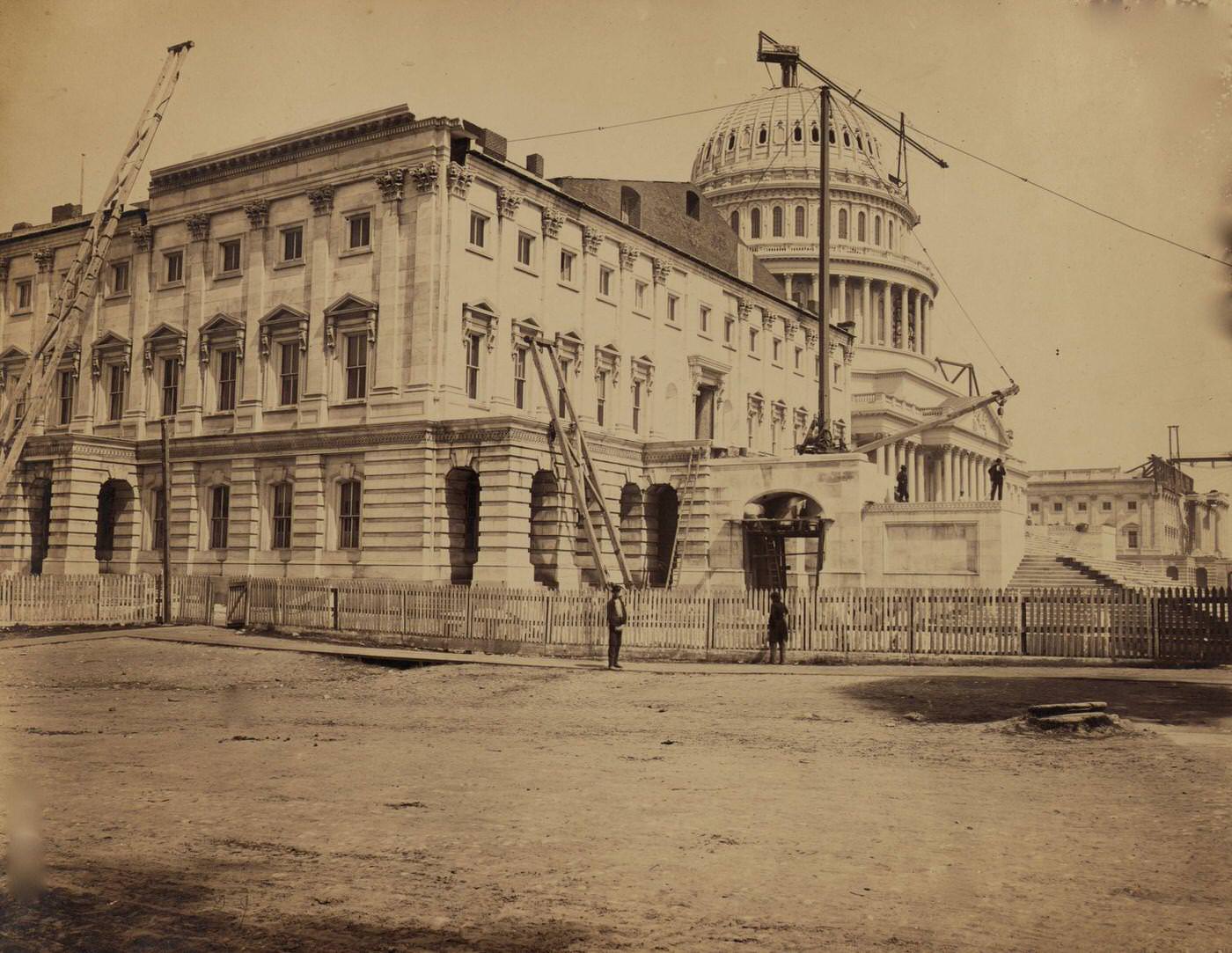
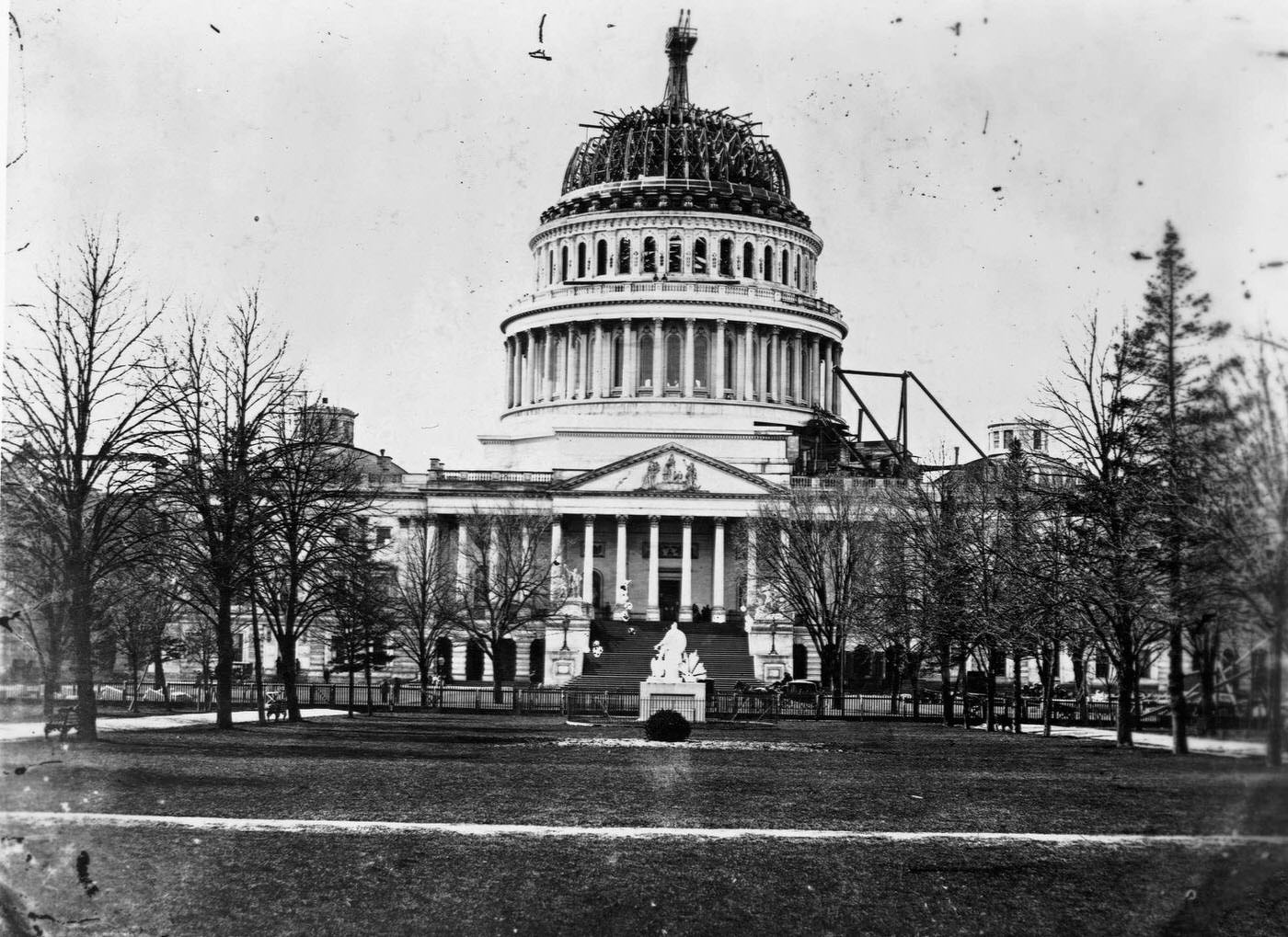
The United States Capitol Building under construction, viewed from Pennsylvania Avenue, Washington DC, 1860.
When Congress relocated from Philadelphia to Washington in December 1800, the Capitol, the presidential palace, and a handful of government buildings were nearly finished. But the city around them was sparse. There were few completed homes, rough roads, and almost no amenities. The early residents found life in the new capital genuinely uncomfortable. That began to change in the 1830s. Andrew Jackson’s arrival in 1829 brought with him a wave of new civil servants under the “spoils system,” which shifted the social character of the city and expanded its workforce. Still, Washington faced real problems — a shaky local economy, silt building up in the Potomac River, repeated delays on the Chesapeake and Ohio Canal, and outbreaks of disease. By 1860, the city was still very much a work in progress.
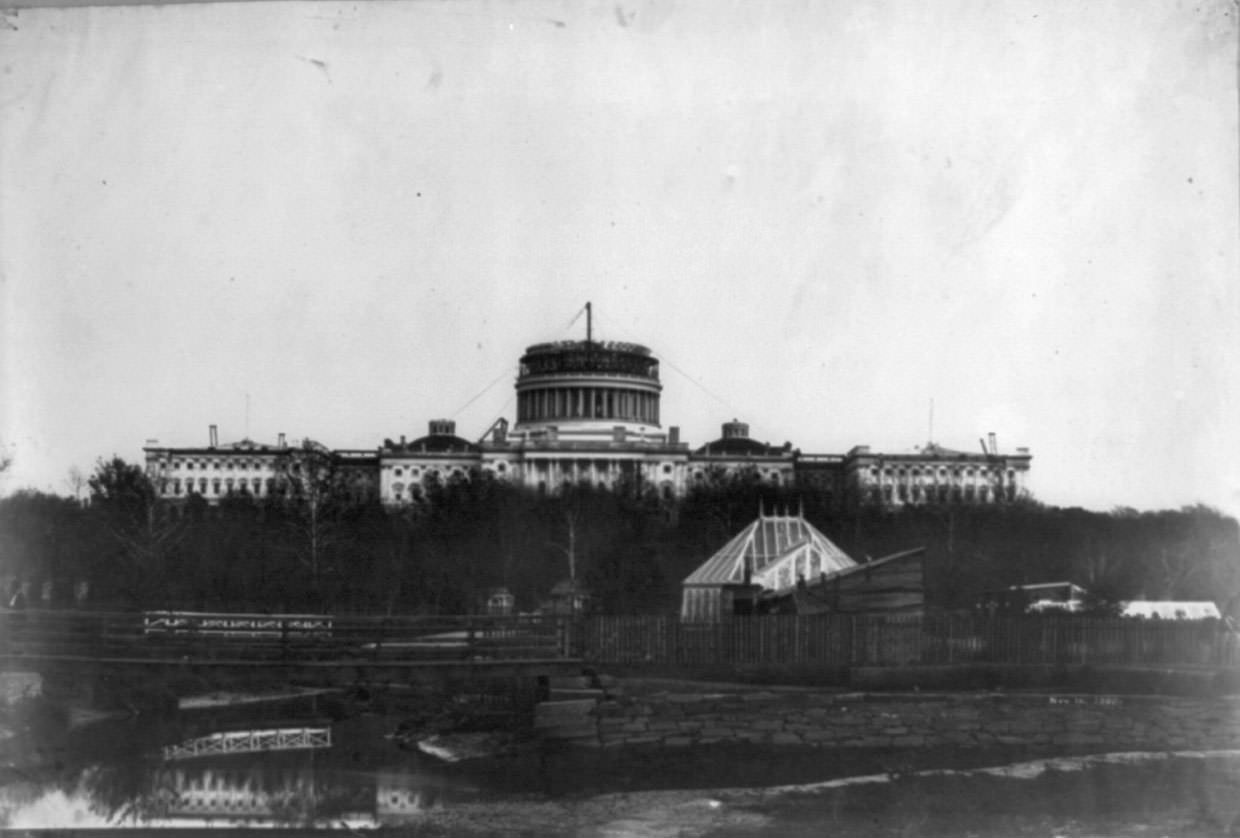
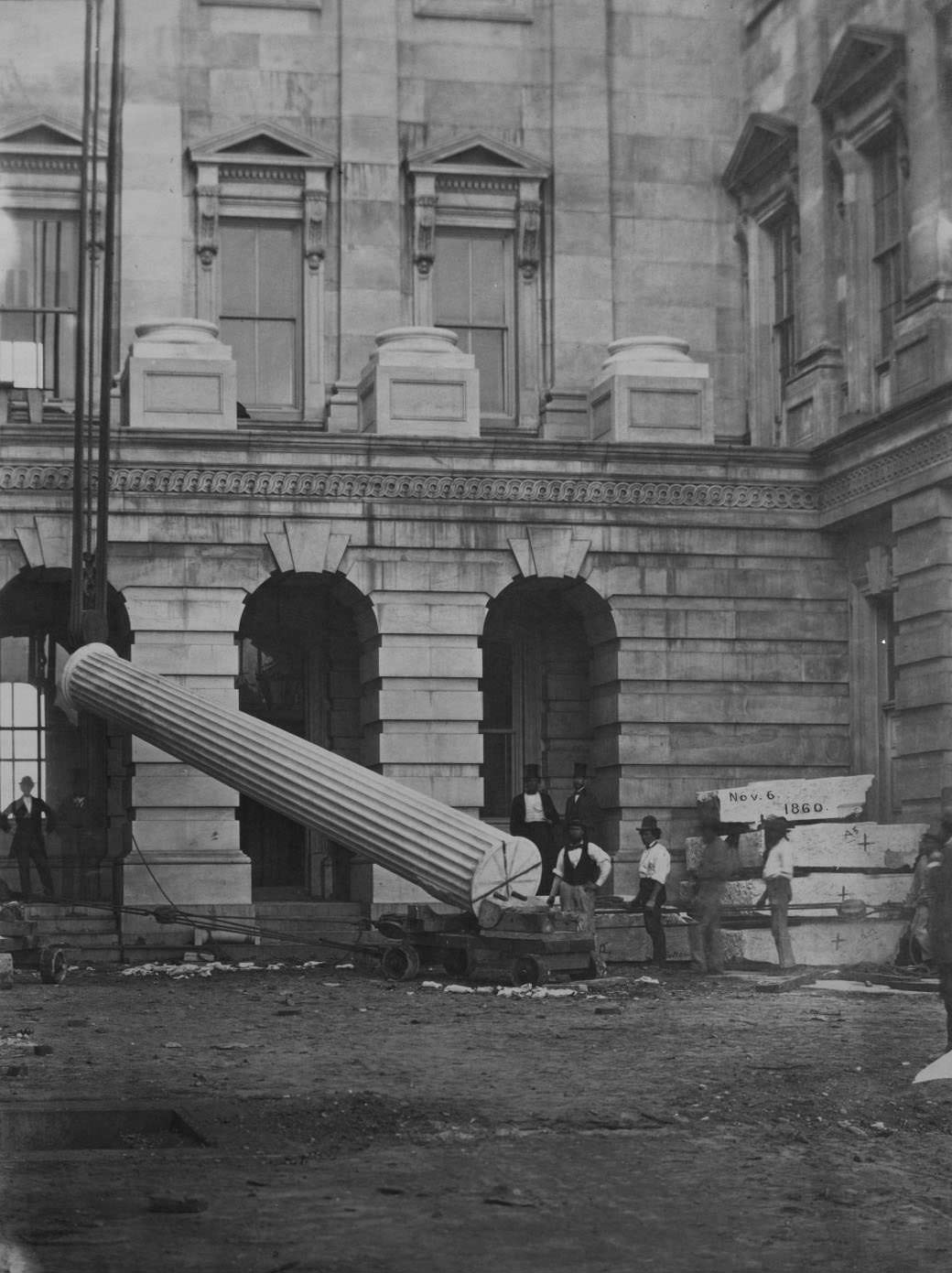
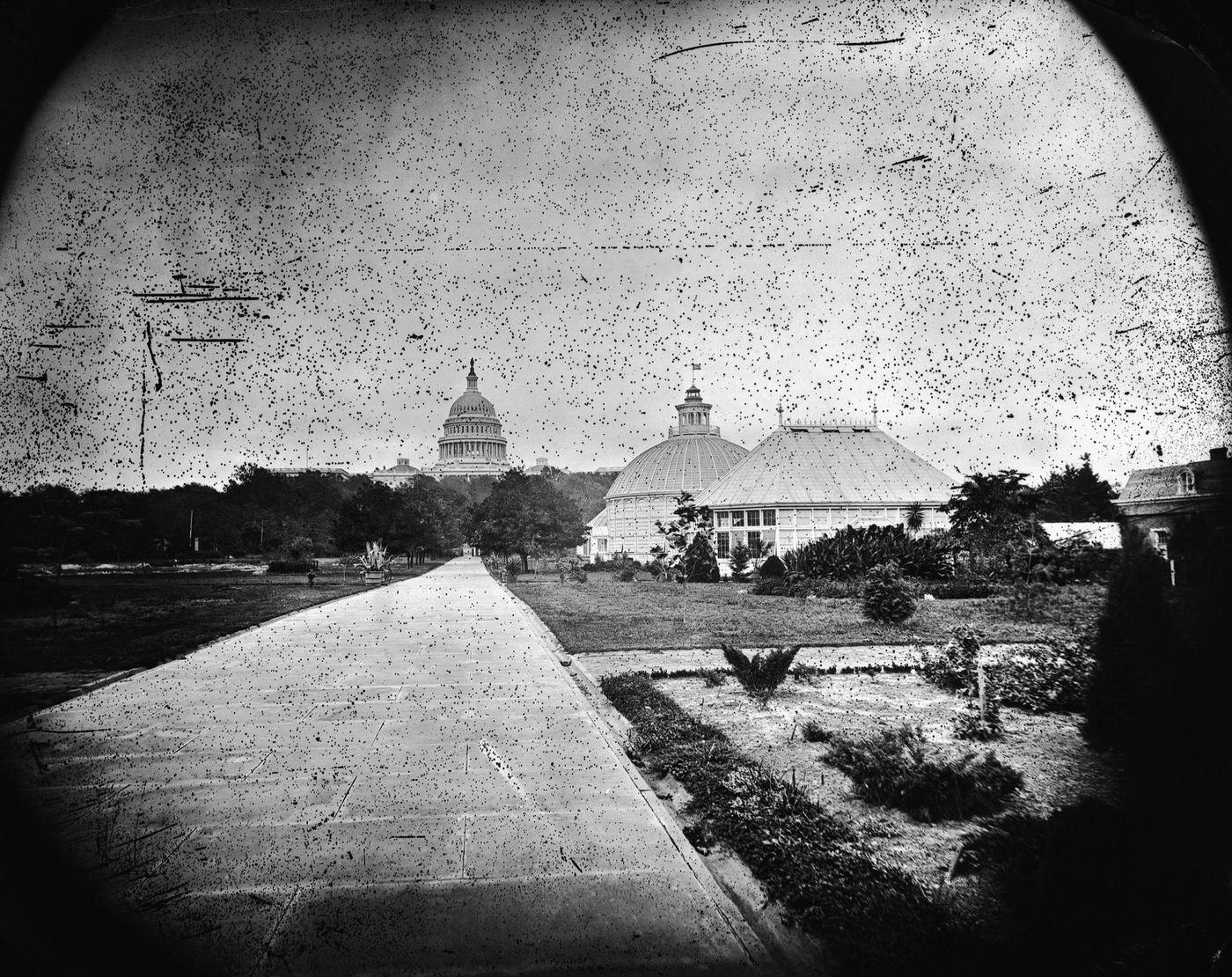
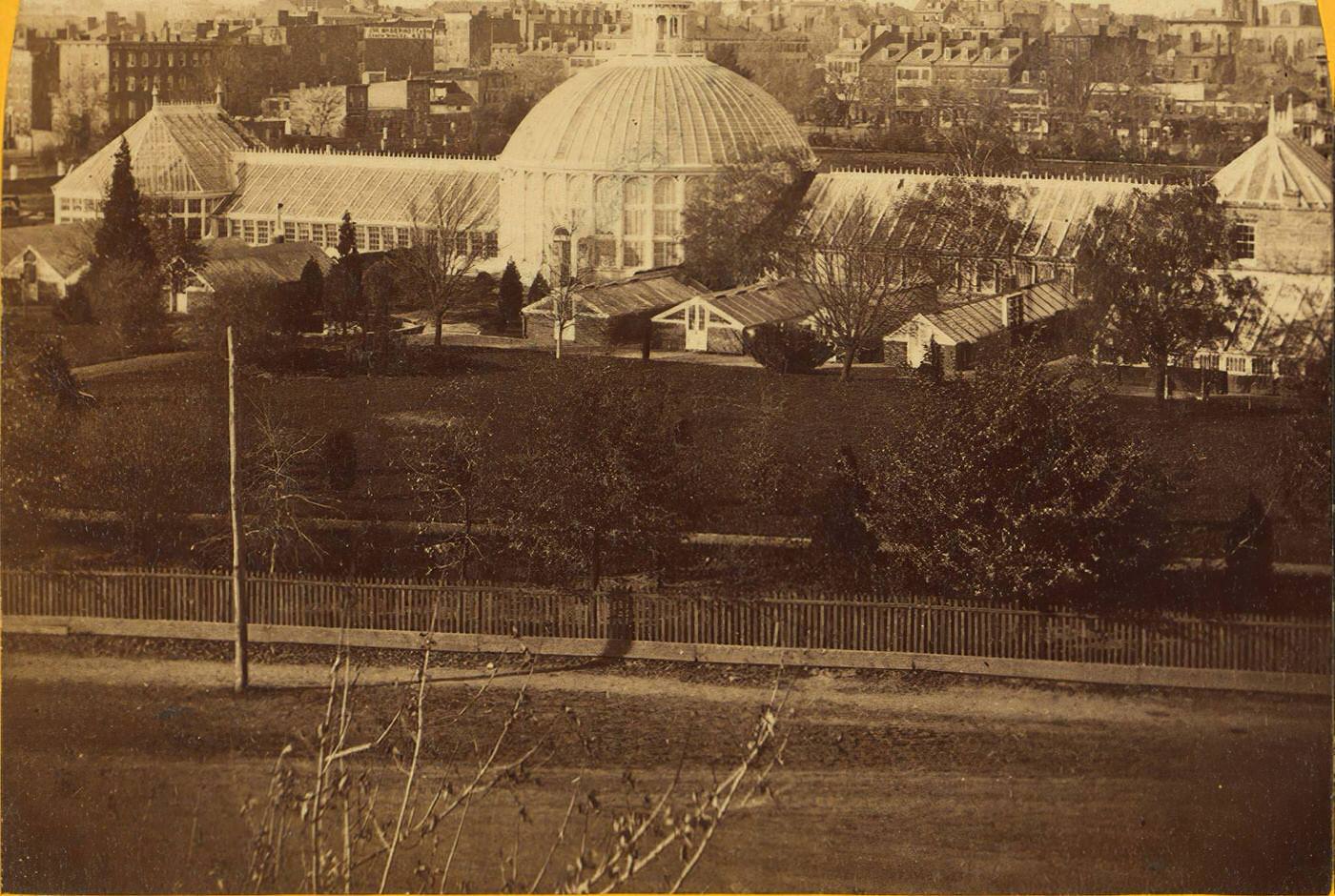
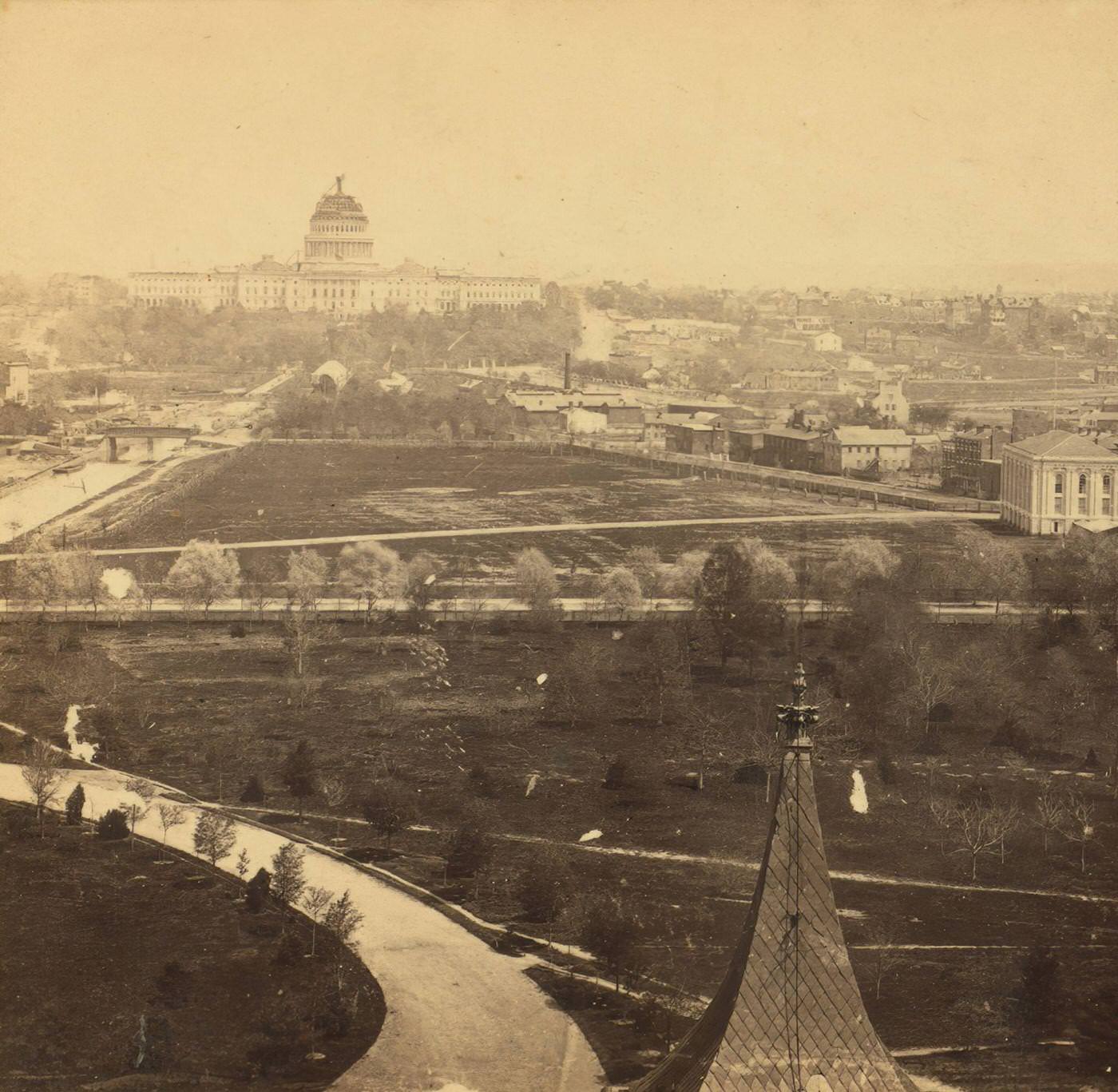
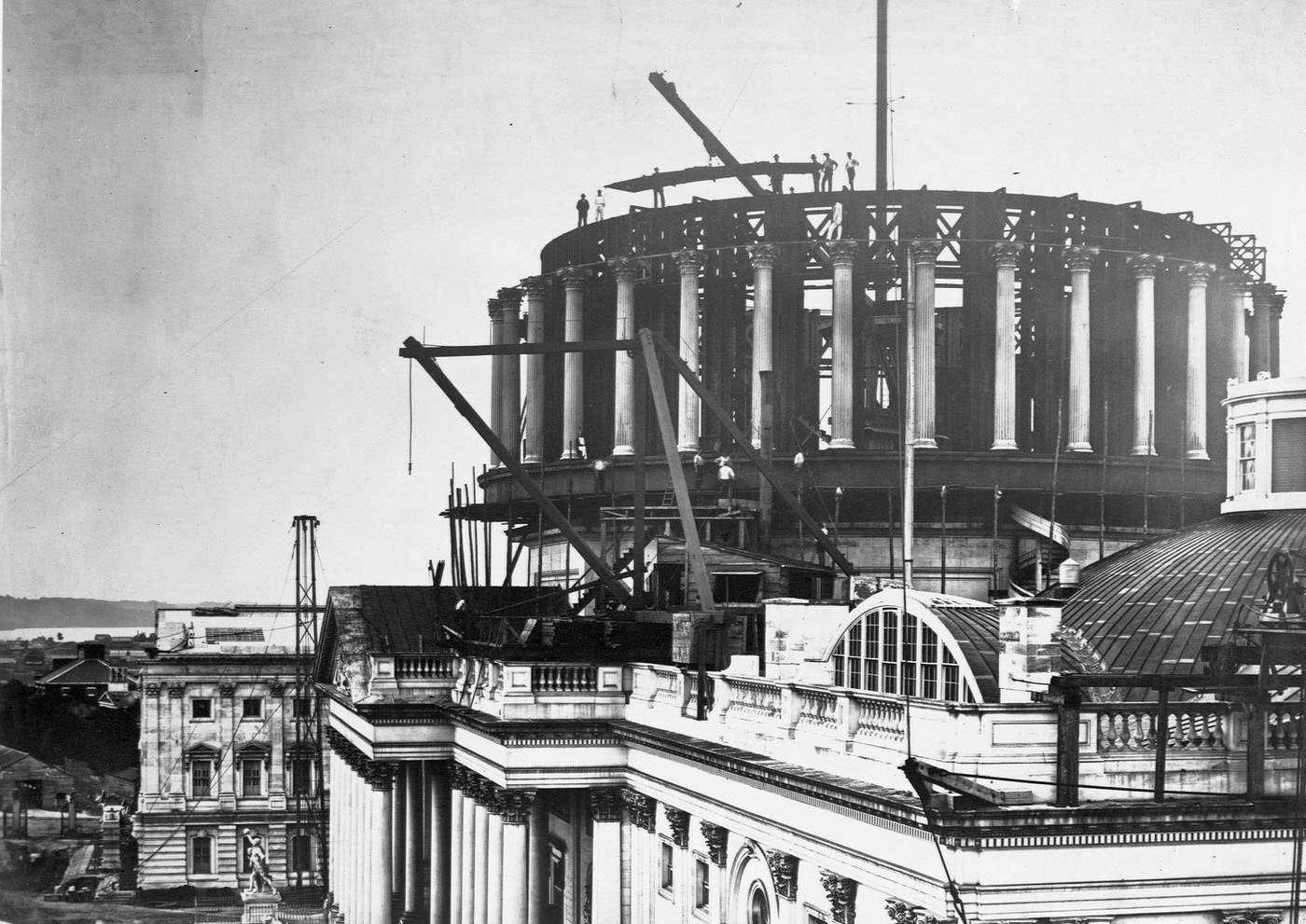
Construction of the new Capitol Dome in 1860. The former Botanic Garden Conservatory, originally located on the National Mall, is in the foreground.
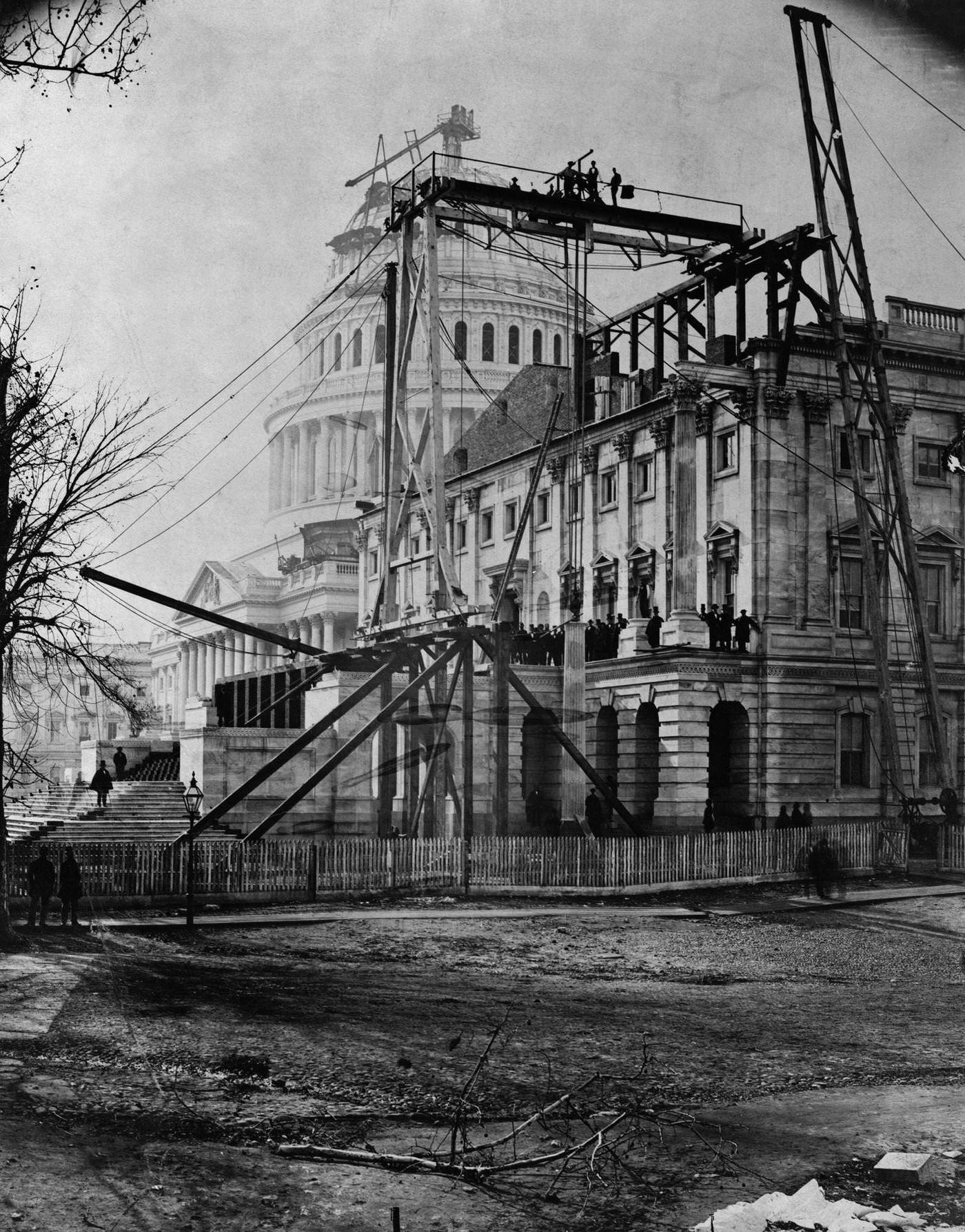
The Capitol dome itself was unfinished when the Civil War began. Construction continued even as the war raged, a deliberate choice by President Lincoln, who believed the ongoing work sent a message that the Union would endure. The dome’s iron frame rose piece by piece above a city that was simultaneously being turned into a military stronghold. Workers and soldiers shared the same streets. The sight of cranes above the Capitol alongside marching infantry columns was a defining image of wartime Washington.
Building of the United States Capitol Dome, 1860s
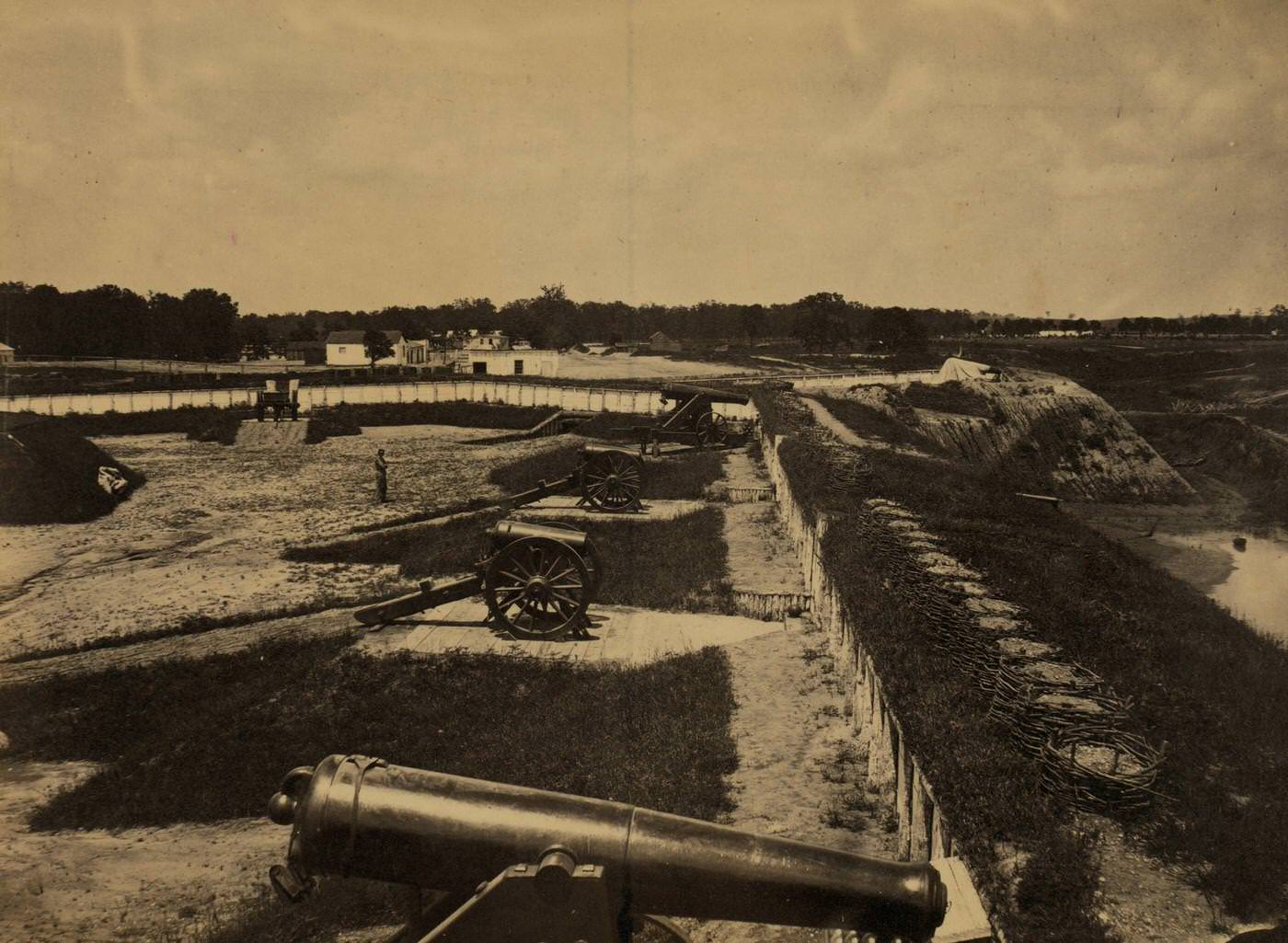
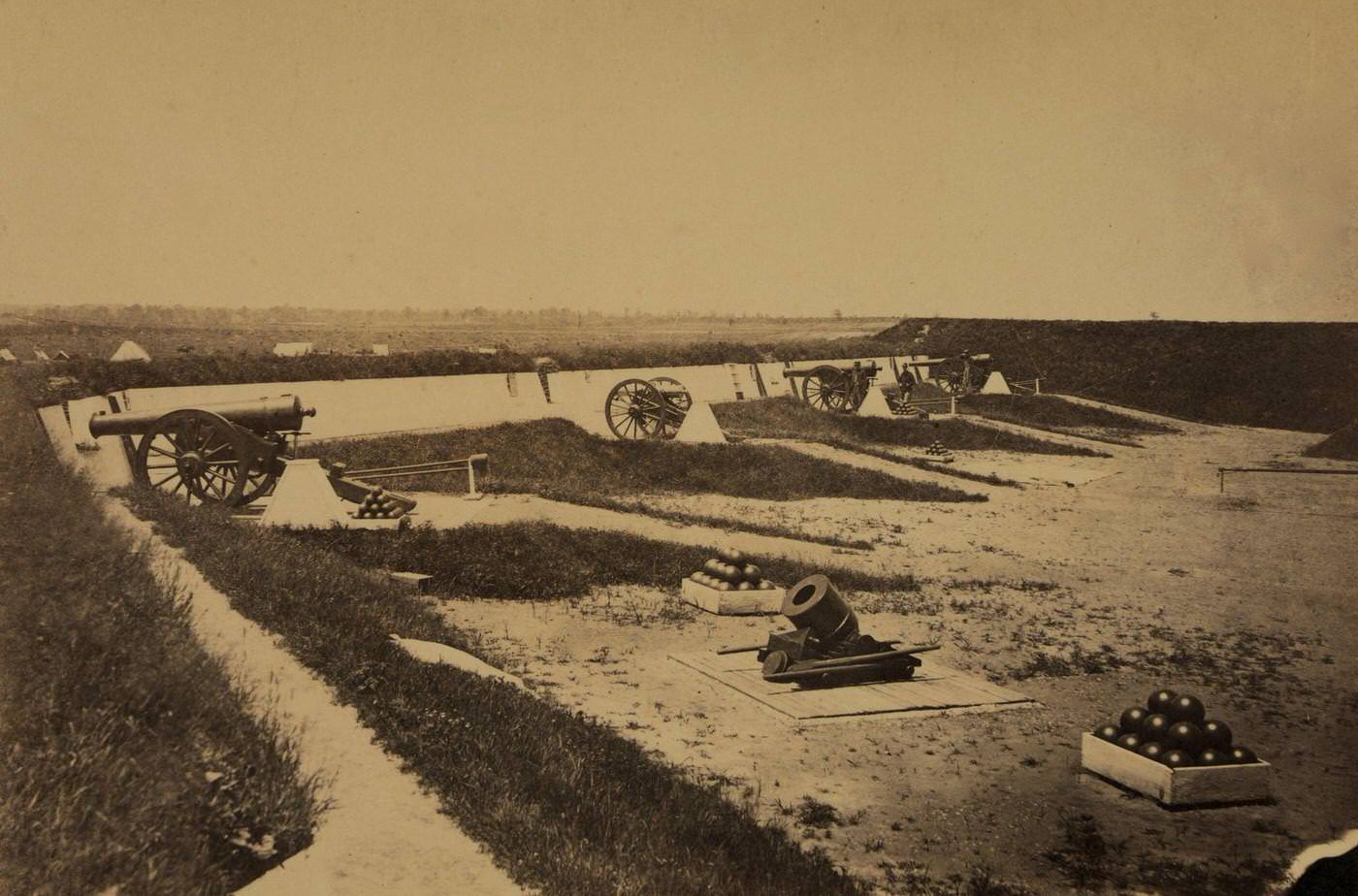
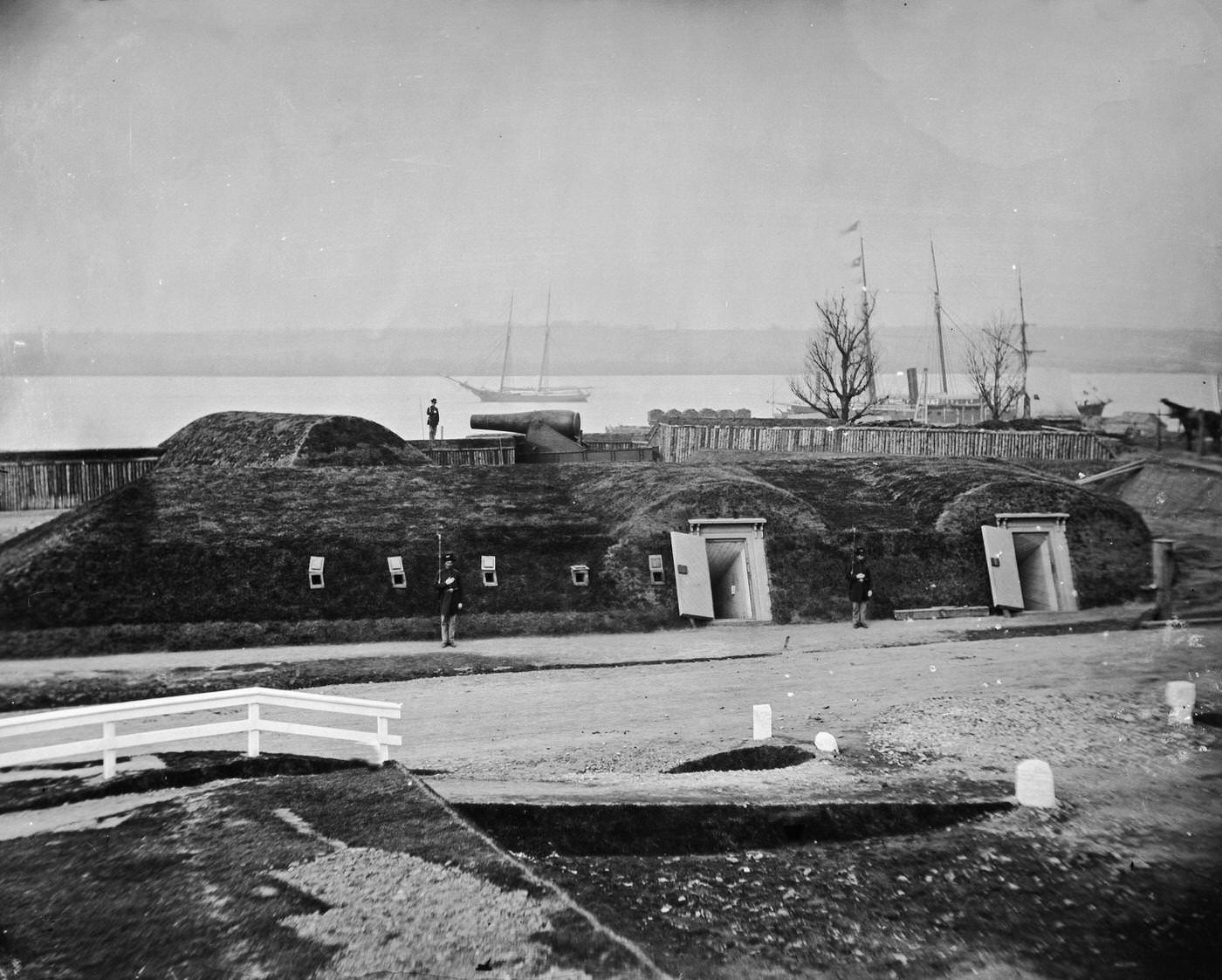
Washington’s geographic position made it one of the most strategically important — and most vulnerable — cities in the country. It sat directly on the border between the Union and Confederate states. Virginia, which seceded in April 1861, was just across the Potomac River. To protect the capital, the Union Army built a ring of defensive fortifications around the city. At its peak, this network included over sixty forts connected by miles of trenches and rifle pits. Tens of thousands of soldiers garrisoned these positions throughout the war.
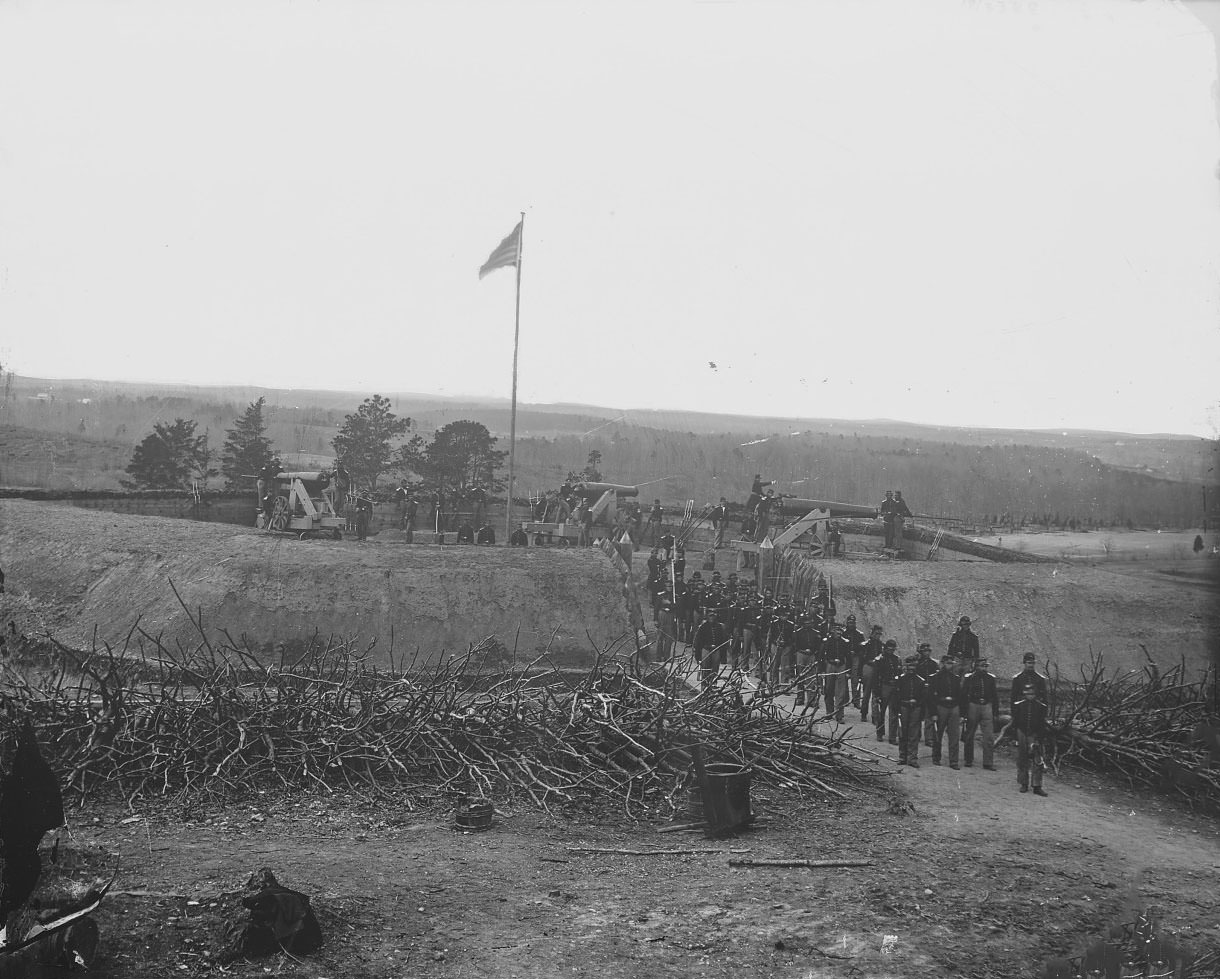
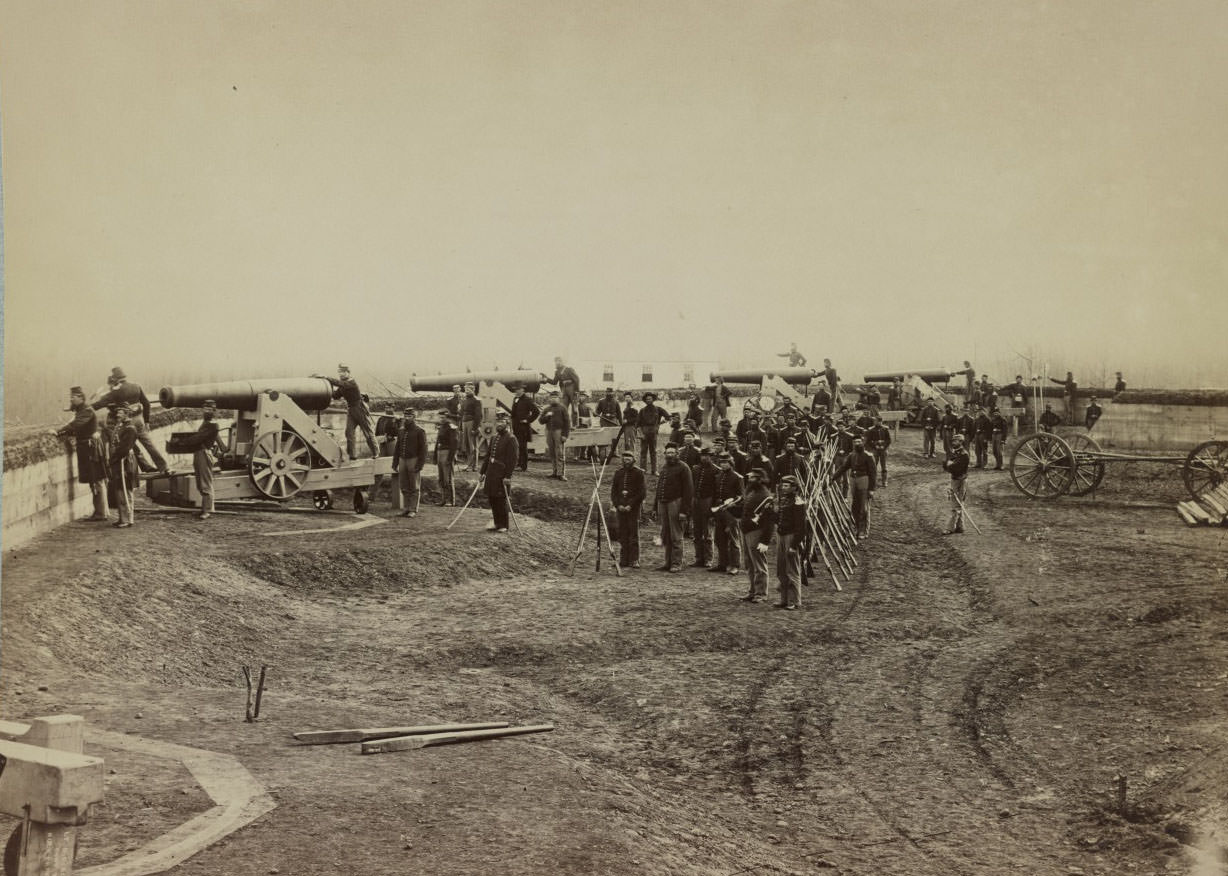
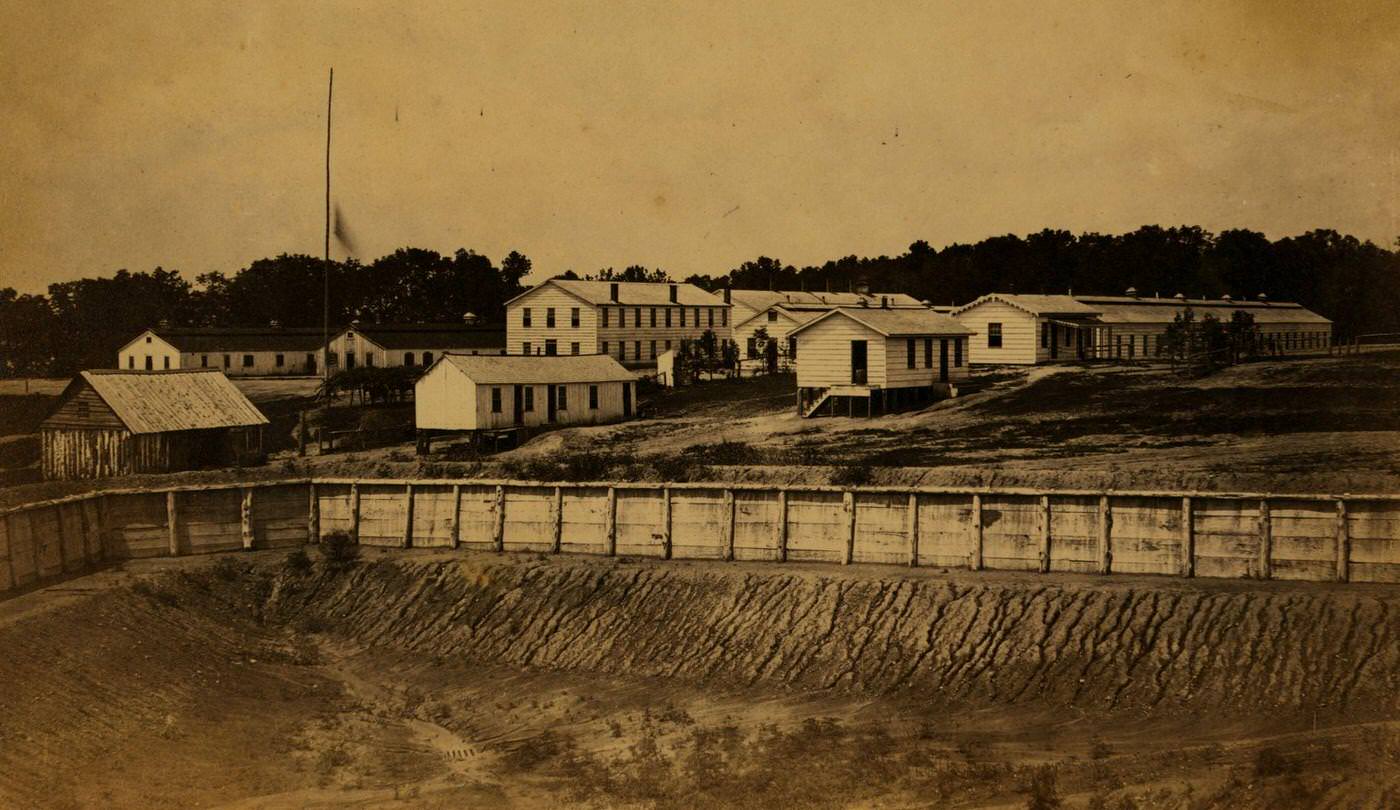
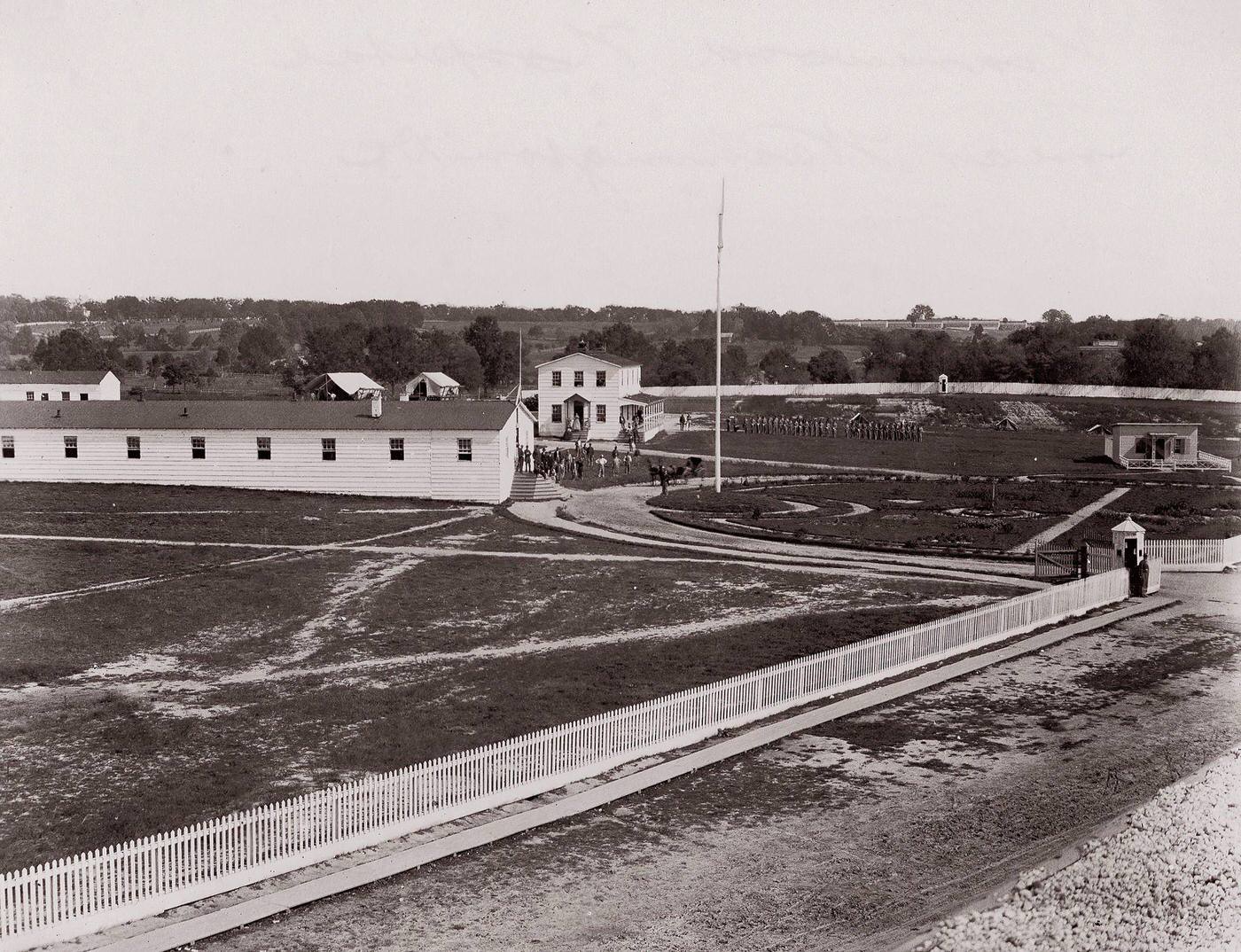
Fort near Washington, D.C. 1865Fort Totten, 1864
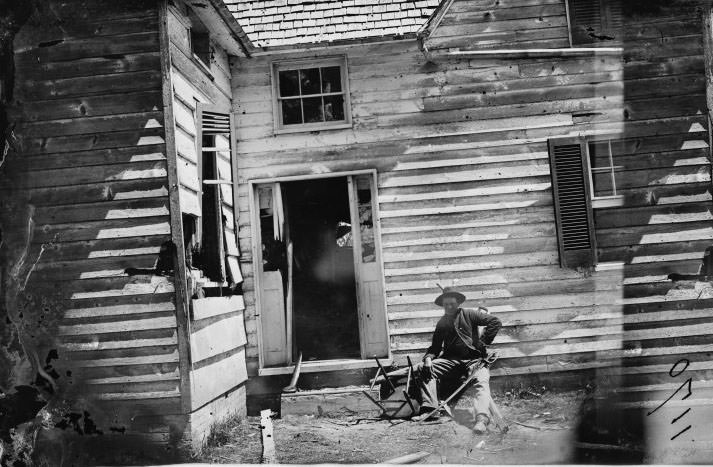
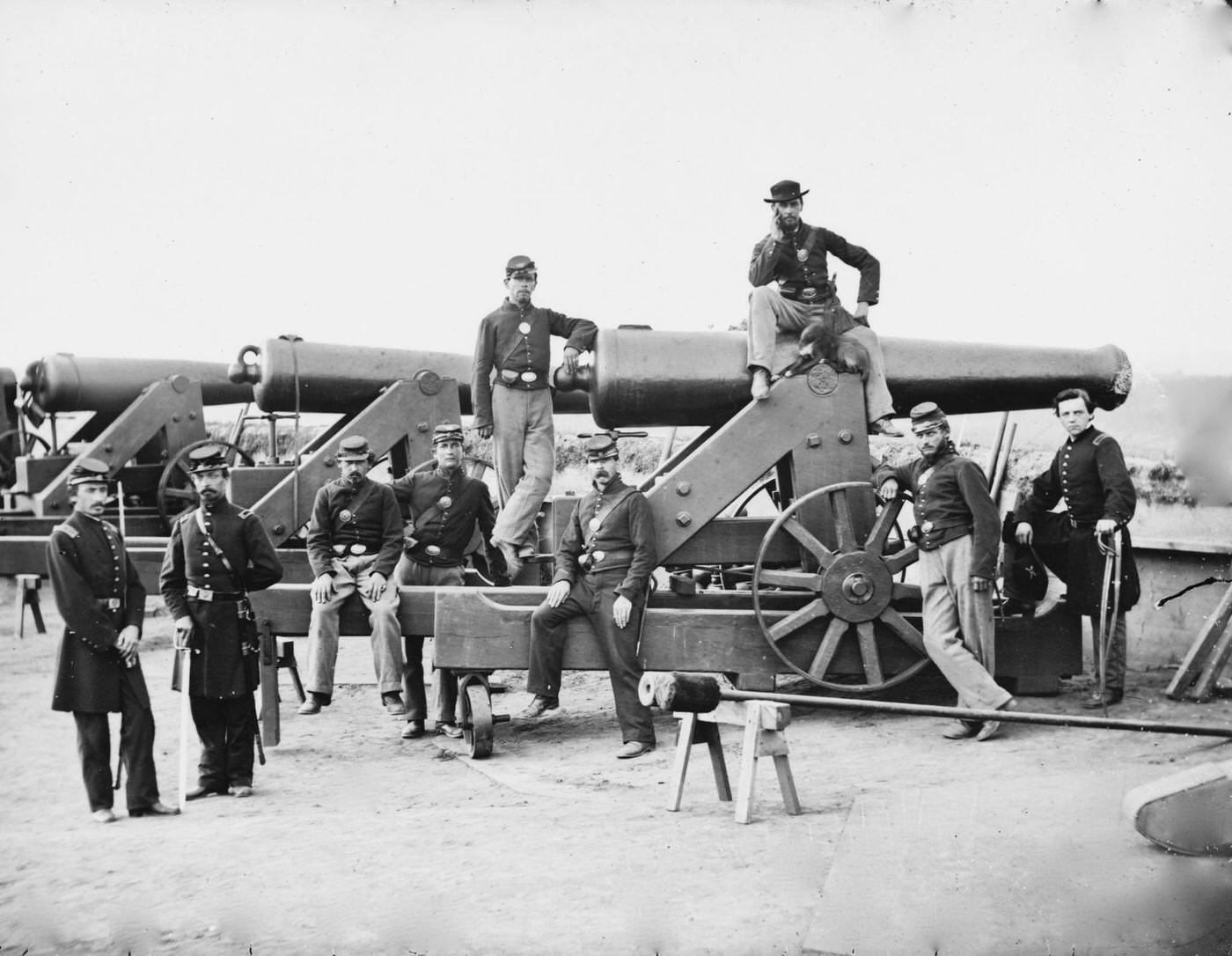
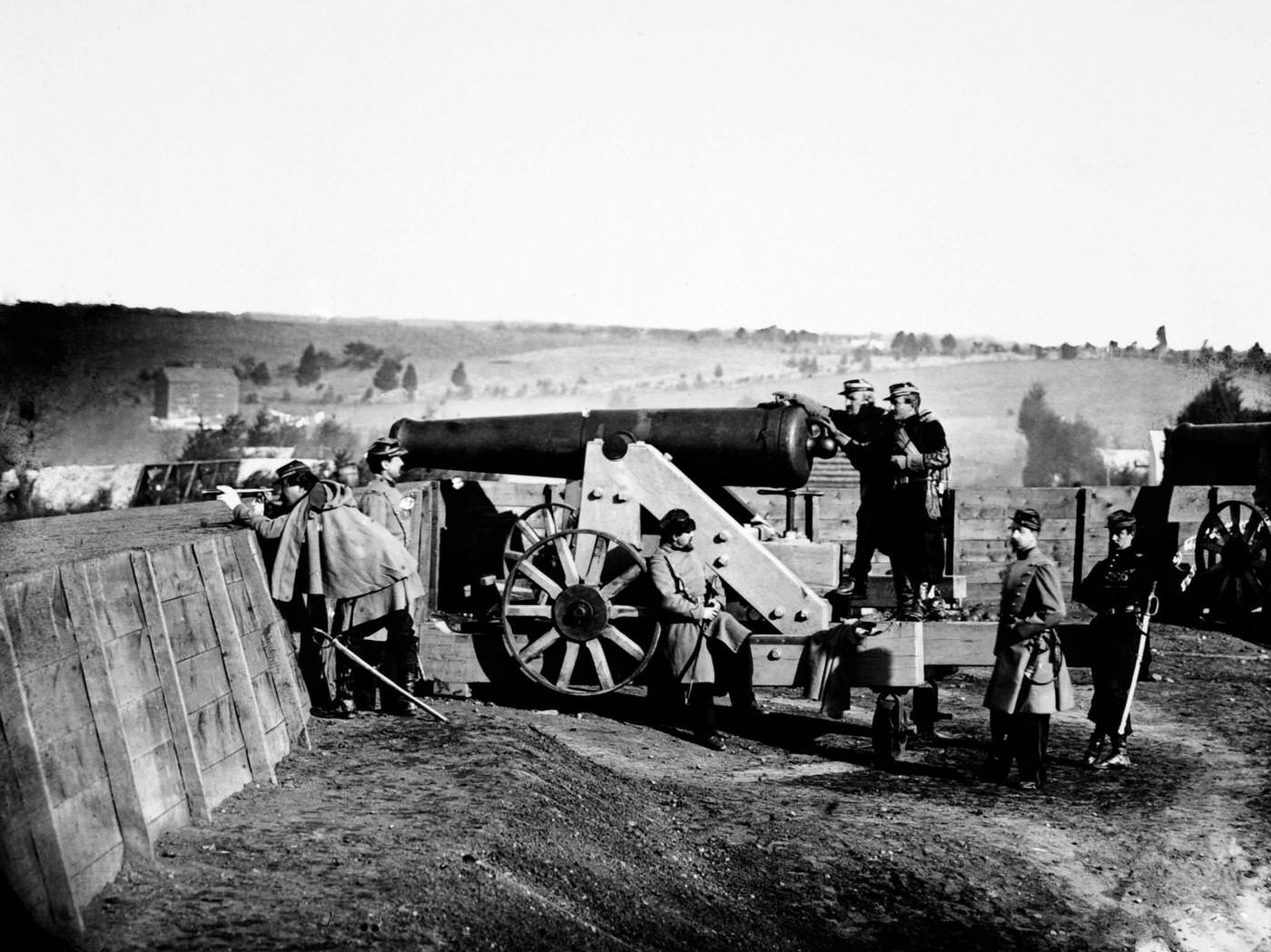
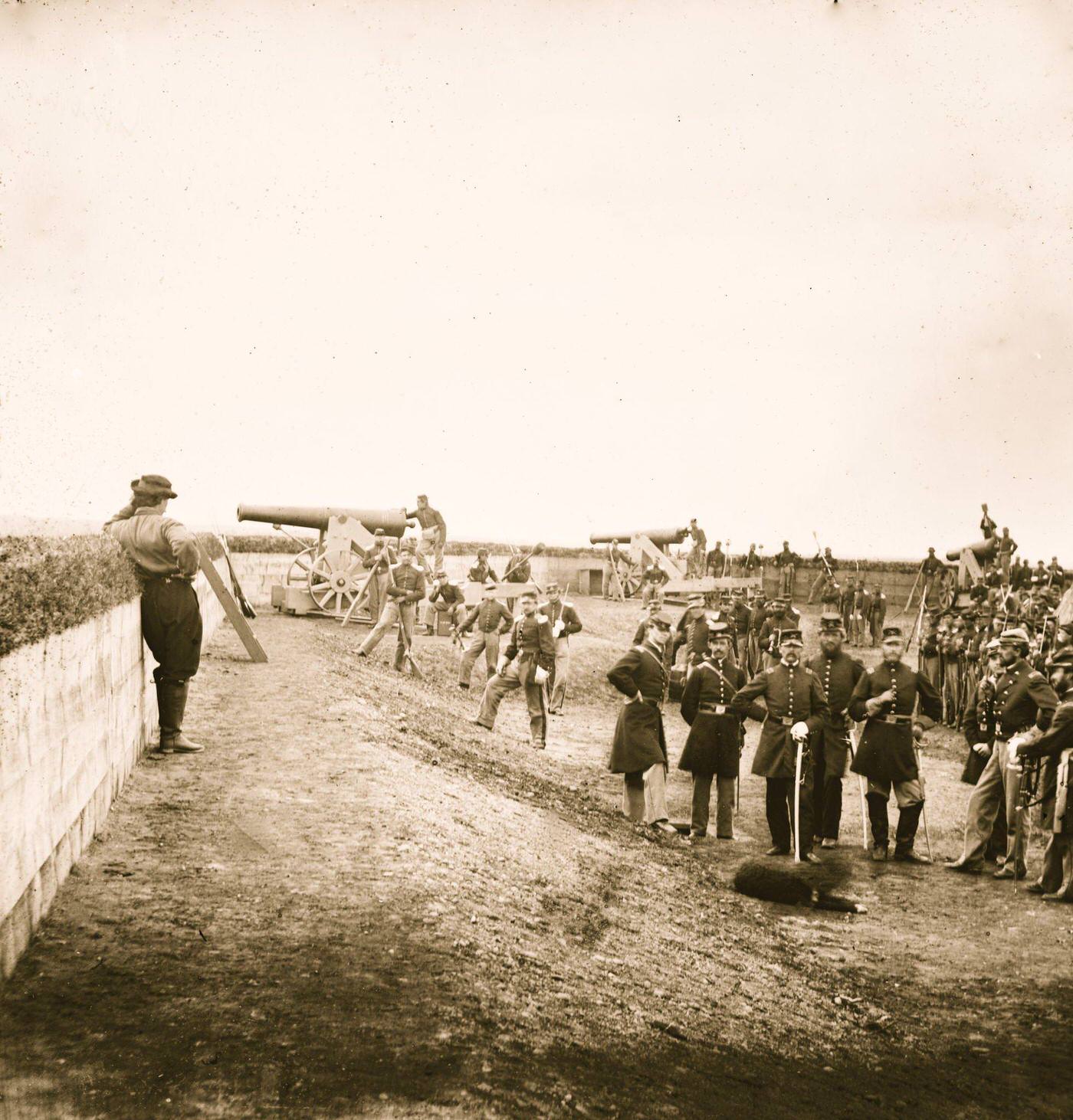
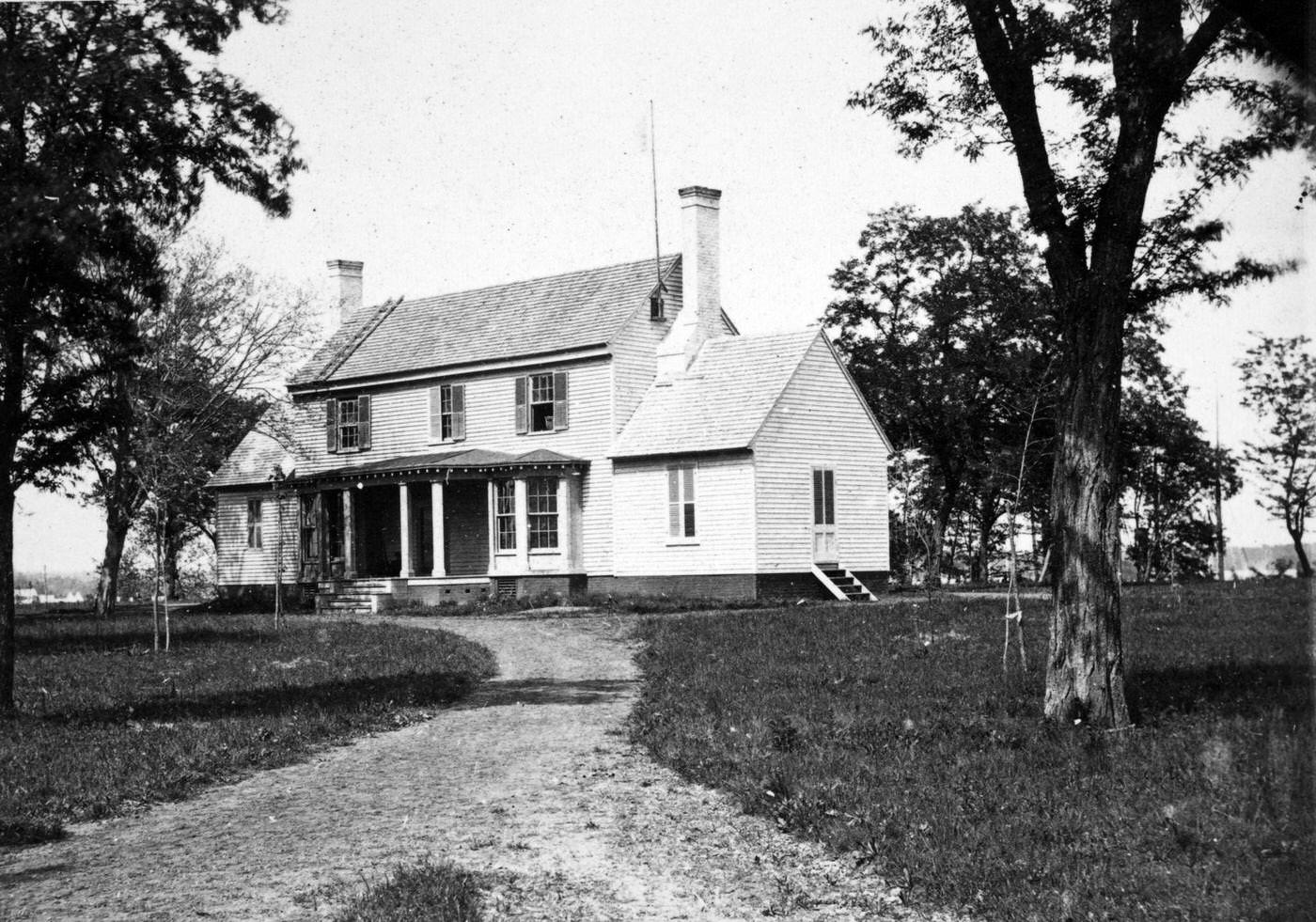
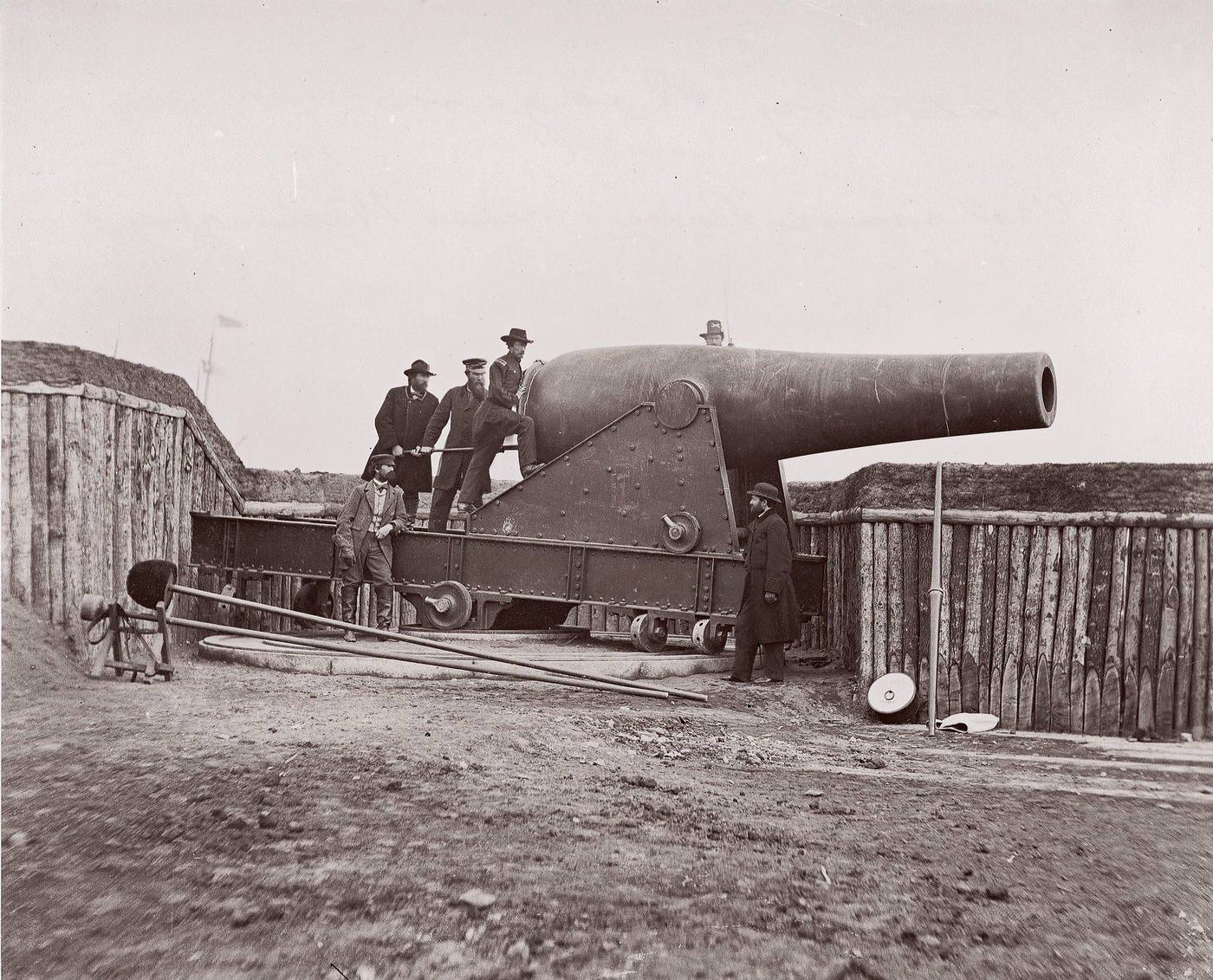
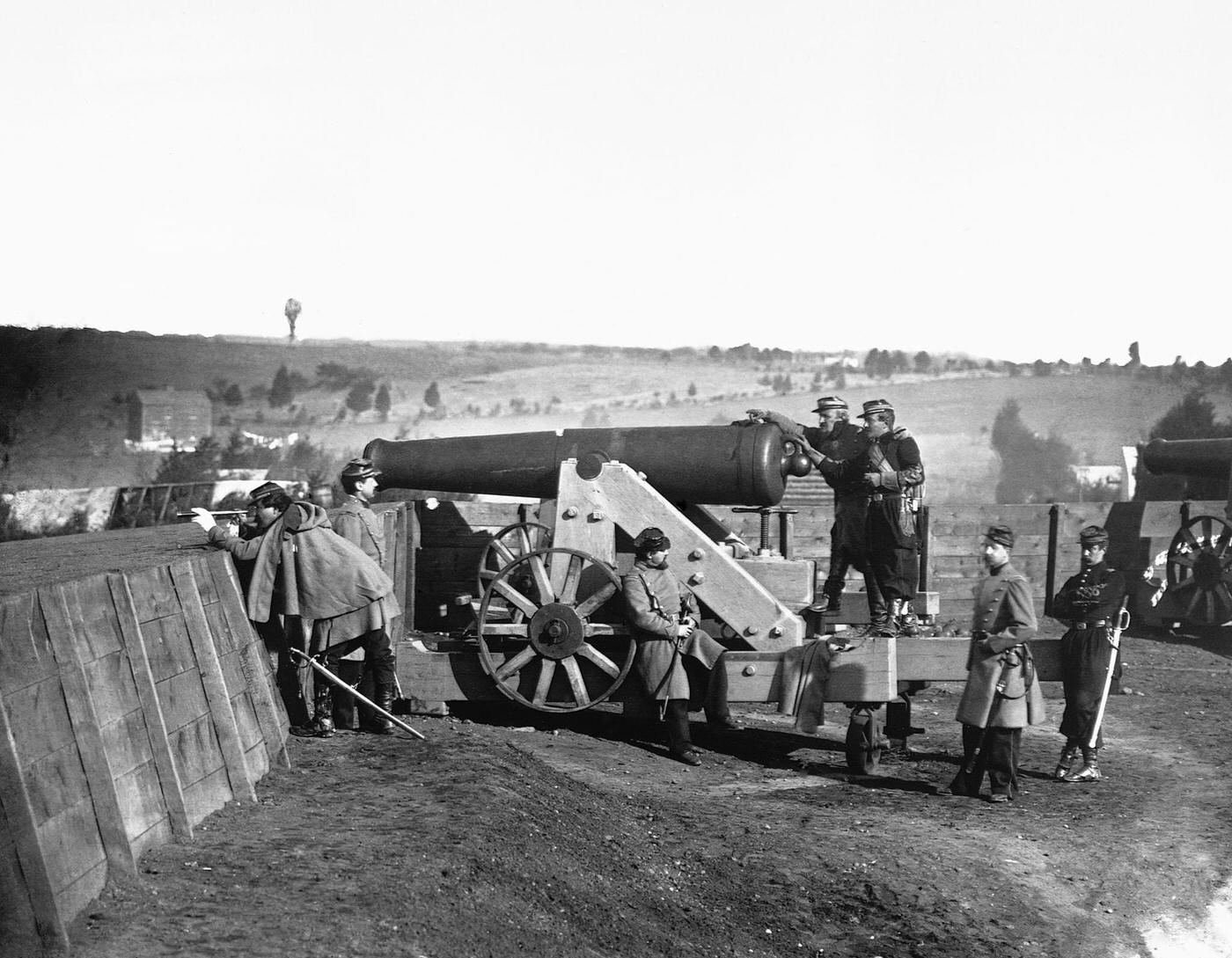
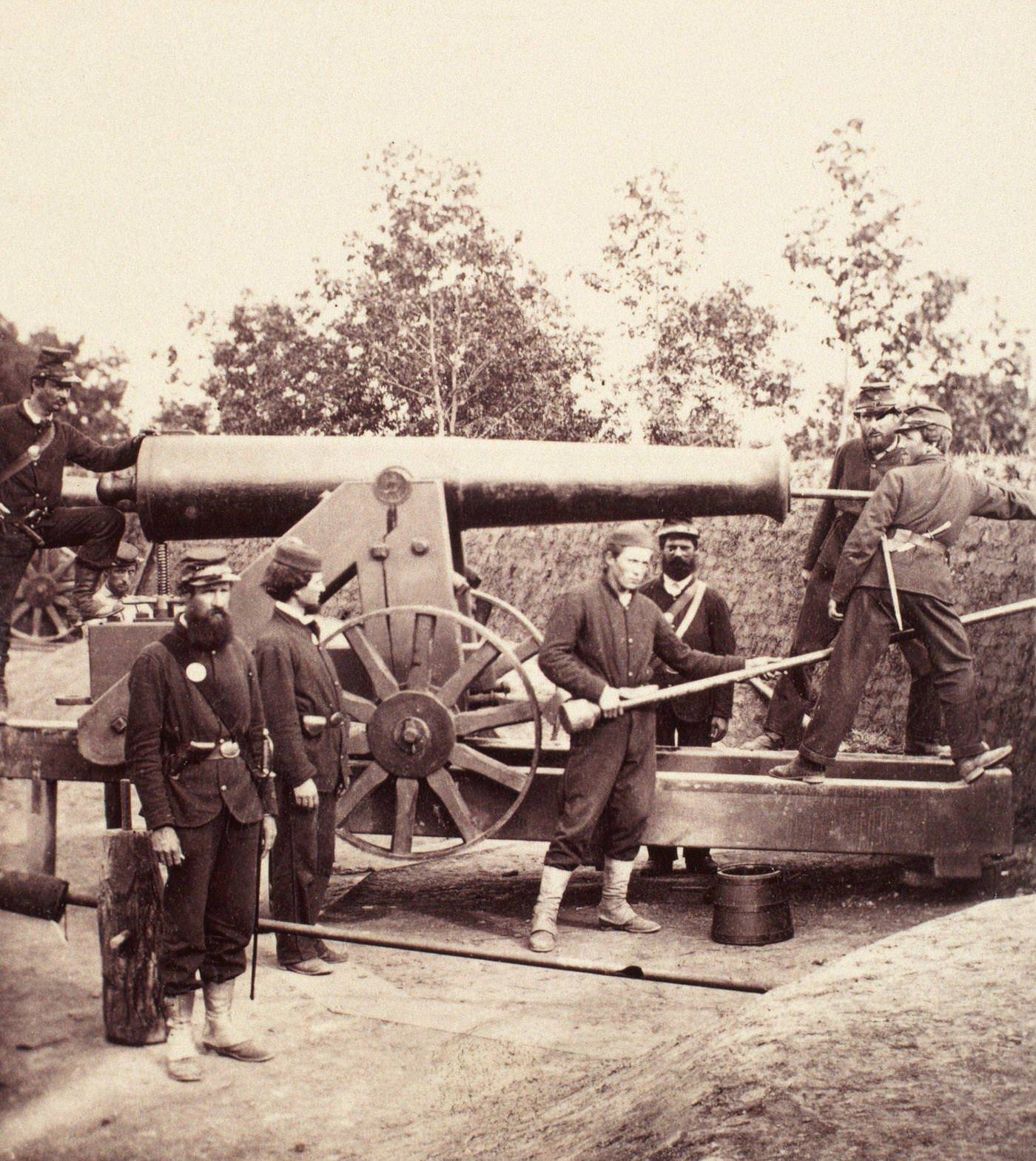
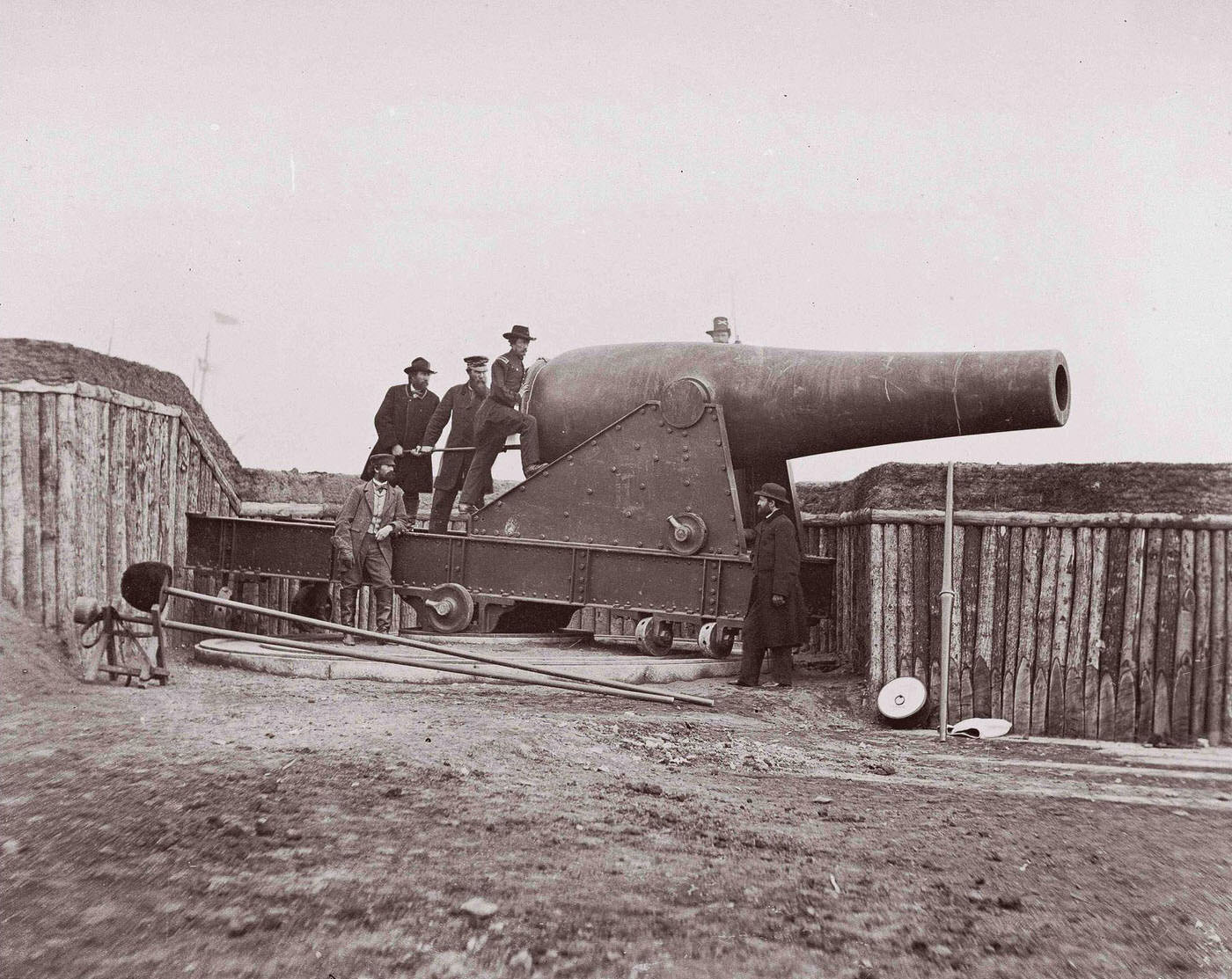
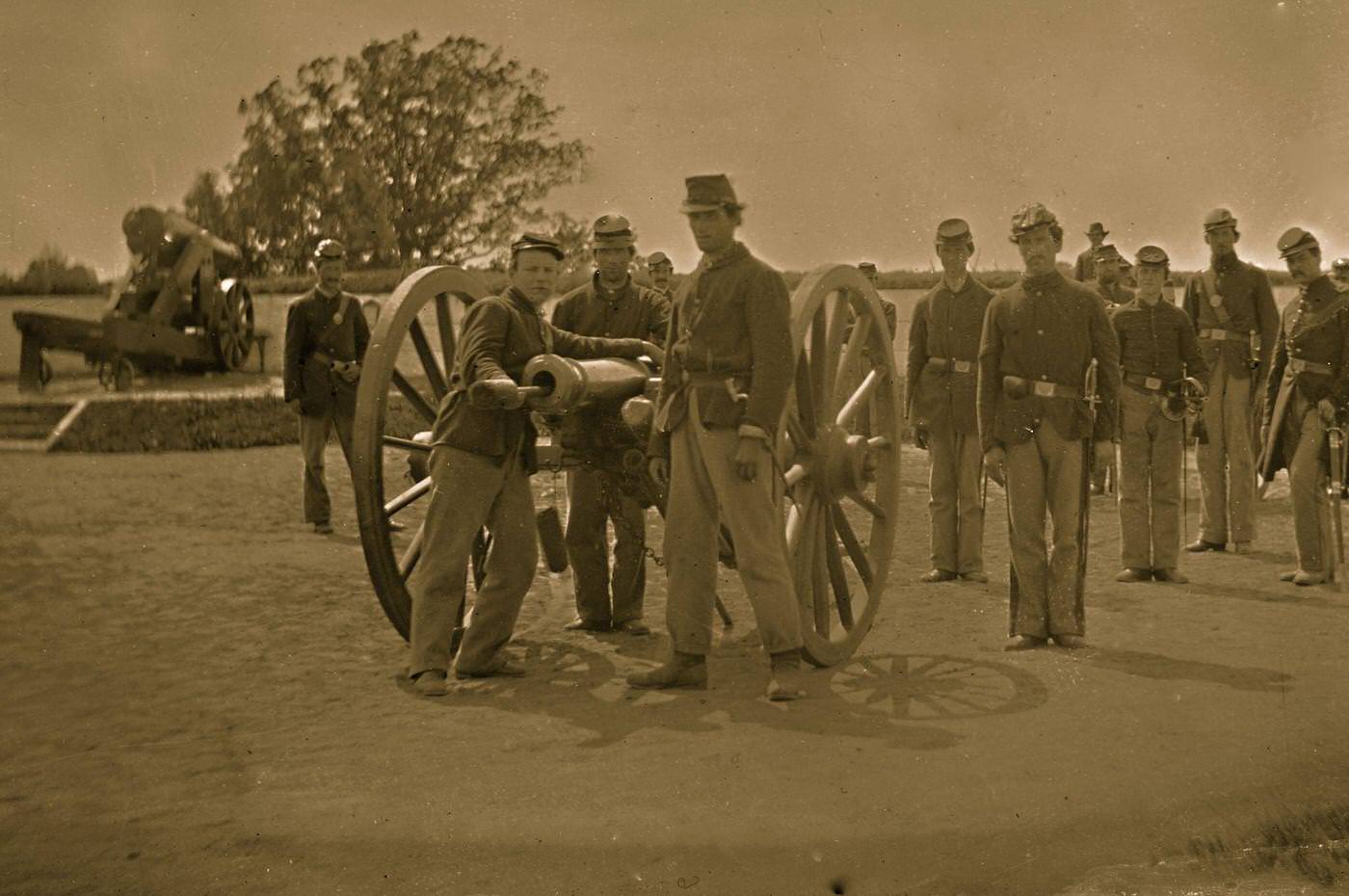
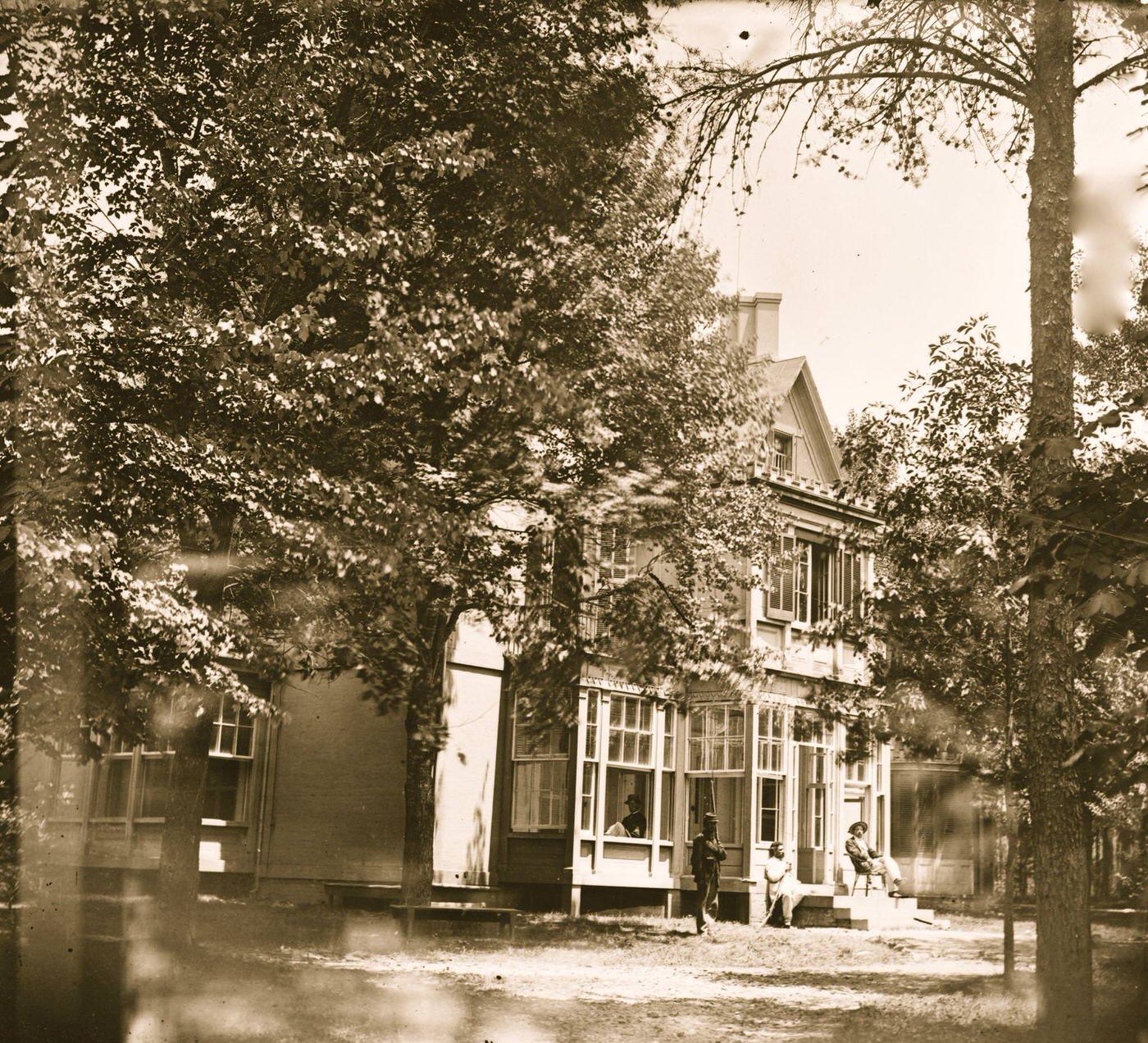
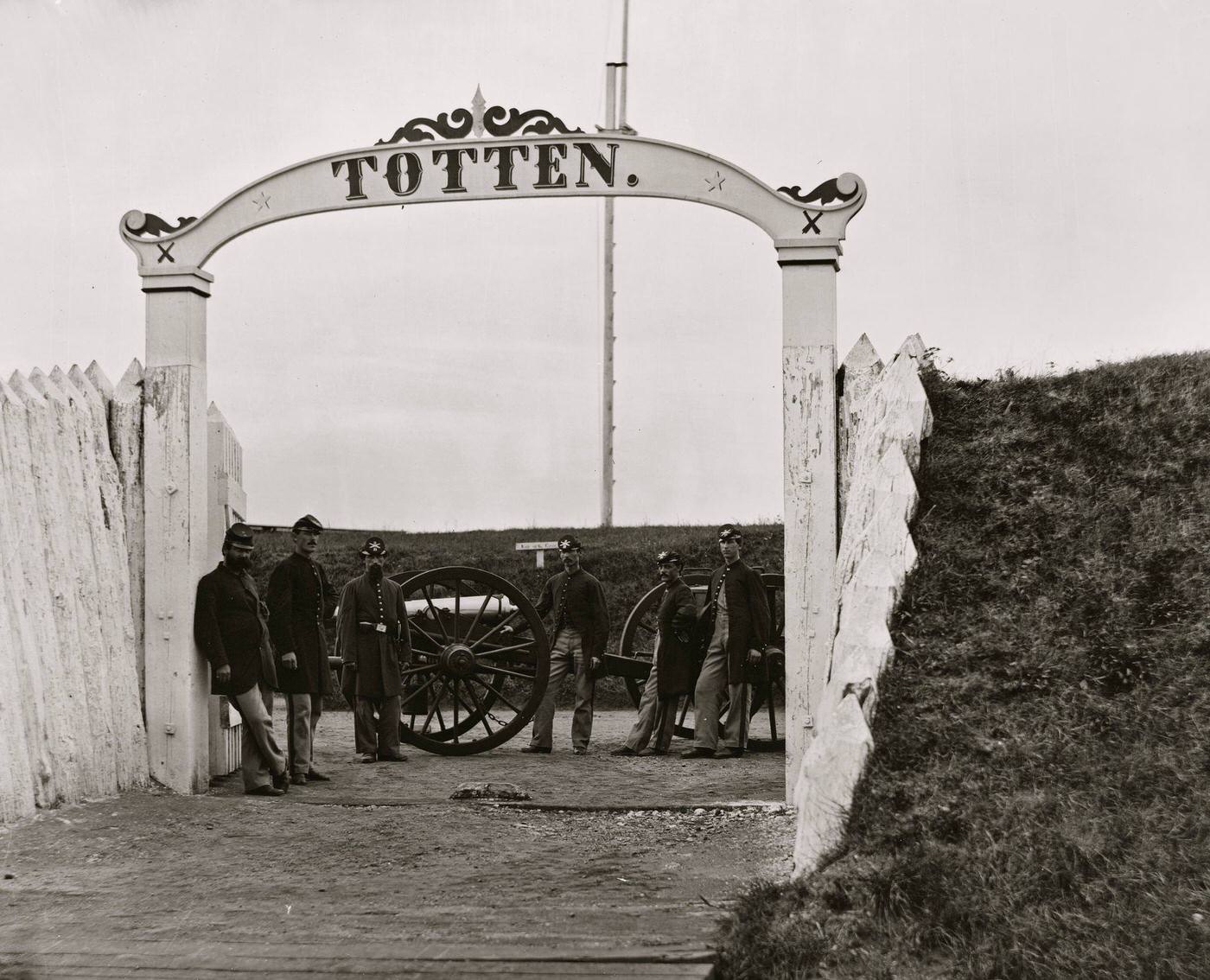
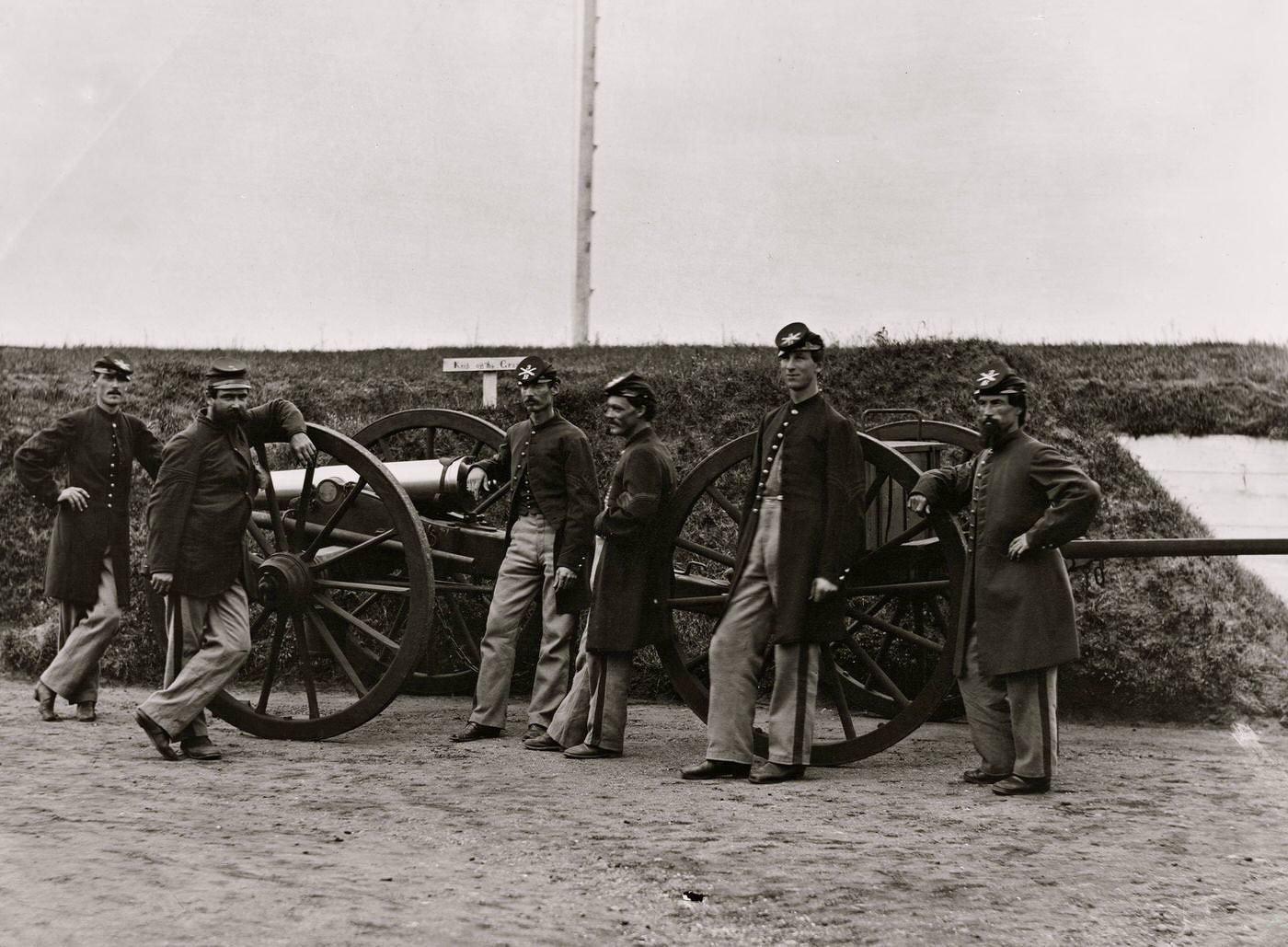
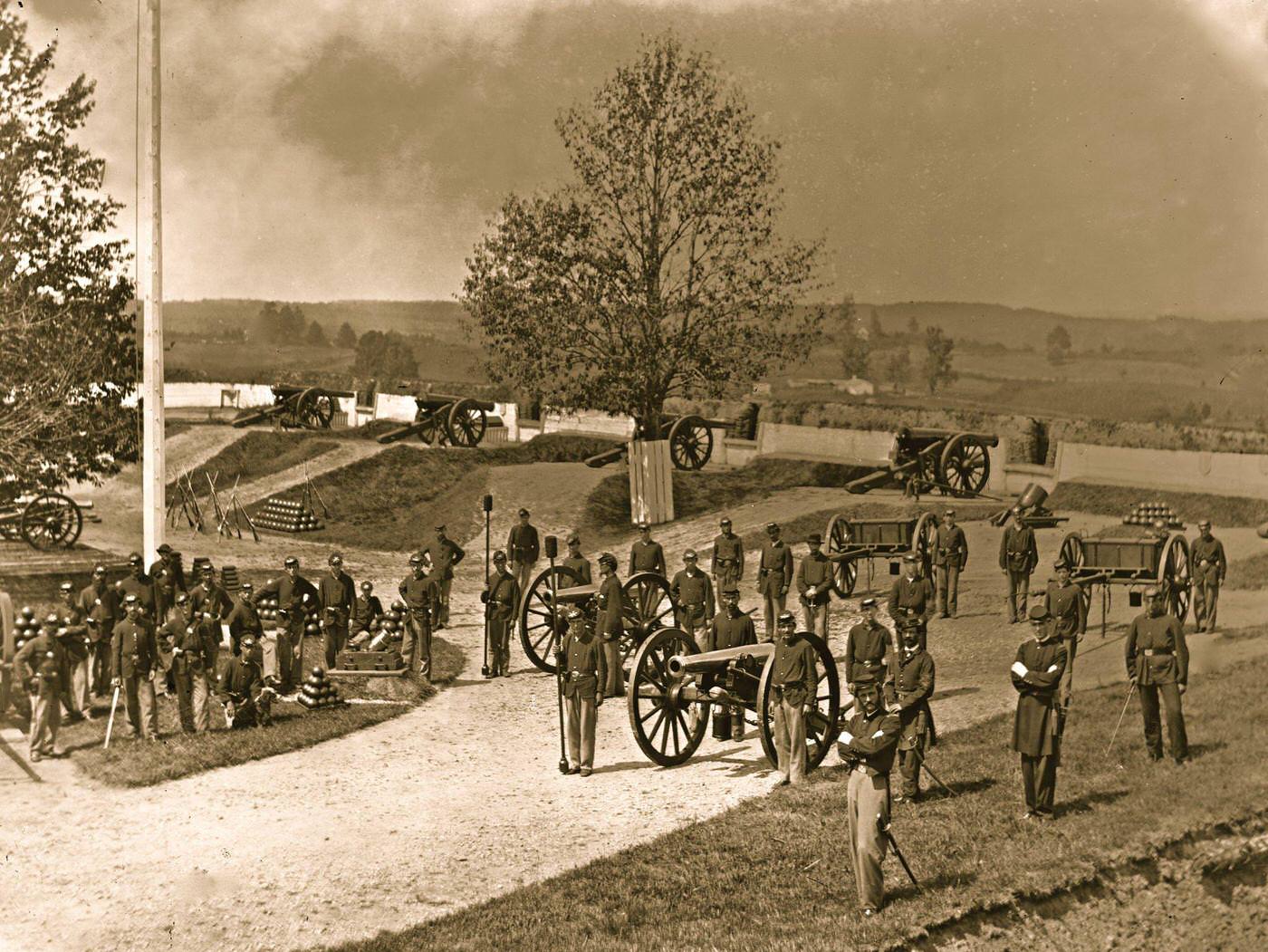
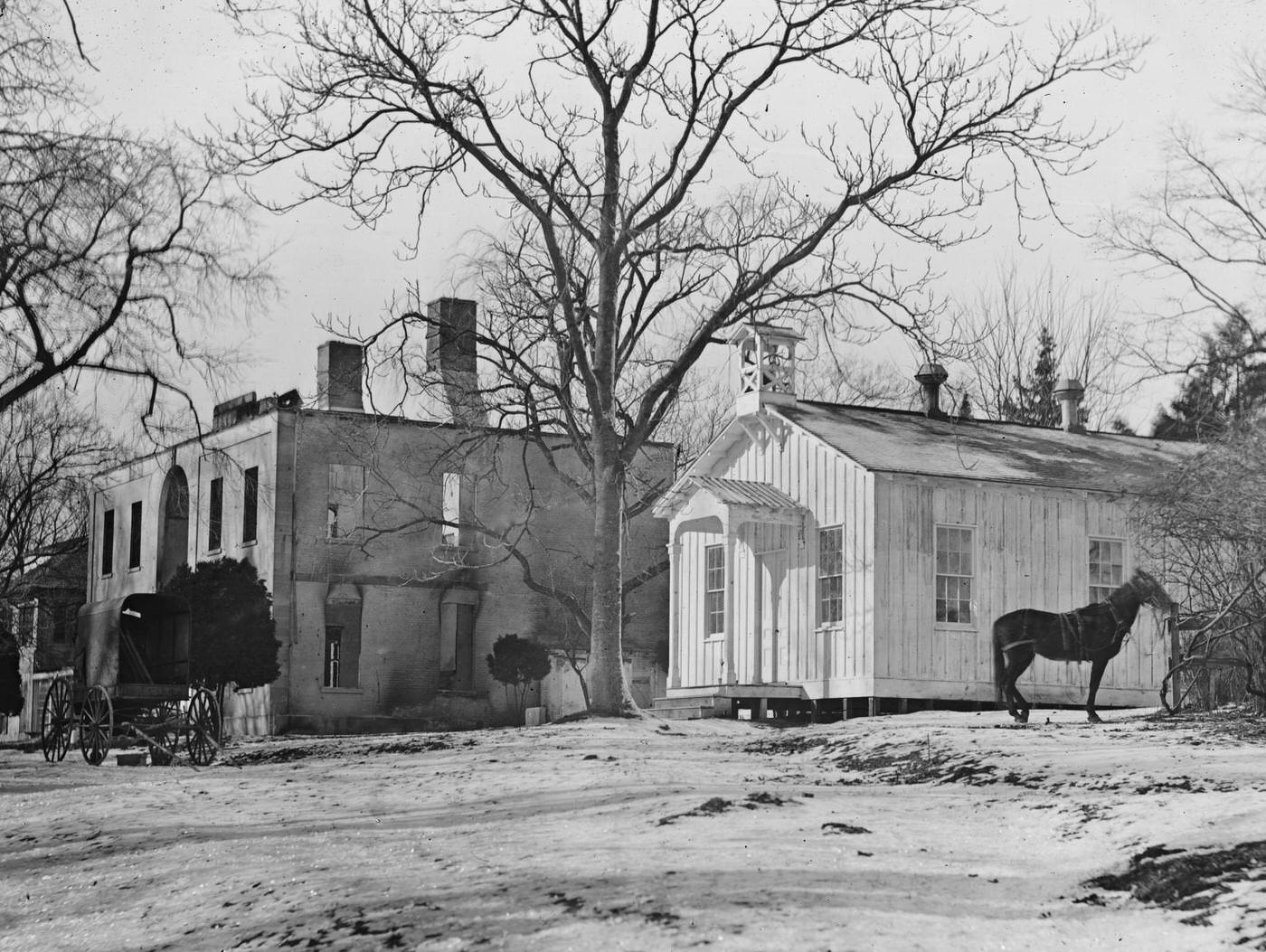
Fort Totten was one of the larger installations in the network, positioned to defend the northeastern approaches to the city. The 3rd Regiment Massachusetts Heavy Artillery manned it, operating large Columbiad guns capable of firing heavy projectiles over long distances. Fort Stevens, to the north, was the site of the only direct Confederate attack on Washington. In July 1864, Confederate General Jubal Early led a raid that reached the fort’s outer defenses. The attack was repulsed, but not before shells struck nearby buildings, some of which still bore the scars of the bombardment.
House near Fort Stevens showing effect of shot during Early’s attack on Washington, 1864Officers and men of the 3rd Regiment Massachusetts Heavy Artillery stand next to their Columbiad guns, Fort Totten, Washington, D.C., 1865
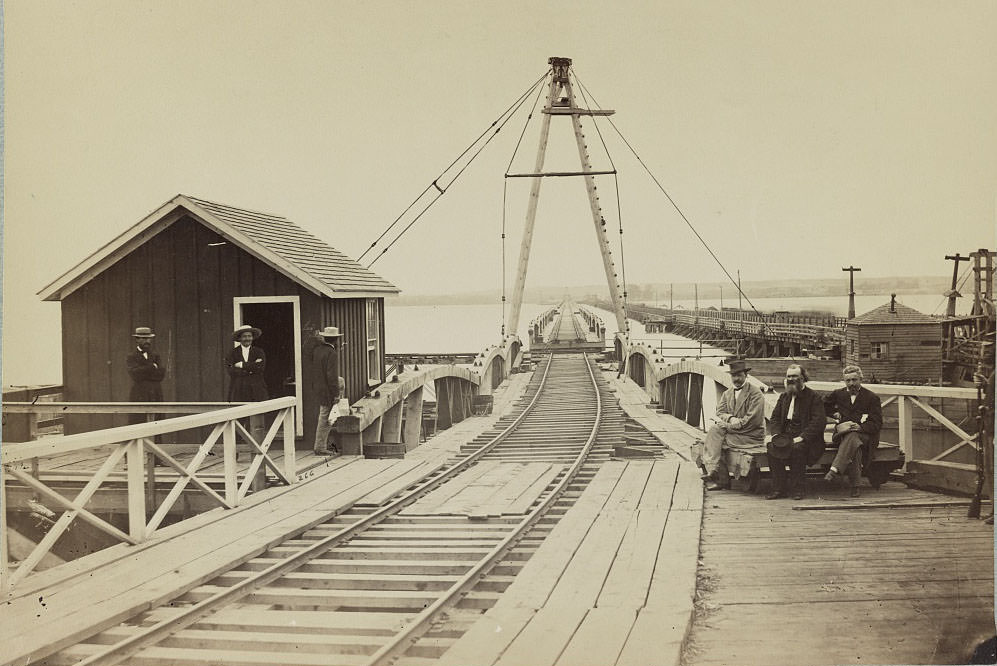
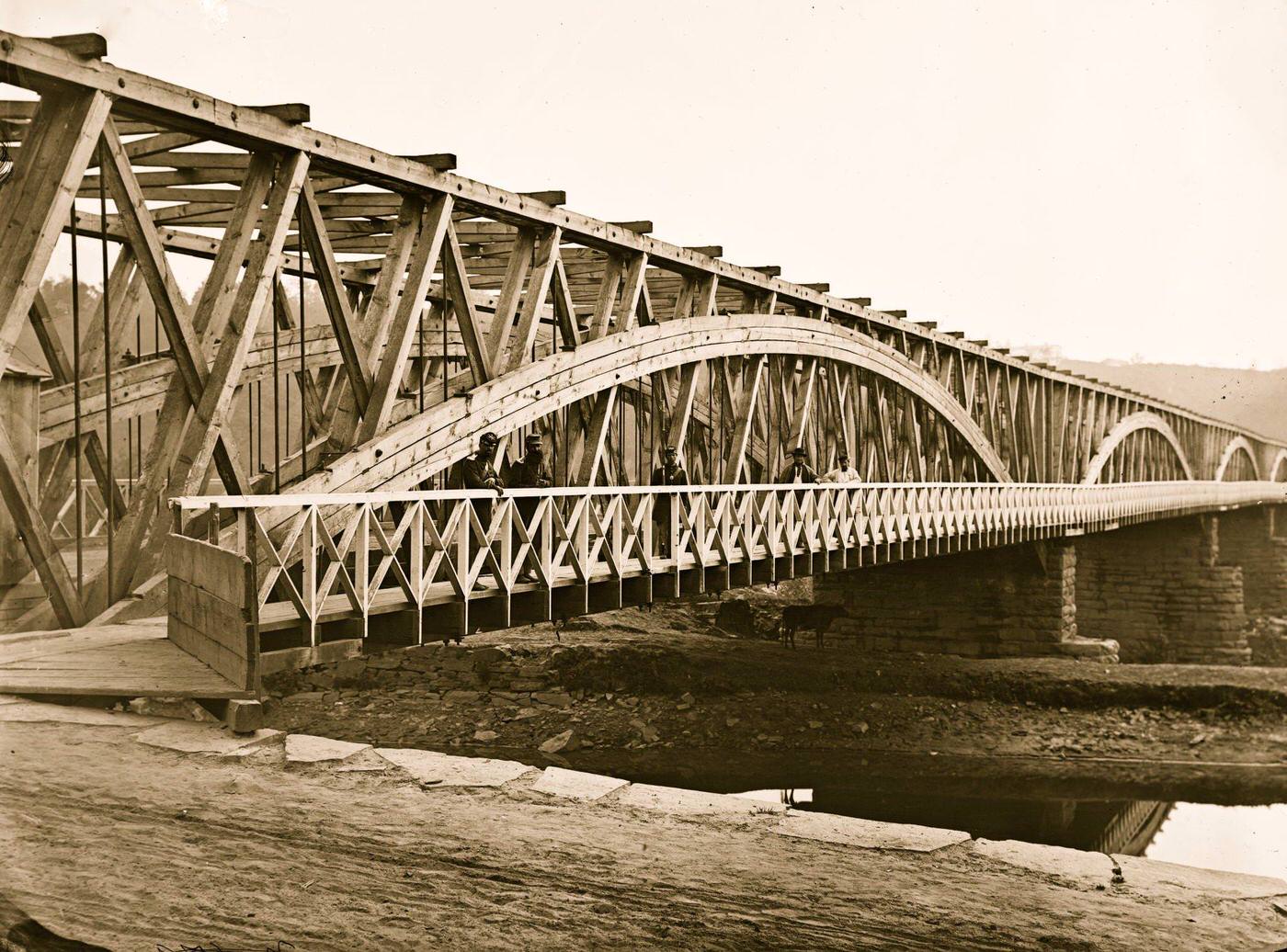
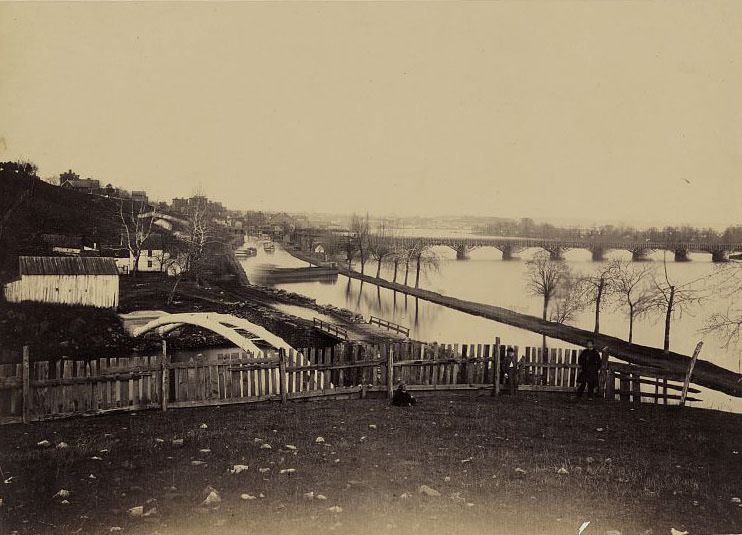
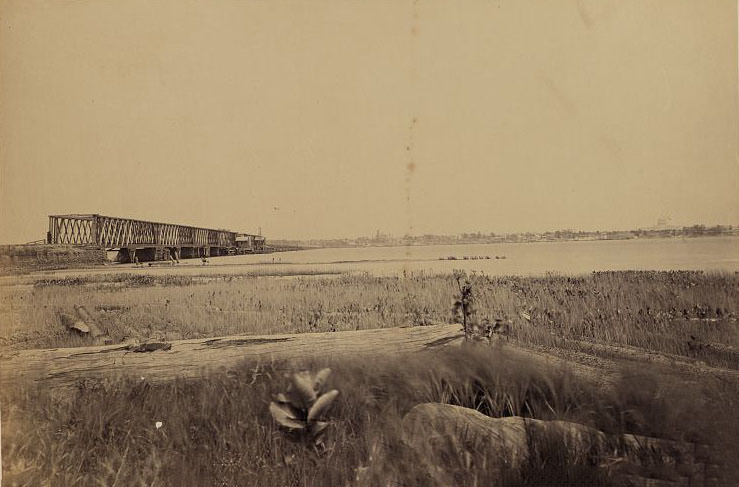
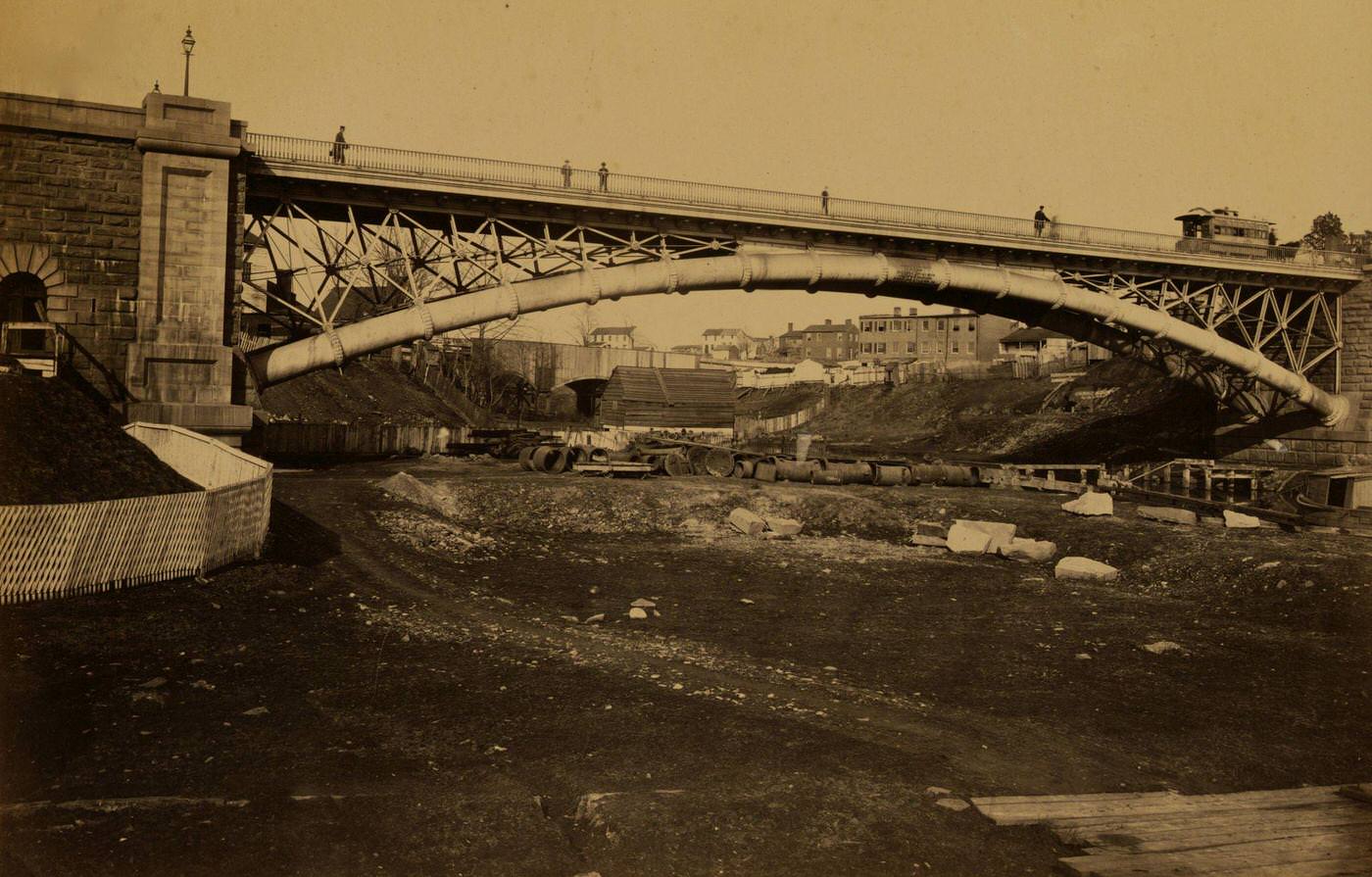
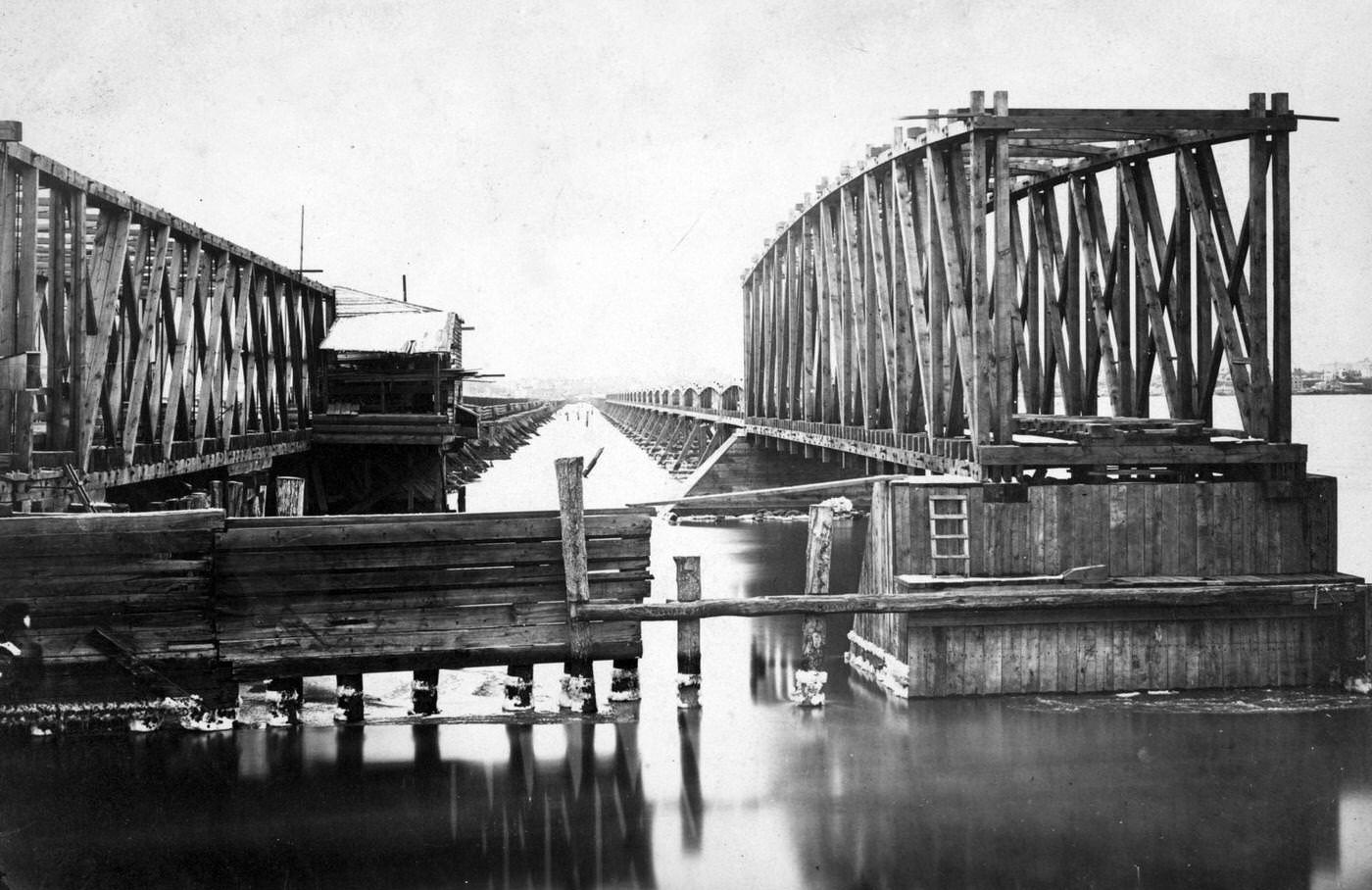
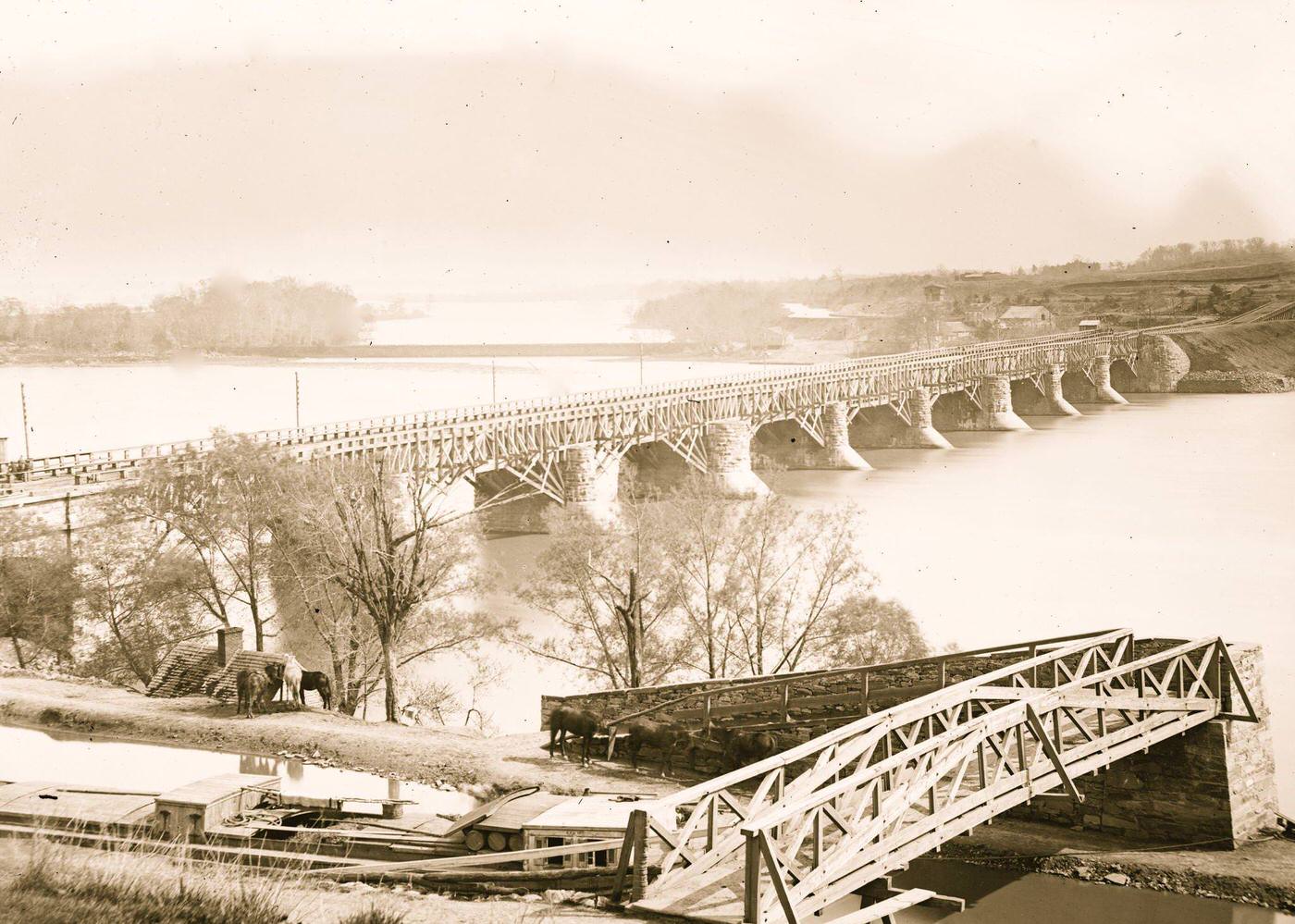
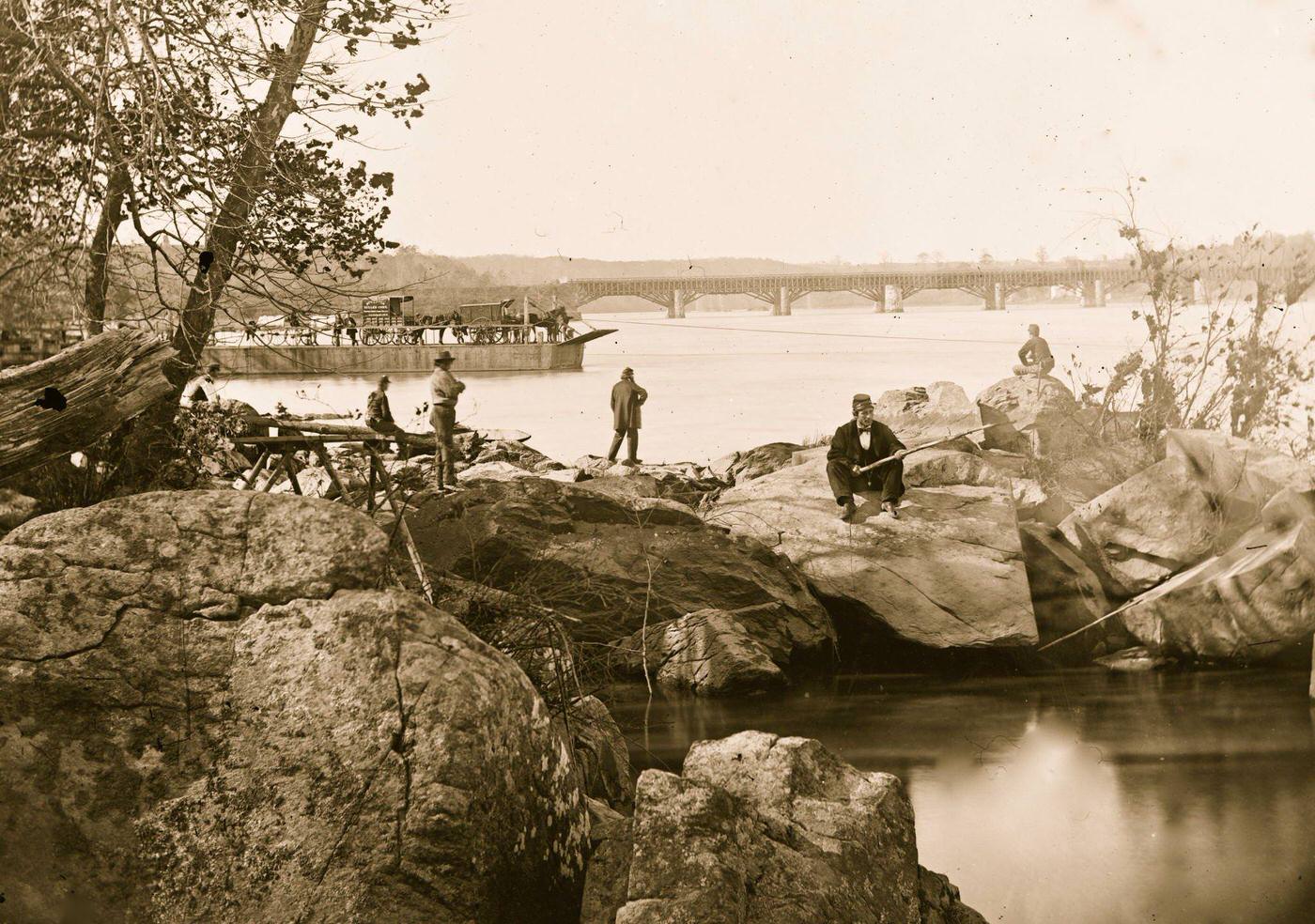
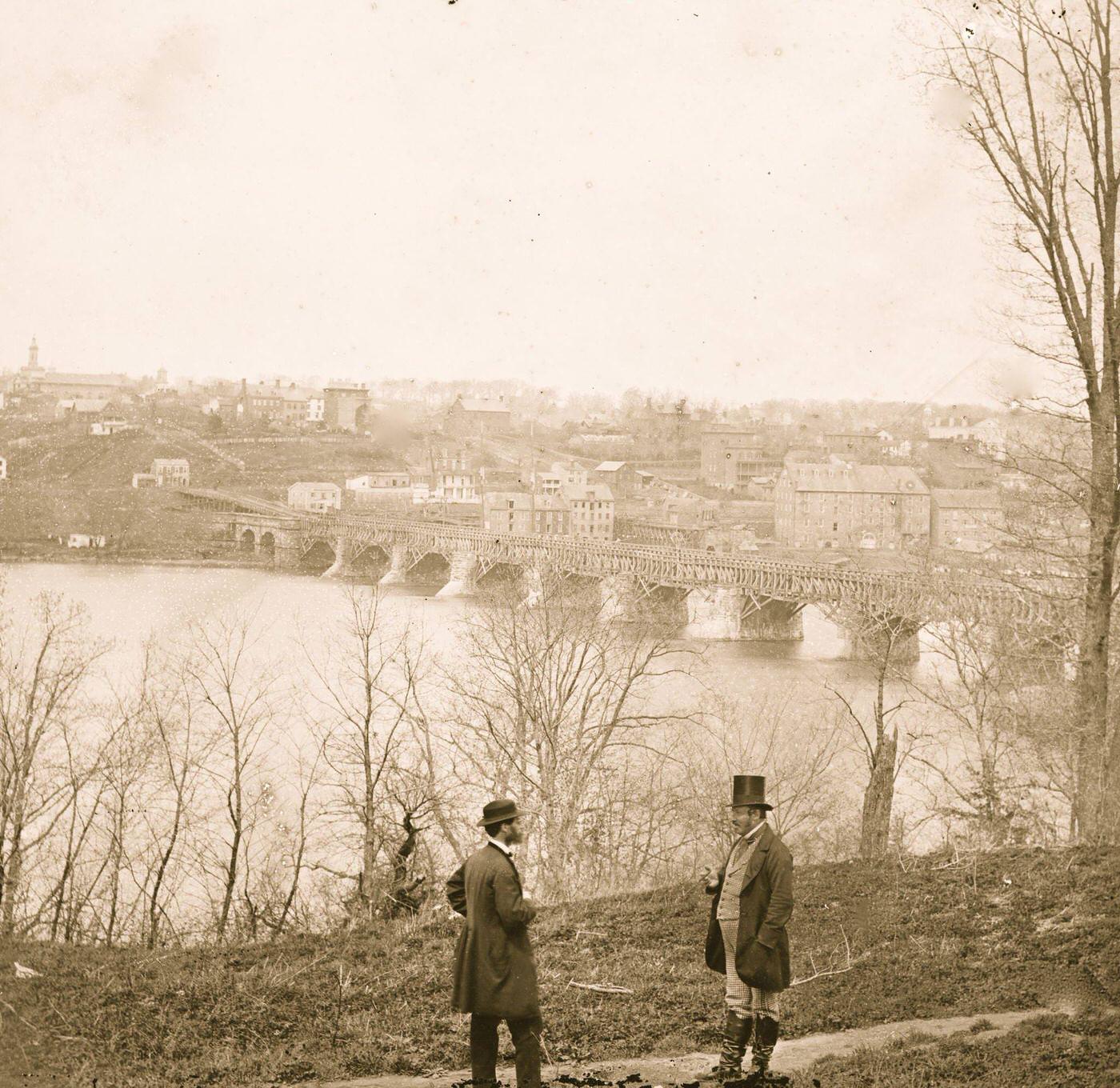
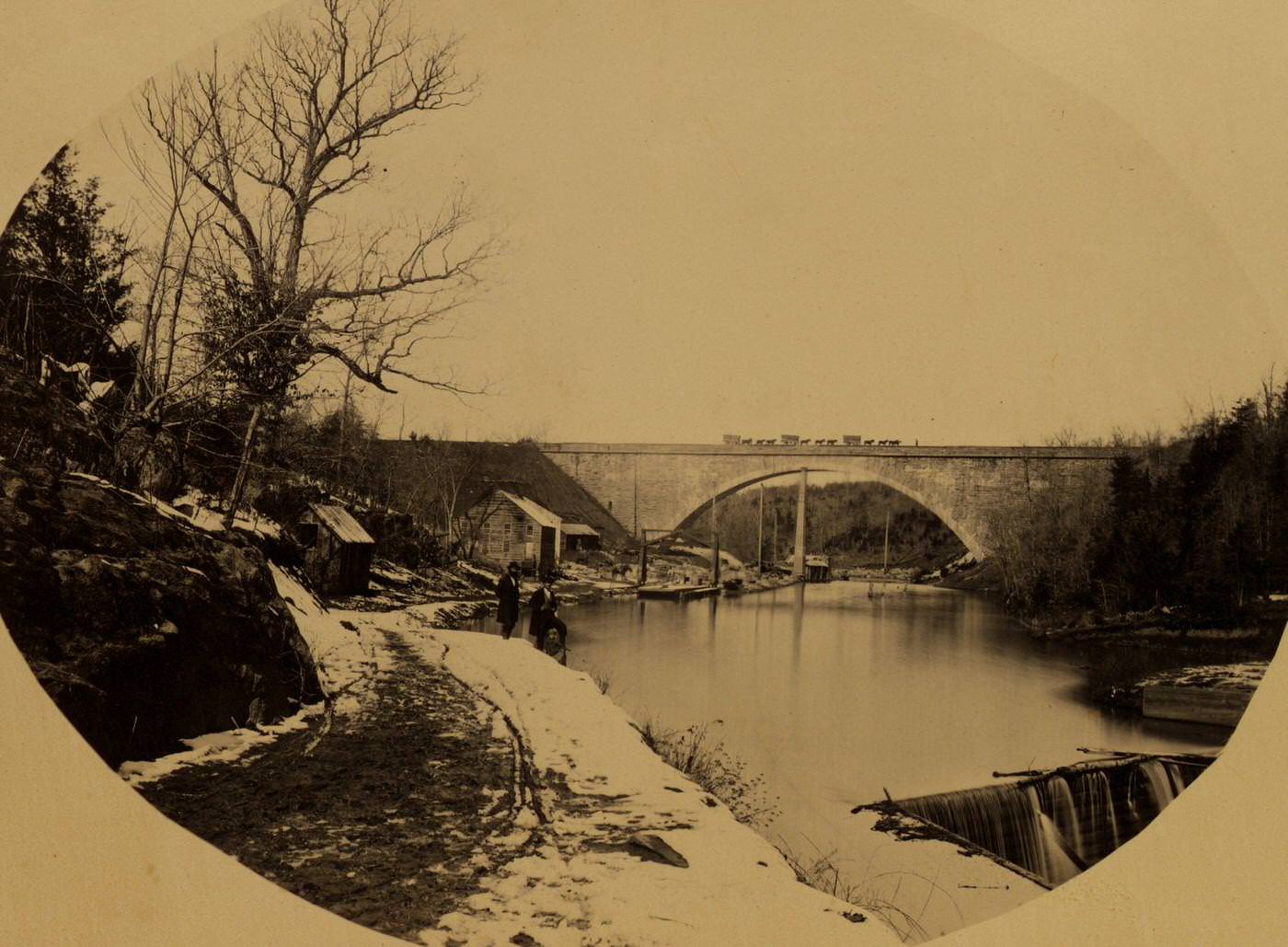
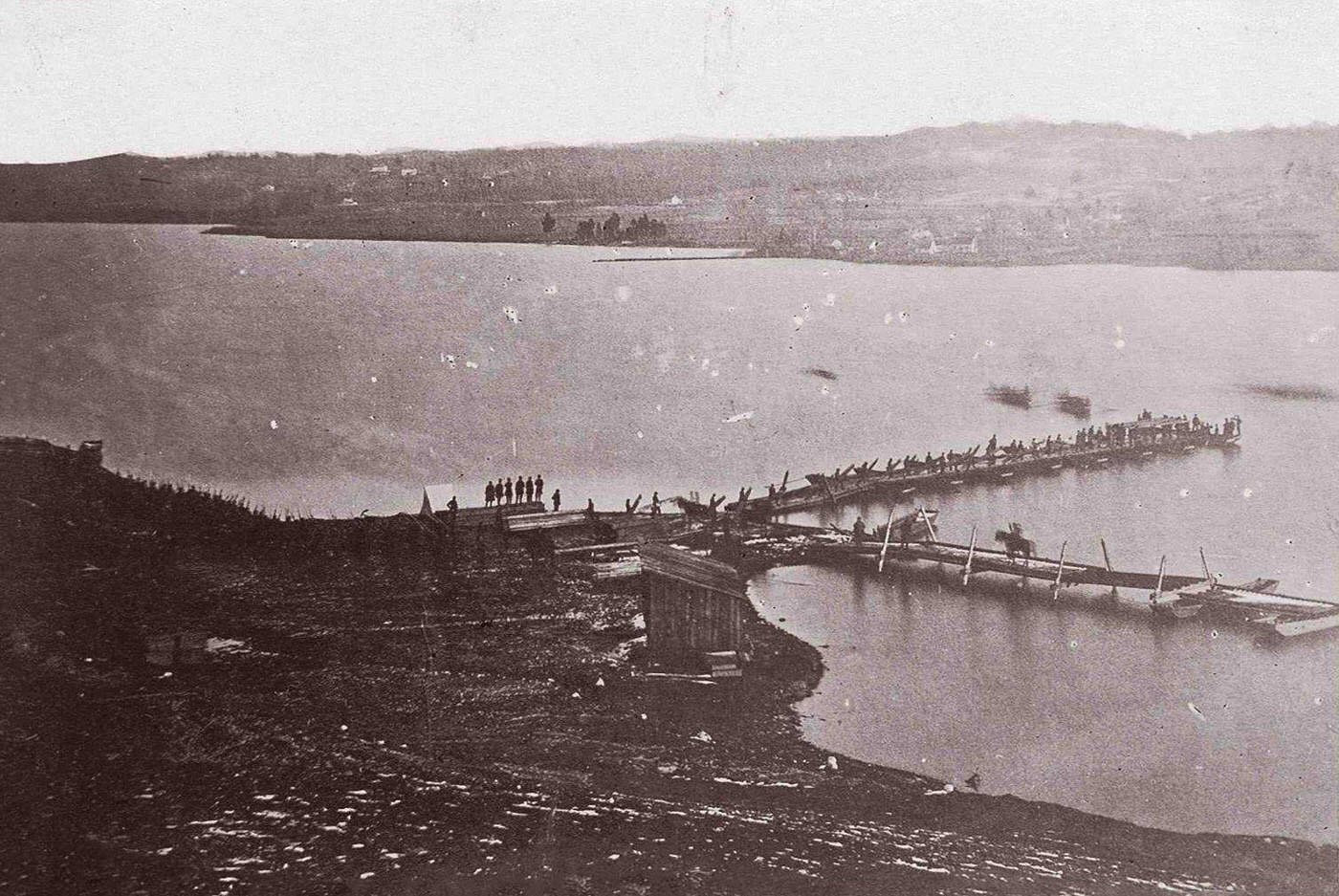
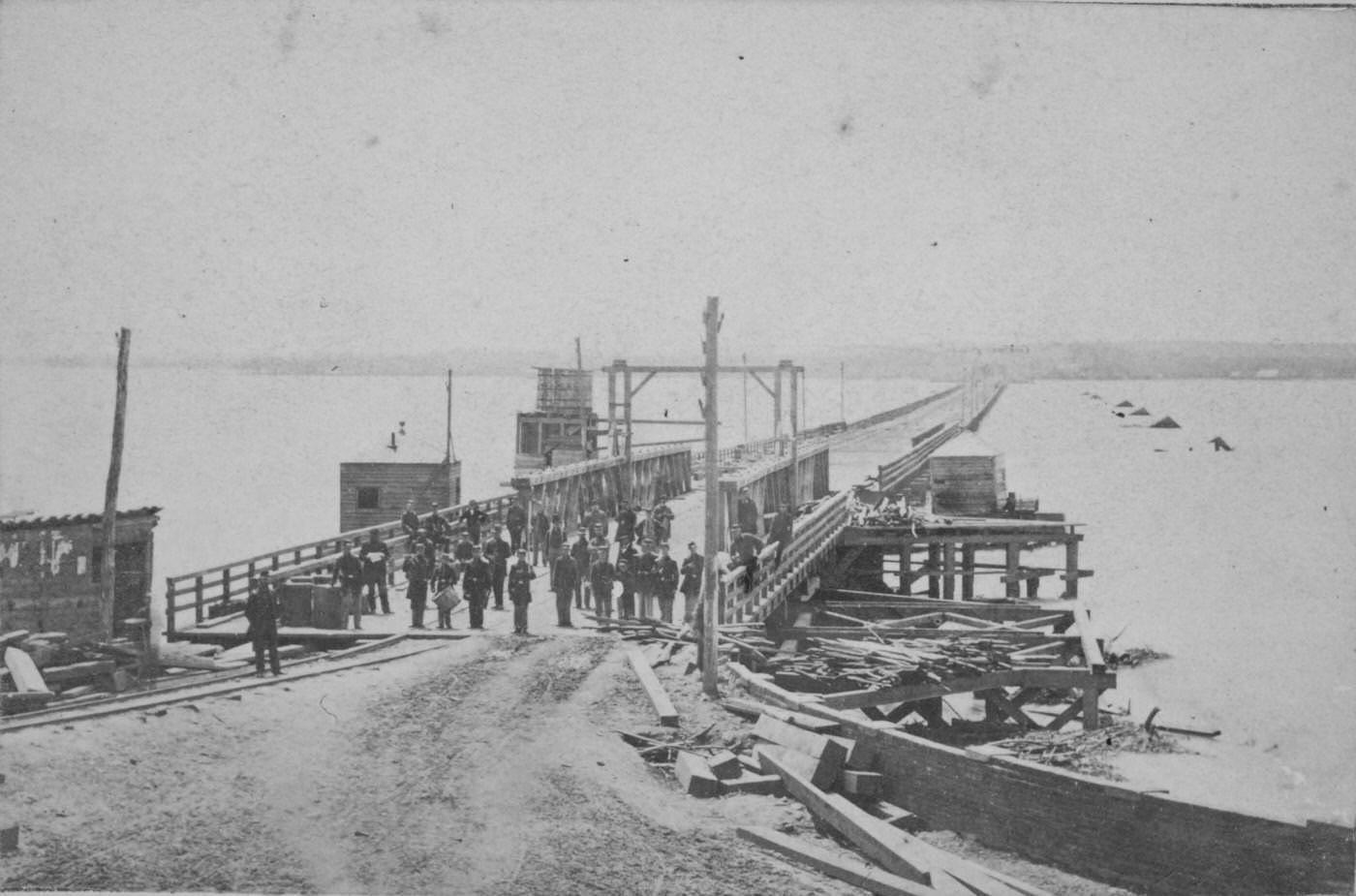
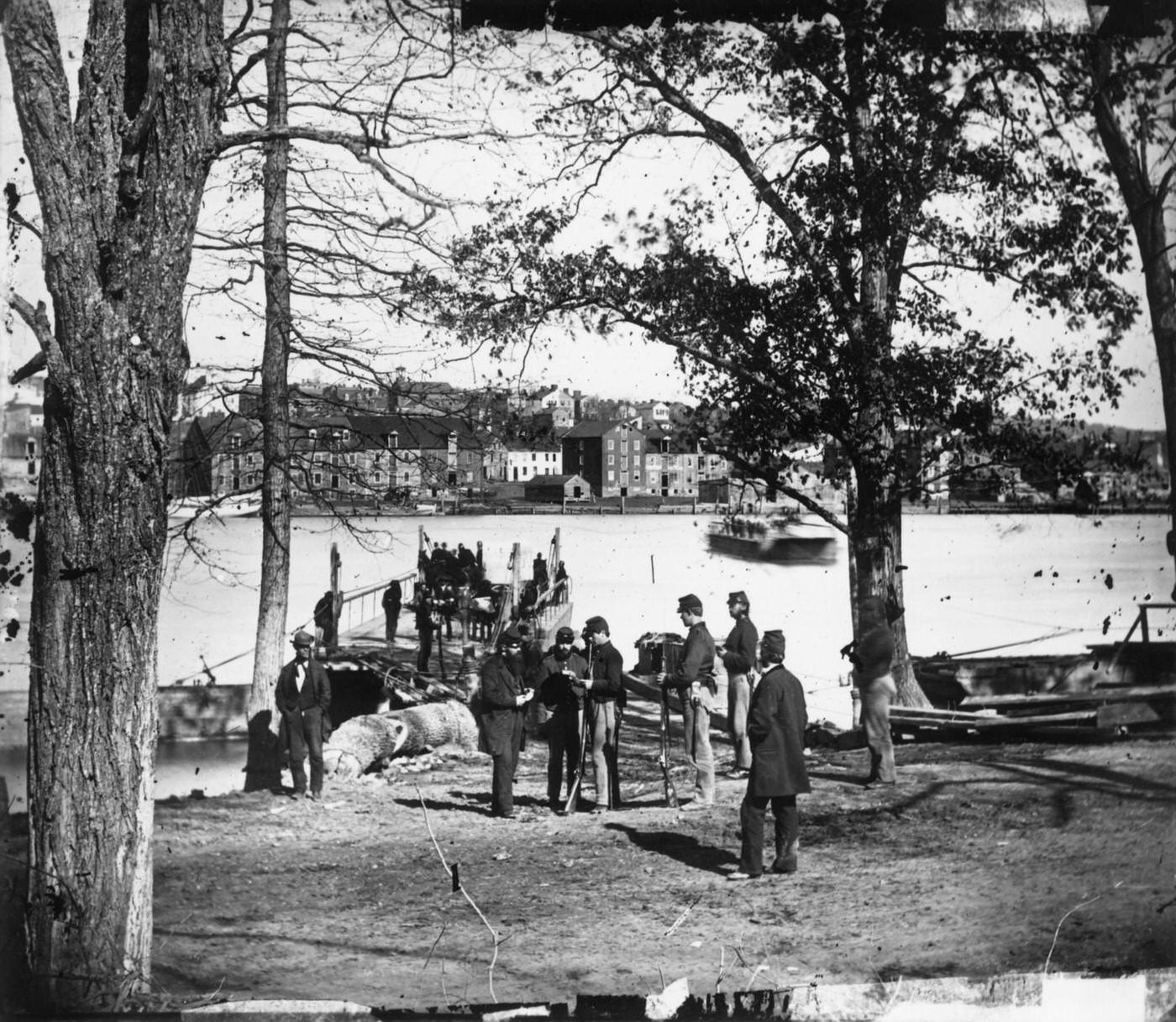
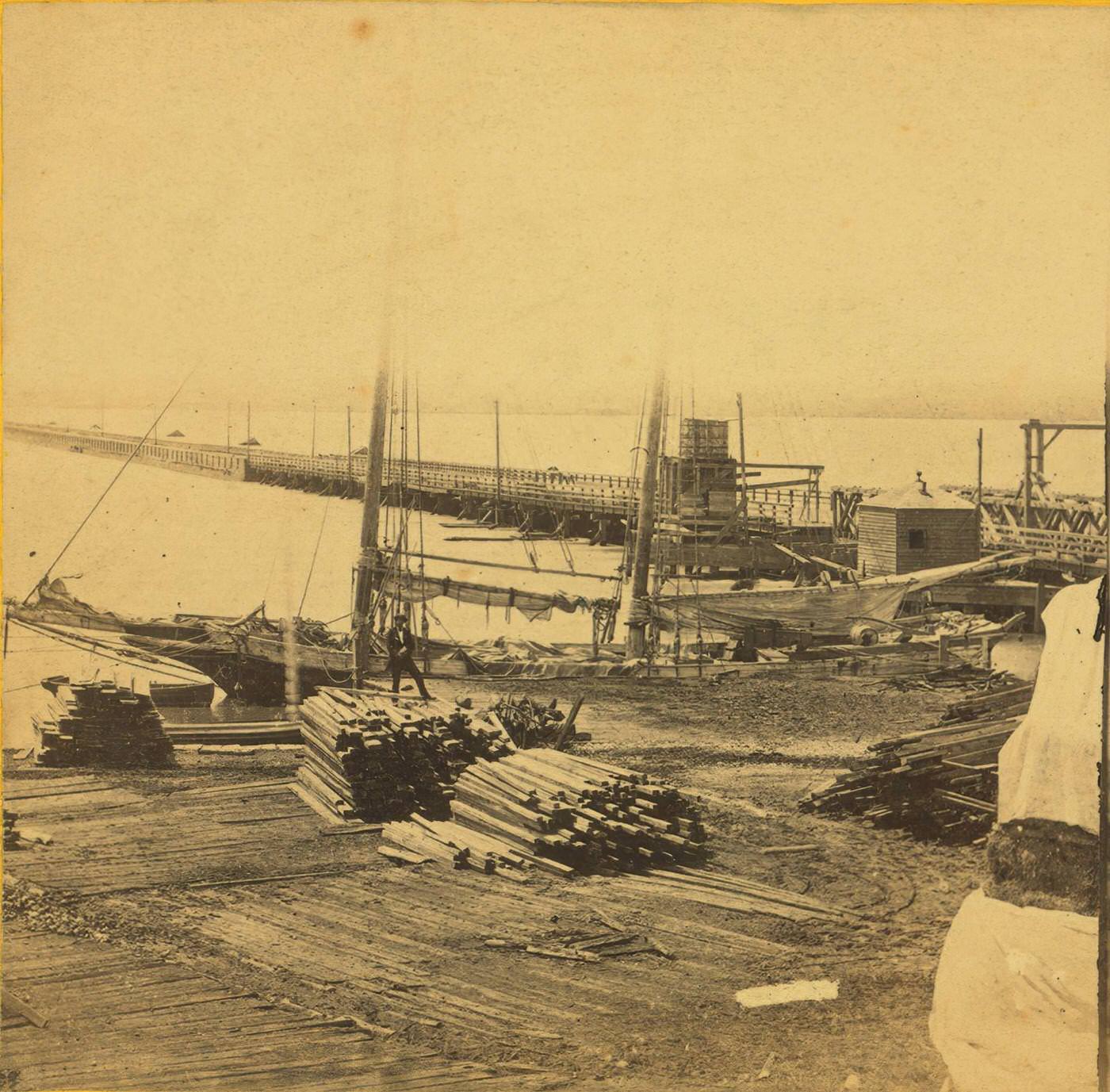
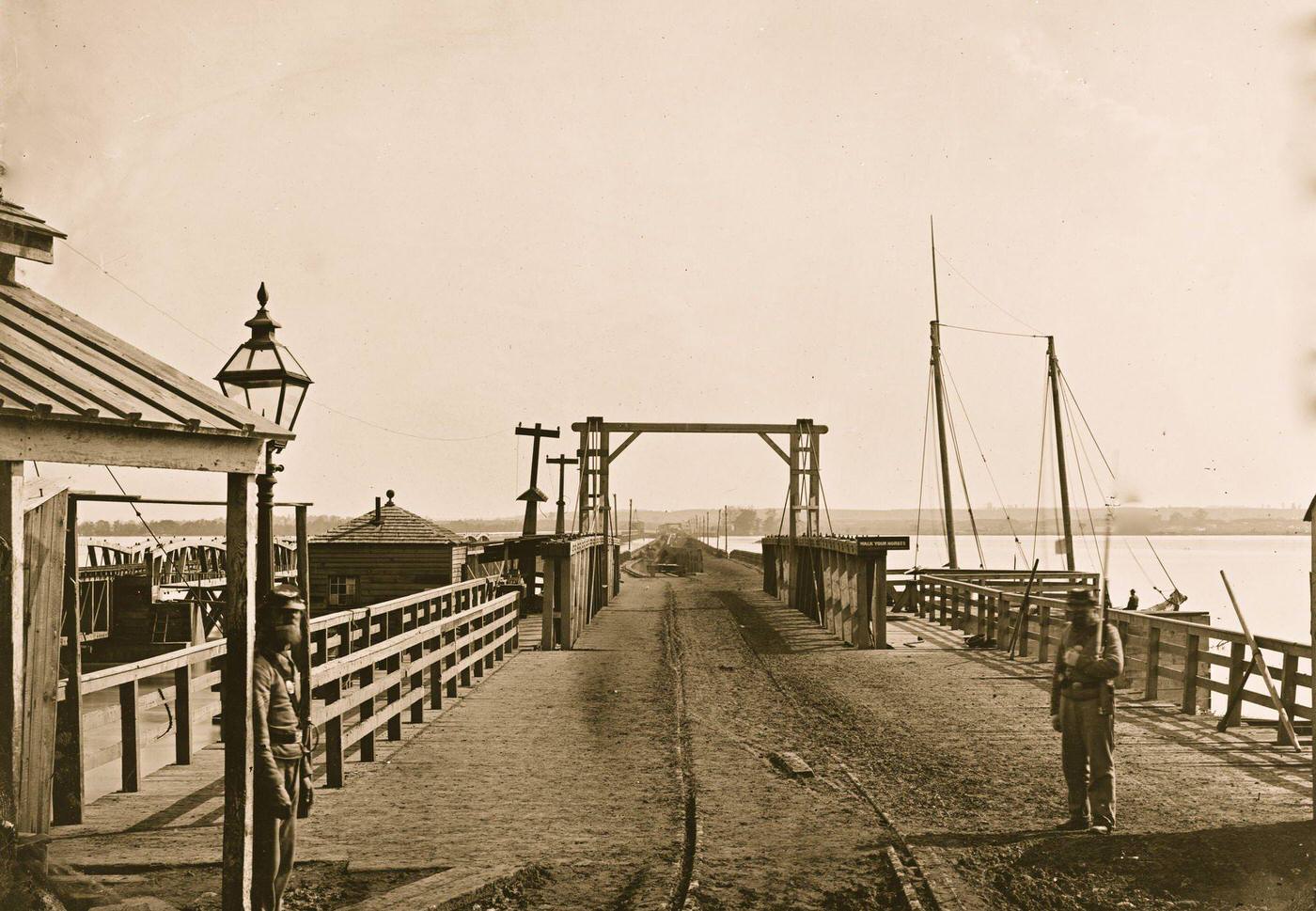
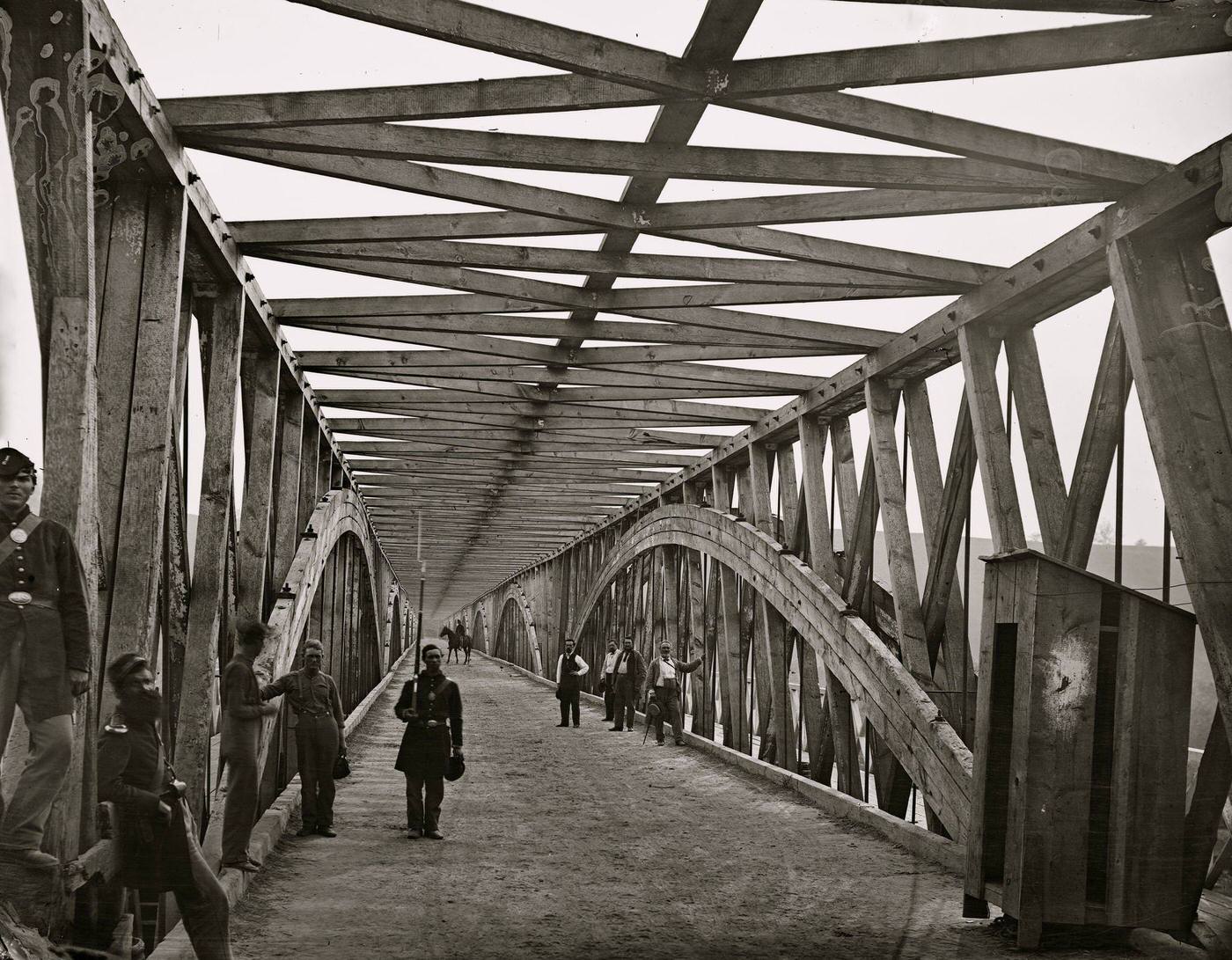
The bridges crossing the Potomac were critical military and civilian infrastructure. The Long Bridge, one of the primary crossings, carried an almost constant flow of troops, supply wagons, artillery, and livestock throughout the war. Union sentries guarded every crossing point. The Chain Bridge to the northwest and the Aqueduct Bridge at Georgetown were also heavily monitored. Losing any of these crossings to Confederate forces would have left Washington dangerously exposed.
Long Bridge, Washington, D.C., 1865Washington, D.C. Chain Bridge over the Potomac; Chesapeake and Ohio Canal in foreground, 1865Aqueduct Bridge, Georgetown, D.C., looking toward Washington, 1865
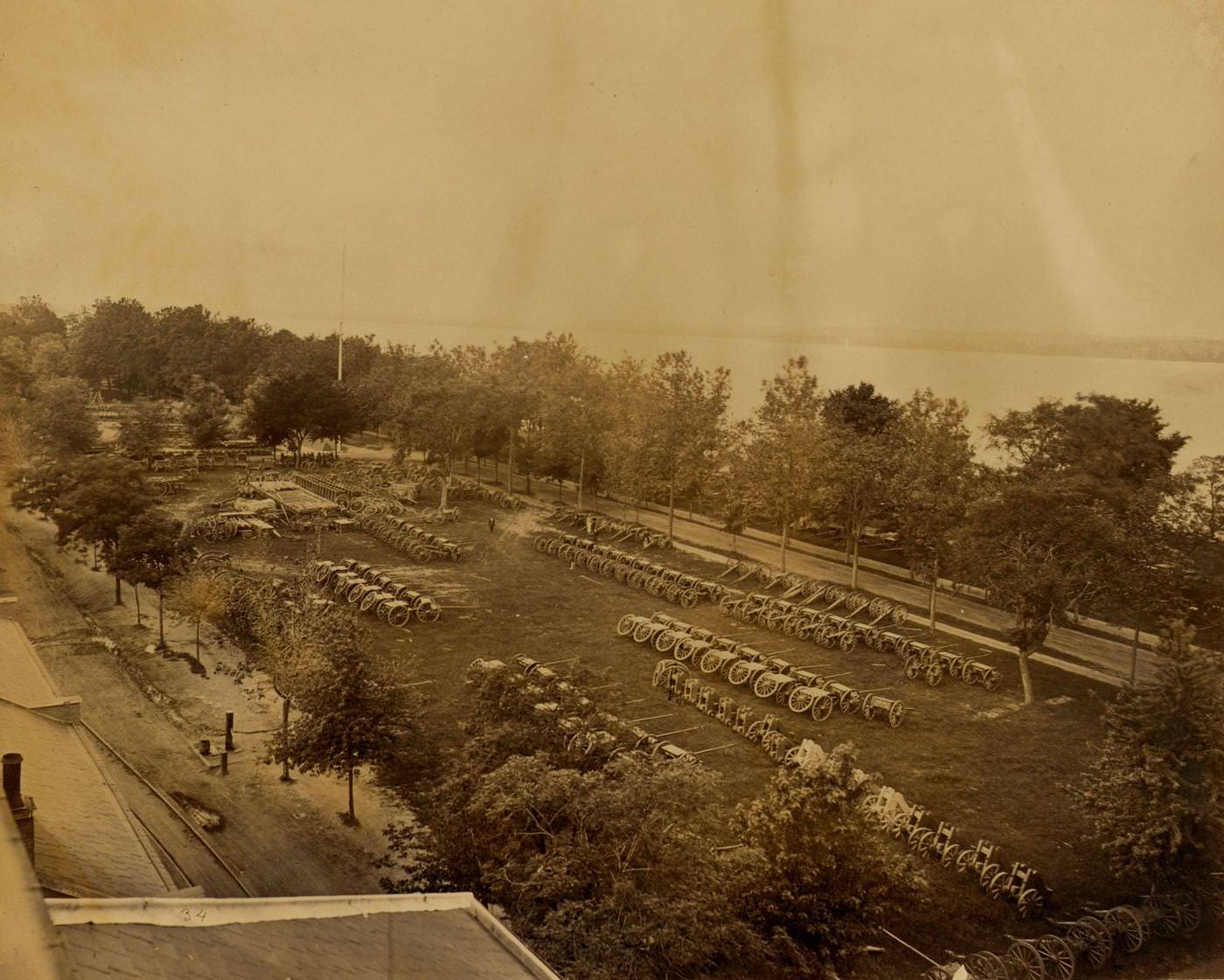
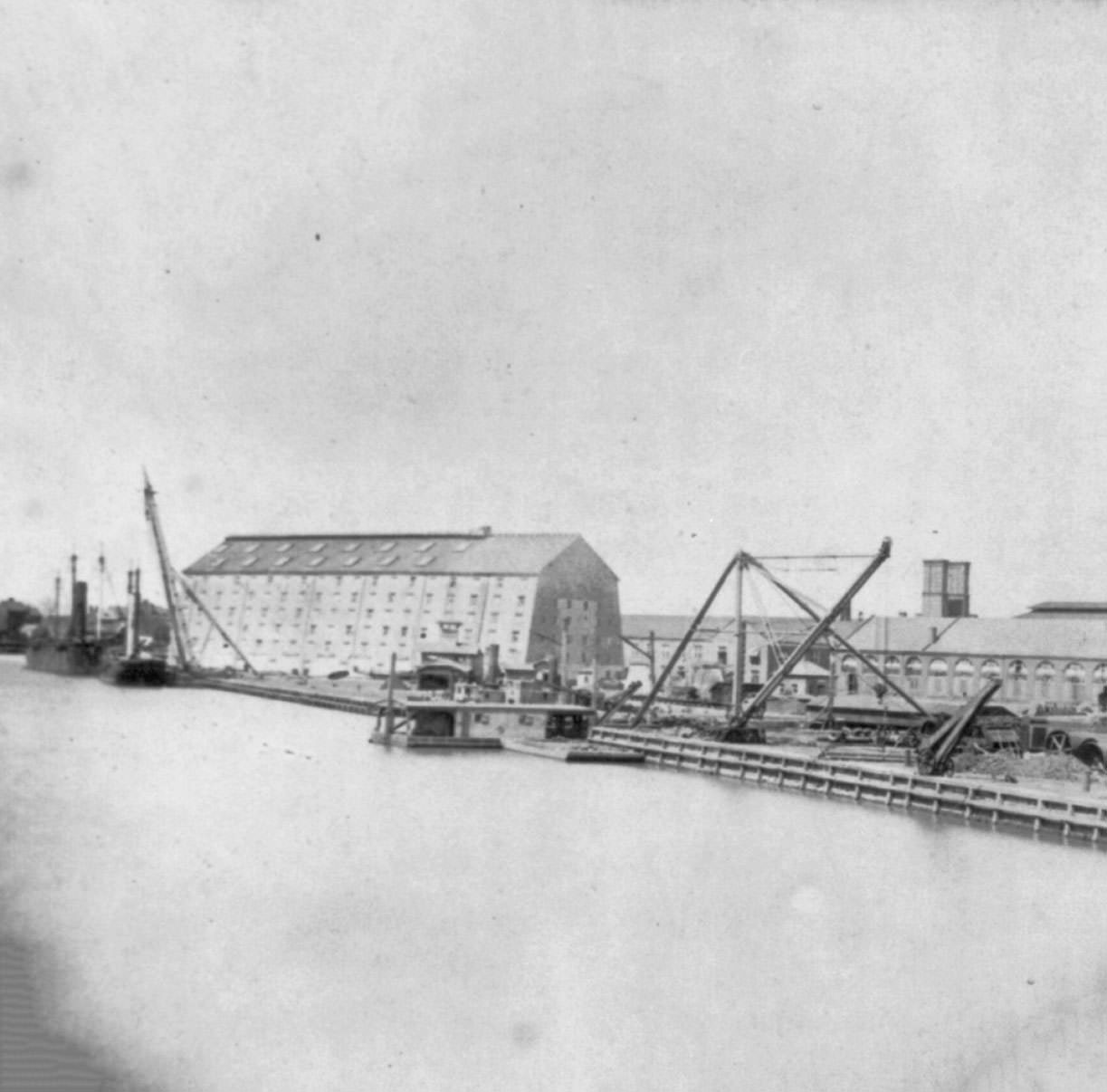
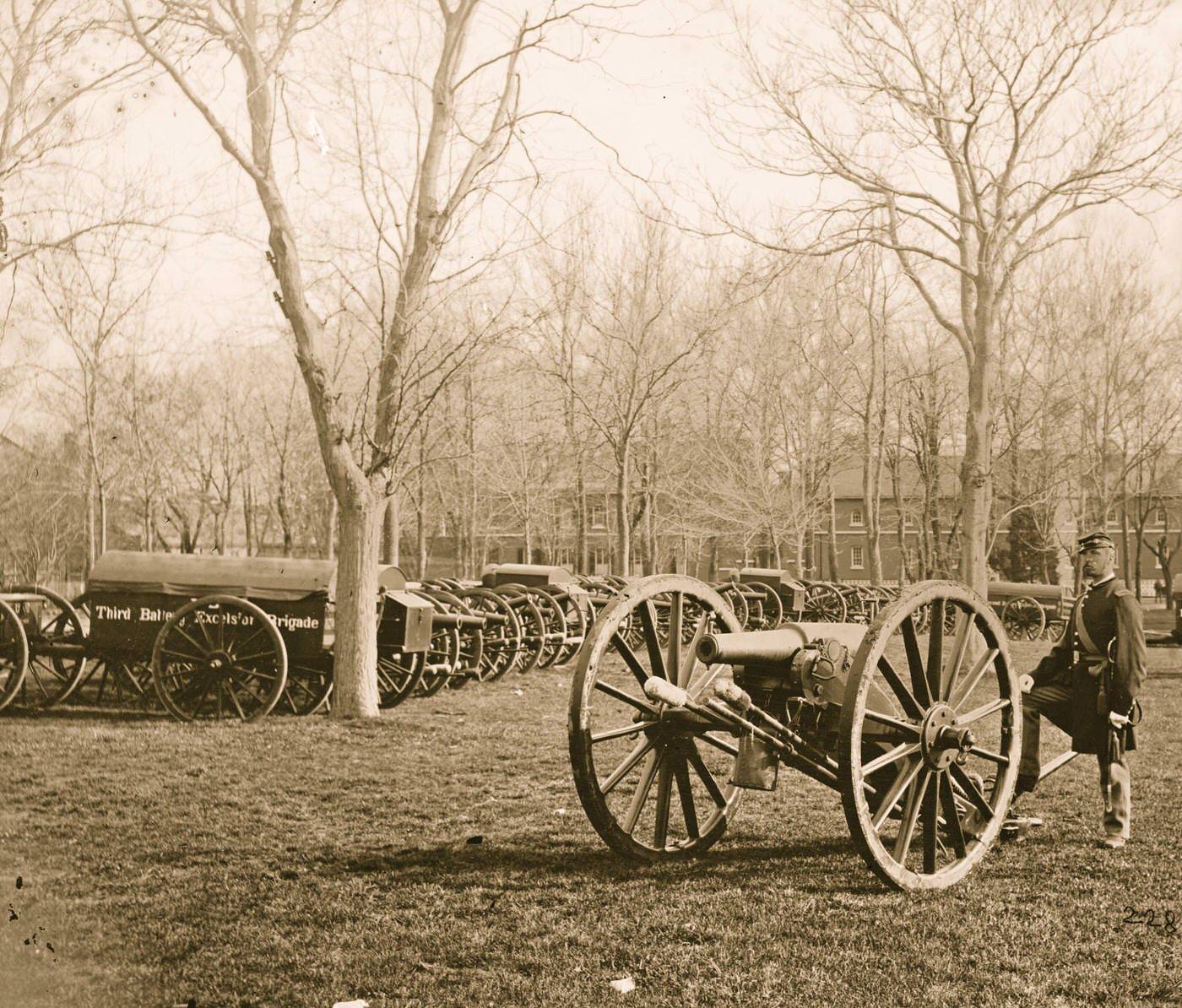
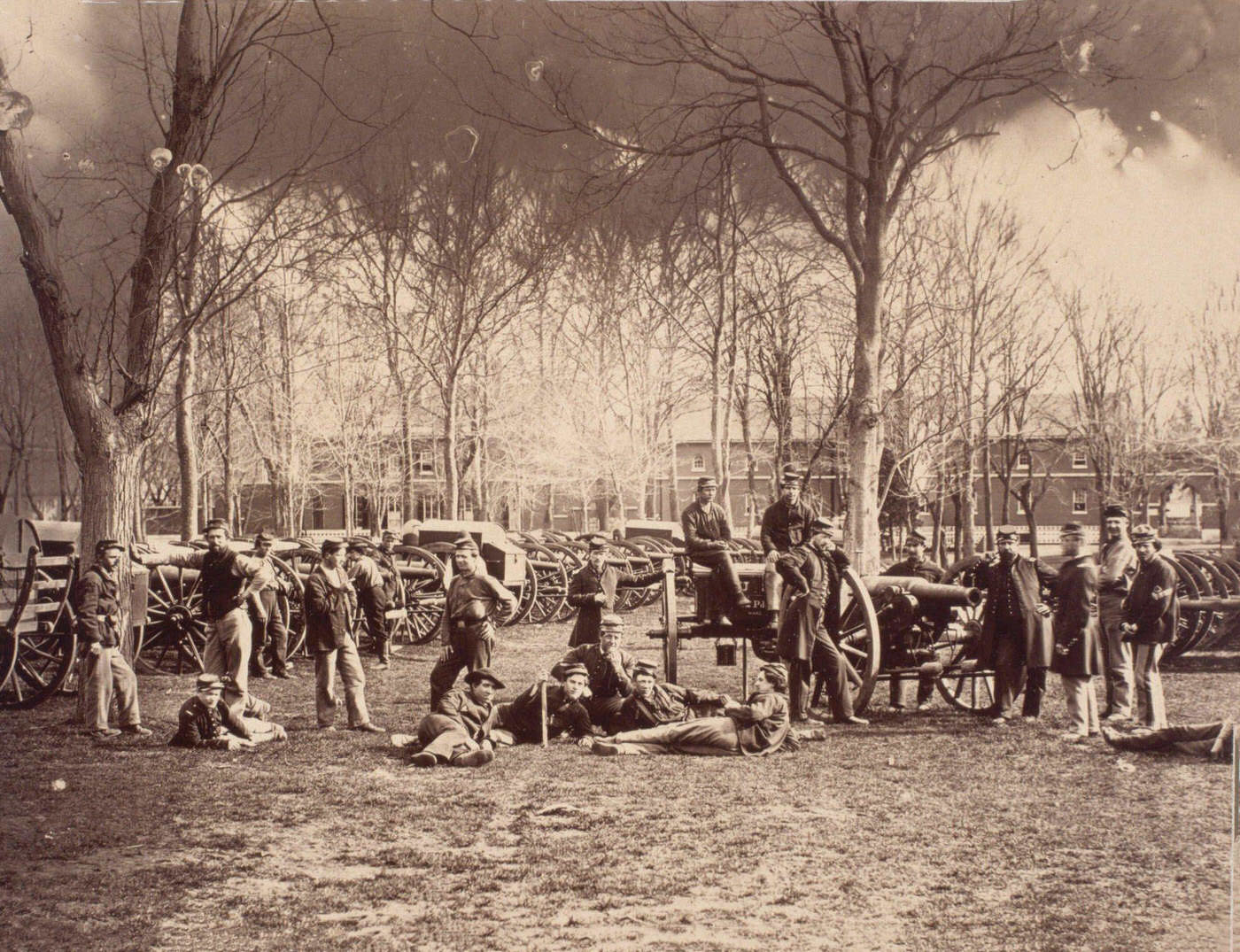
The city’s arsenal and navy yard were two of the most important military installations in Washington. The Washington Arsenal, located near the confluence of the Potomac and Anacostia Rivers, stored and manufactured weapons, ammunition, and artillery for Union forces. The Washington Navy Yard, established in 1799, built and repaired naval vessels and served as a major ordnance facility during the war. Both sites were tightly guarded, and both appear repeatedly in photographs taken during the conflict.
View in arsenal yard, Washington, D.C., 1863Washington Navy Yard. View of dock with large buildings and large cranes and derricks, 1867
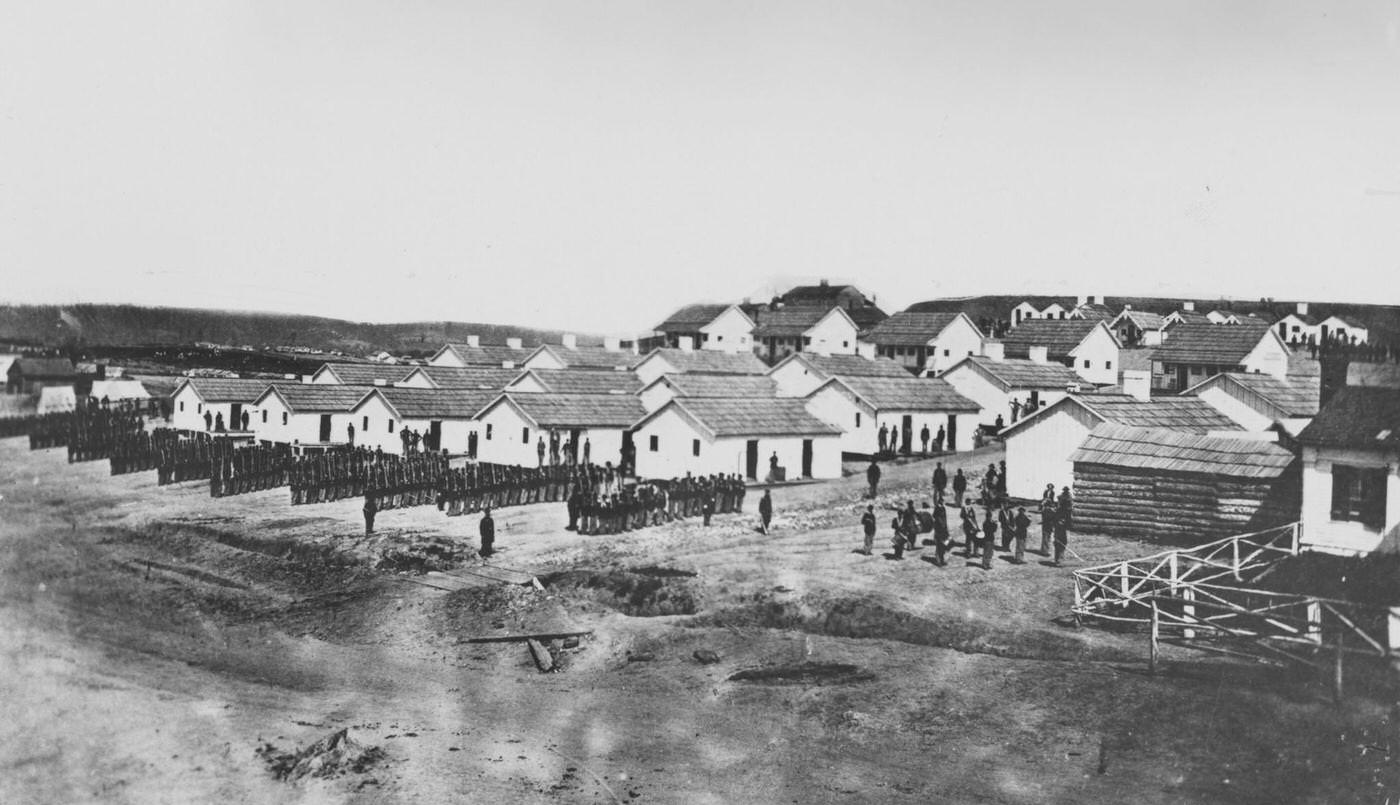
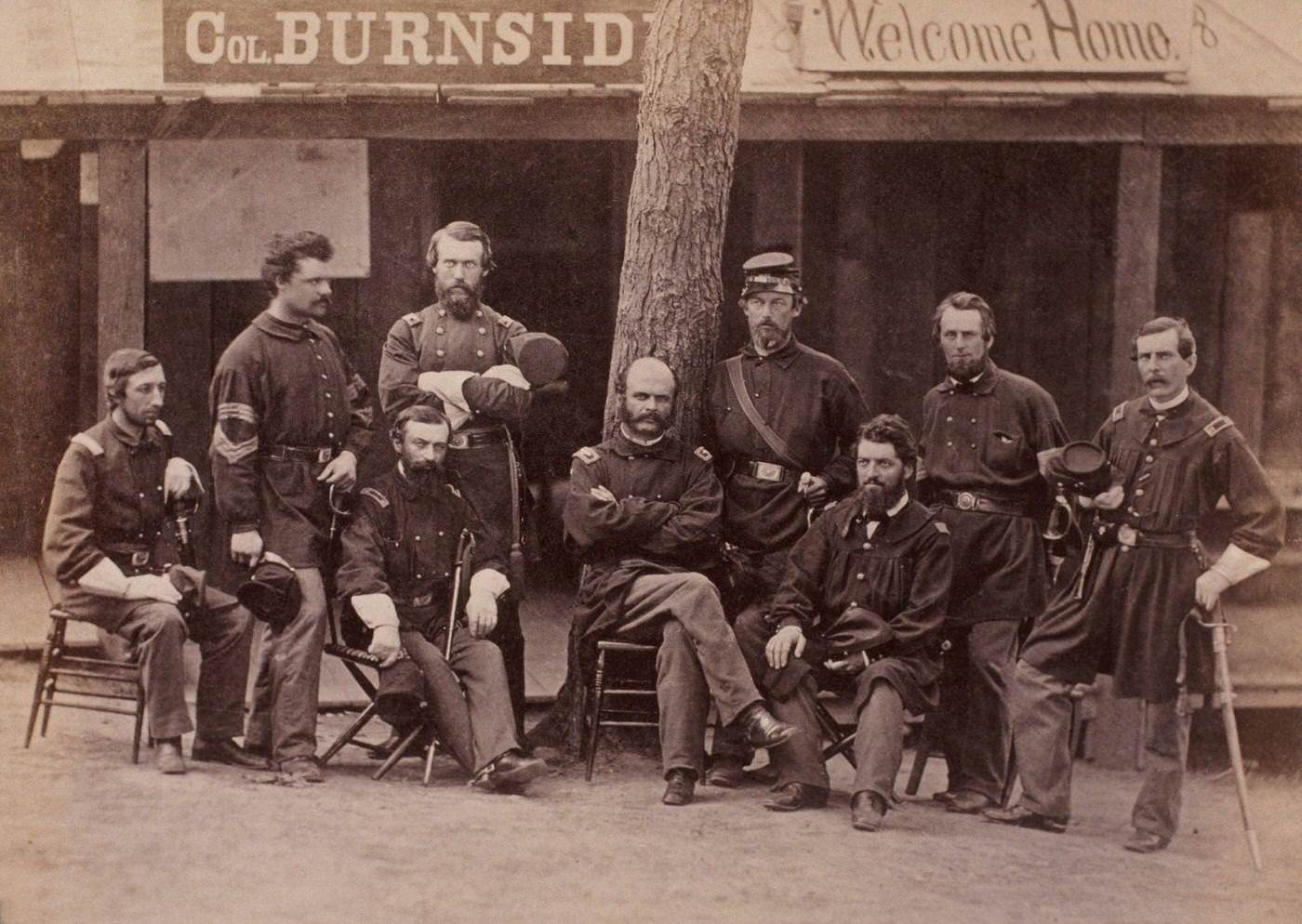
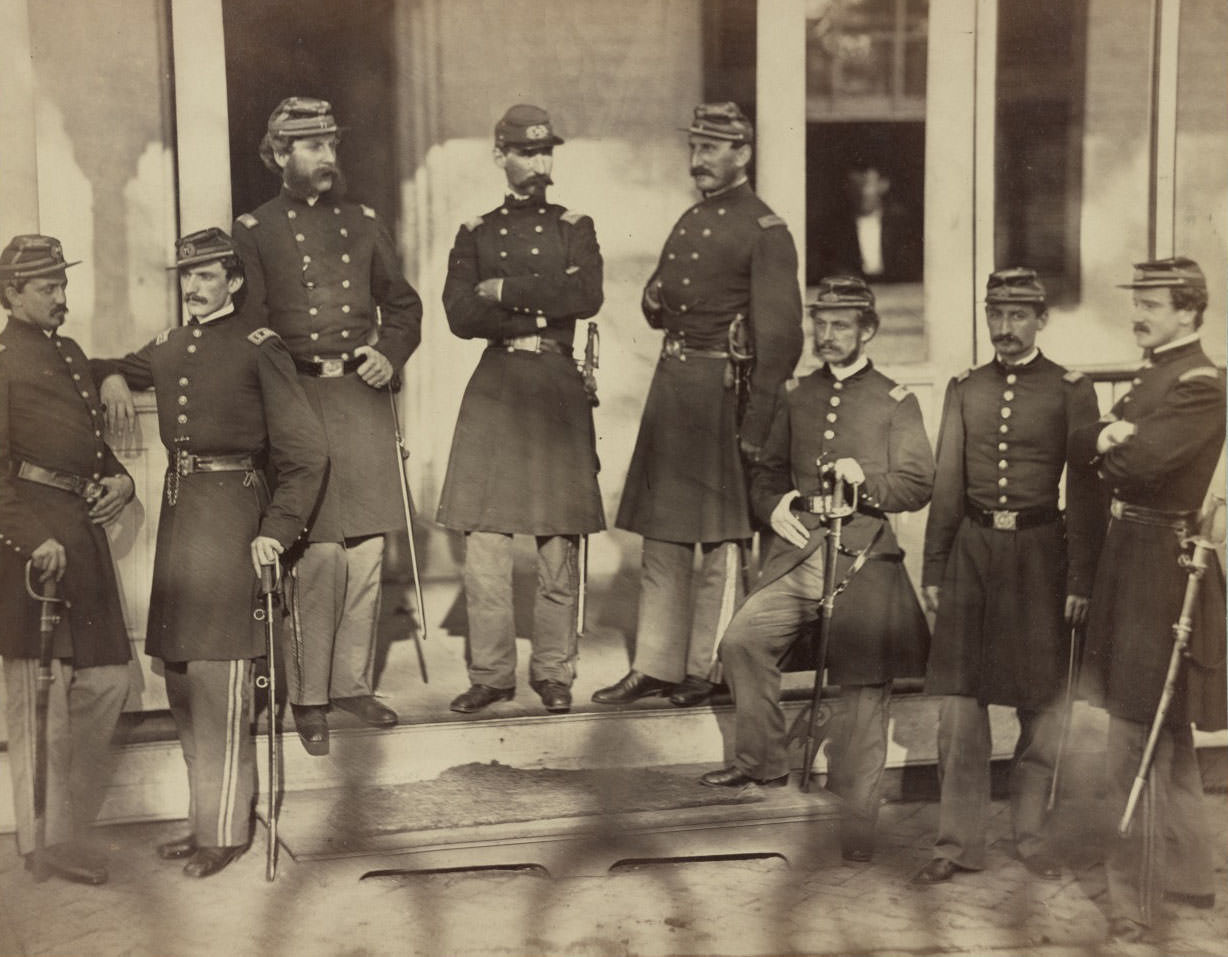
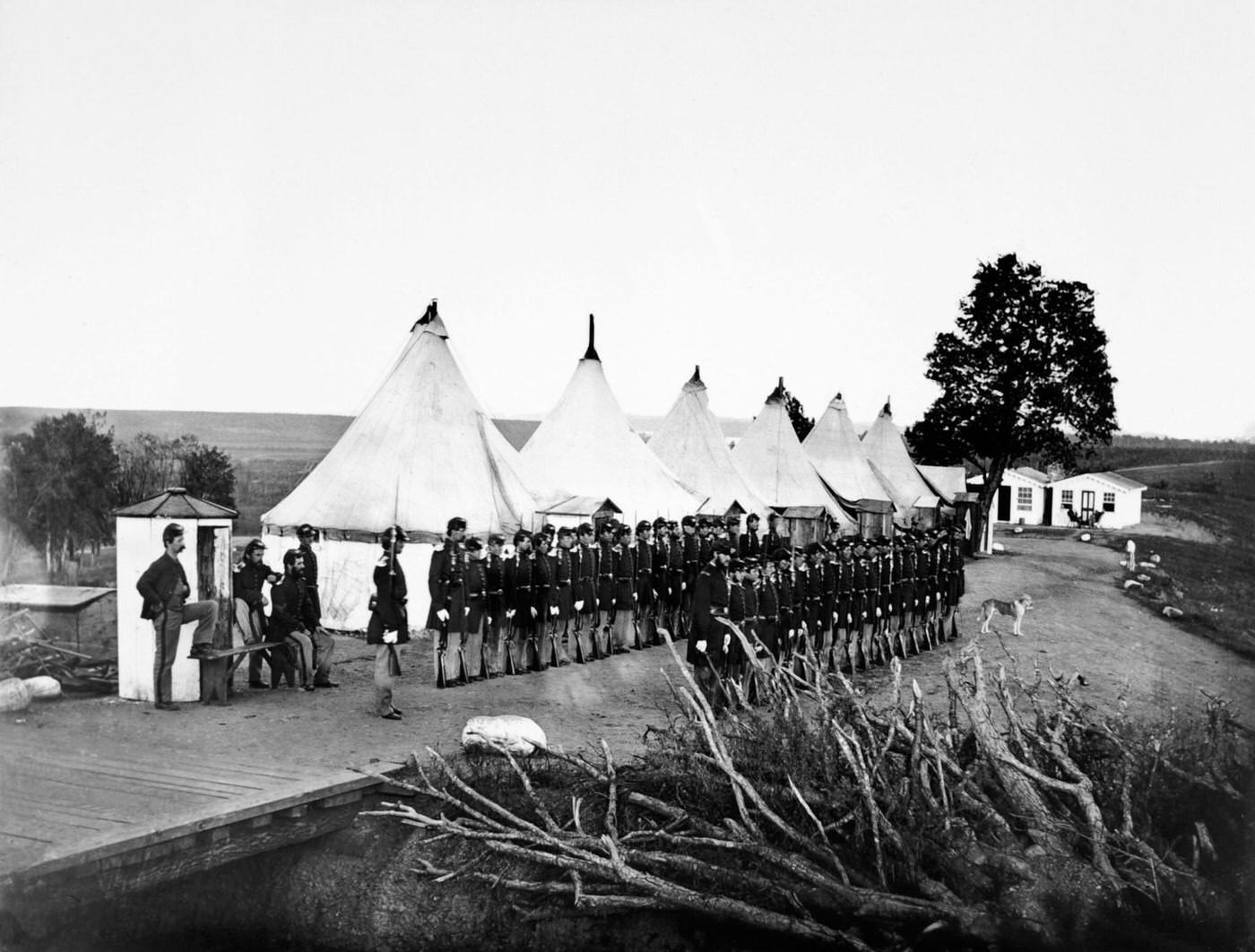
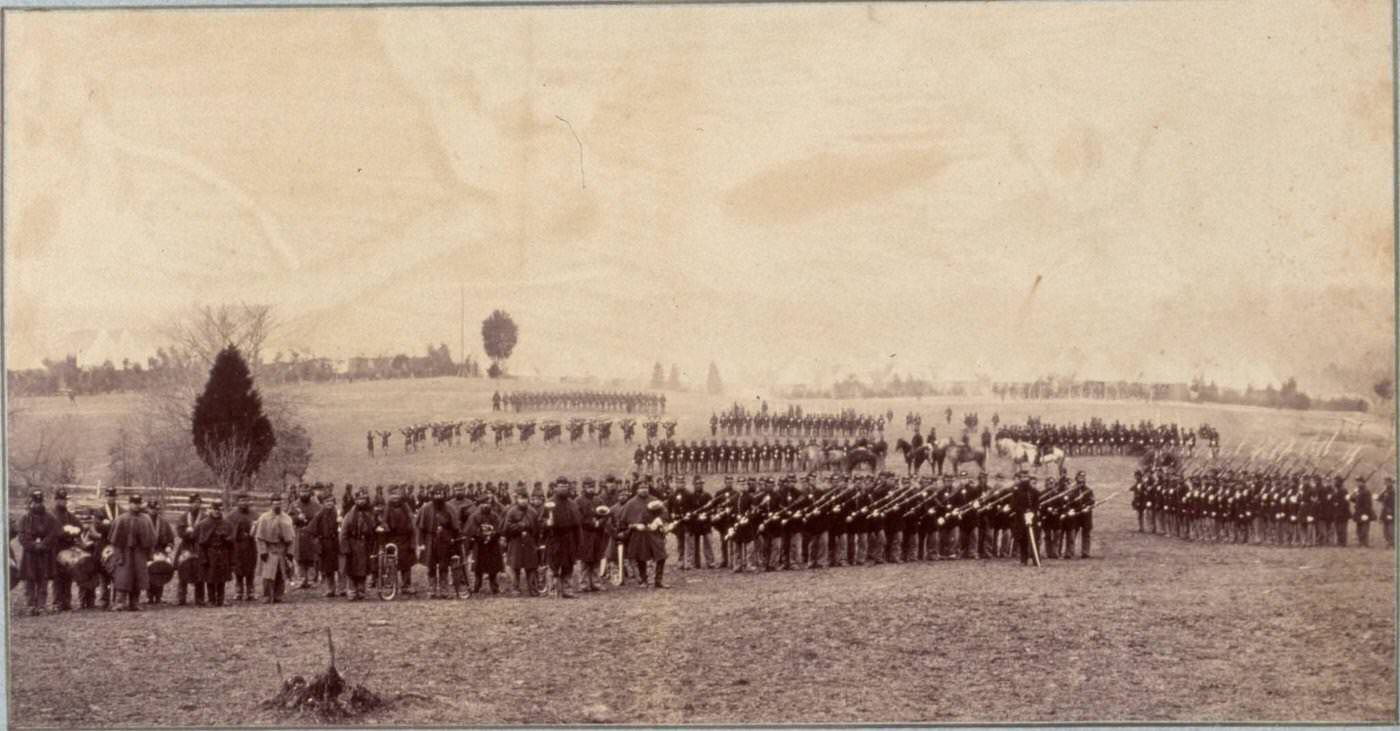
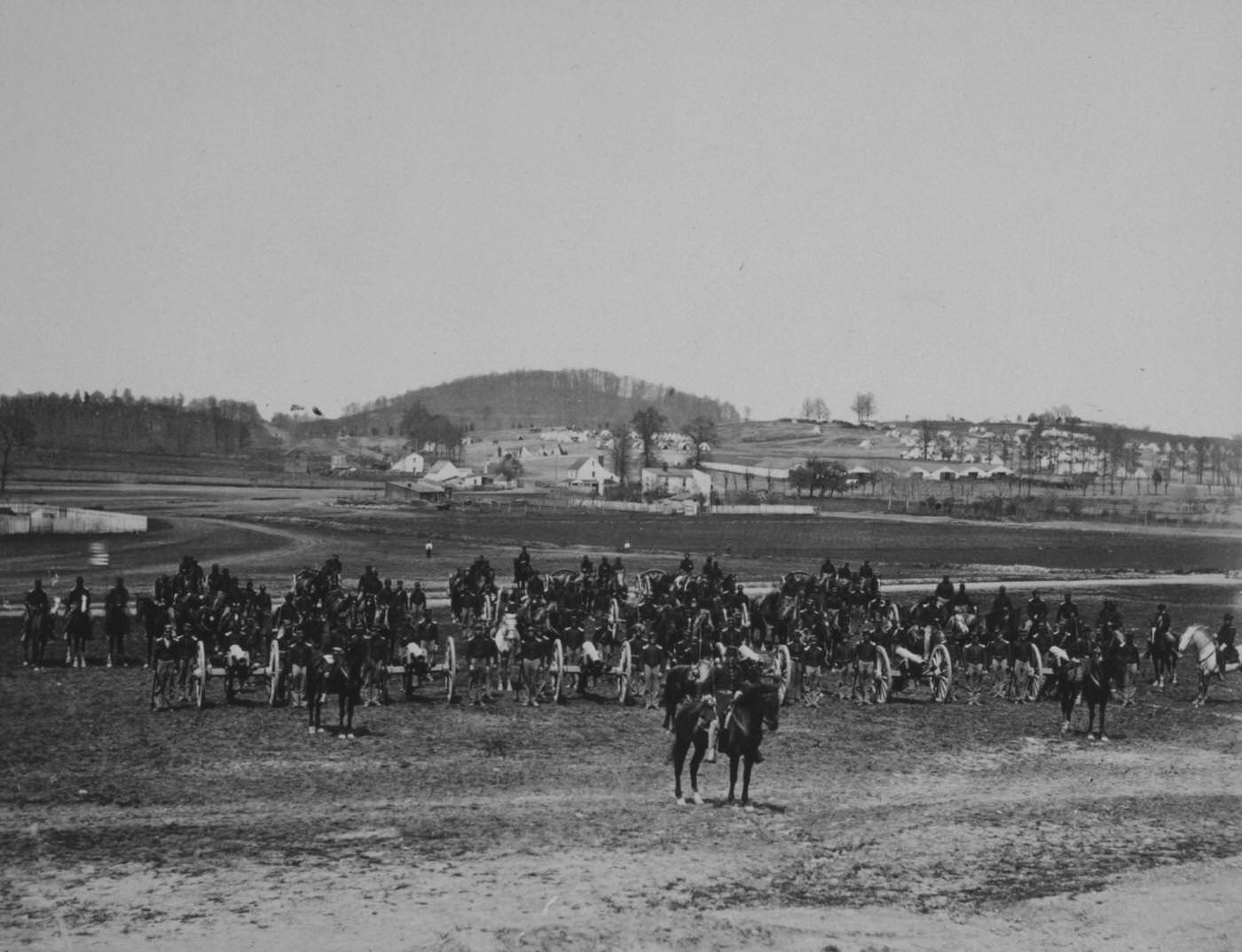
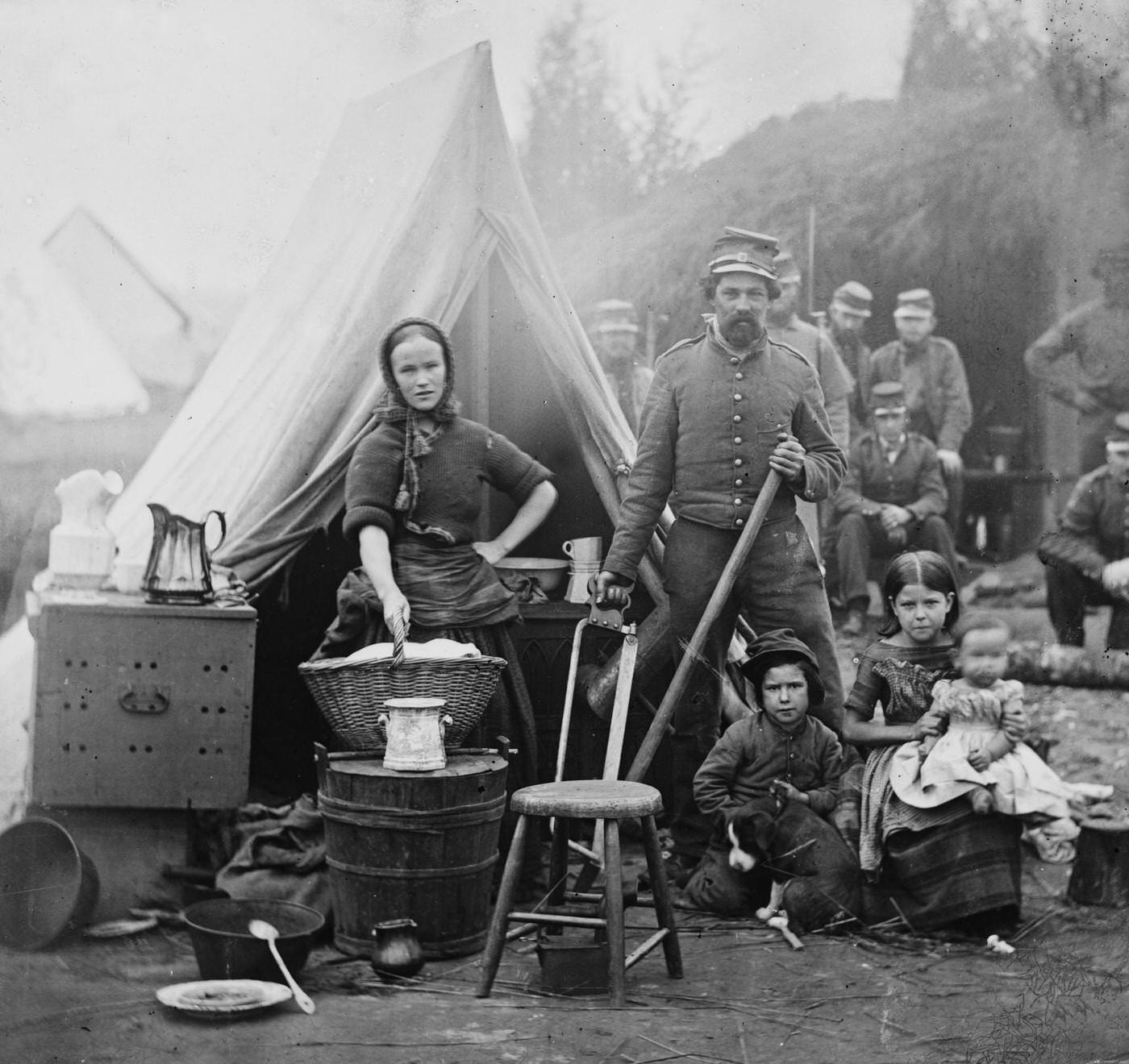
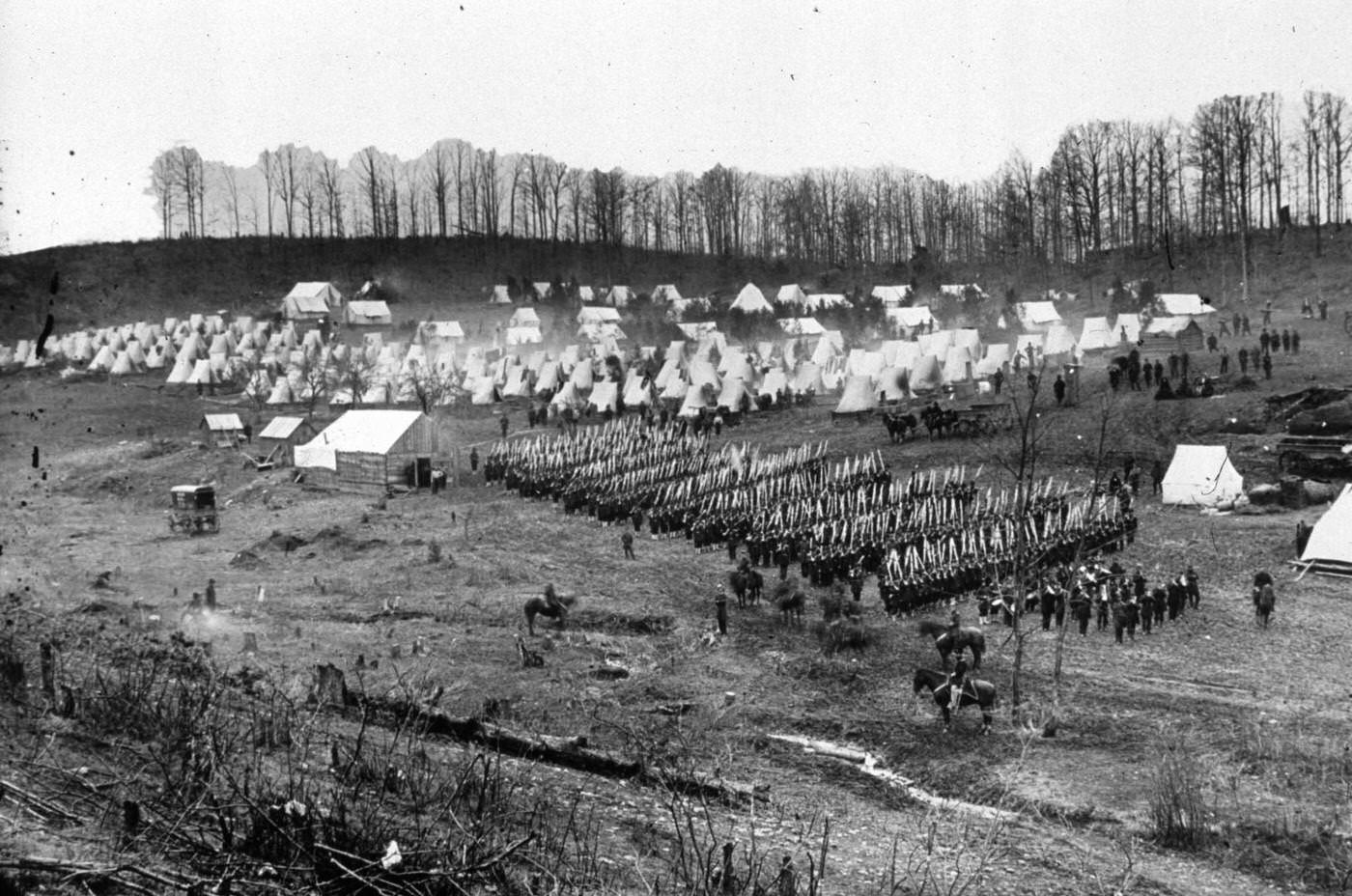
Washington was also a city of soldiers in transit. Regiments arrived from across the North, camped on the outskirts, drilled on open fields, and awaited deployment. Photographs from 1861 and 1862 show sprawling tent cities near Georgetown, companies drilling in formation, and officers gathered outside headquarters buildings. The 31st Pennsylvania Infantry camped near Fort Slocum. The 96th Pennsylvania Regiment drilled at Camp Northumberland. Colonel Ambrose Burnside posed with the staff of the 1st Rhode Island Infantry in the capital before leading his regiment into battle.
View of a Union encampment near Washington D.C., 1862.Portrait of Colonel Ambrose Burnside and his staff while he commanded the 1st Rhode Island Infantry Regiment in 1861.
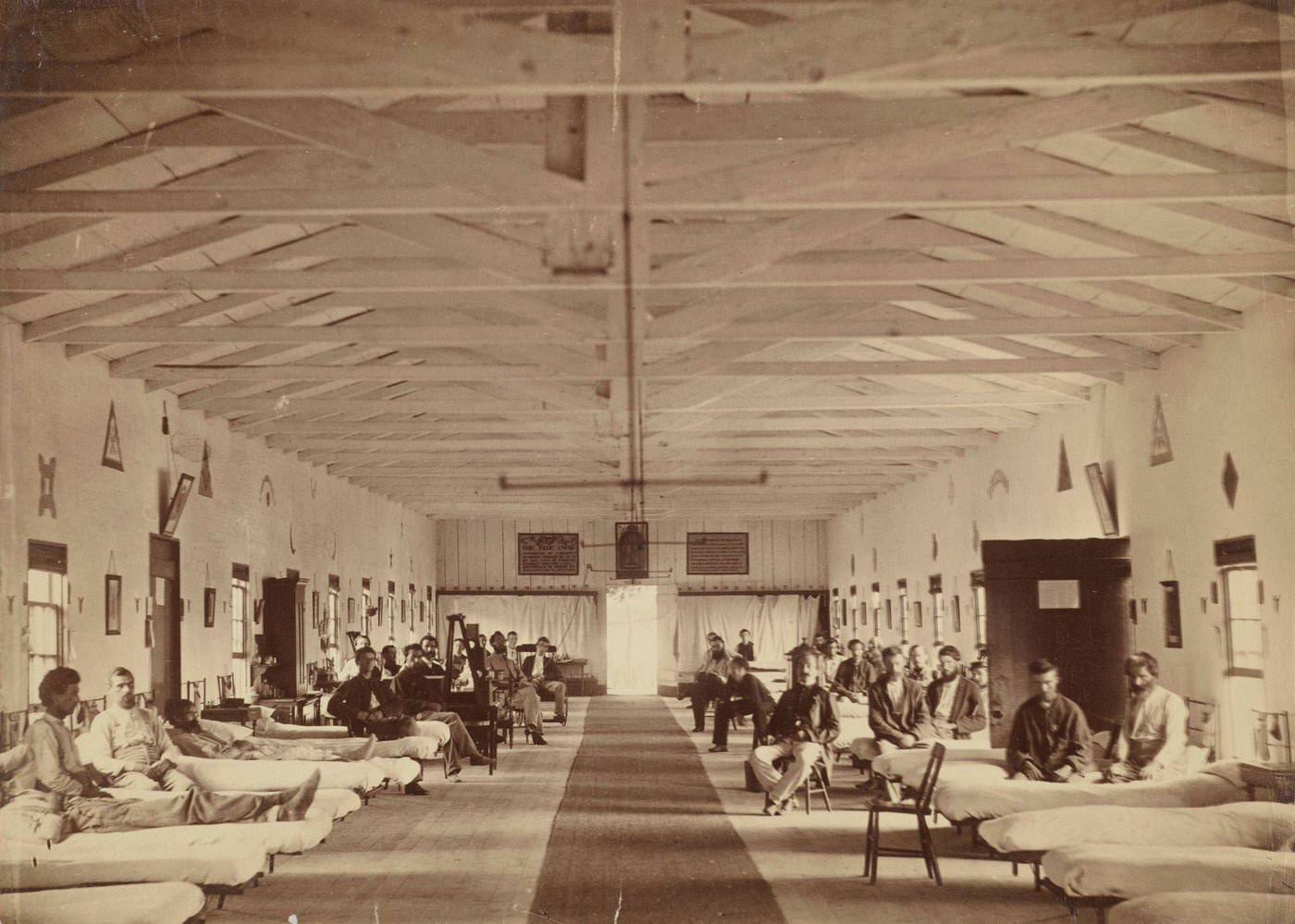
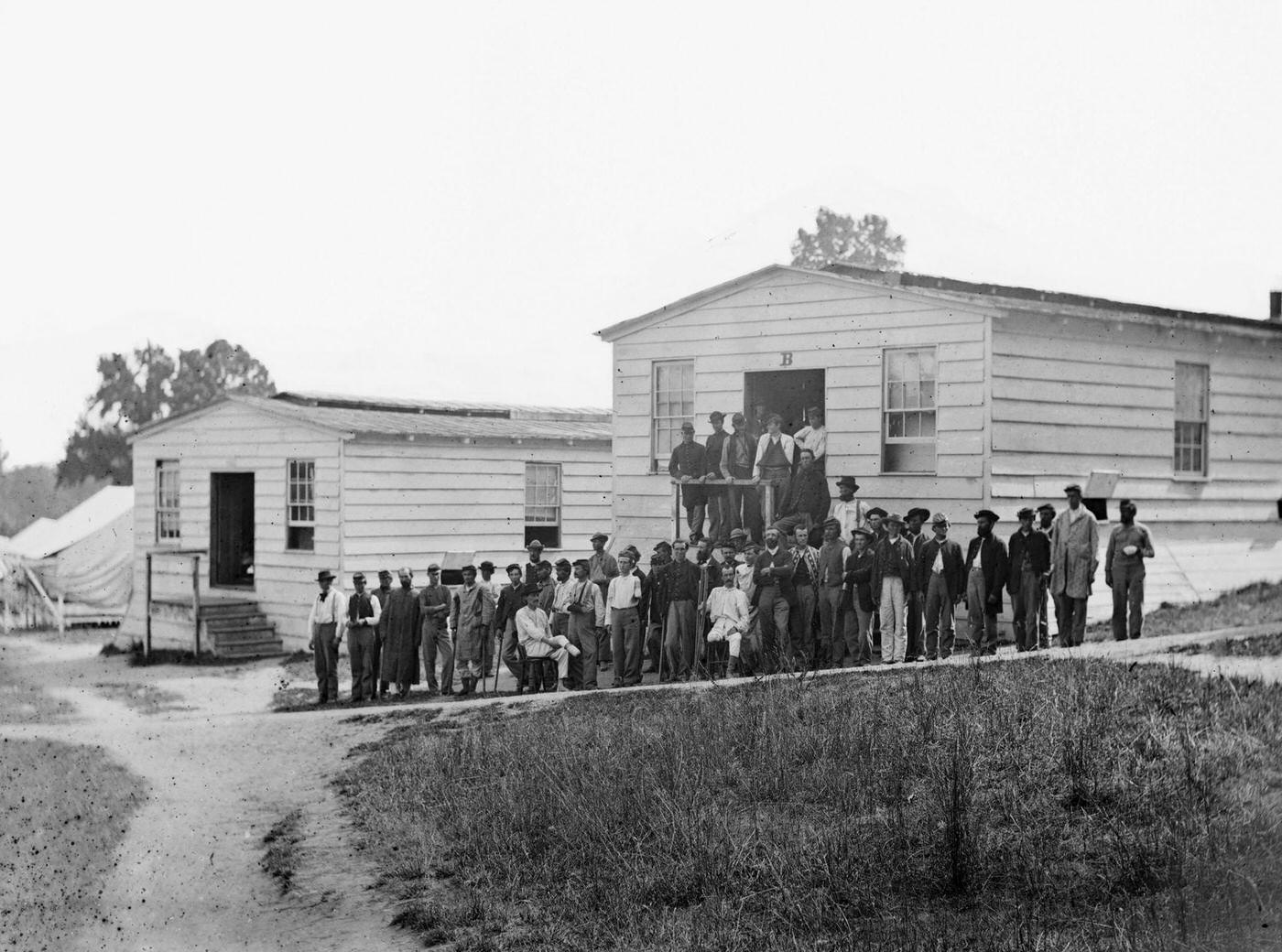
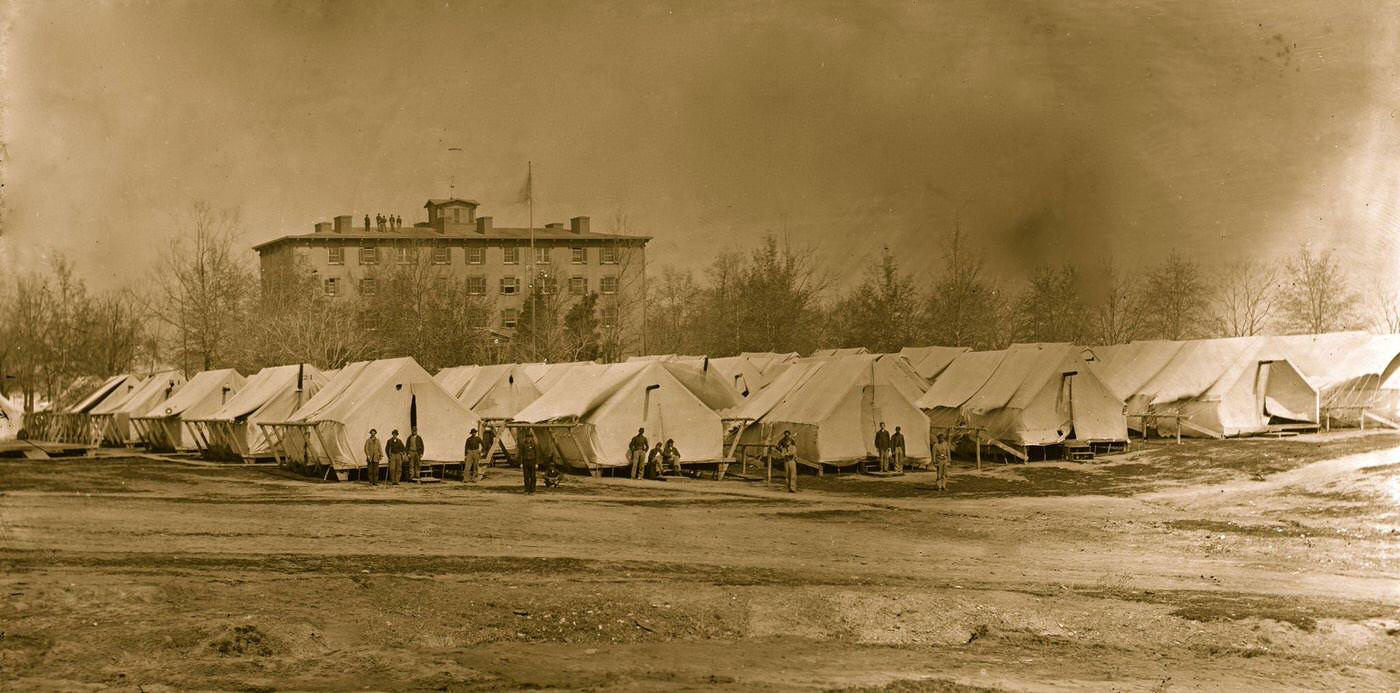
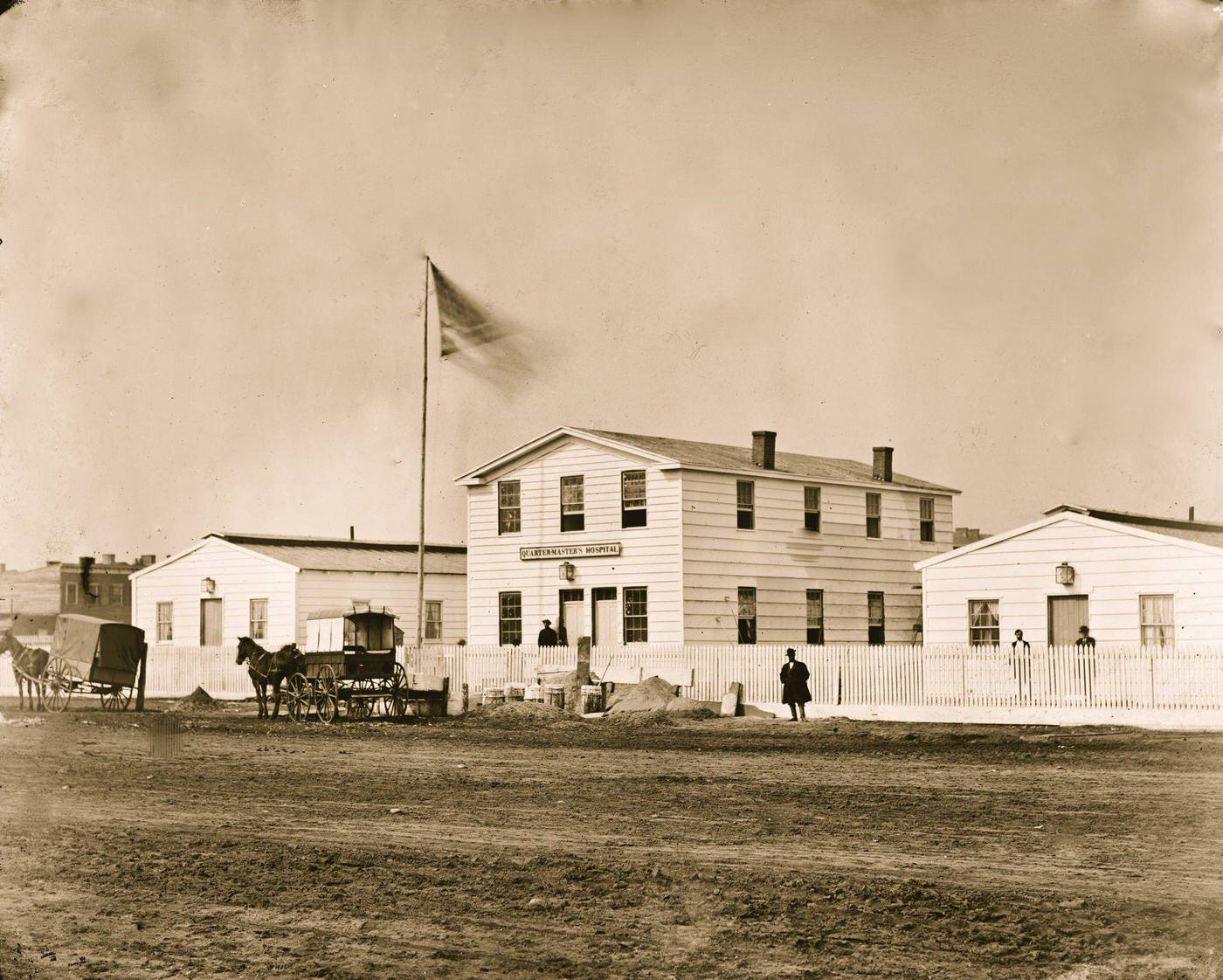
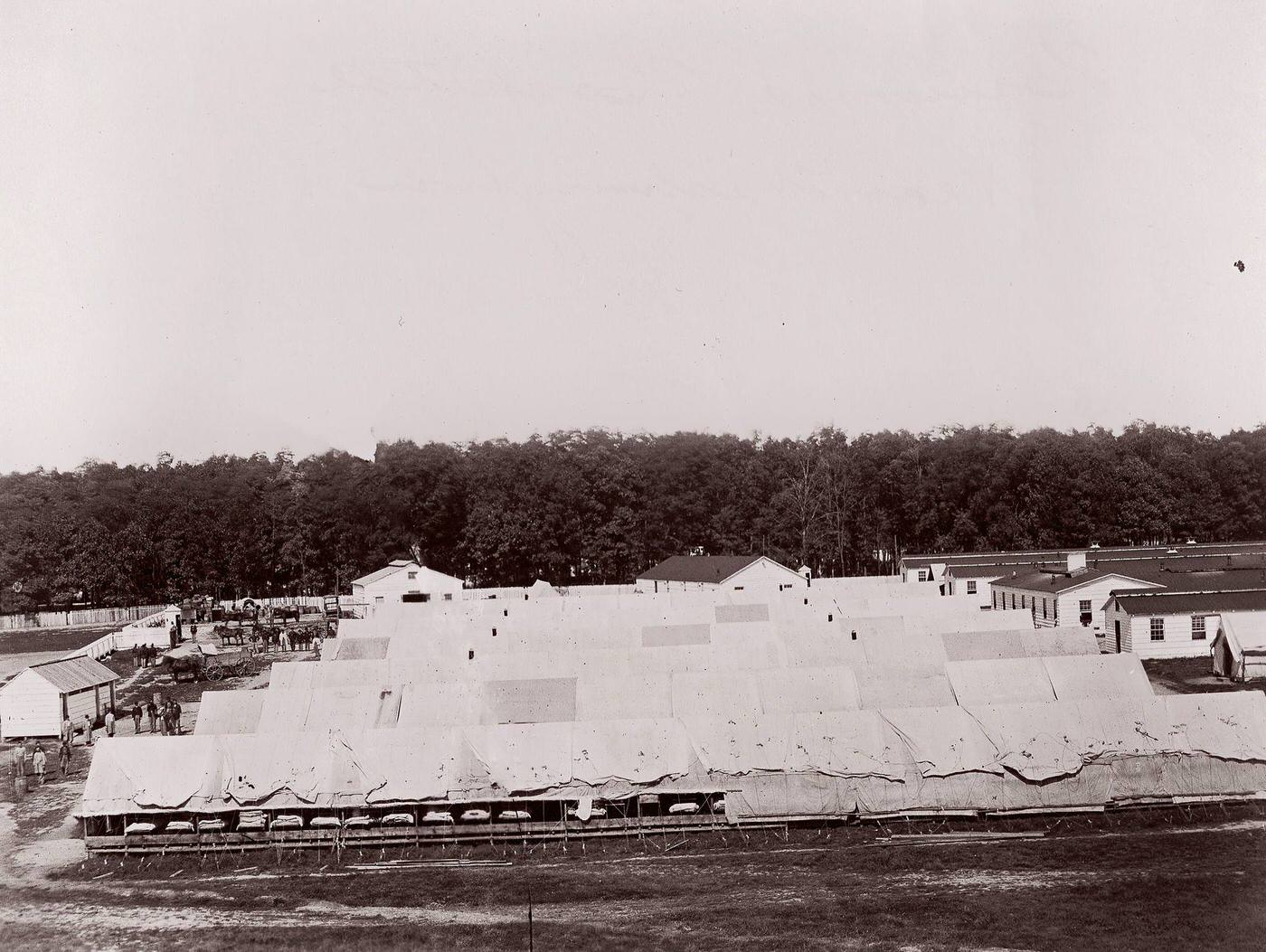
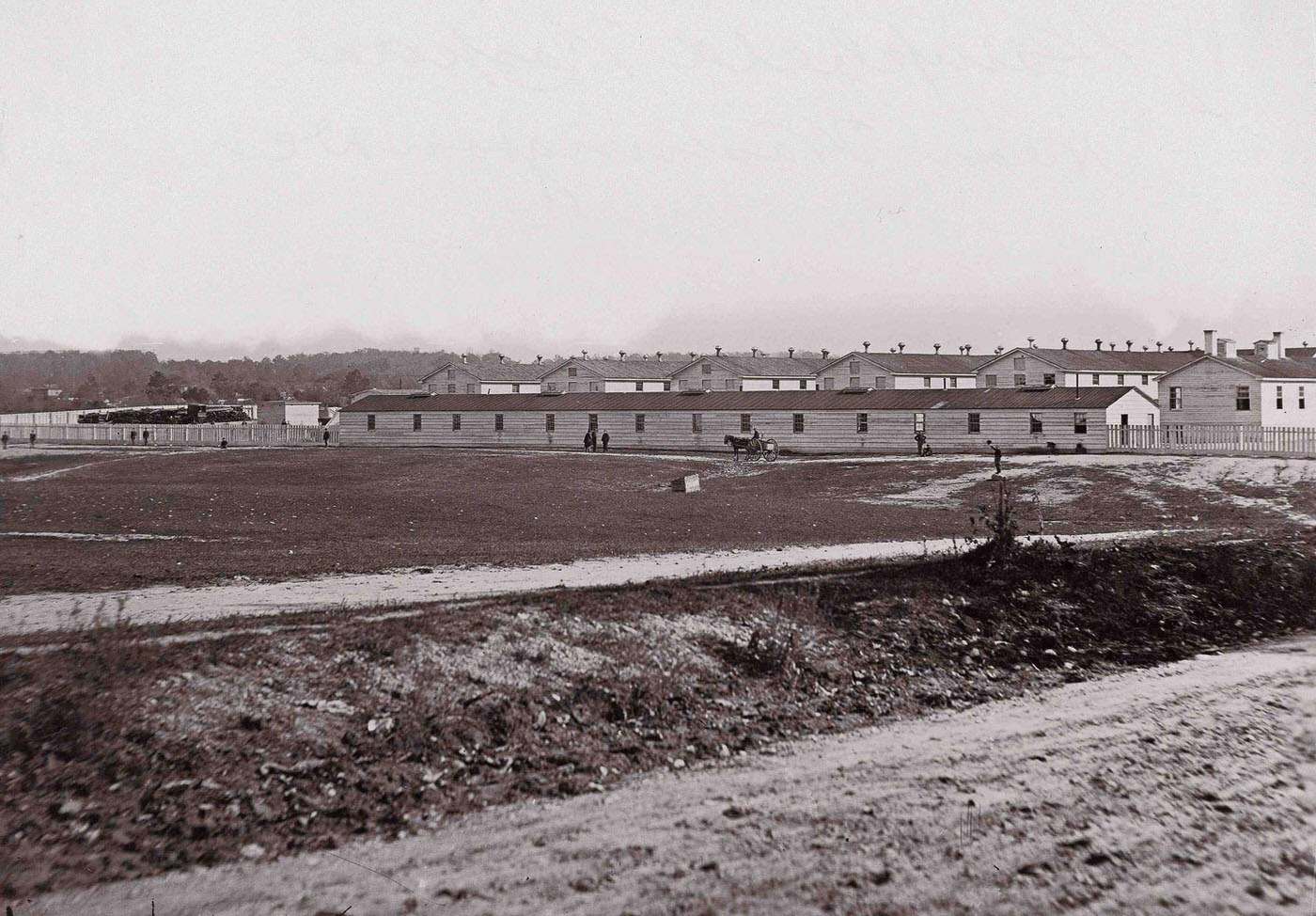
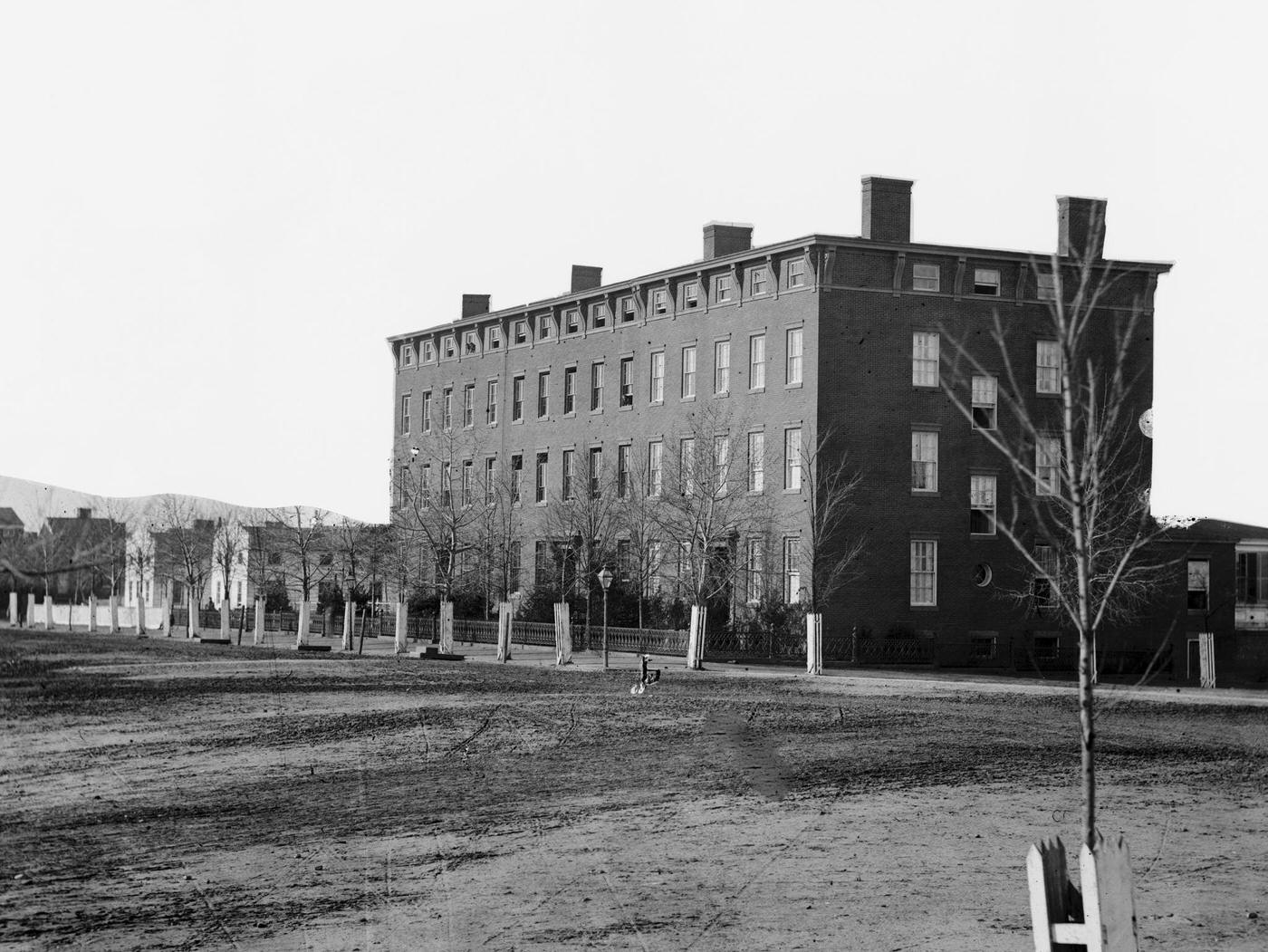
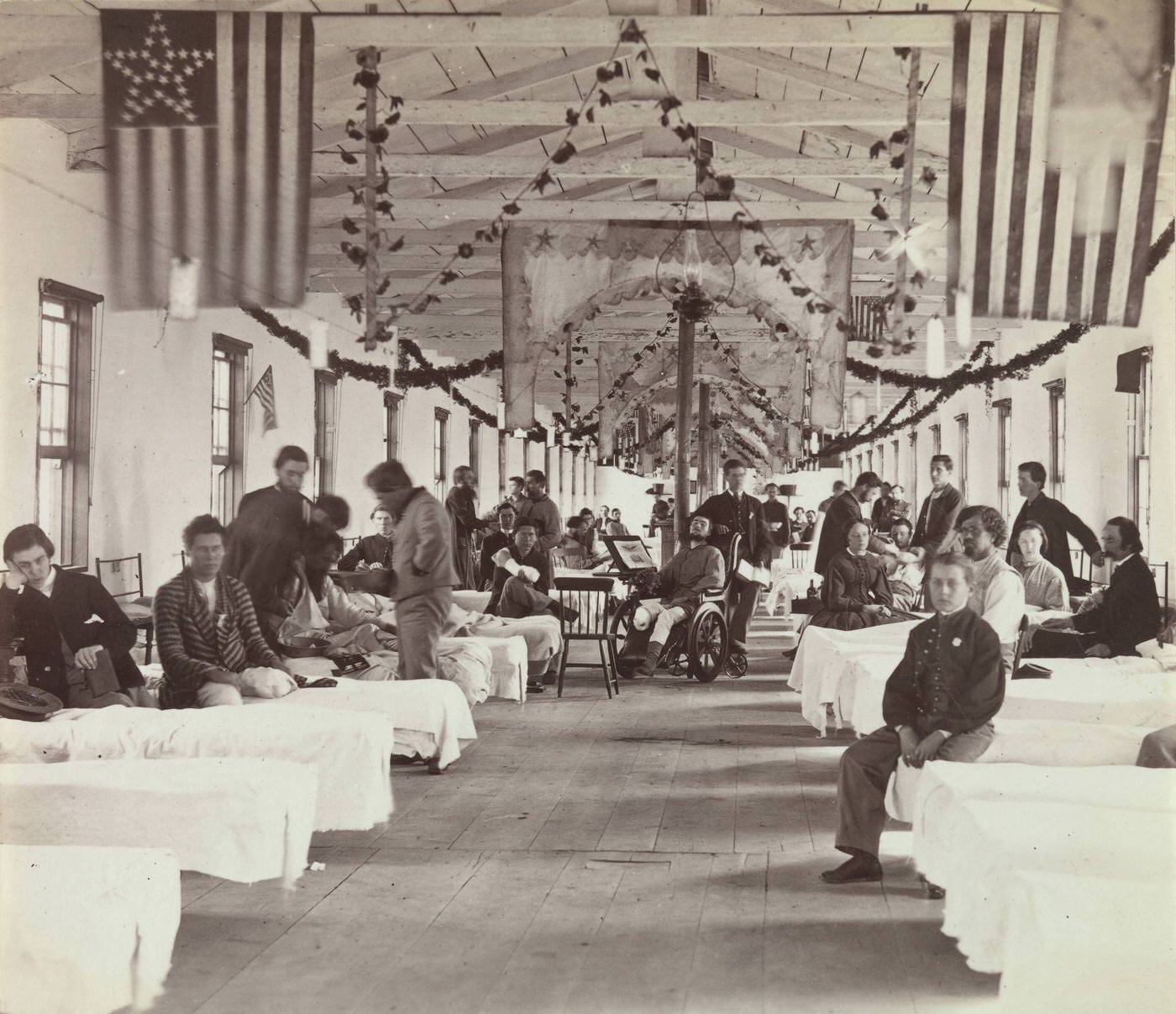
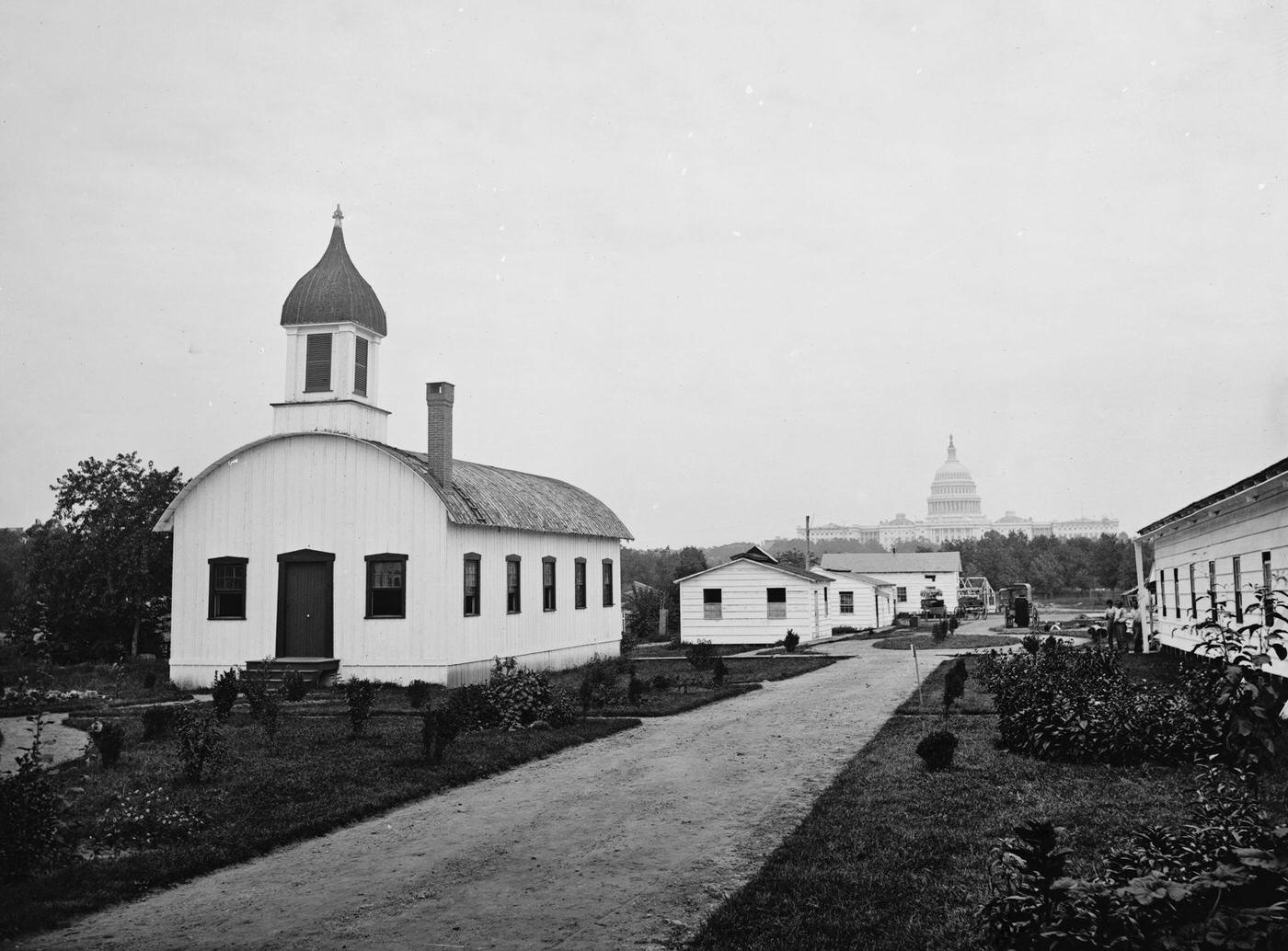
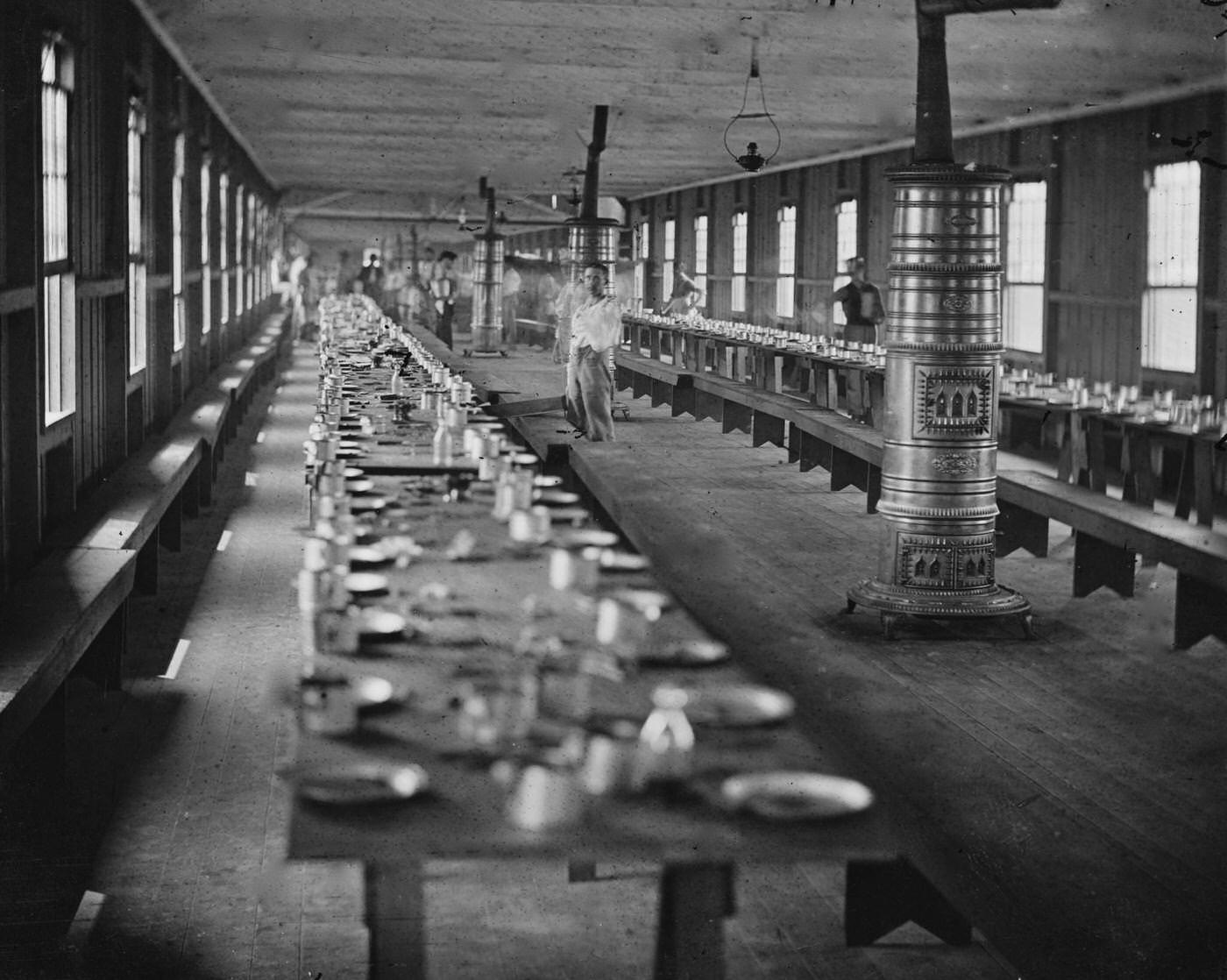
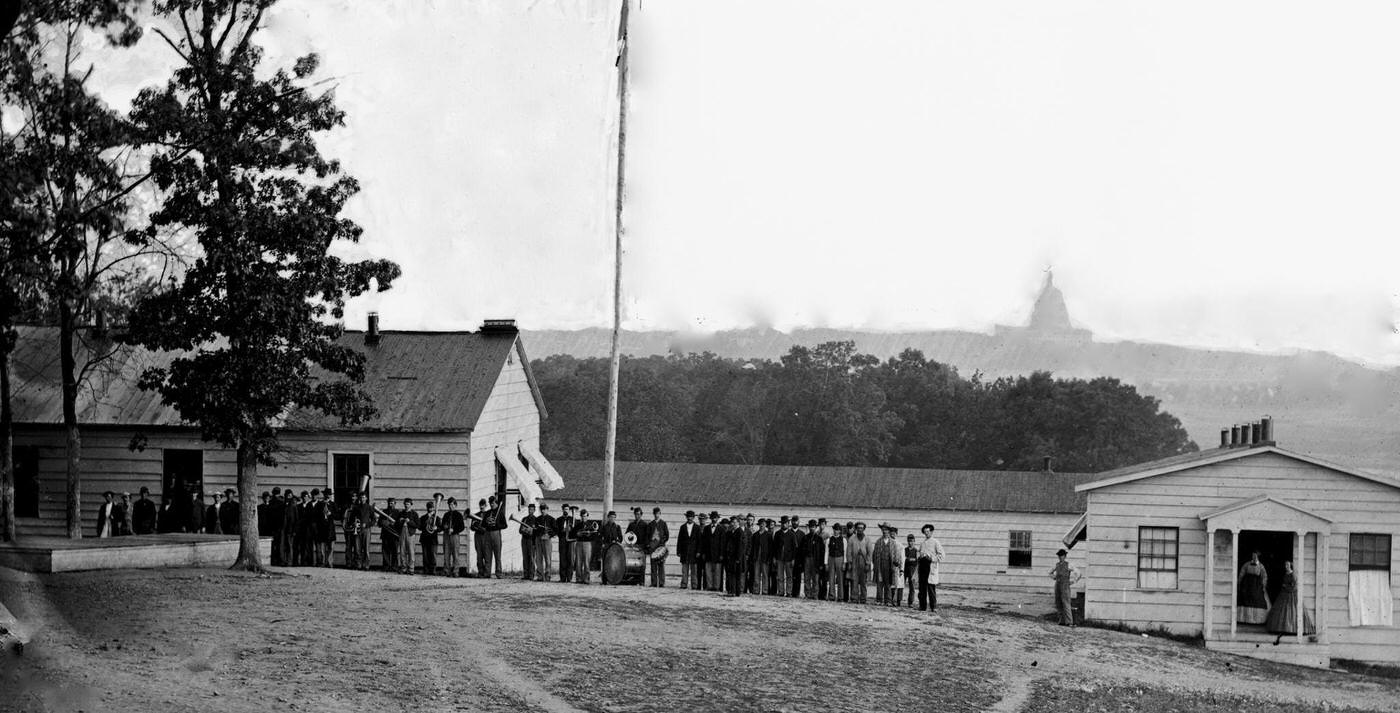
As the war ground on and casualties mounted, Washington became a massive medical center. Hospitals were established in converted buildings, on open grounds, and in purpose-built ward complexes across the city and its outskirts. Harewood Hospital, on the farm of W.W. Corcoran along 7th Street Road near the Soldiers’ Home, treated thousands of wounded men. Armory Square Hospital, positioned near the steamboat landing on the Mall, handled the most critically wounded soldiers brought in from nearby battlefields. Campbell Hospital, Douglas Hospital, and the Second Corps Hospital added to the network of care facilities that defined wartime Washington as much as its forts did.
Armory Square Hospital, Interior of Ward K, 1863Group of patients in front of ward B of Harewood Hospital, near Wasington, DC, 1863.Hospital tents at Camp Carver, with Columbian College building in the background, Washington, D.C., May 1864.
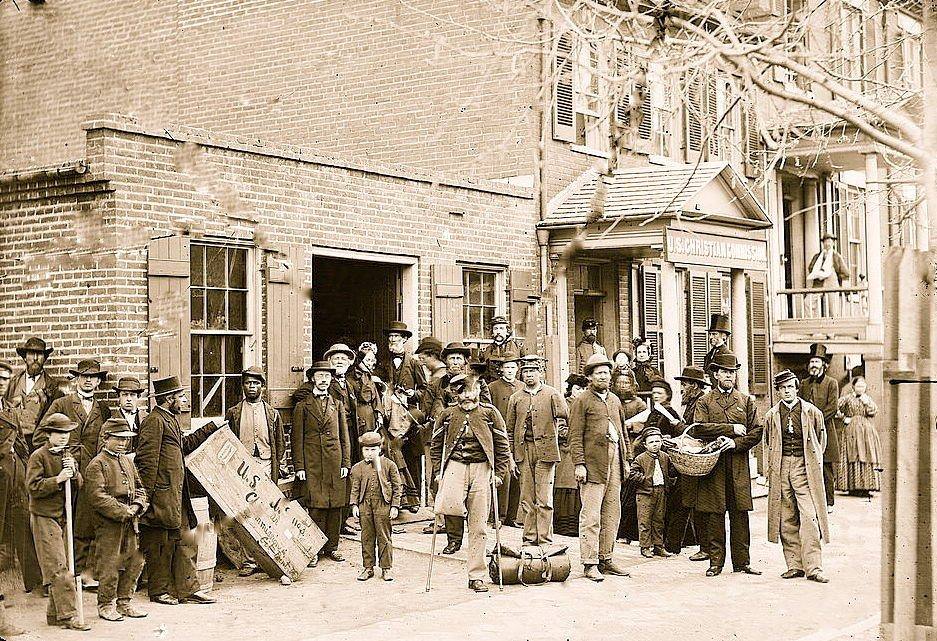
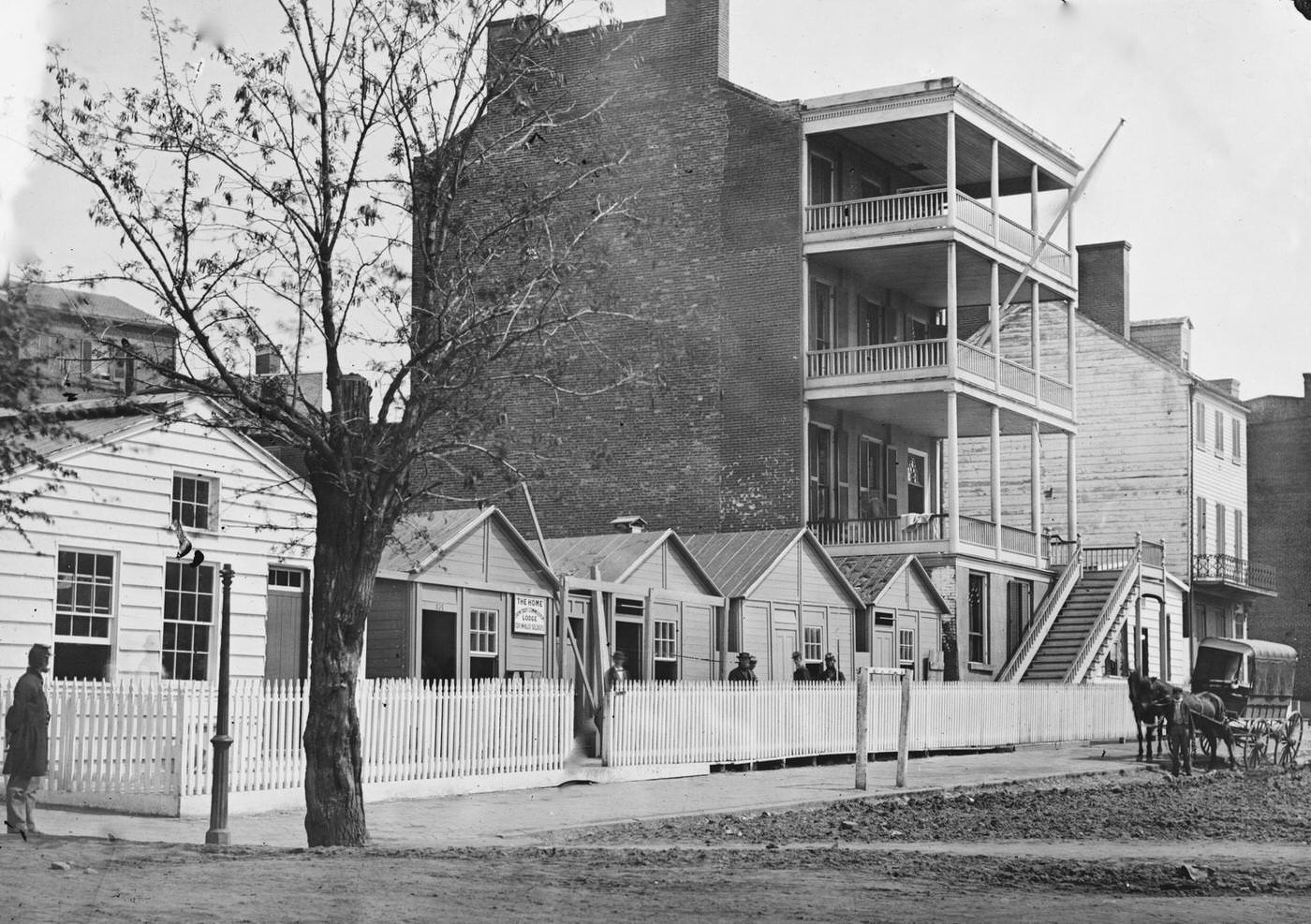
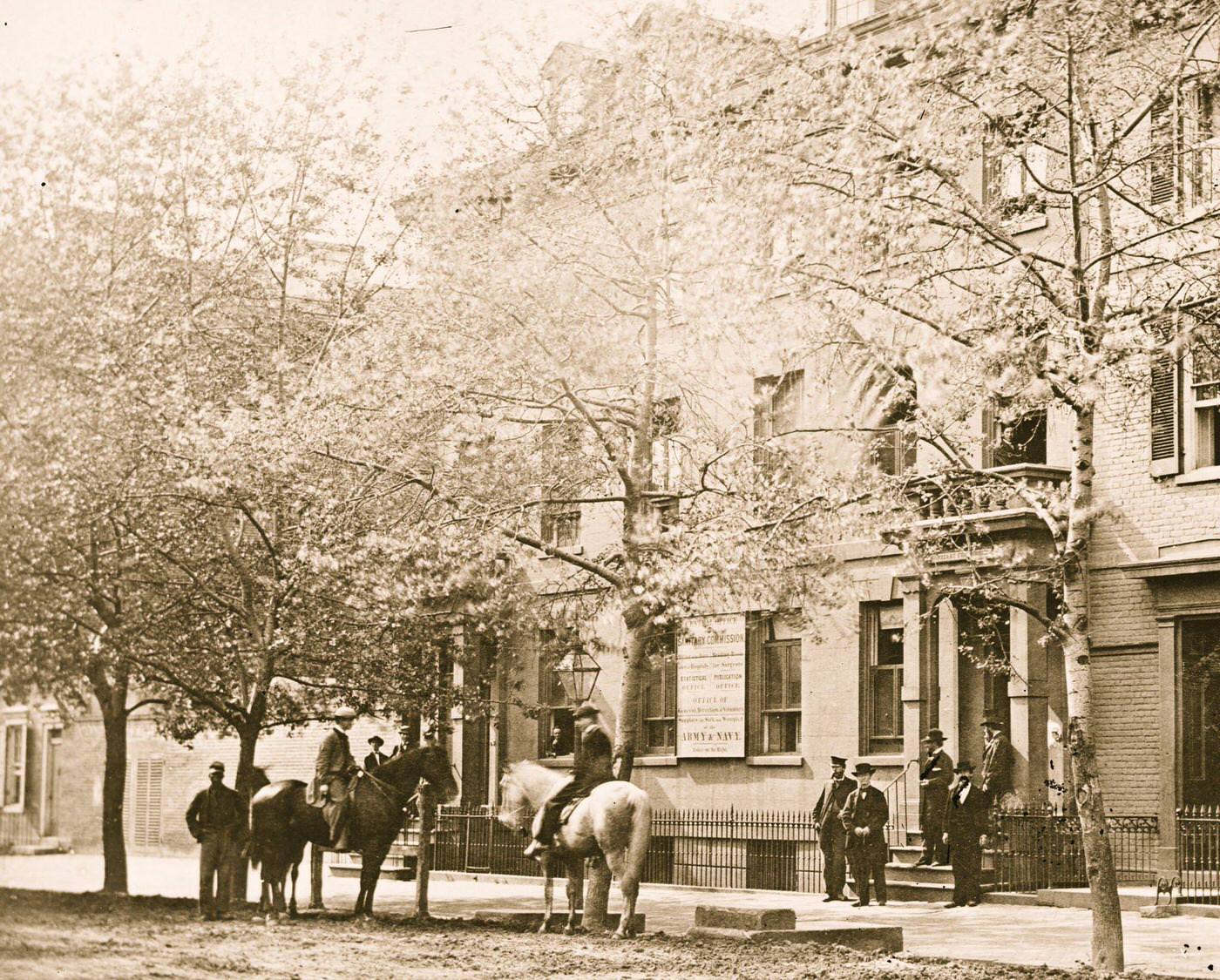
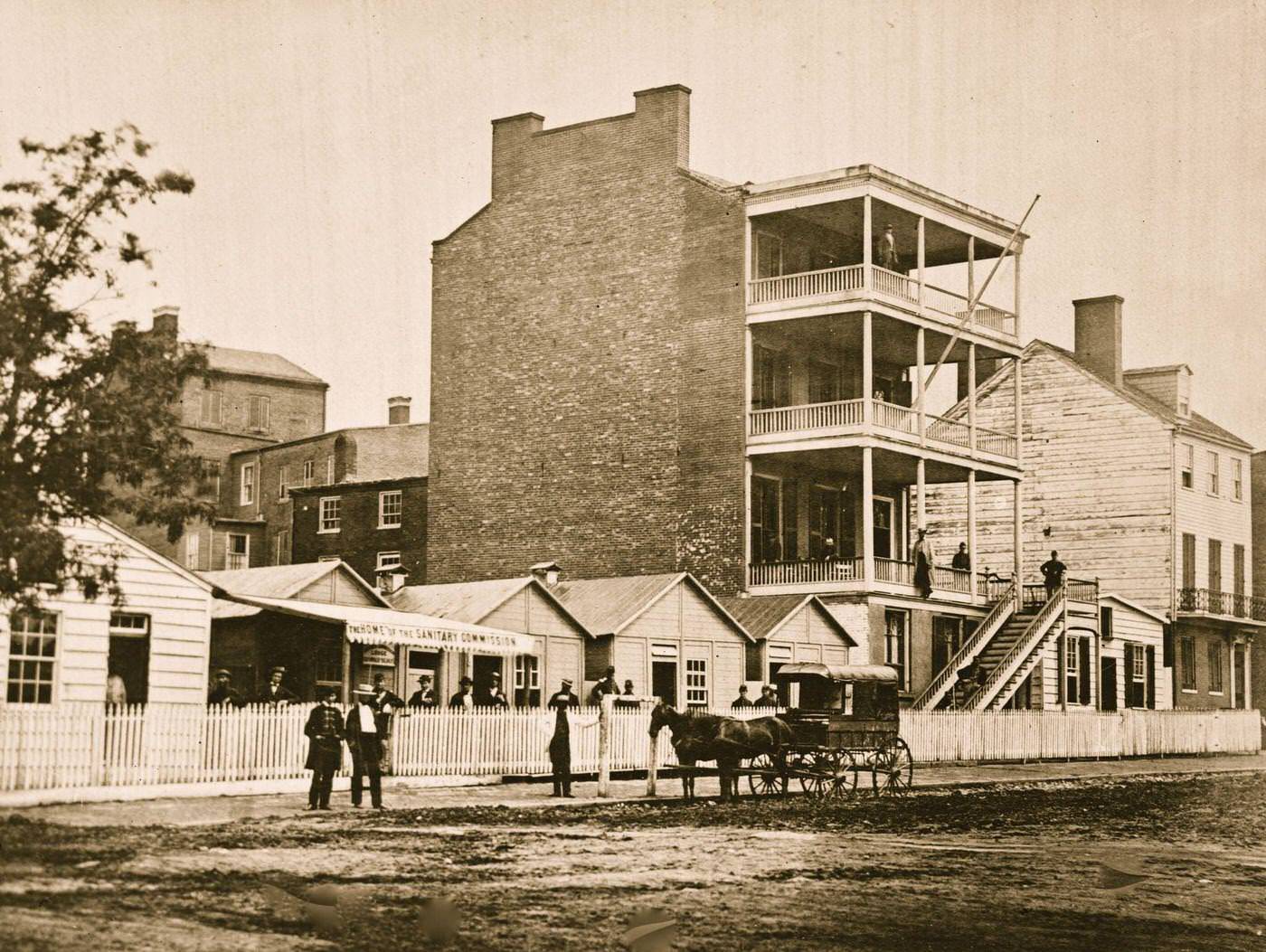
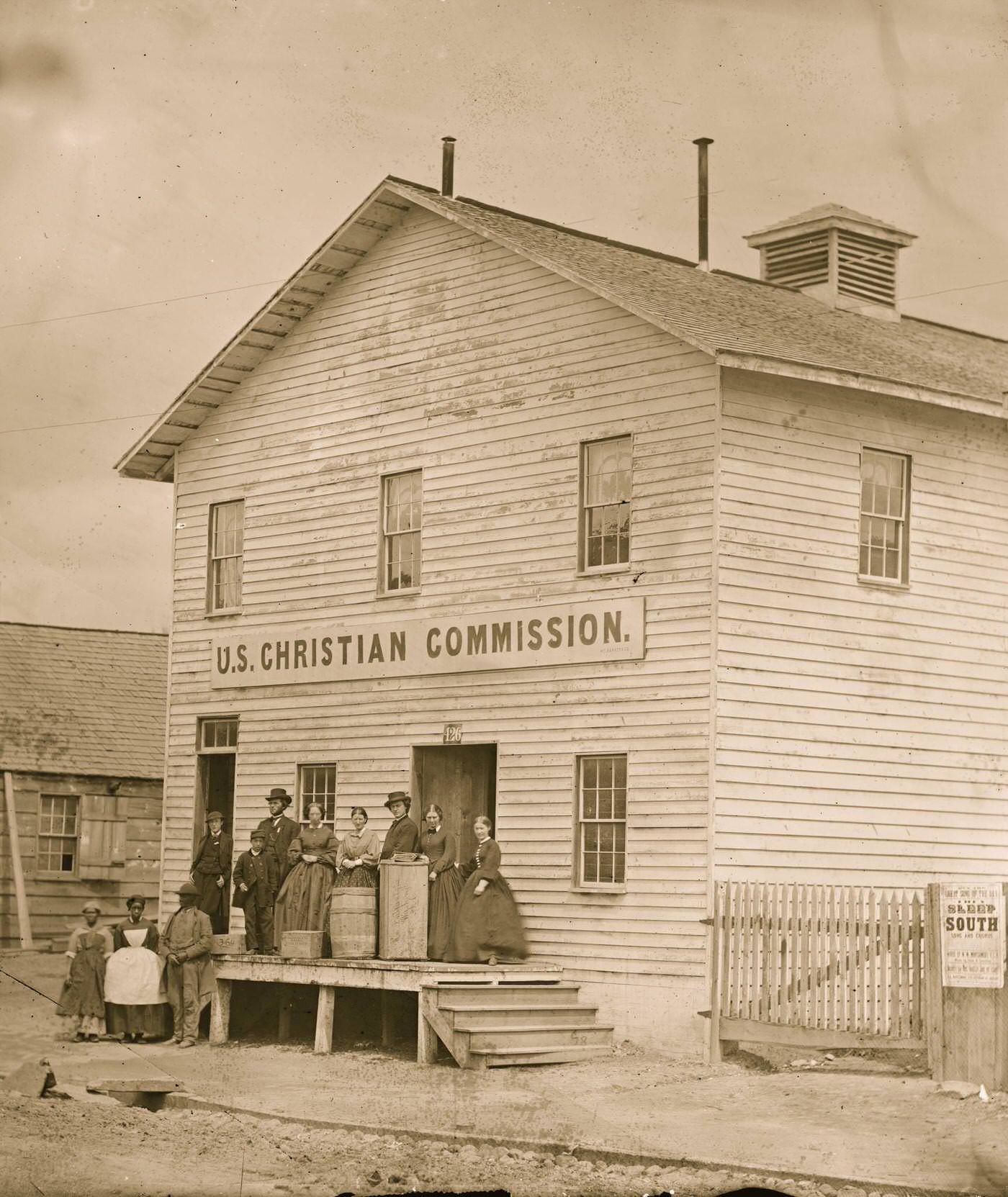
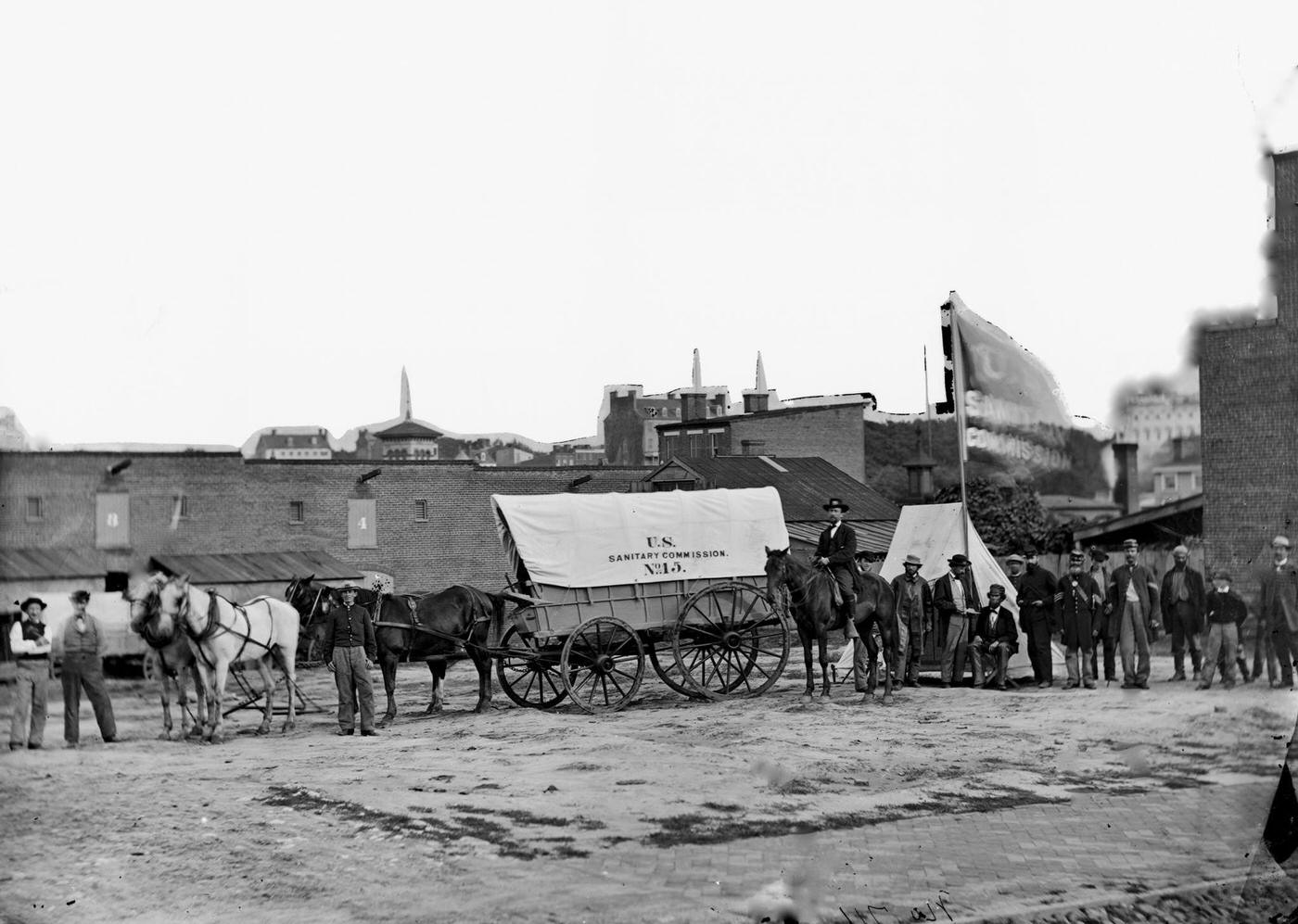
The U.S. Sanitary Commission operated throughout the city to support sick and wounded soldiers. Founded after the First Battle of Bull Run in 1861, it provided food, medical supplies, and relief services through a network of offices and lodges. Its Home Lodge for Invalid Soldiers on North Capitol Street offered temporary housing for men passing through the city on their way home from the front. Maimed veterans were a common sight outside the Commission’s offices — men who had lost limbs at places like Antietam, Chancellorsville, and the Wilderness.
Maimed soldiers and others before office of U.S. Christian Commission Protestant Organization founded by the YMCA to provide religious and social services to Union Troops; Founded in 1861 in New York after the First Battle of Bull RunThe street and exterior of buildings belonging to the Sanitary Commission Home Lodge for Invalid Soldiers, located on North Capitol near C Street, Washington, D.C., 1865
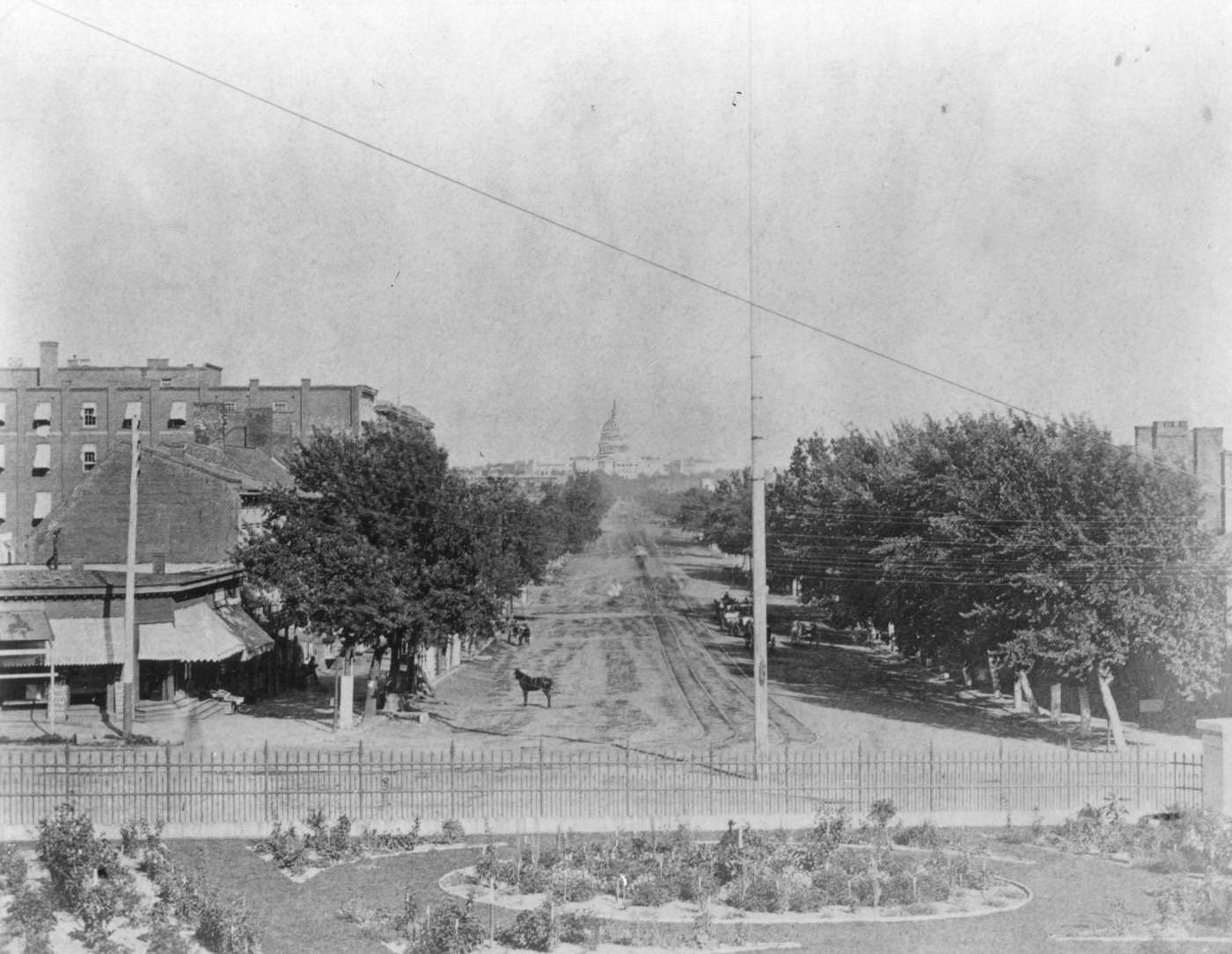
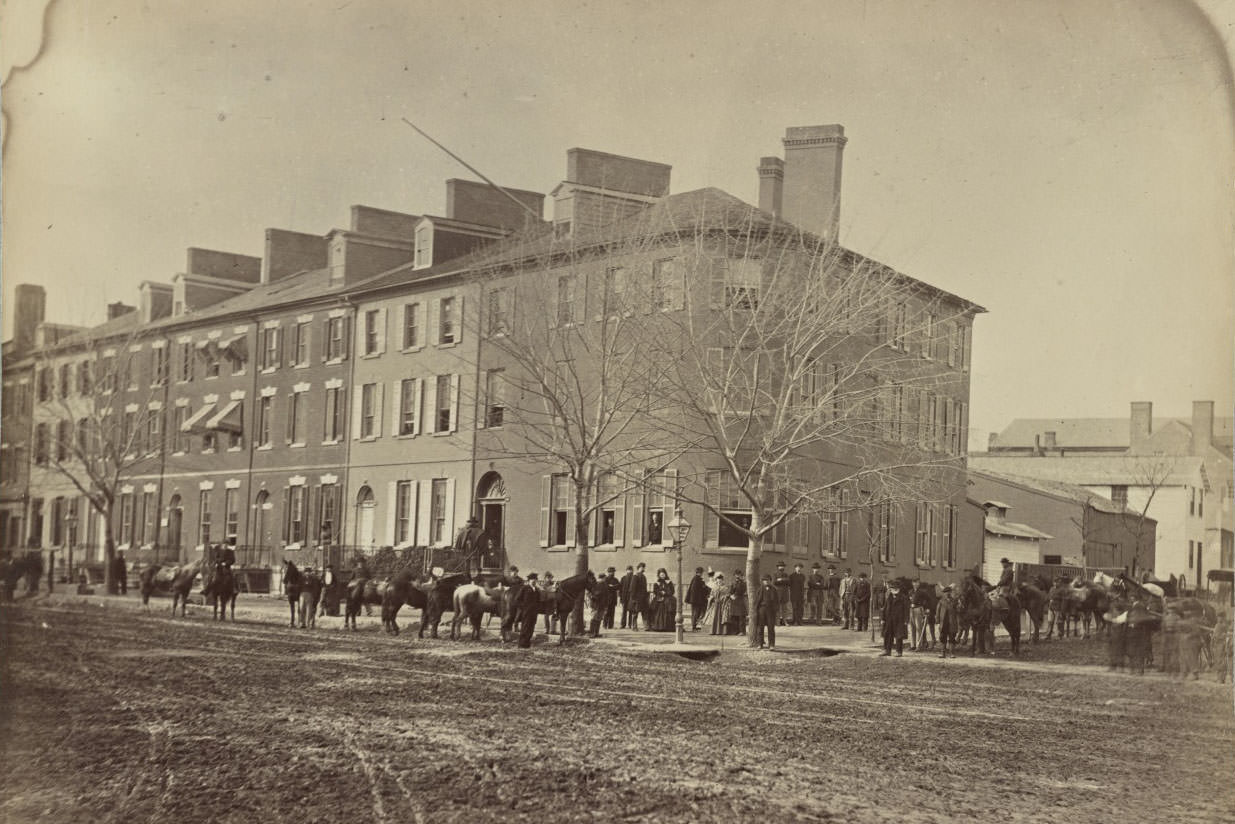
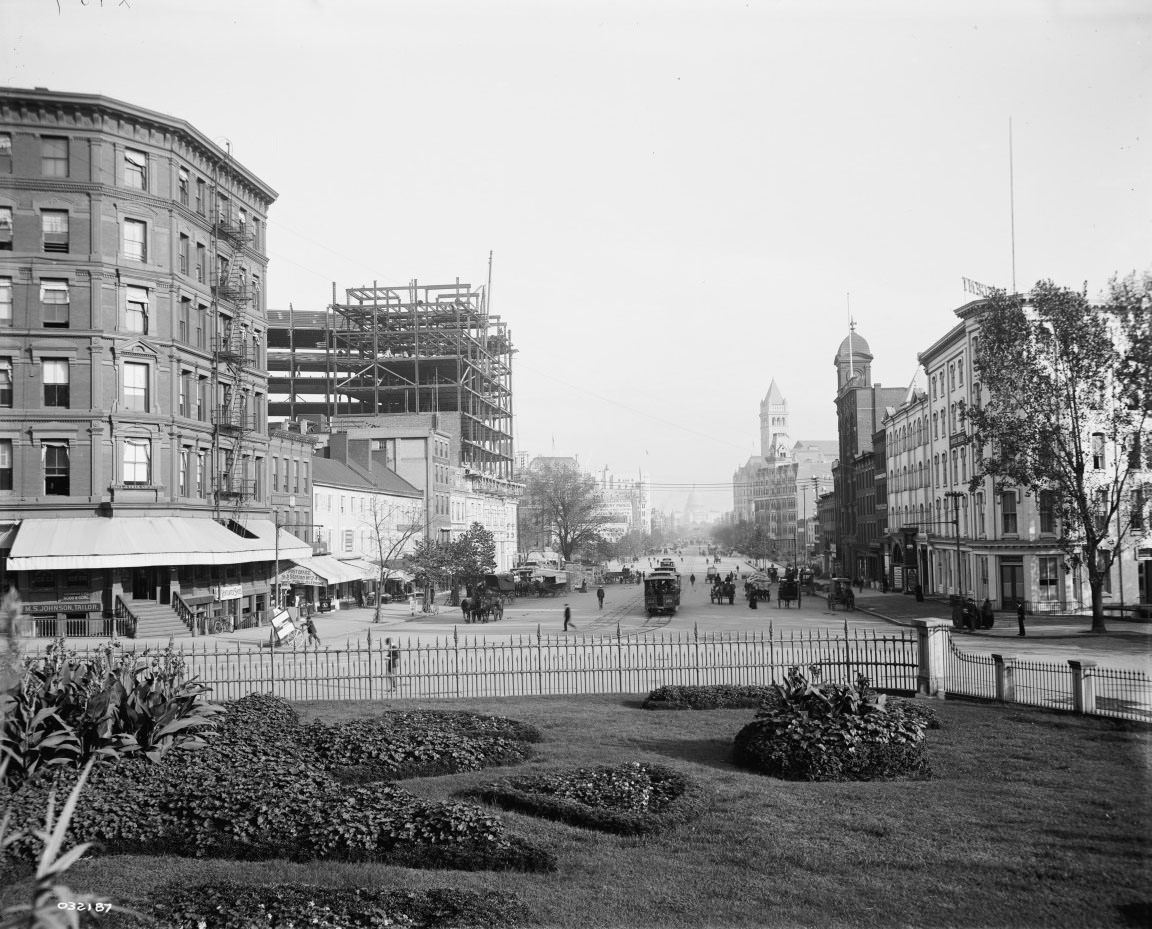
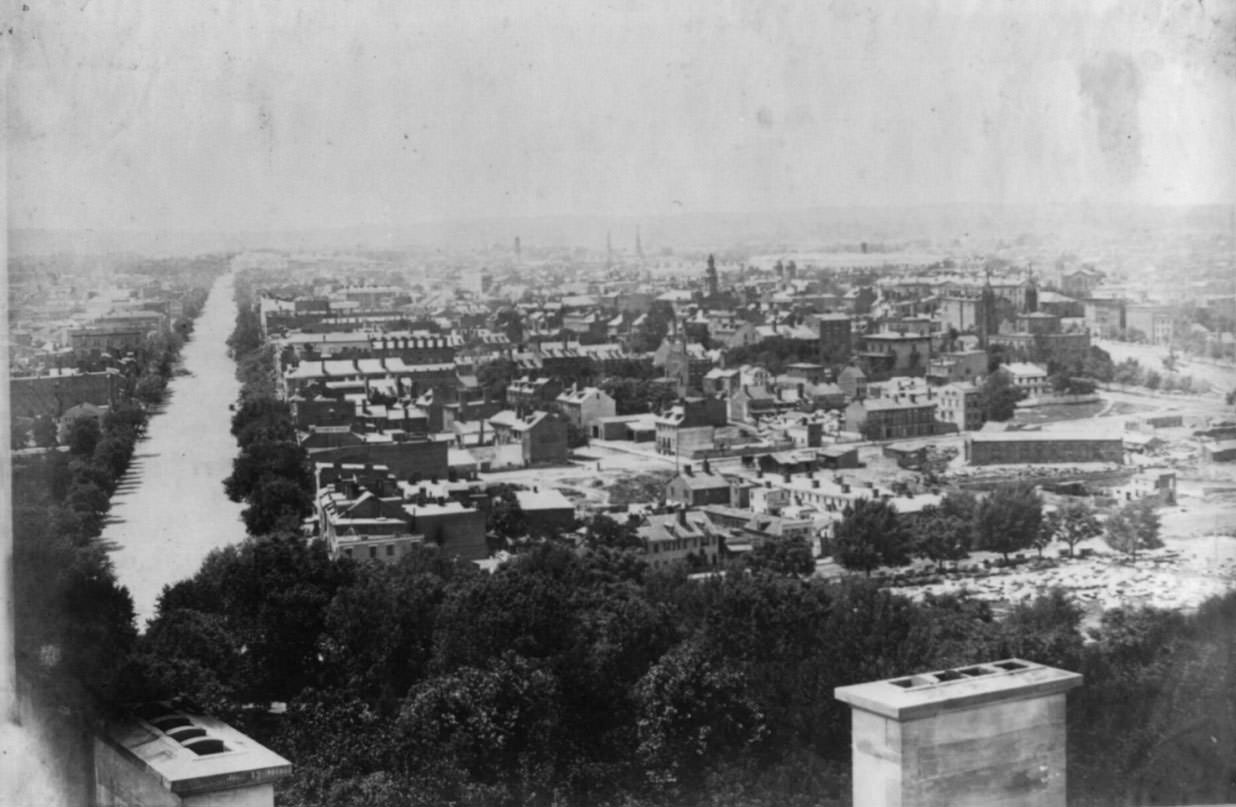
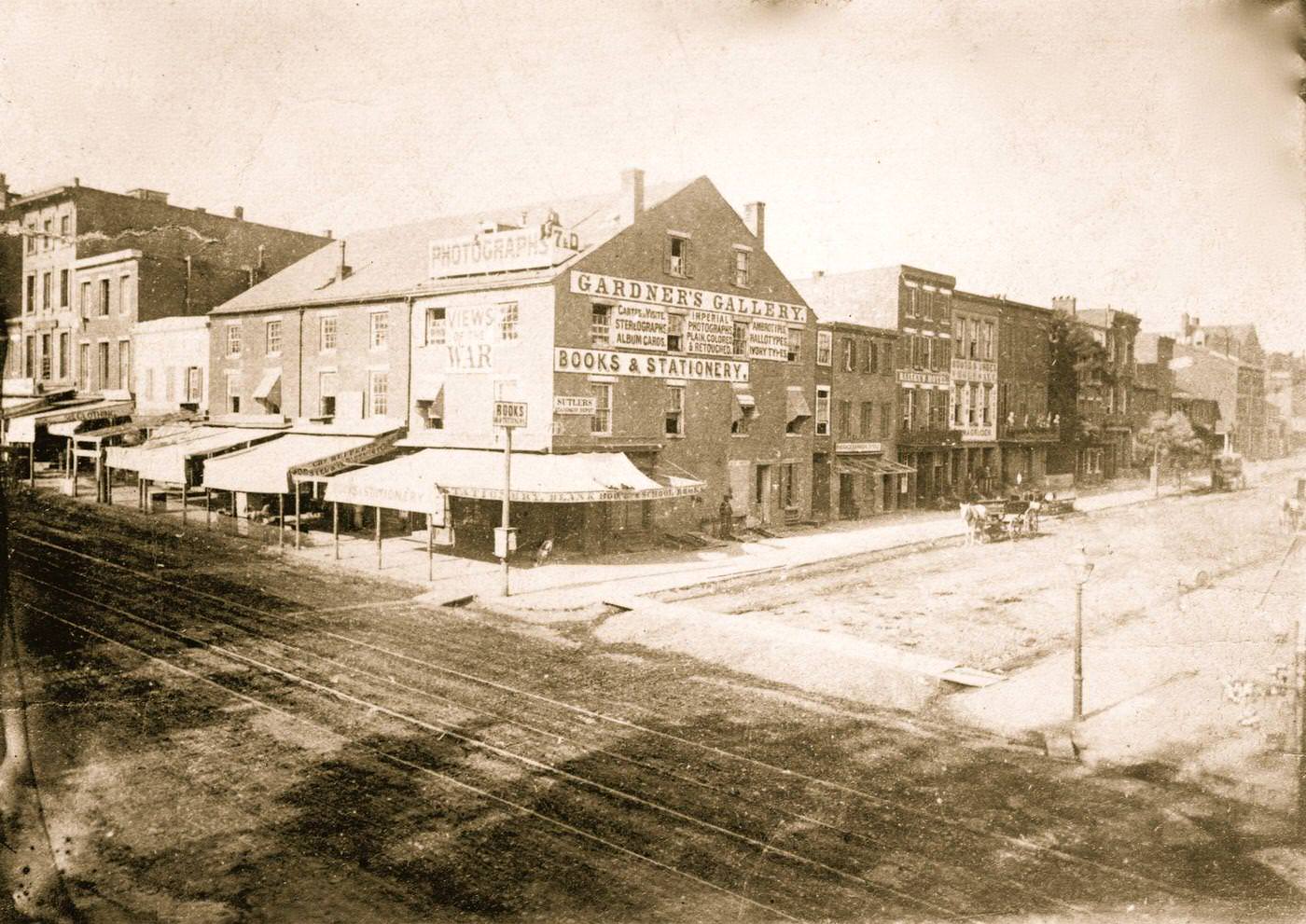
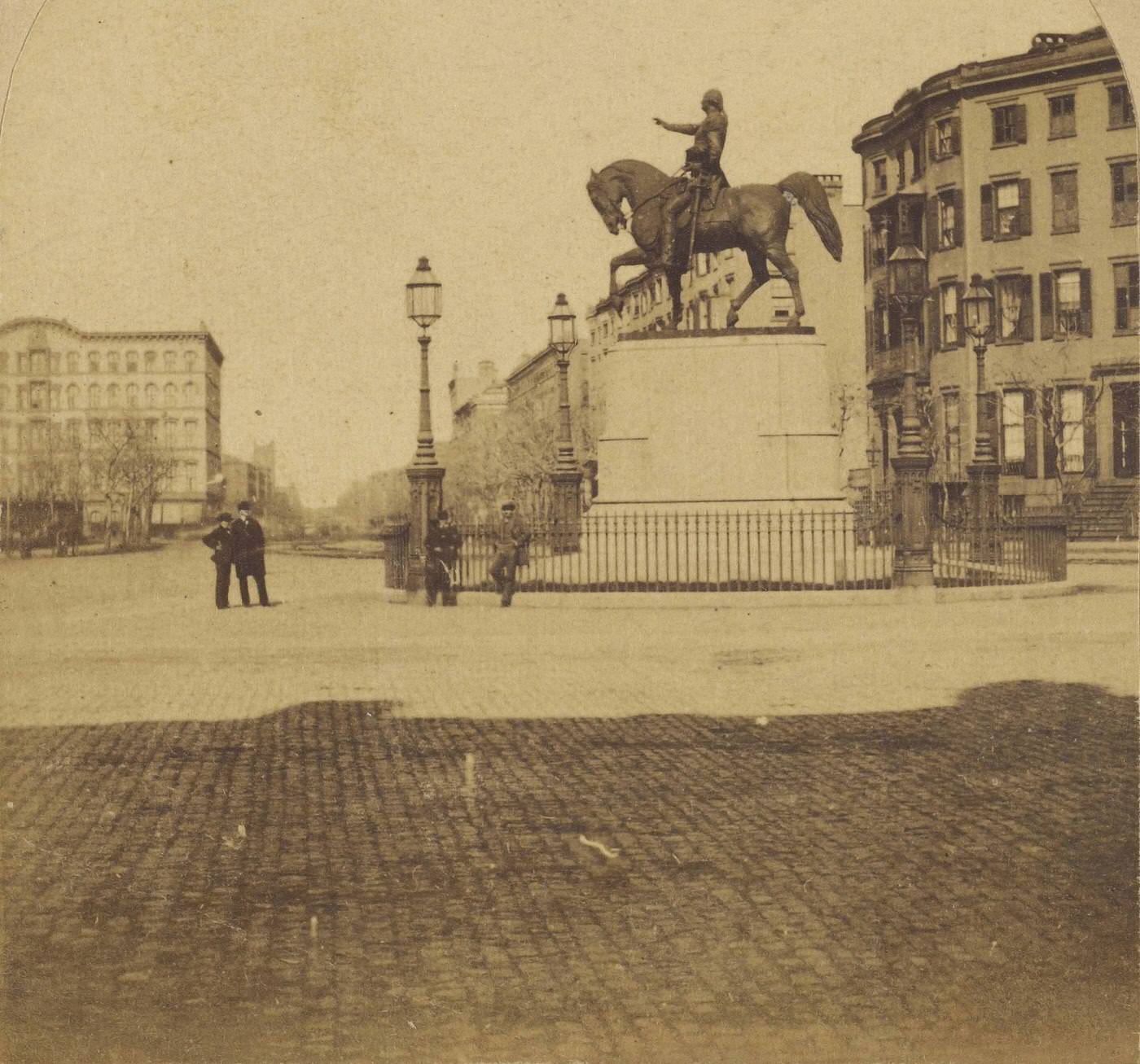
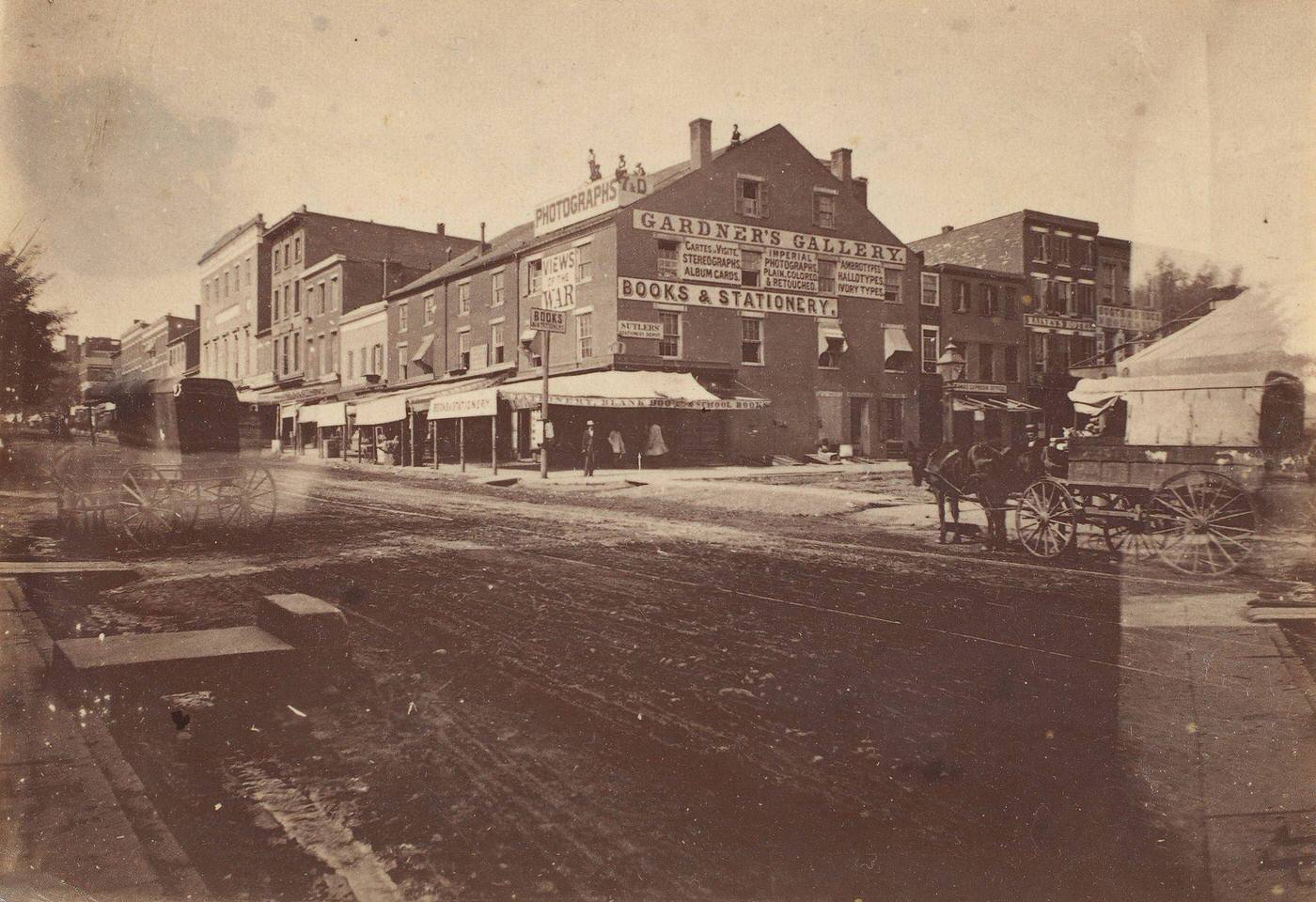
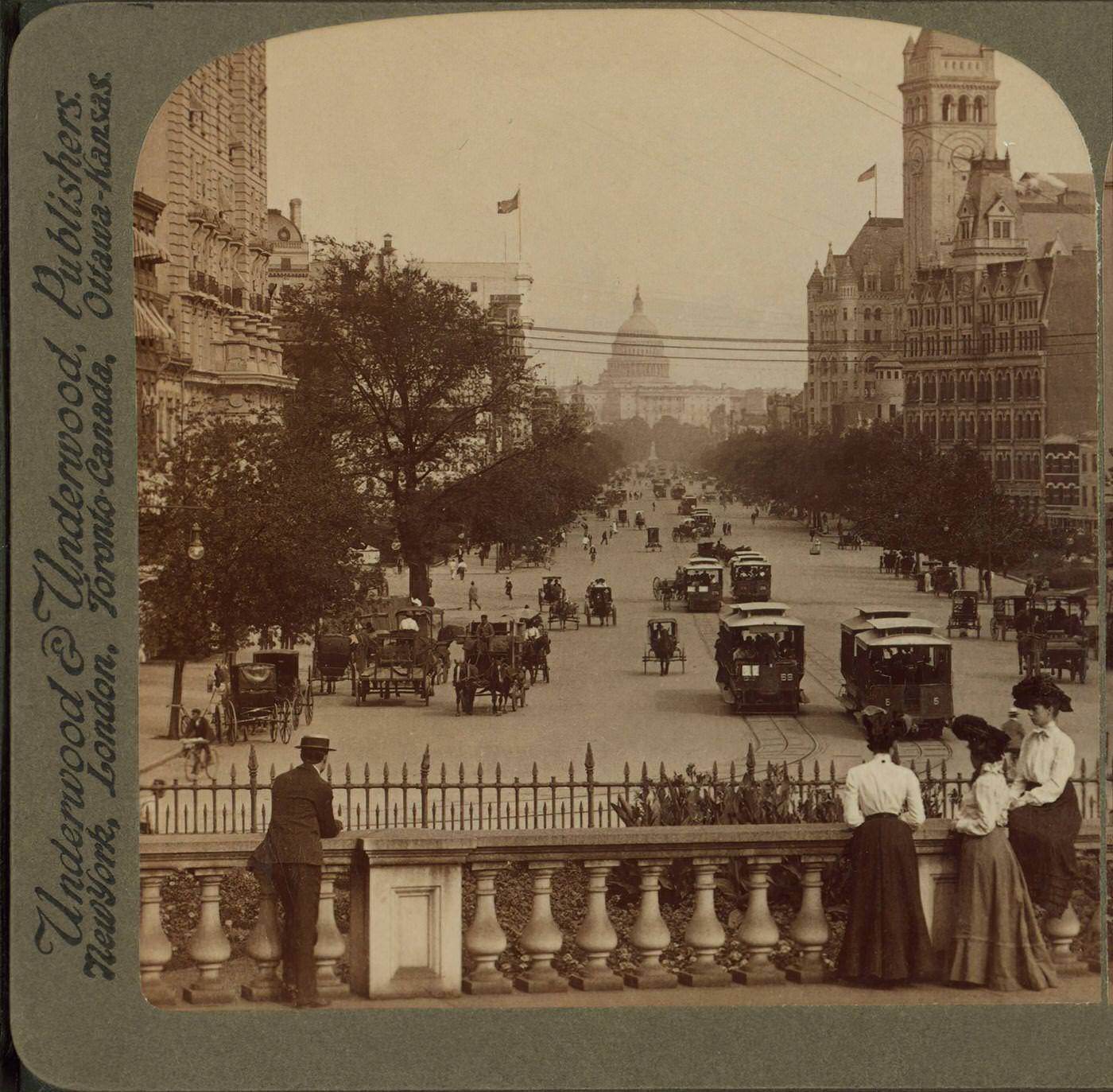
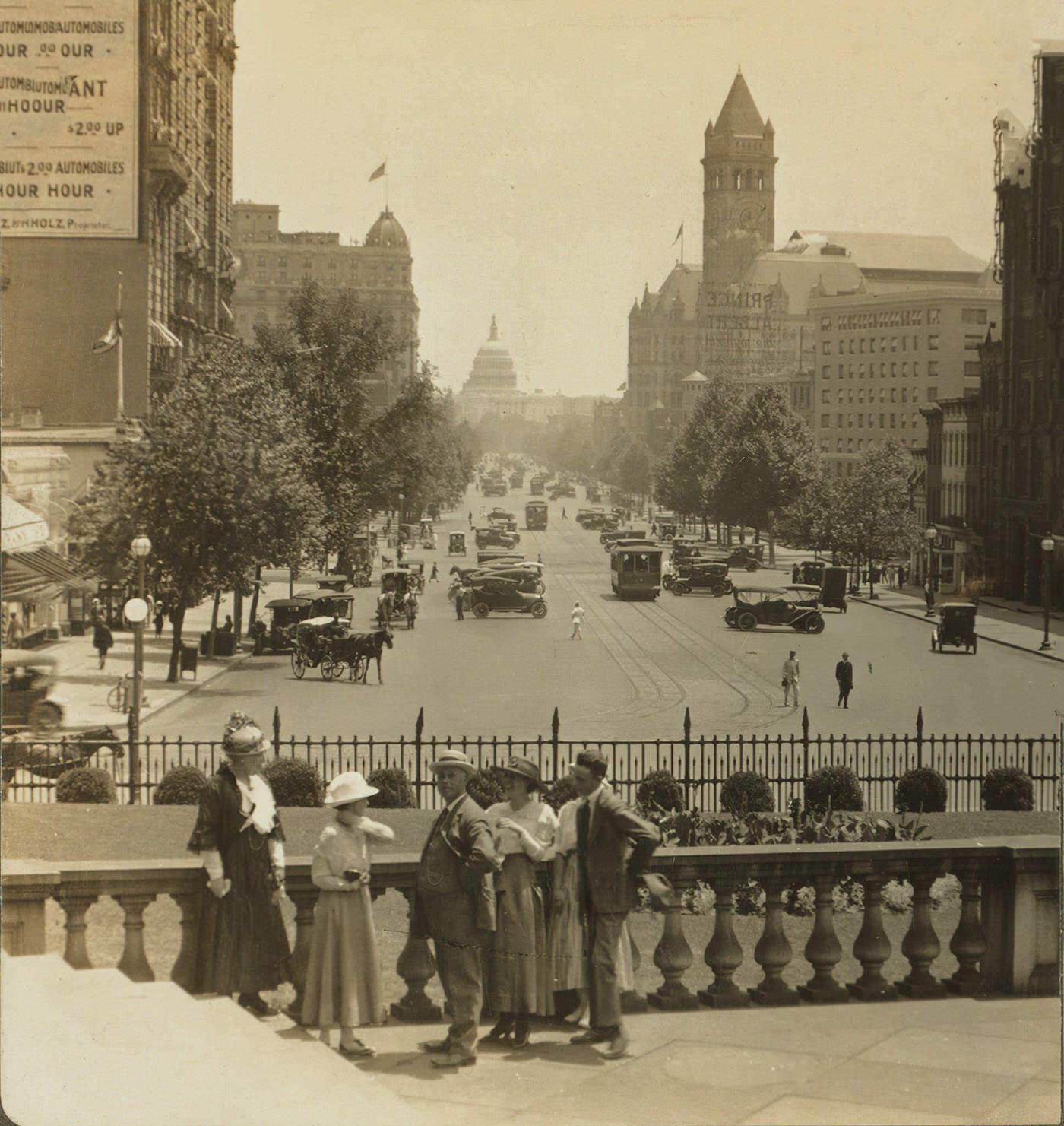
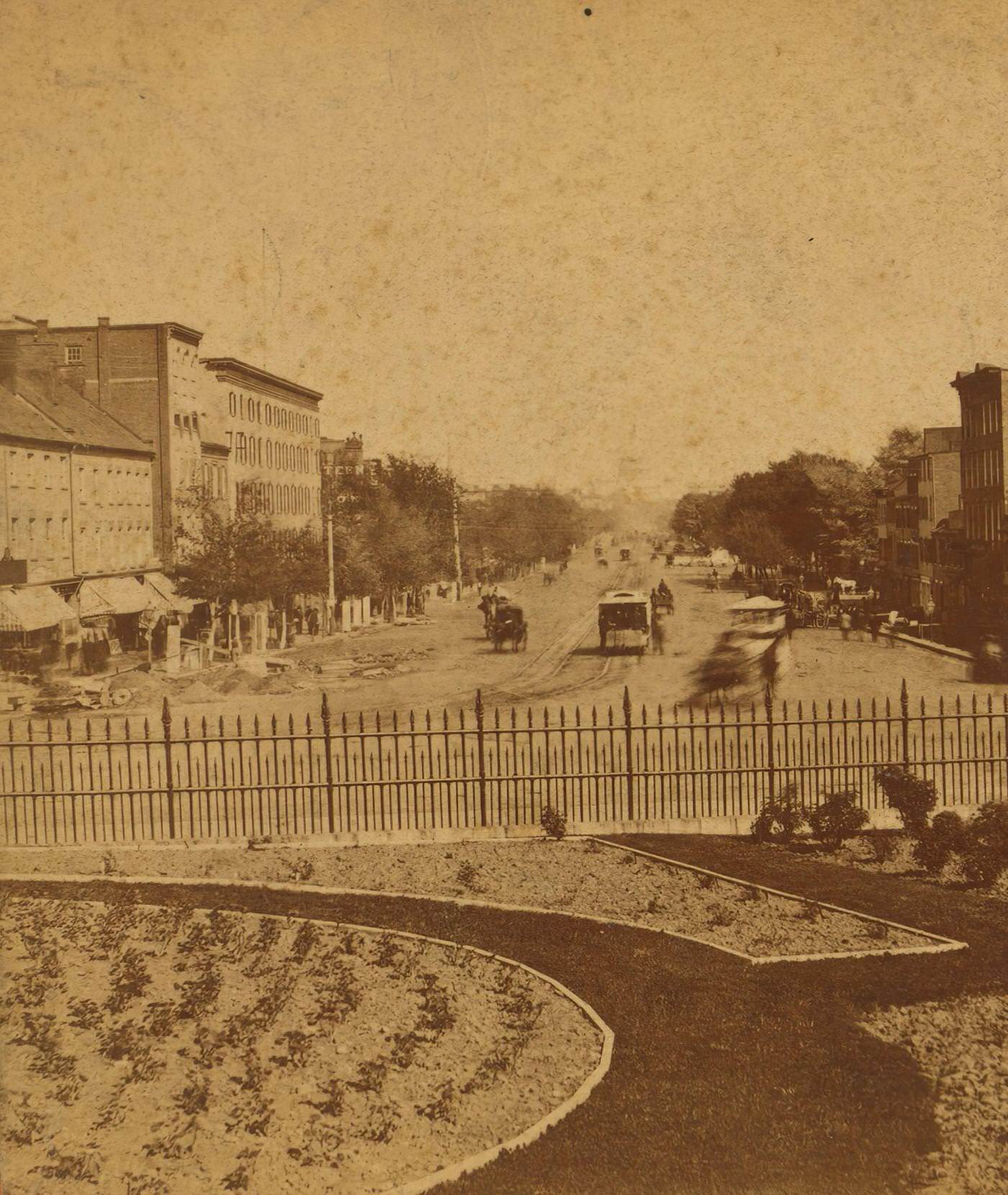
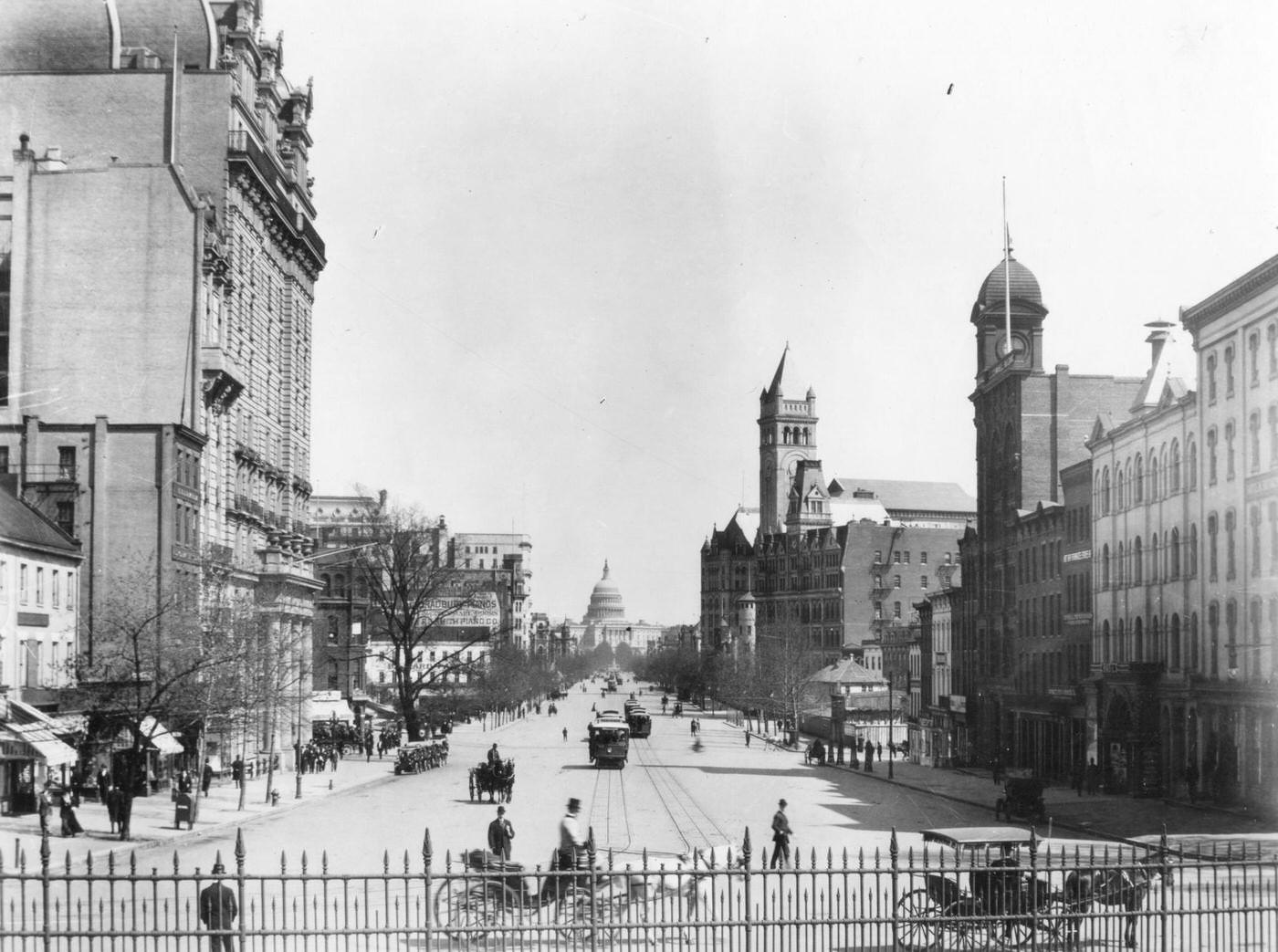
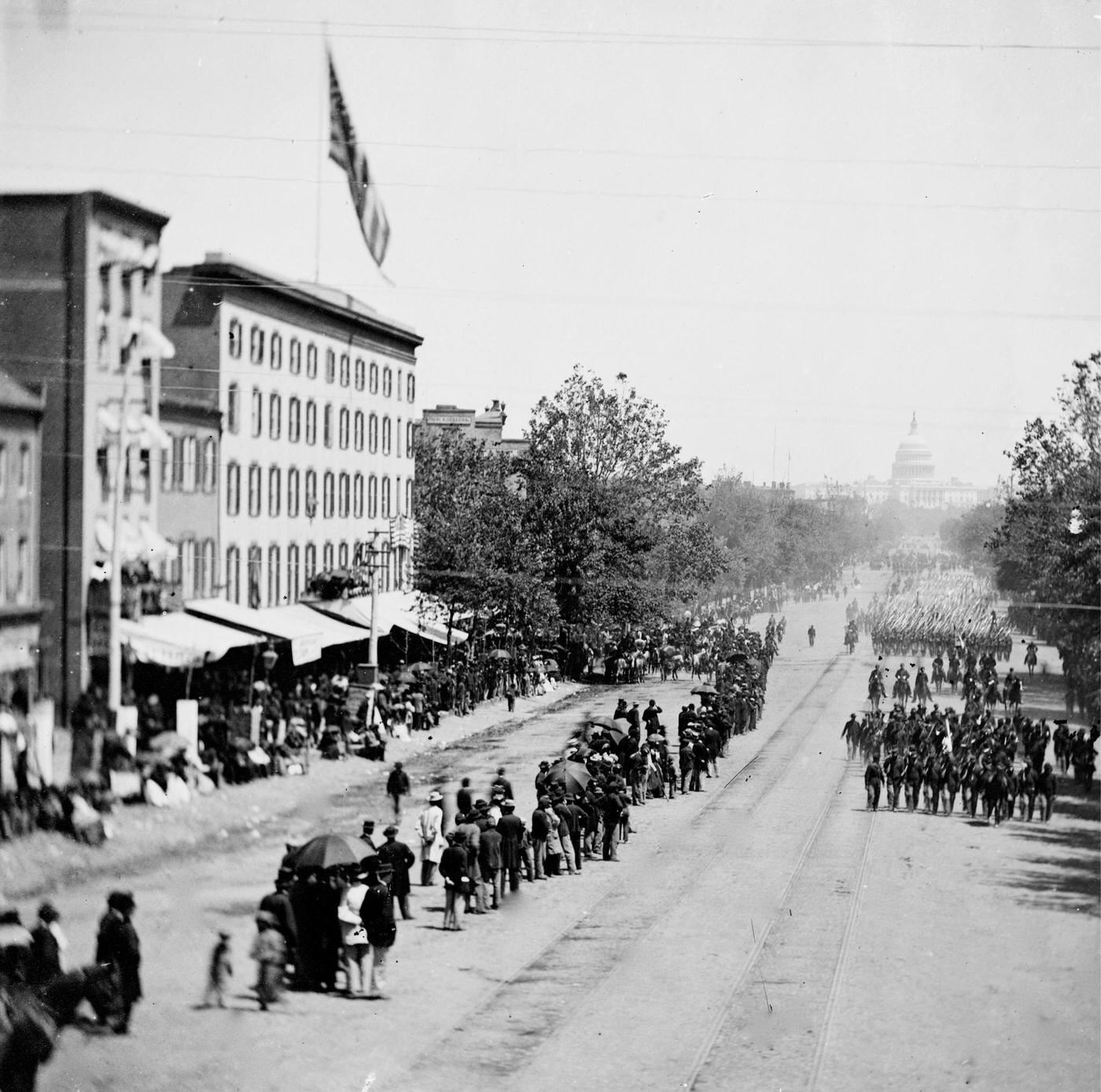
Pennsylvania Avenue was the main artery of the capital. It connected the Capitol building to the Treasury and the White House, and it was the corridor through which the city’s political and military life flowed. During the war, the avenue was unpaved in stretches, rutted by wagon wheels, and flanked by commercial buildings, hotels, and government offices. Brady’s National Photographic Portrait Galleries operated at No. 352 Pennsylvania Avenue, documenting the war’s figures and events. Alexander Gardner’s competing gallery stood at 7th and D Streets, NW. Both photographers captured the city at one of the most turbulent moments in American history.
Unpaved Pennsylvania Avenue looking toward the Capitol, Washington, D.C., 1865Brady’s National Photographic Portrait Galleries, Broadway & Tenth Street, New York & No. 352 Pennsylvania Av., Washington, D.C., 1865
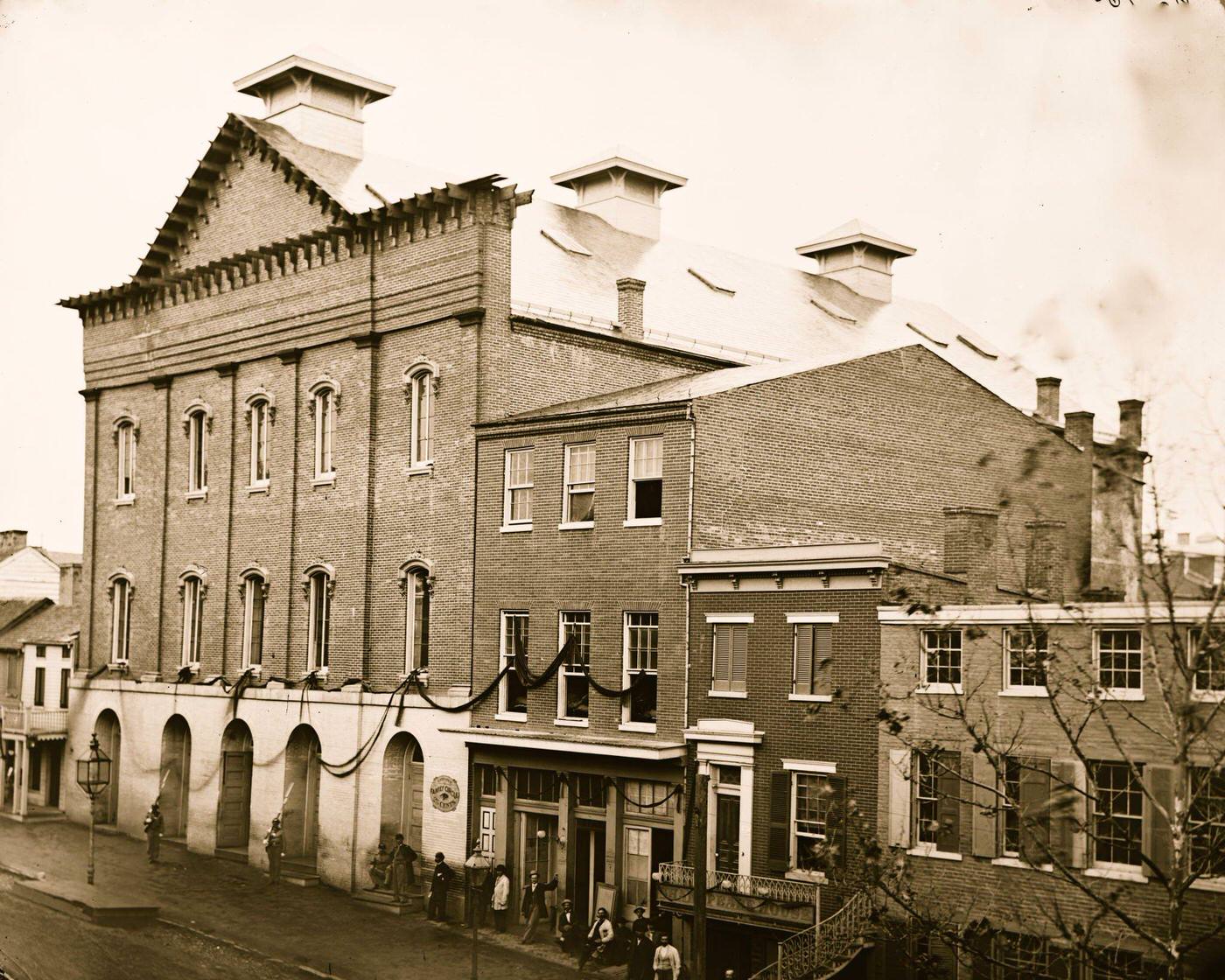
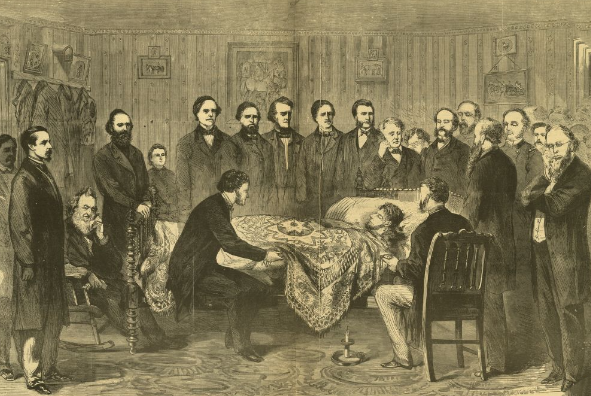
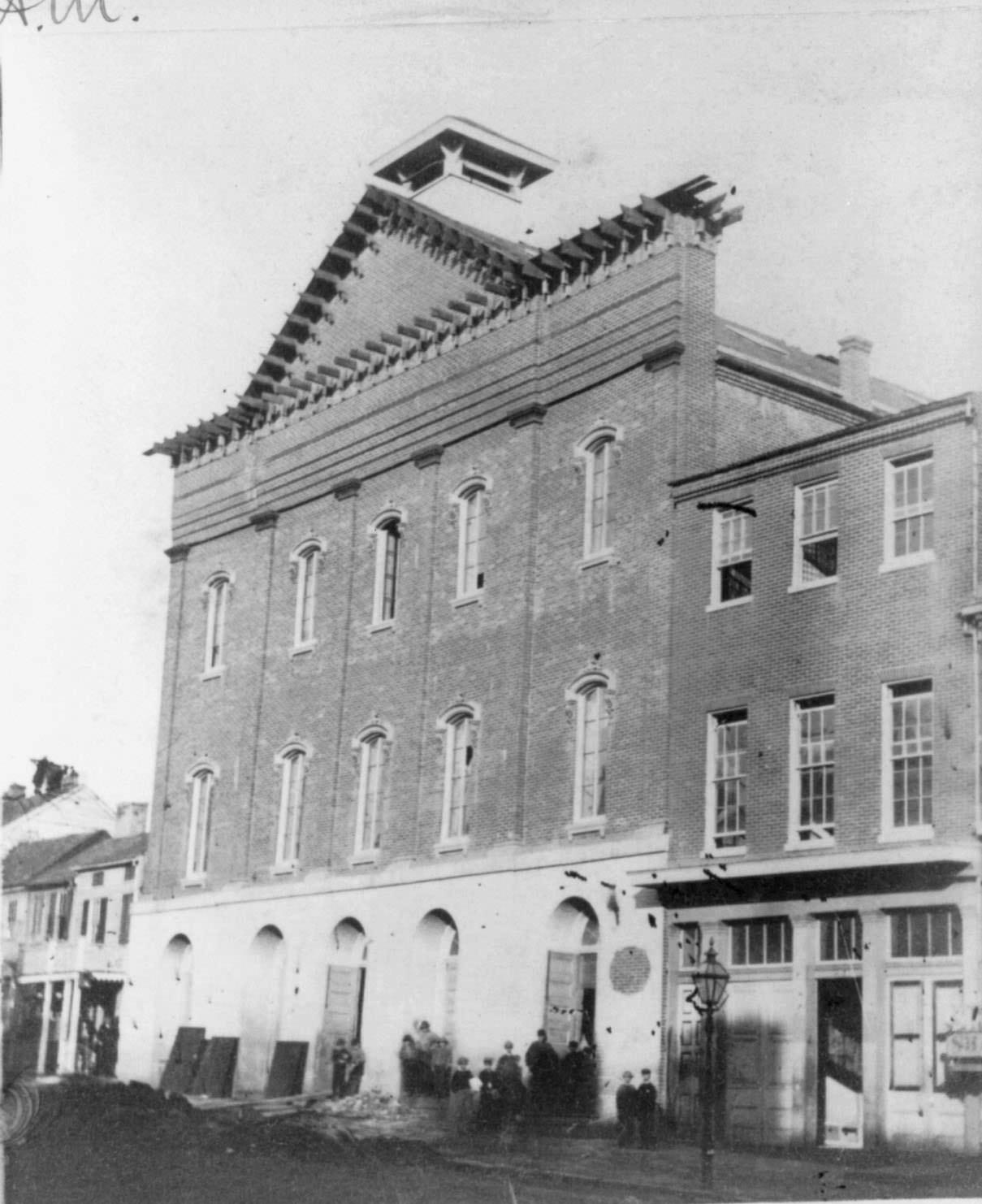
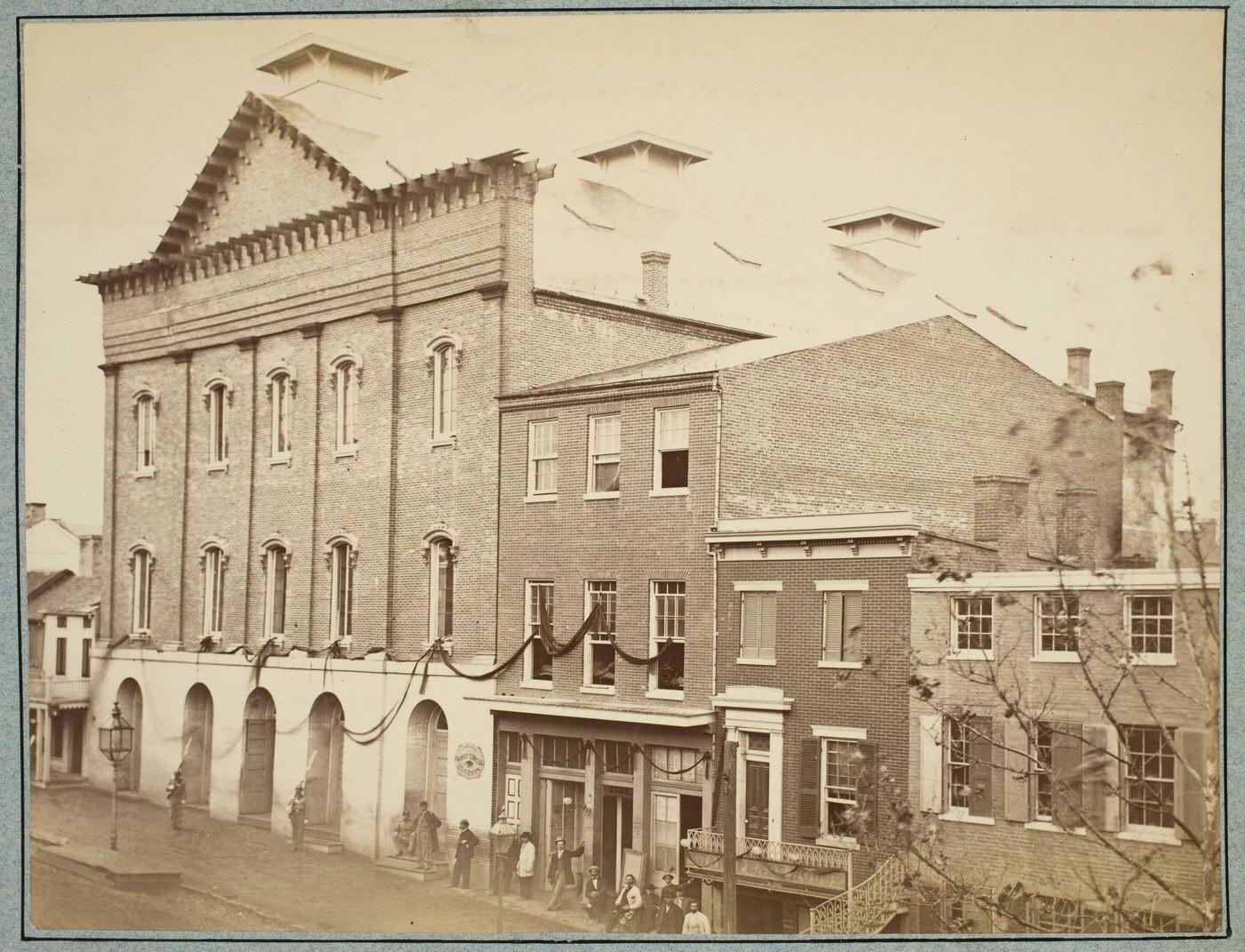
On the night of April 14, 1865 — just days after Confederate General Robert E. Lee surrendered at Appomattox — President Abraham Lincoln was shot at Ford’s Theatre on 10th Street by actor John Wilkes Booth. Lincoln died the following morning, April 15. His death cast Washington into shock. The city that had just begun celebrating the end of four years of war was now draped in mourning. Ford’s Theatre was immediately closed, its entrance guarded by Union soldiers, its windows hung with black crepe.
Ford’s Theater with guards posted at entrance and crepe draped from windows, Washington, D.C., 1865The Dying Moments of President Lincoln, at Washington, Saturday Morning, 1865
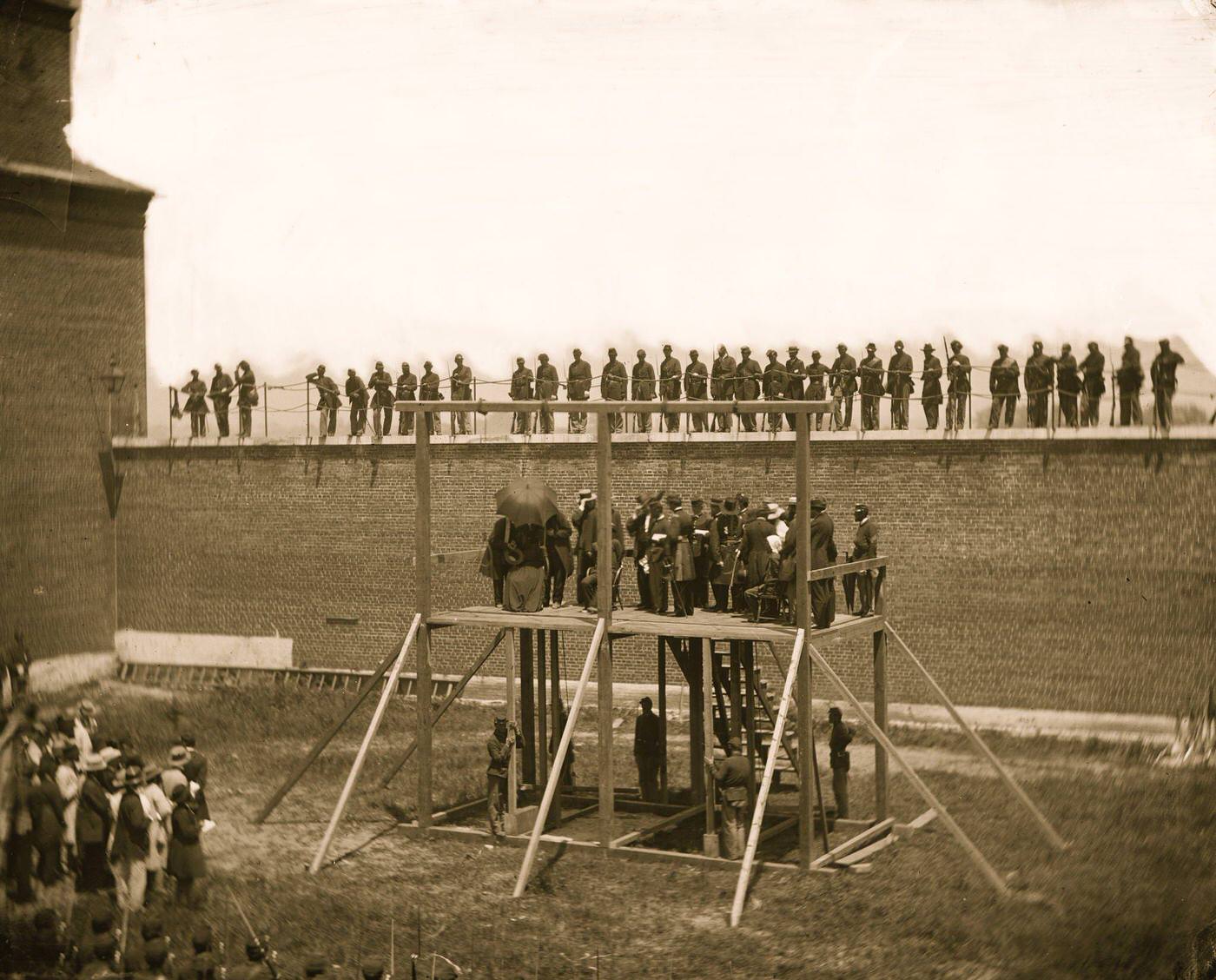
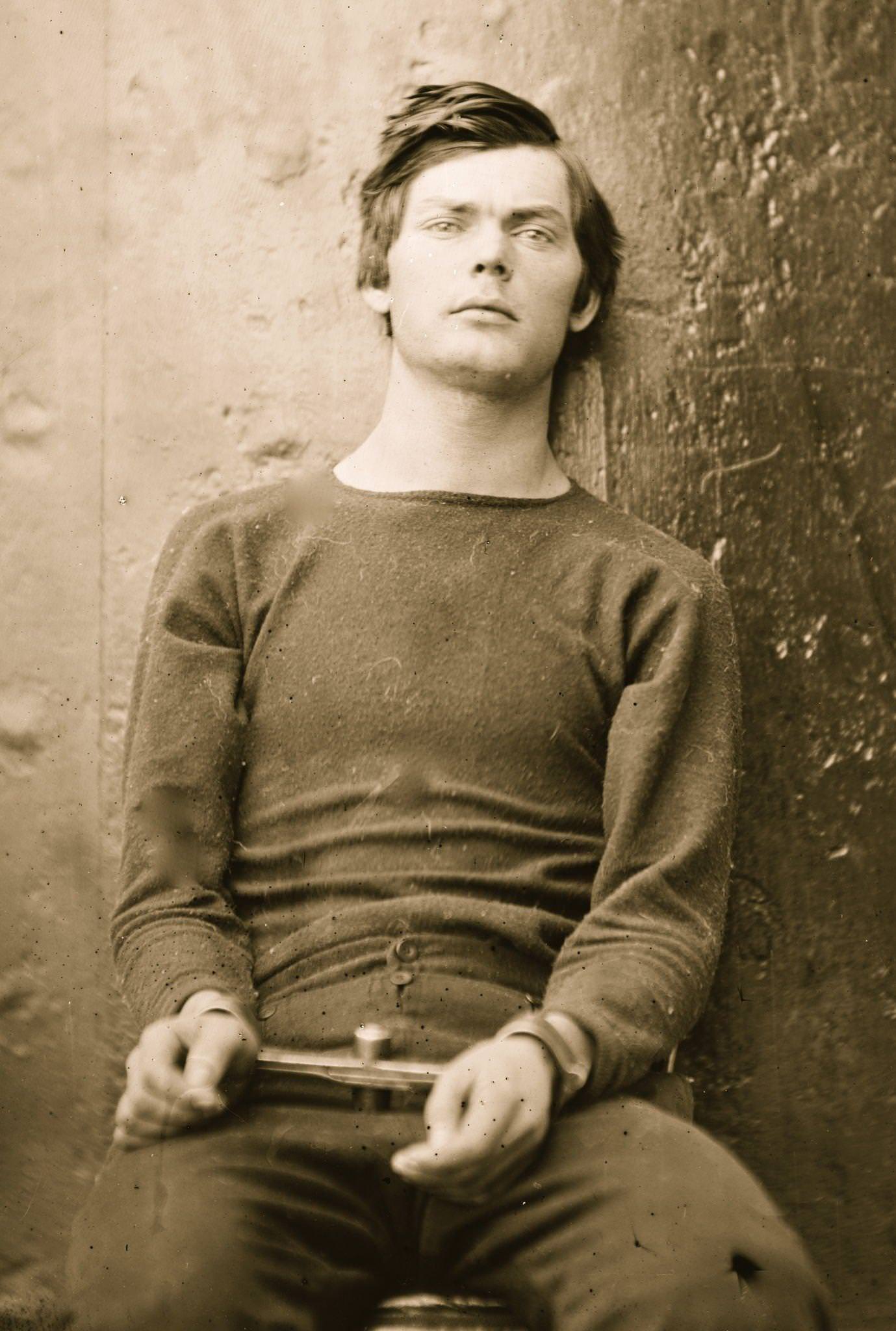
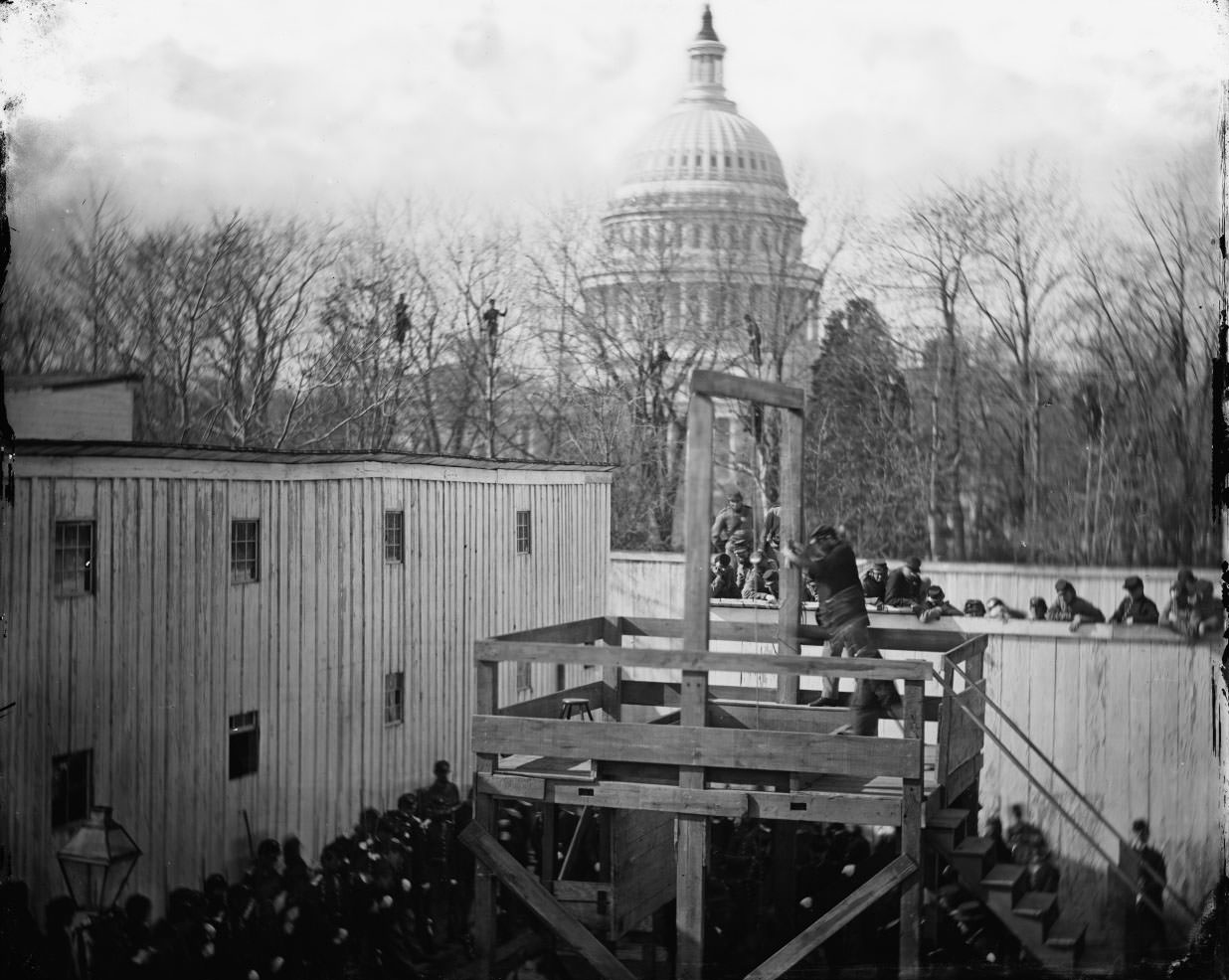
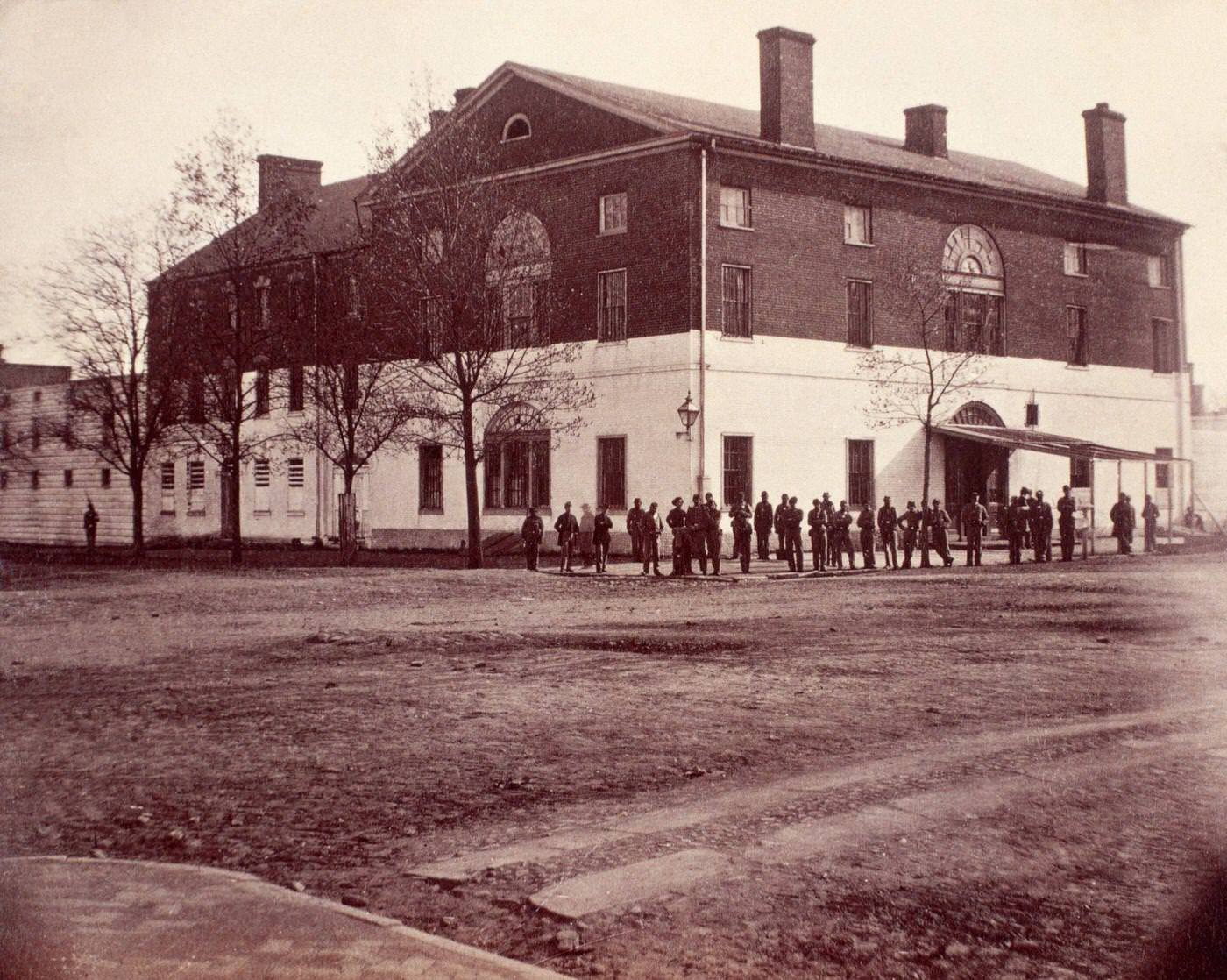
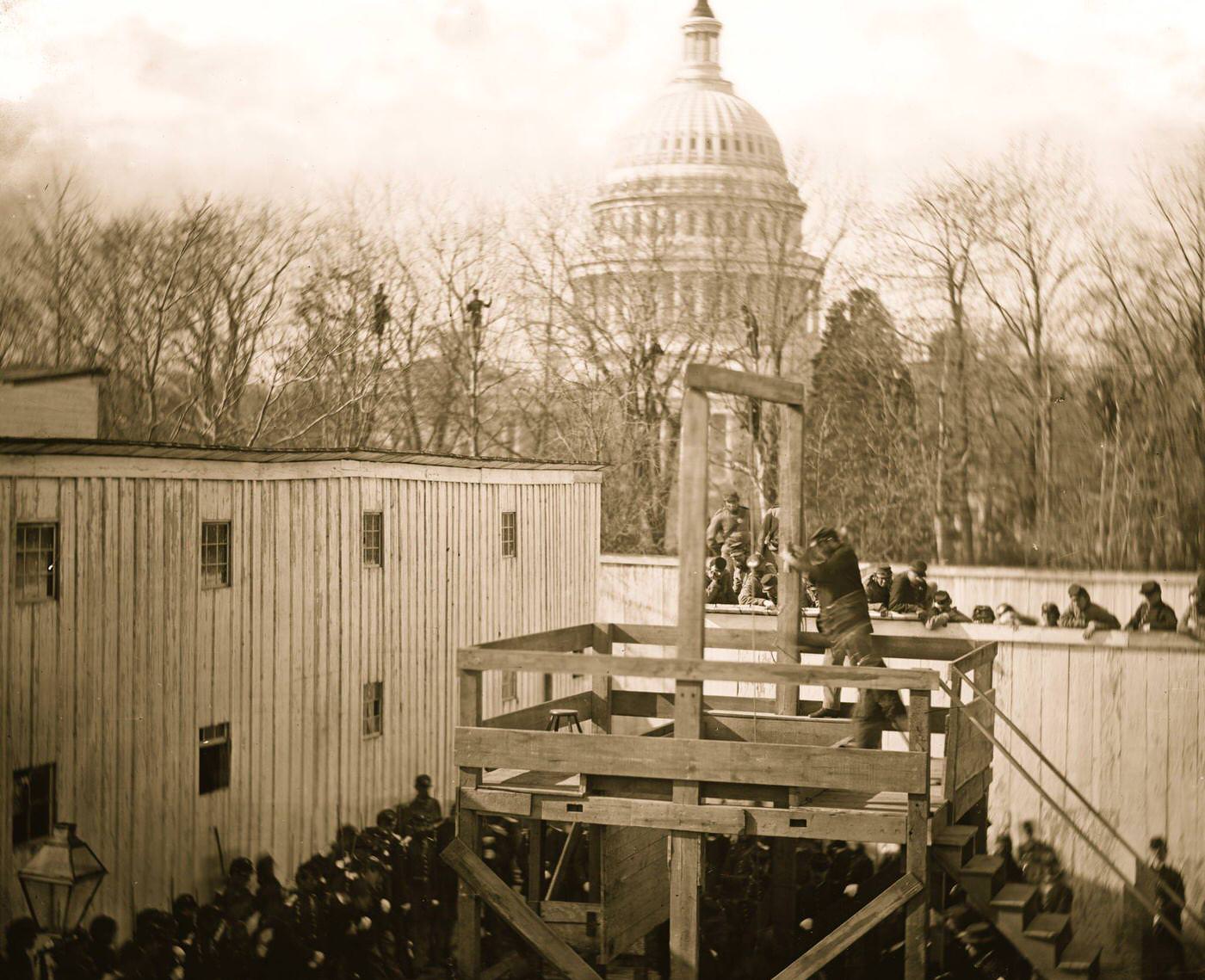
The investigation and prosecution of the conspirators moved quickly. Lewis Powell, who had attempted to assassinate Secretary of State William Seward the same night, was captured and held in irons aboard a naval vessel in the Potomac. David Herold, George Atzerodt, and Mary Surratt were also arrested. All four were tried by a military commission and sentenced to death. On July 7, 1865, they were hanged in the yard of the Old Arsenal Penitentiary in Washington before a crowd of spectators and military witnesses.
The four condemned conspirators (Mrs. Surratt, Payne, Herold, Atzerodt), with officers and others on the scaffold; guards on the wall, Washington, D.C., 1865Lewis Payne in sweater, seated and manacled, Washington, D.C., 1865
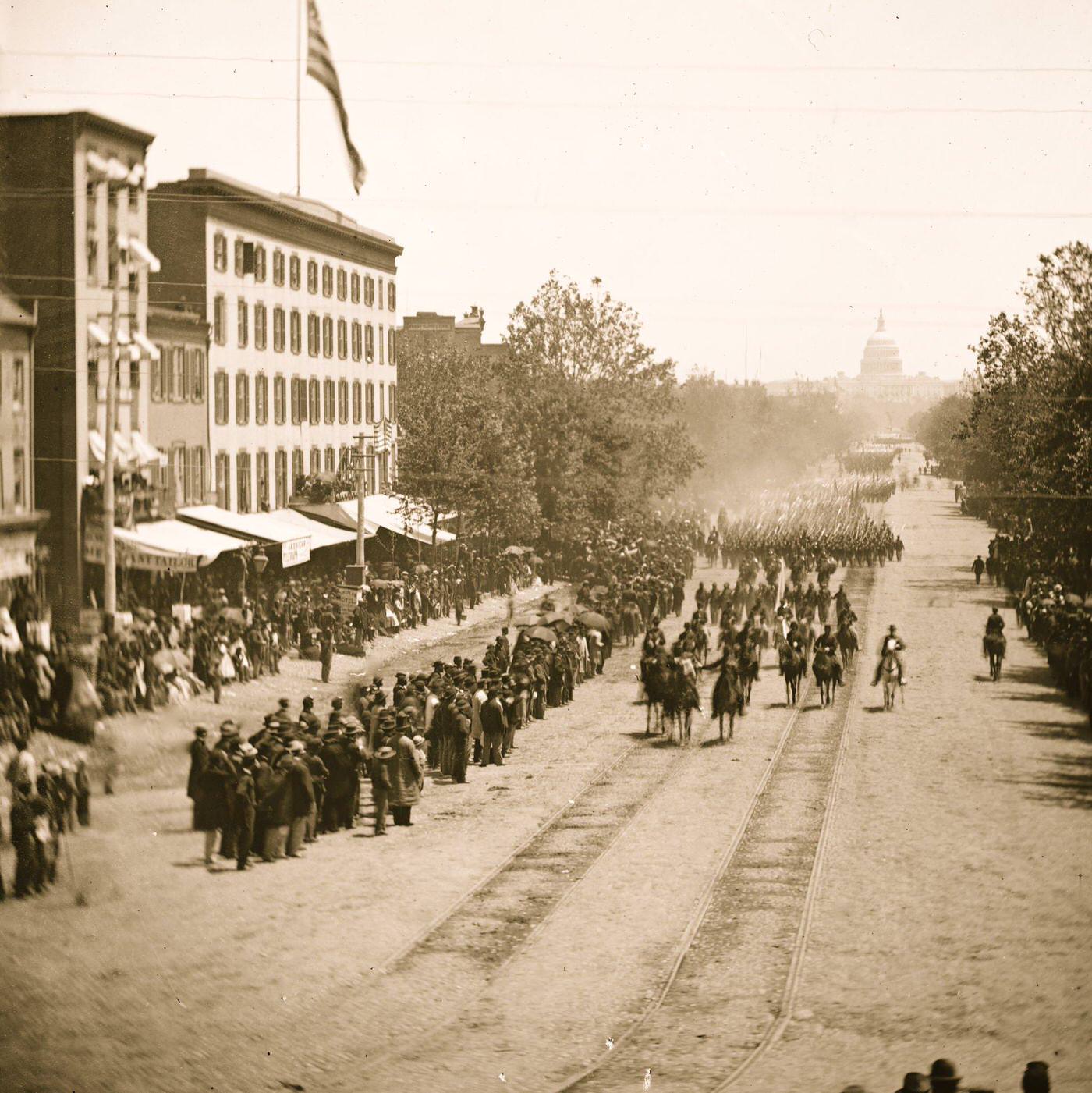
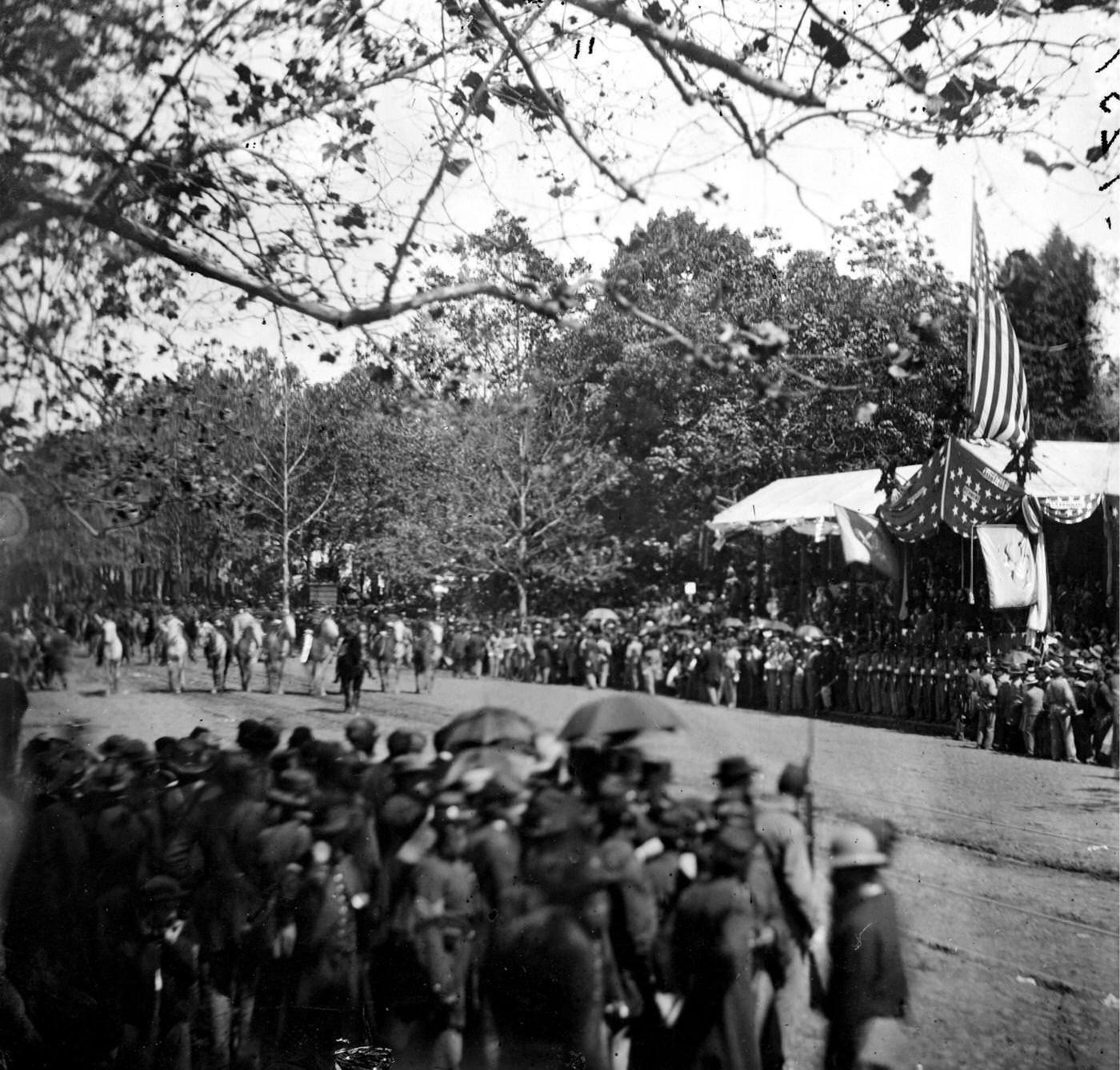
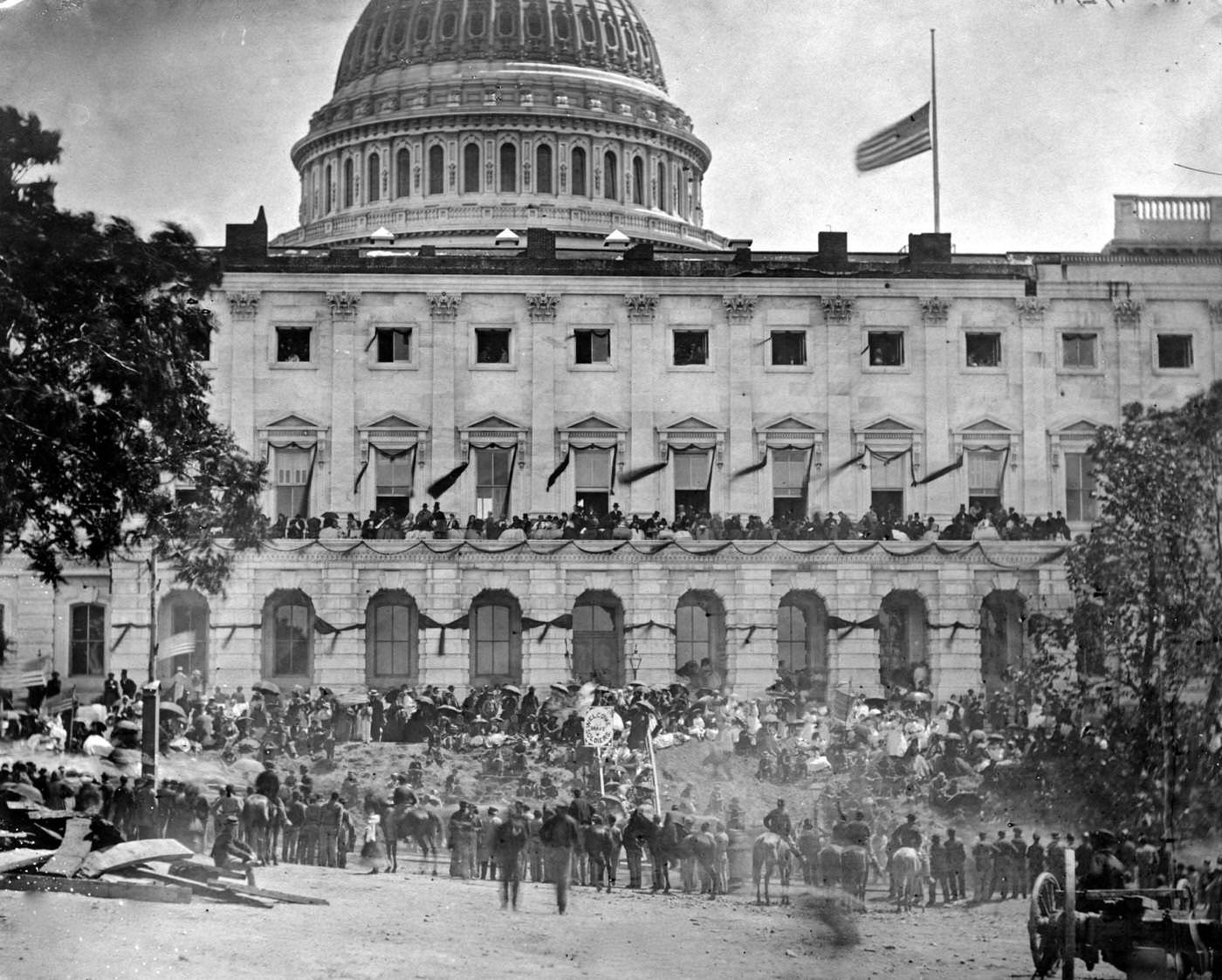
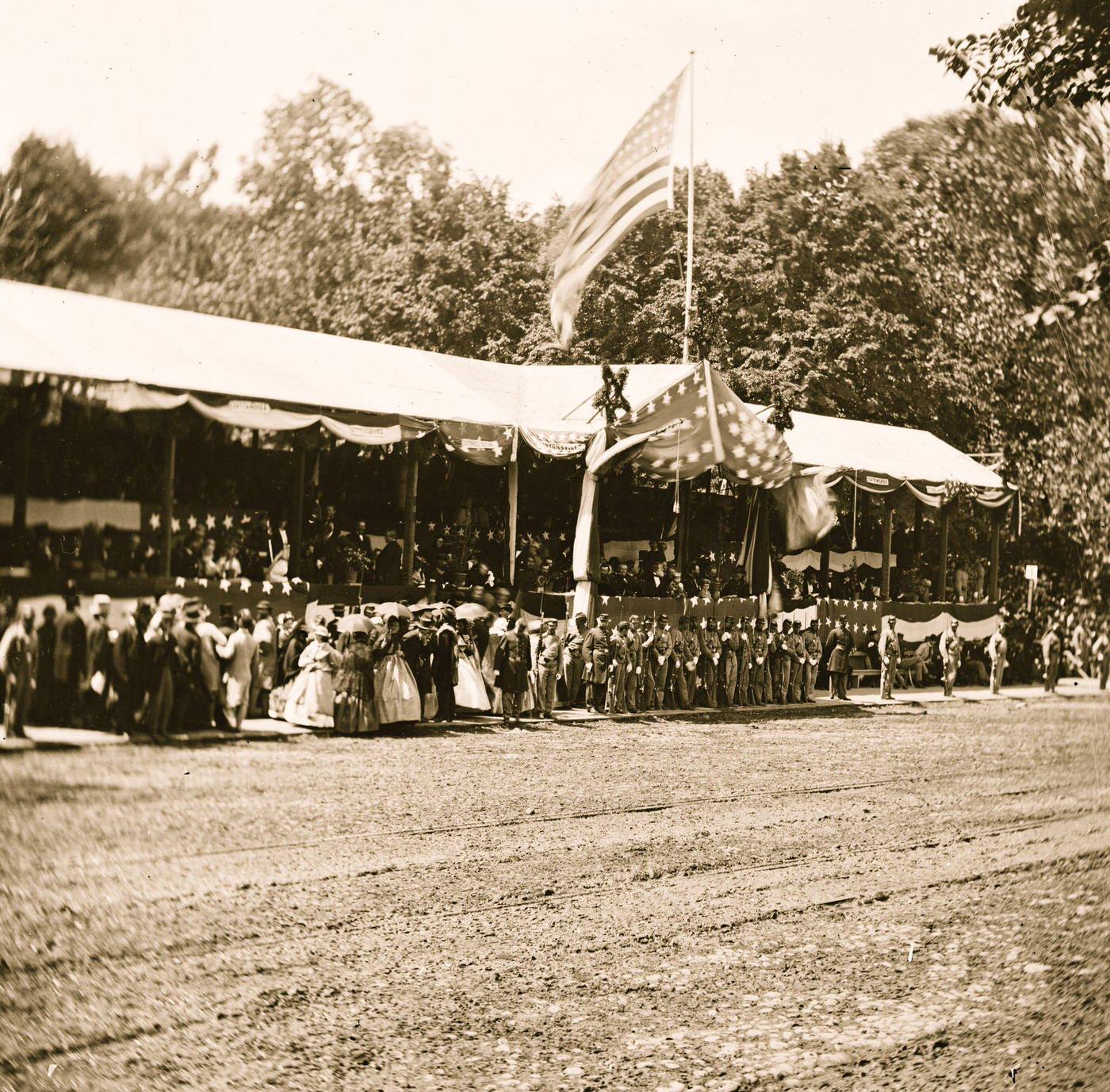
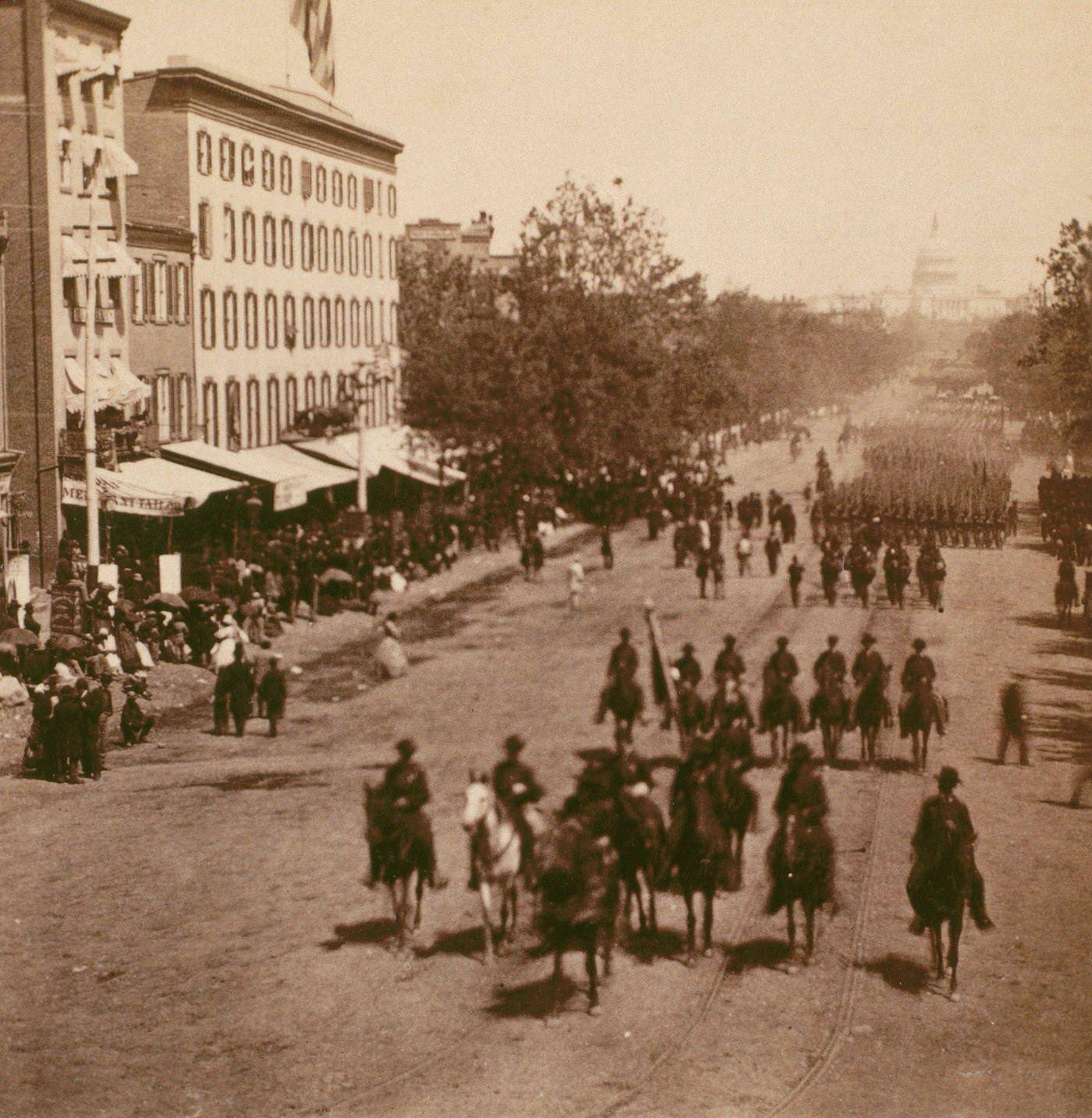
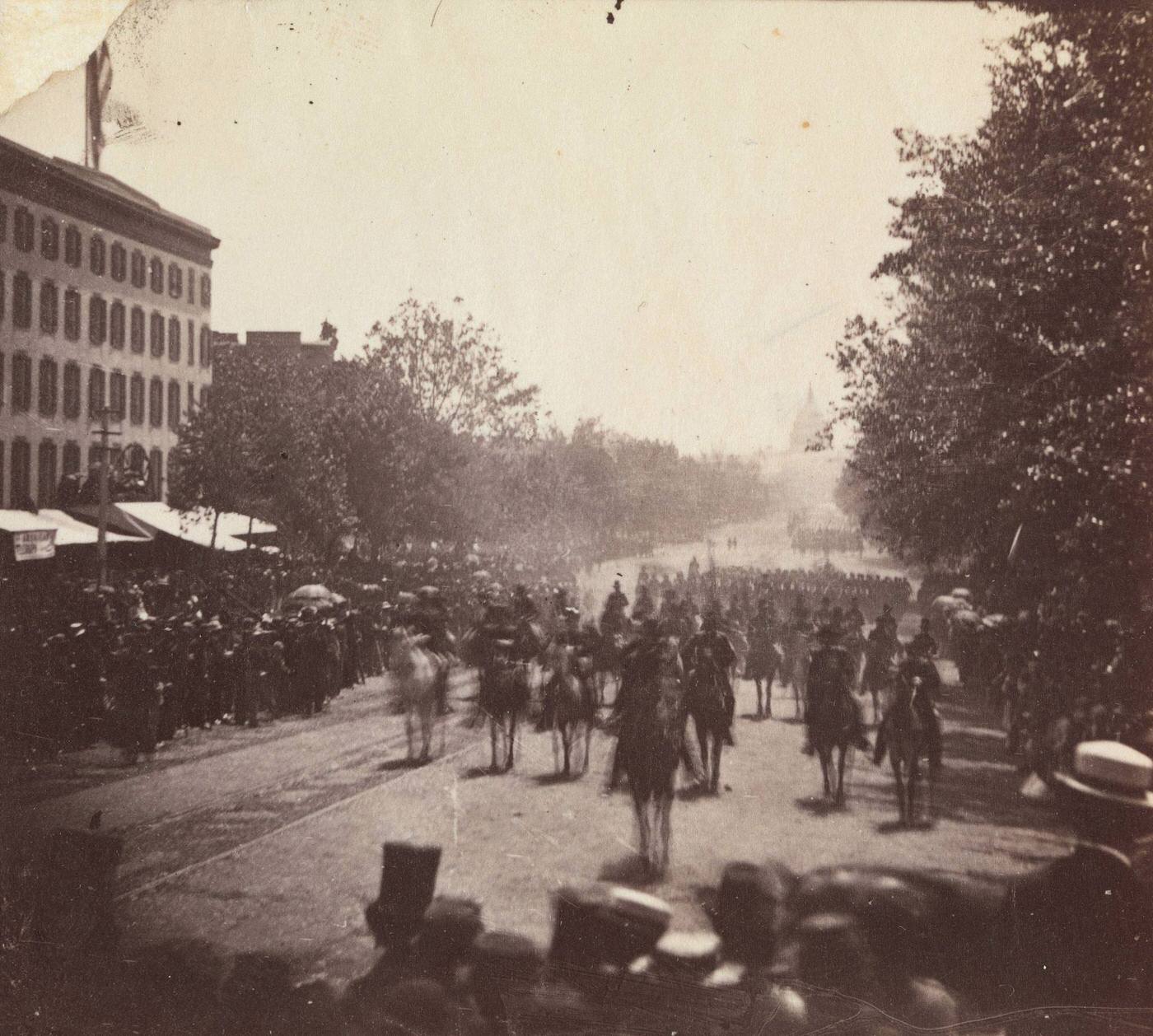
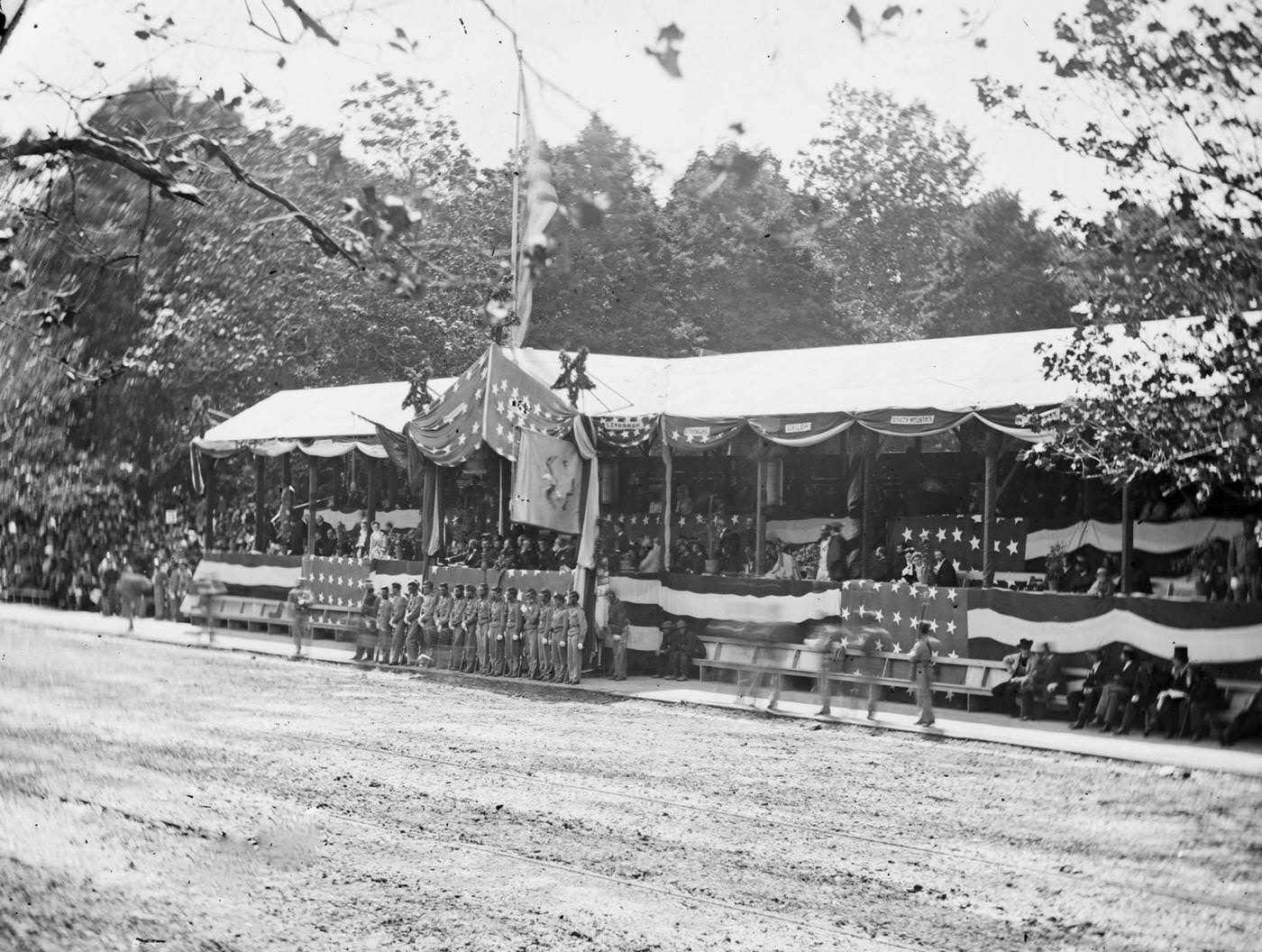
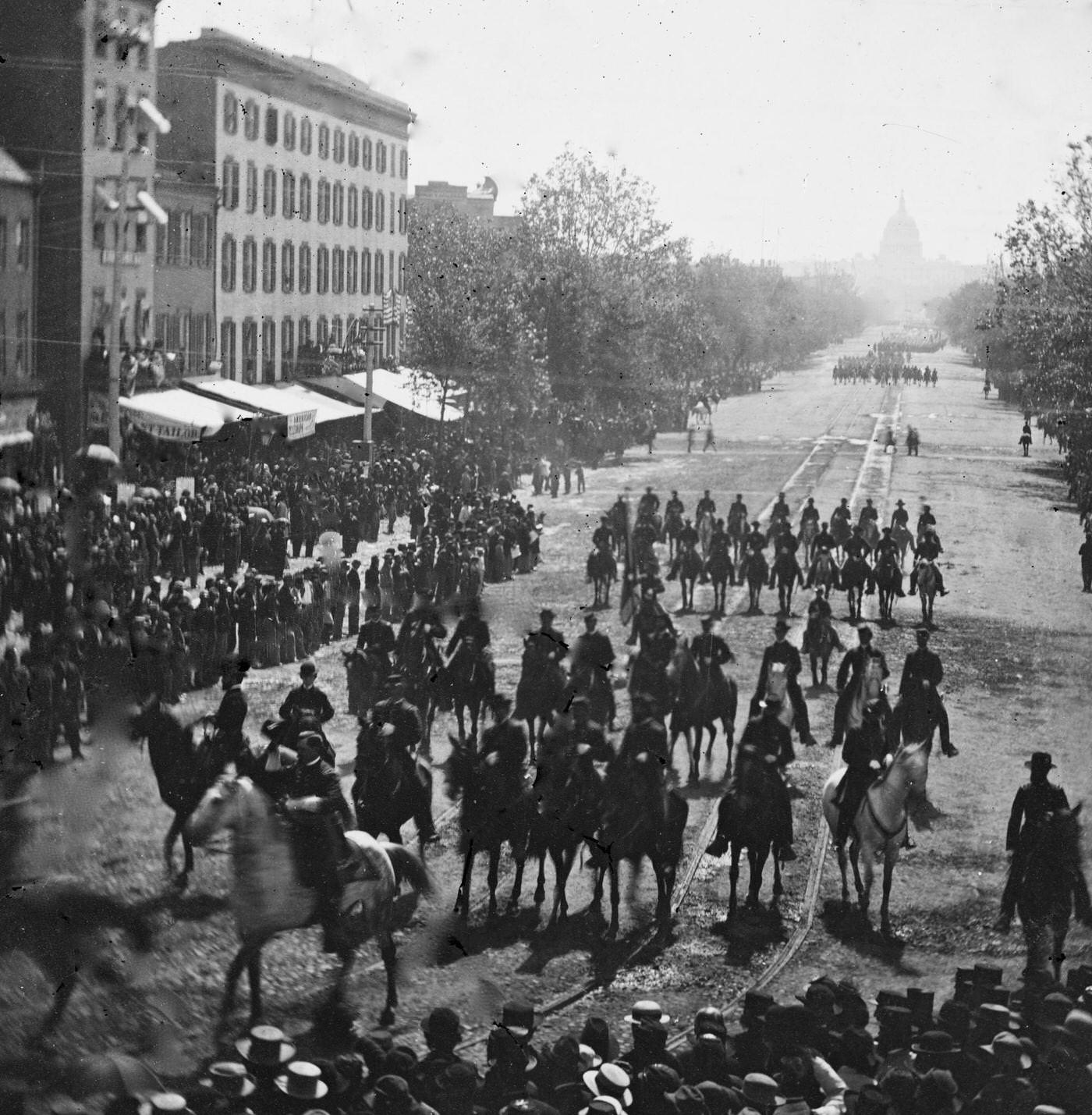
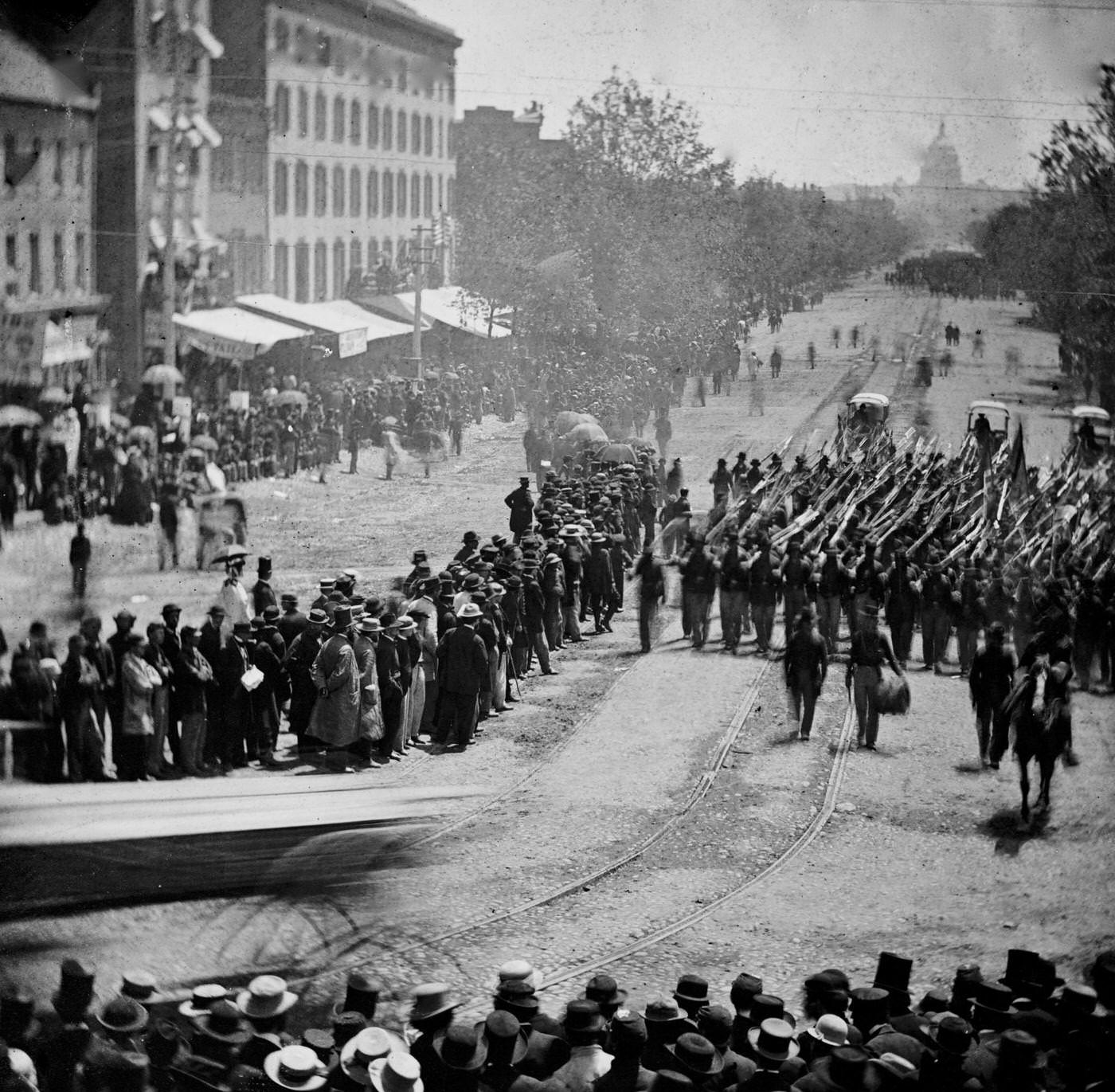
Even as the city mourned, preparations were underway for the Grand Review of the Armies — a two-day victory parade held on May 23 and 24, 1865. On the first day, Major General George Meade led the Army of the Potomac down Pennsylvania Avenue. On the second, General William T. Sherman’s Army of Georgia and Army of the Tennessee followed the same route. Thousands of soldiers marched past a presidential reviewing stand built in front of the White House. Spectators lined the avenue and gathered on the Capitol steps. The Capitol itself flew its flag at half-mast in honor of Lincoln, even as the bands played and the crowds cheered.
The Grand Review of the Army passing on Pennsylvania Avenue, Washington, D.C., 1865Cavalry unit passing the Presidential reviewing stand, with guests and guard, during the “grand review” of the Union Army, Washington, D.C., 1865Spectators gather at the side of the Capitol, which is hung with crepe and flies the flag at half mast, during the “grand review” of the Union Army, Washington, D.C., 1865
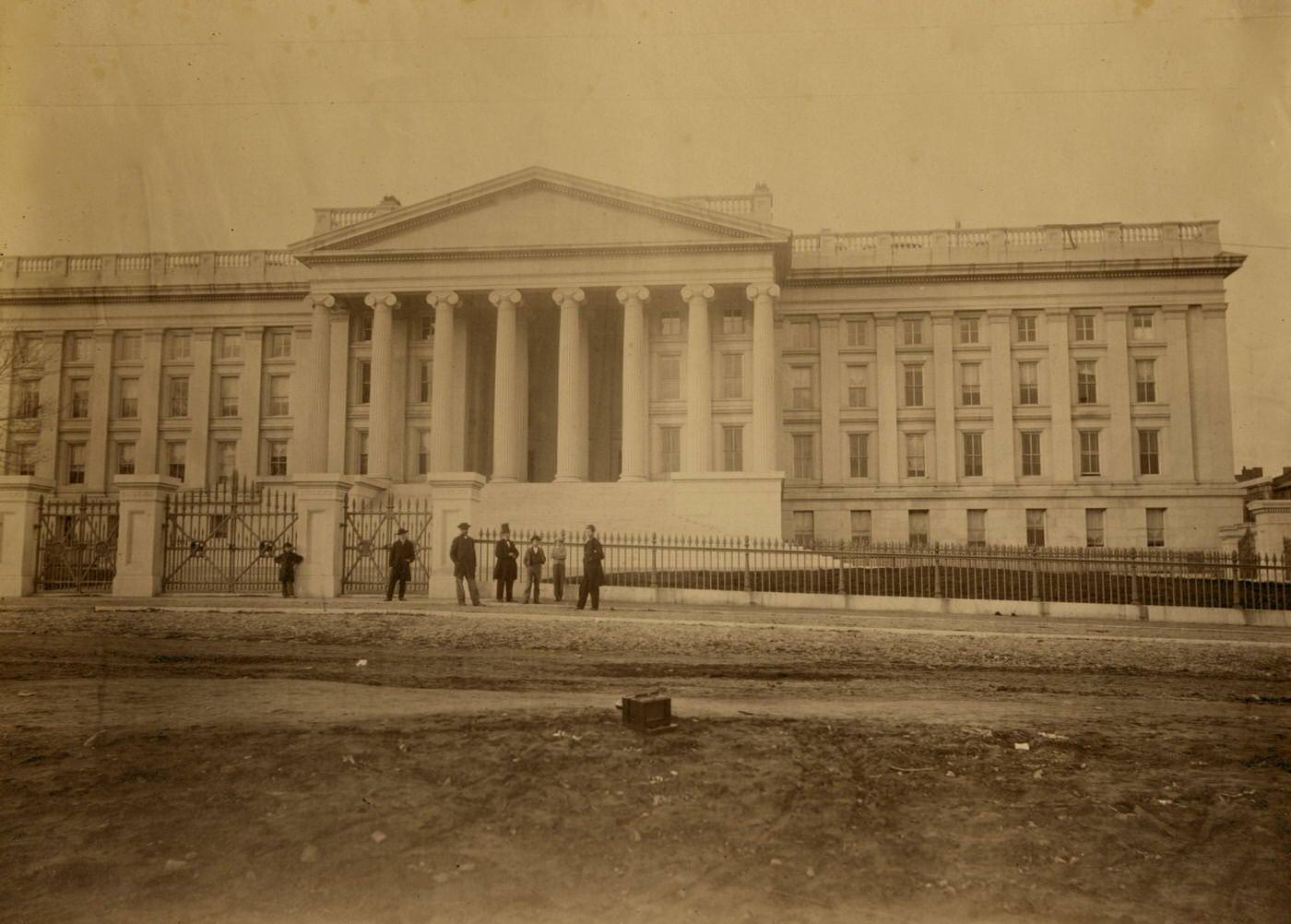
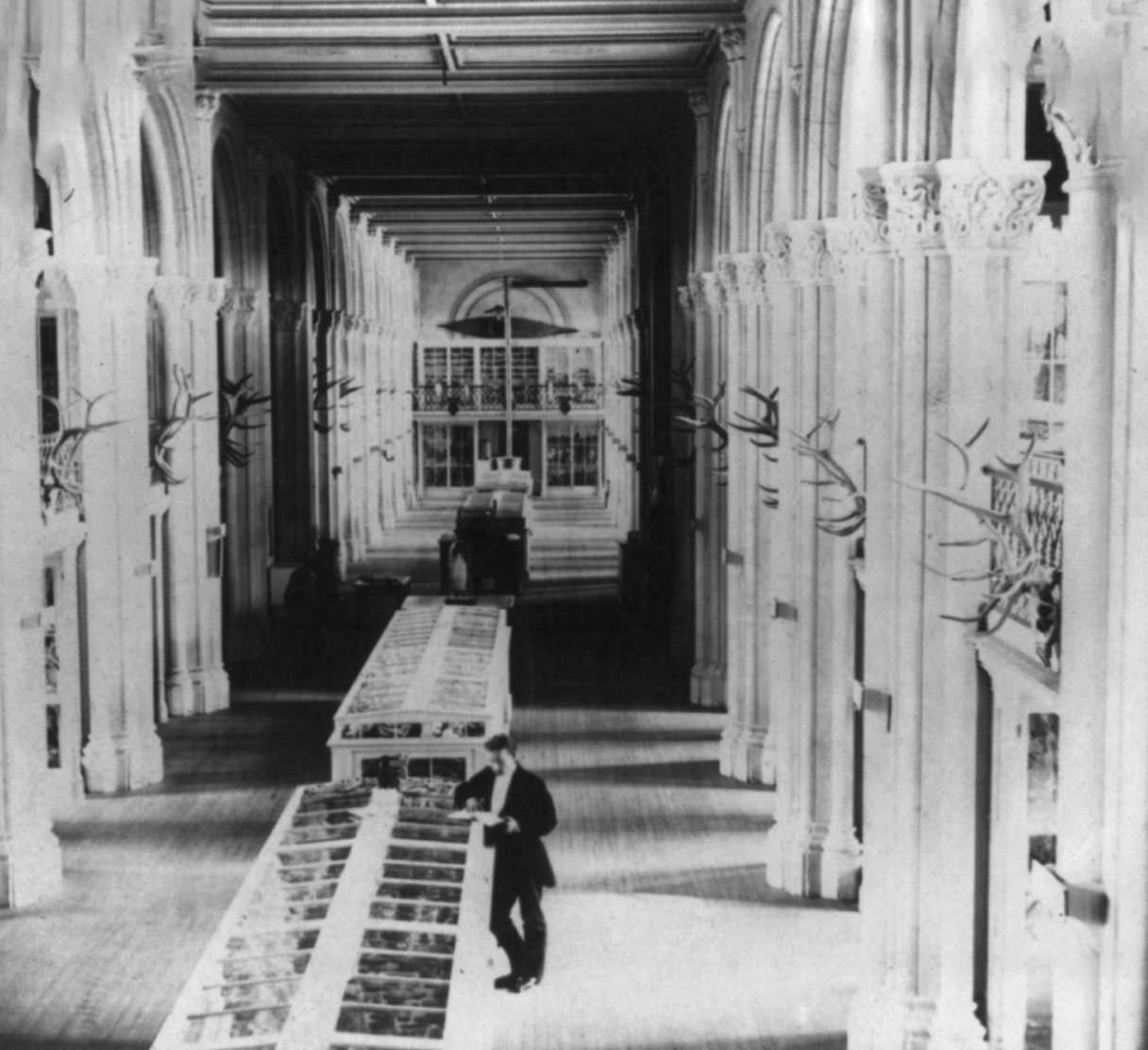
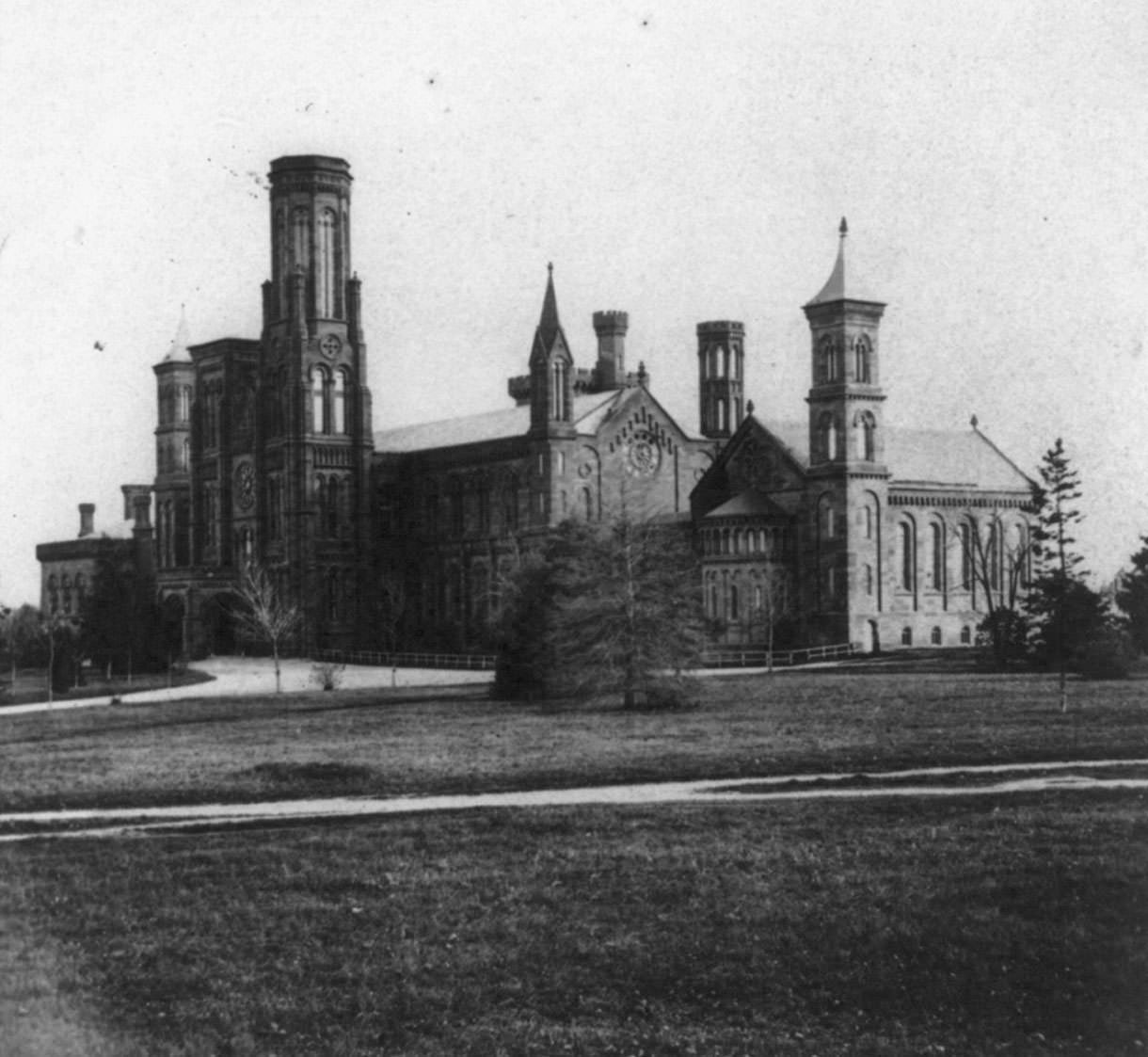
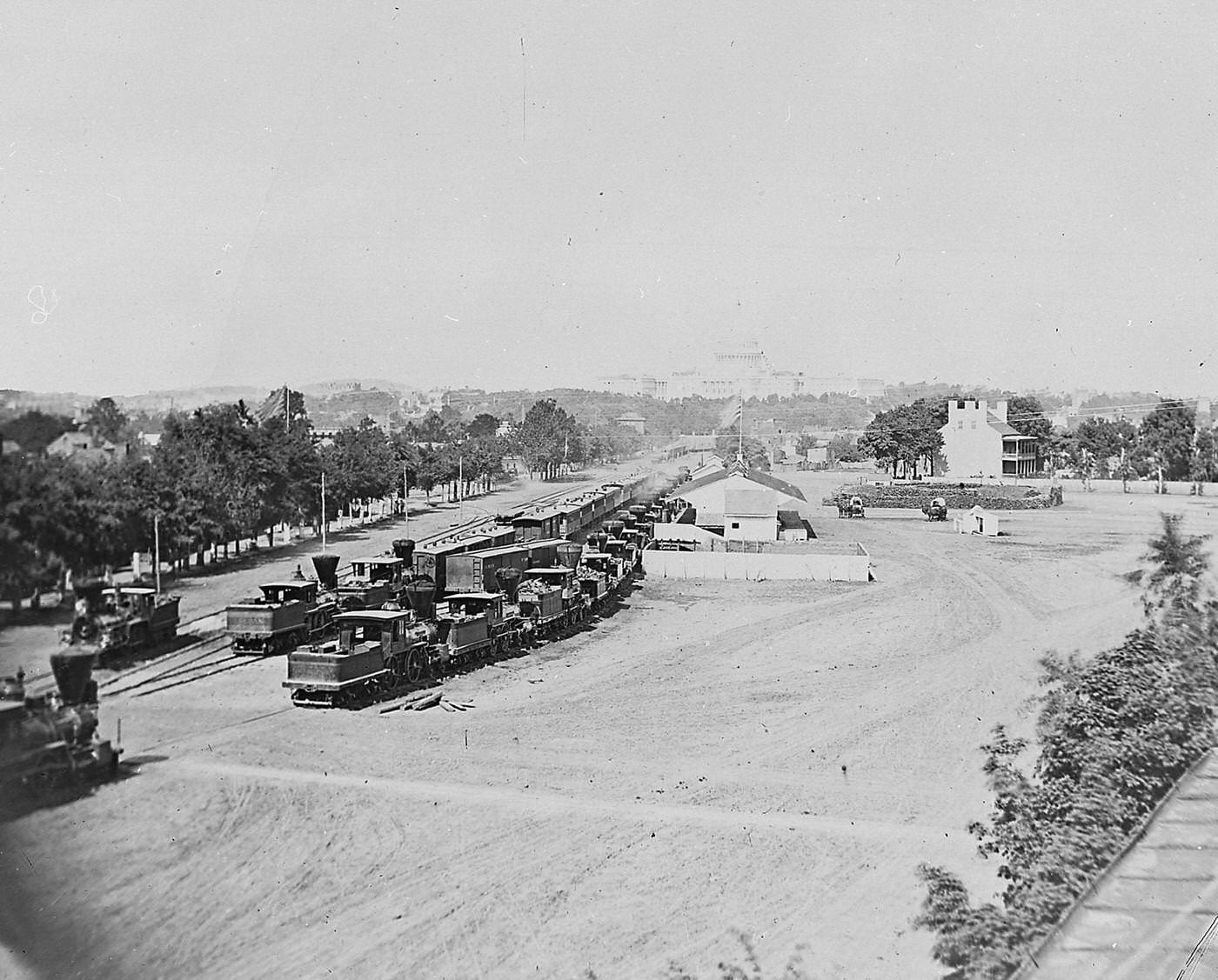
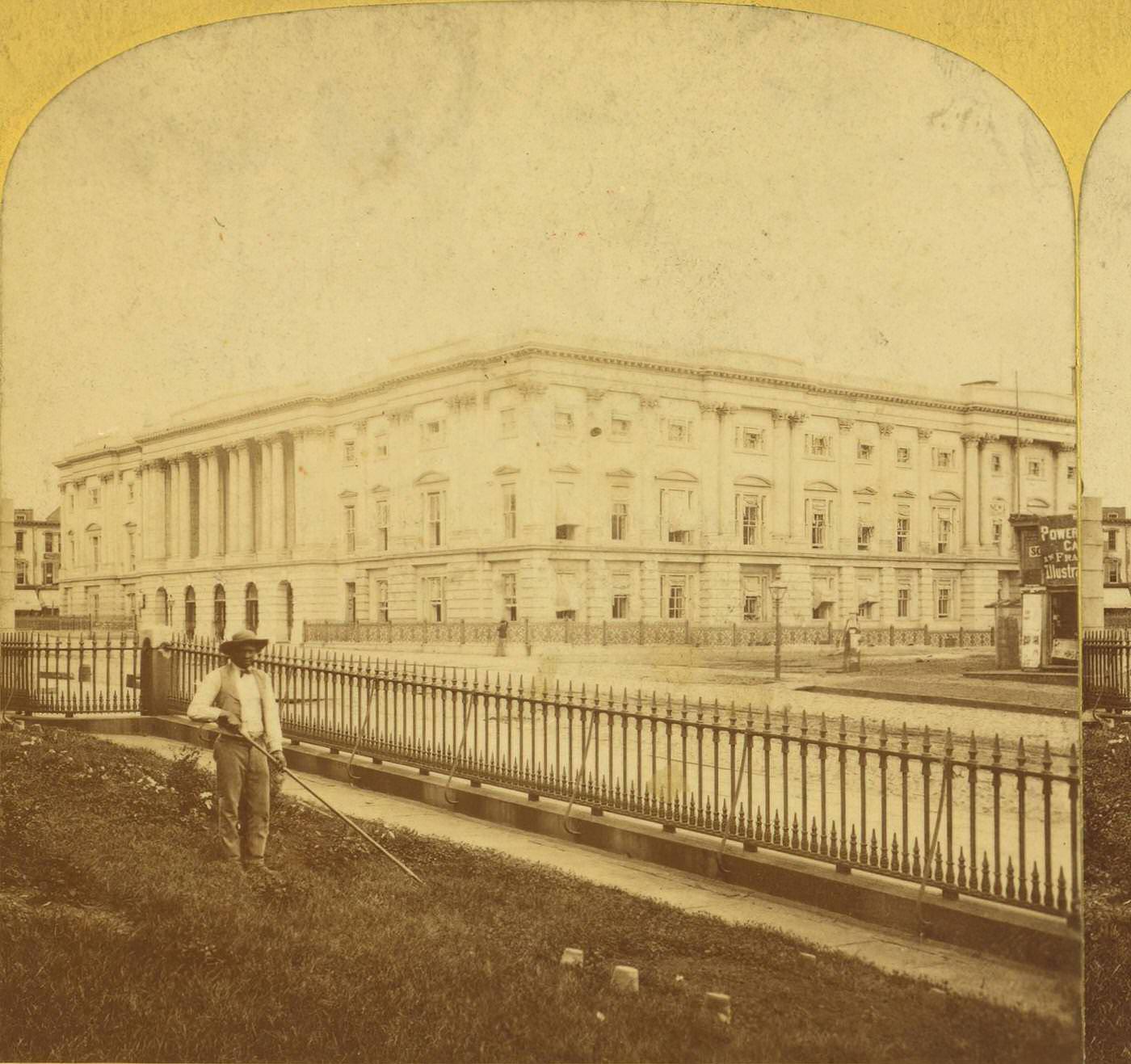
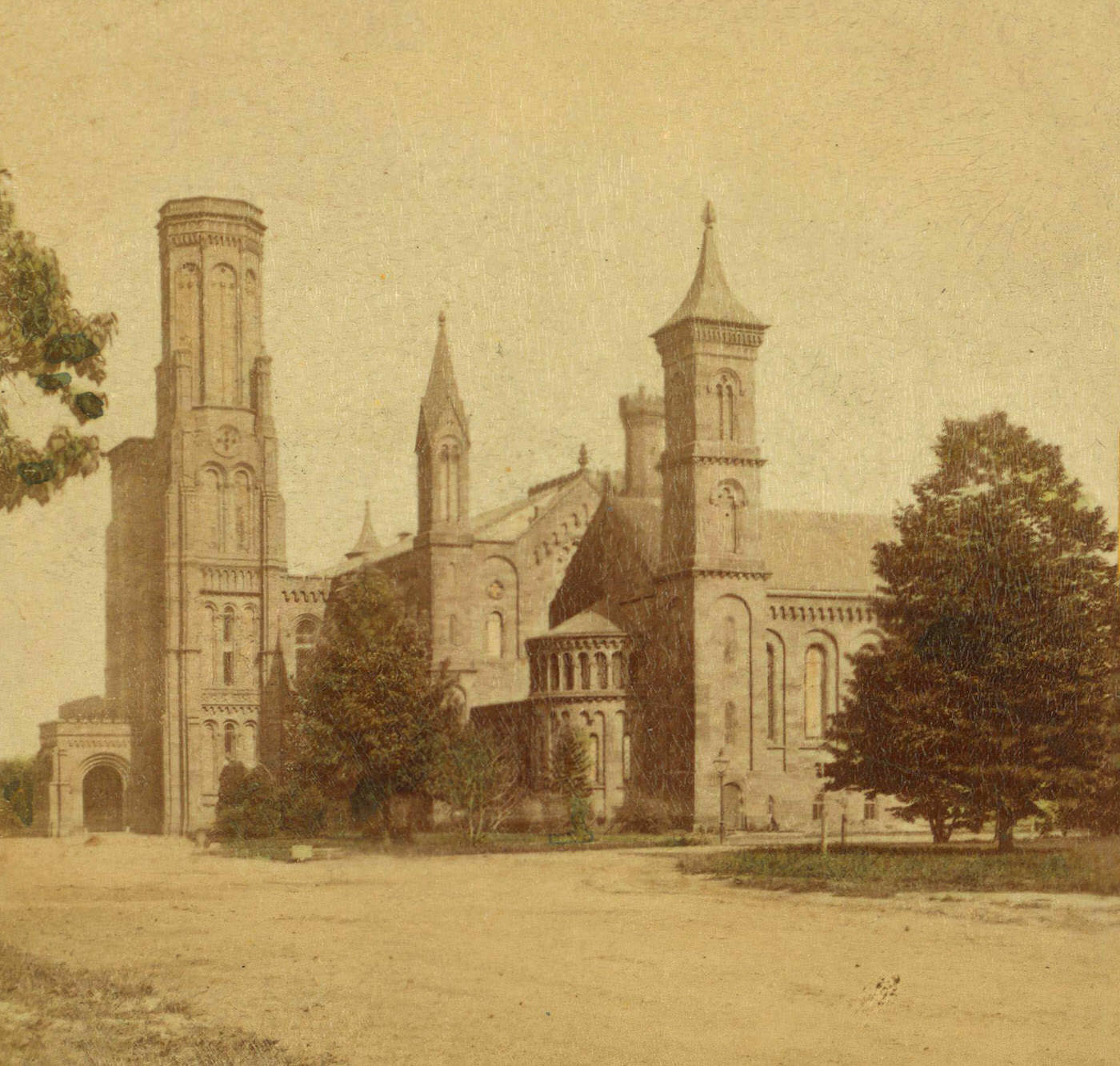
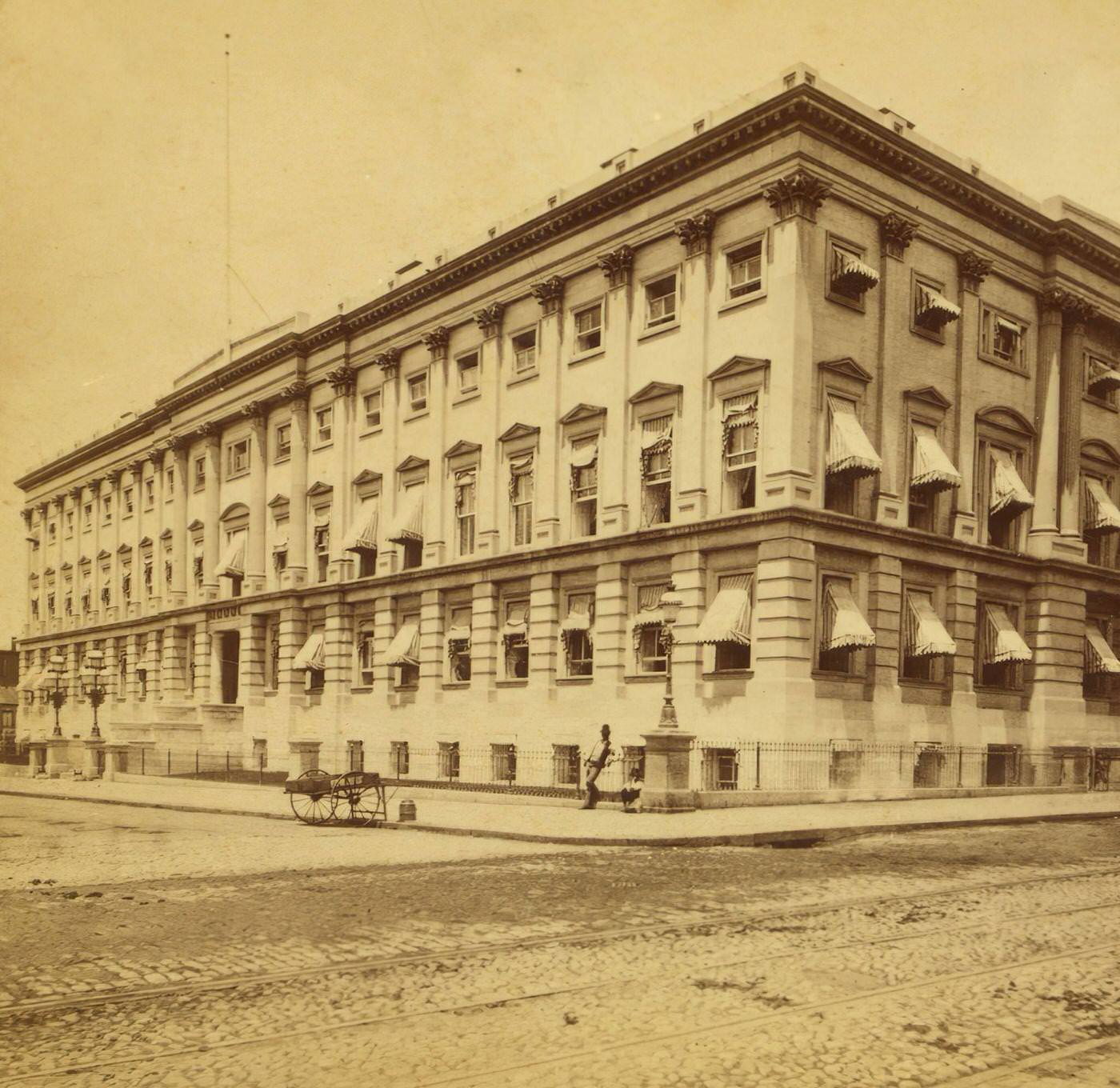
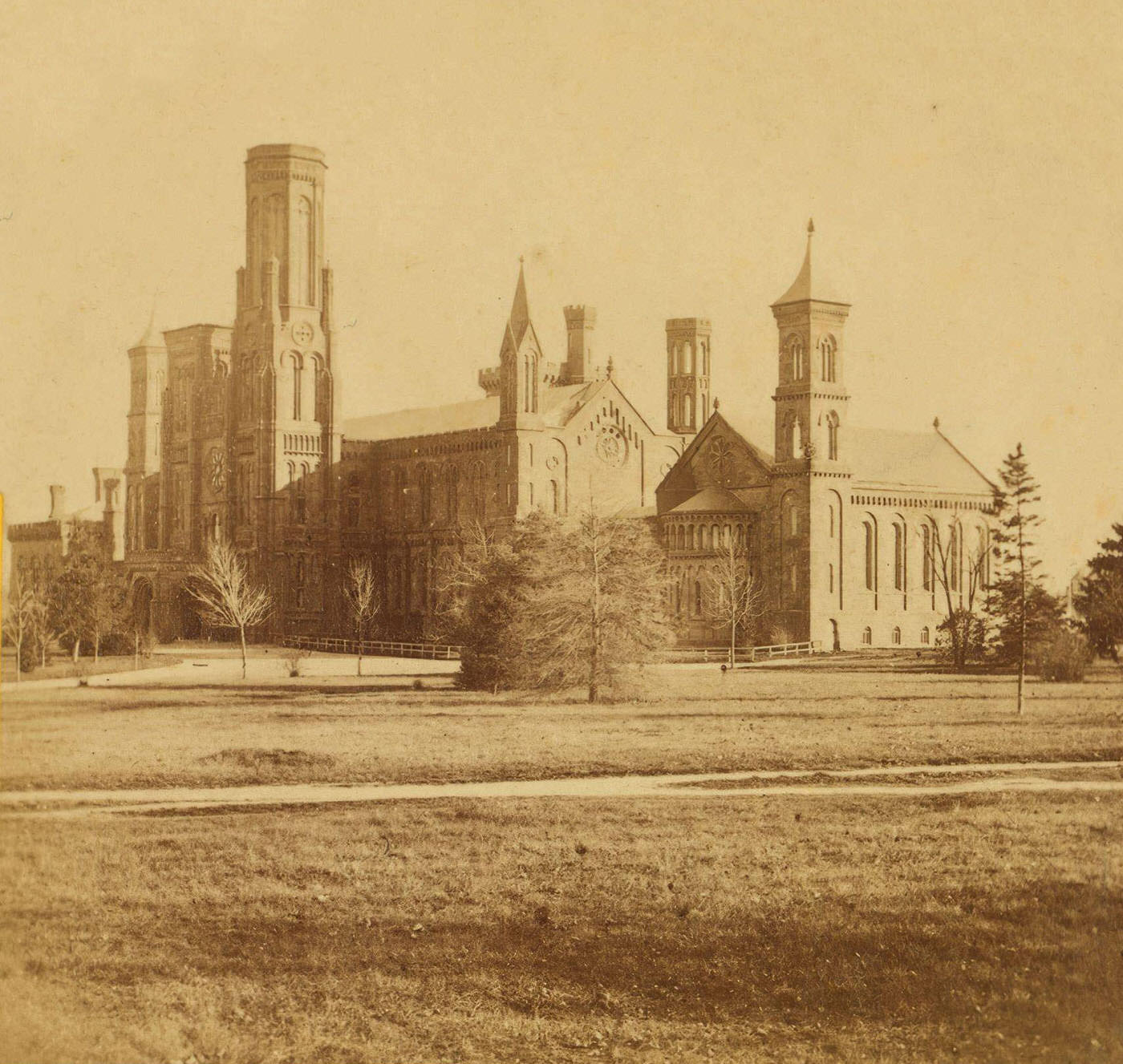
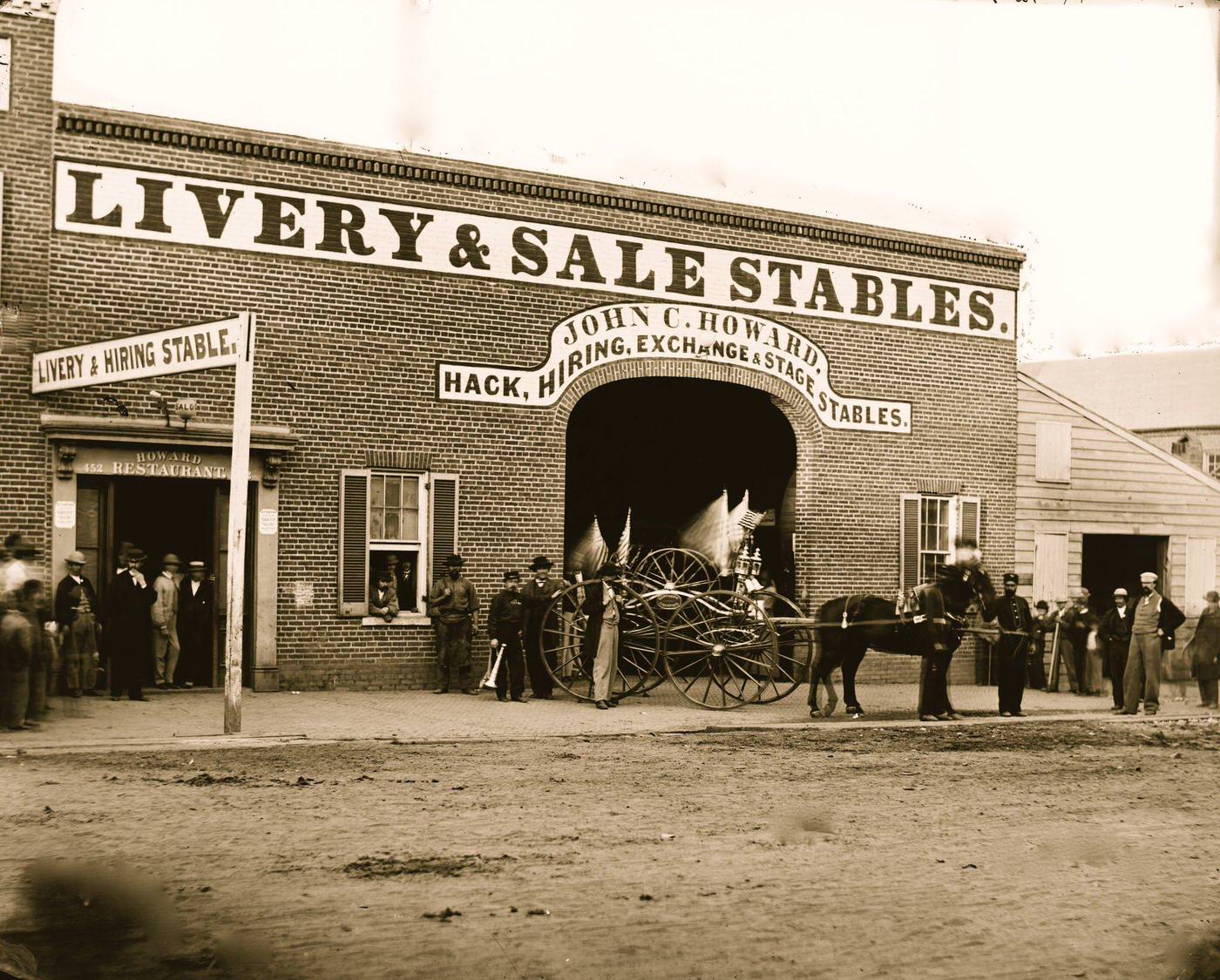
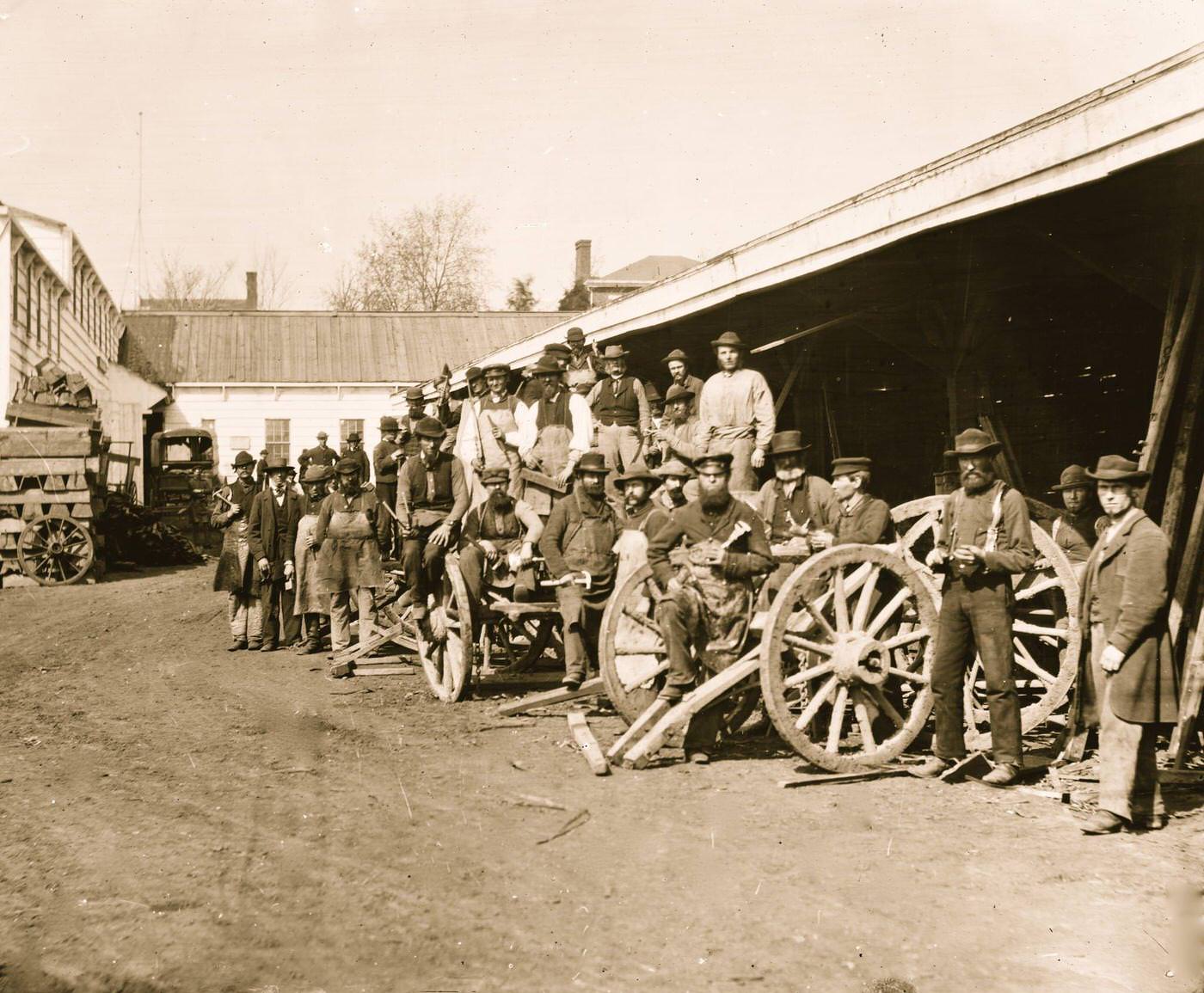
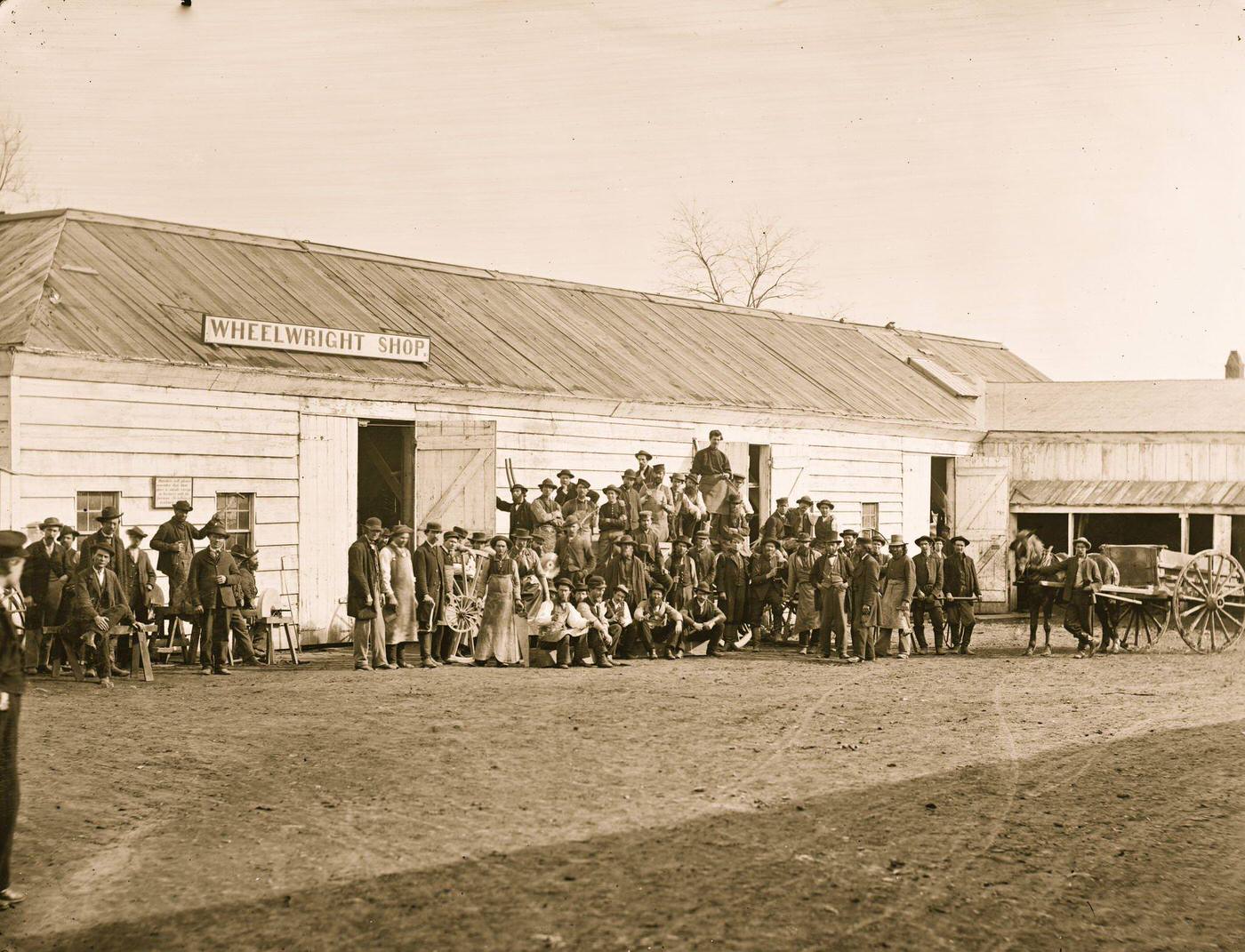
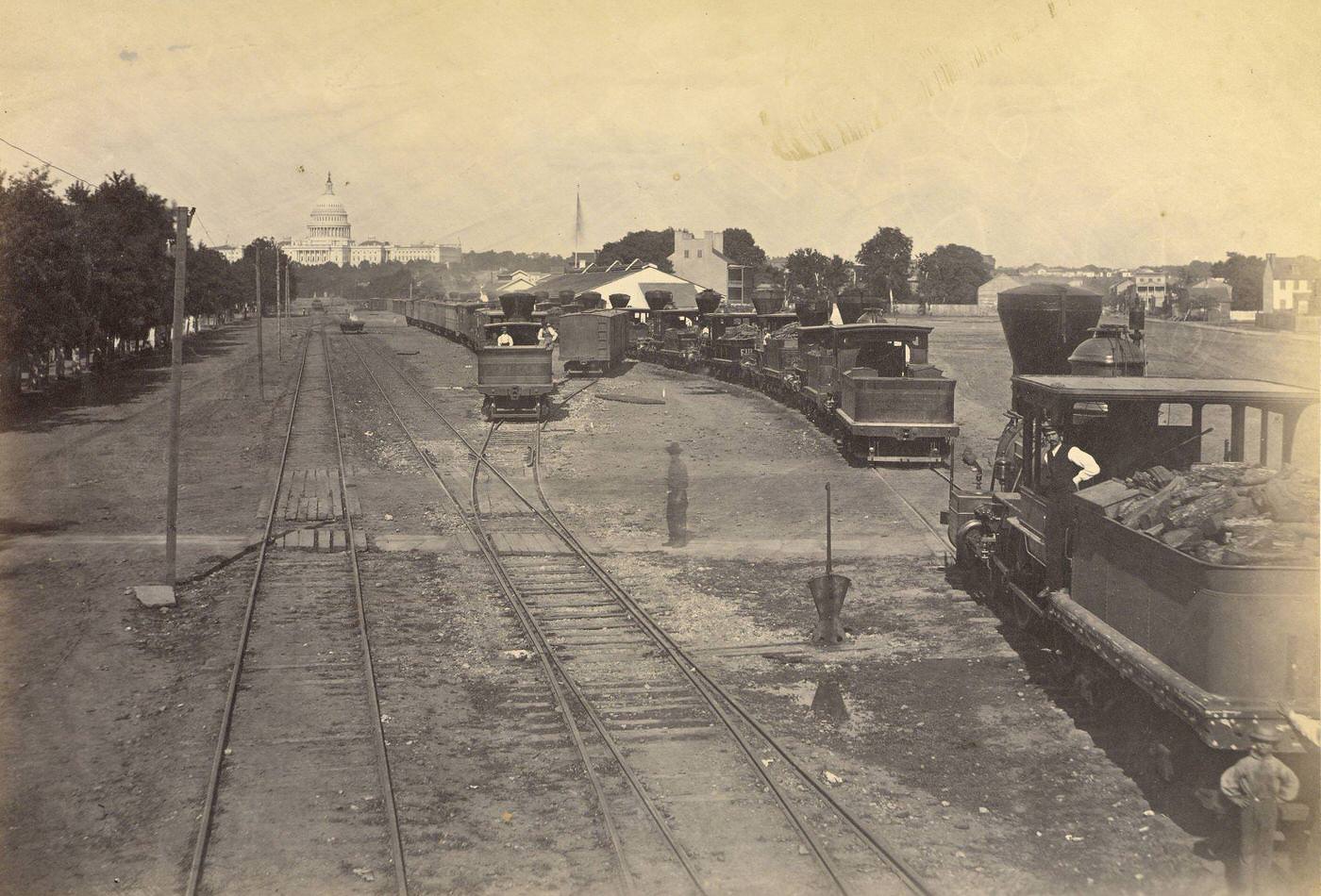
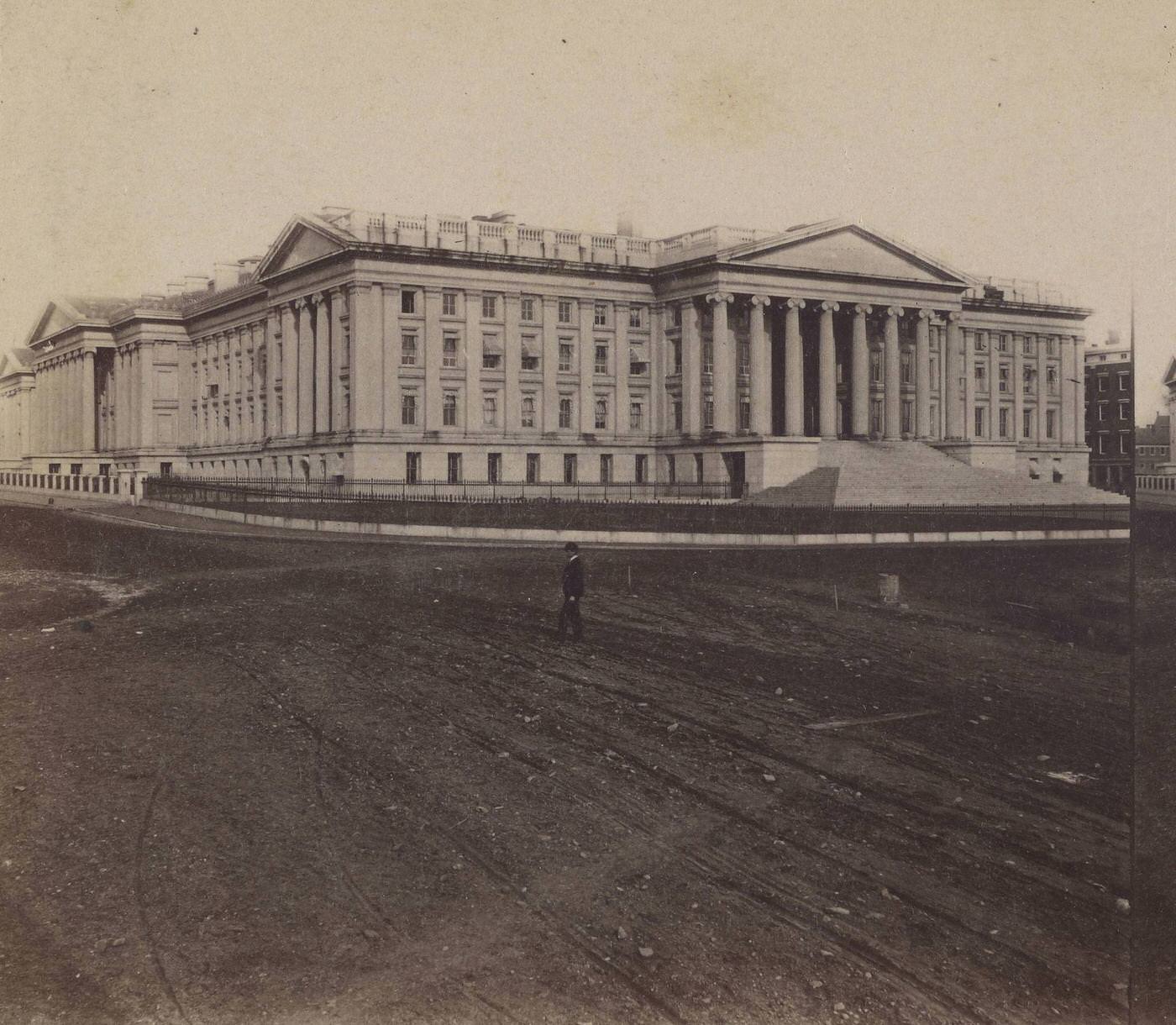
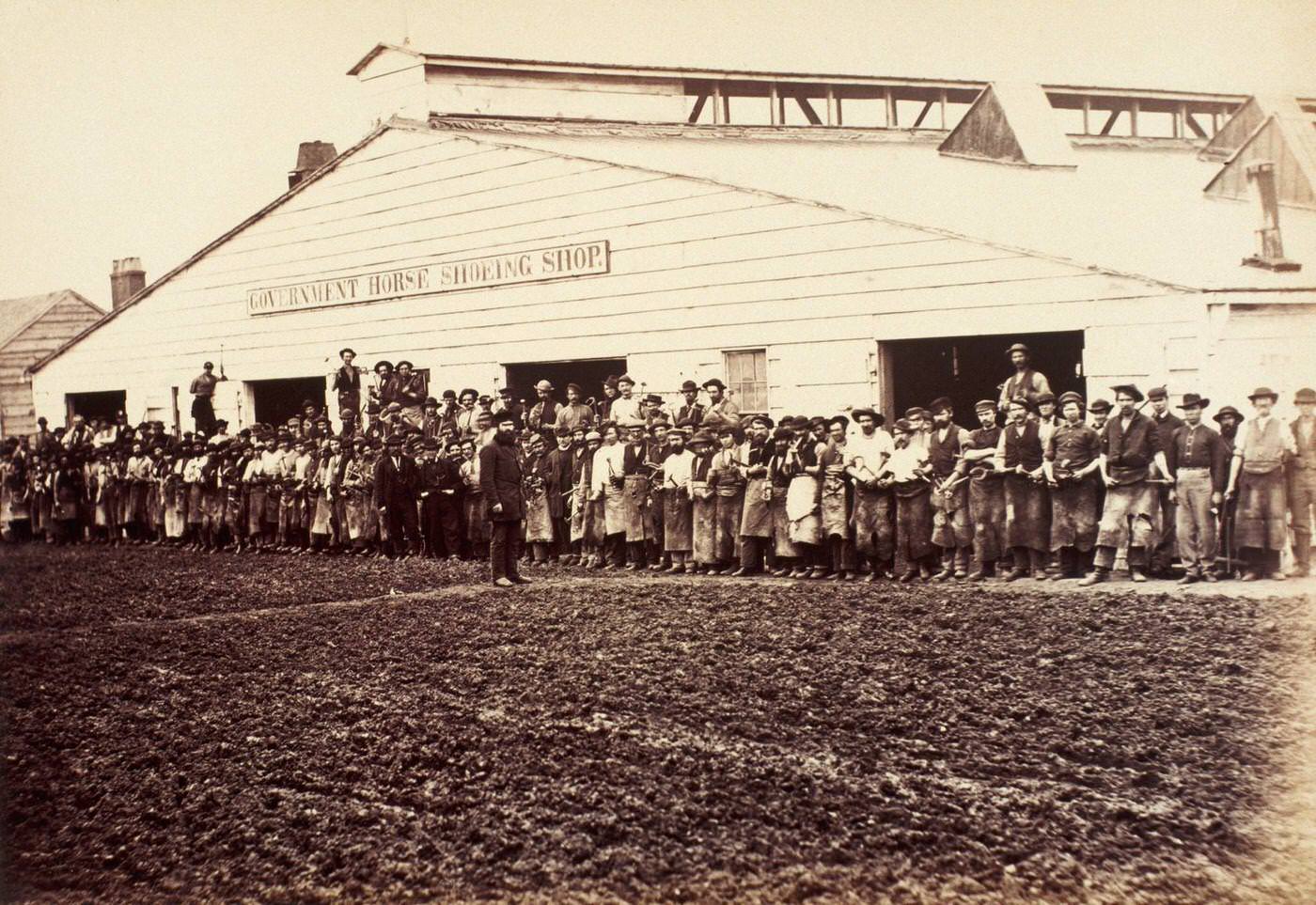
Washington’s civilian institutions continued to operate throughout the war and expanded in the years that followed. The Smithsonian Institution, established in 1846, kept its doors open on the Mall. The Treasury Building and the Post Office Department handled the enormous financial and administrative demands of the war effort. The city’s railroad depots — including the Maryland Avenue Depot — managed a constant movement of troops and supplies. After the war, Washington slowly shed its wartime character. Forts were decommissioned, hospitals were closed, and the government repaired shops and stables that had supported the military machine were gradually wound down. The capital began the long process of becoming the showplace its founders had always envisioned.
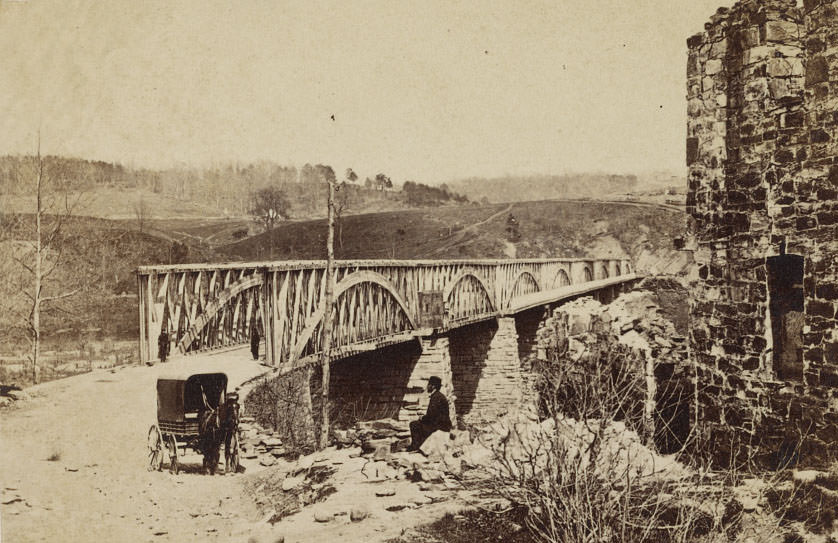
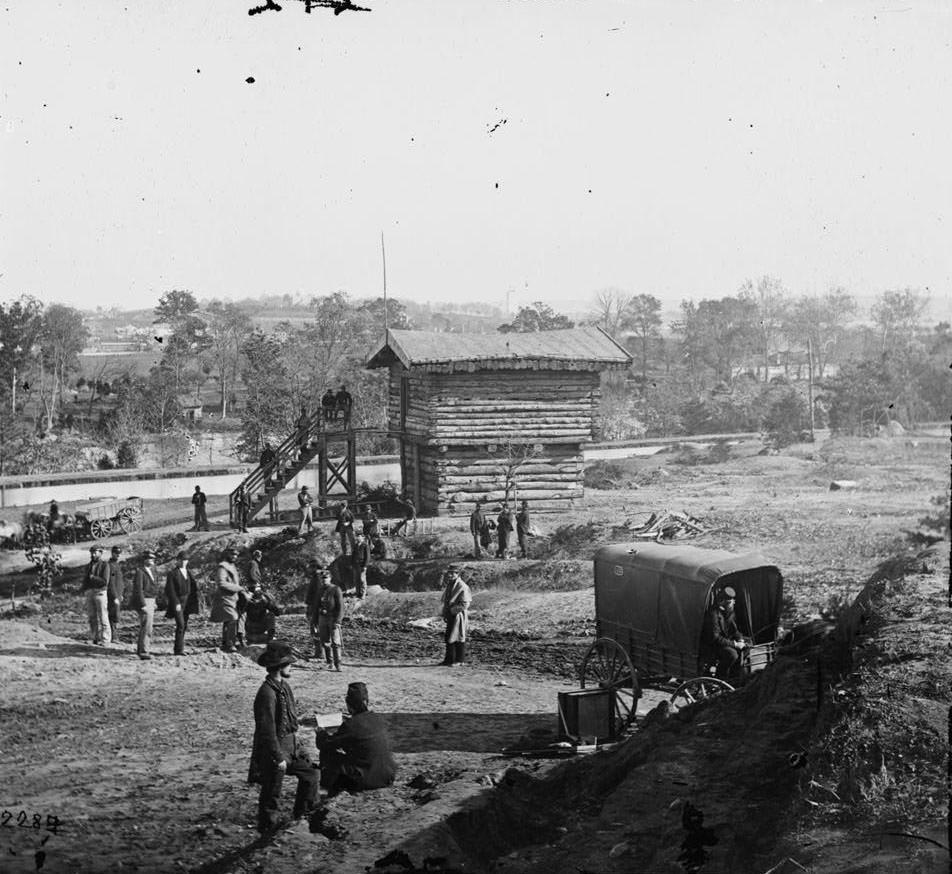
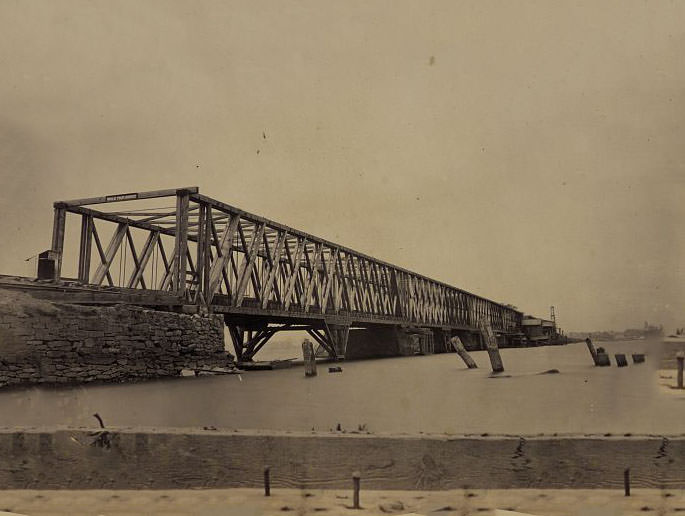
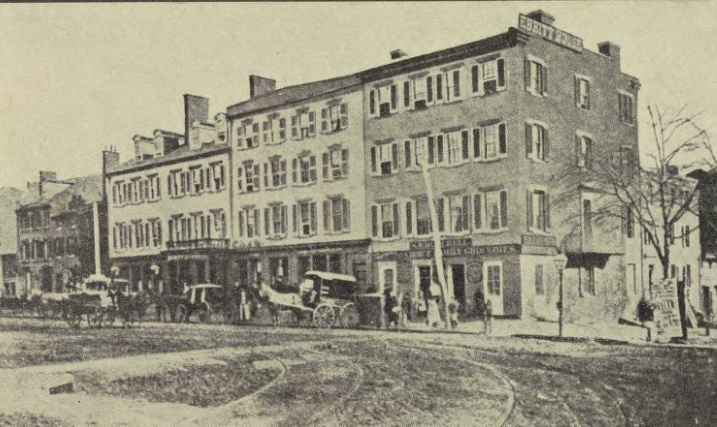
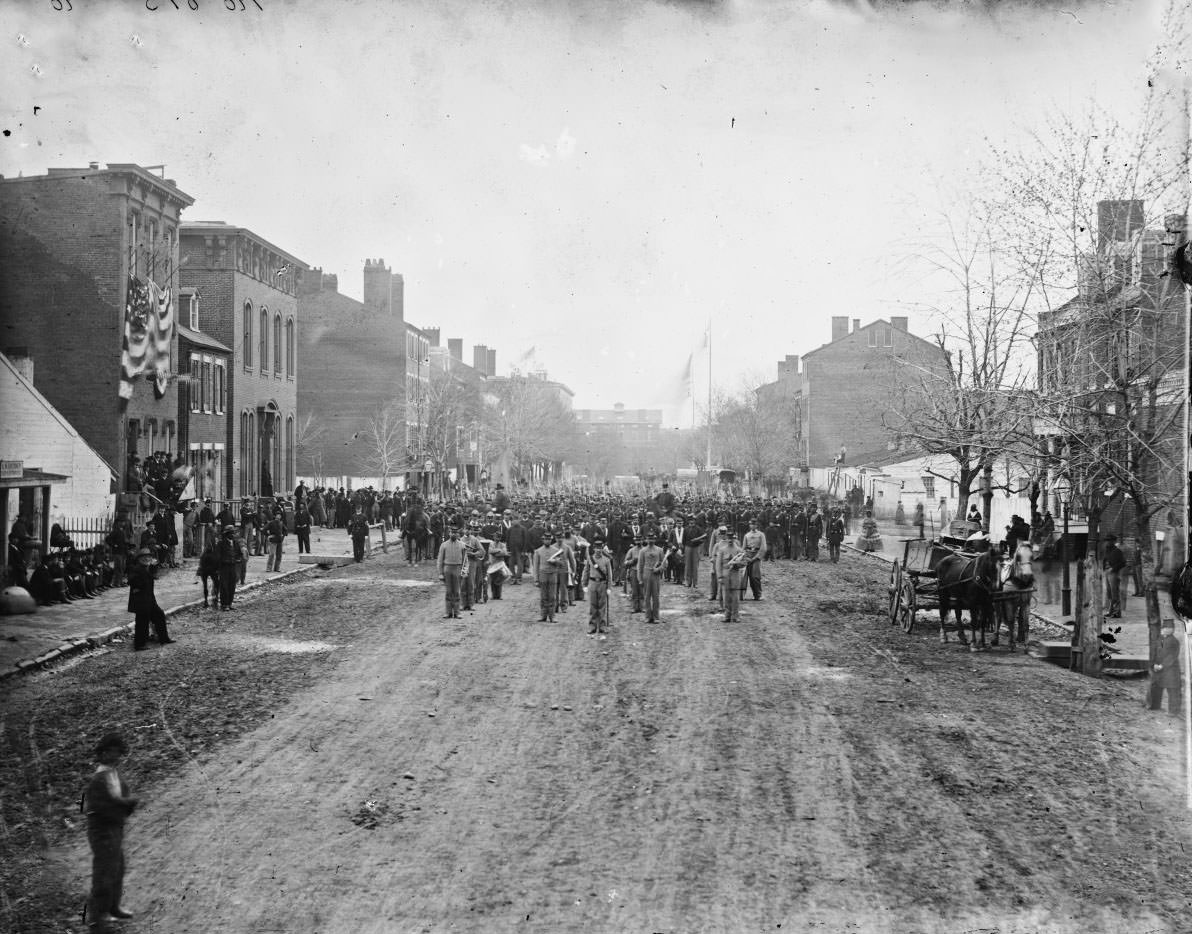
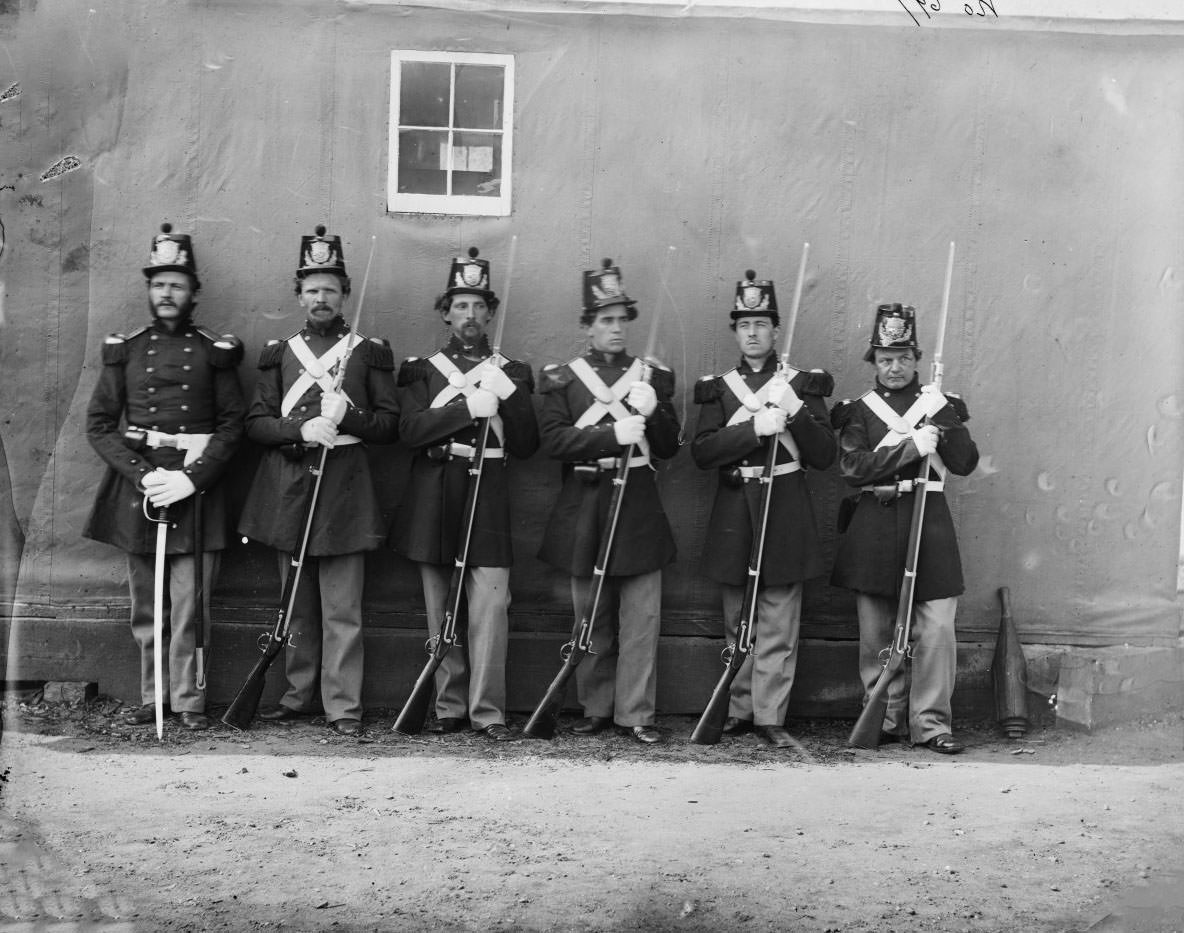
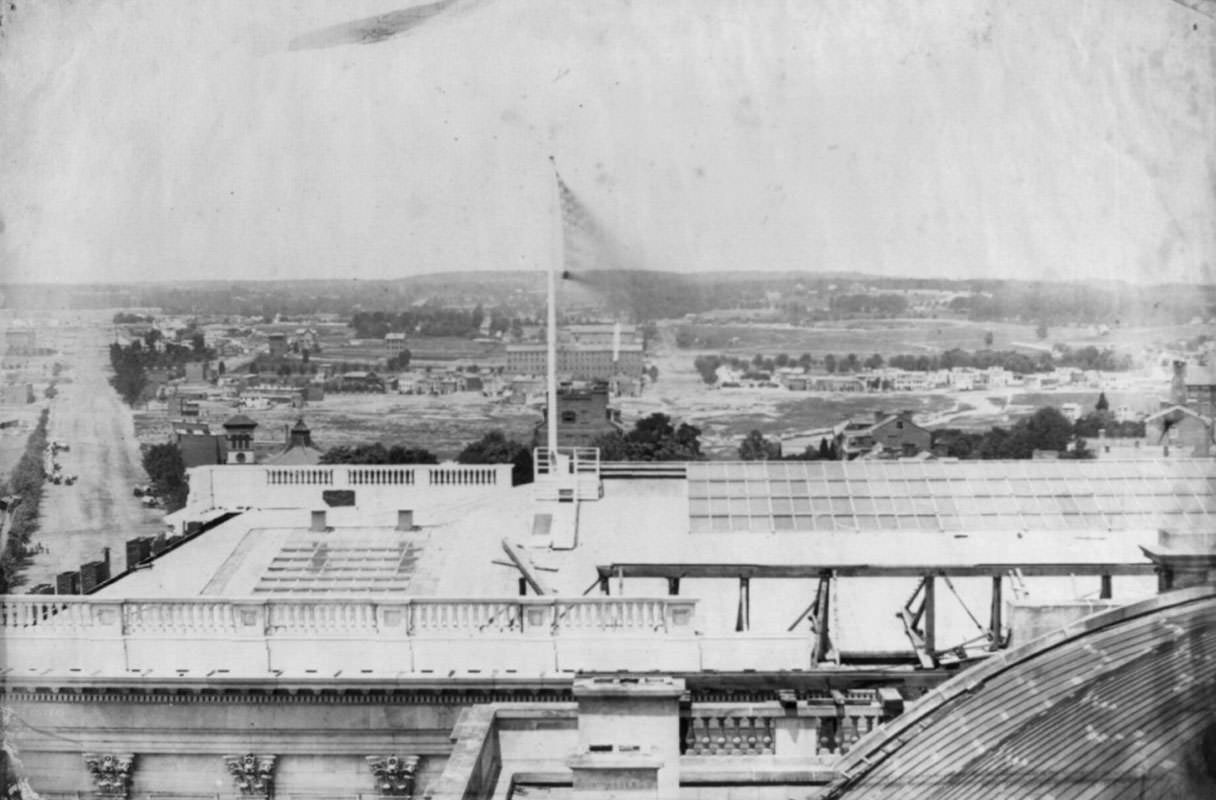
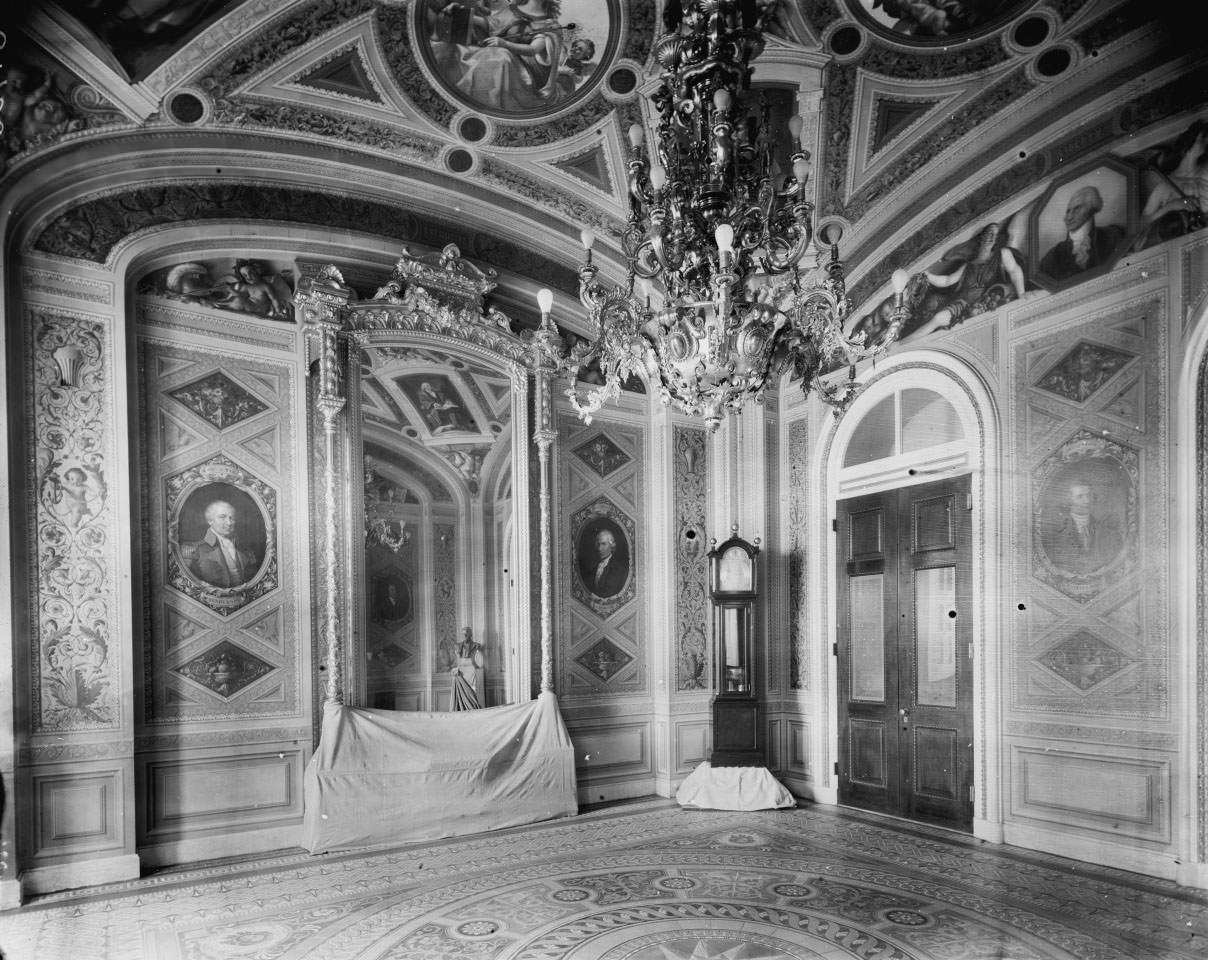
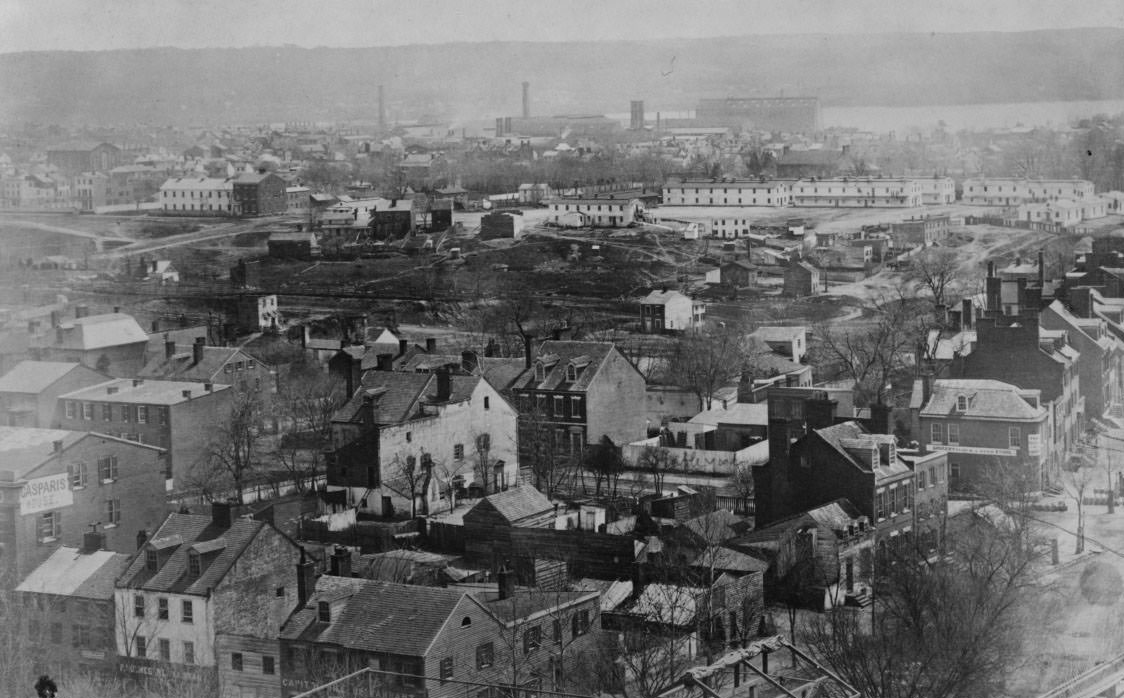
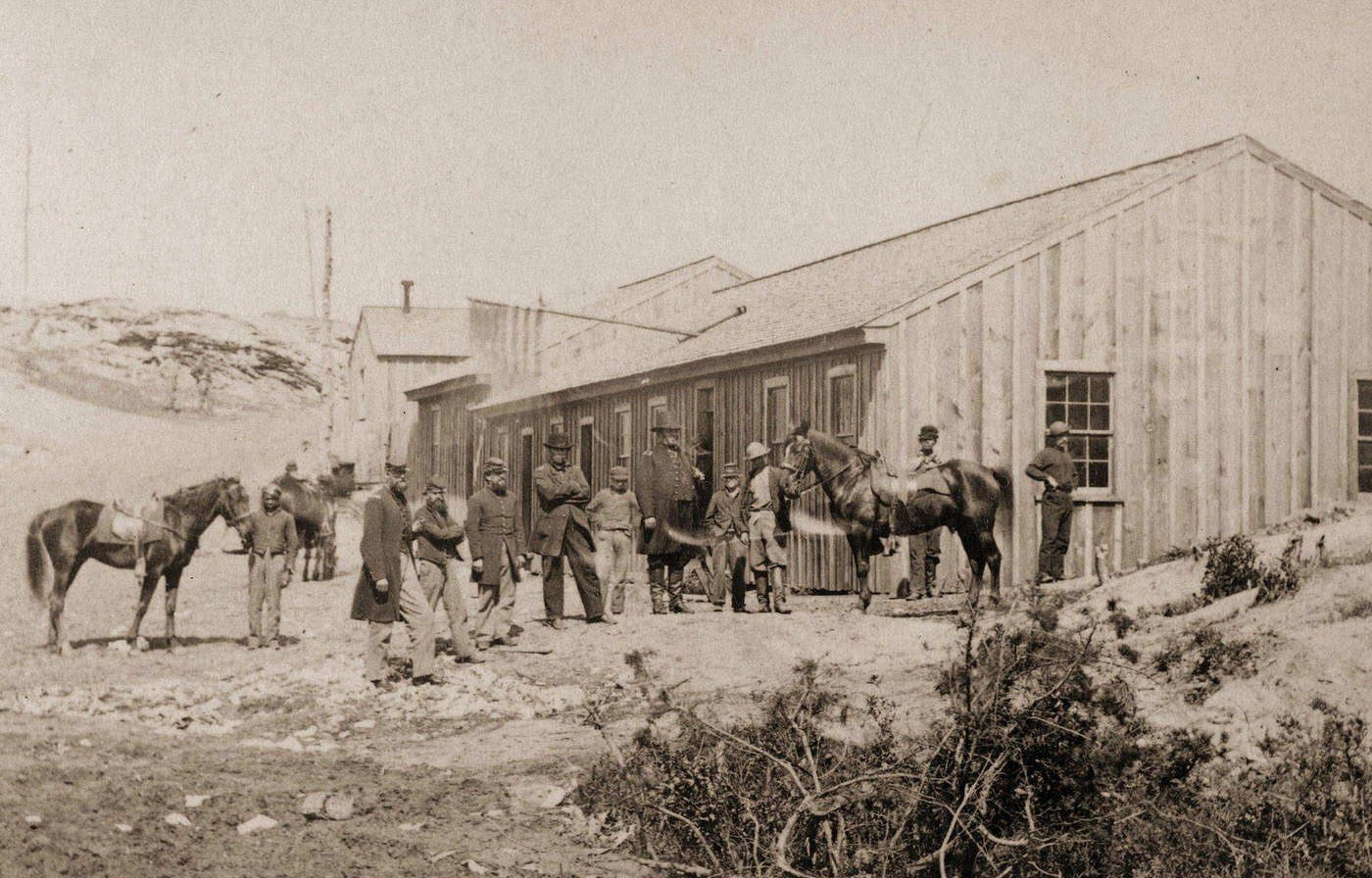
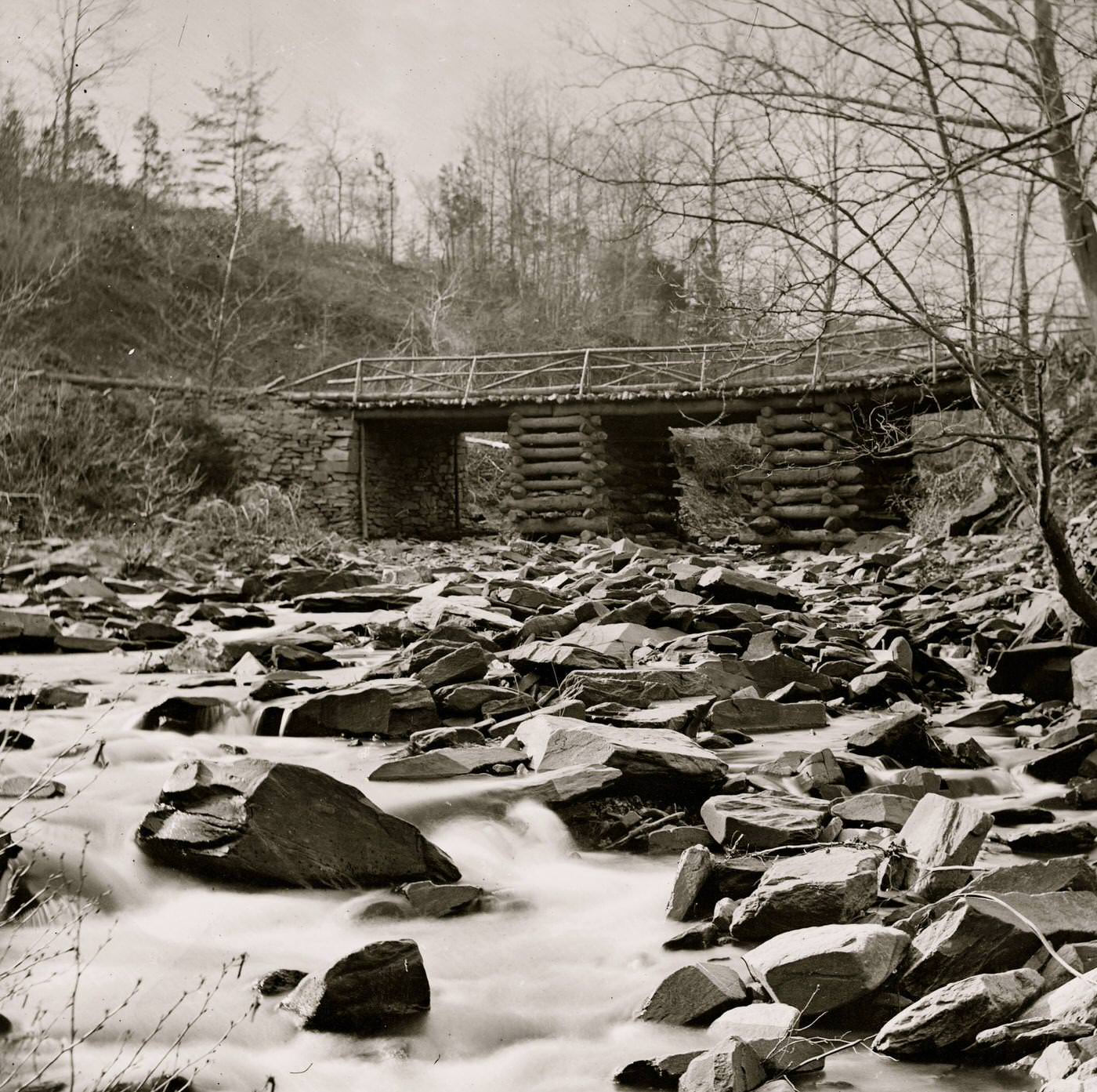
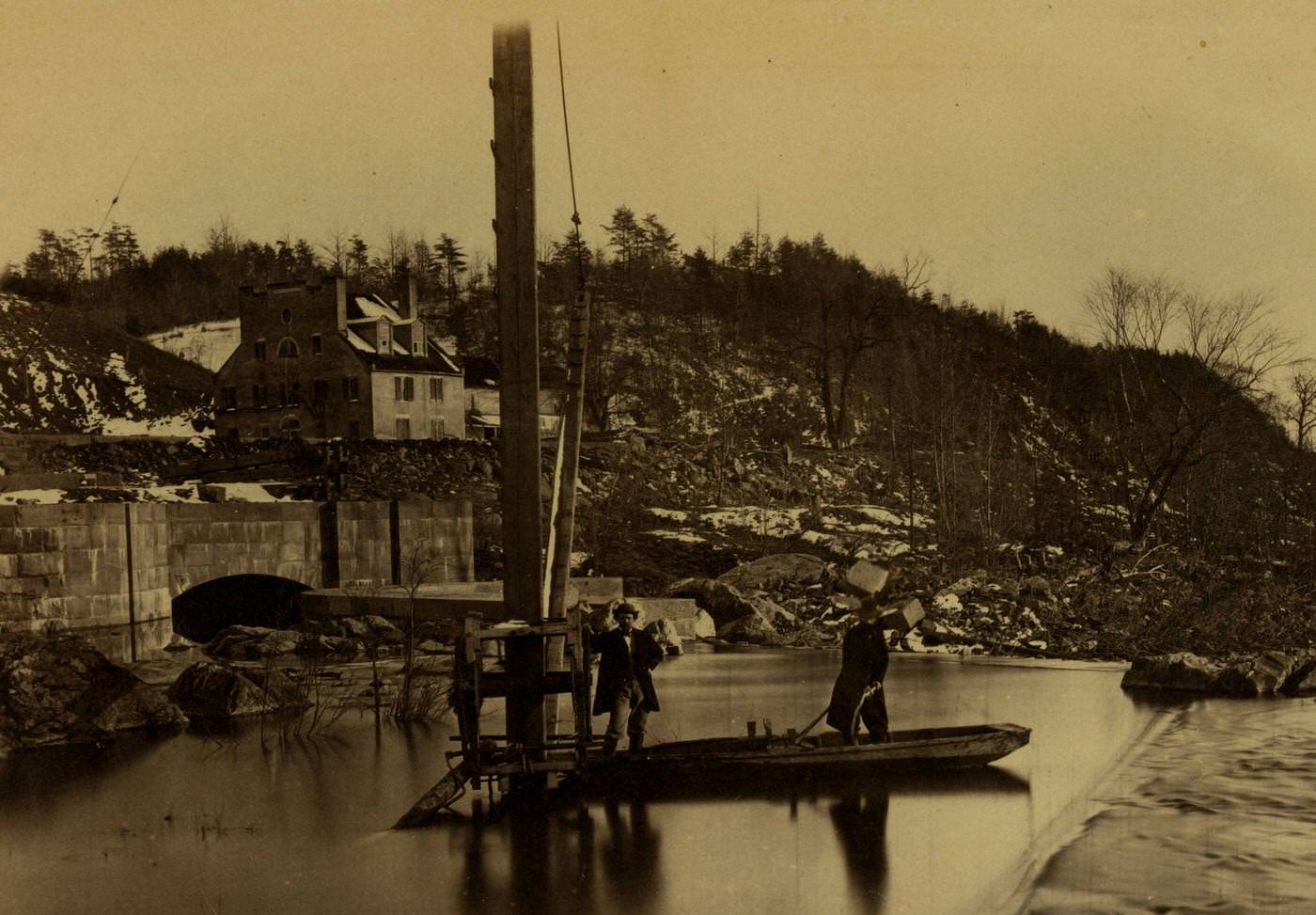
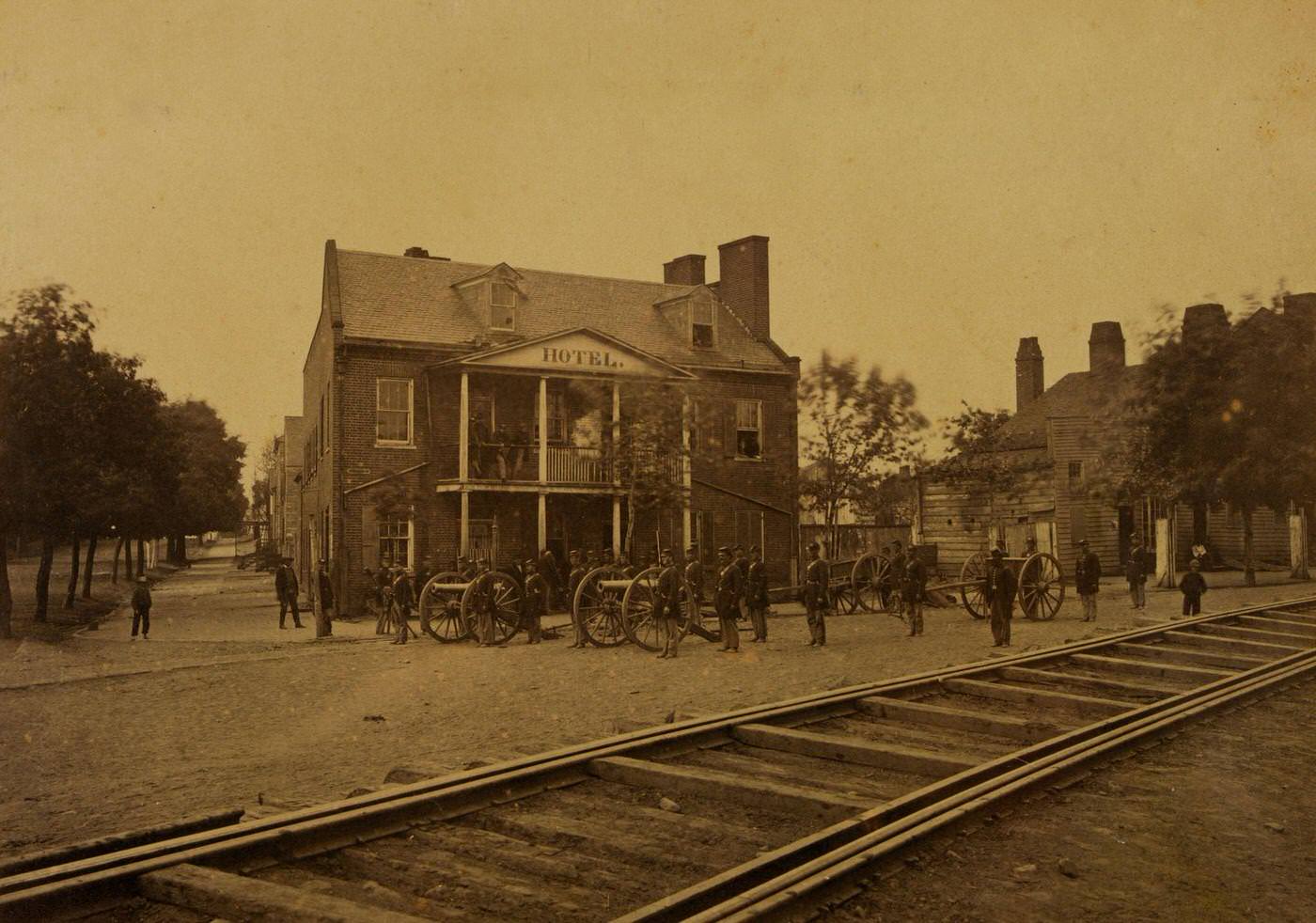
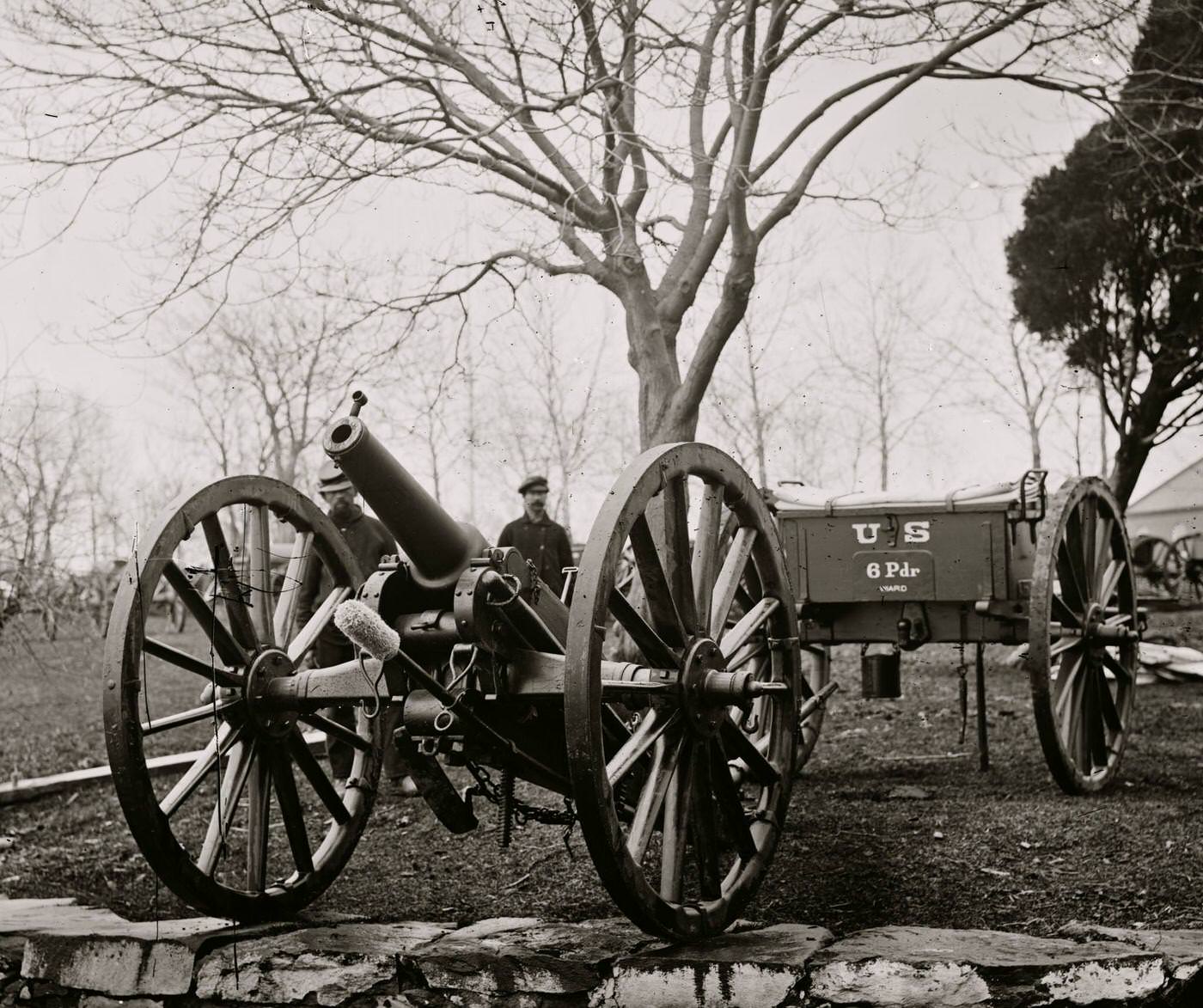
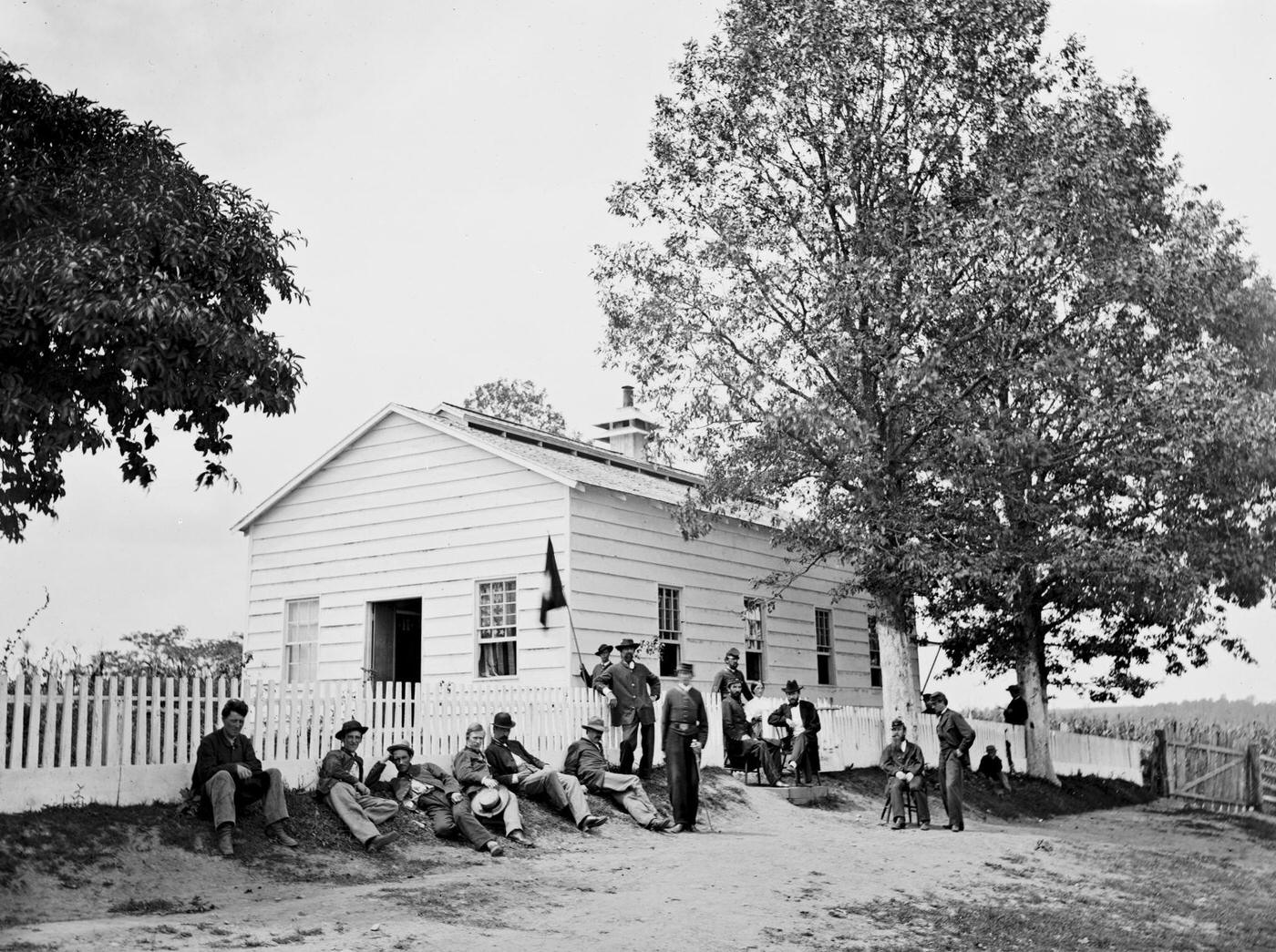
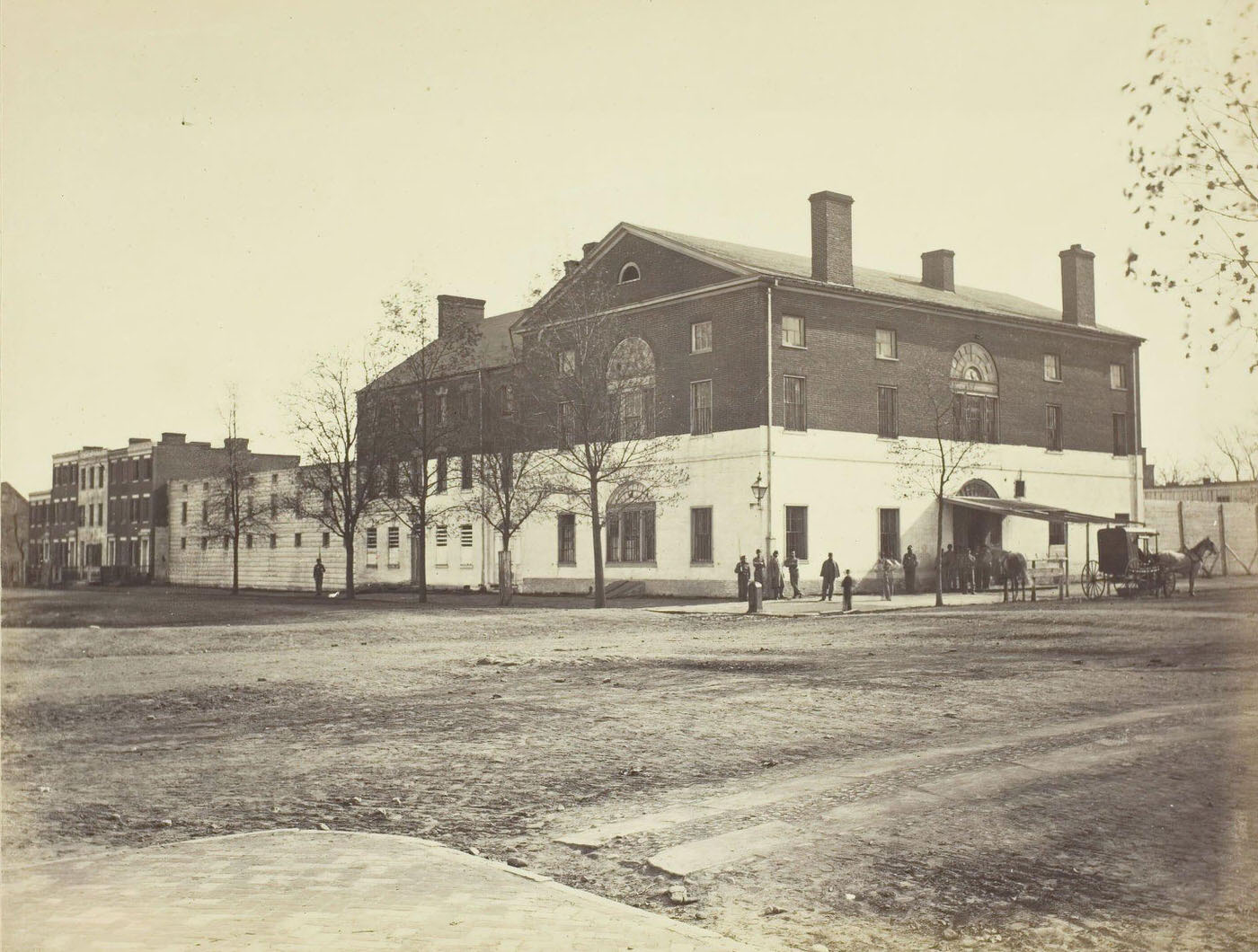
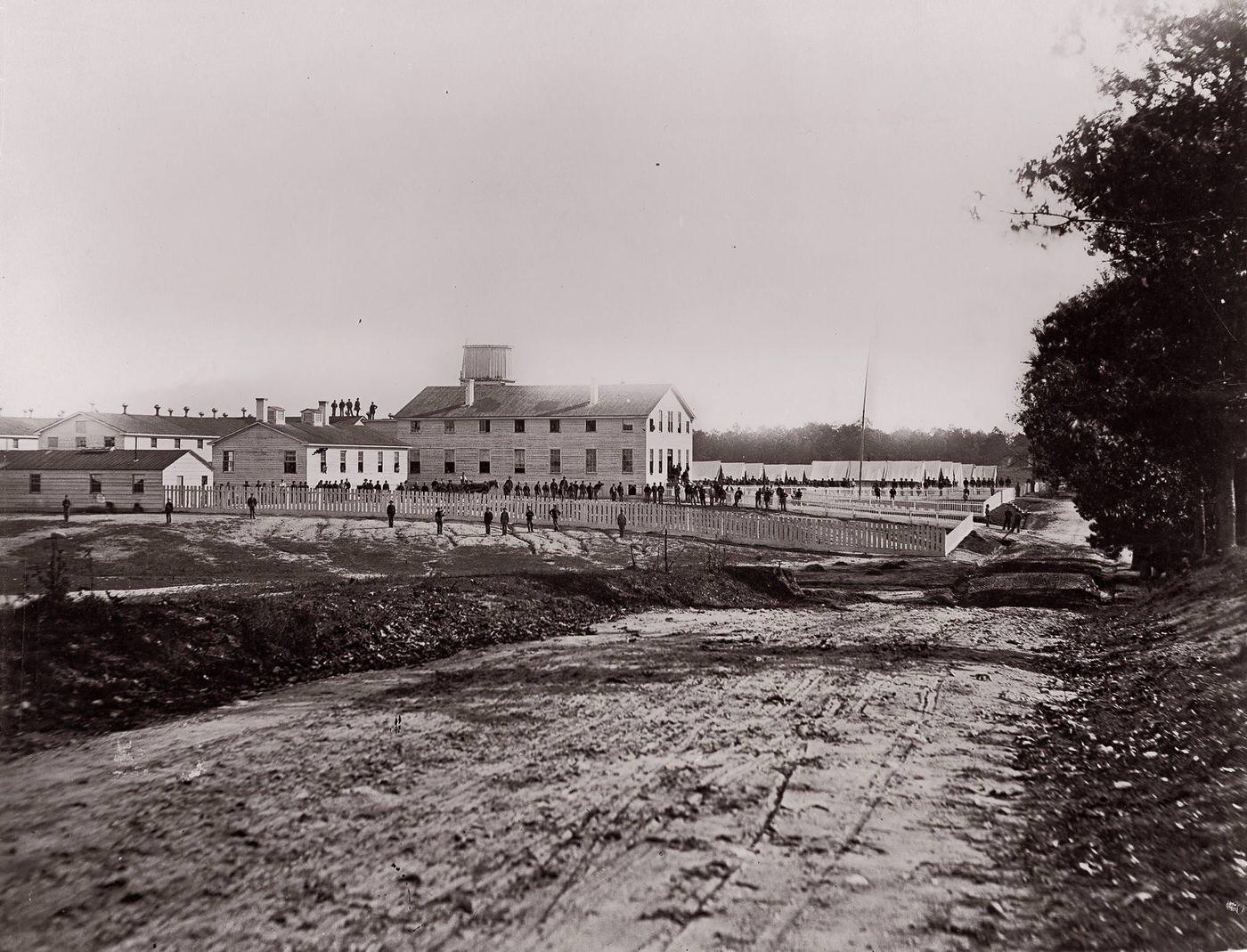
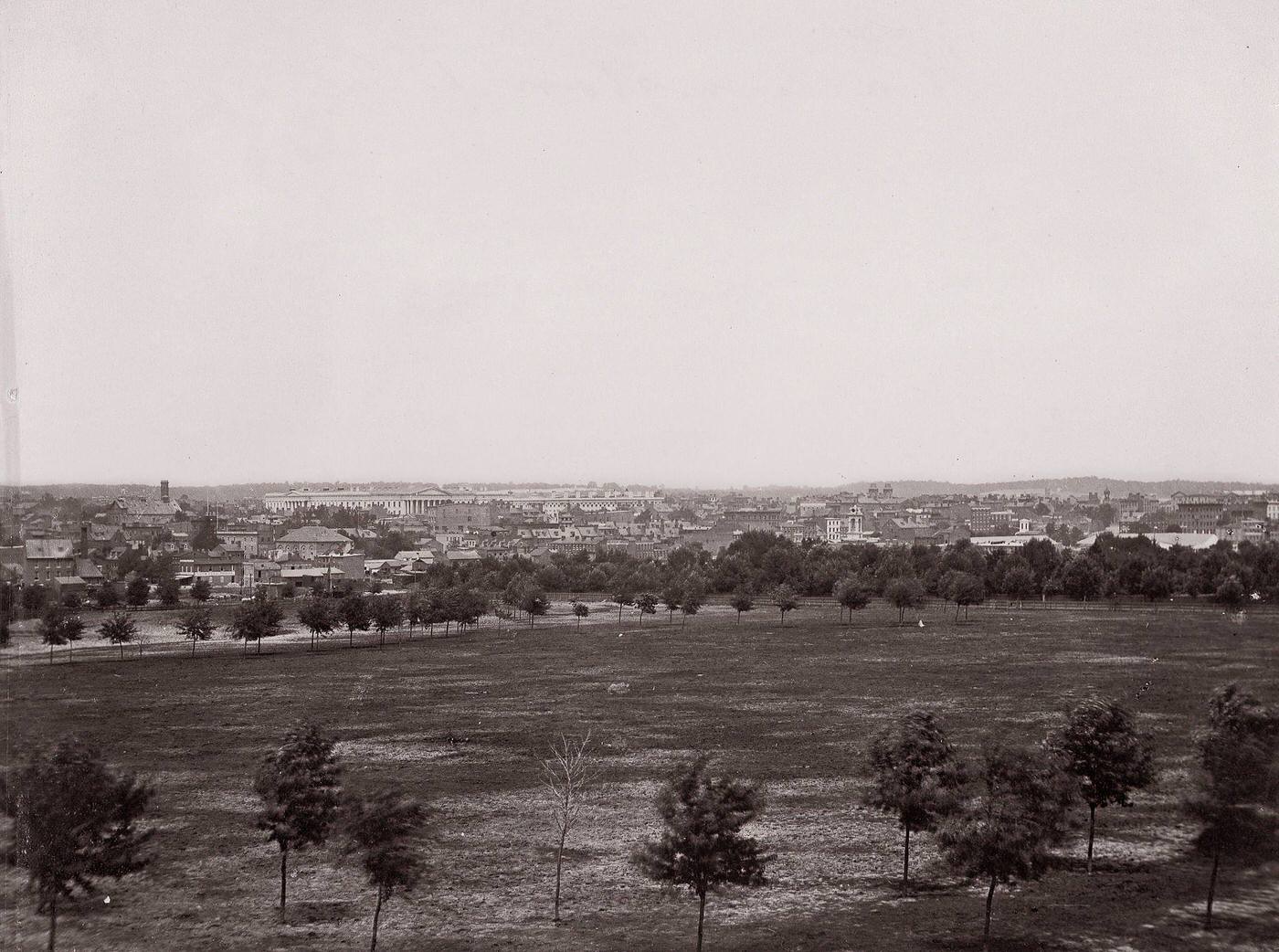
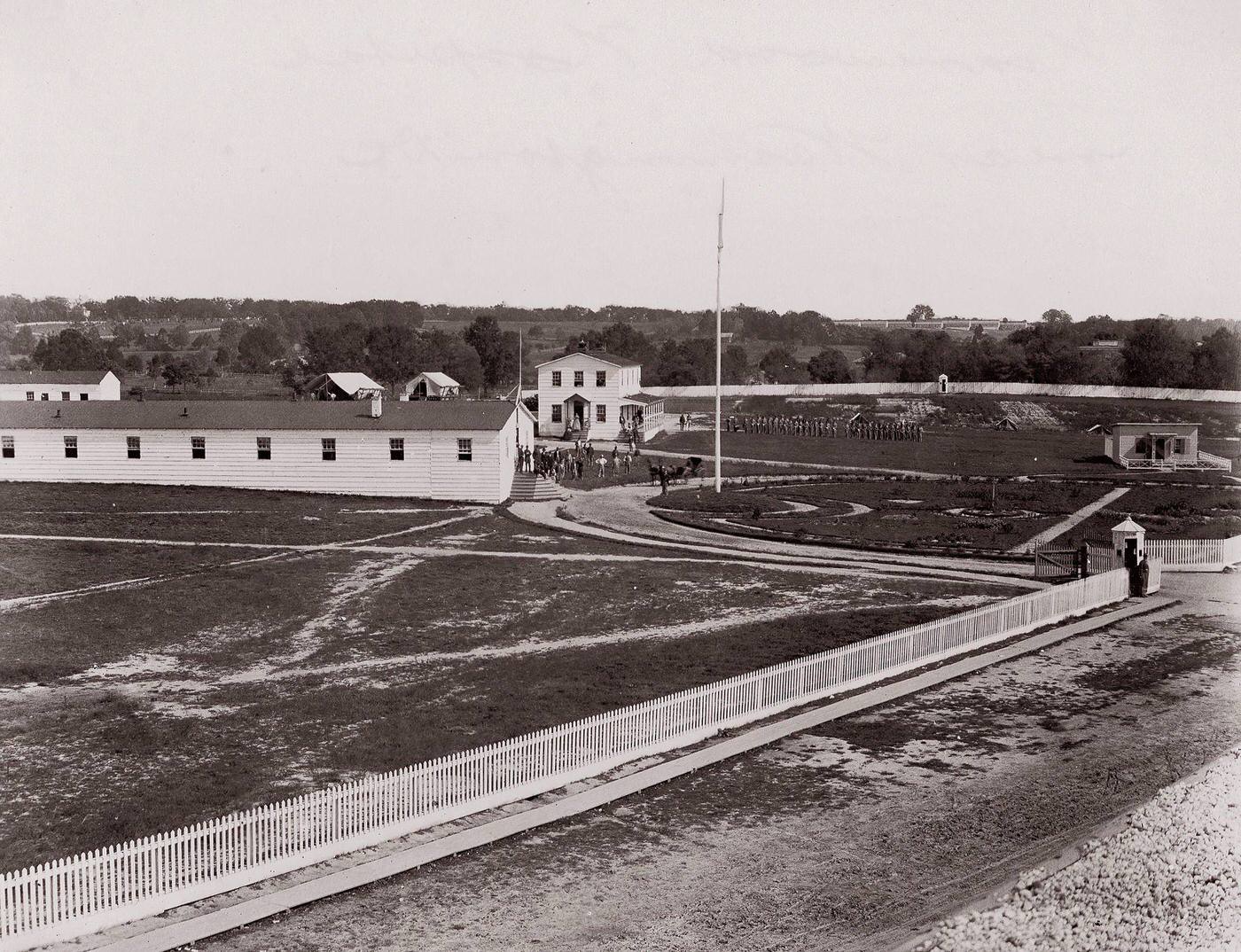
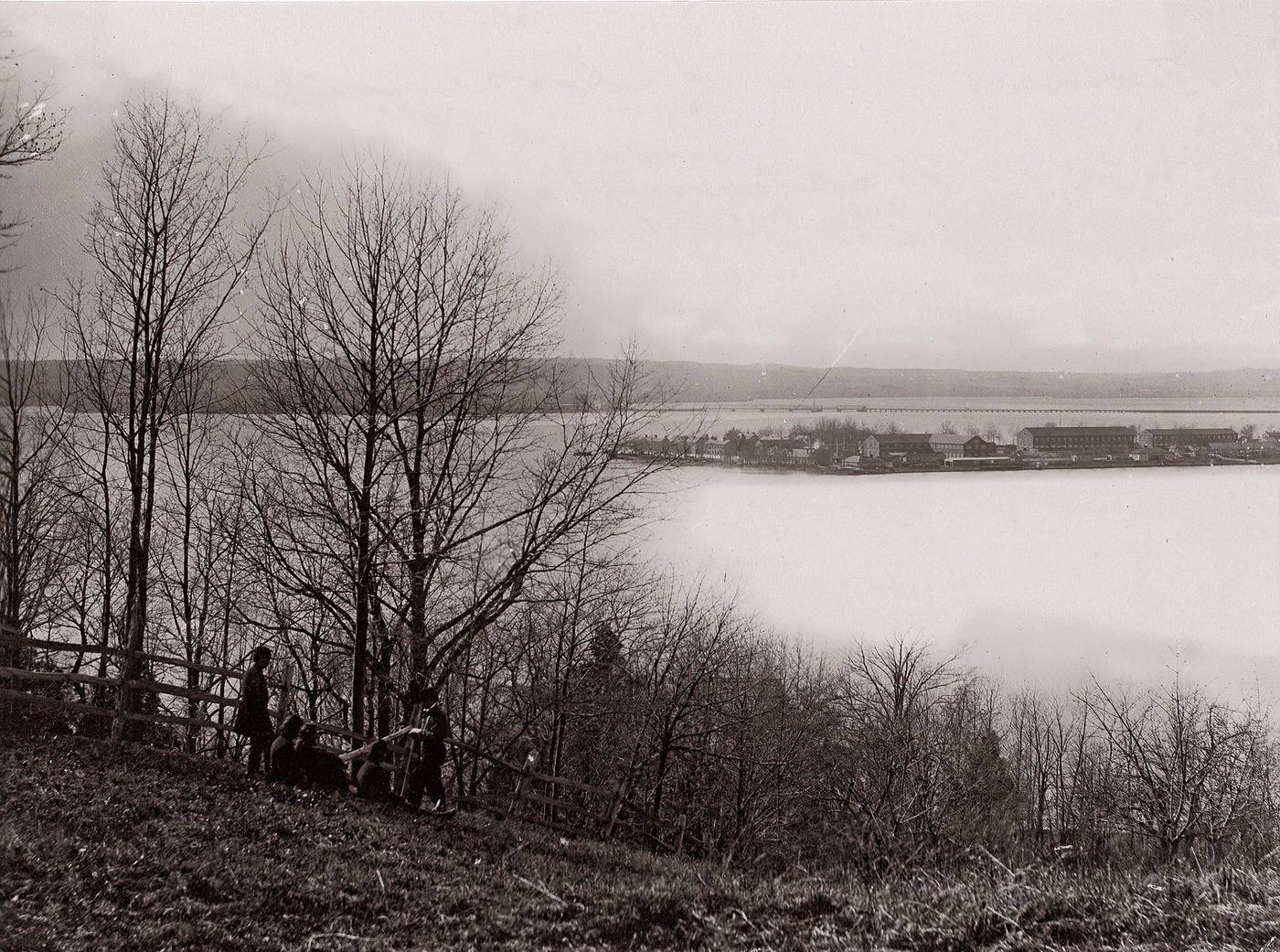
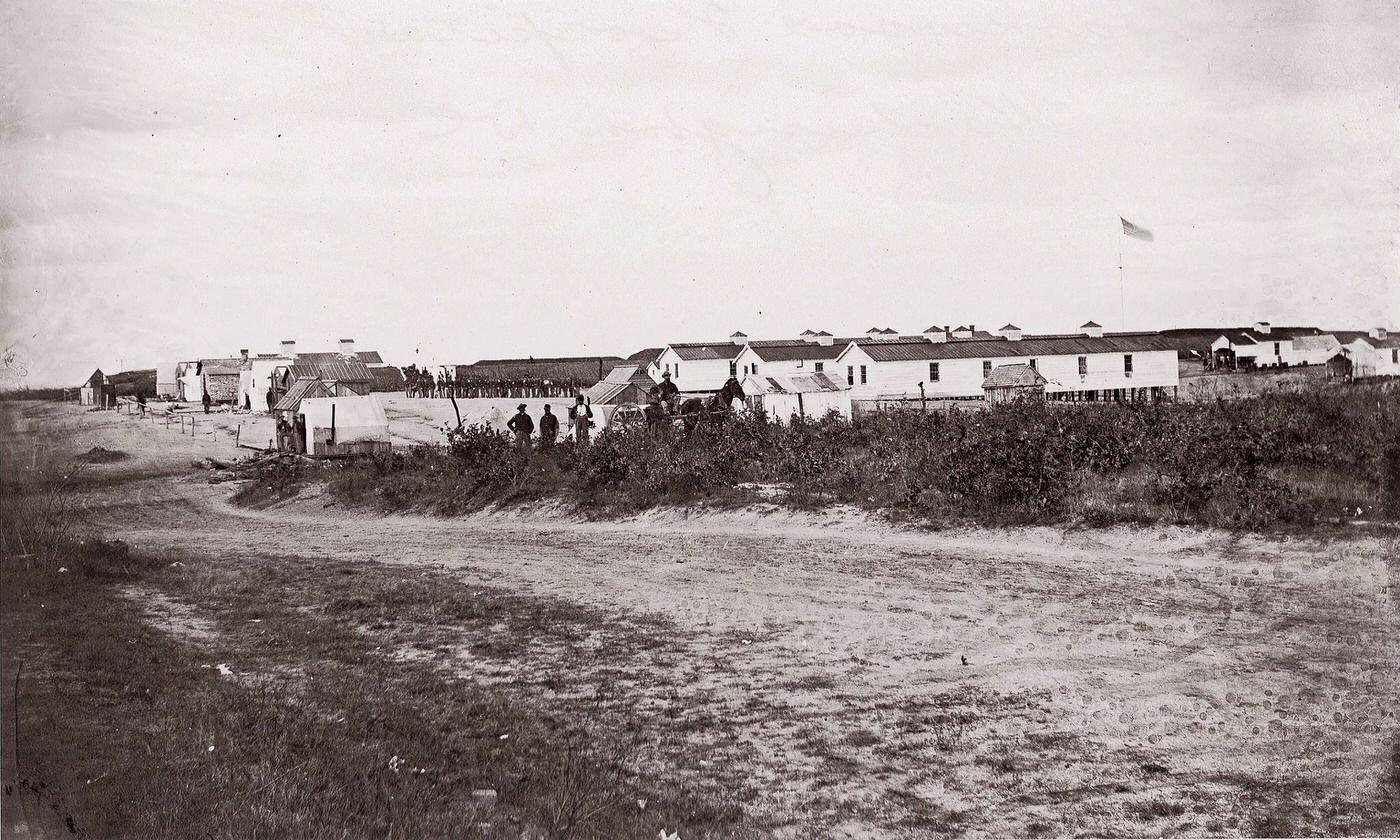
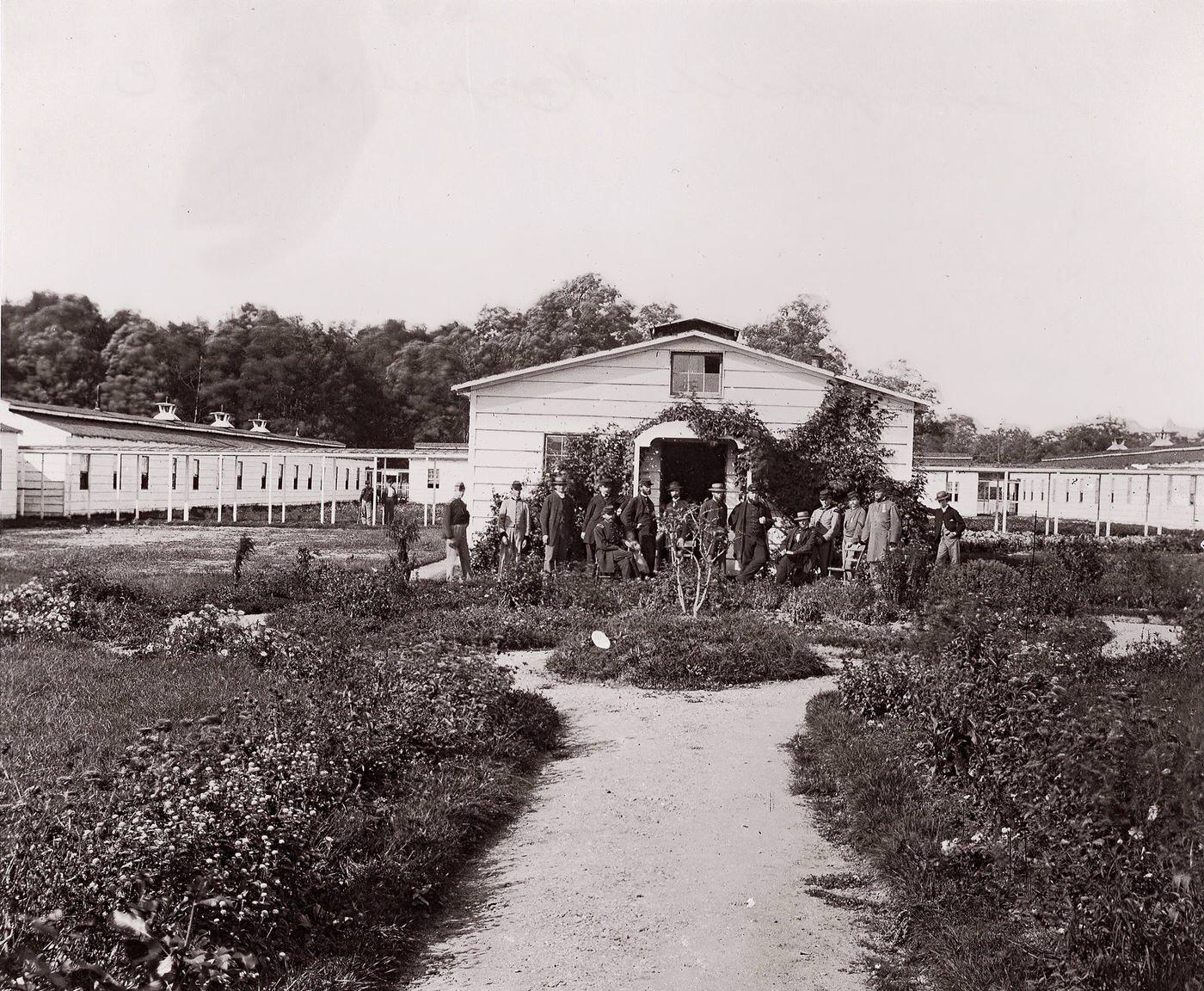
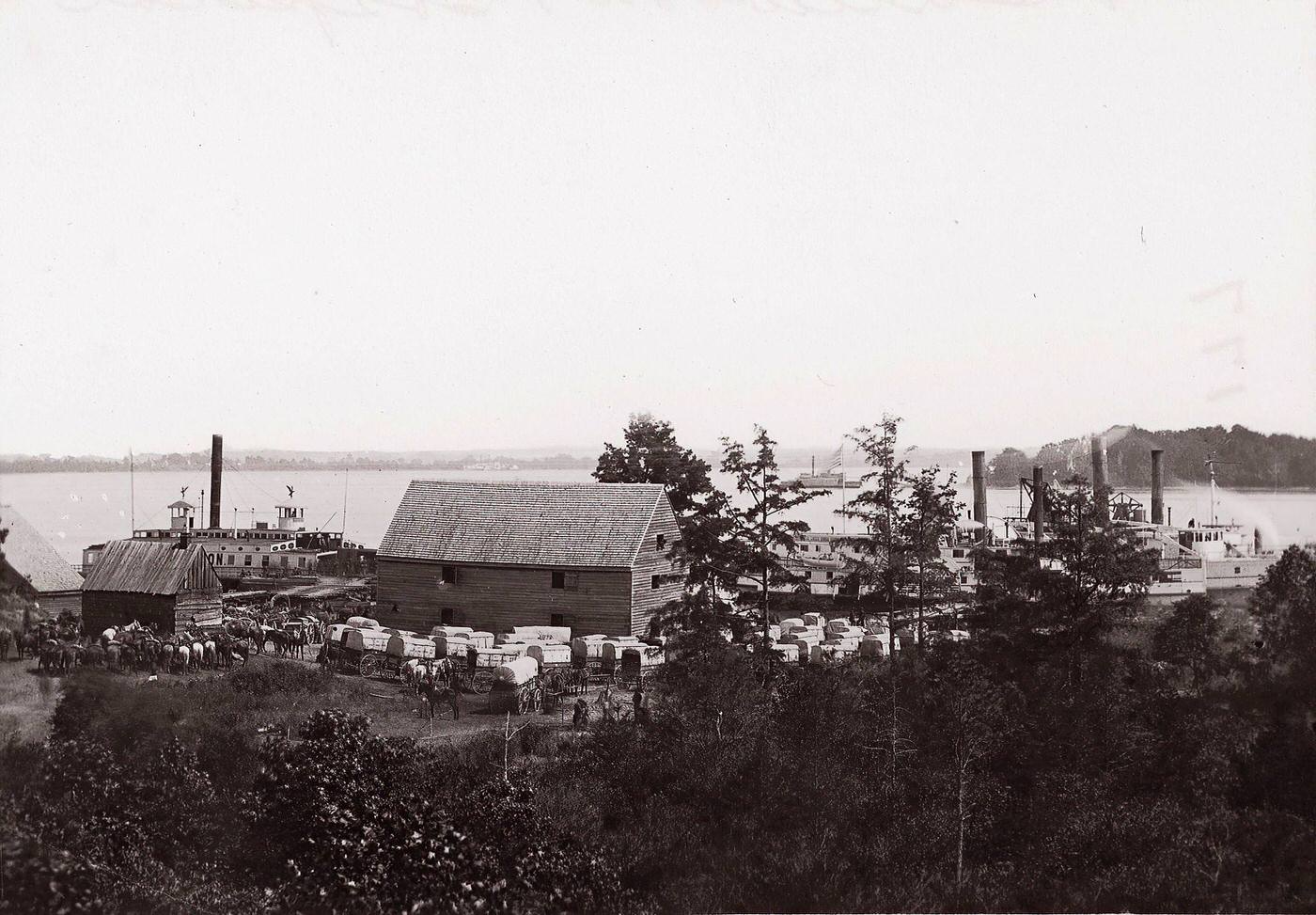
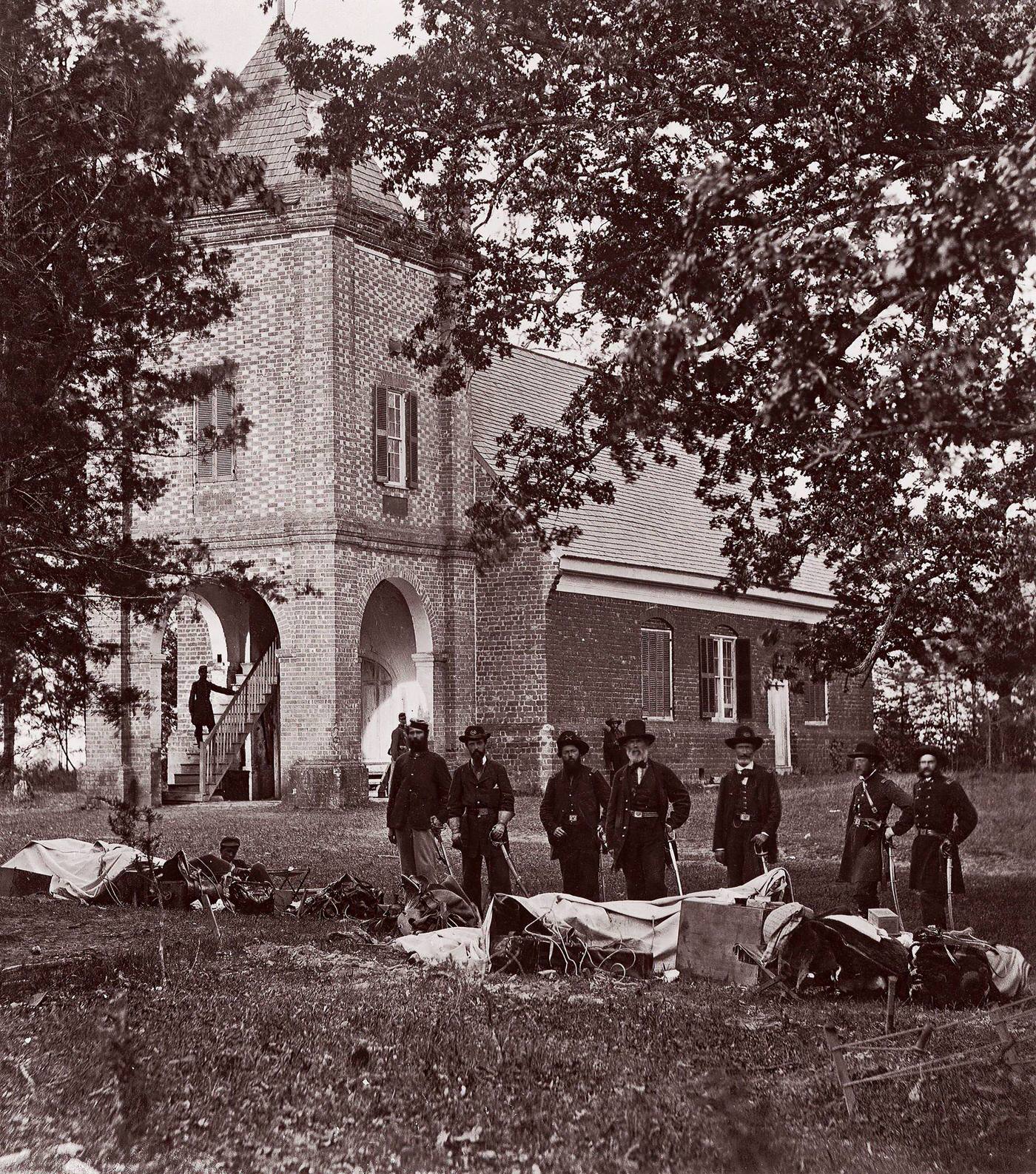
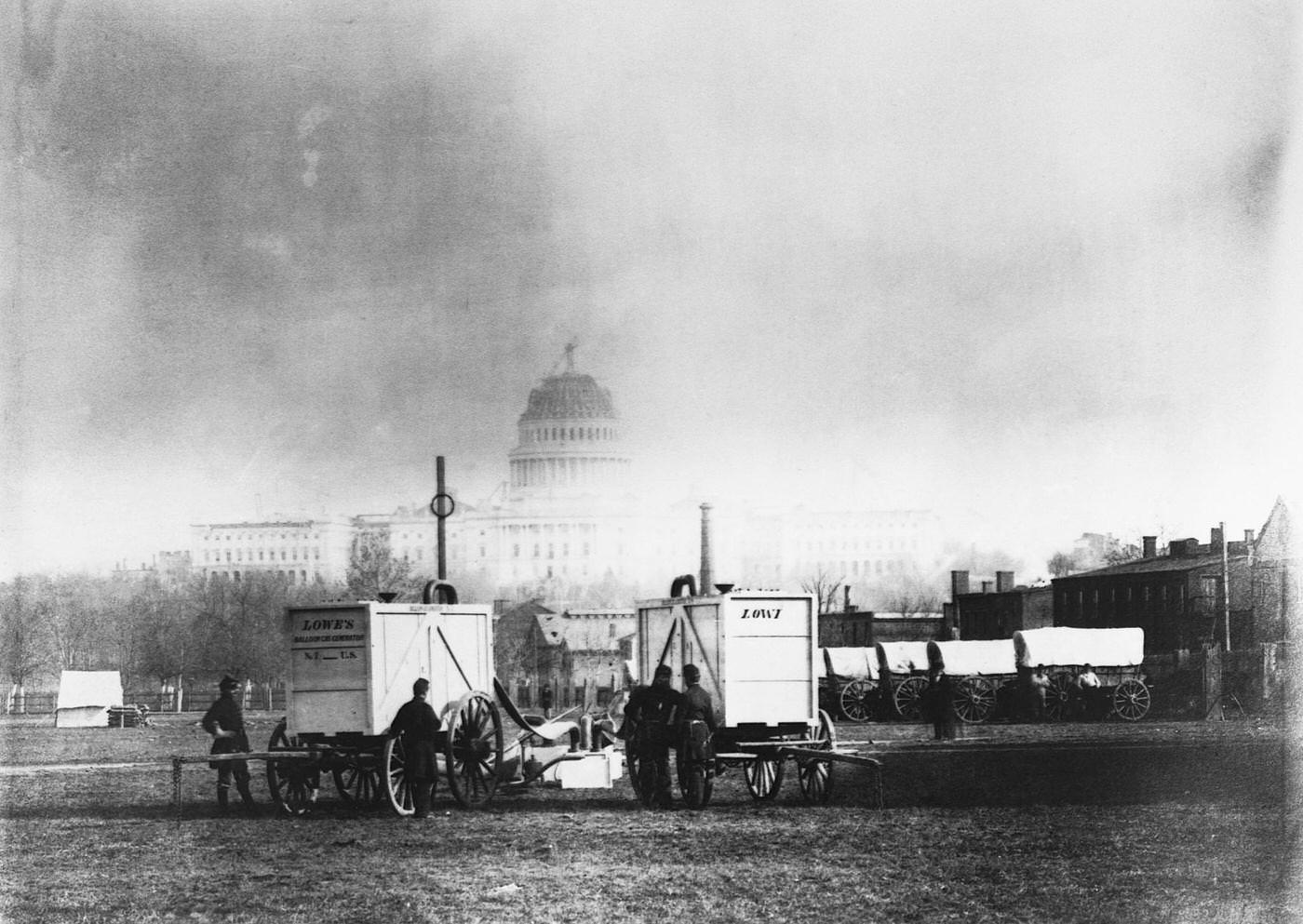
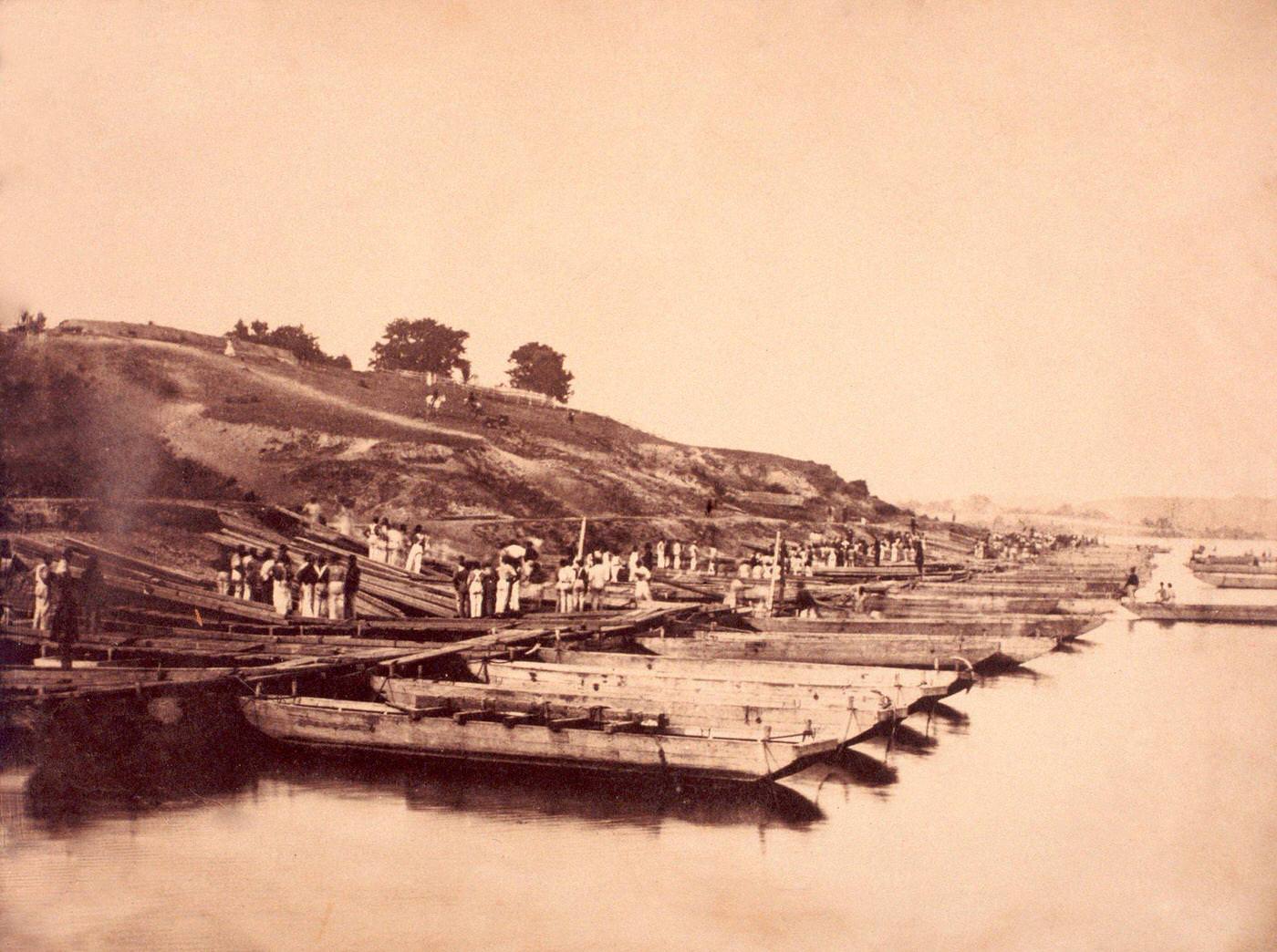
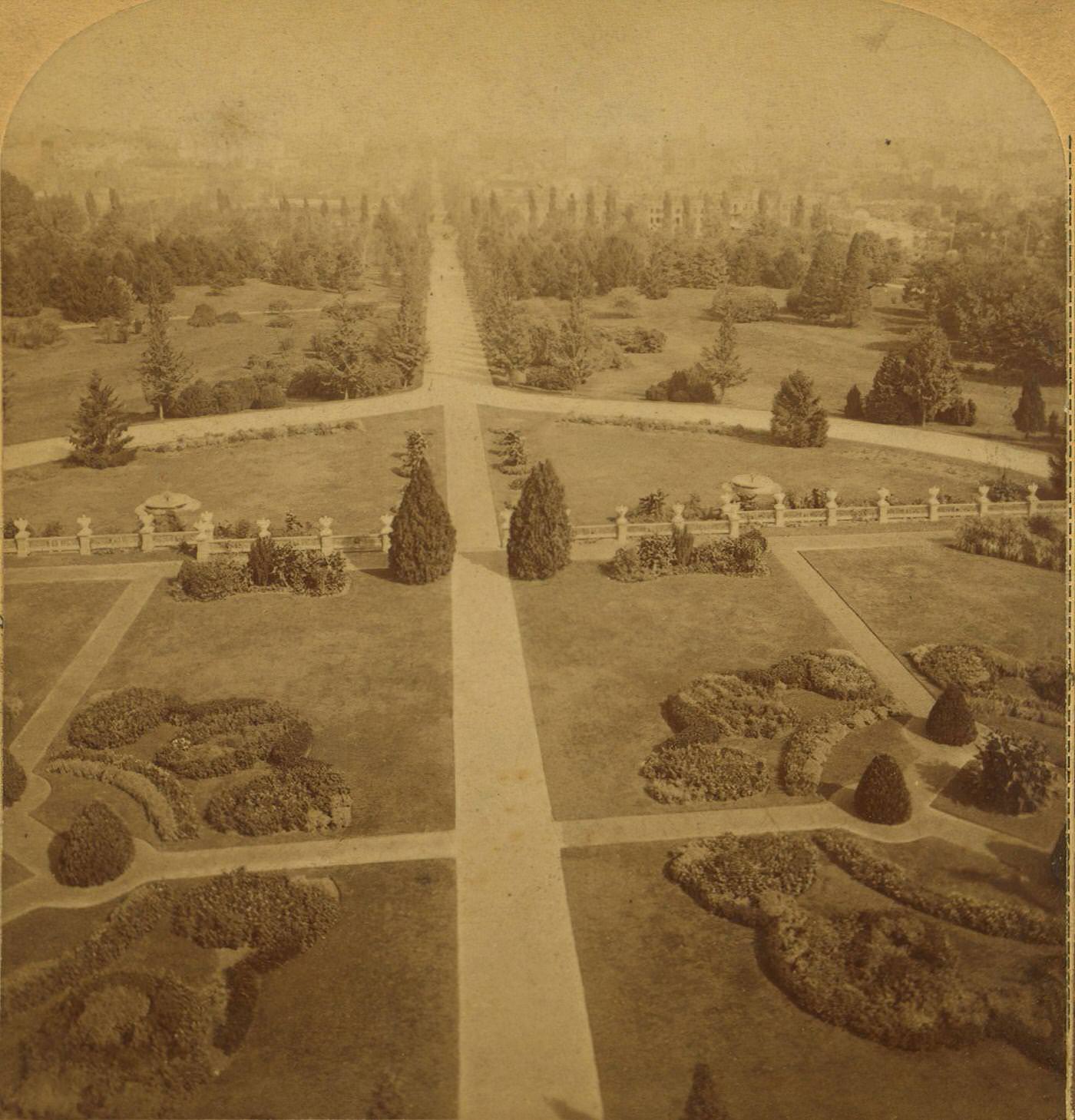
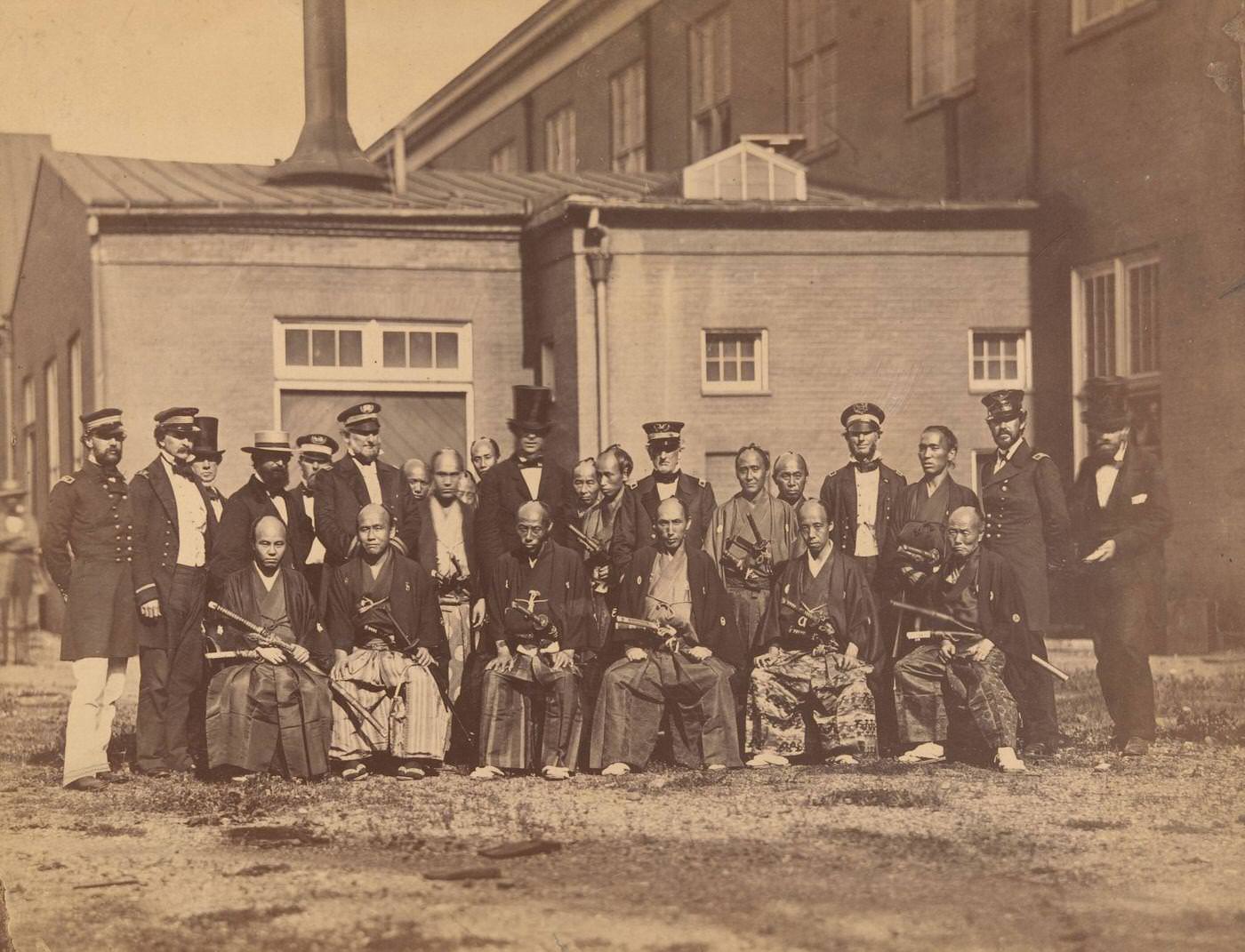
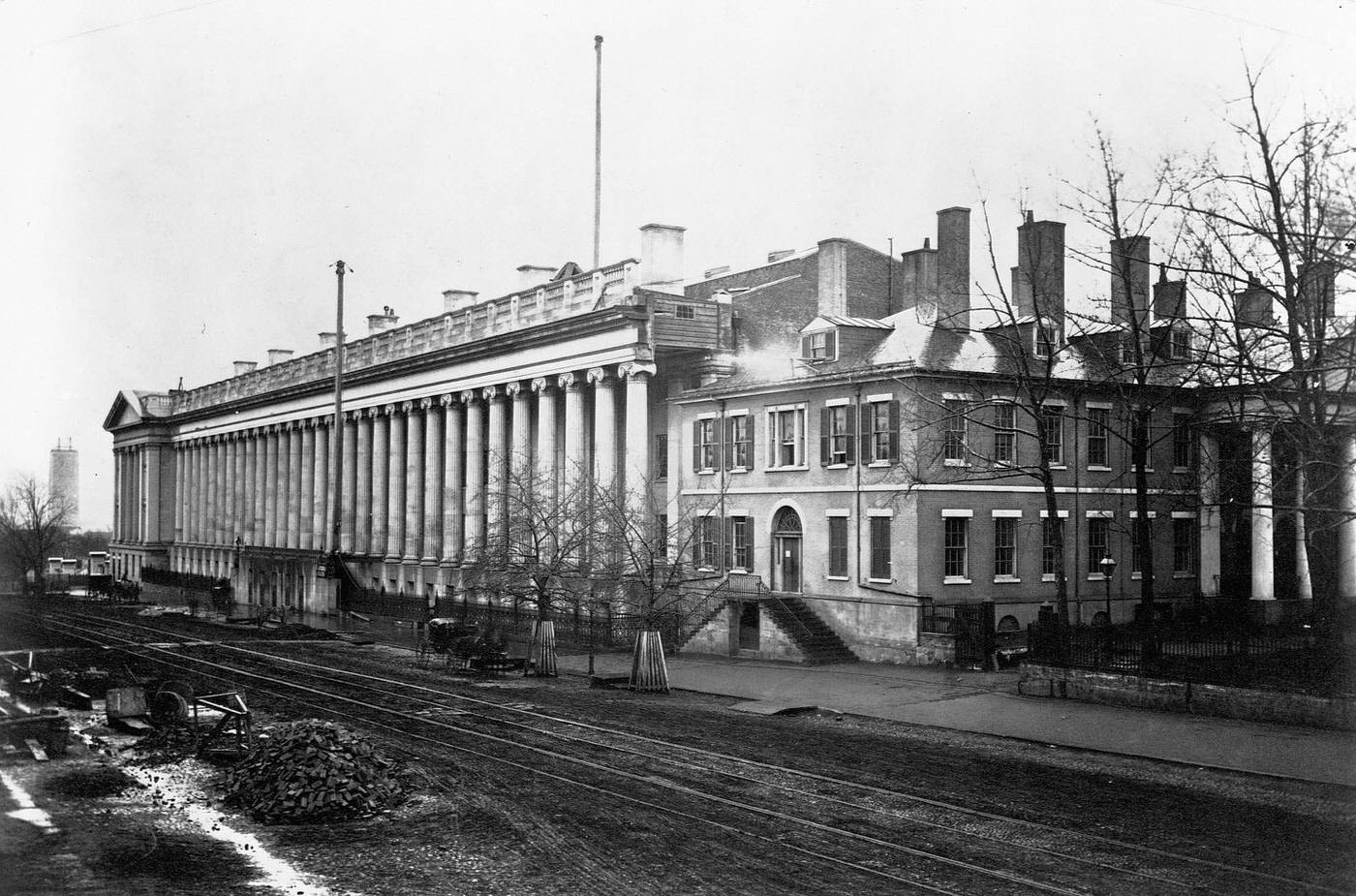
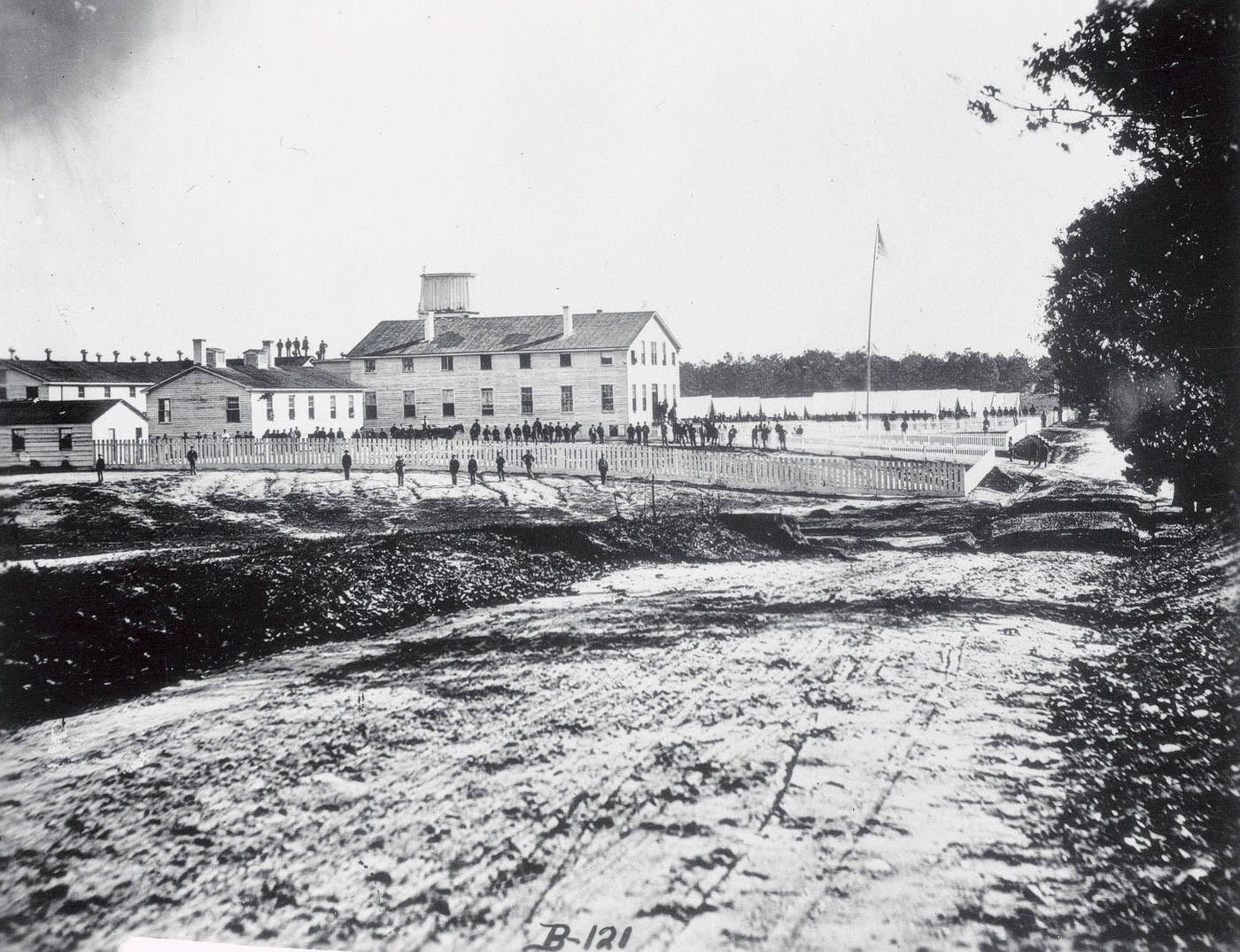
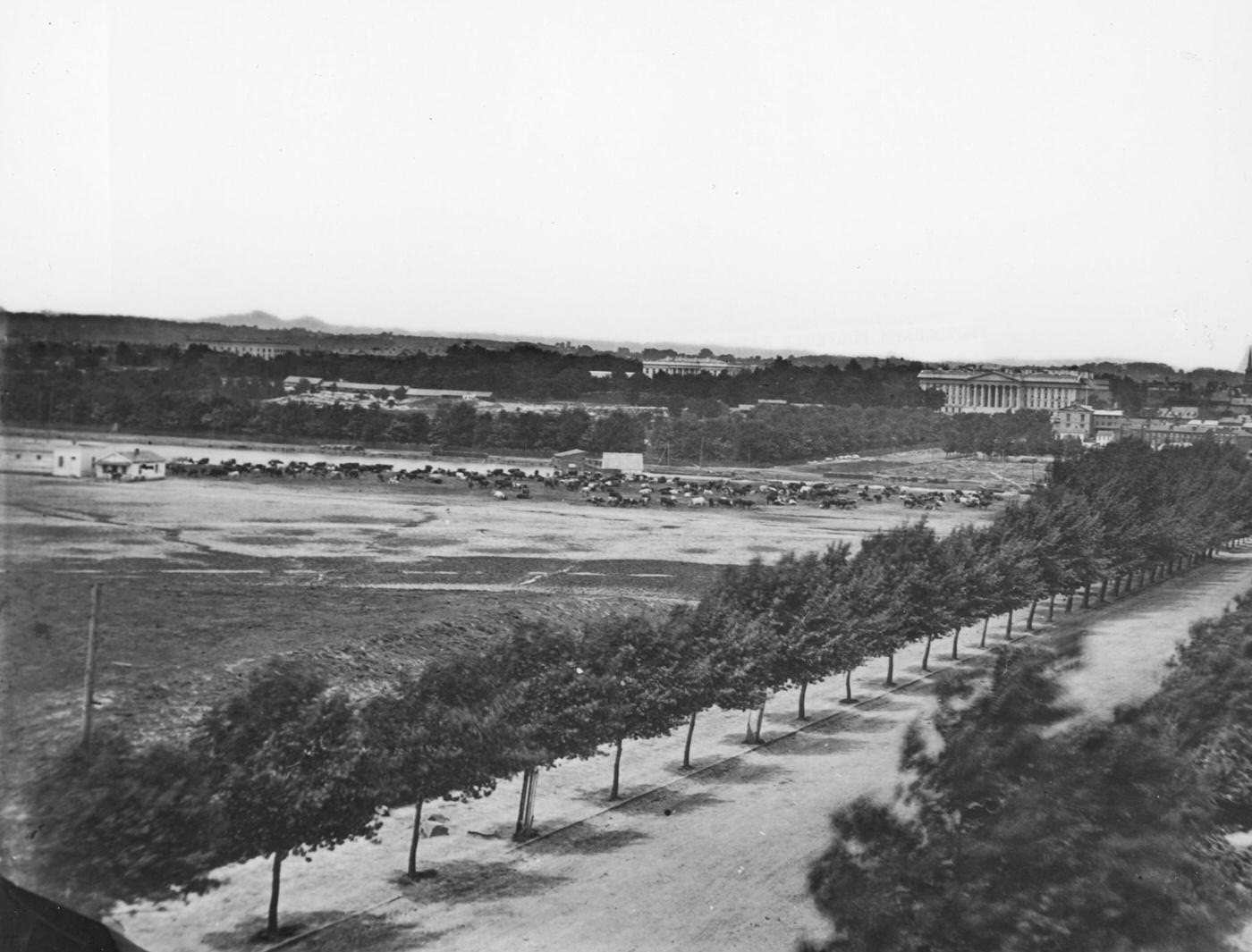
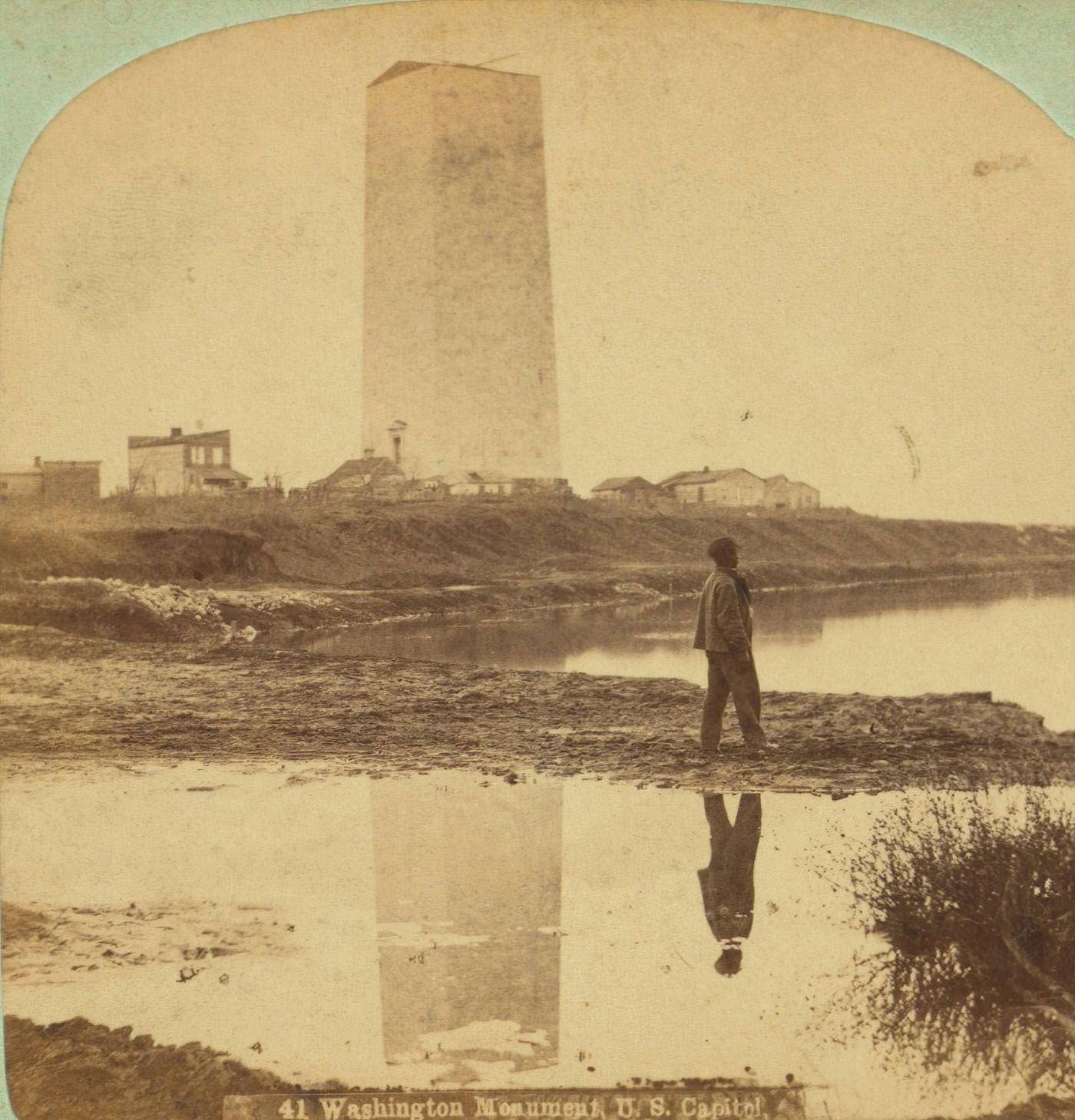
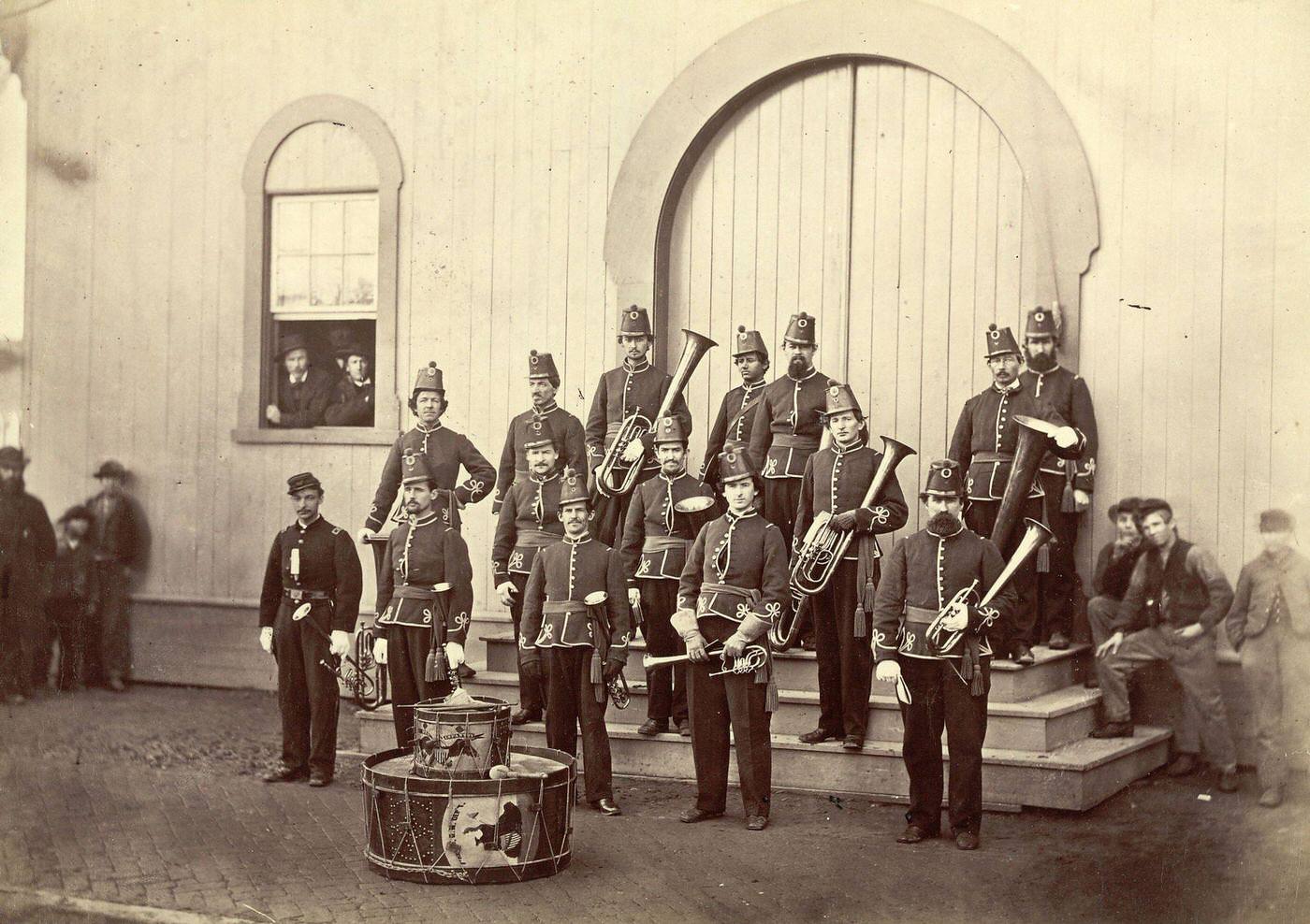
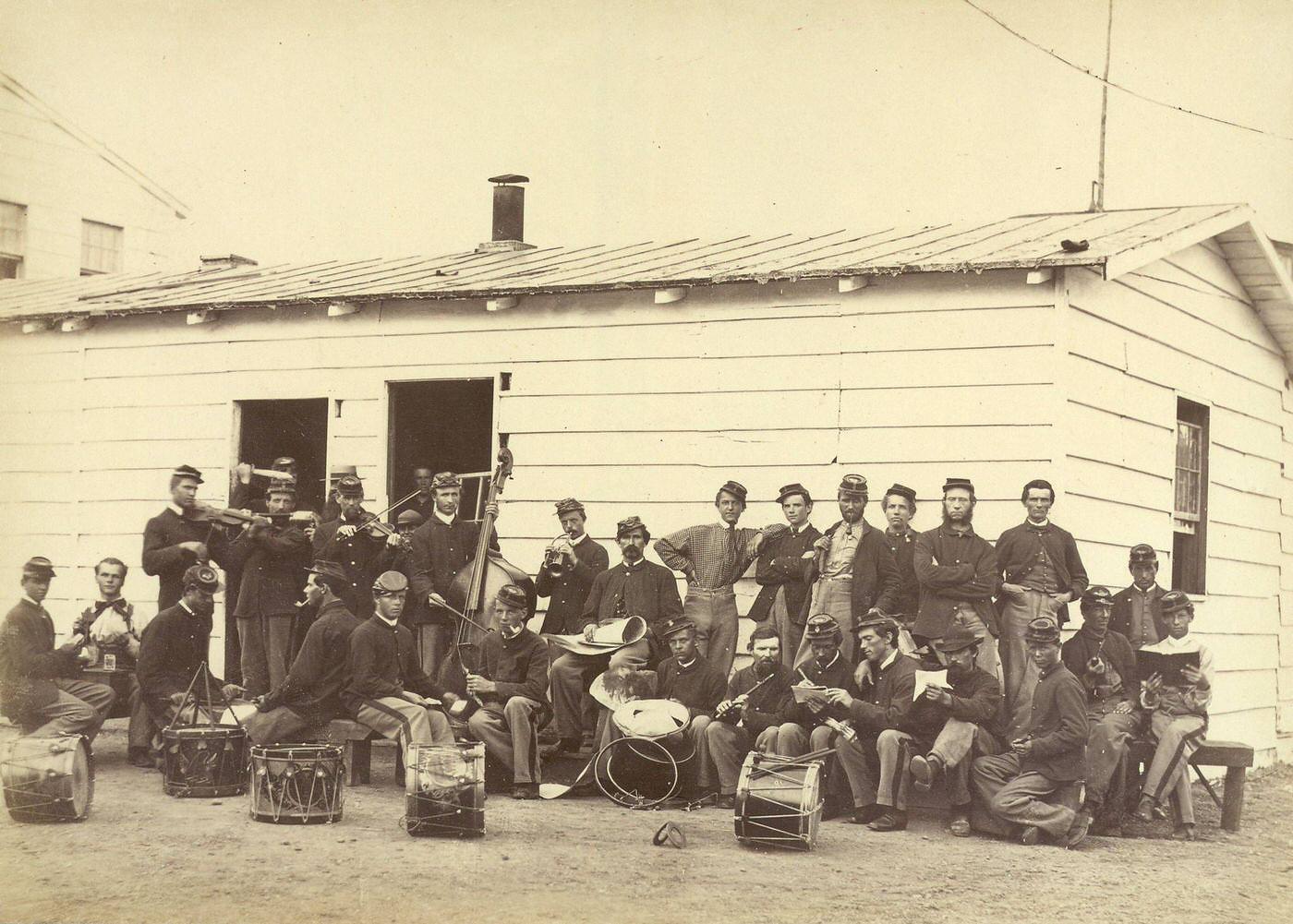
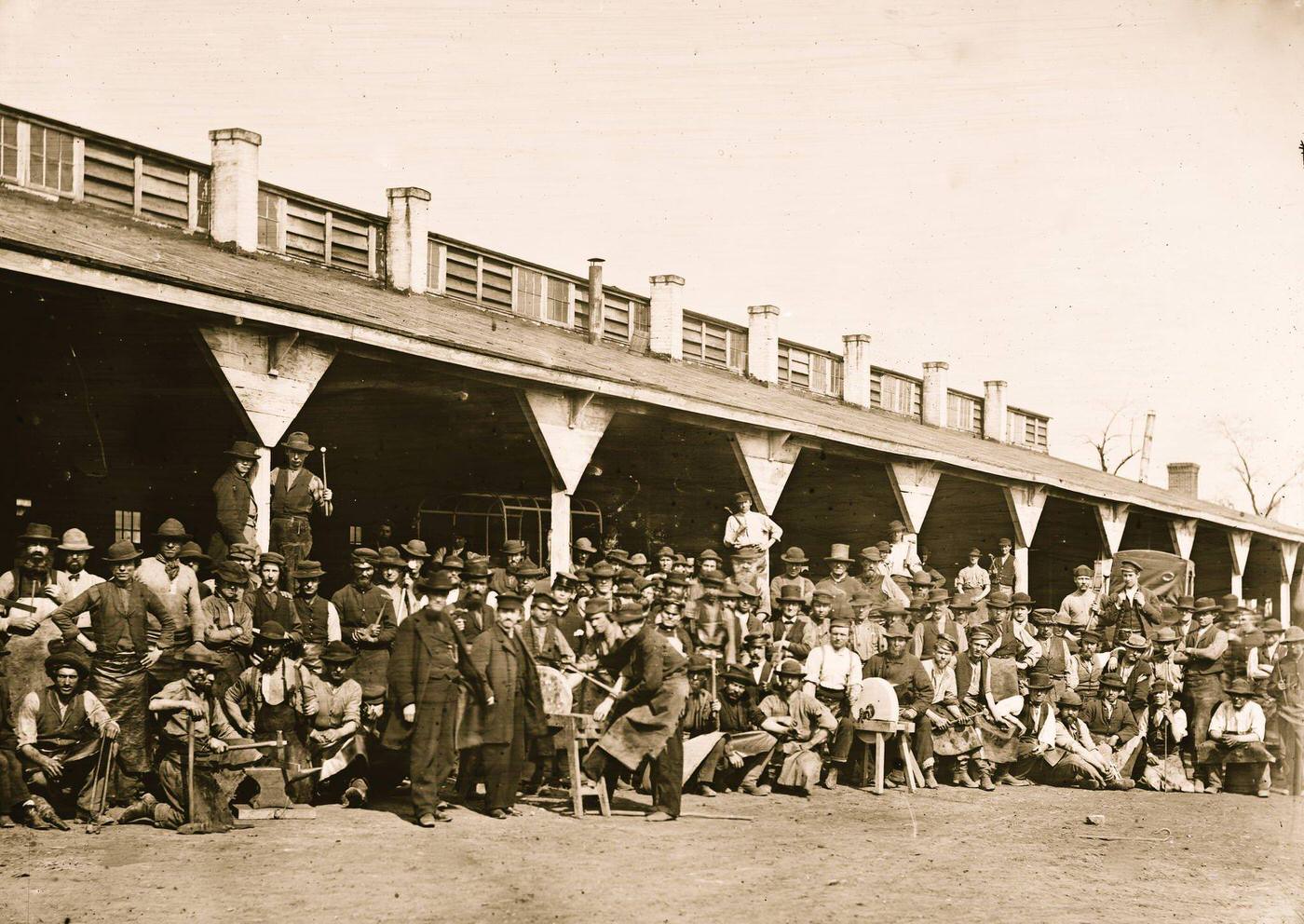
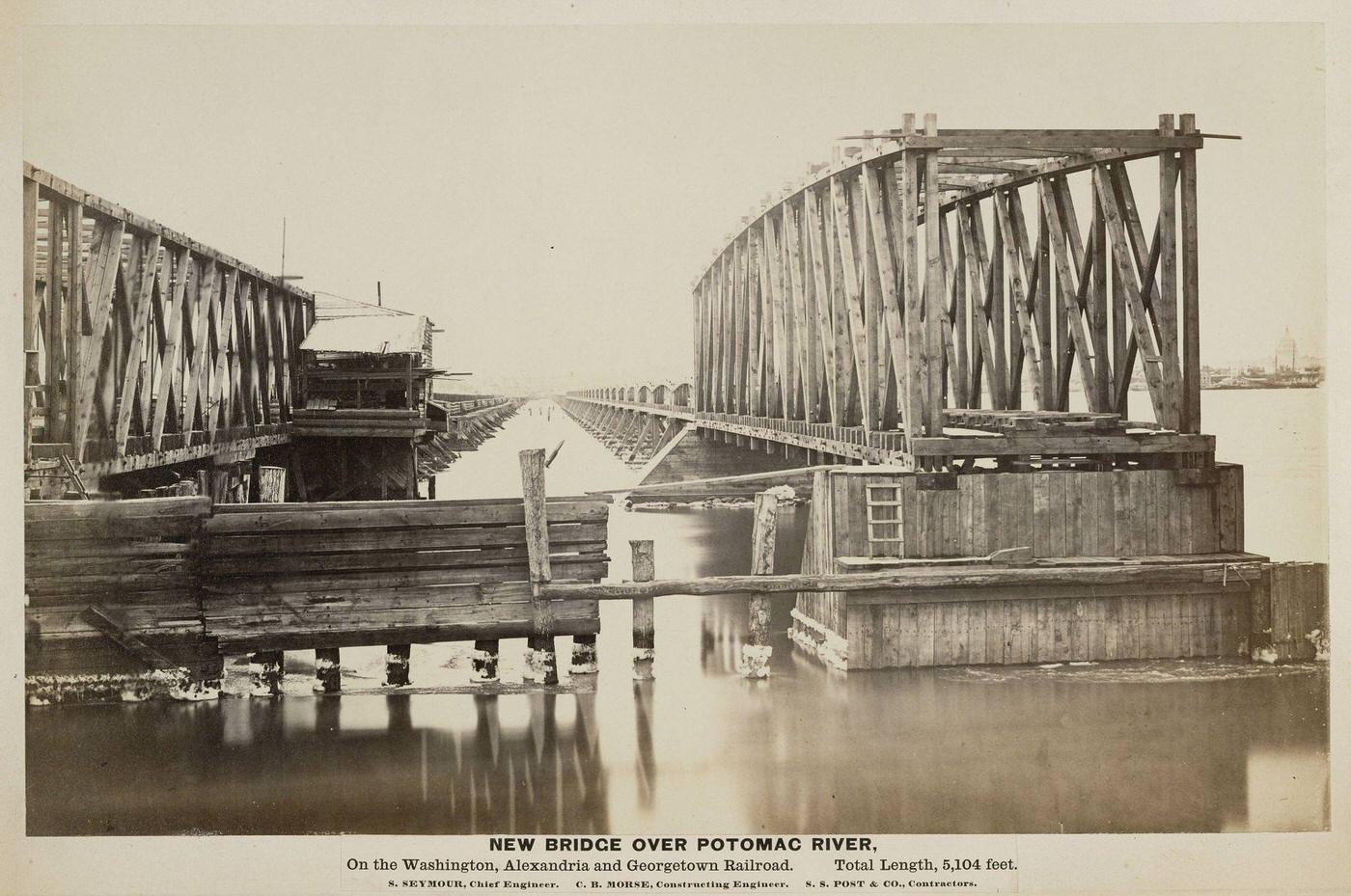
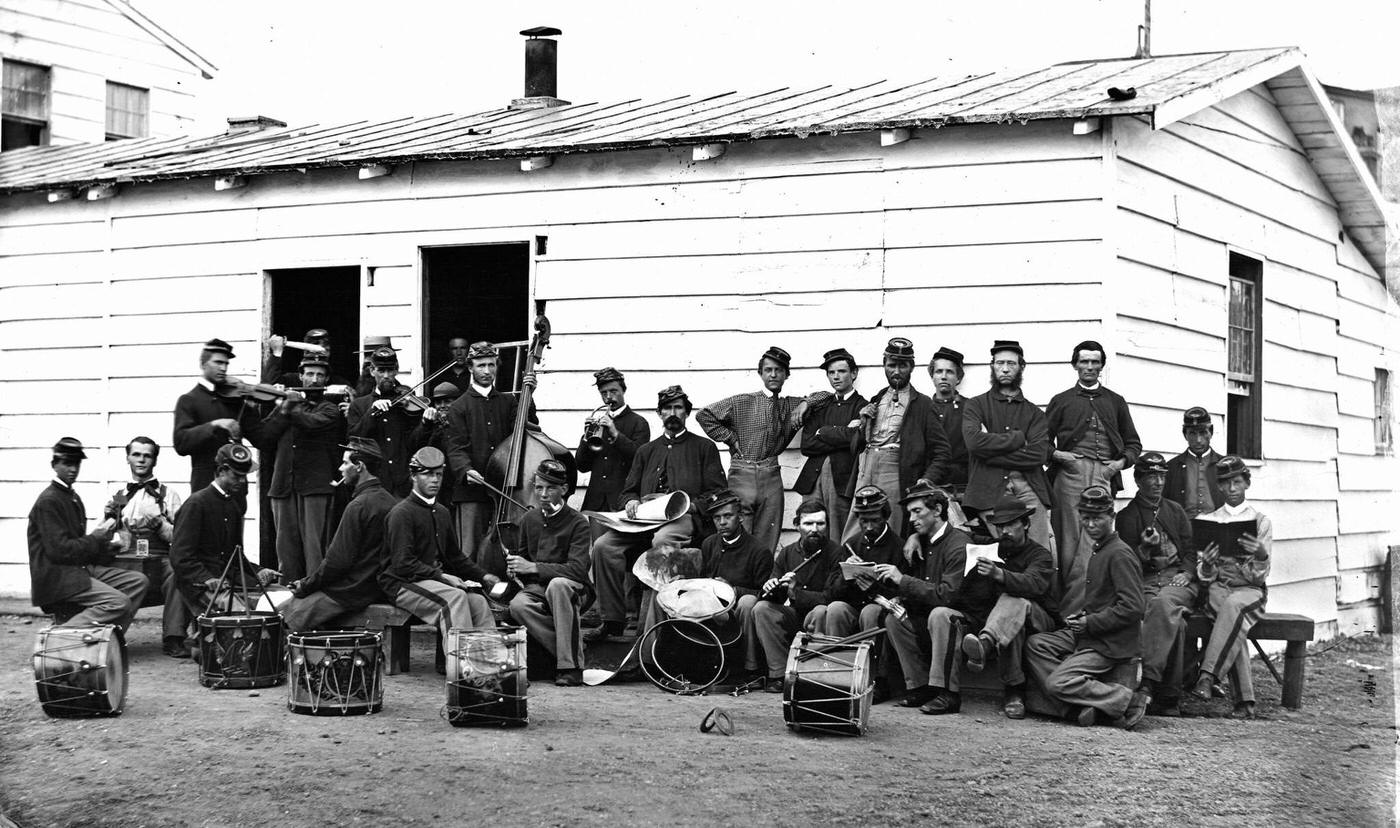
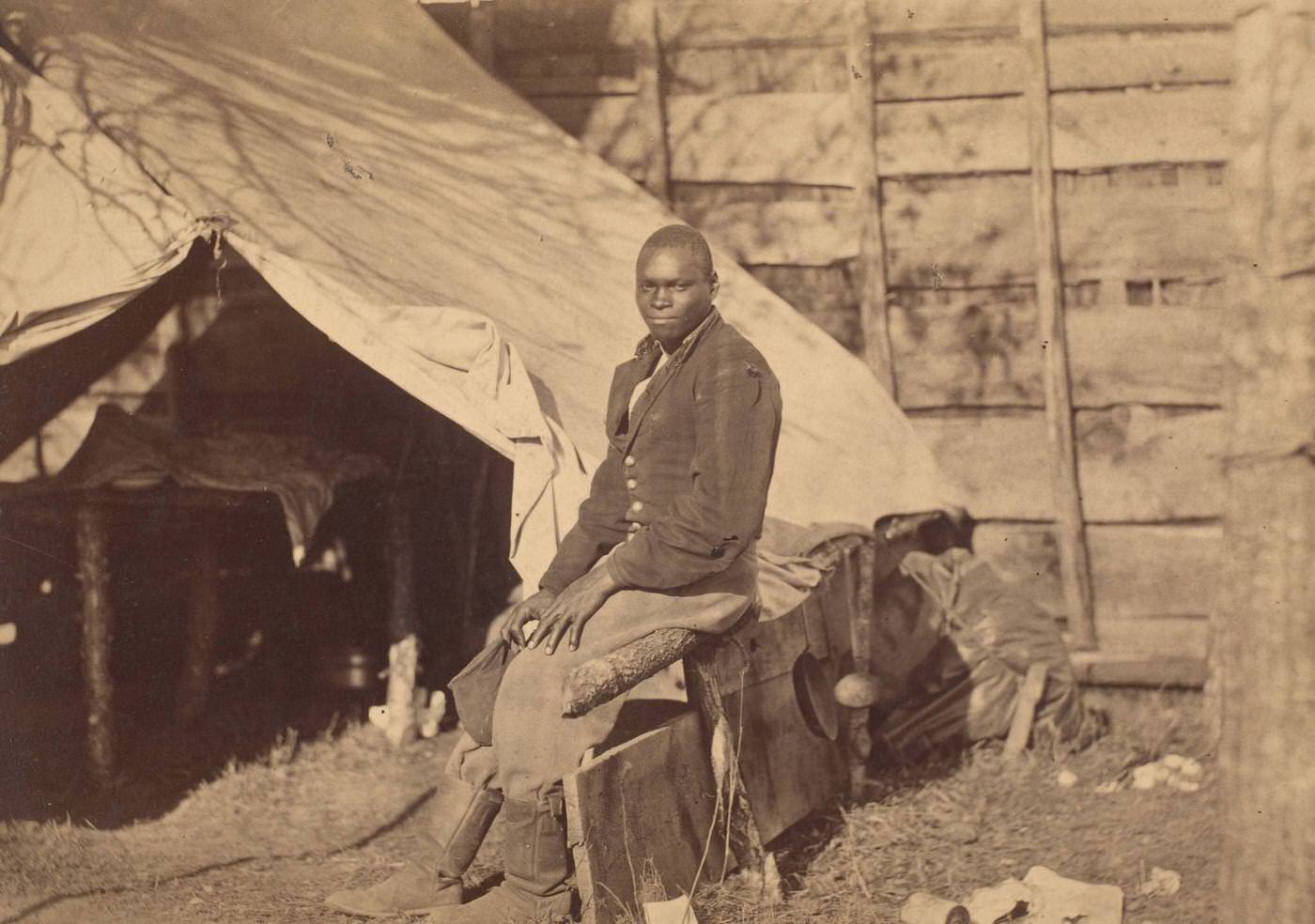
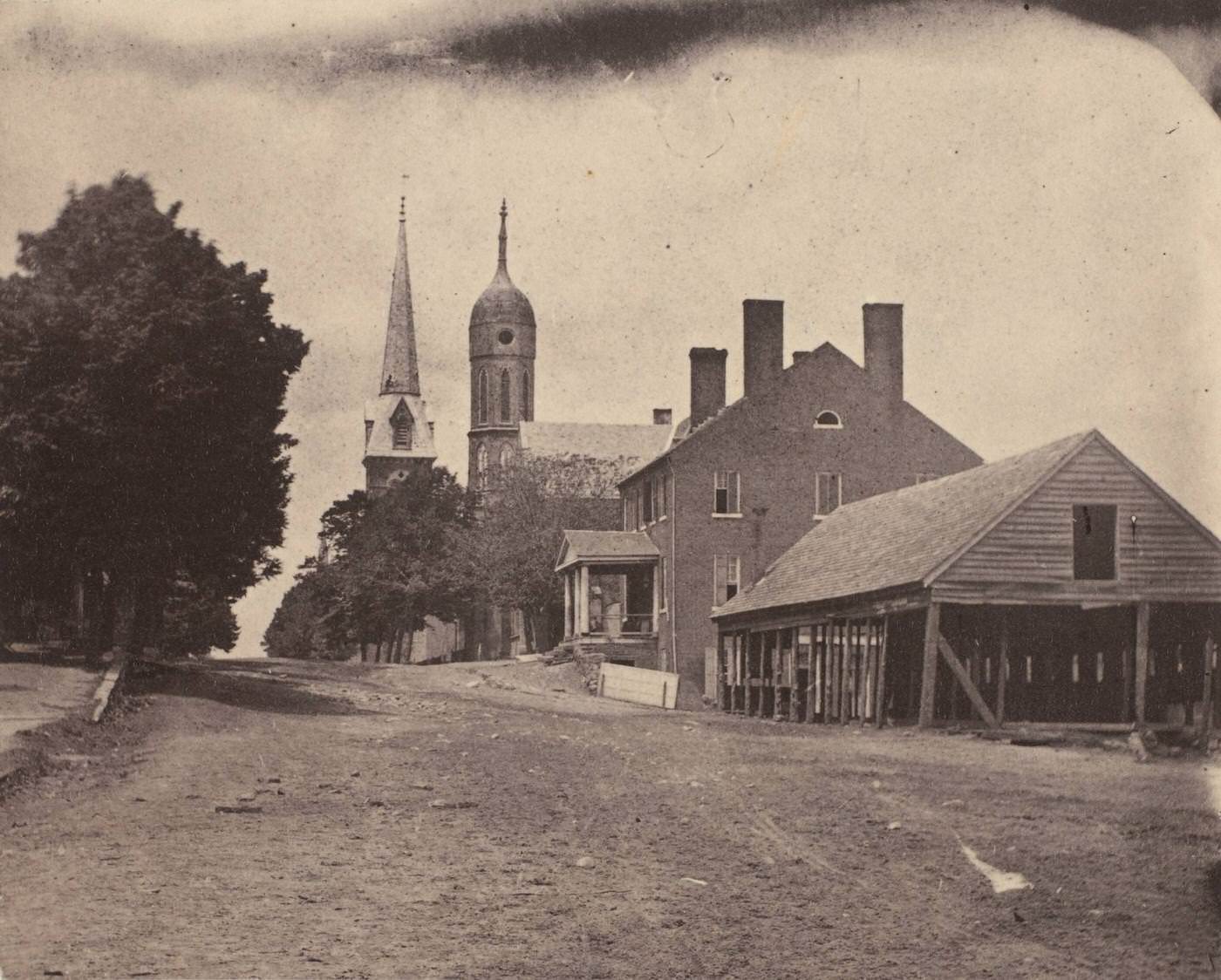
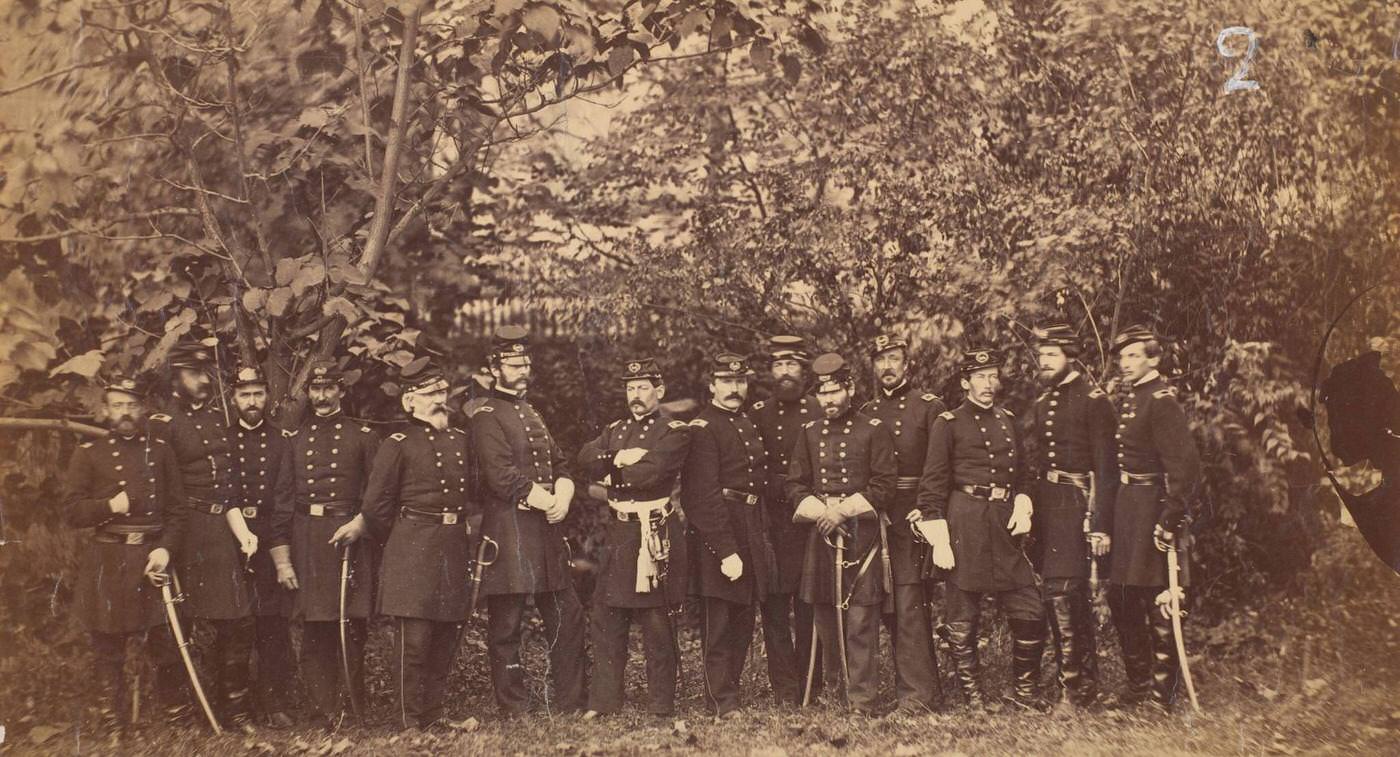
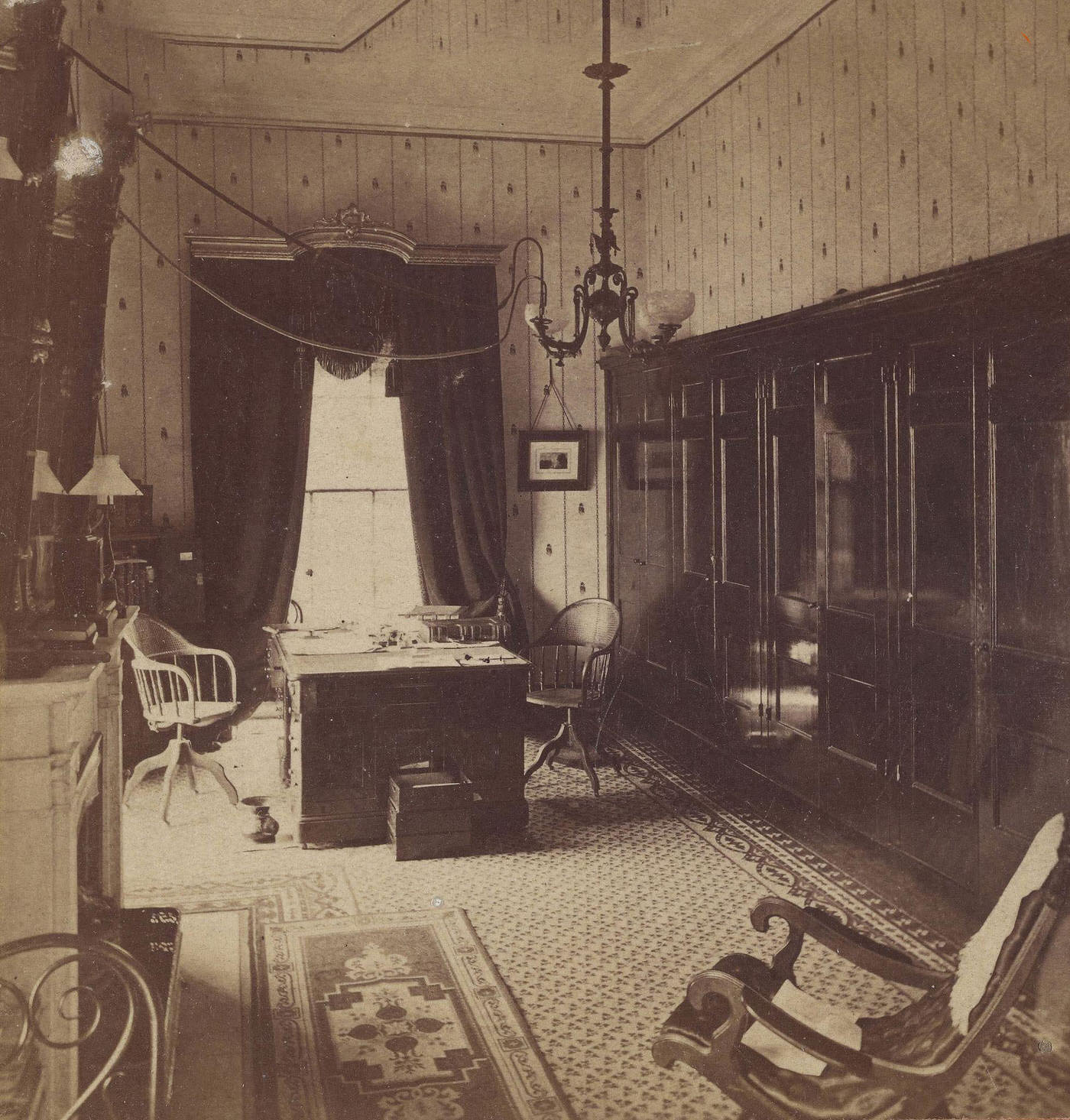
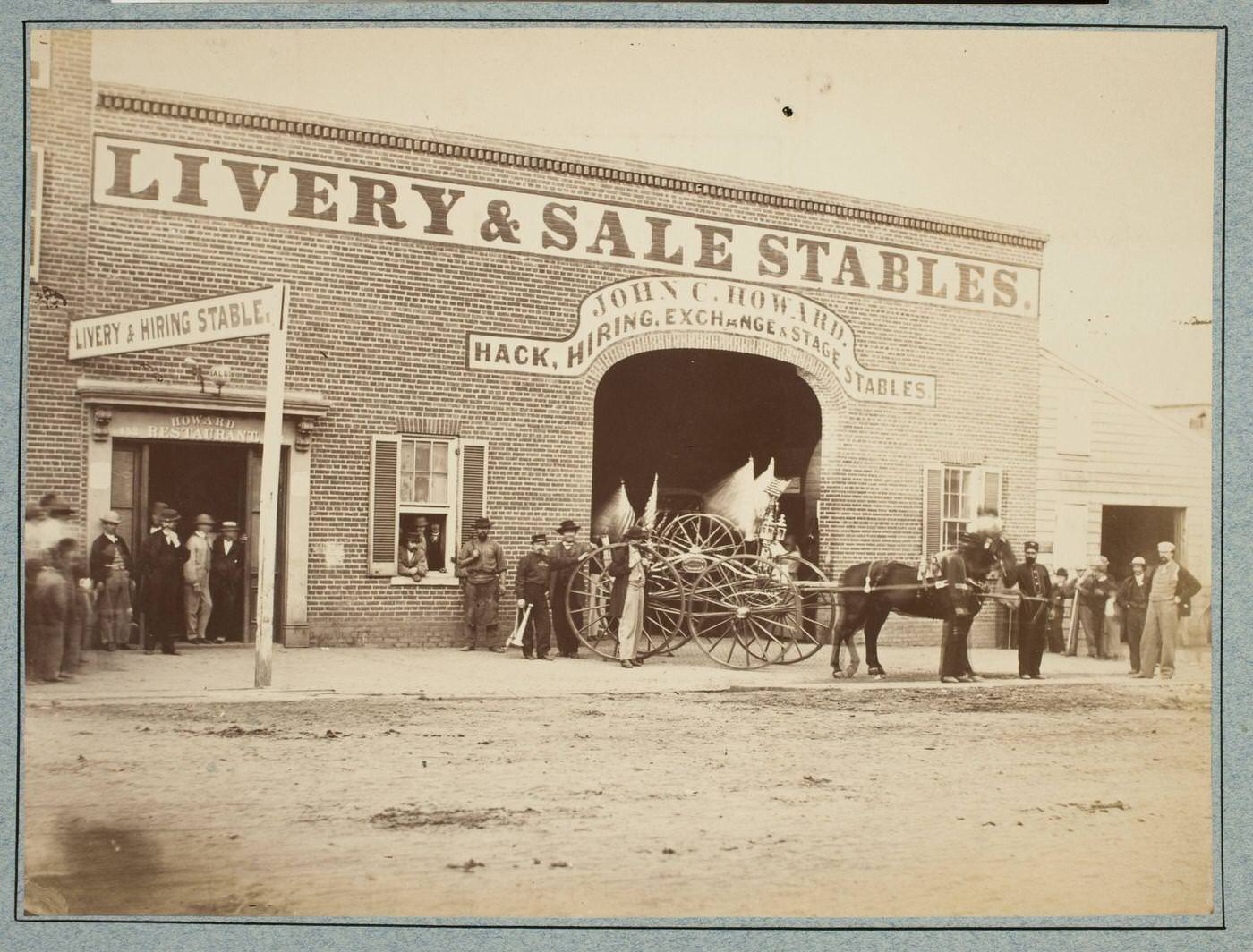
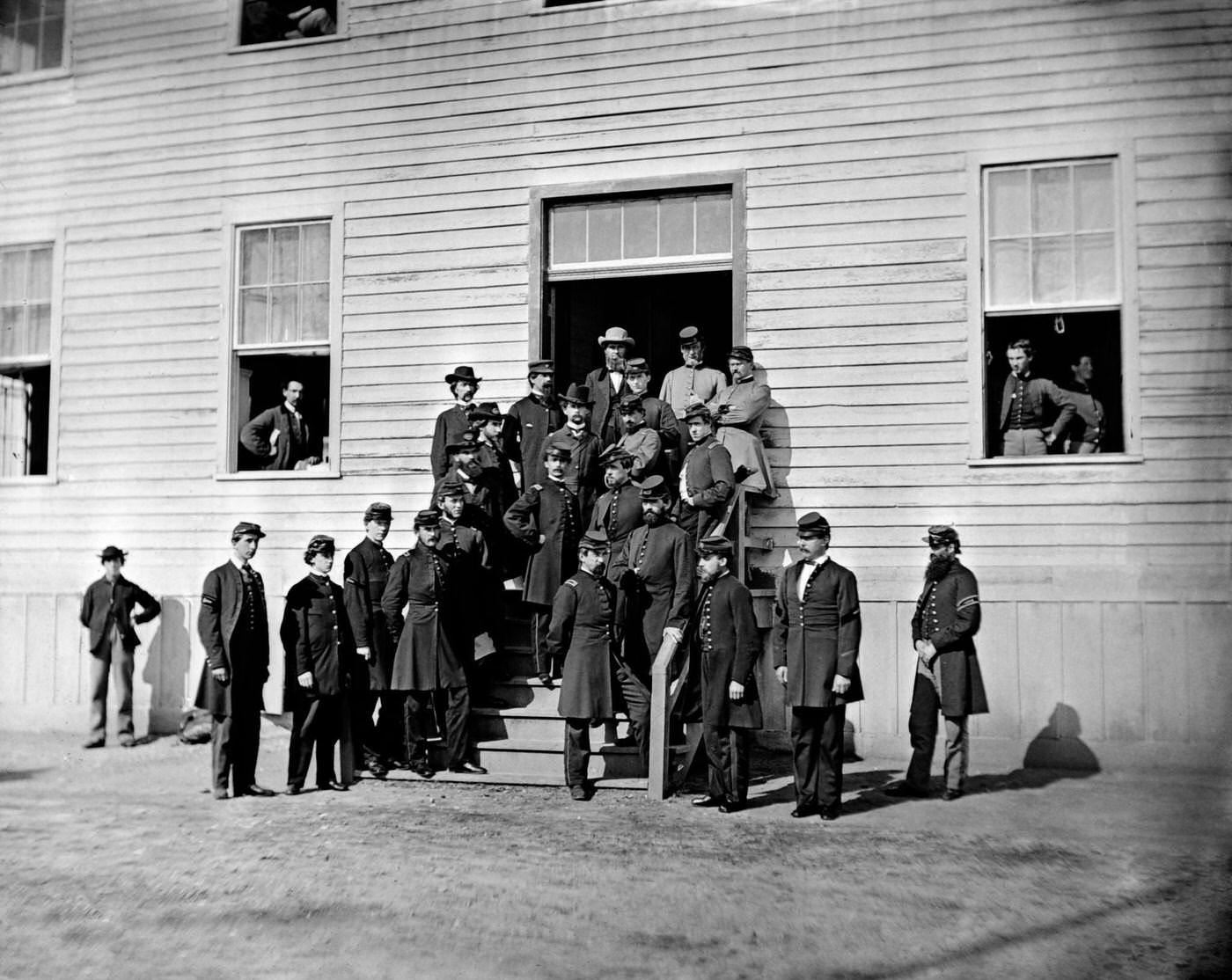
Treasury Buildings, Washington, D.C., 1863Interior of the Smithsonian Institution, Washington, D.C., 1867Arlington Heights, Va. Blockhouse near Aqueduct Bridge, 1862Long Bridge and Washington, 1863Long Bridge, Washington, D.C., 1861Old Ebbitt Hotel, 1865Hancock’s Veteran Corps on F Street, N.W. Washington, D.C. 1st U.S. Volunteer Infantry, 1865Washington, D.C. Six marines with fixed bayonets at the Navy Yard, 1864Officers of 71st N. Y. S. M., Navy Yard, Washington, D.C., 1861.Ford’s Theatre, 1868Smithsonian Institution. By Bell & Bro., Washington, D.C., 1867Headquarters of Gen. M. D. Hardin, Washington, D.C., April, 1865.Pennsylvania Avenue from Treasury Building, Washington, D.C.Pennsylvania Avenue from the [Dept. of the] Treasury, Washington, D.C.Washington, D.C. Soldier springing the trap; men in trees and Capitol dome beyond, 1865Fort near Washington, D.C. May be Ft. Slemmer, 1864The ‘Lincoln column,’ first monolith raised, Nov. 1860, Presidential election, being S. column of connecting corridor.Washington, D.C., taken from U.S. Capitol, with Pennsylvania Avenue at left,View, looking N. from Capitol roof, Washington, D.C., 1861The Capitol, President’s Room, Washington, D.C., 1863Washington, D.C. from the Capitol, looking southeast. Southeast view with New Jersey Ave. on the right and A Street and B Street (i.e., Independence Ave.), 1863A Civil War scene featuring a view of a Confederate Quartermasters House with a group of officers meeting outside, Washington DC, 1863.View of trains in the Maryland Avenue depot, Washington DC, 1860s.General Joseph Hooker, 1863An infantry company on parade during the American Civil War, 1863.Officers of the 55th Infantry at Fort Gaines, Washington DC during the American Civil War, 1863.Small Bridge Near Washington, D.C., 1863View of the aqueduct bridge, in Georgetown, Washington, DC, 1863New Bridge on the Potomac River Washington, D.C., 1863Mounted guns and ammunition around the perimeter of a fort Washington, D.C., 1863Entrance to Washington Water Works, Great Falls, Potomac River Washington, D.C., 1863Barracks of Ft. Carroll Washington, D.C., 1863Hotel entrance to Long Bridge, Washington, D.C., 1863Aqueduct Bridge, with Chesapeake and Ohio Canal, 1863Georgetown ferry-boat carrying wagons, and Aqueduct Bridge beyond, from rocks on Mason’s Island, 1863Central Office of Sanitary Commission, Washington, D.C., 1863Union Arch, built by Gen. M.C. Meigs, span of 220 feet, 1863Home of the Sanitary Commission, Washington, D.C., 1863Wizard gun at U.S. Arsenal Washington, D.C., 1863The Aqueduct bridge and Georgetown from the Virginia bank Washington, D.C., 1863Interior of Fort Totten Washington, D.C., 1863Cabin John Bridge, looking up stream, 1863Capitol, Washington, D.C., south-east view, July, 1863View in arsenal yard, Washington, D.C., 1863Guns and ammunition inside of Fort Carroll, near Giesboro, Washington, D.C., 1863Treasury Dept. in Lincoln’s time Washington, D.C., 1863Hospital of Quartermaster Department Washington, D.C., 1863Alexander Gardner’s Photographic Gallery, 7th & D Street, NW, Washington, D.C., 1863Aquia Creek Landing, 1863View of the Long Bridge, over the Potomac River in Washington, D.C., 1862.The White House, former residence of Mrs. Martha Dandridge Custis Washington, now the residence of Col. Lee, 1862.View of a 6 pounder Wiard gun, invented by Norman Wiard, at the Arsenal in Washington, DC, 1862.Hospital and Signal Corps camp quarters near Georgetown, 1862.Old Capitol Prison, 1861Washington Harewood Hospital, 1862Washington, D.C., 1861Washington Harewood Hospital, 1861Washington Harewood Hospital, 1861Battery Rodgers, Potomac River near Washington, 1861Washington Harewood Hospital, 1861Distant View of Arsenal, Washington, D.C., 1861Washington Harewood Hospital, 1861Campbell Hospital, D.C., 1861Washington Harewood Hospital, 1861St. Peter’s Church near White House, Where Washington was Married. General E. V. Sumner and Staff, 1861-65Botanical GardensFort on the Potomac RiverOfficers of the Fifty-fifth Infantry inspecting cannons at Fort Gaines, near Tenley, D.C., 1861Professor Thaddeus Lowe sets up balloon gas generators in sight of the U.S. Capitol, Washington, D.C., 1861.A military band leads the assembled companies of the 2nd Rhode Island Infantry, Washington, D.C., 1865Union engineers are timed as they build a pontoon bridge near Washington, D.C., during the American Civil War.Union soldiers pose outside the Old Capitol Prison in Washington, D.C. During the American Civil War the prison was used to incarcerate political prisoners and prisoners of war.Federal soldiers pose on and around a display of cannons at the Washington Arsenal, Washington, D.C., 1861Union gunners pose around a 32-pounder seacoast gun mounted at one of the many forts that protected Washington, D.C., 1860sLarge Crowd at Abraham Lincoln Inaugural Speech, 1860sThe 17th New York Battery Artillery Depot, Camp Barry, near Washington, DC, 1861.Tent life of the 31st Penn. Inf. (later, 82d Penn. Inf.) at Queen’s farm, vicinity of Fort Slocum 1861, War of SecessionUnion Army sentries standing guard at the ferry which connects Georgetown in the District of Columbia with Virginia across the Potomac River, 1861Members of the Union Army’s 96th Pennsylvanian Regiment carry out a drill at Camp Northumberland outside Washington DC.U.S. Conservatory – Botanical Garden., Bell & Bro, Washington, D.C., 1860sGrounds from the Agriculture Department, Washington, D.C., 1865View in Washington, D.C., 1862Post Office Department, Washington, D.C., 1860sSmithsonian Institute, Washington, D.C., 1860Over the Potomac River at Long Bridge, Washington, D.C., 1860sStatue of Columbus, Washington, D.C., 1862Post Office Dept, Washington, D.C., 1860sStatue of Washington, 1860sJapanese Embassy, Navy Yard, Washington, D.C., 1860The U.S. Tresury, State Department and the unfinished Washington Monument, 1860.Hospital During the Civil war, 1860sCattle grazing on monument grounds during the American Civil War, Washington DC, 1860Washington Monument, 1865The Smithsonian Institution., Bell & Bro. (Washington, D.C.), Smithsonian Institution, 1869Washington, D.C. The Long Bridge over the Potomac seen from the city, 1865Band of 10th Veteran Reserve Corps, Washington, D.C., April, 1865Drum corps of 10th Veteran Reserve Corps, Washington, D.C., 1865The grand review of the Army. Presidential reviewing stand, Washington, D.C., 1865Washington, D.C. Central Signal Station, Winder Building, 17th and E Streets NW, and Signal Corps men, 1865Government blacksmith shop, Washington, D.C., 1865Washington, D.C. Soldier springing the trap; men in trees and Capitol dome beyond, 1865John C. Howard’s stable on G Street between 6th and 7th, 1865Government repair shops. Wheelwright shop, Washington, D.C., 1865Government repair shops; Wheelwright shop, 1860sOffice of U.S. Christian Commission Protestant Organization founded by the YMCA to provide religious and social services to Union Troops; Founded in 1861 in New York after the First Battle of Bull Run.Campbell Hospital near Washington, D.C., 1861Battery Rodgers, Potomac River near Washington, 1861New Bridge over Potomac River. On the Washington, Alexandria and Georgetown Railroad, 1864Gardner’s Gallery, 7th and D Streets, Washington, D.C., 1864The U. S. Capitol, with its dome still uncompleted. Washington D. C., 1864.10Th Veteran Reserve Drum Corps, 1864Artillery group 3d Regiment Massachussetts, at Fort Totten, Washington, D.C., 1864Exterior view of Douglas Hospital (formerly ‘Minnesota Row’) at 2d and I Streets NW, Washington, DC, 1864.Blair House, Washington, D.C., 1864nion soldiers guarding Confederate prisoners of war at Fairfax Courthouse, Washington, D.C., 1866No. 189. Maryland Avenue Depot, Washington, D.C., With Engines sent from Alexandria for safety, 1863Armory Square Hospital, Washington, D.C., 1863Black Soldier in Camp, Washington, D.C., 1863Second Corps Hospital, Washington, D.C., 1863General McClellan and Staff, Washington, D.C., 1863The President’s Private Secretary’s Room – White House. Washington, D.C., 1864The U.S. Treasury from the South West, Washington, D.C., 1866Washington, D.C., 1863Corcoran Art Building Penn. Avenue., Washington, D.C., 1864Agricultural Department, Washington, D.C., 1860sView of the chapel and other buildings of Armory Square Hospital, at 6th and B Independence Avenue, Washington, DC, August 1865.Major General A.A. Humphreys leads the Second Corps during a victory parade in Washington, D.C., on May 23, 1865.Pennsylvania Avenue, Treasury, S.E. United States Capitol, Washington, D.C, 1865Pennsylvania Avenue, S.E. Treasury, Capitol, Washington, D.C, 1865Pennsylvania Avenue, Washington, D.C, 1865Exterior view of Howard’s Stable in Washington, D.C., 1865Exterior view of Ford’s Theater in Washington, D.C., where President Lincoln was assassinated by the actor John Wilkes Booth, 1865.Olyphant, Washington, D.C., 1863Von Storch Breaker, Washington, D.C., 1863Von Storch Shaft, Washington, D.C., 1863Grand Army Review. Pennsylvania Avenue. Washington D.C., 1865.The premises of Price, Birch & Co., dealers in slaves, Washington, D.C., 1865Hundreds of blacksmiths were employed during the Civil War at the Government Horse Shoeing Shop in Washington, D.C., 1865The dome of the U. S. Capitol as it appeared under construction in 1865.The train carrying President Abraham Lincoln’s casket during his funeral remains idle at the station, Washington, D.C., 1860sPennsylvania Avenue looking towards the Capitol, Washington, D.C., 1865Surgeons at Harewood Hospital in Wasington DC during the American Civil War, 1865.The Chain Bridge over the Potomac, with soldiers and guardhouse visible, Washington, D.C., 1865The Presidential reviewing stand, with guests and guard, during the “grand review” of the Union Army, Washington, D.C., 1865Infantry passing on Pennsylvania Avenue near the Treasury, during the “grand review” of the Union Army, Washington, D.C., 1865Cavalry passing on Pennsylvania Avenue near the Treasury, during the “grand review” of the Union Army, Washington, D.C., 1865Infantry unit with fixed bayonets followed by ambulances passing on Pennsylvania Avenue near the Treasury, during the “grand review” of the Union Army, Washington, D.C., 1865Men and gun of the 3rd Massachusetts Heavy Artillery at ornamental gate of Fort Totten, Washington, D.C., 1865Sergeants of the 3rd Massachusetts Heavy Artillery, with gun and caisson at Fort Totten, Washington, D.C., 1865Troops of Company F, 3rd Regiment Massachusetts Heavy Artillery at Fort Stevens, Washington, D.C., 1865View of men standing outside the government mess house, Washington, D.C., 1865Field relief wagons and workers of the US Sanitary Commission, Washington, D.C., 1865Men standing in front of the mess house at the government stables, Washington, D.C., 1865Exterior view of the mess house at the government stables, with a large group of men gathered around, Washington, D.C., 1865Interior view showing the mess hall at Harewood Hospital, heated by elaborate stoves, Washington, D.C., 1865A military band standing before the officers’ quarters at Harewood Hospital, located on the farm of WW Corcoran, at 7th Street Road near the Soldiers’ Home, 1864.The ruins of Kalorama Hospital, 23d and S Streets, Washington, D.C., 1856
In case you’re interested in this kind of stuff, I highly recommend the book “Capital Losses” by James Goode. The book would make a great addition to any DC coffee table

![Pennsylvania Avenue from the [Dept. of the] Treasury, Washington, D.C.](https://www.bygonely.com/wp-content/uploads/2022/11/Washington-D.C-1860s-42.jpg)










In case you’re interested in this kind of stuff, I highly recommend the book “Capital Losses” by James Goode. The book would make a great addition to any DC coffee table