
In October 1940, German authorities ordered the creation of a sealed Jewish district in Warsaw. All Jews living in the Polish capital were relocated there by the end of November 1940, while Polish residents were forced out to what the Germans called the ‘Aryan side.’ Their place was taken by 138,000 Jews brought in from other parts of Warsaw. Within months, the ghetto’s population exploded.
By April 1941, more than 460,000 people were packed into the ghetto’s boundaries — an average of 7.2 persons per room. Among them were 85,000 children under the age of 14, four thousand Jews relocated from Germany, and thousands more Polish Jews forced in from surrounding areas. The space was never designed to hold such numbers, and the consequences were catastrophic.

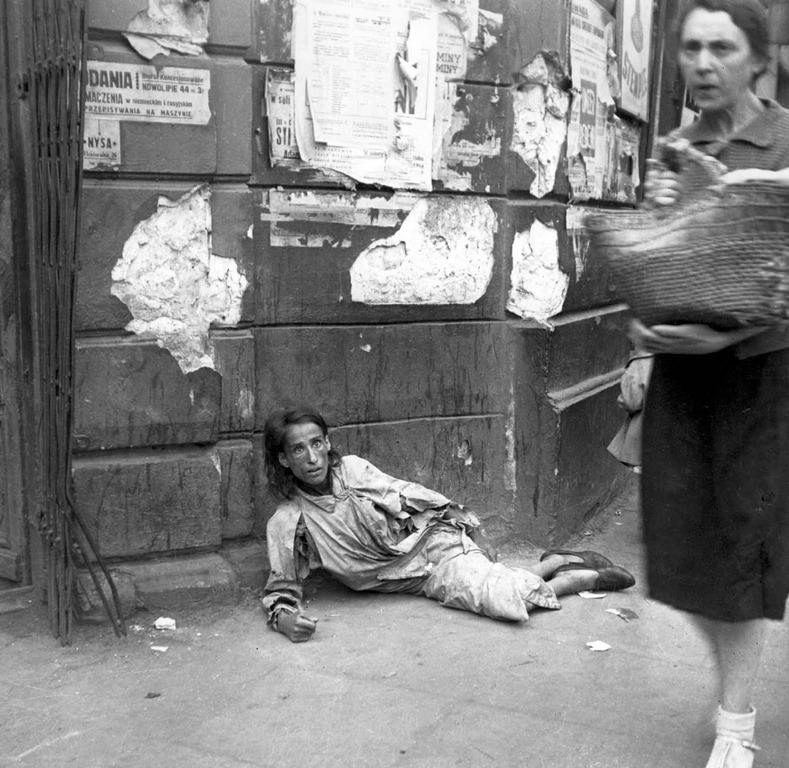
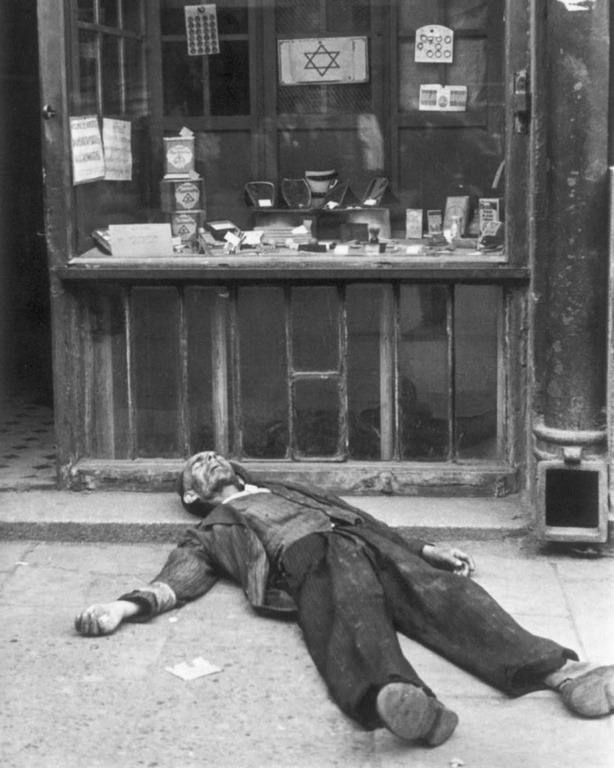
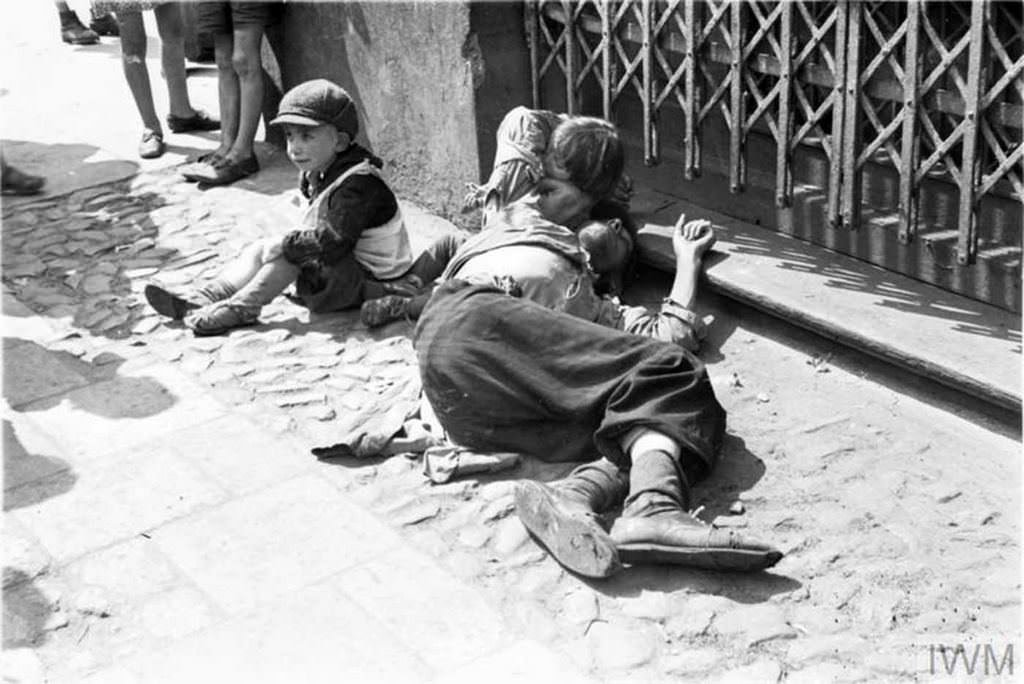
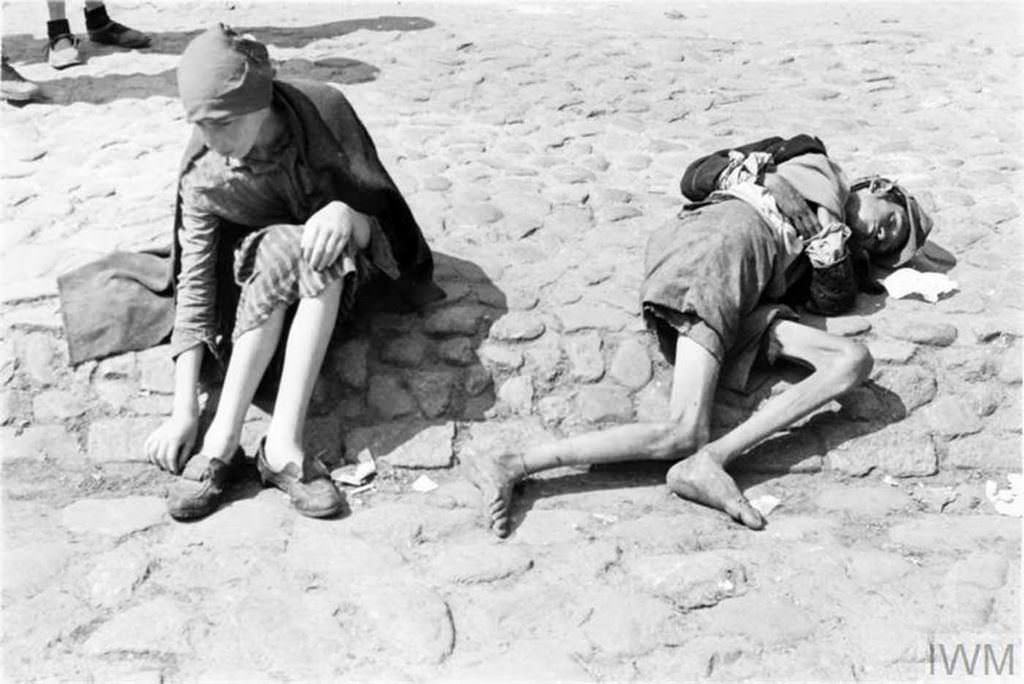
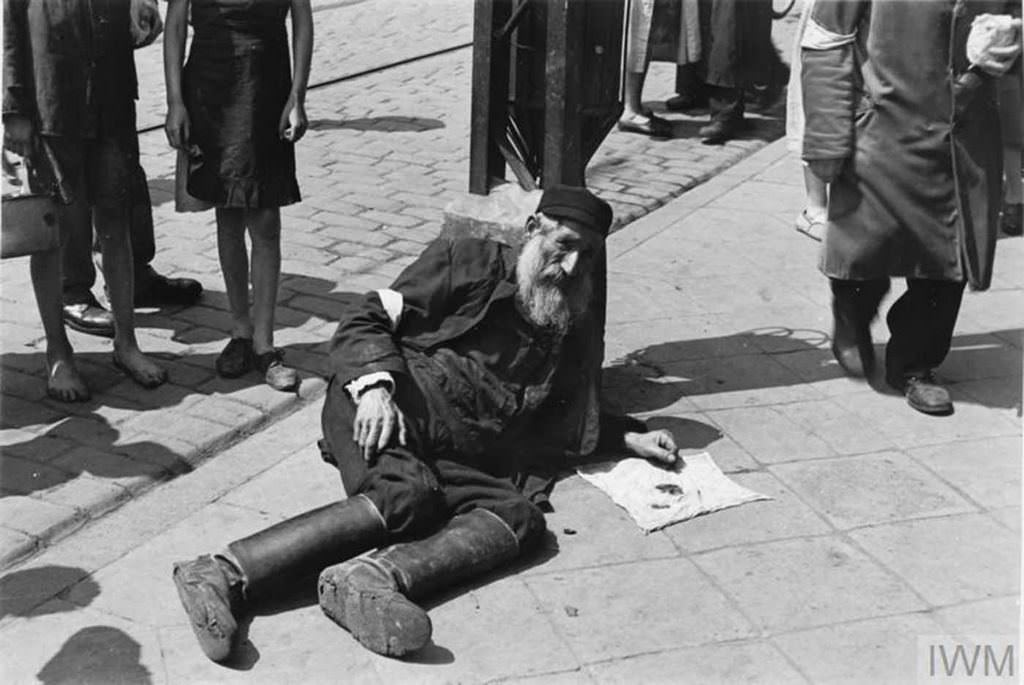
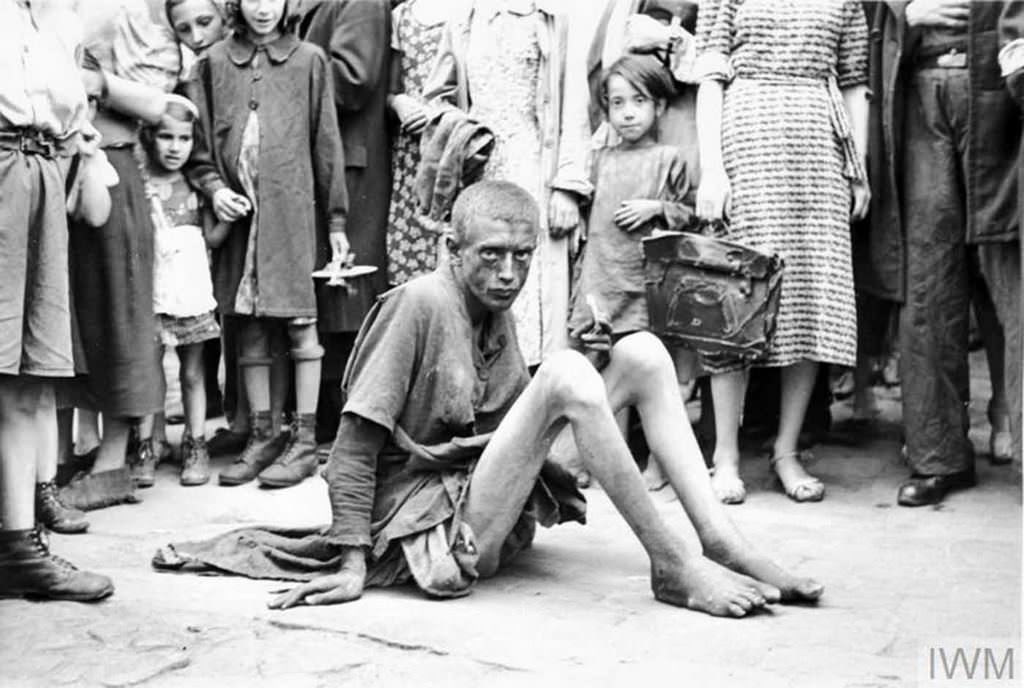
The ghetto lacked basic sanitation, adequate food supplies, and proper medical facilities. Typhus epidemics swept through the overcrowded streets repeatedly. German authorities imposed strict food rations that were nowhere near enough to sustain life. Between October 1940 and July 1942, around 92,000 Jewish residents died from starvation, disease, and exposure to the cold. The dead were sometimes found right where they had fallen.

Smuggling was not a choice — it was the primary means of survival. The vast majority of food consumed inside the ghetto was brought in illegally through gaps in the walls, through bribed guards, and through underground networks. Legal rations alone condemned residents to slow starvation. Against this backdrop, street markets became the beating heart of daily life in the ghetto.

The summer of 1941 was documented in a remarkable and rare set of photographs taken by German soldier Willi Georg, with a few additional images captured by Heinrich Joest. These photos record the ghetto’s streets in extraordinary detail — the traders, the hungry, the children, and the dying, all within the same frame.

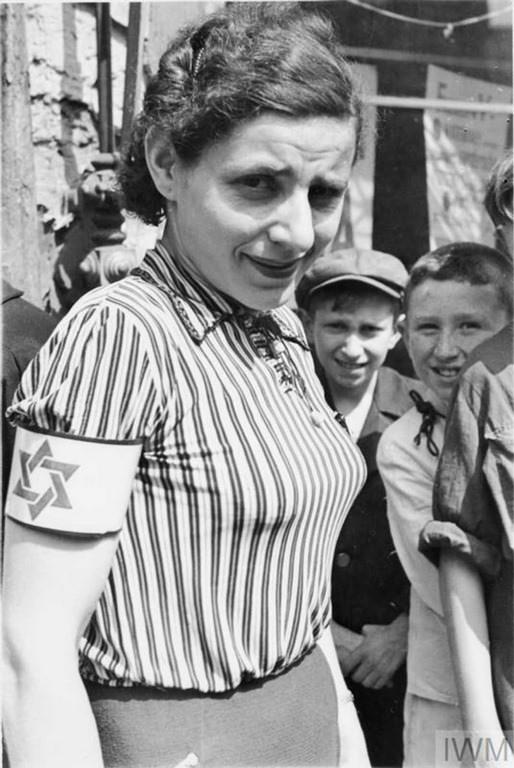
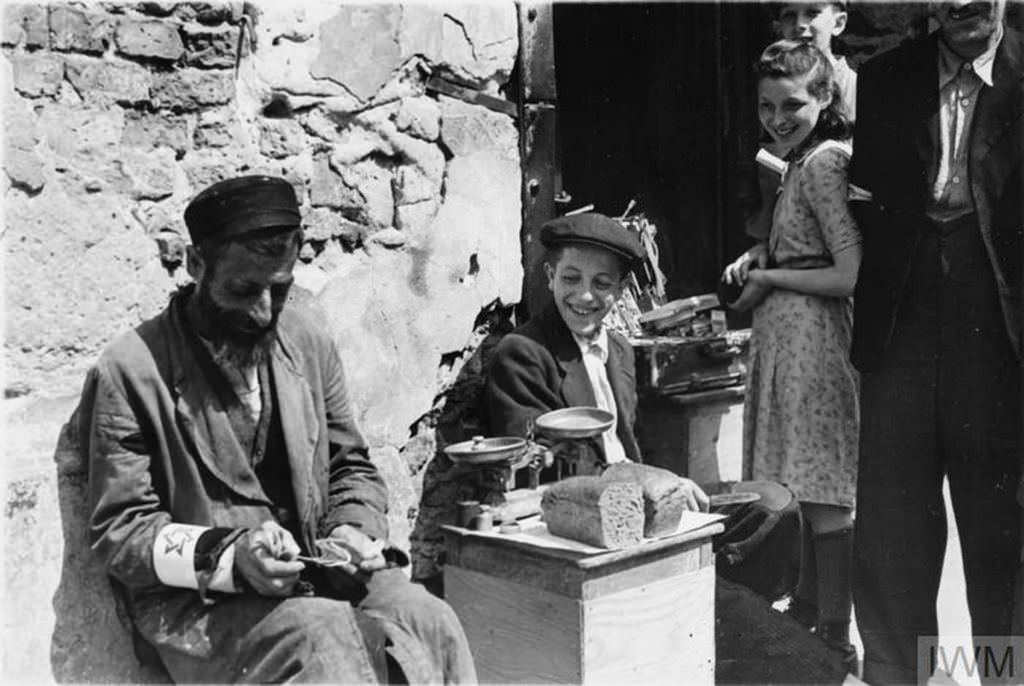
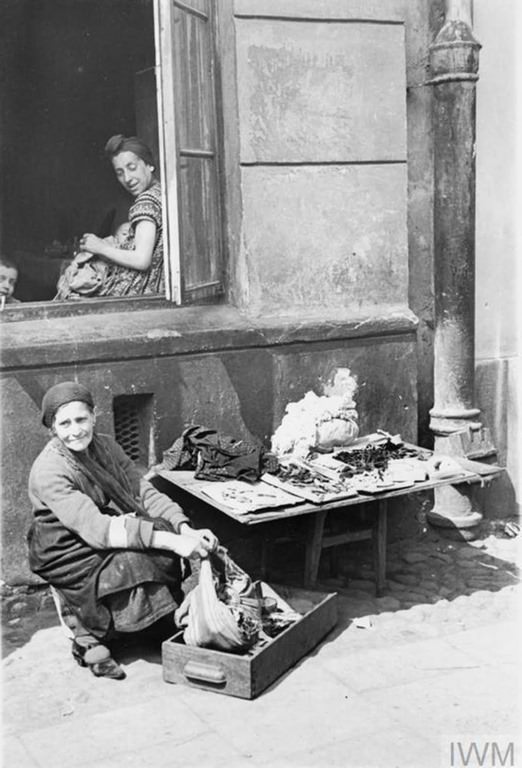
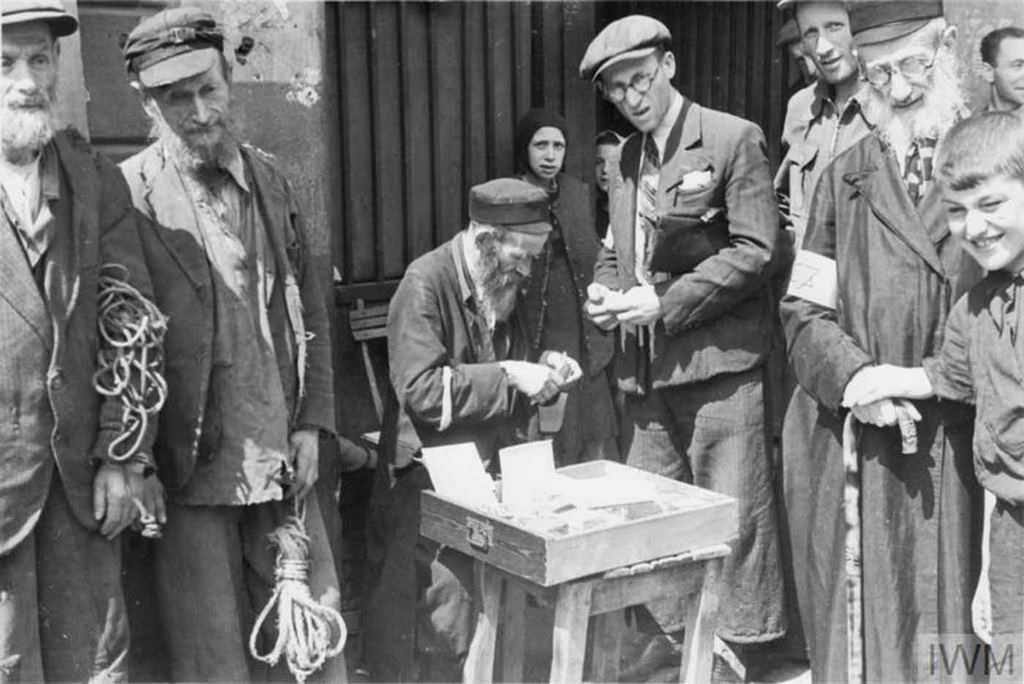
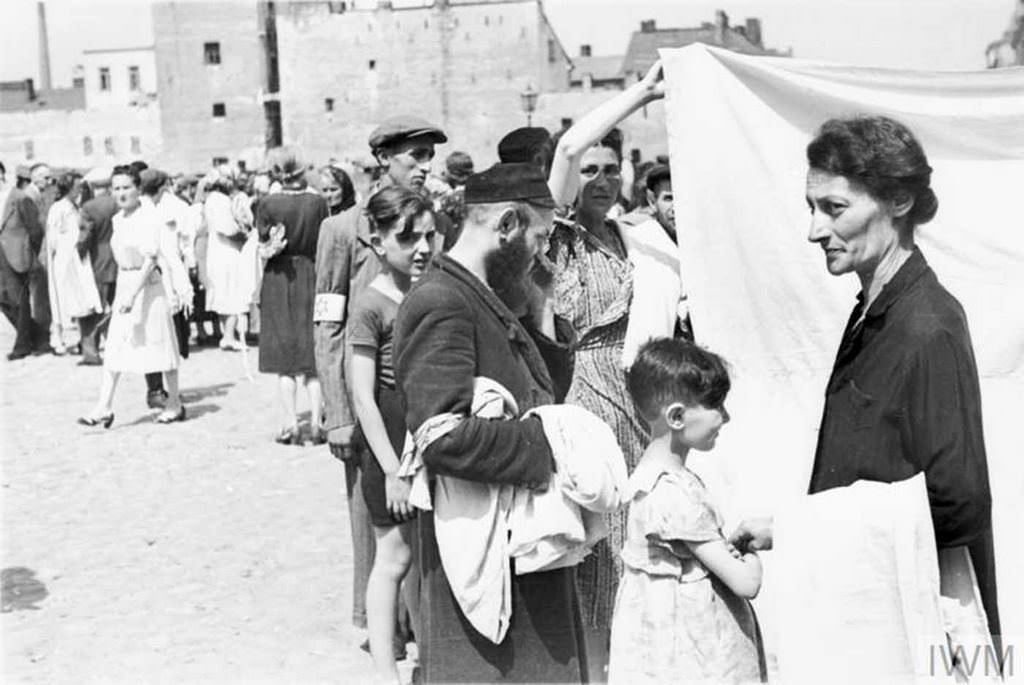
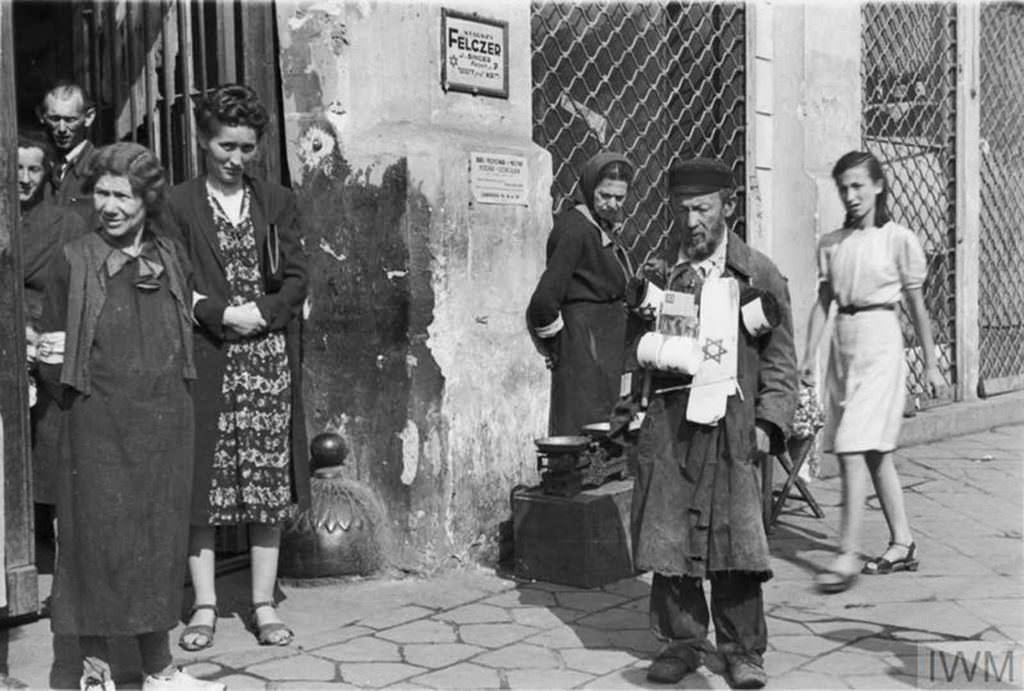
Jewish residents were required by German law to wear armbands bearing the Star of David. These armbands themselves became a street trade. Vendors sold them at open-air stalls, and almost anything else imaginable was bought and sold on the pavements. Elderly men tried to sell pieces of rope. Women laid out their remaining possessions on the ground. A man sold his bread allowance — one of the only official rations he received — because cash was needed more urgently than food that day.


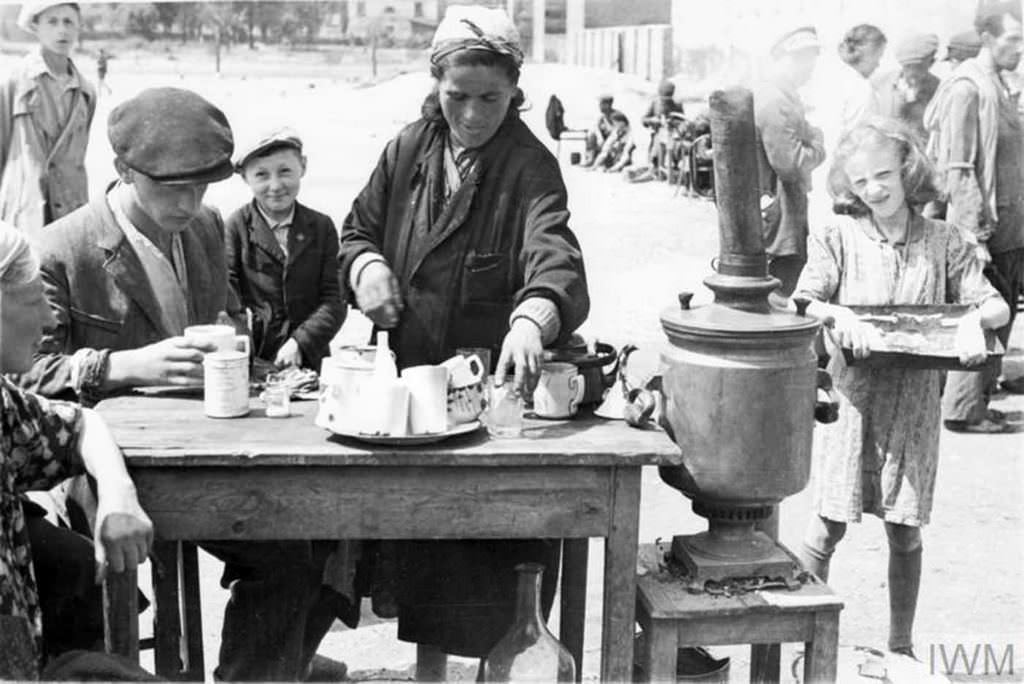
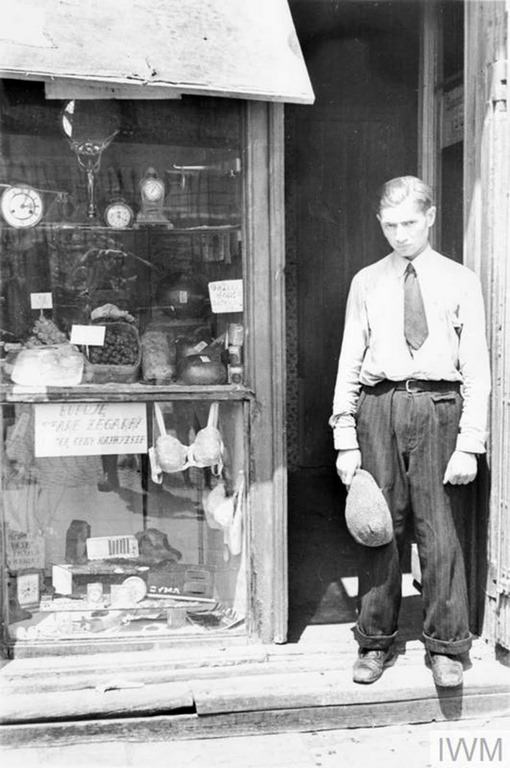
Street commerce took many forms. A woman ran a makeshift tea stall, serving hot drinks to customers from an open-air setup. Bedsheets and other household linens were traded openly on the street — anything that still had value was put up for sale. A shop on one of the ghetto’s streets advertised fresh eggs, sweets, and watches, while a sign in the window declared the owner would pay top prices for old watches.


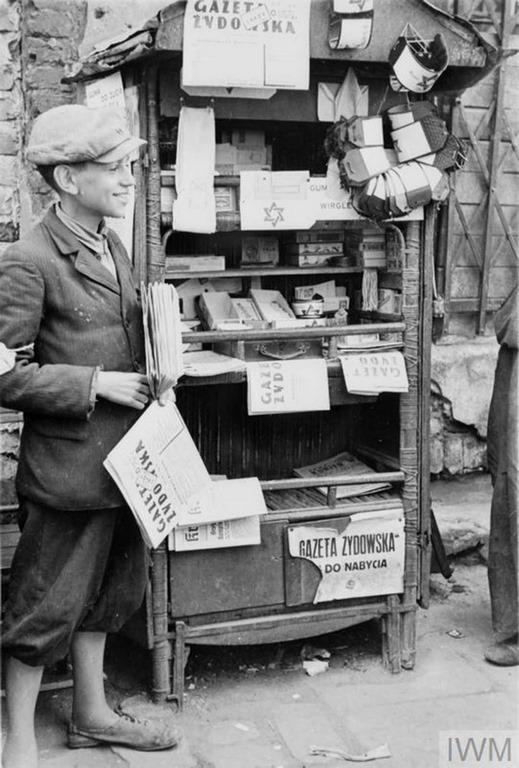
Newspapers were sold alongside armbands at the same stalls. One cheerful young vendor, photographed at what is likely Muranowski Square, sold copies of the Gazeta Żydowska — the Jewish Gazette — and advertised Wrigley’s chewing gum on his stand, spelled as ‘Wirgley’s.’ Even in these conditions, small displays of ordinary commercial life persisted on the ghetto’s streets.


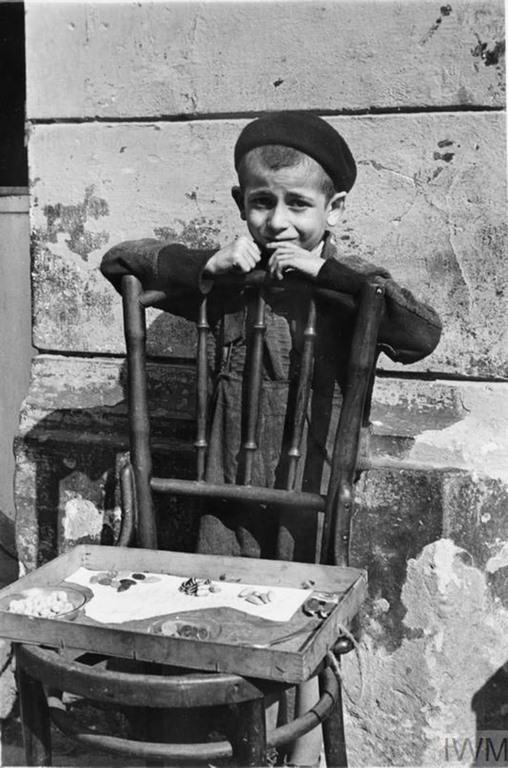
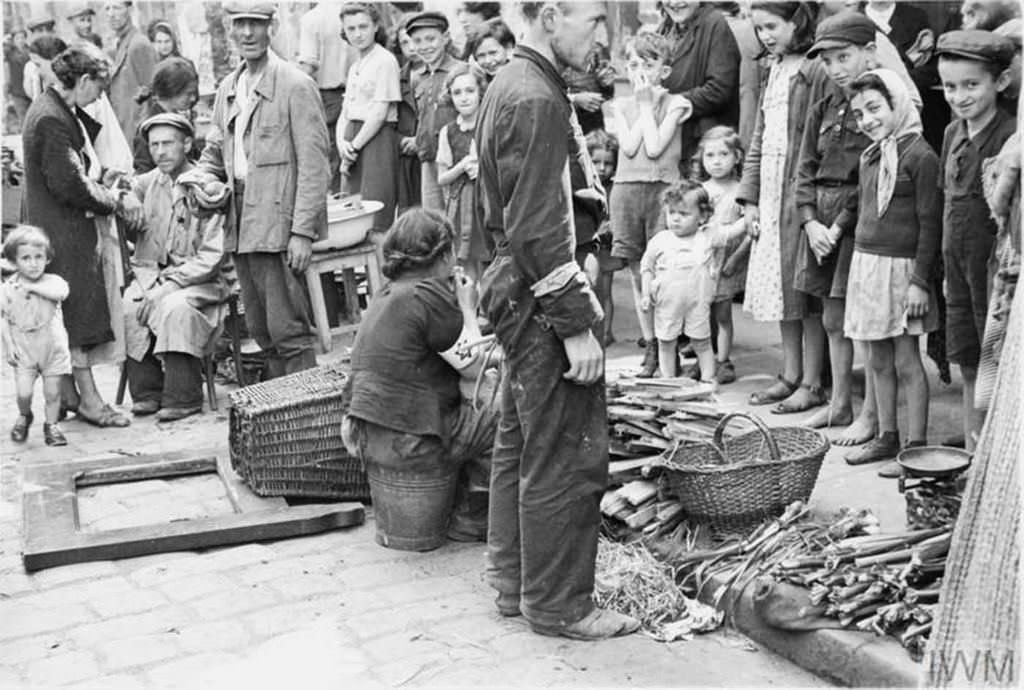
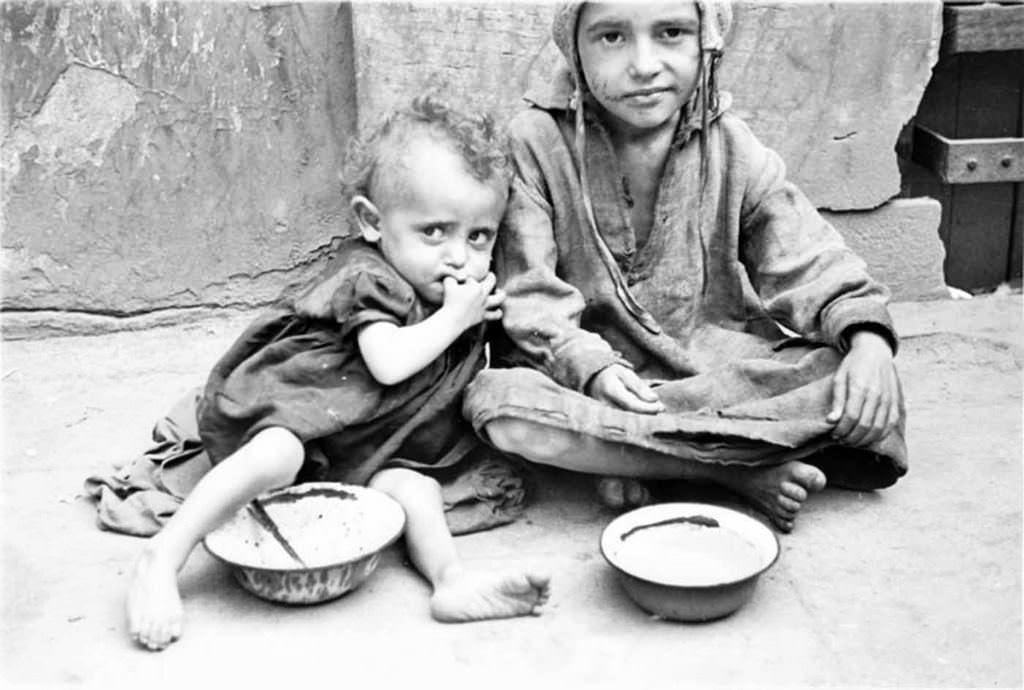
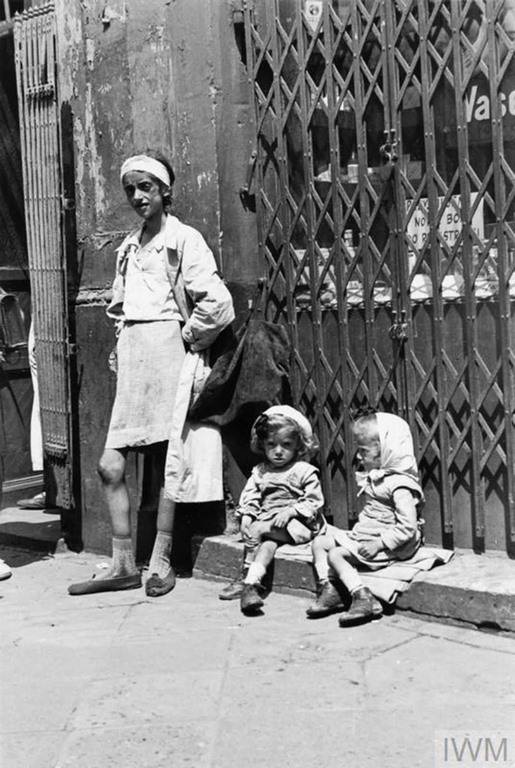
Children were everywhere in the ghetto’s streets, and their circumstances ranged sharply. Some sold sweets from chairs on the pavement. Others begged. Emaciated children sat unconscious or asleep on the street while crowds of pedestrians passed by. A man — possibly a father — sat with two visibly starving children beside him, their bodies showing the physical toll of months without adequate food.


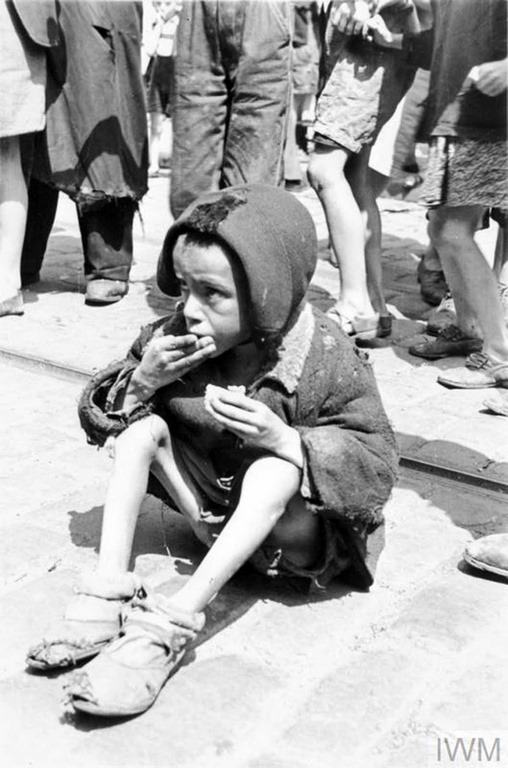
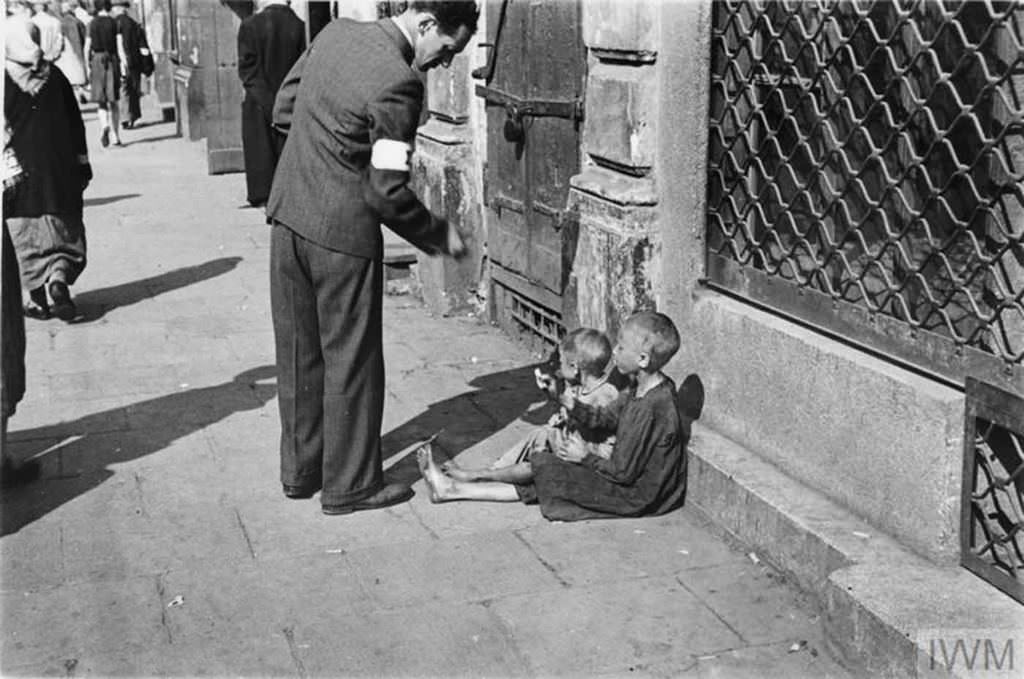
Mothers and their children appear throughout Georg’s photographs in the most desperate conditions. An emaciated woman stands with her twin daughters. A small child eats a piece of bread alone on the street. A passer-by stops to hand money to two children. These were not isolated scenes — they were the daily reality across the ghetto’s streets.


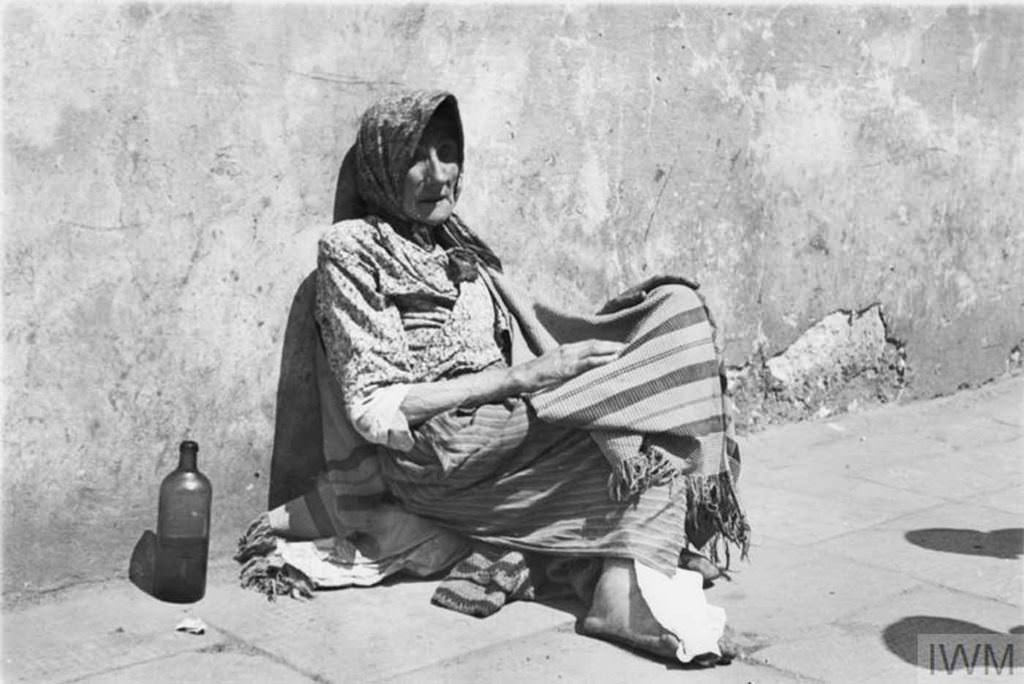
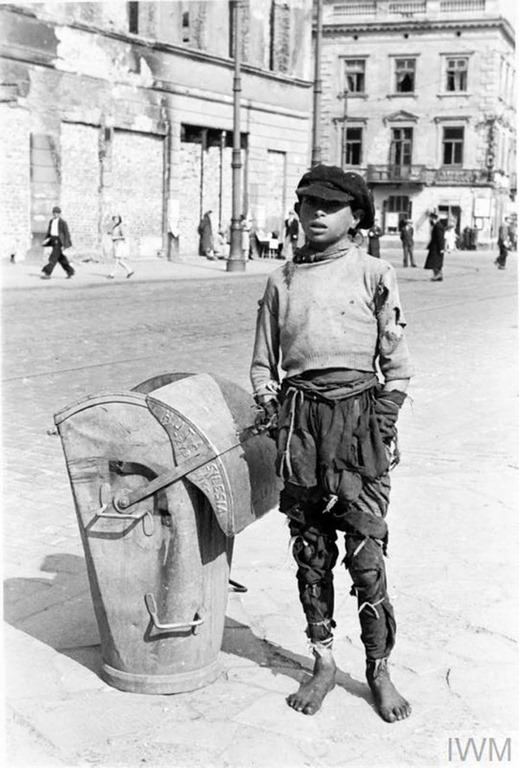
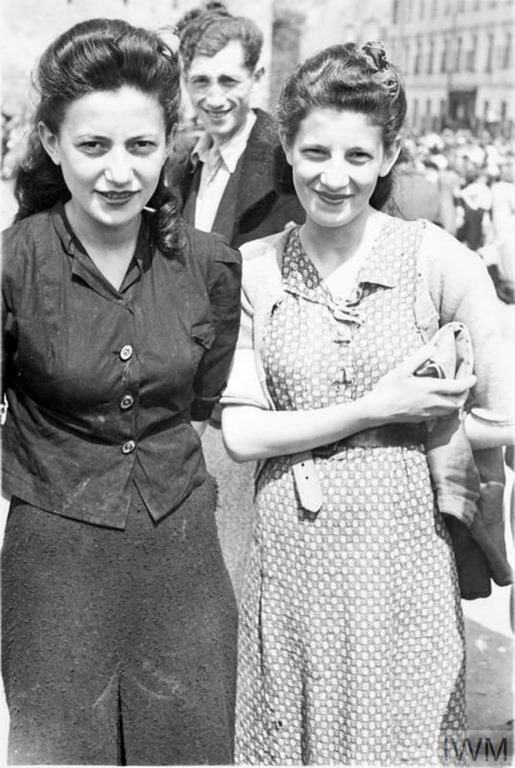
The elderly were equally visible in their suffering. An old man lies on the pavement in one photograph. A destitute elderly woman begs in the street in another. A teenage boy in ragged clothes stands next to a waste container manufactured by the Silesia Steelworks in Rybnik. Not far away, two well-dressed women pose calmly for a photograph at a street market — the ghetto contained every stratum of Jewish society, from the destitute to those who had managed to preserve some degree of stability.


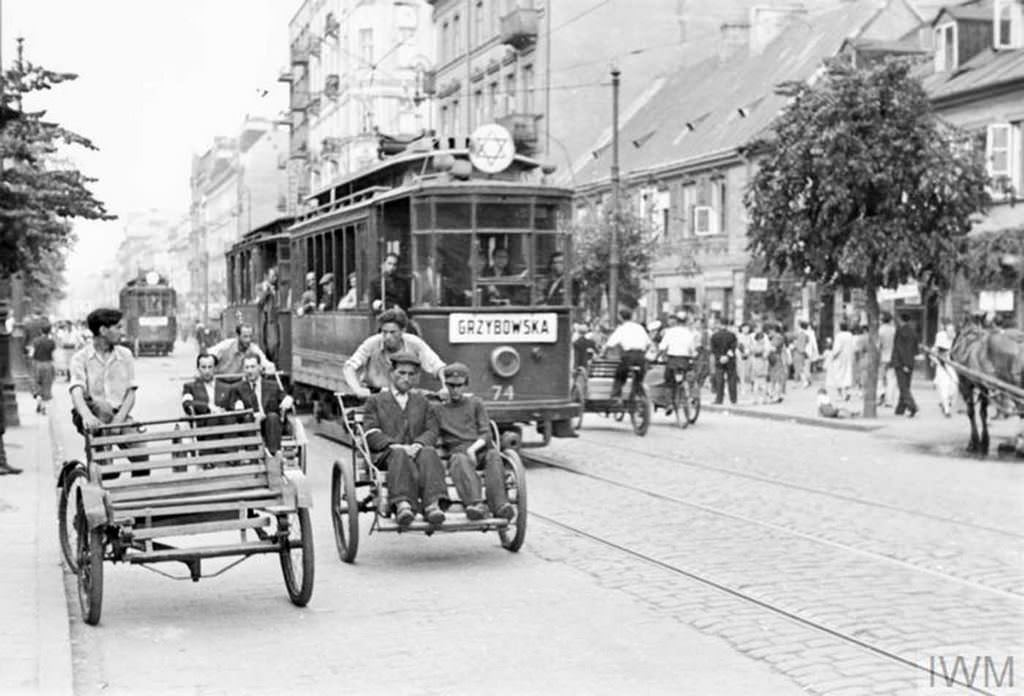
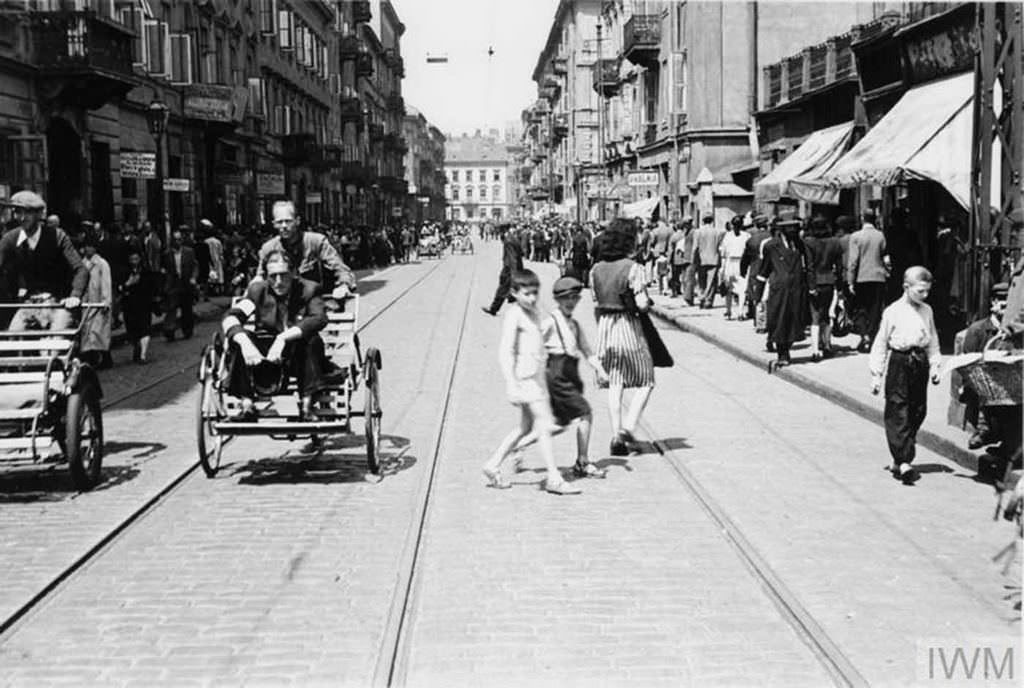
Transport inside the ghetto was limited. A tramline operated along Leszno Street between Muranowski Square and Grzybowska Street. The trams were driven by workers from the Aryan side, providing a thin connection to the outside world. Street rickshaws carried passengers along Karmelicka Street, one of the ghetto’s busiest thoroughfares, where crowds of pedestrians moved through the packed streets.


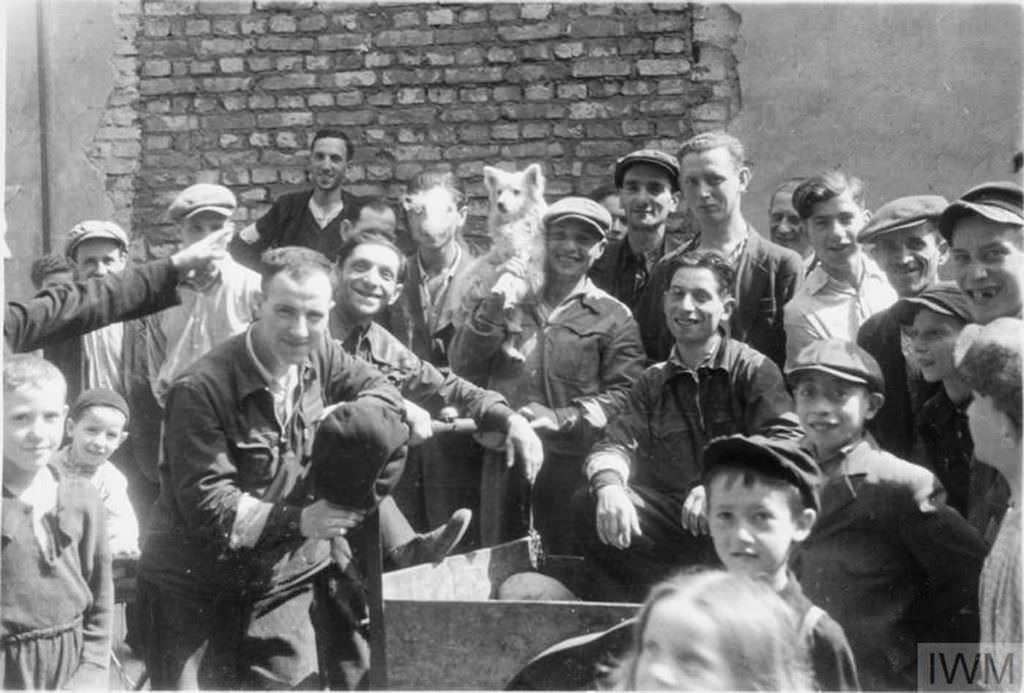
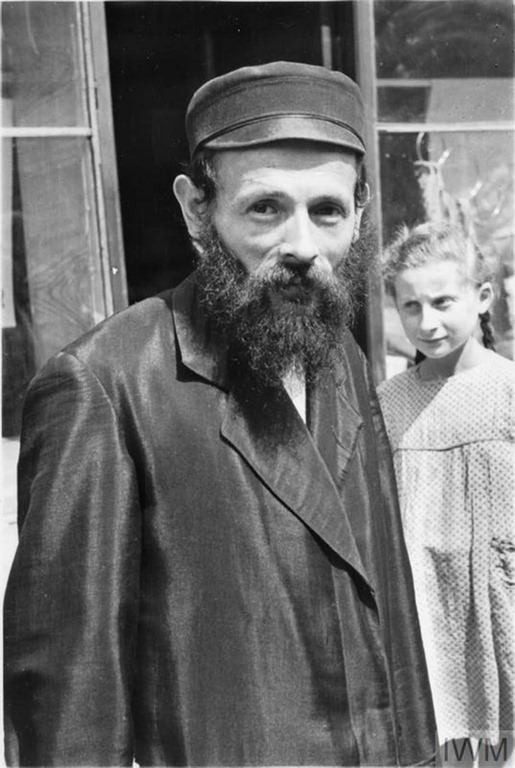
Despite the conditions, ordinary human moments still occurred. A group of men and children posed together for a photograph, one man balancing a dog on his shoulder. A young man stood in the doorway of a shop, hat removed in compliance with German orders. A single Jewish man looked directly into Georg’s camera, his expression steady.


The Warsaw Ghetto was liquidated when German forces moved in and killed its remaining population. The photographs taken by Willi Georg and Heinrich Joest in the summer of 1941 are among the most detailed visual records of what life looked like inside its walls — street traders, starving families, the dead on the pavement, and thousands of people trying to survive one day at a time inside a space designed to kill them.


I cried while looking at those photos, especially the starving people. I cannot imagine the suffering the Jewish people endured then.
Can you cry for the Palestinian children? Because now their grandchildren are killing them.
Jews have only one nation and people like you can’t bear this.
There are a lot of casts, religions, Ethnic groups, and several other groups with similar identities who don’t have a nation. The problem is that Israelis are building their country on the graveyards and corpses of Palestinian children. You have entirely erased a nation from its existence. I know jews were tortured, killed, punished and raped during WWII, but that doesn’t give you the right repeat the same on other people. And whenever someone argues with narcissist-minded Jews, they only have one answer; because it is written in our book that the land belongs to us. This is the only justification they have. If I show you a book, and occupy your home, and throw out your stuff and family, would you allow me to do that? The Israelis are not the only jews in the world. I have seen mass protests against Israelis by Jews in New York and several other major cities, but the media don’t cover these stories.
My heart goes out to the Jewish community. I cannot understand why this has happened. There are so many starving children! I cannot imagine the hopelessness their parents must have felt.