Hey There! Before You Go. 😧
Get the best vintage content straight into your inbox!

Don't worry, we don't spam

War dogs Wearing Canine Gas Masks during WWI and WWII

The sound of a gas alarm in the trenches was enough to stop every soldier cold. During World War I, chemical weapons — chlorine, phosgene, and mustard gas — killed hundreds of thousands of soldiers across the Western Front. Armies had reached a brutal stalemate, and poison gas became one of the most feared tools either side could deploy. But soldiers were not the only ones at risk. The dogs serving alongside them faced the same deadly air.

It is estimated that one million dogs died during World War I. They served as sentries, messengers, supply carriers, and scouts. On the Western Front alone, Germany deployed around 30,000 military dogs, while the Allied powers fielded approximately 20,000. Their small size made them ideal for slipping between and over trenches to deliver messages or lay communication wire. Some pulled heavy machine guns on wheeled trolleys. Others used their sharp hearing and sense of smell to detect enemy movement long before any human soldier could.

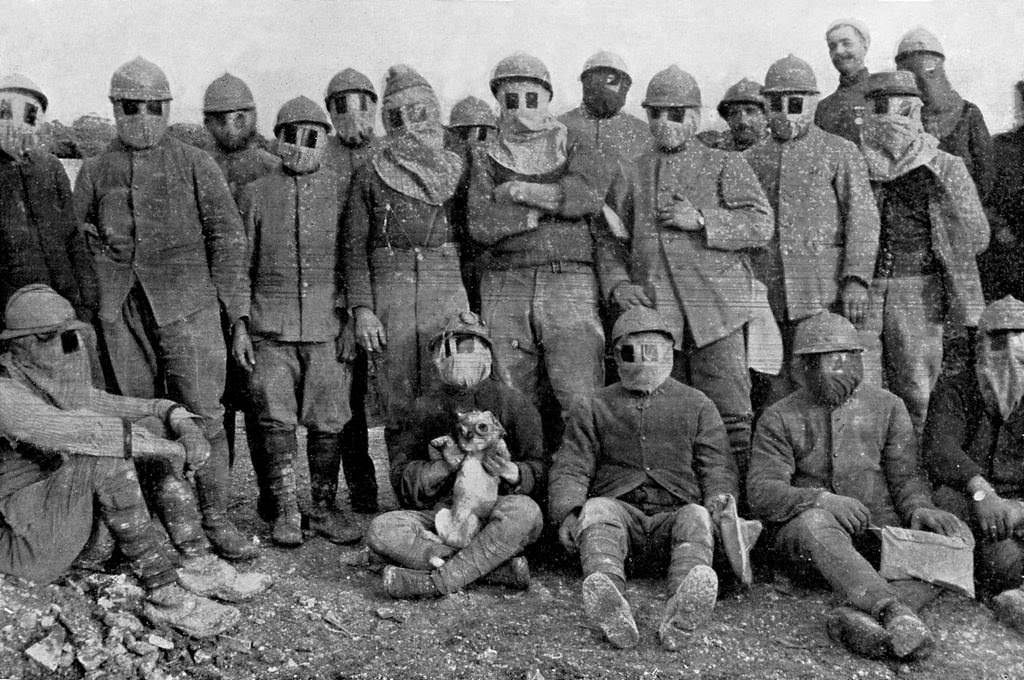
French soldiers with dog wearing gas masks during gas mask parade in trench, Western Front, World War 1, 1916.

Germany’s first large-scale use of poison gas in April 1915 forced both the British and American governments to respond fast. Within a short period, they produced protective masks for their soldiers. Recognizing how critical dogs were to their operations, military planners also developed canine gas masks. These were custom-fitted respirators designed to cover a dog’s snout while still allowing it to move and work under fire.

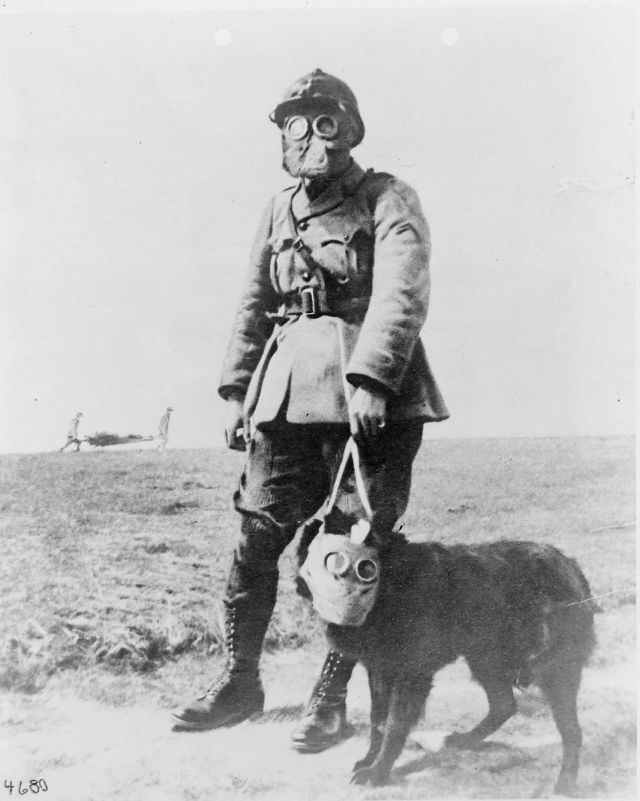
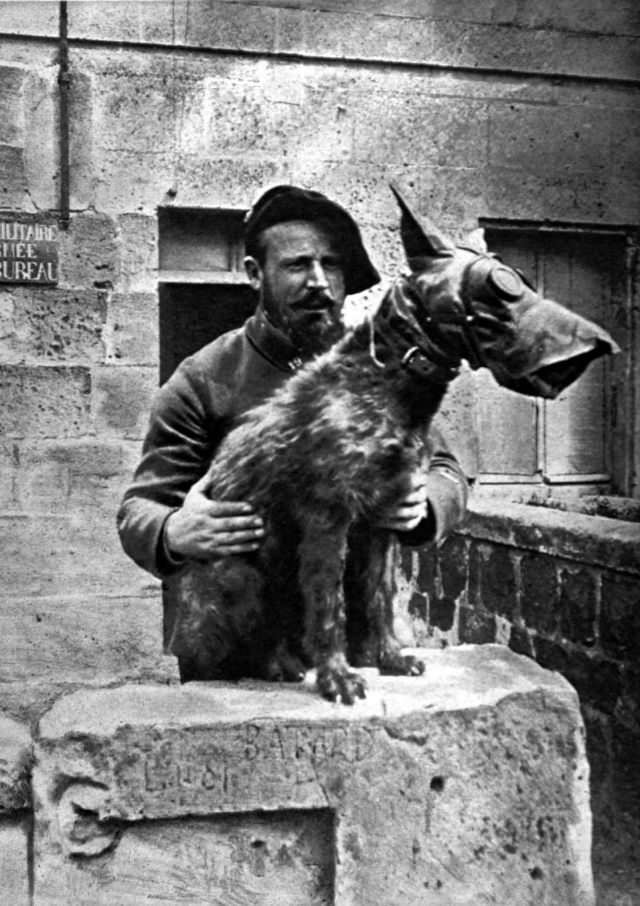
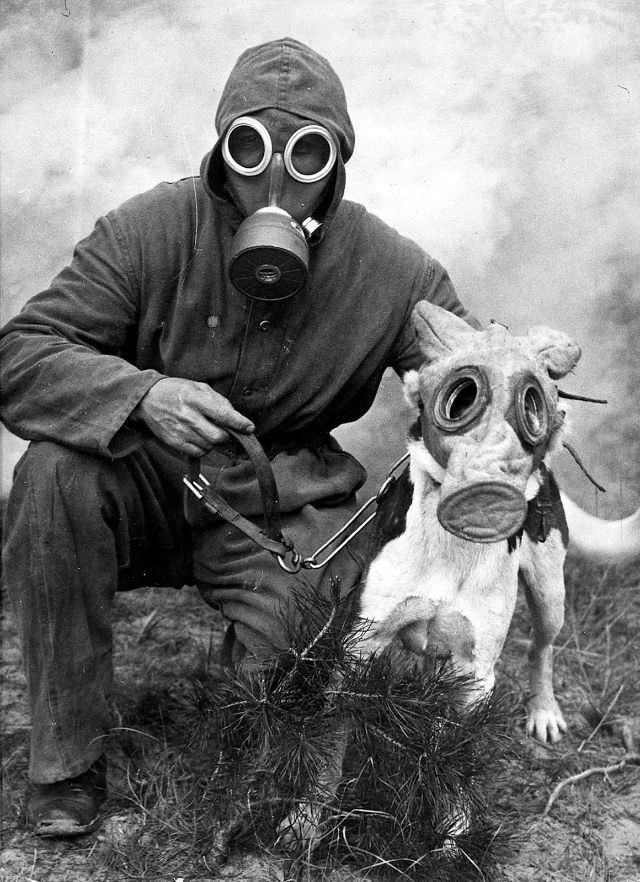
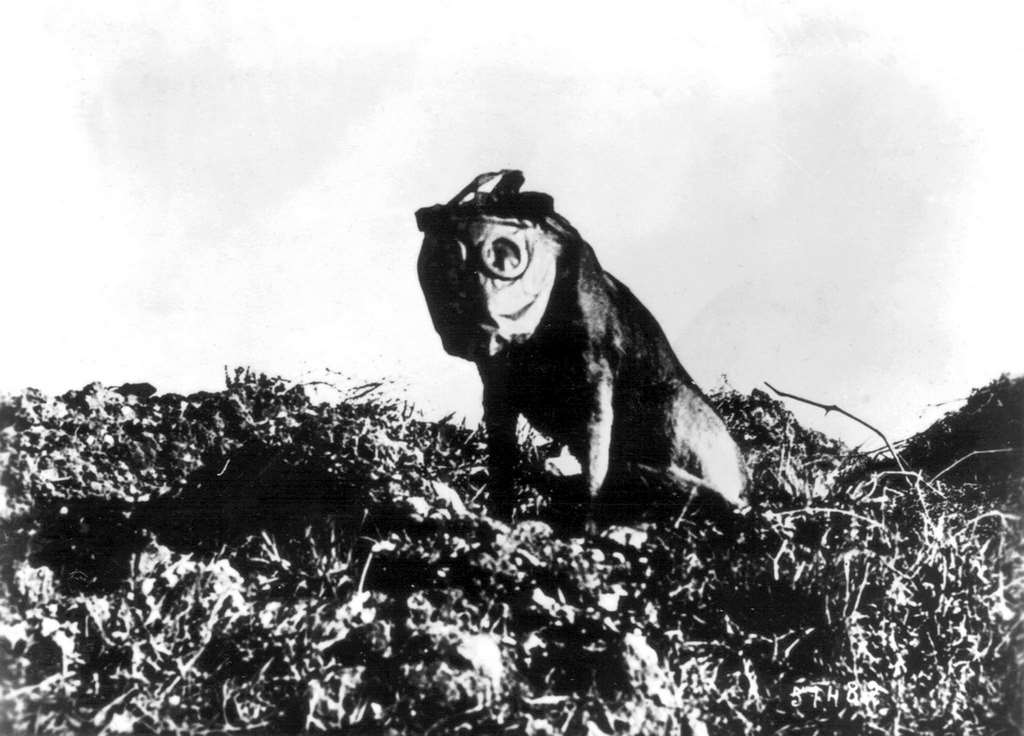
A French sergeant and dog wearing gas masks, near the front line during World War I. 1915.

French forces were among the first to equip their dogs with gas protection. By 1915, photographs showed French soldiers and their dogs side by side, both wearing masks in the field. The dog masks were not just symbolic — they were functional gear that allowed messenger and sentry dogs to operate in gas-contaminated zones where they would otherwise die within minutes.

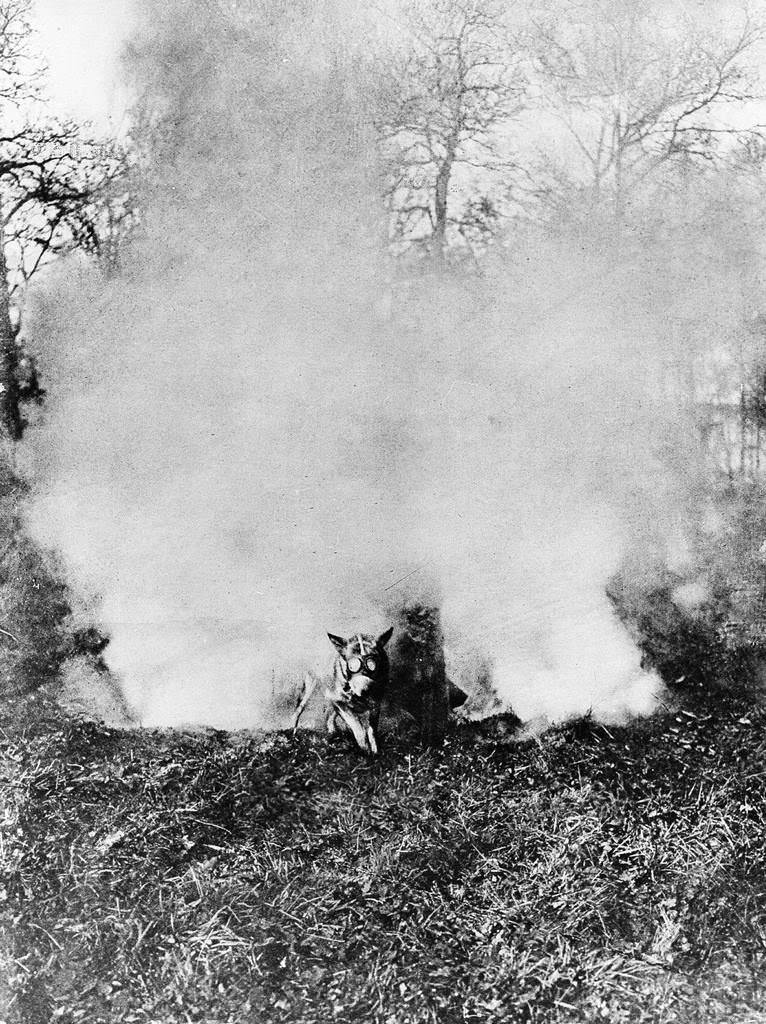
French messenger dog with gas mask that is used for warfare is making his way through a cloud of poison gasspring, 1917
A dog of the French Army. 1918.

By 1918, the design of canine masks had evolved considerably. Early versions were crude and caused dogs significant distress, making it hard for them to obey commands. Later models fitted more securely around the snout and caused less interference with movement and breathing. French Army dogs photographed in 1918 show this progression — their masks are more streamlined compared to the bulky early prototypes.

Rol, dog wearing a gas mask, 1918

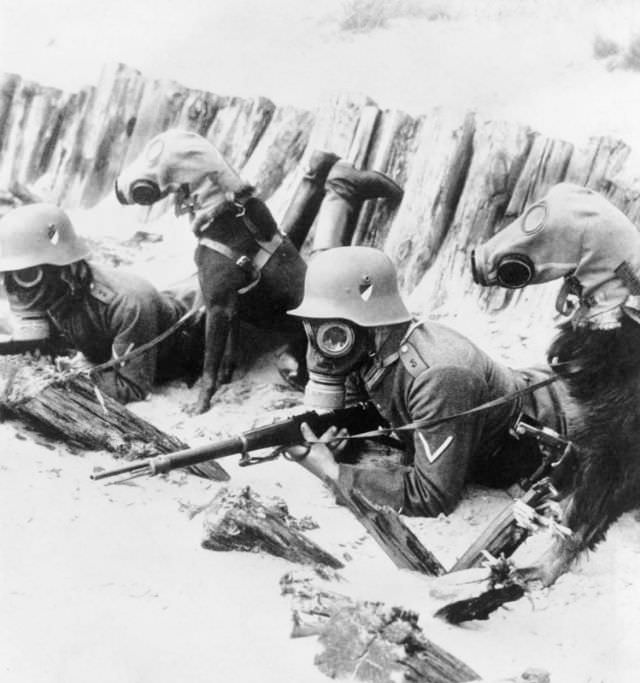
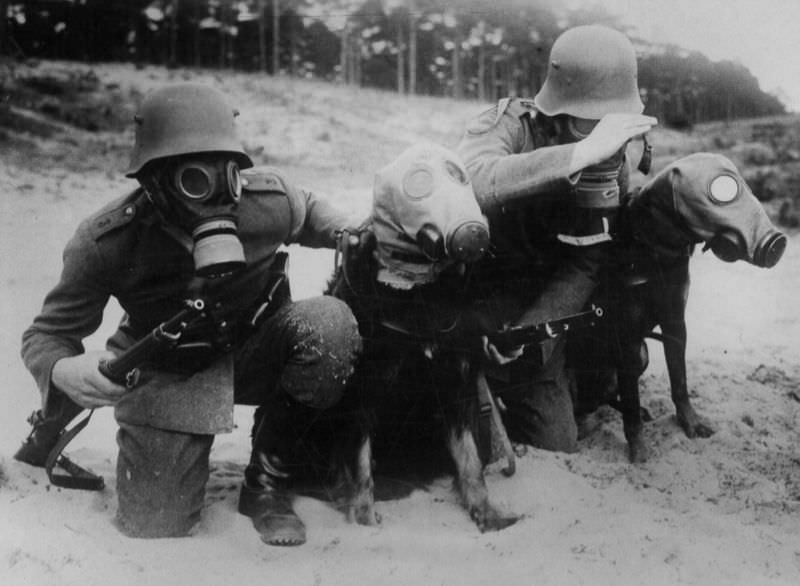
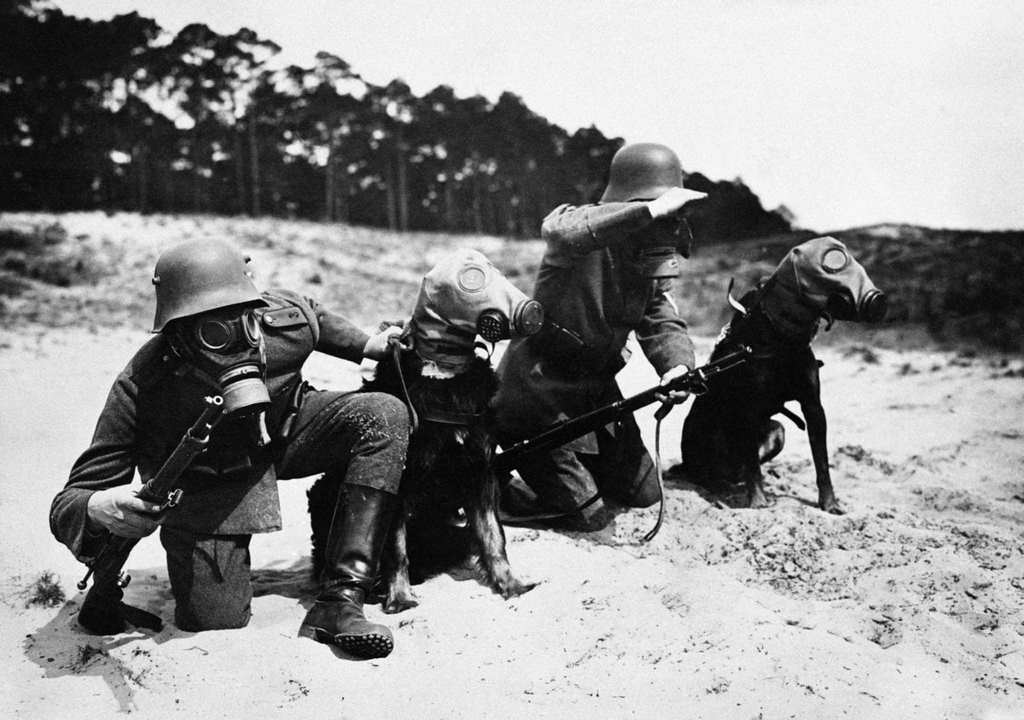
After the war ended, military forces across Europe did not abandon the idea of dog gas protection. During the 1920s and into the 1930s, German and Prussian forces continued to train dogs with gas masks as part of regular military exercises. These drills treated chemical warfare preparation as standard procedure, not a wartime emergency measure.

Member of a Prussian Reichwehr regiment during a training exercise. The 1920s.
Interwar German army in training exercises. 1920s.
Reichswehr soldiers and their dogs wearing gas masks during a military maneuver on September 10, 1932 in Germany.

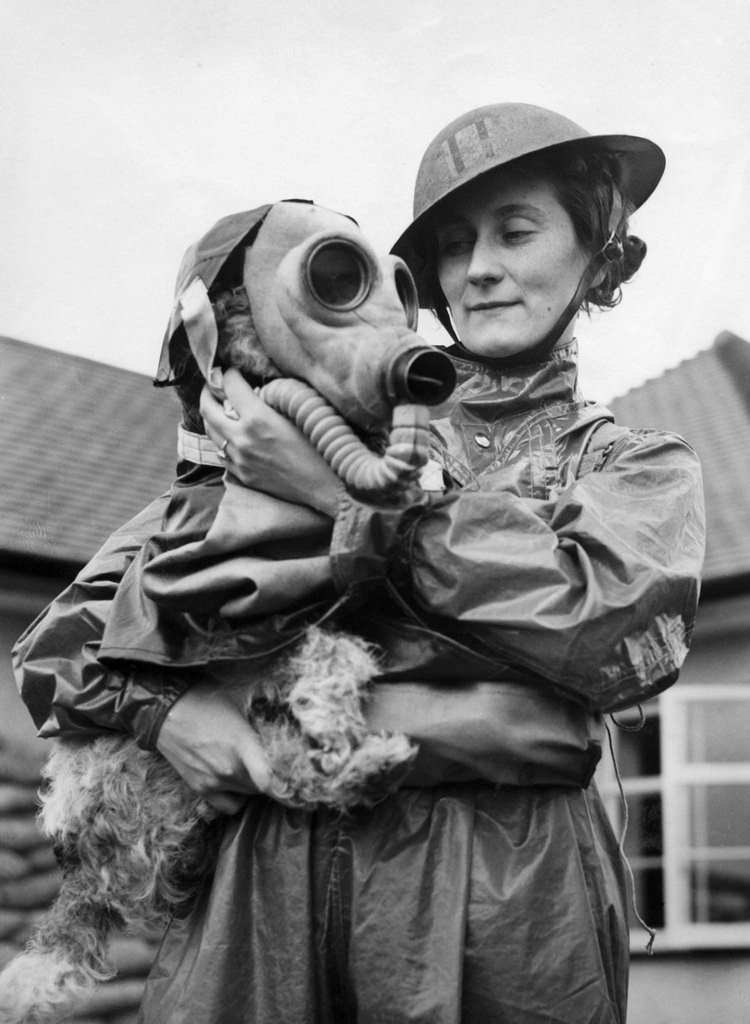
As tensions in Europe grew through the late 1930s, governments began preparing civilians as well as soldiers for potential gas attacks. In Britain, the Air Raid Precautions organization — known as the ARP — took an active role in this. ARP members trained civilians on how to use gas masks, and that preparation extended to pets. In July 1938, ARP workers were photographed fitting gas masks onto dogs belonging to civilians, a sign of just how seriously the threat of aerial gas attacks was taken.

A woman, member of Air Raid Precautions (ARP) puts a gas mask on her dog, in the UK in July 1938.

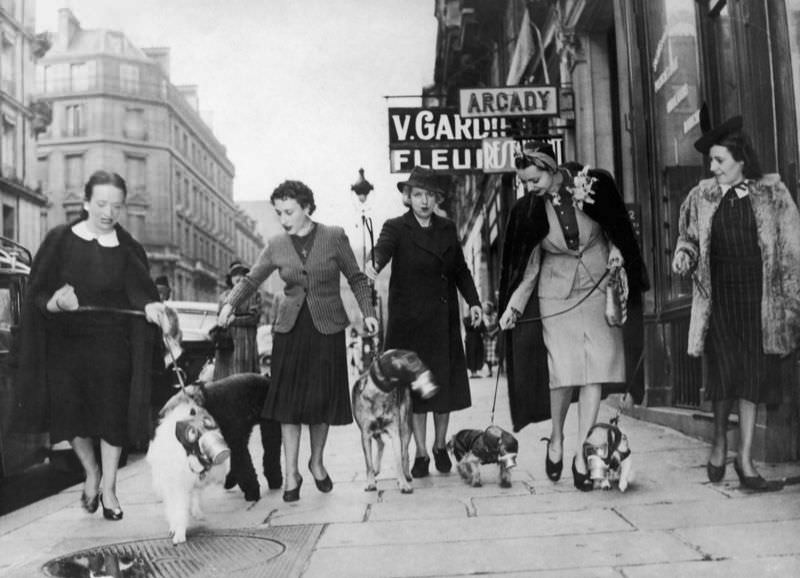
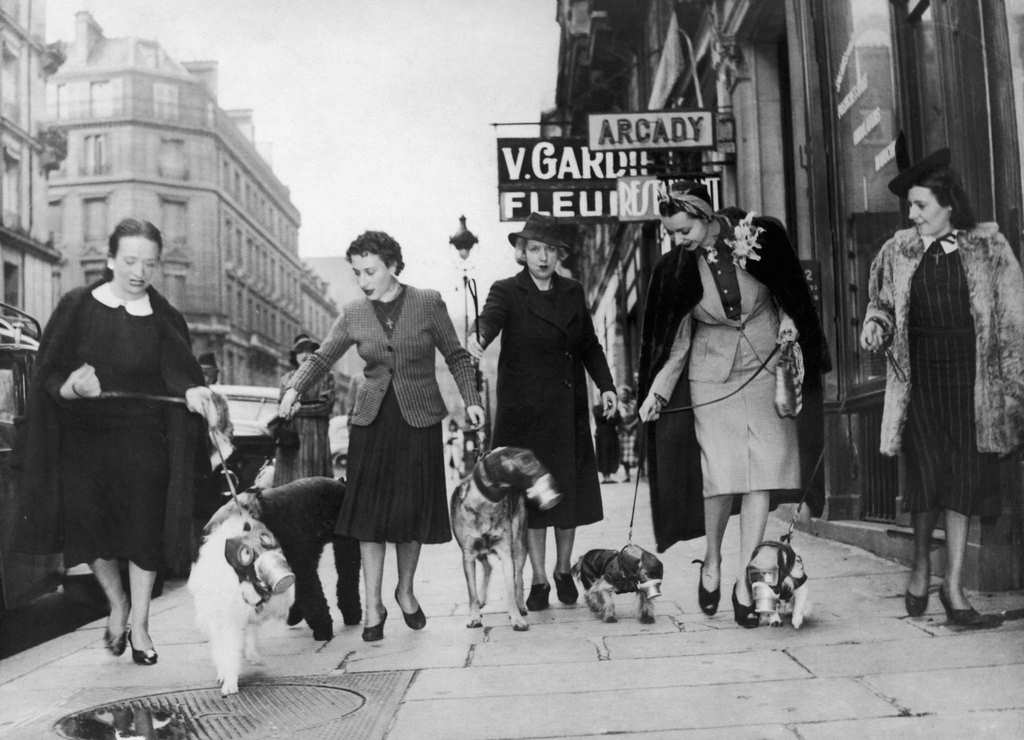
In Paris, the mood in 1939 was similarly anxious. As war with Germany loomed, Parisians took to the streets with their dogs already fitted with gas masks. These were not military animals — they were household pets whose owners feared that street-level gas attacks could come at any moment. The images of ordinary Parisians walking their masked dogs capture the civilian fear that chemical warfare would spill beyond the battlefield and into everyday city life.

Parisians walk their gas mask-equipped dogs. 1939.
Parisians Women Doing A Walk With Their Dogs Fitted With Gas Mask, Paris, 1939

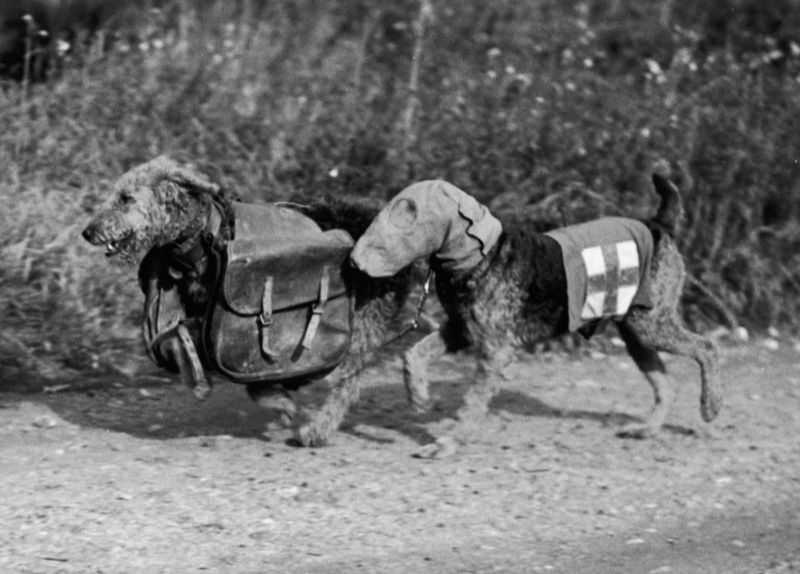
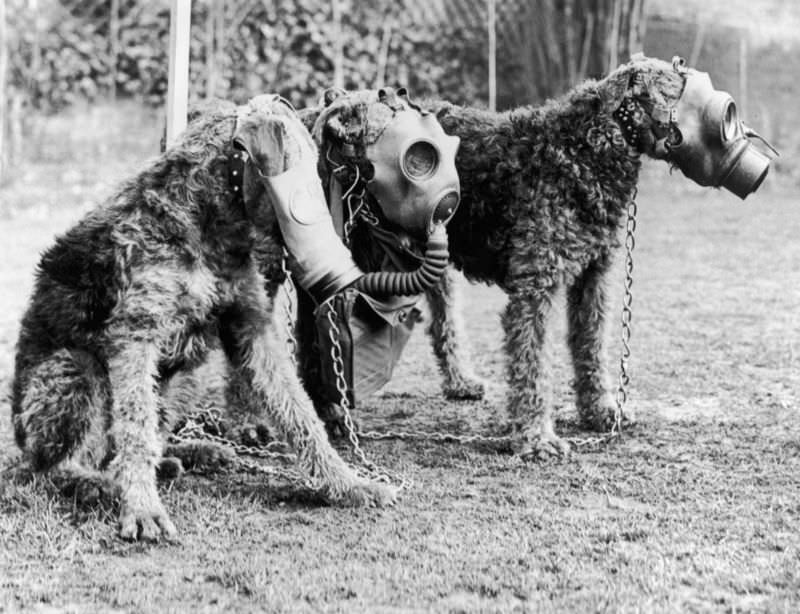
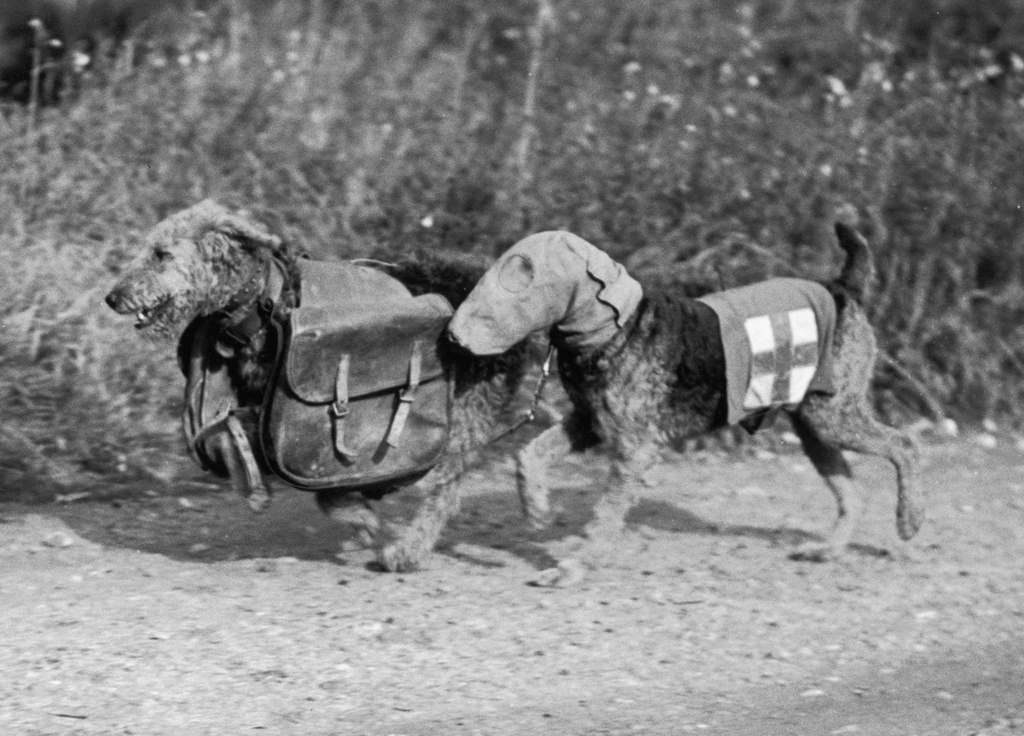
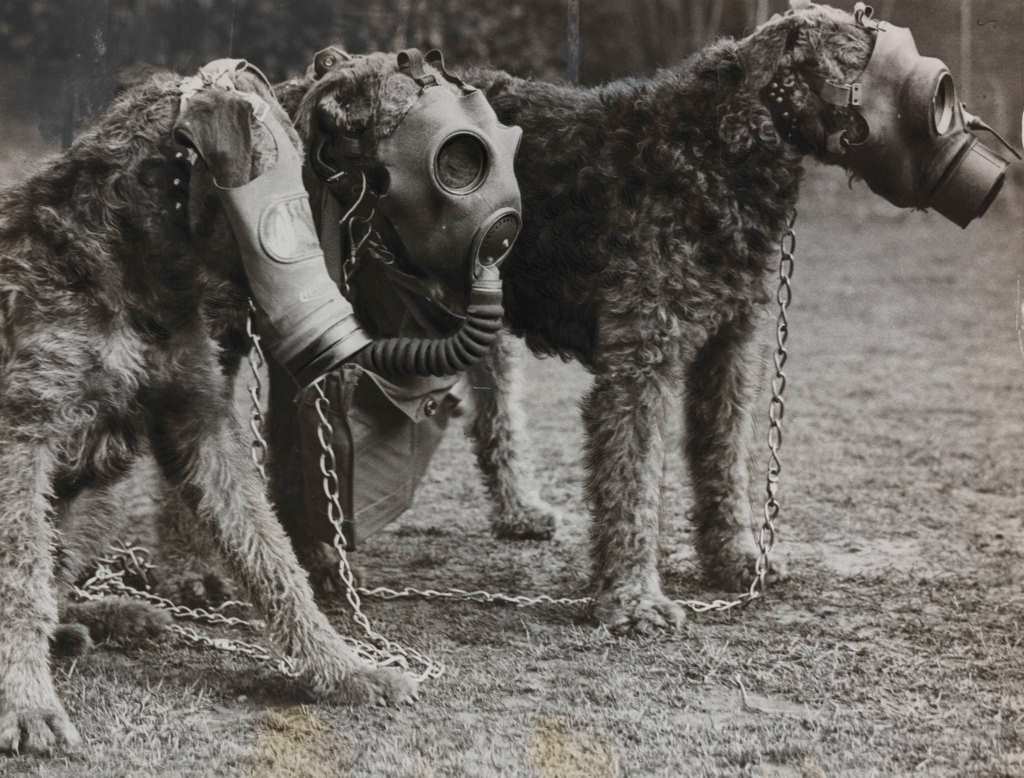
In Britain, one man became central to the formal military training of dogs for wartime service: Lieutenant Colonel E. H. Richardson. At his kennels in Surrey, Richardson trained Airedale Terriers to serve as messengers and supply carriers. By October 1939, his dogs were also being fitted with specially designed gas masks. Airedales were favored for their size, stamina, and trainability. Getting them comfortable with a gas mask was its own challenge — trainers tried multiple designs to find the one best suited to the breed.

Two Airedale terriers in training at Lt. Colonel E. H. Richardson's camp in Surrey. 1939.
Two Airedale terriers in training at Lt. Colonel E. H. Richardson’s camp in Surrey. 1939.
Airedale Terriers Wearing Gas Masks. Gas masks for both dogs and human beings were on exhibition yesterday.
Airedale dogs being trained by Lt Col E. H. Richardson to wear special gas masks at a Surrey kennel. 1939.
Two Airedale Terriers at Lt. Colonel EH Richardson's canine training camp in Woking, Surrey, during World War II, 16th October 1939. One dog wears a special gas mask and the other carries rations for a wounded soldier.
Two Airedale Terriers at Lt. Colonel EH Richardson’s canine training camp in Woking, Surrey, during World War II, 16th October 1939. One dog wears a special gas mask and the other carries rations for a wounded soldier.

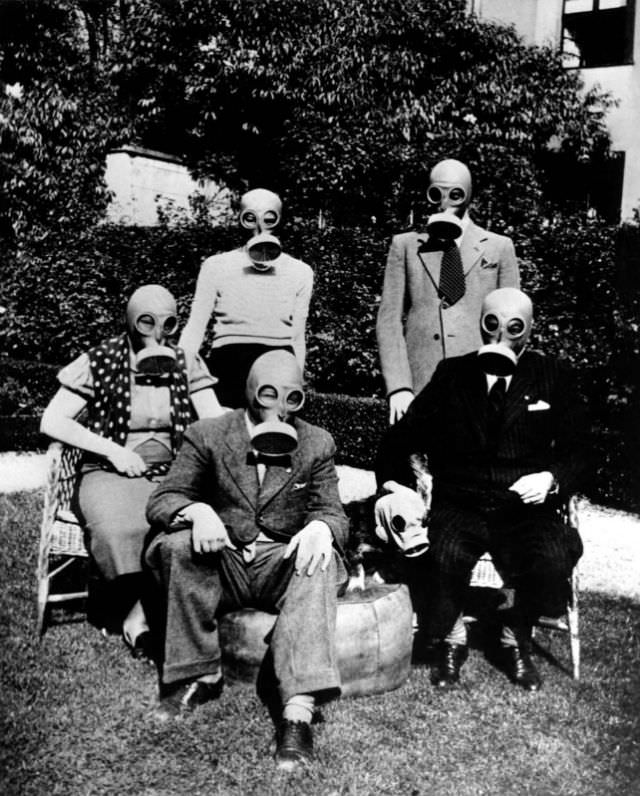
The fear of gas attacks also reached American families. In 1940, photographs from Berlin showed American civilians — including an entire family with their dog — posing with gas masks as a show of readiness. The dog’s mask mirrored the human versions in basic design, adapted for a canine face. It was a striking image of how deeply chemical warfare had reshaped not just military doctrine, but daily civilian life on both sides of the Atlantic.

An American family and their dog at the beginning of World War II show off their gas masks in preparation for a possible gas attack in 1940 in Berlin, Germany.

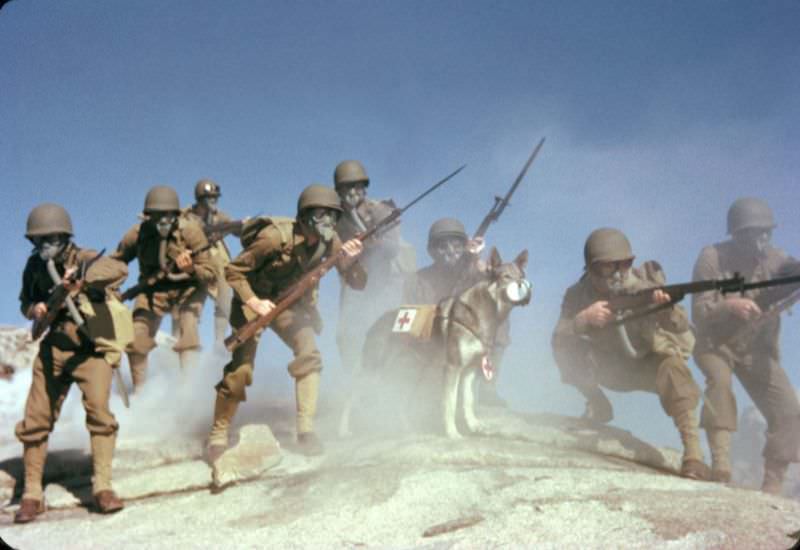
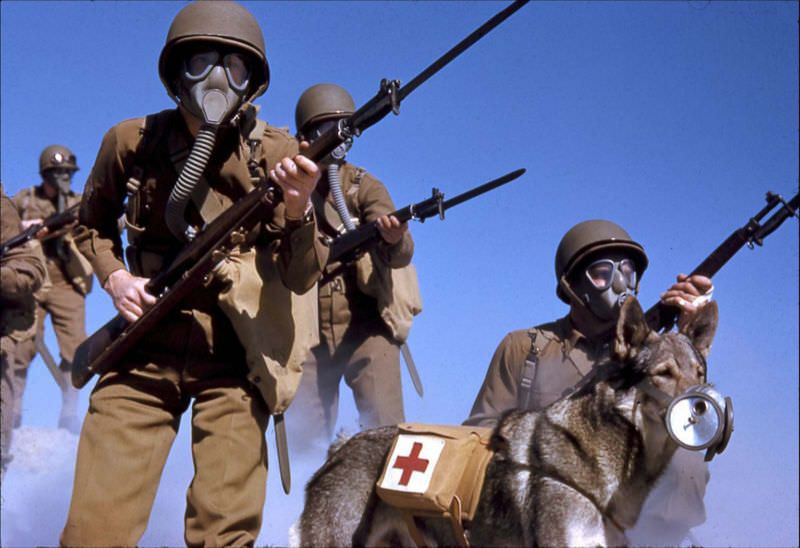
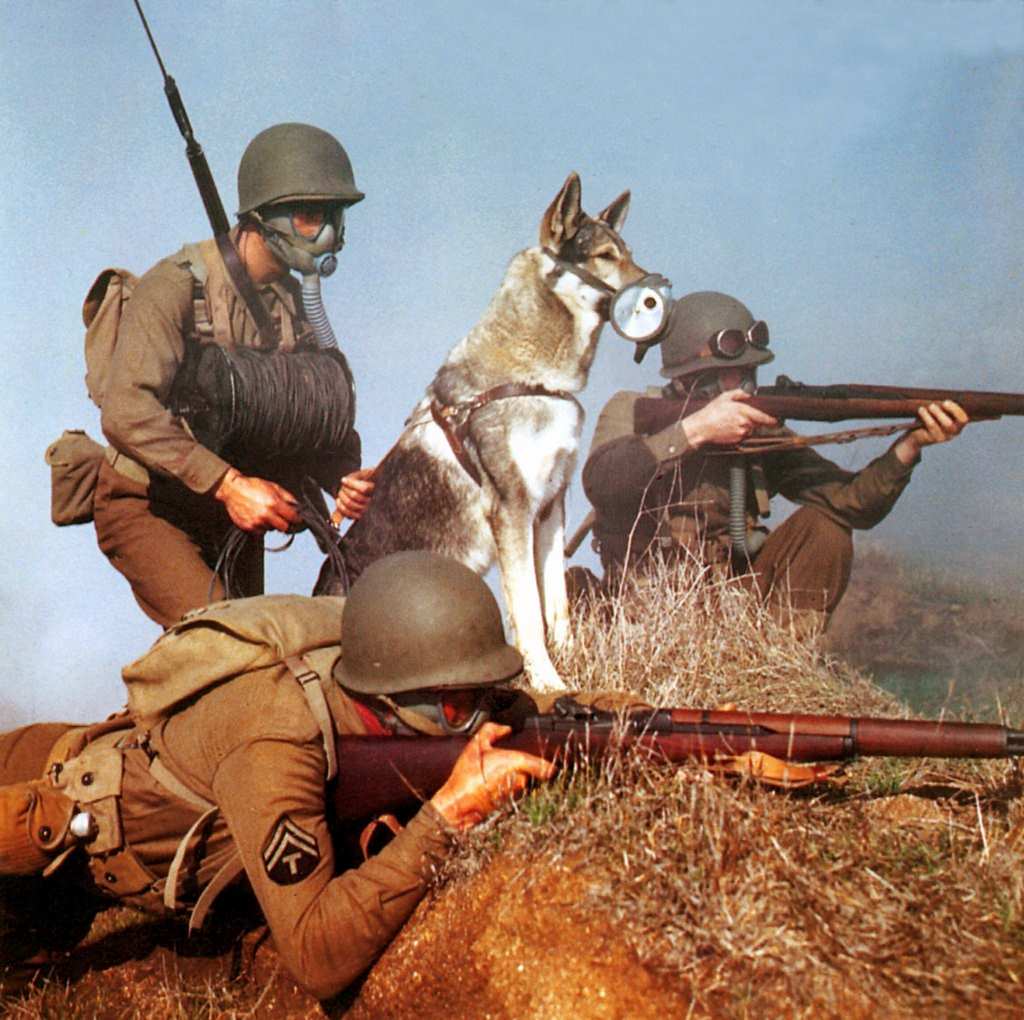
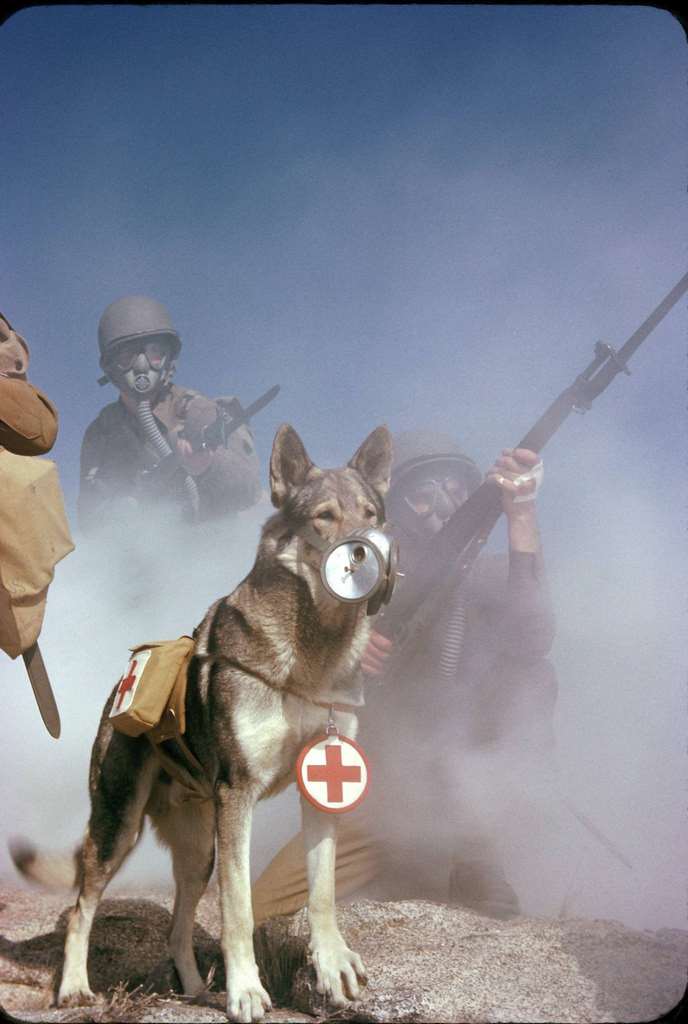
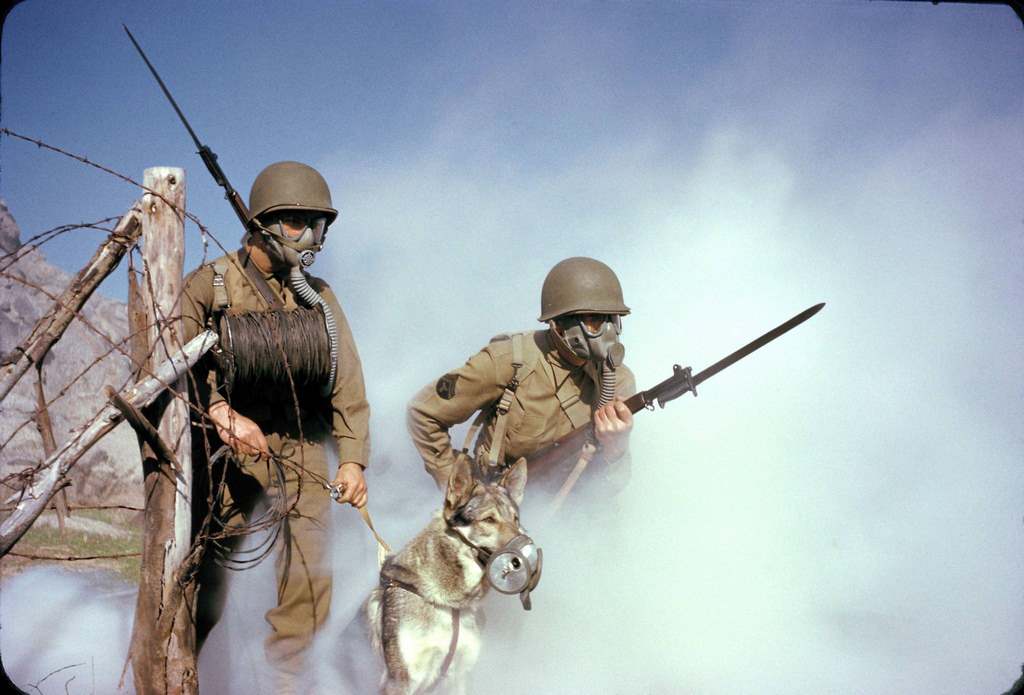
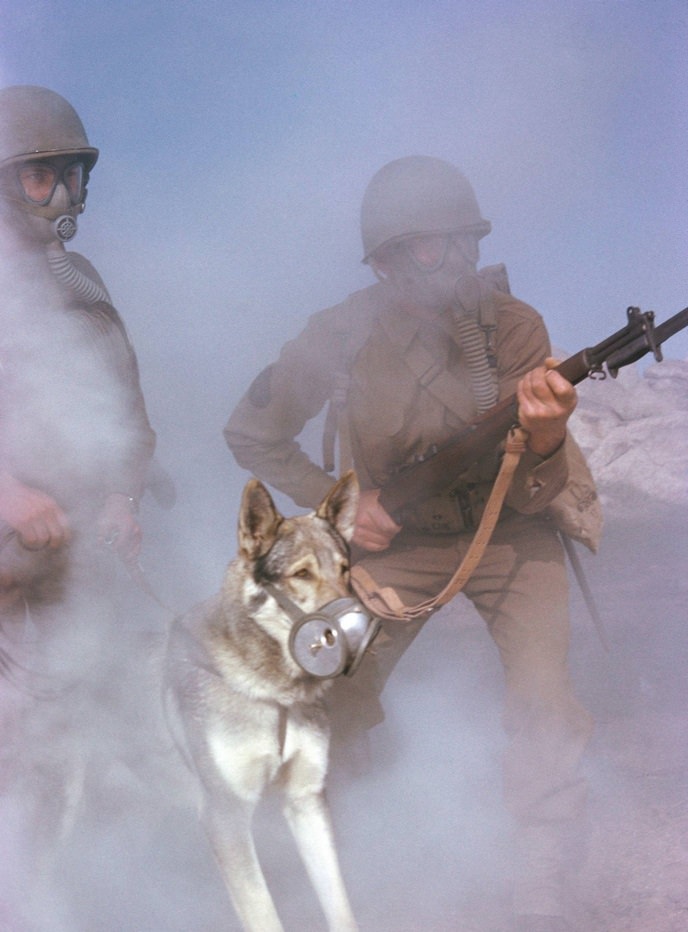
By the time the United States formally entered World War II, the U.S. Army ran dedicated chemical warfare training programs. In California in 1943, American soldiers drilled in gas mask use alongside military dogs fitted with muzzle-filter respirators. These dogs carried first aid packs and were expected to operate in contaminated environments. The drills were rigorous and treated chemical attack as a near-certain battlefield reality.

Dogs have been used in warfare since ancient times, serving as sentries, messengers, attackers and even mascots. c. 1940
U.S. Army soldiers wear gas masks during a chemical warfare training exercise in California. 1943.
A group of US Army soldiers, rifles in hand, wear gas masks during a training exercise related to chemical attacks, California, 1943.
A group of US Army soldiers with a dog with a first aid pack strapped to it wears a special muzzle filter to protect it from gas.
Gas Attack Training, 1943
World War II. 1943.
World War II. 1943.

Even famous dogs were put to work. Rin Tin Tin III — descendant of the iconic canine film star — participated in U.S. Army training exercises in 1944. An American infantryman prepared him to lay a field telephone line, demonstrating that the military saw trained dogs as serious assets, not novelties. The use of a celebrity dog in training exercises also helped boost public awareness of and support for the military dog program.

Rin Tin Tin's War
Rin Tin Tin’s War

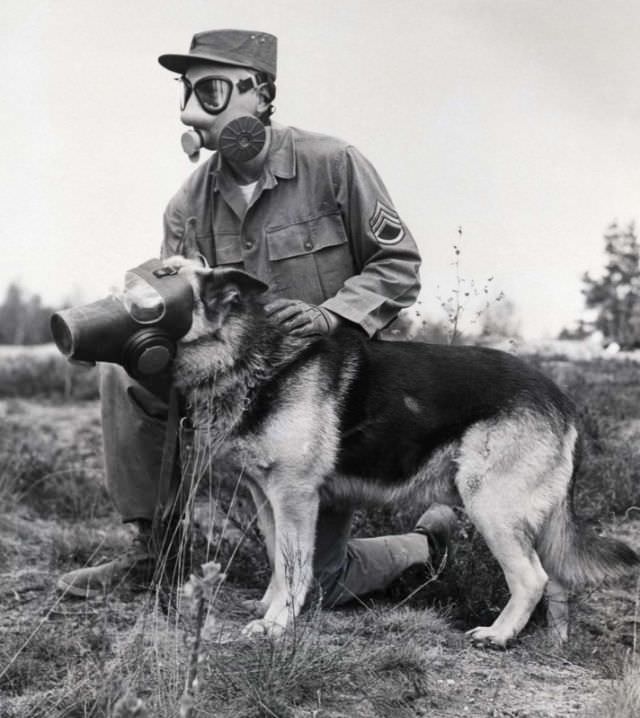
Even after World War II ended, the military partnership between soldiers and dogs — and the training that went with it — continued. A 1955 photograph shows an American soldier and his dog participating in drills in Germany, more than a decade after the war’s end. The protocols developed across two world wars had become a permanent part of military dog handling.

An American soldier and dog participate in drills in Germany. 1955.
Enjoyed this post? Get new ones in your inbox.

Leave a Comment

Your email address will not be published. Required fields are marked *

Share this Post 🥺

Please take a moment to share this content. Your support is greatly appreciated! 🙌🙏

Share this Post 🥺

Please take a moment to share this content. Your support is greatly appreciated! 🙌🙏
Scroll to Top
 
Hey Friend, Before You Go.. Please like & follow for more interesting content