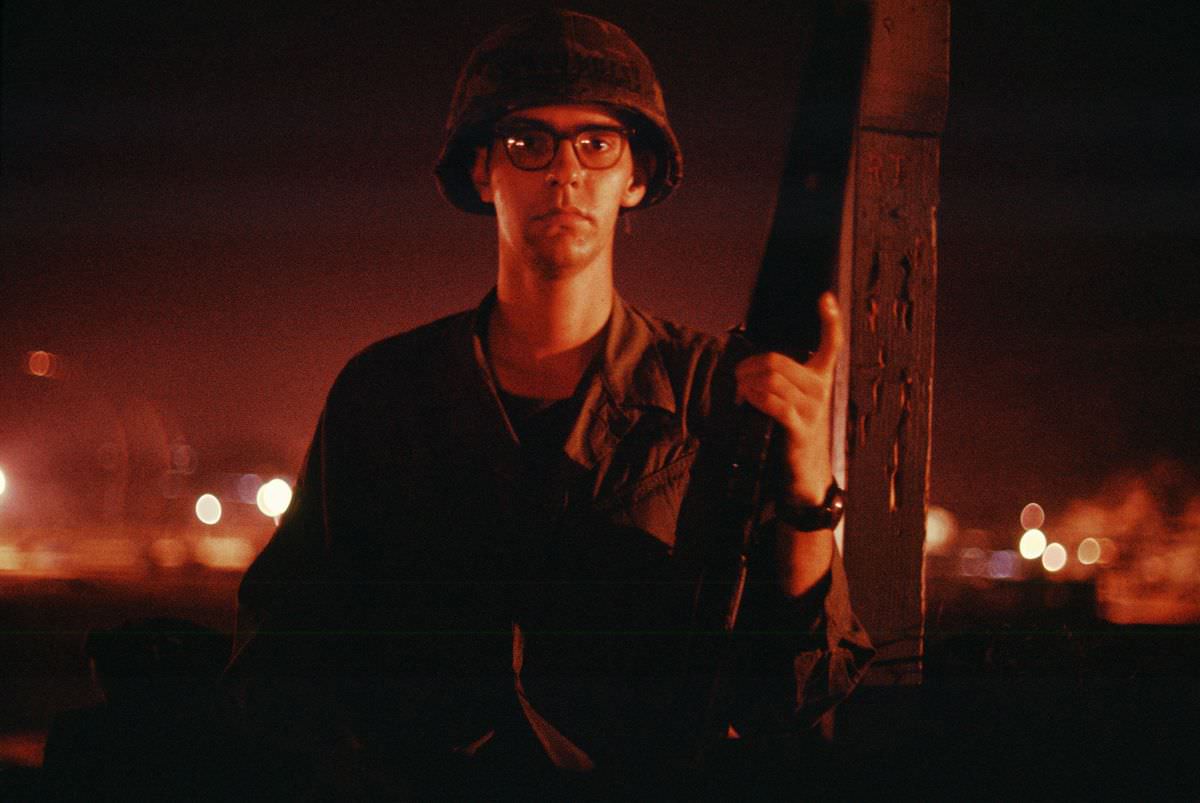
In April 1970, a 22-year-old American paratrooper named James Speed Hensinger raised his camera in the middle of the night and captured one of the most dramatic firefight sequences of the Vietnam War. Assigned to the 173rd Airborne Brigade, Hensinger was stationed at a base camp in the Phu Tai area, near the coastal city of Da Nang.
For several consecutive nights, a Viet Cong sniper positioned on a nearby mountain had been firing bursts from an AK-47 down into the camp. The sniper’s angle of fire was steep enough that bullets punched straight through the sheet metal roofs of the soldiers’ living quarters — known as hooches. The threat was persistent and personal.
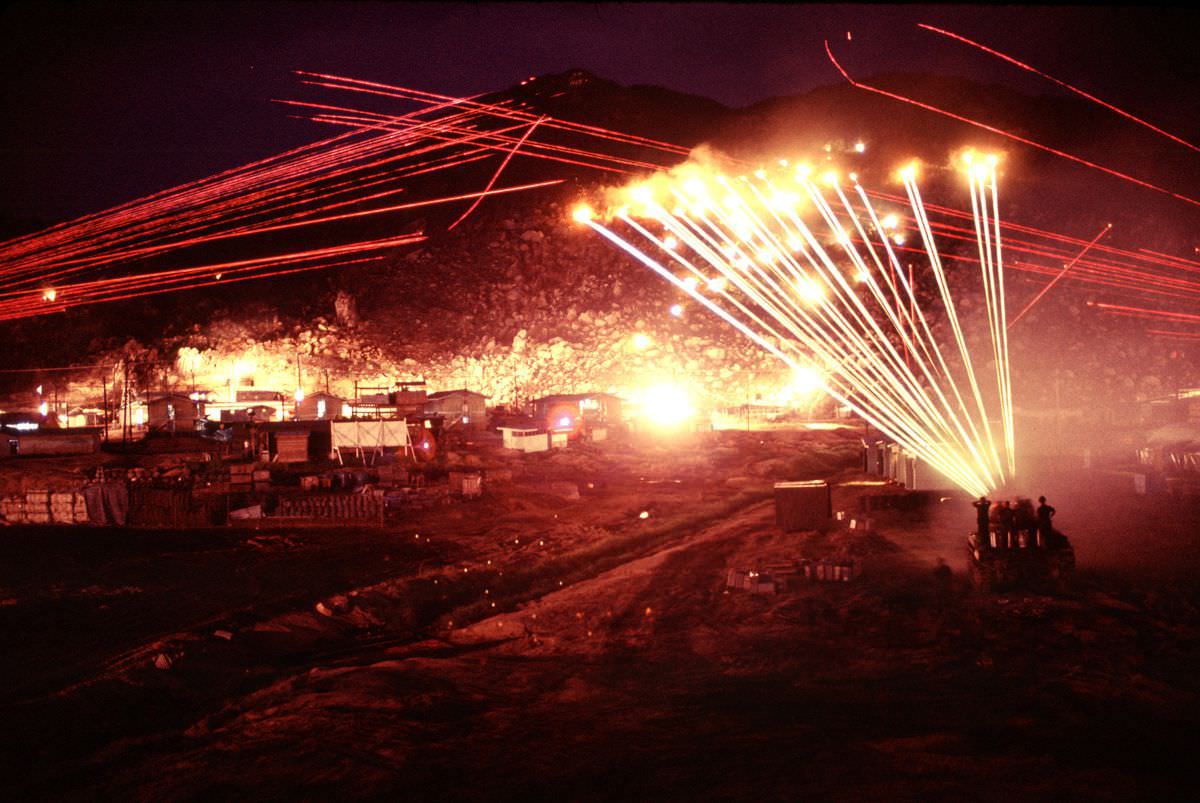
The soldiers agreed on a plan: the next time the sniper opened fire, they would answer with overwhelming force. When the attack came, they delivered on that promise. Among the first weapons to respond was an M42 anti-aircraft tank, which unleashed its 40mm autocannons toward the sniper’s position on the mountainside.
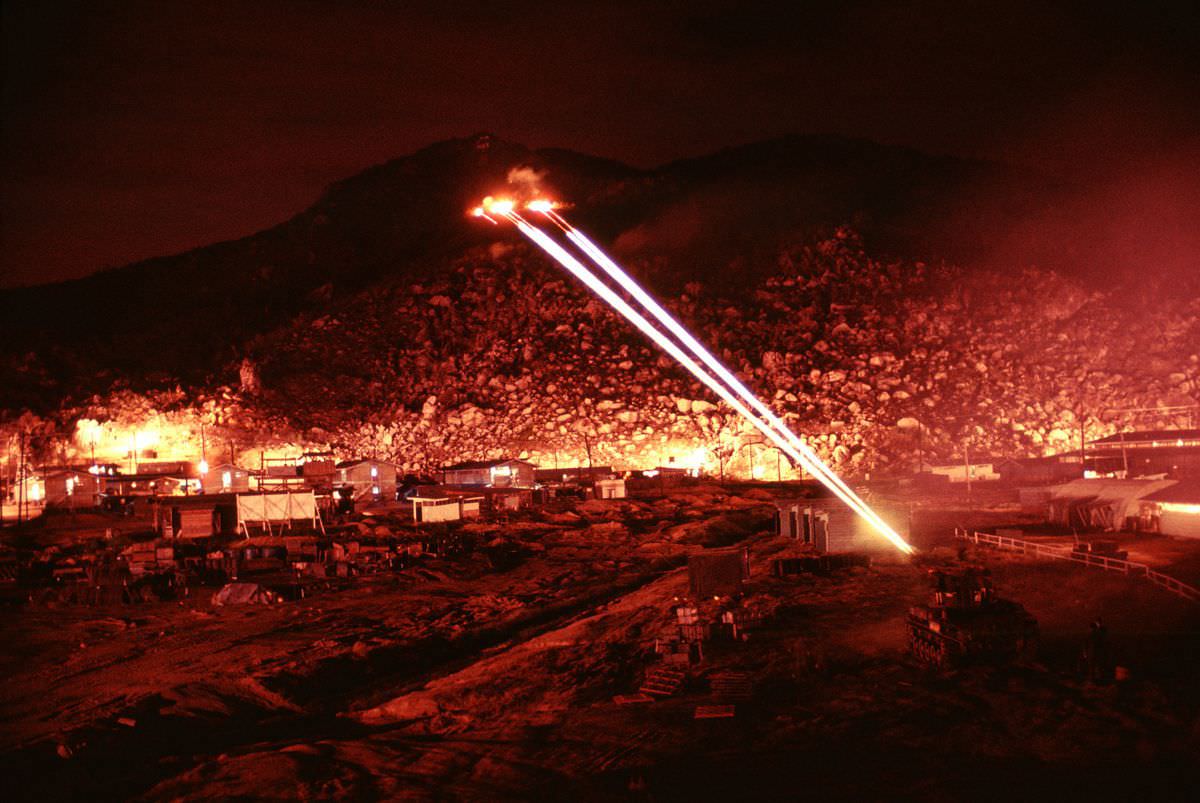
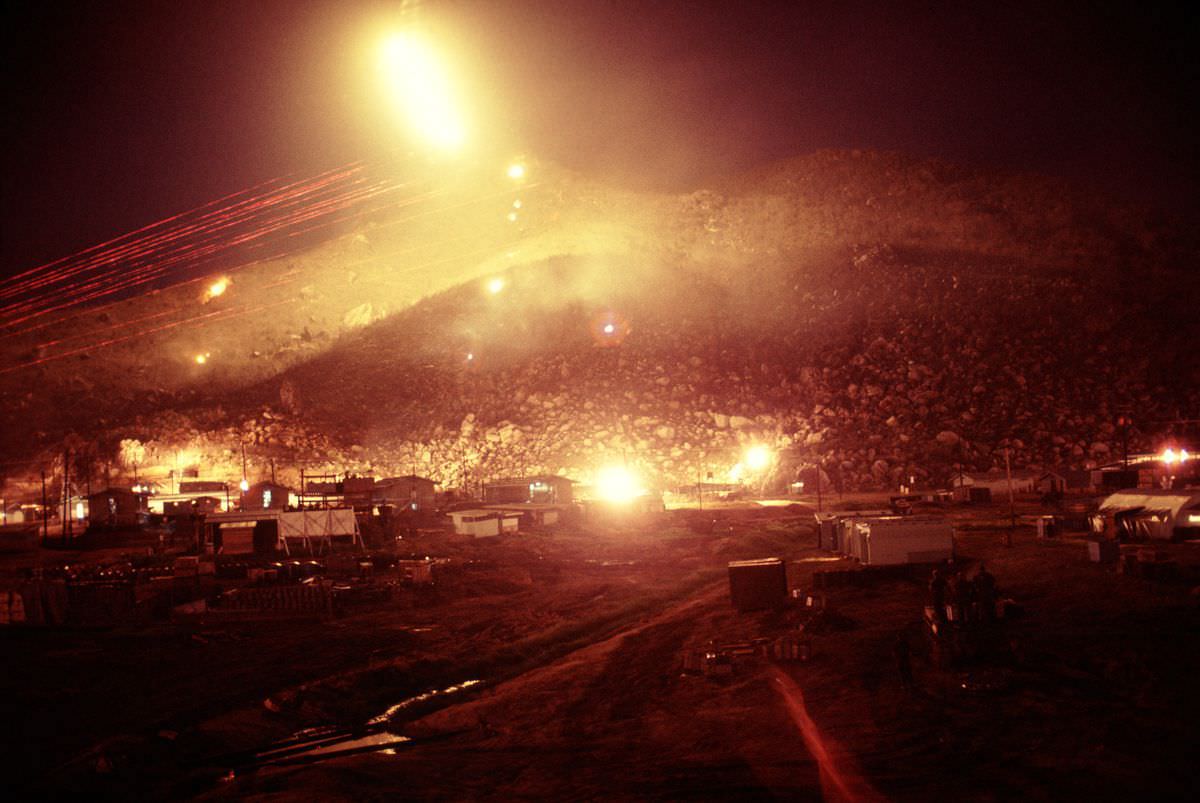
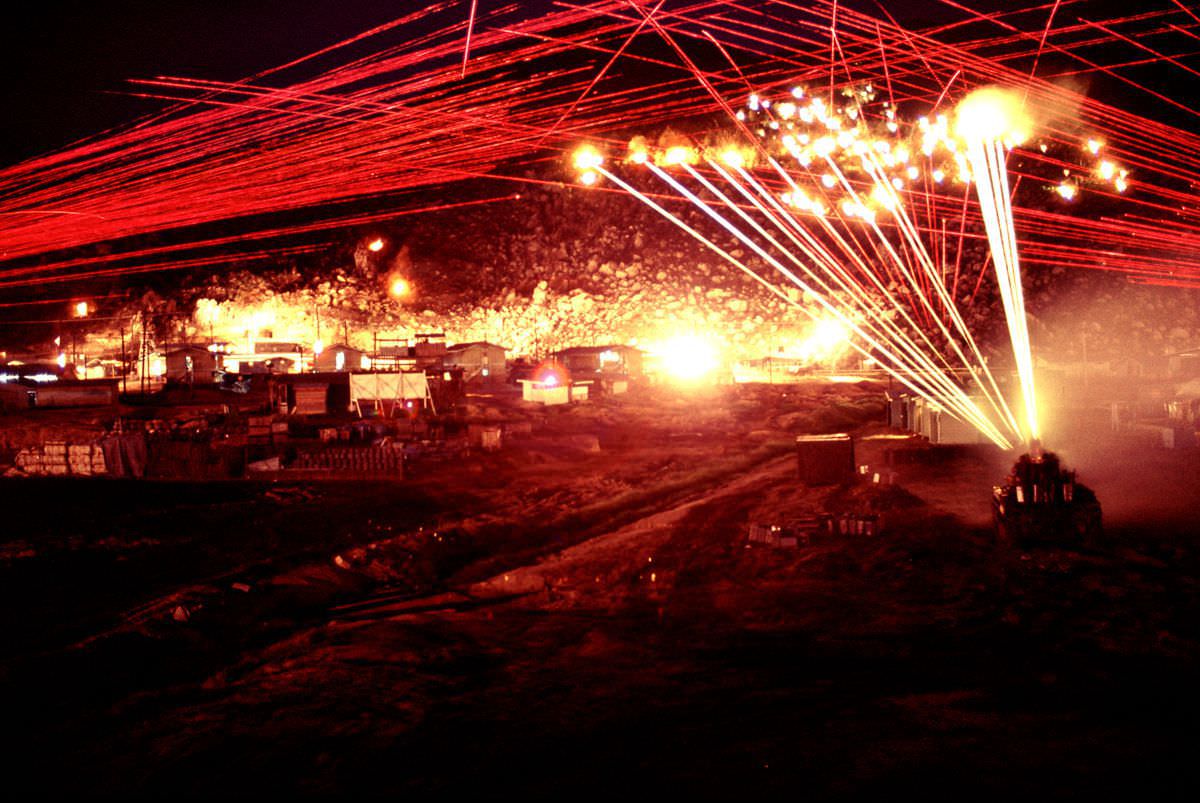
Hand-launched flares shot into the sky, bathing the hillside in harsh light. M60 machine guns joined the barrage, sending streams of red tracer rounds arcing upward toward the mountain. The tracers made the direction and volume of fire unmistakably clear — this was no token response.
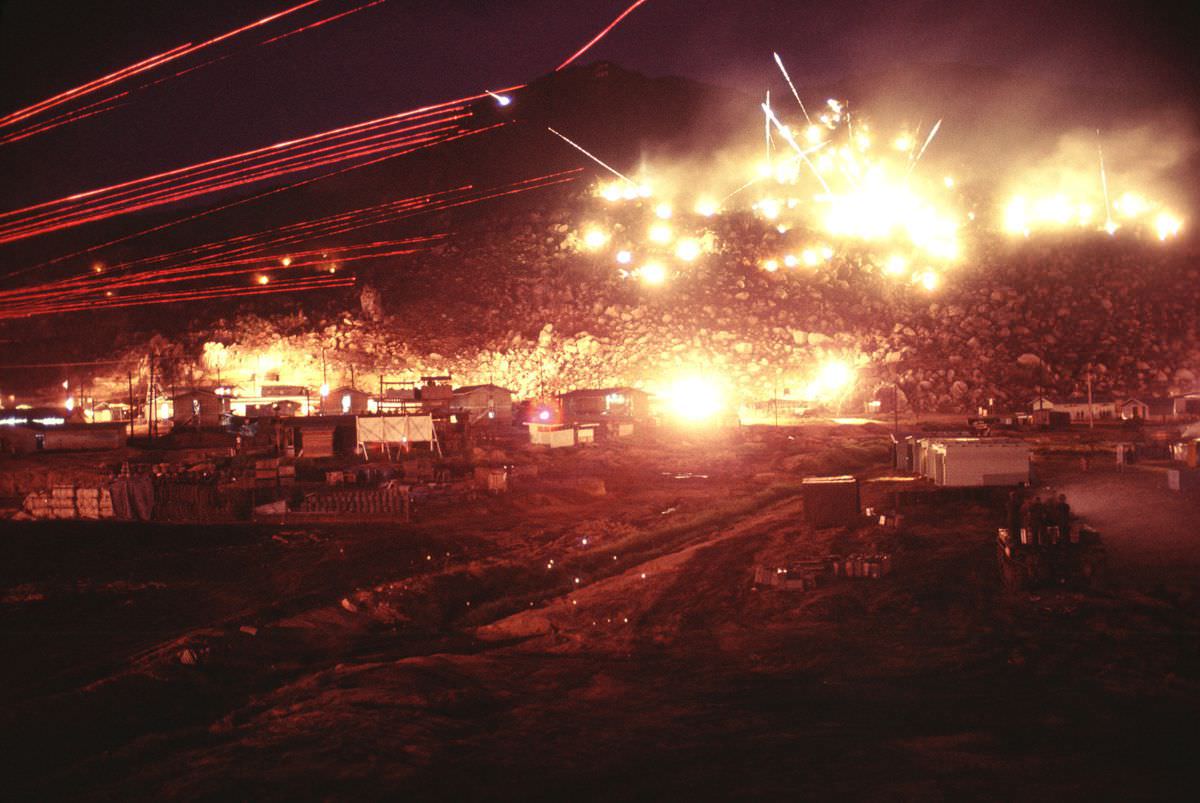
The flares burned on as the M60s kept hammering the hillside in sustained bursts. Hensinger’s photographs, taken from inside the camp, show bright lines of fire tearing across a black landscape. The images are lit almost entirely by the weapons themselves — muzzle flashes, tracer streaks, and the cold glow of the flares overhead.
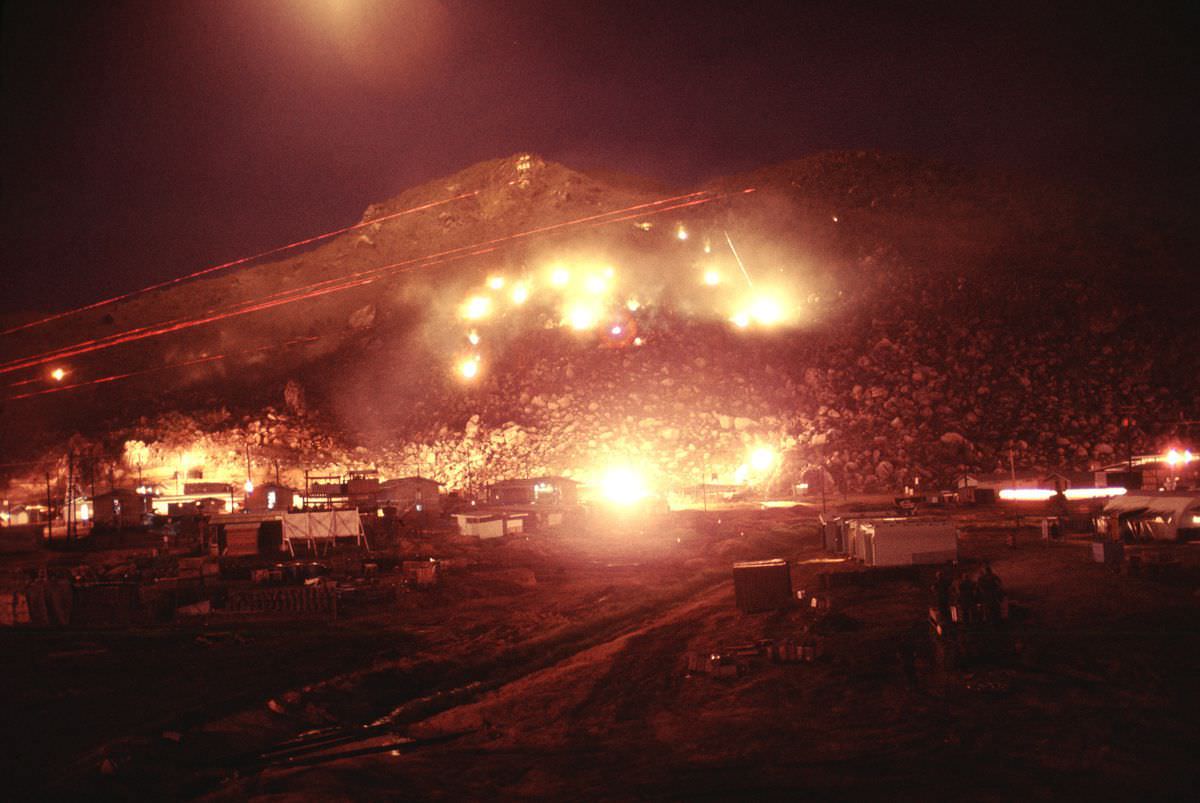
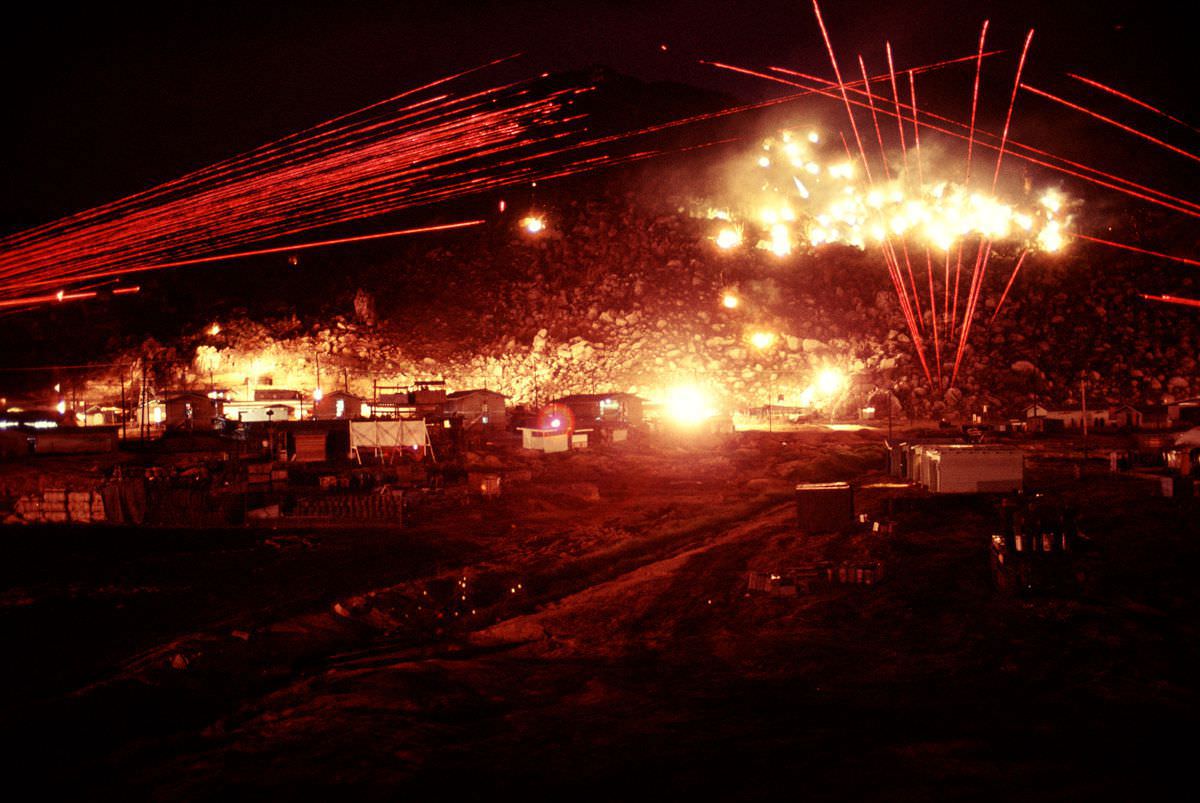
The M42 switched to its .50-caliber heavy machine gun, spraying high-explosive rounds across the slope. Each weapon system added a different signature of light and destruction to the night sky.
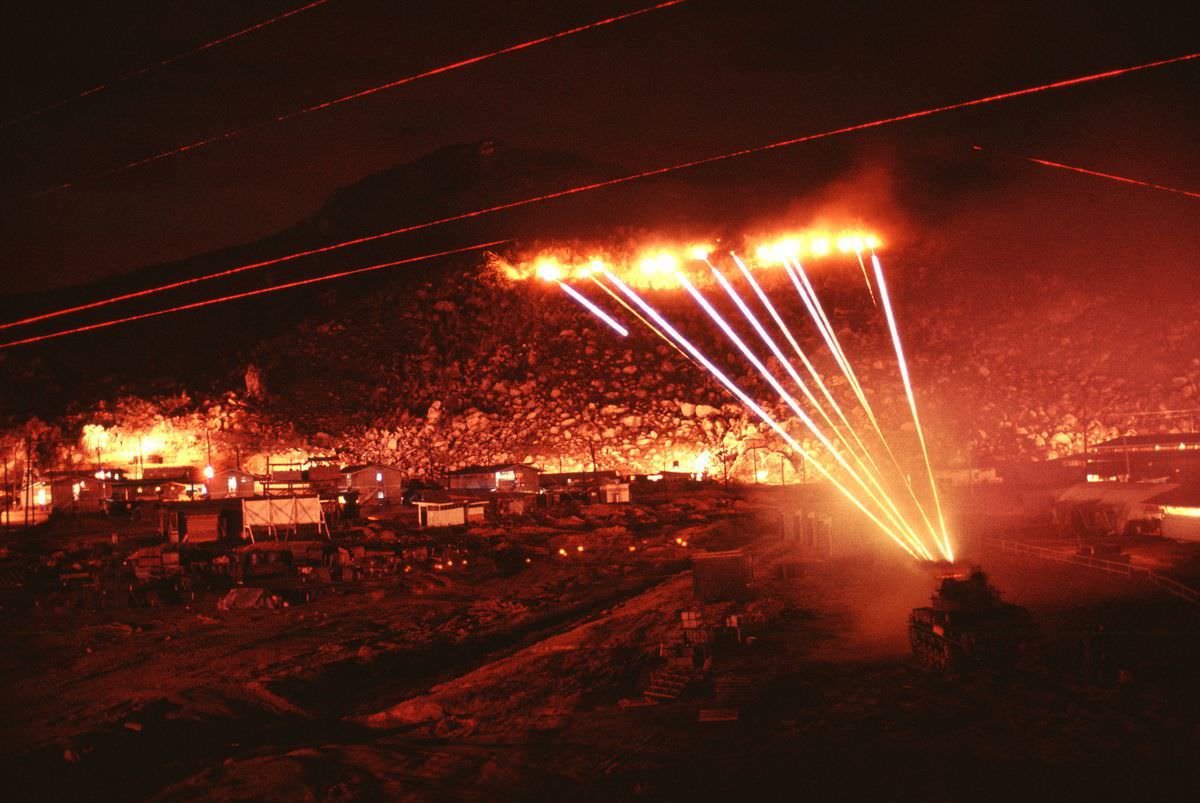
At full intensity, the M60s and the .50-caliber were firing simultaneously, concentrating fire on the sniper’s suspected hiding spot. The volume of fire directed at a single target was immense.
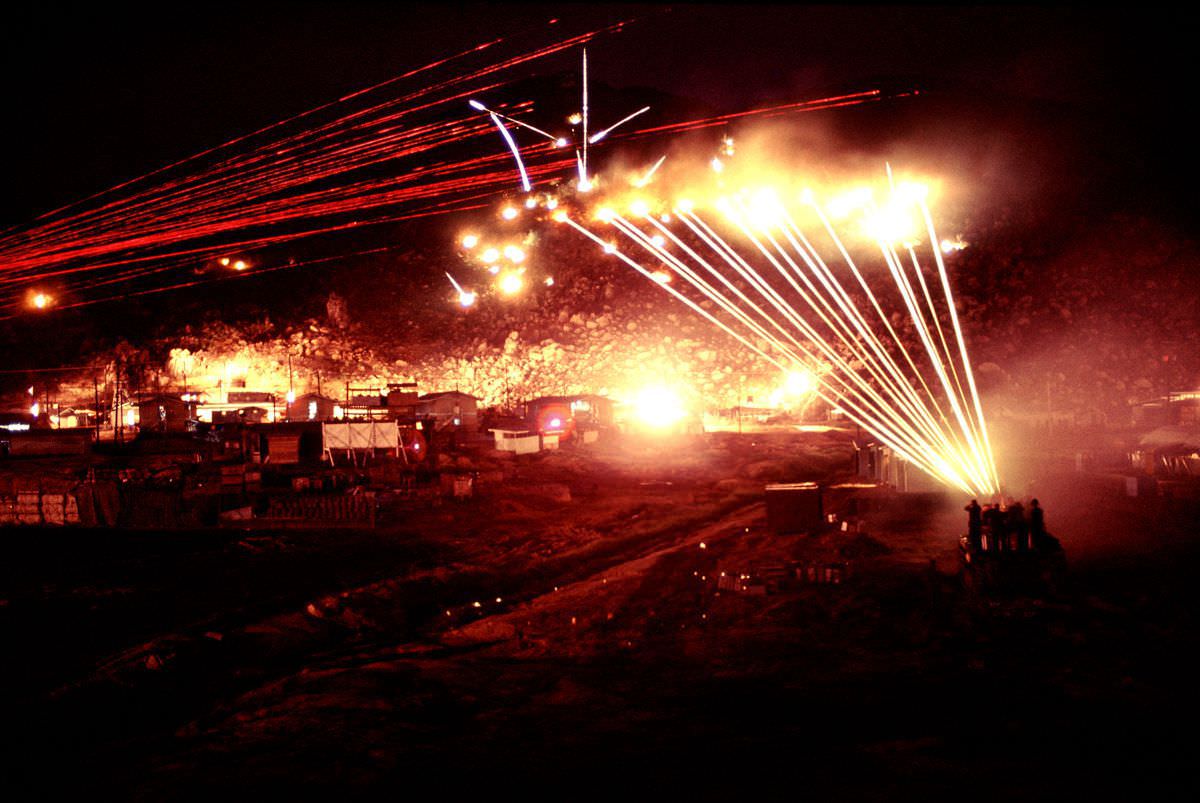
The M42’s 40mm autocannons roared back to life in a final combined burst alongside the M60s and the .50-caliber. Every available weapon in the camp was pointed at that mountain.
The morning after the firefight, daytime patrols went out to sweep the area. They found a blood trail on the mountainside, evidence that the sniper had been hit by the barrage. The sniper’s body was never recovered. Hensinger held onto these photographs for more than four decades before releasing them publicly.