Hey There! Before You Go. 😧
Get the best vintage content straight into your inbox!

Don't worry, we don't spam

Haunting Photos Expose the Harsh Realities of Everyday Life in Victorian England’s Overcrowded Slums

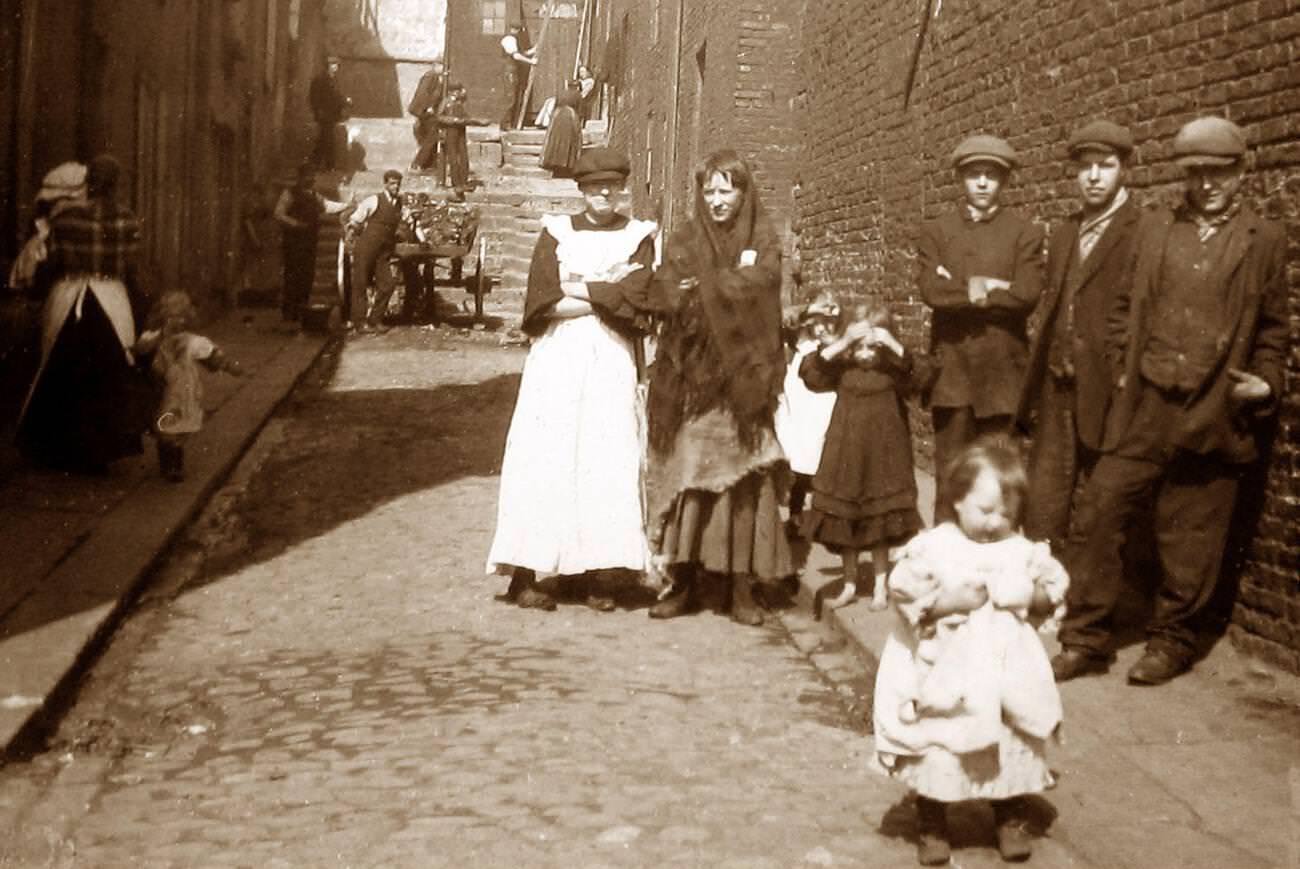
Between 1800 and 1900, London’s population exploded from roughly one million people to over six million. The Industrial Revolution pulled workers off farms and into factories, and cities like London, Manchester, and Birmingham swelled faster than they could handle. There was nowhere near enough housing. What filled the gap were slums — dense, crumbling neighborhoods where poverty was the rule, not the exception.
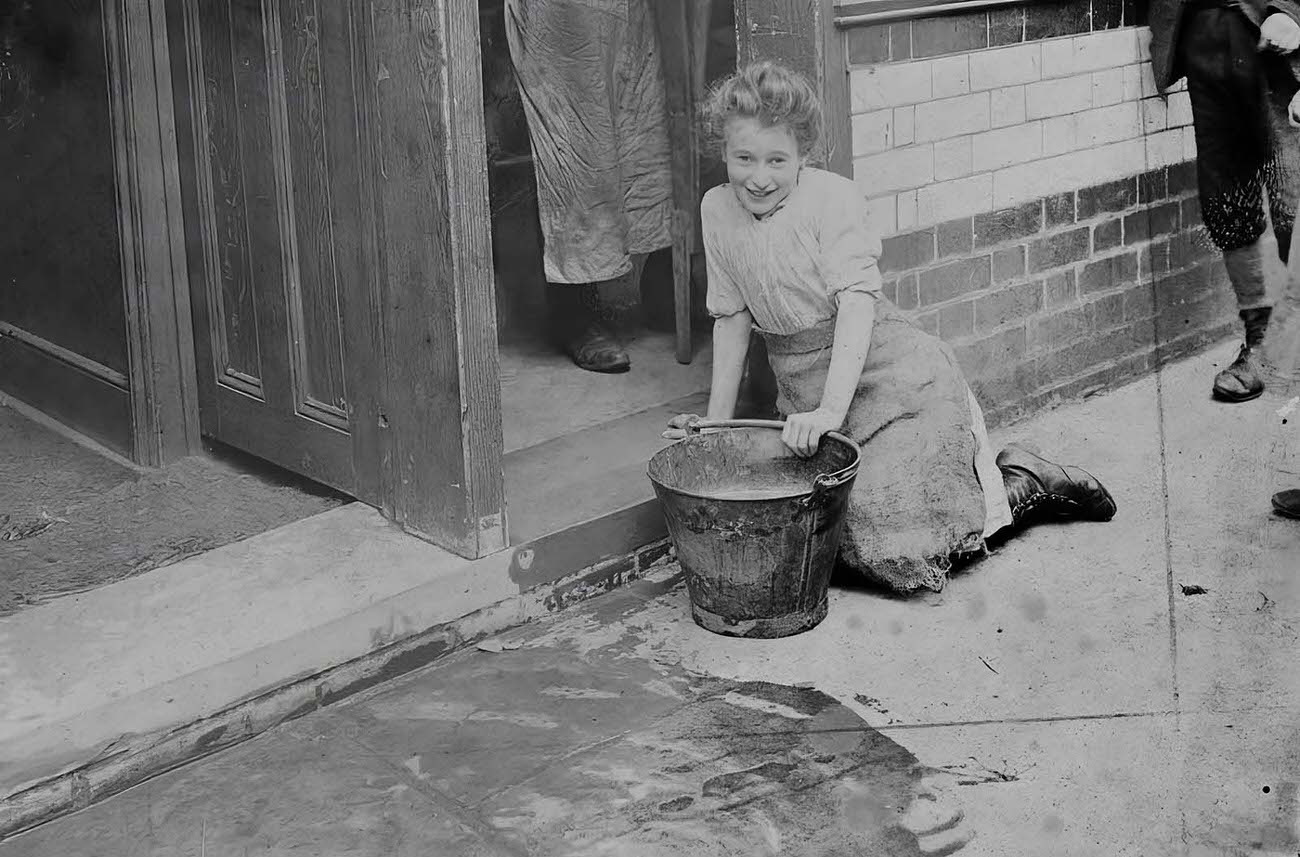
Victorian Slums Revealed: Haunting Photos of Everyday Life in Victorian England

The rooms inside slum tenements were small, dark, and badly built. Walls were damp. Roofs leaked. Floors were often bare earth. Multiple families crowded into a single room, and in some cases people slept in shifts because there simply wasn’t enough floor space for everyone to lie down at once. Ventilation was almost nonexistent, and because the buildings were packed tightly together, a single fire could tear through an entire block within minutes.
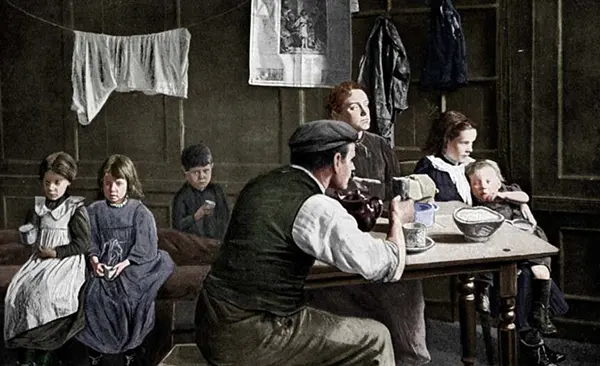
An "old room in slumland." 1901.
An “old room in slumland.” 1901.

Sanitation was catastrophic. Toilets — where they existed at all — were shared by dozens of families. Human waste collected in streets and courtyards, producing unbearable smells and contaminating the water supply. Clean drinking water was a luxury most slum residents couldn’t access. Cholera, typhoid, and tuberculosis spread rapidly through the cramped conditions. Infant mortality was devastating. Many children died before their fifth birthday, and those who survived often suffered from malnutrition and stunted growth.
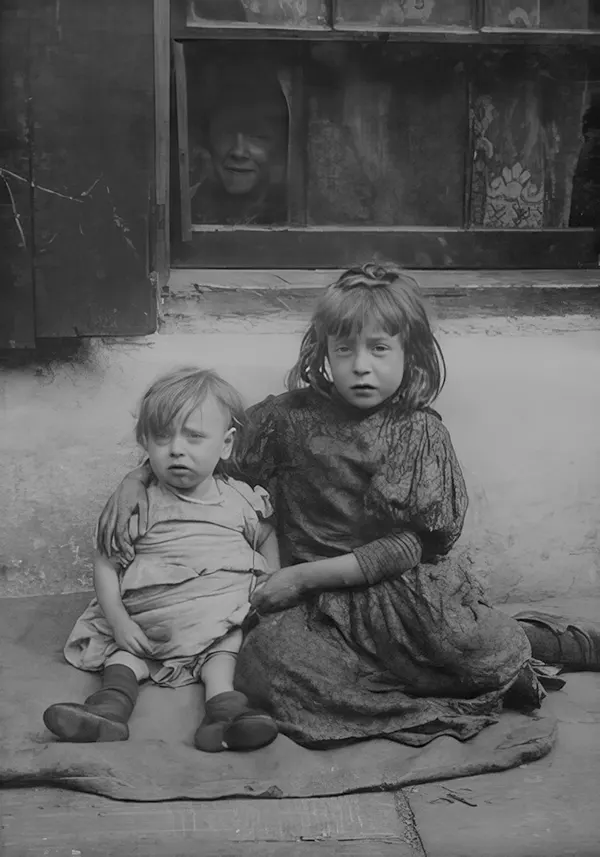
Two children in Spitalfields, one of the worst slums in London. 1903.
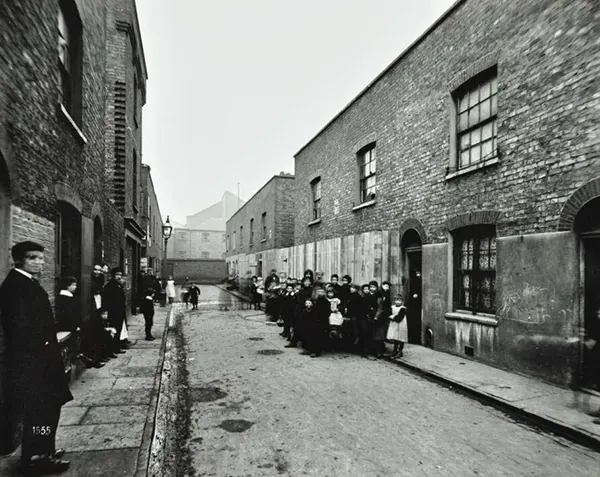
Boarded up houses on Ainstey Street from circa 1903.

Women in the slums worked constantly to keep families alive. Many took in laundry, stitched garments, or rented out corners of their already overcrowded rooms to lodgers. Men accepted any available work, no matter how dangerous or low-paying. Factory floors were loud and hazardous. Hours were long. Pay was rarely enough.
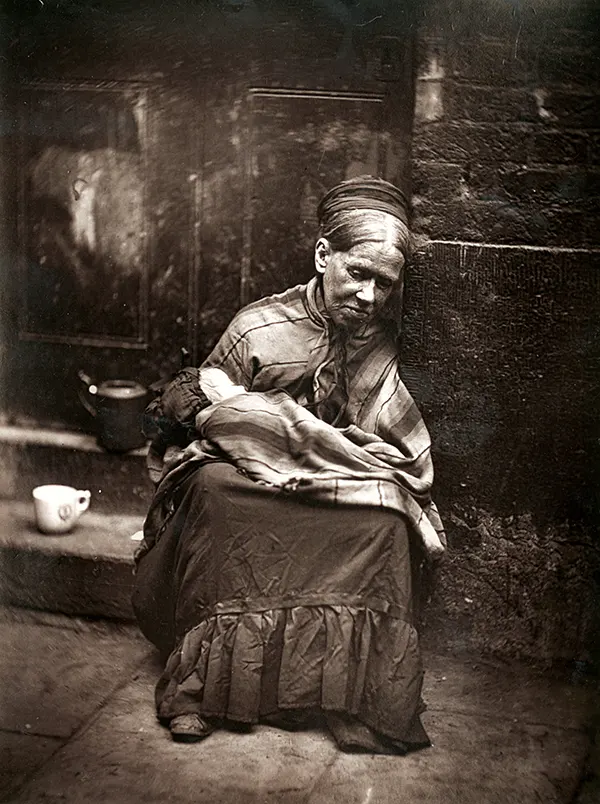
A mother and her child.

Children contributed to household income from a very young age. Children as young as five or six worked in factories, mines, and other dangerous environments. Those who didn’t work full-time scavenged the streets for anything that could be sold. Schooling was rare, and when available, it meant sitting in overcrowded, underfunded classrooms. Despite all of this, children still found ways to play — street games, marbles, and improvised toys offered brief breaks from an otherwise grinding daily existence.
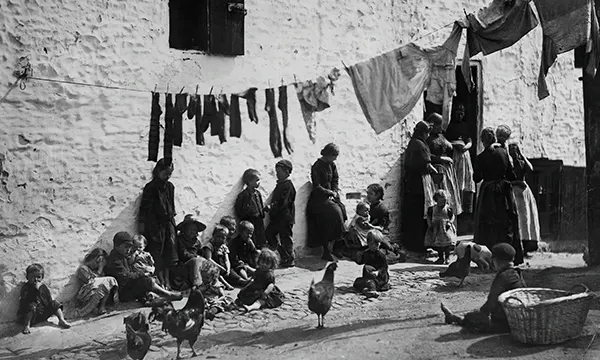
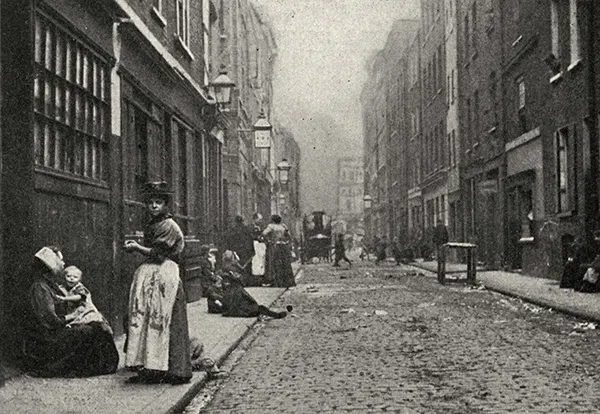
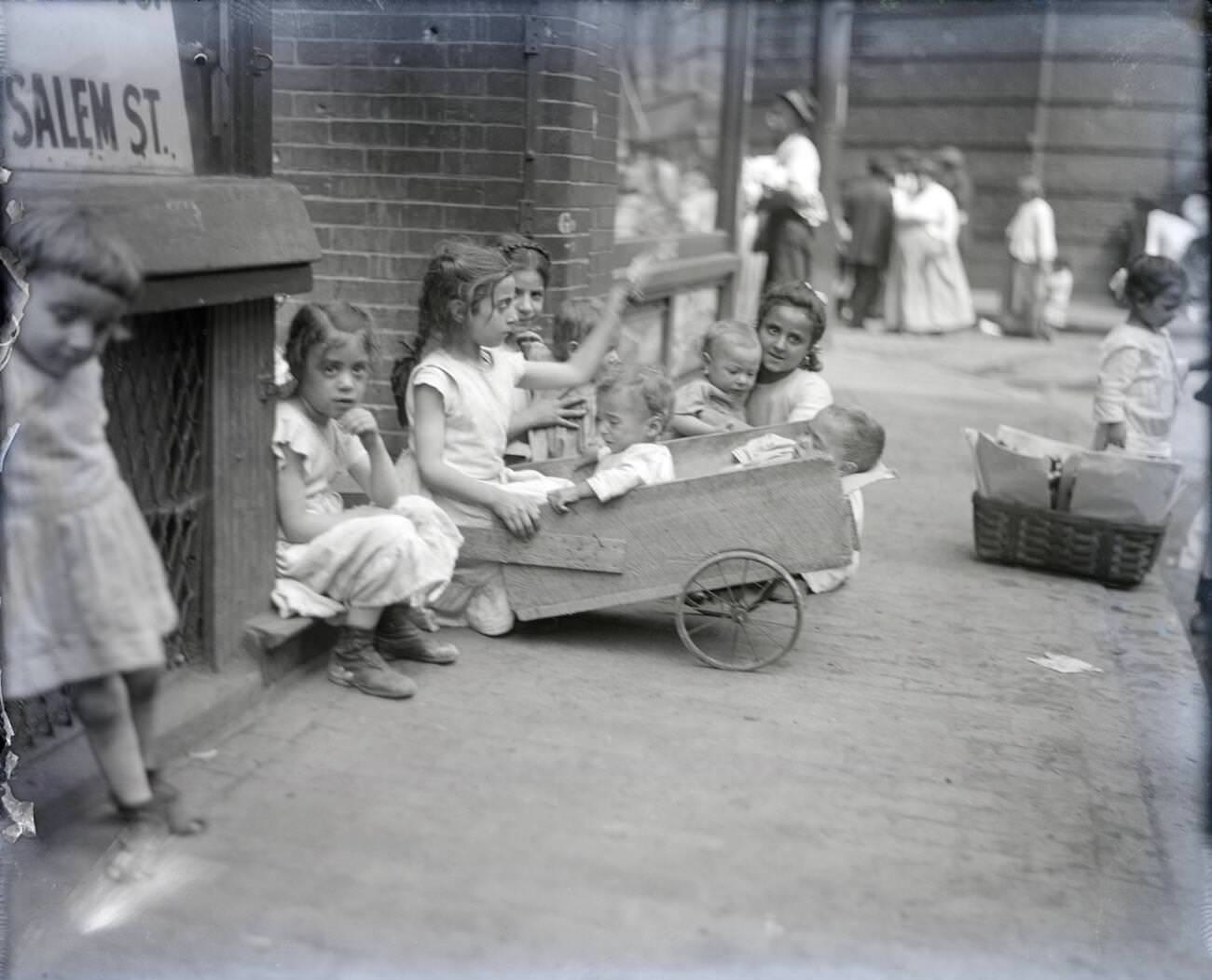
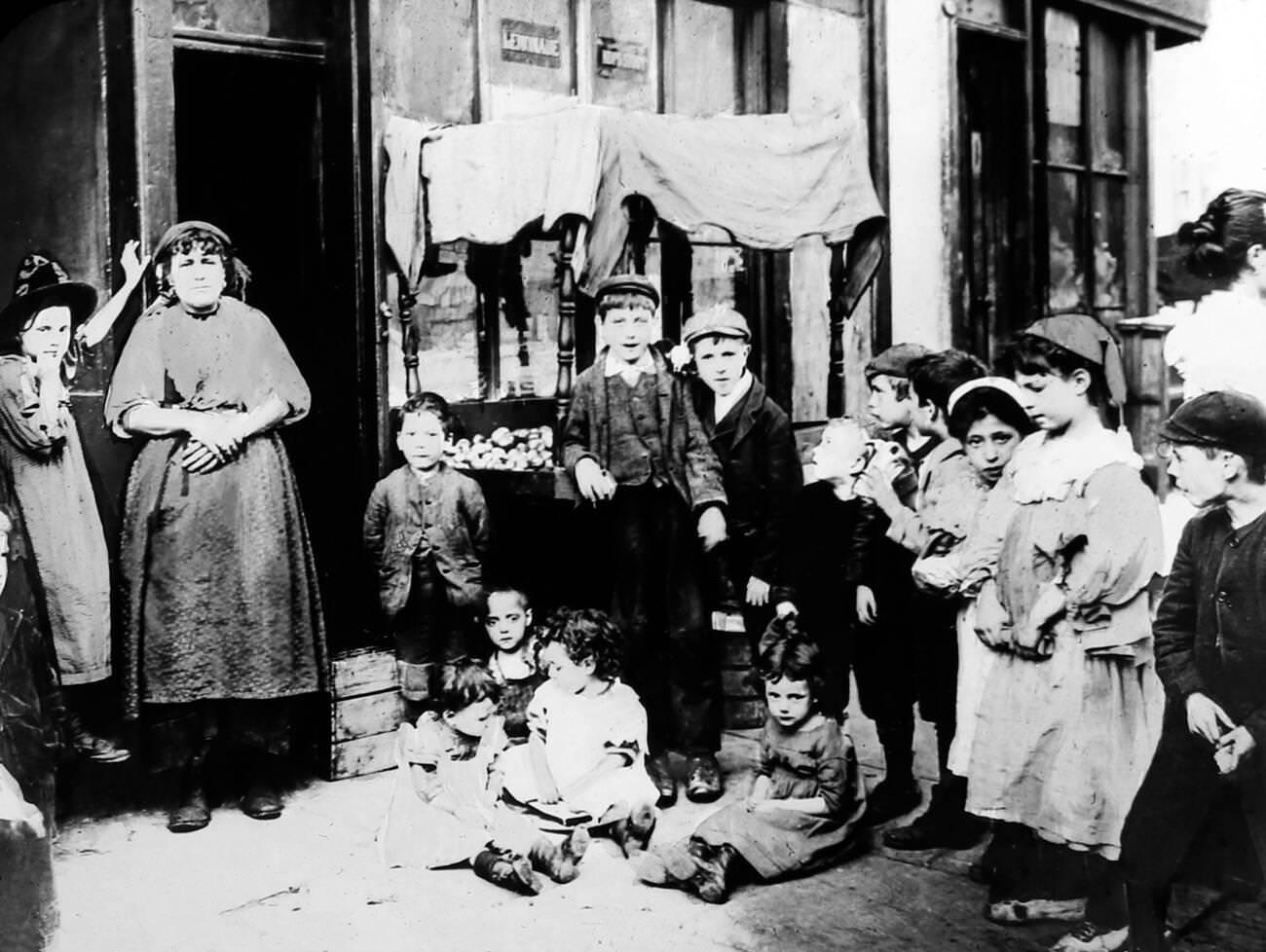
Children of the Victorian slums.
A photograph of Dorset Street taken in 1902, after many of the London's slums had been torn down.
A photograph of Dorset Street taken in 1902, after many of the London’s slums had been torn down.

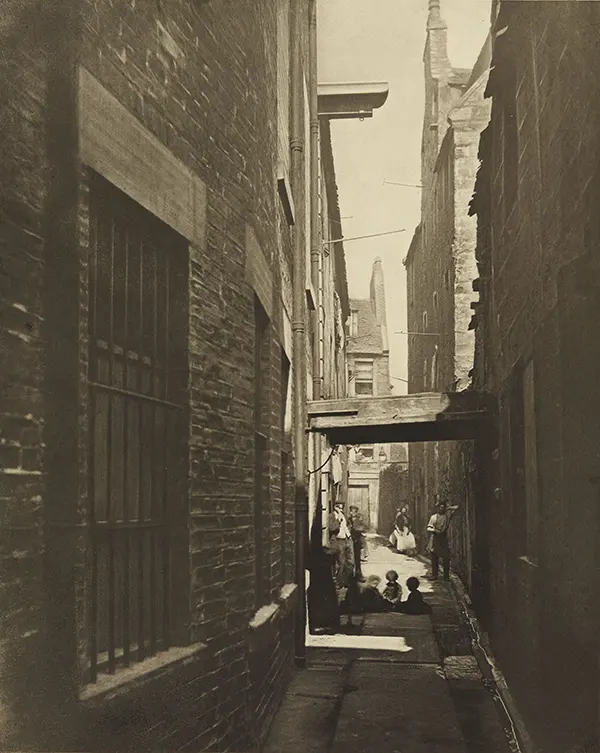
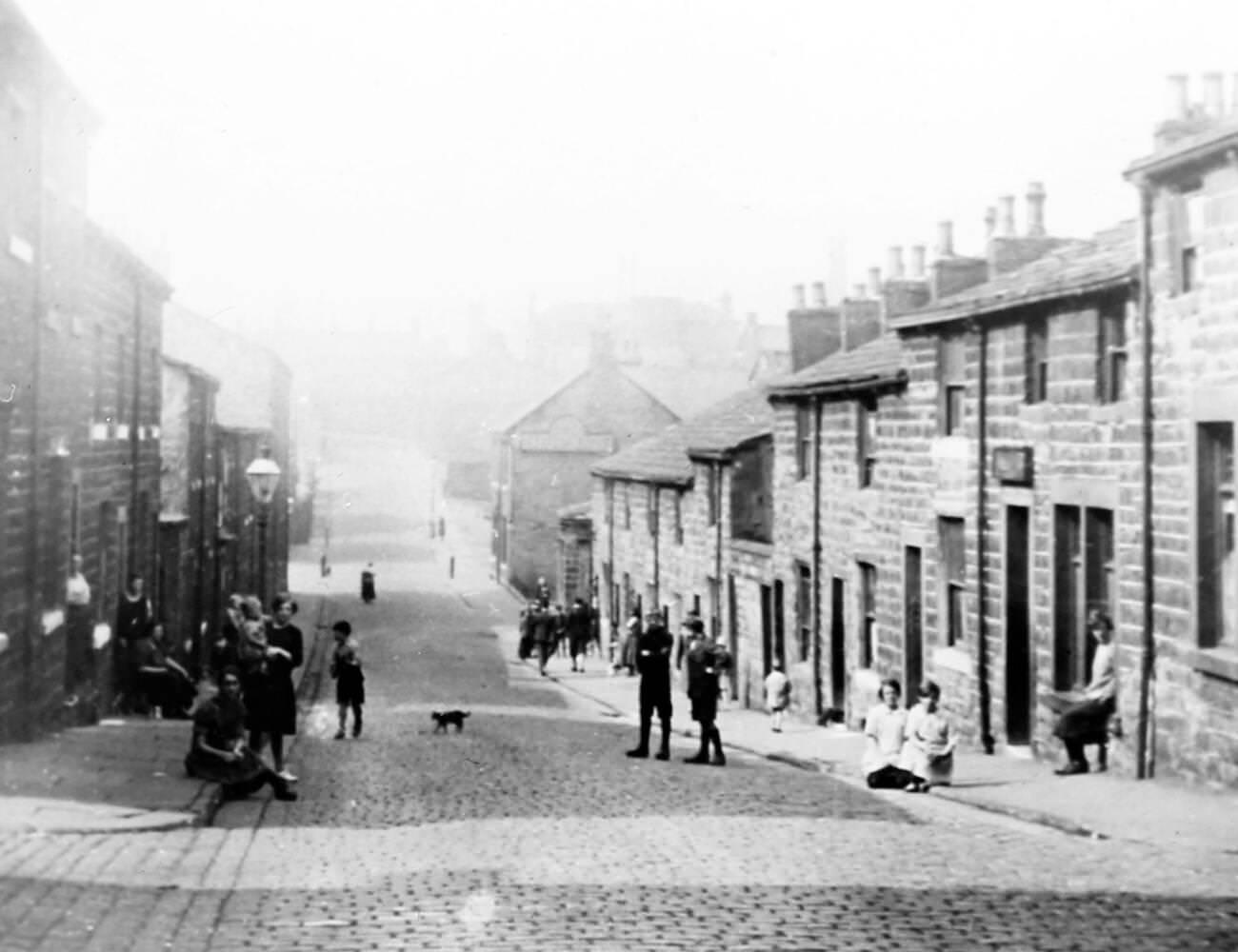
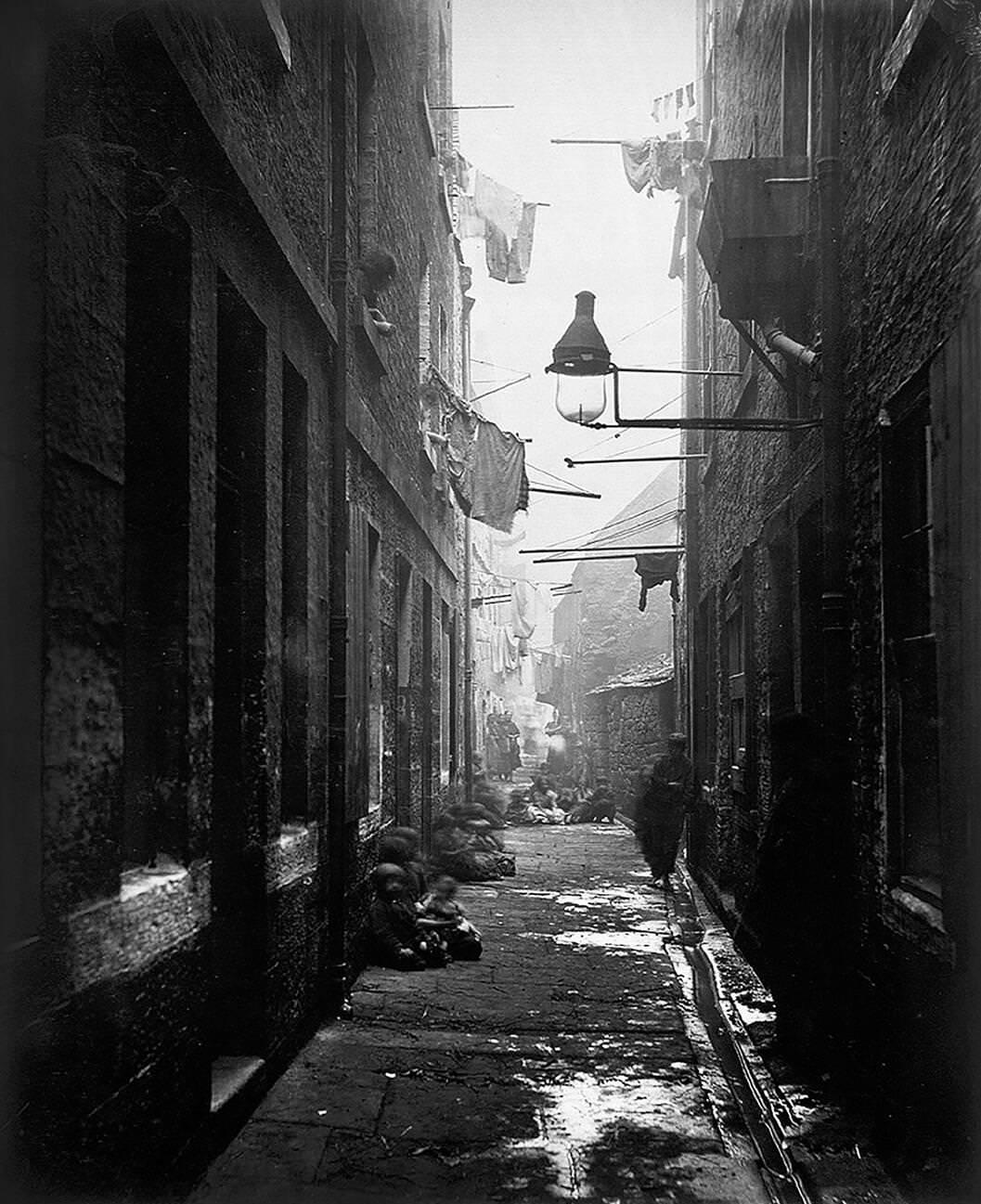
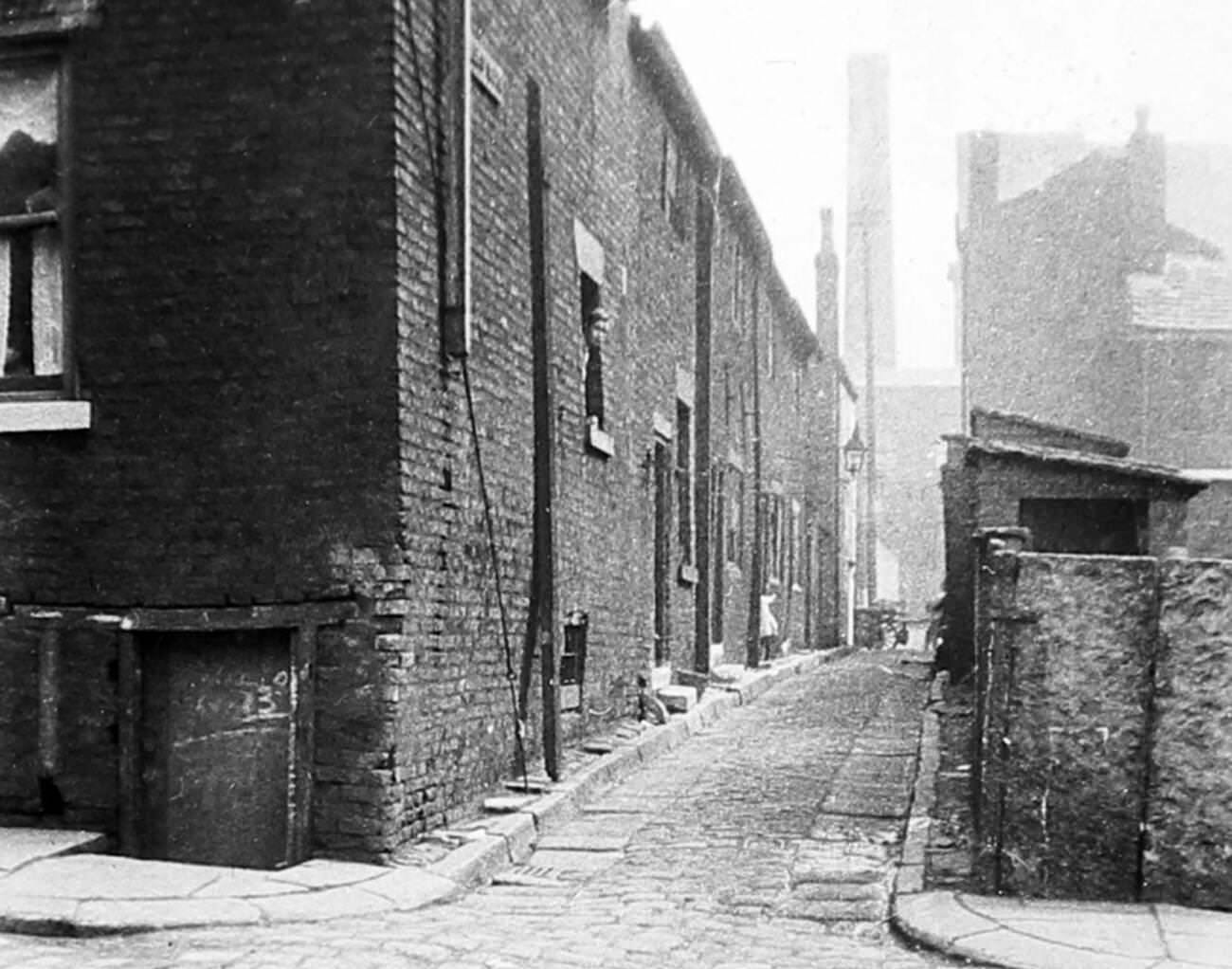
The problem was not limited to London. Glasgow’s slums were among the most overcrowded in Britain. Working-class housing in Scottish cities mirrored conditions in England — deteriorating tenements, shared privies, and streets choked with waste. Newcastle, Manchester, Burnley, and Birmingham all had their own densely packed slum districts, each facing the same cycle of poverty and disease.
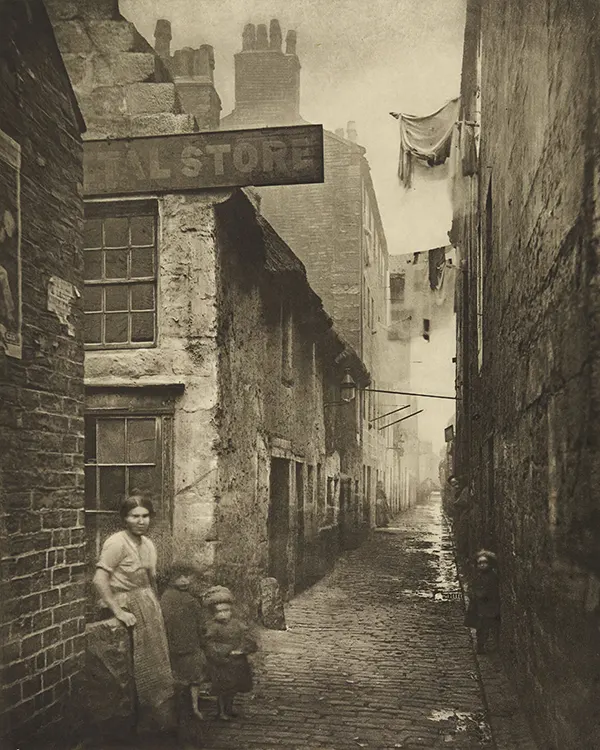
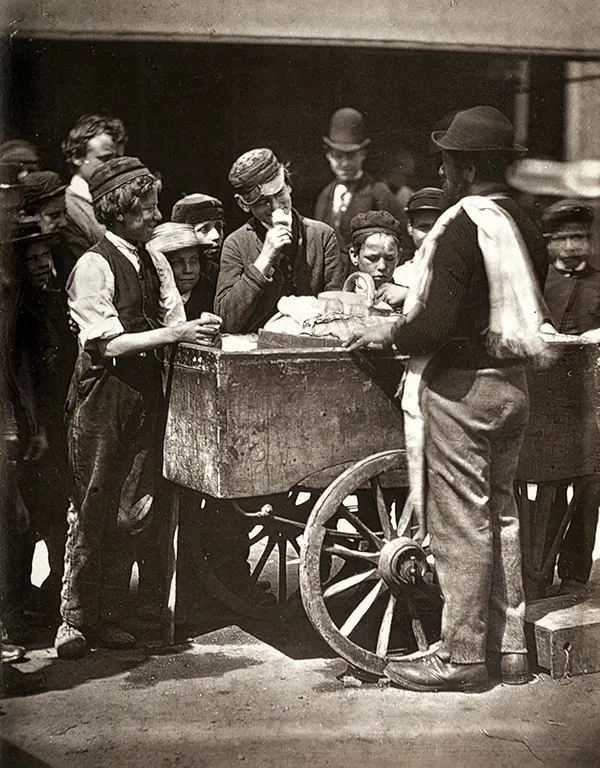
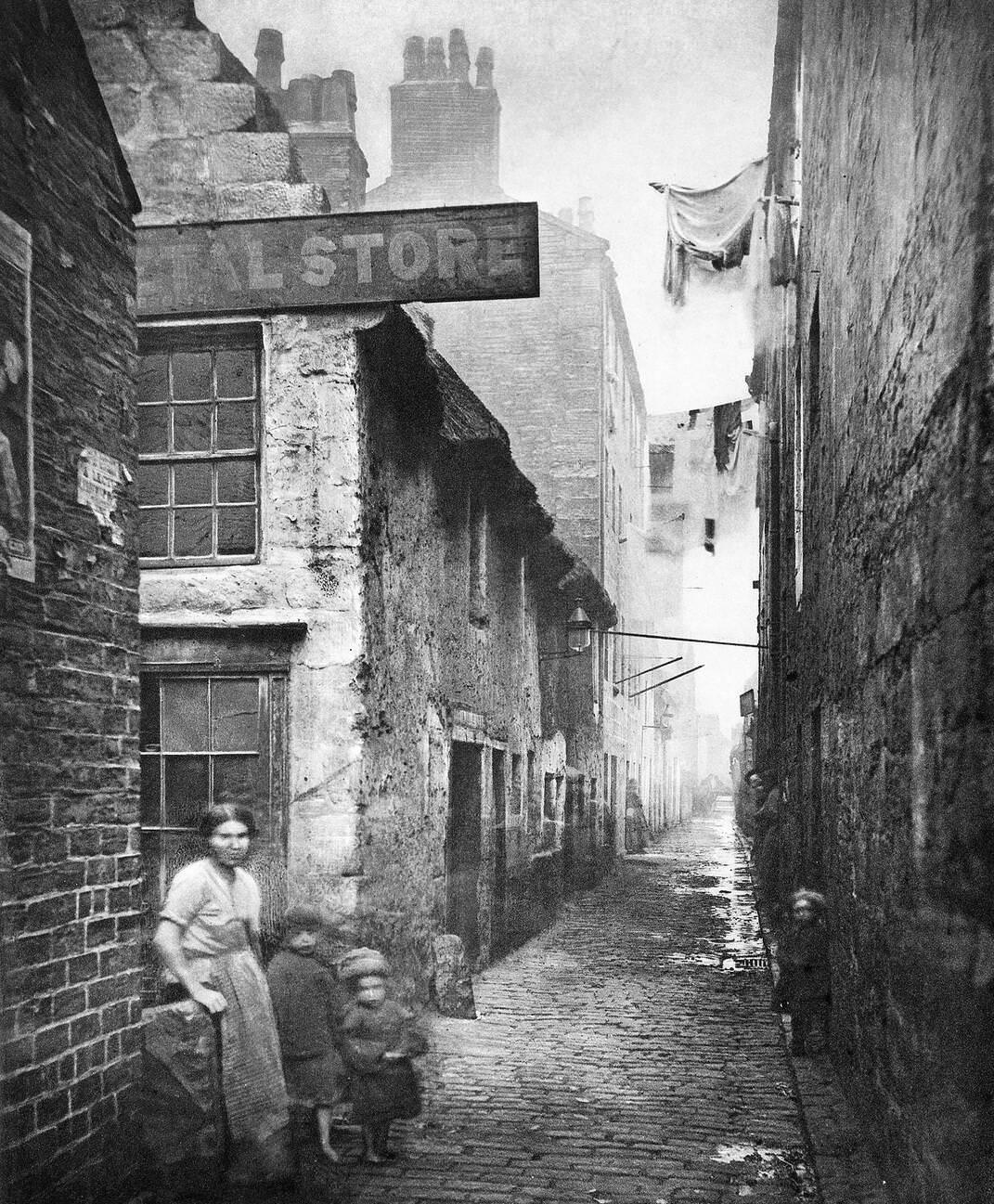
A Glasgow slum in 1868
An Italian ice man selling ices to children and other slum residents. 1877.

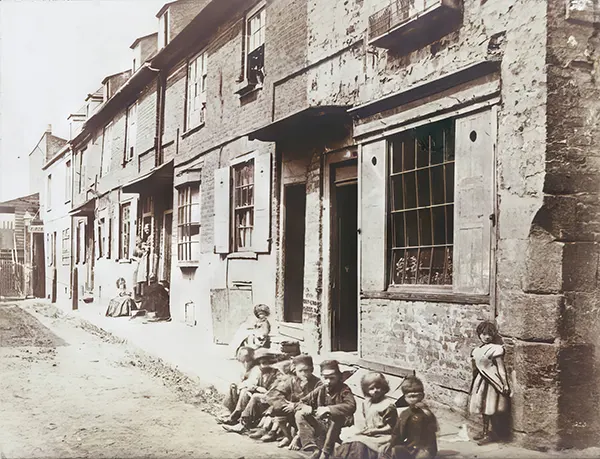
Not all slum housing was newly built. Some of the buildings people lived in dated back centuries. In London’s Cloth Fair, residents occupied homes that had been standing since they were rebuilt after the Great Fire of London in the 17th century. Age had not made them sturdier — it had made them more dangerous. Rotting timber, crumbling plaster, and broken windows were standard features of these aging structures.
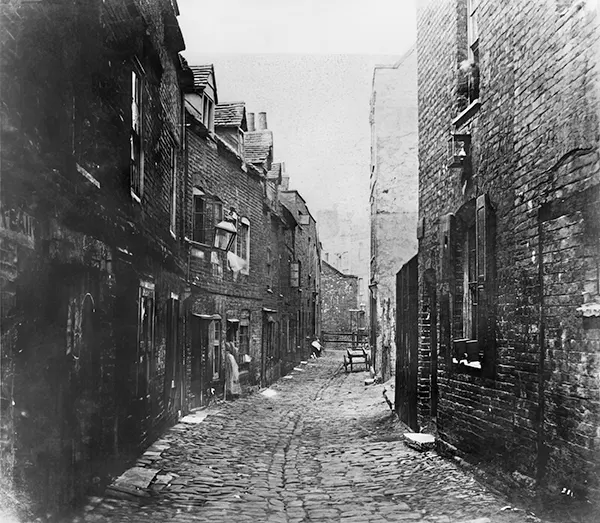
Once known as Lambeth Marsh, the area became a slum in the 19th century. This photograph, from 1860, shows Fore Street.
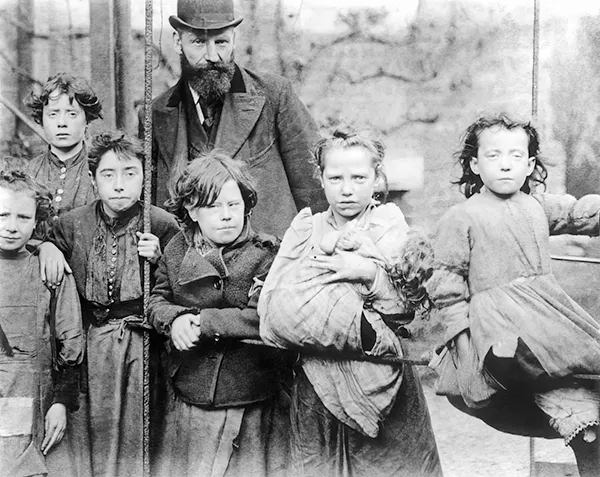
A family living in London's slums, 1900s.
A family living in London’s slums, 1900s.

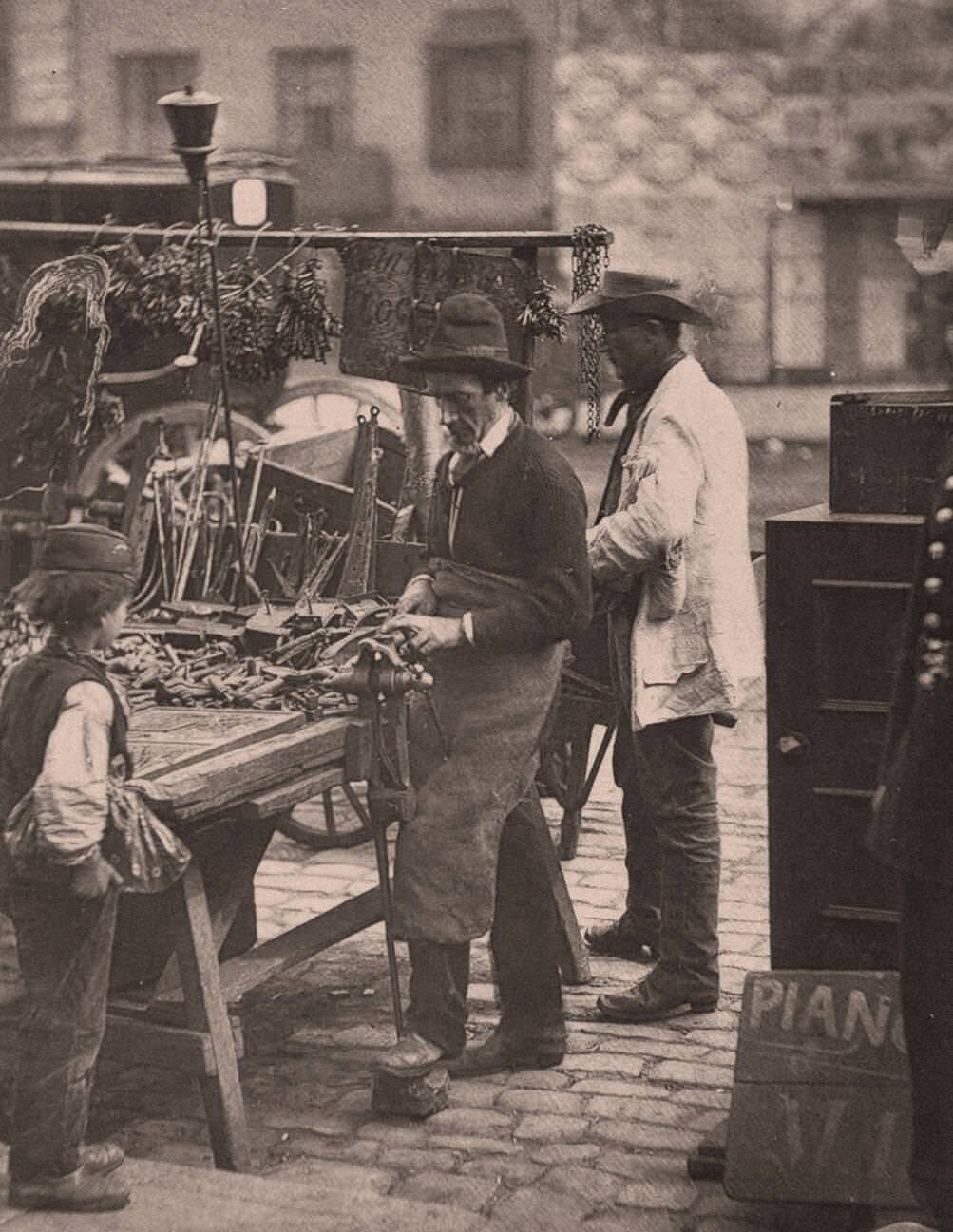
Work of any kind was taken when it was offered. Street vendors sold everything from flowers at Covent Garden to cat meat pushed through alleyways on wooden carts. Women like Ma Rolinson of Bethnal Green made and sold mattresses from their homes. Eviction was a constant threat. Families who couldn’t pay rent were turned out onto the street with all their belongings, sometimes with nowhere to go.
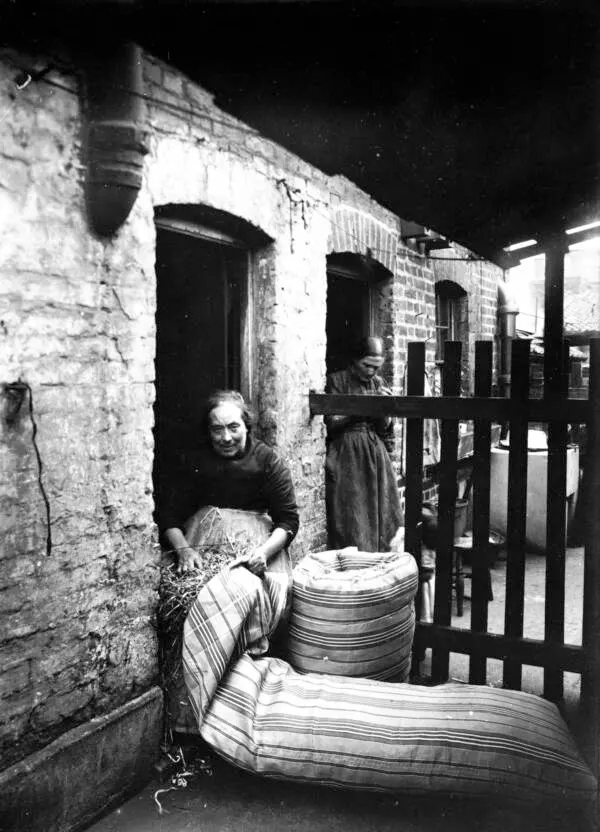
A woman identified as Ma Rolinson making a mattress in the slums of Bethnal Green. 1890s.
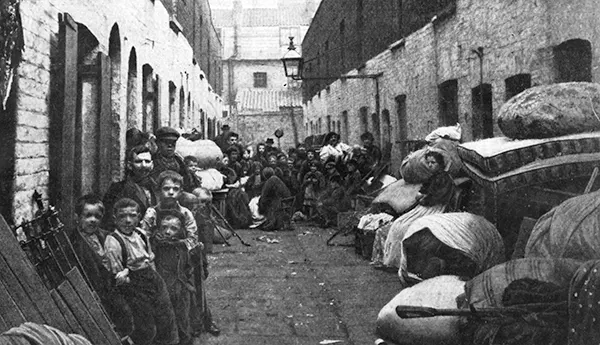
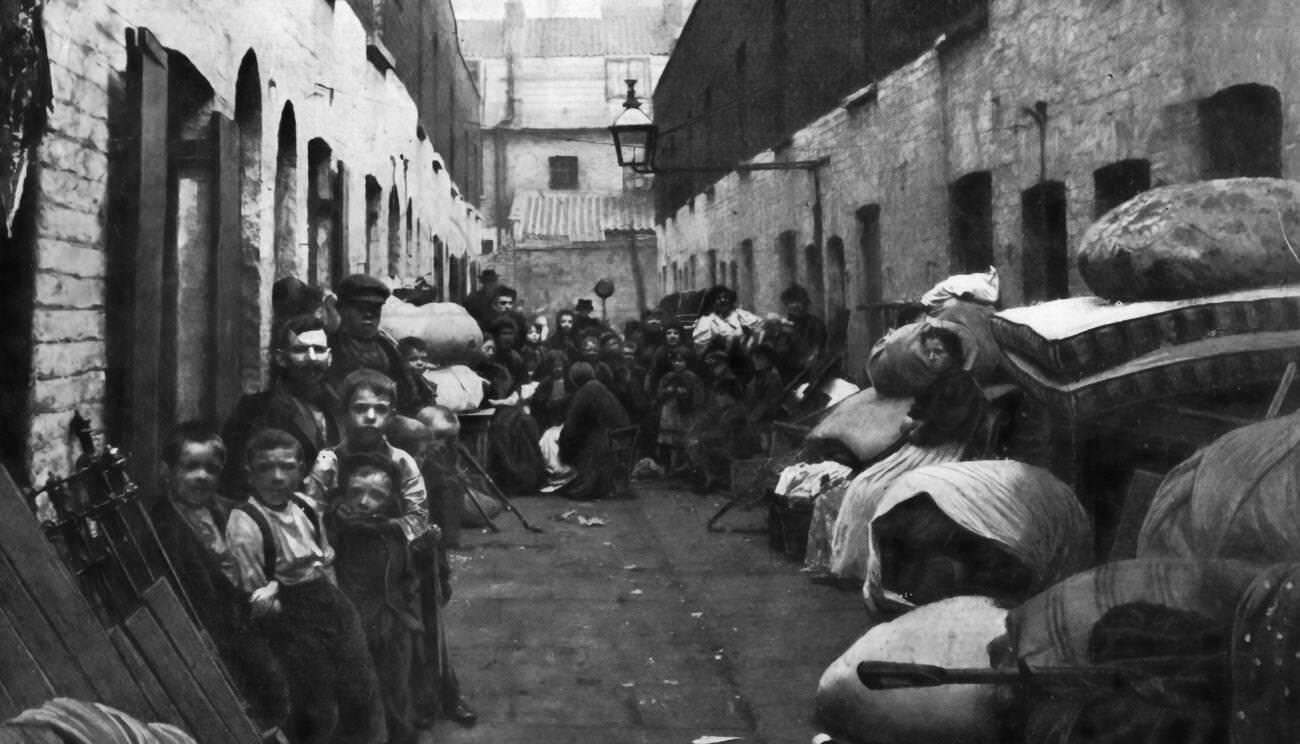
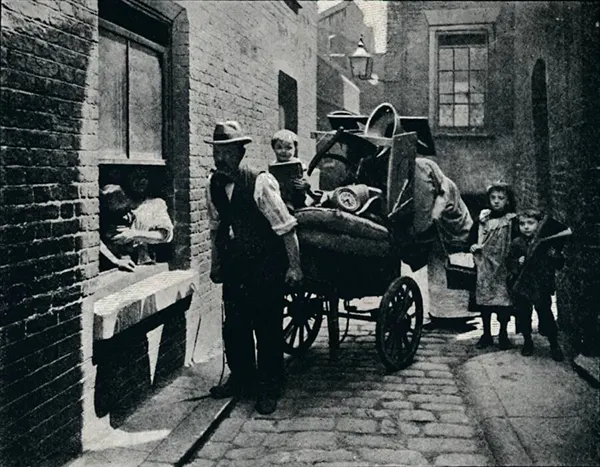
In the slums, families had to carry all their belongings when forced to move due to eviction. This photograph from around 1901 captures a family during such a relocation.

Crime was woven into slum life. With legitimate work scarce and poverty inescapable, gangs formed and claimed territory throughout districts like Old Nichol in London’s East End. They controlled gambling, theft, and other illegal trades. Police presence in slum areas was minimal, and many crimes were never investigated. Violence between rival gangs was common, and residents often had little choice but to navigate around it.
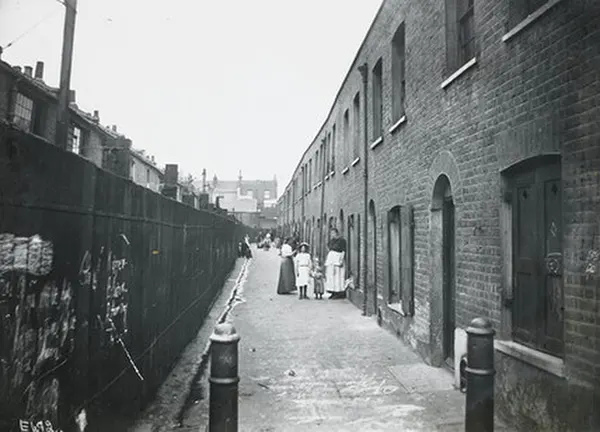
A photograph of the Bethnal Green slum on London's East End. 1900s.
A photograph of the Bethnal Green slum on London’s East End. 1900s.
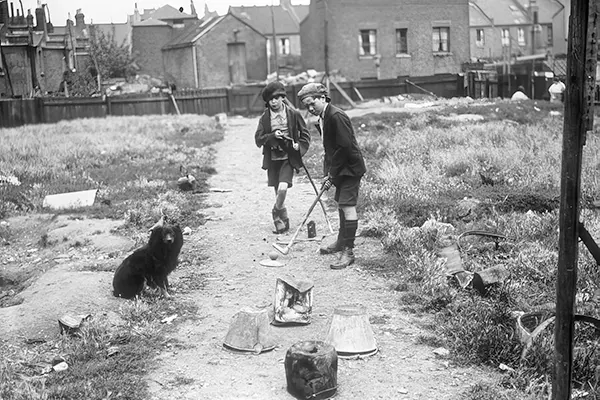
Youngsters who lived in London's slums create a golf course out of buckets.
Youngsters who lived in London’s slums create a golf course out of buckets.

Some reformers worked to push back against these conditions. Charitable organizations provided food, clothing, and basic education. Writers like Charles Dickens drew public attention to slum conditions through their work. Philanthropists funded housing improvements and sanitation projects. Progress was real but painfully slow, and for most of the Victorian era, the gap between reform efforts and the scale of the problem remained enormous.
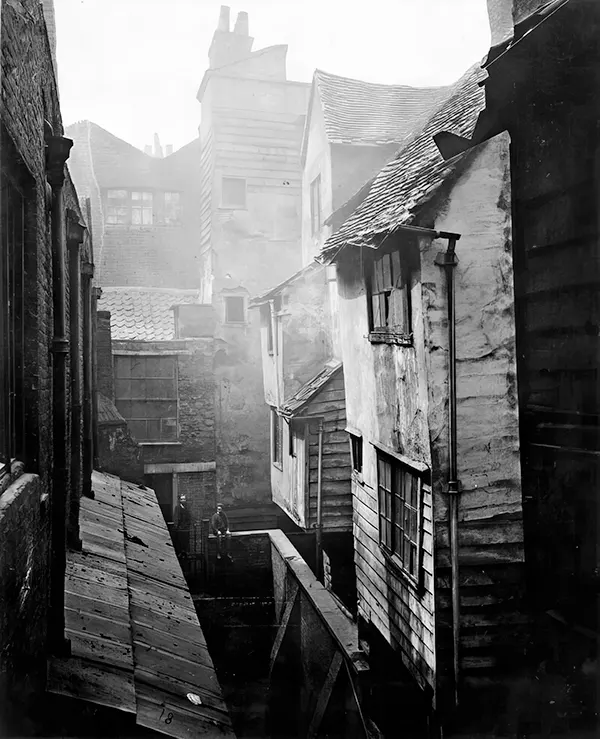
While some of London's slums were hastily erected shantytowns, other slums were made of centuries-old houses. This photograph from 1877 shows homes in Cloth Fair built after the Great Fire of London in the 17th century.
While some of London’s slums were hastily erected shantytowns, other slums were made of centuries-old houses. This photograph from 1877 shows homes in Cloth Fair built after the Great Fire of London in the 17th century.
Residents at Boundary Street, located in the Old Nichols slum.
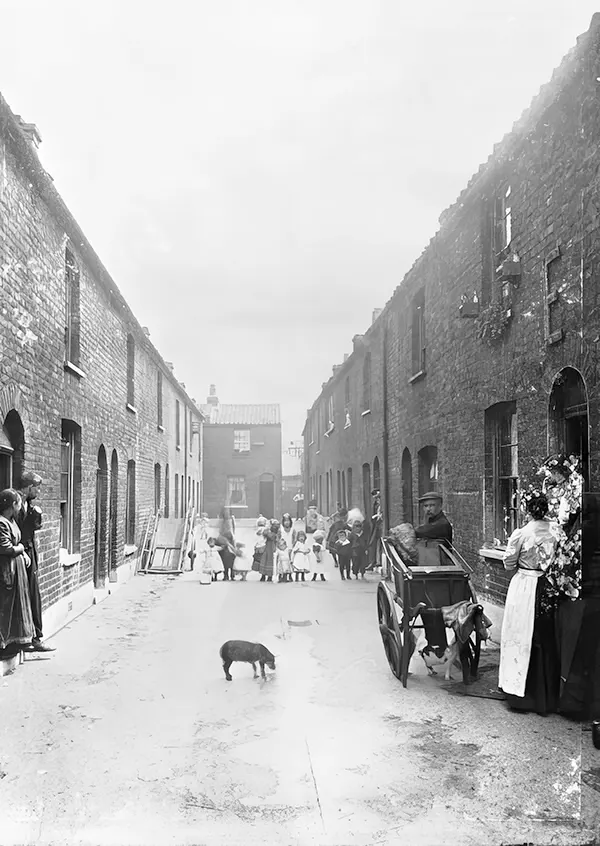
A man selling meat for cats walks down the street of a London slum. The man pushes a cart with a cat strolling between the wheels. 1900s.
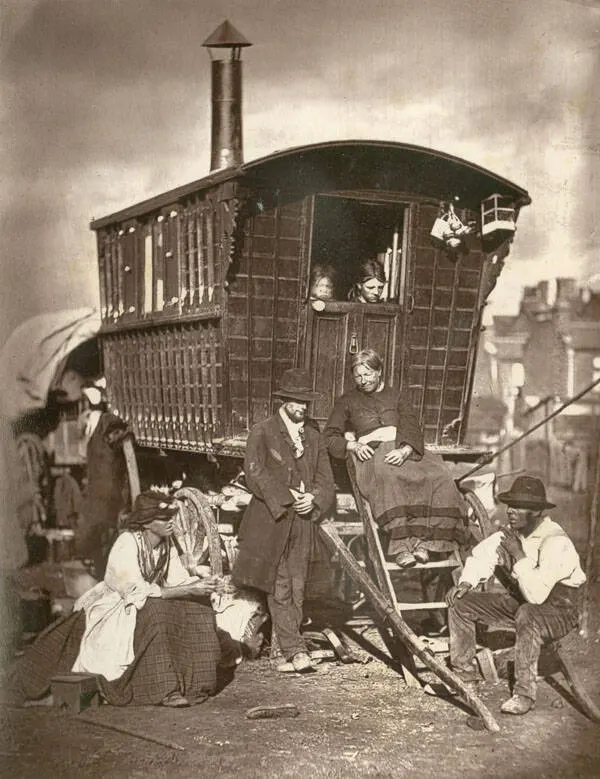
This 1877 photograph shows a family living a nomadic life in London.
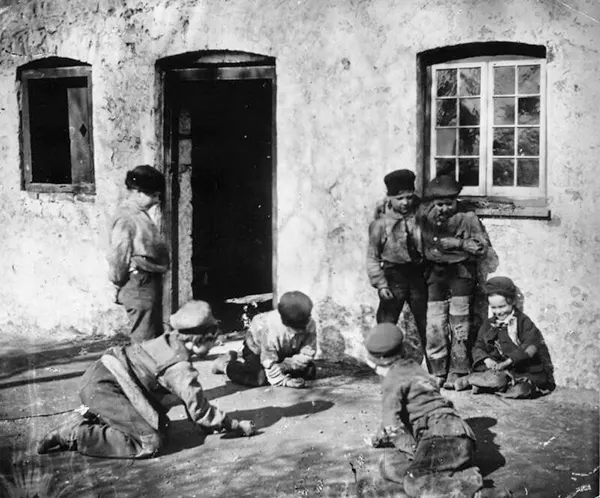
Children gather in the yard in London's slums to play a game of marbles. 1860.
Children gather in the yard in London’s slums to play a game of marbles. 1860.
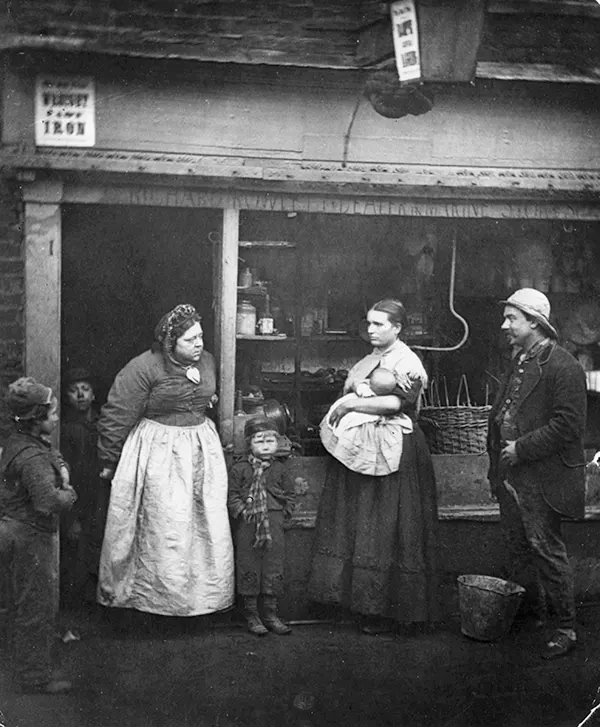
In this 1877 photograph, Londoners affected by flooding stand in front of a rag shop.
A circa 1860 photograph shows children on New Street in Vauxhall.
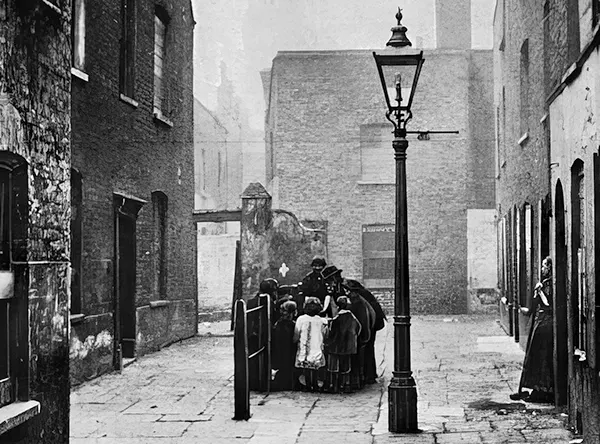
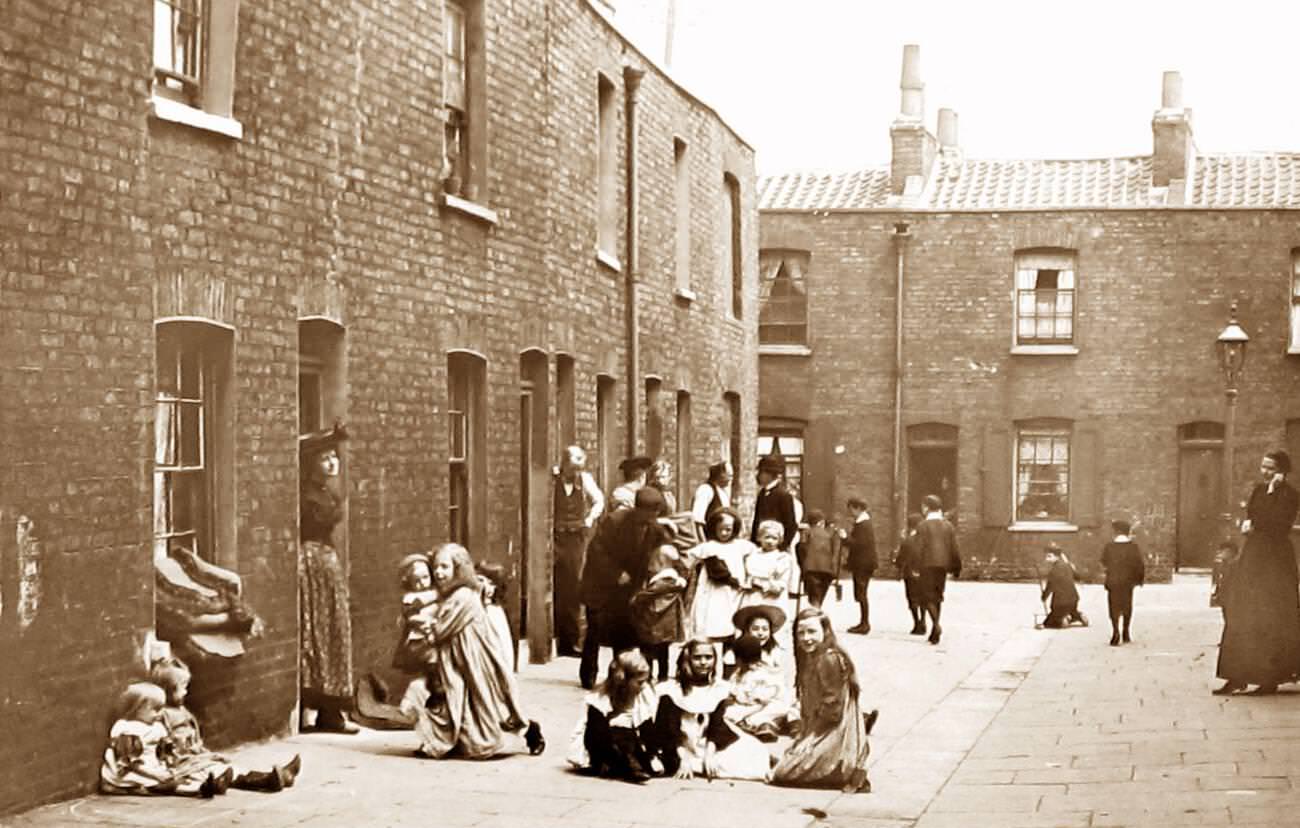
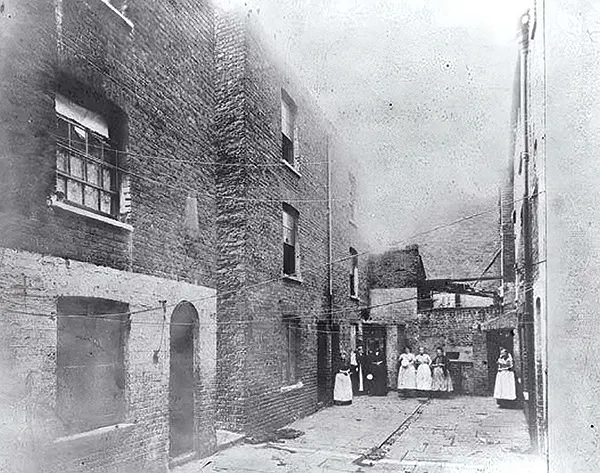
An alley and its residents.
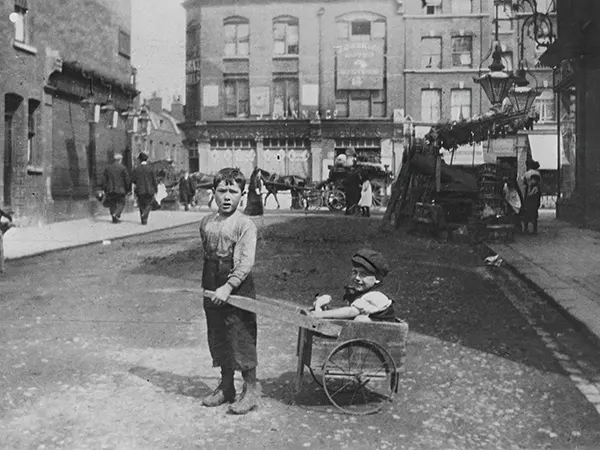
Two Jewish children play on an East End street. 1900s.
This 1901 photo shows a family recently evicted from slum housing with all of their possessions.
A slum street in an area marked for demolition. 1901.
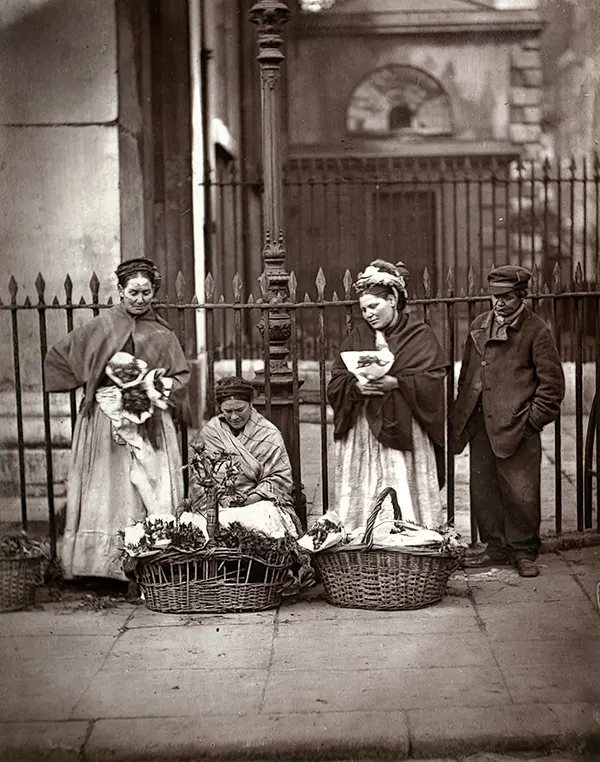
Poor women selling flowers at Covent Garden. Circa 1877.
Street Life in London from the Victorian Era
Poor children playing with each other, parents in background.
Victorian slums. Working class housing in Spitalfields, Victorian London
Poverty in London, Victorian period
Victorian slums. Working class housing in Glasgow, 1871
Slum housing in South London, Victorian period
Slums in Byker, Newcastle-upon-Tyne, early 1900s
Burnley, Lancashire, early 1900s
Victorian slums. Working class housing in Glasgow, 1871
Slum housing, probably Manchester, early 1900s
Enjoyed this post? Get new ones in your inbox.

3 thoughts on “Haunting Photos Expose the Harsh Realities of Everyday Life in Victorian England’s Overcrowded Slums”

  1. Very interesting. But I couldnt help but notice that some pictures are used two times with different descriptions which made me suspicious about the accuracy of the titles.

Leave a Comment

Your email address will not be published. Required fields are marked *

Share this Post 🥺

Please take a moment to share this content. Your support is greatly appreciated! 🙌🙏

Share this Post 🥺

Please take a moment to share this content. Your support is greatly appreciated! 🙌🙏
Scroll to Top
 
Hey Friend, Before You Go.. Please like & follow for more interesting content