
Death was not a distant event during the Victorian era — it was a regular part of daily life. The average person lived only 40 to 45 years. Cholera, typhoid, smallpox, and scarlet fever swept through communities with devastating speed. Epidemics killed one in two children before they reached the age of five. With death this close and this frequent, Victorians developed rituals to process grief in a very physical way. One of the most intimate of these rituals was mourning jewelry — wearable memorials that carried actual pieces of the deceased.
The practice wasn’t fringe or unusual. It was widely accepted across all levels of society, from working families to royalty. And no single figure shaped its popularity more than Queen Victoria herself.
When Prince Albert died in 1861, Queen Victoria was devastated. She wore black crepe dresses for the next four decades and almost never removed her mourning jewelry. She commissioned portraits, busts, and memorials of Albert throughout her reign. Her court followed her lead, and the public admired and imitated her. Mourning jewelry became not just acceptable — it became fashionable. What Victoria wore, England wore.
The materials used in mourning jewelry were carefully chosen for their appearance and symbolism. Jet — a hard black stone mined in Whitby, England — was one of the most prized. Onyx, dark tortoiseshell, black enamel, bog oak, vulcanite, and gutta-percha (a natural rubber from Southeast Asian trees) were all common alternatives, particularly for those who couldn’t afford jet. Pearls symbolized the tears of children. White enamel marked the death of an unmarried woman or a child. Turquoise carried the meaning of ‘thinking of you.’ Wealthy families added rubies, diamonds, and other precious stones to pieces that were already rich in symbolism.
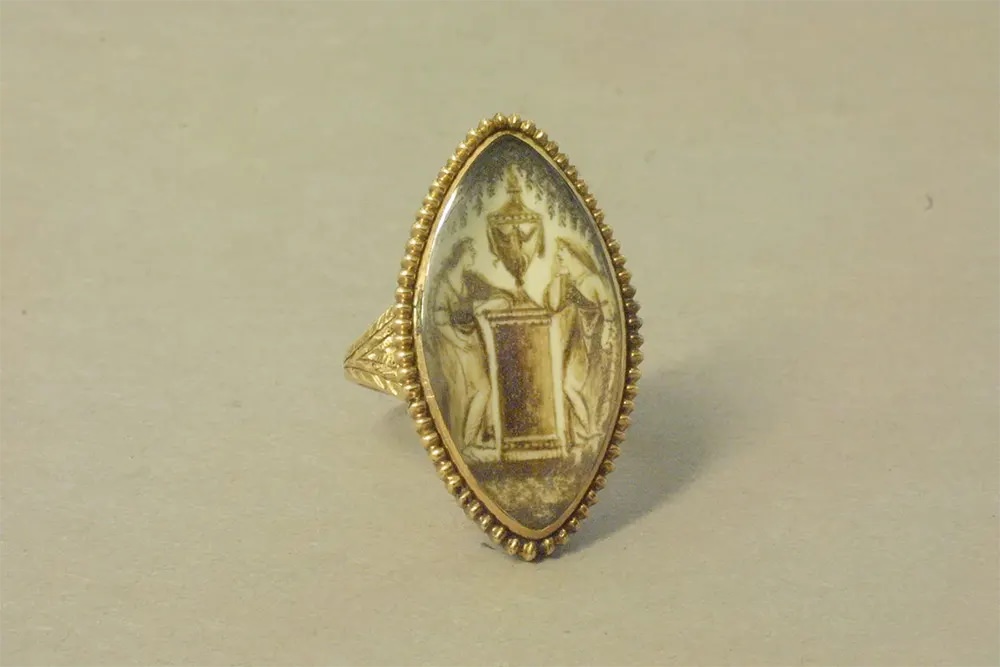
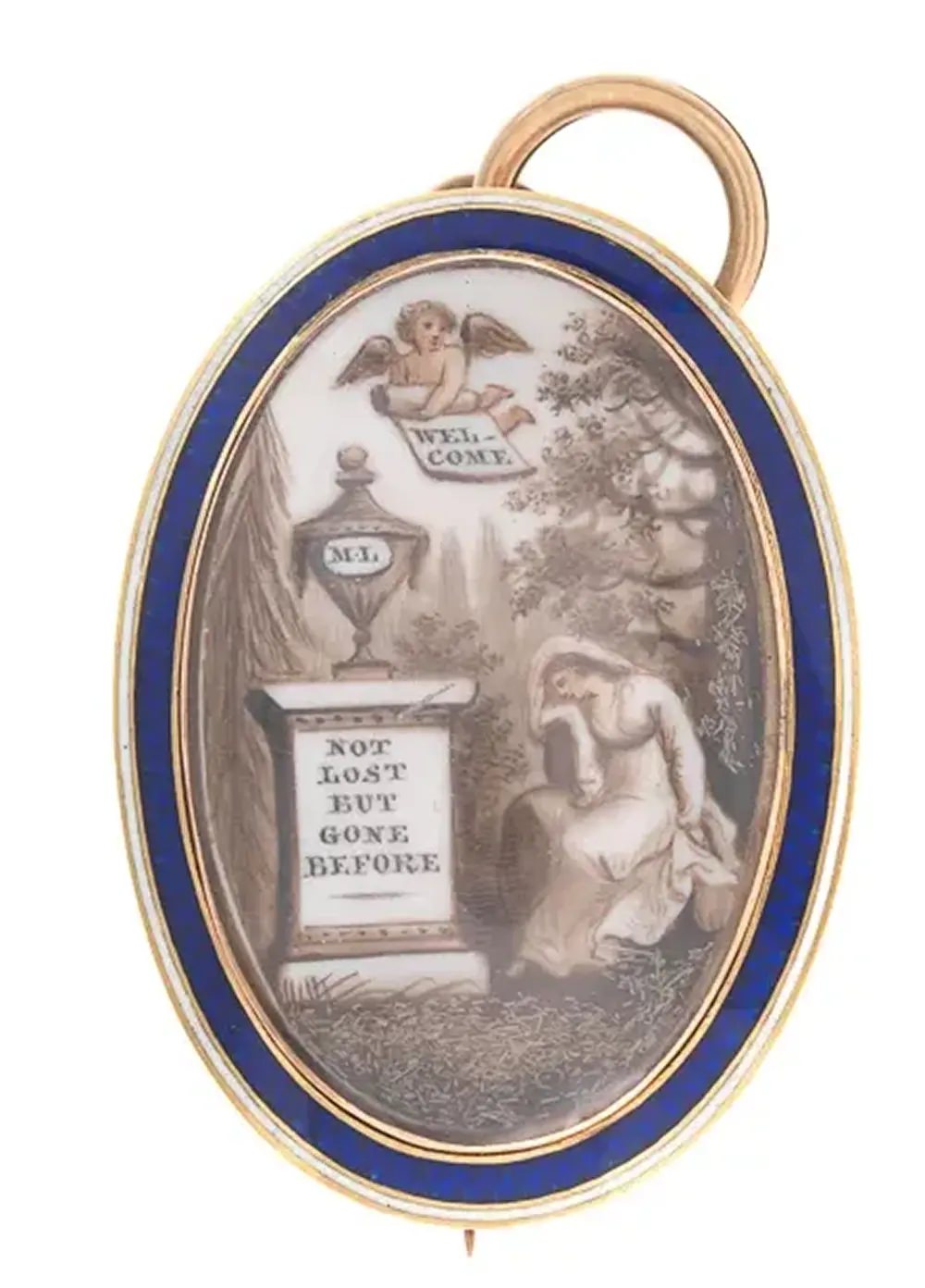
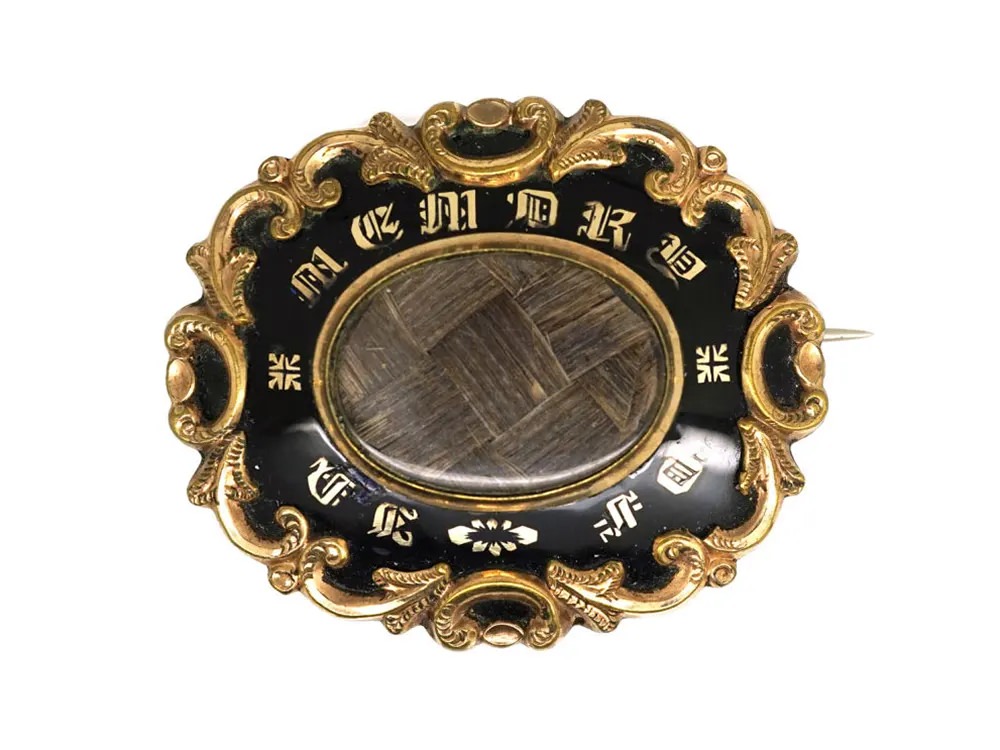
Beyond their materials, mourning pieces often incorporated miniature works of art. Tiny paintings on ivory depicted mourning scenes — weeping figures, funerary urns, and willow trees were recurring motifs. Tintype portraits and hand-painted miniatures of the deceased were set into lockets and rings. Some pieces featured inscriptions of names, dates, or ages, turning a piece of jewelry into a precise historical record of a person’s life and death.
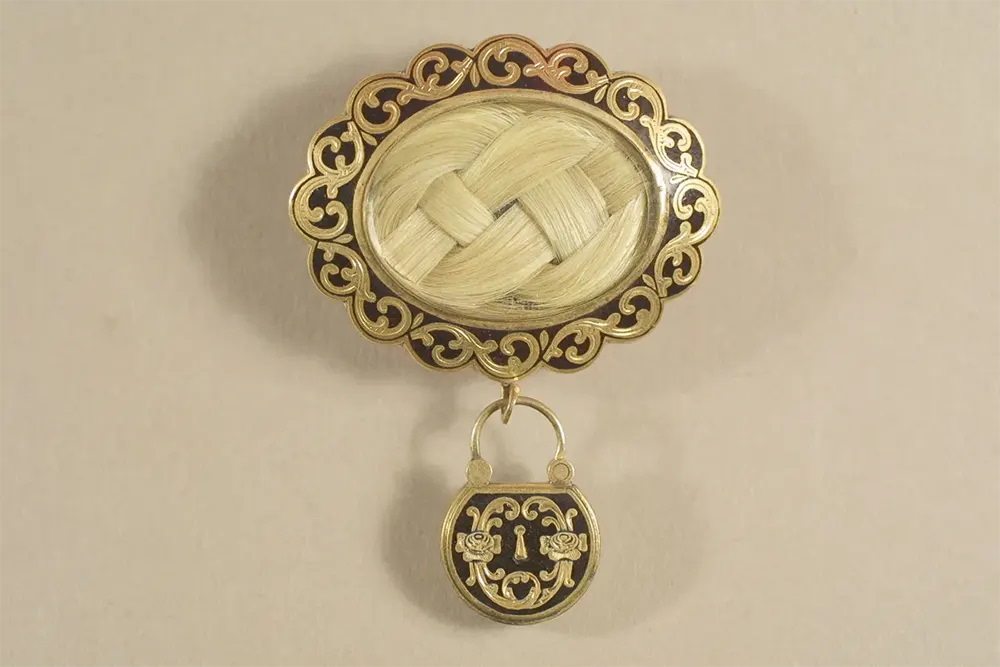
Hair was by far the most common physical element incorporated into mourning jewelry. Locks were braided, coiled, plaited, and woven into brooches, rings, lockets, bracelets, and even large framed memorial artworks. The demand was so high that England imported 50 tons of hair per year during the mid-1800s to supplement what was taken from the deceased. Jewelers developed sophisticated techniques for working with hair, producing pieces of real craft and delicacy.
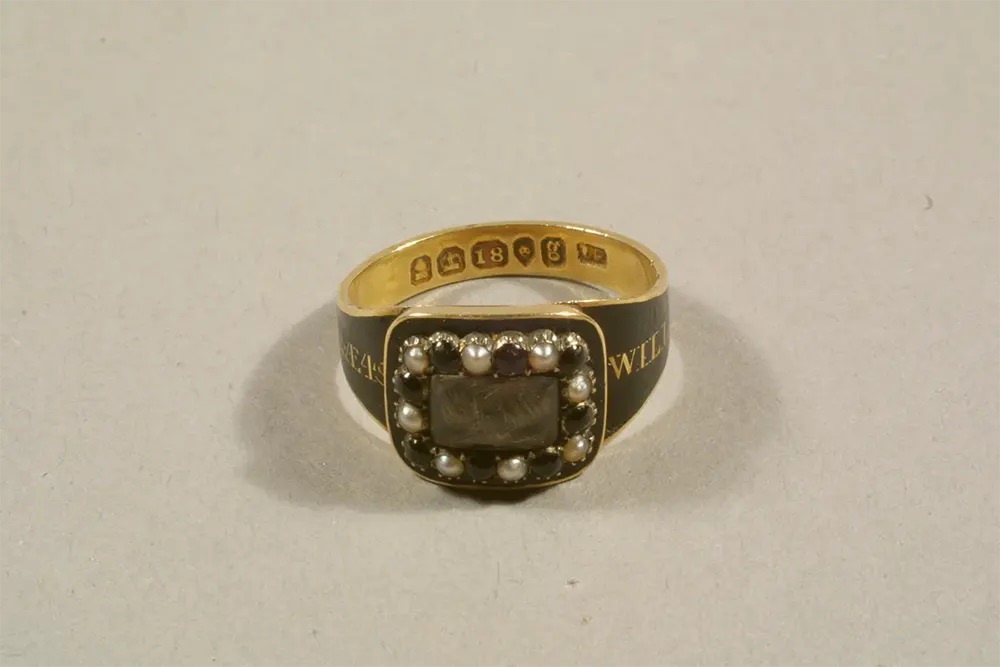
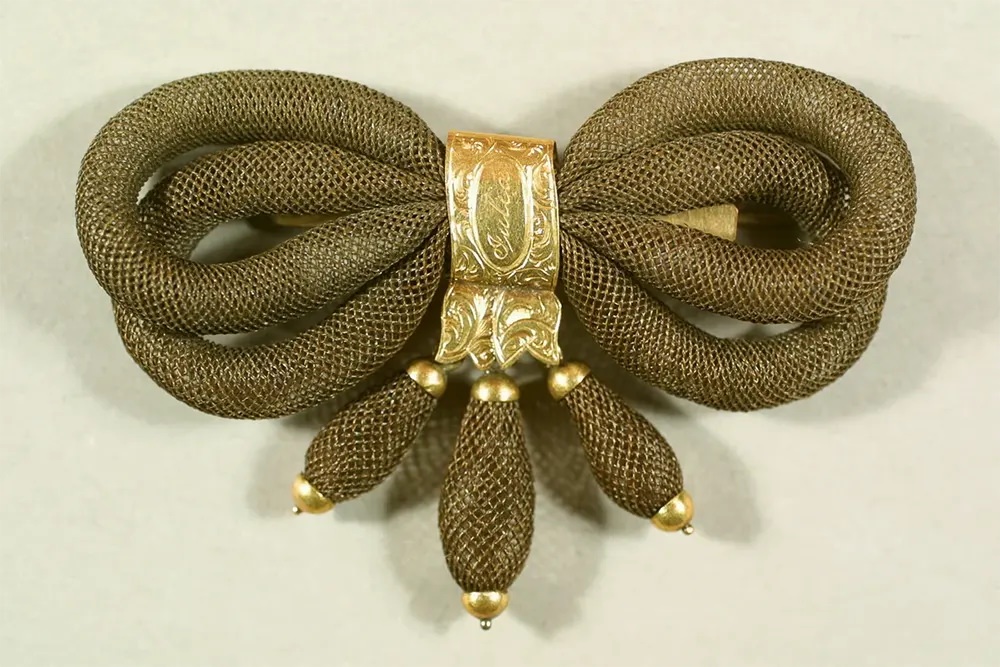
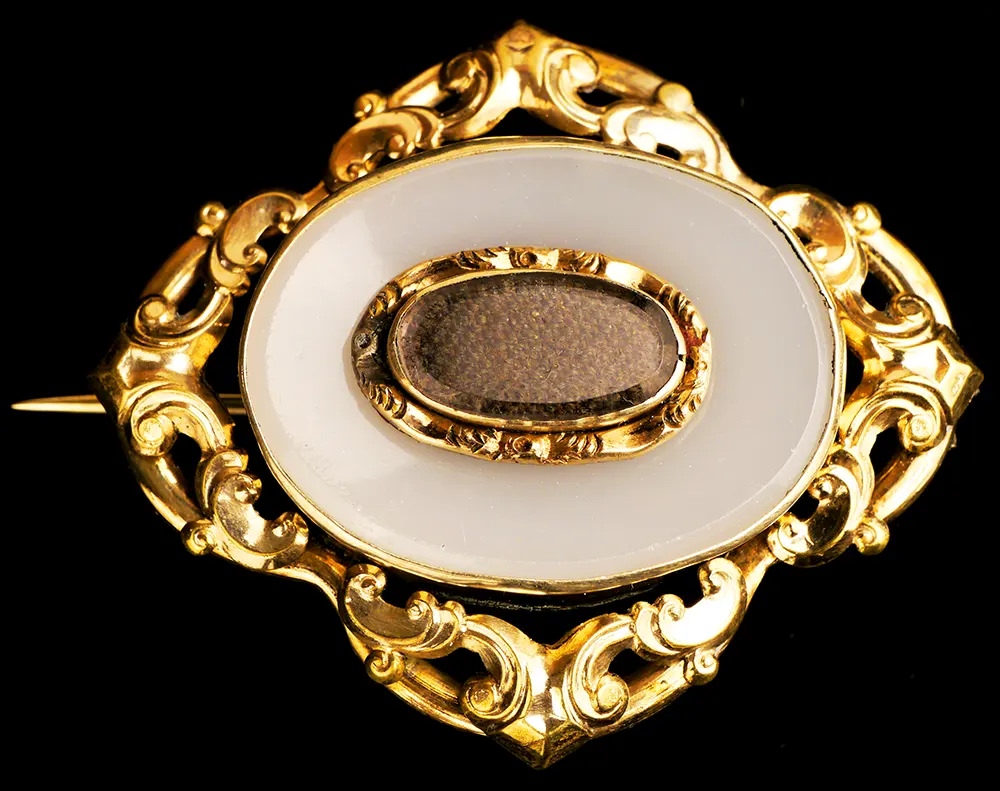
Lockets were among the most personal of all mourning pieces. One side might hold a small portrait or photograph of the deceased, while the other held a lock of their hair. Brooches often featured a glass-covered compartment designed specifically to display a coiled or plaited lock. Braided hair was also crafted into watch chains and pendants. The hair bracelet — sometimes table-worked into intricate patterns — was another popular form, often finished with gold fittings.
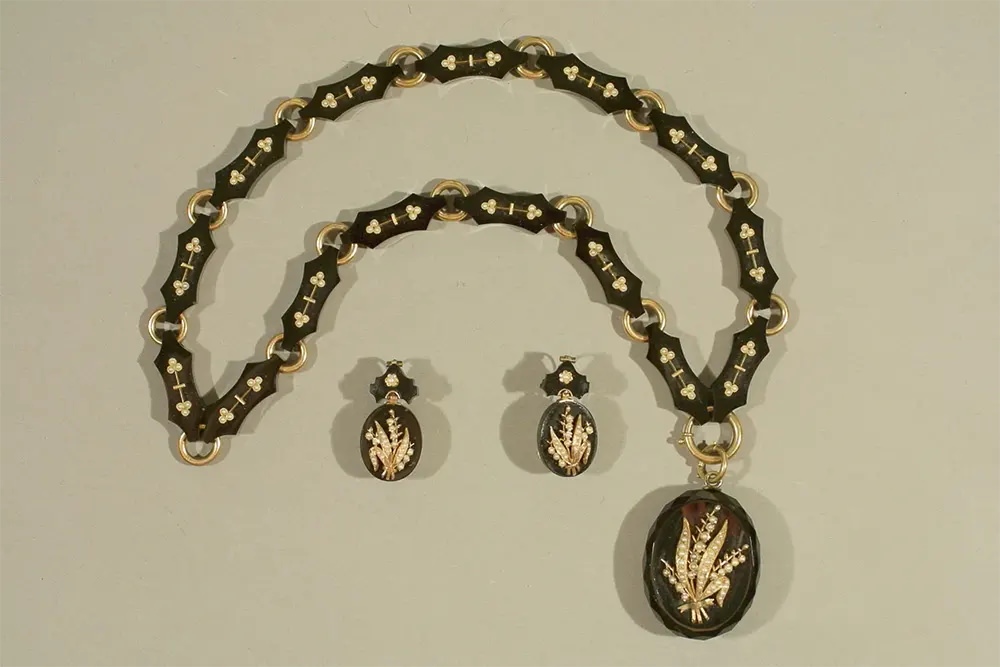
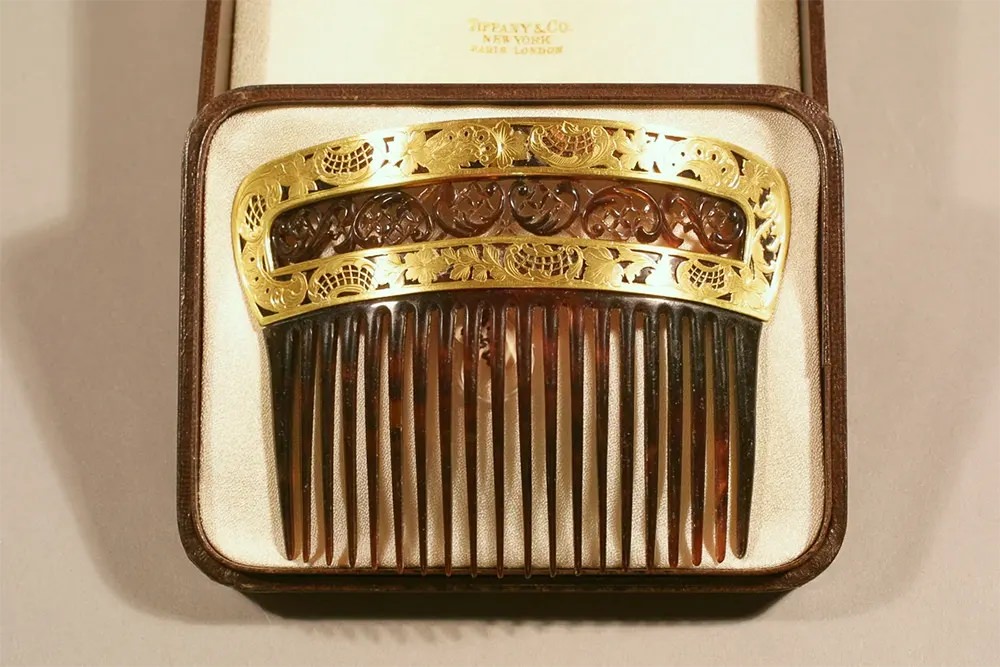
Some mourning jewelry went further than hair. Teeth from the deceased were embedded into certain pieces, particularly rings. These are rare finds today — antique stores and auction houses encounter them far less often than hair pieces — but they existed and were worn by people who wanted to keep something irreducibly physical of the person they had lost. Scraps of fabric cut from the deceased’s clothing also appeared inside certain pieces, adding another layer of intimacy.
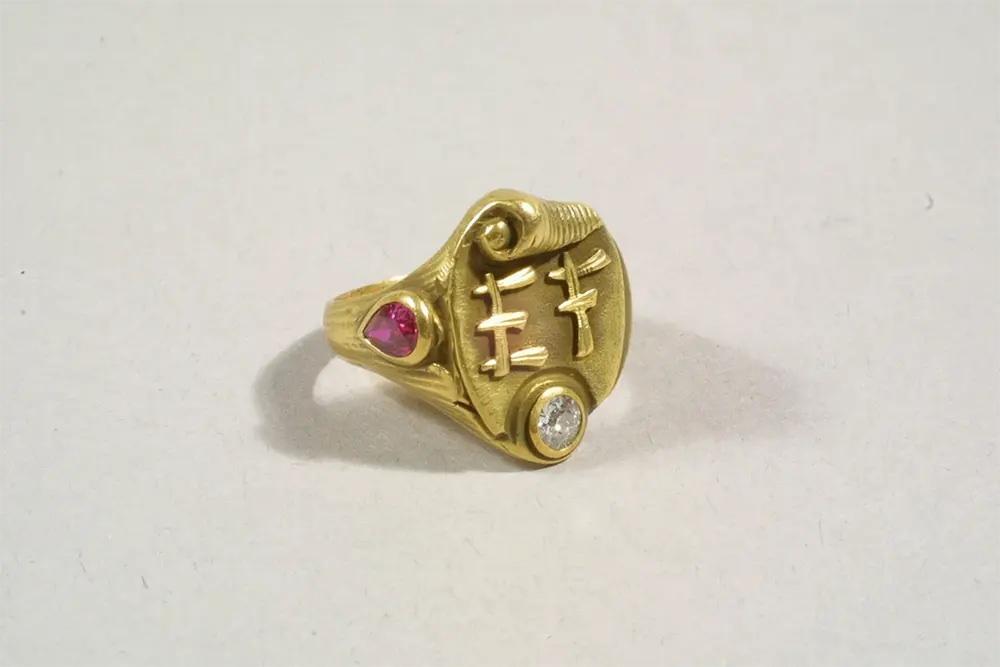
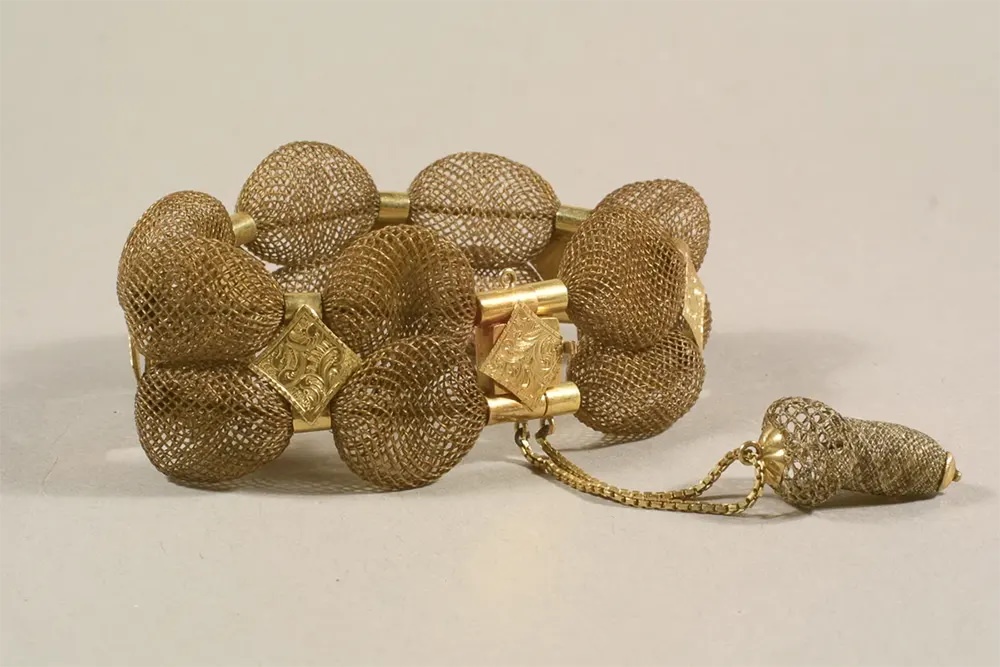
Lockets, rings, necklaces, brooches, and bracelets were the most common forms, but the tradition extended into larger objects as well. Hair was incorporated into framed memorial artworks that hung on walls — elaborate shadowbox-style pieces that combined woven hair with painted landscapes and inscriptions. These were less portable than jewelry but served the same purpose: a permanent, physical reminder of the person who had died.
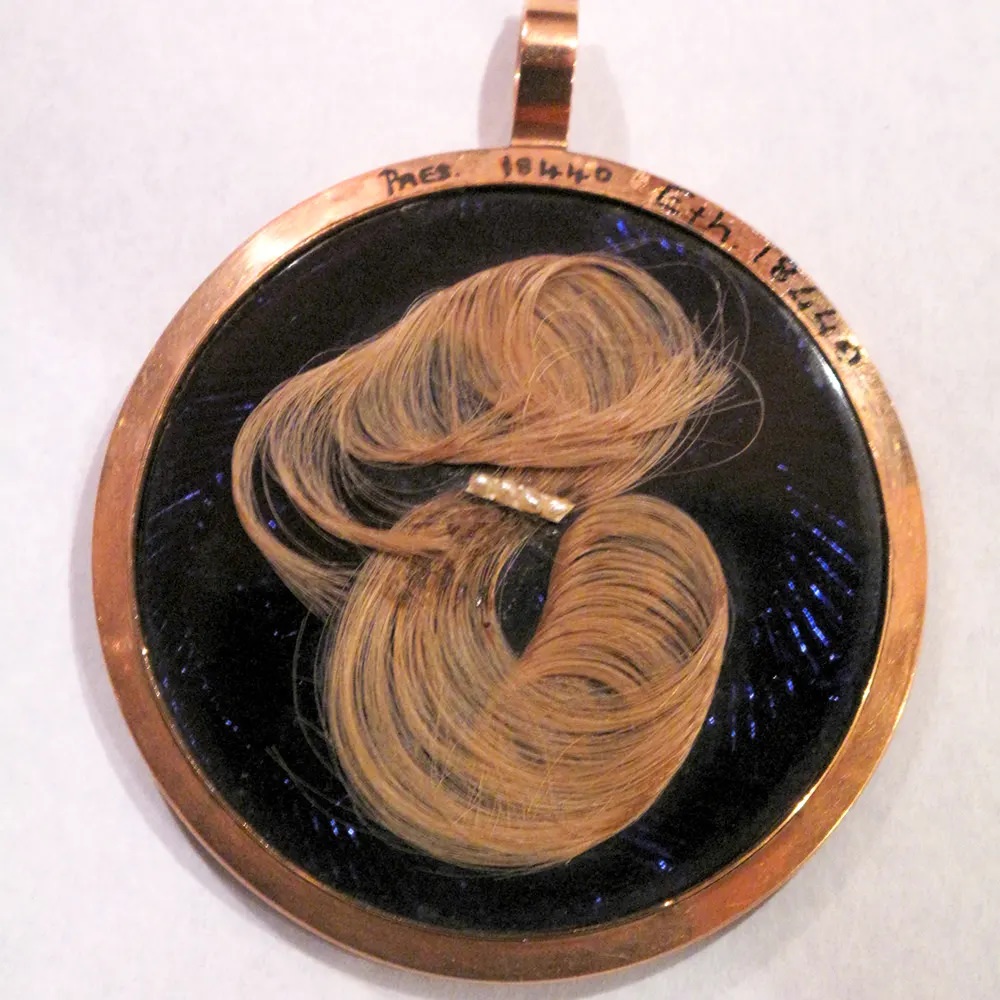
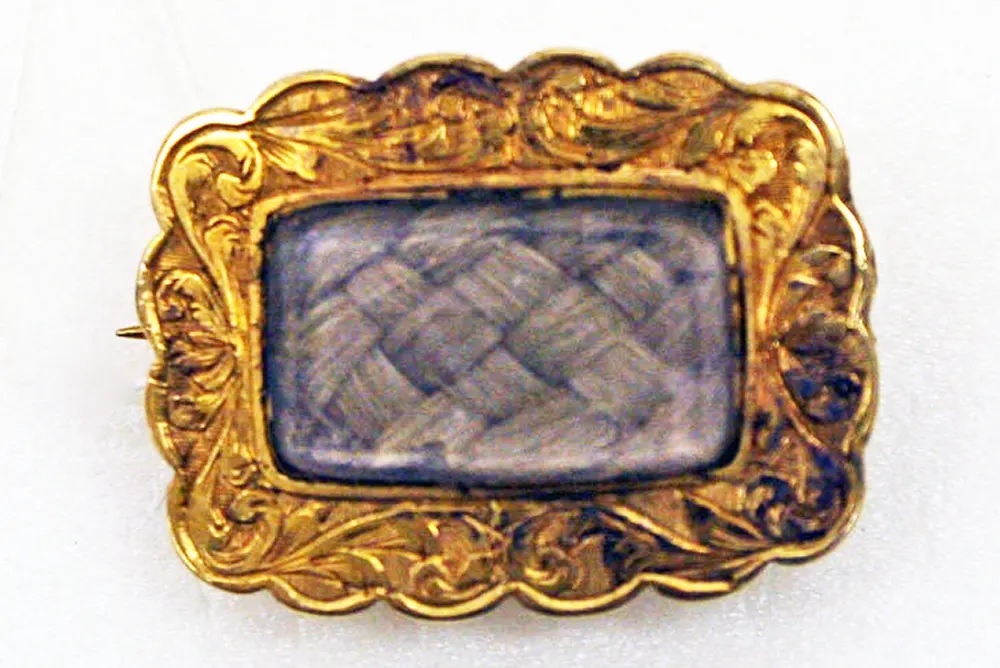
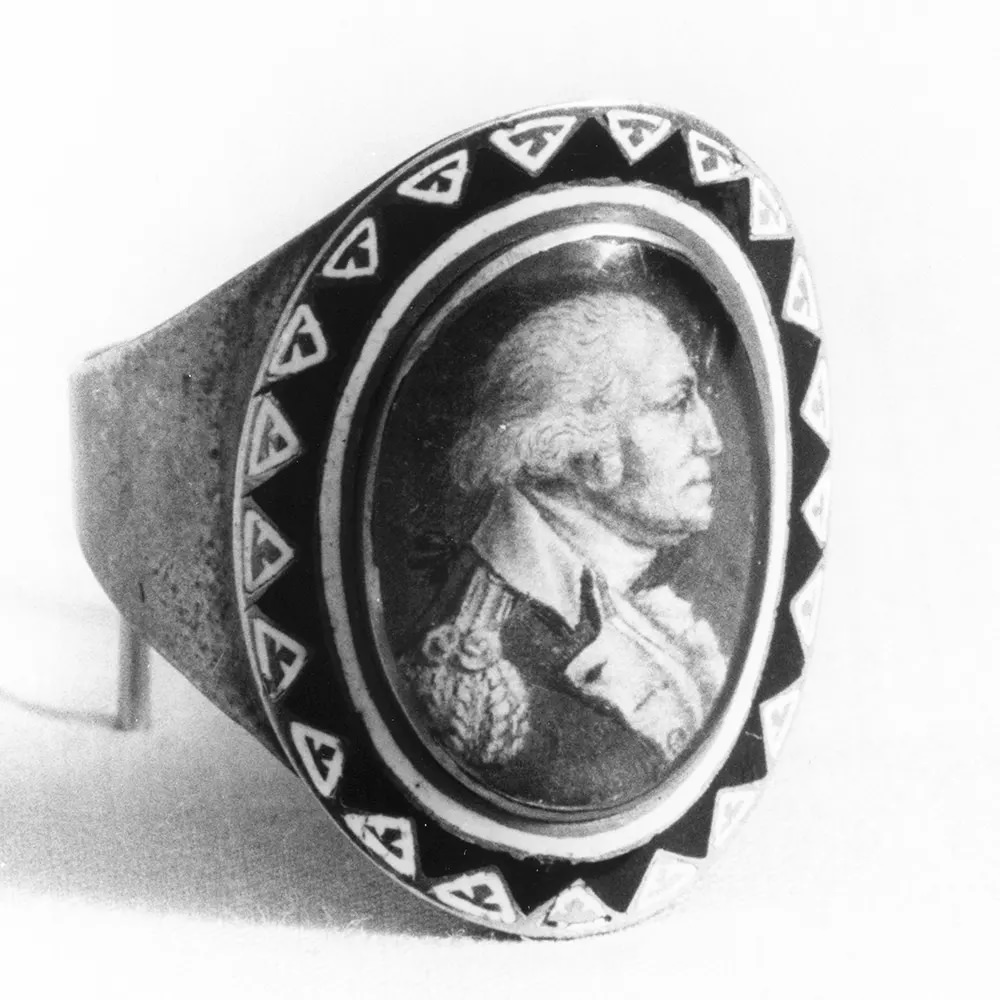
The tradition of memorial jewelry actually predates the Victorian era. The memento mori — Latin for ‘remember that you must die’ — was a well-established artistic tradition in Europe dating back centuries. Skull imagery, hourglasses, and inscriptions about mortality appeared in jewelry as far back as the 16th century. By the Georgian period in the late 18th century, memorial rings featuring hair, enamel, and funerary imagery were already being made with considerable skill. Victoria’s reign didn’t create mourning jewelry — it amplified and standardized it.
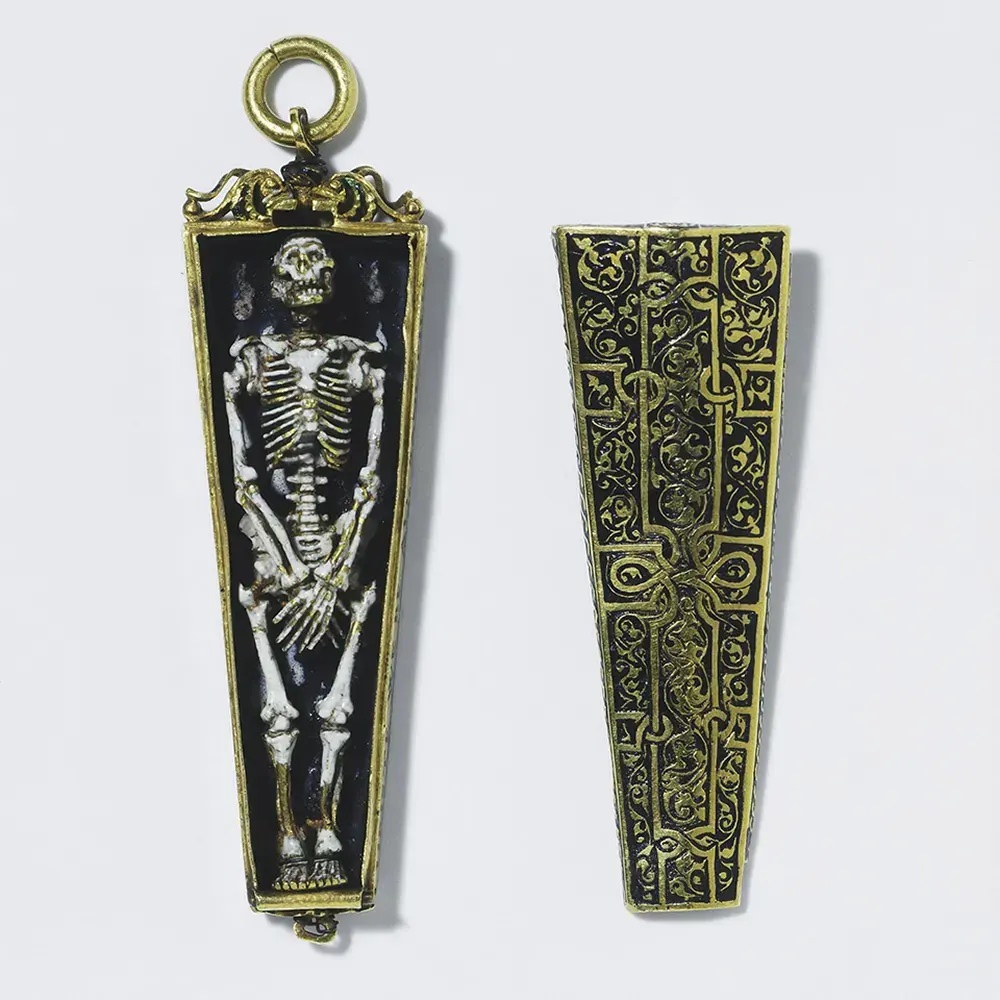
The inscription, however, has a more solacing message: Christ’s resurrection redeems sins.
Symbolism in mourning jewelry was layered and specific. A white enamel finish on a ring identified the deceased as an unmarried woman or a child — a detail that communicated an entire social status in a single glance. Pearls, associated with tears, were used in pieces mourning children. Sheaves of wheat suggested a life fully lived. Funerary urns, weeping willows, and mourning figures appeared painted on ivory or engraved into metal. Every design choice was deliberate, turning each piece into a coded message about who had died and what their loss meant.
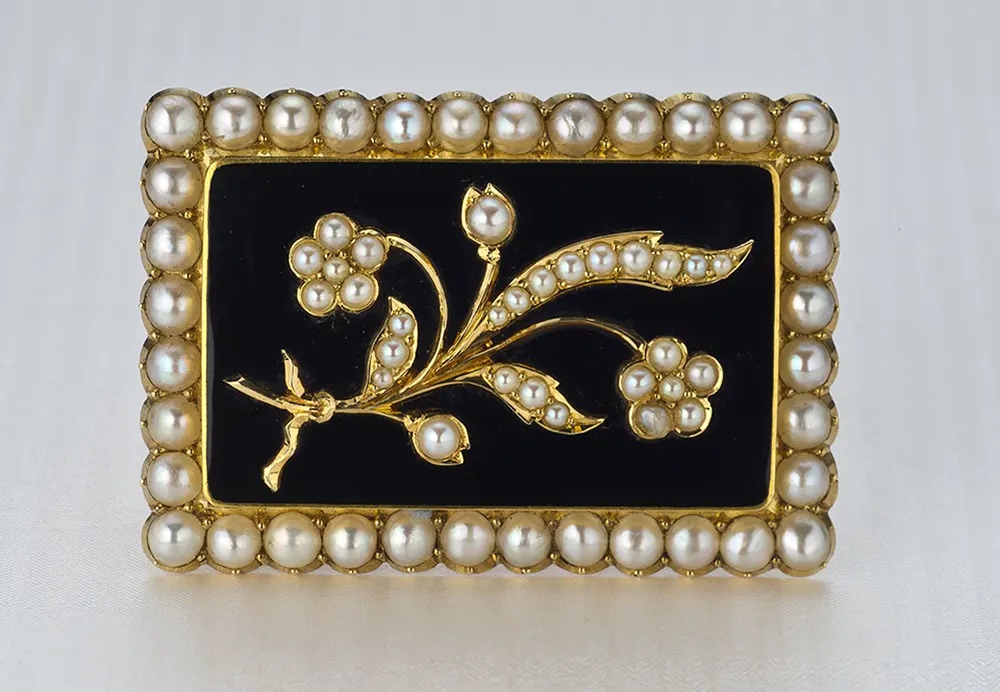
Thirty-six natural pearls surround the pin and seed pearls adorn the flower petals and leaves.
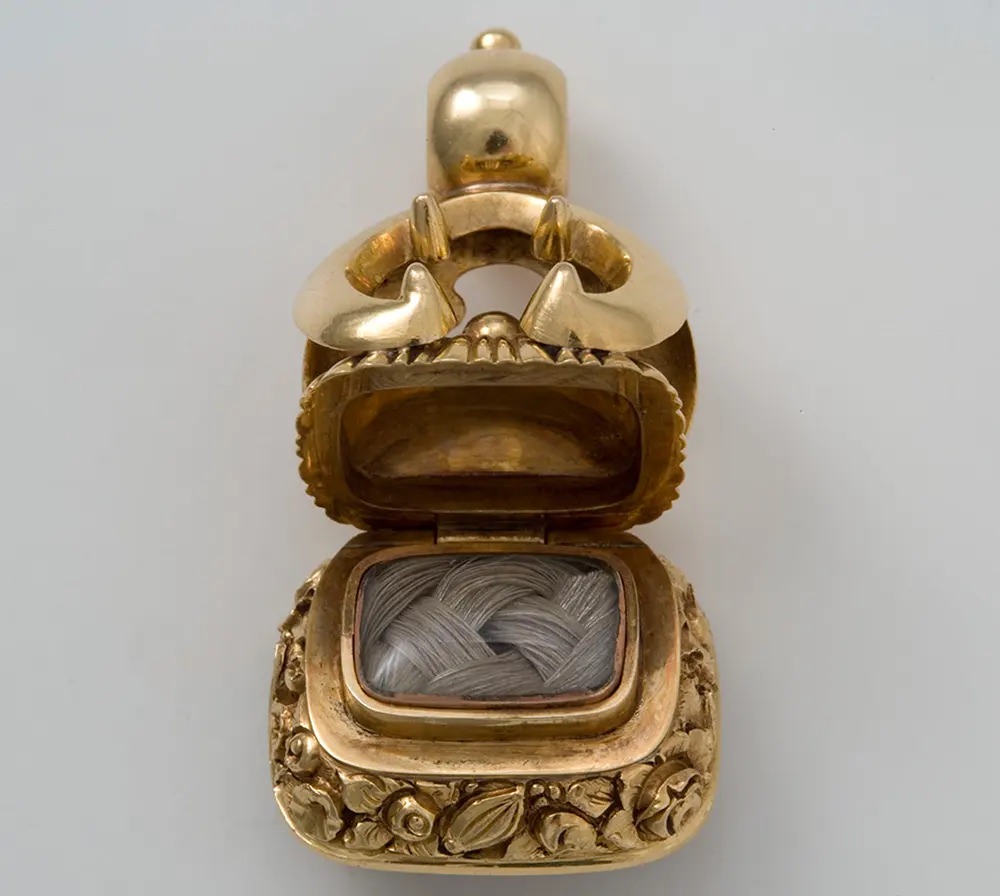
The stone on its base is very dark, almost black. These features are typical of mourning jewelry.
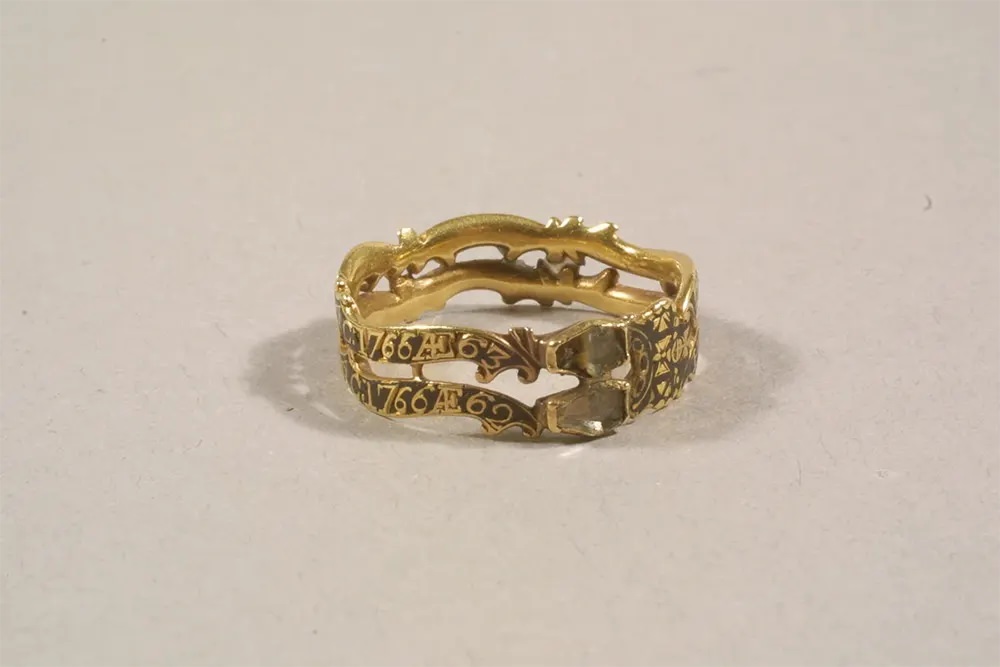
The Georgian pieces that preceded Victorian mourning jewelry show just how deep the roots of this tradition ran. A late 18th-century memorial ring might include small portions of hair tucked beneath an urn or woven into a willow tree design. White enamel on such a ring indicated the deceased was unmarried. Some pieces were dated and aged with precision — one surviving example marks a death on January 19, 1784, at the age of 51. These are not anonymous artifacts. They are records of specific people.
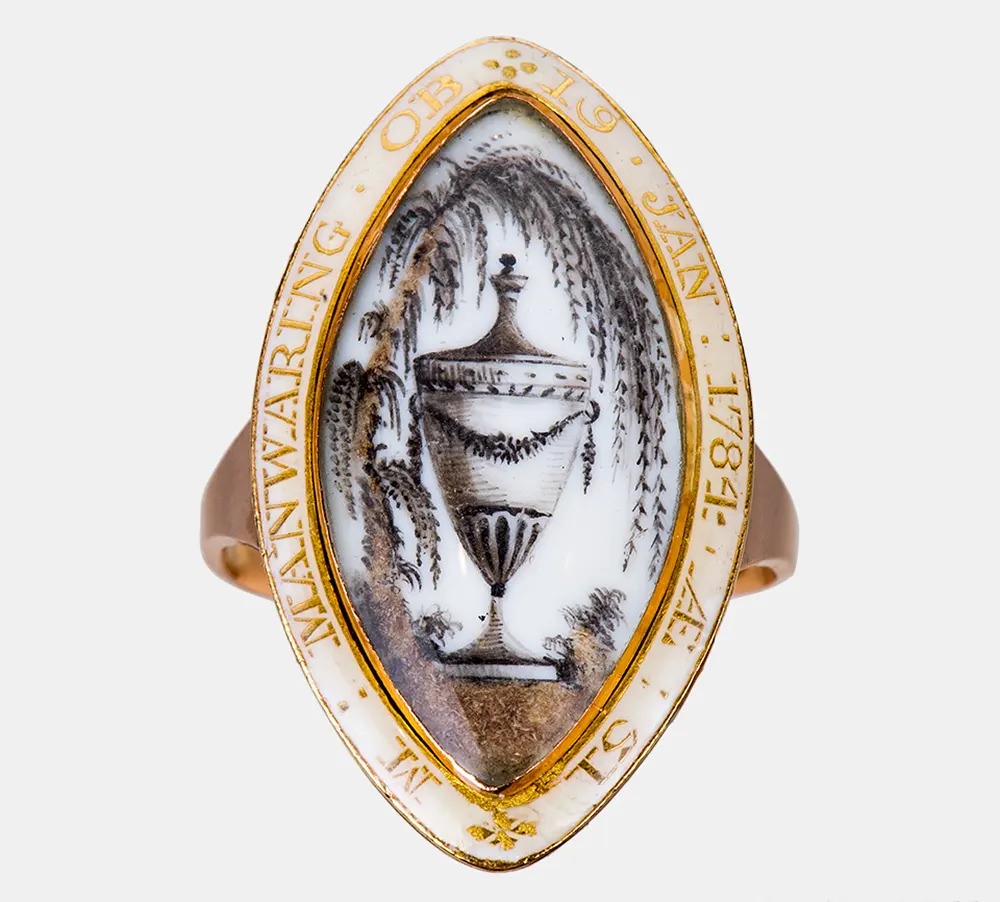
The white enamel suggests the deceased was unmarried; the individual died on 19 January 1784 at the age of 51.
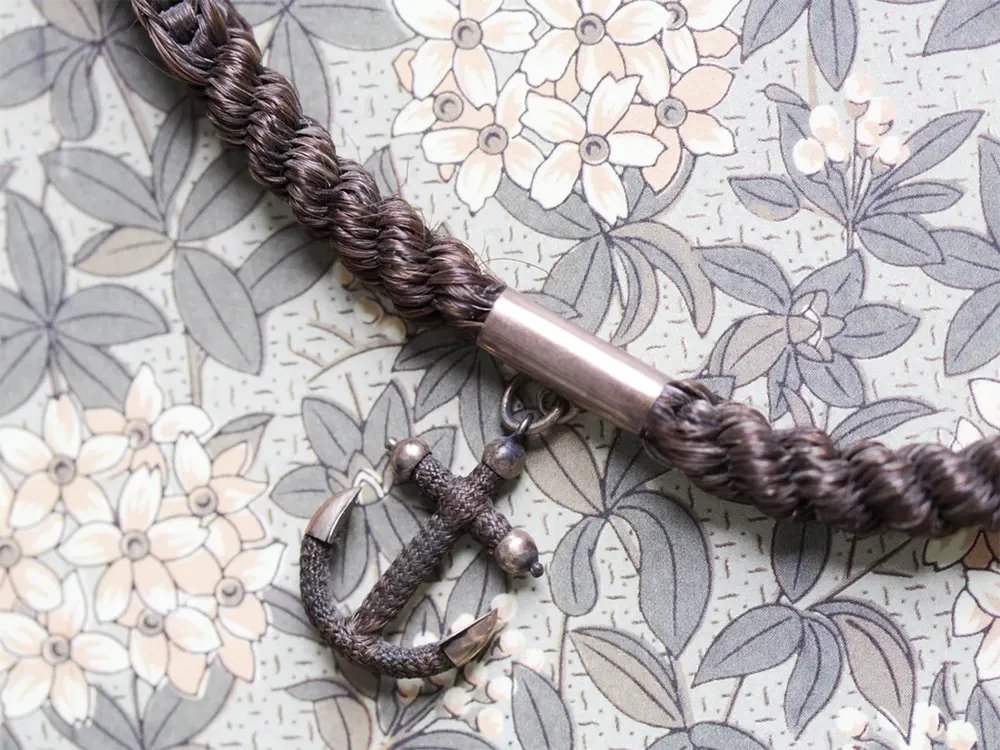
Hair jewelry reached its most refined form in the necklace — long, finely woven strands of human hair twisted and braided into complex patterns, finished with gold clasps and findings. These pieces required real skill to construct and were worn openly, not hidden. Displaying mourning jewelry was a social statement. It told the world that you were grieving, and in Victorian society, that grief was respected and acknowledged by others who had experienced the same losses.
Brooches were among the most versatile mourning pieces. They could carry hair under glass, bear the name of the deceased in woven form, display a miniature urn as a dangling pendant, or simply use black materials and solemn design to mark the wearer’s loss. A brooch was visible, public, and worn close to the body — all qualities that made it well-suited to the Victorian practice of making grief a shared, recognized part of daily life.
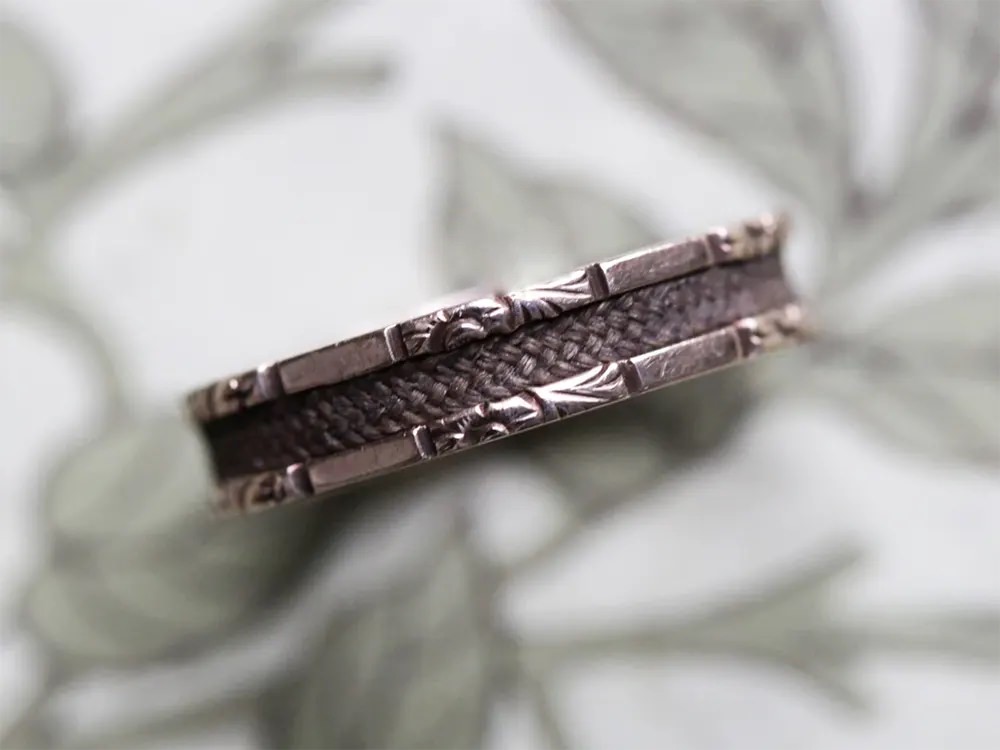





That must have taken so much work!
Why do 95% of them seem to have the same hair texture? Did it have to do with hair care of the times, or is that hair type just stronger?
It is likely due to the popular styles of updos, which relied heavily on braiding. This is the kind of crimped wave that results from letting out braids.
It looks to me like the sort of waves that come after wearing braids overnight