When Ursula Andress walked out of the Caribbean Sea in 1962, she was wearing a simple ivory cotton bikini. That single moment in Dr. No became one of the most talked-about scenes in cinema history. Decades later, the swimsuit itself is still recognized around the world.

Andress played Honey Ryder, a Bond girl introduced in the very first official James Bond film. Her entrance from the ocean, bikini-clad and confident, was unscripted in terms of its cultural punch. No one anticipated just how deeply that image would embed itself into popular culture.

The bikini itself is straightforward in construction. It features a classic triangular top and low-rise bottoms held together with tied strings. The ivory cotton fabric is lightweight and clean in color. There are no embellishments, no patterns, no padding — just a well-cut, minimal design that worked perfectly on screen.

That simplicity was part of its power. The cut accentuated Andress’s figure without relying on flash or ornamentation. In a film filled with gadgets and glamour, this plain swimsuit stood out precisely because it didn’t try too hard.

The scene launched Andress from relative obscurity into international stardom almost overnight. Before Dr. No, she had appeared in a handful of films without major recognition. After it, she was a household name. The bikini was inseparable from that rise.

By the mid-1960s, the ivory bikini had become a fashion reference point. Designers and swimwear brands took direct cues from its silhouette. The string-tied, low-rise bottom style spread across beach culture worldwide and has been reproduced in countless variations ever since.

The bikini also captured something specific about the 1960s mood. It fit squarely into the era’s appetite for freedom, sun-soaked leisure, and a loosening of social constraints. The image of Andress emerging from the water reflected that spirit directly — bold, unhurried, and entirely at ease.
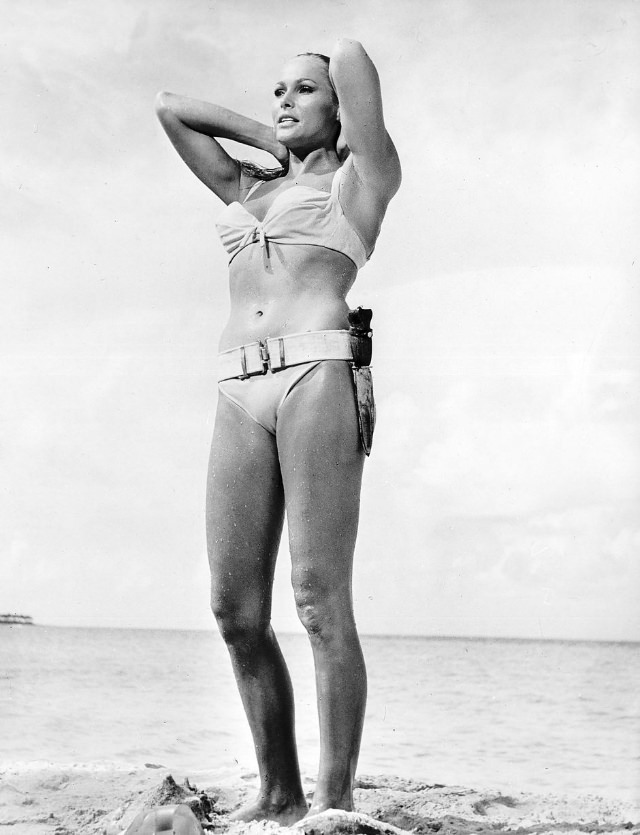
Advertisers, filmmakers, and music video directors pulled from that same image repeatedly in the decades that followed. The visual of a woman emerging from the sea in a white or ivory bikini became a shorthand reference — one audiences recognized immediately because of Andress.
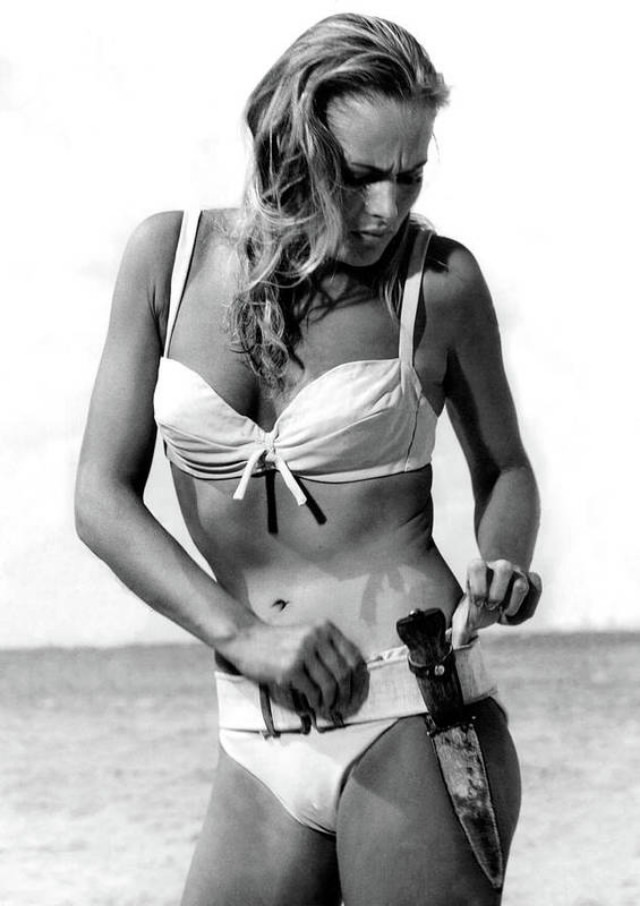
The original costume has been displayed in exhibitions and has fetched significant attention at auction, confirming its standing as a genuine artifact of film history. It is not treated merely as a prop — it is catalogued and preserved as a piece of cultural record.

Few costumes from any film era have matched this one for staying power. The ivory cotton bikini from Dr. No holds its place not because of complexity, but because of context — the right garment, on the right person, in the right moment.