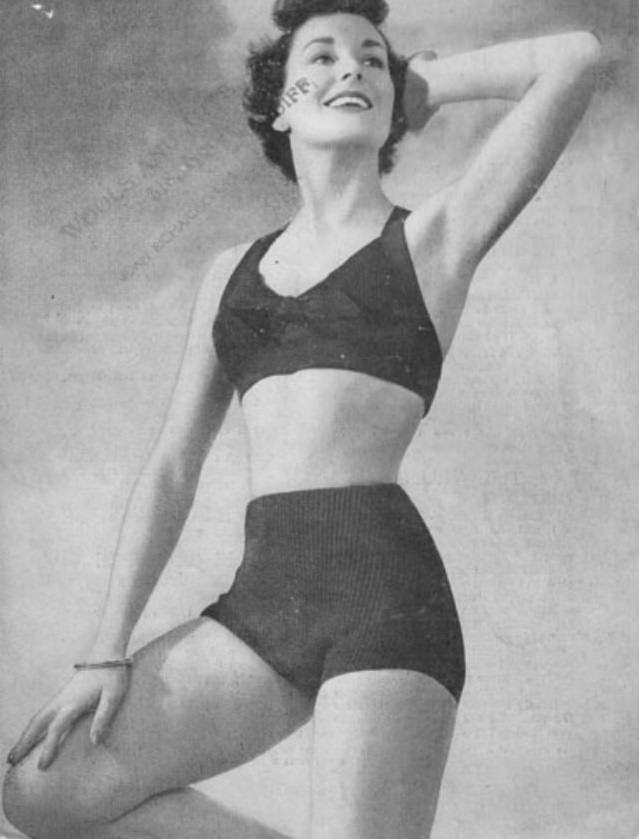
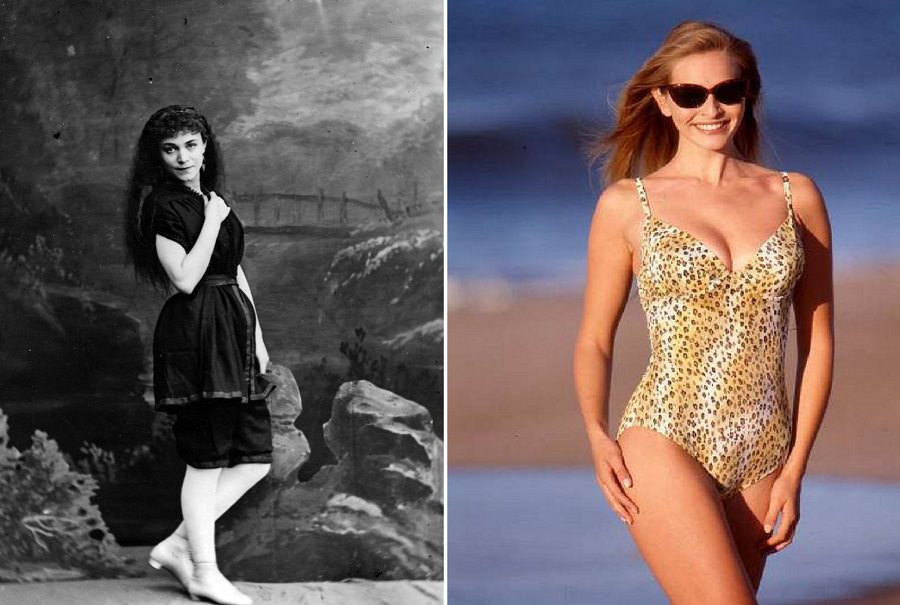
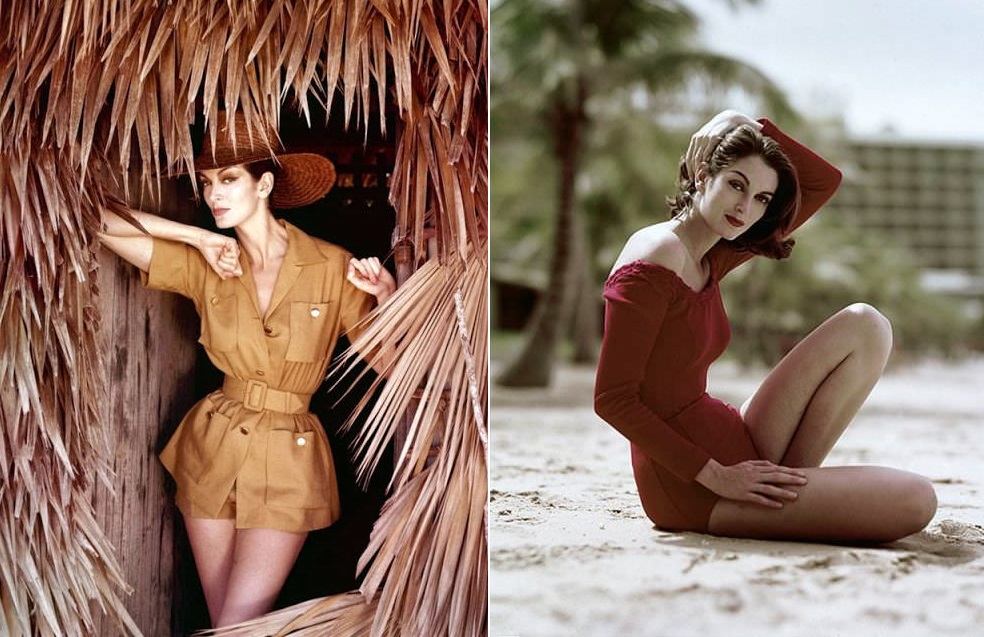
Before World War II, women at the beach wore one-piece bathing suits. That changed fast in the 1940s. Wartime fabric rationing forced designers to cut material wherever they could, and the two-piece swimsuit was born out of that necessity. It wasn’t a trend someone planned — it was a practical response to real-world limits that turned into one of the most defining shifts in fashion history.
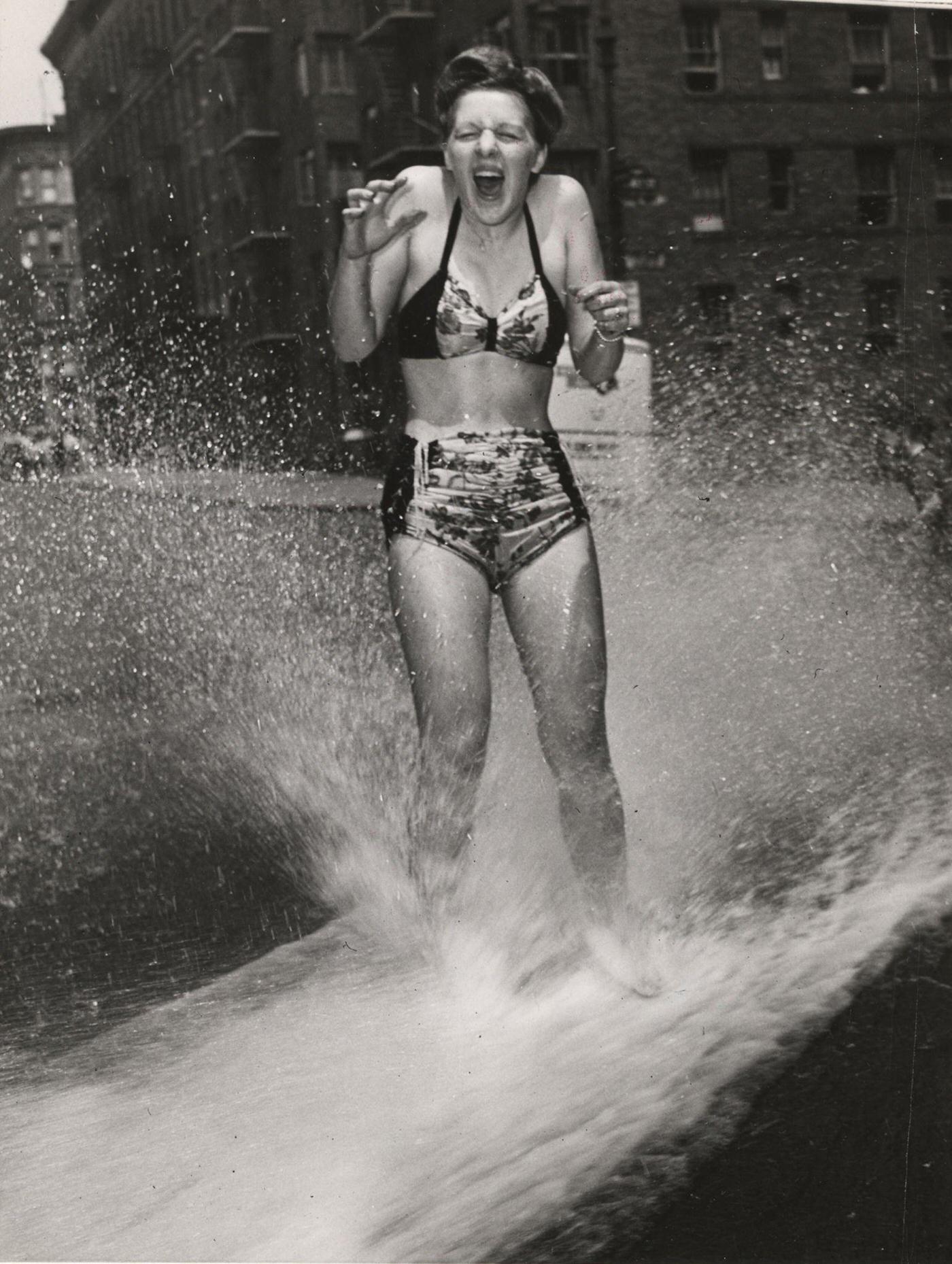
Even before the 1940s officially began, two-piece styles were already appearing. The late 1930s saw early versions of split swimwear emerge, particularly in Europe. By the time the 1940s arrived, women in Germany and across the United States were openly wearing them at the beach and in public spaces.
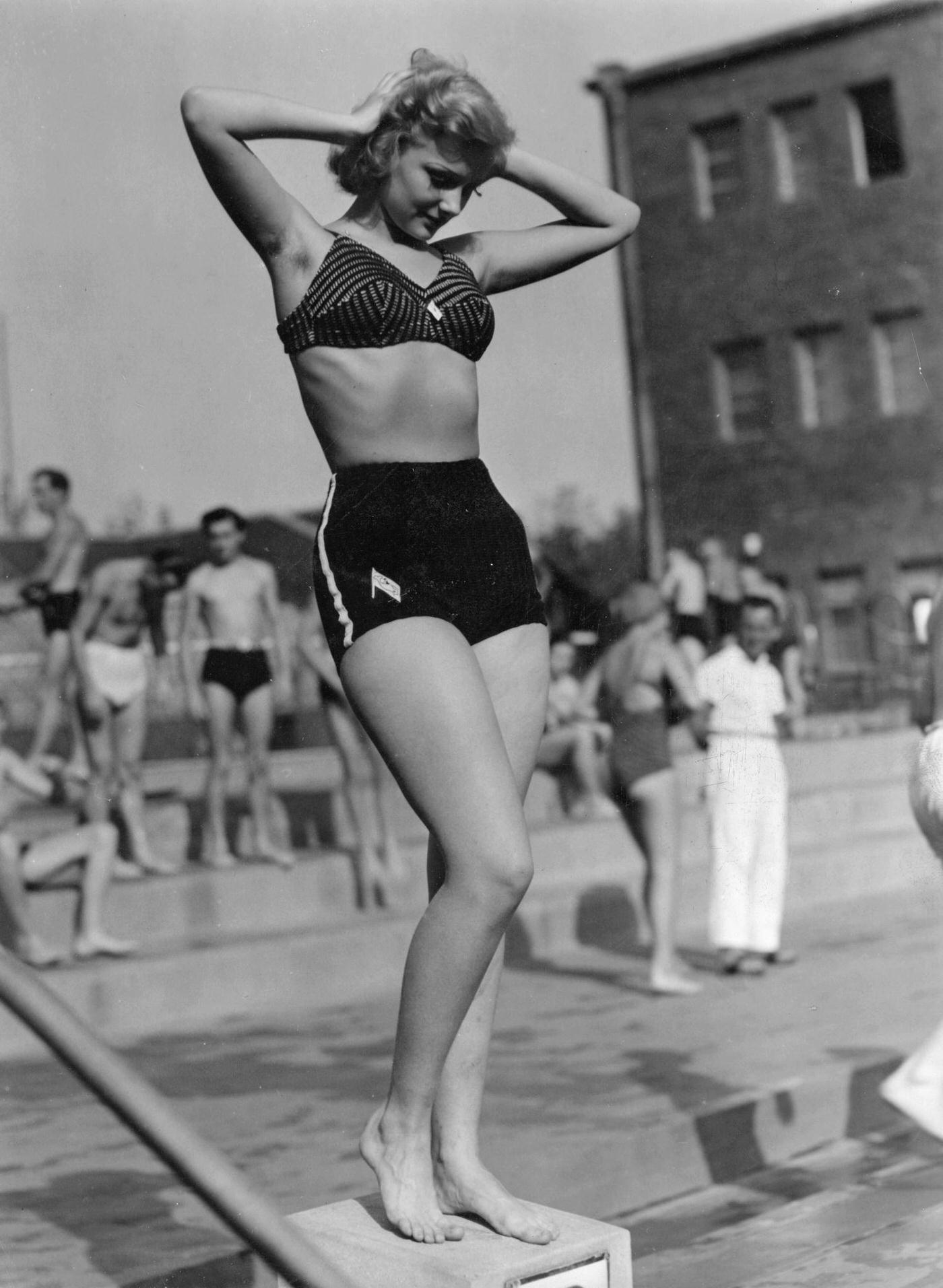
Hollywood played a massive role in pushing the two-piece into the mainstream. Actresses were regularly photographed on beaches and by pools, their images circulated through magazines and newspapers. Betty Grable was one of the biggest names associated with the look, and her beachwear photos made the two-piece feel glamorous and desirable to women across the country.

The style spread quickly across different countries. In Germany, two-piece swimwear appeared in everyday settings — not just on professional models or actresses. Women wore them climbing fences, dancing, and going about their leisure activities.
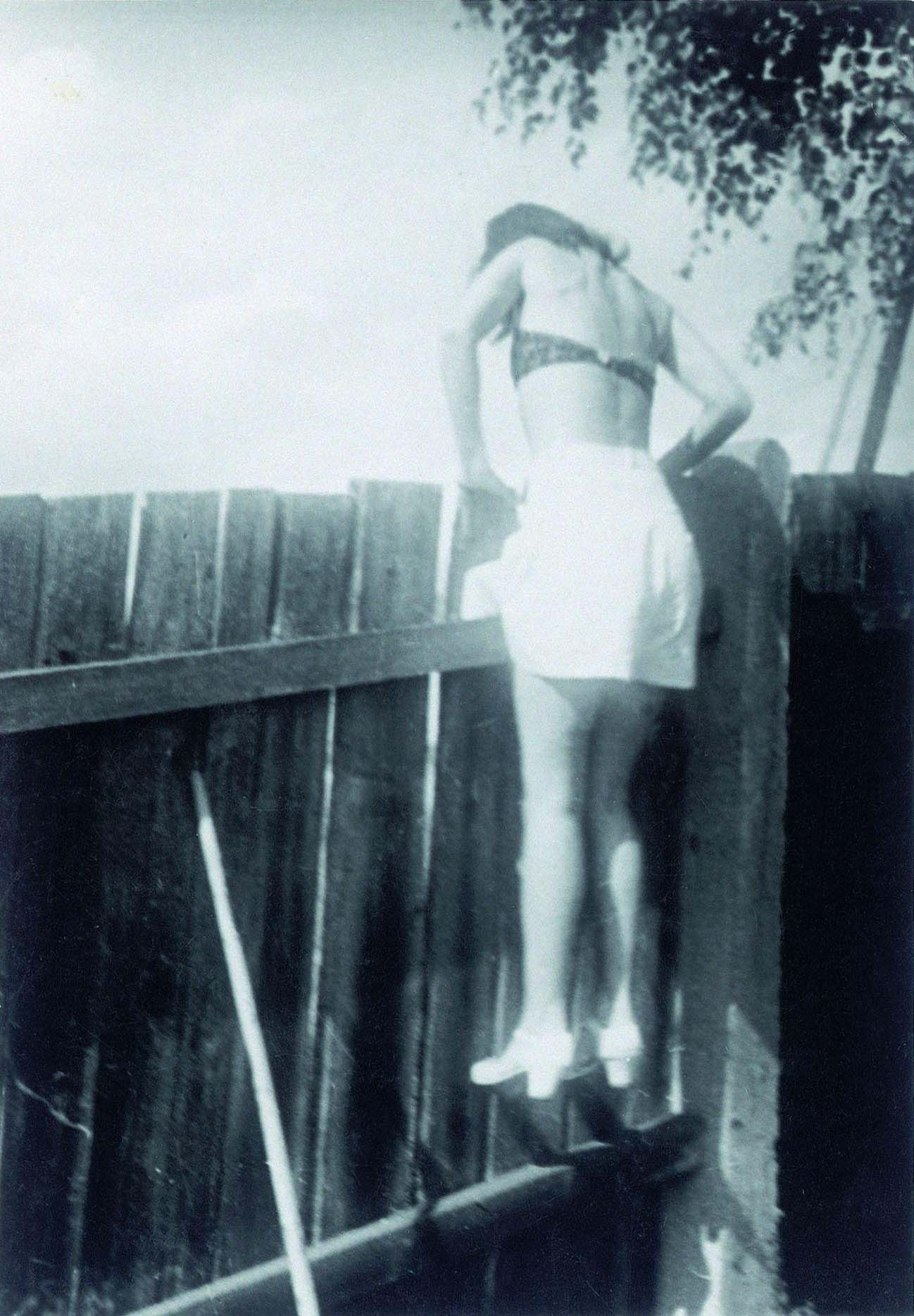
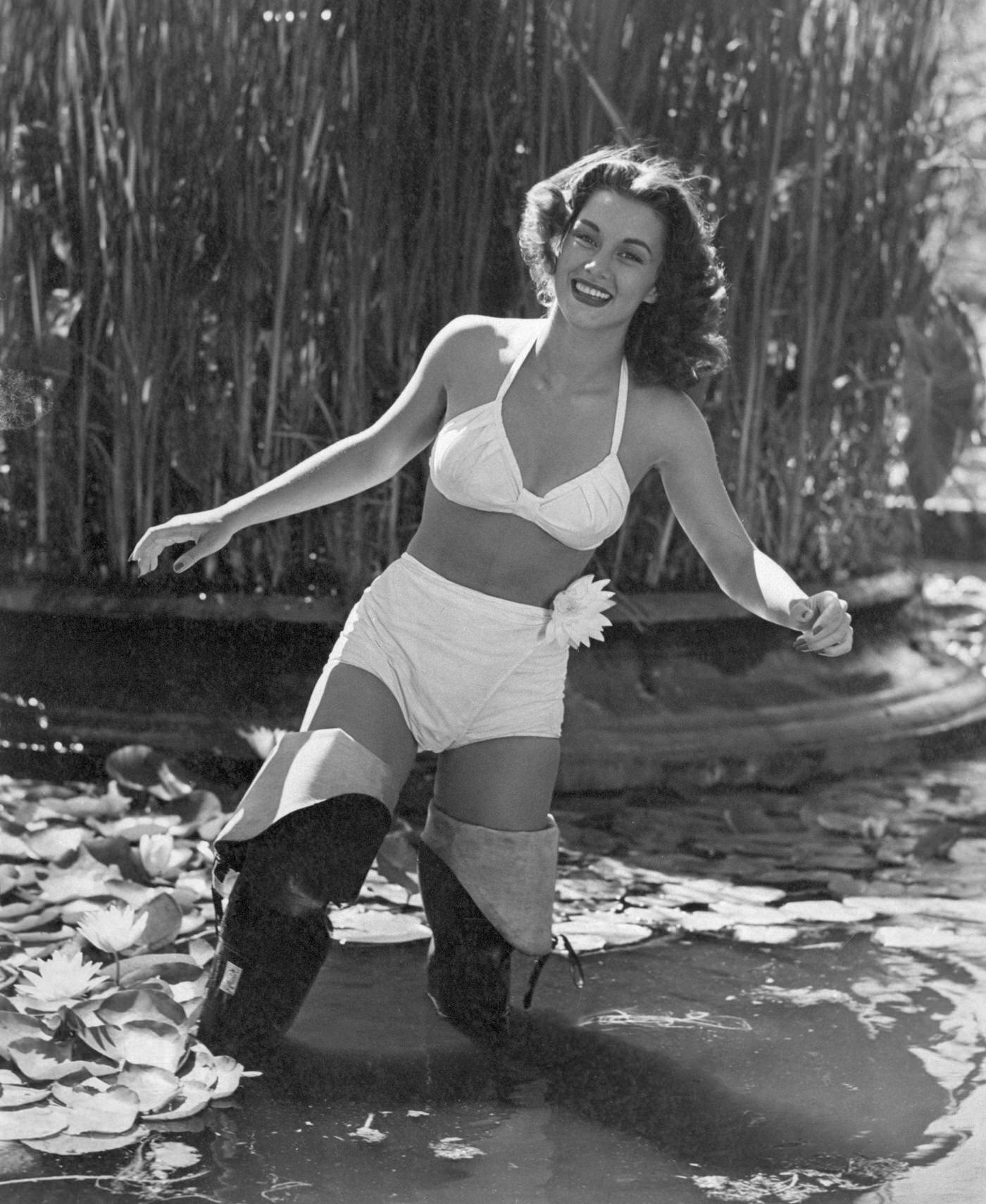
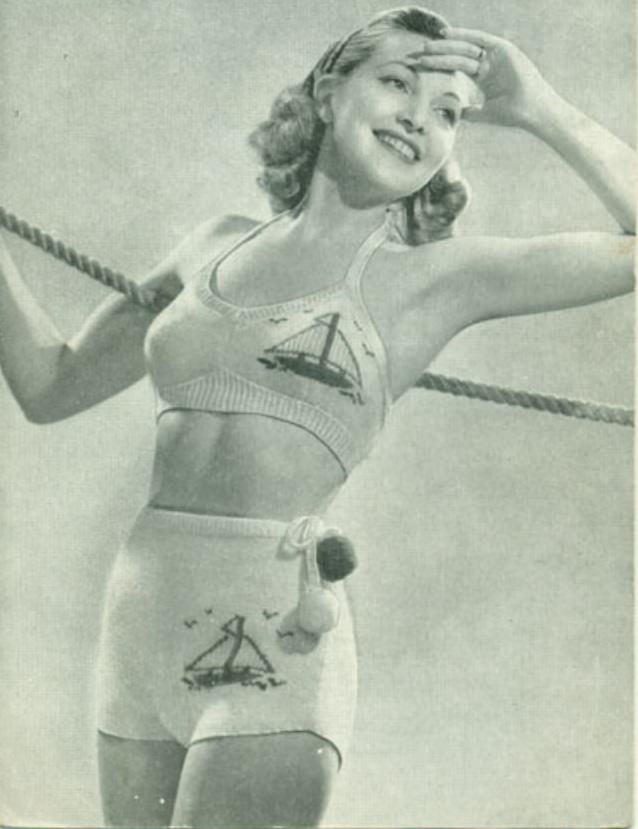
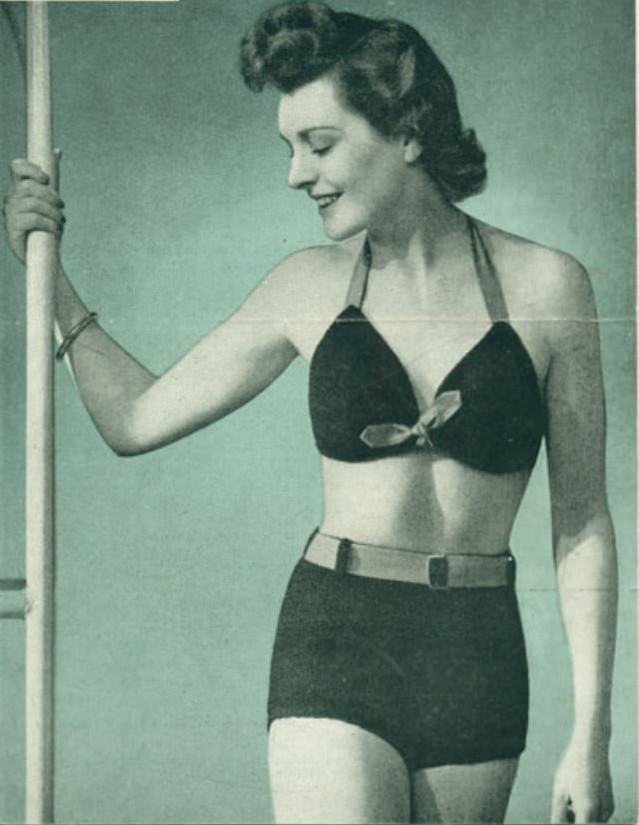
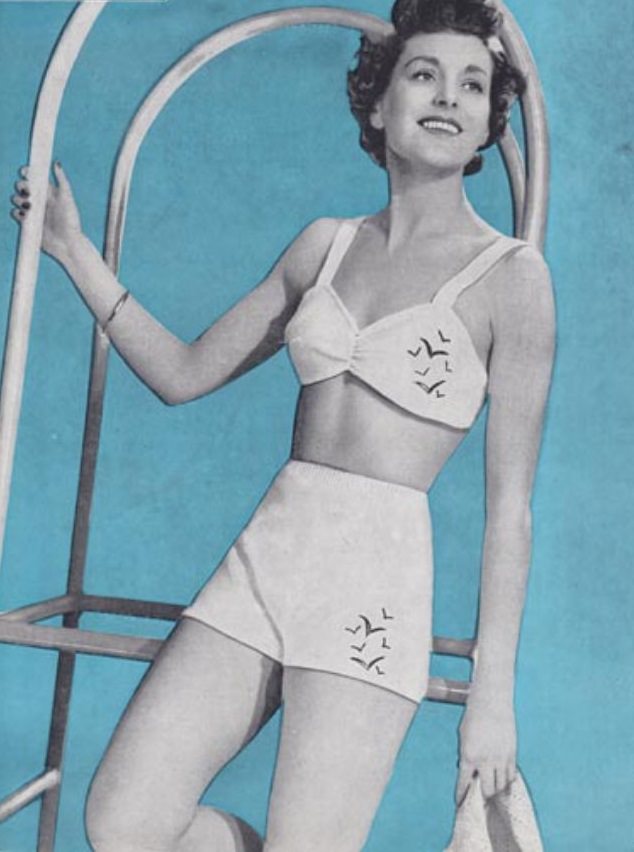
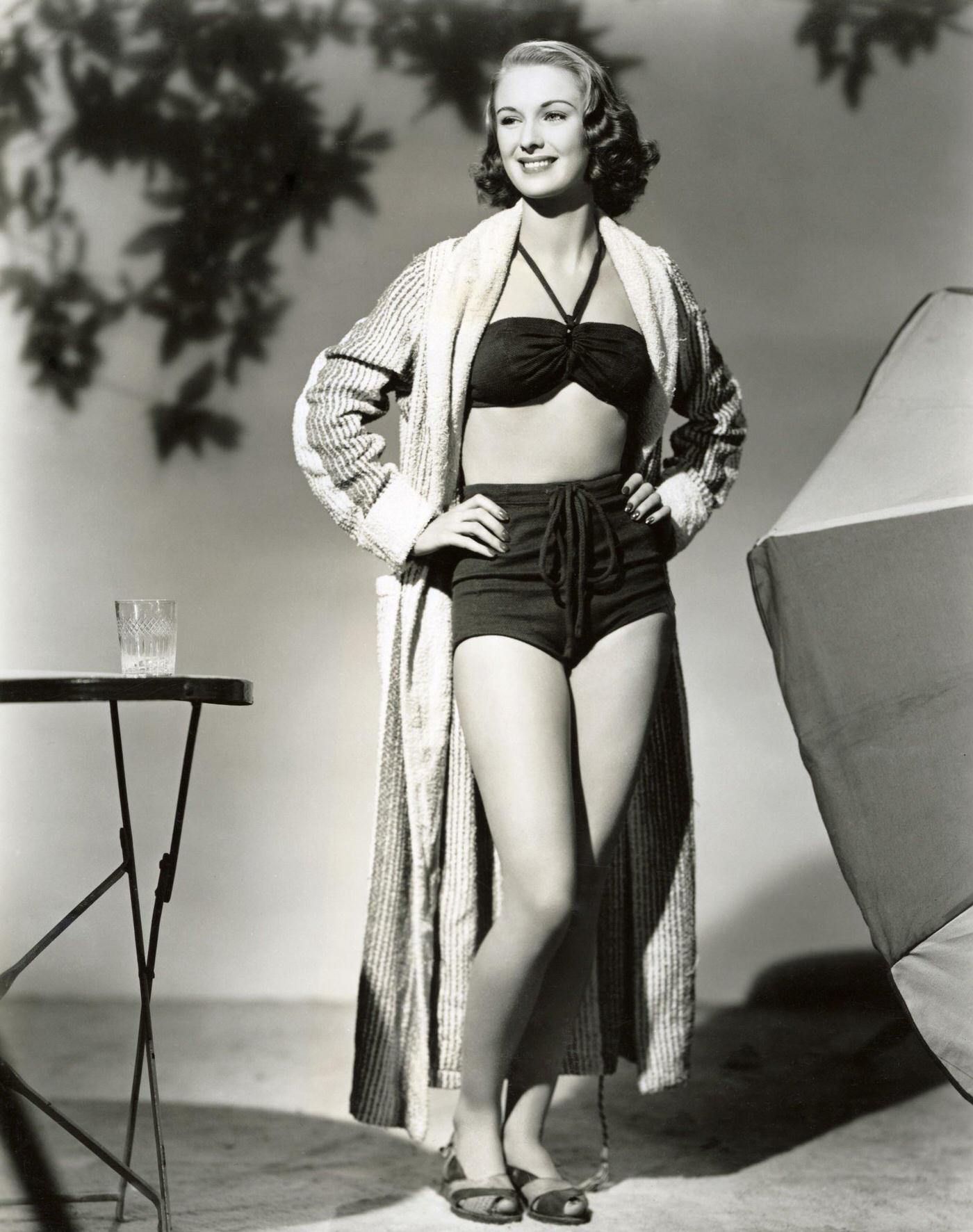
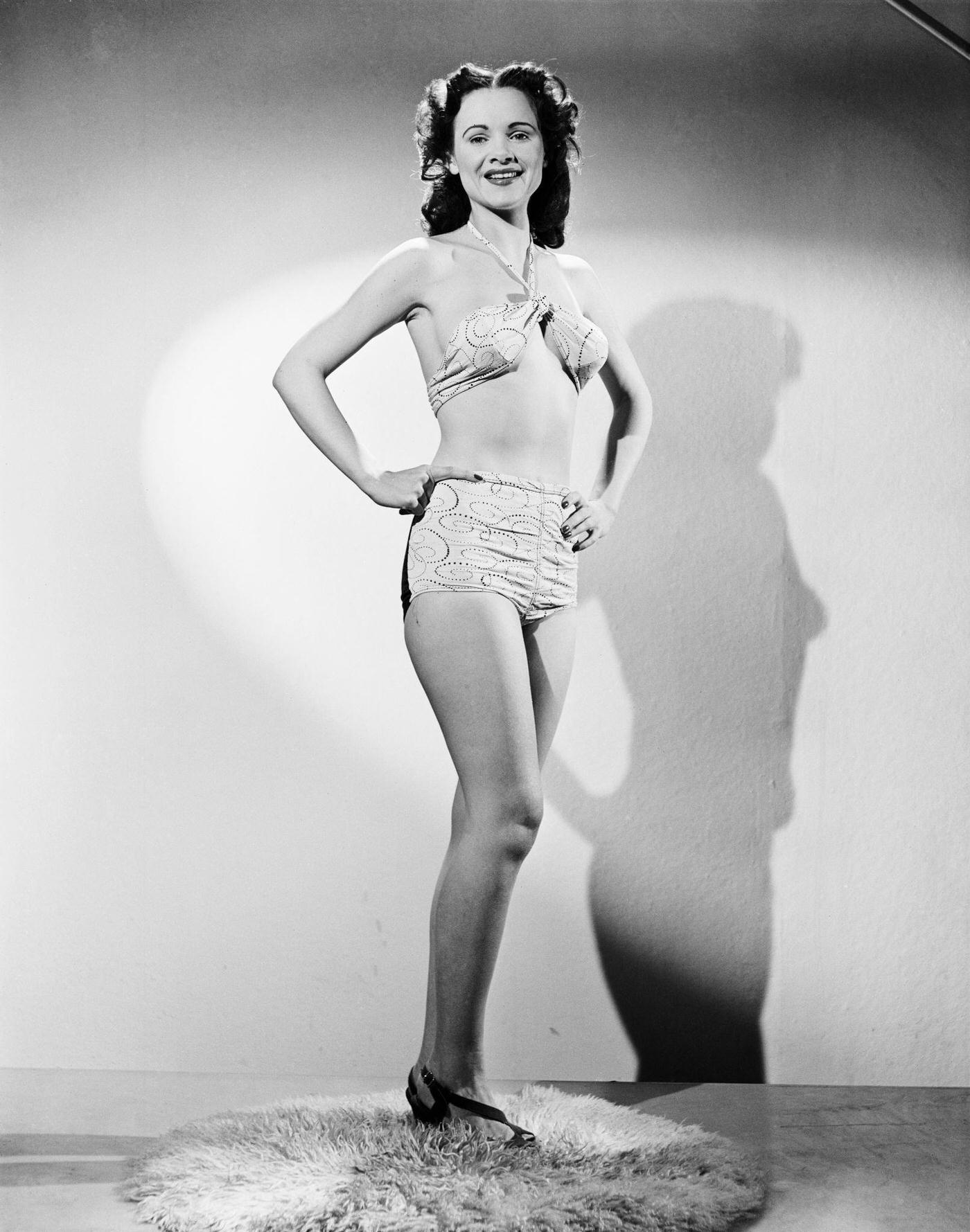
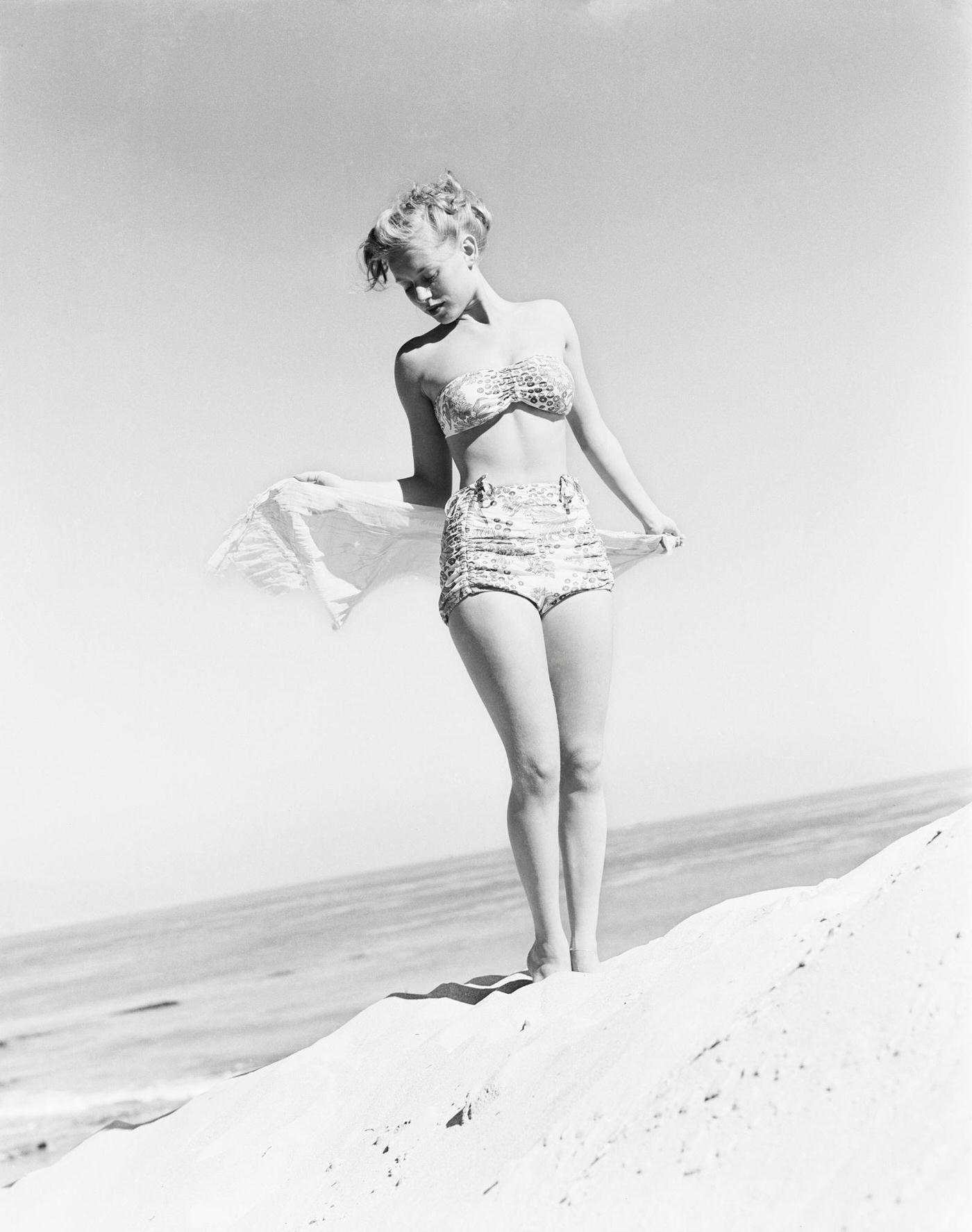
The 1940s two-piece looked nothing like the modern bikini. The bottoms were high-waisted, sitting at or above the navel. Many featured small skirts or peplum details along the waistband. Tops ranged from halter necks to strapless bandeau cuts, always providing full coverage of the midriff. The overall silhouette emphasized a defined waist and a structured, feminine shape.
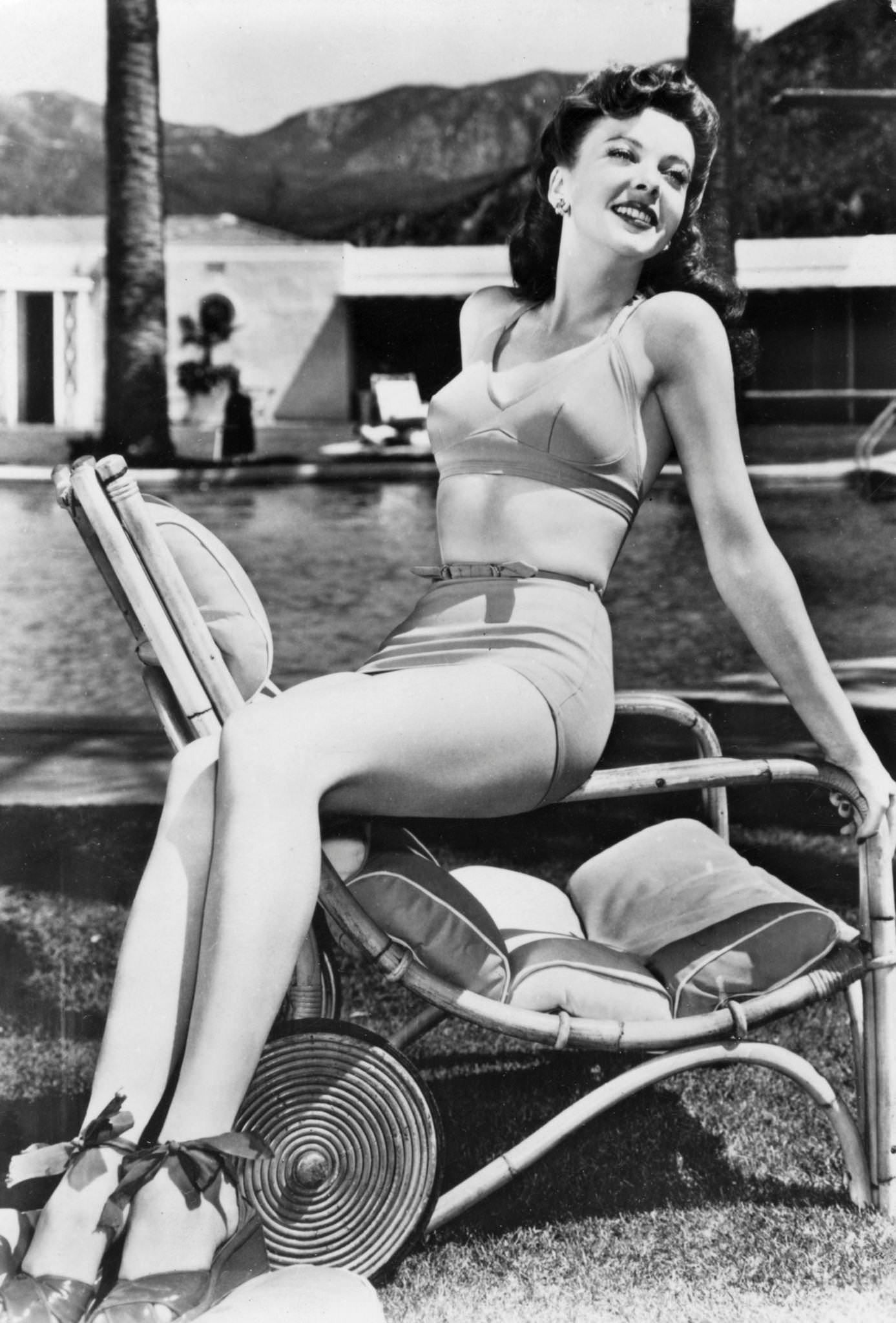
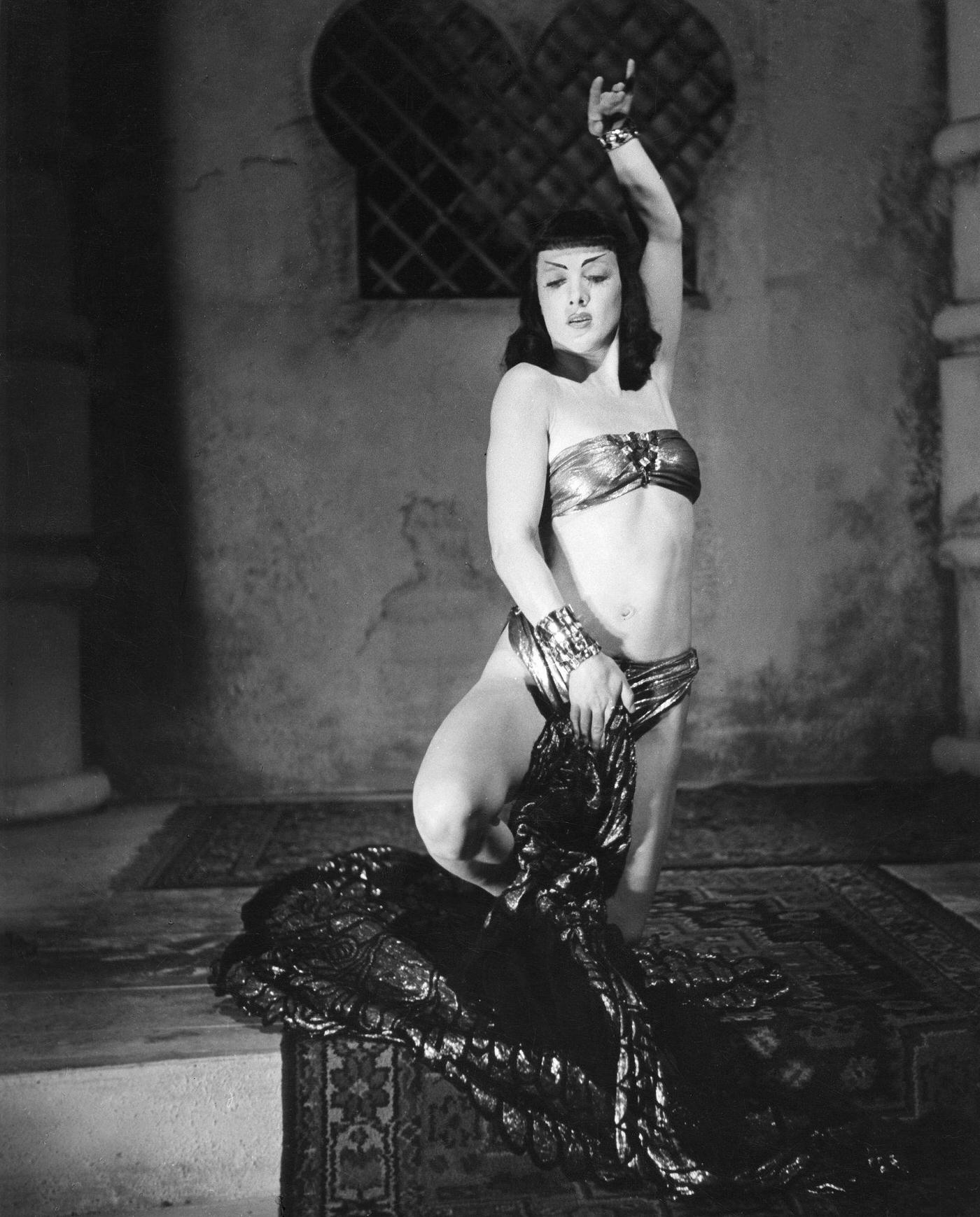
Performers also embraced the two-piece as a stage costume. Dancers in particular favored the freedom of movement it allowed. The style crossed between entertainment and everyday beachwear with ease.
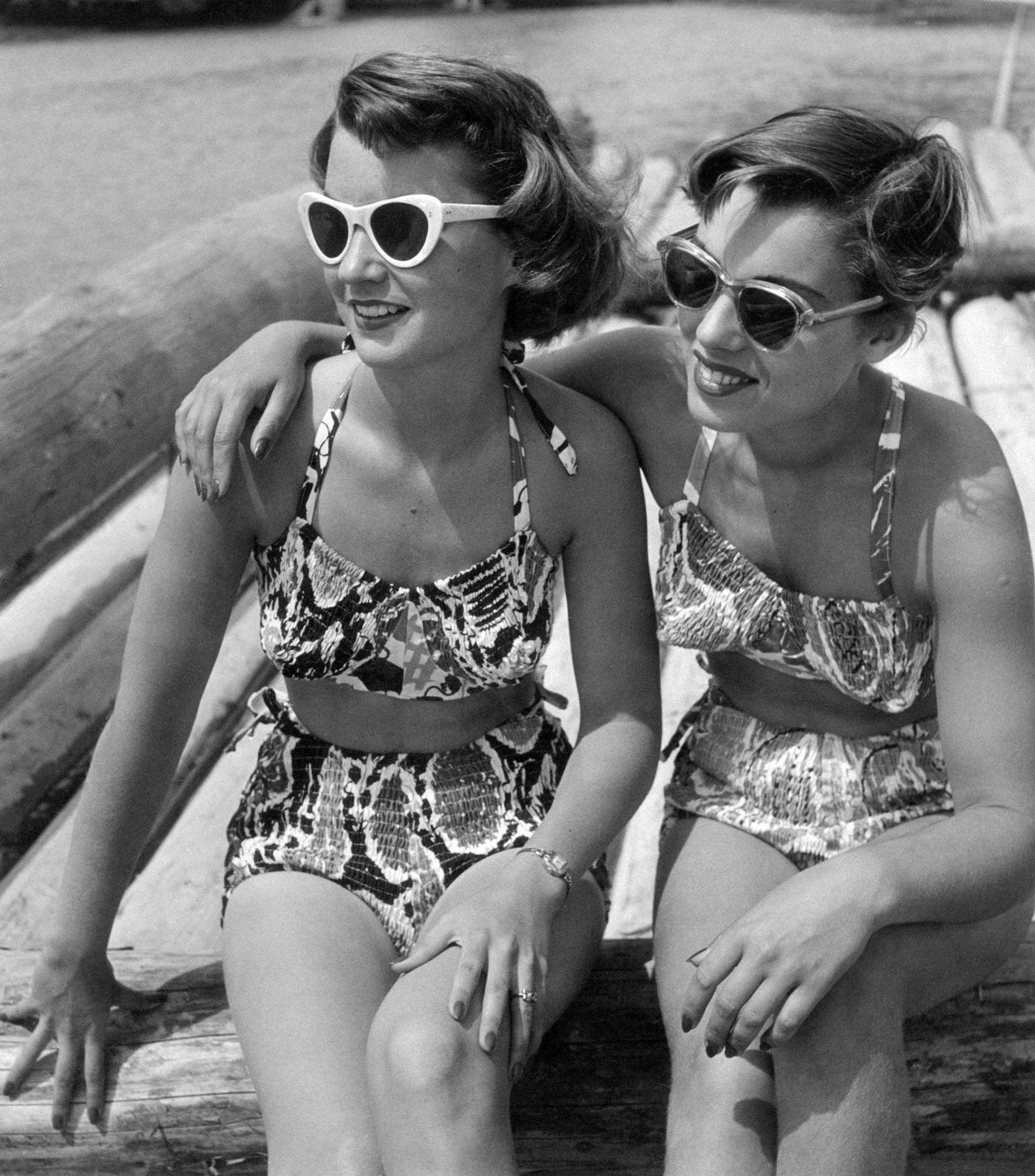
Prints and patterns were a defining feature of the era’s swimwear. Florals, polka dots, nautical stripes, and bold solid colors all appeared regularly. These designs weren’t subtle — they were meant to stand out on the beach. Fabric technology at the time favored cotton and wool blends, which held their shape even when wet.

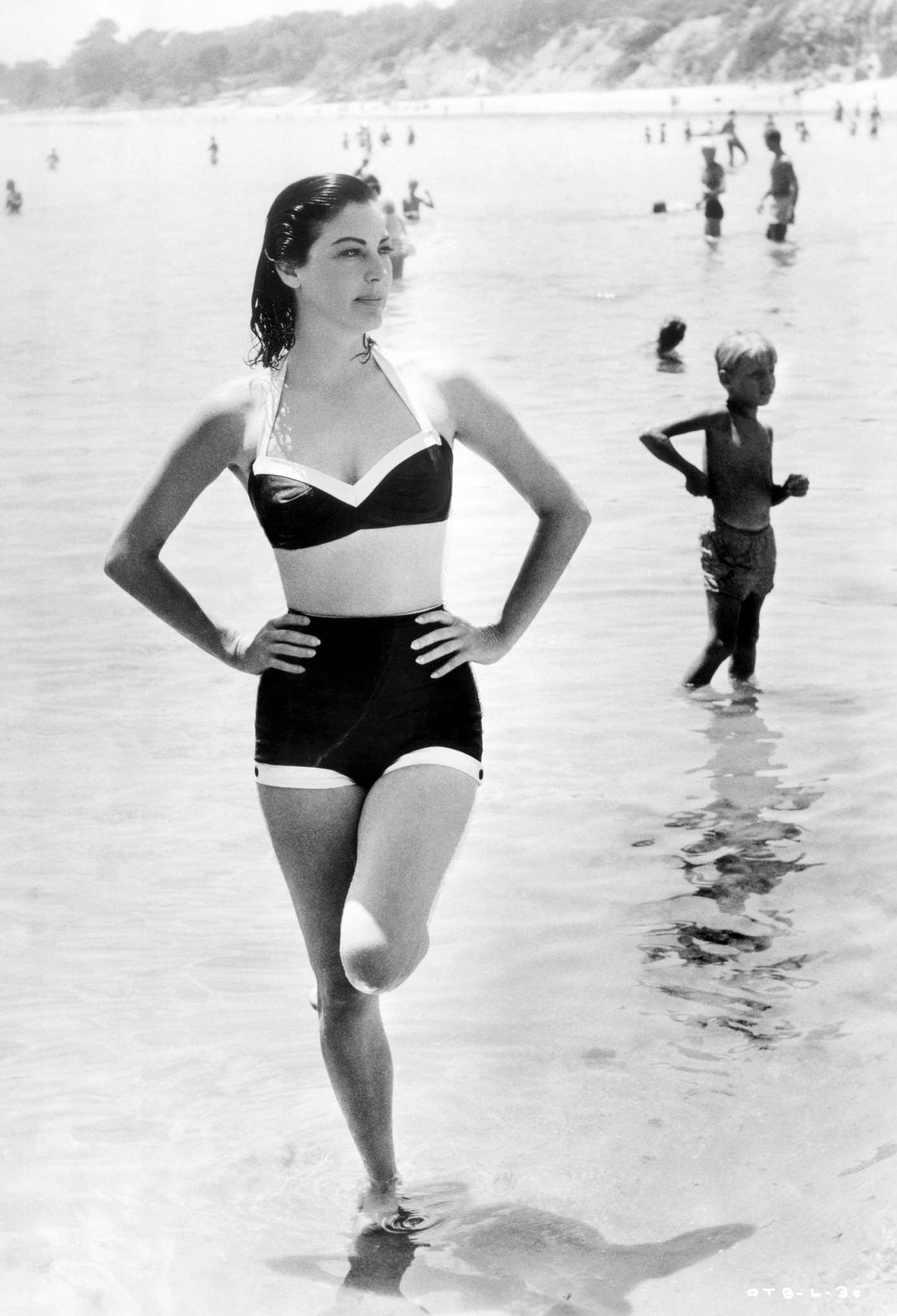
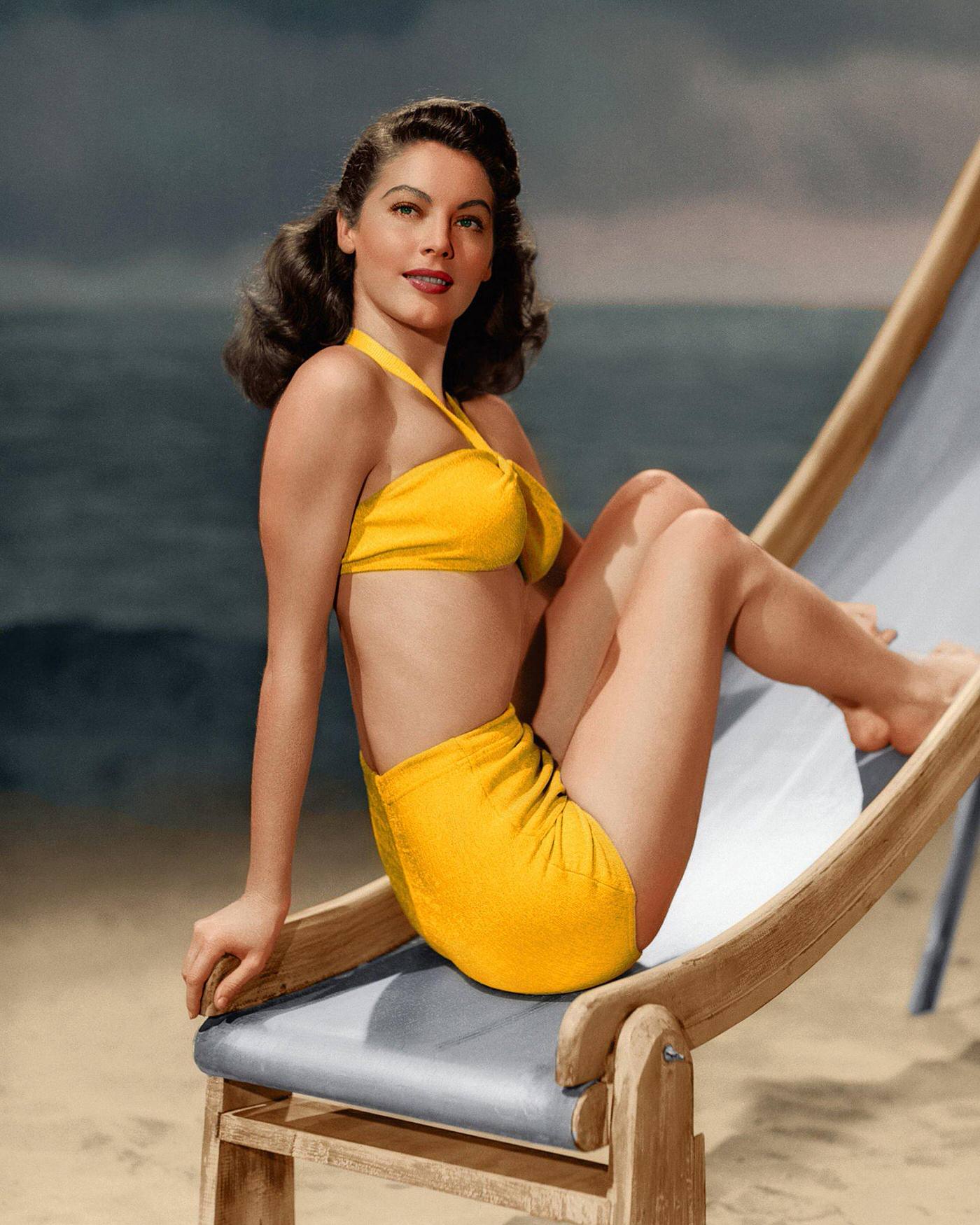
Ava Gardner was one of the most photographed actresses of the decade in beachwear. Her beach sessions from 1943 alone produced multiple widely circulated images. Gardner’s consistent presence in swimwear photography helped normalize the two-piece for American women who followed celebrity culture closely.
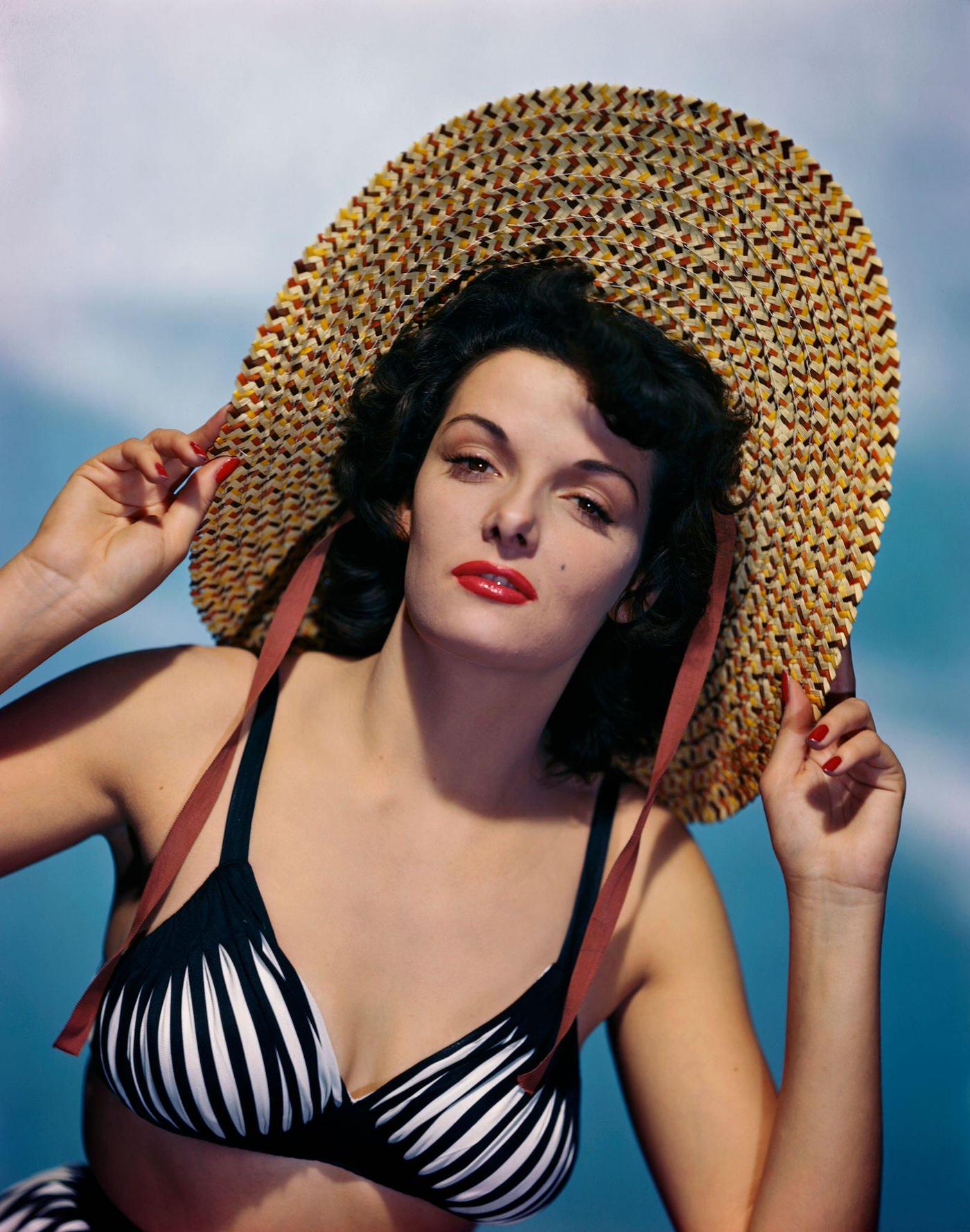
Accessories completed the beach look of the 1940s woman. Wide-brimmed straw hats were practical against the sun and added a polished finish to any swimsuit. Cat-eye sunglasses, beach wraps, and sarongs rounded out the ensemble. Jane Russell, photographed in a bikini and straw hat, captured exactly this kind of put-together beach style.
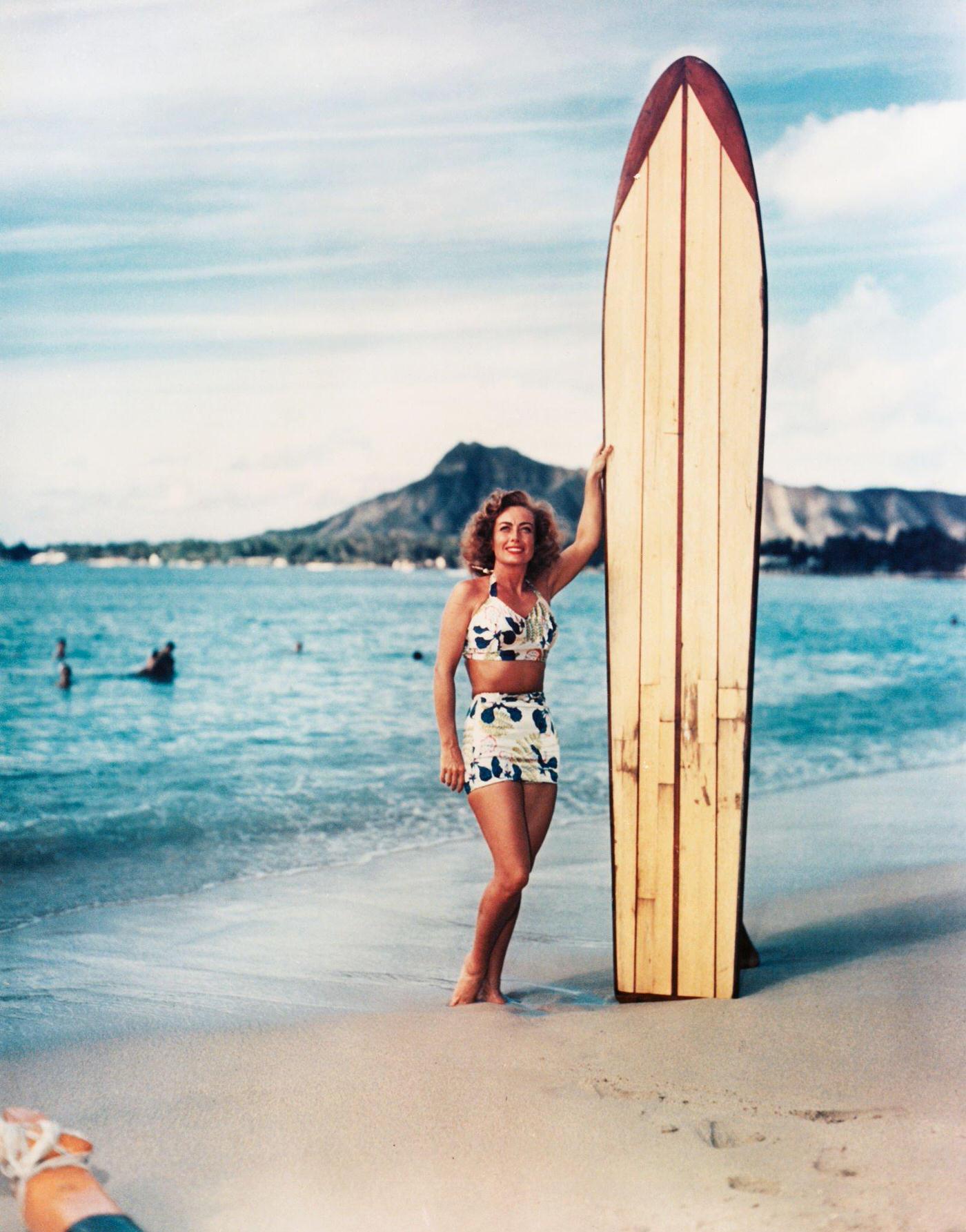
Even actresses known more for their dramatic roles than their beachwear appeared in swimsuit photographs. Joan Crawford, for example, was photographed holding a large surfboard — a shot that combined athleticism with the era’s beach aesthetic.
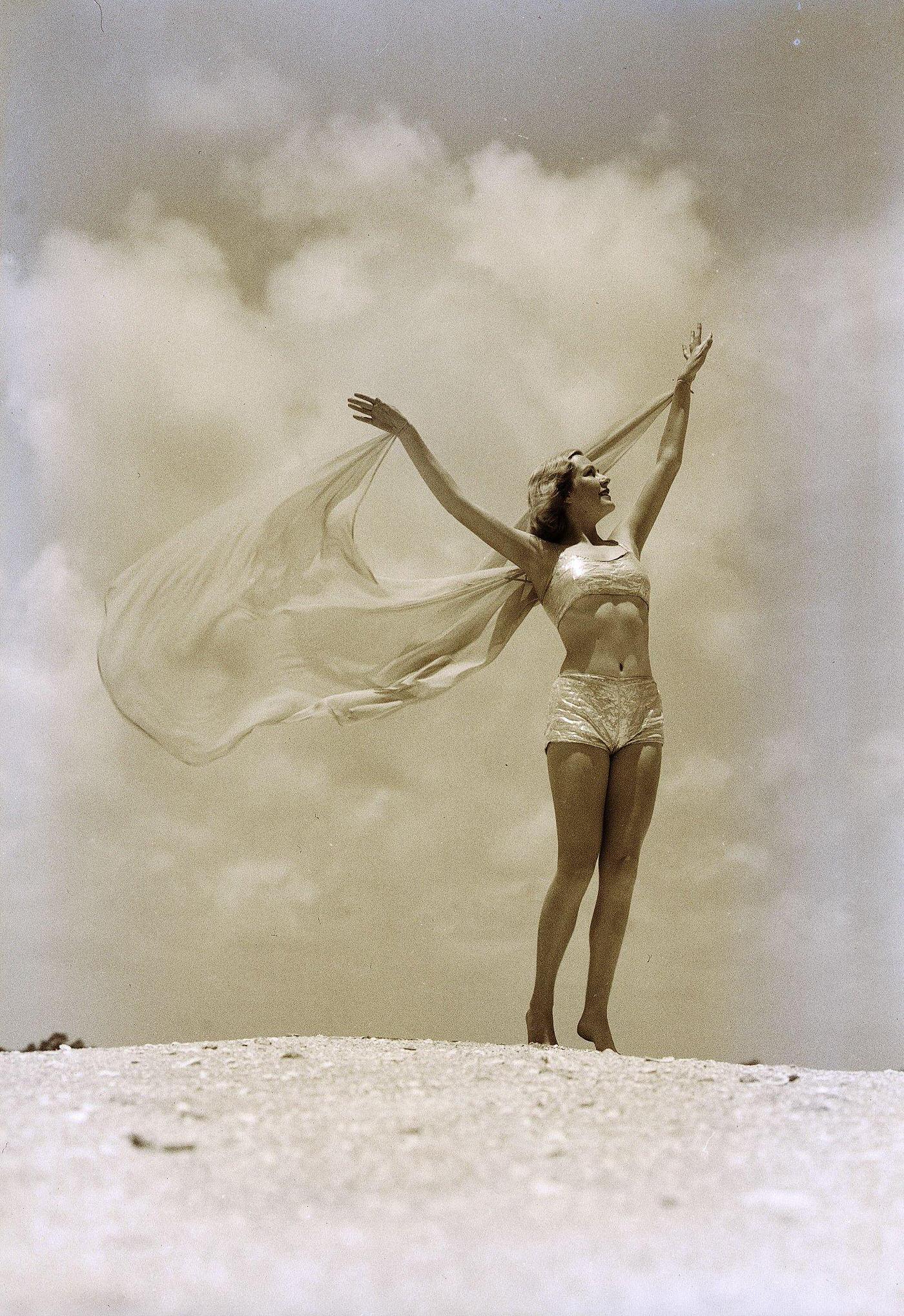
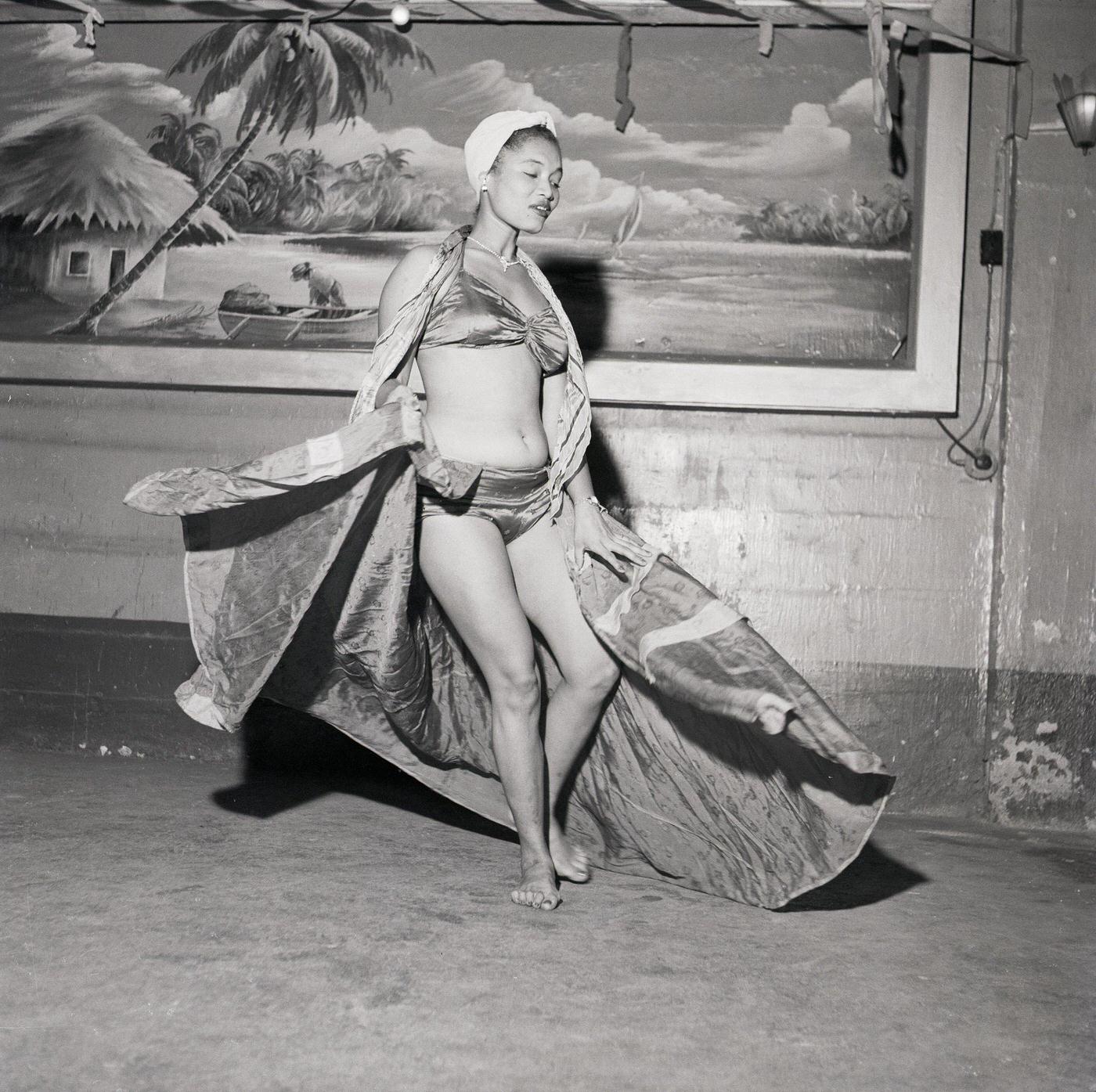
The two-piece also appeared across different cultures and performance contexts. In Trinidad, performers wore bikinis paired with scarves for dance routines, showing how the style adapted to local customs and entertainment traditions far outside Hollywood.
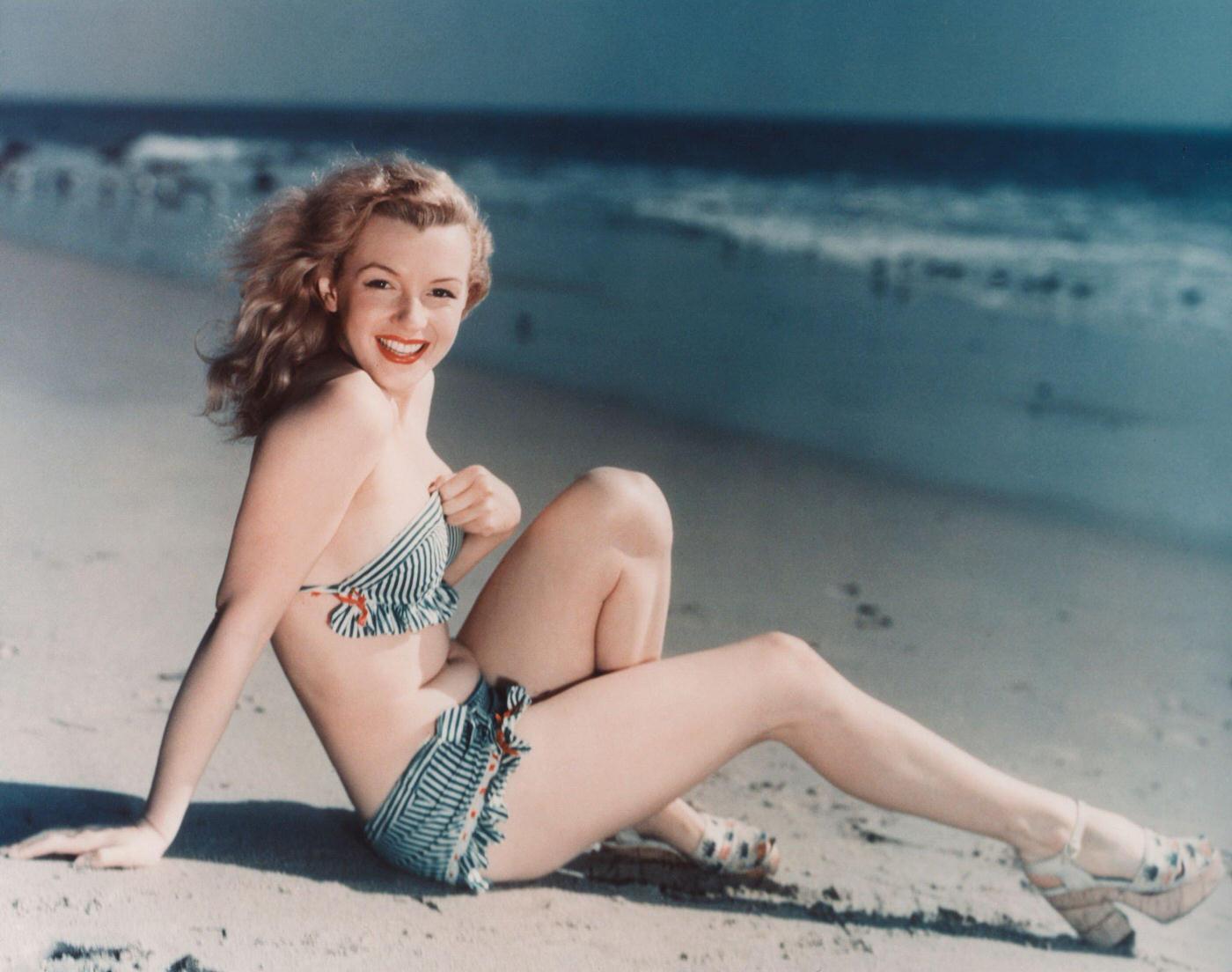
Marilyn Monroe, who would become the defining sex symbol of the following decade, appeared regularly in two-piece swimwear during the 1940s — both in candid photos and professional shoots.
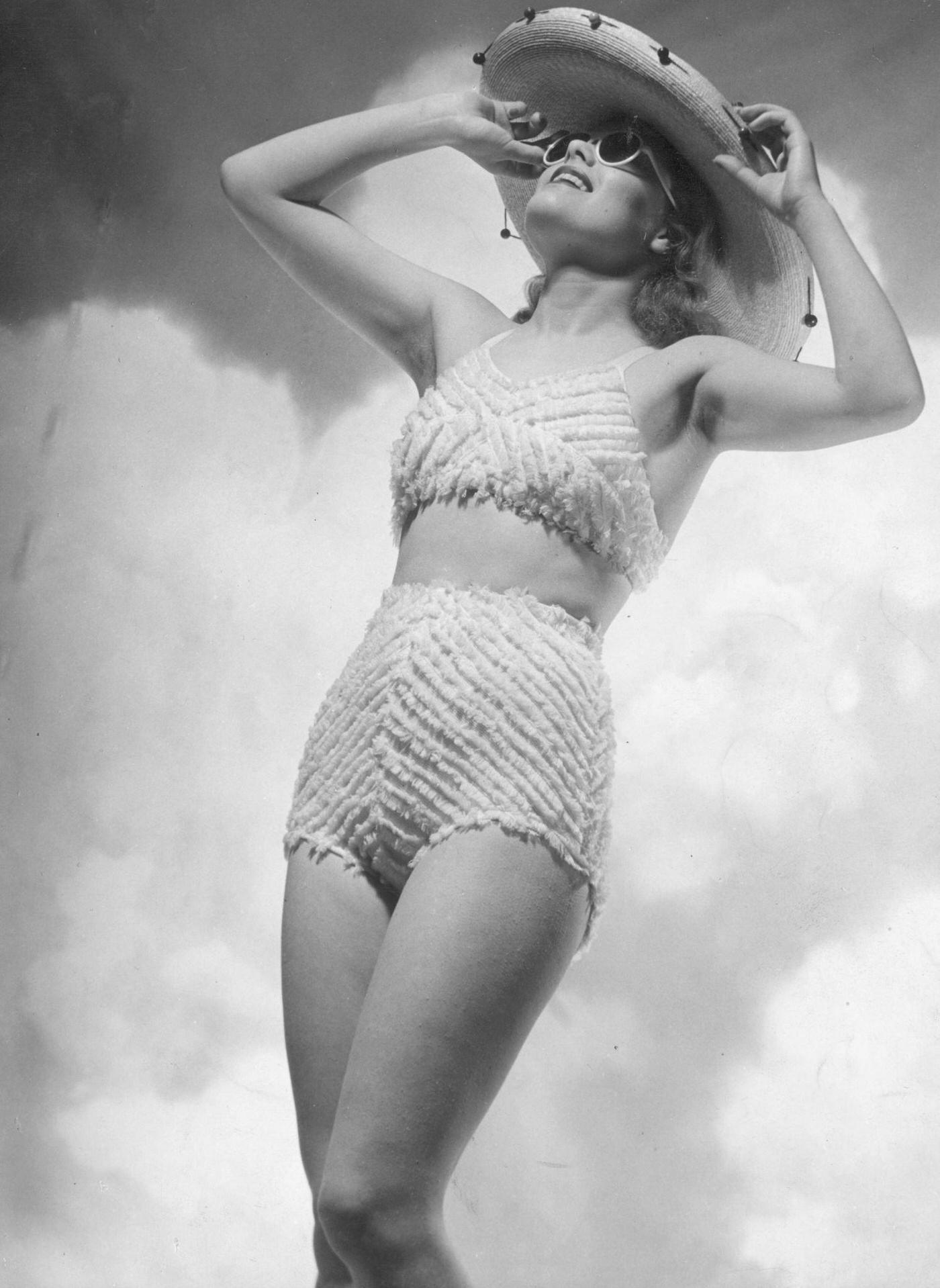
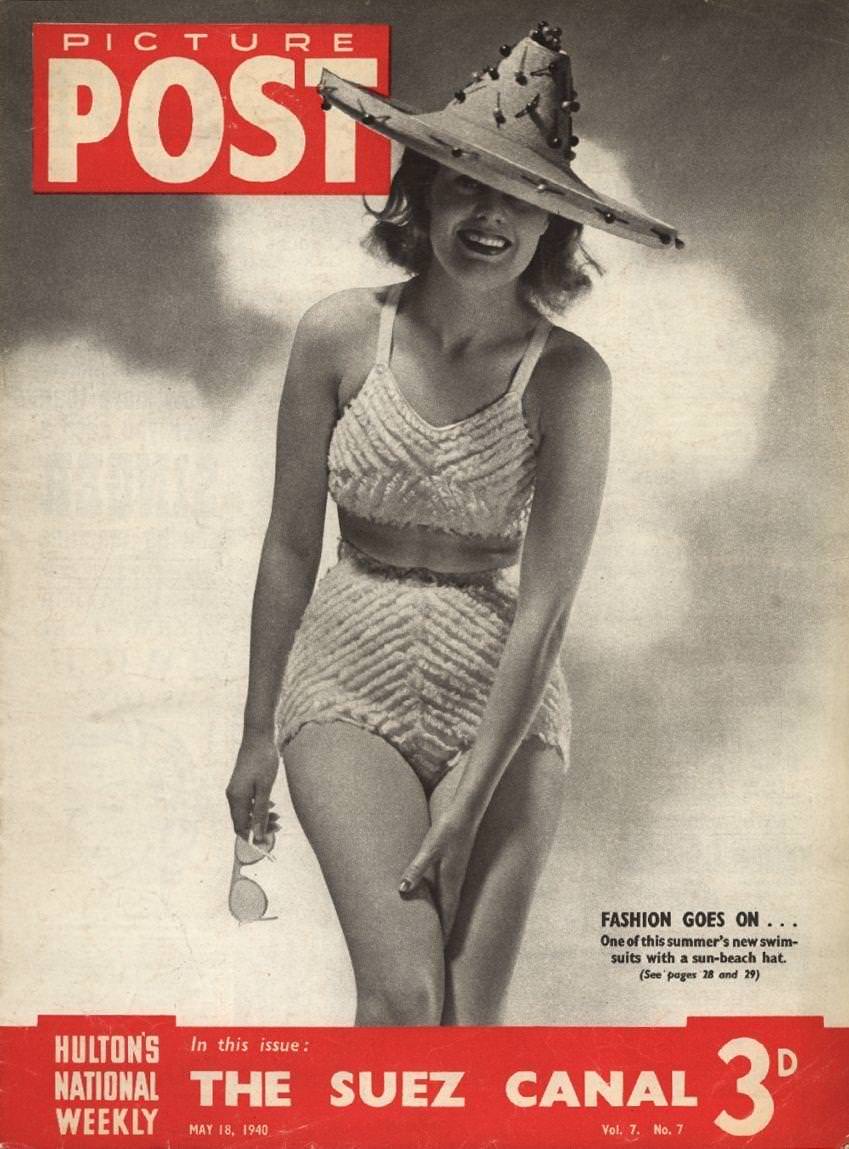
Toweling fabric became a popular material for swimwear during this period. It was absorbent, comfortable, and held up well at the beach. Designers used it for both full bikini sets and cover-up pieces, often pairing them with beaded or straw accessories.
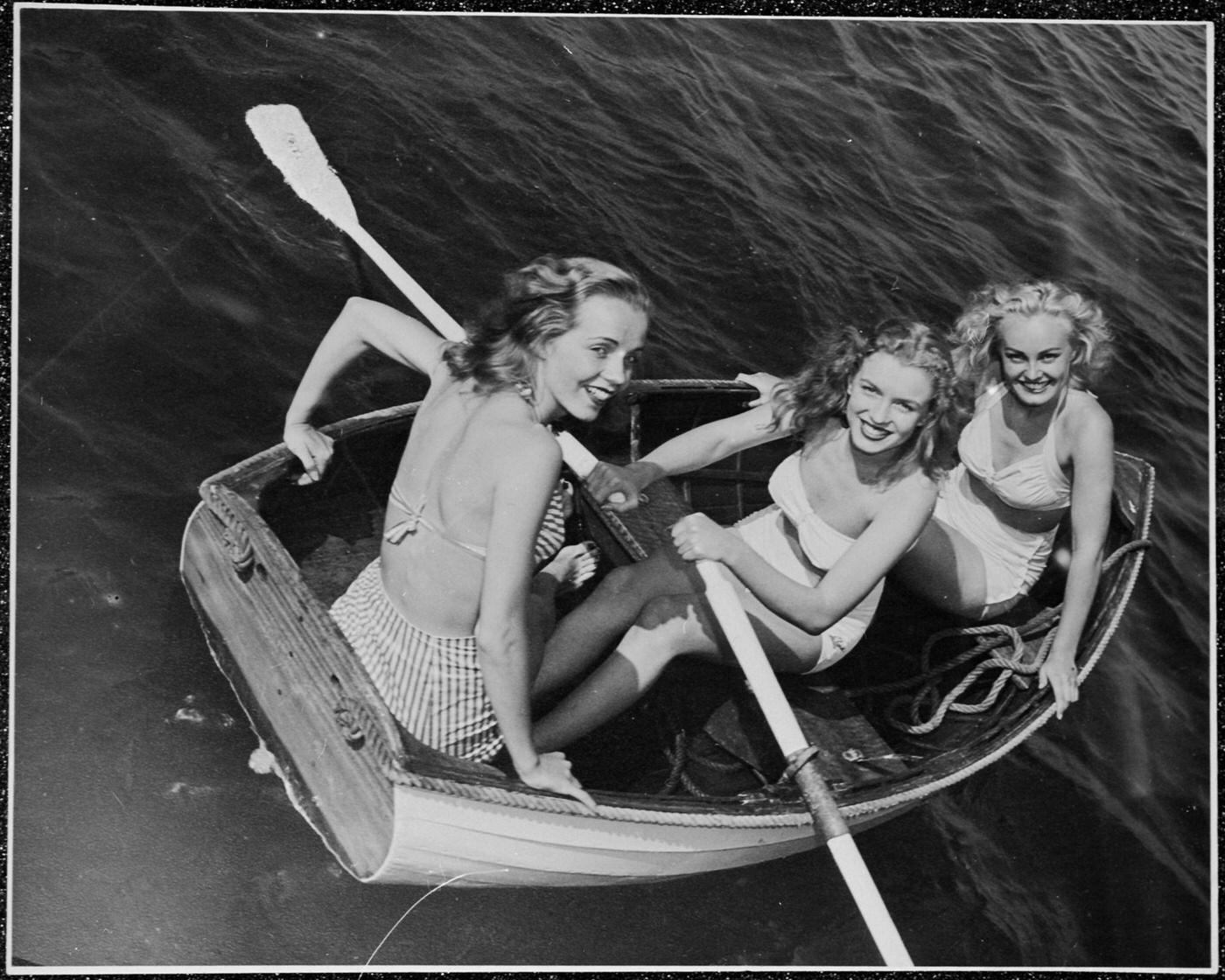
Monroe’s early beach photographs from the early 1940s show her in relaxed, candid settings — rowing with friends, playing in the sand — rather than formal studio shoots. These images gave the public a more natural look at how women actually wore and moved in the new two-piece styles.
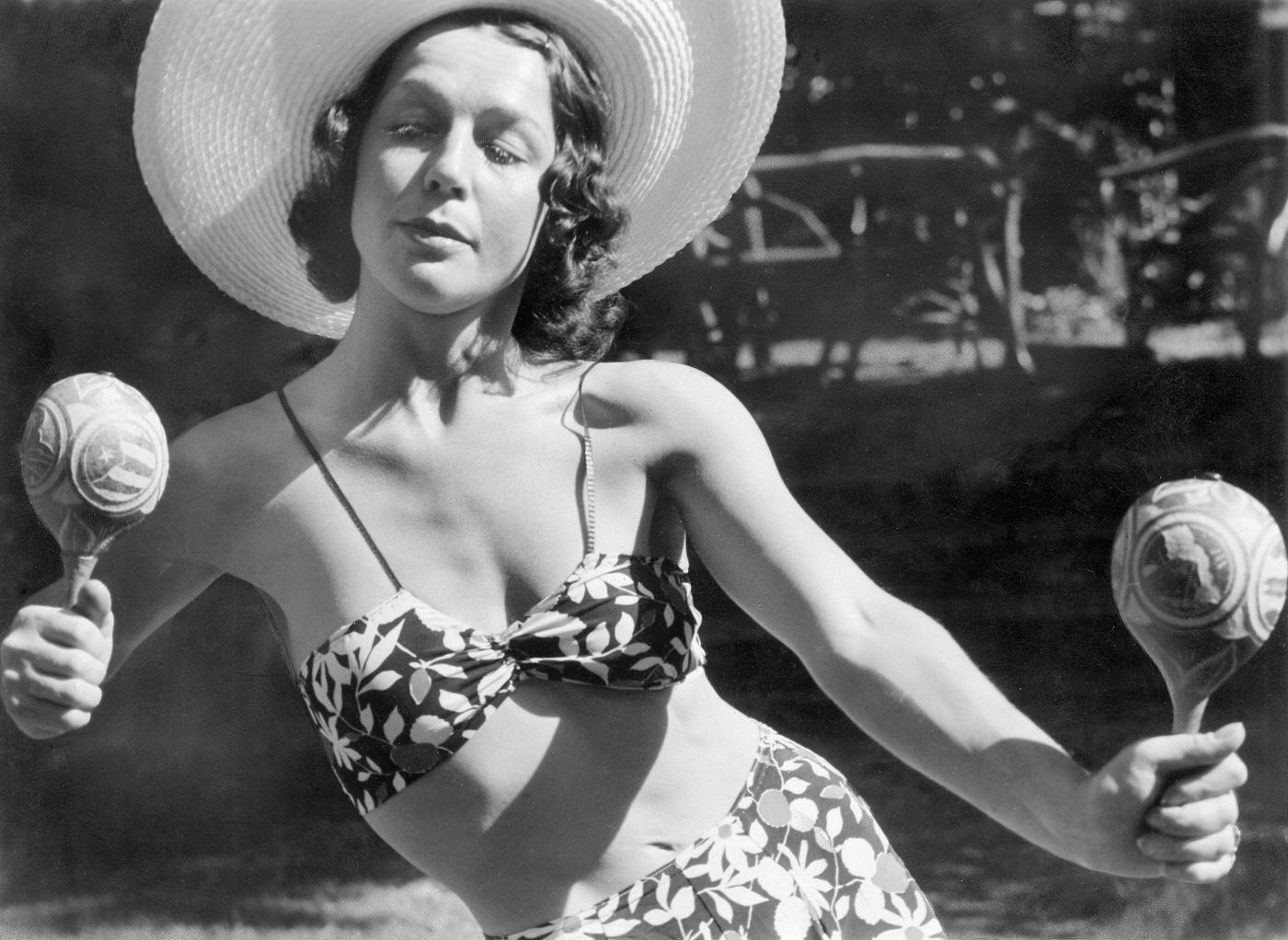
German fashion photography of the period frequently featured dancers and entertainers in two-piece swimwear styled with accessories like straw hats and musical instruments. These images were part of a broader European embrace of the style that ran parallel to developments in American swimwear.
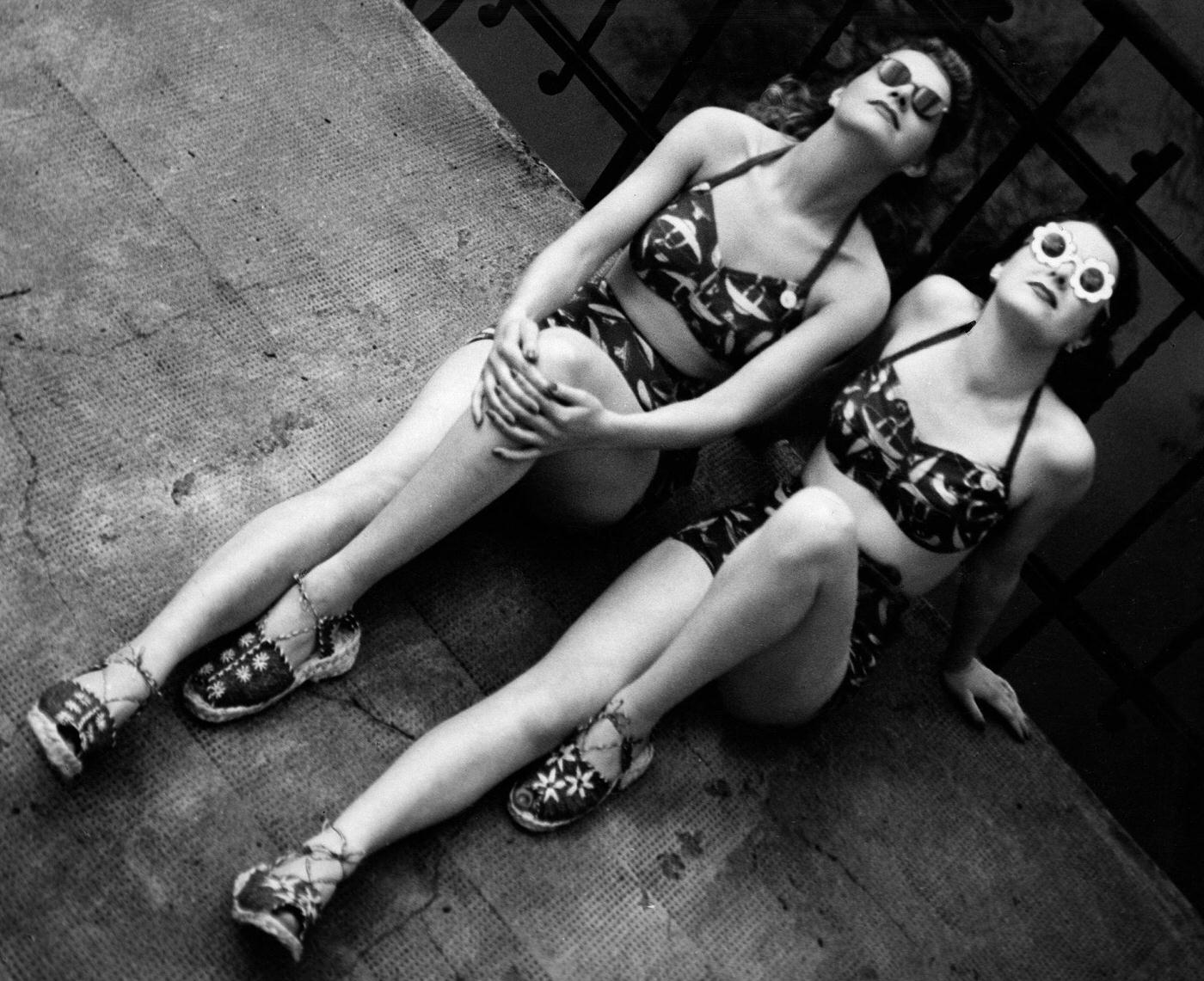
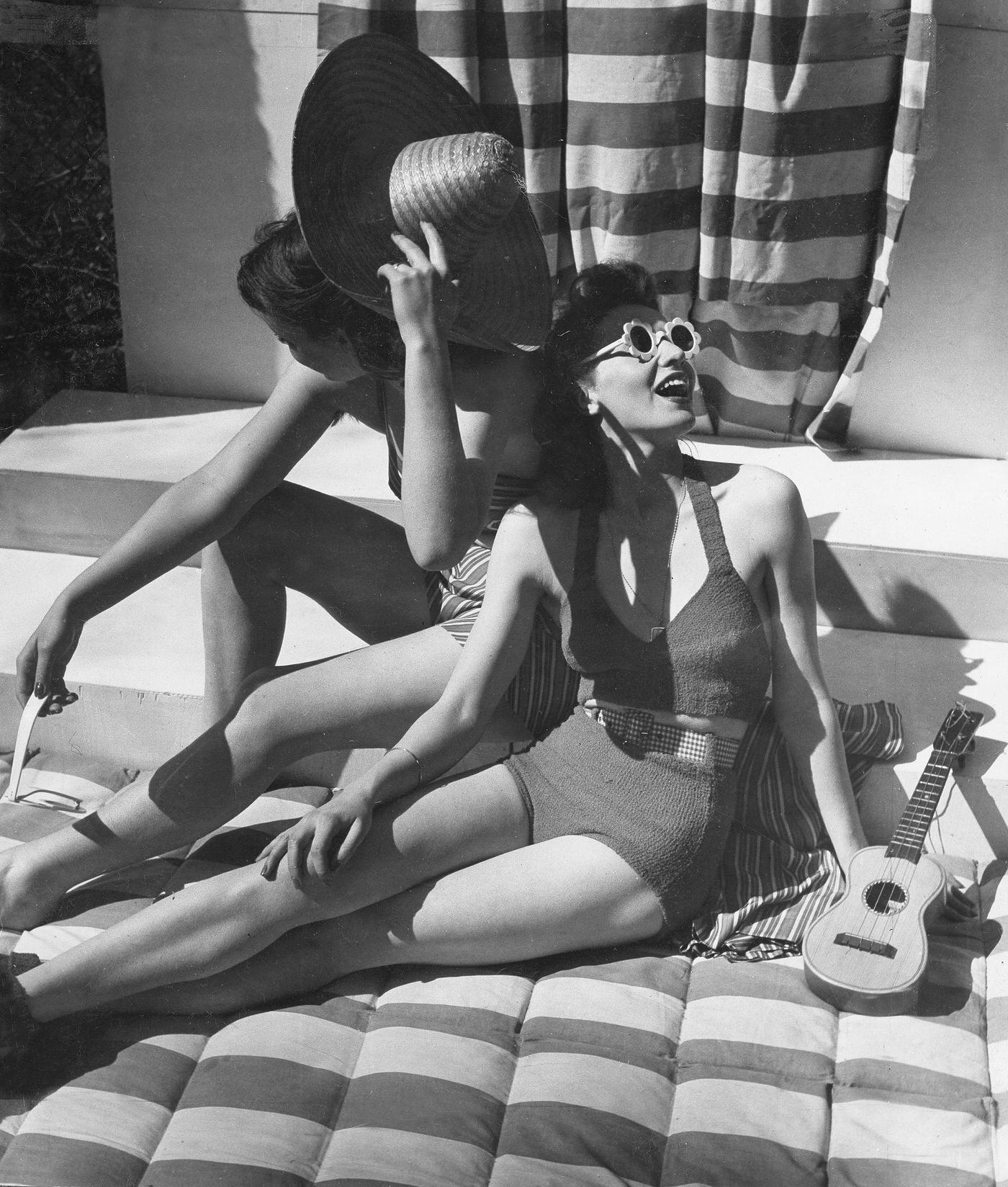
By 1942, trendy beachwear had developed a clear visual language. Two women photographed together that year illustrated how the style had already become normalized — worn casually and confidently at the beach.
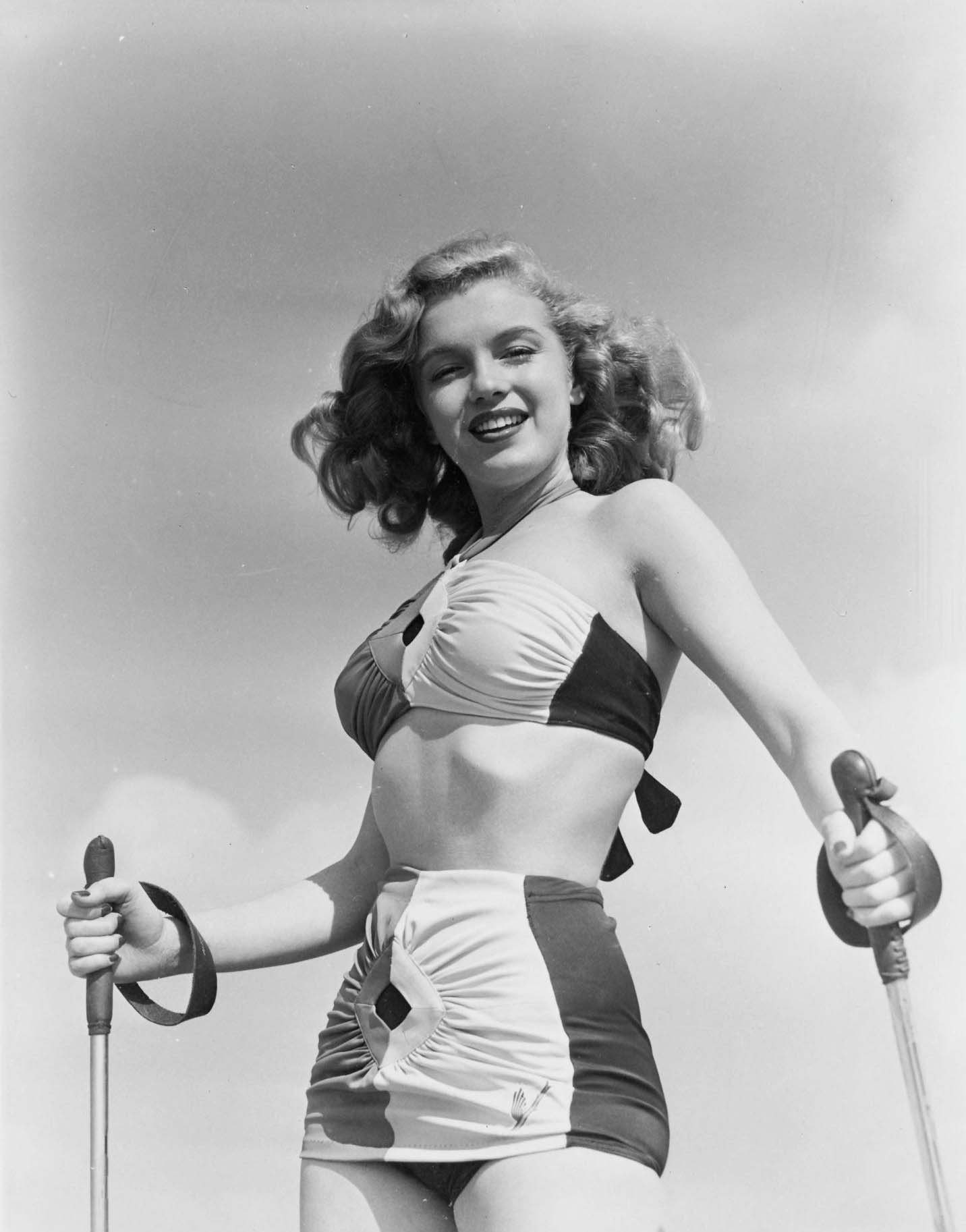
The early war years didn’t dampen beach culture. Marilyn Monroe was photographed sand skiing in 1943, wearing a two-piece swimsuit — a reminder that leisure and beach activities continued even during wartime, and that swimwear remained part of everyday American life.
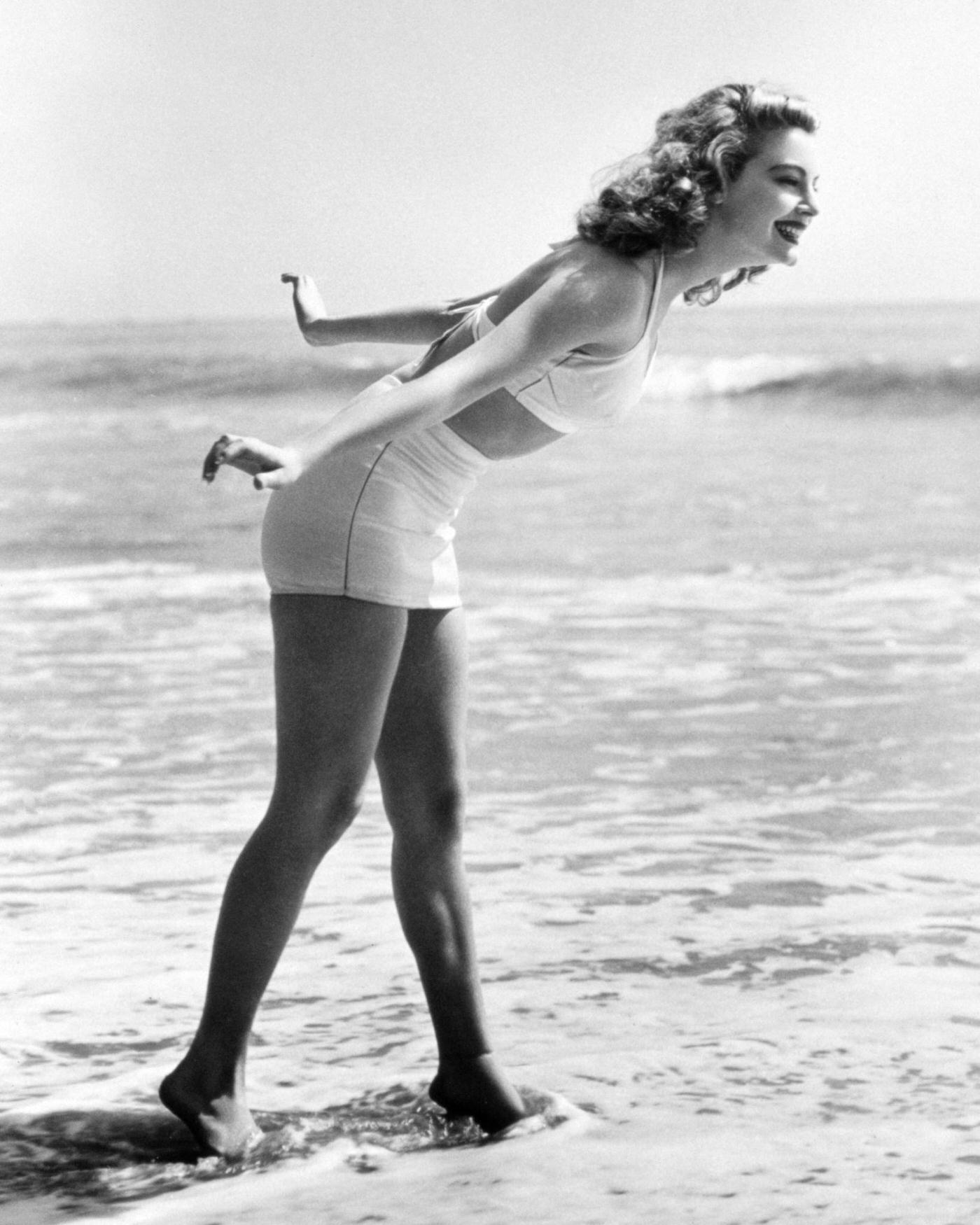
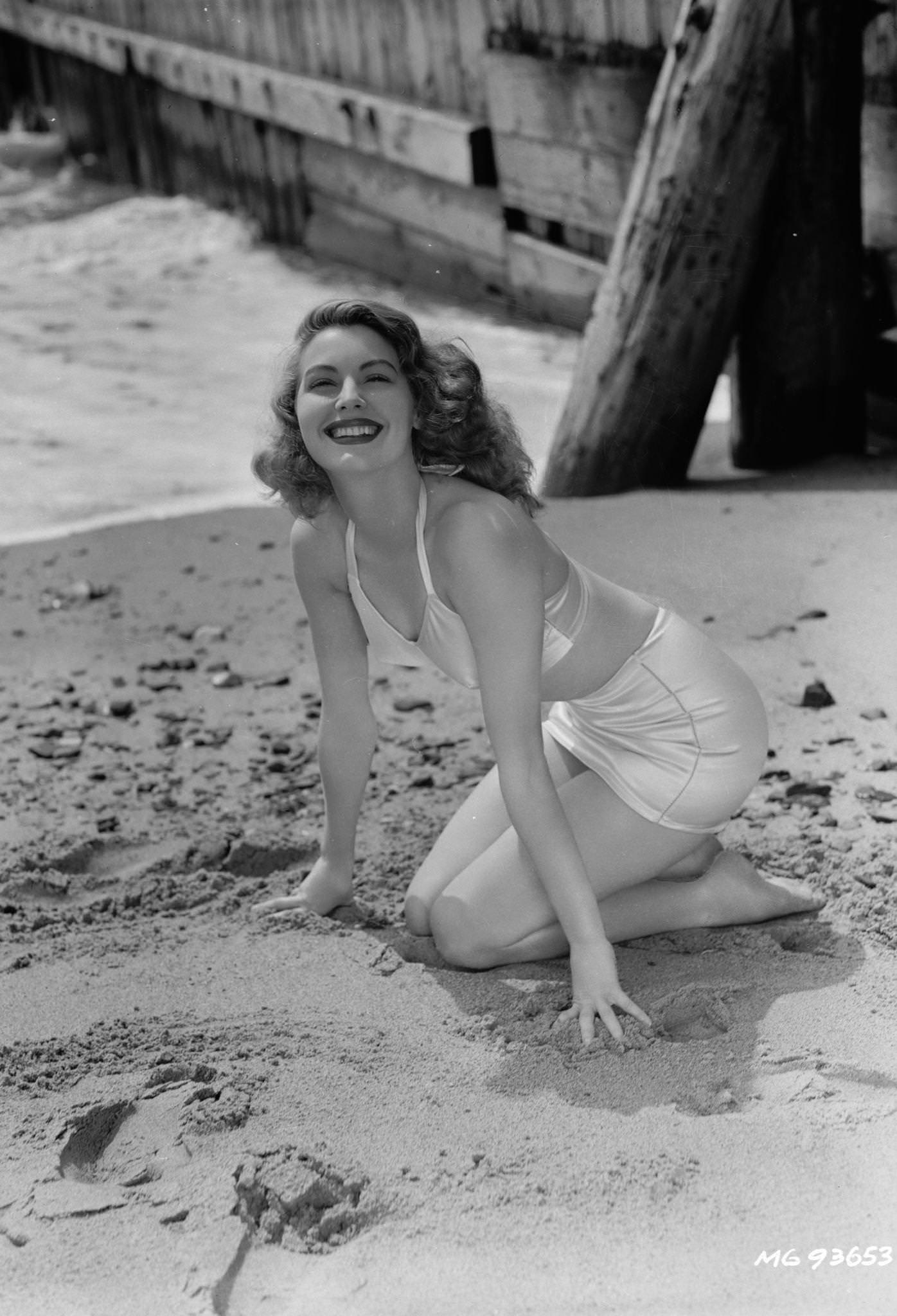
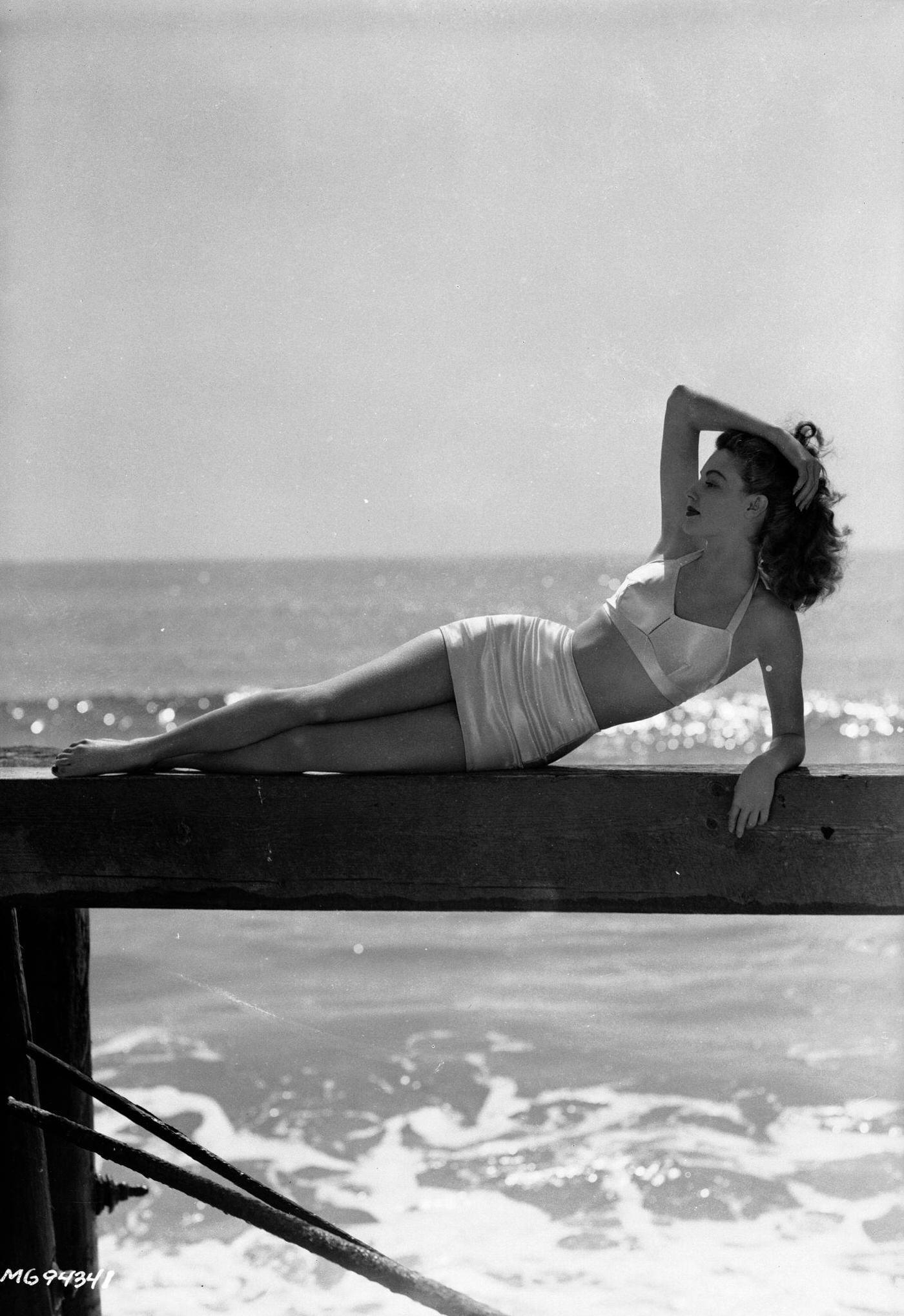
Ava Gardner’s March 1943 beach session produced some of the most iconic swimwear images of the decade. Shot across multiple poses and settings, the photos showed the range of ways the two-piece could be worn — active, lounging, or posed.
Civilian beach culture also intersected with the war effort in small but visible ways. In 1943 at Catalina Island, Deede Hoenig was photographed in a two-piece swimsuit with her arms outstretched, honoring Coast Guardsmen stationed there. The image captured how beach life and wartime patriotism coexisted.
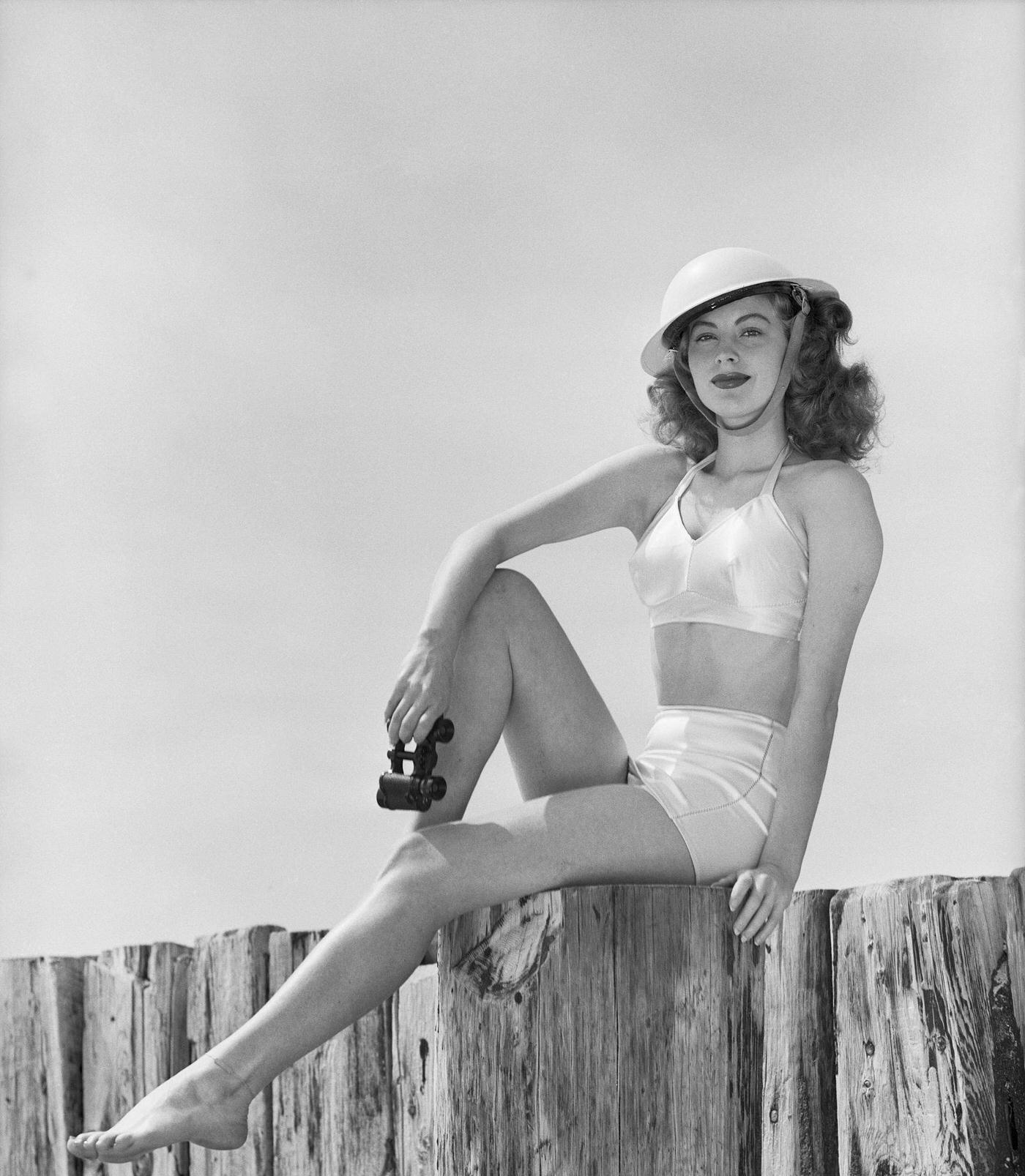
Ginger Rogers, one of Hollywood’s most celebrated dancers, was photographed in 1944 wearing a boldly patterned bikini. The loud print matched the era’s love of eye-catching designs, and Rogers’ fame put the image in front of a massive audience.
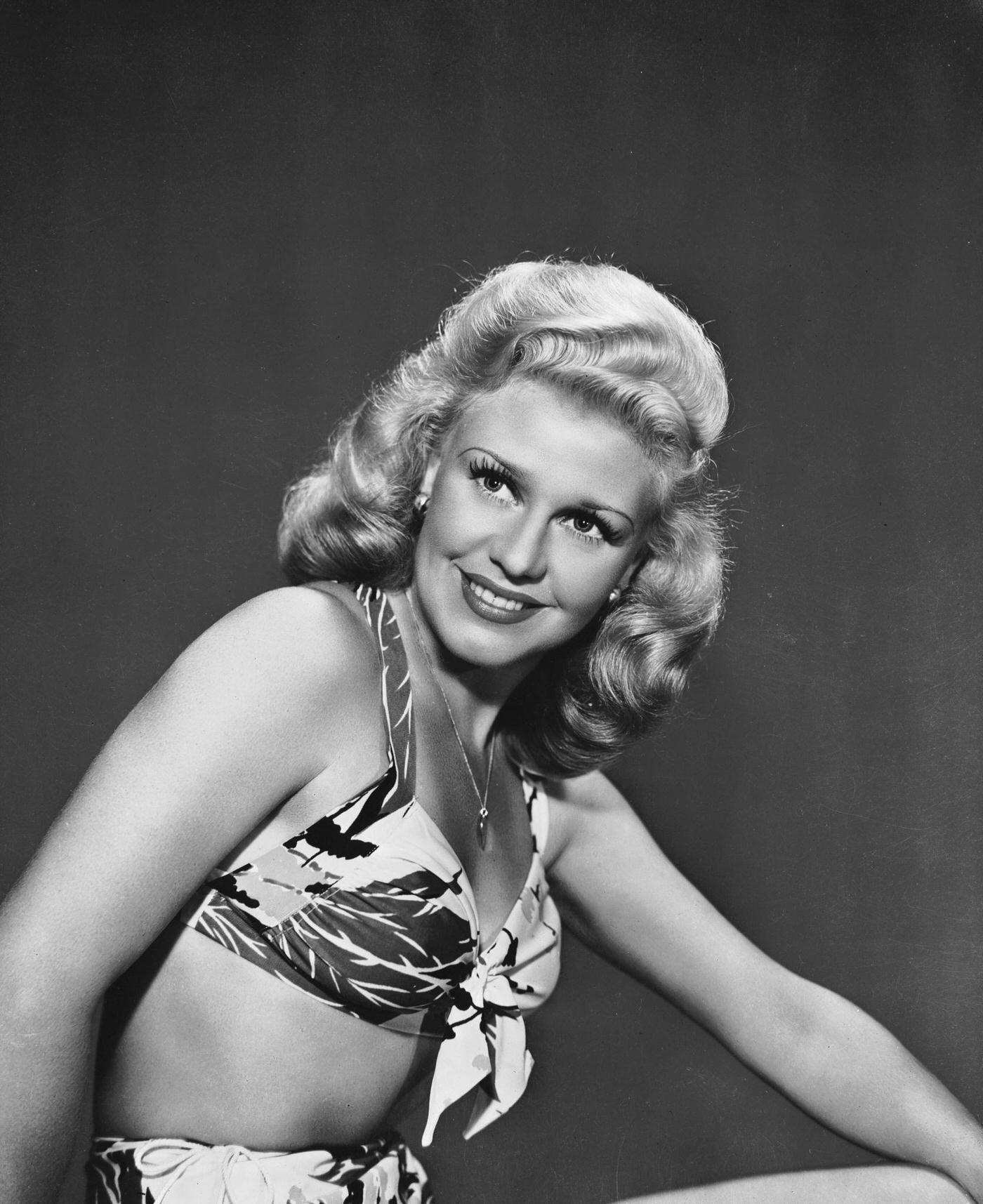
By the end of 1944, spotted and animal-print designs were already appearing in beach photography. Ava Gardner was photographed in December of that year lounging in a spotted bikini — a look that pointed toward the bolder prints that would define the following decade.
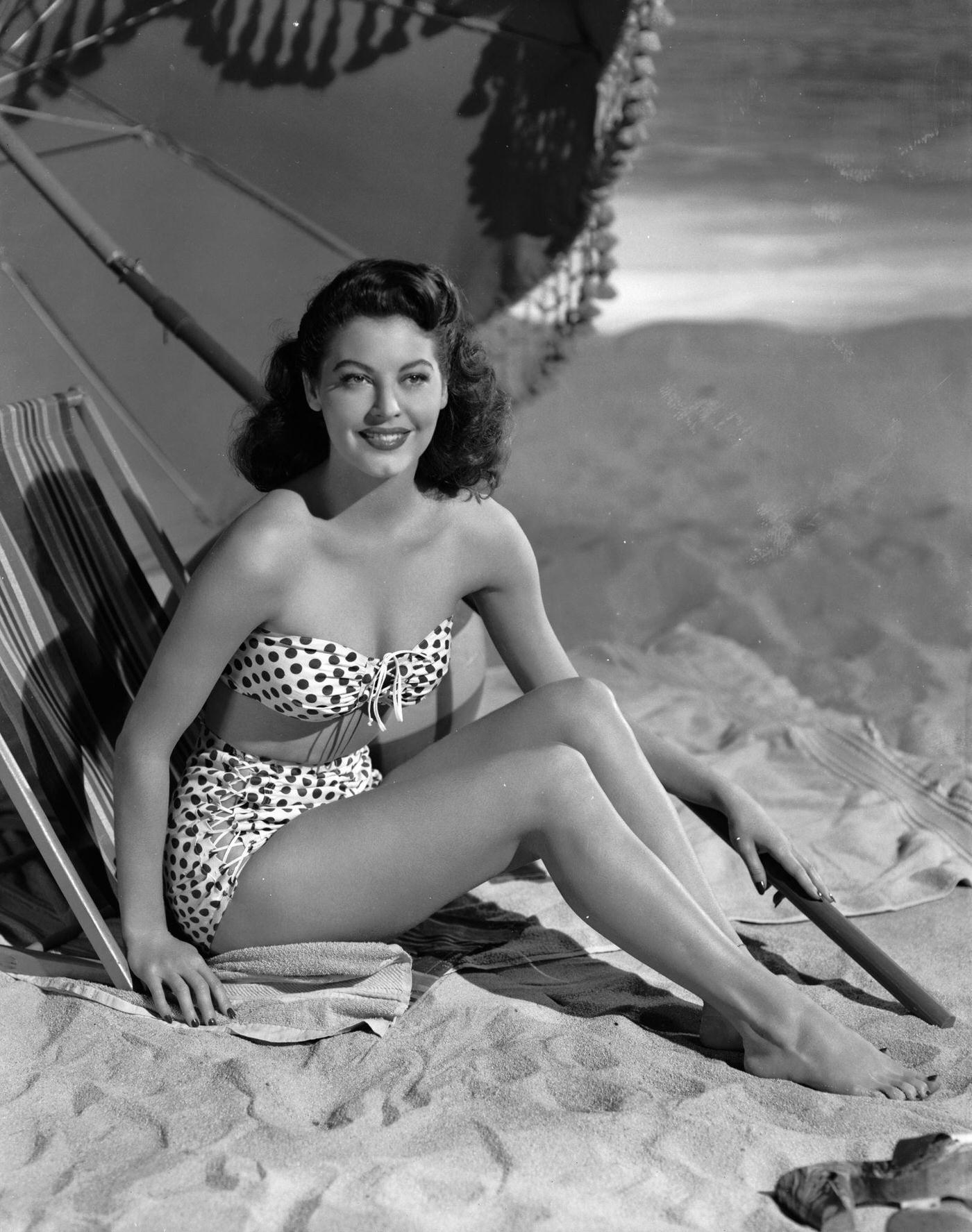
1945 brought a surge in swimwear photography as the war drew to a close. That year produced some of the most varied and memorable images of 1940s beachwear, covering everything from leopard-print bikinis to structured two-piece sets worn by major Hollywood names.
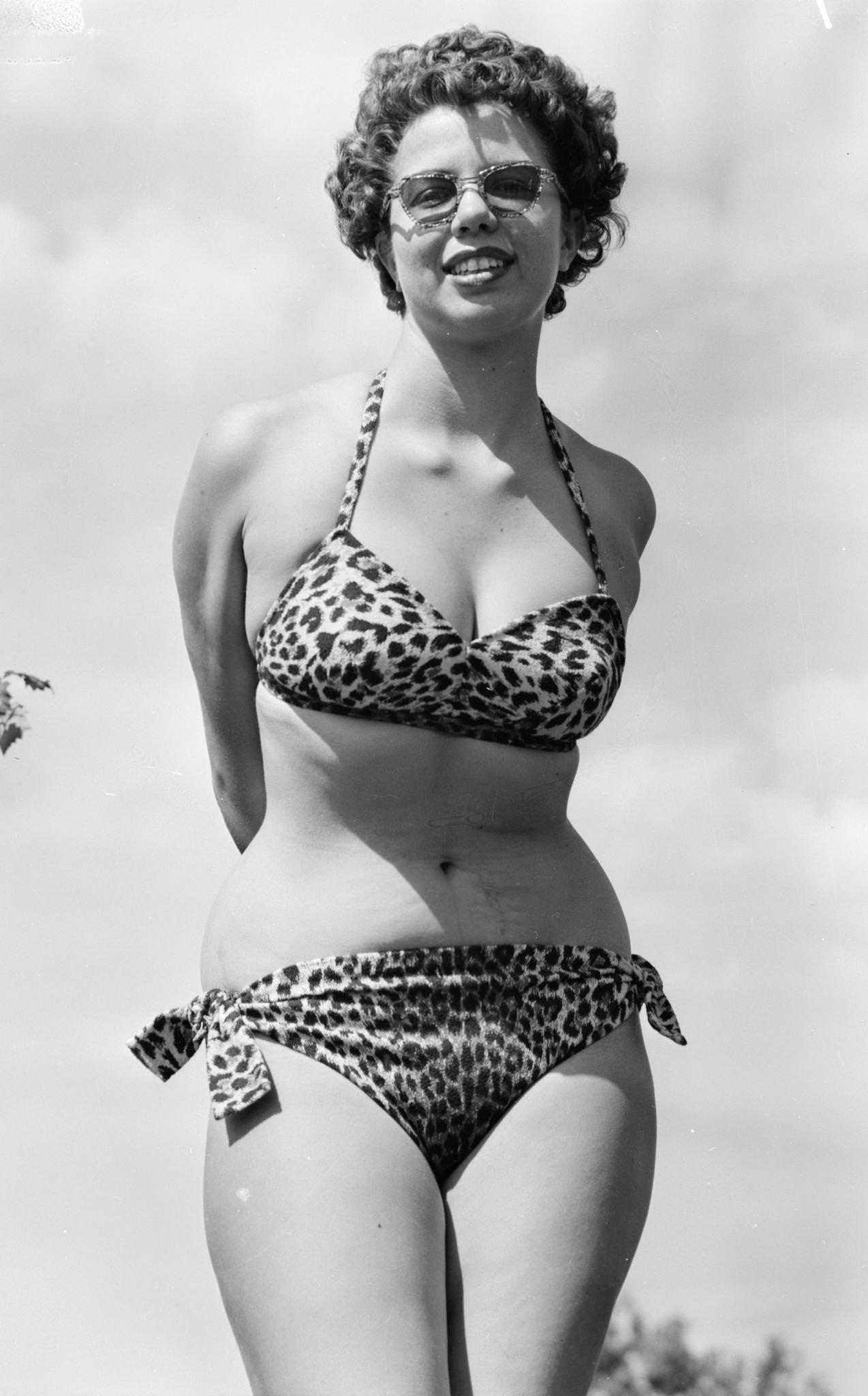
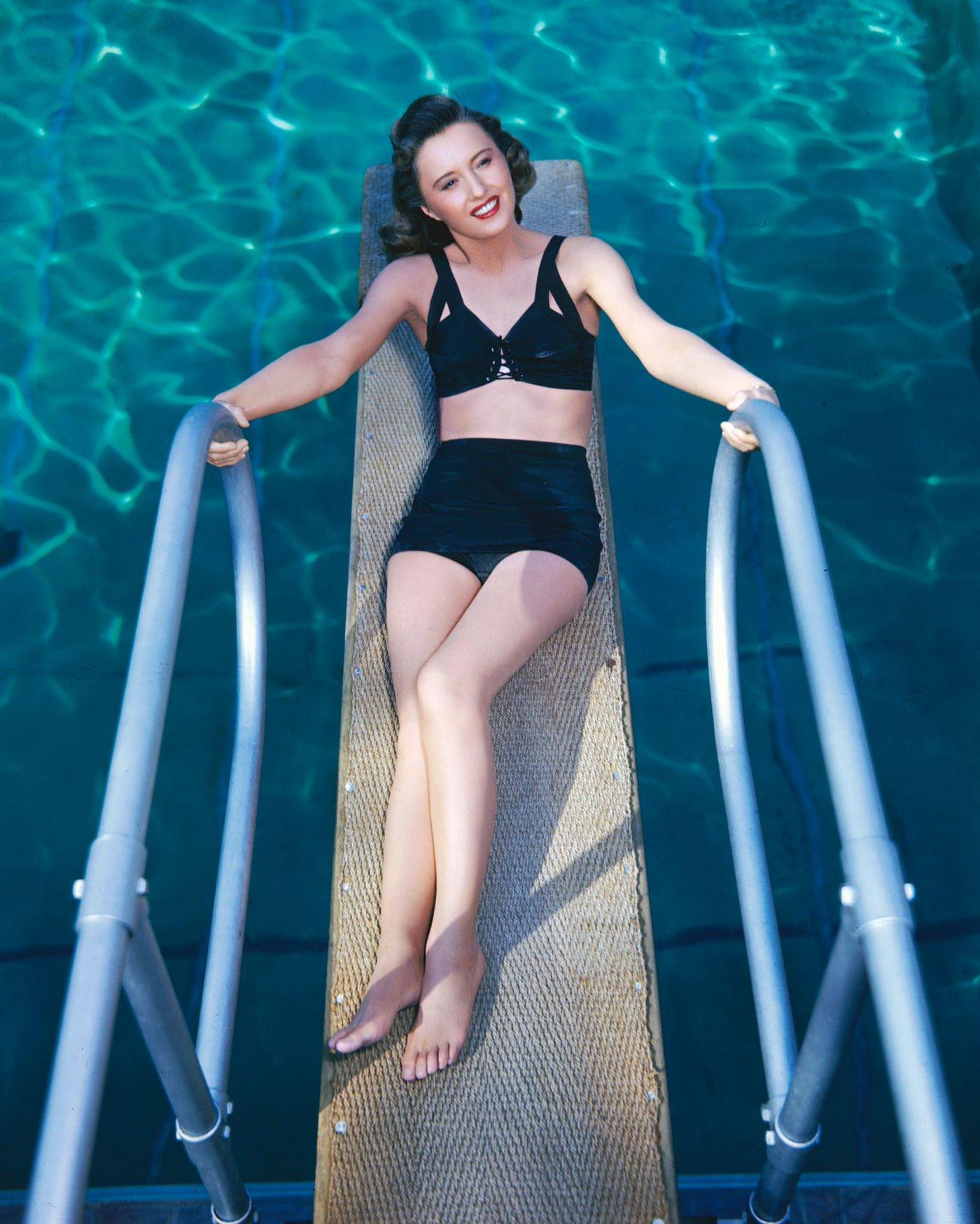
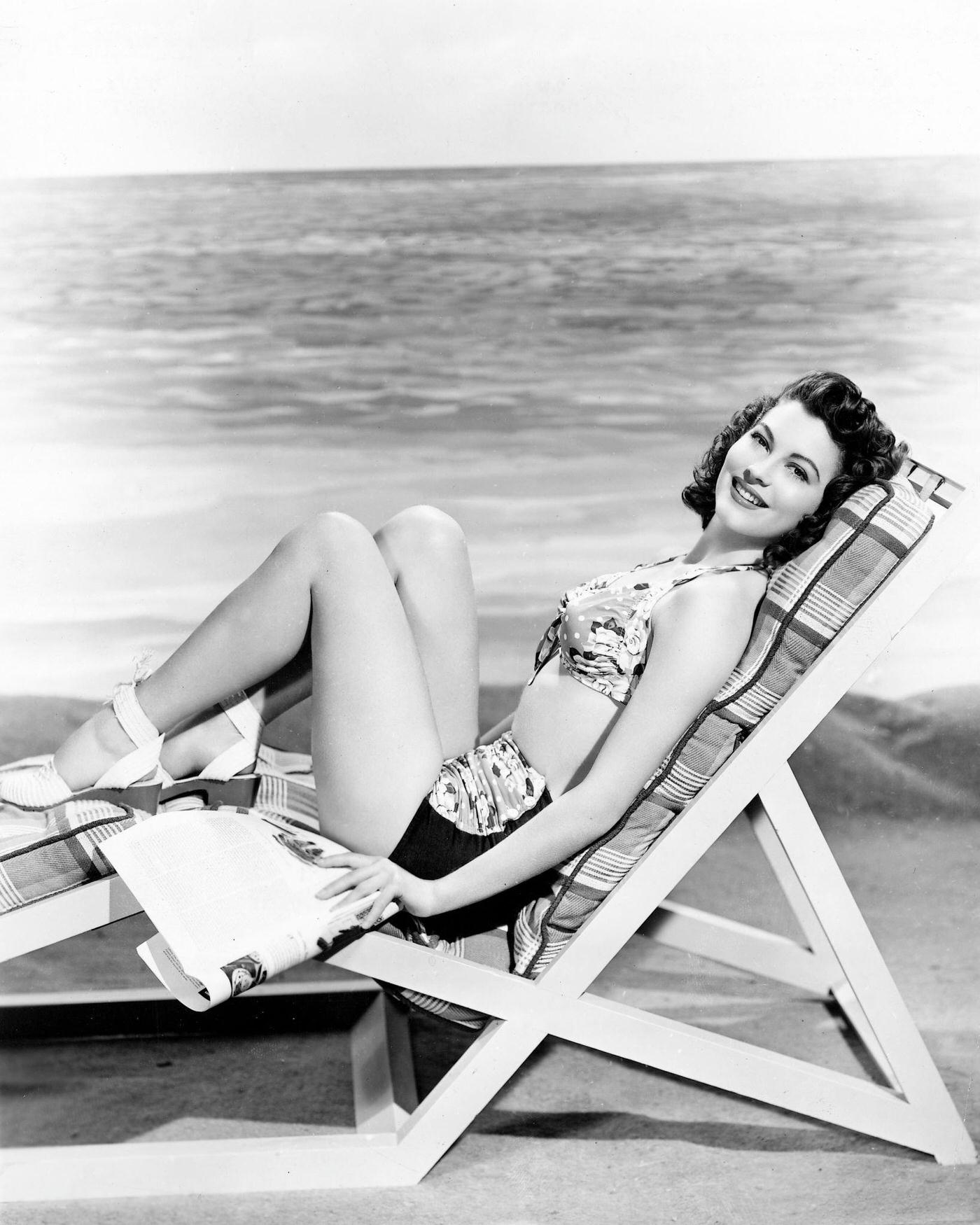
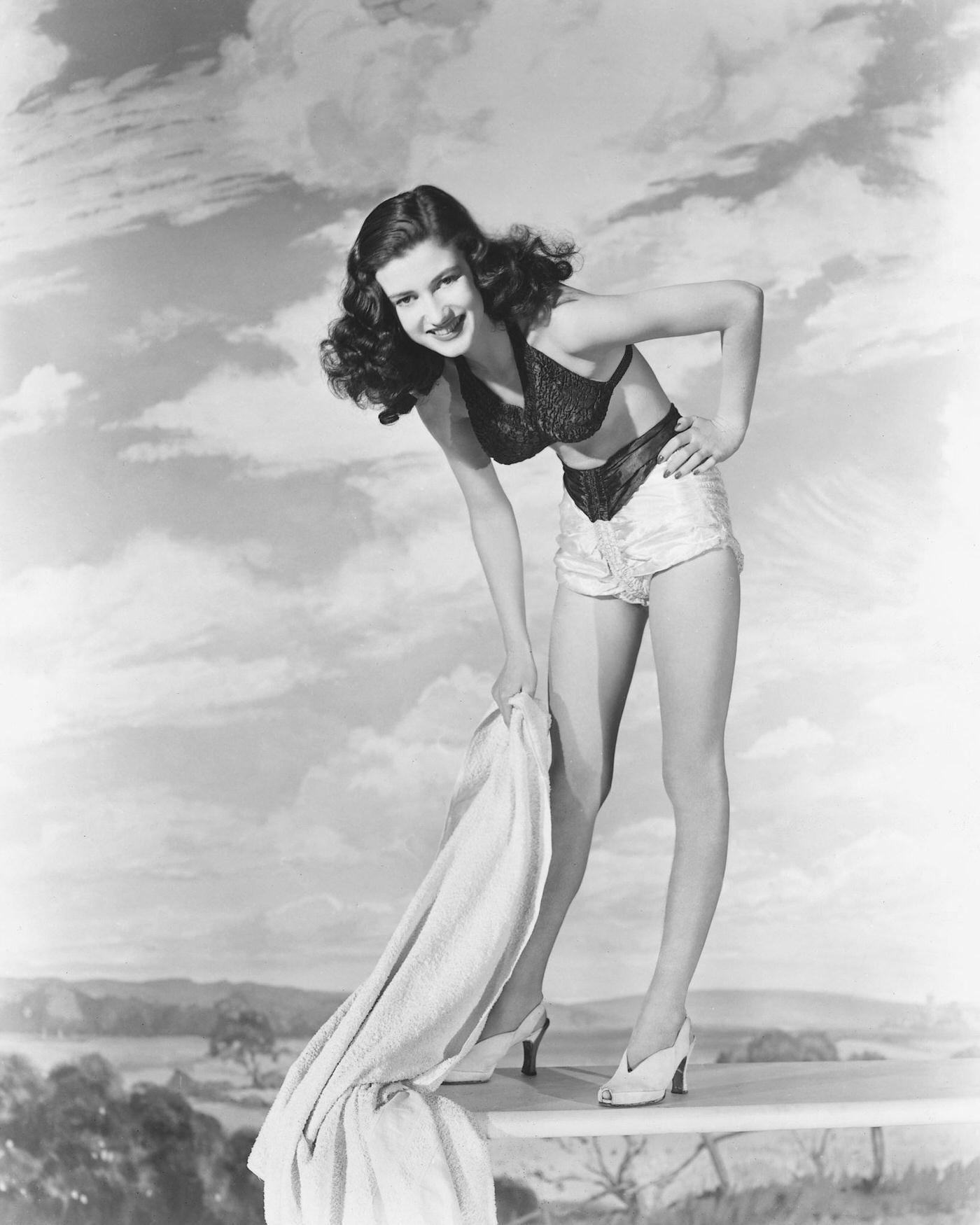
The range of women photographed in two-piece swimwear in 1945 shows just how broad the trend had become. It wasn’t limited to one body type, one nationality, or one level of fame. Actresses like Mary Jane Harker, Jane Wyman, and Barbara Stanwyck all appeared in two-piece styles that year, each with a distinct take on the silhouette.

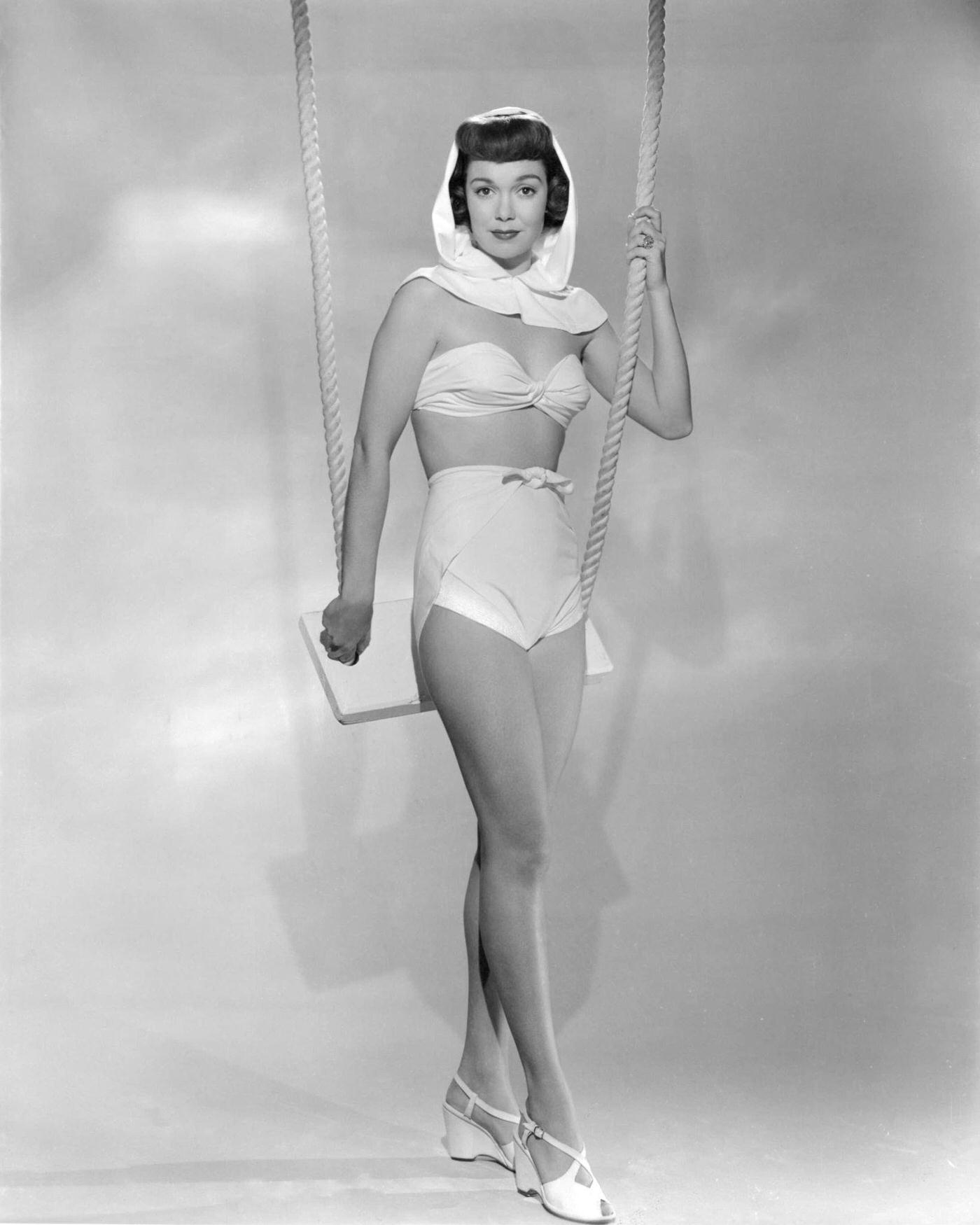
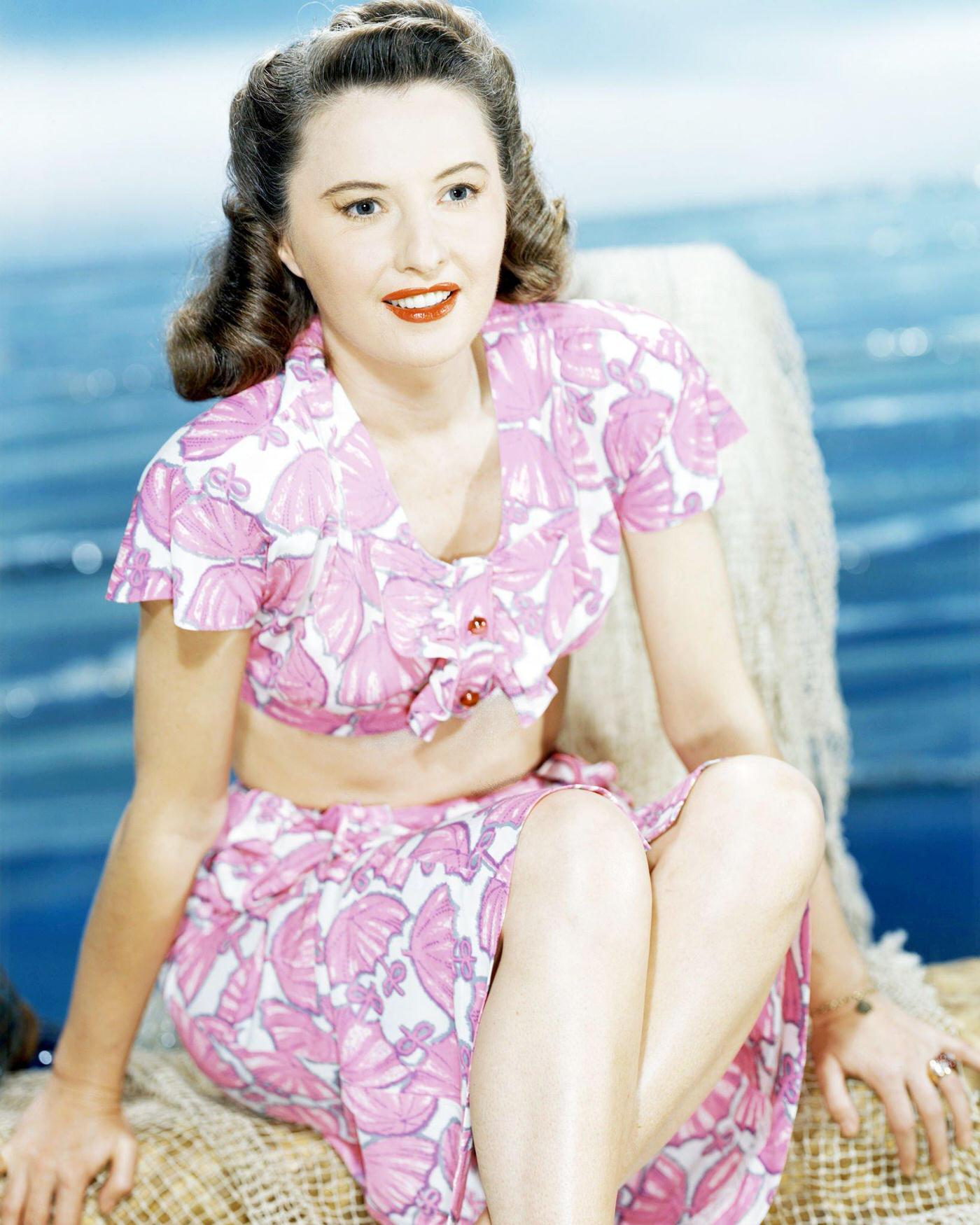
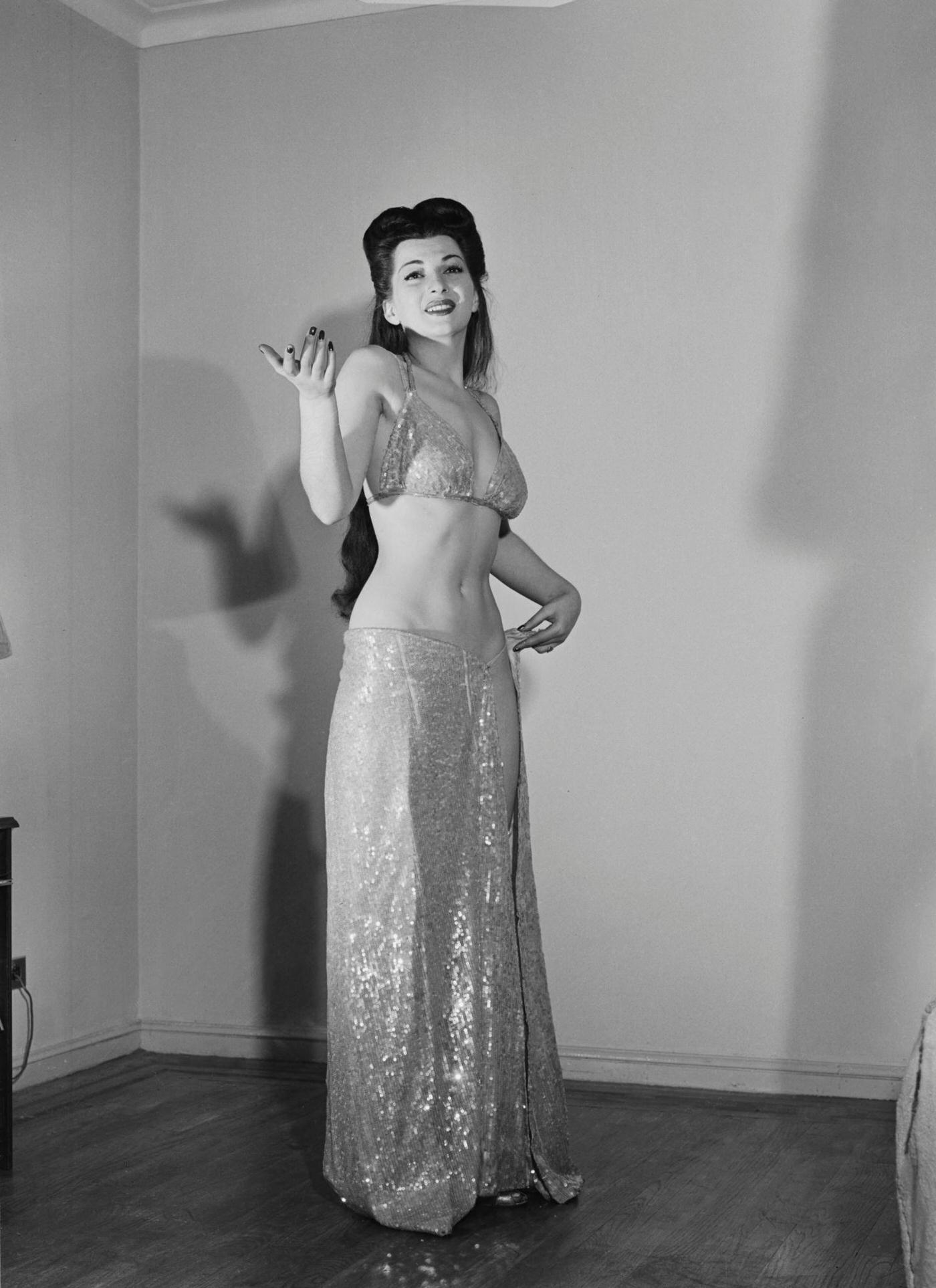
Burlesque performers also adopted the two-piece as a stage costume, further blurring the line between swimwear and performance wear. The style’s versatility made it adaptable across very different contexts.
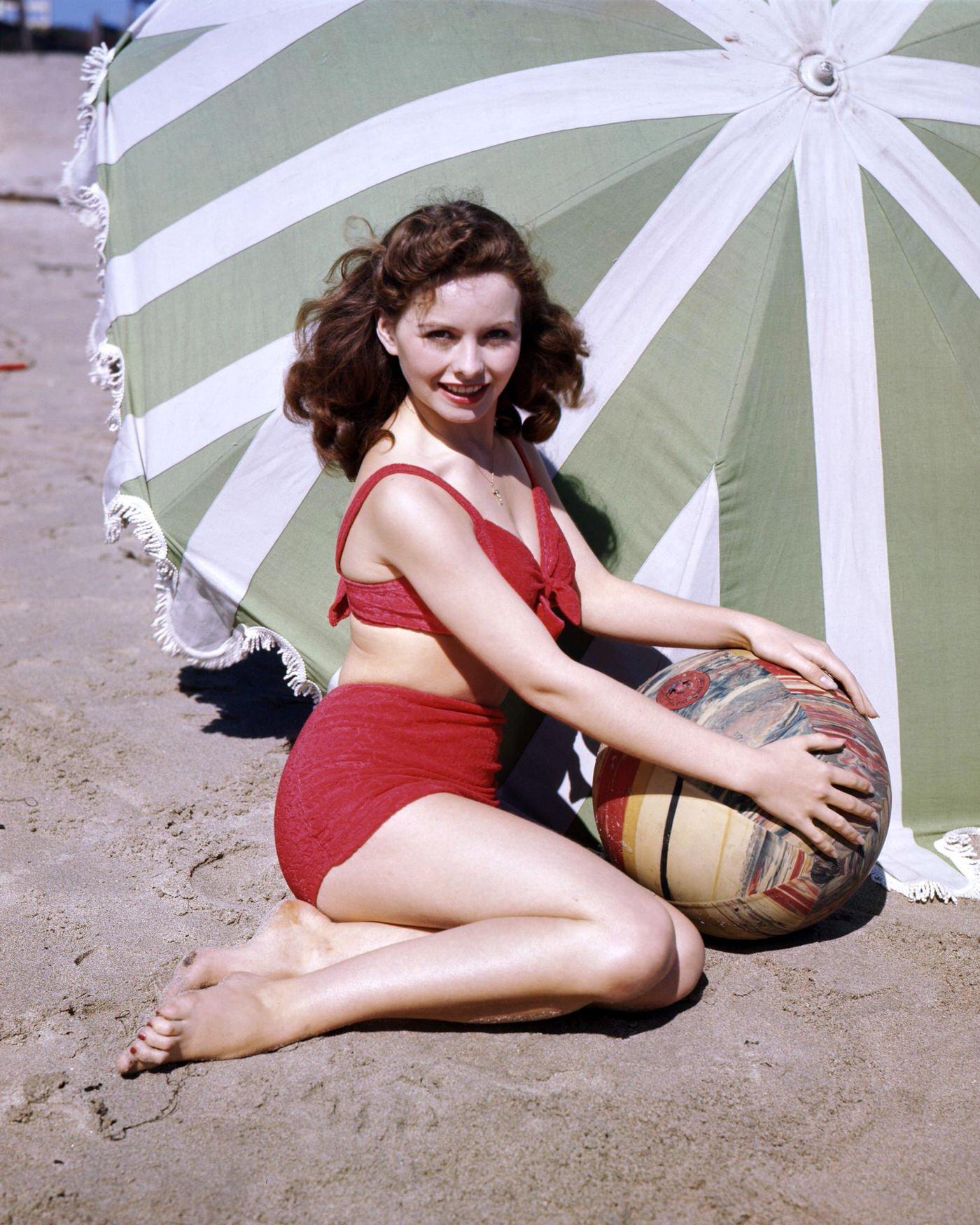
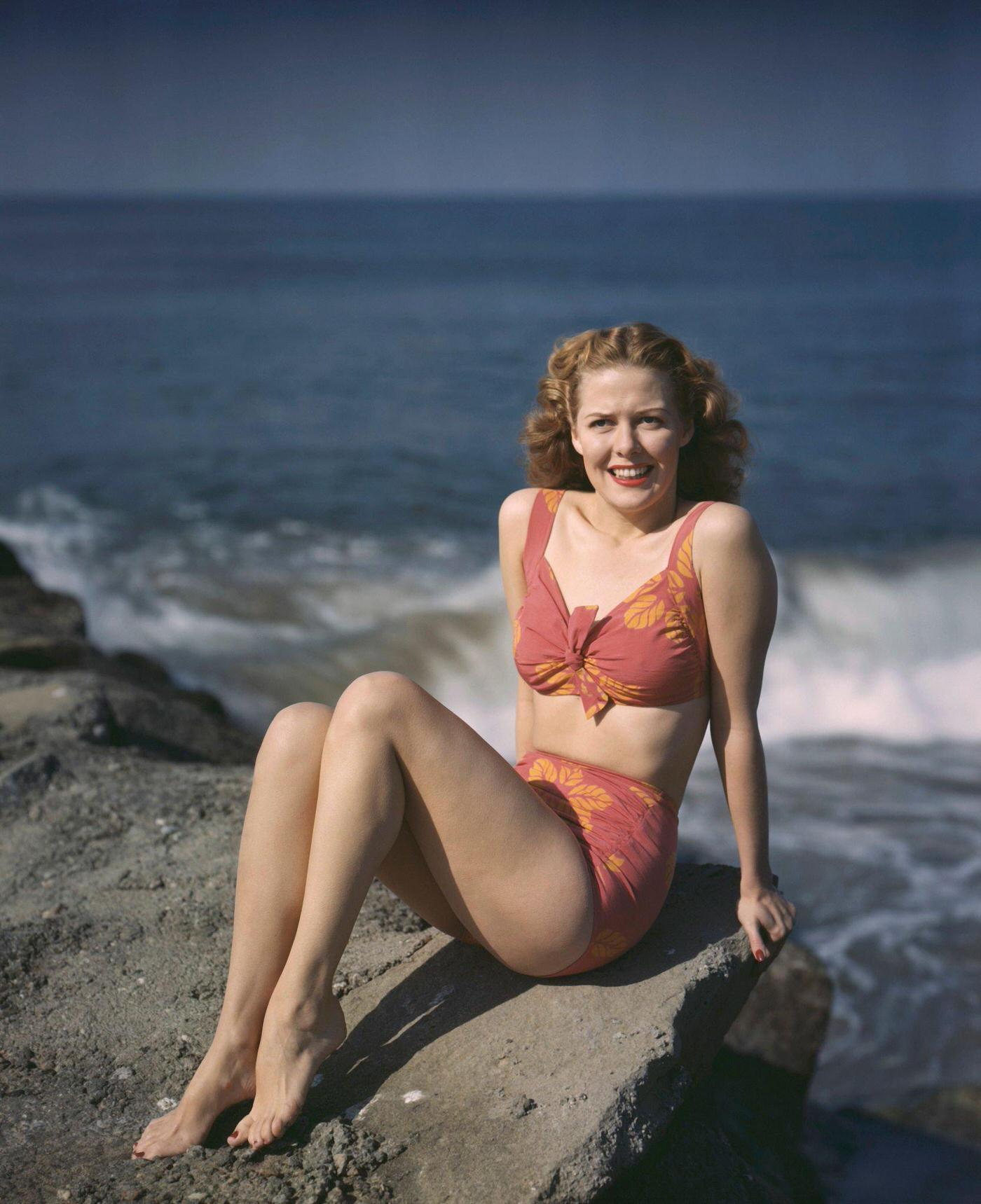
Not all beach photography of the era was glamorous or posed. Some of the most charming images show actresses and everyday women in relaxed, unguarded moments — like Ella Raines photographed with her pet cocker spaniel at the beach.

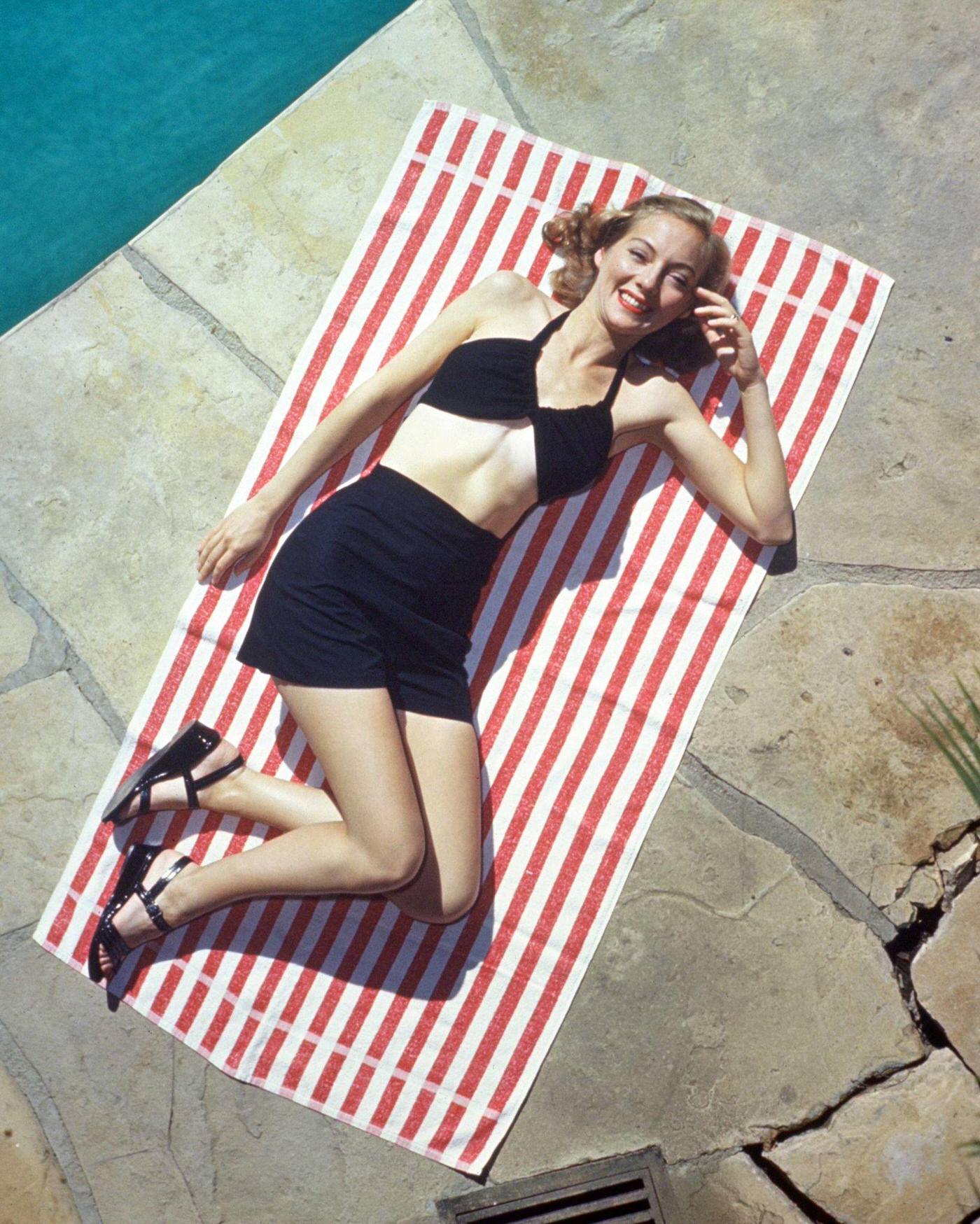
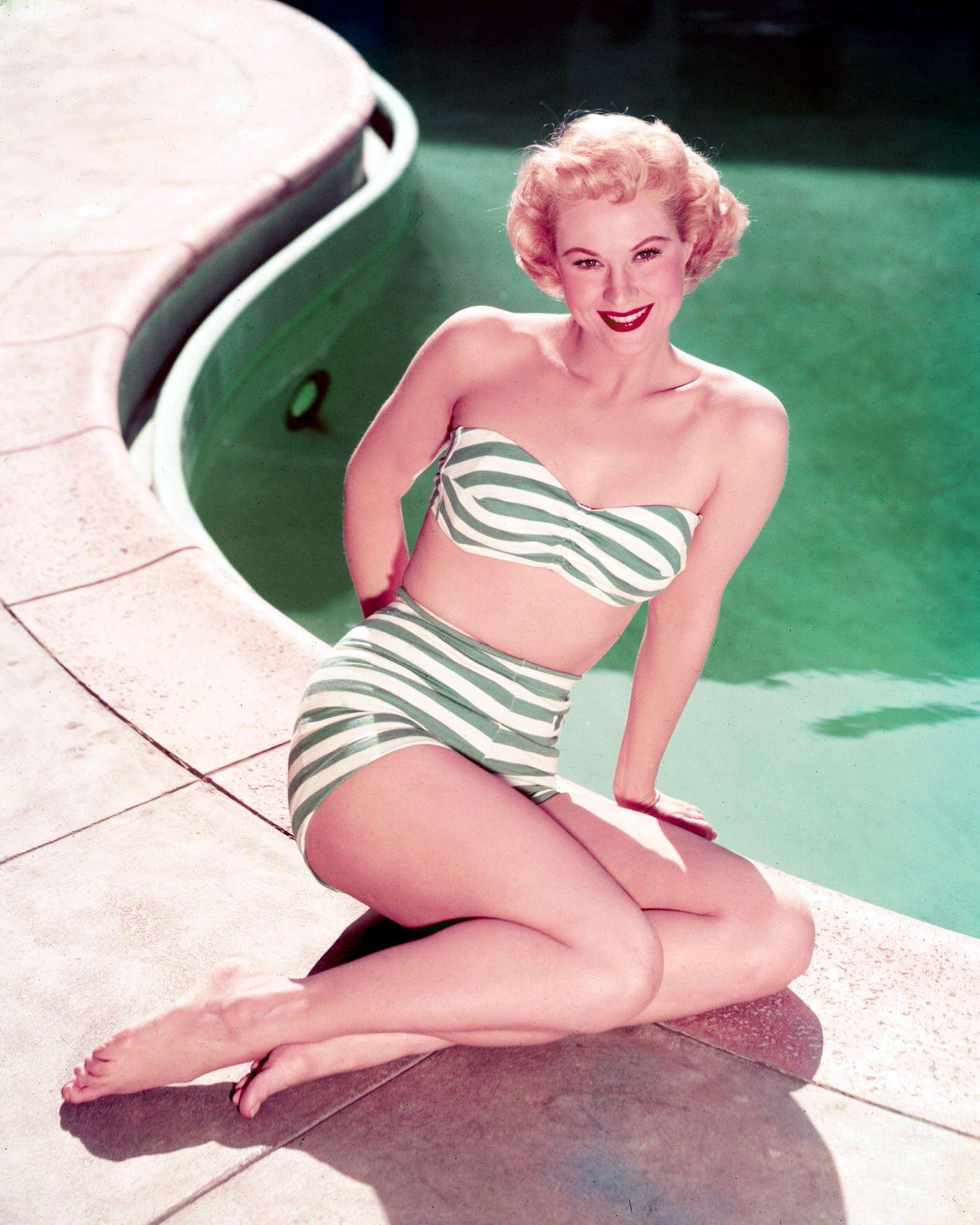
The two-piece was not just an American or German phenomenon. By July 1945, women in Copenhagen, Denmark were wearing bikini swimwear on the jetties at Bellevue Beach — a clear sign the style had reached across much of the Western world.
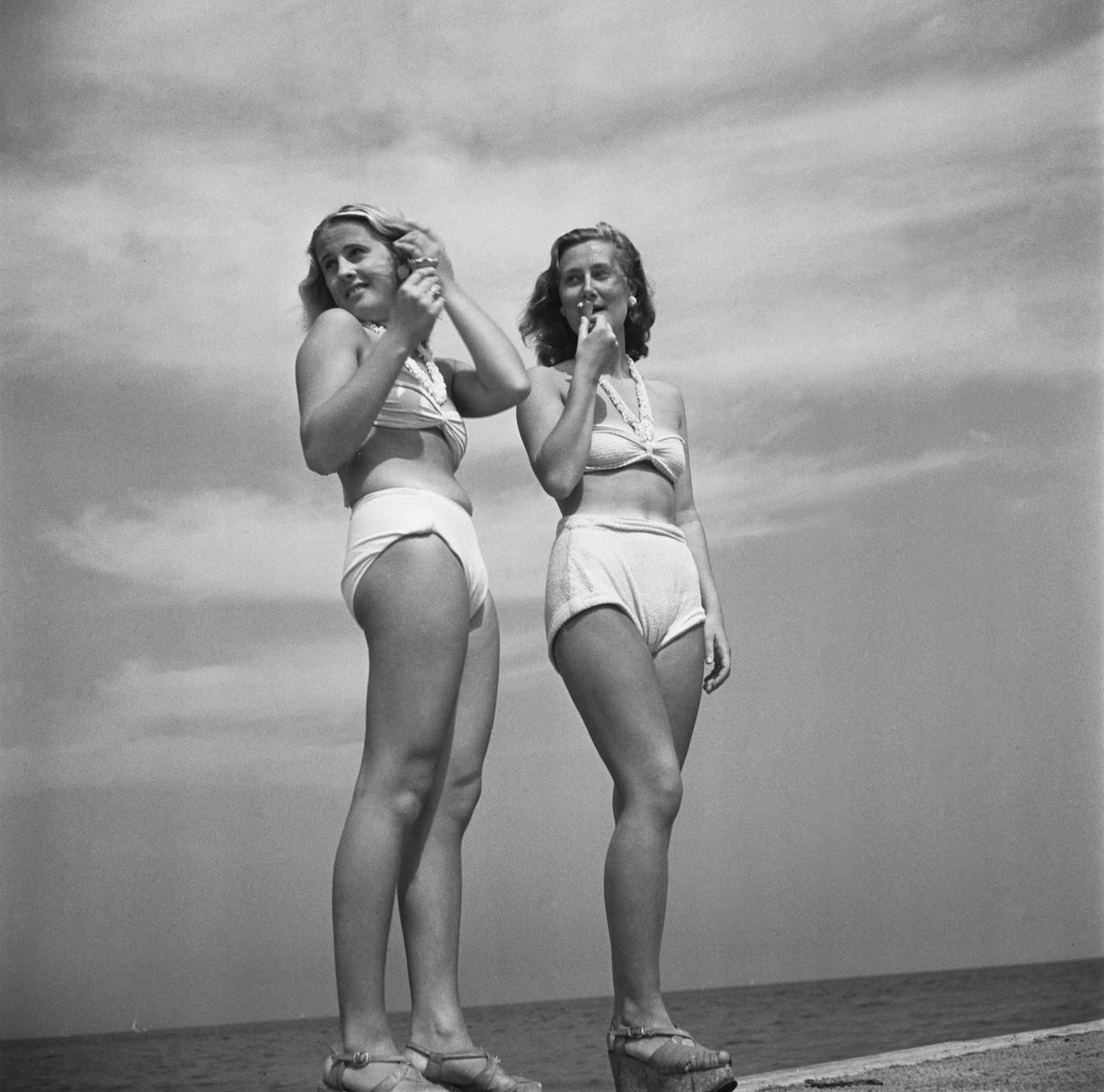
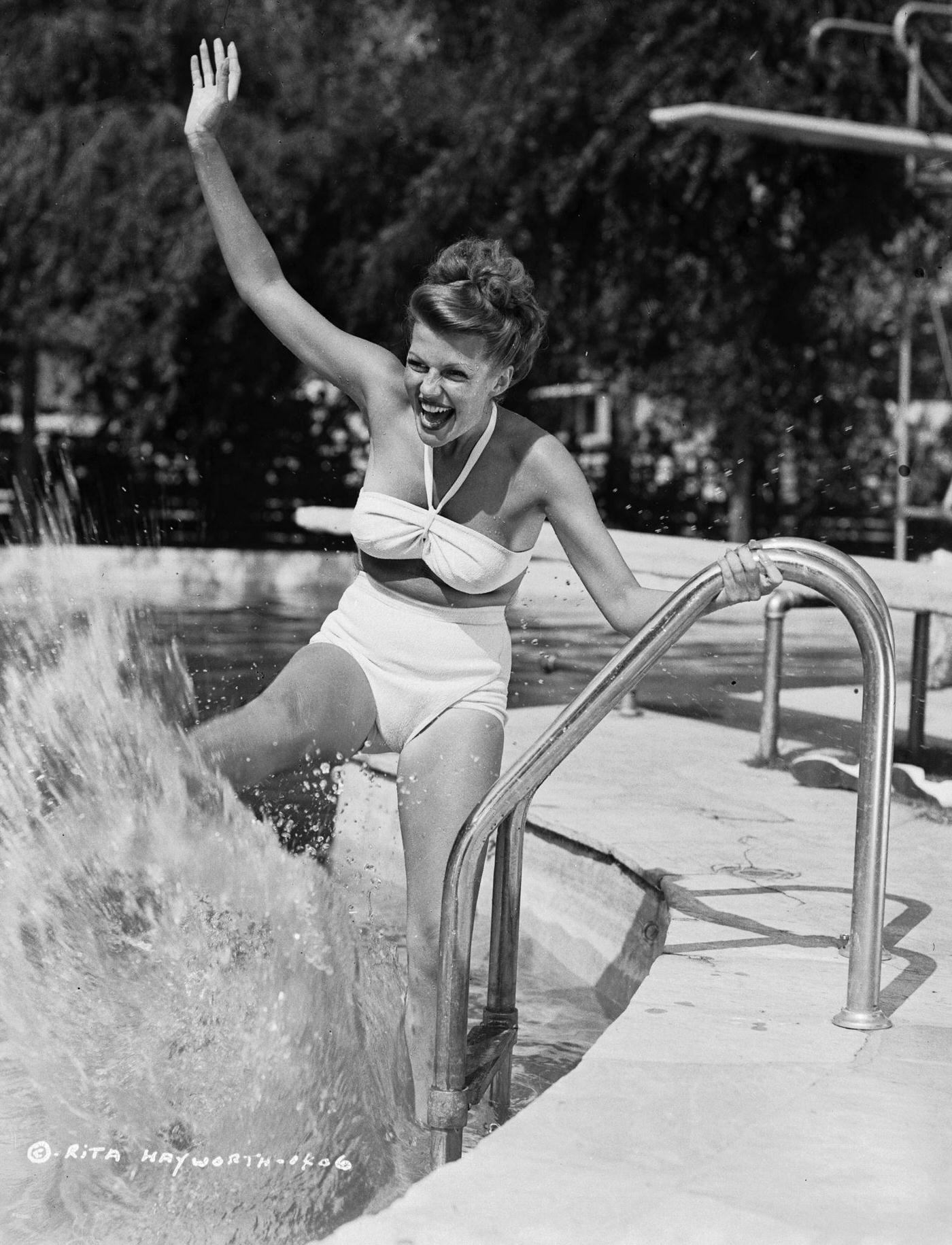
Rita Hayworth, one of the biggest Hollywood stars of the decade, was photographed in a swimsuit splashing at a pool around 1946. Images like this kept swimwear constantly visible in popular culture throughout the postwar years.
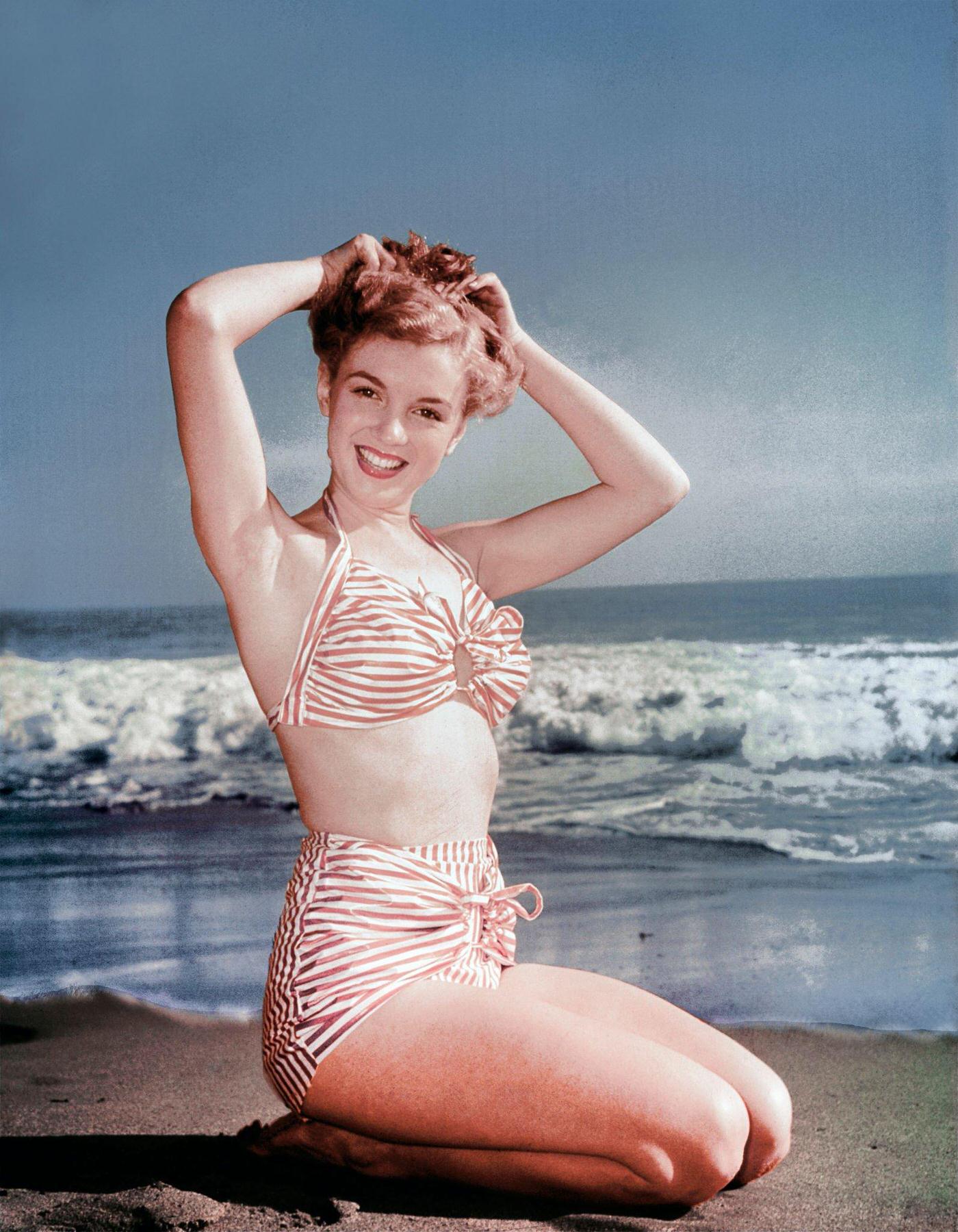
Marilyn Monroe’s Malibu beach photographs from 1946 are among the most widely recognized swimwear images of the entire decade. Shot on the California coastline, they capture the ease and confidence with which women wore the two-piece by the mid-1940s.
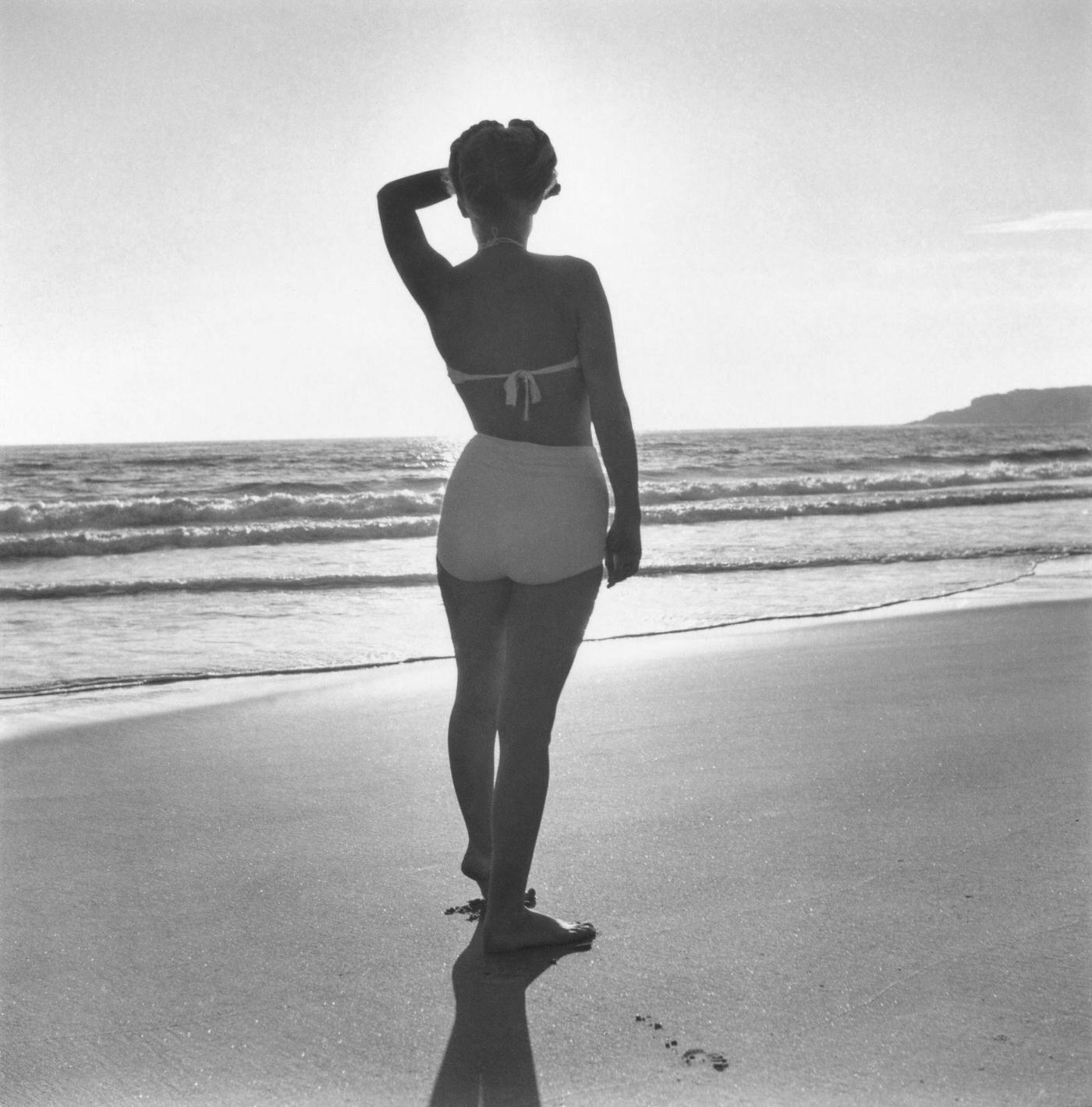
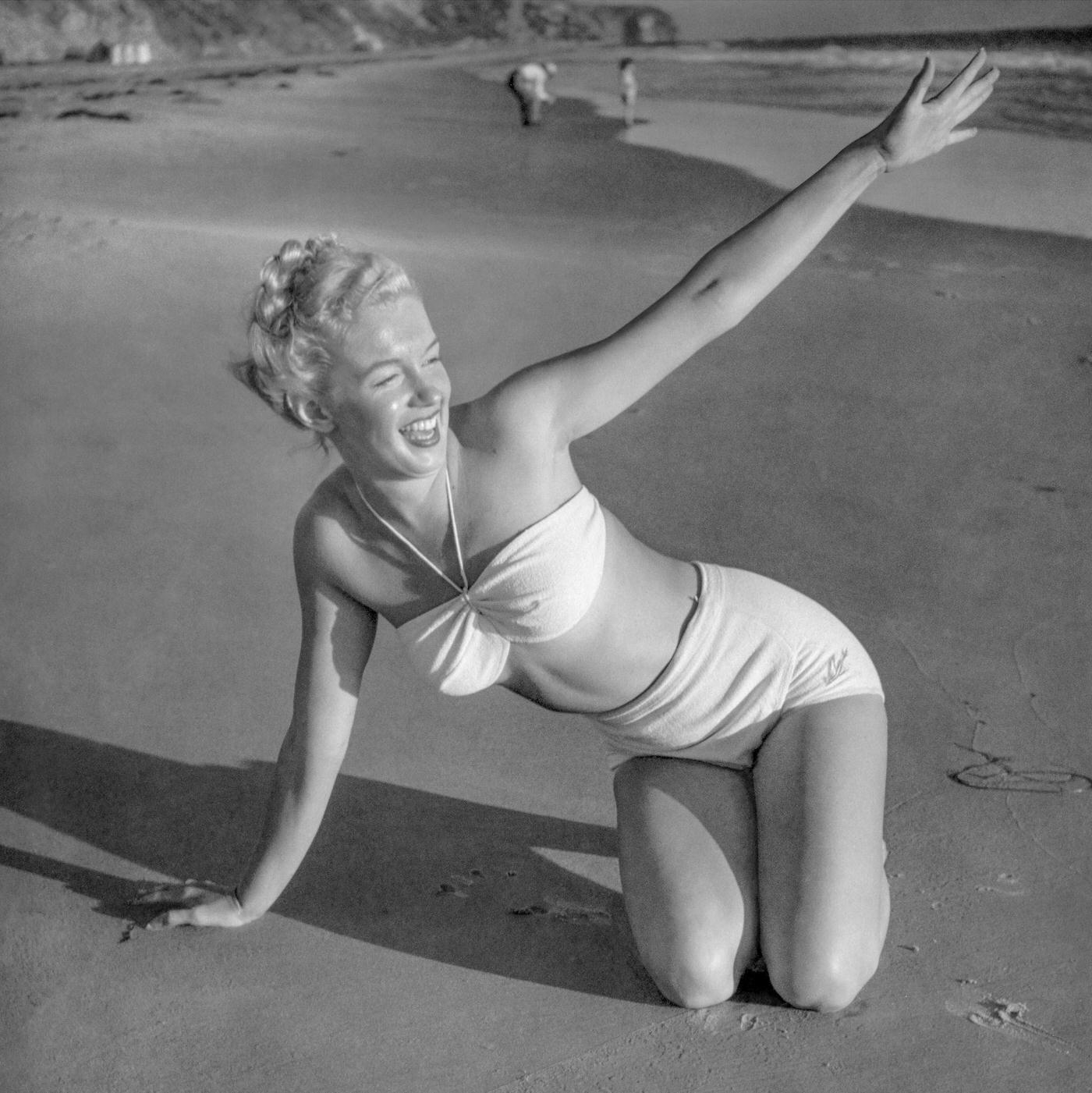
The Festival of Cannes in September 1947 brought international attention to beach fashion. With celebrities and filmmakers gathered on the French Riviera, swimwear photography reached a new level of visibility and sophistication.
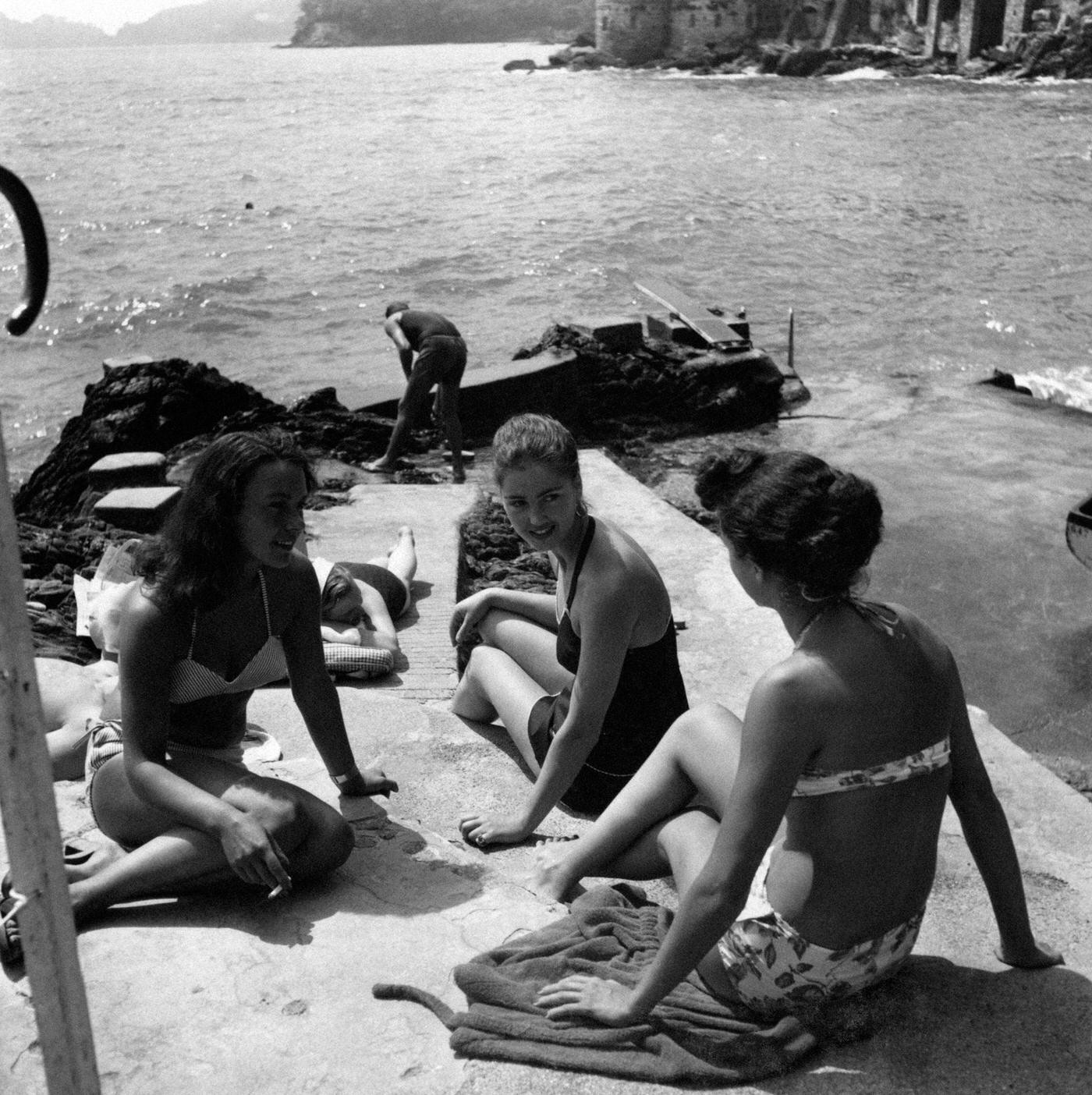
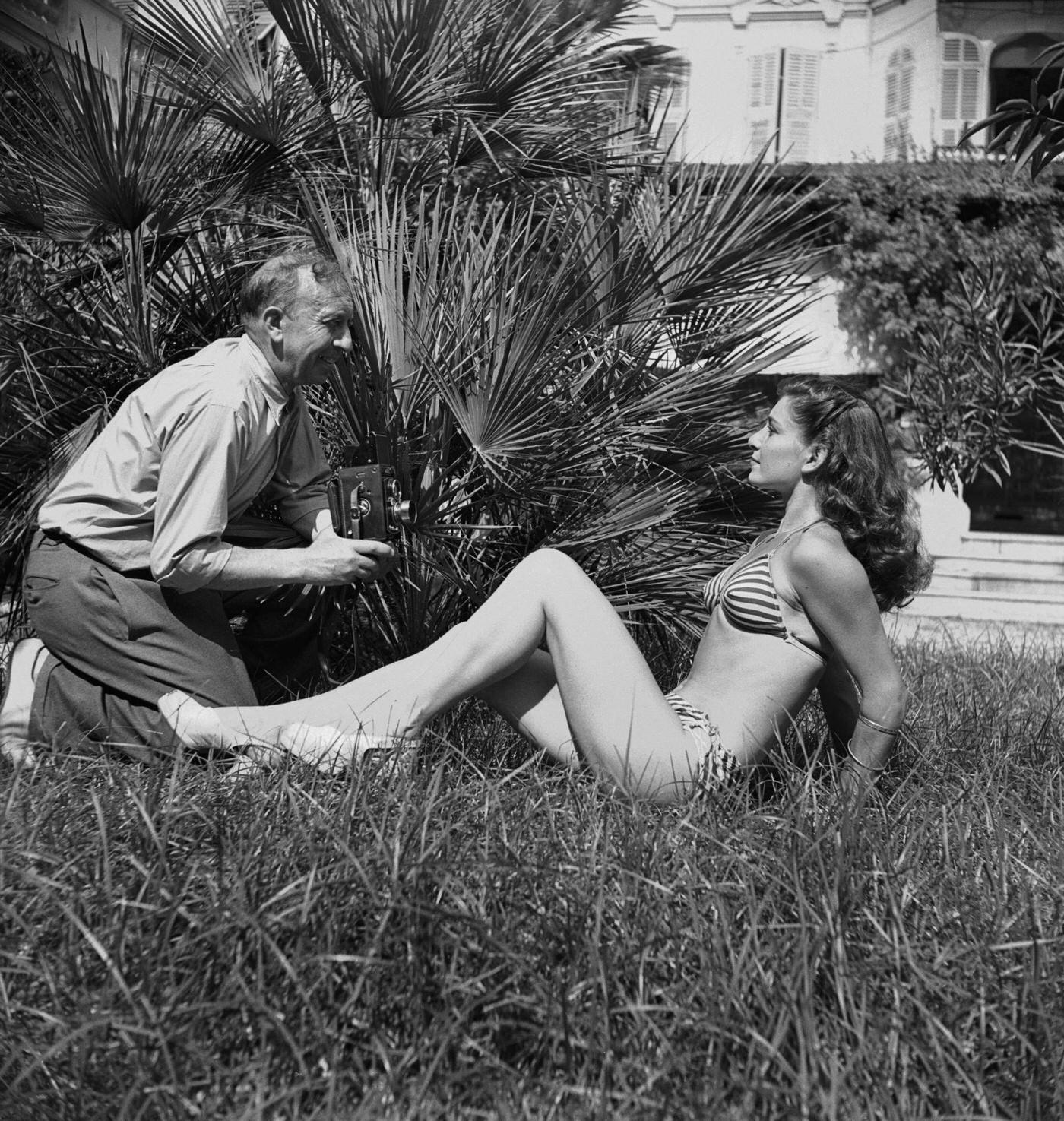
Professional models began featuring the two-piece in fashion shoots with increasing frequency through 1947 and 1948. Studio portraits and beach settings both became venues for showing off the latest bikini designs.
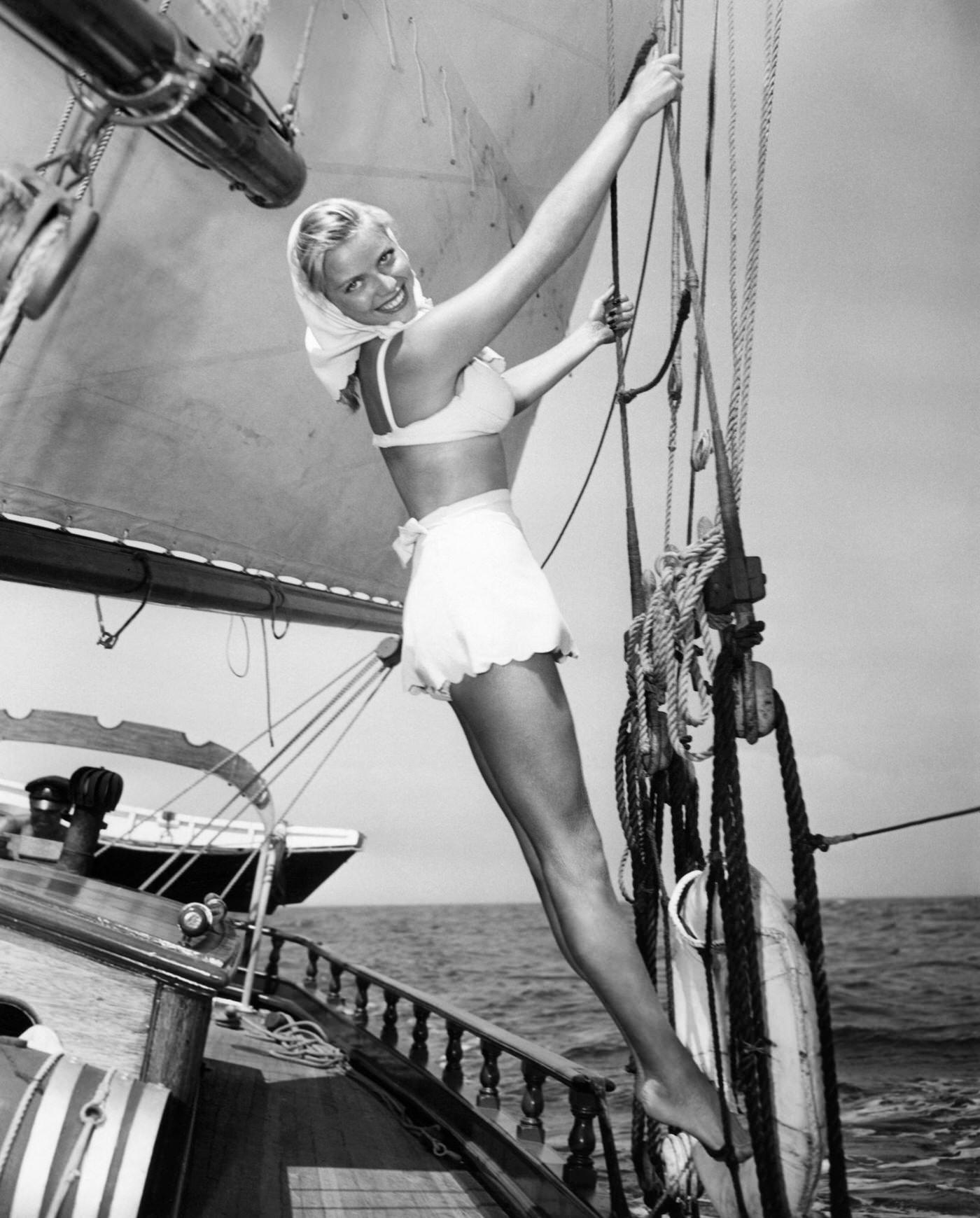
Patterned bikinis dominated the late 1940s. Models Jane Silk and Fran Cooper were both photographed in 1948 wearing bold patterned designs on the beach — images that appeared in fashion publications and helped set the visual standard for what a two-piece should look like heading into the next decade.
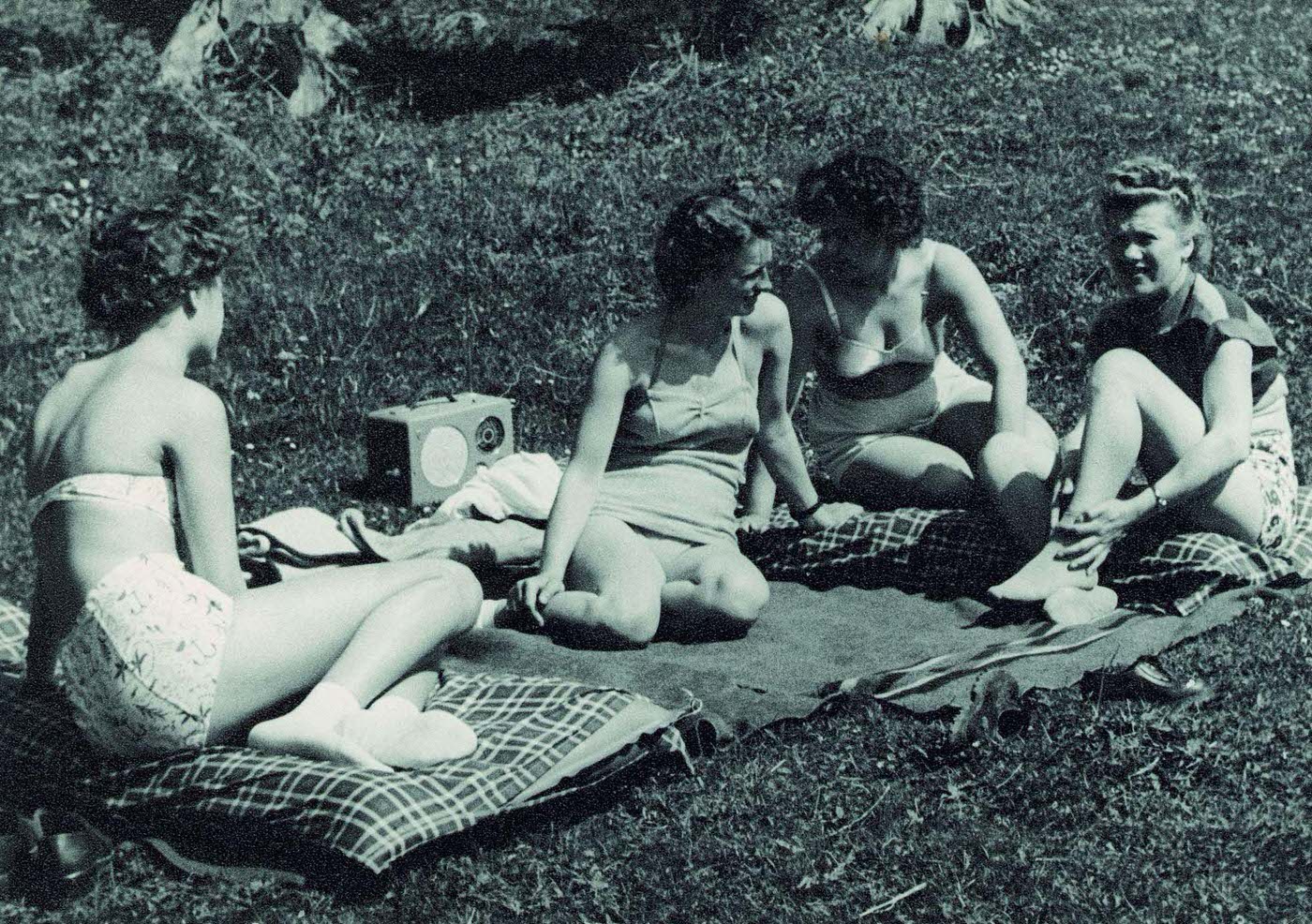
Group beach photographs from 1948 show that the two-piece had become common enough to be worn casually in mixed company — not just for photoshoots or celebrity outings. Women in Switzerland were photographed sitting together on grass in a variety of bikini and swimsuit styles, a snapshot of how mainstream the trend had become.
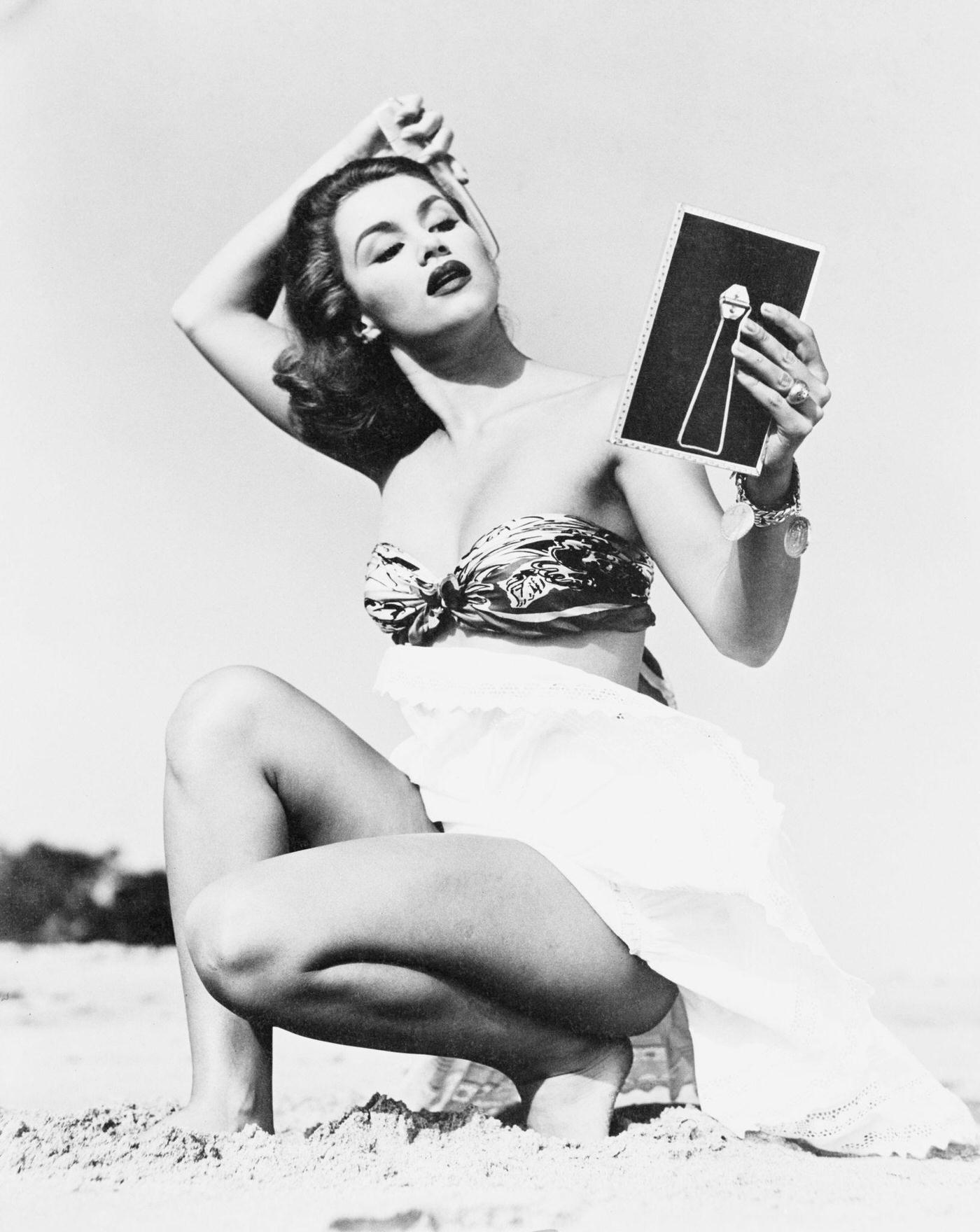
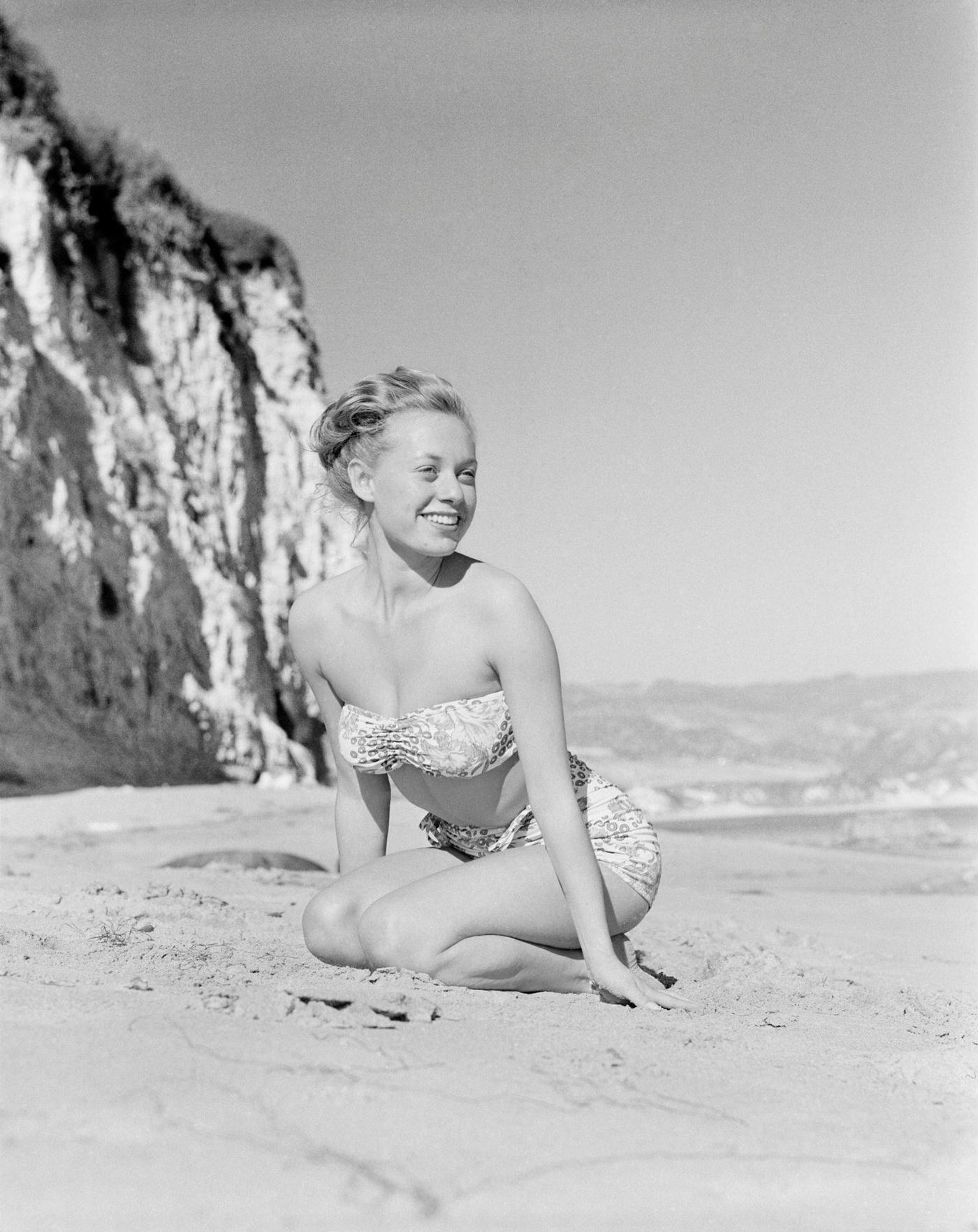
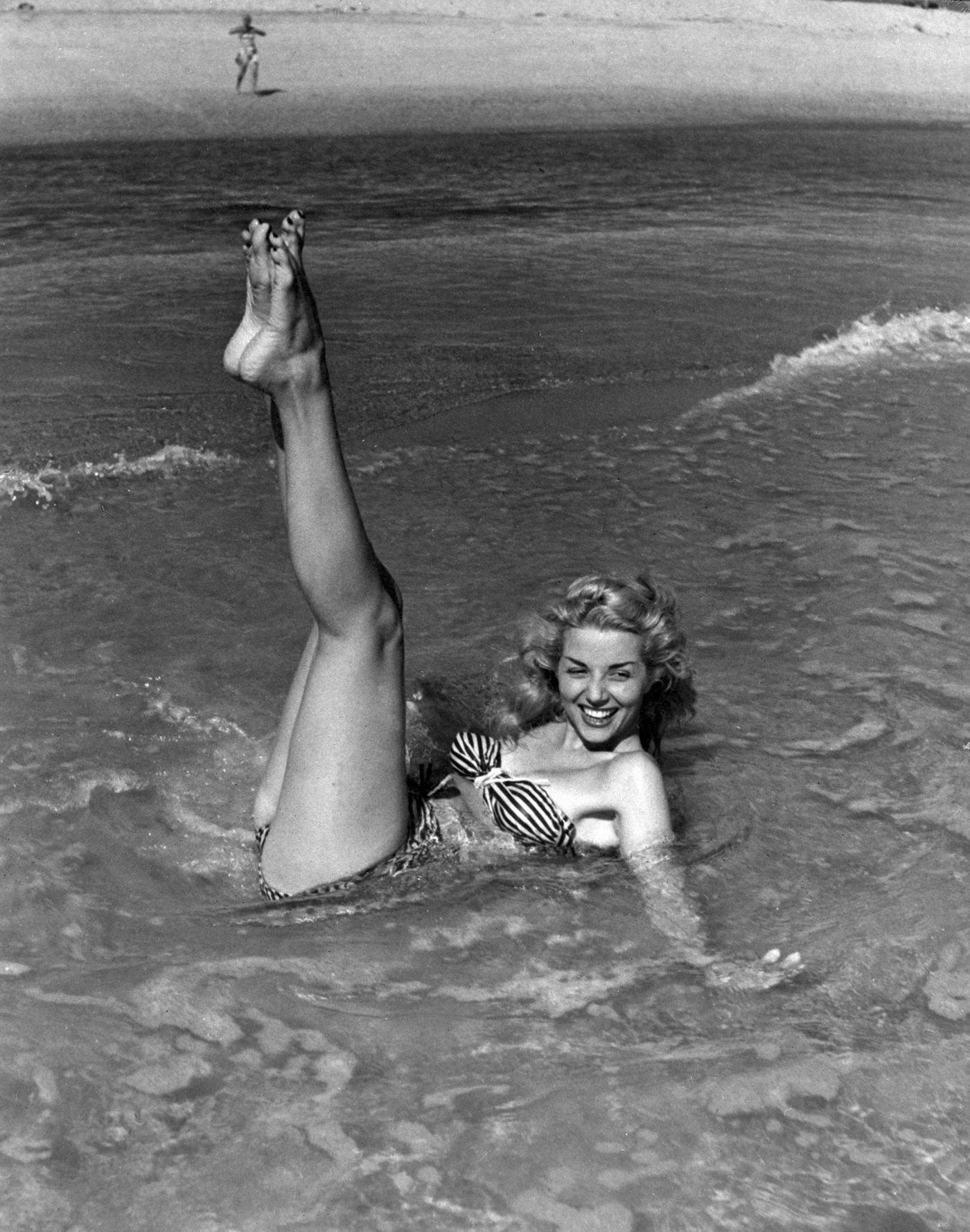
By the end of the 1940s, the two-piece swimsuit had fully established itself as a legitimate and widely worn garment. Women wore them at the ocean, at pools, on yachts, in ponds, and at international film festivals. The decade saw the style move from a wartime necessity to a fashion staple — one that redefined what beachwear could look like for women everywhere.