
Today, Times Square draws more than 50 million visitors a year. Its bright lights, Broadway shows, and packed sidewalks make it one of the most recognizable places on earth. But for much of the 1970s and 1980s, the same streets looked nothing like that. The area was defined by crime, poverty, and an open sex trade that operated in plain sight. These vintage photographs document what Times Square looked like at its lowest point — and they don’t hold back.
The slide began after the Great Depression. As money dried up, Times Square’s elegant music halls and boutique hotels lost their footing. One by one, they were either torn down for office buildings or left to rot. What replaced them was a different kind of business entirely. Adult theaters, sex shops, grindhouse cinemas, and strip clubs moved in and set up permanently. By the 1960s, the New York Times had already labeled 42nd Street between Seventh and Eighth Avenue the worst block in the city. A decade later, things had gotten significantly worse.
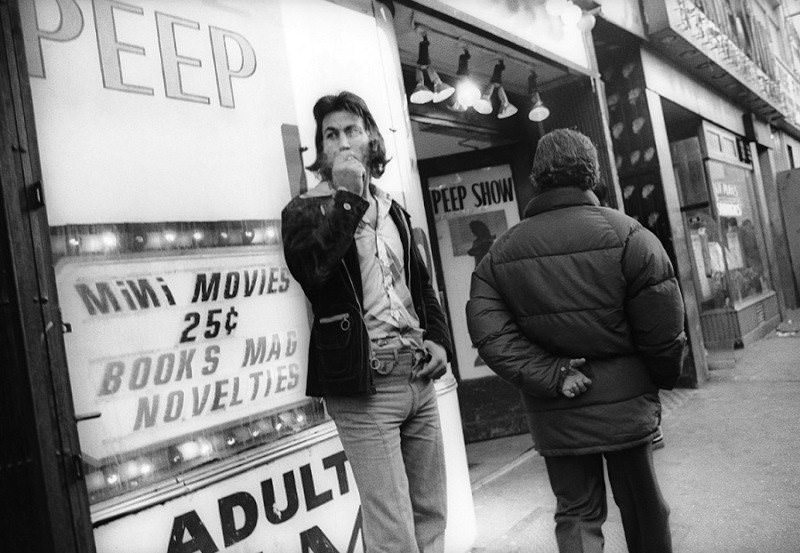
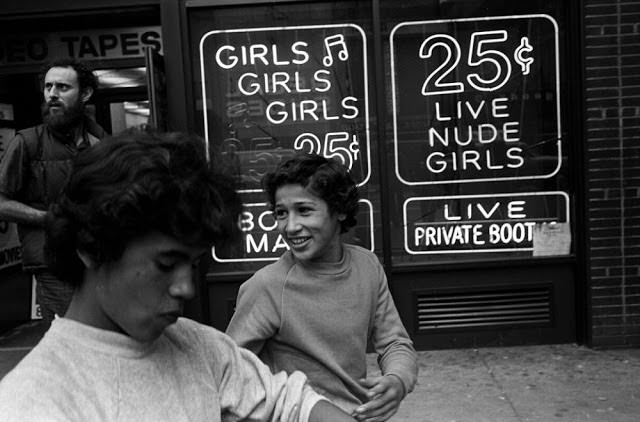
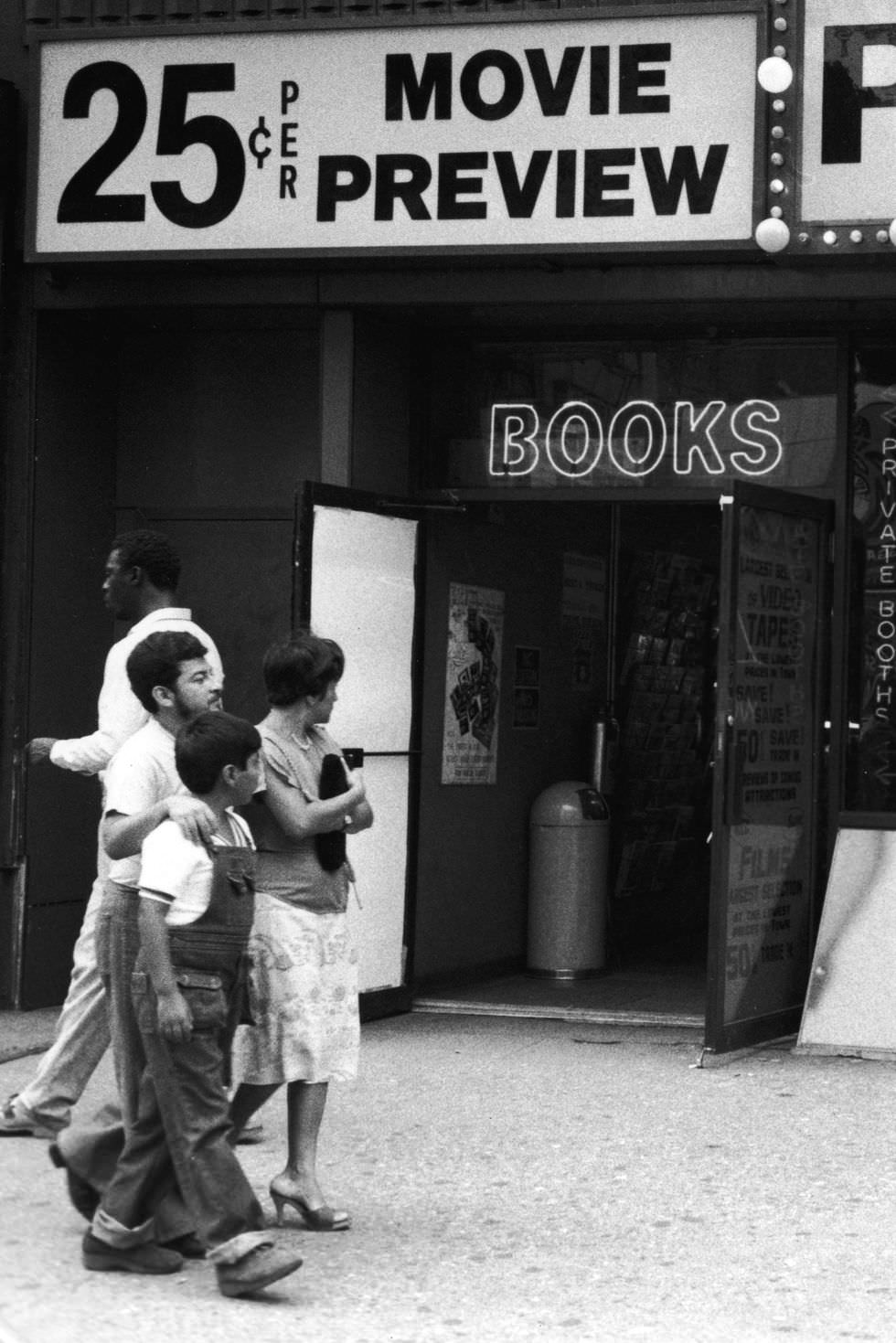
The peep show was the foot in the door. Starting in 1966, 25-cent booths began appearing along the strip, and the profits they generated were enormous. That money attracted more adult businesses. Strip clubs, adult cinemas, and sex shops followed quickly. The transformation of the neighborhood accelerated fast, and by the mid-1970s, the character of Times Square had been fully reshaped.
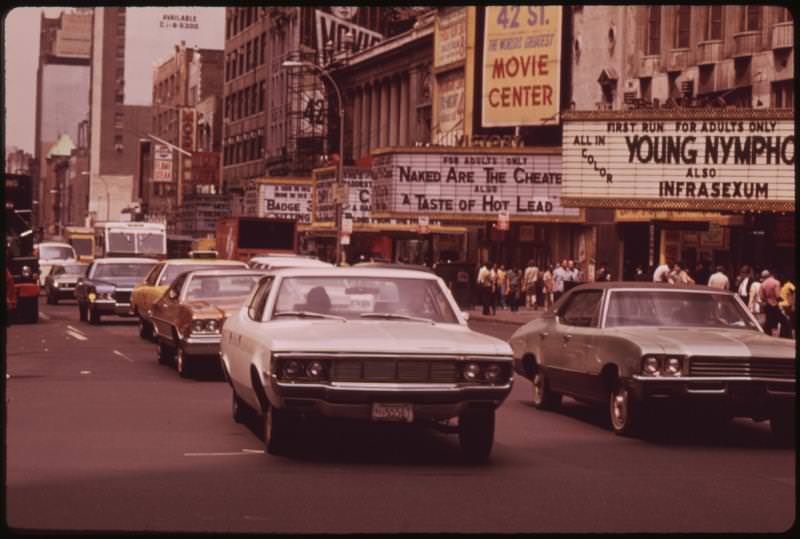
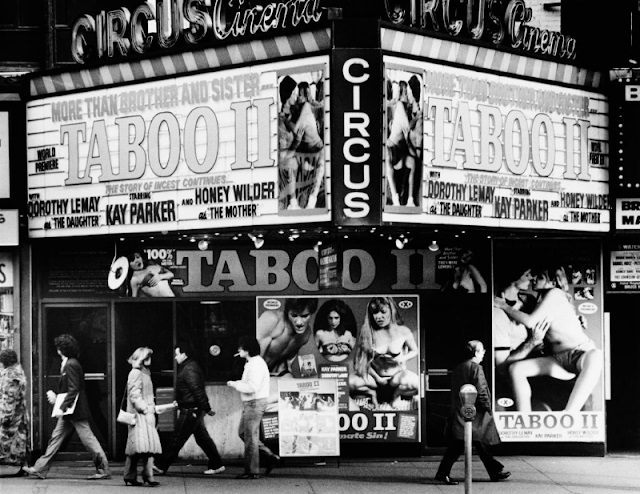
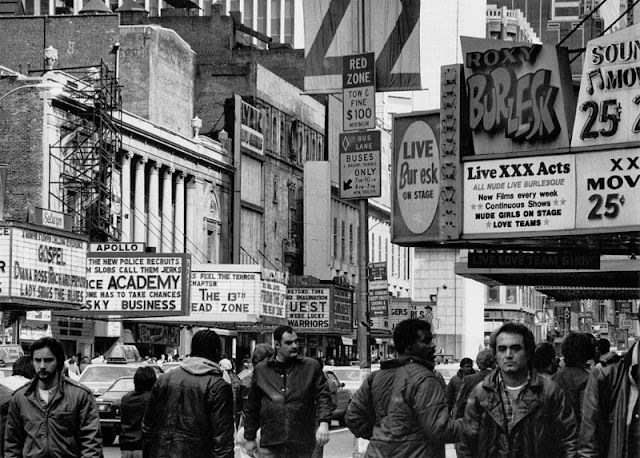
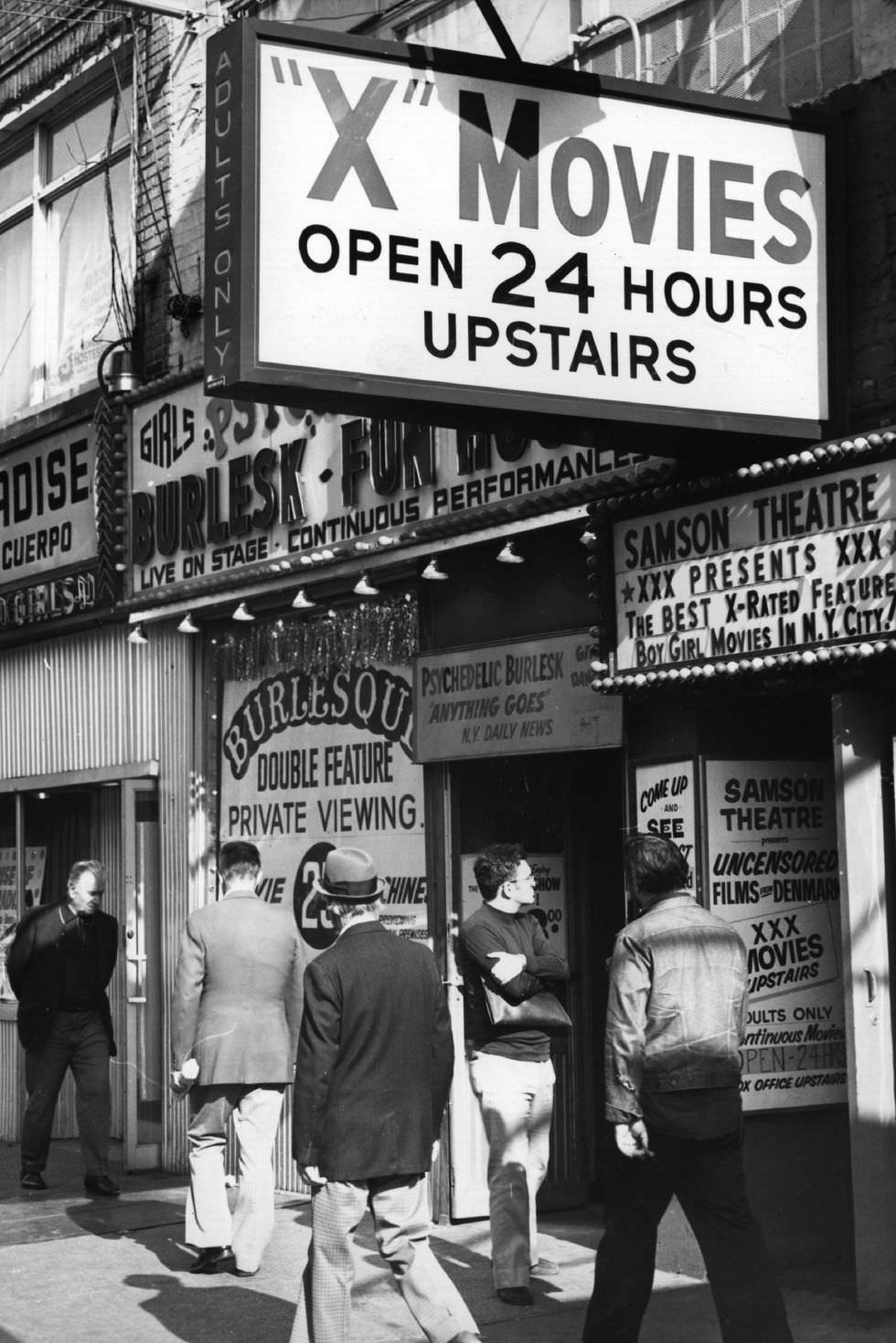
The theaters that had once screened mainstream Hollywood films switched over to pornography or ran endless loops of cheap, second-run movies. The grand old movie palaces — some of the most architecturally impressive buildings in the city — were either demolished or allowed to decay from the inside out. By the late 1970s, Rolling Stone had given the area a blunt label: the sleaziest block in America.
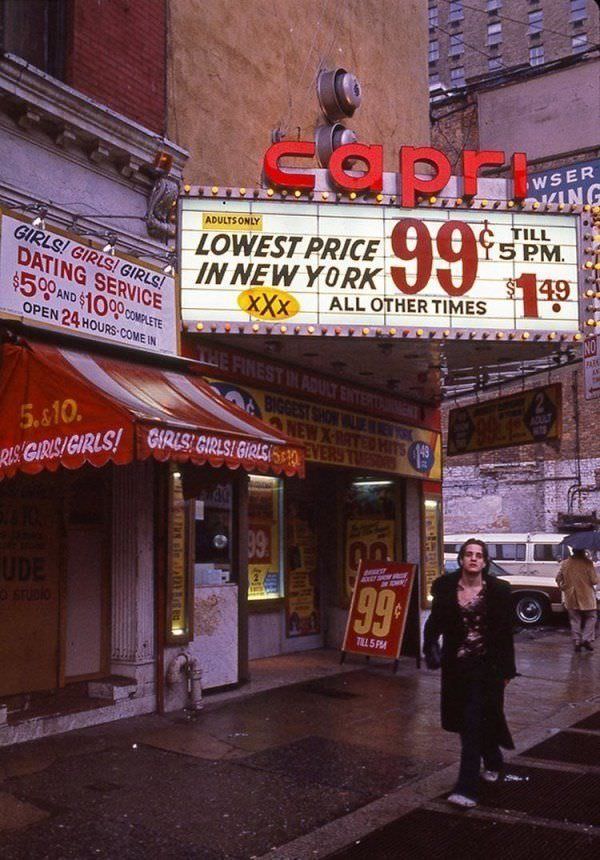
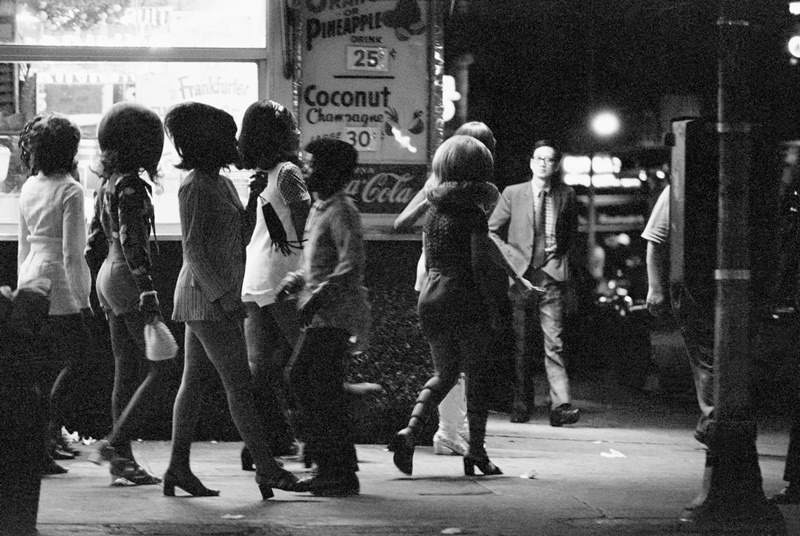
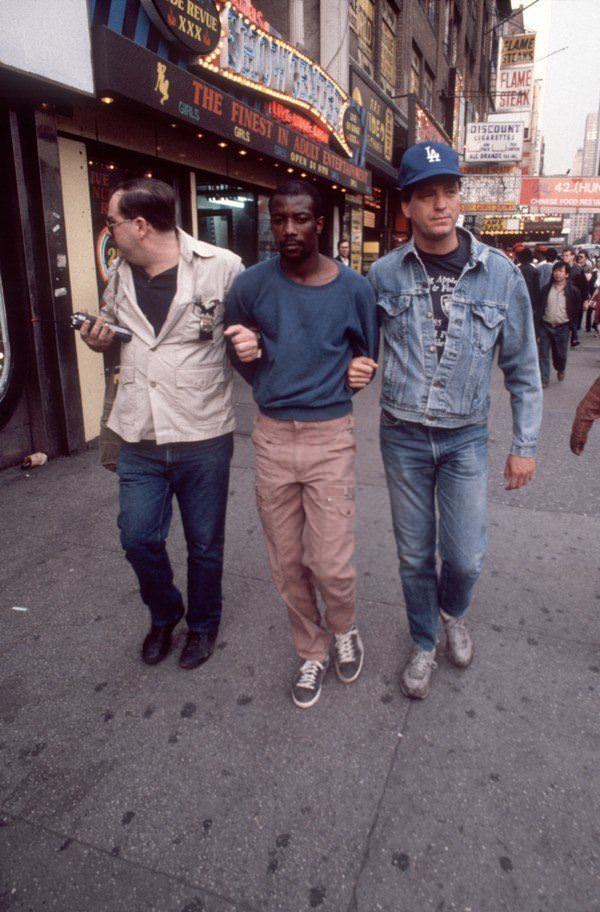
The sex trade was not hidden. Prostitution operated openly on the side streets branching off Broadway and 42nd Street. Brothels, many of them run by organized crime, functioned without legal interference. In the summer of 1971, groups of prostitutes walked freely through the area in broad daylight.
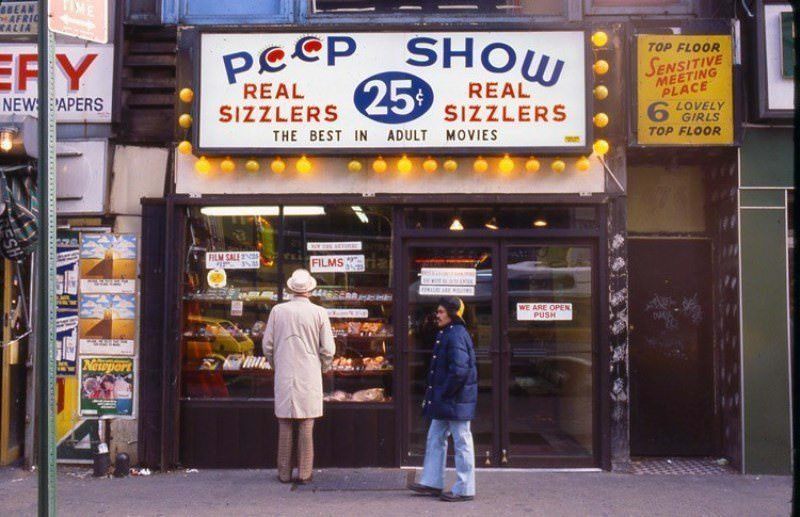
Crime statistics from the period paint a grim picture. In a single one-block radius, over 2,300 crimes were committed every year. Police morale was at rock bottom, and enforcement was inconsistent at best. Drug dealing was another open-air operation. By 1986, undercover officers were making arrests for crack sales in the middle of the street.
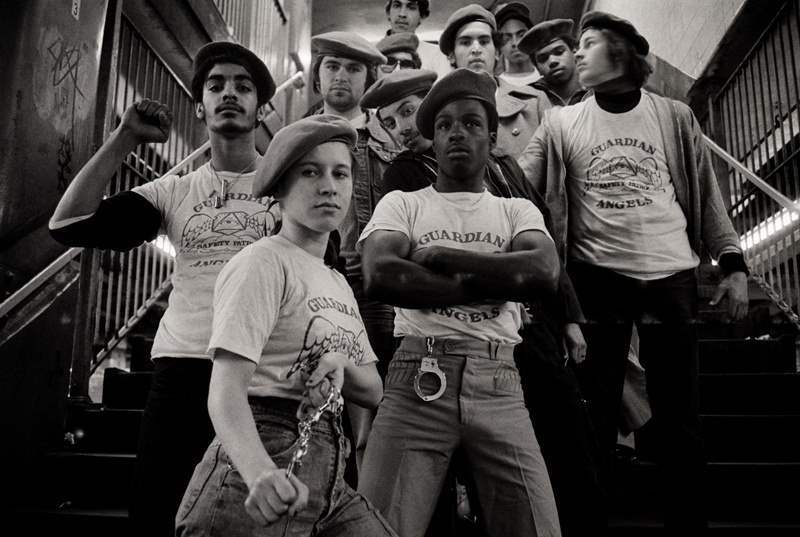
With police struggling to maintain order, civilians took matters into their own hands. In 1980, the Guardian Angels — a volunteer patrol group — began organizing to make the subway system safer. They operated without weapons, relying on numbers and visibility to deter crime. Their presence was a direct response to how completely law enforcement had lost control of public spaces.
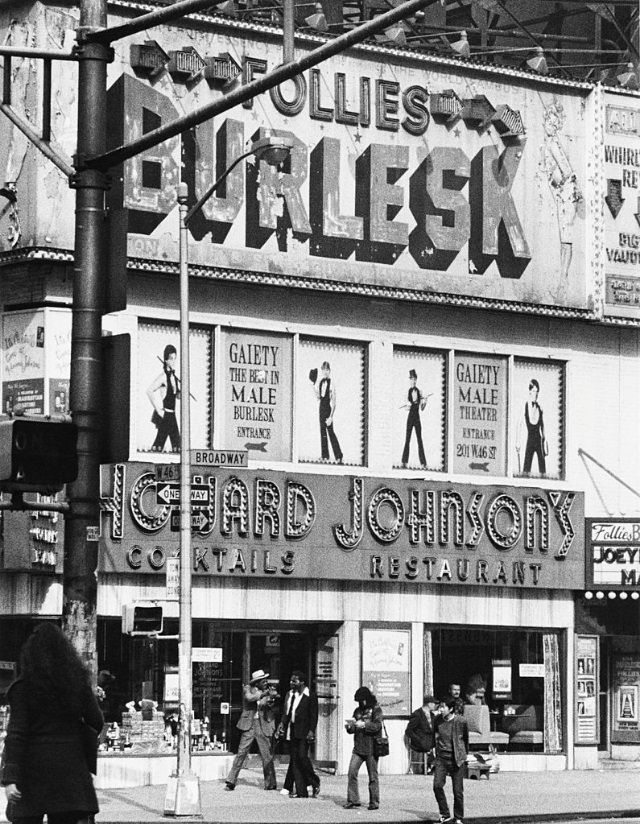
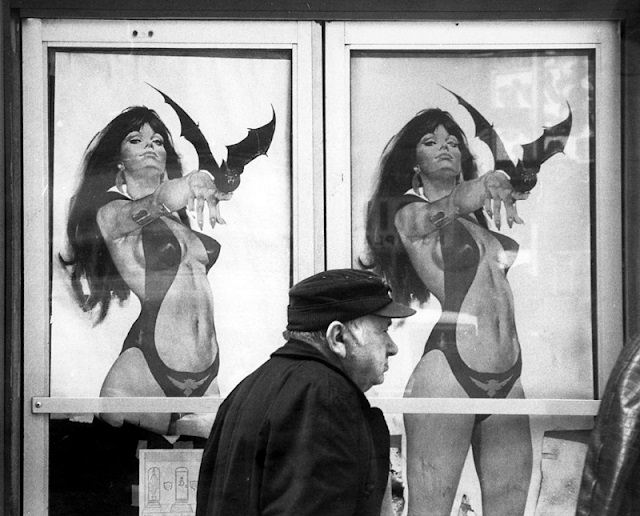
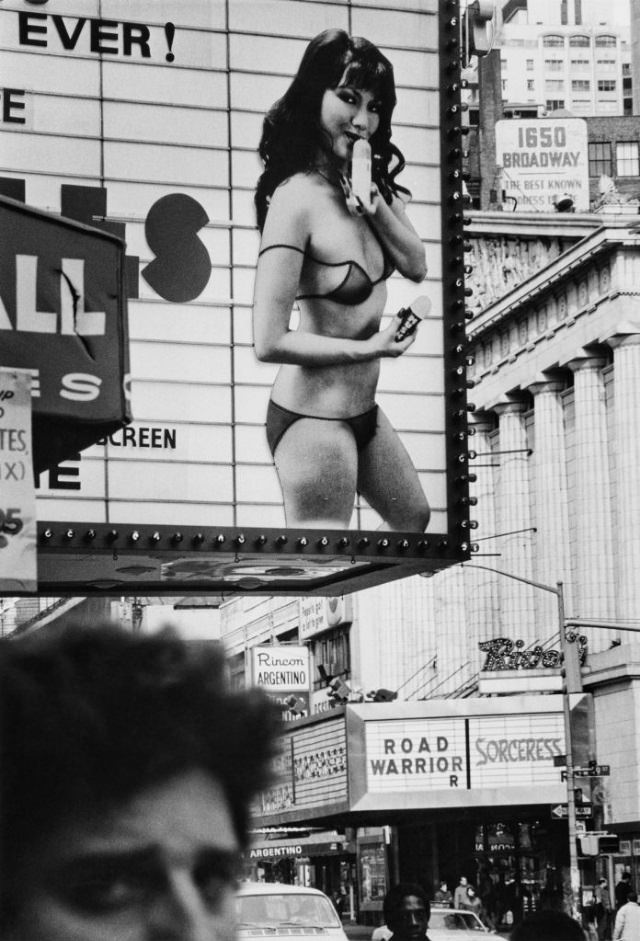
Along Broadway and 46th Street, burlesque was a fixture. Venues like the Follies Burlesk and the Gaiety Theater advertised their shows on large outdoor signs that anyone passing by — including children — could read. The marquees were impossible to miss.
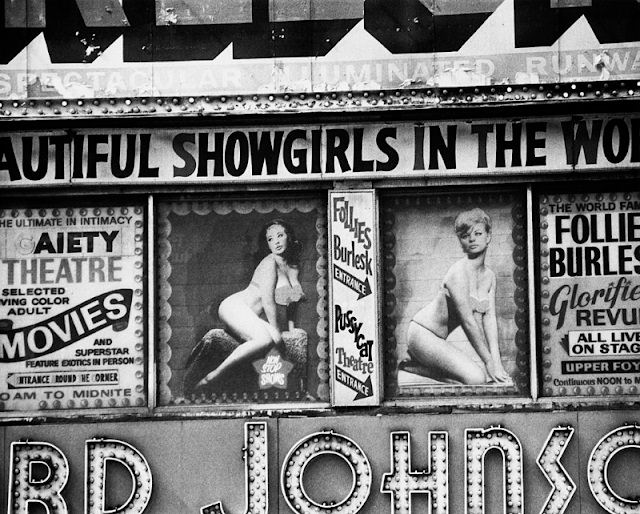
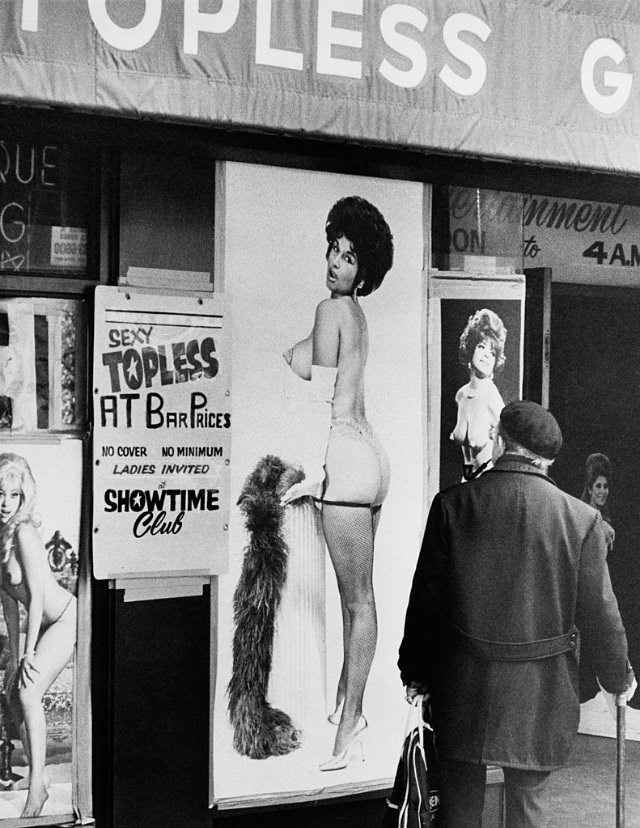
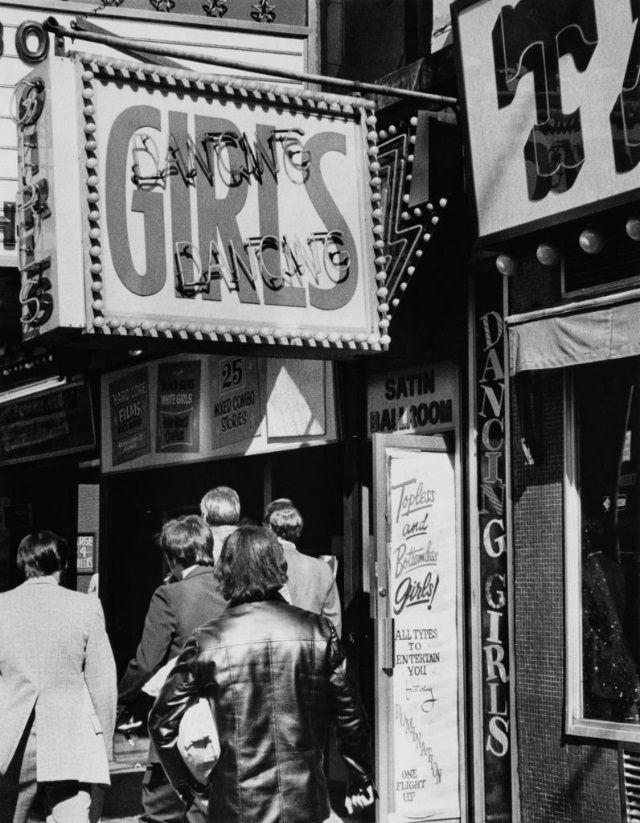
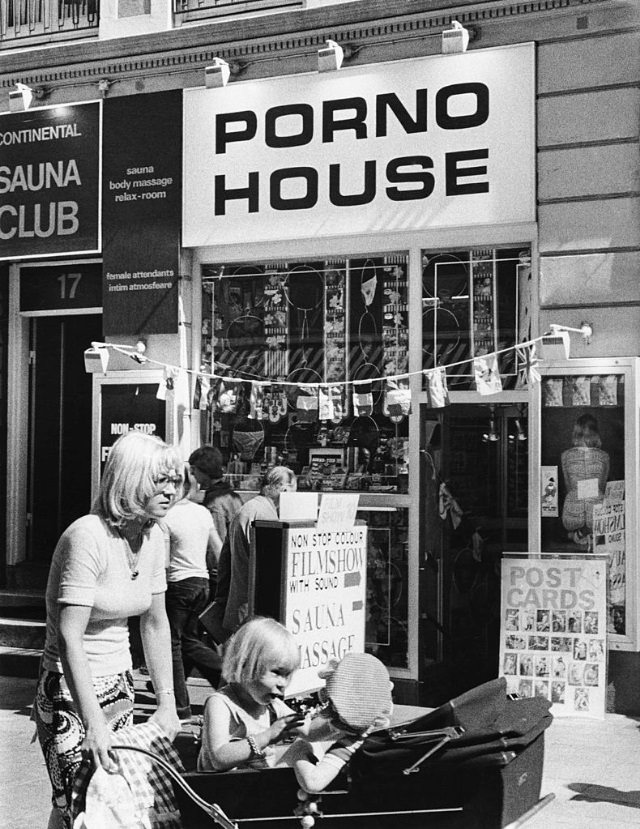
By 1978, the concentration of adult businesses along 46th Street and Broadway was dense. Establishments like the Follies Burlesk advertised upcoming performers on their marquees. Directly above a Howard Johnson’s restaurant, signs for the Gaiety Male Theater hung in plain sight — an illustration of just how normalized the adult entertainment industry had become in the neighborhood.
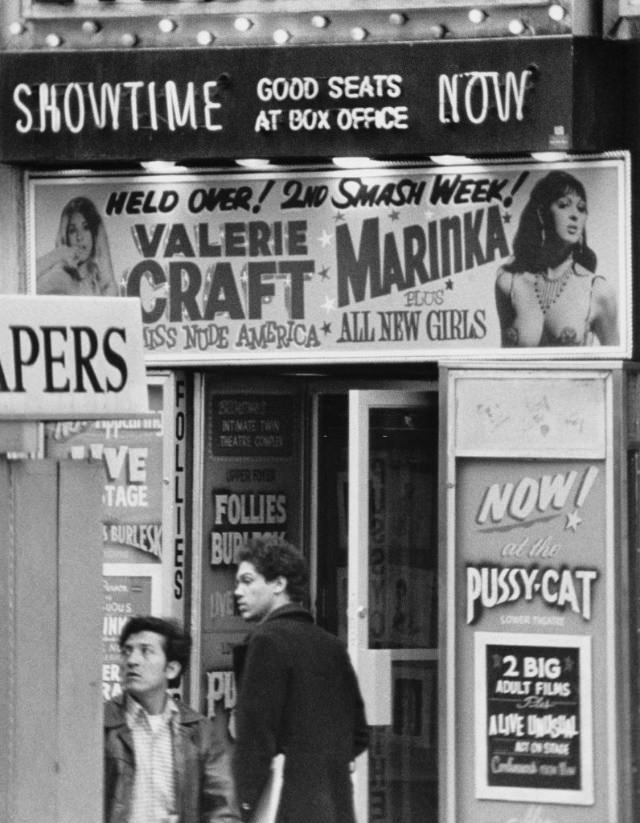
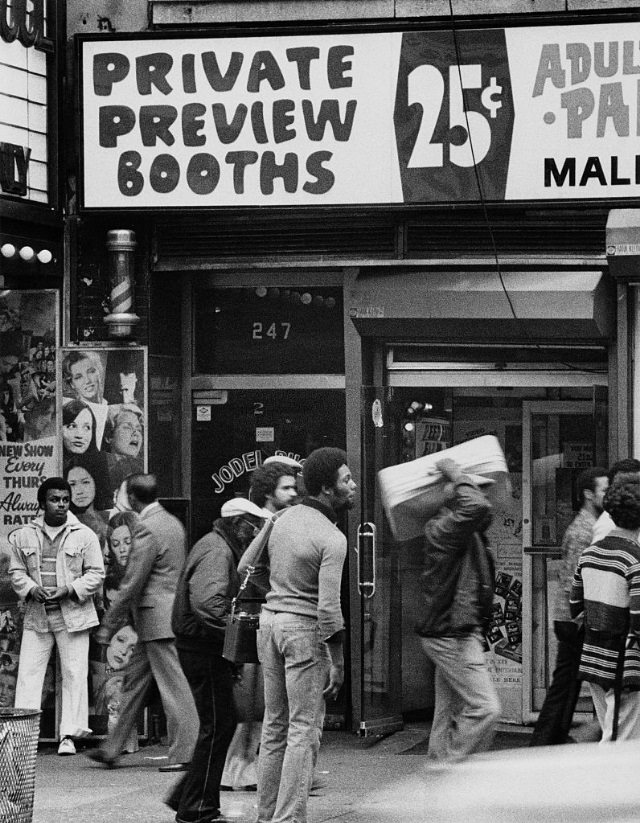
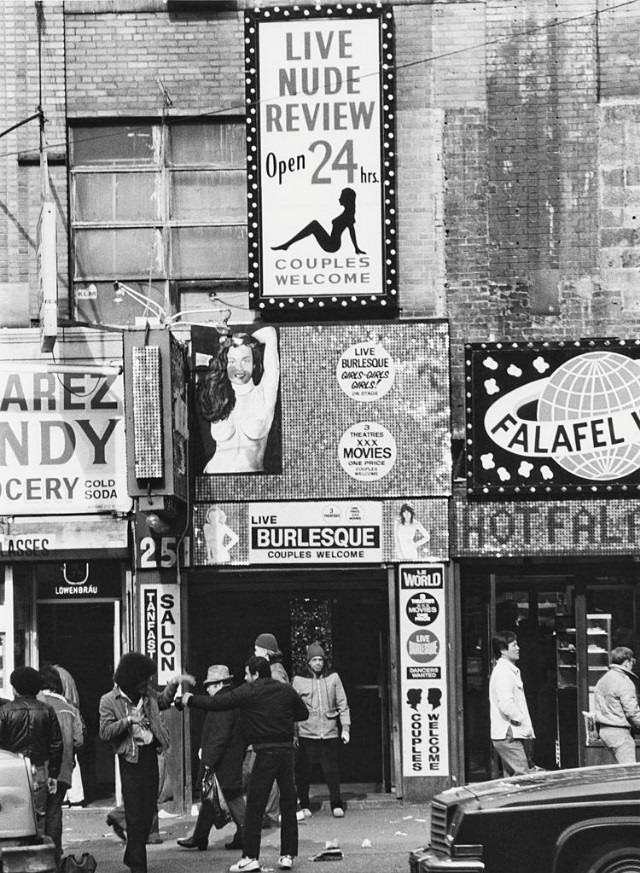
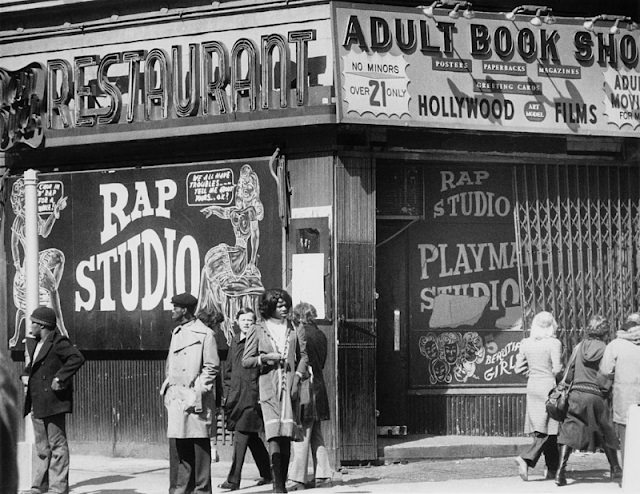
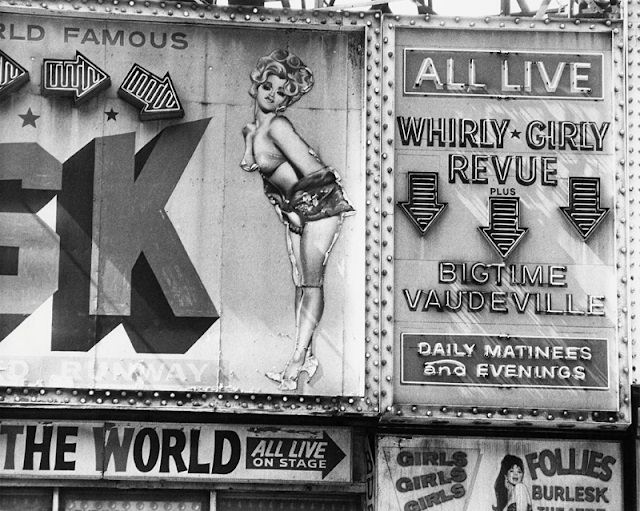
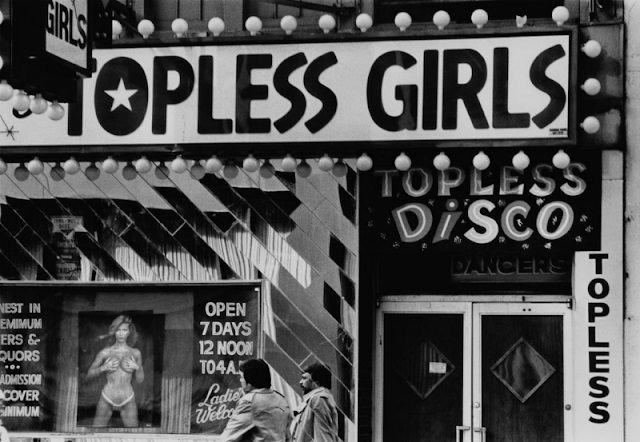
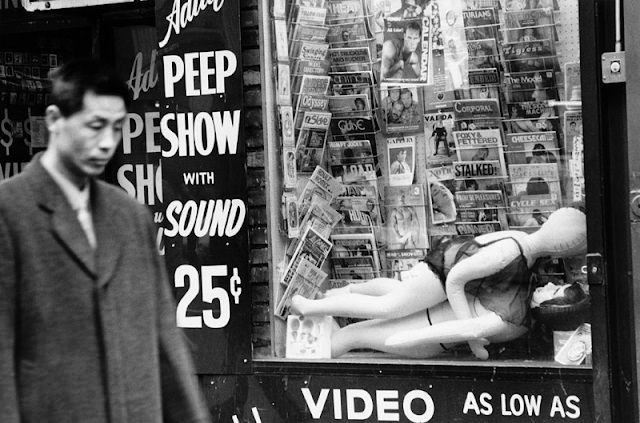
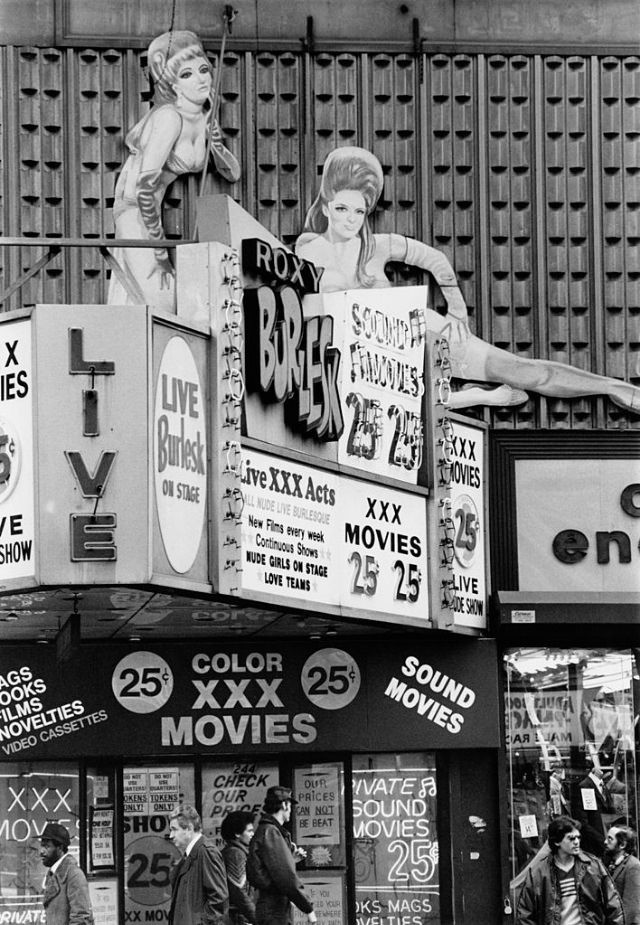
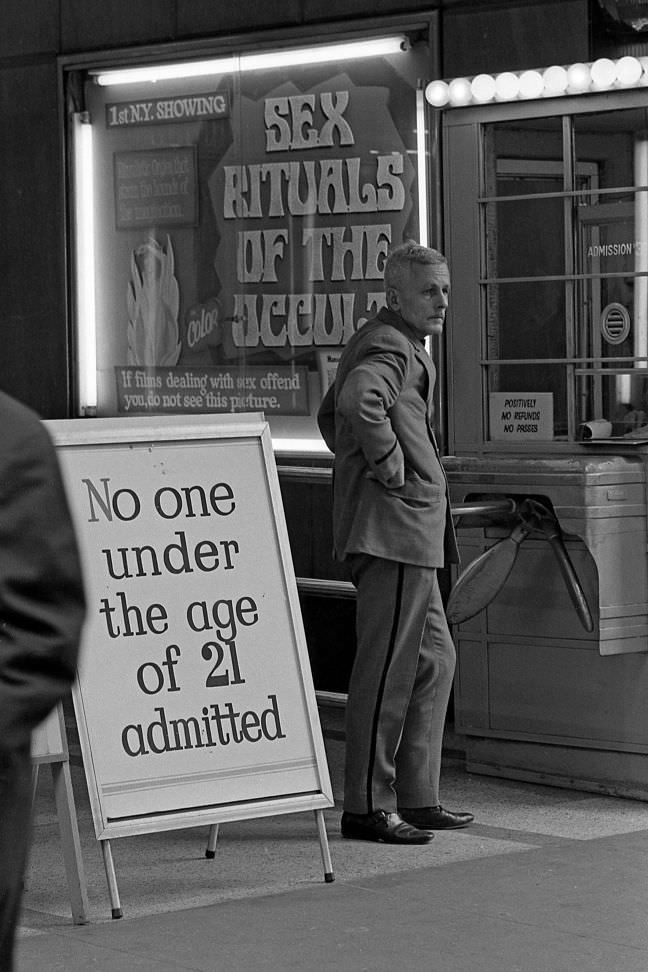
The Roxy Burlesk Theater on 42nd Street was one of several venues still drawing crowds in 1980. These were not underground operations. They had marquees, box offices, and ushers. One theater even posted a sign stating that no one under 21 would be admitted — a thin gesture at regulation in an area where children already walked the streets unattended.
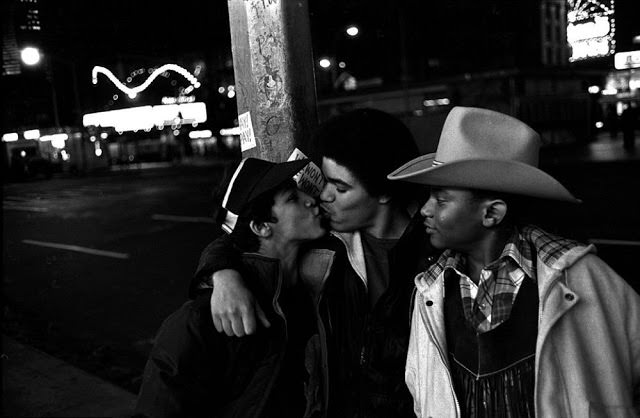
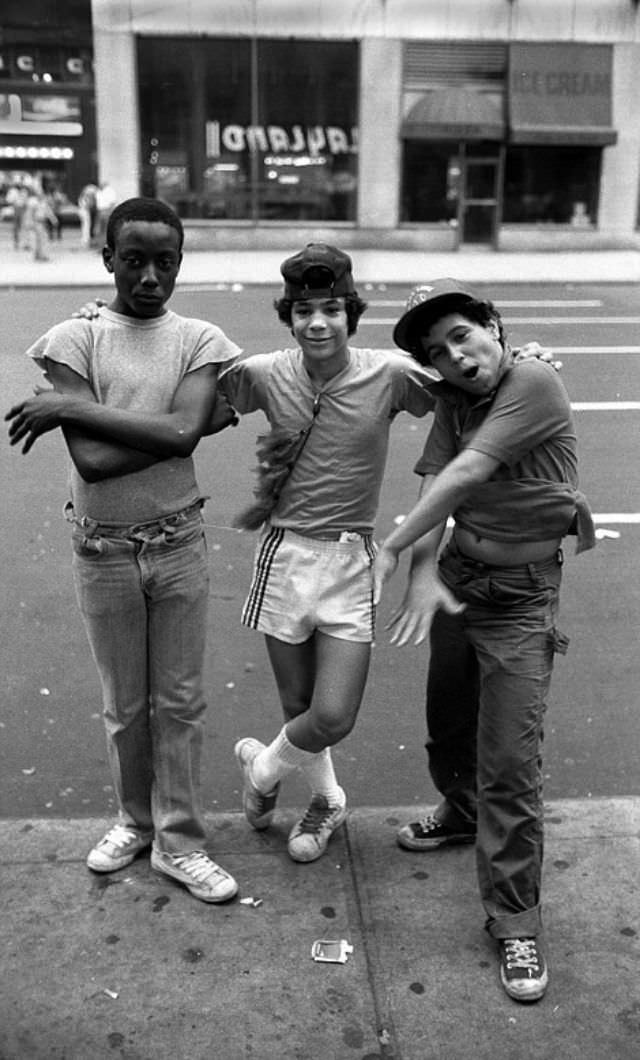
Among the most disturbing realities of Times Square in this era was the presence of child prostitution. Young boys — some as young as 12 — worked the streets around 42nd Street and 7th Avenue as hustlers. They were sought out by men known as “chicken hawks,” older men who specifically paid for sex with underage boys. This was not a hidden subculture. It played out in full view on public streets.
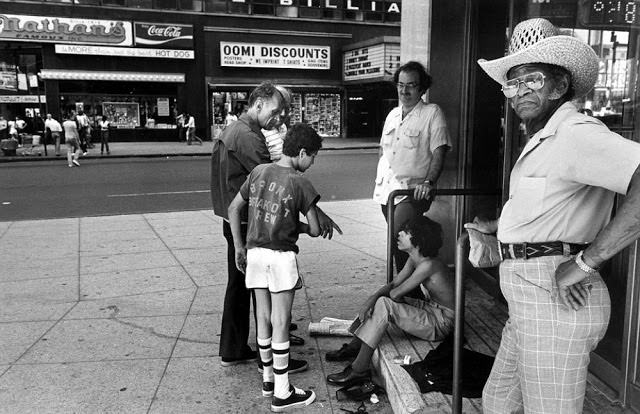
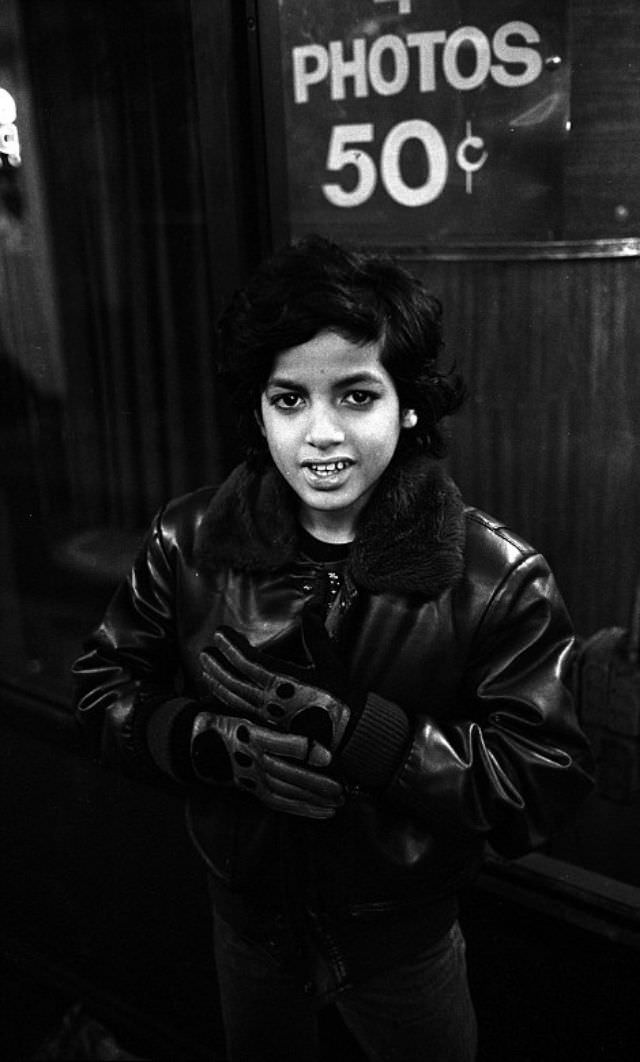
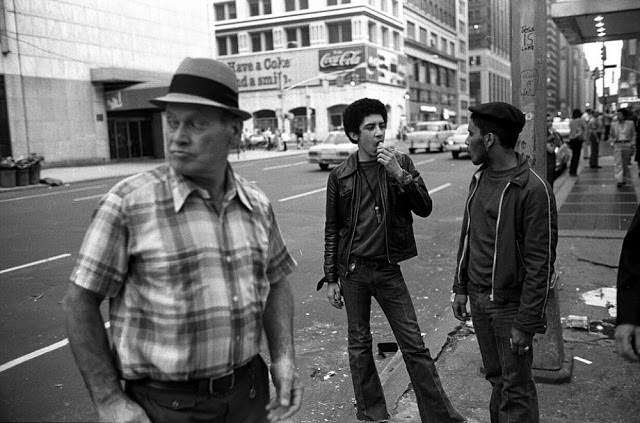
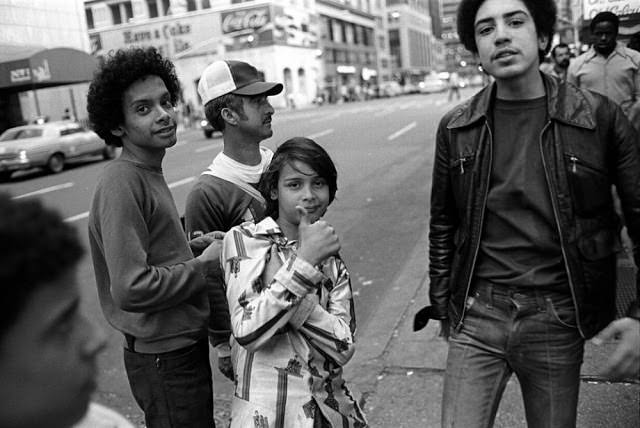
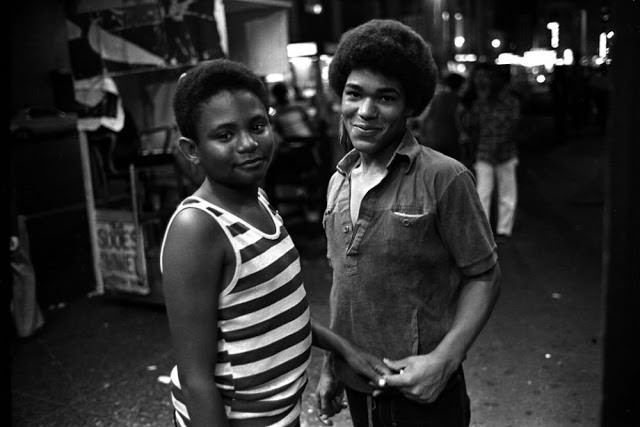
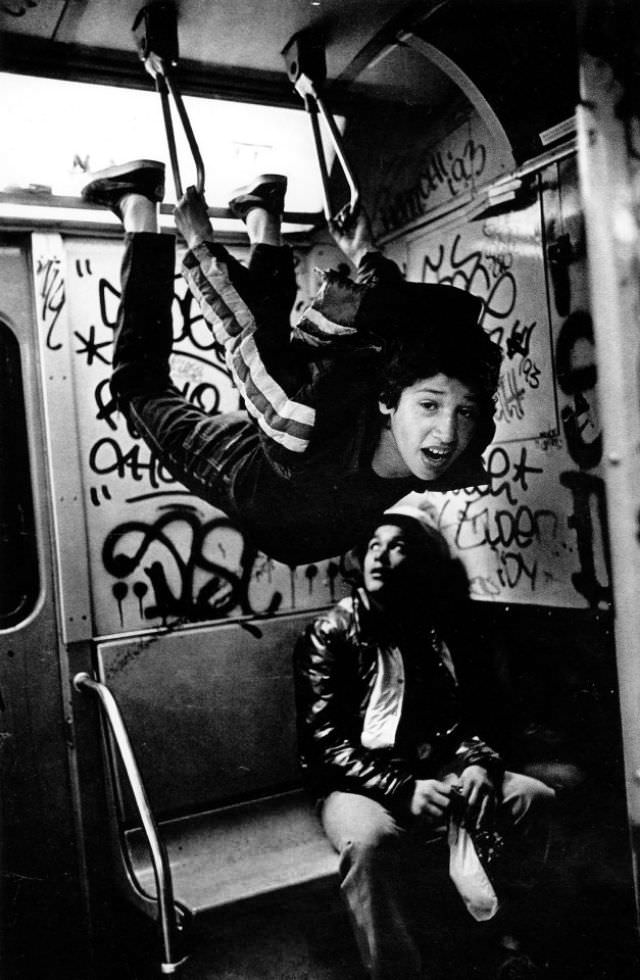
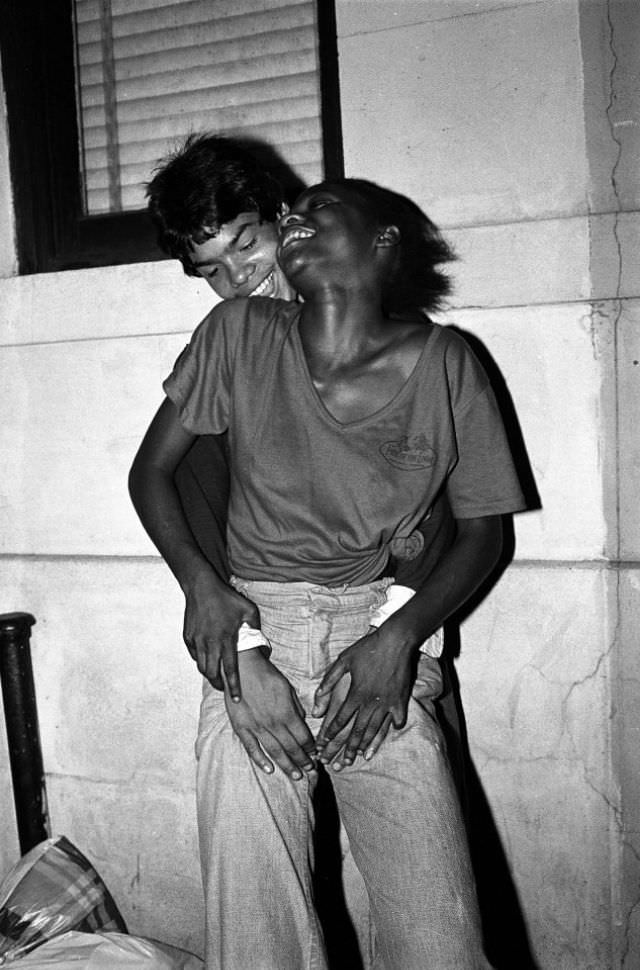
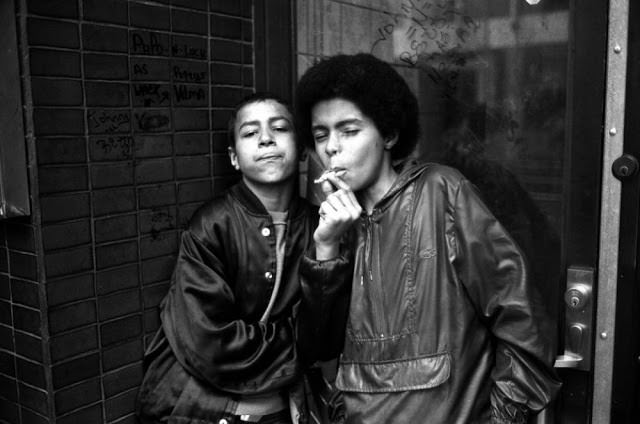
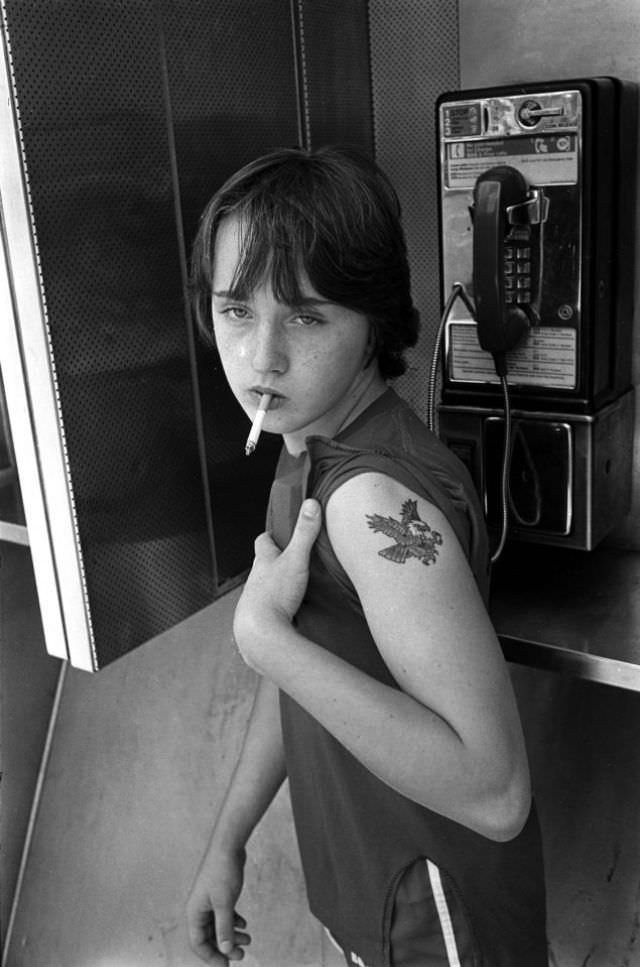
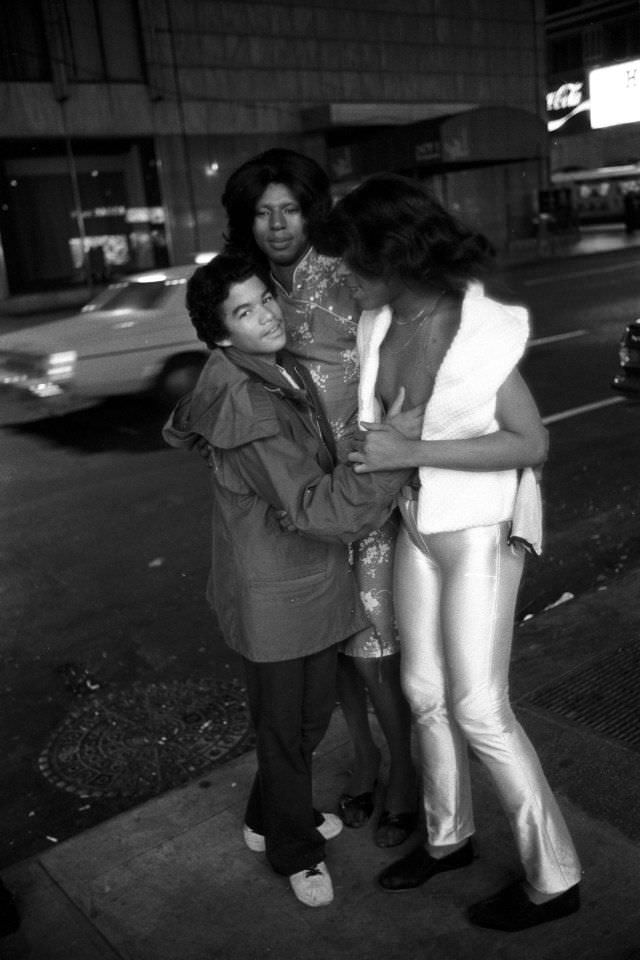
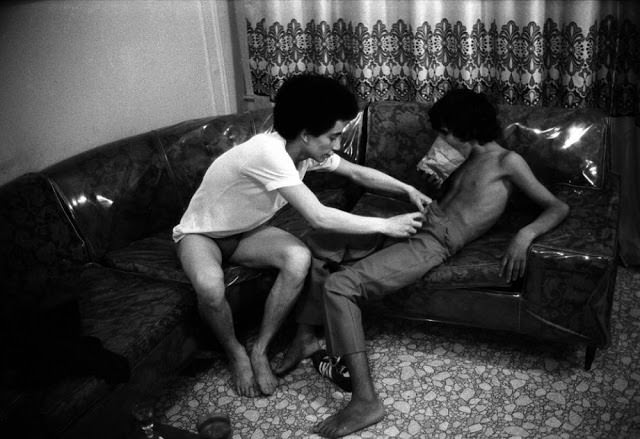
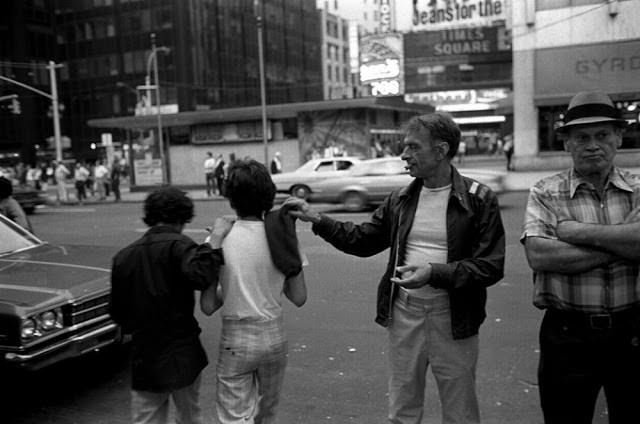
Homelessness compounded every other problem the area faced. Vacant buildings that had once been hotels and theaters became squats. By the mid-1980s, people were sleeping on the sidewalks in front of missions and shelters scattered through the neighborhood. The population of homeless individuals around Times Square and the nearby Port Authority Bus Terminal surged throughout the decade.
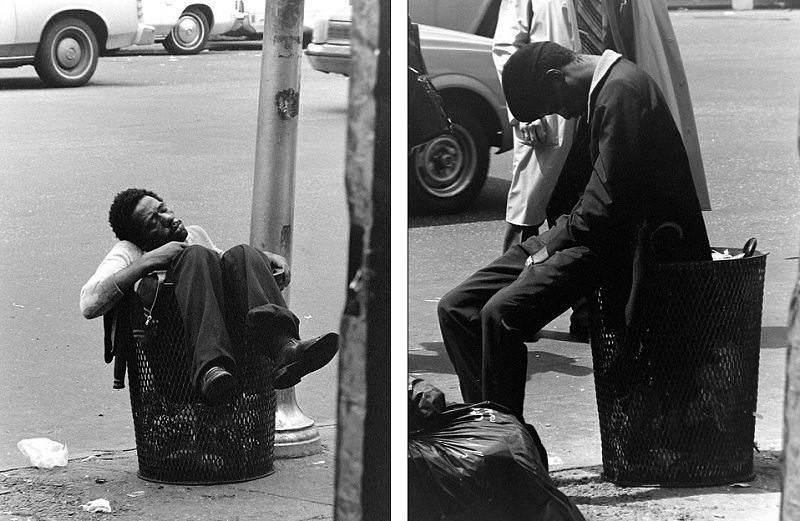
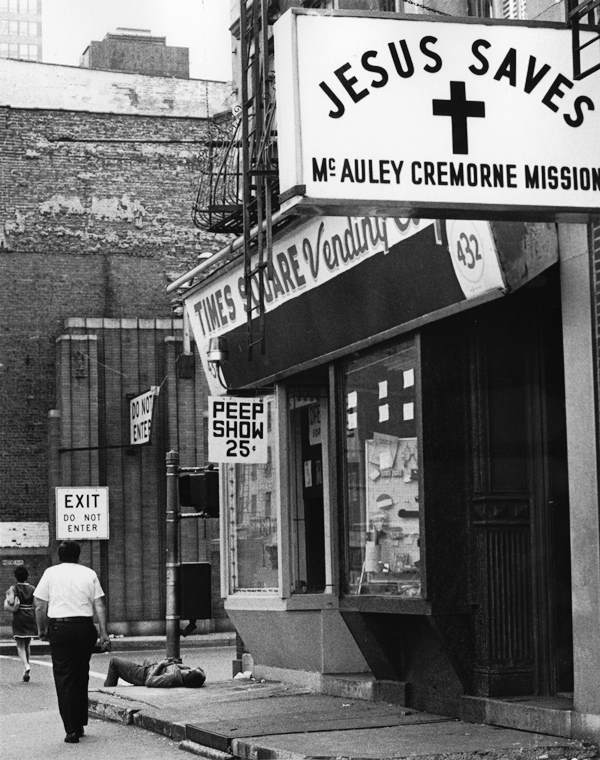
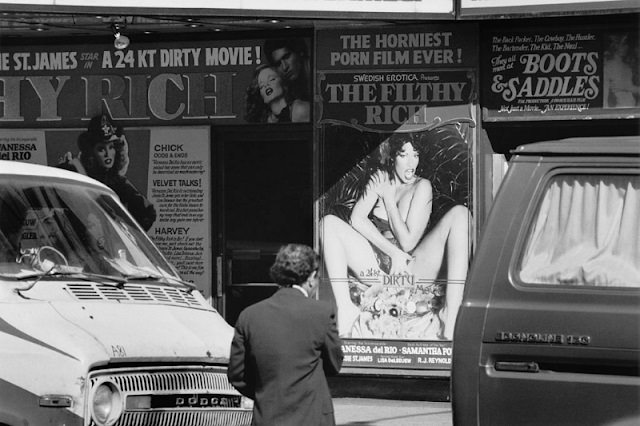
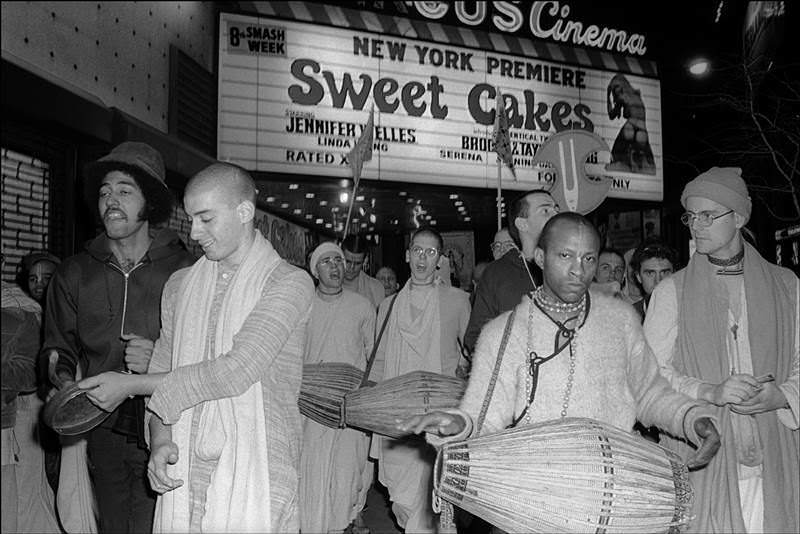
Not everyone who passed through Times Square was part of the sex trade or the drug economy. Ordinary people still walked those streets every day. Tourists passed under adult theater marquees advertising the “filthiest show in town.” Families walked by storefronts boasting the “world’s largest selection” of live nude girl models. In 1976, a group of Hare Krishna followers sang and played instruments under the marquee of an adult theater. The contrast was striking and constant.
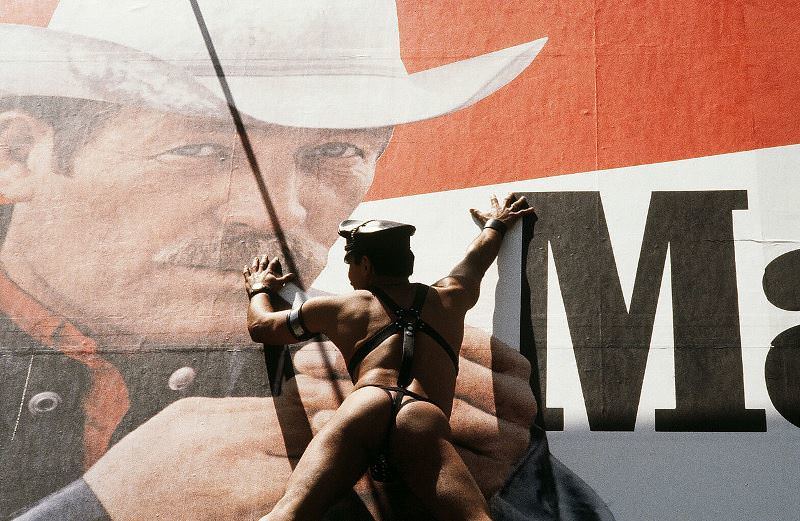
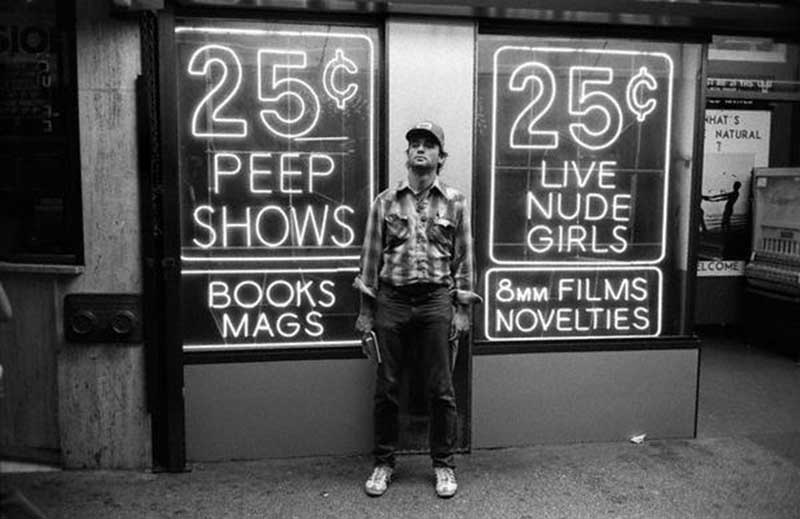
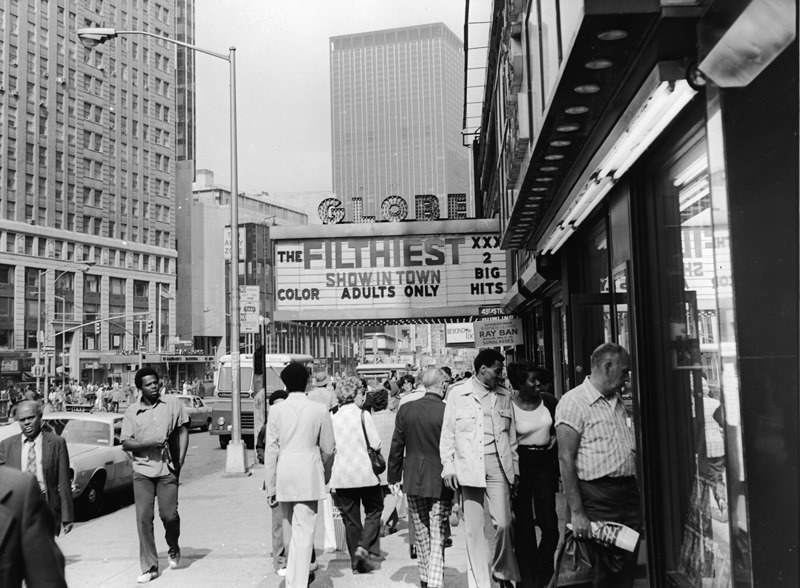
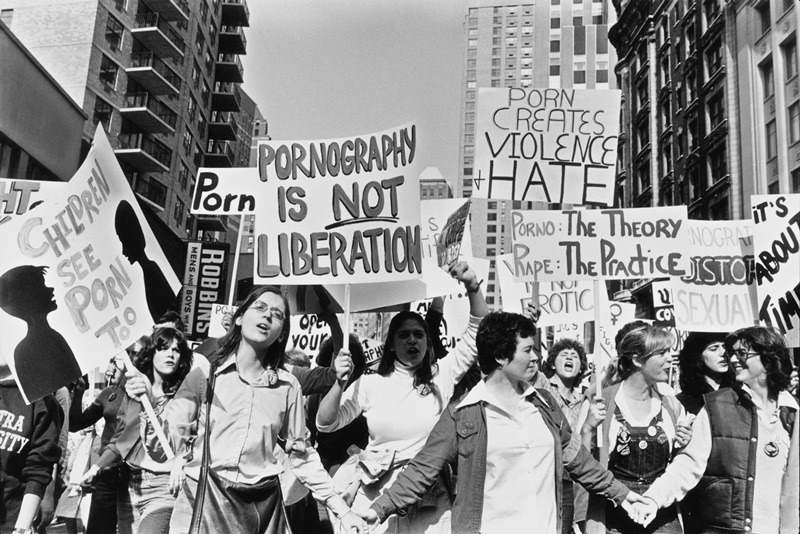
Some residents and activists fought back. In 1979, women marched through the neighborhood in protest against the pornography industry that had taken it over. A Christian proselytizer walked 8th Avenue, handing out material in front of adult theaters. These were small acts of resistance in a neighborhood that the broader city had largely written off.
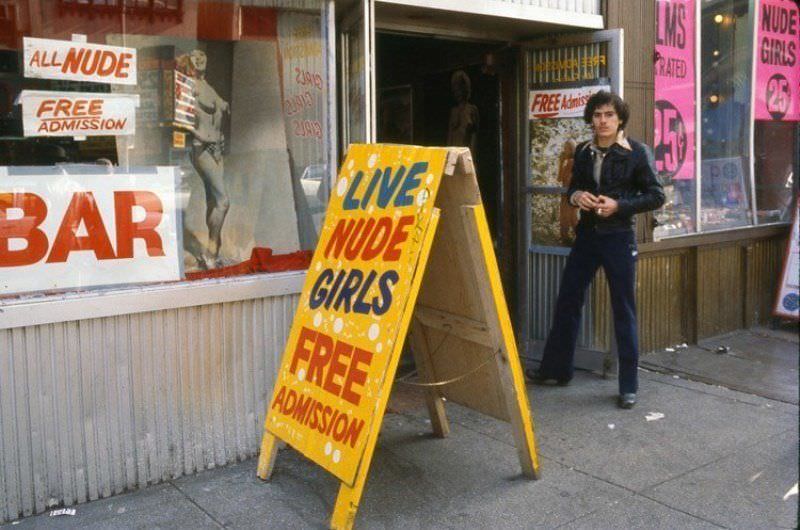
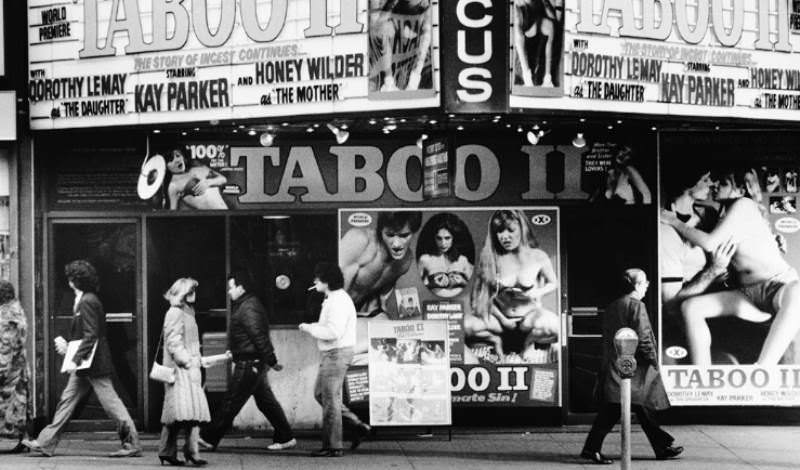
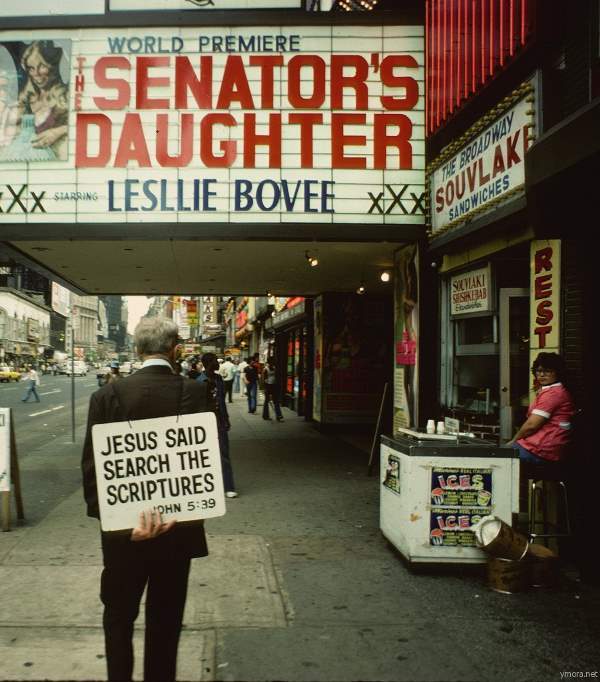
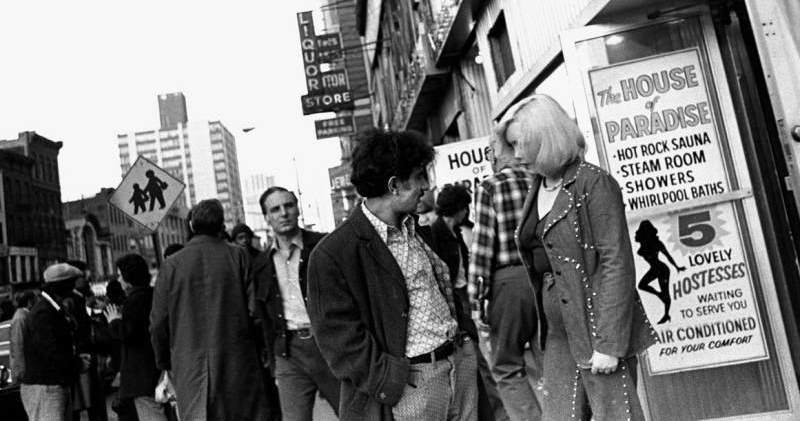
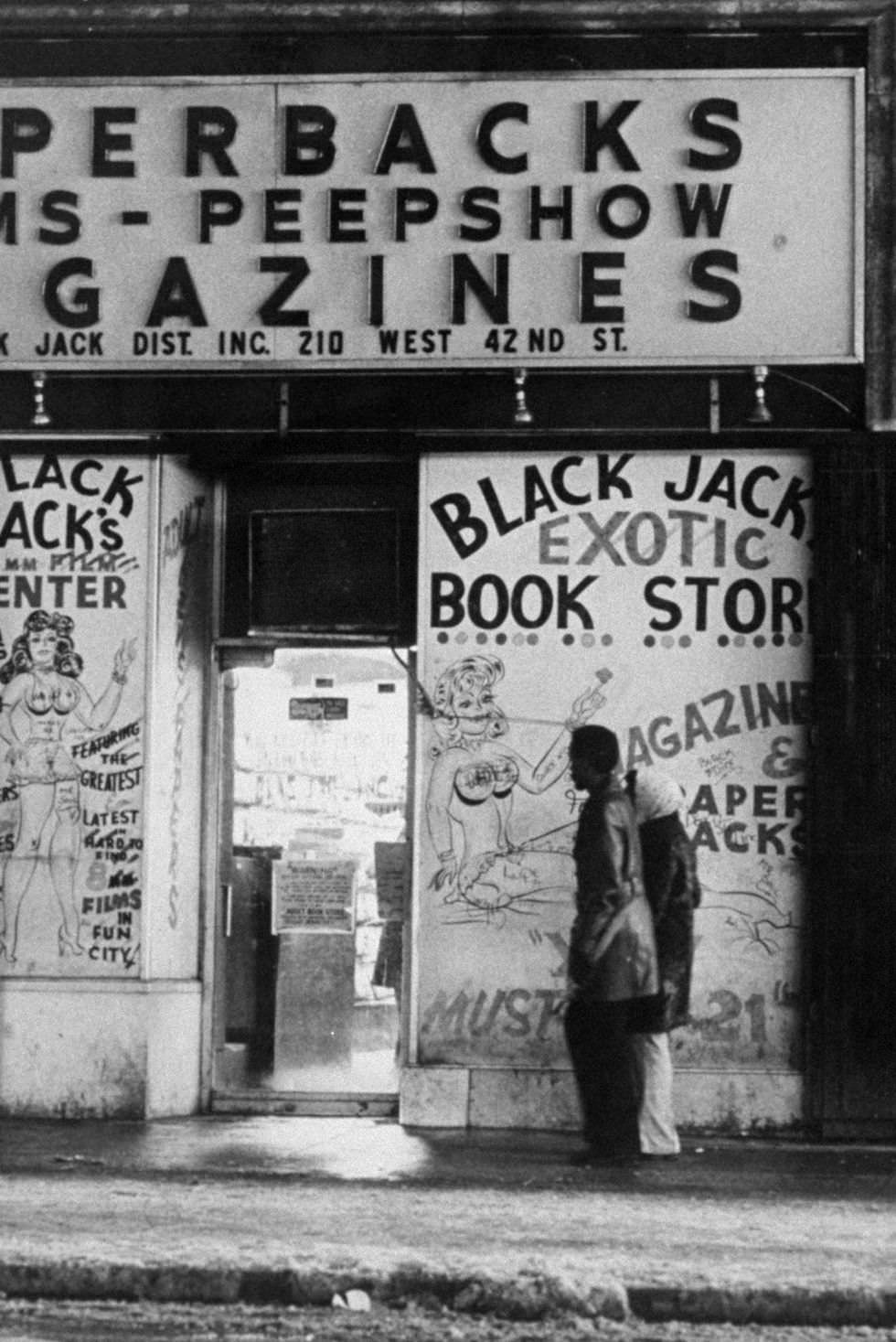
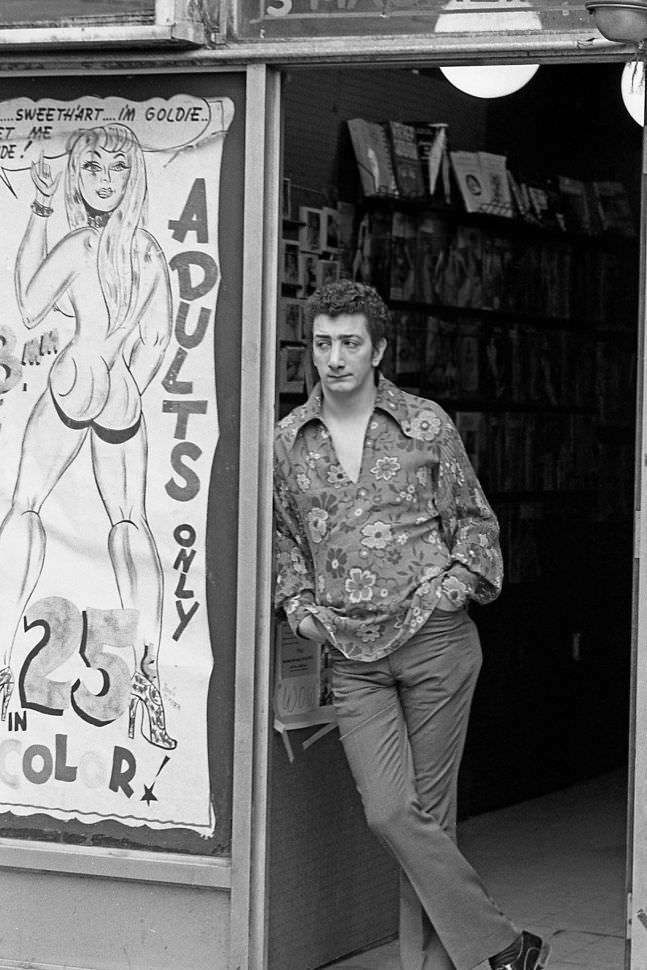
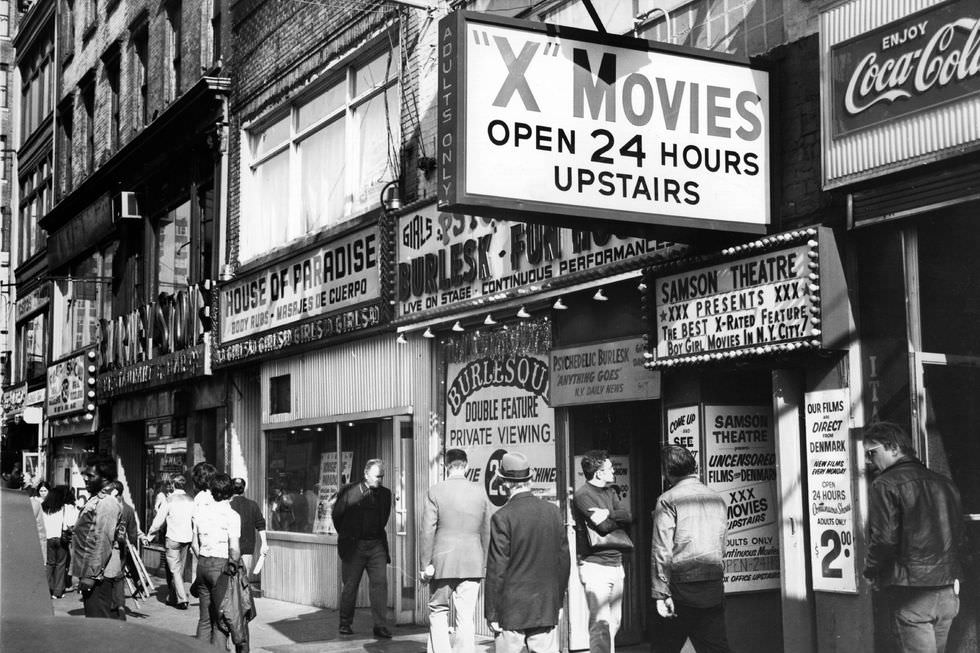
The sheer density of adult businesses along certain blocks was staggering. The Black Jack Exotic Book Store on 42nd Street advertised the “latest and greatest.” The “House of Paradise” drew people in off the street. Sex shops sat next to massage parlors, which sat next to cinemas, which sat next to strip clubs. Every storefront on some blocks was part of the same industry. Salesmen stood outside their shops, waiting for foot traffic to come to them.





I can’t believe how many child prostitutes there were.
I was left wondering what happened to all of those kids. Do you think any of them survived?
Doubtful with the aids epidemic and STDs
There were many child prostitutes and hustlers in the 1970s.
Yes, they use the terms interchangeably… I’m not sure which is which.
Oh, the good old days of getting stabbed and mugged after walking out of a Ron Jeremy flick at midnight.
I salute the guy climbing the billboard in a thong; he’s a hero
Oooh, Jesus Christ
Jesus Christ! That is heartbreaking. As a child, I remember seeing similar pictures, and NYC scared the crap out of me.
I think Scorsese always depicted New York well in his movies. Particularly in Taxi Driver.
Tone it down a little, Taboo II…
I don’t like all the cutesy names they give them. They’re child prostitutes and child molesters. The ’80s weren’t that long ago – what was wrong with people who accepted it as an everyday occurrence? And why were they all boys?
The 1970s and 1980s in New York City were pretty much historic low points that continued into the 1990s. I find it funny that we are now an anarchist jurisdiction after the most buttoned-up decade we have ever had.
What a gut-wrenching experience. Disgusting to know that Times Square used to be like that.
When all the smut shops and brothels were closed, where did they go? That way, if I ever go to New York, I can avoid those areas.
Is prostitution illegal in the United States? I was surprised to read that in one of the comments below.
I had always wondered, however, what happened between the images of 60’s New York and the late 80’s New York when things appeared to be improving. After watching Breakfast at Tiffany’s, I felt enchanted about the city, and after watching Taxi Driver, I wondered, is this the city everyone wants to live in?
I wonder what happened to those perverts looking for child prostitutes. I hope they are at least rotting now. It seems that most of the child prostitutes are black or Latino. How did things look for these groups in the 70s? Did New Yorkers suffer from poverty in general?
About halfway down, bad photos begin. You can see typical red light district stuff everywhere in the first half. It is legal in Australia to engage in prostitution between consenting adults.
Yeah, that’s about where I stopped because of the weird reactionary language they used, describing children as “hustlers” and the woman as a “transvestite”, but the last half of the video contains some bizarre pictures. I agree with you, though I don’t think brothels should exist because that’s just another pimp sucking money from sex workers while not doing them any good.
Legalizing prostitution makes it safer for everyone involved. The brothels have to register with the police, the workers have to get regular health checks, and the brothels provide a safe work environment. Their employer even pays them superannuation, and then they have to pay tax like everyone else. The work conditions are 100 times better than in places run by a shady pimp with a gun where sex workers have no control over their wages or the safety of their work.
If prostitution is presented to me in any form, I will support it. In addition to the fact that it shouldn’t be unregulated or unsafe, it seems like an even more exploitative form of wage labor to allow businesses to profit from sex workers’ labor. Despite that, I believe their safety is compelling enough to justify their use. It seems like a brothel style model will keep the workers the safest, but I think proper regulation of independently operating sex workers could be less economically exploitative and equally safe.
Prostitutes aged 16 to 12. They were pretty depraved. Unbelievable, that’s is our past.
Yeah, I agree after making it all the way through. I skipped past the part where it called the woman a transvestite.
I had enough time to write an ignorant comment but not enough to look at some pictures.
Yes, I stopped halfway through when it referred to the woman as a “transvestite” and the children as “hustlers”. However, the last few photos are filled with depraved material, interspersed with banal pictures.
I agree. They are beyond horrifying.
Do you mean when times square wasn’t Disneyland east?
Some are shocking; some make me envy a more sexually liberated time.
So you’re into poverty/crime tourism?
In the 70s, Times Square was a surreal, dangerous, wild ride. Although the Xxx stars and personnel could be dangerous, I knew a few of them. In those days, I was a wild, misguided, troubled 17-year-old. People I knew always seemed sad to me. The time was wonderful, sad, and delirious! The only complaint I have about the show is that the characters were a little too “clean”, but it still captured the essence of The Deuce beautifully.
times square used to be a wonderful disaster – peep shows, head shops, people trying to sell you drugs and switchblades.
While visiting a friend in NY in the late 70s, we bought some acid in Times Square. I took it to see Frank Zappa on Halloween. We didn’t do anything in Times Square. I just thought it was a big intersection.
My grandmother lived in Manhattan, about 10 blocks down Broadway from Times Square, so we used to visit quite regularly. It was a wild ride.
During that time, NYC went through a serious downturn. Later, it was rebuilt to be wonderful. Today, it’s going downhill again.
Last time I was in NYC before the pandemic, I was shocked. We have lost all the achievements of the late 90s and early 2000s.
Is that true? Is NYC getting worse now than it was in the 70’s and 80’s?
The Great Depression. There was a rise in illegal and immoral business during the depression, which led to the failure of many upstanding businesses. For instance, Times Square became mostly a place to watch strip shows after the depression. People who liked this kind of entertainment liked illegal drugs and prostitution as well, so they fed into each other and the whole area deteriorated, and more criminals found New York a place to profit. The police were also afraid of cracking down on criminals for various reasons, and became apathetic towards policing the area.
The value of everyone’s money decreased due to inflation. In particular, NYC spent and borrowed more than it brought in in taxes. Many city institutions had been afflicted by a culture of corruption. This was evident by the mid-sixties, and it has continued unabated to this day. Corruption was rampant among the police. There was an increase in gas prices. The city was unable to pay its workers. The garbage wasn’t being picked up. Like Dresden, the South Bronx looked like it had been bombed. Jobs were not available. There were drugs everywhere because people wanted to self-medicate. There was an increase in crime. Streets are filled with new drugs and drug gangs. Heroin was replaced by cocaine as the drug of choice. As crack replaced coke, NYC further descended into hell. Until the internet booms of the midnineties, Times Square was a terrordome.
I believe the city overextended itself and went bankrupt in the 1970s. Financial institutions were able to foreclose on many real assets as a result. In the 70s/80s, the post-WW2 monetary system collapsed, causing a terrible general economy. By the mid-90s, the “financialization” of the US economy really took off to blow up a new bubble. Until Giuliani took over and the credit bubble popped, NY was a gritty city.
One of the reasons is organized crime. Crime rates spiked because of mafia ownership of the city and businesses
Following Nixon’s war on drugs in 1971, I believe police authority stepped up and began arresting more drug-related criminals. A lot of arrests were also unsubstantial.
Before the 1970s, the city enacted many expensive social welfare programs financed by high taxes on the financial industry. When the industry moved to a more global corporate distribution model, the city suddenly had less tax money to pay for all these services. Averting the incoming financial crisis was the mayor’s priority at the time, Abe Beame. At the time, Gerald Ford was president. Though generally moderate himself, he was part of the Republican party as it began a shift to the right that eventually resulted in the party we know today. Rumsfeld and Greenspan advised Ford to make NYC a symbol of failed liberal policies by spiking the request for federal funds and telling Beame to eat shit. It is the classic Republican strategy to mess up things and then point to the thing they stomped on and say, “See, this thing we smashed to bits doesn’t work.” Due to a lack of funds, austerity measures were enacted. Suddenly, people’s social safety nets were ripped away, and their infrastructure fell further into disrepair. People turned to crime to make ends meet because the police were underfunded and the economy was failing. As a result, the crime wave really took off. New York City was left without power for two days during a heatwave during the blackout of ’77. Everything was smashed, burned, and looted by rioters. After the riots, the city was already stretched to the breaking point, and there was no money to repair the damage. It was common for people to burn their buildings in tax fraud, pick up the money, and leave without repairing them. NYC is littered with burned out husks of buildings, few remaining storefronts, and only the poor and disenfranchised can fend for themselves with few social services.
You can see just how bad Manhattan had gotten before the 1990s comeback by watching Taxi Driver or any number of mid-to-late 1970s films. It wasn’t easy
Or The French Connection.
Same with Los Angeles, but reversed.
It’s mostly around skid row. By a wide margin, the financial, jewelry, and arts districts look great.
The 70s through the 90s was the peak of urban decay in America.
While NYC in the 70s appeared like a lawless dystopian wasteland, it was also a thriving city of the super-rich at the same time.
My parents were born in the Bronx in 1954. There was so much violence, burning, etc., that they literally had to leave the borough. Times Square was a hooker, cocaine infested hellhole in Manhattan. Poor policing, corrupt policing, and more made the city pretty crime-ridden. Brooklyn was pretty violent too, nobody in their right mind would have stepped foot in Williamsburg until maybe 2003? The Village and SoHo were hit hard by AIDS, and coke and quaaludes were popular drugs with business people. There were also many small businesses in the city then, as it was a city of actual New Yorkers. It all changed when Giuliani and Bloomberg started arresting people en masse, turning the NYPD into essentially a military force, and providing incentives for big businesses to come in and “Disneyfy” places like Times Square and SoHo. So it’s now one of the safest big cities in America, but at what cost?
Definitely more crime. The crack era. Graffiti covered trains. Times Square was sleazy. Despite all this, I miss living in New York. There was something unique about New York compared to other cities. Starbucks and other generic businesses are the norm in Times Square now.
I got off the F train at Times Square and walked to the double feature movie. On the walk from 6th Avenue, I had at least three guys try to sell me weed and other stuff. During our time playing video games at the arcade on 47th and Broadway, two dudes asked me and my friends if we were new to the city.
Seeing these pictures, I can’t believe our parents let us go there to see movies. It was at least that way back then.
Times Square can (and has been) MUCH worse. Everyone complaining about it being overcrowded or tacky should remember that it can (and has been) MUCH worse.
In neighborhoods that had homeowners or rent-controlled apartments, residents tended to stay long-term, cared for their street, and looked out for each other. However, it was literally street by street. It wasn’t a good or a bad area. On a single street, there was only one block.People cycled through neighborhoods with apartment complexes that were half empty, had drugs/prostitution going on, and were completely shady. Needles. Condoms. Ick.Times Square was a terrible place. We were always in a pack as teens. At night, I never walked alone in that area. Gentrification began in the 1980s. As yuppies moved in, they took over run-down buildings and lofts. In the 1990s, the City embraced gentrification. Tourism dollars became much more important to NYC. However, if you watch NYC news, it’s still bad at night, especially in some areas. Just a few days ago, a murder occurred in Times Square.
Times Square was a shithole of squalor. Lots of bad neighbors below midtown. Grossness in all the boroughs.
The Times Square portrayed in Taxi Driver was just as crazy as it was in real life. When I was there in 1980 and 1986, my dad took us walking around at night just so we could people-watch. My dad got a little ahead of us and a guy tried to sell drugs to my 12-year-old brother. Prostitutes filled the streets, and they didn’t care that my dad had two children with him. Cakeboards were used by religious people. Crazy drugged-out zombies rolled around on the sidewalks or screamed to themselves at the drop of a hat and random arguments erupted at random times. Porn was everywhere. A movie theater, a peep show, a sex shop. The atmosphere wasn’t fun and lively, but tense. As if lions circled around a wildebeest herd drinking from the pond while you were on guard.
I used to go on field trips to NYC when I was in junior high and high school. Because everyone was so worried about us being in New York, they made us use a buddy system like kindergartners. A teacher once told us not to look up at the big buildings because they would know we were “country mice” and mug us. A few years later, around 89 or 90, I was on a date, I don’t remember where we were going, but I remember we were walking back towards Penn Station. There was no way I was going to walk through Time Square with my date. Despite his concern, he felt that as a man, he would be okay, but that as a woman I would get hassled, hooted at, propositioned, and/or have my purse stolen. As antifeminist as that may sound. Concerns like those weren’t unfounded. When I was in college, I often saw people sleeping in subway stations. People would not only smoke god knows what in hidden corners and corridors. Drug-addicted women are pretty open to propositioning men. The grime and danger were real, but it was exciting.
Before they cleaned up, TS was actually a lot of fun. I found the sleaze a bit interesting, and there were a lot of very old theaters showing something other than XXX. For a buck or two, you could go in to a lot of the theaters in the 90’s and watch movies of all kinds all night long. Some of them specialized in old movies and horror flicks, so if you wanted to stay up late, you could watch old movies or horror flicks. Often, we did. On our days off, we would grab grilled hot dogs and junk punch and then go to the movies all night. It was actually kind of funny watching the guys hawk the girlie shows. For some of them, it was like watching an old carnival busker at work. As a regular in TS, I can’t speak for tourists, but if someone tried to pimp me or my friends, these guys would be all over them. There were some hookers who were all right. They were out there on the worst nights, and I felt sorry for them. TS wasn’t that bad for us, but we sometimes bought them hot dogs if we could afford it. We liked it. In a way, it was just another NYC neighborhood, sleazy as it was. As long as you respected everyone and were careful, you could spend the whole night down there having fun without getting too involved in the XXX scene. In NYC, you have to keep an eye on yourself wherever you go. It was no different with TS, but I always liked it just the way it was, and was actually a bit sad when they turned it into something more “family friendly.” NYC wasn’t Disneyland back then, so nobody expected it to be. The outside of some of those theaters looked like this, but the inside was incredible, old vaudeville theaters. Some of those places had stunning architecture. It’s unbelievable. I found those places to be very interesting.