When railroads began spreading across North America in the 19th century, engineers needed bridges — fast. Rivers, valleys, and deep gorges stood in the way of progress. Timber was the answer. It was abundant, workable, and could be shaped into surprisingly strong structures by skilled hands. What followed was a golden era of wooden railroad bridges that stretched from the Civil War years well into the early 20th century.
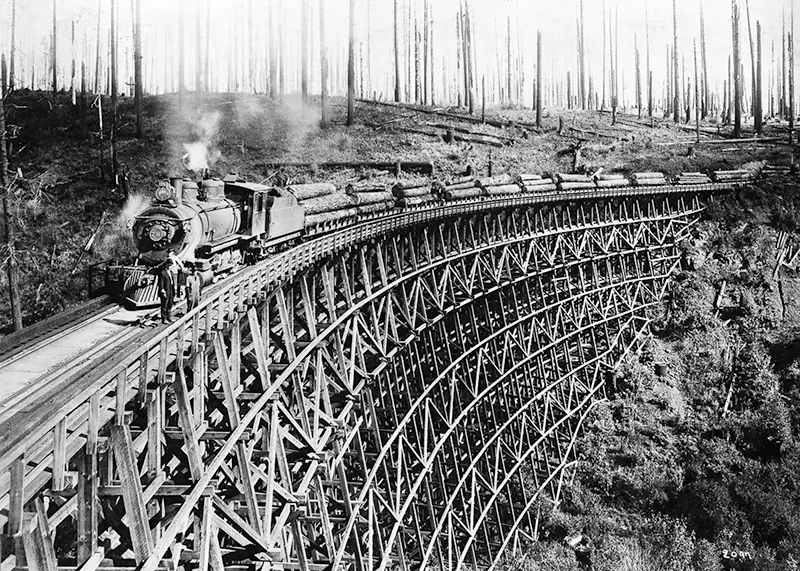
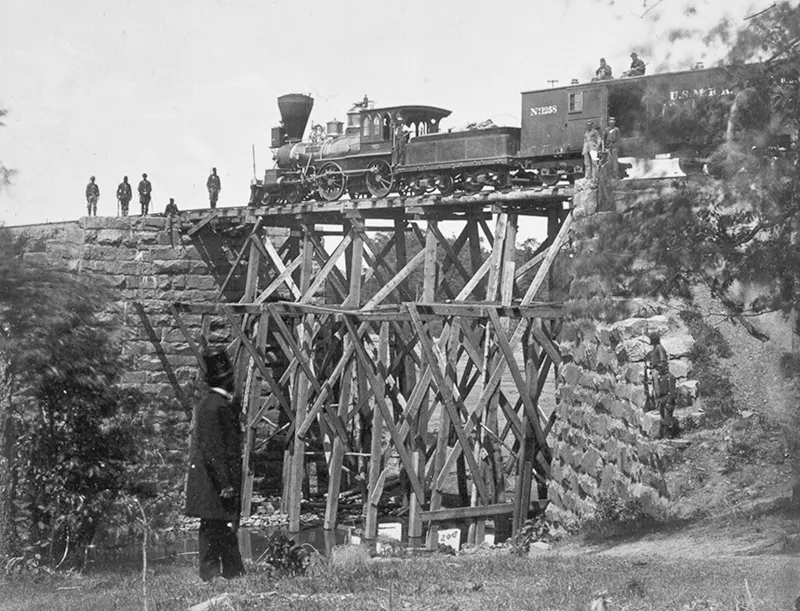
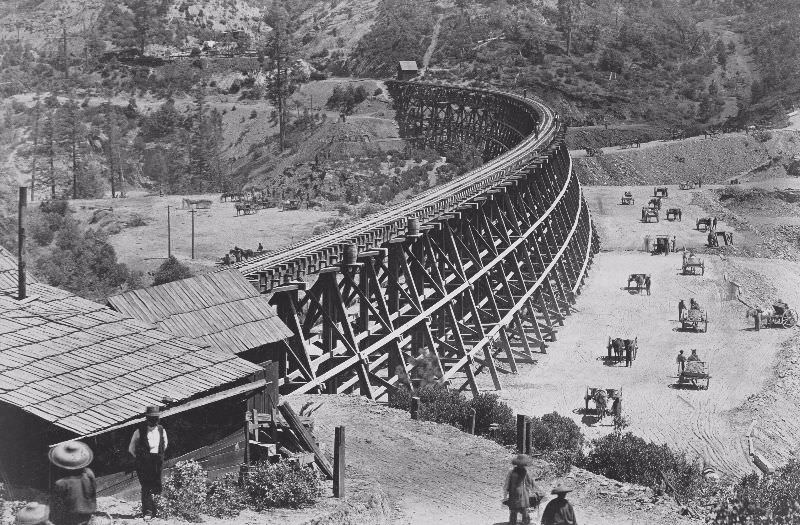
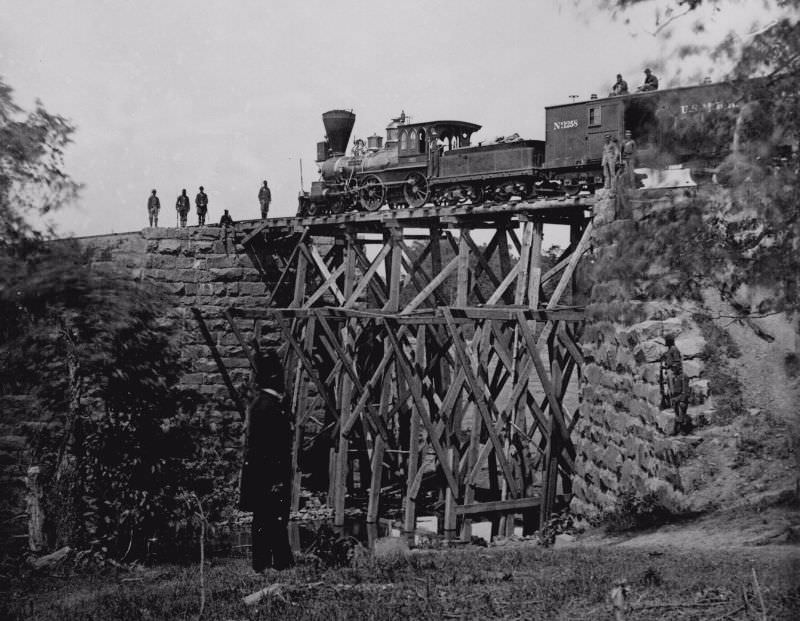
The trestle was the most common form these bridges took. Built from a series of short spans held up by tower-like wooden frames, trestles could be erected quickly and adapted to nearly any terrain. In mountainous regions, they climbed to dizzying heights. In flatter country, they stretched for hundreds of feet across low-lying ground. The Orange and Alexandria Railroad in Virginia relied on them heavily during the Civil War, when rapid construction and repair were military necessities.
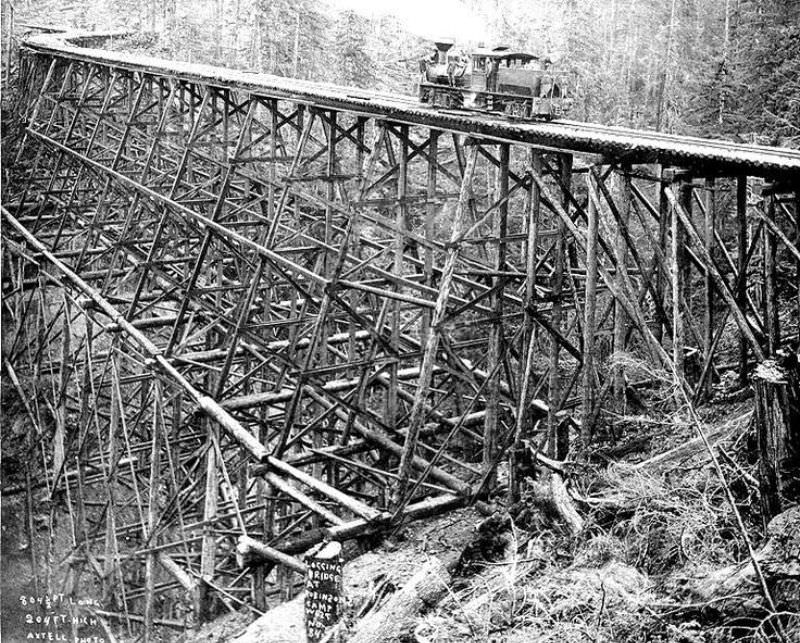
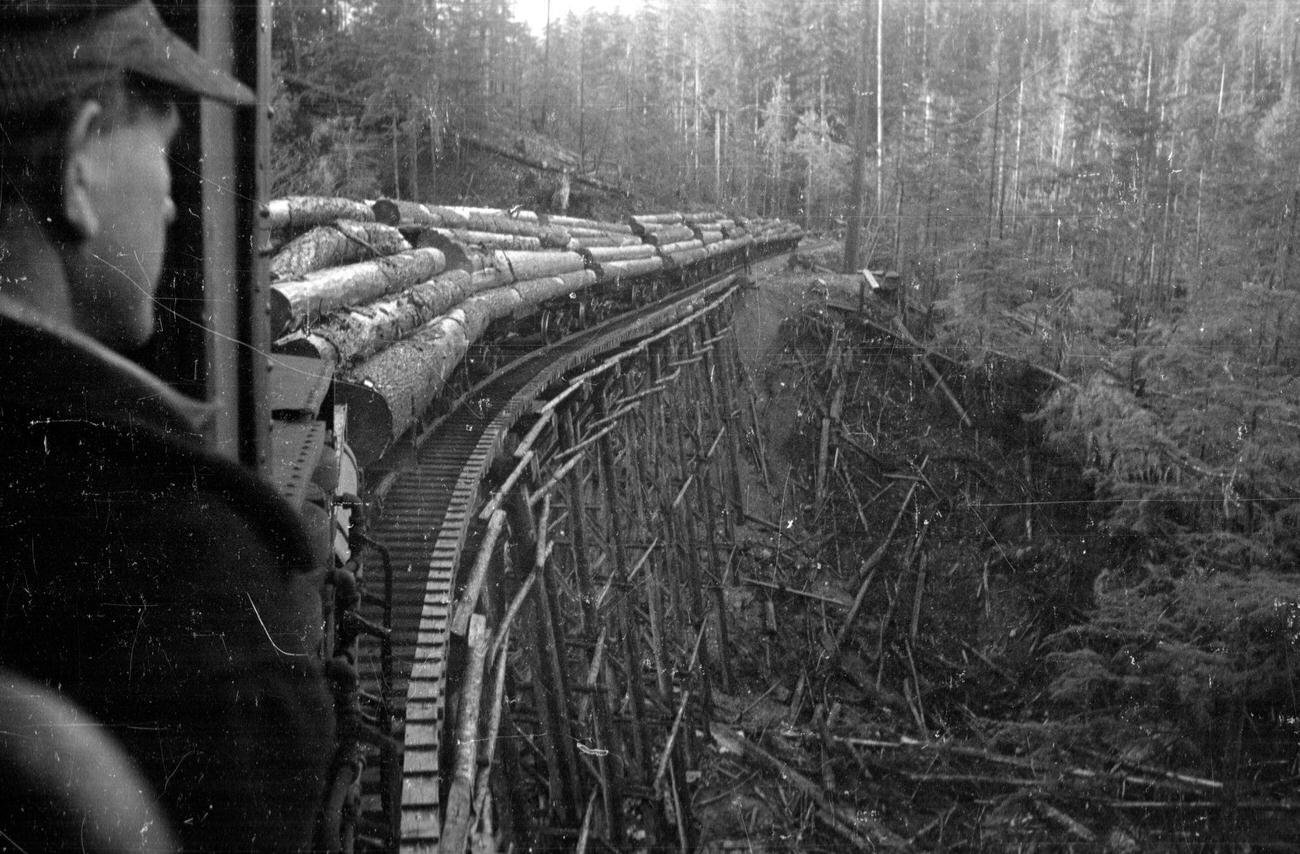
Logging operations across the Pacific Northwest pushed timber bridges to their structural limits. Heavy loads of freshly cut logs rolled across these spans daily, demanding both strength and precision in construction. Oregon’s Cascade Mountains were crossed by networks of trestles that served the logging industry as much as passenger rail.
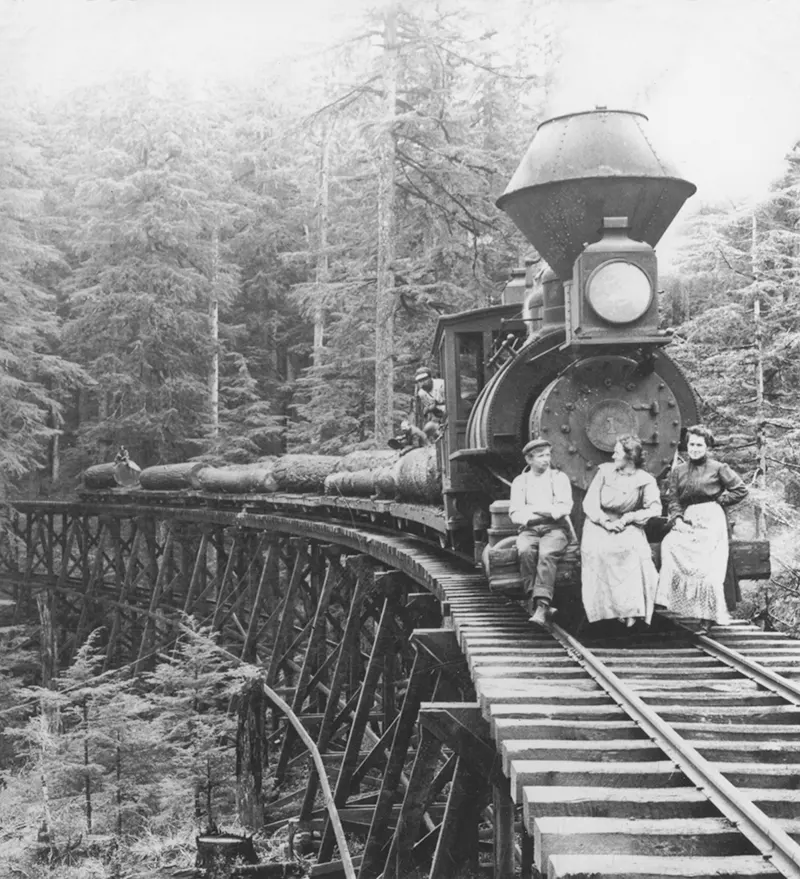
Before a new trestle was put into regular service, engineers tested it. A locomotive would cross the structure at controlled speeds while workers monitored for flex, settling, or any sign of failure. These tests were not merely precautionary — they were essential. A bridge that failed under load in a remote area could strand a rail line for weeks.
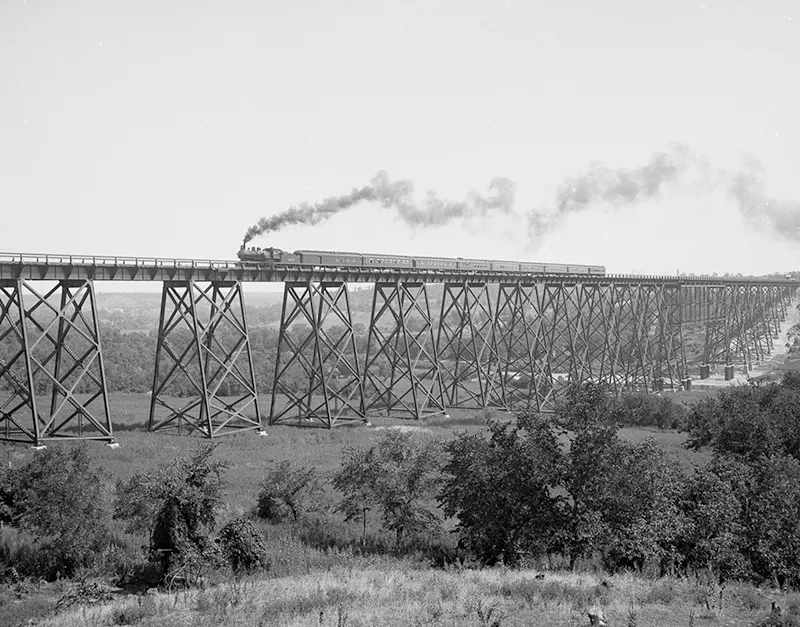
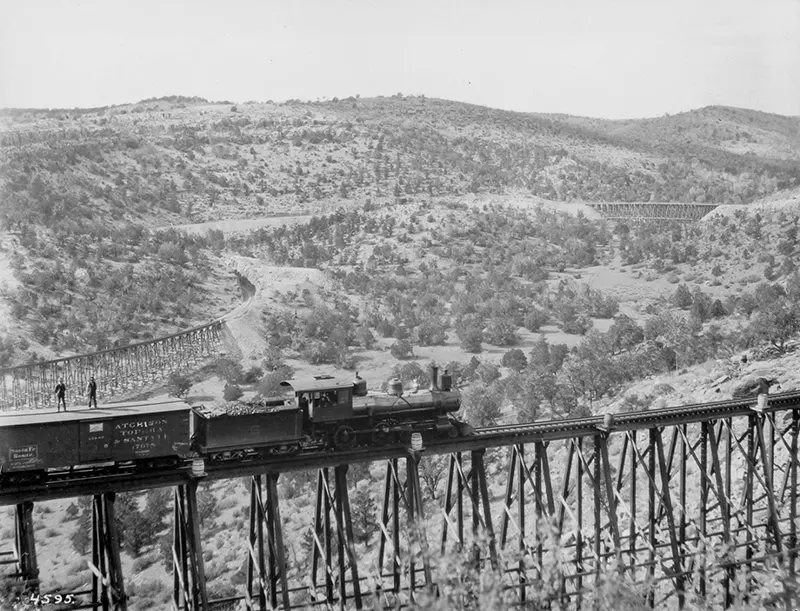
Some trestle bridges became landmarks in their own right. The Valley Trestle on the Chicago and North Western Railway near Boone, Iowa, was one such structure — a towering wooden span that drew attention from travelers and engineers alike. Meanwhile, photographs from 1895 capture freight trains crossing high trestles with workers perched on the roofs of rail cars, a casual reminder of the risks that were simply accepted as part of the job.
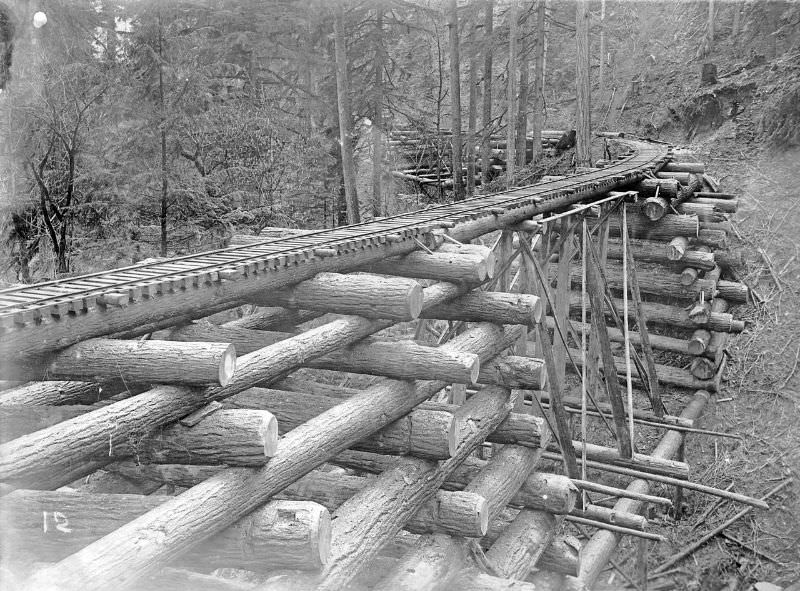
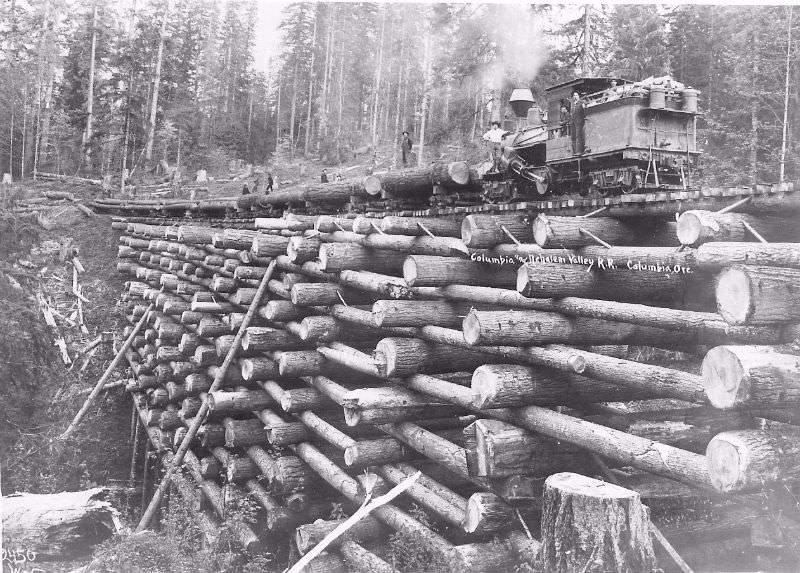
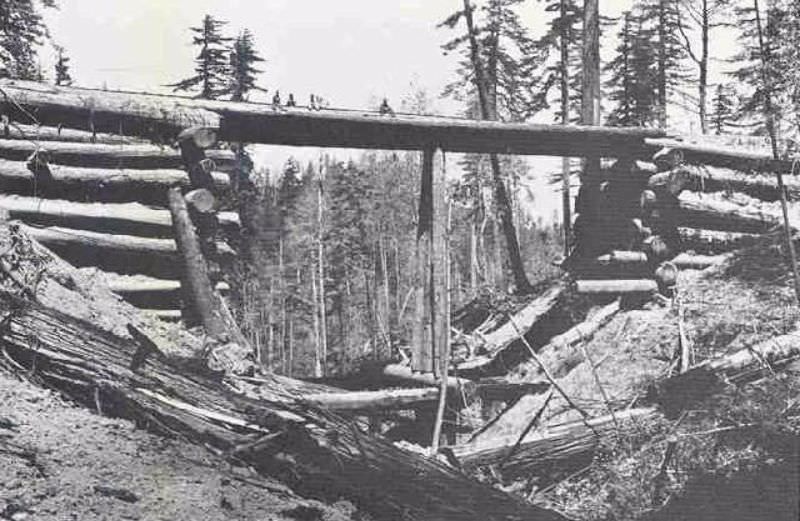
In Columbia County, Oregon, the Columbia and Nehalem Valley Railroad used a distinctive style known as the crib trestle — also called a log bridge. Rather than using milled lumber assembled into frames, crib trestles were built by stacking whole logs in alternating layers, forming solid, interlocked piers. These structures were especially practical in heavily forested areas where raw logs were easier to source than processed timber.
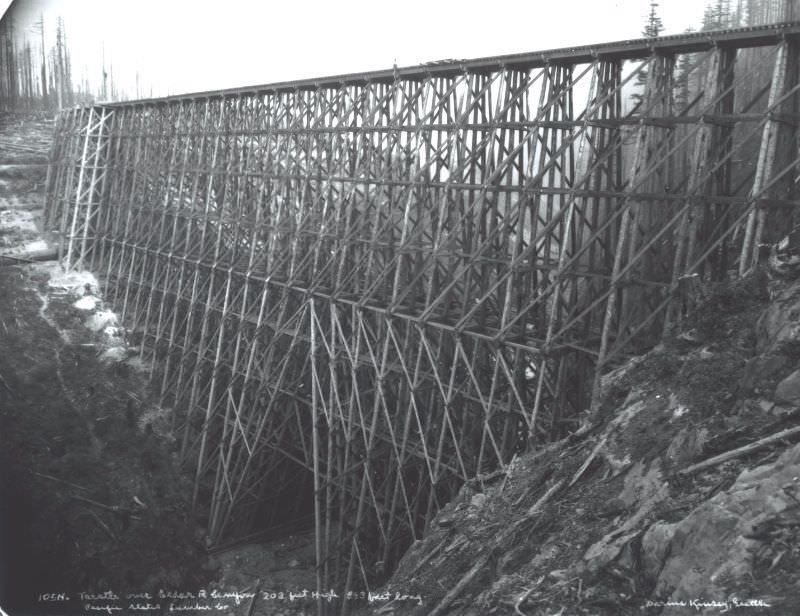
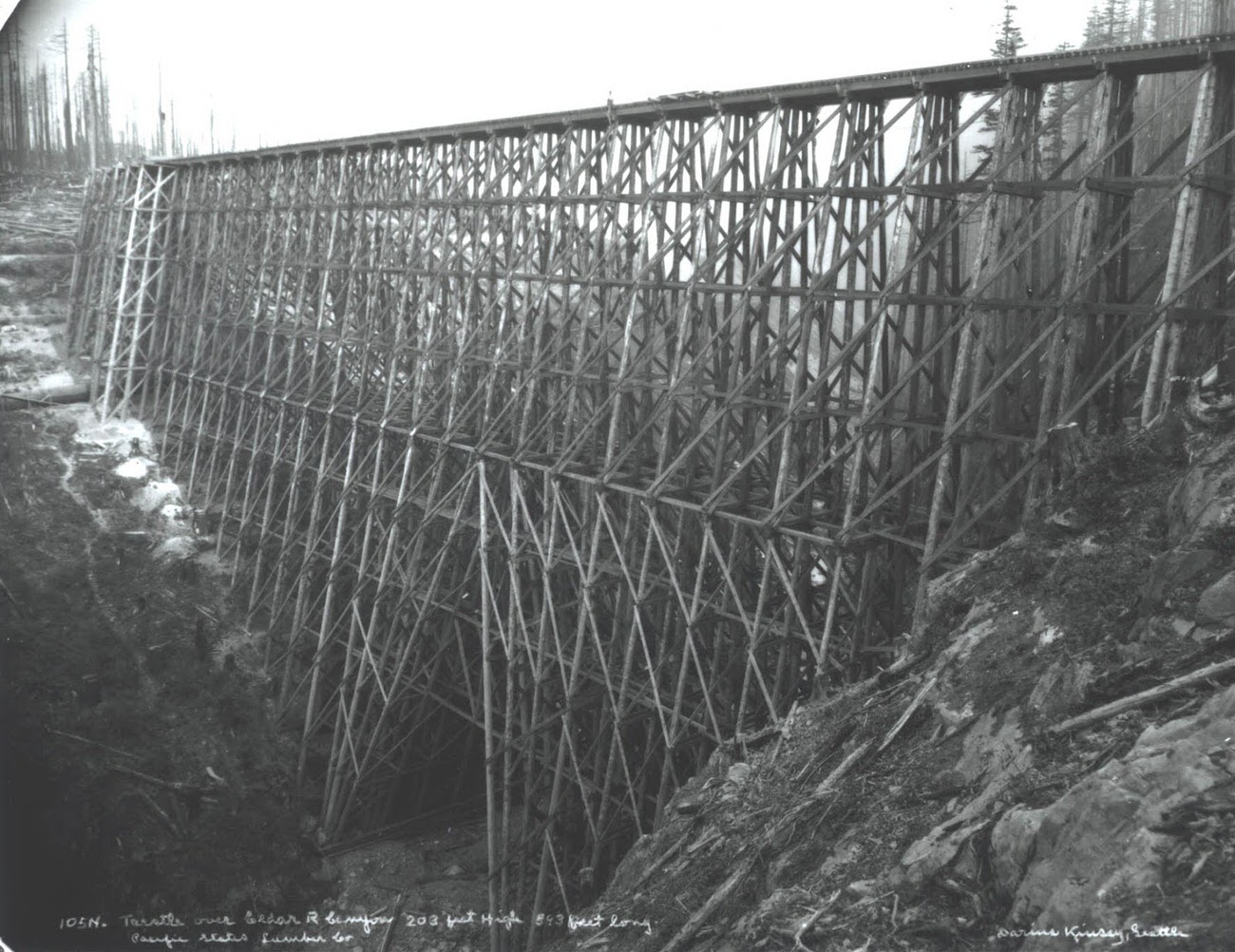
The Great Northern Railway pushed its tracks through Montana’s rugged landscape, crossing drainages like Two Medicine Creek on timber trestles that required constant upkeep in a harsh climate. In Washington State, the Cedar River logging trestle reached 203 feet in height and 843 feet in length — a scale that challenged the limits of what wood construction could achieve.
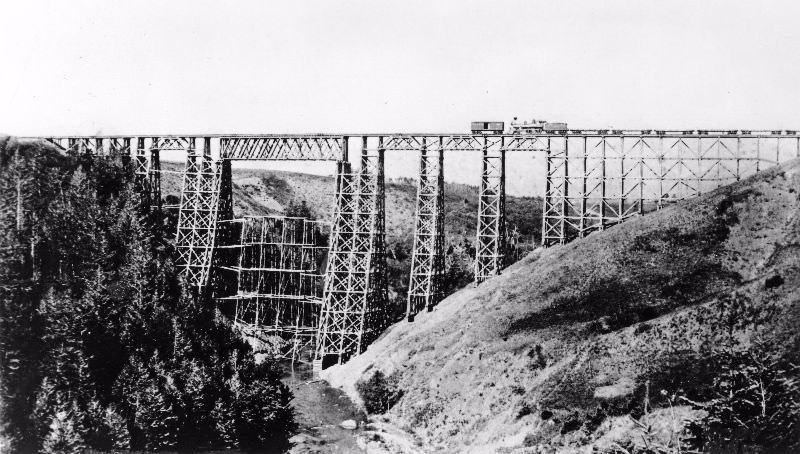
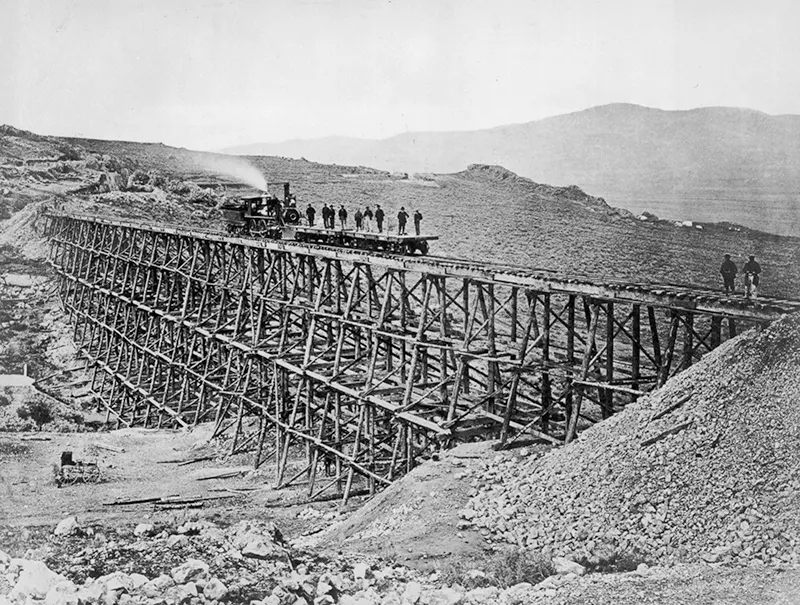
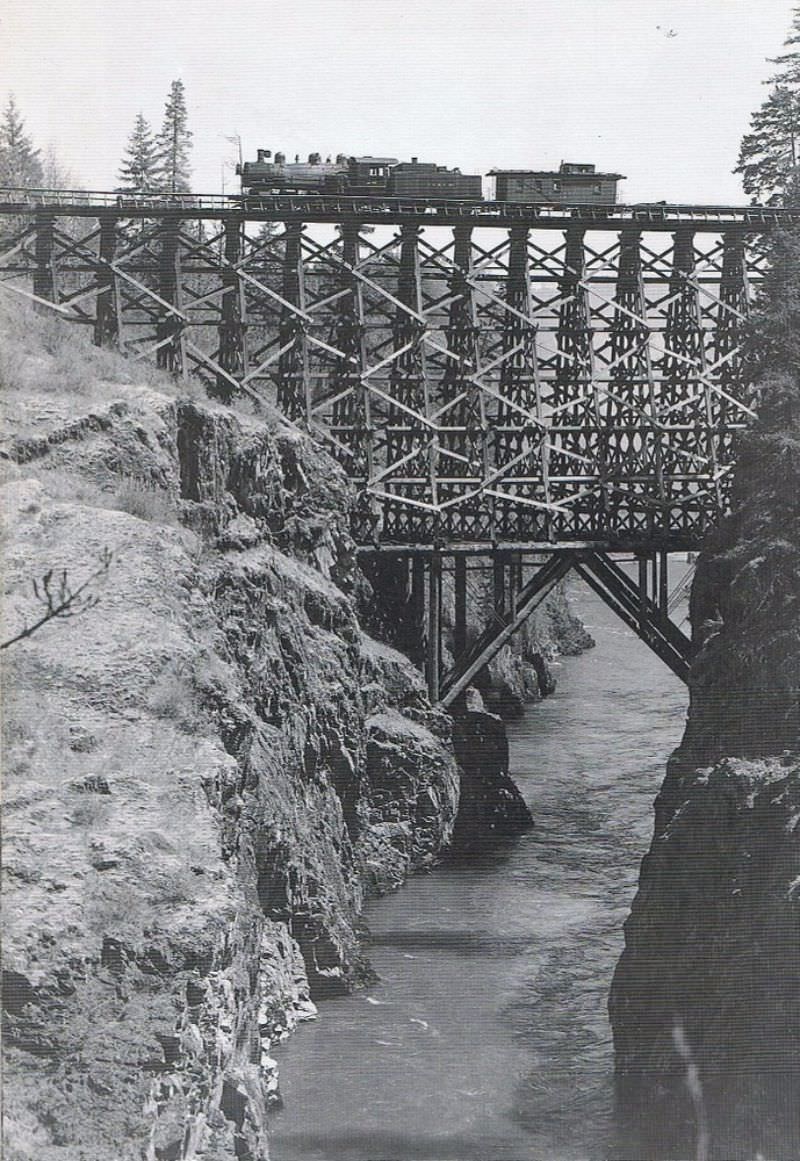
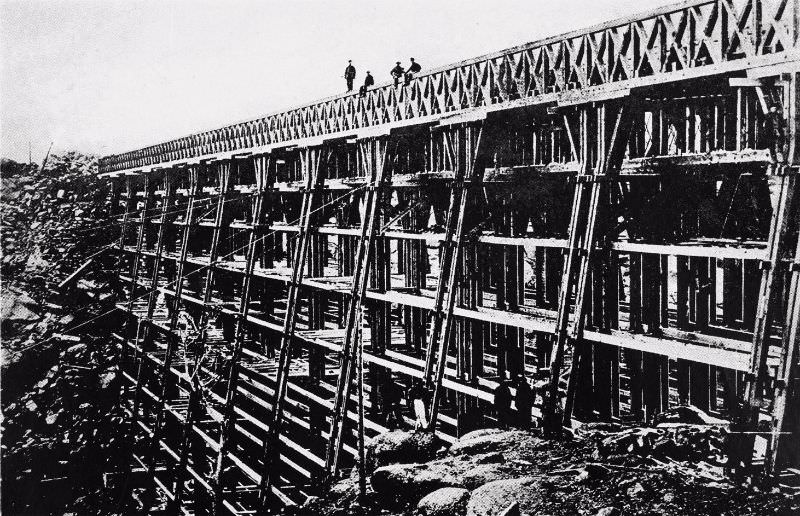
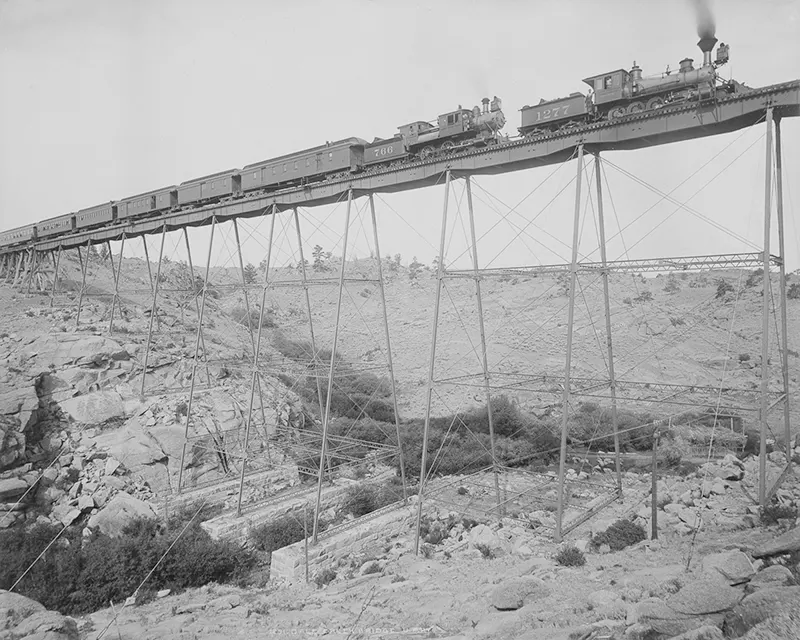
Central Oregon presented one of the most dramatic bridge-building challenges of the era. The trestle over Crooked River Gorge rose 320 feet above the canyon floor — the equivalent of a 30-story building built entirely from timber. Out on the plains, the Dale Creek Bridge in Wyoming, located just two miles west of Sherman, solved a different problem: crossing a wide, shallow canyon on the transcontinental route. The Central Pacific Railroad faced similar obstacles during its push westward around 1869.
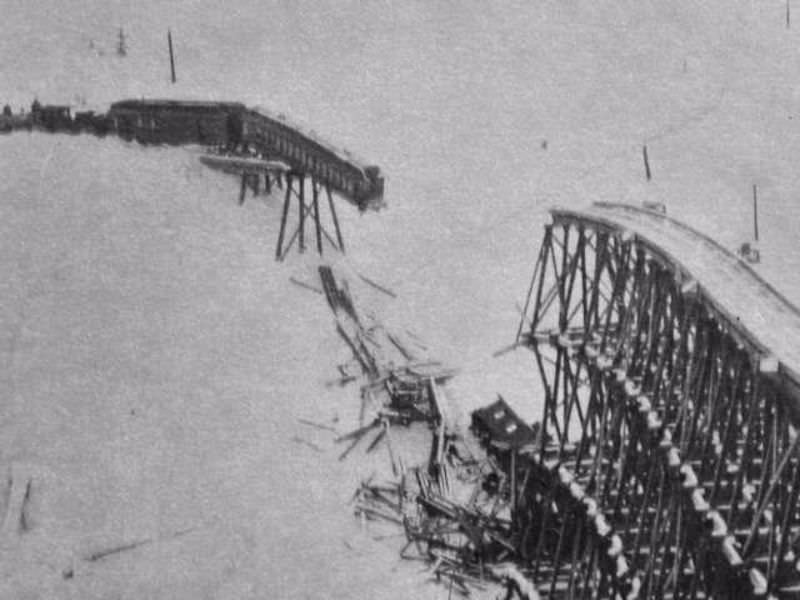
Nature was a constant threat. On February 10, 1903, an avalanche tore through a section of Northern Pacific Railway trestle, leaving a gap in one of the region’s key rail arteries. Avalanches, floods, rot, and fire all claimed timber bridges over the decades. Builders fought back with creosote treatments, careful timber selection, and regular maintenance — but no wooden structure lasted forever without effort.
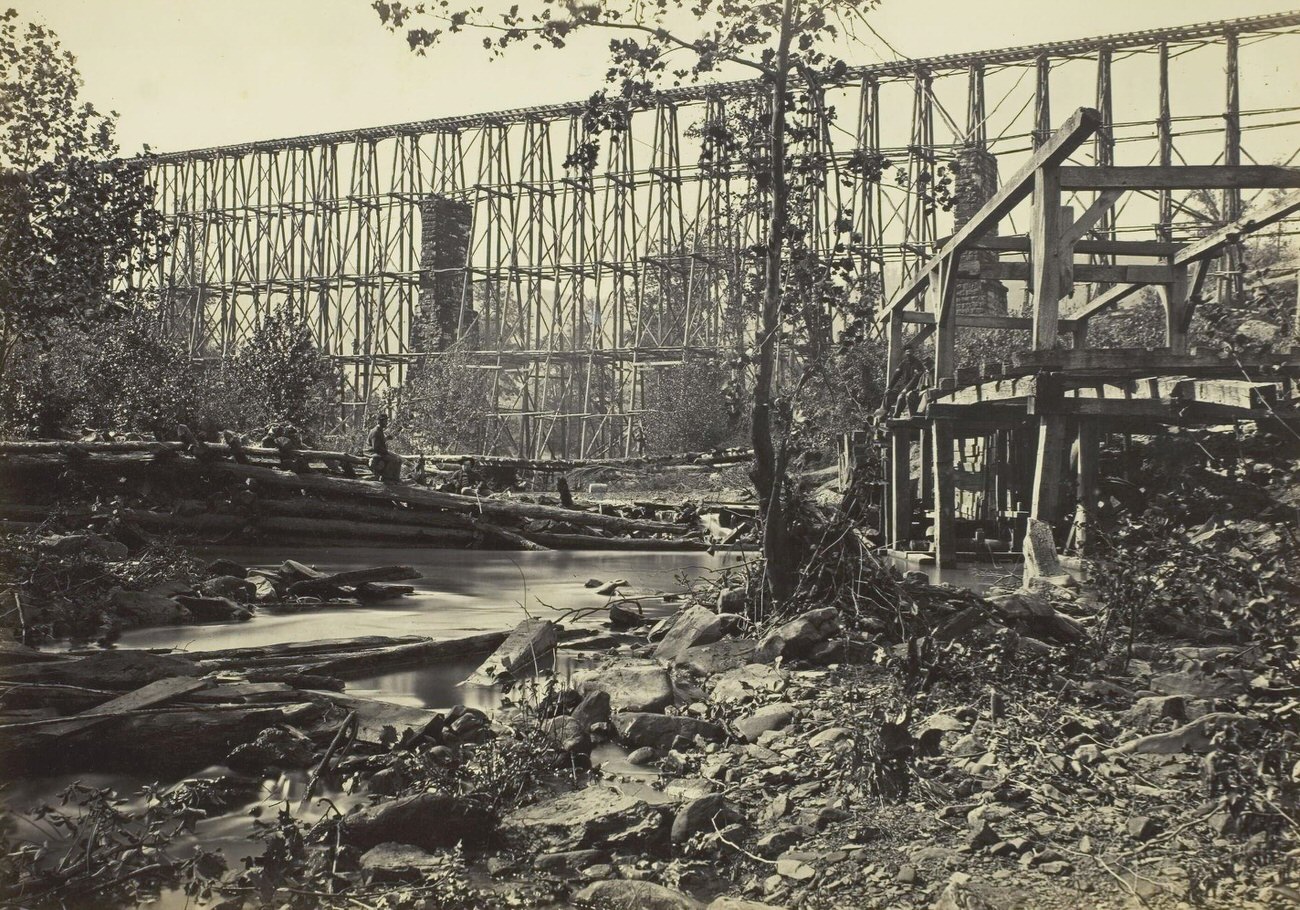
Wartime photographs from the Civil War document the role these bridges played in military logistics. Photographer George N. Barnard captured the trestle at Whiteside in 1864, and engine “Firefly” was photographed on the Orange and Alexandria Railroad trestle around the same year — images that show both the fragility and the strategic importance of wooden railroad infrastructure during the conflict.
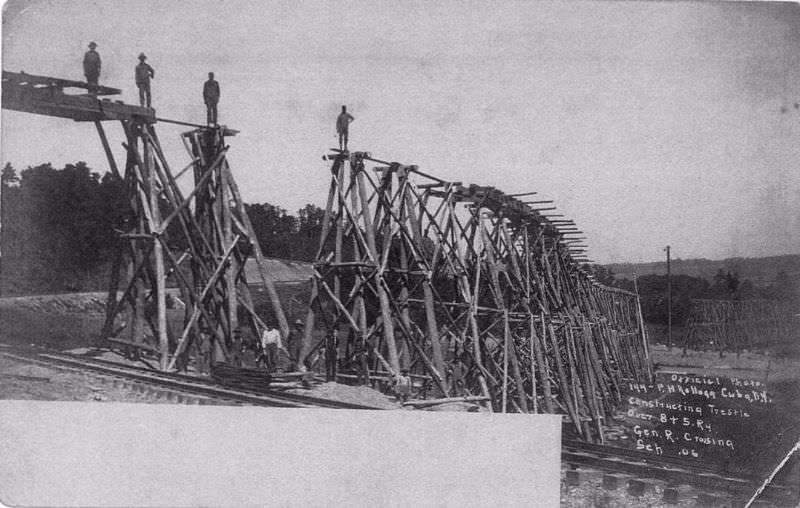
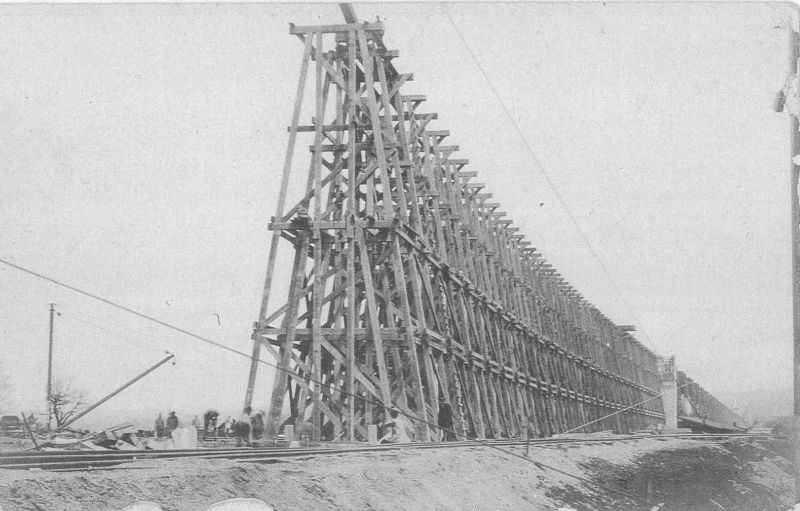
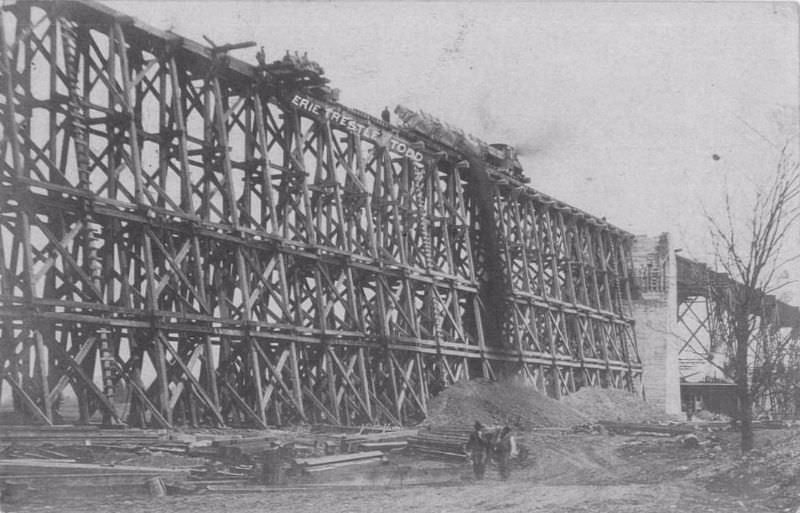
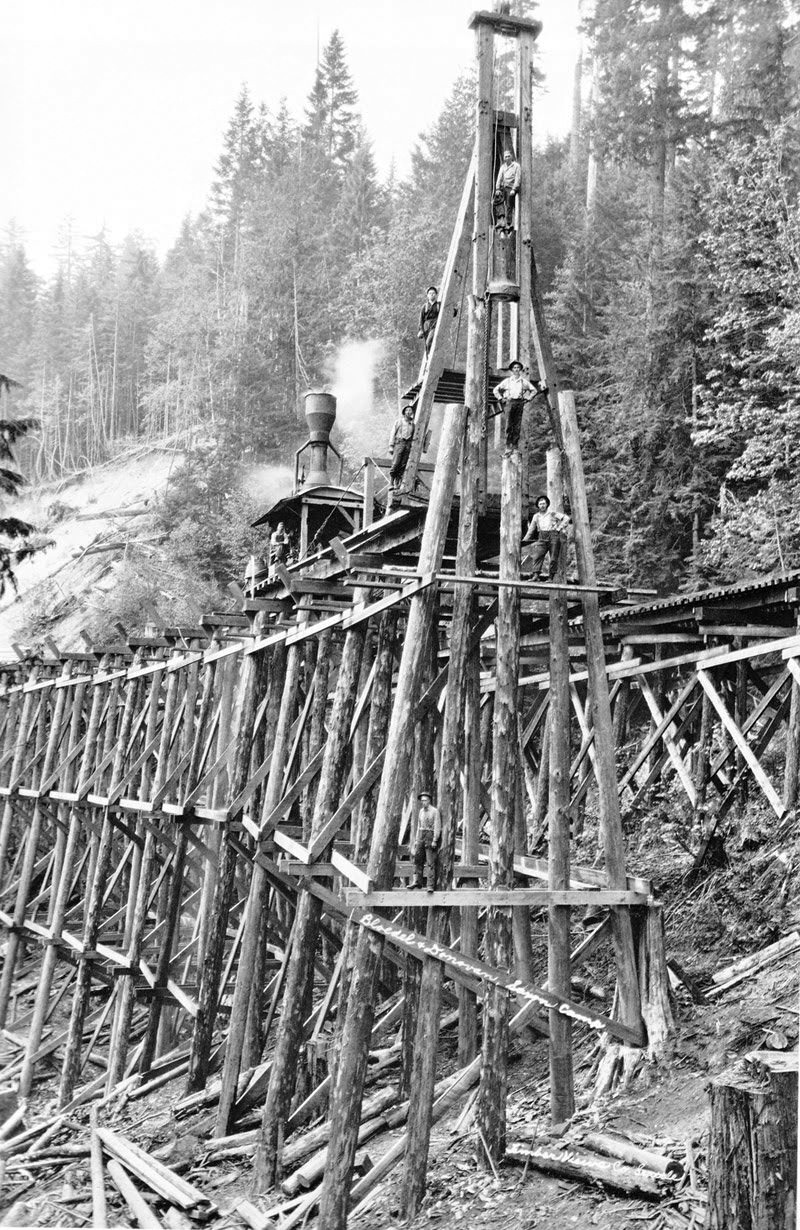
Construction crews built trestles in conditions that were often remote, exposed, and physically punishing. Photographs of Erie Railroad trestle construction show the scale of the labor involved — dozens of workers, heavy timber, and improvised rigging all working together to raise bents and set spans over active rail lines and waterways.
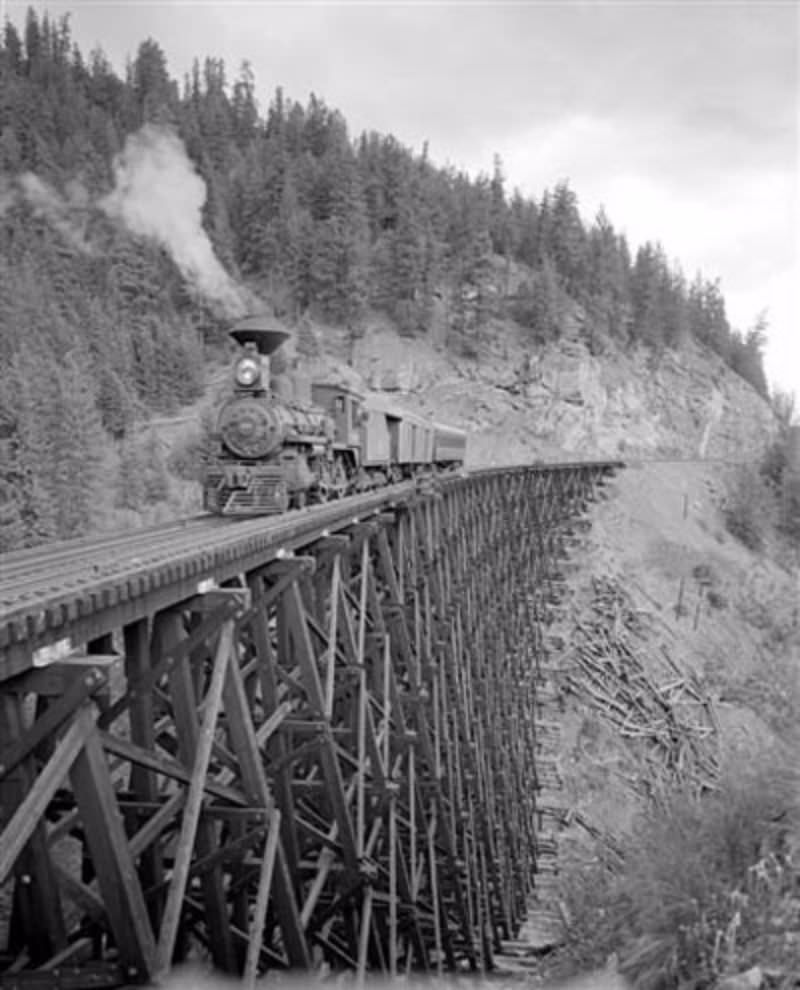
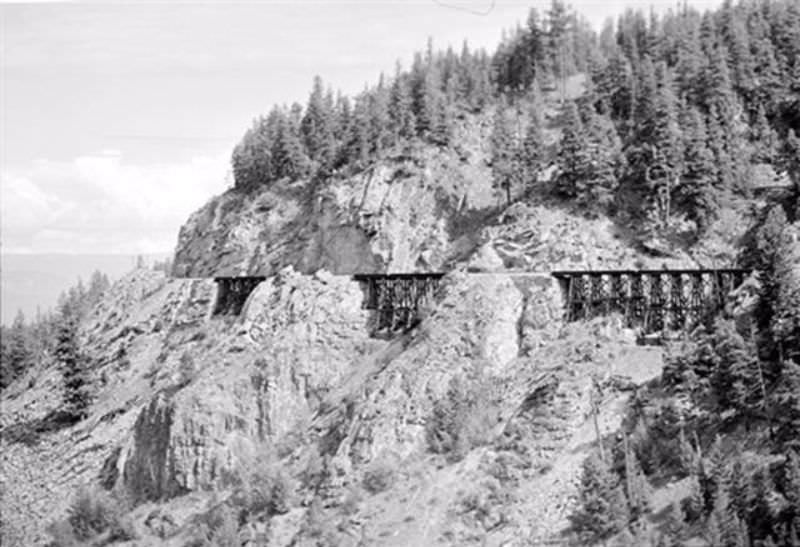
British Columbia’s Kettle Valley Railway featured some of the most photographed timber trestles in Canadian history. The Myra Canyon section near Kelowna wound through steep terrain on a series of wooden spans, each one a careful balance of geography and engineering. By 1939, loggers in the same province were still using rail lines to move timber, a tradition that had changed little in half a century.
The Cedar River trestle in Washington State, photographed in 1917, remained one of the most impressive examples of what timber construction could accomplish. At 203 feet tall and 843 feet long, it dwarfed most other wooden structures of its type. Multiple photographs from different angles document its scale and the confidence engineers placed in wood at a time when steel was already taking over.
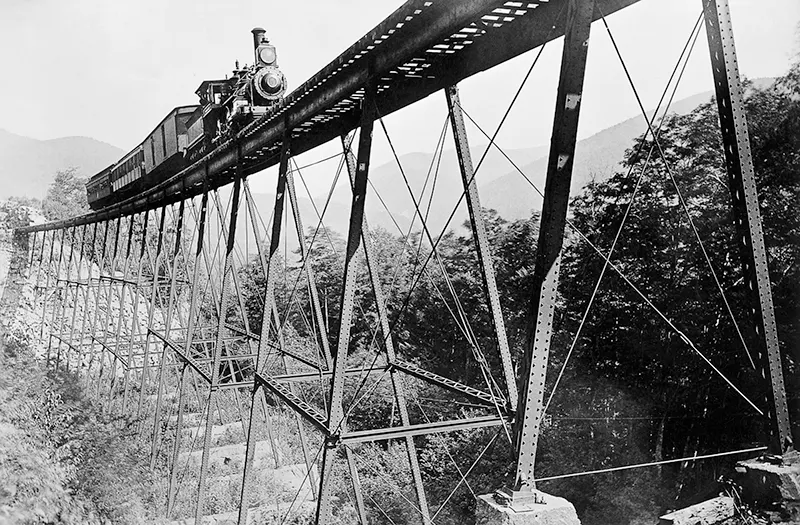
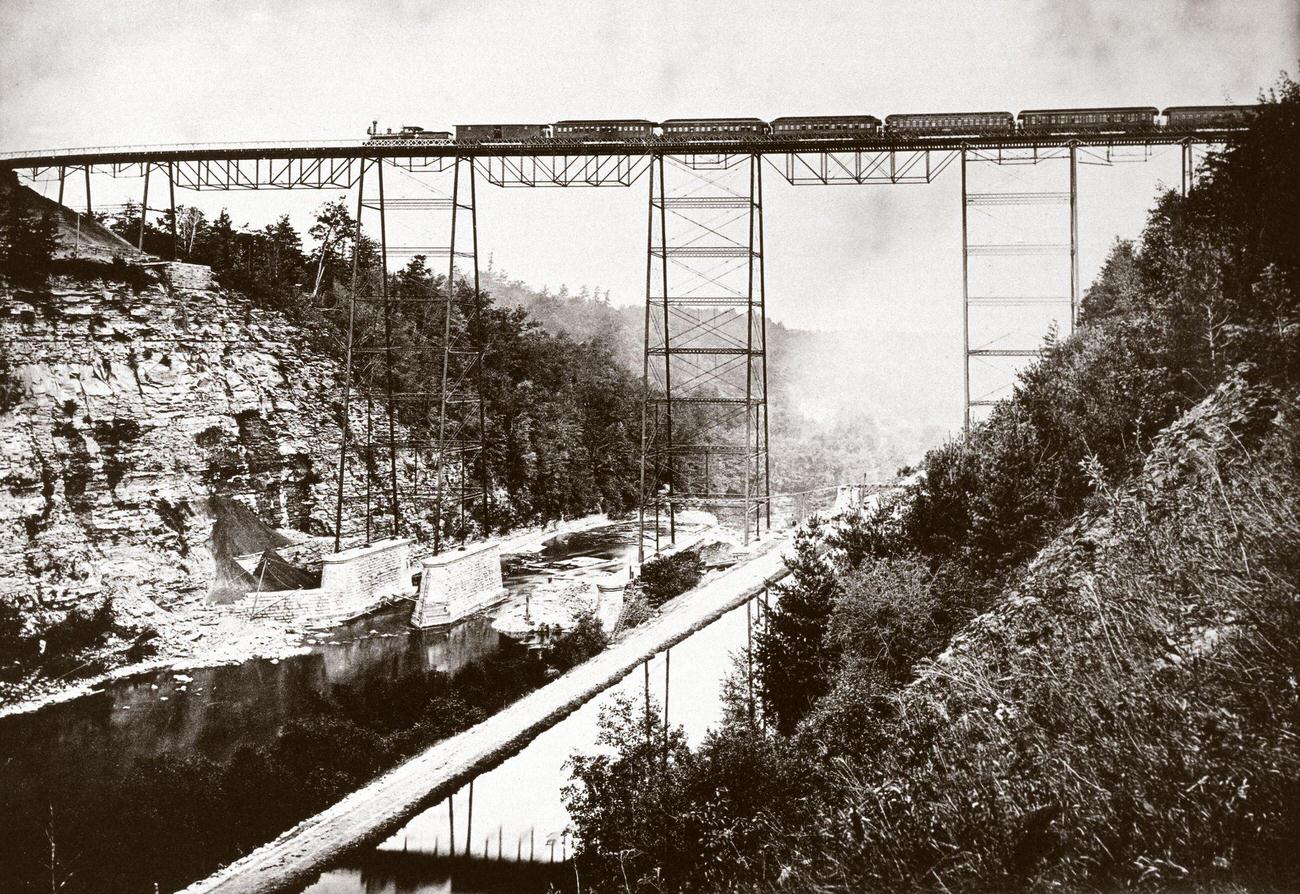
By the late 19th century, some railroads had already begun transitioning to iron and stone. The Portage Viaduct in New York, photographed in the late 1800s, represented this shift — a massive structure that pointed toward the steel and concrete era that would gradually replace the wooden trestle across the continent’s rail network.