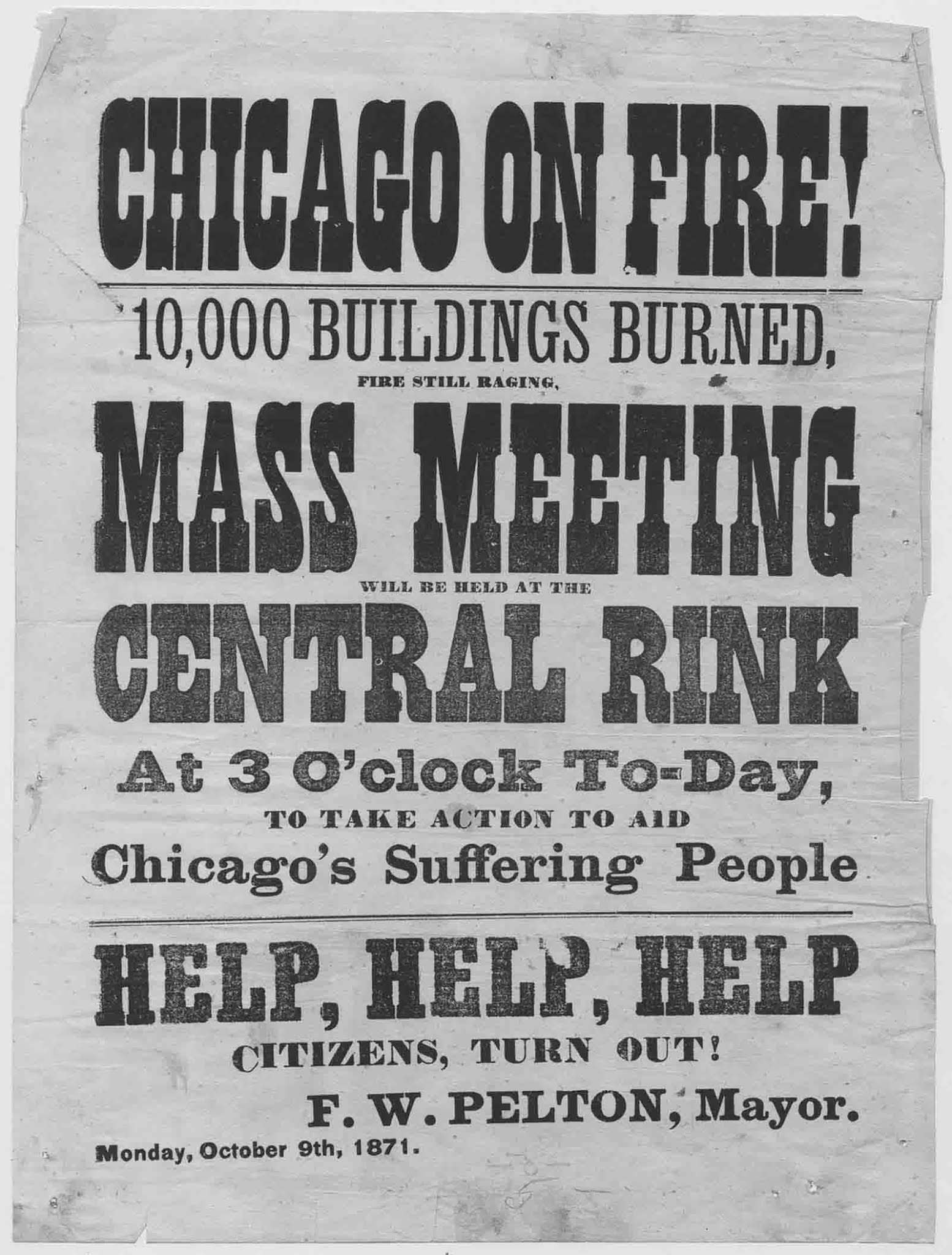
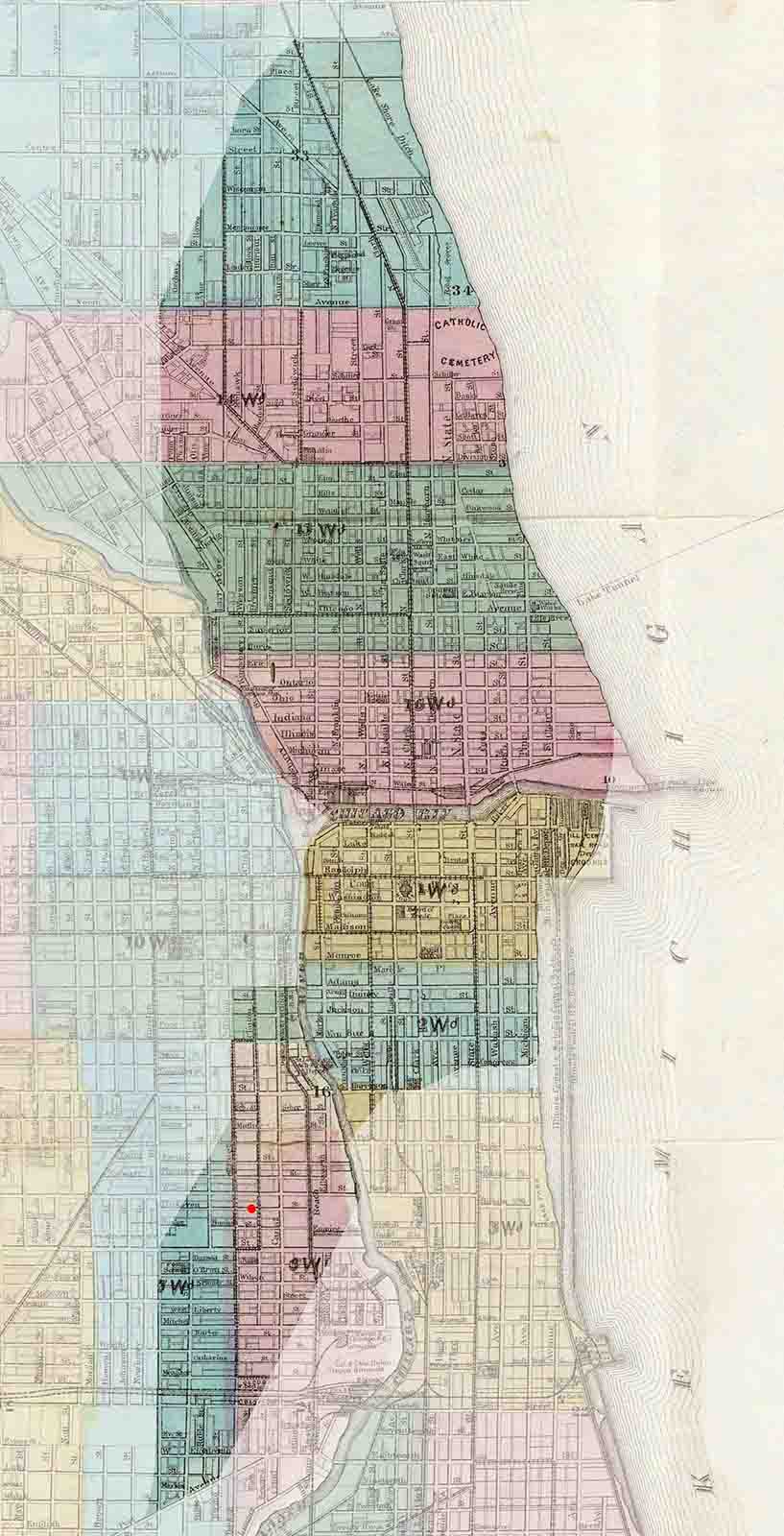
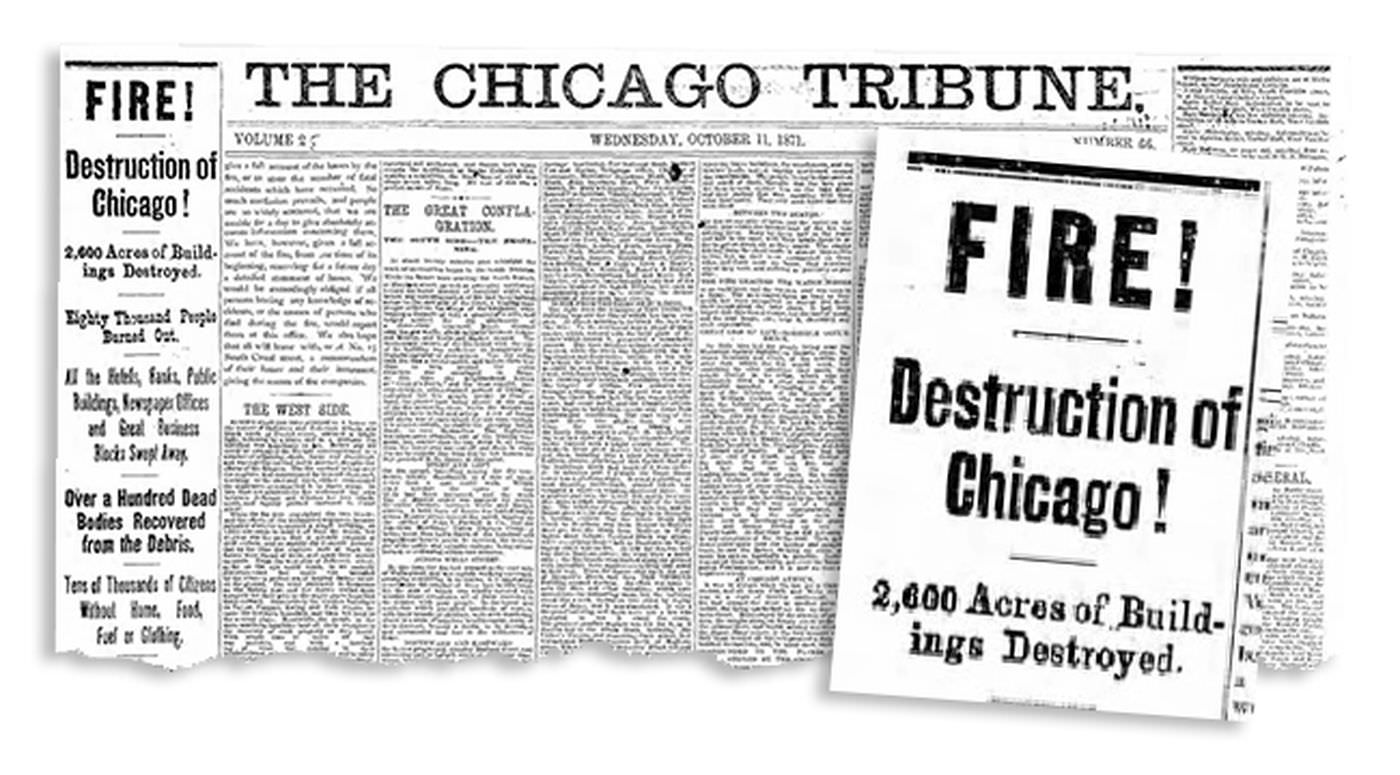
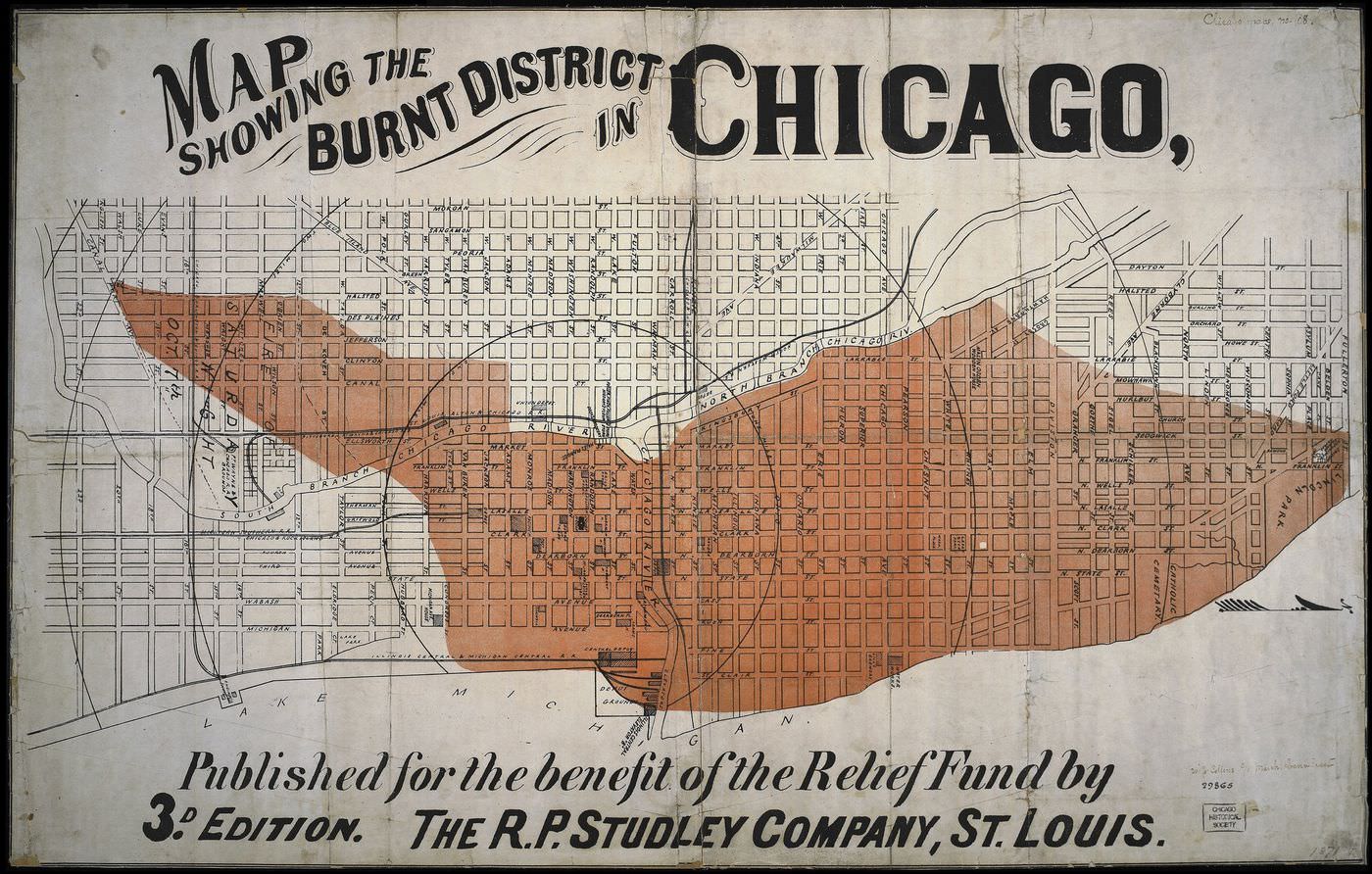
On the night of October 8, 1871, a fire broke out near a barn at 137 DeKoven Street on Chicago’s southwest side. Within hours, it had grown into one of the deadliest and most destructive urban disasters in American history. By the time rain finally extinguished the flames on October 10, approximately 300 people were dead, more than 100,000 were homeless, and over 17,000 structures had been reduced to ash and rubble. The fire tore through an area roughly four miles long and nearly a mile wide, swallowing the city’s business district whole and causing an estimated $200 million in damages.
The fire killed hundreds and destroyed much of the central business district, which was largely constructed from wood.
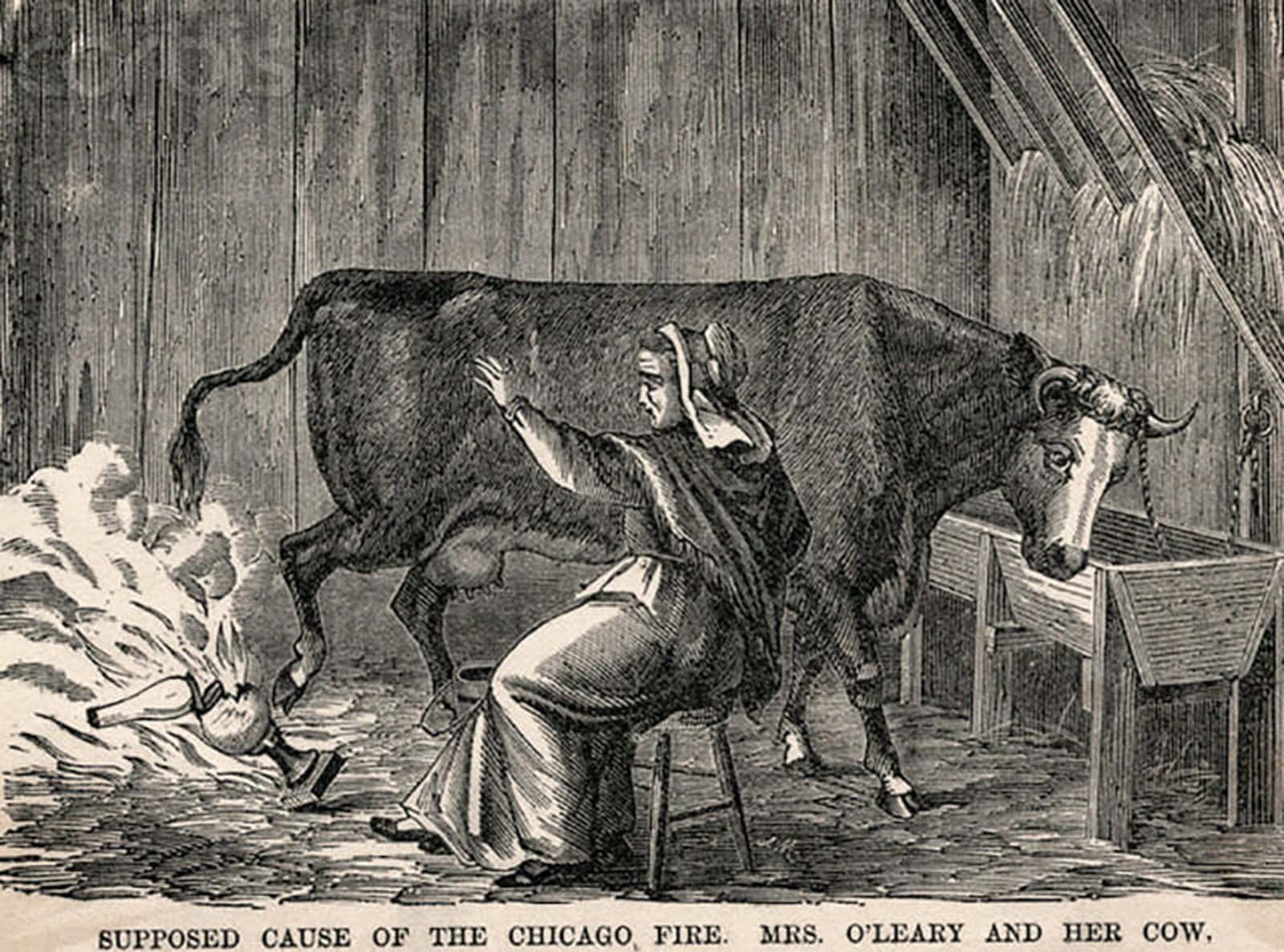
The exact cause of the fire has never been officially confirmed. The most widely repeated story holds that a cow owned by Patrick and Catherine O’Leary kicked over a lantern inside their barn, setting off the blaze. Catherine O’Leary flatly denied this account until her death in 1895, and the Chicago City Council formally exonerated her and her cow in 1997. Other theories point to a careless neighbor, a group of men gambling in the barn, or even a meteor shower that may have ignited fires across the region that same night. What is certain is that Chicago in 1871 was a city built largely of wood — wooden sidewalks, wooden buildings, wooden bridges — and it had been suffering through an unusually dry summer.

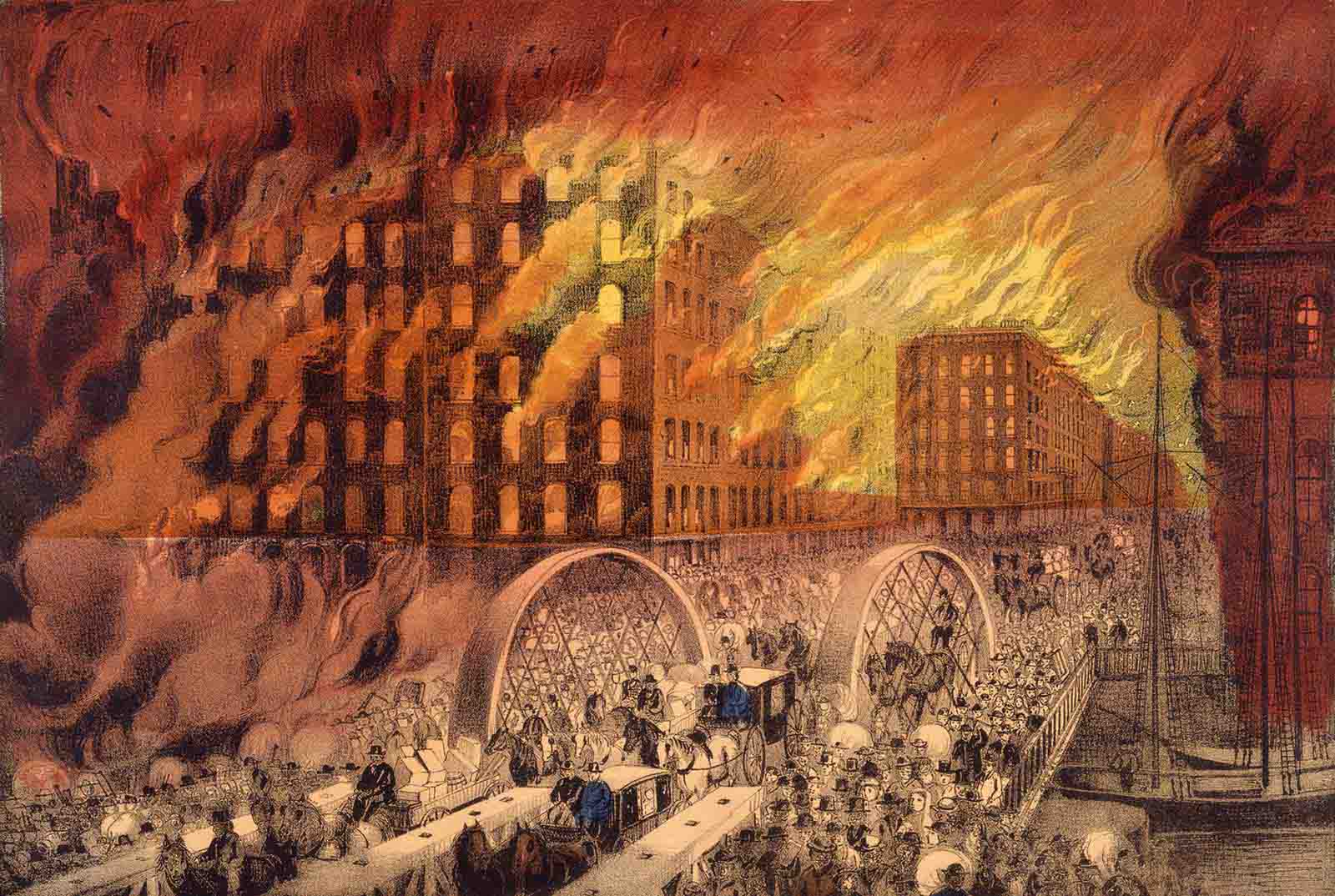
Once the fire escaped the O’Leary property, it moved fast. Driven by strong southwest winds, it raced north and east toward the heart of the city. Firefighters were already exhausted from battling a separate blaze the night before, and an early alarm mishap delayed the response by critical minutes. By the time engine companies converged on the fire, it had already jumped the Chicago River and was consuming the city’s most densely built neighborhoods.


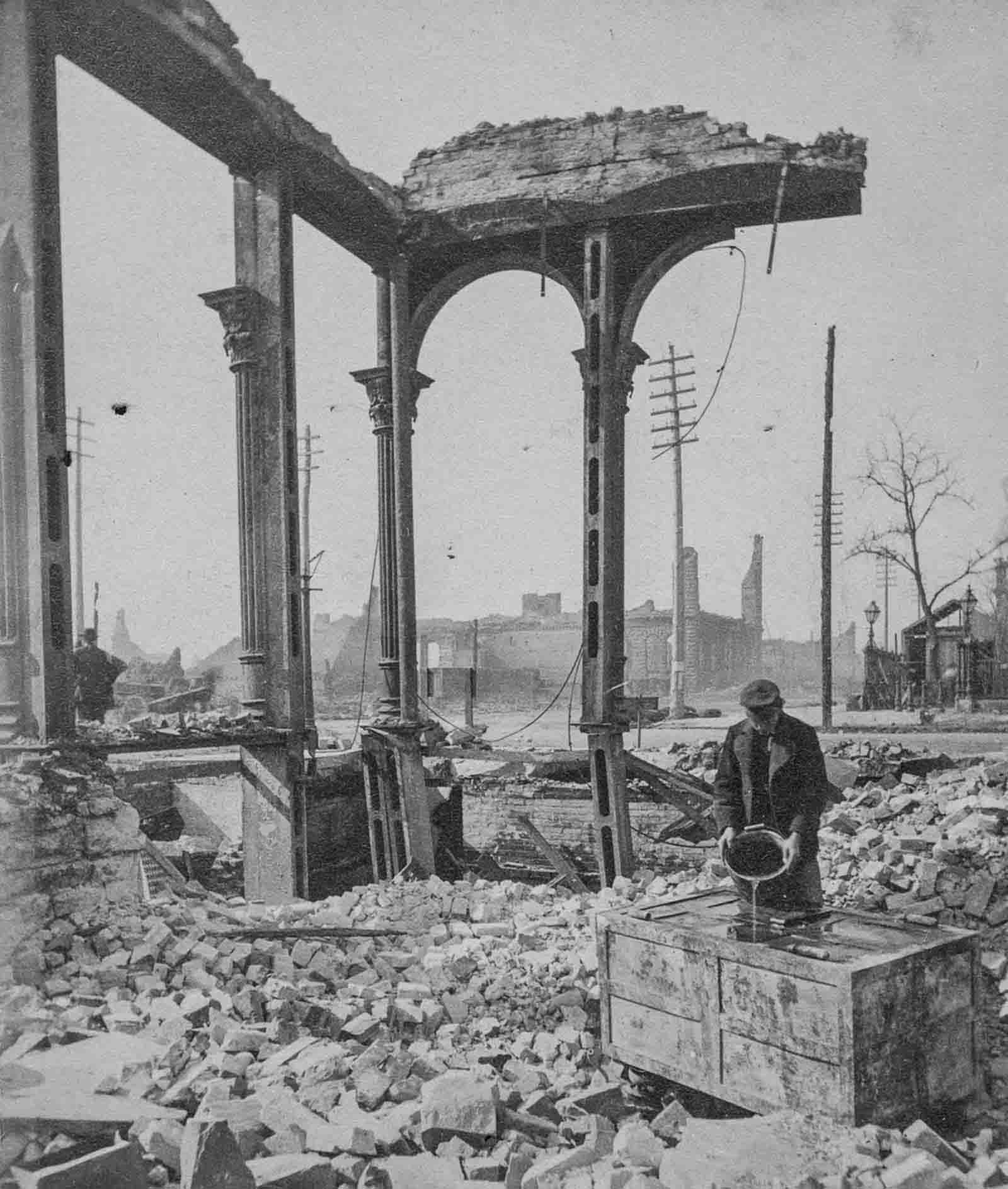
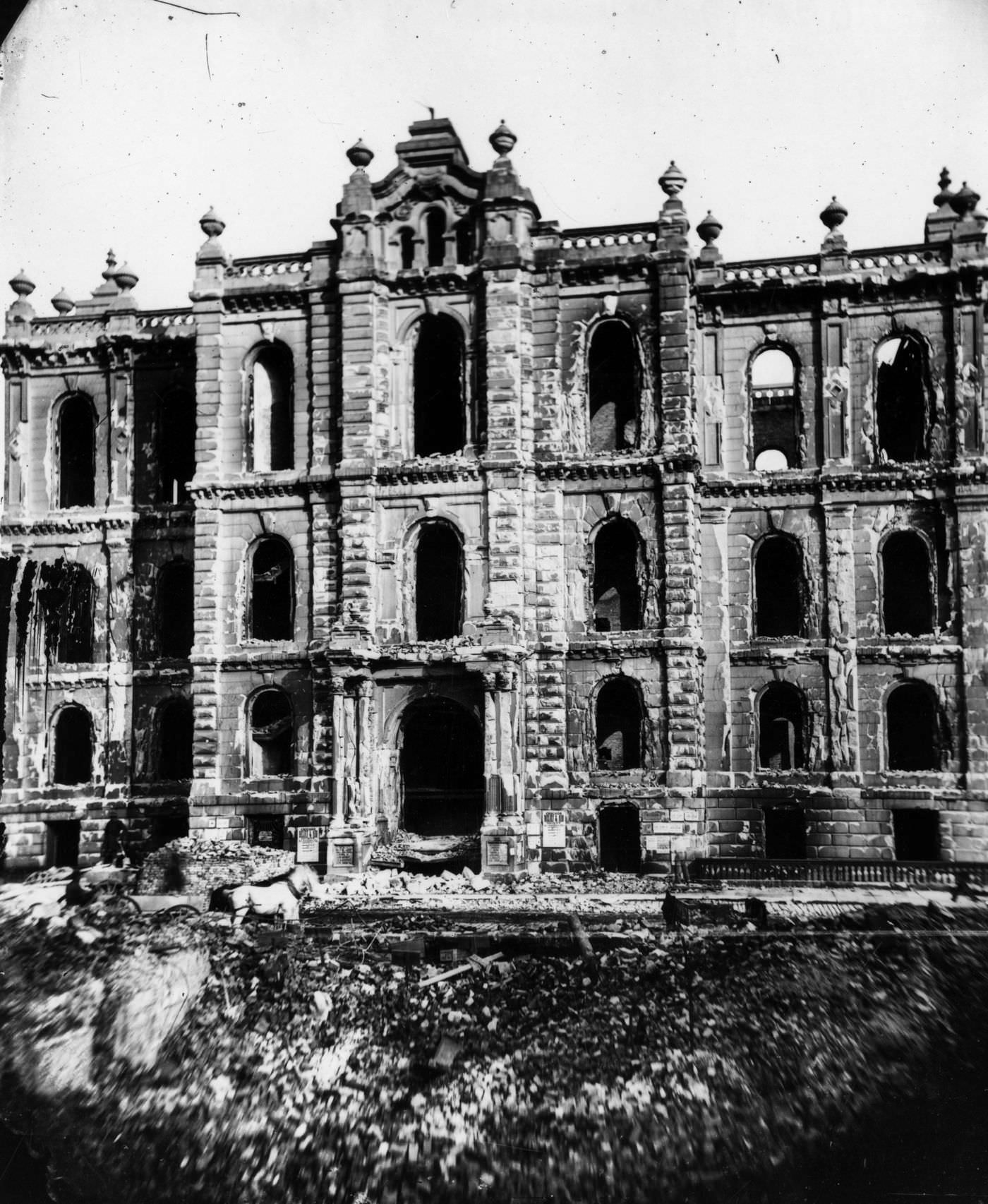
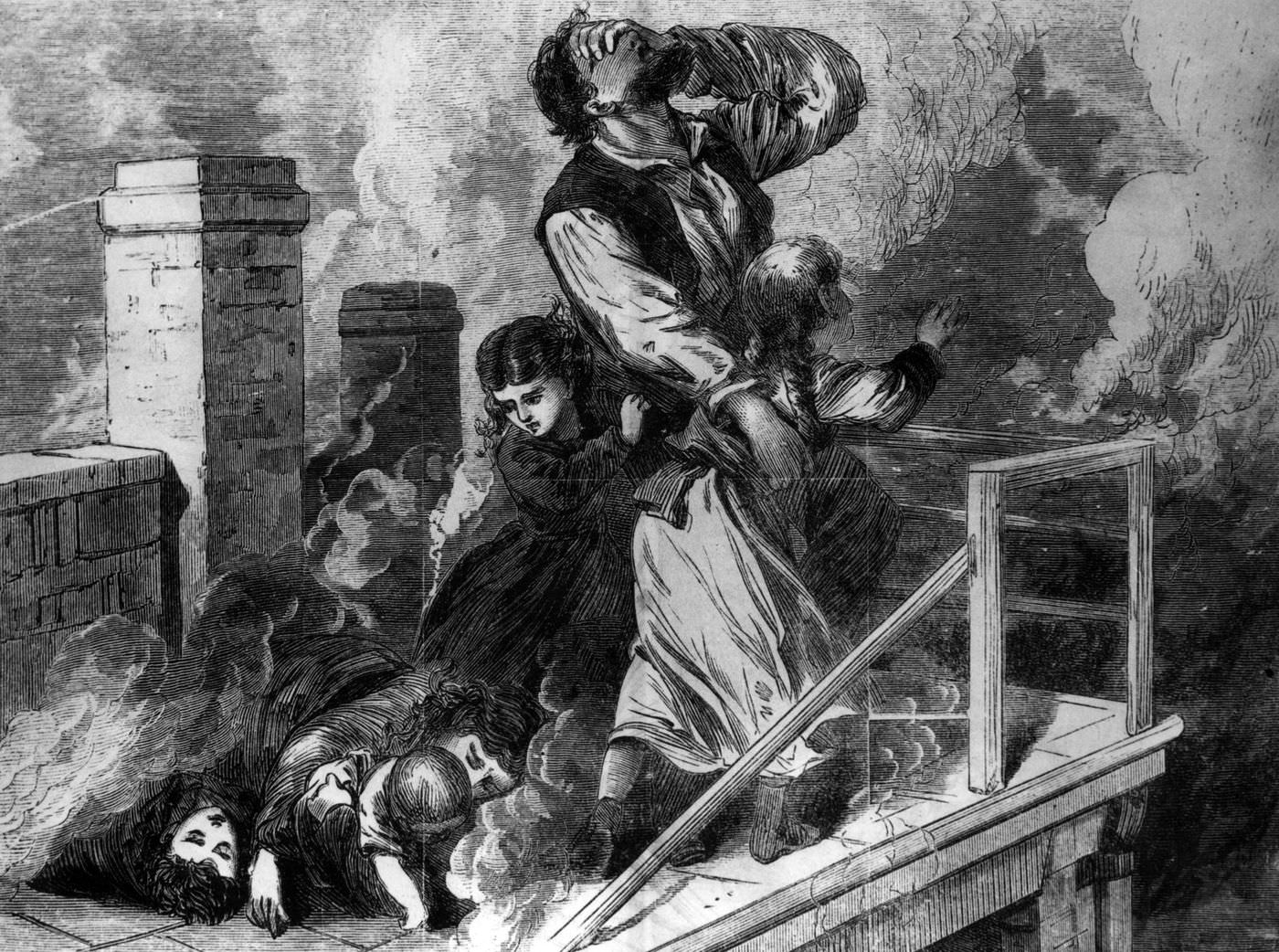
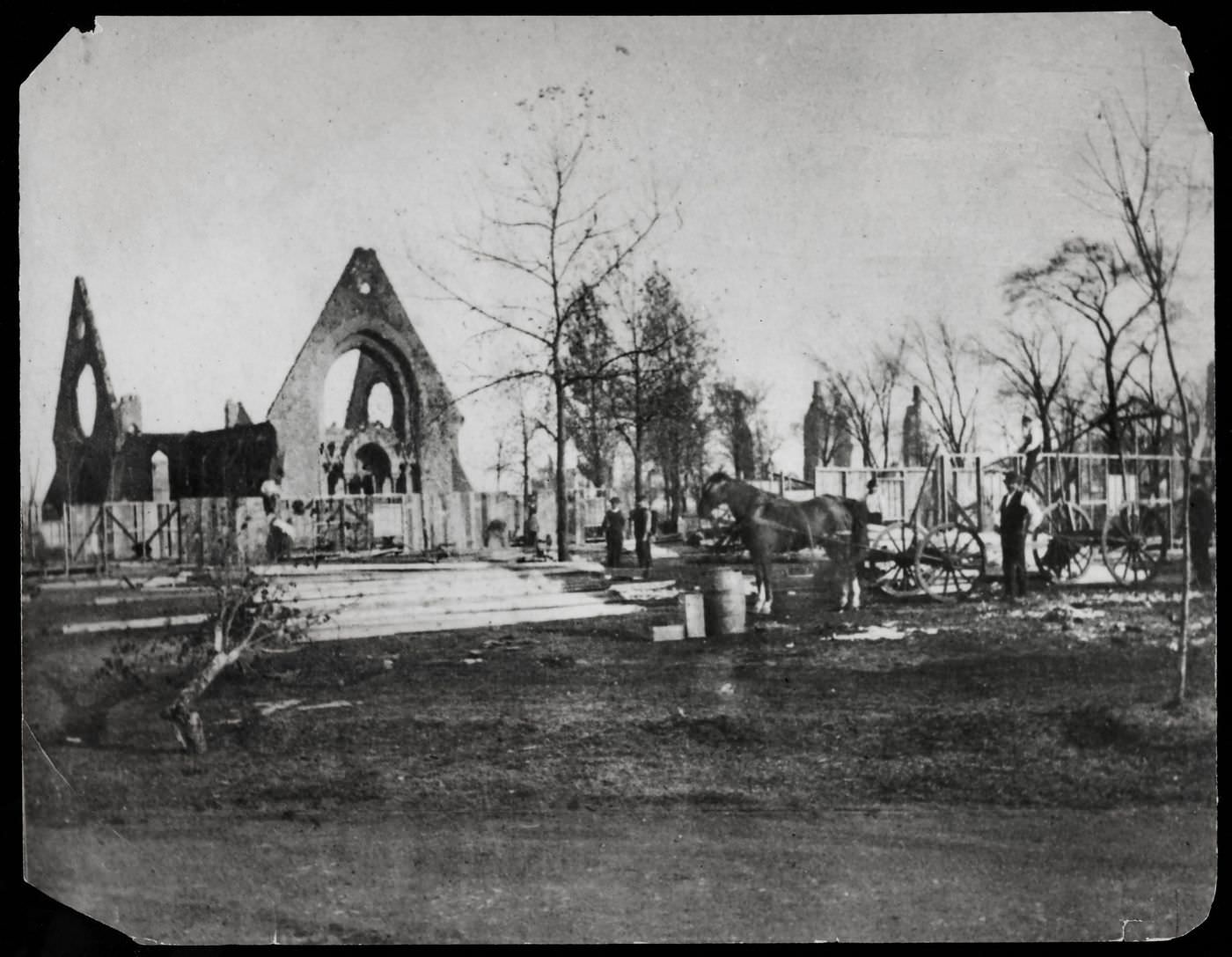
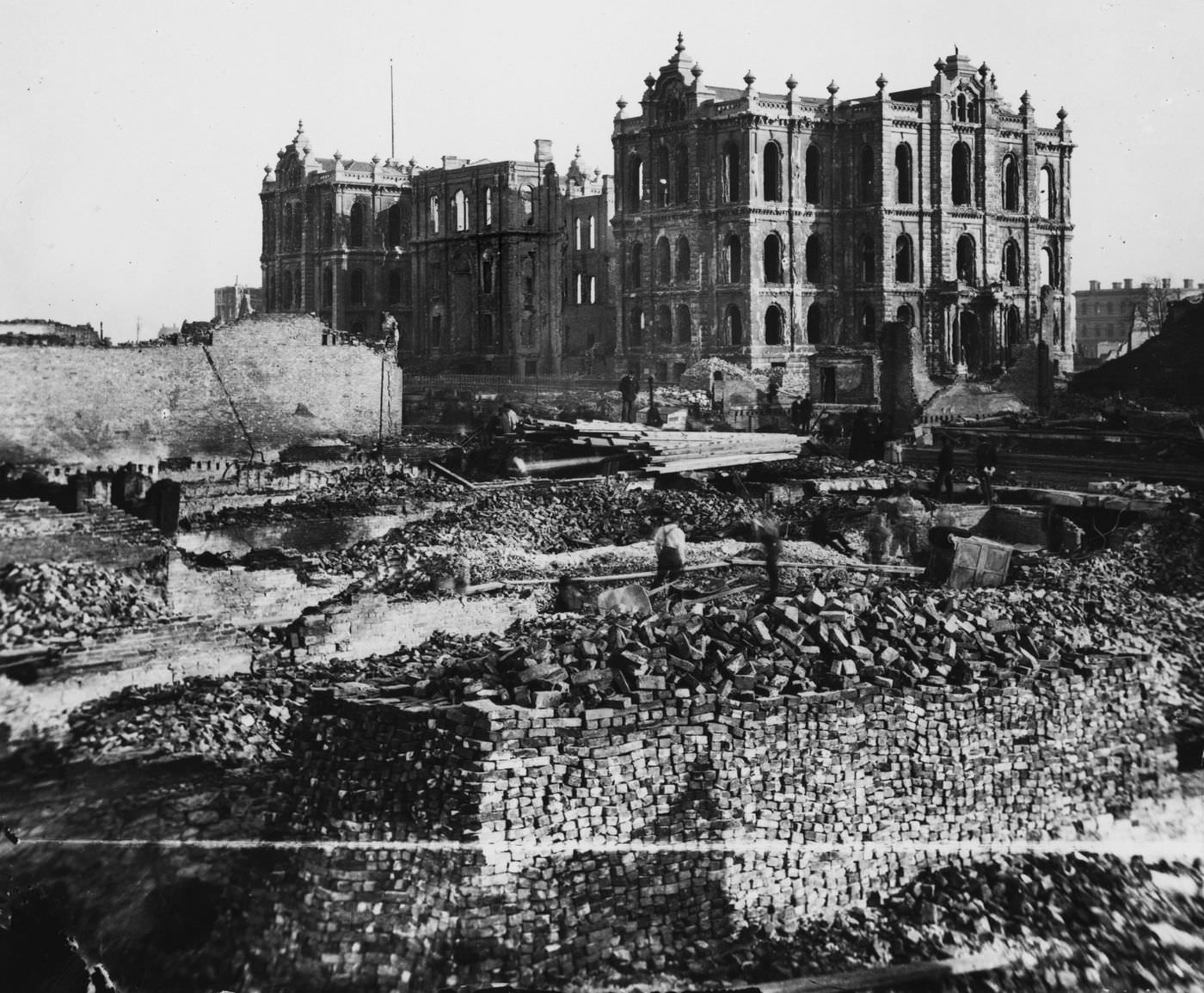
Residents fleeing the fire described walls of flame moving faster than a person could run. Families grabbed what they could carry and rushed toward the lakefront or open parks. The heat was intense enough to melt iron and shatter stone. Churches, hotels, government buildings, and private homes all burned. The Courthouse and City Hall collapsed. The Chicago Historical Society burned to the ground. Banks, newspapers, and stores that had taken decades to build were gone in hours.


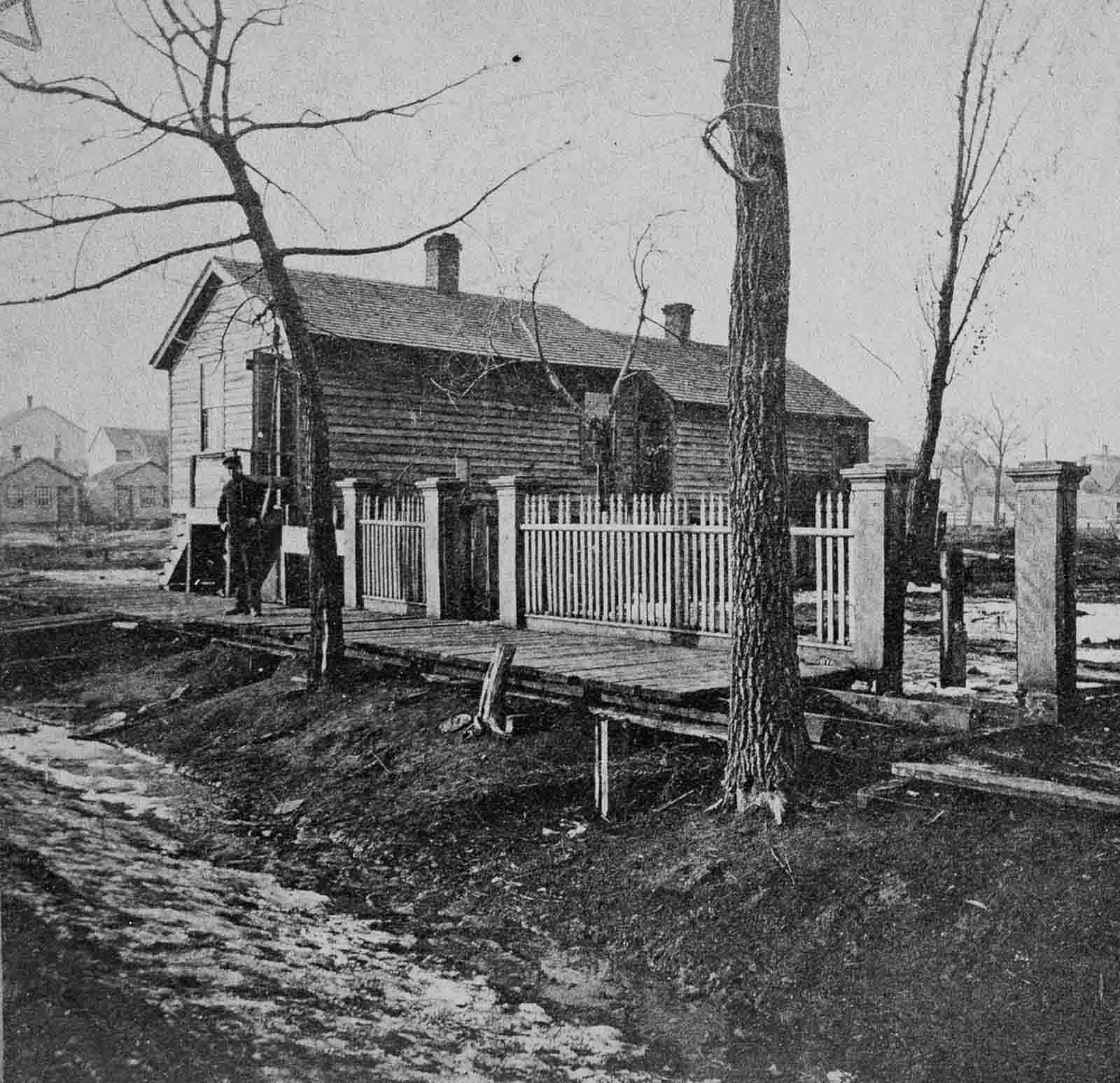
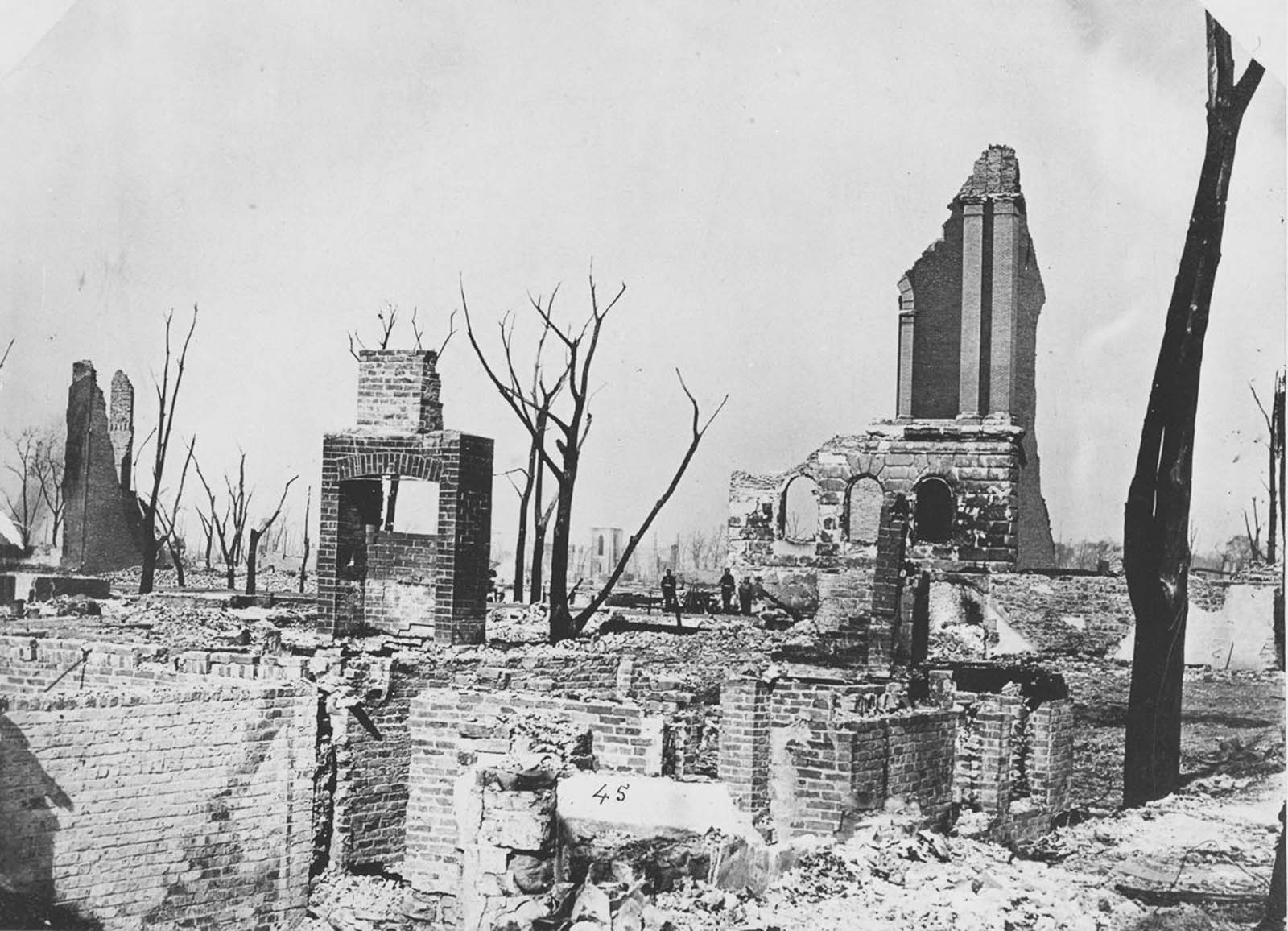
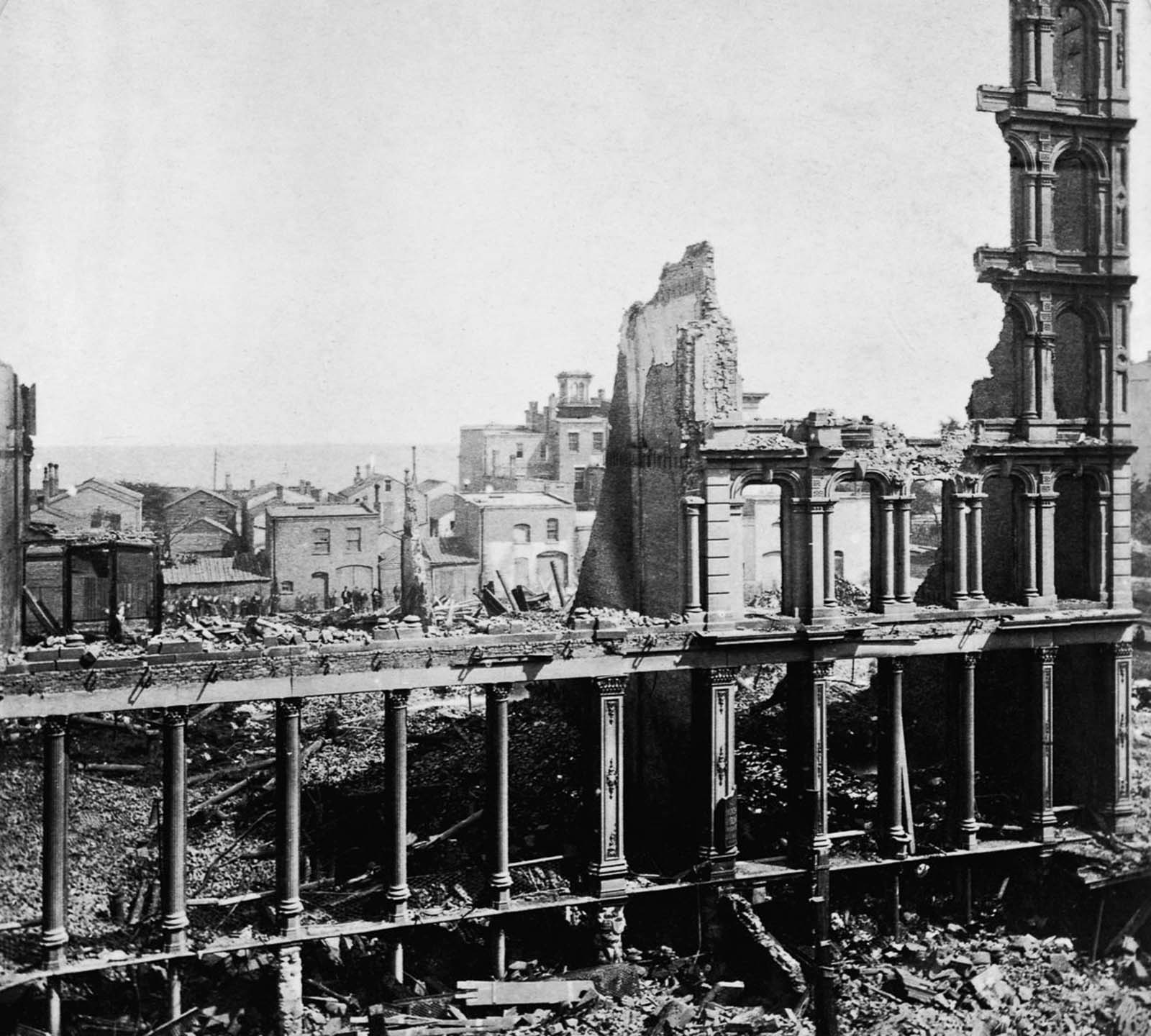
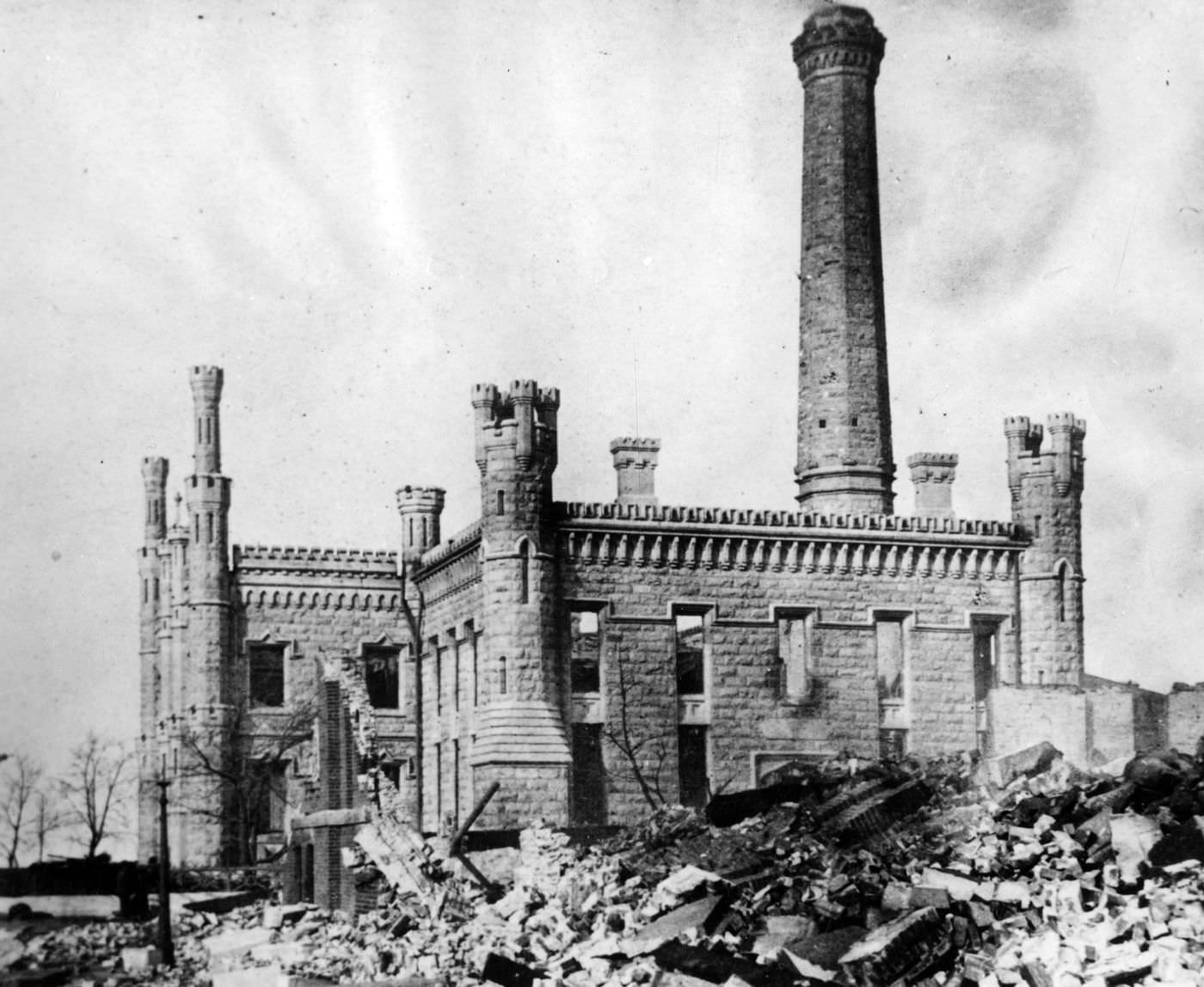
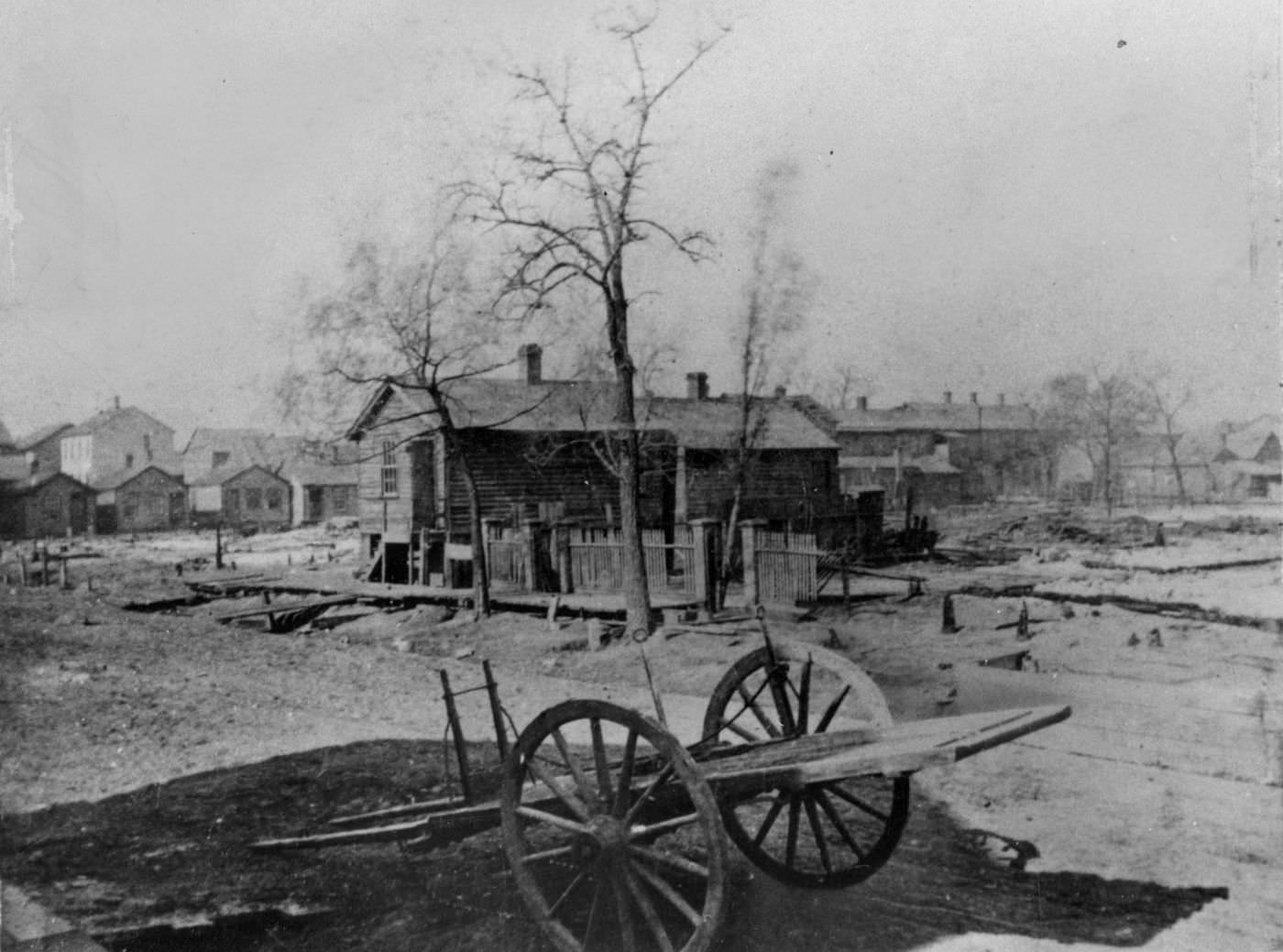
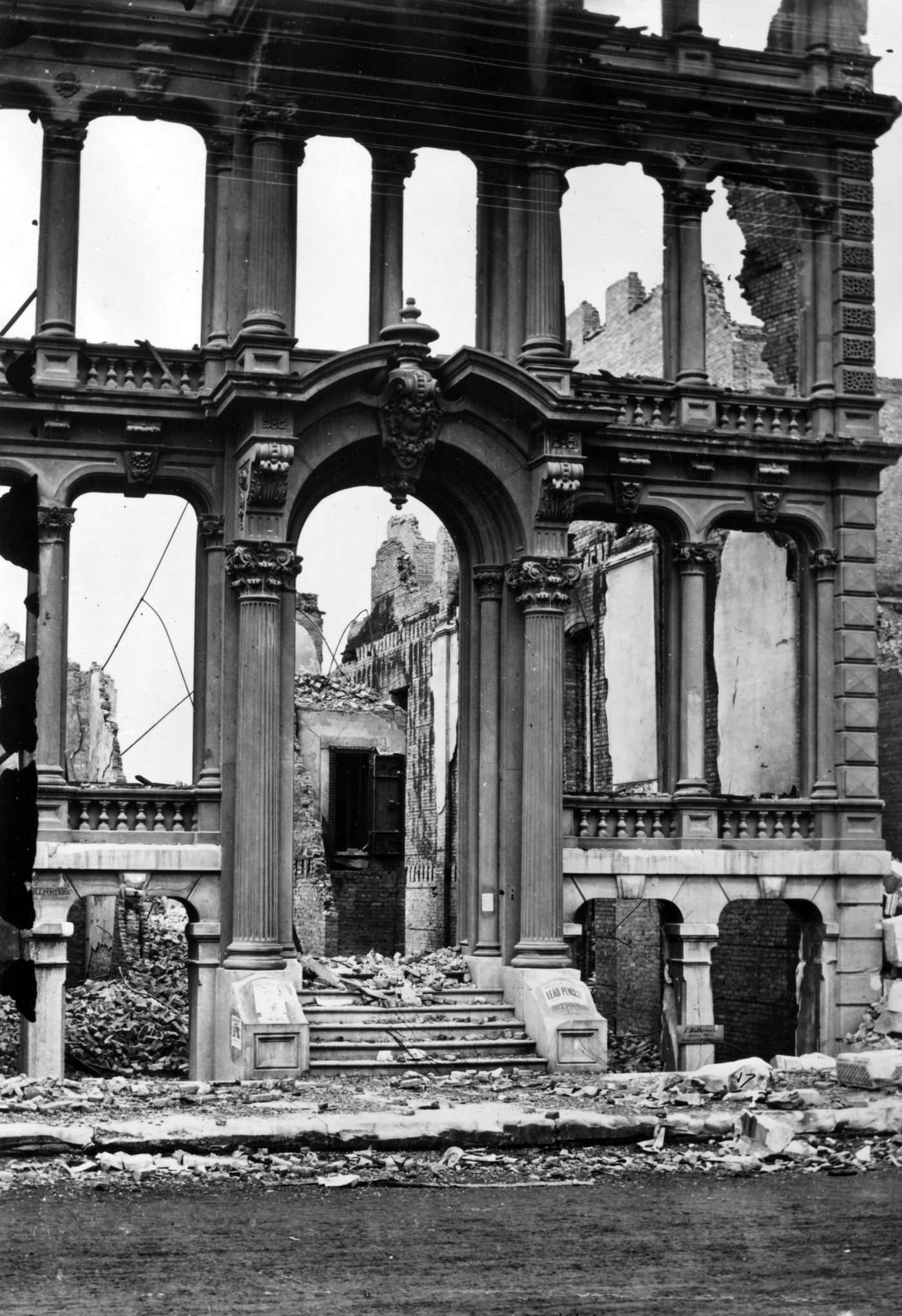
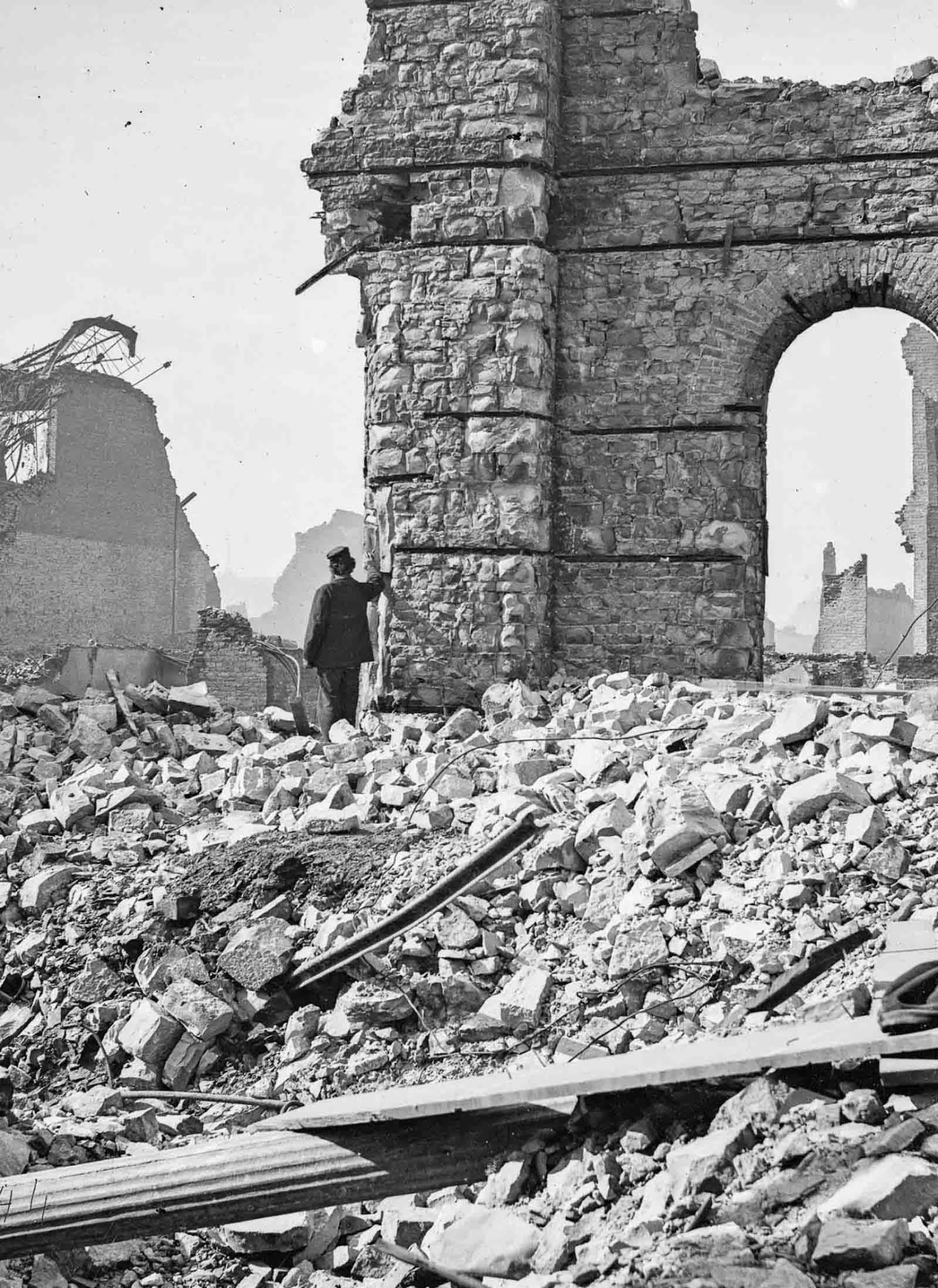
One of the more striking details of the disaster is what the fire left standing. The O’Leary family’s modest cottage survived even as the barn behind it — believed to be ground zero of the fire — was completely destroyed. Certain stone and brick structures held their outer walls even when their interiors were gutted. The Chicago Water Tower, built of yellow Joliet limestone, survived and became one of the most enduring symbols of the city’s resilience.


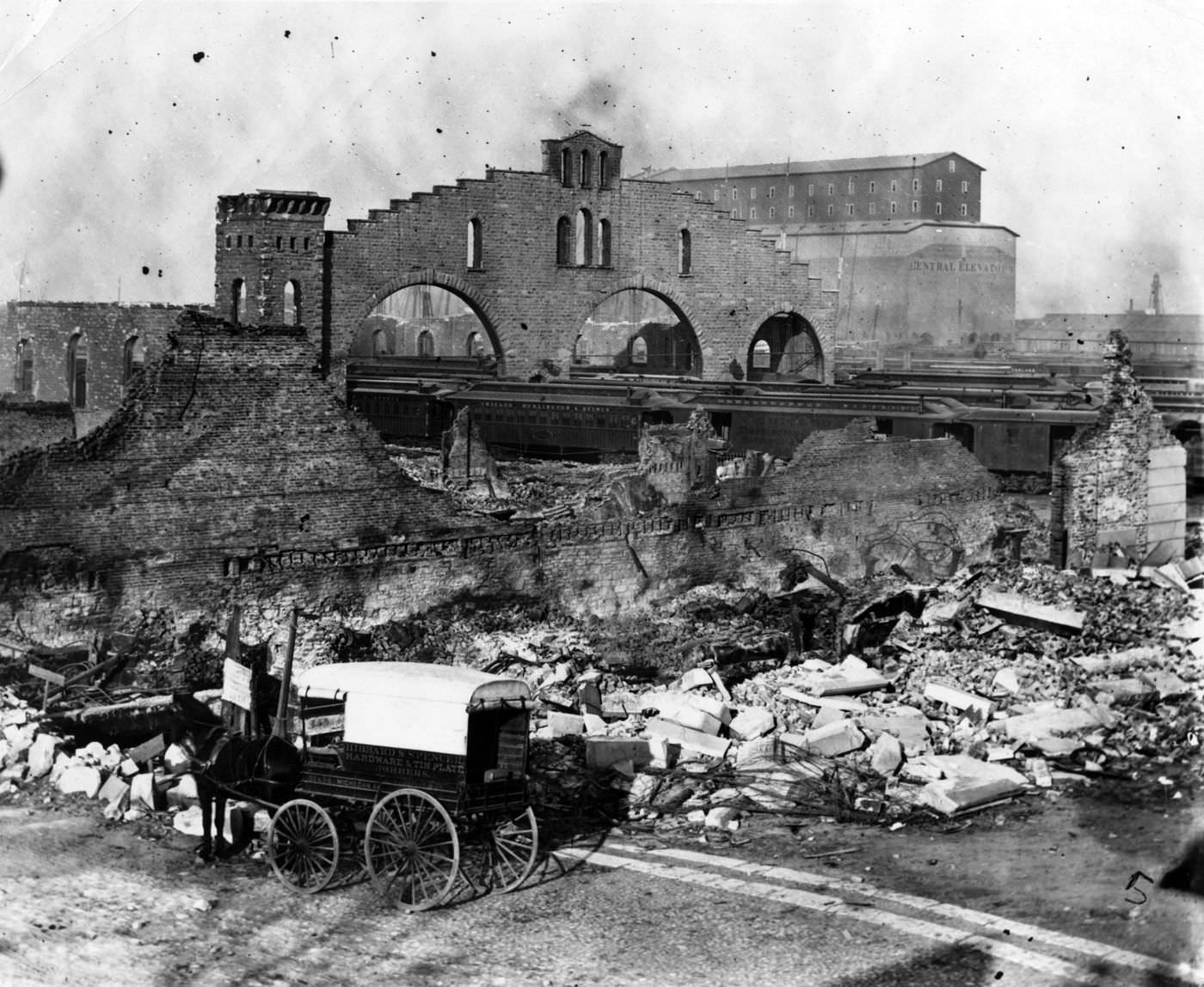
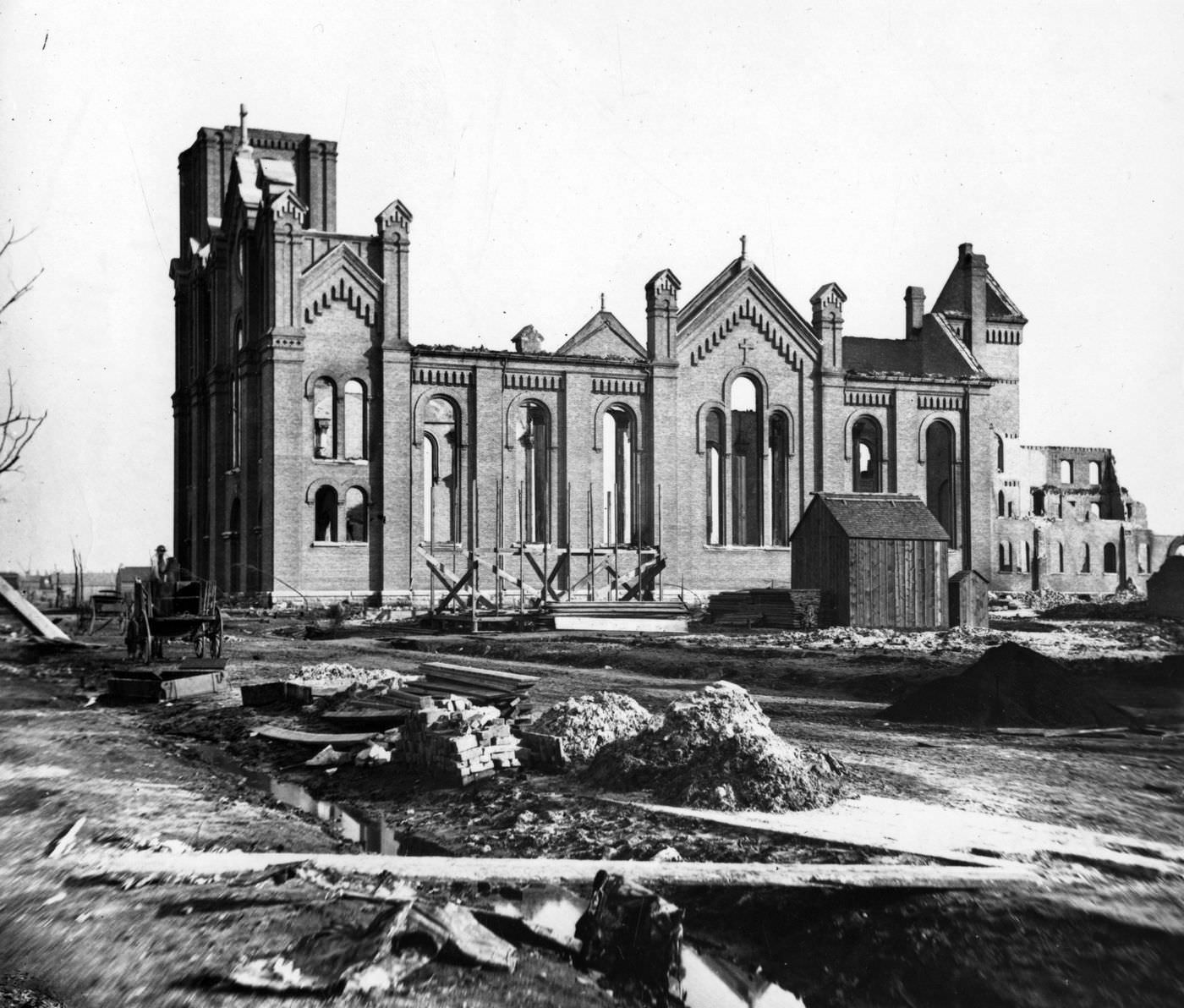
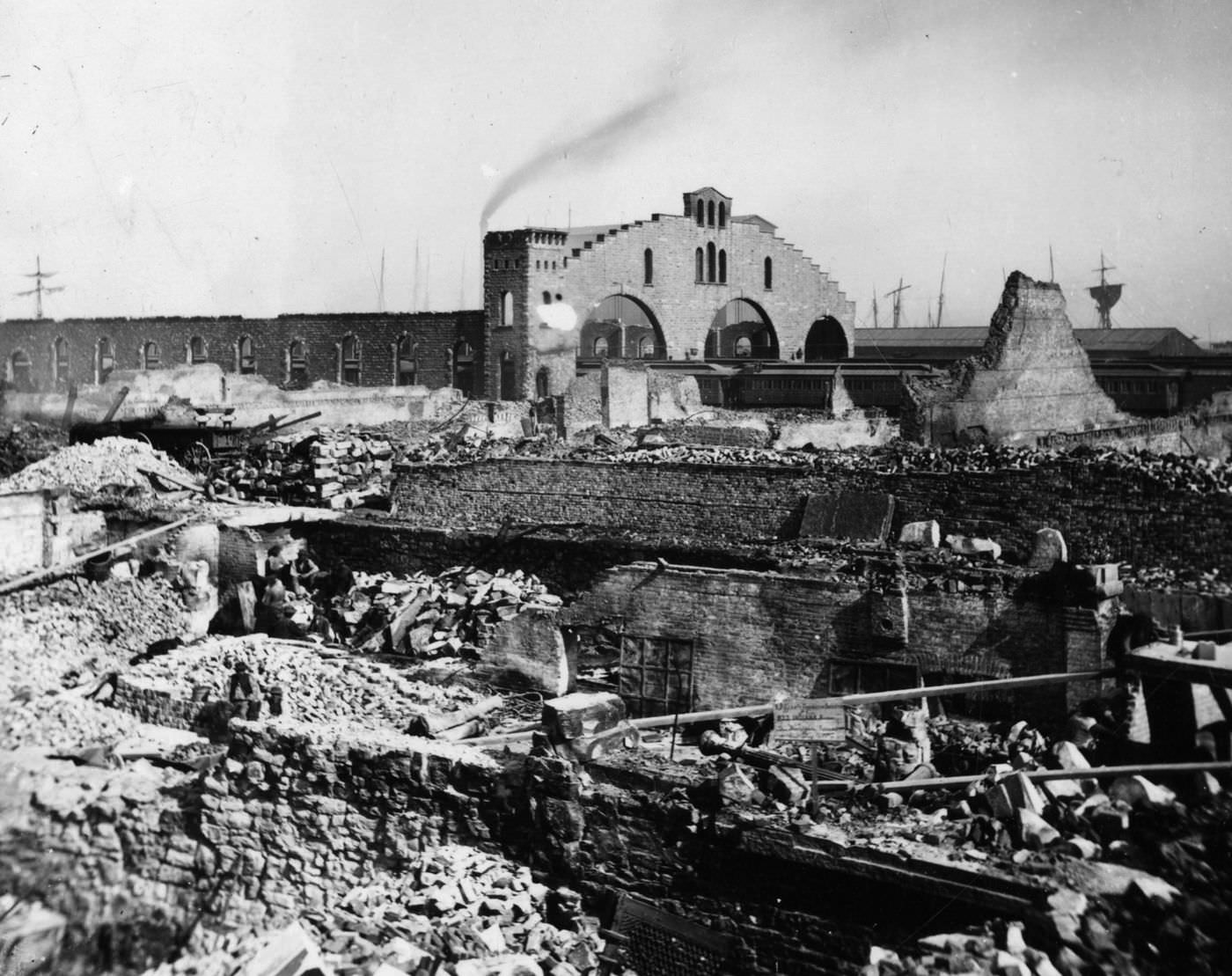
The station’s walls survived the fire, but the roof did not.
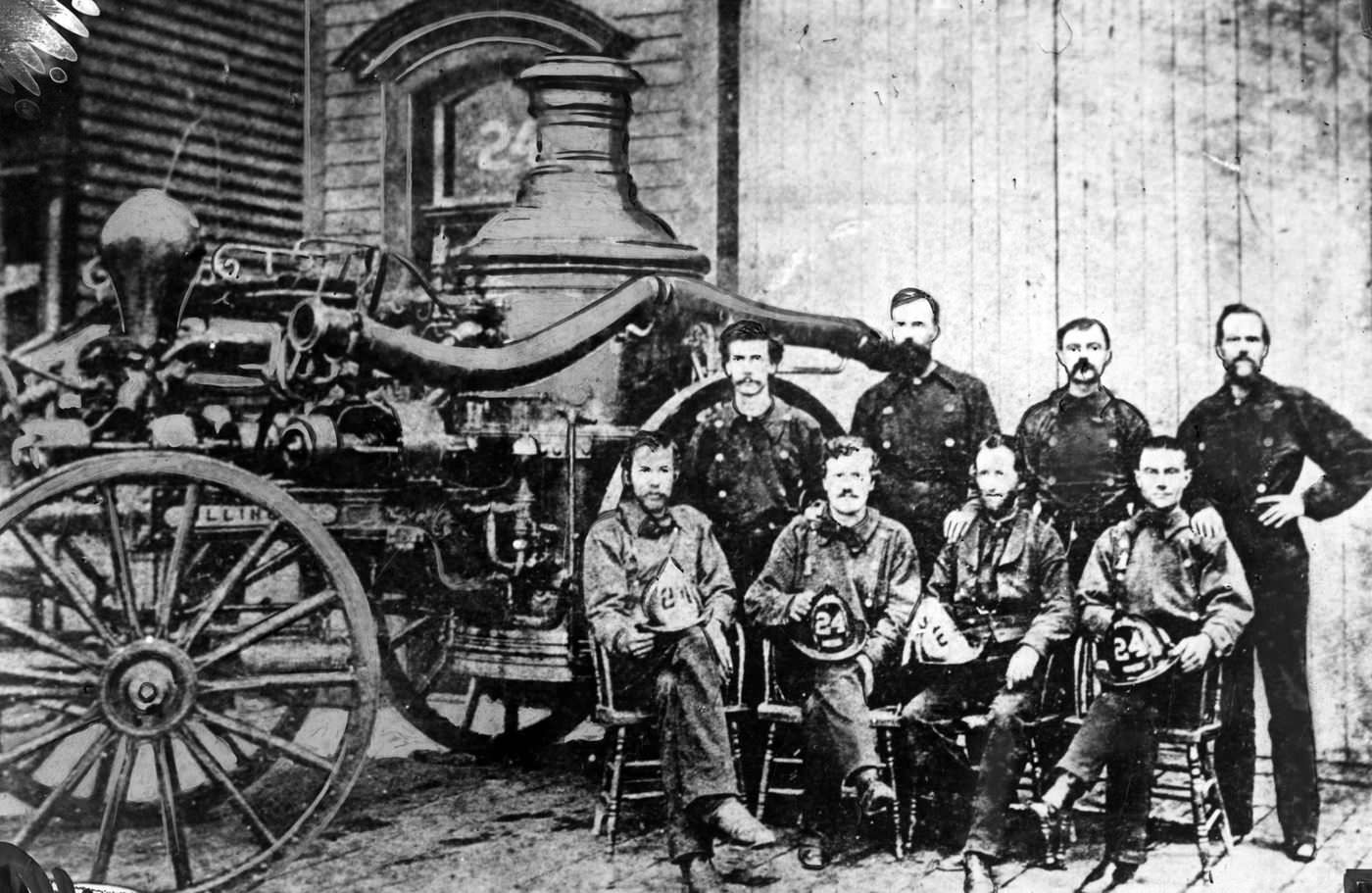
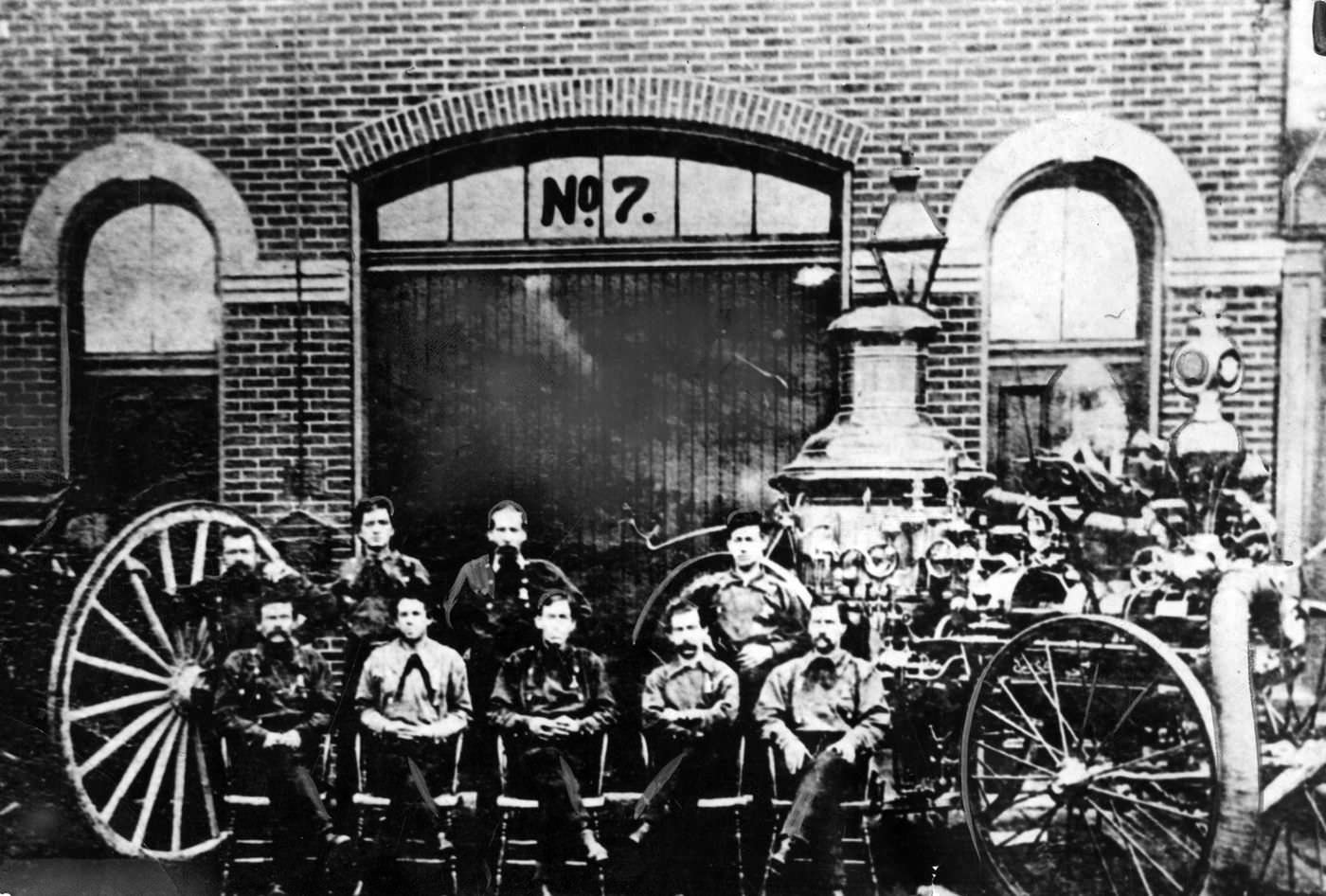
The firefighters who battled the blaze were outmatched from the start. Engine Company No. 24 and other units responded throughout the night of October 8 and into the following day, but the fire was simply too large and too fast. The city’s water pumping station was knocked out early in the fire, crippling the firefighting effort. Without adequate water pressure, hoses ran dry. Some firefighters stood their ground regardless, working through the night until the fire pushed them back.


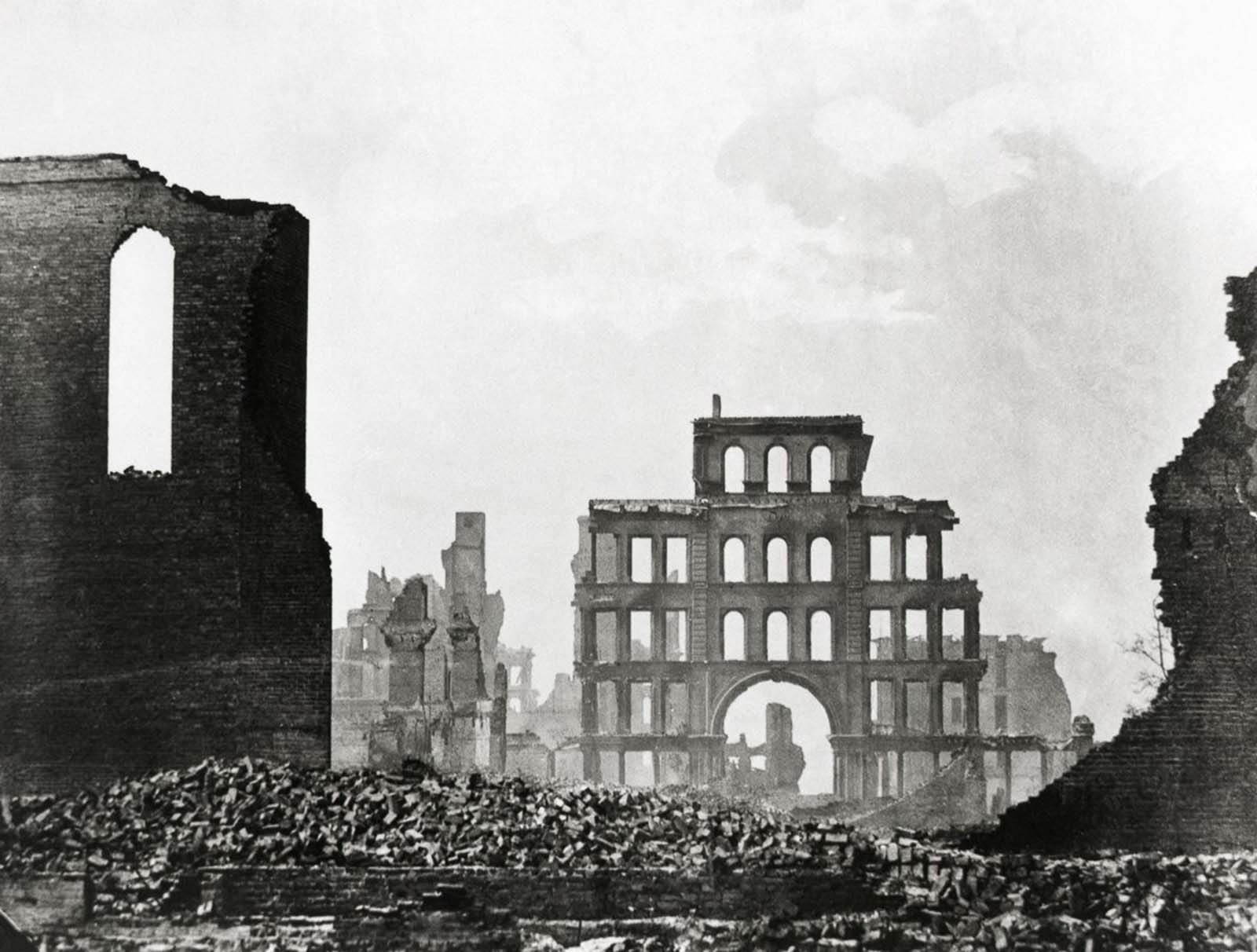
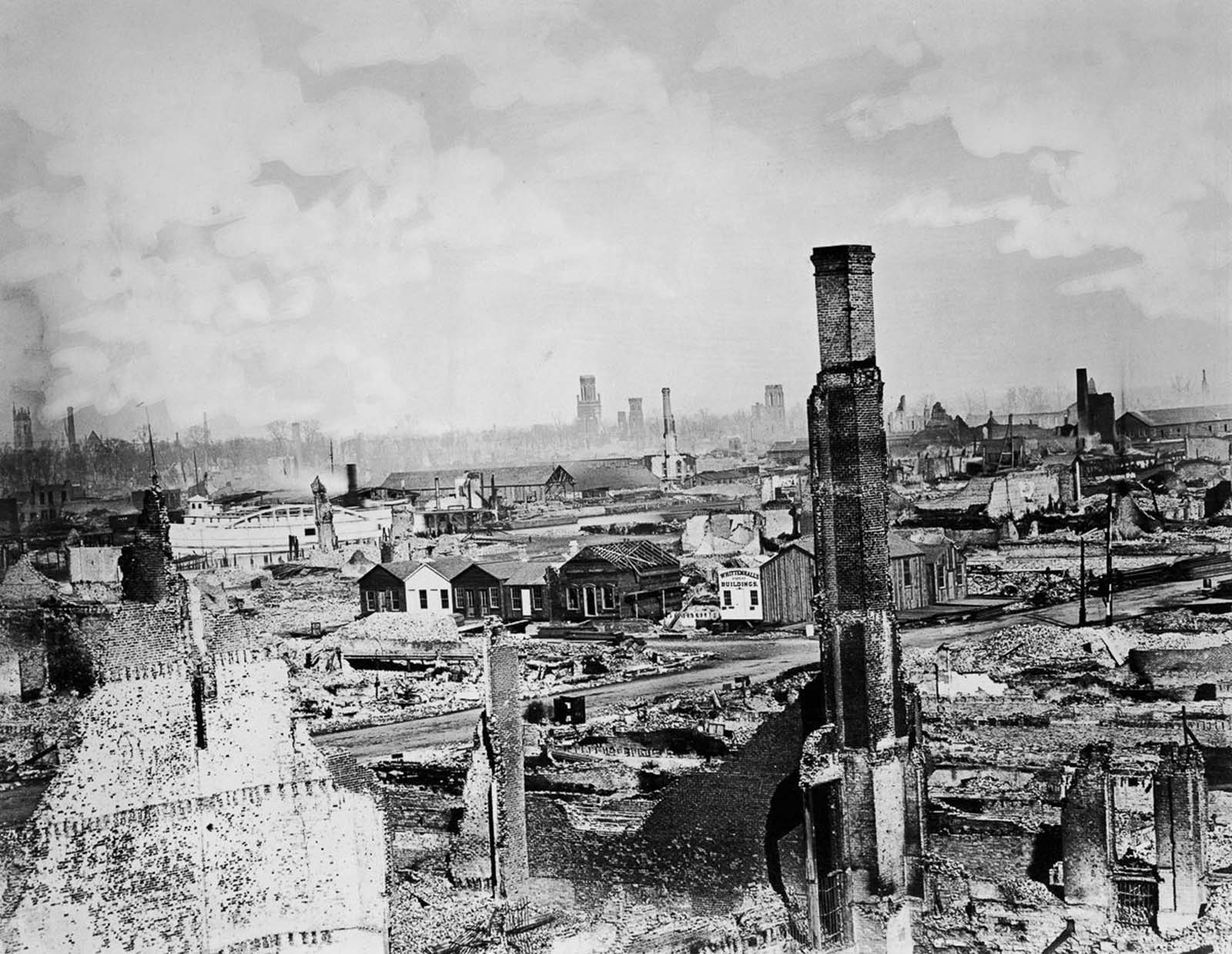
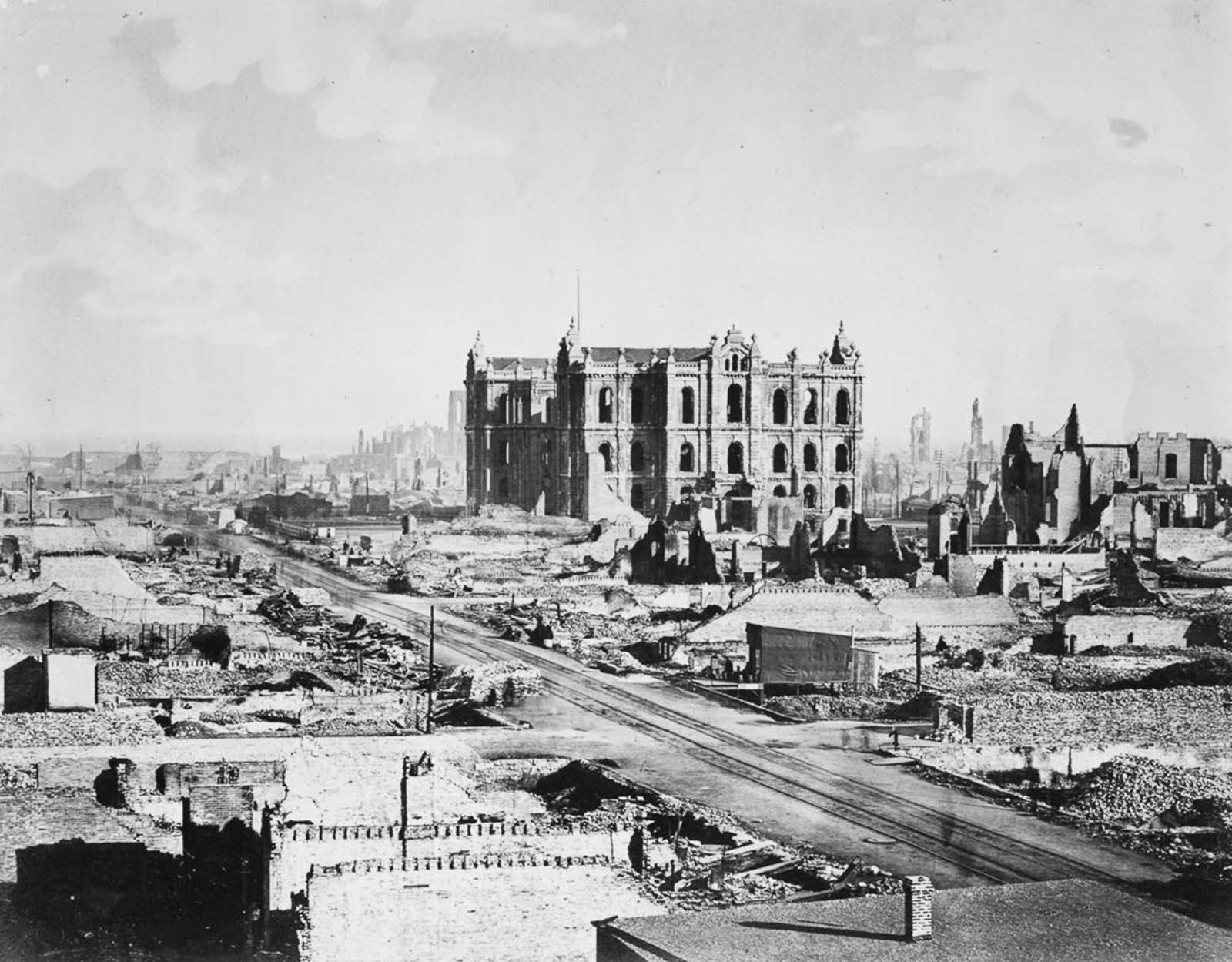
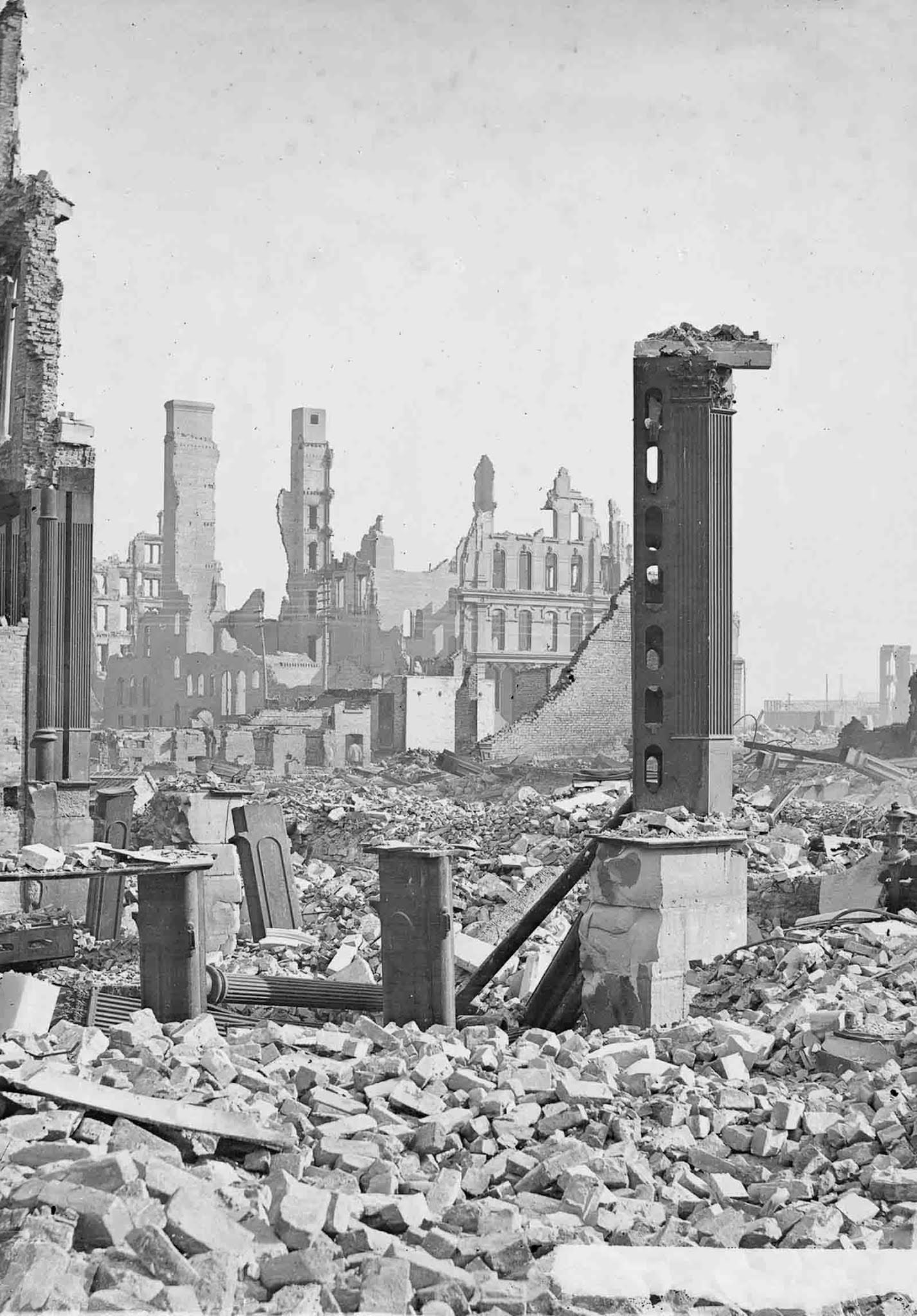
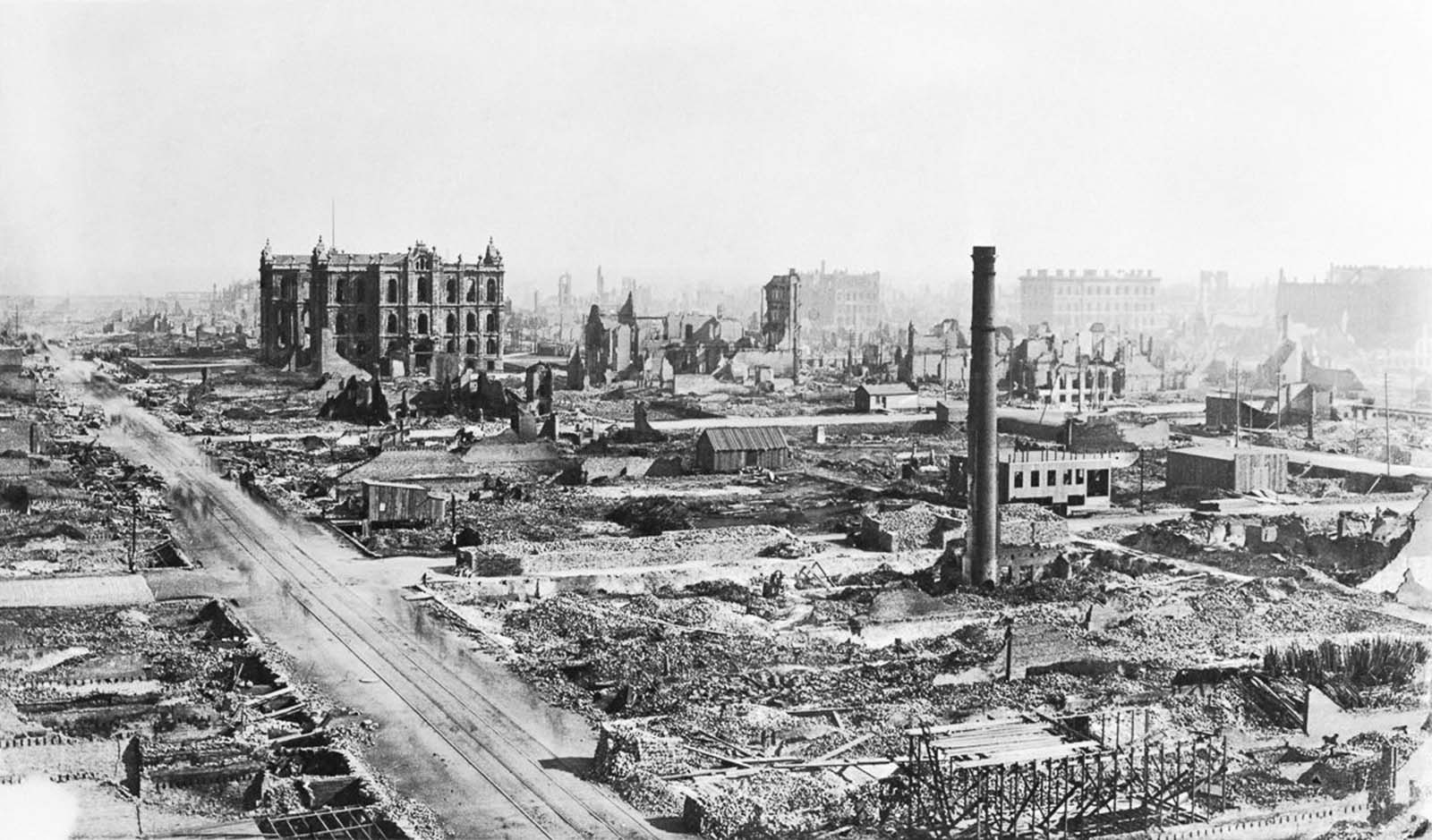
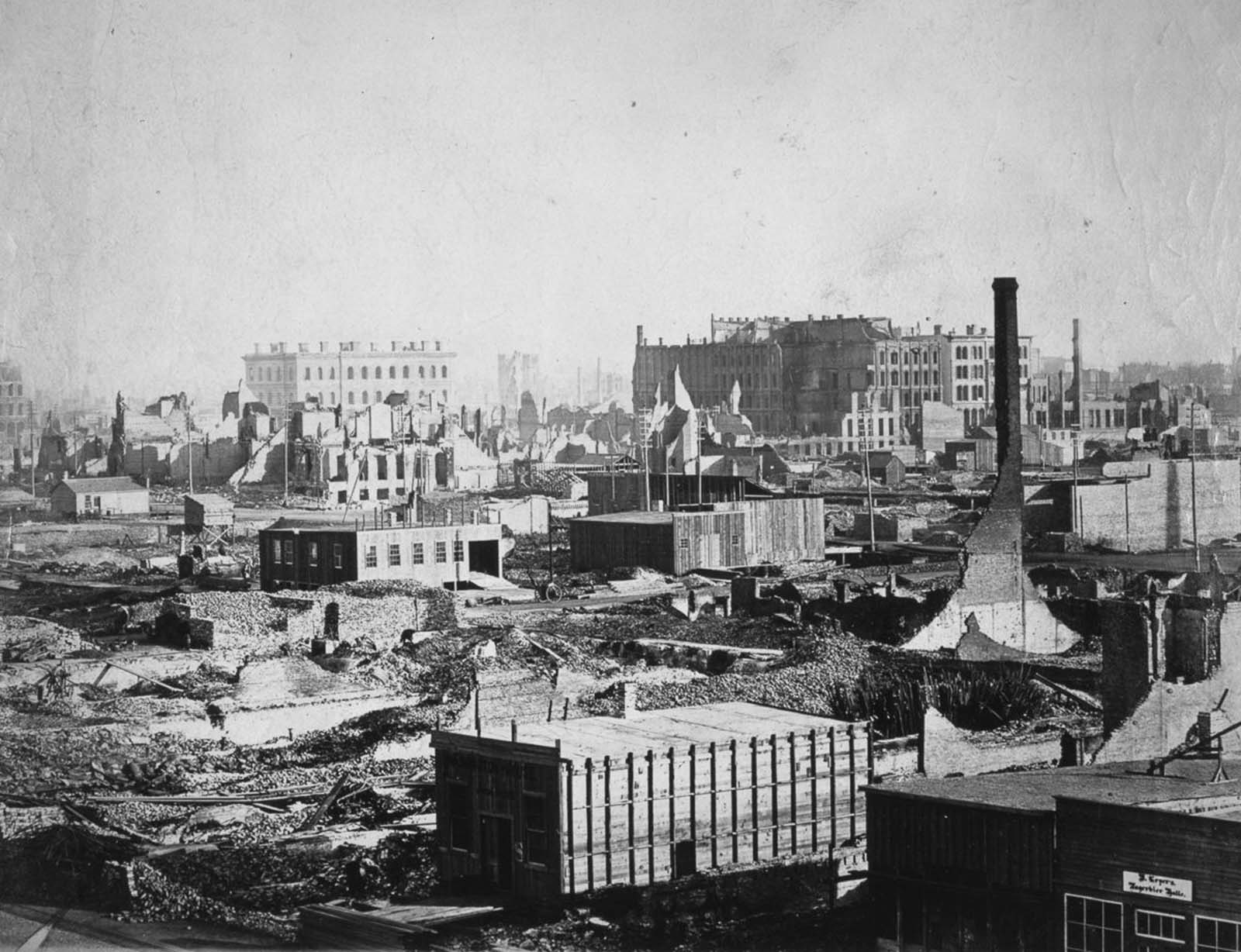
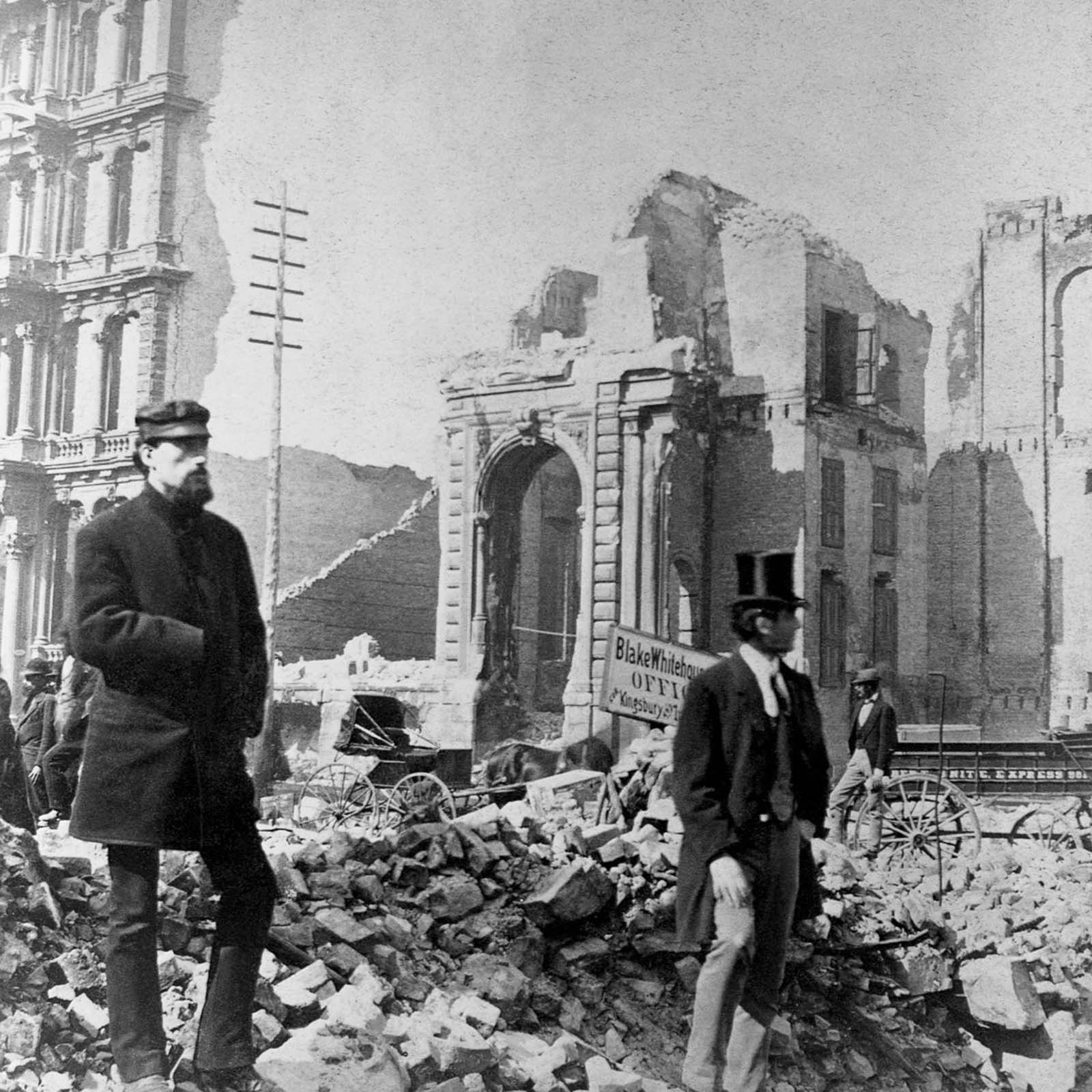
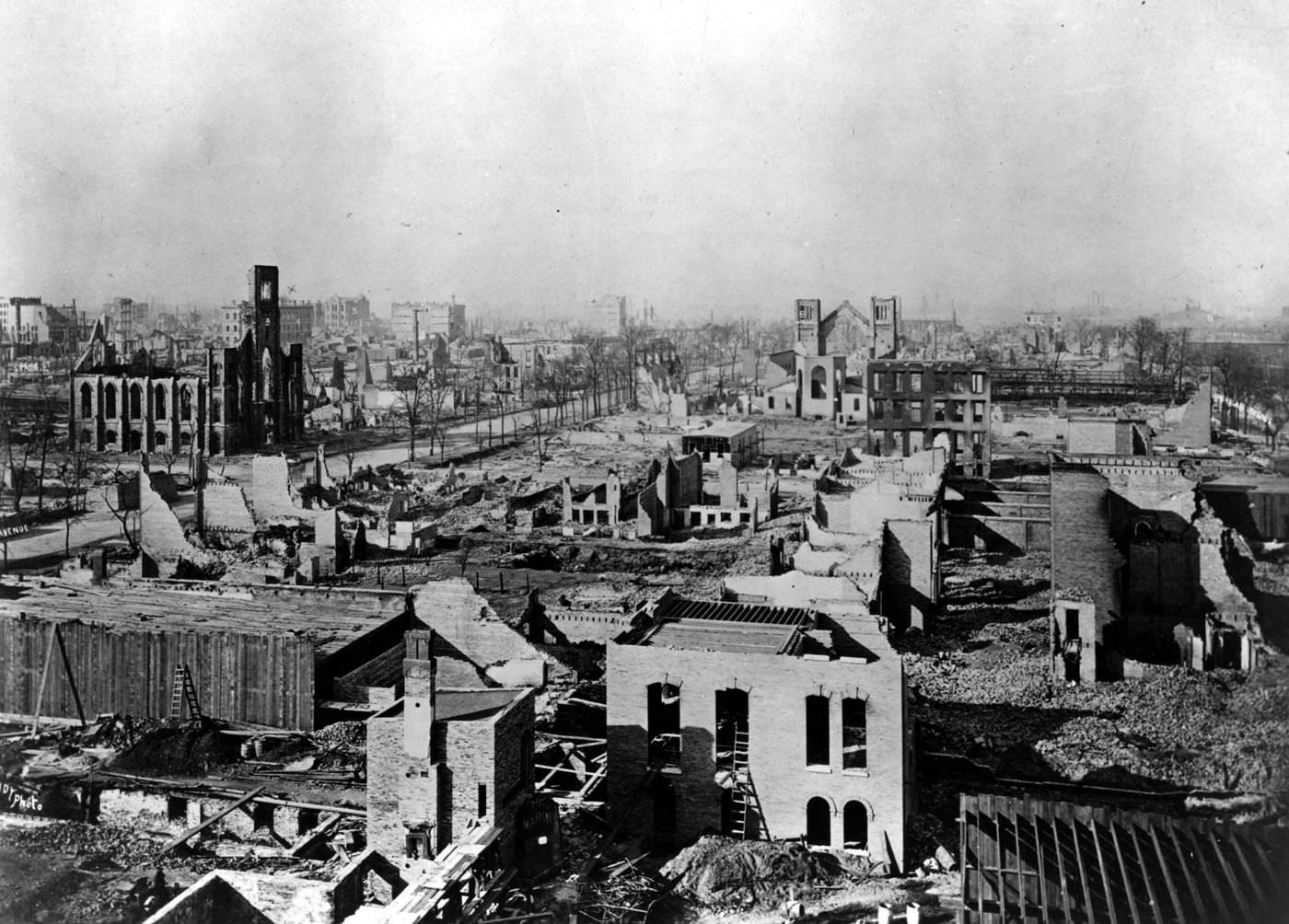
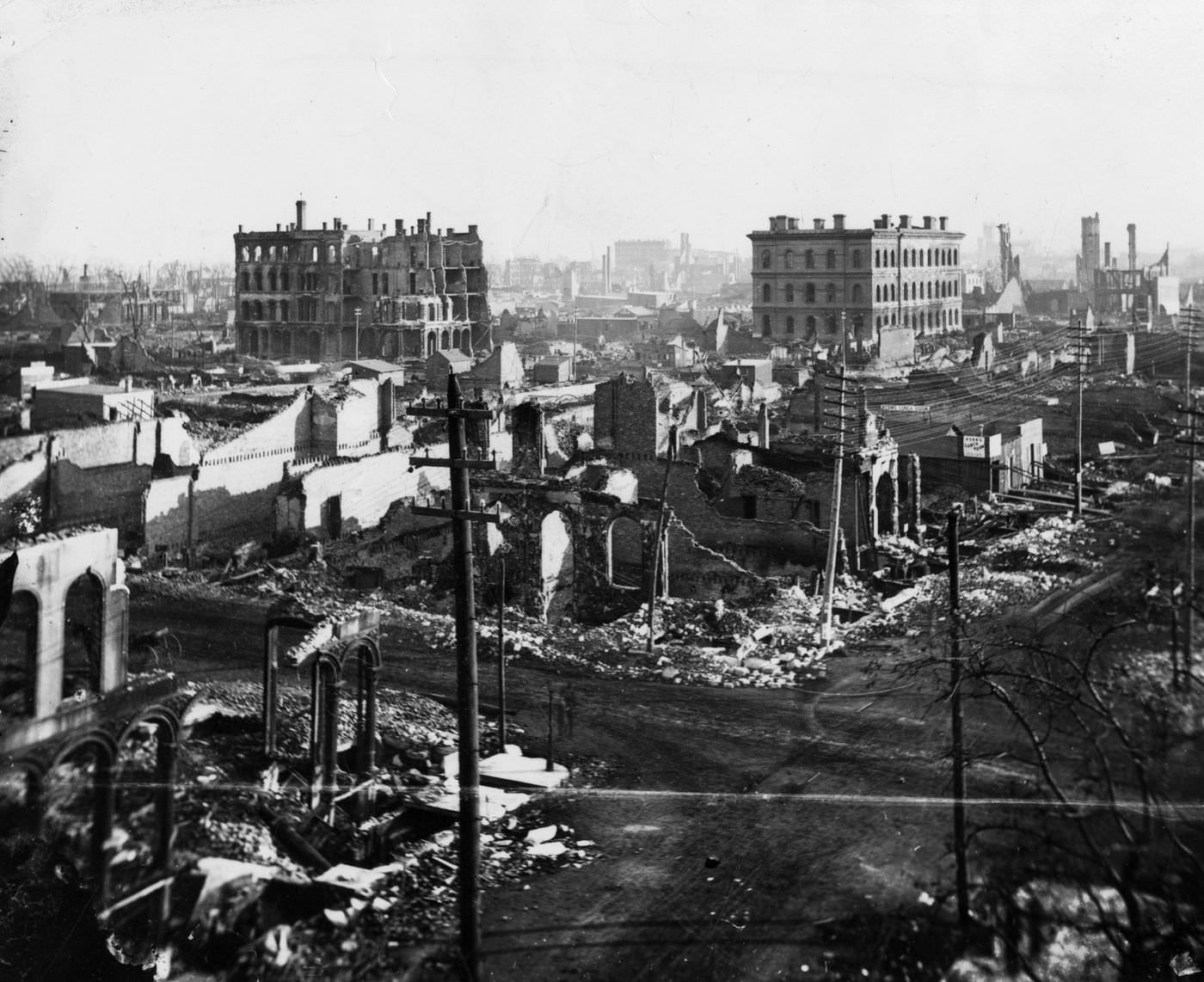
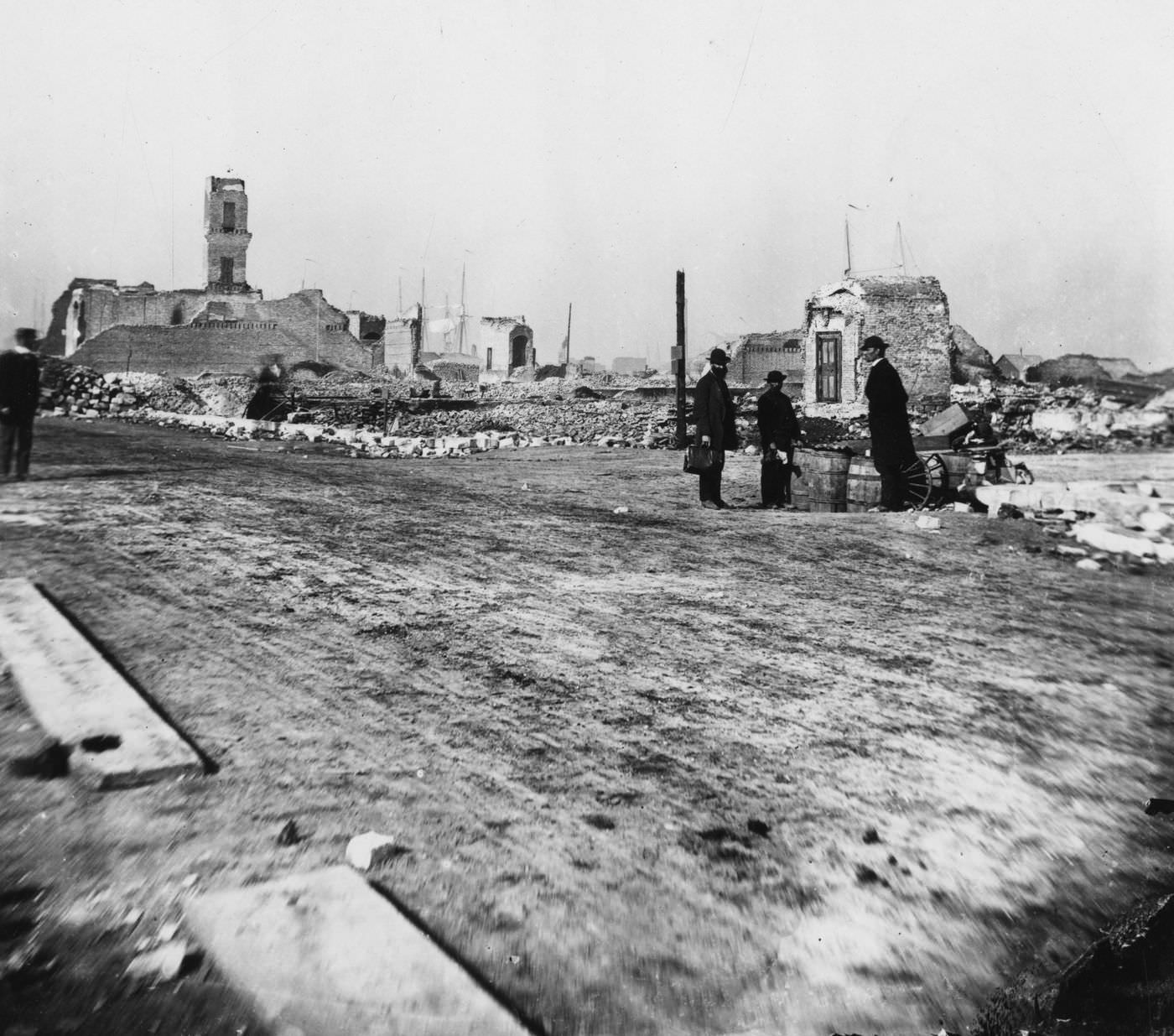
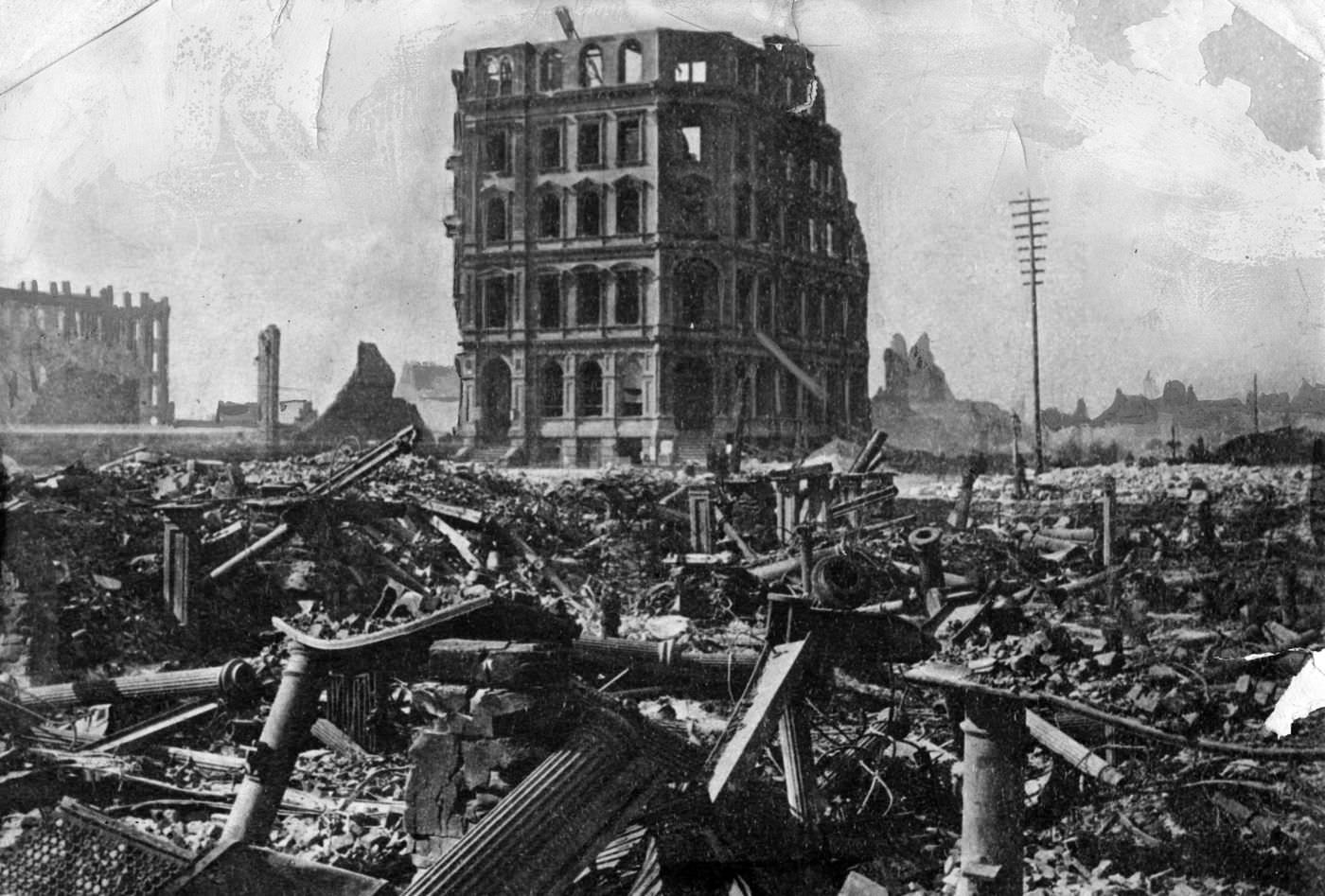
When the rain finally came on the evening of October 10, it ended what firefighters alone could not stop. The scale of destruction that emerged in the daylight hours of October 11 was staggering. Photographs taken in the days and weeks following the fire show block after block of hollow stone facades, twisted iron, and smoldering debris. Streets that had been lined with commerce were now open-air wastelands of broken brick.


The human cost went beyond the death toll. Over 100,000 people — nearly one-third of Chicago’s entire population at the time — lost their homes. Many had no food, no shelter, and no clothing beyond what they wore when they fled. Looting and disorder broke out almost immediately after the fire. On October 11, armed troops were called into the city and martial law was declared. The city remained under military authority for several weeks before order was fully restored.


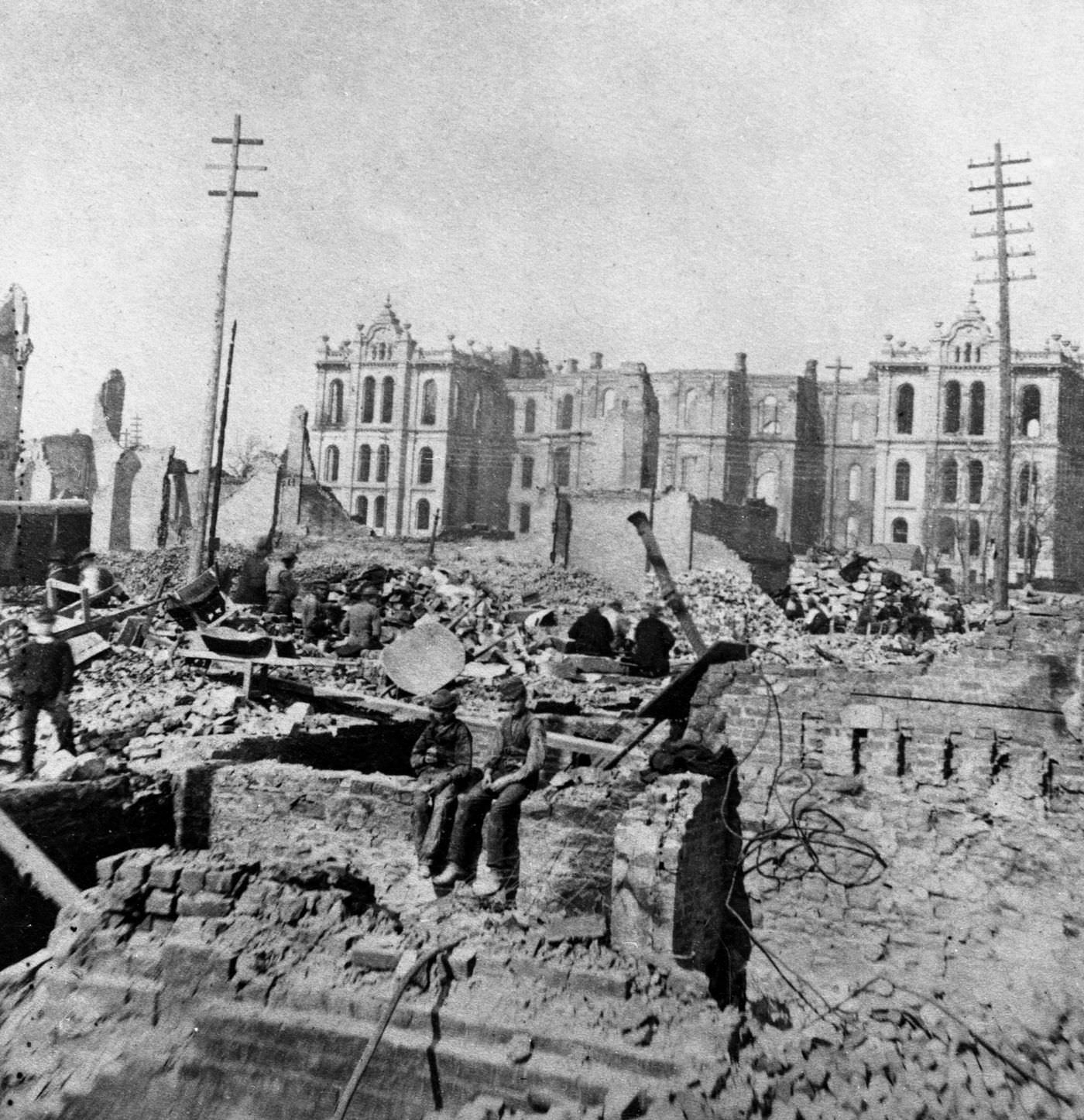
Government buildings fared no better than private ones. The Courthouse and City Hall were reduced to shells. Most of the city’s voting records were destroyed in the fire, a practical problem that made it nearly impossible to prevent people from voting multiple times in the election that followed. Despite this, Joseph Medill won the mayoral race in November 1871 by campaigning on stricter building codes and fire prevention measures.

The ruins in the lower left face Randolph Street and show the post office and customs building.


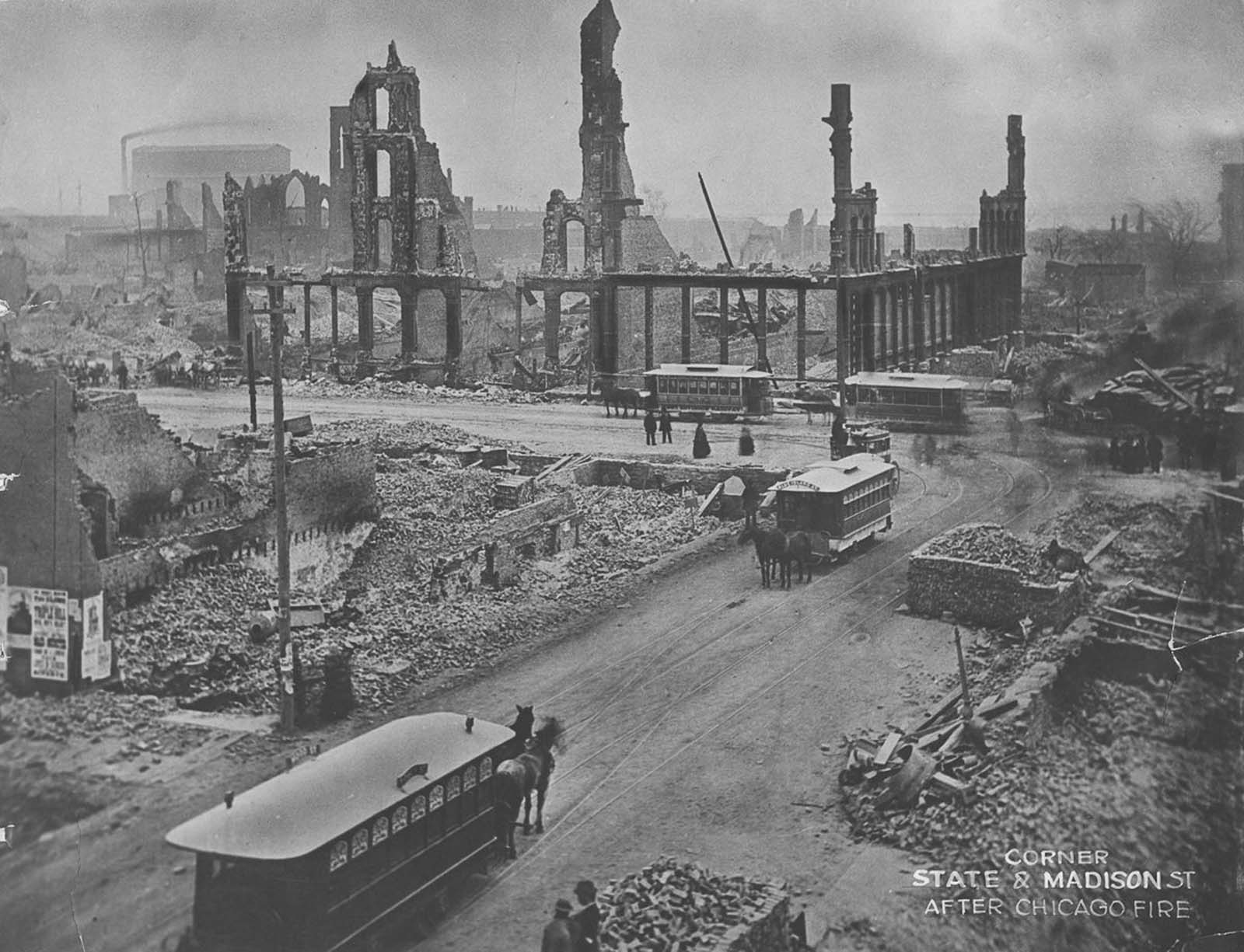
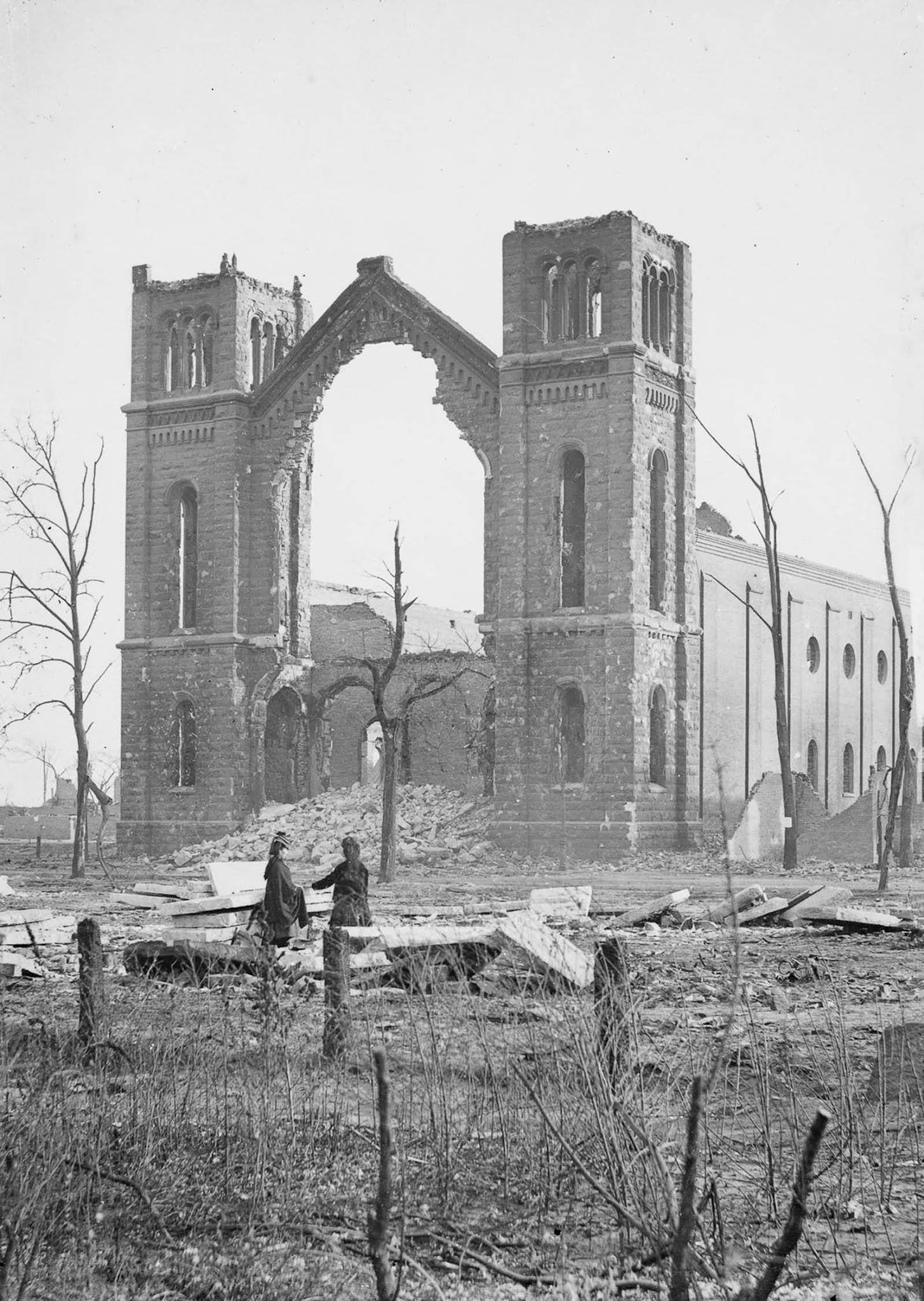
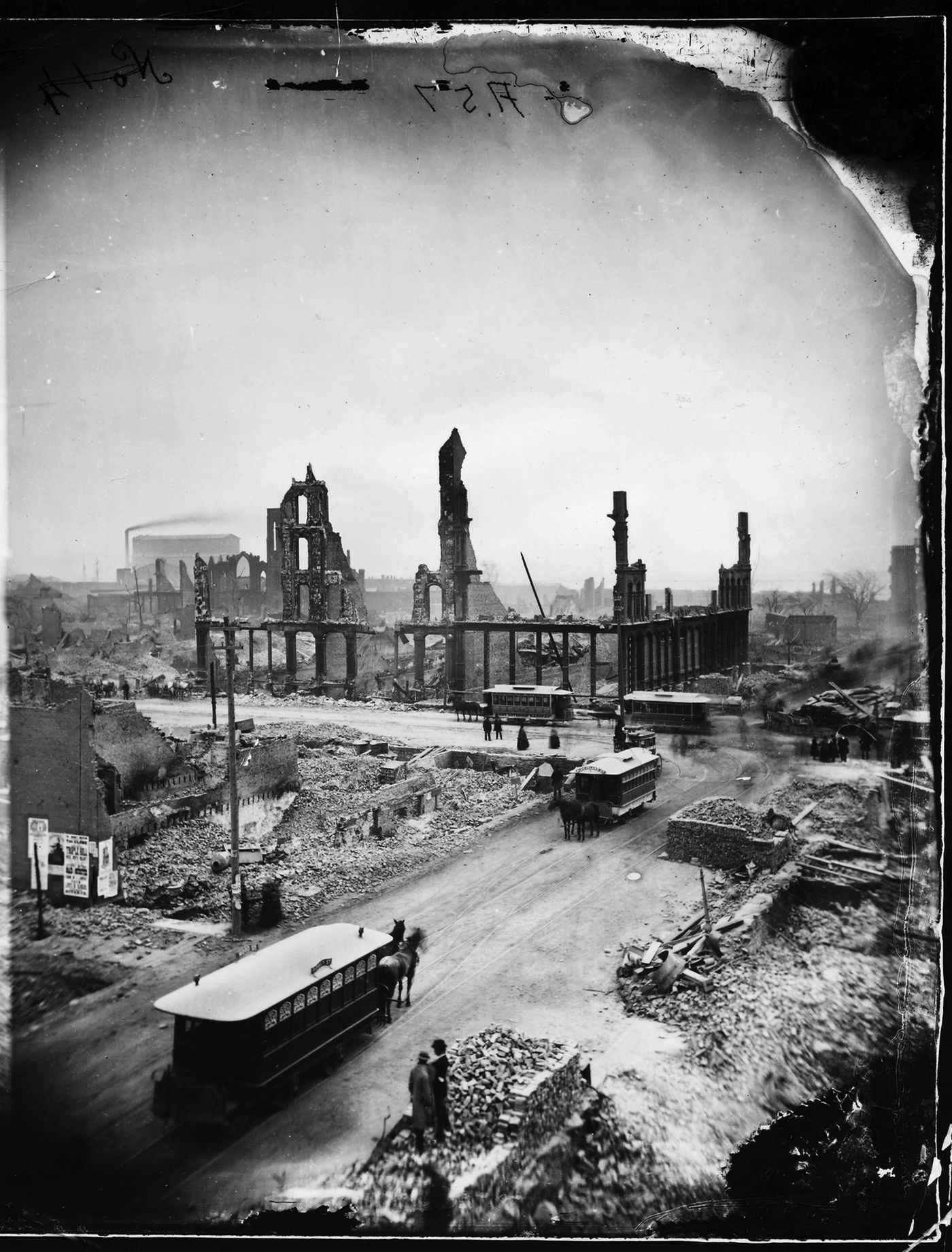
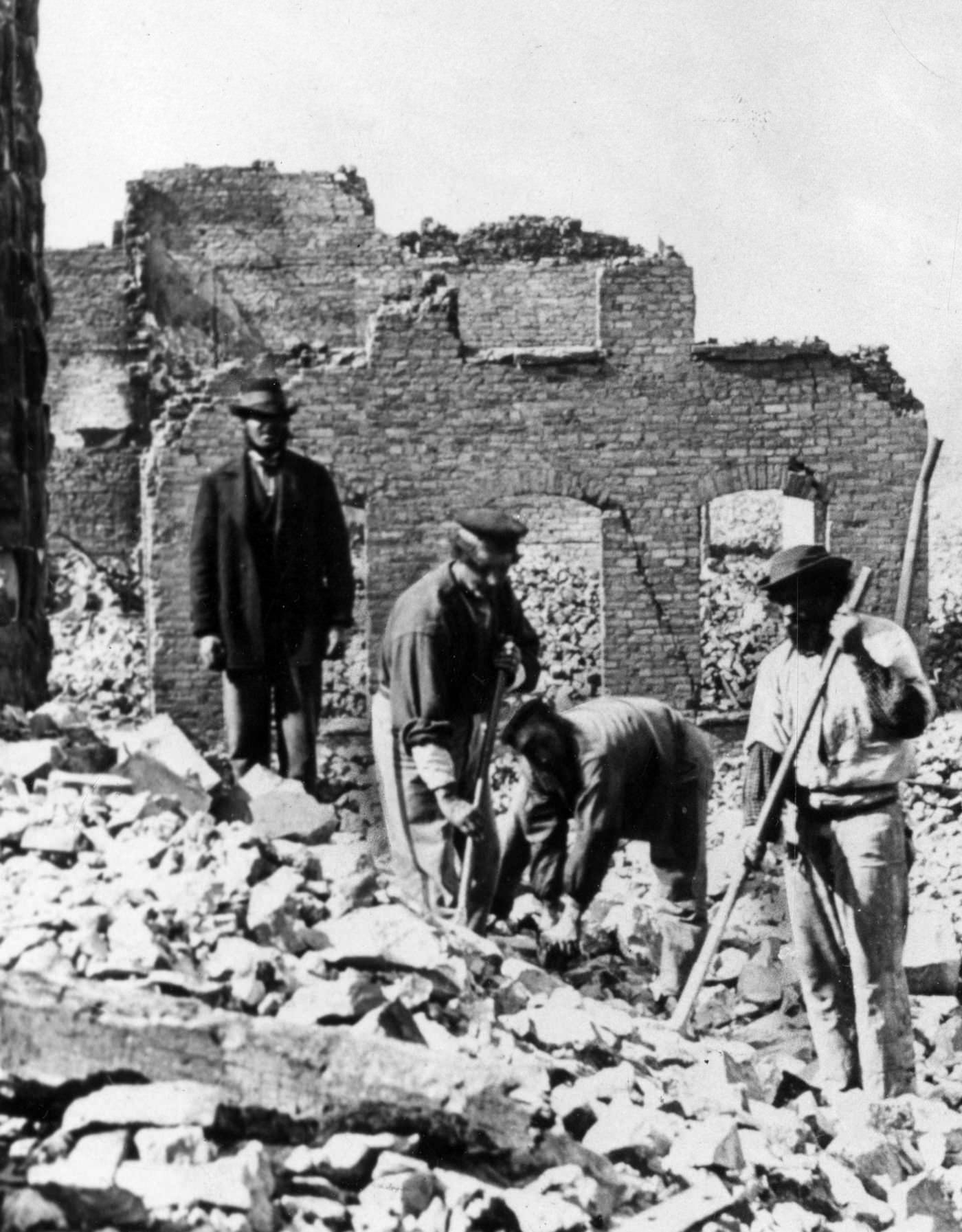
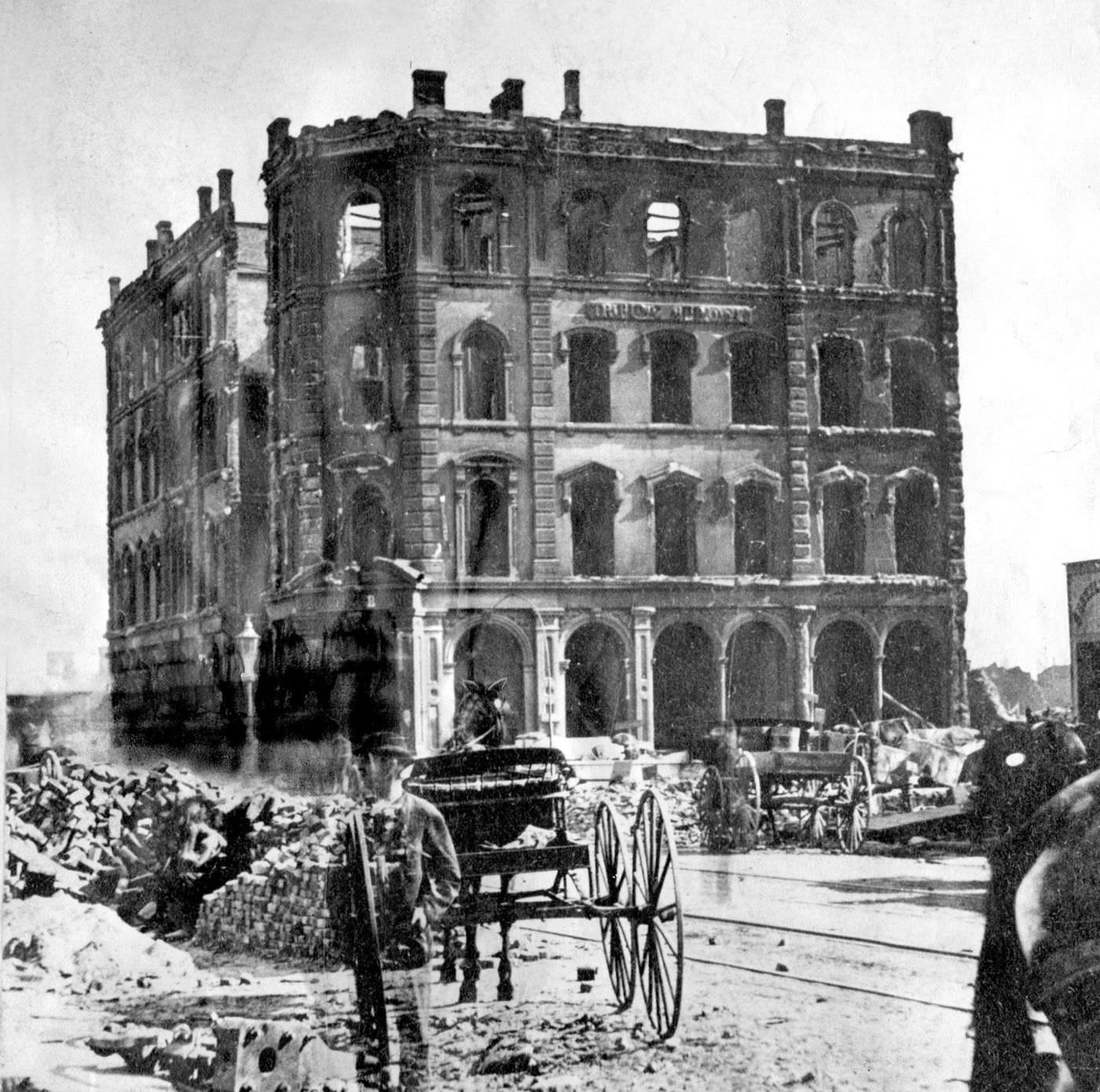
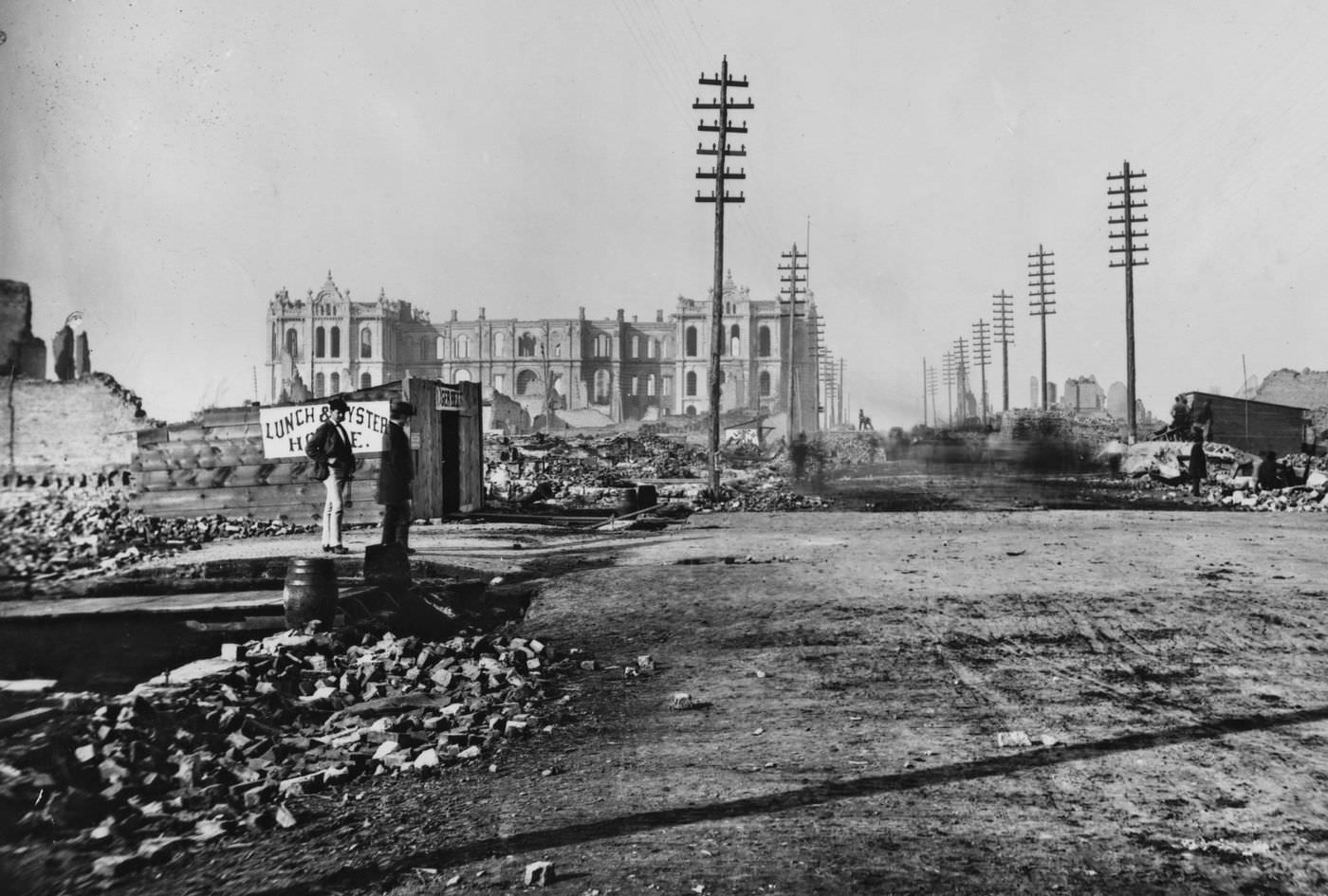
Slow camera shutter speeds of the era make the people appear ghostly.
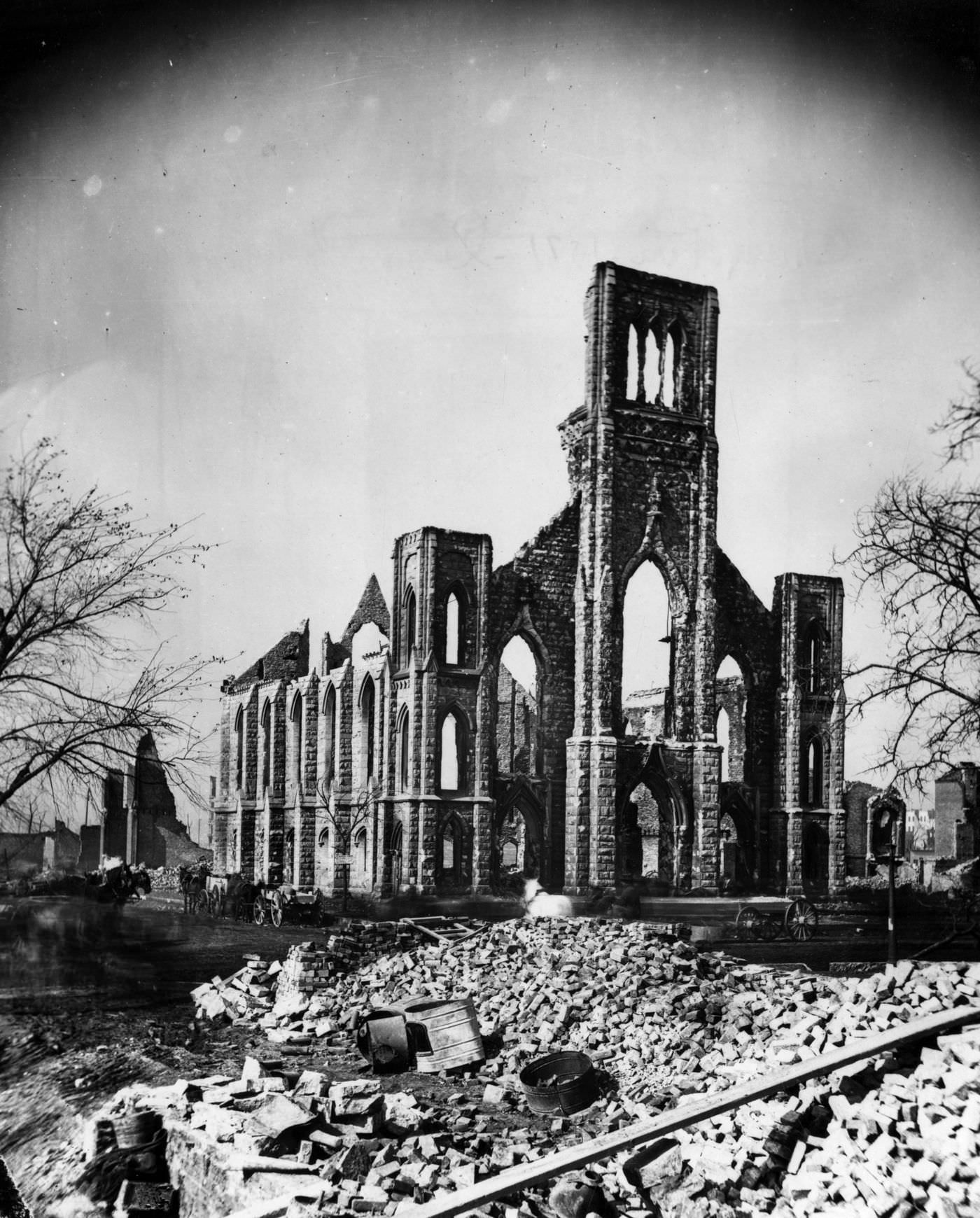
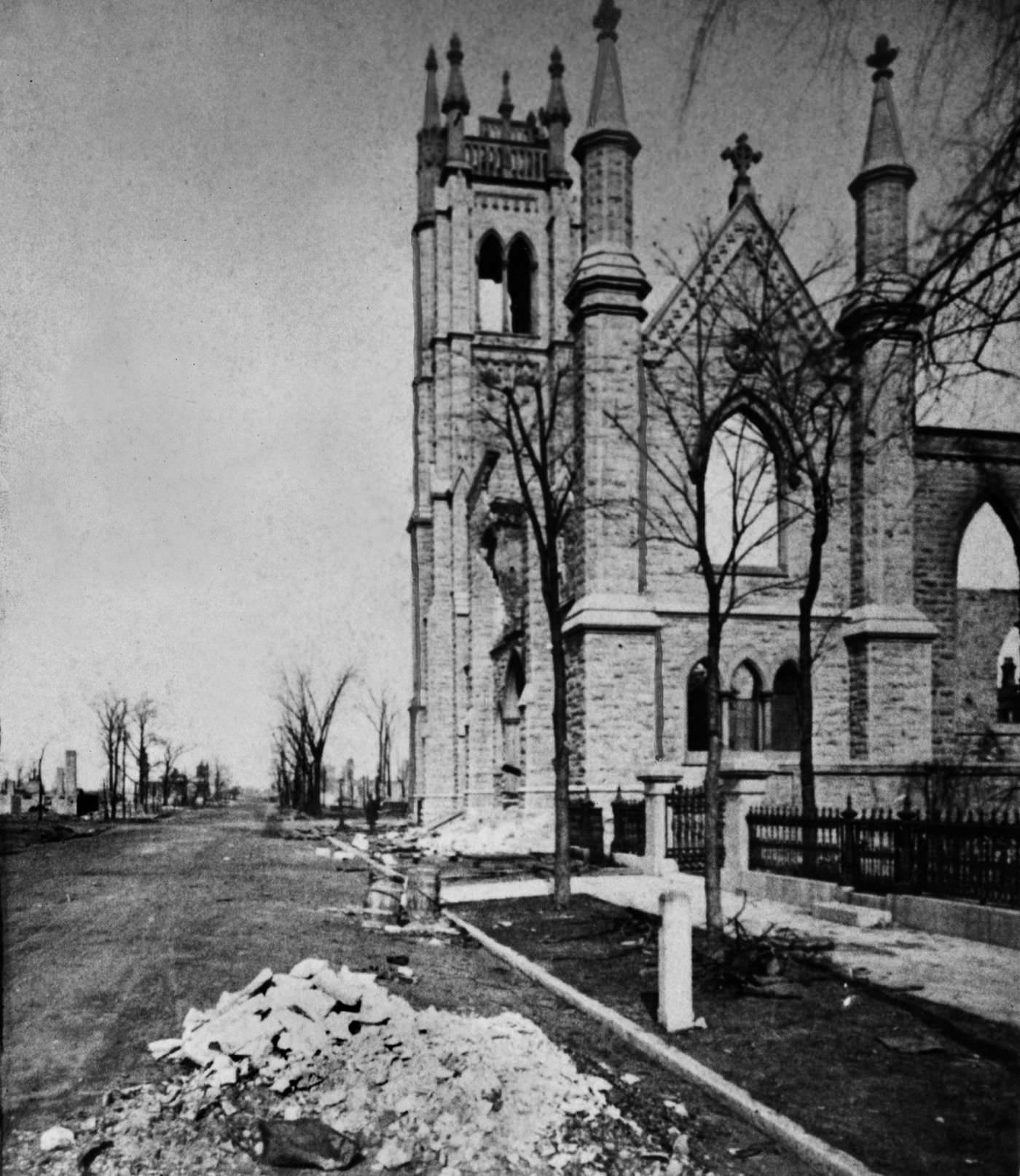
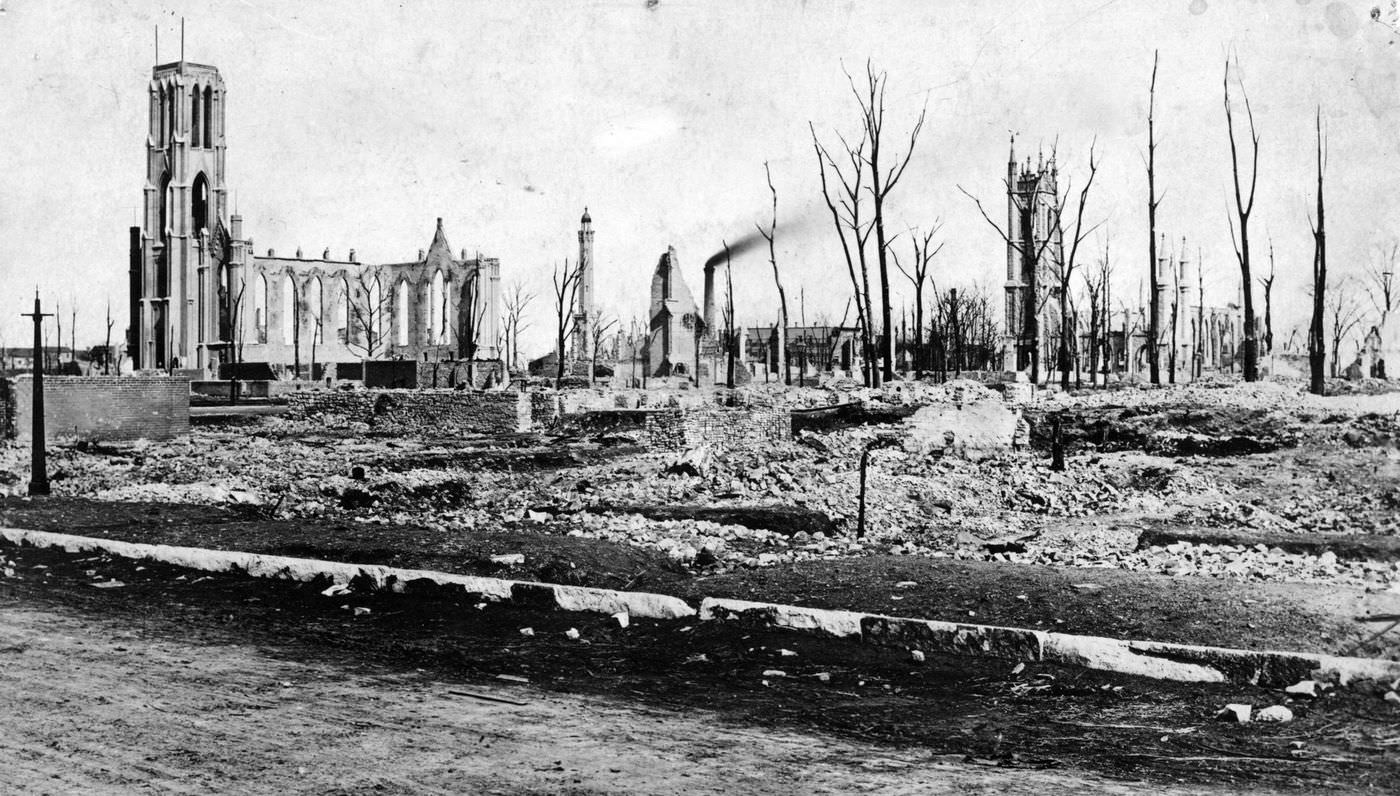
Religious buildings across the city were also destroyed. Trinity Church, St. Paul’s Universalist Church, Holy Name Cathedral, and St. James Episcopal Church all burned. Some left only their exterior walls standing. St. Michael’s Church in the Old Town neighborhood was among those gutted by the fire. These buildings represented not just places of worship but community anchors for the thousands of immigrant families — Irish, German, and Scandinavian — who had settled in Chicago in the decades before the fire.


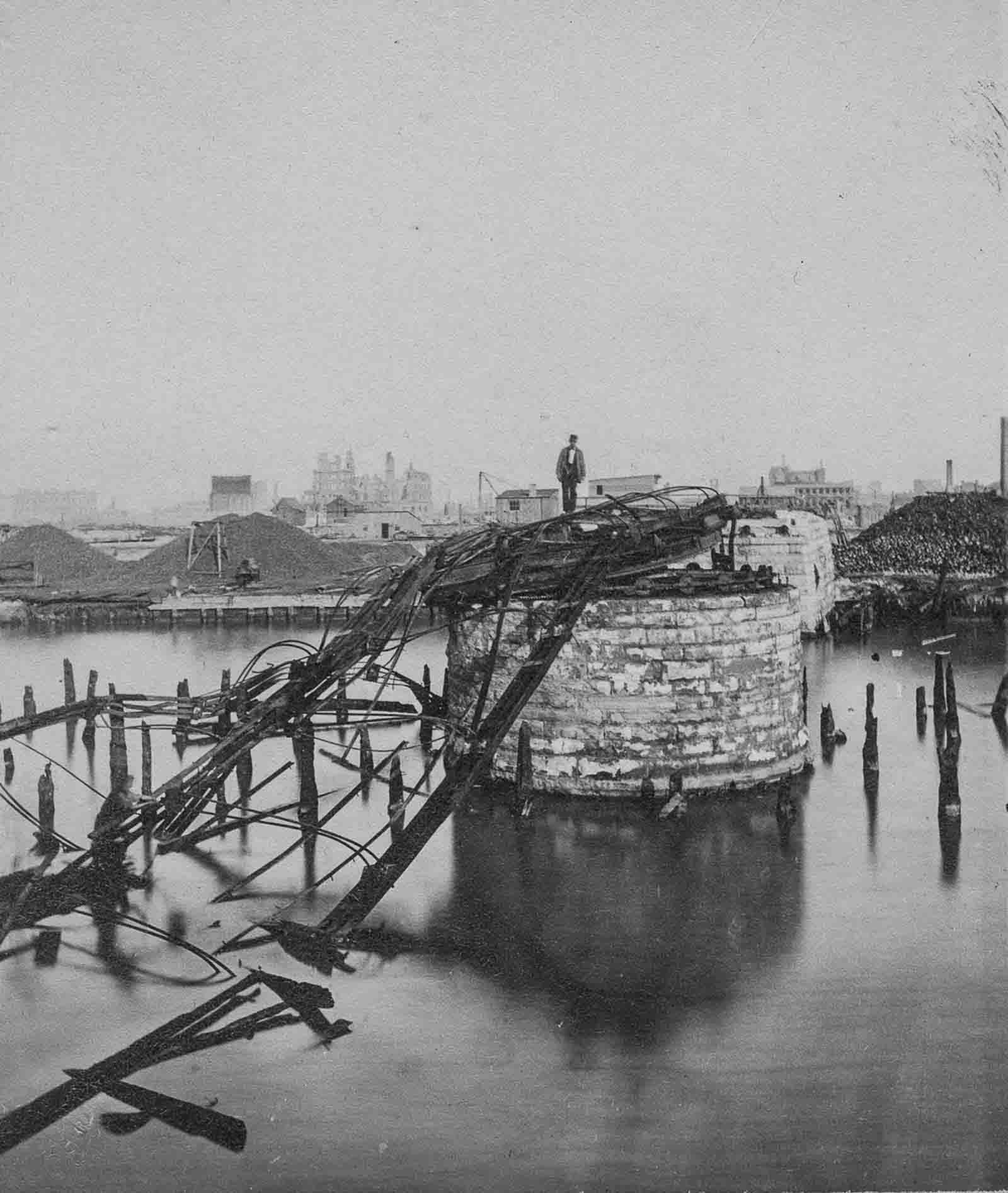
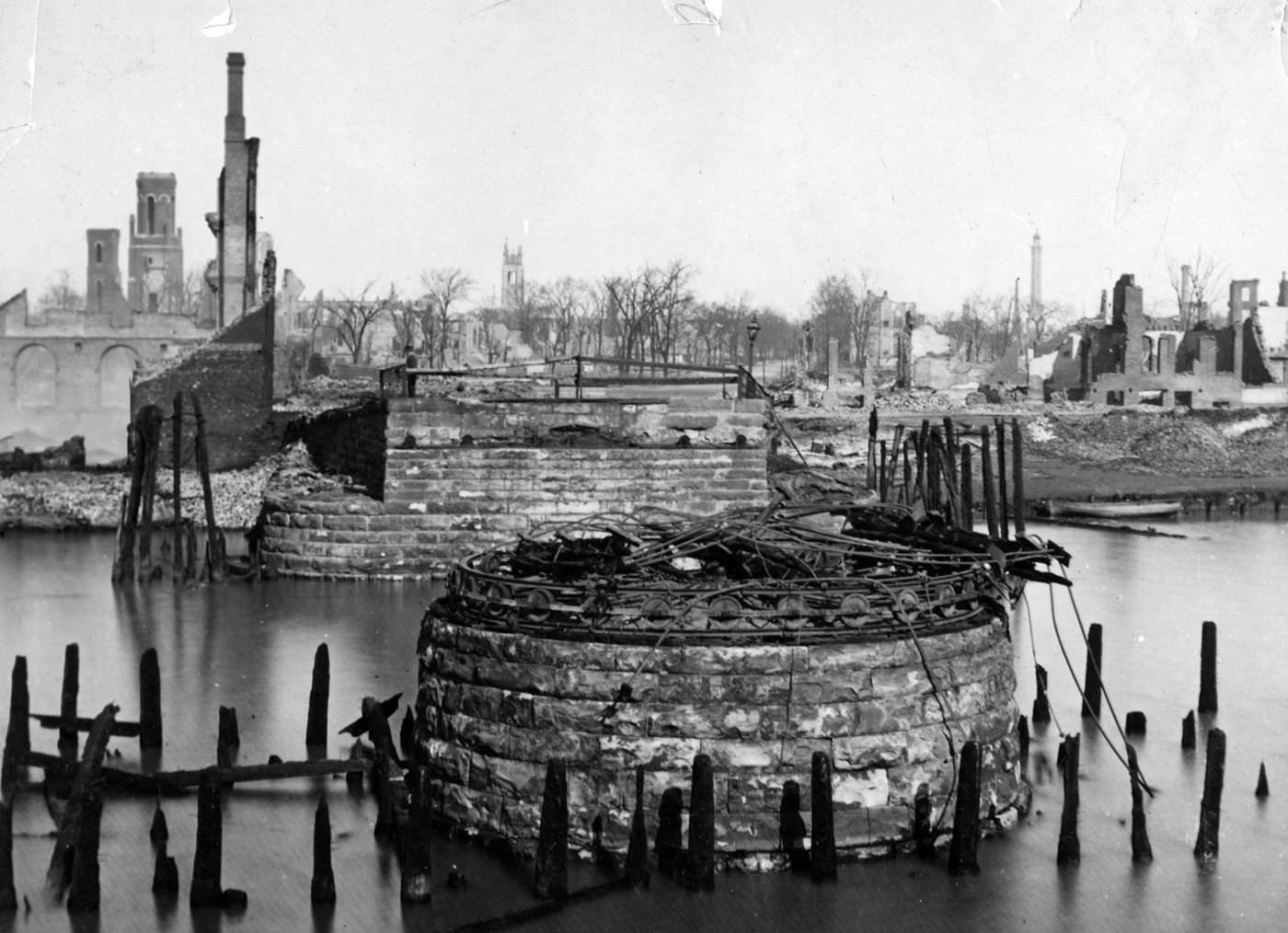
Transportation infrastructure took a serious hit as well. Rail depots, bridges, and stations were burned out or structurally compromised. The Union Depot, Great Central Station, and Rush Street Bridge were all photographed in ruins. Despite this, Chicago’s broader transportation network — its rail lines and port connections — remained largely functional, which proved critical to relief efforts and later reconstruction.


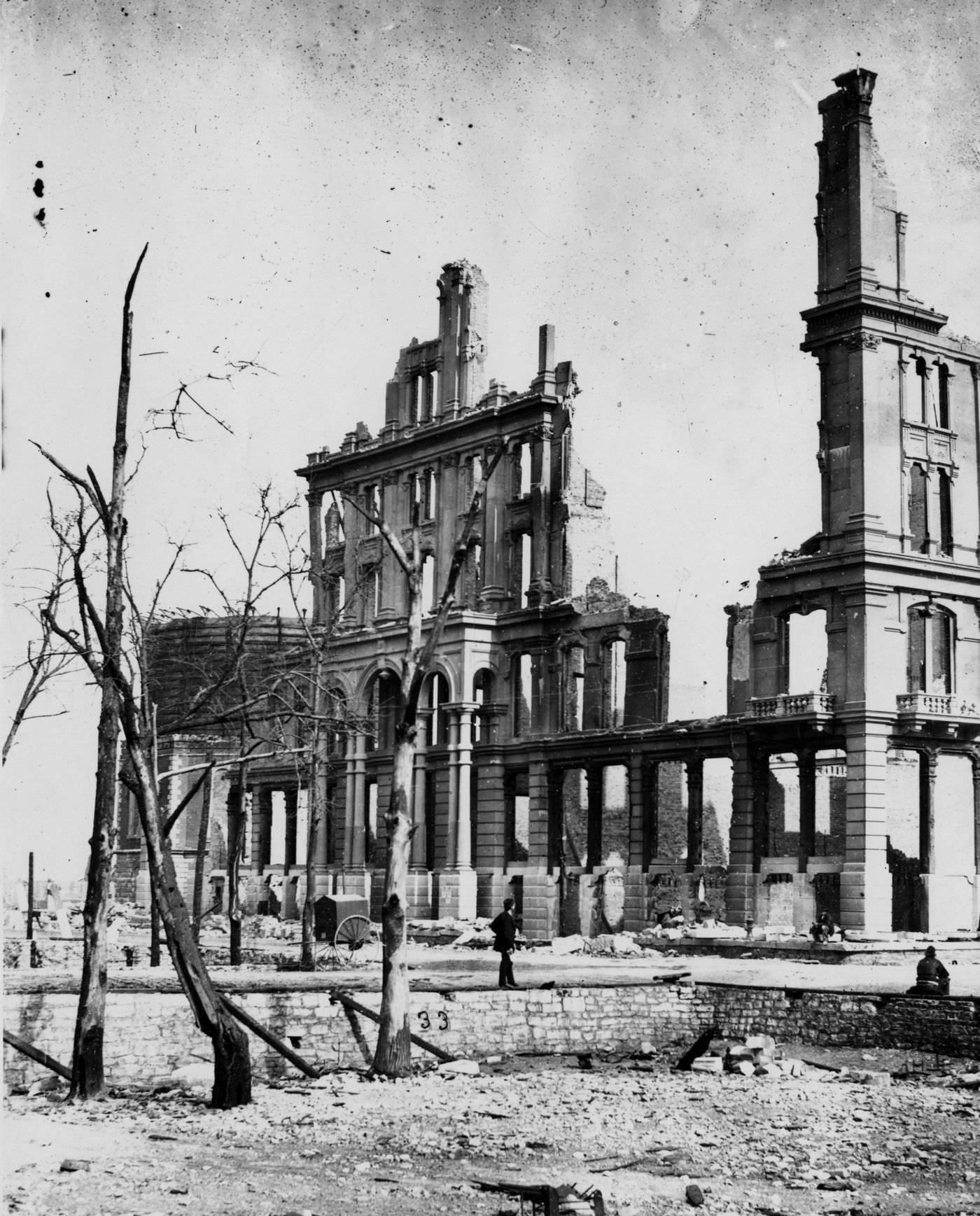
Hotels and commercial blocks along the city’s main streets were entirely consumed. The Grand Pacific Hotel, the Honore Block, and the First National Bank building were all photographed as burned-out husks. The Field, Leiter & Co. store — which would later become Marshall Field & Co. — was destroyed along with nearly every other retail establishment in the business district. The fire made no distinction between the grand and the ordinary.


The Field, Leiter & Co. store, which became Marshall Field & Co., lay in ruins. More than 17,000 buildings were destroyed, including the business district of Chicago.
Maps produced after the fire gave a clear picture of the scale of destruction. A burned district map overlaid onto an 1869 city plan shows the swath of damage running from the O’Leary barn on DeKoven Street northward through the entire downtown core and into the North Side neighborhoods. The sheer size of the burned zone — miles of what had been a thriving, densely populated city — is difficult to comprehend without seeing it outlined on a map.


Street-level photographs from 1871 show the full extent of what the maps only outline. At nearly every major intersection — State and Madison, LaSalle and Washington, Franklin and Madison, Wabash and Washington — photographers captured scenes of collapsed facades, hollow interiors, and workers picking through debris. In some images, long camera exposure times cause the figures of workers and onlookers to appear blurred or ghostlike, a visual effect that reflects the disorienting reality of the scene itself.


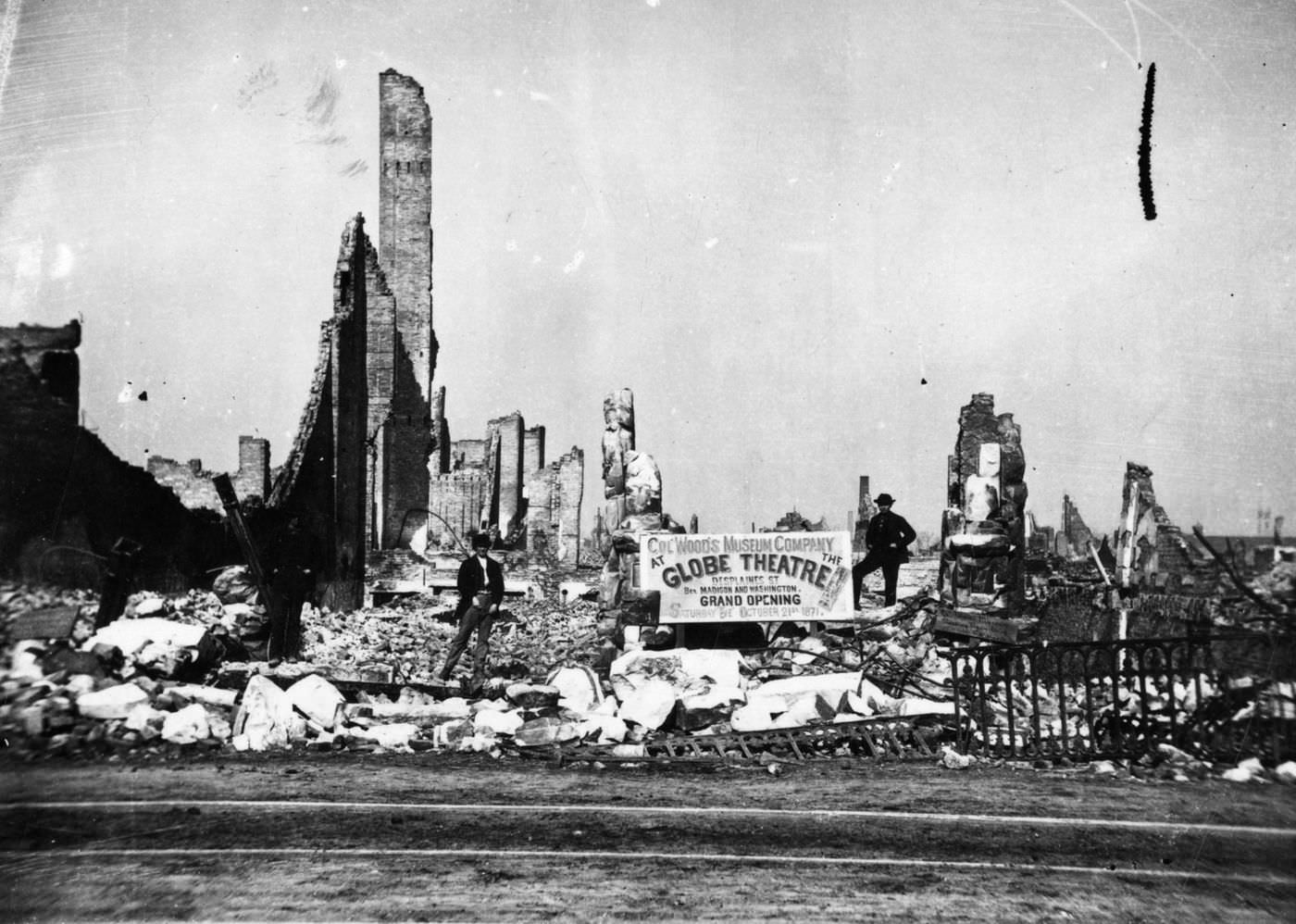
Even places of culture and entertainment were not spared. Col. Wood’s Museum on Randolph Street between Clark and Dearborn was gutted, though a hand-painted sign on the ruins announced that the Globe Theater would reopen. That sign — defiant amid the wreckage — captures something of the spirit that drove Chicago’s immediate response to the disaster. Within days of the fire being extinguished, businesses were clearing rubble and posting notices of reopening.


A hopeful sign announces the reopening of the Globe Theater

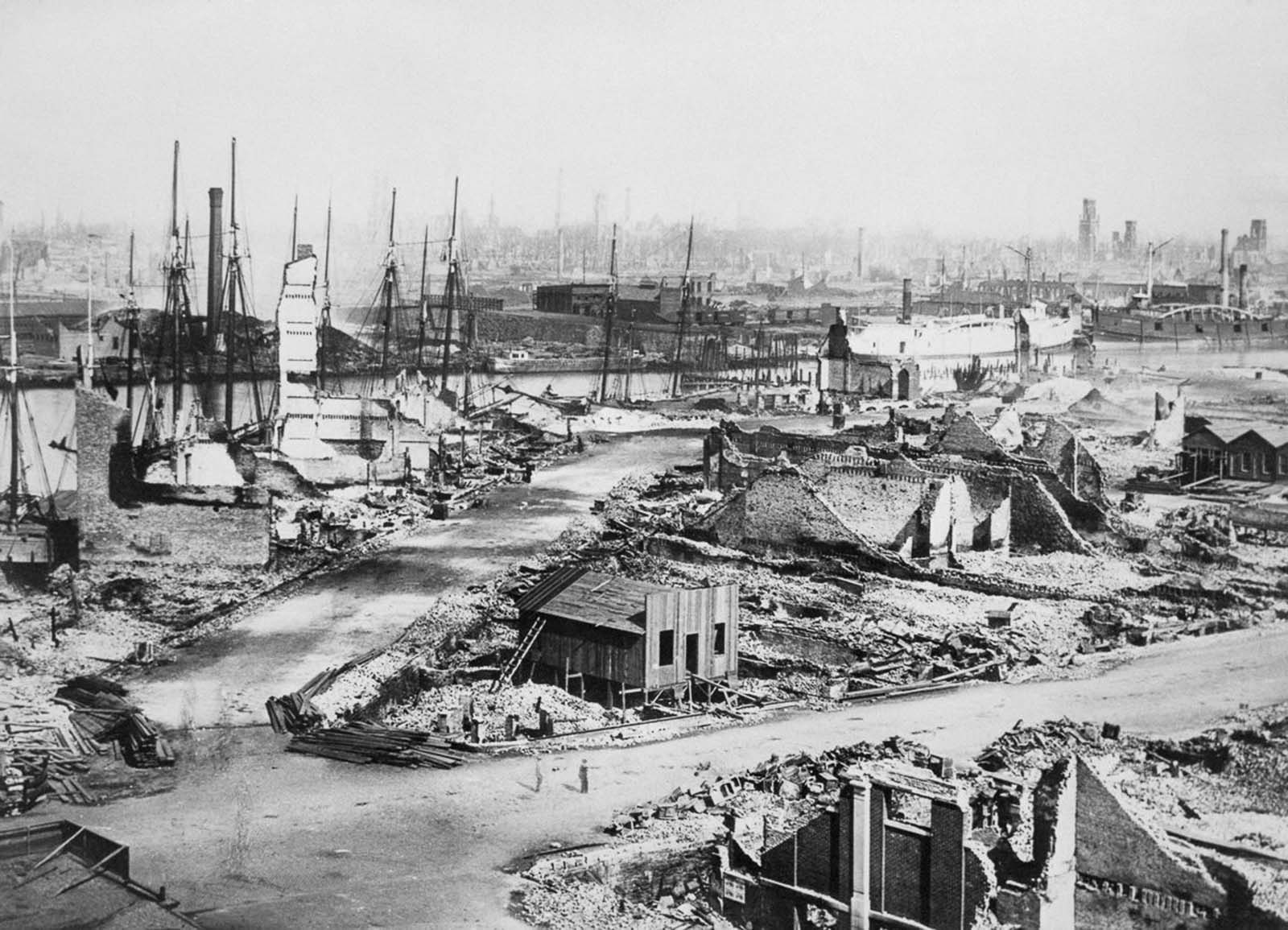
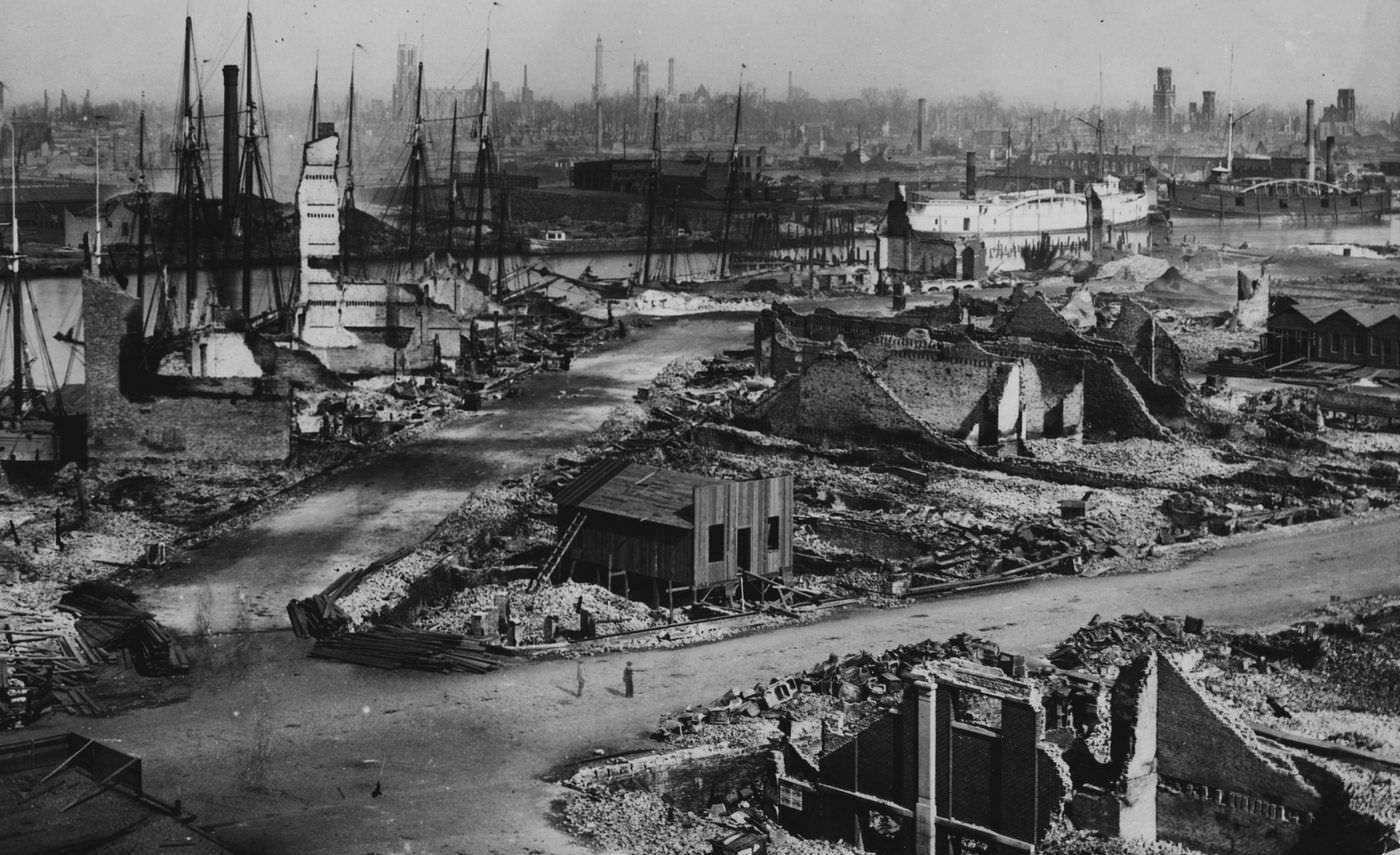
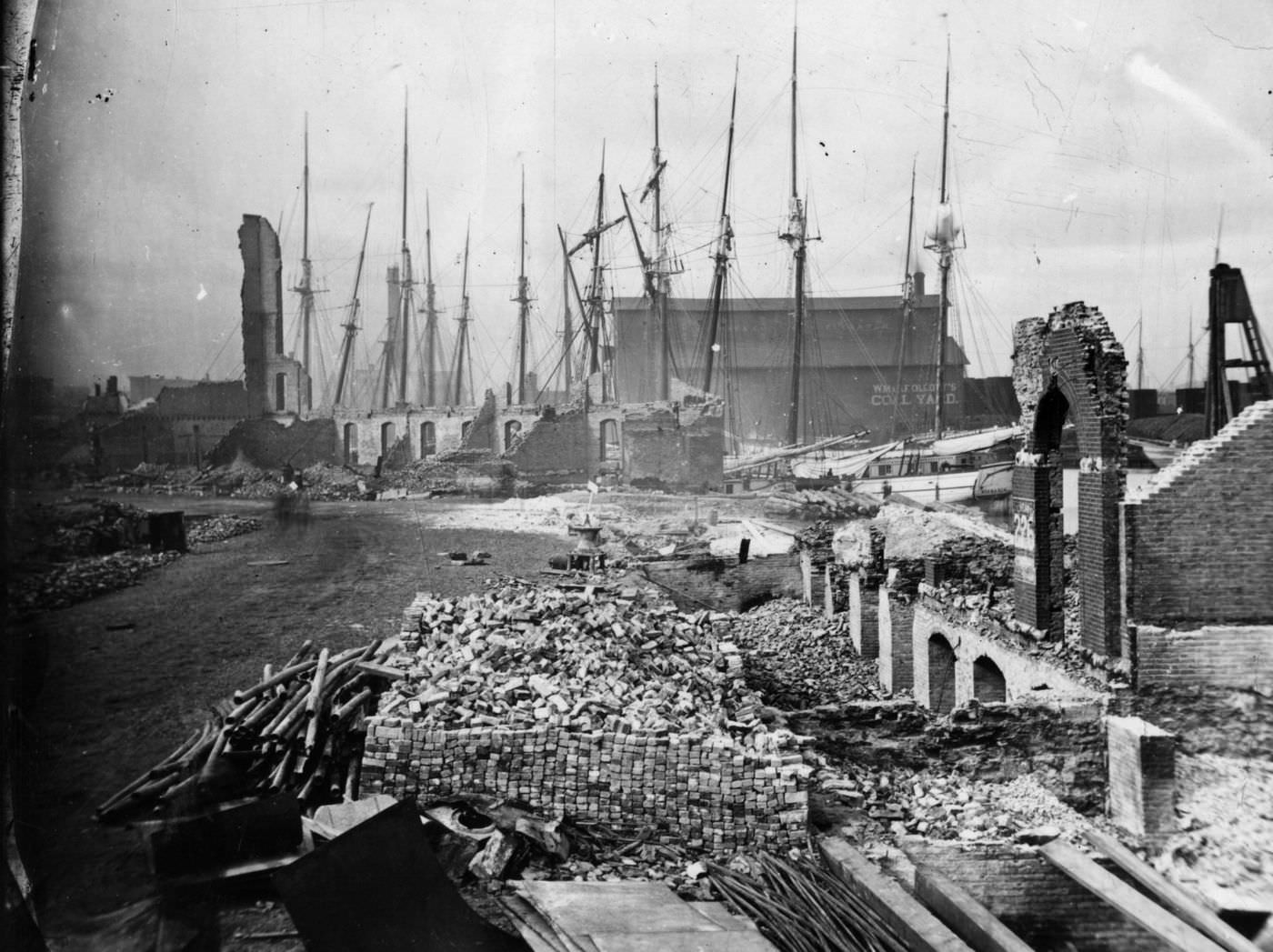
Some of the most iconic photographs from the aftermath show the Chicago River and the city’s northern waterfront in ruins. Looking north across the river from South Water Street, boat masts rise above the water while burned-out buildings line both banks. The area that would later become the site of the Merchandise Mart was, in 1871, a field of collapsed warehouses and smoldering commercial buildings.

Boat masts can be seen from the water. Photo taken from South Water Street.

Some of Chicago’s present day real estate firms had their start before the fire and survived it to play active roles in the rebirth of the city, wrote the Tribune in 1958.

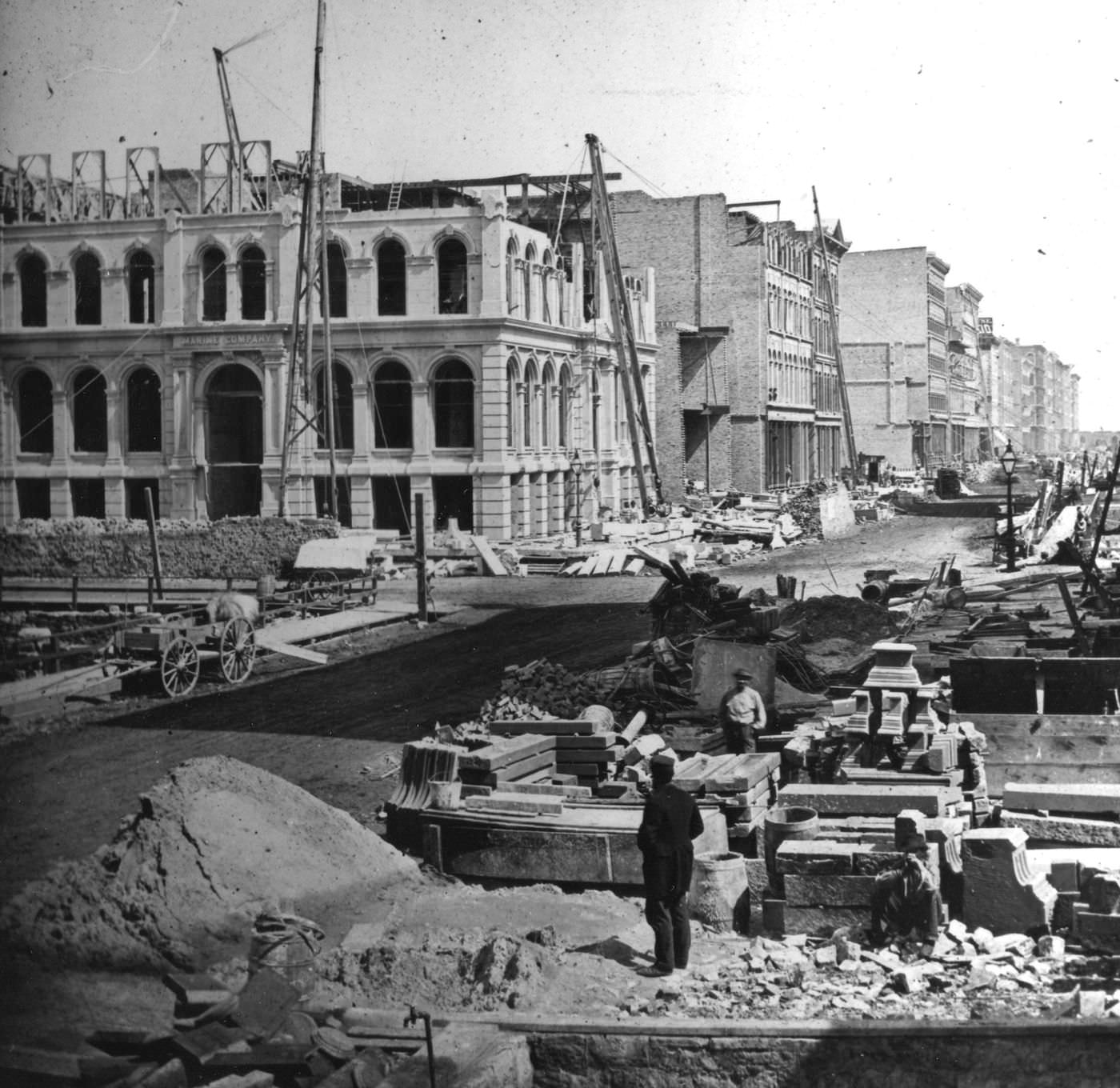
Cleanup and reconstruction began almost immediately. Workers hauled broken stone and bricks from demolished structures like the Great Central Station to the lake shore, where the rubble was used as landfill to extend the city’s footprint into Lake Michigan. New construction started within weeks. The Chicago Tribune building, photographed standing at Dearborn and Madison after the fire, became an early symbol that the city’s institutions were still functioning even as its streets lay in ruins.

The broken stone and bricks were dumped along the lake shore to make additional land.


This view is looking east down Lake Street from LaSalle.
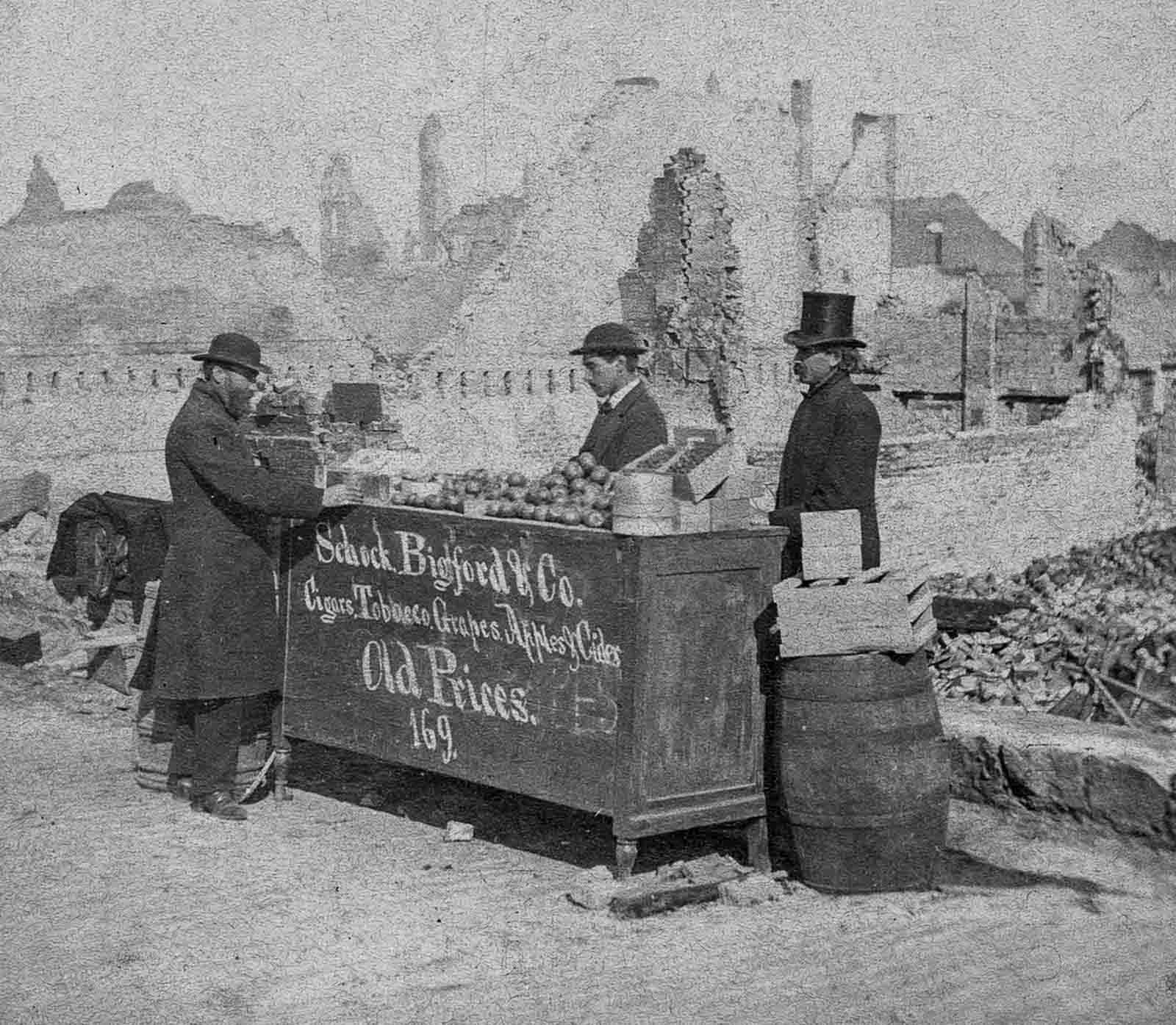
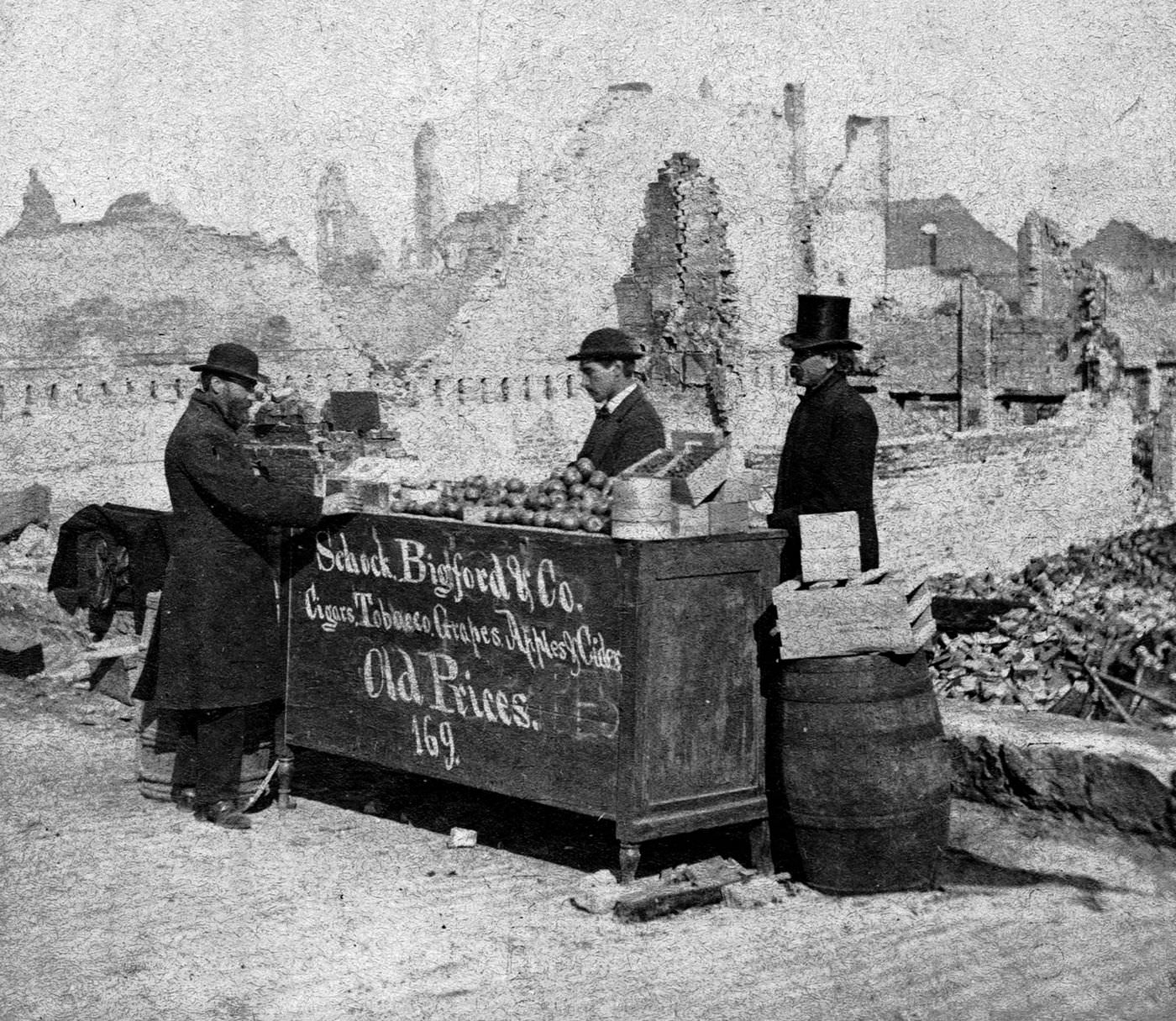
Some businesses didn’t wait for the debris to fully cool before reopening. Schock, Bigford, and Company became the first store to open in the burned district, operating out of a makeshift structure while ruins surrounded it on all sides. Photographs of their storefront show the contrast between a functioning business and the devastation stretching out in every direction. It was an early indicator of how quickly commercial activity would return to the city.


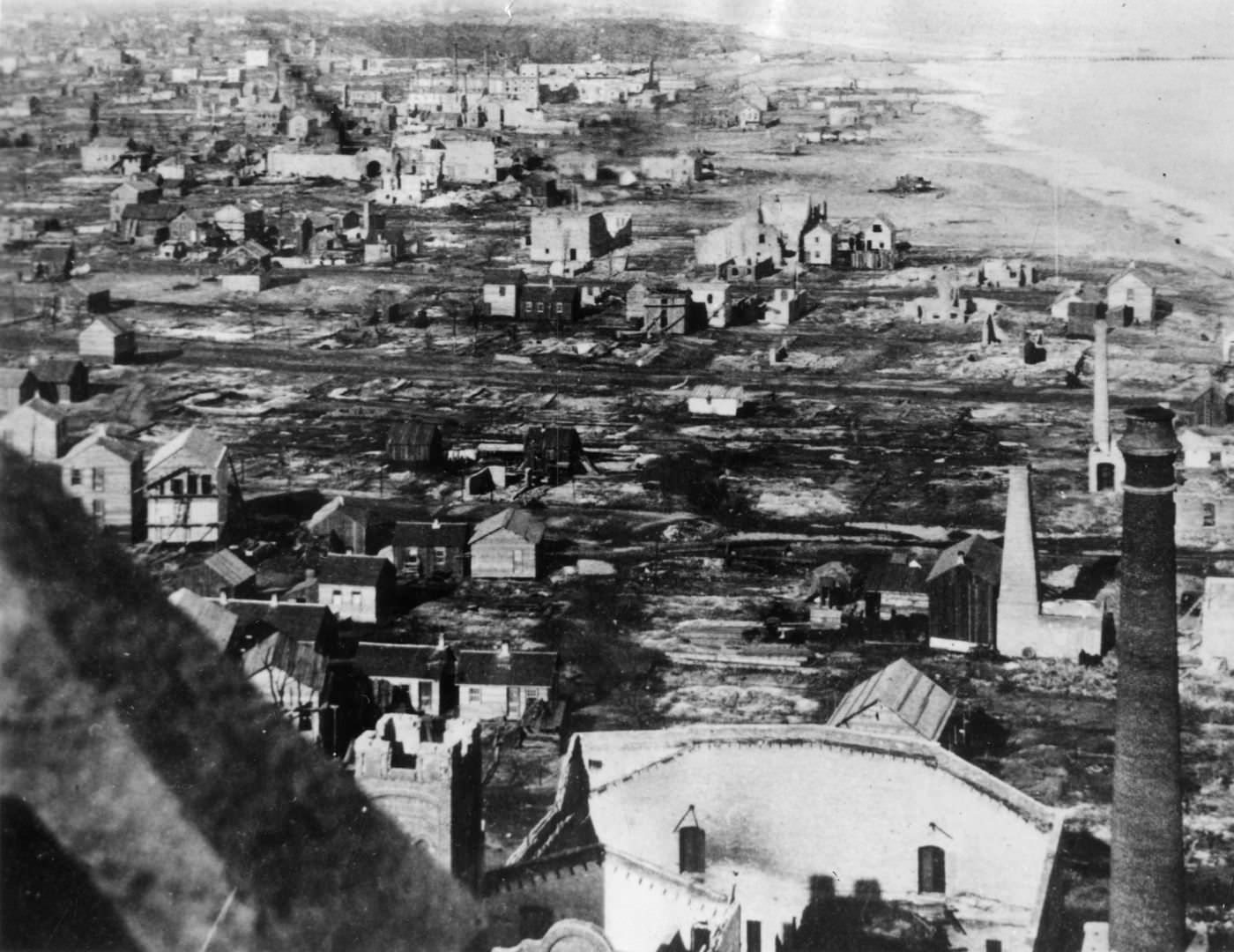
This is one of a series of views documenting the progress of rebuilding from the top of the Water Tower. The lake shore is visible on the right, and Lincoln Park is straight ahead.


“One legend says a cow kicked over a lantern in a barn and started the blaze.” I am dead 🤣
the people that started that rumour literally came out and said it was all made up. this was decades ago
Exactly.