Tampa sits on Florida’s Gulf Coast along the northern shore of the Hillsborough River, right at the mouth of Tampa Bay. Sandwiched between St. Petersburg and Clearwater, it ranks as the third-most populated city in Florida, trailing only Jacksonville and Miami. The city has a long history tied to military presence, industry, and immigration. Fort Brooke served as a military hub throughout the 19th century, and it was Vincente Martinez Ybor who transformed the city’s economic identity by bringing the cigar industry to what would become Ybor City — a neighborhood he named after himself. Tampa was formally incorporated in 1887, after the Civil War, and in the decades that followed, it built an economy around tourism, health care, finance, insurance, technology, construction, and the maritime industry.

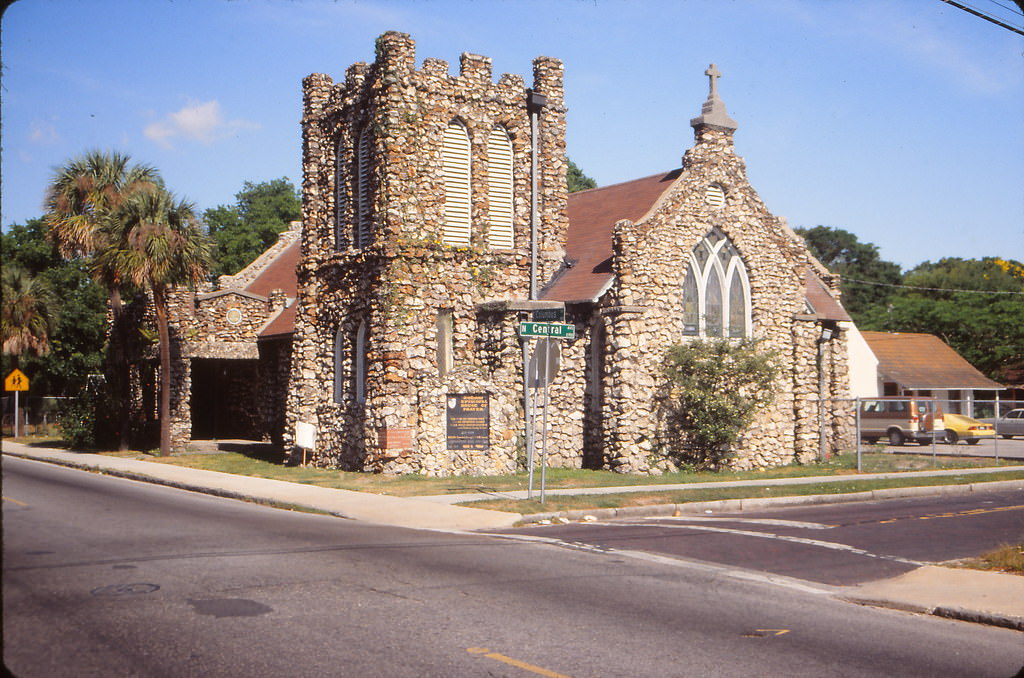
By 1990, Tampa’s population stood at 280,015. Growth during the 1980s had been modest — just three percent over the entire decade. But the 1990s brought new energy. Urban renewal programs were being planned, and the city was beginning to push outward and upward. These photos capture Tampa at that turning point, before major redevelopment reshaped many of its neighborhoods. One of the best places to start is Central Avenue, where religious institutions like St. James House of Prayer Episcopal Church anchored local communities.

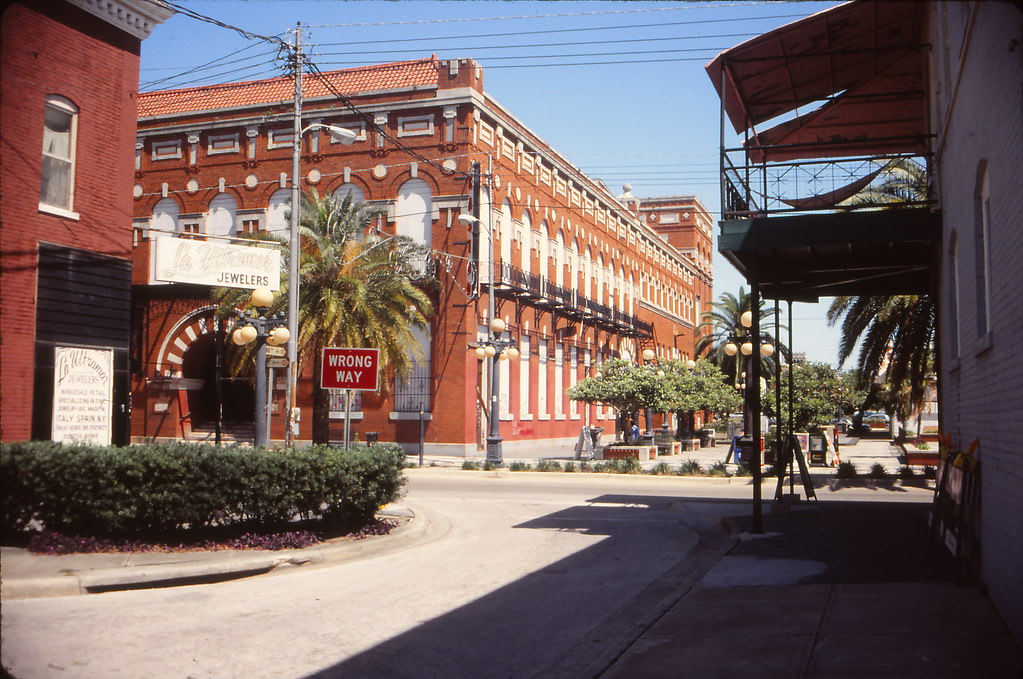
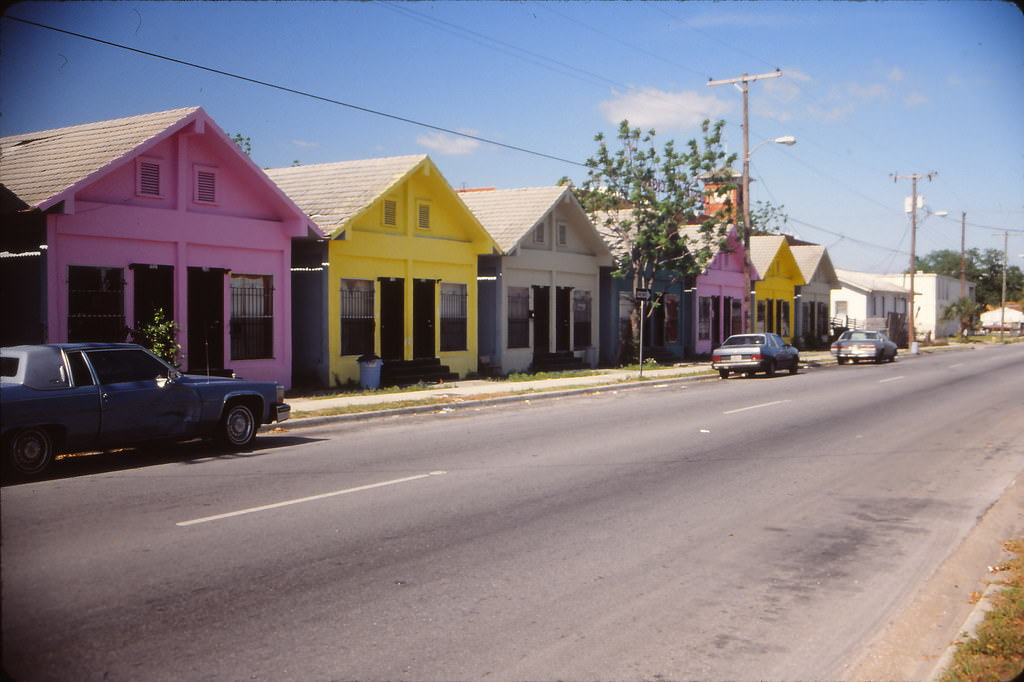
No neighborhood tells Tampa’s story better than Ybor City. Founded by cigar manufacturer Vincente Martinez Ybor in the 1880s, the area attracted waves of Cuban, Spanish, and Italian immigrants who built a tight-knit working-class community. By the 1990s, Ybor City was in a state of transition. Many of the homes that once housed cigar workers were aging, and the neighborhood’s industrial past was visible in its architecture and empty lots.

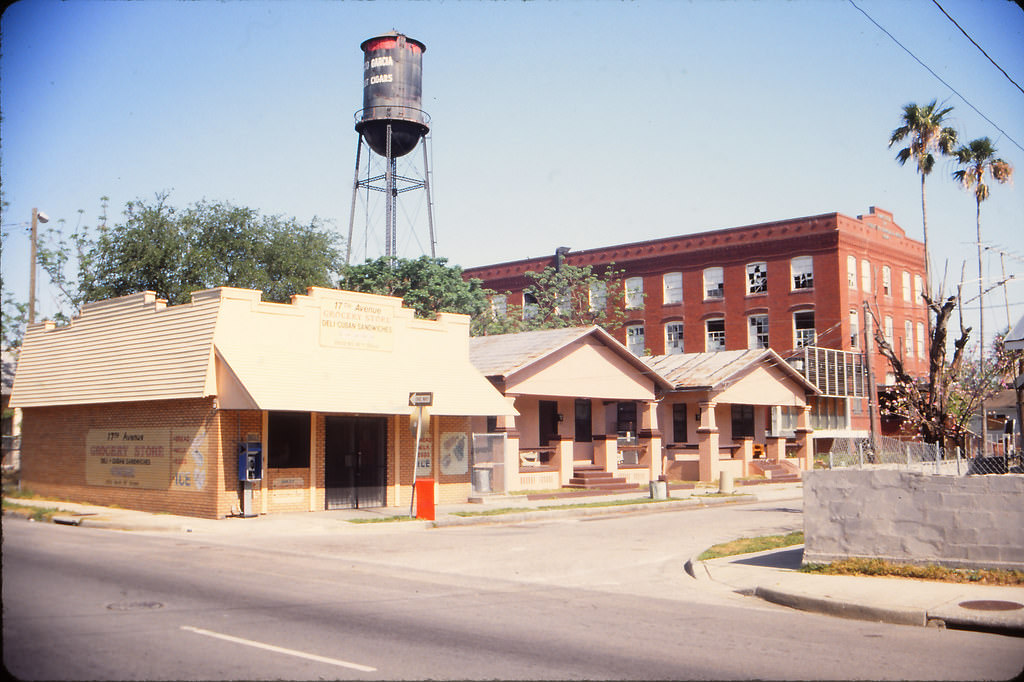
The cigar factories that once defined Ybor City’s skyline were largely silent by the 1990s. The American cigar industry had declined sharply throughout the mid-20th century, and Ybor City felt that loss deeply. Abandoned factory buildings sat as physical reminders of the neighborhood’s former industrial might. Some of these structures were later repurposed or restored, but in the early part of the decade, many still stood vacant.

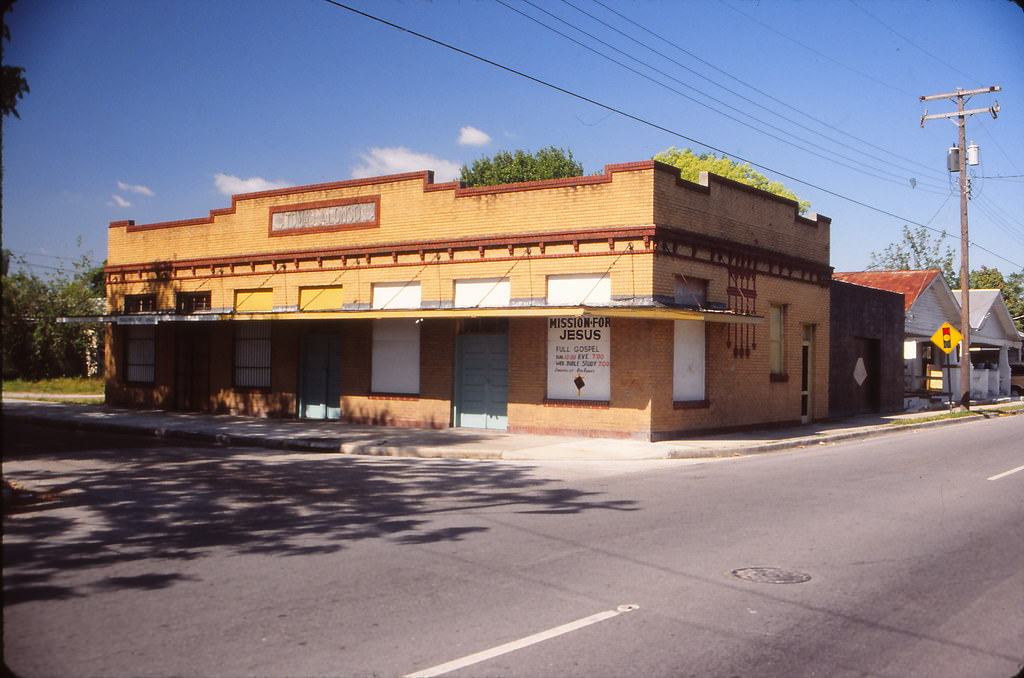
While factories sat empty, other spaces in Ybor City found new life. Storefront churches became common throughout the neighborhood, filling commercial spaces that had once been shops or offices. These congregations served as community anchors during a period when Ybor City’s population was smaller and its streets quieter than in their 1910s heyday.

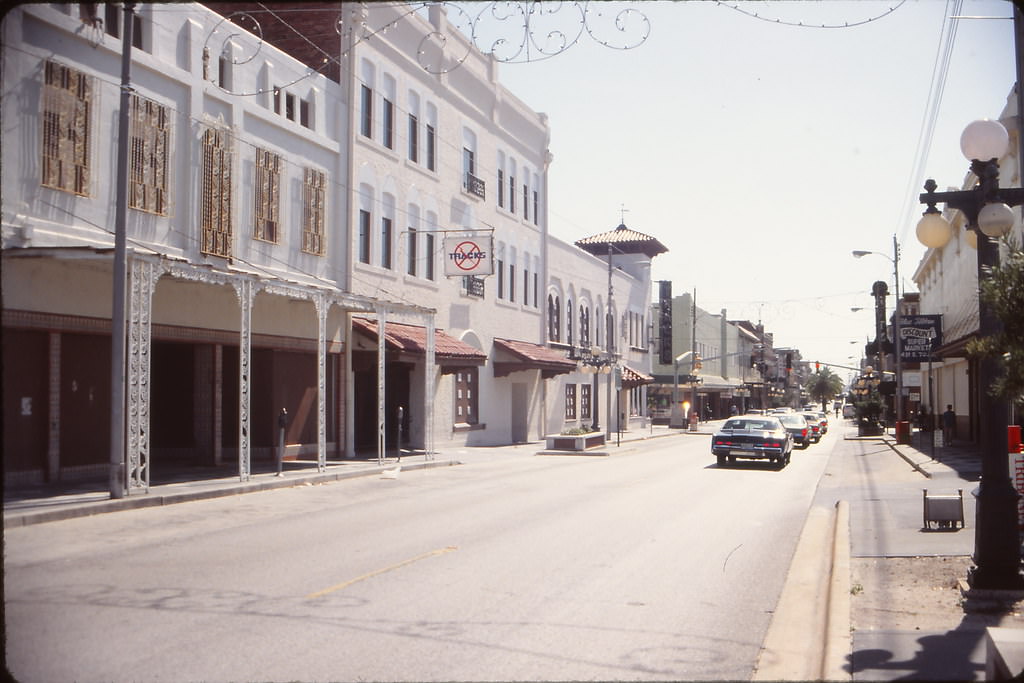
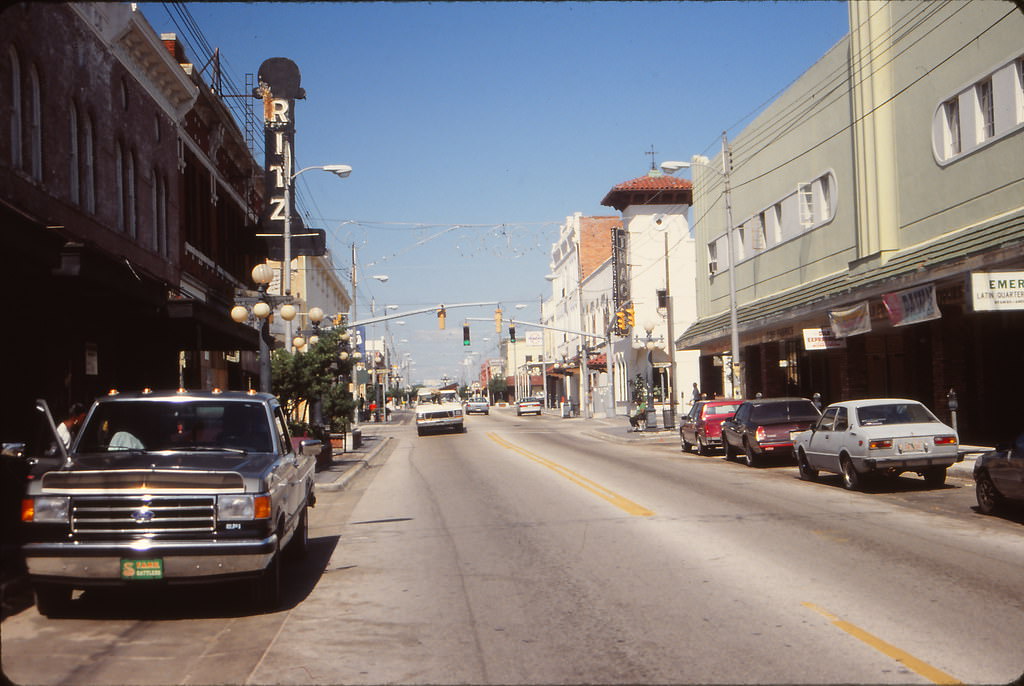
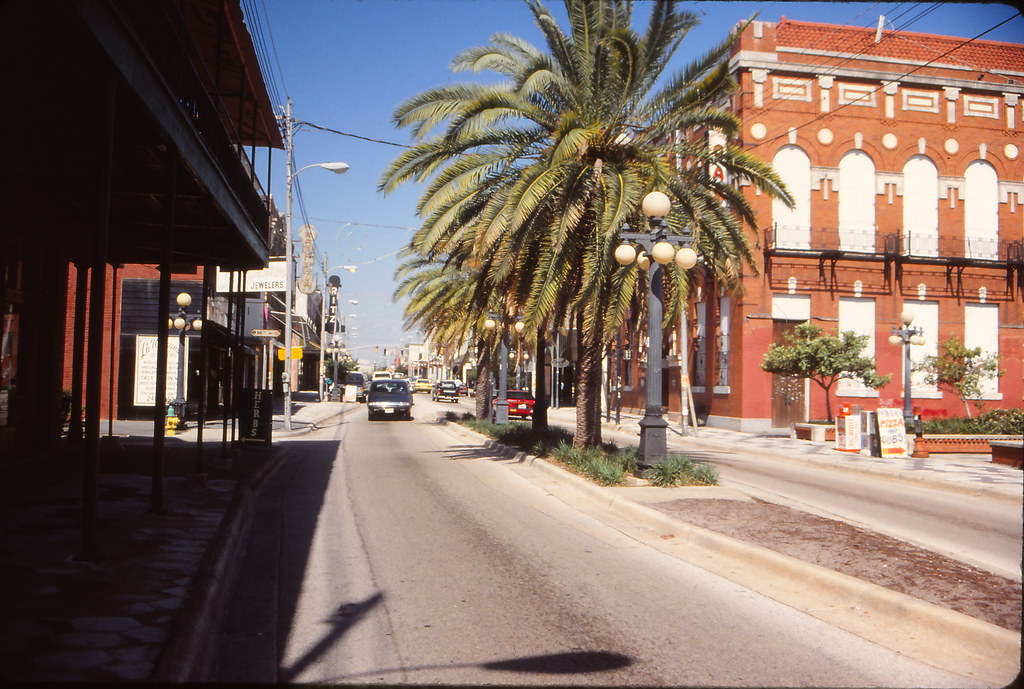
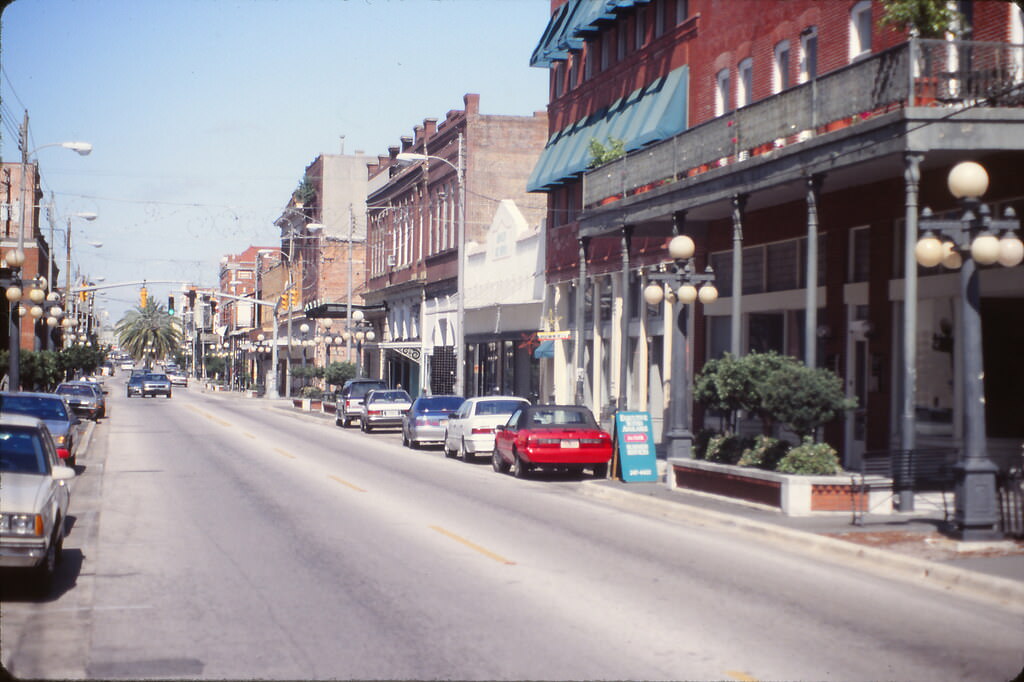
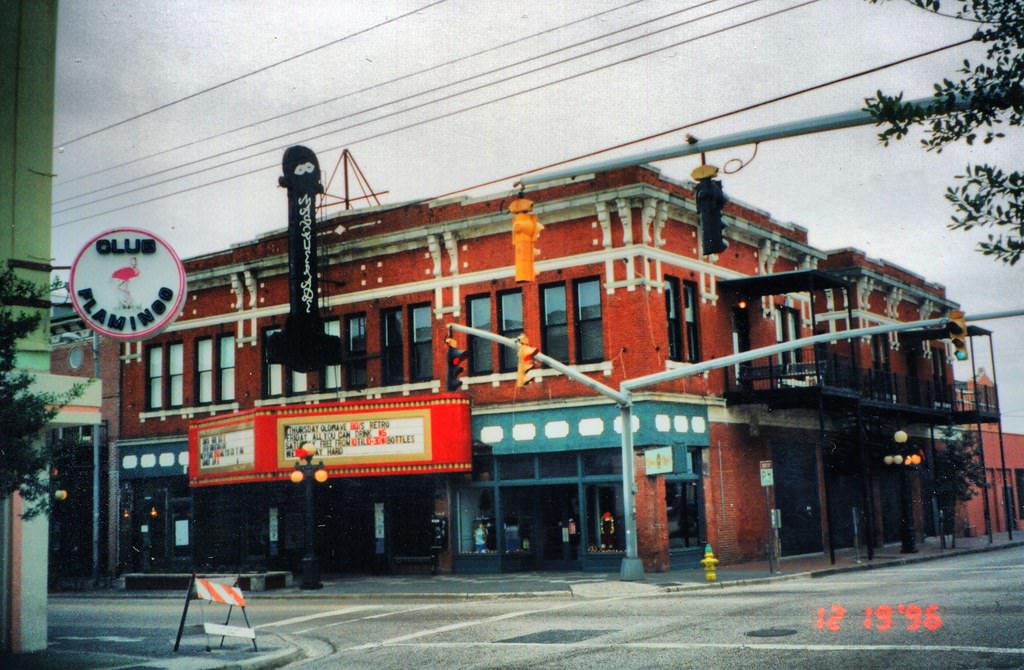
Seventh Avenue — known locally as La Séptima — was the heart of Ybor City’s commercial district. In the 1990s, the avenue still carried traces of its earlier character, with historic brick buildings lining the street. It was in the process of being rediscovered as an entertainment destination, but the transformation was still underway. These photos from Seventh Avenue show the street before it fully became the nightlife corridor it is known as today.


Broader views of Ybor City in the 1990s reveal a neighborhood that was weathered but still full of character. The mix of residential streets and commercial blocks gave the area a density that set it apart from much of Tampa. Historic structures stood alongside vacant lots, and the overall feel was one of a place waiting to be rediscovered.


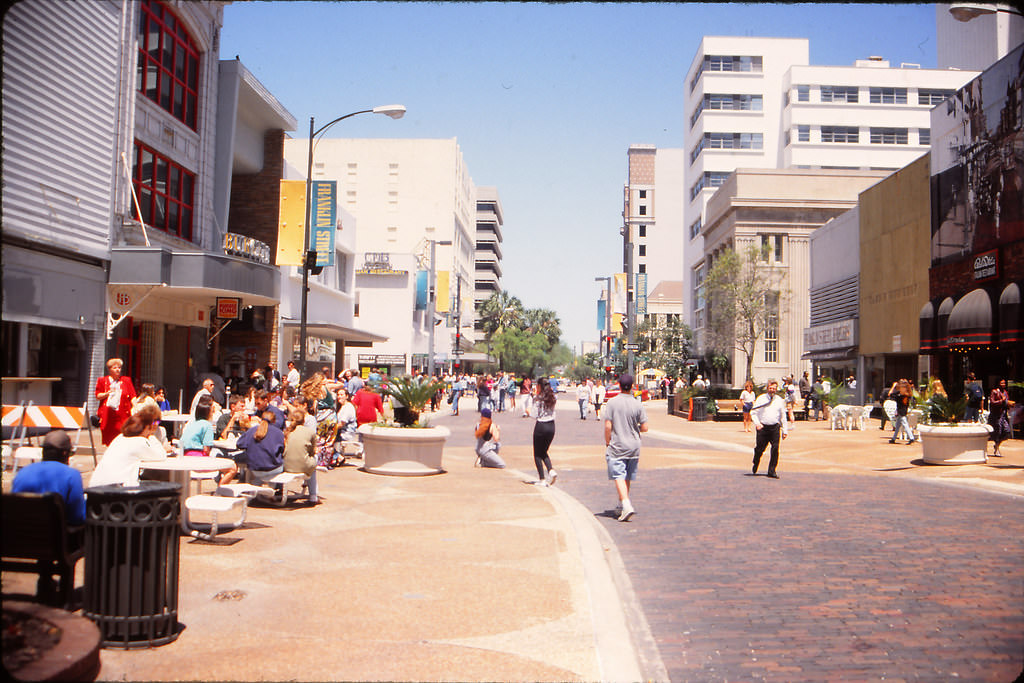
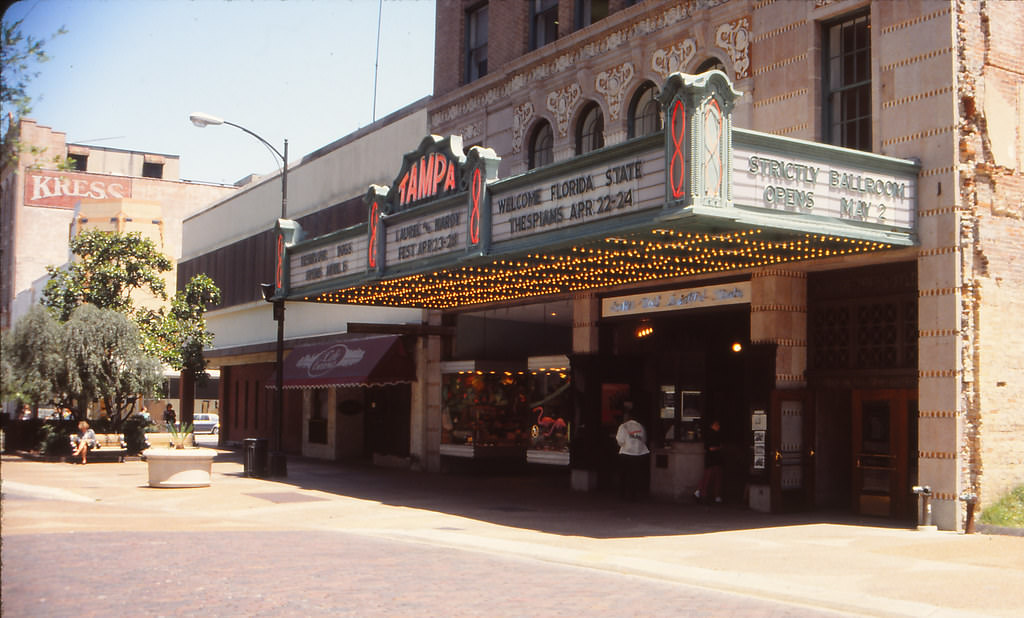
Downtown Tampa had its own distinct character in the 1990s. Franklin Street Mall was one of its most recognizable features — a pedestrian zone that ran through the center of the downtown core. The Tampa Theater, a 1926 movie palace with an ornate Mediterranean Revival interior, sat along the mall as one of its most iconic landmarks. Though attendance had fallen from its golden-age peak, the theater remained a beloved fixture.

Franklin Street Mall itself was a product of a 1970s urban planning effort to revitalize downtown by closing the street to vehicle traffic. By the 1990s, opinions on its success were mixed. Some felt it made the area feel isolated from passing traffic, while others valued the open pedestrian space. The mall featured benches, planters, and public art alongside storefronts that ranged from thriving to struggling.

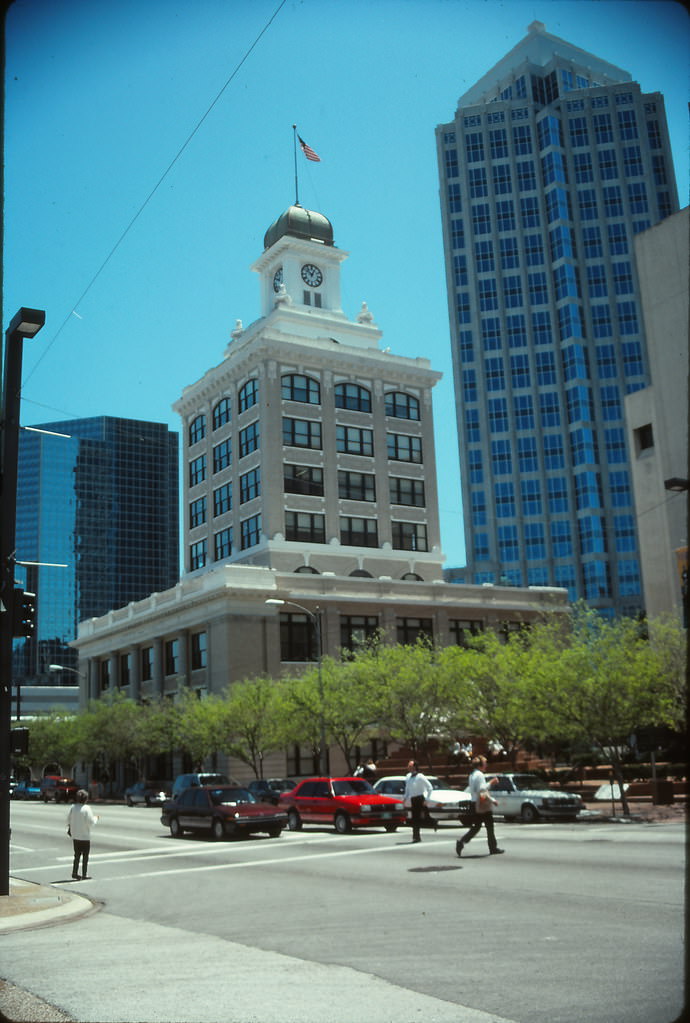
Tampa City Hall stood as one of the most recognizable civic buildings in the downtown area. Built in 1915, the structure with its distinctive clock tower served as the seat of local government throughout the 20th century. In the 1990s, it remained a central symbol of the city’s identity and administration.

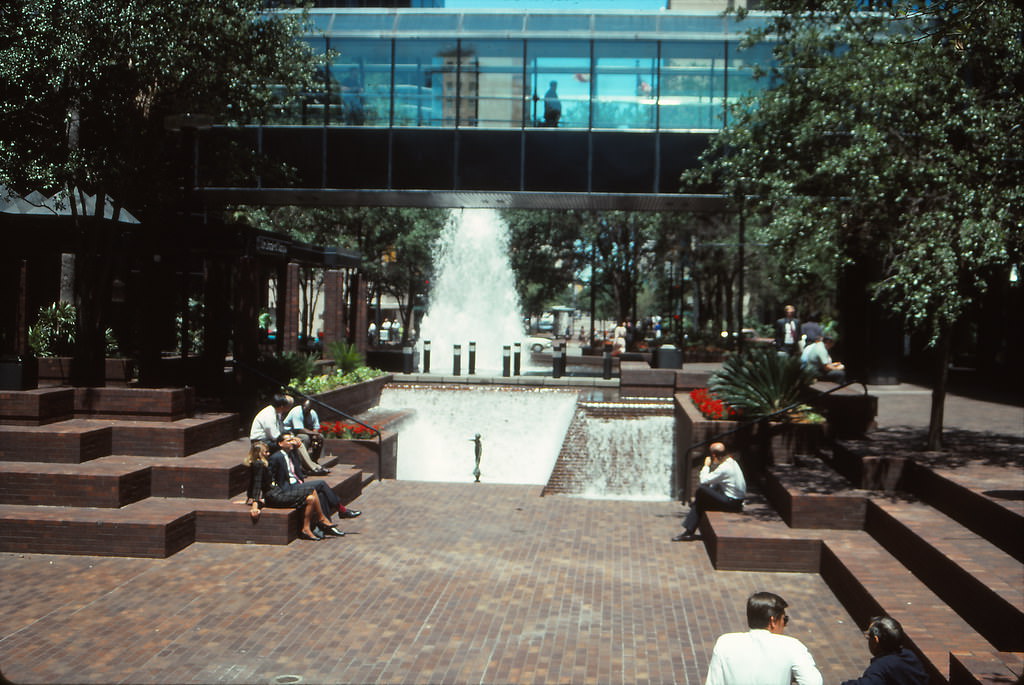
Fountain Plaza along the Franklin Street Mall added a public gathering point to the pedestrian corridor. Water features like this were common in 1970s and 1980s urban renewal projects, designed to make downtown spaces more appealing to foot traffic. By the 1990s, the plaza remained a meeting place, even as debate continued about whether the car-free mall was helping or hurting downtown business.

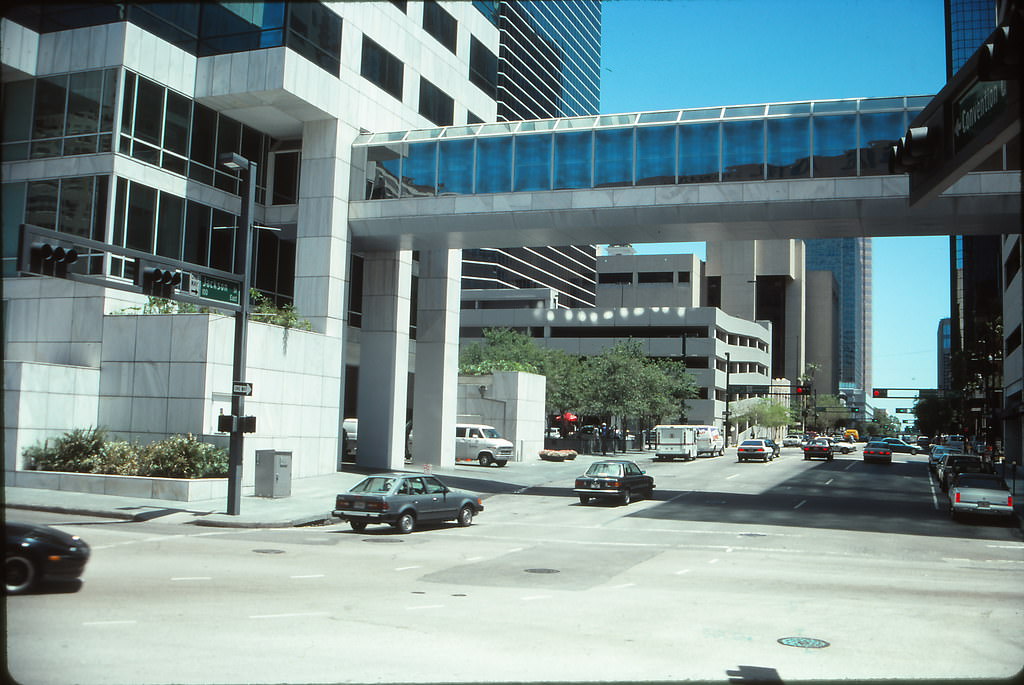
Tampa experimented with a downtown people mover system known as the Skyway. This elevated transit loop connected key points in the downtown core and was meant to make getting around the urban center easier without a car. In 1993, the Skyway was still operating, though it would eventually be shut down as ridership failed to meet expectations.

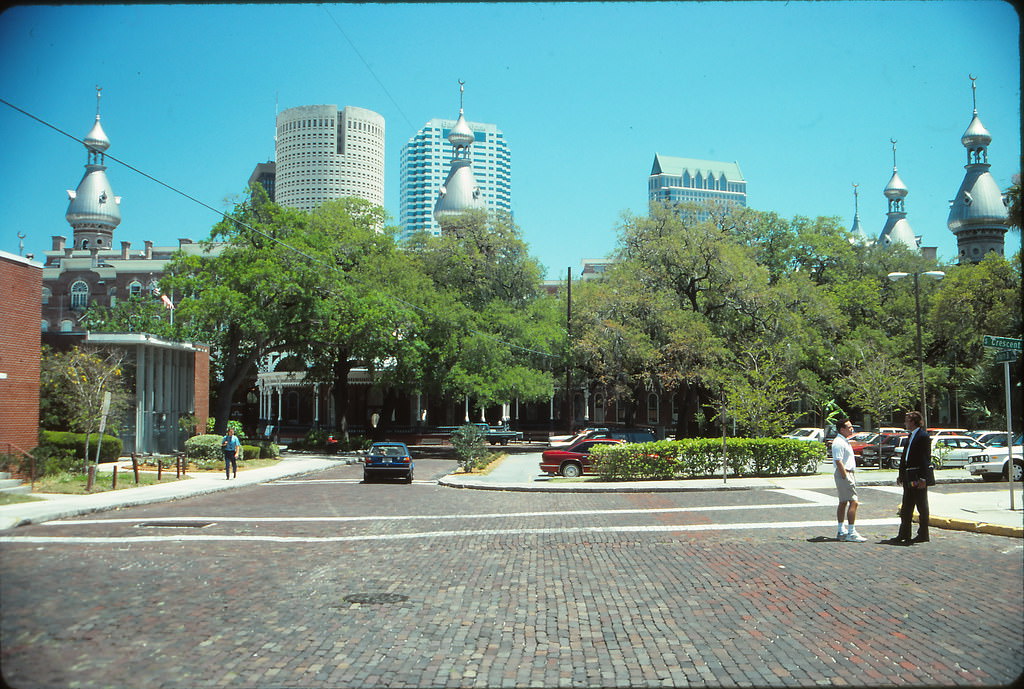
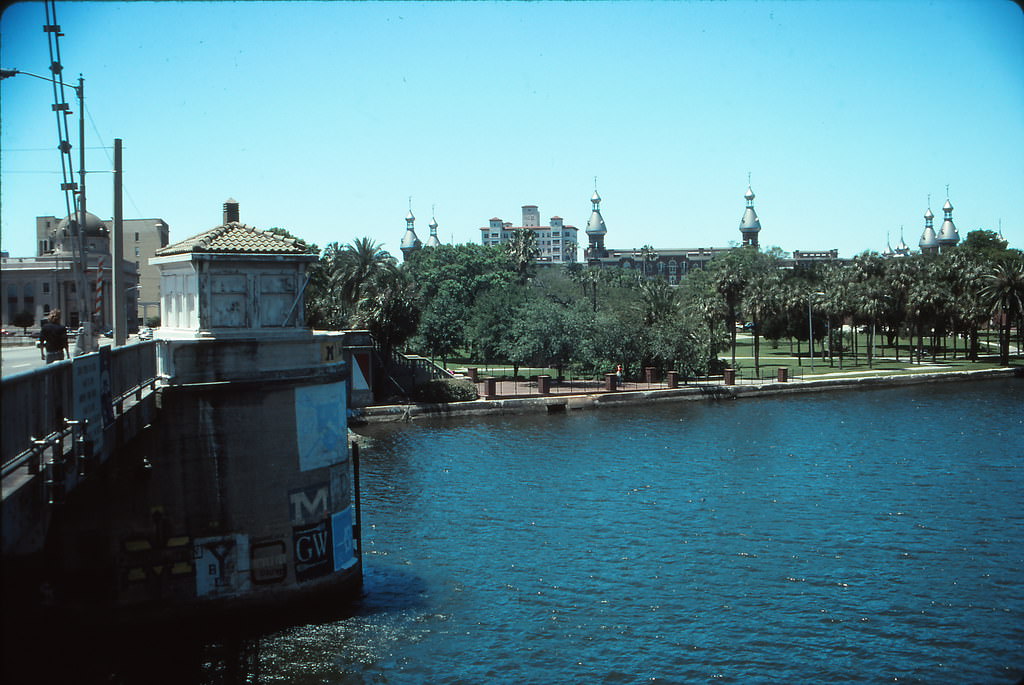
Across the Hillsborough River from downtown sat the University of Tampa, housed in the former Tampa Bay Hotel. The building, constructed by railroad magnate Henry Bradley Plant in 1891, featured distinctive Moorish Revival architecture with silver minarets that made it one of the most recognizable structures on the Tampa skyline. Views across the river showed the university’s dramatic silhouette against the Florida sky.

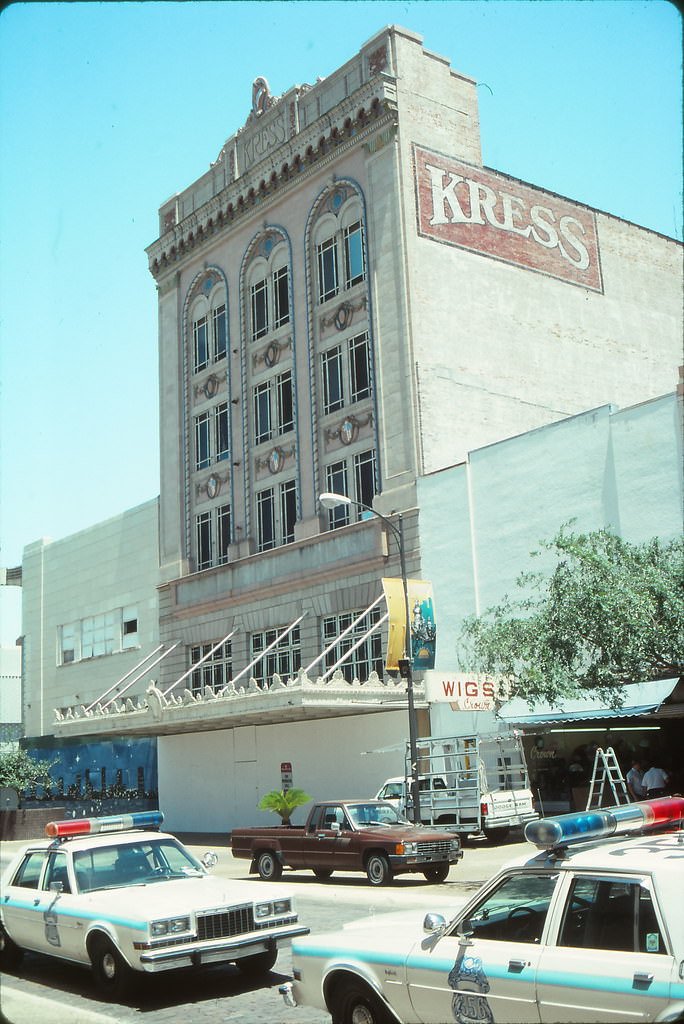
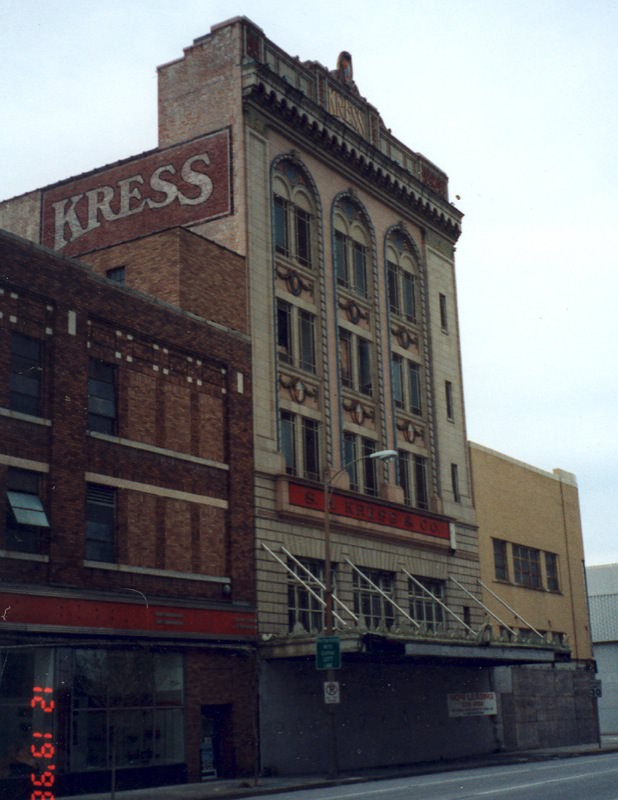
Back on Franklin Street Mall, the Kress Building was one of the commercial anchors of the strip. S. H. Kress and Co. operated a chain of five-and-dime stores across the American South, and their Tampa location occupied a handsome building that reflected the company’s signature architectural style. By the 1990s, Kress stores had long since closed, and the building had taken on new uses.

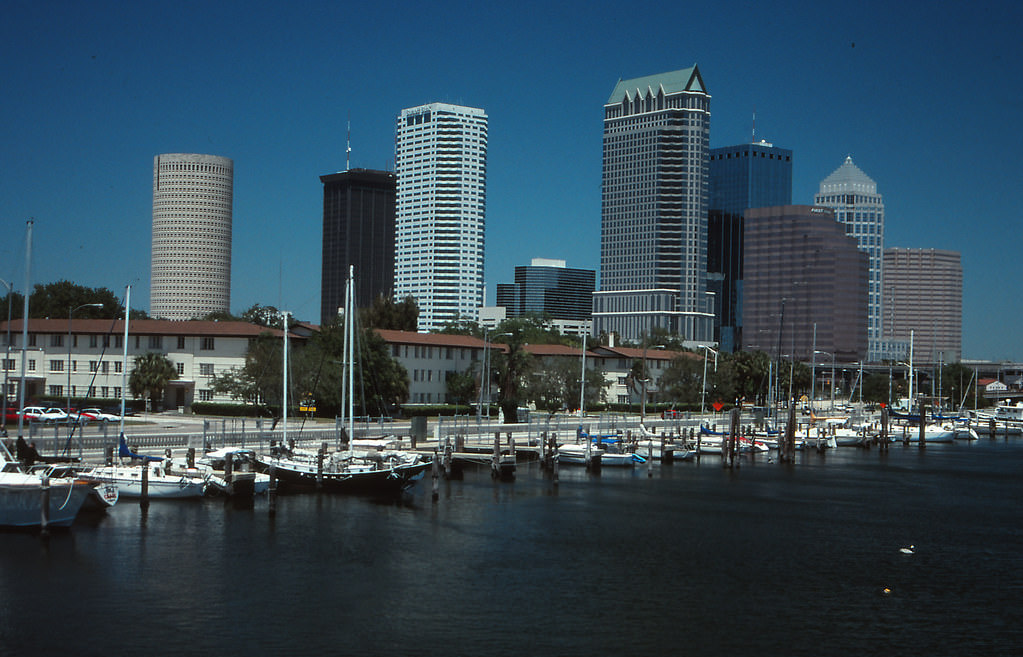
Looking out from the University of Tampa campus provided one of the best views of the city in 1993. The downtown skyline, while not enormous by major-city standards, showed the results of decades of development. Office towers reflected in the river, and the mix of old and new architecture told the story of a city in the middle of its own evolution.

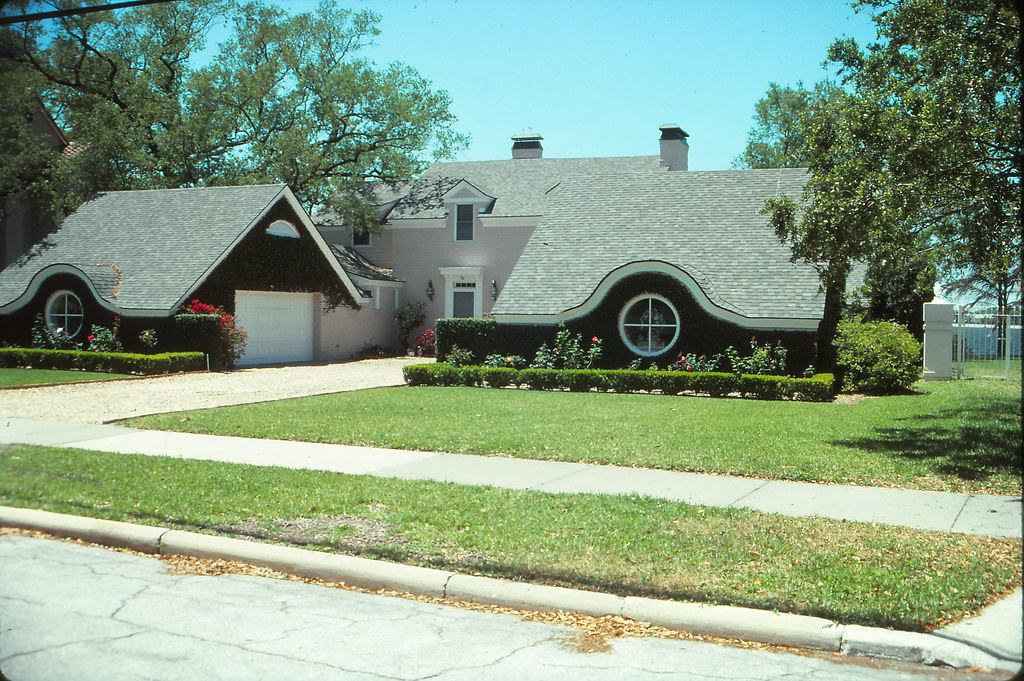
Davis Islands, a residential neighborhood built on a pair of man-made islands in Tampa Bay, offered a very different version of Tampa life. Developed in the 1920s by David P. Davis, the islands featured Mediterranean Revival homes on tree-lined streets. By 1993, the neighborhood retained much of its original charm, with well-maintained houses that reflected the ambitions of its early 20th-century developers.

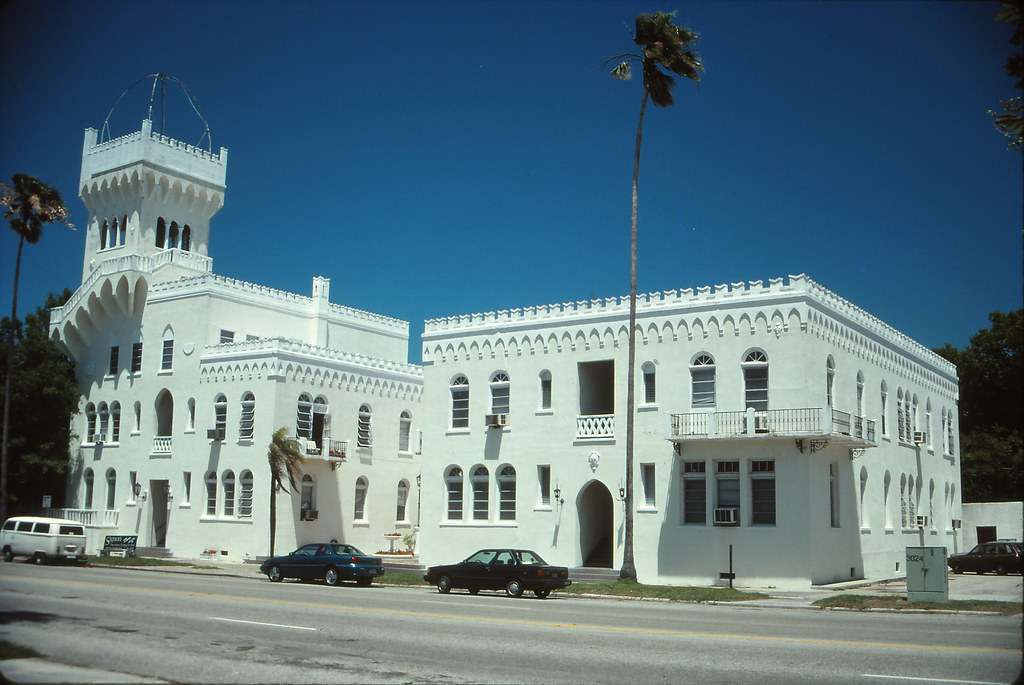
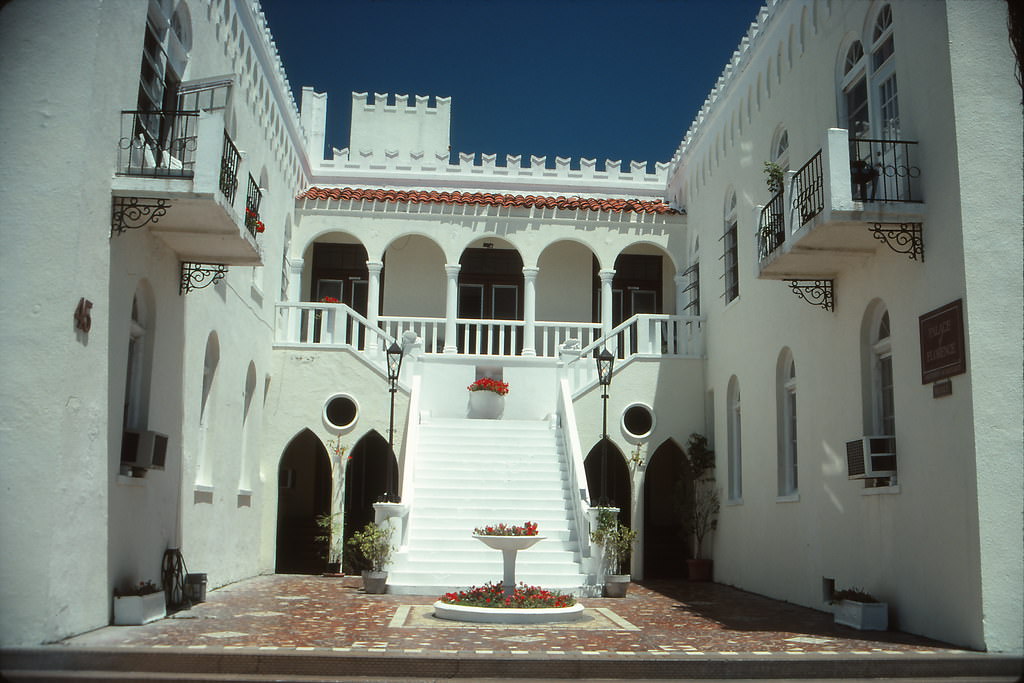
One of the most striking buildings on Davis Islands was the Palace of Florence apartment building at 43 East Davis Boulevard. Built in the 1920s as part of the original Davis Islands development, it reflected the Mediterranean Revival style that was popular throughout Florida during that era. In the 1990s, it remained a distinctive landmark on the island.


The Tampa skyline in 1993 reflected a city that had grown steadily but had not yet entered the rapid development phase that would come in the early 2000s. A cluster of office towers marked the downtown core, but much of the surrounding landscape remained low-rise. The skyline as captured in these photos gives a clear picture of Tampa at a specific moment — before the cranes arrived in force.

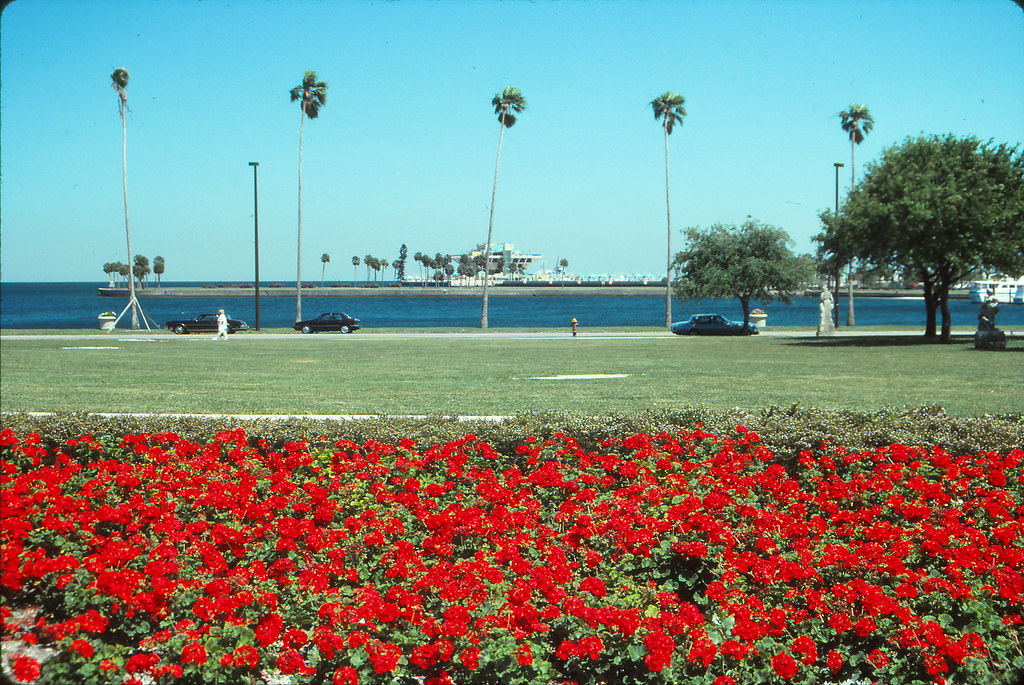
From across Tampa Bay in St. Petersburg, the view looking toward Tampa was wide and open. North Straub Park in St. Pete offered a clear sightline across the water, with the bay stretching out as a natural boundary between the two cities. This perspective highlighted just how much geography shaped the relationship between Tampa and its neighbors.

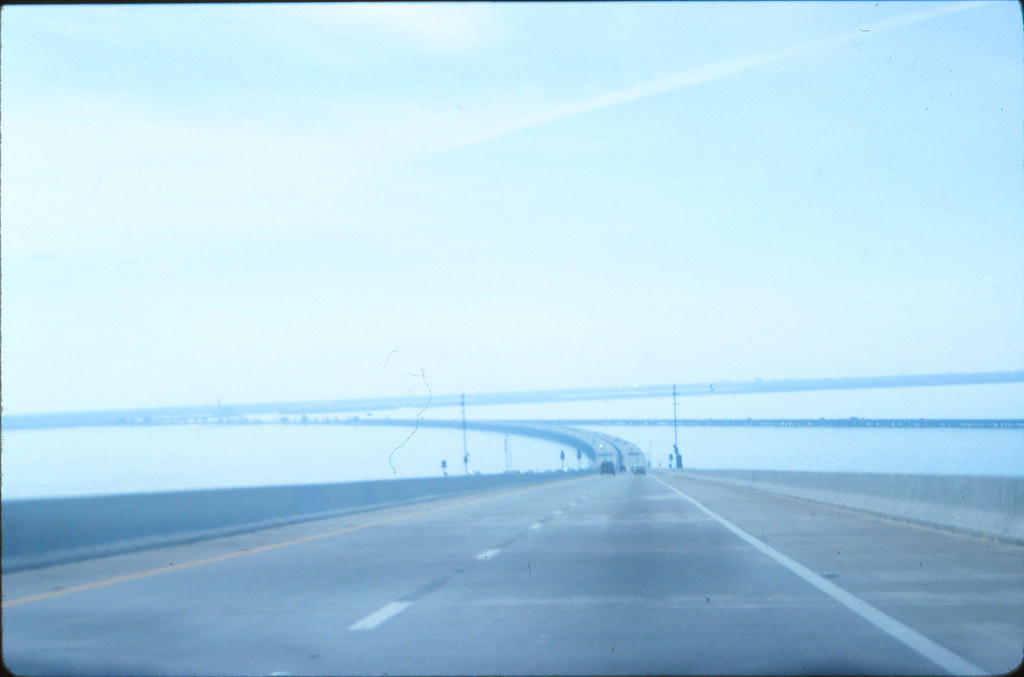
The Sunshine Skyway Bridge, which connects Tampa Bay’s northern and southern shores, offered dramatic views of the bay when looking south. The new bridge, which replaced its predecessor after a 1980 collision destroyed part of the original span, was a defining piece of infrastructure for the entire region. By 1996, when this photo was taken, the bridge had become a familiar part of the Tampa Bay landscape.


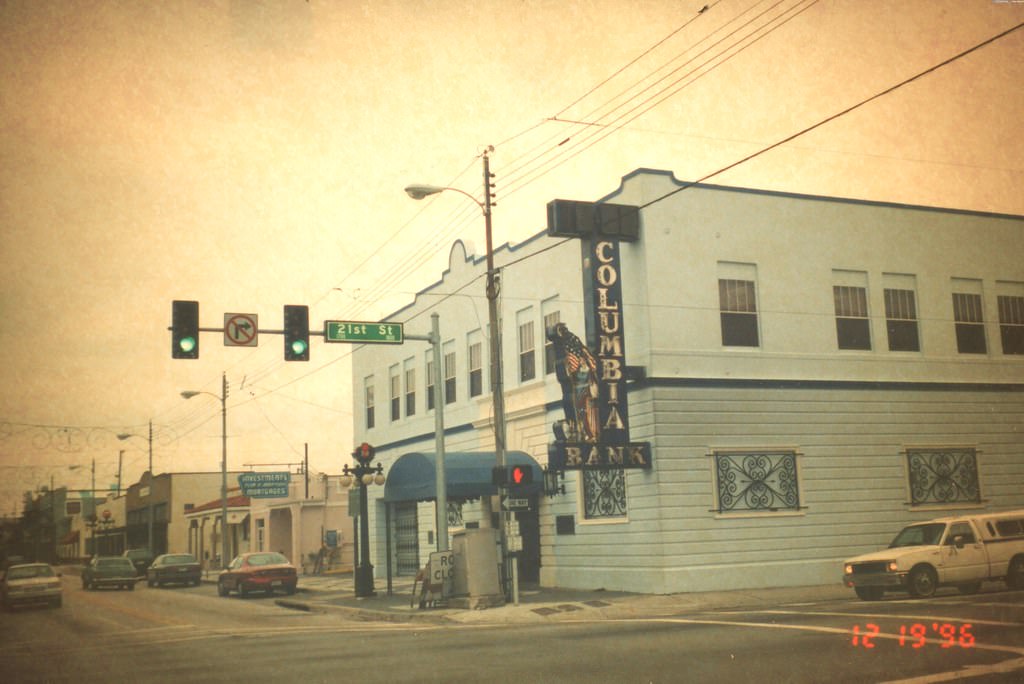
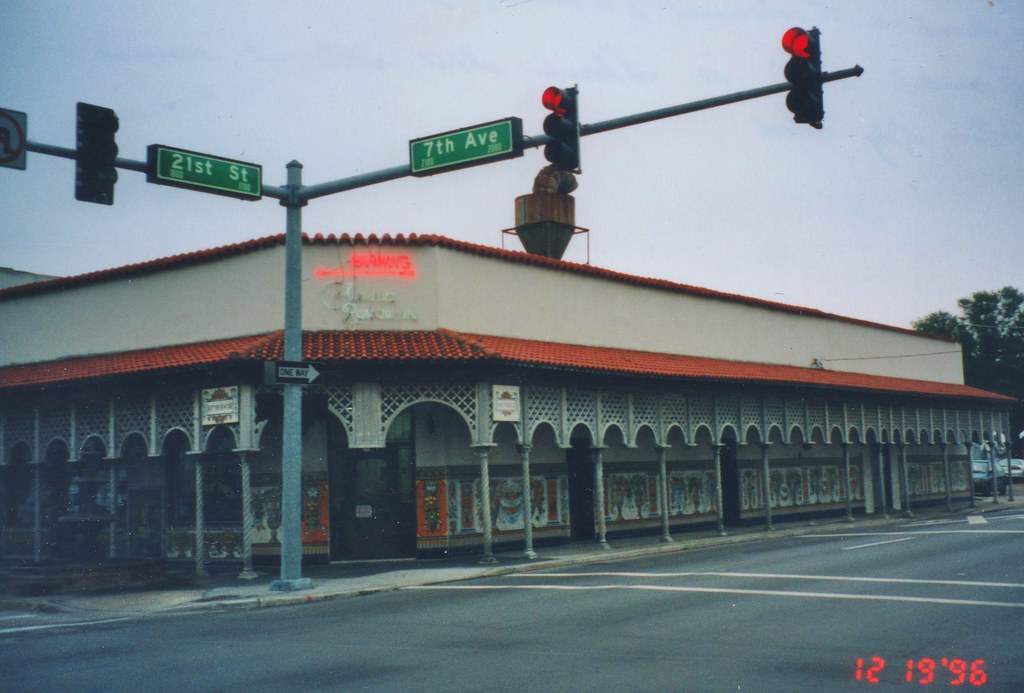
The Columbia Restaurant in Ybor City is the oldest restaurant in Florida, having opened in 1905. By 1996, it had been operating continuously for over nine decades, serving Cuban and Spanish cuisine in a sprawling dining complex that had grown to occupy an entire city block. The restaurant’s flamboyant tiled interior and flamenco performances made it one of the most distinctive dining experiences in the state.


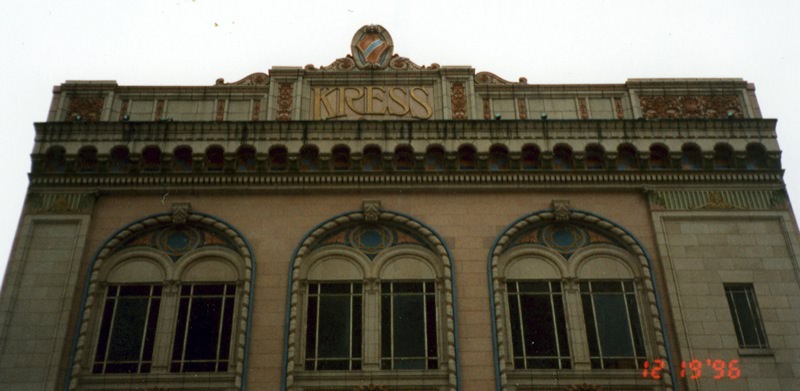
The S. H. Kress and Co. Building at 811 North Franklin Street was a well-known commercial landmark in Tampa’s downtown. The Kress chain built stores across the American South in a consistent architectural style, and the Tampa location was a fine example of that approach. These 1996 photos document the building at a time when preservation efforts for downtown Tampa’s historic commercial stock were gaining momentum.


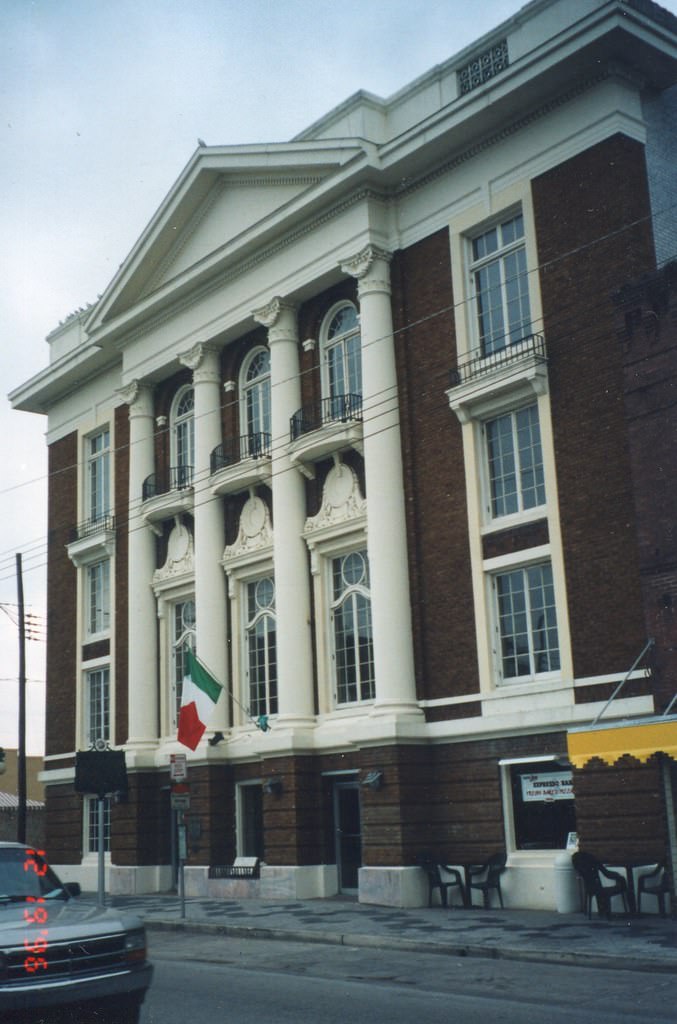
The Italian Club in Ybor City was one of several mutual aid societies that served the neighborhood’s immigrant communities in the early 20th century. These clubs provided social services, medical care, and a sense of community to workers who had come from Cuba, Spain, and Italy to roll cigars in Tampa’s factories. By 1996, the Italian Club’s building still stood as a reminder of that immigrant heritage.

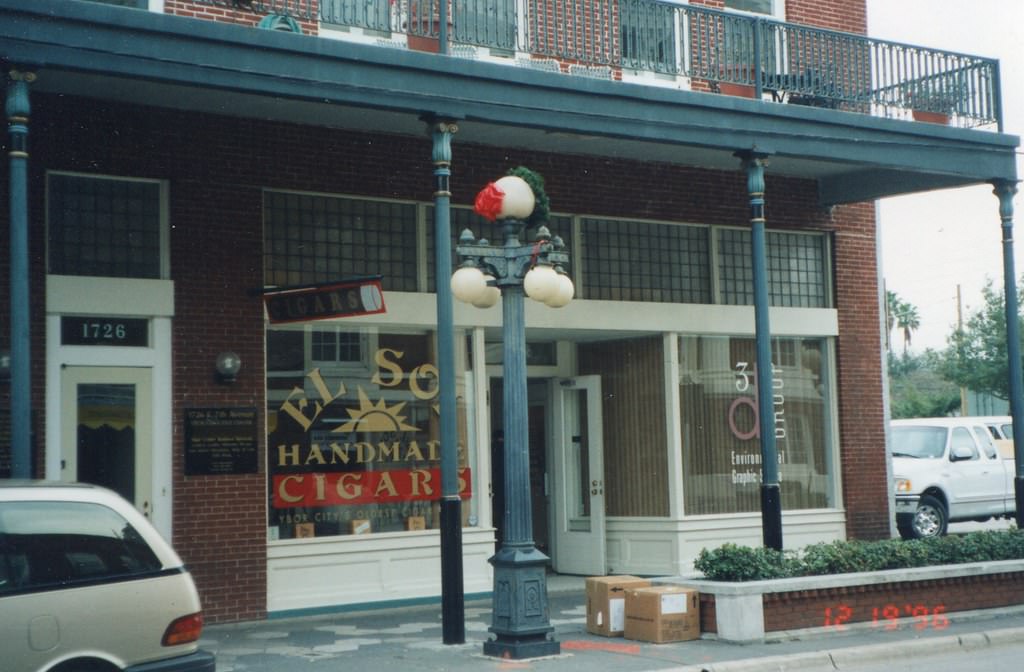
Ybor City’s oldest cigar store was still operating in 1996, keeping alive a trade that had once defined the entire neighborhood. At the height of the cigar industry in the early 1900s, Ybor City produced hundreds of millions of cigars each year, making Tampa the cigar capital of the world. A handful of shops kept that tradition going into the 1990s, serving both local customers and tourists drawn by the neighborhood’s history.

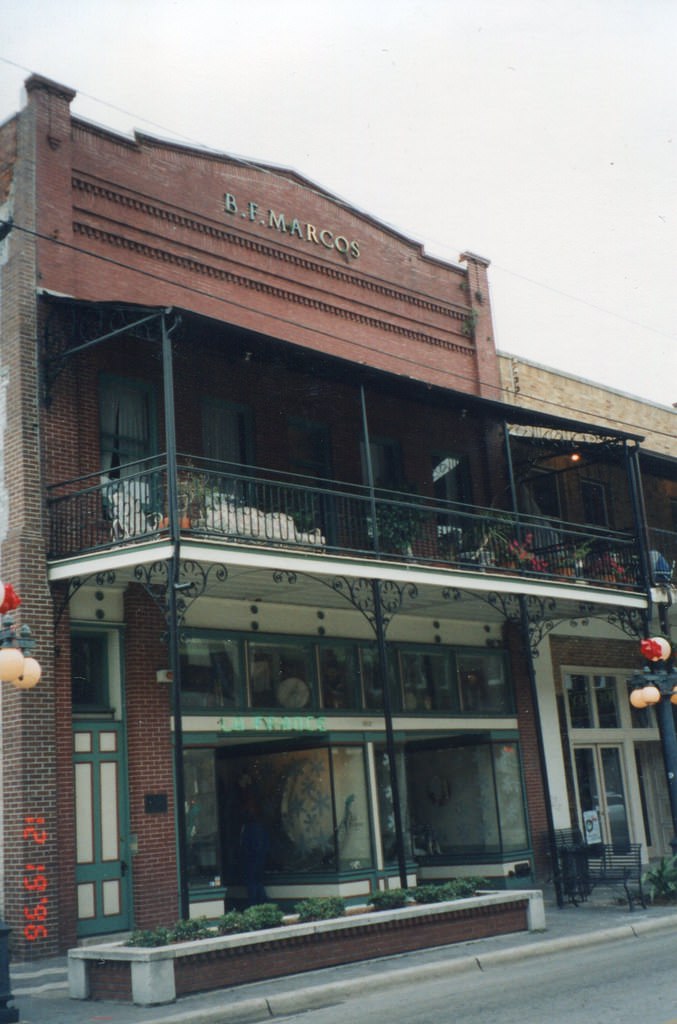
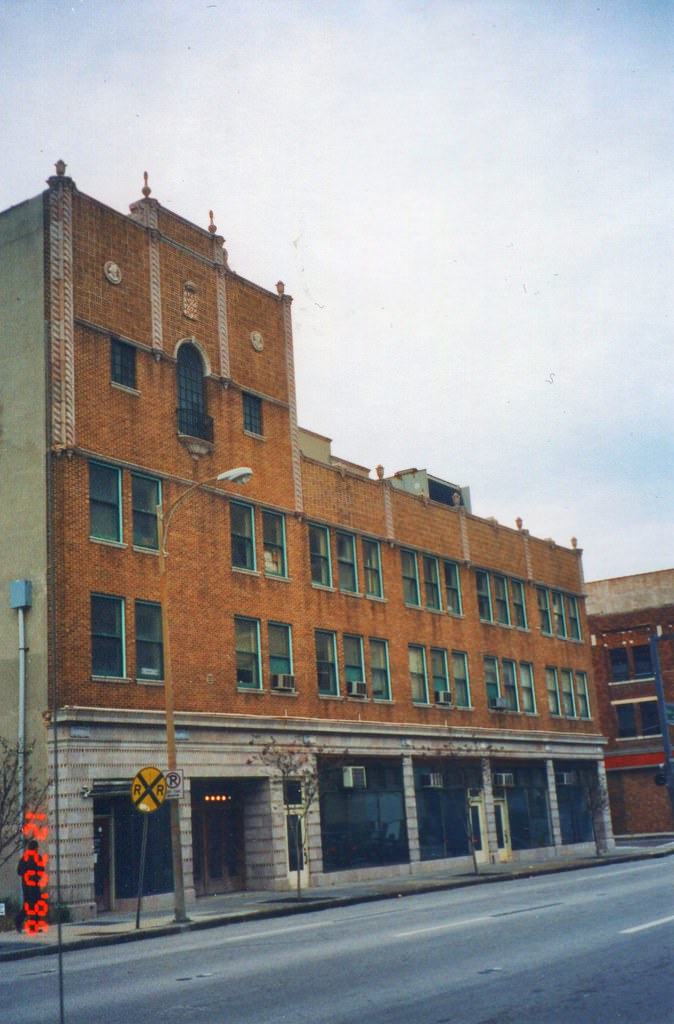
The B. F. Marcos Building was one of many historic commercial structures that dotted Tampa’s urban core in 1996. Buildings like this one represented the commercial ambitions of Tampa’s early 20th-century business class and survived into the 1990s as markers of the city’s architectural past.

The Ybor Land and Improvement Company was the real estate arm of Vincente Martinez Ybor’s original development plan for Ybor City. The company laid out the streets, built worker housing, and established the physical framework of the neighborhood in the 1880s and 1890s. Its building, still standing in 1996, was a direct physical link to the founding of one of Tampa’s most historically significant neighborhoods.

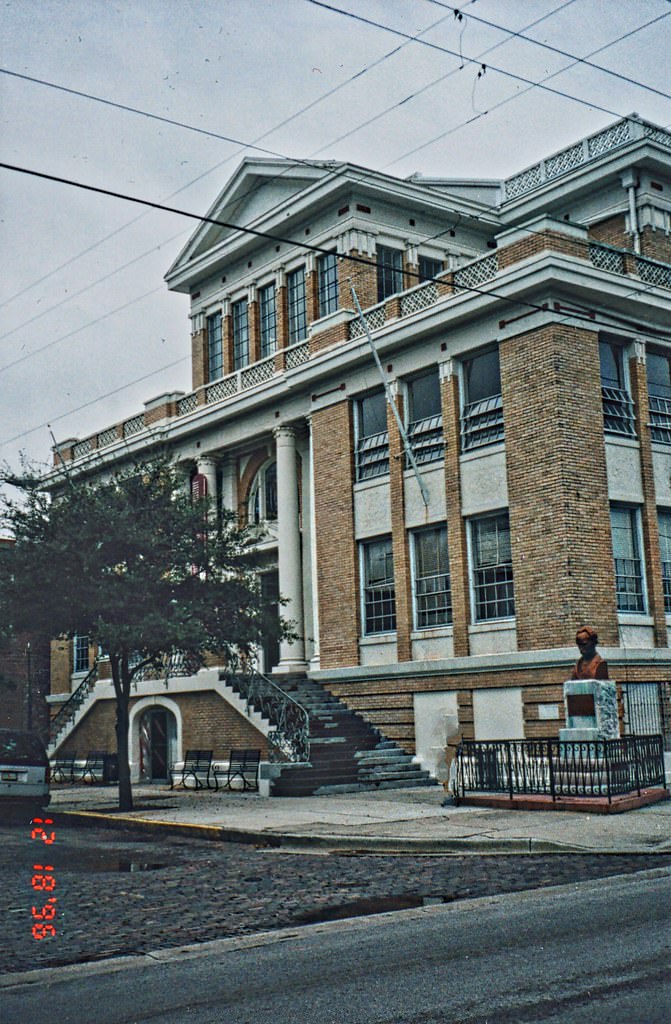
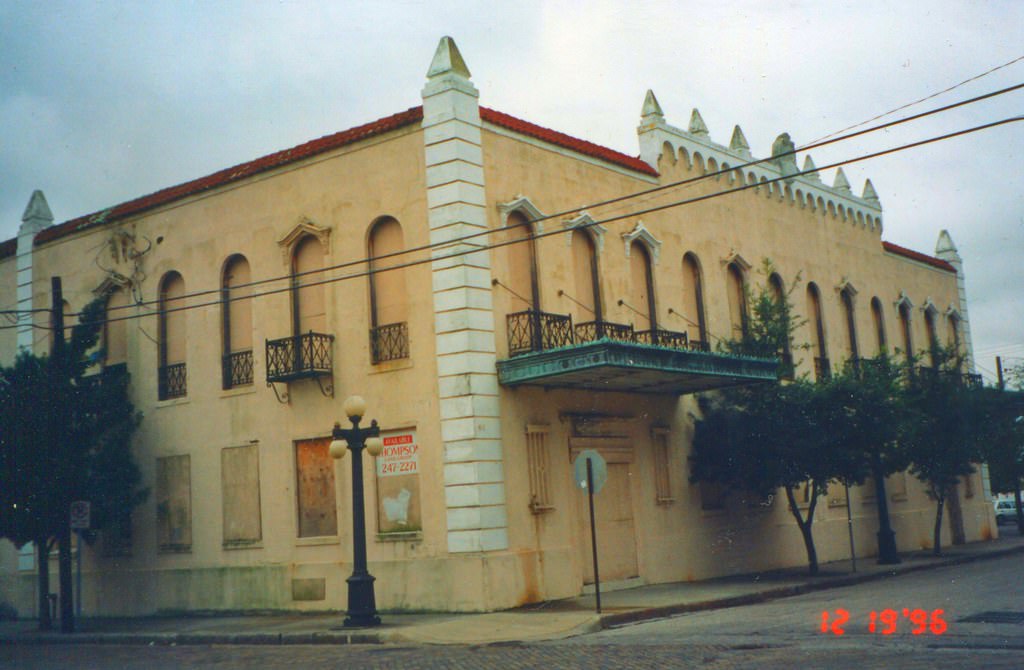
The former Ritz Theatre in Tampa was a reminder of the city’s entertainment history. Movie theaters and performance venues like the Ritz were once essential parts of urban life, drawing crowds from across the city before television and suburban shopping malls changed American leisure habits. By 1996, the building had long since ceased operating as a theater.

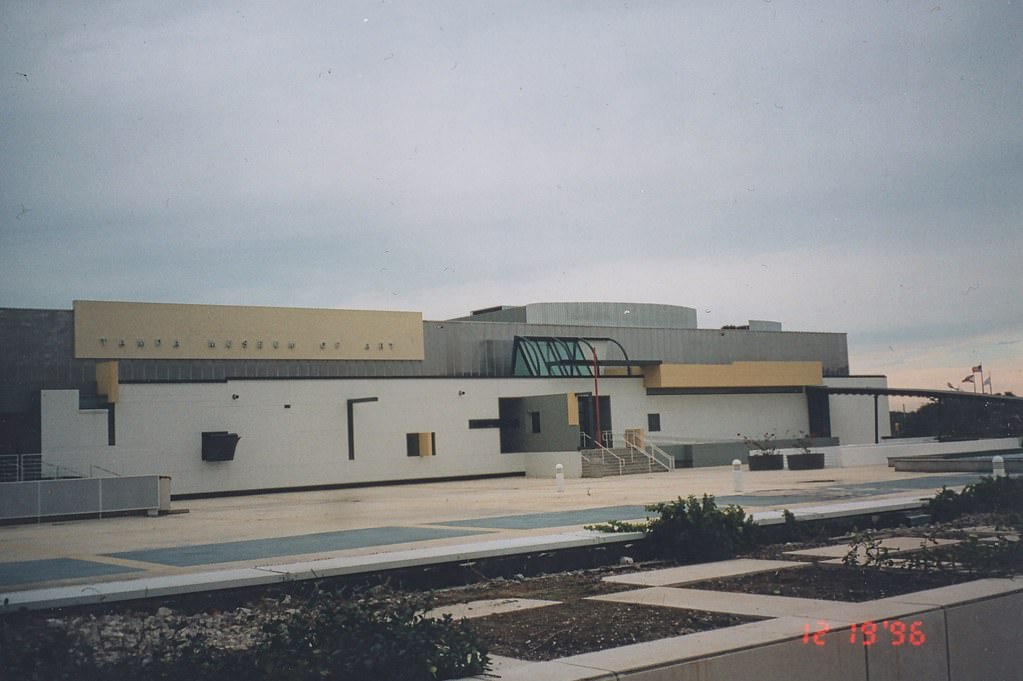
The former Tampa Museum of Arts building, photographed in 1996, captured an institution that had already moved to a new location. The museum’s original home represented an earlier era of cultural investment in downtown Tampa, and the building’s continued presence after the museum’s departure spoke to the slow pace at which urban spaces change their functions.

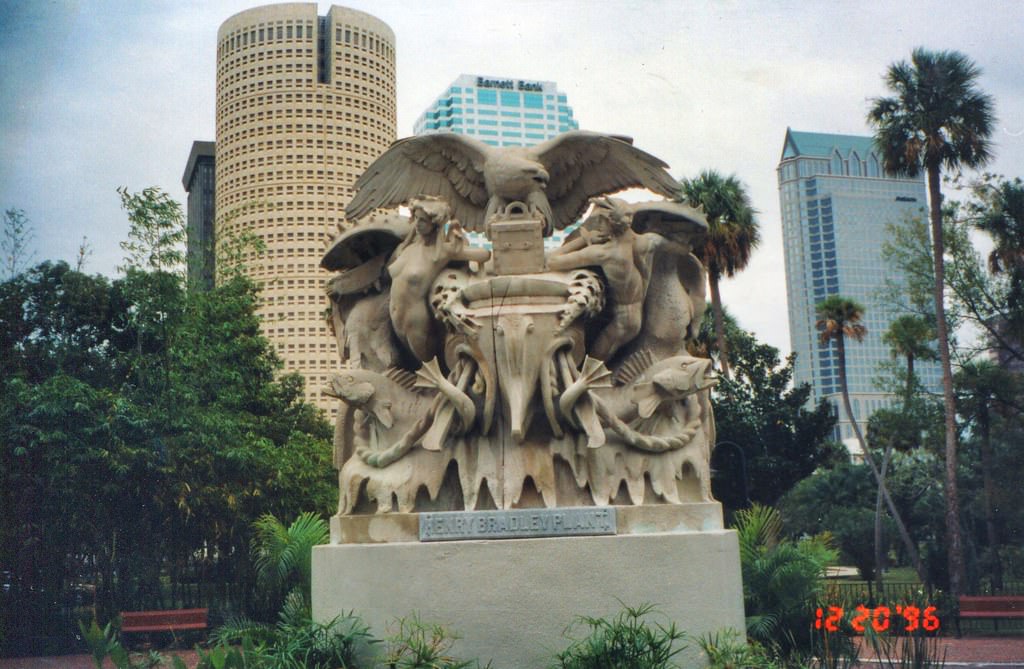
The Henry Bradley Plant Memorial Landmark honored the man most responsible for Tampa’s early growth as a modern city. Plant’s railroad network connected Tampa to the rest of the country in 1884, and his Tampa Bay Hotel — built in 1891 — put the city on the national map. The memorial recognized his outsized role in transforming a small fishing village into a regional commercial center.

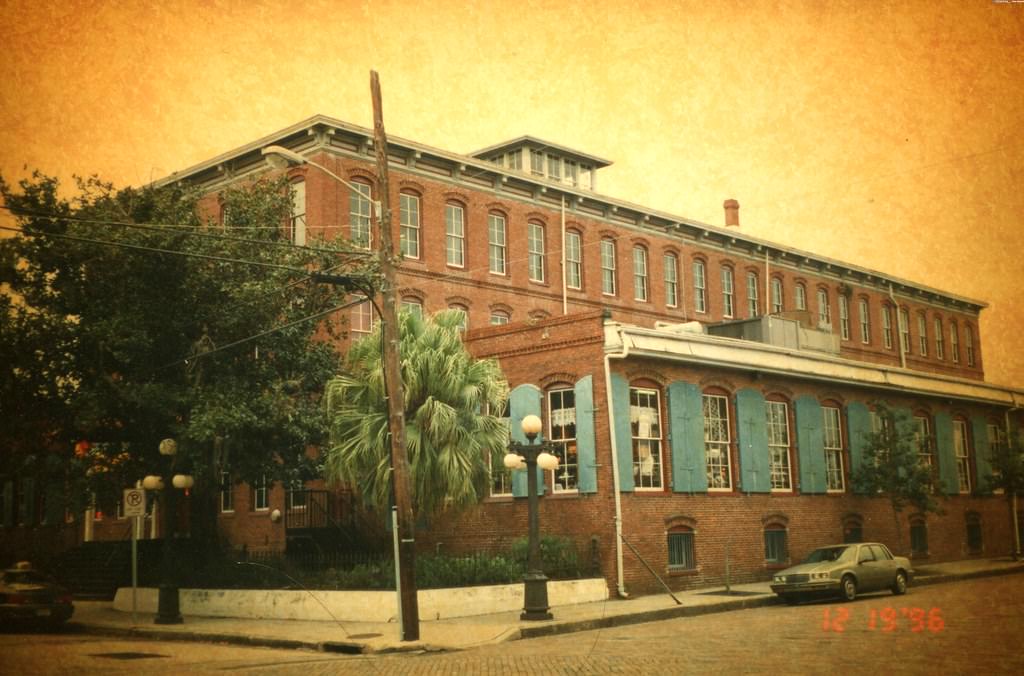
Ybor Square was a shopping and dining complex developed out of one of the old cigar factory complexes. The adaptive reuse project turned what had been the Ybor City factory buildings of the V.M. Ybor company into a retail destination, and by 1996 it stood as one of the early examples of historic preservation and commercial reuse in the neighborhood.

The former Tampa Theatre, seen here in 1996, was one of the grandest movie palaces ever built in Florida. Opened in 1926 and designed by architect John Eberson, the theater featured an elaborately decorated interior meant to evoke an Italian courtyard under a night sky. By the 1990s, the theater had been saved from demolition and was operating as a performing arts venue and cinema, hosting film festivals and live events.

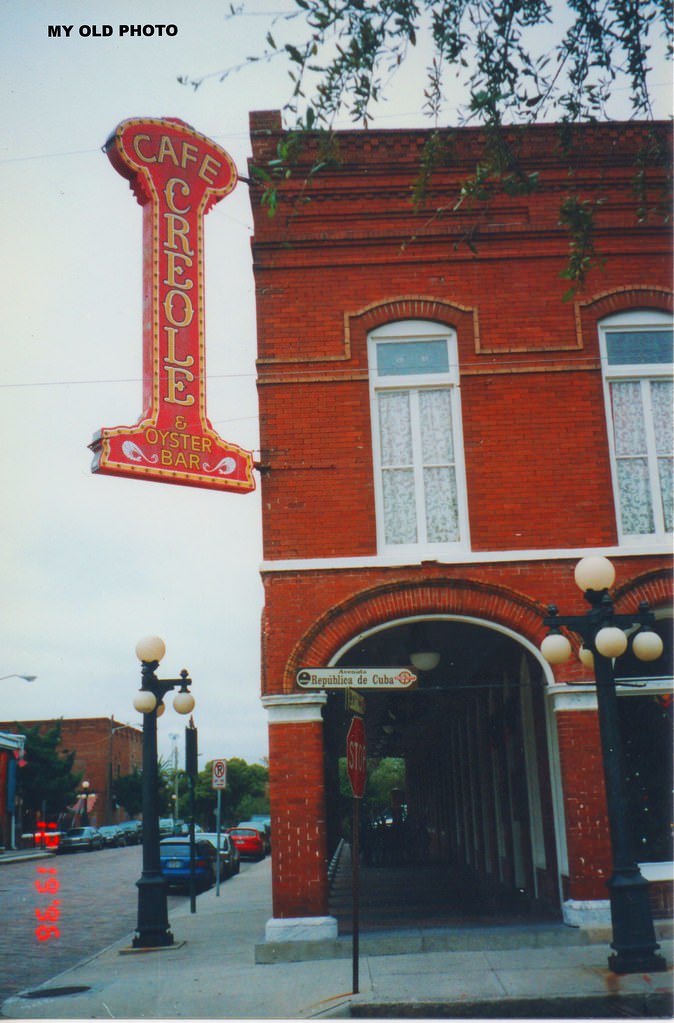
Cafe Creole Oyster Bar captured another side of Tampa’s 1990s dining scene — one that blended Southern and Gulf Coast culinary traditions. Tampa’s position on the Gulf made fresh seafood a staple, and restaurants like Cafe Creole reflected the city’s identity as a place where different cultural food traditions met along the waterfront. This 1996 photo documents the kind of neighborhood restaurant that gave Tampa much of its day-to-day character during the decade.


Wow that is so cool.
Very cool! Thank you for sharing. I moved away in 1990, so these photos bring back memories for me.
Until recently, downtown Tampa was a dump.
Rent/housing is a big deal right now. I have to be honest. People with money moving in and restoring the areas back to respectable neighborhoods before they were abandoned doesn’t bother me that much
This is literally what gentrification is all about. The negative side is the obvious rise in rent, which can lead to evictions or displacements of residents. The positive aspects really only affect new residents since the previous ones had to leave.
This is a welcome addition to an area that needs it
It’s making the place unaffordable to everyone but the newcomers. All to make the place look nicer for blue-state tourists.
So… same?
You can mainly tell the differences in the skyline photos.
I moved to Tampa in the 90s when I was nearly 10yrs old this brought back a ton if memories of celebrating my firs Florida Christmas at the Embassy Suites next to the airport, our first Christmas tree was a small fake palm tree. To this day it’s one of my all time favourite memories ever.
I want to see it in the 80’s honestly