
The 1920s were not as roaring in Tacoma as elsewhere in the country, but the city improved its water system and built hydroelectric power plants. During the Great Depression of 1929, the local economy suffered even more, though military spending and New Deal recovery programs contributed to recovery. After Fort Lewis was established, Camp Lewis expanded, and McChord Field became the Tacoma Municipal Airport. Below are stunning historical photos that show Tacoma in the 1920s.
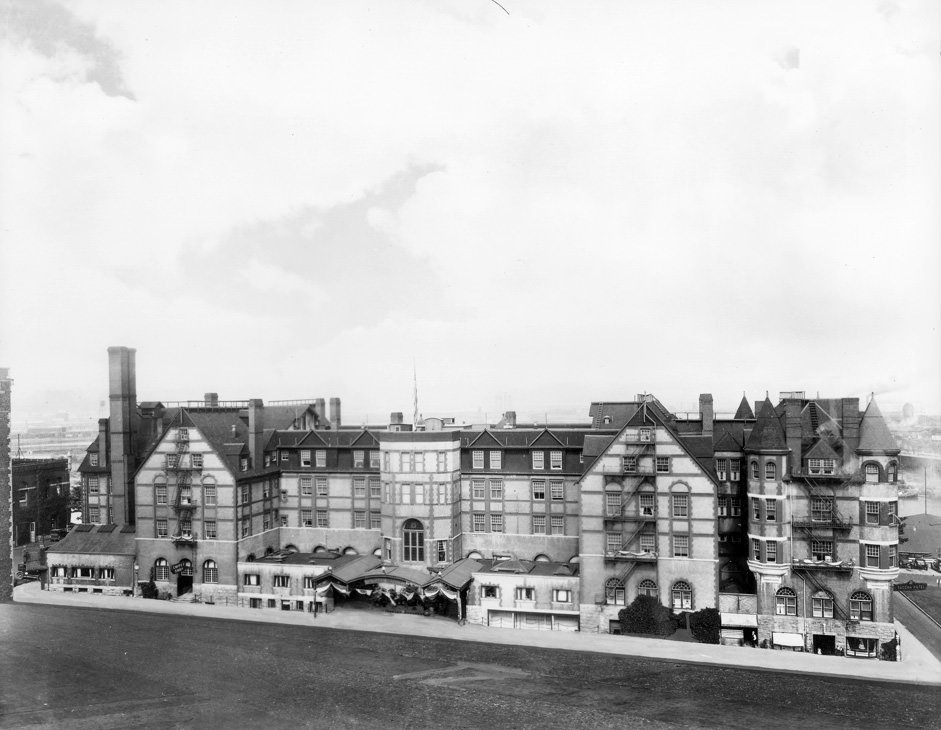
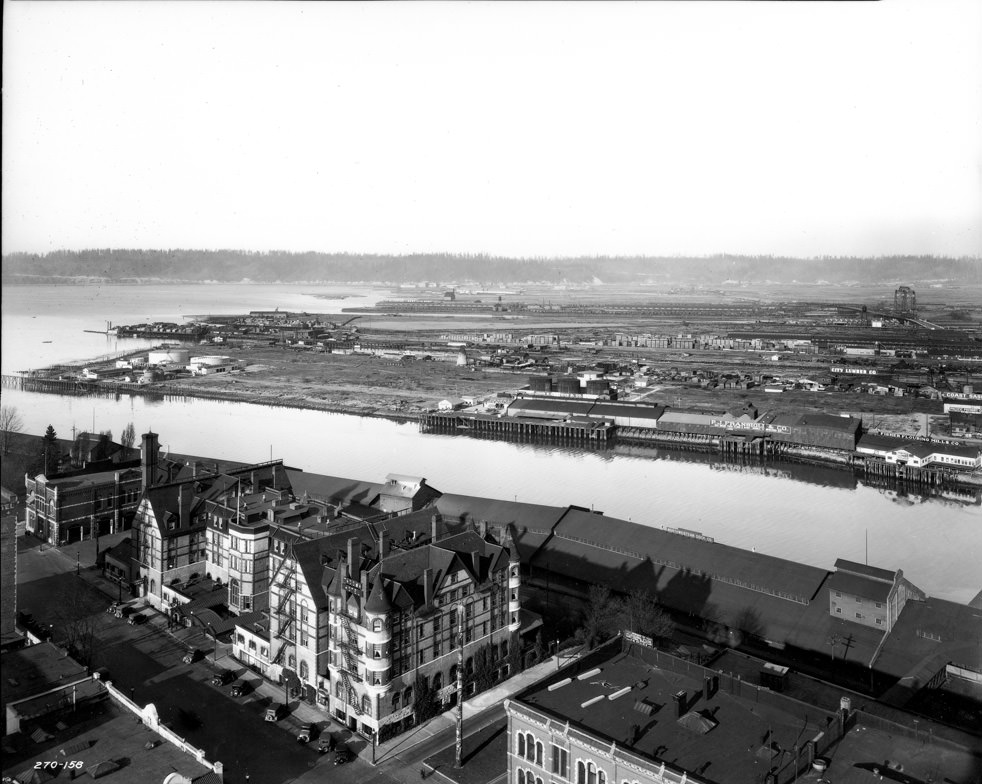
There is an elevated frontal view of the Tacoma Hotel, on A Street, between Ninth and Tenth Streets, Tacoma, WA.
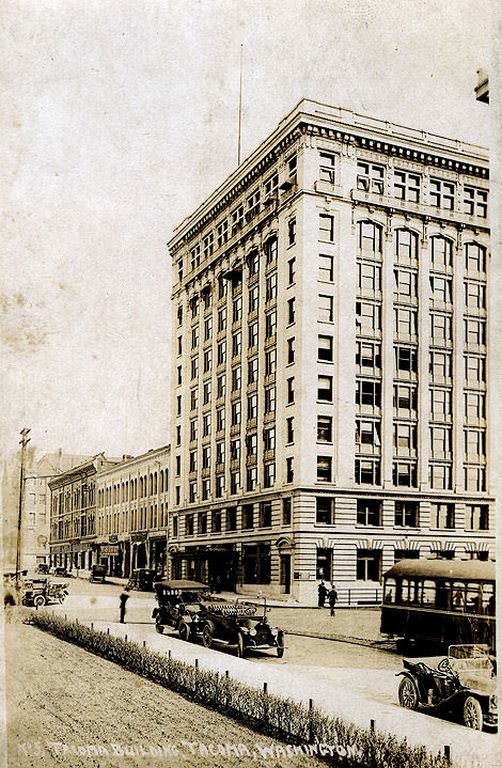
Three automobiles are in the foreground on A Street, which runs diagonally above the lower image edge. Part of what is probably a streetcar is visible at the lower right edge. Eleventh Street is the cross street beyond the automobiles and streetcar.
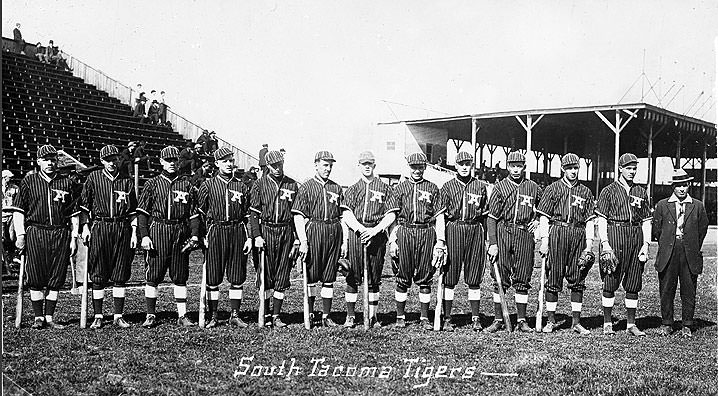
Ten South Tacoma Tigers baseball players stood in a row on a baseball field in Tacoma.
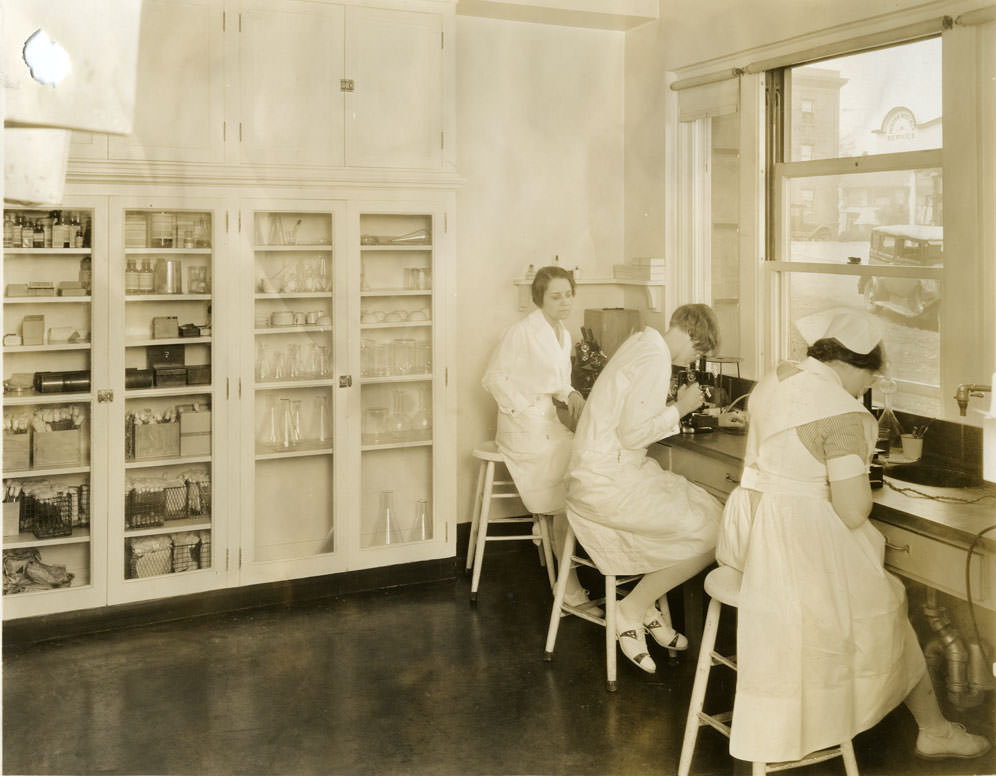
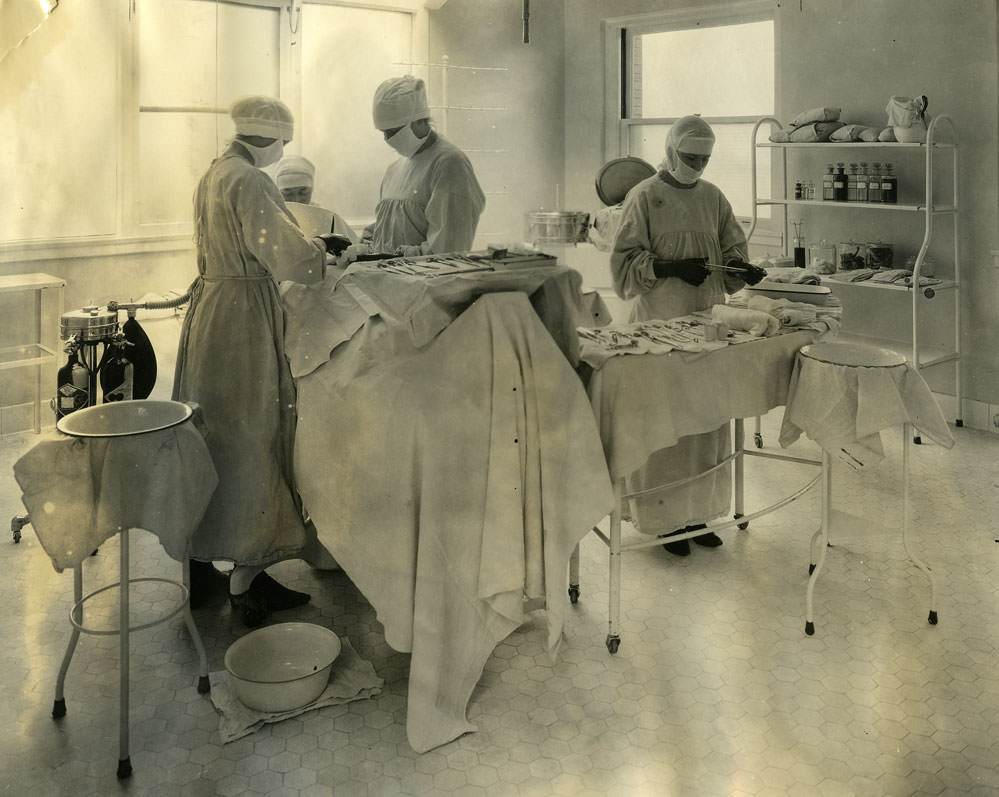
A male doctor is performing surgery on a patient, and two nurses assist him.
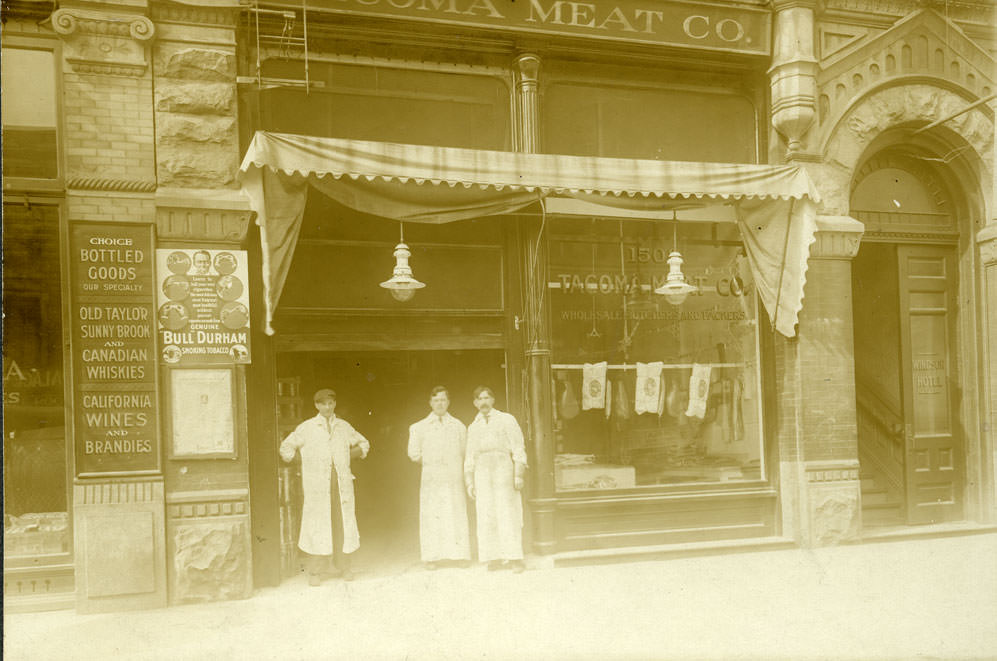
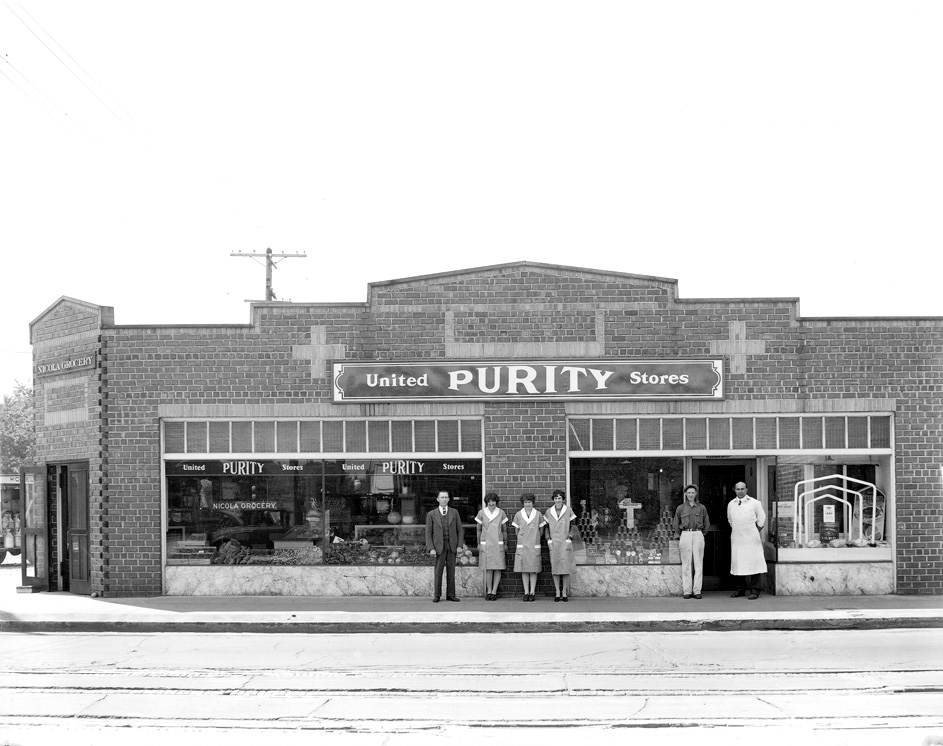
Three women in uniform, a man in a suit, one in casual clothes, and another wearing a light-colored butcher’s apron stand in front of the Nicola Grocery, a brick building at 3002 Sixth Avenue, Tacoma, WA. Stacked cans, produce, and a can of lard are displayed in the windows.
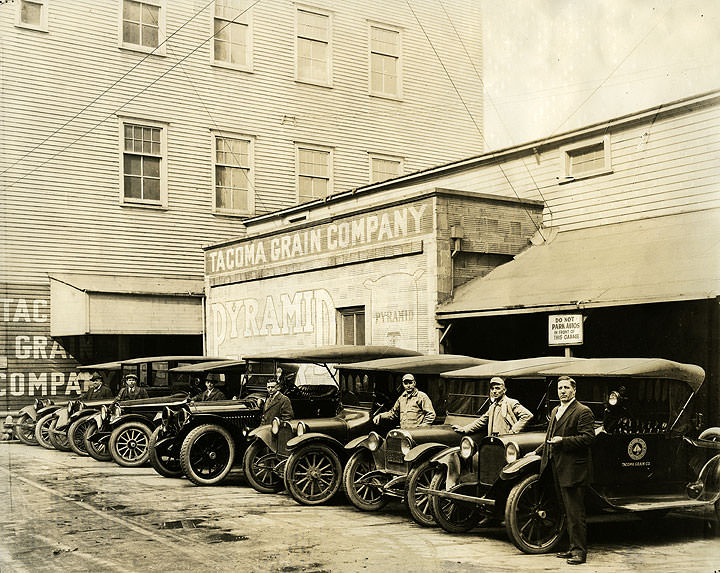
Men are posing beside seven cars parked parallel to each other in front of a Tacoma Grain Company building located on the waterfront near North Fifth Street. The men from left to right: Mr. J. Strickland; William Creten; Mr. R.D. Lytle; Claude E. Curran, secretary-treasurer; Julian Odgers; Robert Ashton; Fred Sylvester. Some of the men wear work clothing, and some wear suits.
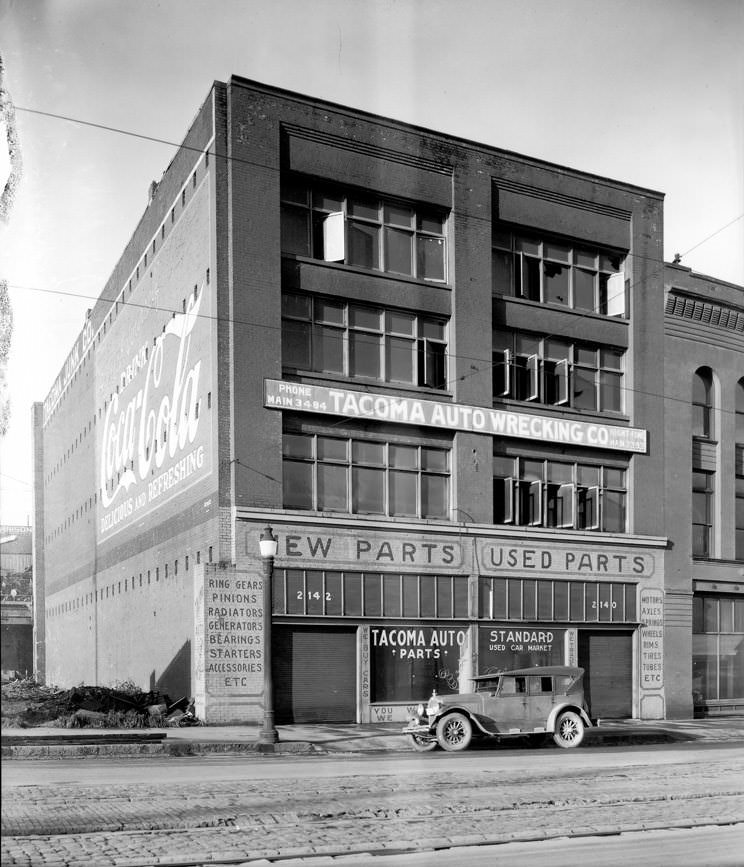
A four-story brick building is photographed from across Pacific Avenue. On the building are several signs. Above the second-story windows on the front is: Phone Main 3484 – Tacoma Auto Wrecking Co – Night-Fone Main 3393. Above the first floor are the words New Parts – Used Parts. Below this sign is the address 2142 – 2140. Tacoma Auto Parks and Standard Used Car Market are painted on the first-floor windows. Lists of auto parts are on each side of the windows.
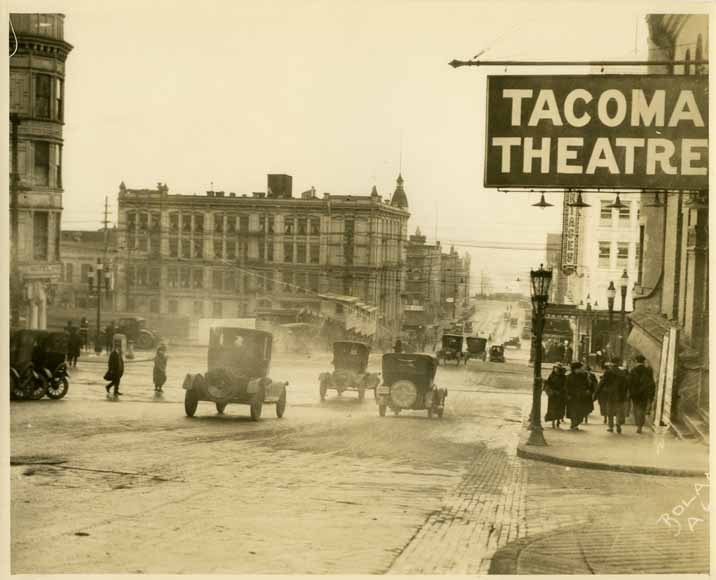
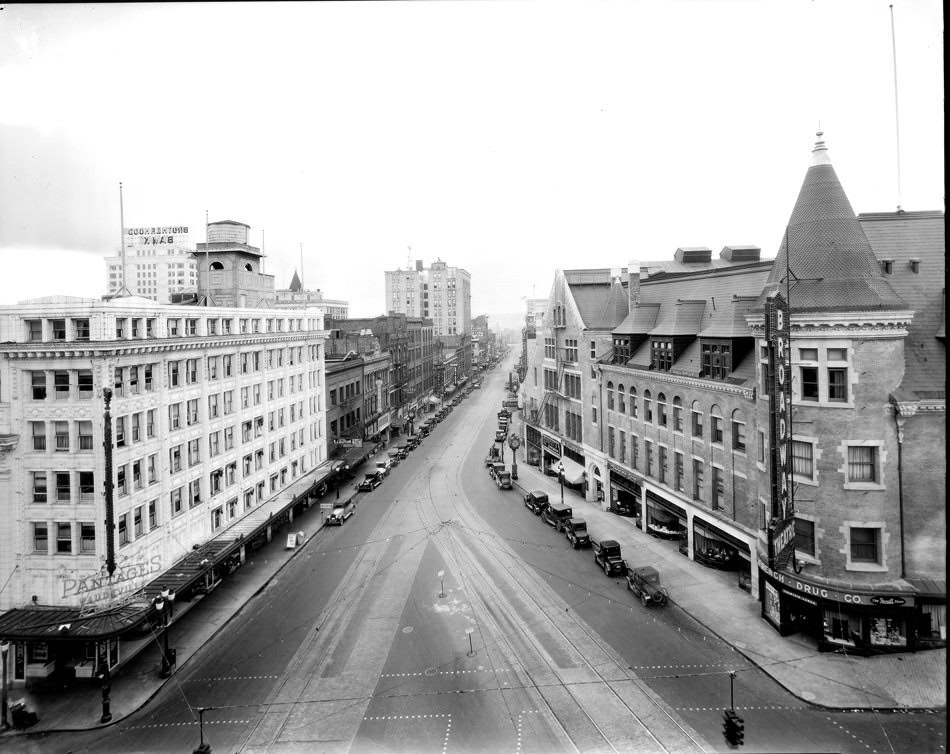
A busy downtown street scene at 9th and Broadway streets, looking northward. Many automobiles and pedestrians are present. Advertising signs for the Tacoma Theater and Pantages Theater are visible. The waterfront area and Commencement Bay are visible in the far distance.
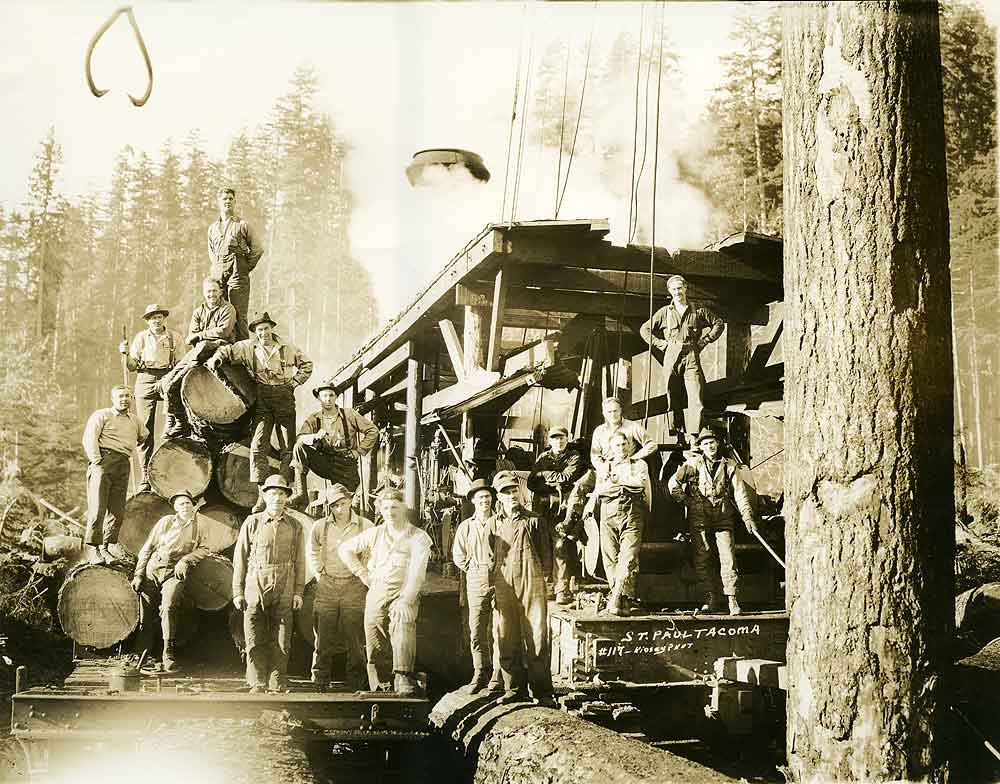
In an unidentified location in Western Washington, several loggers from St. Paul & Tacoma Lumber Company are standing on and near logs piled on a railroad car. Smoke obscures most of the engine.
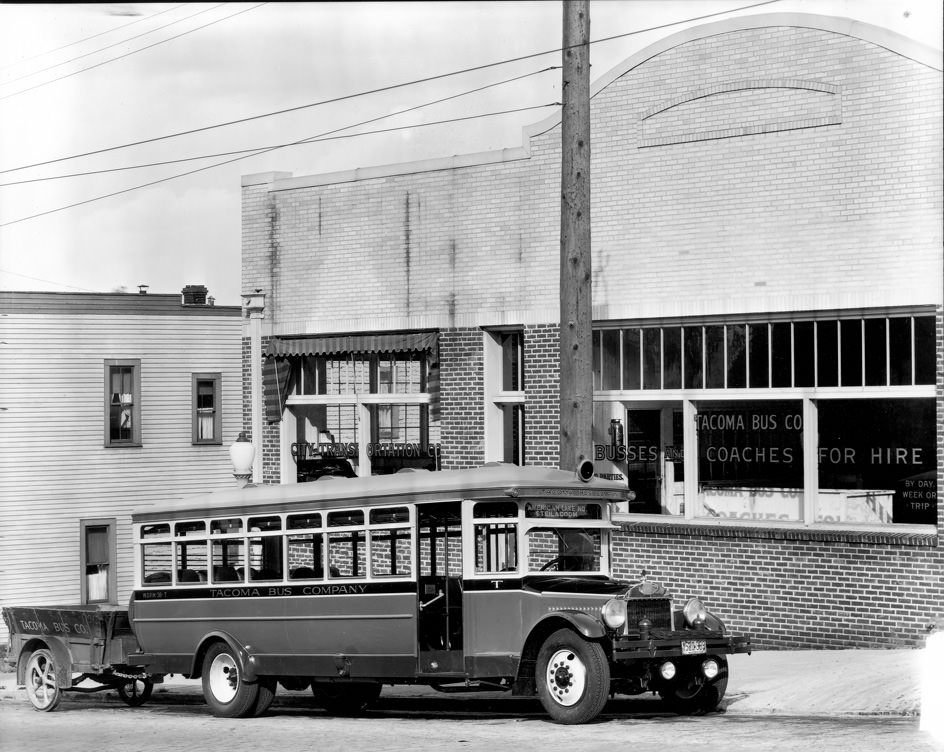
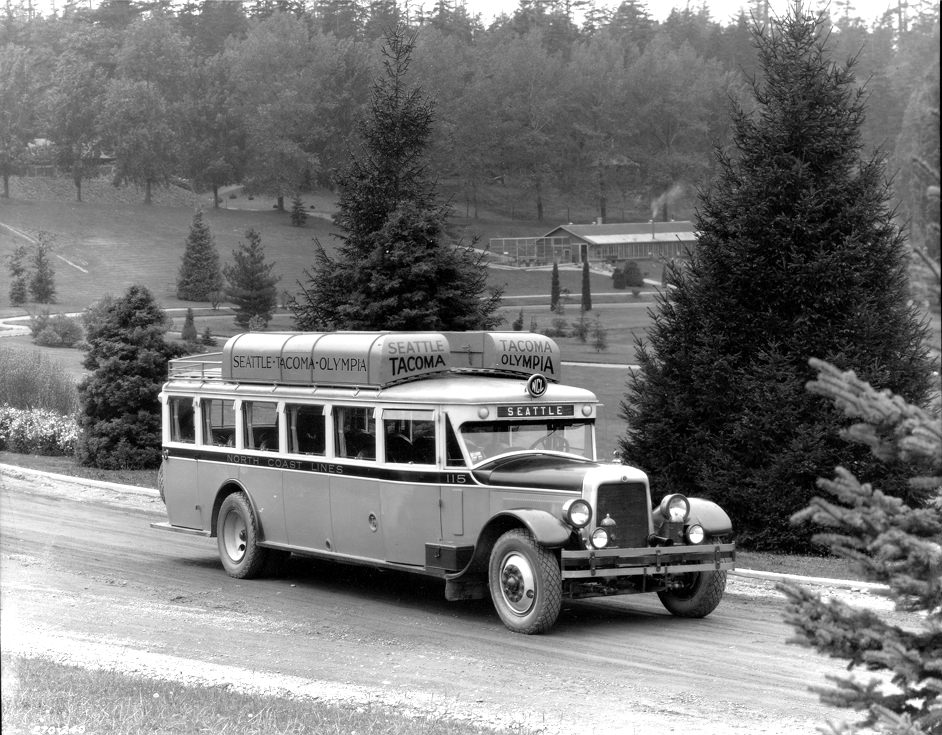
The attached bus trailer is parked in front of the Tacoma Bus Company located at 2813 Pacific Avenue. On one of the one-story brick building’s windows is written: City Transportation.
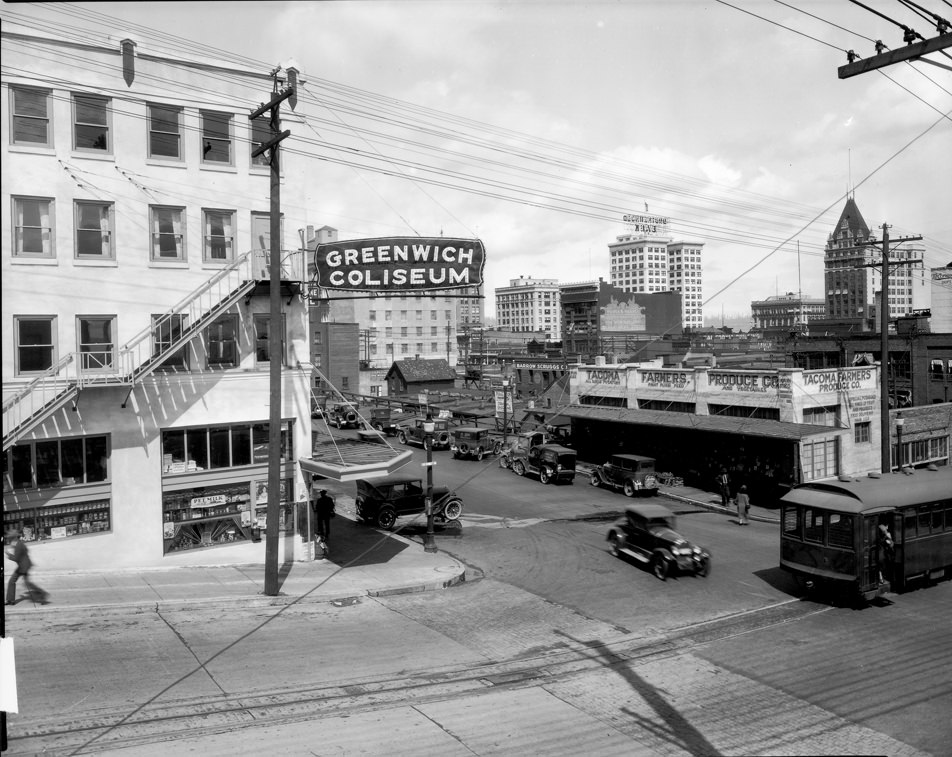
Greenwich Coliseum is at the left, and Tacoma Farmers Produce Company is at the right. The Barrow Scruggs Company building and the Tacoma skyline are in the background. The Greenwich Coliseum, built in 1926, held wrestling matches on Monday nights, boxing matches on Thursday nights, and dances on Friday and Saturday nights. In 1940 it became the Coliseum Bowling Alley and was finally torn down in 1975.
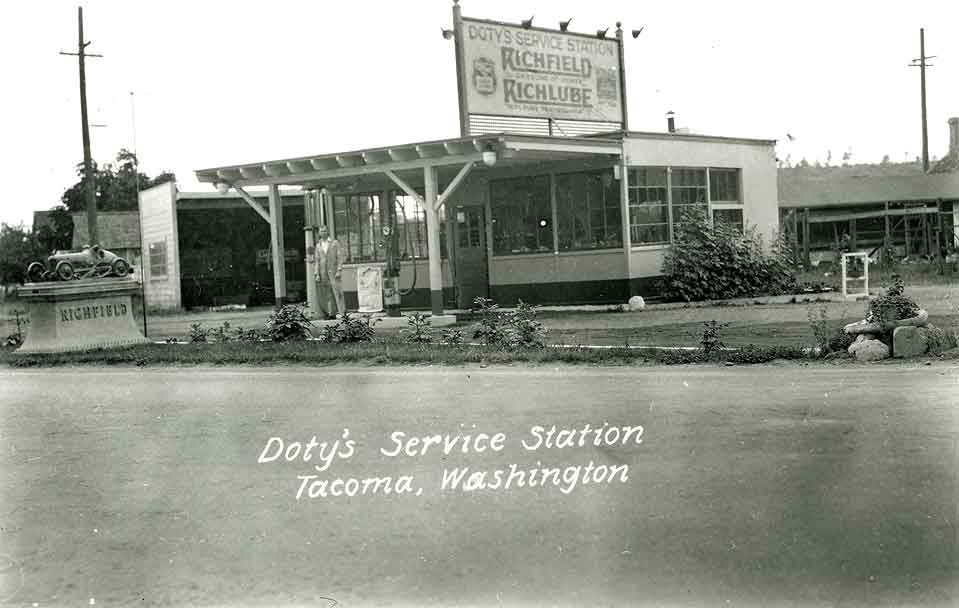
Black and white image of a service station in South Tacoma, Pierce County, WA. The station, located at 2901 S. Tacoma Way, is identified as Doty’s Service Station by a sign advertising Richfield and Richlube. A man is standing in front of the building. There is another building to the side, which could be the service bays. There is a marker in front of the station that says Richfield and has a roadster model on it.
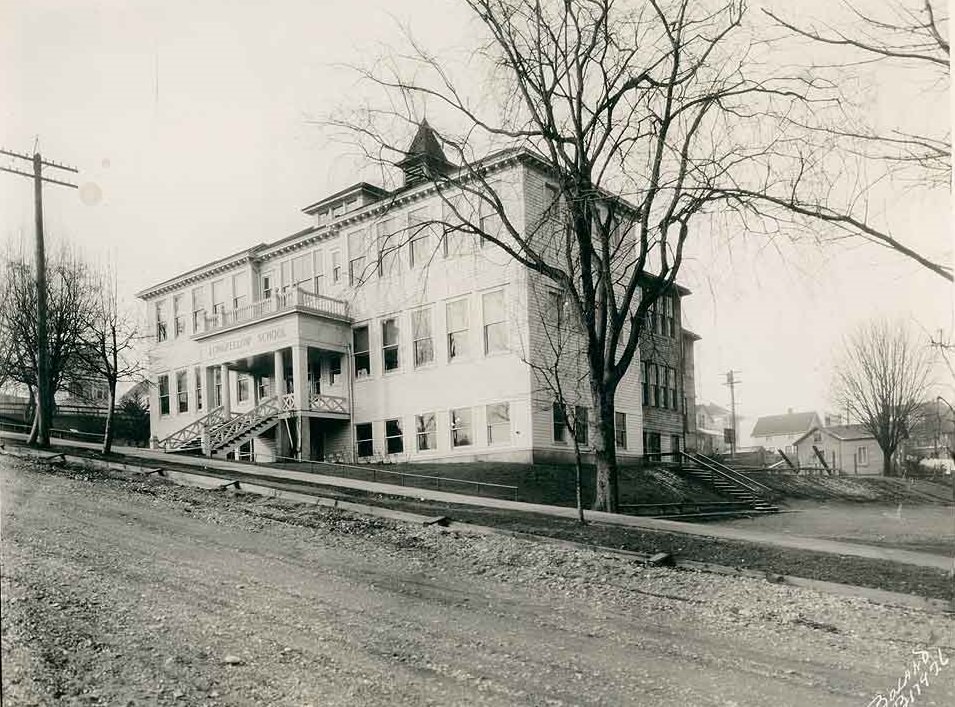
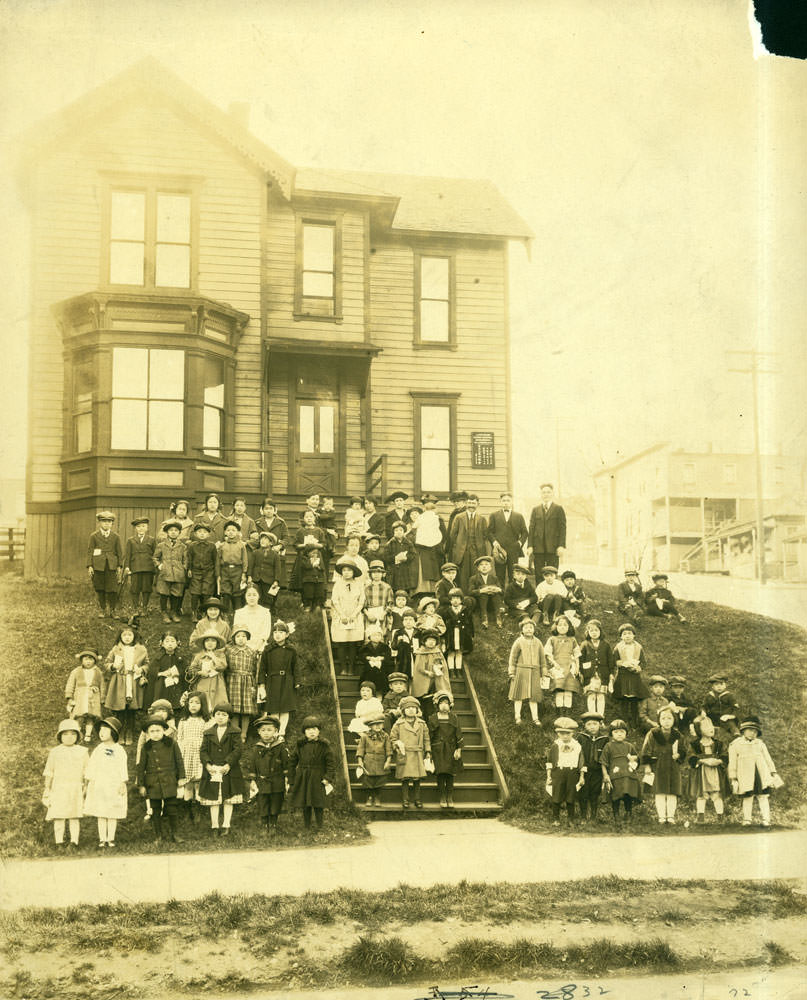
Many male and female Japanese American children of varying ages, wearing good clothes, pose standing, grouped probably according to their Sunday school class, on the lawn and steps in front of the Japanese Methodist Episcopal Church at 1302 Tacoma Avenue South.
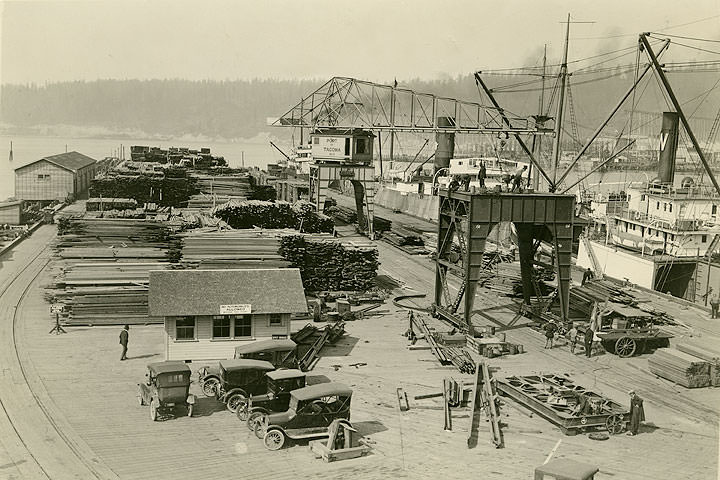
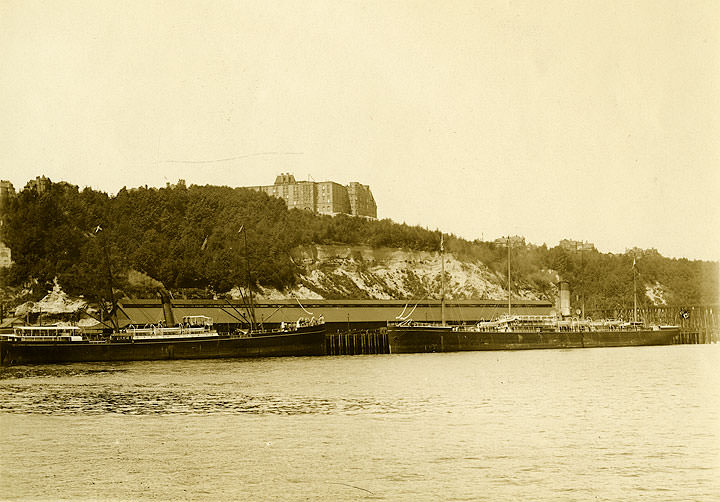
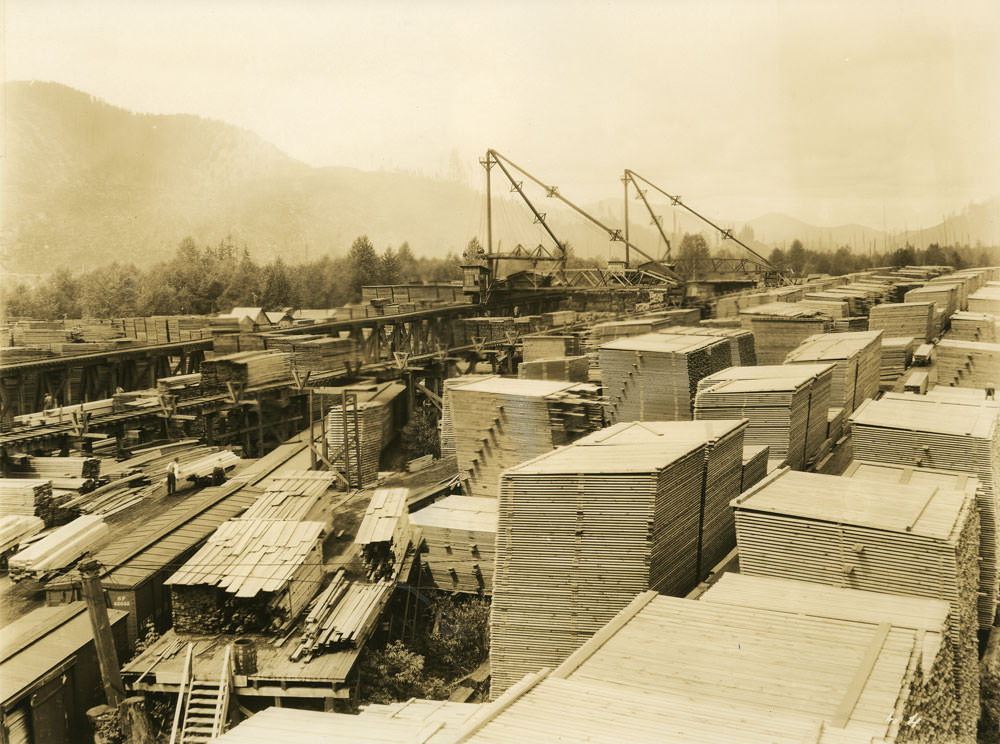
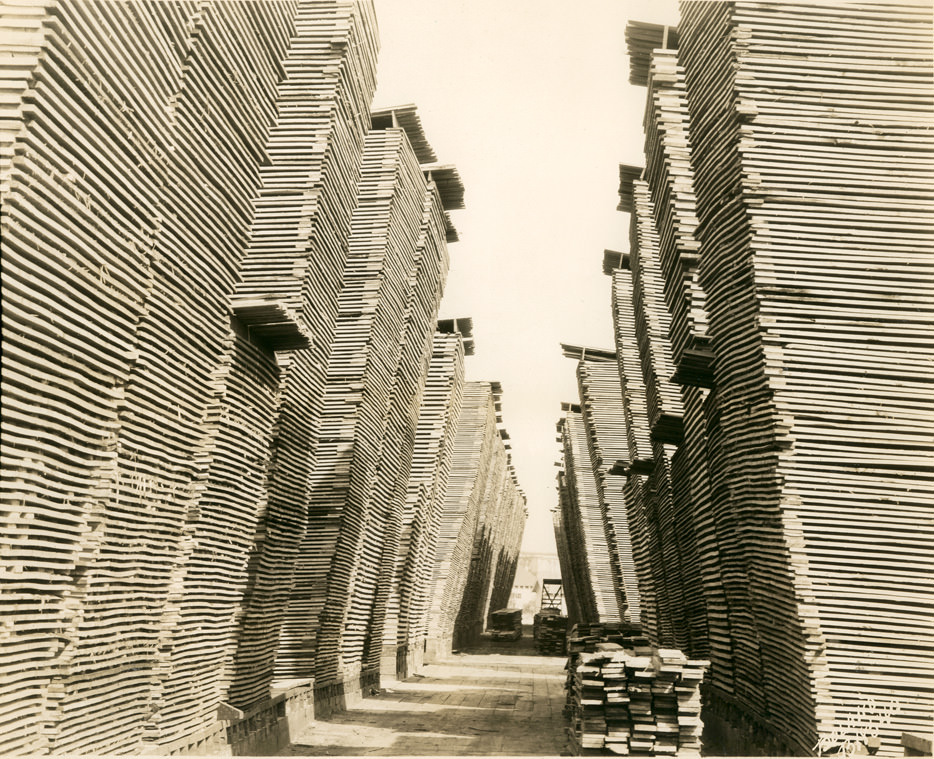
There are piles of lumber on a municipal dock at the Port of Tacoma and a partially visible steamship at the right alongside the dock. A few automobiles are parked in front of a building in the foreground, and the lumber piles extend far back on the dock. A railroad track parallel to the piles is at the image left. A crane for loading the ships is at the image center.
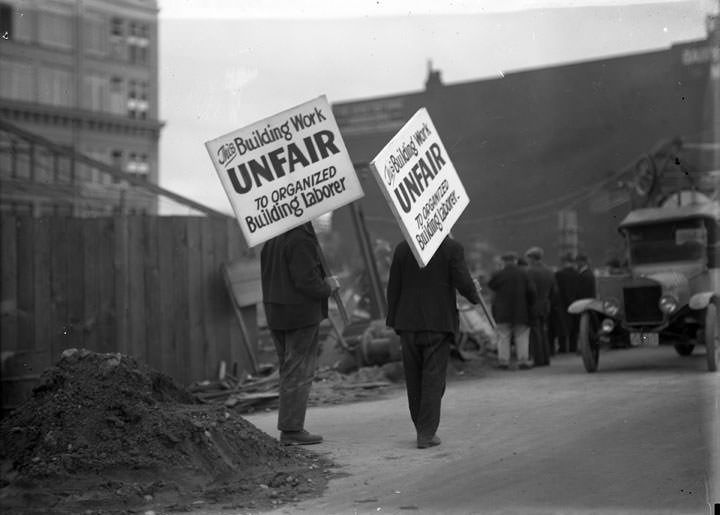
They carry identical signs, which obscure their faces: This Building Work Unfair to Organized Building Labor.
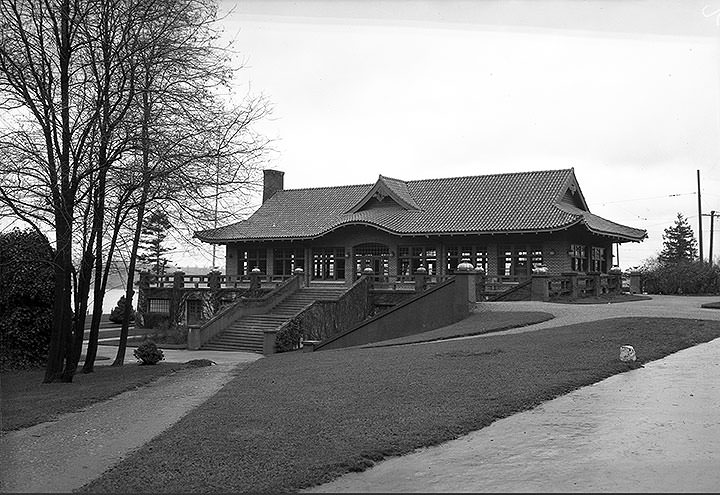
A wide staircase at the front of the building is visible in the image center-left. Streetcars would approach from the side of the building, which is not visible.
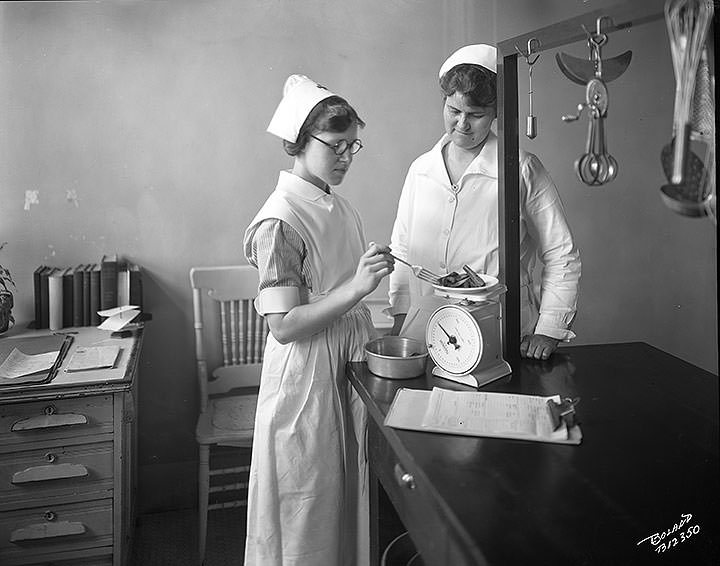
A female student nurse, in uniform, is weighing food on a kitchen scale in the Tacoma General Hospital diet kitchen, Tacoma. A clipboard lies on the table near the scale. Three or four kitchen utensils hang from a rack over the table, including an eggbeater.
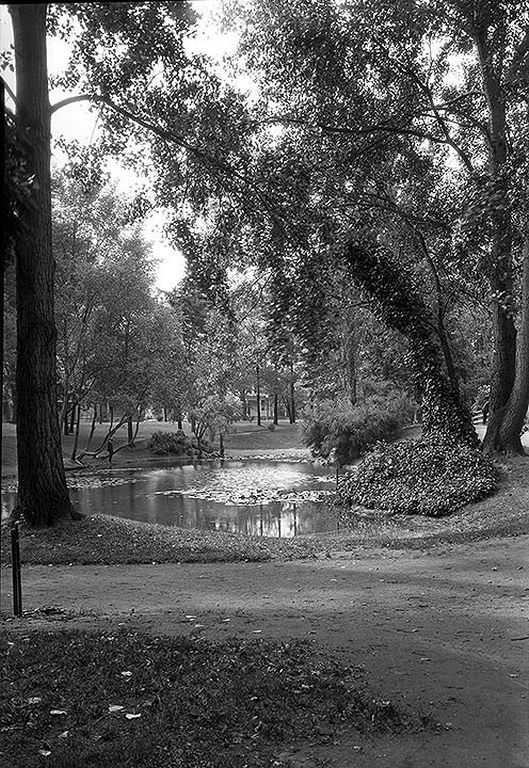
A dirt path crosses the lower part of the image. A pond flanked by two large trees is in the image lower center. A grass-covered area with trees is beyond the pond.
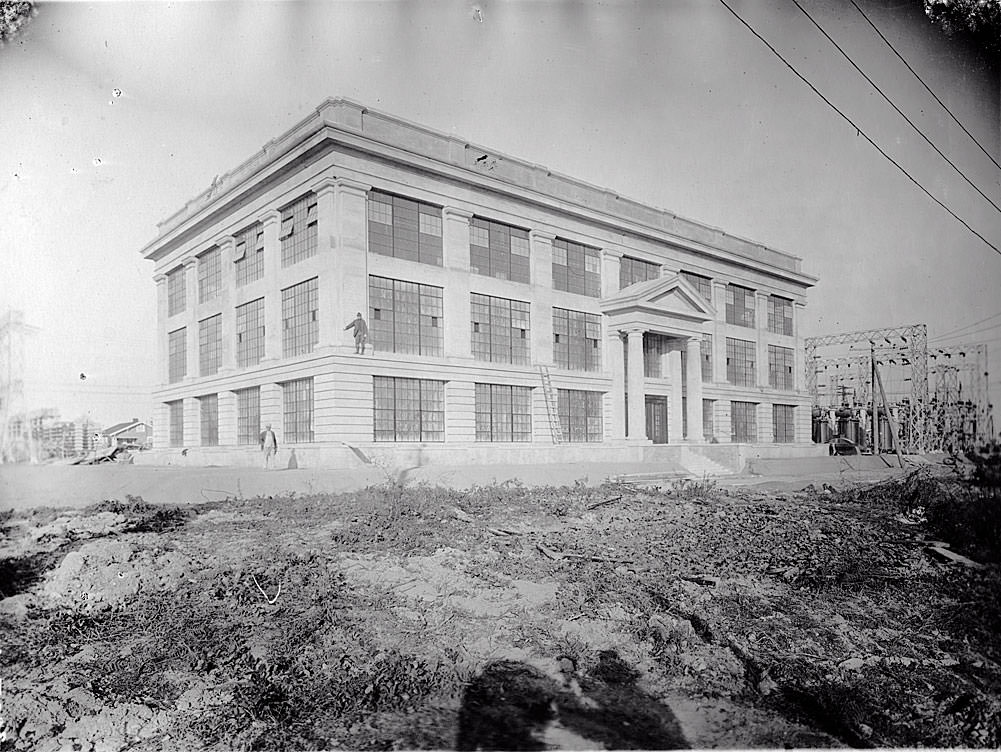
The image shows the completed left side and facade of the building. A man poses on a second-story ledge at the left corner of the building. Another man poses on the ground farther to the left. The substation was completed in 1926.
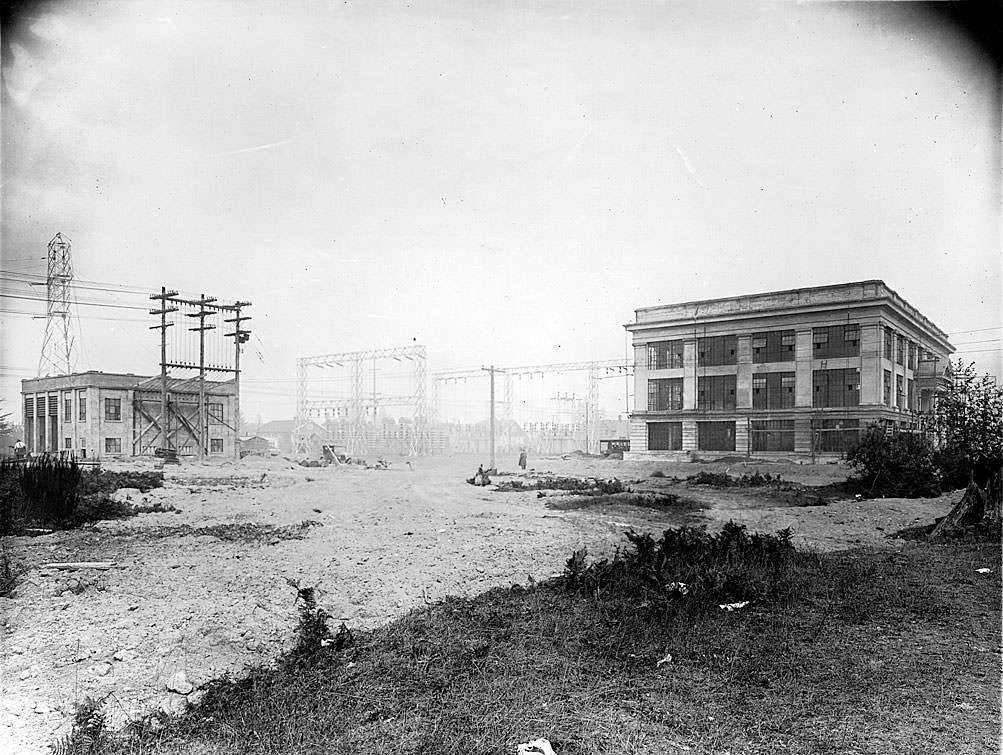
To the right is the main substation building. A smaller building belonging to the substation is on the left. A man is visible in the center of the photograph to the right of the main building.
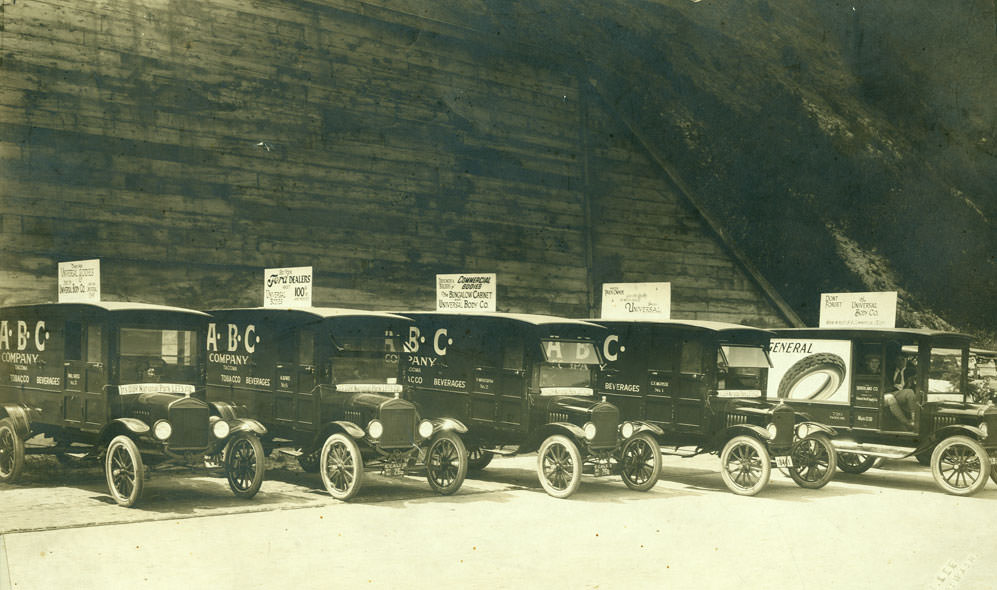
Four cars have painted signs on their sides for the A.B.C. Company, Tacoma, Tobacco, Beverages. All five cars have signs mounted on top for Universal Body Company.
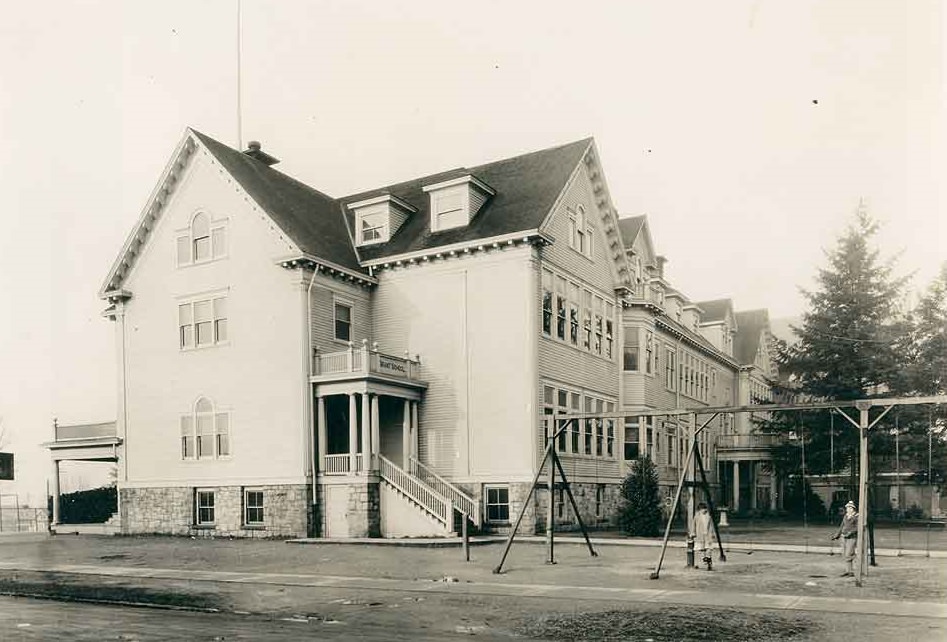
A playground, with a boy and girl standing by a swing set including swings and rings, is in the foreground.
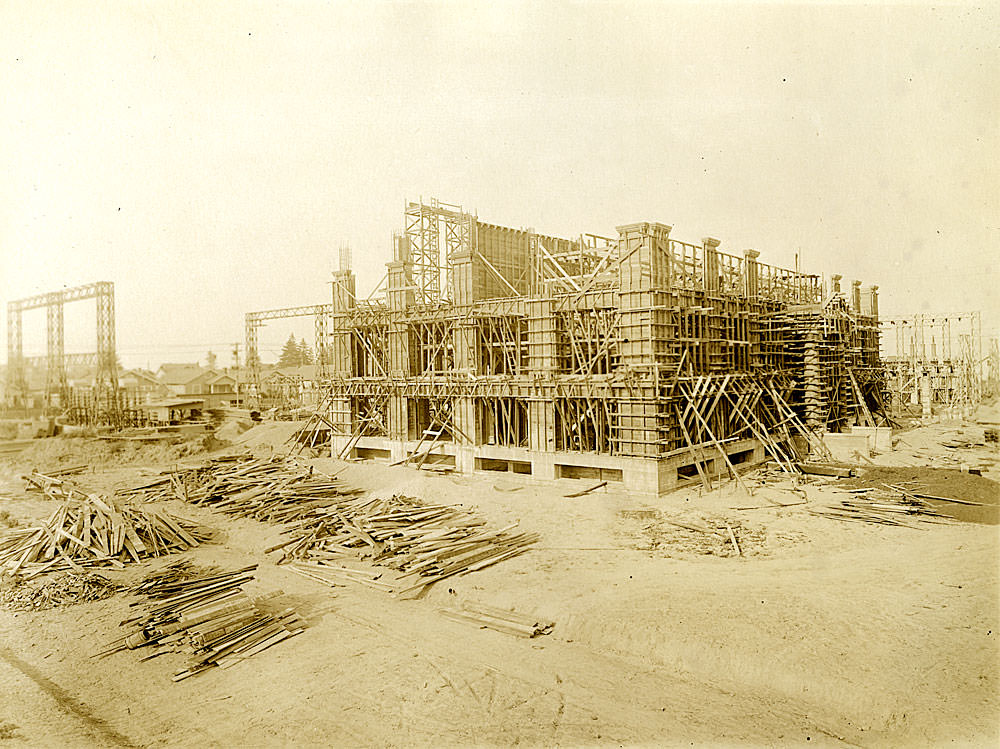
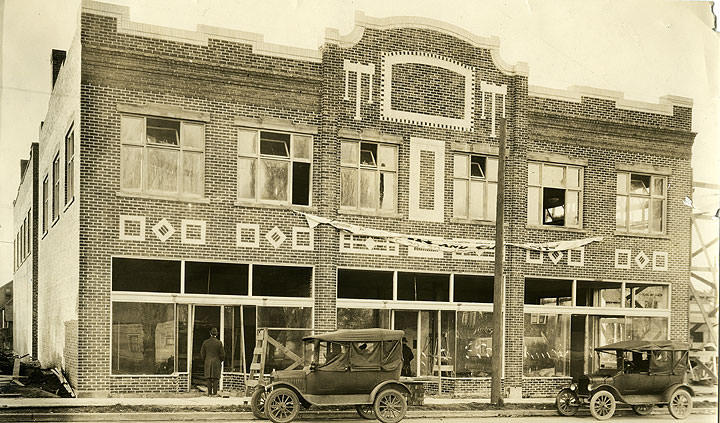
The half-built building is covered in scaffolding. Stacks of lumber are visible in the foreground to the left. Several houses can be seen in the middle left of the image.
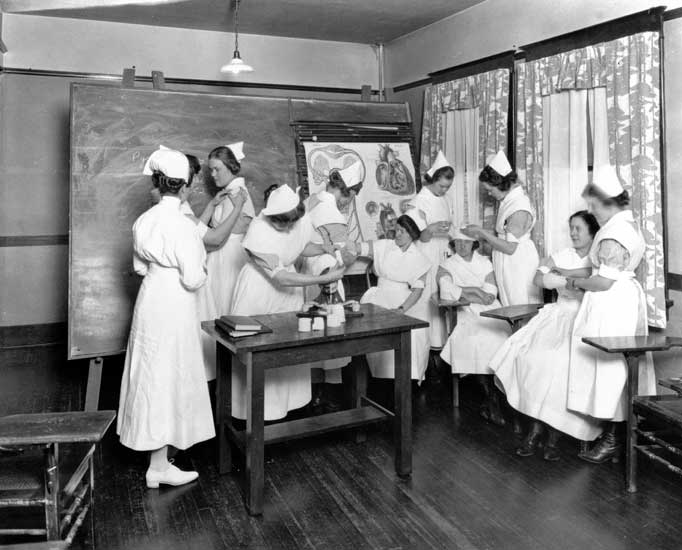
With her back to the camera, a nurse instructor is supervising the students. A chalkboard with a chart of the heart and circulatory system and two curtained windows are in the background.
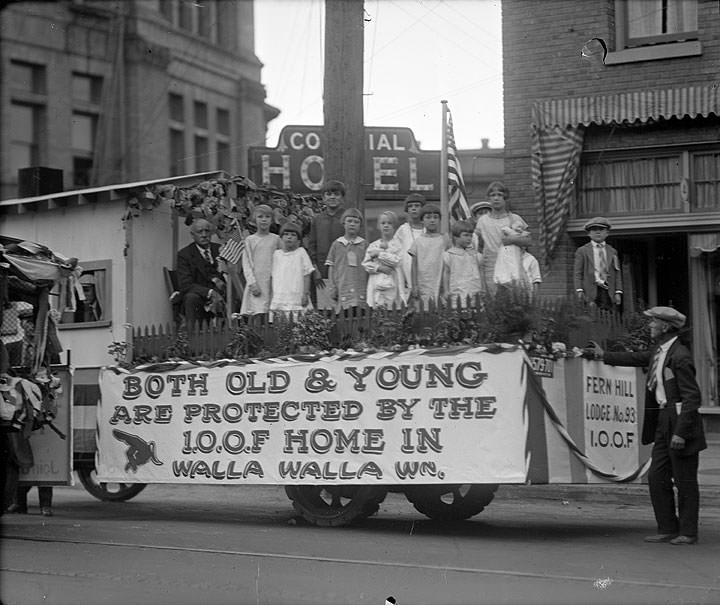
Eleven boys and girls of various ages, two girls holding dolls, and an older man are standing on the float, facing the photographer.
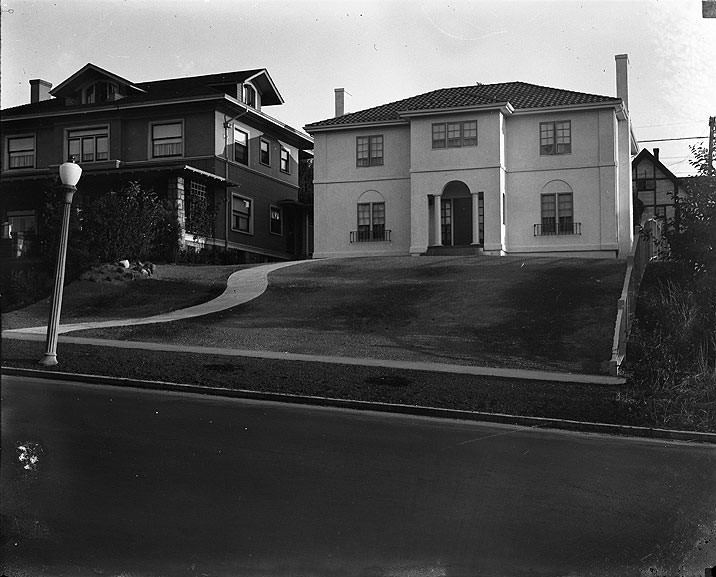
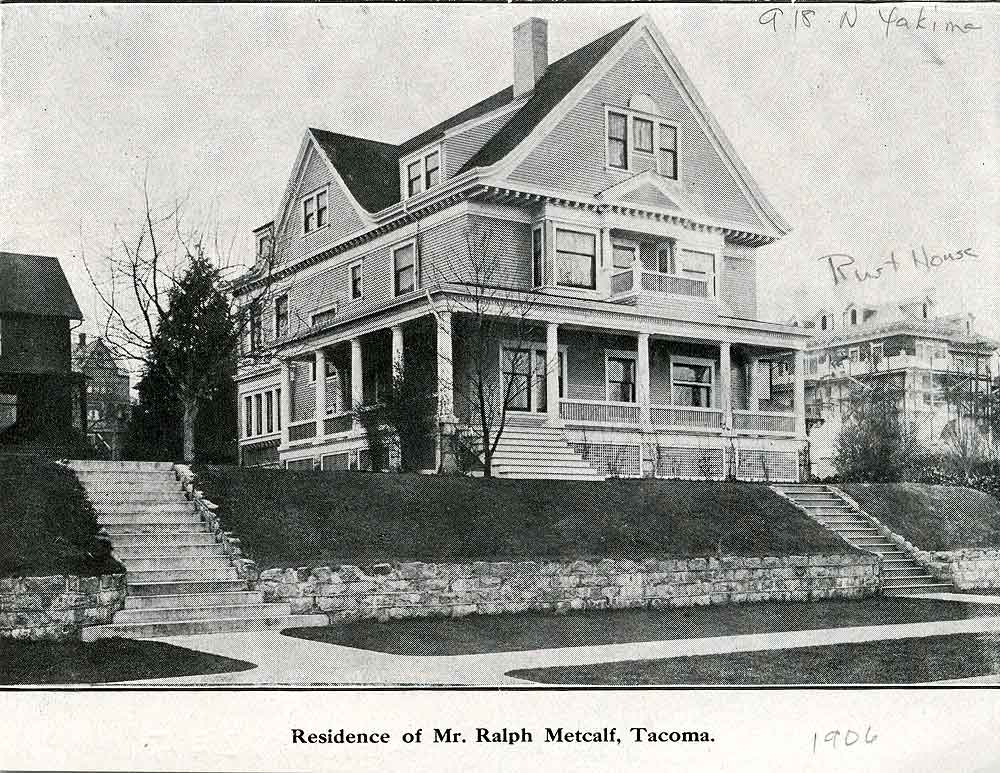
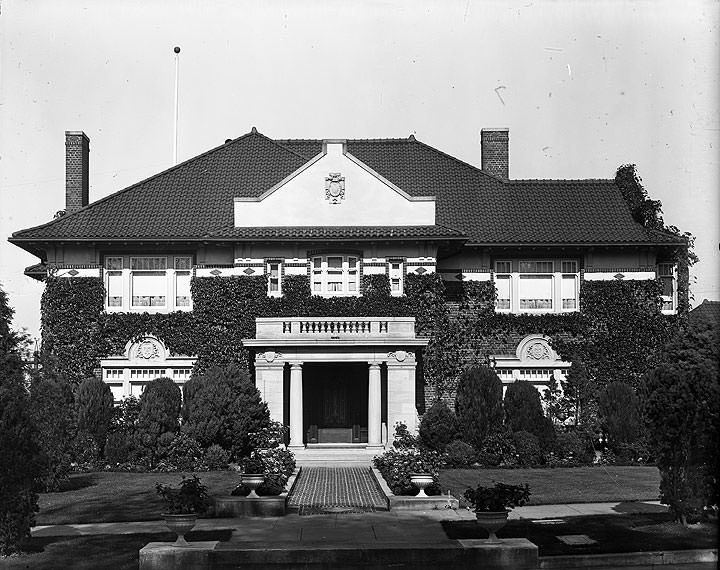
Black and white glass plate negative image of a two-story Spanish style home on North Yakima Avenue, Tacoma. A two-story home with an attic is partially visible at the image left.
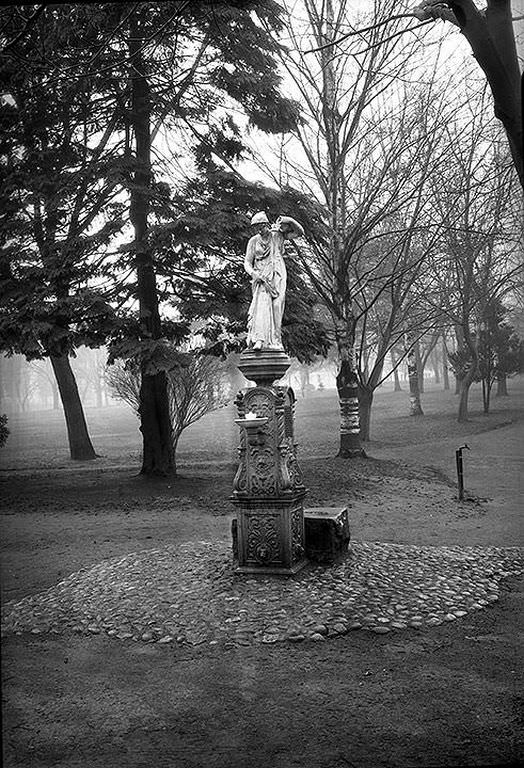
Black and white close cellulose nitrate negative image of the statue of a woman mounted on top of a four-sided base that appears to have a drinking fountain on the visible side, in Wright Park, Tacoma.
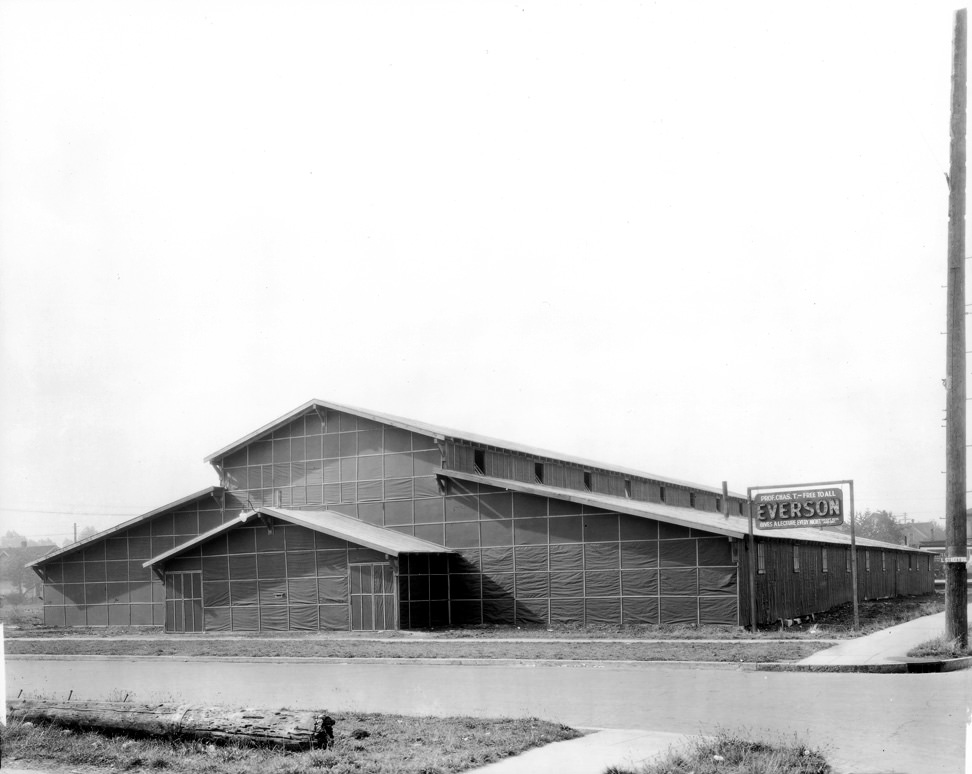
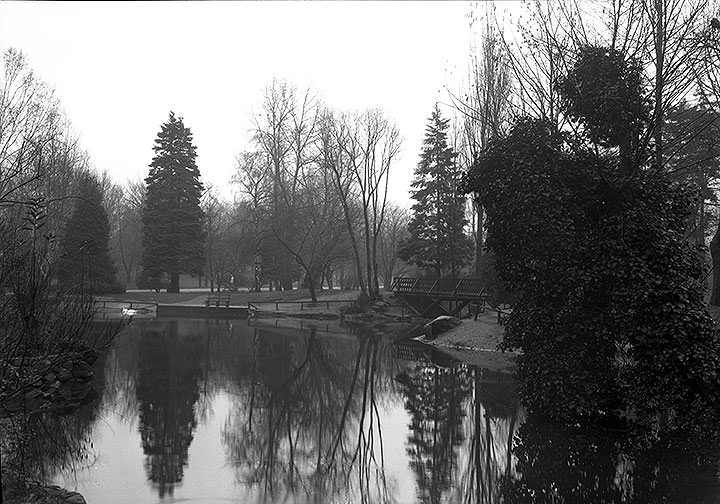
A footbridge is visible in the image center-right. In the image background, the reflections of the trunks and branches of evergreen and bare deciduous trees are visible in the pond.
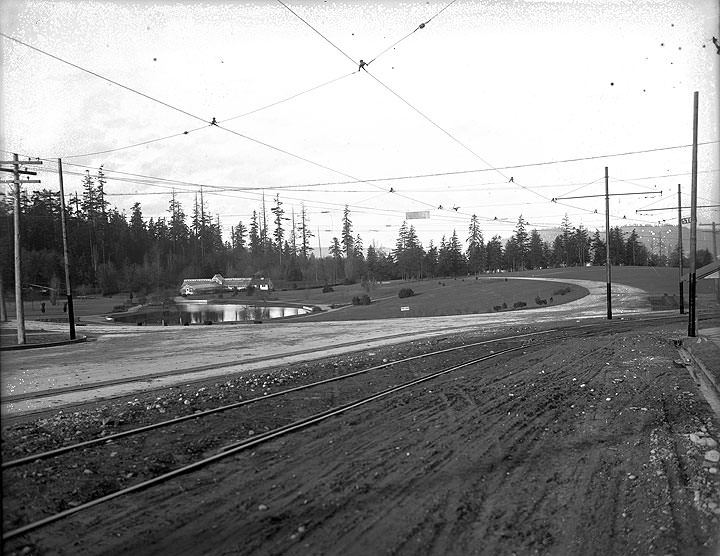
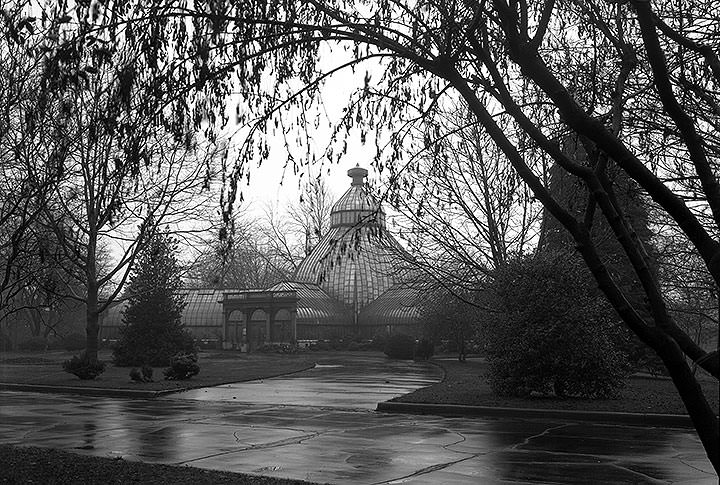
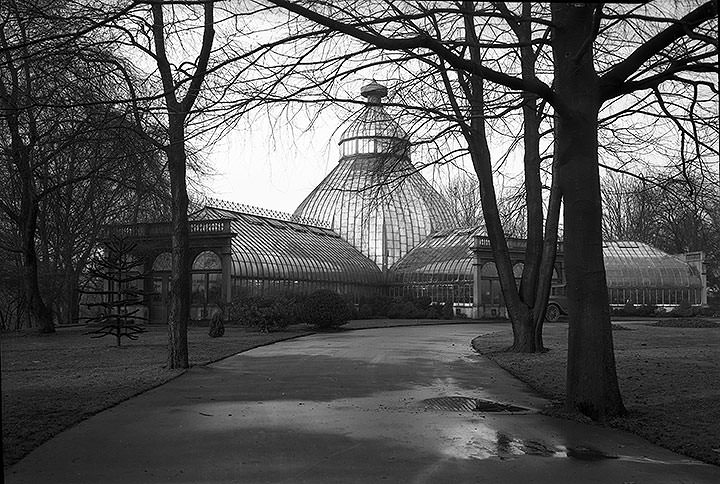
A pond is in the center-left distance, with grass surrounding it. A greenhouse is in the distance beyond that.
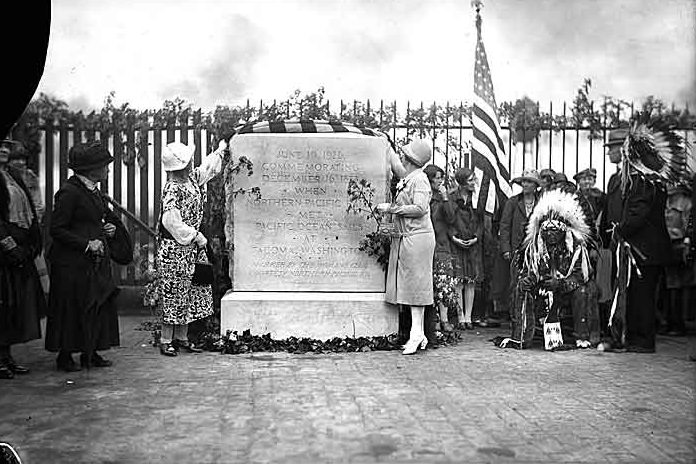
The Women’s Club of Tacoma funded the marker. Two women are unveiling the marker in the image center. The details of their dresses and hats are visible. An older woman stands at the image left edge. Two North American Indian men wearing feather headdresses are near the right edge.
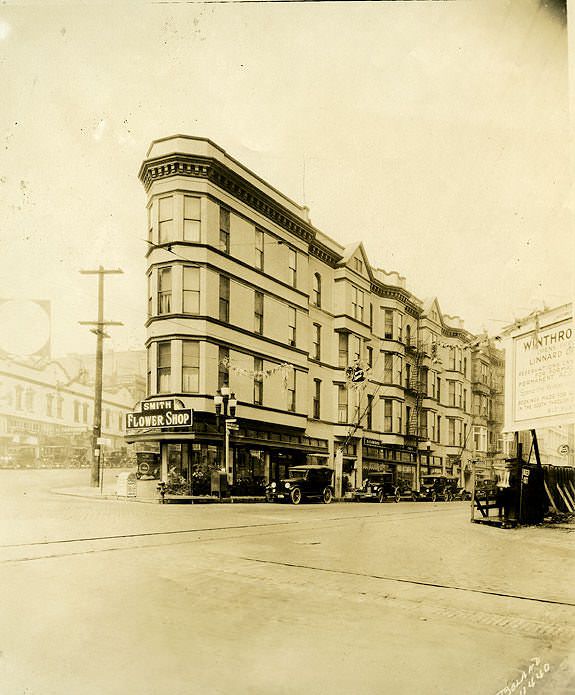
From the intersection of Broadway, Ninth Street, and St. Helens Avenue, the view looks at the Broadway side of the Bostwick Building.
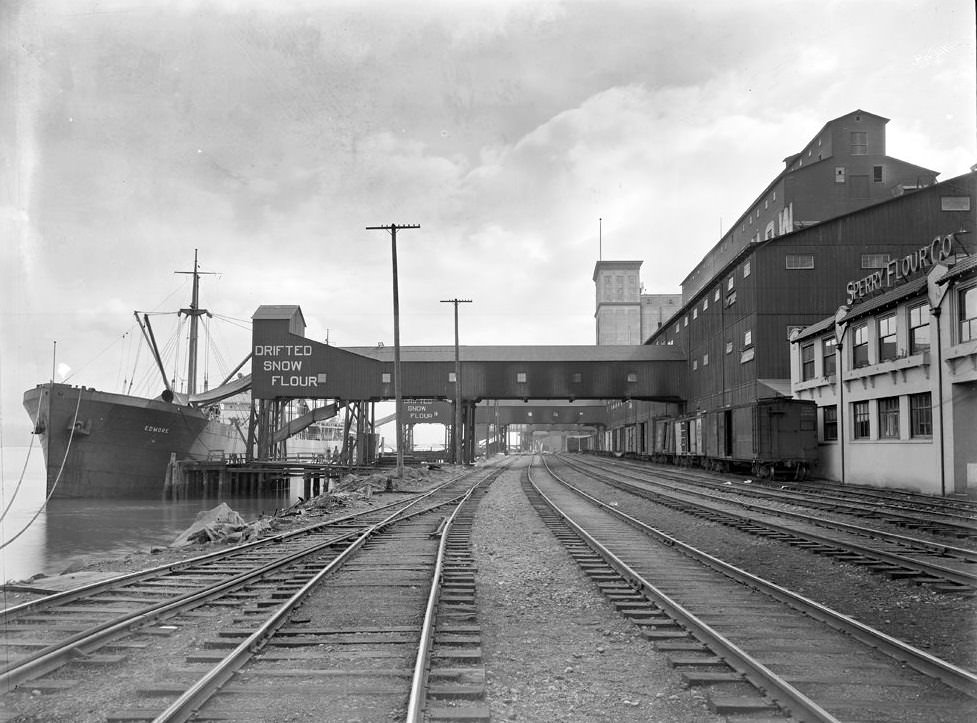
Sperry Flour Company grain elevator at Tacoma. The Edmore is moored at the dock ready to take on cargo brought in by rail from the wheat-growing region of Eastern Washington. Railroad boxcars are on the tracks next to the grain elevator. Bridges from the elevators reach across the tracks.
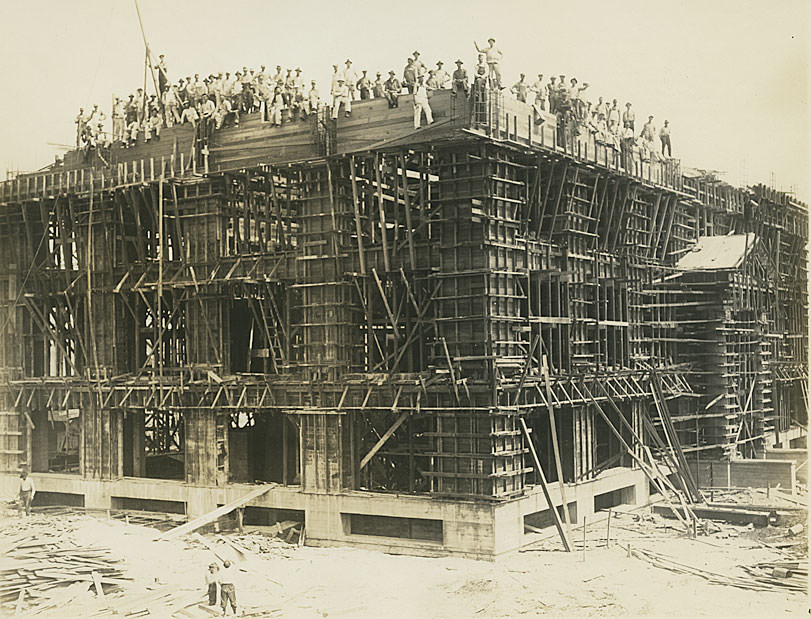
The image shows the exterior of the substation covered in scaffolding. A large group of men have gathered on the roof of the building to pose for the photograph. Left of center near the lower edge, two boys stand on the ground amid the construction debris and look up at the men. Another man is visible on the far ground to the far left.
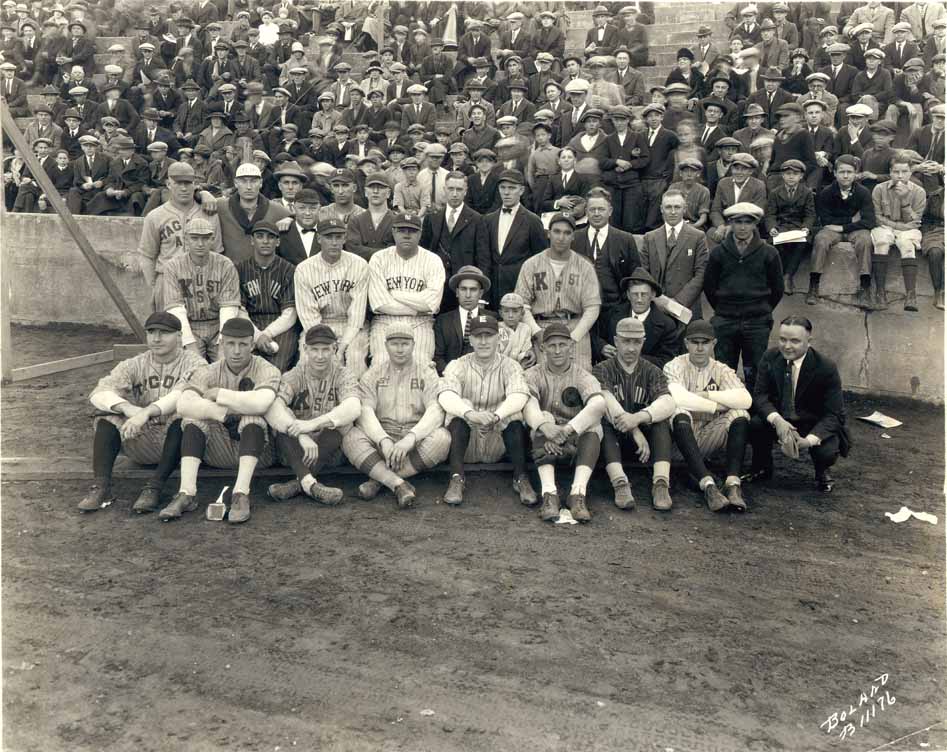
Group portrait of the Tacoma All-Star baseball team posed with Babe Ruth and Bob Meusel in front of a grandstand filled with men and boys. The players in the front row sit on the ground with arms crossed over their knees. Babe Ruth stands in the second row, arms akimbo.
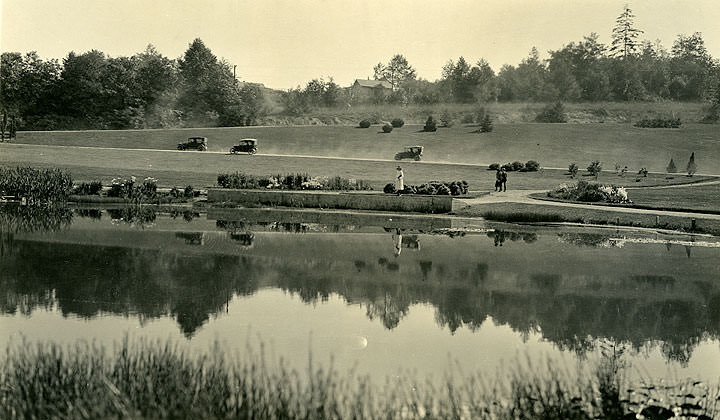
A woman stands on a low stone structure at the far edge of the pond. Three automobiles are in profile as they ascend a road on a landscaped slope behind her. The woman’s reflection, automobiles, and trees in the distant background are visible in the pond.
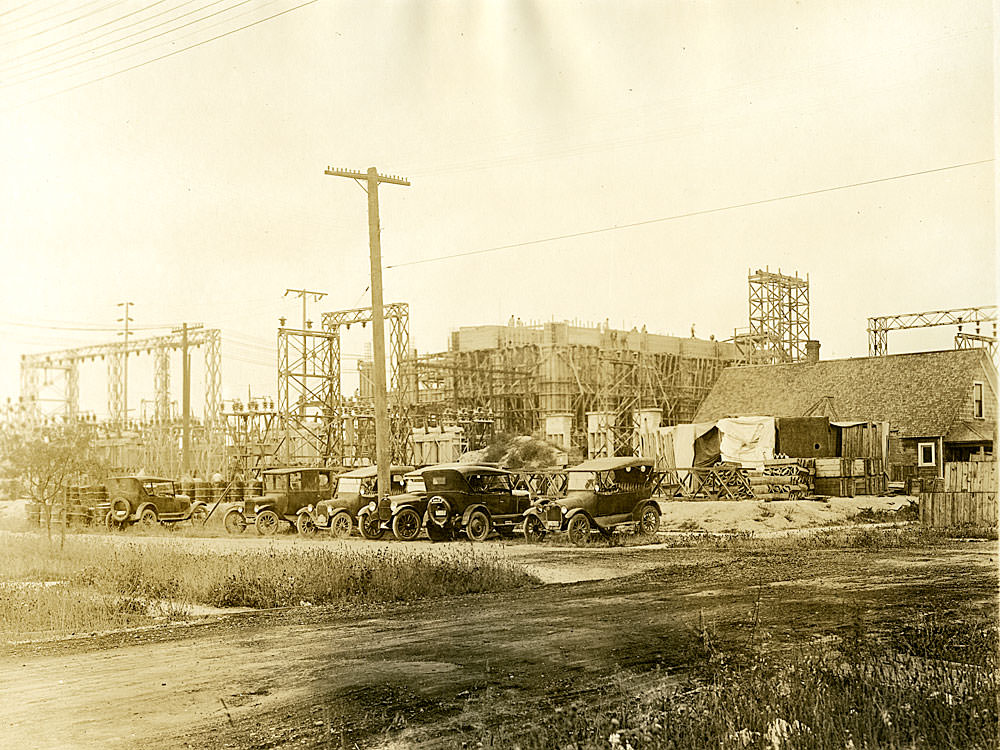
A dirt road runs from the lower left to the right, intersecting with another dirt road on the left. Six cars are parked in front of the construction area. Scaffolding surrounds the substation building, and several men are visible on top of the building.
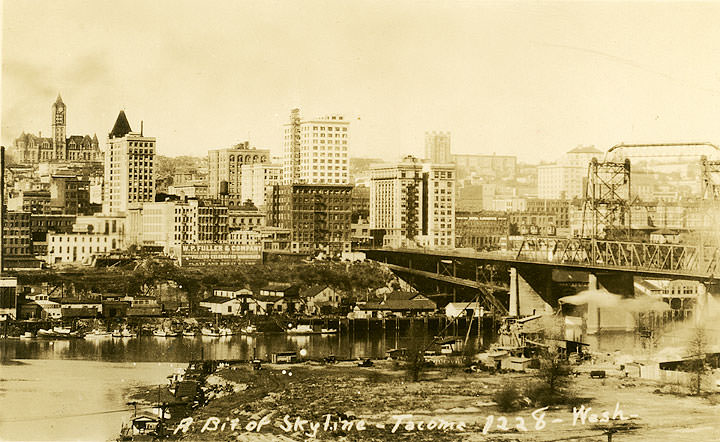
A bridge crosses the waterway in the image far right. The old Pierce County Courthouse is near the image left edge, background.
![[Factually Corrected] Fisher Flouring Mill, Tacoma, 1920](https://www.bygonely.com/wp-content/uploads/2022/01/Tacoma_historical_photos_429.jpg)
Workers, including women, are grouped on the right side near a flatbed truck loaded with sacks of flour or wheat. One of the trucks has a sign reading: Fisher’s Poultry Meal, Fisher’s Calf Meal, Fisher’s Moffat, Fisher’s Morportk, Fisher’s Dairy Feed.
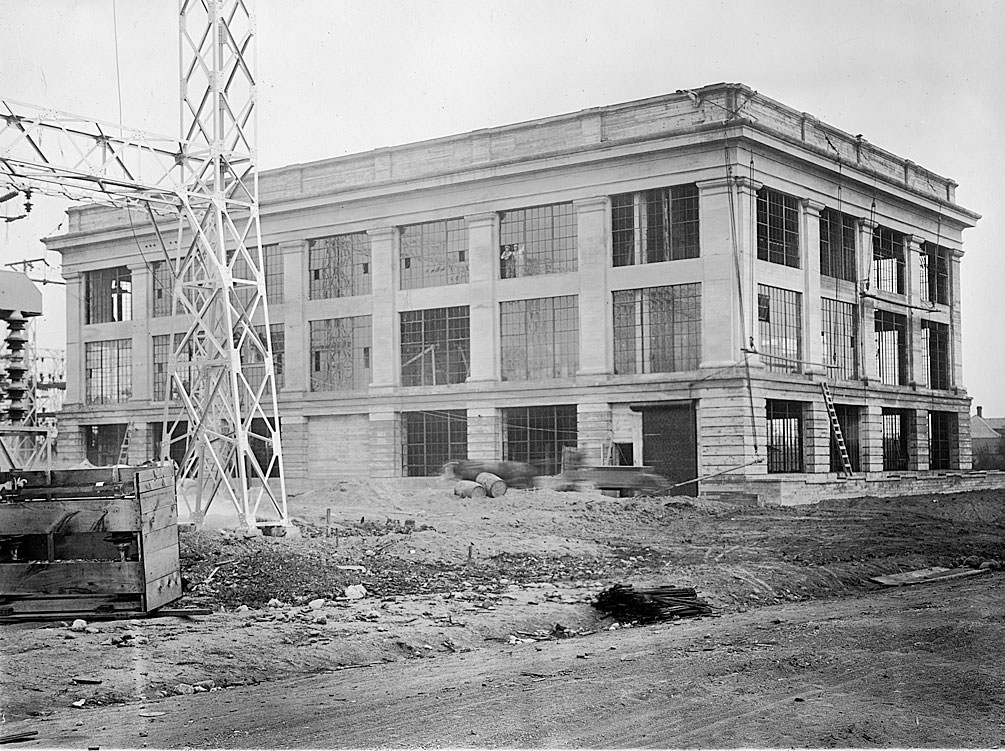
A ladder leans against the building on the right, and several pulleys extend from the roof. Two men look out the window on the upper story. A dirt road runs from left to right in the foreground. The substation was completed in 1926.
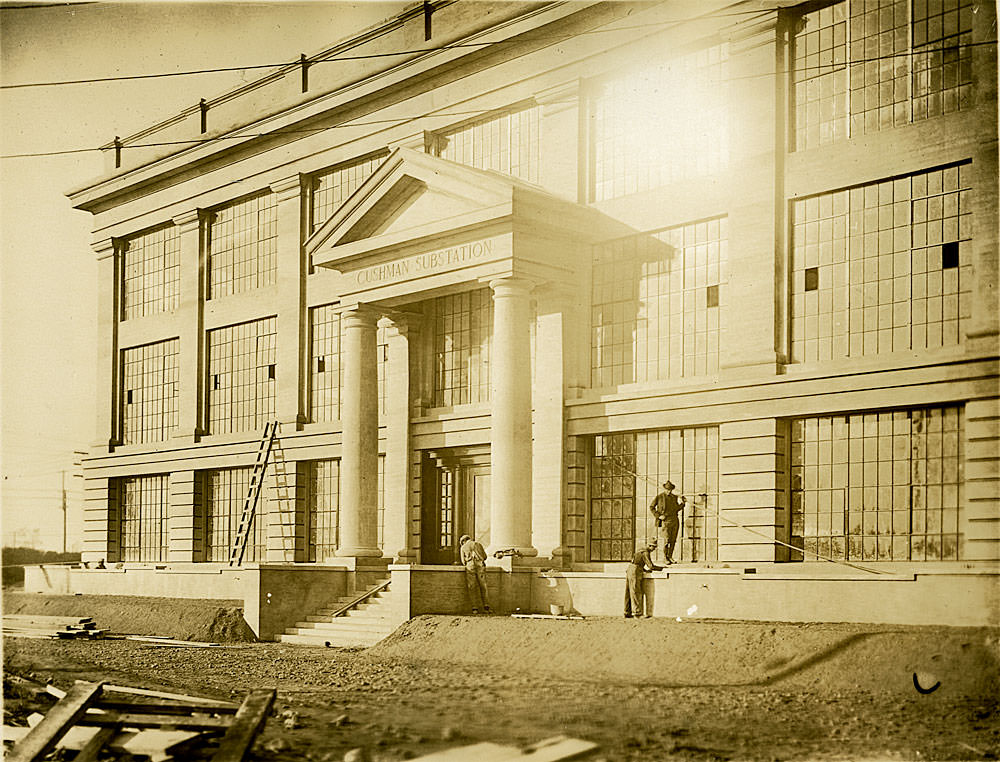
The image shows the nearly complete facade of the three-story structure. Steps lead to the entrance, covered by a portico reading “Cushman Station.” Three men work to the right of the entrance. A ladder leans against the building to the left, and farther to the left, a man’s head is just visible behind a low wall.
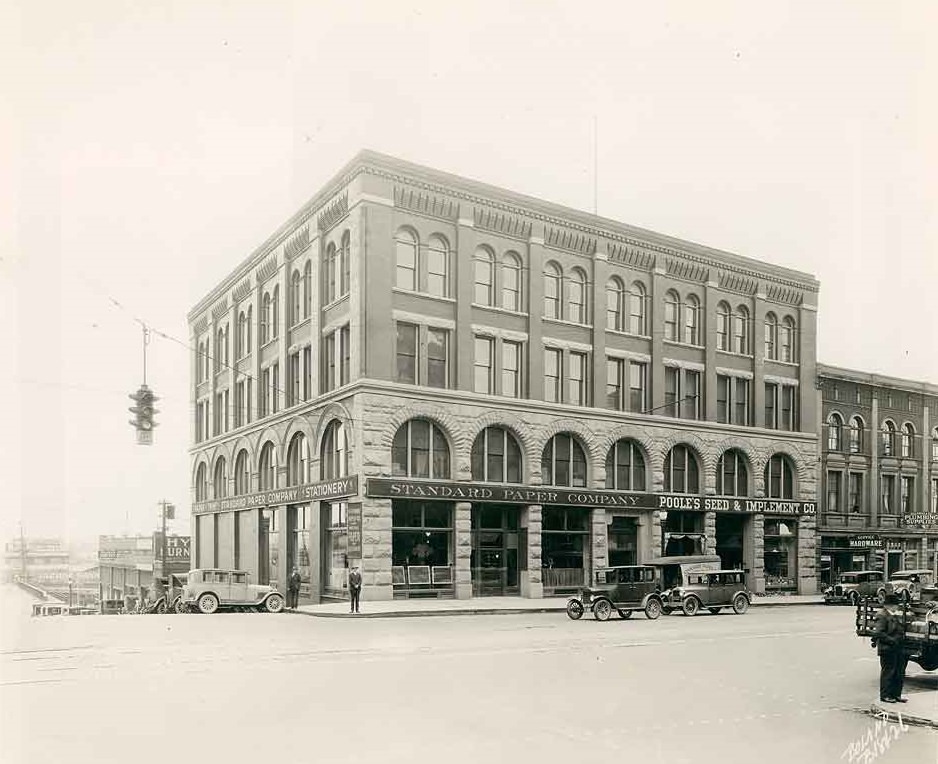
The Betz Building, at the corner of 15th Street and Pacific Avenue, Tacoma, with signs for the Standard Paper Company, 1501 Pacific Avenue, and Poole’s Seed & Implement Co., taken diagonally from across the street. Adjacent signs on Pacific Avenue are for Service Hardware and Sherman & Co. Plumbing Supplies.
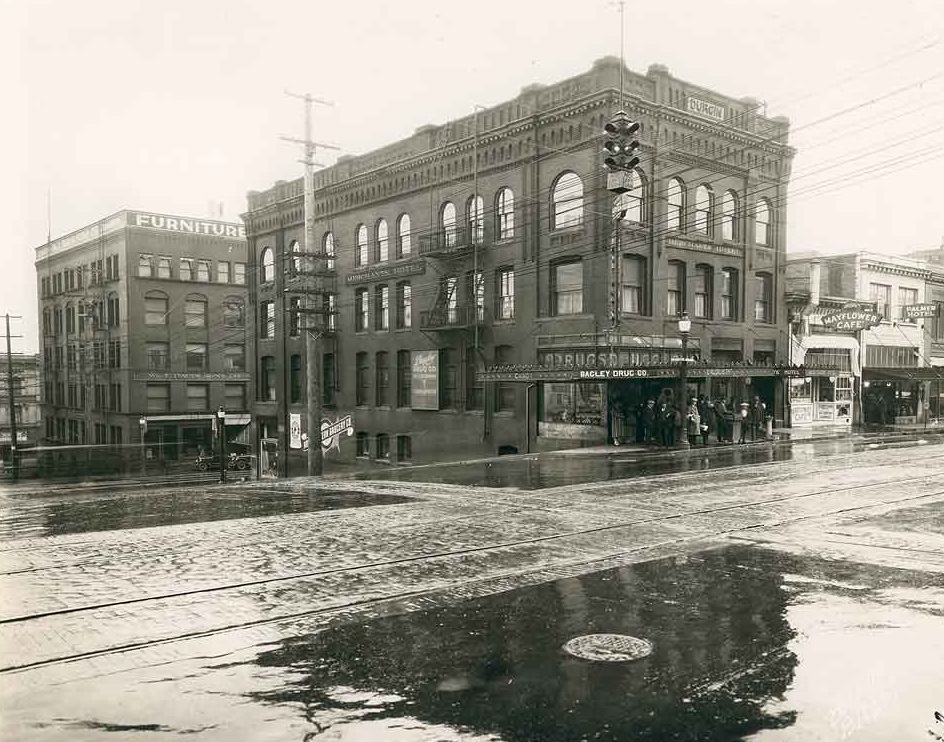
A few men stand under the building’s awning, which advertises the Bagley Drug Co. The Mayflower Cafe & Confectionery and the Palmer Hotel are adjacent on Broadway. The corner building housing the Wm. L. Davis Sons Co., a furniture store on 13th St. and Pacific Avenue, is at the left.
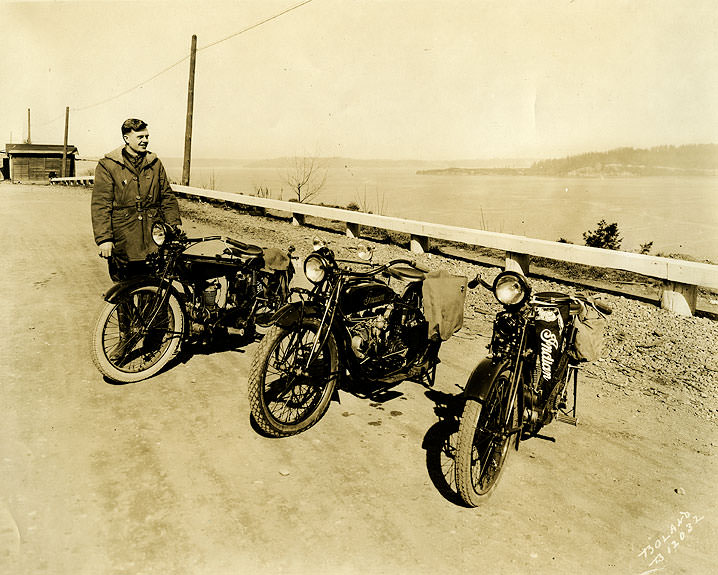
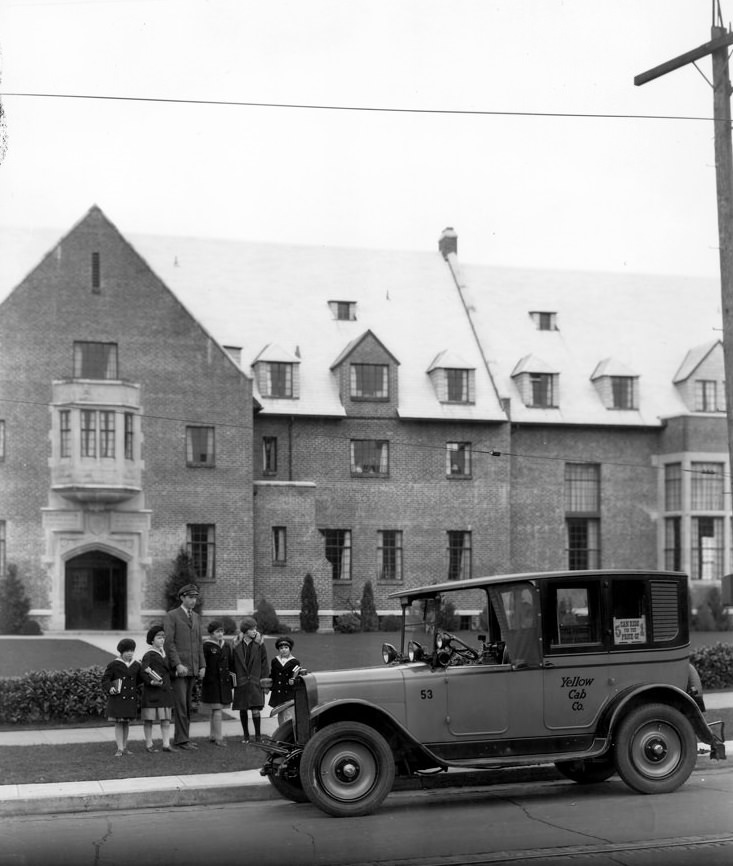
The buildings of the school are in the background. Dated 1927.
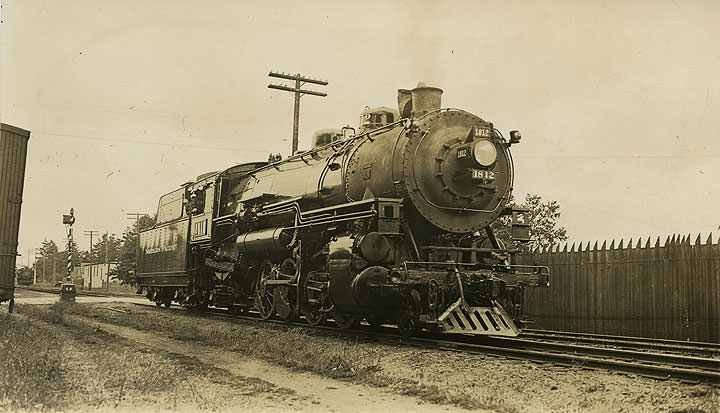
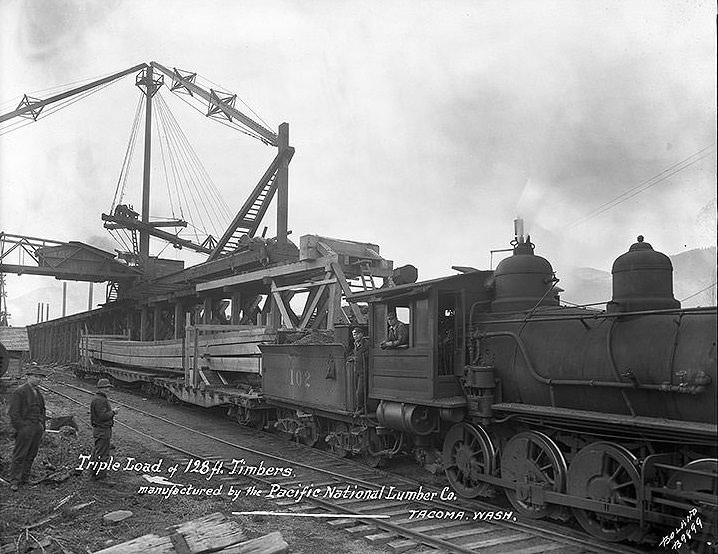
The engineer and another man peer out the window, although their features are hard to discern.
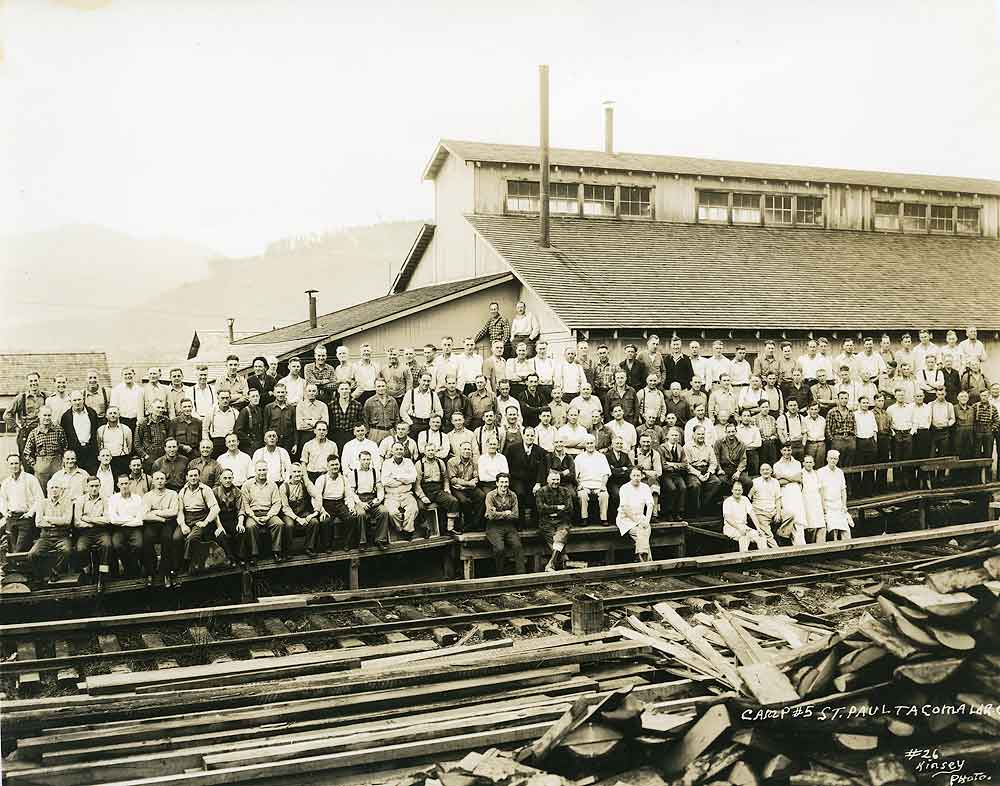
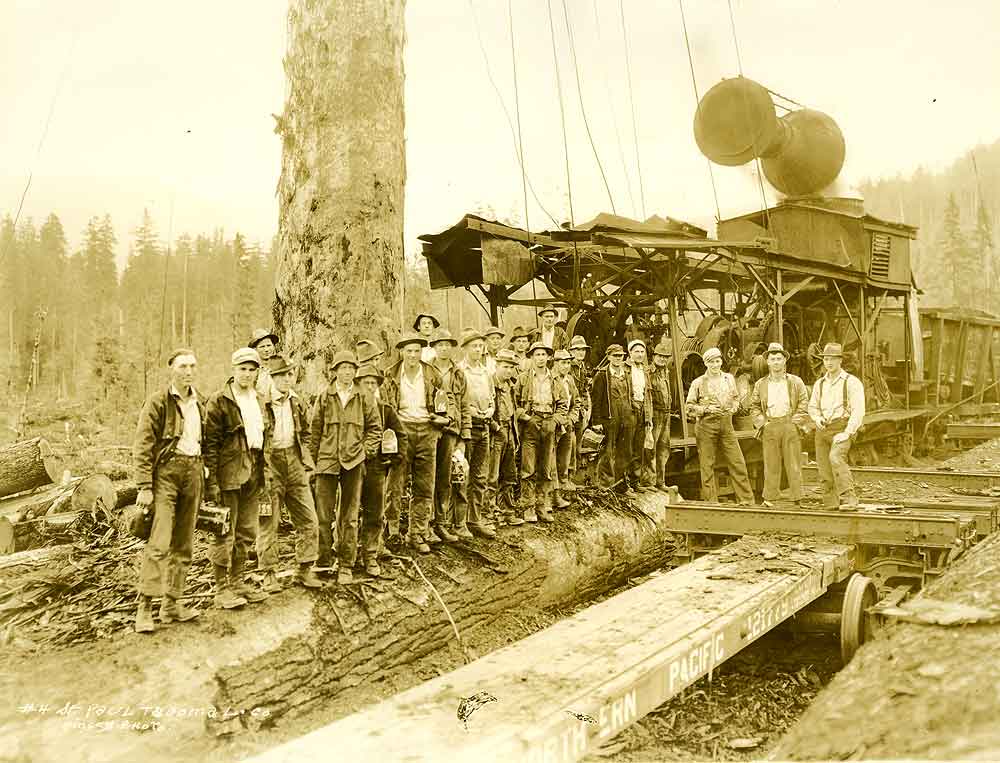
Some of the men are holding lunch boxes, and some of the numbers on the ends are visible. The smoke arrester on the donkey engine is lying sideways on top of the engine.
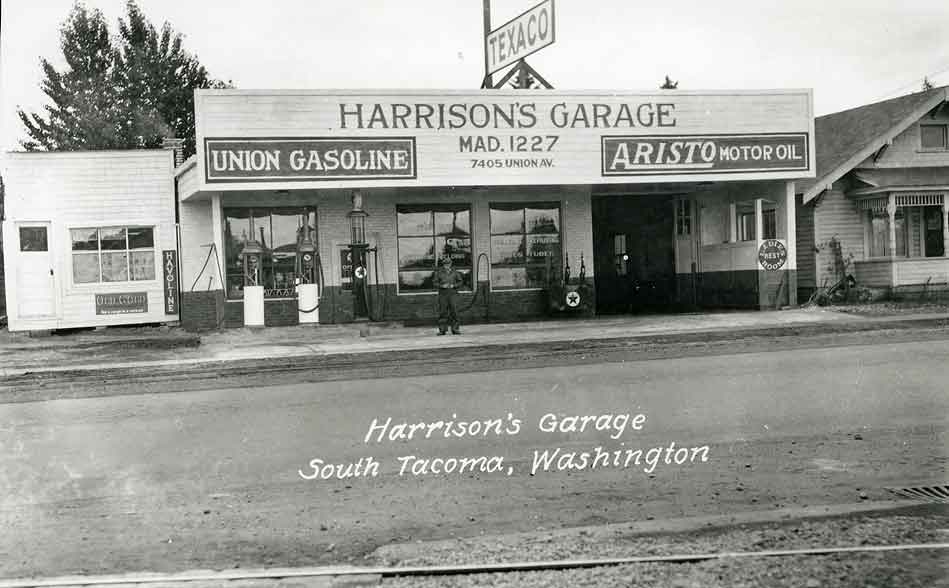
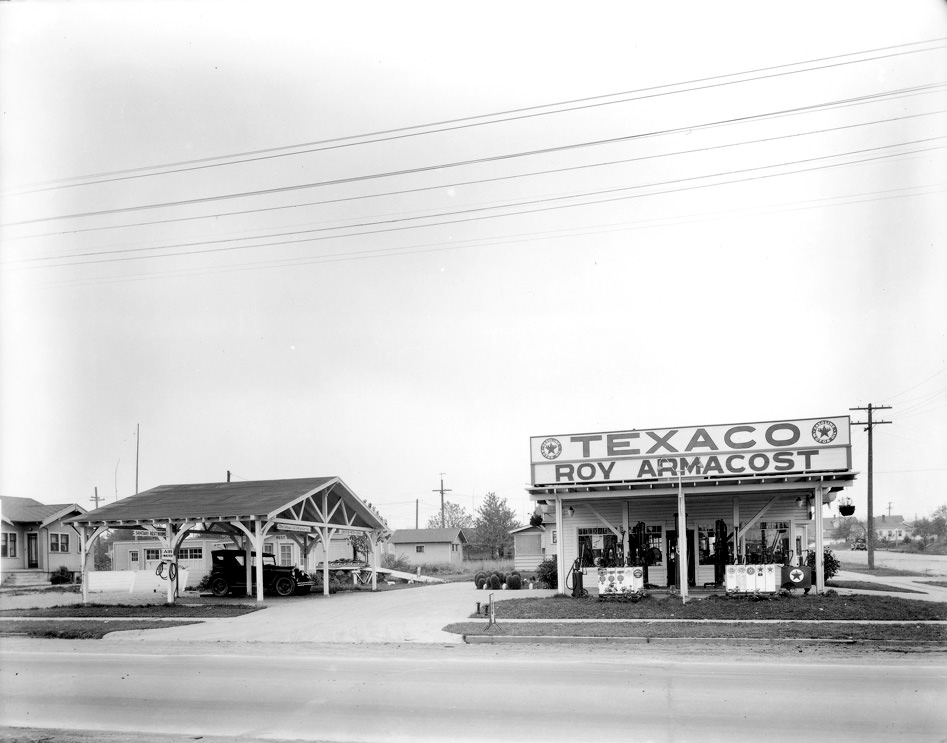
Other information on the sign includes the telephone number, Mad. 1227, and the address 7405 Union Av. Advertisements on the sign include Union Gasoline, Aristo Motor Oil, and Texaco. A man is standing in front of the station.
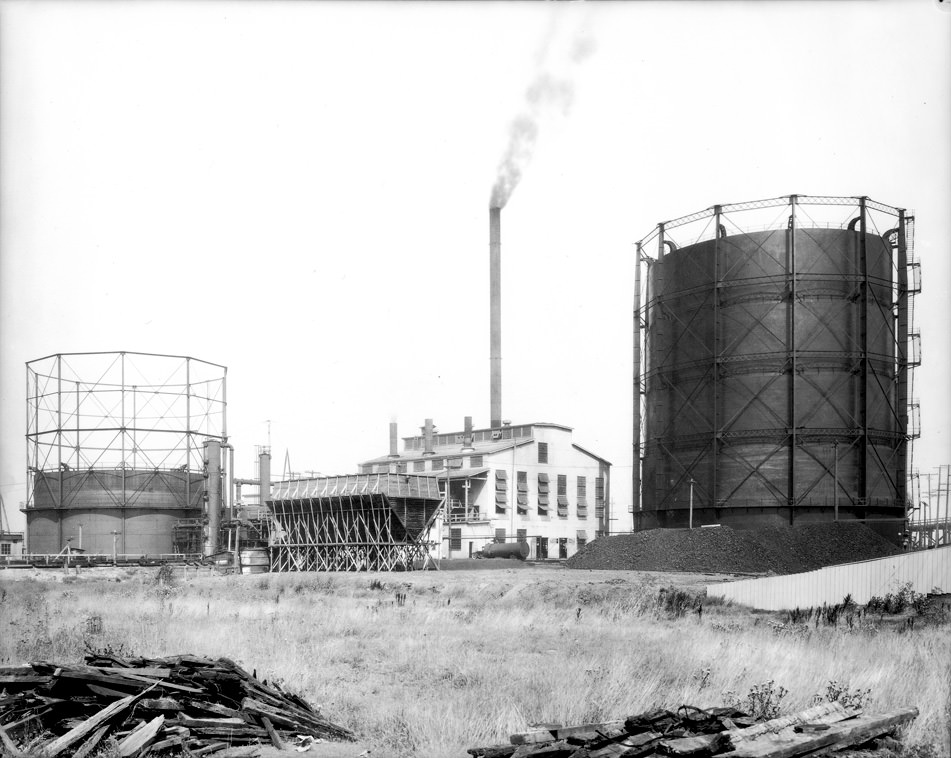
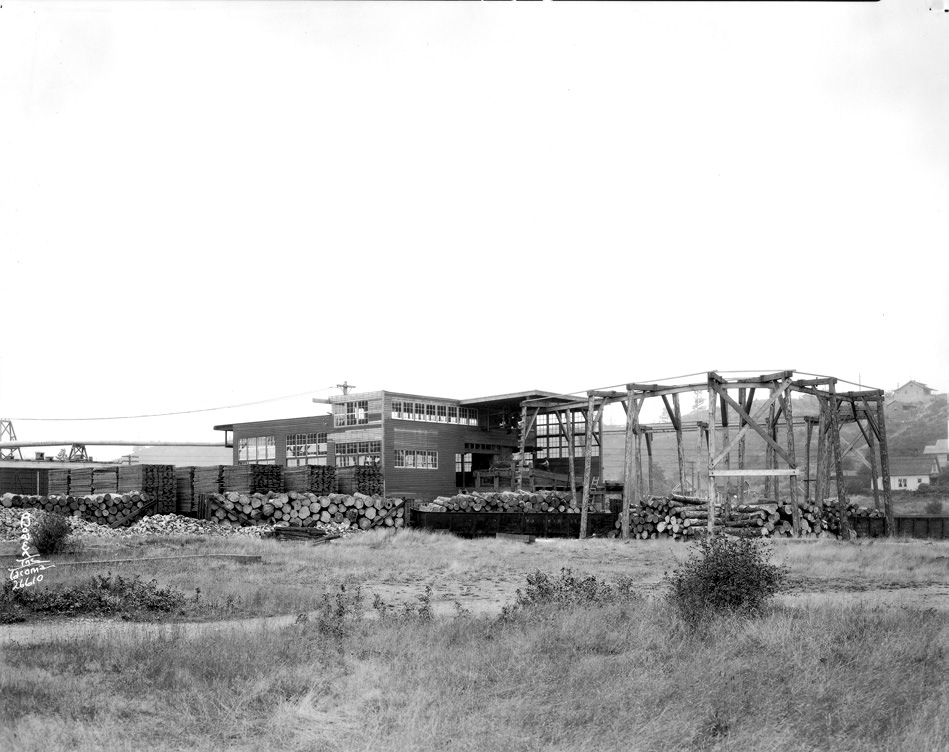
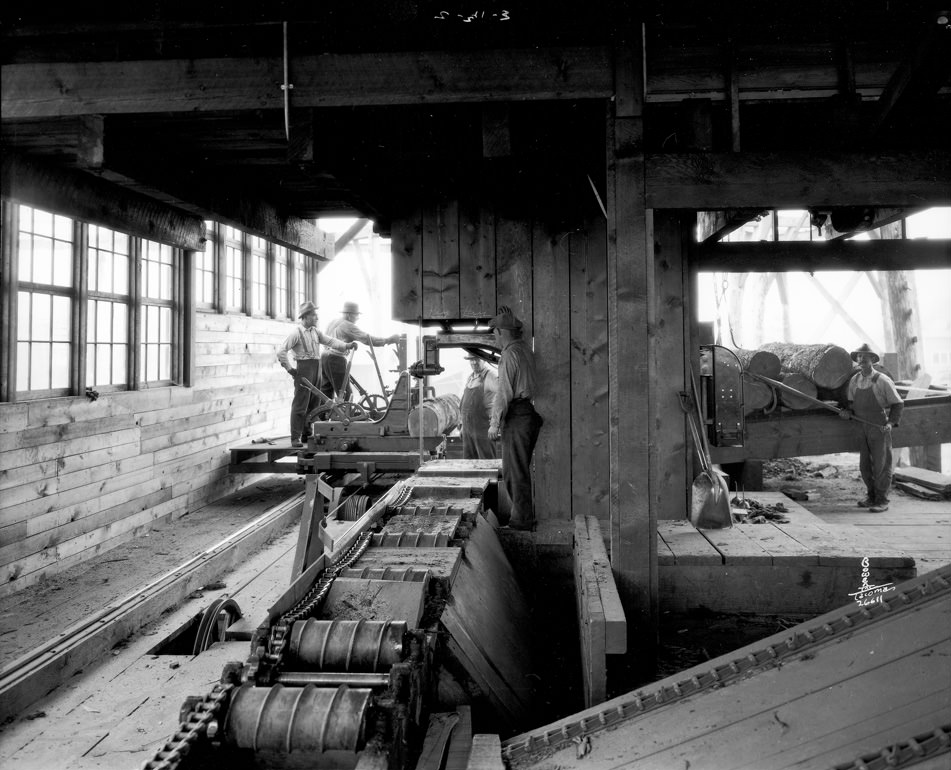
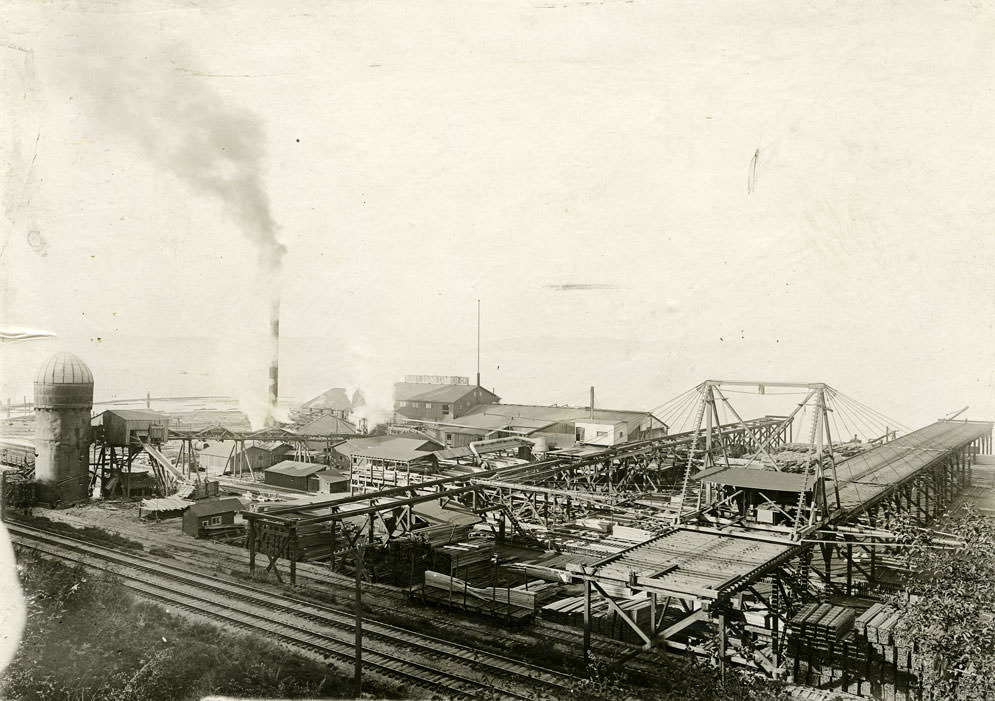
What appears to be a large bin is in front of the plant. The smokestack spews smoke. A grassy area and two small piles of discarded wood are in the foreground.
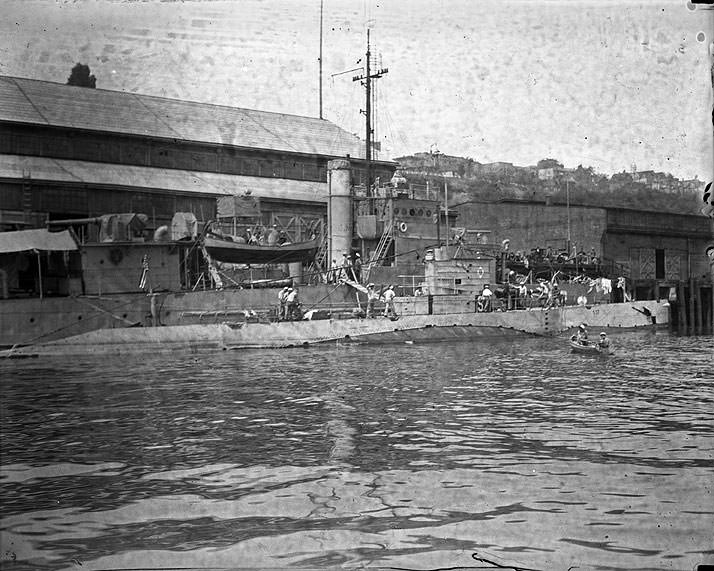
Some sailors are visible on top of the submarine at the right of the image, and two men are in a rowboat fairly close to the submarine. A steamship is behind the submarine, and dock buildings are behind that. Buildings are visible on the hillside in the right background.
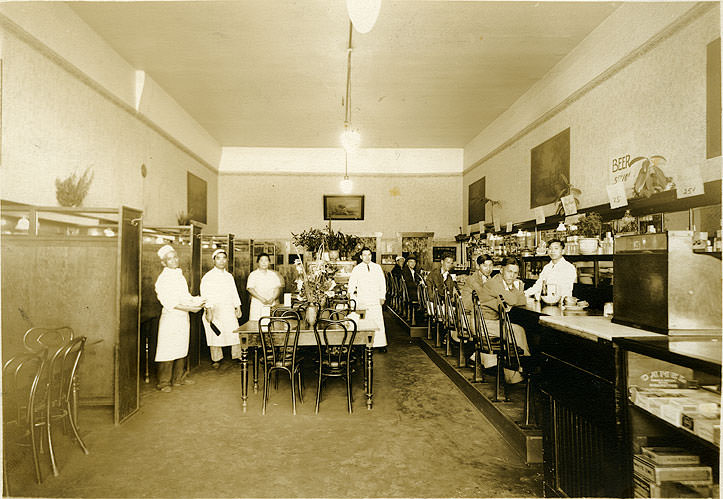
Tables and chairs are in the image center. A tall vase of flowers is on the closest table. Four restaurant employees, Japanese Americans, are standing and posing behind the table, wearing aprons. One may be a woman. One may be a cook; he holds a knife in his hand. Restaurant booths are along the wall in the left image.
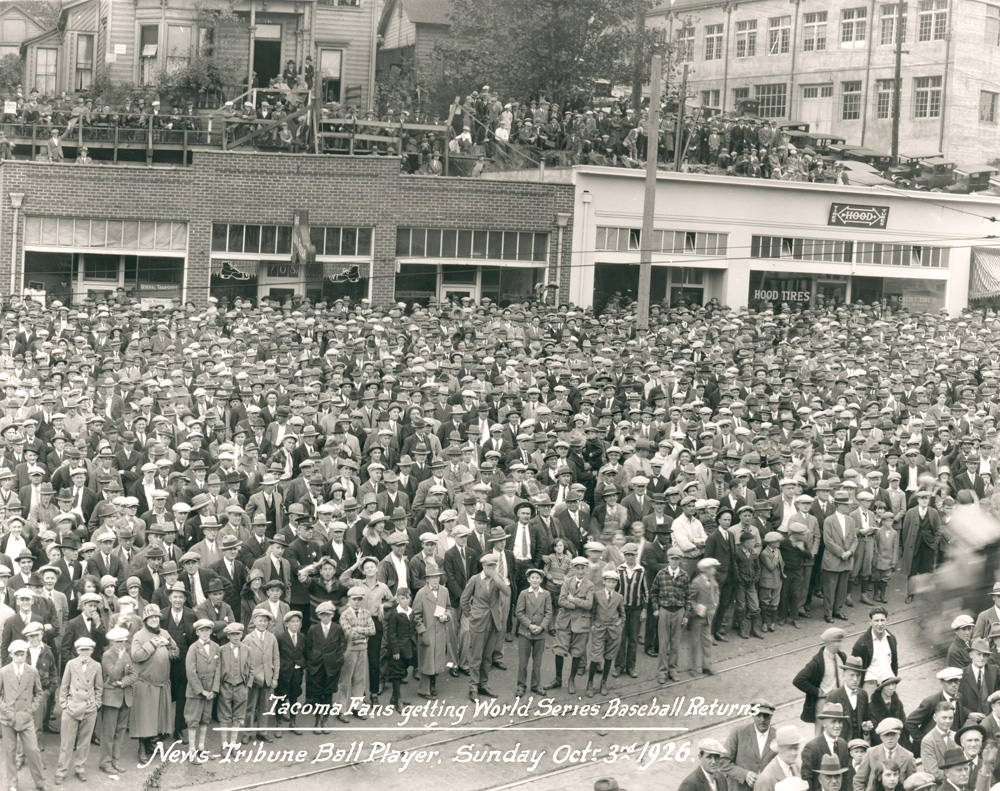
A row of stores is in the background, with a sign for Hood Tires. Men in front of a house on the hillside behind the stores are also watching.
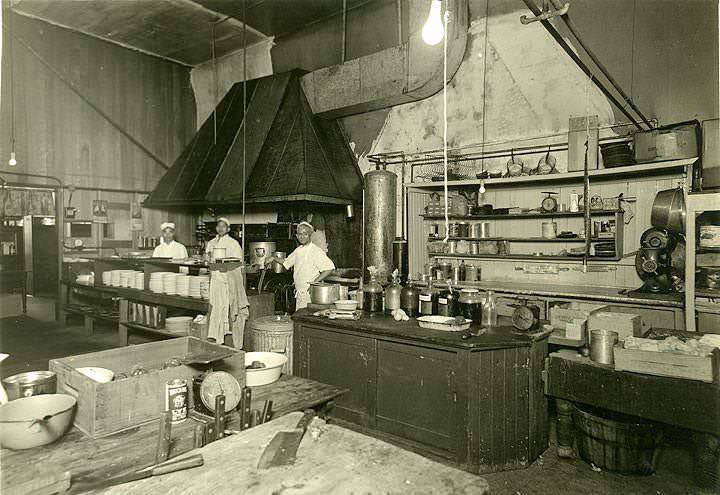
Three cooks, Japanese American men wearing aprons, are standing behind a counter in the image left background, with large stacks of plates in front of it and probably a stove, which is not visible, behind them. A chopping block is in the lower foreground with a knife and cleaver on top.
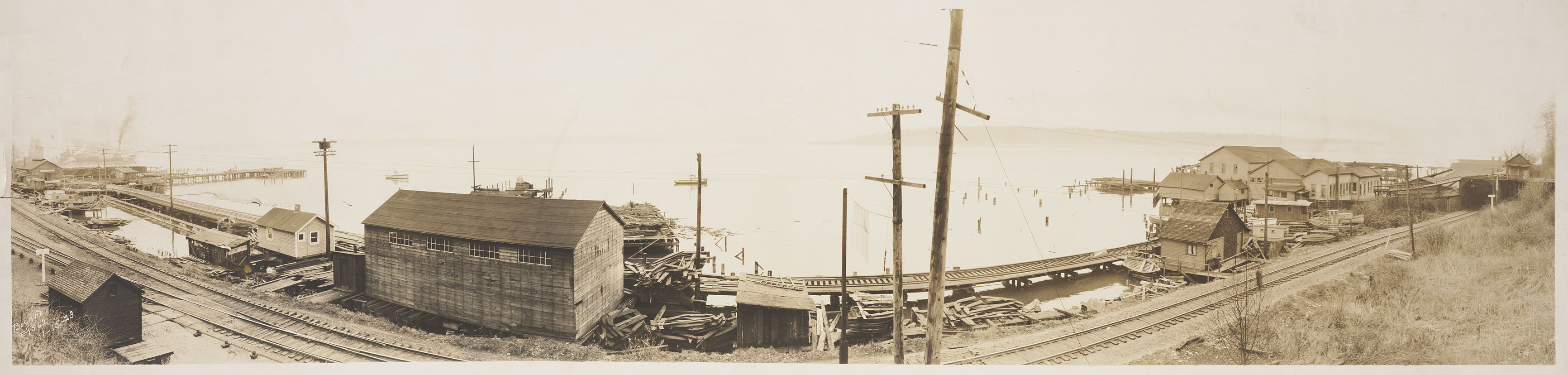
The photo was taken from the land behind the railroad tracks along the shoreline, looking towards the bay. Curving railroad tracks are seen in the photo right and left. A large frame building is in the foreground, with a dock on pilings partially visible behind it. Buildings from a company store with broken windows are in the photo right. The end of a corrugated metal railroad tunnel is at the far right.
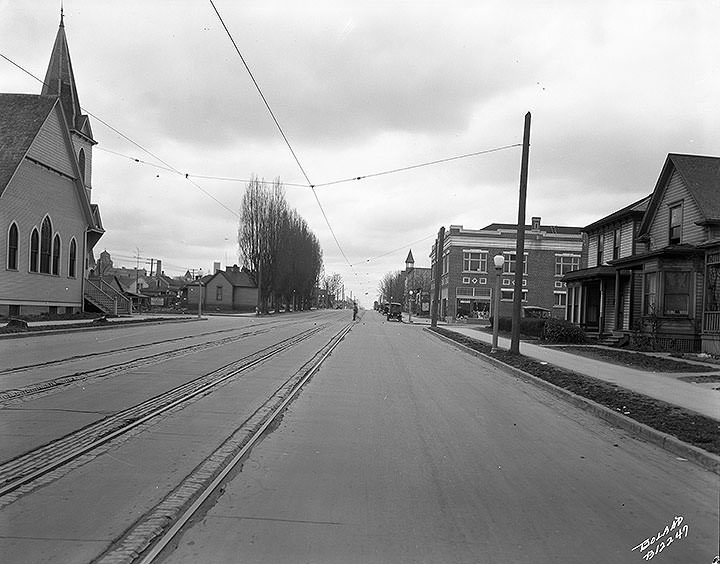
A church is partially visible at the image right edge. The fronts of two houses are near the right image edge, and Normanna Hall is further in the background on the right side. A few automobiles are parked on the street in the image center background.
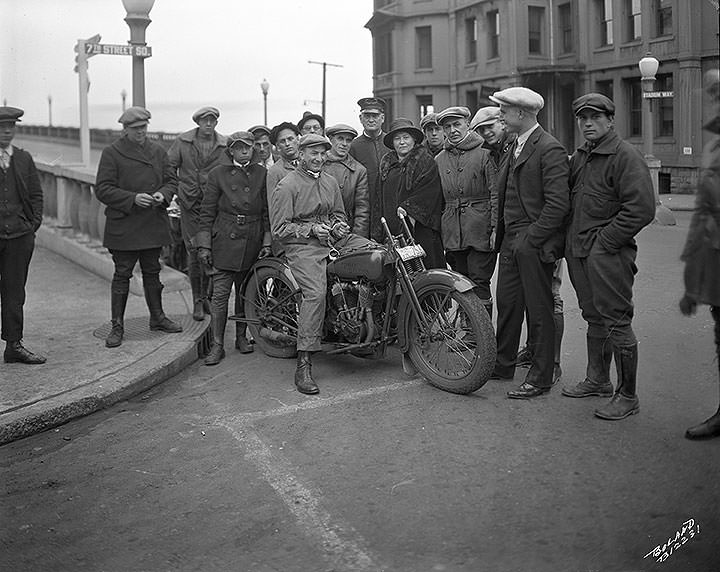
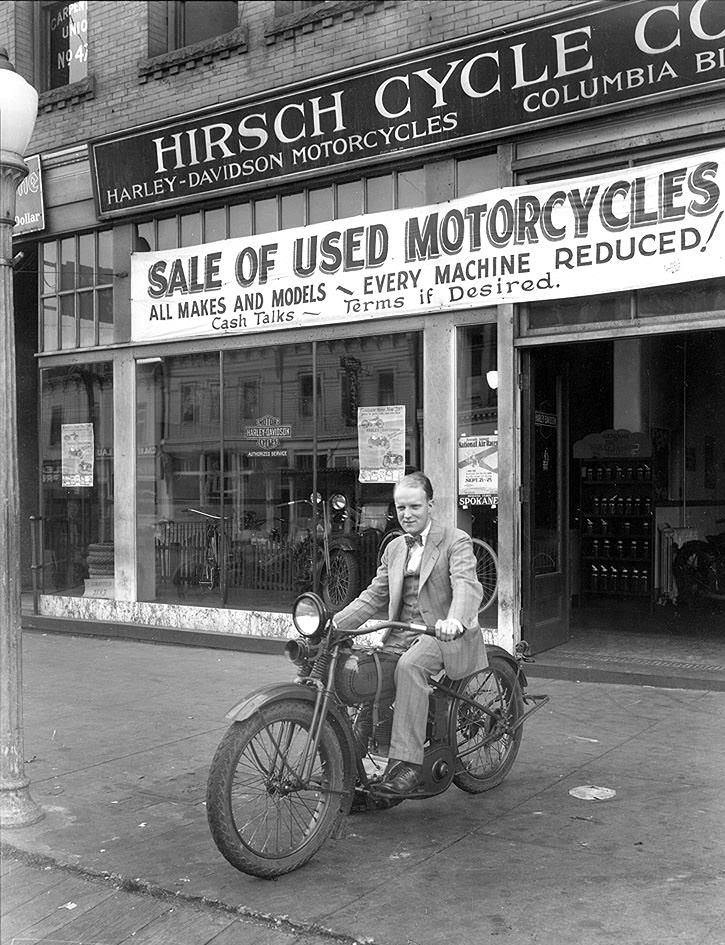
The motorcycle rider is smiling, and he has handcuffs on one wrist, which may be attached to the motorcycle.
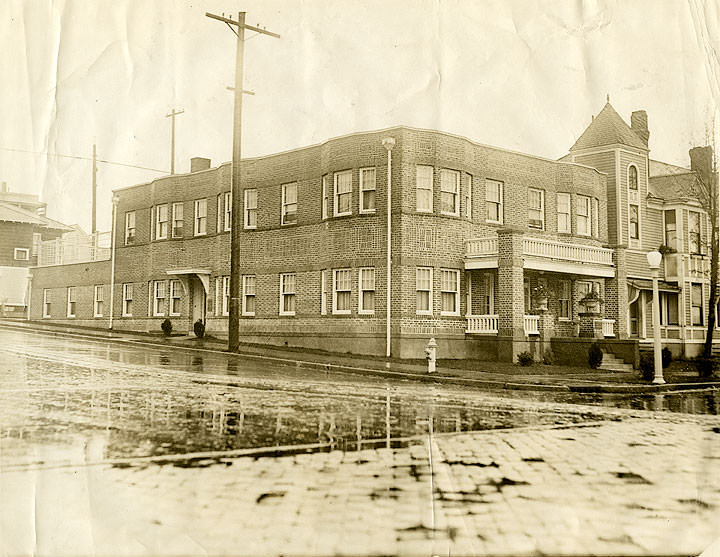
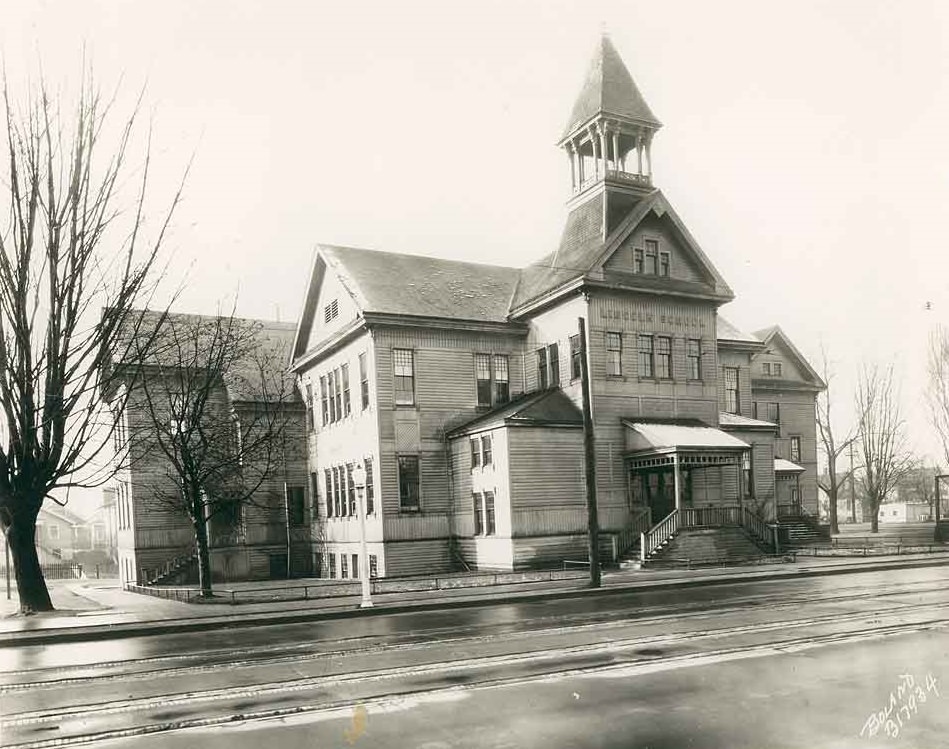
The building was built in 1922. The streets in the foreground appear wet from the rain.
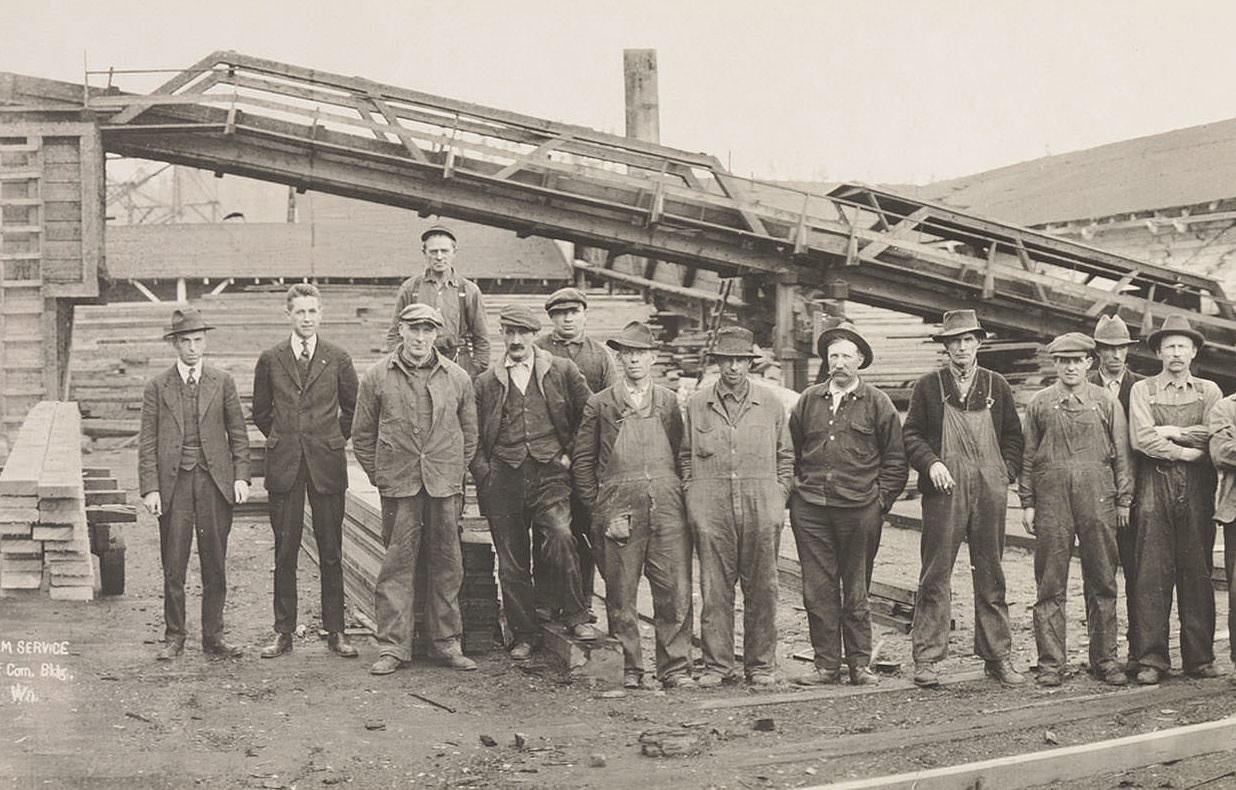
Walter Moyles and Karl Kellogg, treasurer of the company, are at the extreme left. Stacks of lumber are in the photo right background.
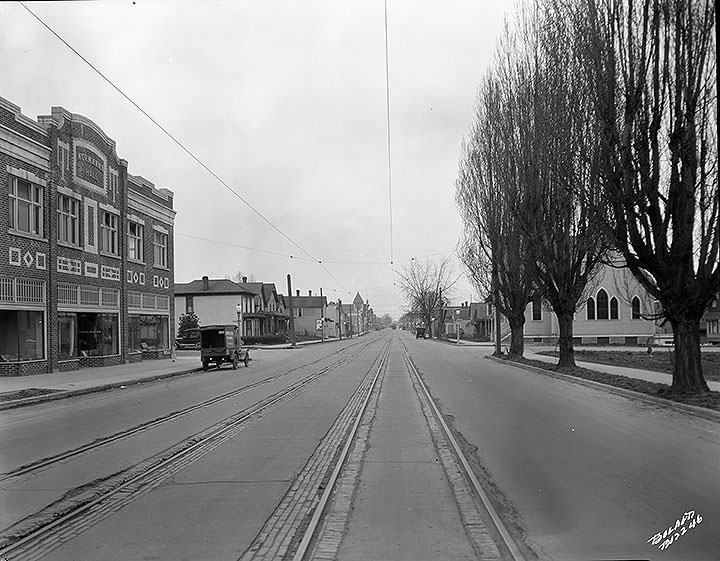
The Normanna Hall building, 1502 South K Street, is at the image left edge. A delivery truck is parked in front of the building.
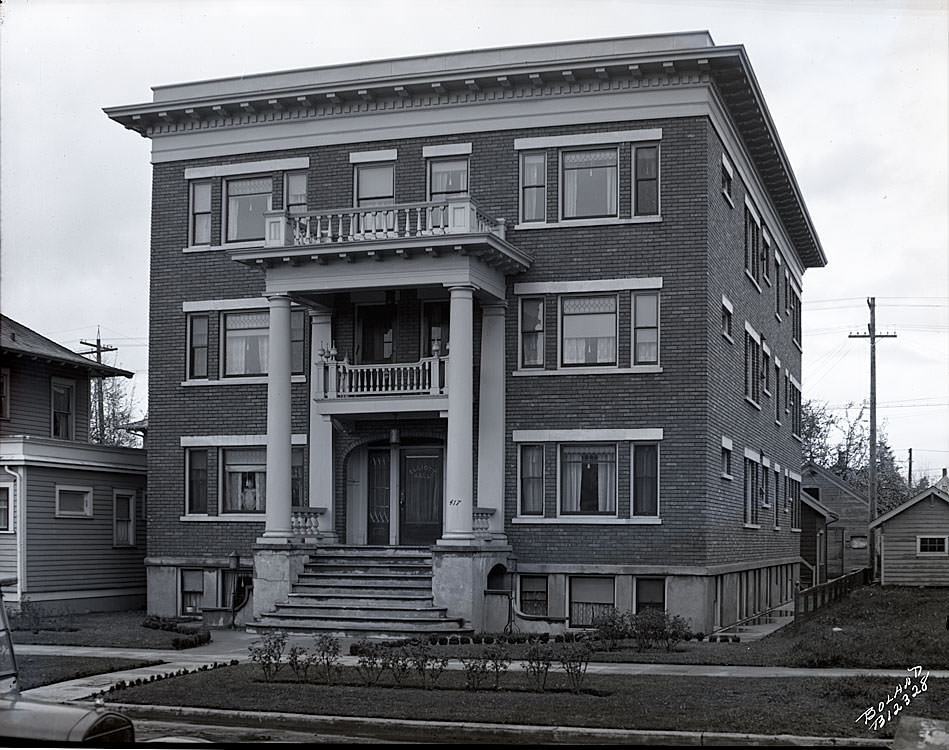
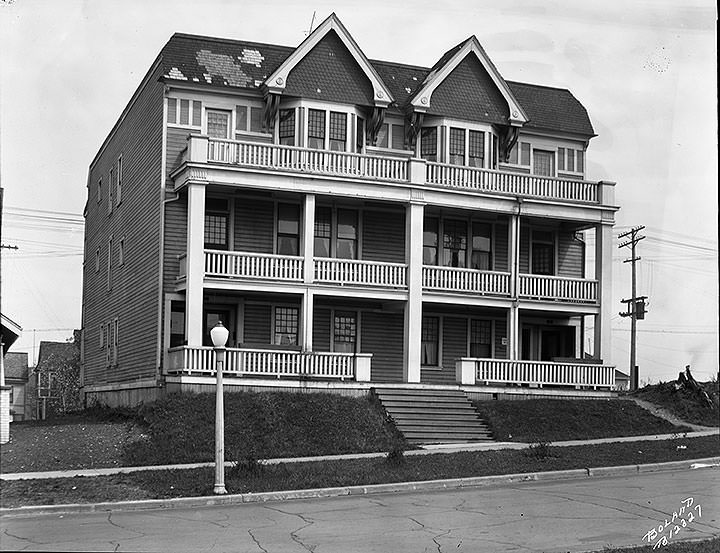
The image shows Elliott Hall, a three-story brick apartment building located at 417 No. L Street. Lettering on the front door to the building reads “Elliott Hall.” Each of the middle windows on the front of the building has a leaded glass panel in the center.
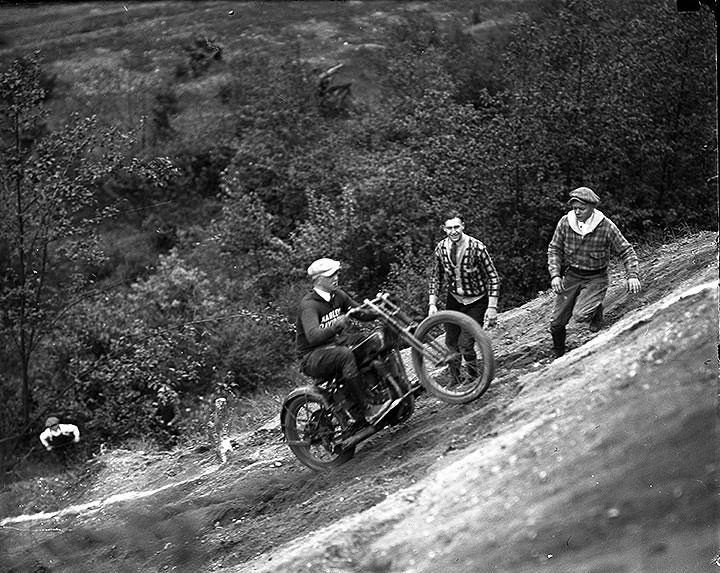
The image shows a young man riding a motorcycle up a steep dirt incline. He wears a light-colored cap, a dark sweater with “Harley Davidson” in white lettering, and dark pants. To the right are two other young men. One wears a patterned cardigan and the other a plaid jacket and cap.
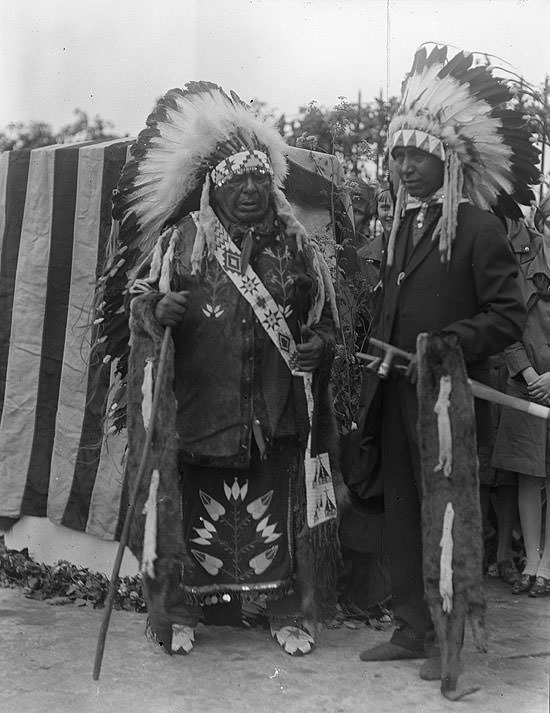
Their positions are not identified. Both men wear feather headdresses. One man wears a bandolier and a piping bag and wears moccasins. The other holds a pipe and an otter skin bag. Three Euro-American girls are partially visible standing behind one of the men.
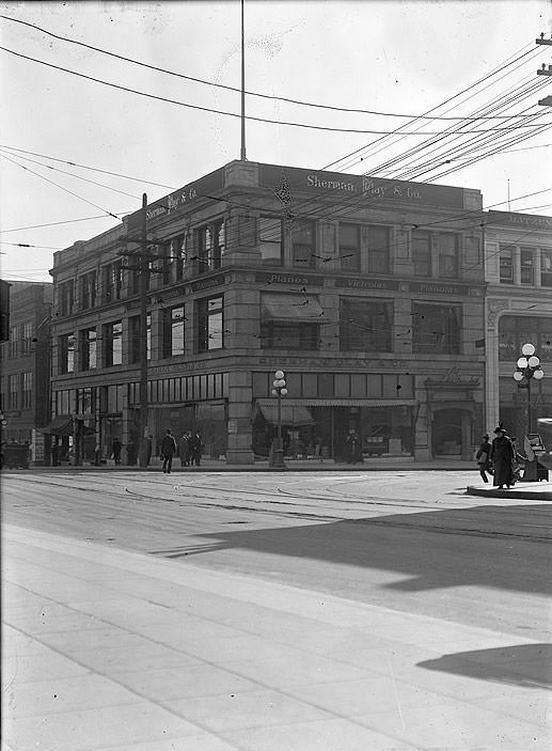
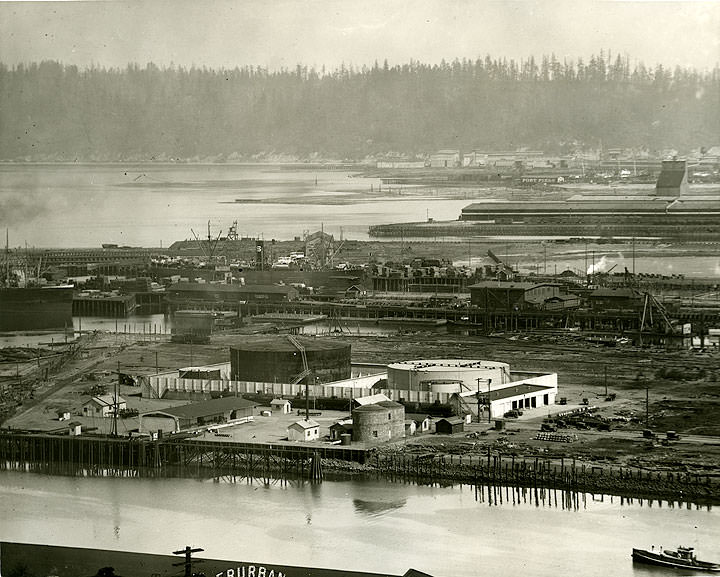
The City Waterway runs parallel to the image lower edge, now known as Thea Foss Waterway. A tugboat is near the image lower right corner. Two circular fuel storage tanks are beyond the waterway. Automobiles are parked beyond the waterway near the right image edge. A steamship in the image center is next to docks loaded with stacks of lumber. The water of Commencement Bay is visible in the image upper center left.
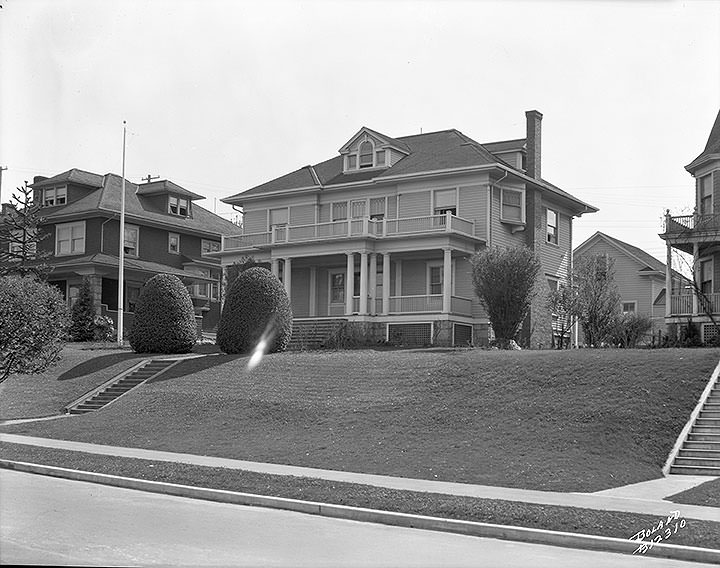
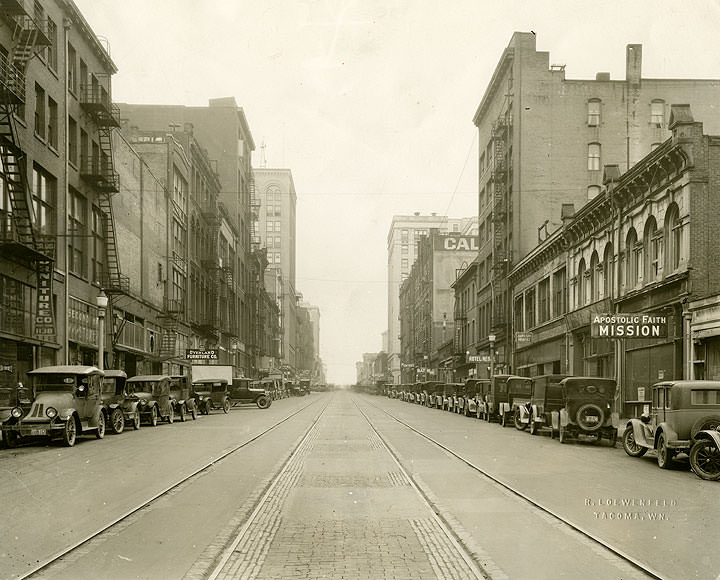
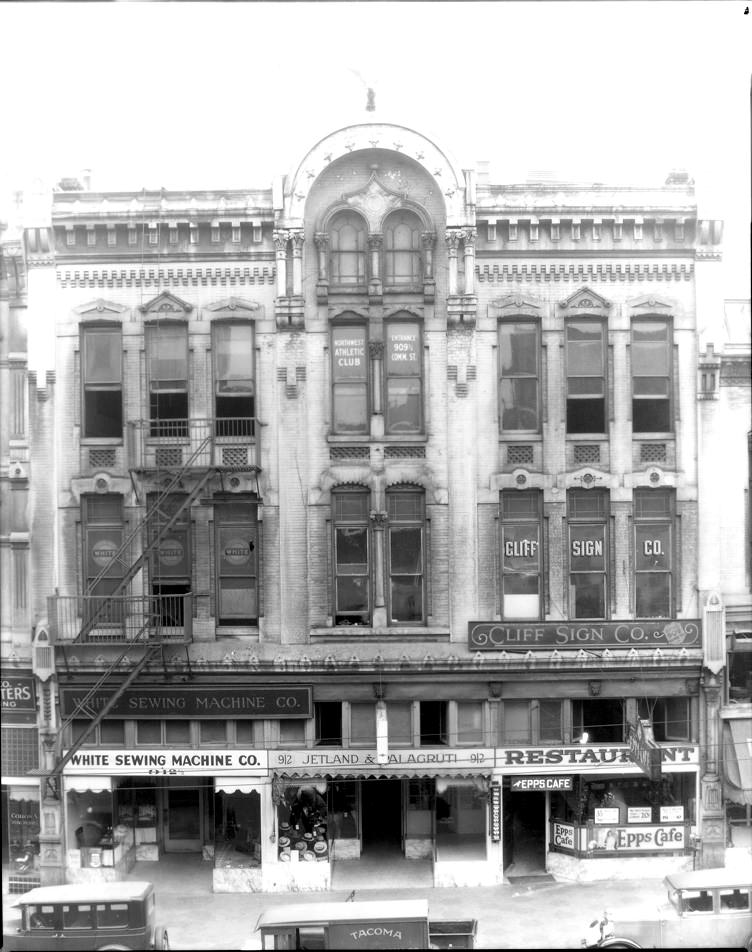
Automobiles are parked on both sides of the street, and there is no traffic. Fire escapes are on the exterior of a commercial building at the image left edge. Commercial buildings are on both sides of the street. A visible business sign in the image left reads: Overland Furniture Co.
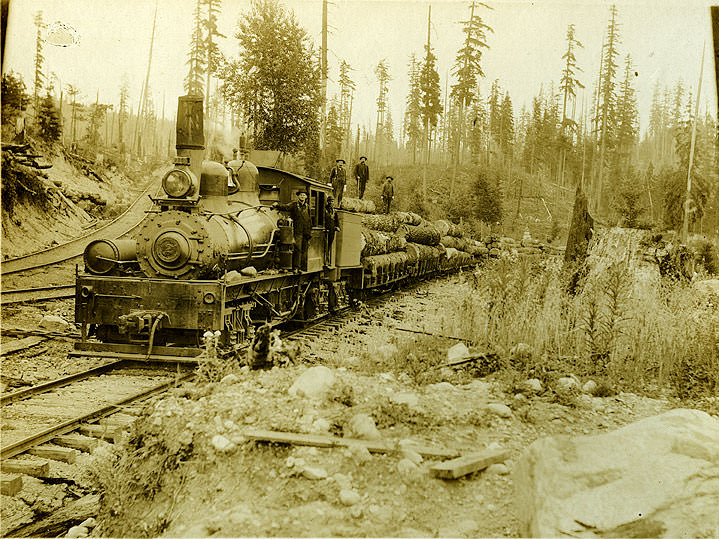
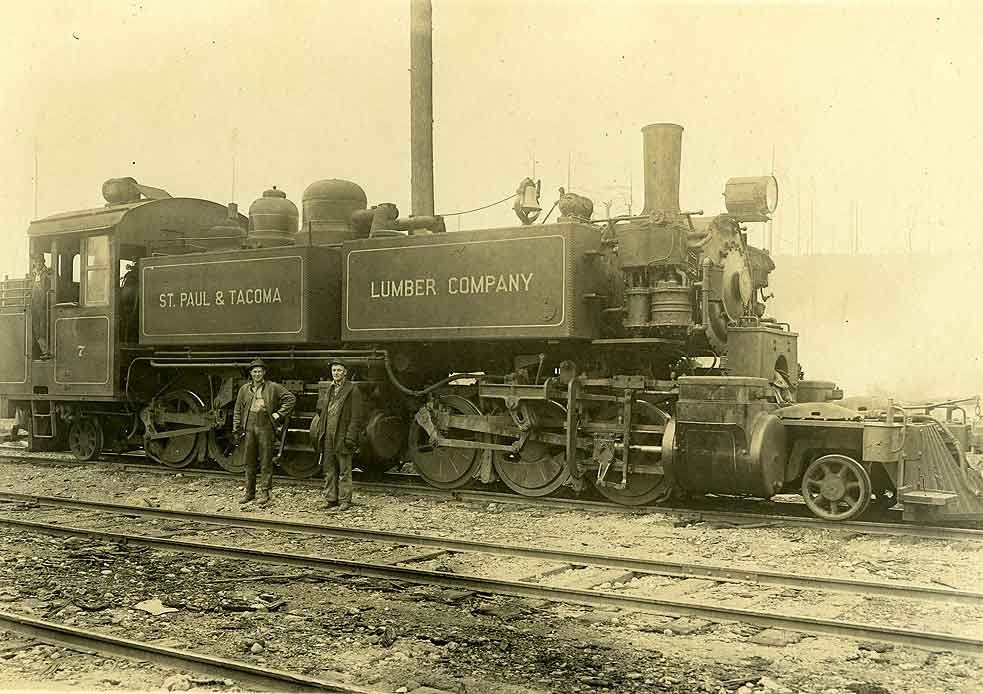
The locomotive, a No. 2 model, was built by Lima Locomotive Works, Inc. in 1909. The train engineer stands by the locomotive cab, and another man poses on the side of the locomotive. Three loggers stand atop logs on one of the train cars.
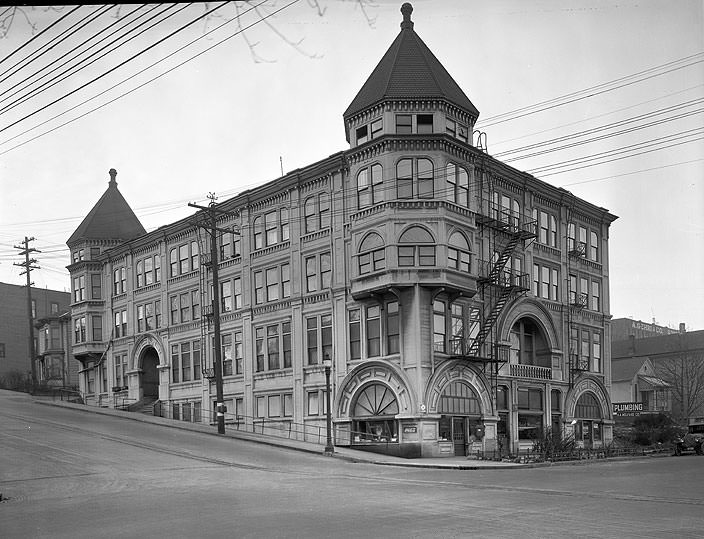
A Coca-Cola sign is at the corner of the building. A sign at the building’s first floor, in the image right, is for V.A. Wolfard Co., Plumbing, owned by Vert A. Wolfard.
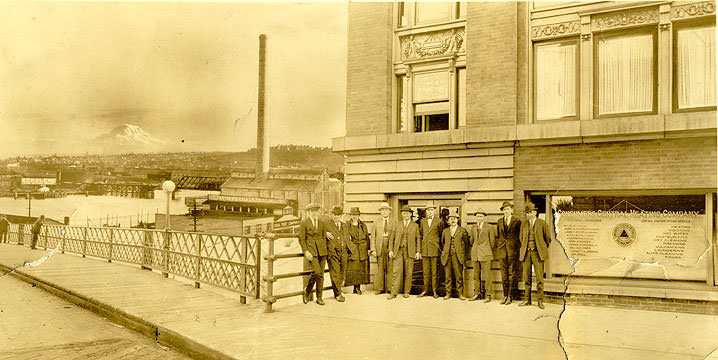
The walkway to the Eleventh Street Bridge begins to the left of the image center. A large commercial building with a tall smokestack and the business sign is in the center background, closer to the City Waterway, which is partially visible at the left image center.
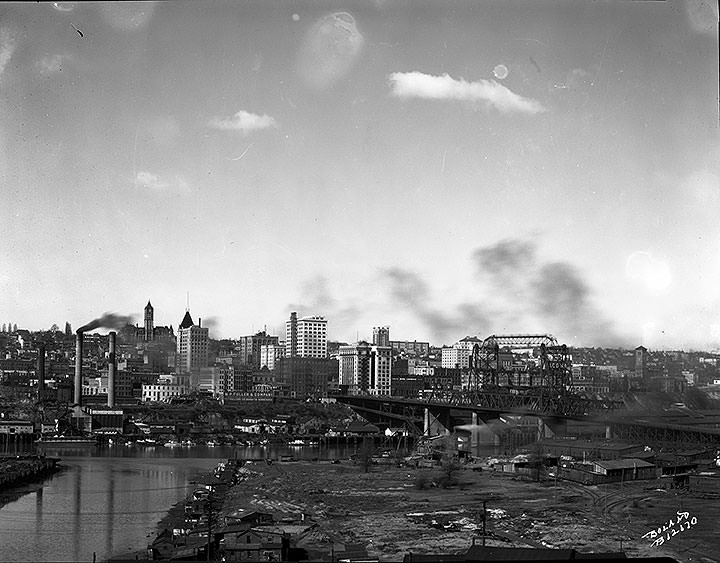
The Wheeler-Osgood Waterway is near the image lower-left corner. The City Waterway, now Thea Foss Waterway, runs parallel to the image lower edge, lower center, and lower left. The Eleventh Street Bridge, now the Murray Morgan Bridge, is in the lower center right image.
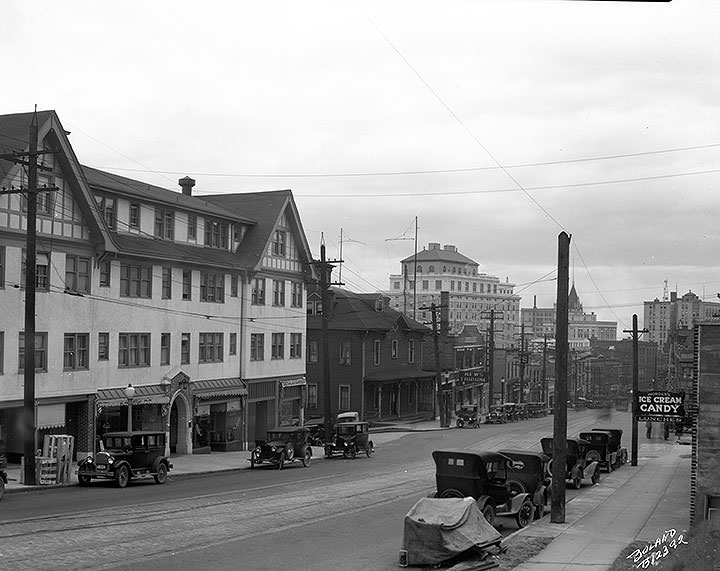
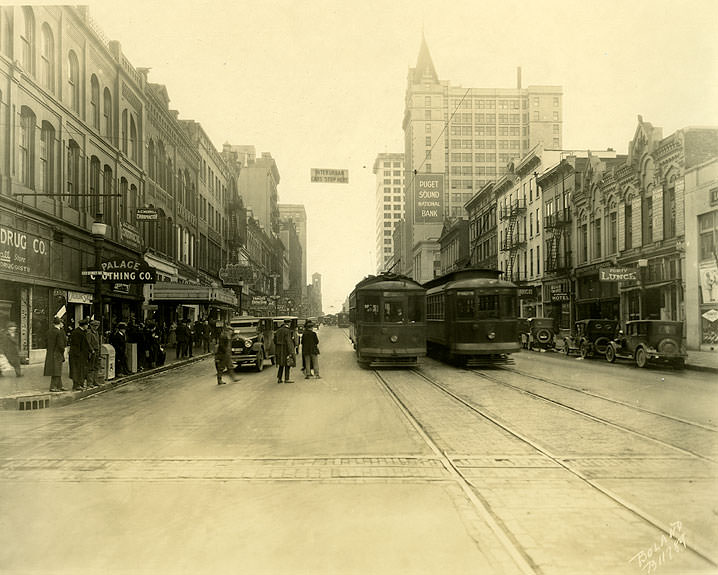
Business buildings are on the street, including signs for Delicatessen and News Tribune. The sign at the image right edge reads: Worden’s Ice Cream, Candy, Lunches. The Winthrop Hotel is in the image center background.
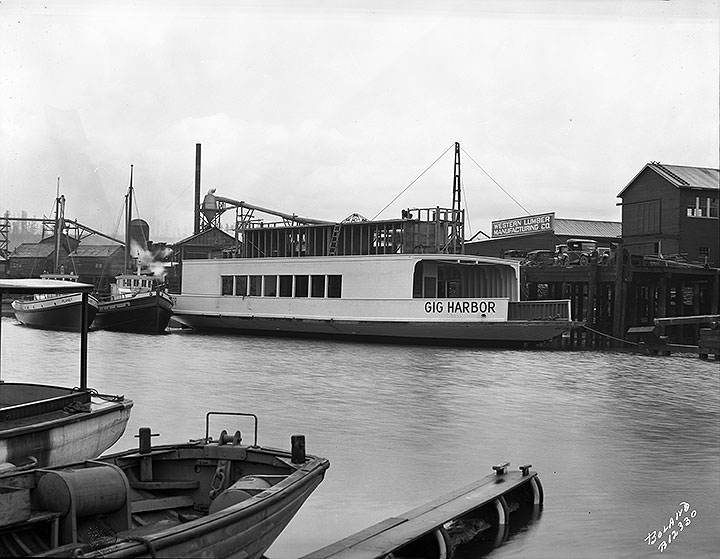
Water is in the foreground. Two small boats, one with the name “Planet,” are near the ferry at the left edge. Industrial buildings are partially visible behind the ferry.
![Shay Locomotive] on High Bridge, St. Paul & Tacoma Lumber Co., Camp 8., 1921](https://www.bygonely.com/wp-content/uploads/2022/01/Tacoma_historical_photos_776.jpg)
The locomotive was built in 1909. The image is taken from the side of the end of the trestle bridge. Tree stumps and short pieces of logs are in the image right foreground. Trees are in the left background. A man stands outside the locomotive cab, and another is in the tender.
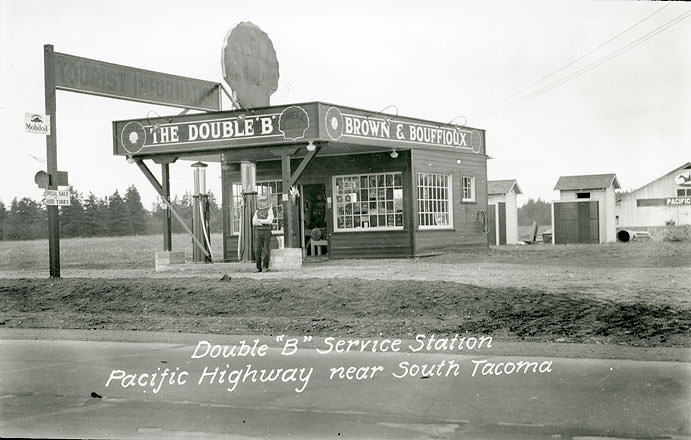
An outhouse is behind the station in the image right, and possibly another one is partially hidden behind the station. A large sign in the shape of a shell is on top of the building.
Two passengers are nearby, one on the streetcar steps and one next to Nelson. Another streetcar conductor poses at the top of the streetcar steps near the image left edge. The water is visible below the trestle.
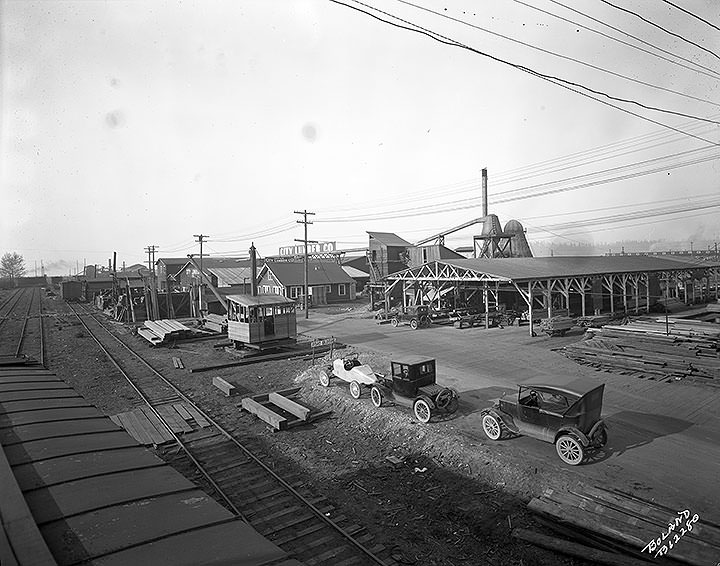
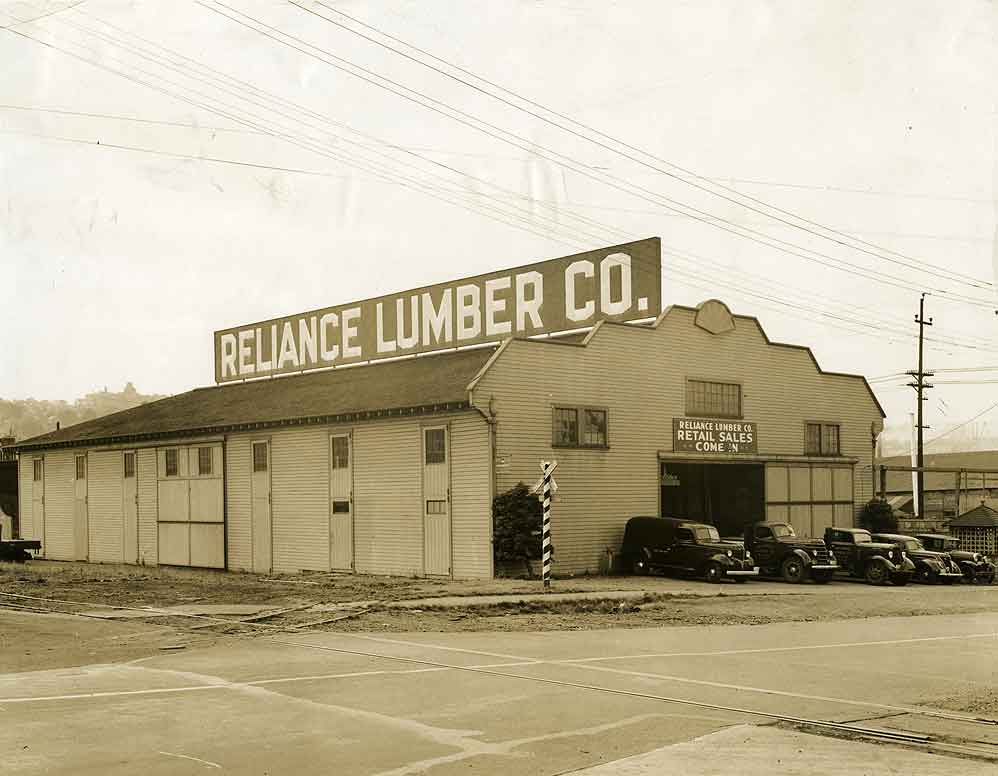
The plant is located “one block north of 11th Street Bridge, Middle Waterway.” In the image right foreground, two automobiles and a small racing car are parked near railroad tracks. Buildings of the lumber company are across the image center.
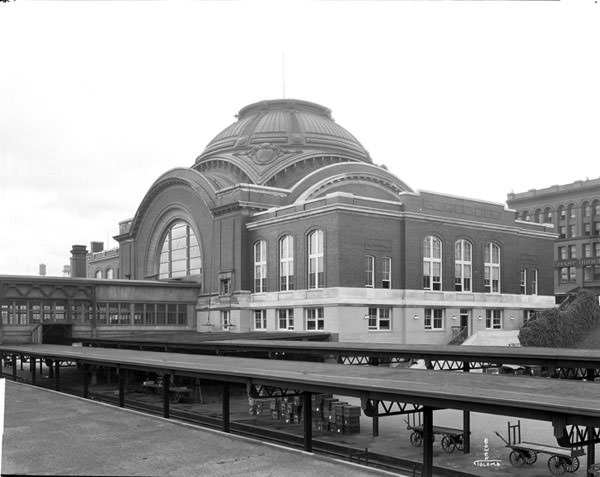
A covered, elevated walkway leads from the station to the track area. No trains are in the photo. Boxes and baggage carts are along the covered tracks.
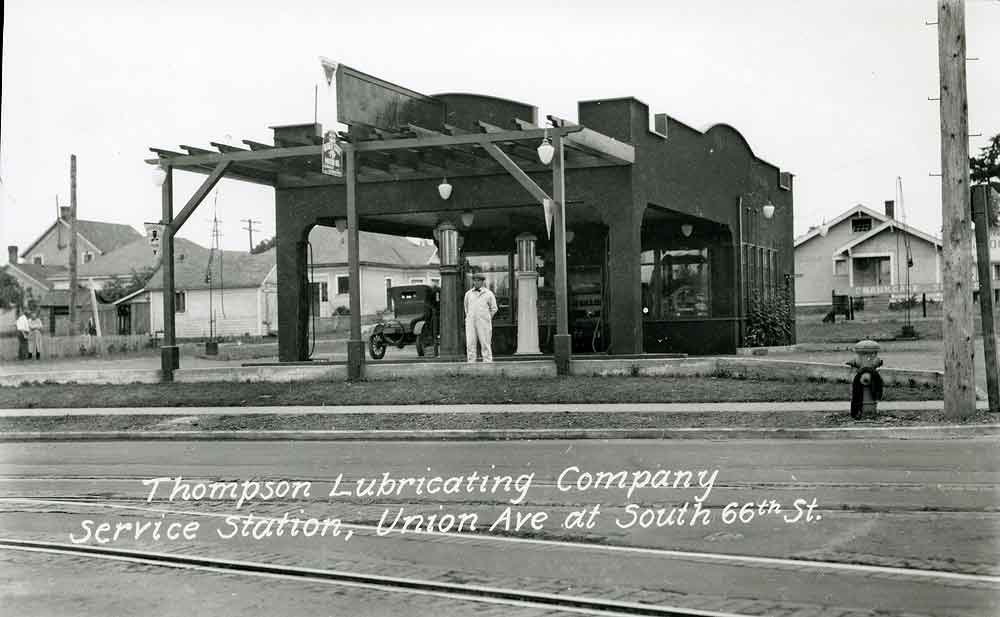
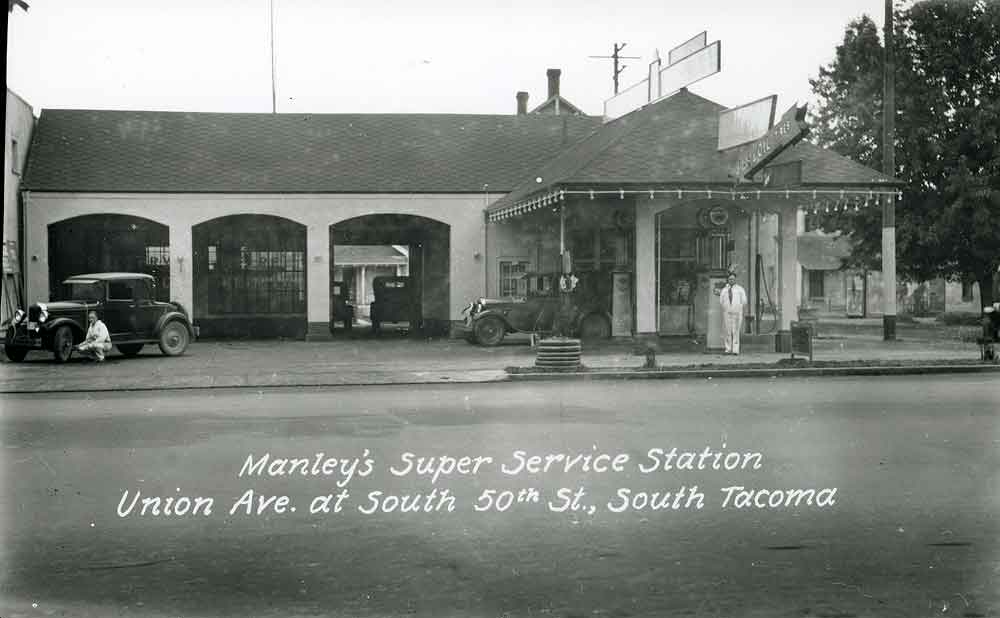
The photo shows a building with a covered area for the pumps and service bays in the back. Thompson Lubricating Co. was located at 6247 South Union Ave, South Tacoma. A man is standing in front of the station, and a few automobiles can be seen.
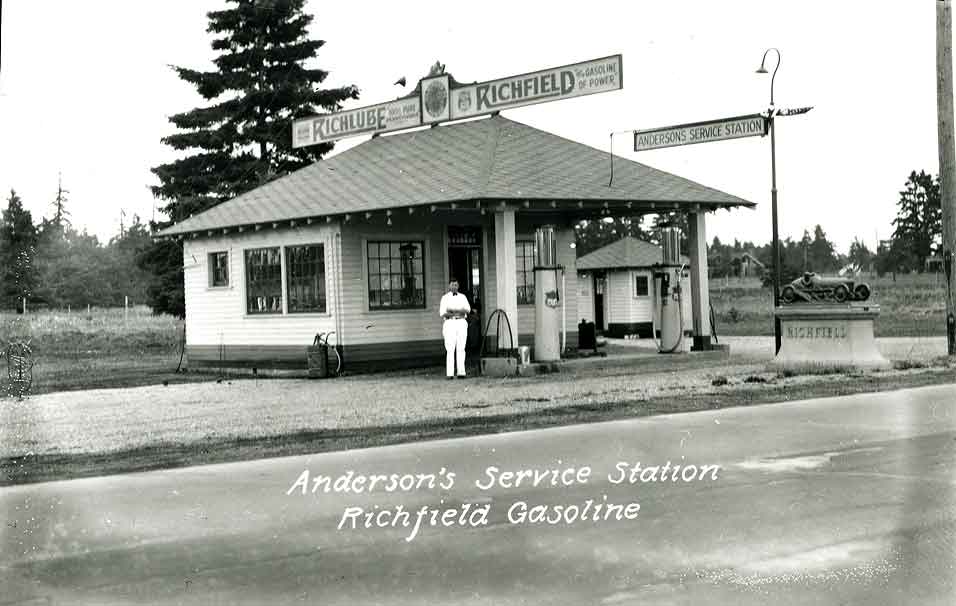
The photo shows a square building whose roof overhangs the pump area. A man is standing in front of the building. There is a smaller building to the side of the station for restrooms.
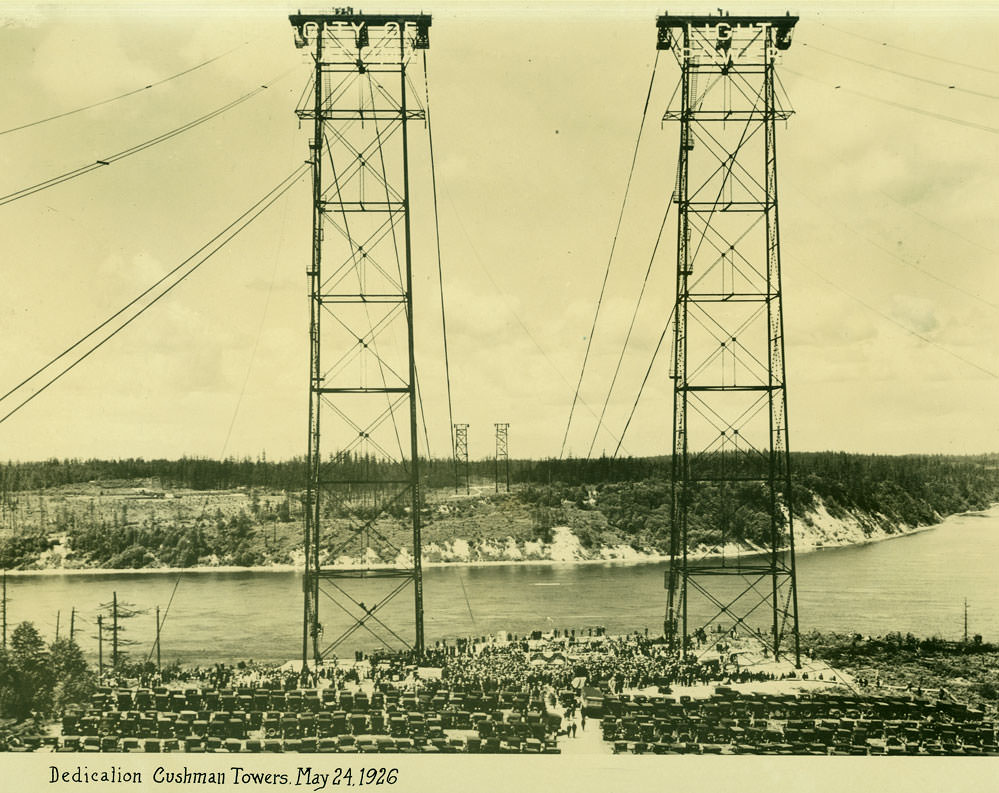
The City Waterway is in the photo center, the tideflats are beyond, and Browns Point is in the background.
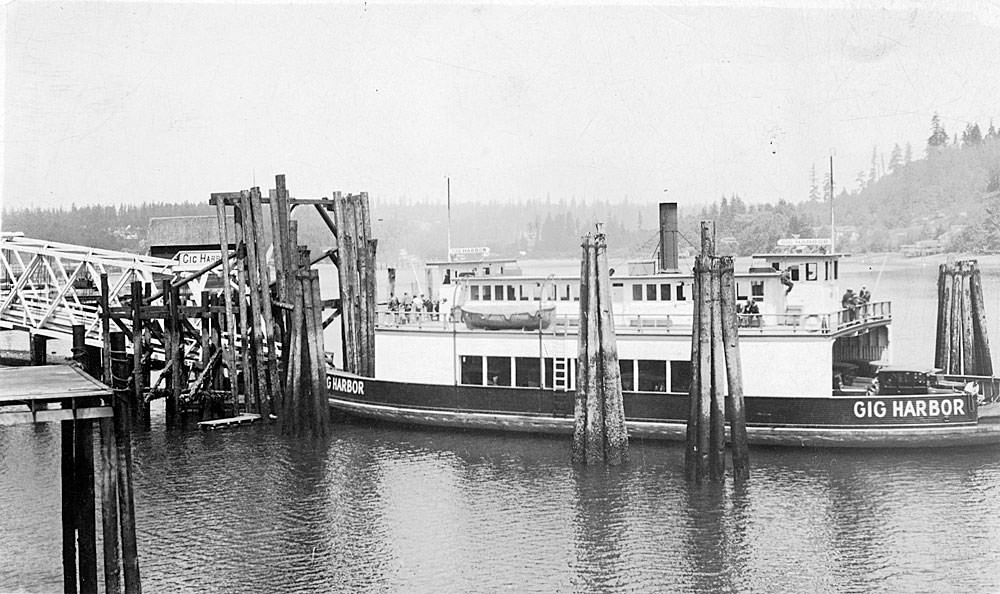
Hunt had yards in Puyallup and Tacoma and operated the ferry for the county until 1927, when the Skansie Brothers took over the Tacoma, Gig Harbor, and Vashon Island runs.
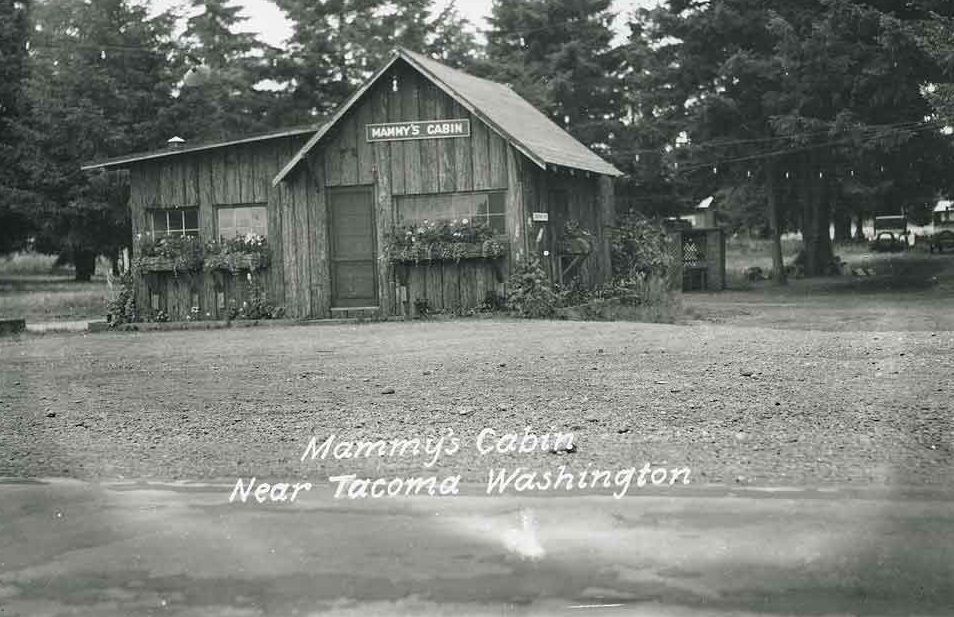
The cabin is a two-room structure made from logs placed vertically. There are flower boxes under each window. Two cars can be seen on the dirt road behind the cabin.
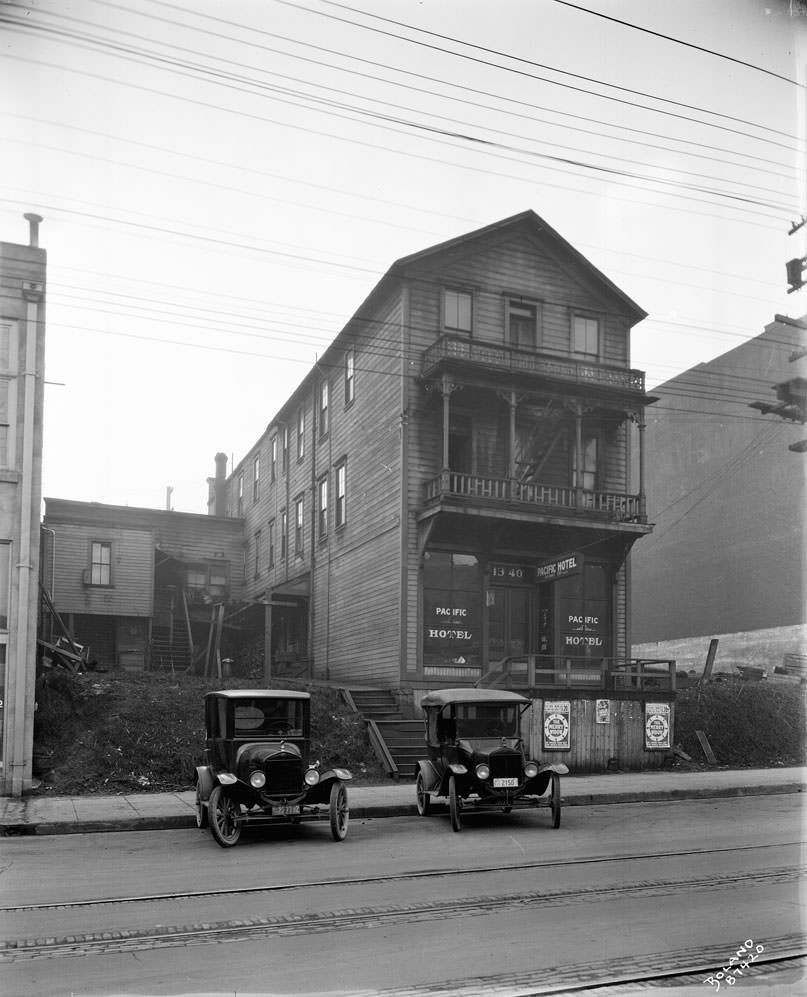
The hotel is a three-story wooden structure with two balconies on the front. “Pacific Hotel” is painted on both windows, and a sign reading “Pacific Hotel, Rooms 25 c” is above the door. To the right of the doorway is a sign in Katakana and Kanji, probably reading “Pacific Hotel.” Two automobiles, one a coupe and the other a touring car, are parked on the street in front of the building.
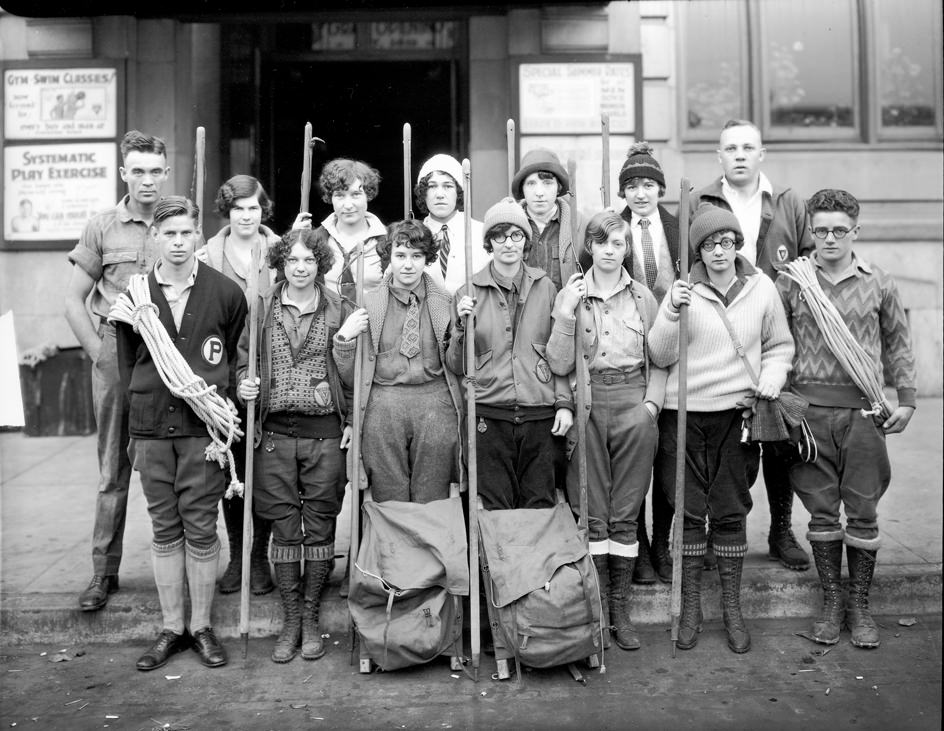
They hold alpenstocks and climbing ropes, and two backpacks are propped in front.
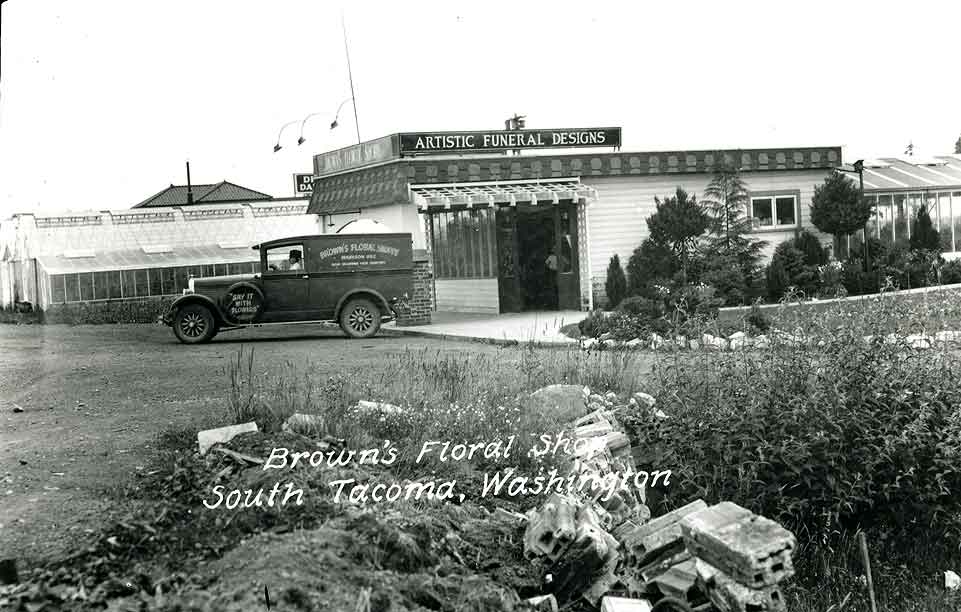
A delivery van is parked in front. On it is written Brown’s Floral Shoppe/Madison 882/near Mountain View Cemetery/Say It with Flowers. A large greenhouse is behind the shop.
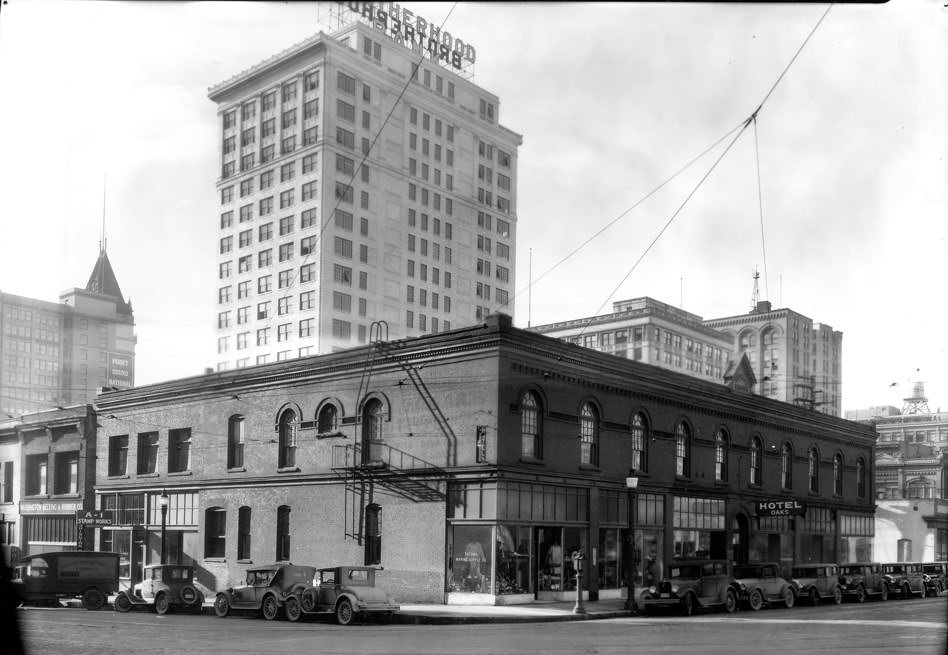
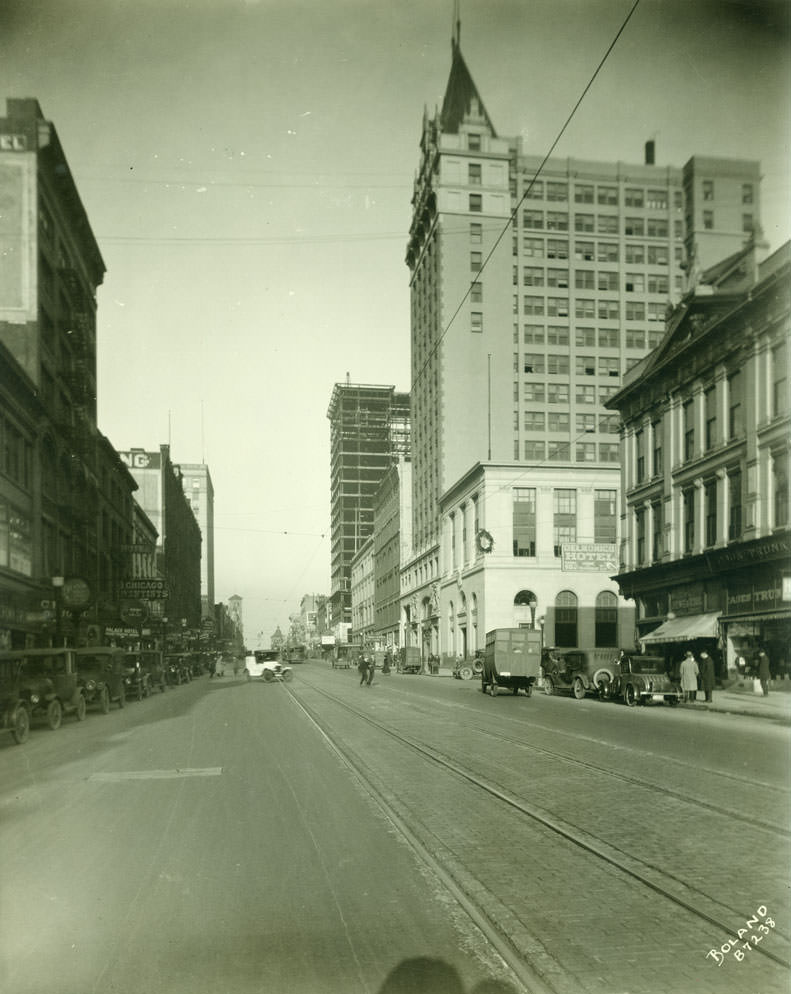
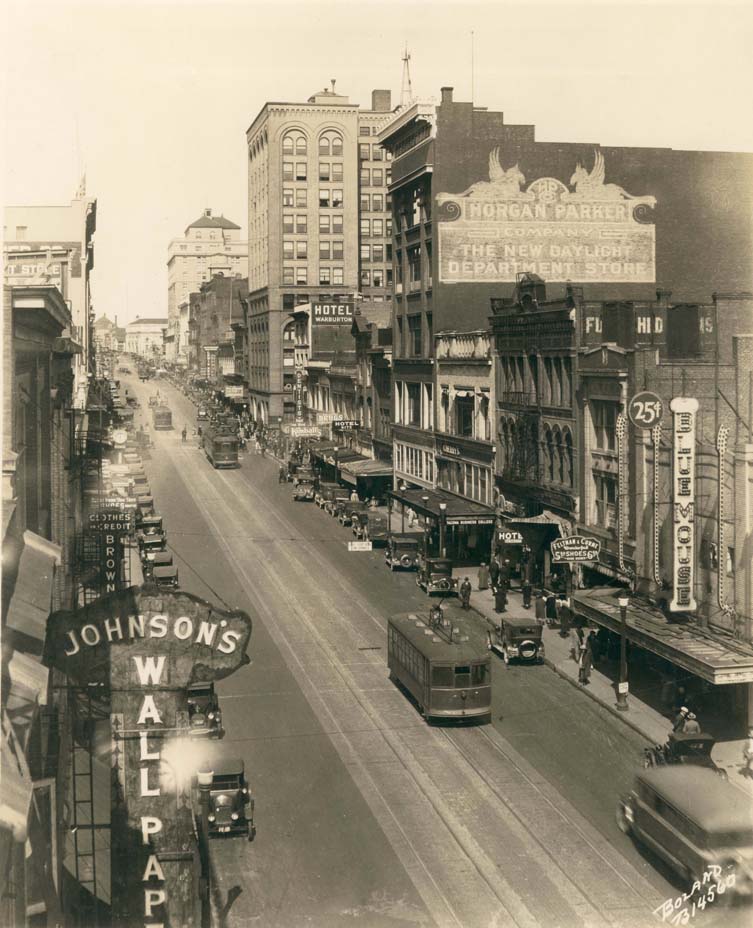
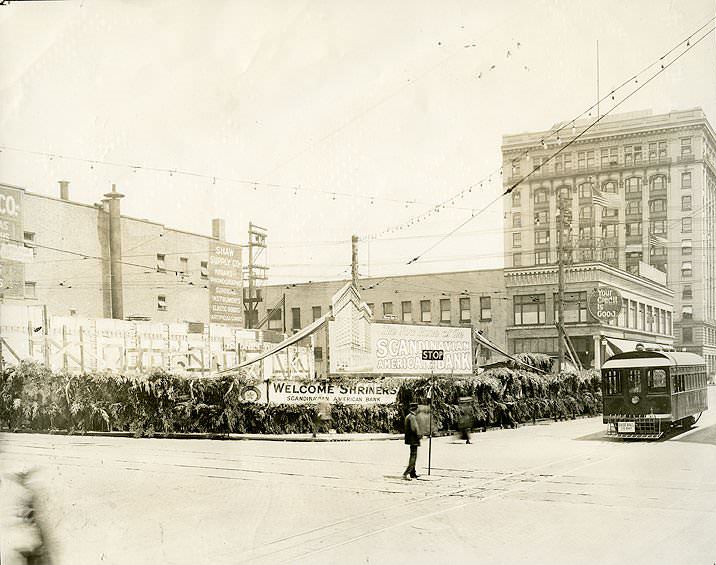
Streetcar tracks are in the foreground. The Twelfth Street intersection is below the photo center, and a sign for the Delmonico Hotel is on the building in the photo right. Several automobiles are parked along the street.
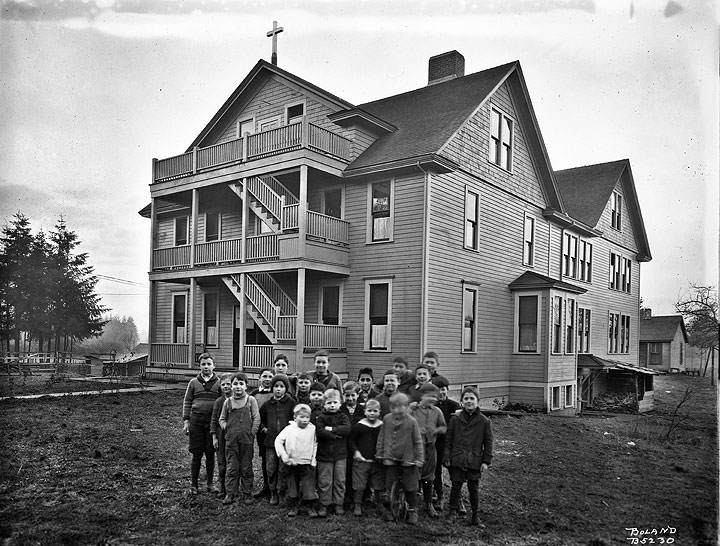
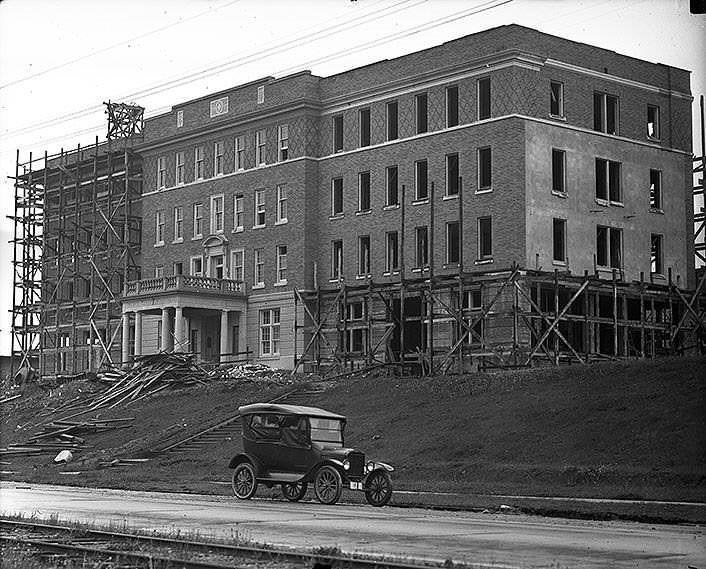
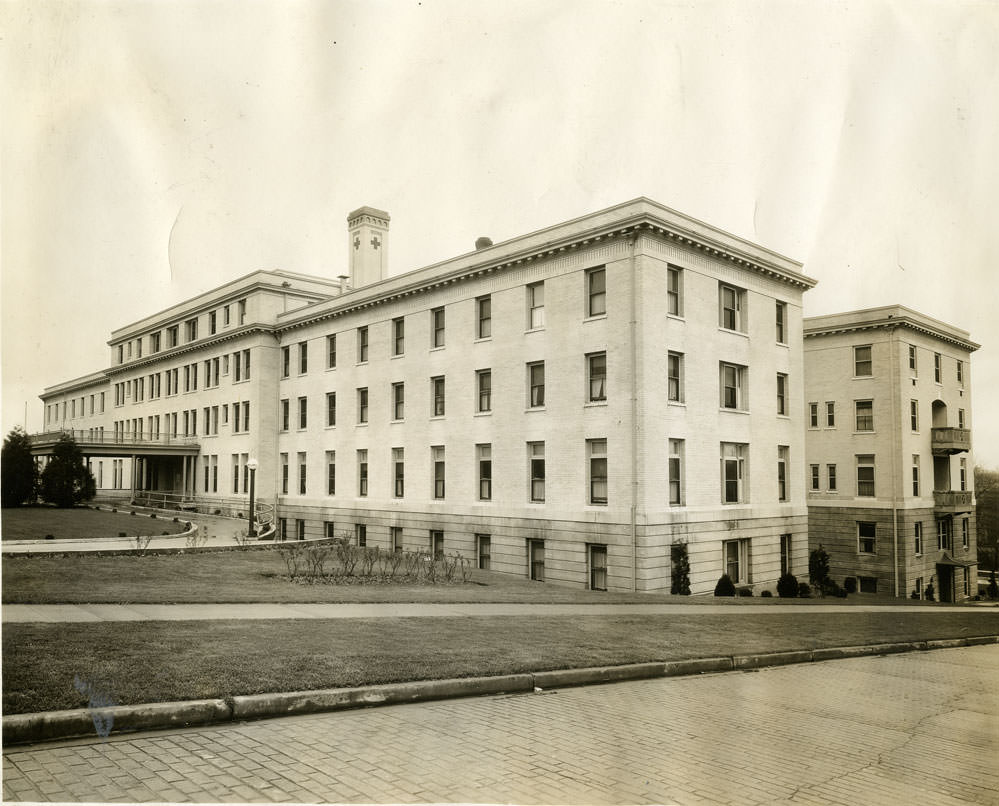
The outer shell of the building appears to be mostly completed. There is scaffolding to the left and right. Building debris litters the lawn in front of the building. An automobile is parked on the street in front of the hospital. Streetcar tracks are visible in the lower-left corner.
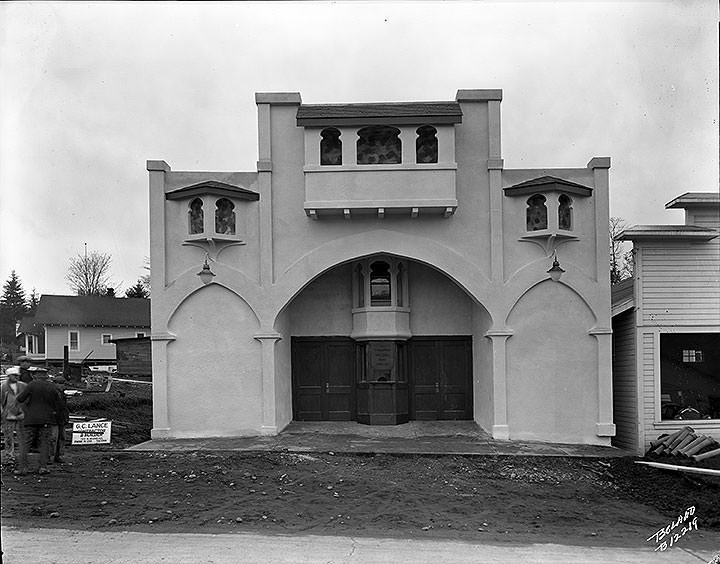
The stucco front of the building, in Spanish style, has been completed. A concrete road covered in dirt is in front of the building.
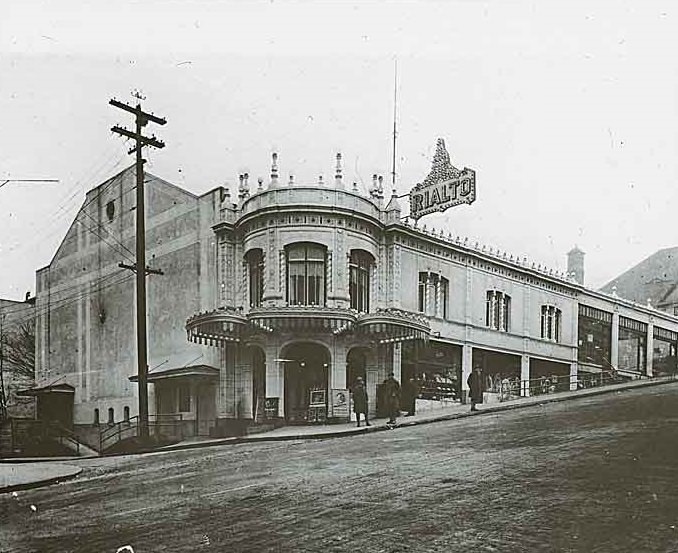
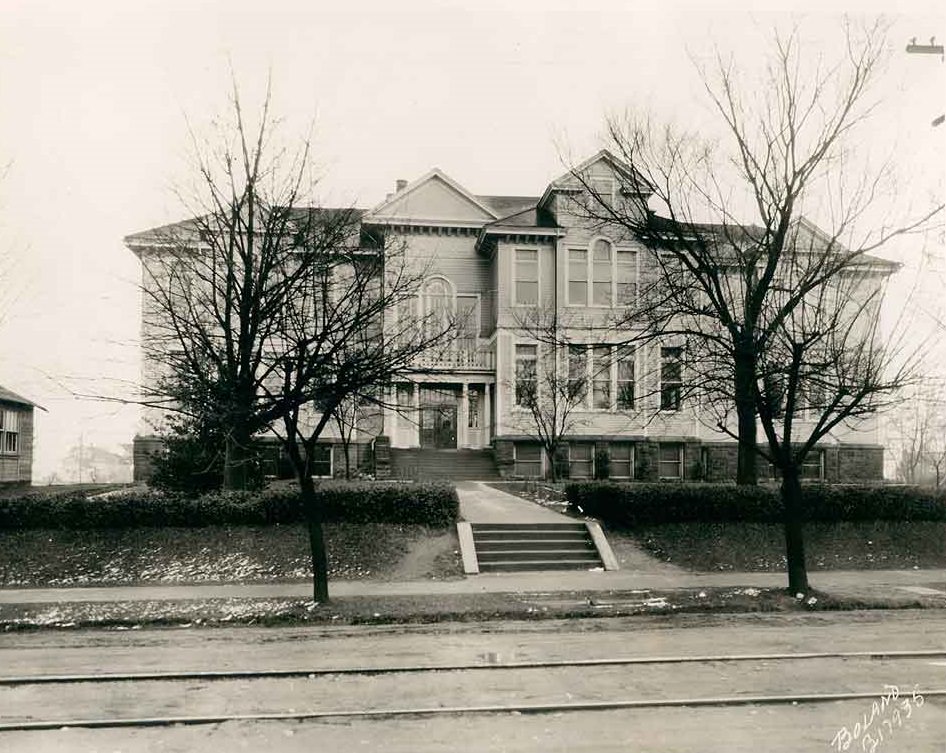
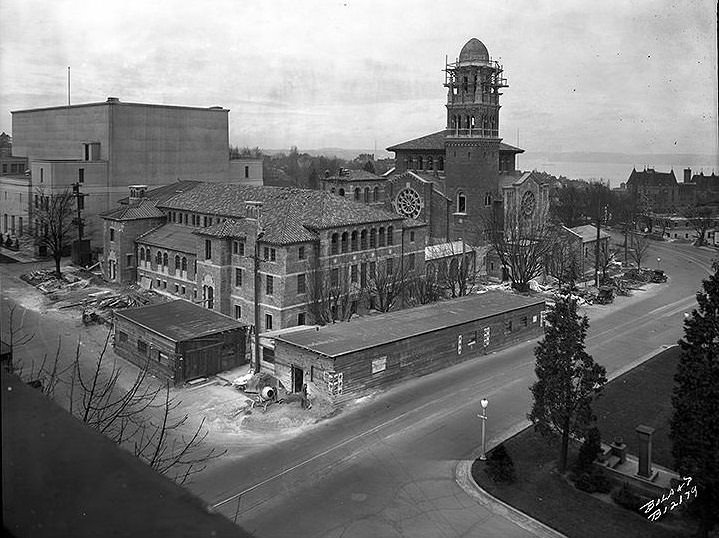
It was built in 1918 by Roland E. Borhek, the architect. Ninth Street goes diagonally, ascending a hill, above the image lower edge. Court C is barely visible above the image’s lower-left corner. Market Street, which would be behind the building in the image right, is not visible.
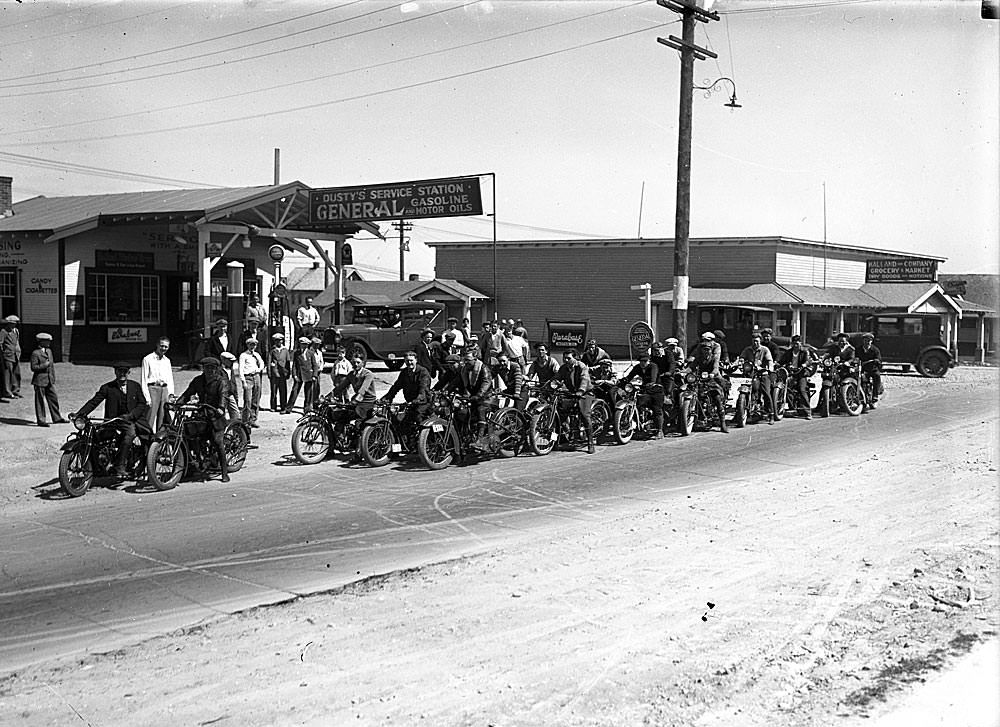
Behind the group of motorcyclists is a service station. A sign reads Dusty’s General Service Station, Gasoline and Motor Oils. Several men and a group of boys stand outside the service station to observe the motorcyclists. A car with a man at the wheel is parked just to the right of the gas pump. To the right is Kalland & Company Grocery Store, located at 4327 6th Ave.
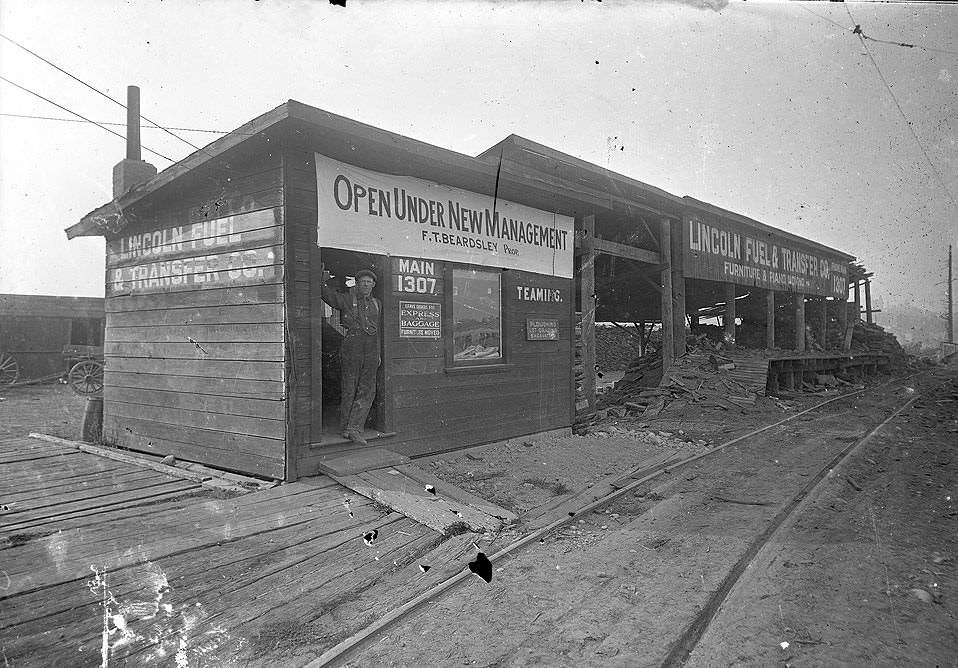
Railroad tracks run close to the structure on the right. Lettering on the side of the building and over the platform reads: Lincoln Fuel & Transfer Co. The business was located at 701 South 34th Street. A man stands in the open doorway wearing suspenders.
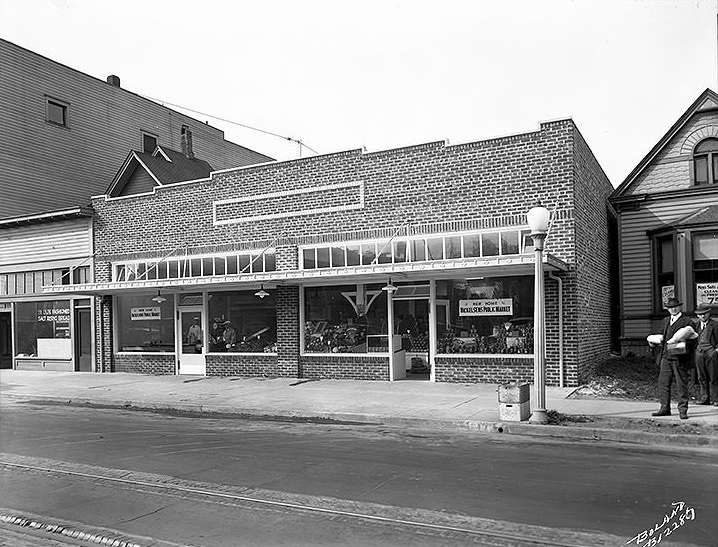
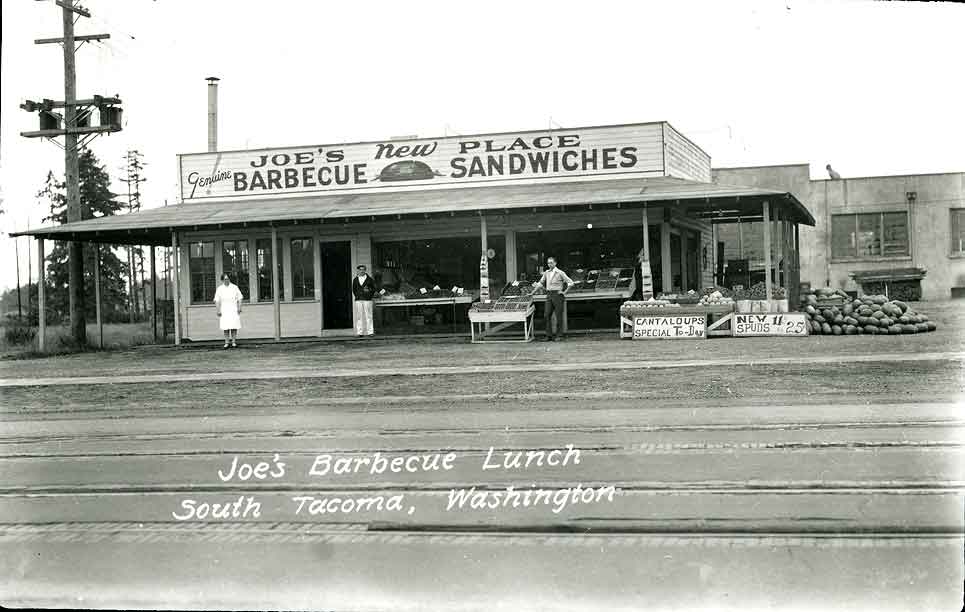
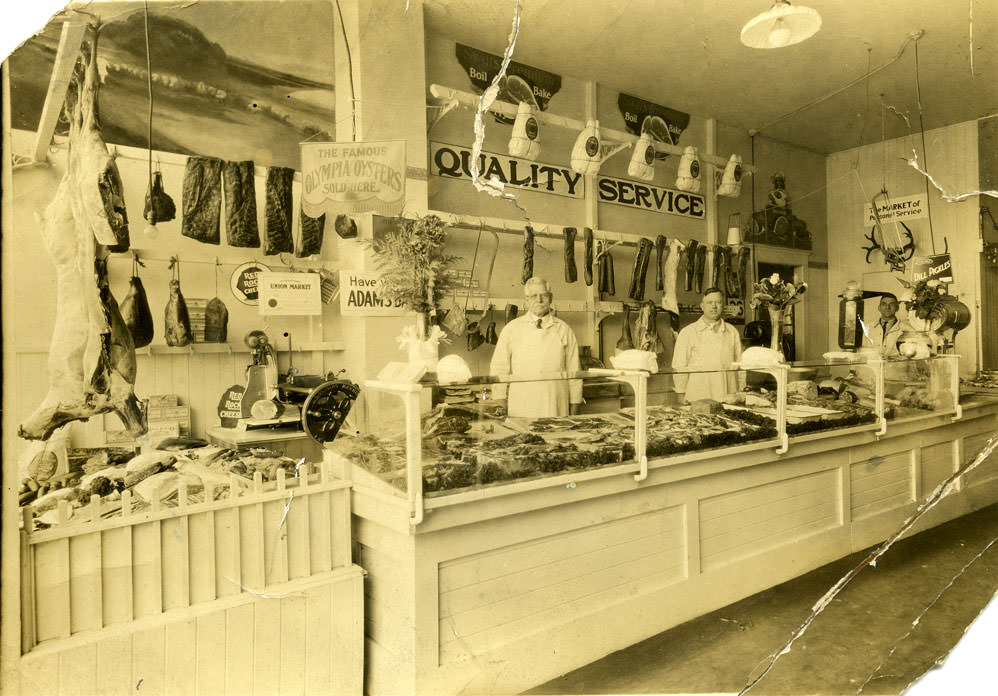
The one-story brick building has two doors to the sidewalk. The signs in the window read: “New Home Nickelsen’s Public Market.” Two male employees are visible on the left side of the building. Canned food and produce are displayed in the windows. To the left of the market is another commercial building.
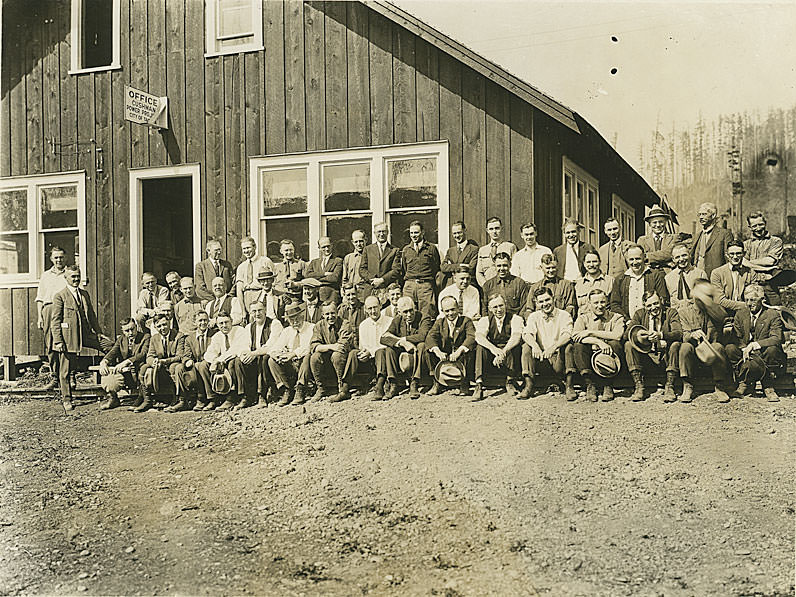
The image shows three rows of men, standing and sitting, outside a two-story wood building.

Two cars are parked in front. Joseph Weinstein was president of The Broadway Department Store, which sold ladies ready-to-wear clothing, dry goods, and hats.




