
Switzerland in the 1970s was a country moving fast. Its economy was expanding, its cities were growing, and its society was changing in ways that touched nearly every corner of daily life. The decade opened with a wave of construction, political debate, and social tension that few Swiss had seen before. These photographs capture that moment — the streets, the people, the machinery, and the mood of a nation in the middle of a major transformation.
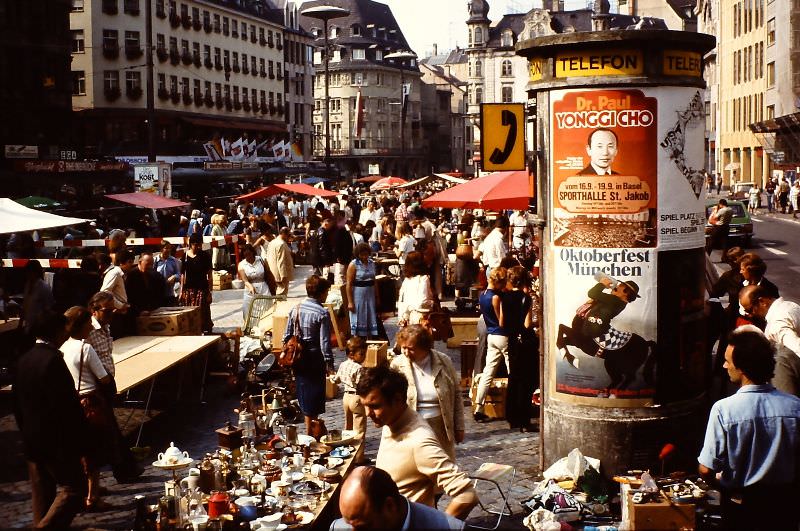
Basel was one of Switzerland’s most important cities throughout the decade — a hub of commerce, culture, and chemistry. Its streets carried a mix of old stone architecture and the bustle of modern trade. The Marktplatz sat at the heart of it all, surrounded by the kind of civic grandeur that Basel had built over centuries. By the late 1970s, the city had become one of the wealthiest urban centers in the country, driven in large part by its powerful pharmaceutical and chemical industries.
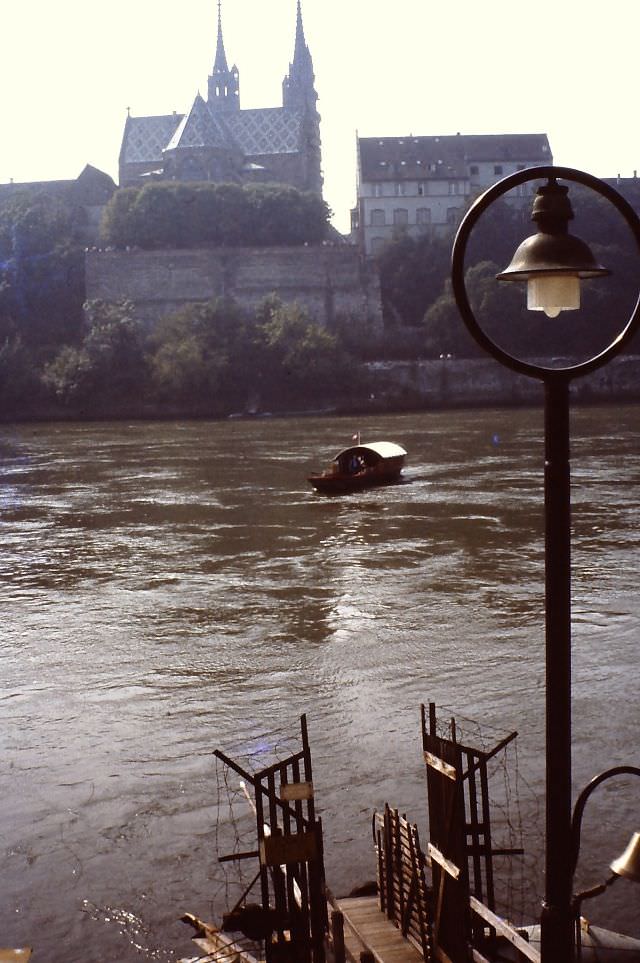
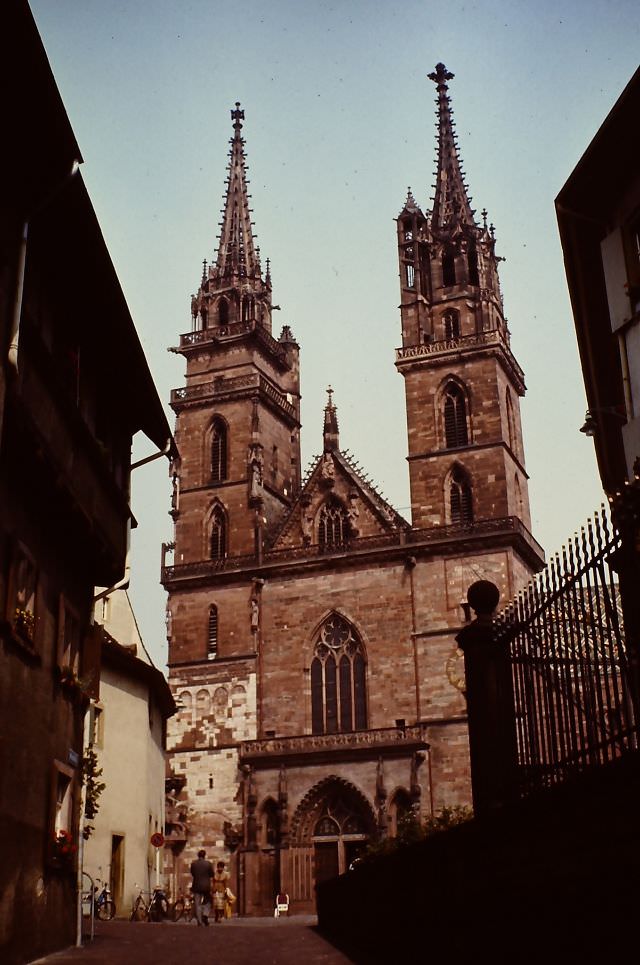
The Rhine ran straight through Basel, and small rope-guided ferries had been crossing it for generations. The Münsterfähre — known locally as the Leu — carried passengers across the river using nothing but the current and a skilled ferryman. Above the riverbank, the red sandstone Münster cathedral dominated the skyline, just as it had since the Middle Ages. These were not relics — they were still working parts of the city in 1979.
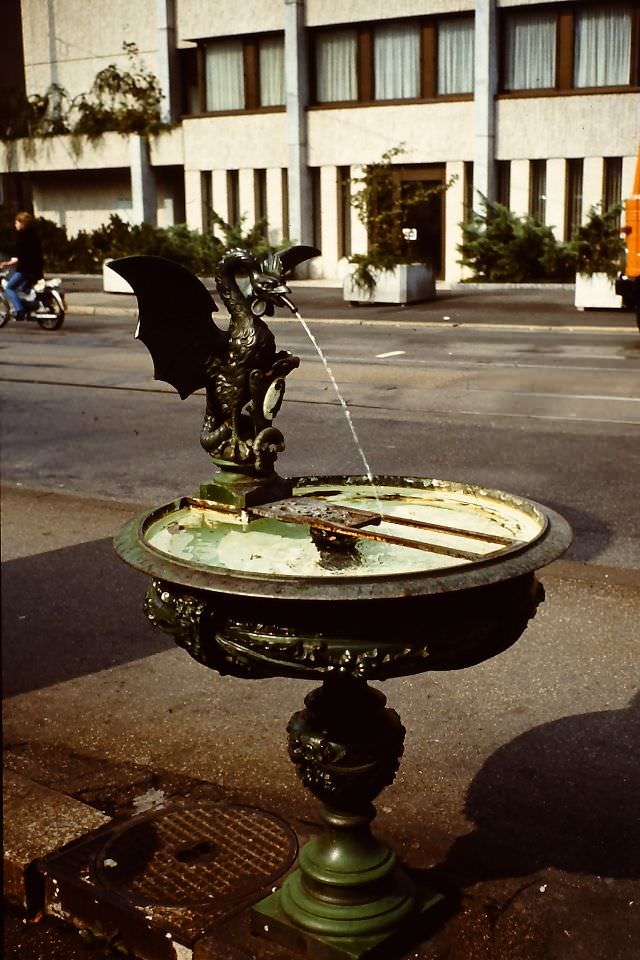
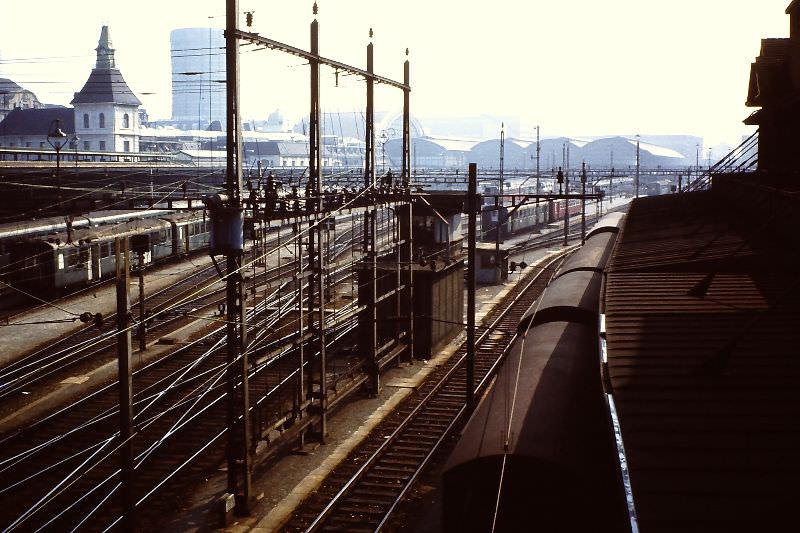
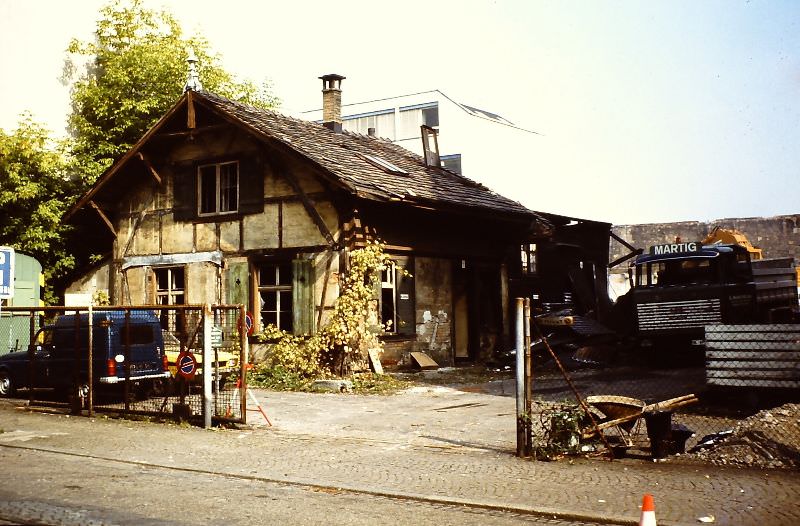
Basel’s streets in 1979 held a particular character — old fountains decorated with mythological figures stood alongside everyday traffic, rail passengers, and aging garages that had served the city’s growing car culture for decades. The railway station area was always busy, connecting Basel to France and Germany as well as to the rest of Switzerland. Private car ownership had risen sharply during the economic boom, and the streets showed it.
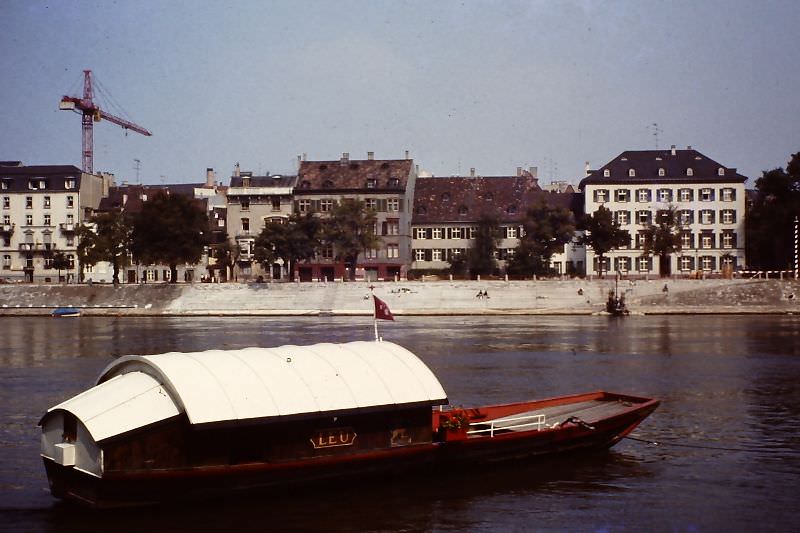
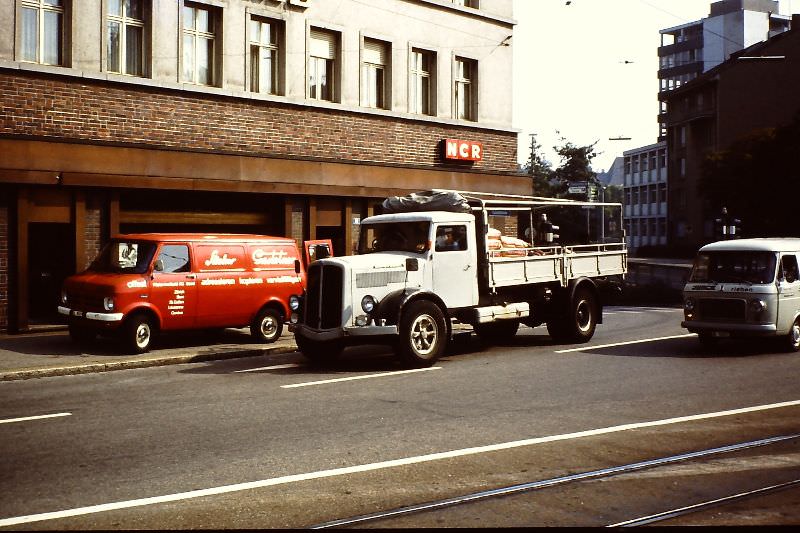
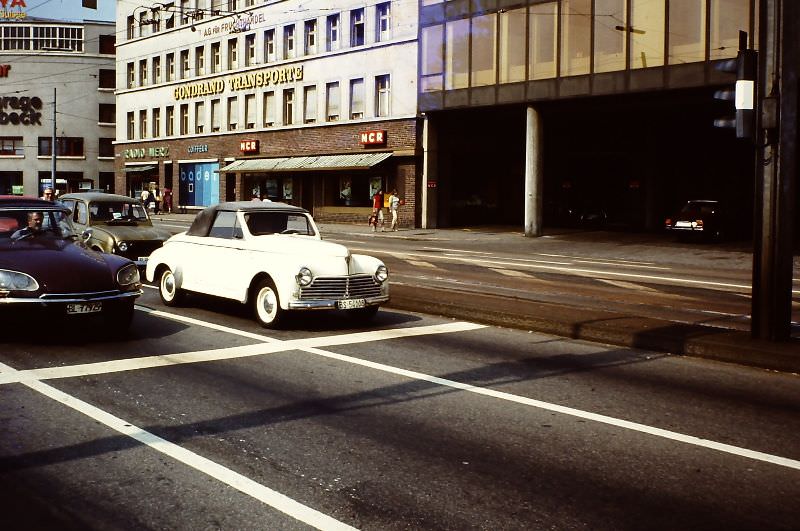
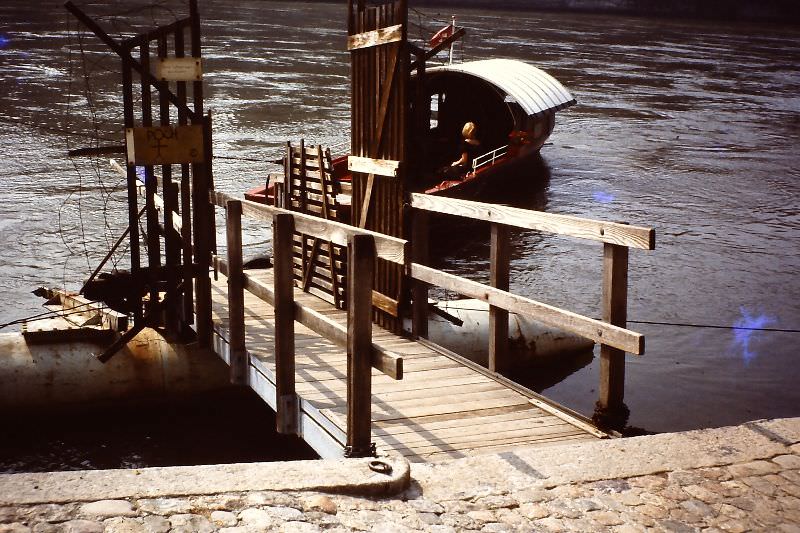
The Rhine shaped Basel’s identity in every sense. It was a trade route, a leisure space, and a boundary all at once. Street life along its banks and in the surrounding neighborhoods reflected a city that was prosperous but not untouched by change. Switzerland’s exports had grown nearly tenfold during the 1970s, and cities like Basel were at the center of that growth.
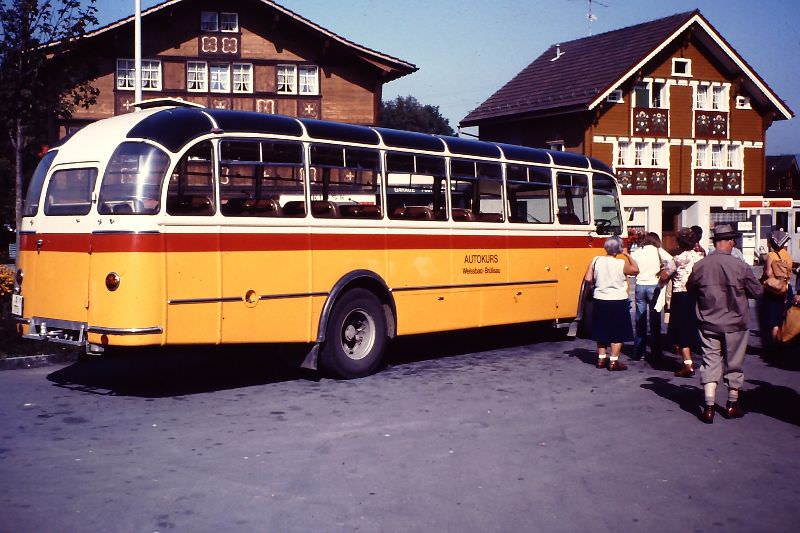
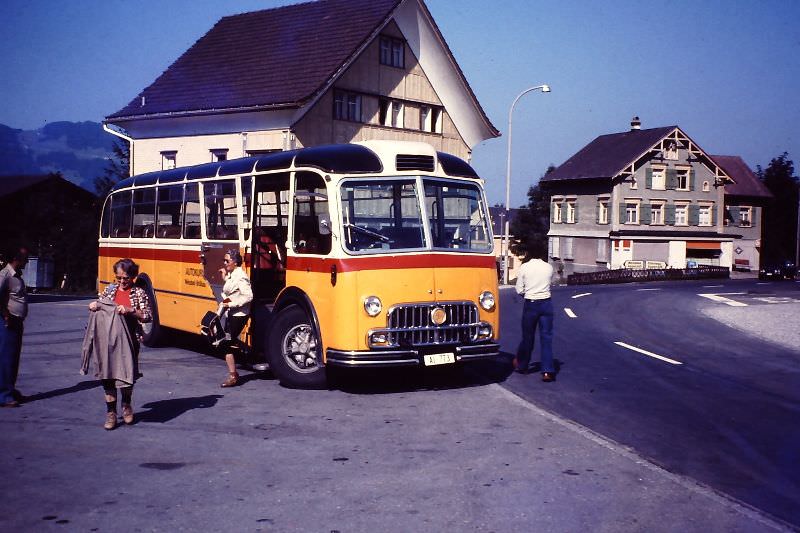
Outside the big cities, rural Switzerland had its own pace. Near Appenzell, in the northeastern corner of the country, postbuses and regional coaches were the lifelines of small communities. The FBW Haifisch — a distinctively styled Swiss-built bus — was a common sight on mountain roads. The Appenzell region was known for its tradition and resistance to change; it was, in fact, one of the last places in Switzerland to grant women the right to vote in cantonal elections.
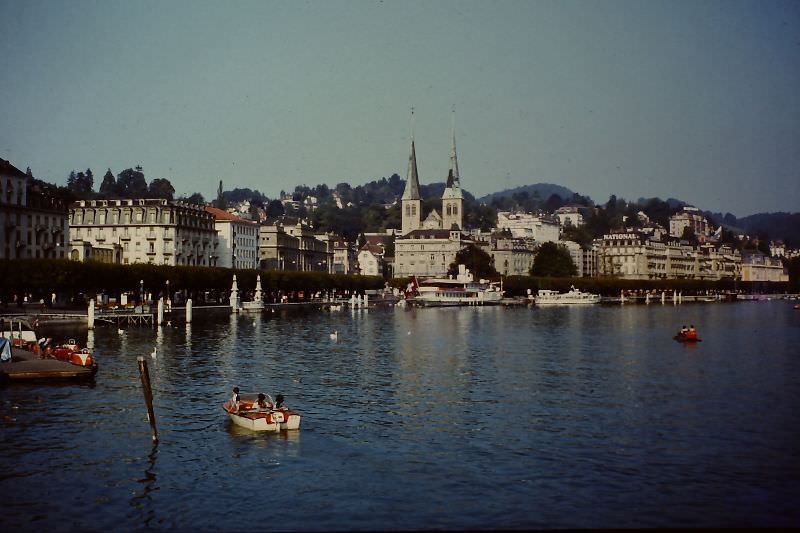
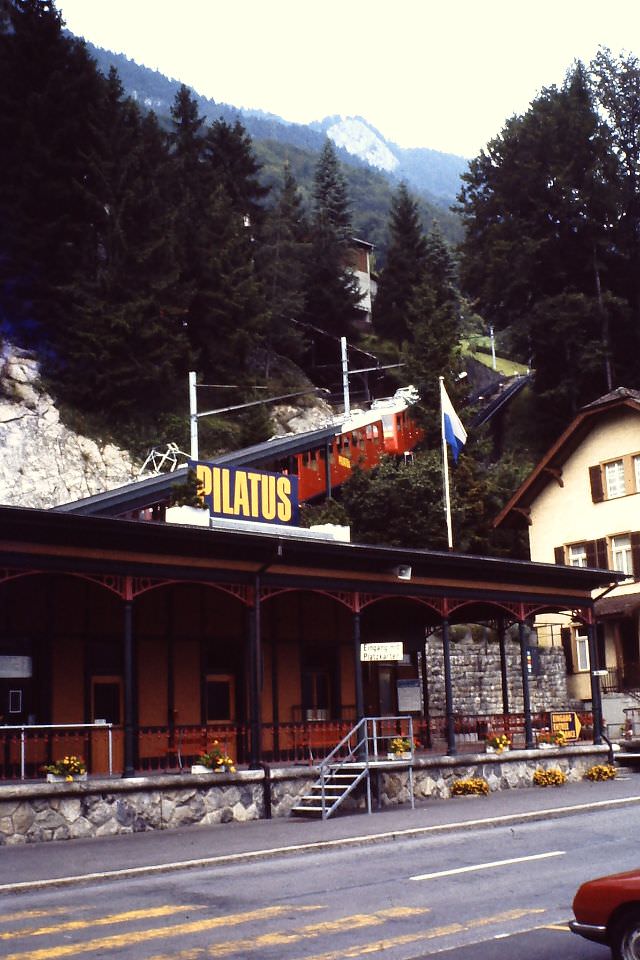
Lucerne was Switzerland’s most visited city, and by 1979 it had settled into its role as the country’s tourism showcase. The rack railway up Mount Pilatus, one of the steepest in the world, carried visitors from Alpnach up to a summit that offered views across the Alps. Tourism was a major part of Switzerland’s growing service sector, which drove much of the country’s prosperity throughout the decade.
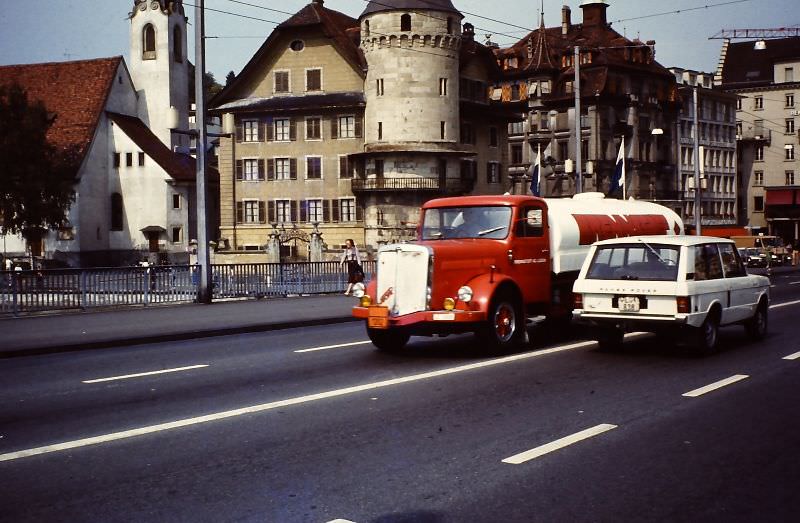
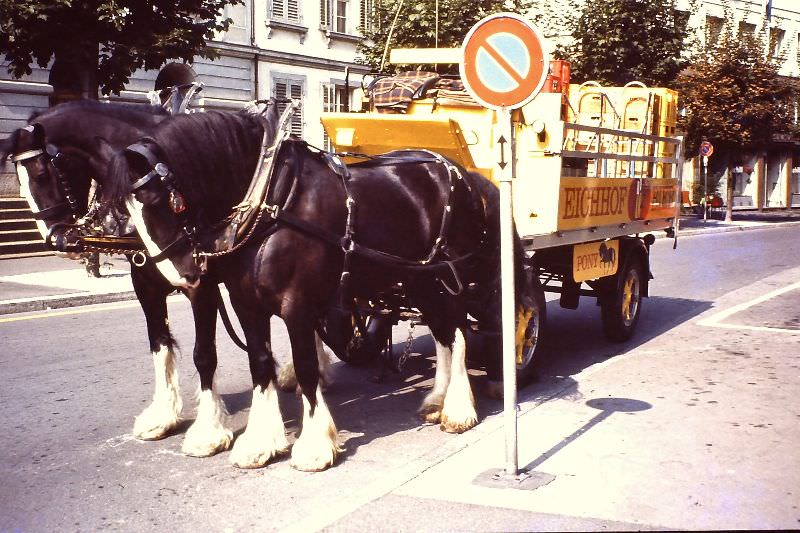
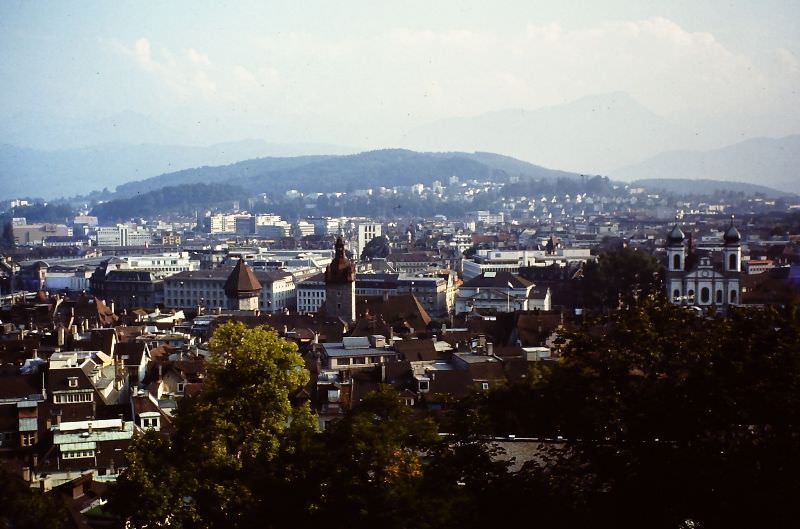
Lucerne’s waterfront was a mix of old and new. Chemical tankers from companies like Brenntag shared the Seebrücke with tourist traffic and brand new Range Rovers. The Jesuitenkirche and the Town Hall faced the Reuss River, flanked by the tower of the famous Kapellbrücke. Eichhof, the local brewery, had been supplying the city with beer since 1834, and its signage was a fixture on almost every corner.
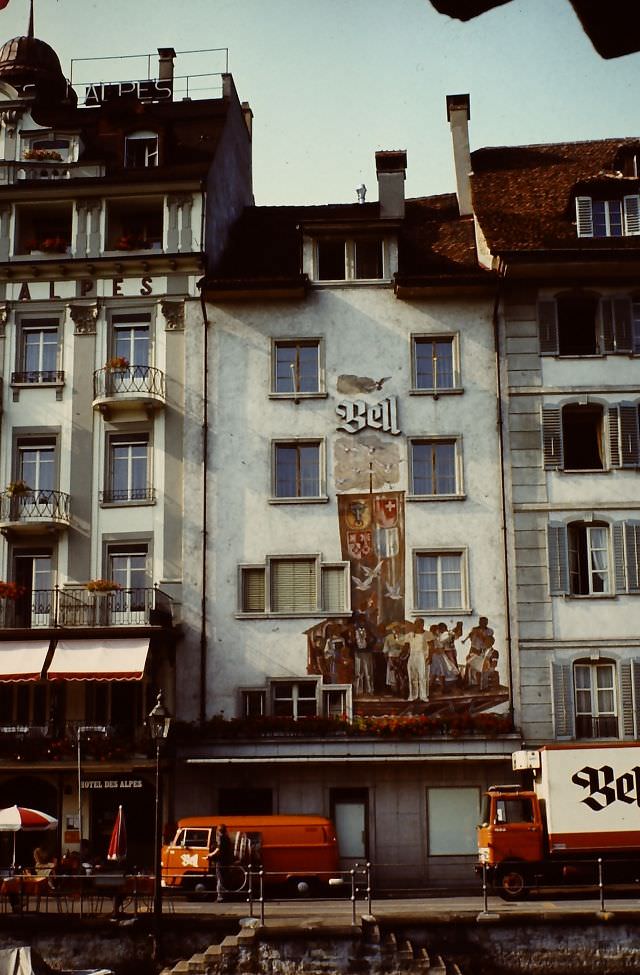
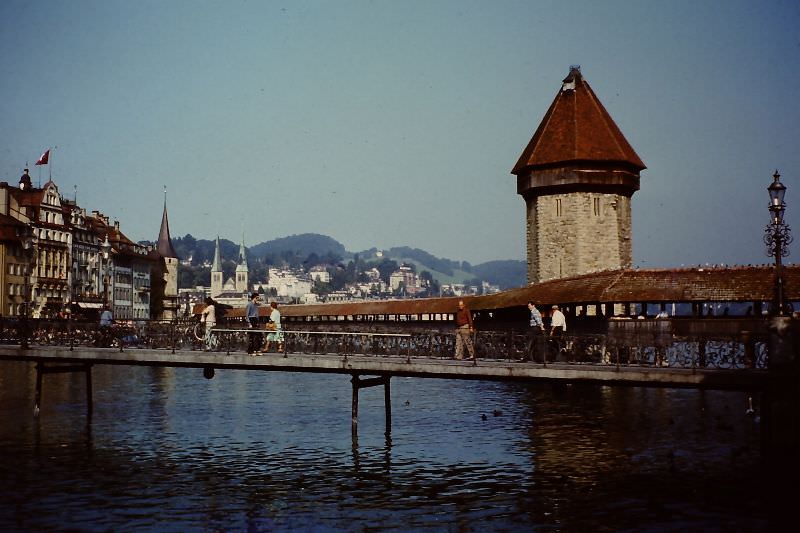
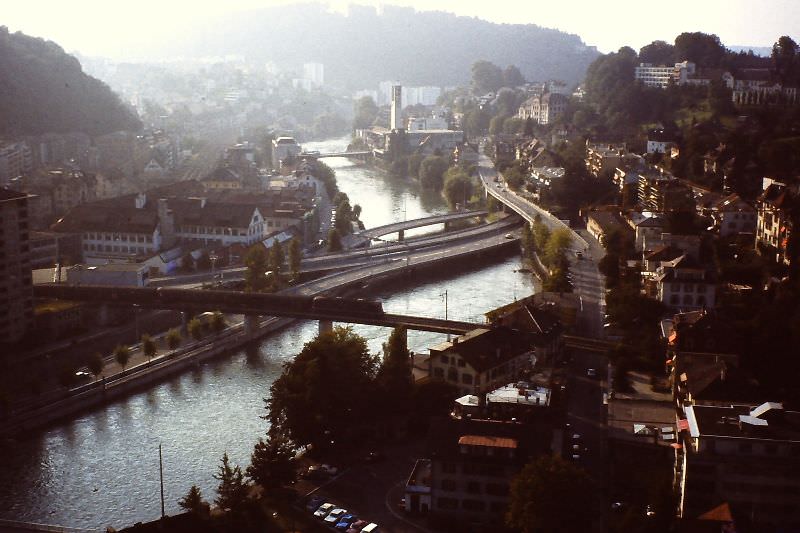
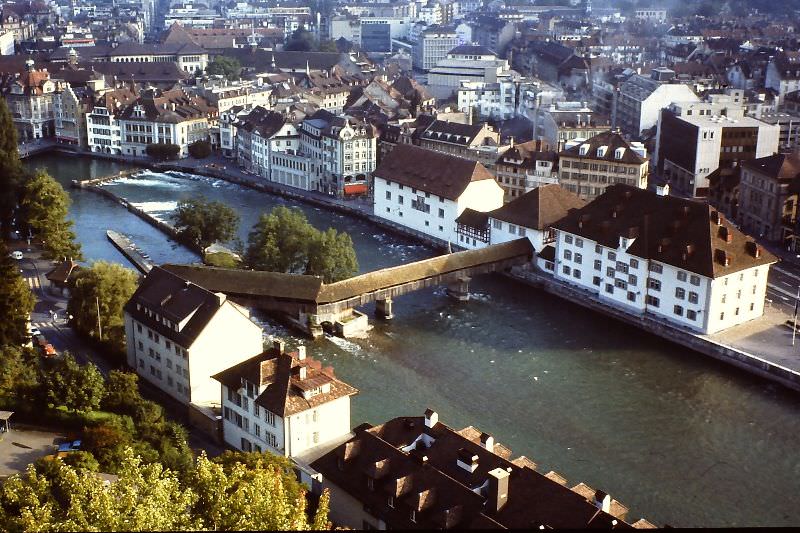
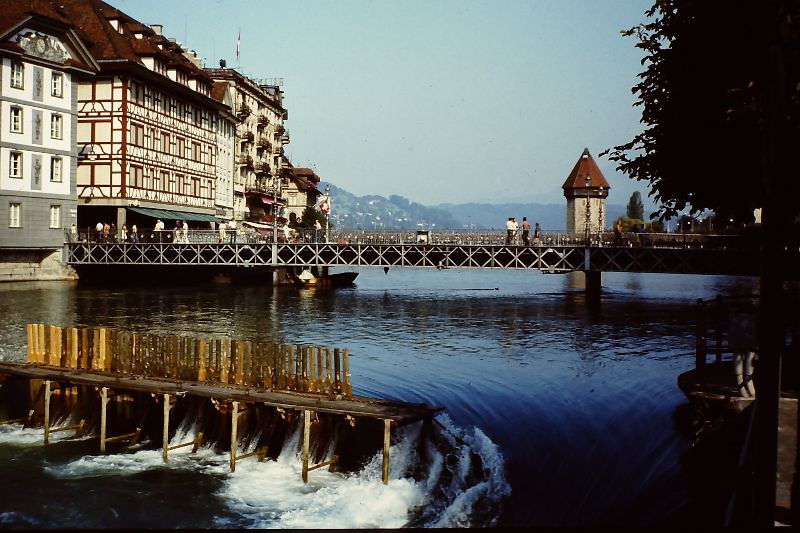
The Reuss River ran through the center of Lucerne, crossed by a series of historic bridges that had become symbols of the city. The Kapellbrücke, the Rathaussteg, and the Spreurbrücke each told a different part of Lucerne’s story. Hotels and civic buildings lined the Rathausquai, catering to the steady stream of visitors who came from across Europe and beyond.
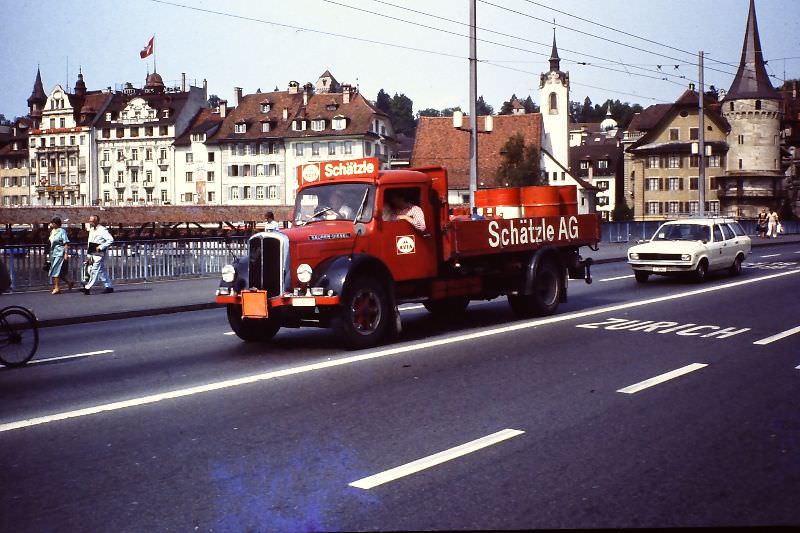
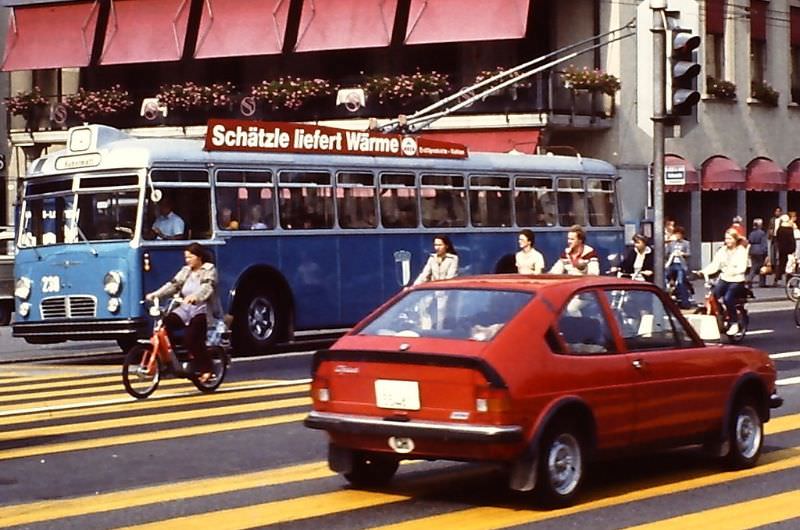
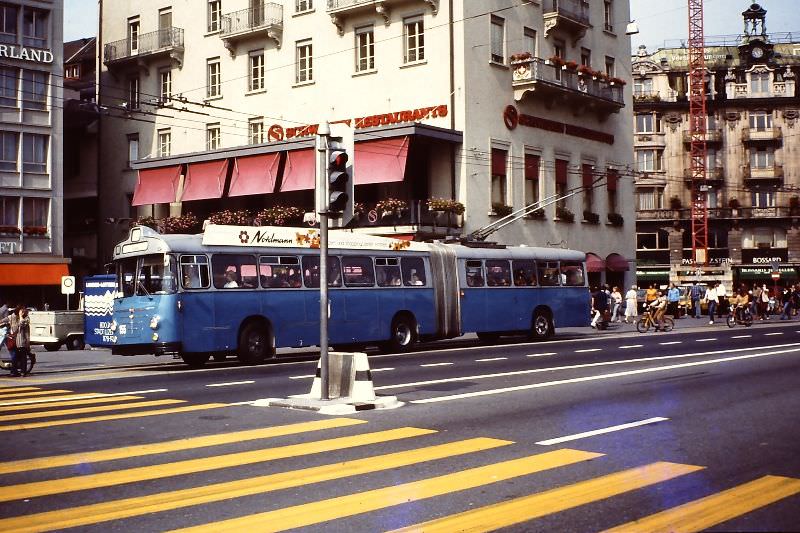
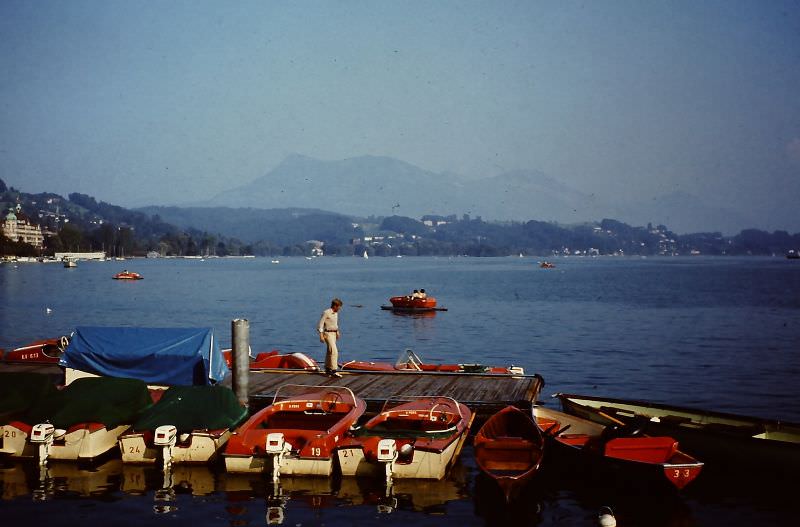
Swiss-made Saurer trucks and FBW buses were a common sight on city streets throughout the decade. At Schwanenplatz in Lucerne, Puch mopeds were parked alongside bus stops, reflecting how Swiss commuters mixed two-wheeled transport with public transit. The Vierwaldstättersee — Lake Lucerne — stretched out behind the city, its clear water framed by Alpine peaks that drew painters and photographers alike.
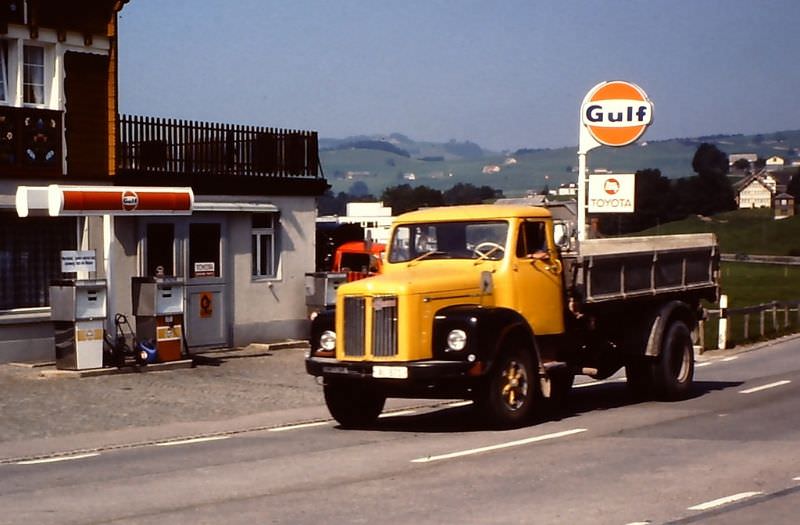
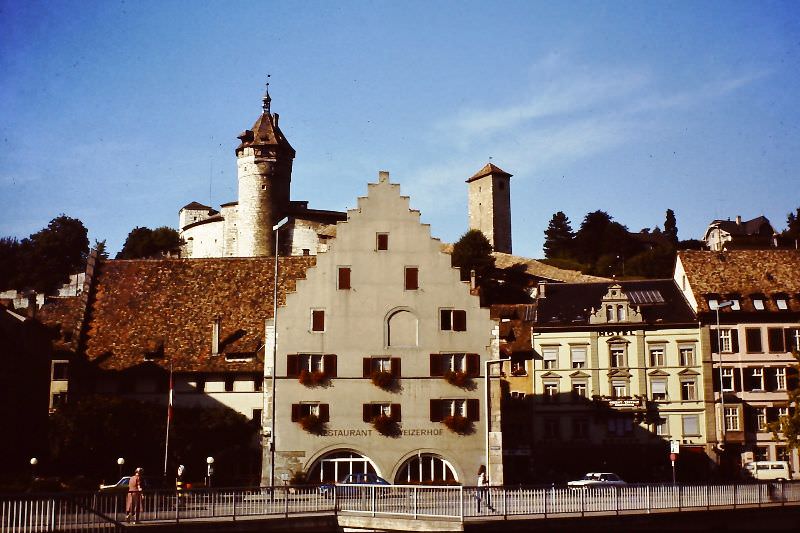
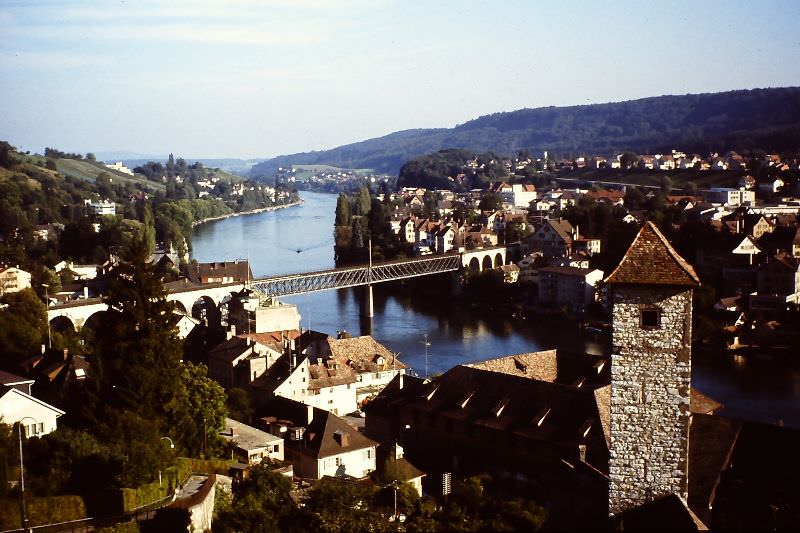
Schaffhausen sat in the far north of Switzerland, almost entirely surrounded by German territory. The medieval Munot fortress looked out over the Rhine and the rooftops below, a view that had barely changed in centuries. Down at street level, though, road construction, petrol stations, and heavy trucks marked the country’s modernizing infrastructure. The Gulf station near Appenzell, with a Swedish Scania dumper parked beside it, captured the everyday industrial reality of 1970s Switzerland.
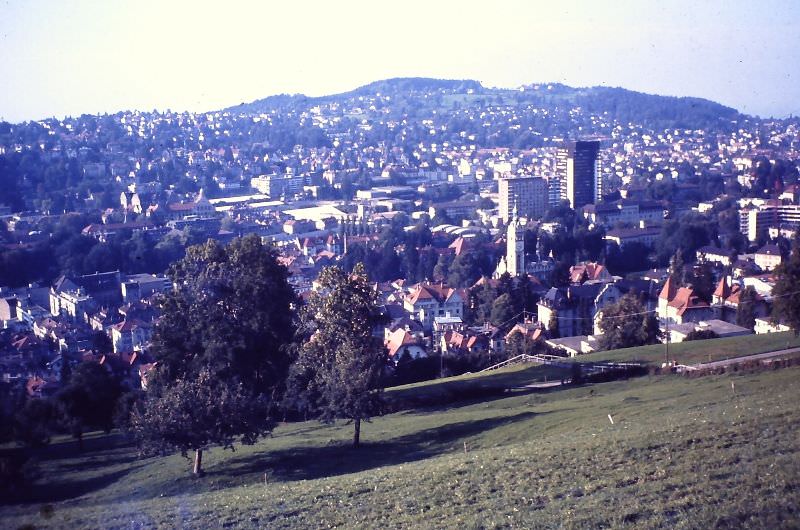
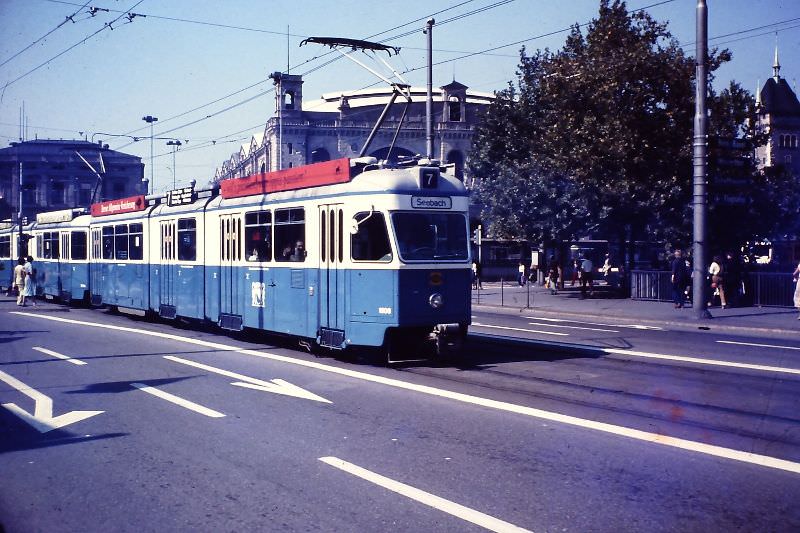
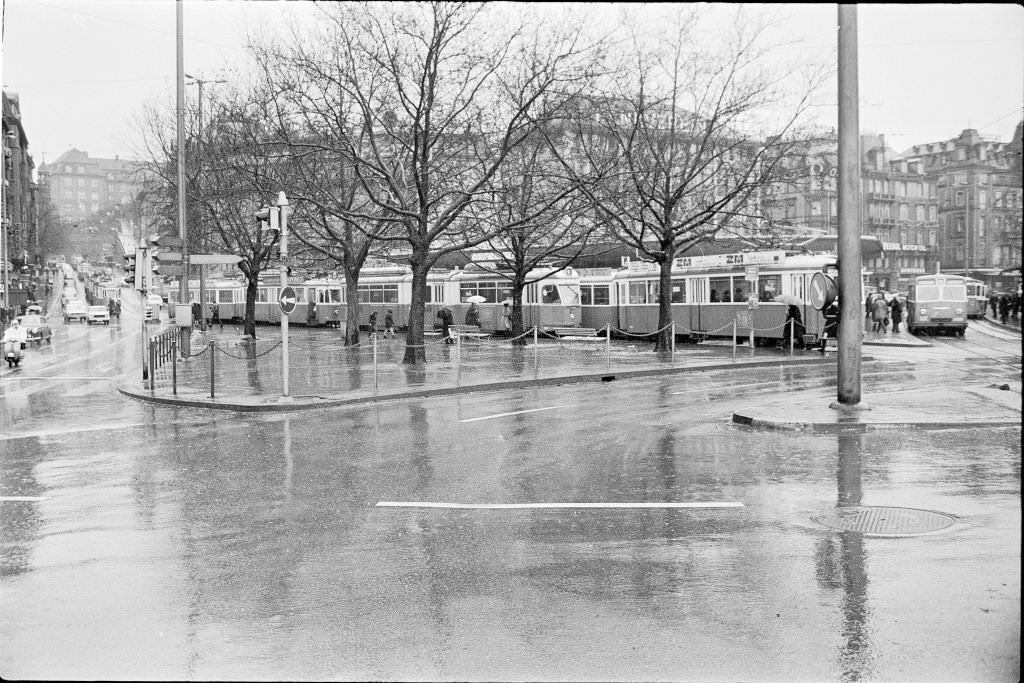
Zürich was Switzerland’s largest city and its financial capital. The Hauptbahnhof — the central railway station — was one of the busiest in Europe, and the tram network that fanned out from it was a model of urban transit. Tram 7, heading to Seebach in the north, was one of dozens of routes that kept the city moving. Urban sprawl had pushed development outward from Zürich toward St. Gallen throughout the decade, as more people moved into the corridor between the two cities.
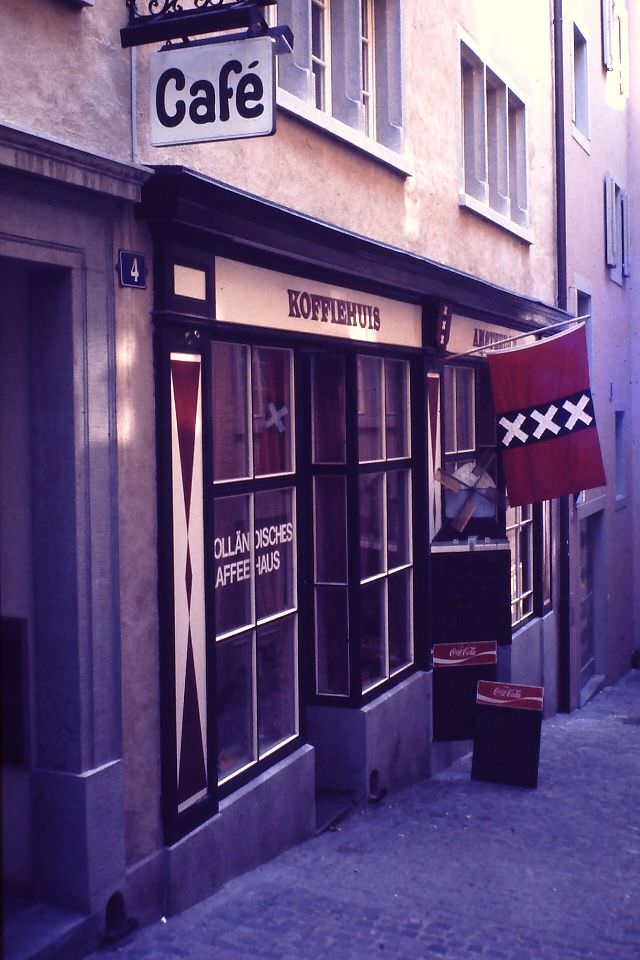
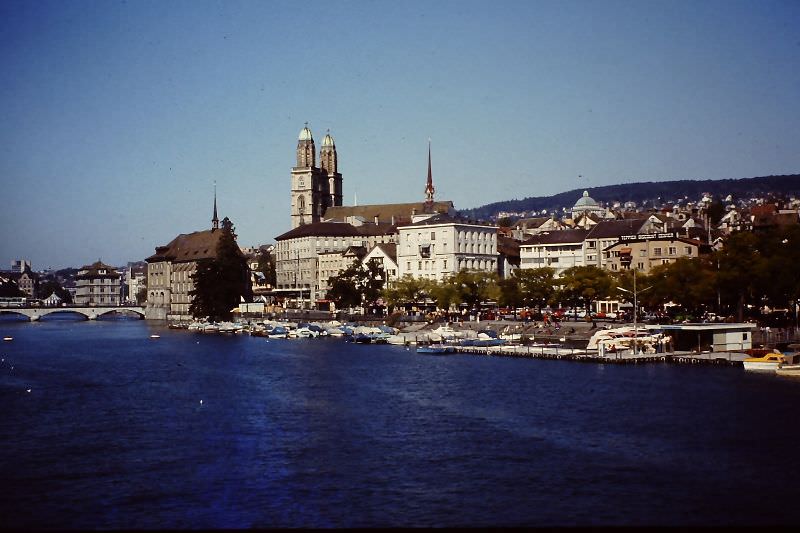
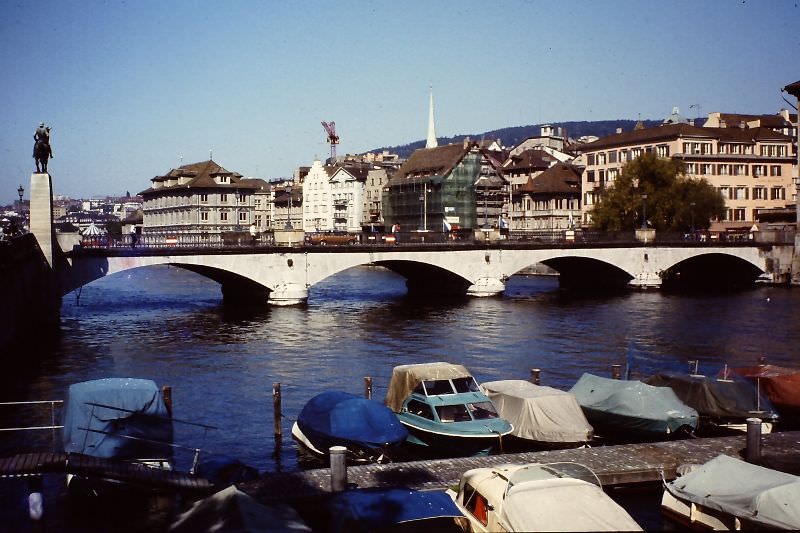
The Limmatquai was Zürich’s most photographed stretch of riverfront, lined with guild houses, cafés, and the twin towers of the Grossmünster rising behind them. The Münsterbrücke crossed the Limmat just below the church, connecting the old town to the west bank. Coffee houses like the Kaffeehaus Amsterdam added a cosmopolitan touch to streets that were already busy with shoppers, workers, and tourists.
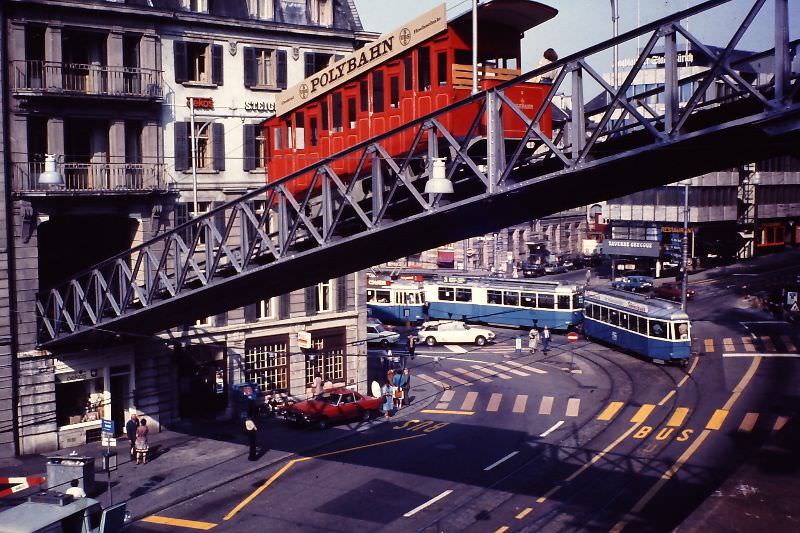
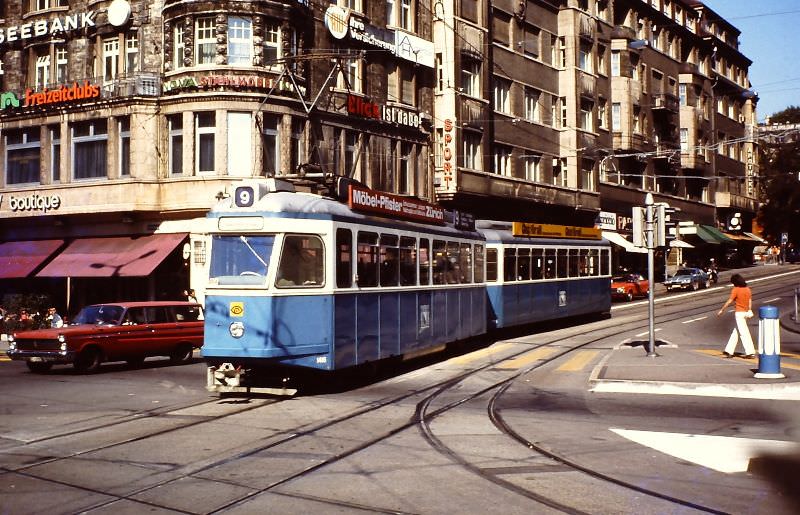
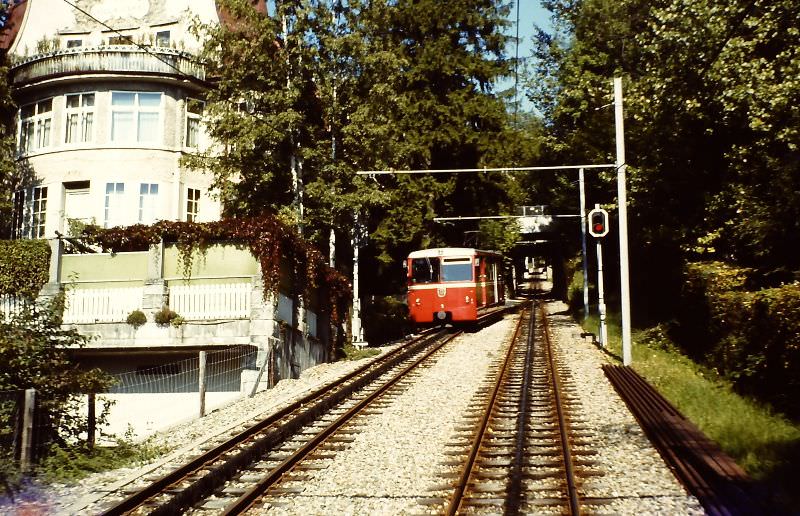
Zürich’s Polybahn was a short funicular railway that connected the city center to the ETH — the Swiss Federal Institute of Technology — perched on the hill above. It had been running since 1889. The tram system below it was equally old in its origins but thoroughly modern in its operation by 1979. Zürich’s public transit was one of the most efficient in Europe, and it stayed that way even as the city’s population and car traffic grew.
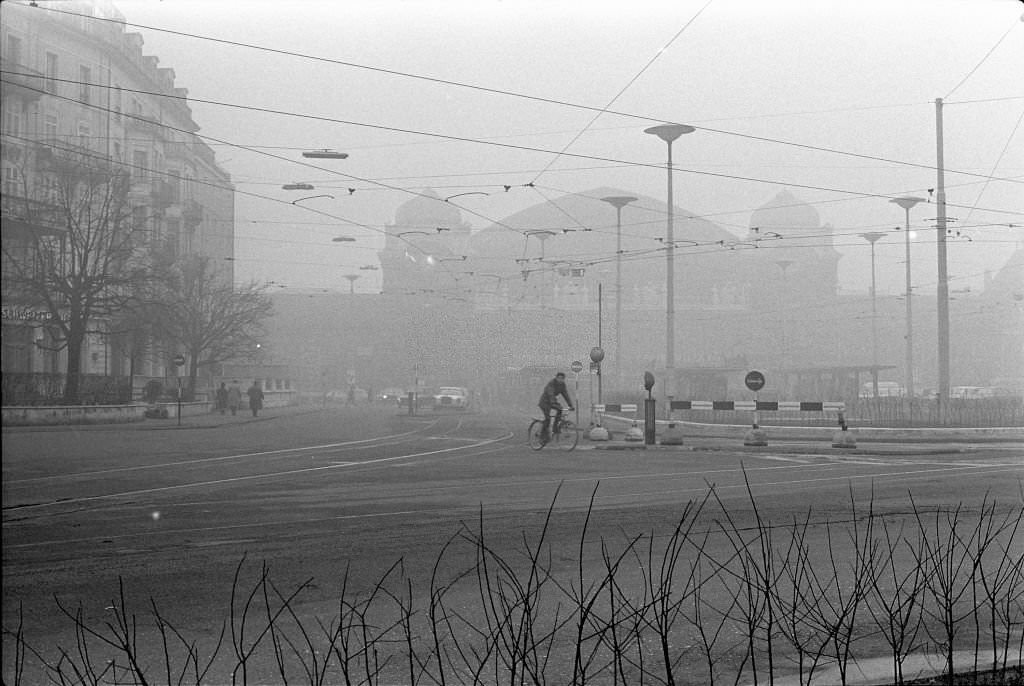
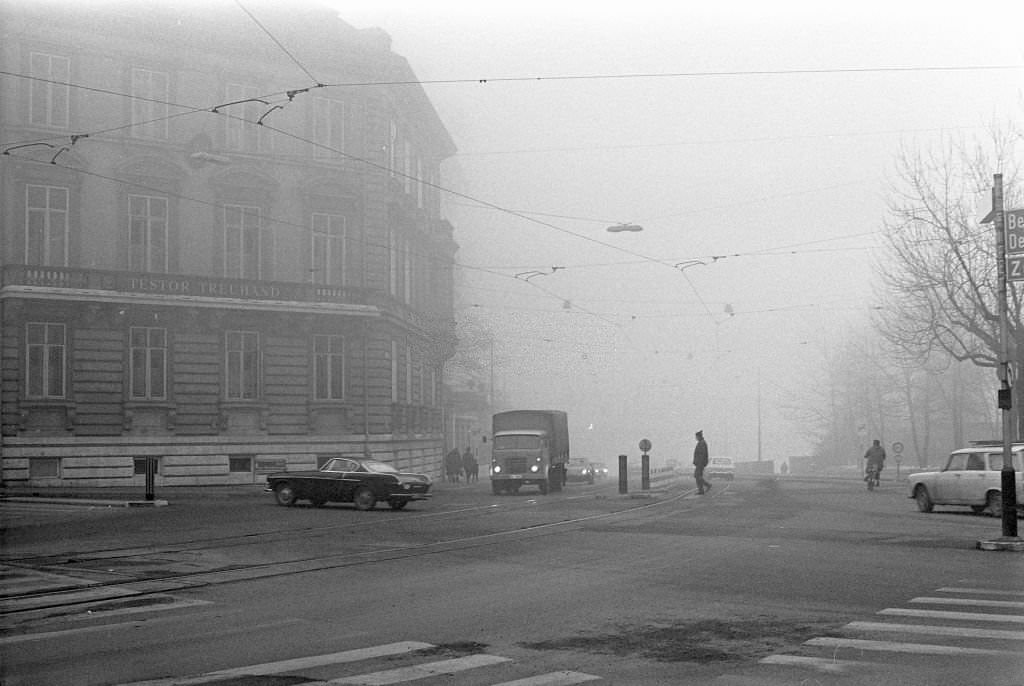
January 1970 in Basel meant fog — the thick, low-hanging kind that settled into the Rhine valley and didn’t lift for days. The fog was part of winter life in the Mittelland, the broad plateau between the Alps and the Jura mountains where most of Switzerland’s population lived. In January 1970, Switzerland was also on the cusp of the political upheaval that would define the decade.
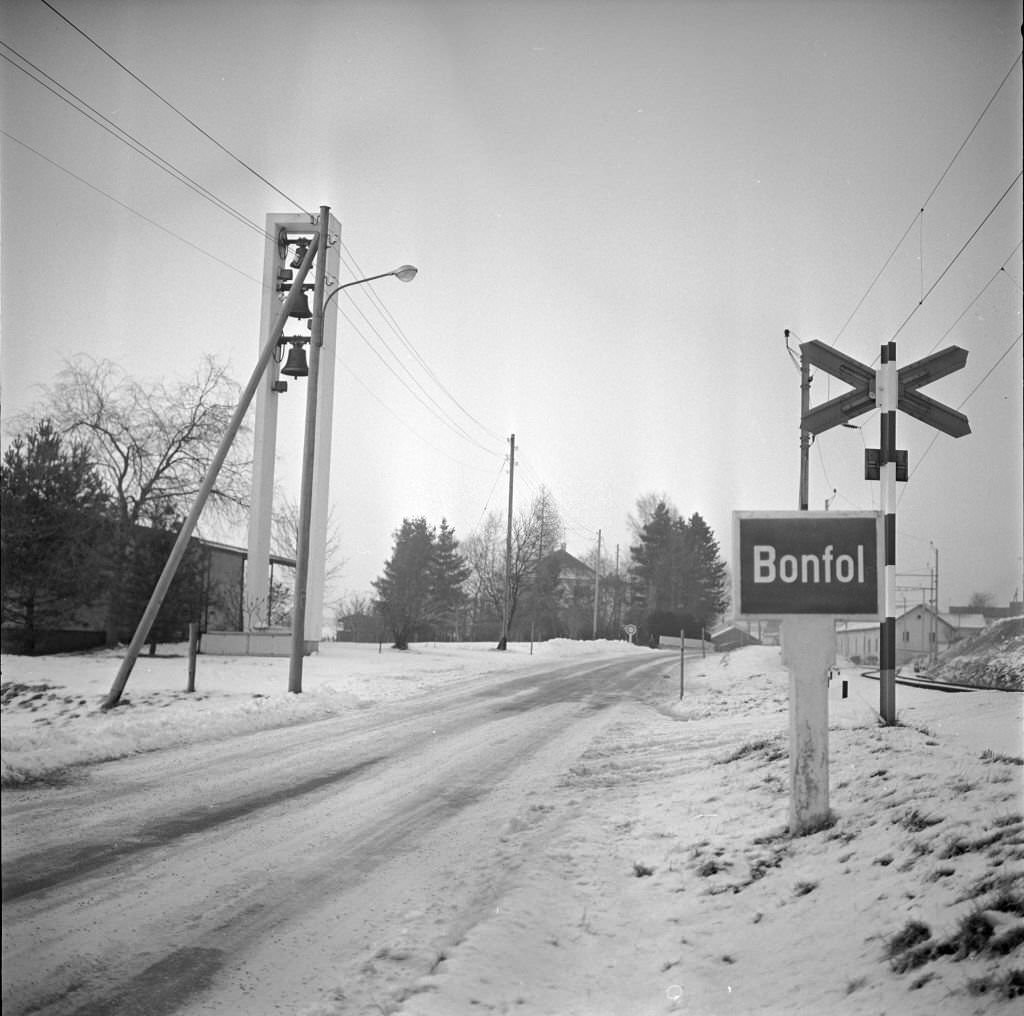
Basel’s chemical industry — home to companies like Ciba-Geigy and Sandoz — was one of the most powerful in the world. But it came with serious environmental costs. At Bonfol, just over the French border in Alsace, the industry had been illegally dumping hazardous chemical waste for years. The site was one of the most contaminated industrial waste dumps in Europe. Swiss cantons and municipalities spent much of the decade working to address exactly this kind of pollution, implementing environmental policies that produced real but hard-won progress.
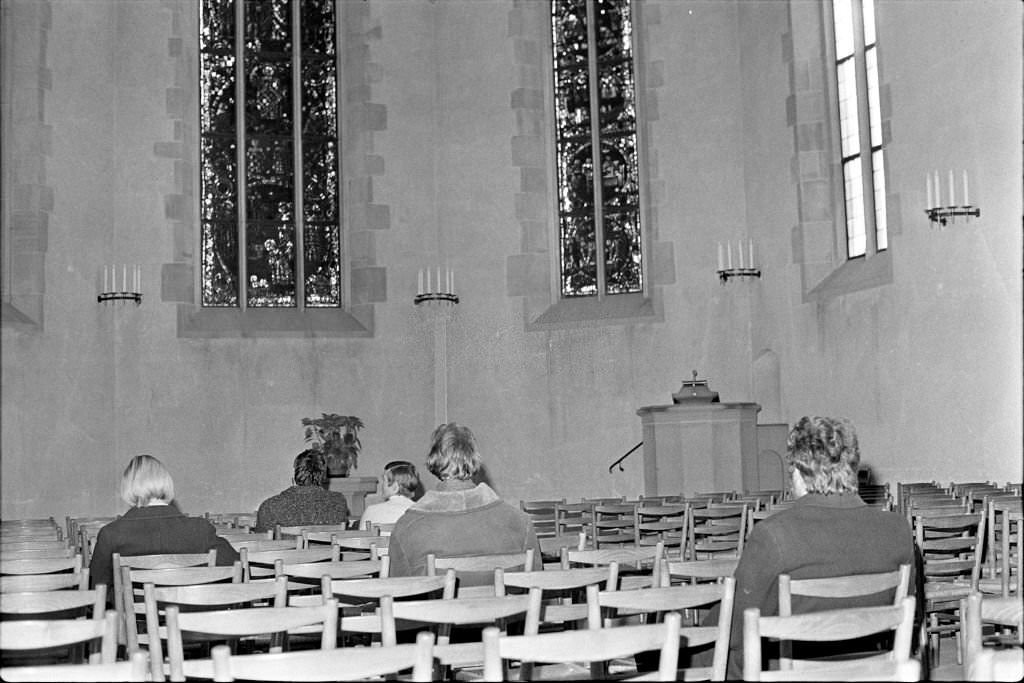
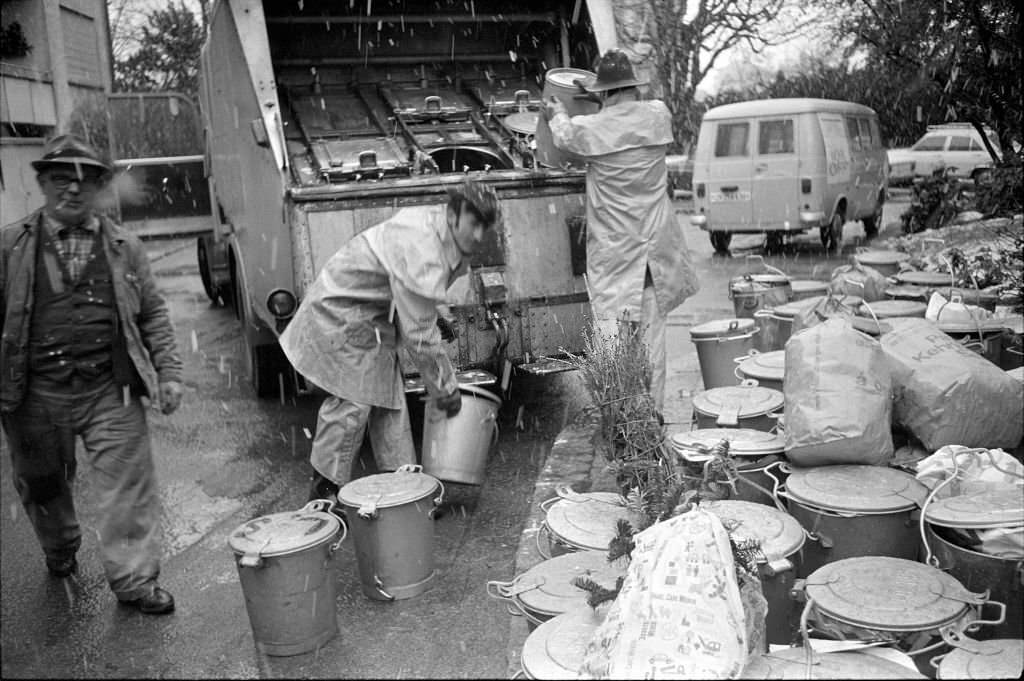
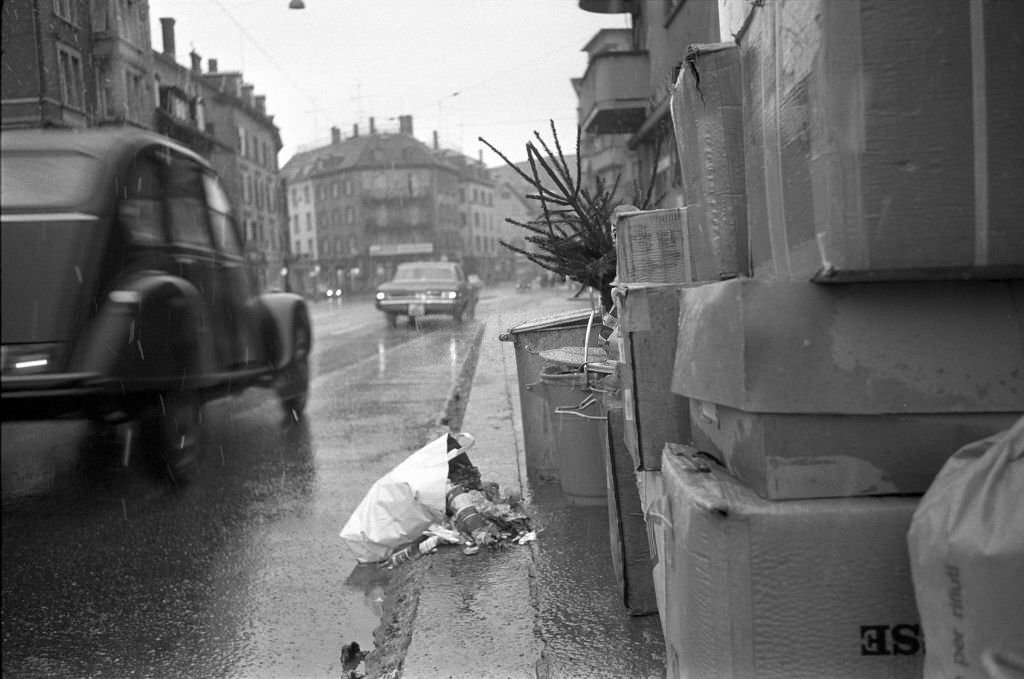
The Wasserkirche in Zürich — a small late-Gothic church that appeared to float on an island in the Limmat — was one of the city’s most distinctive landmarks. Around the same time, the aftermath of Christmas was visible in the streets: discarded trees piled beside rubbish bins, the celebration over and the city returning to its routines. These small domestic details are as much a part of the record as any landmark or political event.
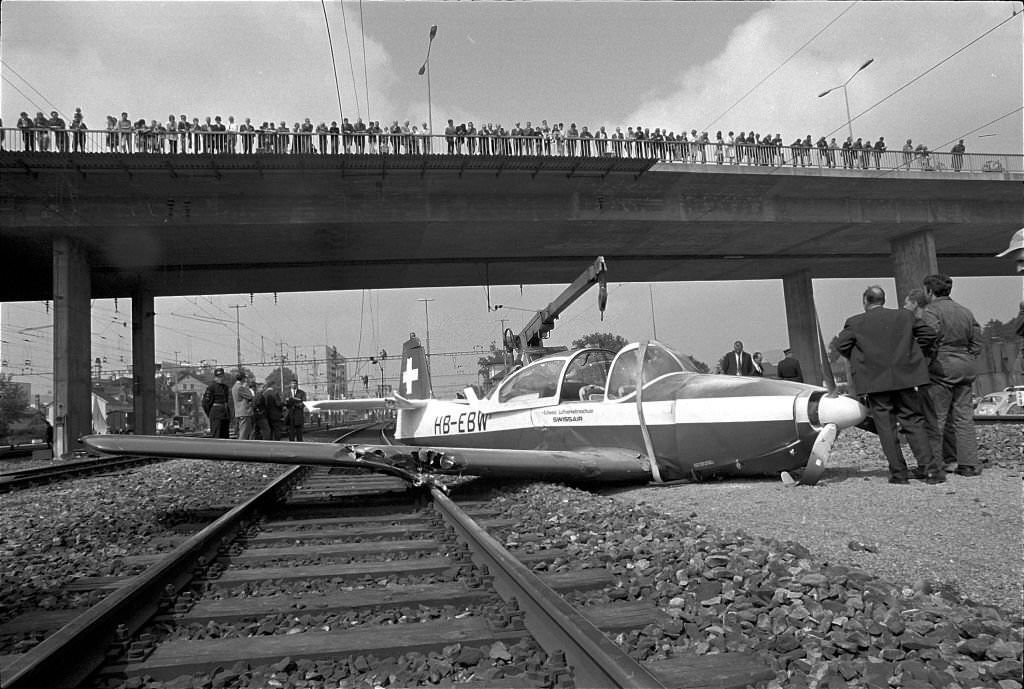
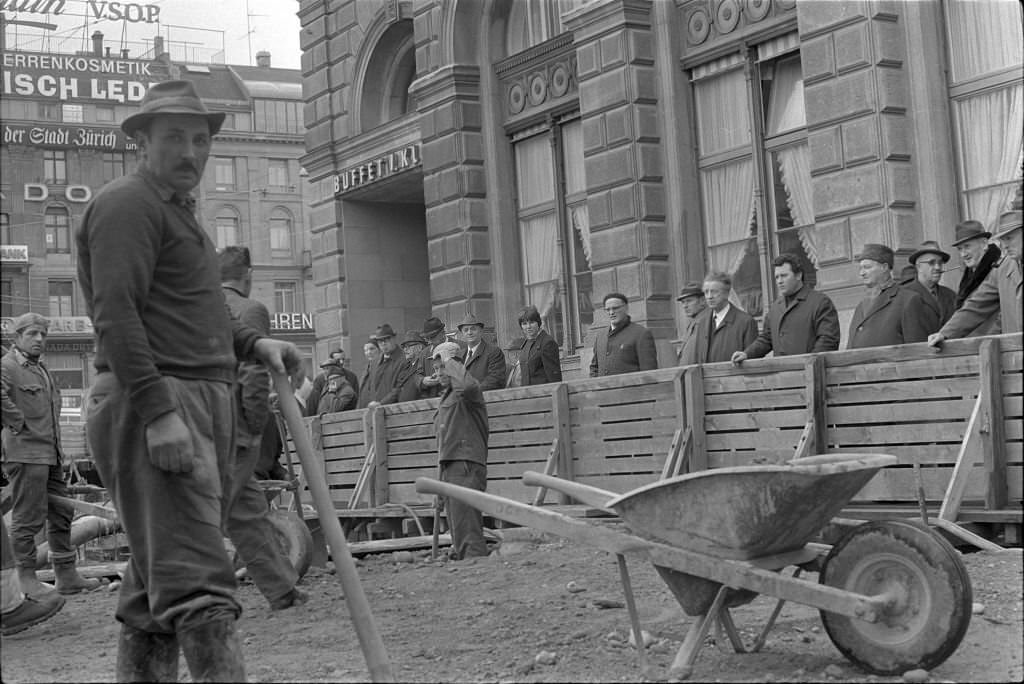
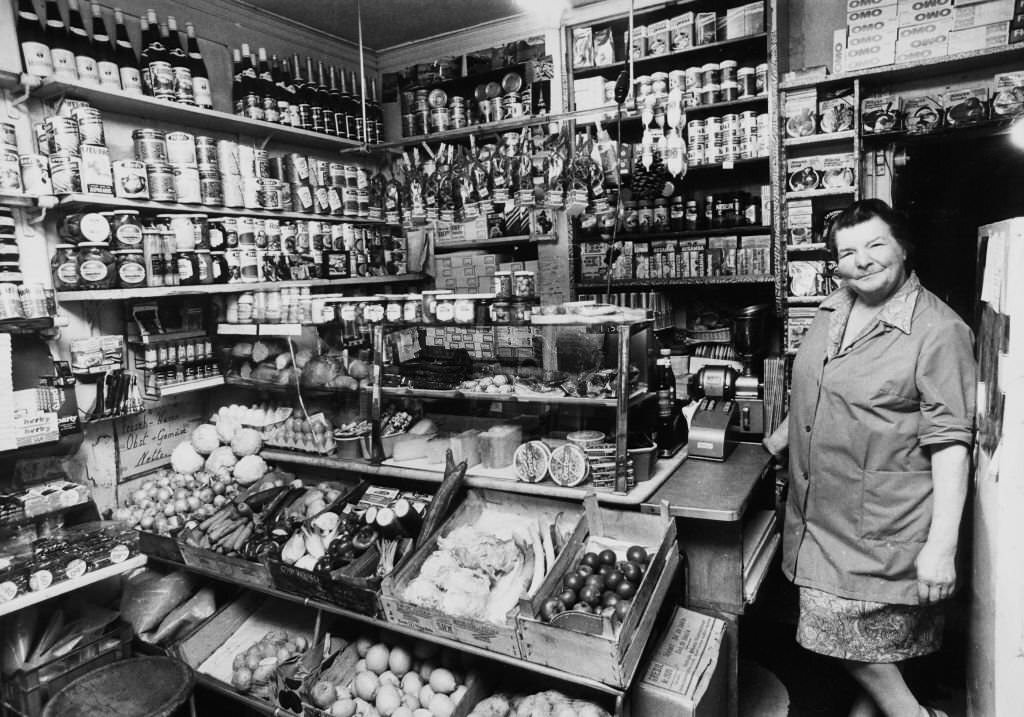
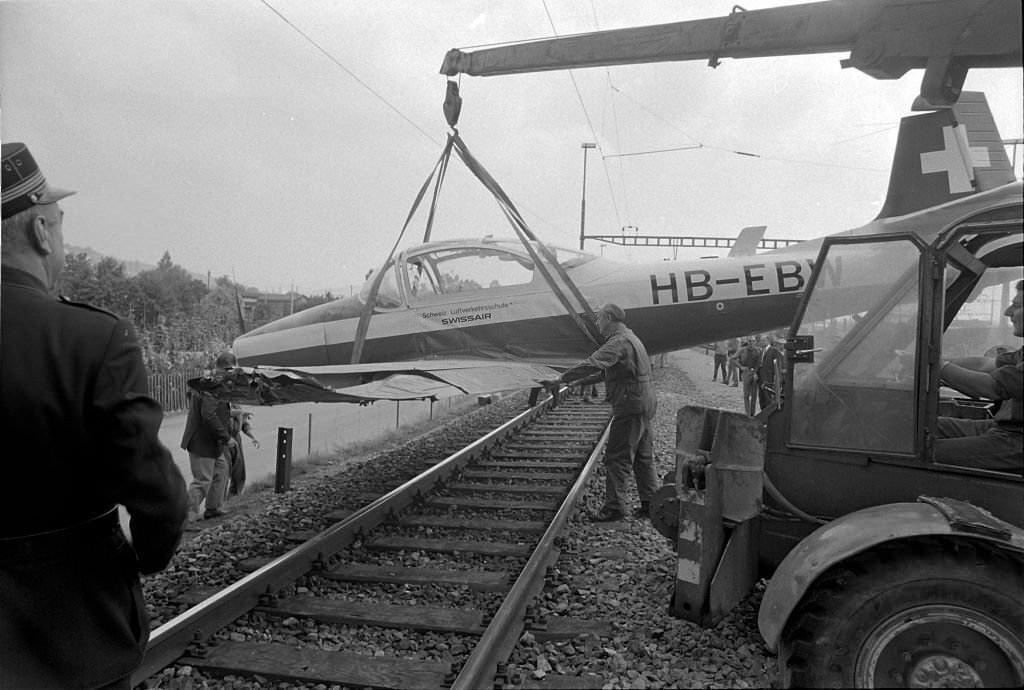
Zürich in 1970 was a city of constant construction. Building sites surrounded the main station as the city expanded to meet the needs of a growing population. Not every event was so planned — a sports plane crash landing made headlines, drawing photographers and onlookers to the scene. In a grocery store nearby, a clerk stood behind the counter, part of the service economy that was quietly becoming the backbone of Swiss prosperity.
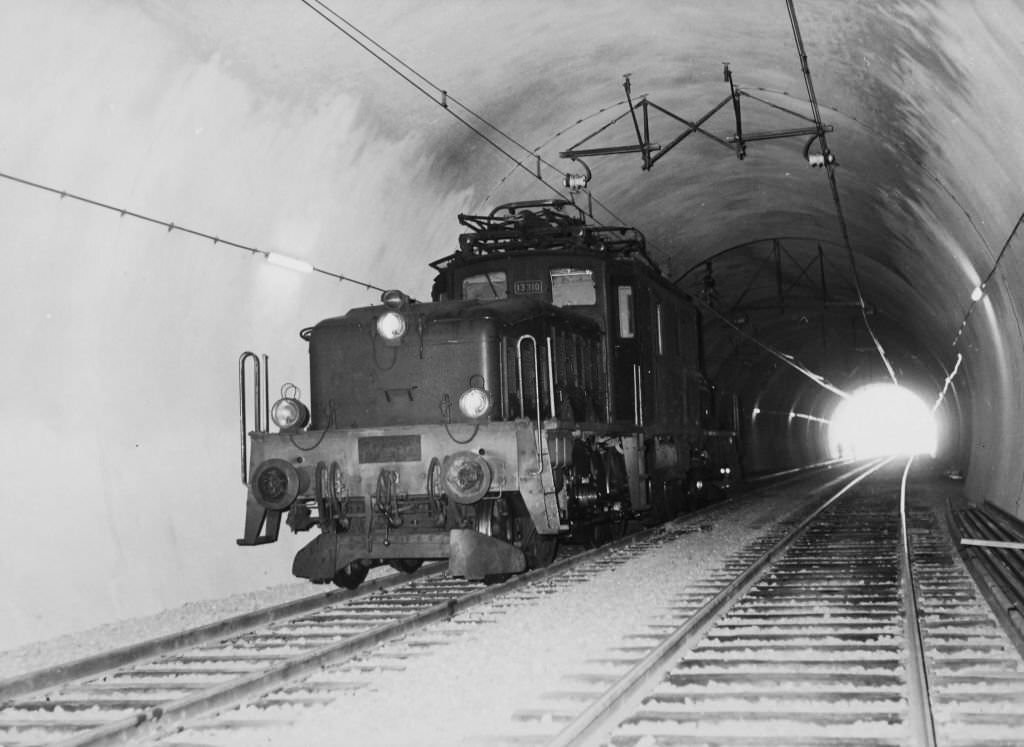
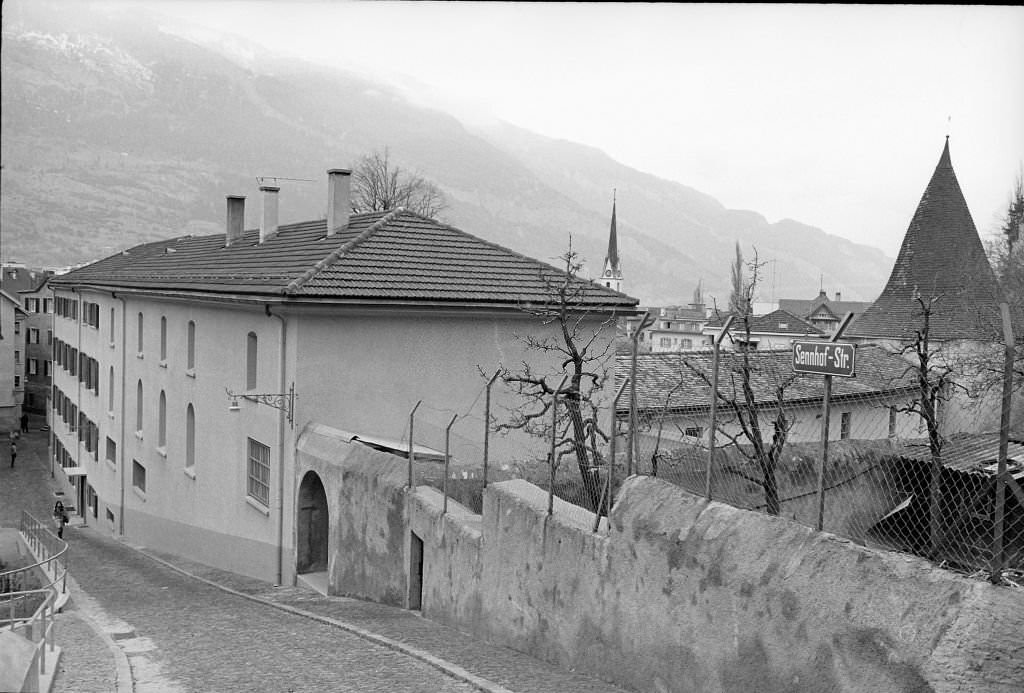
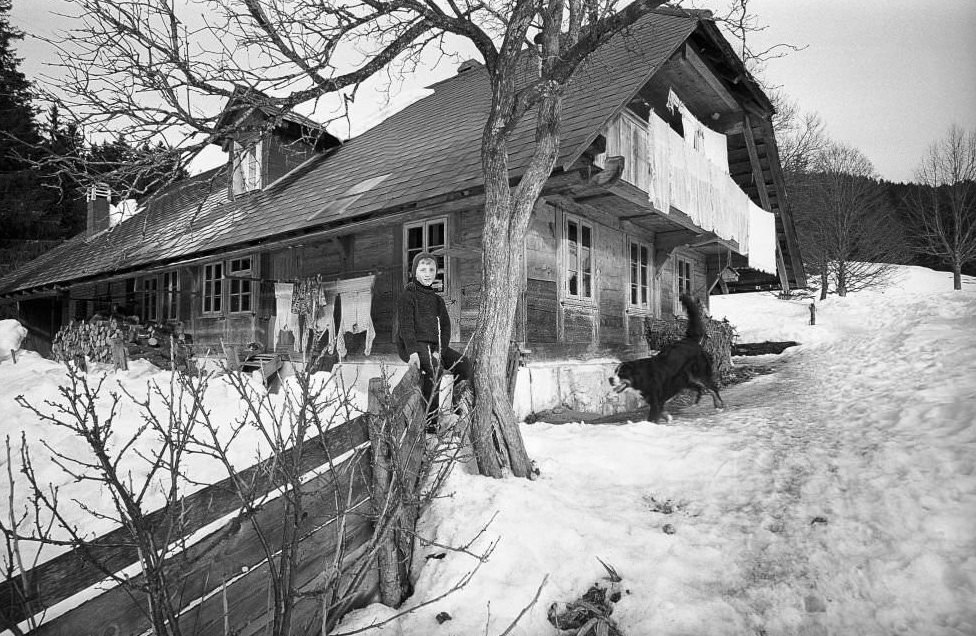
The Gotthard Tunnel was Switzerland’s great rail artery, cutting through the Alps and connecting the north of the country to the south. A locomotive moving through it in 1970 represented the rail infrastructure that Switzerland depended on for both freight and passenger travel. Far from the tunnel and the city prisons of Chur, the Emmental region showed a quieter Switzerland — a farmhouse, a child, and the kind of rural life that urbanization was gradually drawing people away from.
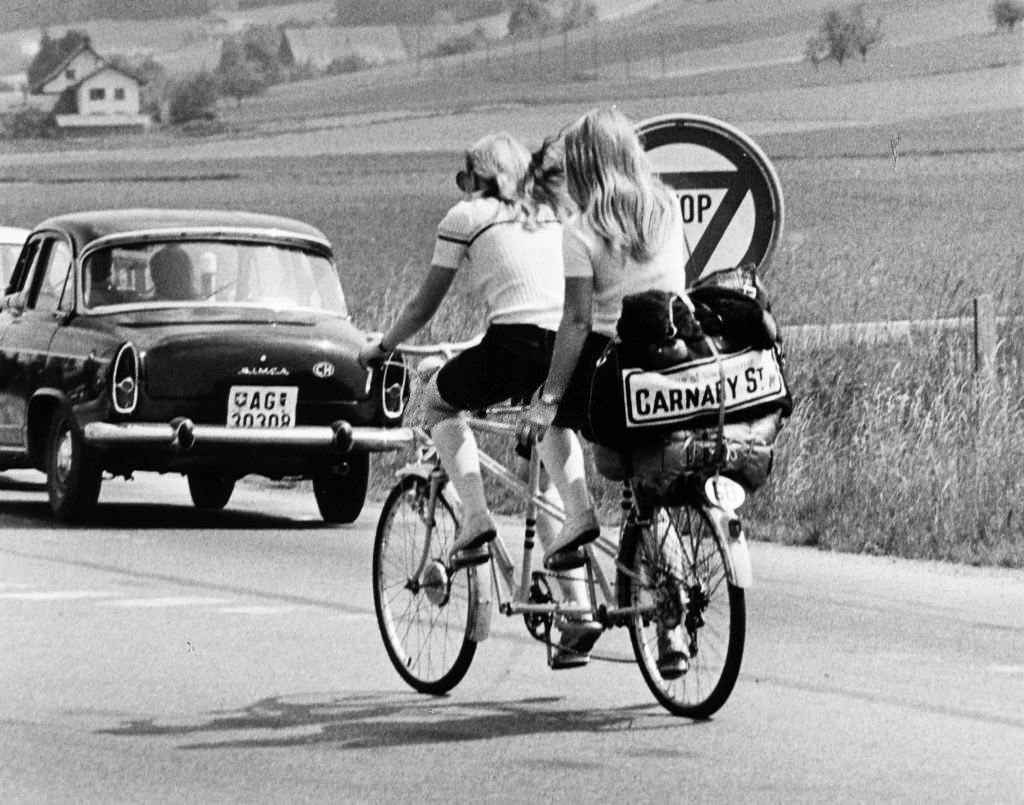
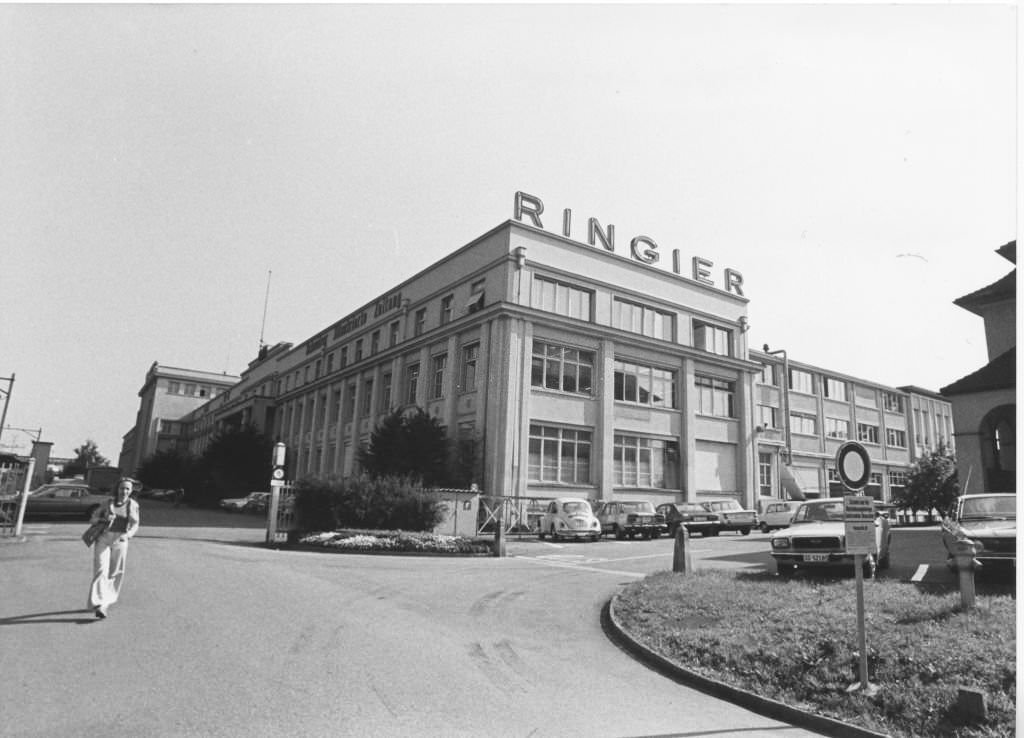
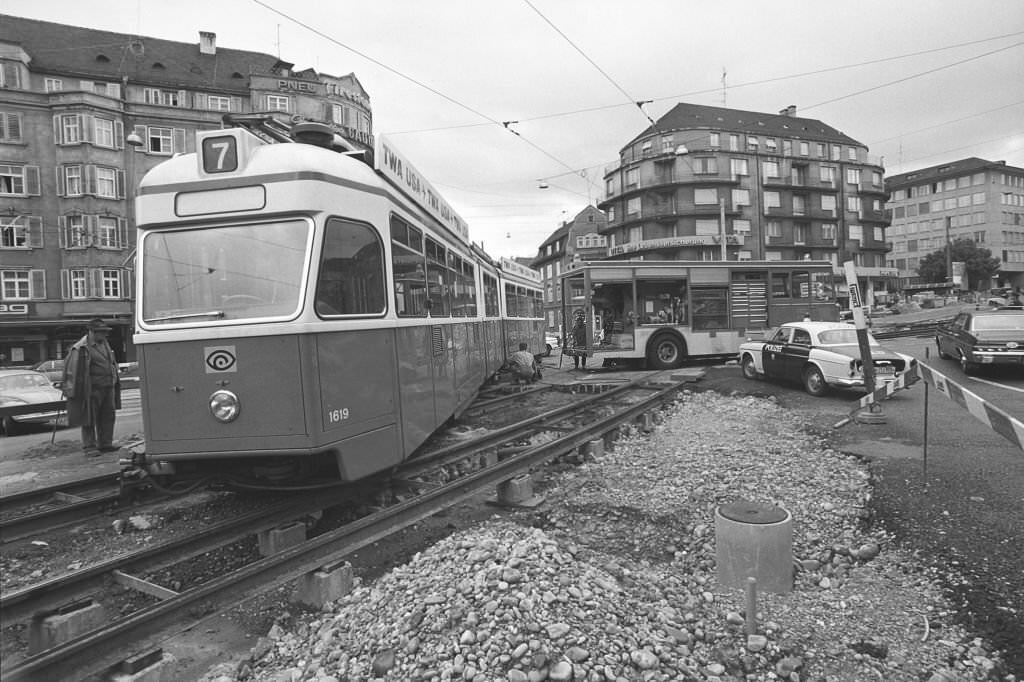
Leisure, industry, and the occasional mishap all coexisted in early 1970s Switzerland. Two women on a tandem bicycle captured something lighthearted about the era. In Zofingen, the Ringier printing company — one of the largest media groups in the country — ran massive presses that produced newspapers and magazines for Swiss households. In Zürich, a tram accident brought the city’s normally precise transit system to a halt.
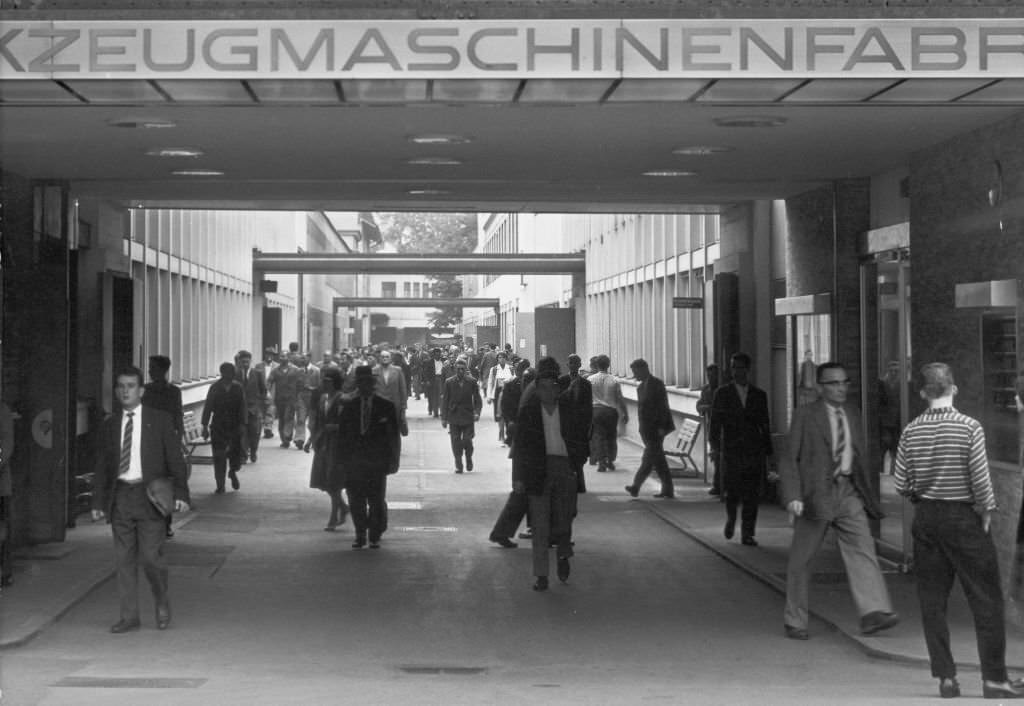
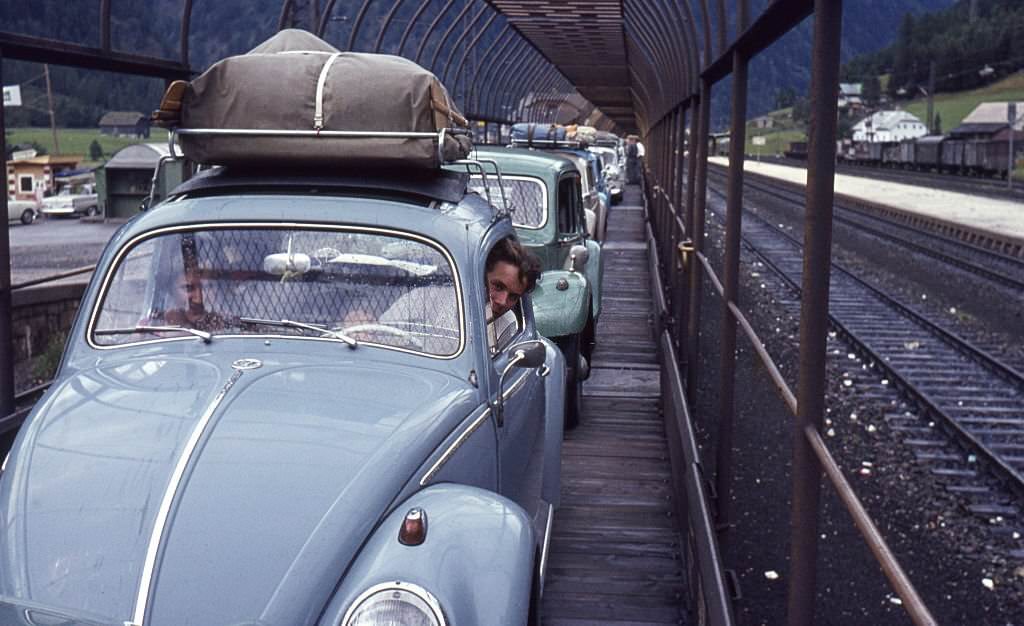
Oerlikon Bührle was one of Switzerland’s most significant industrial firms — an engineering company based in Zürich that produced machine tools and, controversially, weapons systems sold internationally. Its factory floors in 1970 showed the scale of Swiss heavy manufacturing. The motorail train — a service that loaded cars onto flatbed rail cars so families could travel to their Alpine destinations without driving the mountain roads — reflected how Swiss transport planners thought creatively about the country’s geography.
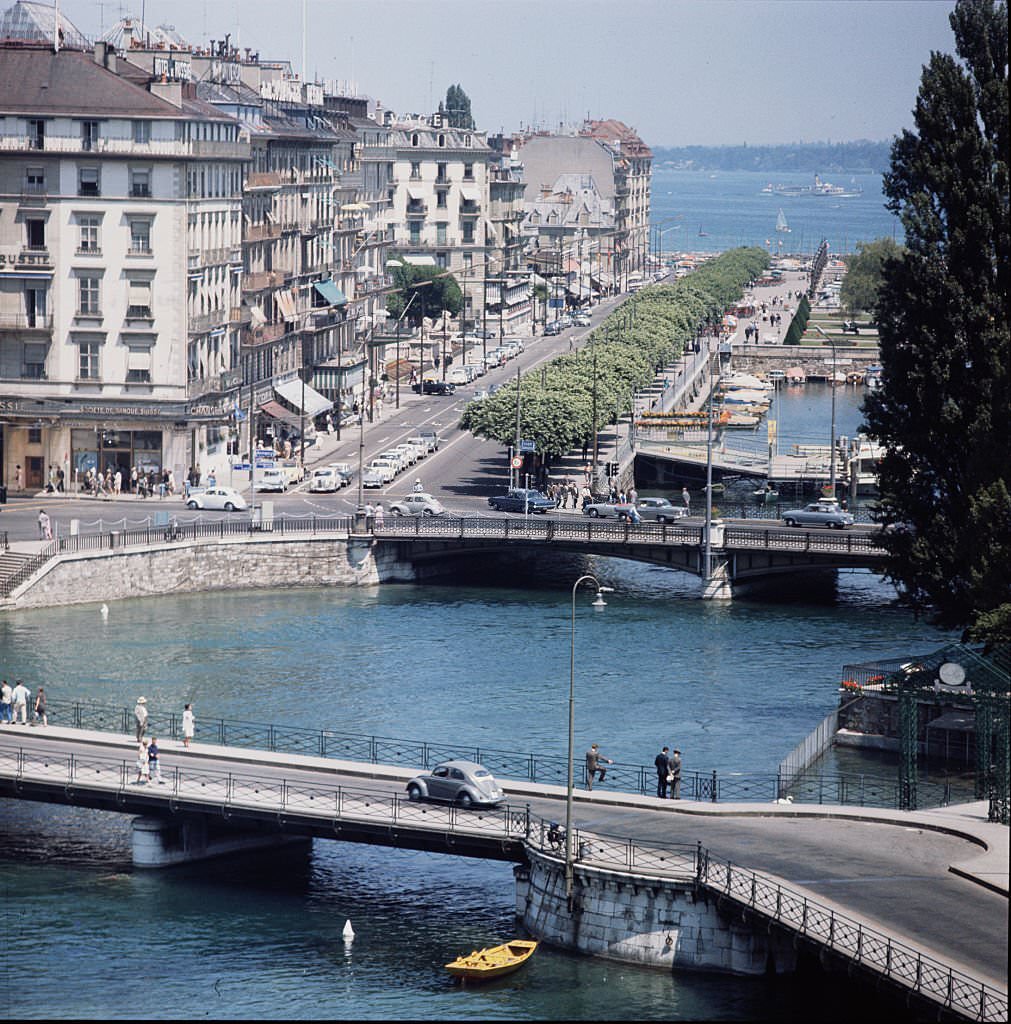
Geneva sat at the western end of Switzerland, where the Rhône flowed out of Lac Léman. It was the country’s most international city — home to the United Nations, the Red Cross, and dozens of other global organizations. Urban sprawl had spread along the lakeshore between Geneva and Lausanne throughout the decade, as rising prosperity and increasing population pushed residential development further into the surrounding countryside.
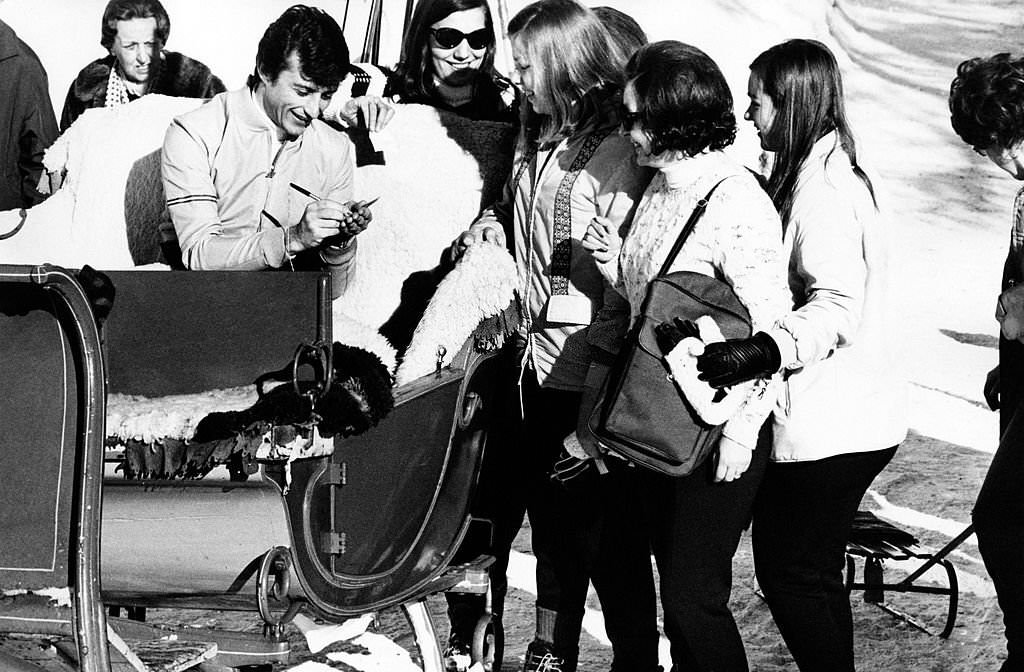
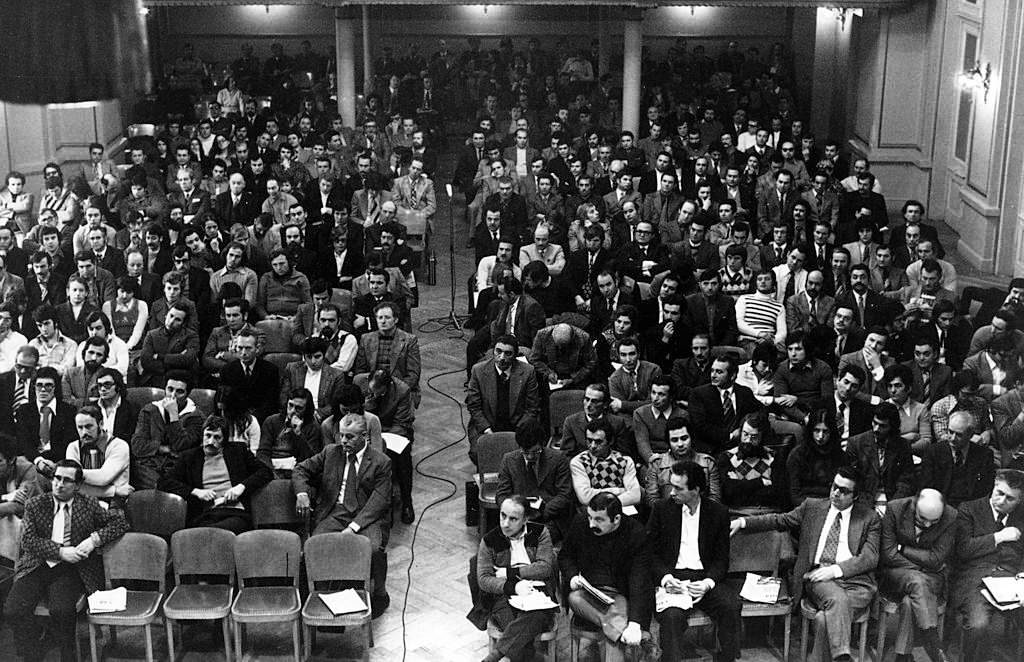
St. Moritz attracted the wealthy and the famous. Italian singer Tony Renis was one of many celebrities who passed through the resort in 1970, signing autographs for fans on snow-covered streets. But for most Italians in Switzerland, the experience was very different. Switzerland’s economic boom had pulled hundreds of thousands of workers from Italy in the 1950s and 1960s. By December 1974, as industries restructured and jobs disappeared, groups of Italian workers in Zürich were discussing the dismissal of their compatriots — a conversation that played out across the country as the labor market shifted.
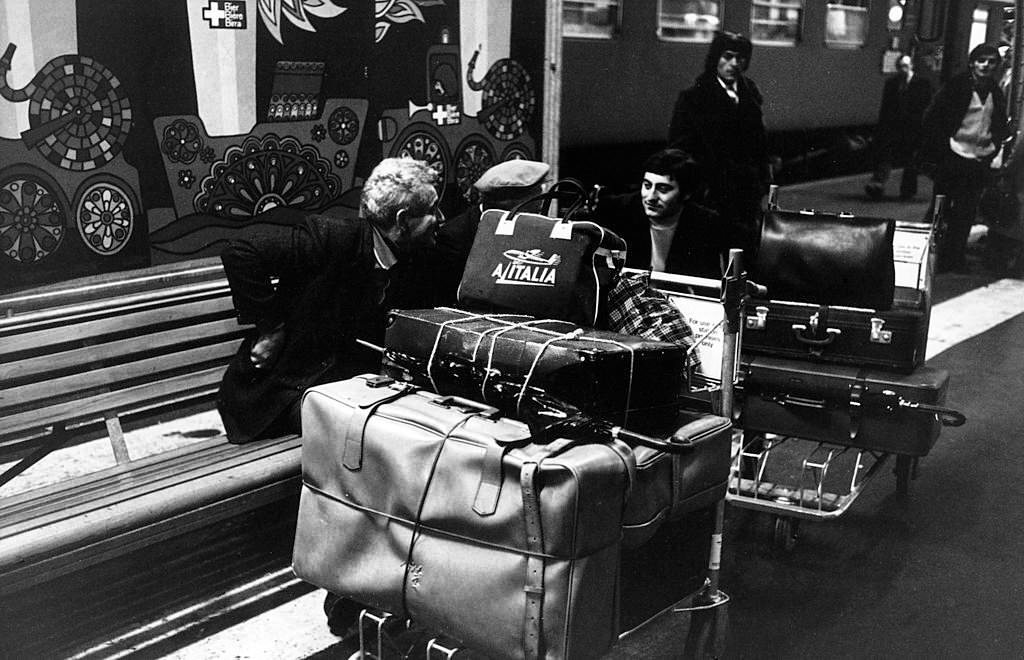
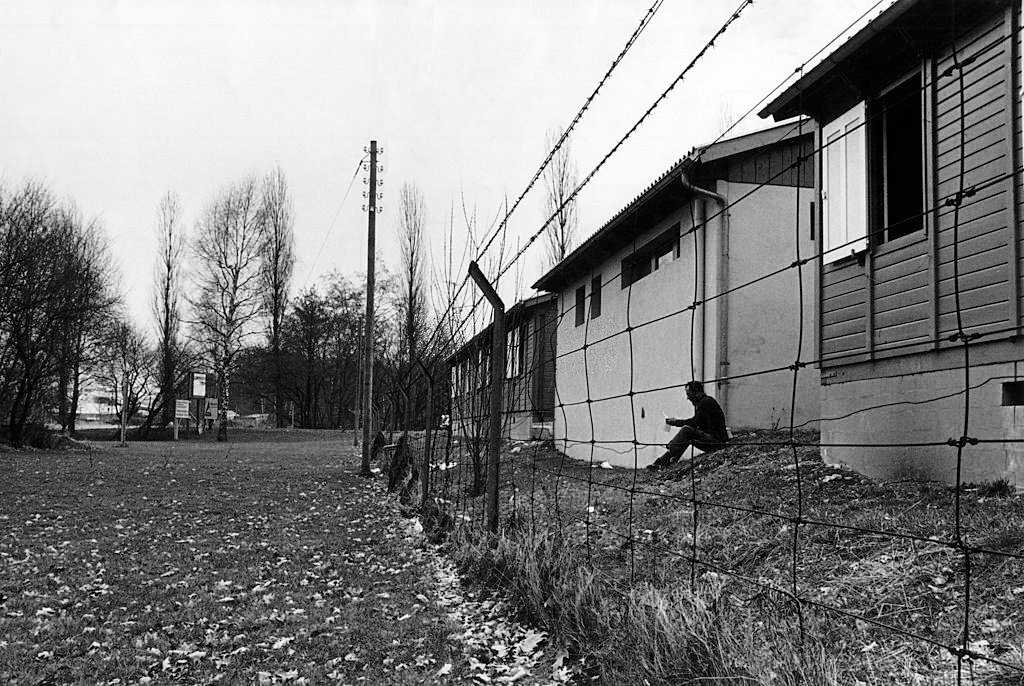
The images of Italian emigrants at Swiss train stations — bags packed, waiting for trains back to Turin or Milan — were among the most striking of the decade. Many had come as seasonal workers and lived in labor camps, their movements and housing controlled by their employers. A man reading a letter inside a barbed-wire compound in Zürich in 1971 shows how restricted life was for many foreign workers in Switzerland, even as the country celebrated its own prosperity. During the 1970s, large numbers of these workers — particularly those in construction and watchmaking — were forced out as their industries downsized.
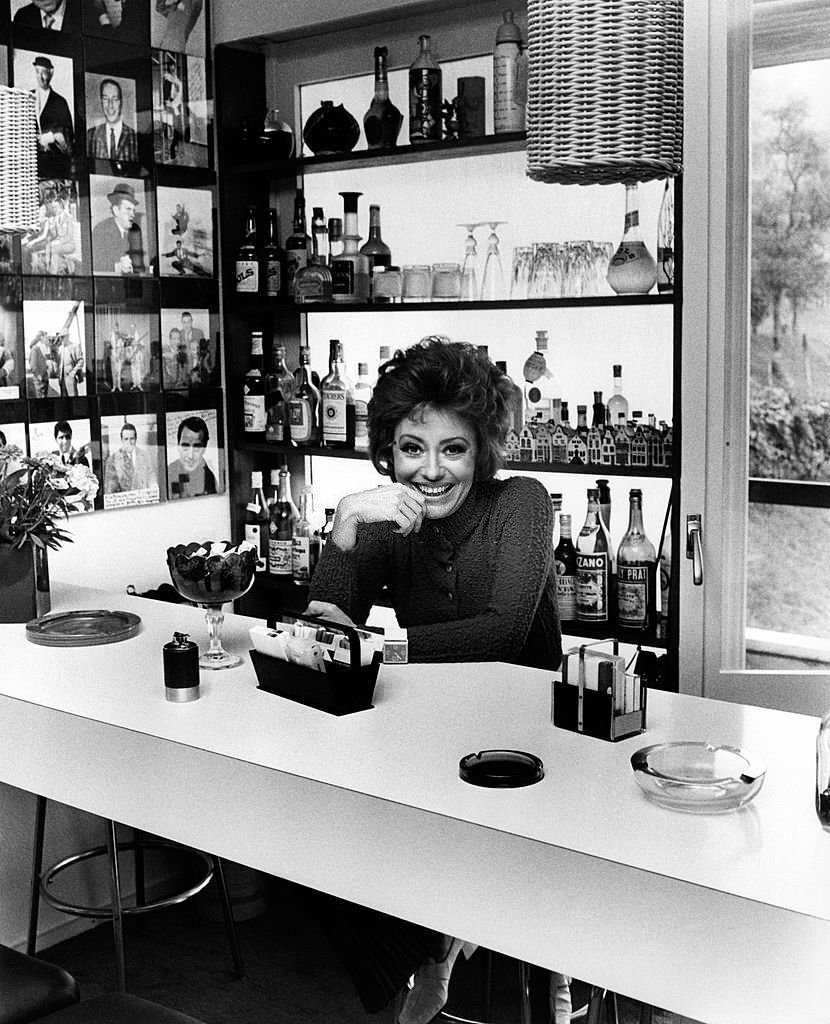
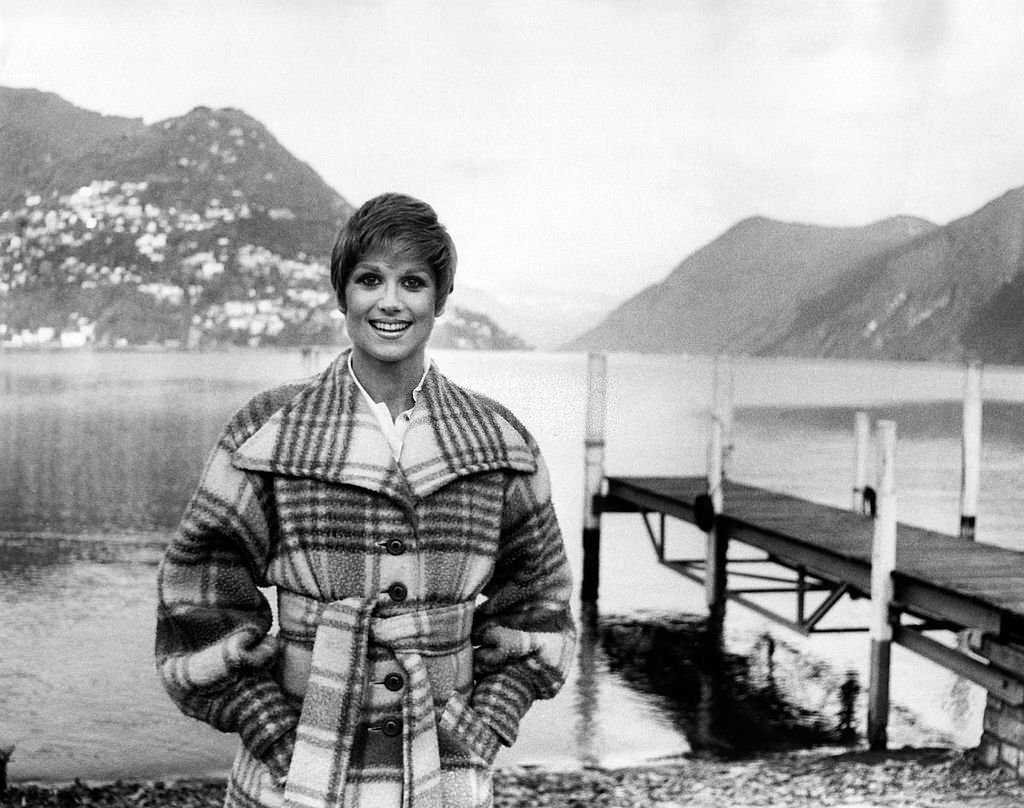
Switzerland attracted international celebrities who made it their home. Caterina Valente, the Italian-French singer and entertainer known across Europe, lived in Arosio in the Italian-speaking canton of Ticino. British showgirl Minnie Minoprio was photographed on the shores of Lake Lugano, wrapped in a tartan coat. Lugano was Switzerland’s southernmost major city, and its Italian character made it a natural draw for those from across the border.
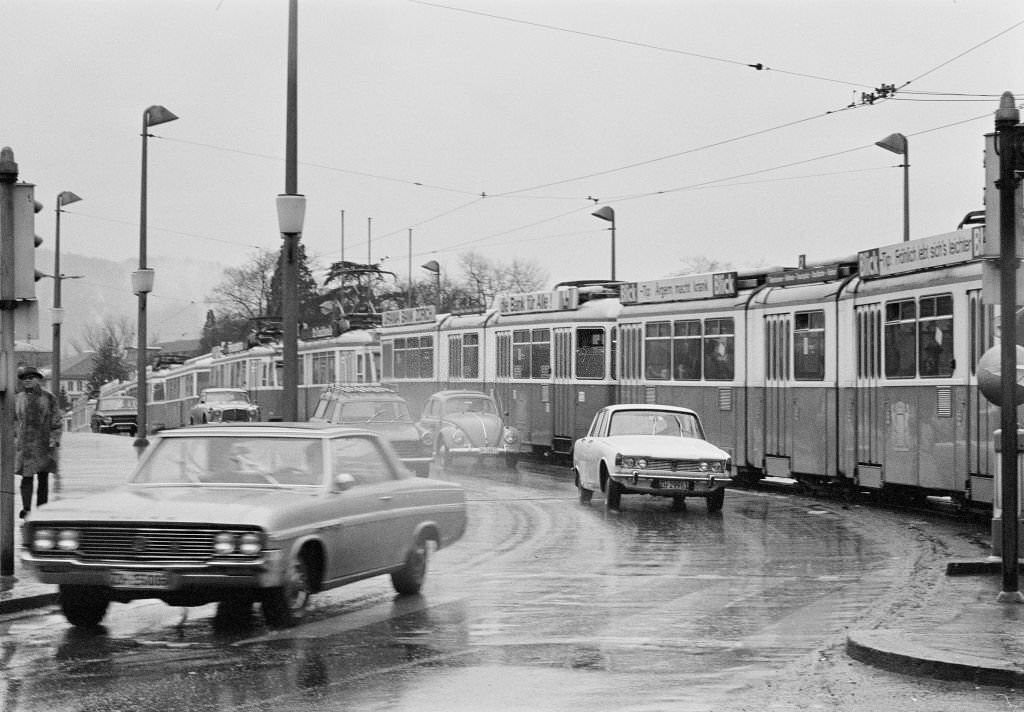
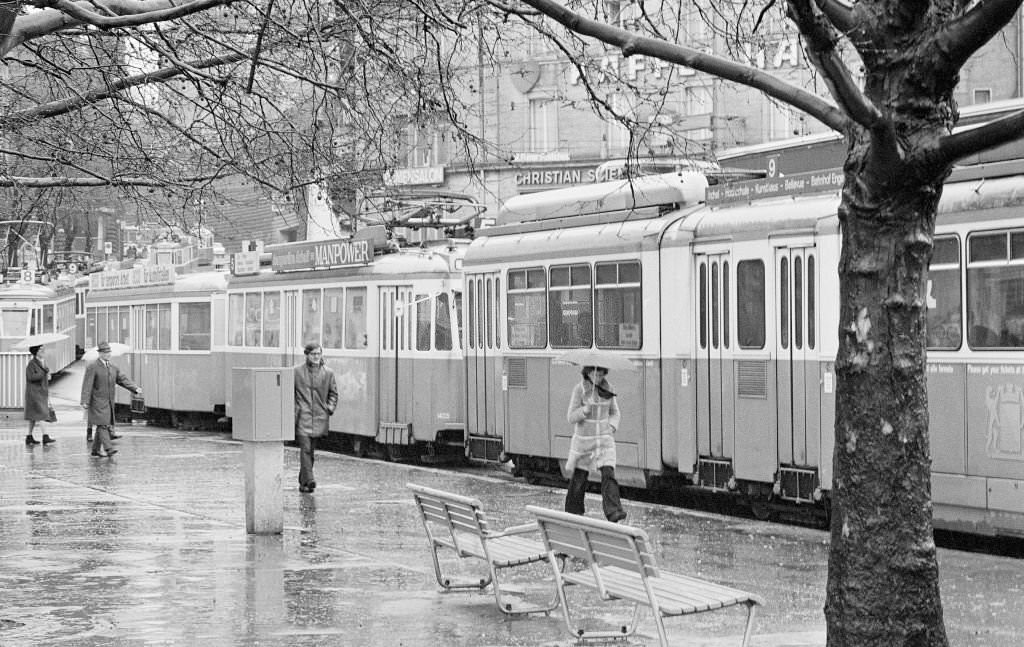
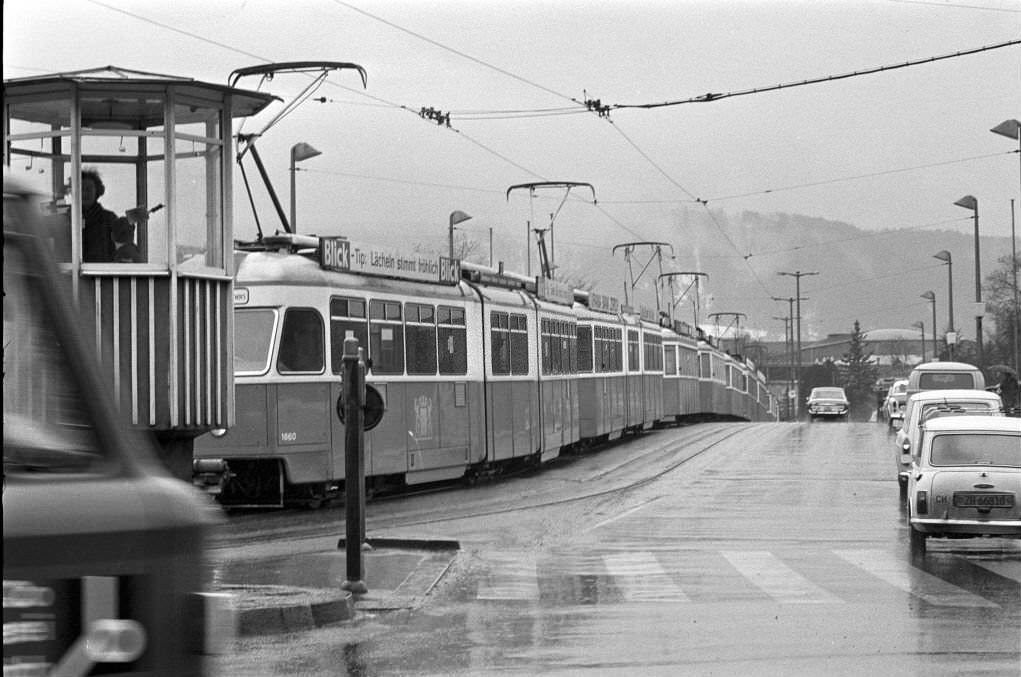
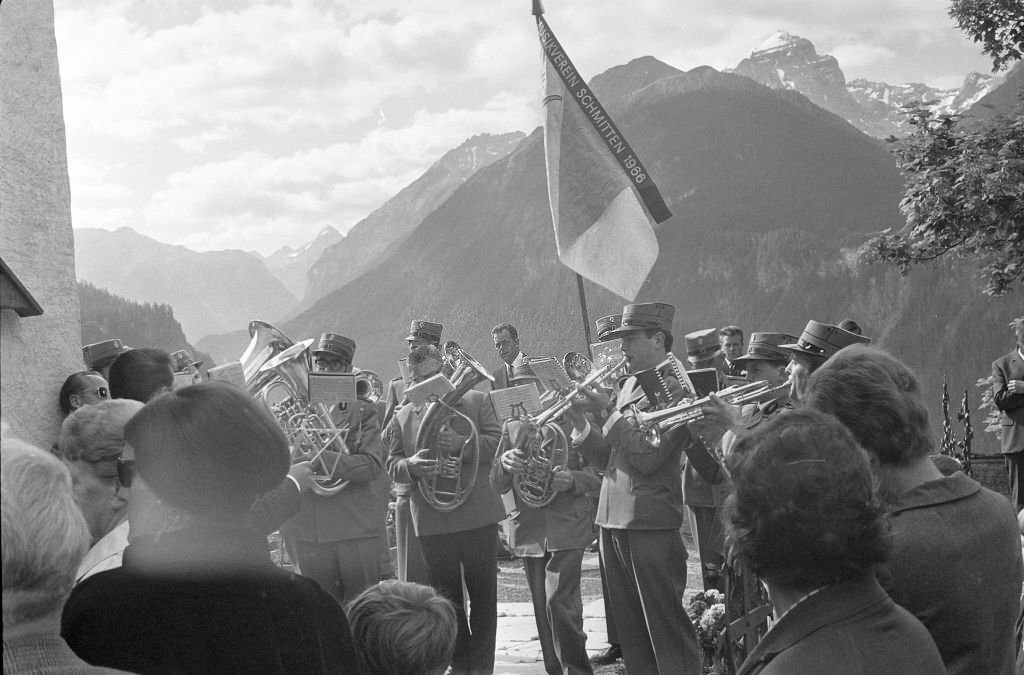
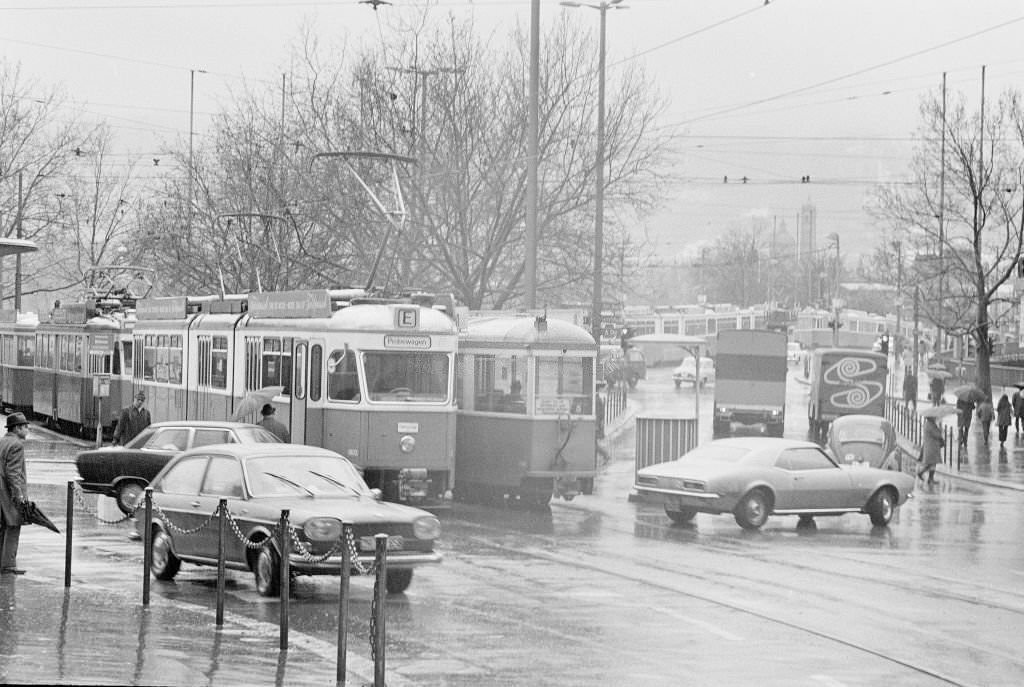
Bellevue, one of Zürich’s most central squares, became notorious for tram jams in 1970. Multiple tram lines converged there, and when anything went wrong — an accident, a breakdown, a crowd — the entire network backed up. The photos from these incidents show the precision of Swiss city planning pushed to its limits. Meanwhile, in the canton of Fribourg, a church consecration in Schmitten showed the other side of Swiss life: deeply traditional, community-centered, and rooted in faith.
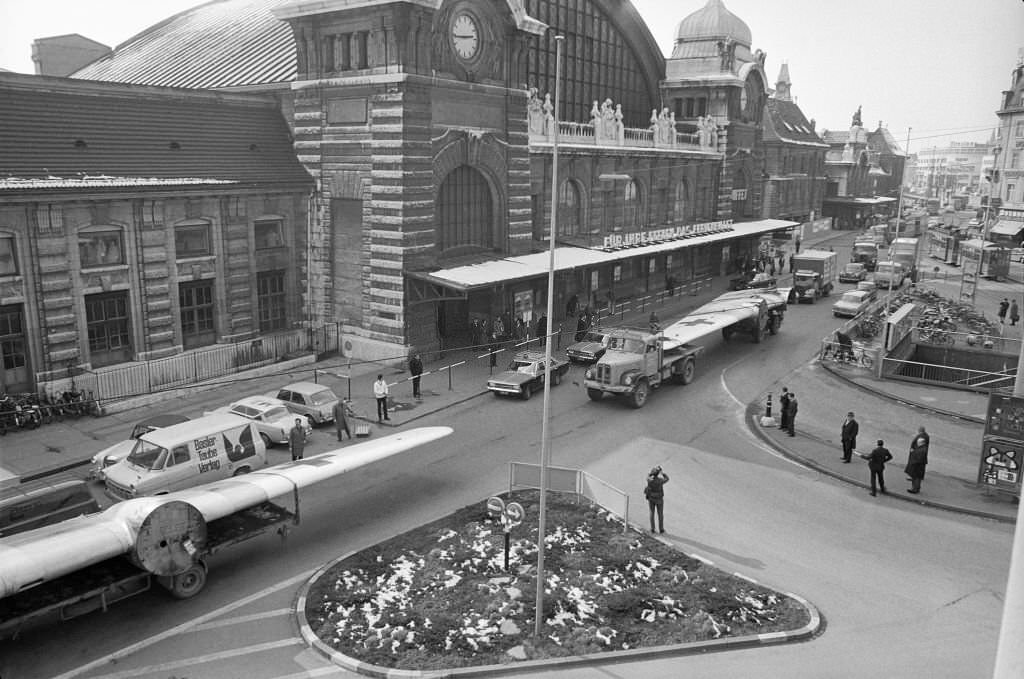
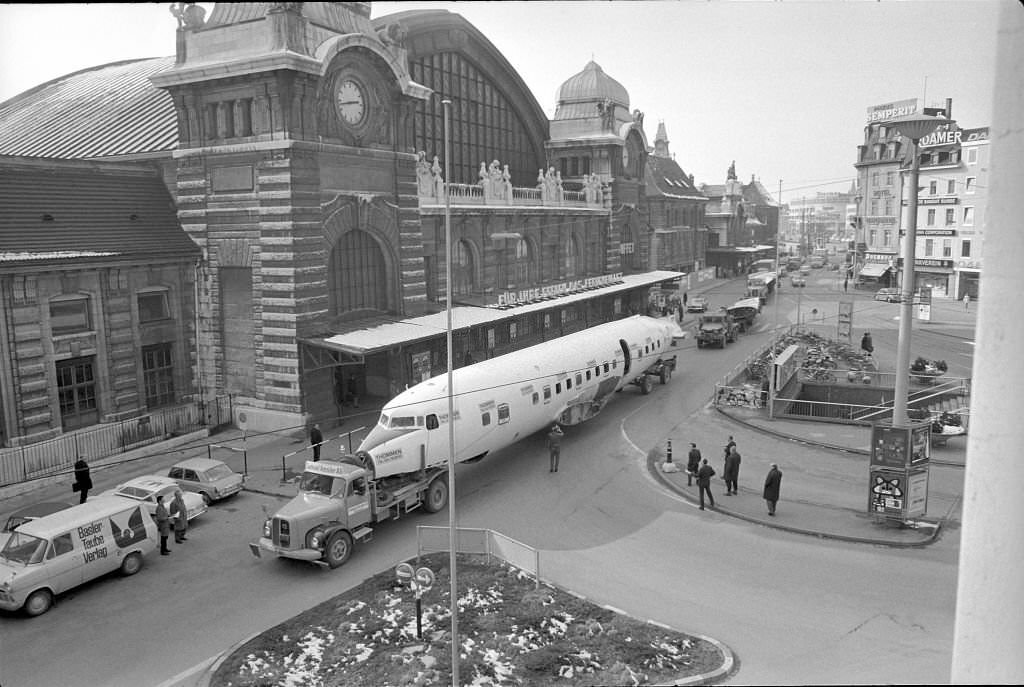
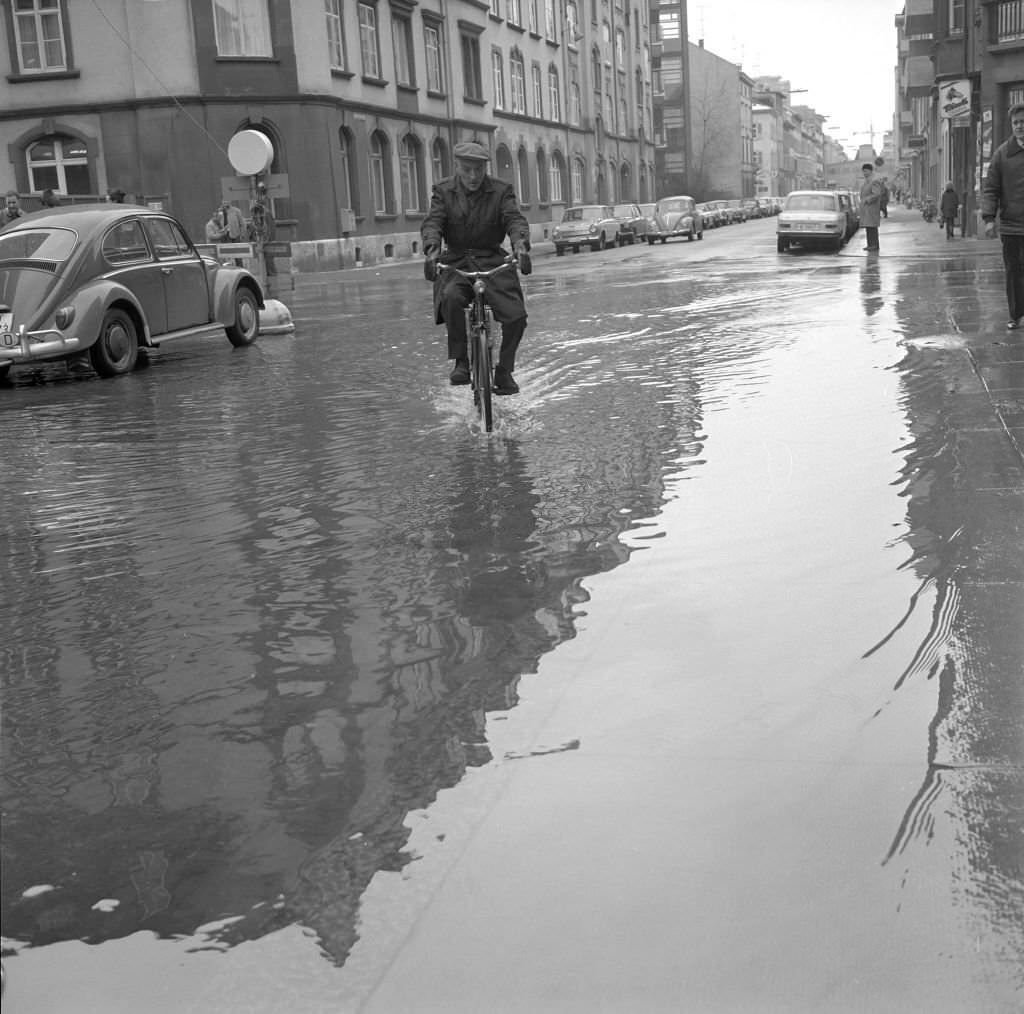
Basel in 1970 produced some unusual street scenes. Disassembled aircraft components were transported through the city’s roads on oversized vehicles — a logistical operation that required temporarily closing intersections and rerouting traffic. Elsewhere, a burst pipe flooded a Basel street, turning an ordinary road into a shallow river. These were the kinds of events that newspapers covered closely, and photographers were always nearby.
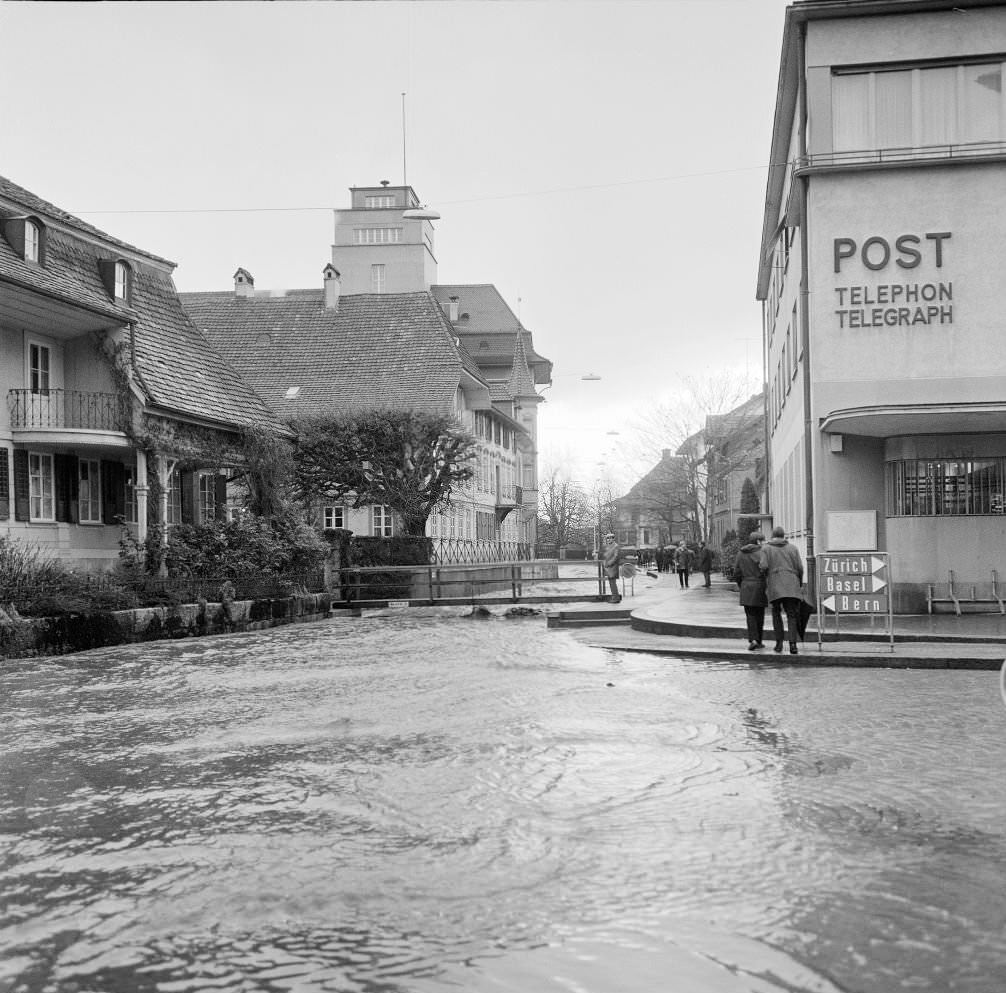
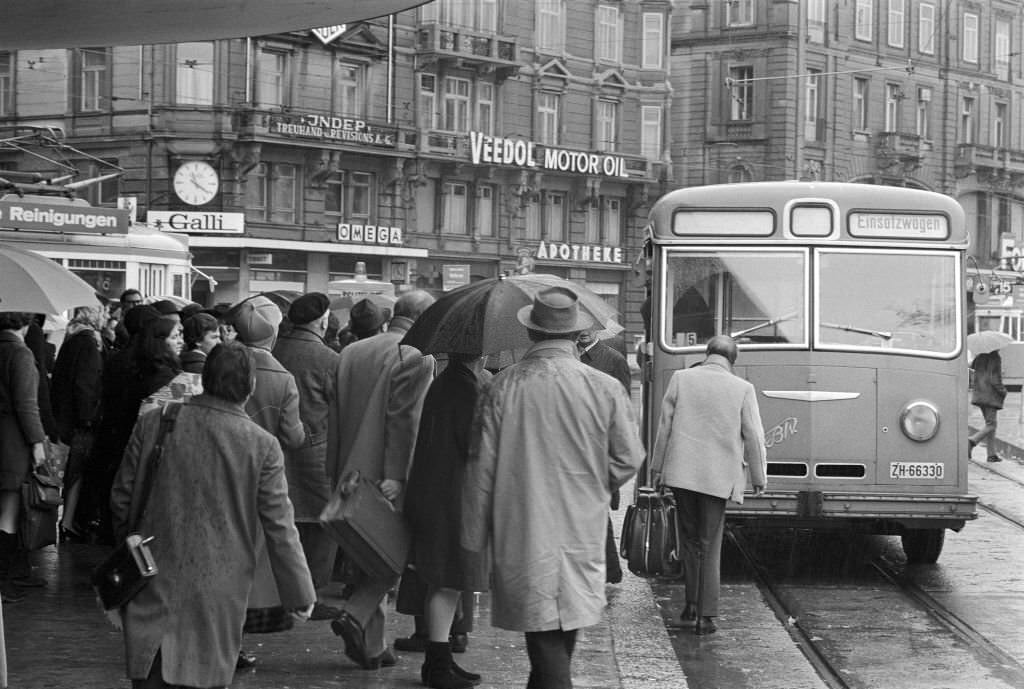
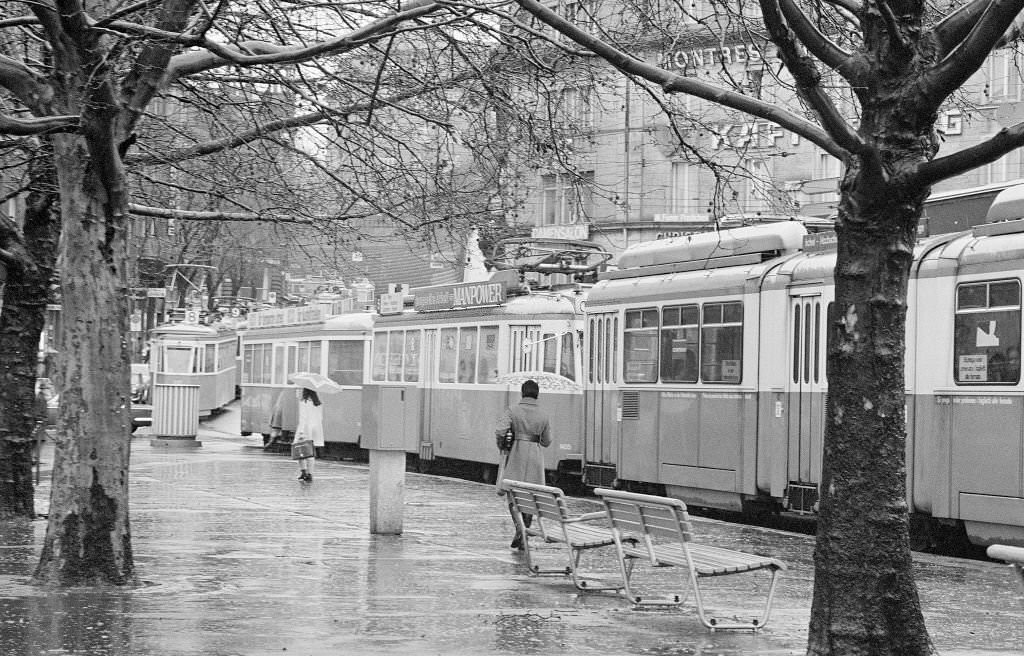
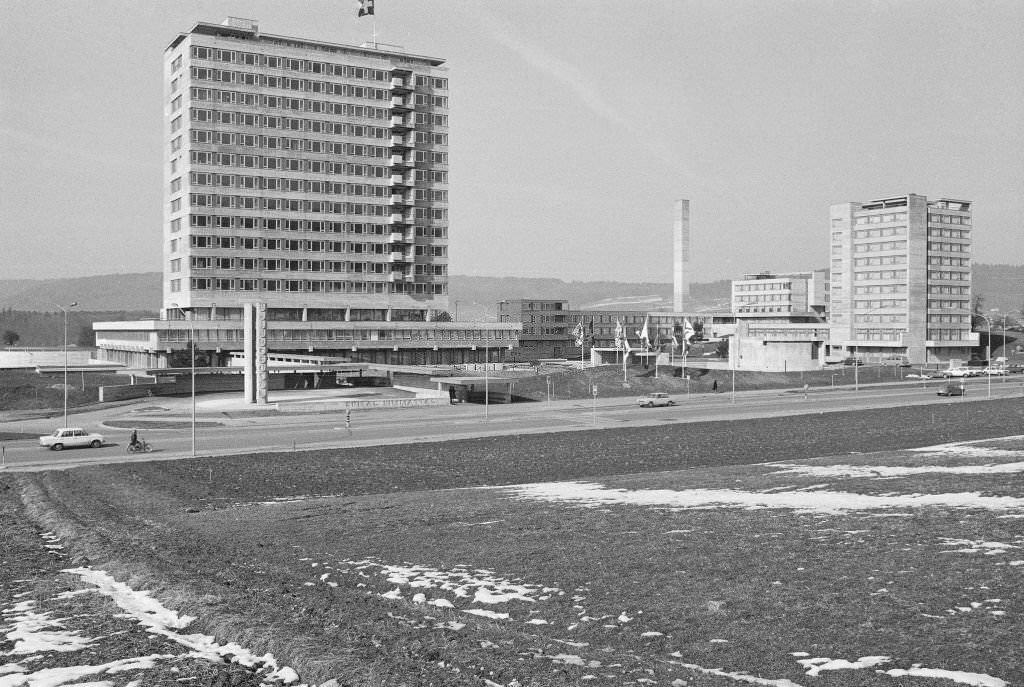
Flooding struck the town of Langenthal in the Bernese Mittelland in 1970, damaging homes and businesses along the lower-lying streets. Natural disasters were a regular feature of Swiss life, particularly in the areas between mountain ranges where water had nowhere to drain quickly. The Limmattalspital in Schlieren, just outside Zürich, was one of the region’s key hospitals — a sign of the expanding public healthcare infrastructure that came with Switzerland’s growing wealth and population.
On February 21, 1970, Swissair Flight 330 — a Convair CV-990 Coronado — crashed near Würenlingen shortly after takeoff from Zürich-Kloten airport, killing all 47 people on board. A bomb planted by the Popular Front for the Liberation of Palestine had detonated in the cargo hold. It was one of the worst air disasters in Swiss history and led to major changes in airport security across Europe.
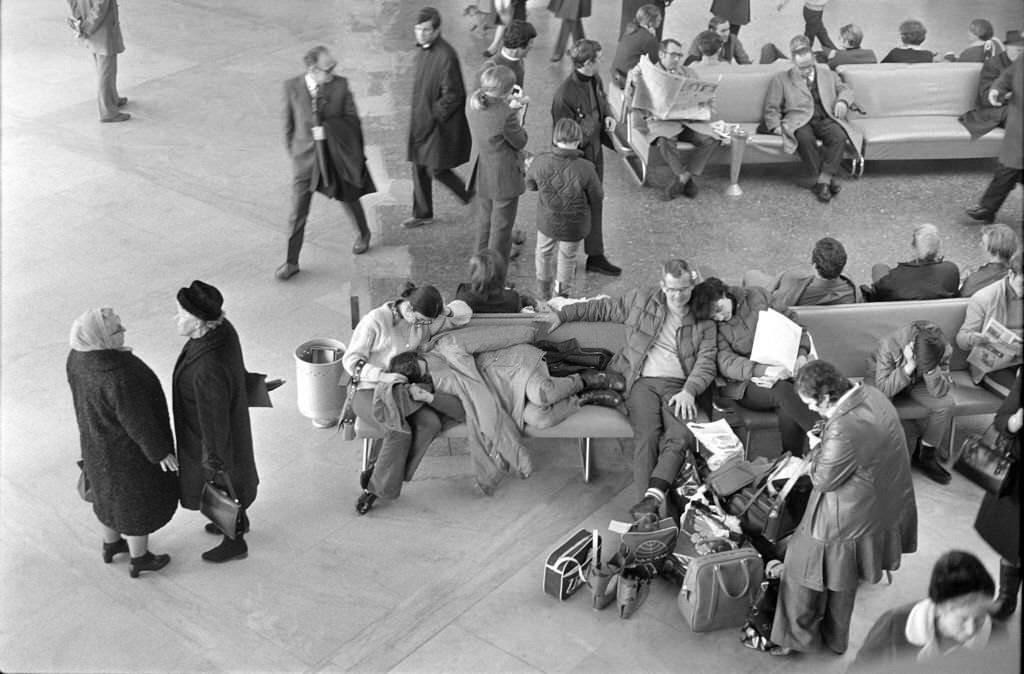
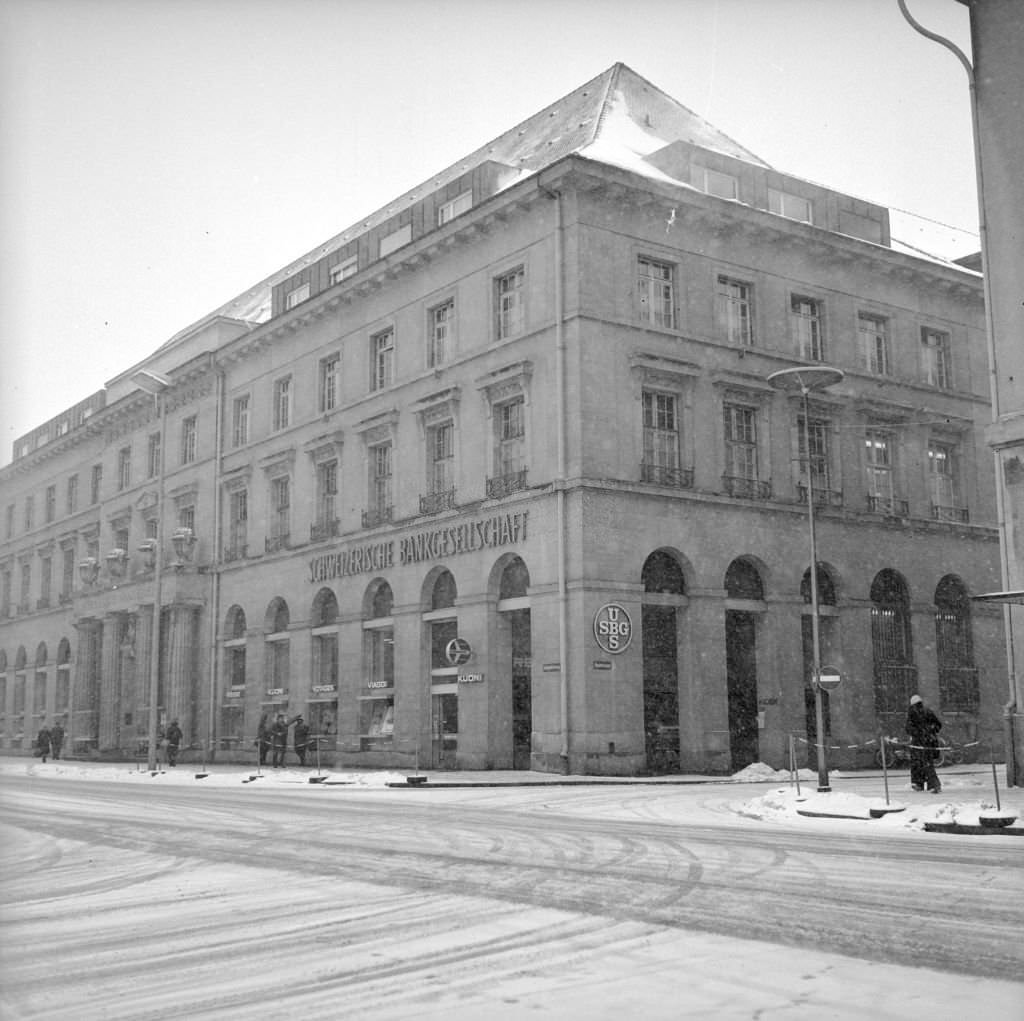
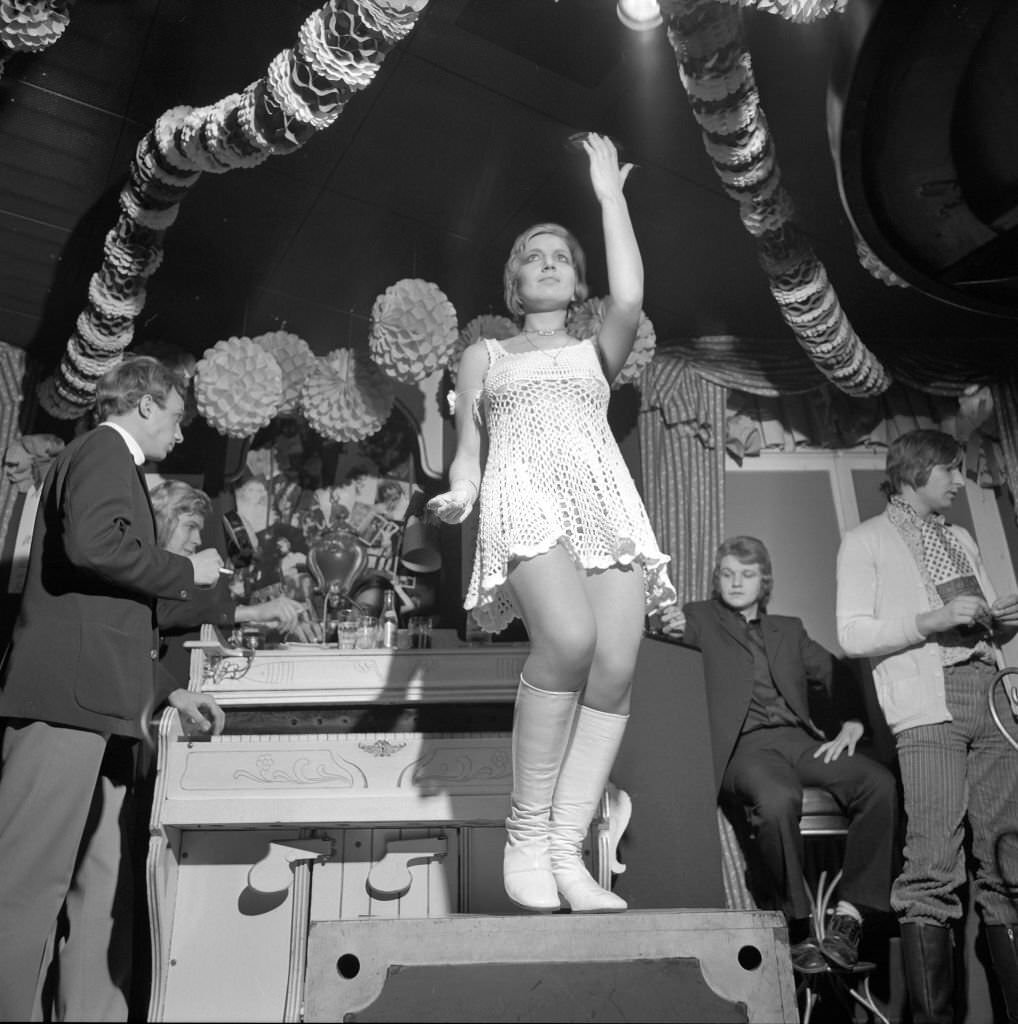
Zürich-Kloten airport handled millions of passengers a year by 1970, and its departure halls reflected the era’s optimism about air travel. The Schweizerische Bankgesellschaft — later known as UBS — operated branches across Switzerland, including Aarau, serving a country that was becoming one of the world’s foremost banking centers. At carnival time in eastern Switzerland, a go-go dancer performed at the celebrations — a reminder that 1970s Switzerland embraced popular culture as readily as it guarded its traditions.
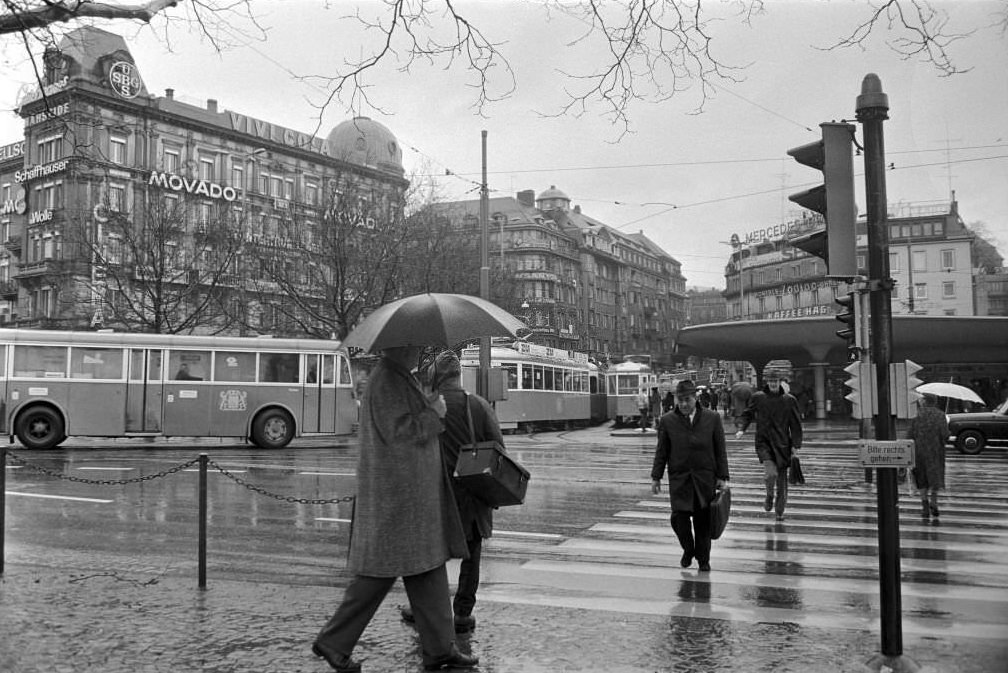
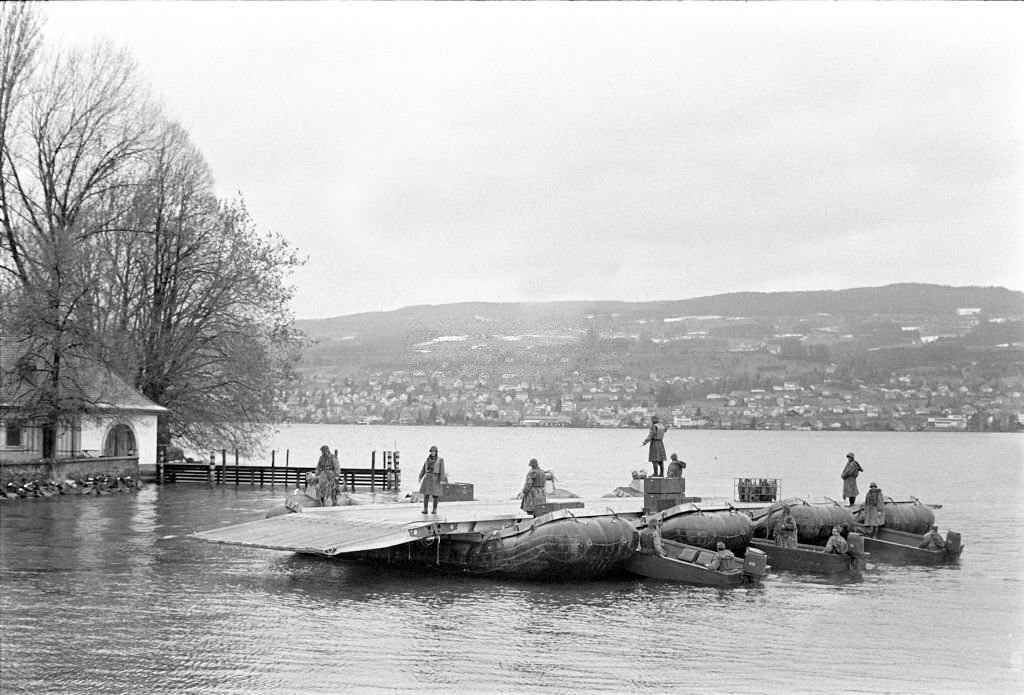
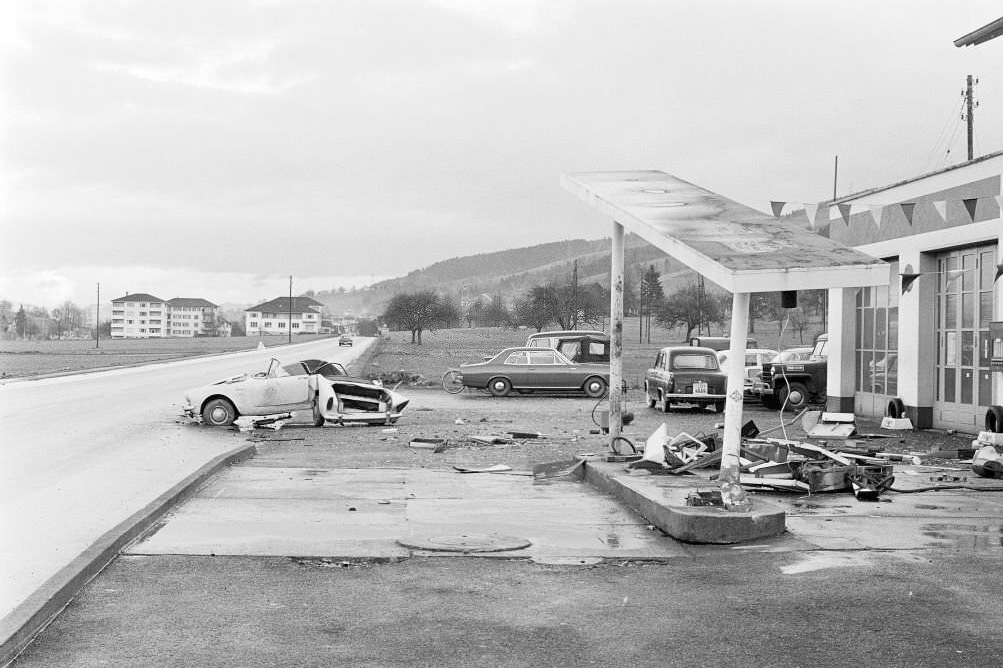
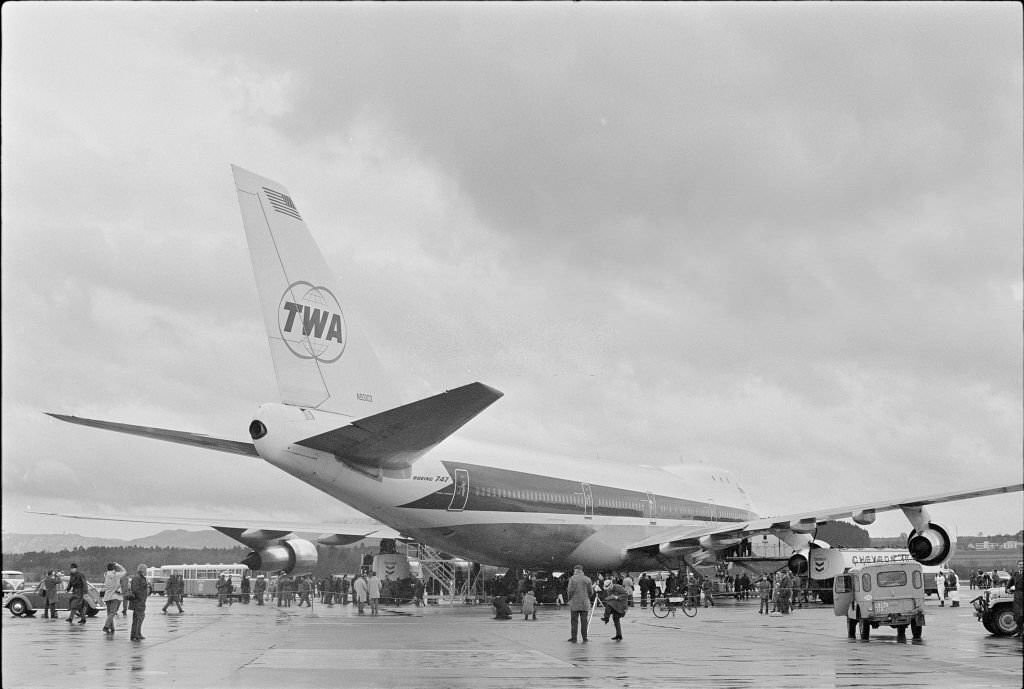
Bellevue square in Zürich was the city’s pulse point — trams, cars, pedestrians, and the occasional newsworthy incident all converged there. Swiss army divers ran manoeuvres in the country’s rivers and lakes, part of a military that every Swiss male was required to serve in. At Kloten, the arrival of jumbo jets — Boeing 747s — marked the beginning of mass international air travel. A car destroying a petrol station’s pumps in 1970 was a minor local incident, but it made the papers all the same.
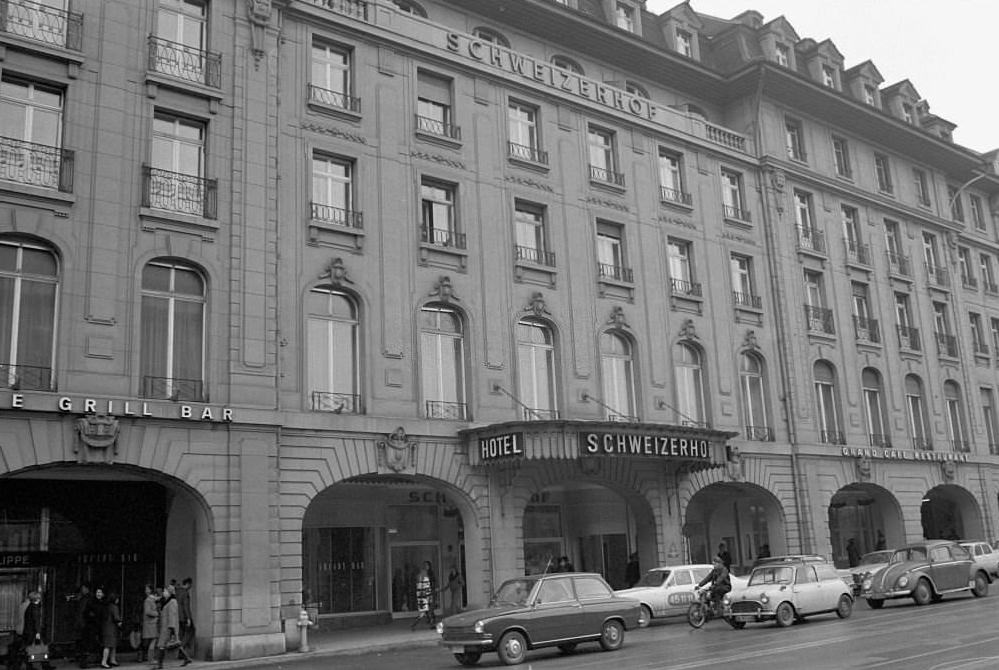
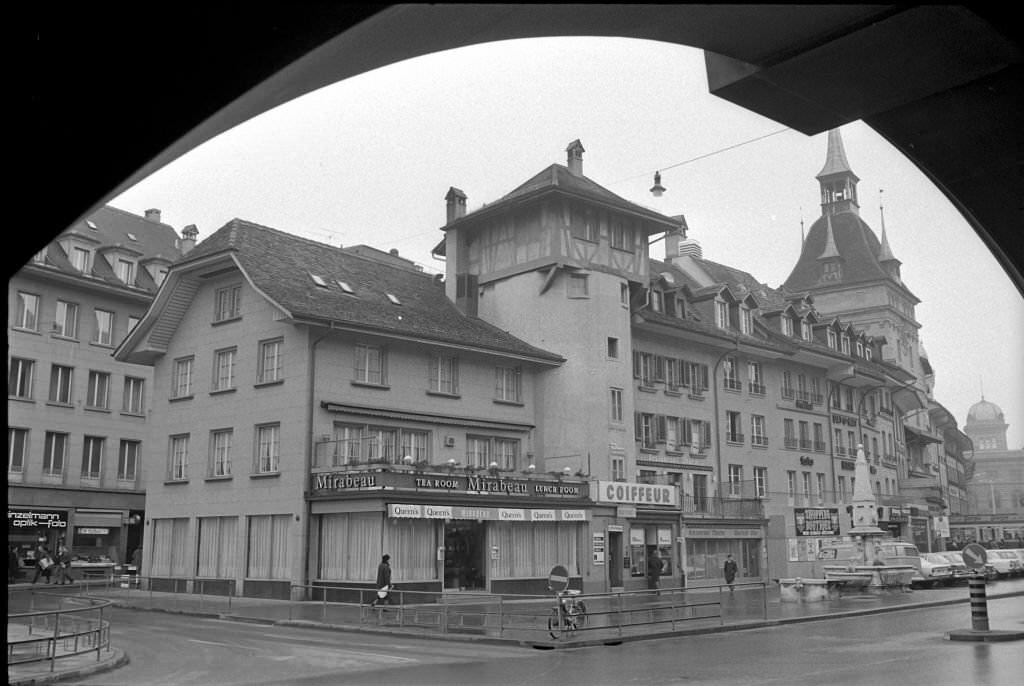
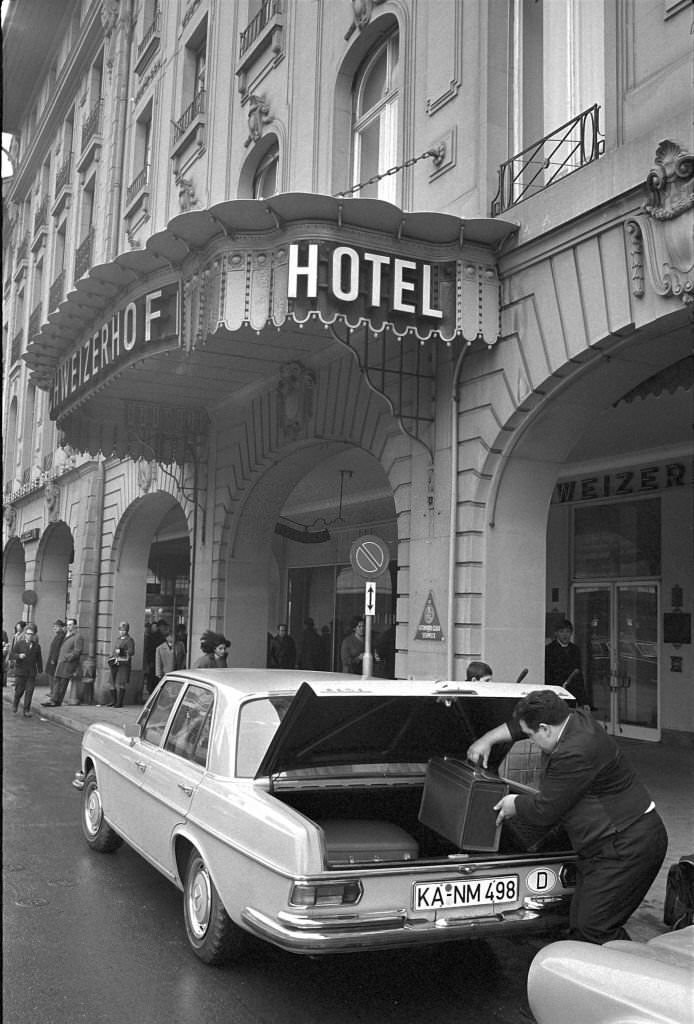
Berne, the federal capital, had a different character from Zürich or Geneva. Its arcaded streets and sandstone buildings gave it a medieval gravity that other Swiss cities lacked. The Hotel Schweizerhof stood near the central station, catering to the diplomats and politicians who passed through the capital regularly. The Waisenhausplatz — the square in front of the old orphanage — was a gathering point for markets, celebrations, and increasingly in the 1970s, political demonstrations.
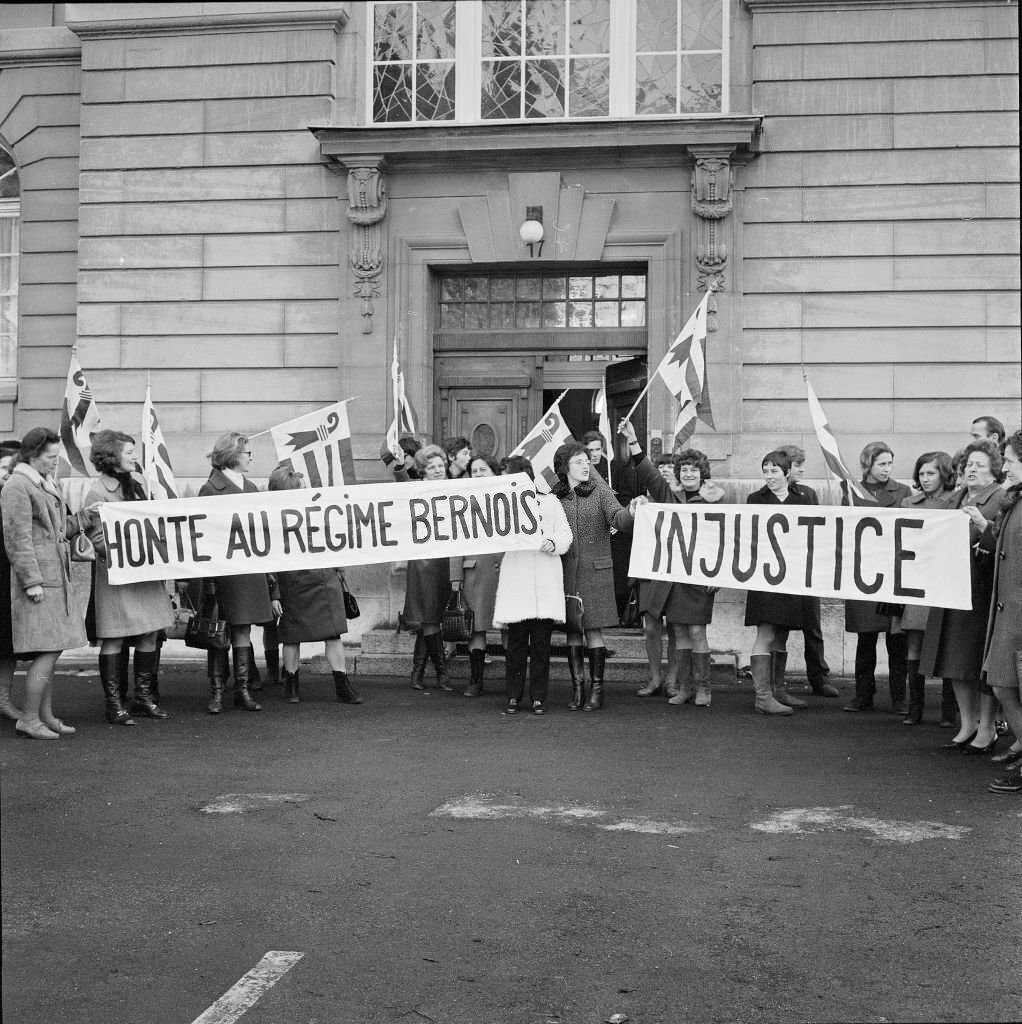
Women from the Jura separatist movement protested in front of Berne’s cantonal high court in 1970. The Jura conflict was one of the sharpest political tensions of the decade — French-speaking Catholics in the Bernese Jura had been pushing for their own canton since the 1940s, and by the early 1970s the movement had grown militant. The canton of Jura was eventually created in 1979, the first new Swiss canton since 1815.
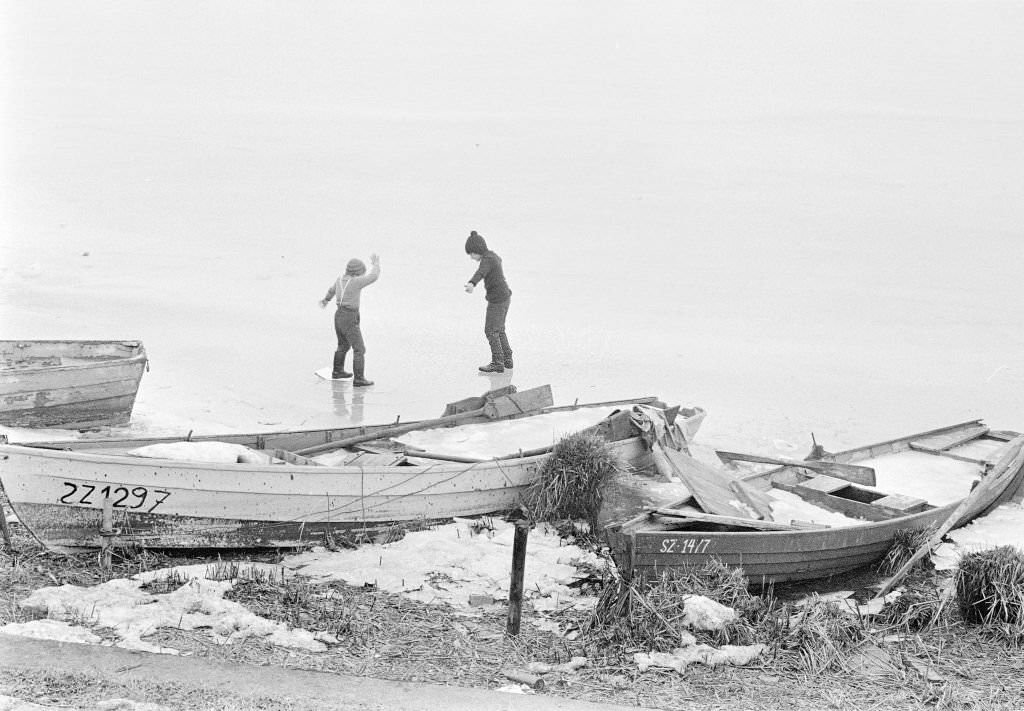
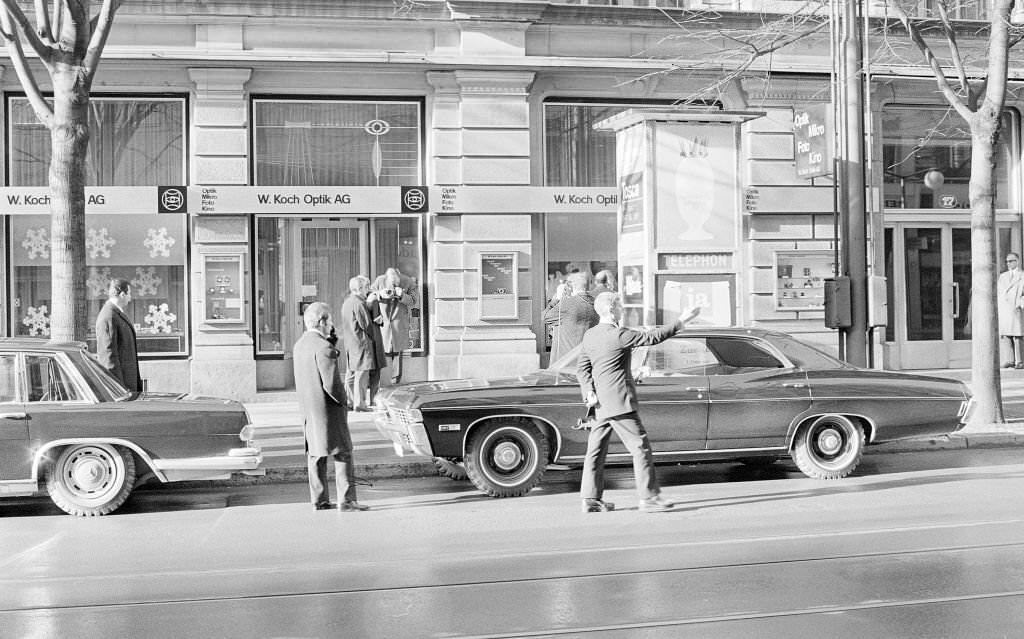
The Lauerzersee in the canton of Schwyz froze solid in the winter of 1970, its surface turning into a flat white plain that stretched to the hills on either side. Switzerland’s relationship with the outside world was reflected in the visitors who came to its cities — Mohammad Reza Shah Pahlavi, the Shah of Iran, was photographed on Zürich’s Bahnhofstrasse in 1970, one of many foreign heads of state who visited Switzerland during the decade.
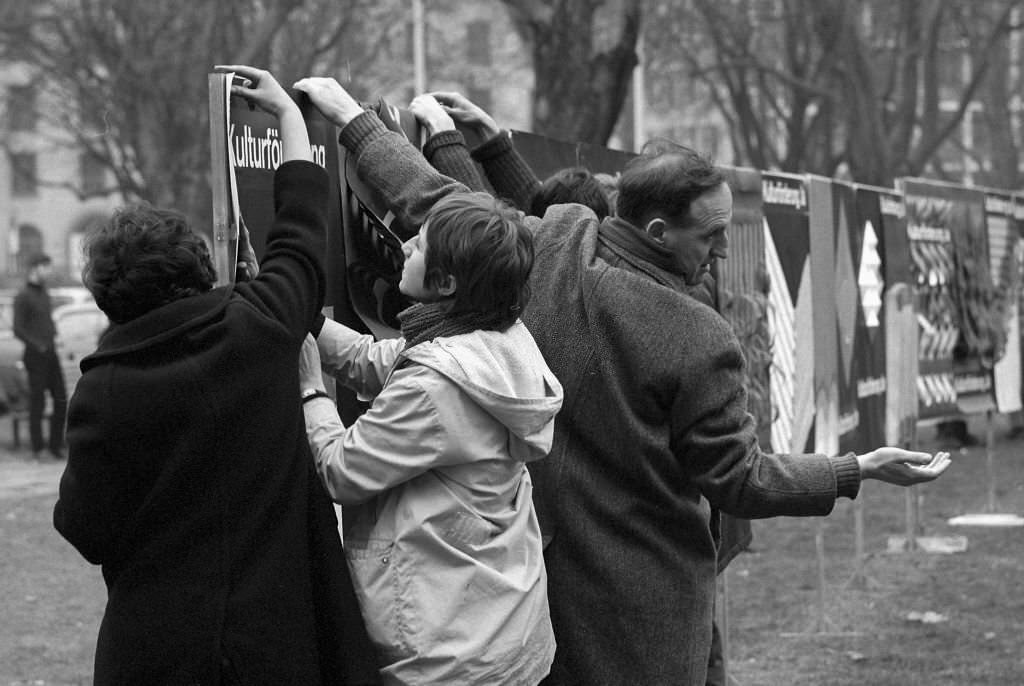
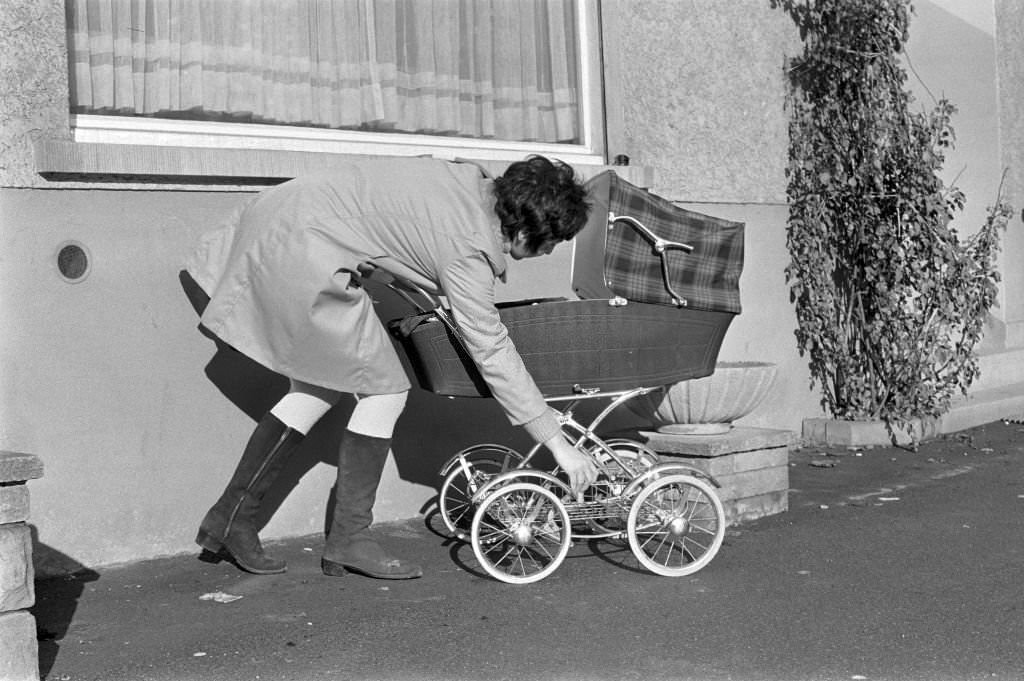
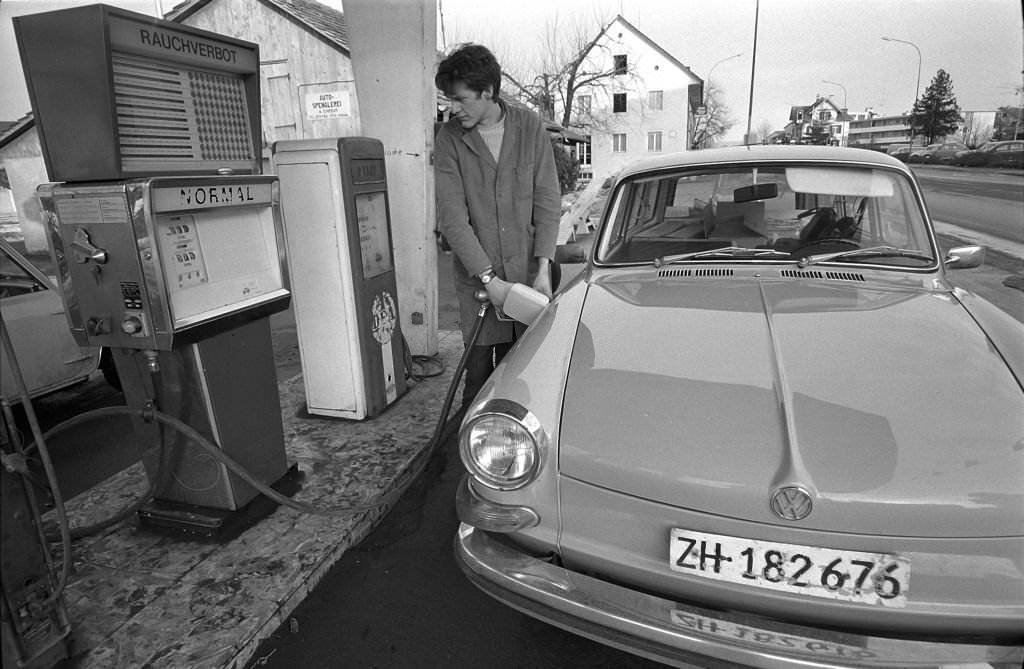
Students at Zürich’s School for Applied Art designed posters for a public vote on culture promotion in 1970 — democracy in action, down to the level of graphic design. Swiss referendums covered an enormous range of topics, from major constitutional changes to local spending decisions. On the streets, a filling station attendant pumped petrol for a customer, and a pram was parked on a pavement somewhere in the city, its owner inside a shop or café.
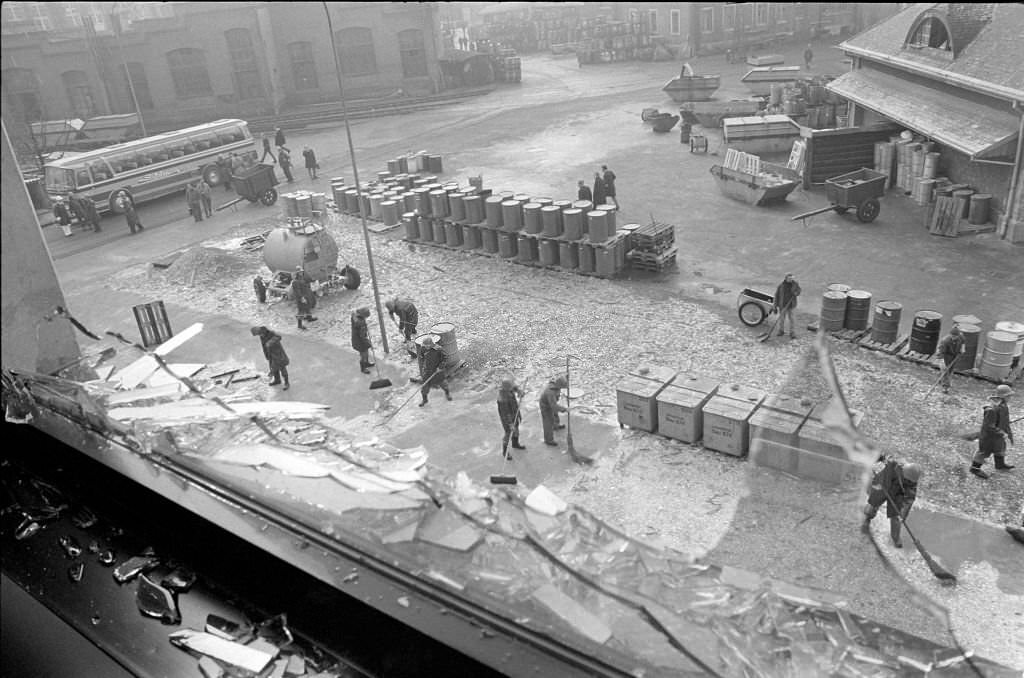
In 1970, an explosion at the Ciba-Geigy chemical plant in Basel caused significant damage and drew emergency crews to the scene. Ciba-Geigy was one of the world’s largest chemical companies, formed by the merger of two Basel firms in 1970. Industrial accidents like this one reinforced the push for stricter environmental regulations that Swiss cantonal governments began implementing throughout the decade.
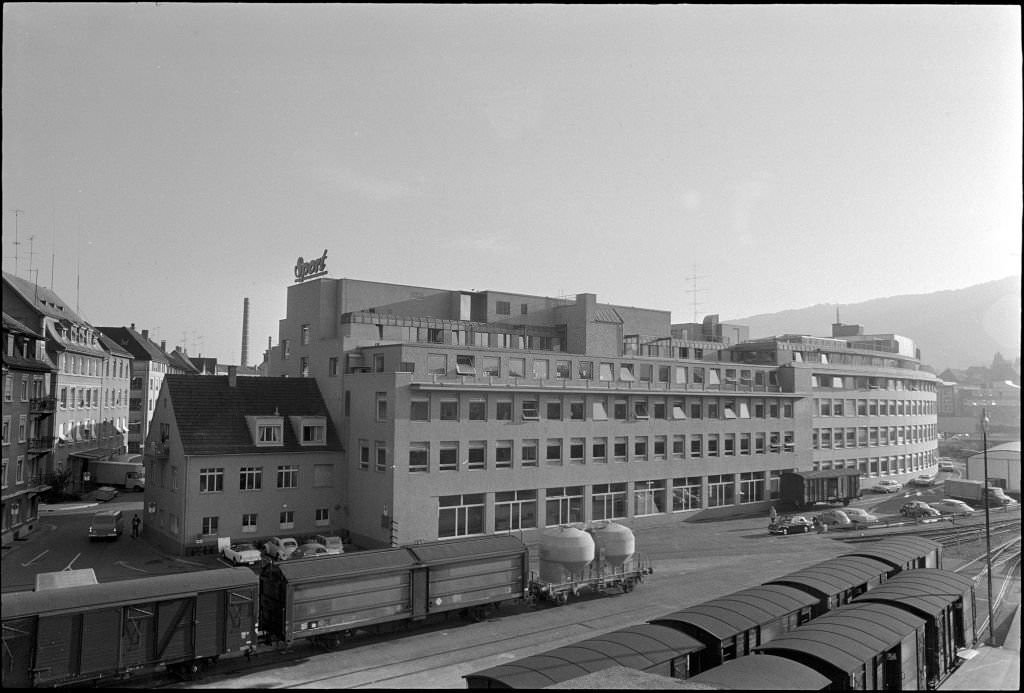
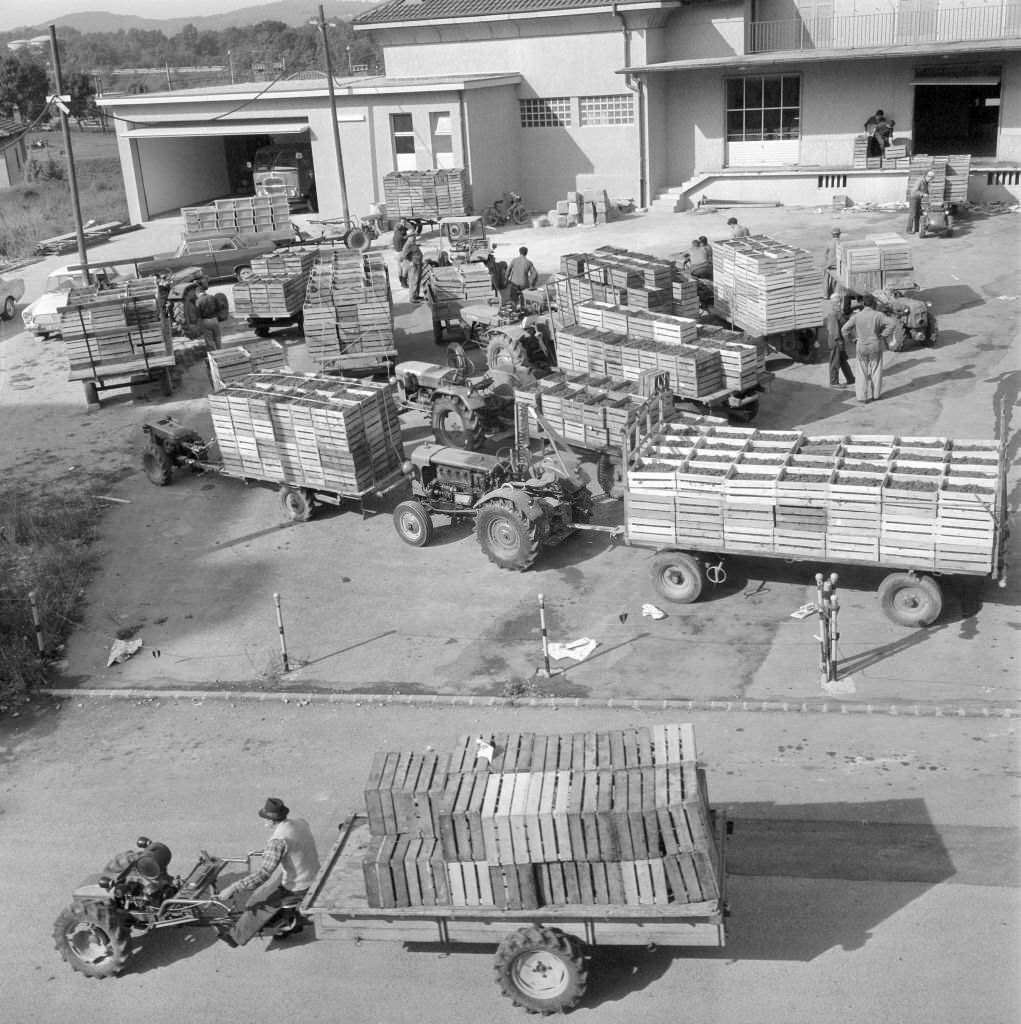
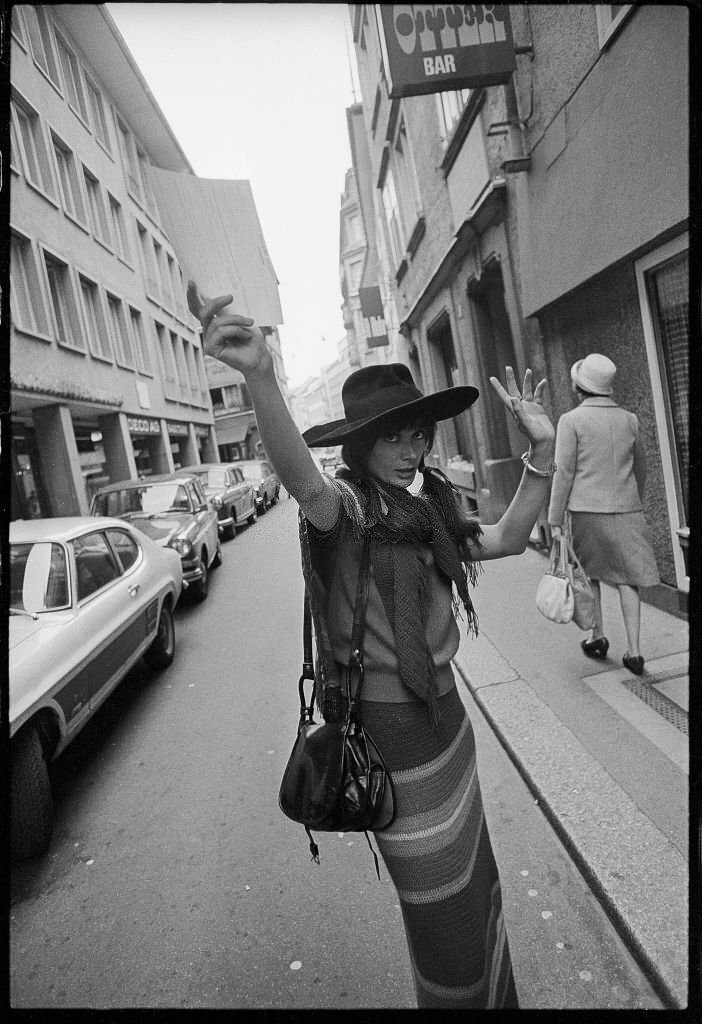
Jean Frey AG was one of Zürich’s major printing and publishing firms, its presses running day and night to produce the magazines and newspapers that Swiss households read. In Ticino, the grape harvest was underway — the Italian-speaking canton produced Merlot under conditions similar to those found across the border in Lombardy. The young woman photographed in 1970 is unnamed, an ordinary person caught in the frame of a decade that was changing faster than most realized.
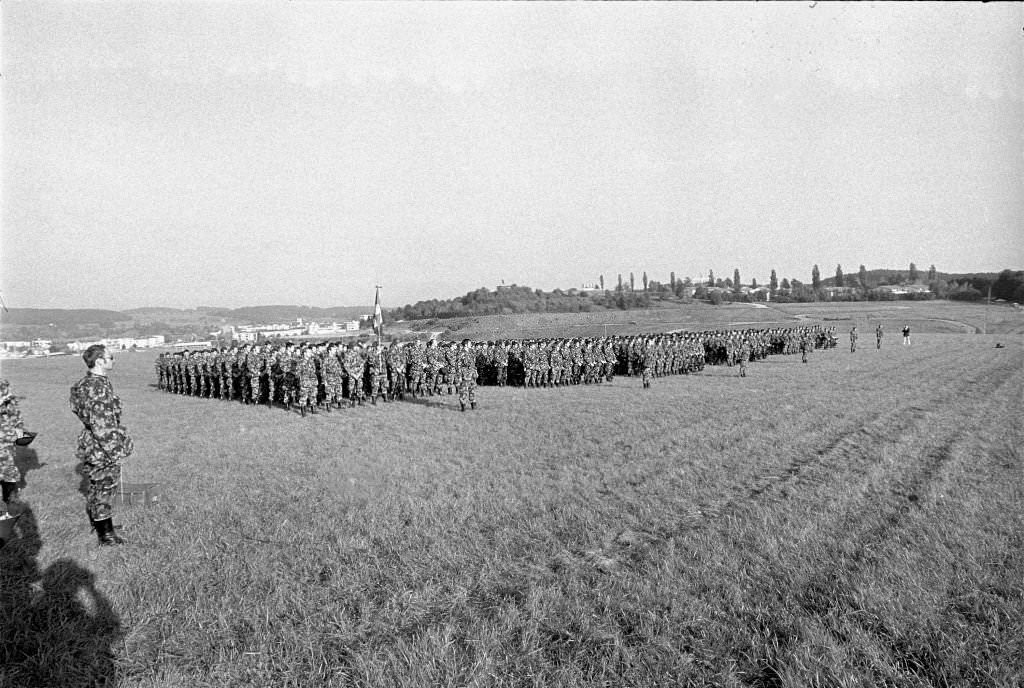
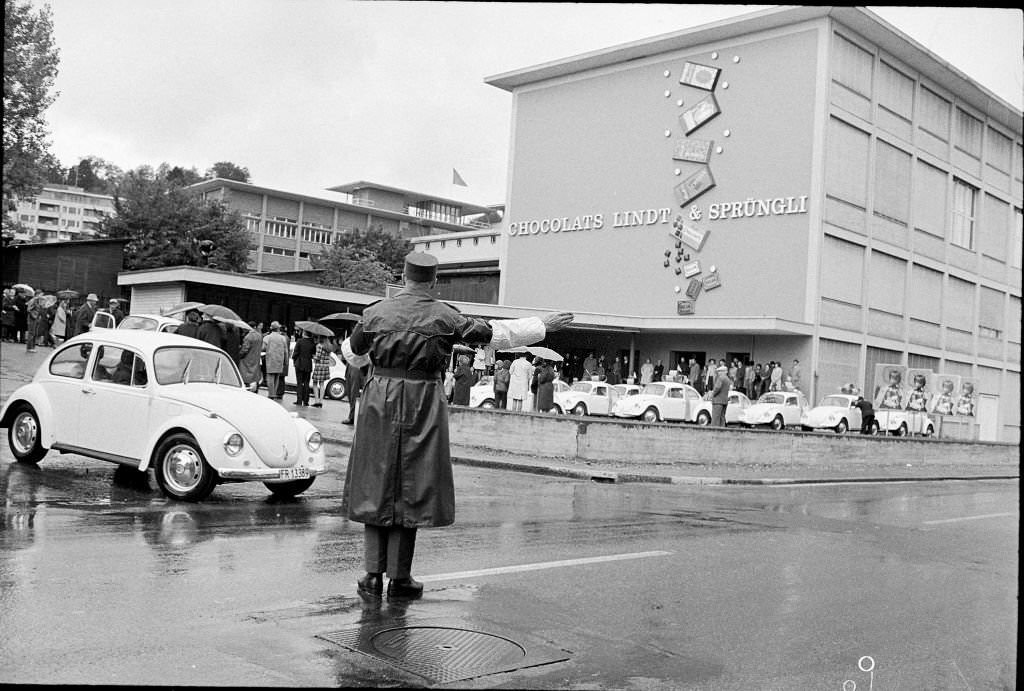
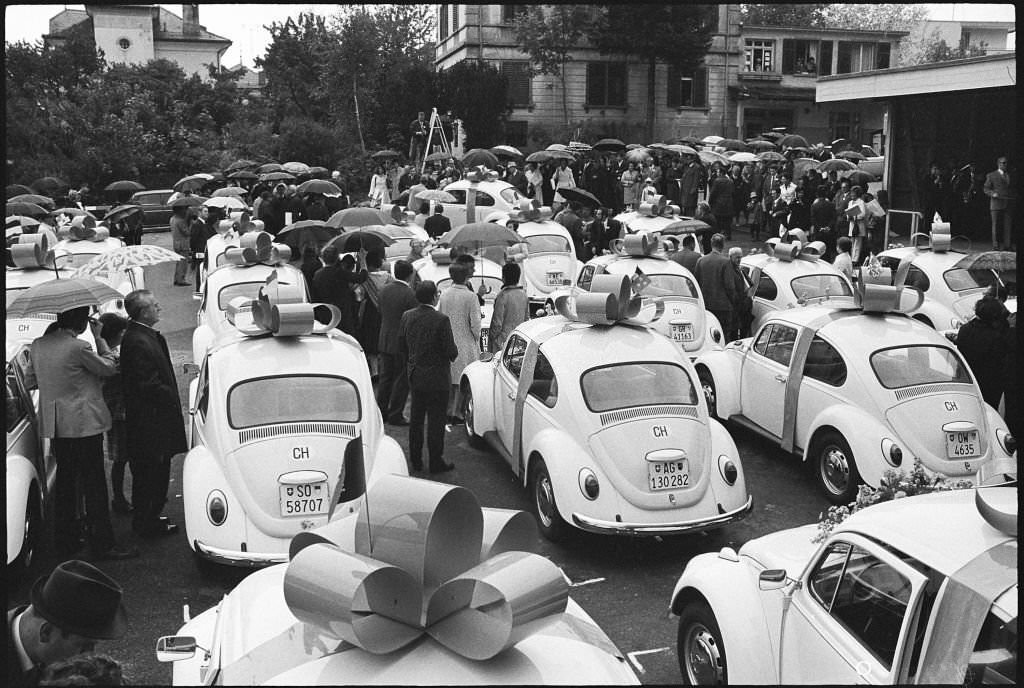
In the wake of the Swissair bombing, Zürich airport formed a dedicated guard troop, whose members were sworn in with the formality that Switzerland reserved for its military and civic institutions. That same year, Lindt & Sprüngli celebrated its 125th anniversary. The Kilchberg-based chocolate maker had grown from a small confectionery into a global brand, and its anniversary marked one of the proudest chapters in Swiss food manufacturing.
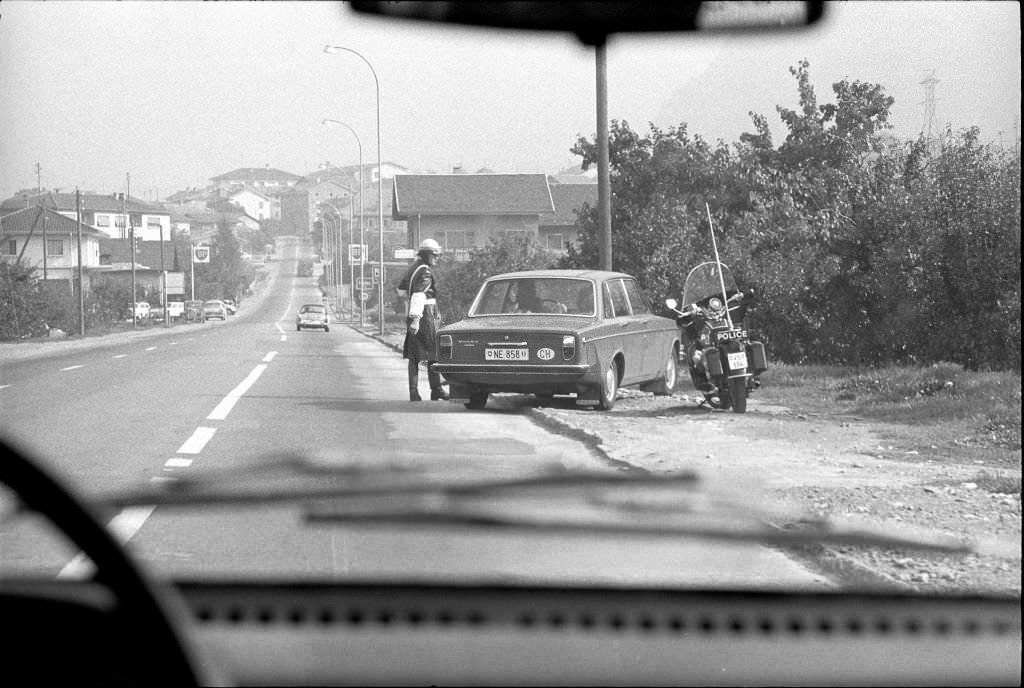
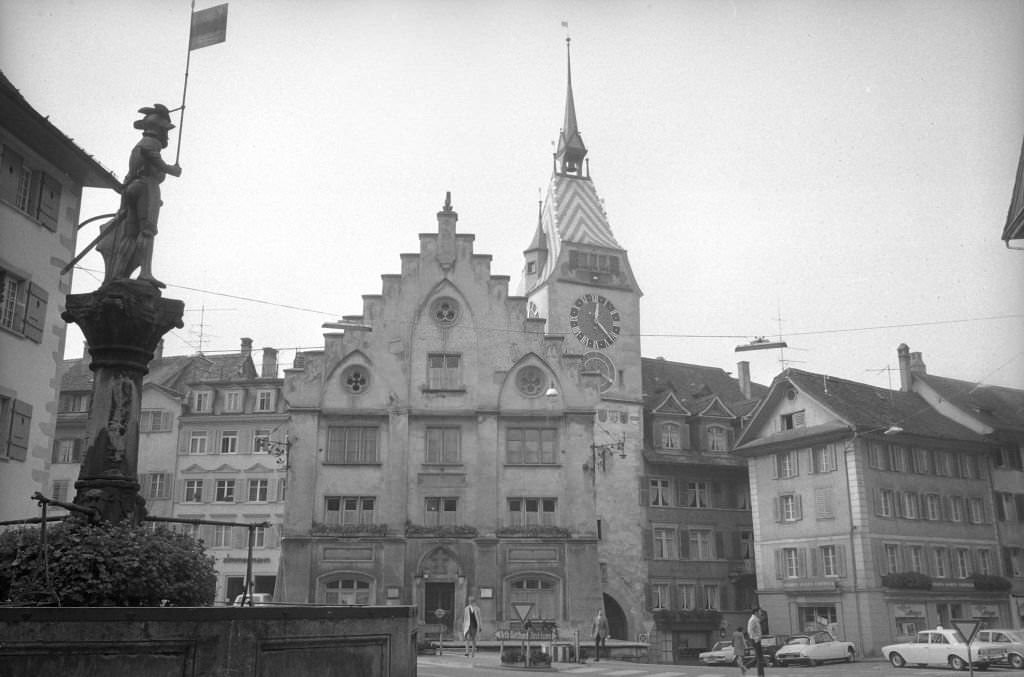
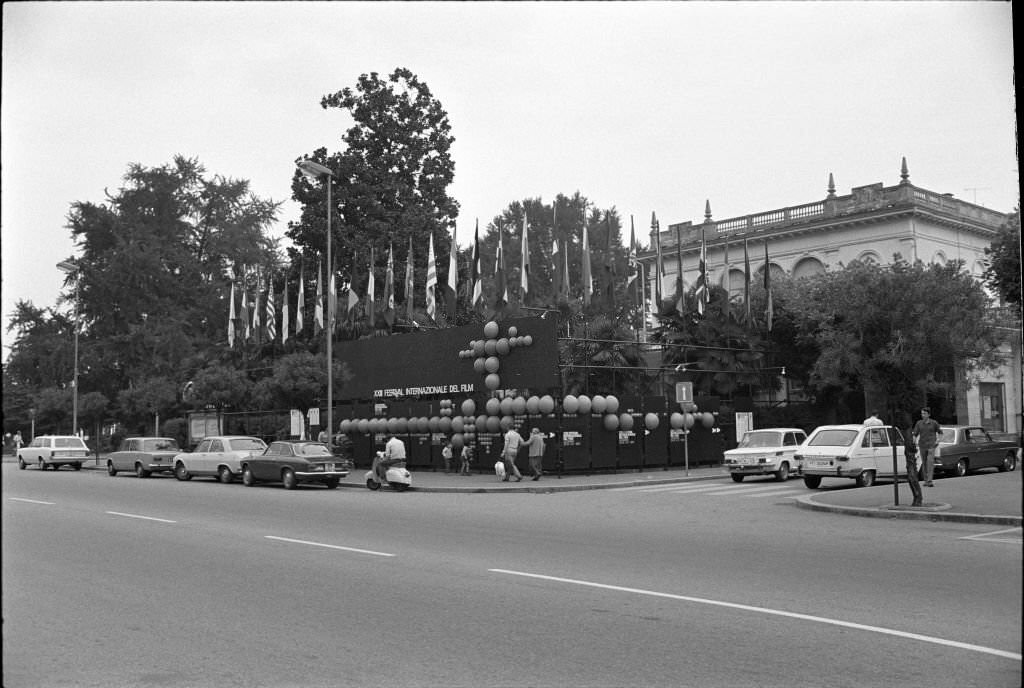
In the canton of Valais, police patrols covered some of the most remote alpine terrain in the country. The canton of Zug, small but extremely wealthy, showed a prosperous Swiss town going about its business. In Ticino, the Locarno Film Festival drew filmmakers and audiences from across Europe each summer, using the Piazza Grande as one of the world’s great outdoor cinema venues. Switzerland’s cultural life in 1970 was as active as its economy.
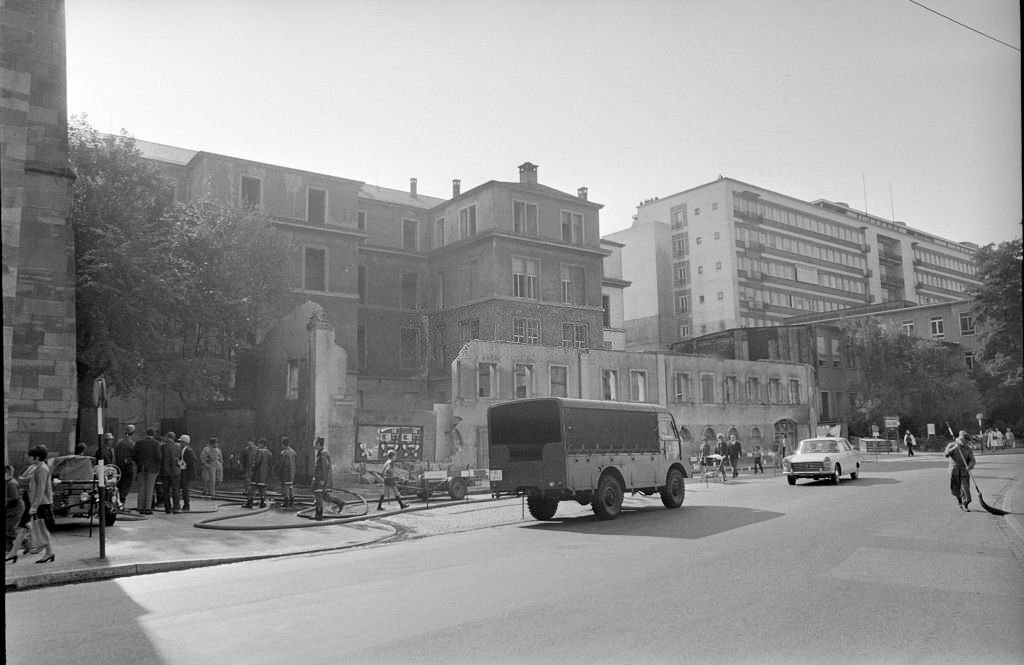
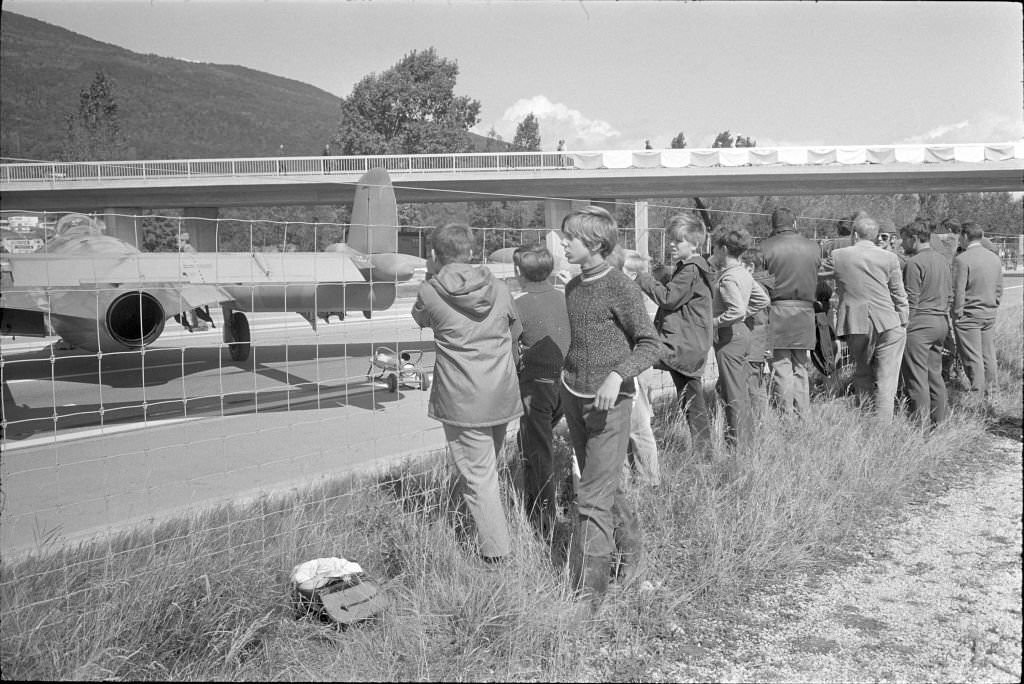
Switzerland’s military was never far from public life. In 1970, Swiss Air Force jets demonstrated their ability to land on the N1 motorway near Oensingen — a real capability built into Switzerland’s defense planning, which required the ability to operate from roads if air bases were destroyed. Crowds gathered to watch. The former Bürgerspital in Basel, an old civic hospital, stood as a reminder of the city’s long tradition of public health and civic institution-building.
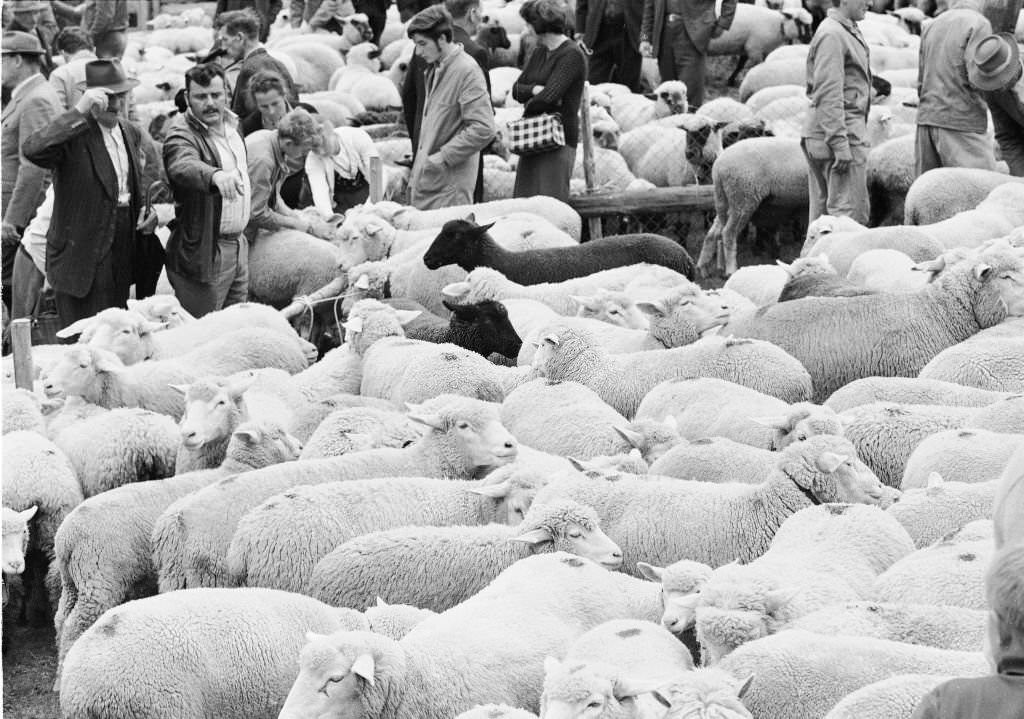
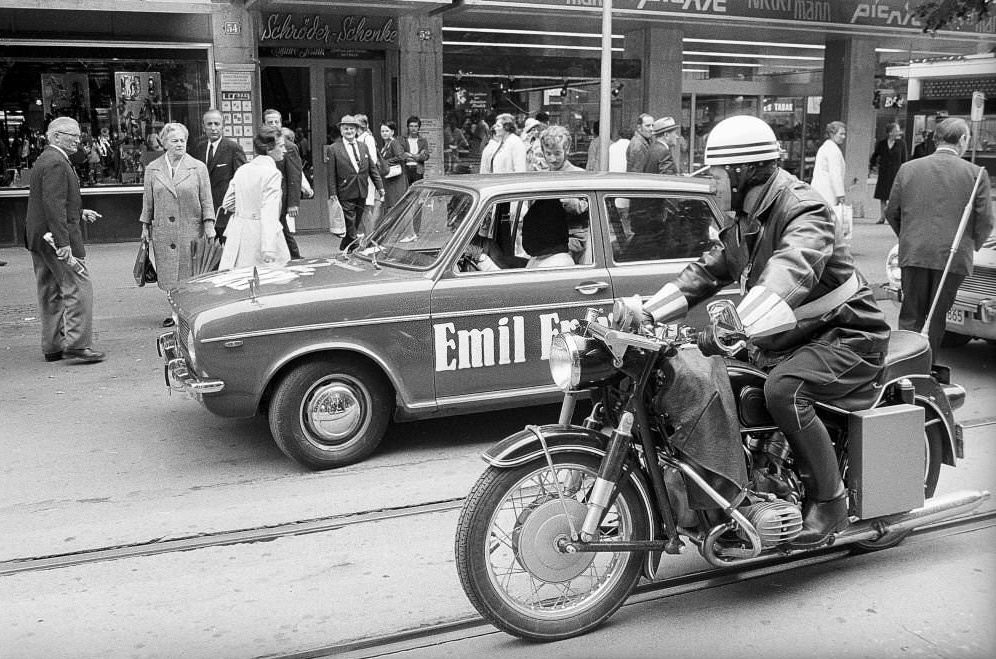
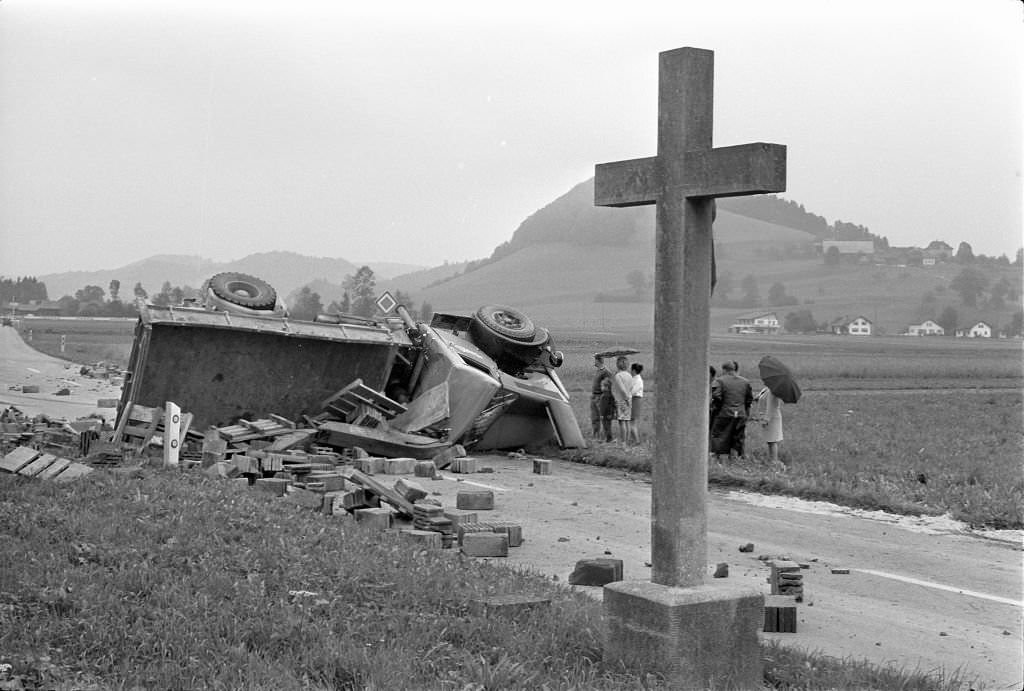
The seasonal separation of sheep in the village of Riffenmatt in the Bernese highlands was a centuries-old practice, still alive in 1970. Each autumn, farmers sorted their animals after the summer grazing season. A motorcycle policeman escorting a blindfolded magician on a “blind drive” through Swiss streets provided a more unusual moment for the cameras. A truck accident near Ettiswil was a grimmer reminder of the risks that came with the decade’s heavy road freight traffic.
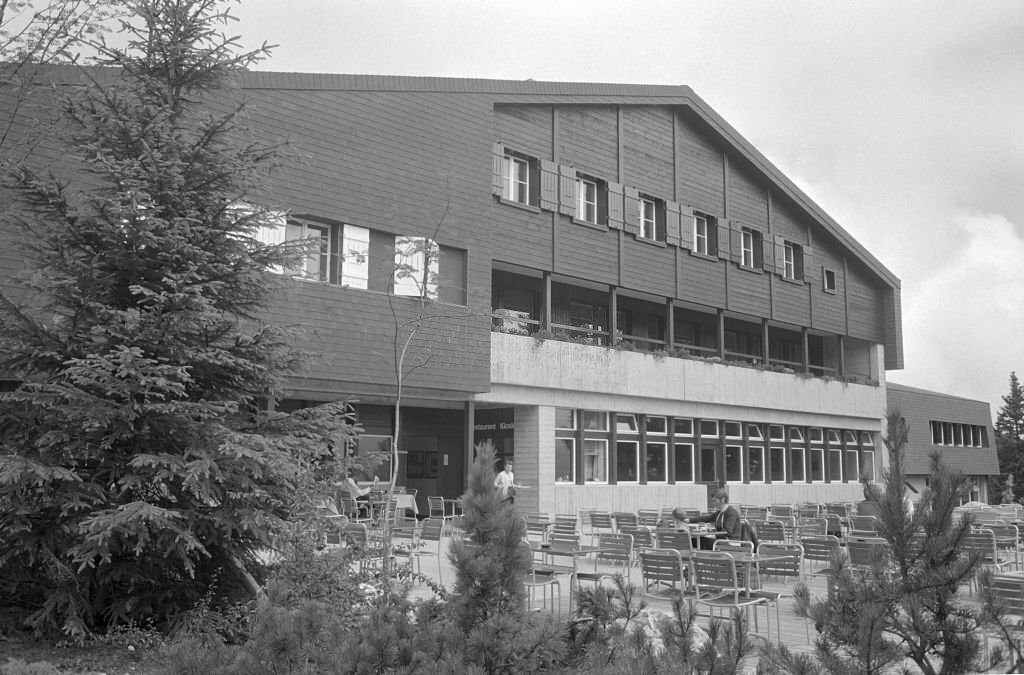
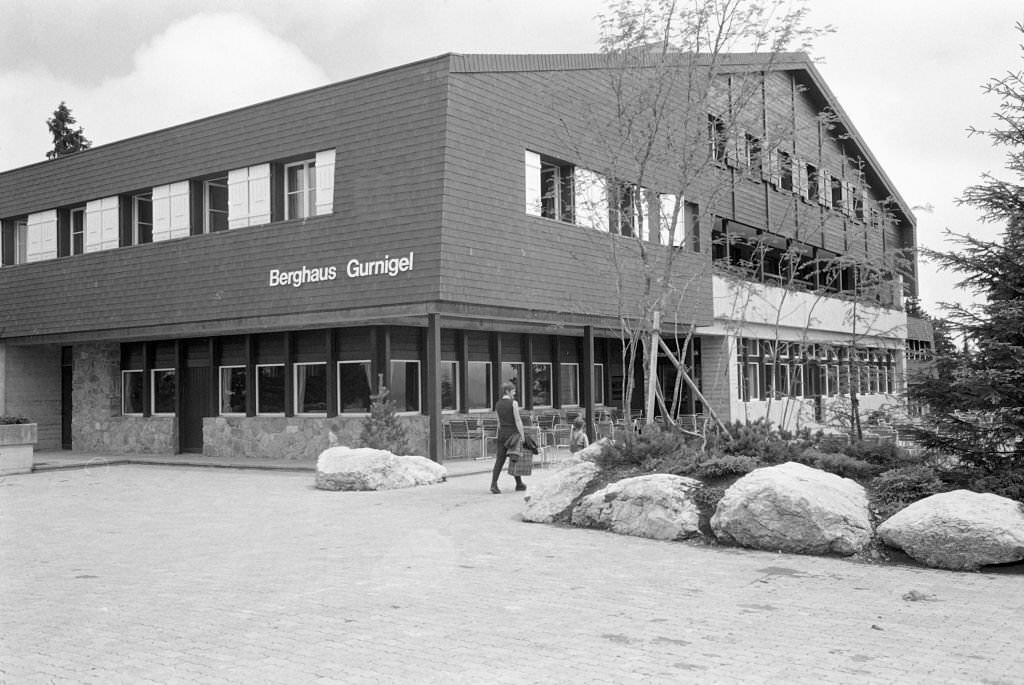
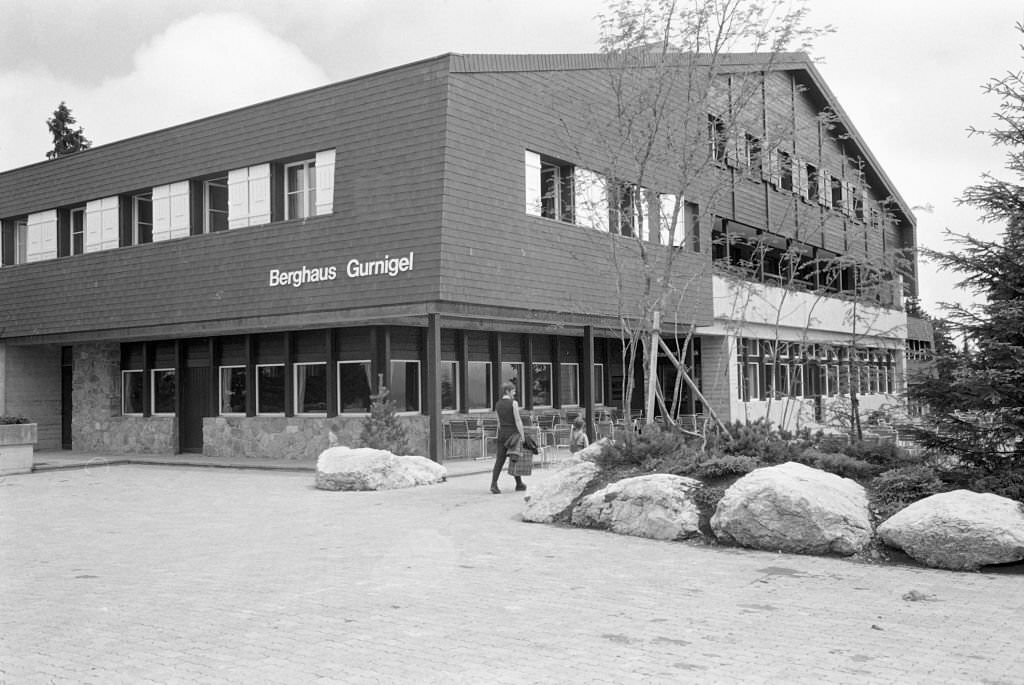
The Berghaus Gurnigel, sitting high in the Bernese Prealps, served a double function that was unusual even by Swiss standards — part mountain hotel, part military barracks. Switzerland’s citizen army meant that military facilities were woven into civilian life in ways that other countries would find strange. The Gurnigel pass had strategic significance, and the building’s dual role reflected how the Swiss military made use of existing infrastructure across the country.
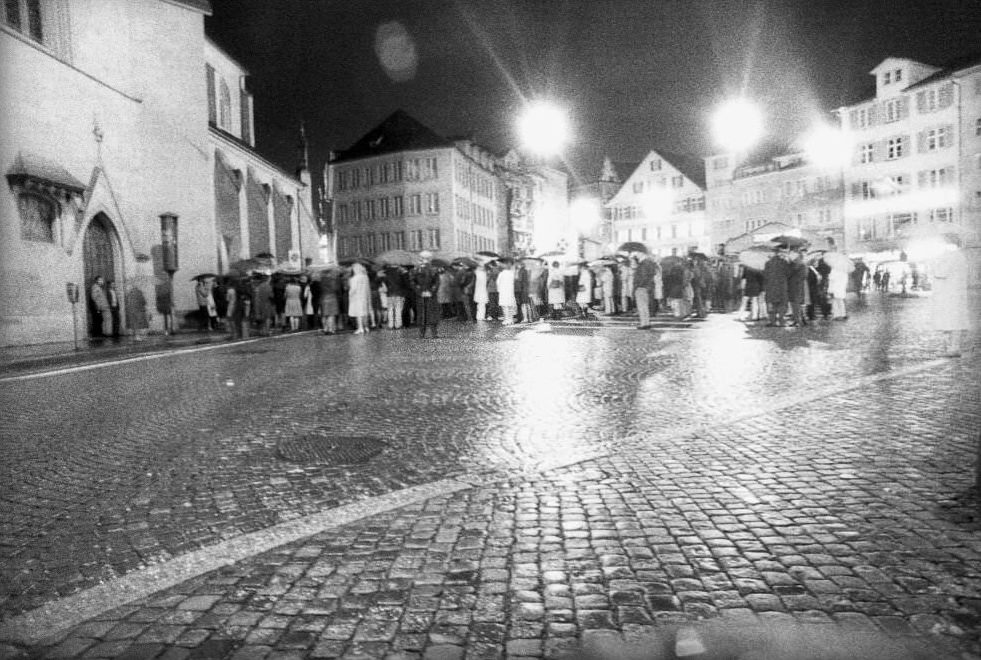
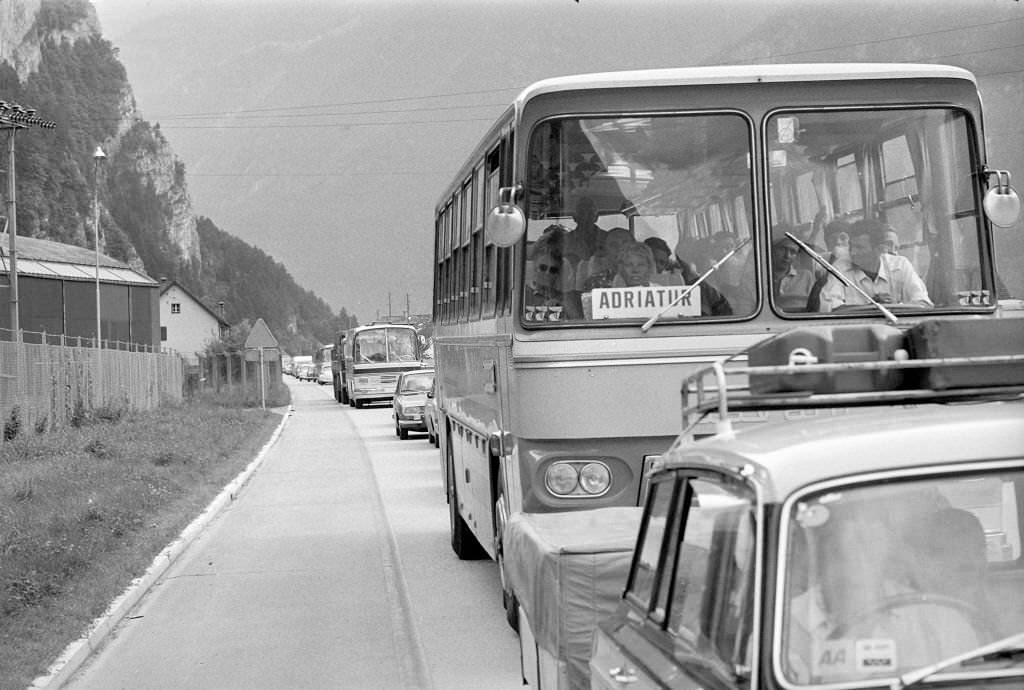
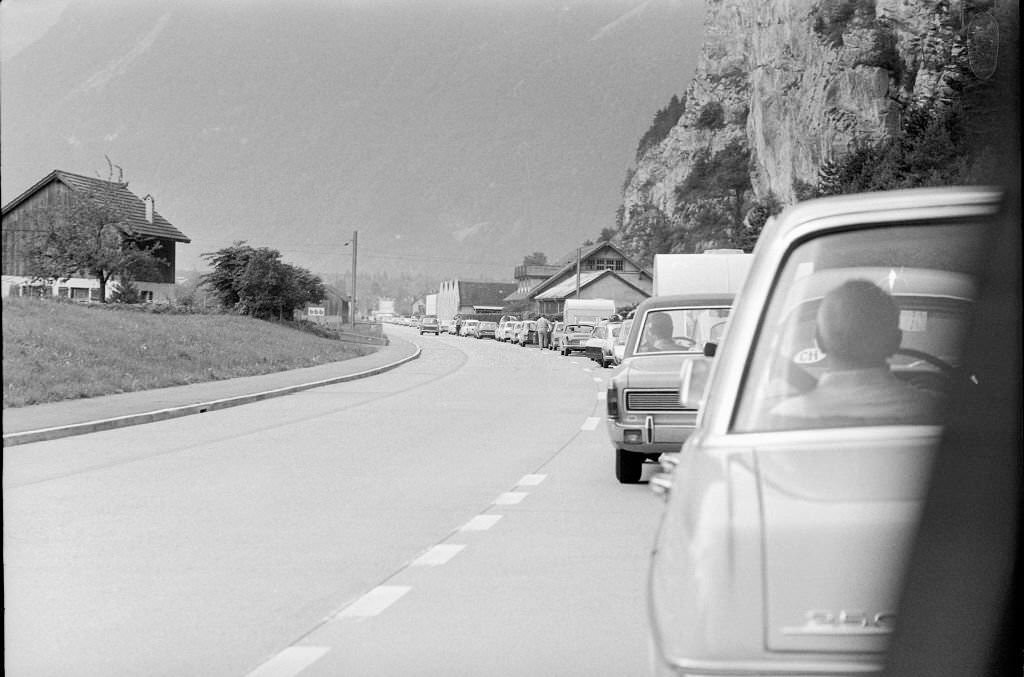
August 1st — Swiss National Day — was one of the busiest travel days of the year, and the St. Gotthard pass paid the price. Cars backed up for kilometers as families headed south to Ticino or north back to the Mittelland after the holiday weekend. The Gotthard road tunnel, which would eventually ease this traffic, was still years from completion. Anniversary celebrations near churches across Switzerland marked the day with more traditional ceremonies.
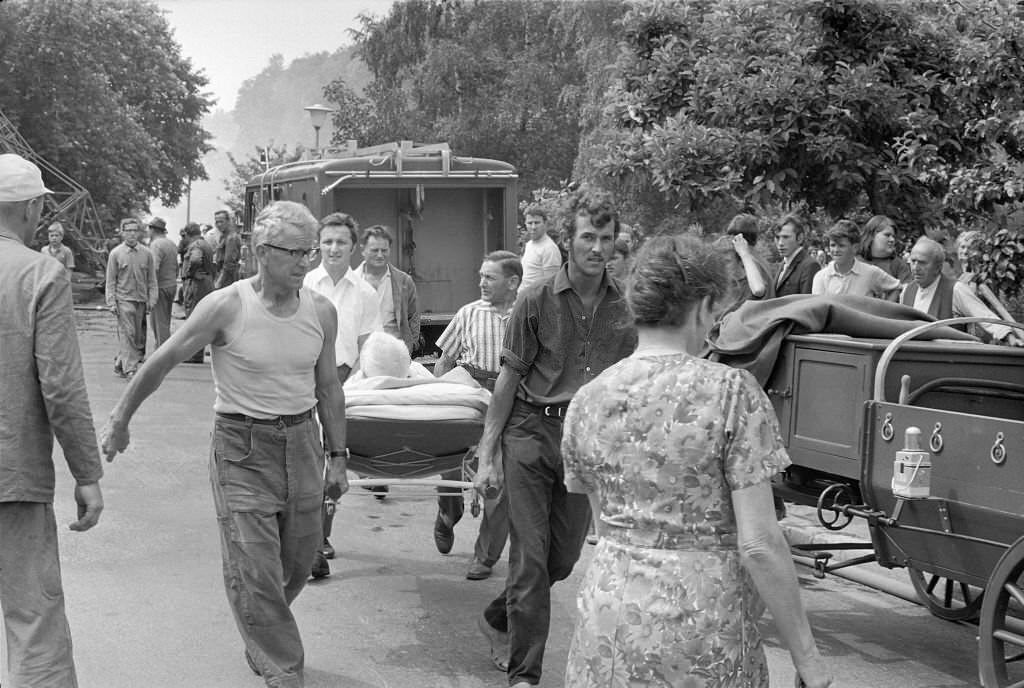
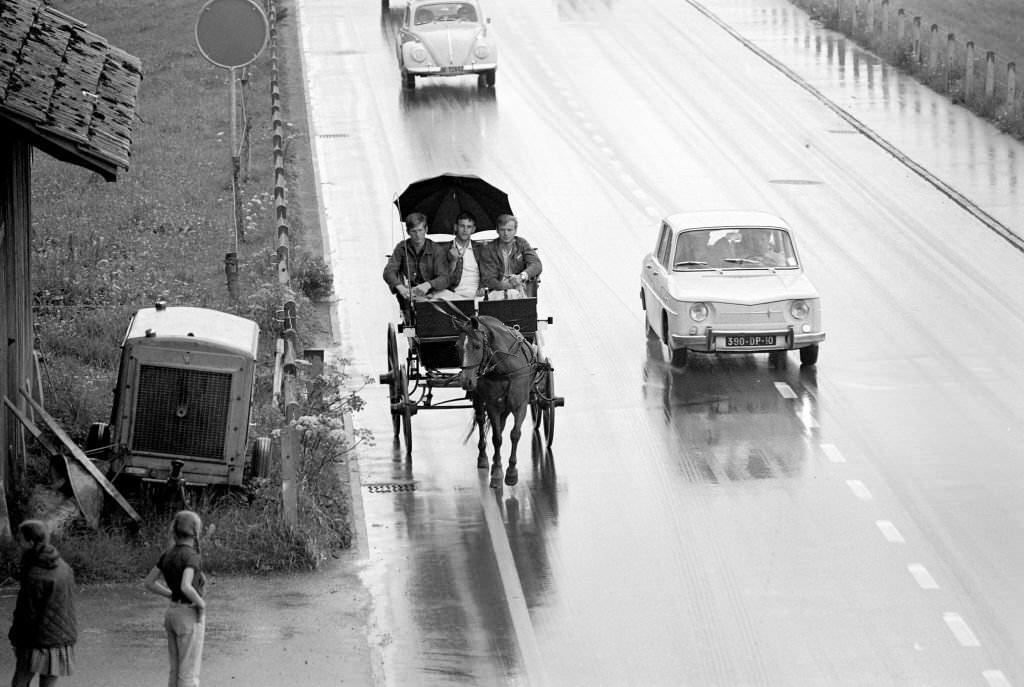
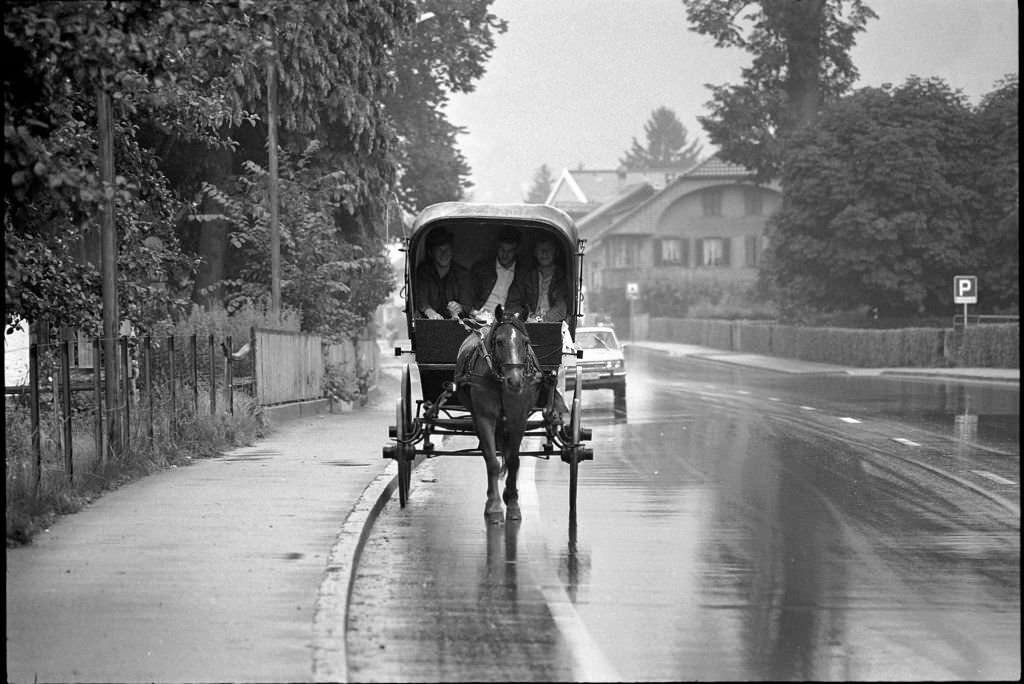
Fire destroyed part of the hospital in Huttwil, a small town in the Bernese Emmental, in 1970. Emergency response in rural Switzerland depended heavily on volunteer fire brigades, which were a central part of community life. In a lighter register, three young men rode through the region of Biel on a horse-drawn carriage for their holiday — a deliberately old-fashioned choice in a decade when most Swiss families were taking vacations by car.
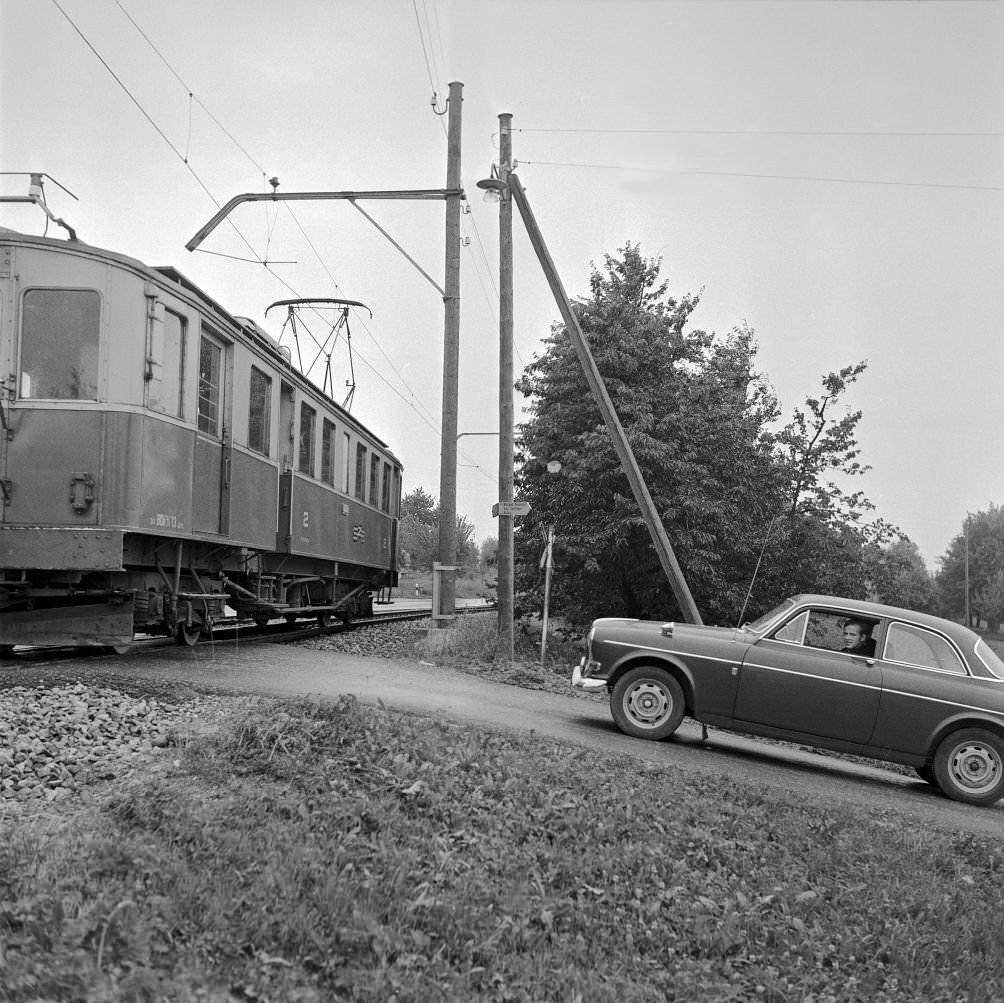
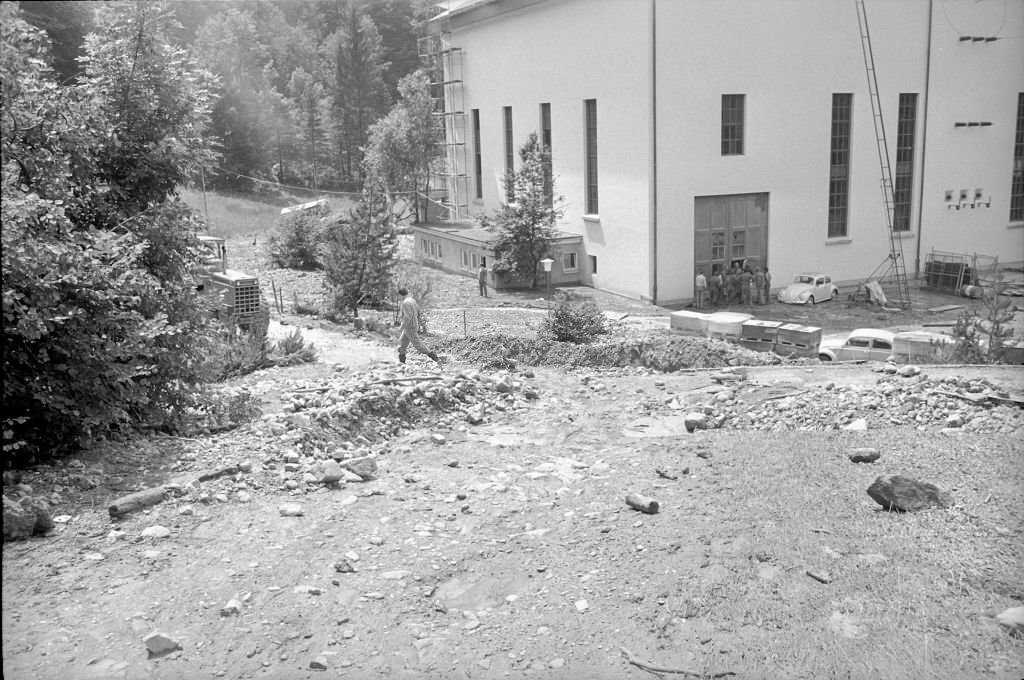
Switzerland’s railway network reached into almost every corner of the country. The Biel-Täuffelen line served the lakeshore region between the Bernese Midlands and Lake Biel, connecting small communities to larger towns. The Wäggital power station in the canton of Schwyz was one of many hydroelectric installations that expanded during the decade to meet growing electricity demand. Switzerland added significant new hydroelectric capacity throughout the 1970s alongside its five nuclear power plants.
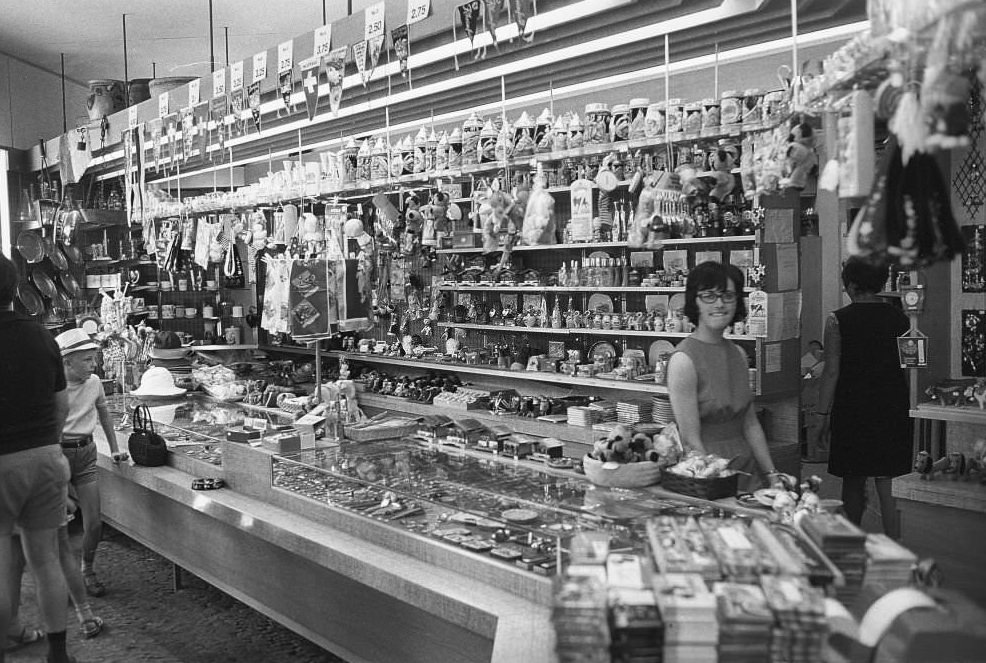
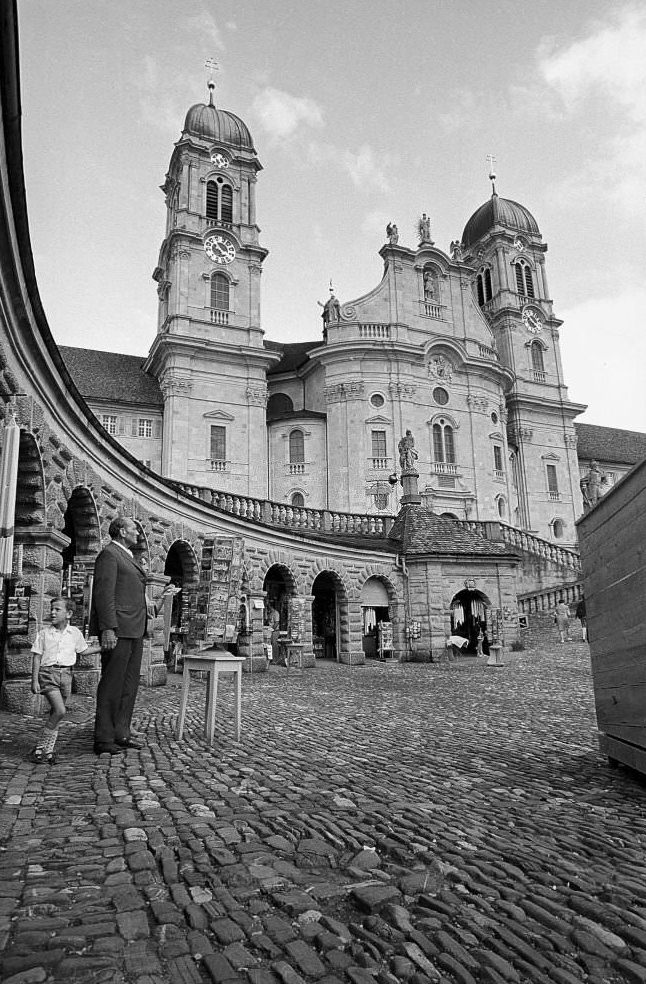
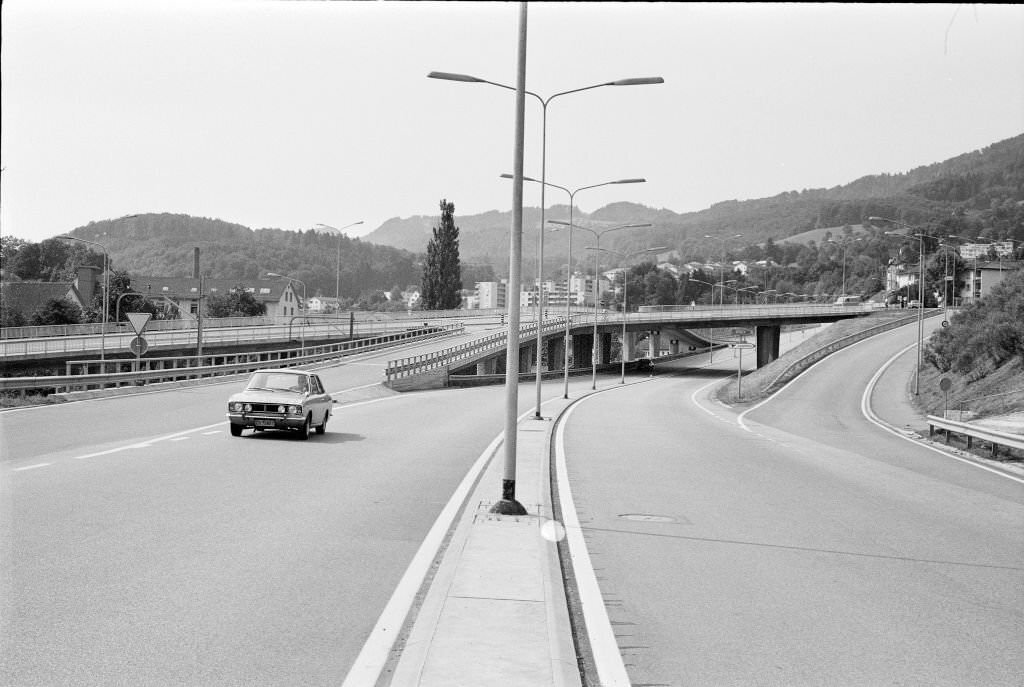
Switzerland’s tourism industry generated steady revenue from visitors who passed through cities like Schaffhausen to see the Rhine Falls, or made pilgrimages to the Benedictine monastery at Einsiedeln. Souvenir shops were a fixture near every major attraction. Just outside Zürich, a new bypass was under construction in Adliswil — one of dozens of road projects that were reshaping the edges of Swiss cities as car ownership increased and commuter zones expanded.
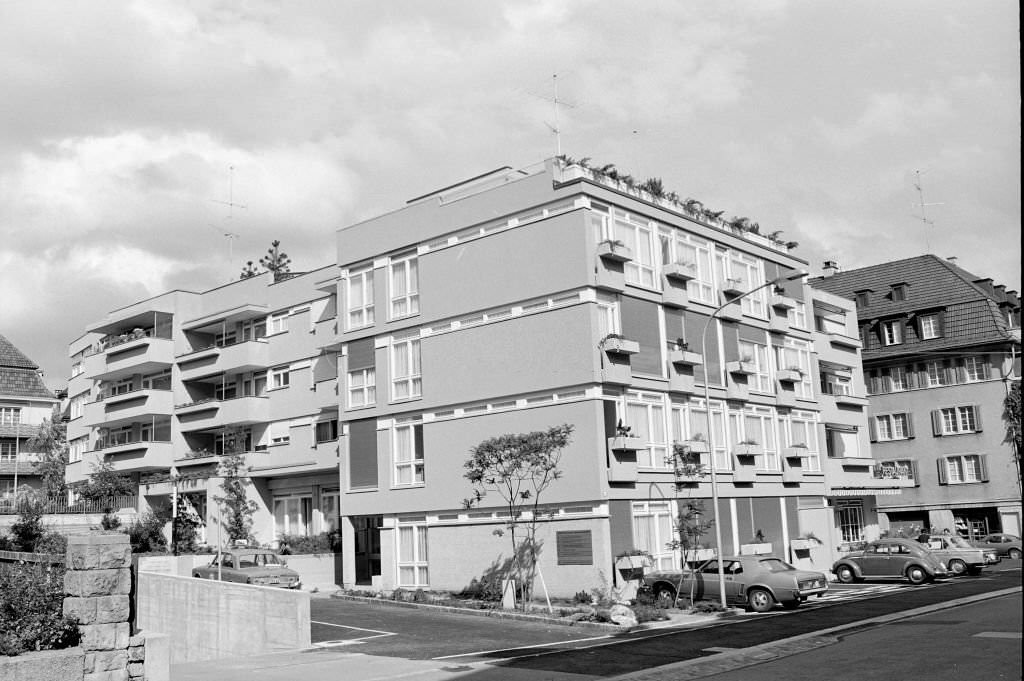
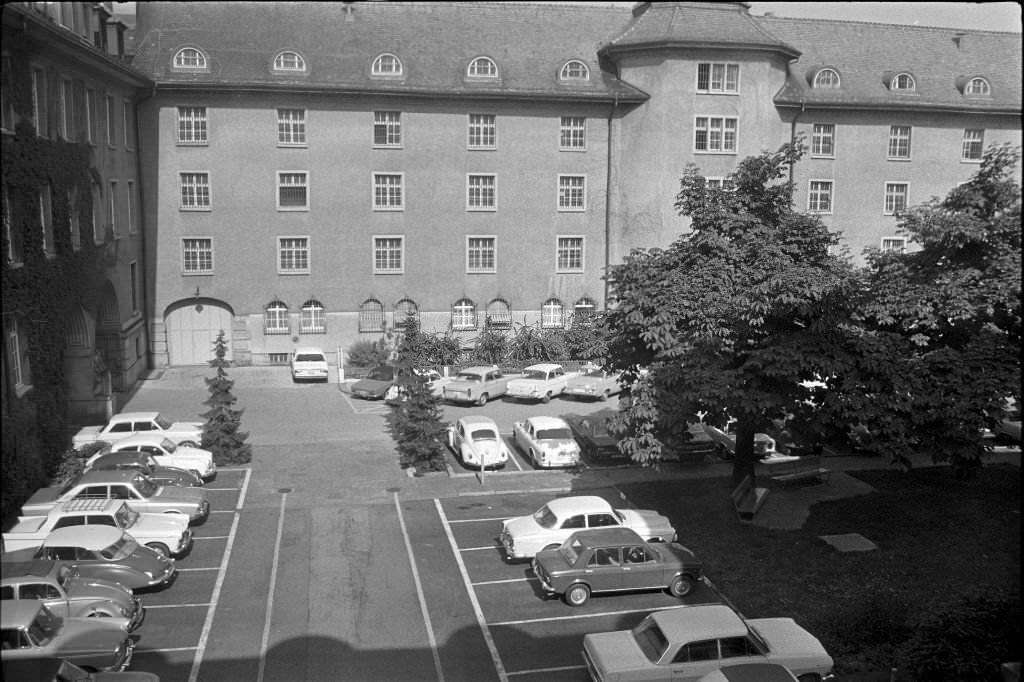
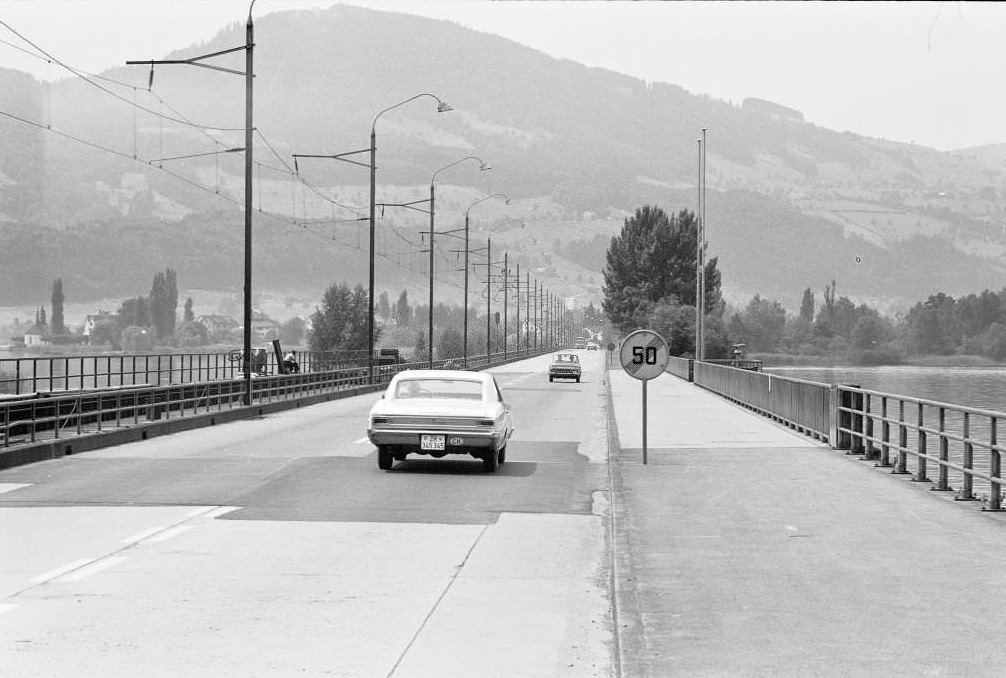
Zürich’s urban landscape in 1970 included medical buildings, prisons, and the engineering works that connected the city to its surroundings. The Seedamm at Pfäffikon was a narrow land bridge crossing the upper end of Lake Zürich, carrying both road and rail traffic. It was a critical bottleneck in the region’s transport network, and by 1970 it was already struggling to cope with the volume of vehicles using it.
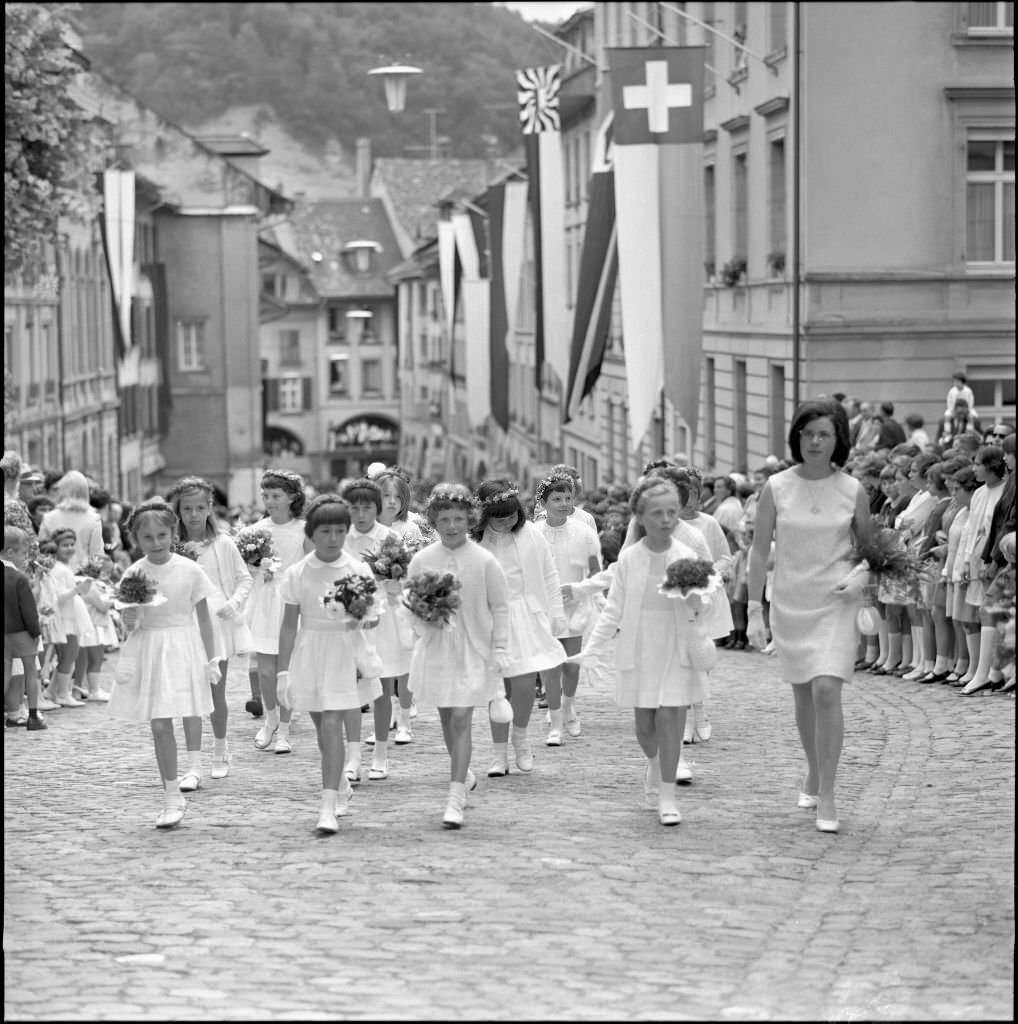
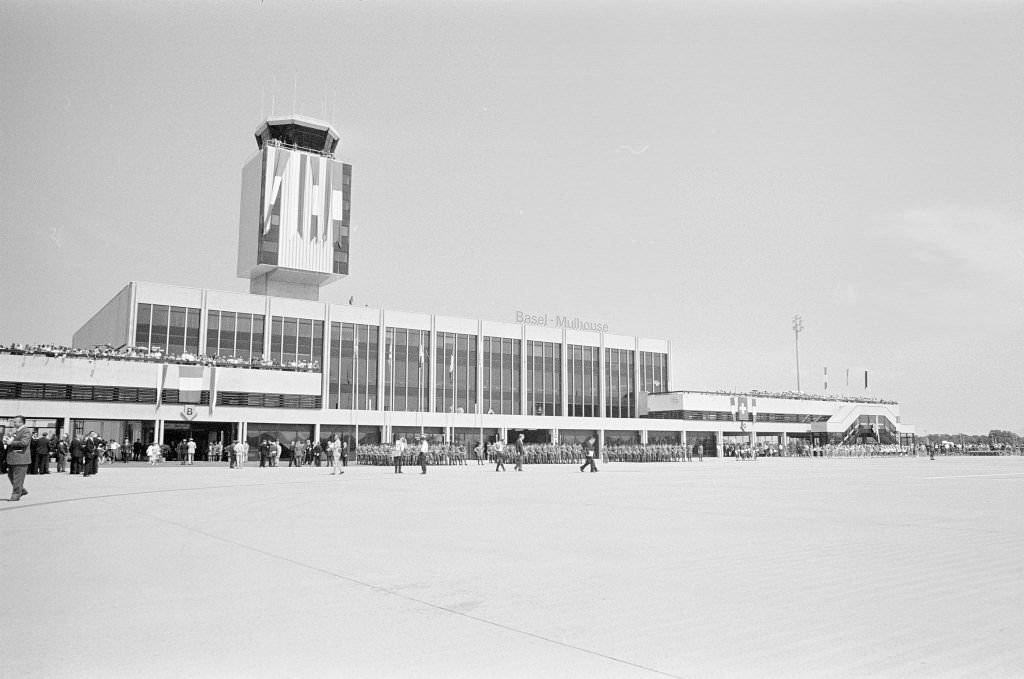
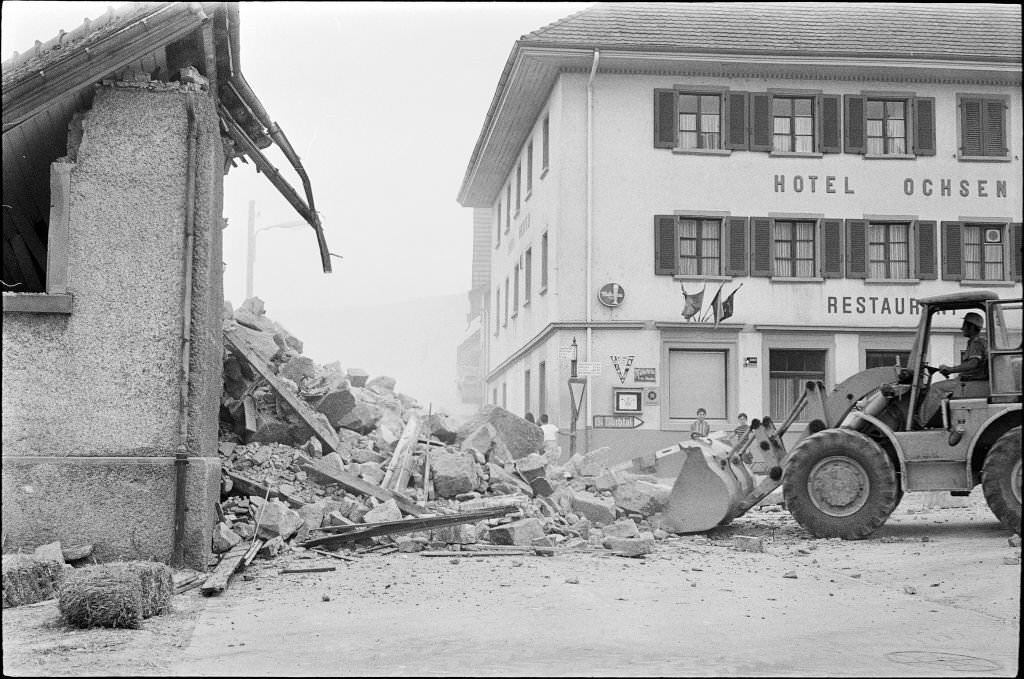
The Solennität in Burgdorf was a traditional procession with deep roots in local Catholic practice, with girls dressed in white walking through the town streets. Basel-Mulhouse airport sat on the French side of the border but served both countries — a practical arrangement that reflected Switzerland’s close ties to its neighbors. In the village of Döttingen in Aargau, a church steeple was demolished by controlled blasting — a sharp reminder that not all of Switzerland’s old structures were preserved.
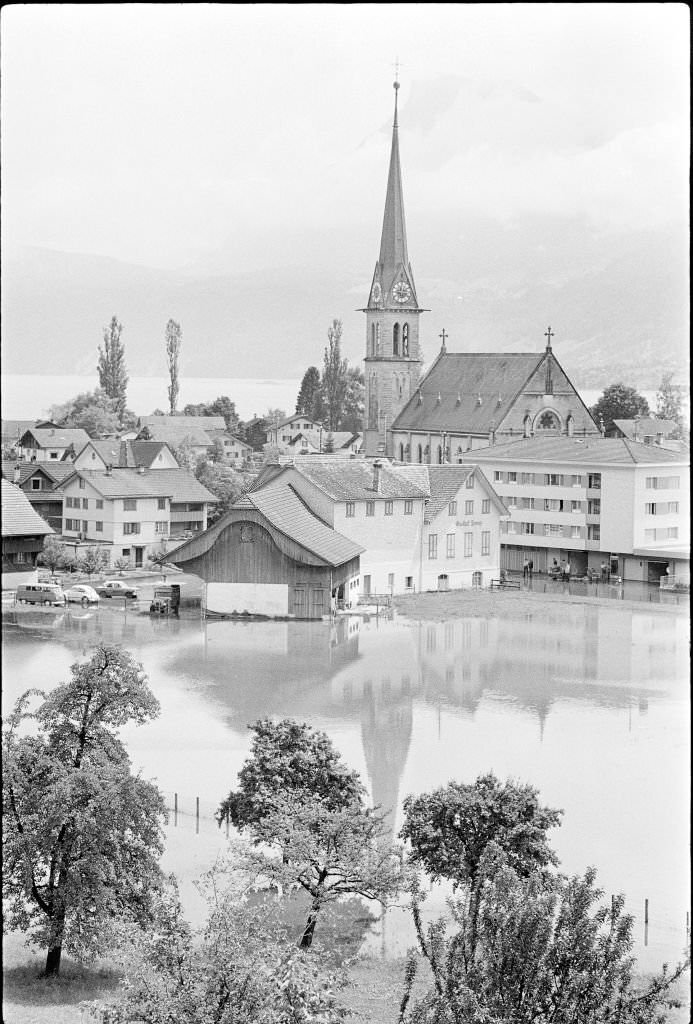
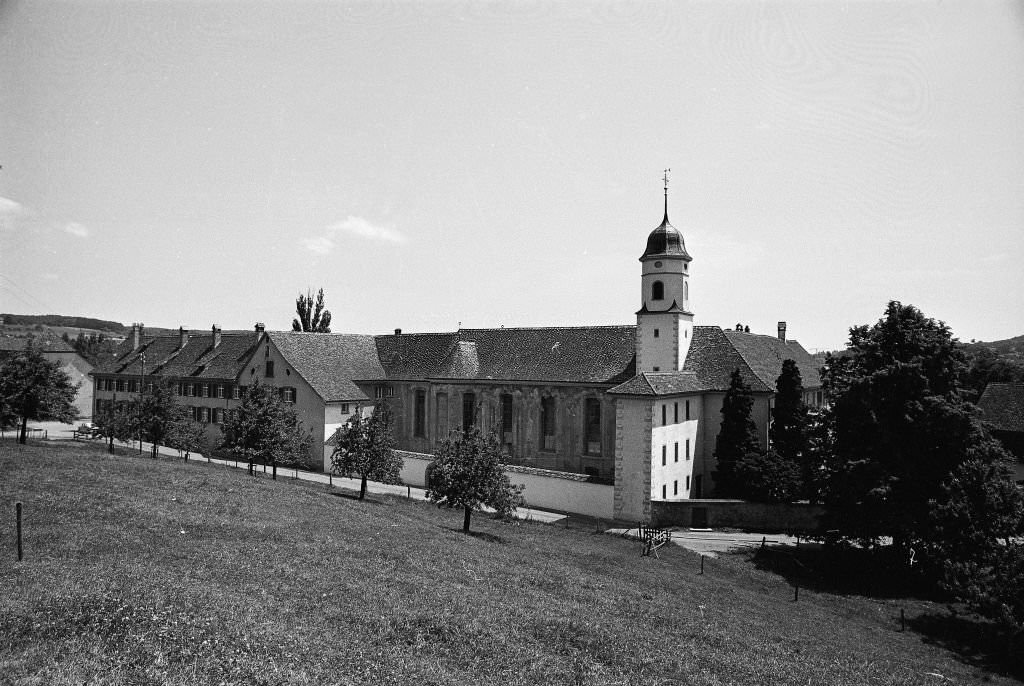
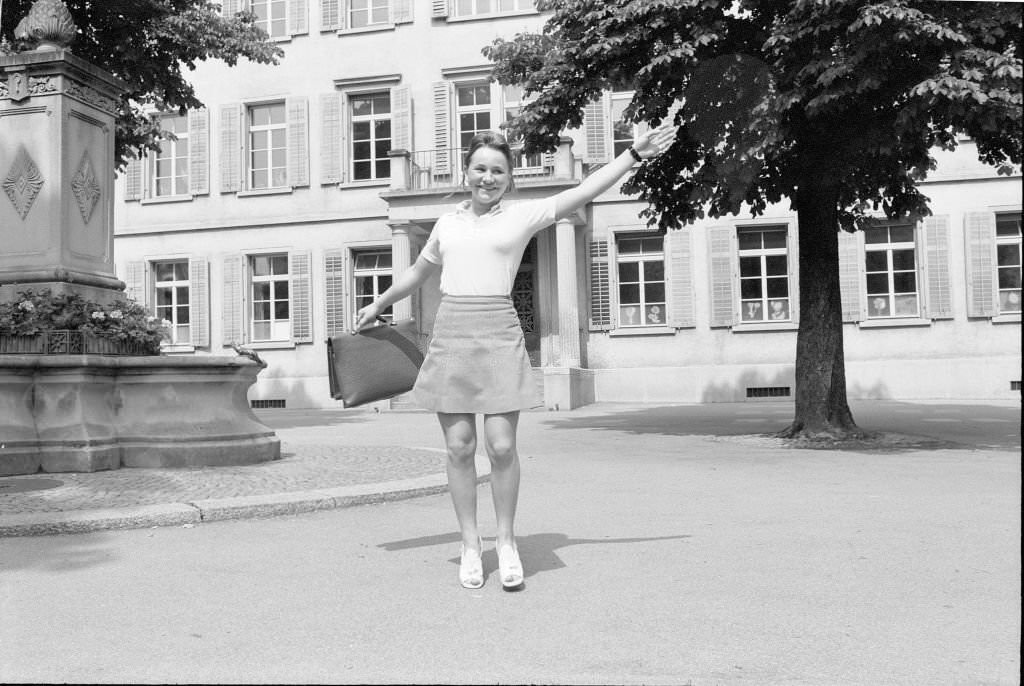
A landslide caused high water levels in Ennetbürgen on Lake Lucerne in 1970, flooding roads and damaging property along the shoreline. Natural hazards were a constant in Switzerland’s mountain landscape. Kloster Fahr, a Benedictine convent on the banks of the Limmat near Zürich, continued its centuries-old life almost undisturbed by the decade’s upheavals. A young Zürich woman photographed at the end of her school days looked forward into a Switzerland that was changing faster than any generation before her had known.
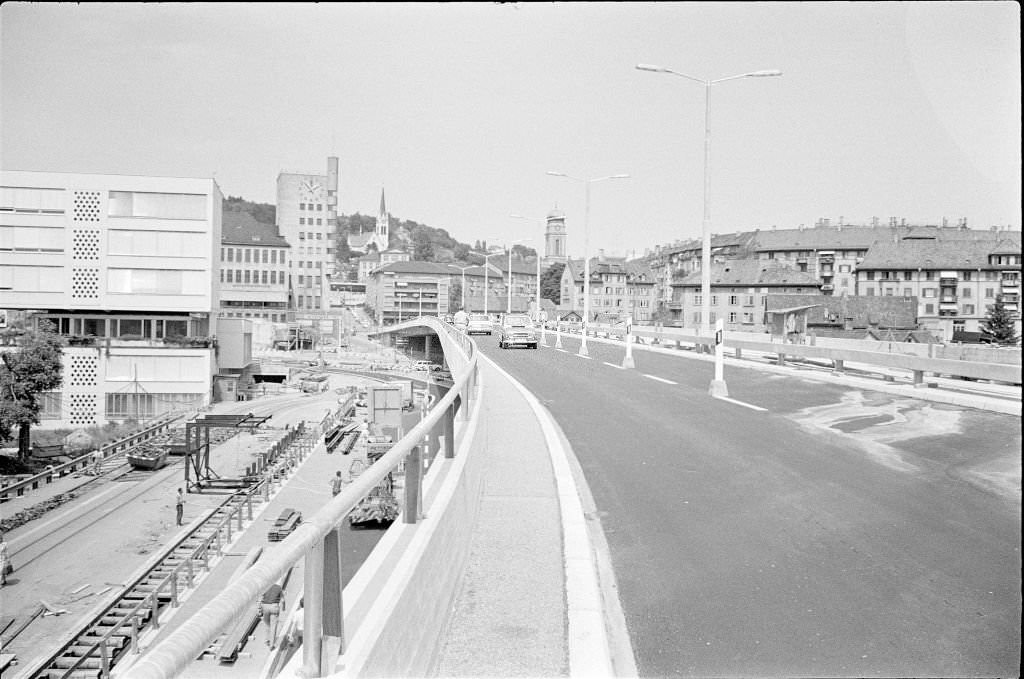
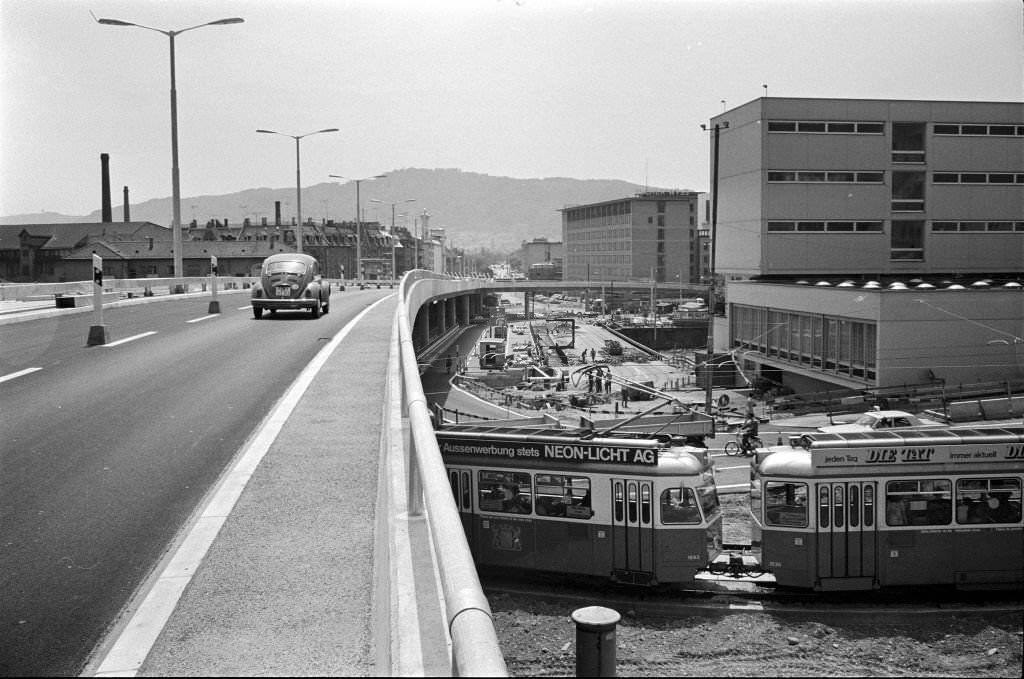
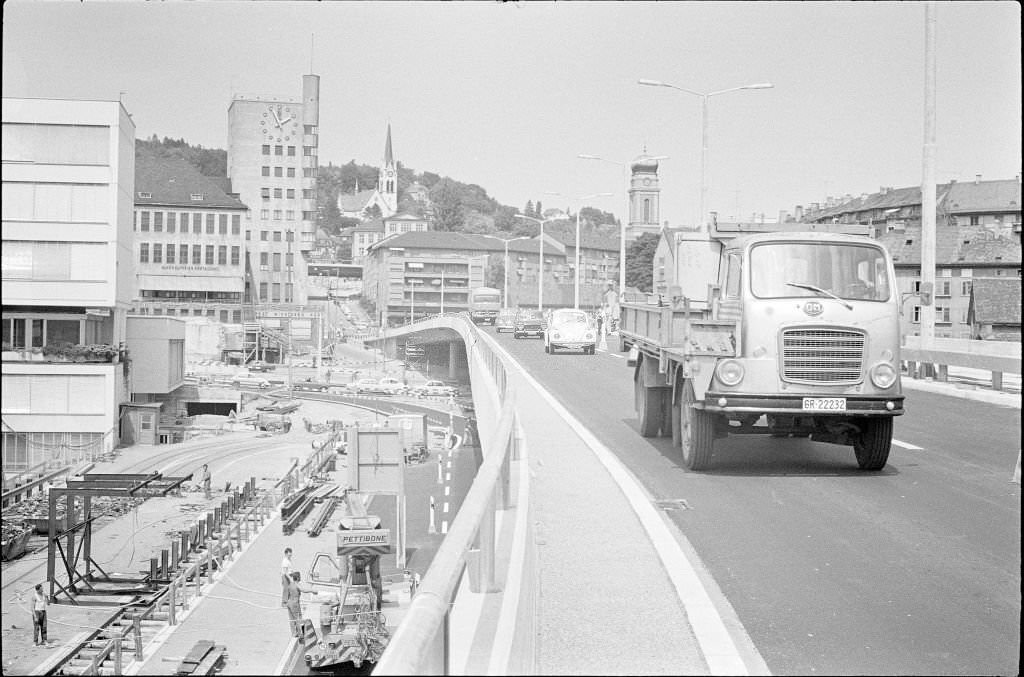
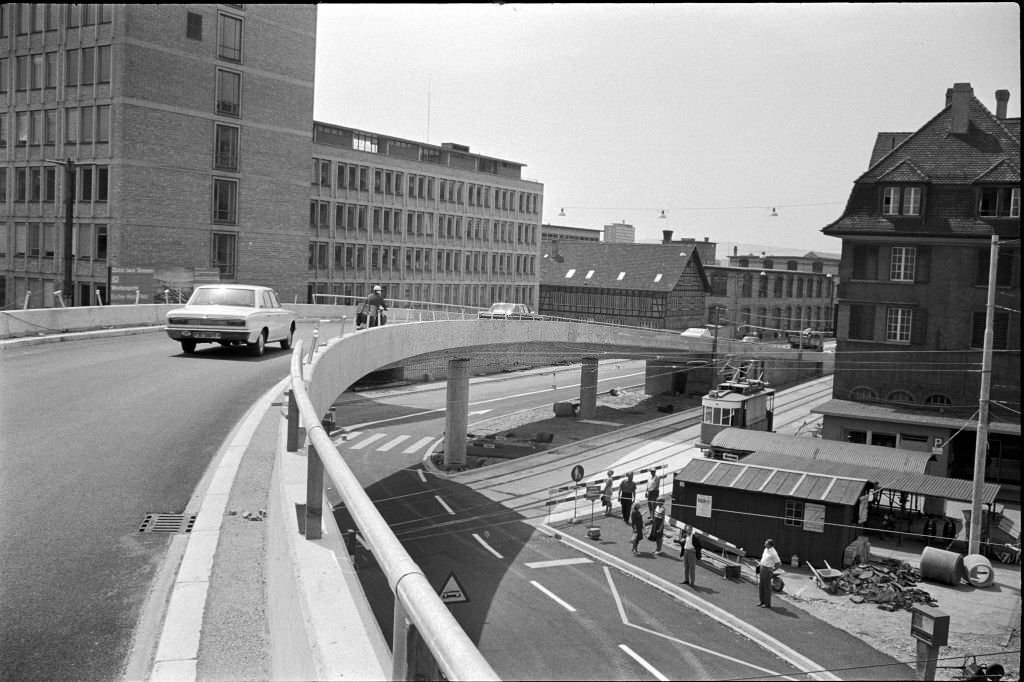
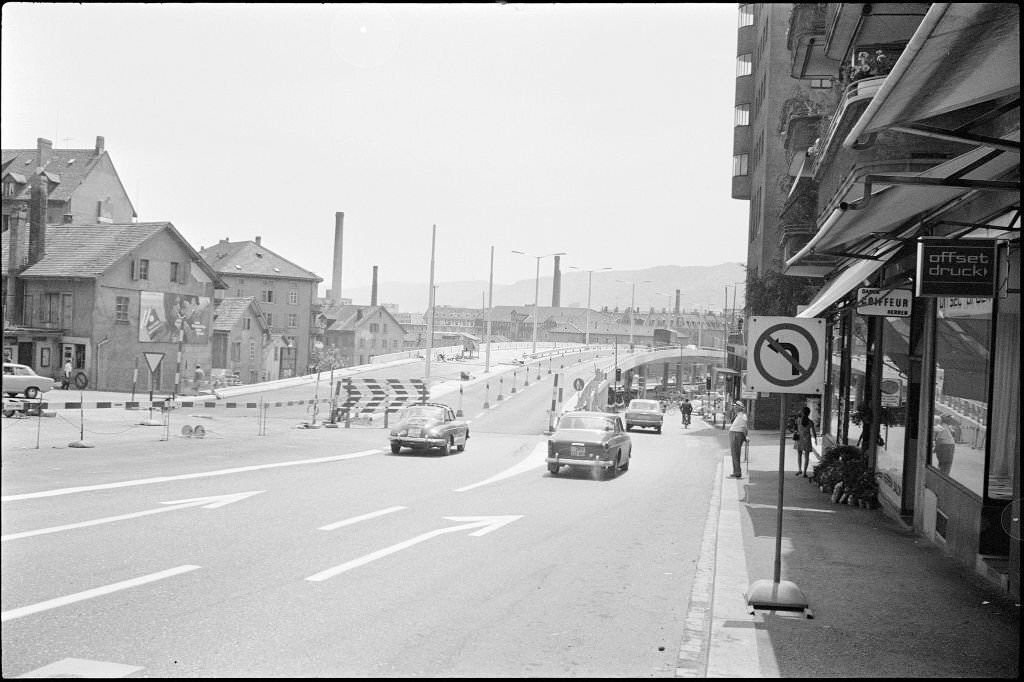
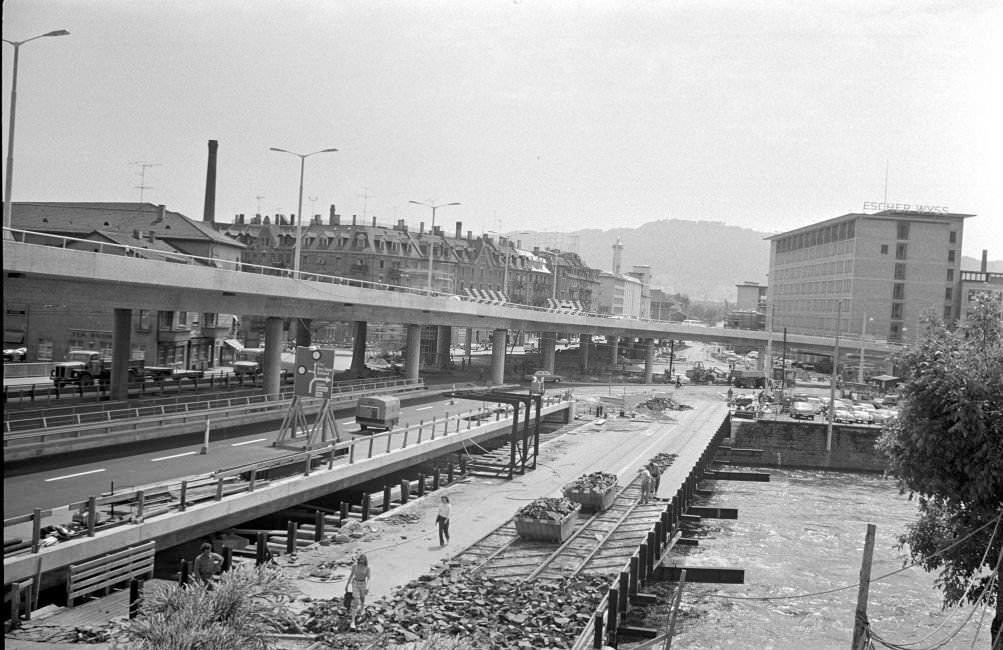
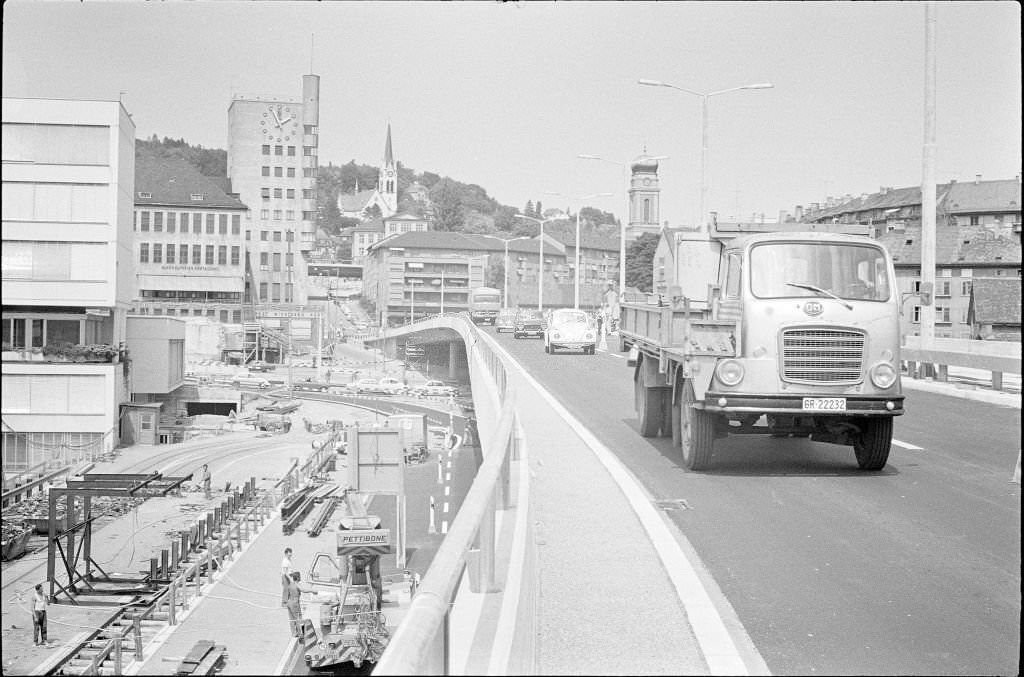
Road construction dominated Zürich throughout 1970. The city was digging, widening, and rerouting streets to handle the surge in private car ownership that had come with economic prosperity. The projects created constant disruption — blocked tram lines, detours, and noise — but the city was committed to building the infrastructure its growing population needed. These construction sites were among the most visible signs of what Switzerland’s economic boom actually looked like on the ground.
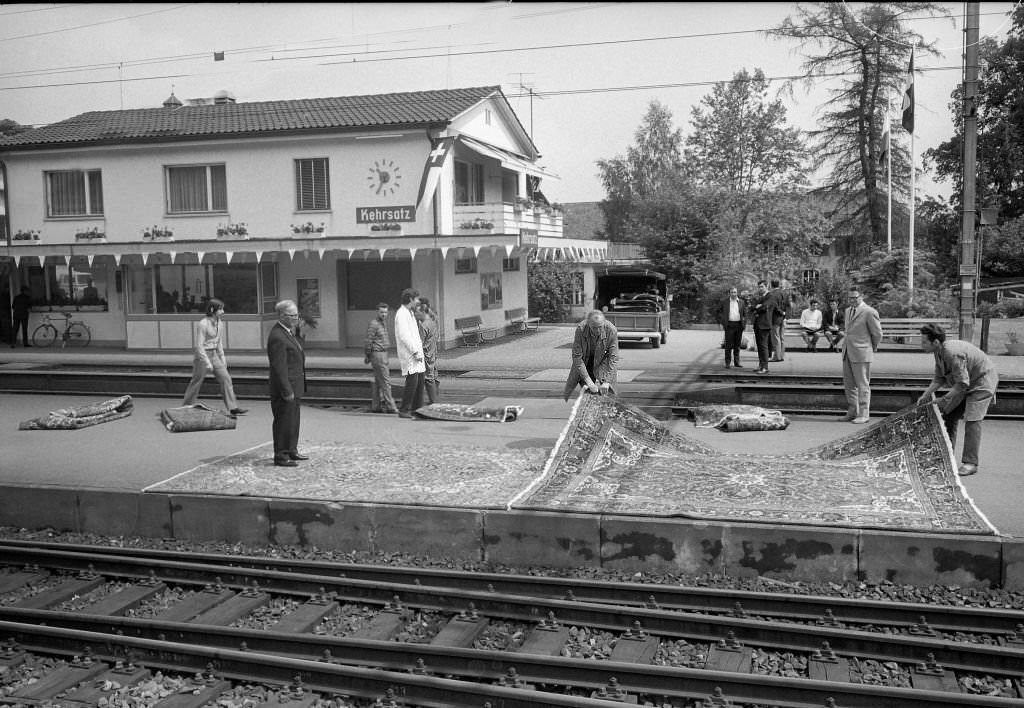

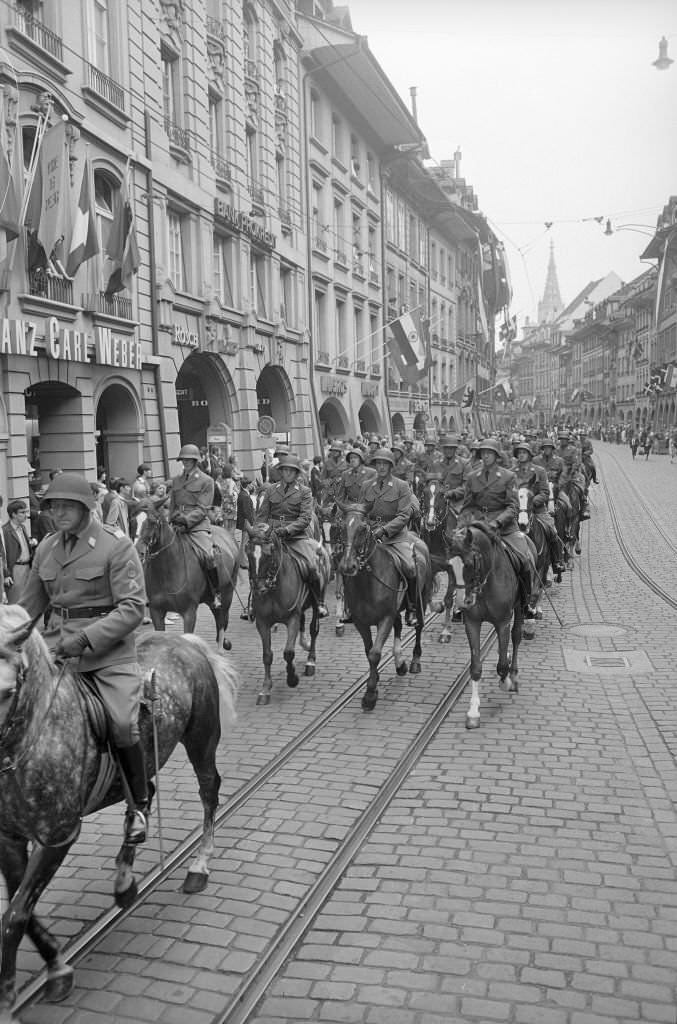
Switzerland hosted Indian President Varahagiri Venkata Giri in 1970, with the full ceremonial treatment — red carpets rolled out, soldiers on horseback lining the route. State visits to Switzerland were events that combined the country’s military precision with its diplomatic neutrality. In Ascona, on Lago Maggiore in Ticino, the Albergo Ristorante Battello offered a quieter kind of hospitality to a different sort of guest.
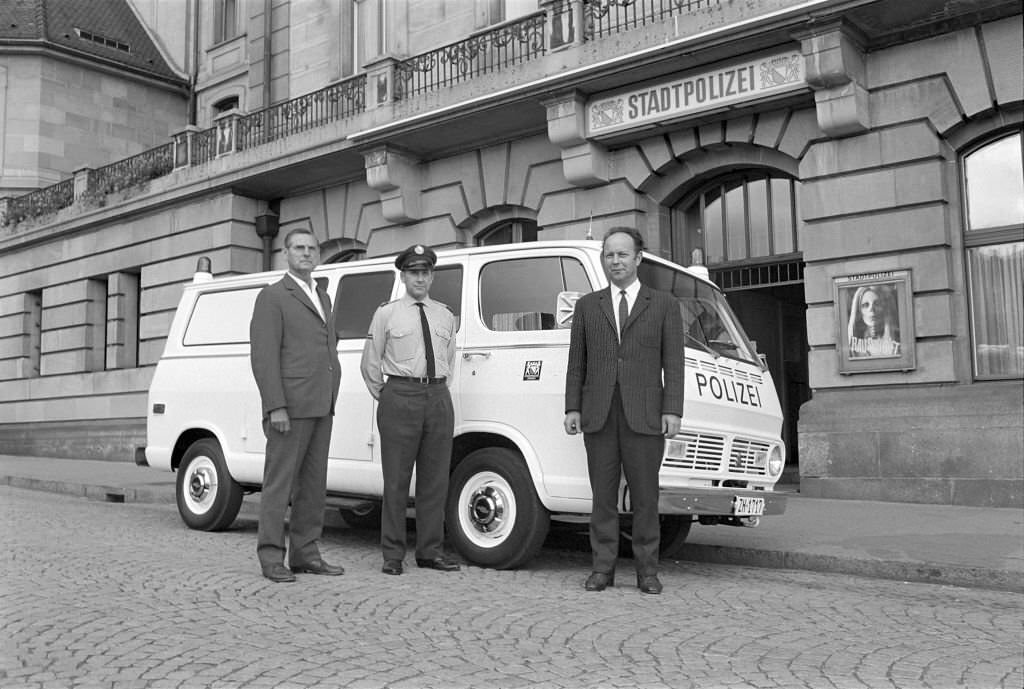
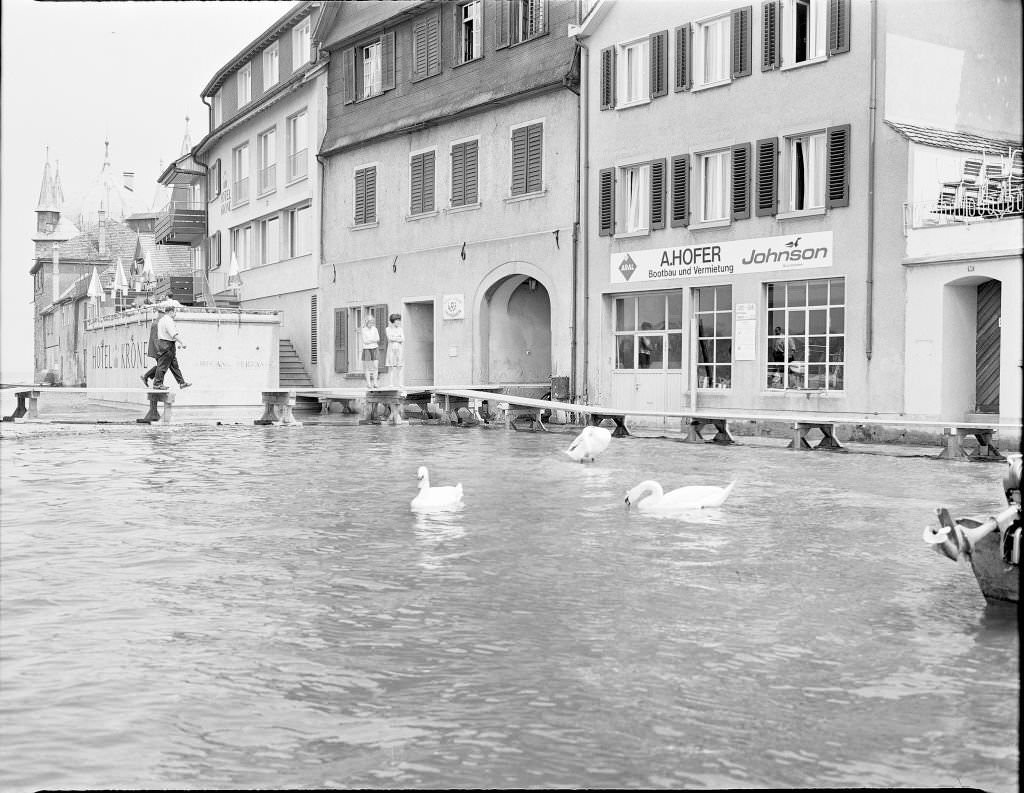
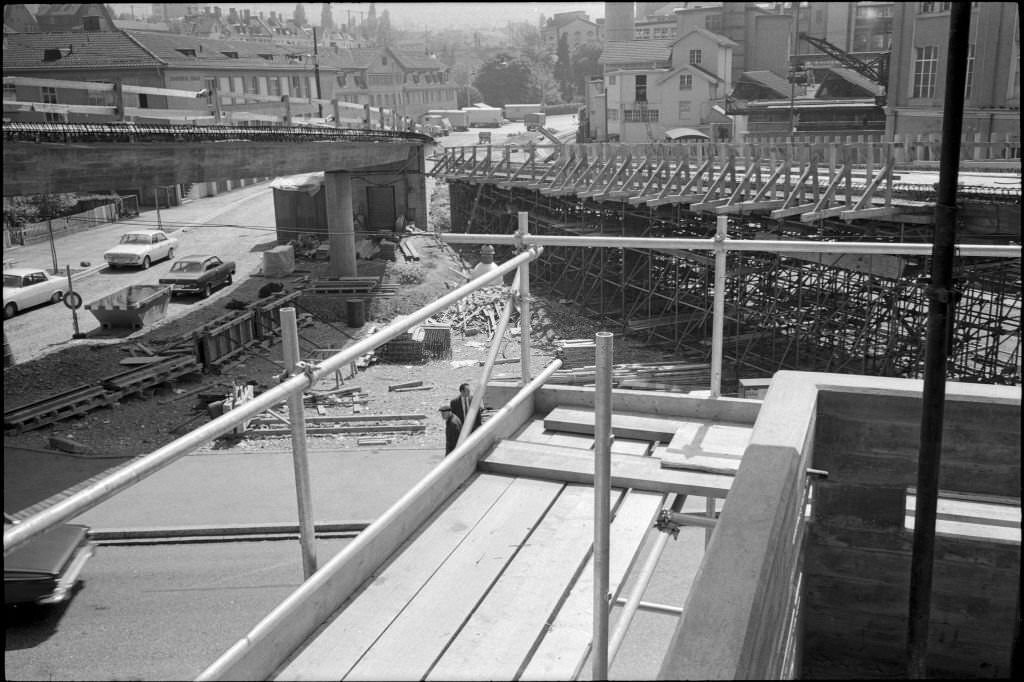
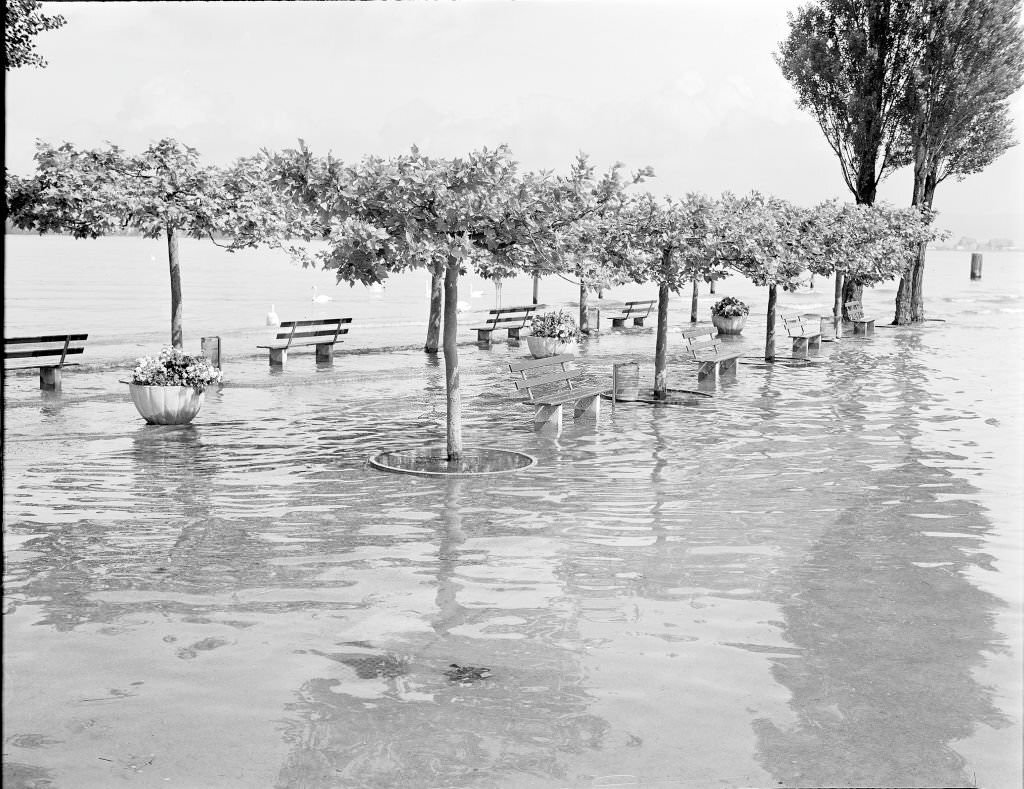
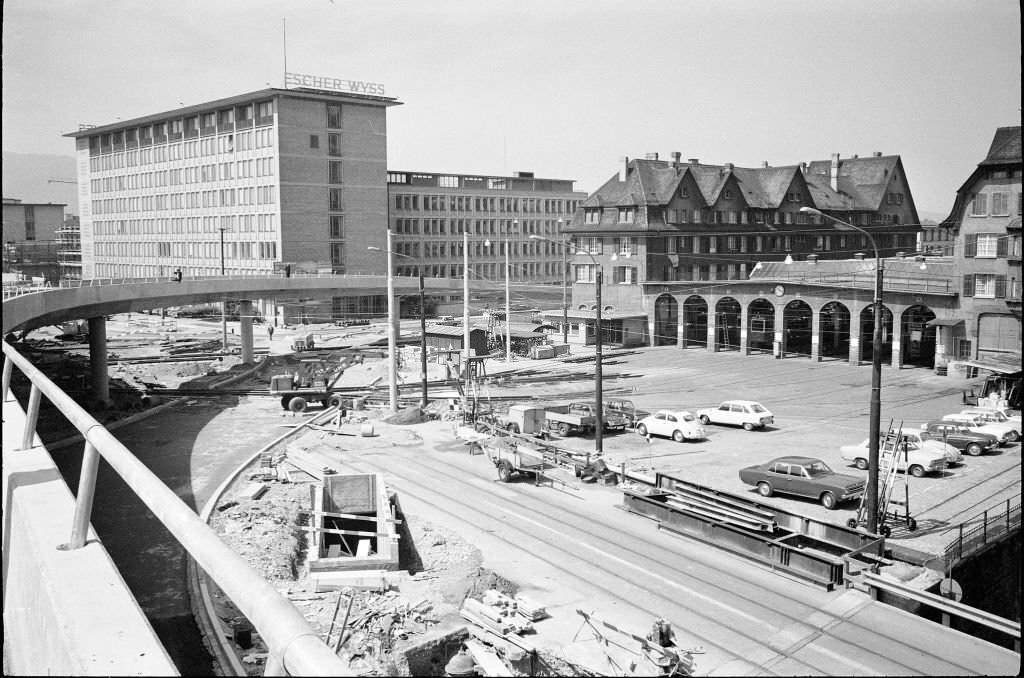
Lake Constance flooded in 1970, with water rising over the lakeside roads and into the lower buildings of towns along its Swiss shore. The lake, shared between Switzerland, Germany, and Austria, was vulnerable to flooding after heavy rainfall and snowmelt. In Zürich, the road near Escher Wyss Platz was torn up and rebuilt as part of the city’s ongoing infrastructure push. The metropolitan police took delivery of a new special bus, adding it to a vehicle fleet that was being modernized to keep pace with the city’s needs.
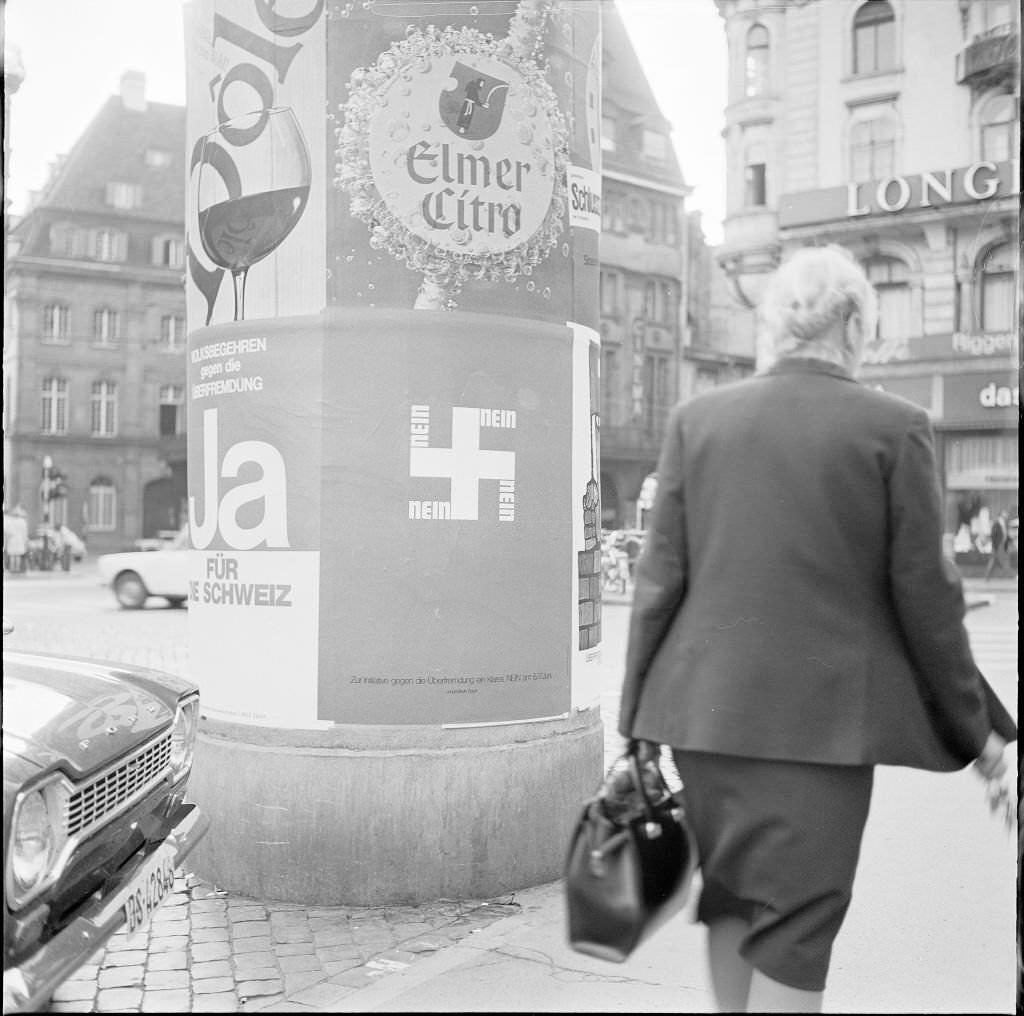
The Schwarzenbach initiative of 1970 was the decade’s most divisive political fight. James Schwarzenbach, a Zürich politician, gathered enough signatures to force a referendum that would have cut the foreign population in Switzerland from roughly 17 percent to 10 percent — forcing hundreds of thousands of workers to leave. The initiative was defeated, but only narrowly, with 54 percent voting against it. The campaign exposed deep divisions in Swiss society over immigration, national identity, and the role of foreign workers in the country’s economy.
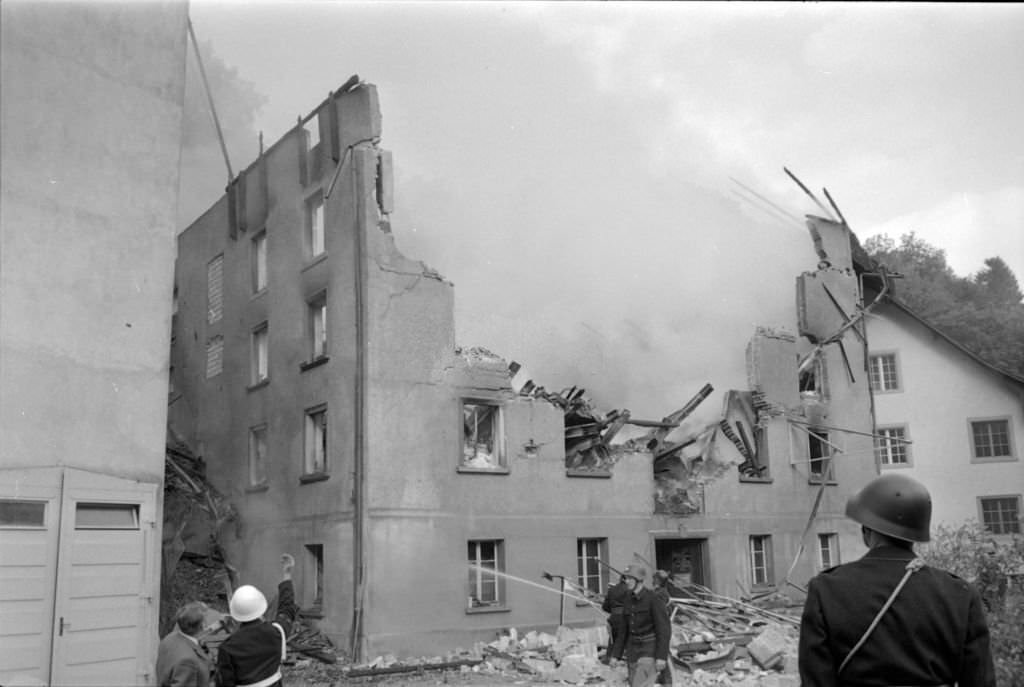
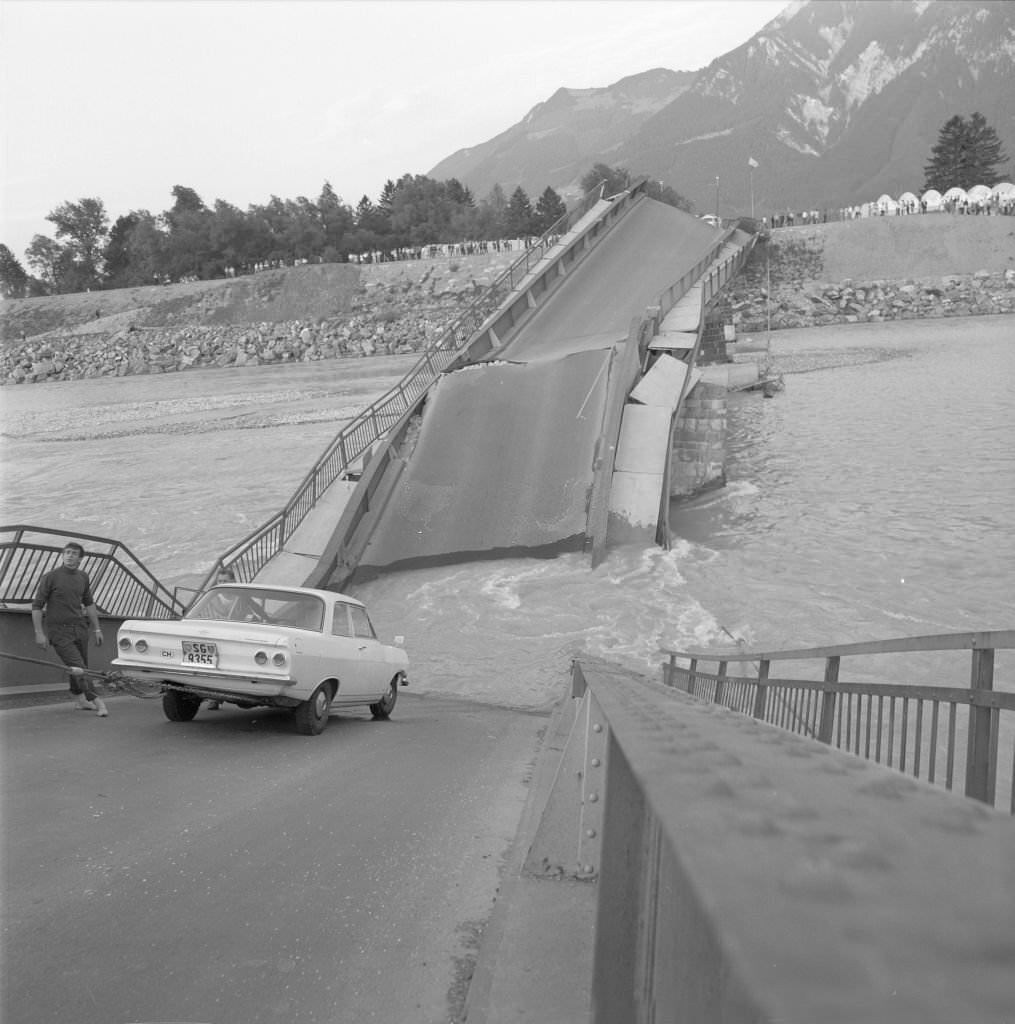
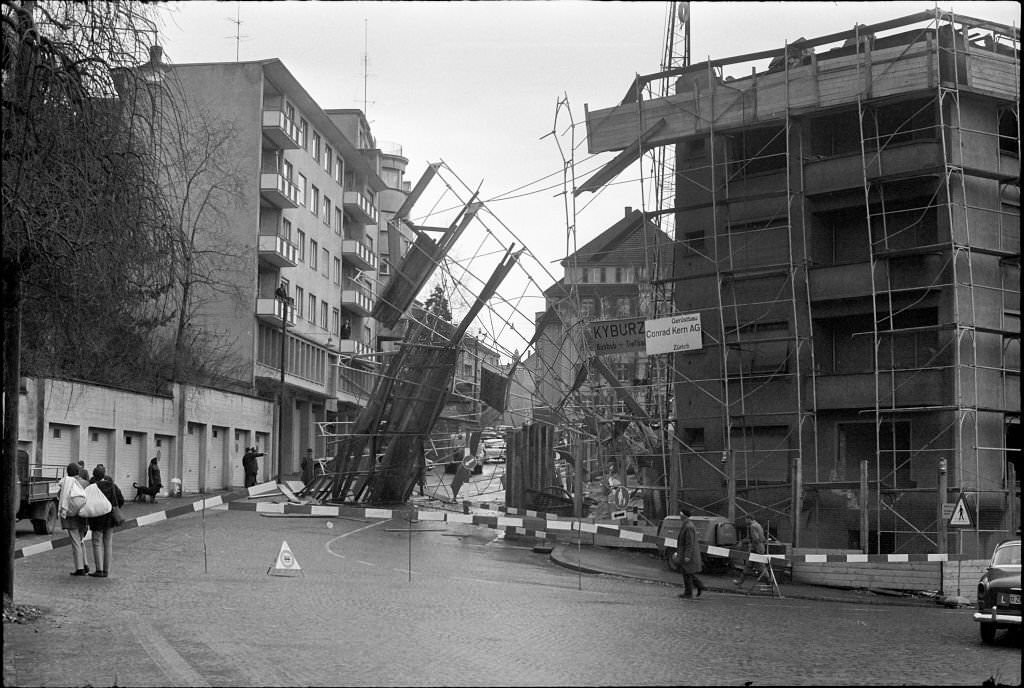
The construction boom brought accidents as well as new buildings. Scaffolding collapsed on Gasometerstrasse in Zürich in 1970. A bridge collapsed in Buchs in the canton of St. Gallen. Fire destroyed the Lochmühle in Rorbas, in the Zürcher Unterland. These were the events that filled the news alongside political debates and economic announcements — evidence that the physical expansion of Switzerland in this period carried real human risks.
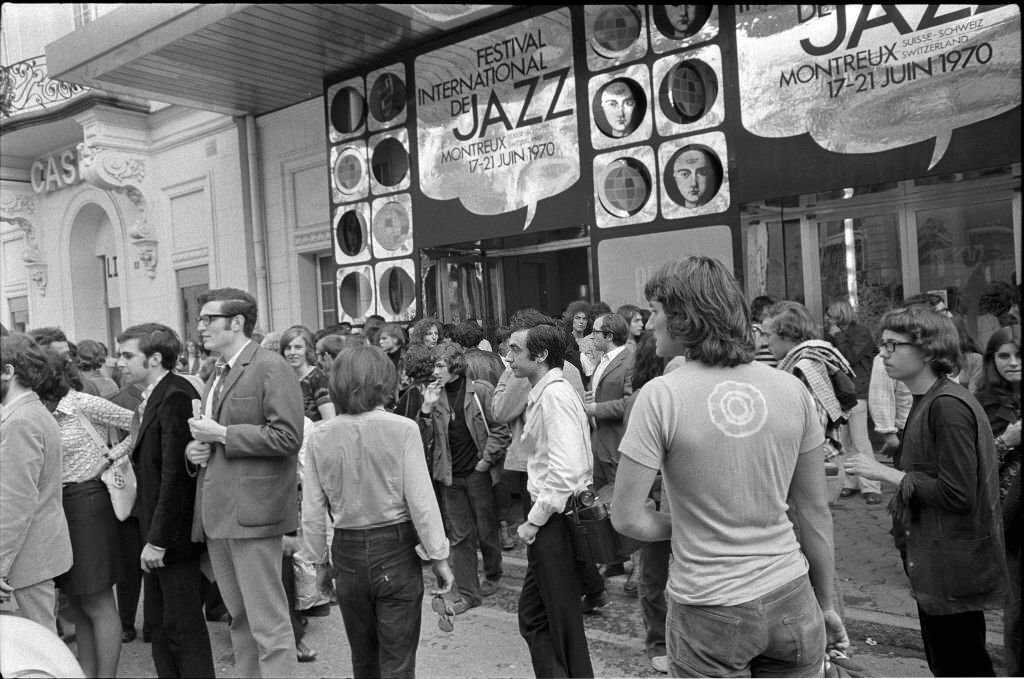
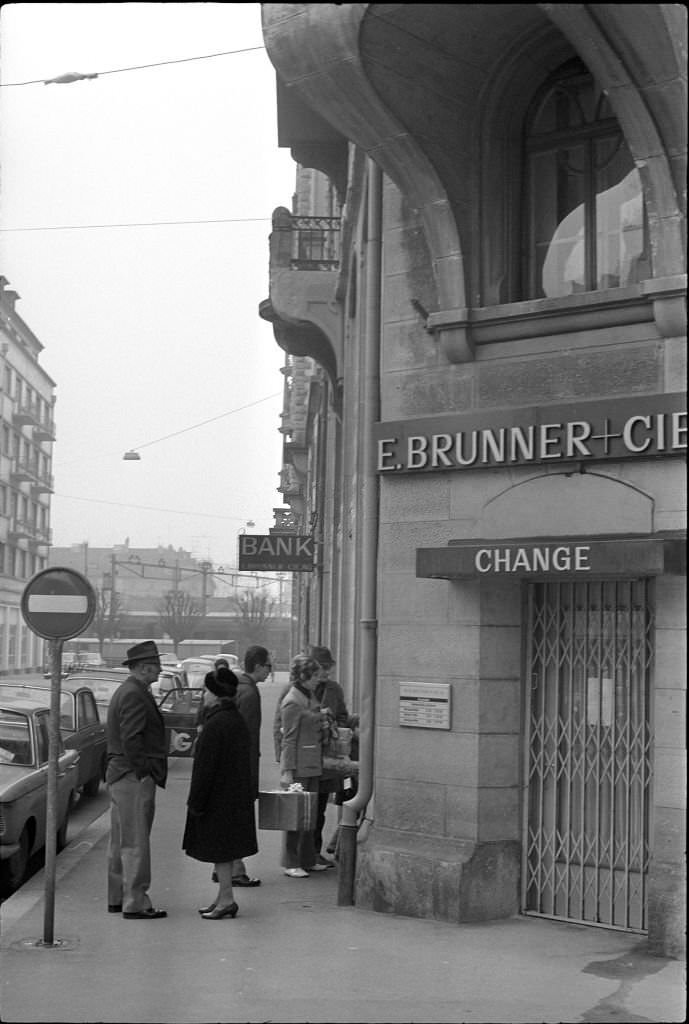
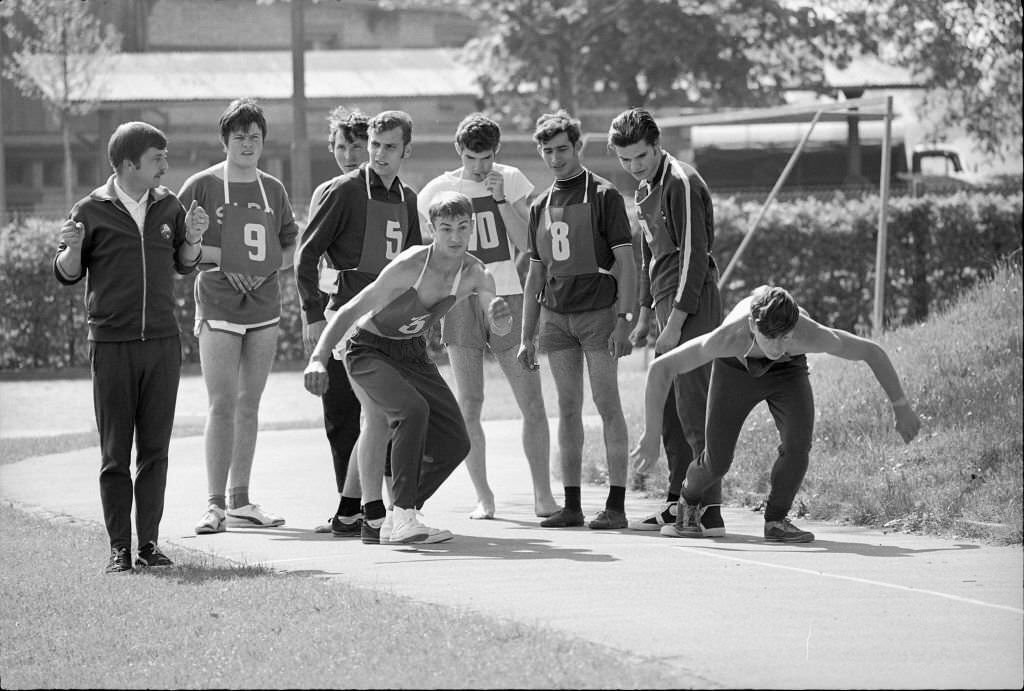
The Montreux Jazz Festival had been running since 1967, and by 1970 it was one of Europe’s premier music events. The festival took place every July on the shores of Lake Geneva, drawing crowds and major international artists. Swiss banking, meanwhile, was not without its scandals — Lucerne saw a banking scandal that year that drew public attention to the risks inside the country’s financial sector. In Berne, young men reported for conscription into the Swiss army’s Recruits School, as every male Swiss citizen was required to do.
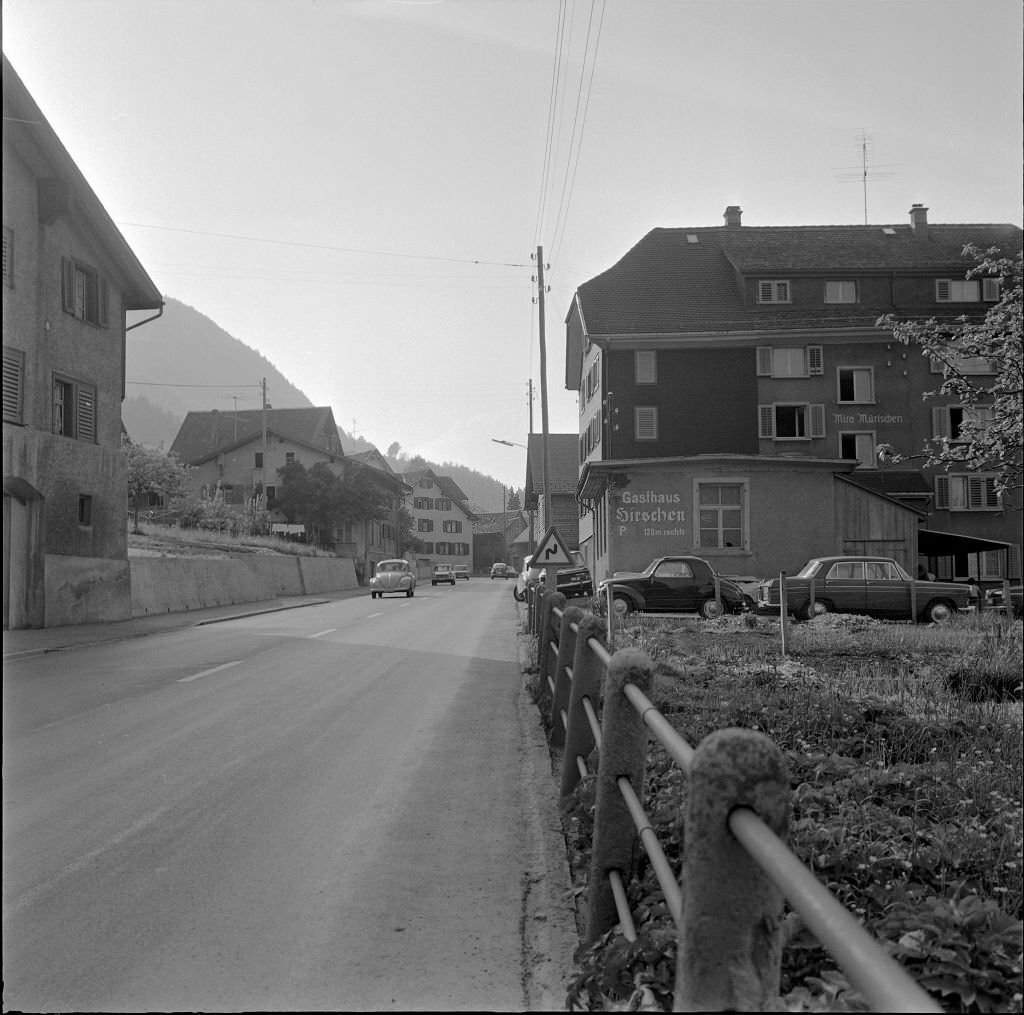
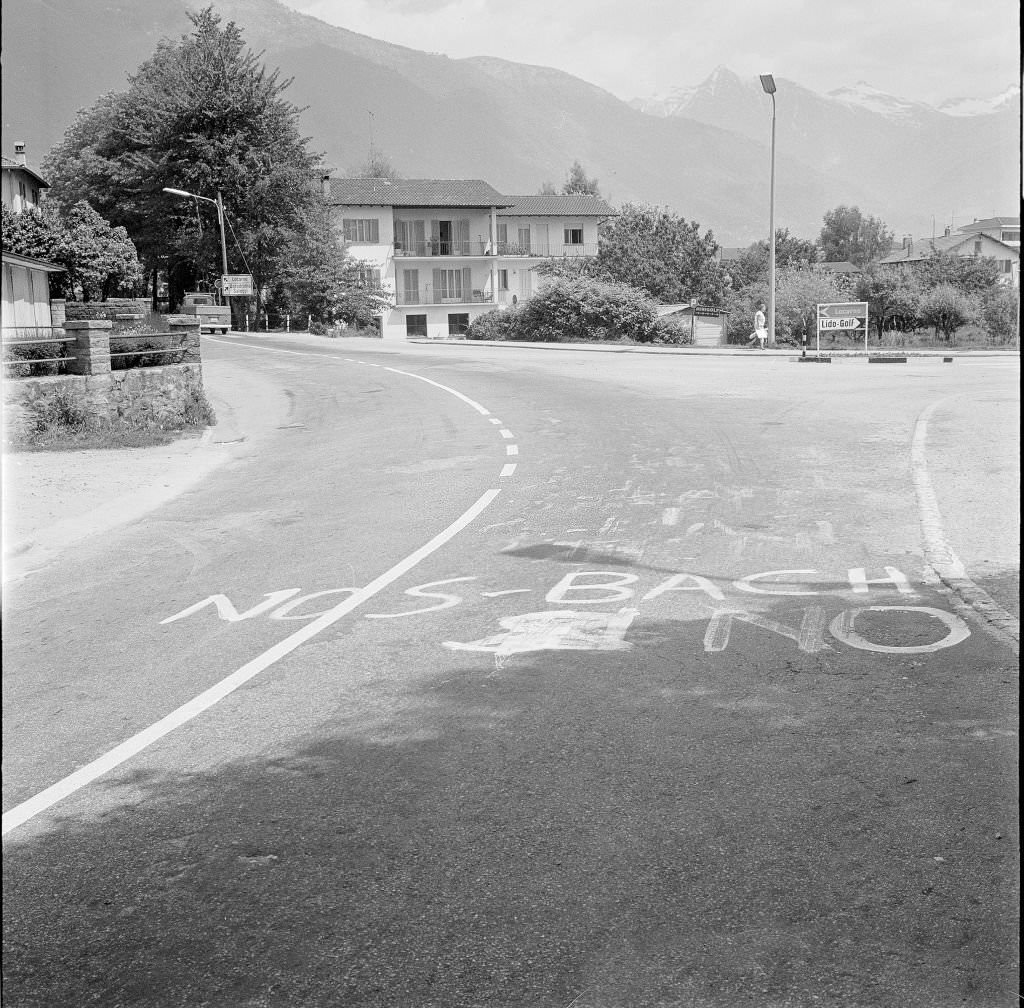
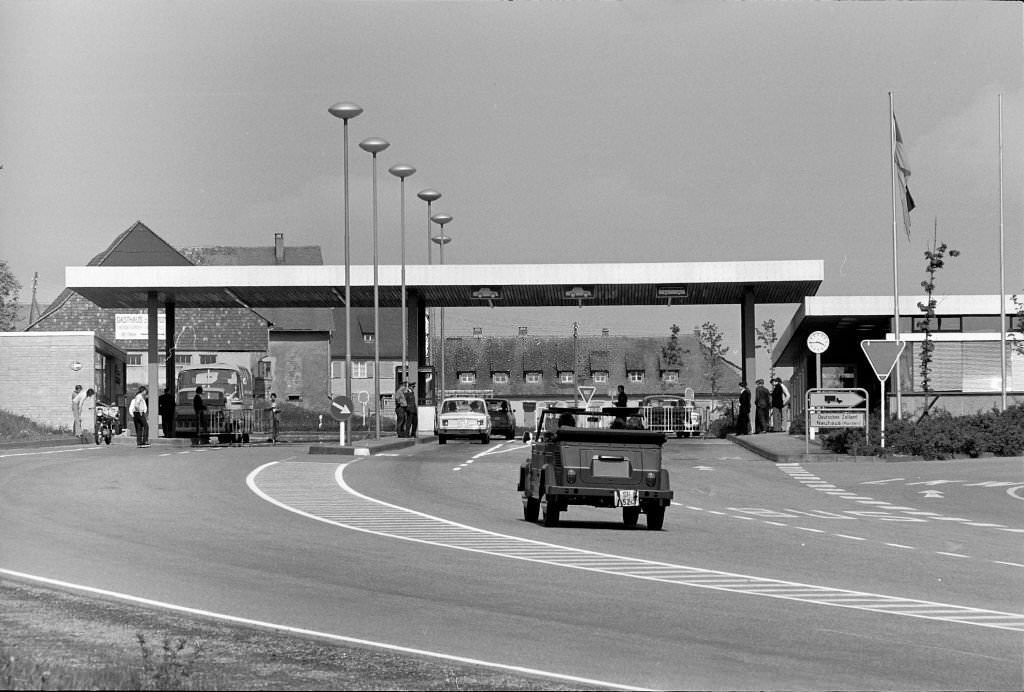
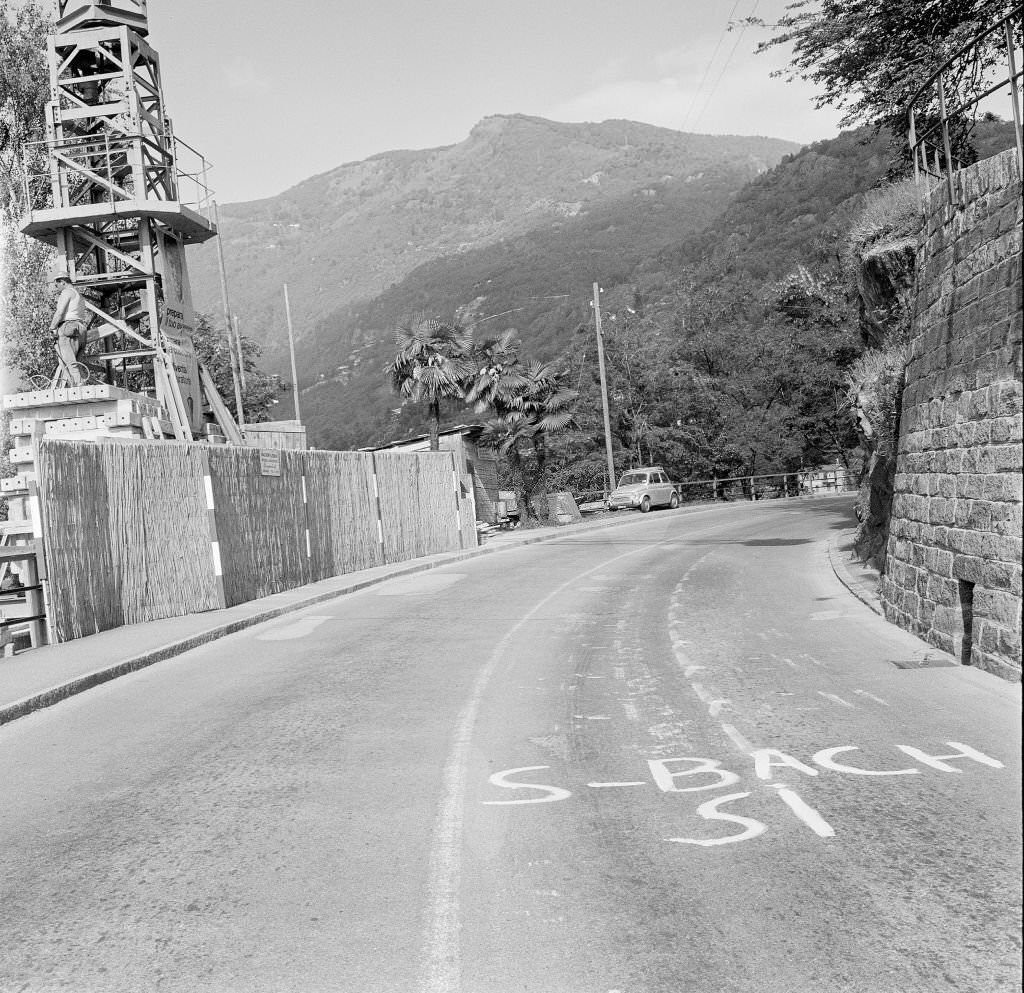
Campaign material for and against the Schwarzenbach initiative appeared across Switzerland in 1970 — on walls, in newspapers, and at public meetings. In Ticino, the campaign took on a particular edge, since many of the canton’s workers crossed daily from Italy and many of its residents were themselves from immigrant families. At the customs post in Bargen on the German border, officials controlled the movement of people and goods in and out of Switzerland — a routine that the immigration debate had suddenly made politically charged.
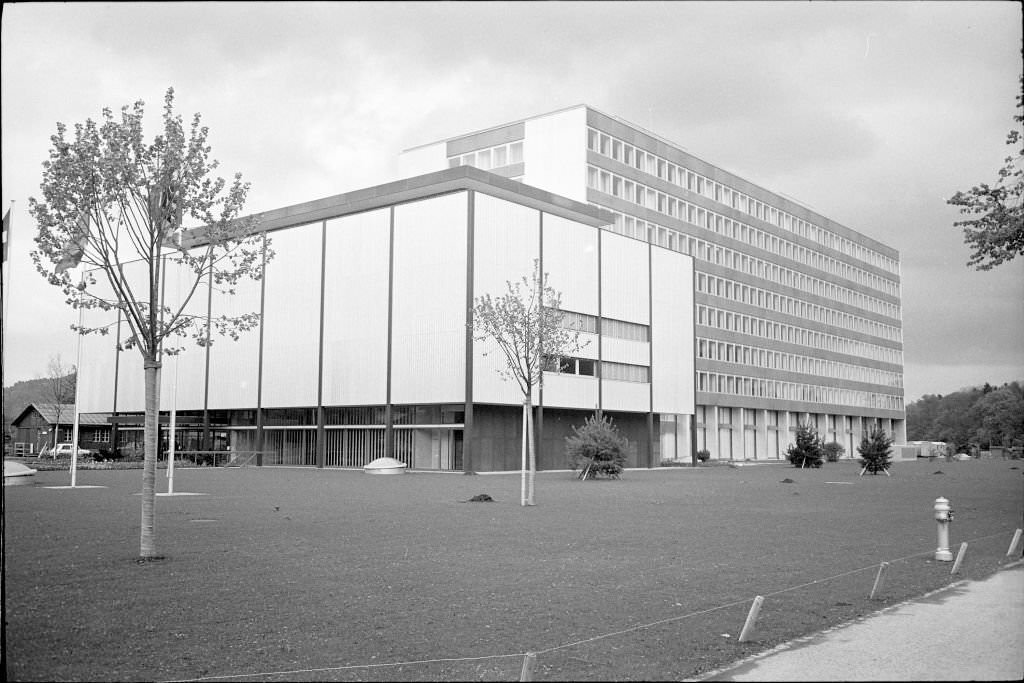
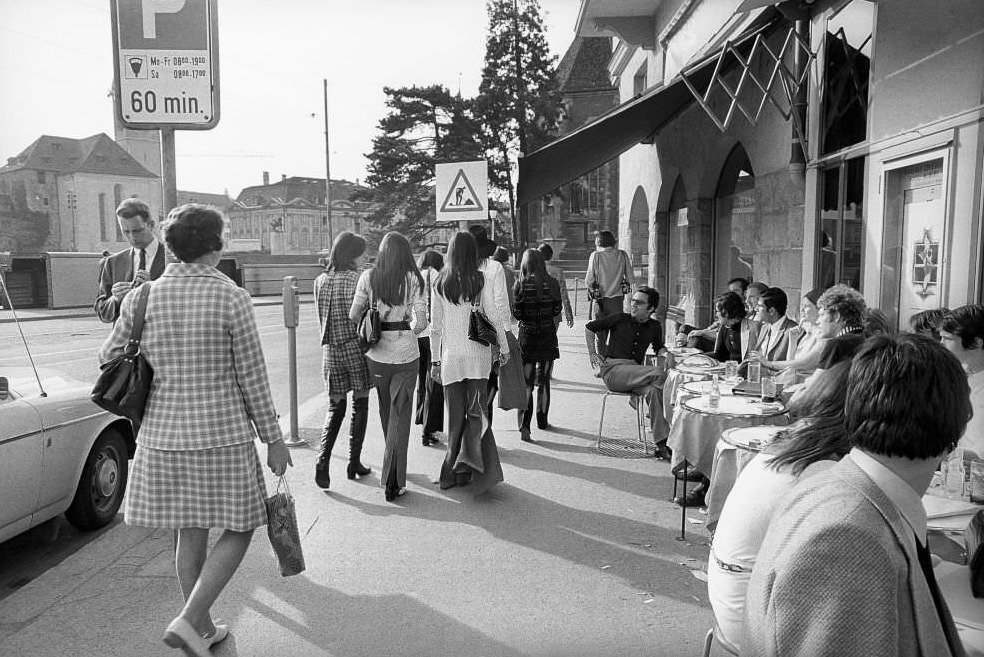
The Universal Postal Union, headquartered in Berne since 1874, was one of the international organizations that made Switzerland a global administrative center. Women on the Limmatquai in Zürich wore trousers with fashionable slits — a reflection of how quickly clothing styles were changing in early 1970s Switzerland, particularly among younger urban women. This was the year before Swiss women gained the federal vote, a right that had been denied them while Switzerland held itself out as a model democracy.
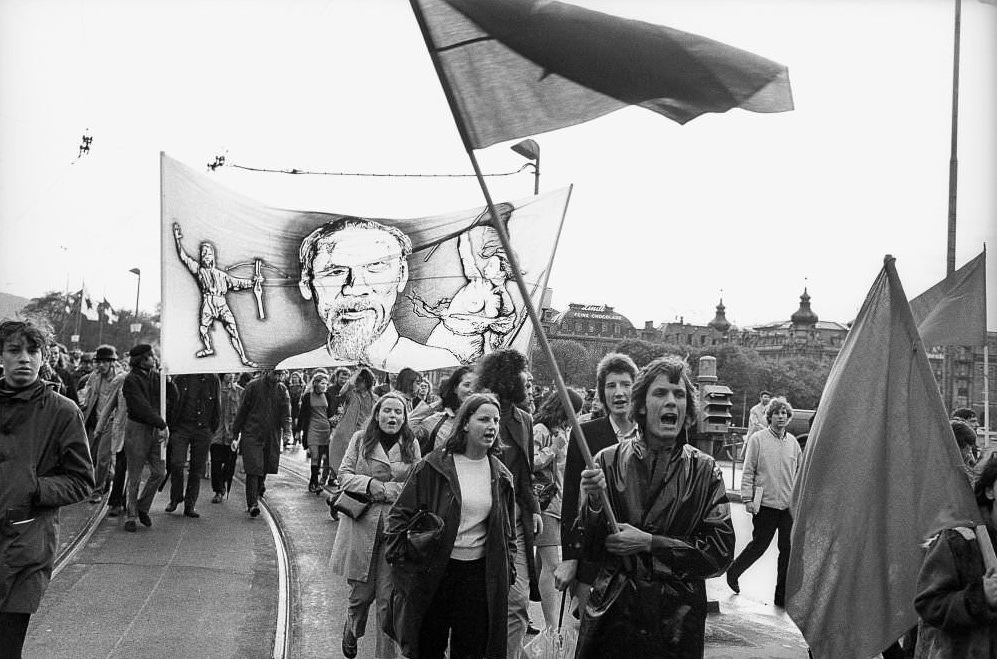
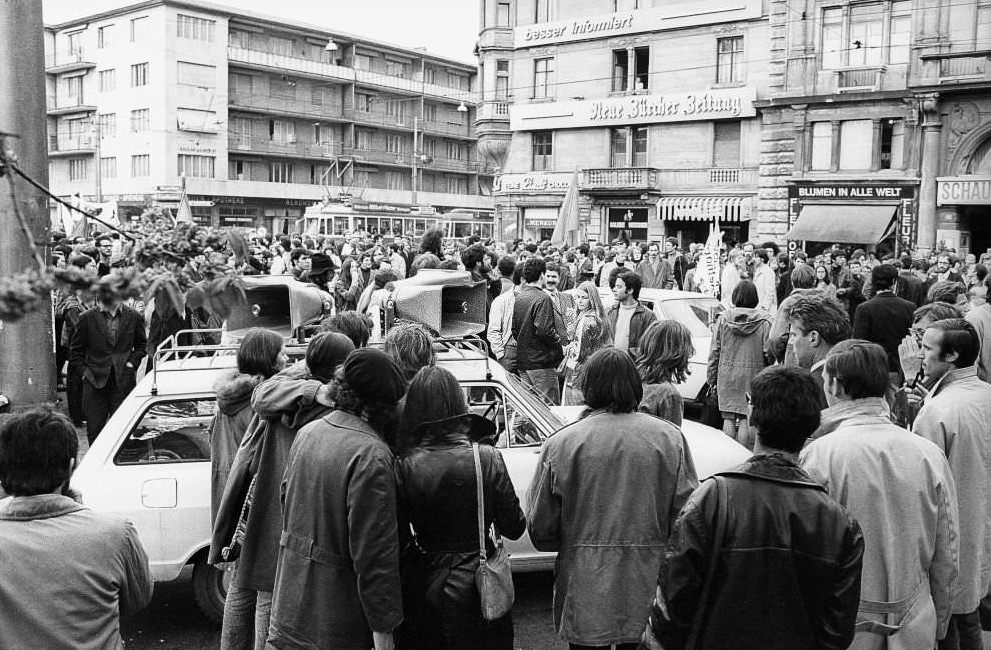
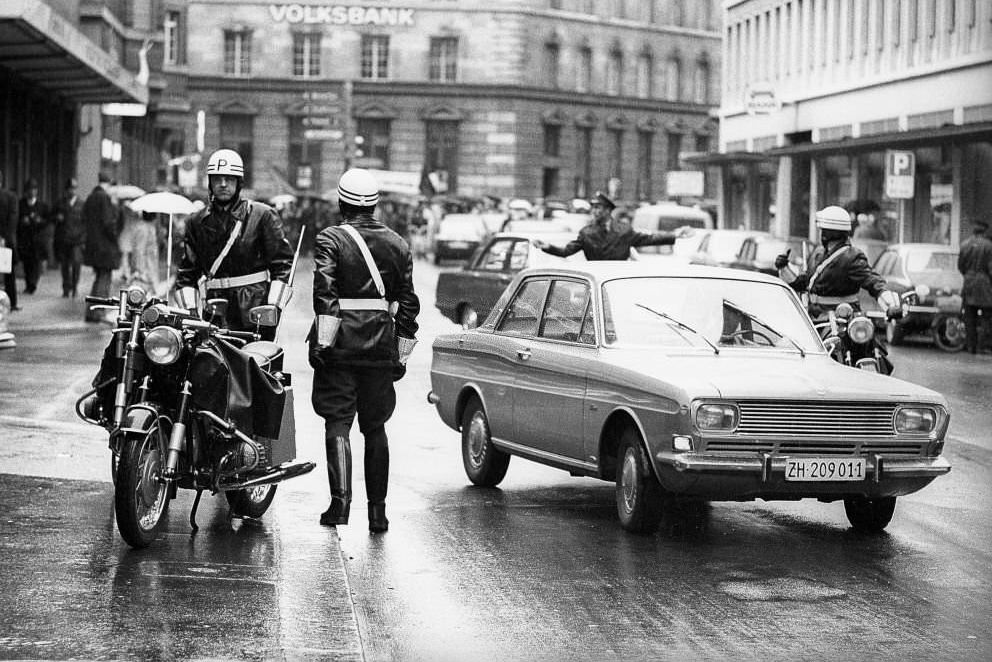
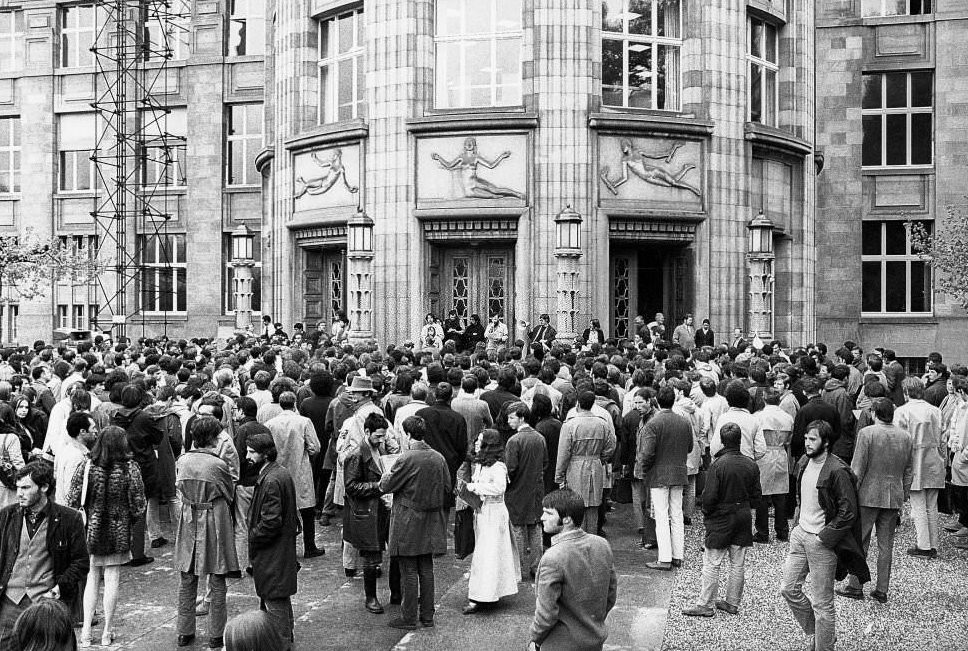
Swiss students took to Zürich’s streets in 1970 to protest American military policy in Indochina — particularly the US invasion of Cambodia that May. Motorcycle police escorted the demonstration, keeping order alongside crowds that were angry but mostly peaceful. Switzerland’s neutrality did not prevent its students from expressing strong political views about wars happening on the other side of the world. These protests were part of a global wave of student activism that touched every Western country.
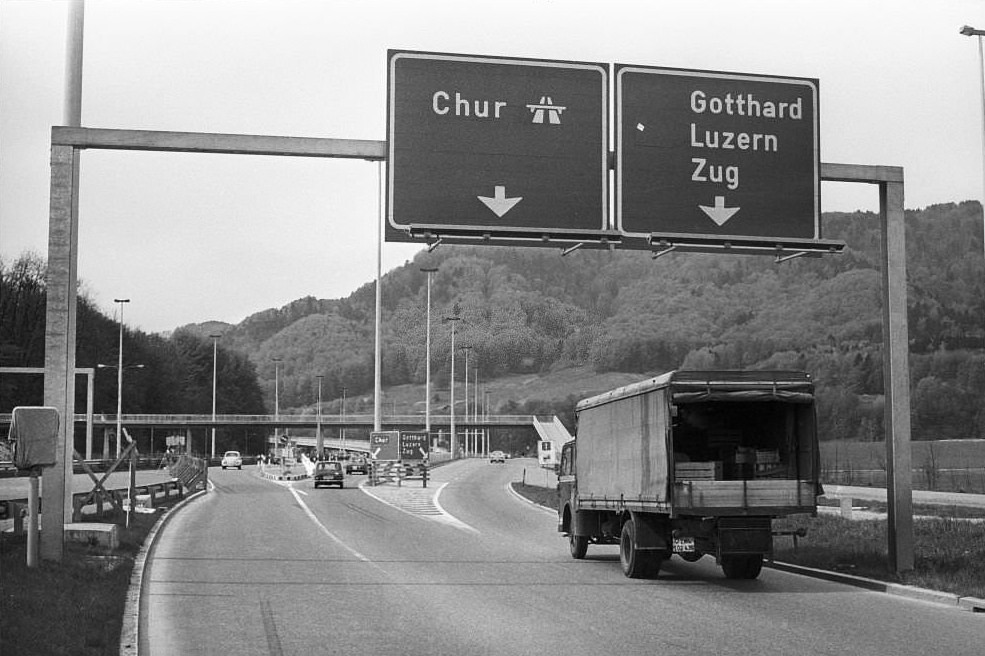
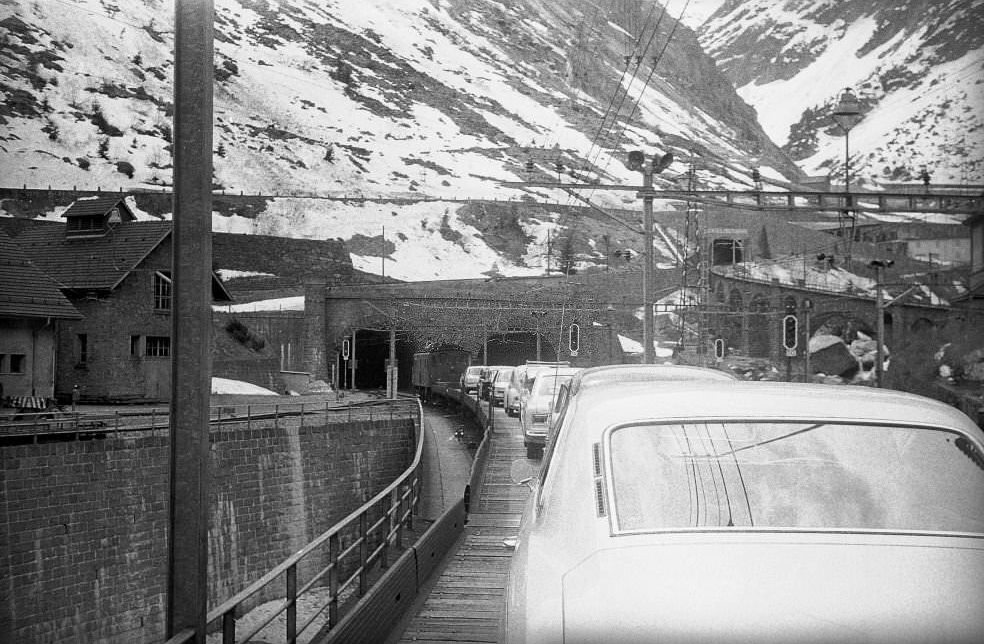
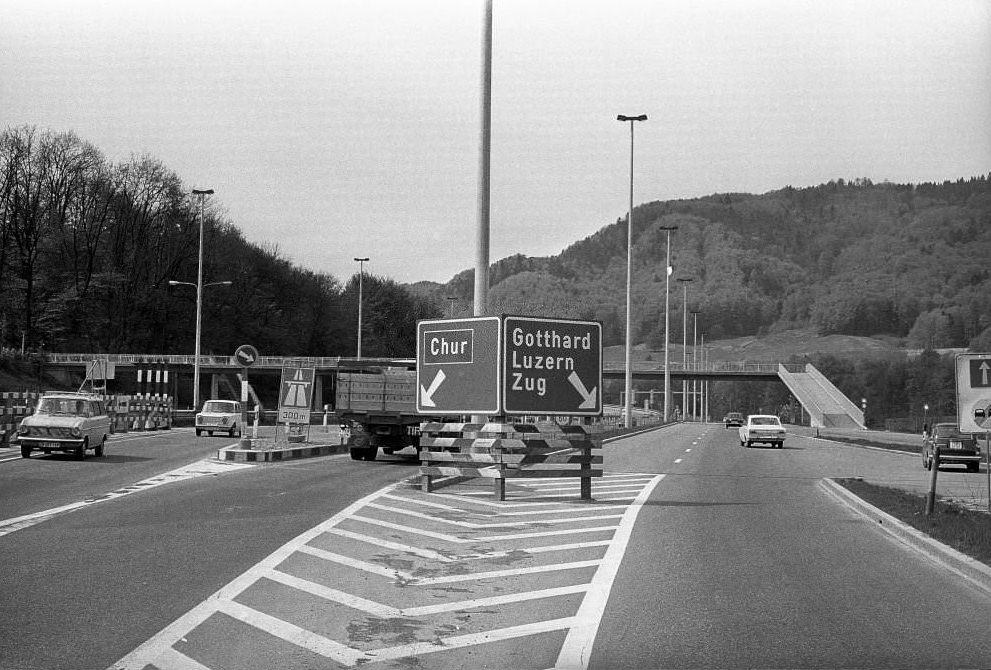
The motorway junction where the routes to Chur and the Gotthard split was one of Switzerland’s most important road intersections, handling an ever-increasing volume of freight trucks. The Schöllenen gorge railway continued to carry cars through one of the Alps’ most dramatic passages — a service that remained essential for drivers who couldn’t or wouldn’t tackle the mountain roads themselves. Infrastructure investment during the 1970s was reshaping how Switzerland moved people and goods across its challenging terrain.
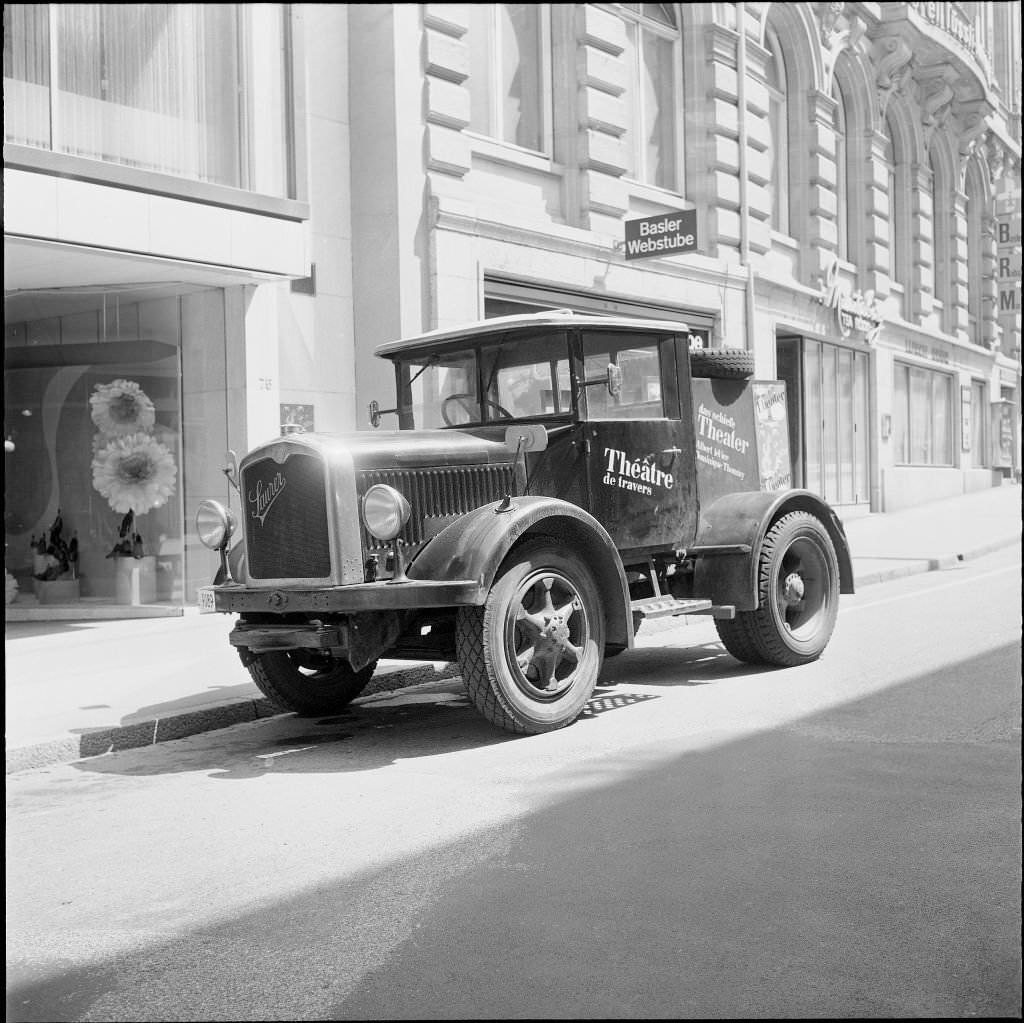
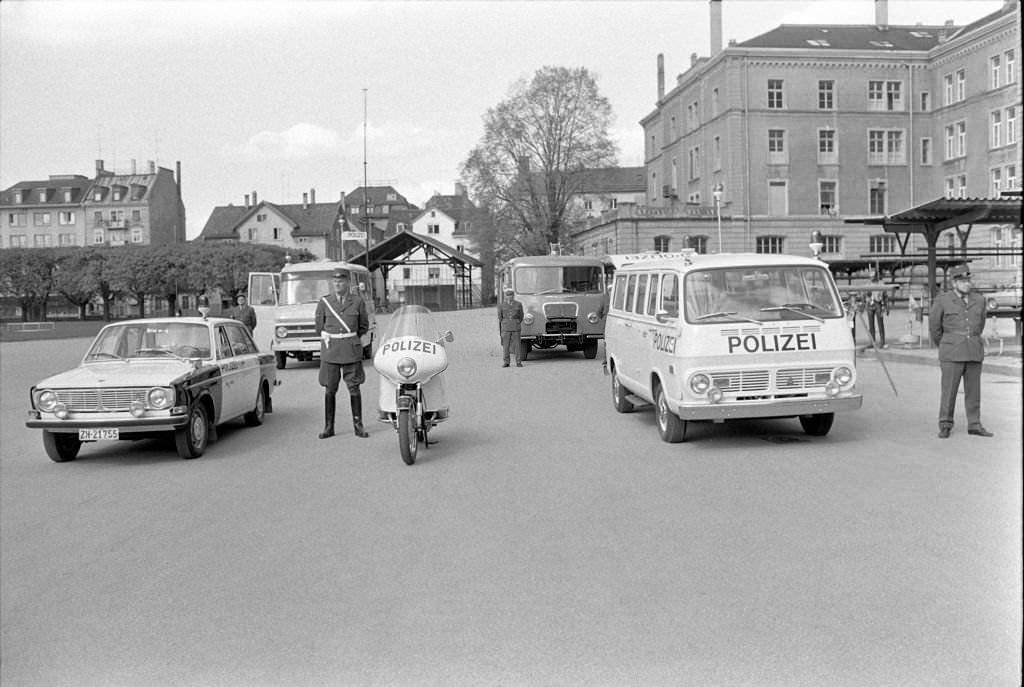
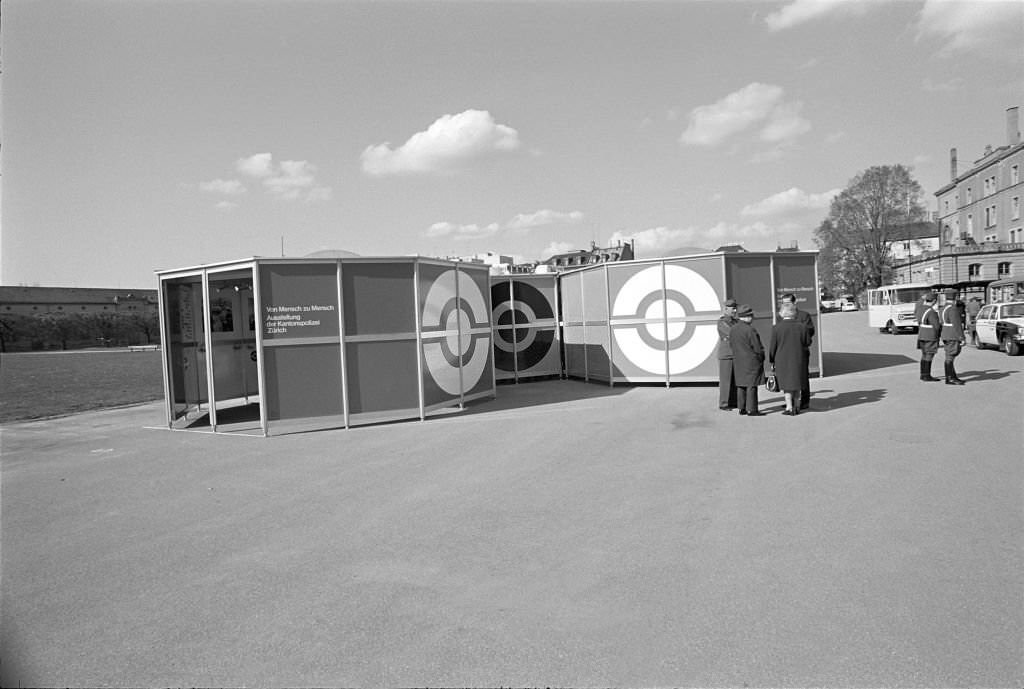
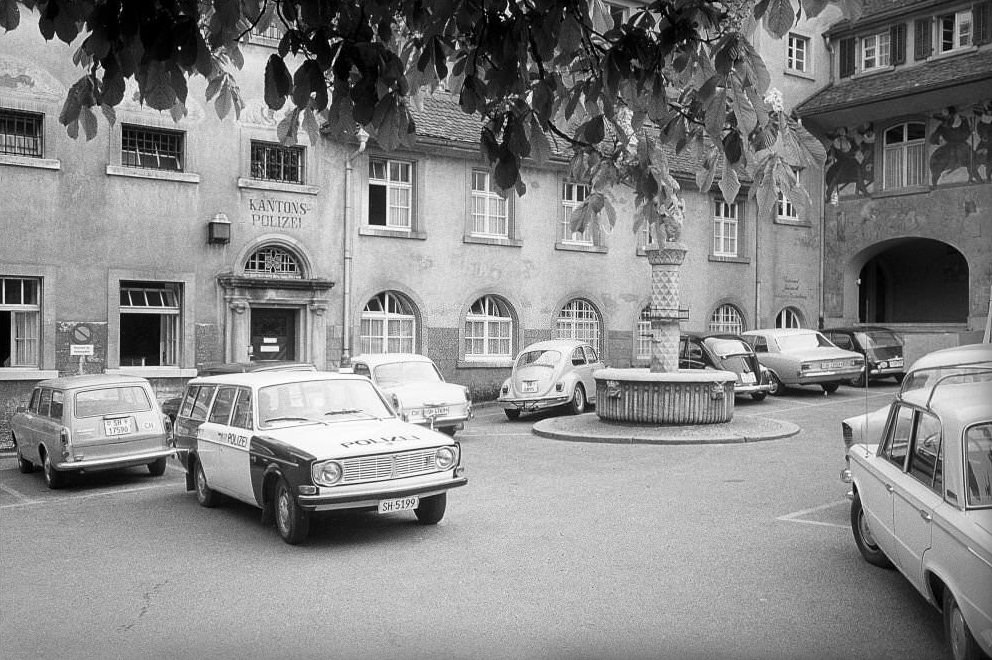
The Zürich cantonal police displayed their vehicle fleet in 1970 and mounted a public exhibition called “From Person to Person,” aimed at improving relations between officers and the public. Swiss police forces in the early 1970s were increasingly called on to manage demonstrations, traffic accidents, and the social tensions that came with rapid change. The decorated motorcar of a traveling theater group offered a lighter contrast.
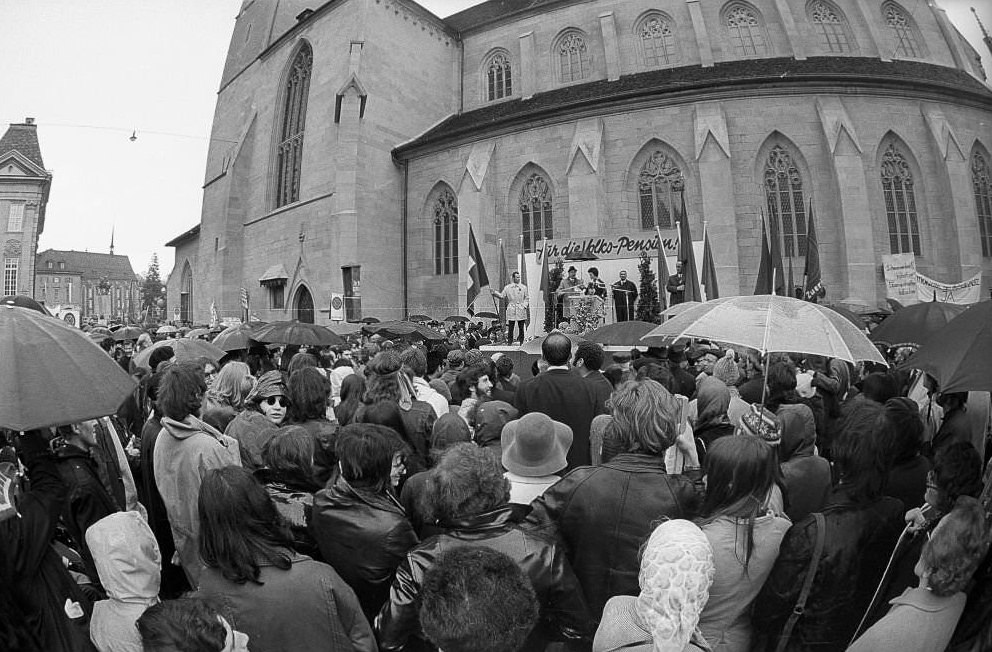
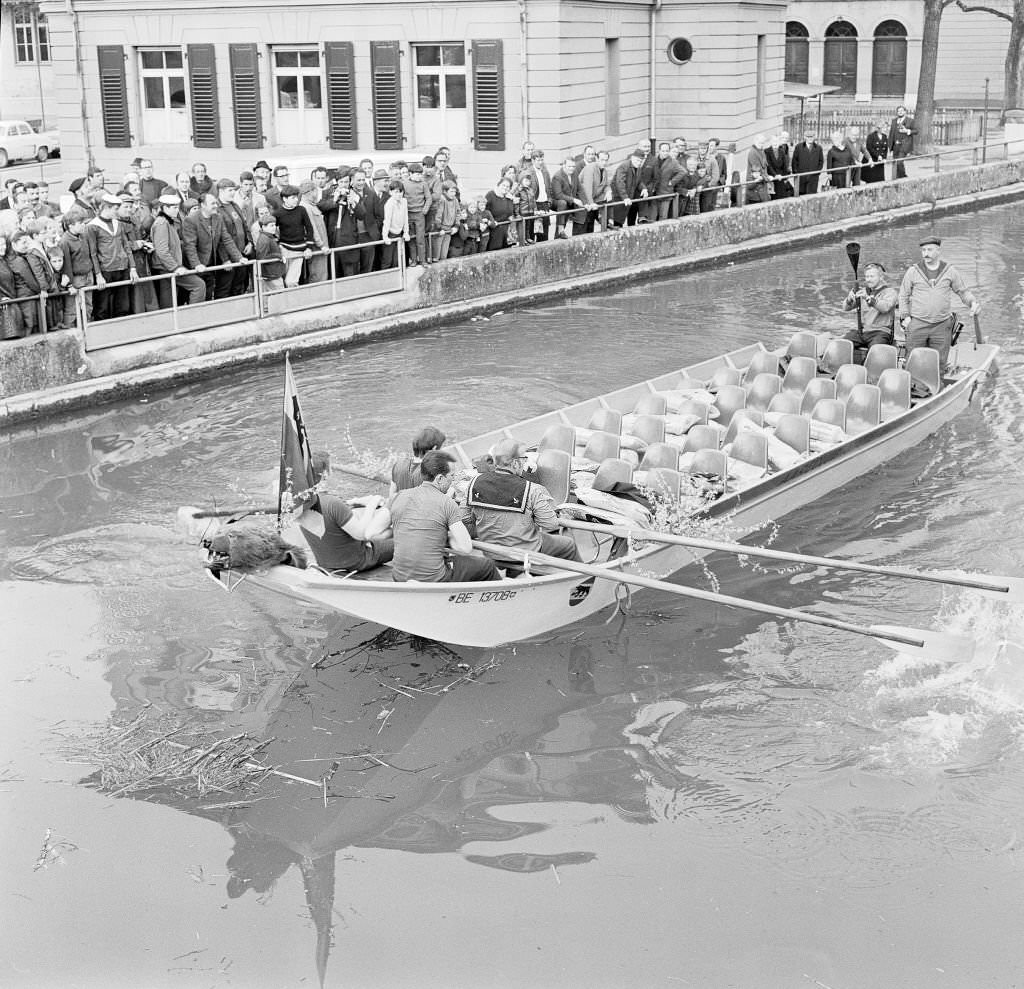
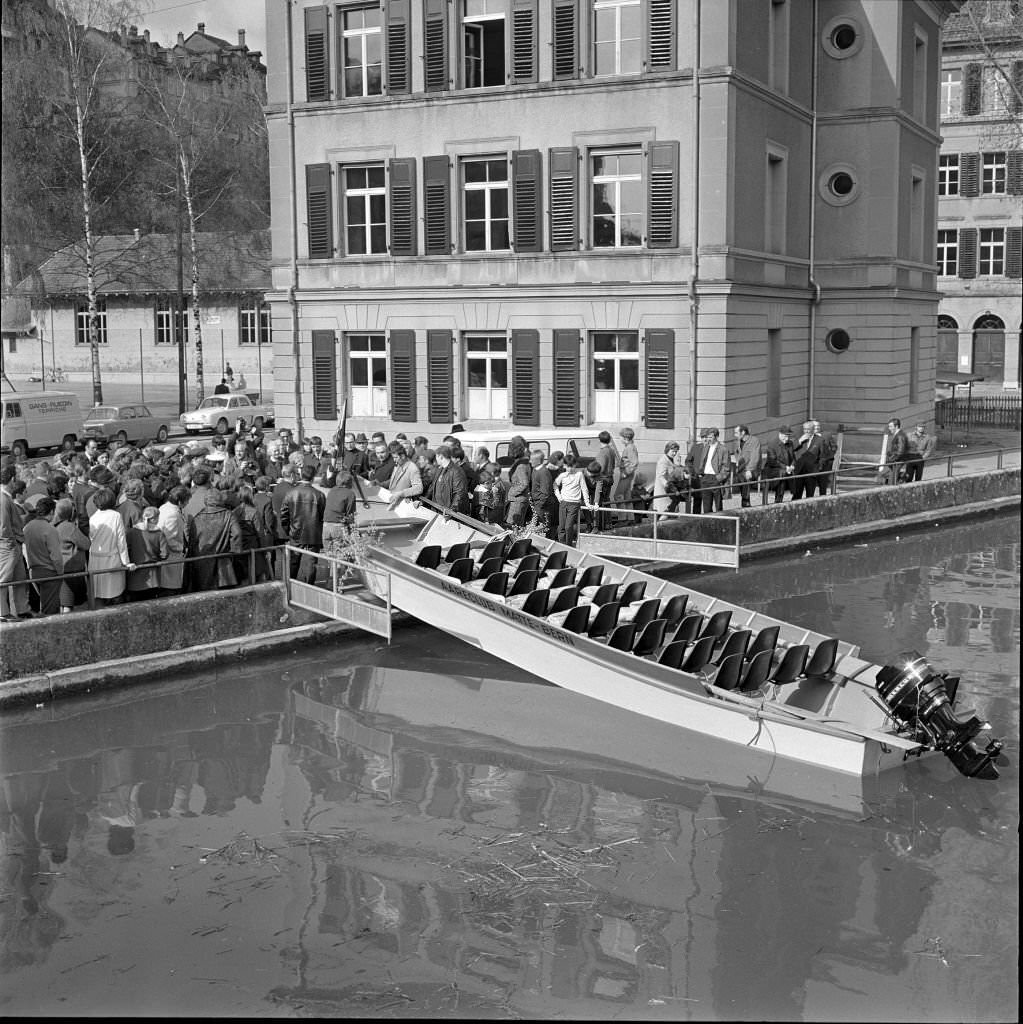
Emilie Lieberherr spoke at Berne’s May Day celebration in 1970. She was one of Switzerland’s most prominent political women — a Social Democrat who would go on to become one of the first women elected to the Zürich city council after women’s suffrage passed in 1971. She was photographed twice at the May Day rally, giving speeches that combined labor rights with the fight for women’s political equality. In the same city, a ship naming ceremony on the Aare drew a different kind of crowd.
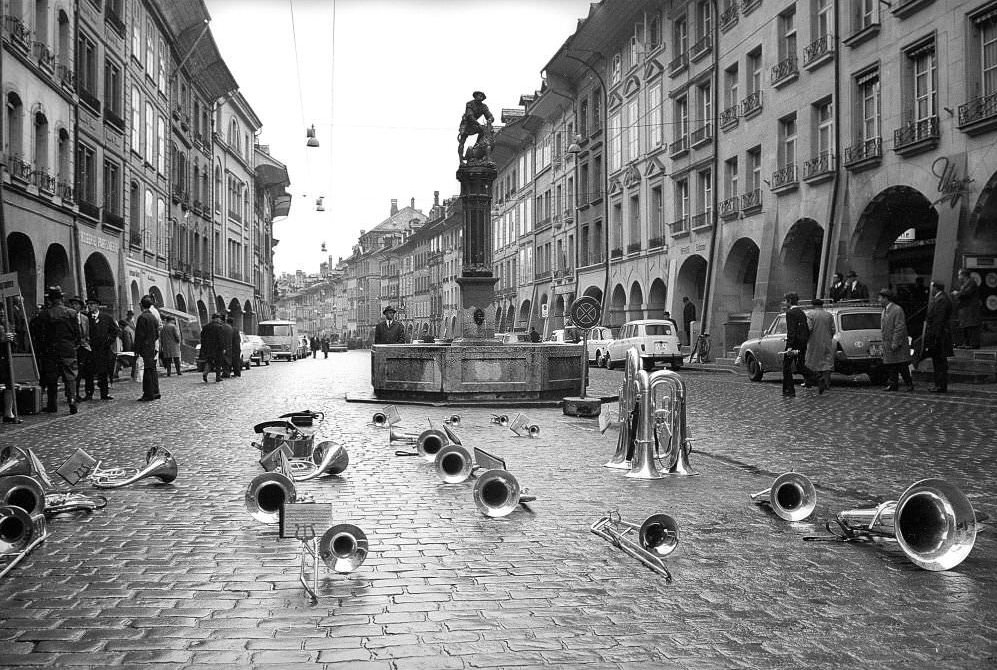
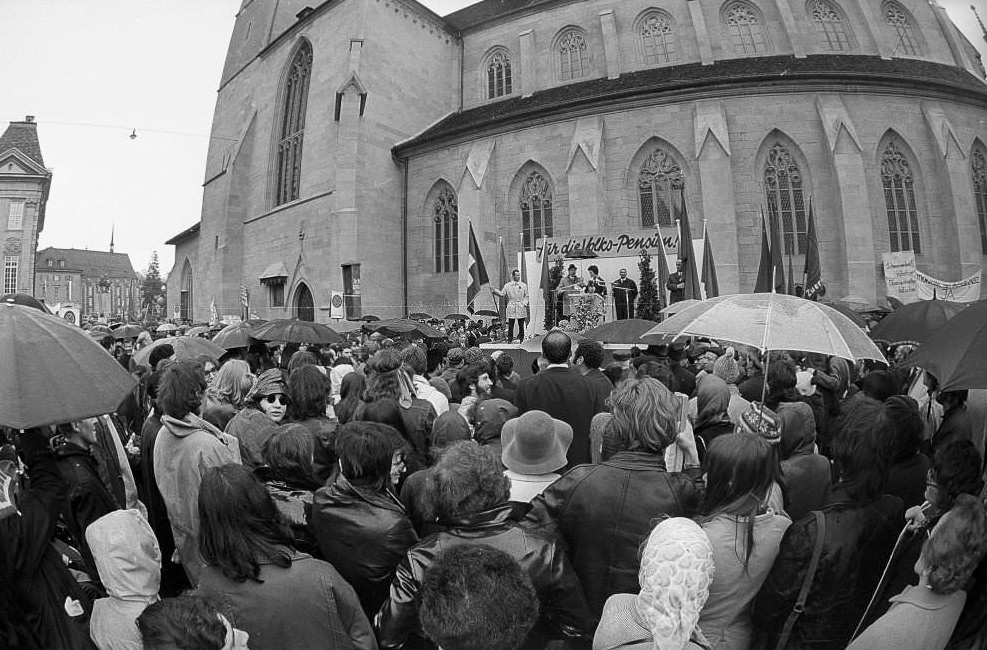
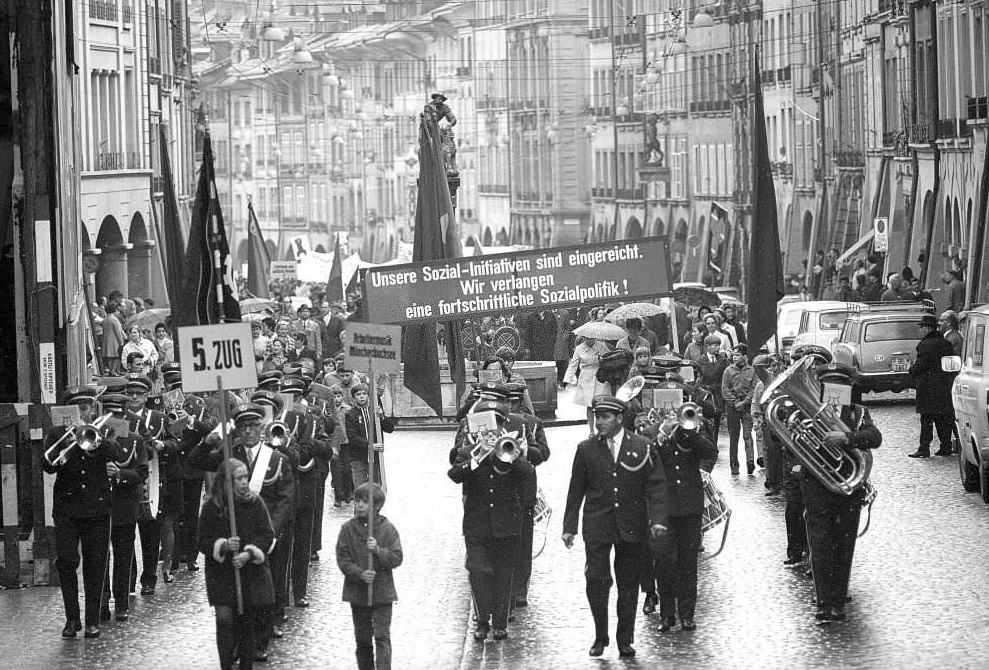
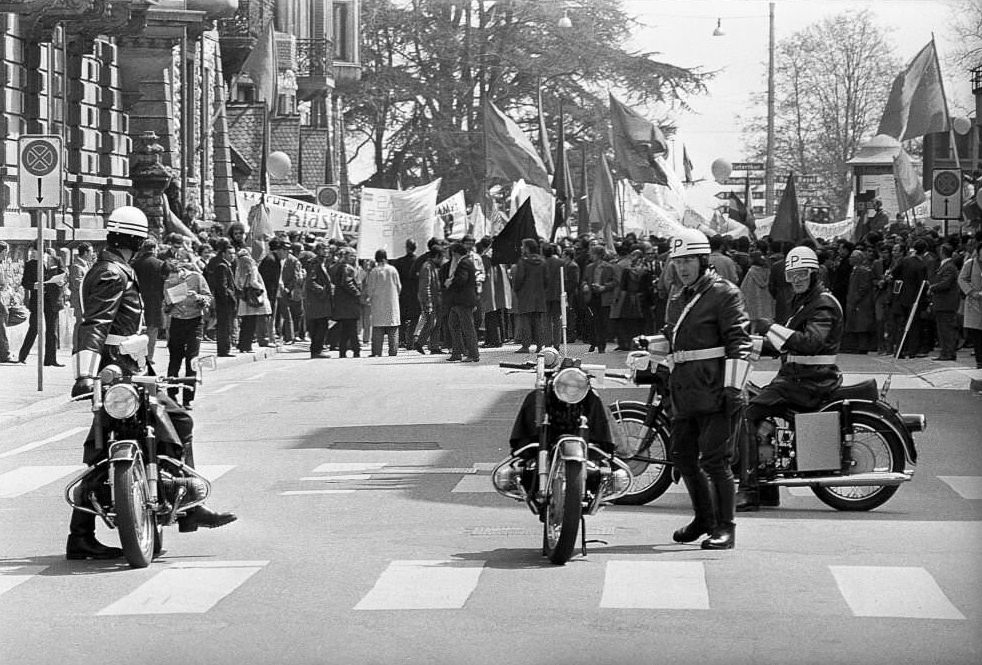
May Day in Berne in 1970 was a large, organized affair. Brass bands marched through the streets, their instruments catching the light on the road surface as photographers captured the scene. Motorcycle police flanked the procession. Swiss labor unions had long marked May 1st as a day of public demonstration, and in 1970 — with wages rising, immigration a flashpoint, and women still excluded from federal voting — the day carried particular weight.
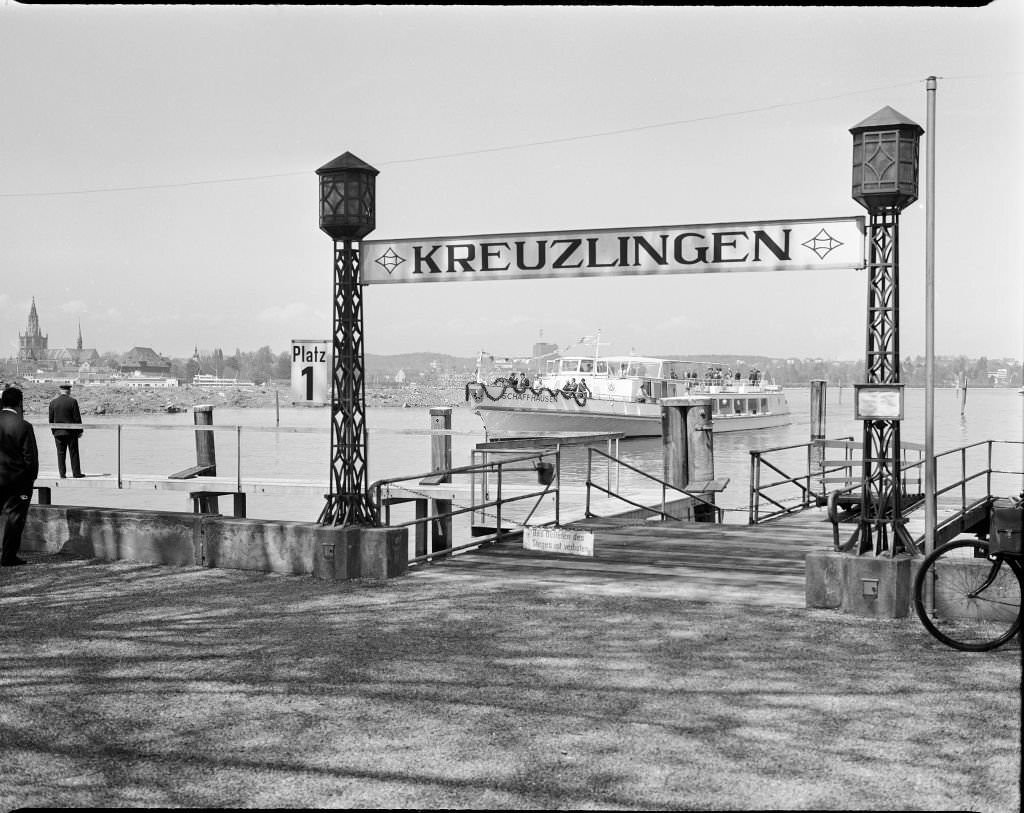
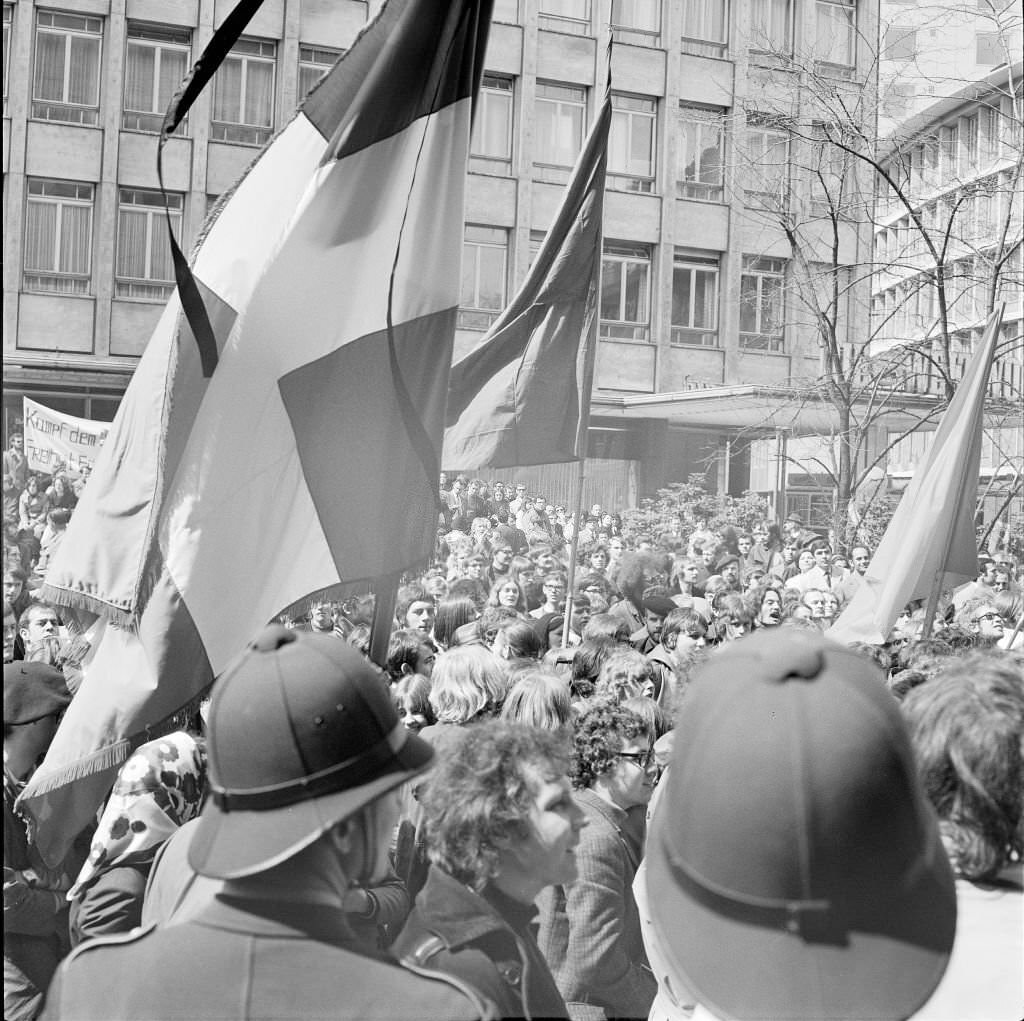
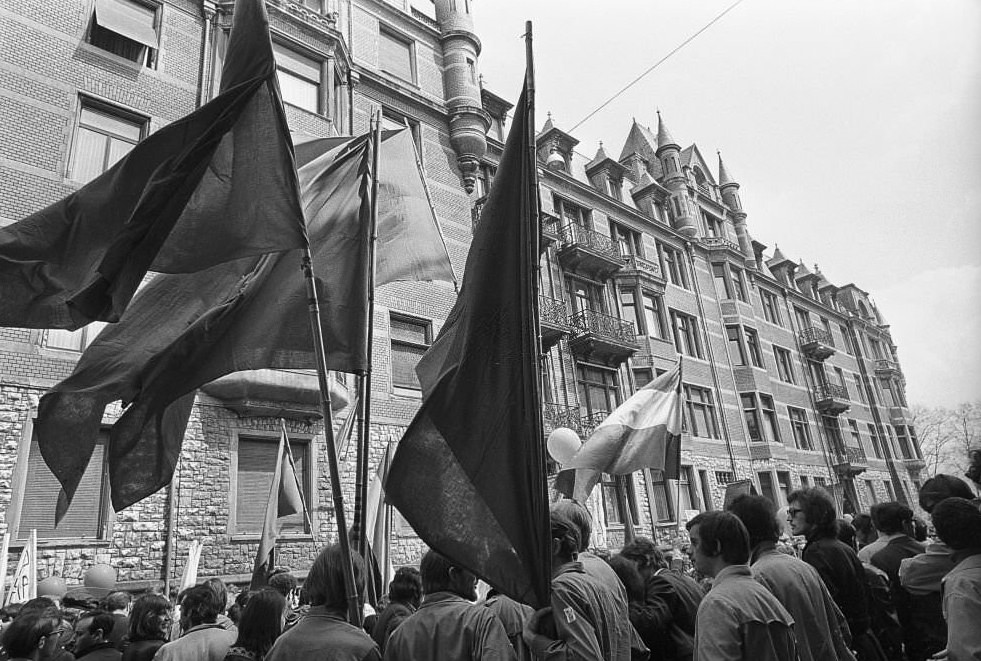
May Day demonstrations also filled the streets of Zürich in 1970, with workers and students marching together through the city center. At Kreuzlingen on Lake Constance, the motor ship Schaffhausen docked at the landing stage — a scene of peaceful commerce far from the political noise of the cities. Switzerland in 1970 held both realities at once: protests and demonstrations in its major urban centers, and quiet lake landings in its smaller towns.
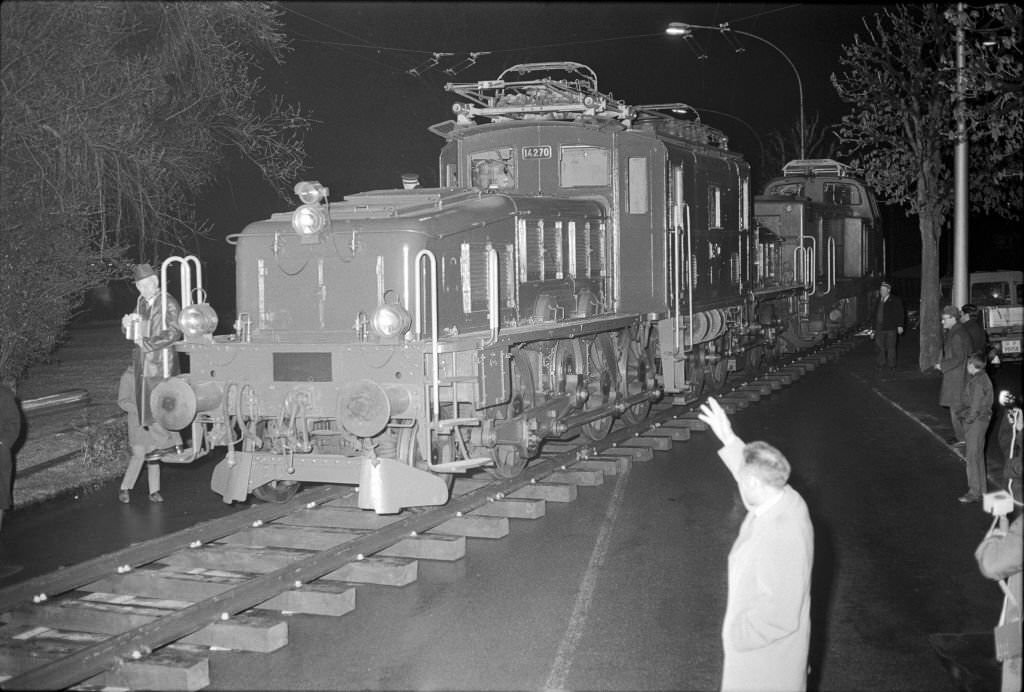
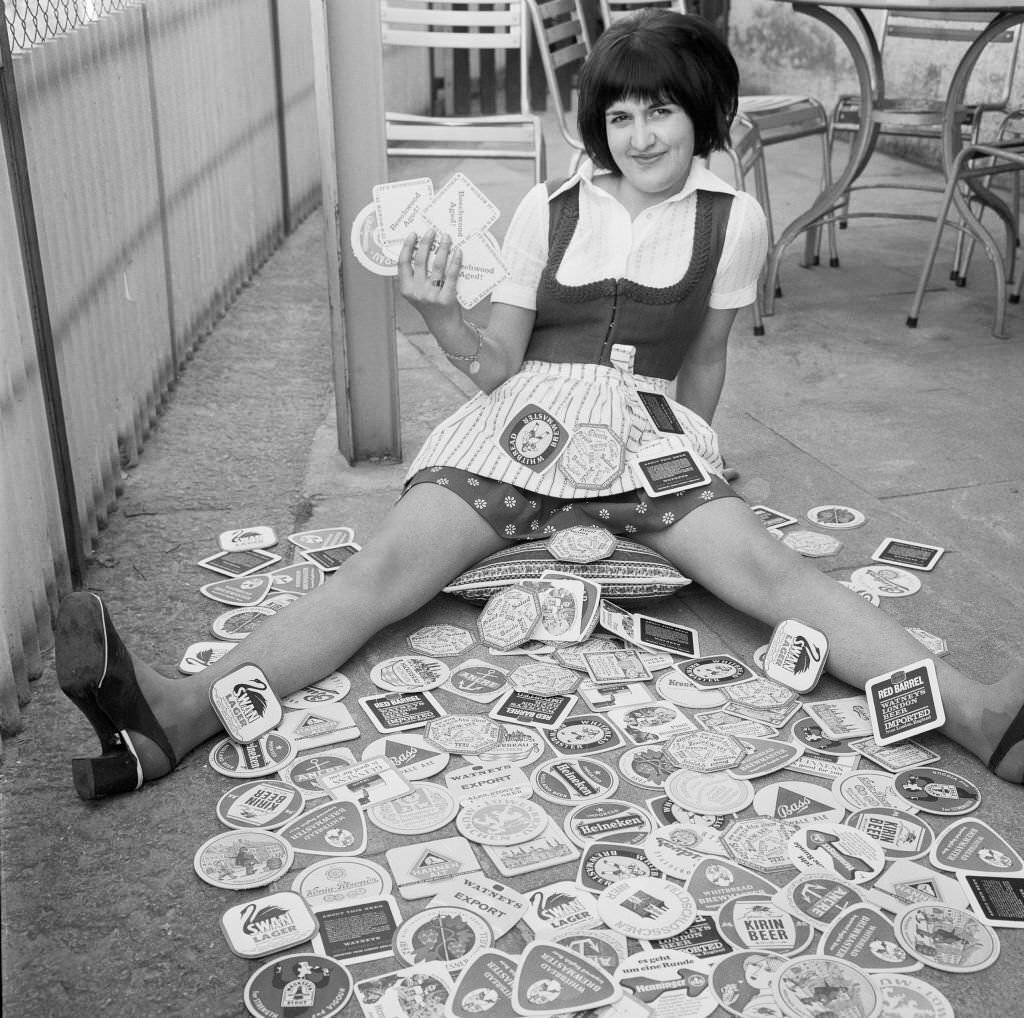
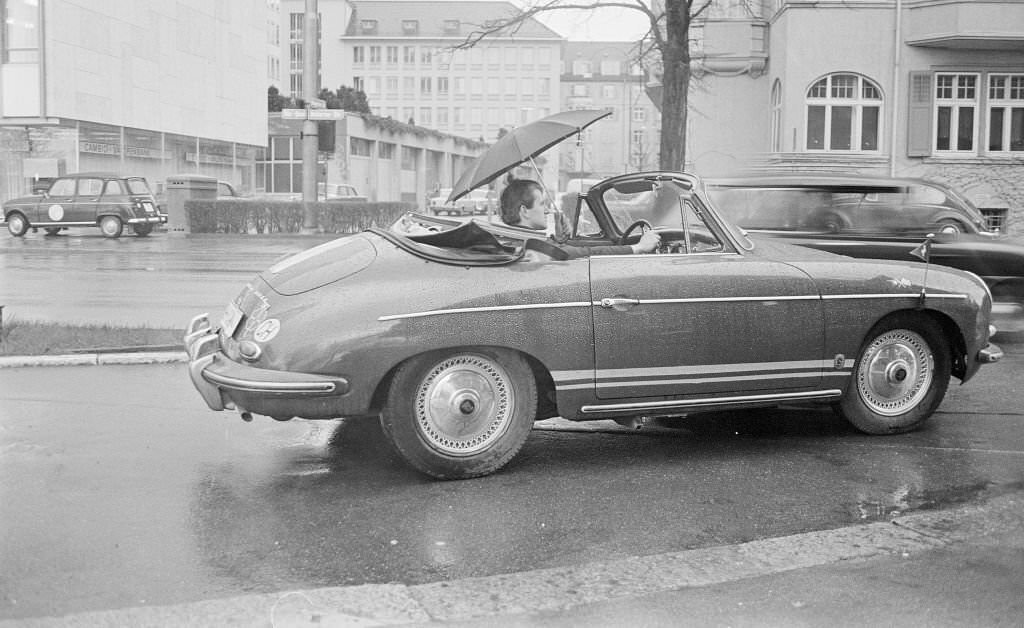
An old Gotthard railway locomotive sat discarded in 1970, replaced by more modern electric engines that had no use for the steam-era machines. A waitress posed with a collection of beer mats from across Switzerland. A man sat in his convertible in Zürich, umbrella open against the rain — the kind of image that captures a city in motion without trying to explain it. These are the details that round out what a decade actually looked like.
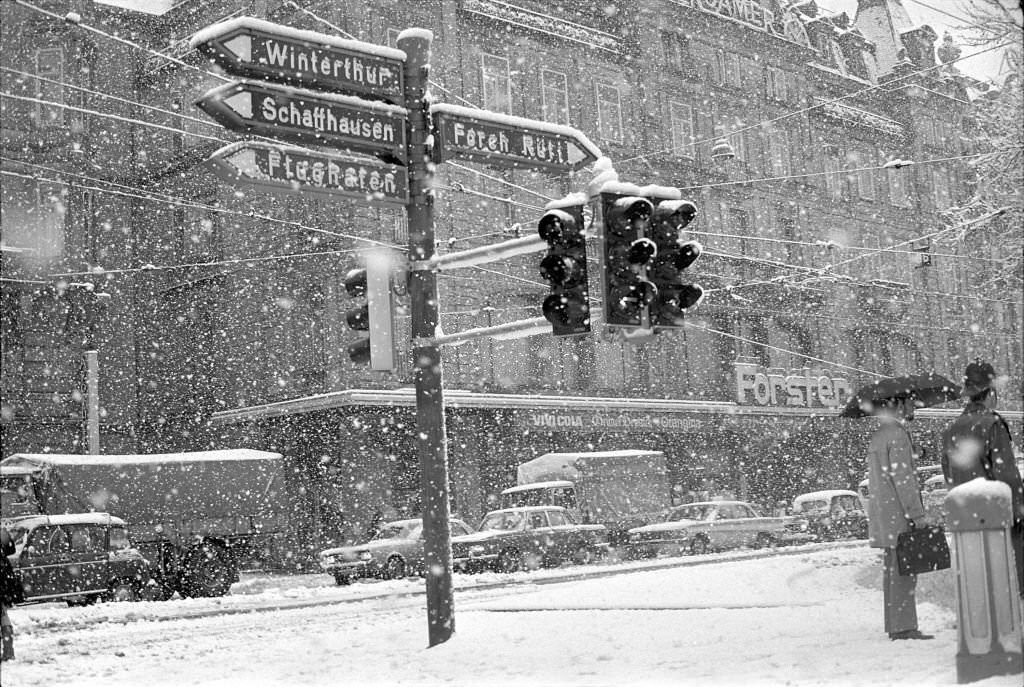
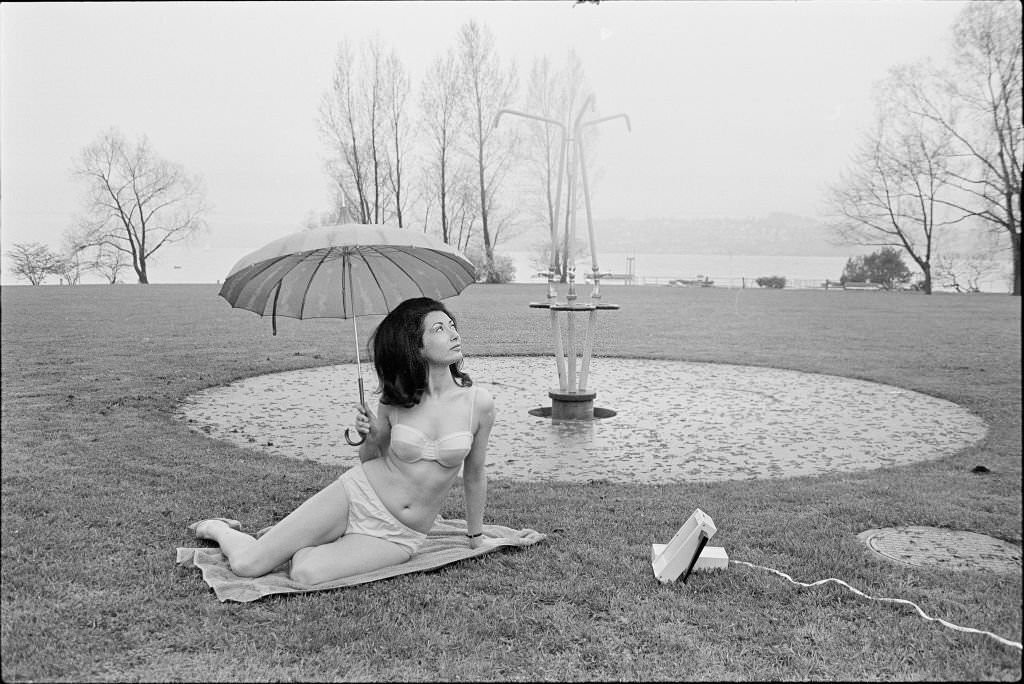
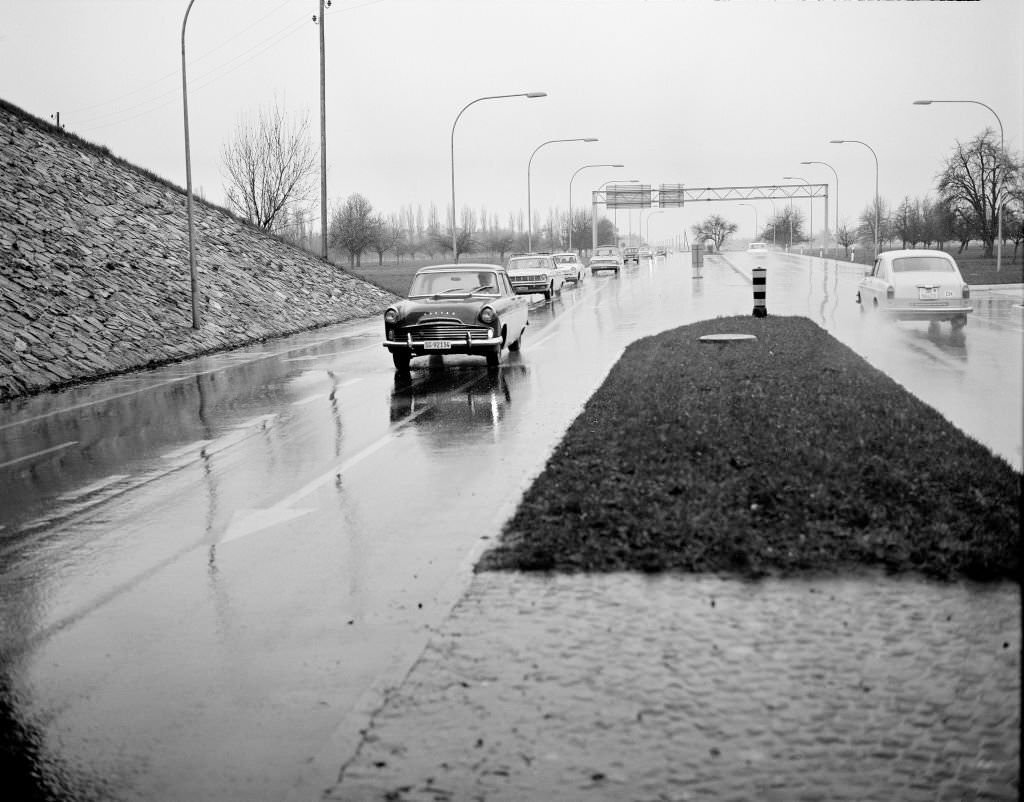
Snow at Bellevue square in Zürich, a naiad sculpture sheltered under an umbrella at Tiefenbrunnen, a street in Rorschach running alongside the new autobahn — these images show Switzerland in its different moods and seasons. The autobahn network was still being extended in 1970, and towns like Rorschach on Lake Constance found themselves suddenly adjacent to high-speed infrastructure that had not existed a decade earlier.
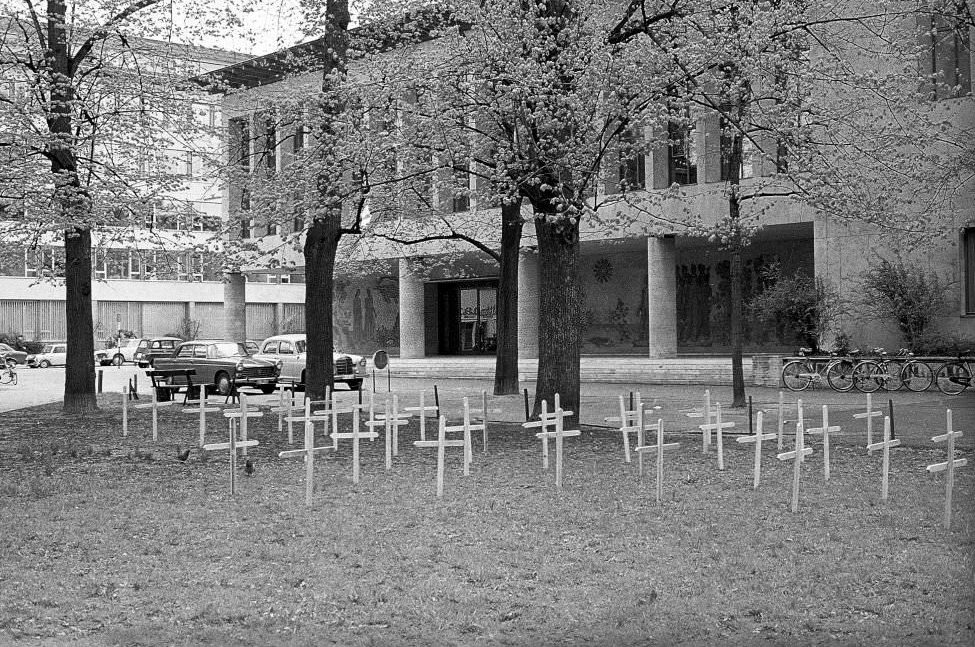
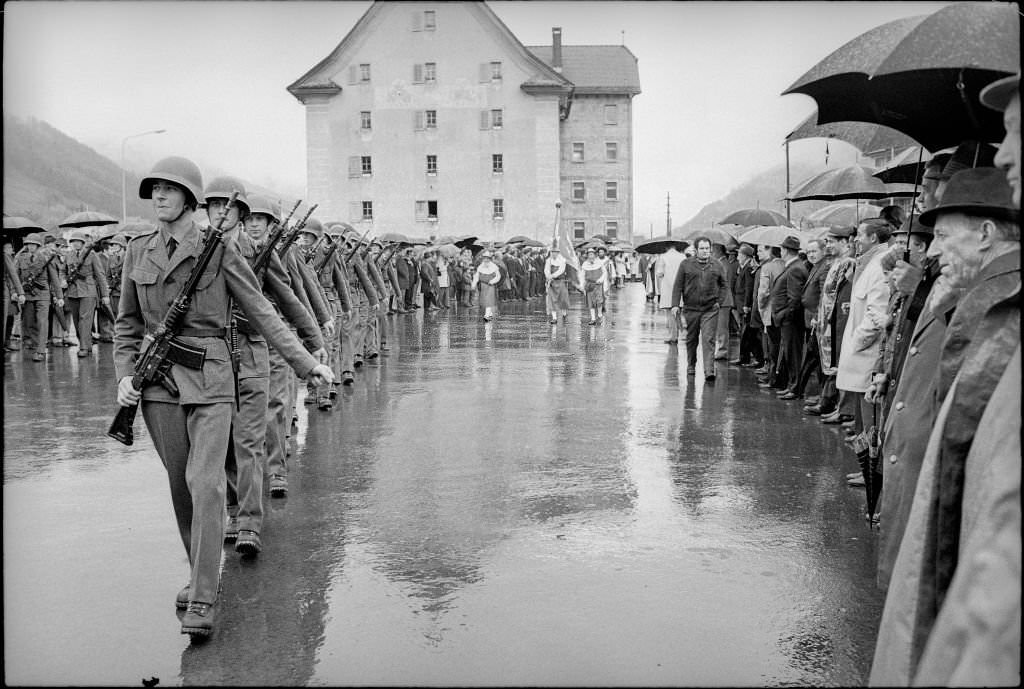
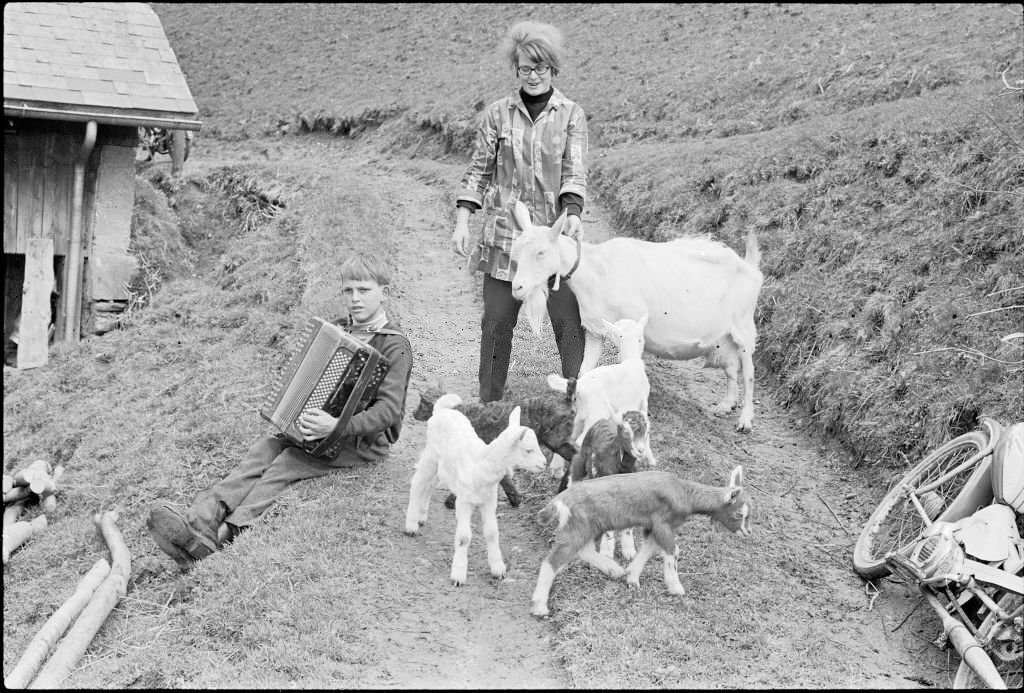
The University of Basel held a campaign week in 1970, with students taking their causes to the campus in the spirit that was sweeping European universities at the time. In Stans, the Nidwaldner Landsgemeinde — one of Switzerland’s ancient open-air democratic assemblies — included a military parade, blending civic tradition with armed force in the way that was uniquely Swiss. On a farm somewhere in the country, a goat had given birth to five young goats — a rare event, and apparently one worth photographing.
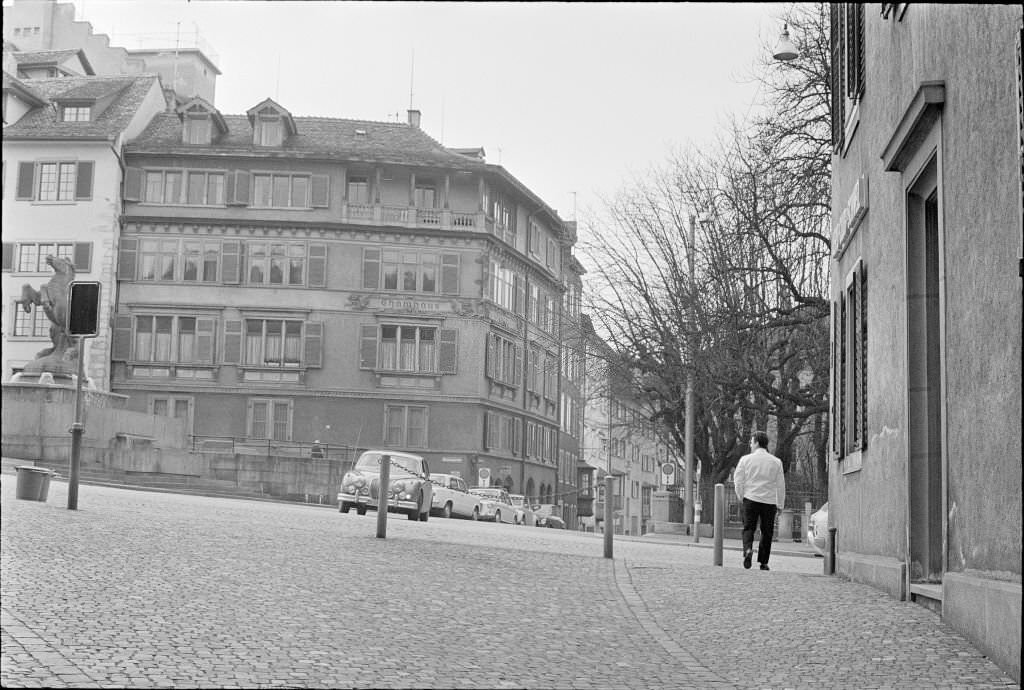
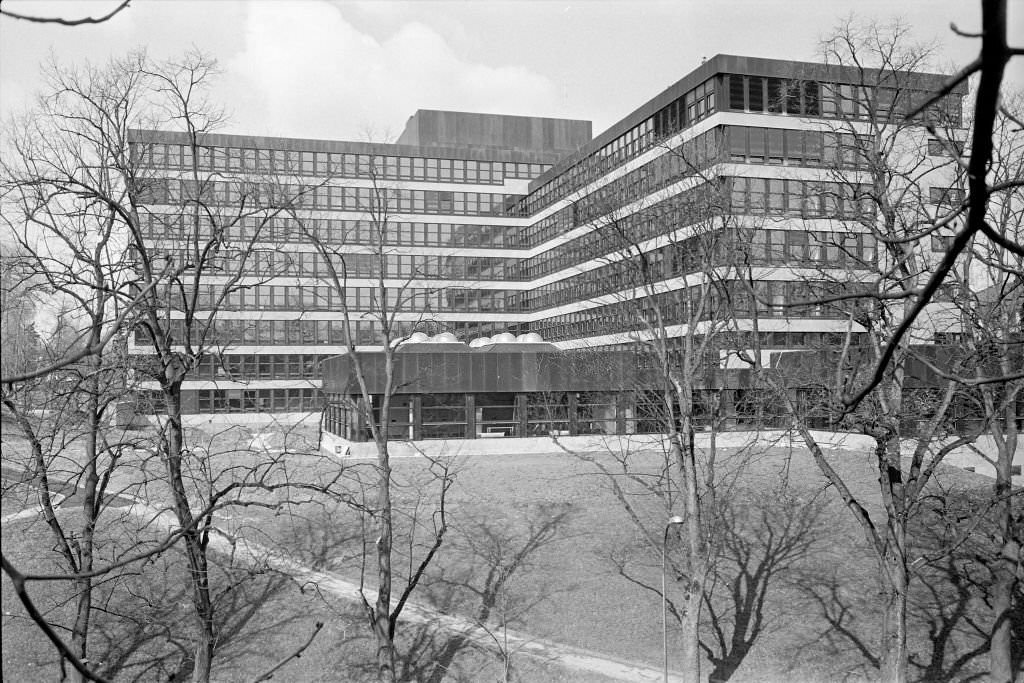
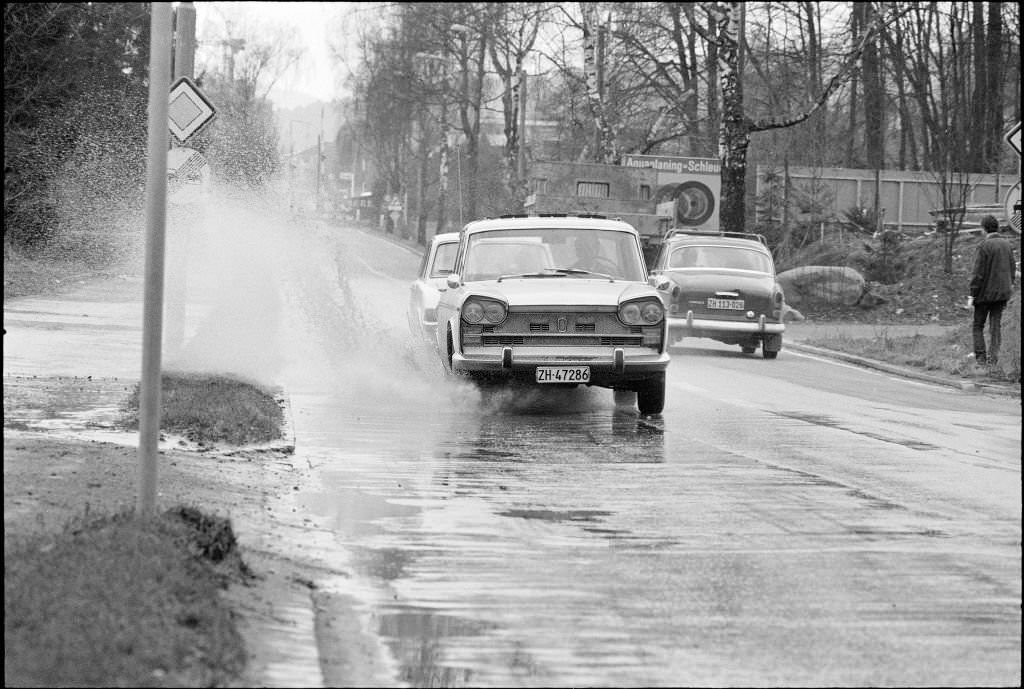
Zürich’s old town in 1970 sat alongside the new city that was growing around it — the narrow medieval lanes of the Altstadt contrasting sharply with the construction cranes visible across the river. The PTT — Switzerland’s combined postal and telecommunications authority — ran its operations from a large head office in Berne. Cars moved along wet Zürich streets, their headlights reflected in puddles, as the city went about its business on a rainy day.
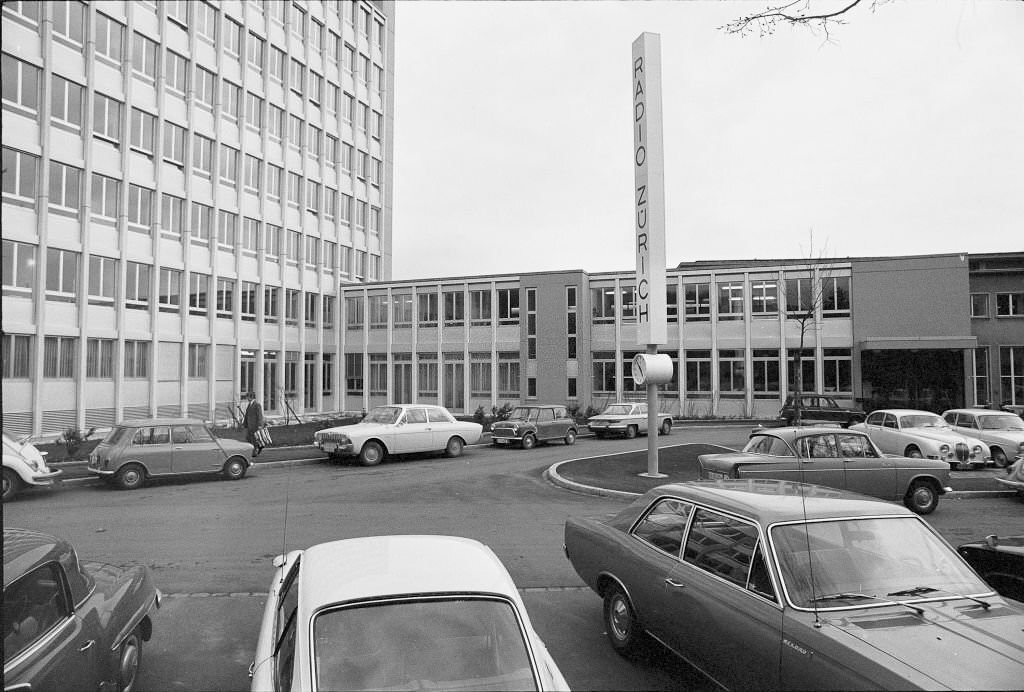
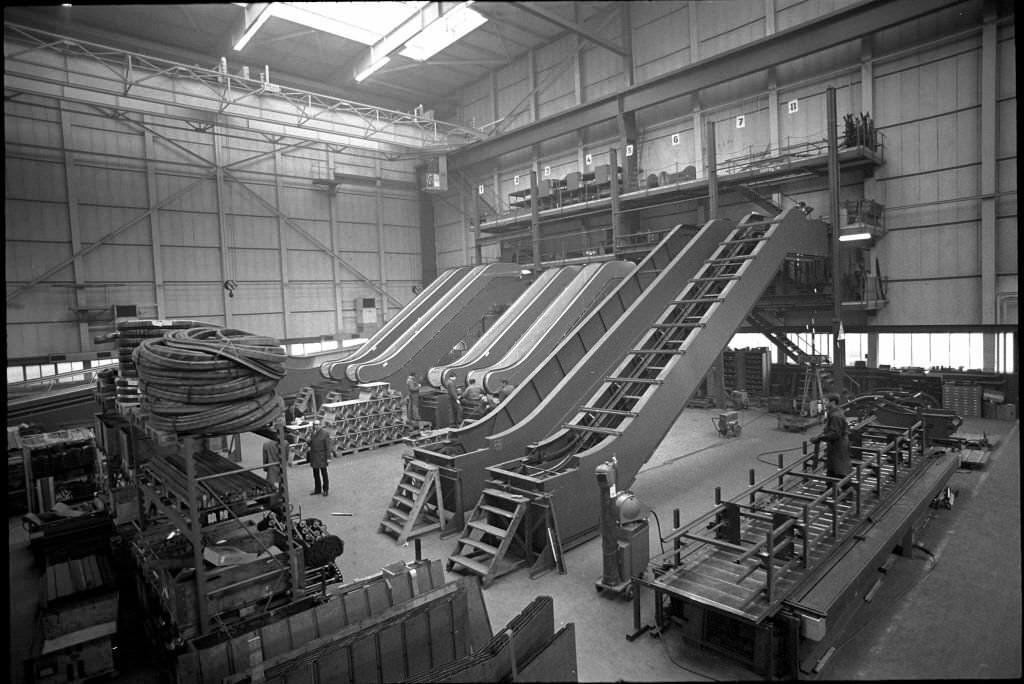
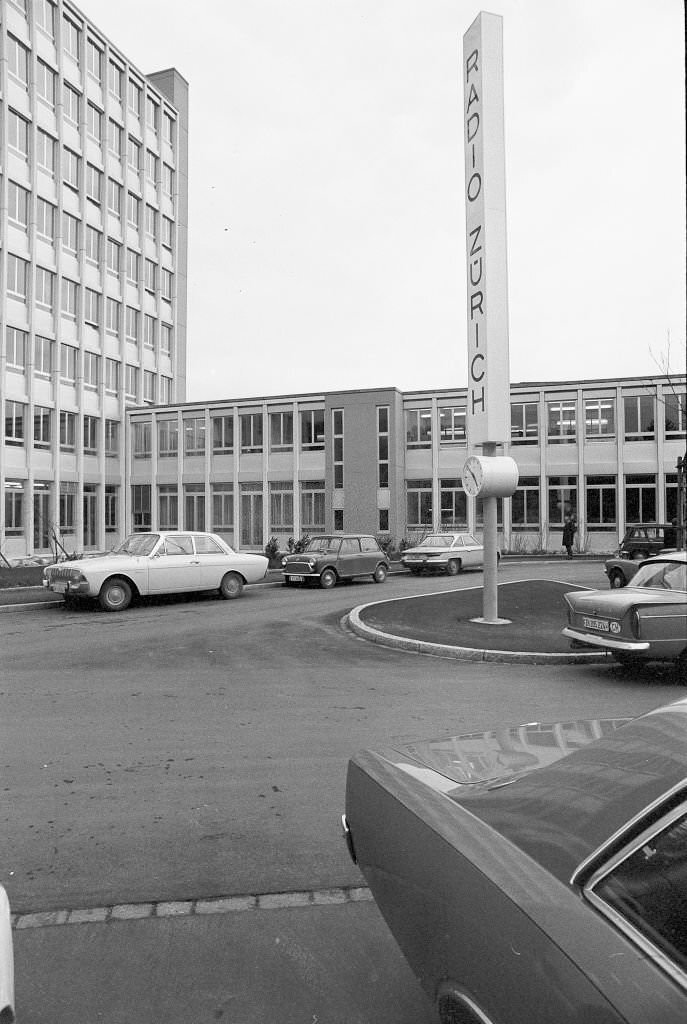
Switzerland’s public broadcaster opened a new radio studio in Zürich in 1970, equipping it with the latest technology for producing the programs that Swiss audiences listened to in four national languages. In Schlieren, just outside Zürich, a factory produced escalators — part of the mechanical engineering sector that was one of Switzerland’s most important export industries. Swiss manufacturing in 1970 was diverse, precise, and internationally competitive.
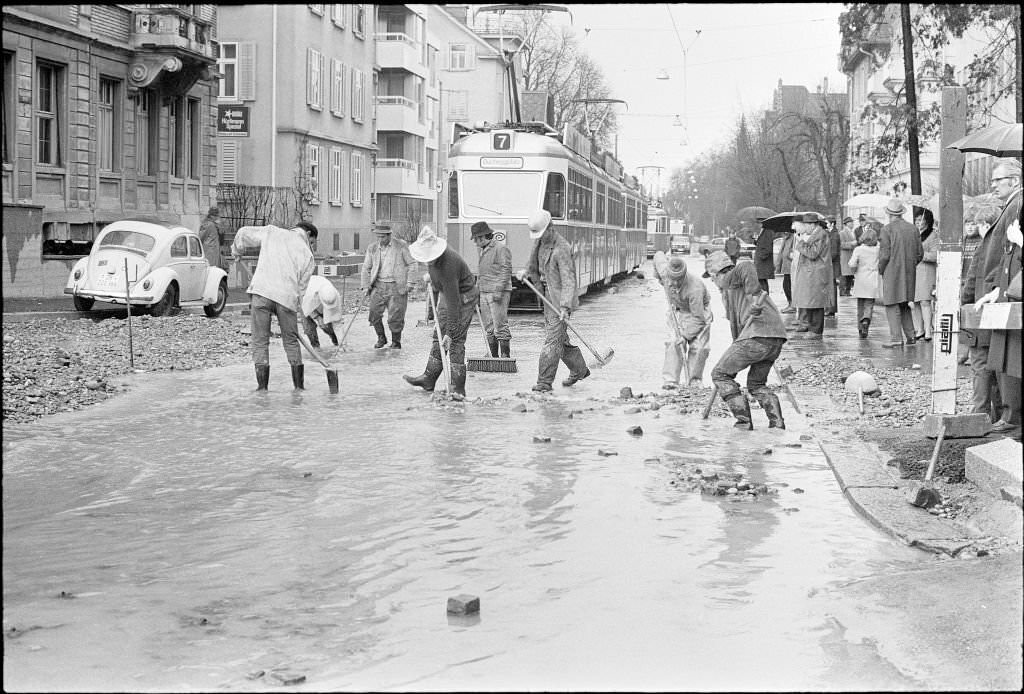
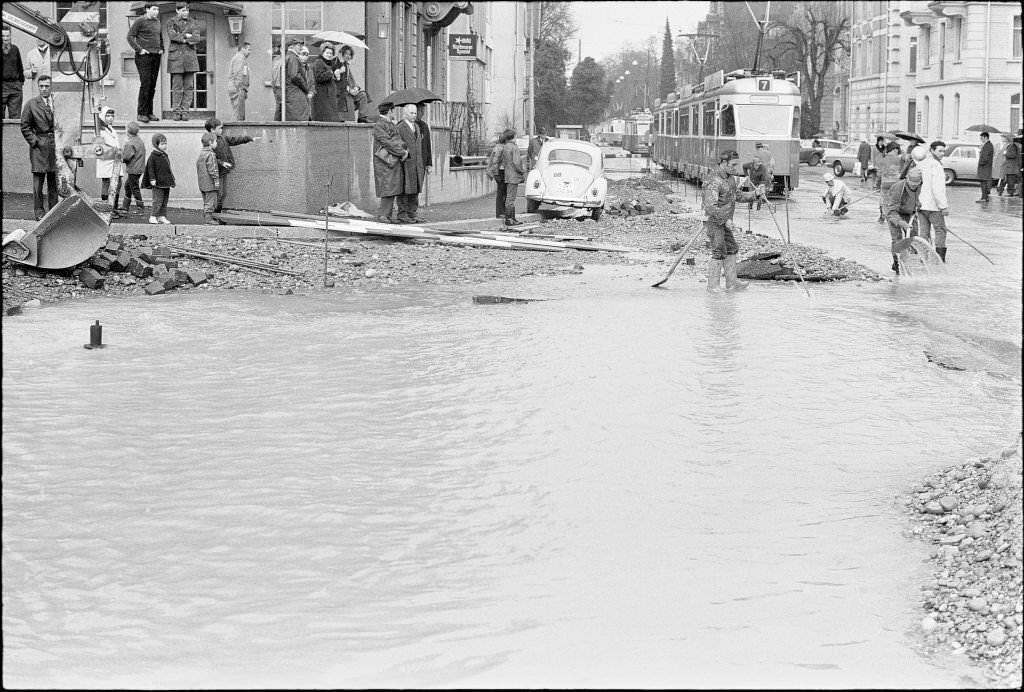
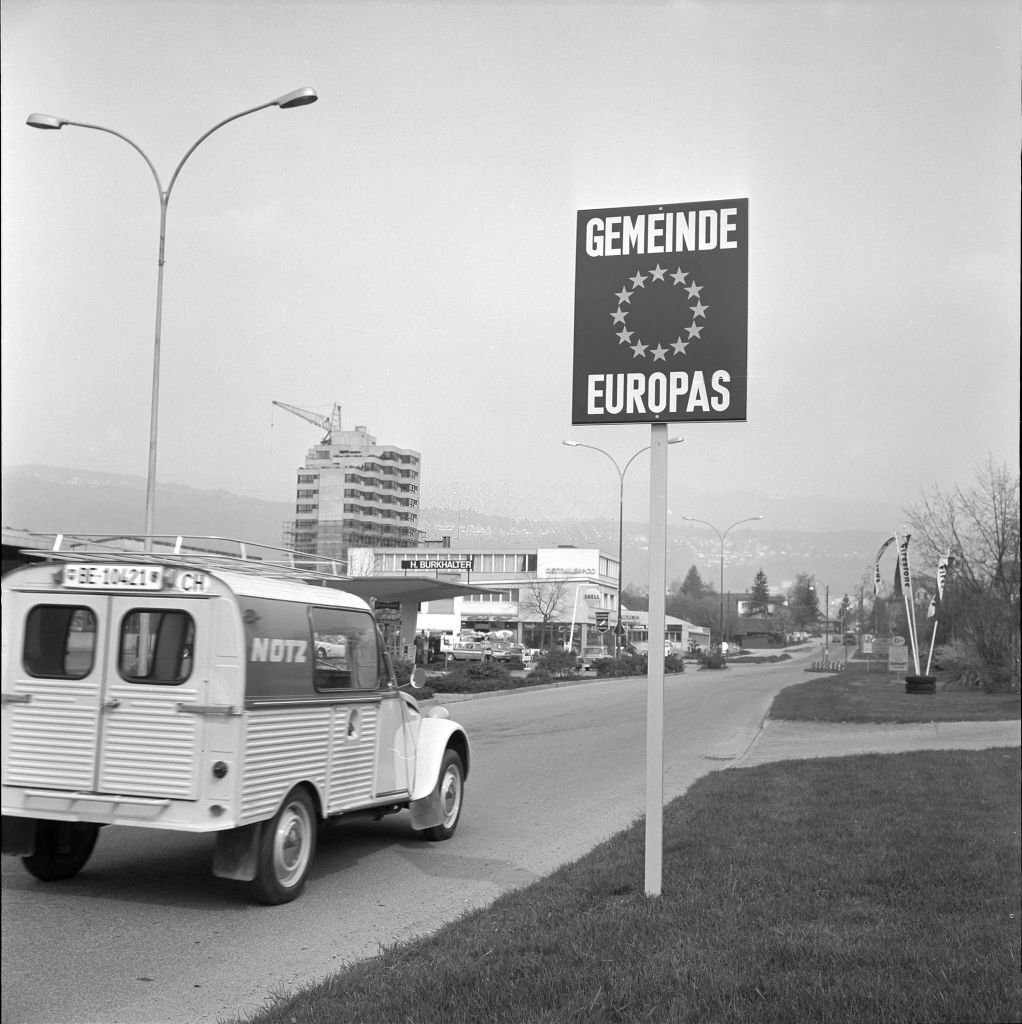
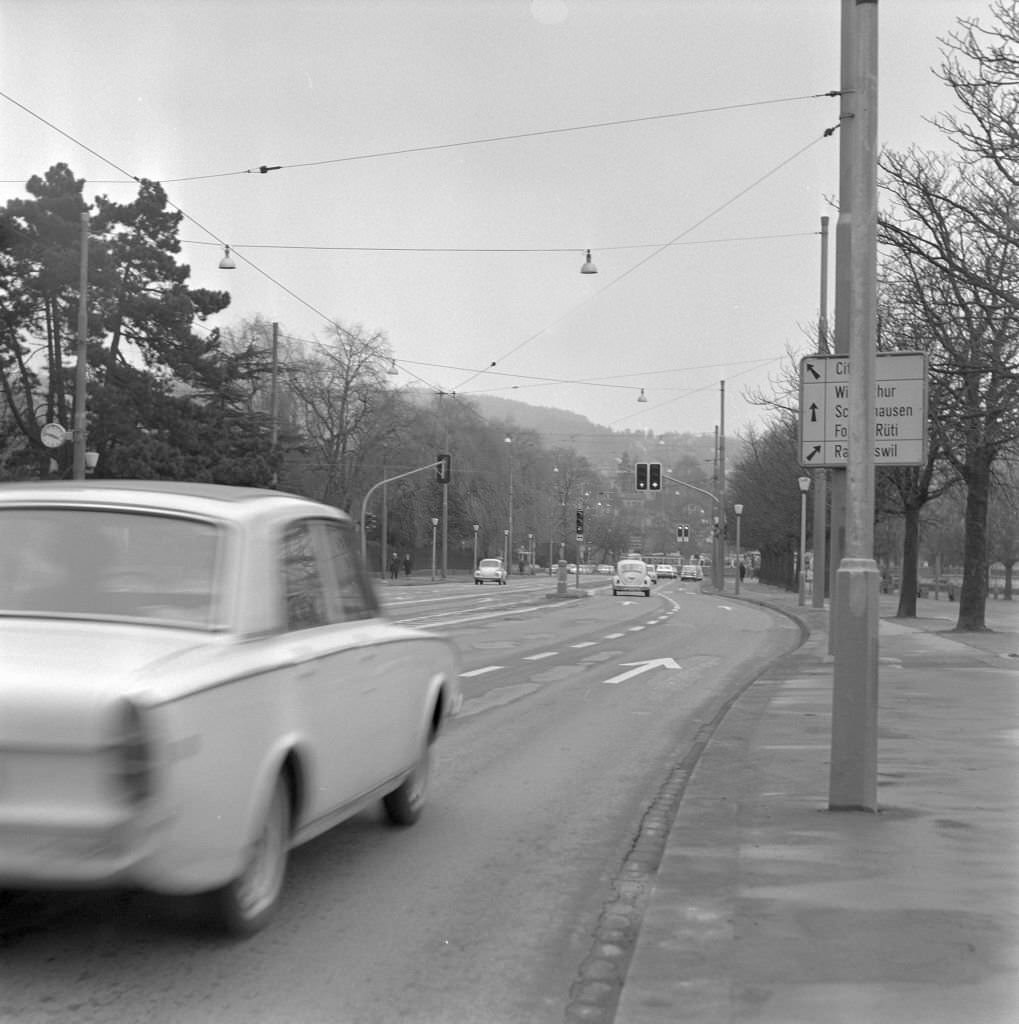
A burst pipe at Schaffhauserplatz in Zürich sent water rushing across the square in 1970, requiring emergency repairs and causing the usual disruption. The Mythenquai along Lake Zürich was one of the city’s most pleasant lakeside roads, lined with trees and used by joggers, cyclists, and strollers year-round. Biel, the bilingual city on the language border between German and French Switzerland, displayed its European identity with civic signage that reflected its position between two cultures.
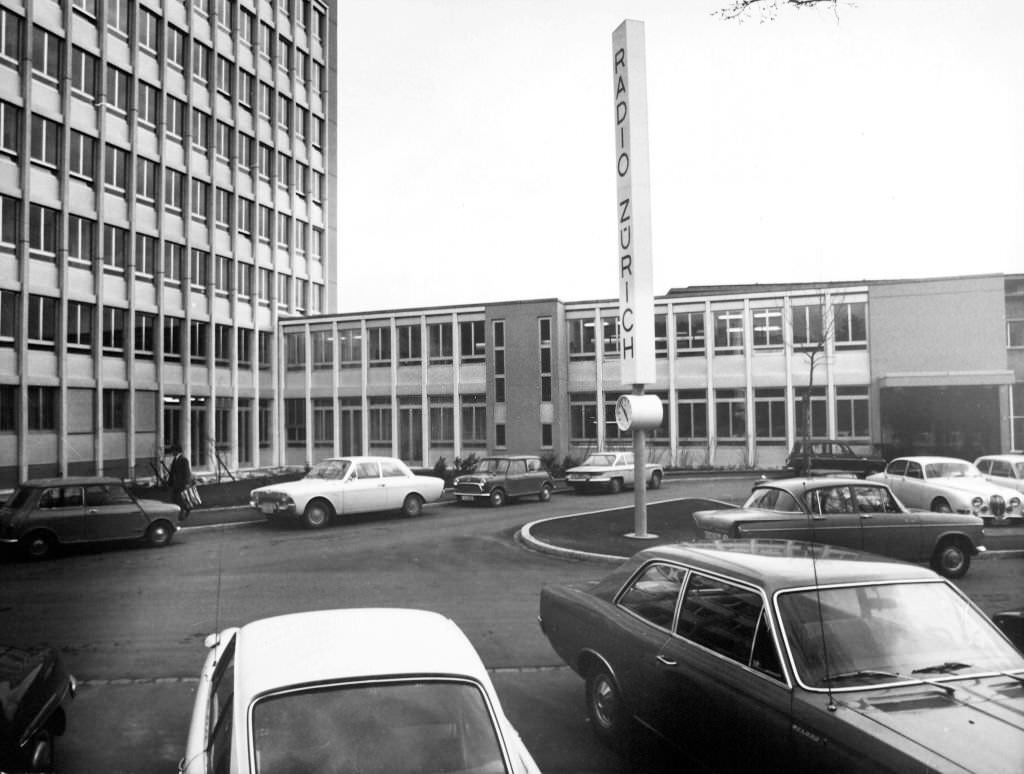
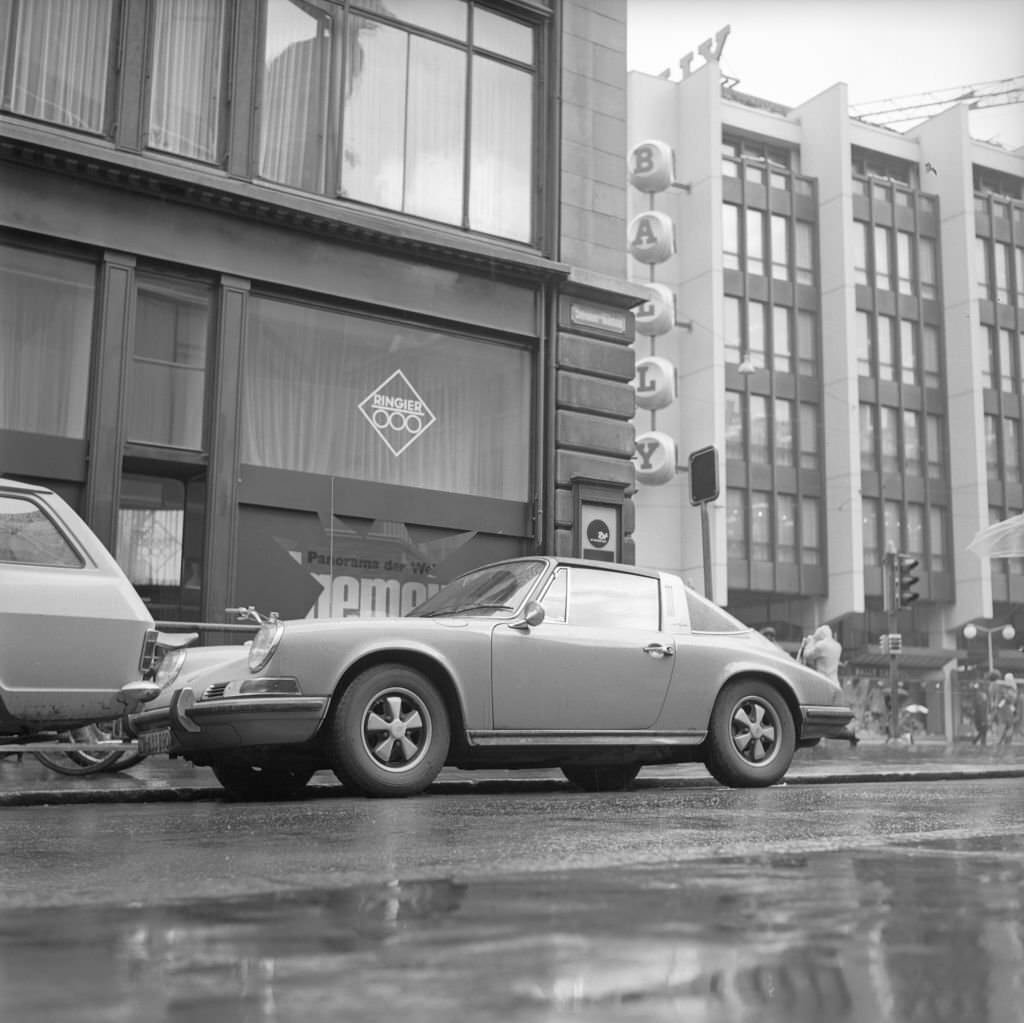
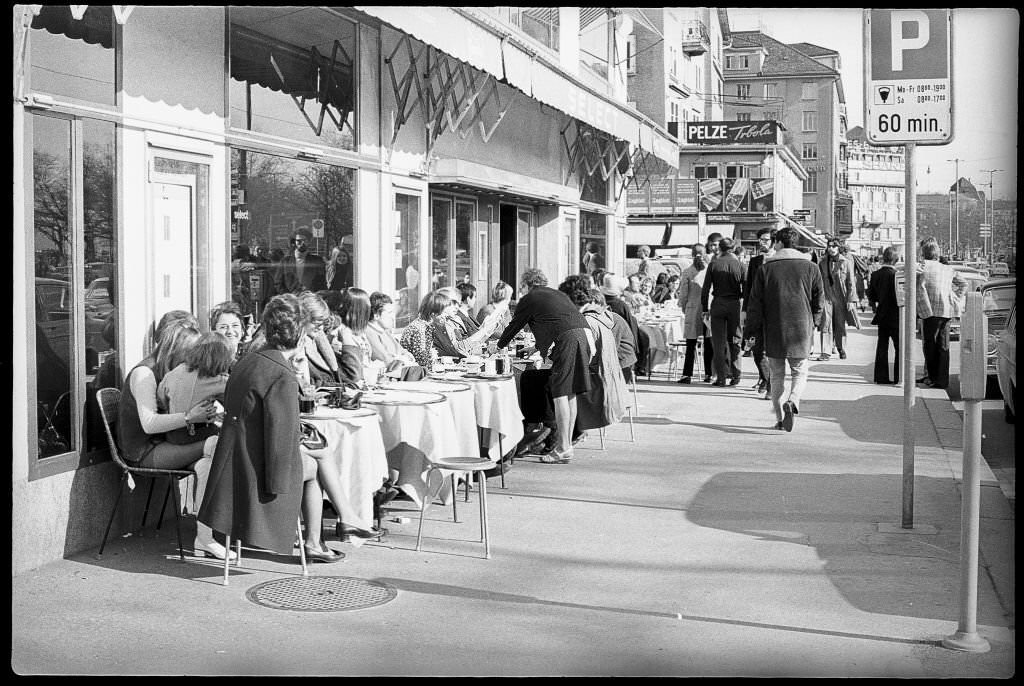
The Ringier publisher’s shop window on the Bahnhofstrasse displayed a Tanga cabriolet and advertising for Bally shoes — a snapshot of Swiss commercial life in 1970. Spring on the Limmatquai brought people back out to the riverside, sitting at café tables and watching the river flow past beneath the guild house facades. The radio studio extension being built in Zürich was one of many public investments in the media and communications infrastructure that Switzerland was expanding throughout the decade.
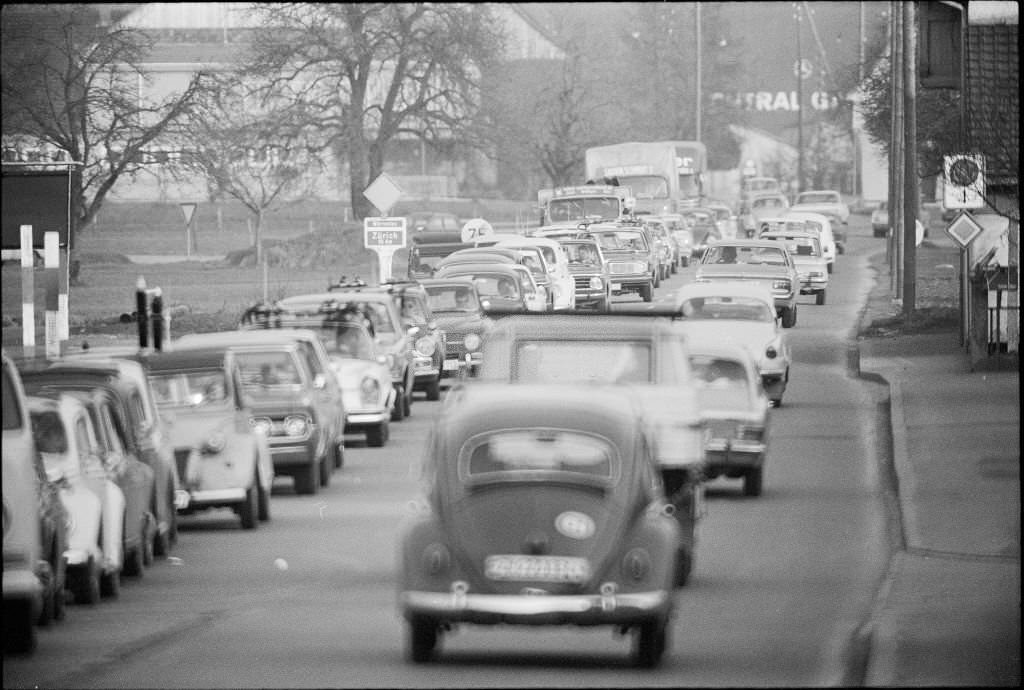
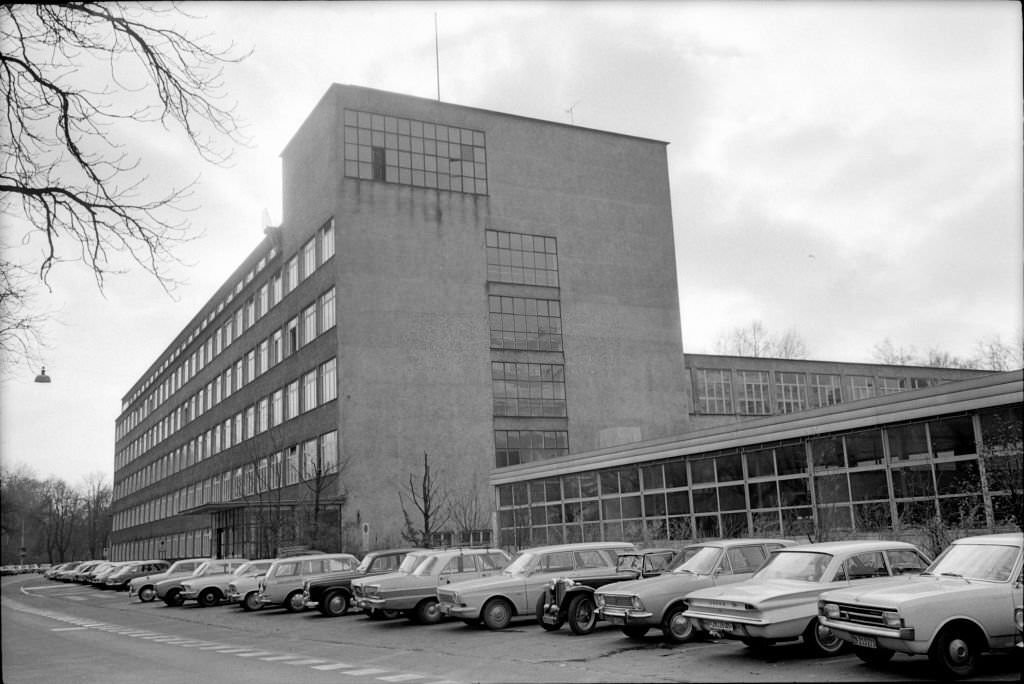
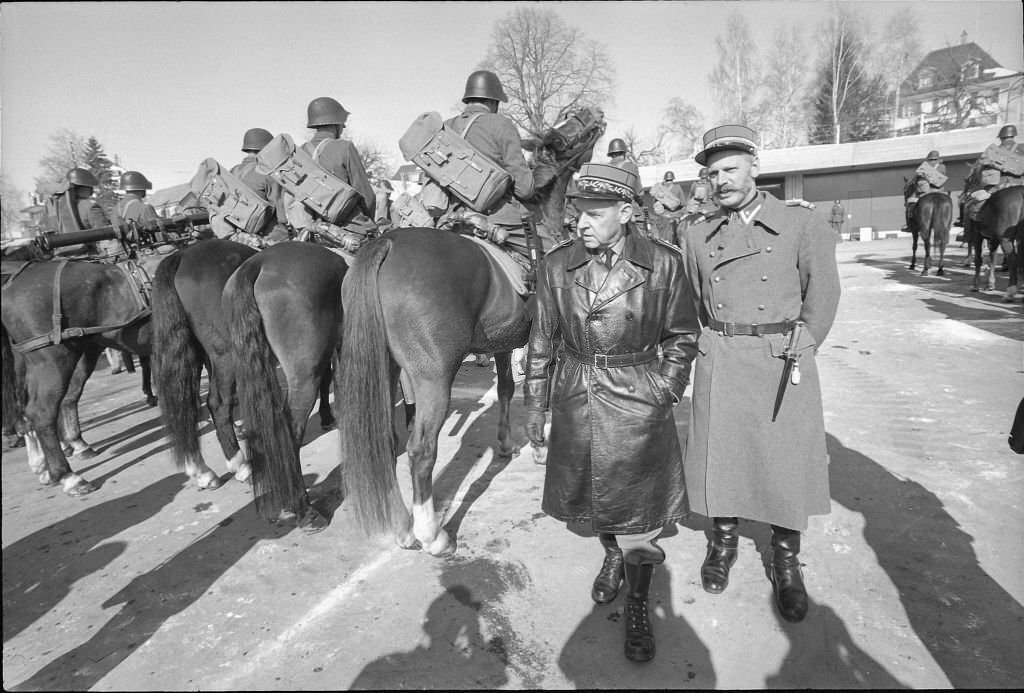
Easter traffic backed up near Wettingen in the Aargau as Swiss families traveled for the holiday weekend. A new school for arts and crafts opened in Berne, adding to the city’s educational infrastructure. In the Bernese countryside between Heitenried and Schwarzenburg, Dragoons Regiment 1 held a military demonstration — cavalry units that Switzerland maintained as part of its citizen army, a tradition that was already beginning to look like a relic of an earlier era.
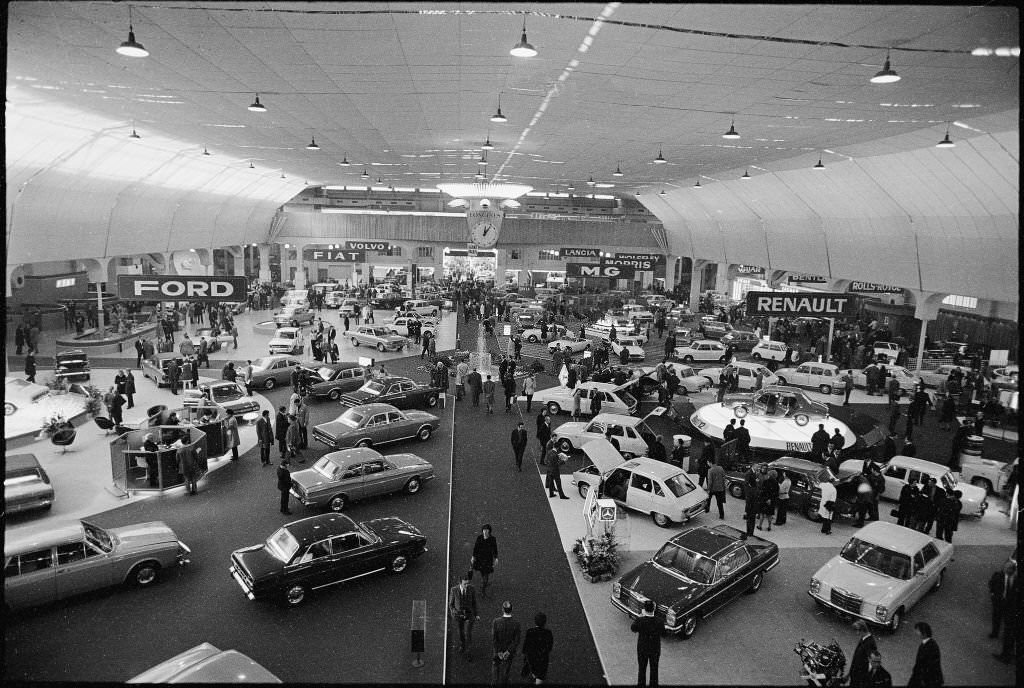
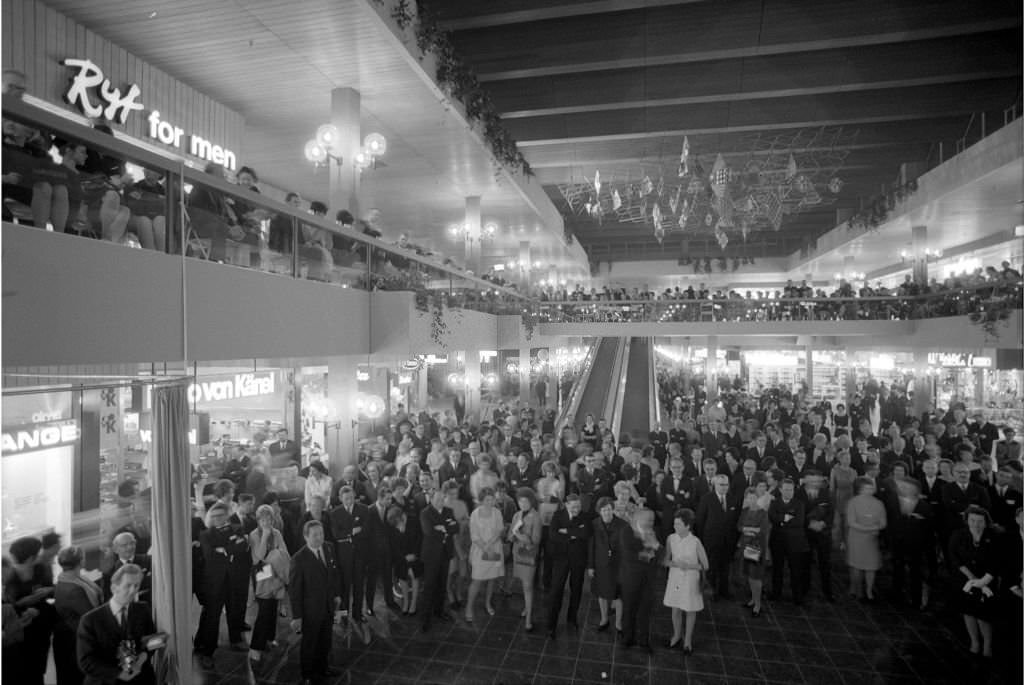
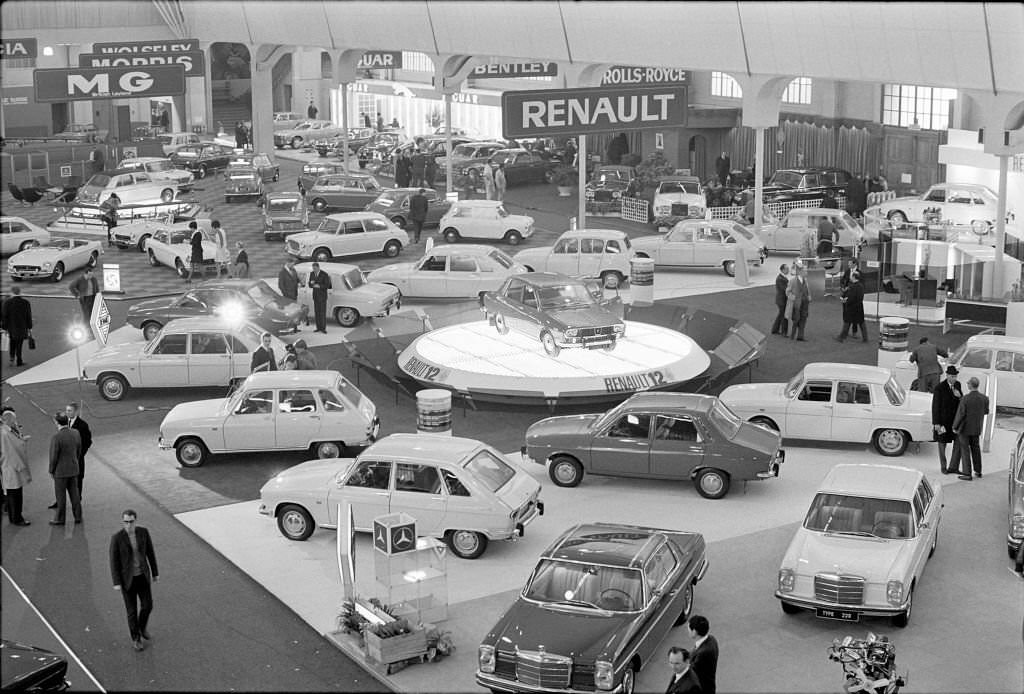
The Geneva International Motor Show was one of the world’s most prestigious car exhibitions, and its early 1970s editions reflected the peak of the automobile’s cultural dominance. Exhibition halls filled with the latest models from European and American manufacturers drew huge crowds. The opening of the Spreitenbach shopping center near Zürich in 1970 was a different kind of consumer event — one of Switzerland’s first large American-style shopping malls, its arrival marking a shift in how Swiss people shopped.
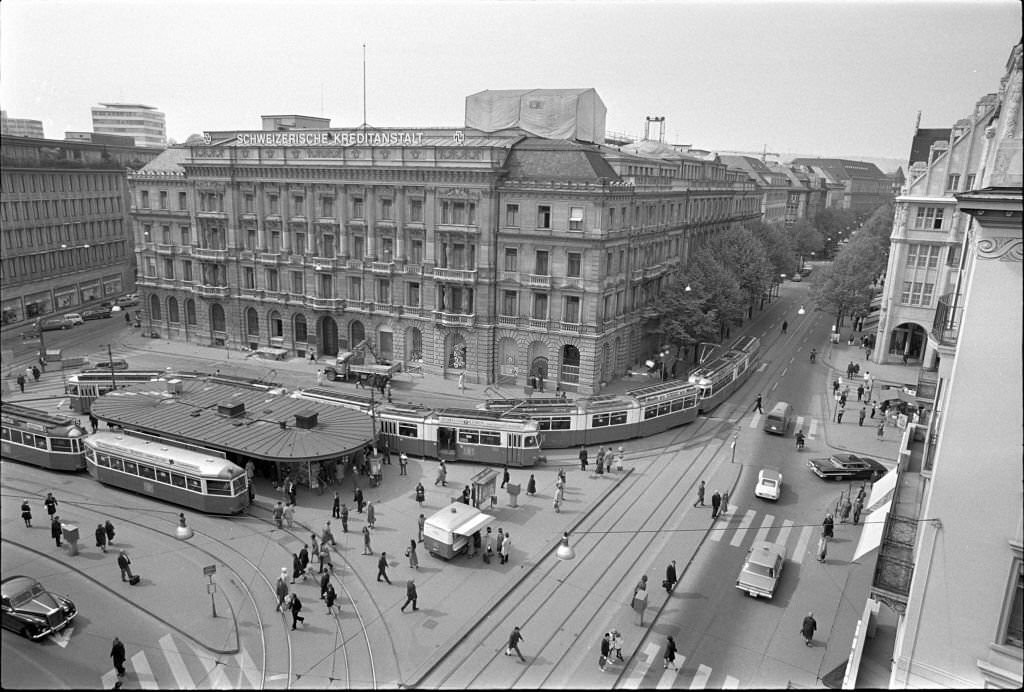
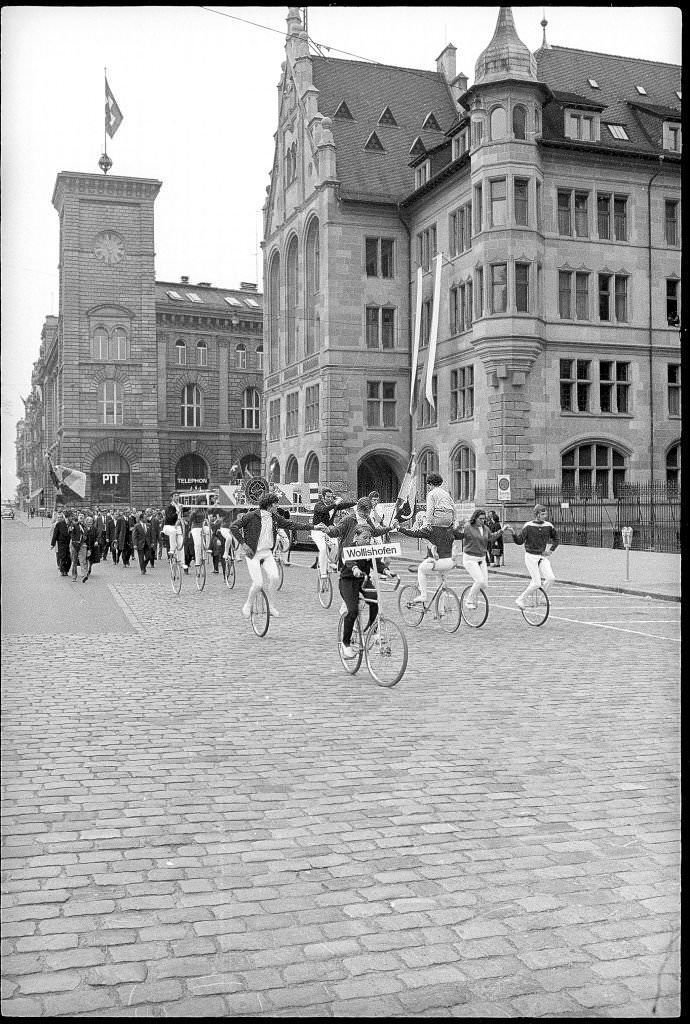
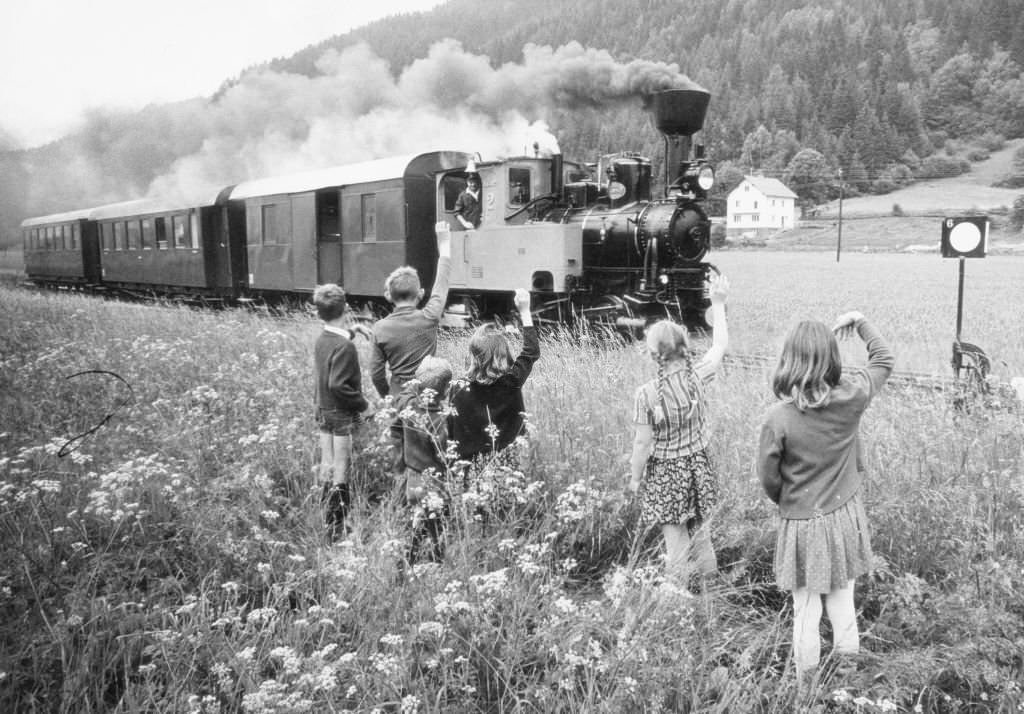
By 1971, Zürich’s Paradeplatz — the financial heart of the city, flanked by the head offices of the country’s two largest banks — continued to hum with activity. Cyclists gathered in front of the Stadthaus for the May Day rally, making a quieter statement than the marching crowds of 1970. Somewhere on a Swiss railway line, children waved to the driver of a steam locomotive as it passed — one of the last steam engines still in service on a network that had been almost entirely electrified.
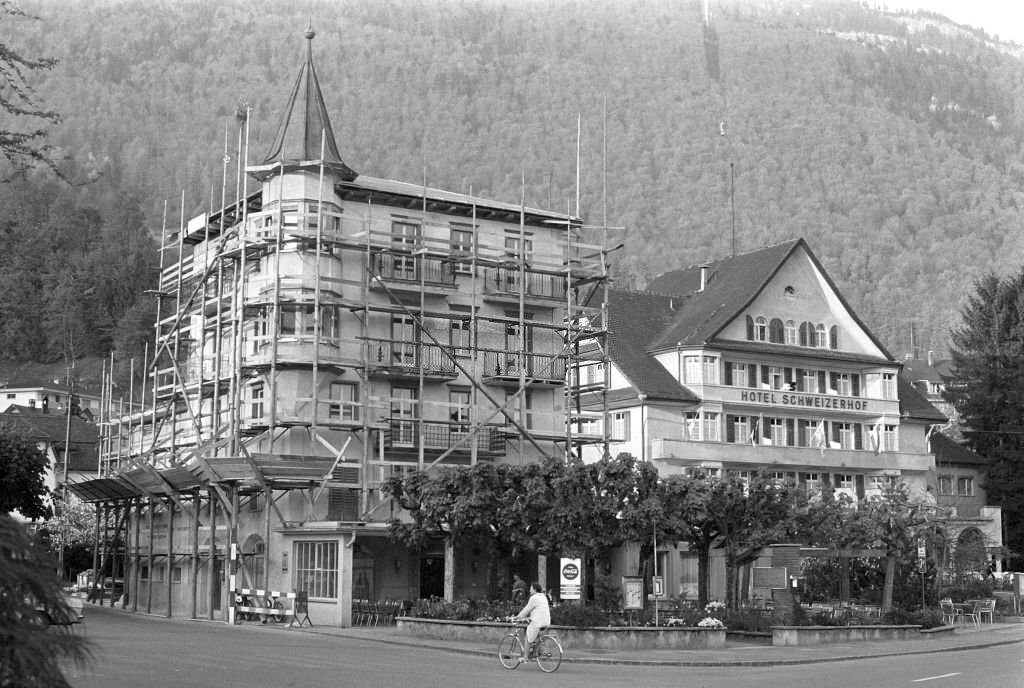
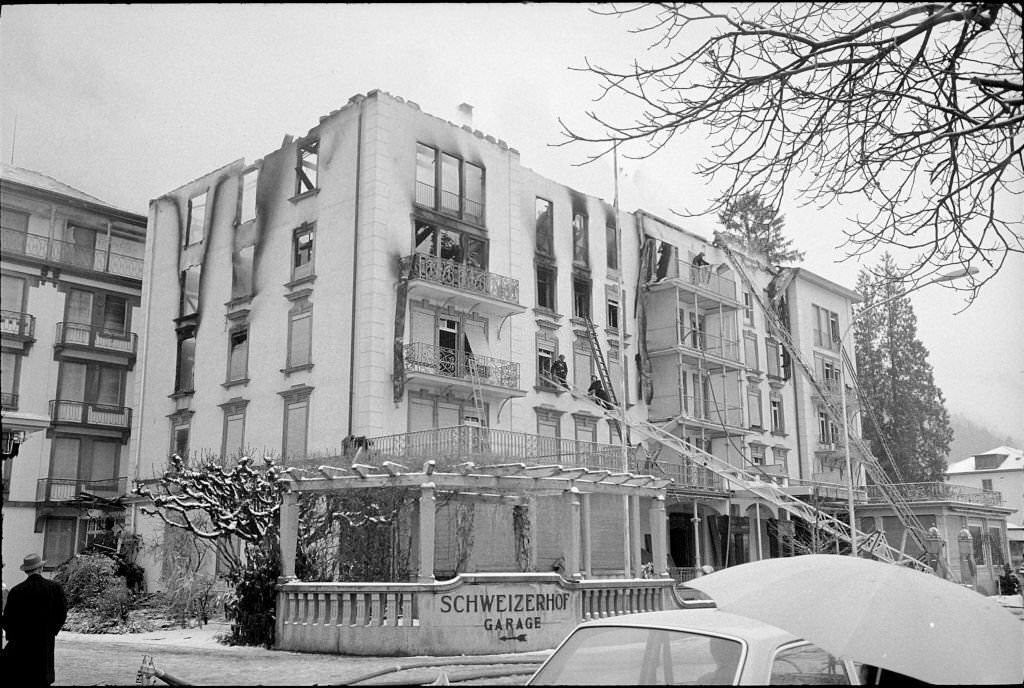
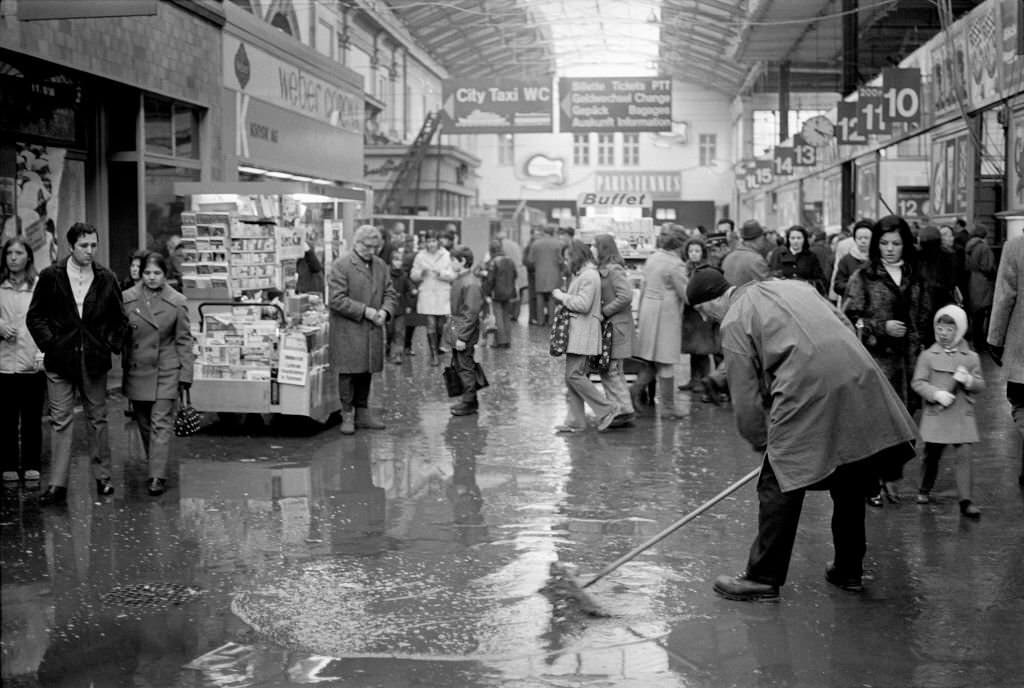
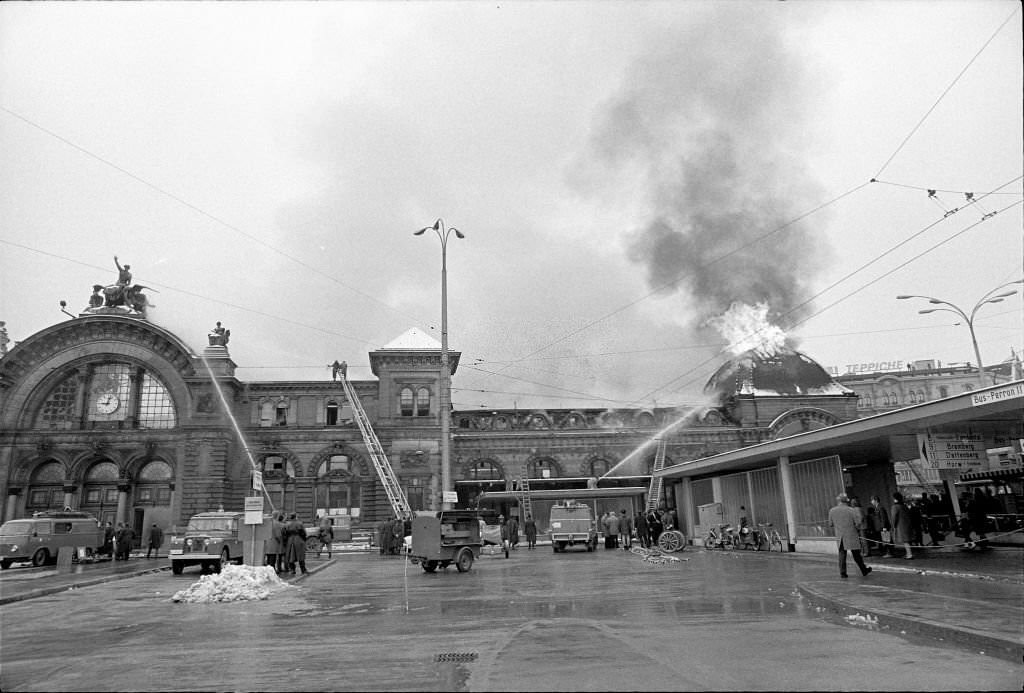
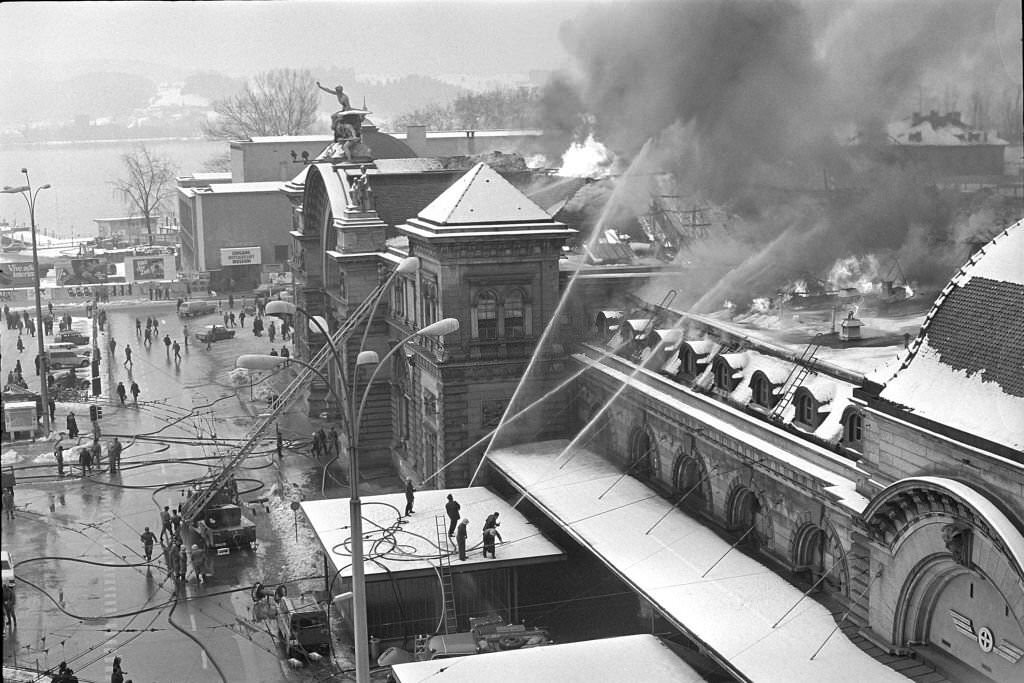
Fire struck two of Switzerland’s most storied buildings in 1971. The Hotel Schweizerhof in Interlaken — one of the great 19th-century grand hotels of the Alps — caught fire and suffered severe damage. Lucerne’s main railway station, a Victorian-era landmark, also burned. The station fire was particularly devastating, destroying much of the historic building and forcing the city into a years-long reconstruction project. Hotel Viktoria in Weggis on Lake Lucerne showed the quieter lakeside hospitality that had made Switzerland’s hotel industry famous.
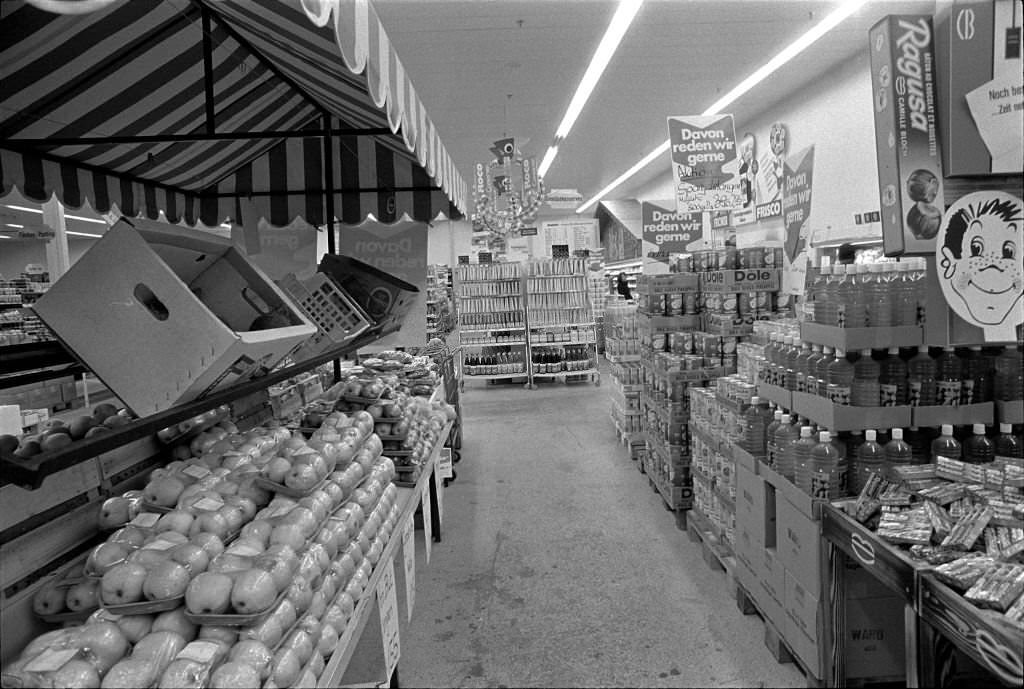
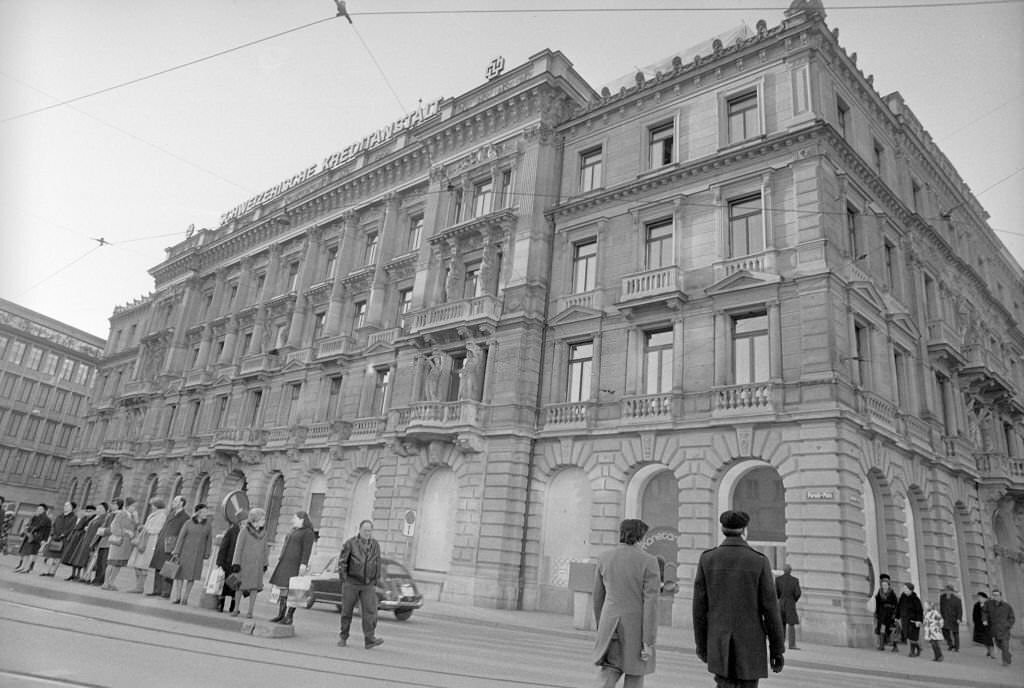
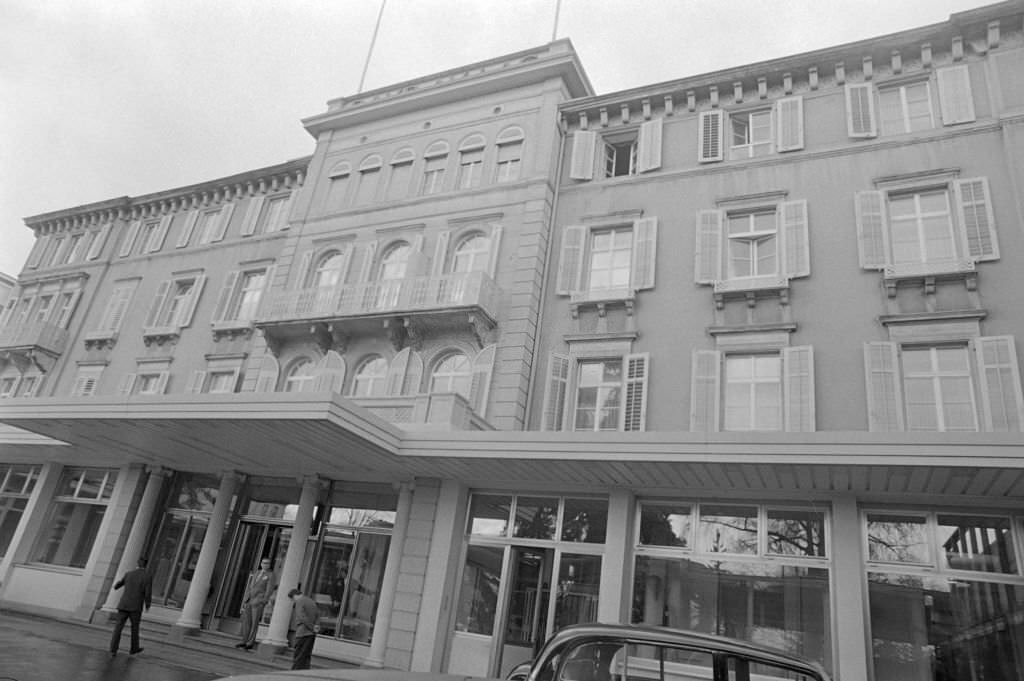
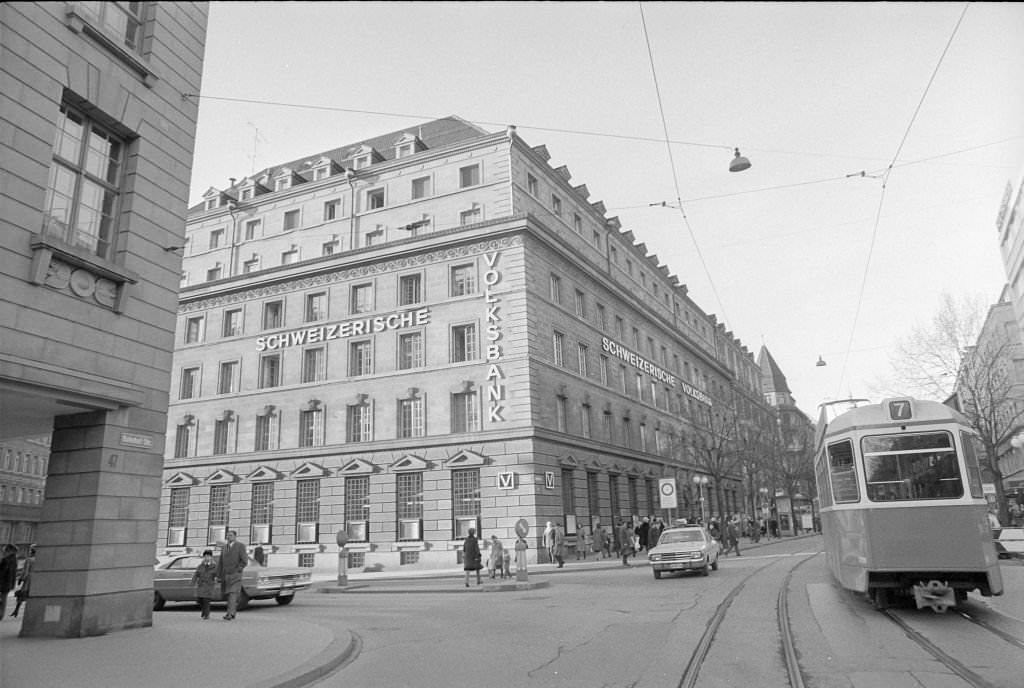
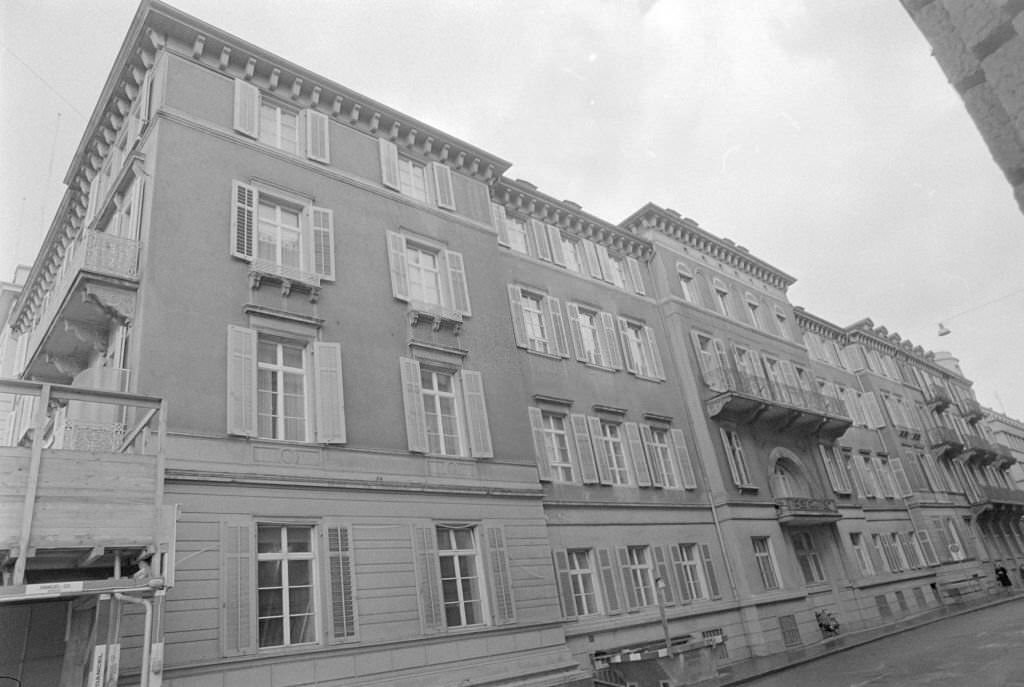
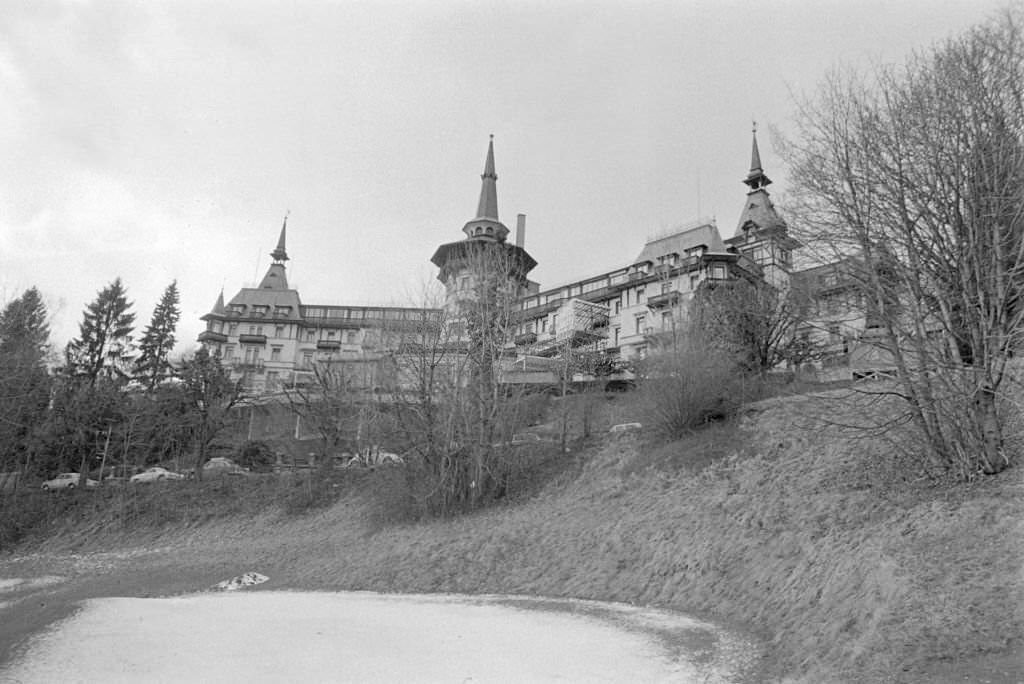
Swiss banking was at full strength in 1971. The Schweizerische Kreditanstalt — later Credit Suisse — and the Schweizerische Volksbank both anchored the Paradeplatz, competing for the deposits and investment portfolios of Swiss and international clients. The Hotel Baur au Lac on Lake Zürich and the Grand Hotel Dolder on the Zürichberg hillside catered to the wealthy visitors and business travelers that Switzerland’s financial reputation attracted. In the suburbs, the Waro shopping center in Volketswil stacked its apples in displays that captured the era’s new approach to retail.
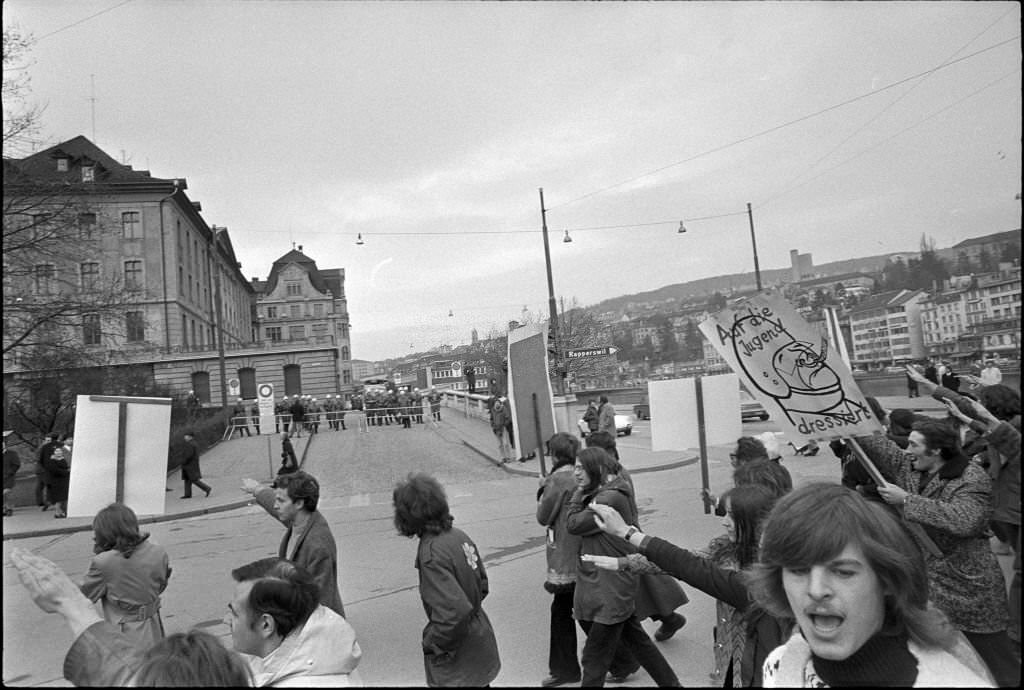
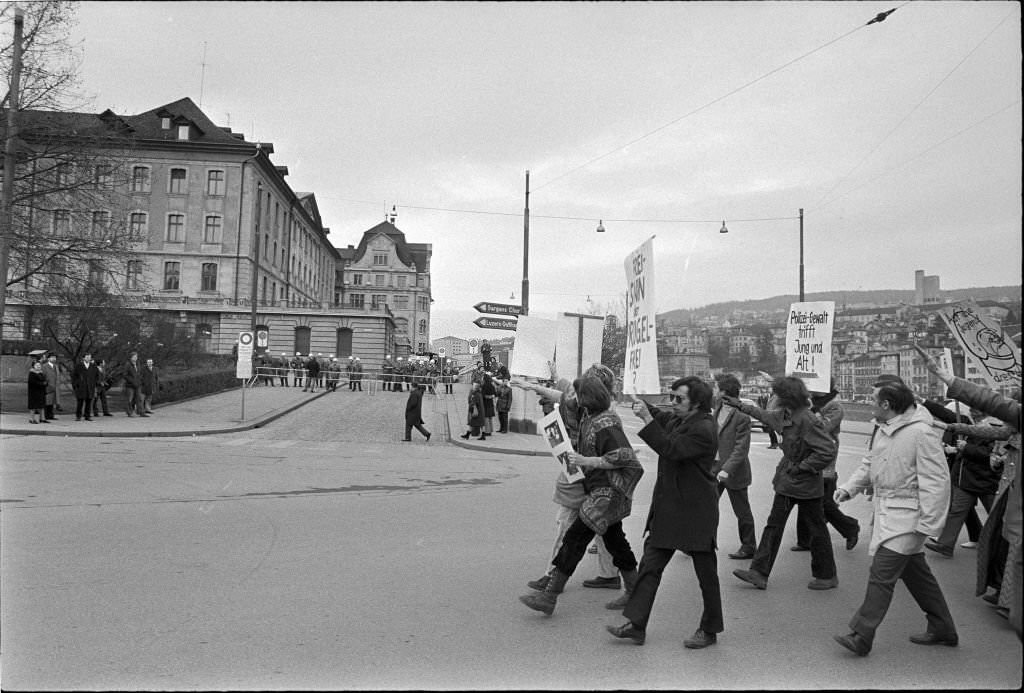
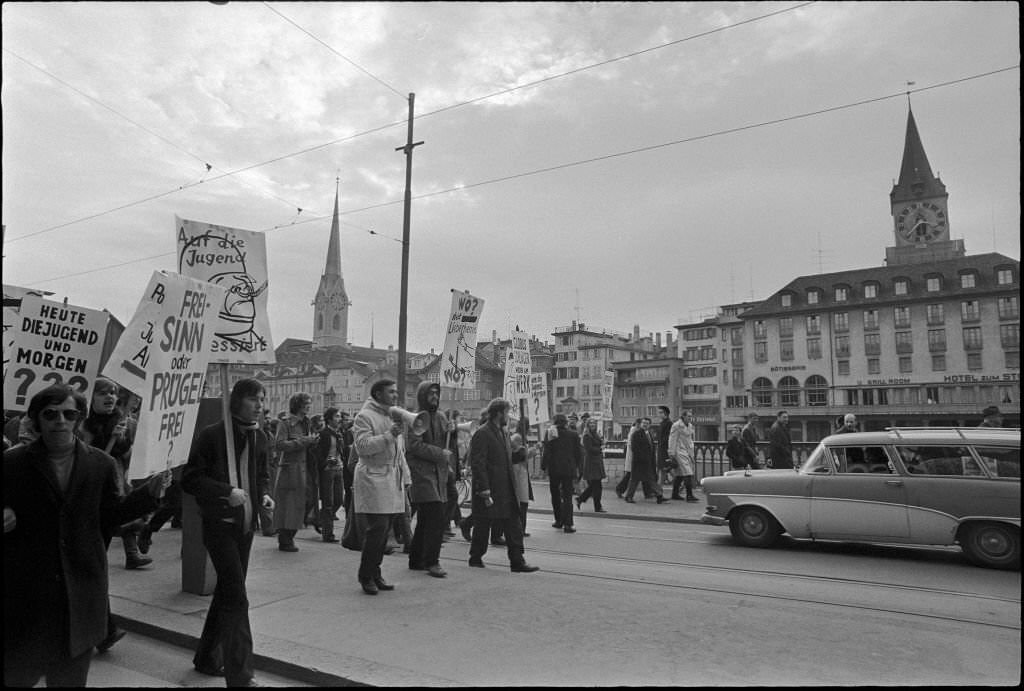
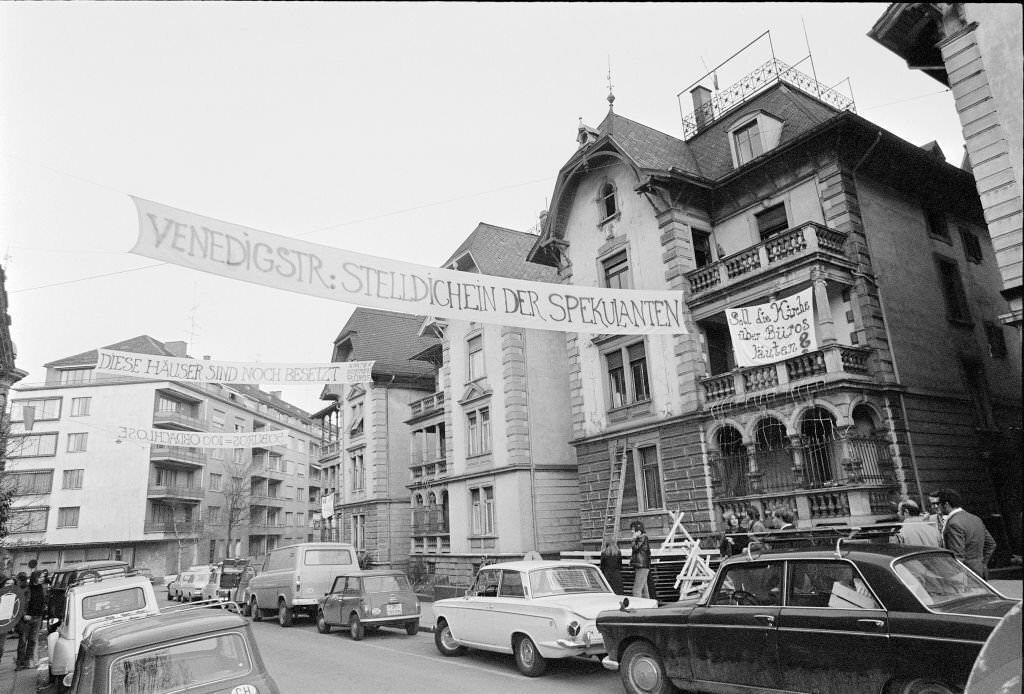
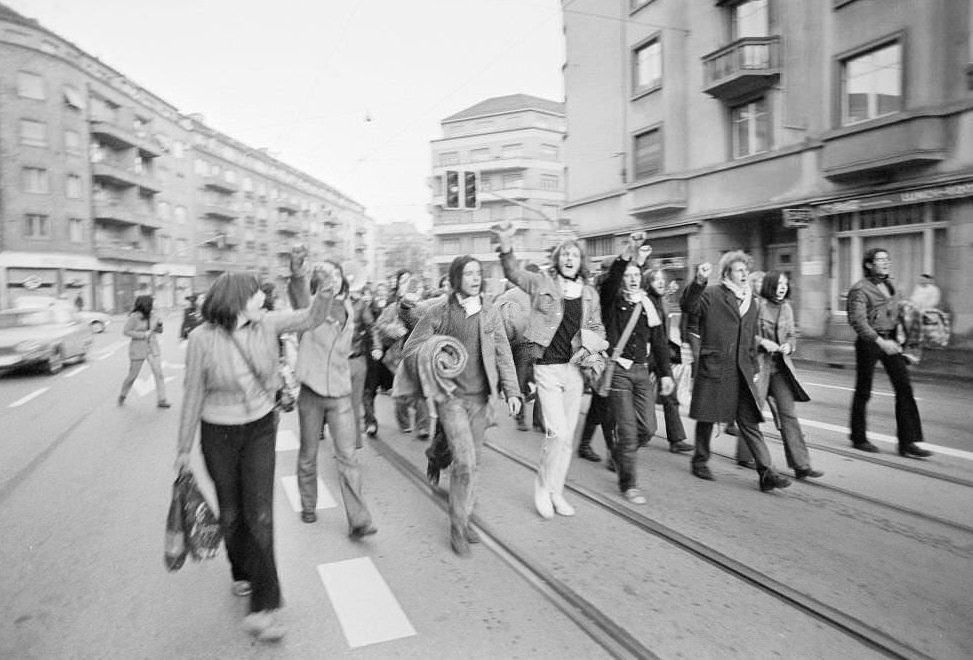
The “Bunkerjugend” — Bunker Youth — was a group of young people in Zürich who occupied an unused civil defense bunker in 1971 and turned it into a youth center, demanding affordable autonomous cultural space in a city they felt was being priced out of their reach. Their demonstrations were part of a broader youth movement that would grow more intense as the decade progressed. Demonstrations in the Venedigstrasse showed the same generation taking their frustrations to the streets in a different part of the city.
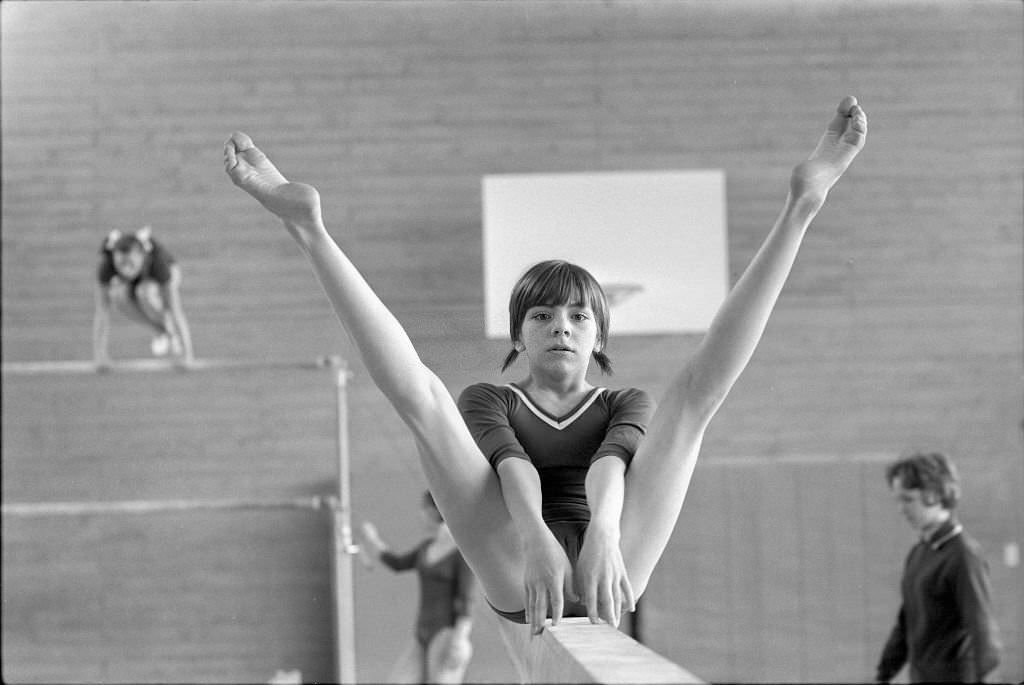
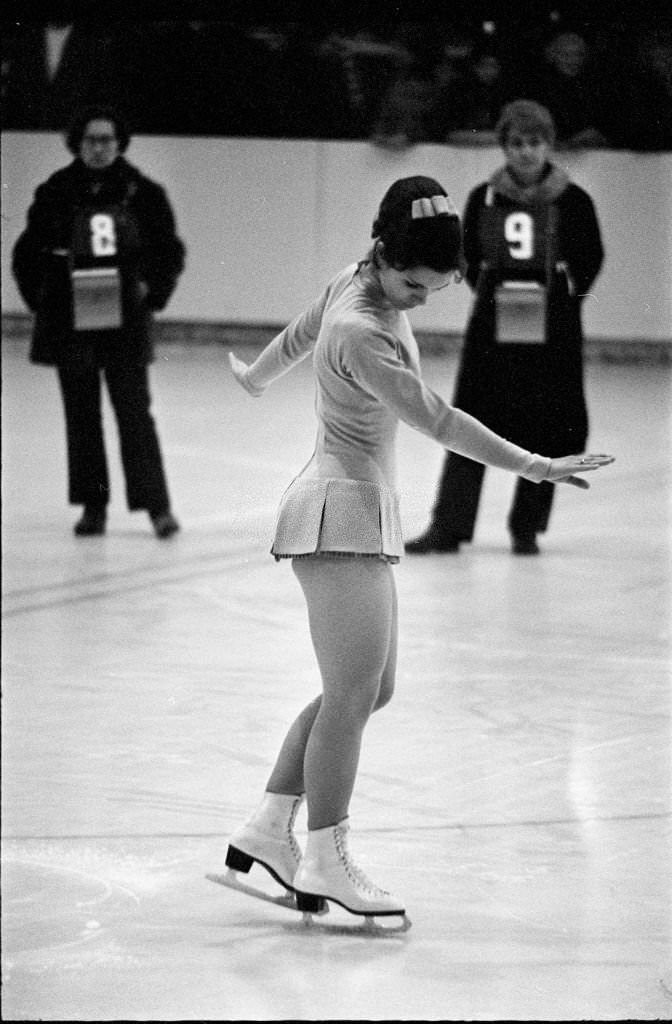
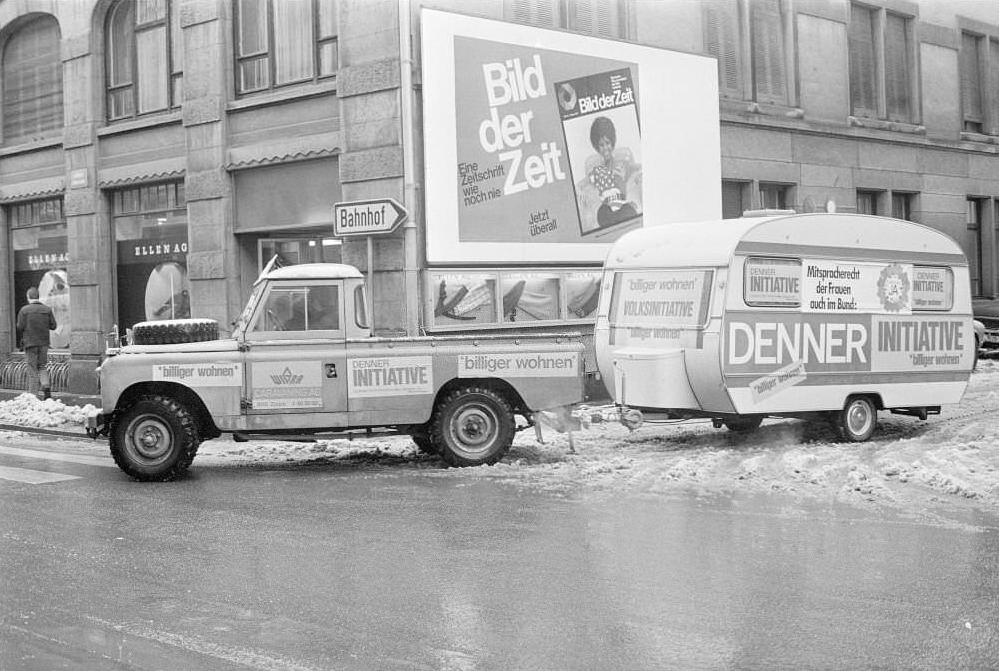
Switzerland’s women’s gymnastics national team trained in 1971 with the precision and discipline that Swiss sport demanded. Zürich hosted European Championship events that drew athletes from across the continent. The Denner supermarket chain pushed a ballot initiative called “Living Cheaper” in 1971, targeting the high cost of Swiss consumer goods and the restrictive pricing practices that kept Switzerland’s prices well above those of its neighbors.
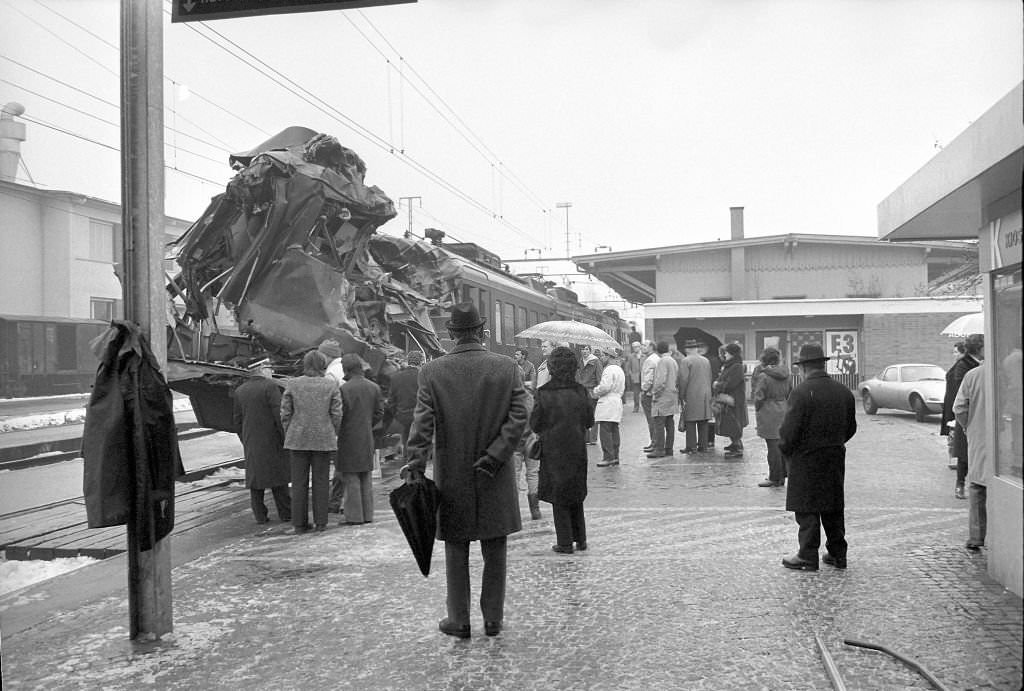
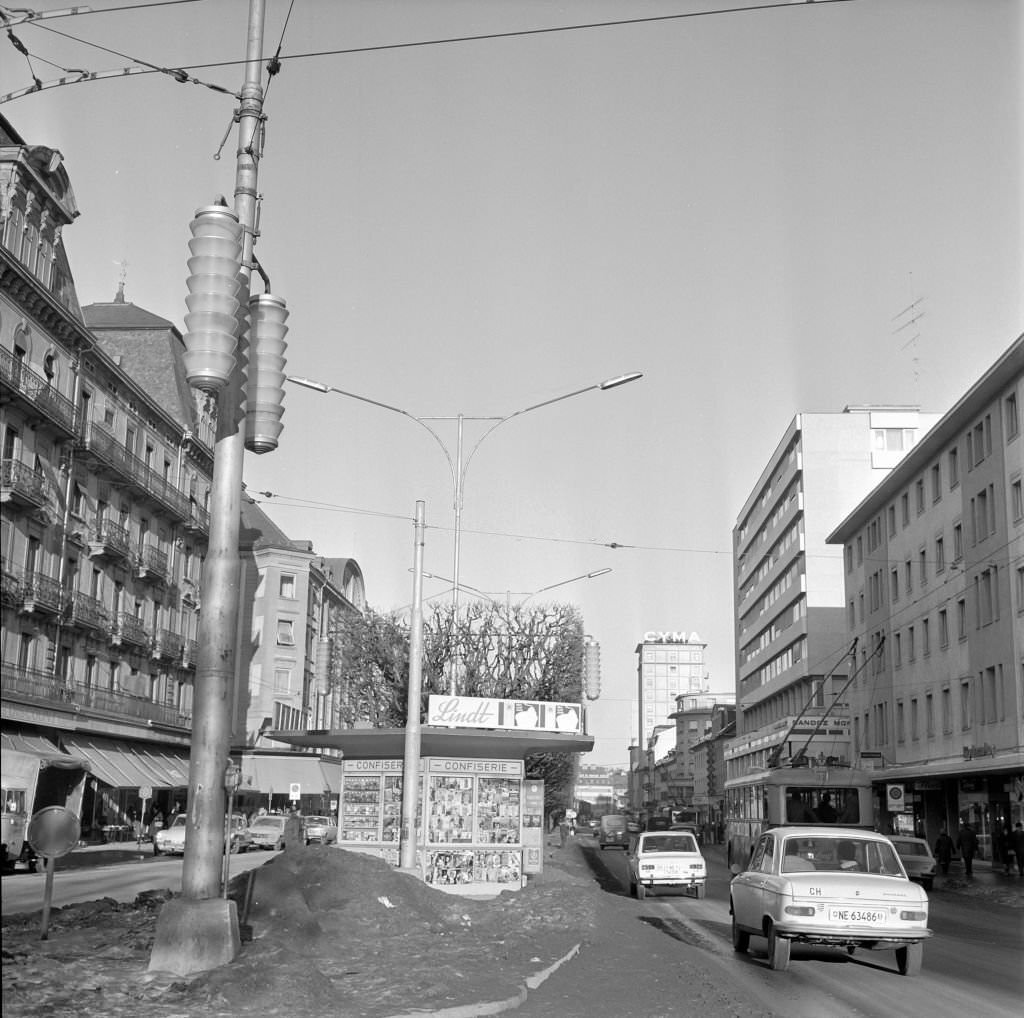
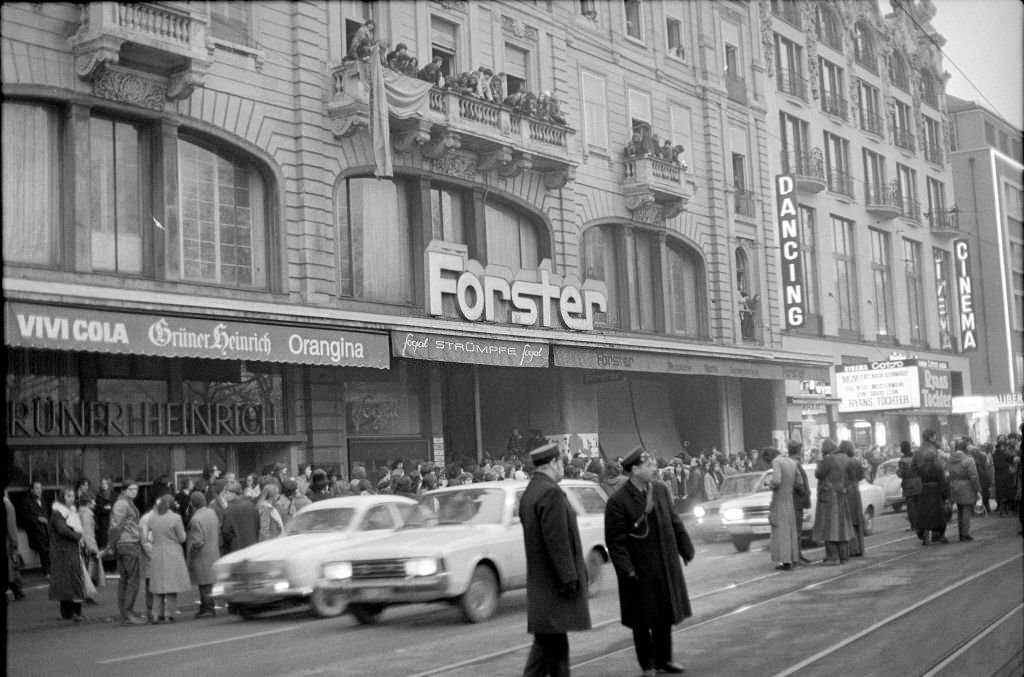
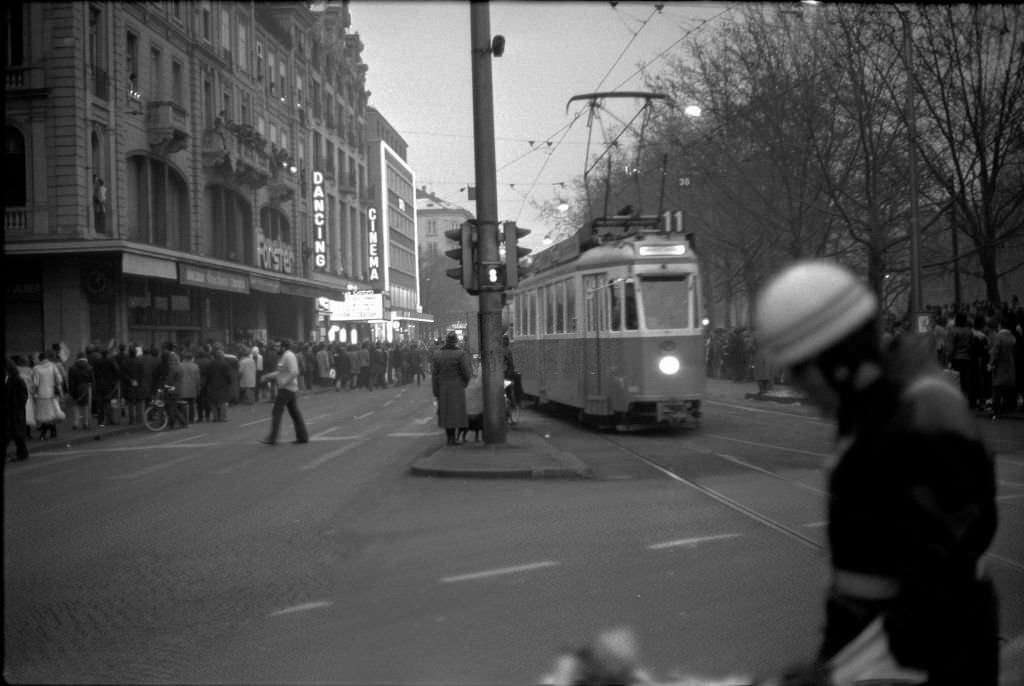
A railway accident at Feldmeilen on the eastern shore of Lake Zürich in 1971 disrupted one of the country’s most heavily used suburban rail corridors. La Chaux-de-Fonds in the canton of Neuchâtel was the center of Switzerland’s watchmaking industry — a city that had been purpose-built for industrial production on a grid plan that was unlike anywhere else in the country. The Autonome Republik Bunker in Zürich — the same underground space claimed by the Bunker Youth — became a symbol of the generation’s demand for independent cultural space.
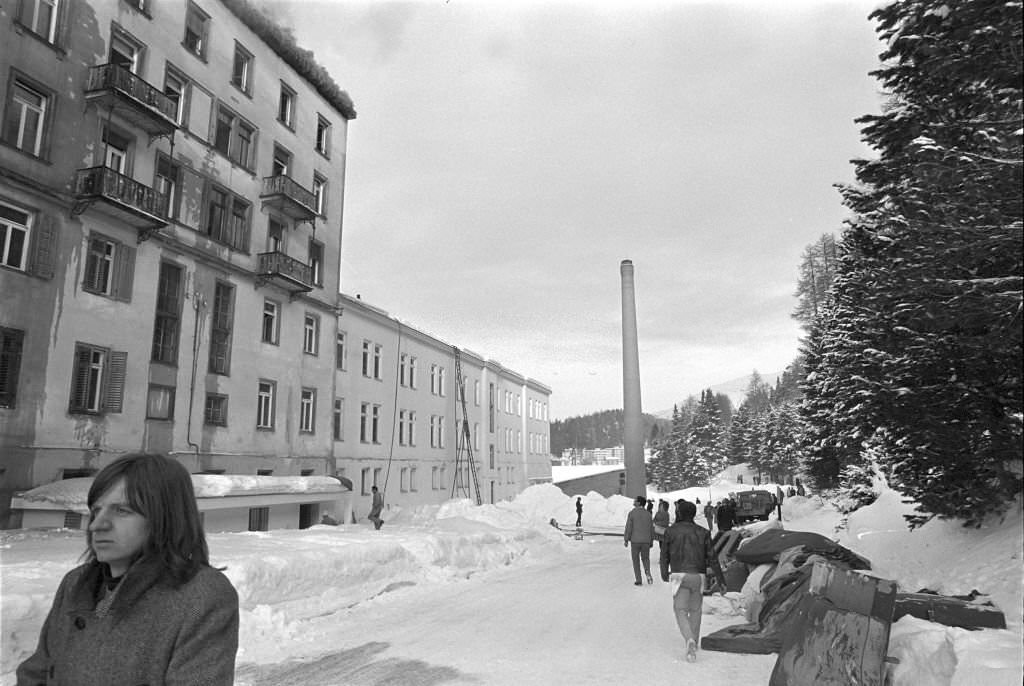
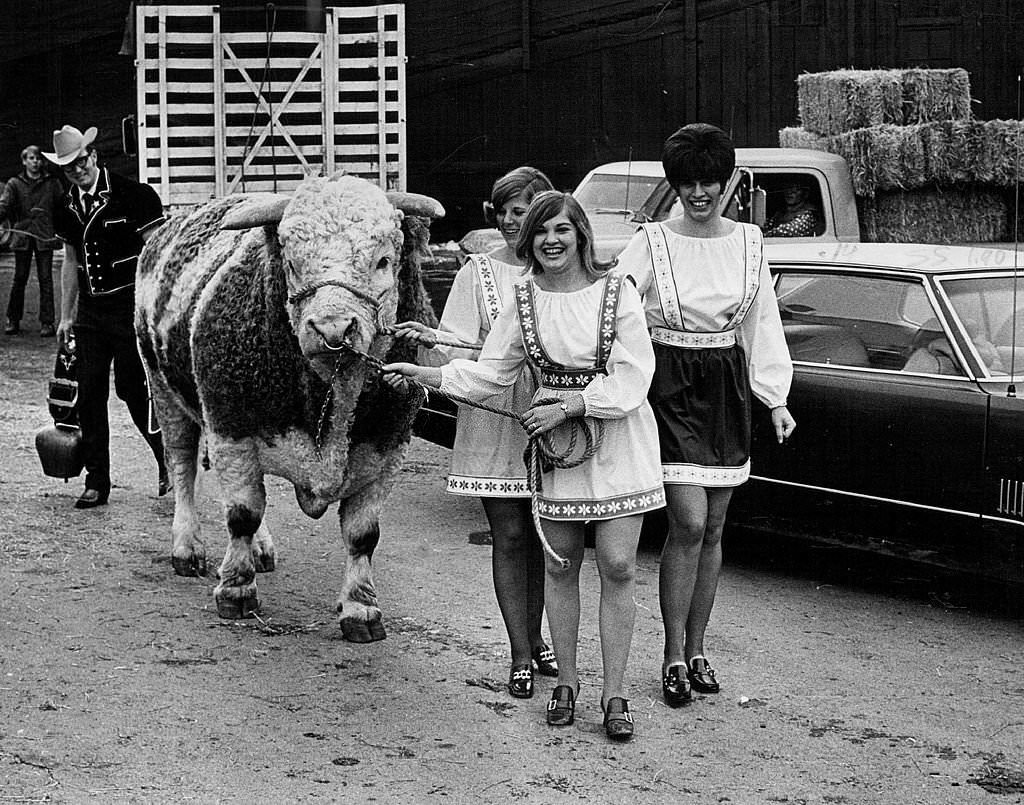
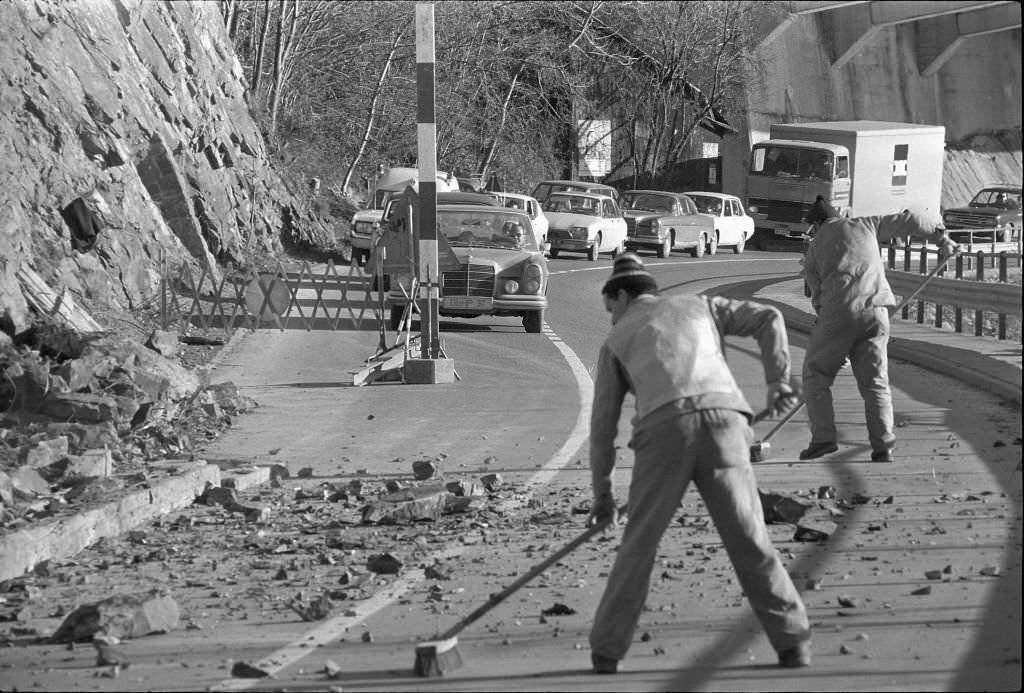
A hotel fire in St. Moritz left a scene of frozen water and ice-encrusted walls in its aftermath — firefighting water that had frozen overnight in the alpine cold. The Axenstrasse along the southern shore of Lake Lucerne had to be cleared after a rockfall in 1971, a recurring problem on one of Switzerland’s most scenic but geologically unstable mountain roads. Three Swiss women working at an American event abroad prepared for a livestock show — an unusual image of Swiss women representing their country internationally.
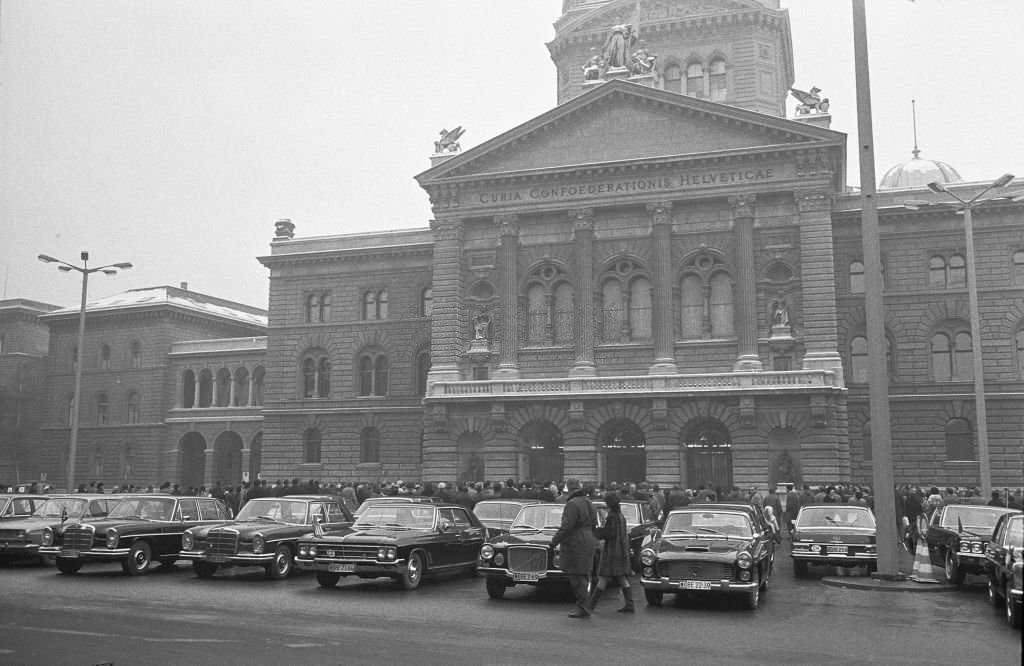
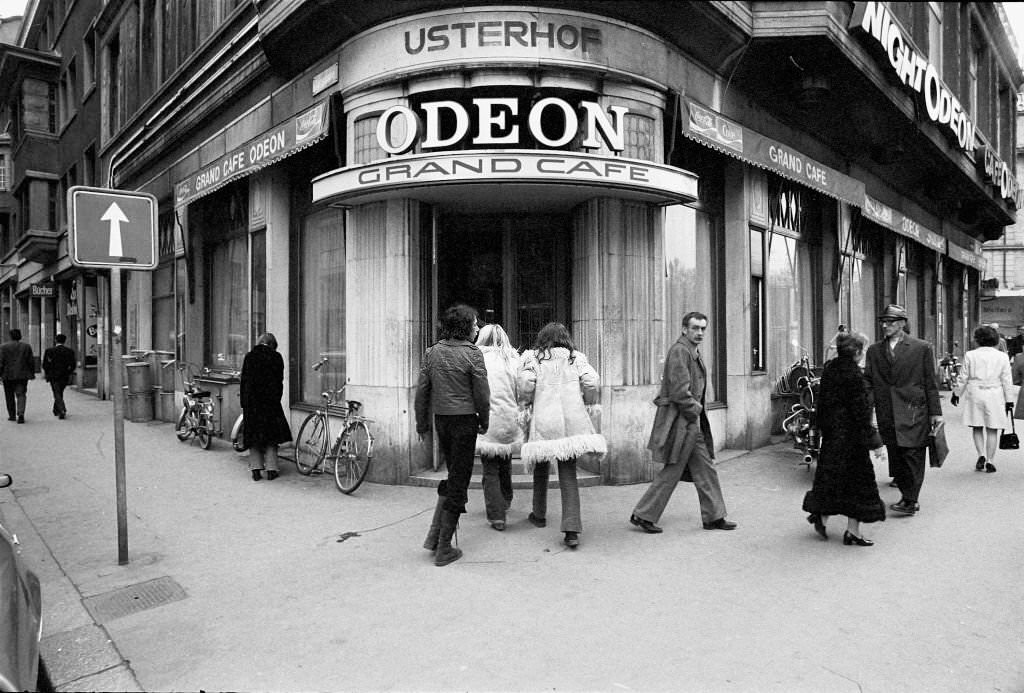
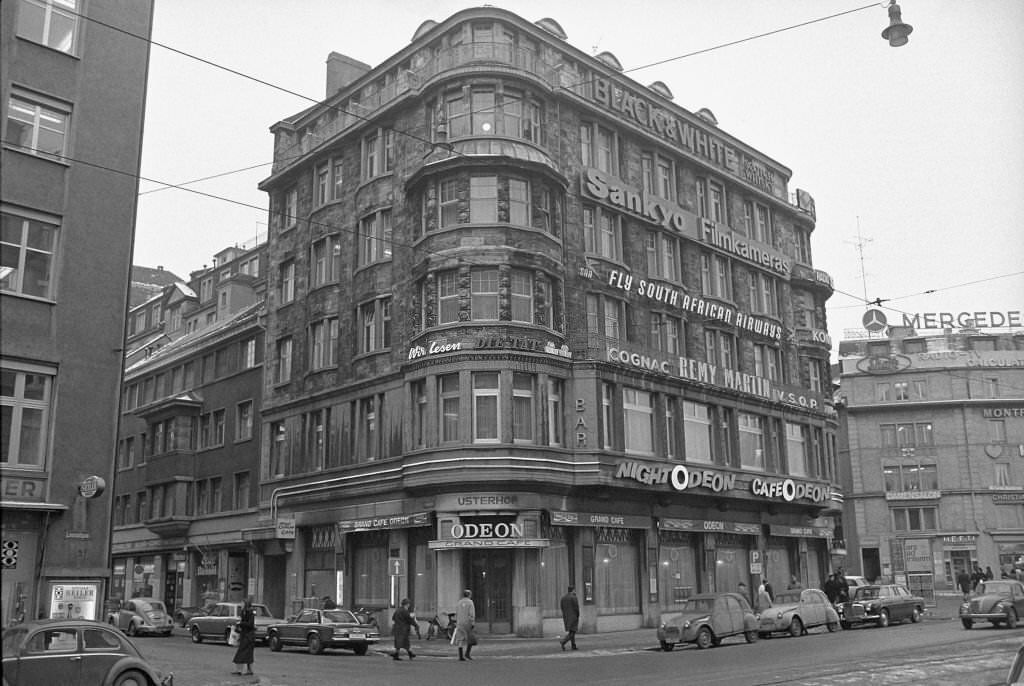
The New Year reception at the Federal Palace in Berne opened 1971 with the formality expected of Swiss political life. The Café Odeon in Zürich was one of the city’s oldest and most historically significant cafés — a place where Lenin had once sat reading newspapers during his Zürich exile, and where artists, politicians, and intellectuals still gathered half a century later. In 1971, its art nouveau interior remained intact, drawing guests who came as much for the atmosphere as the coffee.
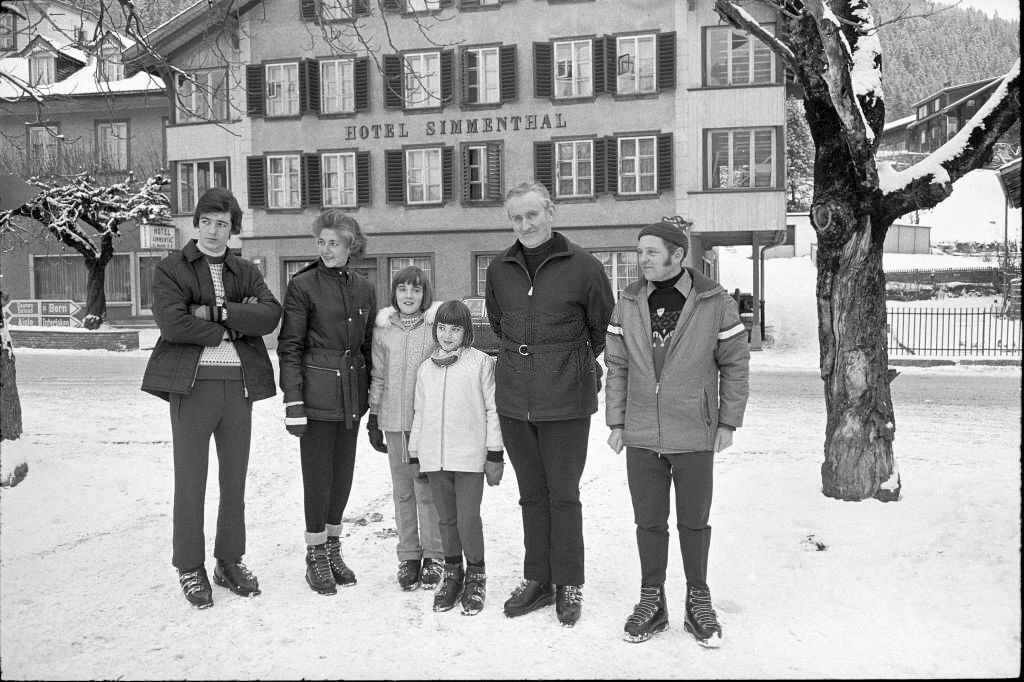
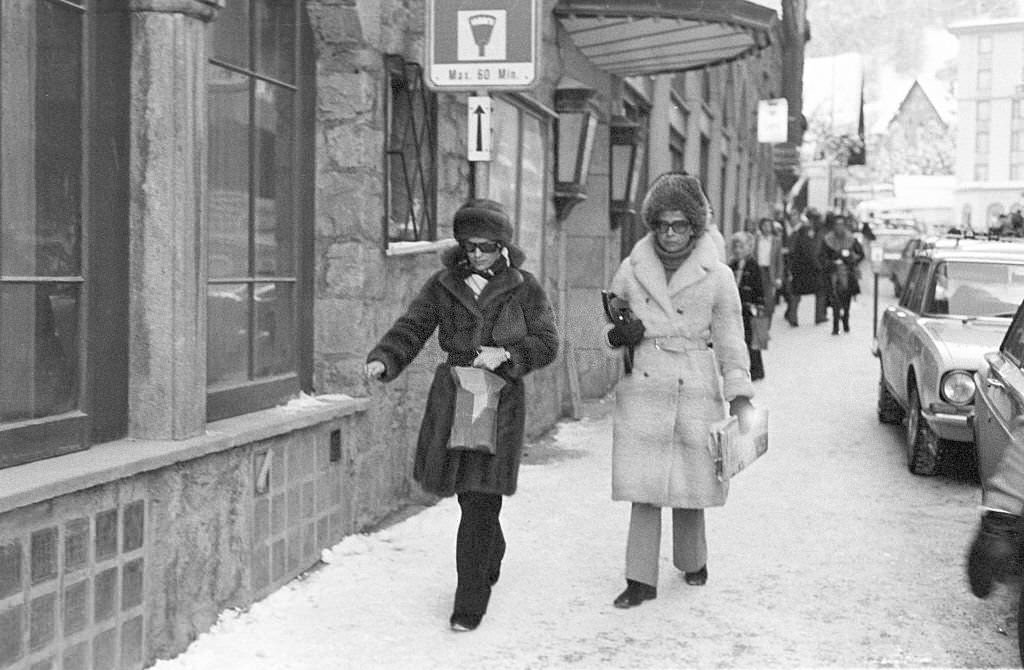
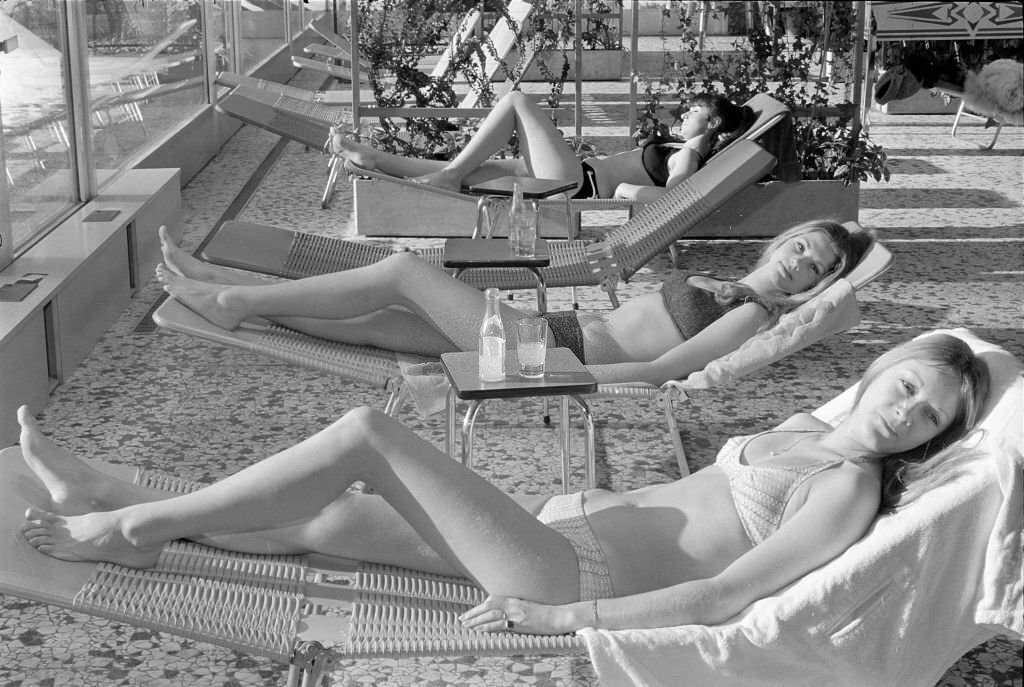
Switzerland’s alpine resorts attracted powerful and famous visitors throughout the decade. Northern Ireland’s Prime Minister James Chichester-Clark vacationed in Gstaad in 1971, seeking the discretion that Swiss resorts offered even to leaders whose political situations were deeply troubled. Austrian-French actress Romy Schneider was photographed in St. Moritz during the decade, one of many European celebrities who made the Engadin resort a winter destination. In Flims, women relaxed under artificial UV lamps at a mountain sun terrace — an early version of the wellness tourism that Swiss resorts had begun to develop.
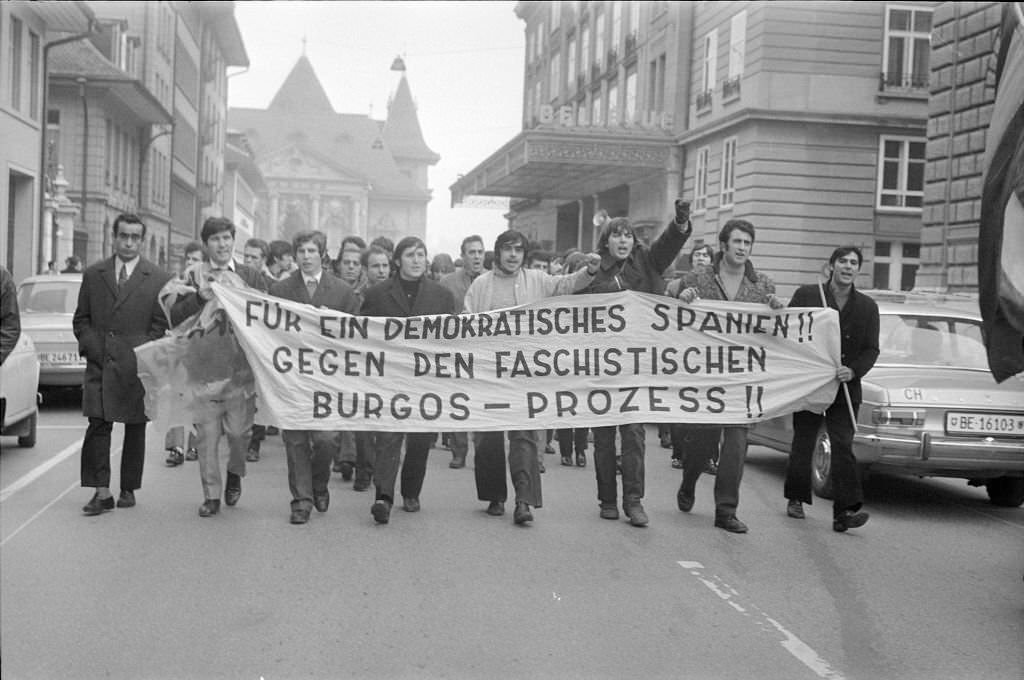
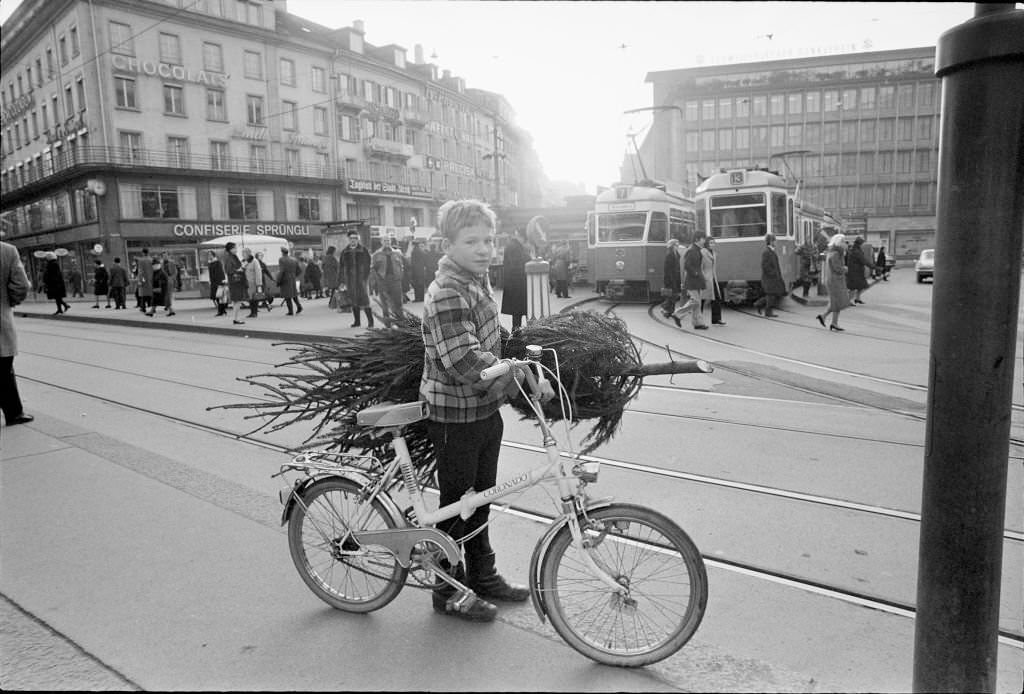
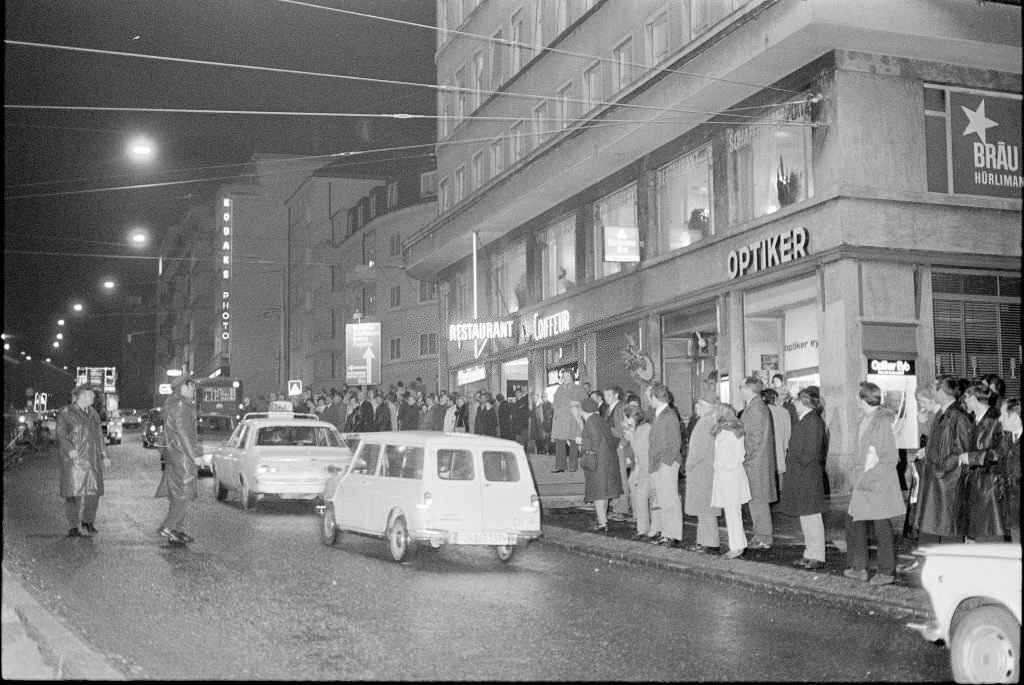
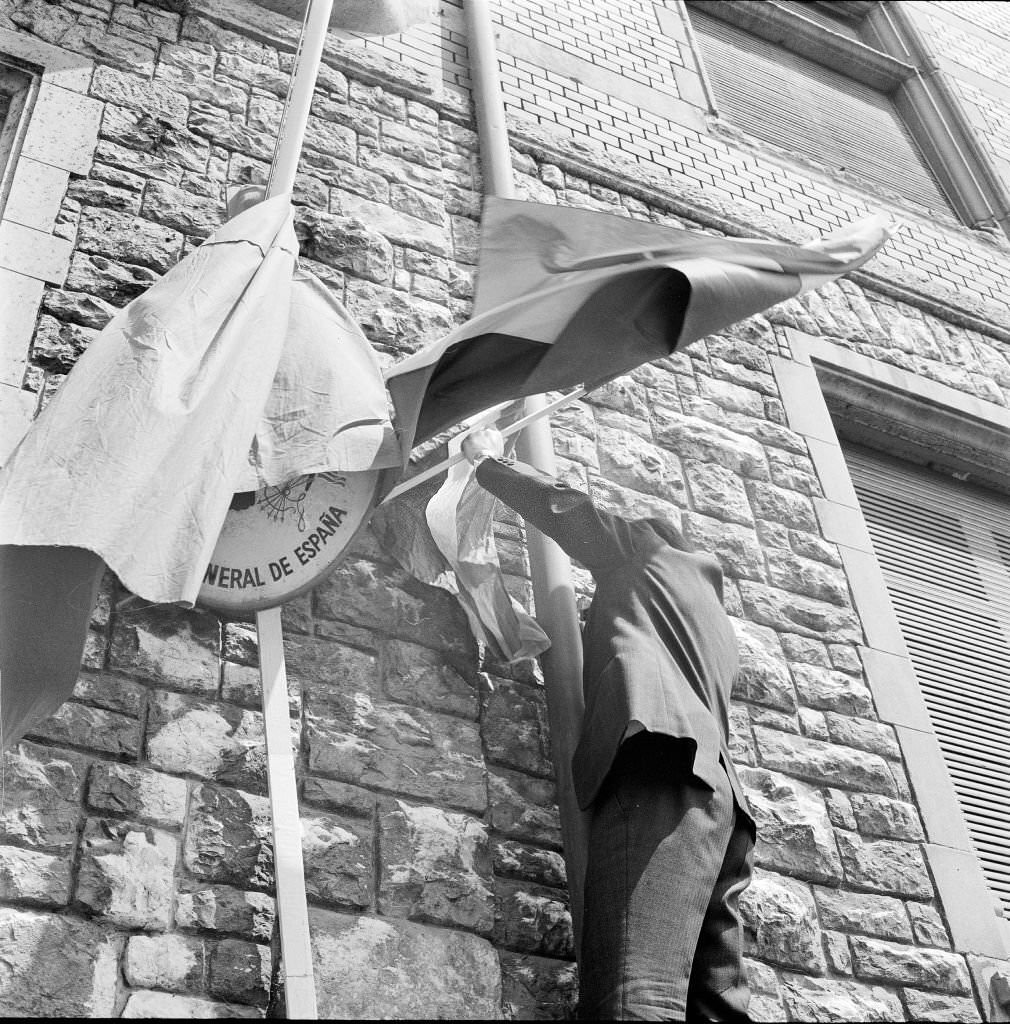
Protesters in Berne demonstrated against the Franco regime in Spain in 1970, targeting the Spanish government’s human rights record. Switzerland’s neutrality did not stop its citizens from taking public positions on the politics of neighboring countries. At Zürich’s Paradeplatz, the Hells Angels motorcycle club staged a Christmas charity action — an event that drew as much attention for its participants as for its cause. Another burst pipe at Schaffhauserplatz sent water across the pavement for the second time that year.
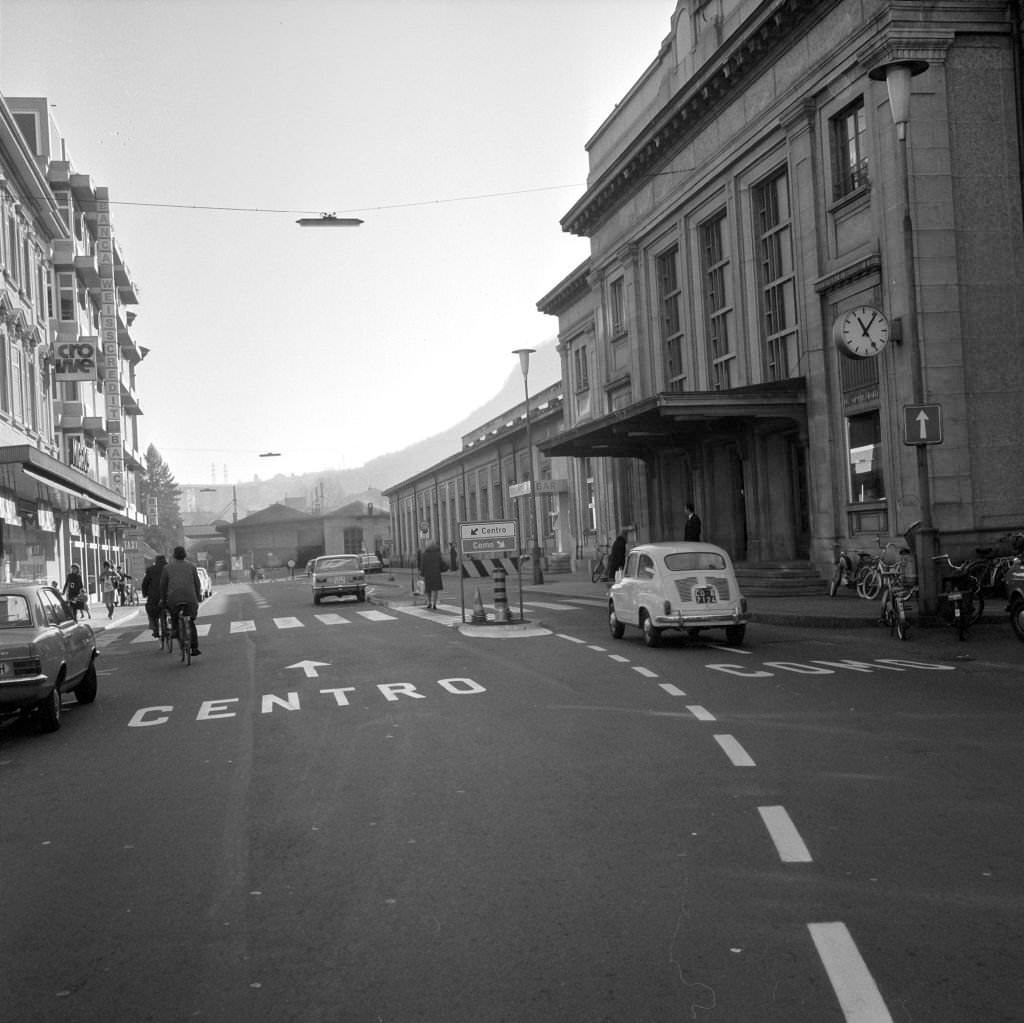
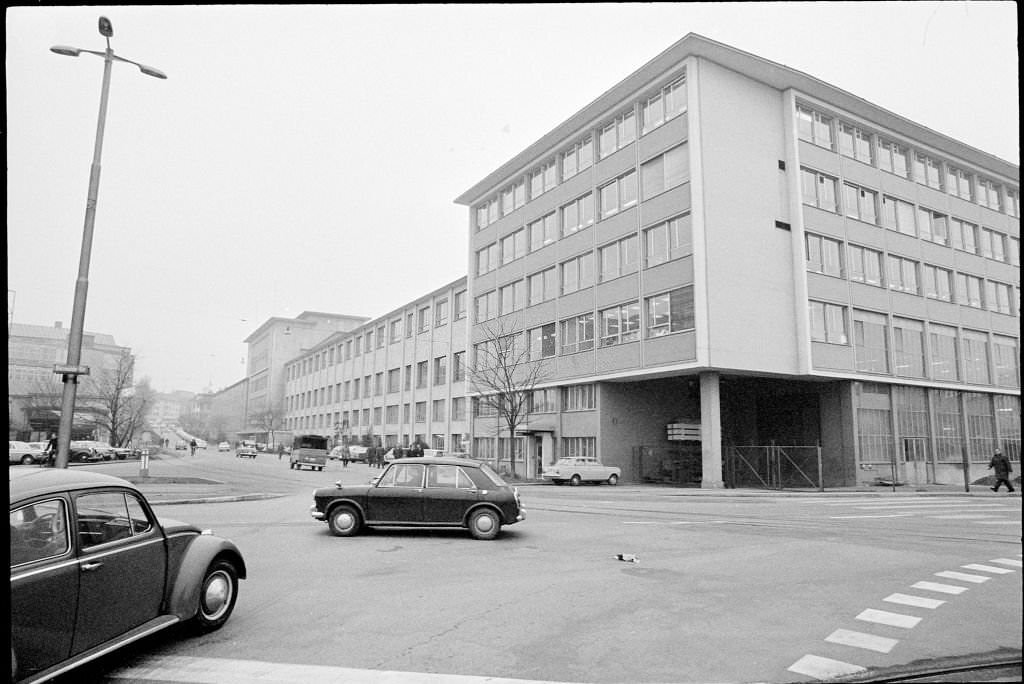
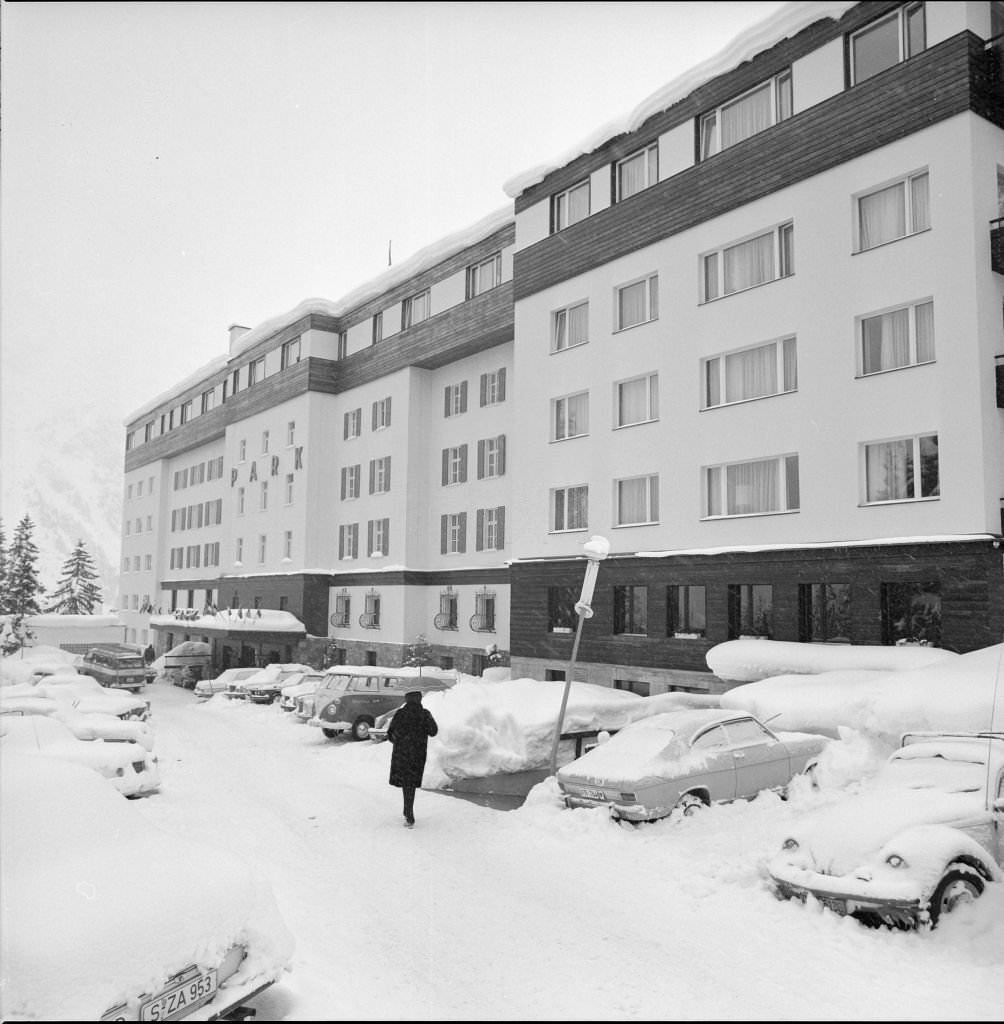
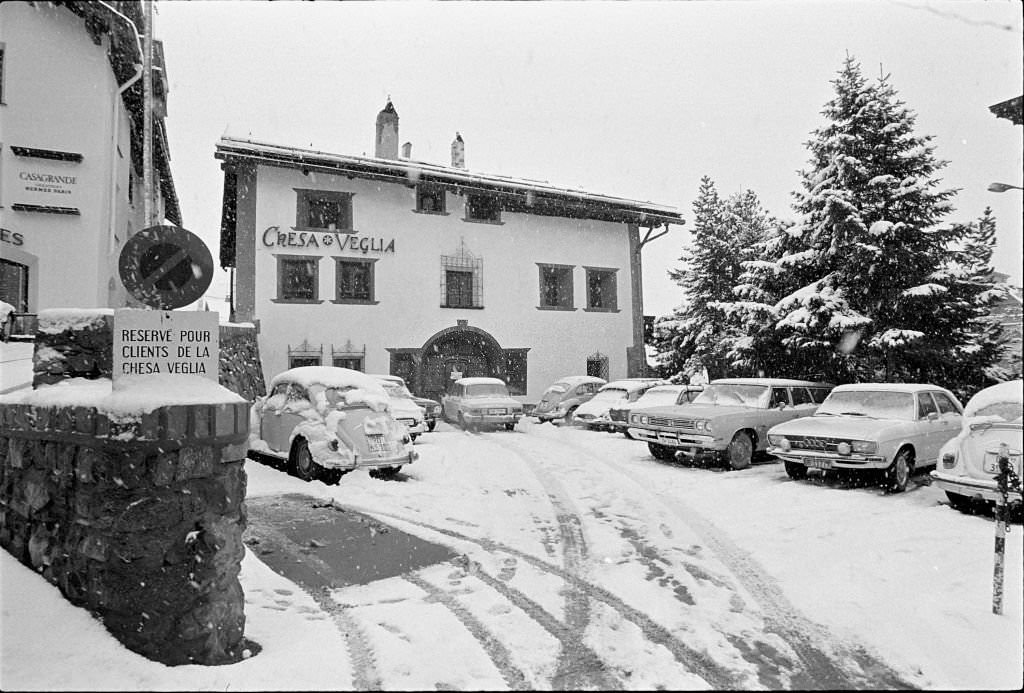
Chiasso railway station sat on the Italian border in Ticino — the first Swiss stop for trains coming up from Milan and the last before Italy for trains heading south. It was one of the country’s busiest freight crossings. St. Moritz, at the other end of the social spectrum, offered the Park Hotel and the Chesa Veglia restaurant to its wealthy guests, maintaining the alpine luxury that had made the Engadin valley famous since the 19th century.
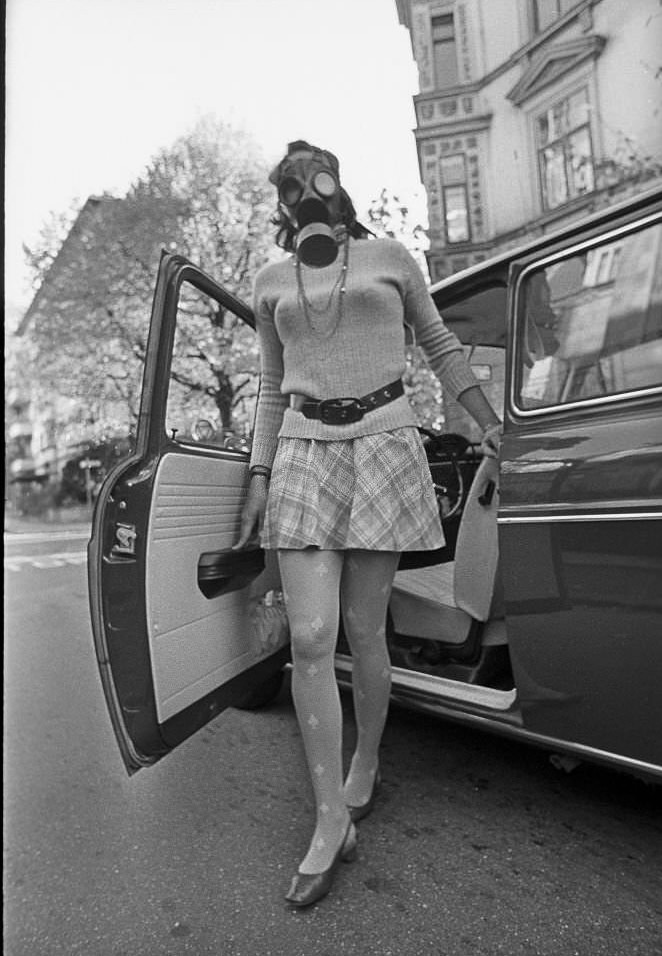
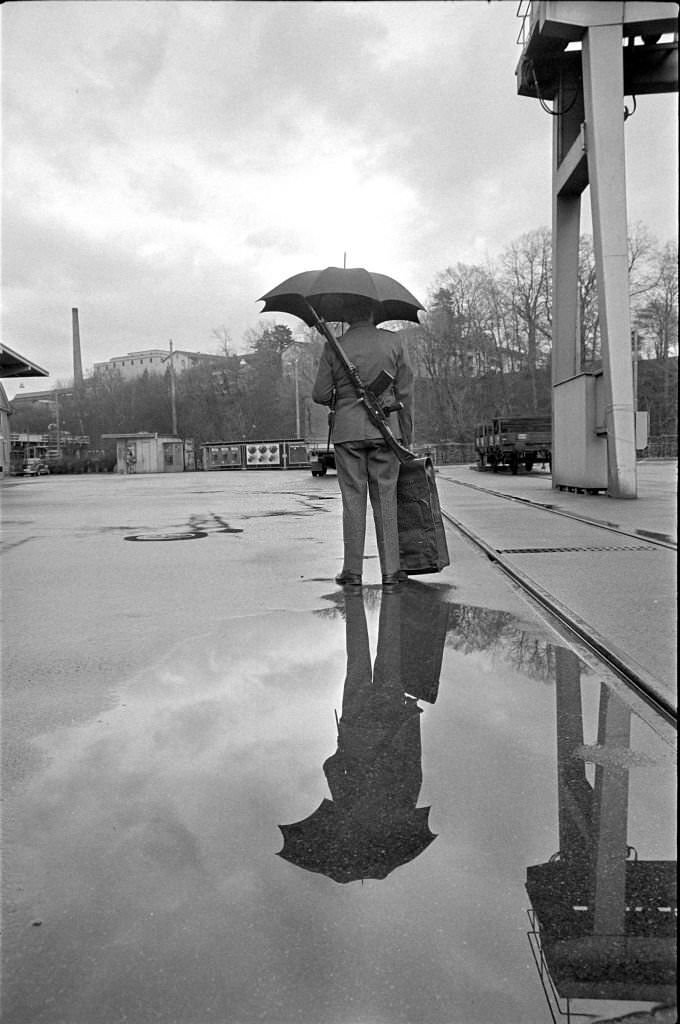
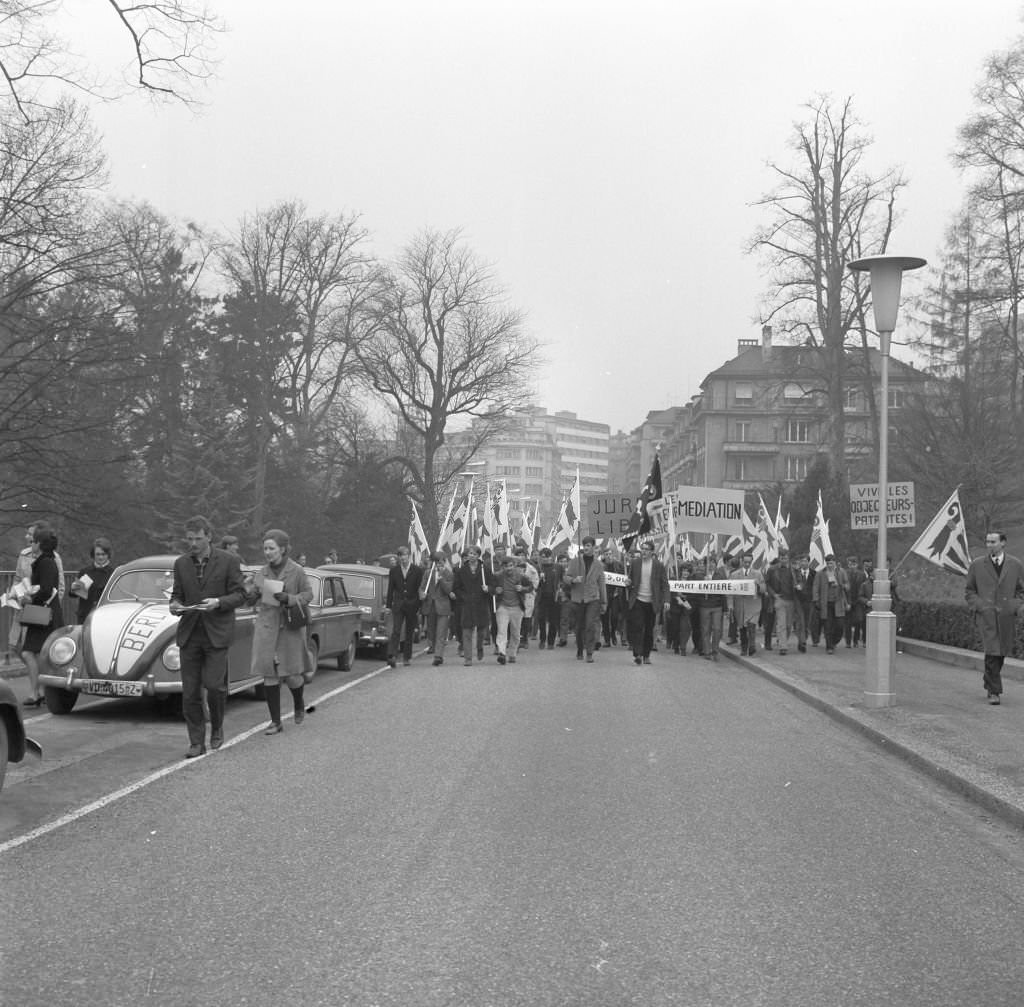
A young woman stepping out of her car wearing a gas mask made a pointed statement about air pollution in 1970 — the kind of provocation that the environmental movement used to draw attention to the problem. Car exhaust, industrial emissions, and chemical plants had made air quality a serious issue in Swiss cities. Jura separatists demonstrated and collectively refused military service in 1970, escalating their campaign for a separate canton. Swiss soldiers were photographed sheltering under umbrella-equipped helmets — a practical adaptation to the country’s wet alpine weather.
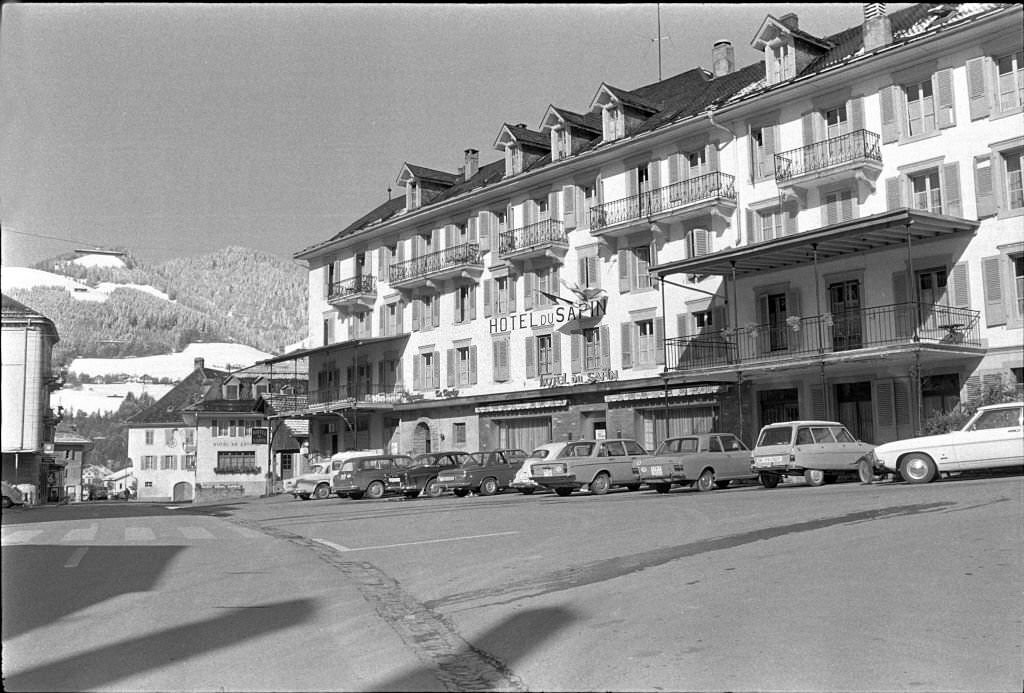
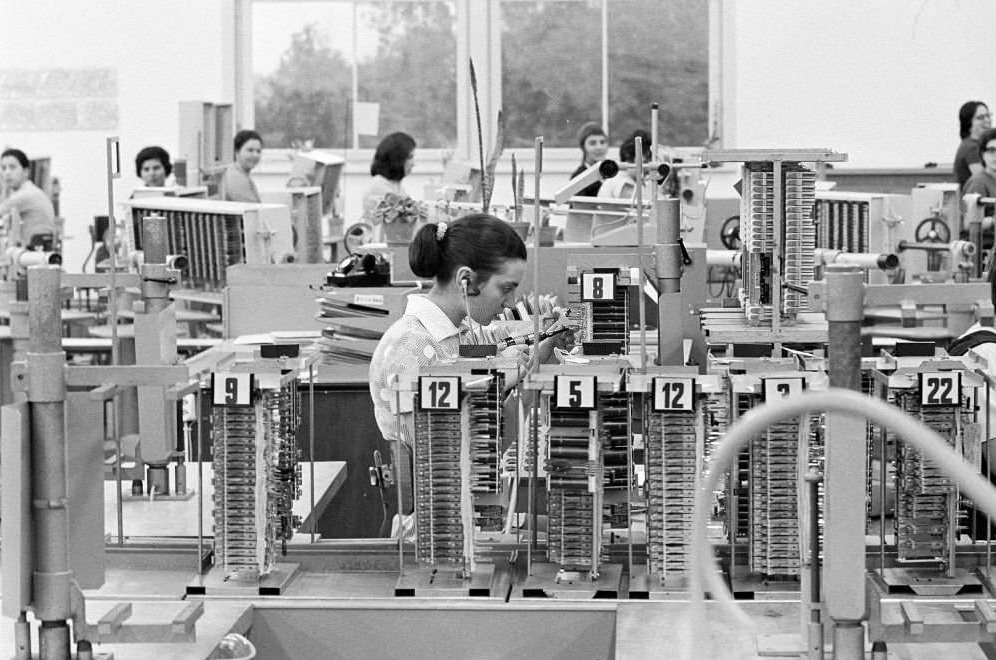
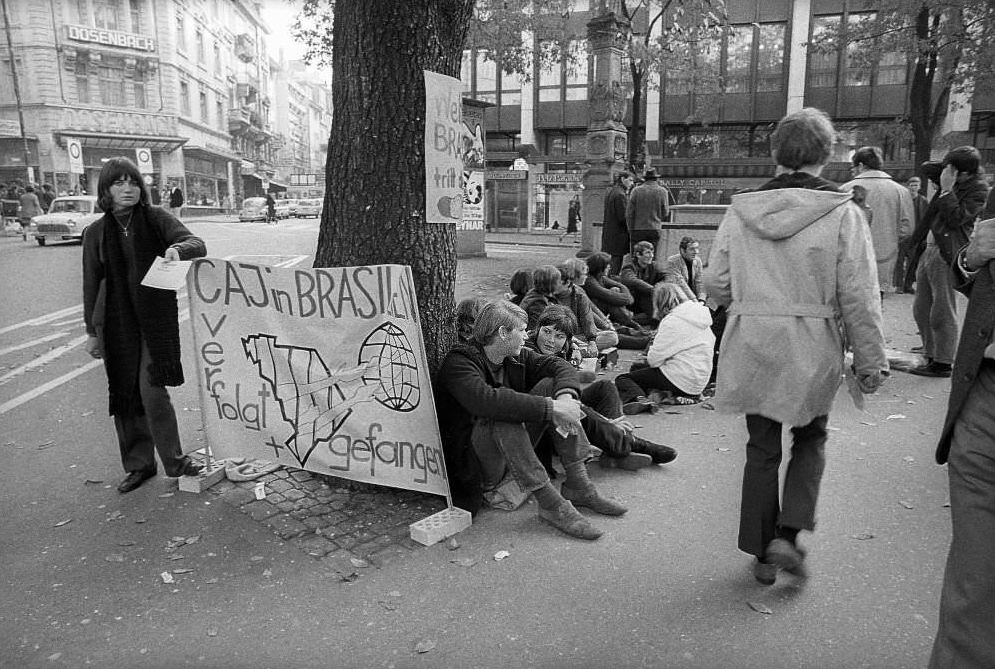
The Hotel du Sapin in Charmey in the Gruyère region of Fribourg offered the simple mountain hospitality that characterized the pre-alpine zone south of Berne. Standard Telephone and Radio AG in Wädenswil on Lake Zürich was part of the international electronics industry that had established itself in Switzerland during the postwar years. Protesters took to Swiss streets during the decade to oppose human rights abuses in other countries — a reminder that Switzerland’s political neutrality never stopped its citizens from holding and expressing strong moral views about the world beyond their borders.




