Hey There! Before You Go. 😧
Get the best vintage content straight into your inbox!

Don't worry, we don't spam

Fascinating Historical Photos Of St. Louis From The Early 20th Century

St. Louis stands as Missouri’s second-largest city, and its roots run deep. Long before European settlers arrived, Native Americans called the area home. By the mid-19th century, waves of German immigrants transformed the city entirely. The population jumped from roughly 20,000 in 1840 to more than 160,000 by the end of the 1860s — a staggering change in just three decades.

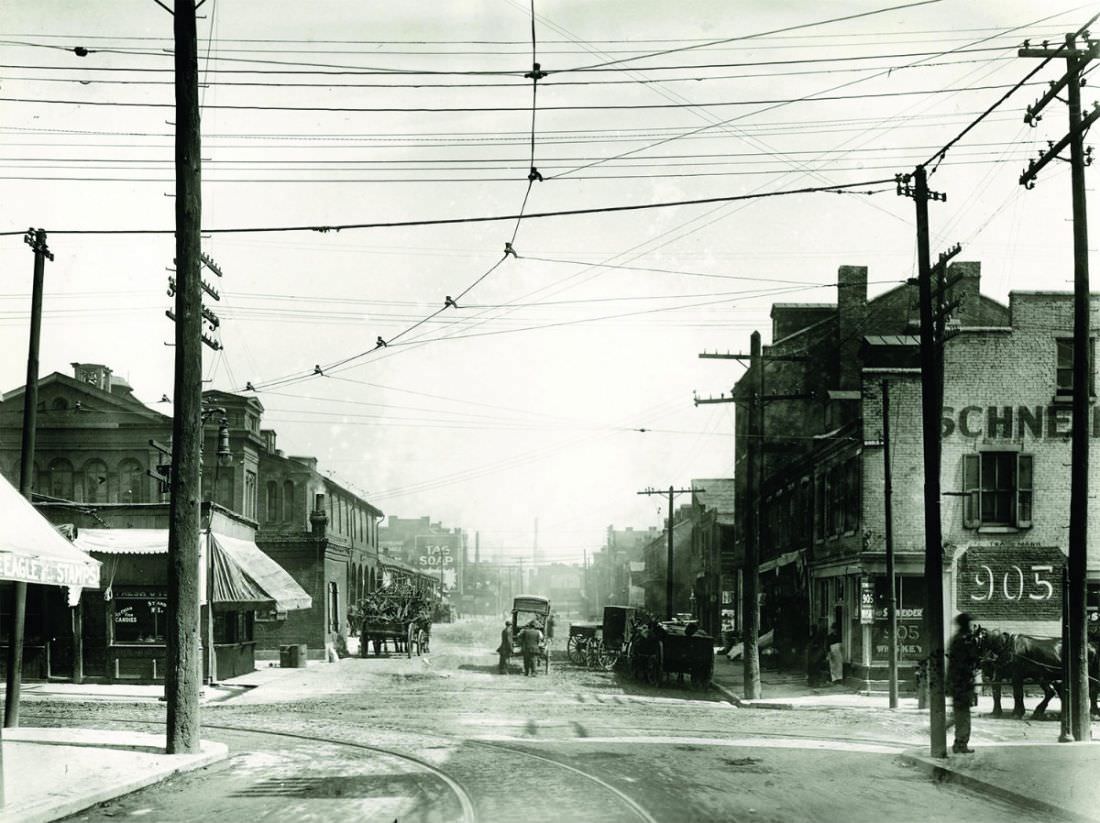
After the Civil War, St. Louis built out its railroad network and diversified its industries. Flour milling, machining, slaughtering, papermaking, tobacco processing, brewing, and whiskey distilling all took hold in the city. These weren’t small operations — they defined the economic identity of St. Louis for generations. The city’s downtown streets bustled with workers, merchants, and vendors of every kind, as the photographs from around 1900 clearly show.
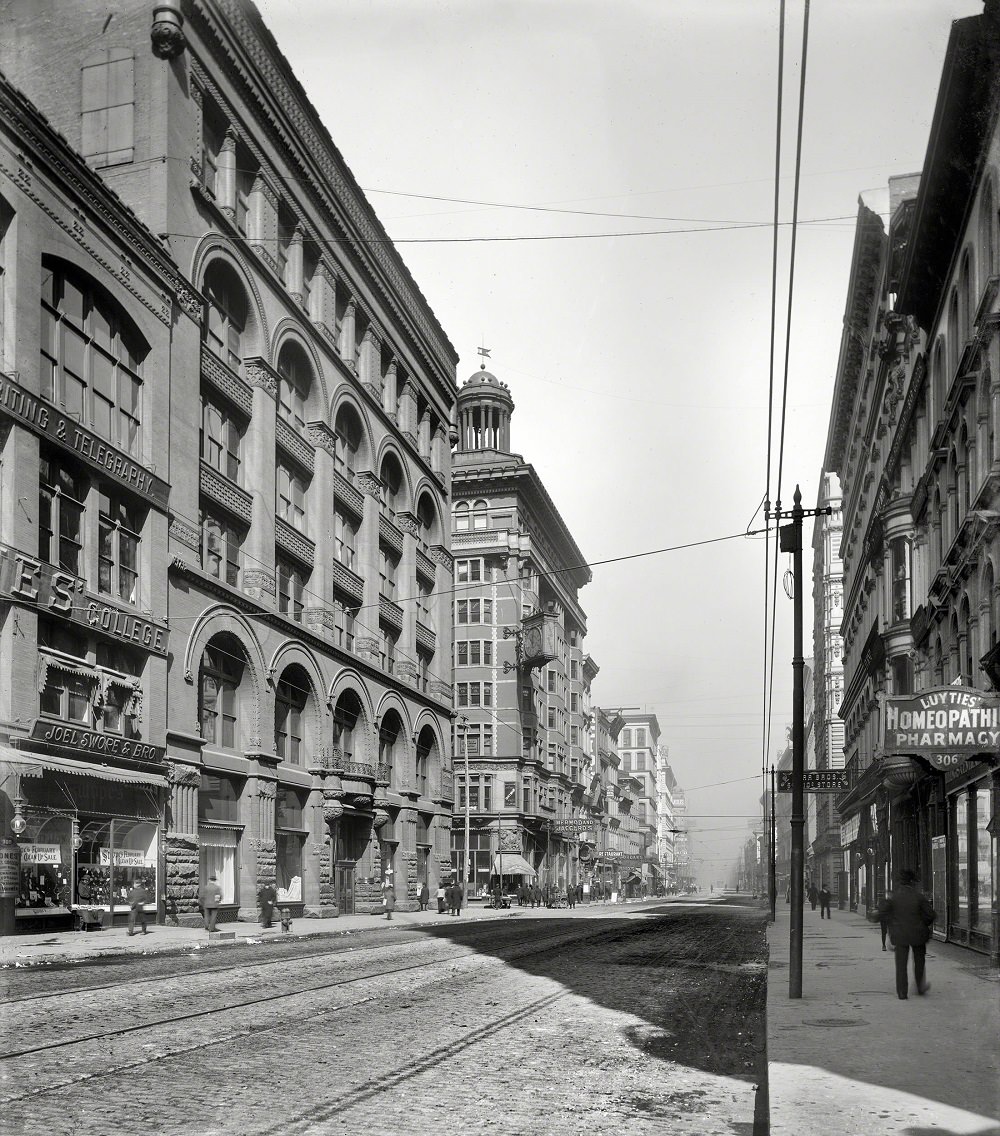
Broadway north from Olive Street, St. Louis, Missouri, circa 1900
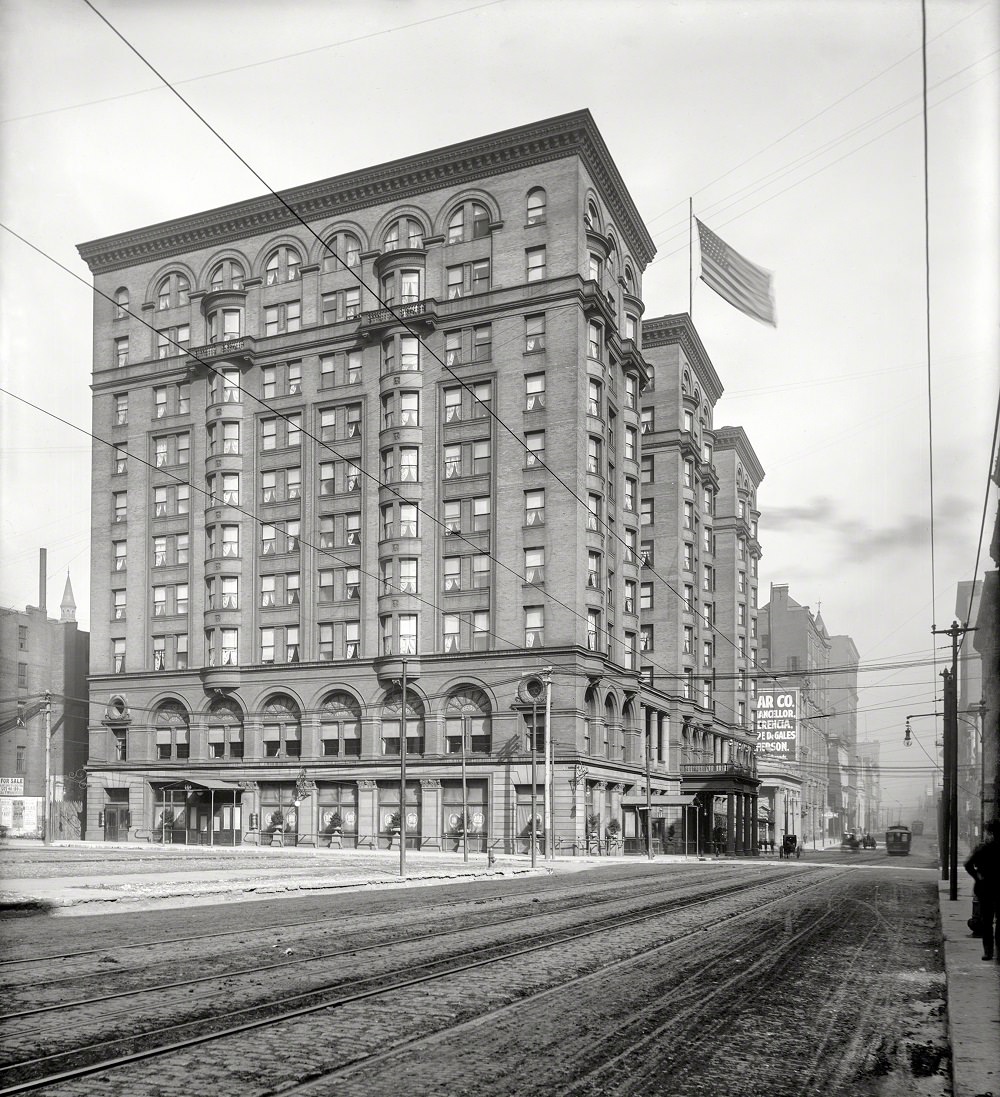
Planters Hotel, Fourth and Chestnut, St. Louis circa 1901

The Planters Hotel at Fourth and Chestnut was one of the city’s well-known landmarks at the turn of the century. Nearby, Olive Street served as a major commercial corridor, lined with storefronts and foot traffic. These streets captured the energy of a city that was rapidly modernizing while still relying on horse-drawn transport and gas lamps.
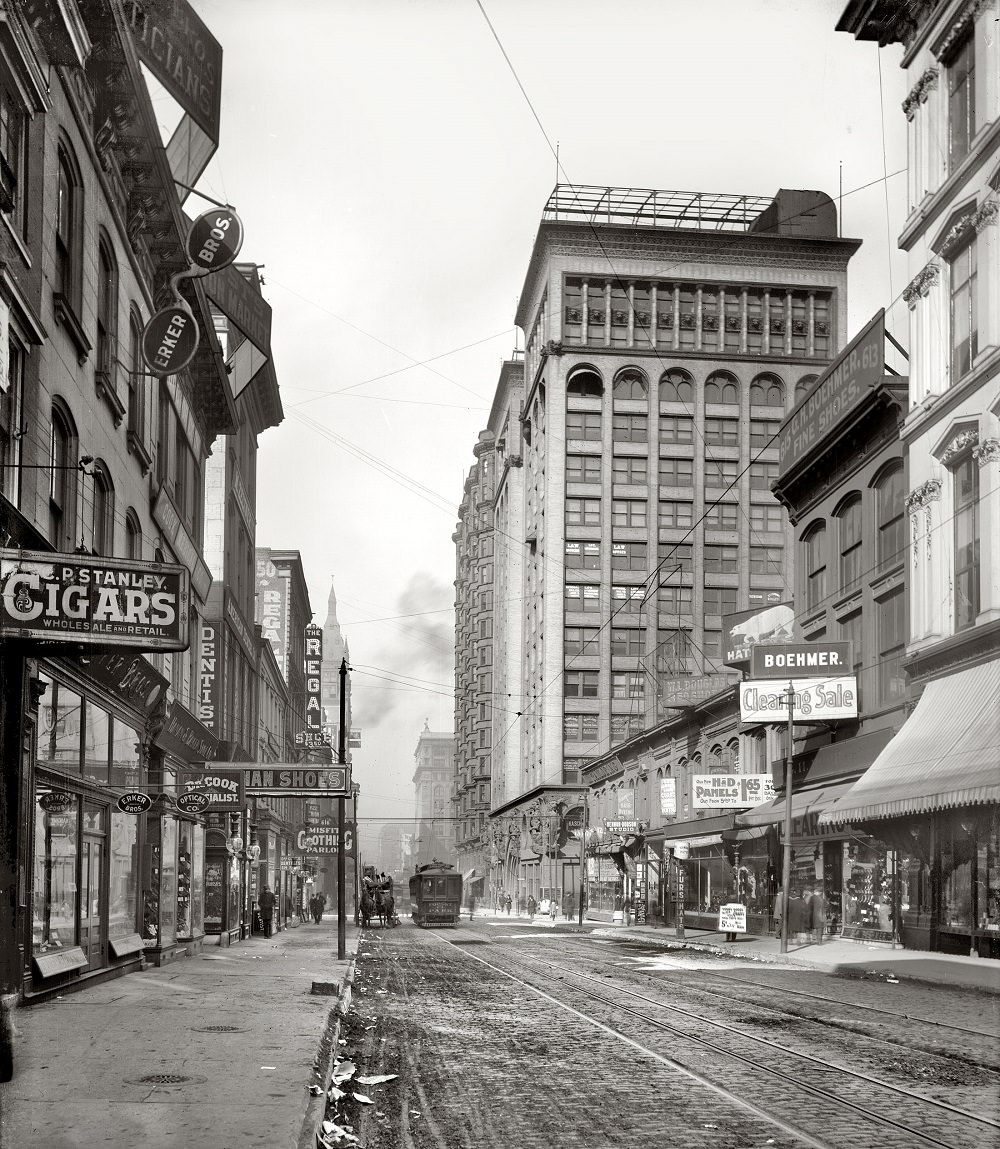
Olive Street west from Sixth, St. Louis, Missouri, circa 1900
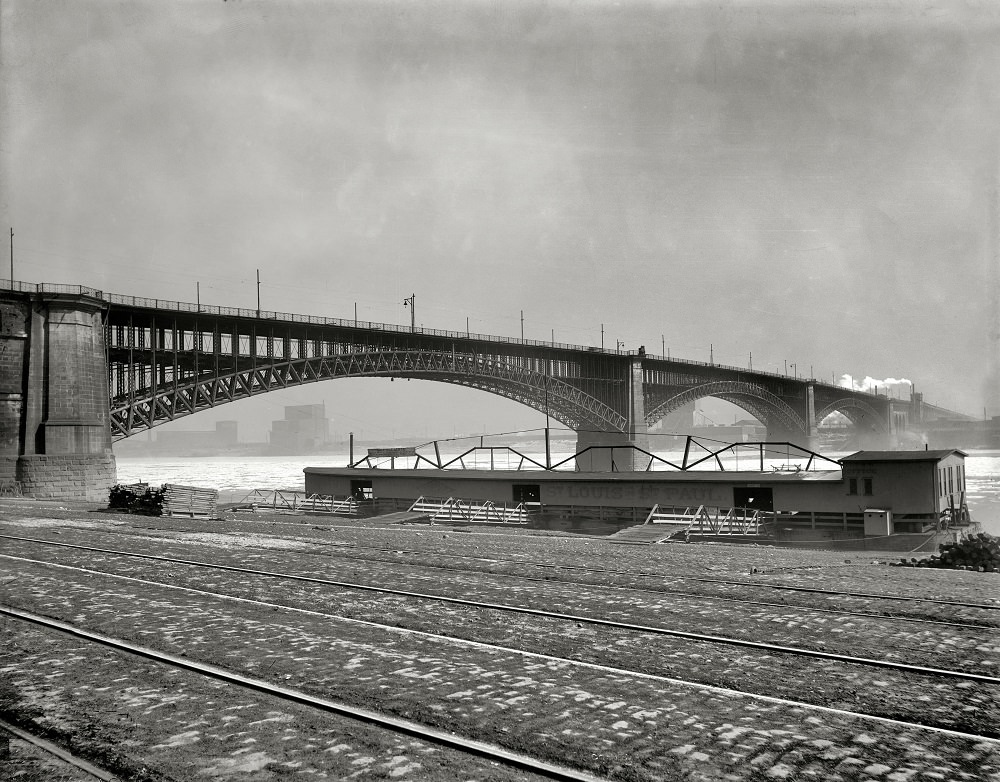
Eads Bridge over the Mississippi at St. Louis, Missouri, 1901

The Eads Bridge, photographed here in 1901, was a true feat of engineering. Completed in 1874, it was the first steel truss bridge to span the Mississippi River and connected St. Louis directly to Illinois. It carried both rail and road traffic, cementing the city’s role as a major transportation hub in the American Midwest.

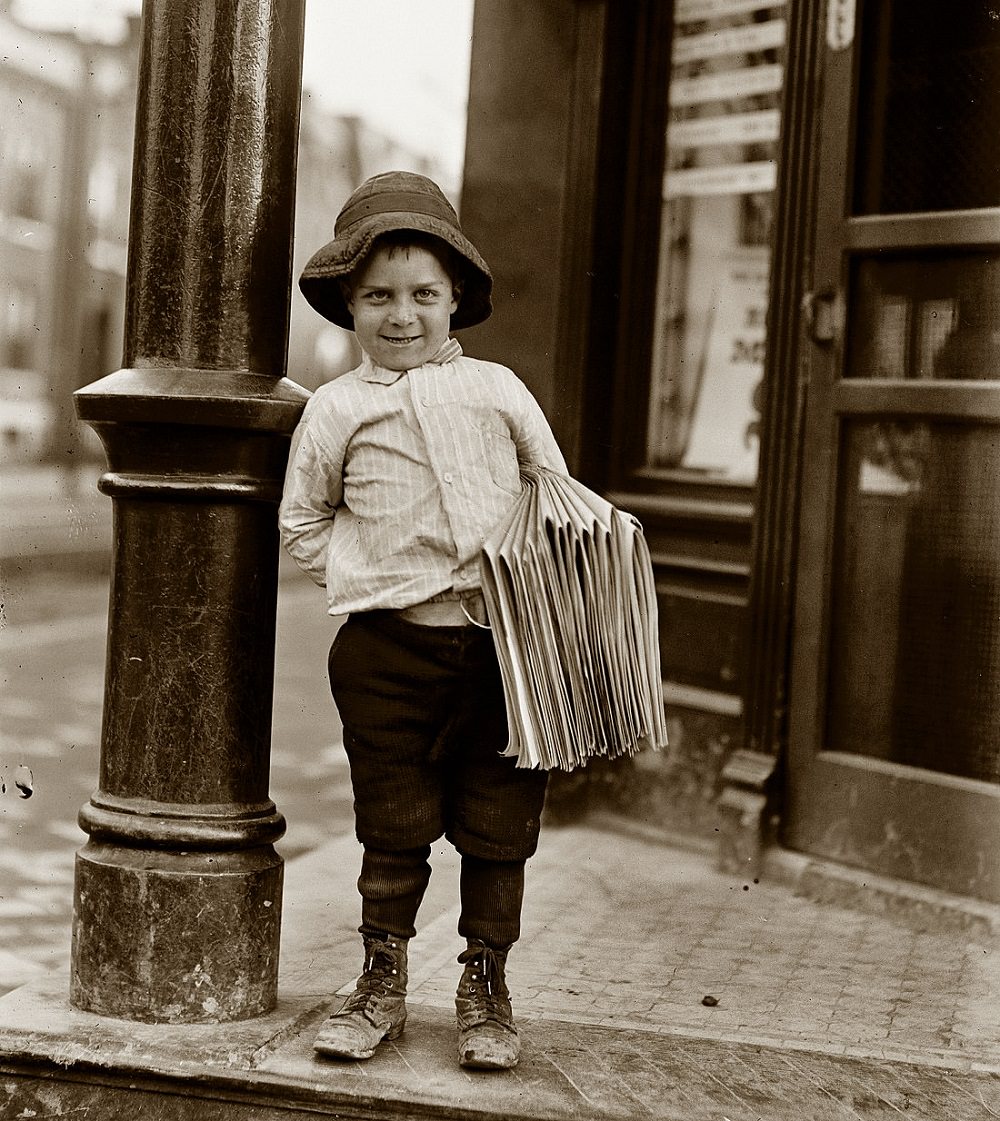
One of the most striking aspects of early 20th-century St. Louis was the widespread use of child labor. Young boys — some as young as six — worked as newsboys, delivery assistants, and factory hands. Photographer Lewis Hine documented many of these children in May 1910, producing images that later helped fuel national child labor reform. His subjects worked long hours in harsh conditions, often skipping school entirely.
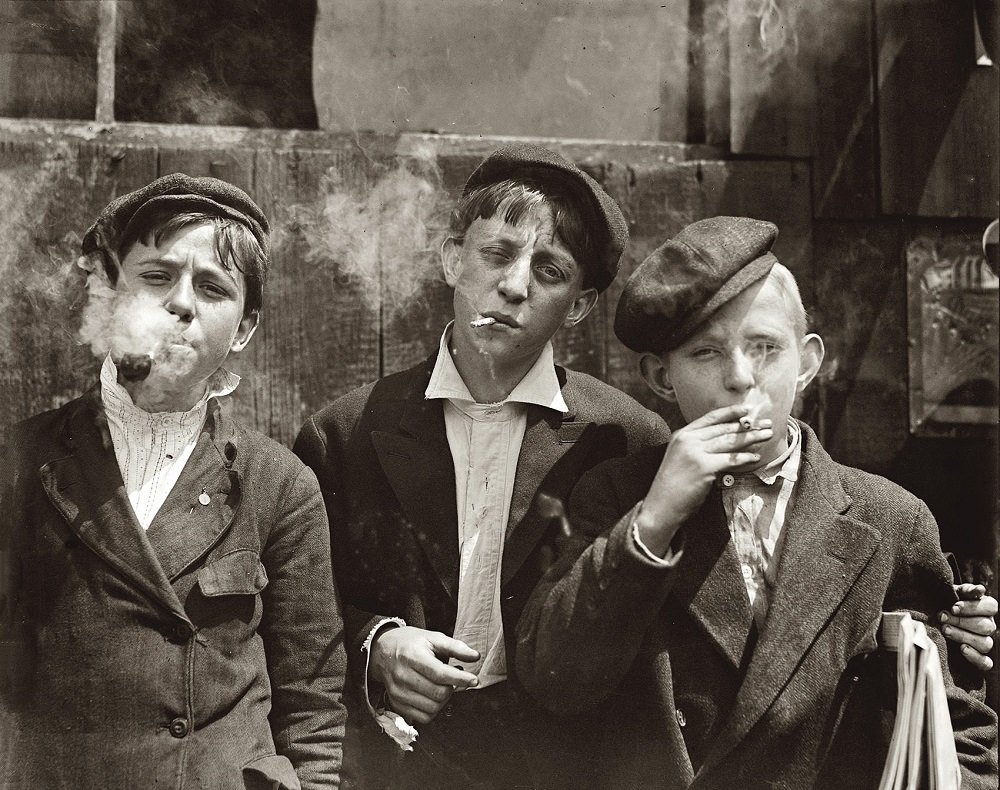
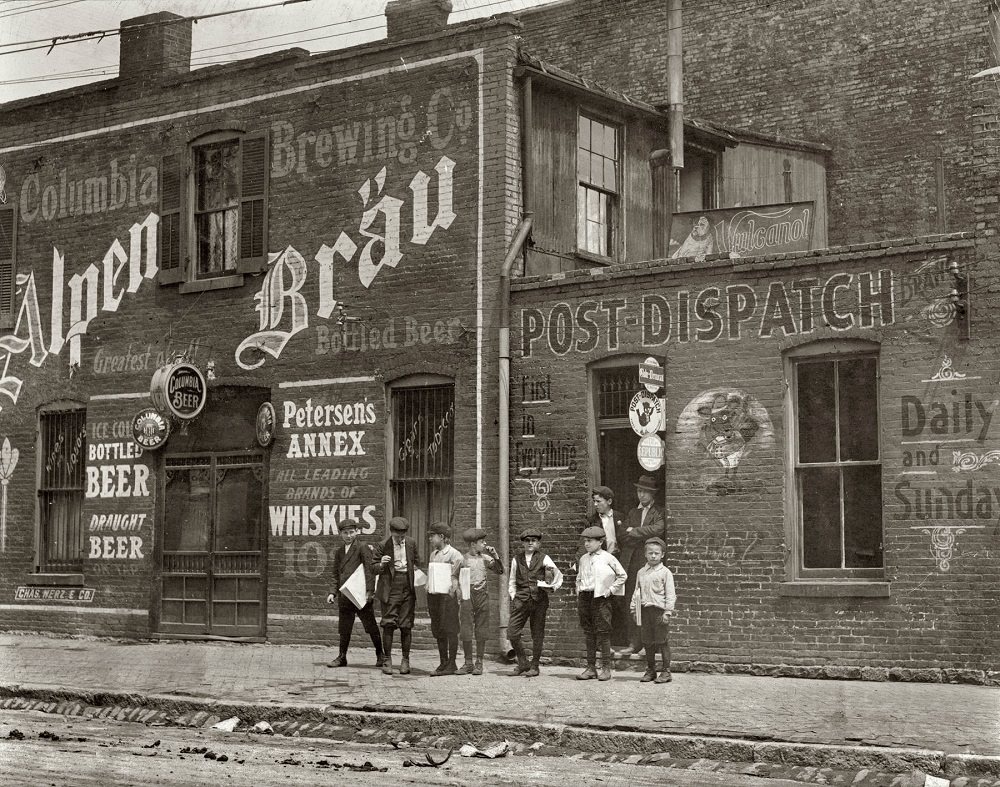
Newsies at Skeeter's Branch, Jefferson near Franklin, St. Louis, 1910
Newsies at Skeeter’s Branch, Jefferson near Franklin, St. Louis, 1910
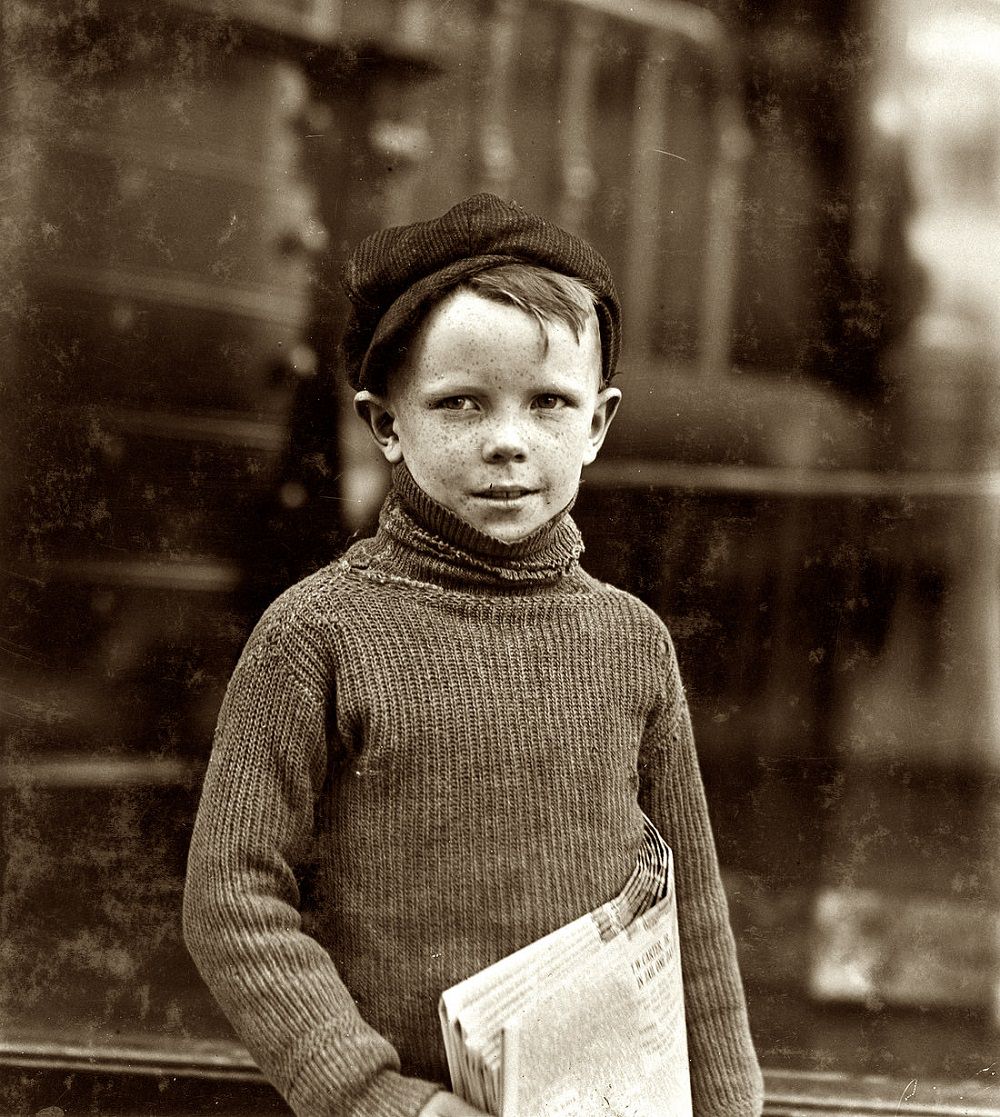
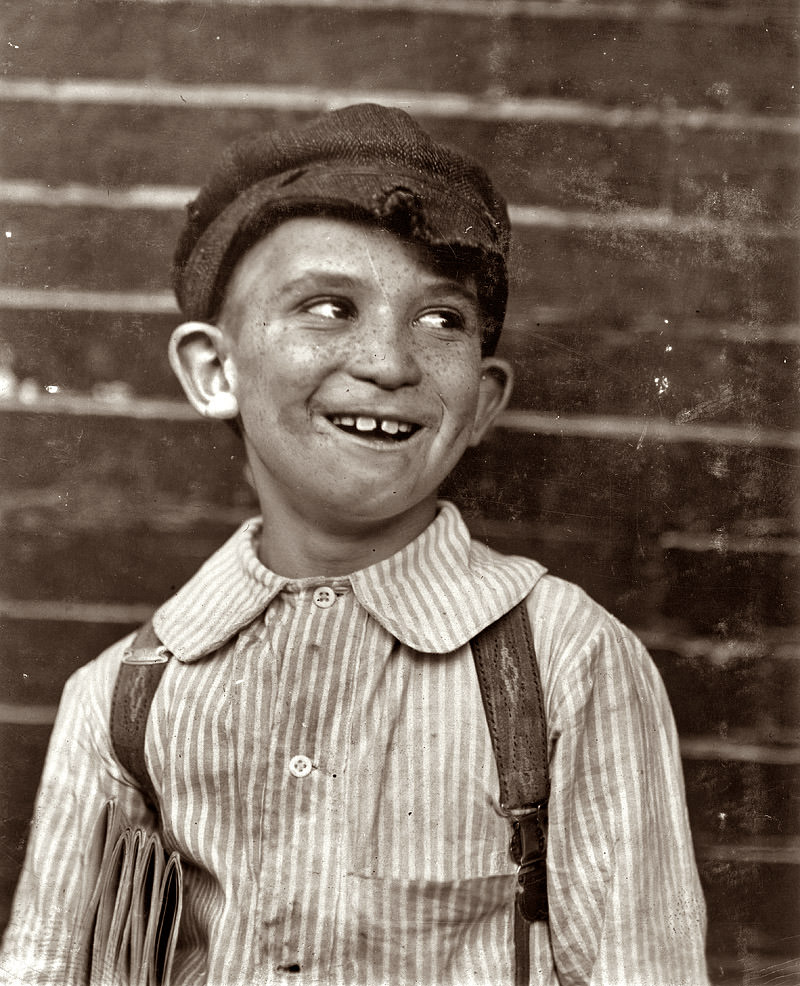
Newsboy 6 years old, St. Louis, May 1910

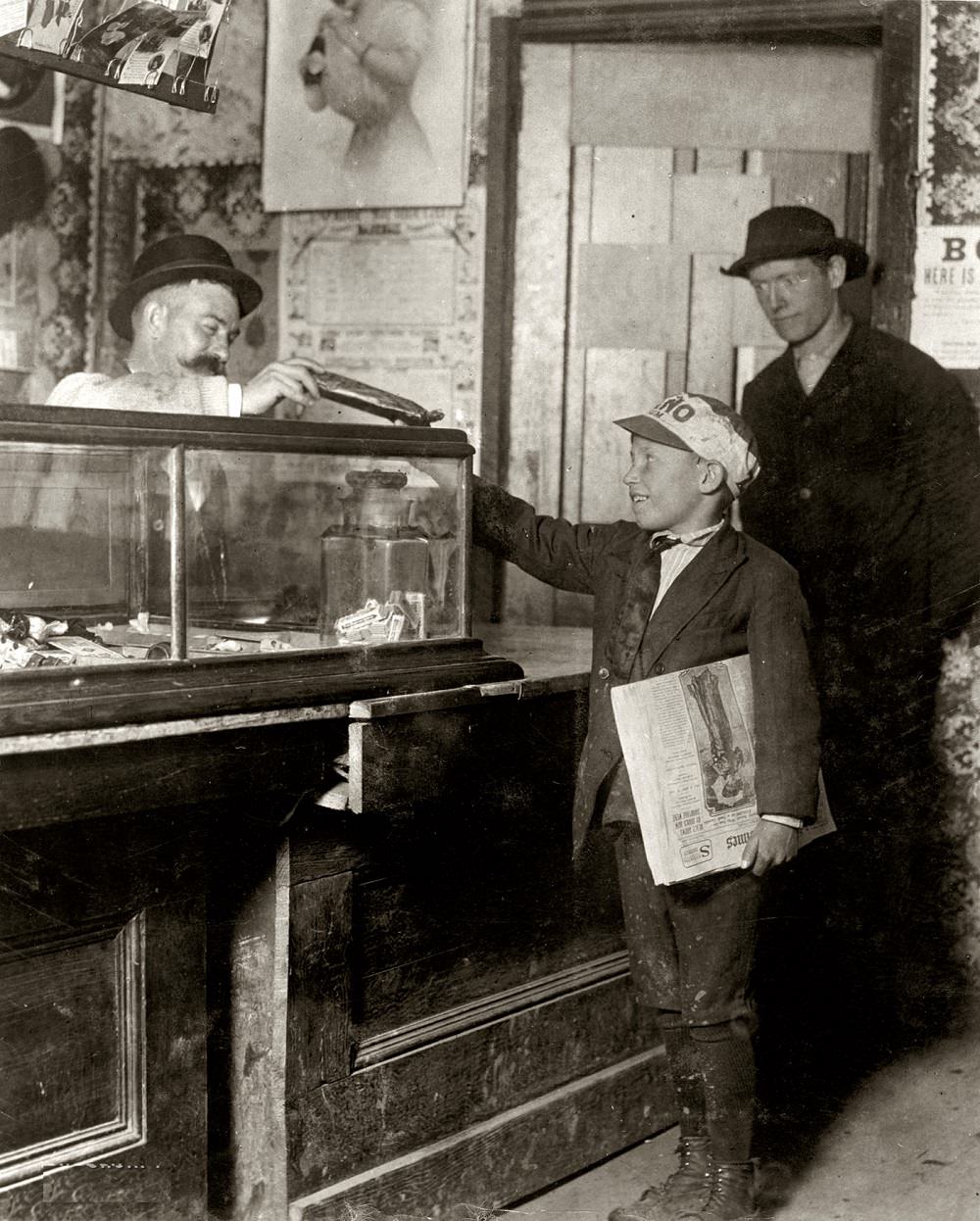
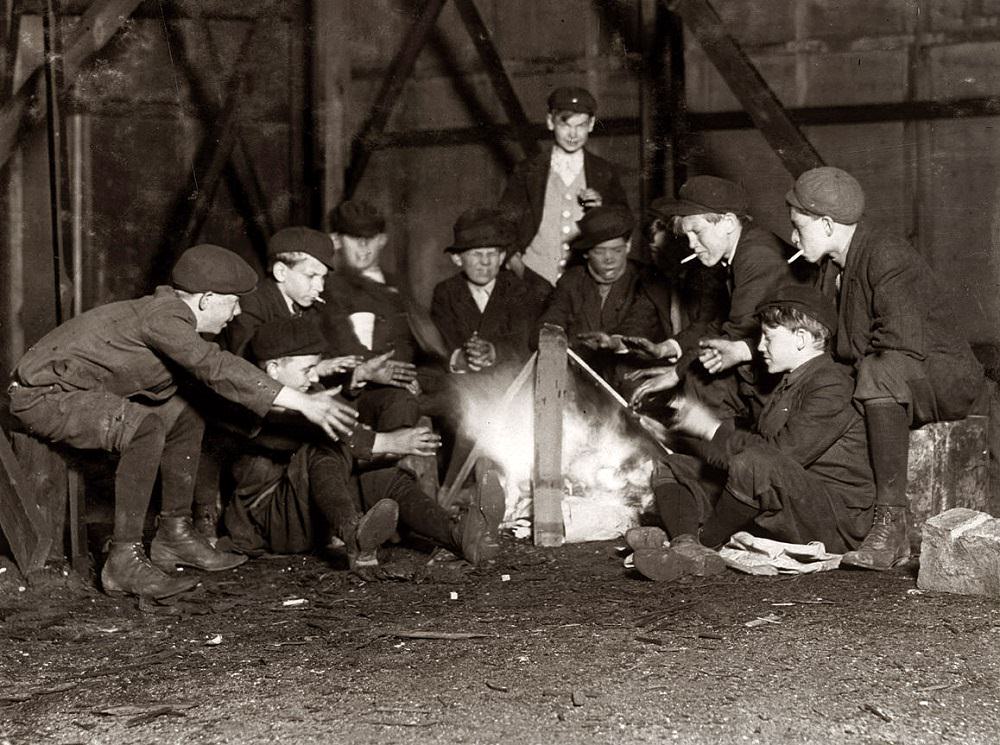
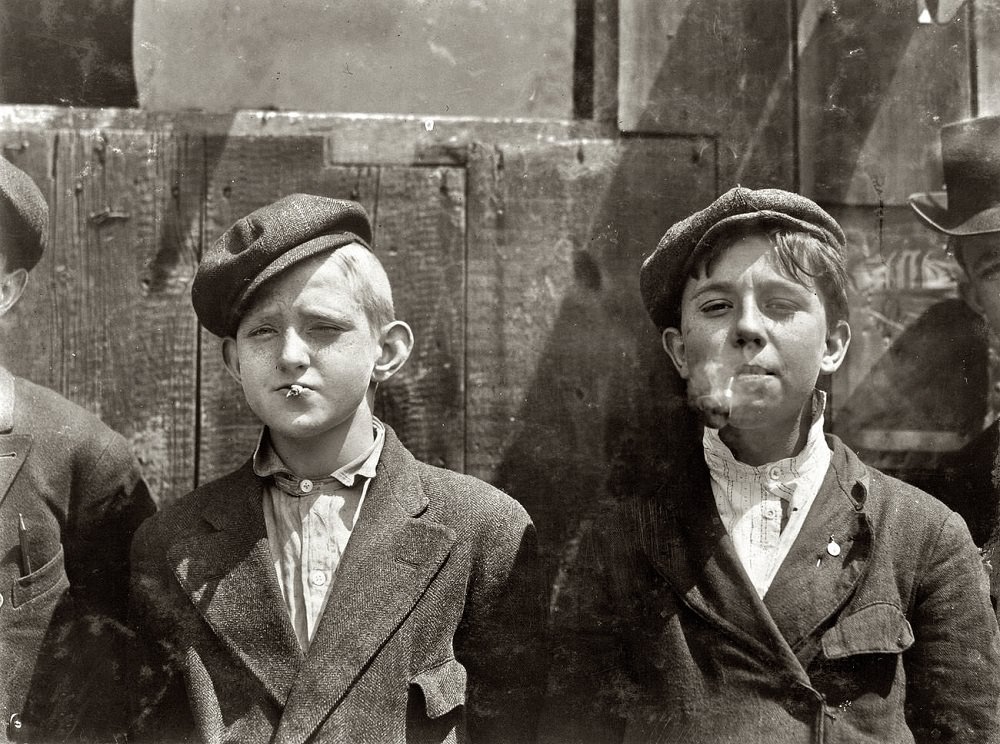
Newsboys — called “newsies” — gathered at branches, which were informal distribution hubs often located near or inside saloons. Skeeter’s Branch, near Jefferson and Franklin, was one such spot. Children would collect their papers there early in the morning and then fan out across the city to sell them on street corners, rain or shine.
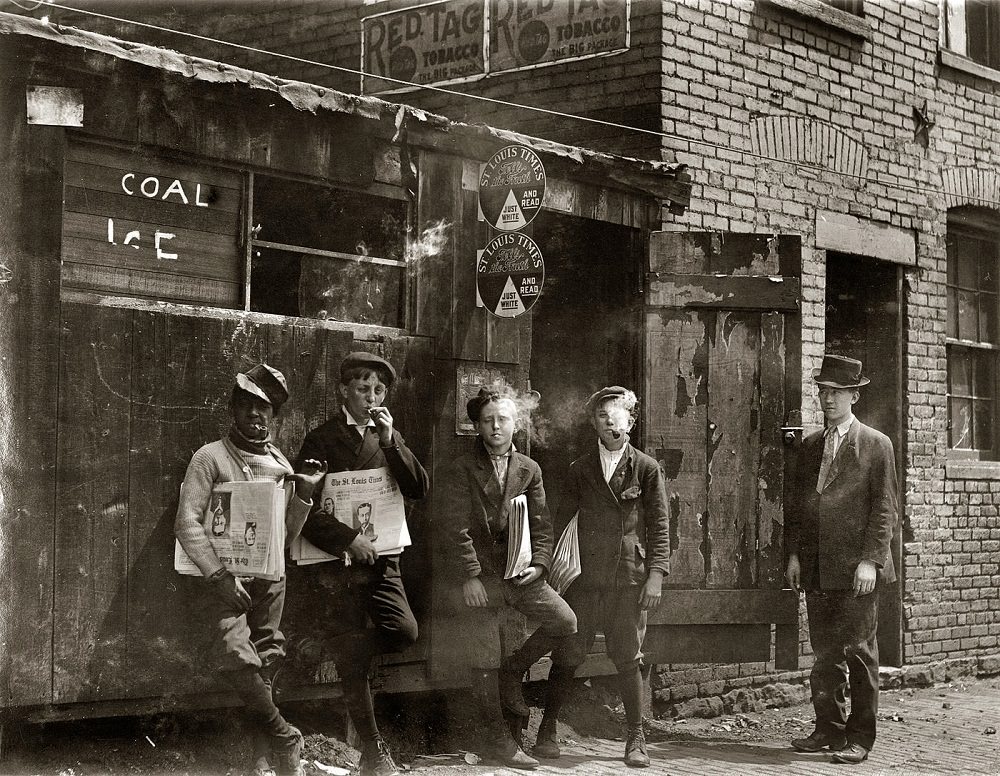
Newsies at Skeeter's Branch, Jefferson near Franklin, St. Louis, Missouri, May 9, 1910
Newsies at Skeeter’s Branch, Jefferson near Franklin, St. Louis, Missouri, May 9, 1910
Newsies smoking at Skeeter's branch, St. Louis, Missouri, May 9, 1910
Newsies smoking at Skeeter’s branch, St. Louis, Missouri, May 9, 1910
Newsies from Johnston's Branch adjoining Saloon at 10th & Cass Street, St. Louis, Missouri. May 1910
Newsies from Johnston’s Branch adjoining Saloon at 10th & Cass Street, St. Louis, Missouri. May 1910

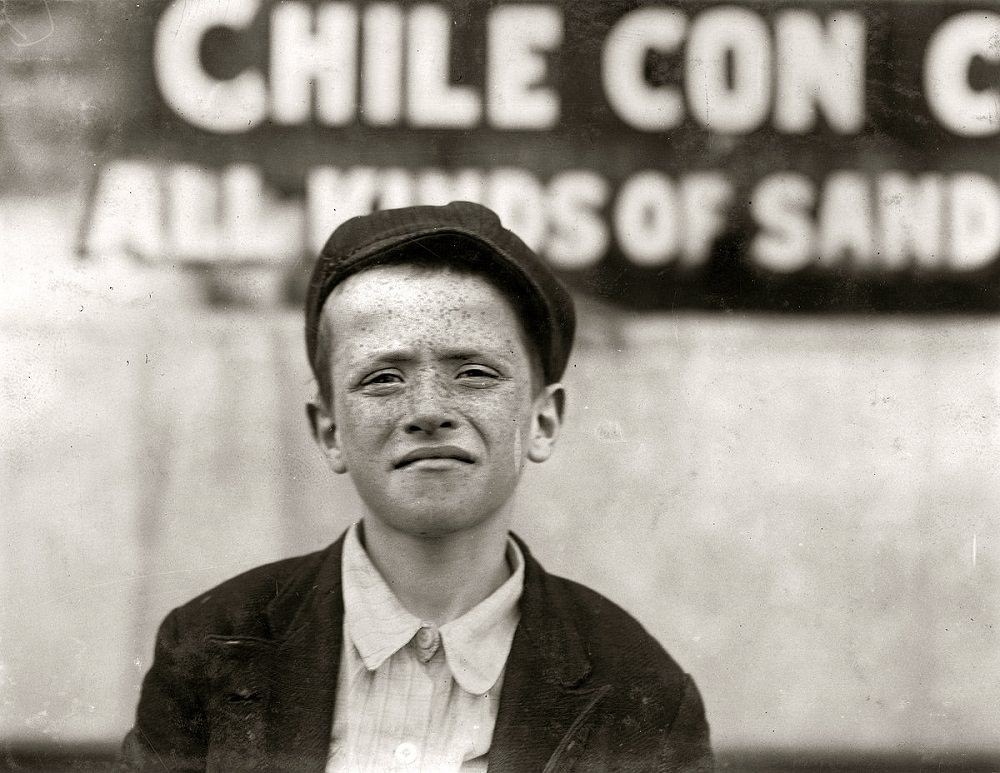
Some of these boys had nicknames that stuck. “Red” St. Clair, “Turk,” and “Livers” were among those Hine photographed and named. Others, like eight-year-old Gurley at 18th and Washington, or young Johnnie Burns who sold papers on Grand Avenue, were documented with their real names and precise locations — details that gave their stories a weight that statistics alone never could.
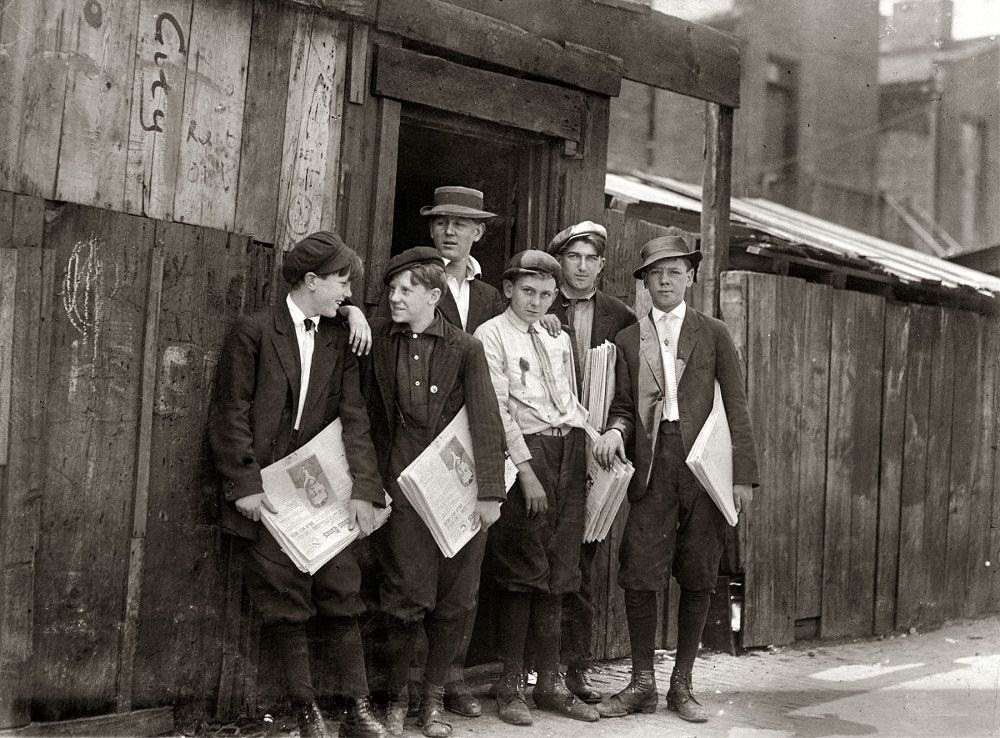
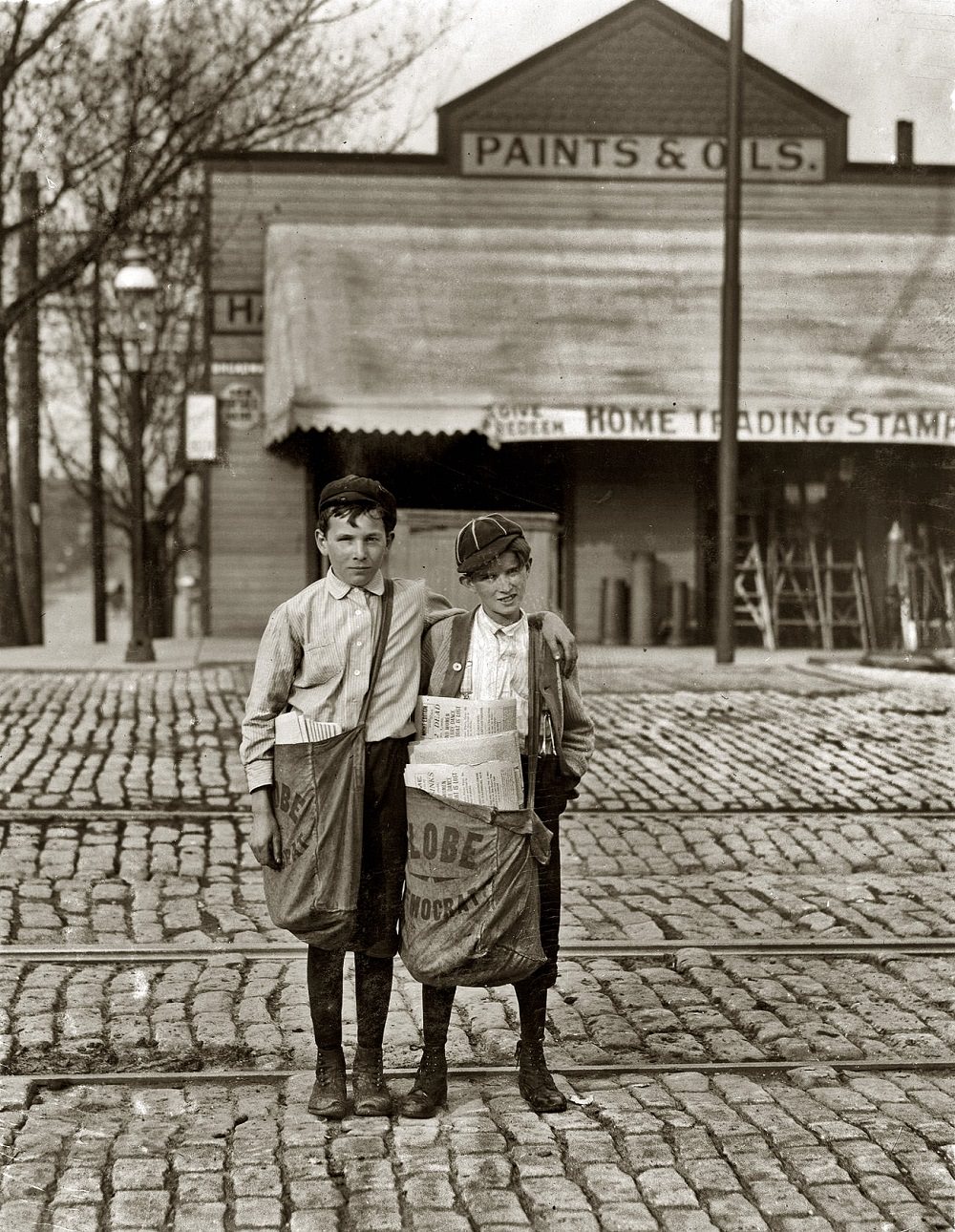
Red St. Clair and his pals hanging around Murphy's Branch, St. Louis, Missouri, 1910
Red St. Clair and his pals hanging around Murphy’s Branch, St. Louis, Missouri, 1910
The boy on the right, nicknamed Turk, St. Louis, May 1910
An eight year old newsie named Gurley at 18th & Washington Streets, St. Louis, Missouri, May 1910
Johnnie Burns, a newsie who sells on Grand Avenue, St. Louis, May 1910
Livers, a young newsie. St. Louis, Missouri, May 1910

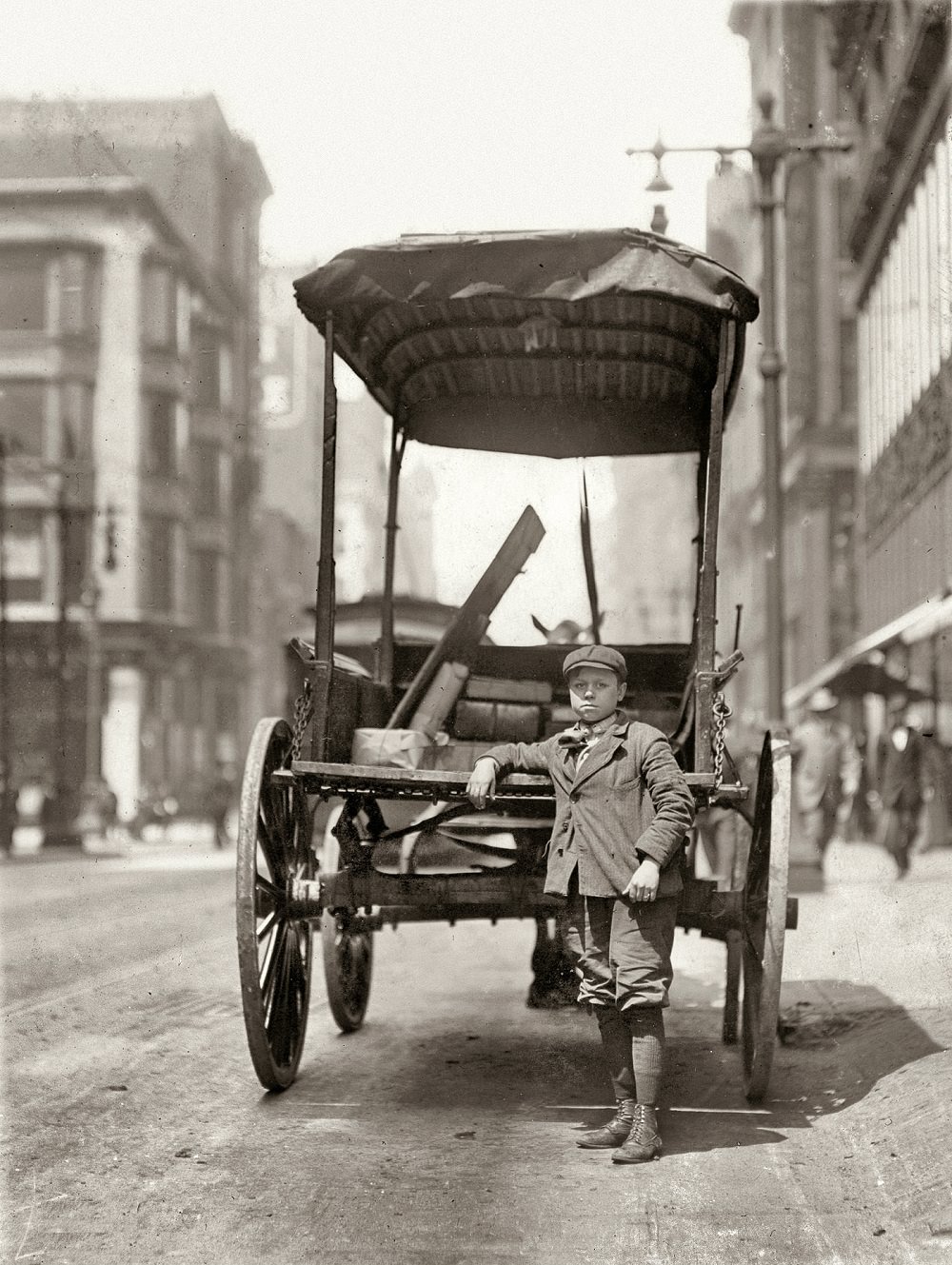
Child labor wasn’t limited to the streets. Inside the Inland Type Foundry, young boys worked alongside adult men in a hot, industrial environment. Others worked as “bundle boys” at retail stores like Nugent’s at Washington and Broadway, carrying packages for customers. Boys also served as assistants on delivery wagons for companies like Adams Express, loading and unloading freight across the city.
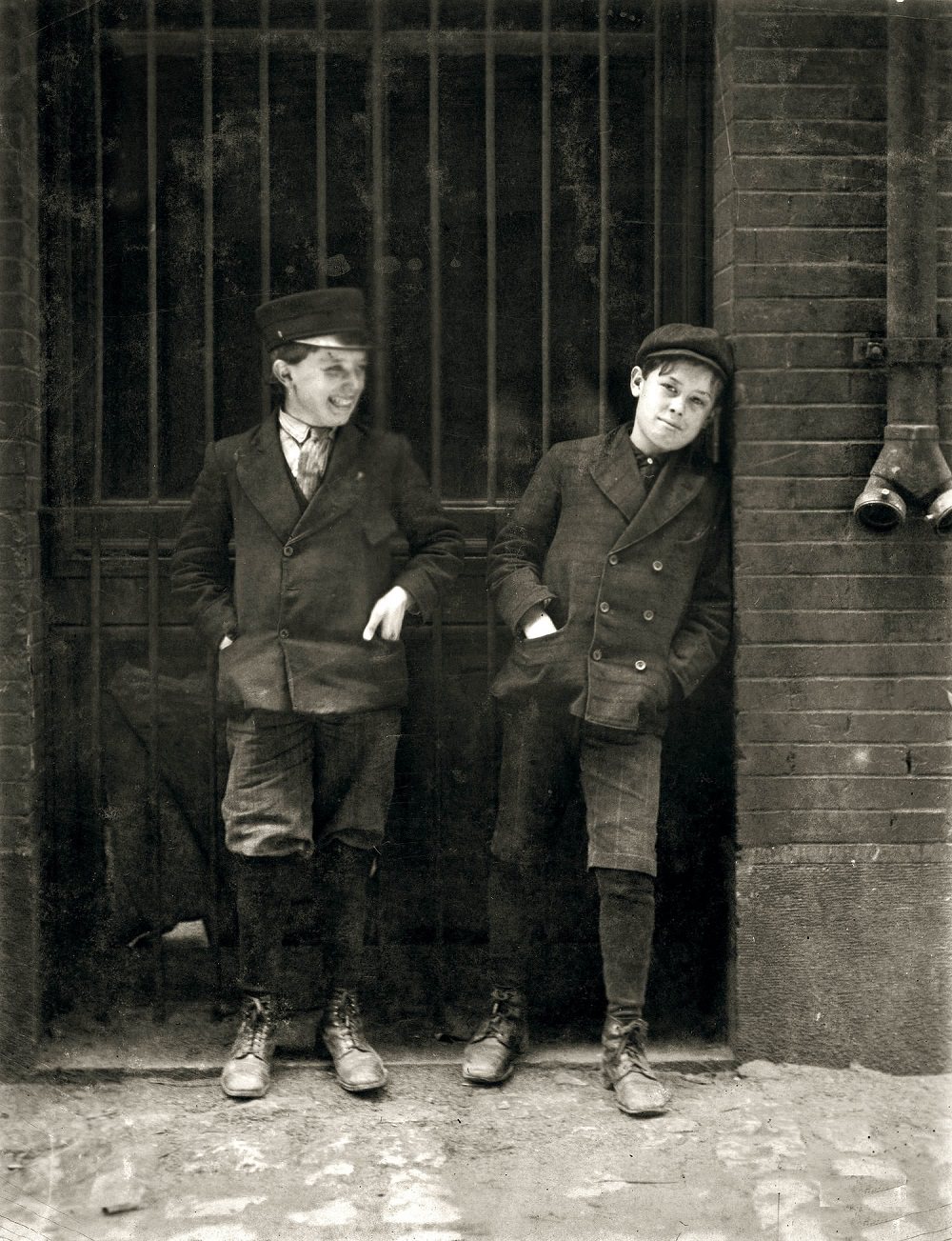
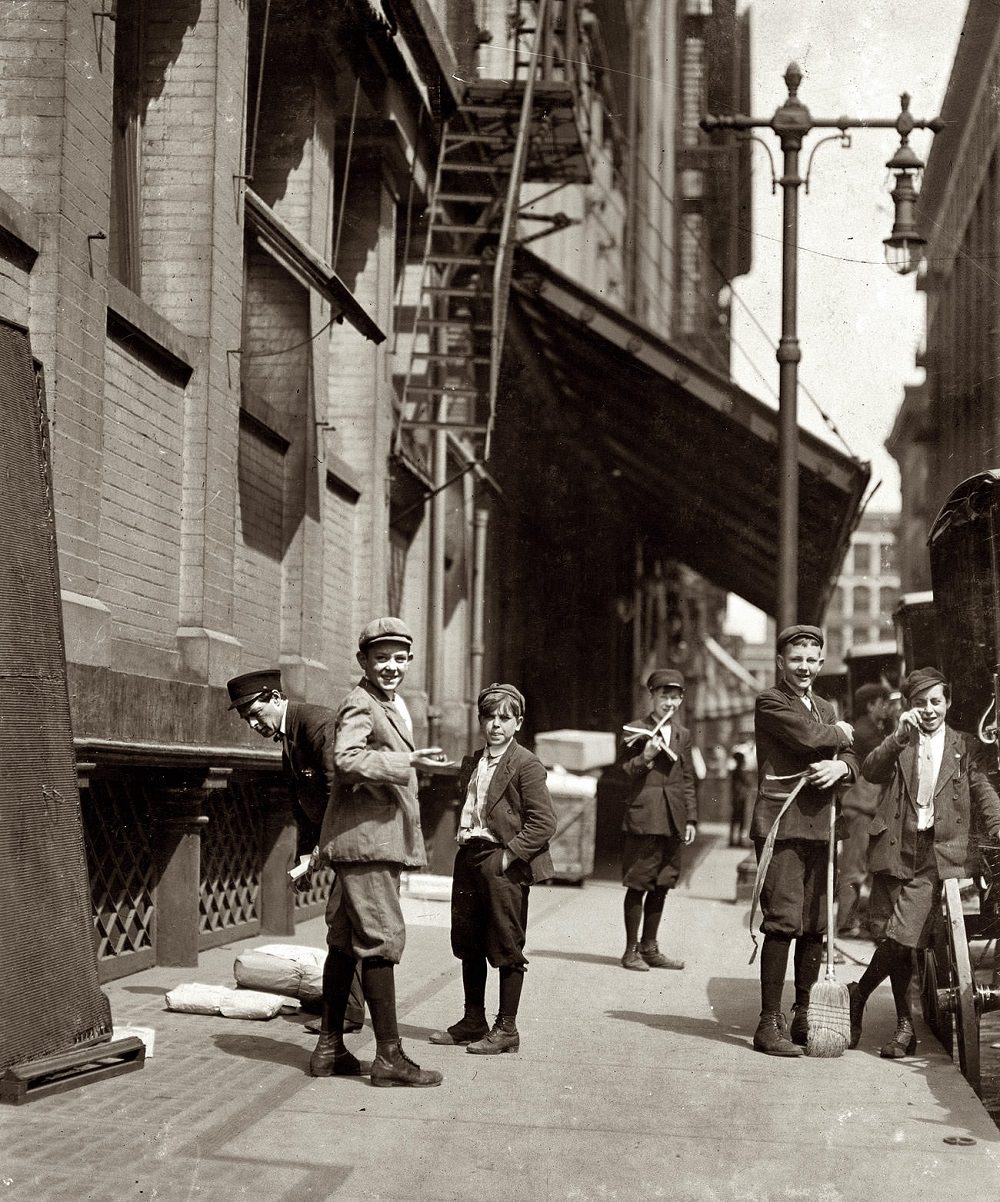
Two boys working in Inland Type Foundry, St Louis, Missouri, May 1910
Bundle Boys at Nugent's, Washington and Broadway, St. Louis, Missouri, May 1910
Bundle Boys at Nugent’s, Washington and Broadway, St. Louis, Missouri, May 1910
Adams Express Company, one of the many young boys working as assistants on express wagons, St. Louis, 1910
Joe Manning, a newspaper seller, St Louis, Missouri, May 1910
Jefferson Street Gang of newsboys, St. Louis, Missouri, ,May 7, 1910

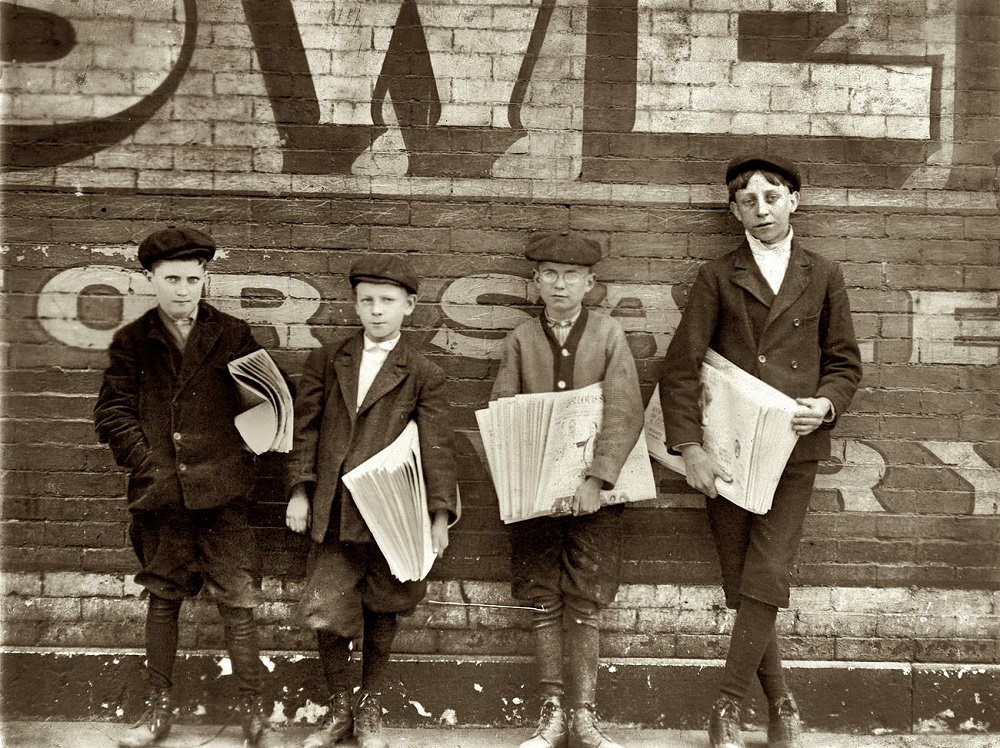
Truancy was a known problem in St. Louis at the time. Some newsboys openly skipped school to work their corners during school hours. Hine photographed groups of boys at Jefferson and Washington Streets between 11 a.m. and noon — prime school hours — as a direct record of how common this was. Public awareness of these conditions played a role in later efforts to regulate child labor nationwide.
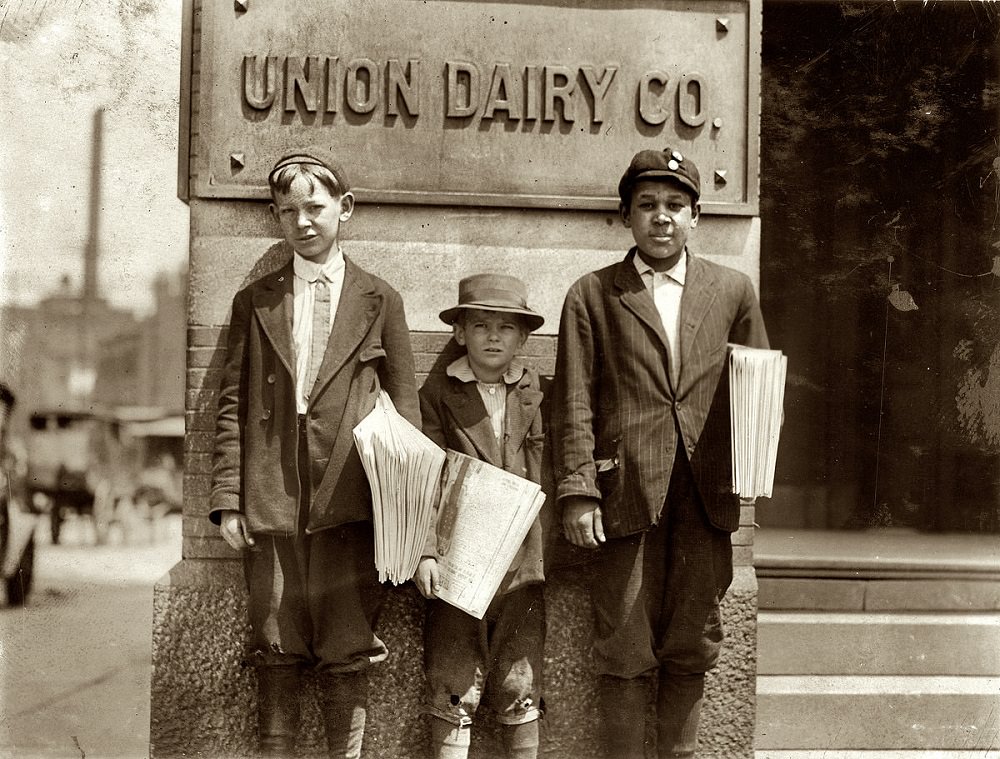
Mo. Truants selling papers at Jefferson & Washington, St. Louis, May 9, 1910
Truants like these may be found most any day between 11 a.m. & noon. Jefferson Street near Washington, St. Louis, Missouri, ,May 1910

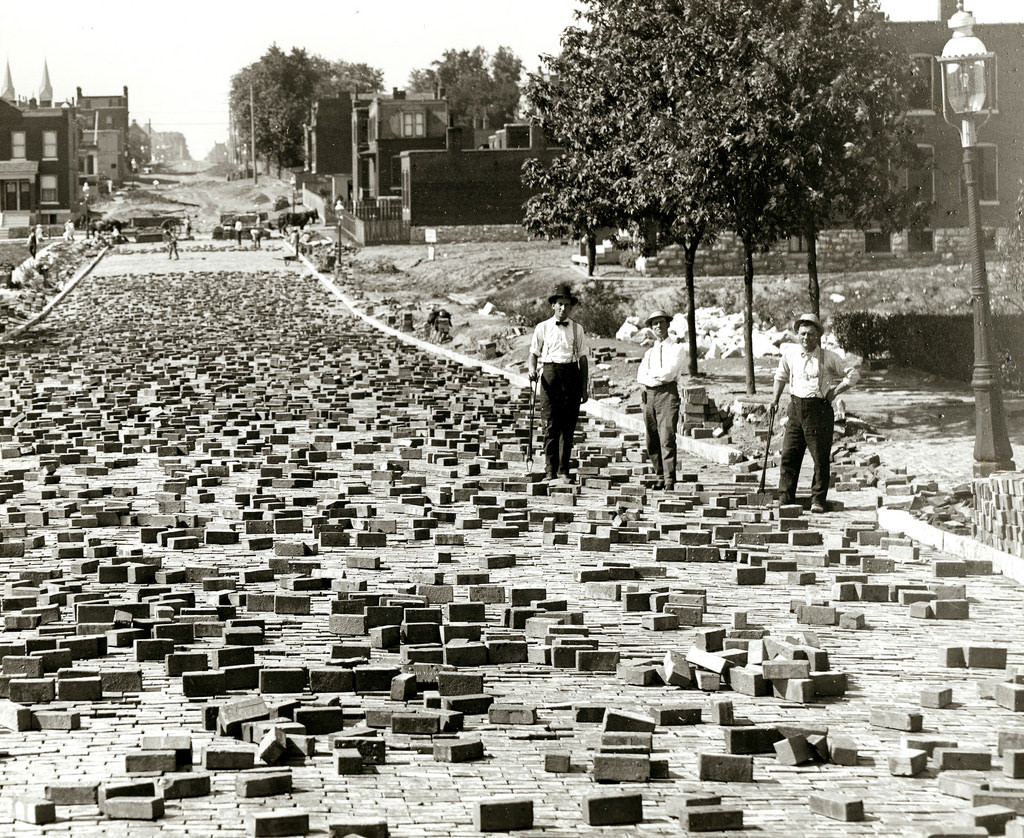
Beyond child labor, the city’s streets were full of activity of all kinds. Construction crews were constantly at work — laying new underground utilities, paving roads, and erecting new buildings. By 1900, St. Louis was in the middle of a major physical expansion, preparing to host the 1904 World’s Fair and the 1904 Summer Olympics. Both events brought international attention and significant infrastructure investment to the city.
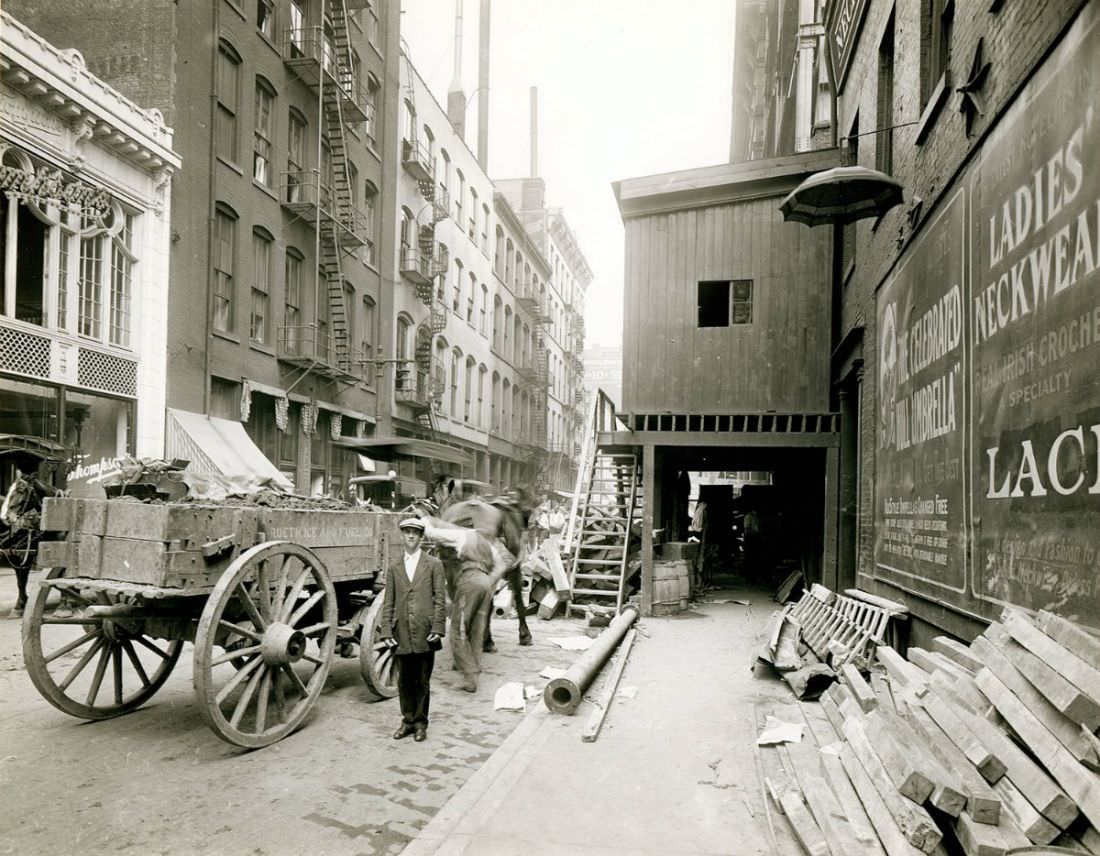
Construction work on St. Charles Street east of Seventh Street, 1900
Street pavers at work on Compton Avenue north of Meramec Street, 1906
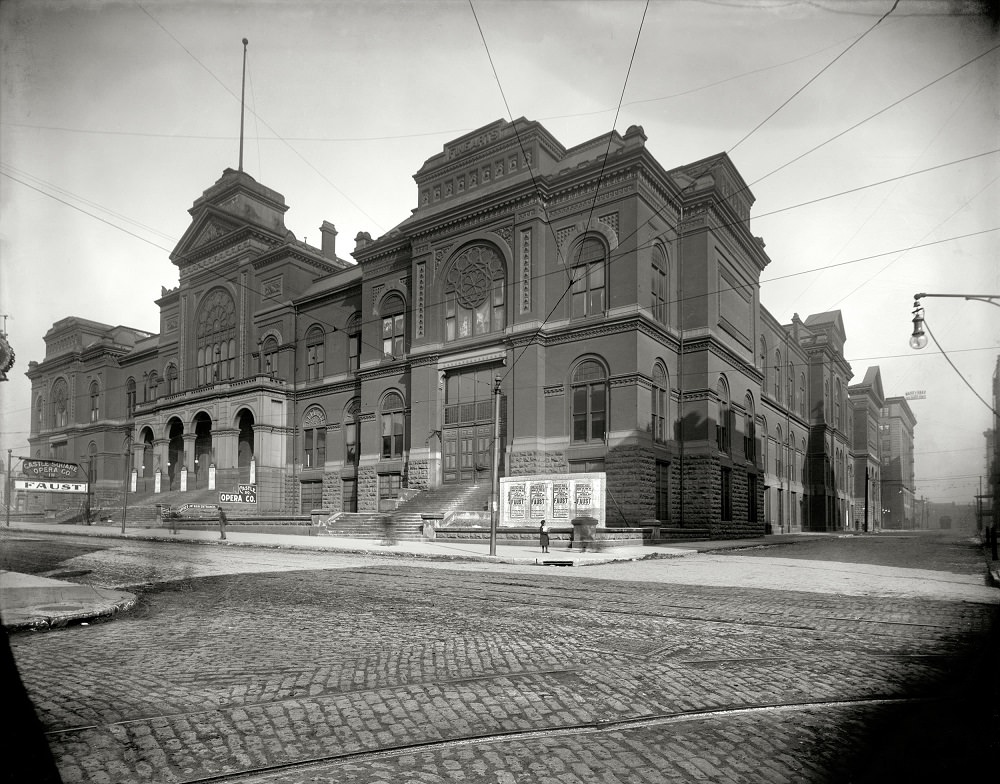
Exhibition Building, St. Louis, Missouri, circa 1906

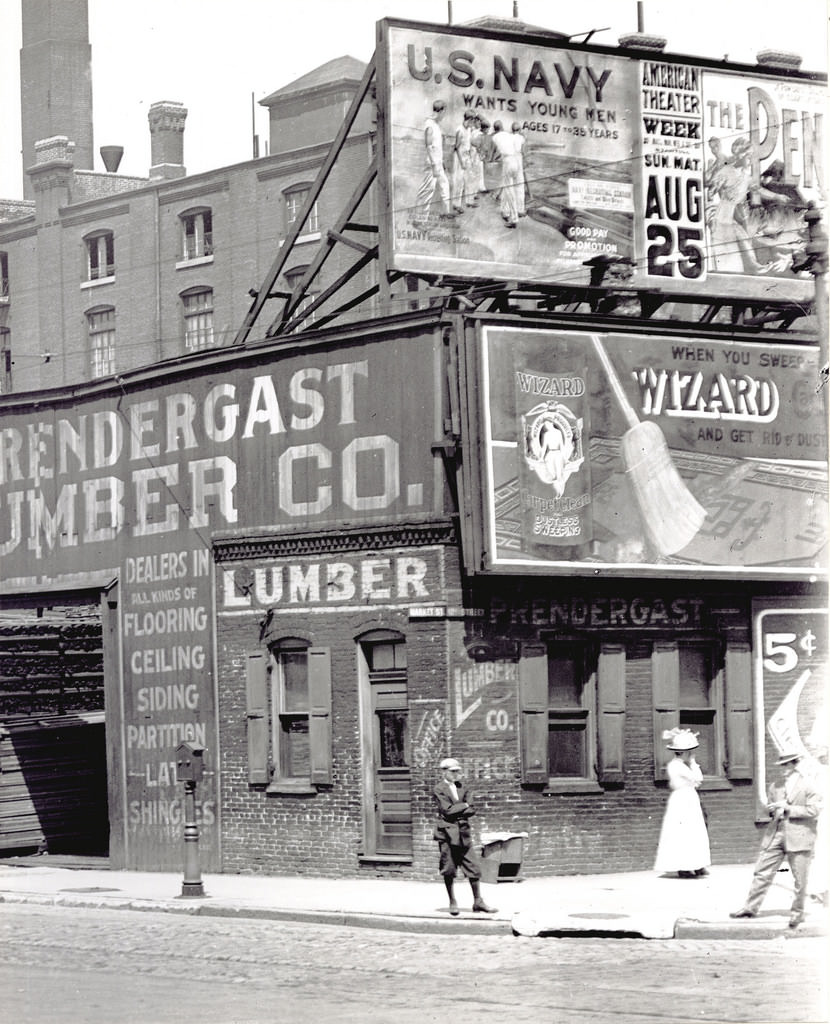
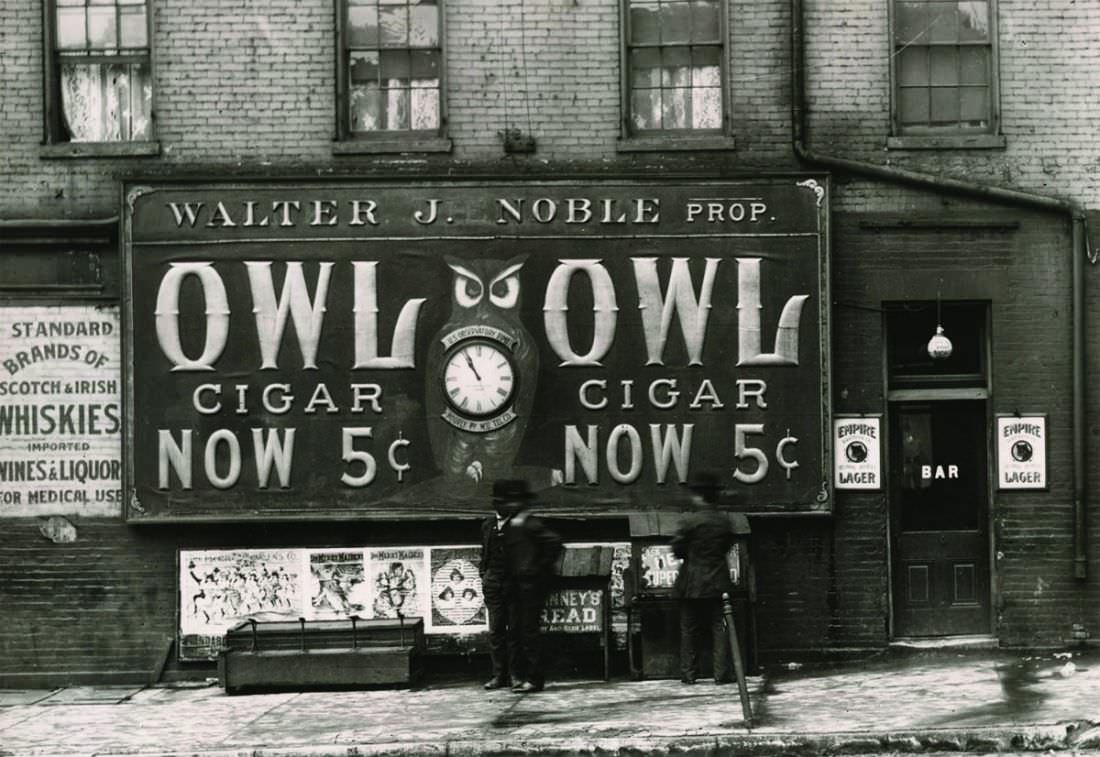
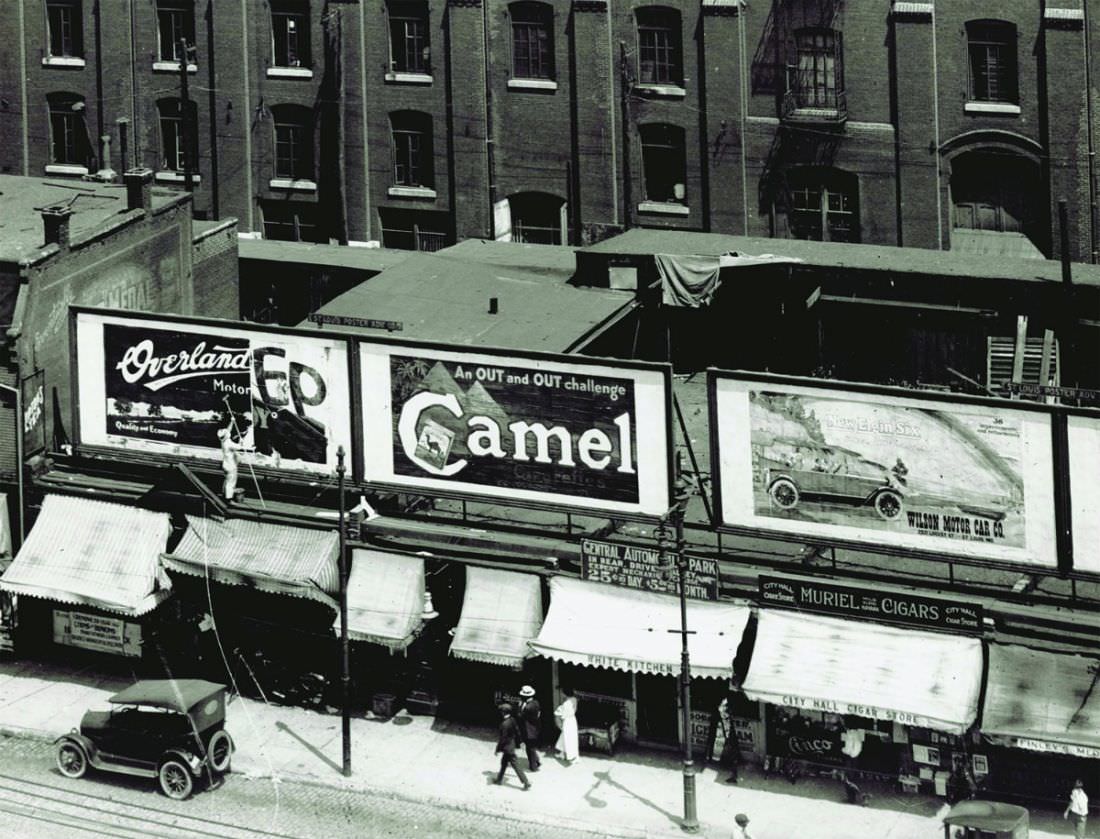
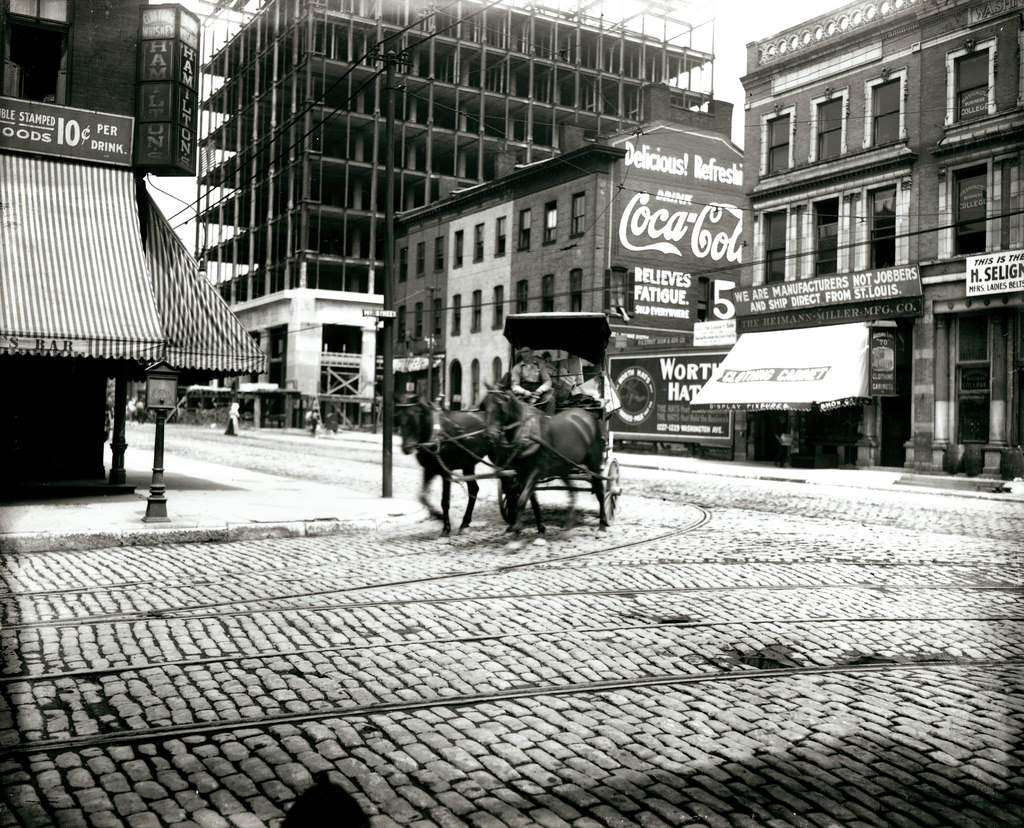
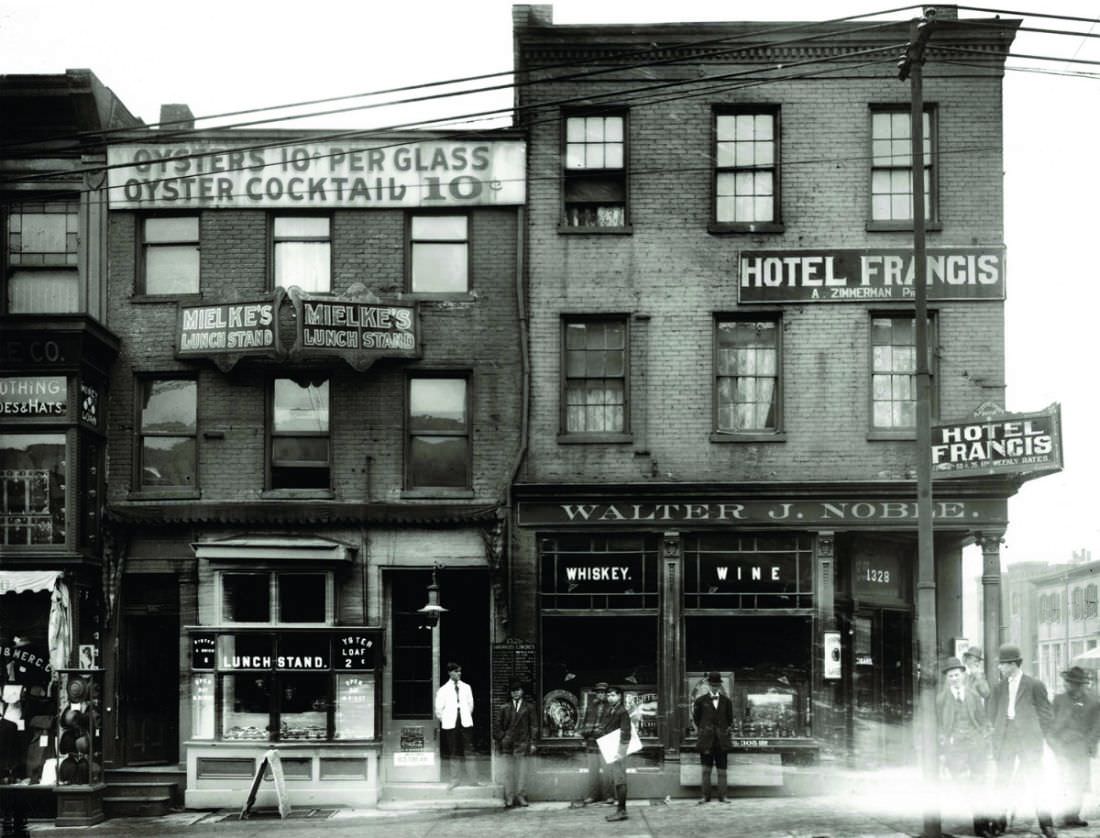
The commercial streetscape of St. Louis around 1900 was densely packed. Grocery stores, saloons, lumber companies, pharmacies, and hotels competed for space along major corridors like Market Street and Washington Avenue. Whiskey and wine merchants operated openly — figures like Walter J. Noble ran saloons that displayed bold signage on the sides of buildings. That era of open commerce came to a sharp halt with Prohibition, which devastated the city’s brewing and distilling industries.
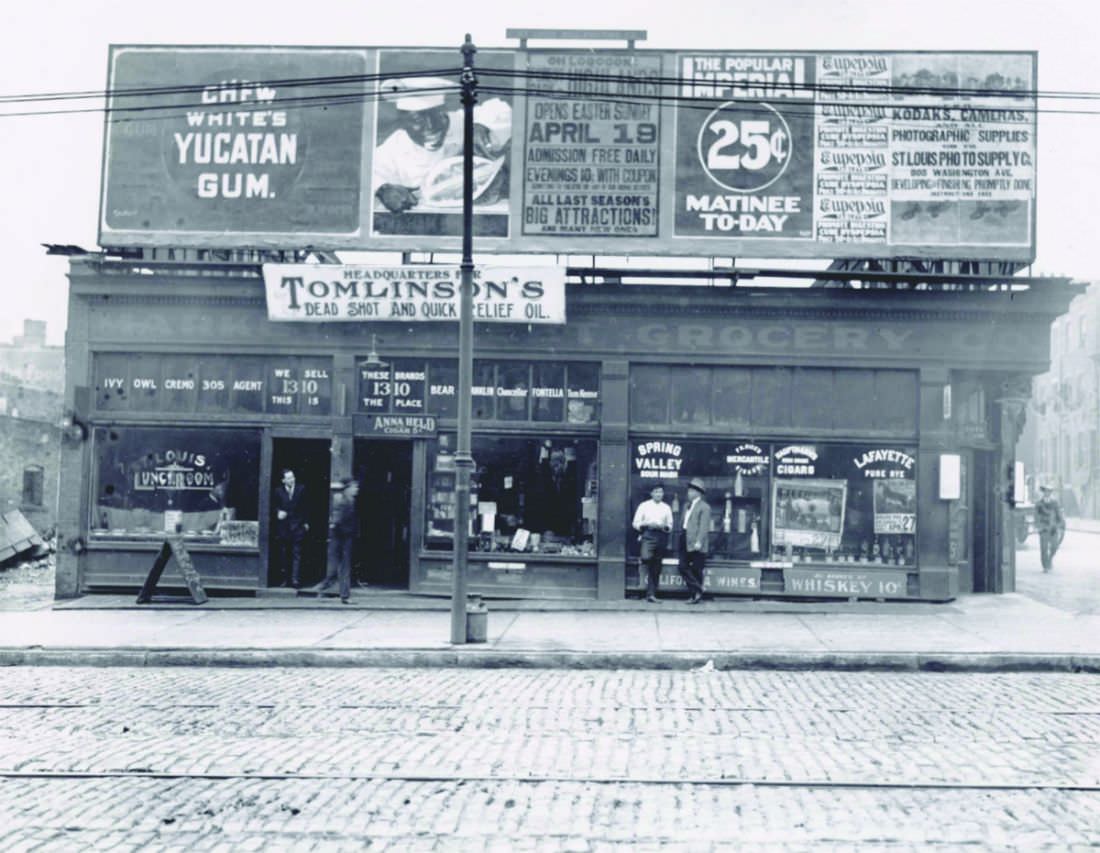
Market Street Grocery Company building, 1900
Southeast corner of Market and Fourteenth streets including Mielke's Lunch Stand, Hotel Francis and Walter J. Noble Whiskey and Wine, 1900
Southeast corner of Market and Fourteenth streets including Mielke’s Lunch Stand, Hotel Francis and Walter J. Noble Whiskey and Wine, 1900
Walter J. Noble Saloon featuring an Owl Brand Cigar billboard, 2 North Eighteenth Street or 2300 Chestnut Street, 1909
Northwest corner of Twelfth and Market Streets, Prendergast Lumber Company is pictured at 1201 Market Street

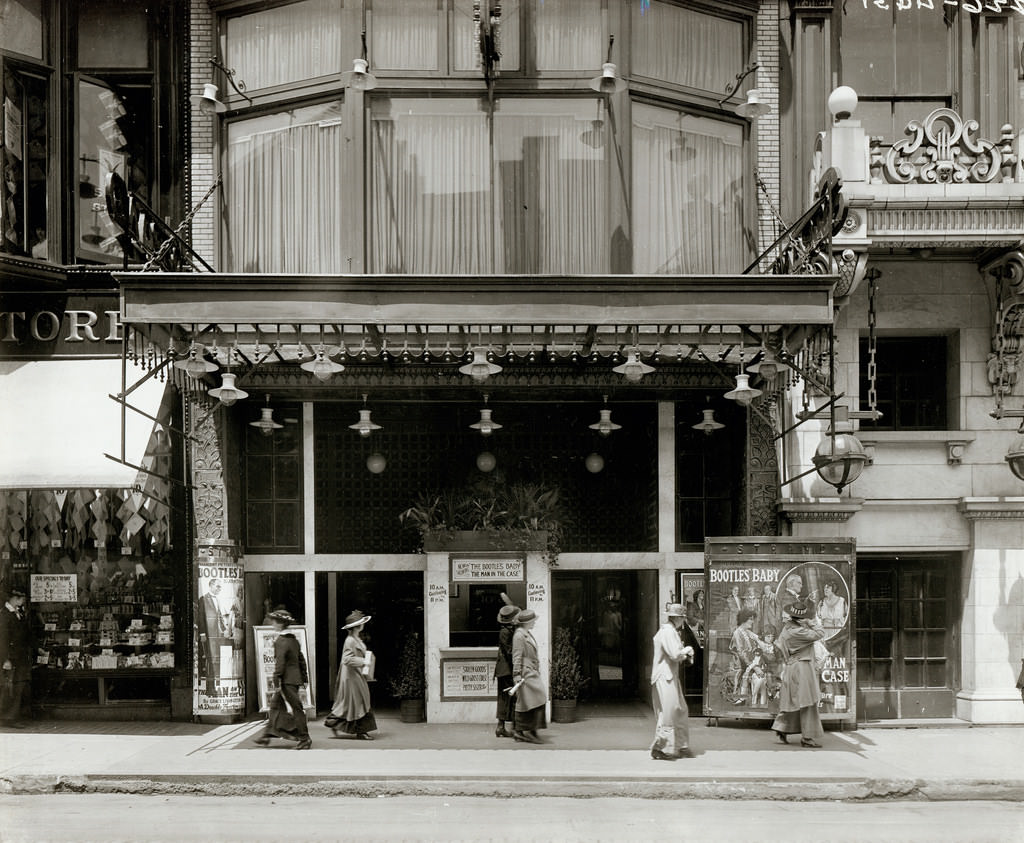
Entertainment was woven into city life from early on. Vaudeville shows at venues like Talbot’s Hippodrome were advertised on building walls. By 1915, motion picture theaters had arrived — the Strand Theater at 419 North Sixth Street was already showing films like “Bootles’ Baby.” Movie advertisements appeared on building walls and street corners, drawing crowds from across the city.
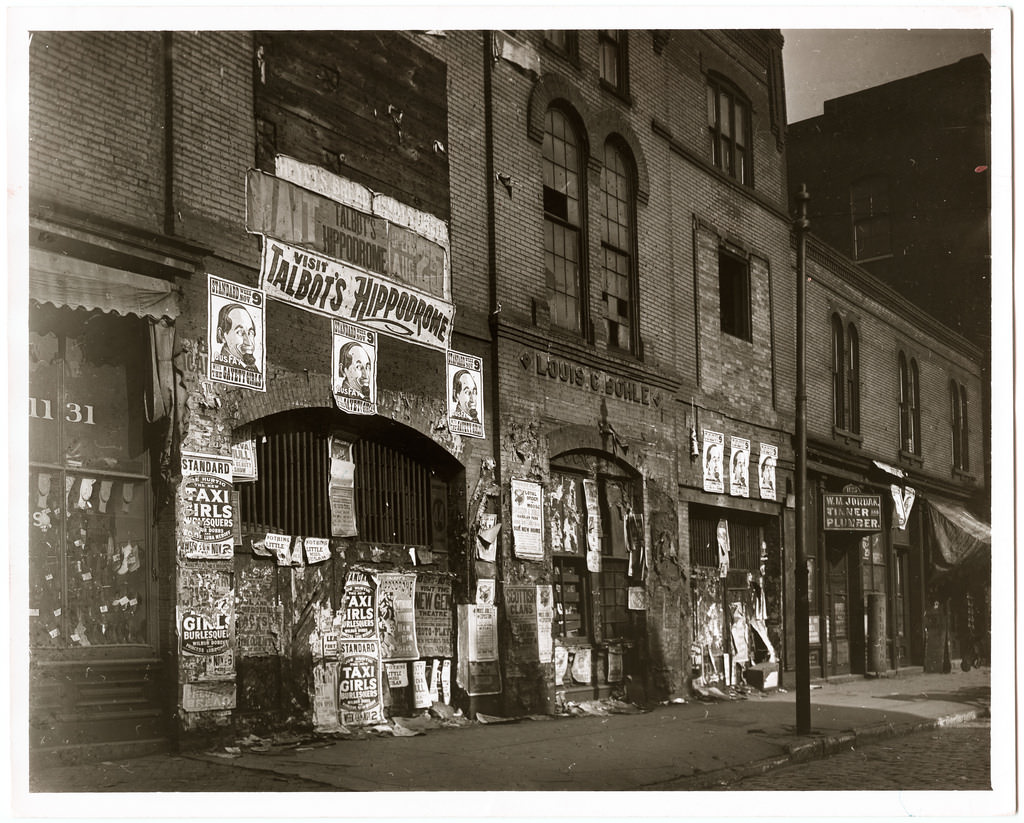
Posters covering a wall of the Louis Bohle Undertaking and Livery building at 1125–9 Market Street advertising vaudeville shows at the Talbot's Hippodrome, 1907
Posters covering a wall of the Louis Bohle Undertaking and Livery building at 1125–9 Market Street advertising vaudeville shows at the Talbot’s Hippodrome, 1907
Strand Motion Picture Theater entrance at 419 North Sixth Street featuring advertisement for the movie Bootles' Baby, 1915
Strand Motion Picture Theater entrance at 419 North Sixth Street featuring advertisement for the movie Bootles’ Baby, 1915
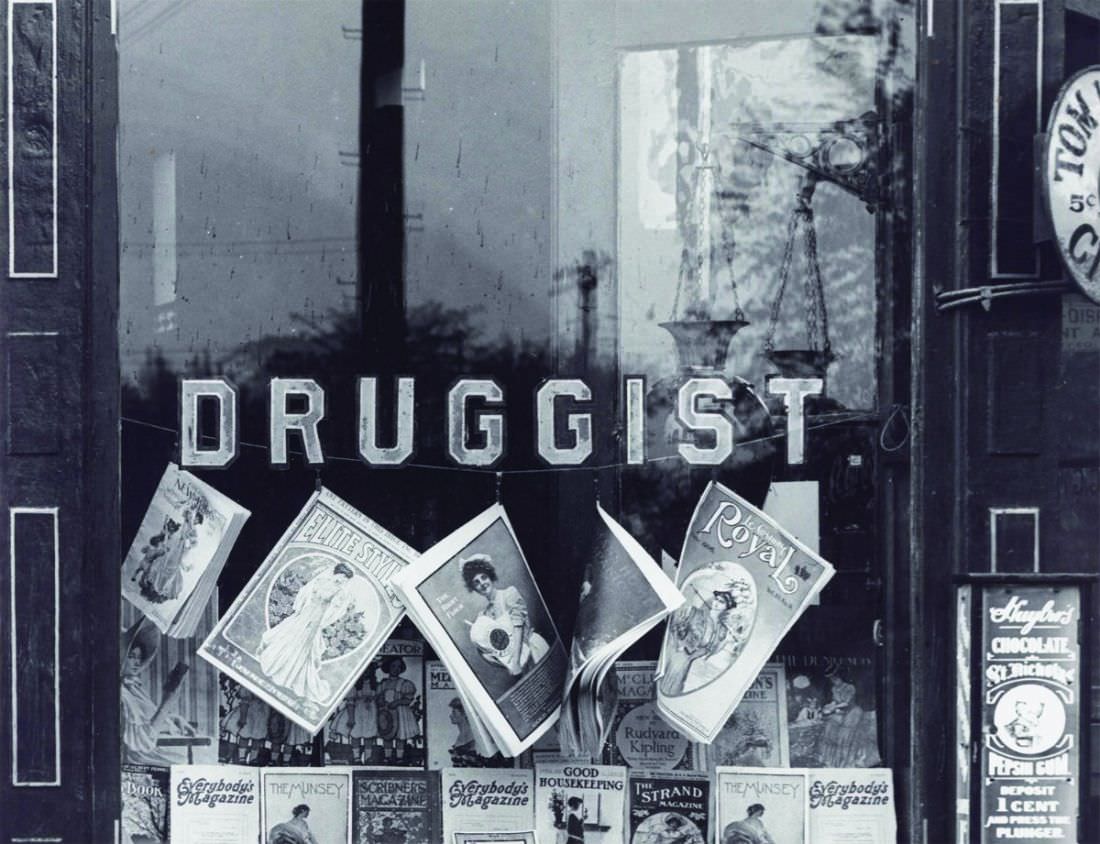
Magazines on display in the storefront window of the M.C. Kalis Drugstore at 4878 Easton Avenue, 1906

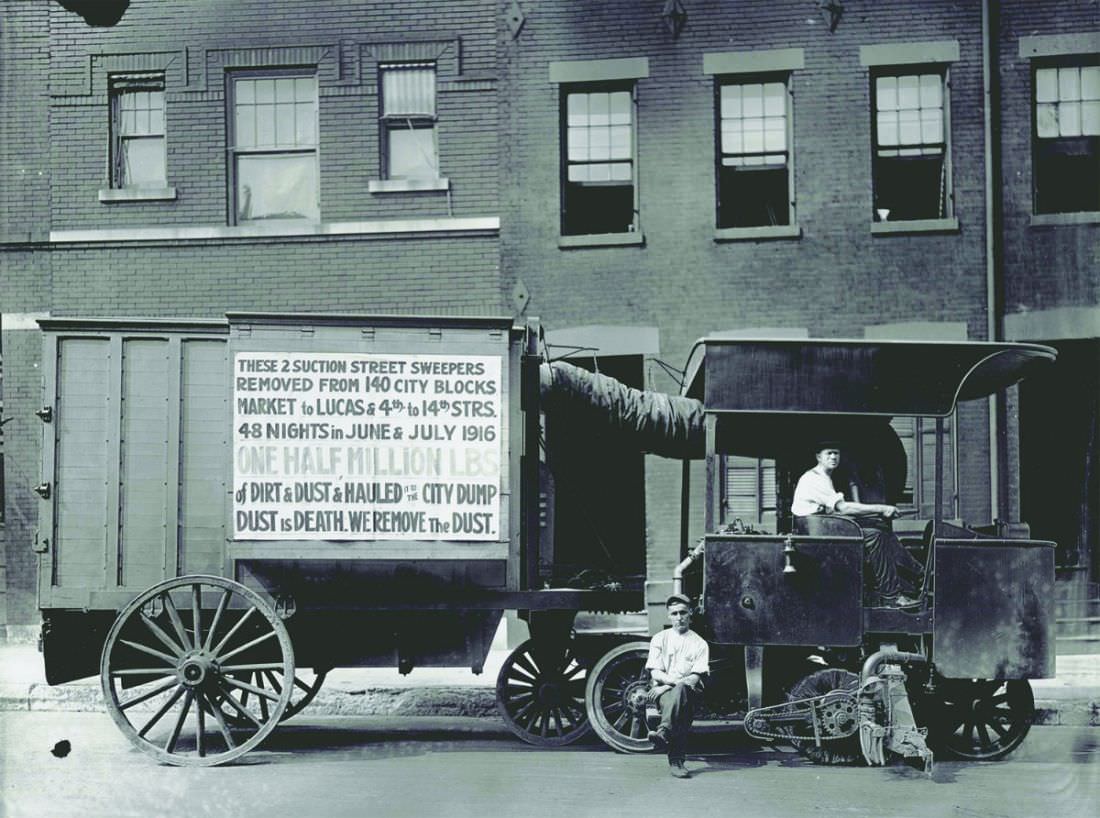
The automobile arrived in St. Louis in the early 1910s and changed the city’s streets quickly. One of the first gas stations in the city was operated by the Pierce Oil Company at 4614 Washington Boulevard in 1916. Street sweeper trucks carrying slogans like “Dust Is Death” appeared around the same time, reflecting both the rise of motor traffic and new public health concerns about street cleanliness.
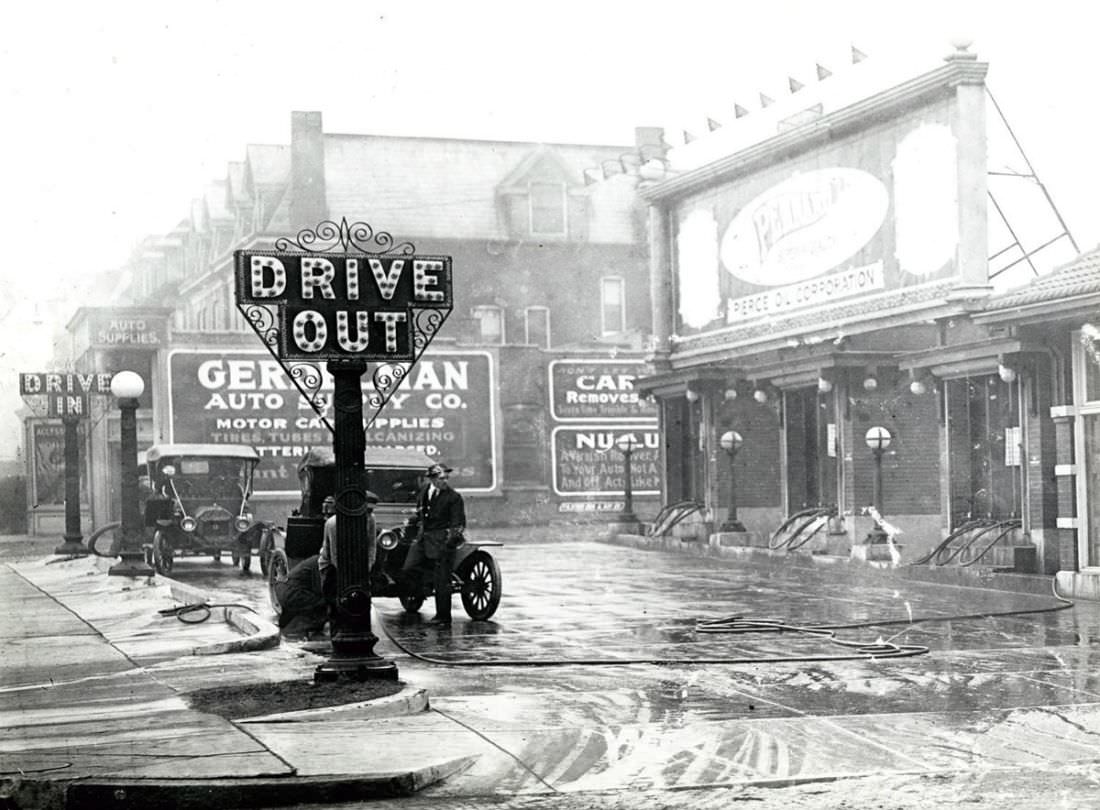
Automobile fueling at one of the first gas stations in St. Louis, operated by the Pierce Oil Company at 4614 Washington Boulevard, 1916
Street sweeper truck reading "Dust Is Death," on an unidentified street in St. Louis, 1916
Street sweeper truck reading “Dust Is Death,” on an unidentified street in St. Louis, 1916
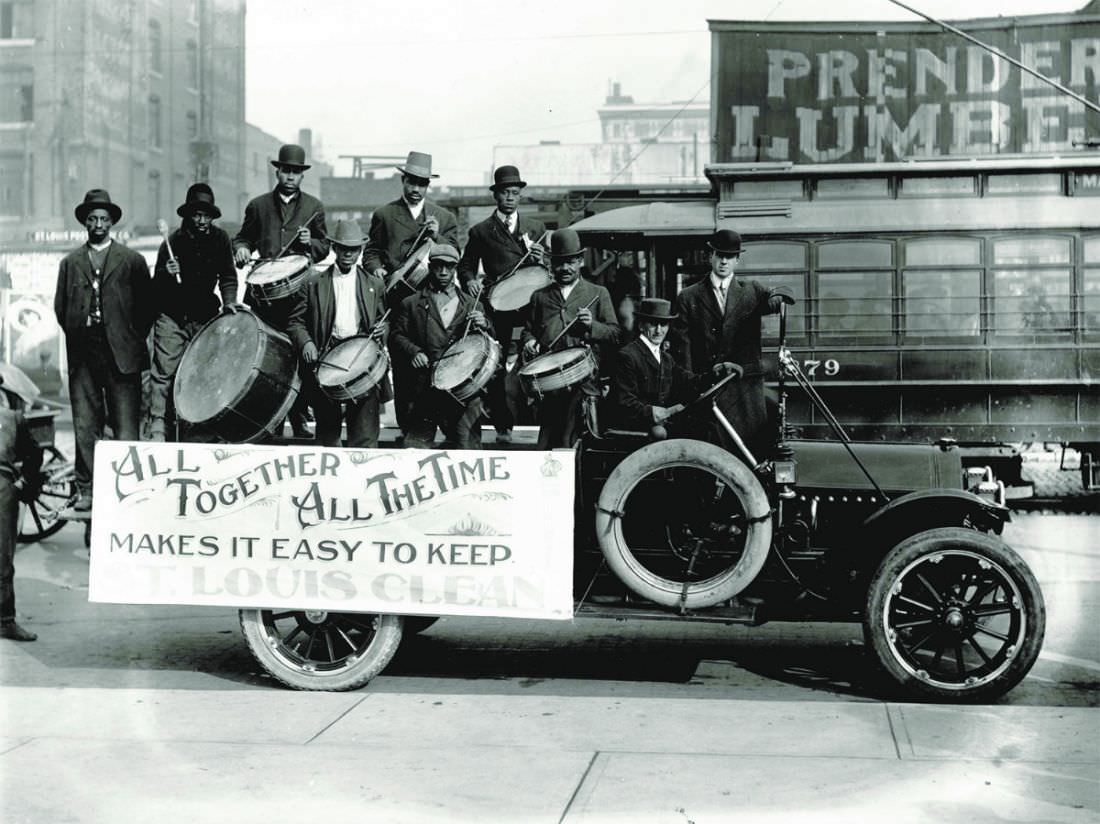
An African-American drumming group perform on the back of a truck carrying a banner that reads "All Together All the Time Makes It Easy to Keep St. Louis Clean" on Market Street, 1912
An African-American drumming group perform on the back of a truck carrying a banner that reads “All Together All the Time Makes It Easy to Keep St. Louis Clean” on Market Street, 1912

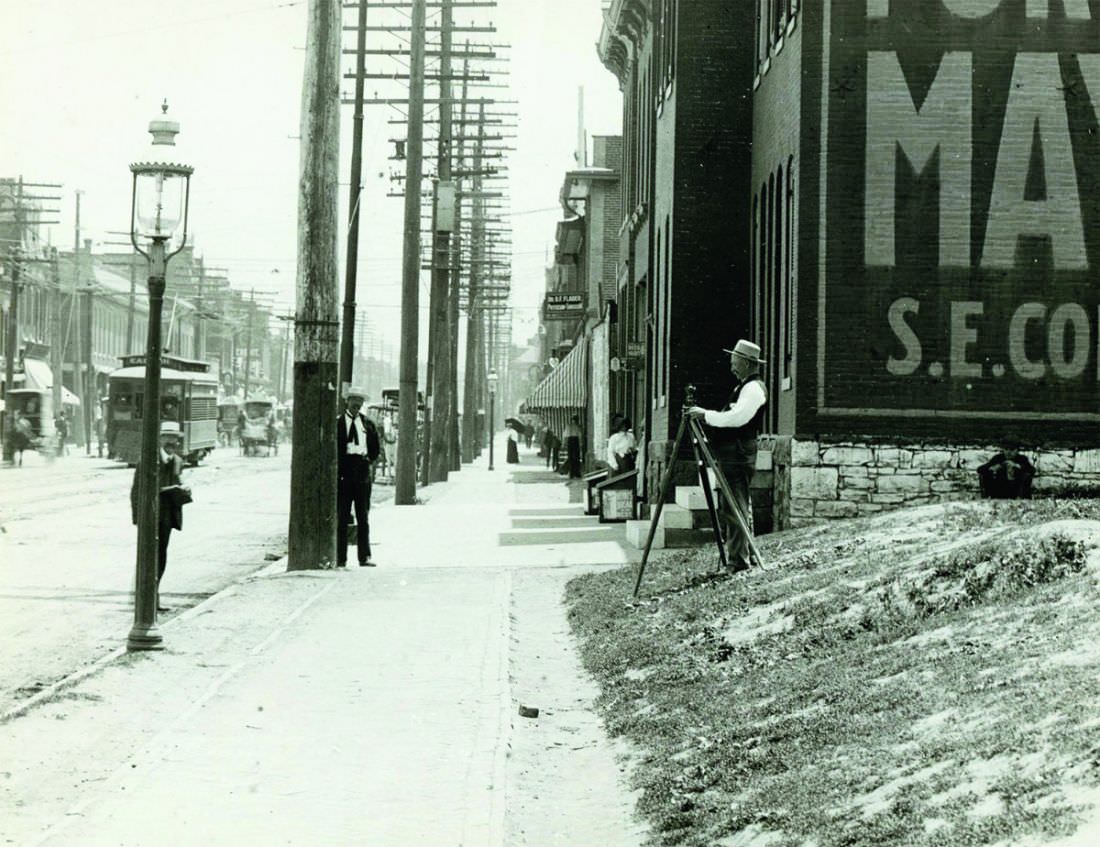
Public sanitation was a pressing concern in early 20th-century St. Louis. The Housing and Sanitation Committee of the Civic League actively campaigned to abolish public outhouses, posting signs in neighborhoods across the city by 1910. Surveyors mapped streets for future improvement. Underground utilities were laid block by block. The city was pushing hard to modernize its infrastructure, even as poverty remained widespread in many neighborhoods.
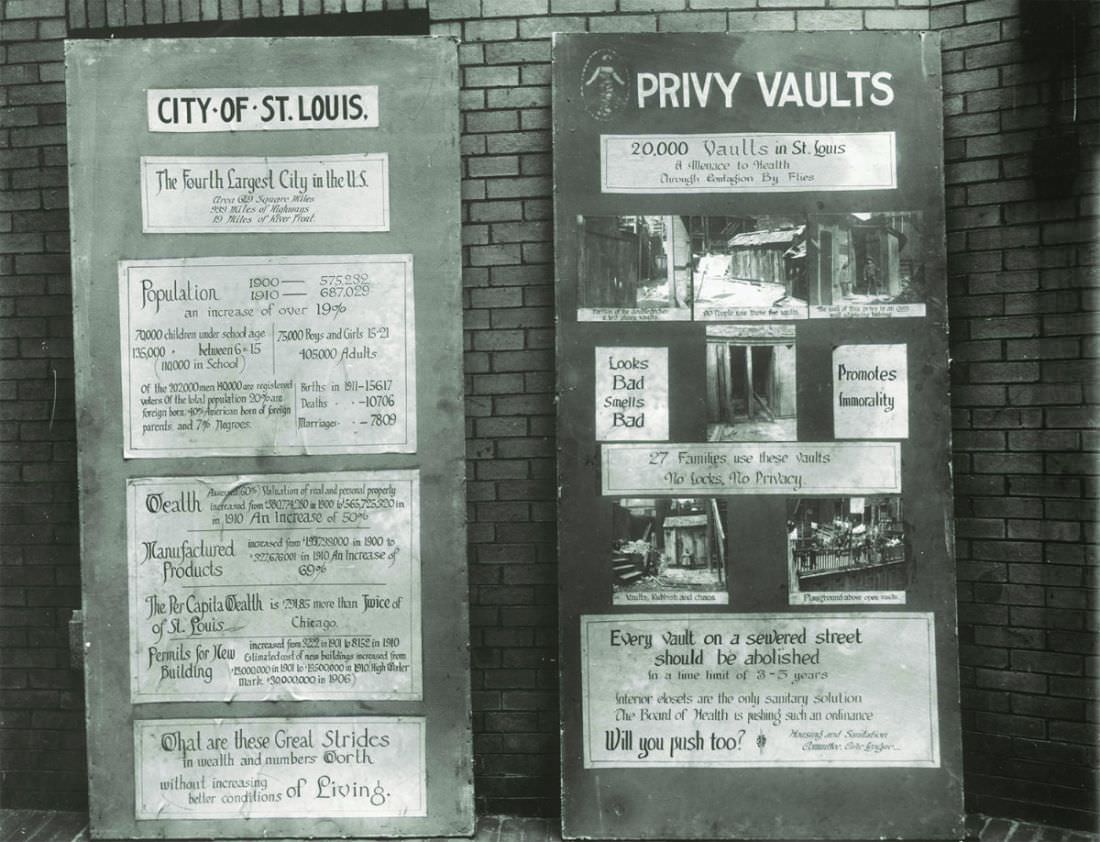
A pair of signs by the Housing and Sanitation Committee Civic League pushing for the abolition of public outhouses, 1910
Surveyor at work at 1219 Franklin Street, 1910
Street crew backfilling after laying new underground utilities, Sarah Avenue near Washington Boulevard, 1912.

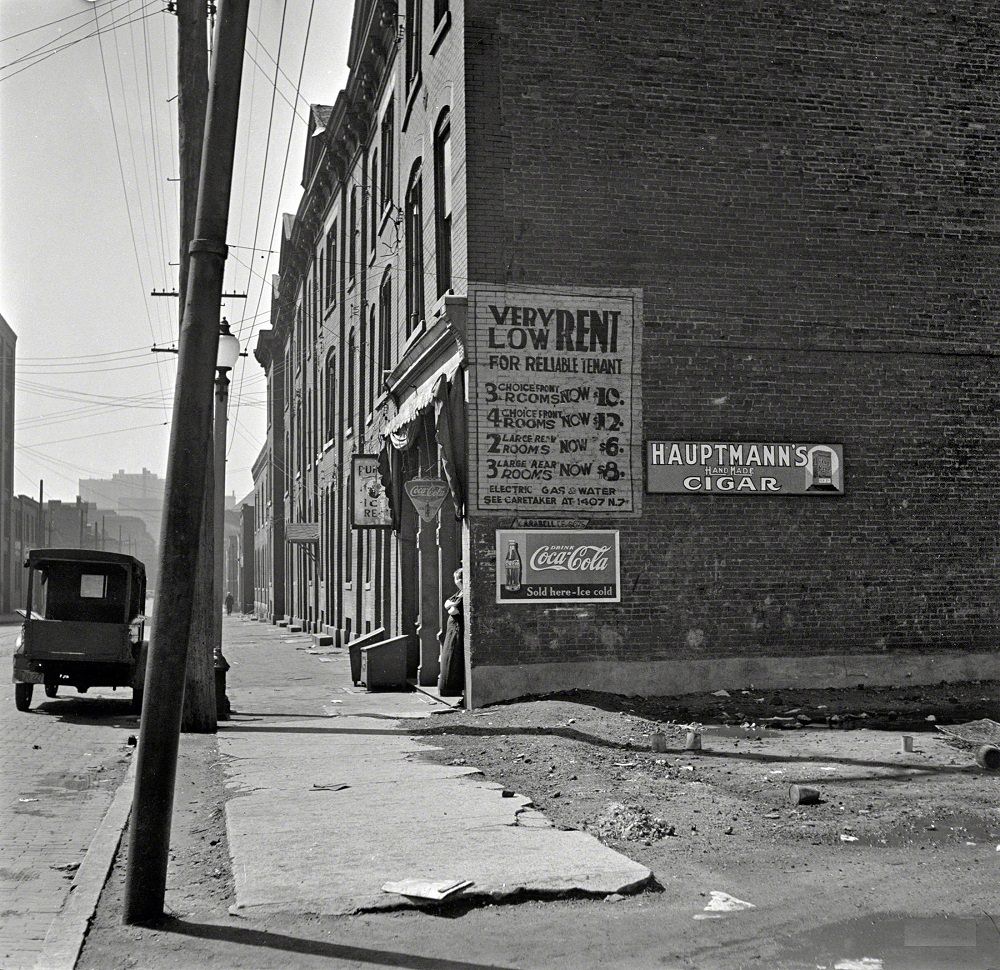
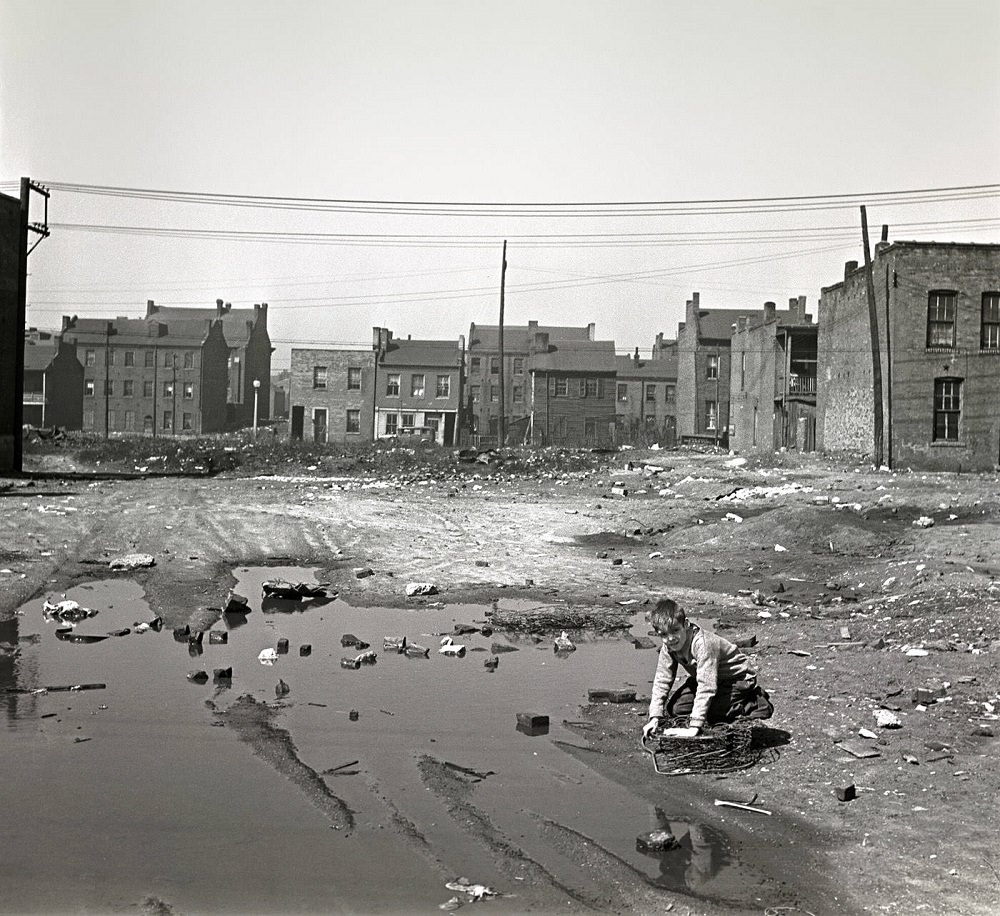
The Burns Basement Branch — described as a dark, dirty cellar at 3518 Evans Avenue — was one of the grimmer distribution points for newsboys in 1910. Nearby, in the oldest parts of the city, low-cost housing photographed in March 1936 showed how little living conditions had improved for many residents even decades later. By then, the Great Depression had pushed unemployment to its peak, and relief operations had become a lifeline for large portions of the city’s population.
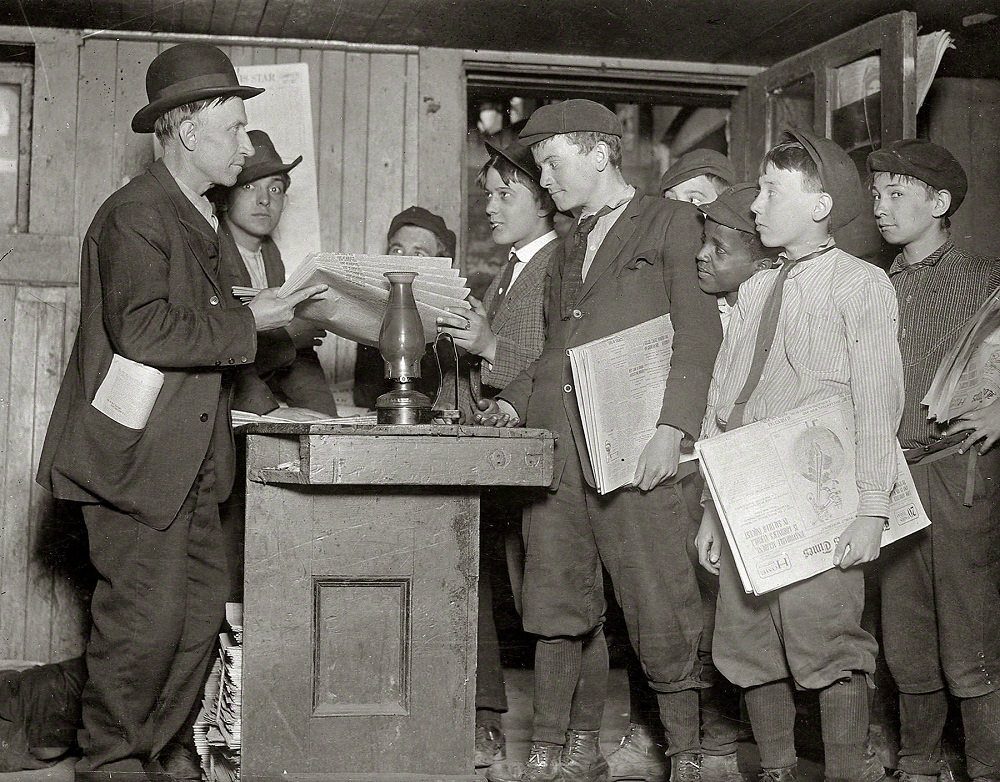
Burns Basement Branch, A dark dirty cellar, 3518 Evans Avenue, St. Louis, Missouri, May 1910
Low-cost housing, Saint Louis, March 1936
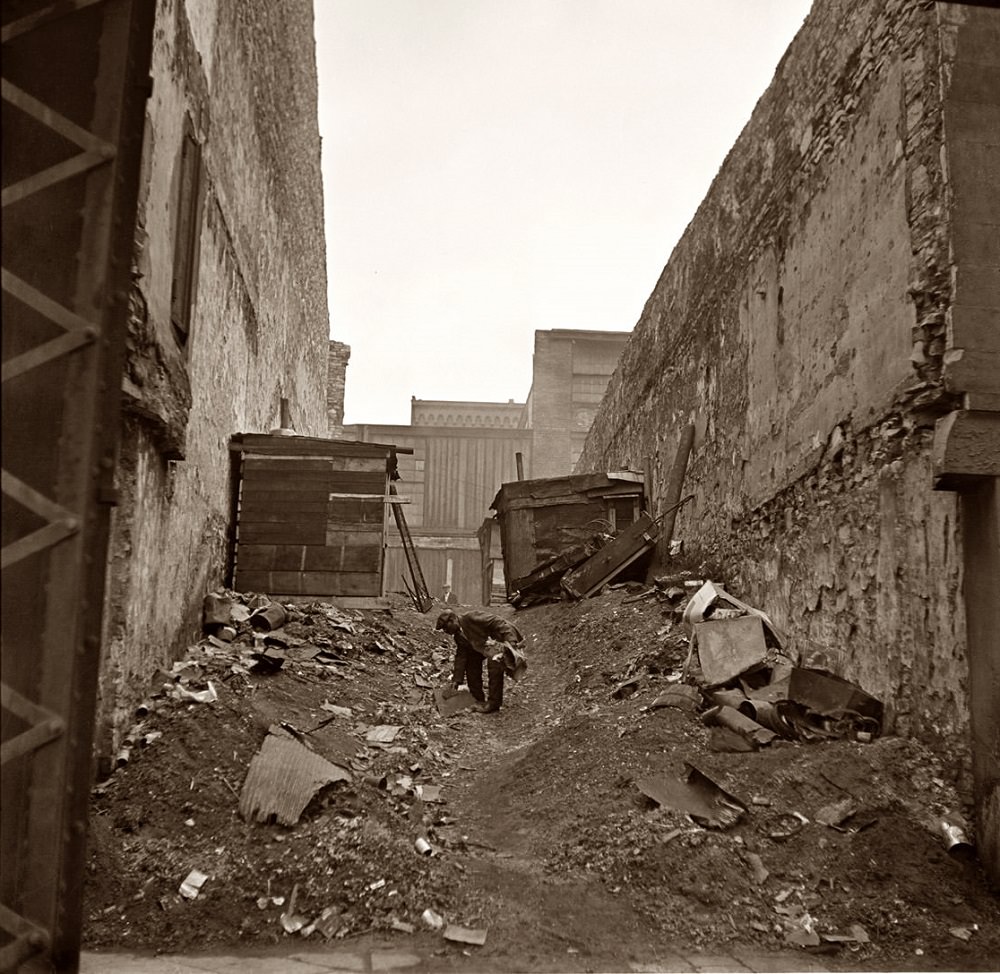
A hobo jungle along the riverfront in St. Louis, Missouri, March 1936

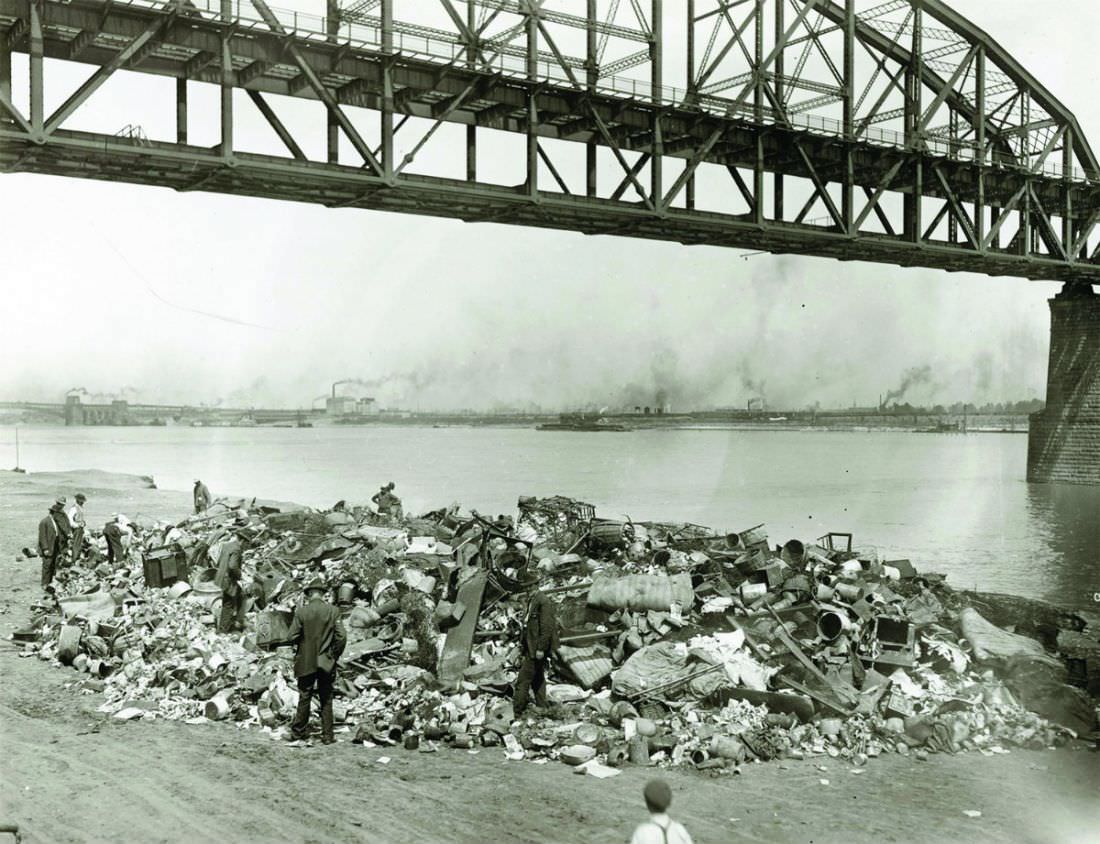
By January 1939, the riverfront still showed signs of the Depression’s grip. A grain elevator stood on the waterfront — a reminder of the agricultural trade that continued to flow through the city. Nearby, railroad tracks stretched through an industrial landscape that had seen better days. Men could still be found picking through rubbish piles along the riverbank south of the Municipal Free Bridge, searching for anything useful.
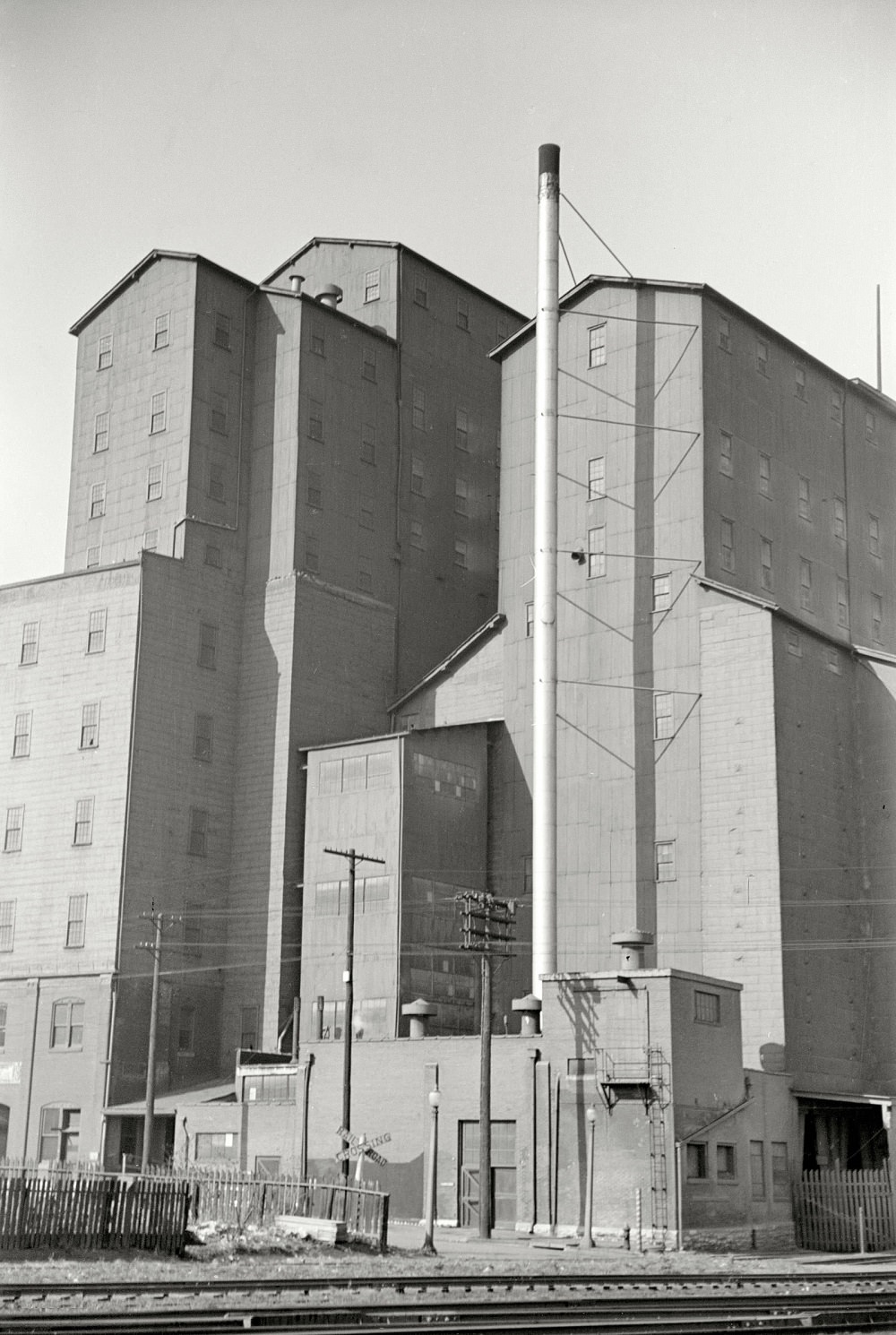
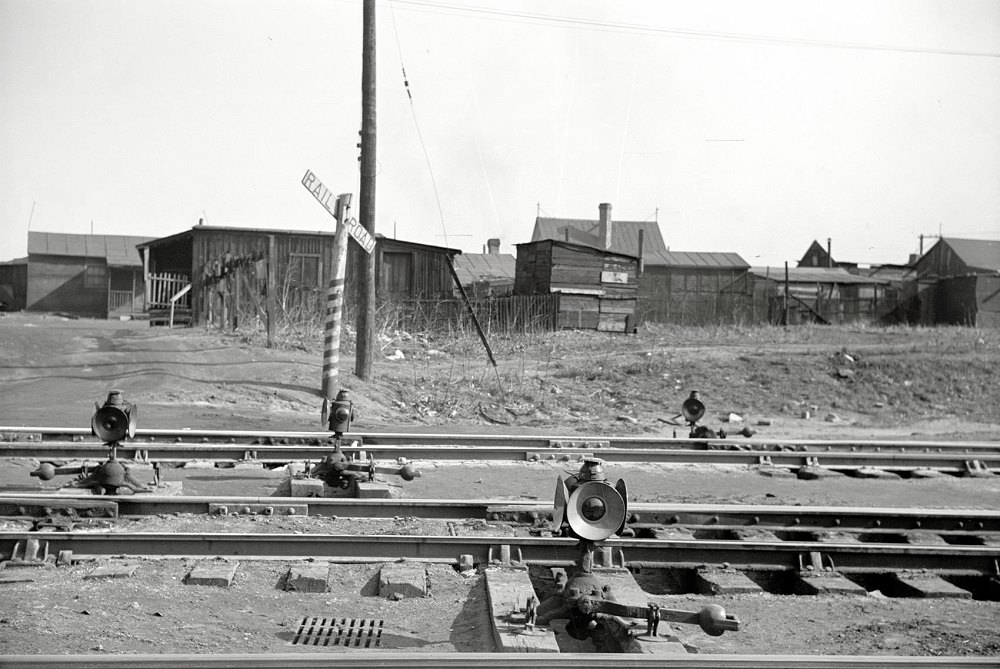
Grain elevator on riverfront, St. Louis, Missouri, January 1939
Railroad tracks, St. Louis, Missouri, January 1939
Men going through a rubbish pile on the riverfront south of Municipal Free Bridge, 1910

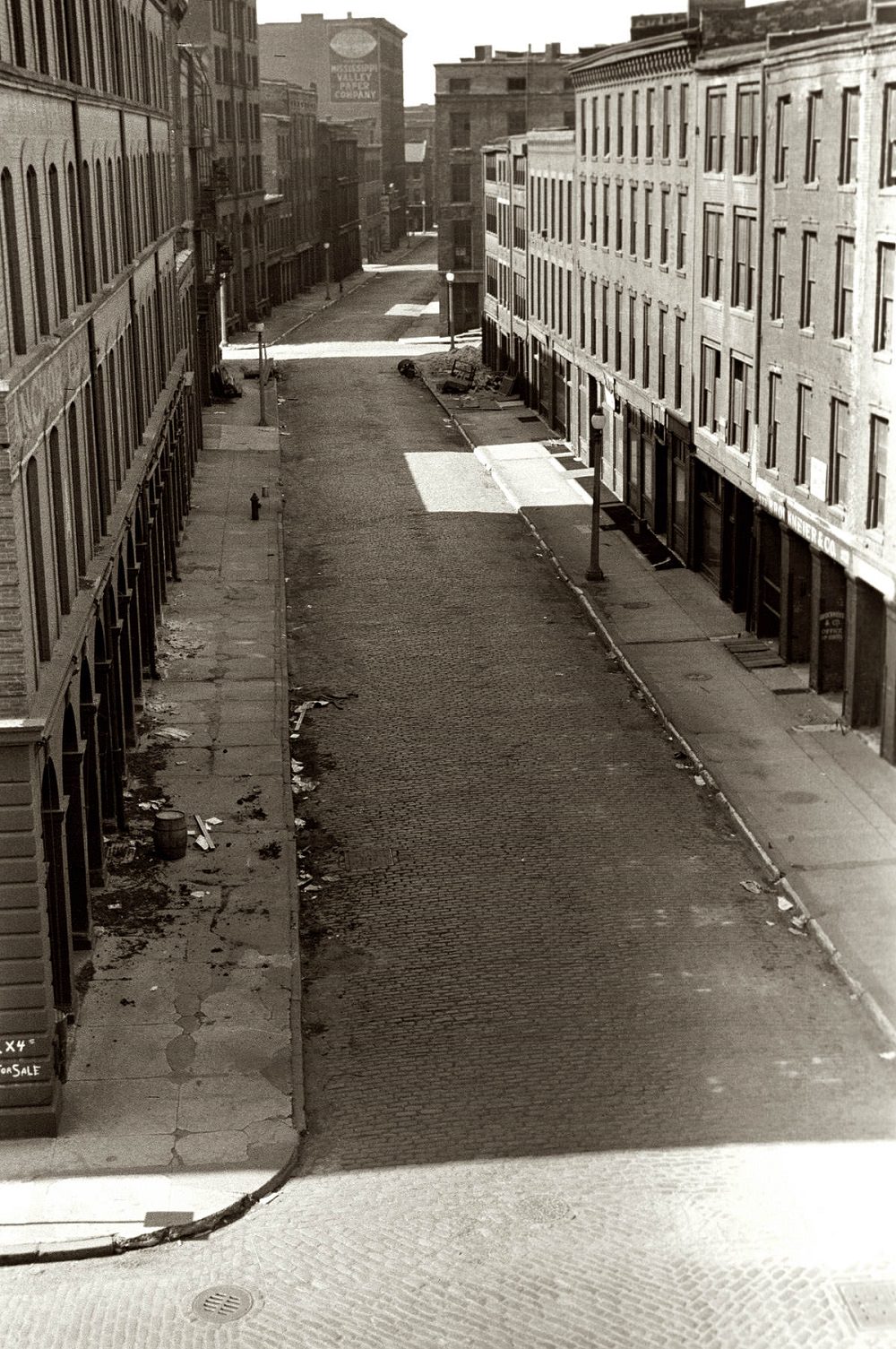
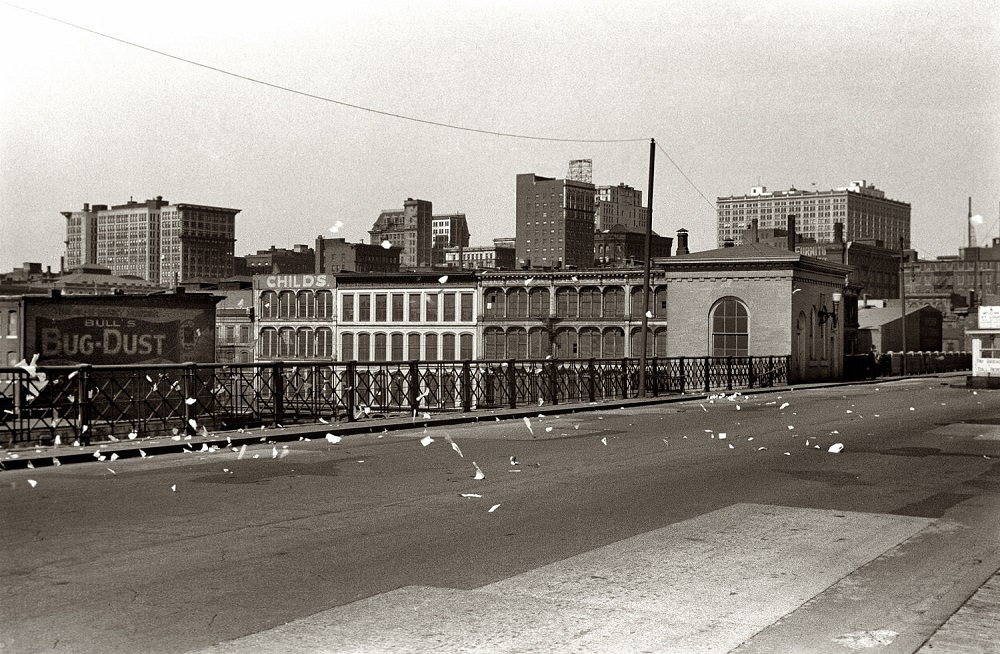
By May 1940, downtown St. Louis had a quieter look on Sunday mornings, with wide streets and storefronts closed for the day. Union Station’s fountain stood as a calm centerpiece in the city’s core. Older parts of town were actively being torn down to make way for new development, and bridges over the river carried the marks of a city in constant motion.
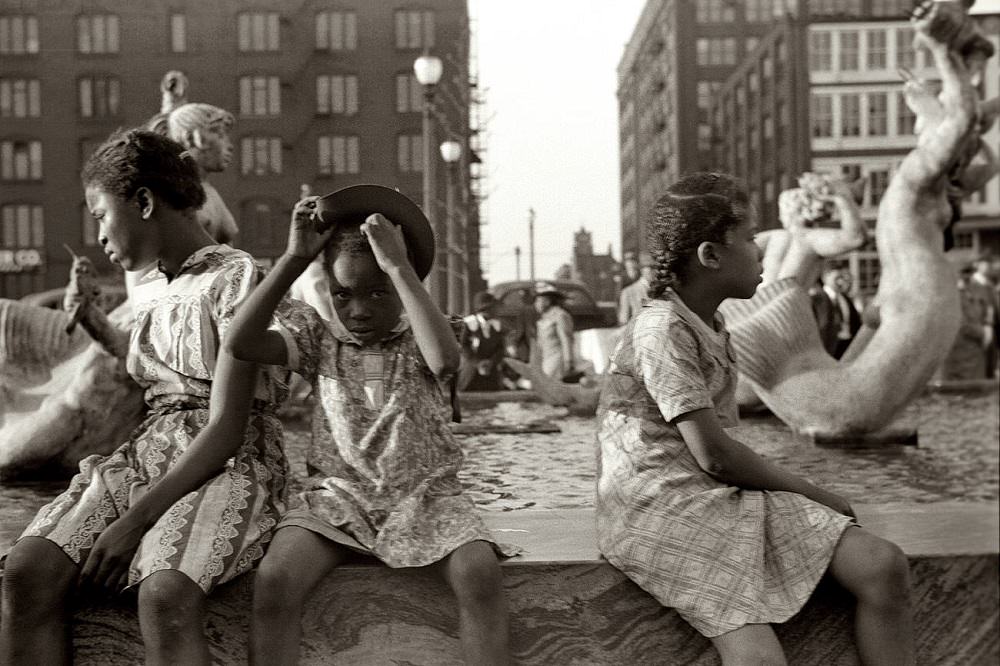
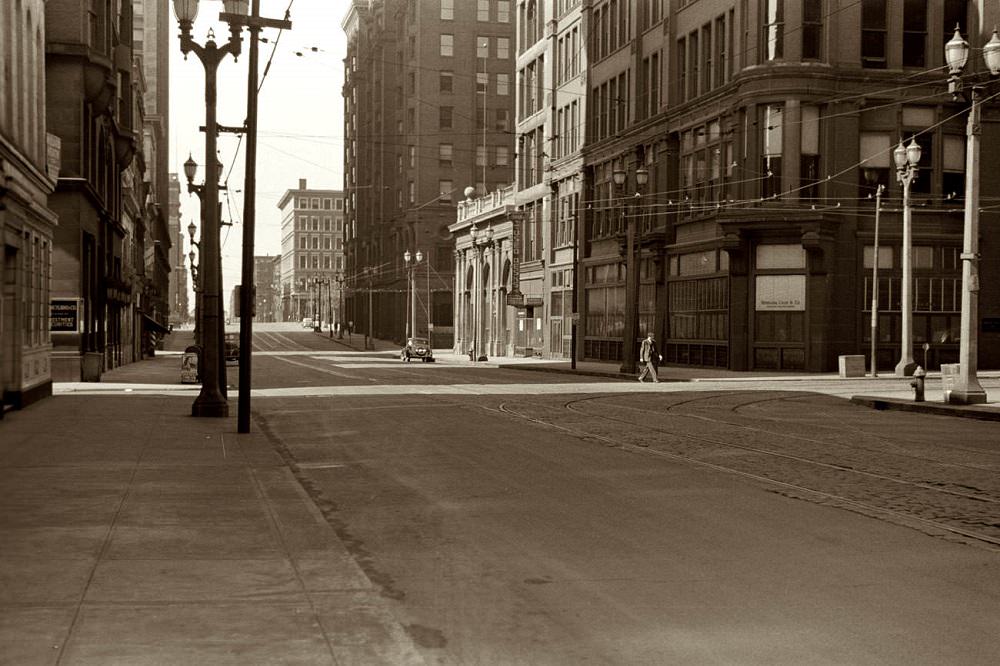
Fountain in front of Union Station, St. Louis, Missouri, May 1940
Downtown street on Sunday morning, St. Louis, May 1940
Street in oldest part of town which is being torn down, St. Louis, Missouri, May 1940
Scraps of paper blowing on bridge, St. Louis, Missouri, May 1940

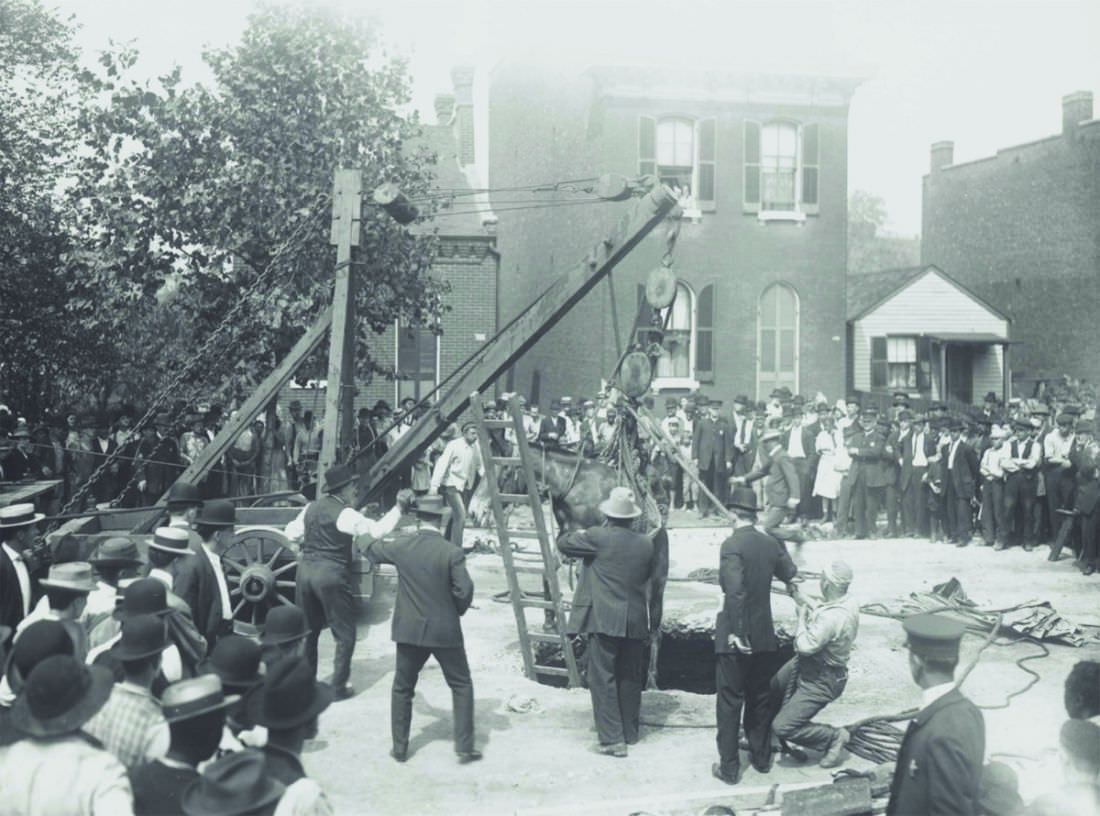
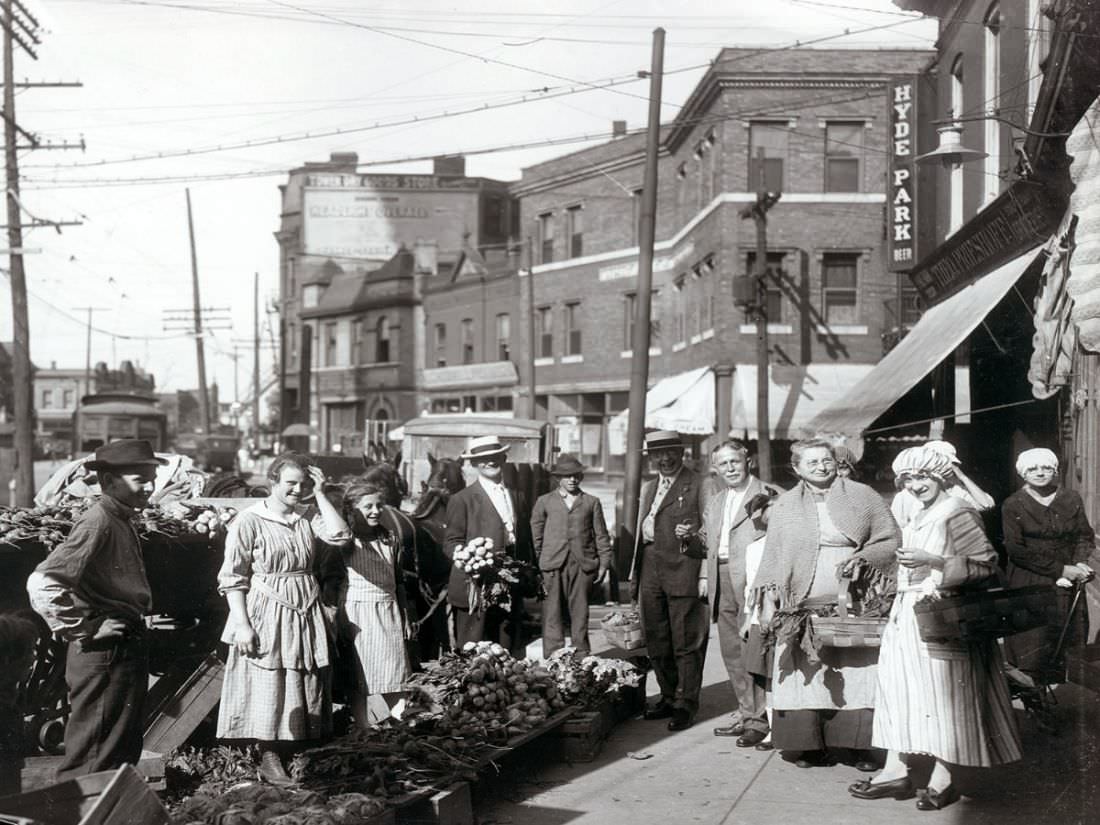
Everyday life in St. Louis played out across a web of intersections and storefronts. Men gathered outside the Globe Shaving Parlor on Carr Street. Shoppers browsed sidewalk produce outside the Theodore Prieshoff Grocery in 1929. Crowds stopped to watch a horse being pulled from a hole in the street — a common hazard when animals were still used for heavy transport. These moments, small on their own, add up to a vivid picture of city life.
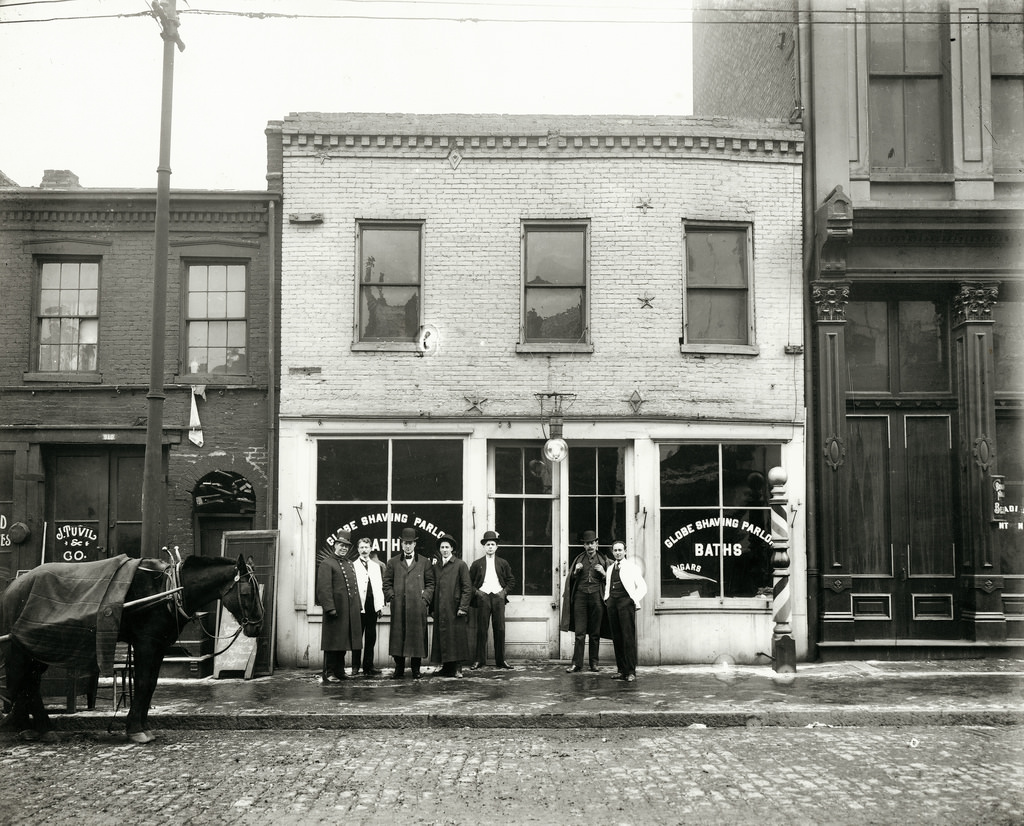
Group of men standing in front of the Globe Shaving Parlor at 1015 Carr, 1910
Shoppers gathered by sidewalk produce outside the Theodore Prieshoff Grocery, 1929
Crowd watching a horse being pulled out of a hole. Photograph, 1910–1920.
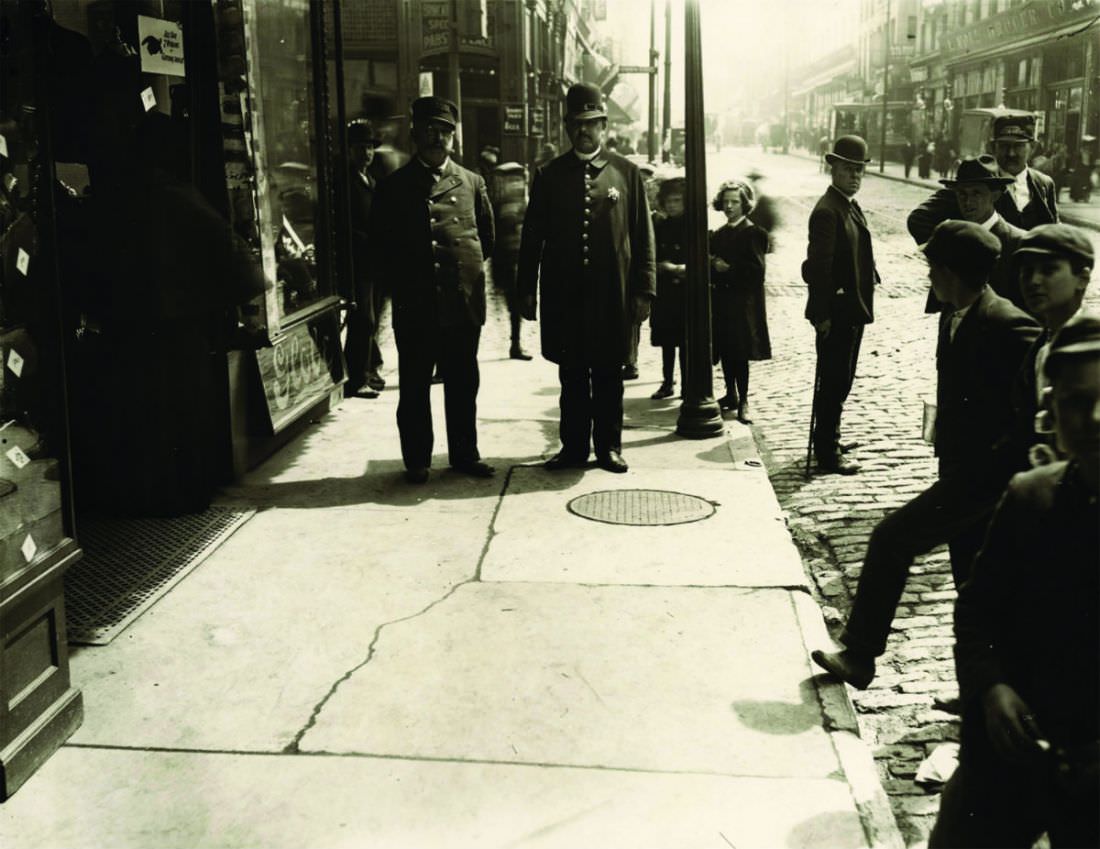
Doorman and police officer in front of Globe Store, Seventh and Franklin streets, 1905–1915

Shaw’s Garden offered a different kind of scene. Around 1900 to 1910, a young girl played violin while standing on a lily pad in front of the Linnean House — a moment of grace in a city that was otherwise grinding through rapid industrialization. Public parks and green spaces like this one provided breathing room for residents of all backgrounds.
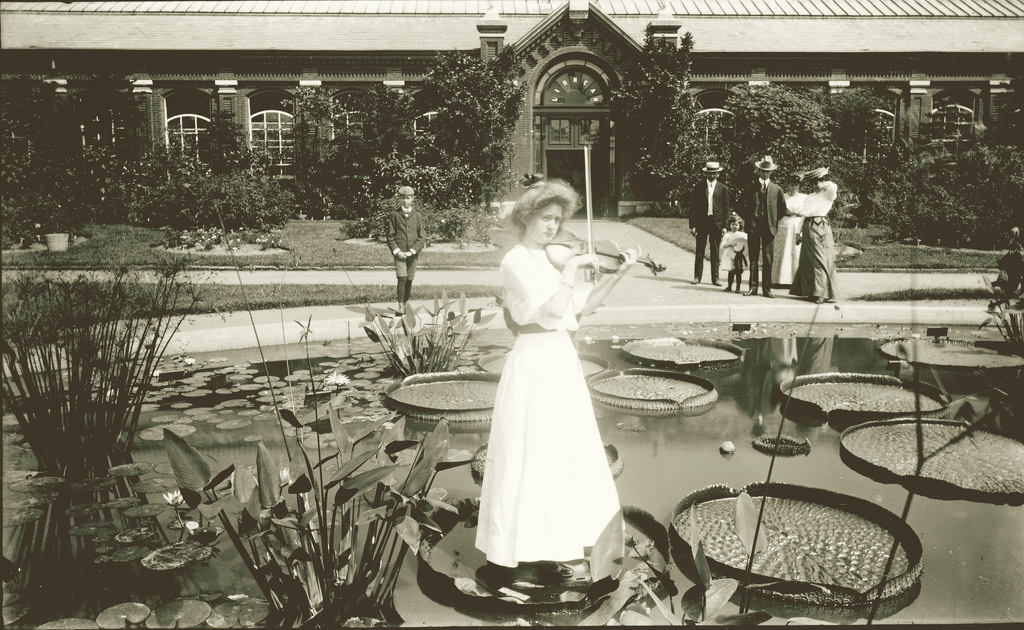
A young girl plays a violin while standing on lily pad in front of Linnean House at Shaw's Garden, 1900–1910.
A young girl plays a violin while standing on lily pad in front of Linnean House at Shaw’s Garden, 1900–1910.
Children's playground, St. Louis, March 1936
Children’s playground, St. Louis, March 1936

By 1952, baseball legend Satchel Paige was photographed in St. Louis — a sign of how much the city had changed since those turn-of-the-century street scenes. The city’s population would peak at more than 880,000 in 1950, driven in large part by the post-World War II economic boom. The photographs from these earlier decades capture a St. Louis that was younger, rougher, and building itself up street by street.
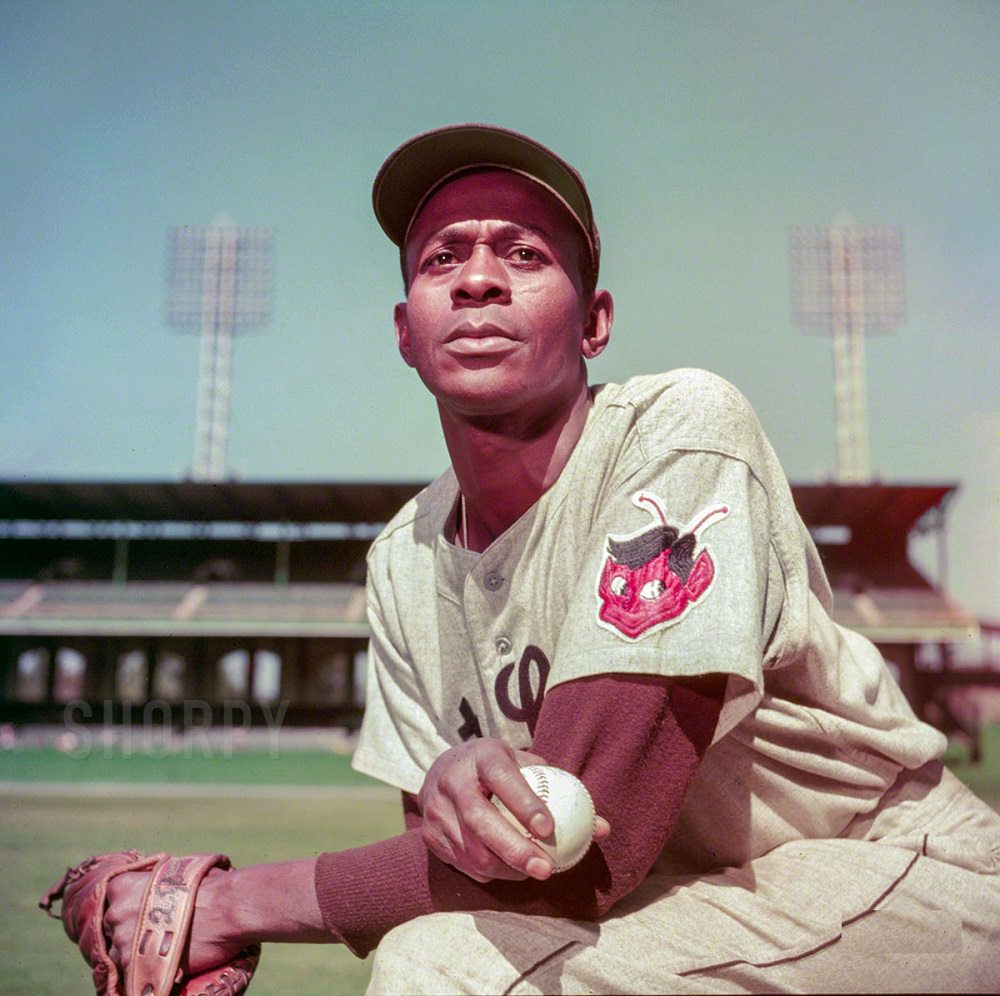
Satchel Paige, St. Louis, 1952
Intersection of Biddle and Thirteenth streets looking north, 1900
Street cleaner at Twenty-First and Chestnut streets, 1900.
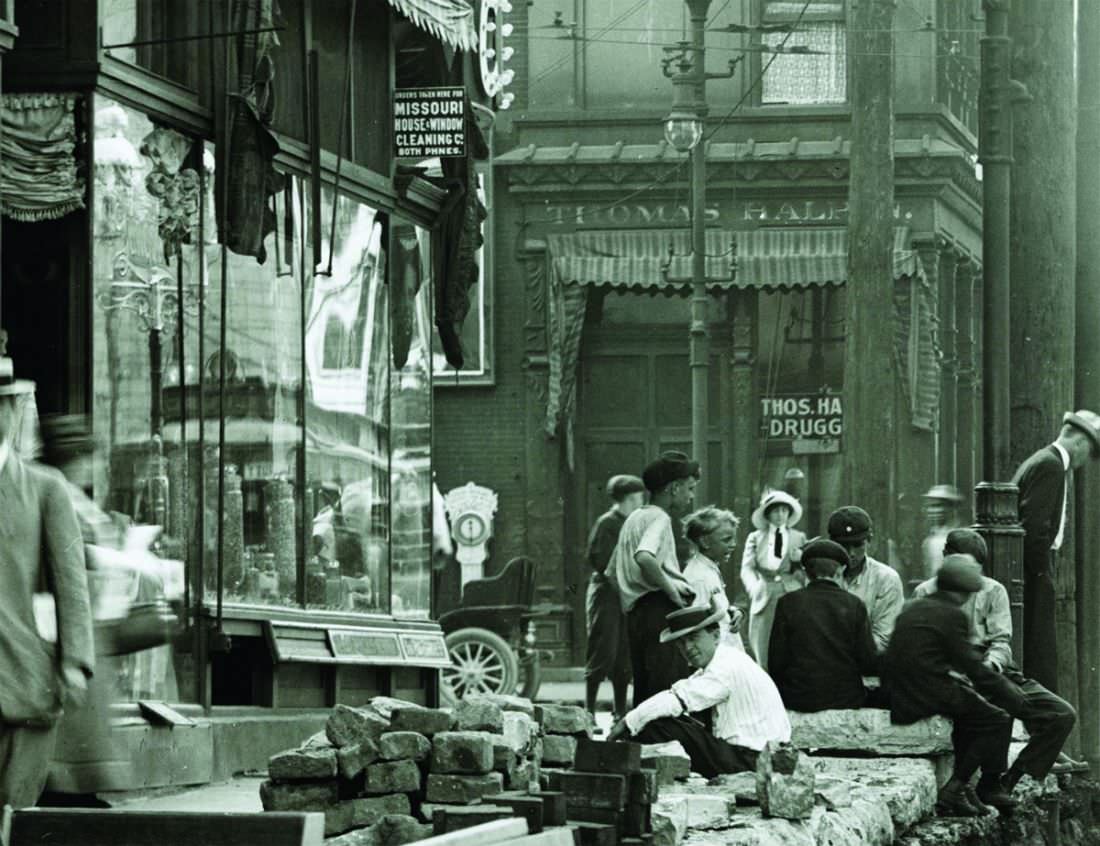
Bystanders observing street construction at the intersection of Grand Avenue and Olive Street, 1907
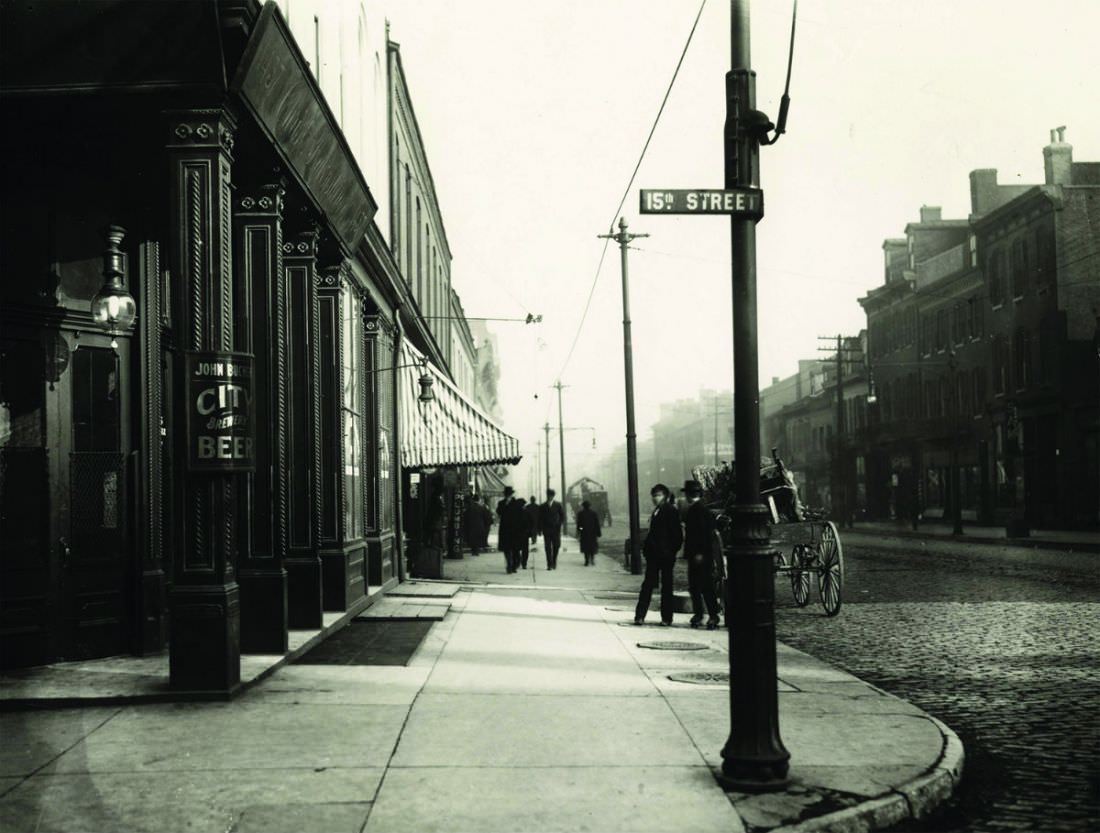
Franklin and Fifteenth streets looking west, 1900-1910
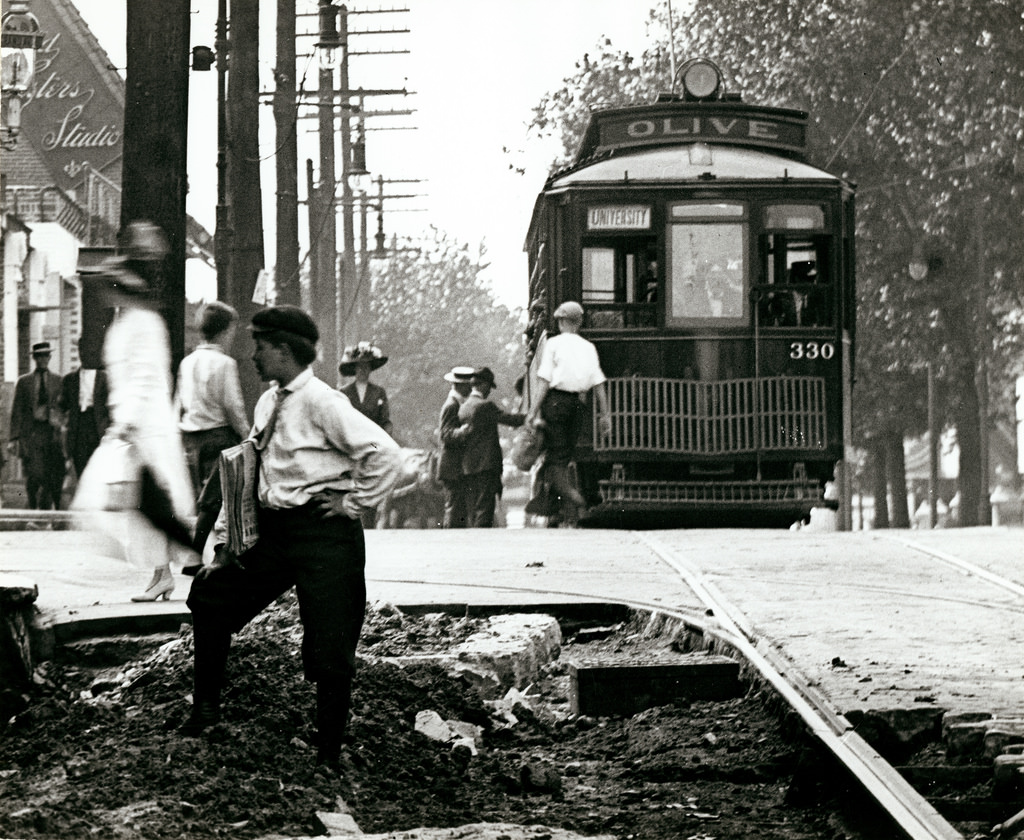
A newsboy stands in the rubble of street repair work on Olive Boulevard looking west toward Grand Avenue, 1907
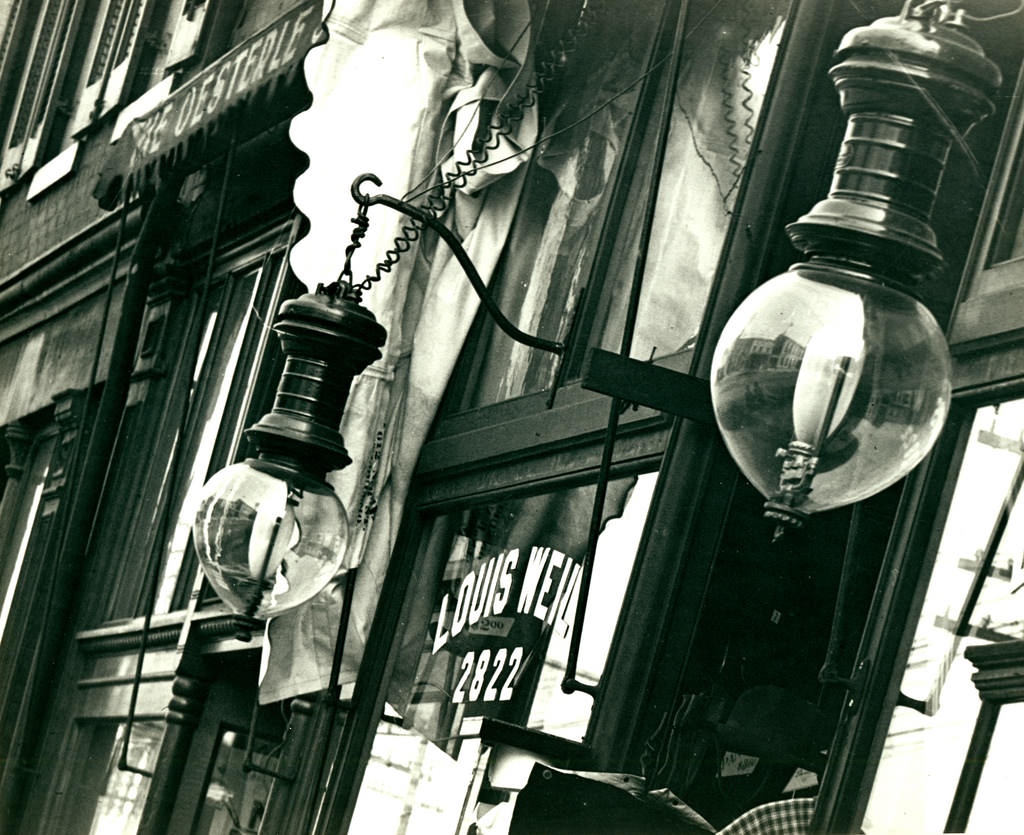
Detail of street lamps outside Louis Weil's Gents' Furnishings shop at 2822 Manchester Avenue, 1901
Detail of street lamps outside Louis Weil’s Gents’ Furnishings shop at 2822 Manchester Avenue, 1901
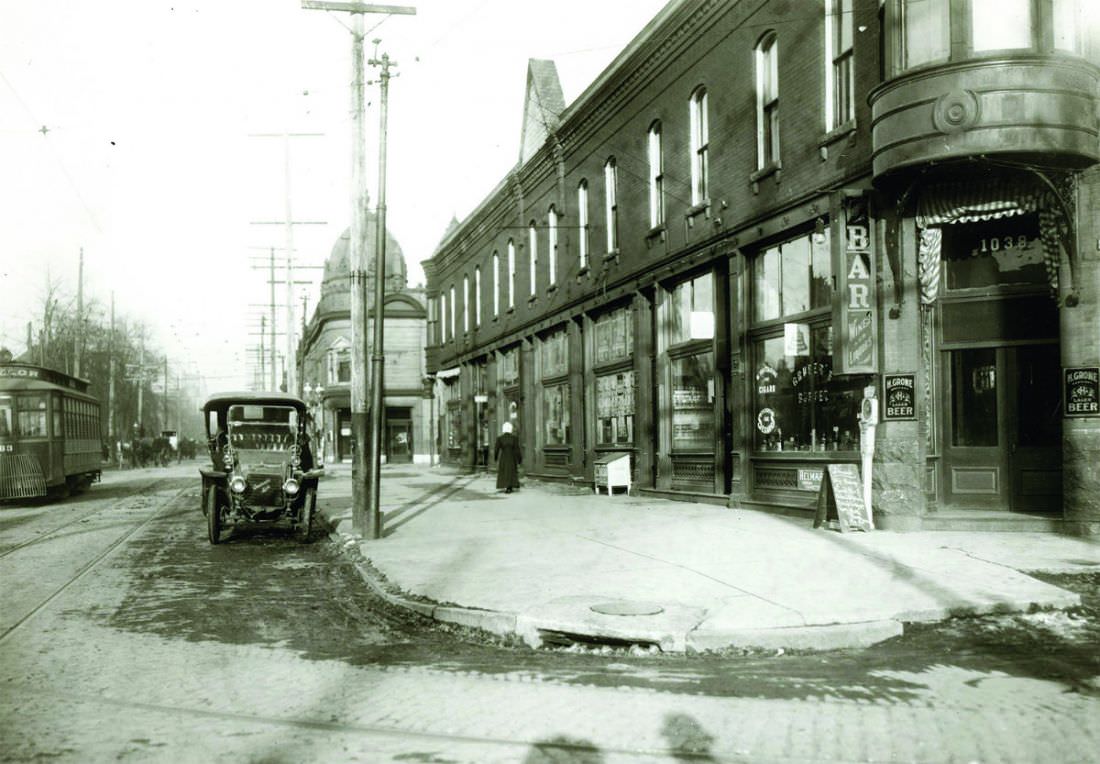
View looking north on Taylor Avenue from the intersection of Fairfax Avenue. Gruber's Saloon and Buffet is at 1038 North Taylor Avenue, 1910
View looking north on Taylor Avenue from the intersection of Fairfax Avenue. Gruber’s Saloon and Buffet is at 1038 North Taylor Avenue, 1910
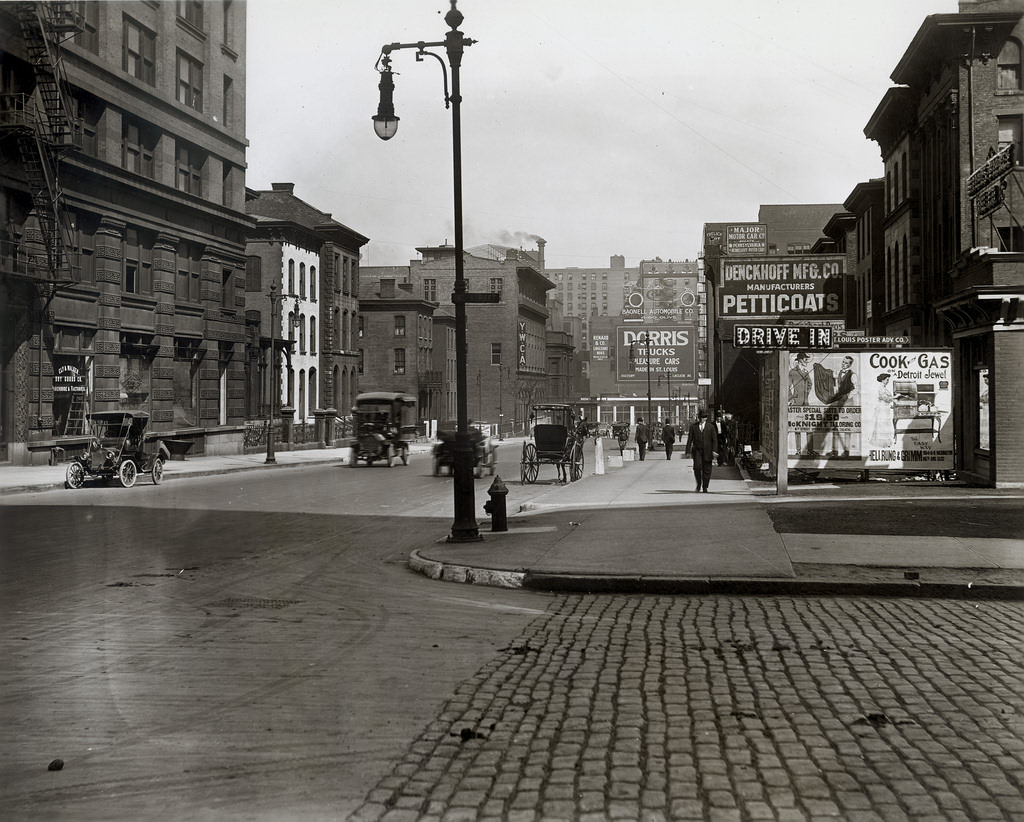
Looking east on Locust Street (Lucas Place) from Sixteenth Street, 1914
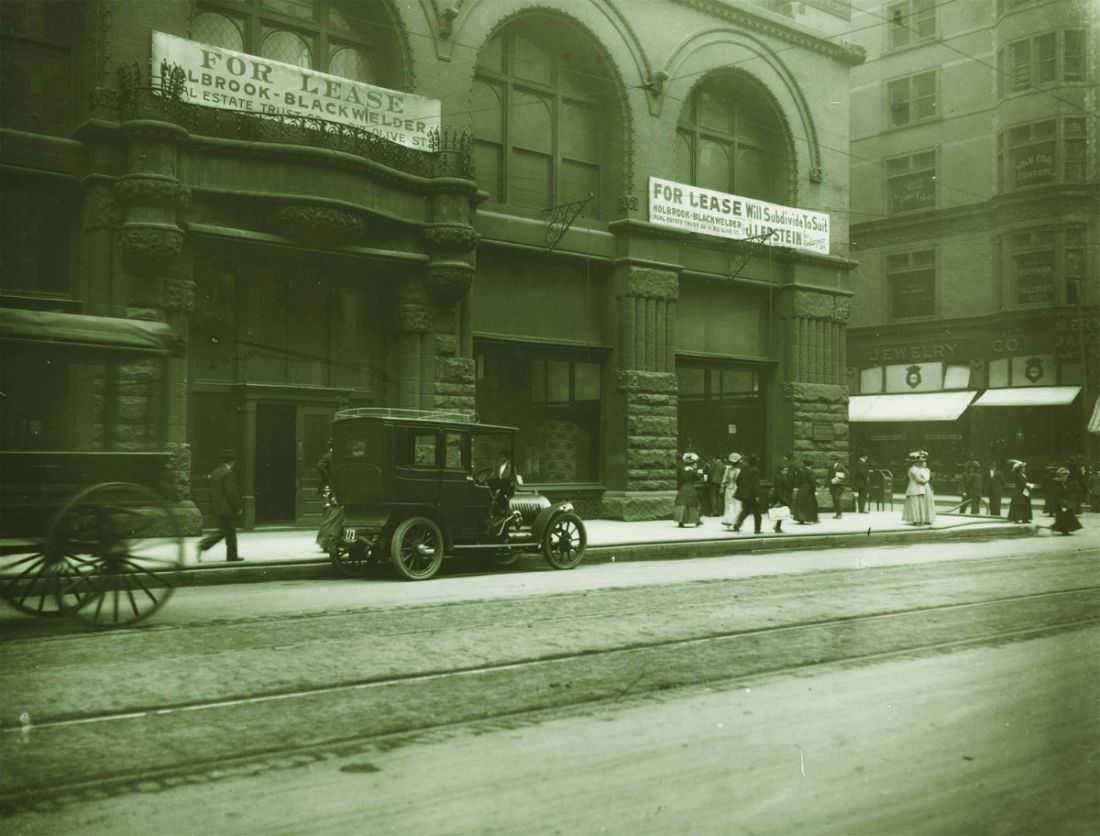
Southwest corner of Broadway and Locust, 1904-1914
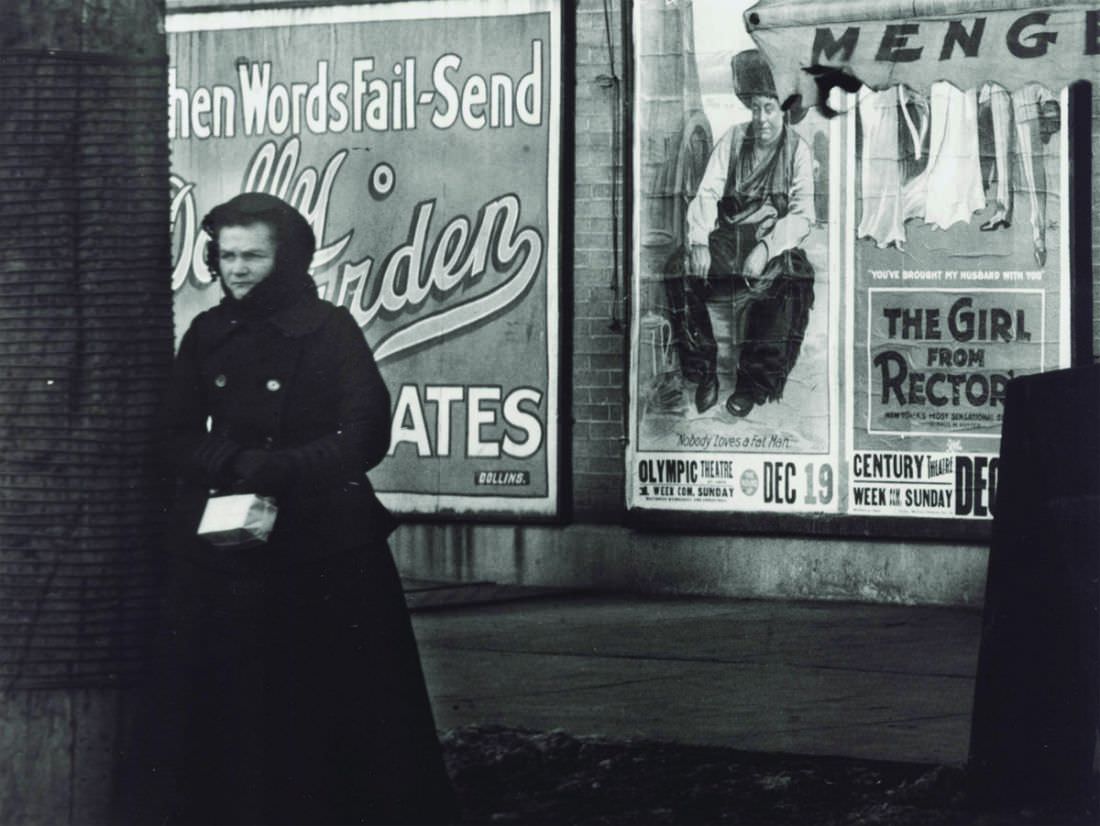
A woman bundled in winter wear at an unidentified street corner in front of advertisements for the movies The Round Up at the Olympic Theatre and The Girl from Rector's showing at the Century Theatre, 1917
A woman bundled in winter wear at an unidentified street corner in front of advertisements for the movies The Round Up at the Olympic Theatre and The Girl from Rector’s showing at the Century Theatre, 1917
North side of Market Street between Twelfth and Thirteenth streets, 1920
Intersection of Fourteenth Street and Washington Avenue, 1920s
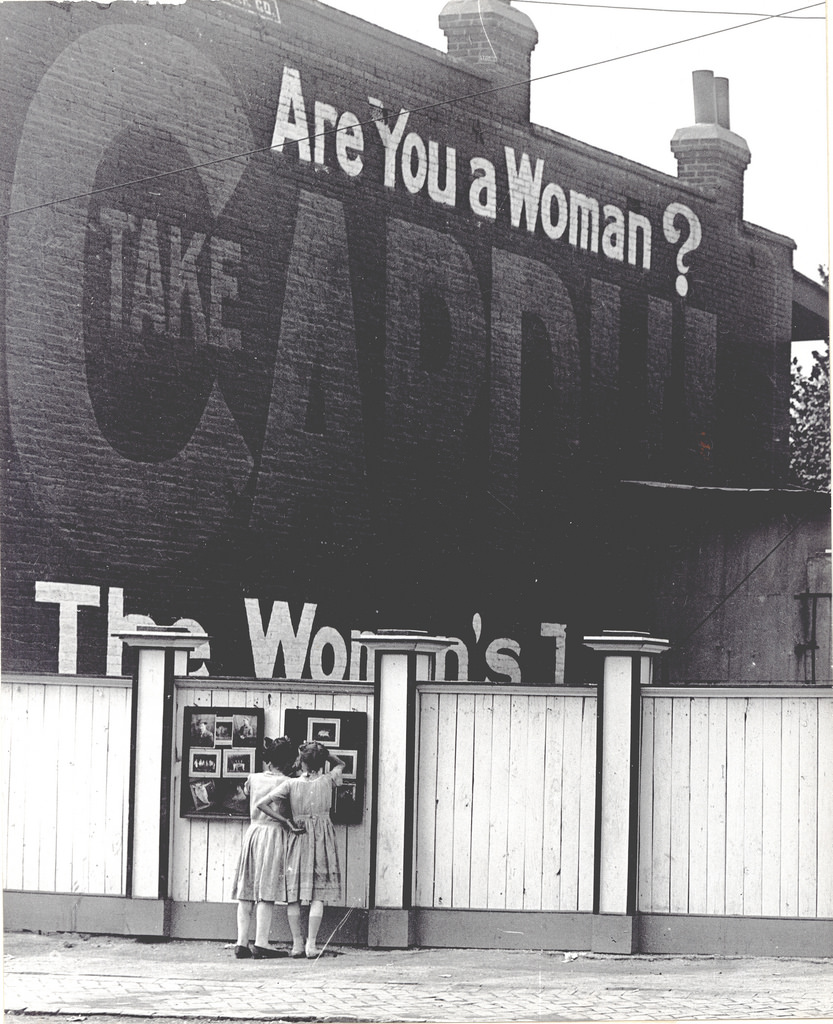
Two girls examining a bulletin board posted on a fence, ca. 1911–1921
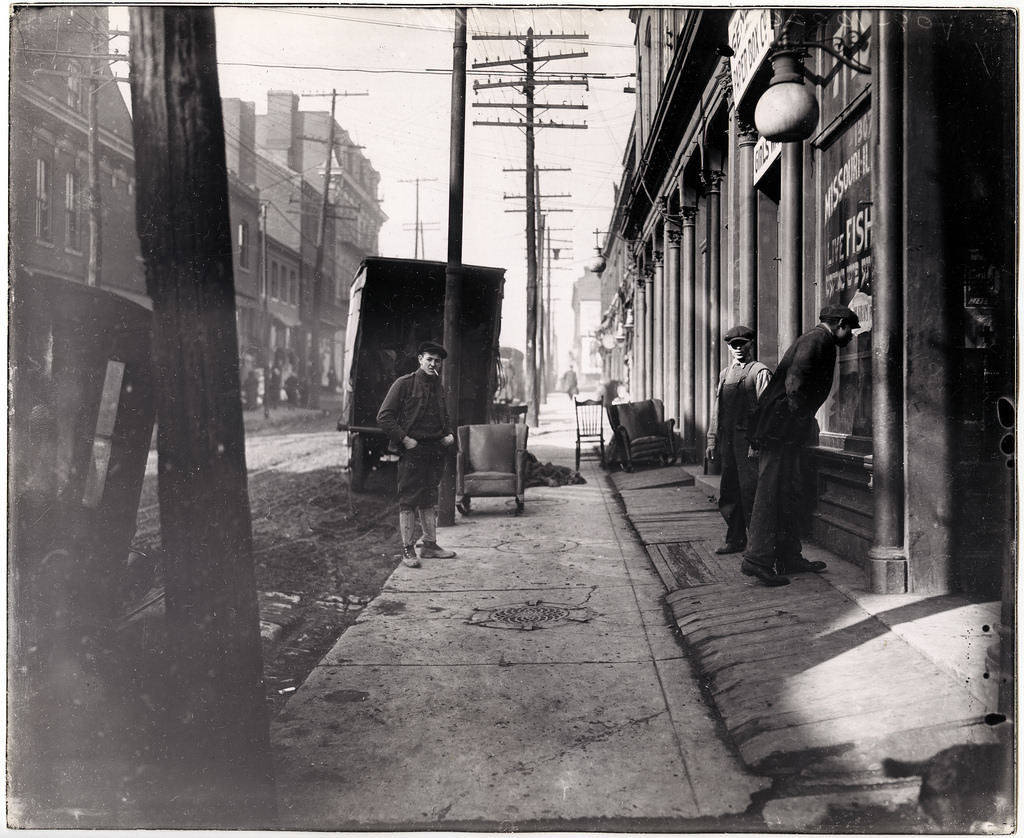
Movers pause for a break outside Harry Kram's Missouri-Illinois Live Fish Market, 1307 Biddle, ca. 1914–1924
Movers pause for a break outside Harry Kram’s Missouri-Illinois Live Fish Market, 1307 Biddle, ca. 1914–1924
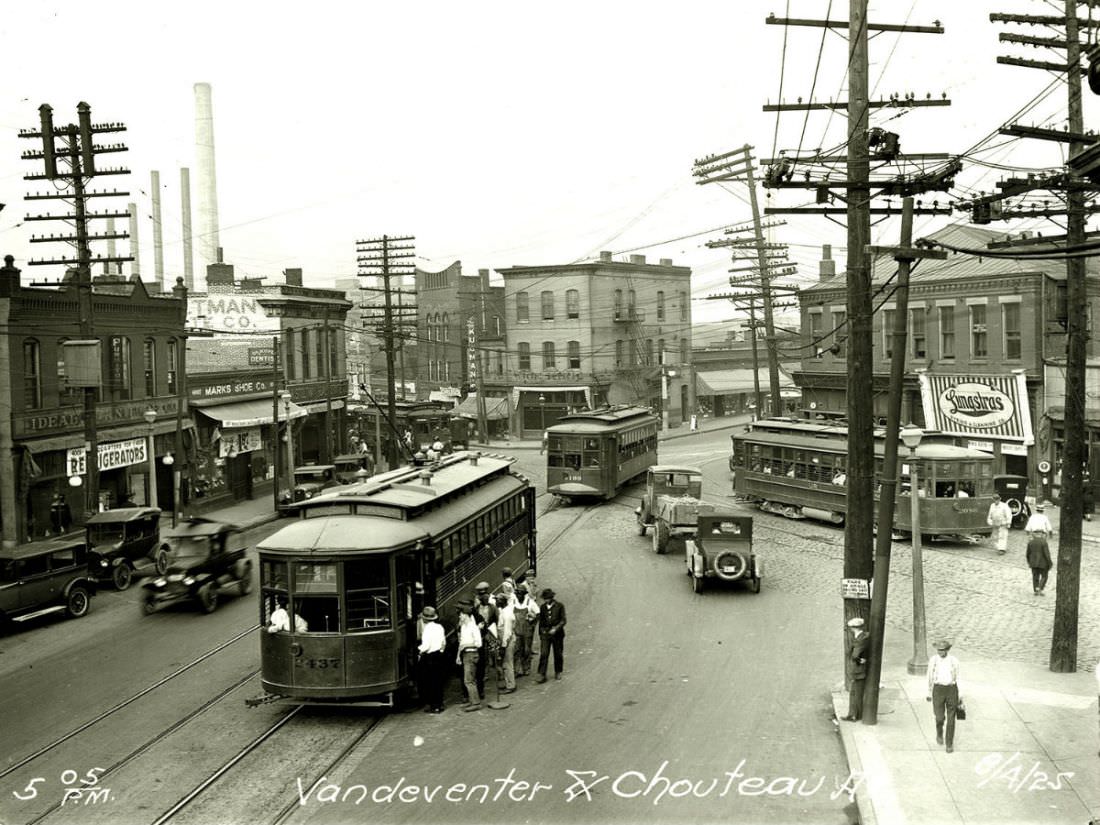
Vandeventer and Chouteau Avenues, 1925
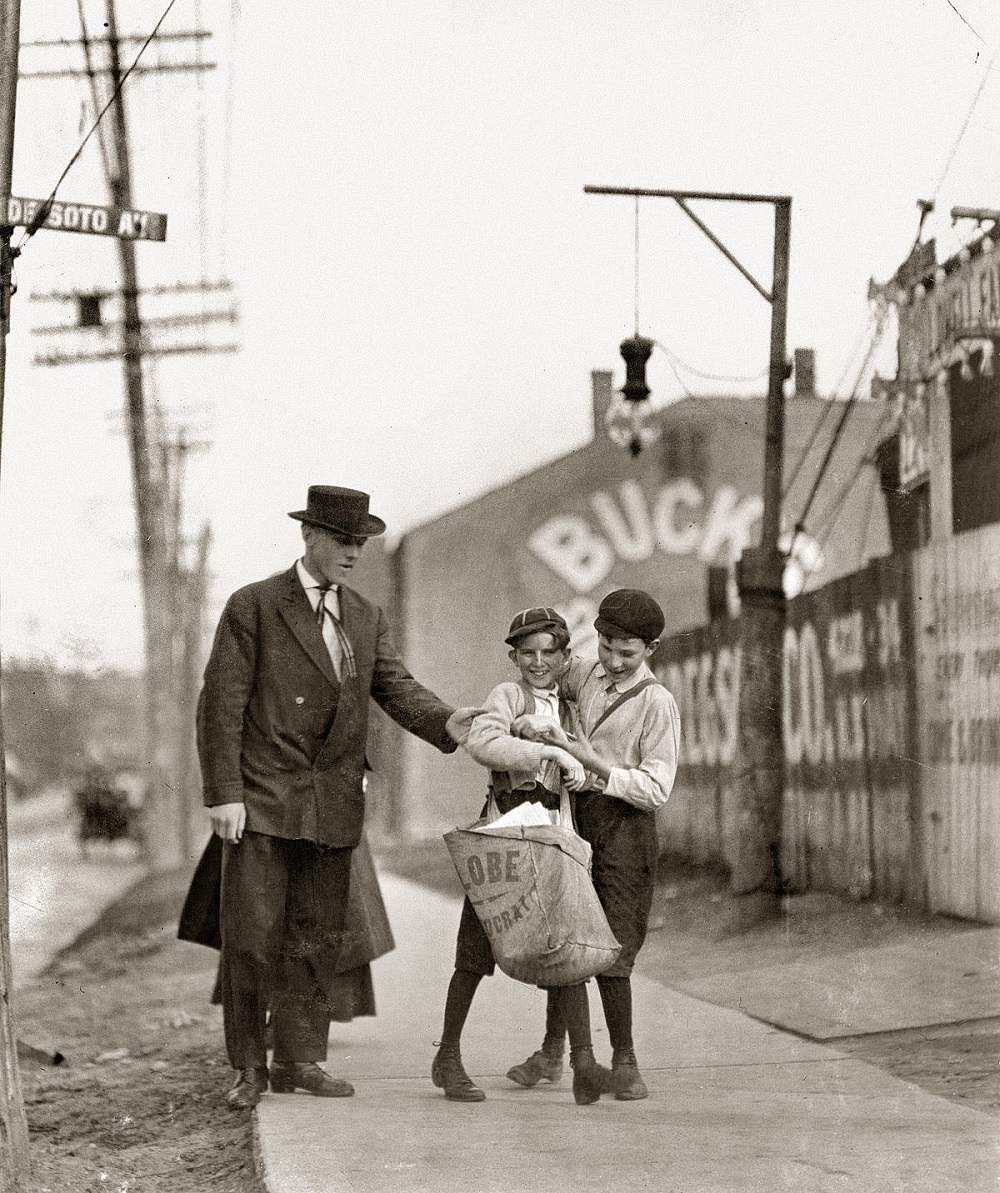
Broadway and De Soto, St. Louis, May 1910
Enjoyed this post? Get new ones in your inbox.

9 thoughts on “Fascinating Historical Photos Of St. Louis From The Early 20th Century”

Leave a Comment

Your email address will not be published. Required fields are marked *

Share this Post 🥺

Please take a moment to share this content. Your support is greatly appreciated! 🙌🙏

Share this Post 🥺

Please take a moment to share this content. Your support is greatly appreciated! 🙌🙏
Scroll to Top
 
Hey Friend, Before You Go.. Please like & follow for more interesting content