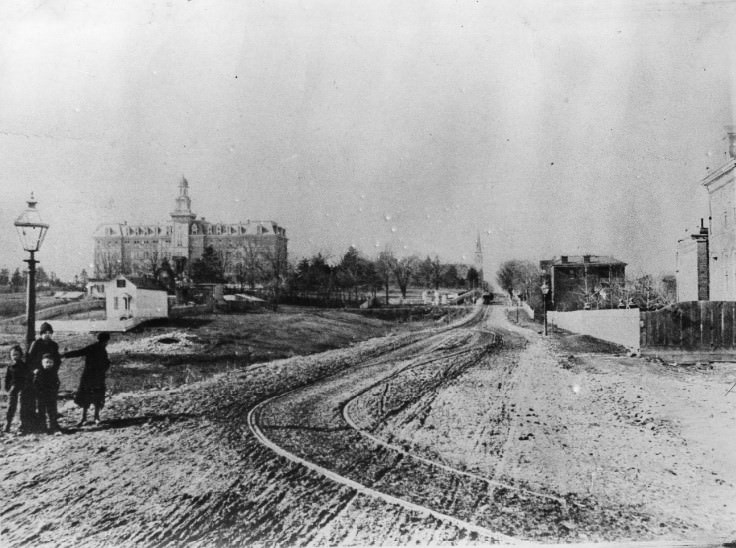
By 1880, St. Louis was one of the most important cities in the United States. With a population of 350,000, it hummed with industry, trade, and movement. Breweries, ironworks, and cotton mills drove the local economy, while iron and steel production supplied the raw materials for buildings, bridges, and infrastructure across the region. The city was not just a manufacturing center — it was a crossroads. Settlers and traders heading west along the Oregon and Santa Fe trails passed through St. Louis, and merchants moving goods north or south did the same.
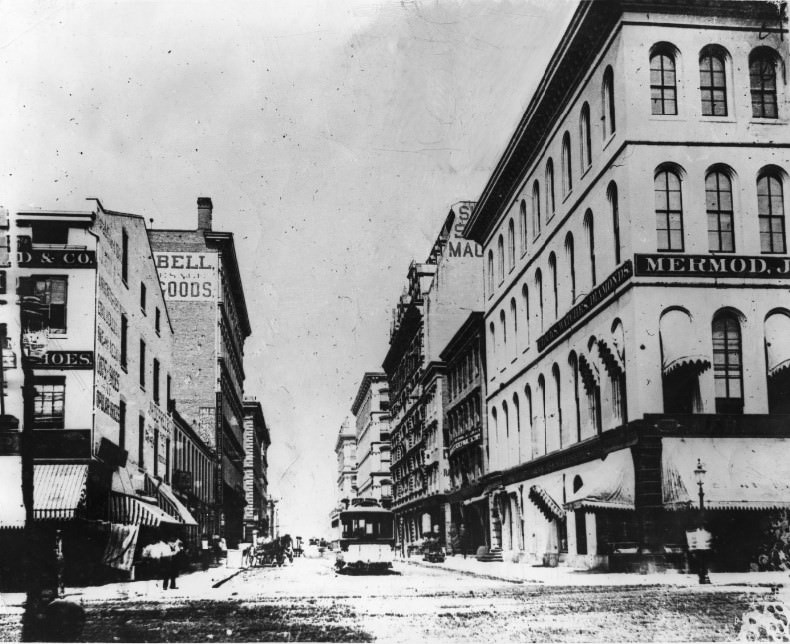
The streets of St. Louis reflected that energy. Fourth Street, photographed in 1880, showed a city already building upward and outward. Banks, retail stores, hotels, and restaurants competed for space along the main commercial corridors. Several financial institutions had established strong roots in the city, making St. Louis a hub of commerce that reached far beyond Missouri’s borders.
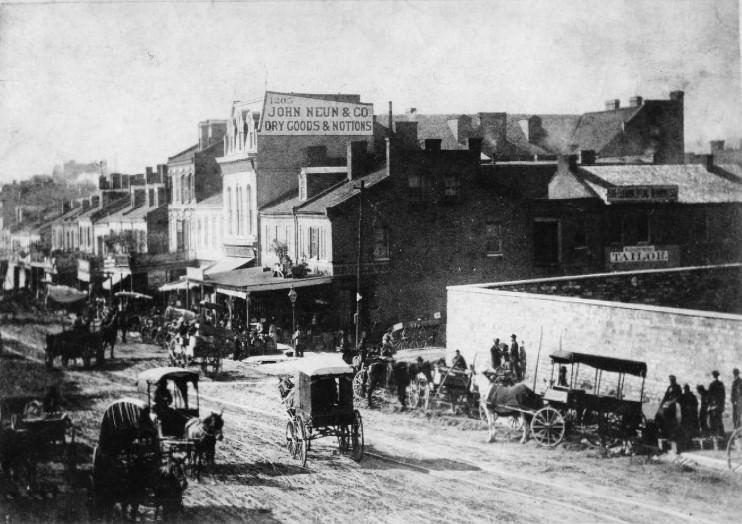
Neighborhoods away from the main commercial strips had their own distinct character. Corners like Fifth and Hickory captured the texture of everyday St. Louis life — modest buildings, mixed uses, and the steady rhythm of a working city. Wealth was concentrated in the hands of a few. Income inequality was sharp, and African Americans in the city faced systemic discrimination and segregation that cut them off from much of the city’s economic prosperity.
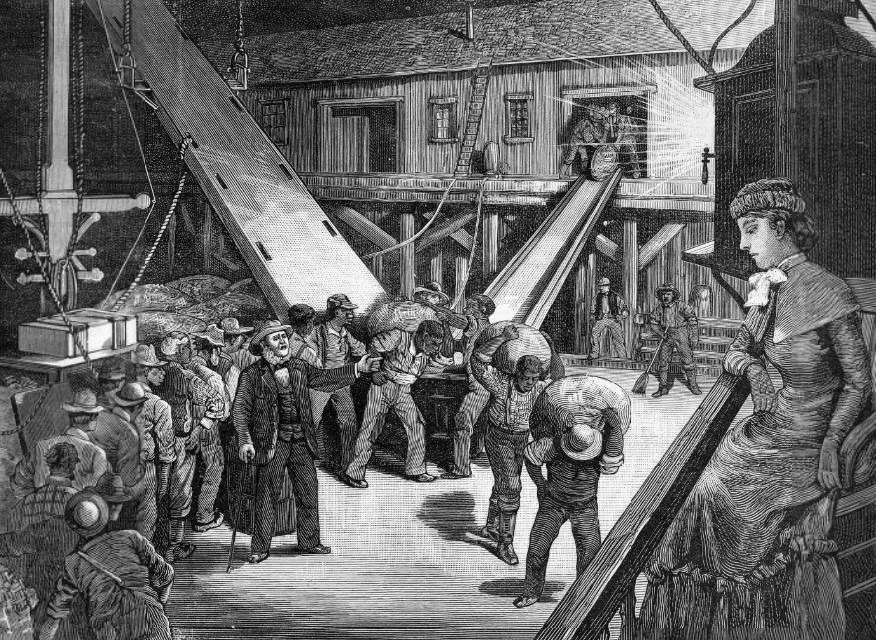
The Mississippi River was the engine beneath all of it. Steamboats carried passengers, cargo, and mail up and down the river, connecting St. Louis to New Orleans in the south and to smaller river towns scattered across the interior. Several steamboat companies operated out of the city, and the docks at East St. Louis were among the busiest on the river.
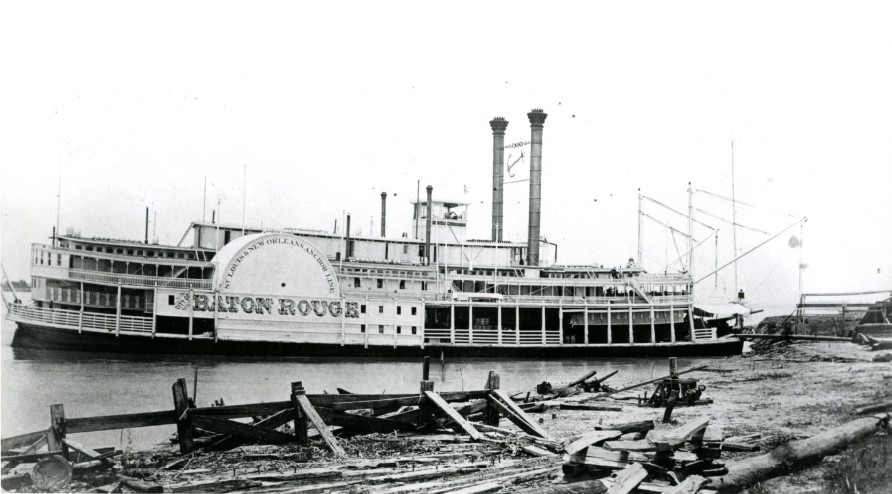
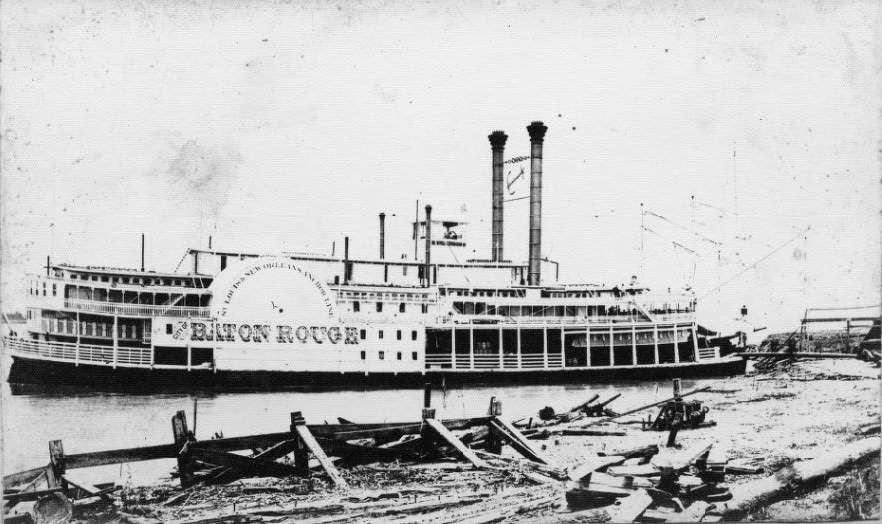
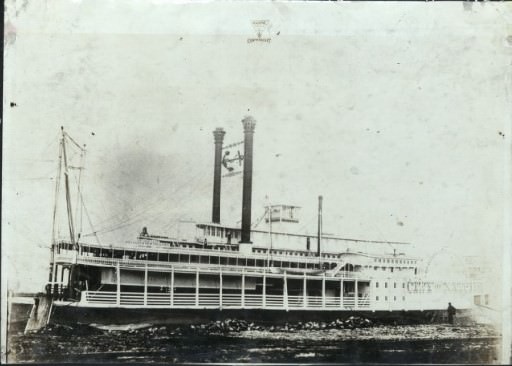
The boats themselves ranged widely in size and purpose. The side-wheel packet City of Baton Rouge, owned by the Anchor Line, was one of the more well-known vessels on the St. Louis–New Orleans trade route. Built at Jeffersonville, Indiana in 1881, she represented the kind of purpose-built riverboat that made commercial river traffic so reliable during this era.
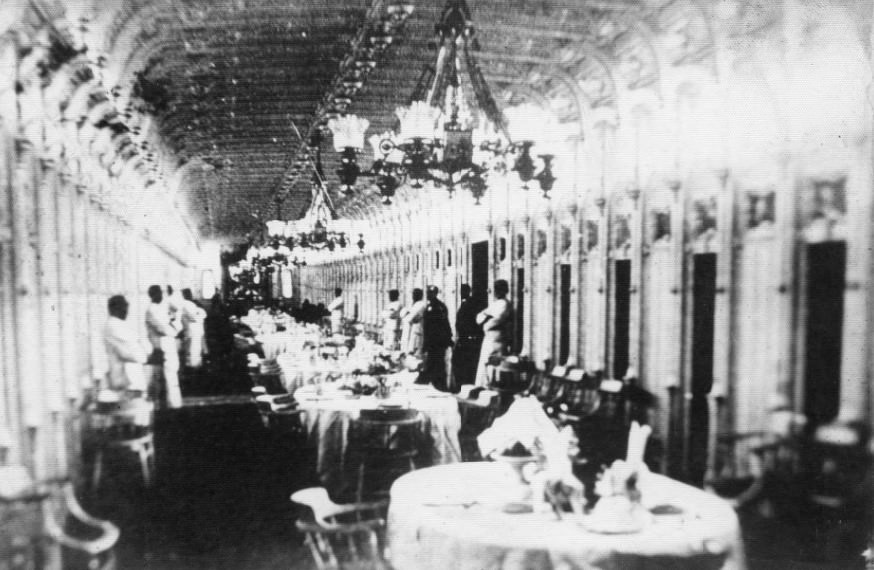
Life aboard these steamers was a world unto itself. The cabin of the City of Baton Rouge, photographed in 1880, showed a well-appointed interior — tables set for meals, workers resting against the walls — a glimpse into the daily routine of river travel. Other boats, like the steamer Jesse K. Belle, drew crowds to the waterfront simply by their presence.
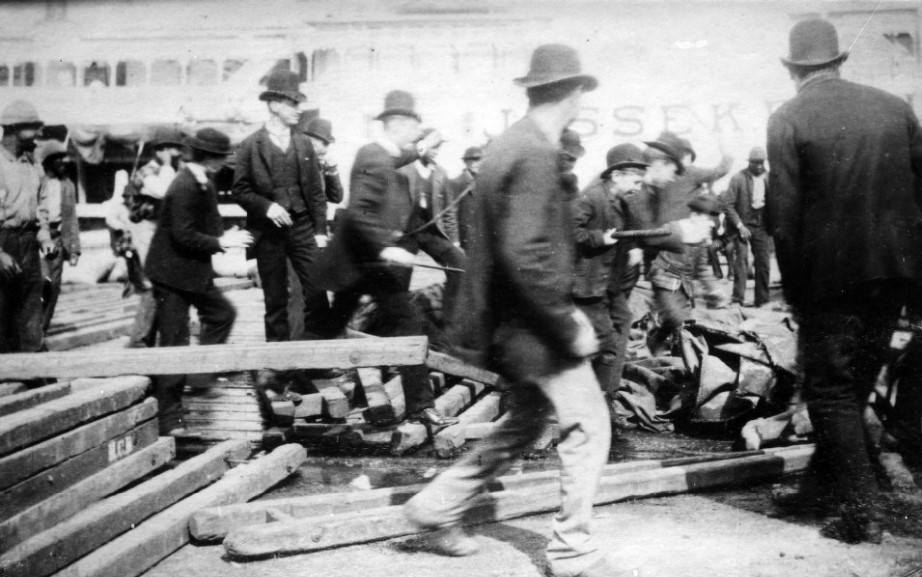
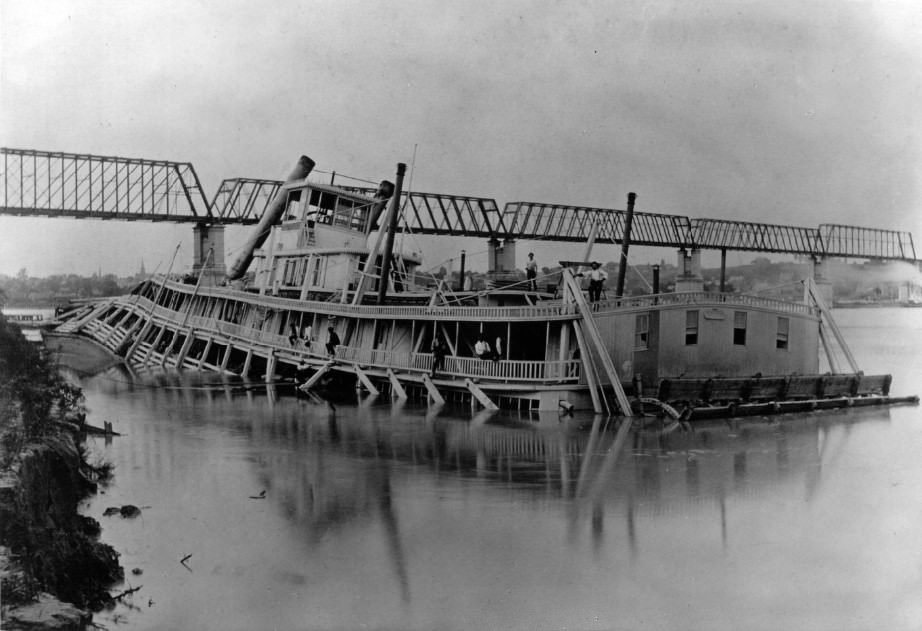
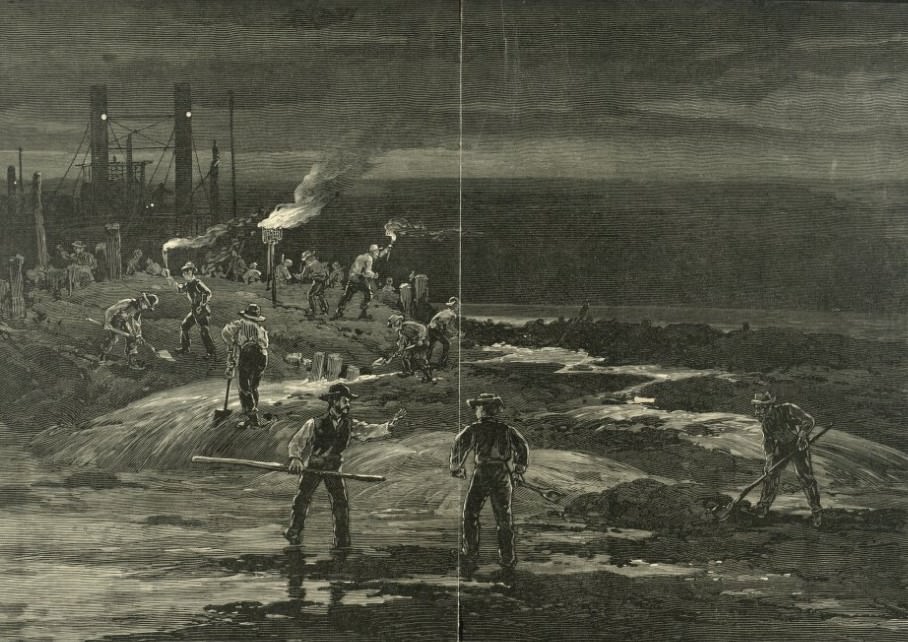
Not every vessel had a long career on the water. The steamer Montana sank in the Missouri River at St. Charles, a reminder that river commerce carried real risk. Floods posed another persistent threat. In 1883, St. Louis experienced serious flooding that inundated low-lying areas and disrupted trade along the waterfront.
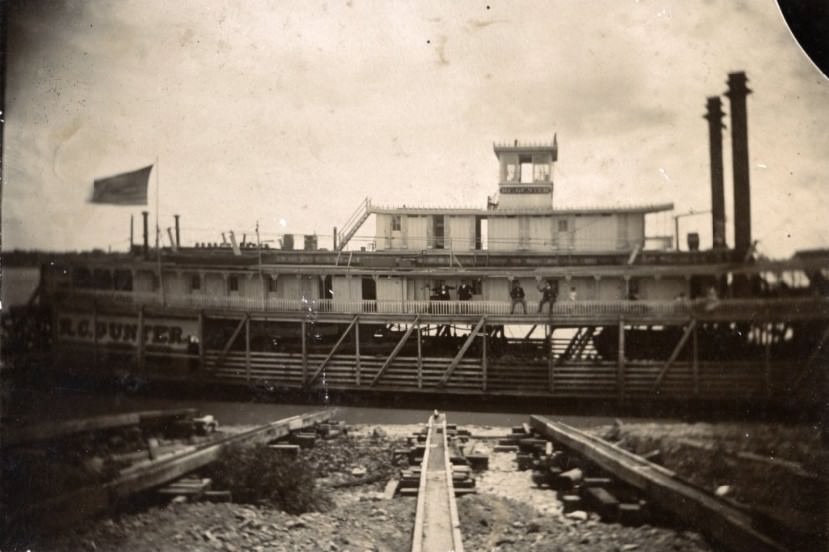
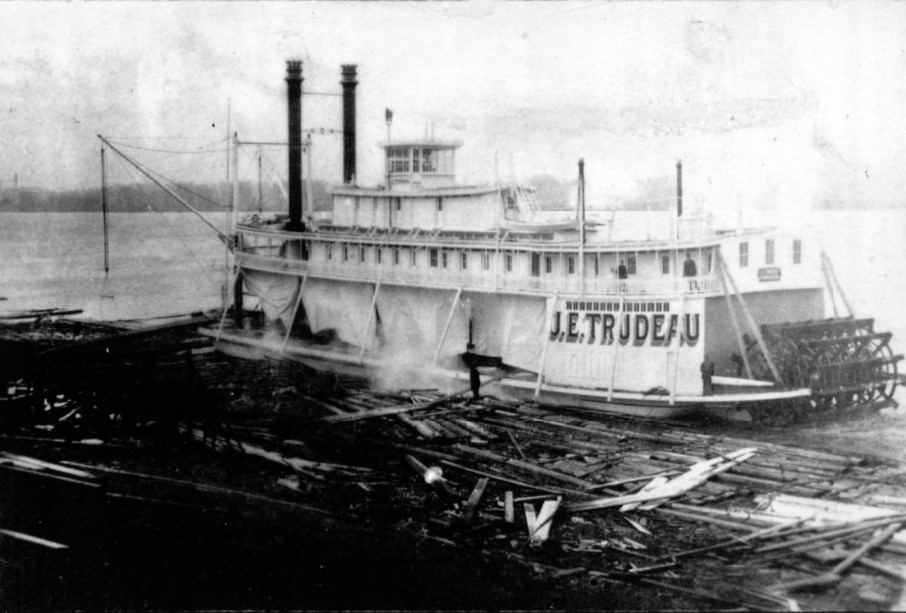
Other steamers, like the City of Natchez and the R.C. Gunter, kept regular schedules on their respective routes. The J.E. Trudeau was launched from the Howard Shipyards at Jeffersonville, Indiana, built specifically for the New Orleans and Bayou trade — a sign of how specialized river commerce had become by the early 1880s.
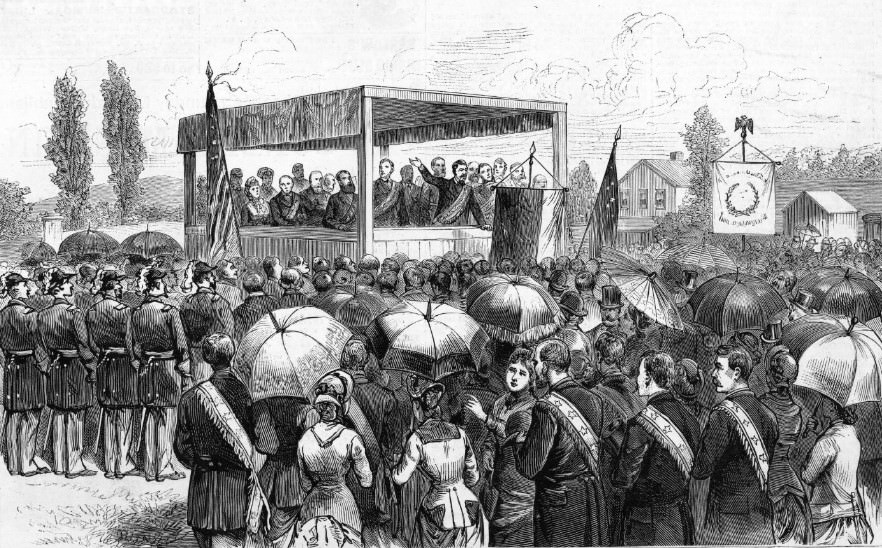
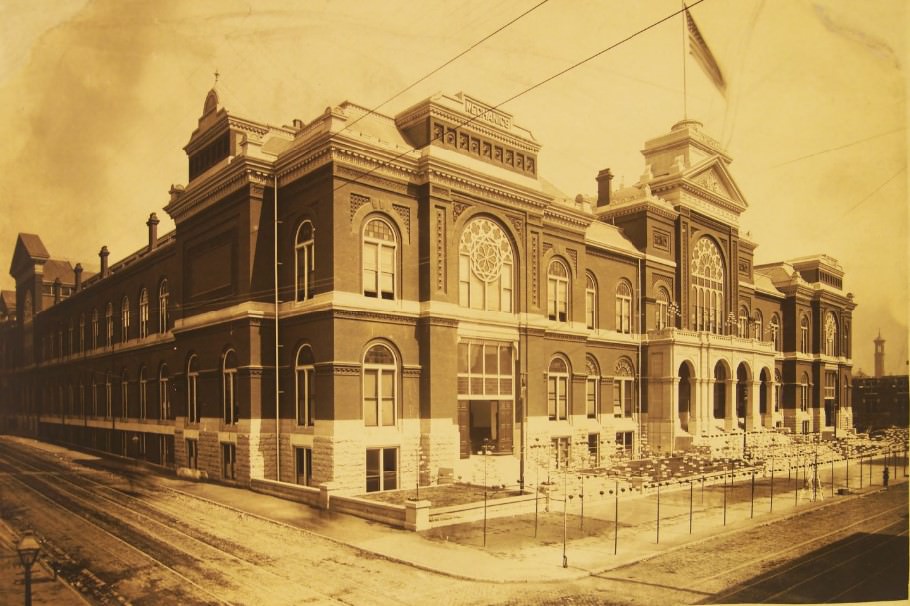
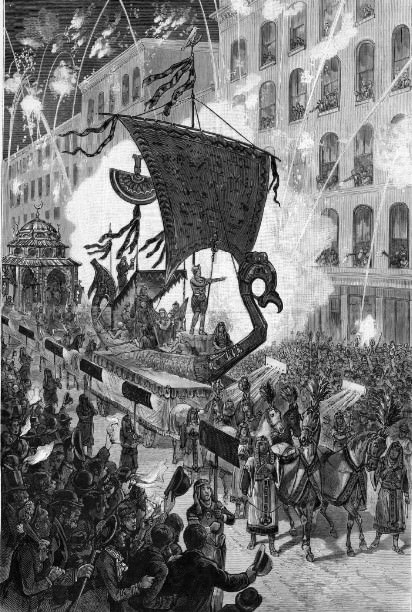
Away from the river, St. Louis invested in its civic and cultural institutions. The St. Louis Exposition and Music Hall at Olive and Fourteenth Street was a centerpiece of the city’s public life in 1880, hosting events that drew residents from across the social spectrum. Cultural gatherings were common — the annual visit of the Veiled Prophets, a secretive civic organization, was among the most anticipated spectacles of each year.
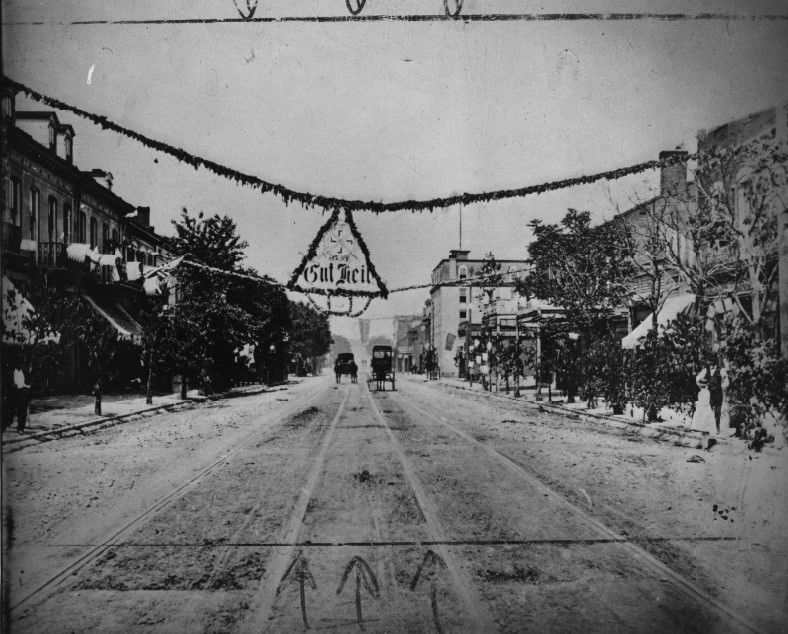
The city’s German immigrant community added its own layer to public life. The Carondelet Germania Turn Verein — a German-American gymnastic and social club — held celebrations that spilled into the streets, drawing crowds to Broadway and beyond. St. Louis in the 1880s was shaped by many such communities, each contributing to the city’s character.
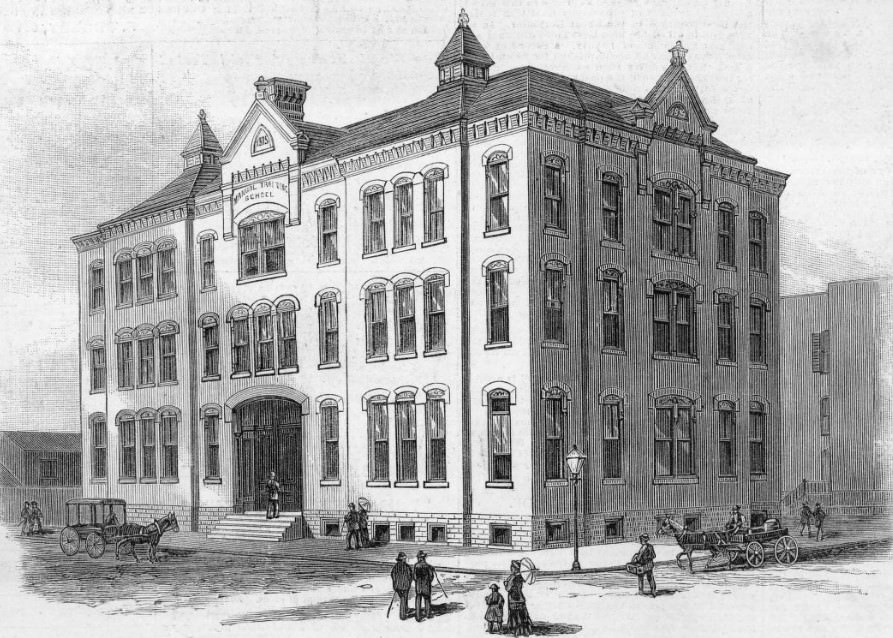
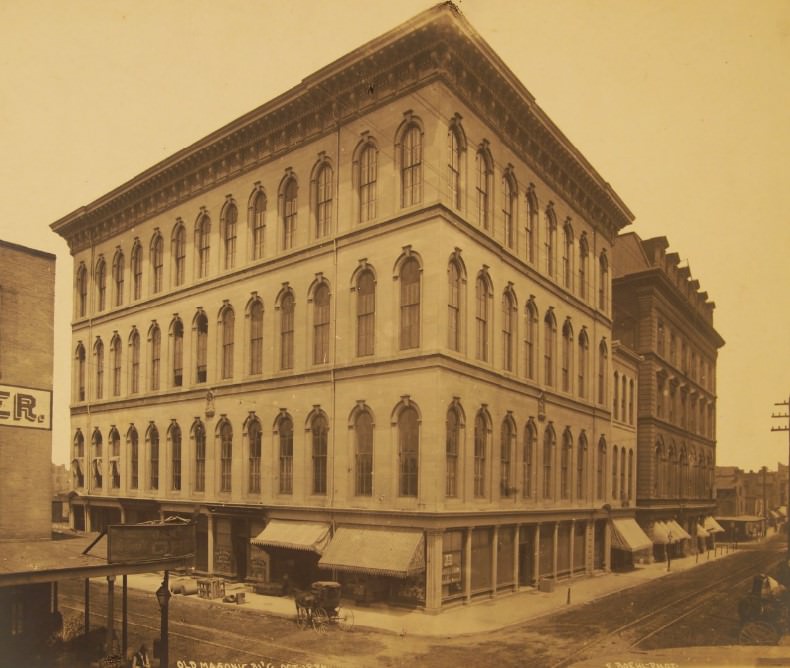
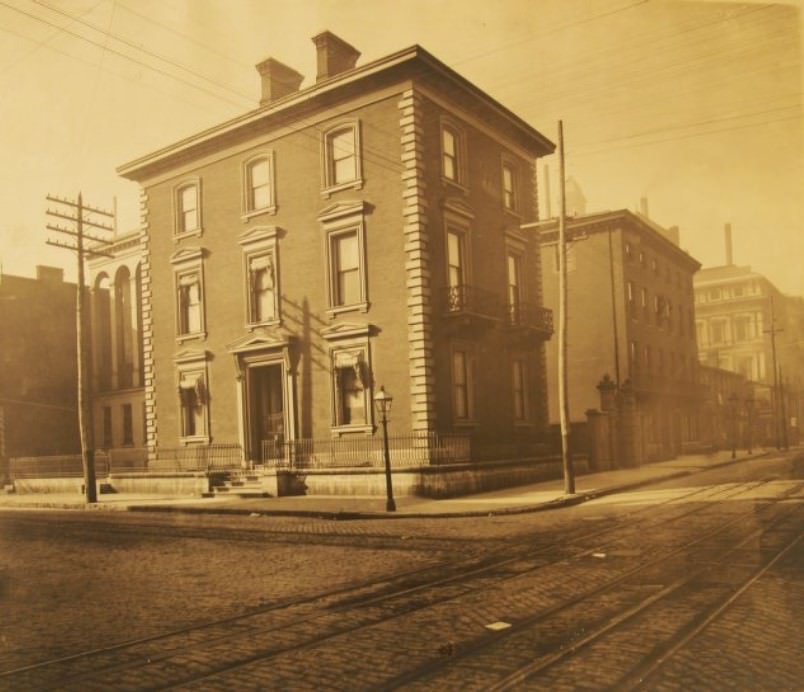
Education was expanding alongside the city’s population. The St. Louis Manual Training School, photographed in 1881, was part of a broader push to prepare young residents for skilled trades and professional work. The old Masonic Hall, still standing when photographed in October 1886, was a fixture of the city’s civic architecture. Philanthropists like Henry Shaw, whose downtown home was captured in an 1889 photograph, played a direct role in shaping the city’s public spaces and institutions.
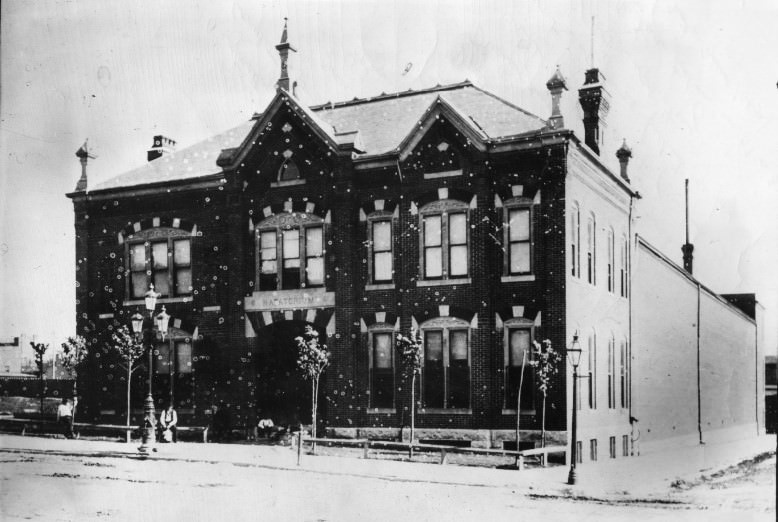
Public amenities were growing too. Clark’s Natatorium, photographed in 1882, offered residents an indoor bathing pool — an unusual luxury for the time. Cemeteries like the Oddfellows Cemetery, documented on May 30, 1881, served a city still grappling with disease, industrial accidents, and the ordinary toll of a densely populated urban center. These photographs, taken together, document St. Louis at a defining moment — a city already large enough to feel the weight of its own contradictions, and busy enough to keep building through them.