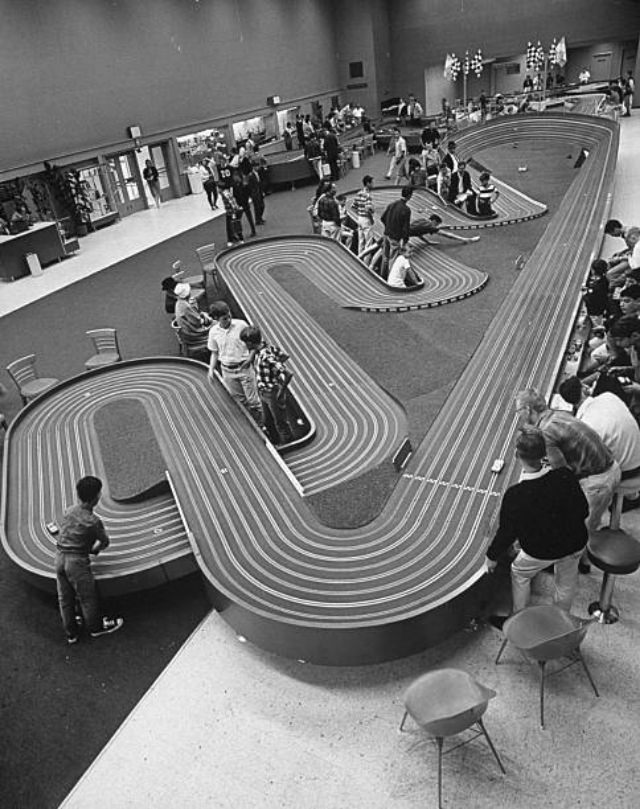
Long before anyone picked up a game controller, American kids were hunched over electric tracks, gripping hand-held throttles, and sending tiny cars screaming around banked curves at top speed. Slot car racing was the defining hobby of the 1960s — loud, fast, competitive, and completely addictive.
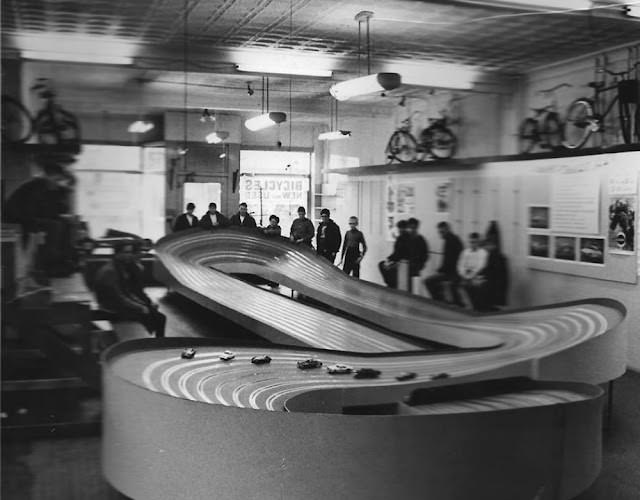
The roots of the hobby reach back to the early 1900s, but slot car racing didn’t find a real audience until the 1950s. British entrepreneurs were the first to electrify the tracks and produce detailed scale-model cars built specifically to race on them. The system worked by embedding a narrow slot into the track surface. A small pin on the underside of each car ran inside that slot, keeping it on course while a metal rail carried the electrical current that powered the motor. By the late 1950s, this setup had crossed the Atlantic and landed in the United States, where the market was ready and waiting.
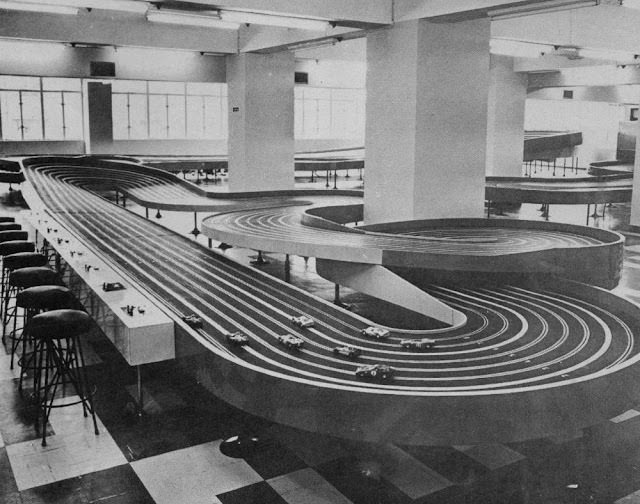
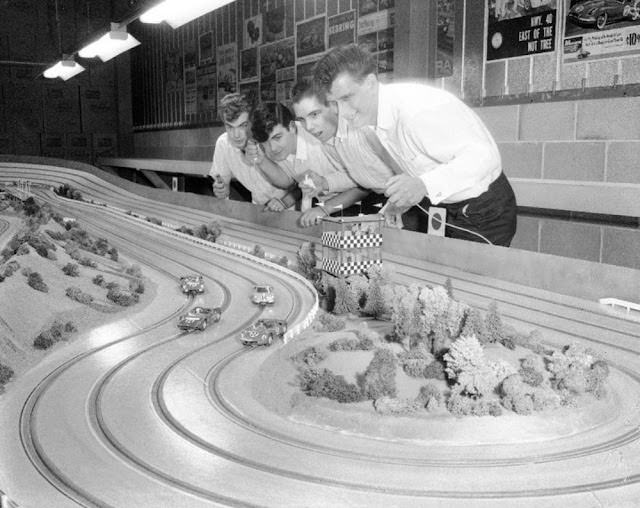
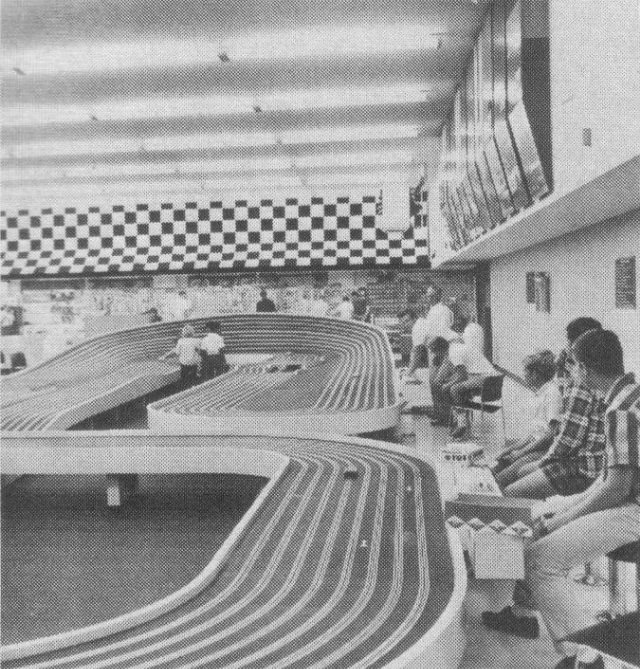
The 1960s turned slot car racing from a niche pastime into a national obsession. By the mid-decade, more than 3,000 public race tracks were operating across the United States. These weren’t backroom setups — they were dedicated commercial venues where kids, teenagers, and adults showed up regularly to race. Industry brands like Scalextric, Aurora, Revell, Carrera, and Tyco were collectively moving $500 million worth of cars and equipment every single year.
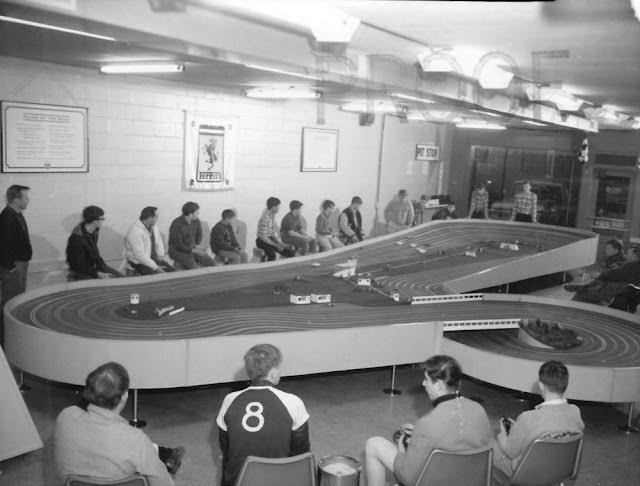
Part of the appeal was the price. A few dollars bought hours of track time, making it accessible to almost any kid with pocket money or a generous parent. Tracks were often tiered, so beginners raced on simpler layouts while serious hobbyists competed on longer, more technical courses with tighter turns and elevation changes.
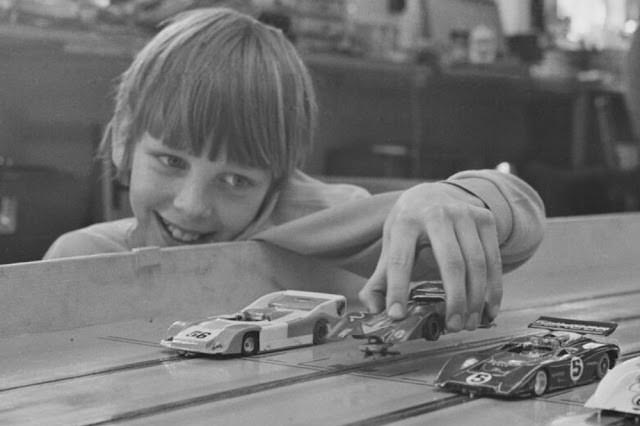
The cars themselves were a big part of the draw. Manufacturers produced highly detailed miniatures modeled after real racing machines — Ferrari GTs, Ford GT40s, Lotus Formula One cars — with carefully sculpted bodies that matched their full-size counterparts. Some hobbyists modified their cars obsessively, swapping motors, adjusting gear ratios, and sanding contact points to squeeze out every fraction of speed.
Home sets were just as popular as the commercial tracks. Aurora’s HO-scale sets were a staple under Christmas trees throughout the decade. A child could unfold a figure-eight layout across the living room floor, plug it in, and be racing within minutes. The sets were affordable, widely available, and practically guaranteed to hold a kid’s attention for hours.
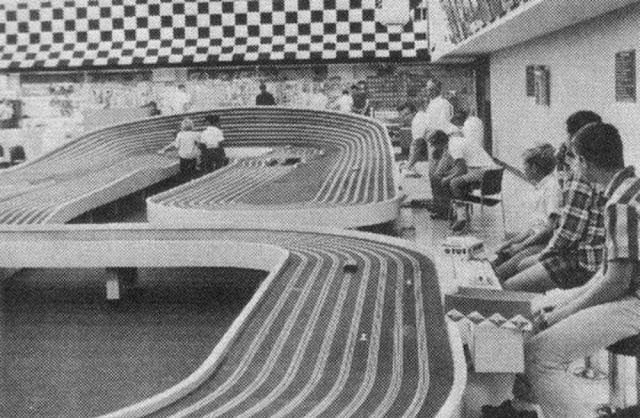
Commercial track operators, however, faced a constant uphill battle. The facilities demanded significant square footage — a serious track needed a large, dedicated building. Electricity costs ran high, and the tracks themselves required constant maintenance. Rails wore down, lane guides cracked, and cars needed regular repairs. The economics worked during the peak years when traffic was heavy, but they left very little room for error.
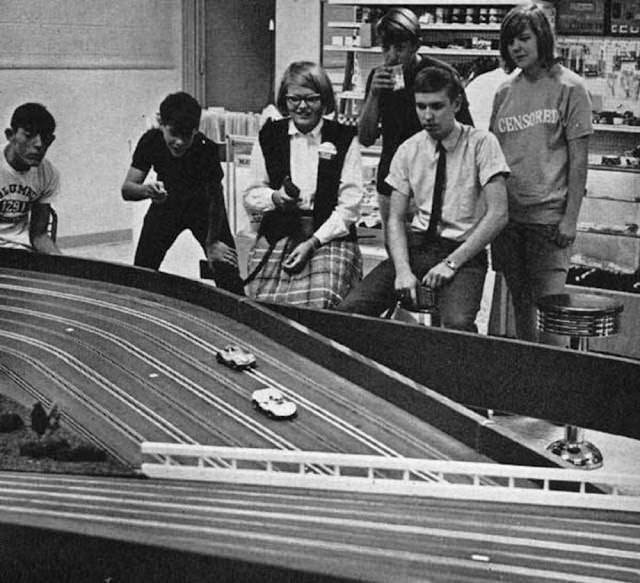
The primary customers were children and teenagers who paid small amounts per race. As long as the venues stayed packed, the math worked. But as the craze peaked around 1966 and 1967, attendance began to level off. Novelty wore thin for some, and newer distractions started competing for kids’ time and money.
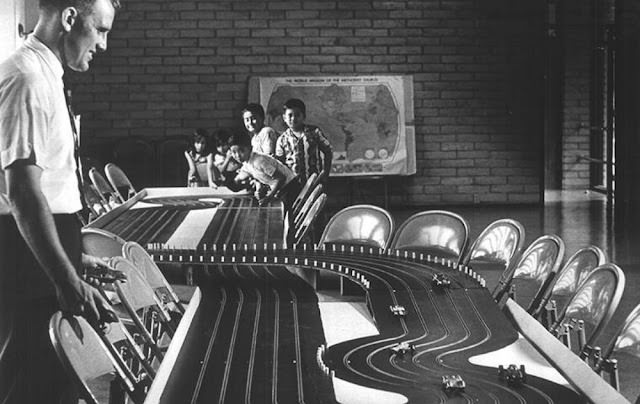
The decline was fast. By the early 1970s, commercial slot car centers were closing in large numbers. They faced the same problems as other entertainment venues that required big real estate footprints — ice skating rinks, bowling alleys, and miniature golf courses all went through similar contractions in the same period. The overhead simply couldn’t be sustained when foot traffic dropped.
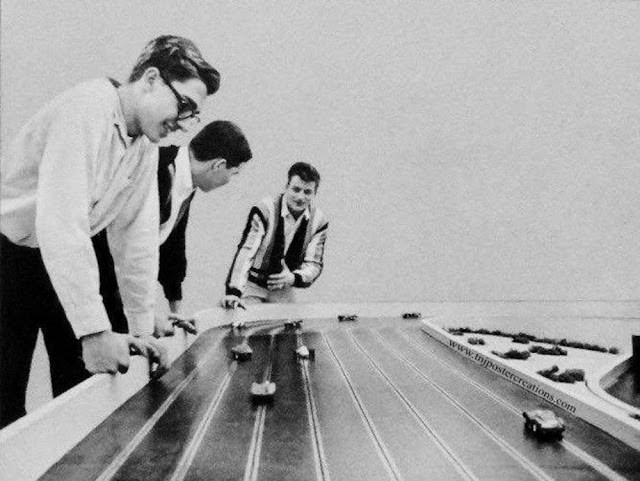
By 1975, fewer than 200 commercial tracks remained open in the entire country. From more than 3,000 to under 200 in less than a decade — the collapse was as dramatic as the rise had been.
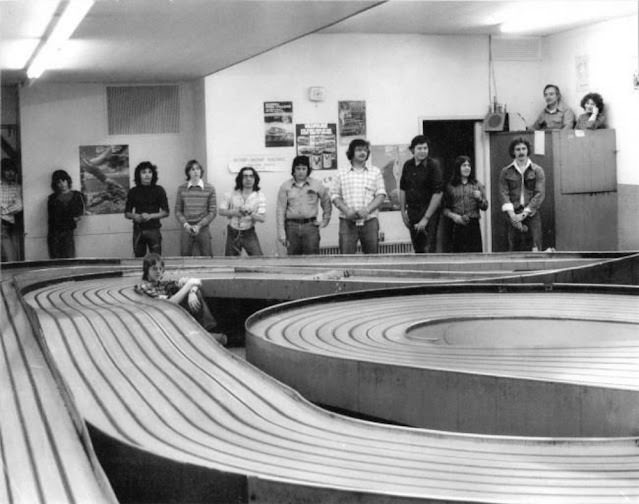
Home racing kept the hobby alive through the lean years. Enthusiasts who had grown up on commercial tracks in the 1960s continued buying and modifying cars, setting up layouts in basements and garages. Clubs formed around the country, holding organized competitions with strict technical rules about motor specifications and car weight.
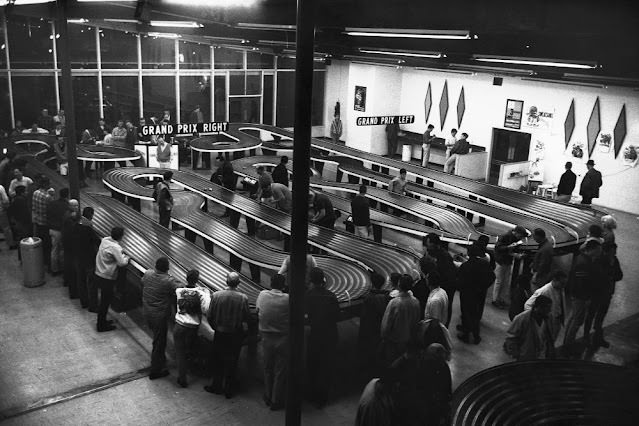
The cars of the era ranged from mass-produced HO-scale models — roughly 1:64 size — to larger 1:32-scale cars used on commercial tracks. The 1:32 cars were faster, more powerful, and provided a more realistic racing experience. Many commercial venues ran multiple lane tracks, sometimes with six or eight lanes running parallel, so groups could race head-to-head simultaneously.
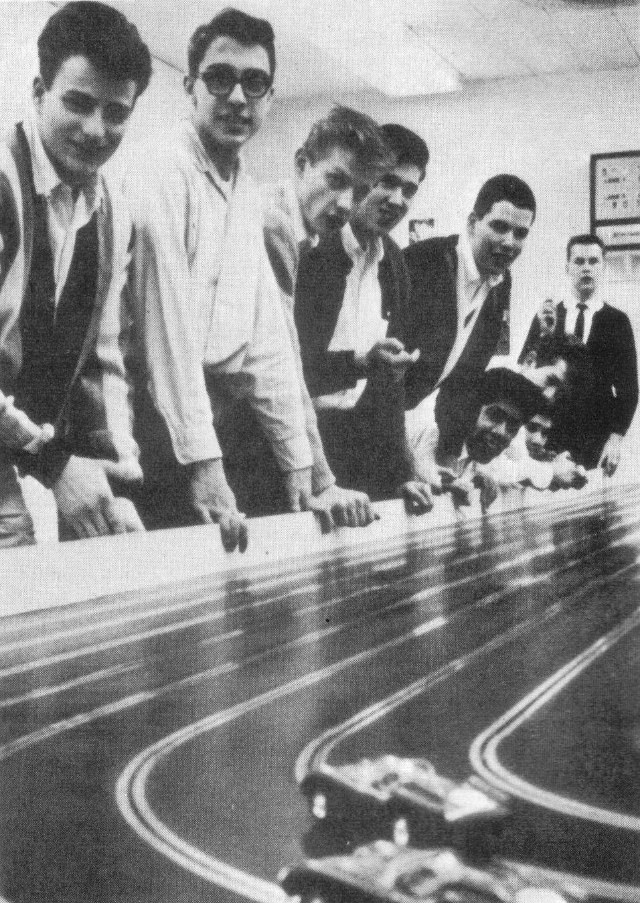
Serious competitors treated slot car racing as a genuine motorsport. National championships were held, drawing top racers from across the country. Drivers developed real techniques — learning exactly how much throttle to apply entering a curve, when to brake, and how to manage the car through a chicane without spinning out and flying off the track.
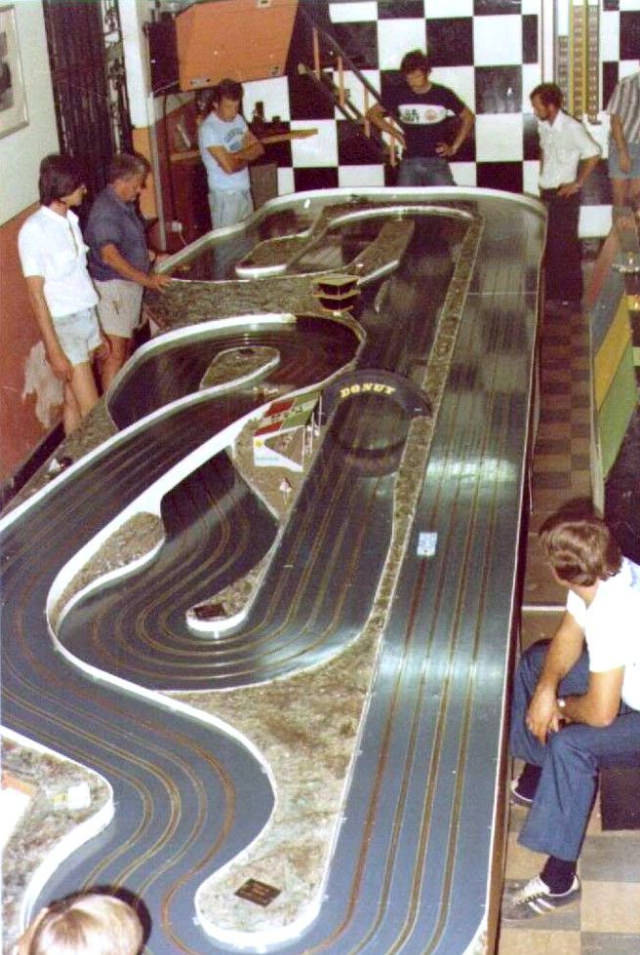
Manufacturers competed fiercely for market share. Aurora, based in New York, dominated the HO-scale home market. Scalextric, the British brand that helped spark the American boom, held a strong position in the 1:32 commercial market. Revell, better known for plastic model kits, entered the slot car space and found a ready audience among hobbyists who already built and painted model cars.
Advertising for slot car sets flooded magazines, television, and toy catalogs throughout the 1960s. Brands marketed directly to children but also pitched to fathers, framing the hobby as something families could do together. Full-page ads in magazines like Popular Mechanics showed elaborately staged tracks with multiple cars mid-race, making the hobby look as thrilling as the real thing.
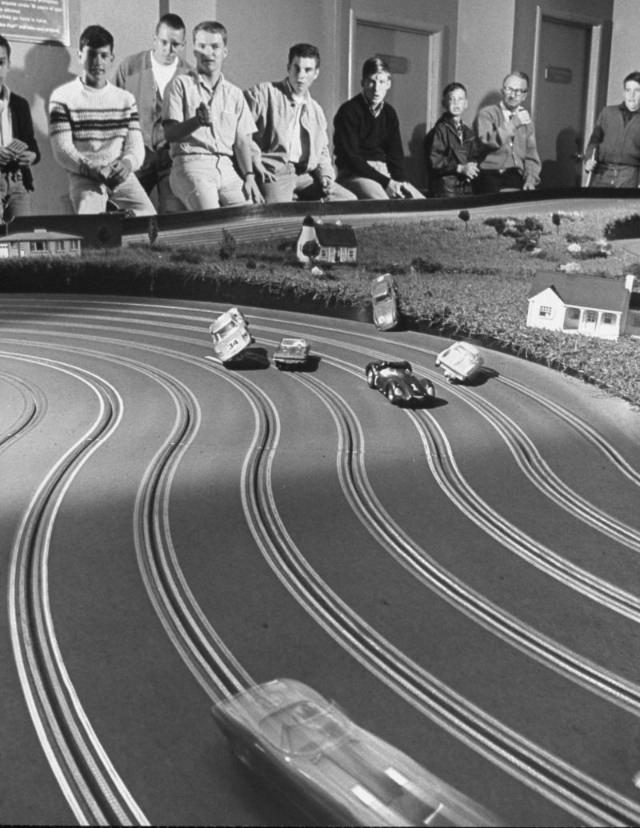
The cars were often sold separately from track sets, which encouraged repeat purchases. A kid who started with a basic oval could spend the next several years expanding the layout, adding new cars, and upgrading components. It was a hobby designed to grow with the racer — and to keep money flowing toward the manufacturers.
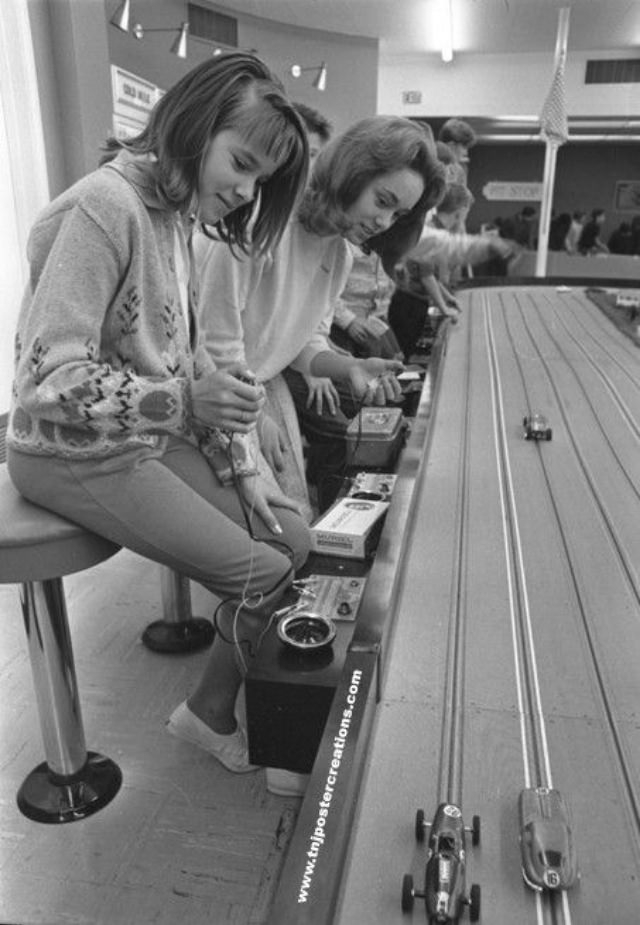
Slot car racing at its peak was a social activity. Commercial tracks were loud, crowded places where rivalries formed between regulars and strangers raced side by side. The smell of hot motor windings, the whine of tiny engines running at full speed, and the crack of a car leaving the slot and skidding across the track — these were the sensory details that defined the experience for an entire generation of American kids.
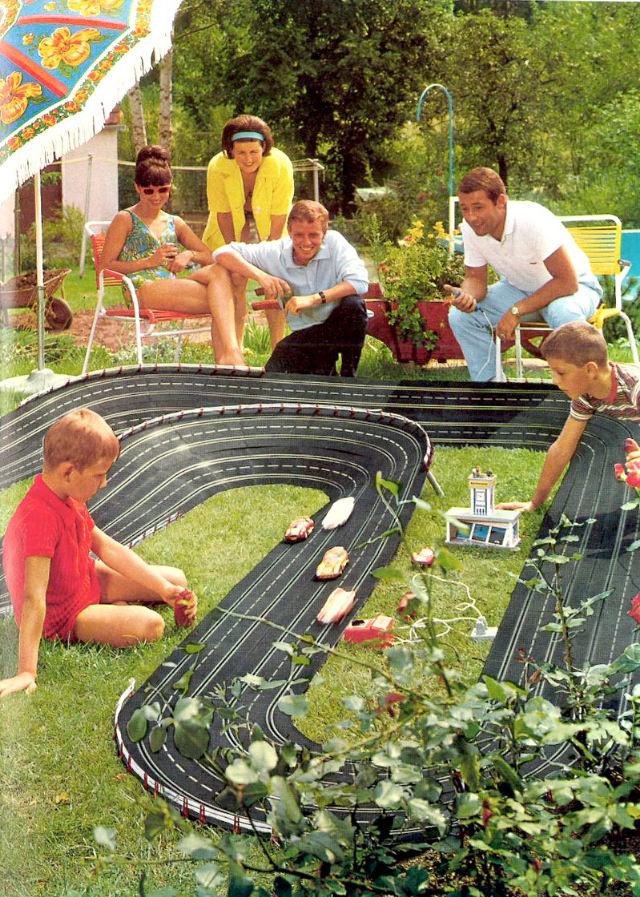
The craze that swept the country in the 1960s was driven by a perfect combination of timing, technology, and price. Electric slot car systems arrived just as postwar American families had disposable income to spend on leisure, and they delivered a thrill that felt genuinely new. For roughly a decade, no hobby in America was bigger.