
Mount Hood National Forest in Oregon has always drawn skiers and outdoor lovers to its snowy slopes. By the late 1940s, two destinations dominated the scene: the small mountain town of Government Camp and the iconic Timberline Lodge, sitting high above it on the slopes of Mount Hood. Getting between them meant traveling by road, and that was slow. One man decided there was a better way — straight through the air.
Dr. J. Otto George had a bold idea. He wanted to build a tramway that would carry passengers on cables suspended high above the mountain terrain, linking Government Camp directly to Timberline Lodge. No roads. No ground. Just cables, tram cars, and open sky. To make it happen, George formed a corporation called Mt. Hood Aerial Transportation and began searching for investors. By 1948, he had secured initial funding, a land agreement, and a permit to operate within the national forest.

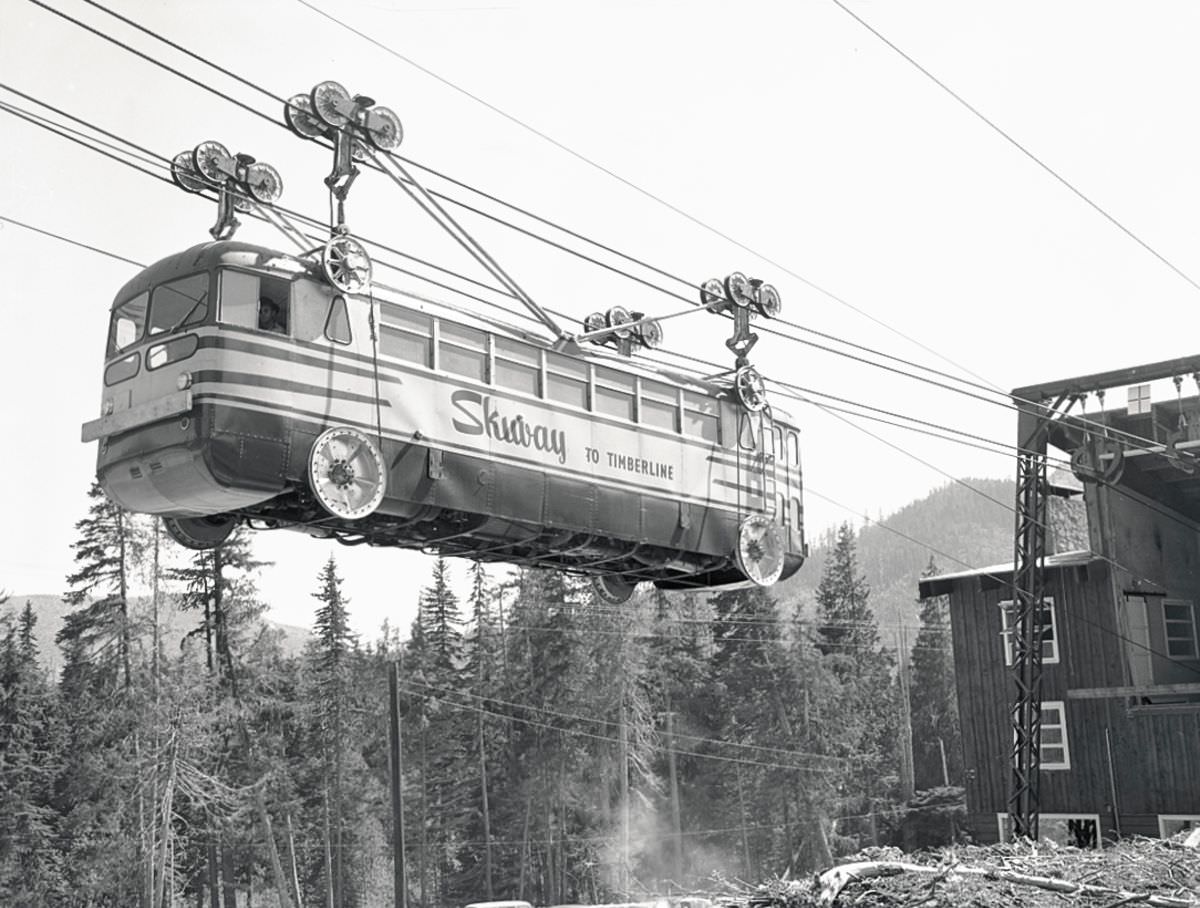
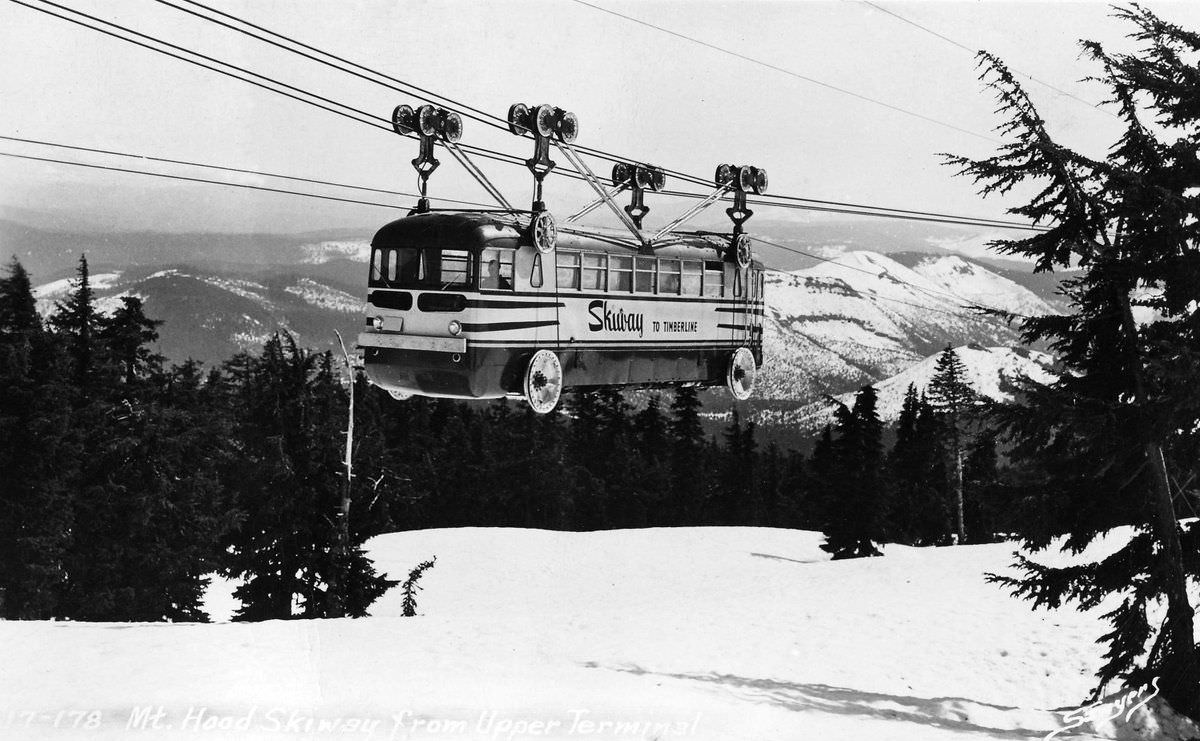
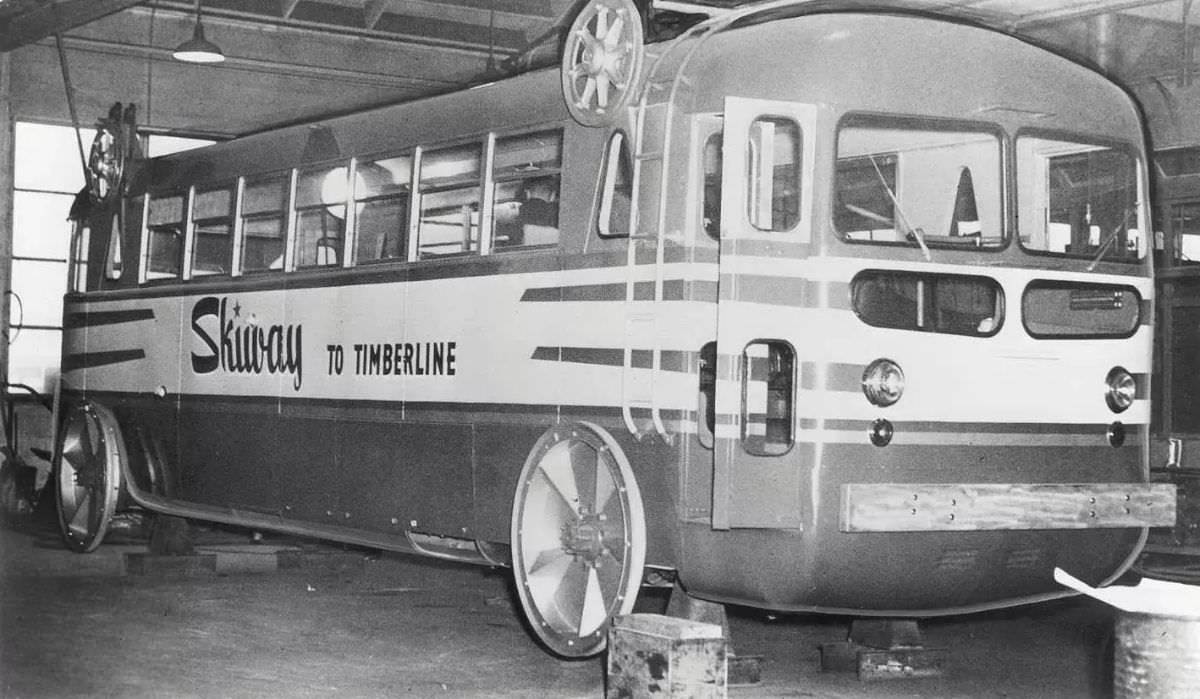
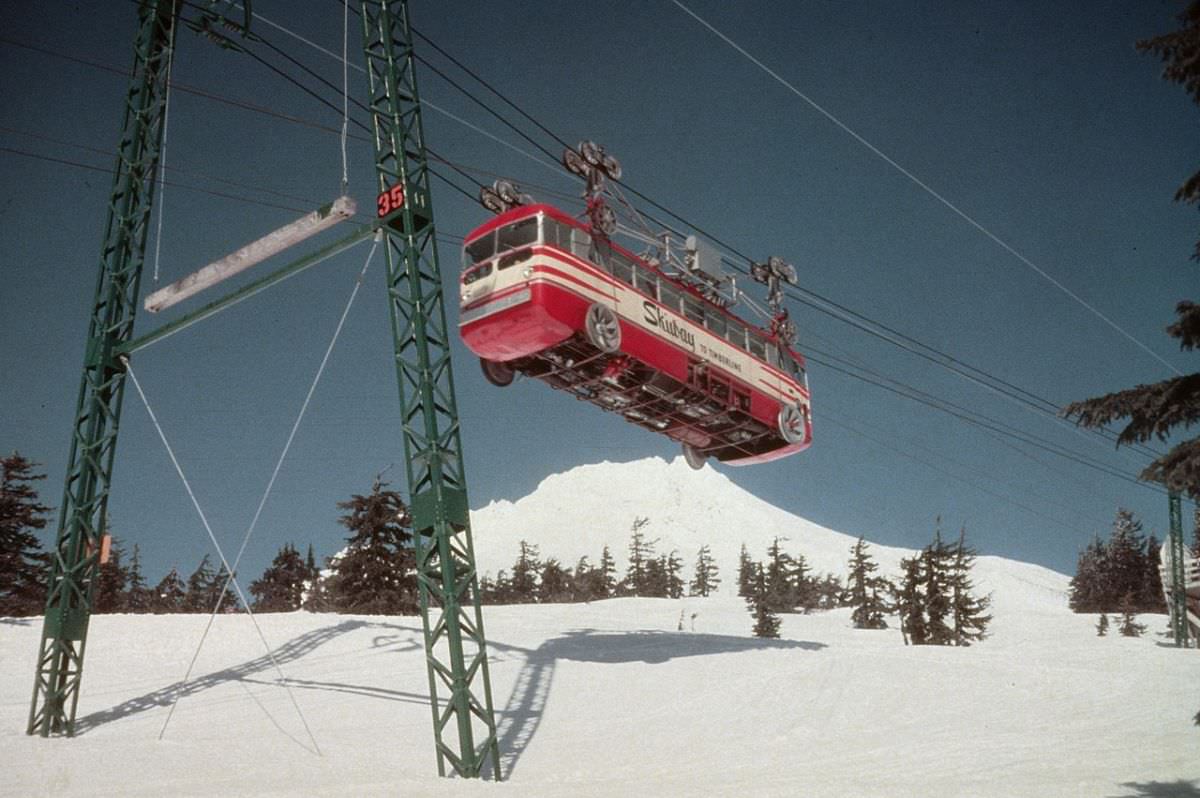
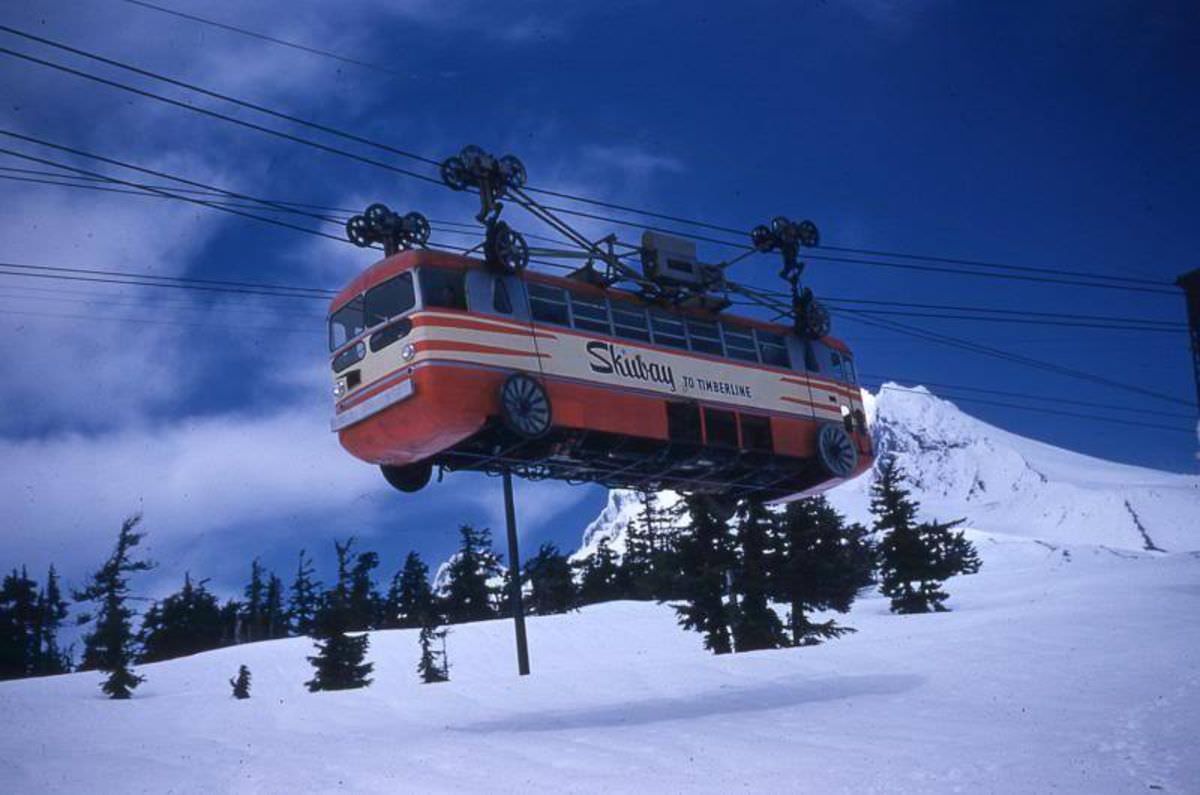
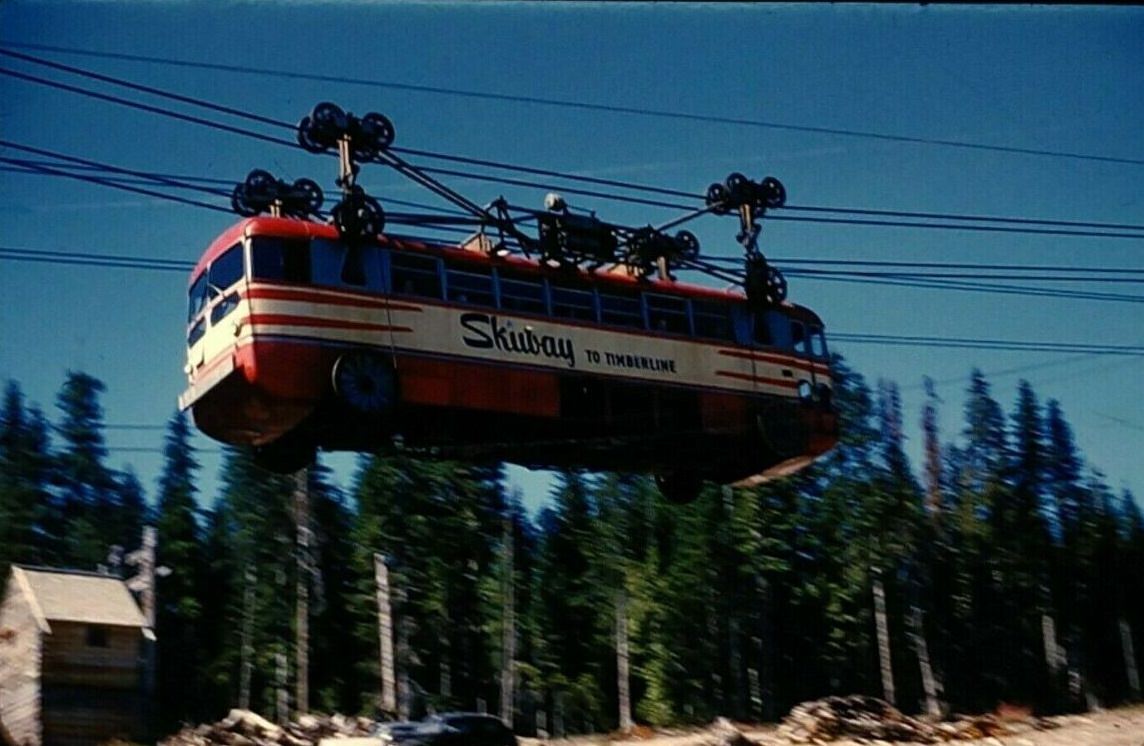
George originally called his project the “Skyway,” but a copyright conflict forced a name change. The tram became the “Skiway” — a fitting name for a mountain attraction aimed squarely at winter sports enthusiasts. The next challenge was the tram cars themselves. Standard tram designs weren’t built to run on cables over steep mountain terrain, so George modified existing tram cars to do exactly that. Each car could seat 36 passengers and had standing room for 14 more, giving a total capacity of 50 people per car.
Promoters billed the Skiway as the longest and largest aerial tramway in the world and the first of its kind ever built. Those were extraordinary claims, and they drew serious attention from the press and the public alike.

The Skiway was originally scheduled to open in April 1950. That deadline passed, and the opening was pushed to the end of the year. When a preview voyage finally took place, the experience was memorable — though not entirely for the right reasons. A reporter who had served as a WWII Air Corps officer rode the tram and described sitting in the back of the car as feeling like “the tail gunner’s spot in a B-17 bomber.” The front, he said, was like “riding the front end of a helicopter.” The tram needed more work.

After more than three hours of continuous modifications following that rough test run, the tram was finally deemed ready. On February 2, a newspaper reported that the Skiway would begin carrying paying passengers the very next day. The one-way fare was set at 75 cents, with a round-trip ticket costing $1.50. The route took 25 minutes one way and moved up to 72 people per hour between the two terminals.

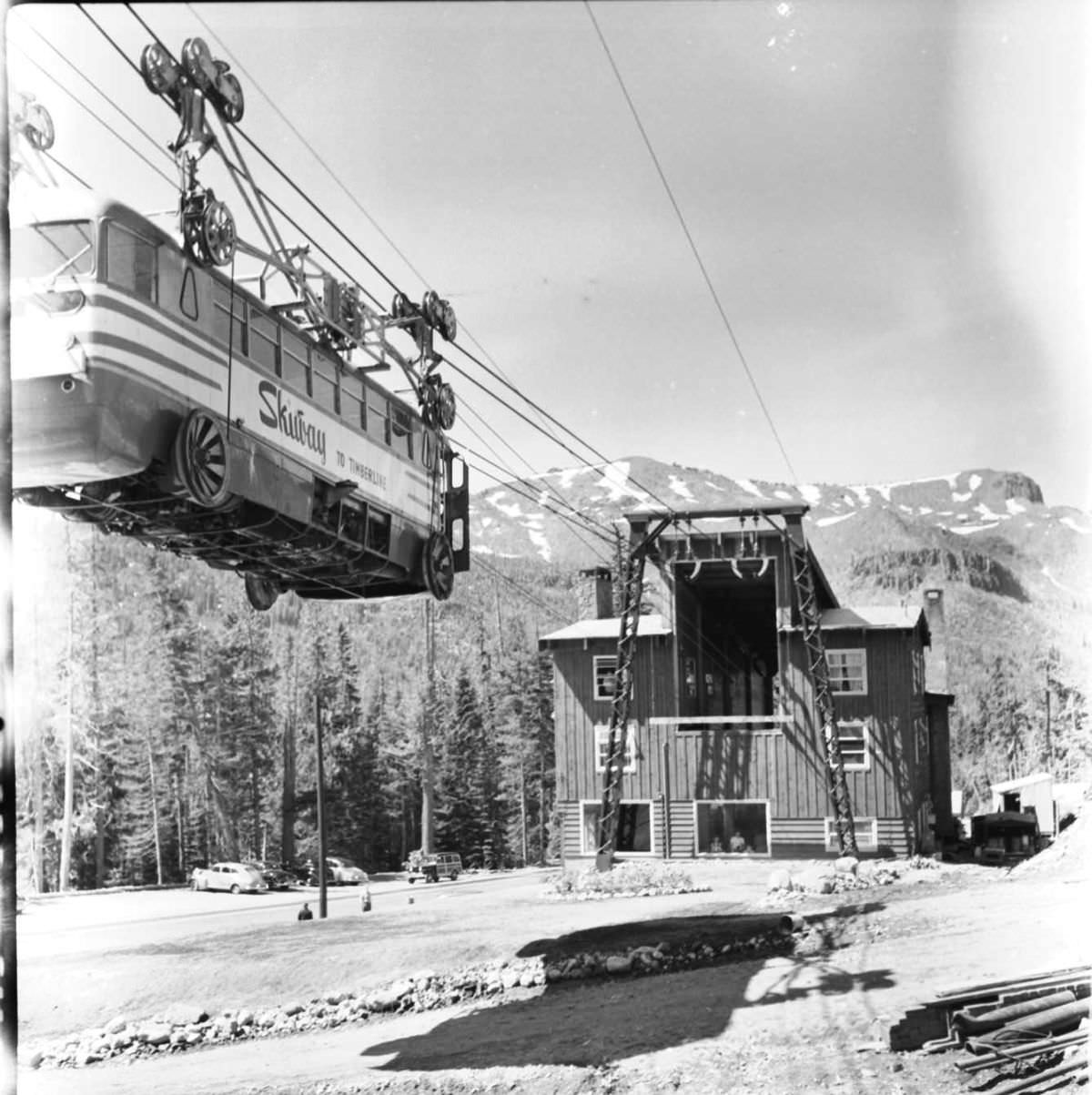
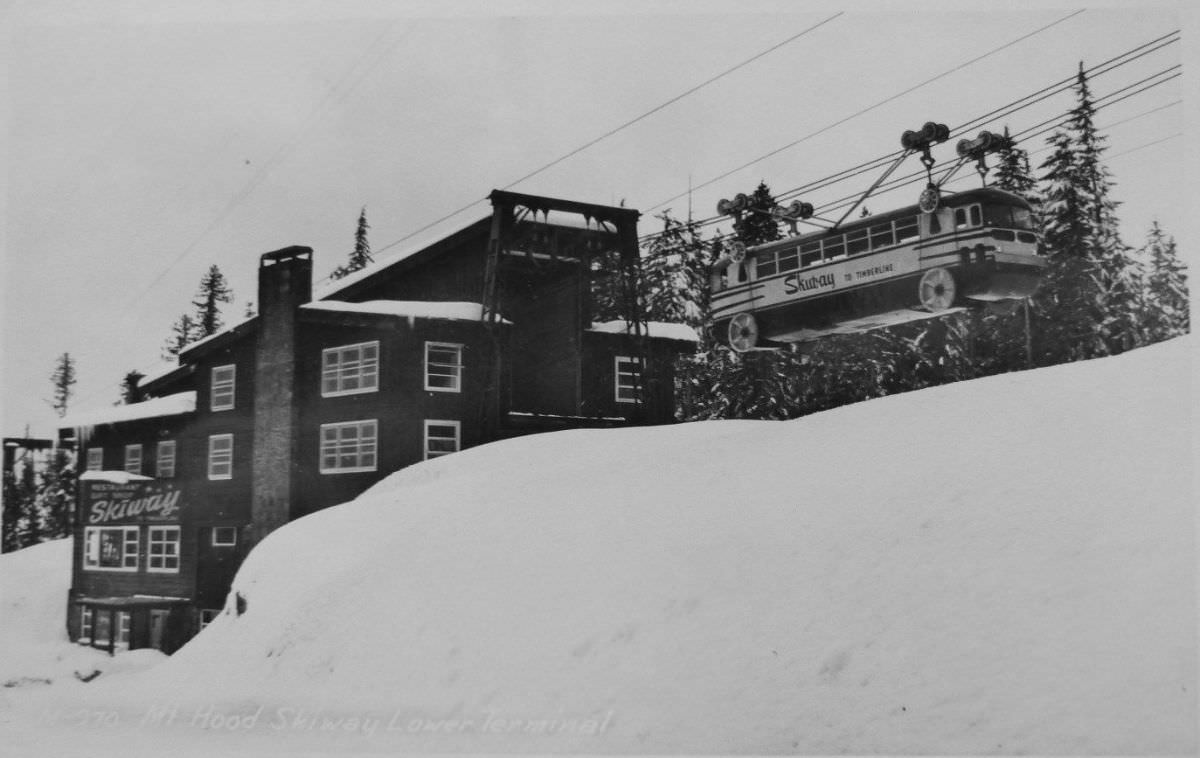
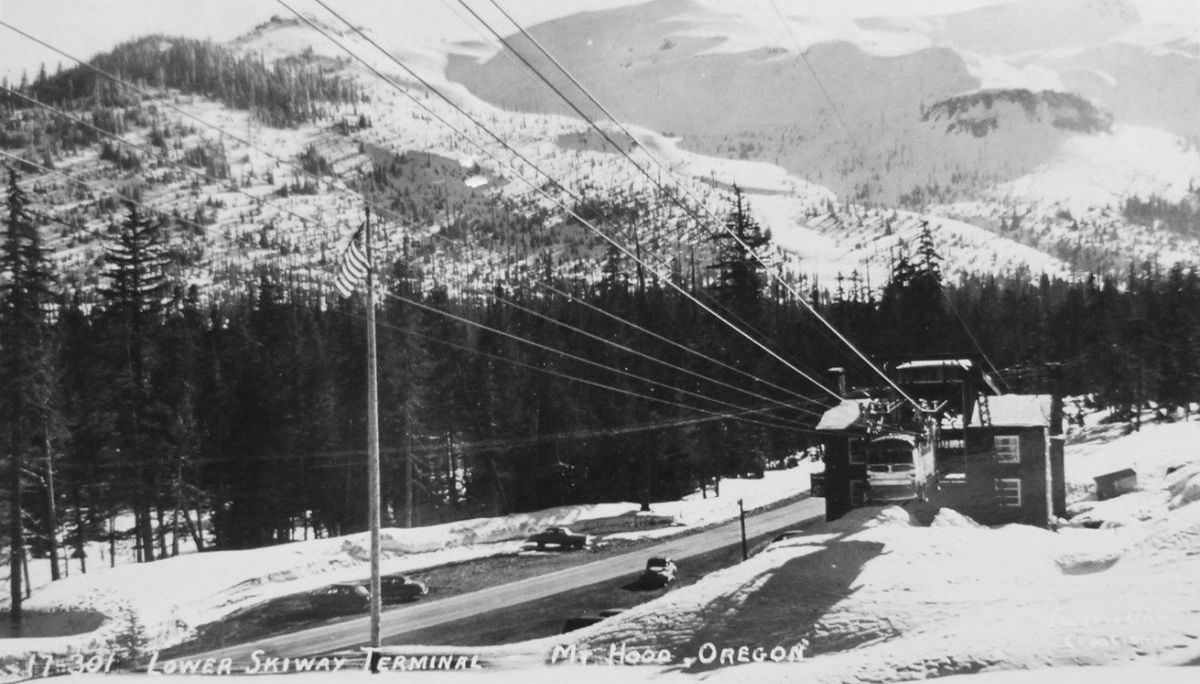
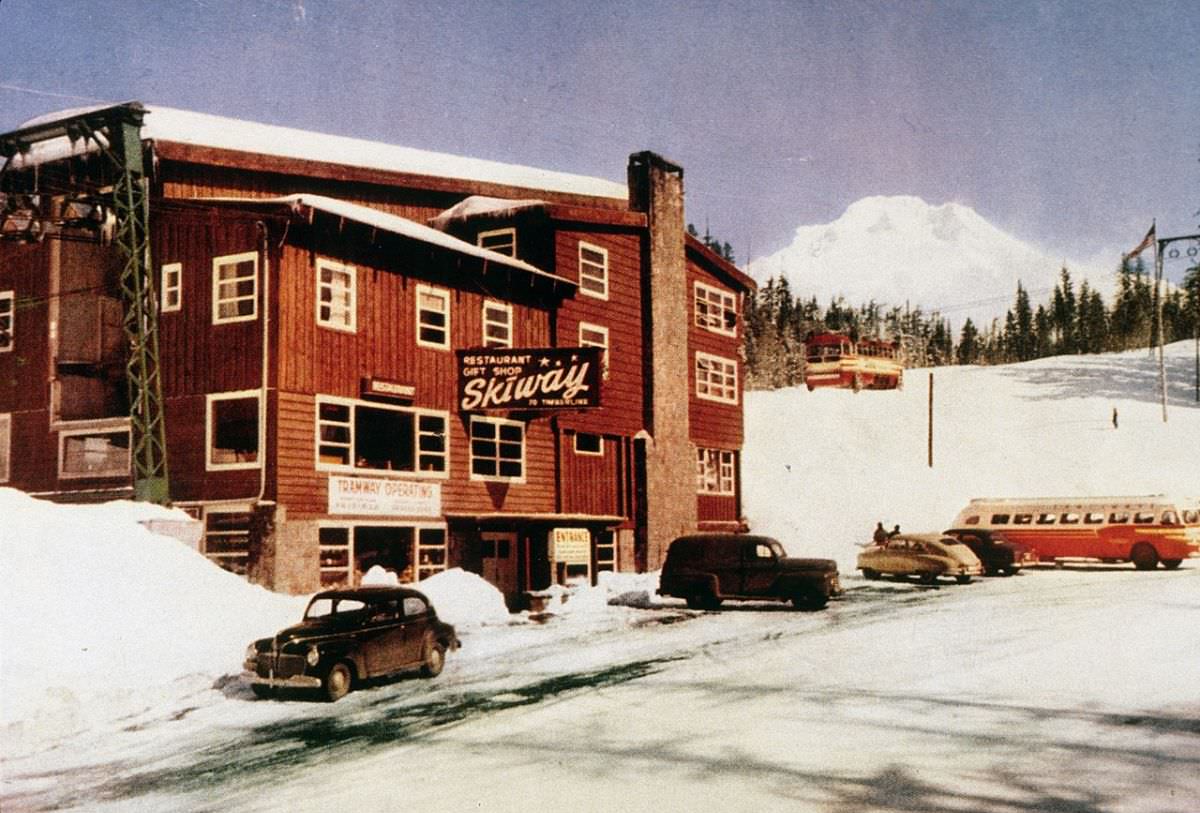
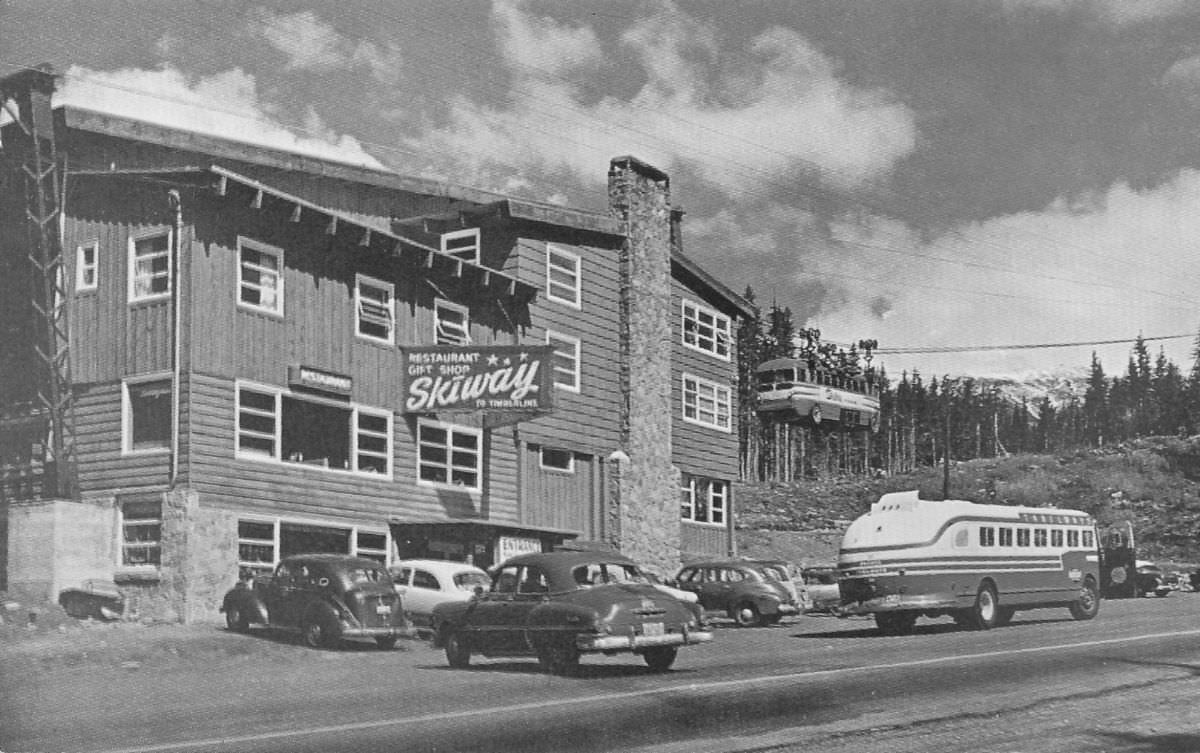
The lower terminal was built into an existing structure at Government Camp. Passengers boarded on the building’s third floor, where the loading and unloading platforms were located. This design kept operations organized and gave riders an elevated starting point before the cable carried them skyward.
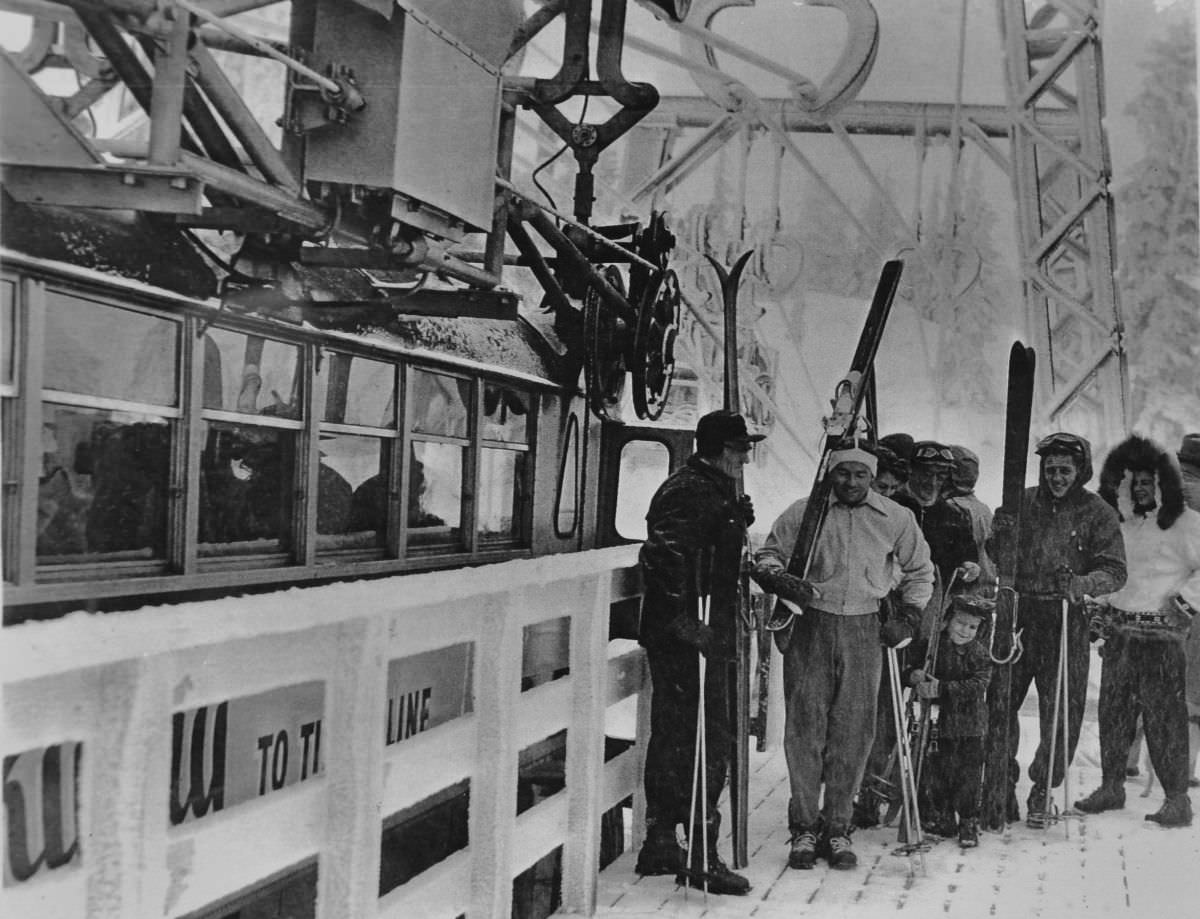
The upper end of the route, at Timberline Lodge, was a different story. There was no enclosed terminal building at the top. Passengers stepped on and off the tram at an open-air platform, fully exposed to the mountain weather. On clear days it was a spectacular setting. On harsh winter days, it was a raw and wind-bitten experience.


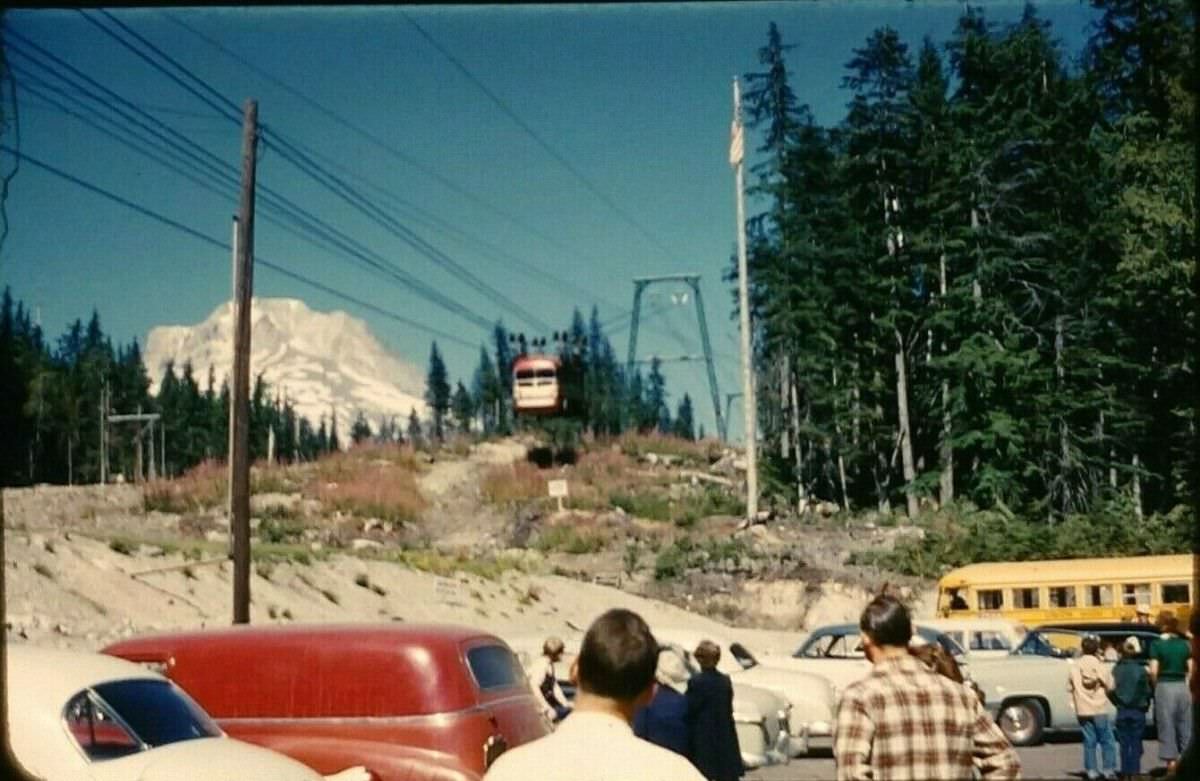
Building the Skiway was not a quick undertaking. Workers had to clear a direct line through the forest and mountain landscape before any structure could go up. The entire process — from clearing the path to completing the infrastructure — took more than three years. The lower terminal building became a hub of activity, with a dedicated Skiway bus shuttling visitors to and from the departure point.


When the Skiway launched in early 1951, it drew immediate attention. Newspapers covered it. Popular magazines ran features on it. Newsreel producers showed up to film its preview voyage. For a brief period, this flying tram on an Oregon mountain was genuine national news. Skiers and curious travelers from across the region rode it for the novelty as much as the convenience.


The Thunderbird Lodge sat near the bottom terminal at Government Camp, giving visitors a place to warm up before or after the ride. The whole setup — lodge, bus, terminal, and tram — was designed to create a seamless experience from the valley floor to the snowy heights of Timberline Lodge. For skiers, it meant hauling gear directly up the mountain without the long drive on winding roads.


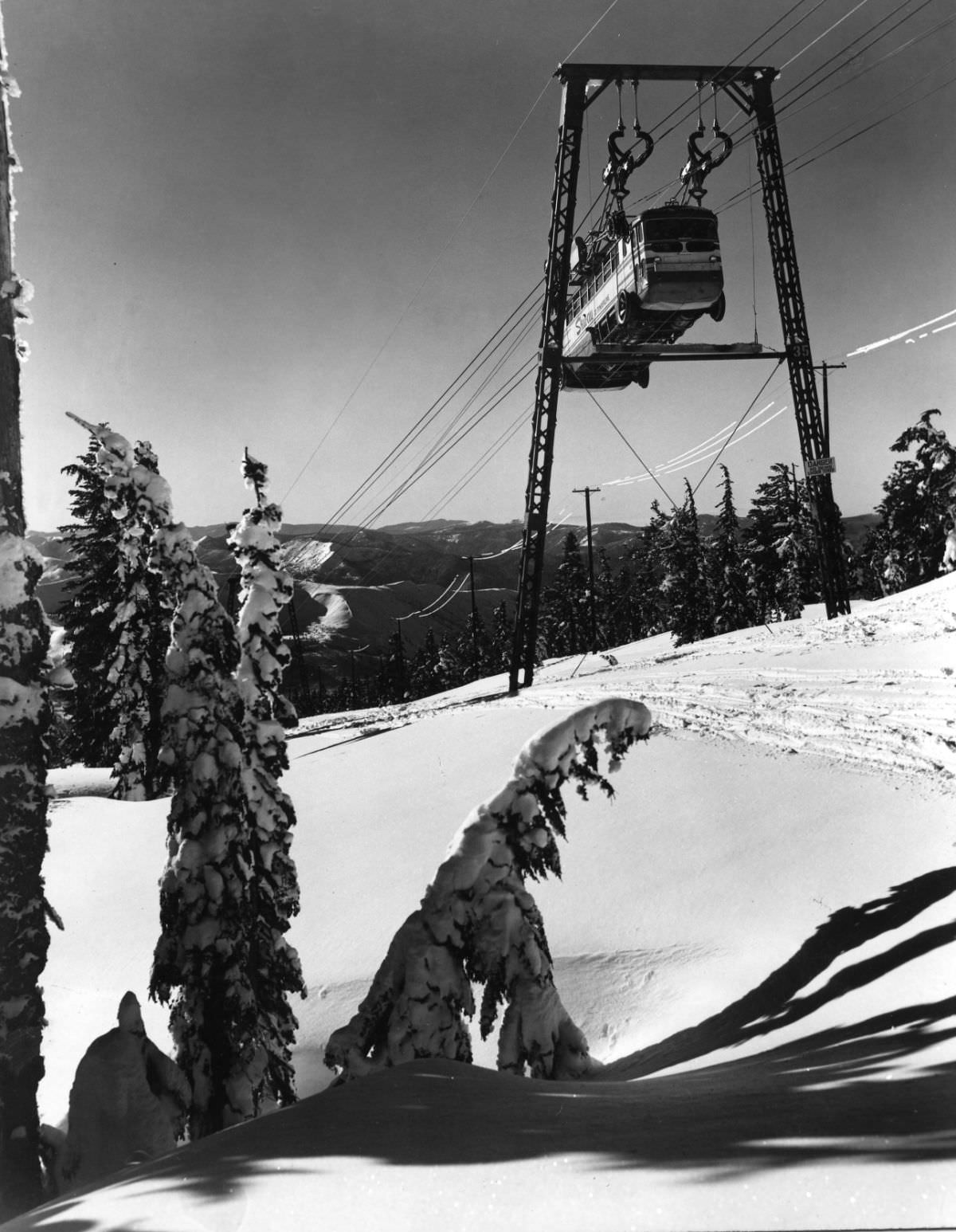
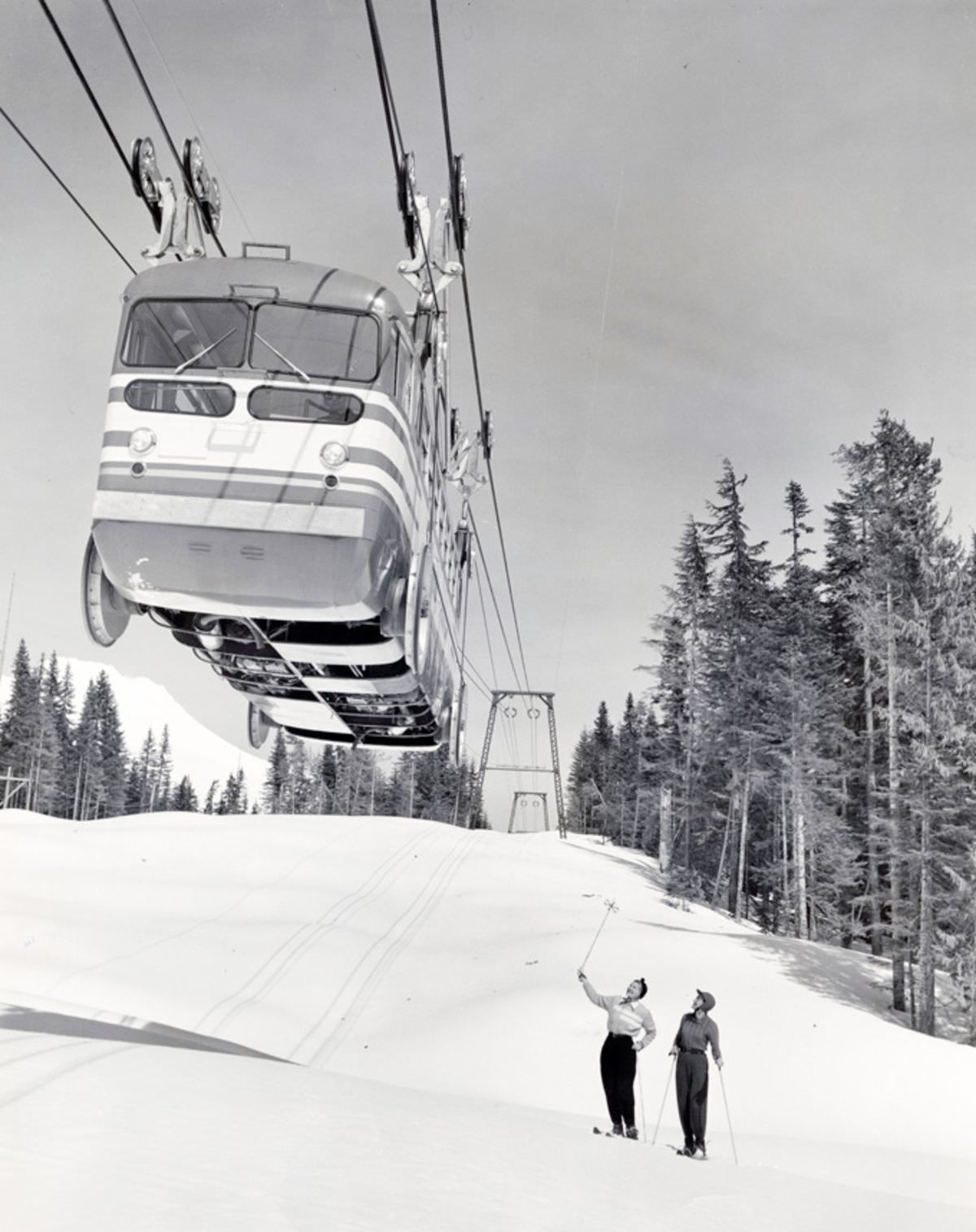
By the time skiers were carving turns on the slopes beneath the cable line, the Skiway had already become part of the mountain’s visual identity. Tram cars gliding above the snowfields were a striking sight — a reminder of just how far one man’s ambition had taken a concept from a sketch to a working piece of engineering on a major American mountain.