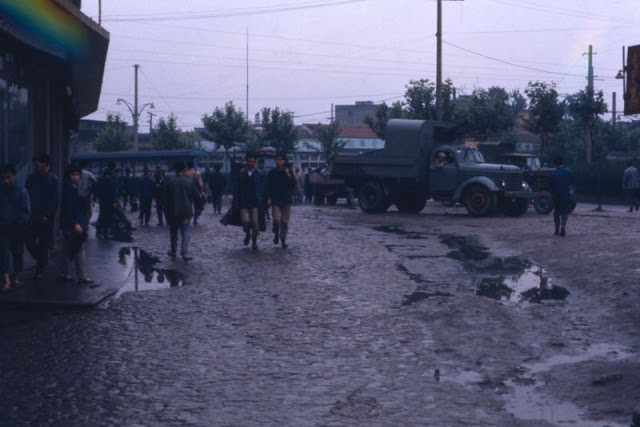
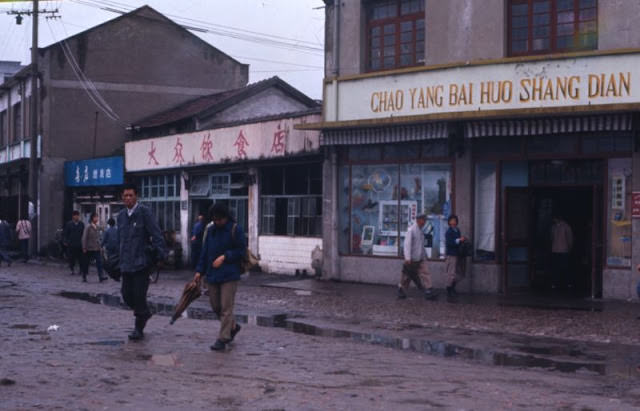
Shanghai today is China’s largest city and its engine of economic power — a place of towering skyscrapers, global finance, and international trade. But the Shanghai of the 1970s looked nothing like that. The photographs taken by Michael Rank during that decade offer a rare, ground-level view of a city still shaped by decades of war, political upheaval, and communist reorganization. To understand what these images show, it helps to know how Shanghai got there.
Japan’s occupation of Shanghai during the Second Sino-Japanese War caused severe damage to the city’s industrial base. When the People’s Liberation Army took control in 1949, the economy was already in poor shape. Small, inefficient shops had replaced larger enterprises, inflation was rampant, and no clear plan for industrial rebuilding had been put in place. The transition to communist rule brought stability of a different kind — centralized, ideological, and tightly controlled.
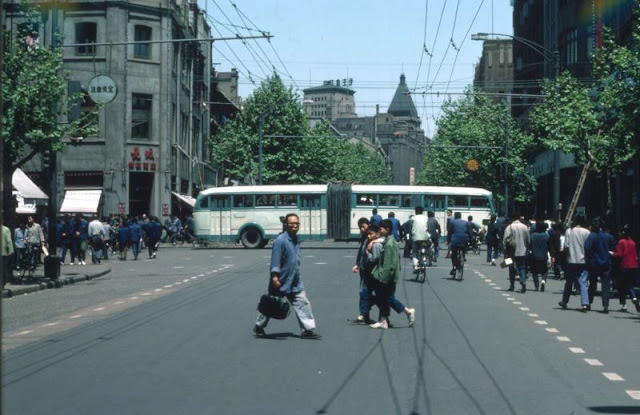
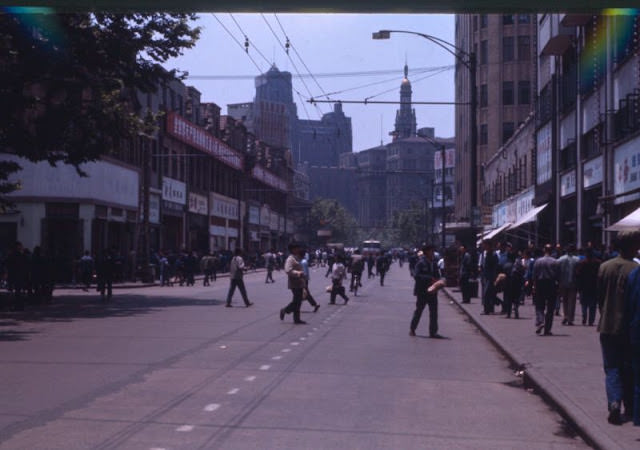
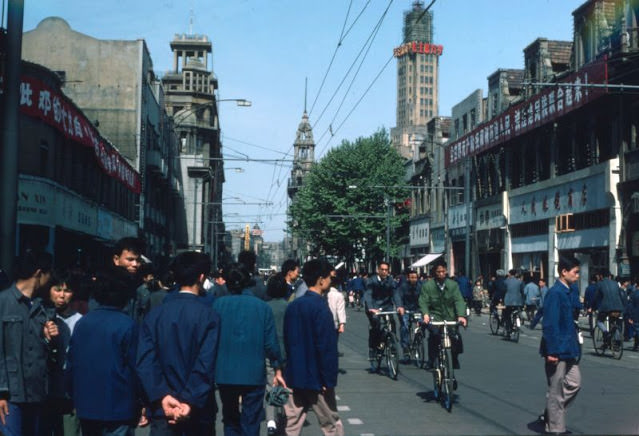
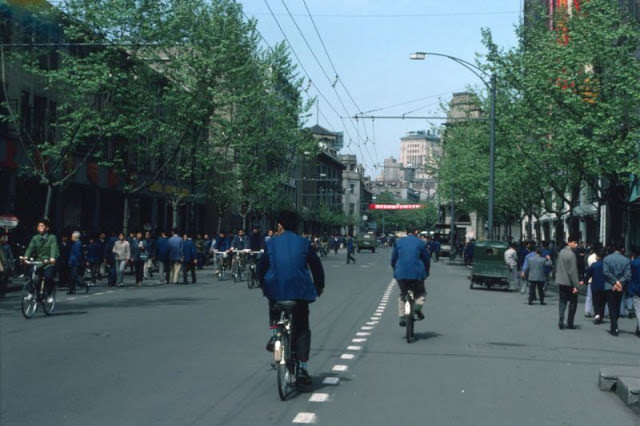
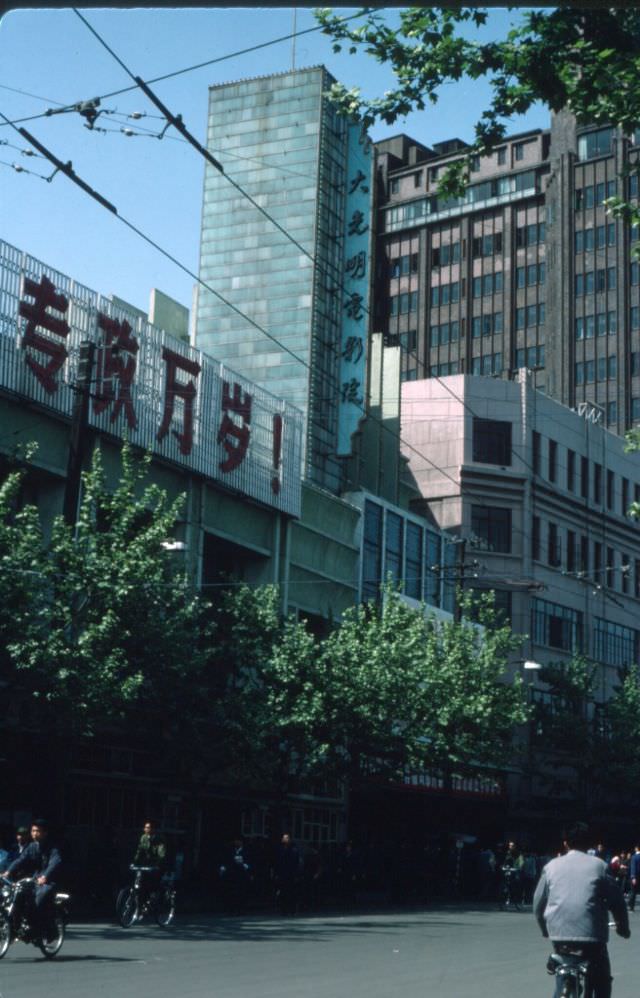
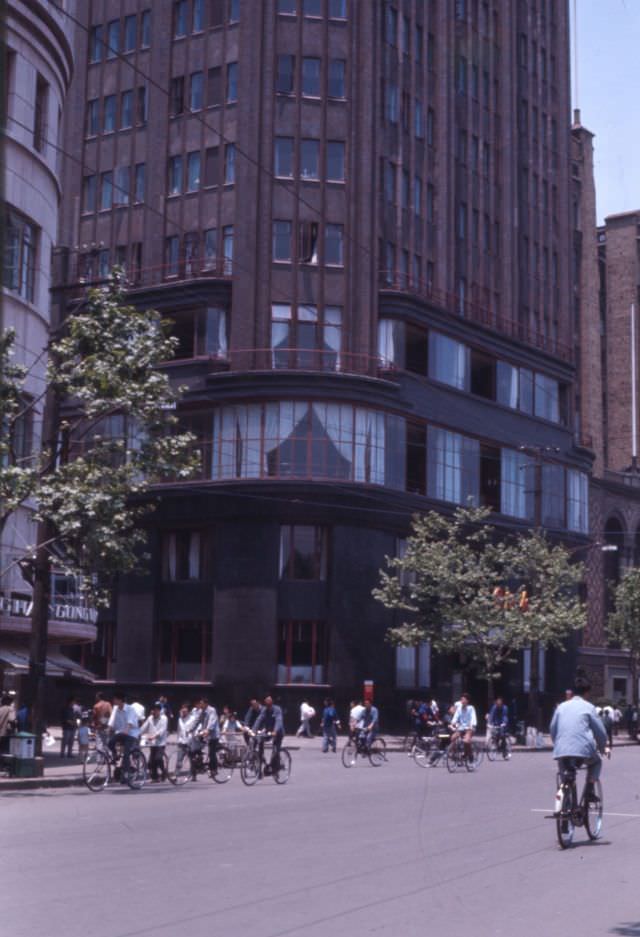
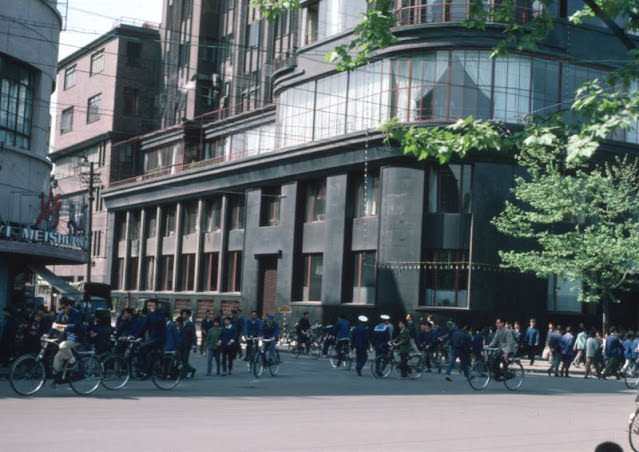
Nanjing Road was Shanghai’s main commercial artery, and in the 1970s it was crowded with pedestrians and cyclists rather than cars. State-owned shops lined both sides of the street. Signage was minimal and practical. The visual noise of advertising that fills the road today was almost entirely absent — replaced instead by political slogans and plain storefronts.
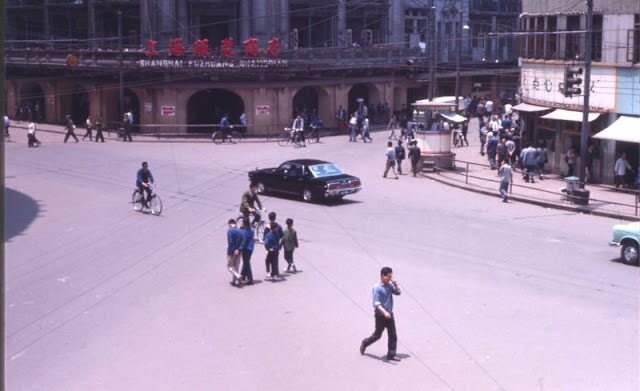
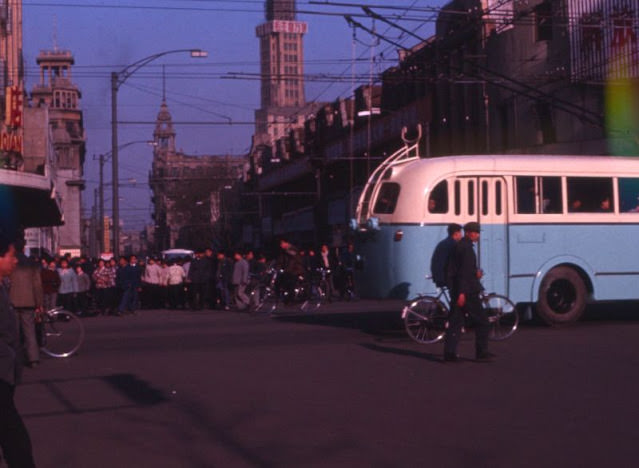
Through the 1950s, Shanghai’s development slowed as the central government focused investment on building up China’s interior regions. After 1960, when relations with the United States cooled significantly, Shanghai regained its role as China’s leading center for scientific and technological research. Even so, daily life on the streets remained simple and regimented throughout the decade that followed.
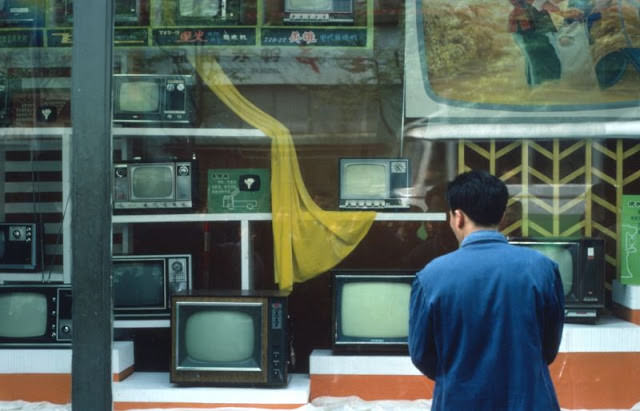
Consumer goods were scarce and tightly rationed in 1970s China, making a shop selling televisions on Nanjing Road a genuinely remarkable sight. Televisions were a luxury item that few households could obtain freely. A TV shop drew attention precisely because it represented something just out of reach for most city residents.
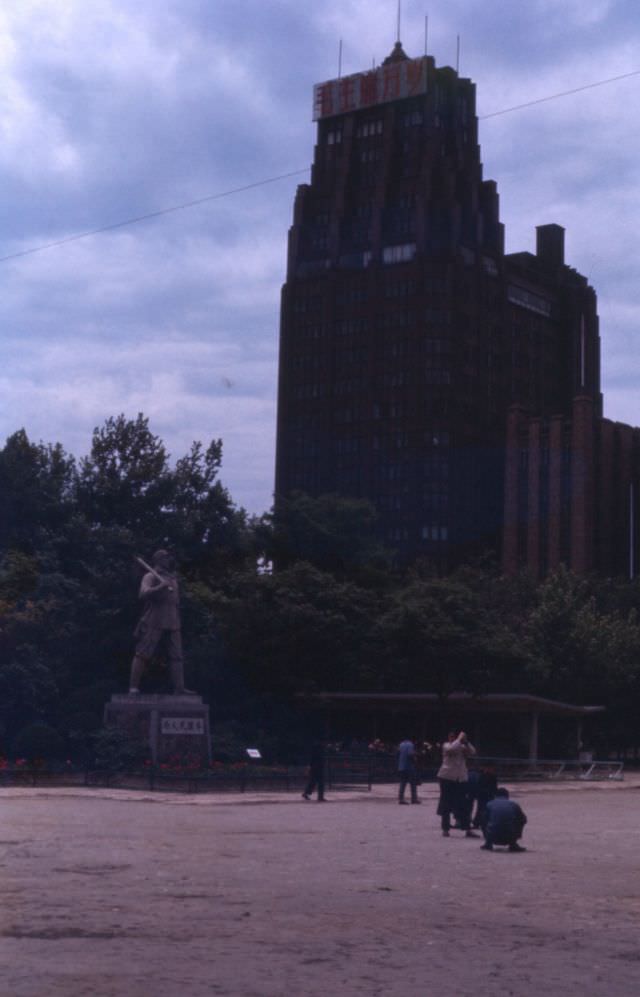
Cinema was one of the few forms of public entertainment widely available in the 1970s. The state controlled what films were shown, and approved titles were heavily ideological in nature. Standing in the background of the Nanjing Road cinema scene is the International Hotel — originally built in 1934 and known then and now as the Park Hotel — which was the tallest building in Asia at the time of its completion and held that title in China for decades.
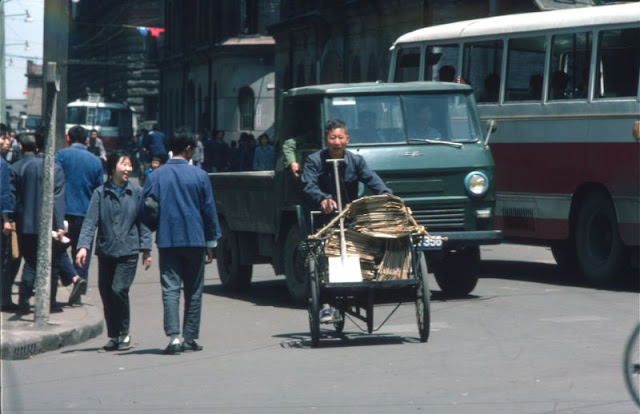
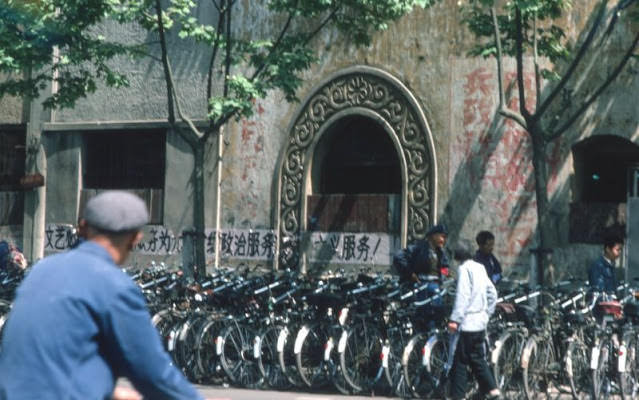
Trishaws — three-wheeled cycle rickshaws — were a common sight on Shanghai’s streets in the 1970s. They served as both passenger transport and freight movers in an era when motor vehicles were rare and bicycles were the dominant form of personal transportation. Fuzhou Road, running parallel to Nanjing Road, was another busy thoroughfare where bicycles were parked in dense, organized rows.
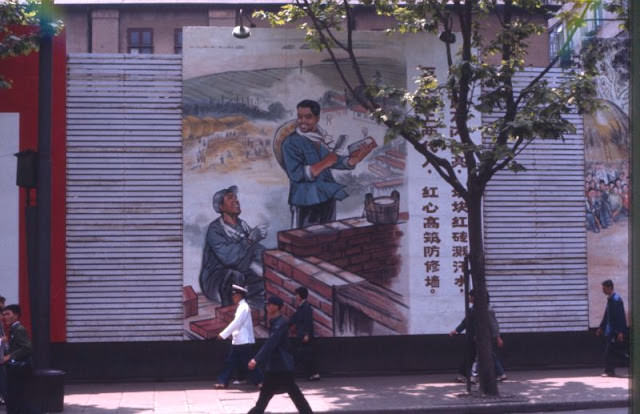
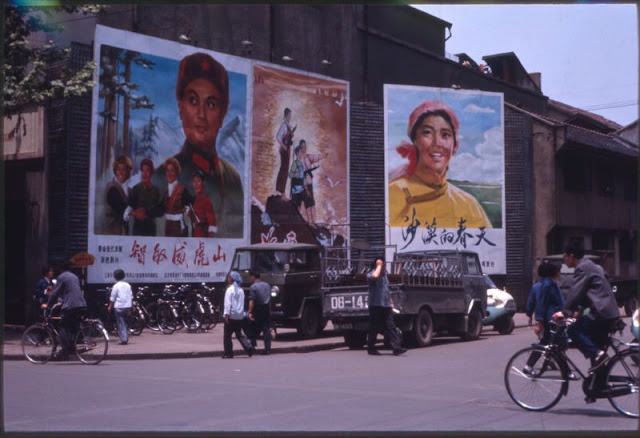
Cinema posters from this era reflect the Cultural Revolution’s grip on Chinese culture. Films promoted revolutionary themes, model workers, and socialist values. Posters were bold, colorful, and designed to inspire loyalty to the Communist Party rather than to attract audiences with star power or story.
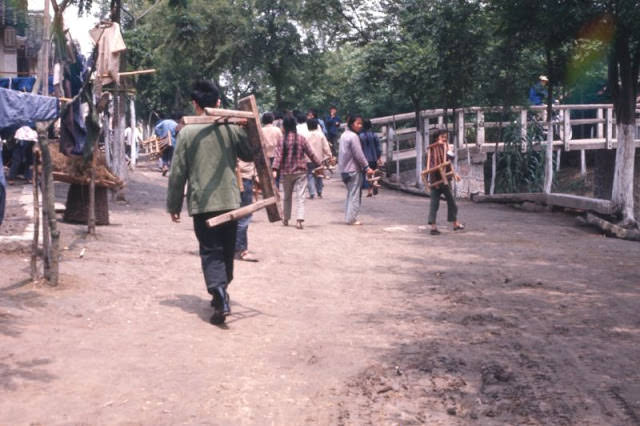
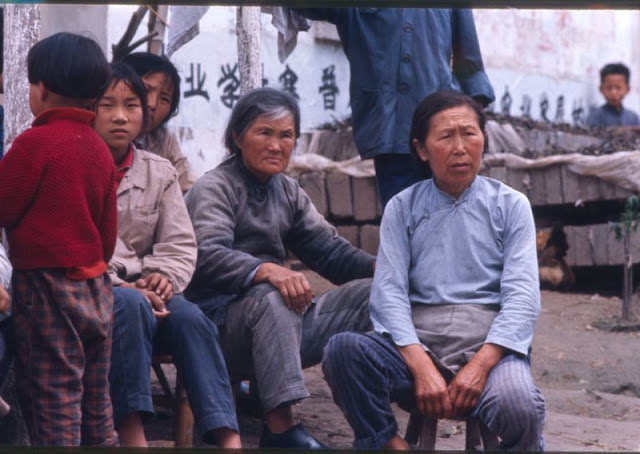
Urban communes were a defining feature of life in Chinese cities during this period. Residents were organized into work units that managed housing, food production, healthcare, and political education. Commune members carried their own benches to group meetings — a small but telling detail about the communal, structured nature of daily life in Shanghai at the time.
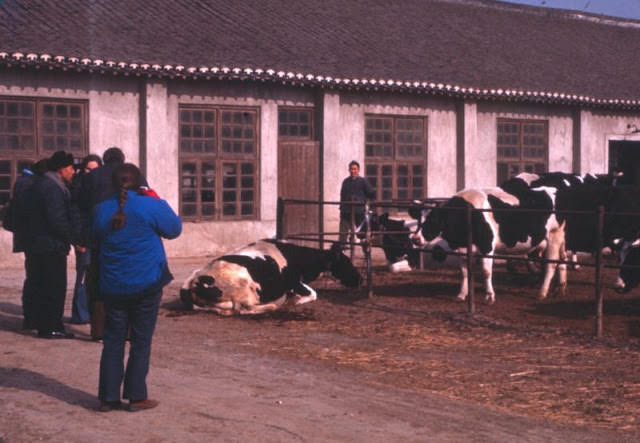
Shanghai’s urban communes also maintained small-scale agricultural operations within the city. Dairy cows and pigs were kept on commune grounds, providing food for residents as part of the self-sufficiency model promoted by the state. These animals existed within the city limits, just streets away from the dense urban fabric of Nanjing Road.
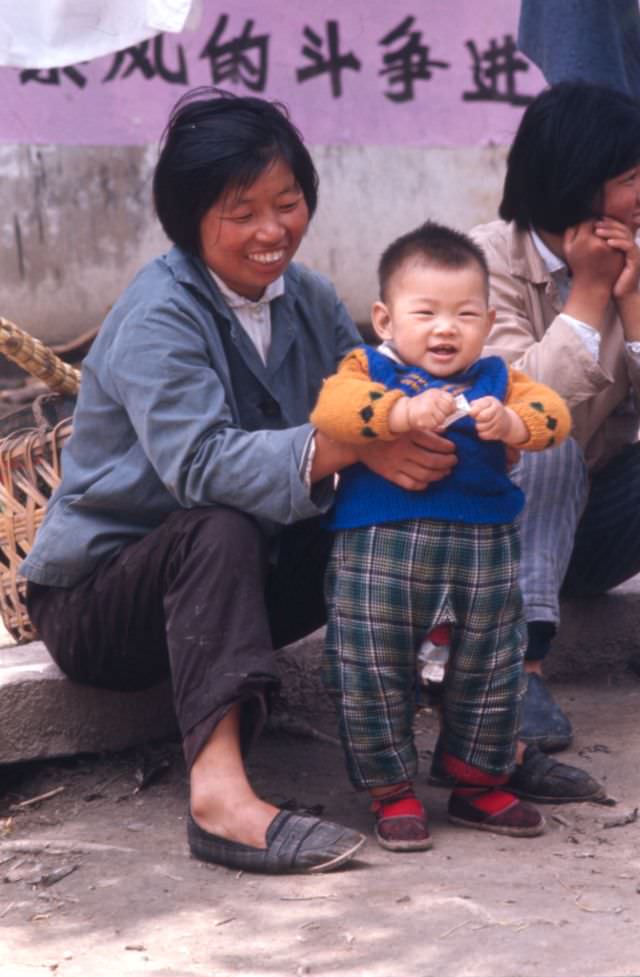
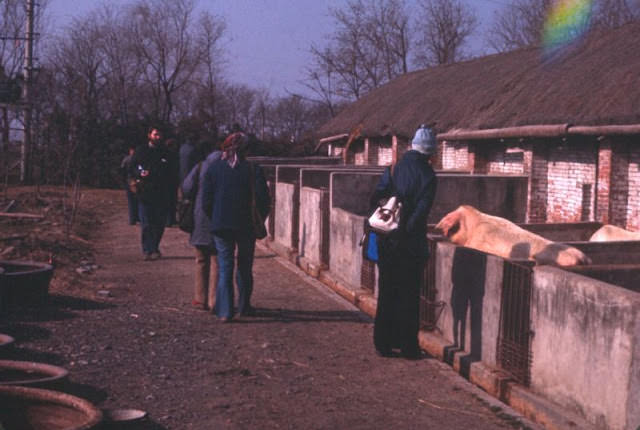
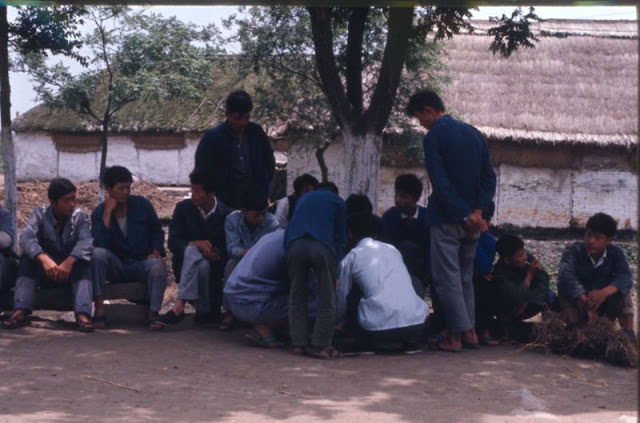
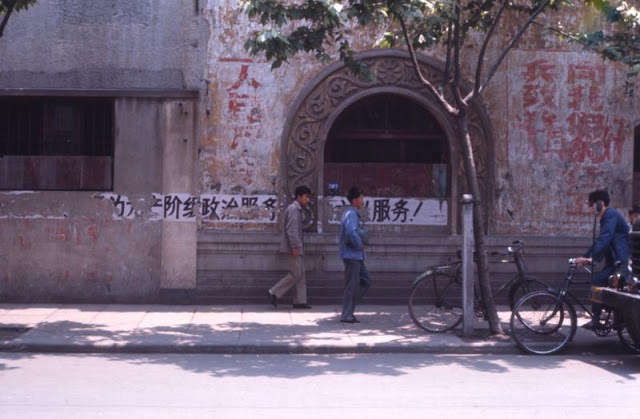
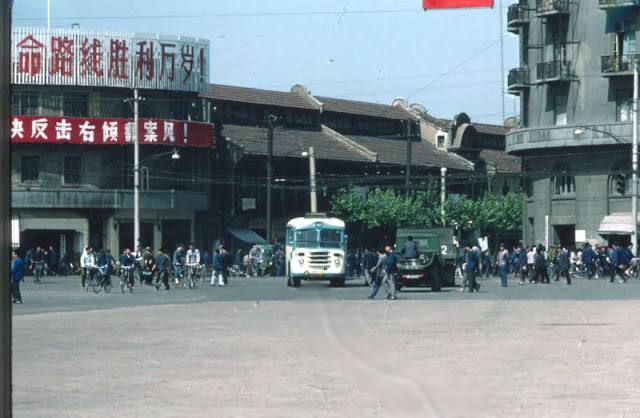
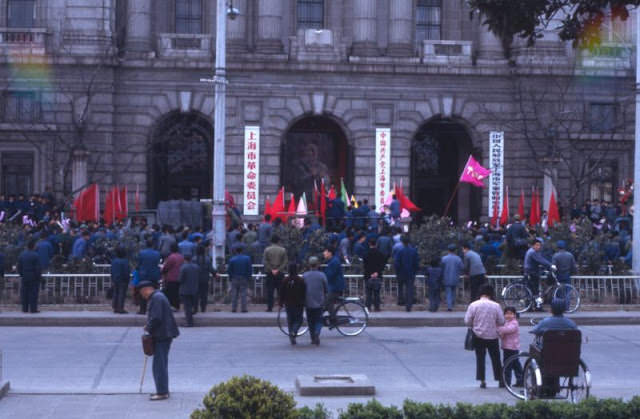
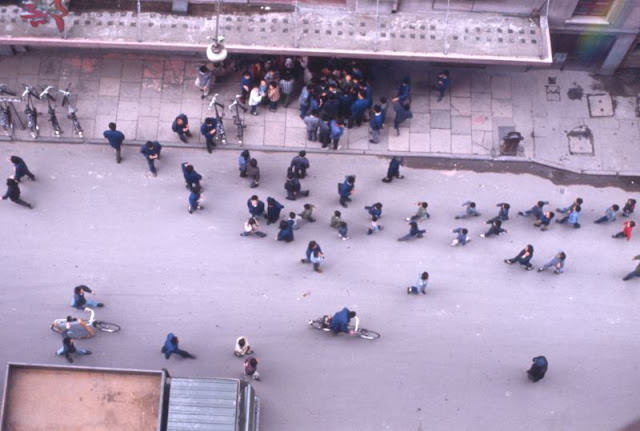
The streets of Fuzhou Road and the Fuzhou/Xizang Lu intersection show a city moving on foot and by bicycle. Traffic was sparse by the standards of any major global city, and the street scene was dominated by people in the plain, dark-colored clothing typical of the Mao era. Uniformity in dress was both a political statement and a practical reality of limited consumer choice.
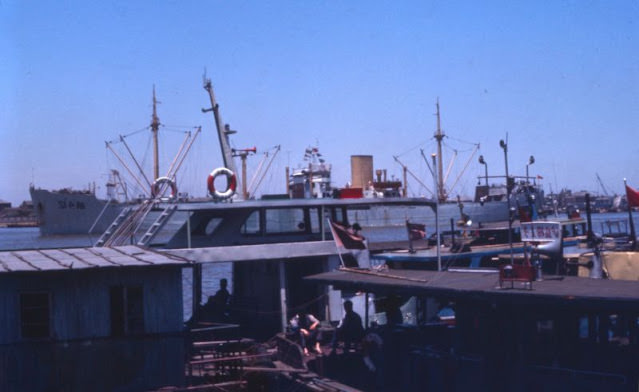
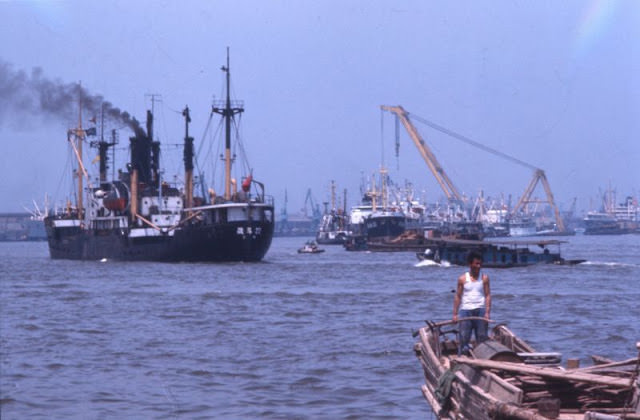
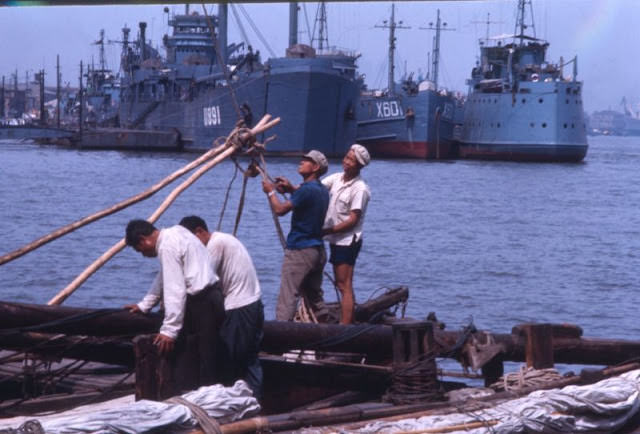
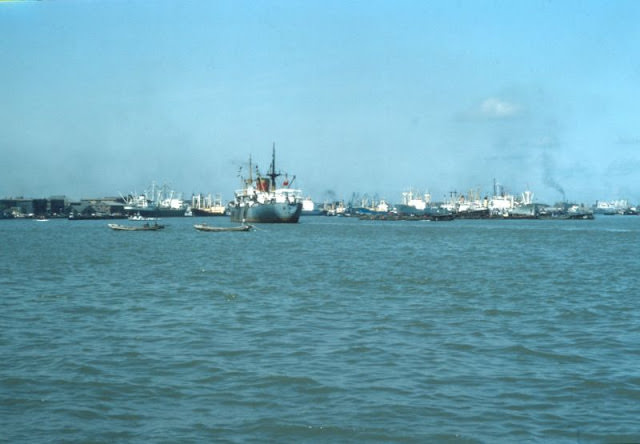
The Huangpu River remained the lifeblood of Shanghai’s port activity throughout the 1970s. Cargo ships, ferries, and smaller working vessels filled the water constantly. Shanghai had long been one of the busiest ports in Asia, and even under the constraints of a planned economy, its river traffic reflected the city’s importance as a hub of domestic and international shipping.
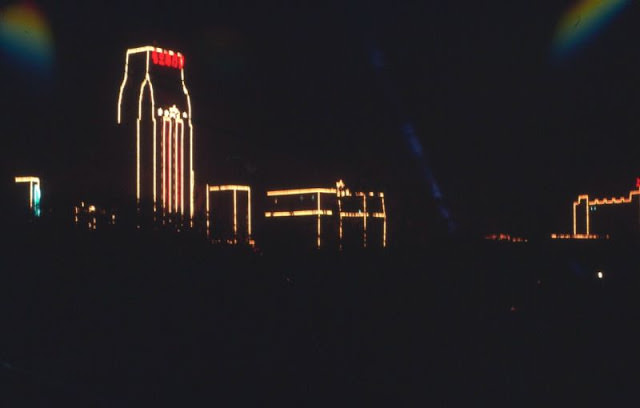
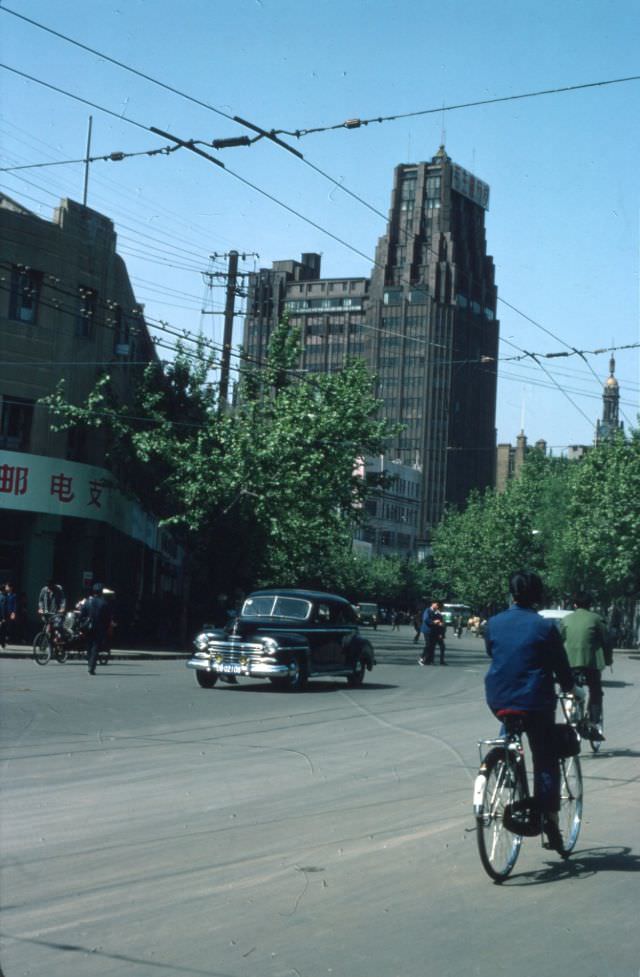
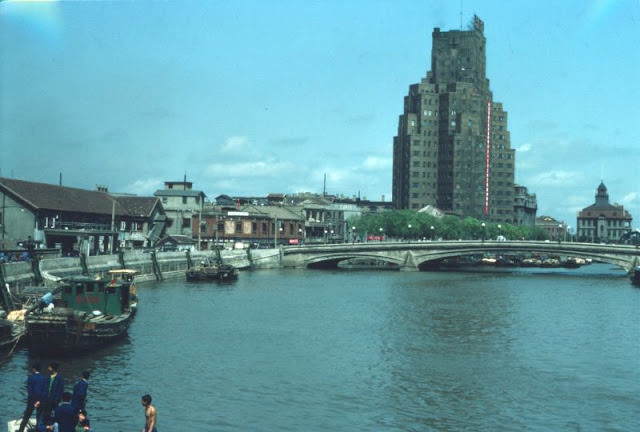
The International Hotel — known before and after this era as the Park Hotel — was a prominent landmark in 1970s Shanghai. Built in the Art Deco style and completed in 1934, it rose 22 stories above the city. A statue near the hotel and the building’s distinctive silhouette appeared repeatedly in photographs from this period, marking it as one of the few pre-revolutionary structures that retained visible prominence in the cityscape.
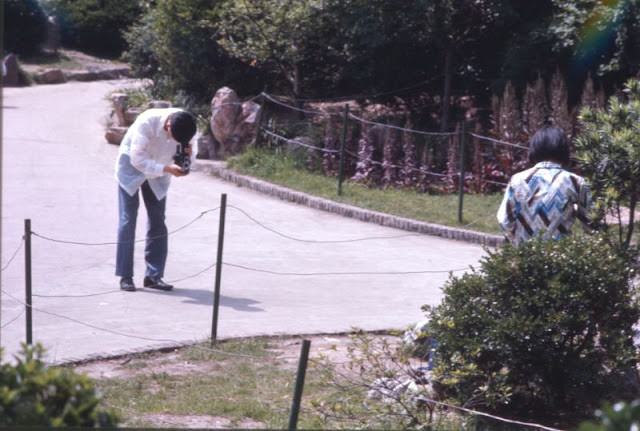
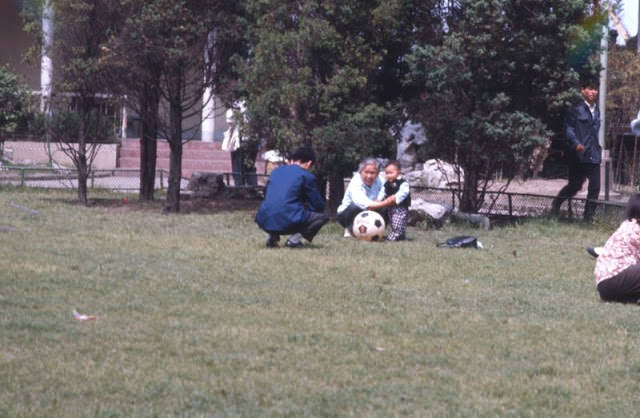
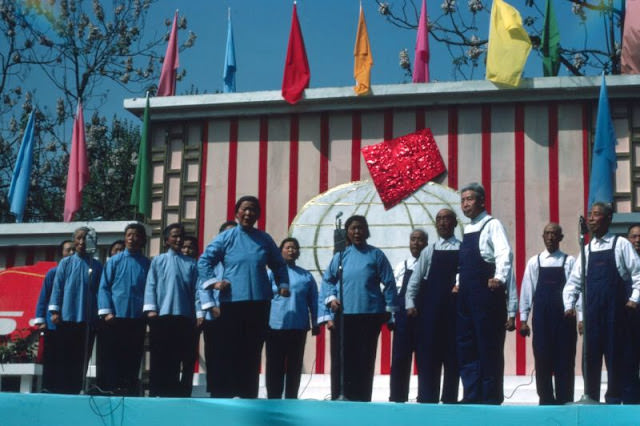
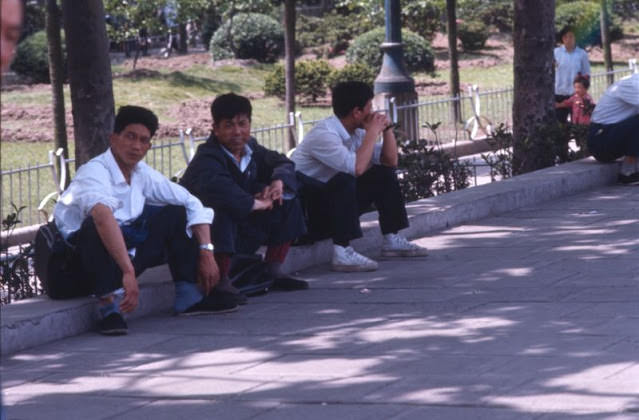
Public parks offered Shanghai residents space for leisure outside the home and the work unit. Photographers set up in parks to take portraits — a practical service for people who needed official photos for documents or simply wanted a keepsake. Parks were also gathering places for older residents, including retired performers who continued to practice their arts informally in open spaces.
The political atmosphere of the 1970s is visible in the anti-Deng imagery captured in these photographs. Deng Xiaoping was purged twice during the Cultural Revolution — once in 1966 and again in 1976 — and was a target of public criticism campaigns. Wall posters and public denouncements of political figures were a regular feature of Chinese urban life during this turbulent decade.
Shanghai at night in the 1970s was dimly lit compared to the rest of the world’s major cities. Street lighting was limited, neon advertising was nonexistent, and the city settled into quiet darkness after working hours. The contrast with today’s illuminated skyline could not be more striking.
Boatmen on the Huangpu worked the river in wooden vessels that had changed little in design for generations. These workers loaded and unloaded cargo, ferried passengers, and maintained the constant movement of goods along the waterway. The Bund — Shanghai’s famous riverfront promenade — drew large crowds of residents who gathered there to walk, rest, and take in the river views.
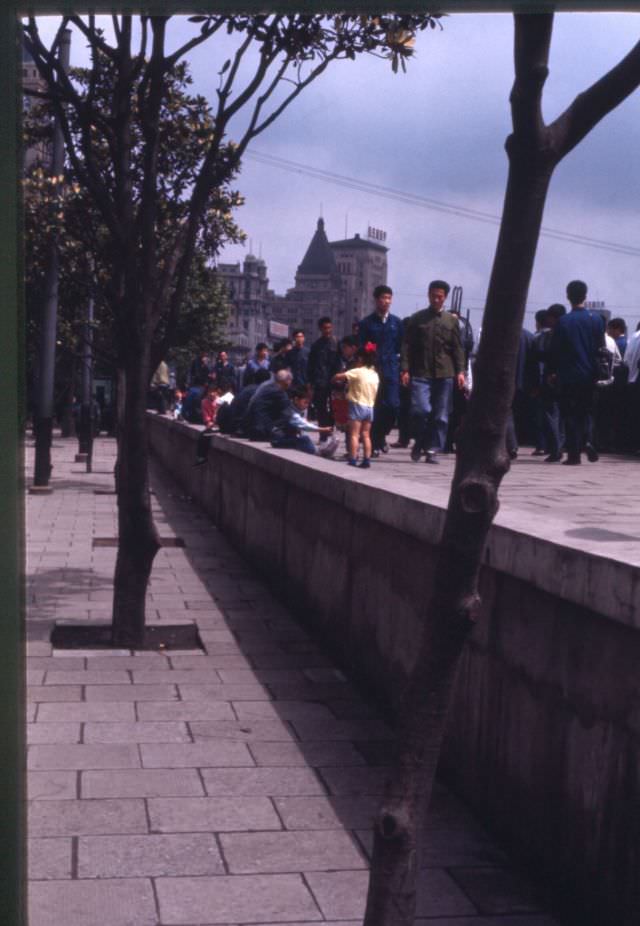
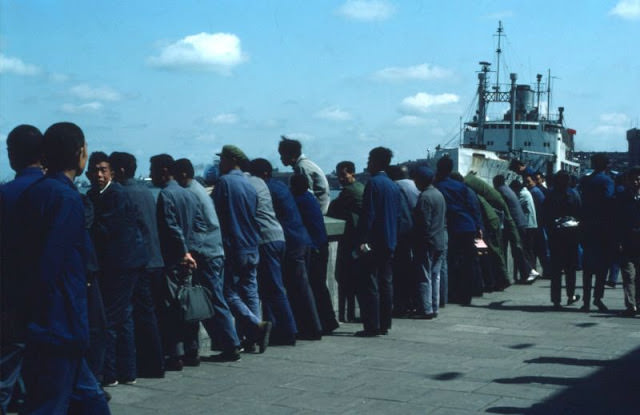
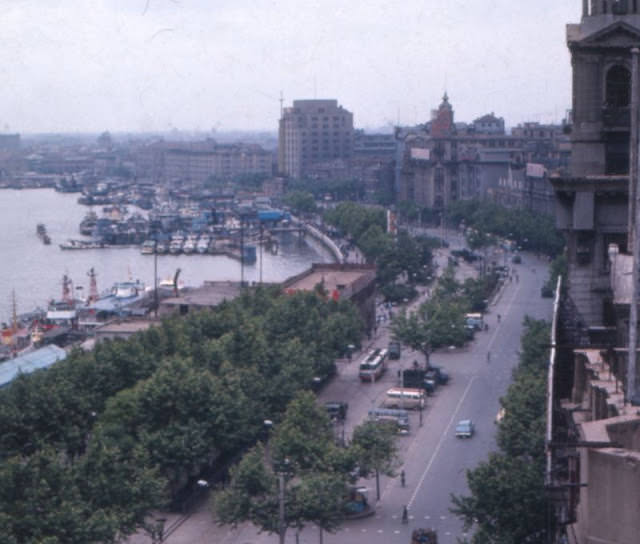
The Shanghai Club, an exclusive colonial-era institution that once served the city’s foreign business elite, still stood on the Bund in the 1970s. By this point it had been repurposed — the grand building serving functions far removed from its original intent. Its continued physical presence on the waterfront was a reminder of Shanghai’s pre-revolutionary history as an international treaty port.
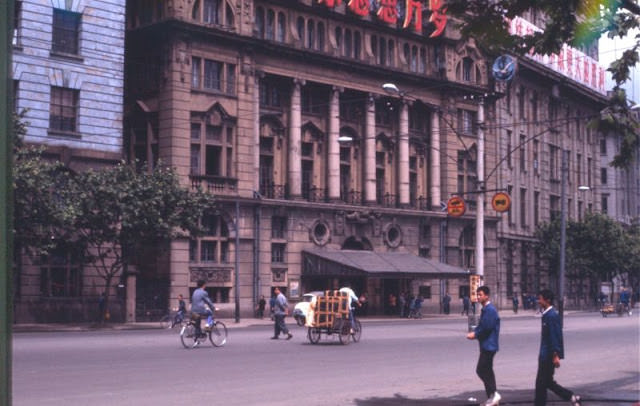
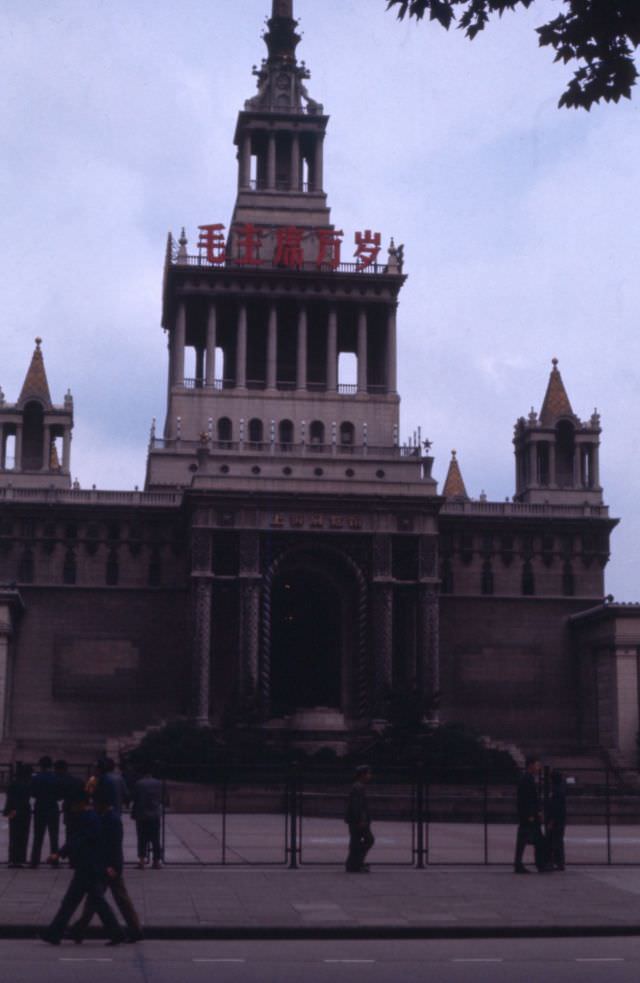
The Shanghai Exhibition Hall — built in the early 1950s with Soviet assistance — was one of the city’s most distinctive buildings. Its Stalinist architecture, topped with a red star, stood as a symbol of the Sino-Soviet alliance that defined China’s early communist period. By the 1970s, relations with the Soviet Union had collapsed, but the building remained and continued to host industrial exhibitions.
The former Shanghai racecourse had been one of the most famous in Asia during the colonial era. After 1949, the Communist government closed the racecourse — gambling was incompatible with the new political order — and converted the grounds into public space. By the 1970s, the site had become People’s Square and People’s Park, used for public gatherings and recreation.
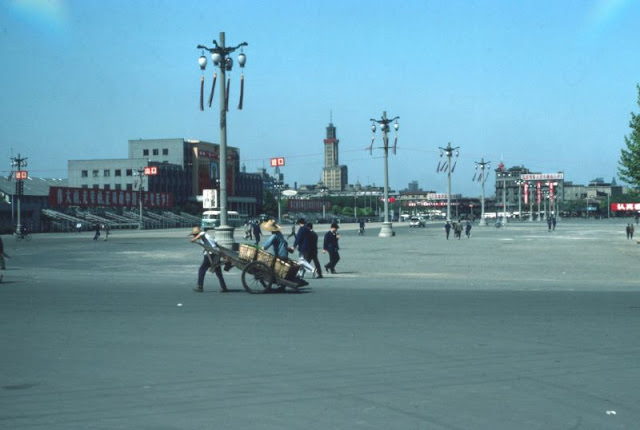
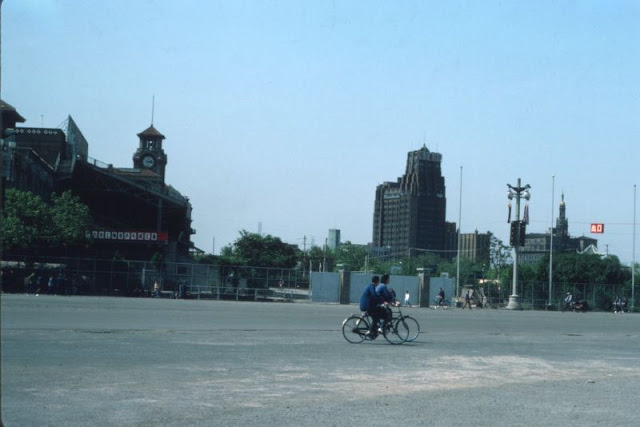
The Park Hotel — referred to in these photographs by its 1970s name, the International Hotel — appears in multiple images from different angles and times of day. Its height made it visible from much of the surrounding city, and it served as a navigational landmark for residents. The hotel continued to operate as a state-managed property throughout the Maoist period.
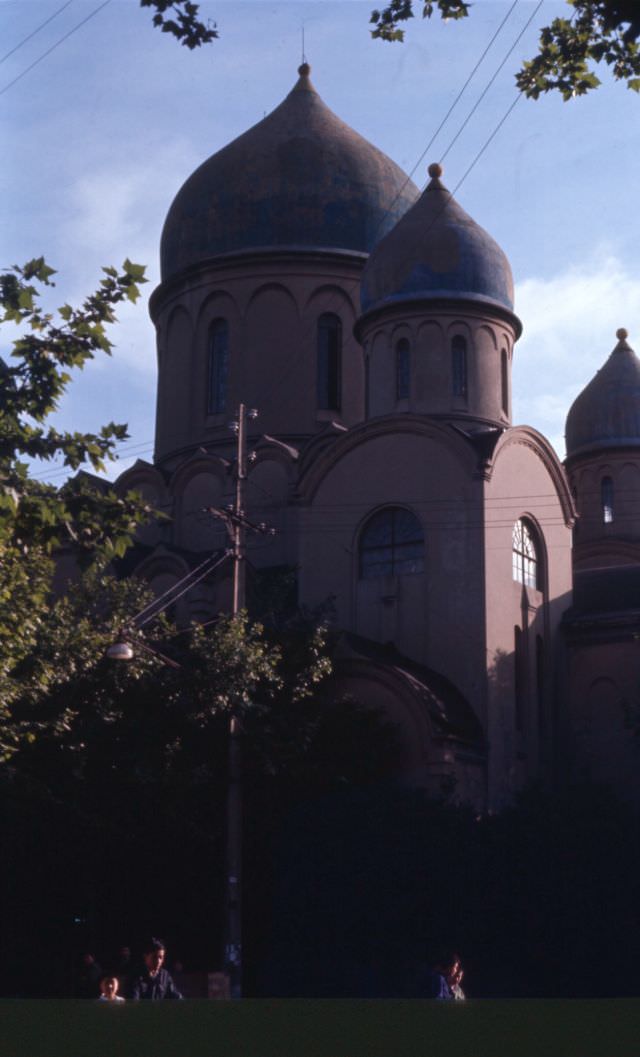
Religious buildings in Shanghai survived the 1970s in varying states. The Cultural Revolution had targeted religious practice from its start in 1966, closing churches, mosques, and temples. Some buildings were repurposed, others damaged, and a few stood largely intact but idle. The Orthodox Church and the park cathedral captured in these photos are physical remnants of Shanghai’s diverse pre-1949 religious community, which had included Russian emigres and Western missionaries.
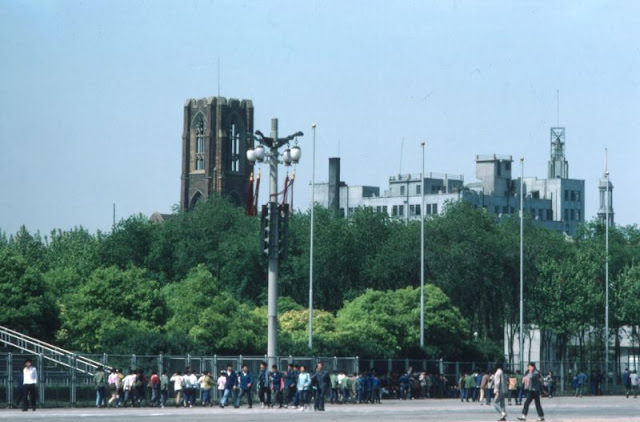
The Shanghai Revolutionary Committee was the governing body that administered the city during the Cultural Revolution era. Revolutionary committees replaced traditional government structures across China and were composed of military representatives, party cadres, and approved mass representatives. Their presence in public-facing signage and buildings signaled how thoroughly political reorganization had reshaped the city’s institutions.
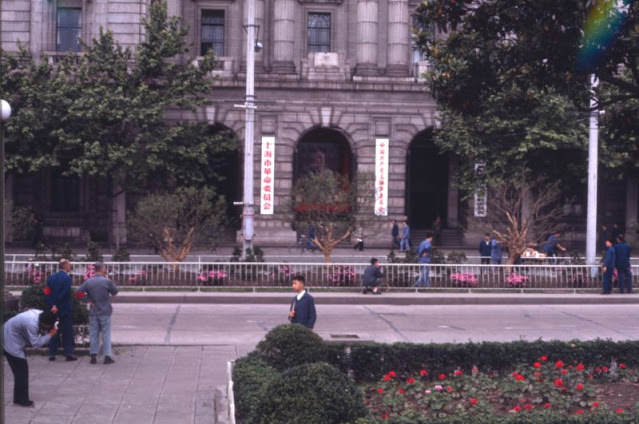
Aerial and elevated views of Shanghai’s streets in the 1970s reveal a low-rise cityscape almost entirely without the high-rise construction that would define the decades ahead. Buildings were densely packed but rarely tall. Streets were wide enough for crowds but carried almost no private motor traffic. The visual texture of the city was consistent and grey, punctuated by the occasional burst of a political banner in red.
Suzhou Creek, which flows into the Huangpu River near the Bund, was a busy industrial waterway in the 1970s. Barges and small cargo boats moved goods along its length through the city. The creek’s banks were lined with warehouses and working-class neighborhoods, and the water itself was heavily used and heavily polluted by the demands of urban industry.
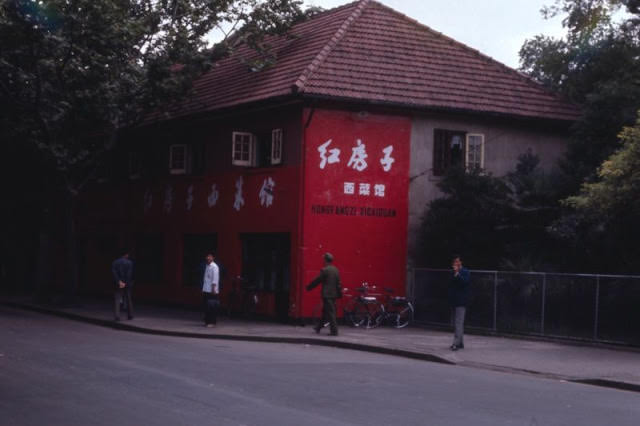
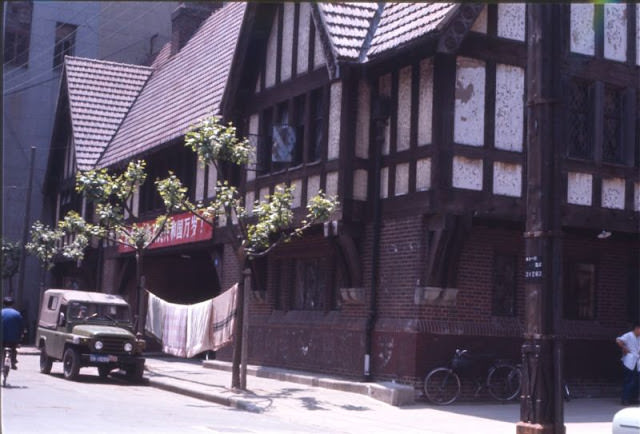
Tudor-style houses in Shanghai were physical evidence of the city’s colonial past. Built during the era when foreign concessions controlled large sections of the city, these structures housed British and other Western residents. By the 1970s, they had been absorbed into the communist city — divided into multiple residences, managed by work units, and stripped of any association with their original owners.
Wujiaochang, located in the Yangpu district in northeastern Shanghai, was a significant urban node even in the 1970s. The area was home to universities and industrial facilities and served as a hub for the surrounding neighborhoods. Its streets in these photographs show the same patterns visible elsewhere in the city — bicycles, pedestrians, plain storefronts, and the steady rhythm of a city moving on its own terms.