When the United States entered World War II, the demand for raw materials shot up almost overnight. Metal, rubber, cloth, and even cooking fat became critical resources for the war effort. Global supply chains were disrupted, prices climbed, and manufacturers needed more material than peacetime production could provide. The government’s answer was simple: ask the American people to give what they had.
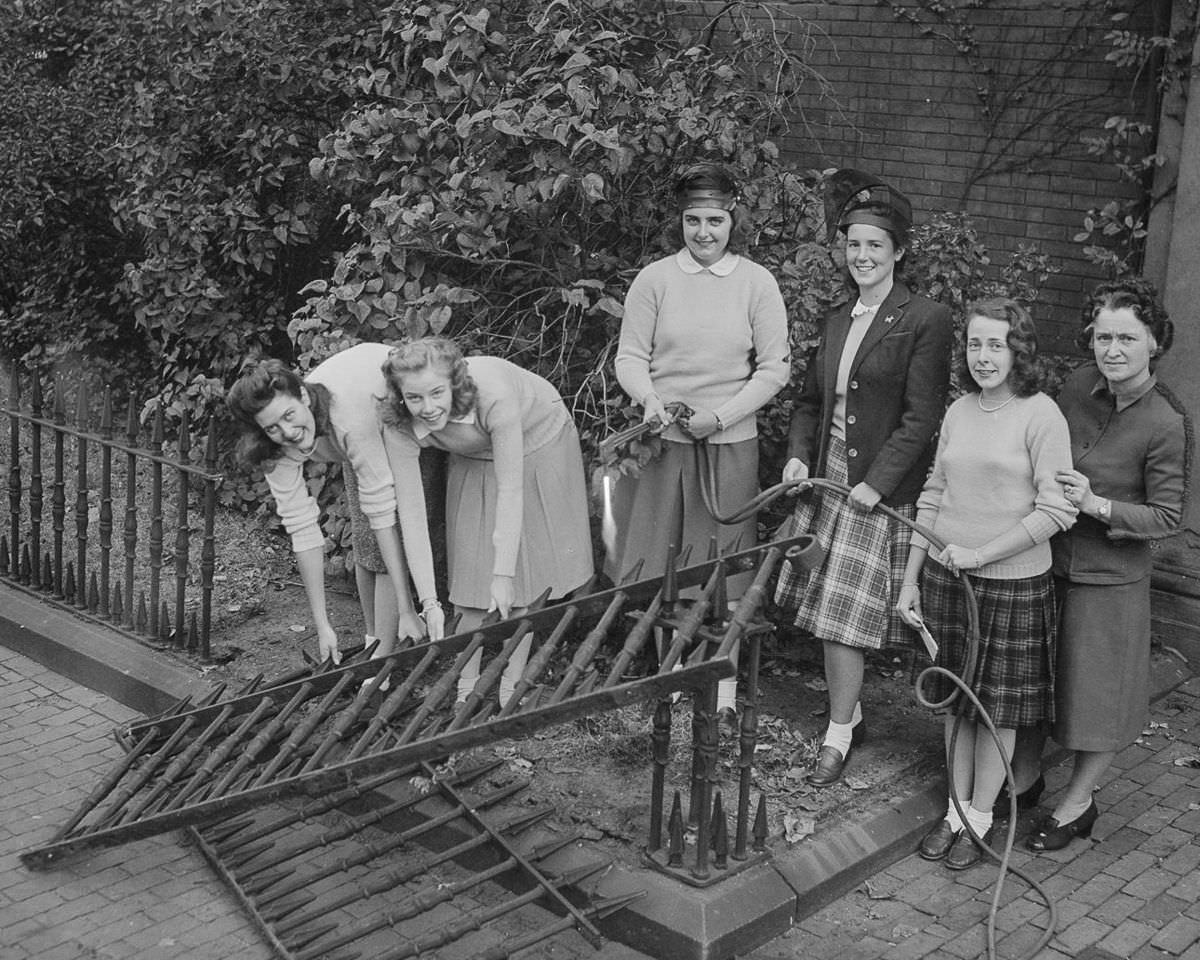
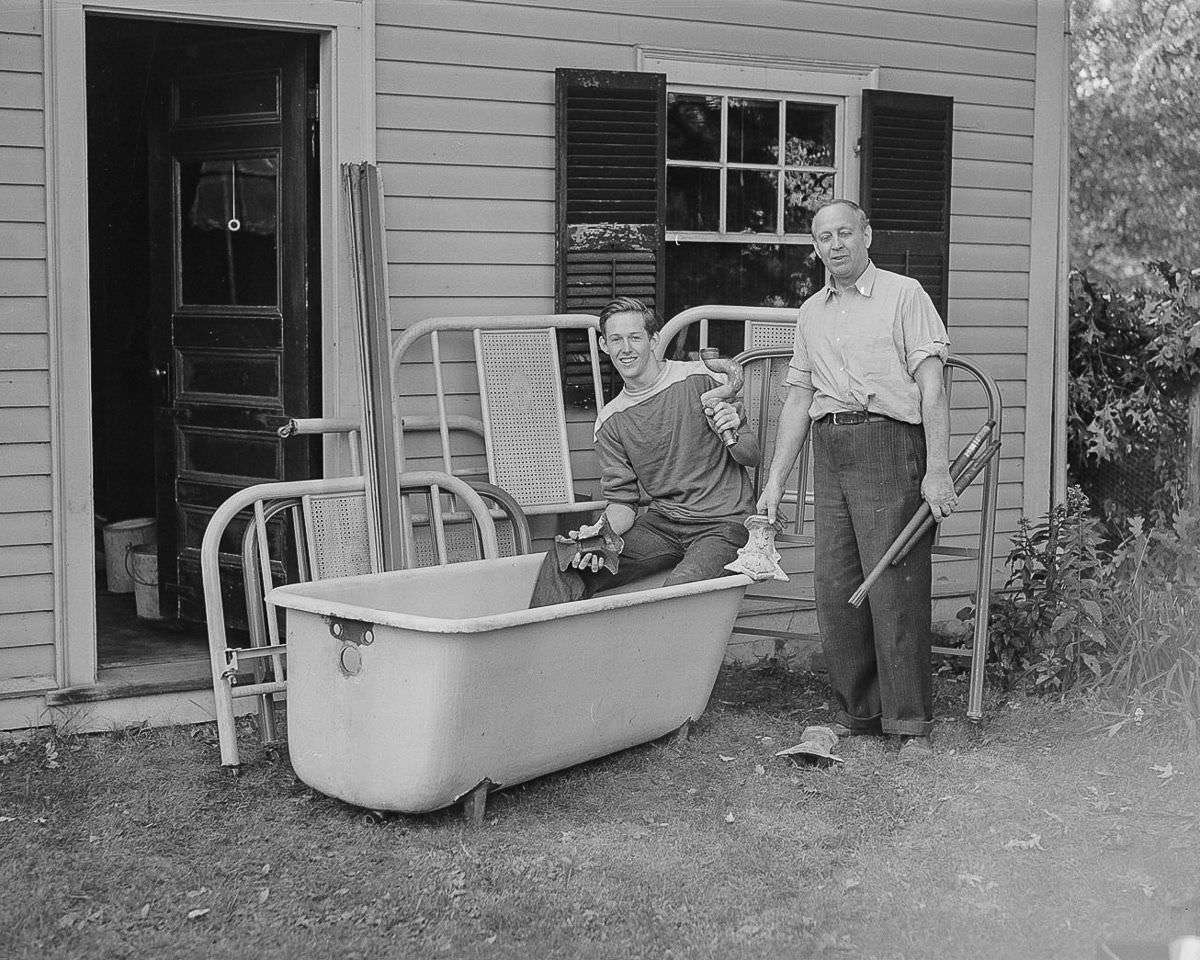
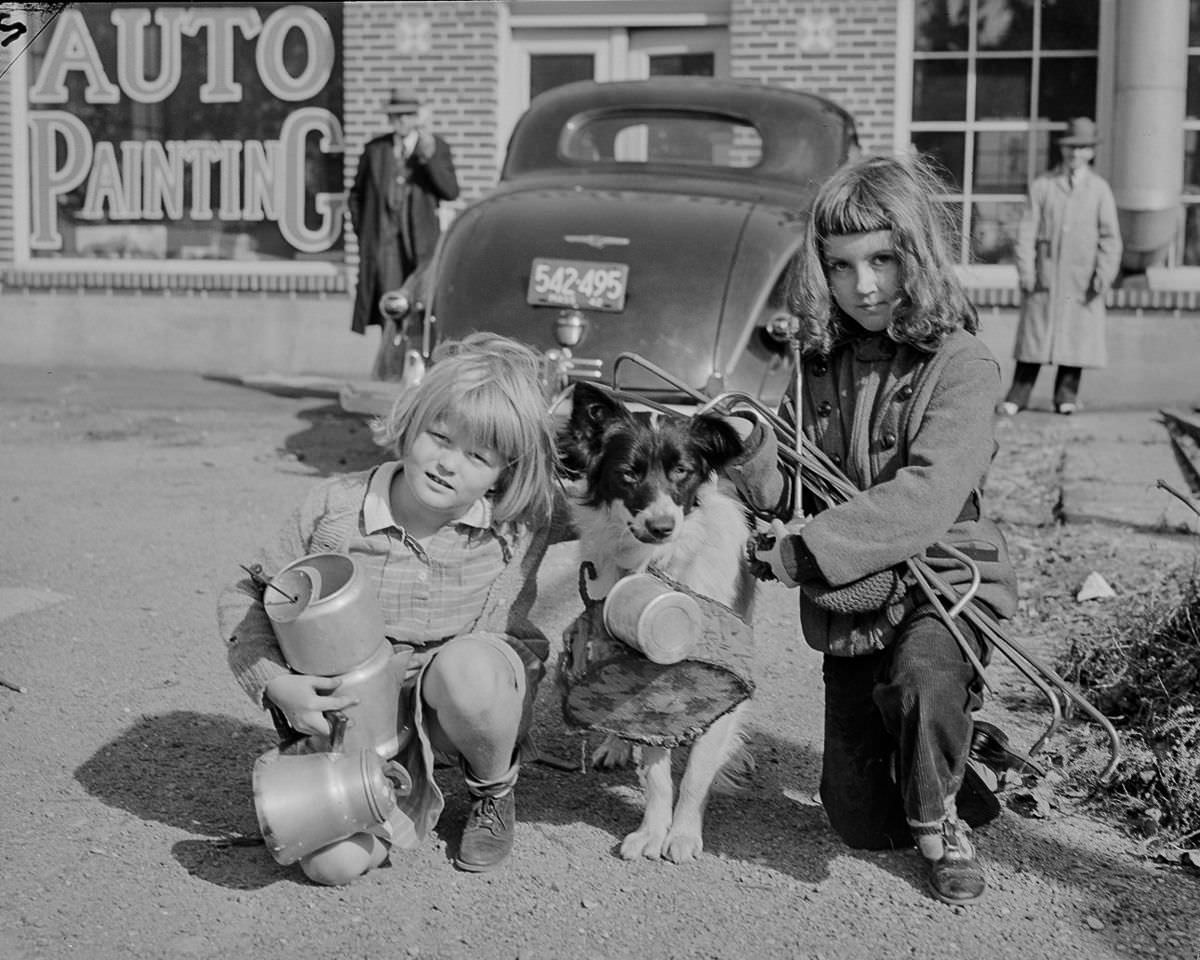
Scrap collection centers opened across the country. Neighborhoods, schools, churches, and civic groups organized drives to gather usable materials from homes and businesses. Nothing was considered too small. Old pots, broken tools, worn-out machinery, and backyard fences were all fair game. Iron and steel scraps went straight into the production of tanks, ships, and weapons.
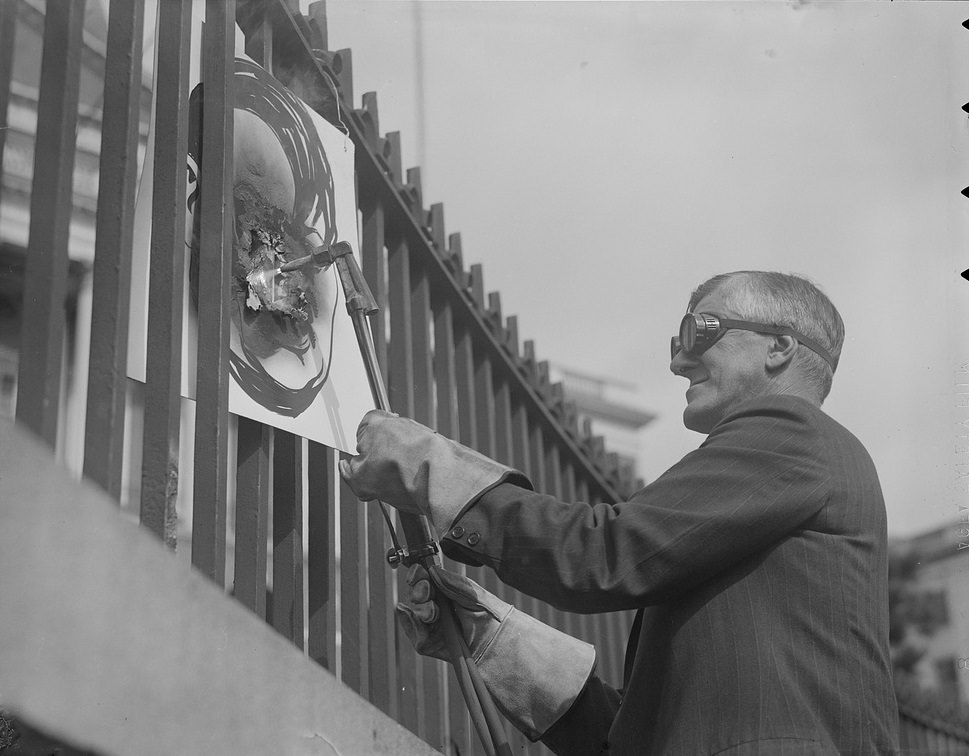
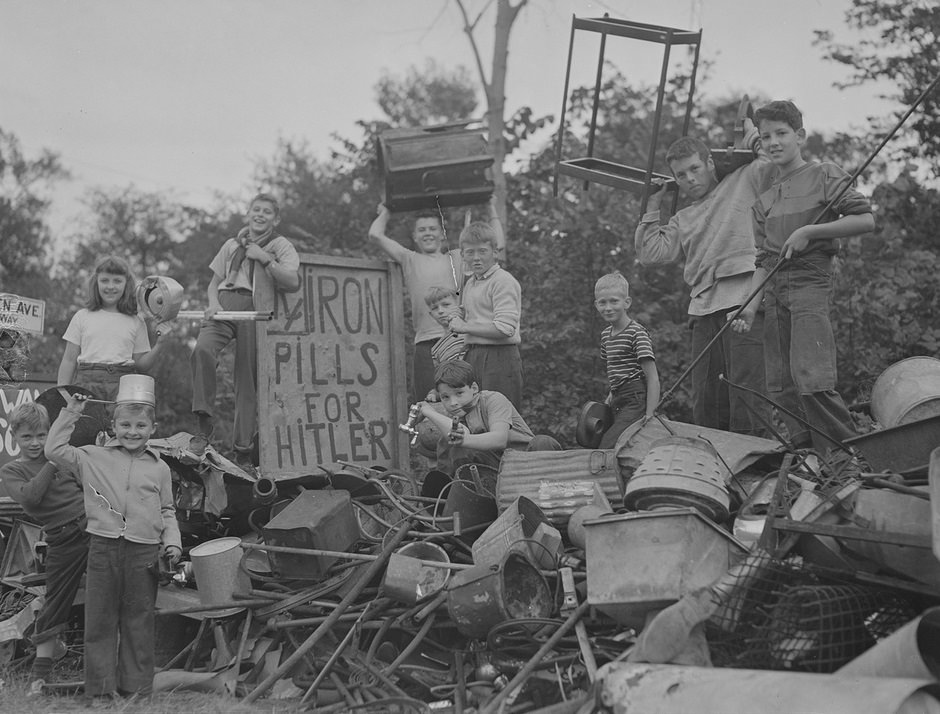
Rubber was one of the most urgently needed materials. Japan’s military advances in Southeast Asia had cut off the United States from most of its natural rubber supply. Old tires, garden hoses, and rubber boots were collected and recycled to keep military vehicles rolling. Nylon and silk stockings were turned over to make parachutes. Leftover cooking fat — collected from kitchen pans after dinner — was processed into glycerin, a key ingredient in explosives.

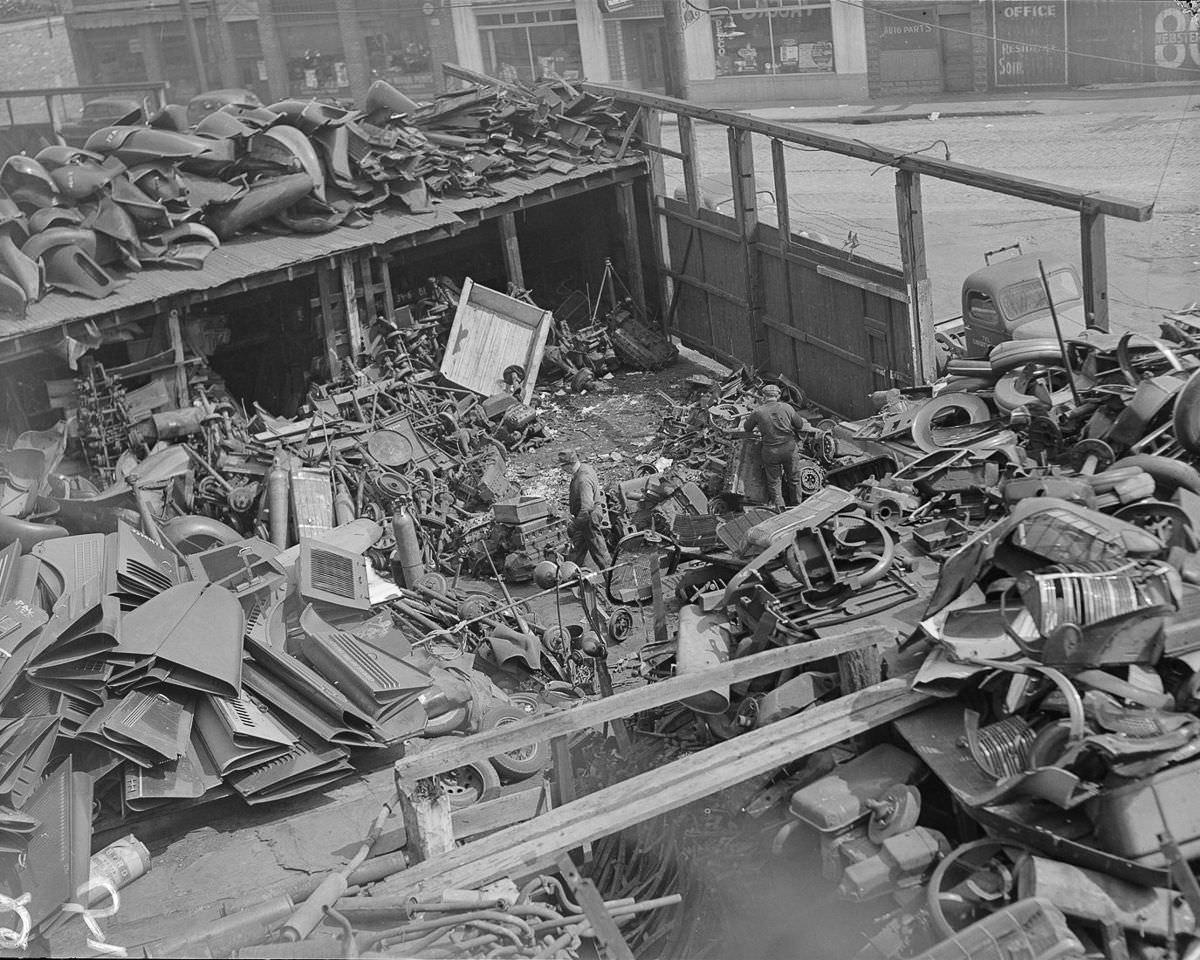
The government and the media worked hard to connect everyday household items to the battlefield. A worn-out cast iron skillet wasn’t just junk — it was potential armor plating. A pile of old pipes in the basement was framed as future artillery. This messaging gave Americans a direct sense of participation, even those far from the front lines.
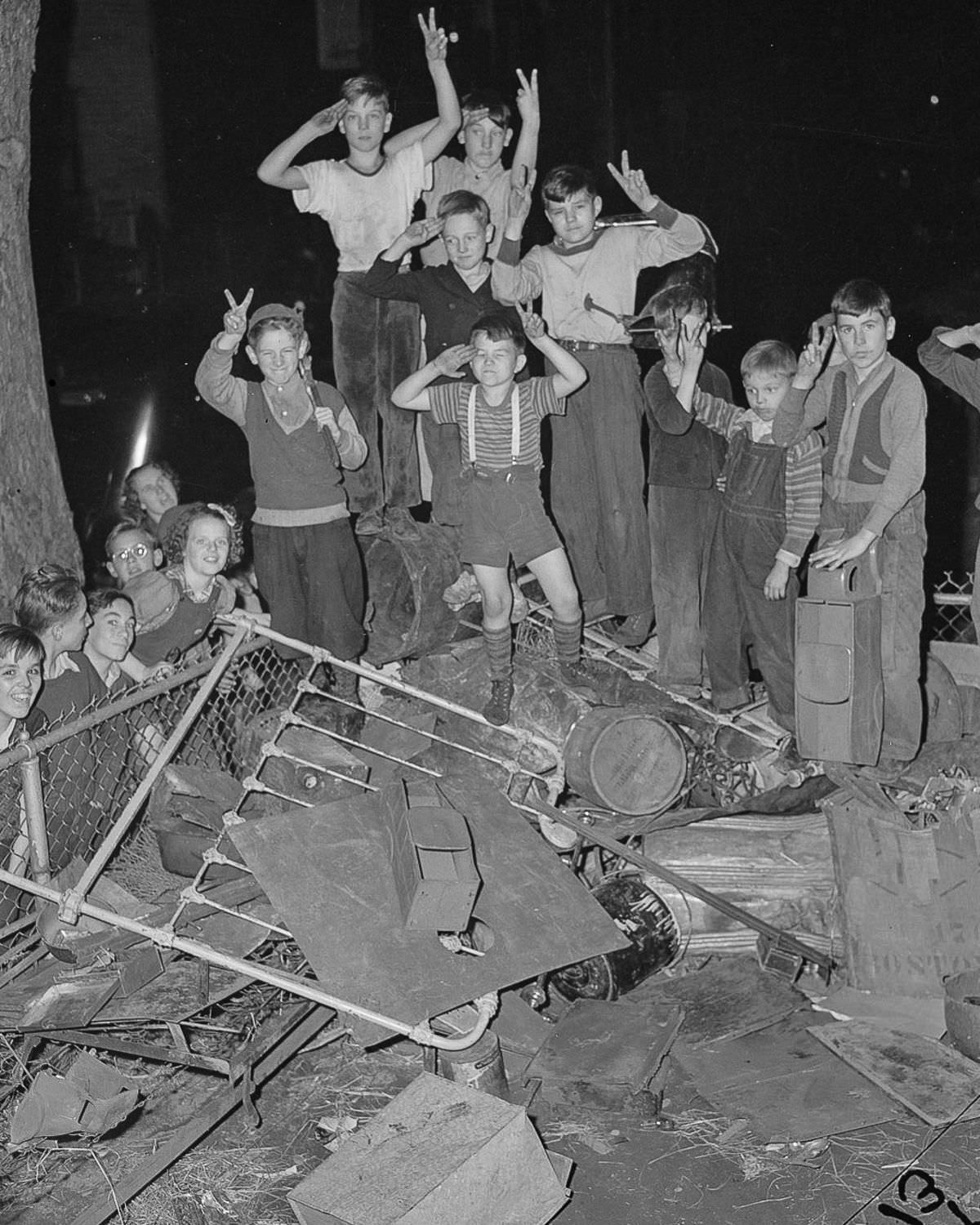
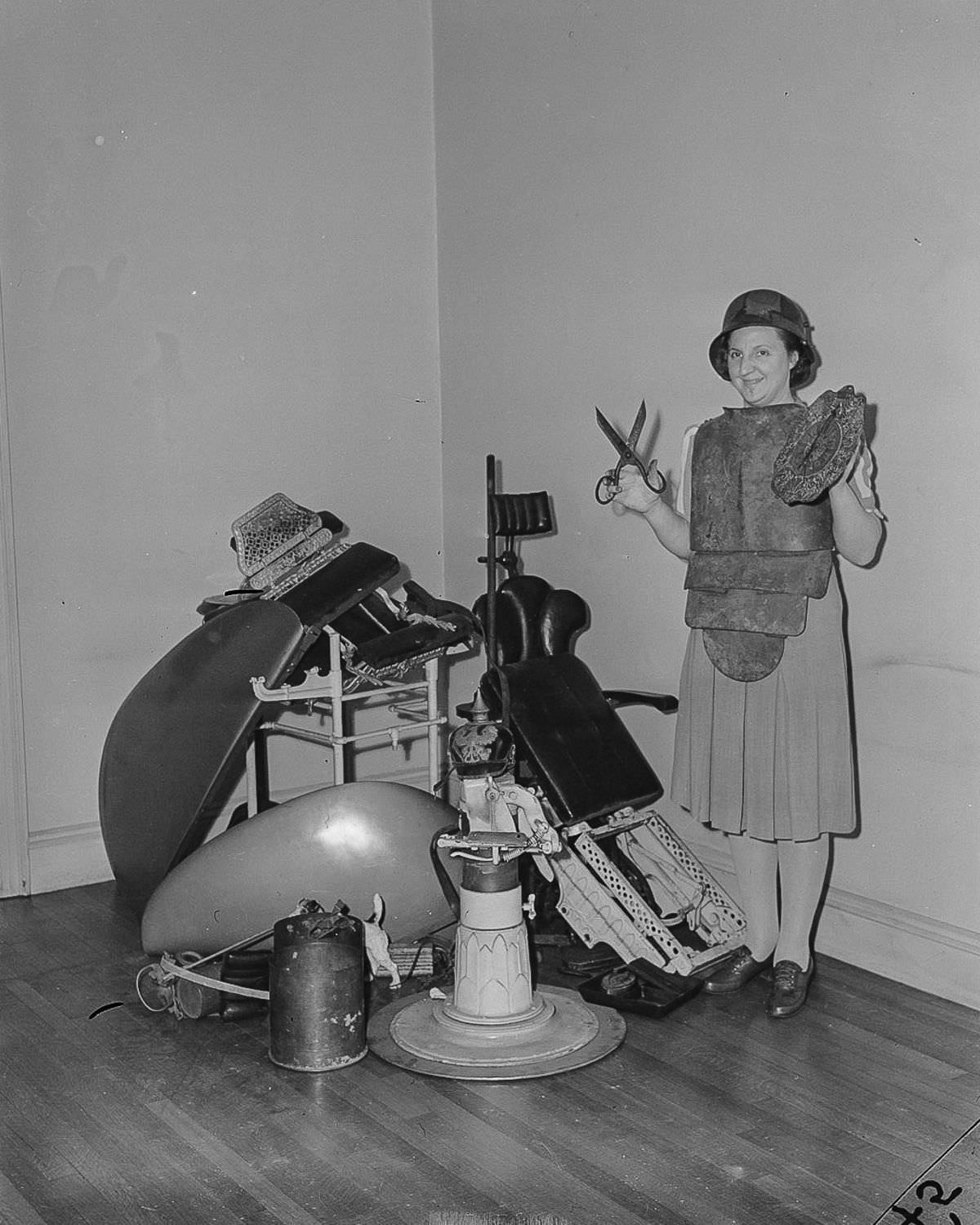
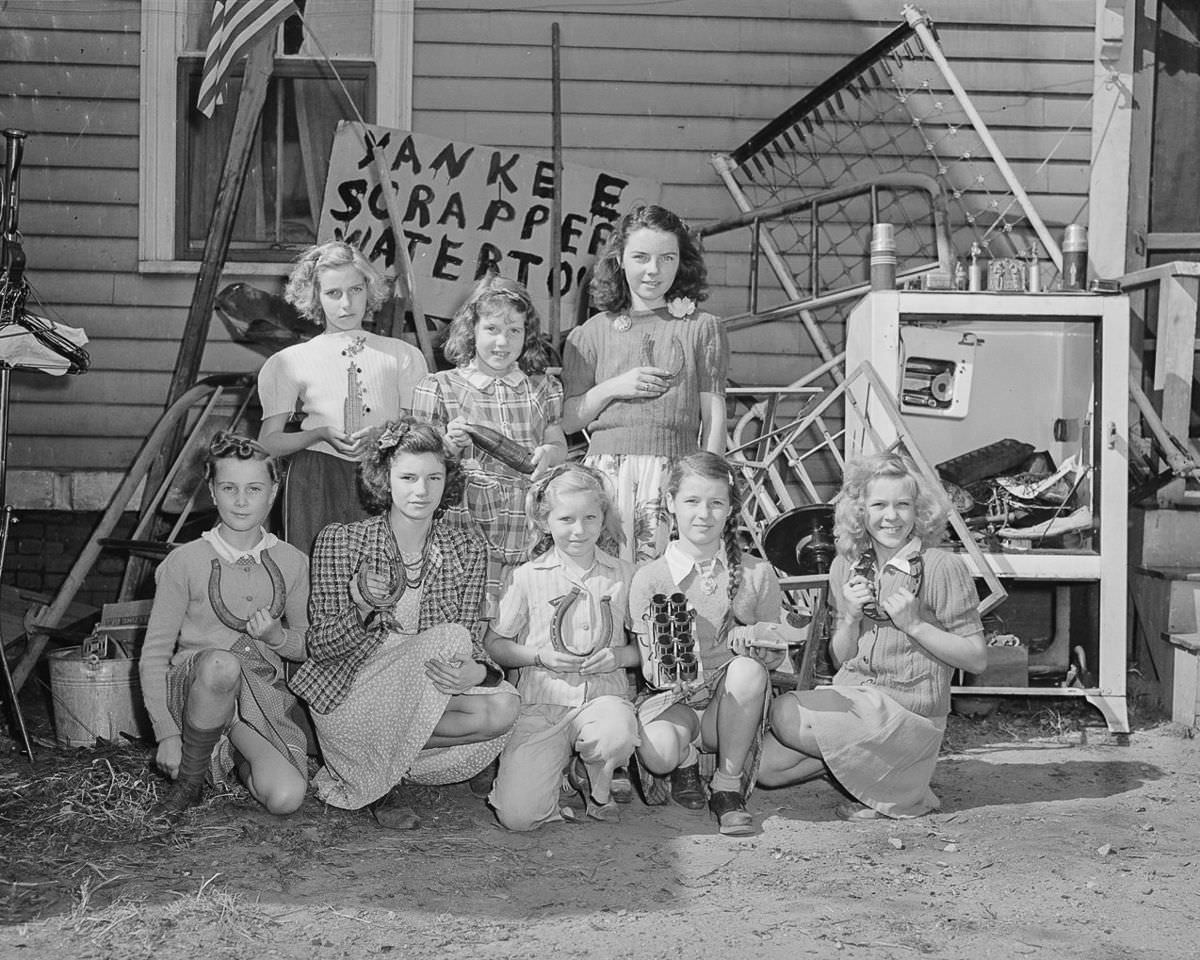
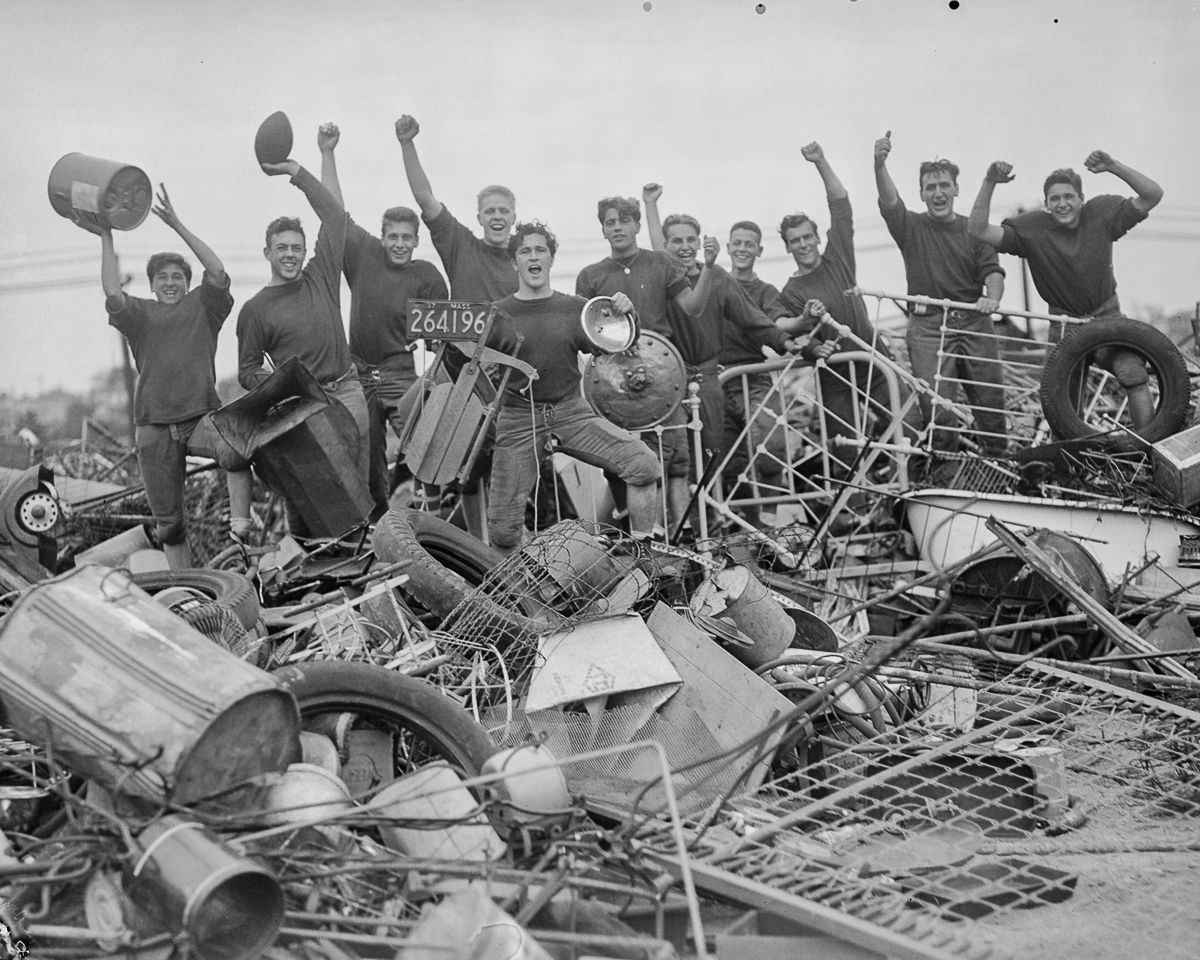
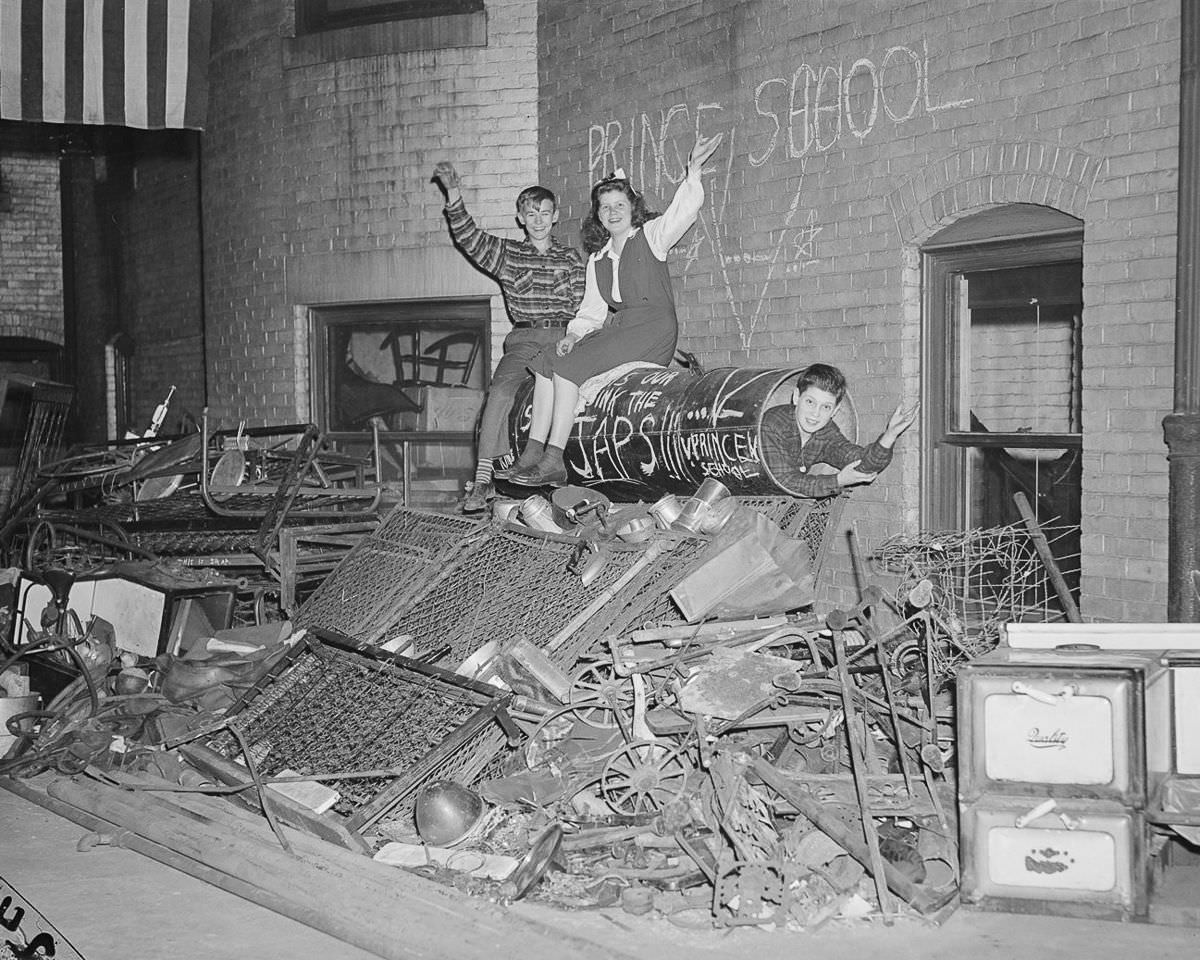
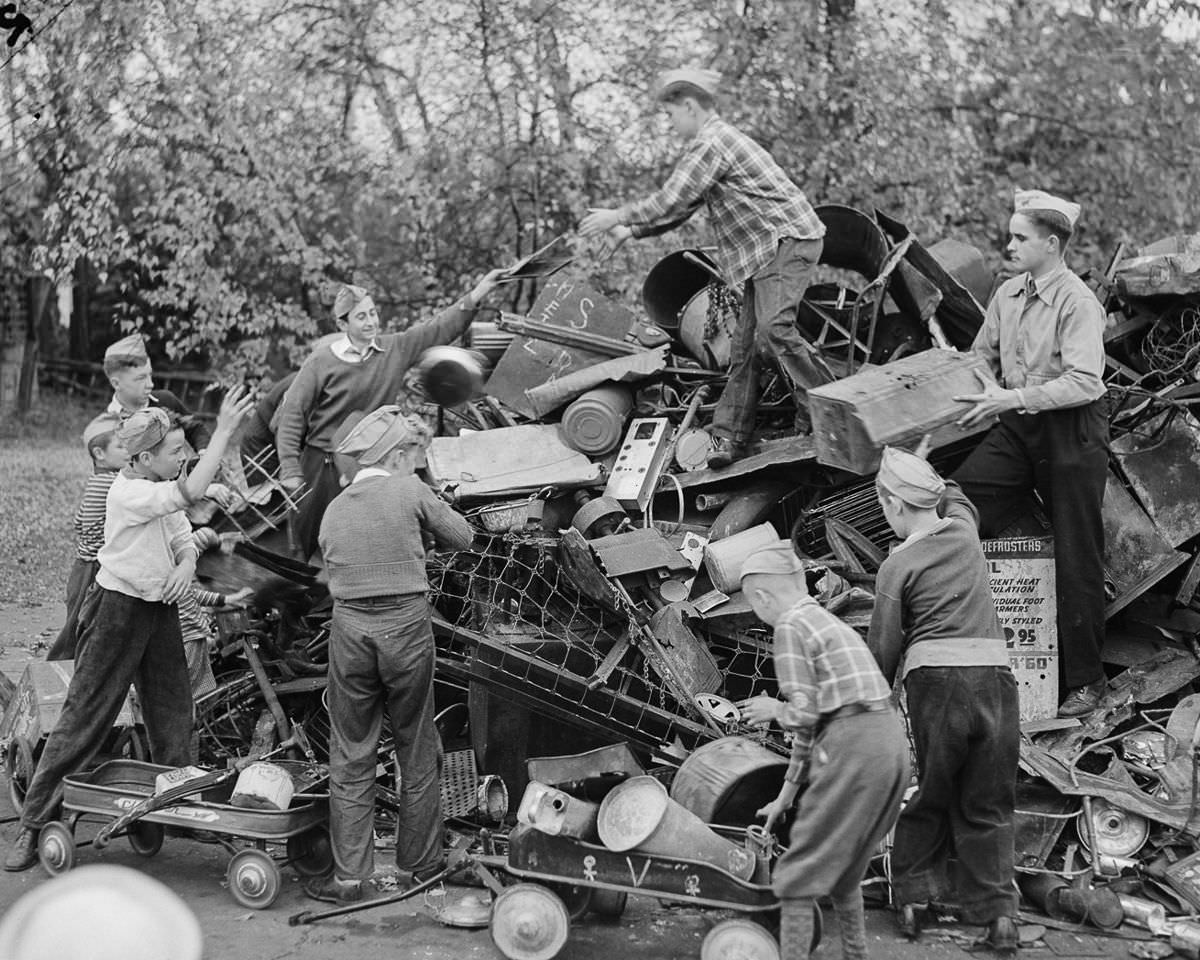
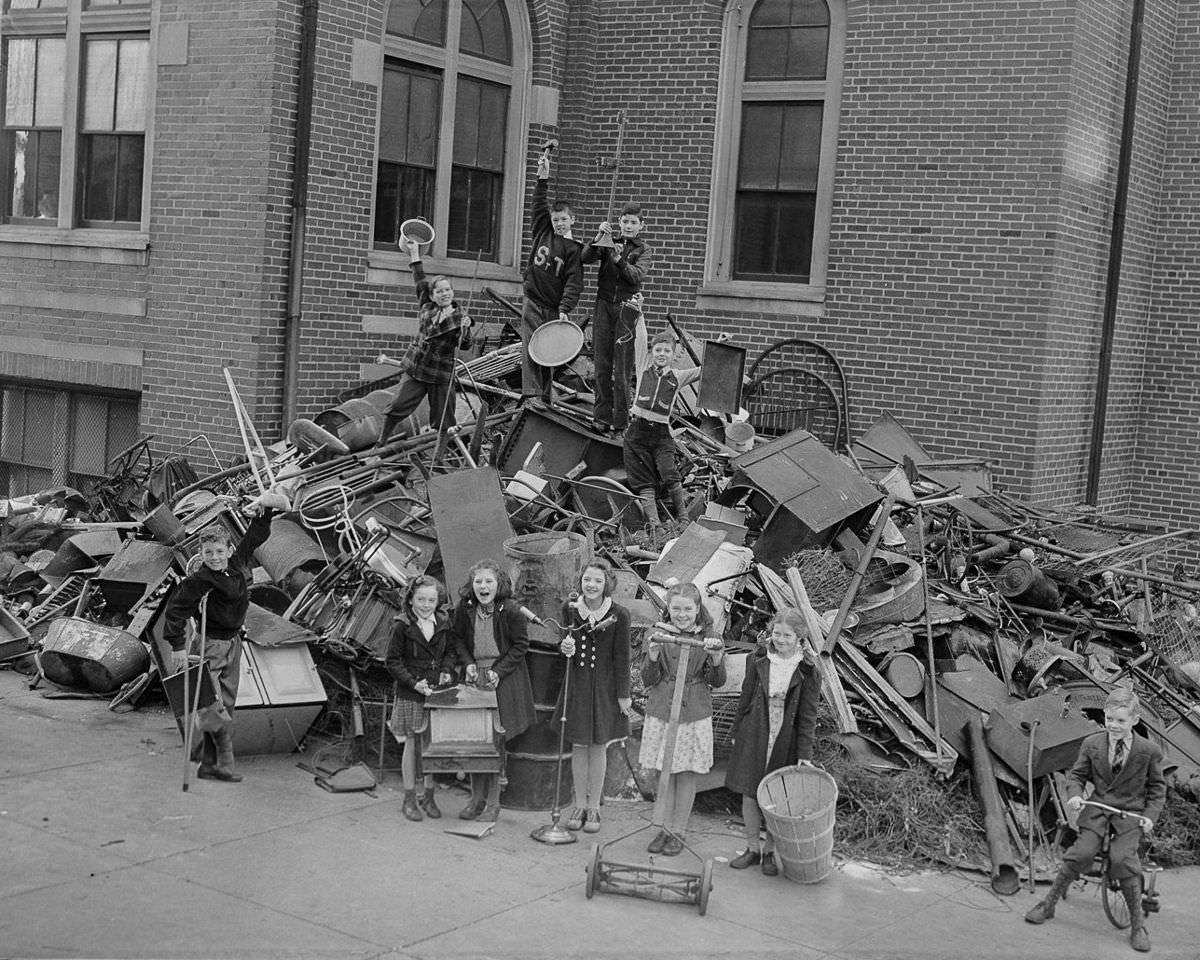
The scrap drives were also a tool for building morale and national unity. Families, children, factory workers, and retirees all took part. Schools held competitions to see which class could collect the most. Boy Scout troops hauled metal door to door. The act of contributing — no matter how small — gave people a sense of purpose during an uncertain time.
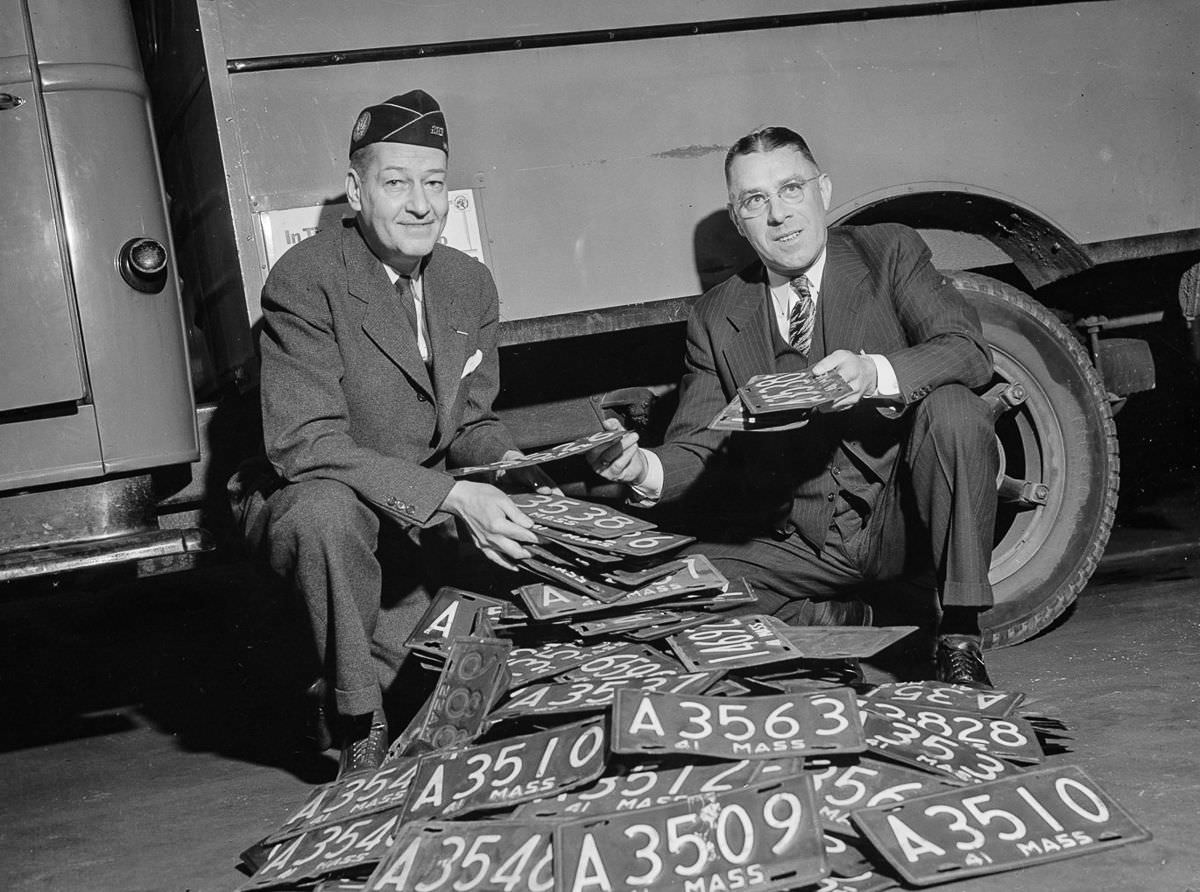
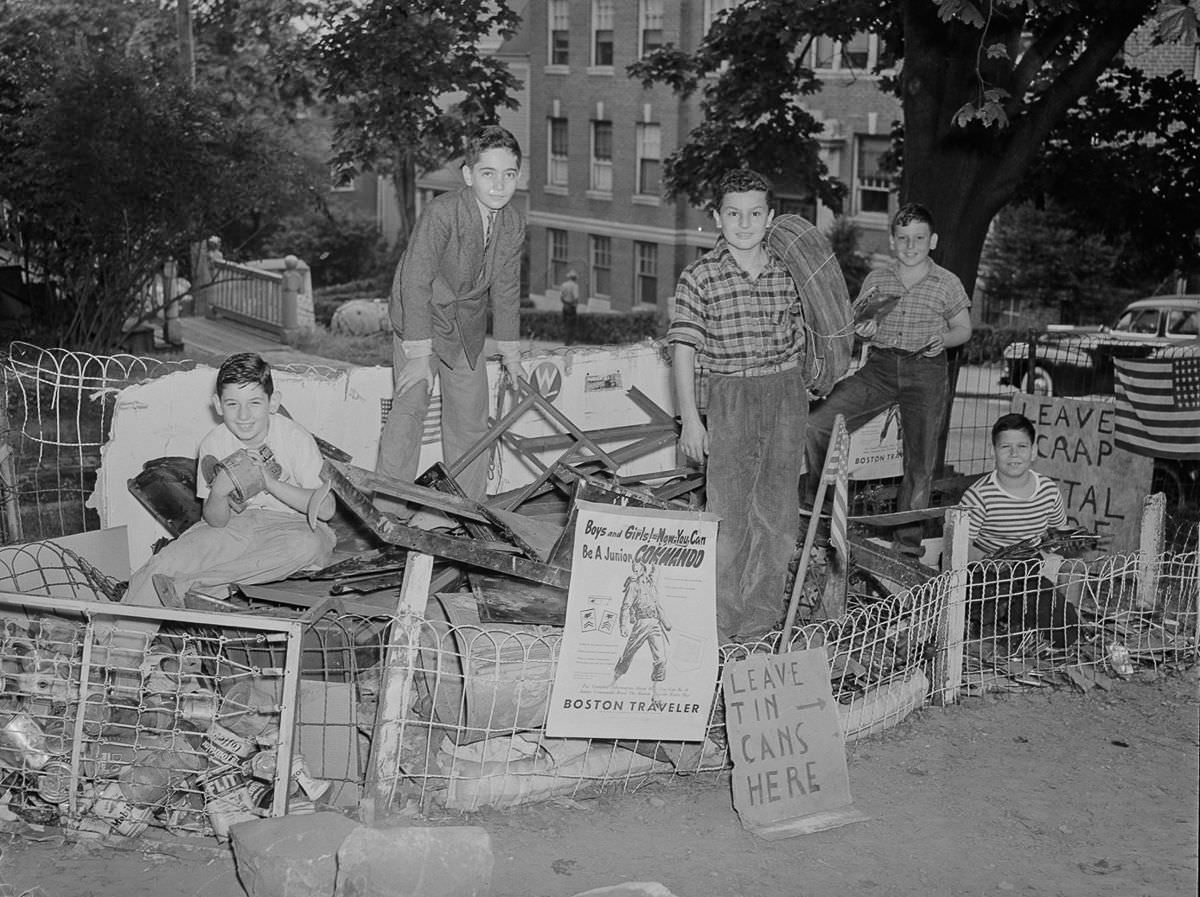
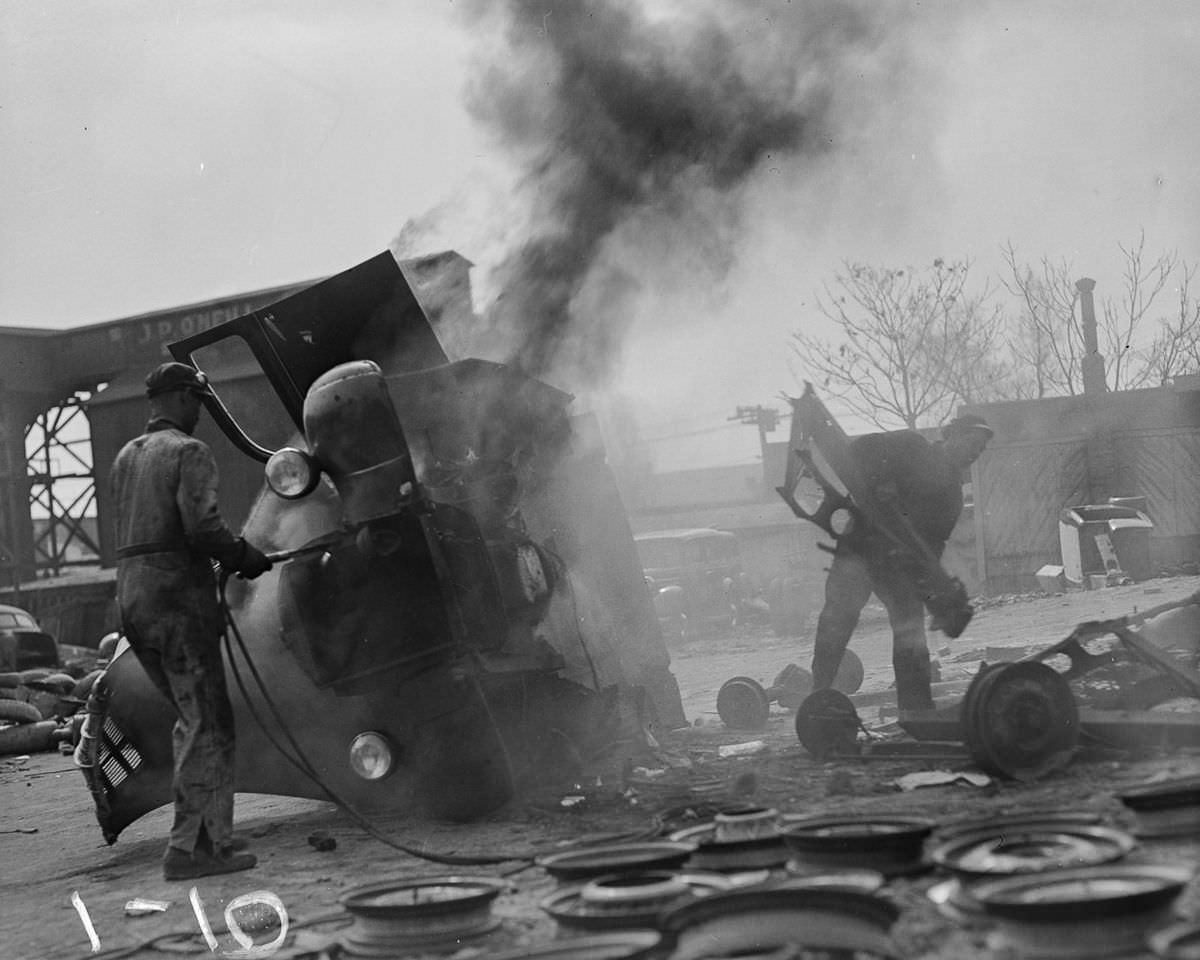
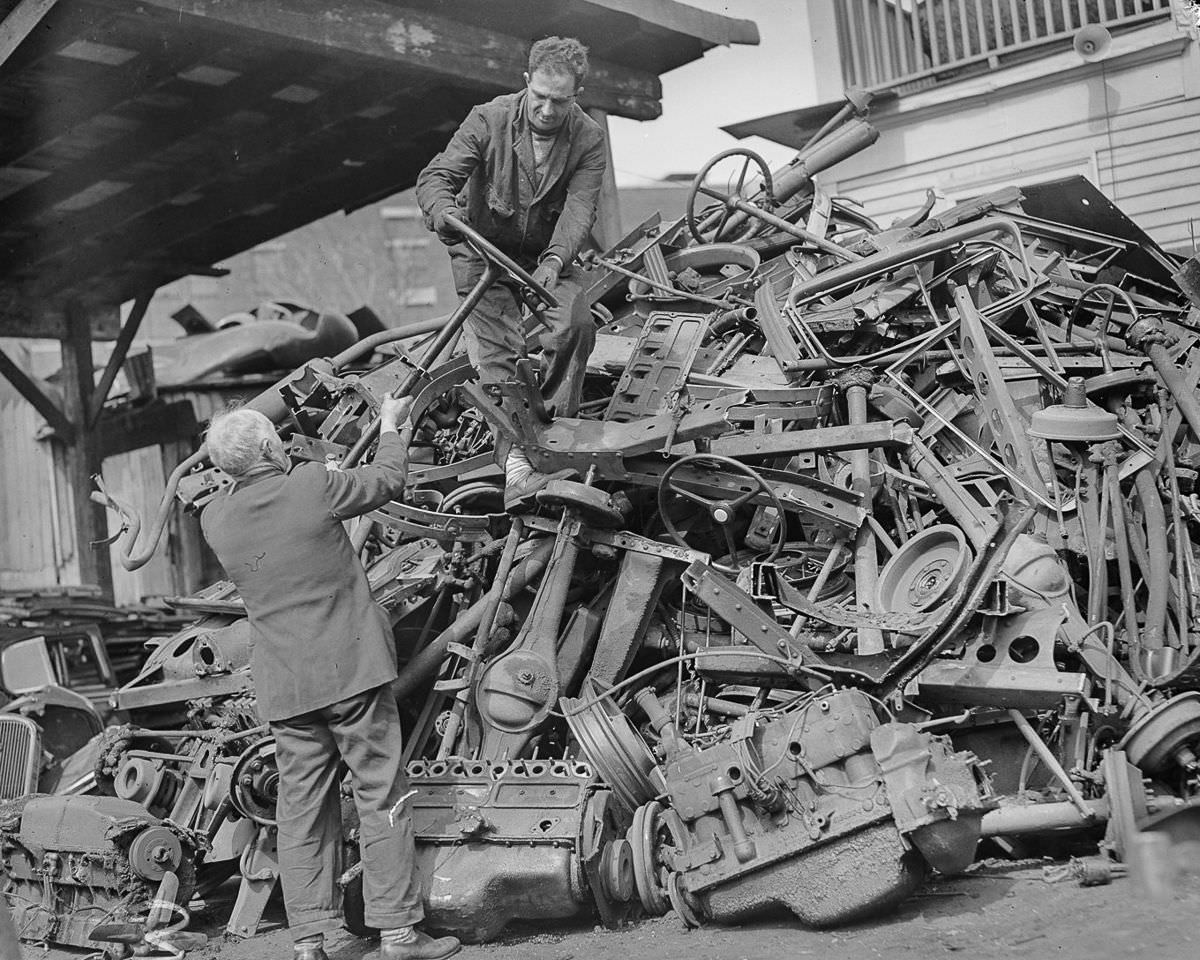
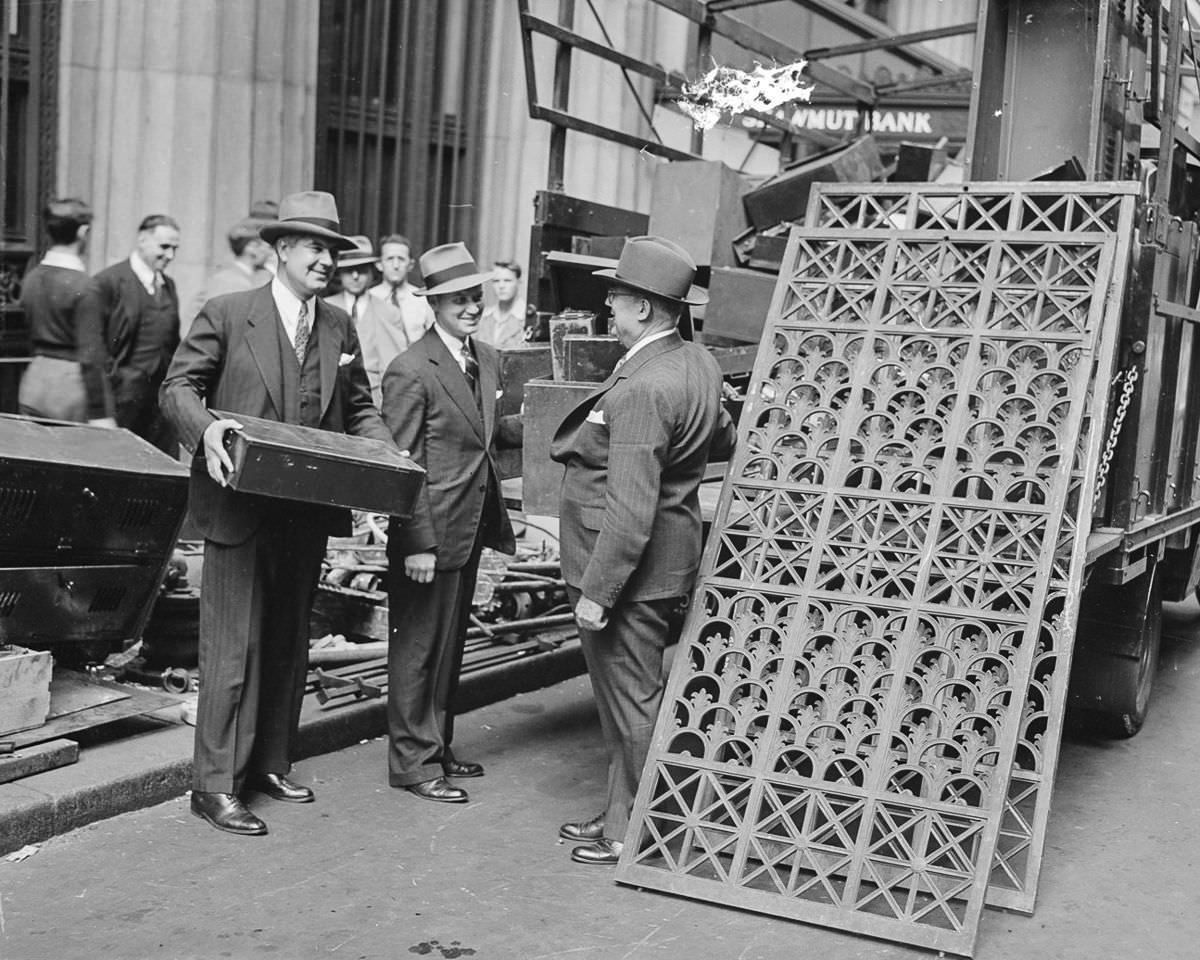
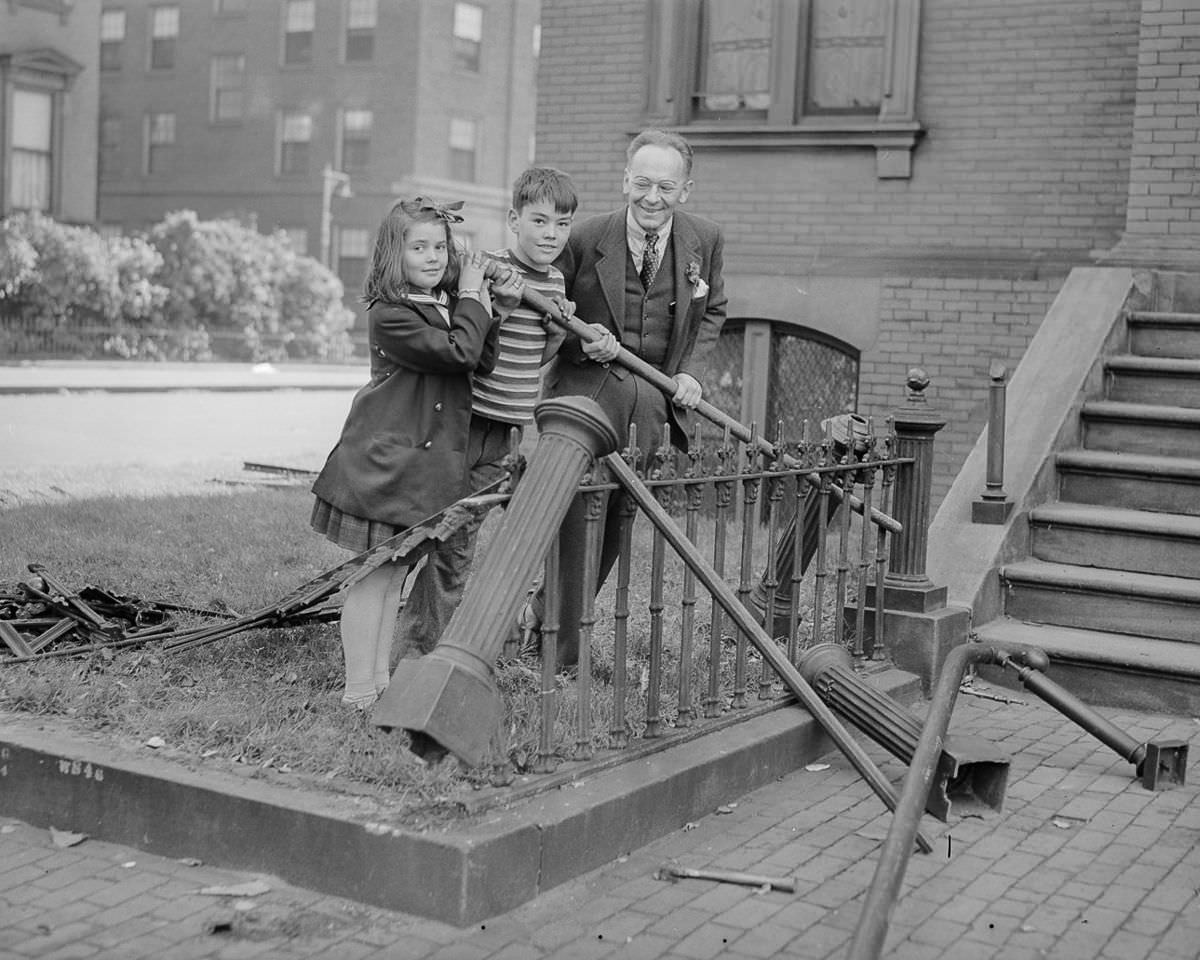
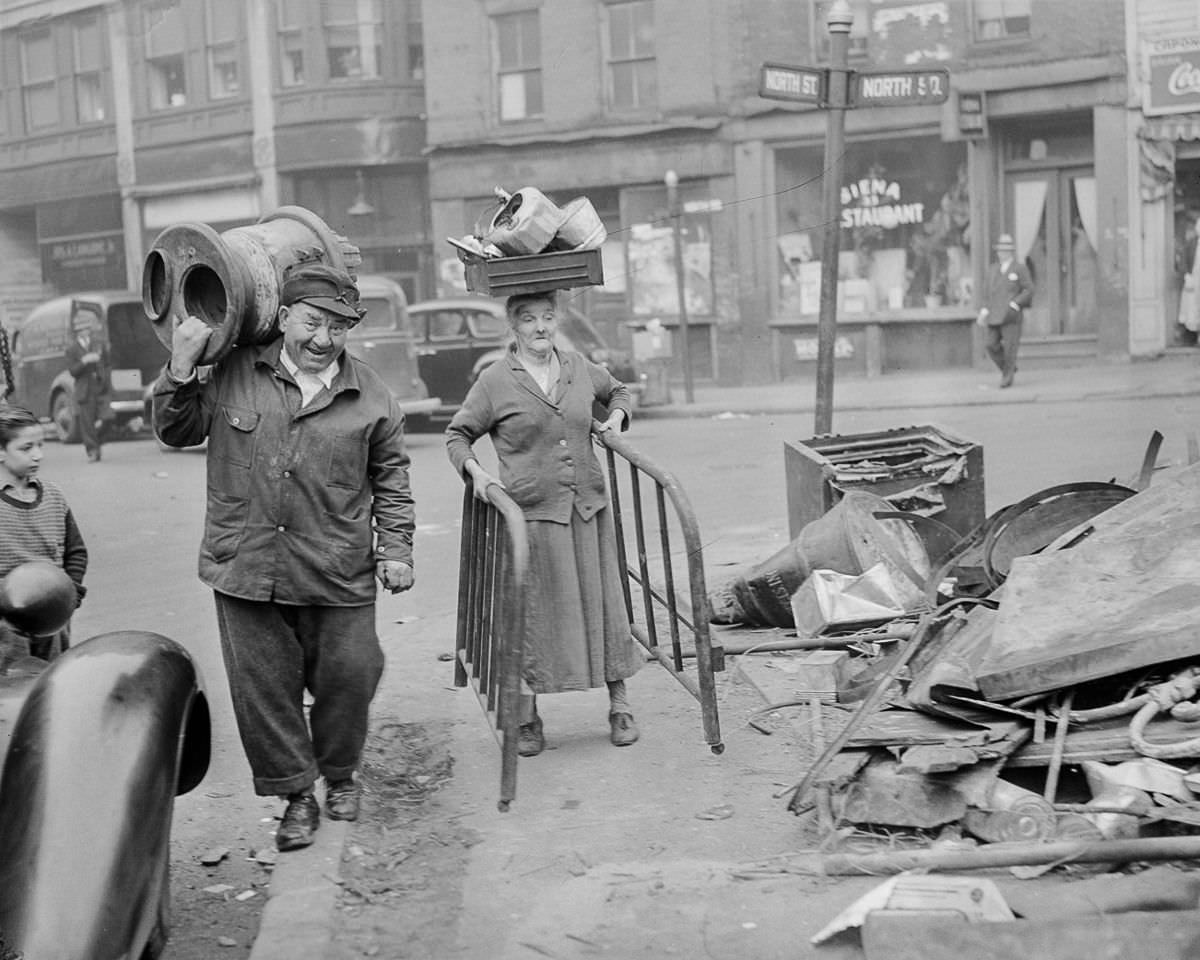
Boston was no exception. Across the city, residents dragged out iron fences, old appliances, and metal scraps of every kind to donate to the cause. Leslie Jones, a staff photographer for the Boston Herald-Traveler, documented these efforts firsthand. His camera captured Bostonians at work — hauling, stacking, and handing over materials at collection points throughout the city.
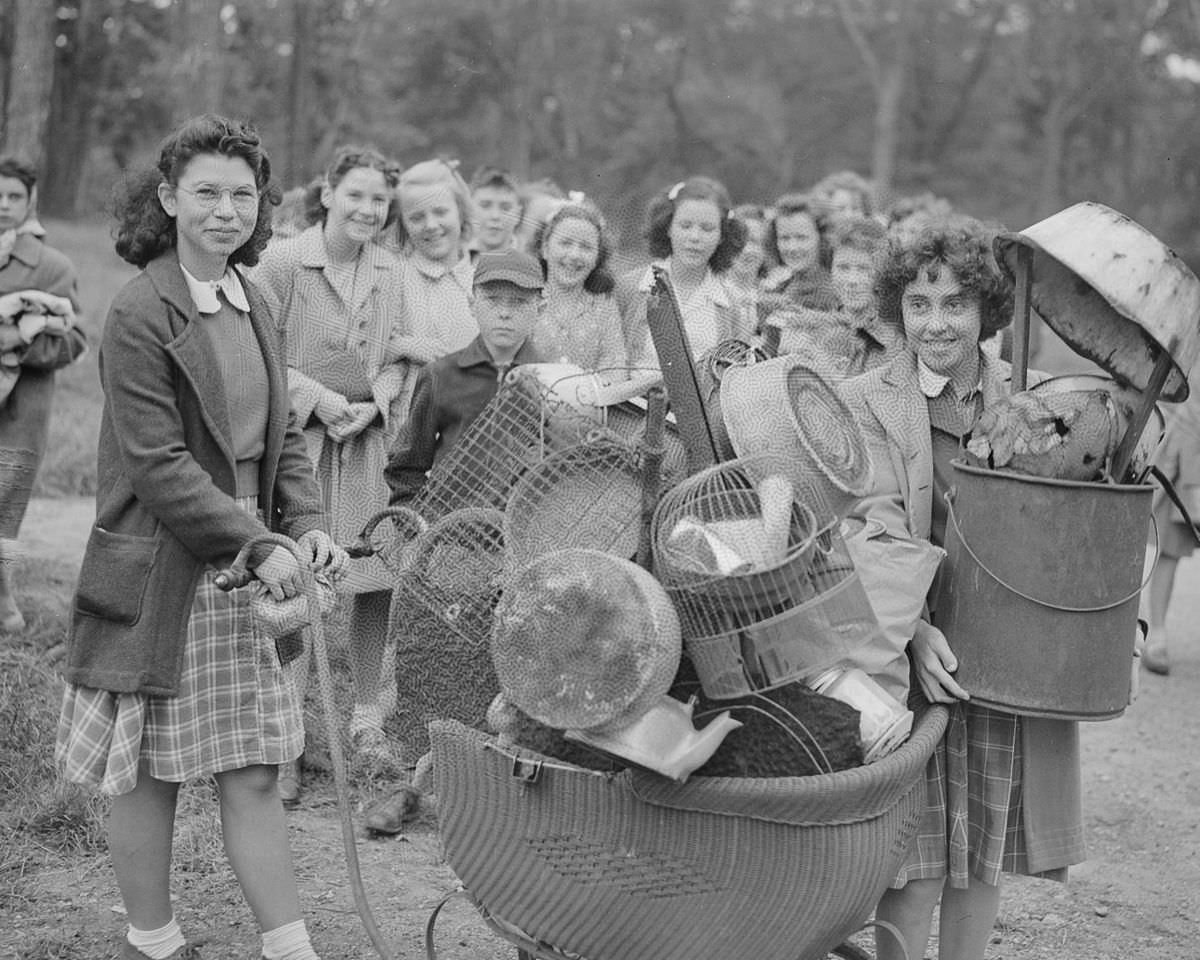
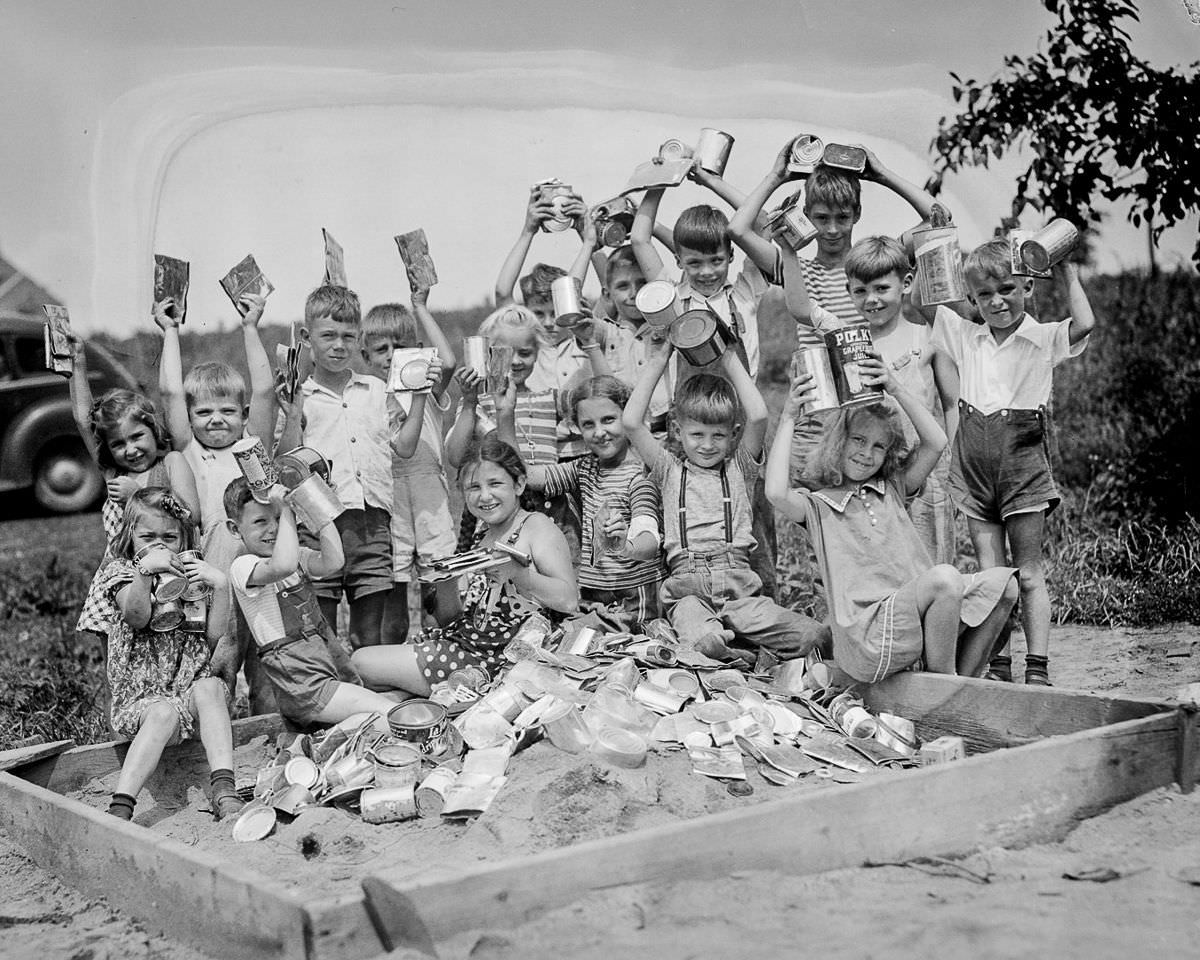
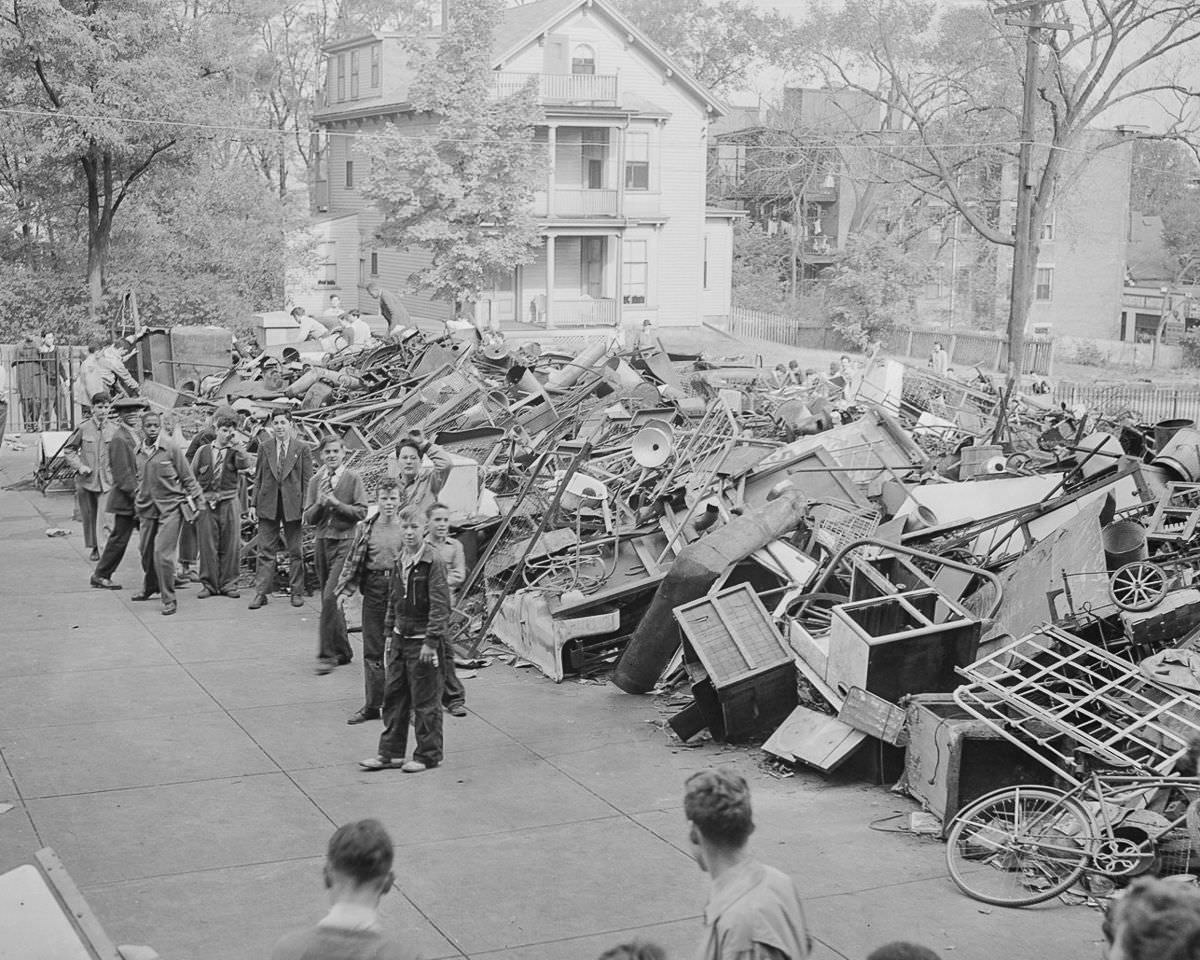
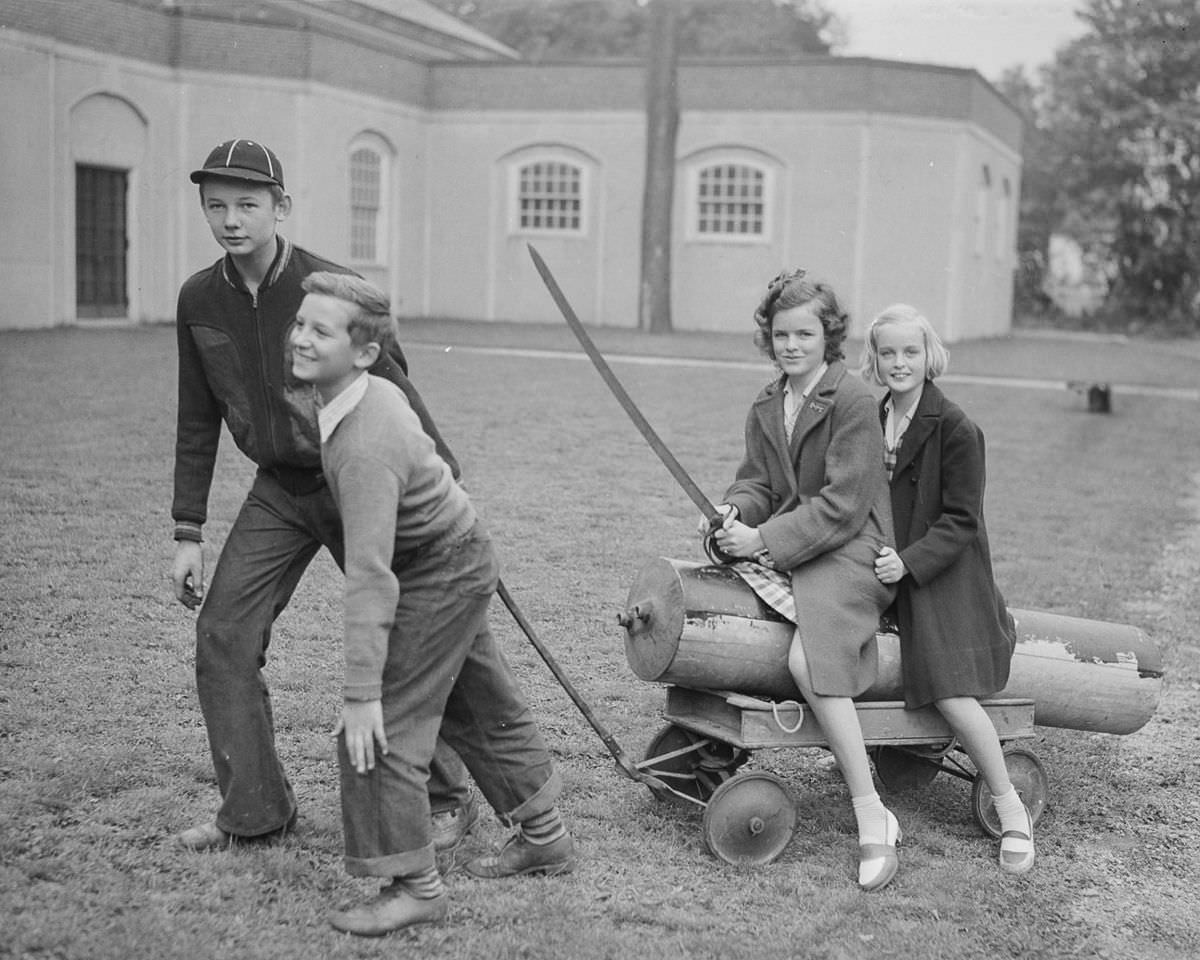
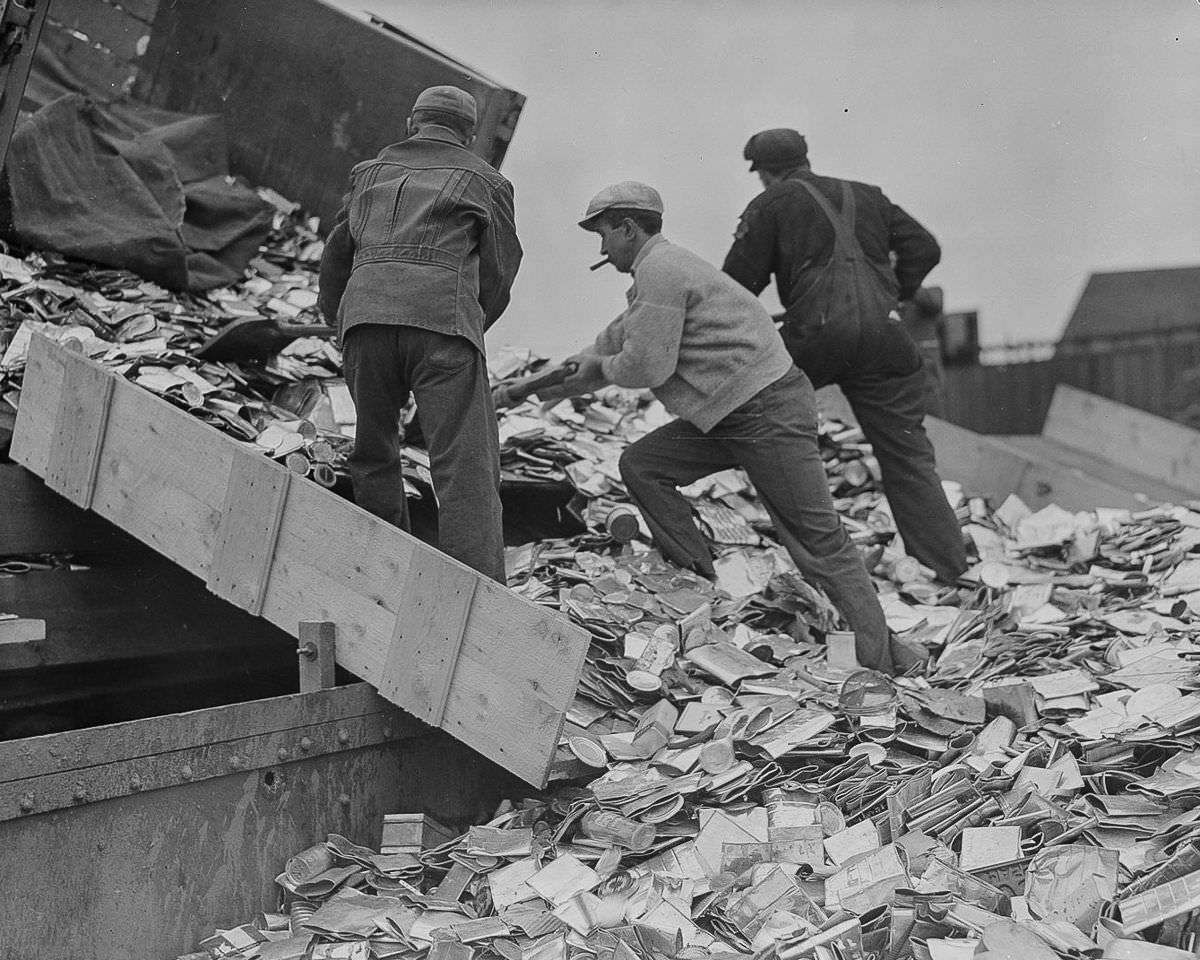
Jones’s photographs show a city fully committed to the war effort. Men in work clothes load heaps of metal onto trucks. Children carry pieces of scrap almost as big as themselves. Fences that once lined Boston’s streets and yards were torn down and donated, their iron destined for steel mills and munitions factories.
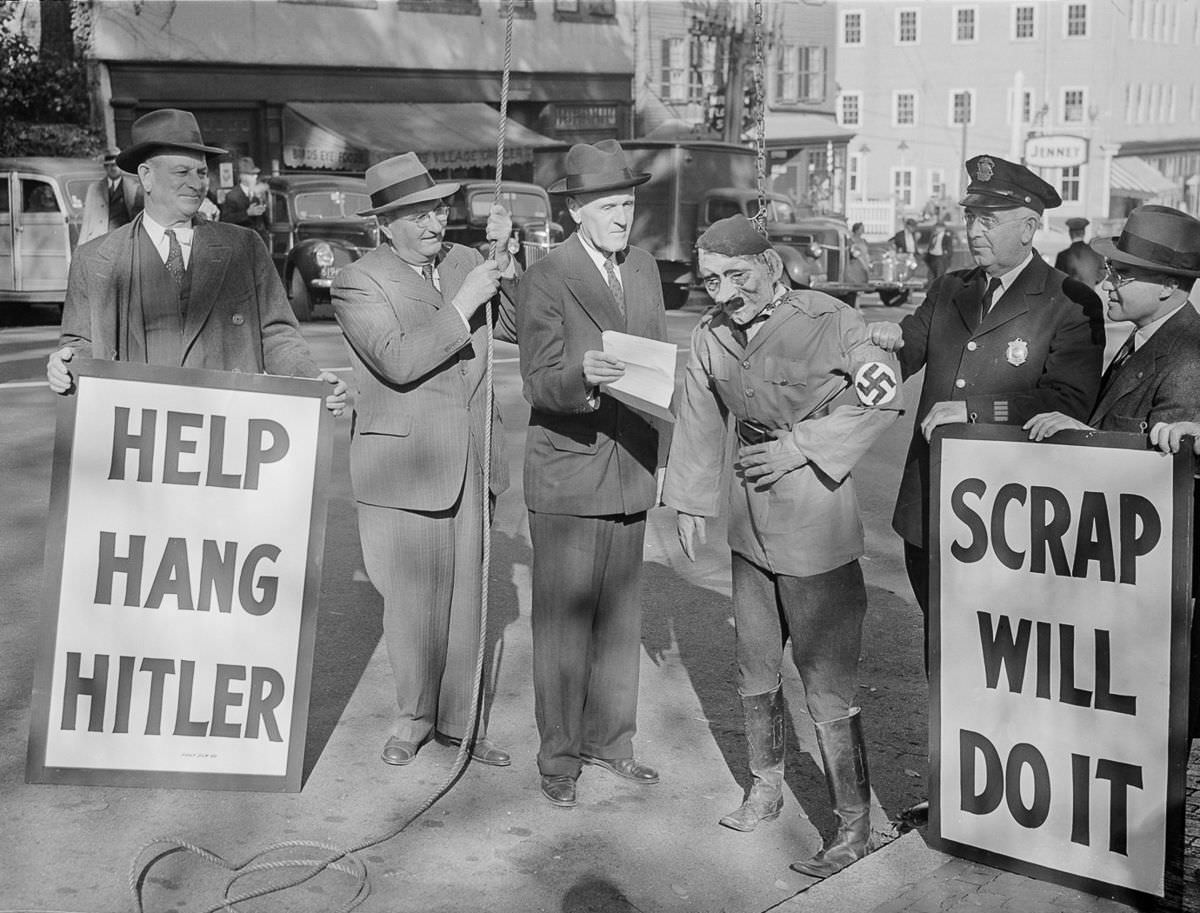
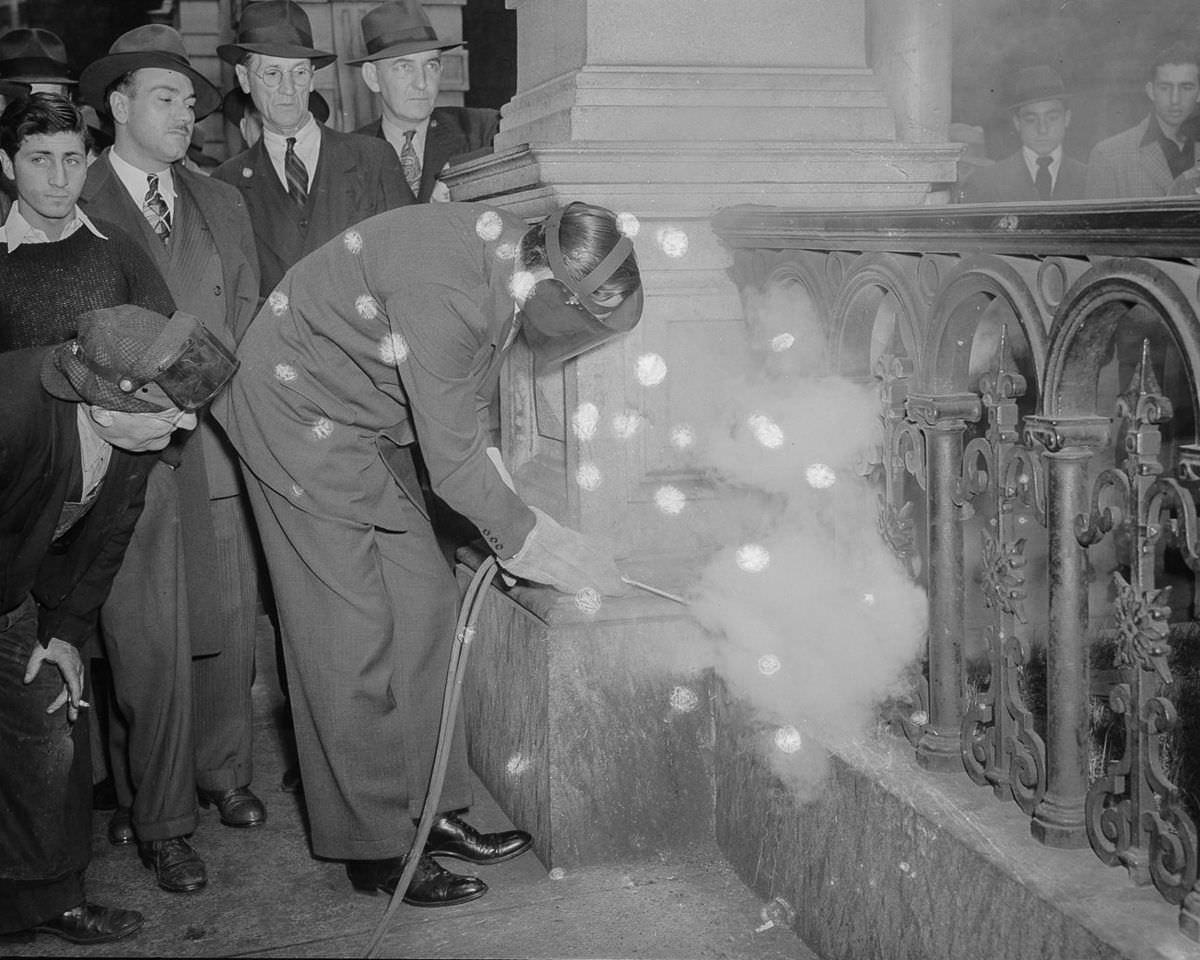
The scale of these community drives was enormous. Between 1942 and 1945, Americans donated millions of tons of scrap metal through organized campaigns. The War Production Board coordinated the effort at a national level, setting targets and tracking results. Cities competed against each other, and newspapers reported collection totals the way they reported sports scores.
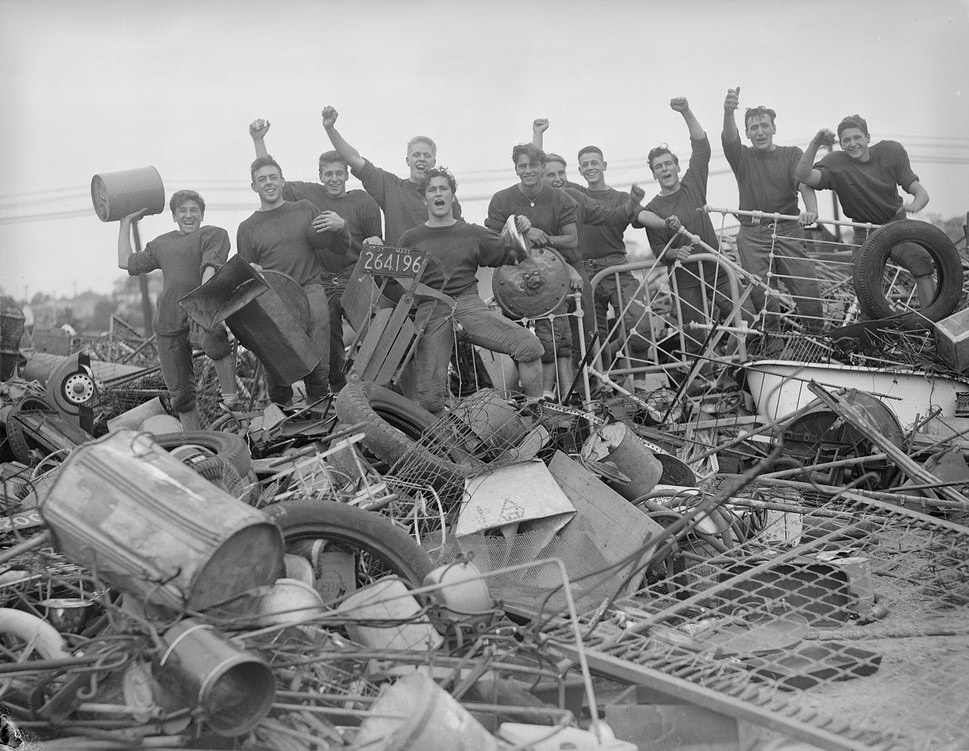
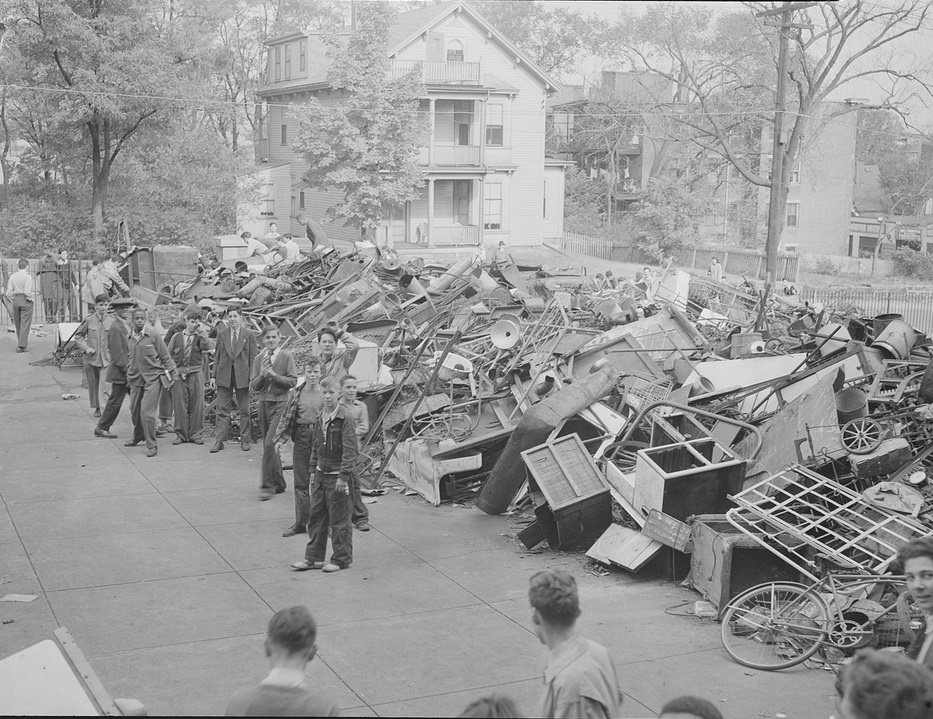
Iron and steel were particularly vital. The military needed steel for ships, aircraft carriers, submarines, rifles, helmets, ammunition casings, and hundreds of other items. Recycled scrap metal could be melted down and reformed far faster than mining and refining fresh ore. Every ton collected at a neighborhood drive shortened the time between raw material and finished weapon.
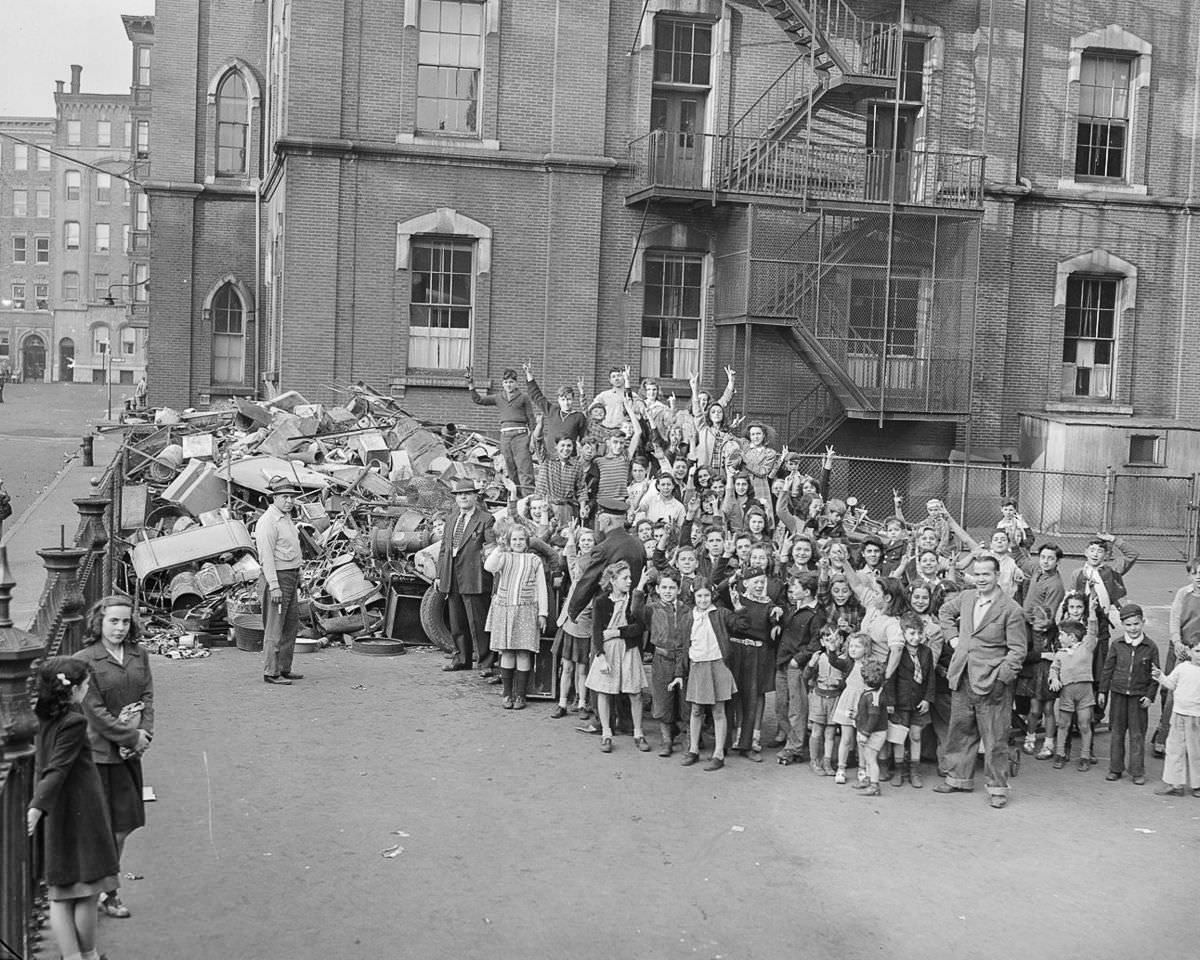
Some donations were more visible than others. Decorative iron fences surrounding parks, estates, and government buildings were removed and handed over. Statues and ornamental metalwork in some towns were melted down. Property that had defined neighborhoods for decades disappeared into the furnace in service of the war.

Women played a central role in these drives. They organized neighborhood collection schedules, managed donation drop-off points, and sorted through donated materials. Their work extended beyond the kitchen and into the logistical backbone of the home front war effort. The collection of cooking fat alone required a steady and organized network of participants to keep it flowing to processing plants.
Children were recruited into the effort through schools and youth organizations. They understood the stakes clearly — many had fathers, brothers, or uncles serving overseas. Collecting scrap was one of the few concrete actions available to them, and they took it seriously. Photos from the era show kids hauling loads of metal with visible pride.
Beyond Boston, cities like Chicago, Detroit, and New York ran massive scrap campaigns of their own. Detroit — already the center of American automobile manufacturing — shifted its factories to produce military vehicles and tanks. The scrap metal pouring in from across the country fed those same production lines.
Posters, radio announcements, and newspaper campaigns kept the public informed and motivated. Slogans tied household sacrifice directly to military success. The message was consistent: what you give up at home helps the soldier stay alive abroad. That connection kept donation rates high throughout the war years.
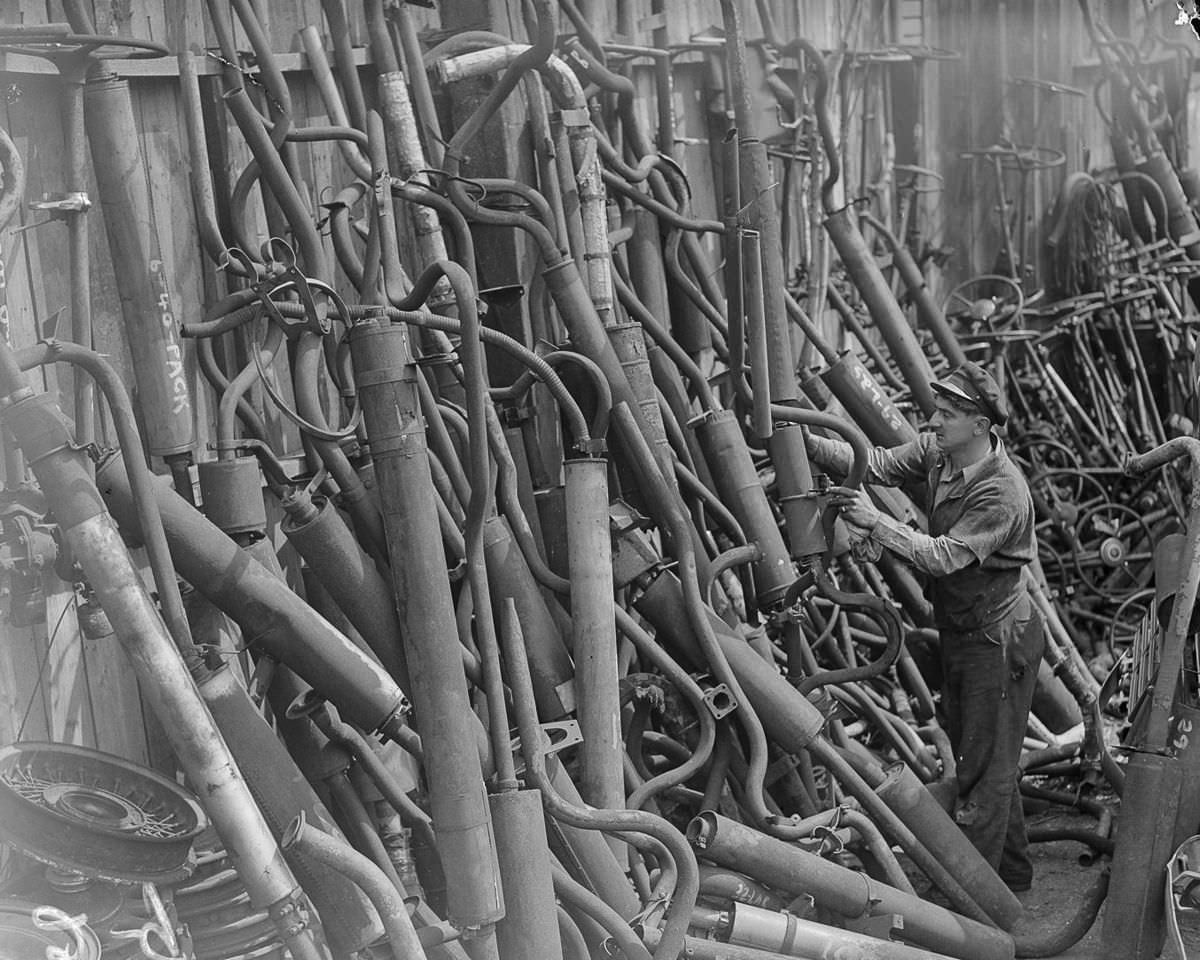
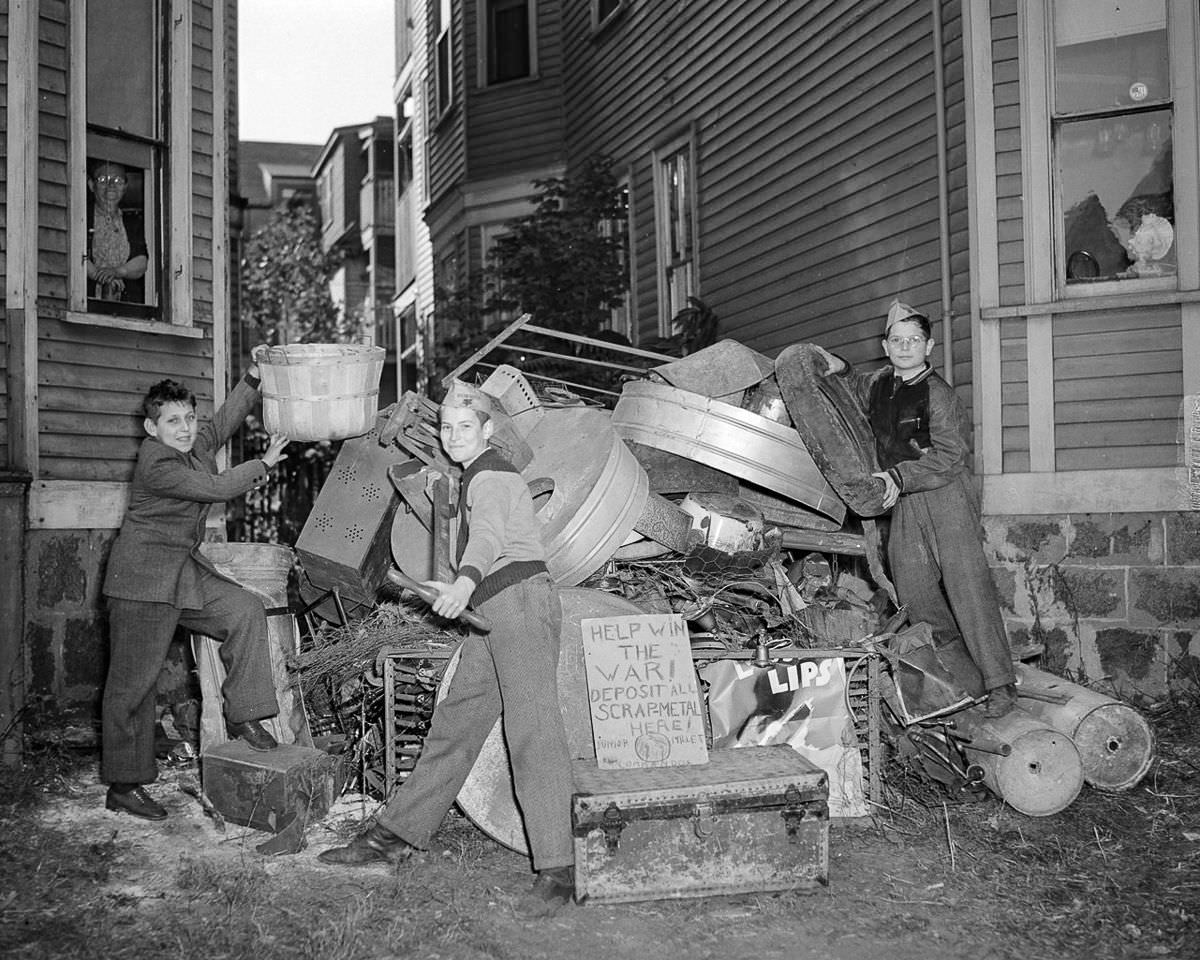
Leslie Jones’s Boston photographs stand as a detailed record of how one American city answered the call. His images document ordinary people doing practical, unglamorous work — carrying, sorting, loading — as part of a massive national supply chain built from the contents of American homes and yards.