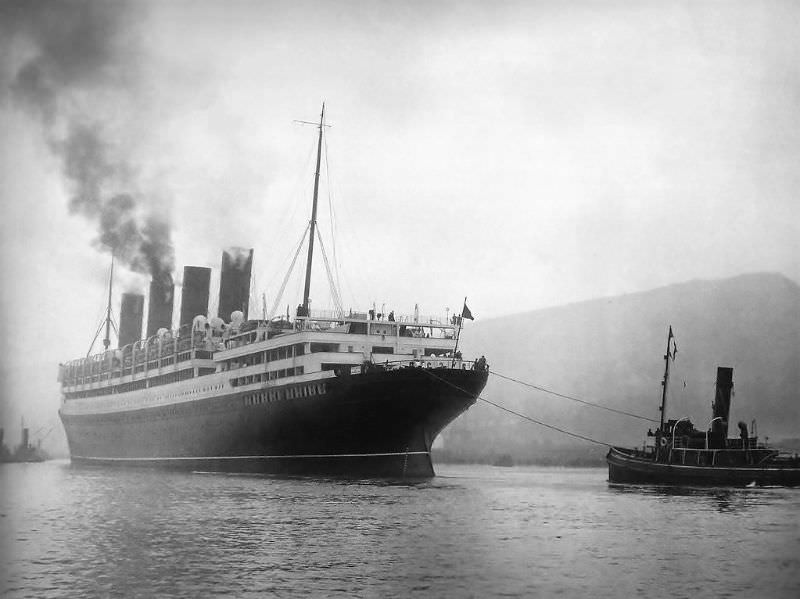
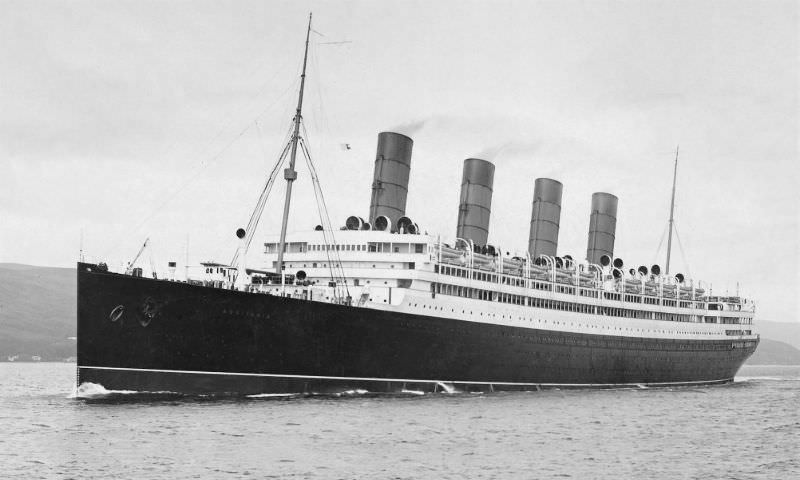
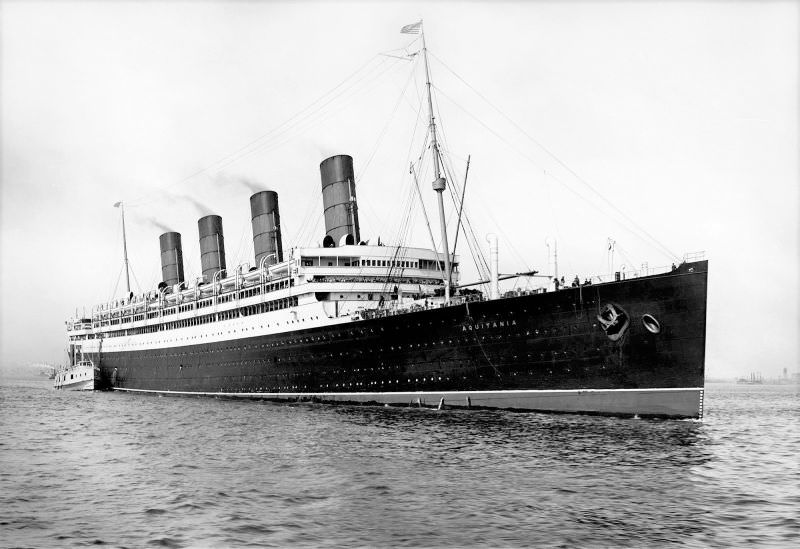
When the RMS Aquitania slipped out of Liverpool on her maiden voyage on May 30, 1914, she represented the peak of British ocean liner design. Built by John Brown & Company at Clydebank, Scotland, and designed by naval architect Leonard Peskett, she was the largest ship in the Cunard fleet. At 901 feet long, 97 feet wide, and 45,647 tons, she was roughly the same size as the RMS Olympic. What set her apart from rivals like the Lusitania and Mauretania wasn’t raw speed — she was slower than both — but rather the sheer scale and quality of her interior spaces. Aquitania was built to impress, and she did exactly that for the next 36 years.
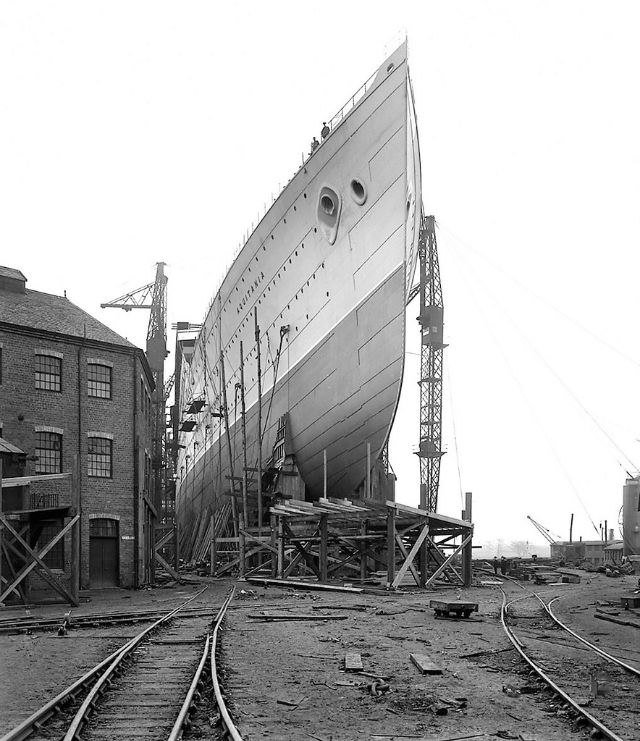
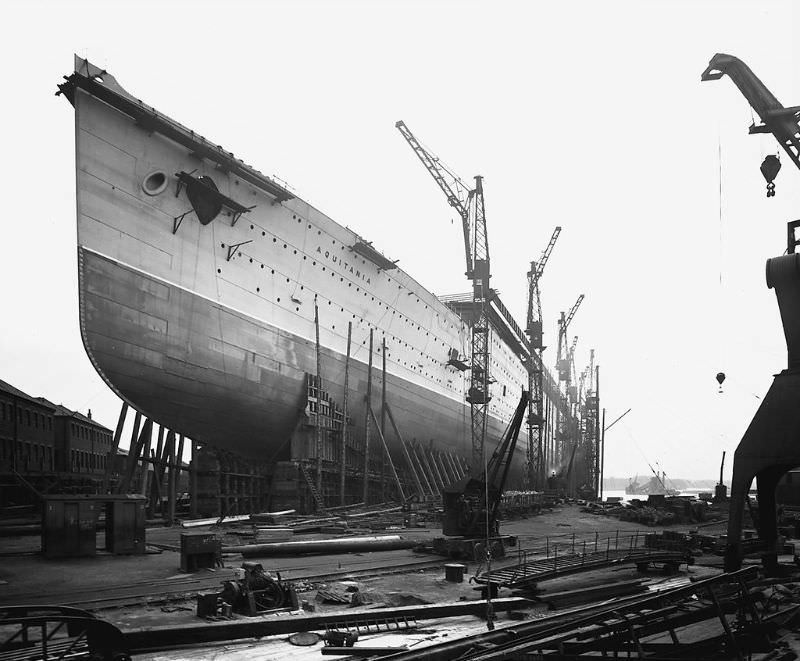
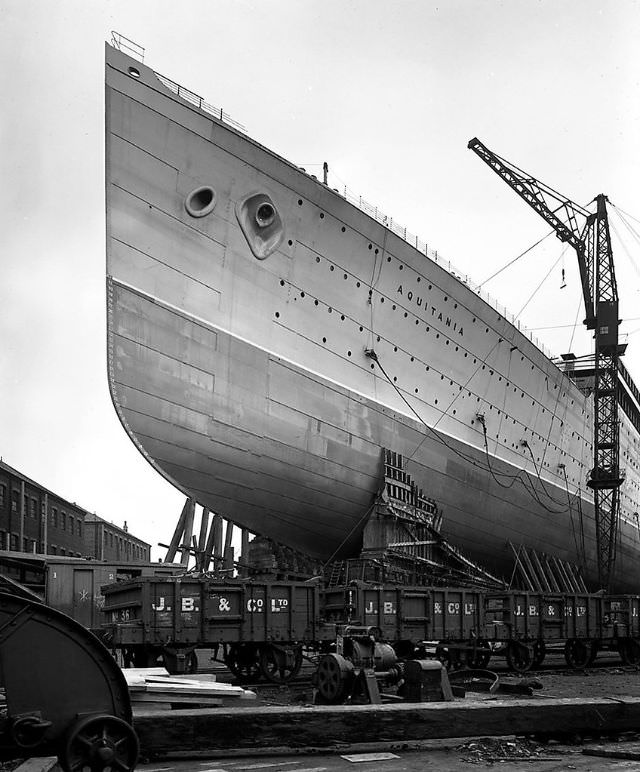
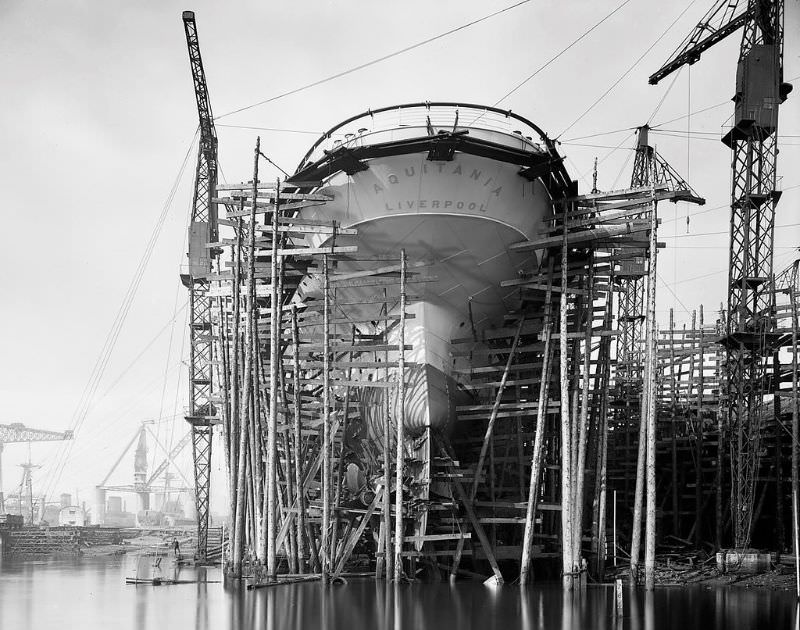
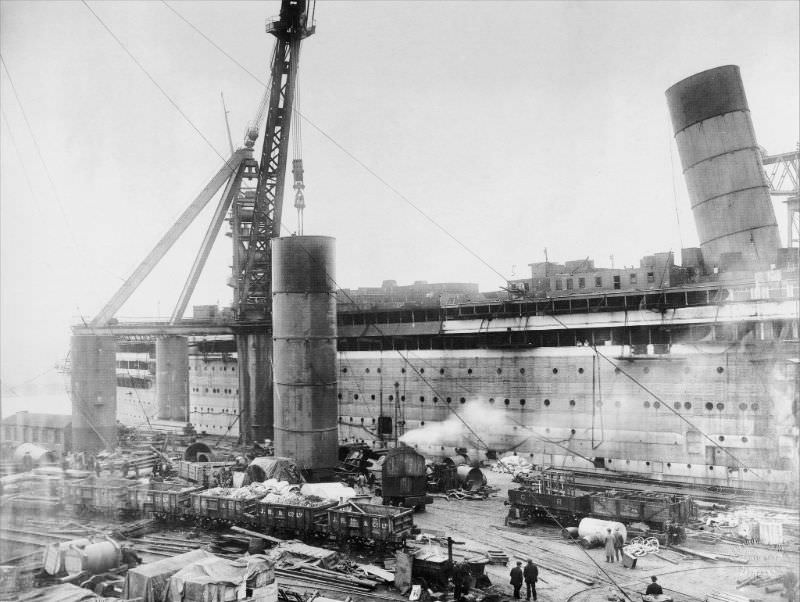
Aquitania at the Clydebank yards of John Brown.
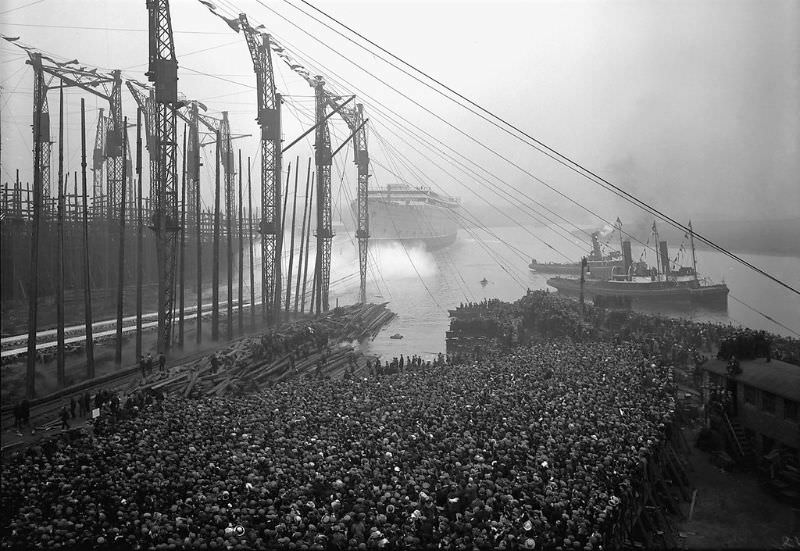
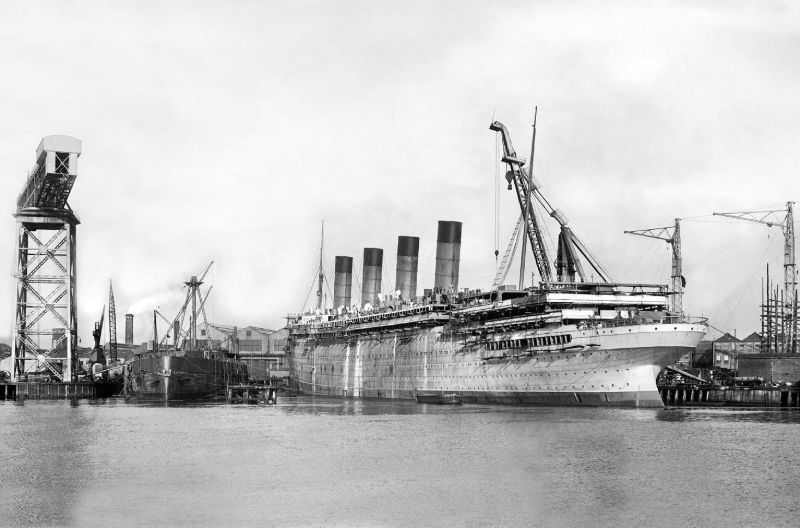
Her keel was laid at the John Brown & Company yards in Clydebank, the same Scottish shipyard that would later produce the Queen Mary, Queen Elizabeth, and Queen Elizabeth 2. Construction began in 1911, and her launch drew a sea of spectators to the River Clyde on April 21, 1913. After launching, she entered a fitting-out period where her four massive funnels were hoisted aboard and her interiors were finished to a standard that few ships have matched before or since.
The passenger liner Aquitania under construction by John Brown & Co Ltd. at Clydebank. A general view along the port side of the ship, 1913901 feet long, 97 feet wide. Passenger capacity- 610 1st Class, 950 2nd, and 1,998 3rd. The 45,647 ton Aquitania at John Brown & Company shortly before her launch, circa 1913Cunard’s Aquitania on the stocks at John Brown & Company of Clydebank; the same Scottish yard that would later build the Queen Mary, Queen Elizabeth and Queen Elizabeth 2, circa 1913
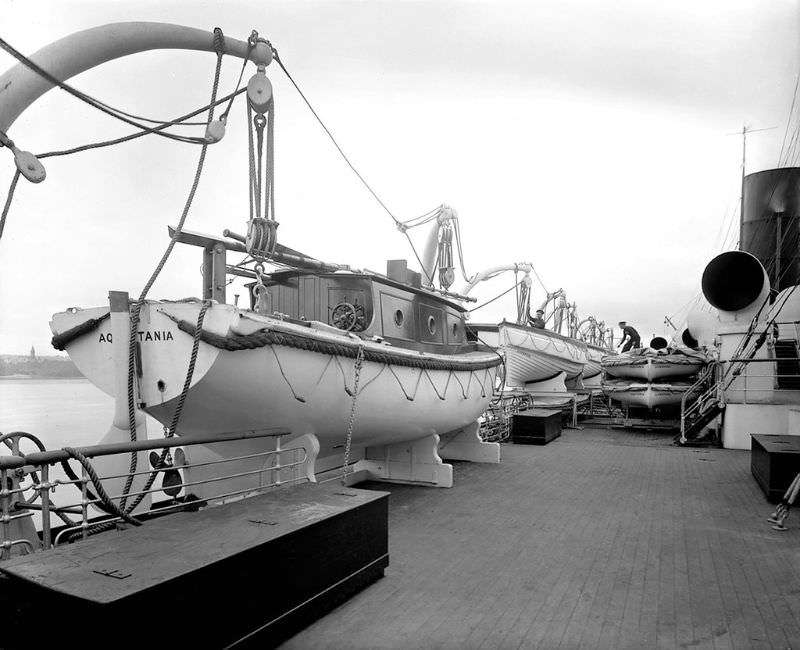
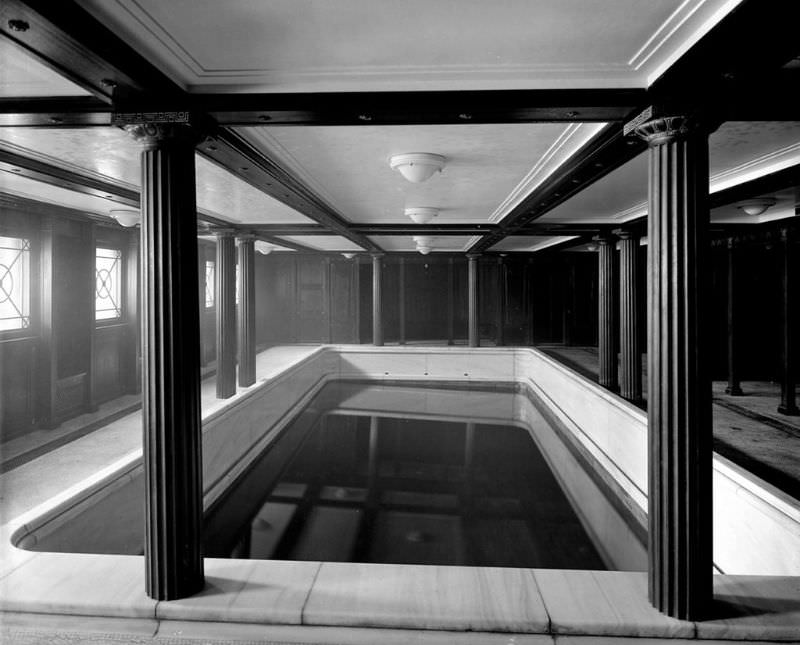
One visible effect of the Titanic disaster in 1912 was the density of lifesaving equipment crammed onto Aquitania’s upper decks. Strolling space that passengers on earlier liners had taken for granted was sacrificed to accommodate the latest lifeboats and collapsible craft. The Boat Deck was crowded with survival gear, and even the 2nd Class promenade gave up space to carry additional collapsible lifeboats. Aquitania also became the first Cunard liner to feature a swimming pool below decks, located on the starboard side of the Main Deck.
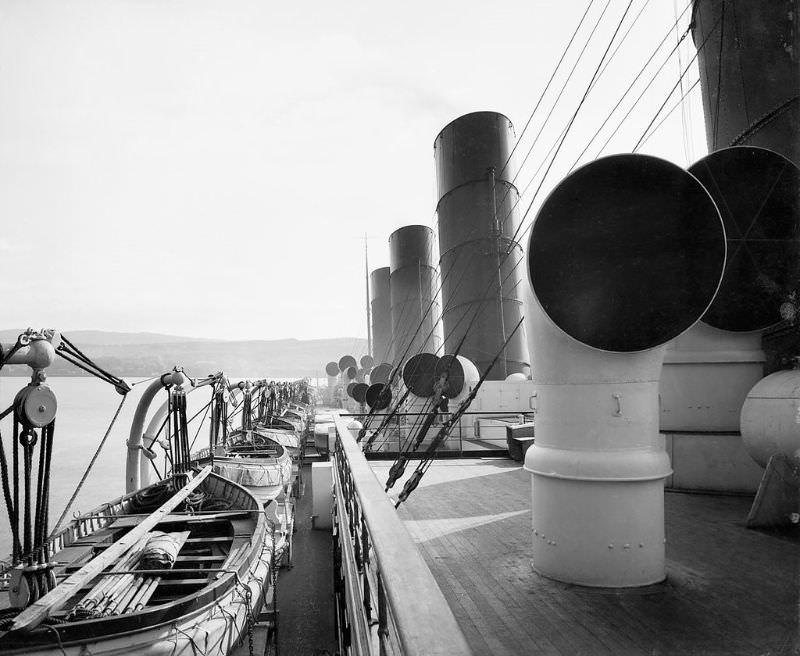
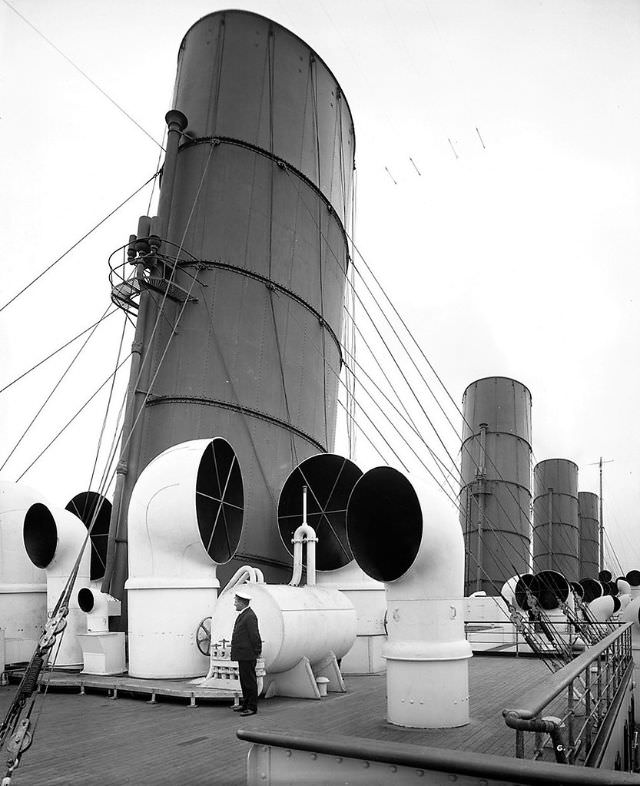
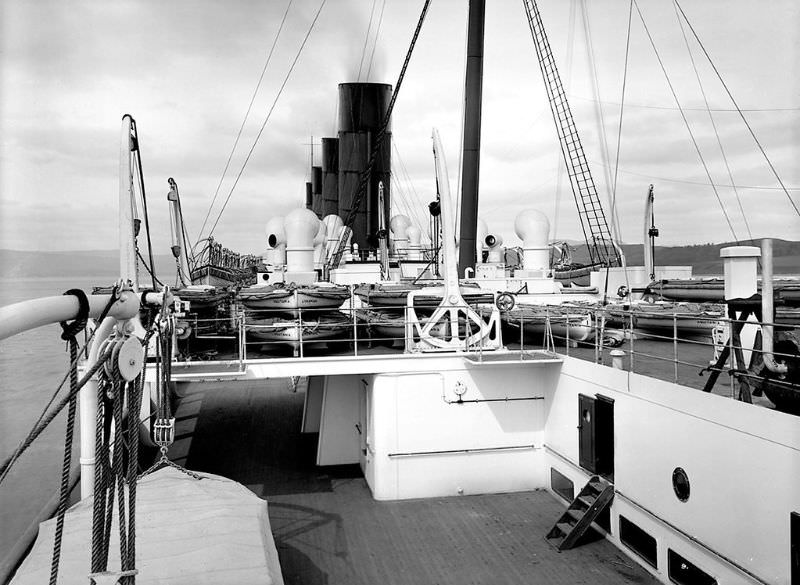
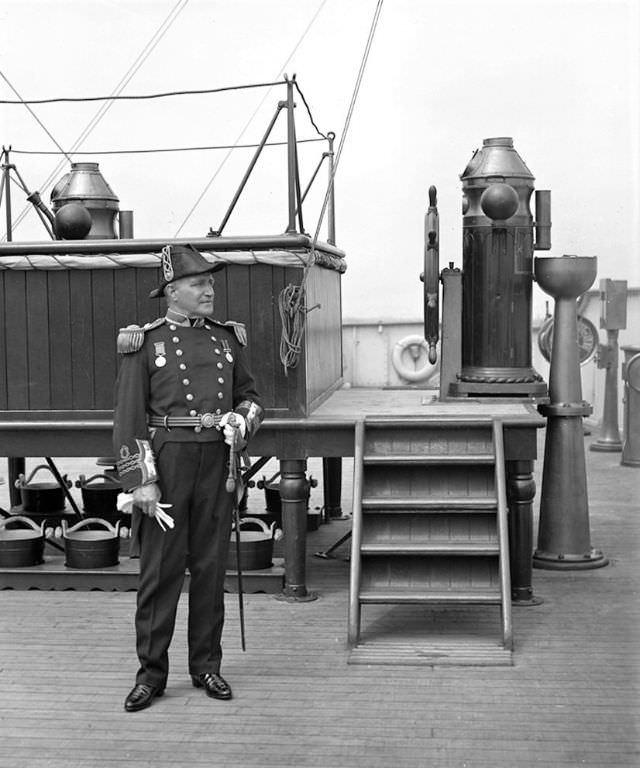
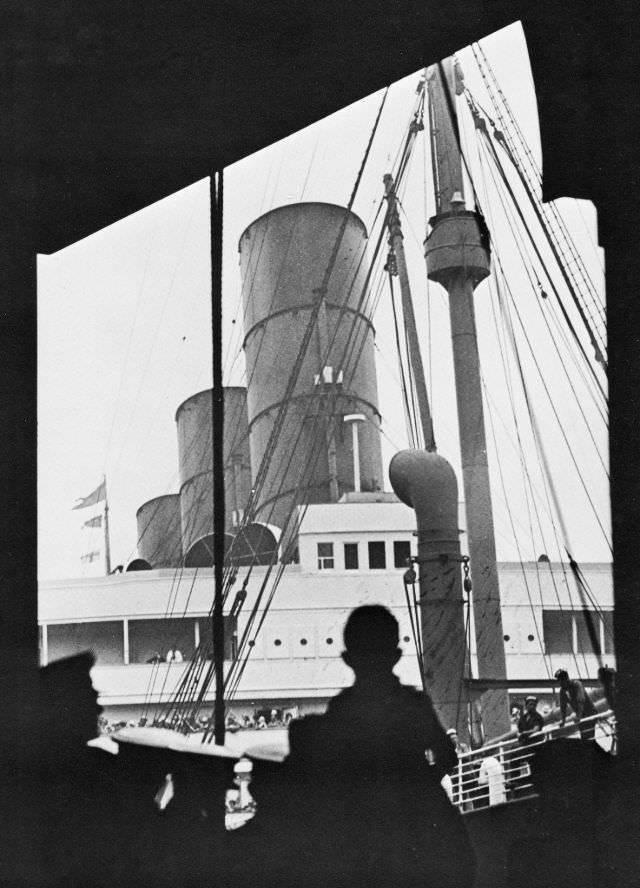
One of Aquitania’s massive funnels is about to be hoisted onboard during the liner’s fitting-out, circa 1913A sea of spectators watch the launch of Aquitania at John Brown & Company of Clydebank on 21 April 1913Aquitania in John Brown’s fitting-out basin, early 1914View from Aquitania’s flying bridge.One of Aquitania’s officers is dwarfed by the towering forward funnel and a collection of cowl ventilators.
Sea trials began on May 10, 1914, when Aquitania moved down the Clyde. Over three days of testing, she reached 24 knots — a full knot faster than expected. After docking at Liverpool’s Gladstone Graving Dock for final cleaning and painting, she was declared ready for her first passengers. Her maiden voyage departed Liverpool on May 30, 1914, bound for New York.
Aquitania moves down the Clyde beginning her sea trials on 10 May 1914Aquitania during her 3 days of trials. She reached 24 knots; a full knot more than expected, May 25, 1914Aquitania’s portside Boat Deck with steamship lines still reeling from the loss of life aboard Titanic, strolling space for passengers has been sacrificed for lifesaving equipment, 19142nd Class open deck space has been sacrificed in order to carry additional collapsible lifeboats, circa 1914
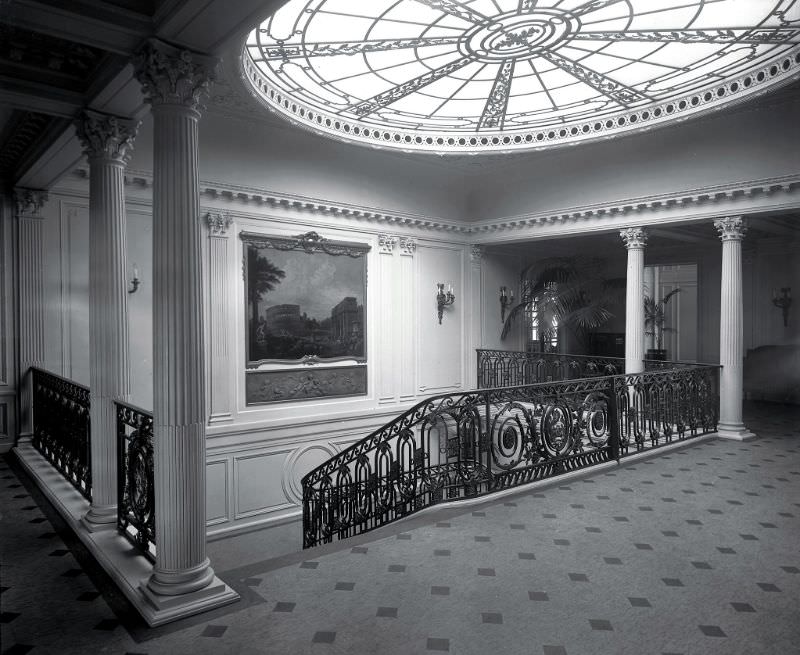
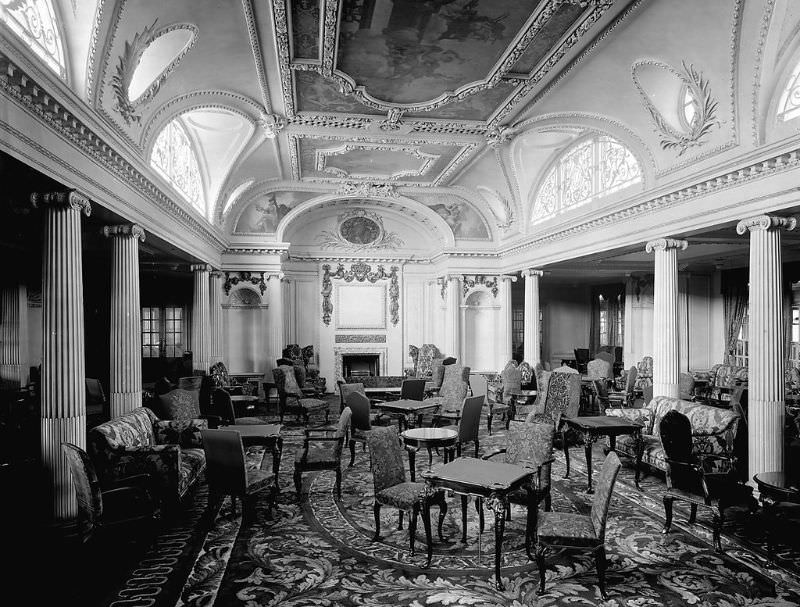
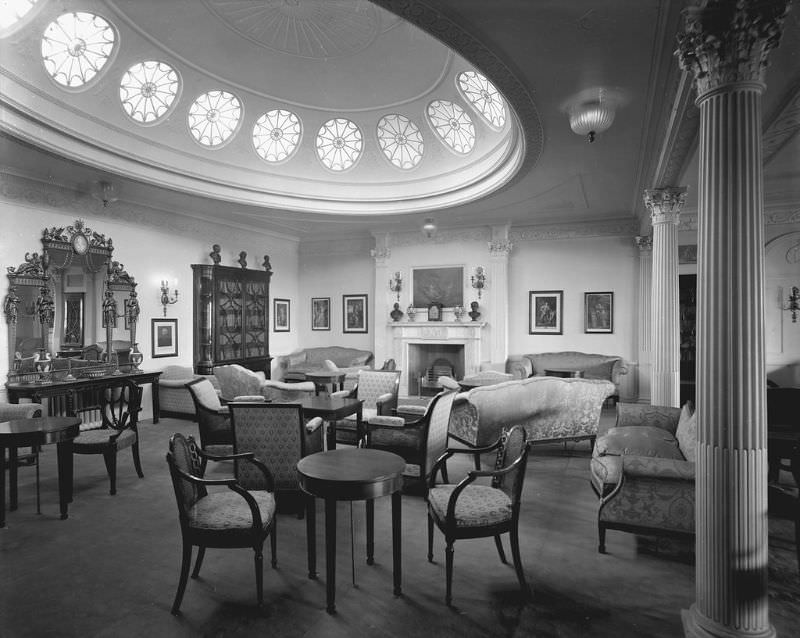
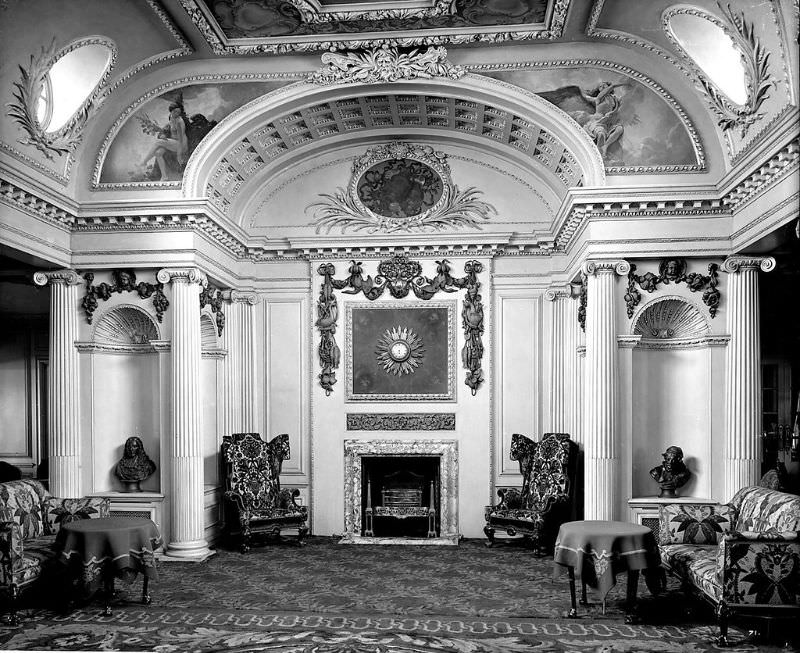
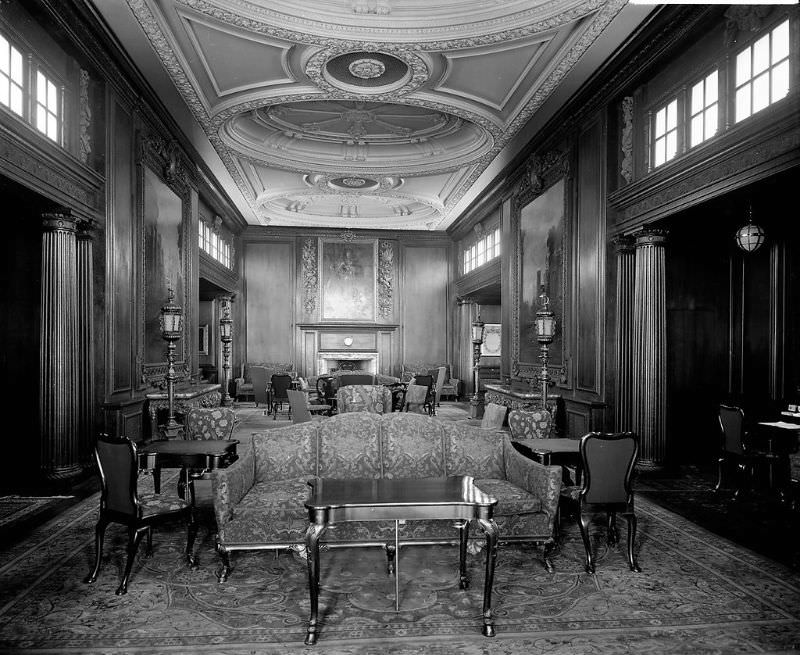
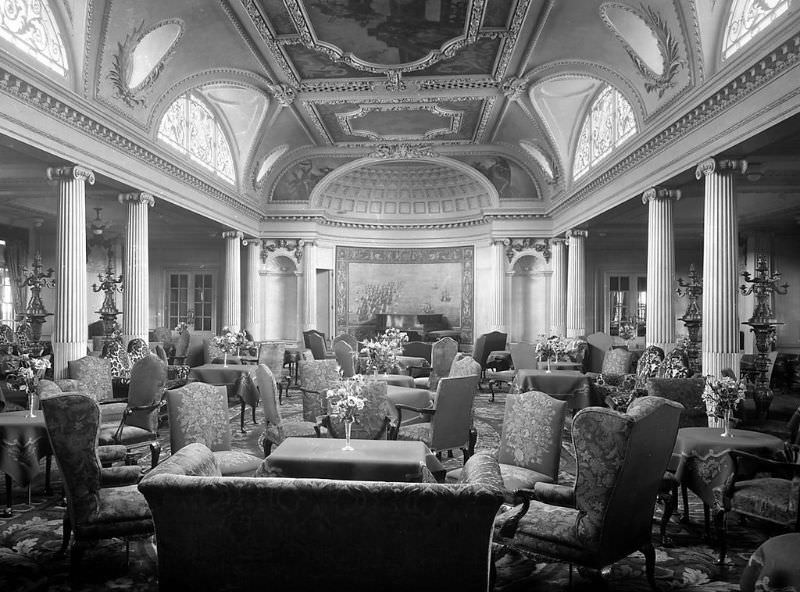
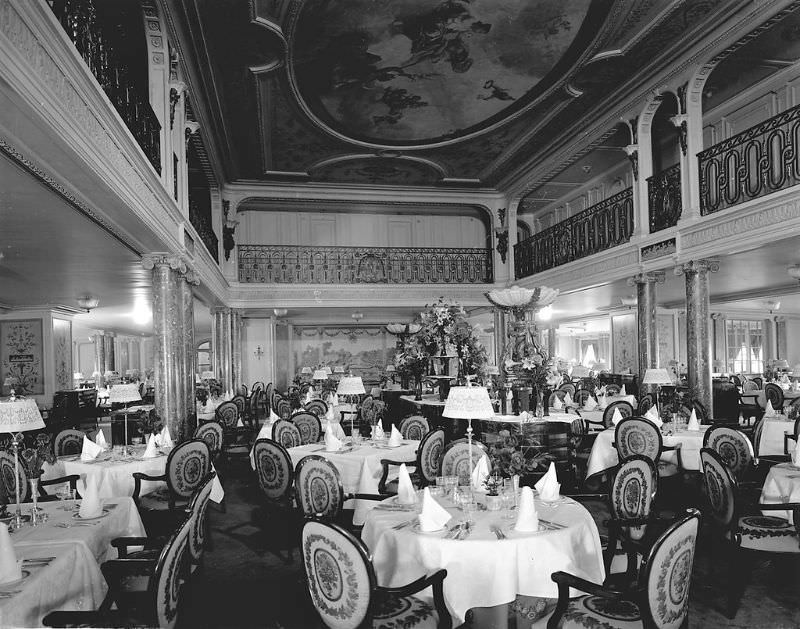
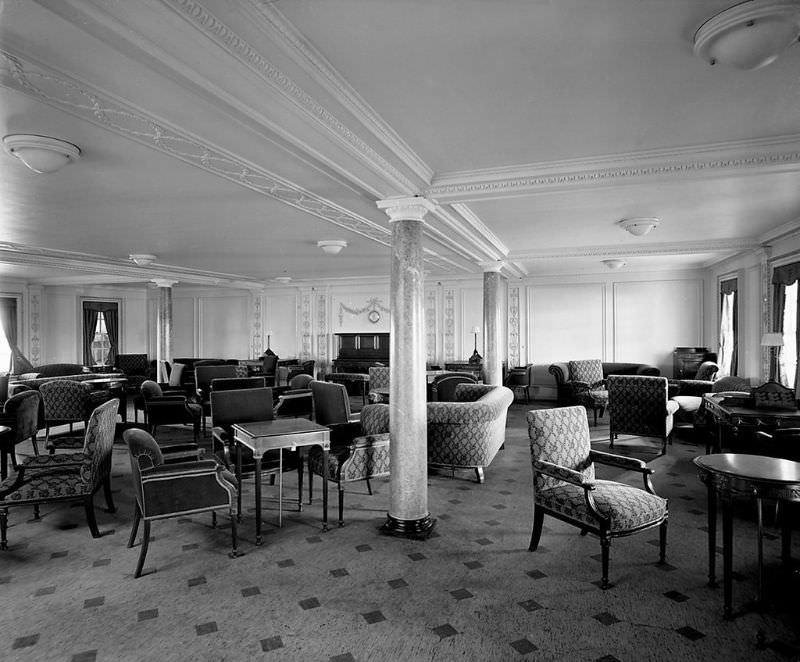
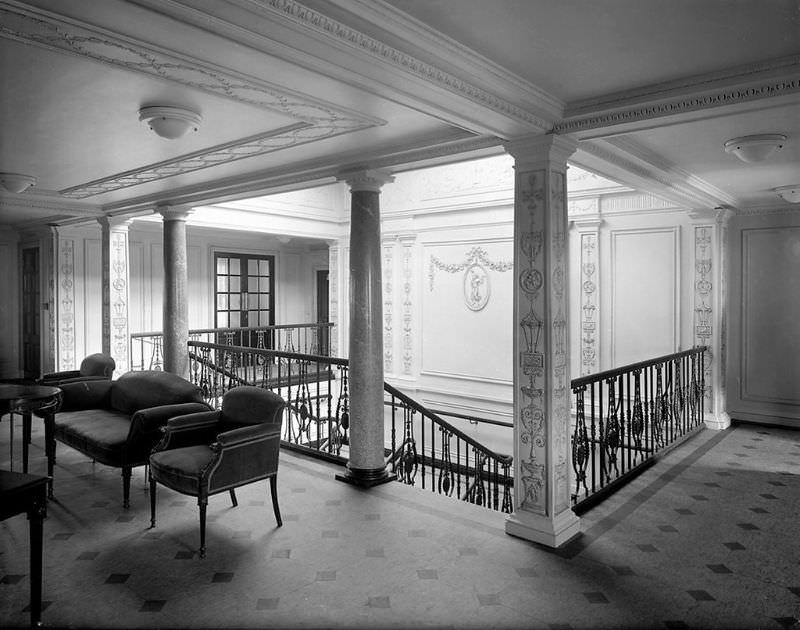
Aquitania’s first-class spaces were designed to rival anything afloat. Her 1st Class Grand Entrance was decorated in the Louis XVI style. The Palladian Lounge — often described as the most beautiful room ever put to sea — featured a grand fireplace and architectural details that belonged in a stately home rather than a ship. The Grand Staircase was designed by Marcel Boulanger of Paris, while the Garden Lounge was fitted out by Waring & Gillow Ltd of London. First-class passengers also had access to a Grill Room, a Drawing Room styled after the work of Robert Adam, a Carolean Smoking Room, and private suites named after Old Masters like Holbein.
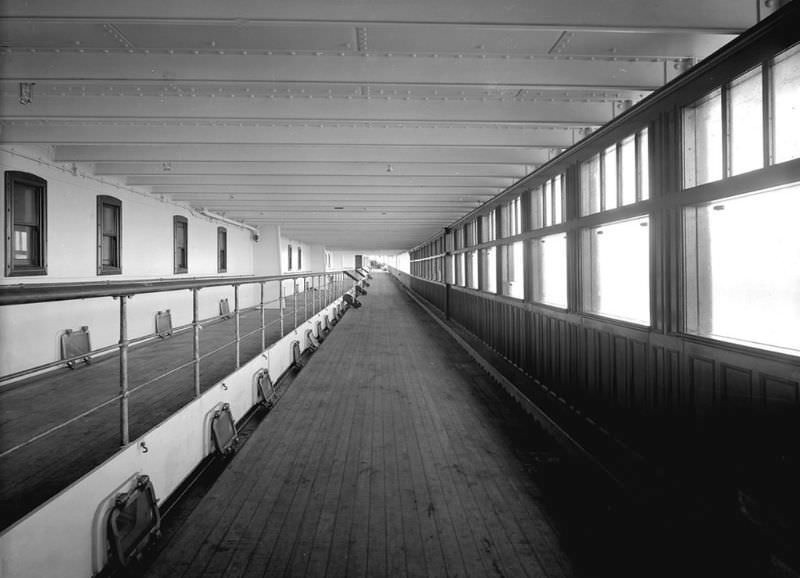
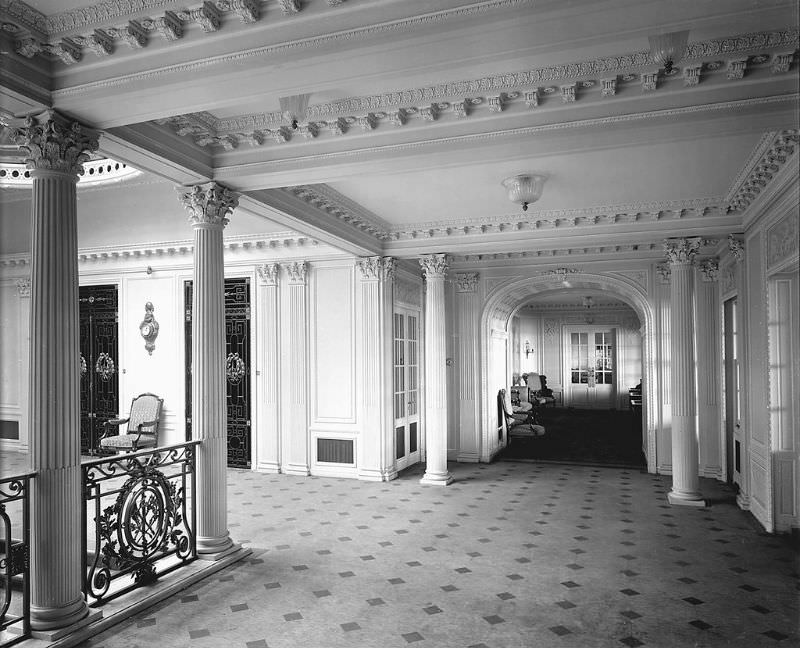
The sheltered part of Aquitania’s 1st Class Promenade, on the port side of the Bridge Deck (B Deck).Aquitania’s 1st Class Garden Lounge, photographed prior to the delivery of dozens of potted palms and ferns.Aquitania’s 1st Class Grand Entrance. The port side of the Grand Entrance at Promenade Deck (A Deck) level, decorated in the Louis XVI style, April 1914Grand Staircase aboard the Aquitania. The decoration of the Grand Staircase was carried out by Marcel Boulanger, Paris, April 1914Aquitania’s 1st Class Lounge, prior to the liner entering service. This was also called the Palladian Lounge, and was located on the Promenade Deck (A Deck), April 19141st Class Drawing Room aboard Aquitania. The Drawing Room was also called the Adam Drawing Room, and was located on the Promenade Deck. This view is of the library section, looking forward, April 19141st Class Swimming Pool, on the starboard side of the Main Deck (E Deck).
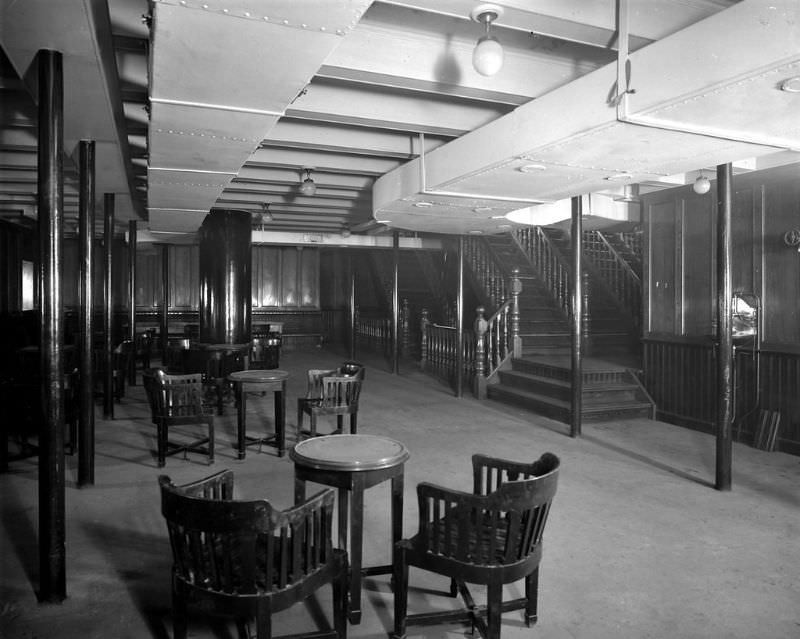
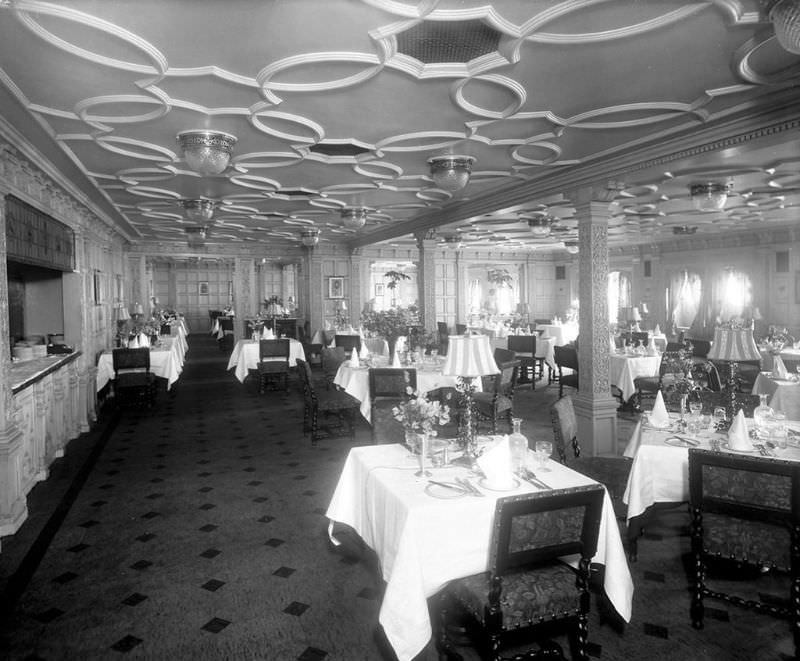
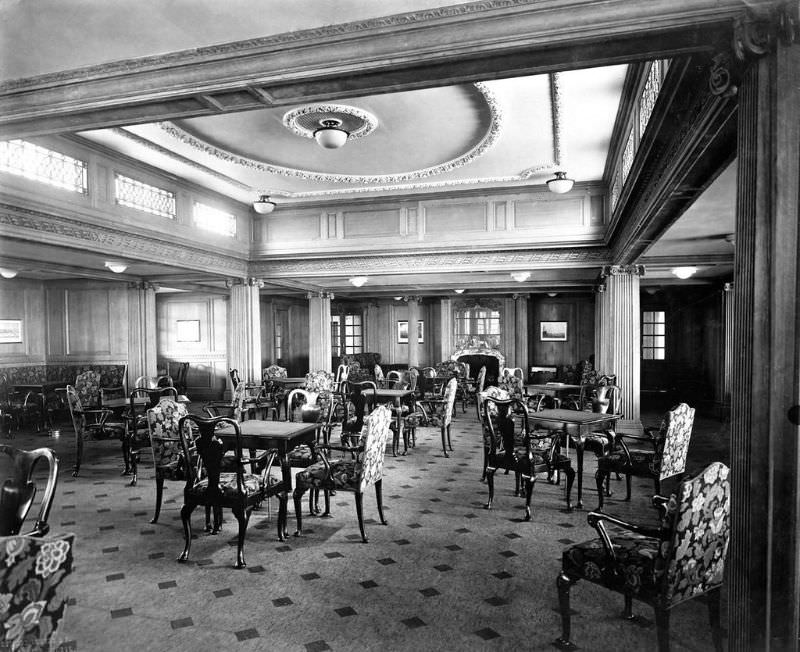
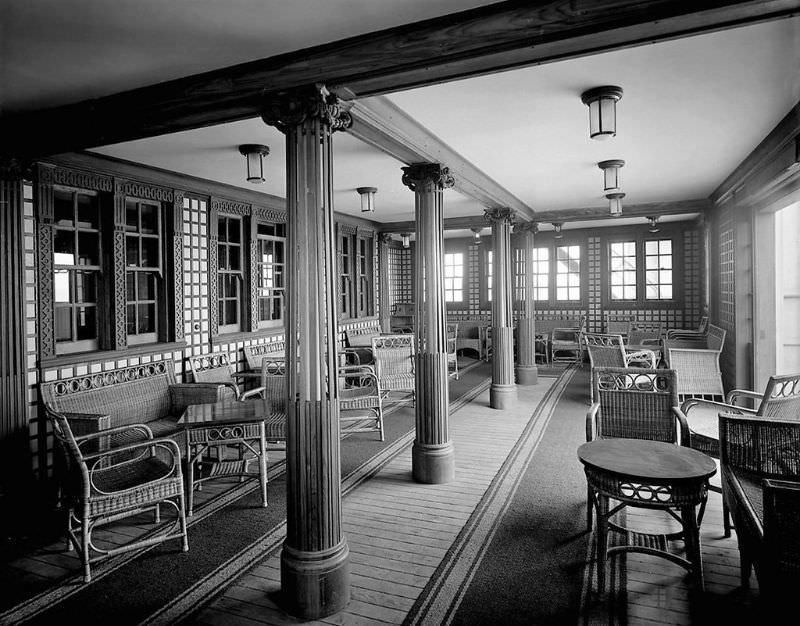
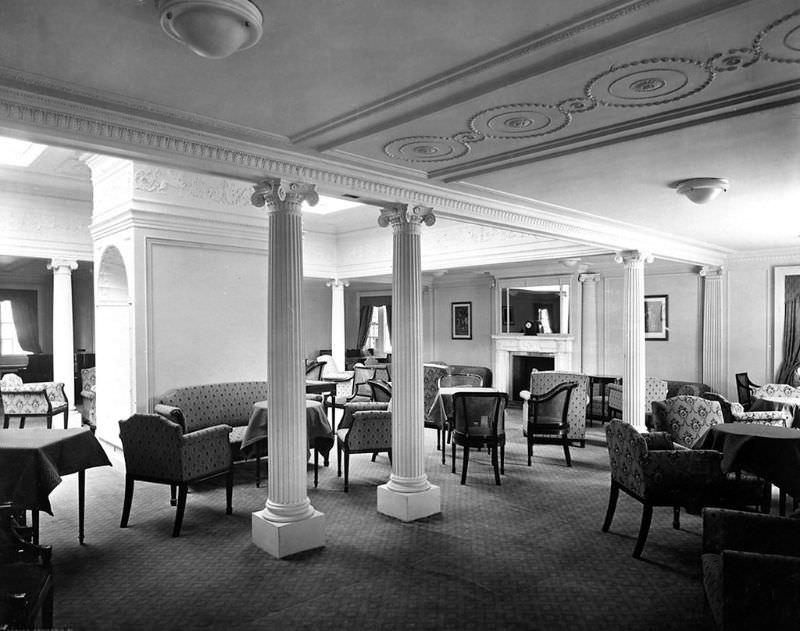
Third-class passengers occupied the lower decks, with a General Room on the Upper Deck, a dining saloon on the Lower Deck, and a promenade at the ship’s stern. Second class, meanwhile, offered a standard that matched or exceeded first class on many smaller ships of the era — with its own lounge in the Louis XVI style, a Verandah Cafe, Drawing Room, Smoking Room, and multiple stateroom configurations ranging from two-berth outside cabins to four-berth rooms.
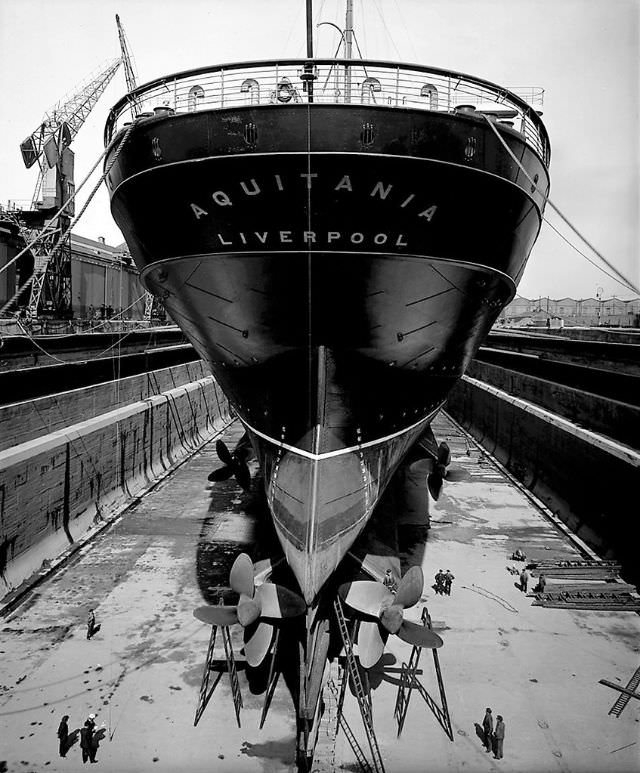
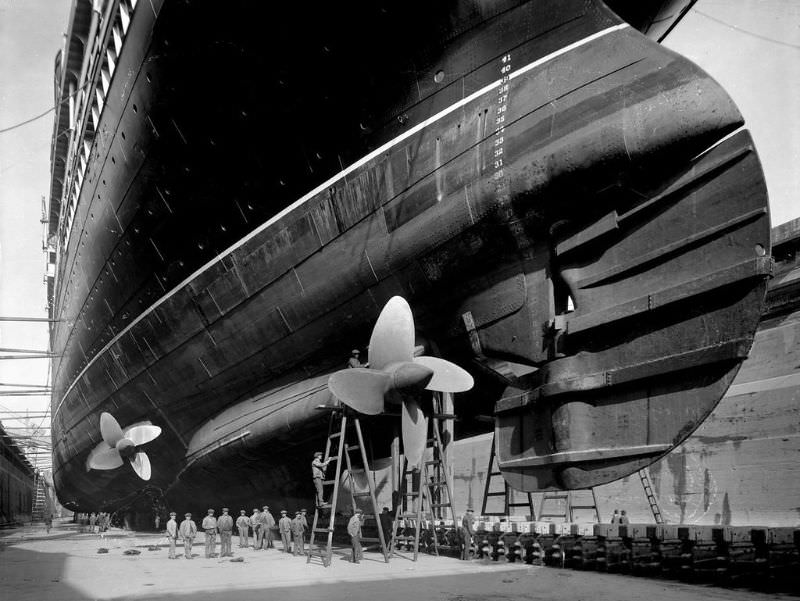
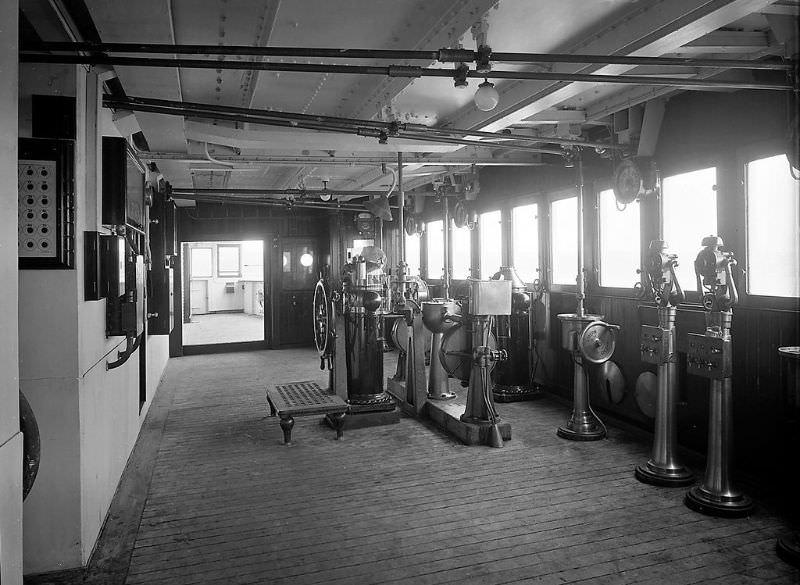
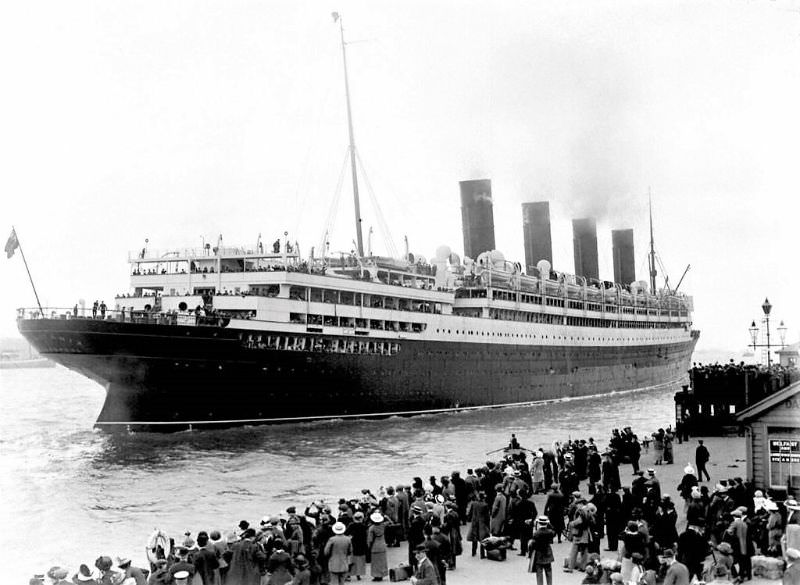
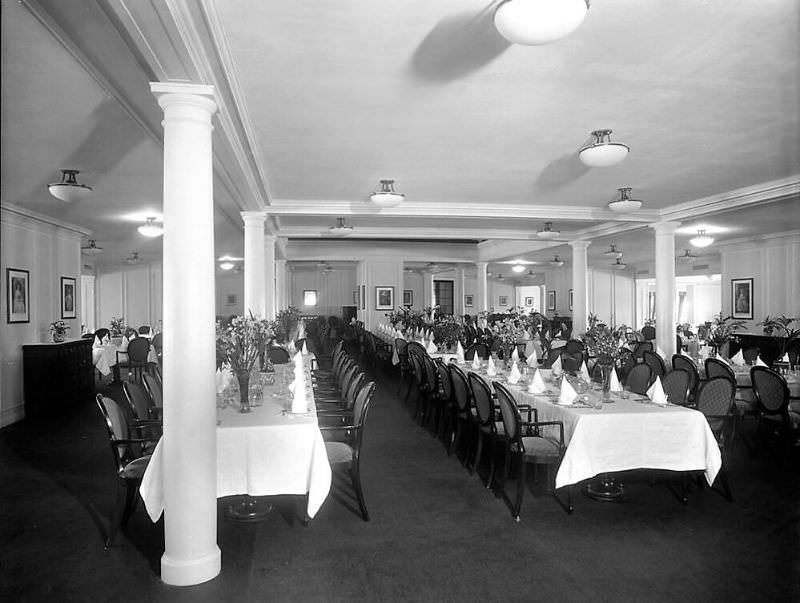
Interior of Aquitania showing the 3rd Class General Room (or Non Smoking Compartment), on the Upper Deck (D Deck), a view of the port side, looking forward, April 1914Aquitania’s 1st Class Lounge (fireplace detail). Aquitania’s Palladian Lounge is often described as the most beautiful room ever put to sea, May 19141st Class Smoking Room aboard Aquitania, also called the Carolean Smoking Room, and located on the Promenade Deck (A Deck), May 1914Aquitania in the Gladstone Graving Dock, Liverpool, in preparation for her maiden voyage. The cleaning and painting work appears to be complete, May 1914Portside view of Aquitania in Gladstone Graving Dock, Liverpool, in preparation for her maiden voyage across the Atlantic, May 1914Aquitania Wheelhouse, part of the Navigating Bridge on the Boat Deck.Aquitania departs the Liverpool Landing Stage at the start of her maiden voyage to New York, May 30, 1914Adorned with fresh flowers and ready for her first passengers; Aquitania’s 1st Class Lounge, May 30, 19141st Class Dining Saloon aboard Aquitania. The First Class Dining Saloon (Louis XVI Restaurant), on the Upper Deck (D Deck). A view of the central area, looking forward, May 19141st Class Grill Room aboard Aquitania. A view of the forward section of the extra tariff Grill Room, located on the port side of the Upper Deck (D Deck), May 1914The 1st Class Holbein Suite aboard Aquitania, May 19141st Class suite C133 aboard Aquitania, May 1914
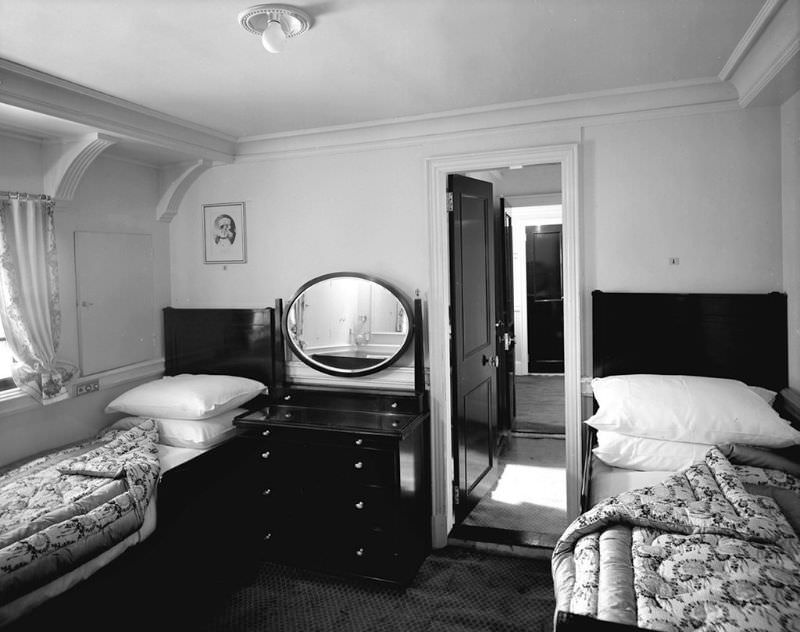
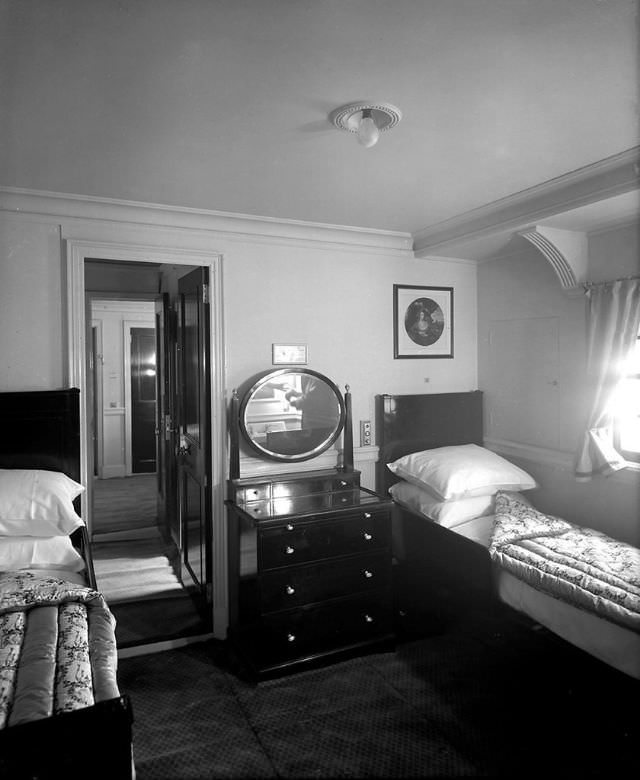
1st Class suite C102 aboard Aquitania, May 1914
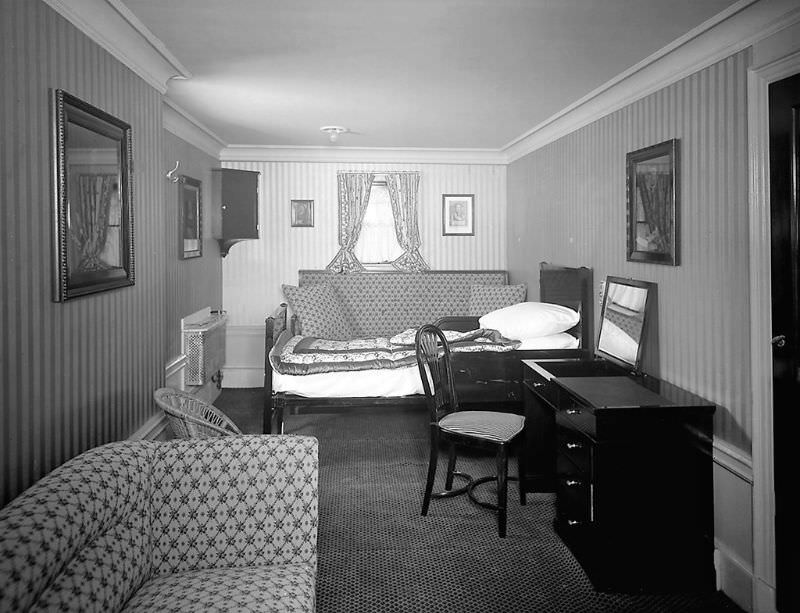
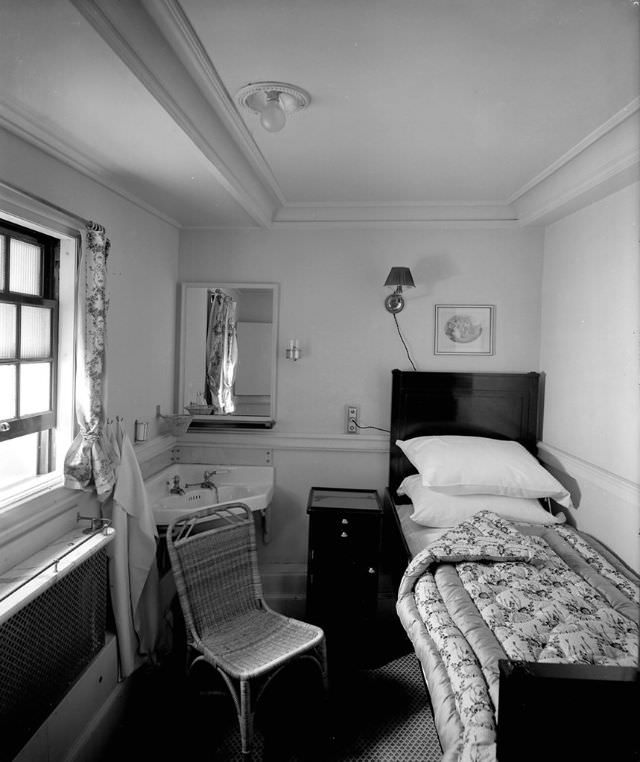
1st Class stateroom A36 (an outside single) aboard Aquitania, May 1914
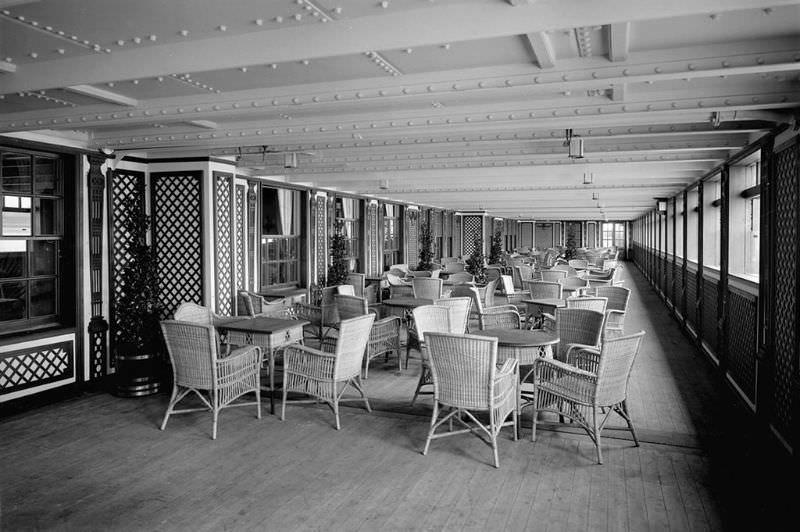
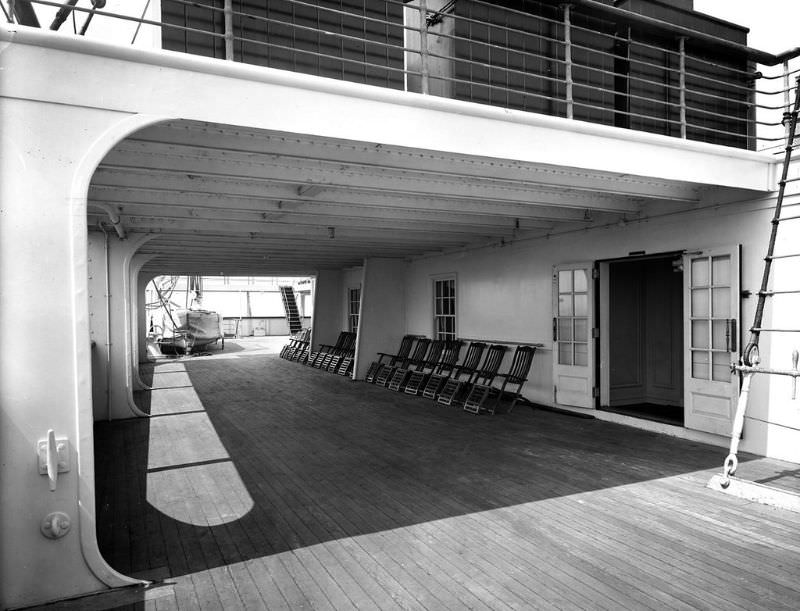
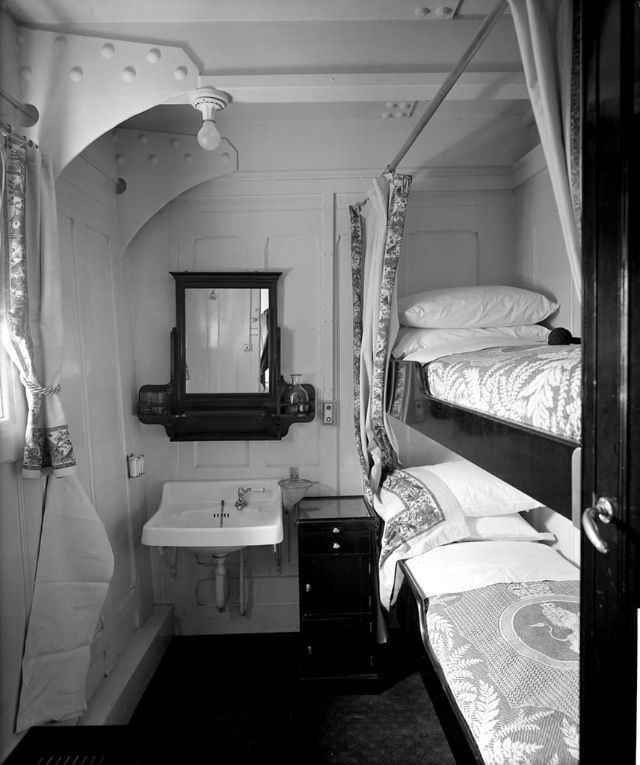
1st Class cabin C24 (an outside single) aboard Aquitania, May 19142nd Class Promenade aboard Aquitania. The starboard side of the Promenade Deck (A Deck), with a view of the sheltered area under the Boat Deck aft, May 1914Aquitania’s 2nd Class Lounge. The Louis XVI-style Second Class Lounge was on the Promenade Deck (D Deck). This is a view from the port side, looking towards the piano at the after end, May 1914The 2nd Class Smoking Room aboard Aquitania.Aquitania’s 2nd Class Verandah Cafe, on the Bridge Deck (B Deck). This view is looking across to the starboard side, with the sliding doors opened, May 1914View of Aquitania’s 2nd Class Drawing Room, on the Bridge Deck (B Deck); a view from the starboard side, looking towards the fireplace at the forward end, May 1914Aquitania’s 2nd Class stairway, May 1914The 2nd Class Dining Saloon aboard Aquitania, May 1914
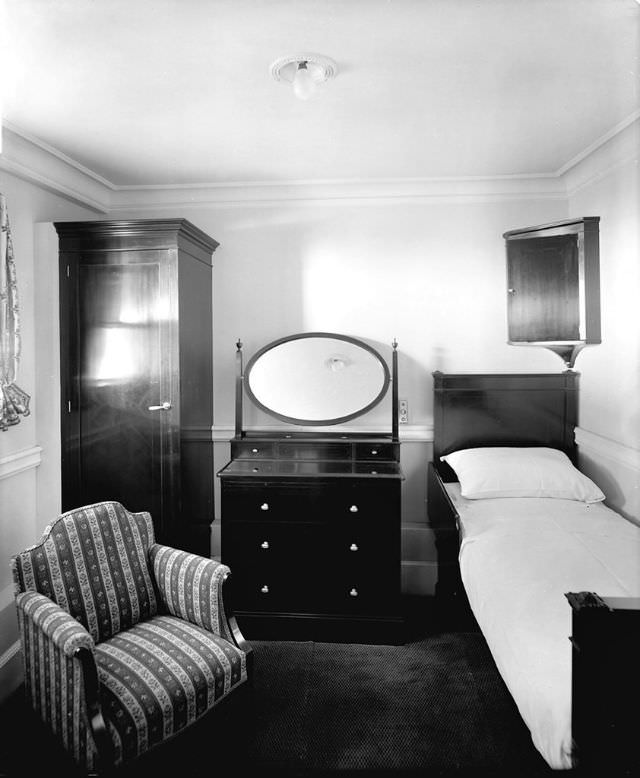
Aquitania’s 2nd Class stateroom C303, May 1914
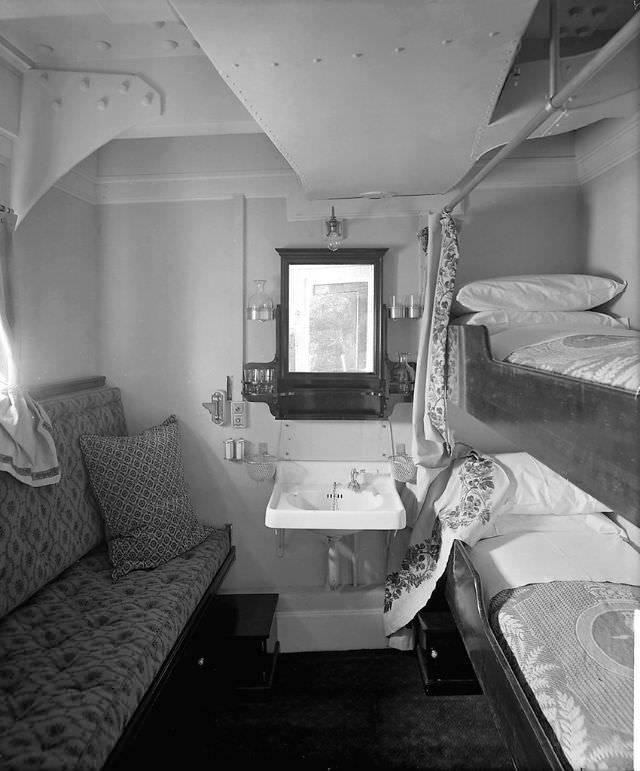
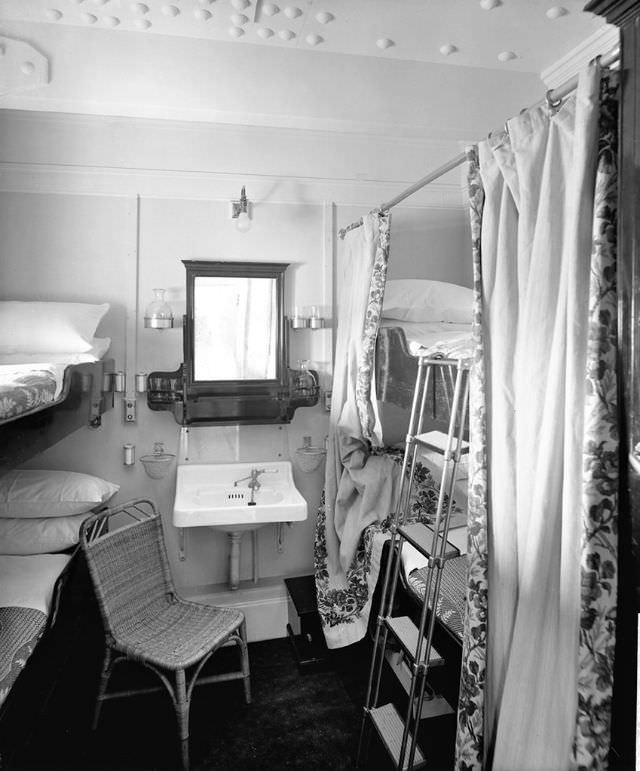
Aquitania’s 2nd Class stateroom C265. An outside four-berth, it was located on the Shelter Deck (Deck C), May 1914
Aquitania’s 2nd Class stateroom E27. This two berth outside stateroom was on Main Deck (E Deck), May 1914
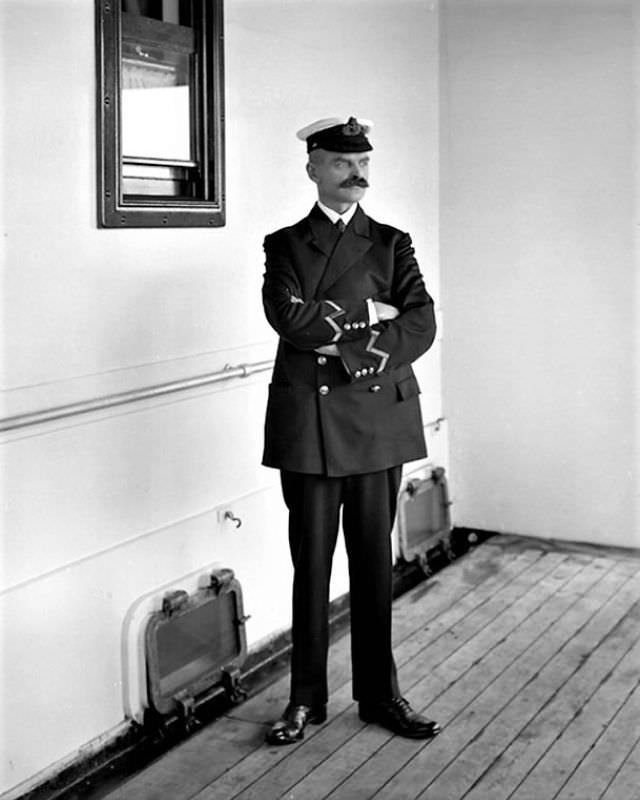
Portrait of Mr. William Henry Allison (1863-1939). Mr. Allison was Chief Steward of the Aquitania on the voyages prior to the First World War, May 1914
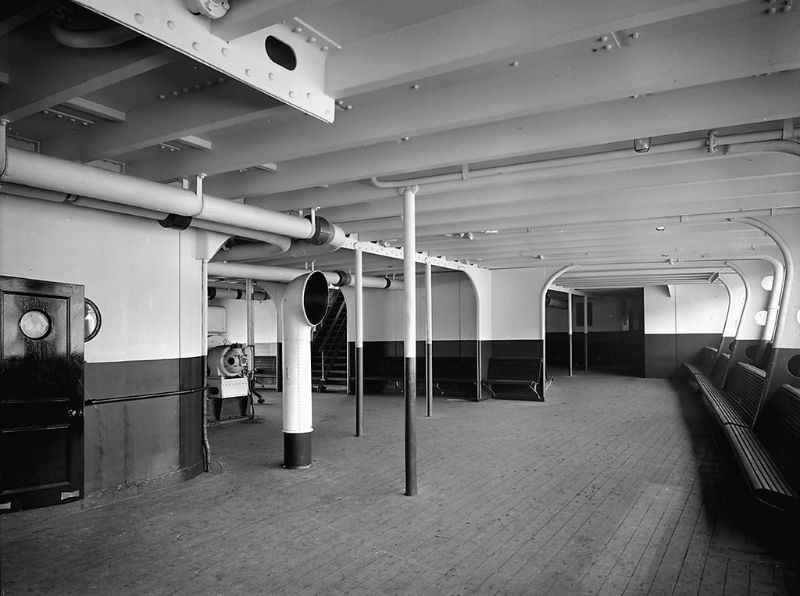
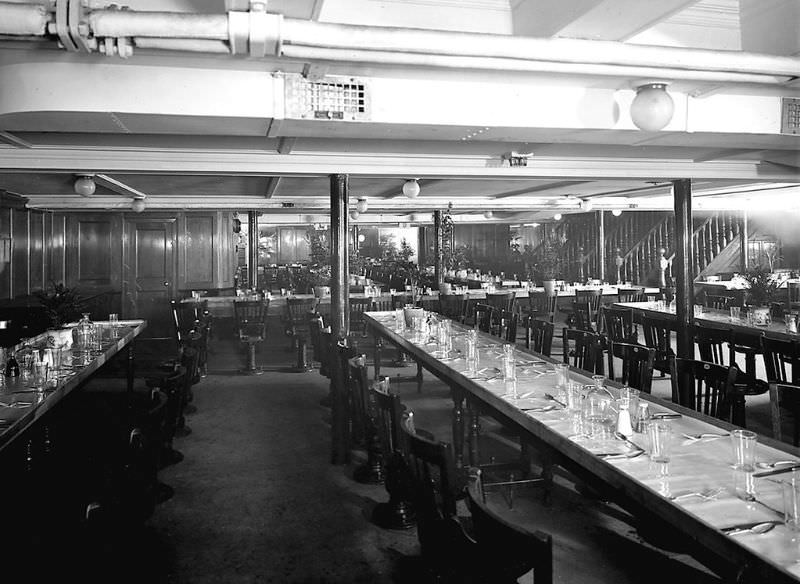
Deck view showing Aquitania’s 3rd Class Promenade at the after end of the Upper Deck (D Deck), a view of the port side, looking aft. Sparred seats are fitted along the bulwark at the right edge of the image, May 1914The forward section of Aquitania’s 3rd Class Dining Saloon, on the Lower Deck (F Deck), looking across to the port side. Stairs up to the Main Deck are visible in the background on the right, May 1914
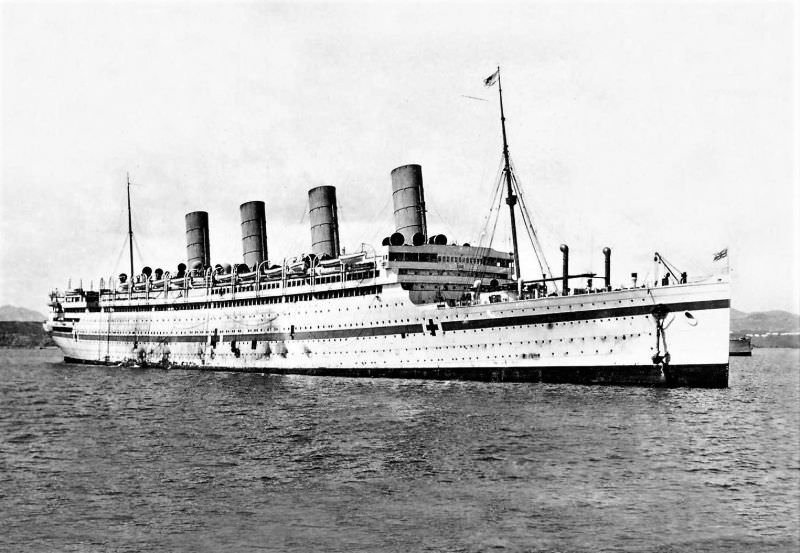
Aquitania’s commercial career was brief before the war interrupted it. She made her first transatlantic call at Fishguard, Wales, on June 16, 1914, and reached New York Harbor in July. By August 1914, the British government had requisitioned her as an armed merchant cruiser. The cost of running her in that role proved too high, and she was briefly laid up before being converted to a troopship, transporting soldiers to battlefronts around the world. In the spring of 1915, she was converted again — this time into a hospital ship. Off the Greek island of Lemnos in October 1915, she worked alongside HMHS Britannic supporting the Dardanelles campaign, bringing wounded soldiers back from the front.
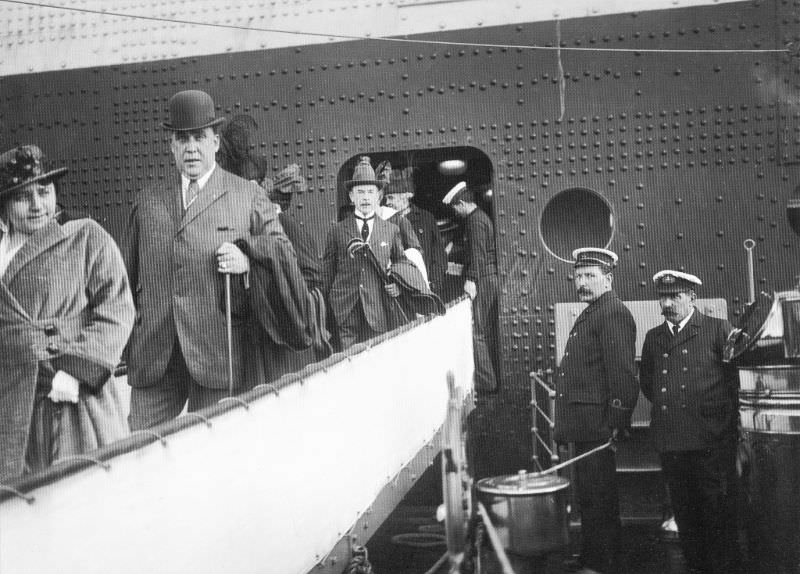
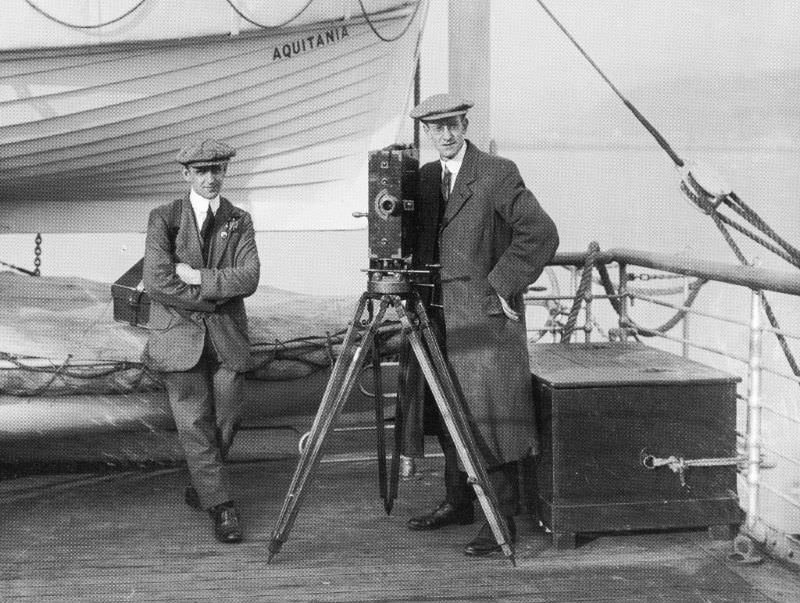
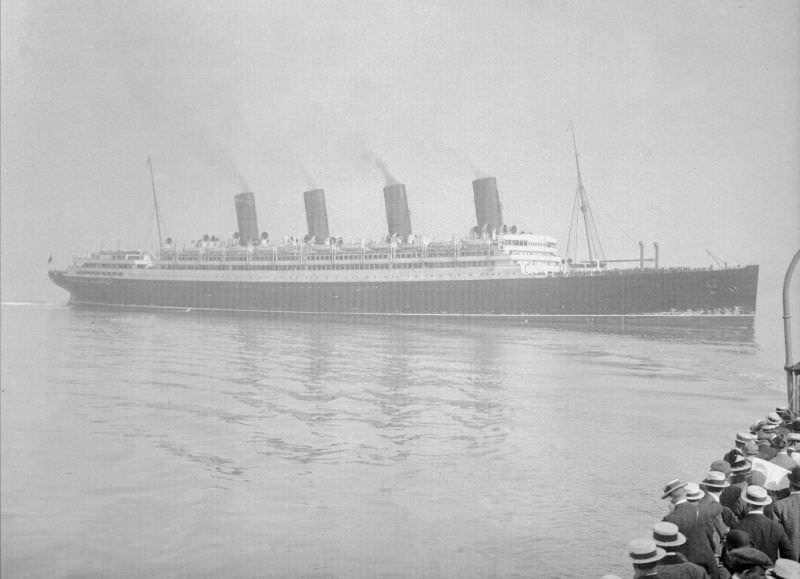
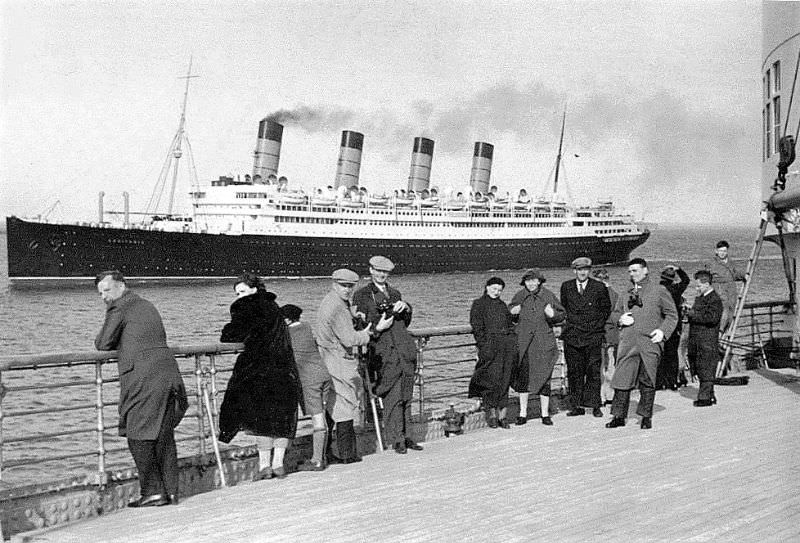
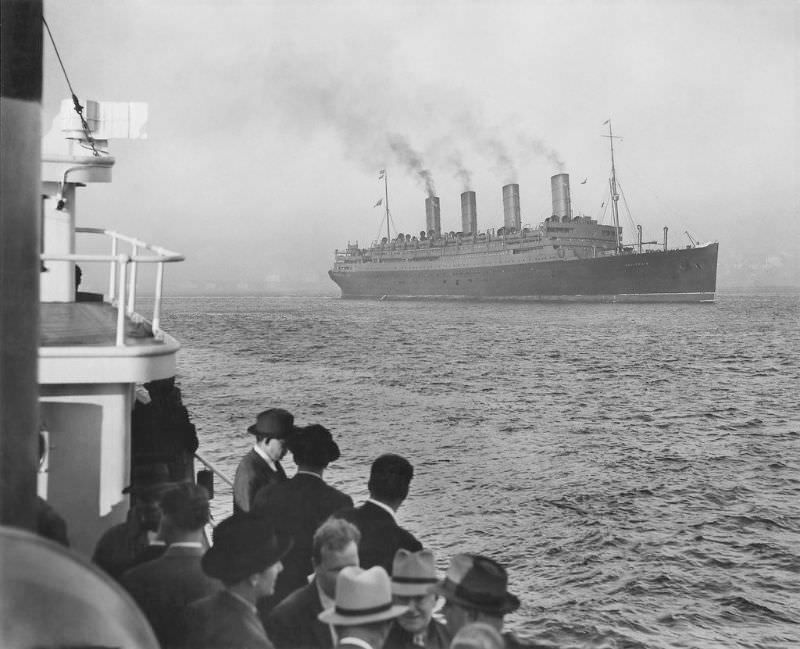
Aquitania passengers disembarking on to the tender at Fishguard, Jun 16, 1914Professional photographers aboard Aquitania during her maiden call at Fishguard, Wales, 16 June 1914On a misty June morning, disembarking passengers crowd the rail of their tender for a last look at Aquitania, making her maiden call at the Welsh port Fishguard on June 16, 1914Aquitania in New York Harbor in July 1914Aquitania as a hospital ship, off the Greek island of Lemnos, October 2, 1915. After her maiden voyage to New York in May of 1914, Aquitania’s commercial life was brief.Captain William Turner aboard Aquitania, May 1915
Aquitania returned to commercial service in August 1920. Southampton had replaced Liverpool as the primary departure port for Cunard’s large ships after the war. She was now one of three flagship liners on the transatlantic route, joined by the new RMS Berengaria — formerly the German SS Imperator, awarded to Britain as war reparations. Throughout the 1920s, Aquitania ran at near-full capacity and turned consistent profits. Her passengers gave her the nickname ‘Ship Beautiful,’ a nod to her clean four-funnel silhouette and the quality of her interiors. For two decades, she was among the most popular liners on the North Atlantic.
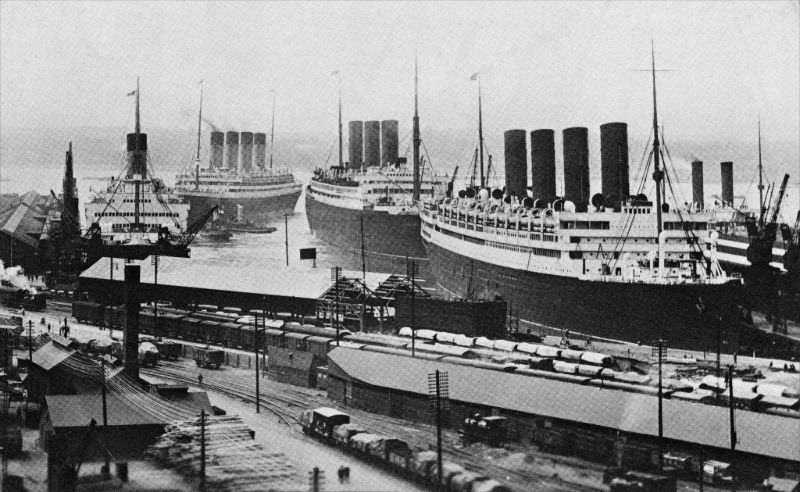
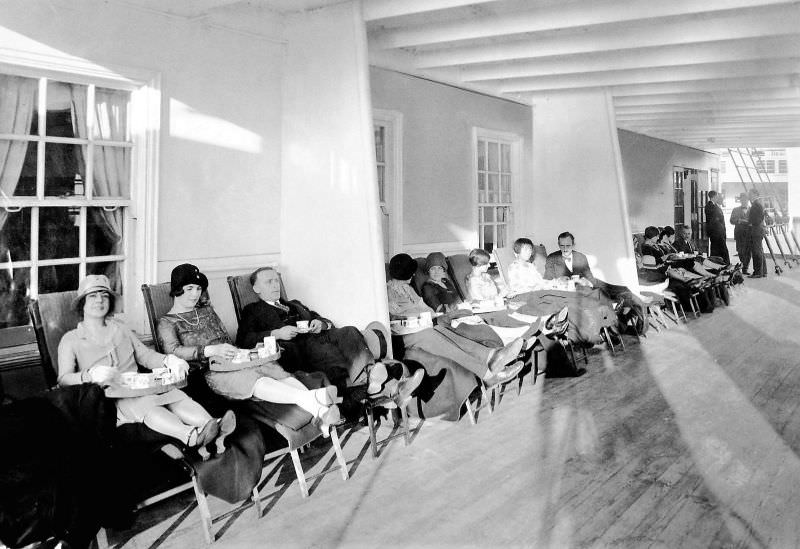
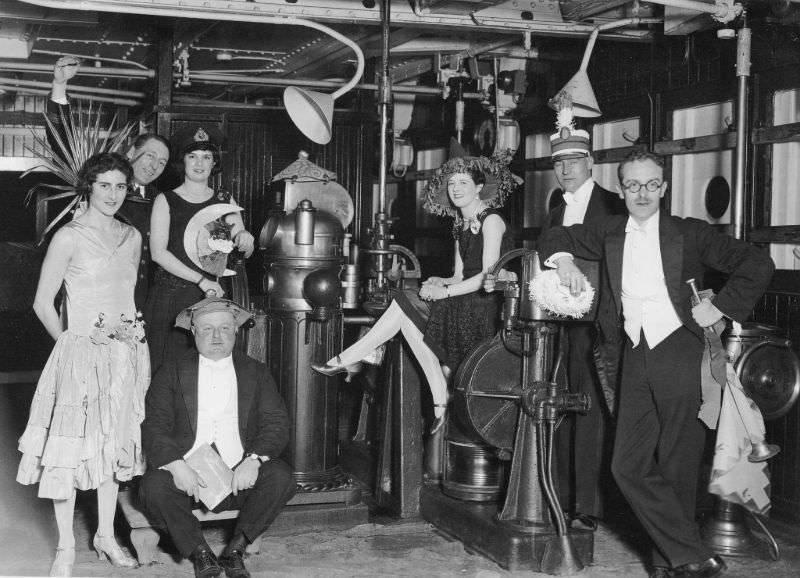
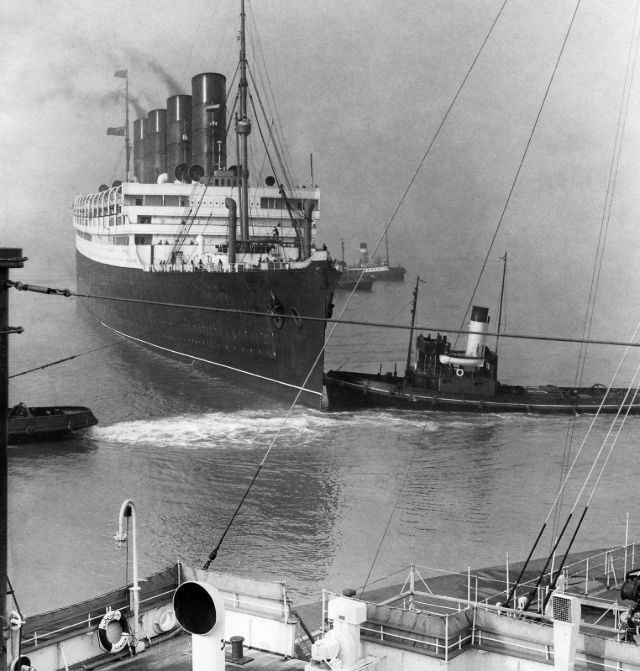
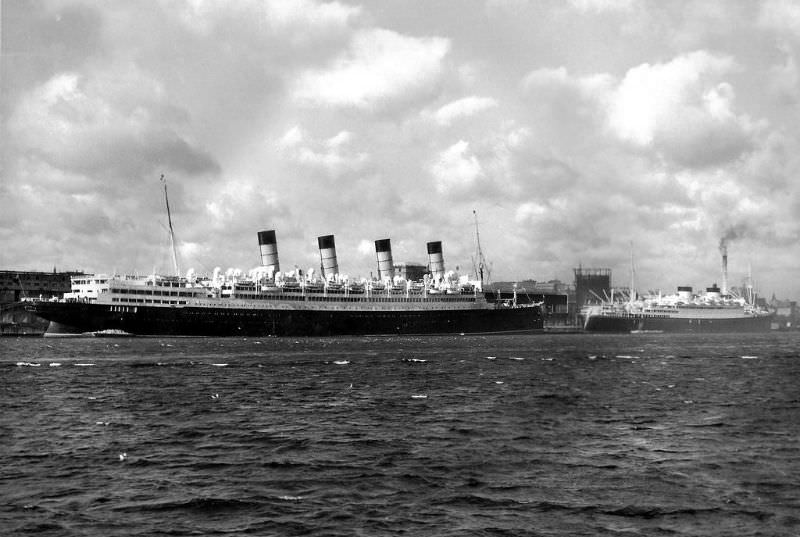
Aquitania returned to commercial service in August 1920. She is seen here at Southampton. Behind her are (from left) Majestic, O lympic and BerengariaAquitania departs Southampton for New York on September 3, 1923. After WWI, Southampton replaced Liverpool as the ‘big ship’ terminalPassengers enjoy afternoon tea on Aquitania’s 2nd Class Promenade Deck, circa 1926. For two decades during the 1920s and 30s, Aquitania was the most popular liner on the AtlanticA group of Aquitania passengers pose on the liner’s bridge during a Fancy Dress Ball on the night of January 25, 1927Aquitania arriving at Southampton, which after WWI replaced Liverpool as the ‘big ship’ terminal, circa 1927
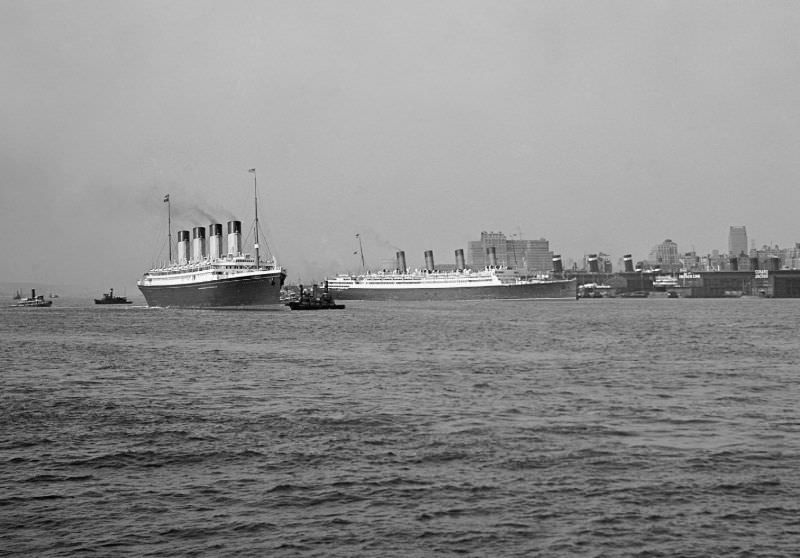
As the 1930s progressed, the other great four-funneled liners retired one by one. The Cunard–White Star merger of 1934 reshuffled priorities. The Queen Mary and Queen Elizabeth were ordered to replace Britain’s aging fleet. Aquitania, the best-maintained of the older ships, was kept in service as a stop-gap until Queen Elizabeth was ready. In August 1934, the four great Atlantic liners — Olympic, Aquitania, Leviathan, and Paris — were photographed together at New York, a moment that would not be repeated. By the time war came again in 1939, Aquitania was the last four-funneled passenger liner still operating anywhere in the world.
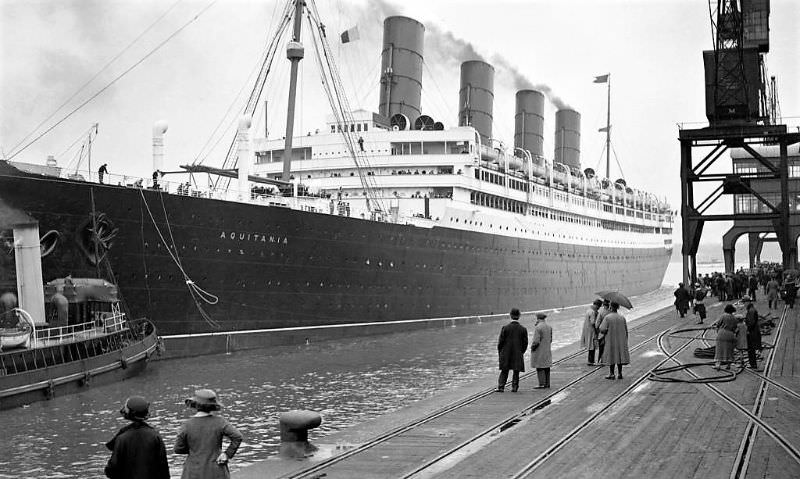
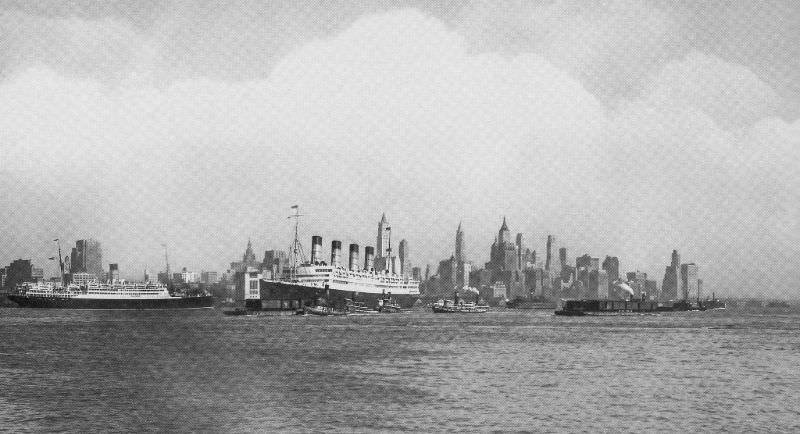
Two Cunarders at New York- the inbound Aquitania passes the outbound Franconia (also built at John Brown & Company) on June 24, 1932Aquitania about to sail to Europe from Pier 54, W. 12th St. A young New Yorker has been hoisted on to his dad’s shoulders for a better view, circa 1934Four legendary Atlantic liners at New York on August 8, 1934.Aquitania, photographed from North German Lloyd’s Europa as both liners depart New York in April 1939
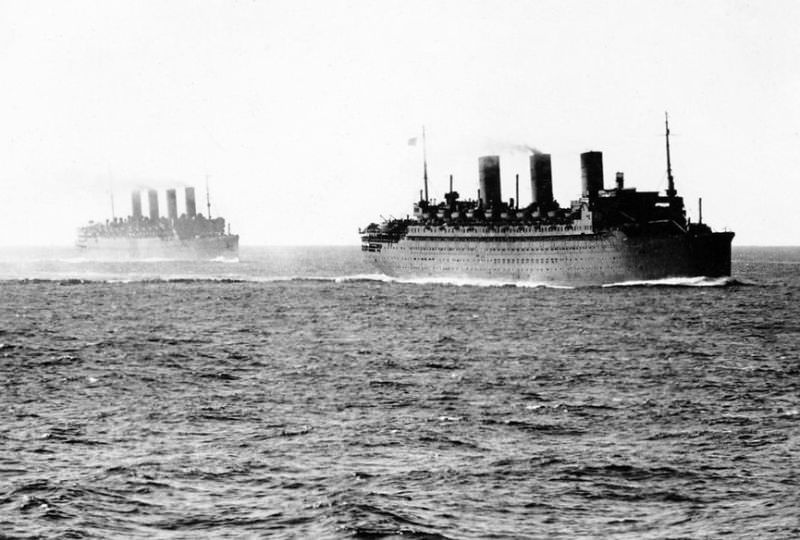
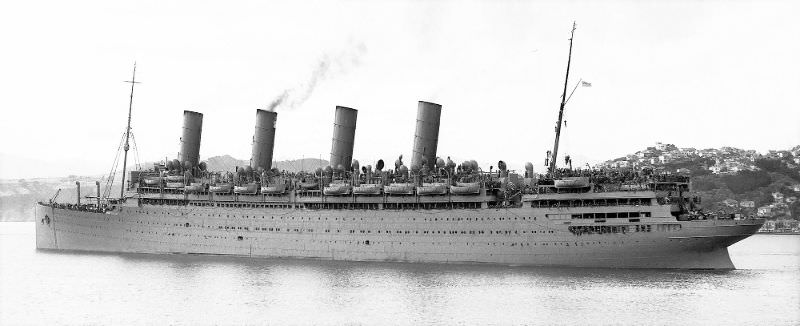
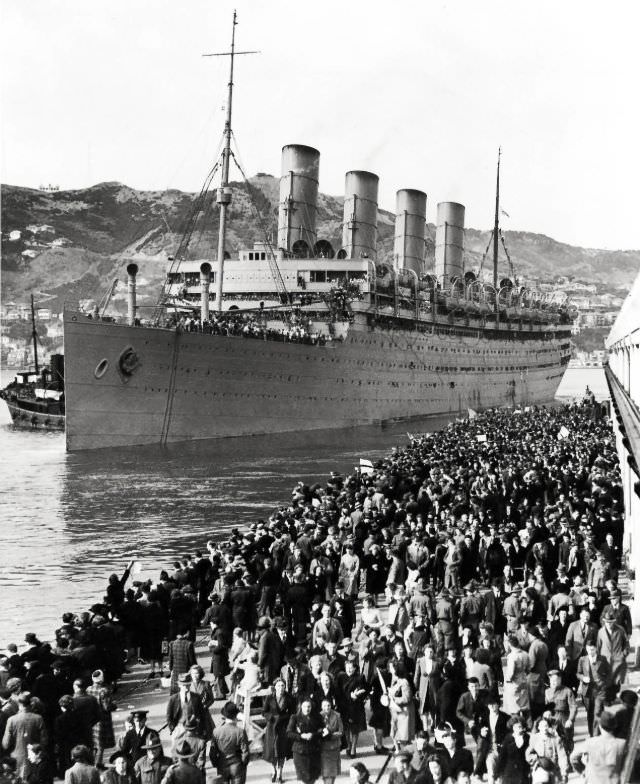
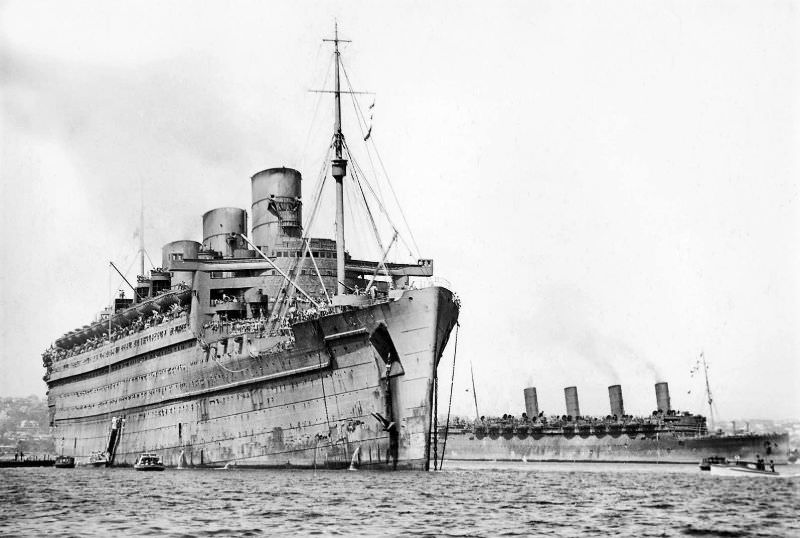
When World War II broke out, Aquitania was again pressed into military service. She arrived in New York on September 16, 1939, and was soon converted back into a troopship. Over the eight years of military service across both wars, she sailed more than 500,000 miles and carried nearly 400,000 soldiers to and from locations as spread out as New Zealand, Australia, the South Pacific, California, Greece, and the Indian Ocean. She operated alongside the Queen Mary and the Île de France on troop convoys, calling at ports including Wellington and Sydney. She was the only ocean liner to serve in both World Wars and survive intact.
Aquitania arrives at New York on September 16, 1939Aquitania and Île de France during Operation Pamphlet, circa 1943Cunard’s Aquitania at Wellington, New Zealand during WWII, circa 1943The troop-carrying Aquitania at Wellington, New Zealand during WWII, circa 1943Troop-carrying Cunarders Queen Mary and Aquitania at Sydney in 1943
After the war ended, Aquitania was returned to Cunard in 1946. Rather than being retired immediately, she was chartered by the Canadian government to transport war brides and their children to Canada. This final chapter took her repeatedly into Halifax, Nova Scotia, where Pier 21 became strongly associated with her arrivals. The people of Halifax developed a particular affection for the ship during these voyages. In December 1949, after completing her last such crossing, the Board of Trade declined to renew her operating certificate. The ship was too old and in too poor a condition to be economically brought up to current safety standards. After 450 voyages, 3 million miles, and 1.2 million passengers carried over 36 years, she was sold for scrapping in 1950 at Faslane, Scotland.
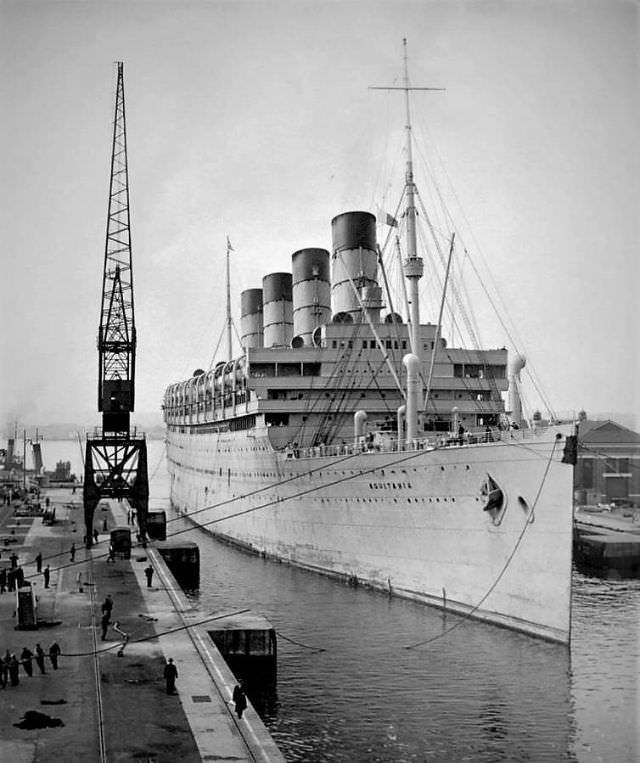
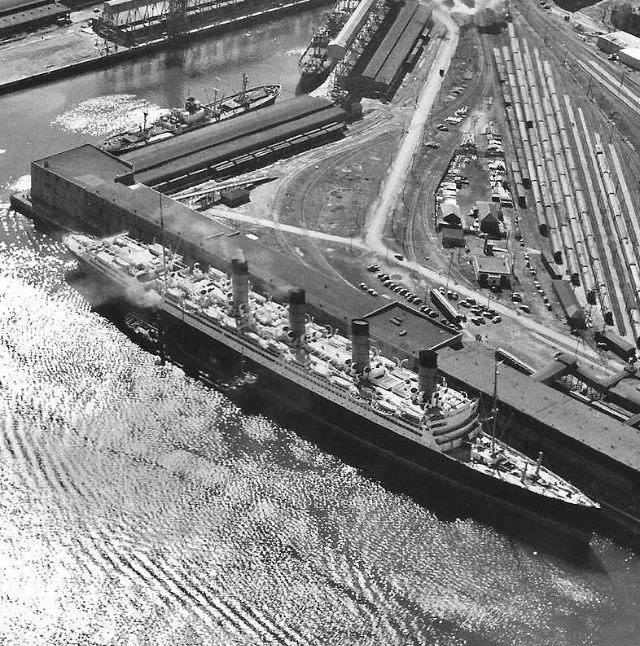
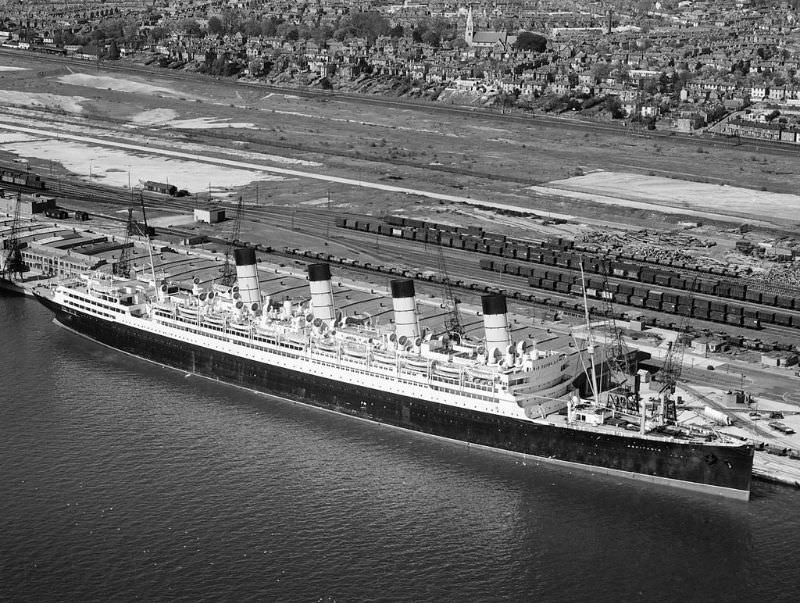
Aquitania at Southampton in 1946.Aquitania and Britannic at Halifax in the summer of 1949. After completing troopship service, Aquitania was handed back to Cunard-White Star in 1948. She underwent a refit for passenger serviceAquitania at Halifax’s Pier 21 in the summer of 1949A final view of Aquitania, affectionately known throughout her long life as the ‘Ship Beautiful’. She rests at Berth 107, Southampton Western Docks in September 1949



My favorite ocean liner is the Aquitania. It is better than the Olympic class.