
World War II did not just destroy cities — it uprooted entire populations. By the time the war ended in 1945, more than 60 million Europeans had been forced from their homes. The crisis did not begin with the first shot fired. It started years earlier, as Nazi aggression pushed people out of their countries one by one. Families packed what they could carry and fled, not knowing where they were going or whether they would ever return.
The scale of displacement was staggering. In 1945, the United Nations Relief and Rehabilitation Administration (UNRRA) recorded over 15 million refugees and displaced persons in Europe alone. Camps were overwhelmed. Roads were flooded with people on foot. Trains carried thousands of desperate passengers pressed shoulder to shoulder. The photographs below, many commissioned by TIME and LIFE magazines and others taken independently, document this crisis in unflinching detail.
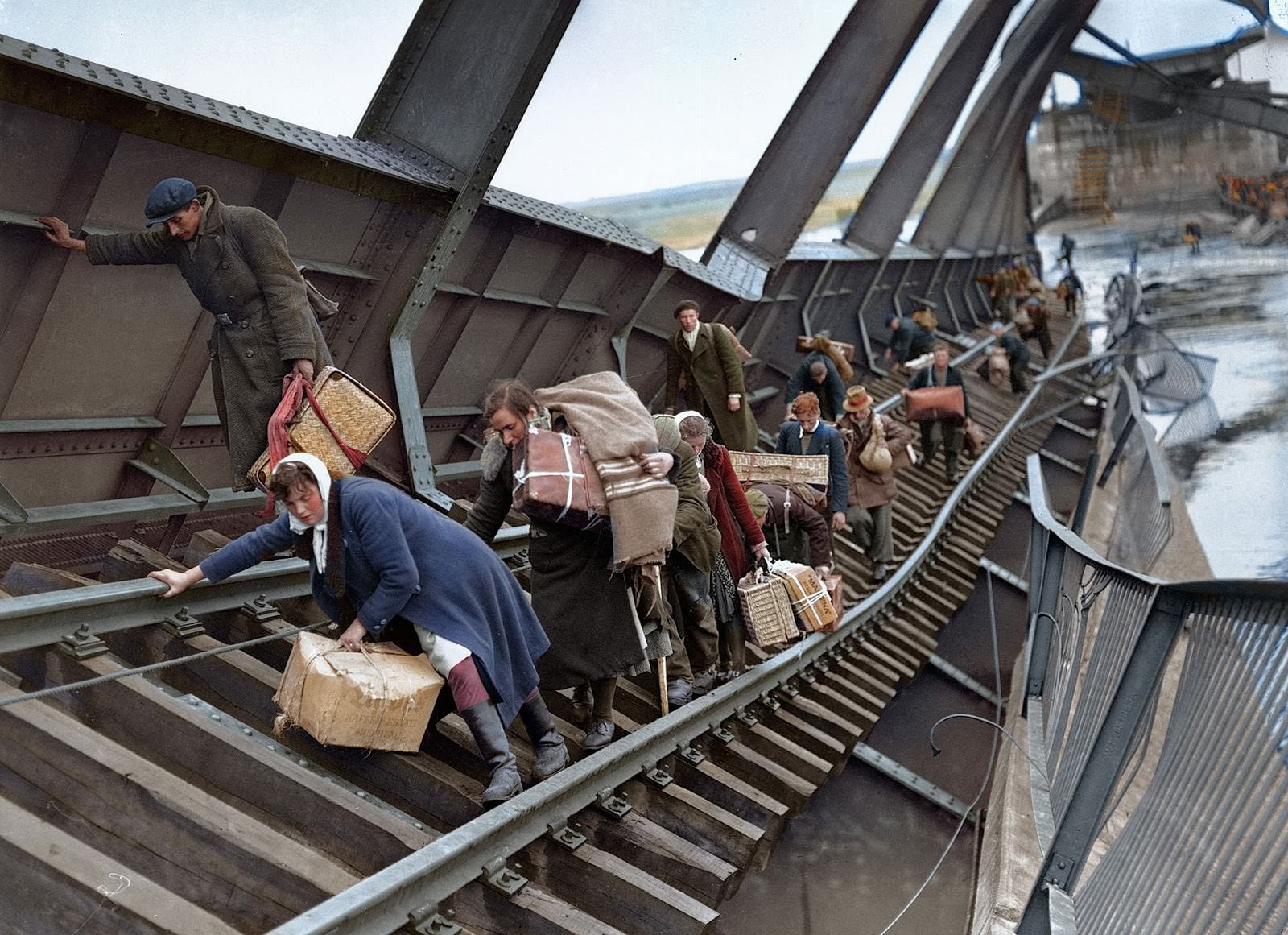
As Soviet forces pushed westward in the spring of 1945, hundreds of thousands of people trapped behind German lines scrambled to get ahead of the advancing front. Bridges had been blown up by retreating German forces, forcing refugees to find whatever crossing they could. The scene at the River Elbe captured above was repeated at dozens of river crossings across Germany in those final weeks of the war.
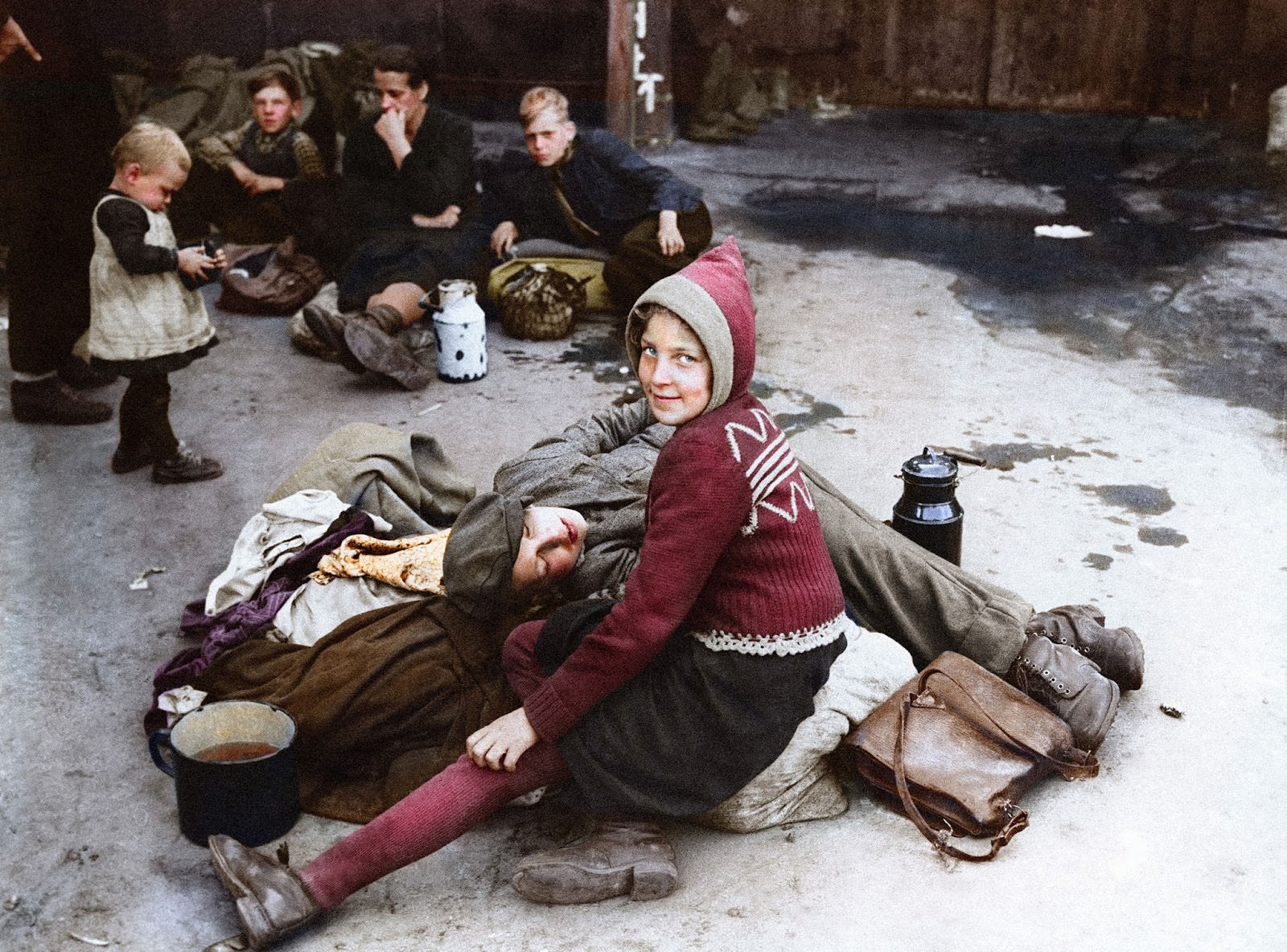
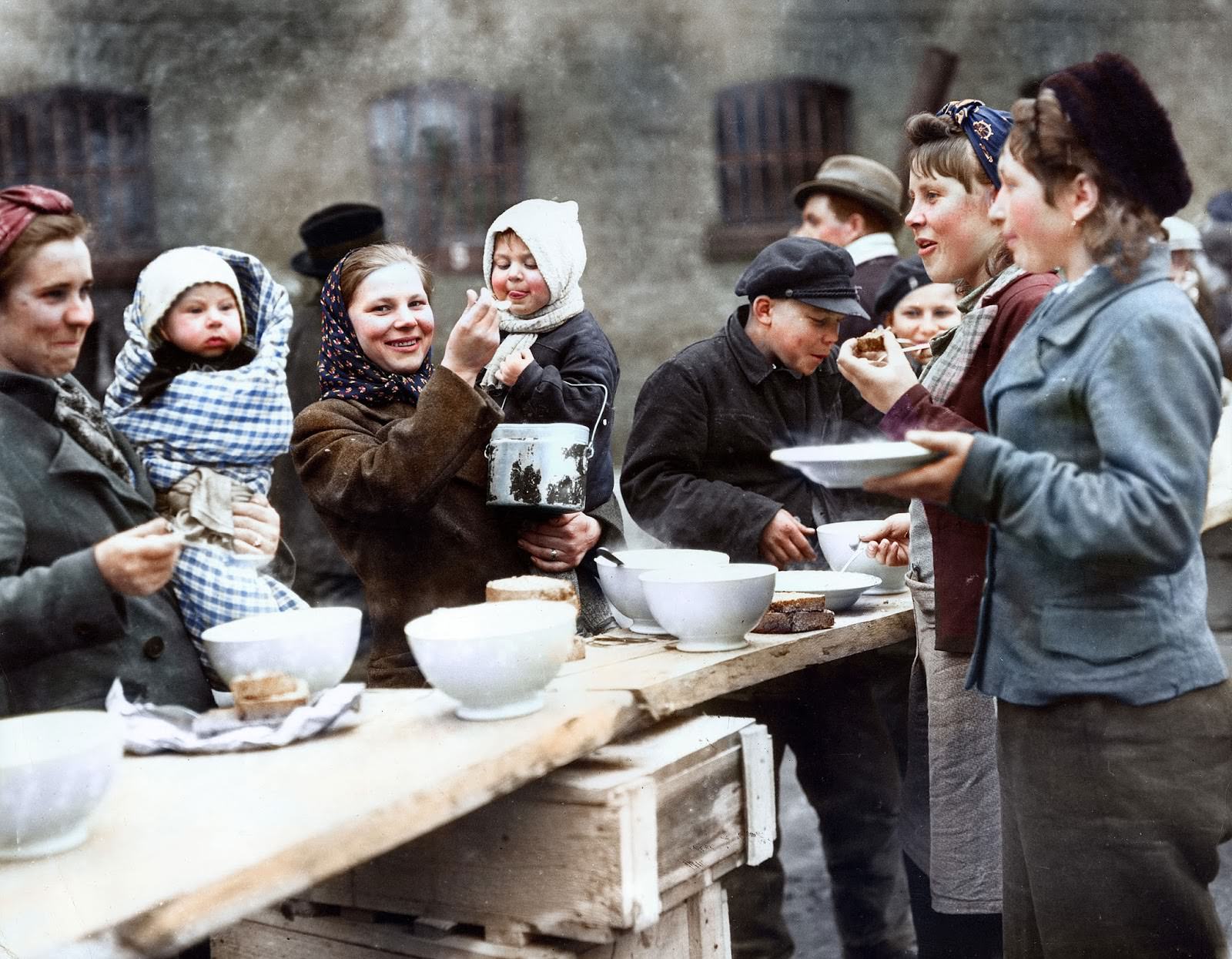
Refugee camps inside Germany were established both during and after the war. They ranged from purpose-built facilities to hastily converted buildings. Conditions in most were grim — overcrowded, undersupplied, and without any clear timeline for when residents might move on. Many people stayed in these camps for months, waiting for borders to stabilize and for some authority to determine their fate.
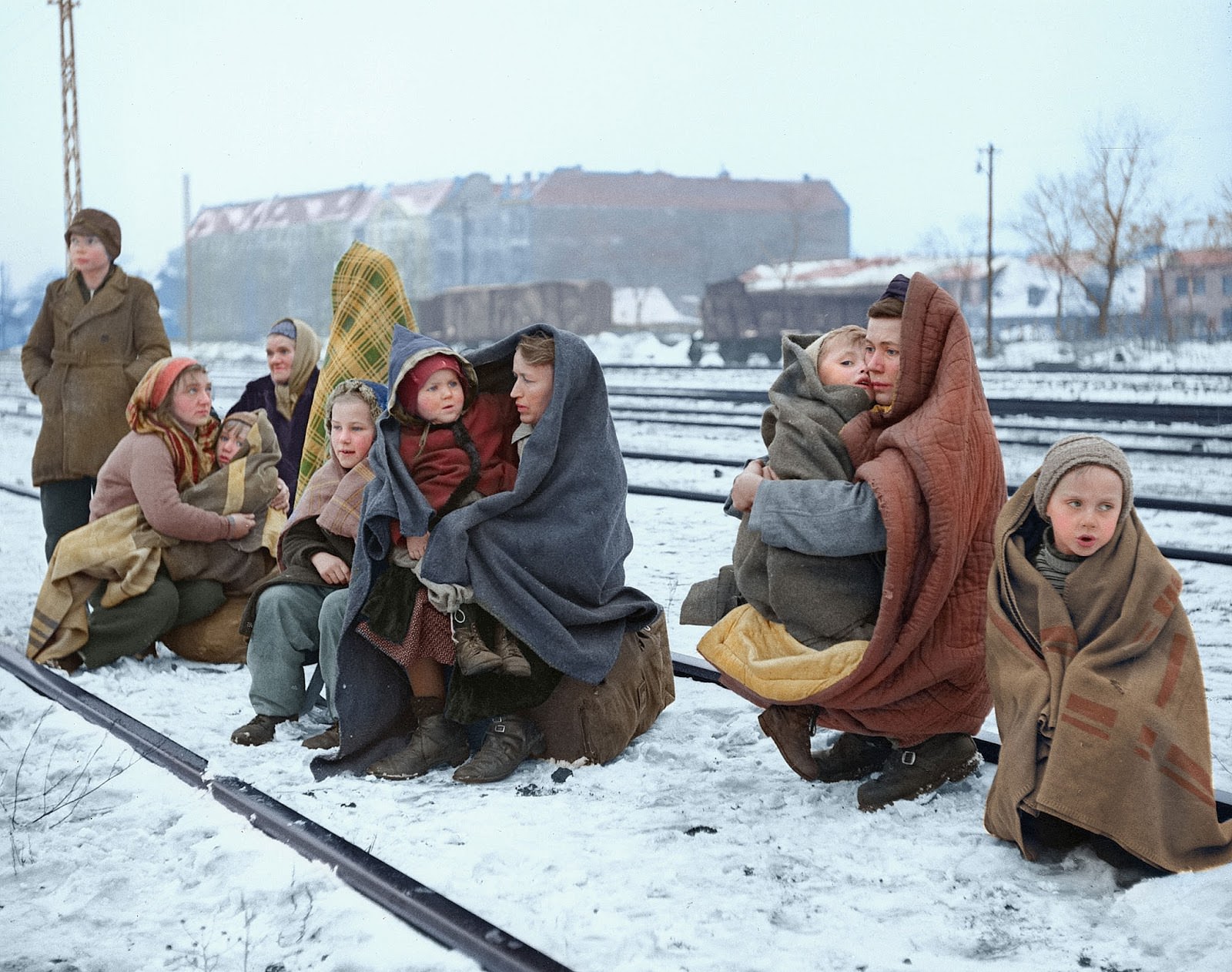
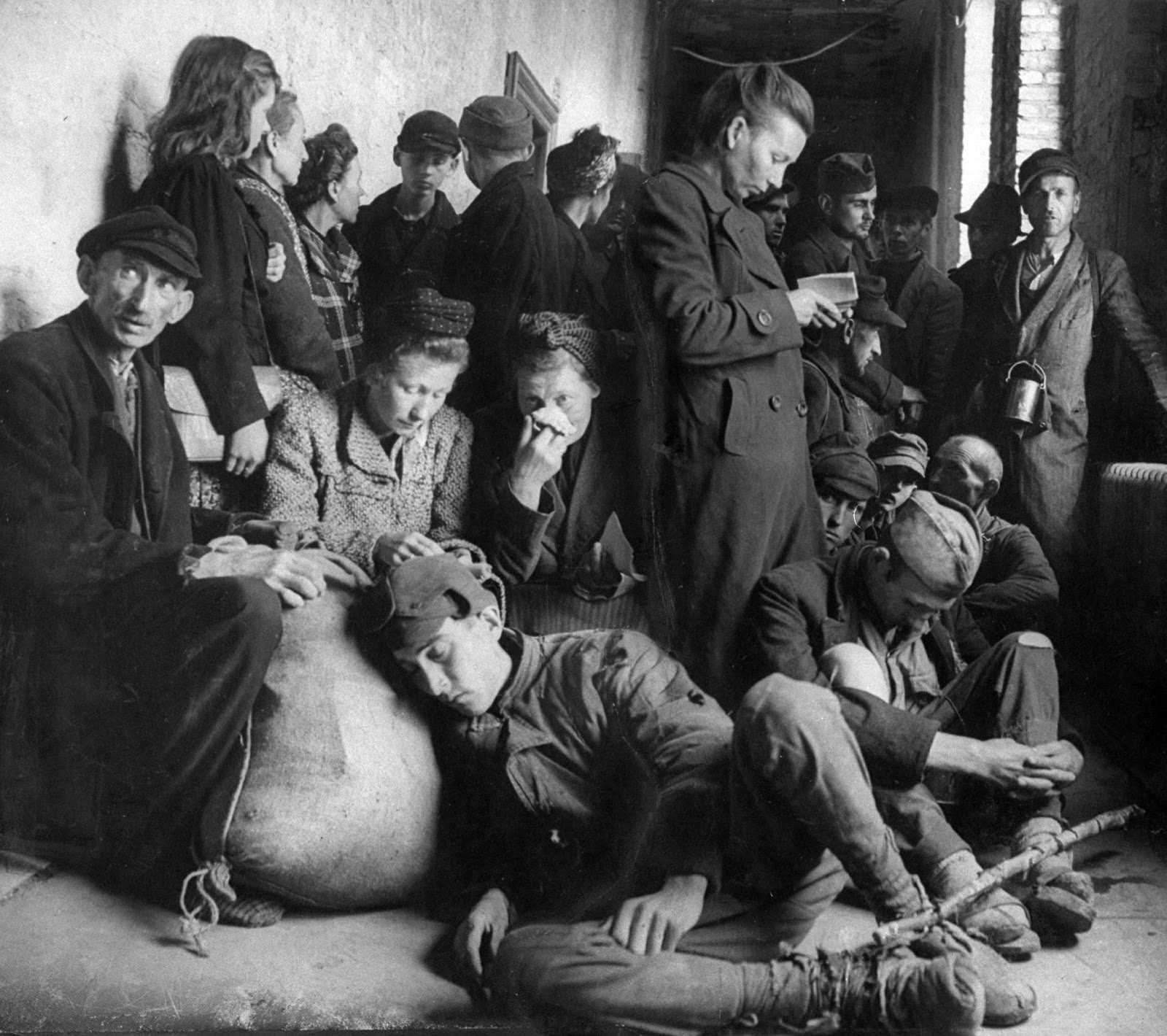
One of the most grim stories embedded in this collection involves a group of 150 Polish refugees who left Lodz on foot, bound for Berlin. By the time they arrived, only a handful were still alive. The survivors huddled together near railway tracks in the winter cold, hoping a British army train would stop and take them in. They had walked through the wreckage of a defeated Germany with almost nothing.
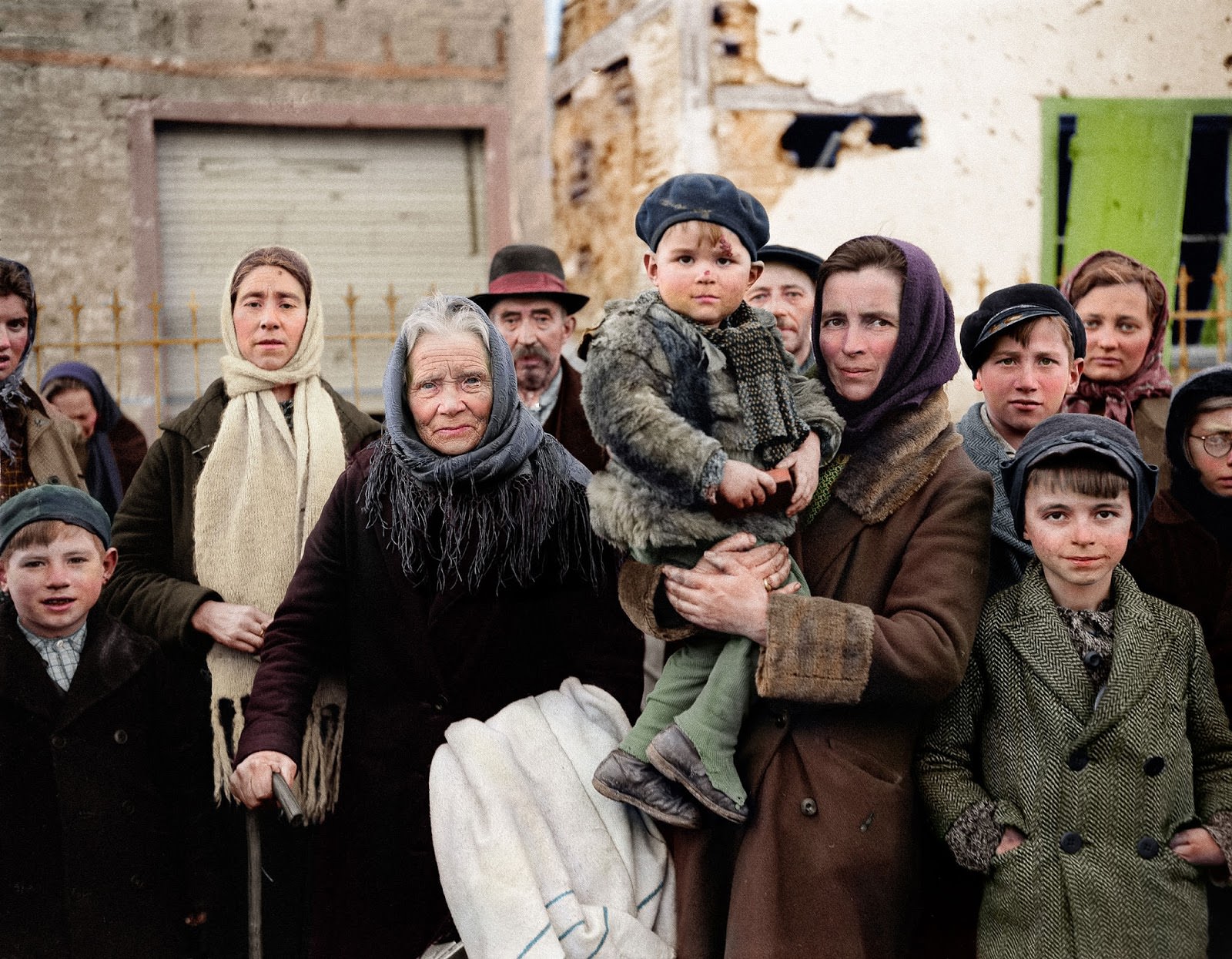
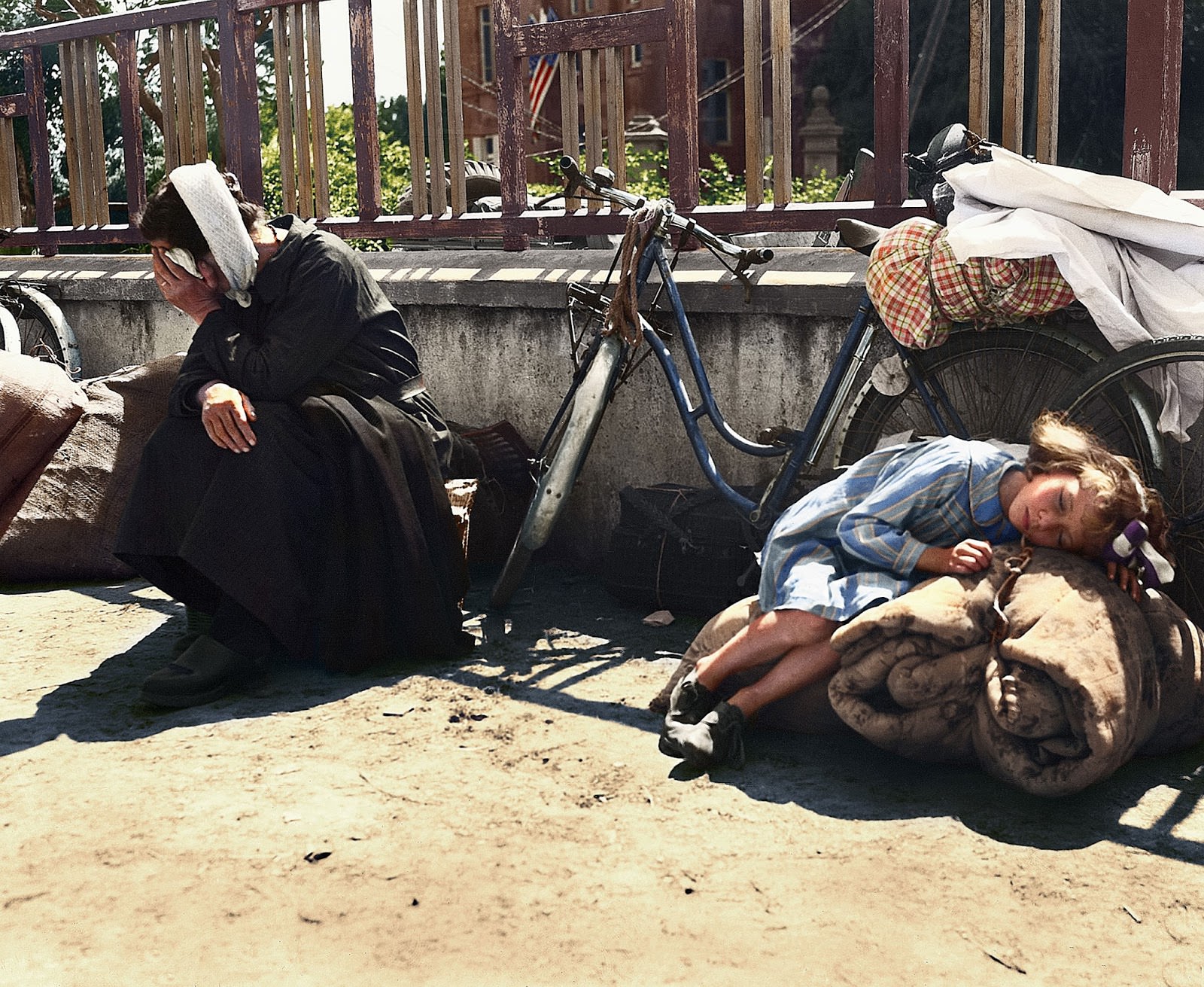
Western Europe saw its own waves of displacement as the war shifted back and forth. In France and Belgium, civilians fled ahead of German advances and then again during Allied counterattacks. Towns like La Gleize and Saint-Pois changed hands during brutal fighting, and their residents were caught in between. Some returned home to find their towns barely standing.
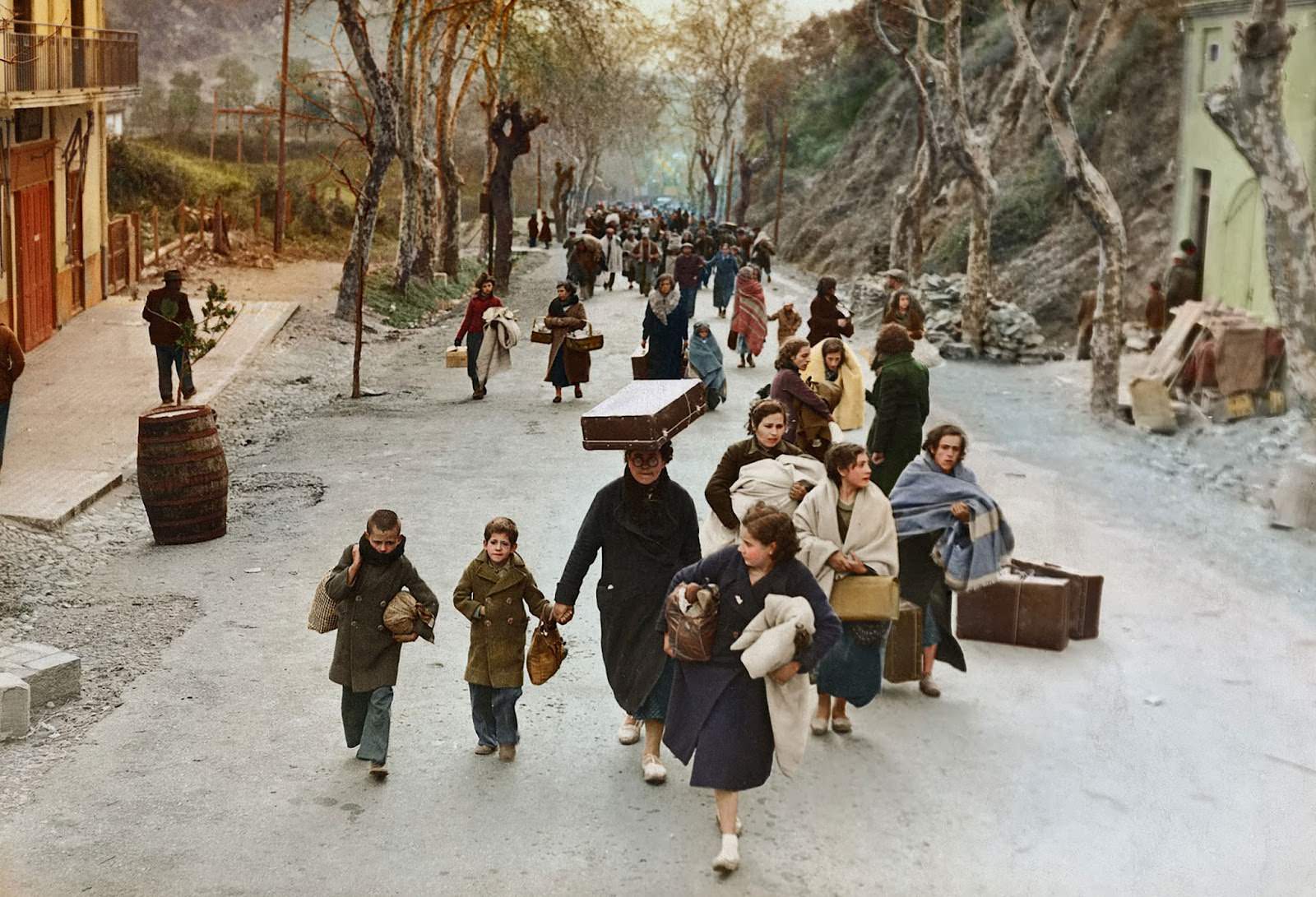
When Germany invaded France in 1940, an estimated eight to ten million French civilians fled south in what became known as the Exodus. Roads out of Paris and other northern cities were choked with people on foot, on bicycles, and in cars. The German military advanced so quickly that many refugees were overtaken before they could reach safety.
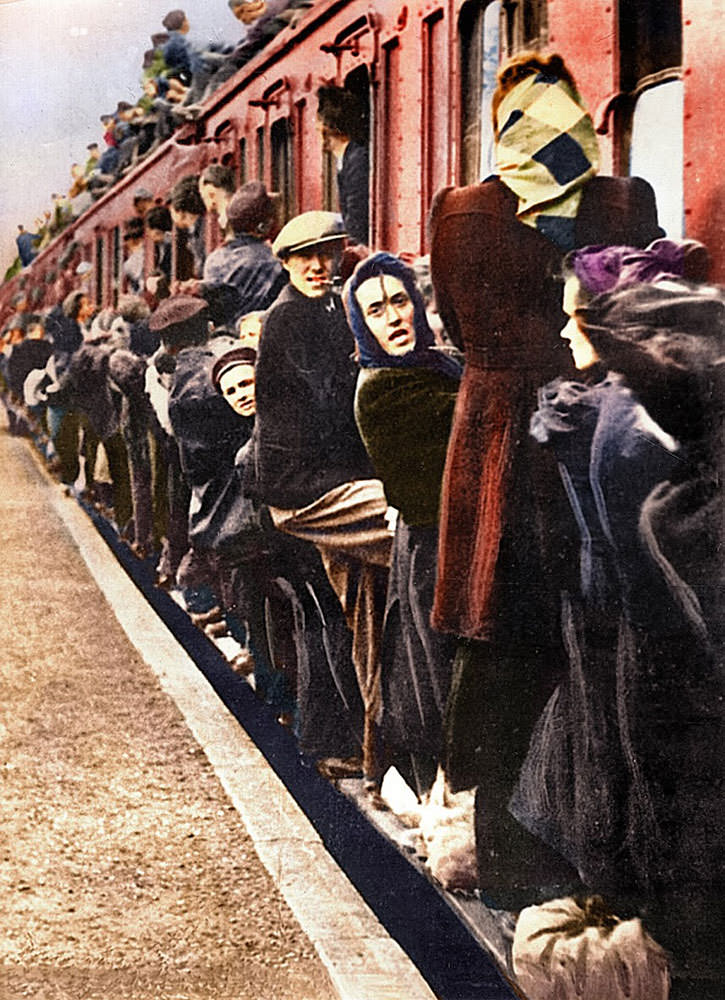
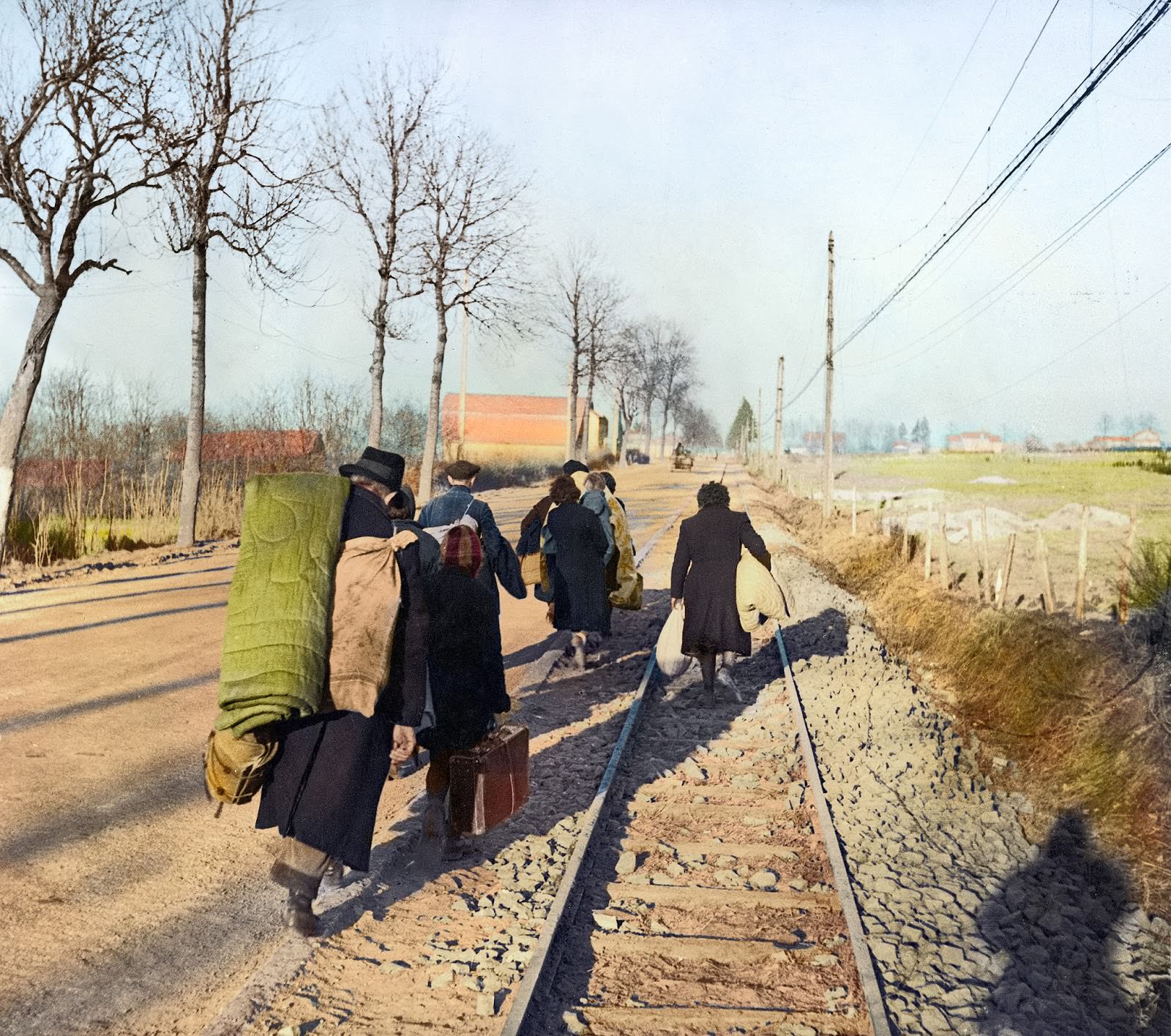
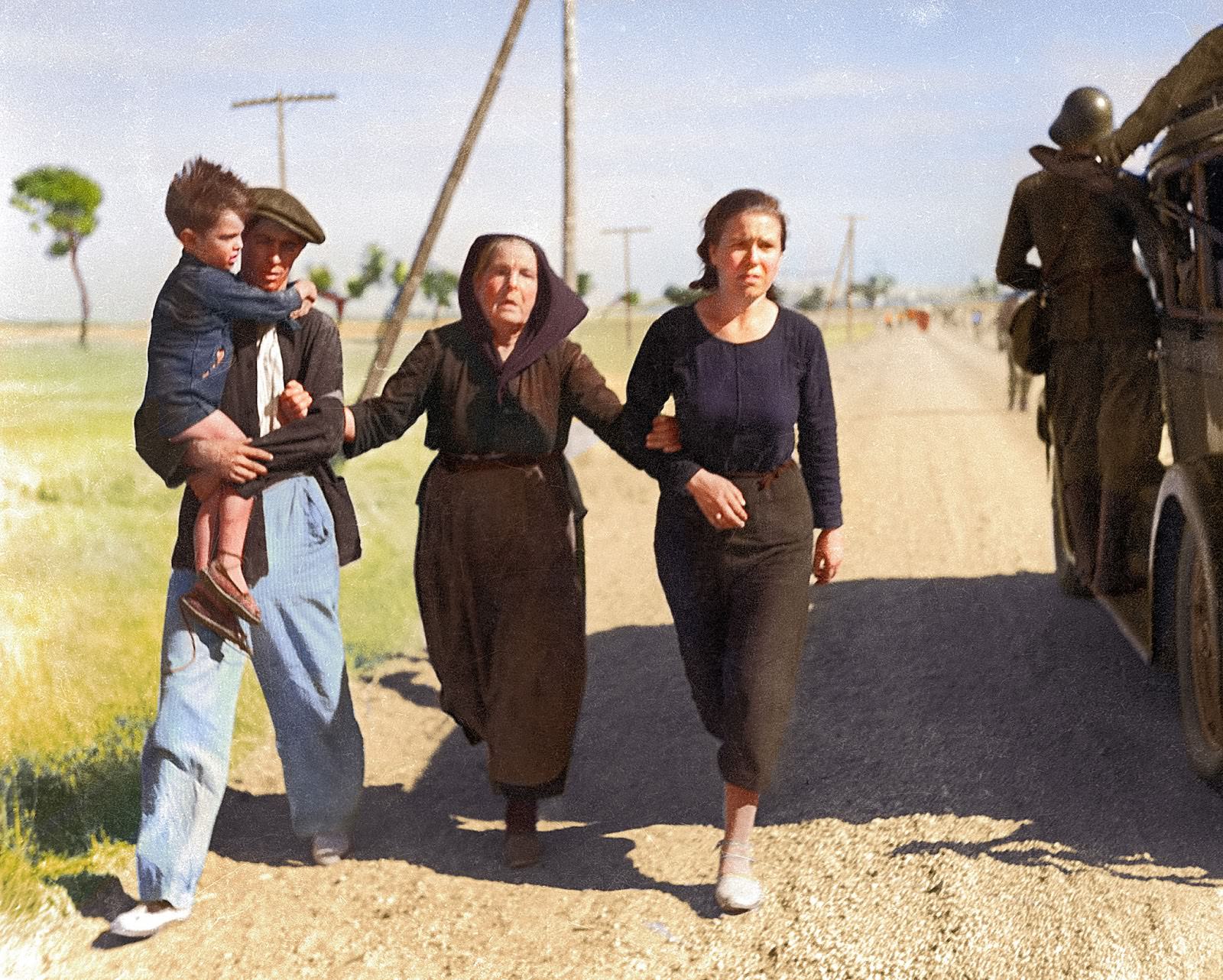
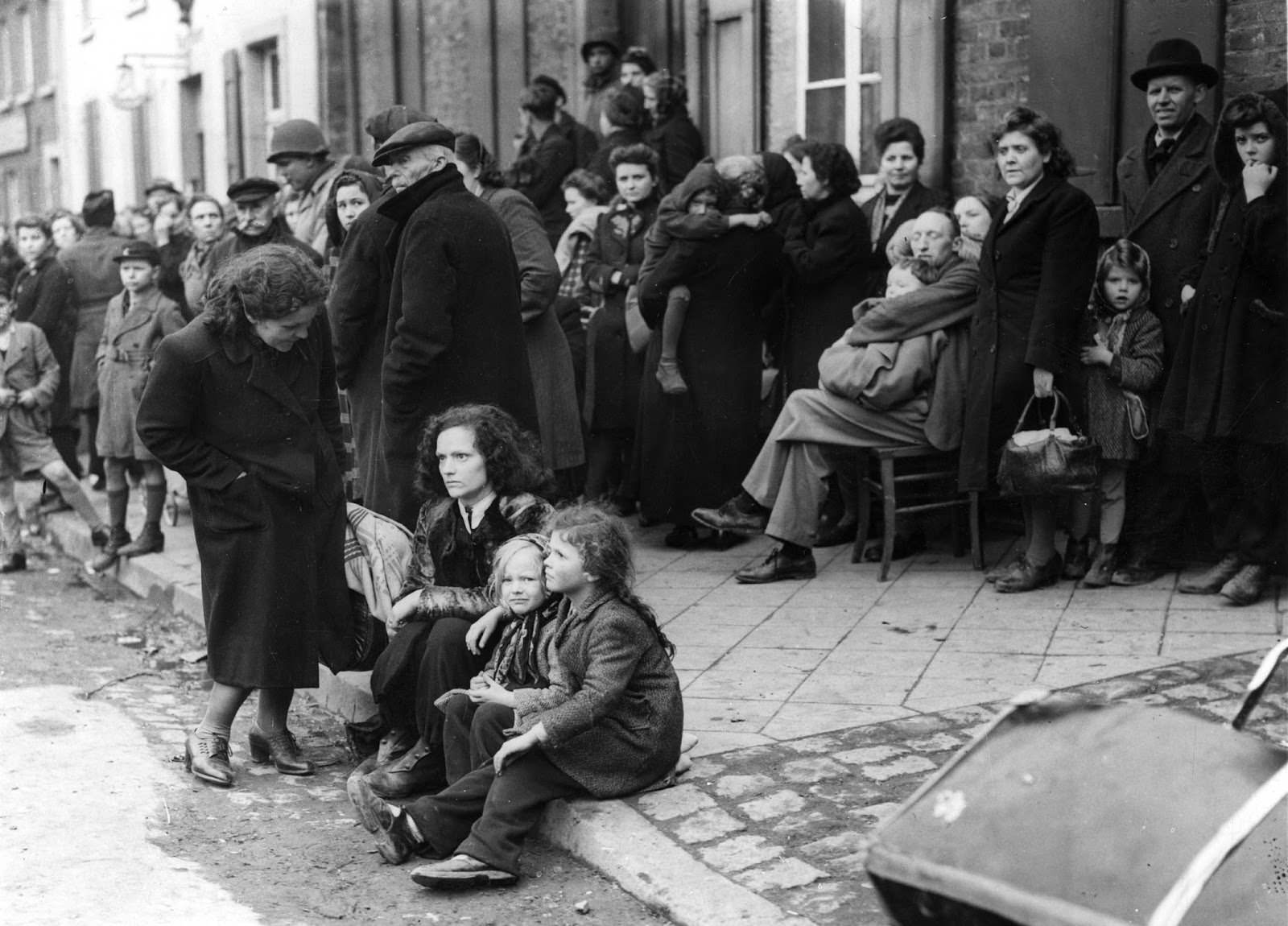
Belgian families fled twice during the war — first in 1940 when Germany occupied the country, and again in late 1944 and early 1945 during the German counteroffensive in the Ardennes. These families carried whatever they could on their backs or loaded onto carts, walking along roads shared with military convoys. Children, the elderly, and the sick had no choice but to keep moving.
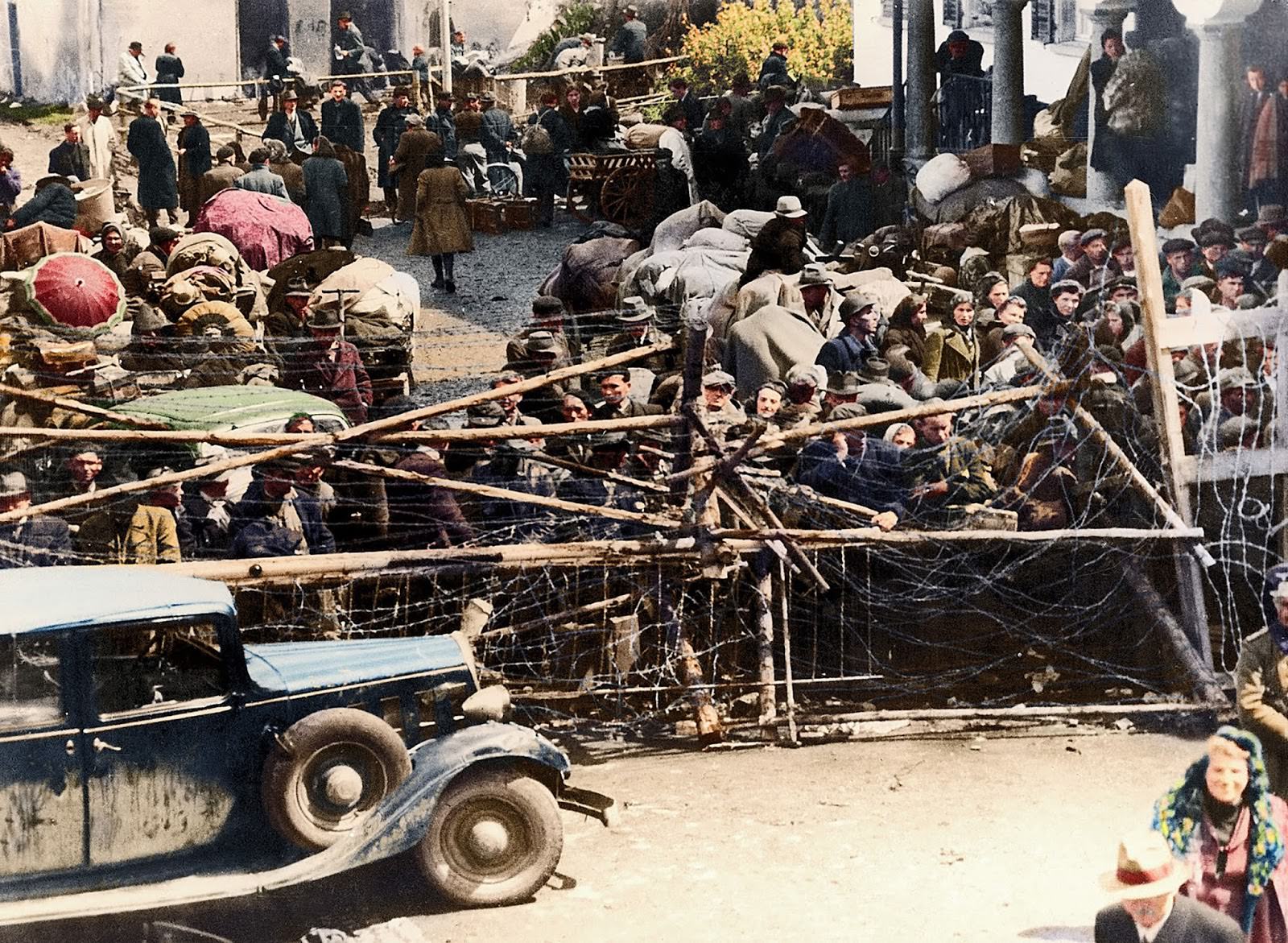
Even neutral countries like Liechtenstein became destinations for those fleeing the final collapse of the Third Reich. Border crossings were controlled, and customs officials processed each person individually. The barbed wire in this photograph — meant to manage the crowd rather than imprison them — is a stark symbol of how even the act of escaping required waiting in line.
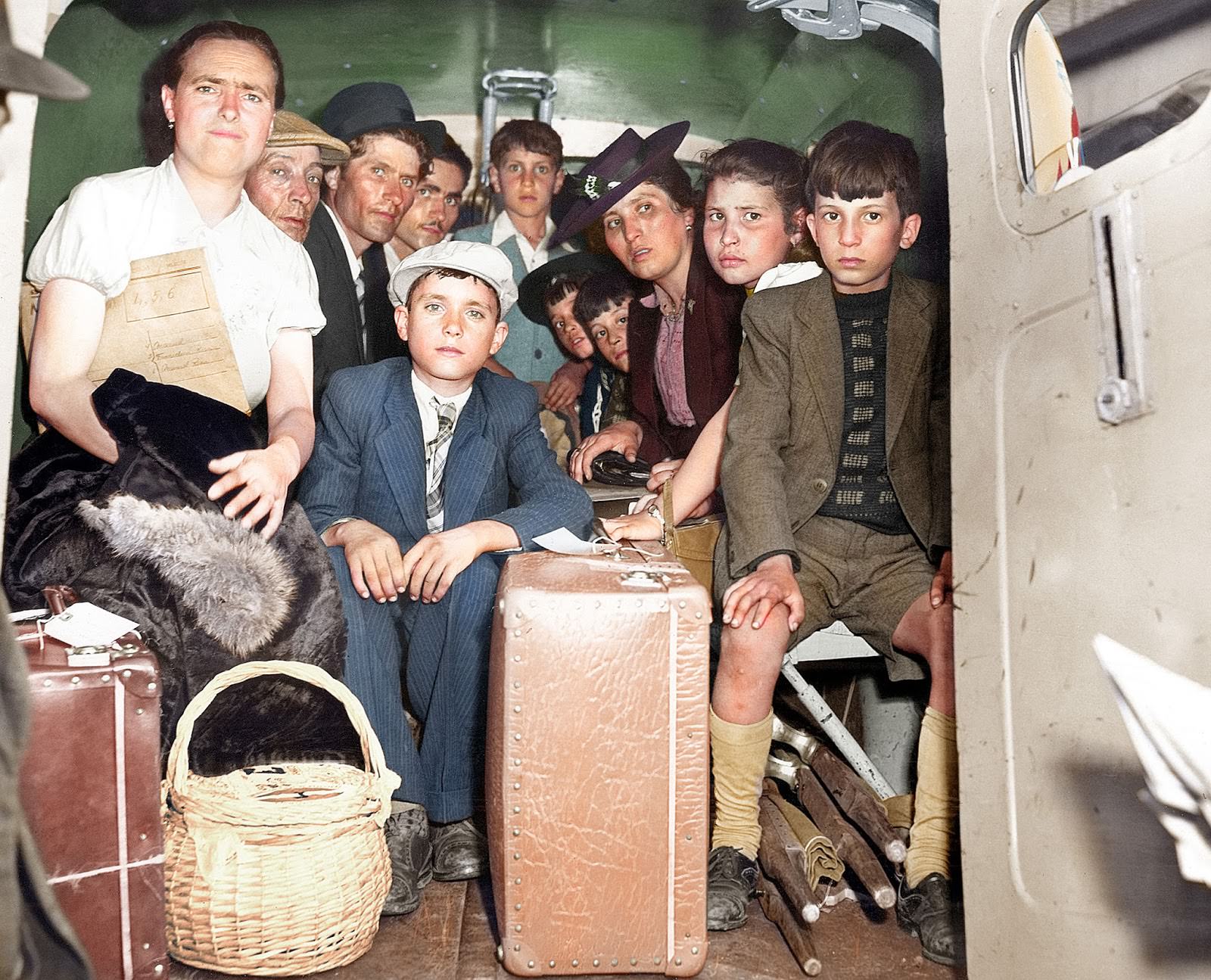
Refugees who attempted to flee Europe by sea faced their own dangers. The Portuguese ship Serpa Pinto was intercepted by a German submarine and its passengers were ordered to abandon ship. After the U-boat crew ultimately allowed the passengers to reboard, the ship continued to Philadelphia. The passengers who arrived in May 1944 had come face to face with the possibility of being sunk in the Atlantic.
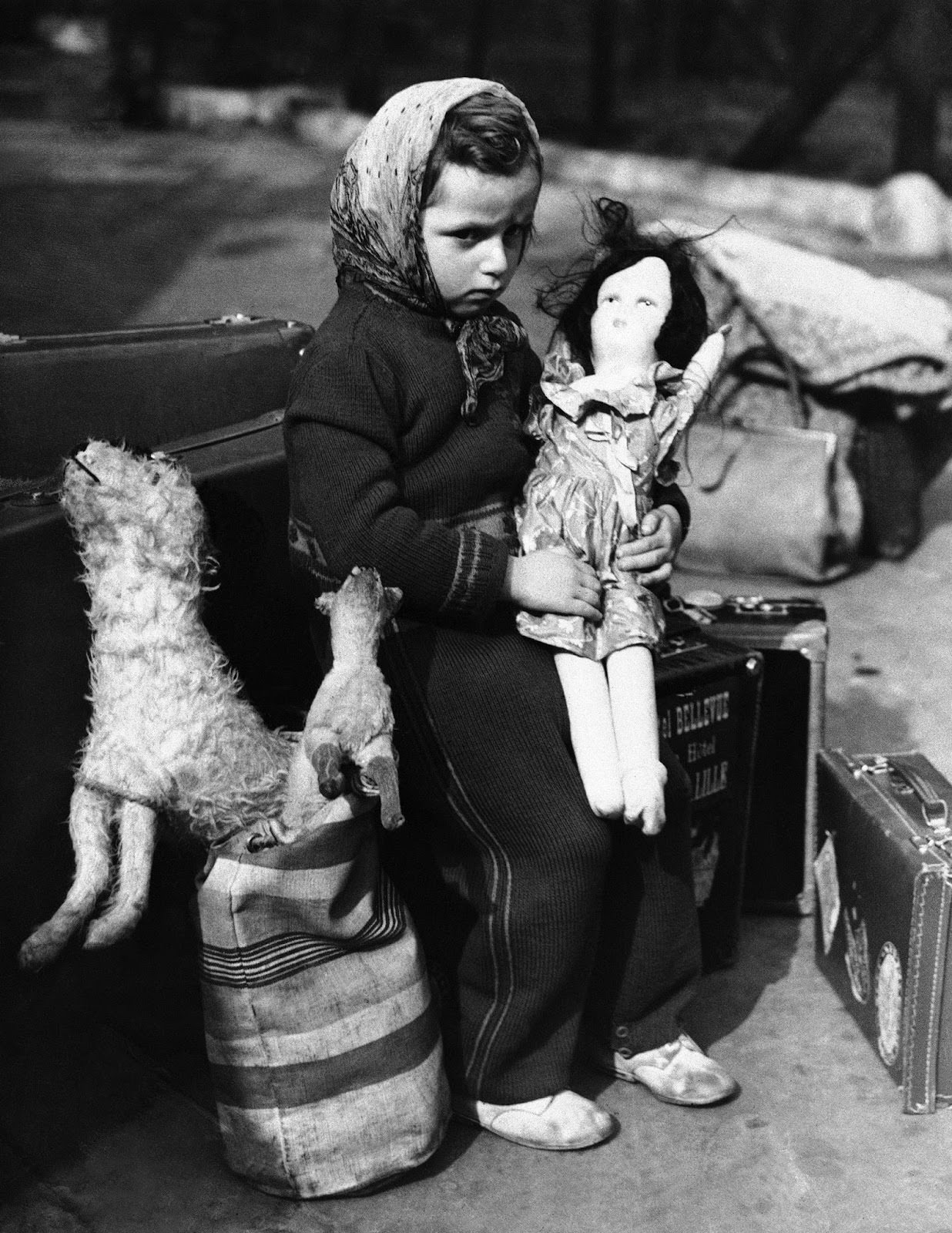
Children were among the most vulnerable refugees of the war. After Germany seized Antwerp in 1940, many Belgian children were evacuated to Britain. Betti Malek was one of them. Separated from their families and dropped into a foreign country, these children navigated the war in a state of profound uncertainty, dependent entirely on the strangers and organizations that took them in.
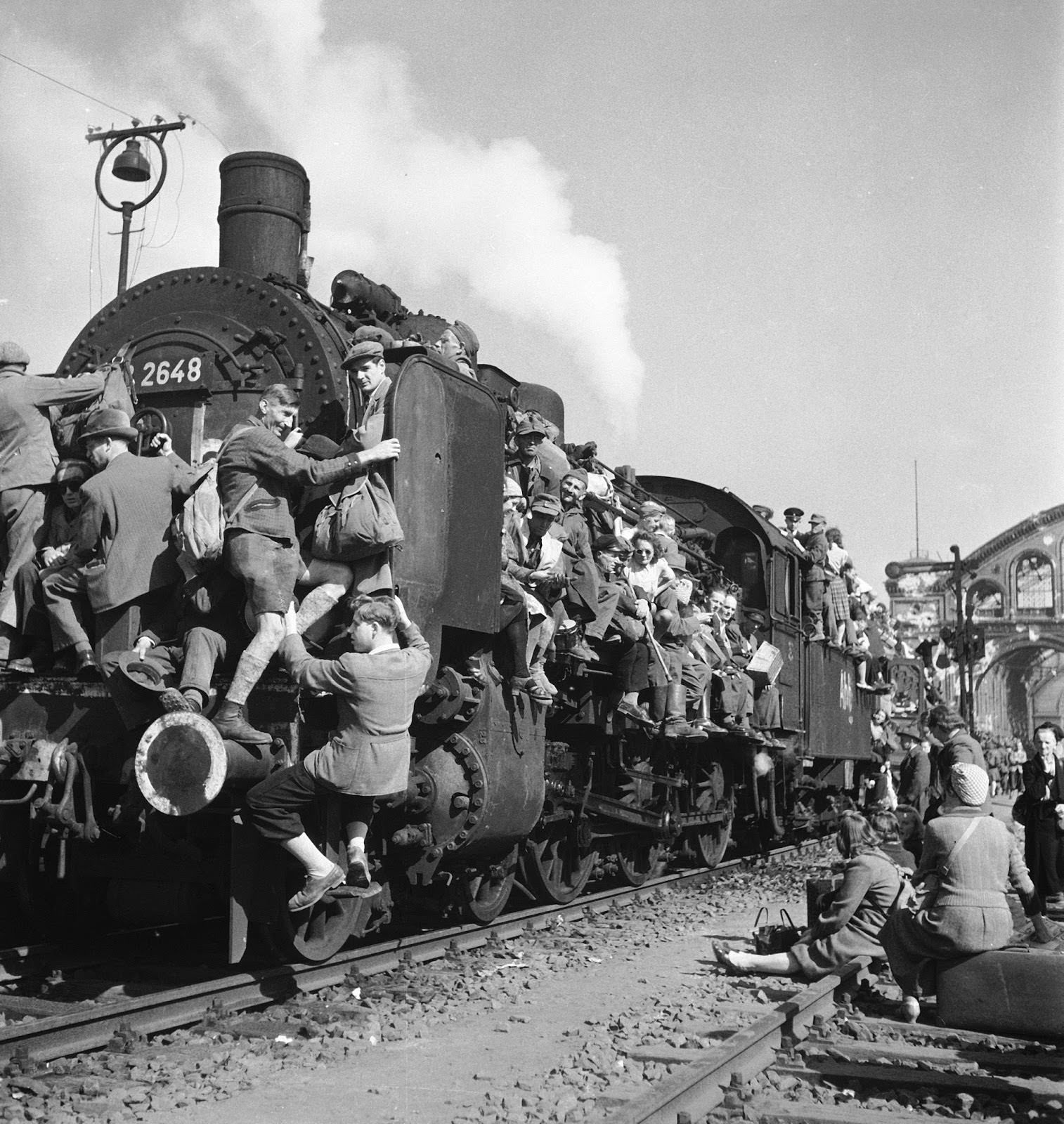
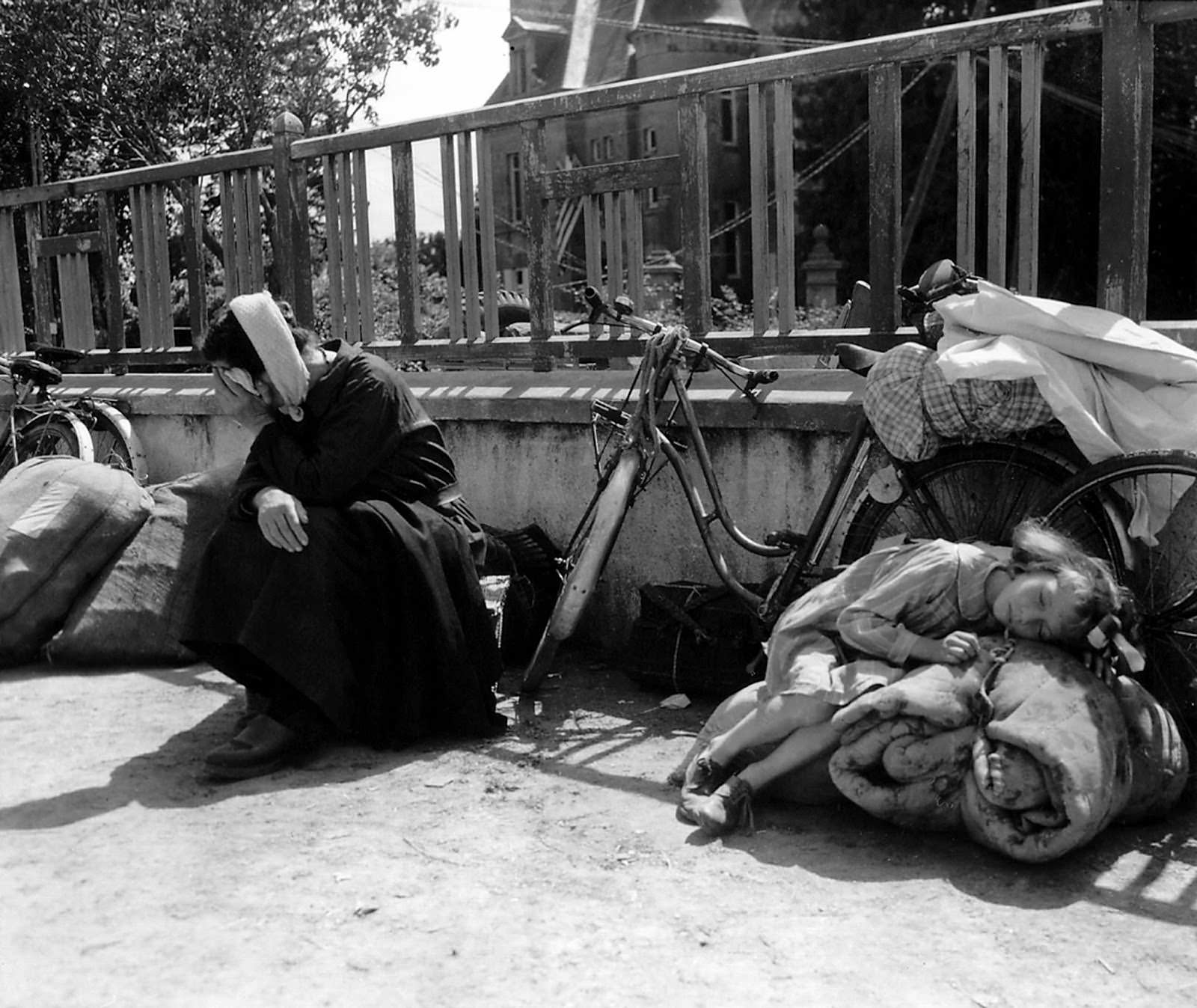
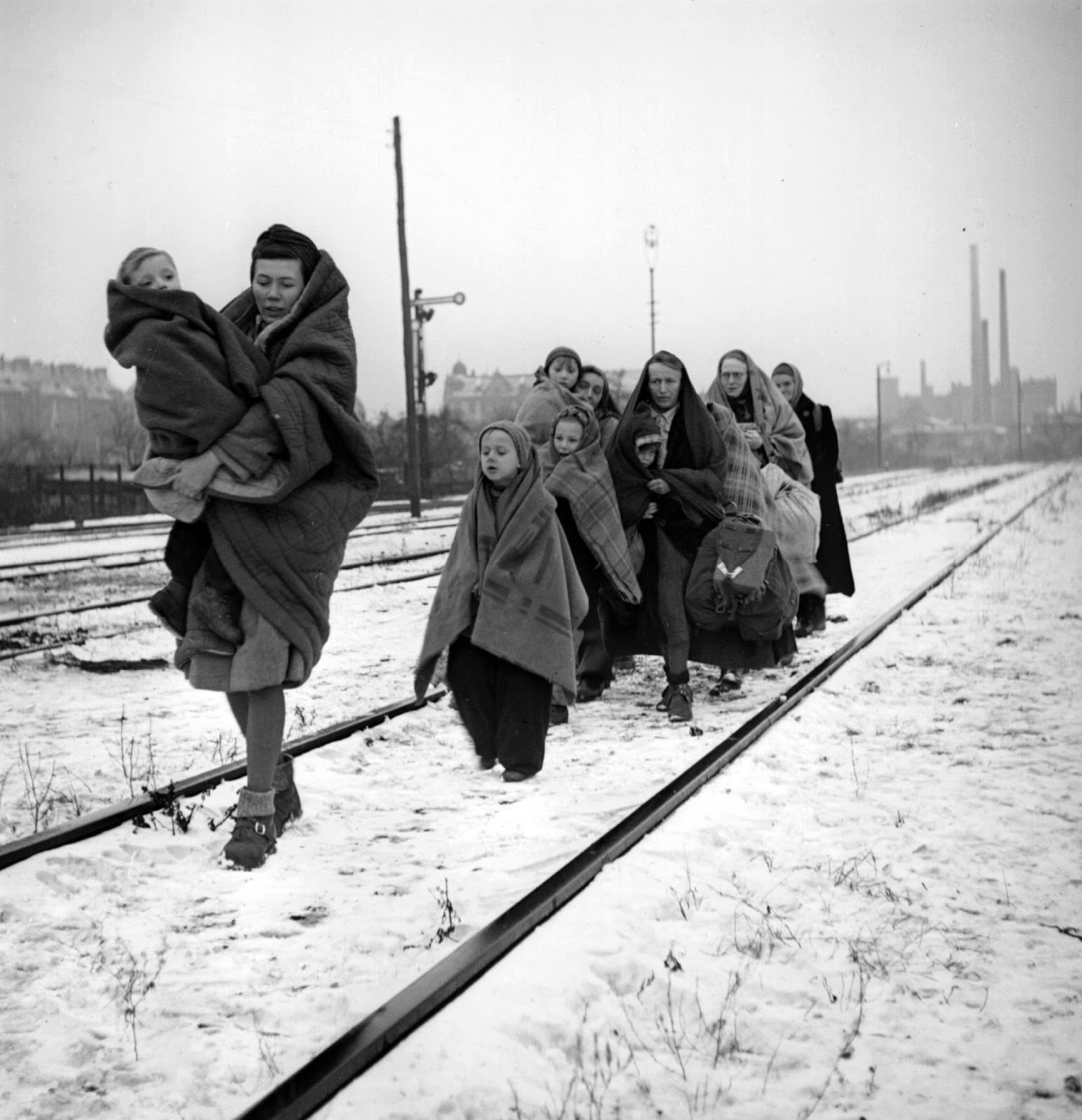
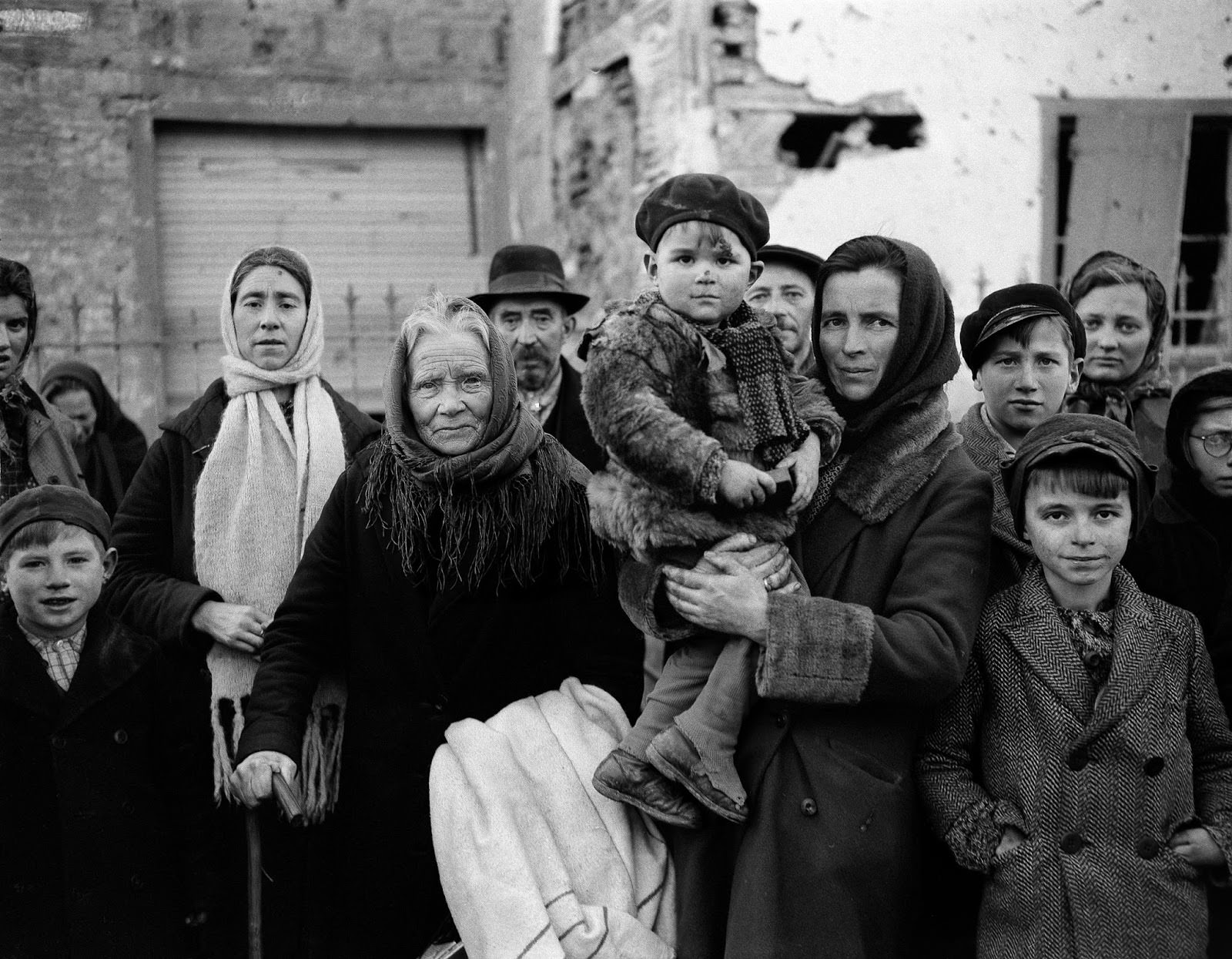
La Gleize, Belgium was the site of some of the fiercest fighting during the Battle of the Bulge in late 1944. When American forces retook the town in early January 1945, they found civilians still sheltering in the ruins. Getting those people out required coordination between military units and civil affairs teams, who organized transportation to safer areas further from the front line.
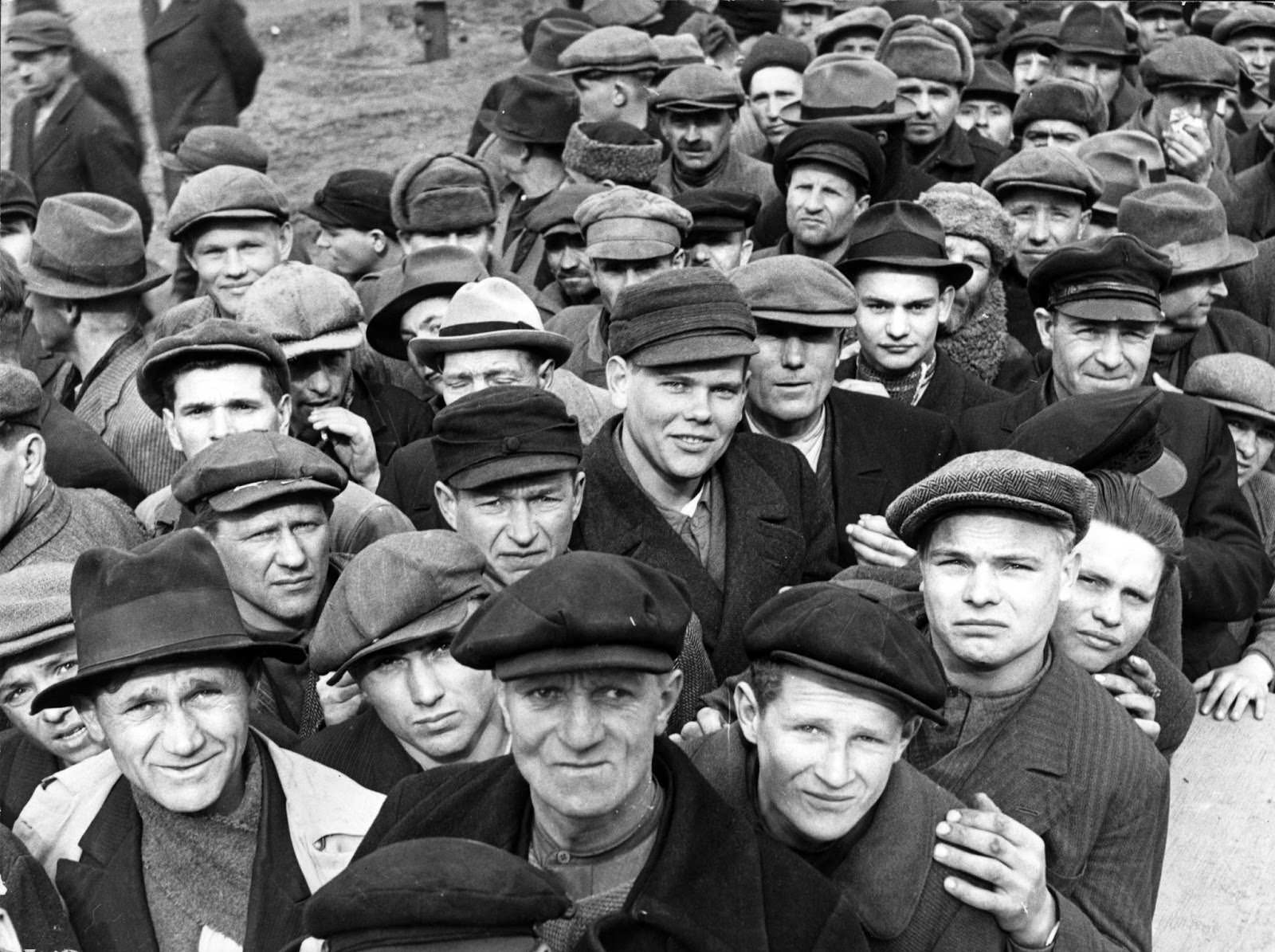
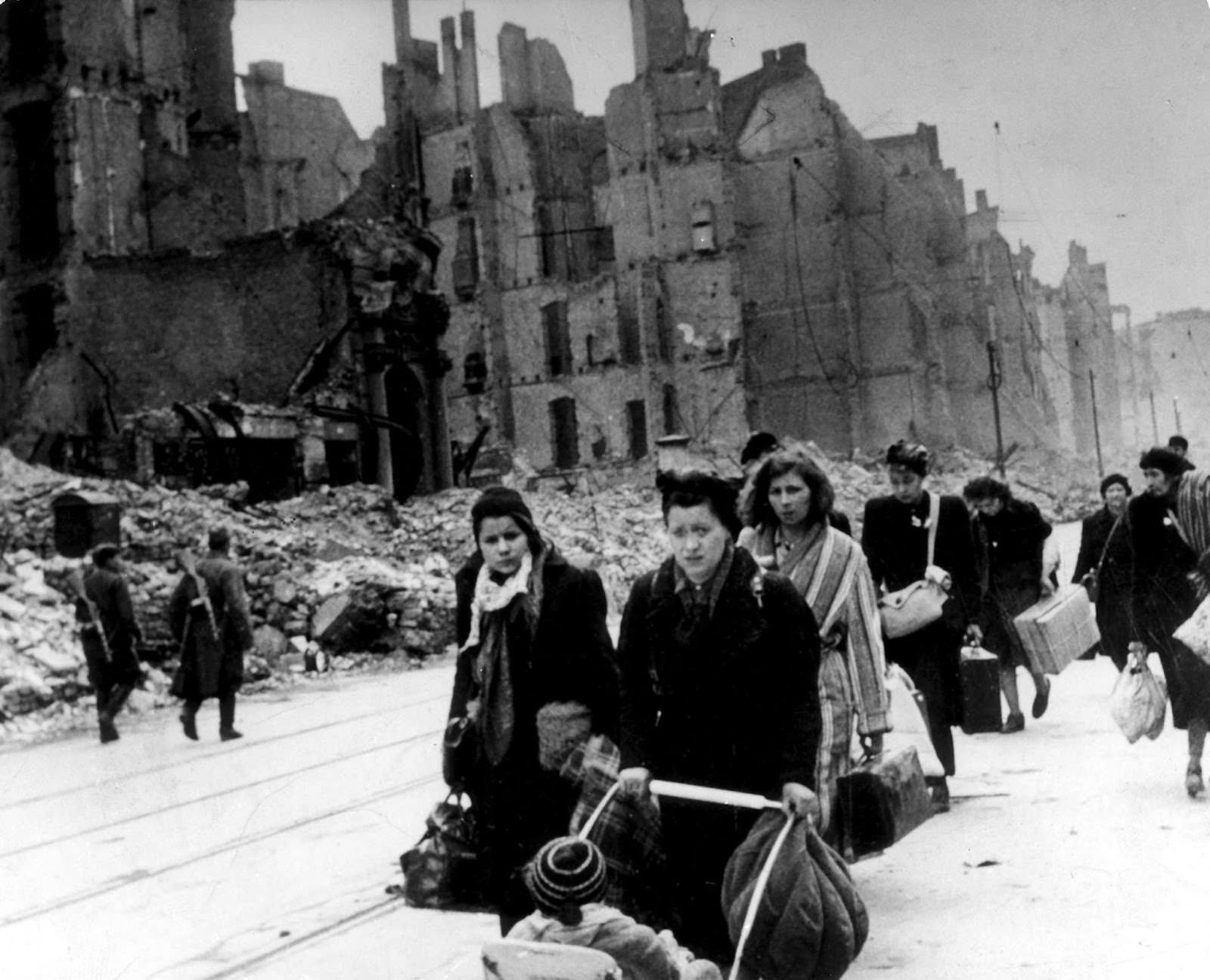
After Germany’s defeat, the country’s cities were in ruins. Millions of people — German civilians, freed forced laborers, former concentration camp prisoners, and returning soldiers — all moved through the same destroyed streets at the same time. Soviet soldiers patrolled the rubble while the homeless moved past them with their belongings. The end of the war did not end the displacement. For most, it simply changed its character.
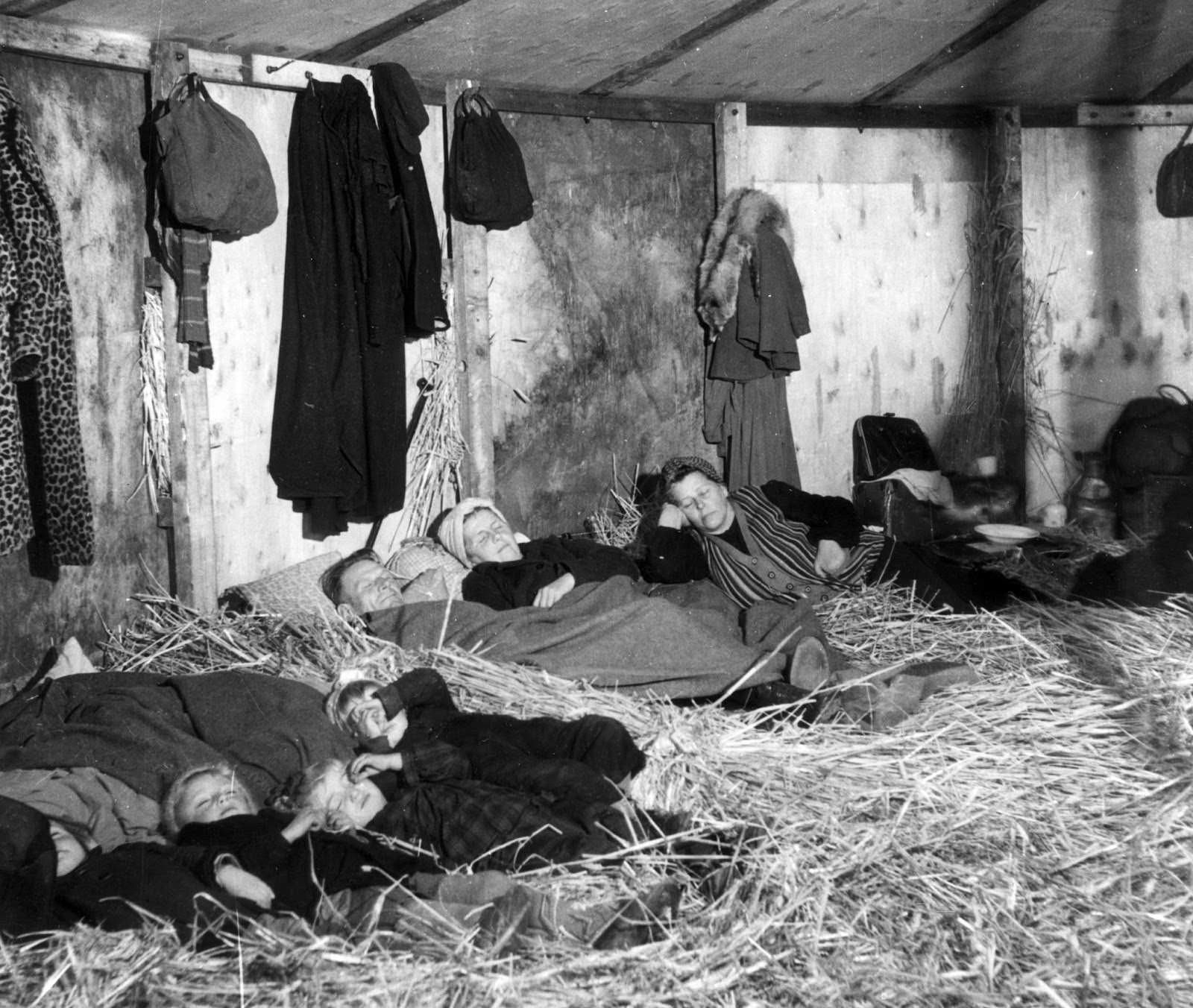
Even after the formal end of the war in Europe in May 1945, displacement continued. German civilians in areas now controlled by the Soviet Union fled west into the British and American zones. Transit camps like the one at Uelzen in northern Germany became way stations for thousands of people sleeping on straw while authorities sorted out where they could go next.
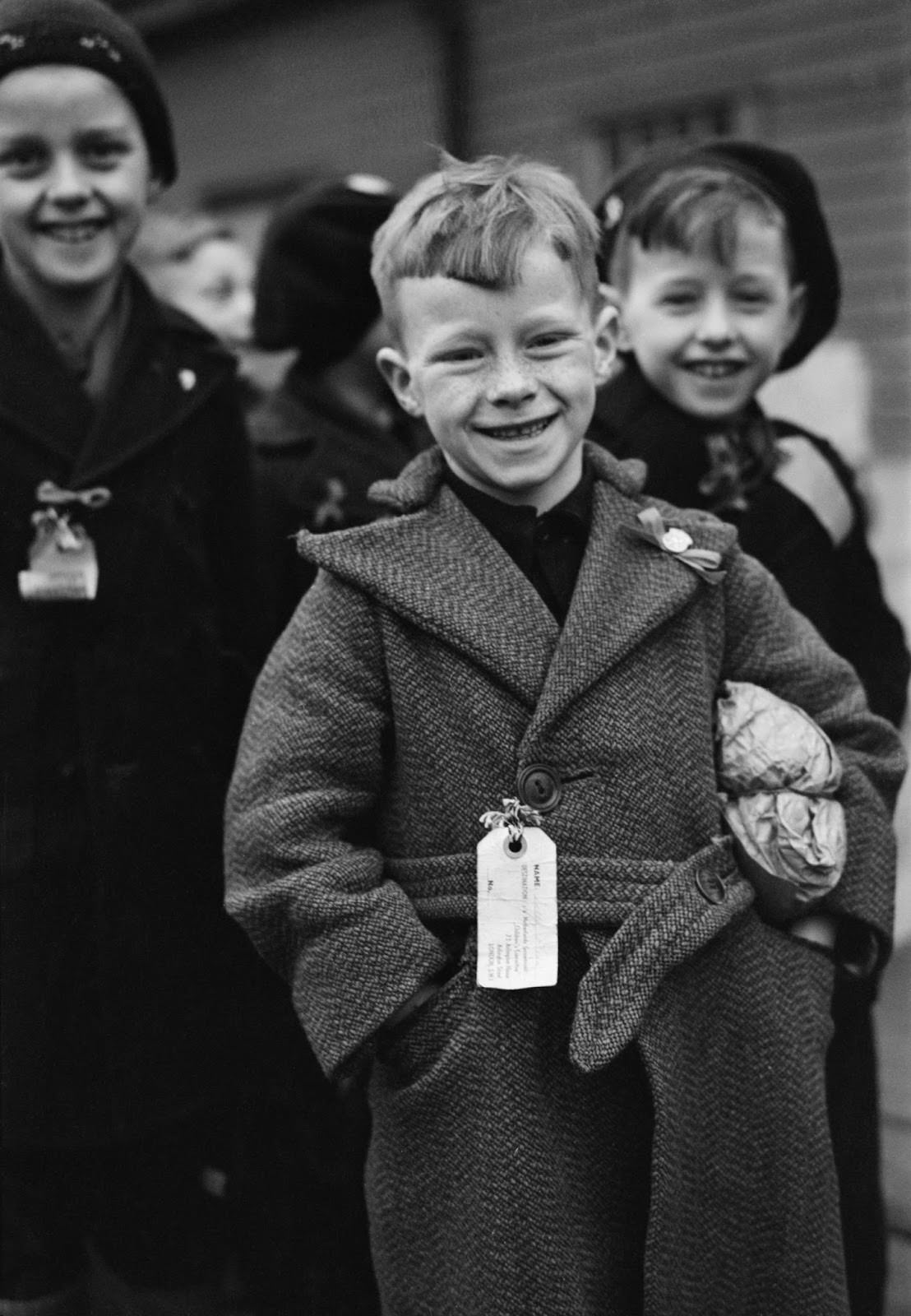
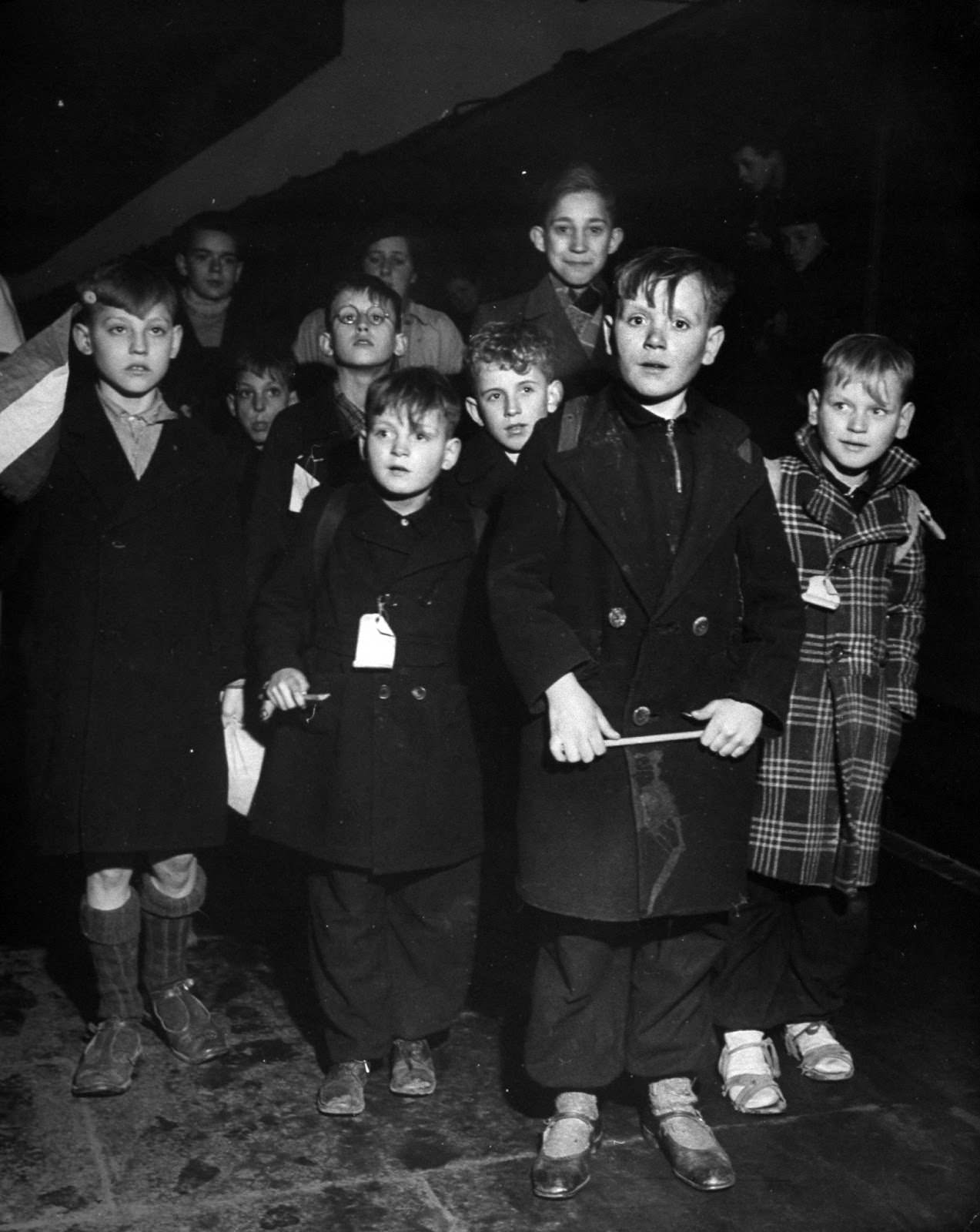
The image of a Dutch boy arriving at Tilbury in March 1945 with a small paper parcel as his only luggage captures just how little these children carried across the Channel. Britain received thousands of child refugees from the Netherlands and Belgium during the war. Many arrived with nothing more than what they could fit in a bundle under one arm.
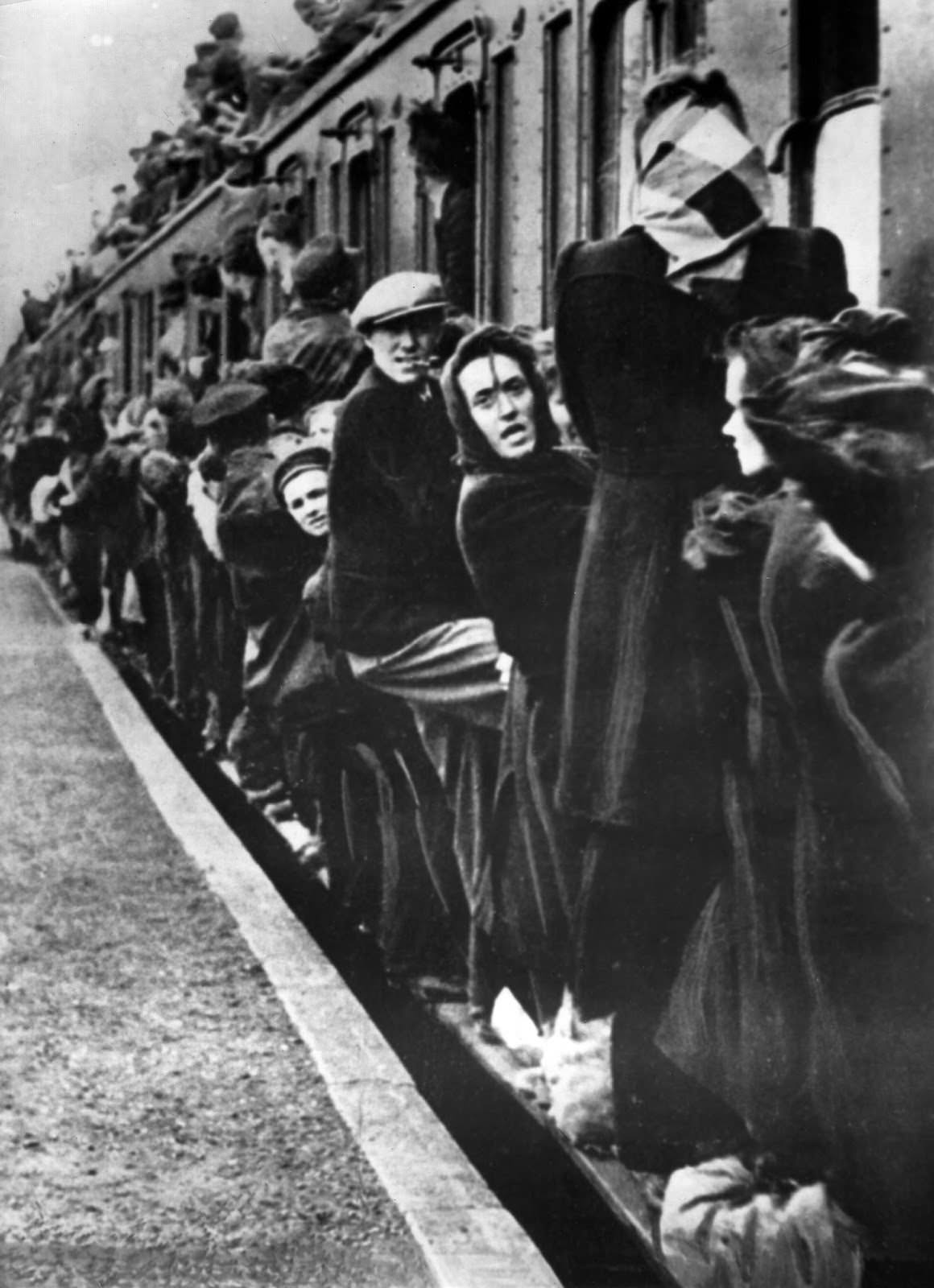
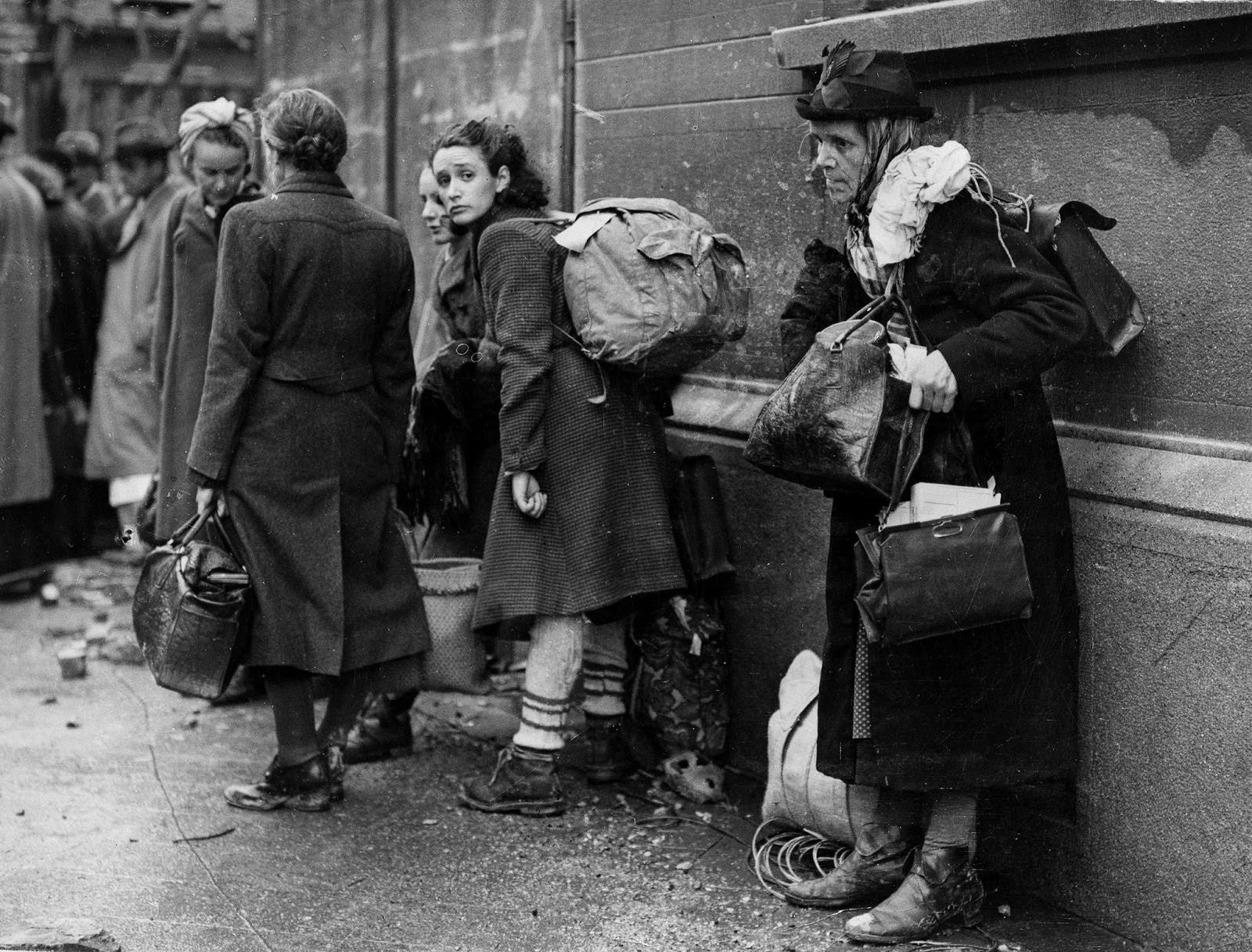
Aachen was the first major German city captured by Allied forces in the fall of 1944. The battle for the city was brutal, fought block by block. Civilians who had not already fled were ordered to evacuate as the fighting intensified. Those who left in October 1944 walked out of a city that had been reduced to rubble, carrying what little remained of their lives.
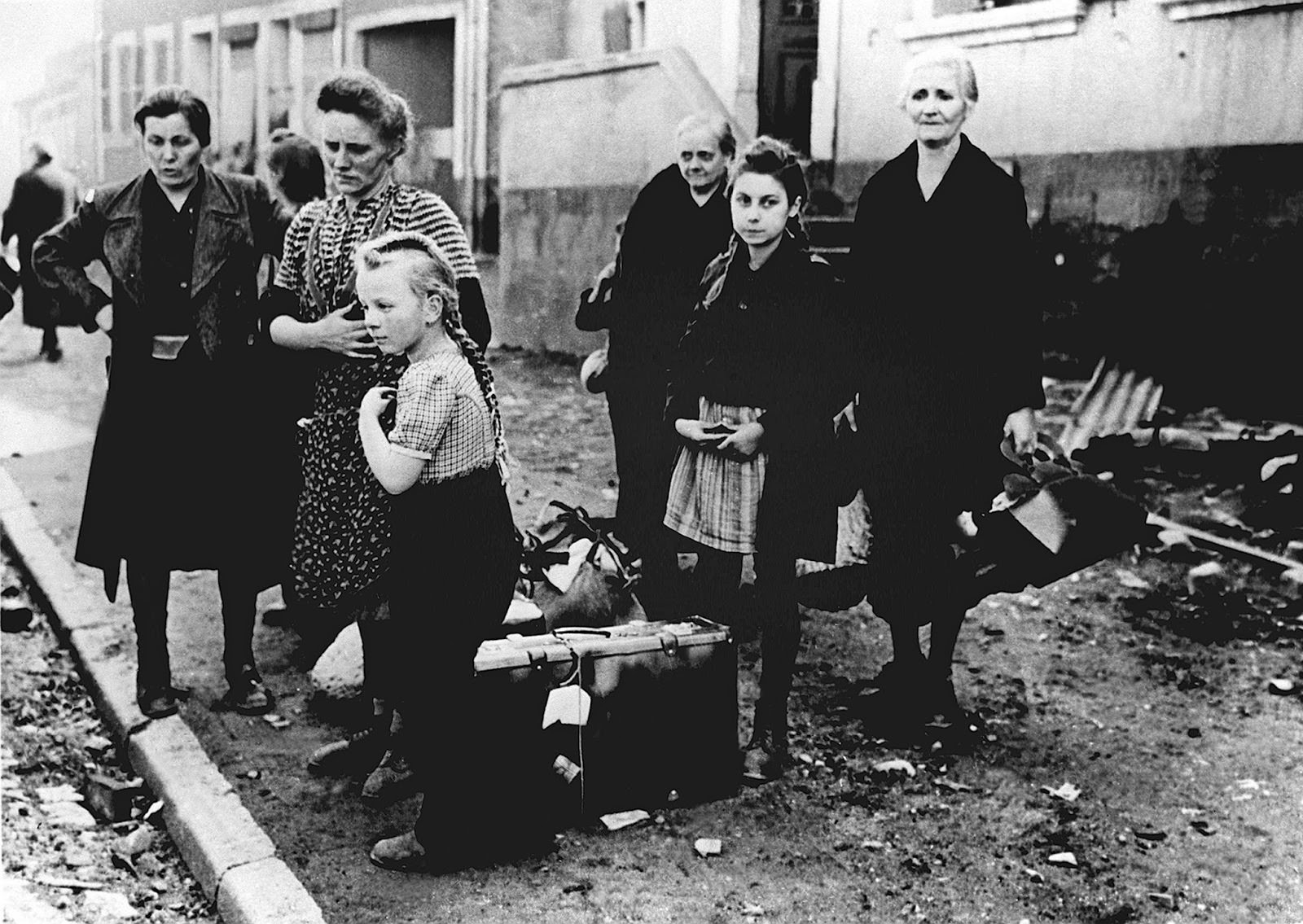
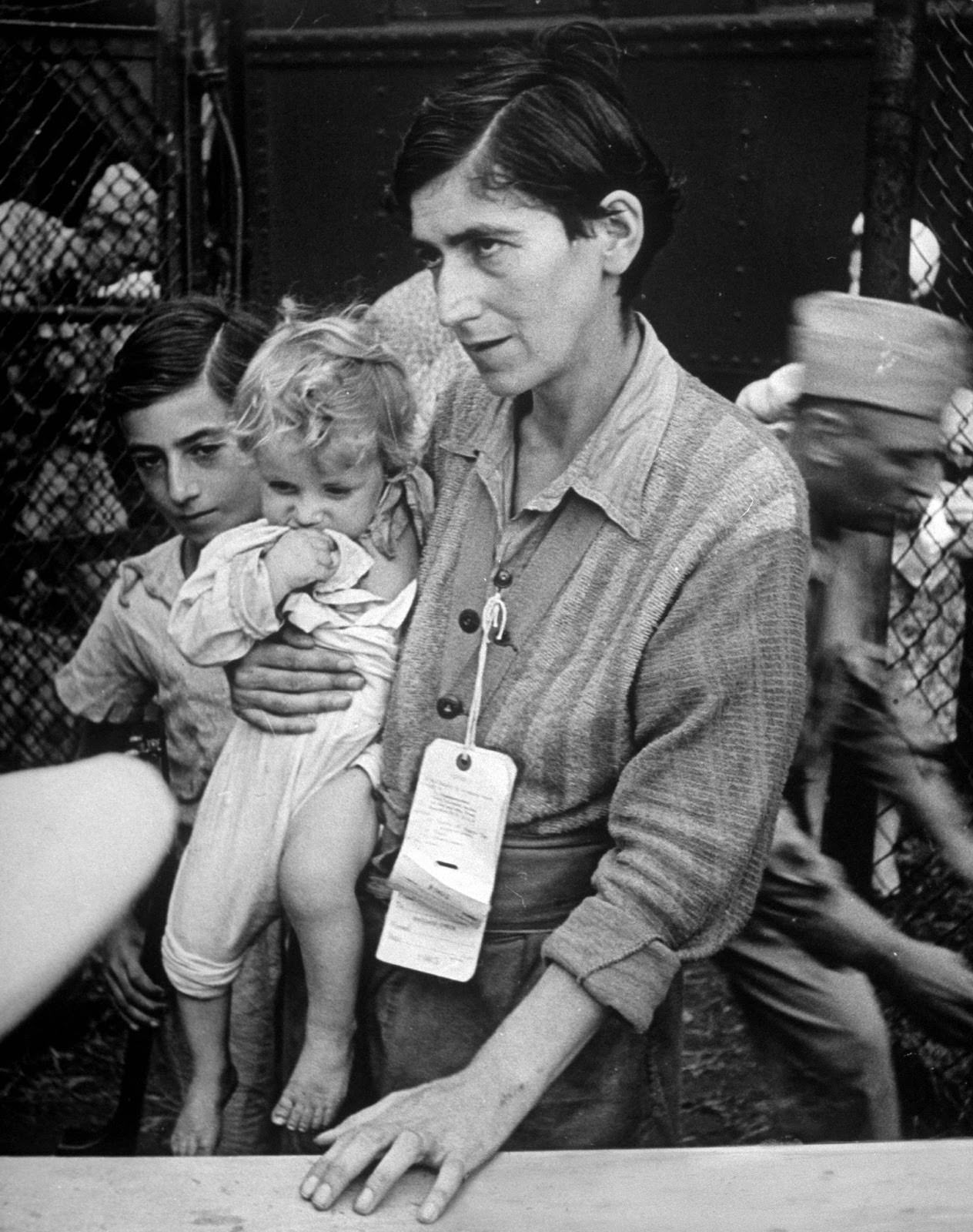
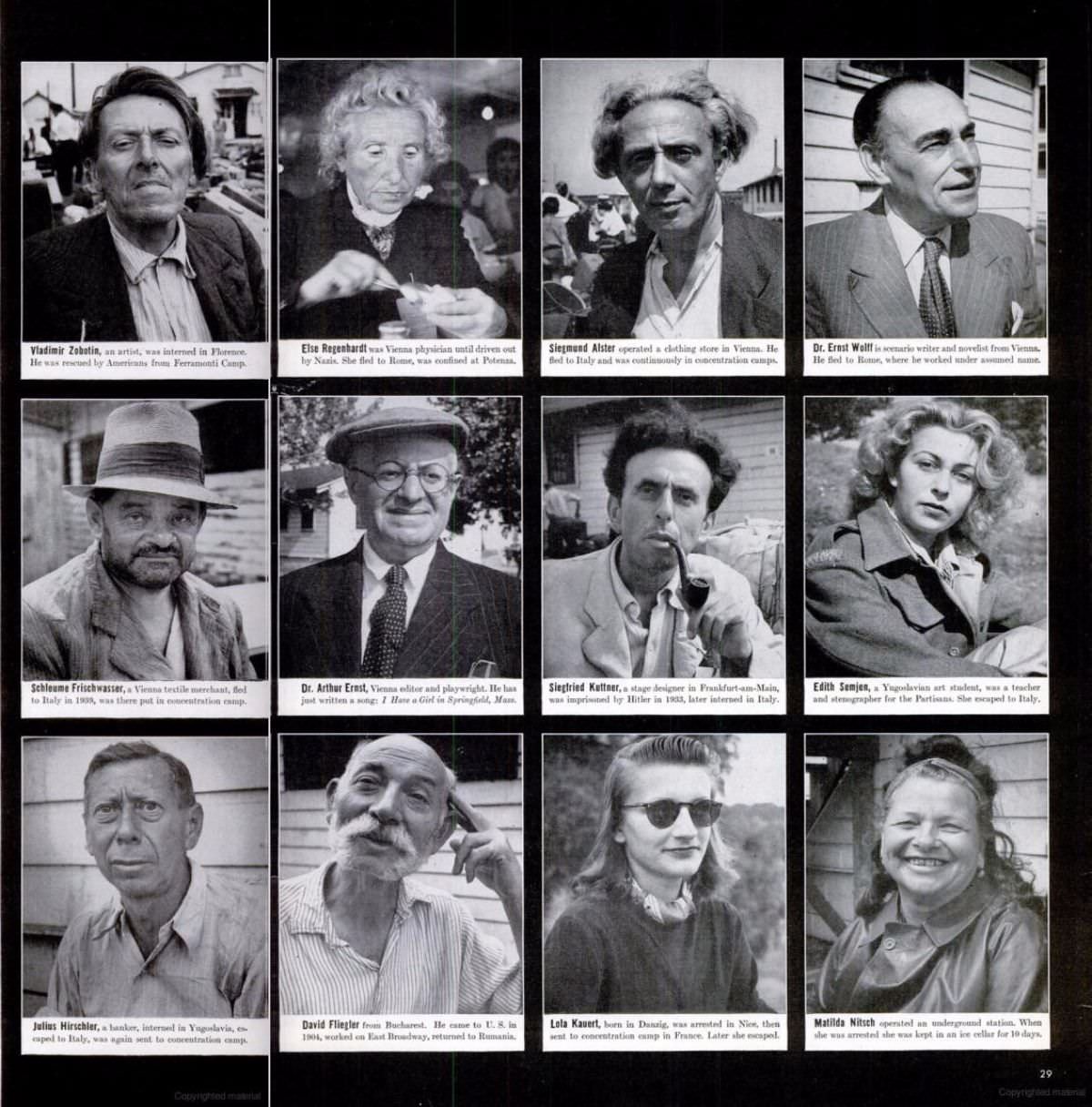
Among the 982 refugees who arrived at Fort Ontario in Oswego, New York in August 1944 was Eva Bass, a Swiss-born Jewish woman who had been a nightclub singer in Paris. To reach the American transport ship Henry Gibbins, she carried her children through 60 kilometers of active fighting. Fort Ontario was the only official refugee camp ever established on American soil during World War II, created by executive order of President Roosevelt.
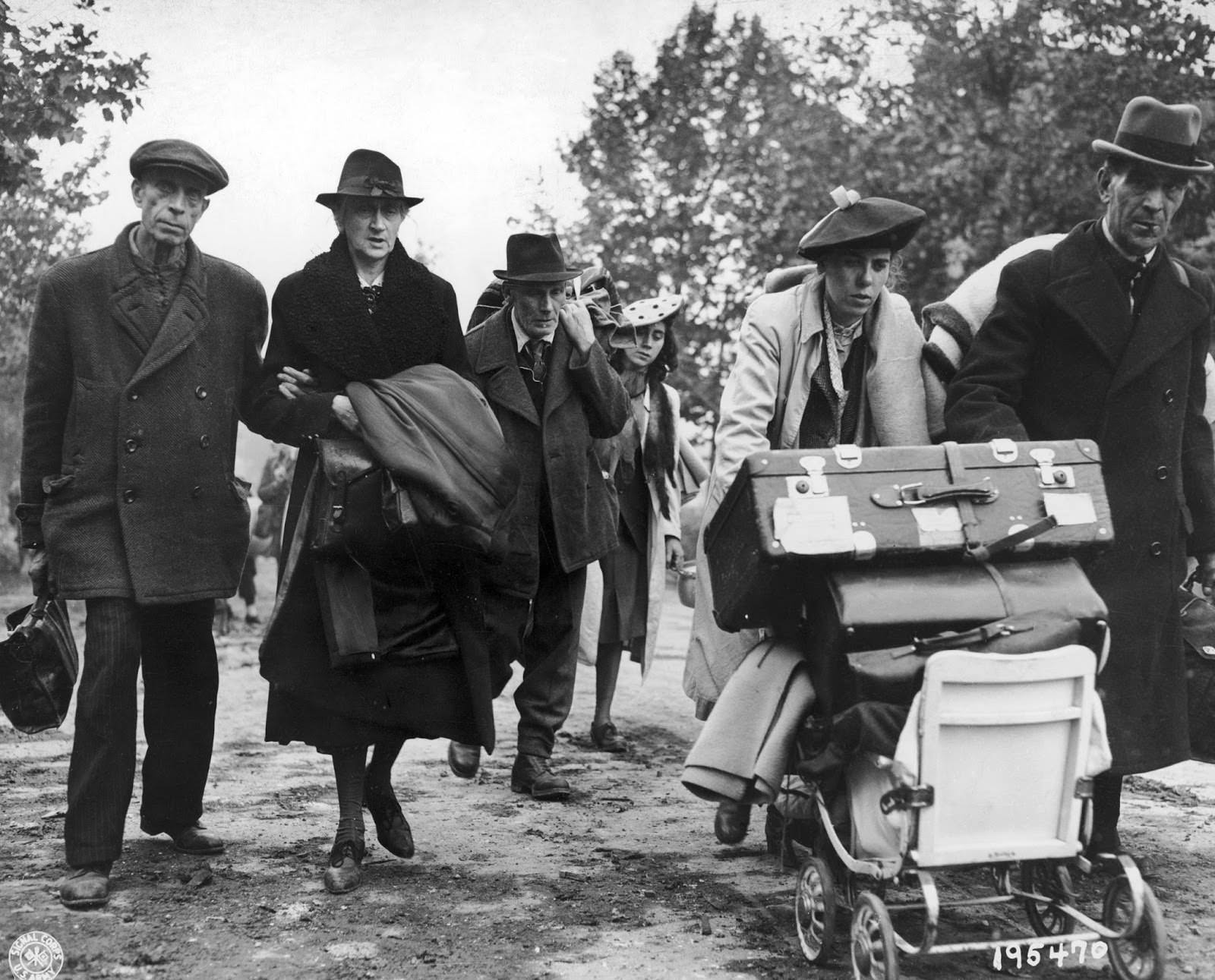
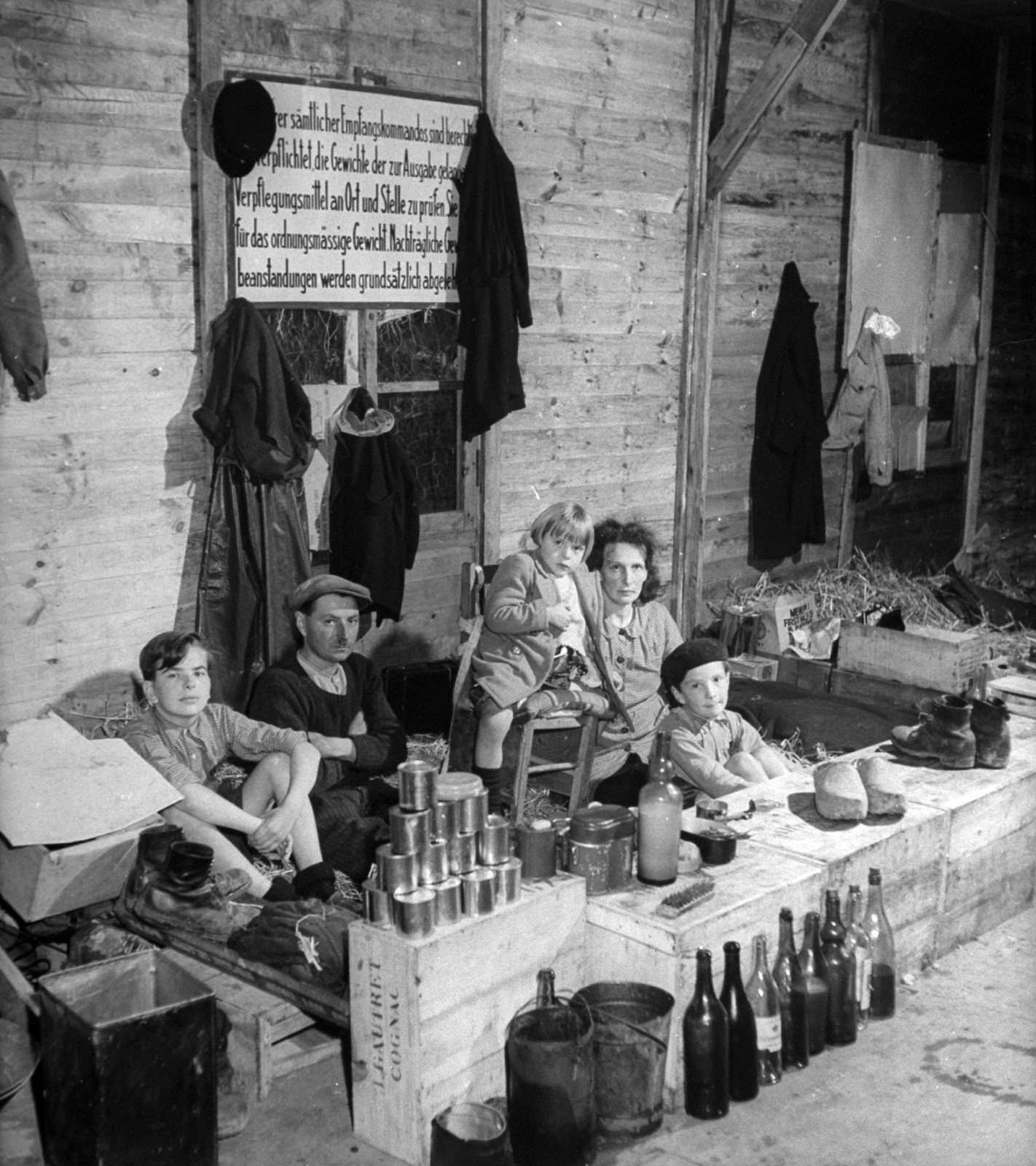
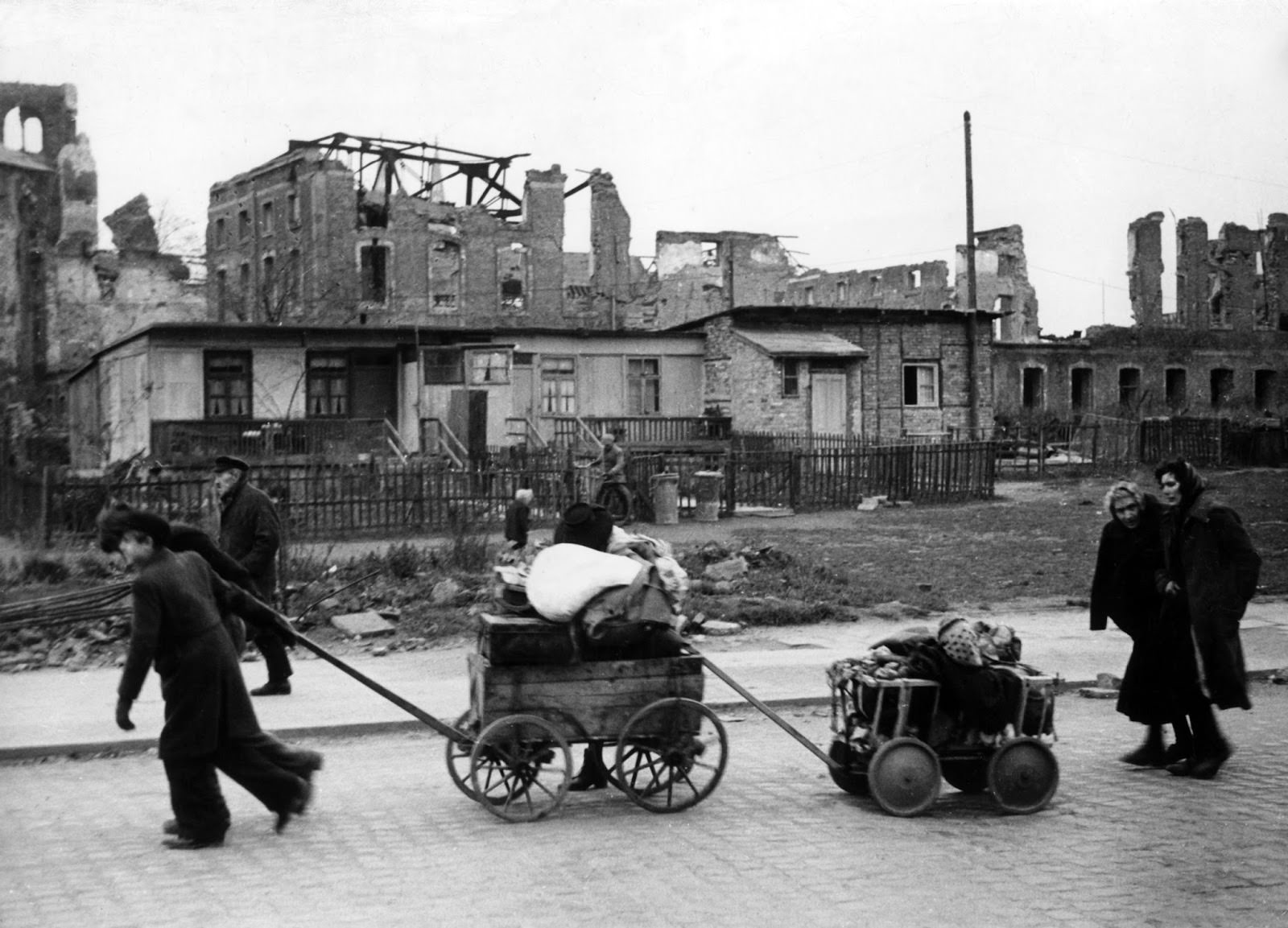
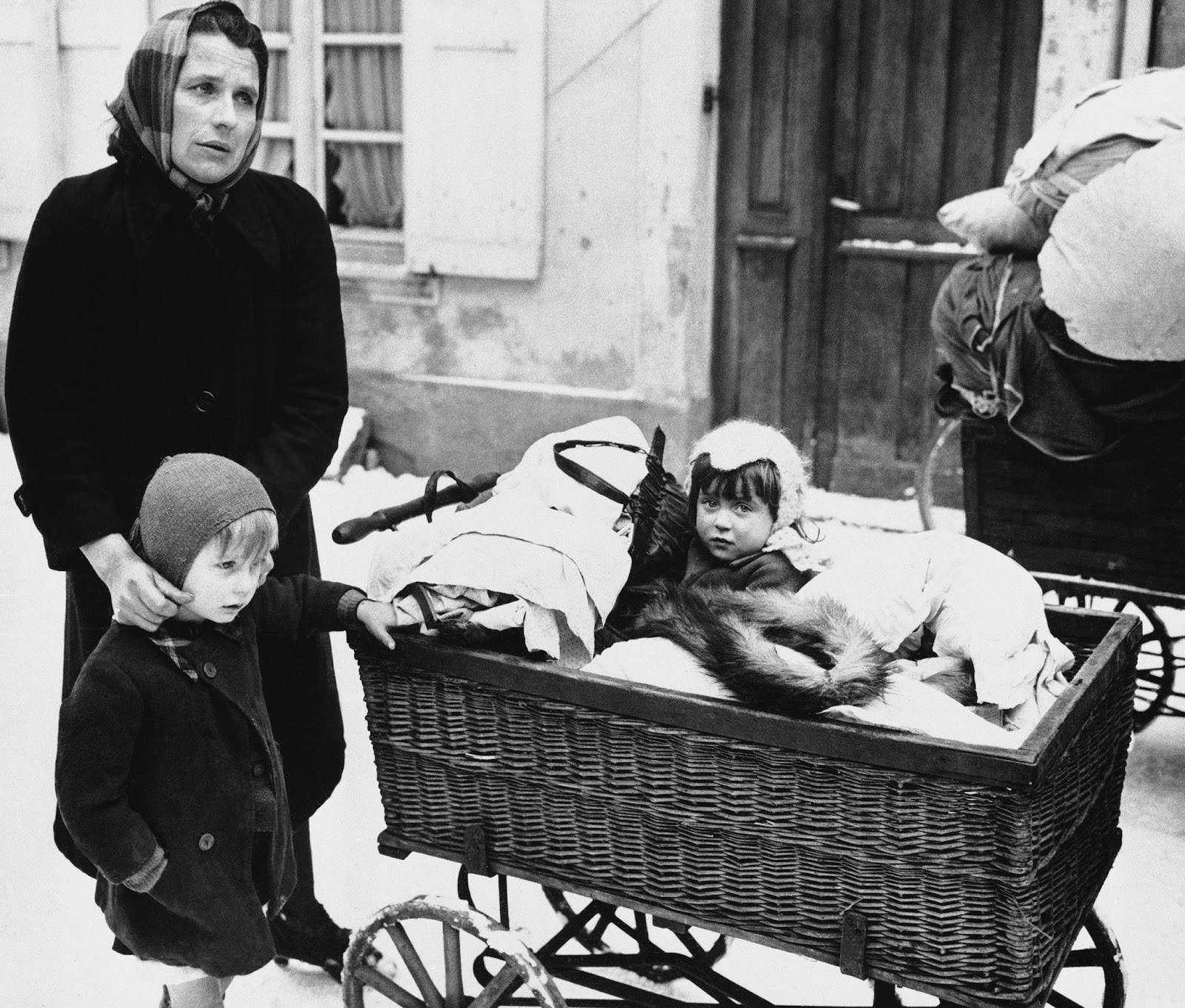
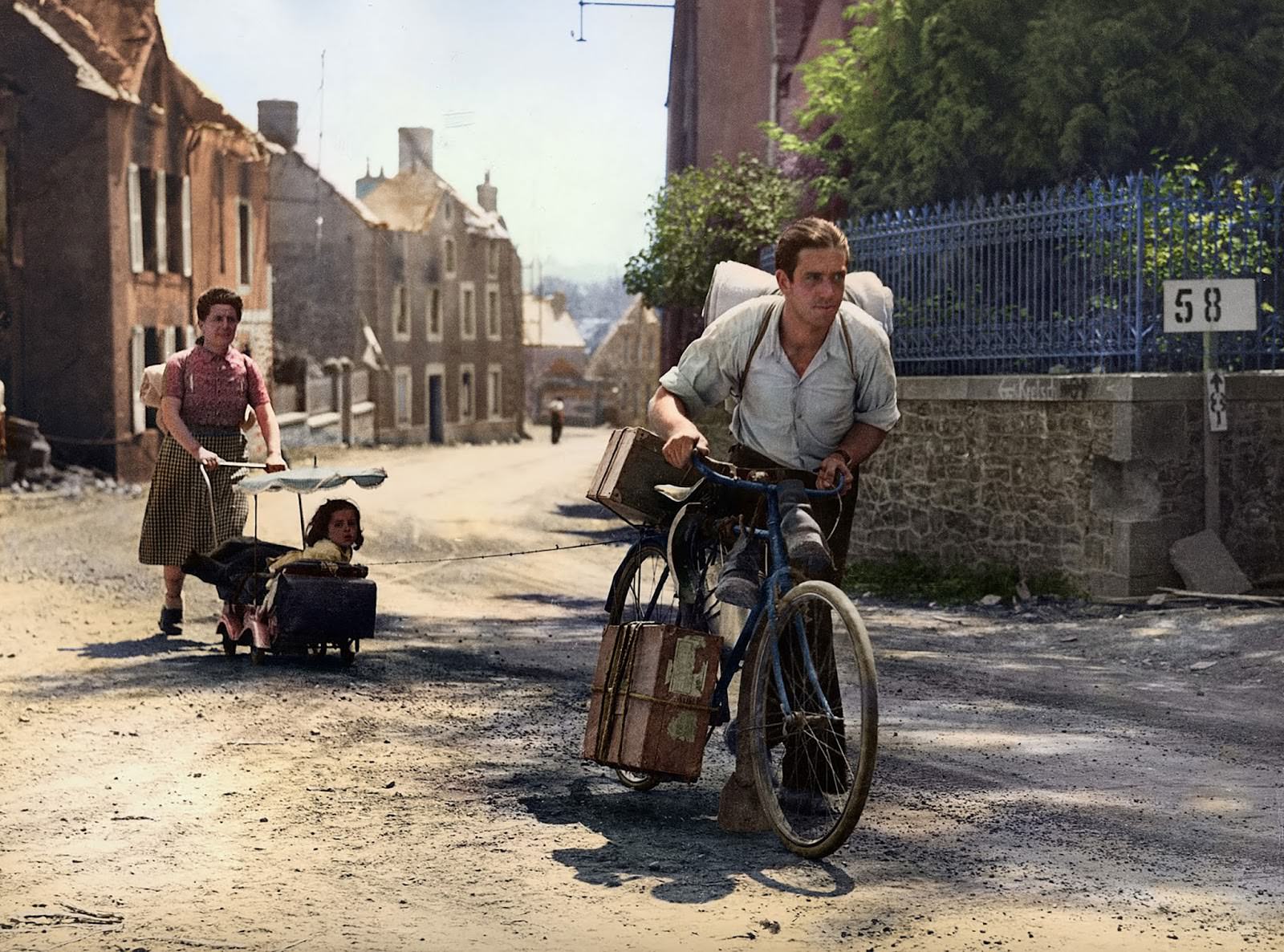
Military operations did not just drive refugees away from enemy forces — they also created displacement when Allied armies withdrew. In February 1945, the planned pullback of the U.S. 7th Army from Haguenau, France forced civilians out of their own town. Mothers loaded baby carriages with household goods and began the long walk to wherever they could find shelter. The military’s movements determined the lives of civilians who had no say in any of it.
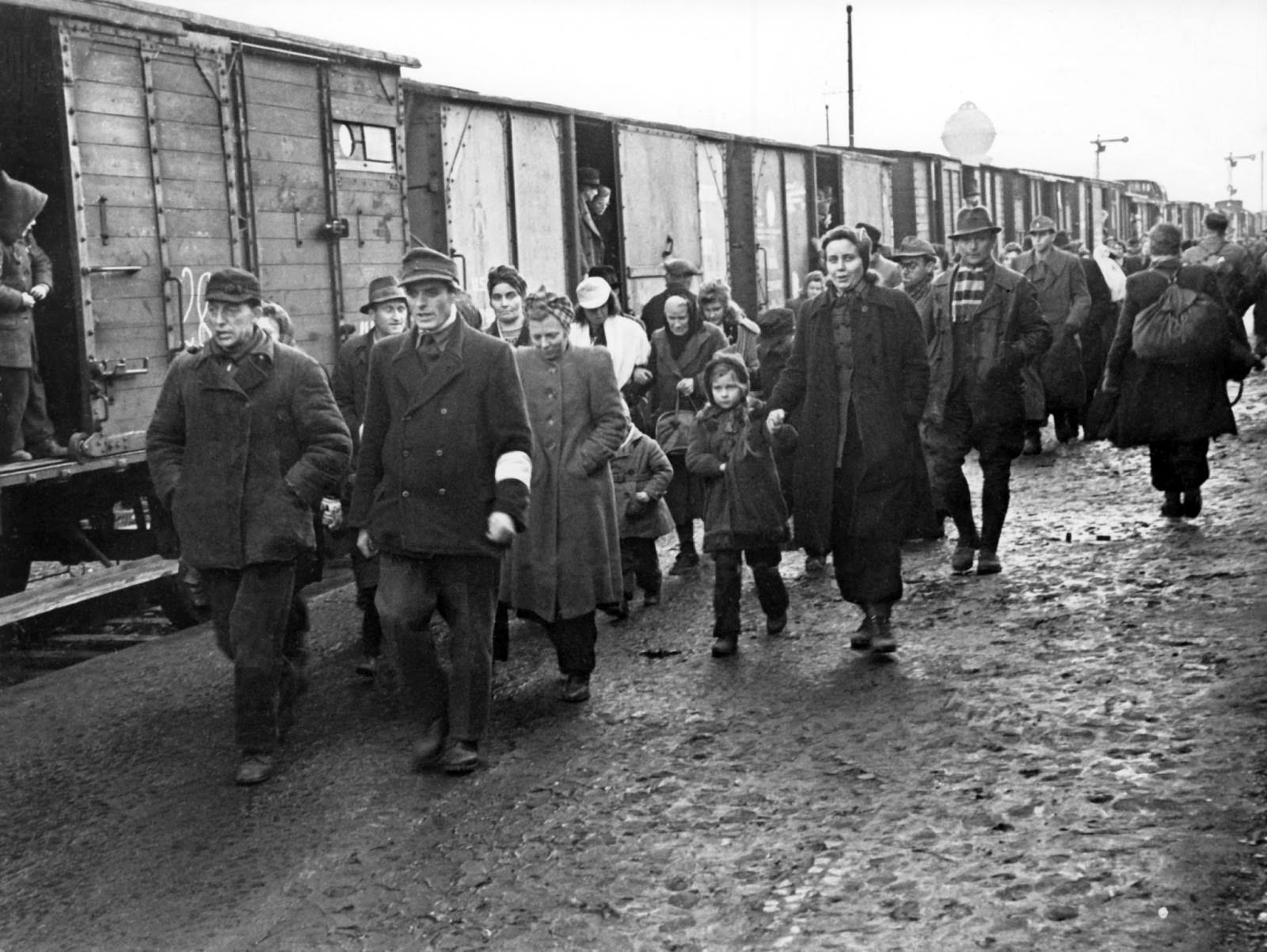
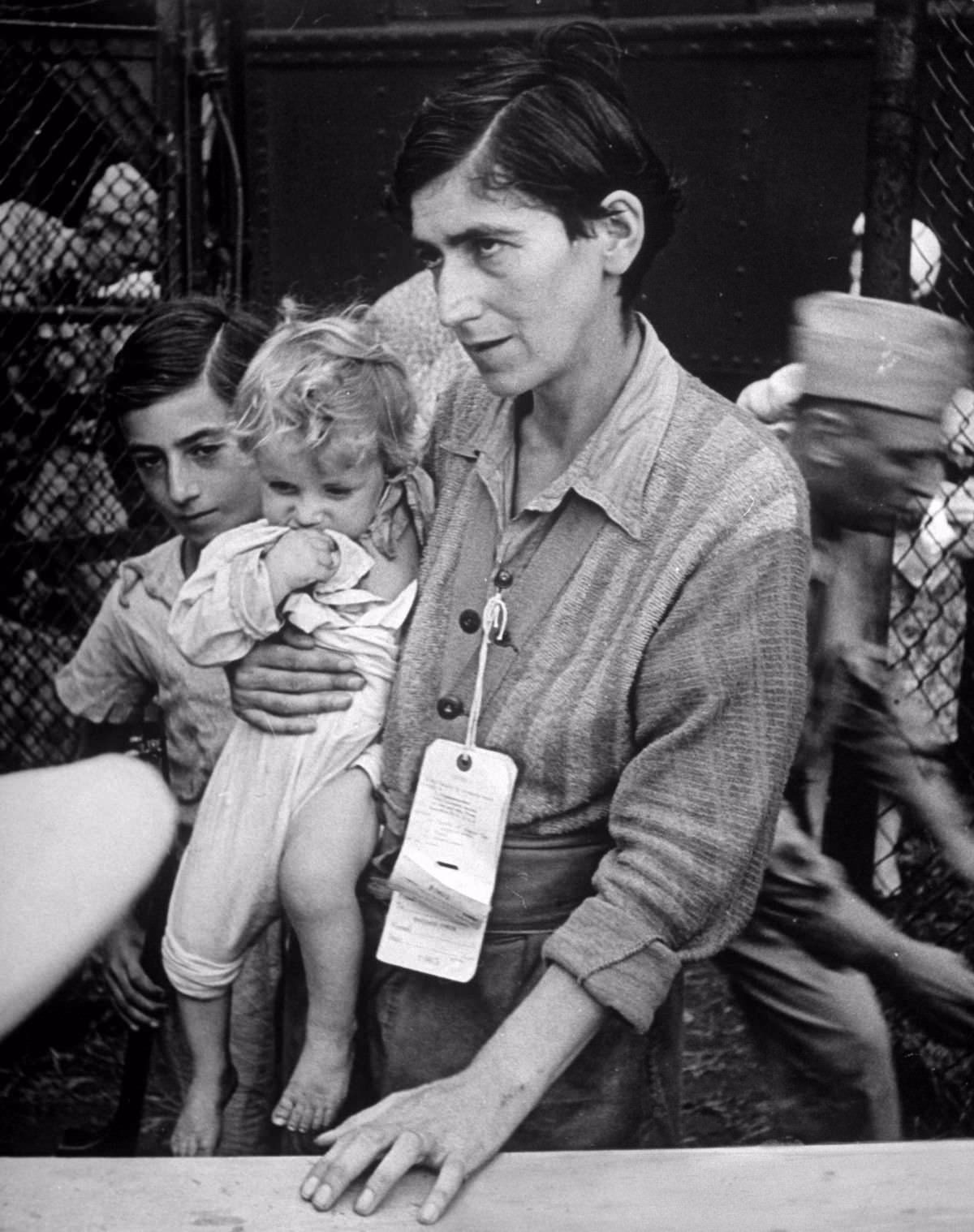
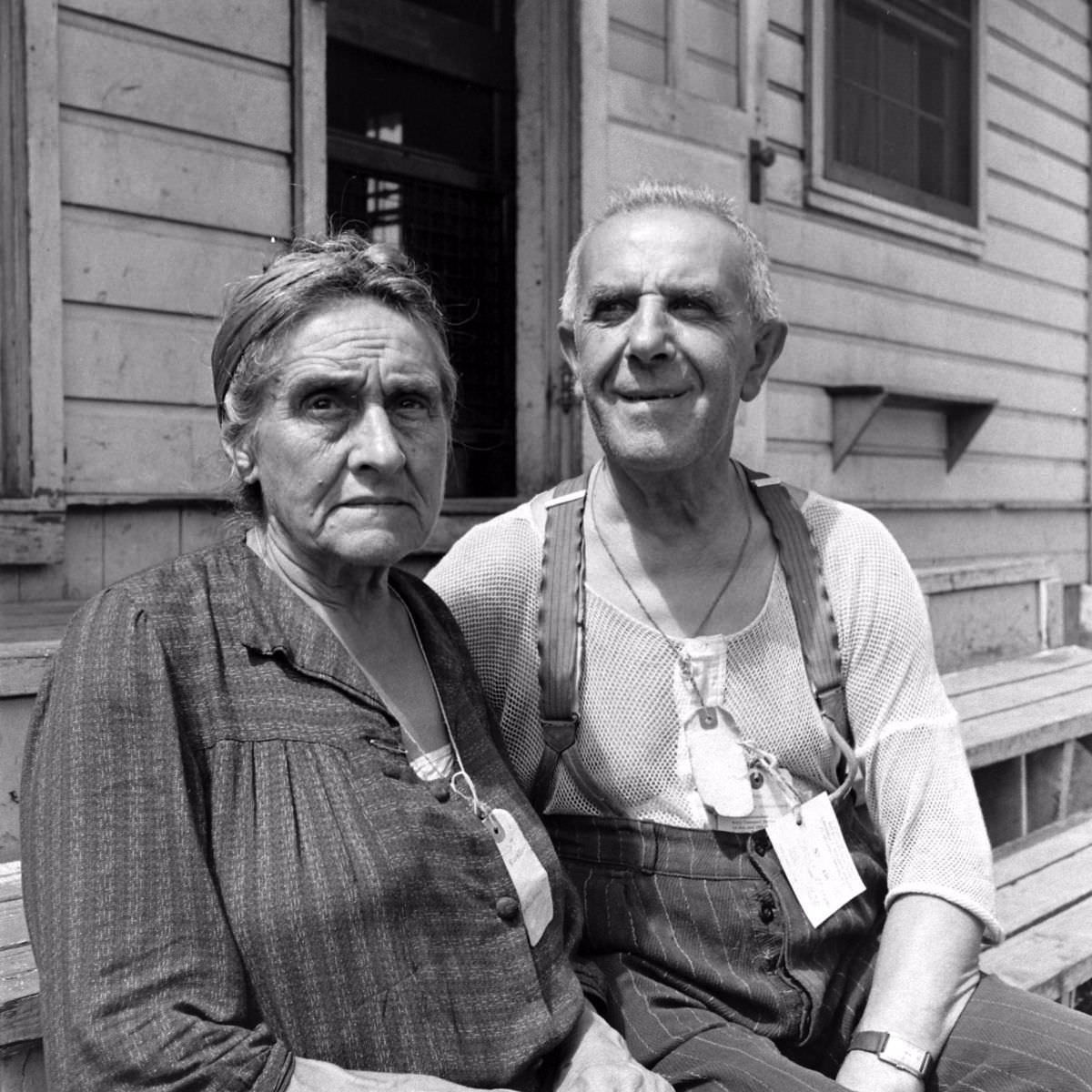
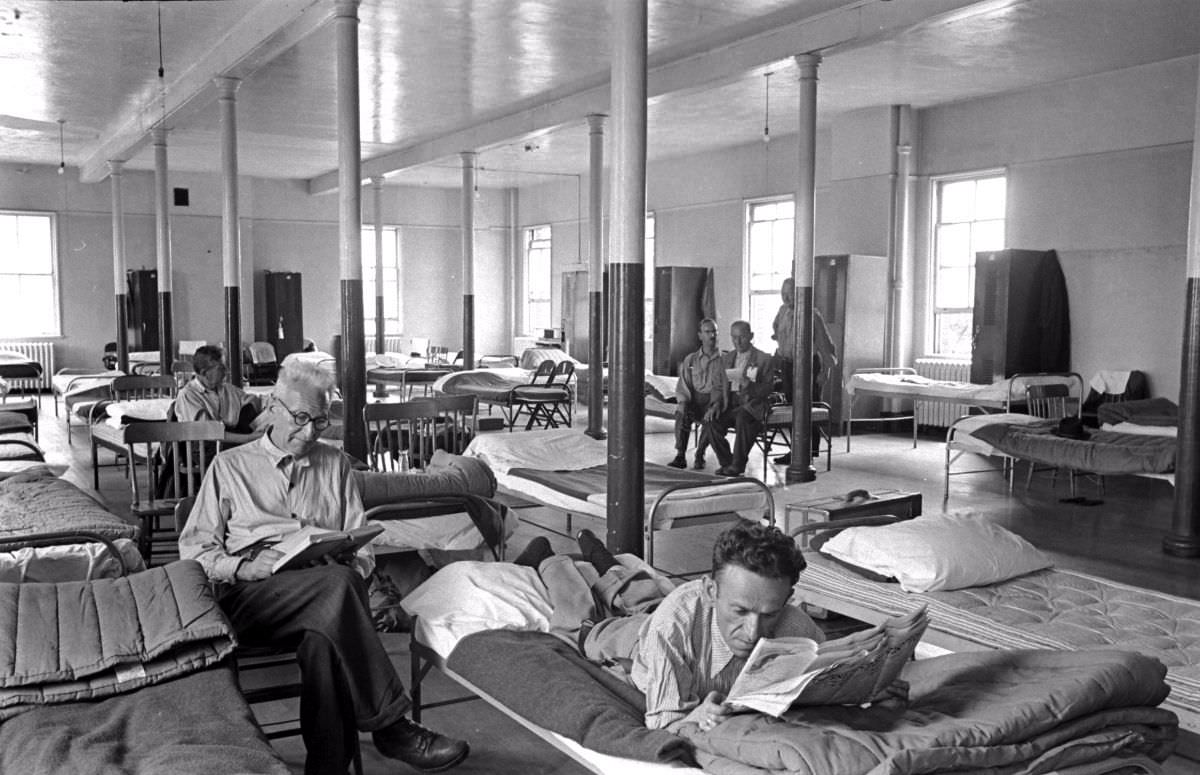
The Fort Ontario camp in Oswego, New York housed its 982 residents in former military barracks surrounded by fencing. Though the refugees were technically safe, they were not free — they were not permitted to leave the camp without special permission. LIFE photographer Alfred Eisenstaedt documented their arrival and daily life in detail, producing images that appeared in the August 21, 1944 issue of the magazine.
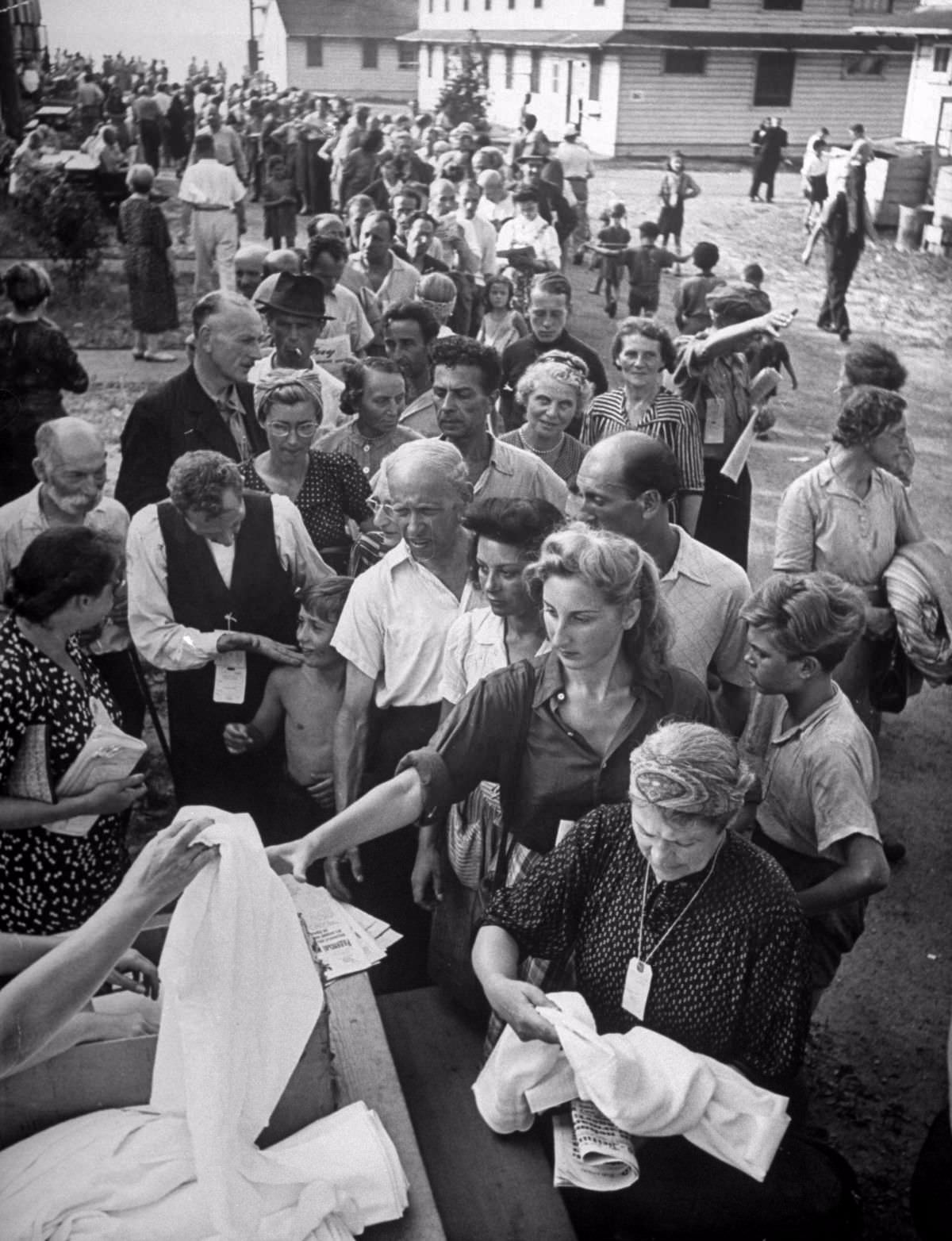
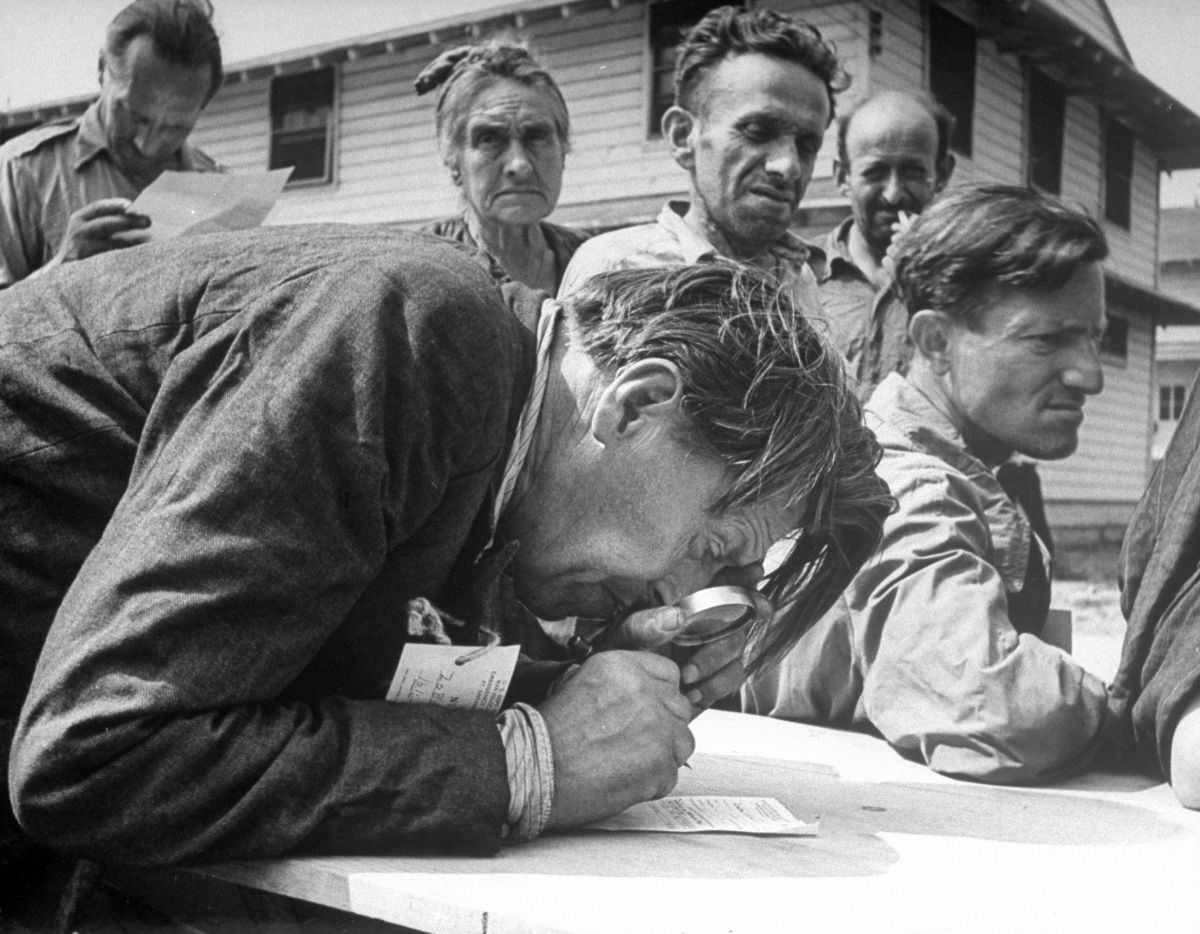
Processing at Fort Ontario involved customs declarations and registration. Many of the arriving refugees had not had access to basic hygiene for weeks or months. When LIFE’s photographer arrived, a number of refugees refused to be photographed until they had been issued towels and soap and had a chance to wash. Their concern for their own dignity in that moment says a great deal about what they had endured on the journey to reach American soil.
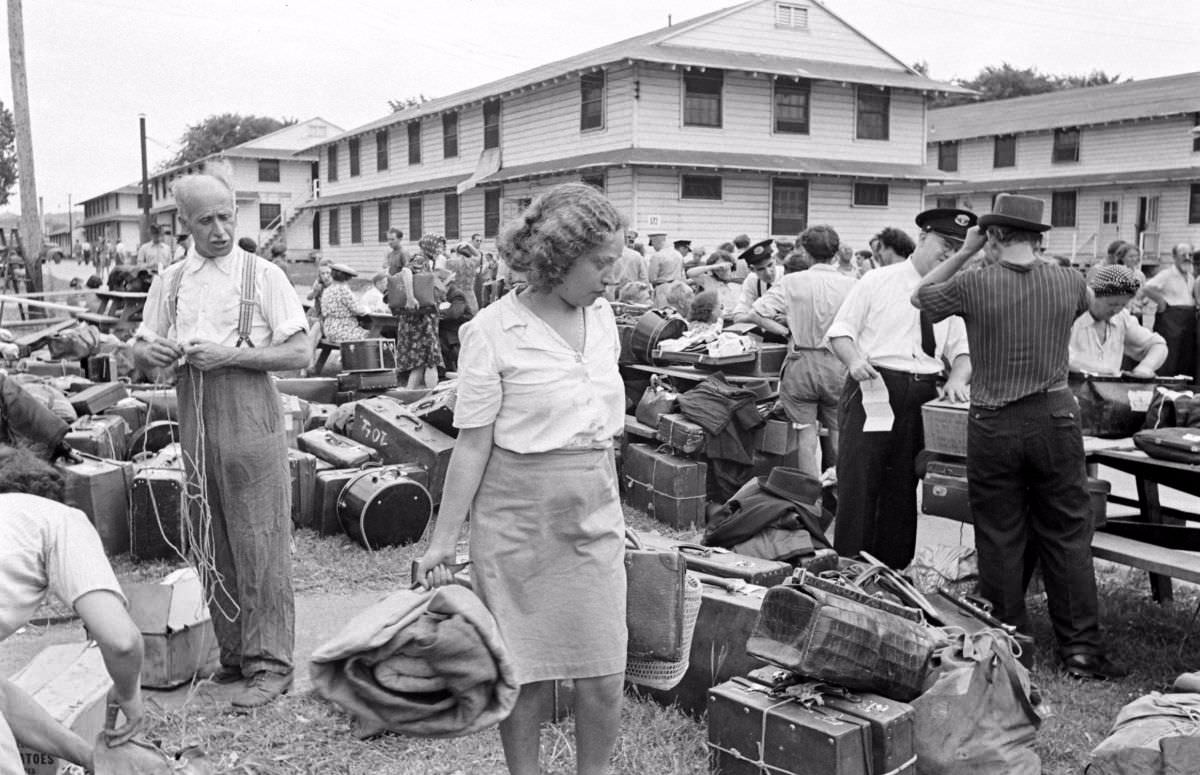
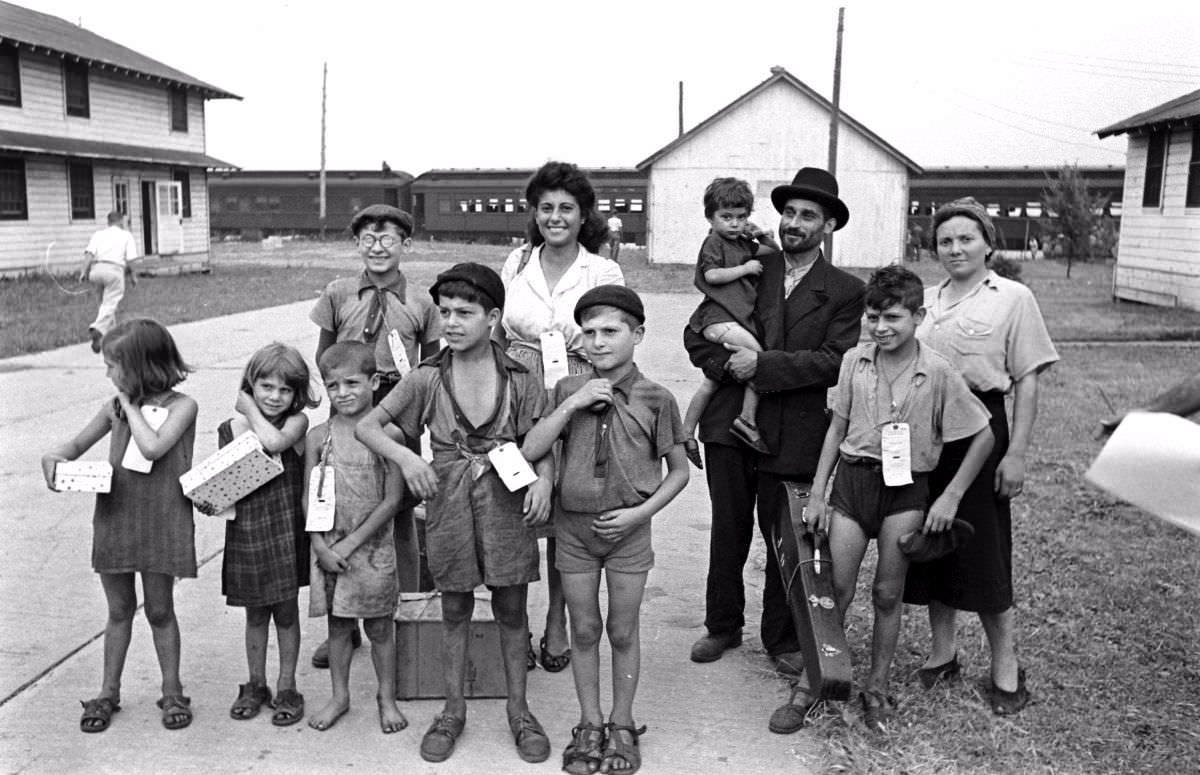
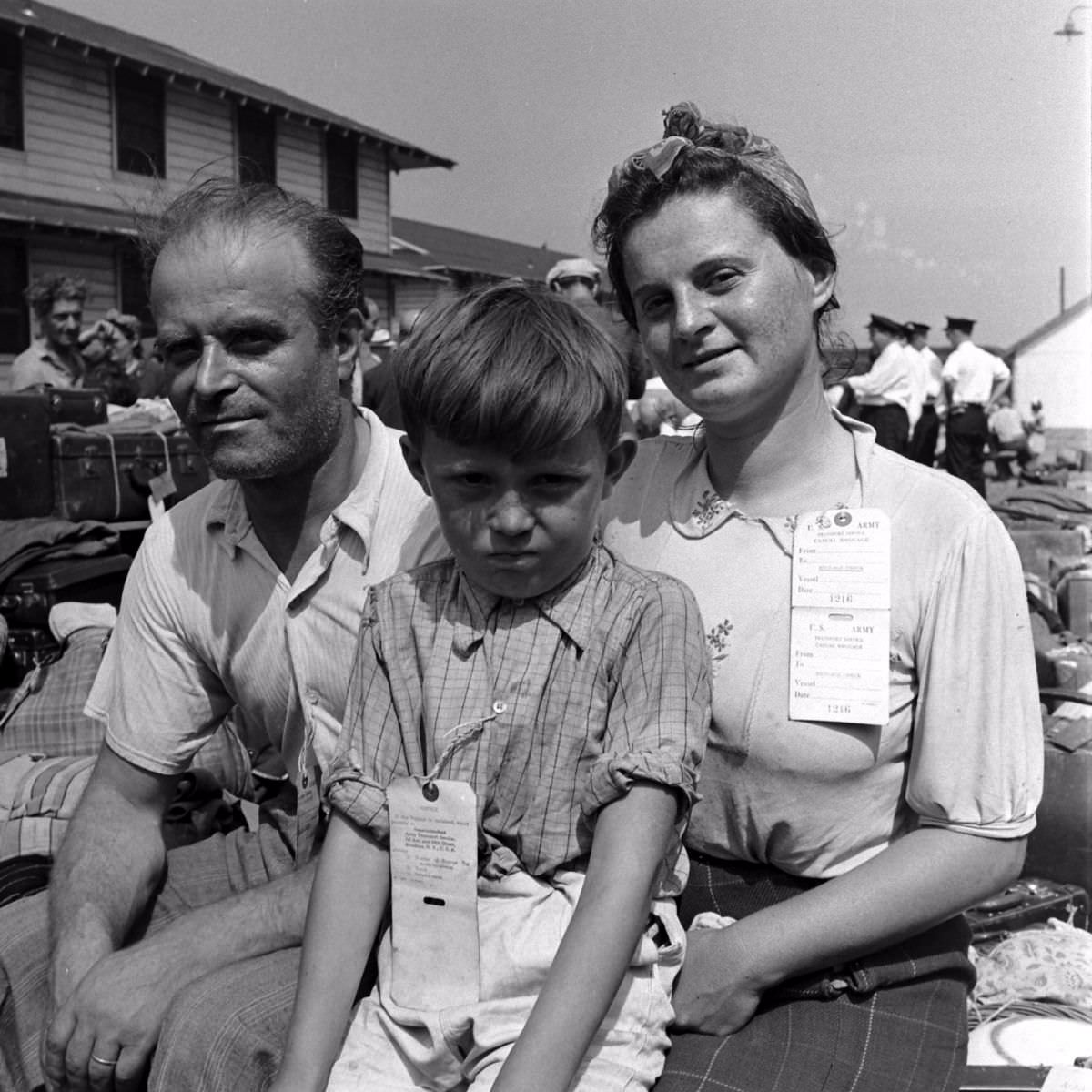
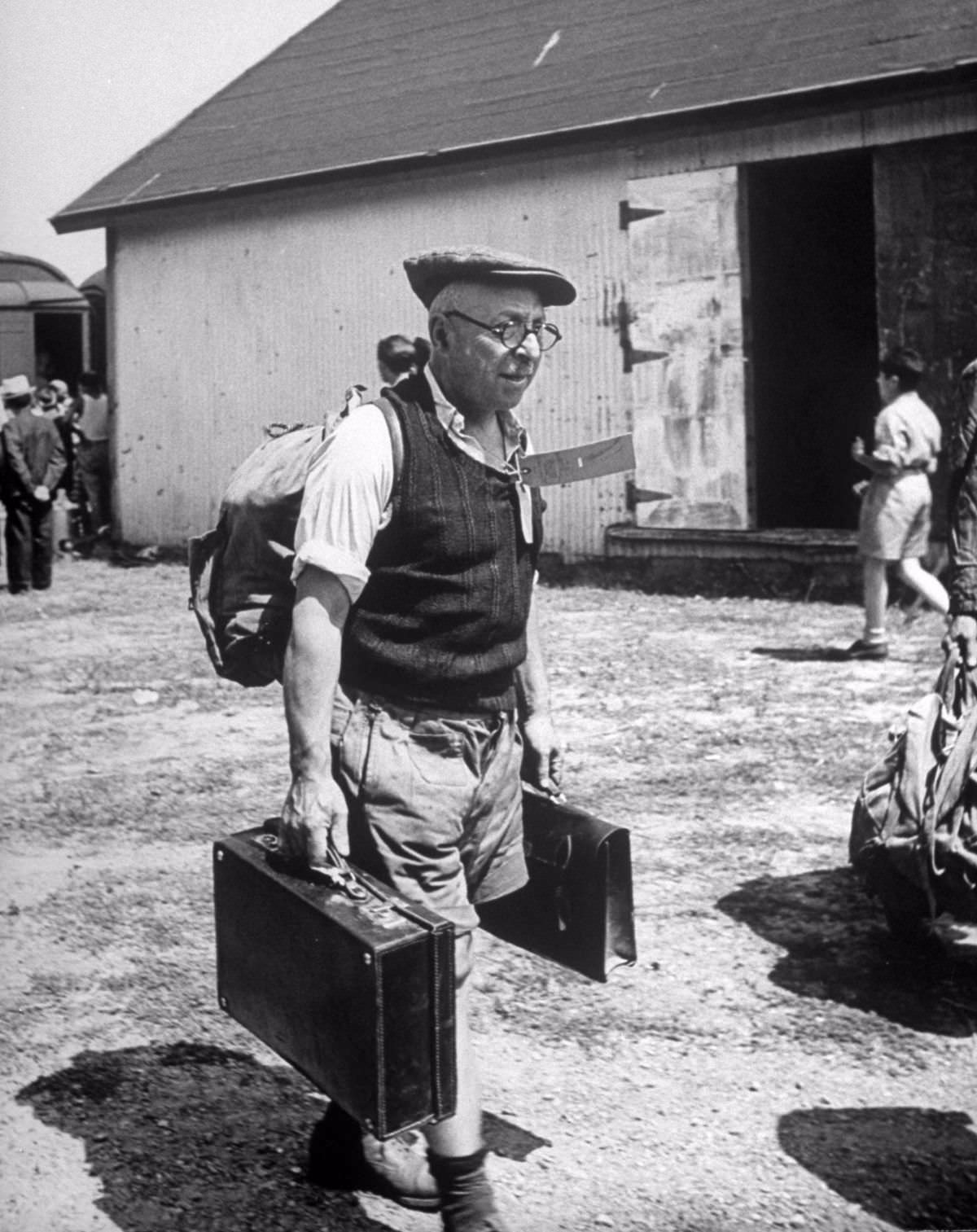
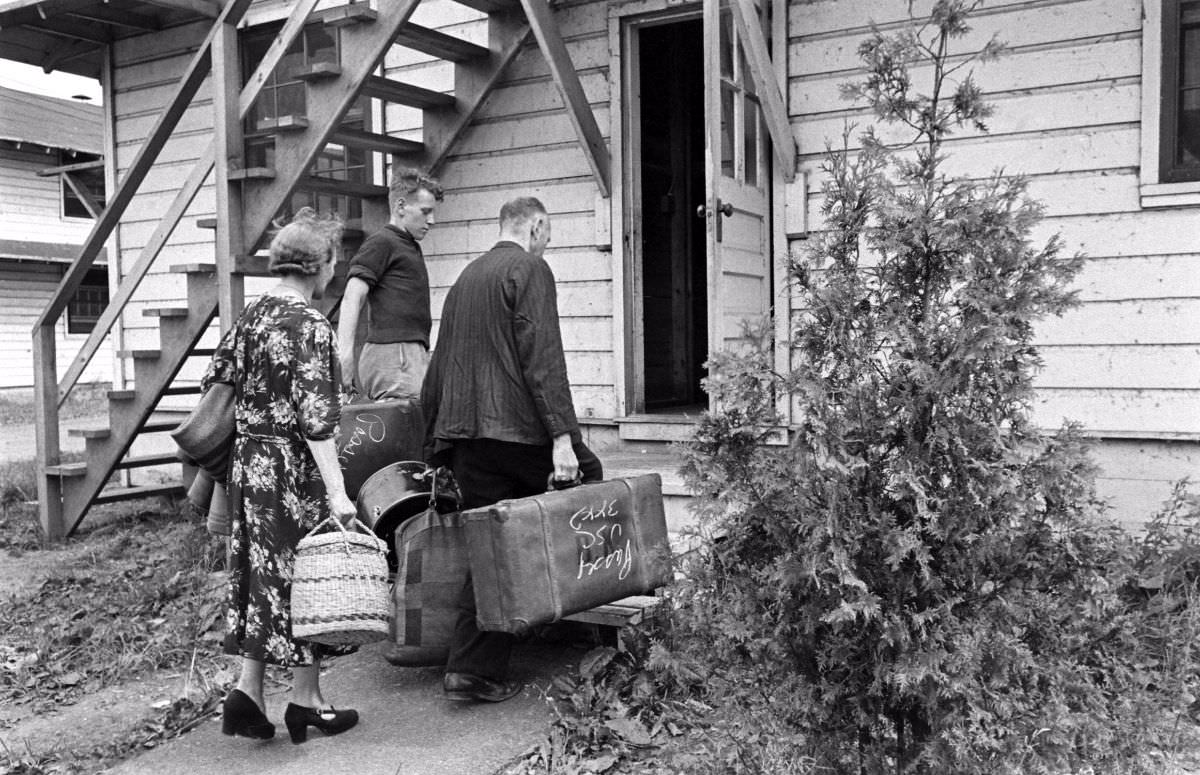
At Fort Ontario, local boys from Oswego were hired to help carry luggage from the docks to the customs depot. Many refugees refused to hand their bags over. After years of having their property confiscated, looted, or destroyed, they held onto their remaining possessions with both hands. Even objects of little monetary value had become symbols of what had survived.
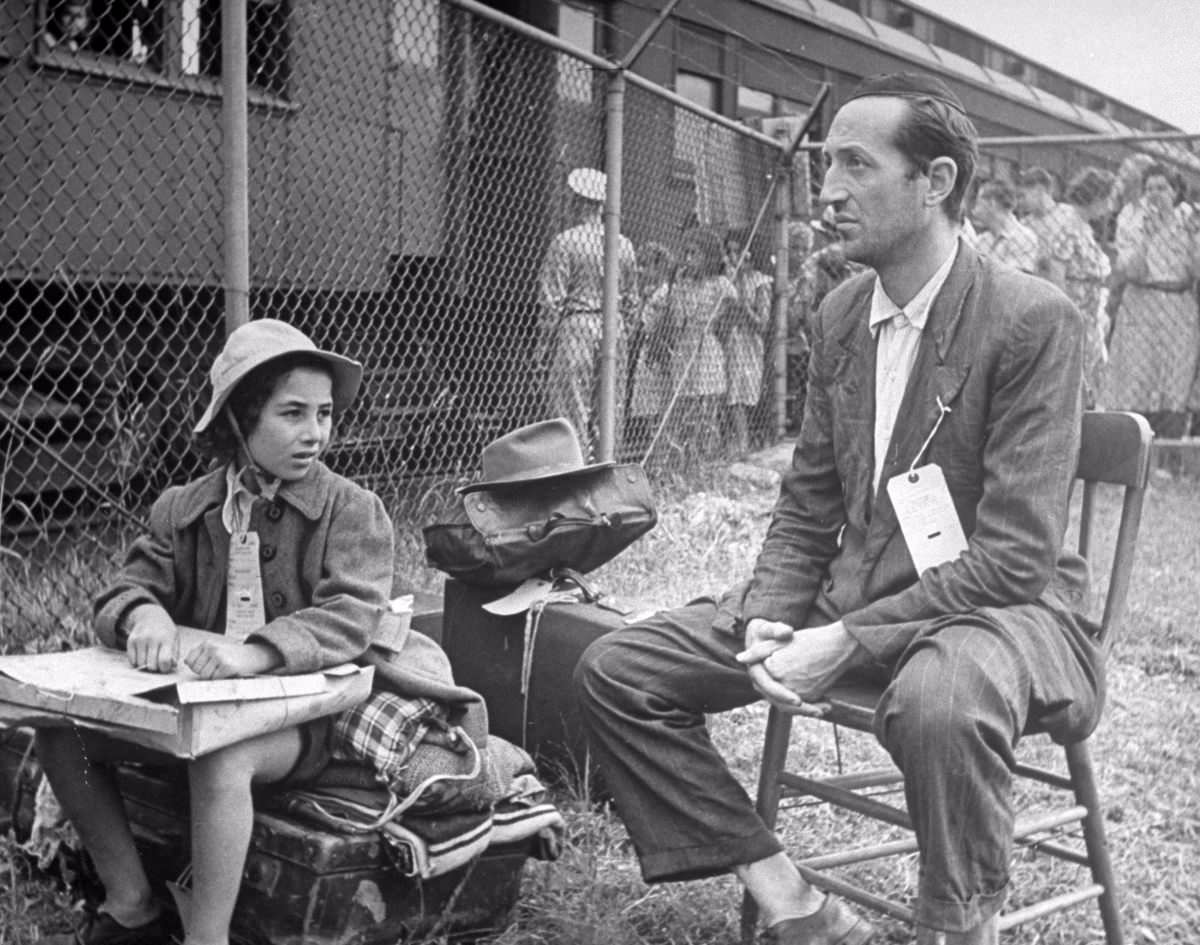
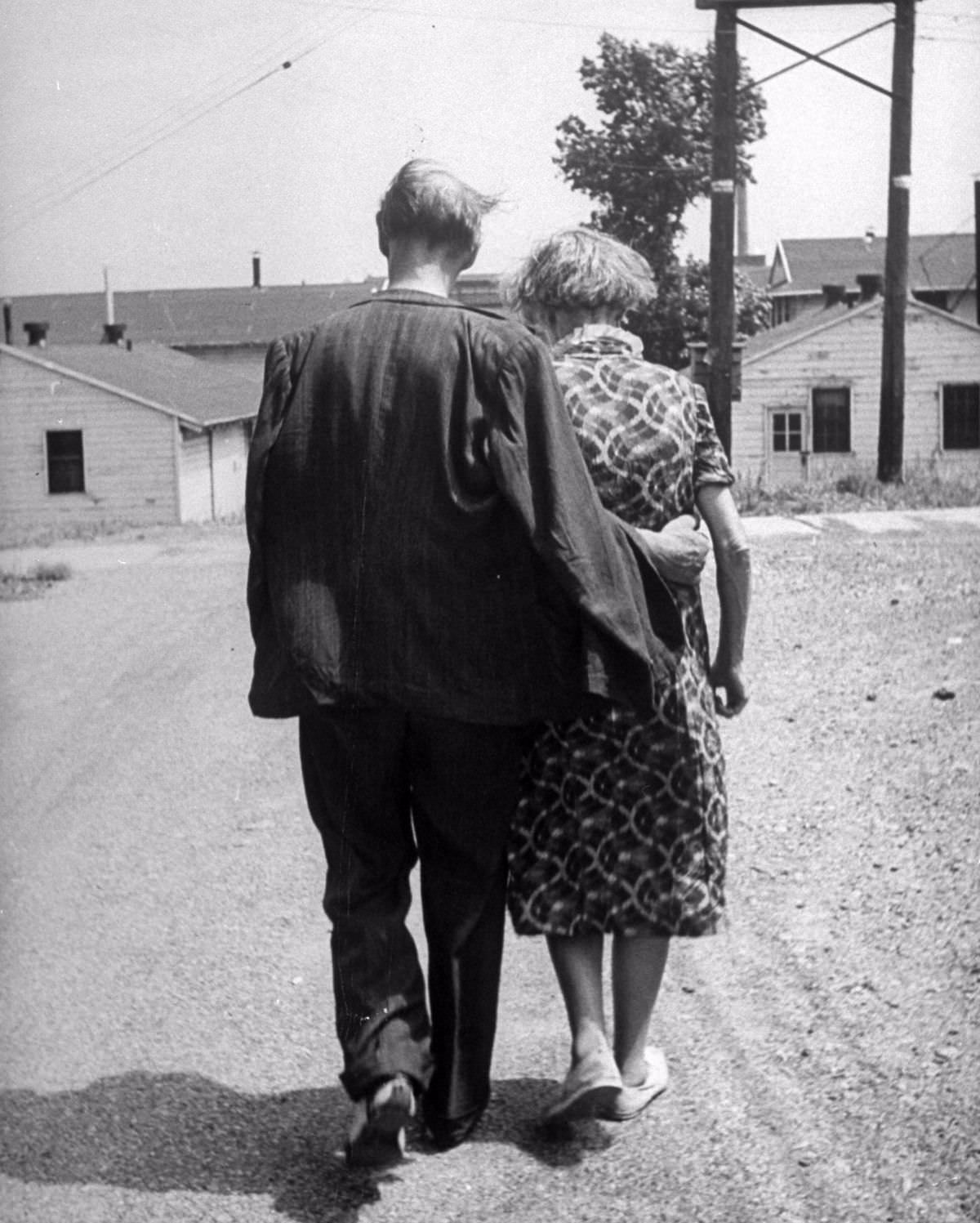
The refugees at Fort Ontario came from across Europe and beyond. Victor Franco had made the journey from Tripoli. Mr. and Mrs. Michele Mikhailoff were artists from Russia. The camp held people of different nationalities, languages, and religions, all processed through the same gate. For some, the simple act of walking arm in arm along Lake Ontario’s shore was the first moment of peace they had known in years.
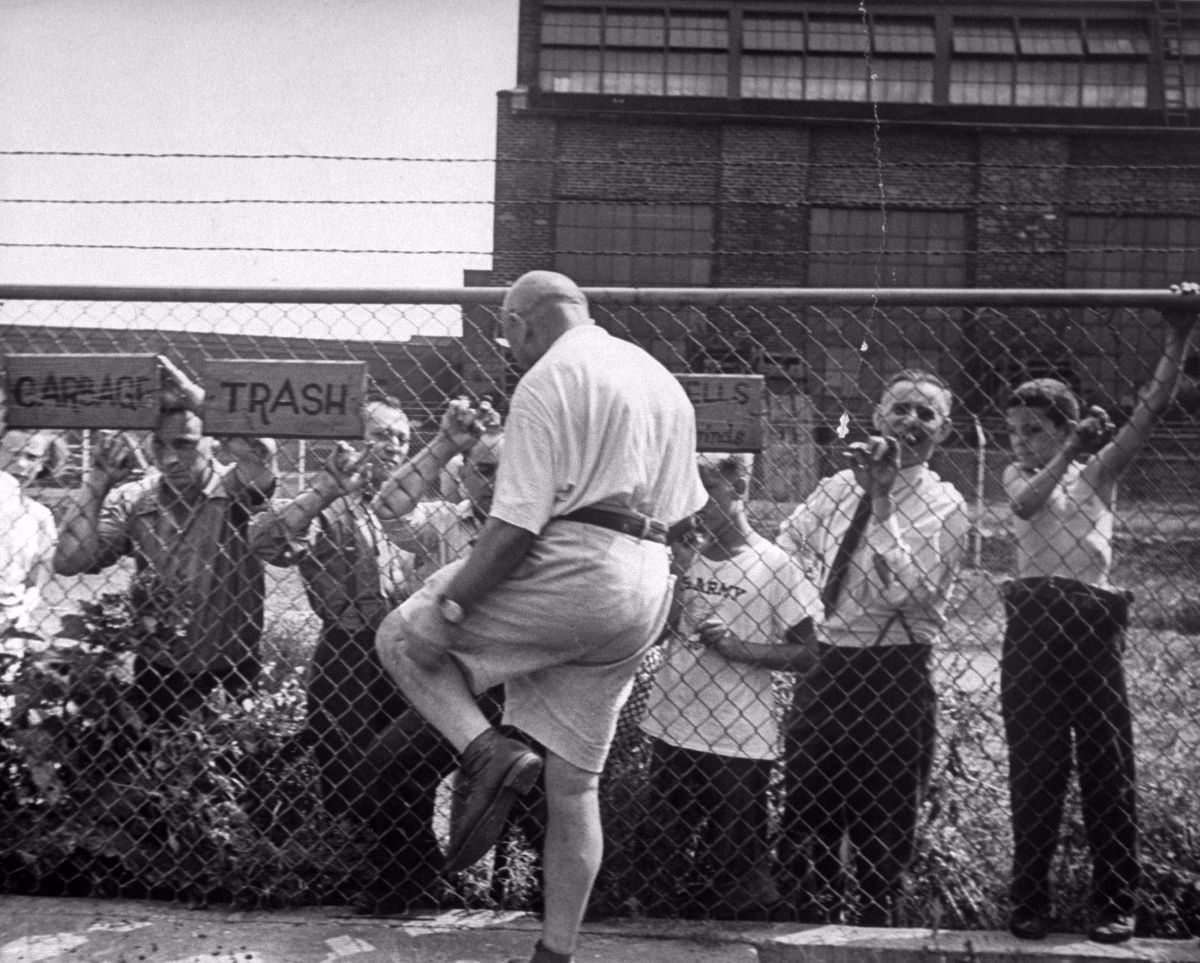
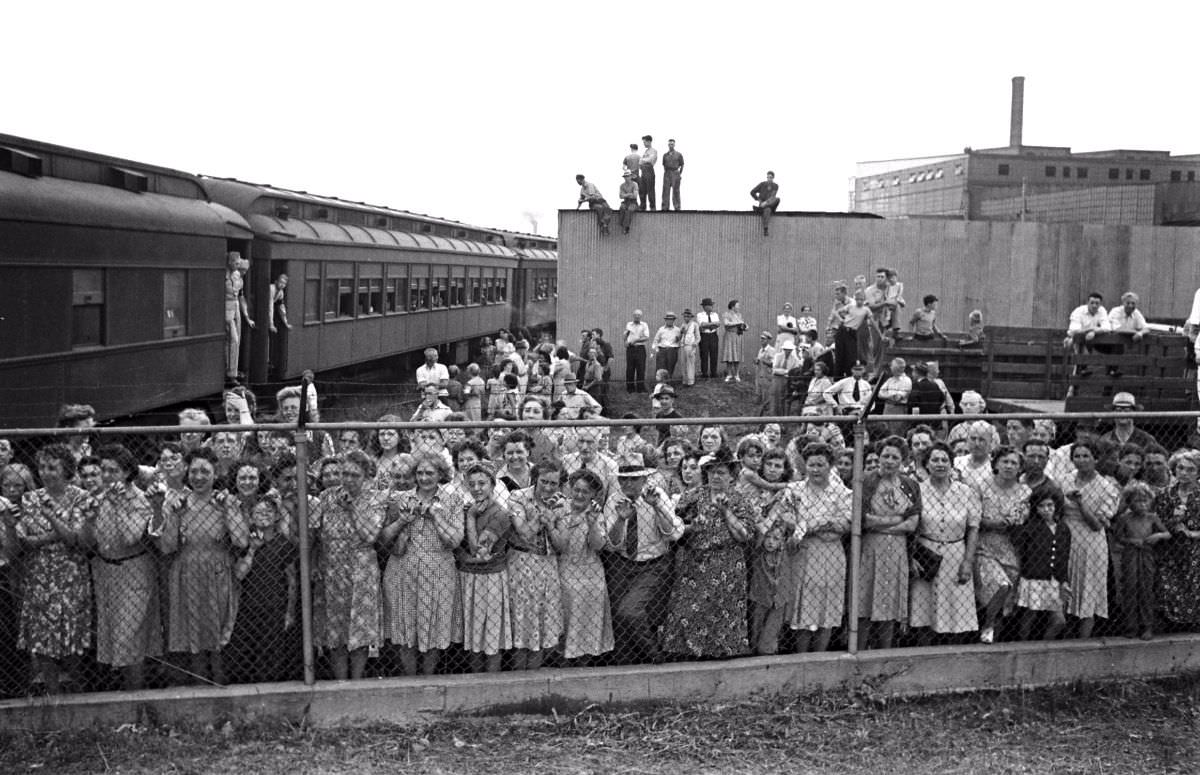
Local residents of Oswego came to the fences of Fort Ontario to look at the refugees the same way visitors might look at an exhibit. The dynamic was striking. One refugee walked over to the fence and spoke to the onlookers, mentioning that his son was serving in the U.S. Army. The war had scattered his family across continents — one member fighting for America while another arrived at an American camp as a displaced person.
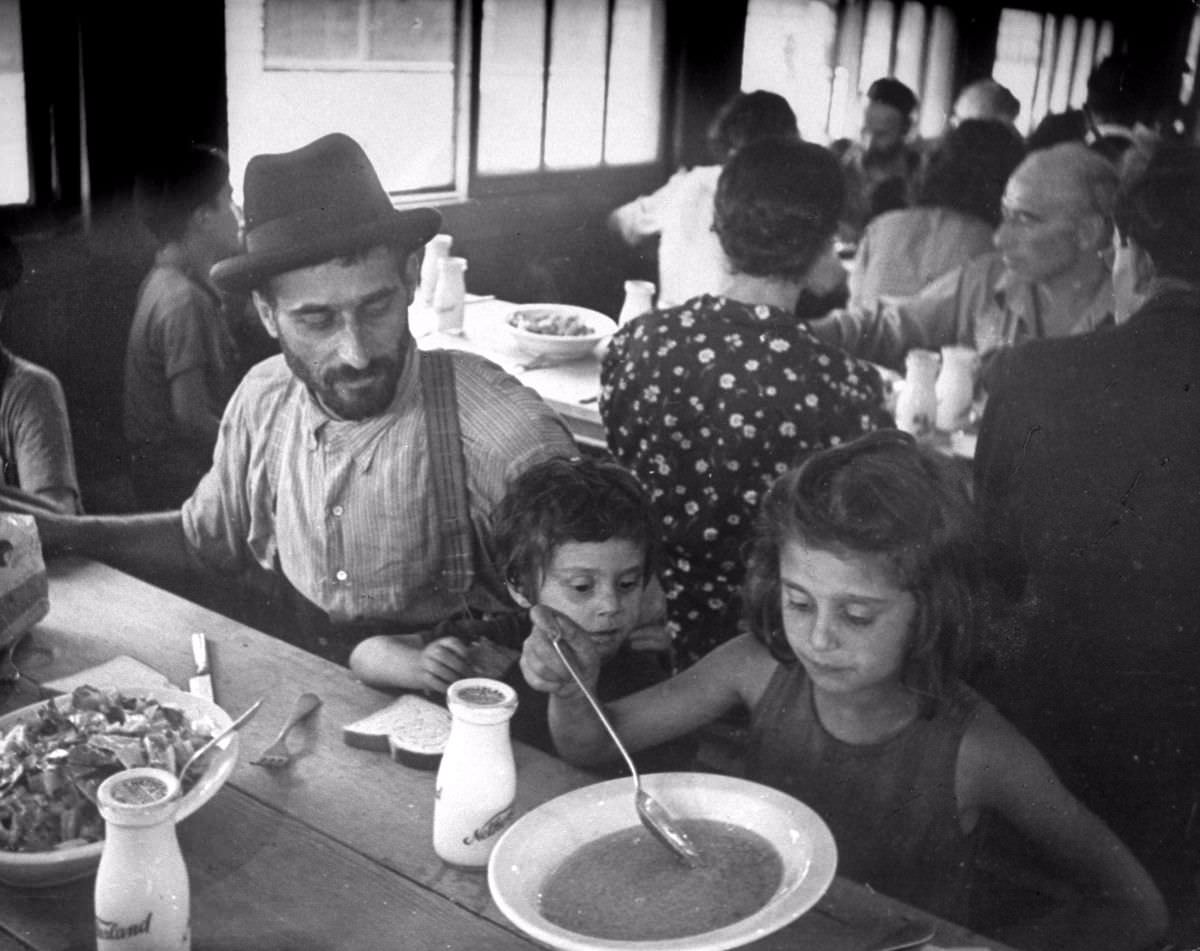
The Dresdner family’s story was extreme even by the standards of Fort Ontario. The parents and their nine children had been held in two concentration camps in France before escaping to Italy in September 1943. By the time they reached Oswego, the children encountered foods they had never eaten before. One daughter, unfamiliar with gravy, simply dove in with her hands. The photograph is both tender and haunting.
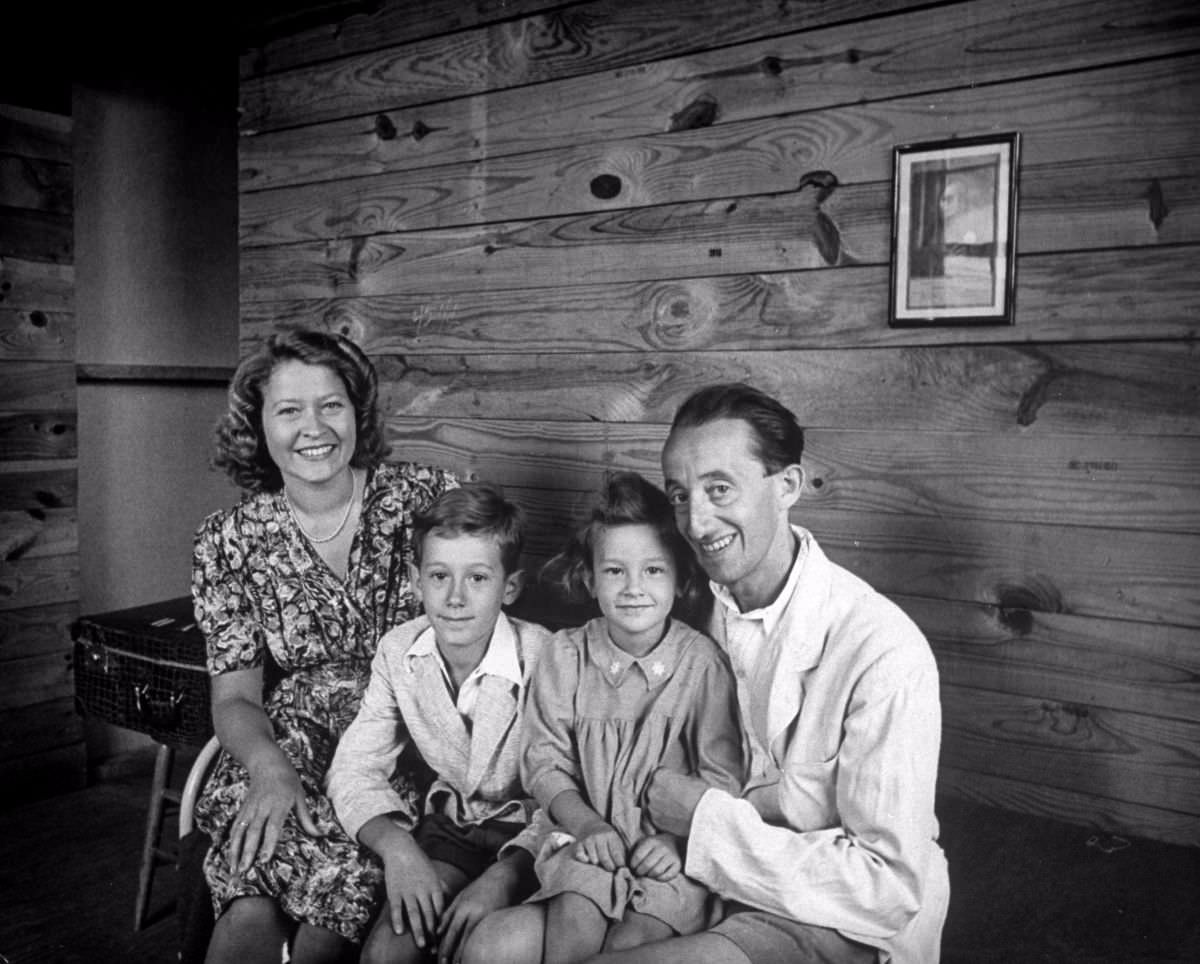
The Albrecht family — a Jewish man who had run a theater in Vienna, his Catholic wife, and their two young children — had been separated by the war before reuniting and making it to Fort Ontario. He had left Vienna for Italy in 1939 as the Nazis tightened their grip on Austria. His wife and children followed later. Their barracks room at Fort Ontario was not much, but it was the first roof they had shared in years. Across Europe and in camps like this one, tens of millions of people were in the same position — waiting to find out if there was a home left to return to, and what it would take to build one again.



