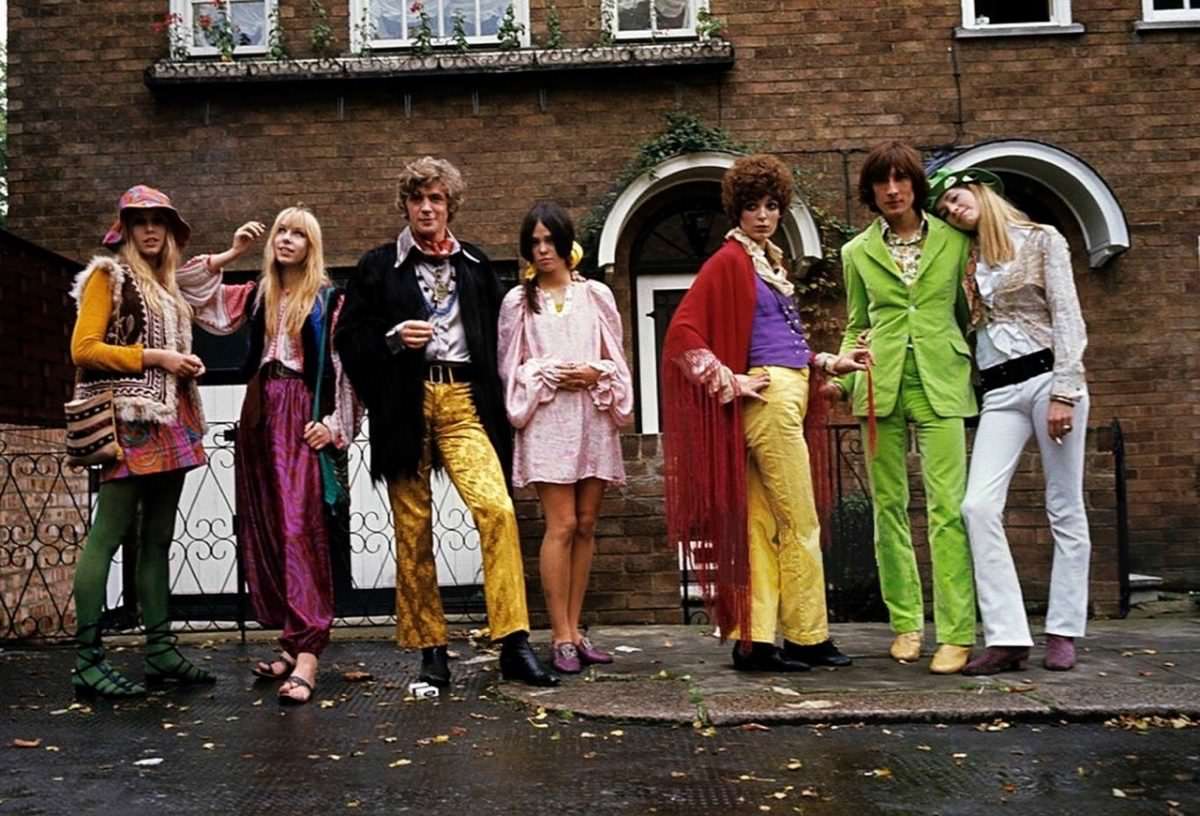
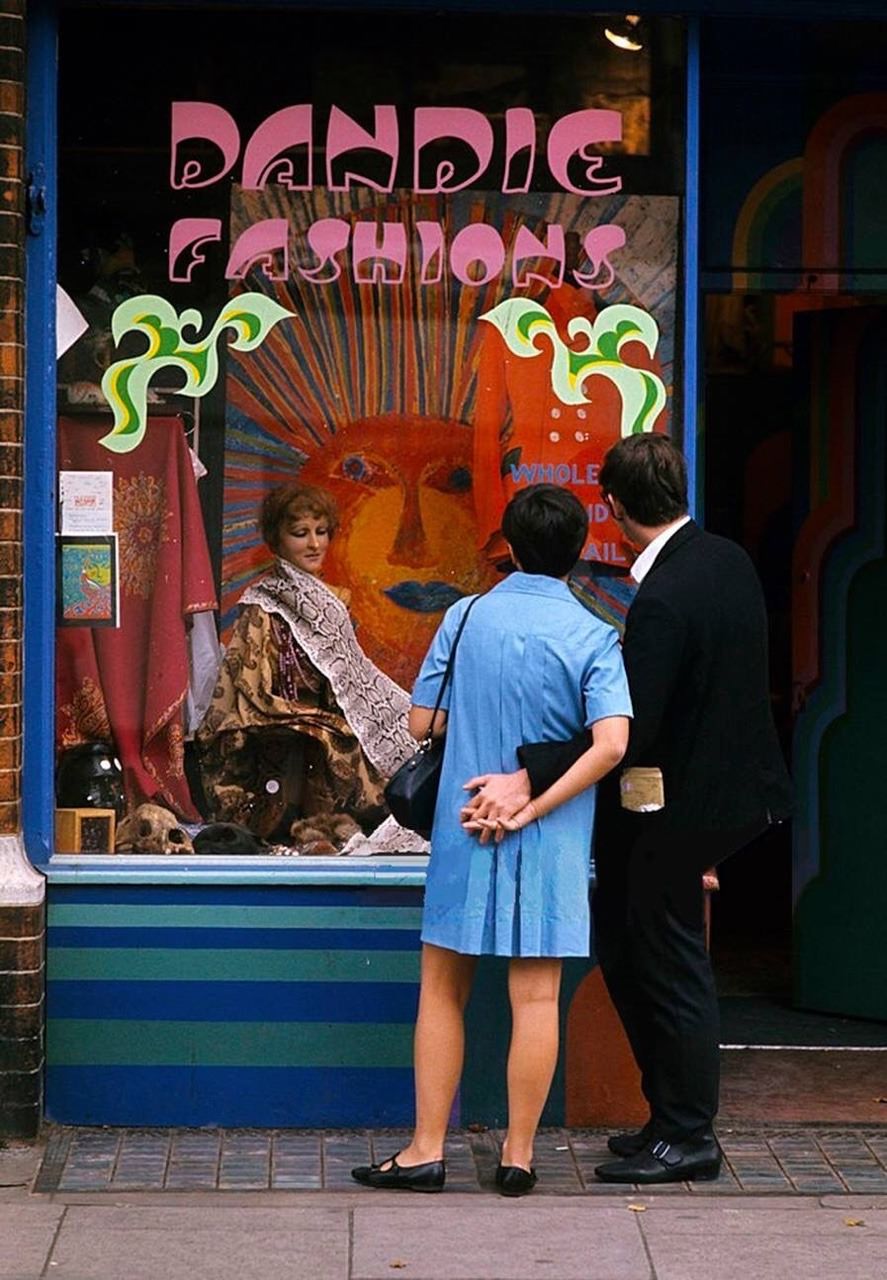
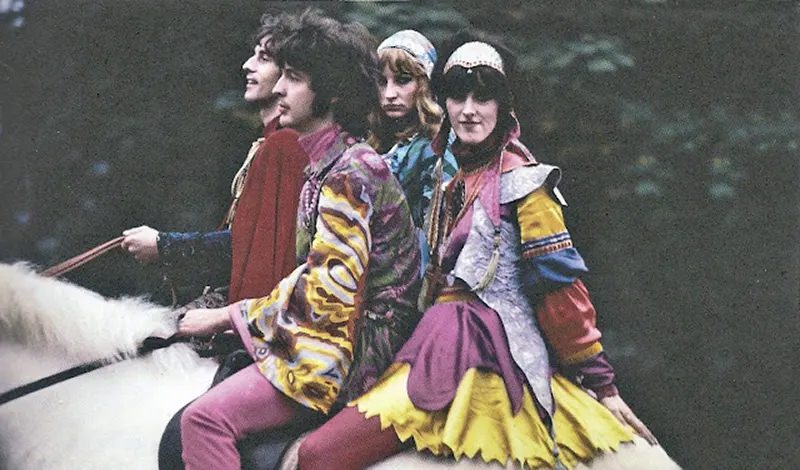
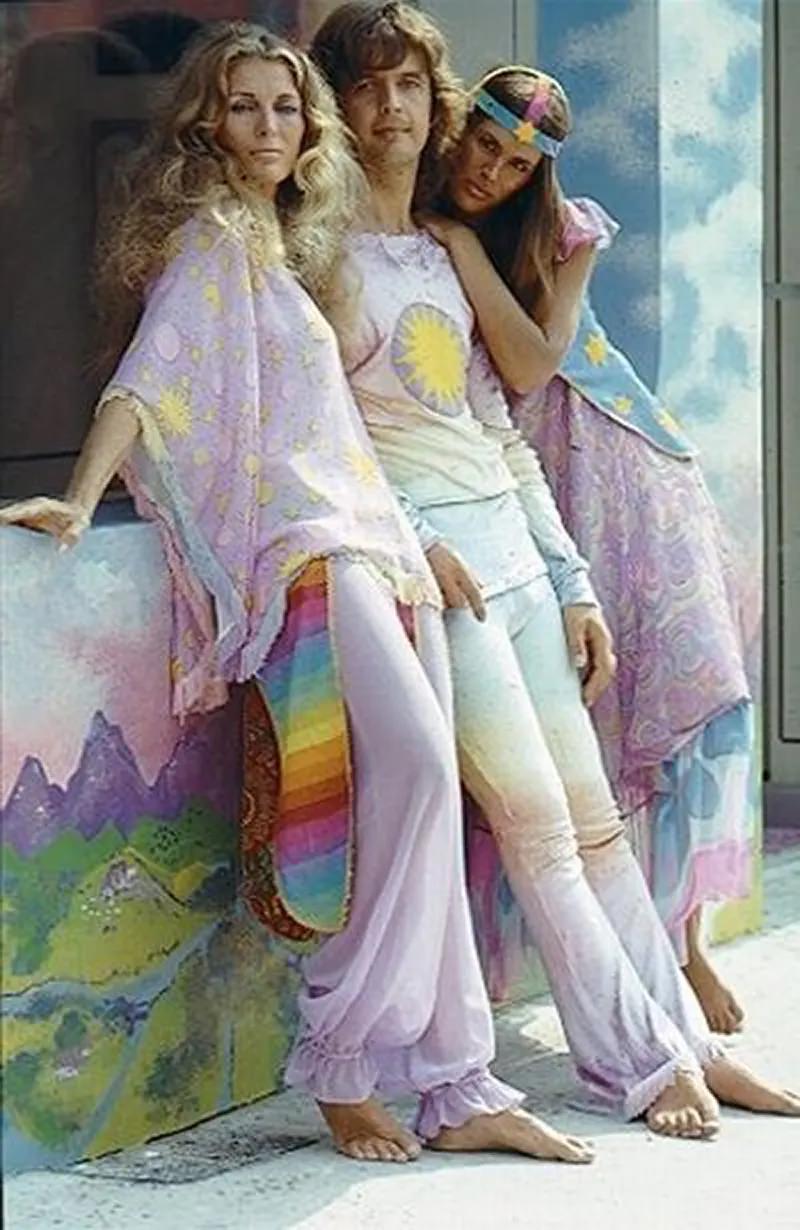
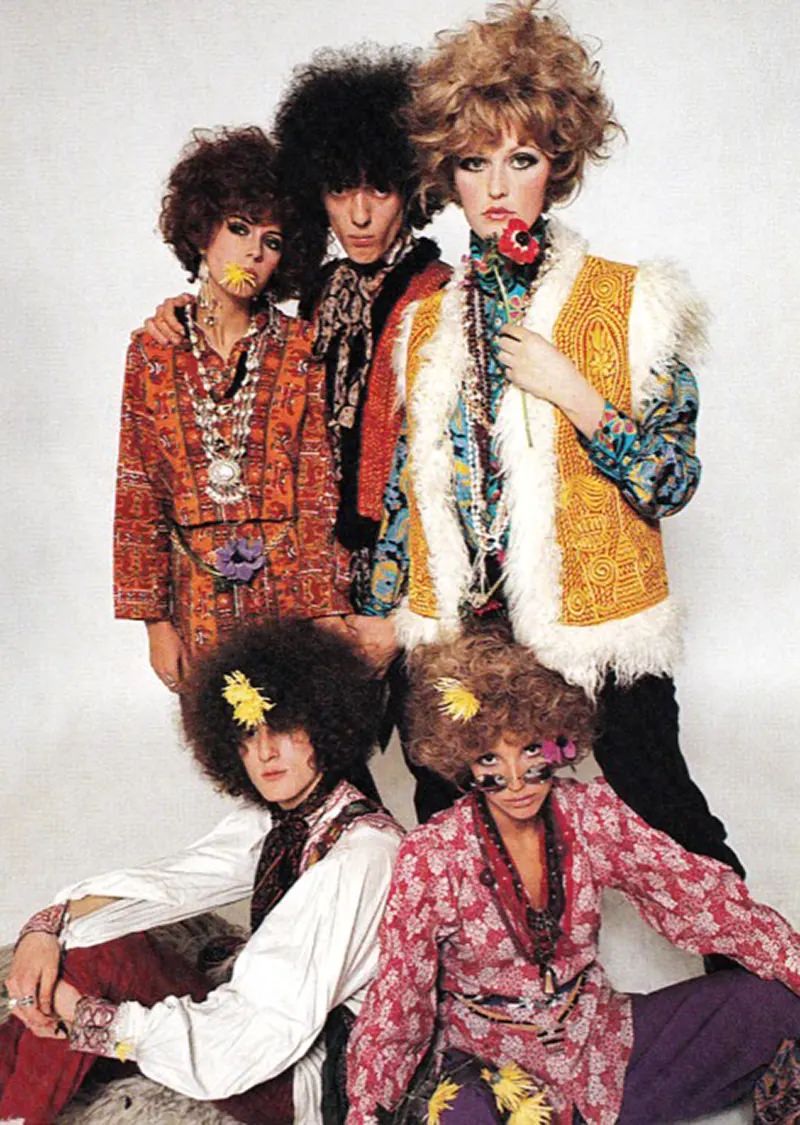
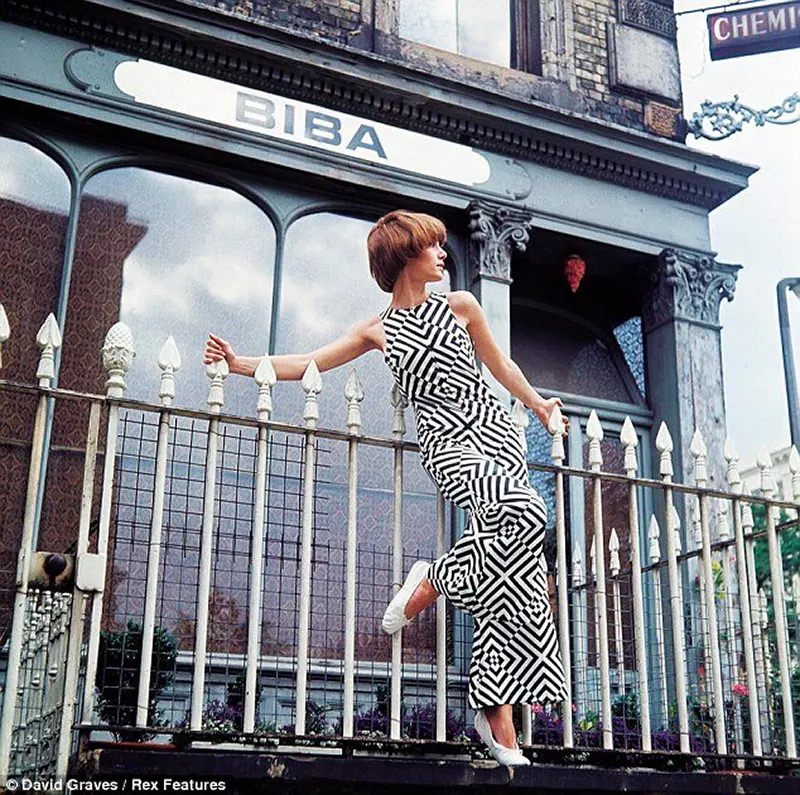
By the mid-1960s, London’s streets had become a living canvas. The fashion pouring out of boutiques in Chelsea, Baker Street, and Carnaby Street looked nothing like the tailored, muted clothing of the decade before. Colors were loud. Patterns were everywhere. And the people wearing them were making a point. Psychedelic hippie fashion in London wasn’t simply a trend — it was a direct visual statement from a generation rejecting the values of their parents.
The counterculture movement drove this shift. Young Londoners, influenced by the spread of psychedelic drugs like LSD and a growing interest in Eastern philosophy, began dressing in ways that reflected those experiences. Clothing became a form of self-expression rather than a social obligation. The rigid dress codes of the 1950s gave way to a free-for-all of silks, satins, kaftans, and bell-bottoms.
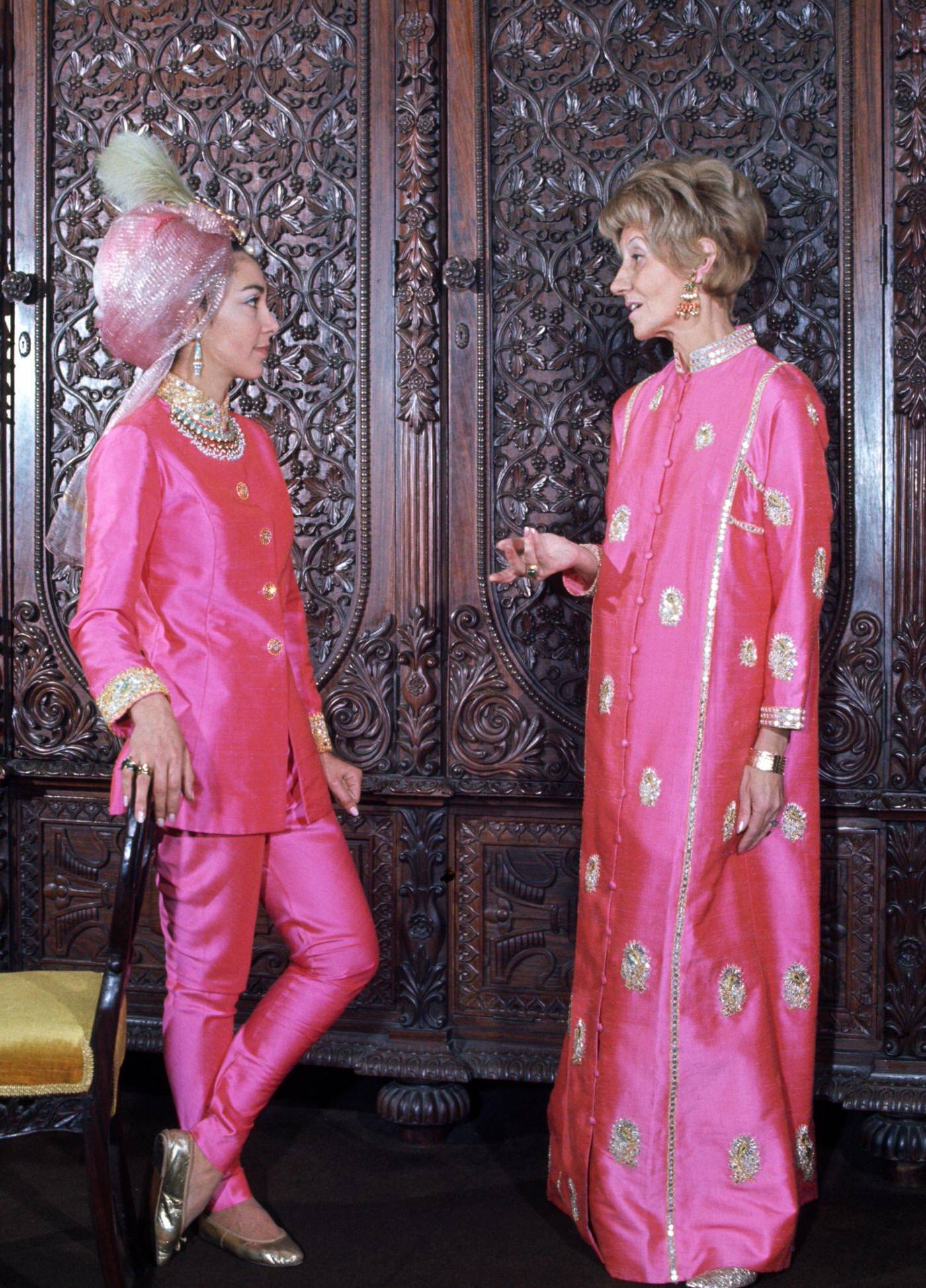
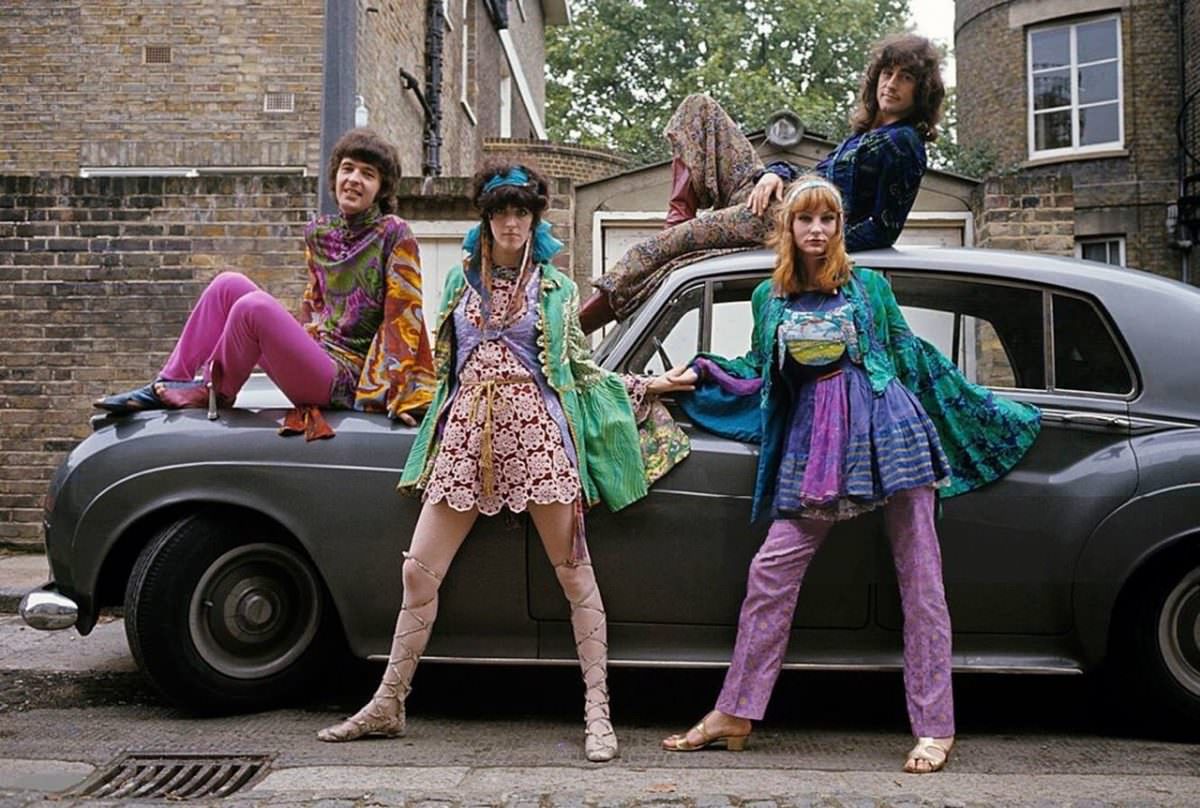
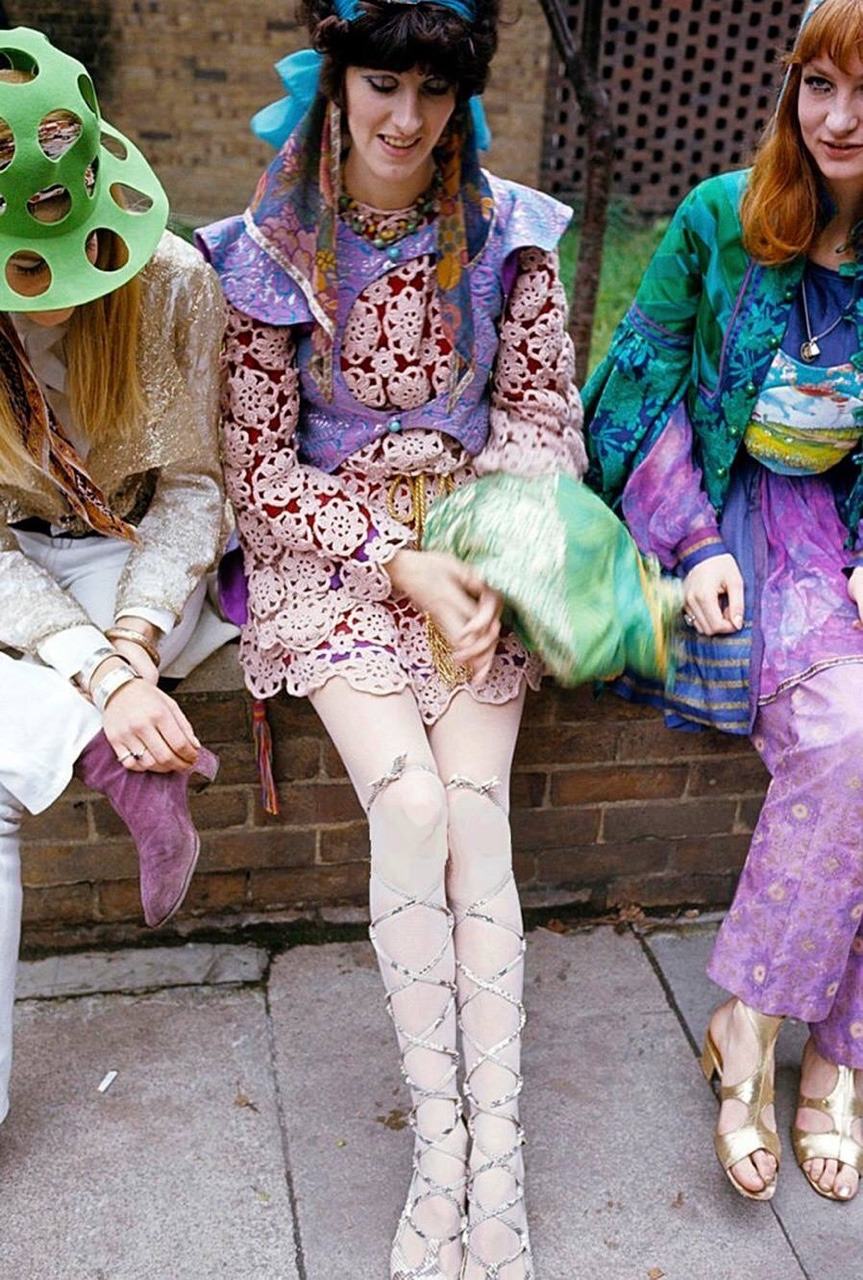
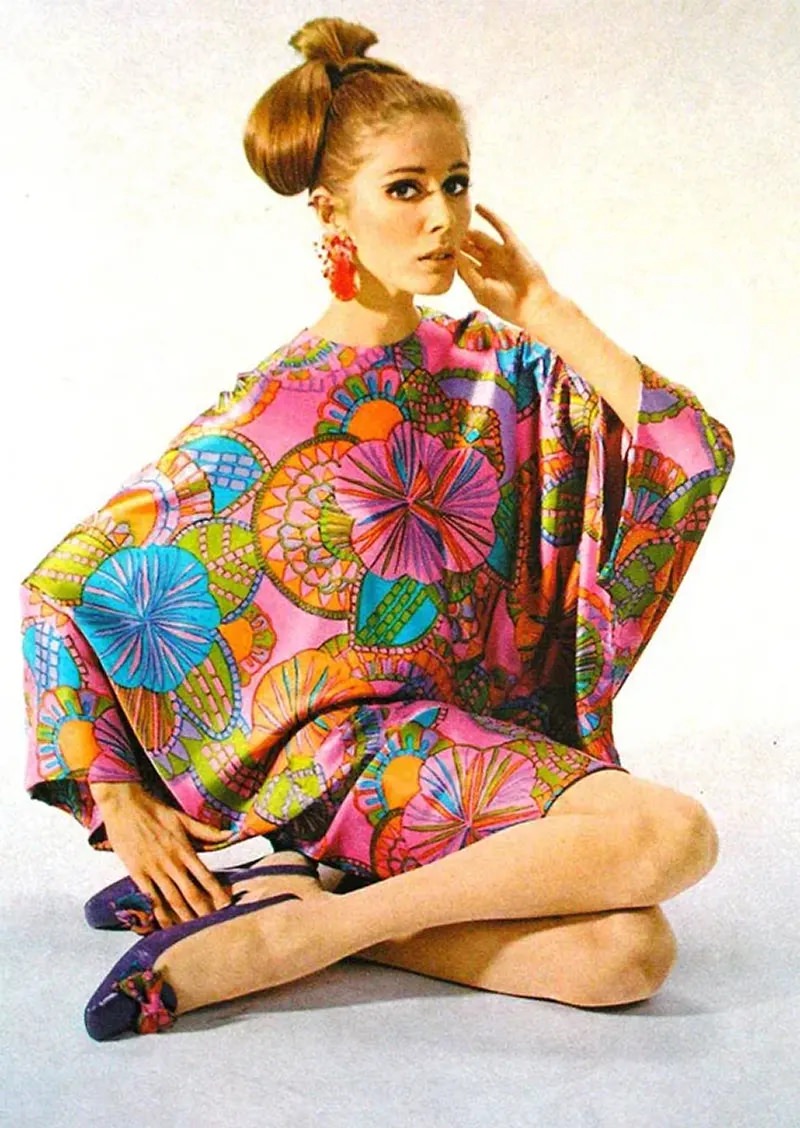
Inside London’s hippie boutiques, the visual variety was staggering. Pink silk kaftans with gold embroidery sat alongside trouser suits paired with turban headdresses and ballet shoes. These garments borrowed heavily from Indian and Middle Eastern dress traditions, filtered through a distinctly London sensibility. The kaftan, in particular, became a signature piece — long, flowing, and completely at odds with the structured silhouettes of the previous decade.
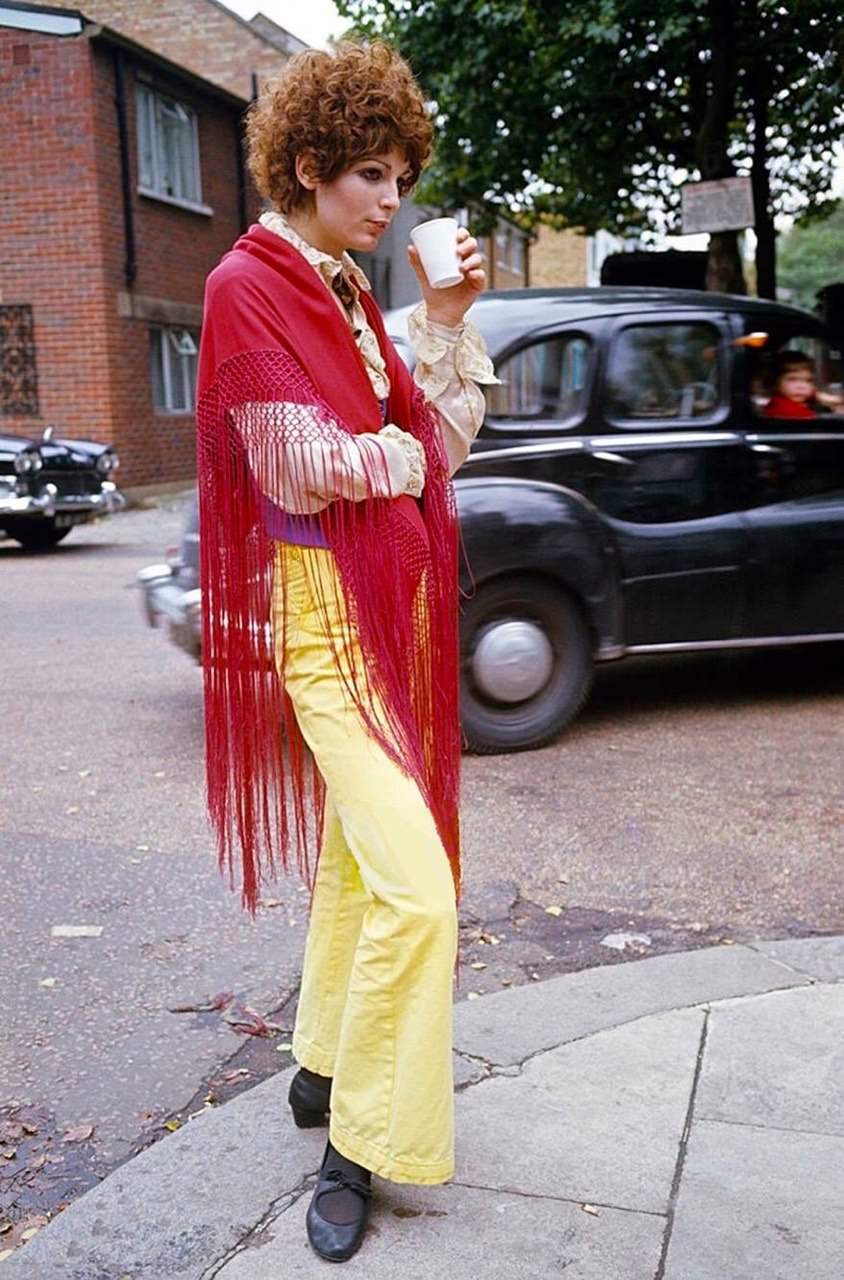
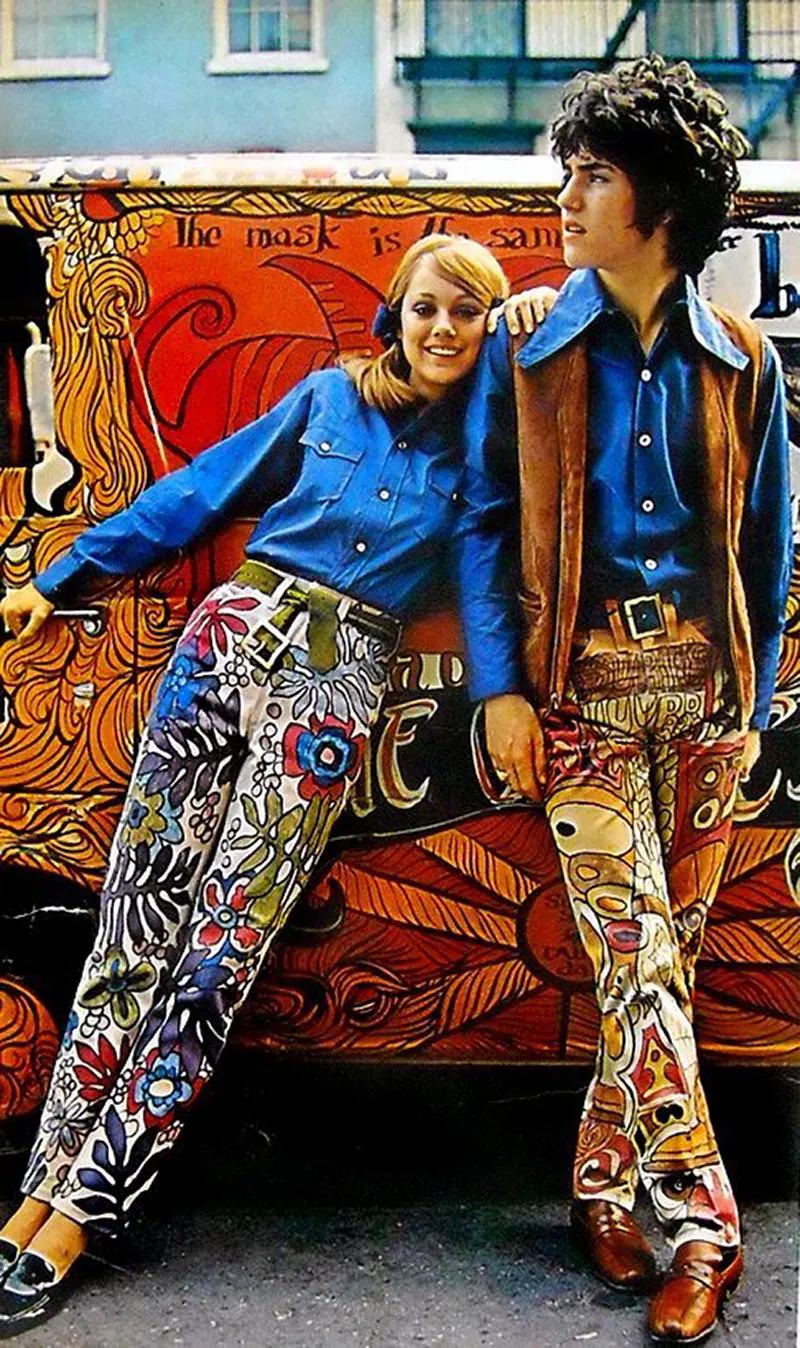
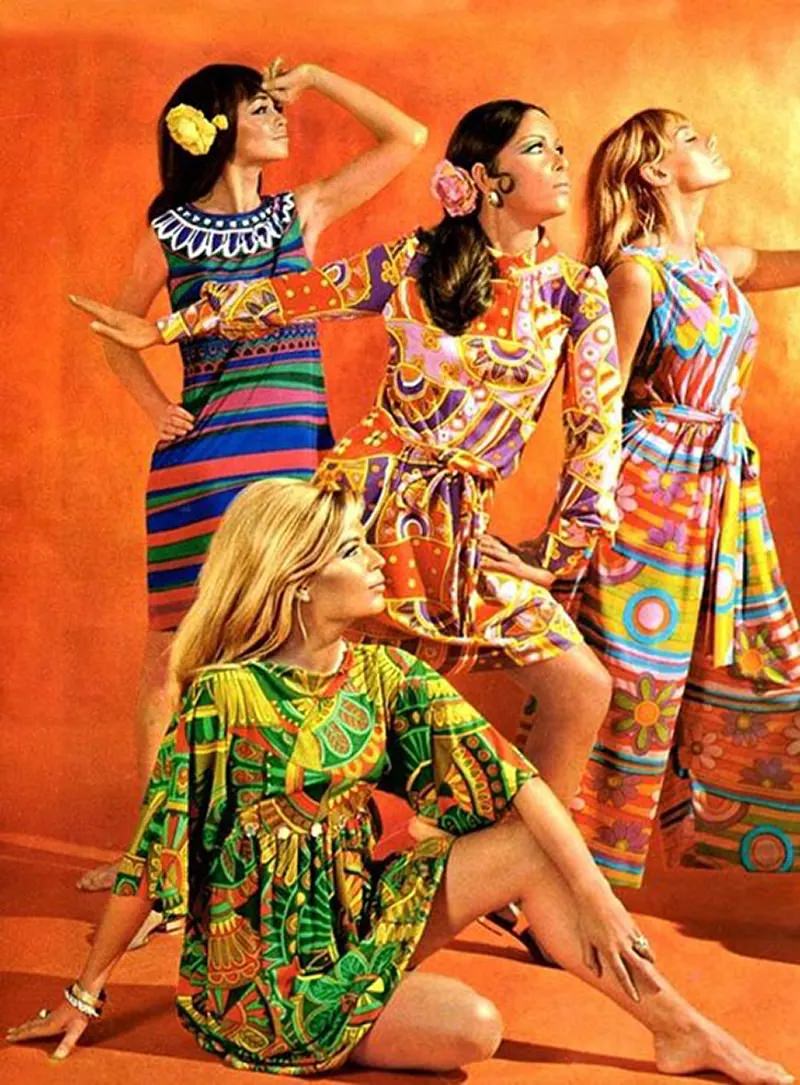
Fabrics like cotton and linen dominated the wardrobe, often printed with paisley, floral, and geometric patterns. Alongside these, designers and shoppers turned to natural fibers like hemp. Fringes, tassels, and beads appeared on jackets, bags, and shirts — details that echoed the bohemian, earthy side of the counterculture. These weren’t just decorative choices. They carried meaning, signaling alignment with a movement that valued simplicity and nature over mass production.
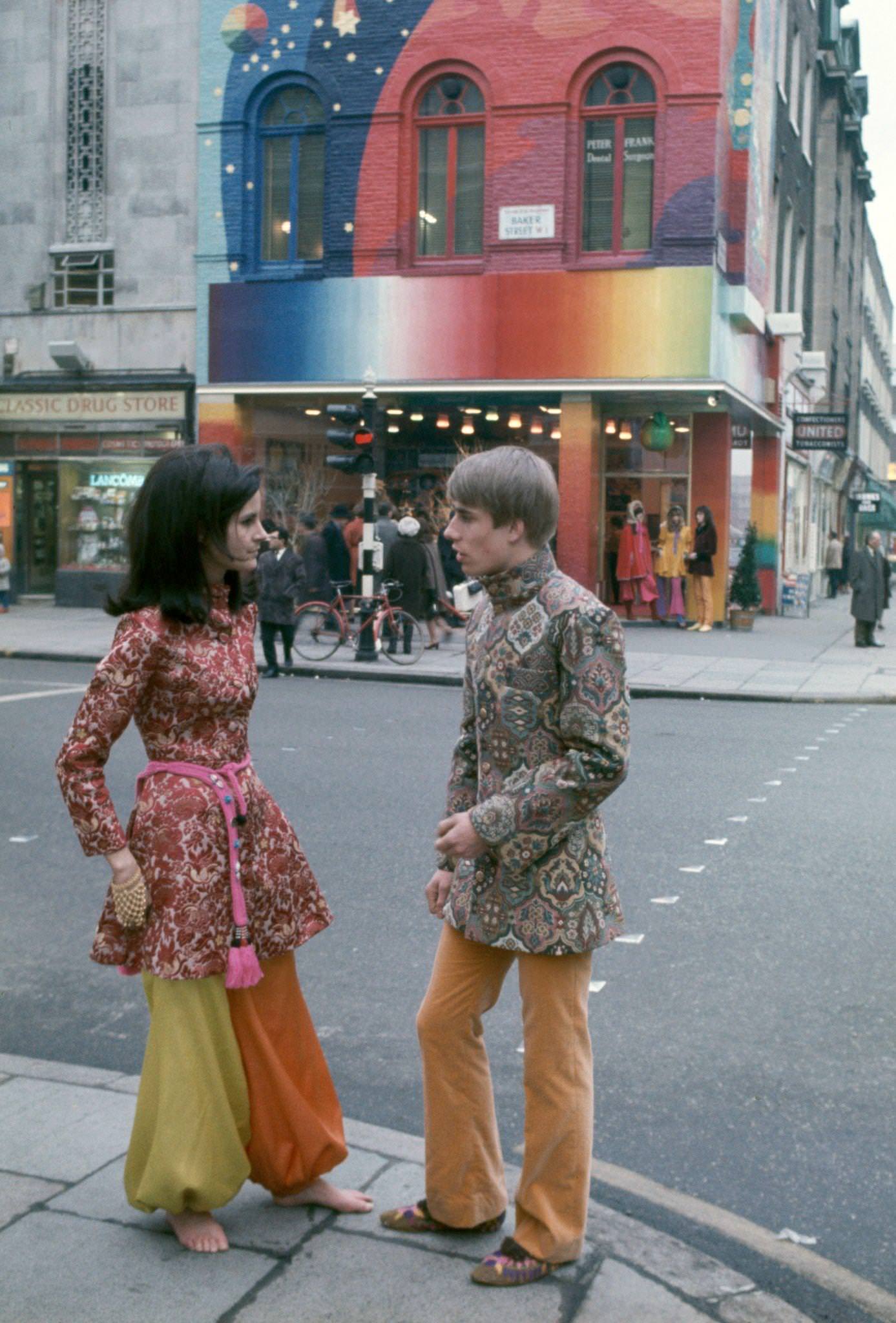
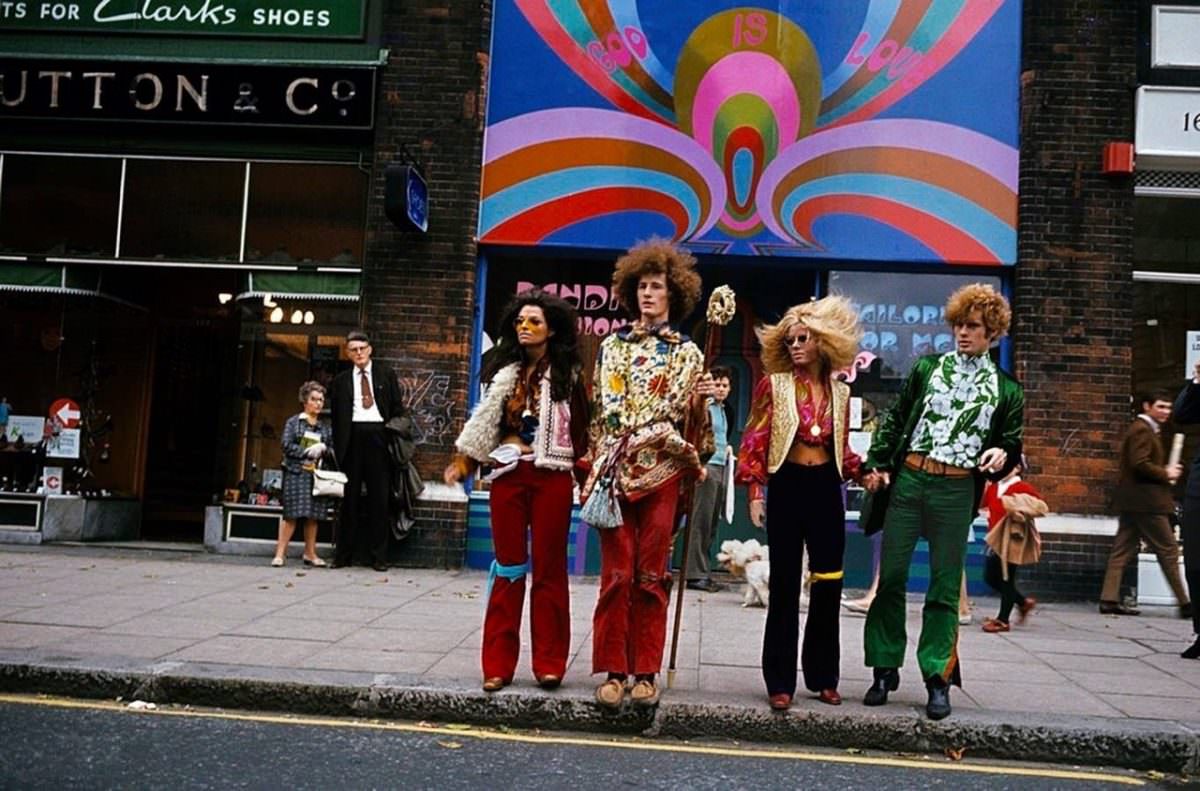
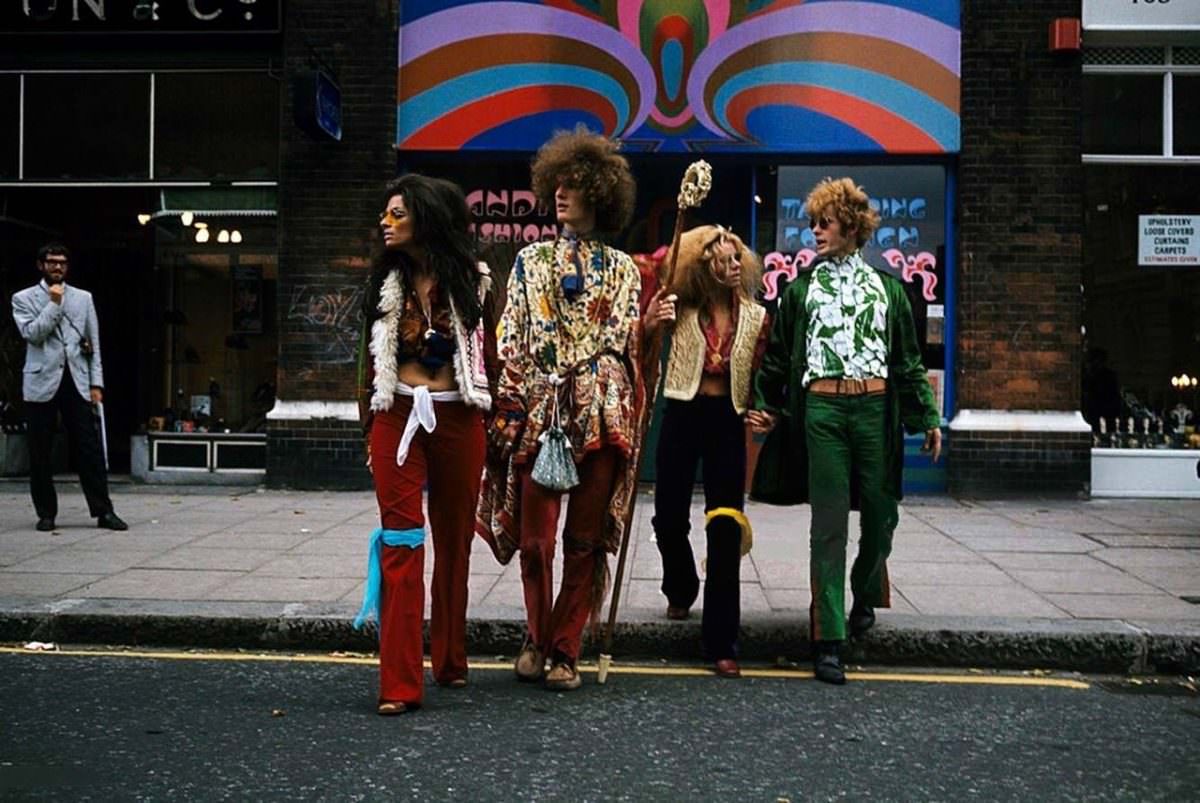
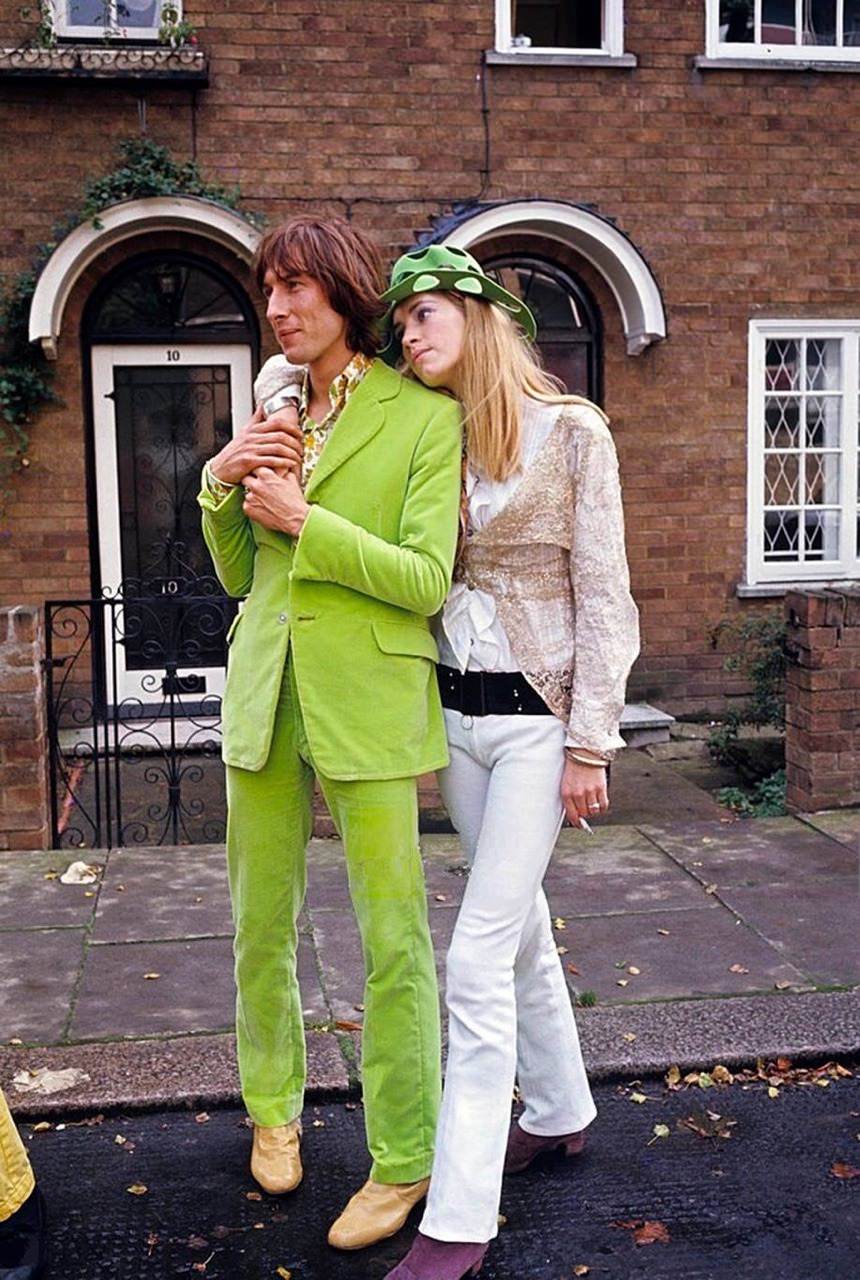
The Apple Boutique on Baker Street, opened by The Beatles in 1967, became one of the most visible hubs of this fashion moment. Shoppers dressed head to toe in the style browsed its shelves alongside tourists and music fans. Outside the store, the look was on full display: printed tunics layered over harem pants in orange and yellow, bare feet on the pavement, and Nehru-style jackets paired with velvet trousers. This was everyday dress for a particular slice of London youth.
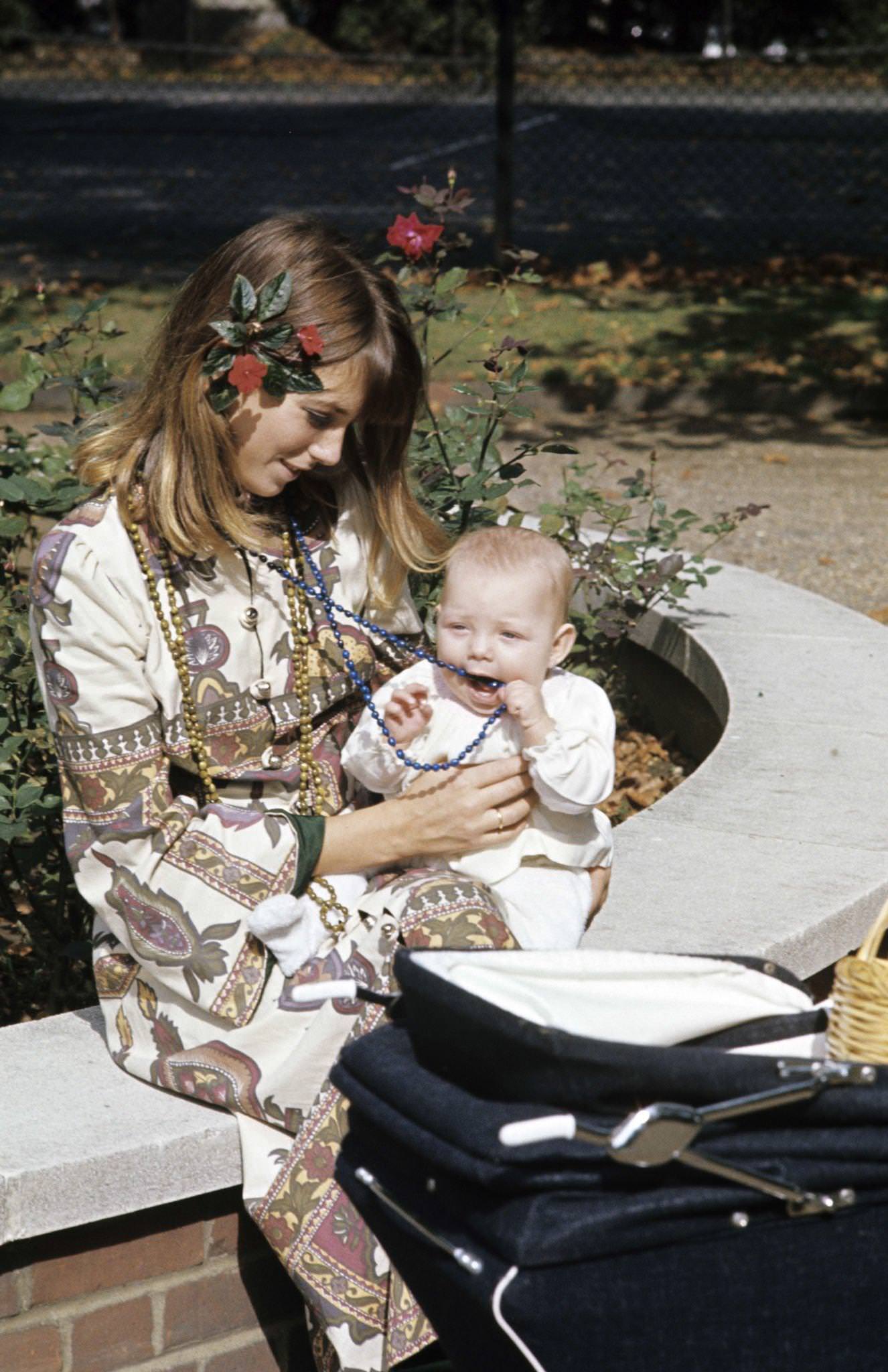
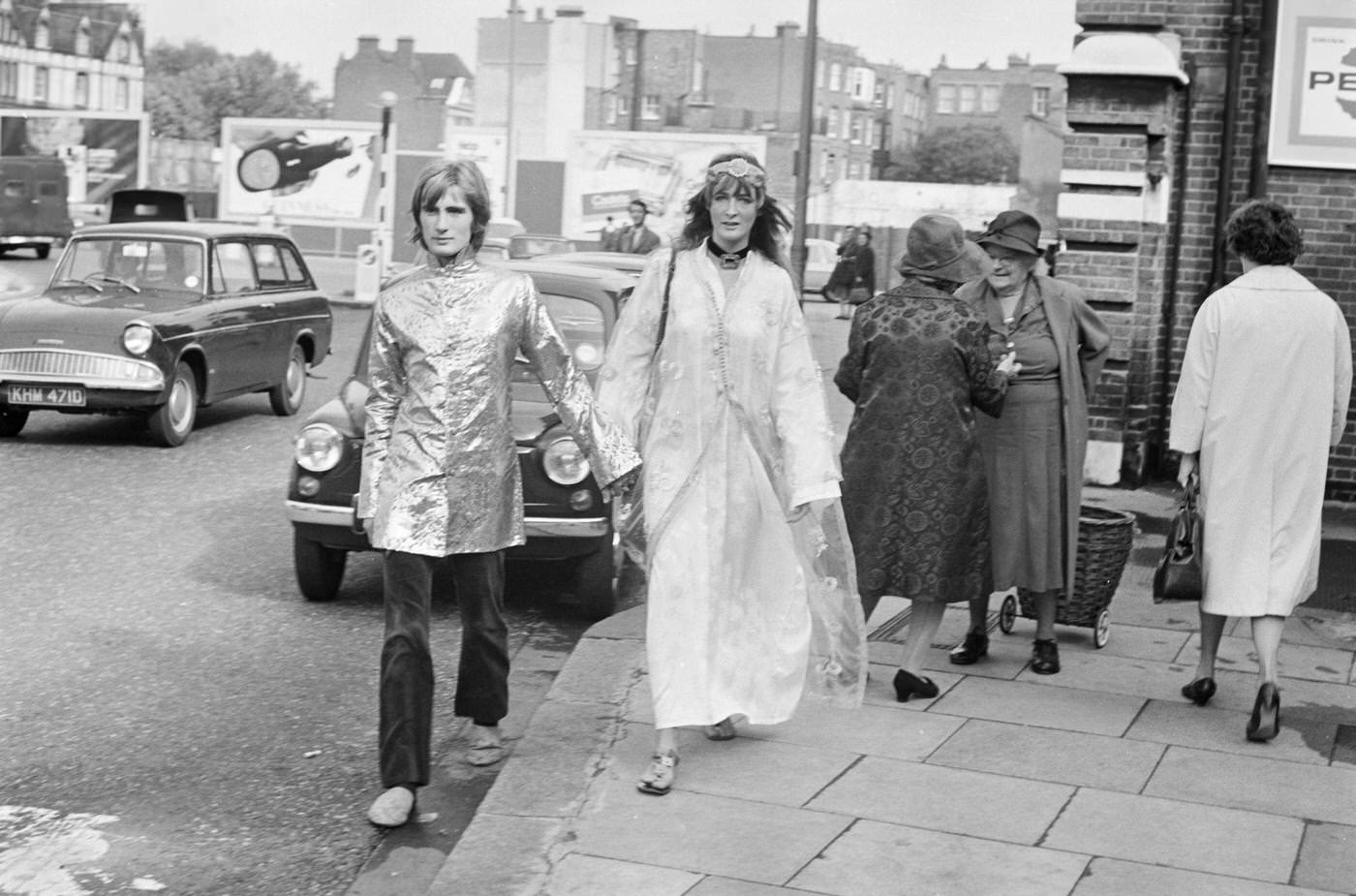
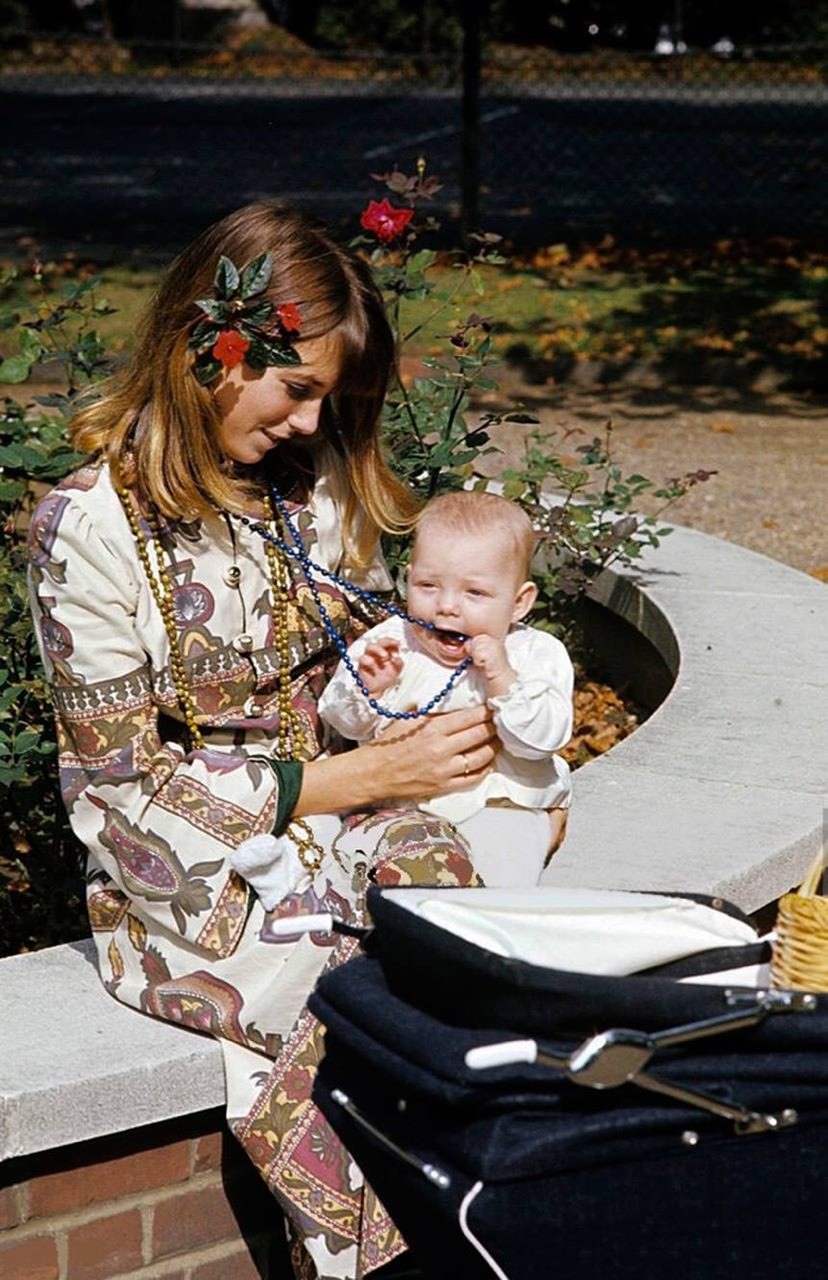
Jane Birkin and her then-partner John Crittle were among the most photographed figures in London’s hippie fashion scene. Crittle was a tailor and boutique owner who dressed some of the era’s most stylish figures. Together, they embodied the look that defined 1967 London — relaxed, colorful, and rooted in the aesthetic of the counterculture.
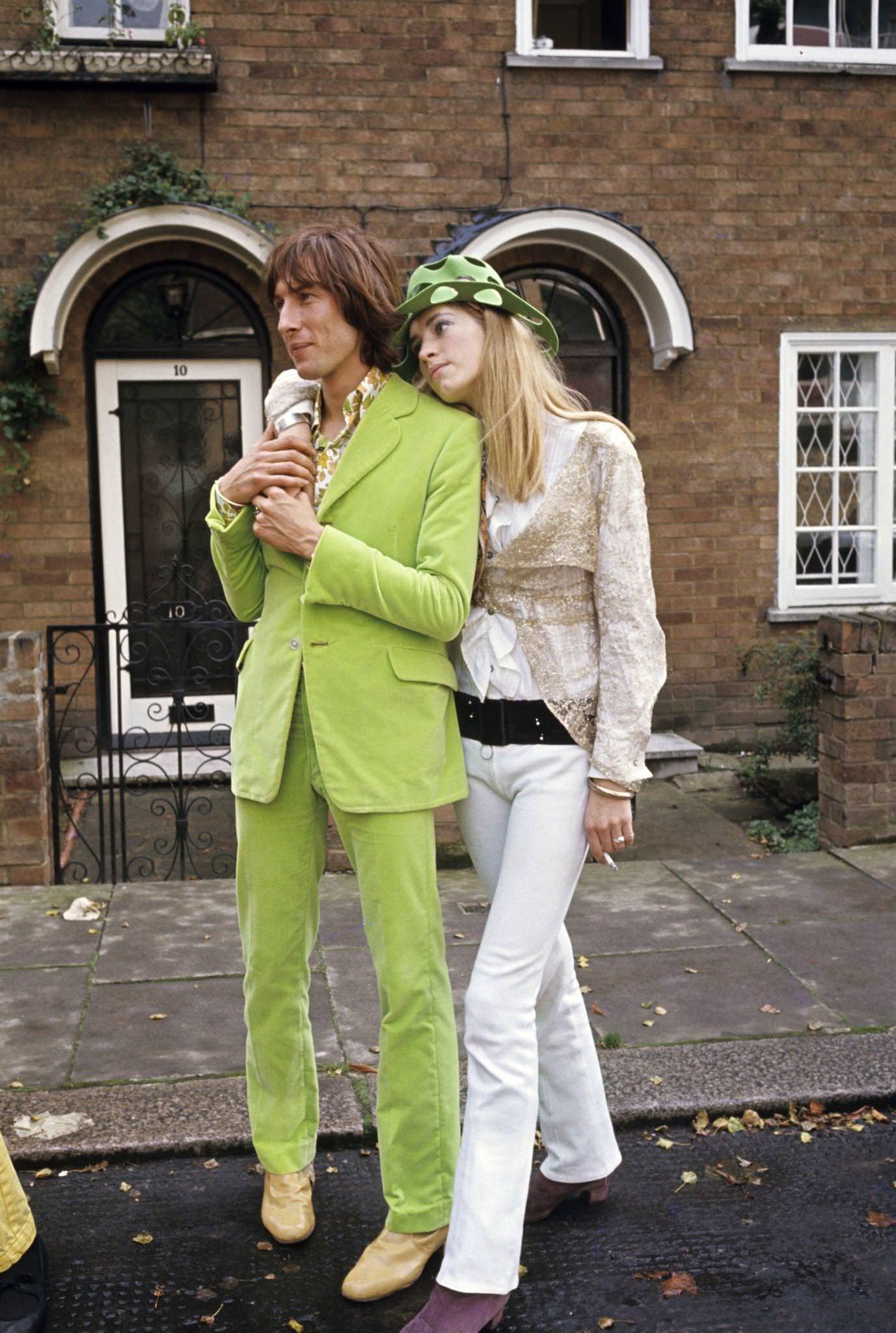
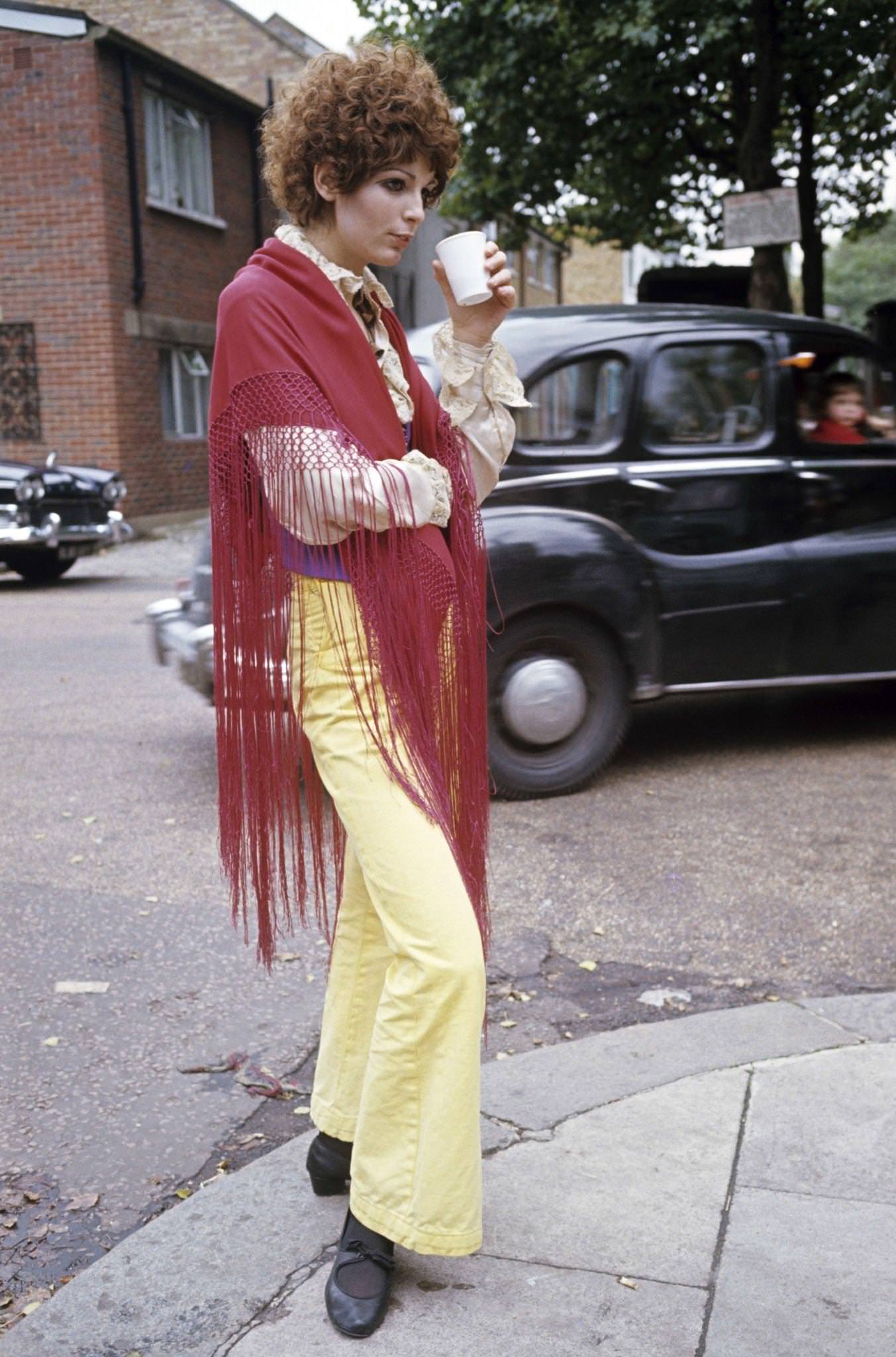
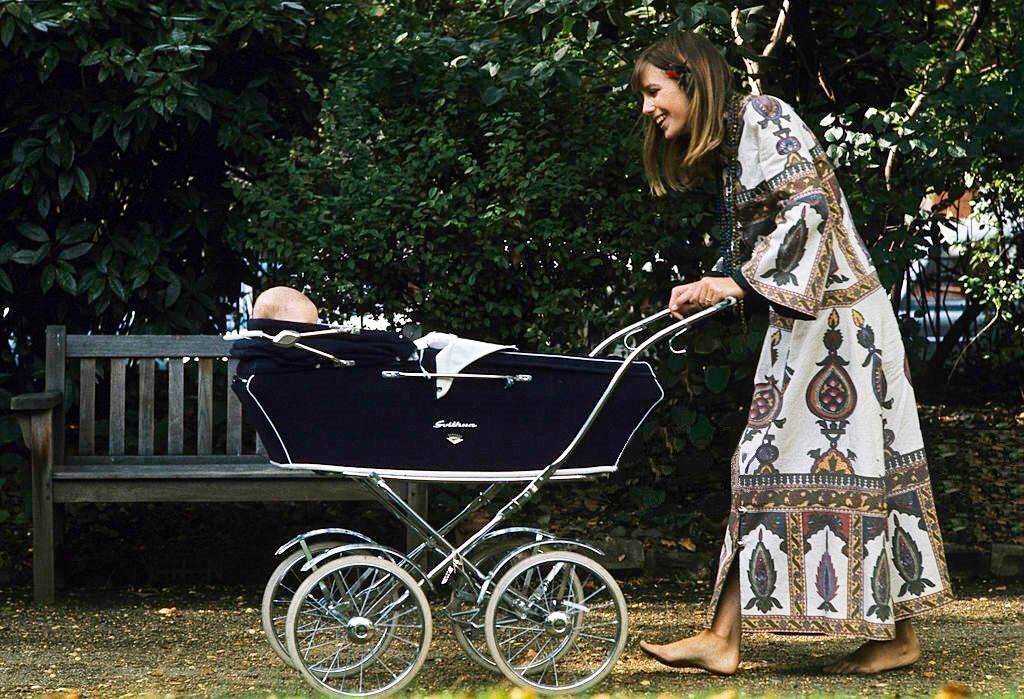
Birkin was frequently photographed wearing cashmere dresses and layered necklaces — a combination that captured the era’s blend of luxury and laid-back style. Accessories were central to the whole look. Jewelry made from shells, wood, and beads replaced gold and silver. Colored lens sunglasses framed faces framed by long, loose hair. These details weren’t afterthoughts — they were essential to the full picture.
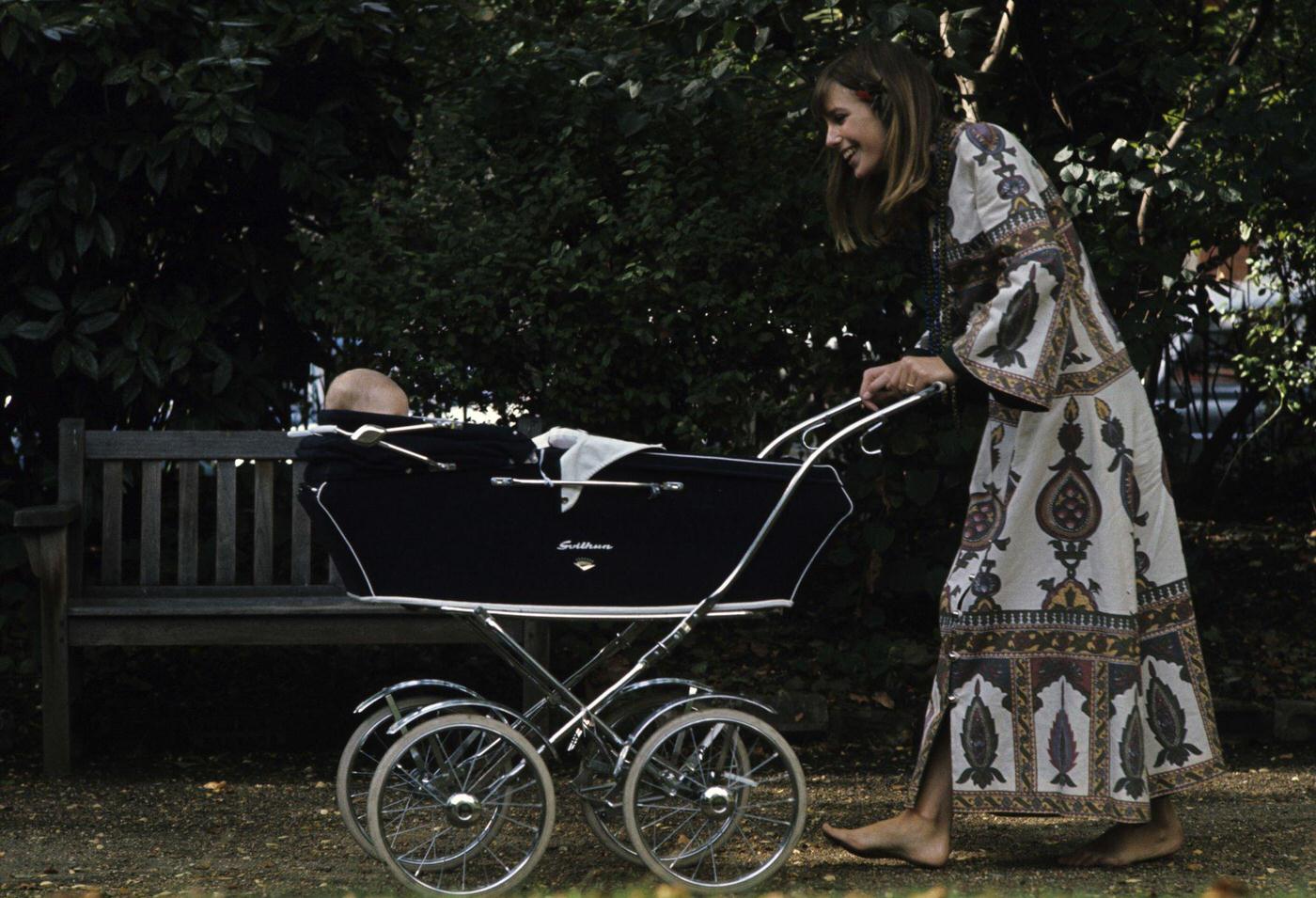
Hairstyles matched the clothing’s freedom. Both men and women wore their hair long and unstyled. Men grew beards and mustaches, a stark departure from the clean-shaven look that had dominated the 1950s. This wasn’t just about aesthetics — long hair carried cultural weight as a rejection of conformity and military values. Wearing it was, for many, a political choice as much as a personal one.
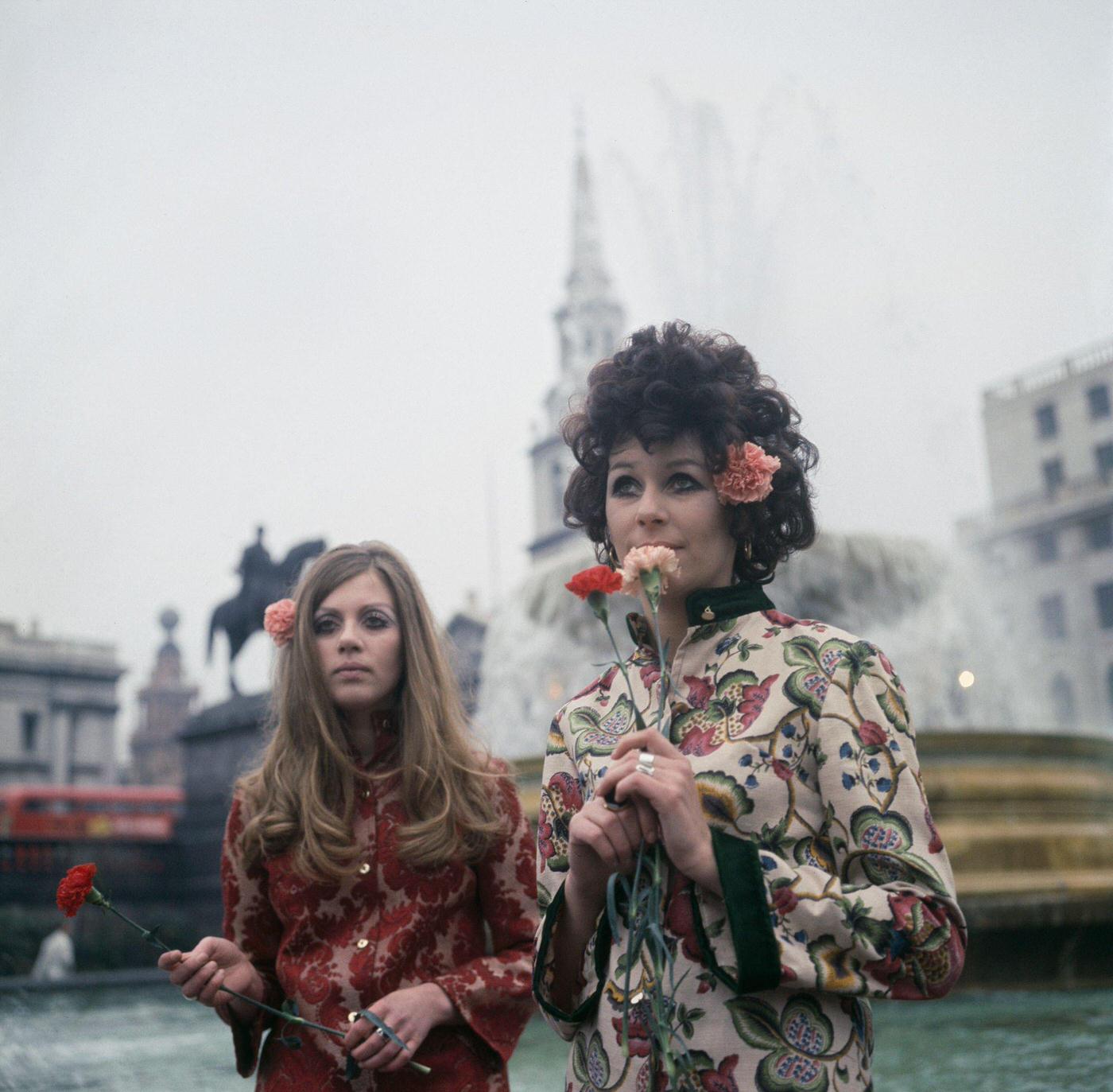
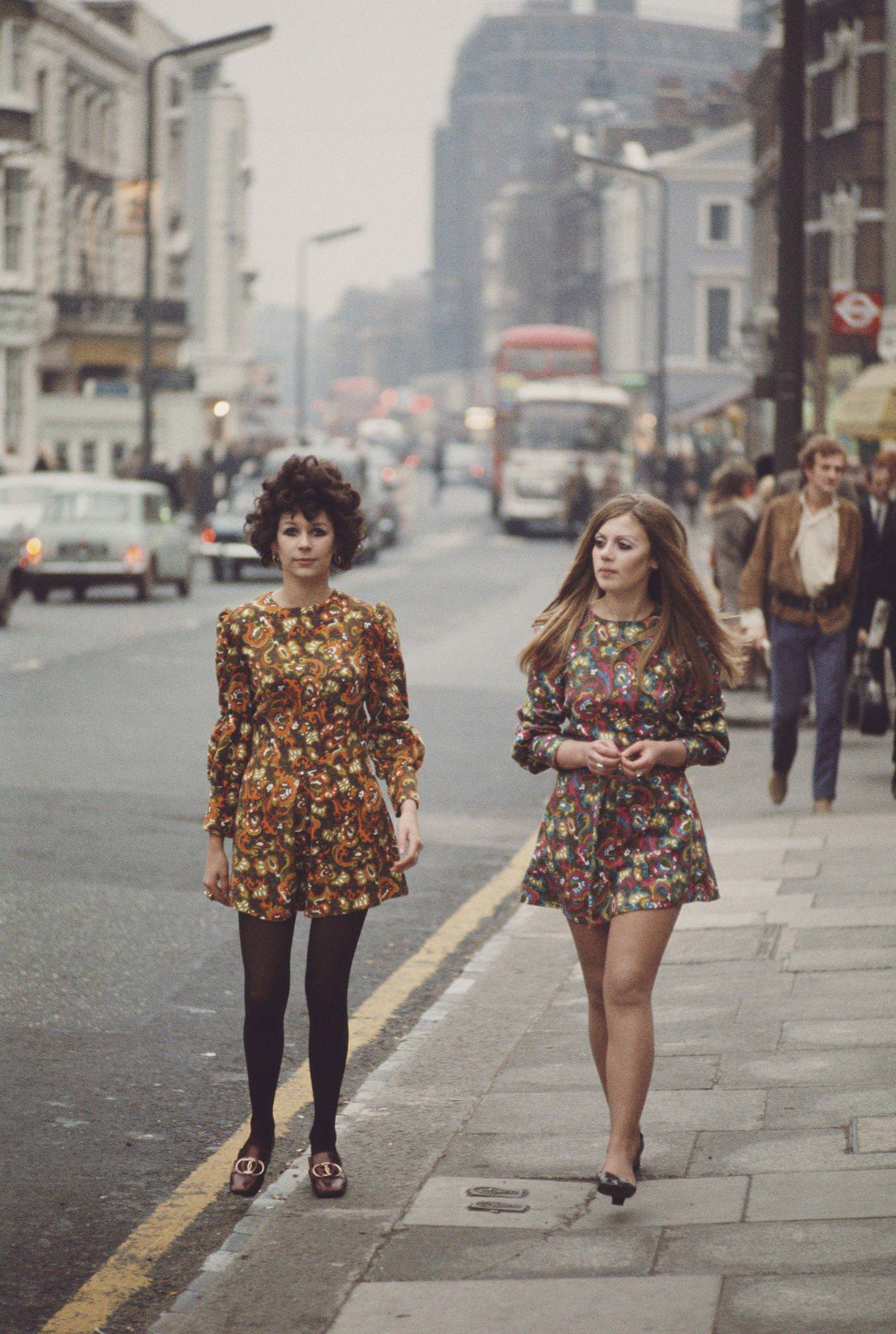
By late 1967, the look had spread well beyond boutiques and music venues. Floral print tunics and mini dresses appeared on young women walking the Kings Road and standing in Trafalgar Square. The patterns were bold — large blooms and saturated colors that stood out against London’s grey November skies. Flowers became a recurring motif, both in the fabric prints and as actual objects carried in hand.
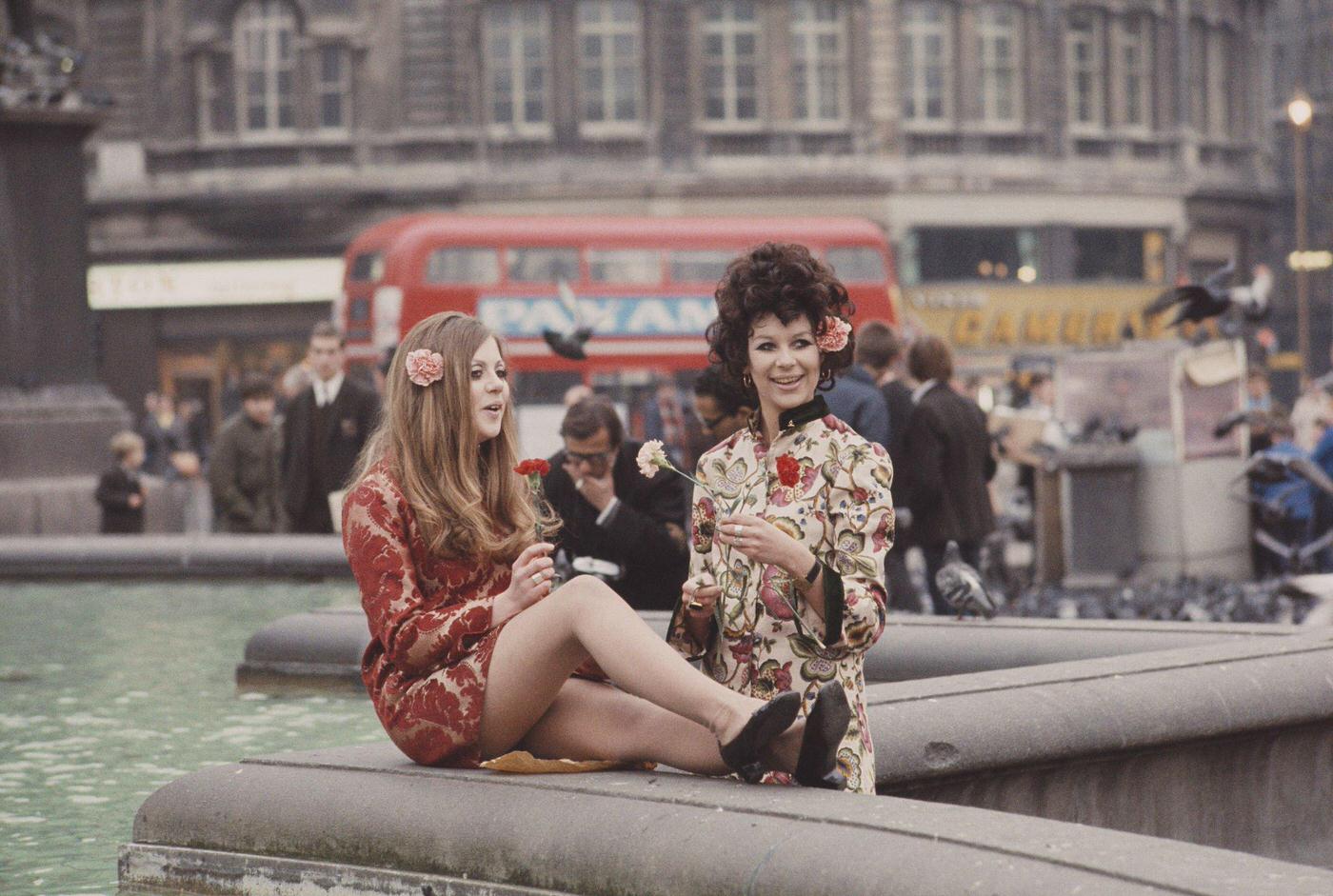
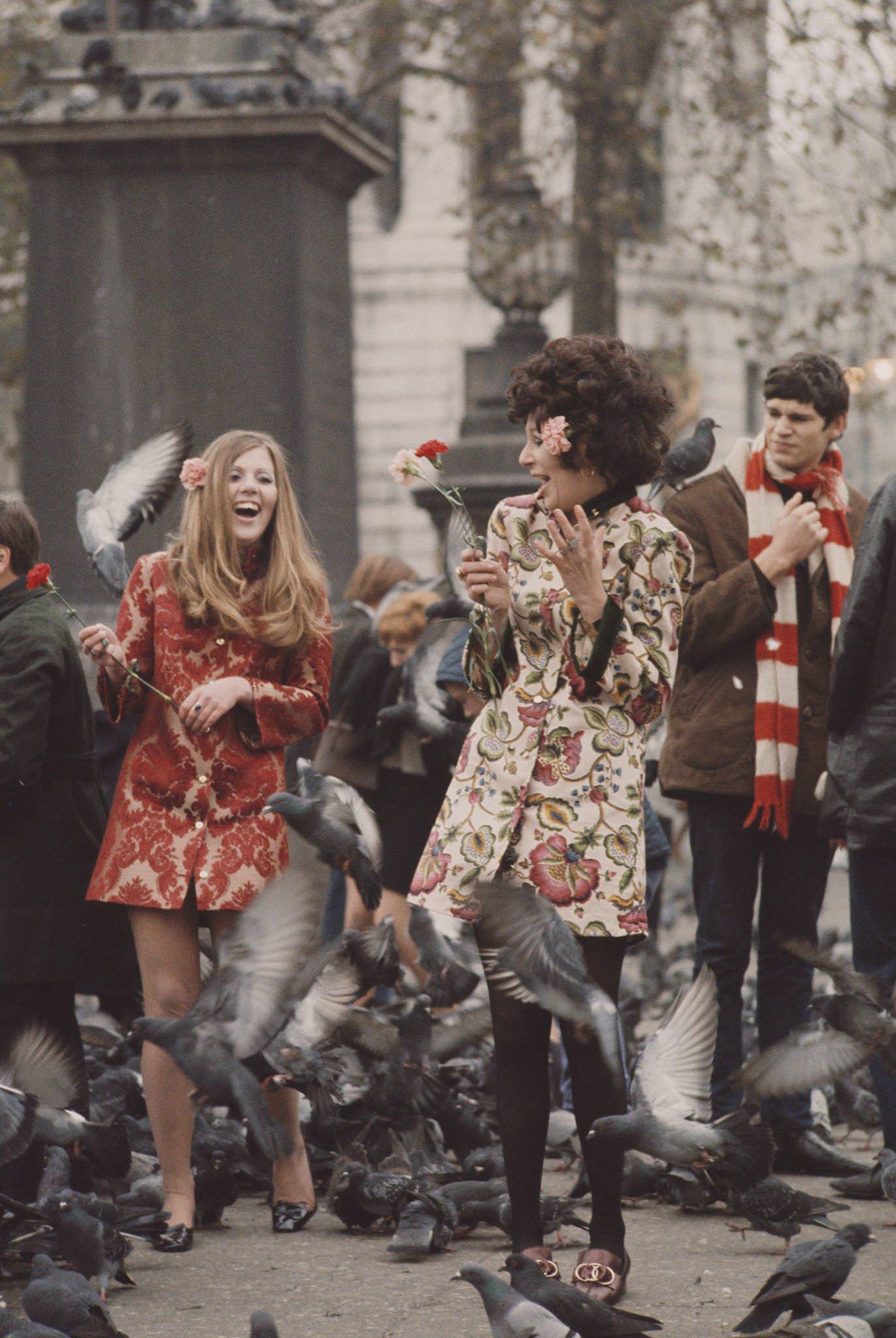
Trafalgar Square in November 1967 offered one of the most striking visual records of how far the style had traveled from its boutique origins. Young women in short floral brocade coats posed among pigeons while holding flowers — an image that captured both the playfulness and the sincerity of the movement. The square, a traditional gathering point for protests and celebrations, suited the occasion perfectly.
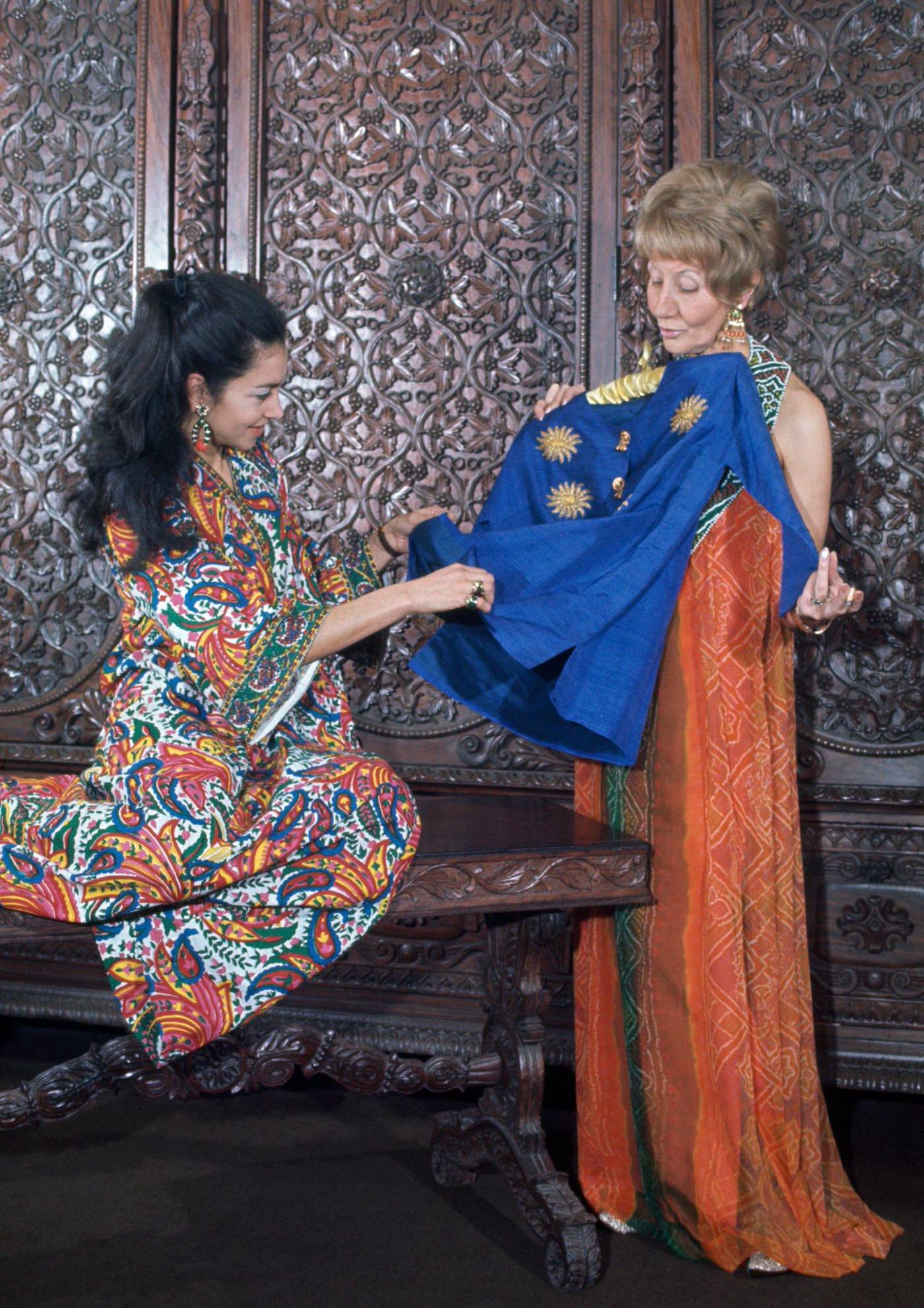
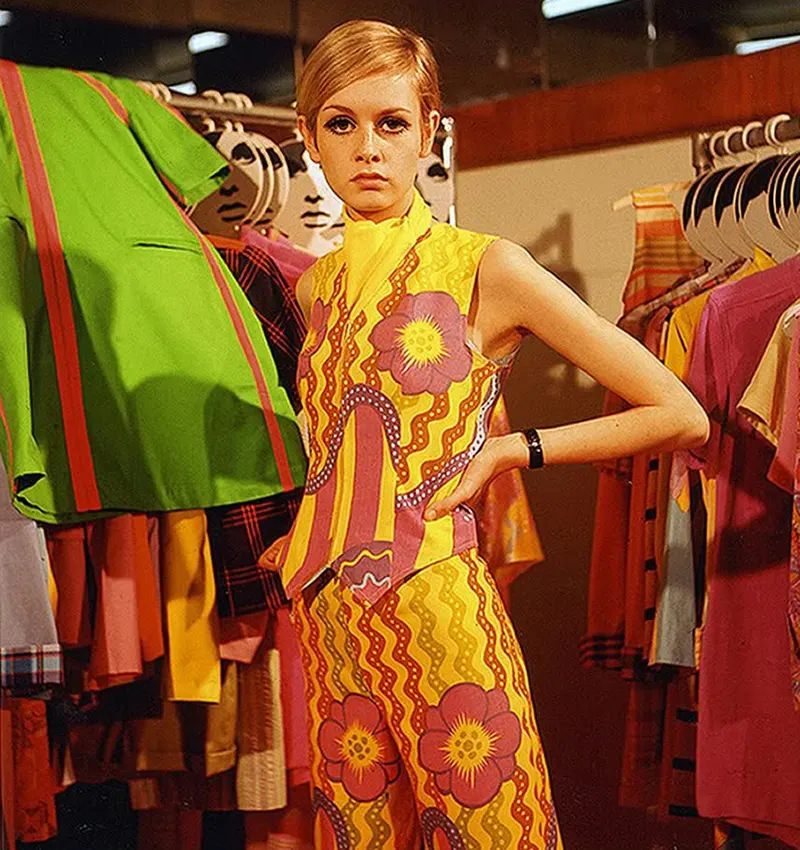
Boutiques stocking these styles became social spaces as much as retail ones. An orange halter neck dress displayed beside a vibrantly printed kaftan in a 1966 shop floor captured exactly how wide the range of options had become. Women could dress in structured silhouettes or loose, flowing layers — and both choices sat comfortably under the same psychedelic umbrella. The rules had effectively dissolved.
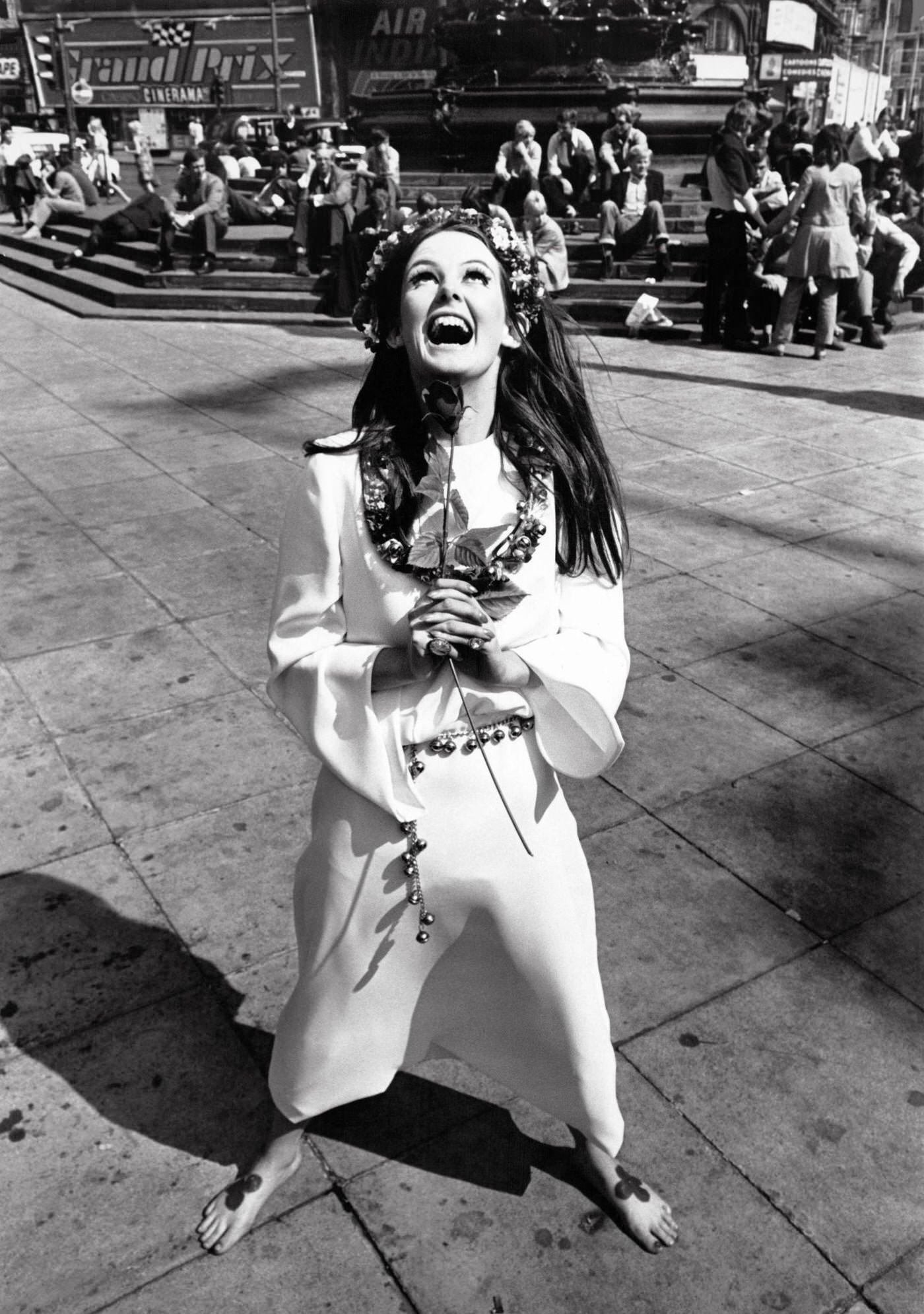
Even formal occasions were not immune to the shift. Model Lesley Hill, photographed in a hippie wedding dress from Young’s Dress Hire at Piccadilly, showed how the aesthetic had reached bridal wear. A flower crown in place of a veil, a flowing silhouette instead of structured satin — the wedding dress had been reimagined in the image of the counterculture. What had started in Carnaby Street boutiques was now influencing the most traditional ceremonies in British life.