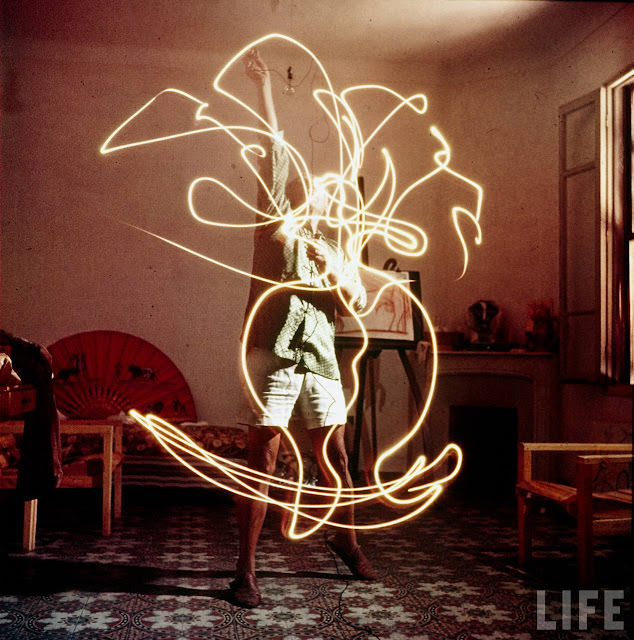
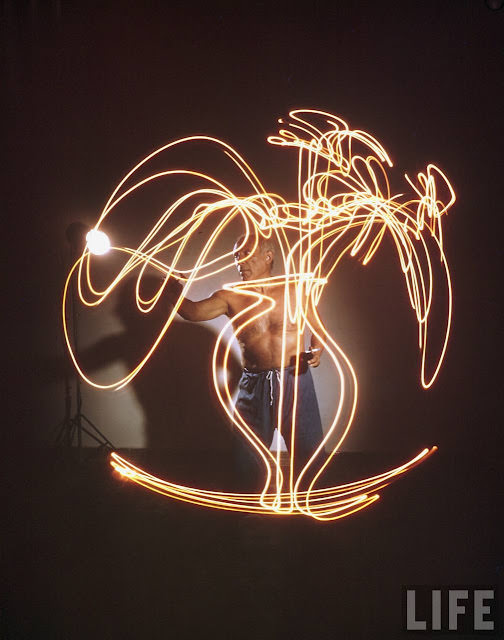
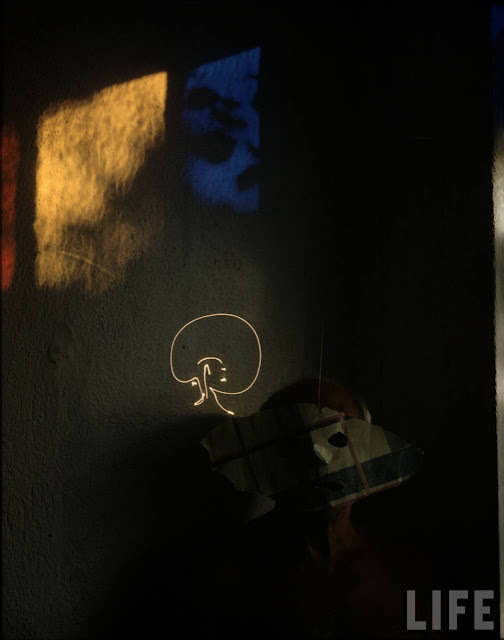
In 1949, two creative powerhouses collided in the South of France: Pablo Picasso, the renowned artist, and Gjon Mili, an innovative photographer from LIFE magazine. Mili, a pioneer in lighting techniques, had captured stunning images of ice skaters with lights attached to their skates, performing graceful moves in the dark. He shared these images with Picasso, igniting a spark of inspiration in the artist’s mind.
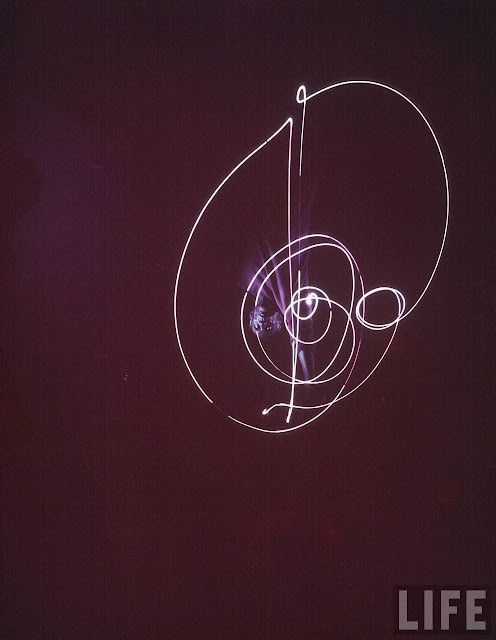
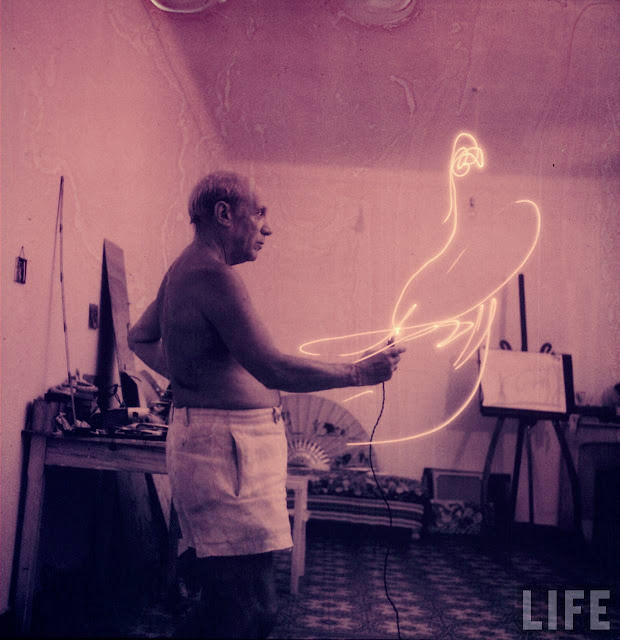
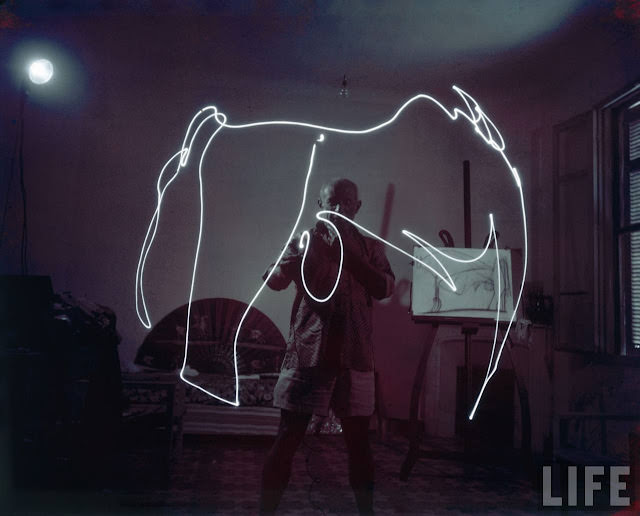
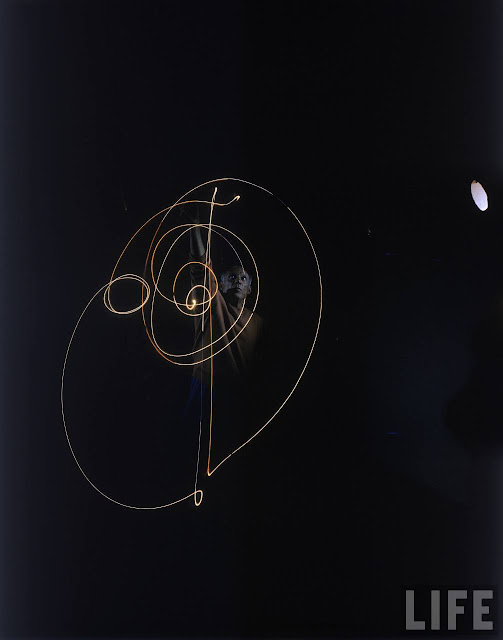
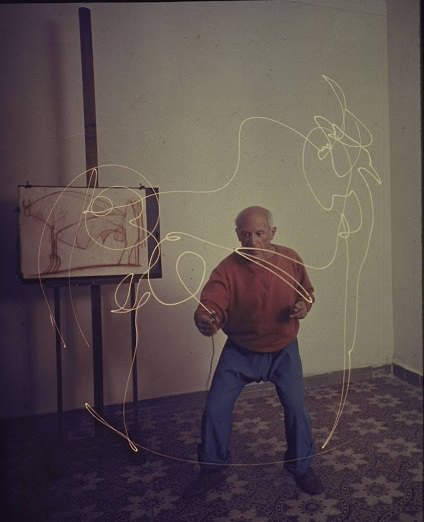
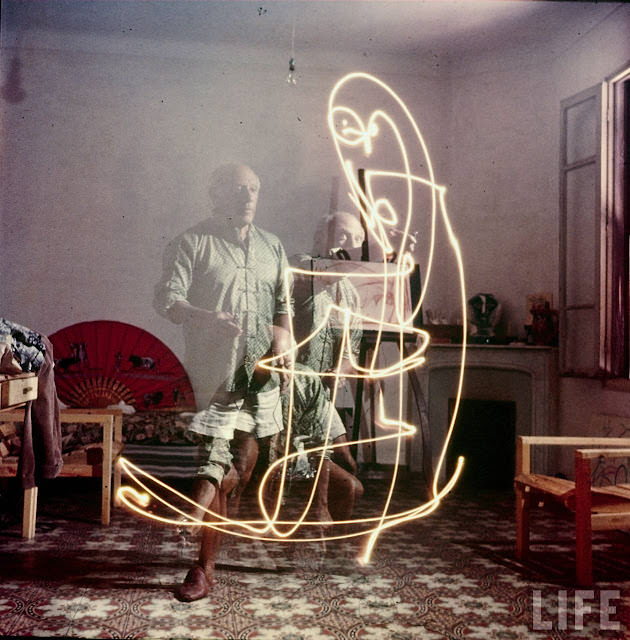
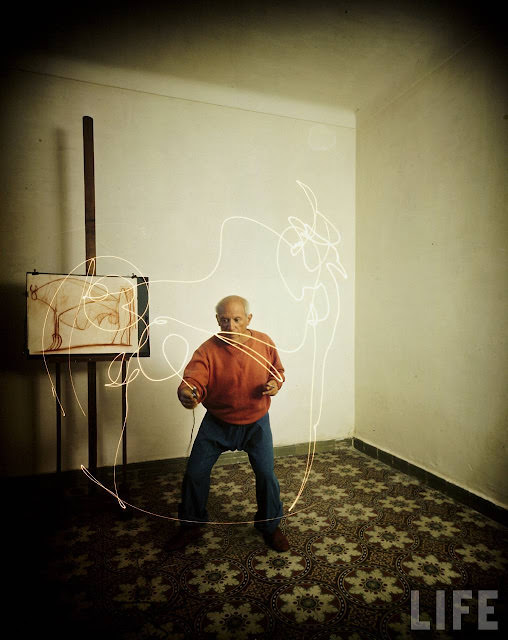
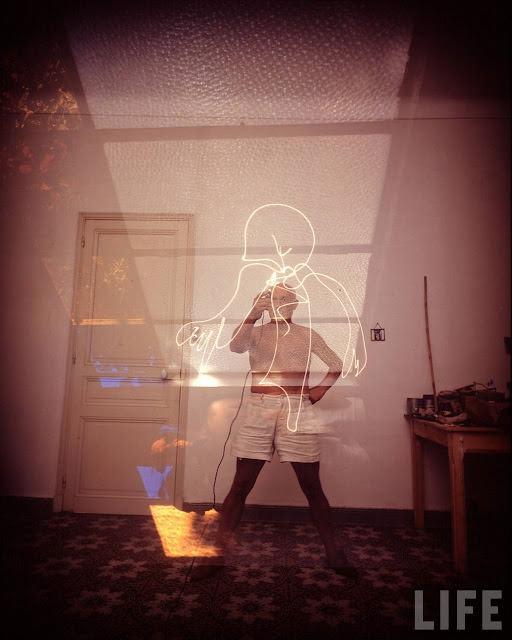
Picasso, known for his groundbreaking artistic vision, was intrigued by the idea of using light as a medium for expression. He challenged Mili to capture his own “light drawings” in a darkened room. With two cameras positioned at different angles and their shutters open, Mili captured Picasso’s movements as he “drew” with a small electric light.
Picasso created ephemeral masterpieces, sketching centaurs, bulls, Greek profiles, and his signature in the air. Each stroke of light was captured by Mili’s cameras, resulting in a series of photographs that would become known as Picasso’s “light drawings.”
These drawings, created in the ephemeral medium of light, were fleeting and transient. However, Mili’s photographs immortalized them, freezing Picasso’s light dance in time. The resulting images are captivating, dynamic, and almost otherworldly. They reveal a new facet of Picasso’s genius, his ability to transform light into art.
This collaboration between Picasso and Mili wasn’t just about creating visually stunning photographs. It was about pushing the boundaries of art, exploring the possibilities of new technologies, and embracing the spirit of experimentation. It was a testament to the power of creative collaboration and the magic that can happen when two innovative minds come together.