

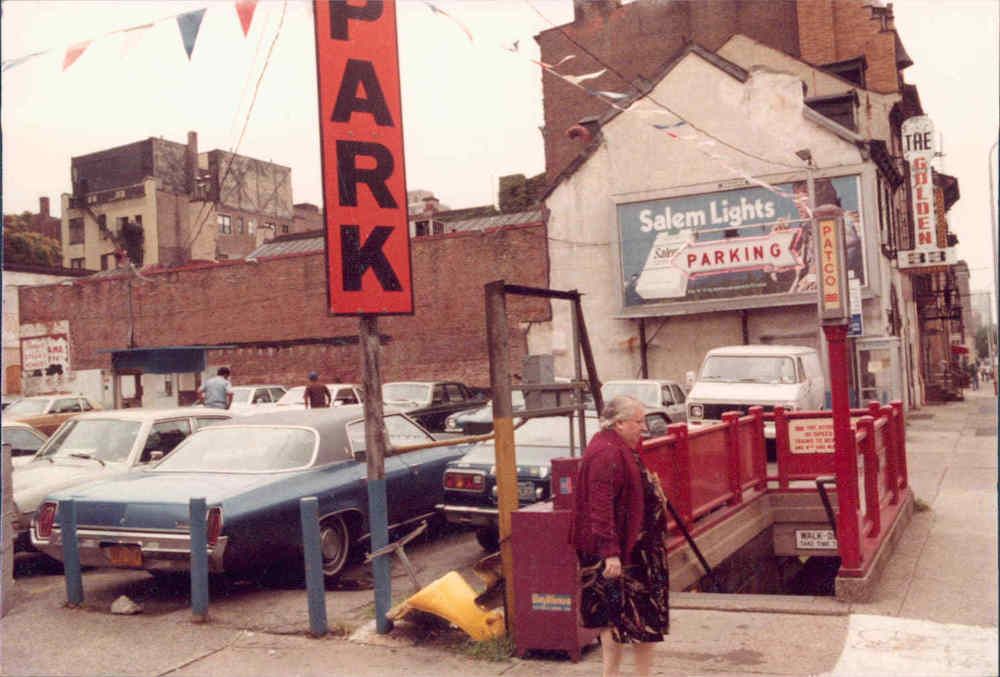
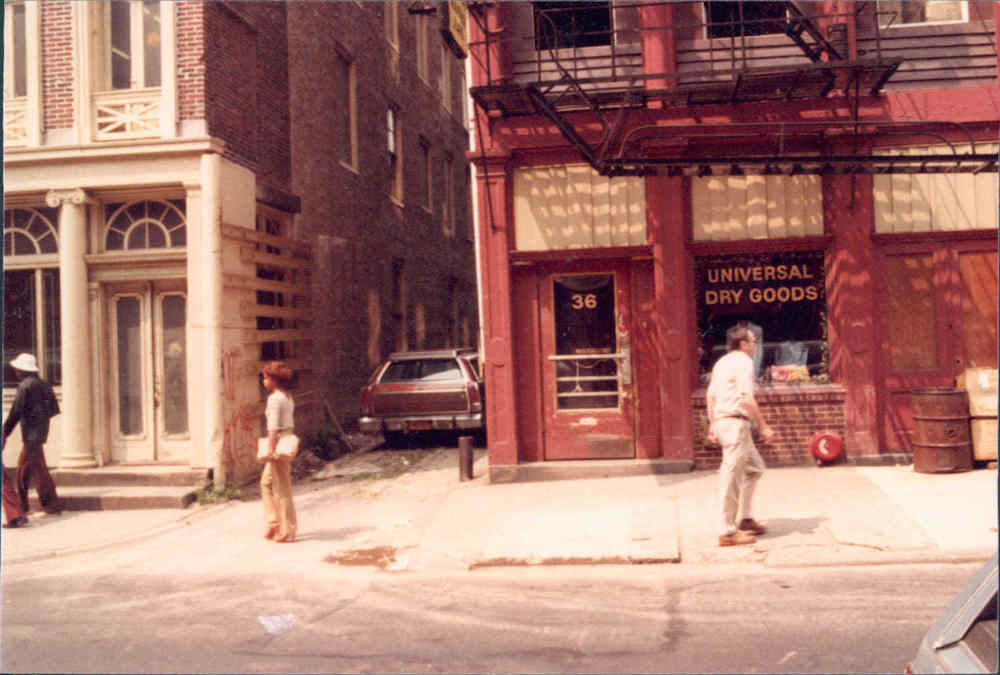
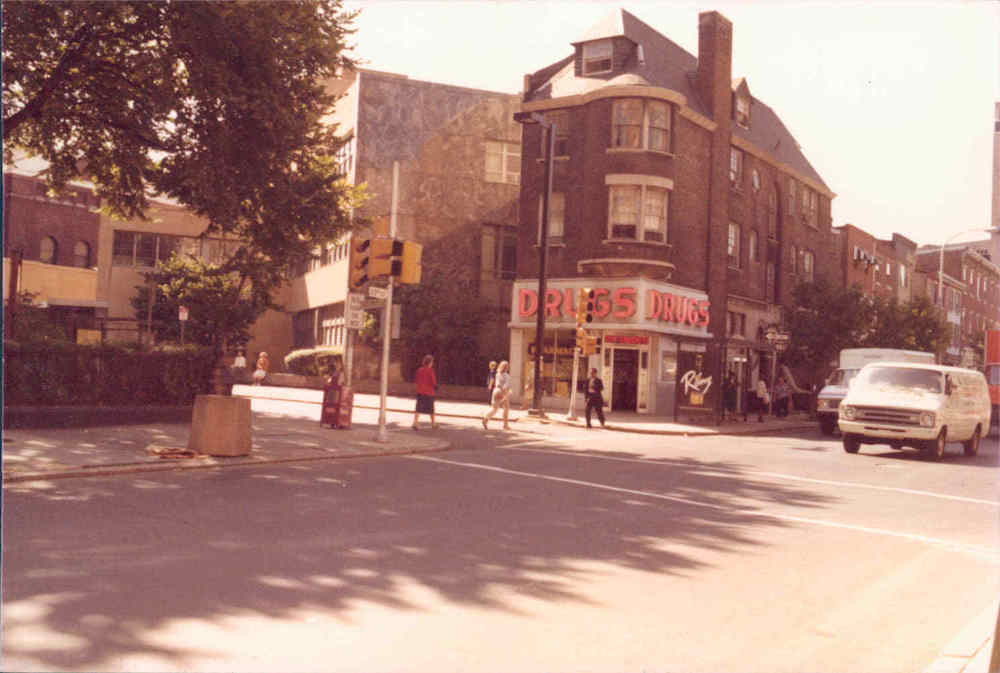
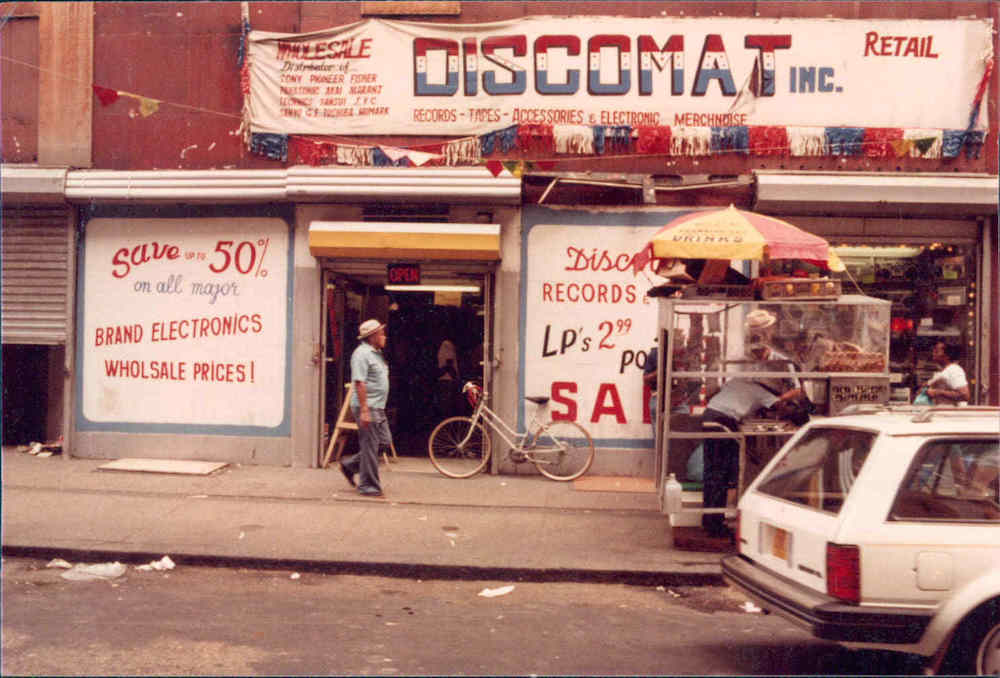
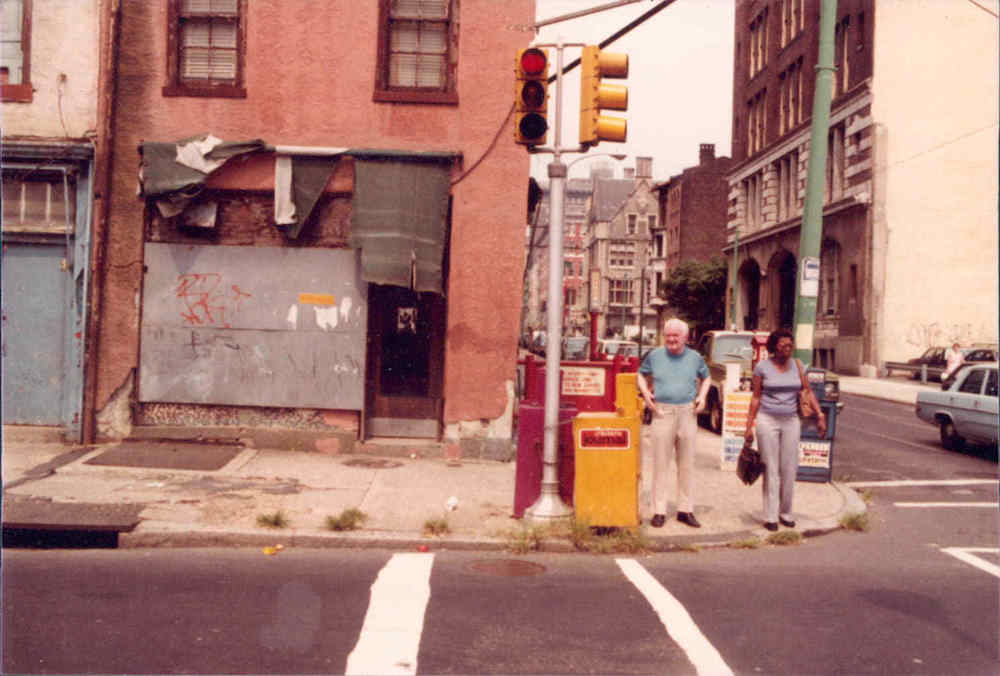
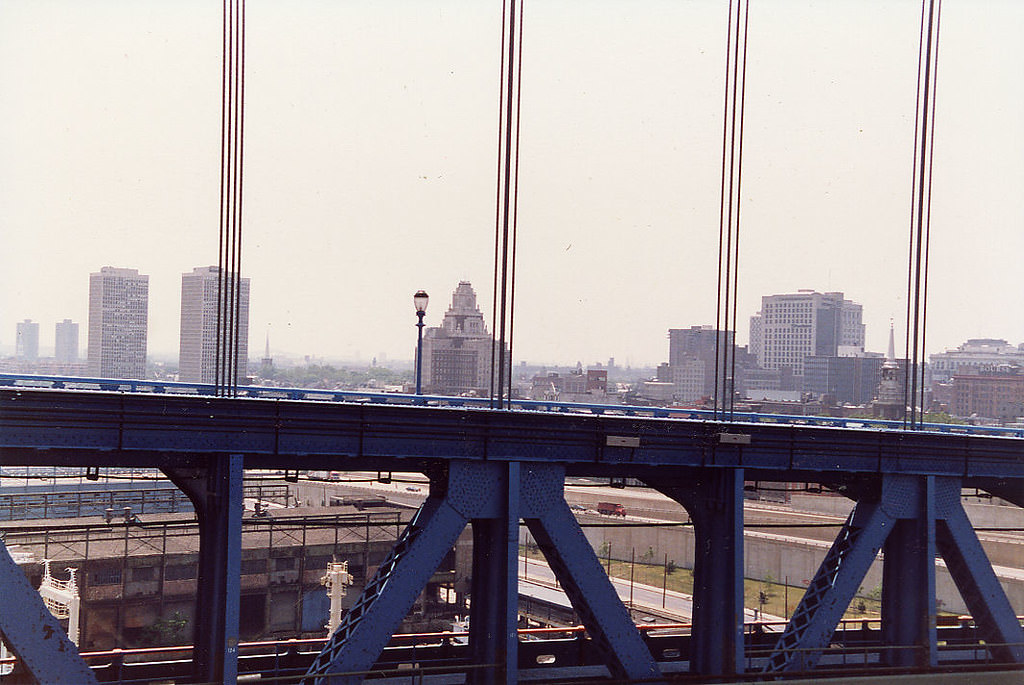
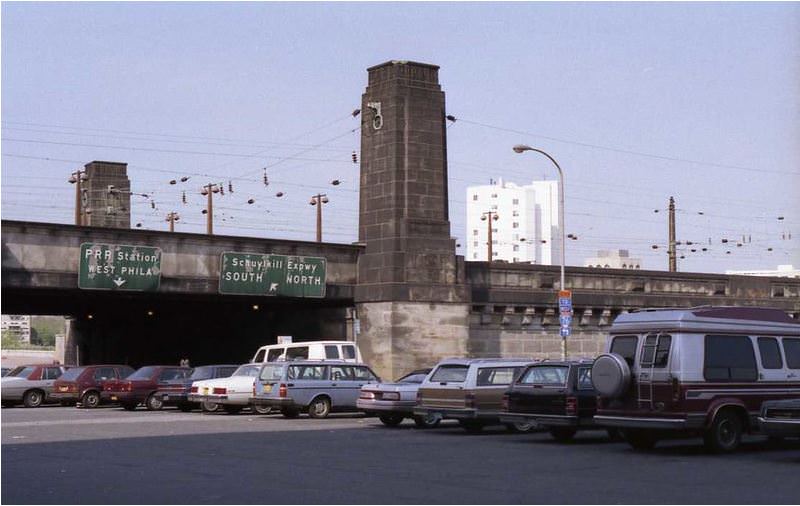
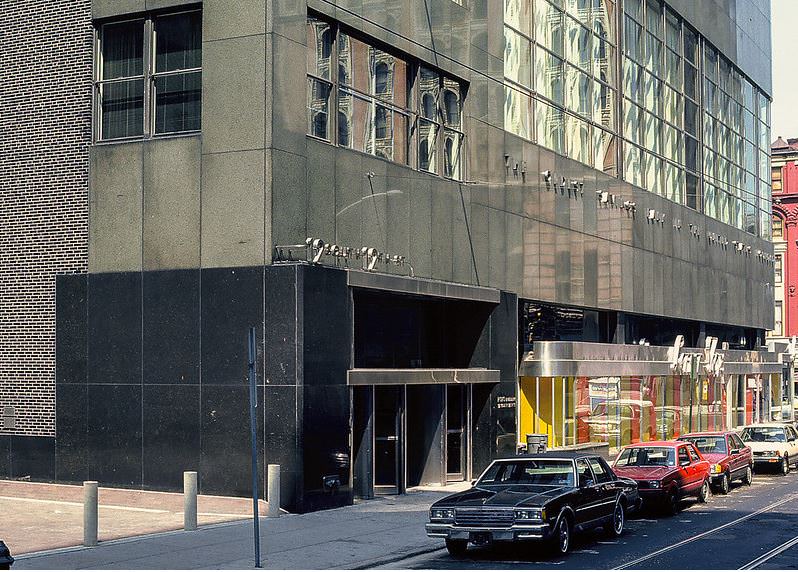
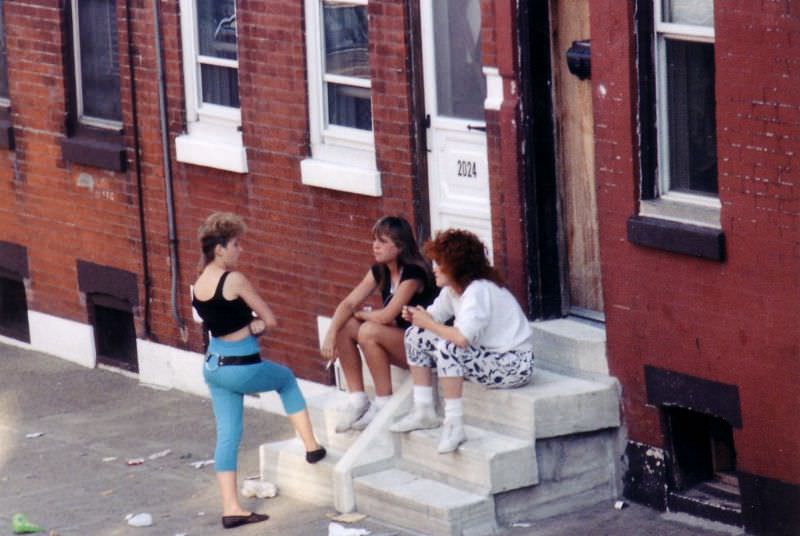
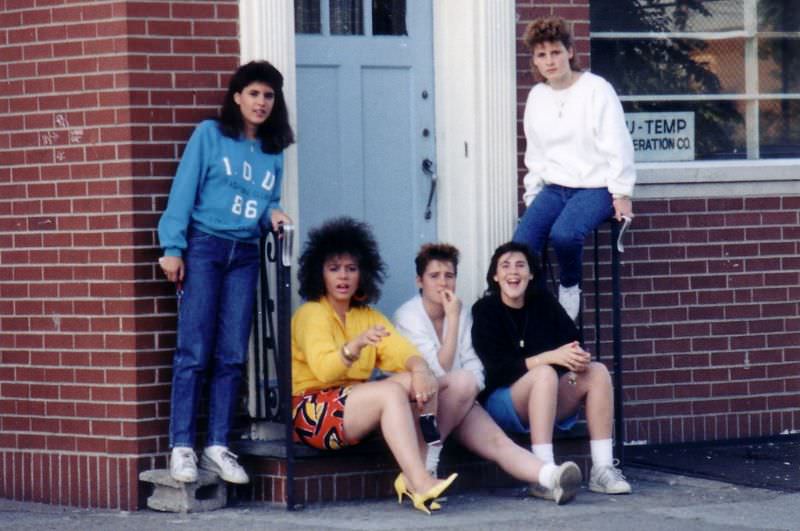
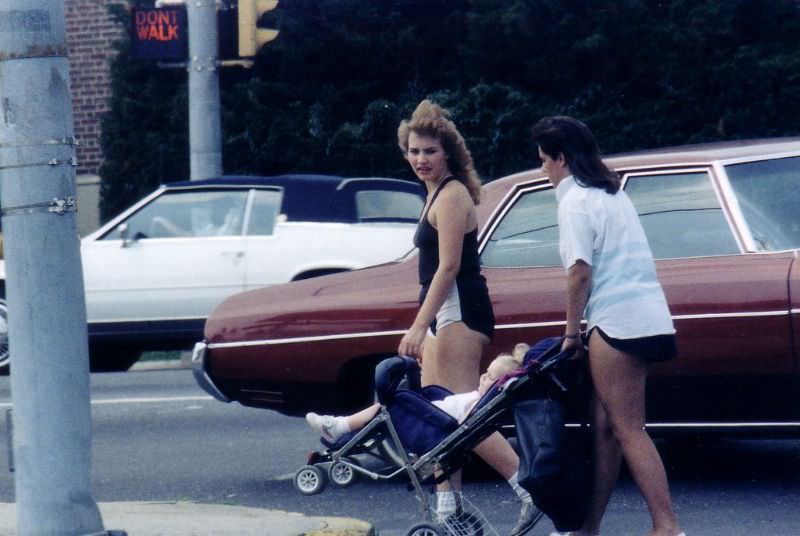
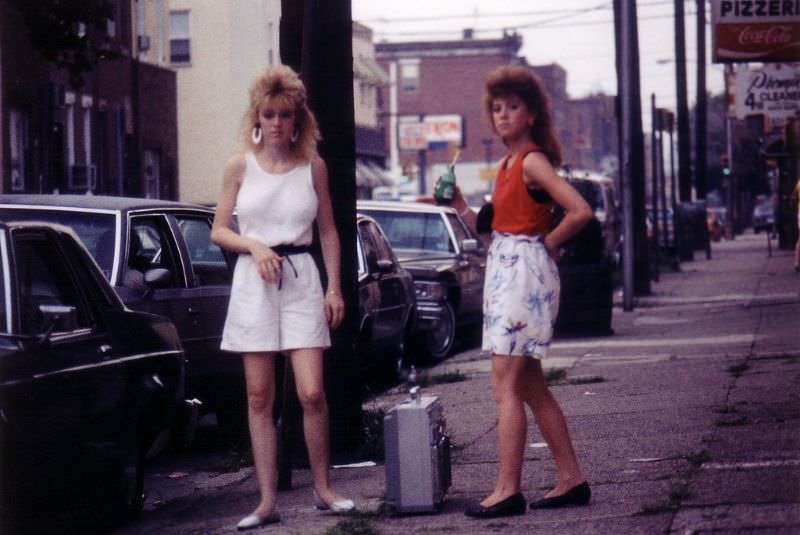
Philadelphia in the 1980s was a city caught between two worlds. Its historic streets and old row-house neighborhoods carried the weight of decades of change, while new glass skyscrapers were rising in Center City, designed by some of the world’s most celebrated architects. At the same time, the city was struggling with rising crime, racial tension, a deepening financial crisis, and a shifting population. These photos offer a street-level look at what Philadelphia actually looked like during that turbulent decade.
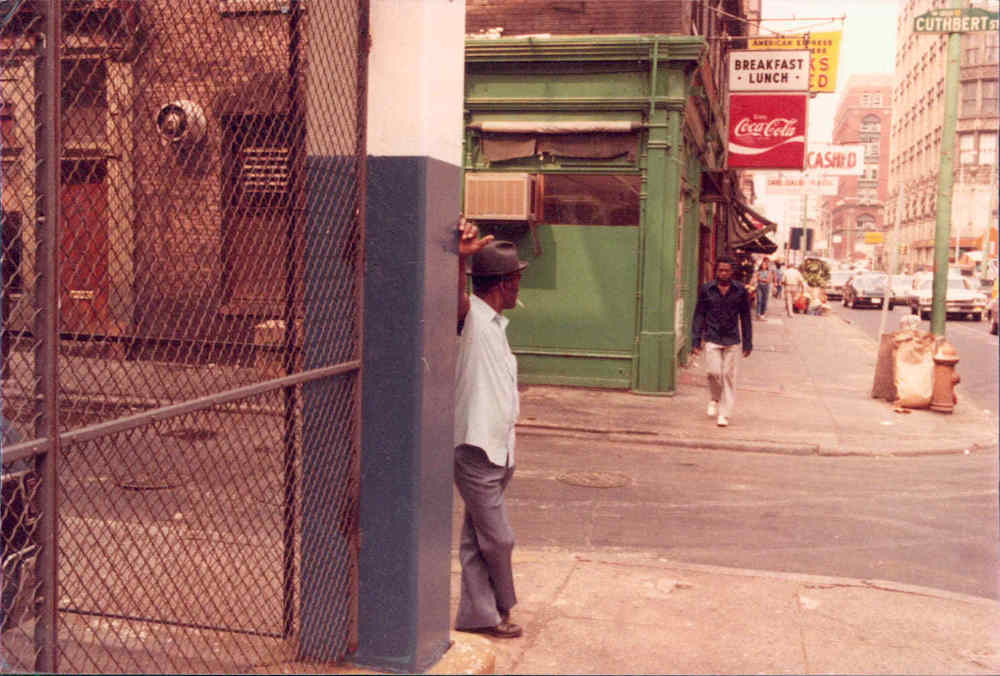
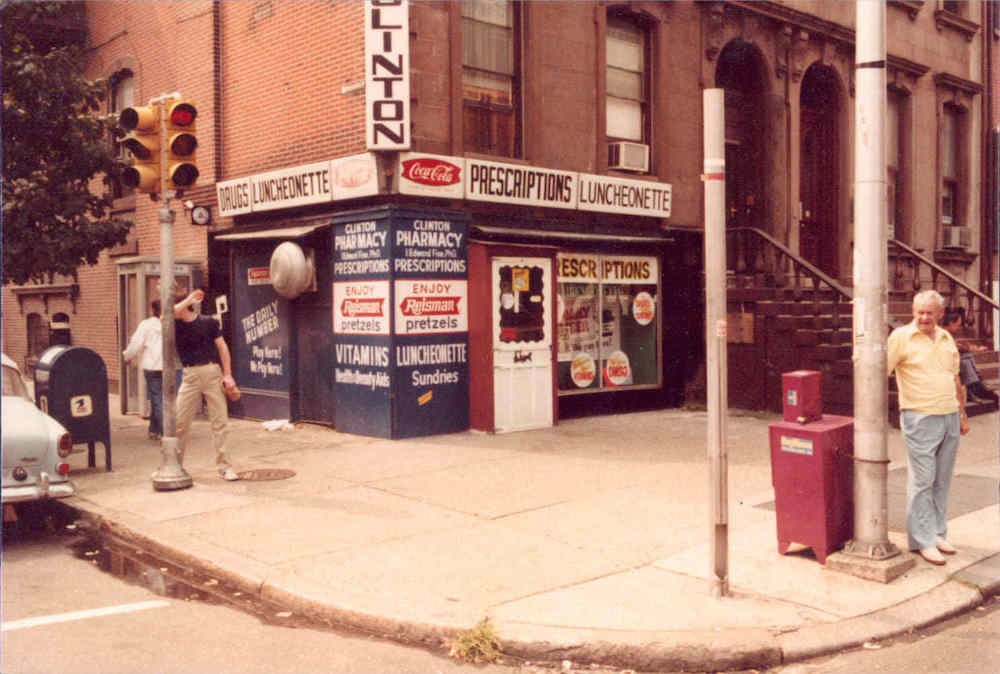
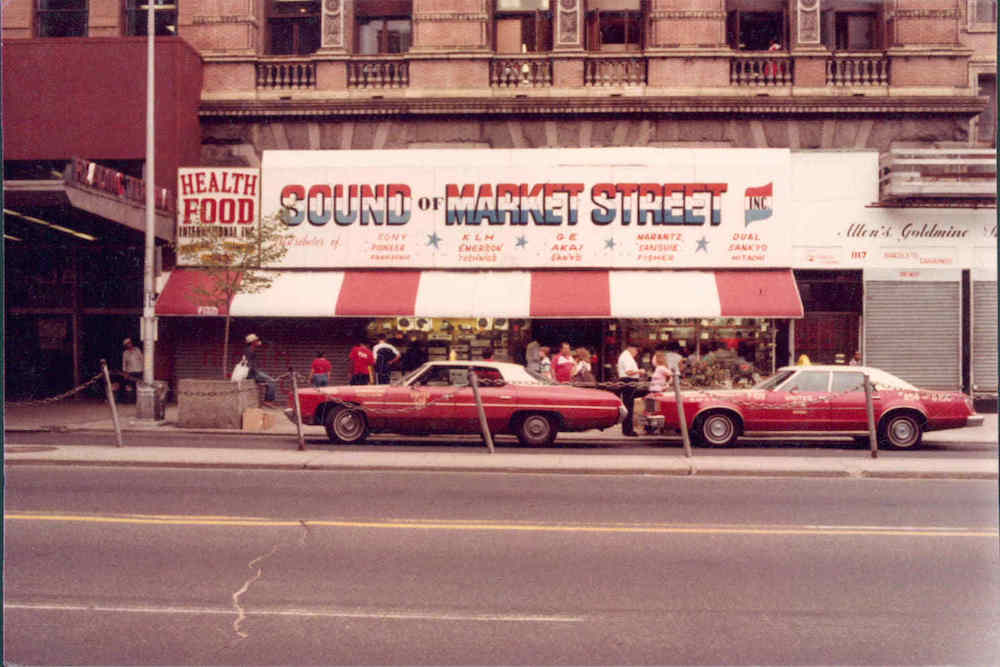
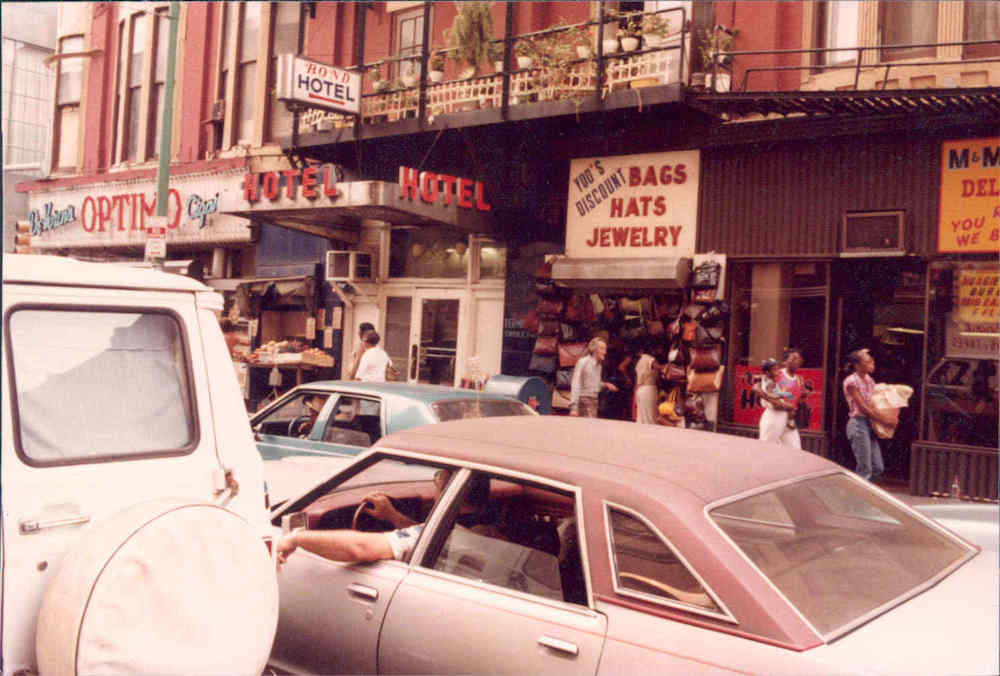
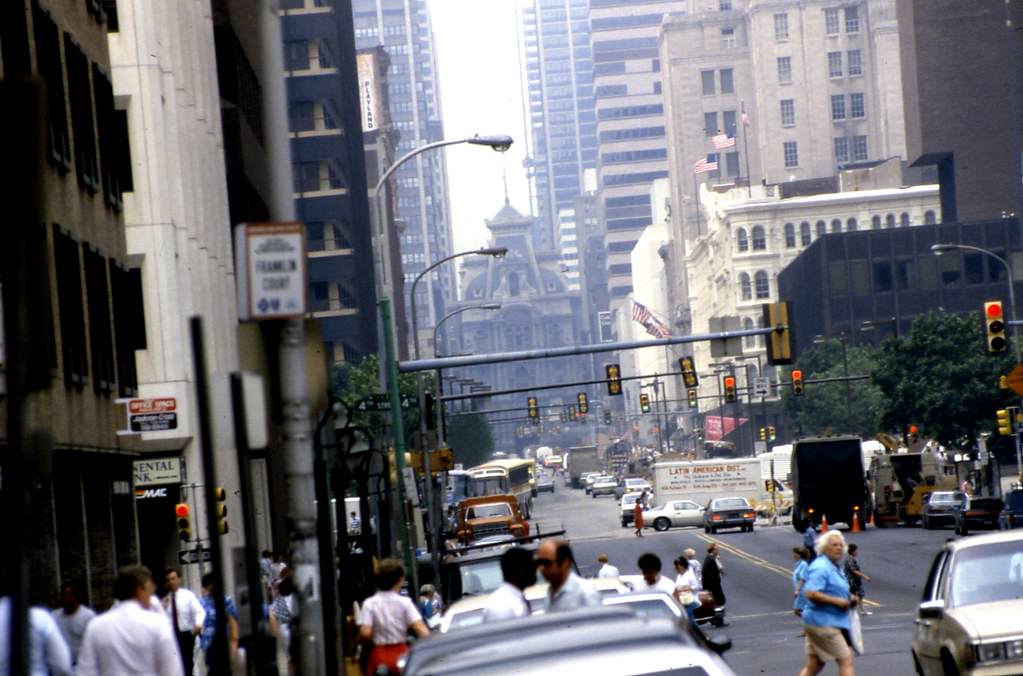
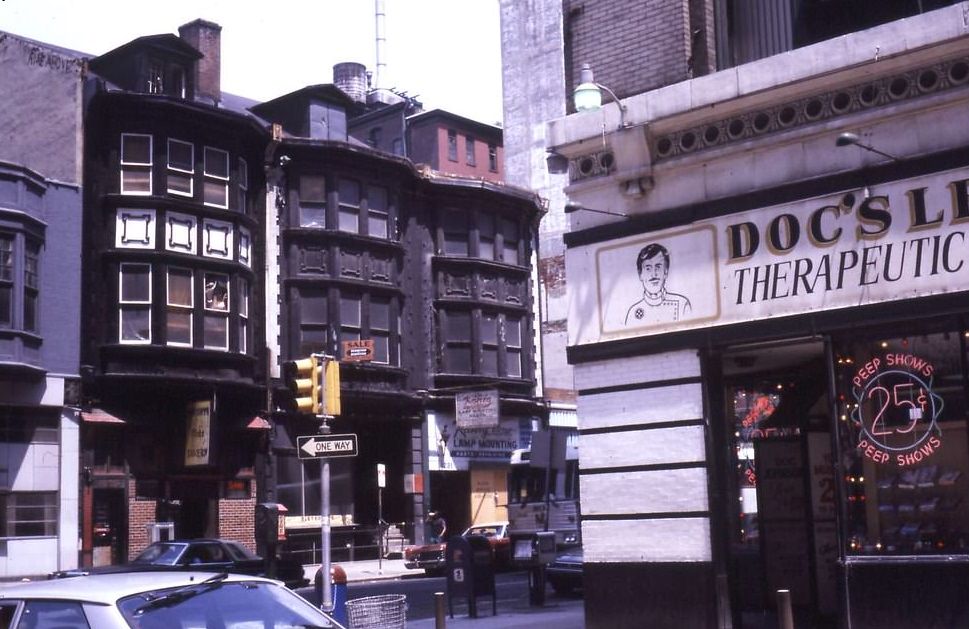
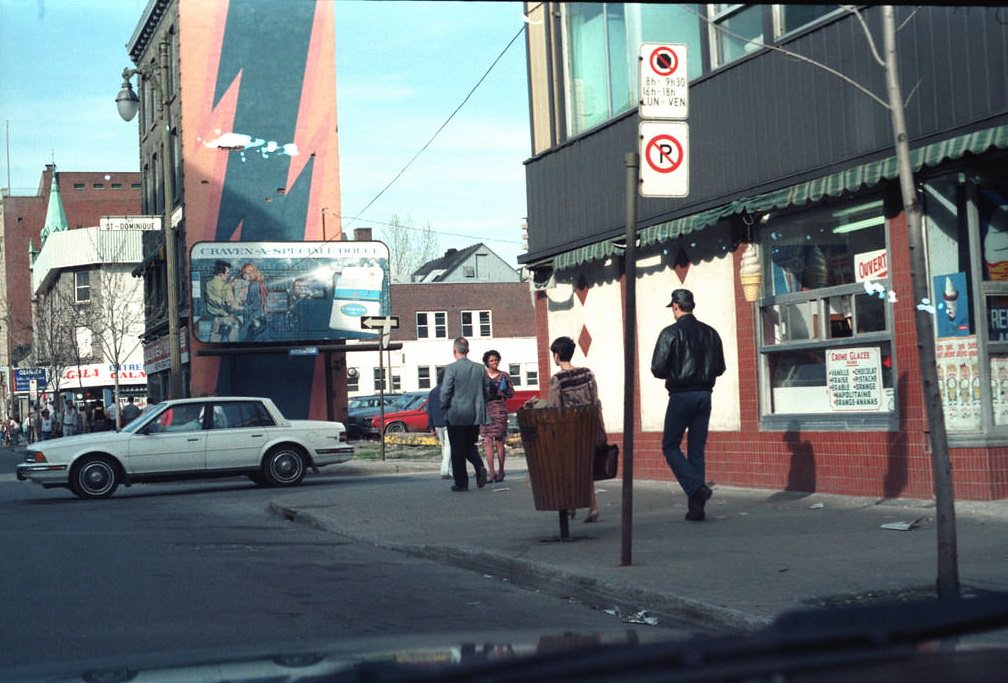
Center City’s commercial blocks told the story of a city in transition. Storefronts, corner businesses, and pedestrians going about their day filled streets that sat in the shadow of both century-old buildings and newly constructed towers. The contrast was visible on nearly every block.
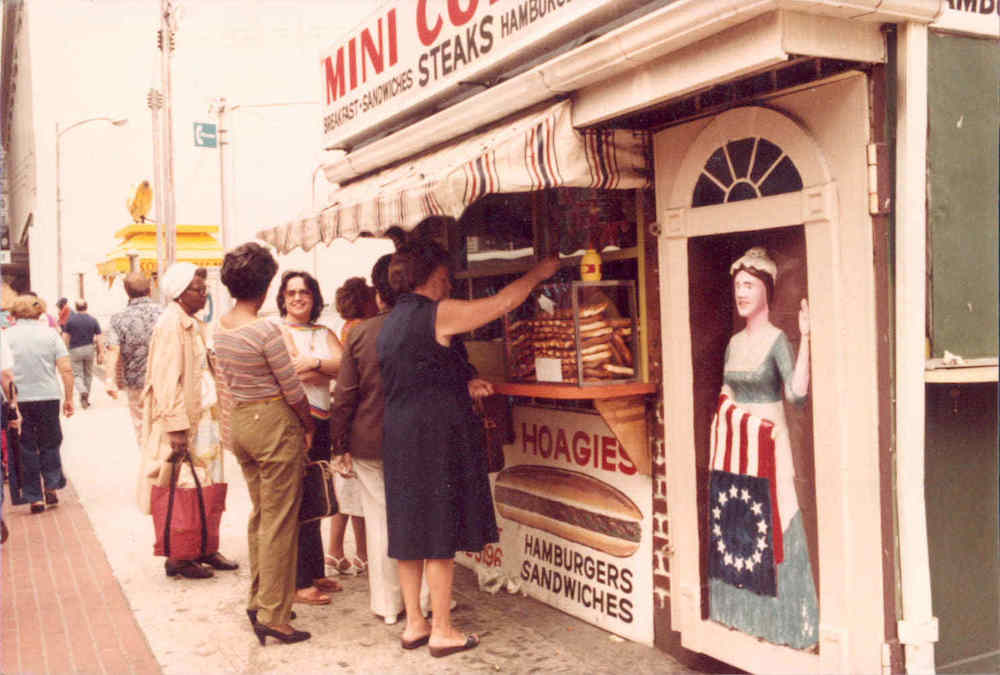
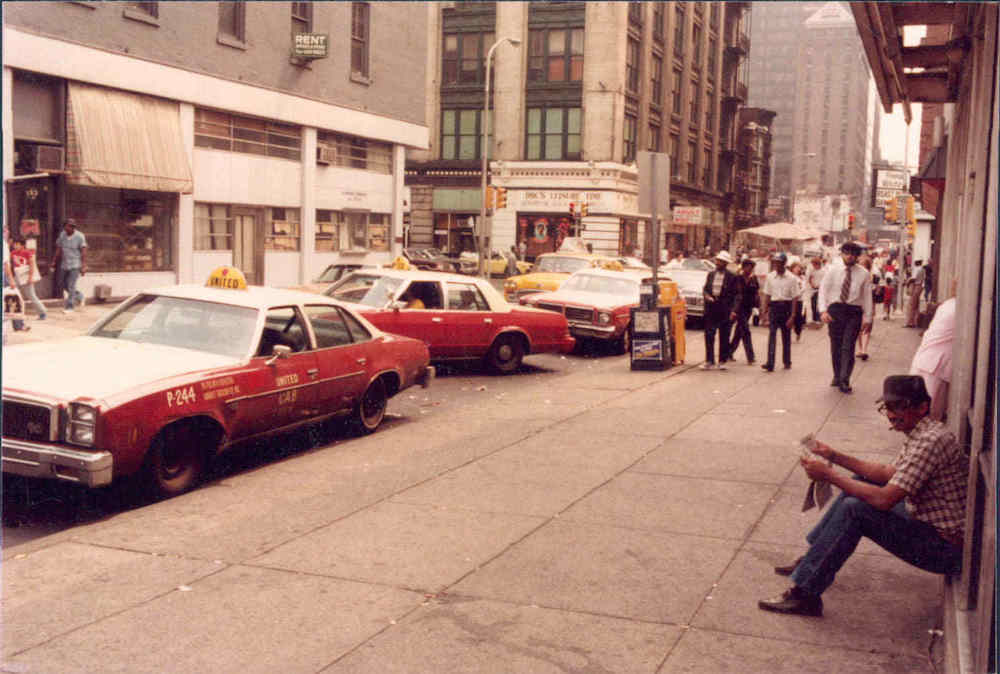
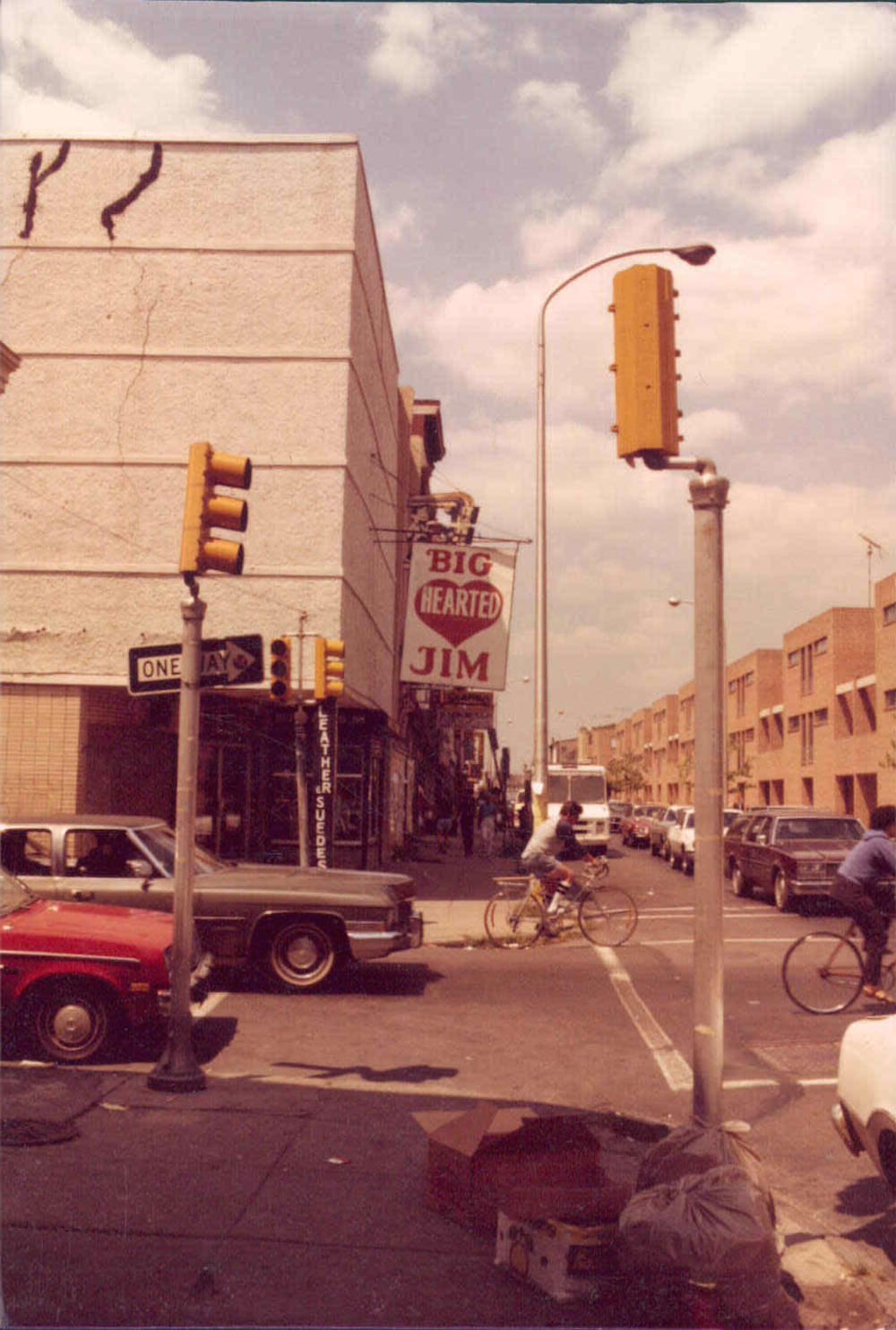
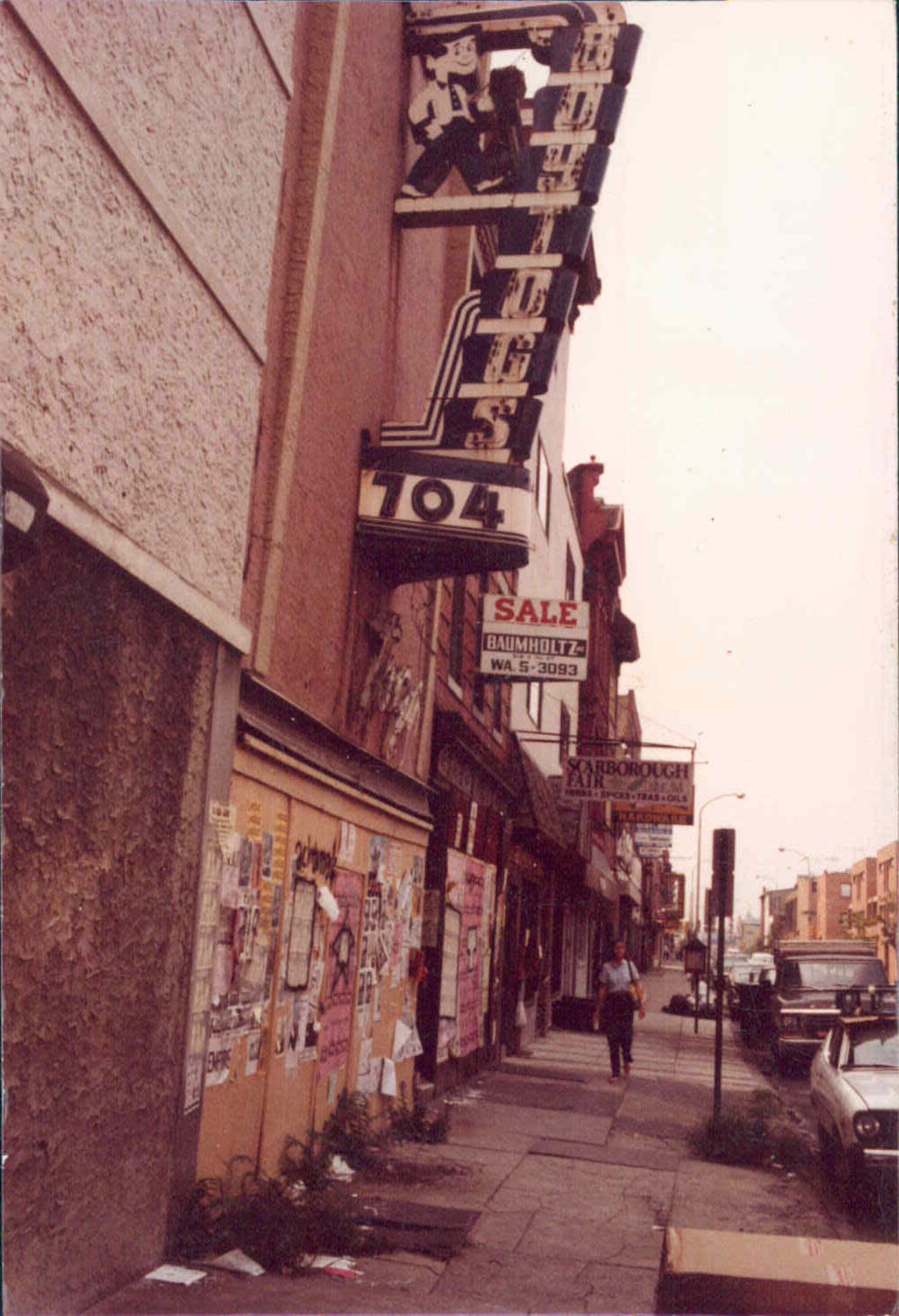
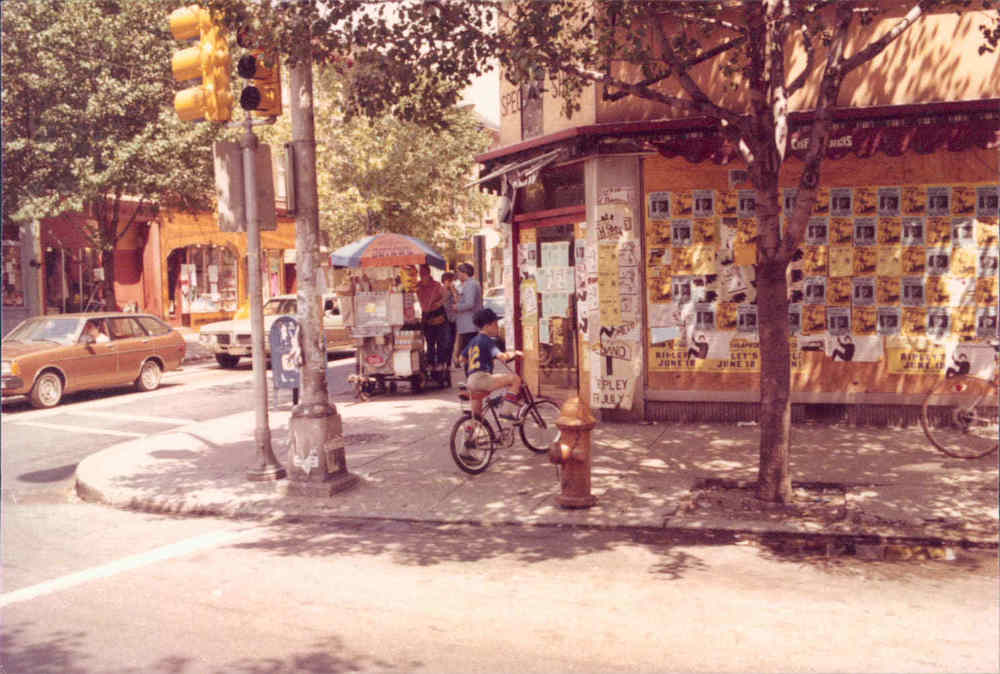
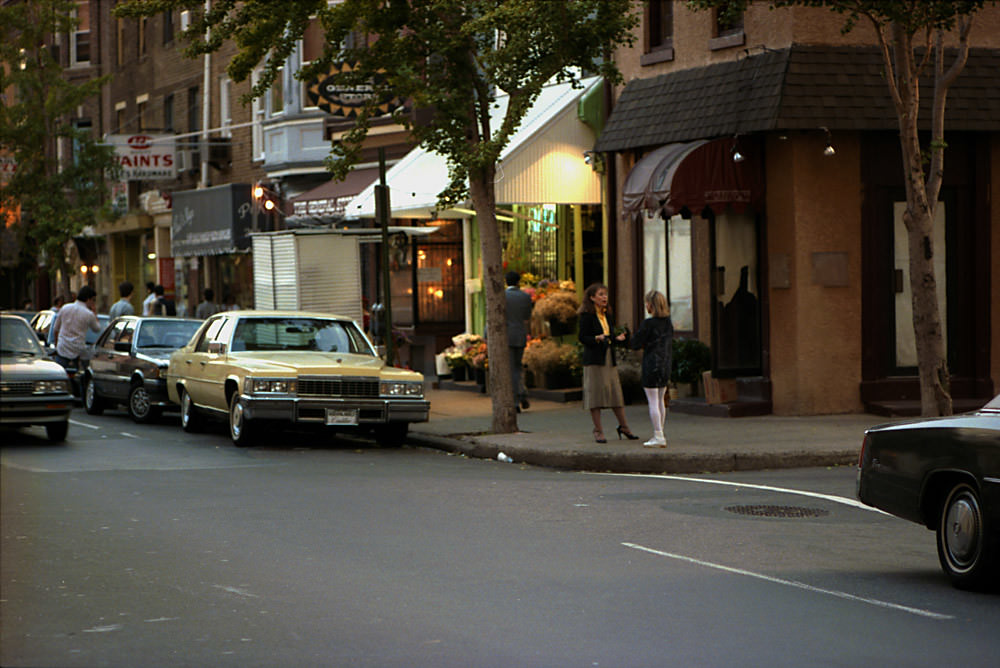
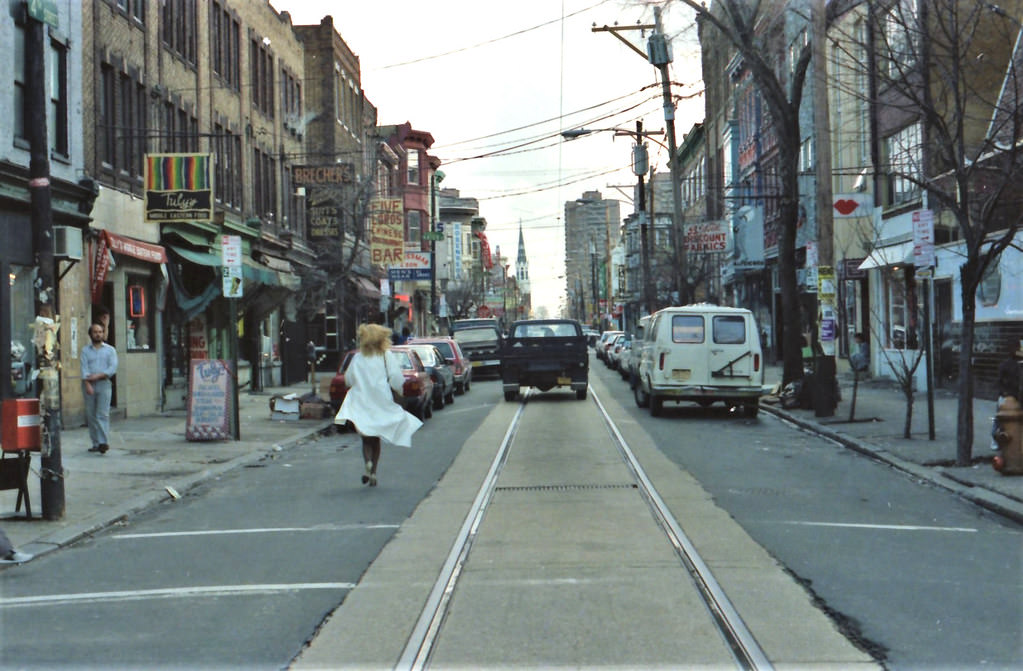
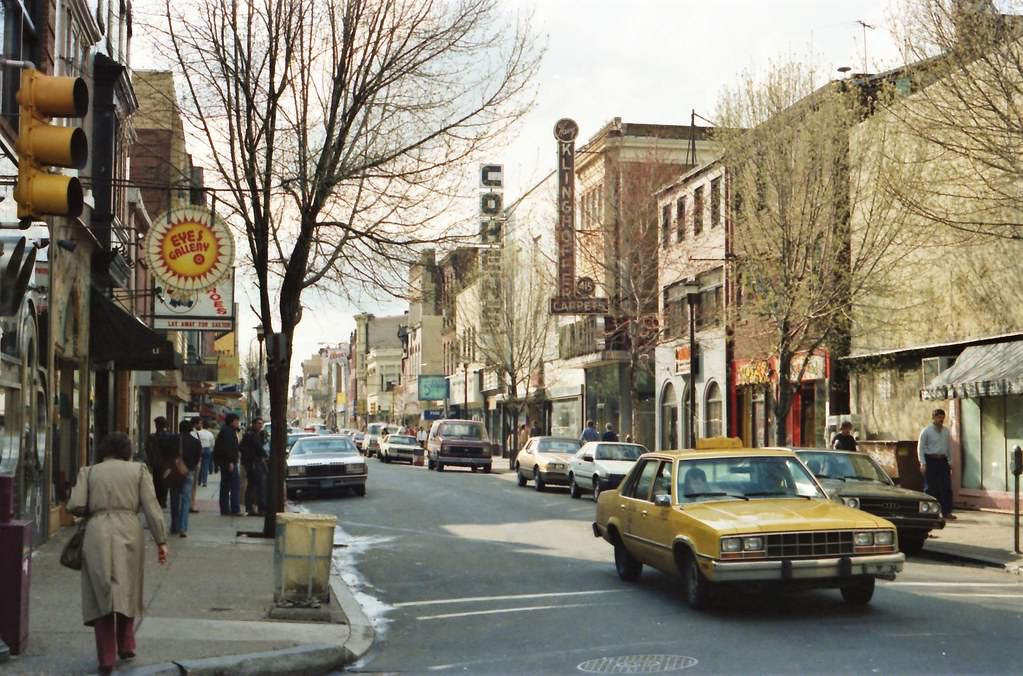
South Street was one of the city’s most colorful corridors. Lined with independent shops, galleries, and restaurants, it attracted a diverse crowd and held its own distinct energy. The 800 block and surrounding streets carried the character of a neighborhood that refused to be defined by the struggles happening elsewhere in the city.
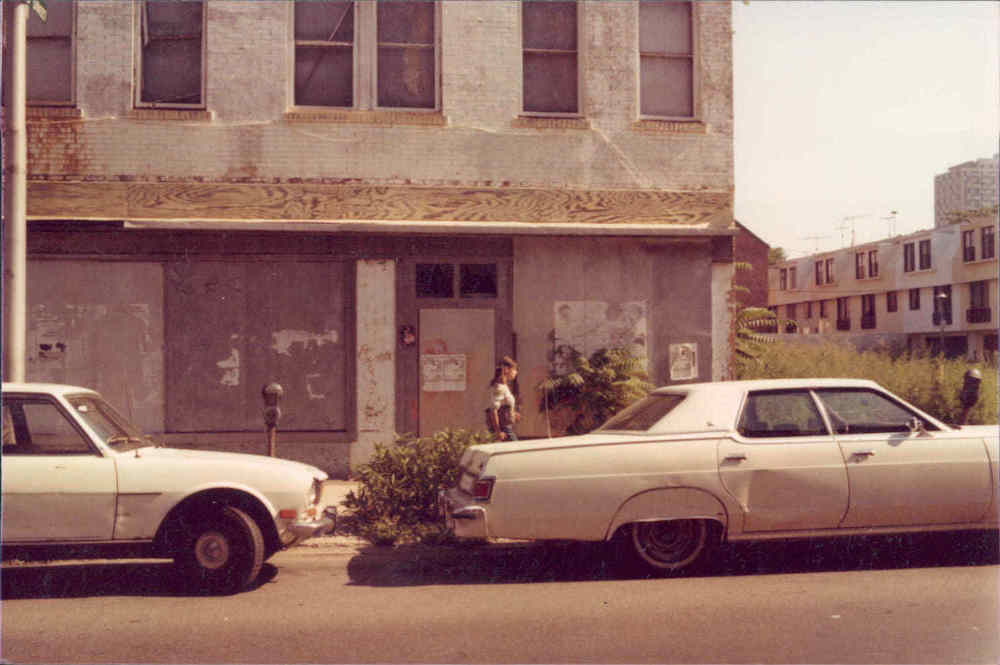
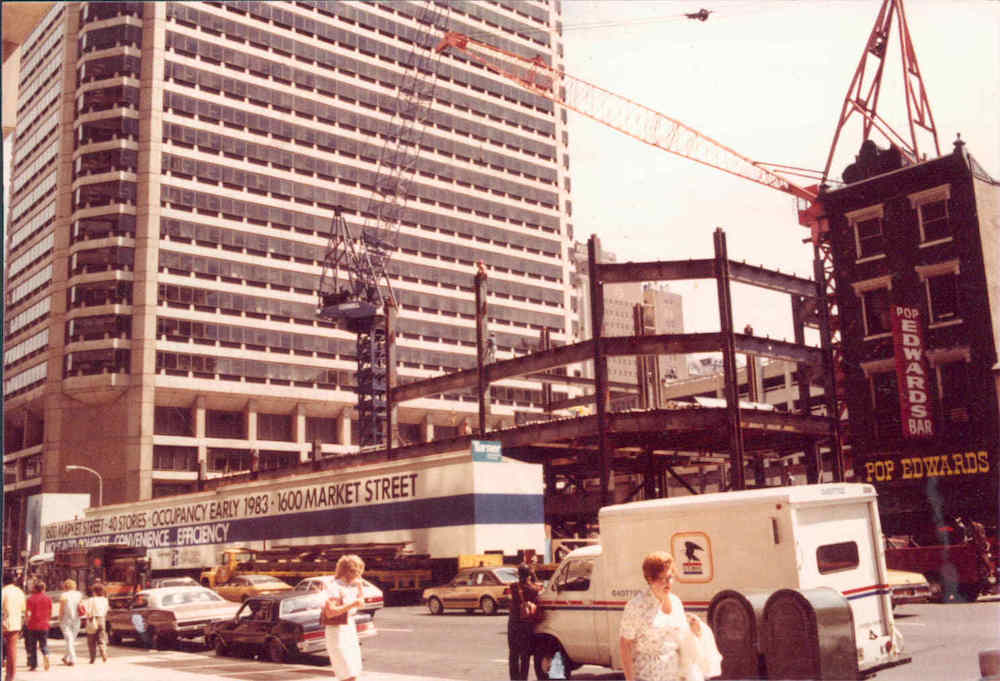
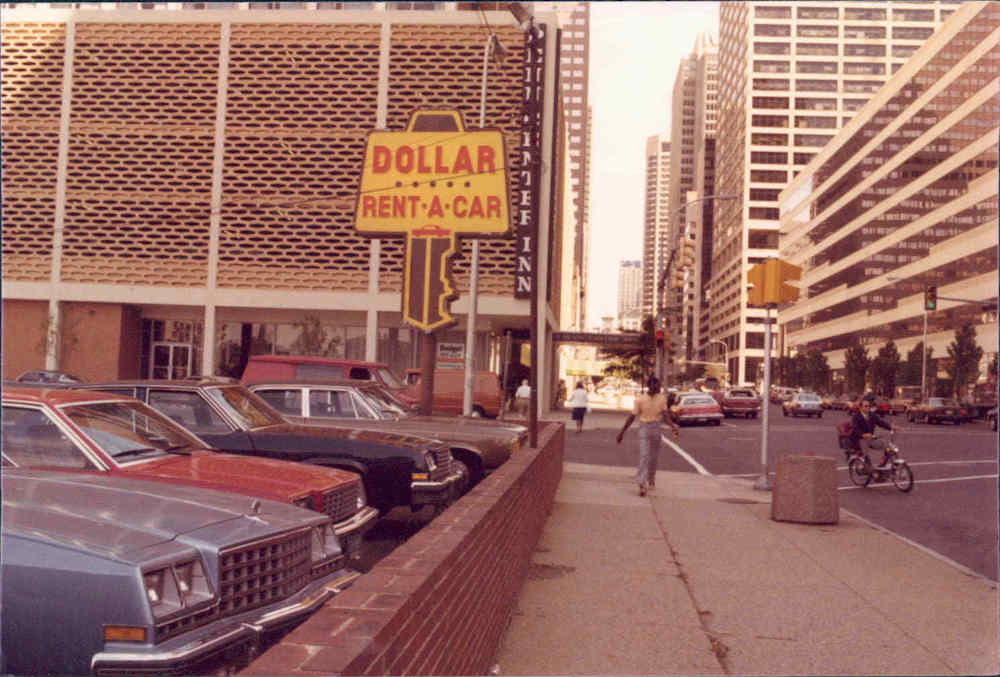
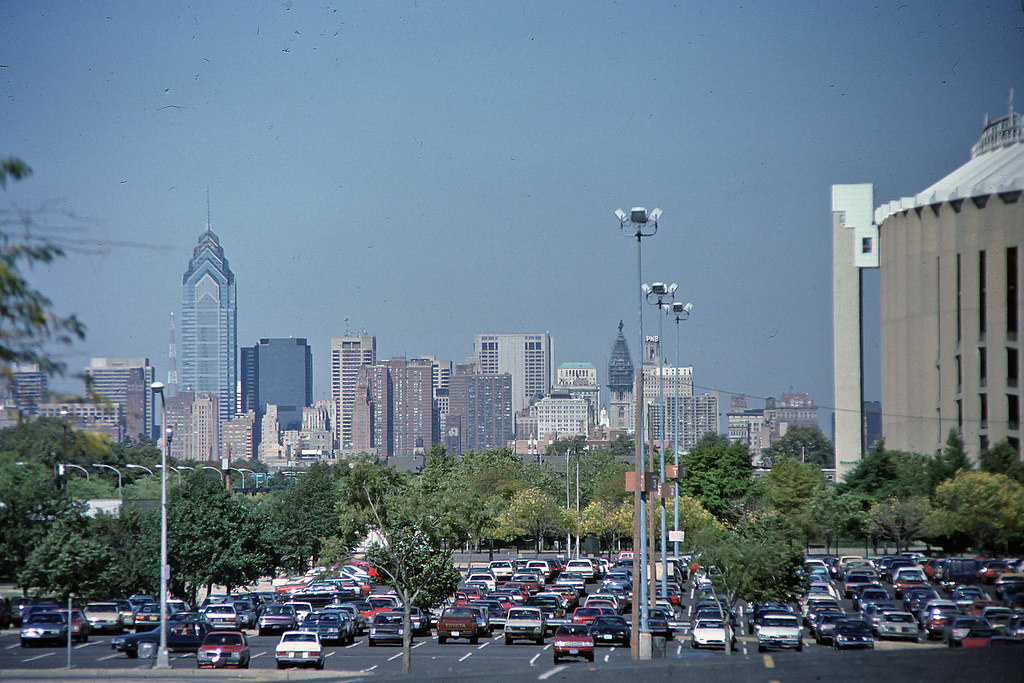
The city’s skyline was changing fast. 1600 Market Street was among the major office towers built during the decade, part of a broader construction boom that transformed the Center City profile. Despite the city teetering on the edge of bankruptcy by the end of the decade, large-scale development pressed forward through most of the 1980s.
Reading Terminal Market remained one of Philadelphia’s enduring landmarks. Located in the heart of downtown, the market had operated continuously since 1893 and continued to serve the city throughout the 1980s, drawing shoppers to its vendors and stalls. Its cast-iron train shed, which had once served the Reading Railroad, still stood above the market floor.
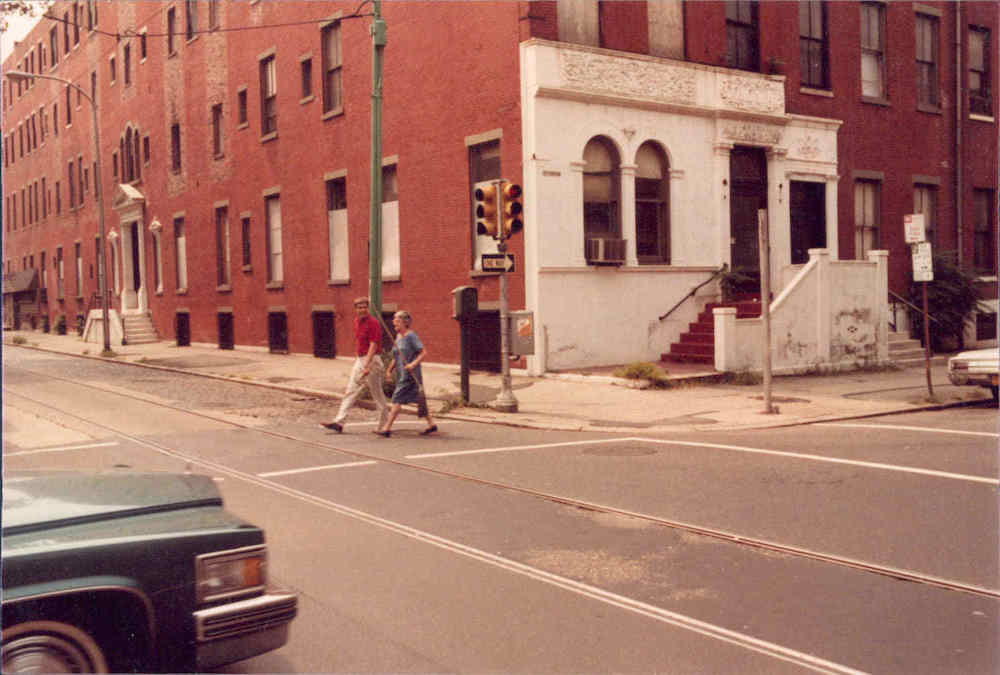
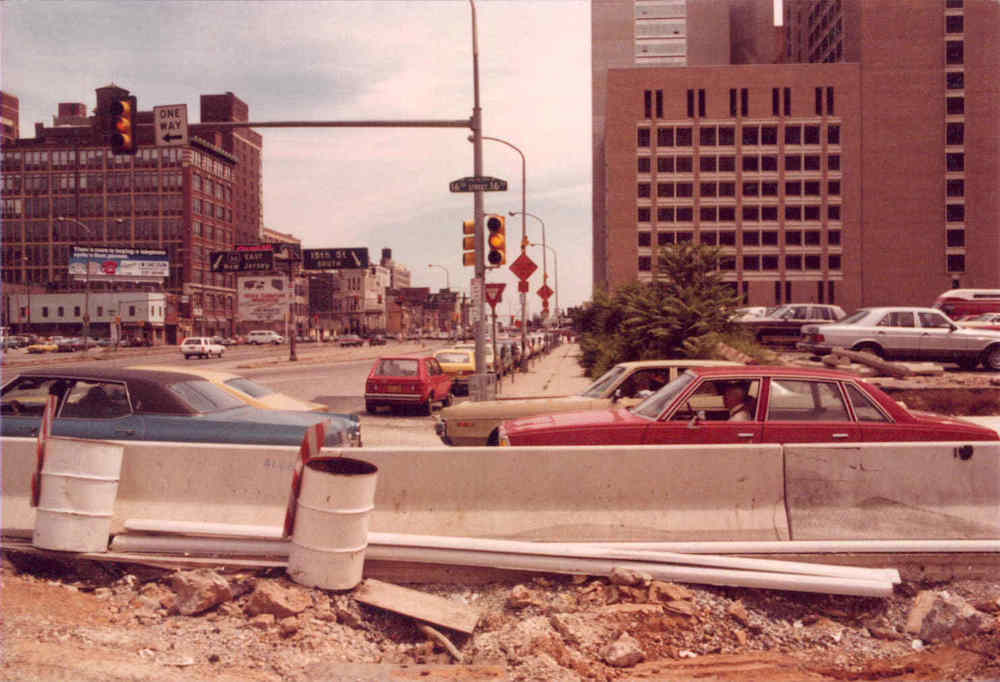
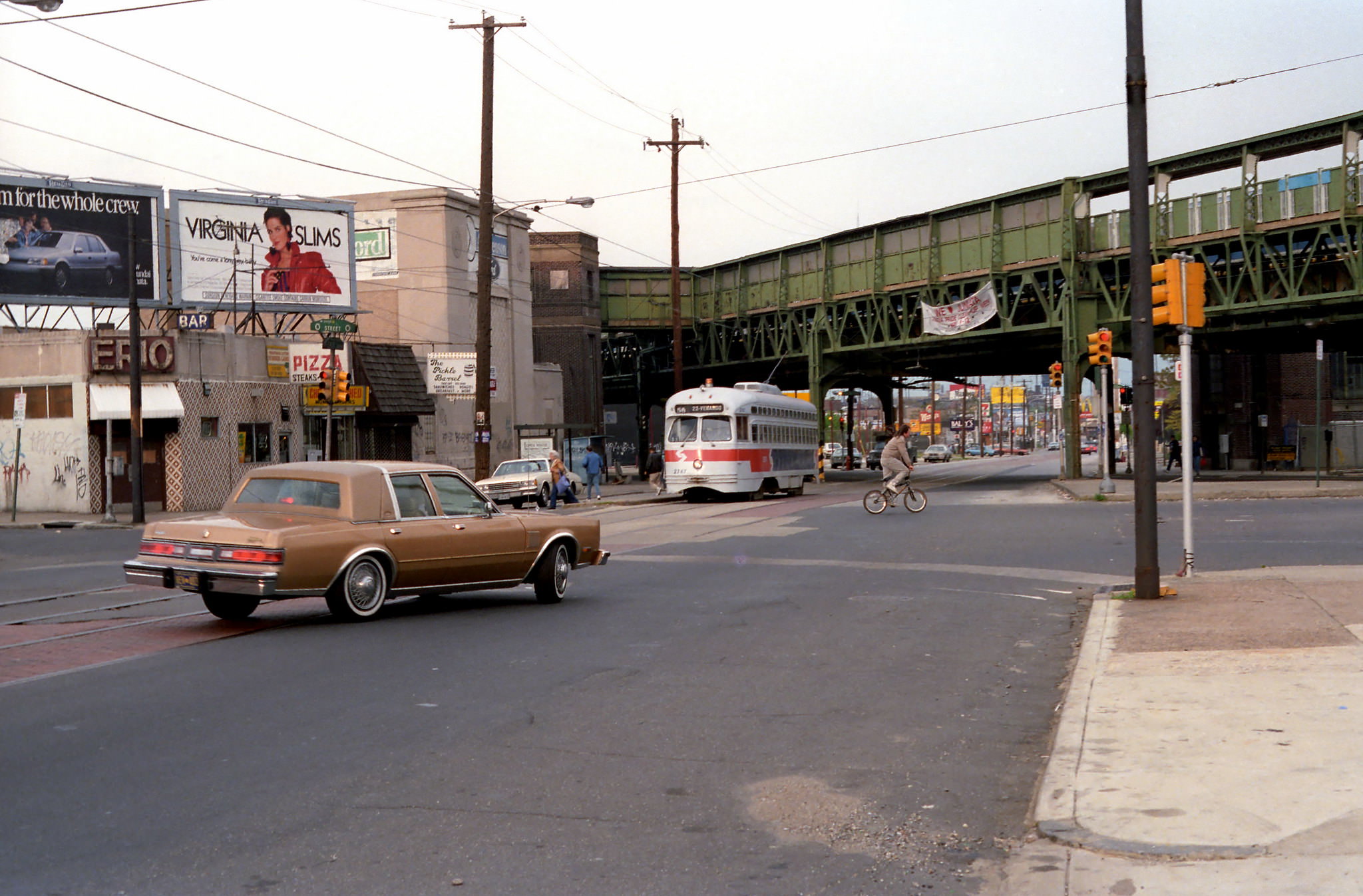
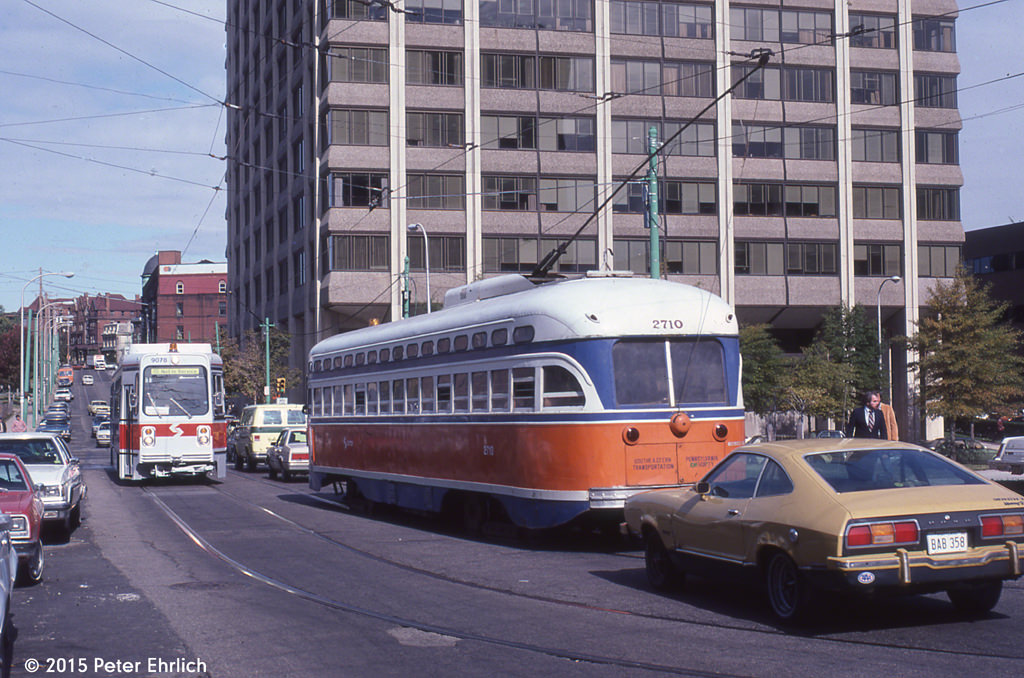
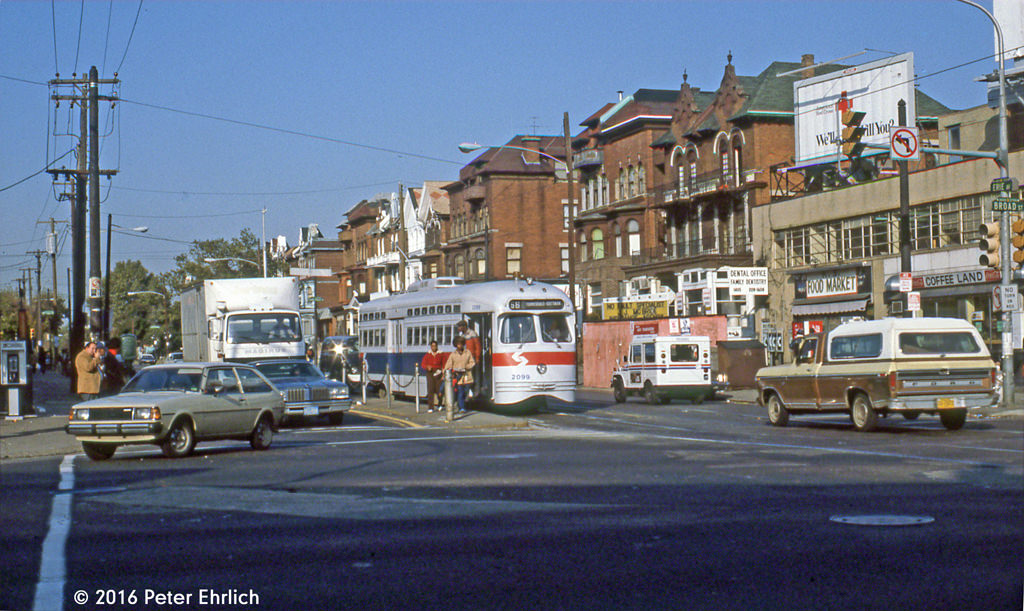
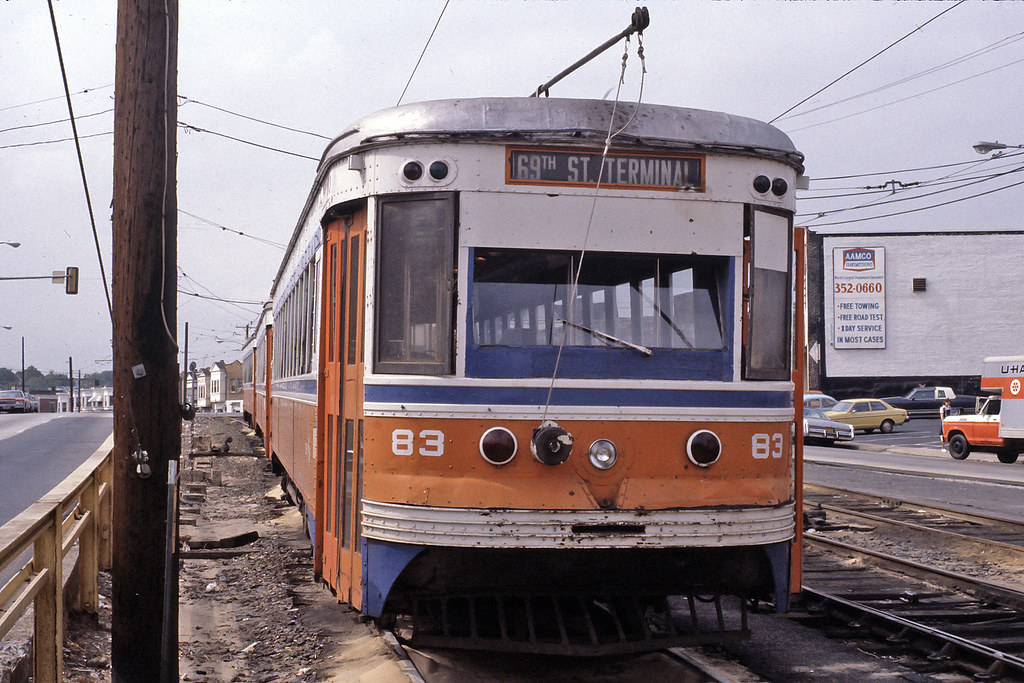
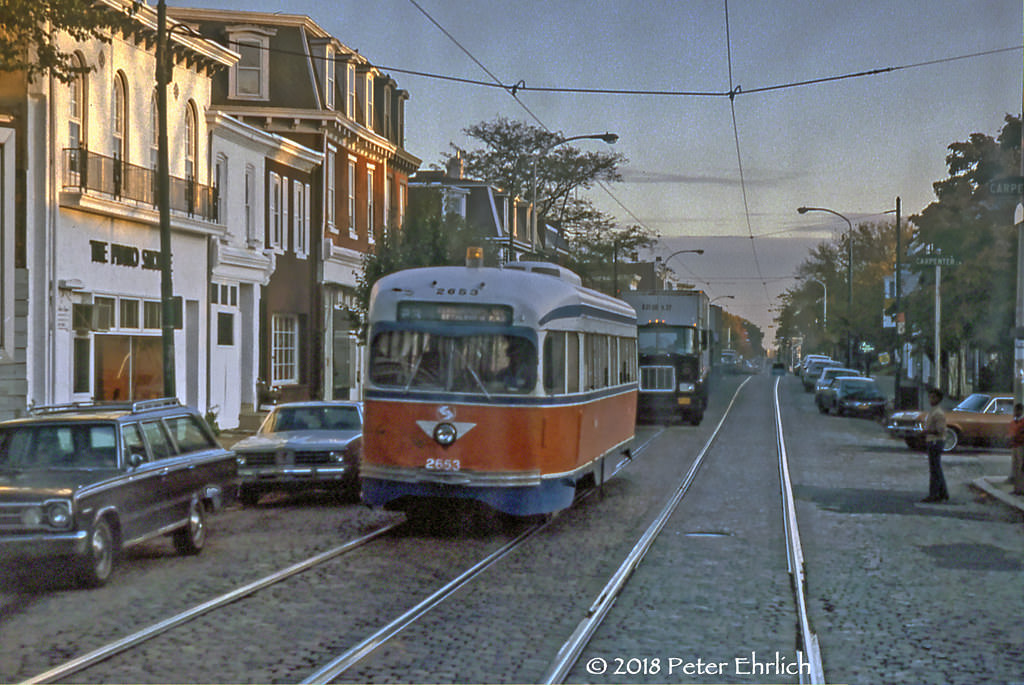
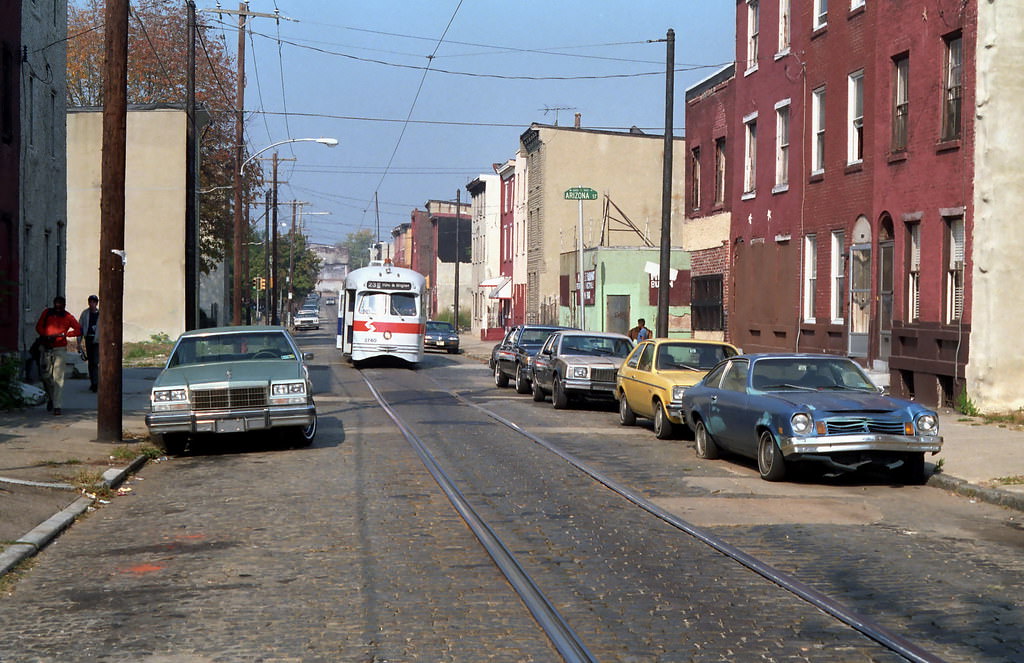
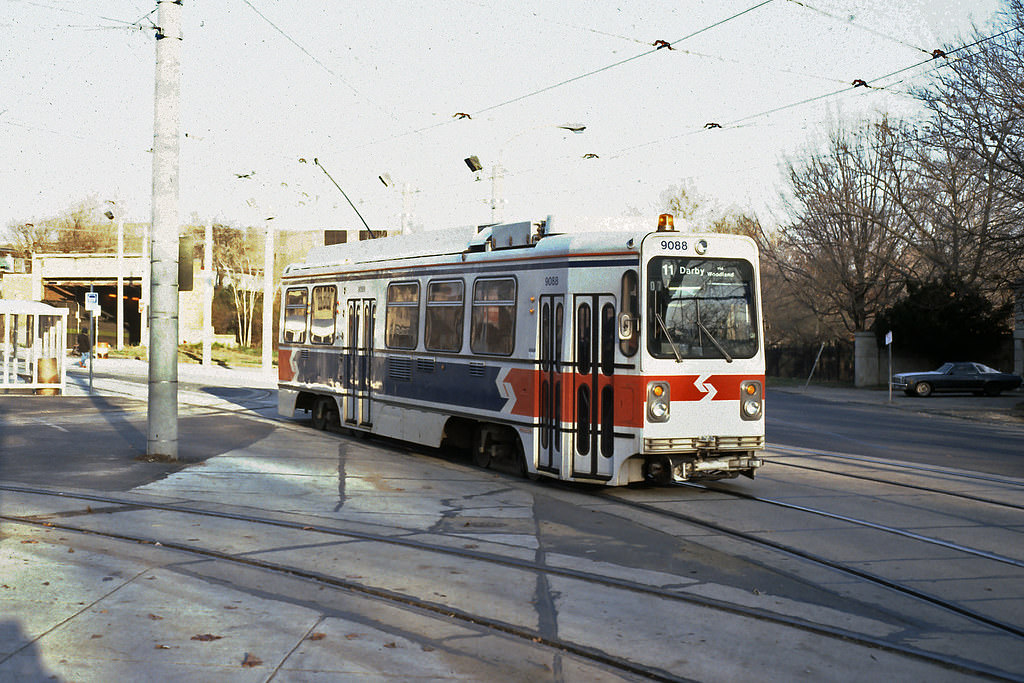
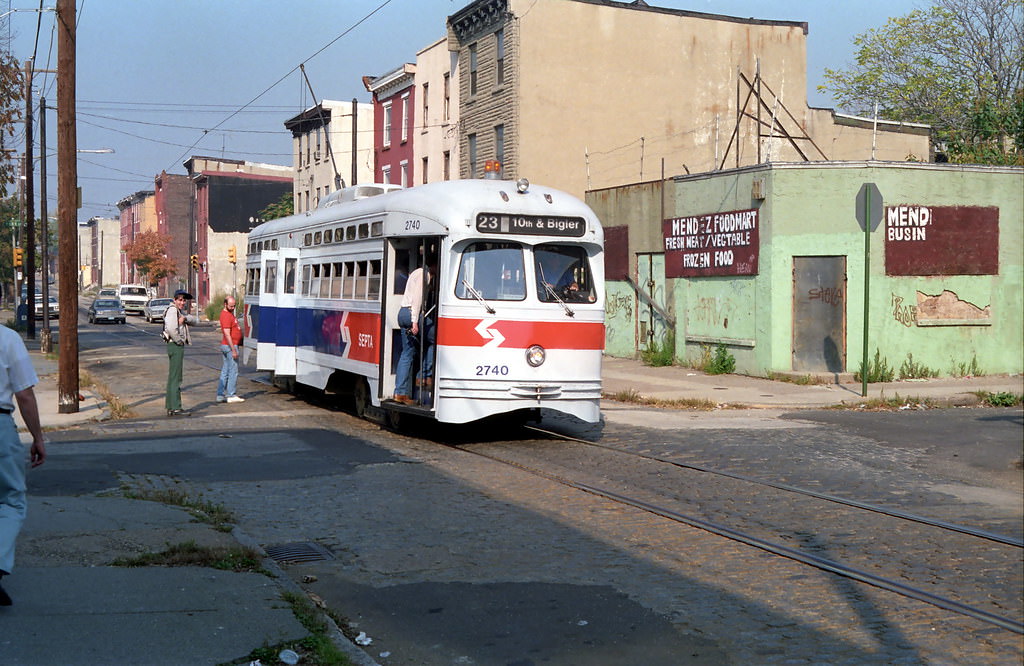
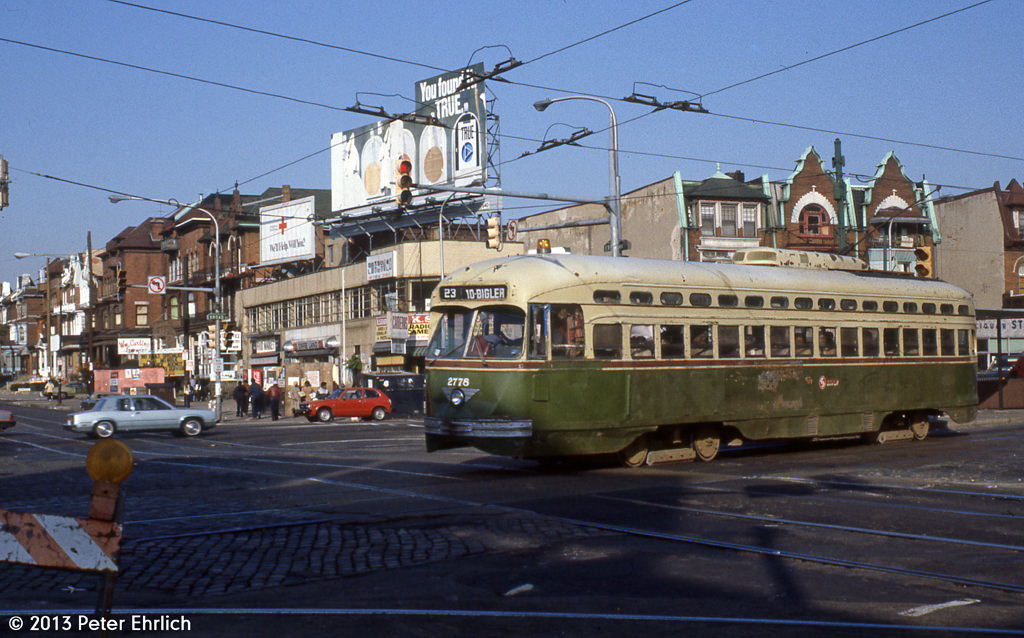
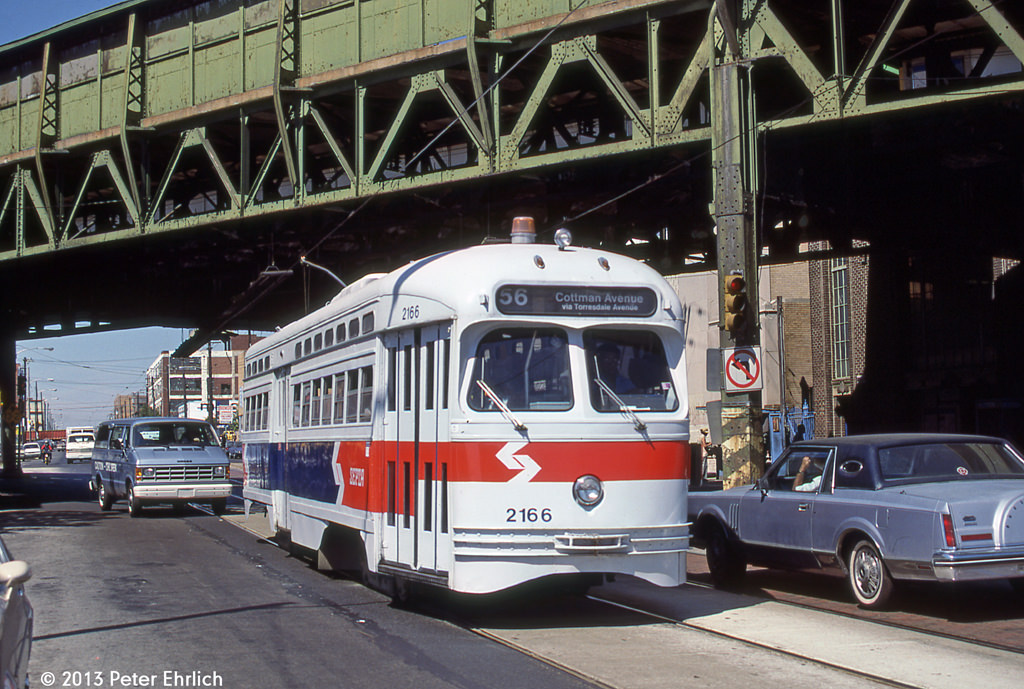
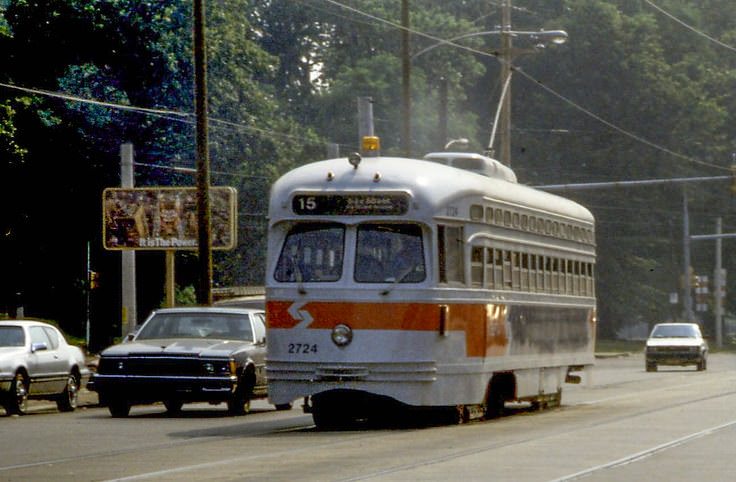
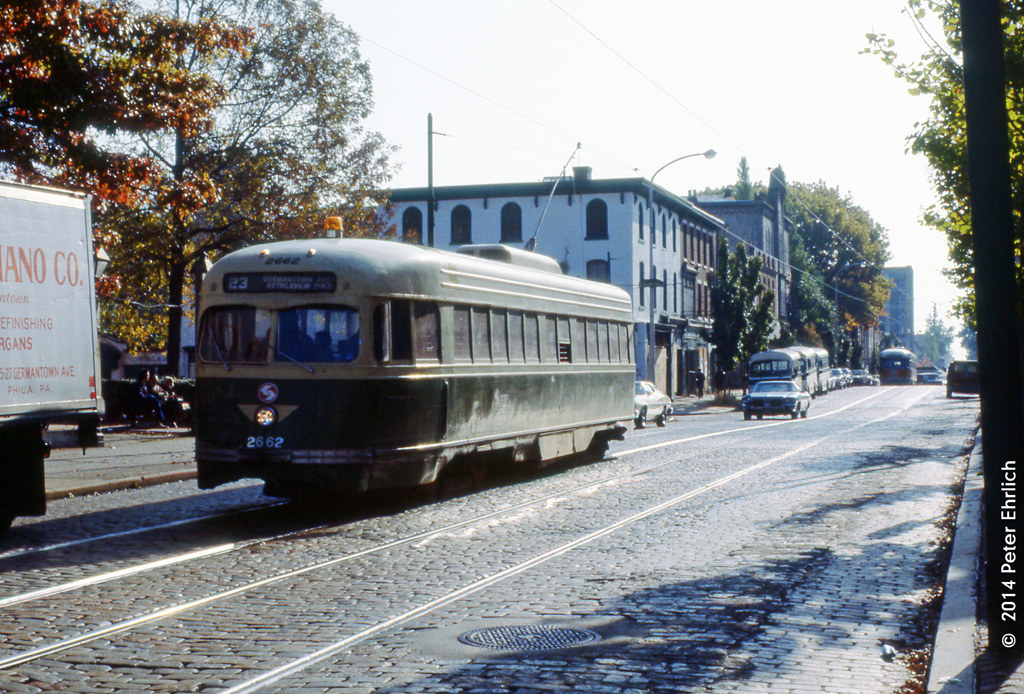
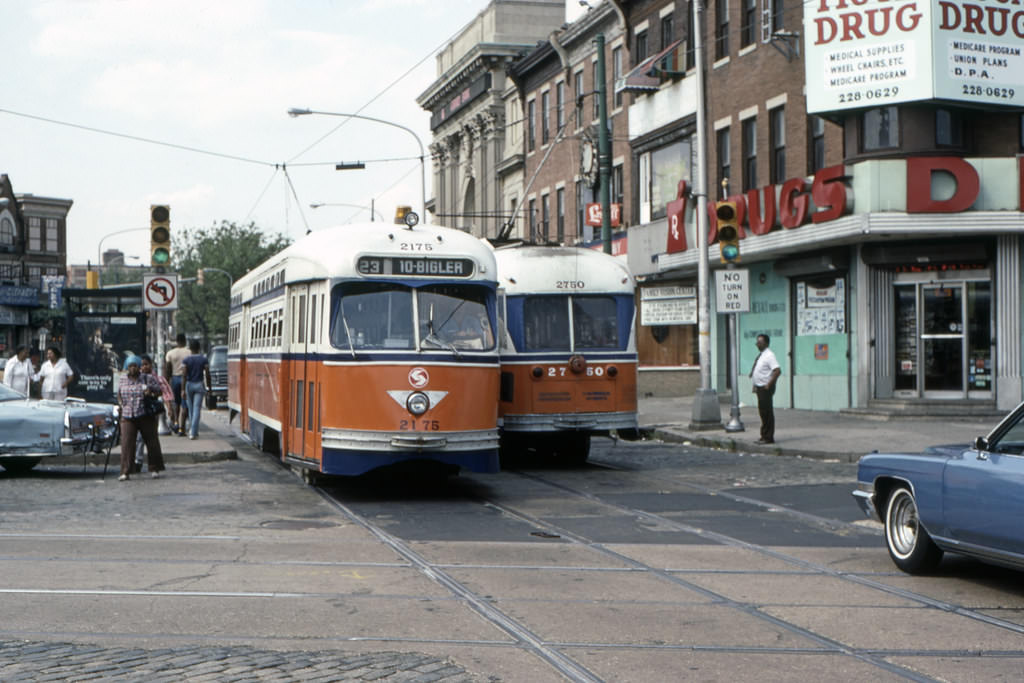
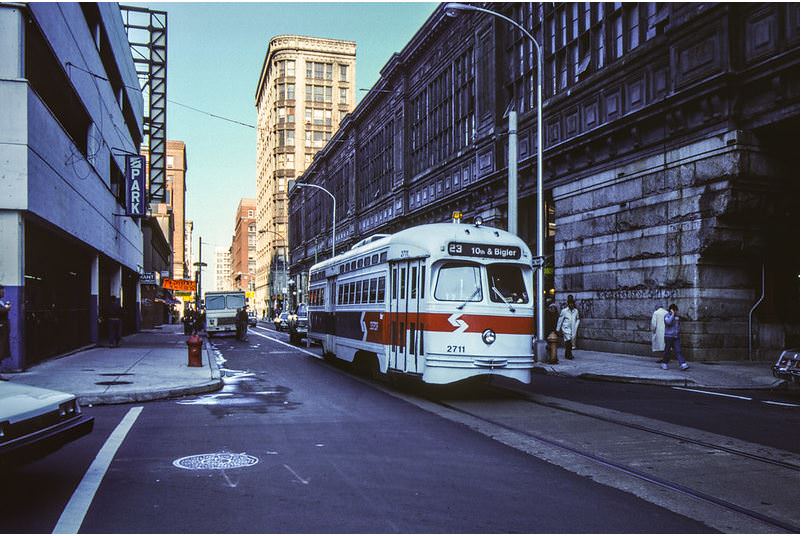
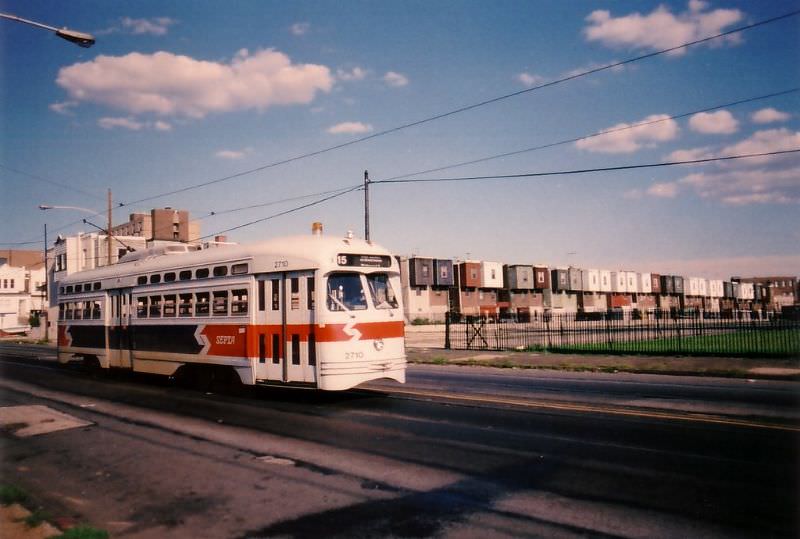
Philadelphia’s transit system, operated by SEPTA — the Southeastern Pennsylvania Transportation Authority — was one of the few in the country still running vintage PCC streetcars well into the 1980s. These electric trolleys, some dating back decades, shared streets with buses and cars throughout the city. The trolley lines on routes like Route 10, Route 23, and Route 56 were a defining part of daily commuter life.
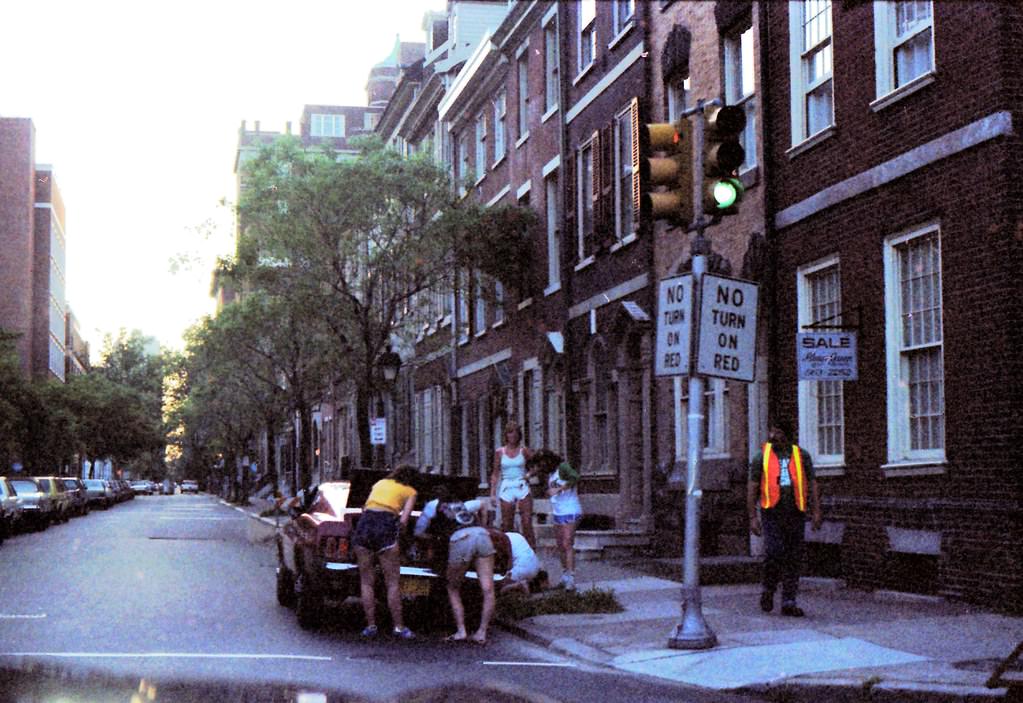
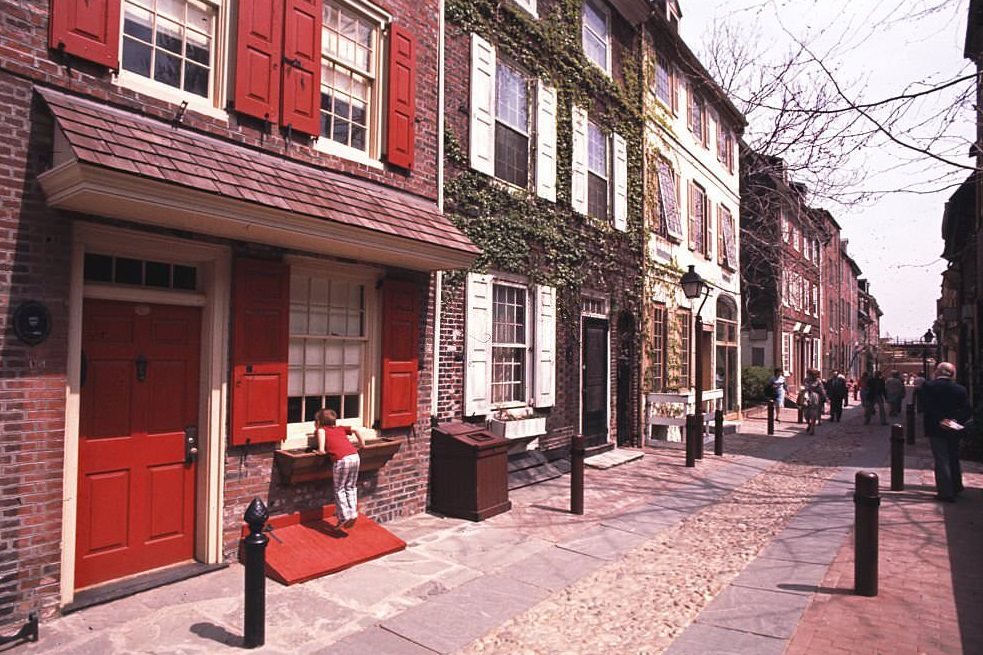
Society Hill, one of Philadelphia’s oldest residential neighborhoods, retained much of its 18th-century brick architecture through the 1980s. It stood as a well-preserved pocket of colonial-era row houses and cobblestone streets, a sharp contrast to the poverty gripping other parts of the city at the same time.
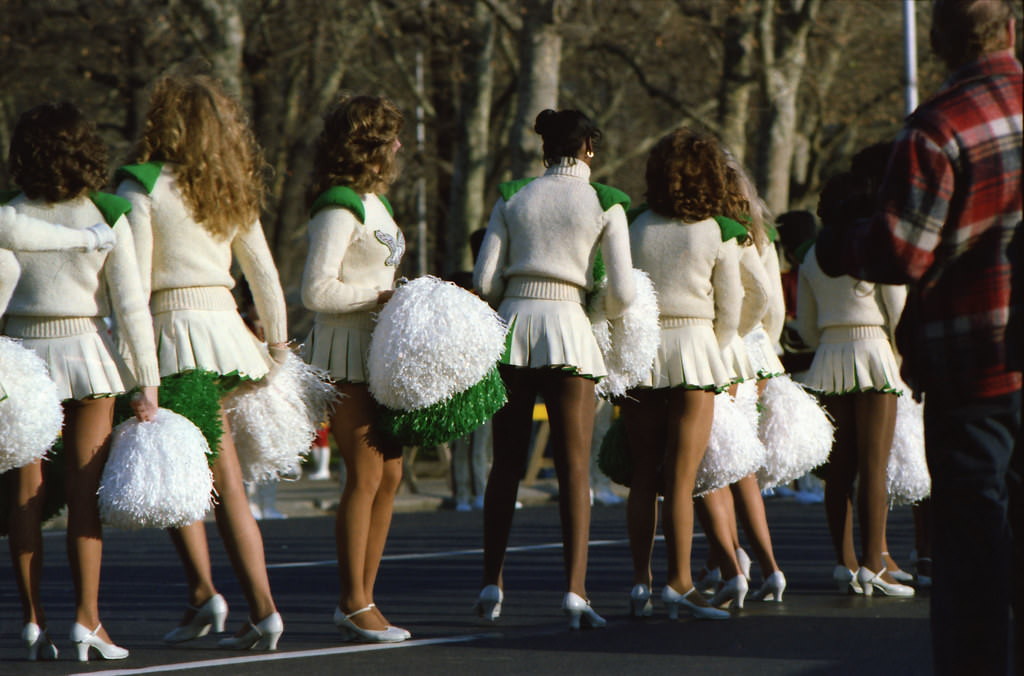
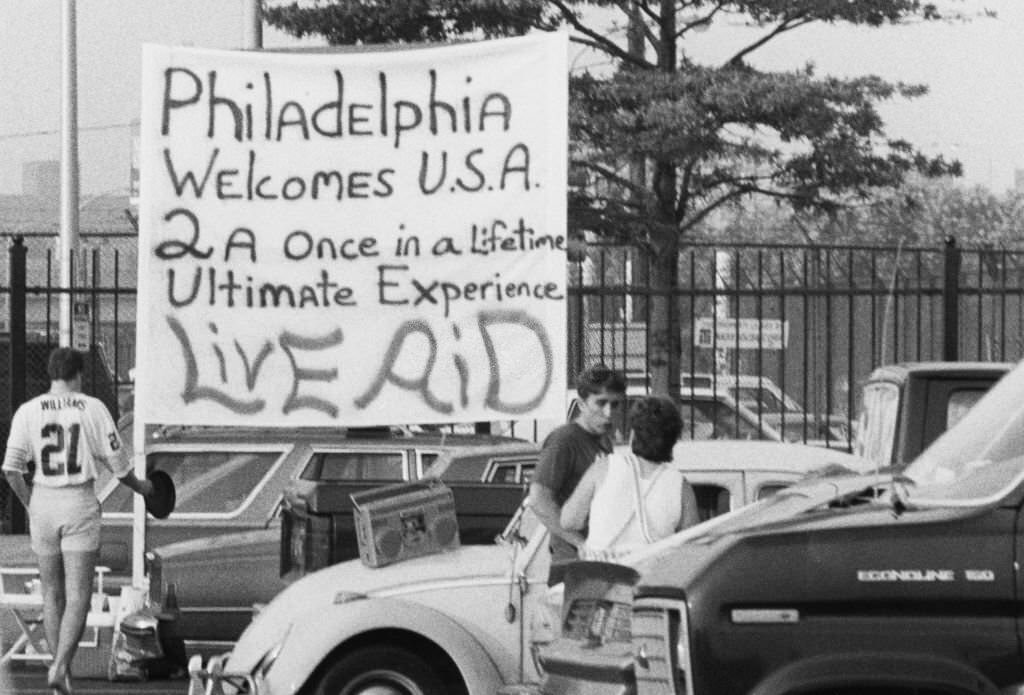
The city’s Thanksgiving Day Parade was a long-standing tradition that continued through the decade. Philadelphia’s version of the parade, one of the oldest in the nation, drew large crowds each year. Meanwhile, major concerts brought tens of thousands to Veterans Stadium and JFK Stadium, including a Rolling Stones show in 1981 and the globally broadcast Live Aid concert in 1985, which Philadelphia co-hosted with London.
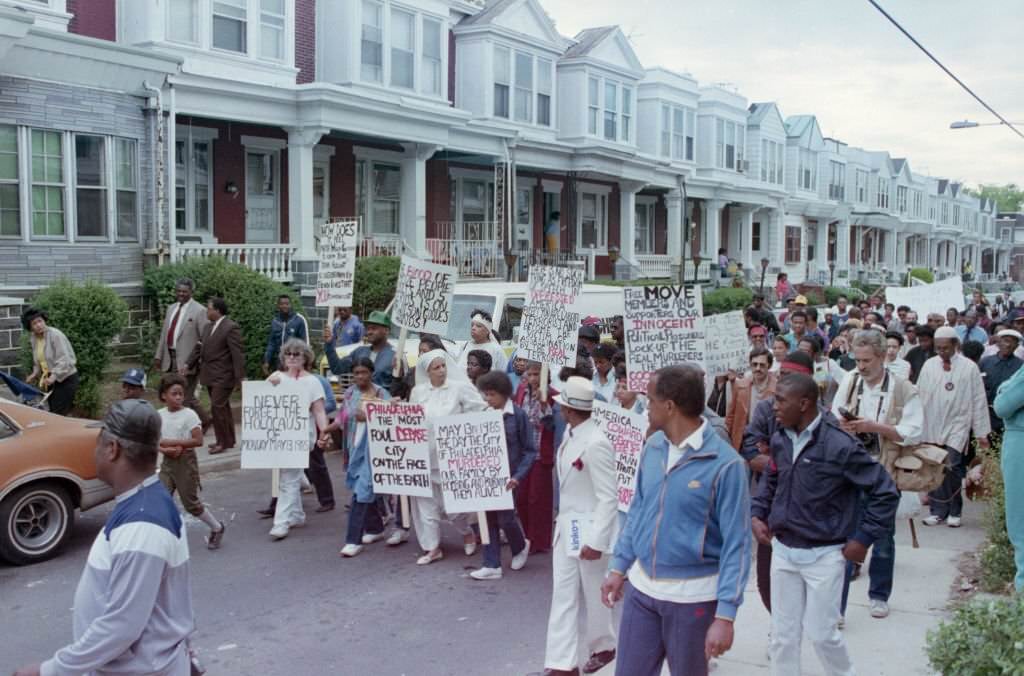
In 1983, Philadelphia elected W. Wilson Goode as its first Black mayor. His first term, however, was defined by one of the most shocking events in the city’s modern history. In May 1985, the Philadelphia Police Department dropped a bomb on a rowhouse at 6221 Osage Avenue occupied by MOVE, a Black liberation group. The resulting fire killed 11 people, including five children, and destroyed 61 homes in the surrounding neighborhood. Relatives and supporters of MOVE continued to hold anniversary marches through the Osage Street neighborhood in the years that followed.
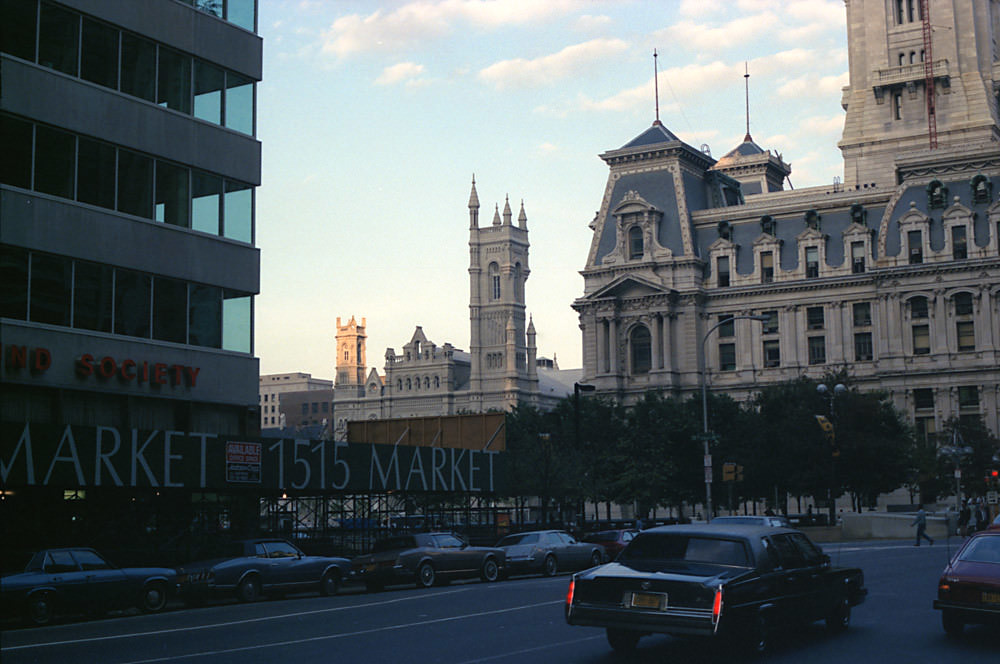
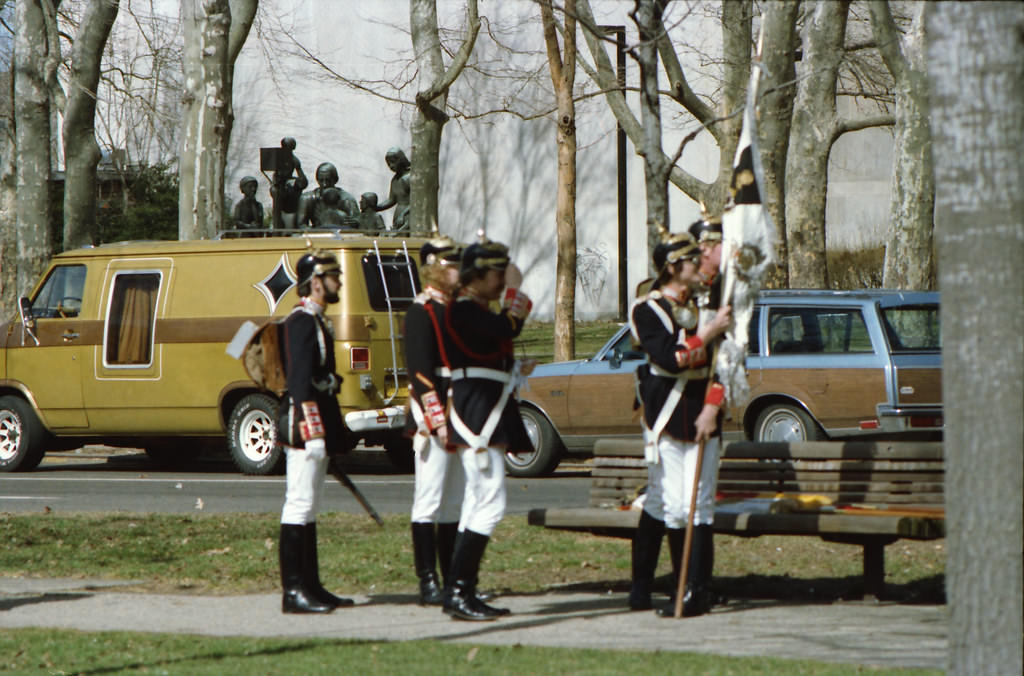
Philadelphia’s Chinatown and nearby immigrant communities were expanding through the decade. After the end of the Laotian Civil War, a group of Hmong refugees initially settled in the city but faced repeated discriminatory attacks. The city’s Commission on Human Relations held hearings into the incidents. By 1984, three-quarters of the Hmong community had left Philadelphia to live with relatives in other states. Vietnamese and other Asian immigrants continued to settle in the city, particularly around the Italian Market area, while large numbers of Central and South American immigrants established themselves in North Philadelphia.
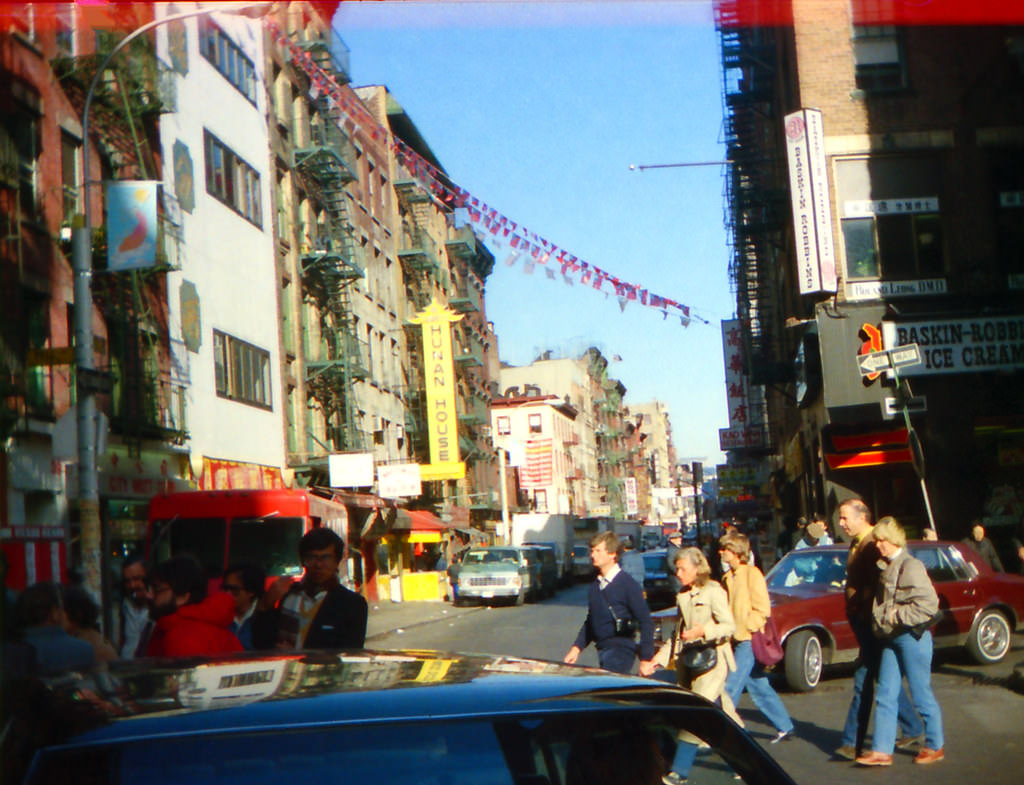
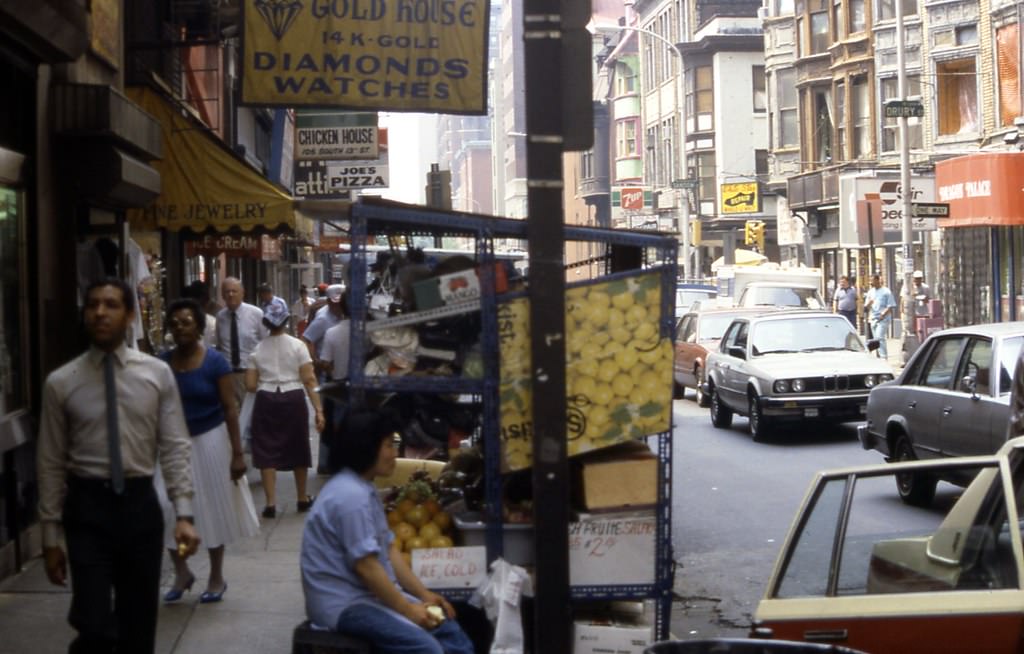
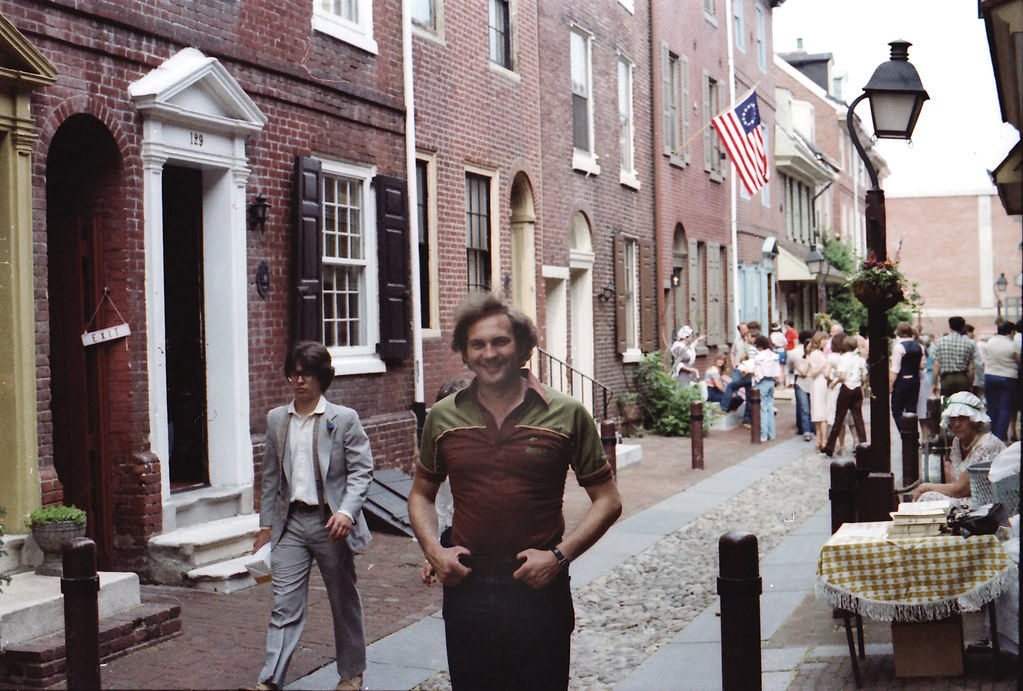
Elfreth’s Alley in Old City is the oldest continuously inhabited residential street in the United States. A house built in 1720 still stood there during the 1980s, visited by locals and tourists alike. The alley, just a block long, offered a direct connection to Philadelphia’s colonial past amid a decade that was otherwise defined by very modern pressures.
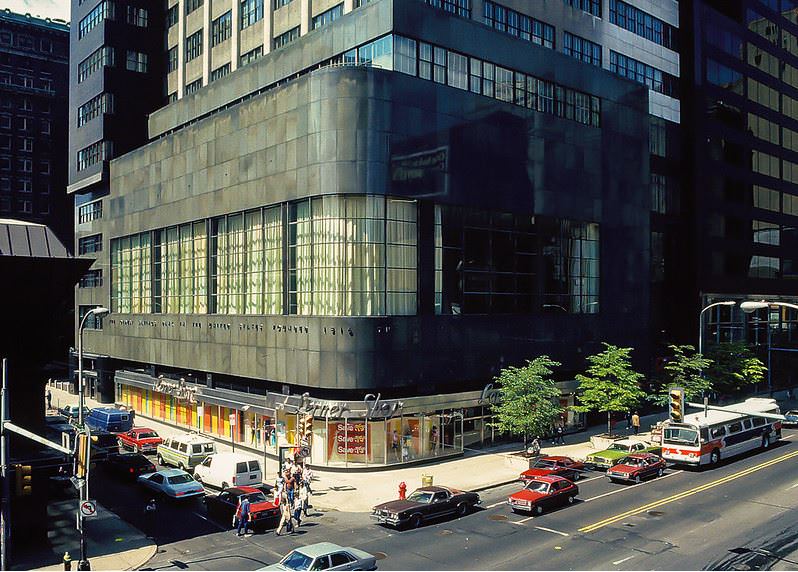
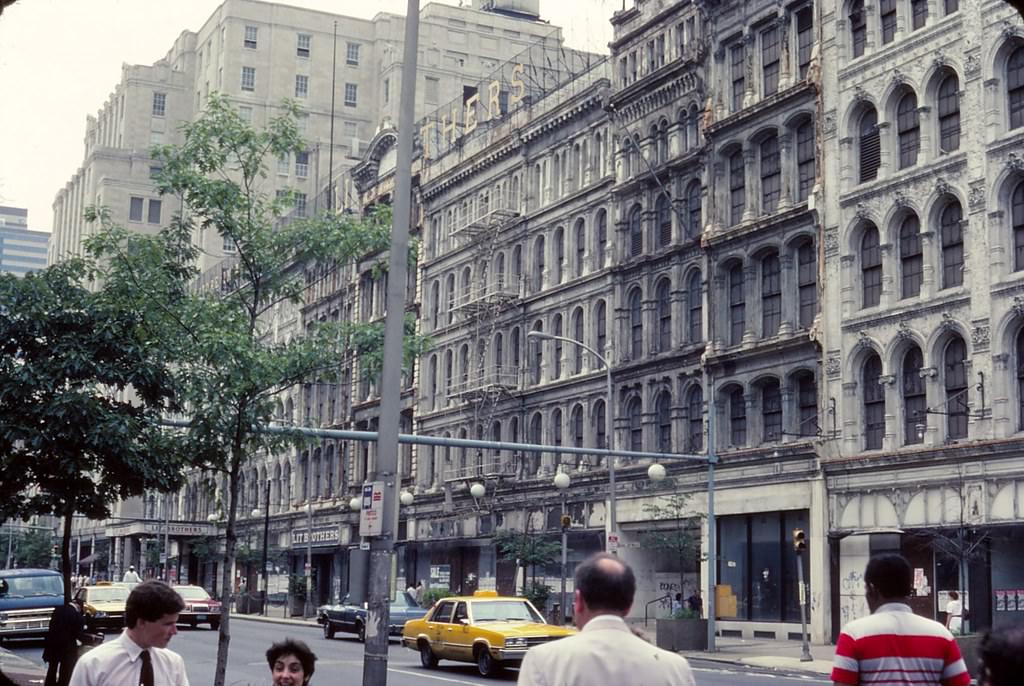
On Market Street between Seventh and Eighth Streets stood the Lit Brothers Building, a striking block of Renaissance Revival Victorian structures. The buildings were constructed between 1859 and 1918 and served as one of Philadelphia’s most recognizable commercial landmarks. By the 1980s, the block had become an important piece of the city’s architectural identity, representing a style of building that was no longer being constructed anywhere in the city.
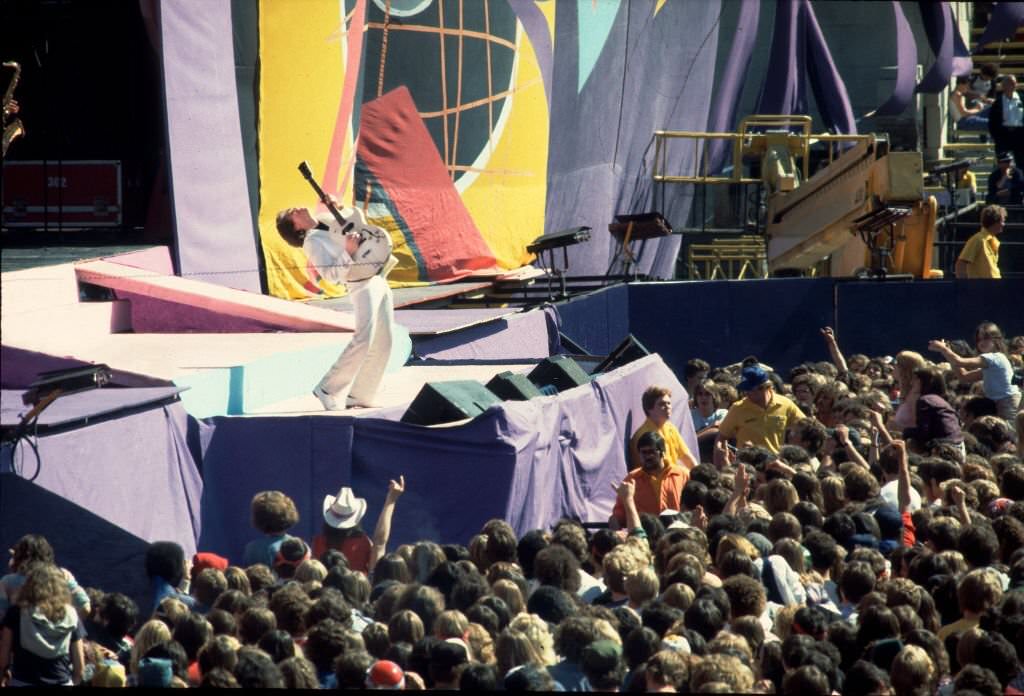
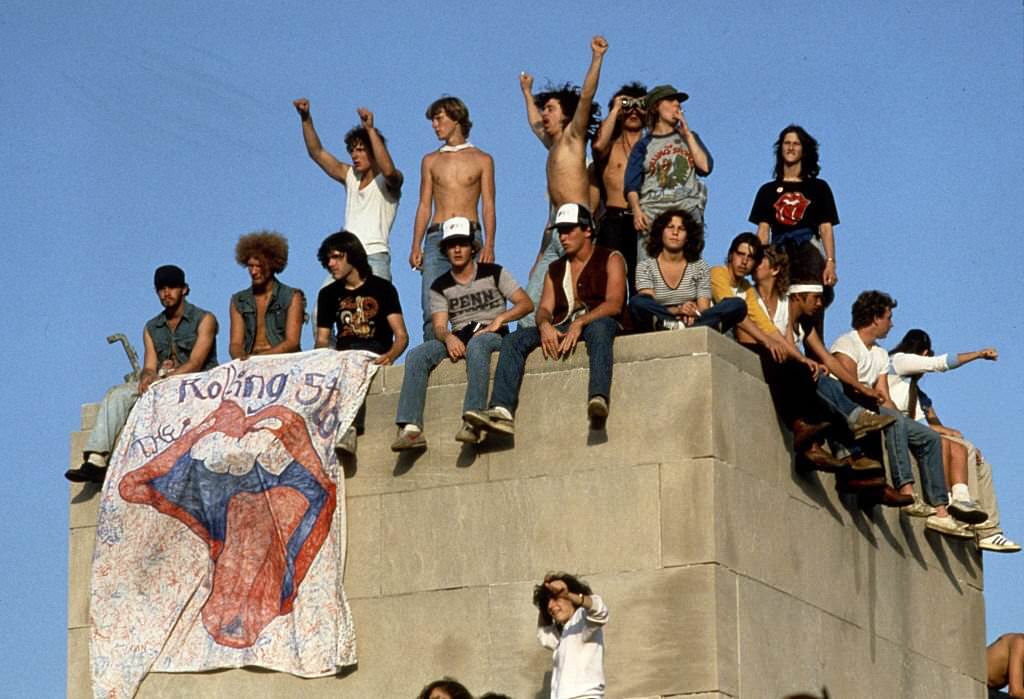
Philadelphia hosted major concerts at Veterans Stadium and JFK Stadium throughout the decade. George Thorogood performed at Veterans Stadium in 1981, the same year the Rolling Stones packed JFK Stadium. Then in July 1985, Philadelphia became one of two global stages for Live Aid, the massive benefit concert organized to raise funds for famine relief in Ethiopia. JFK Stadium held roughly 90,000 people that day, with the event broadcast to an estimated 1.9 billion viewers worldwide.
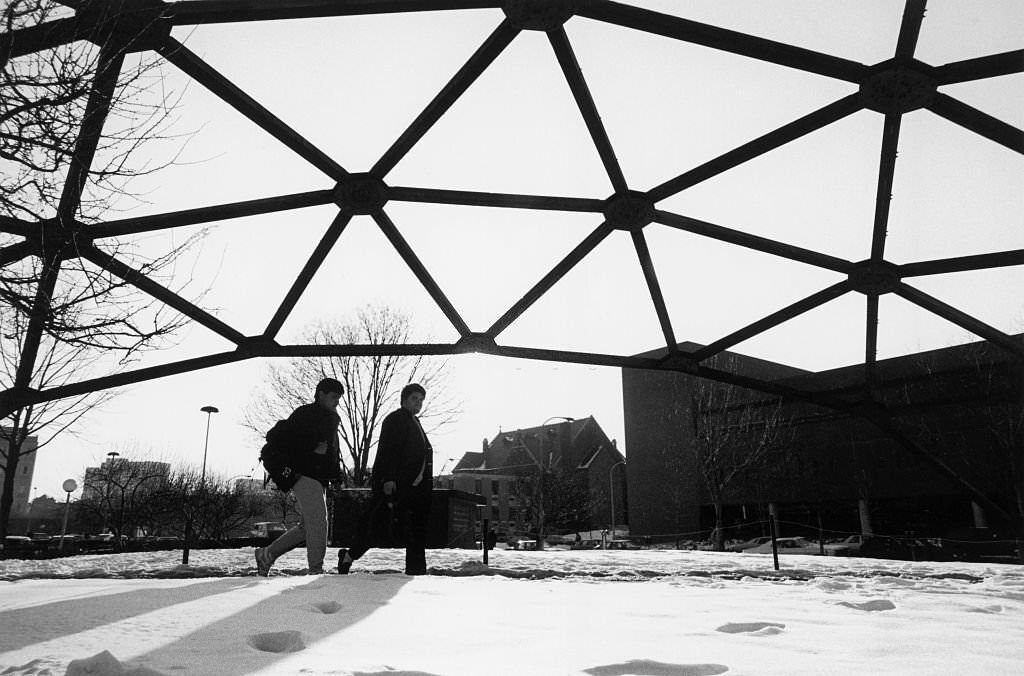
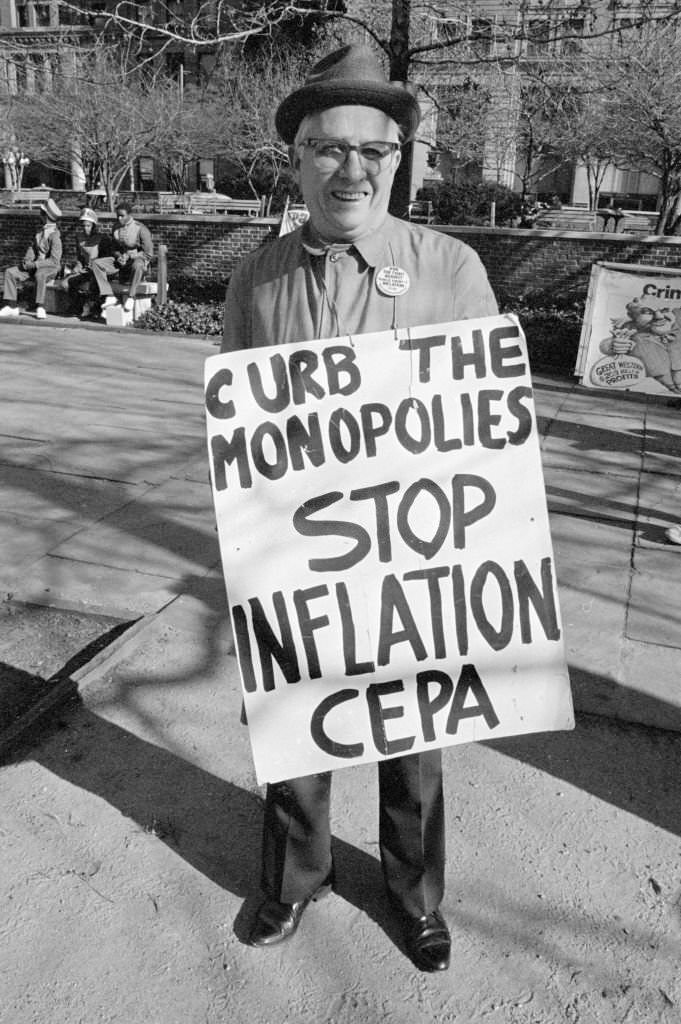
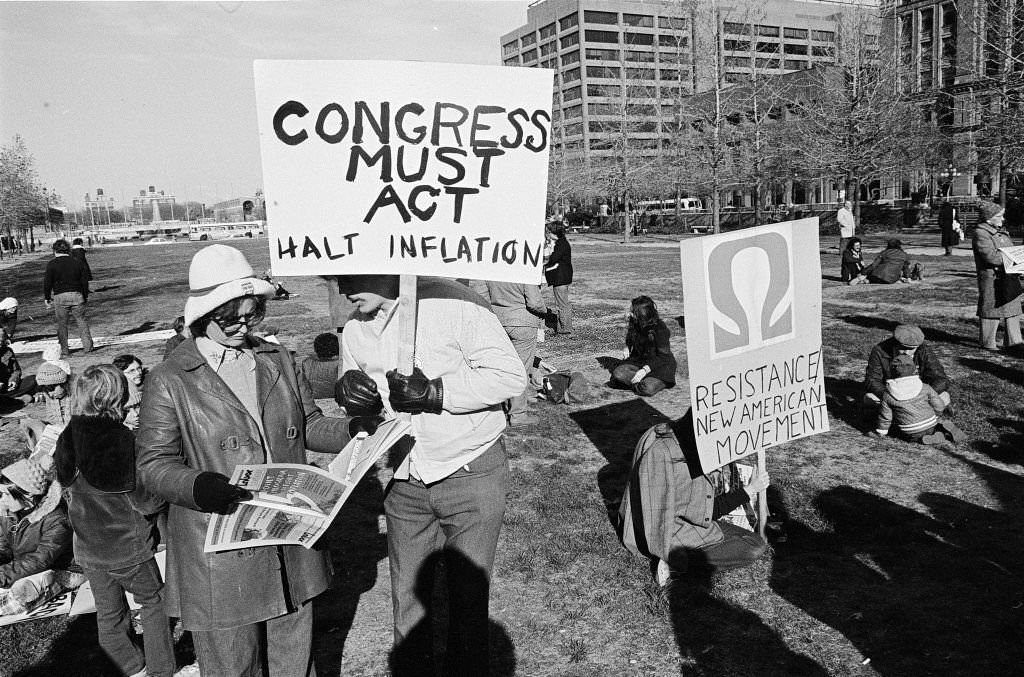
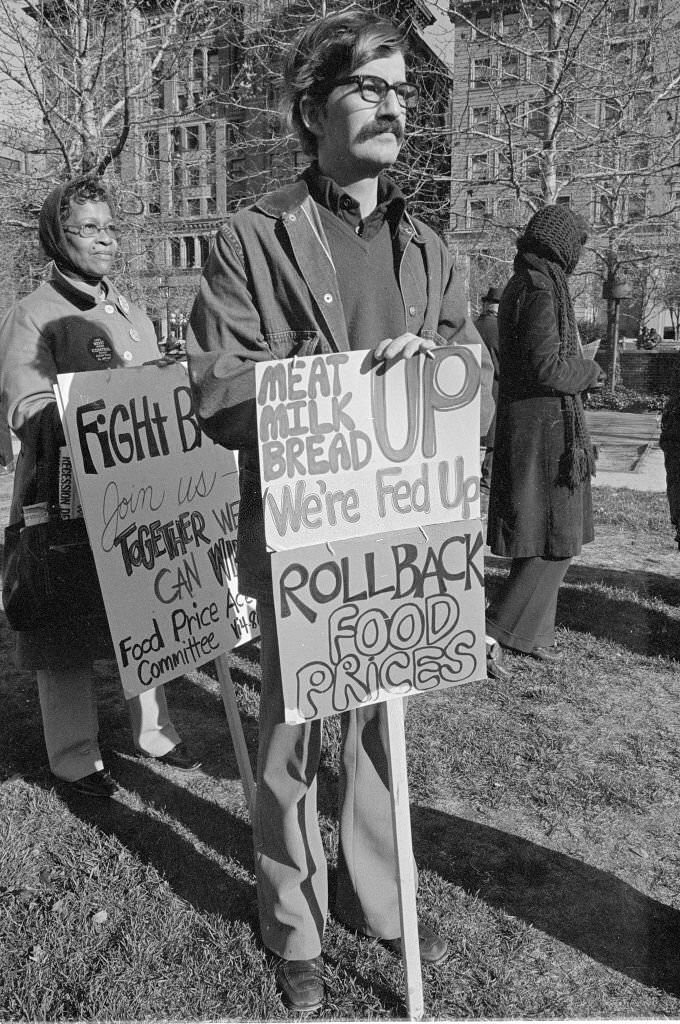
Economic anxiety was visible throughout the city. Labor contracts signed during the Rizzo administration had saddled Philadelphia with costs that Mayors Green and Goode could not cover. Anti-inflation rallies drew demonstrators to Independence National Historical Park in October 1984, with protesters carrying signs and calling attention to the financial pressures squeezing working-class Philadelphians. By the end of the decade, the city had entered a full fiscal crisis and was on the verge of bankruptcy.
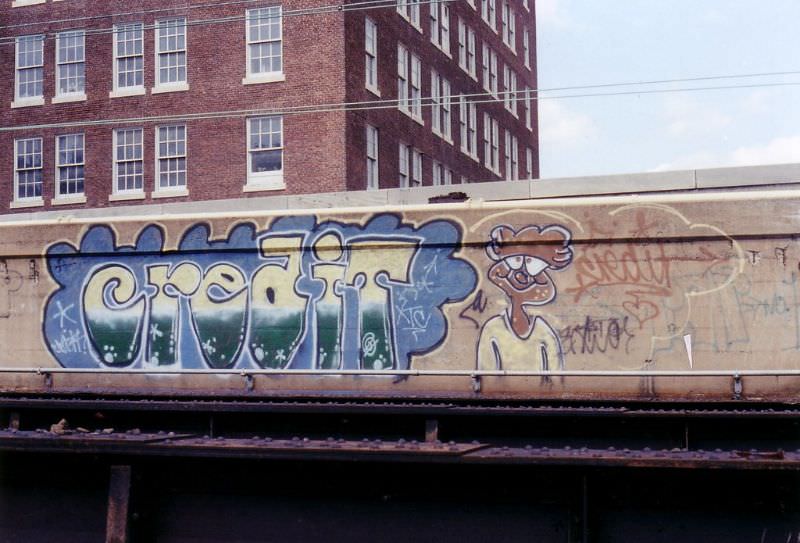
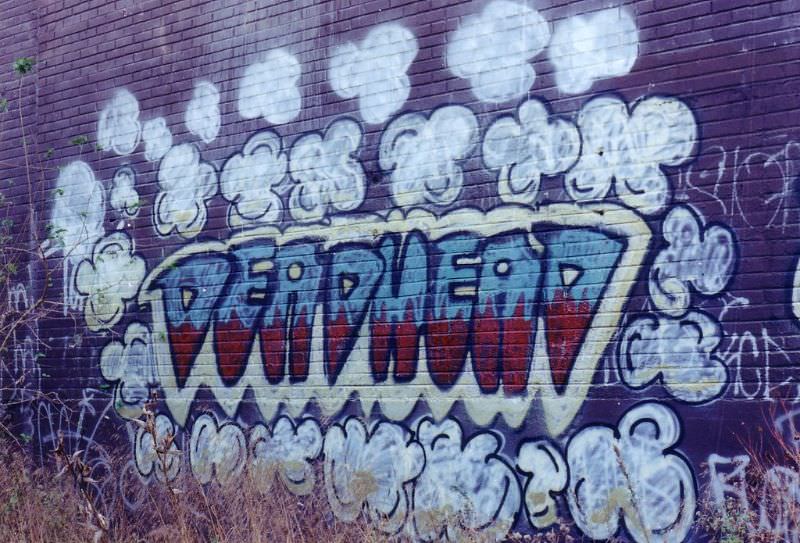
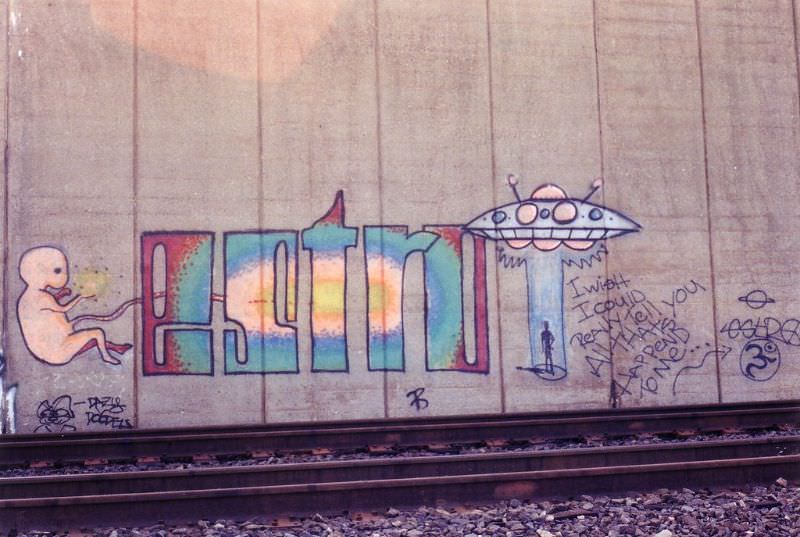
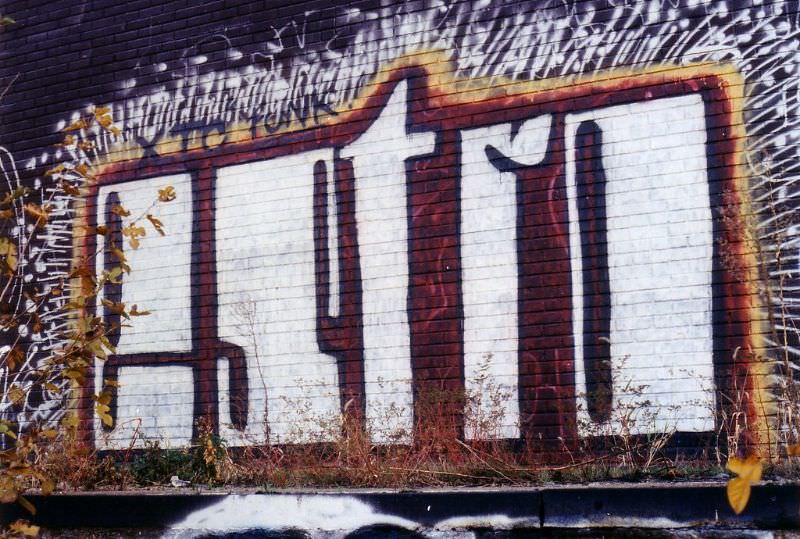
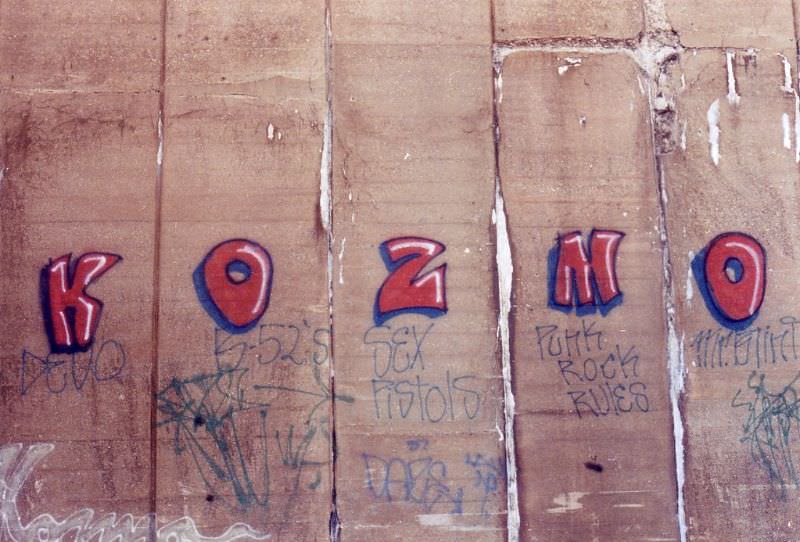
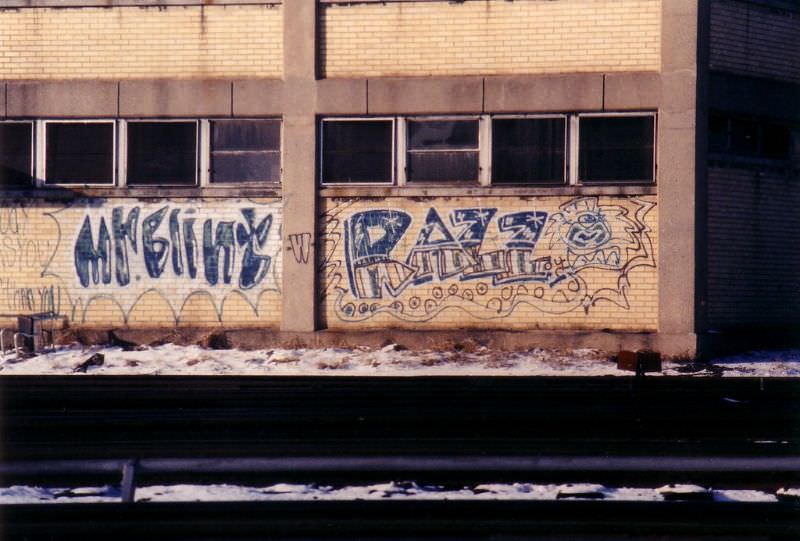
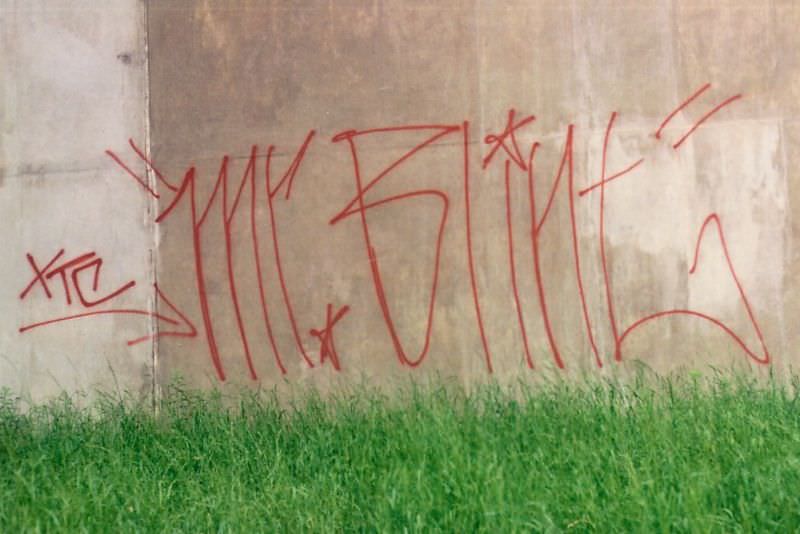
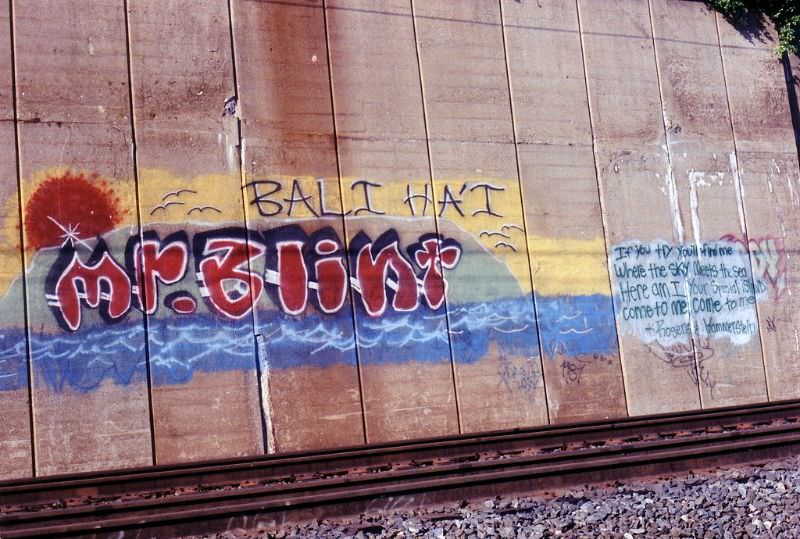
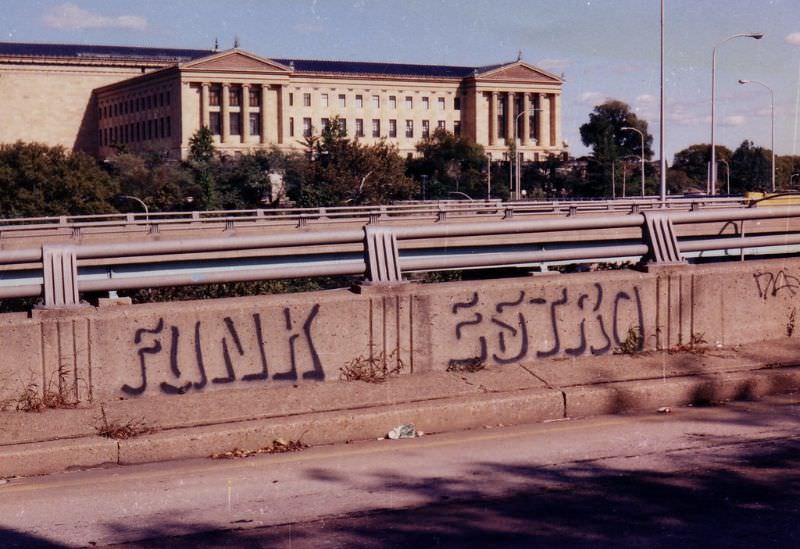
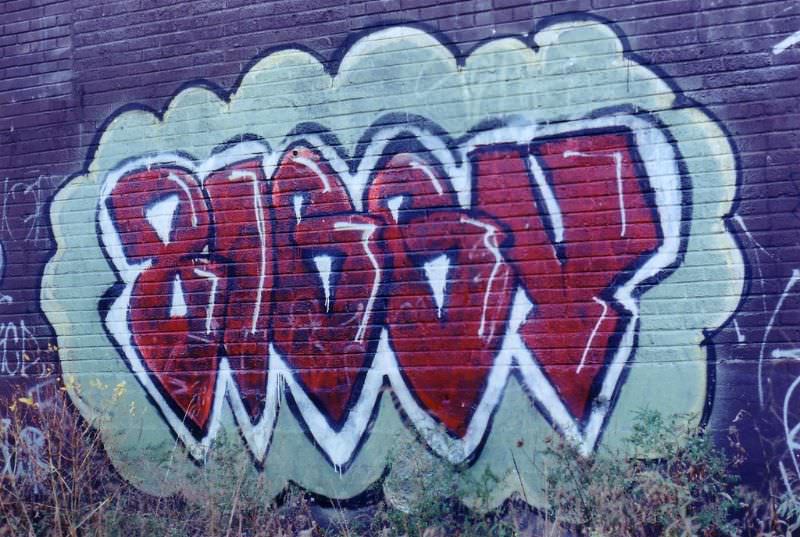
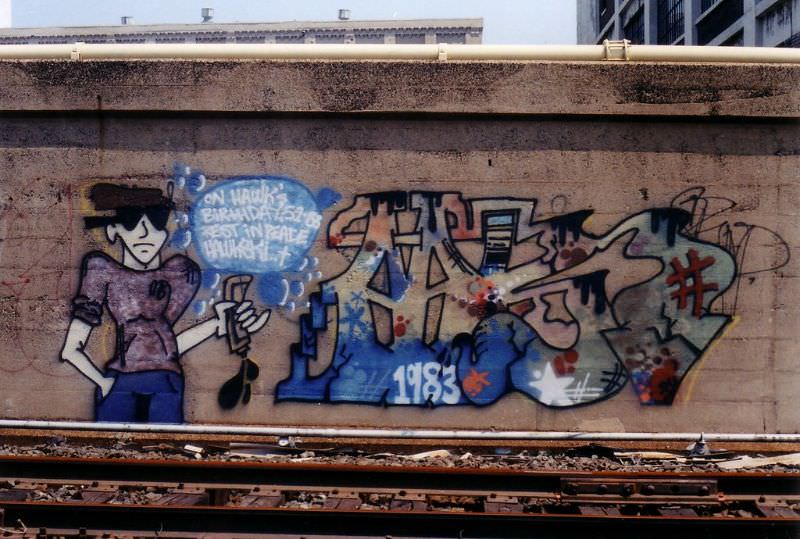
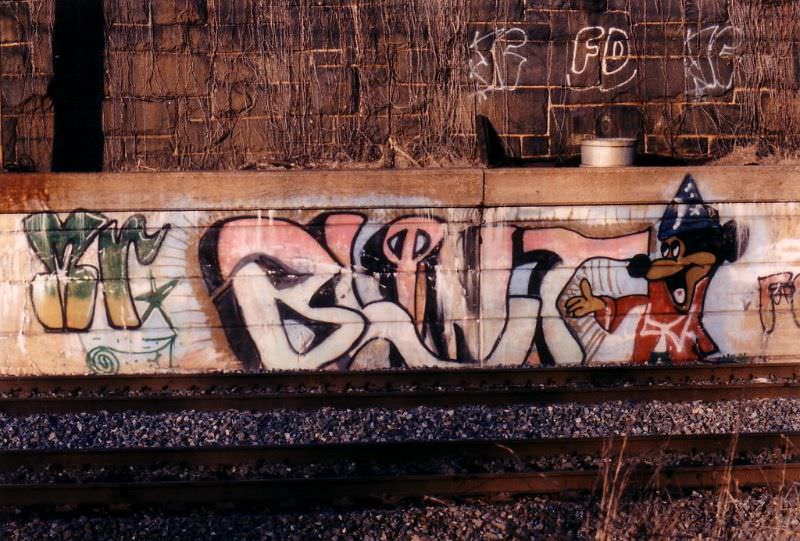
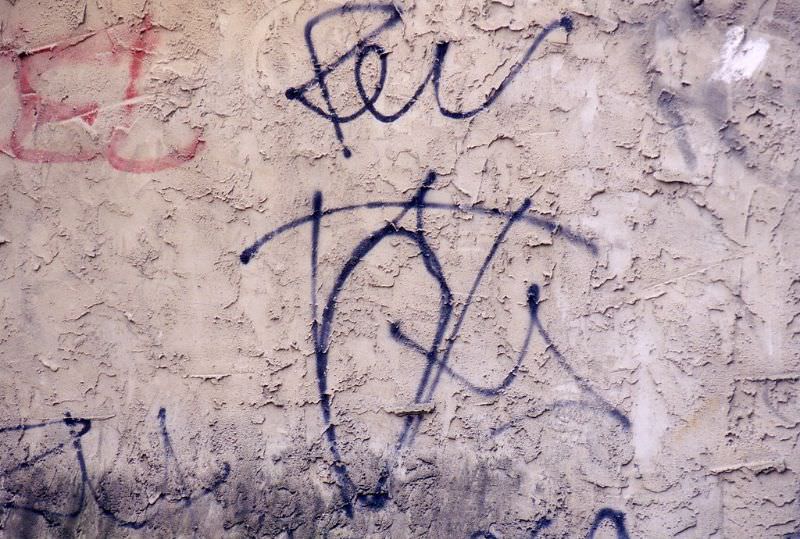
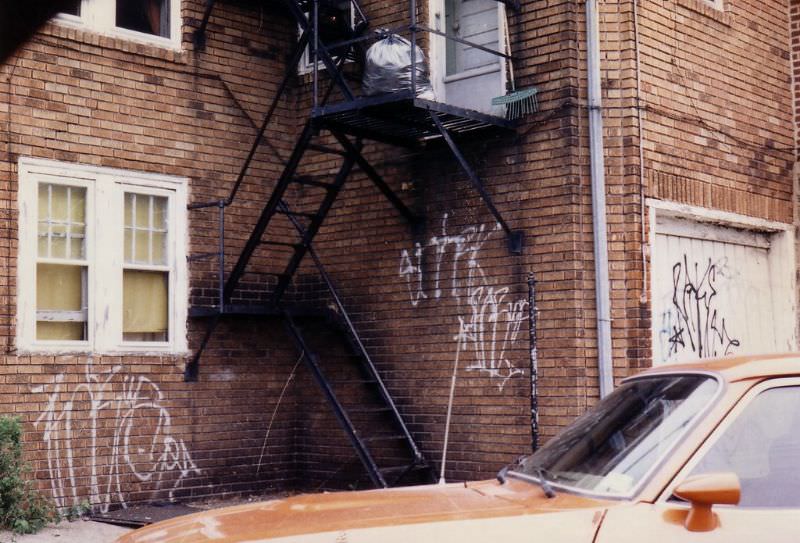
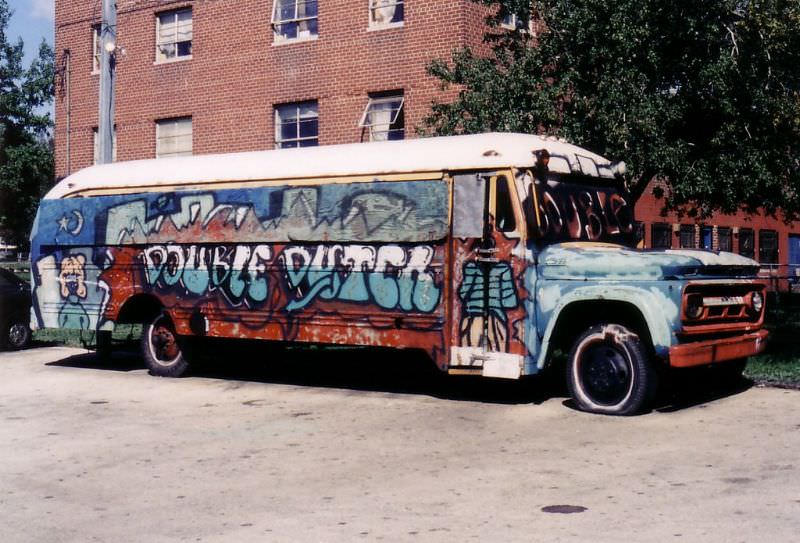
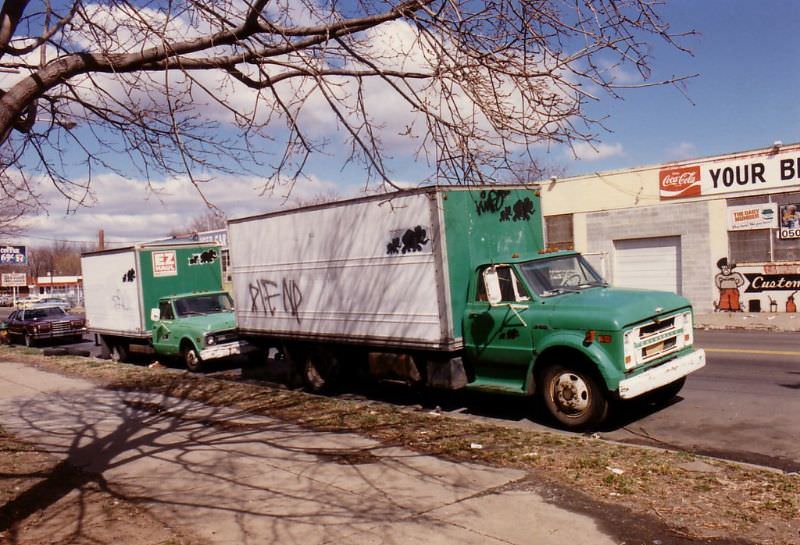
Graffiti was one of the decade’s most visible art forms on Philadelphia’s streets, and the city had an active scene of writers tagging trains, walls, and underpasses across every neighborhood. Names like Credit, Dead Head, Estro, Kozmo, Mr. Blint, Daze, Jay-Cee, and Ziggy appeared on surfaces from West Philadelphia to the 30th Street rail yard. The work ranged from simple tags to elaborate pieces, and photographers documented much of it, leaving a detailed record of who was writing where and when.
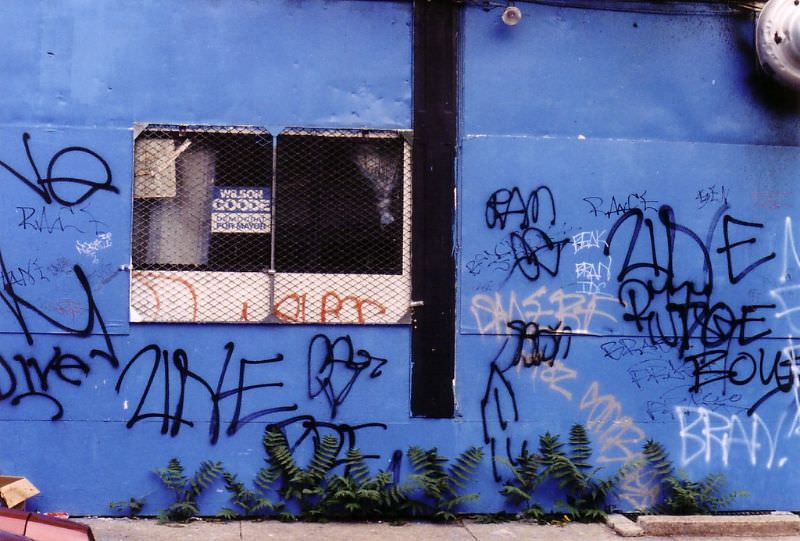
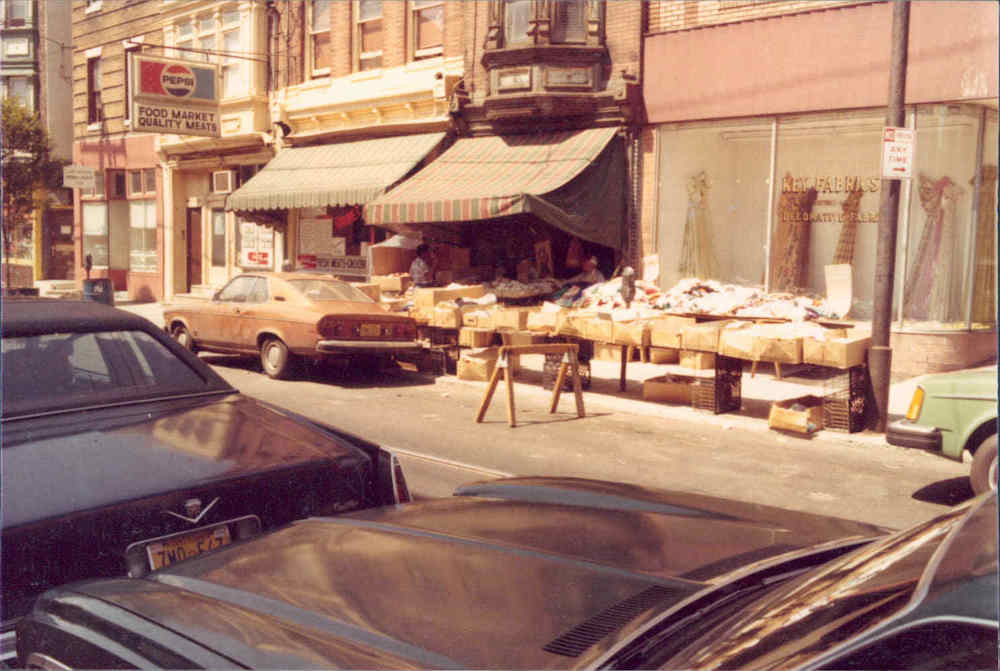
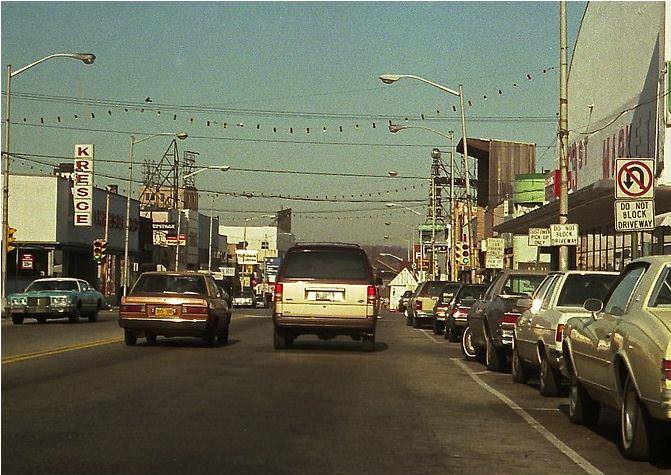
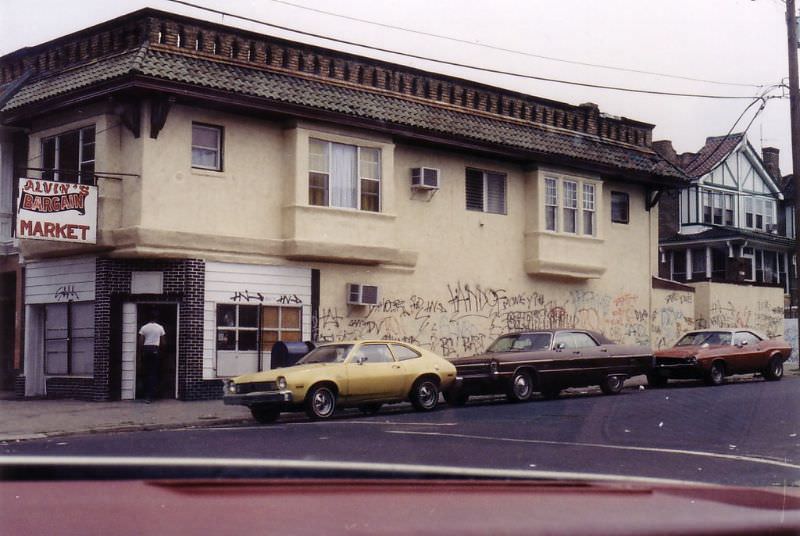
West Philadelphia’s commercial strips and residential blocks showed the everyday texture of working-class life in the city. Bargain stores, corner shops, and local businesses lined streets like 54th Street and Lancaster Avenue. These were neighborhoods where crime was rising, resources were being cut, and residents were dealing directly with the consequences of the city’s financial troubles.
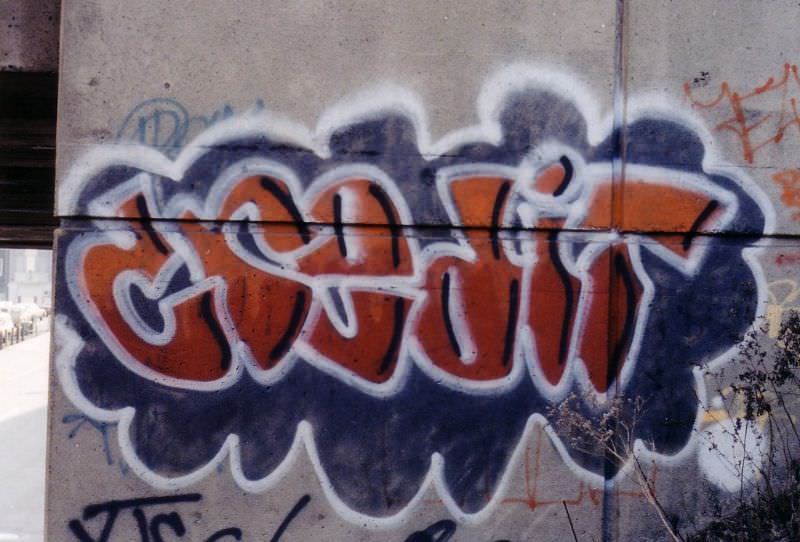
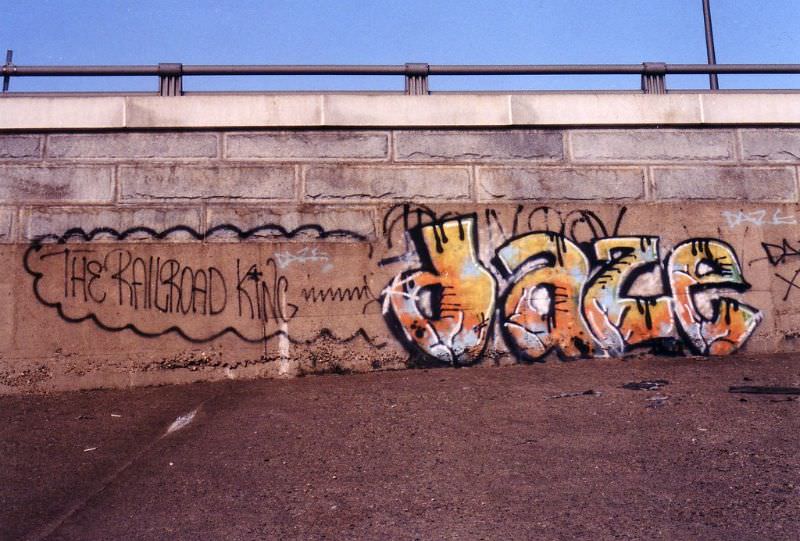
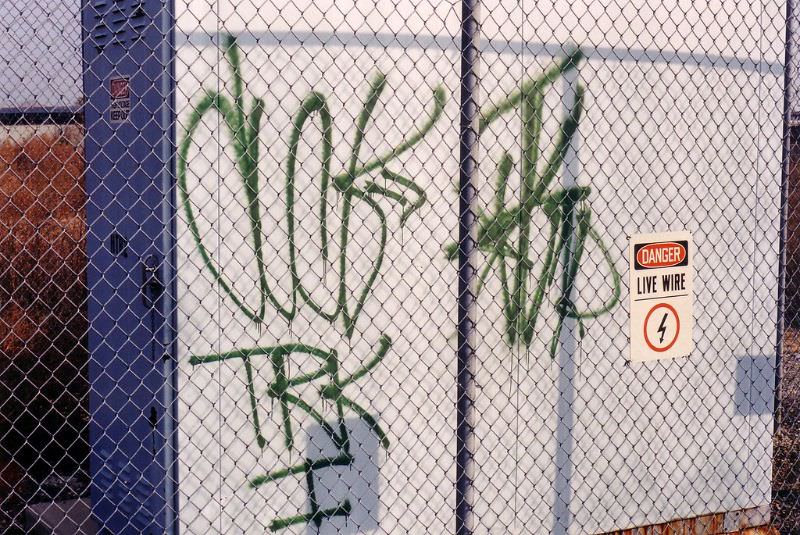
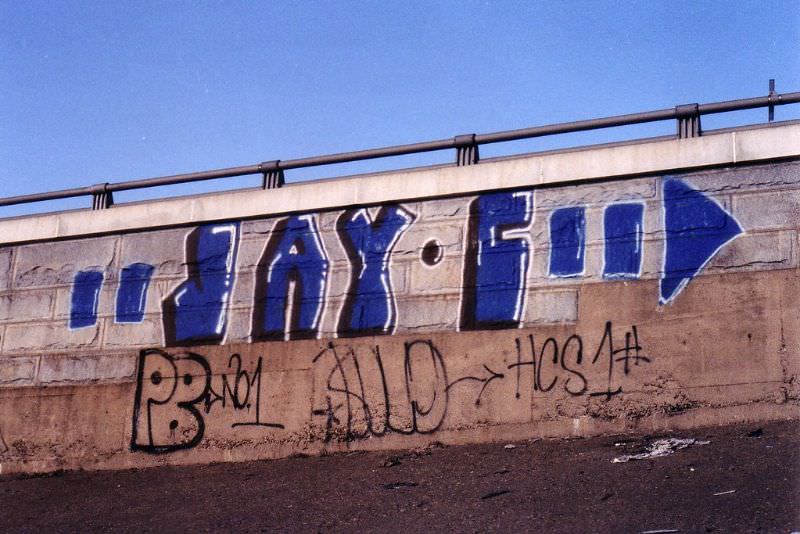
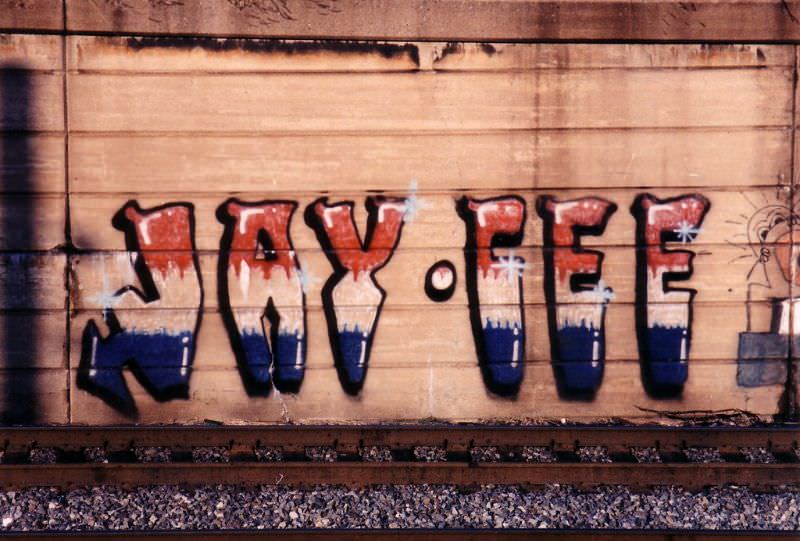
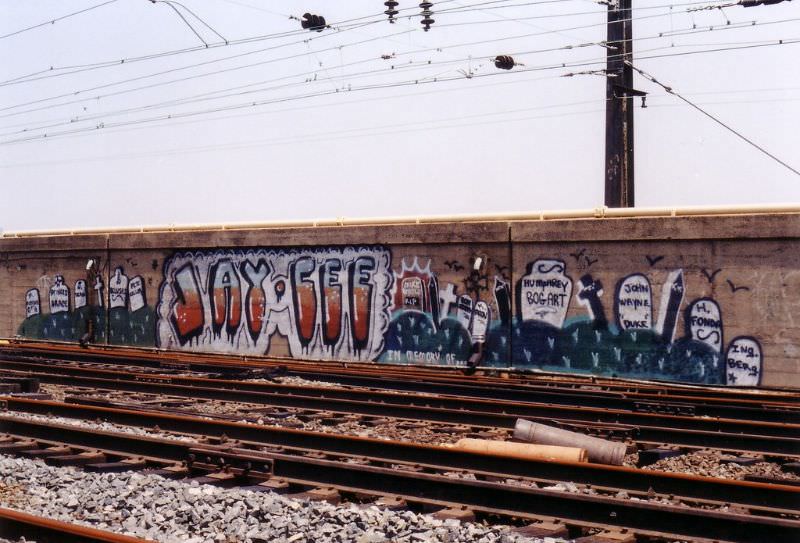
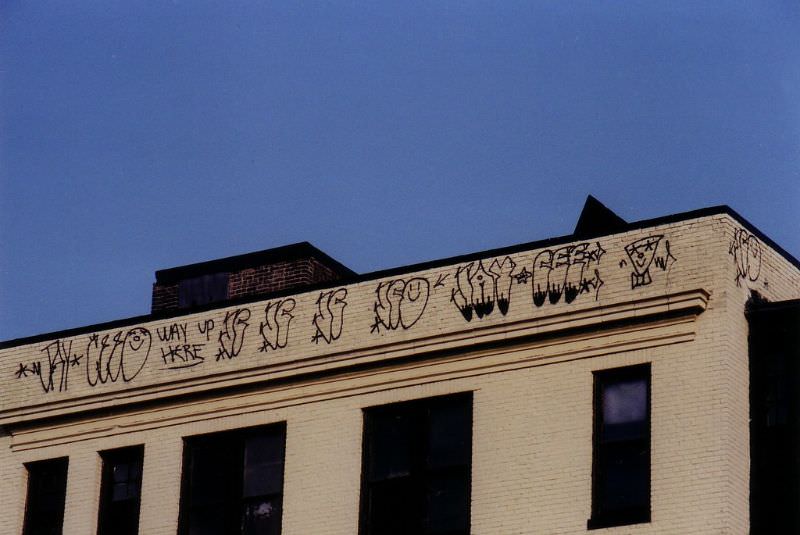
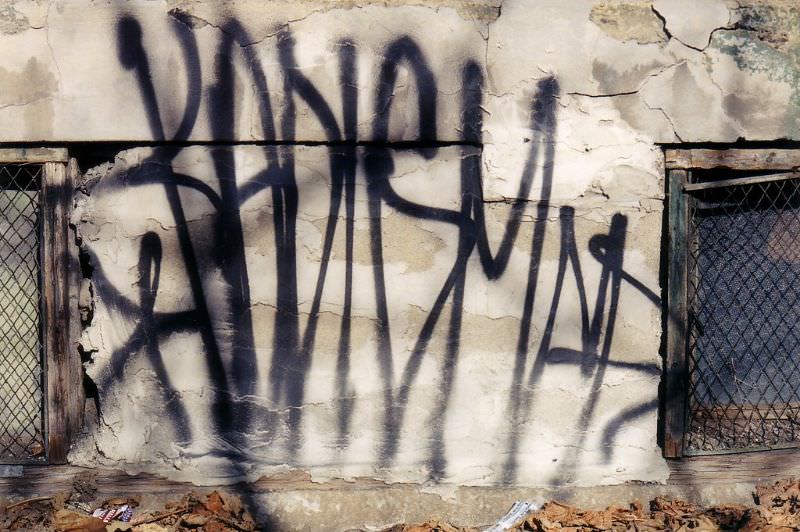
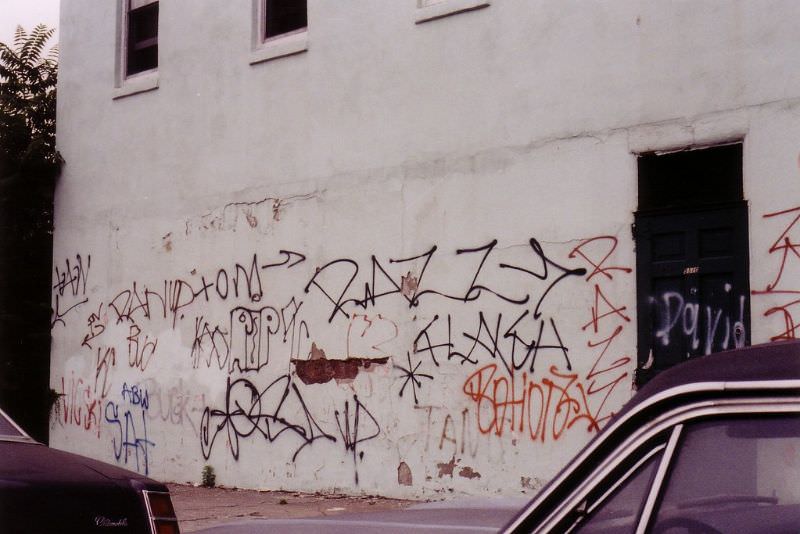
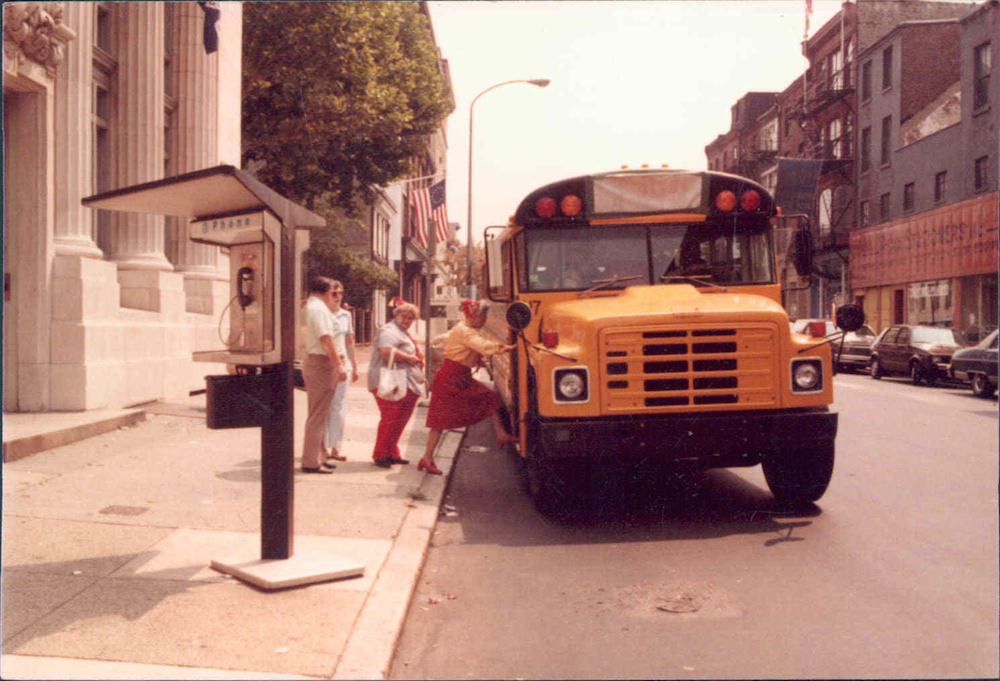
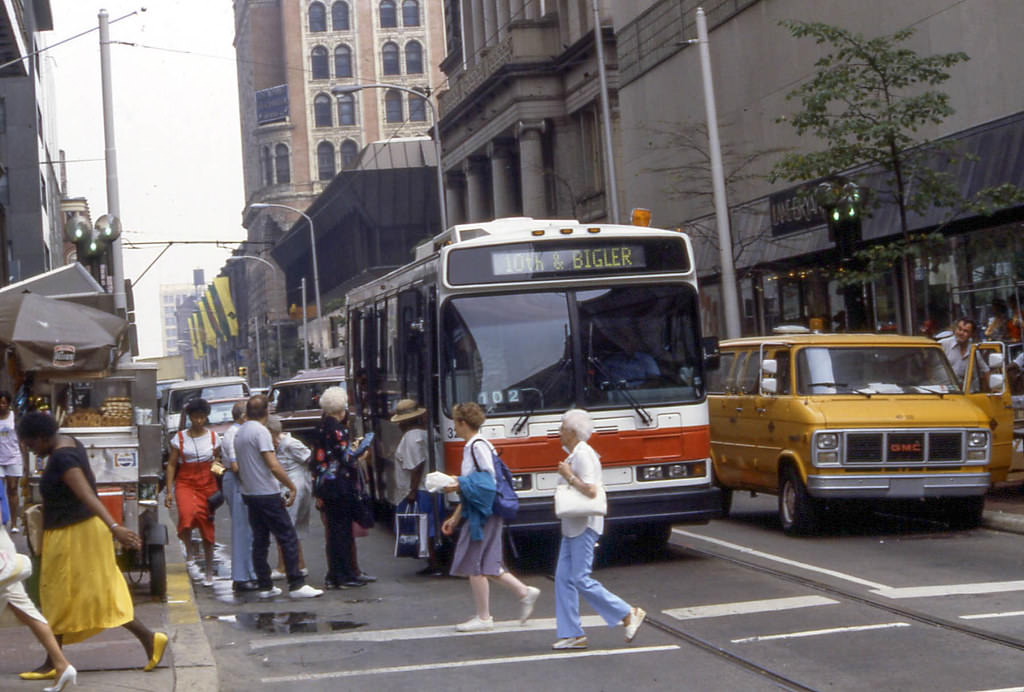
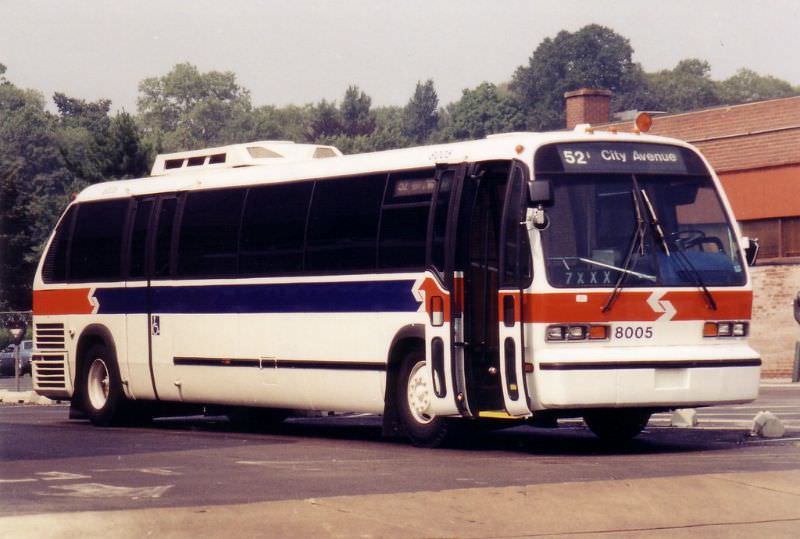
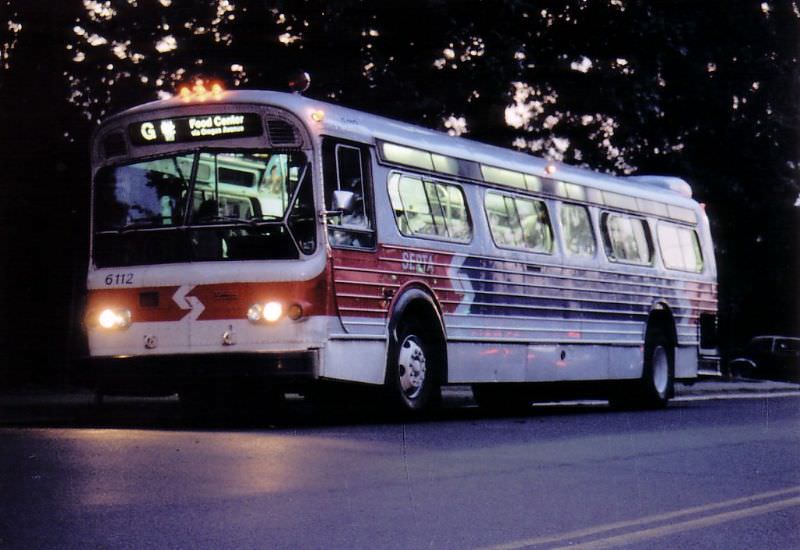
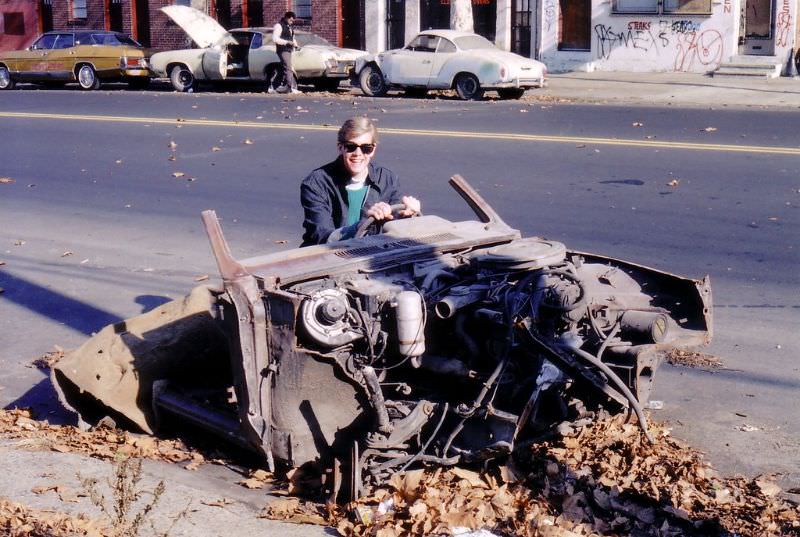
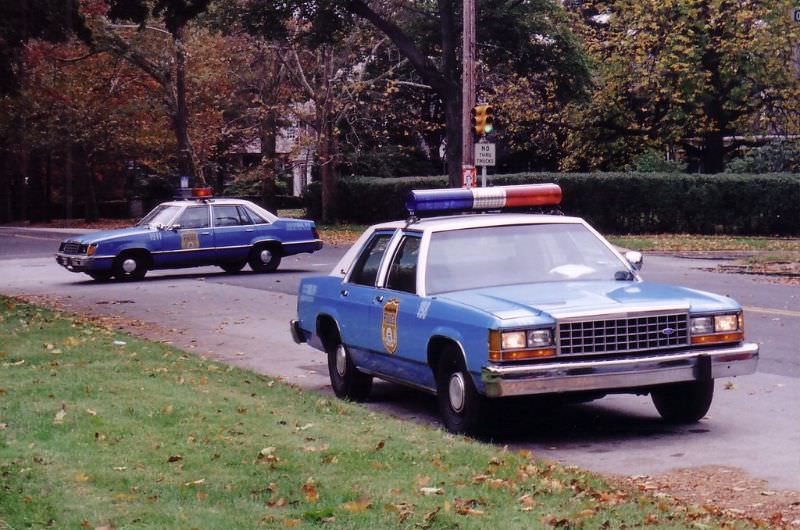
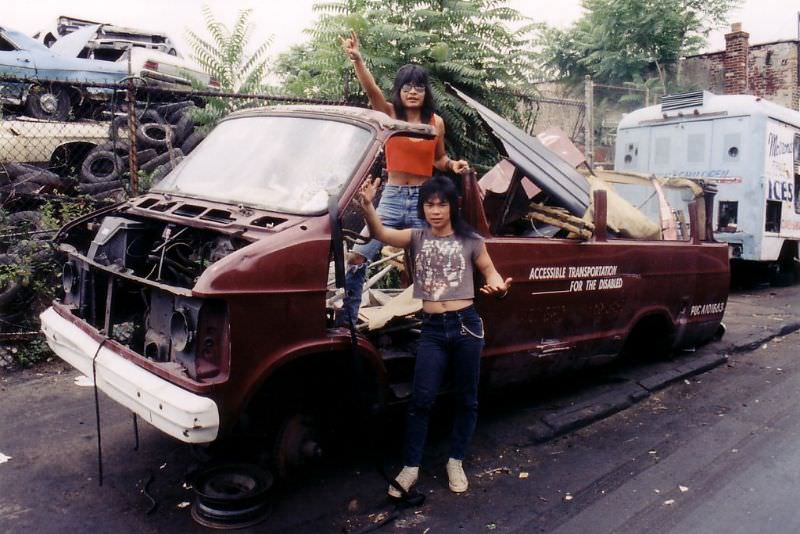
By 1985, North Philadelphia’s streets reflected decades of disinvestment. Housing projects and aging school buses sat alongside one another in neighborhoods where gangs had taken hold. The Philadelphia Police Department patrolled in Ford LTD and Crown Victoria cruisers, the standard fleet of the era. SEPTA buses, including General Motors RTS II models and Flexible buses, covered routes through West Philadelphia and beyond, serving a transit-dependent population.

the opening credits of the film Trading Places are also worth watching. The sequence showcases various parts of the city and highlights the stark economic disparities between them. In fact, the entire movie is a great watch.
I took a moment to review the photos but did not spot myself in any of them. Perhaps if the pictures were taken on South Street or at Zipperhead, I would have had a better chance.
I had to check…nope, I didn’t see me in any of the photos. Maybe if the pics were on South Street of Zipperhead.
The photograph of the corner with numerous flyers pasted on it brings back a fond memory for me. I recall encountering Jade Starling and Whey Cooler, members of the band Pretty Poison, while they were putting up flyers. My girlfriend and I asked if we could assist them, and they allowed us to join them backstage at Ripley’s for parties in the future. Those were the days – South Street was always an enjoyable place to be.
How did I not know they were Philly based? I may need to track down the members of Cinderella to hand in my Philly card.
How about those pictures of you at that mall record store where Mojo Nixon isn’t available?
Are you referring to the pictures taken at Sam Goody or Wall to Wall Sound and Video?
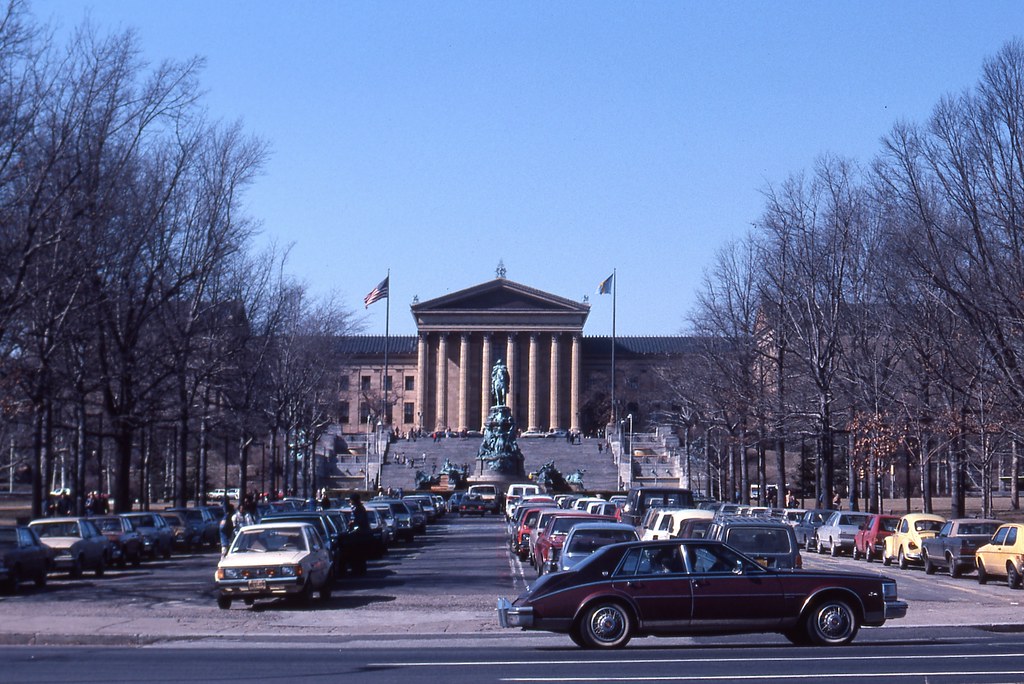
Love me some nostalgia but this looks even worse than today (and I think we objectively know the city is safer today even if things seem bad). Want to park on the front steps of the Art Museum? Sure.
l rember a sign painted on the side of a brick building, around Broad and Vine. “Manhattan Bowling Balls”. l don’t know if it was a store or a factory