At 7:55 a.m. on December 7, 1941, the Imperial Japanese Navy Air Service launched a surprise attack on the U.S. naval base at Pearl Harbor in Honolulu, Territory of Hawaii. Japanese military planners called it the Hawaii Operation and Operation AI. Within hours, the most powerful naval installation in the Pacific was in ruins. More than 2,400 Americans were killed, nearly 200 aircraft were destroyed, and the U.S. Pacific Fleet was dealt a devastating blow.
The attack did not come without warning signs. Through the summer of 1941, tensions between the United States and Japan had been rising sharply. The U.S. had cut off oil exports to Japan, and since America supplied roughly 80 percent of Japan’s oil, the Japanese navy faced the prospect of grinding to a halt. Japan’s military leadership decided that crippling the U.S. Pacific Fleet was the only way to secure free movement across the Pacific for their own forces.
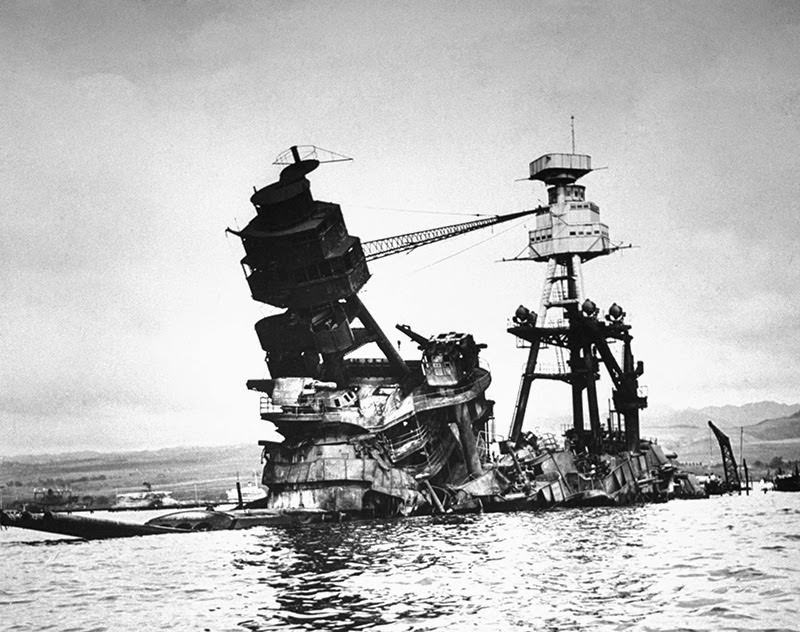
The USS Arizona was one of the most devastating losses of the attack. Hit by an armor-piercing bomb that ignited its forward ammunition magazine, the battleship sank in less than nine minutes. Of its 1,512-man crew, 1,177 were killed — nearly half of all American deaths at Pearl Harbor that day. The exposed wreckage above the waterline became one of the most recognized images of the attack’s destruction.
The following day, President Franklin D. Roosevelt addressed Congress, calling December 7 “a date which will live in infamy.” Congress declared war on Japan that same day. Three days later, Japan’s allies Germany and Italy declared war on the United States, and Congress immediately returned the declaration. The United States was now fighting on two fronts — in the Pacific and in Europe. The domestic debate over whether America should enter the war effectively ended overnight.
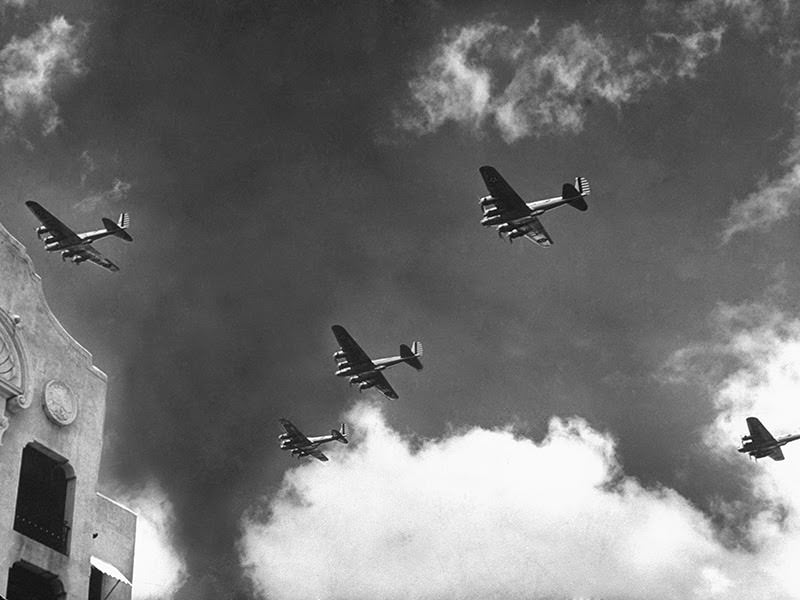
The military response to Pearl Harbor was swift and urgent. American air power was mobilized and redeployed. B-17 Flying Fortresses, already considered the backbone of U.S. strategic bombing capability, were put on active patrol and combat readiness across the Pacific theater. The images captured in the weeks after the attack reflect a nation shifting, almost overnight, into full wartime footing.
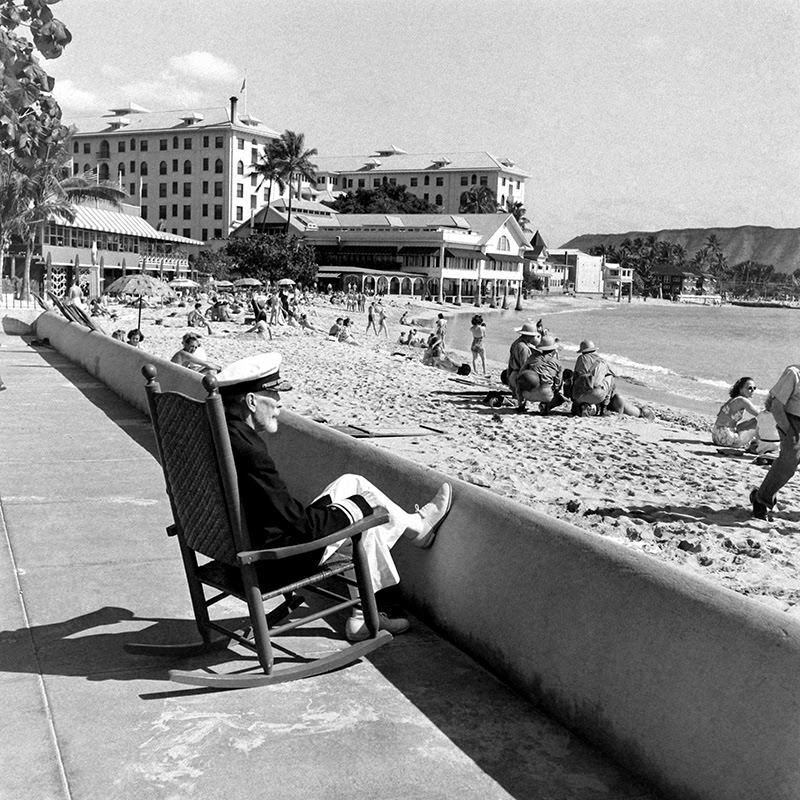
LIFE magazine photographer Bob Landry was on the ground in Hawaii and on the mainland in the days and weeks following the attack. His lens captured both the destruction at Pearl Harbor and the rapid transformation of American military and civilian life. The photos in this collection are among the rarest visual records from that period — raw, unfiltered, and taken in real time as history unfolded.
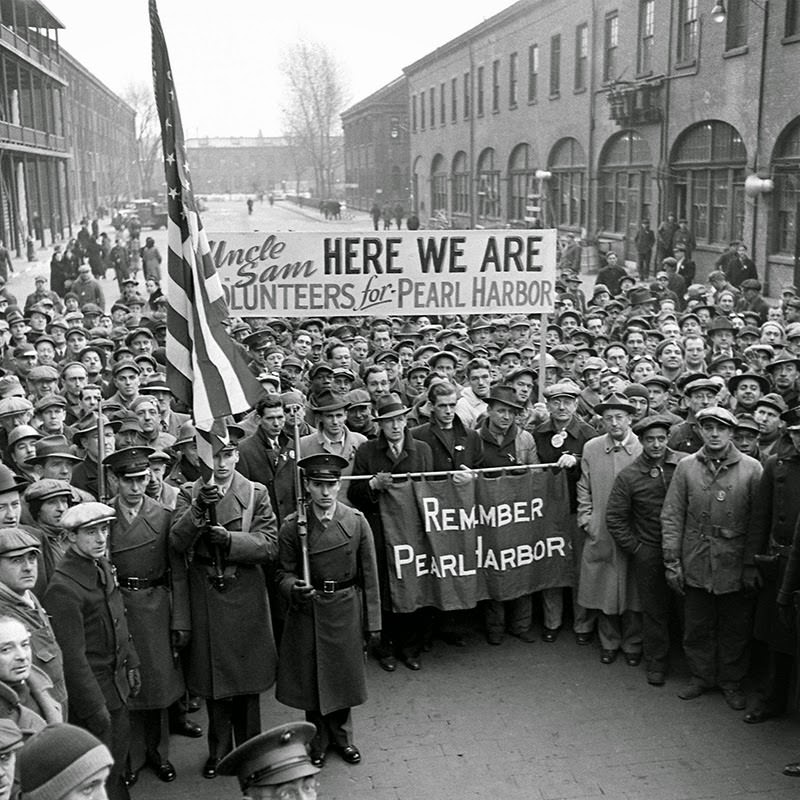
Thousands of miles from Pearl Harbor, the Brooklyn Navy Yard became a symbol of America’s industrial and military response. Workers flooded in around the clock. Rallies were held on the yard’s grounds to boost morale and reinforce the urgency of the work ahead. The yard, already one of the largest naval shipbuilding facilities in the world, operated at a pace that would have seemed impossible just weeks before.
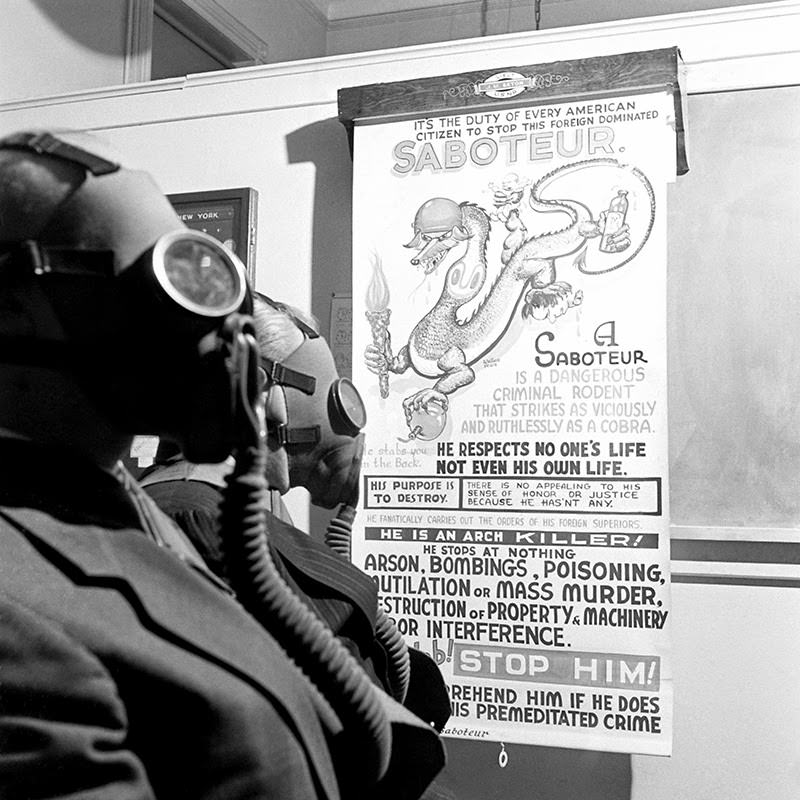
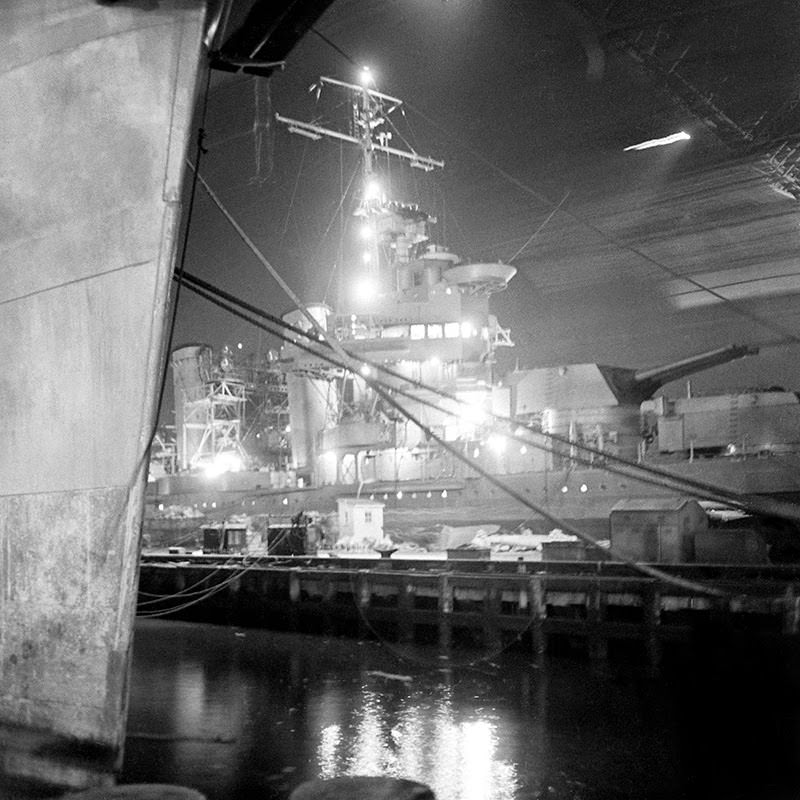
The Brooklyn Navy Yard never went dark after December 7. Night shifts ran continuously as workers raced to repair damaged vessels and build new ones. The yard’s lights burned through the night, illuminating cranes, dry docks, and the hulking frames of ships in various stages of construction. The scale of the operation was staggering.
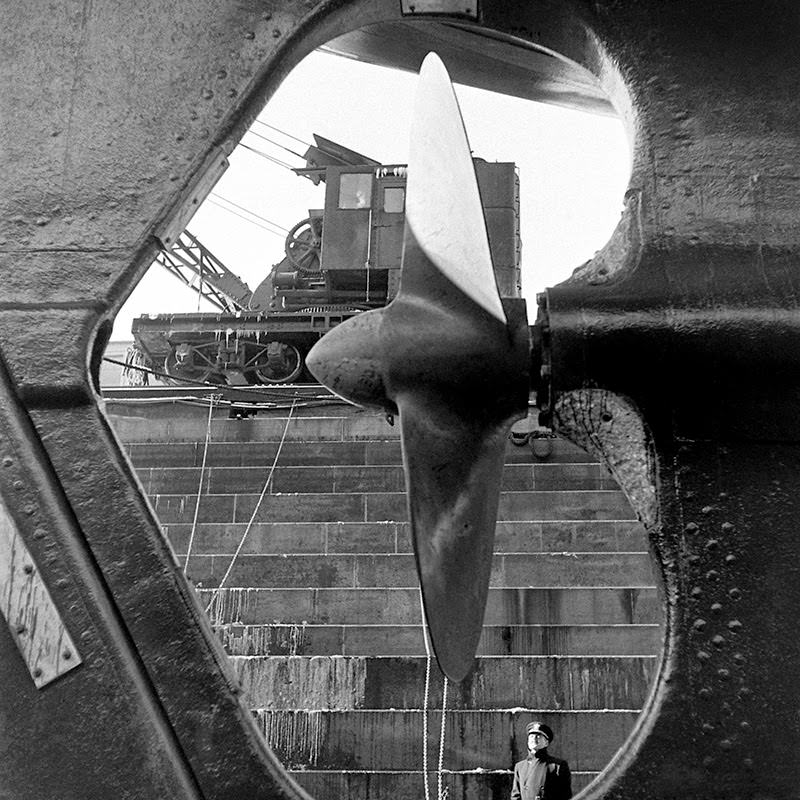
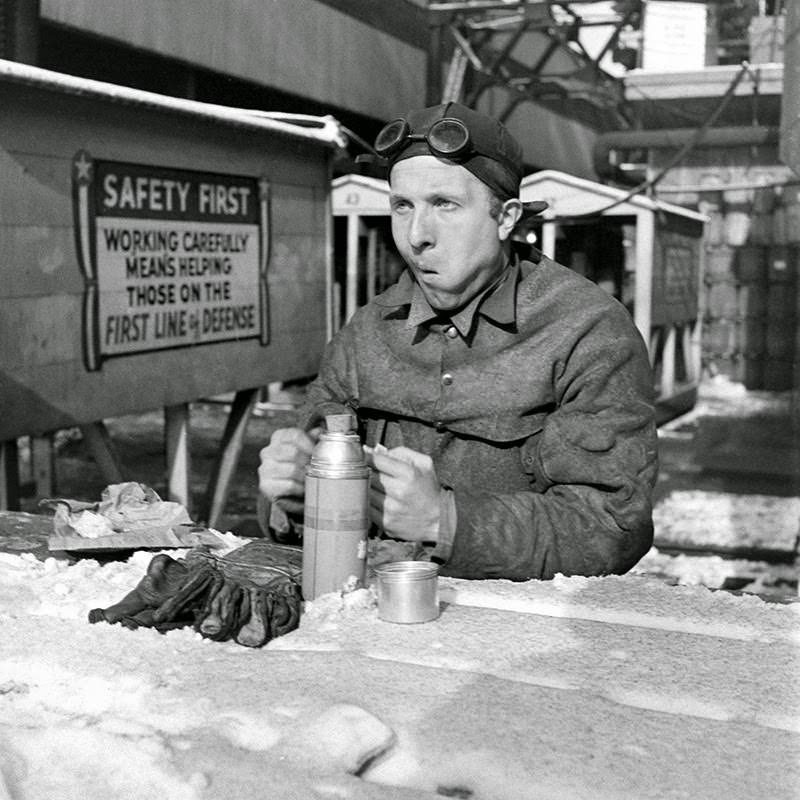
The men and women working at the Brooklyn Navy Yard came from every corner of the city. They welded, riveted, and machined the components of warships that would soon be deployed to the Pacific and Atlantic. Even during brief breaks, the weight of what they were building — and why — was visible on their faces.
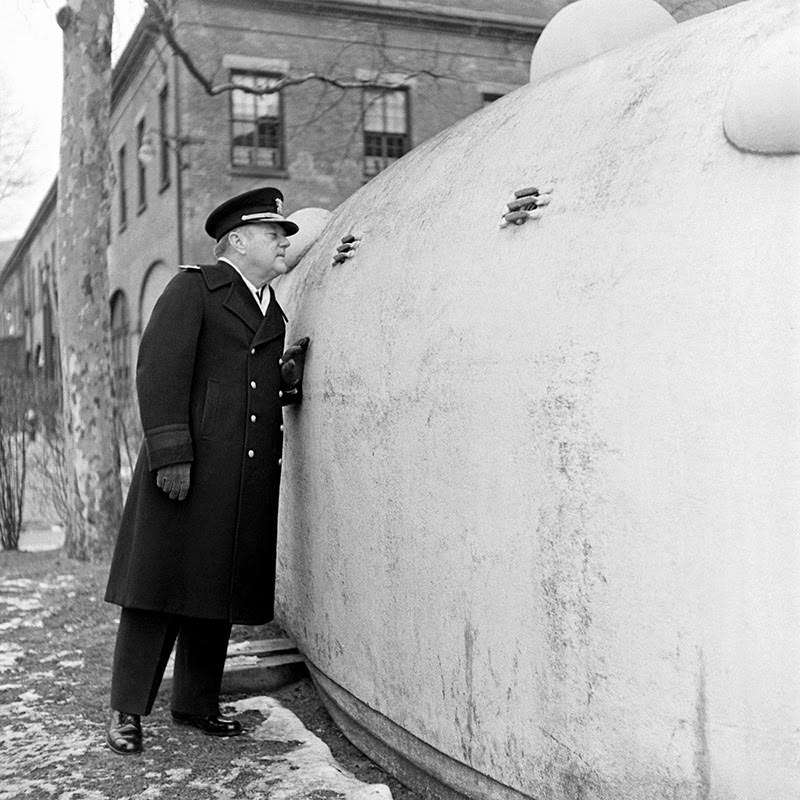
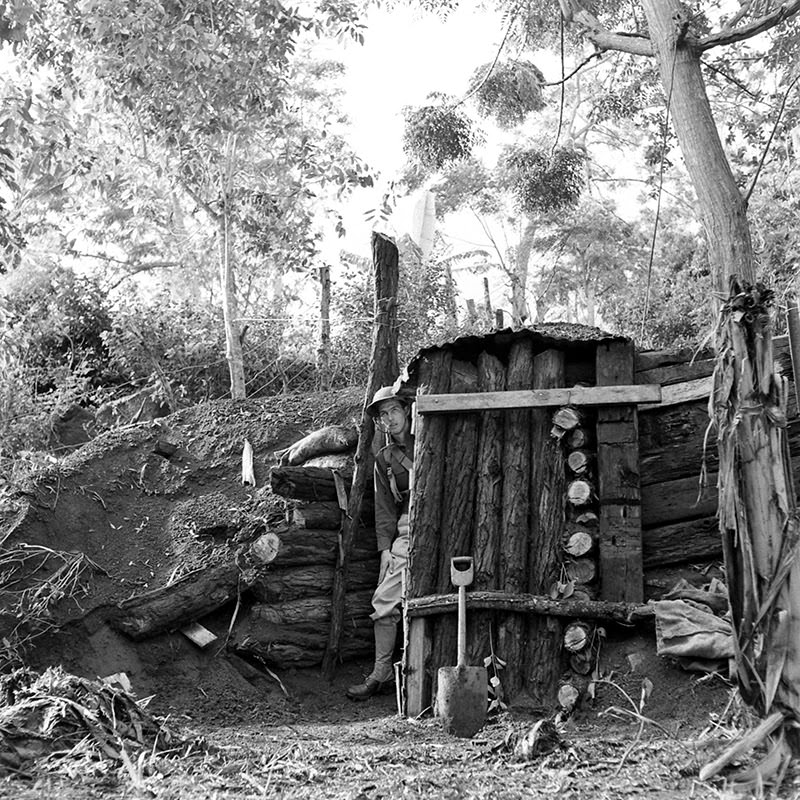
Back in Hawaii, the military’s priority was defense. With Japan’s forces still a looming threat in the Pacific, commanders on the islands moved immediately to harden their positions. Bunkers were thrown up, trenches were dug, and troops were positioned across the island chain. No one knew whether a second attack — or even an invasion — was coming.
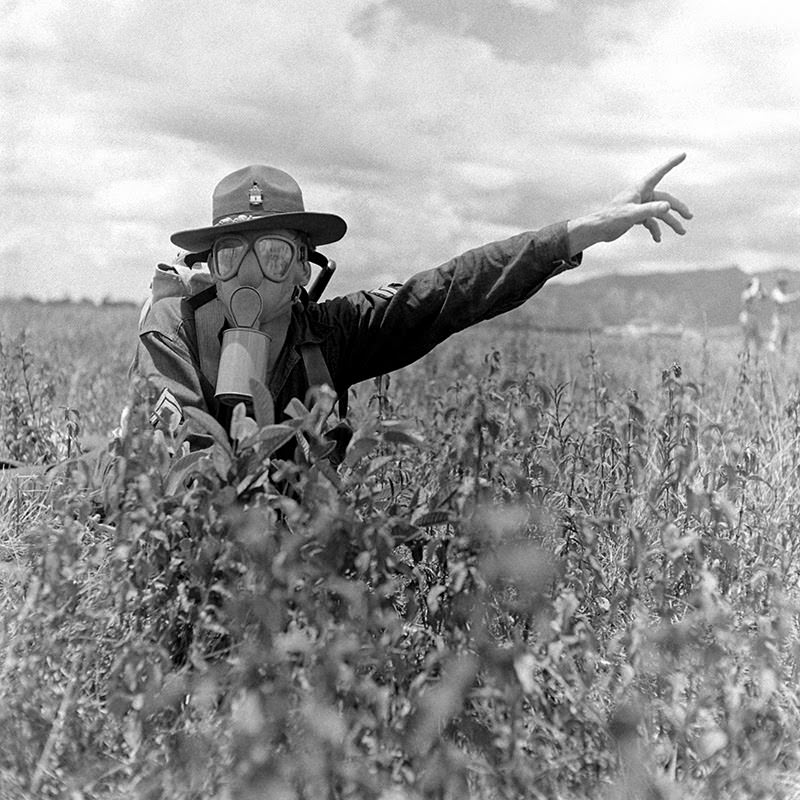
Troops trained under conditions that reflected just how uncertain the threat environment had become. Gas mask drills were conducted regularly, as military planners could not rule out the use of chemical weapons in a follow-up assault. Every soldier on the island was being prepared for a wider, more brutal fight.
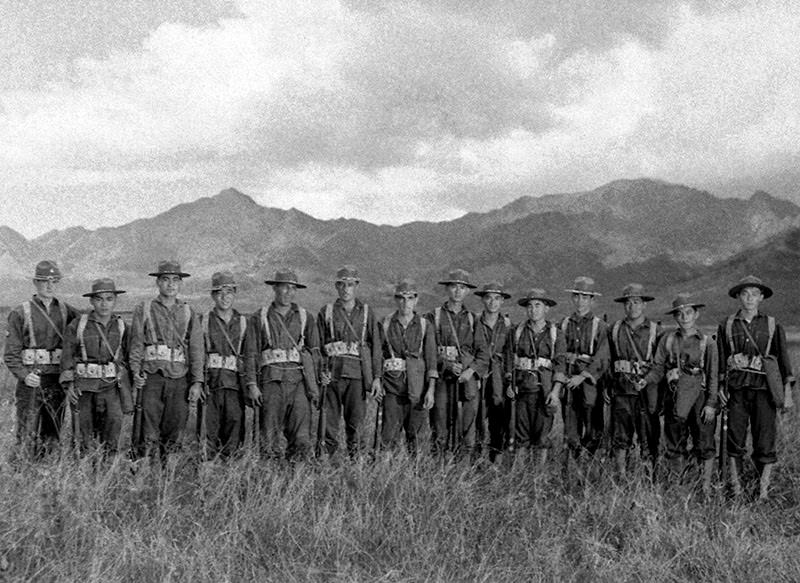
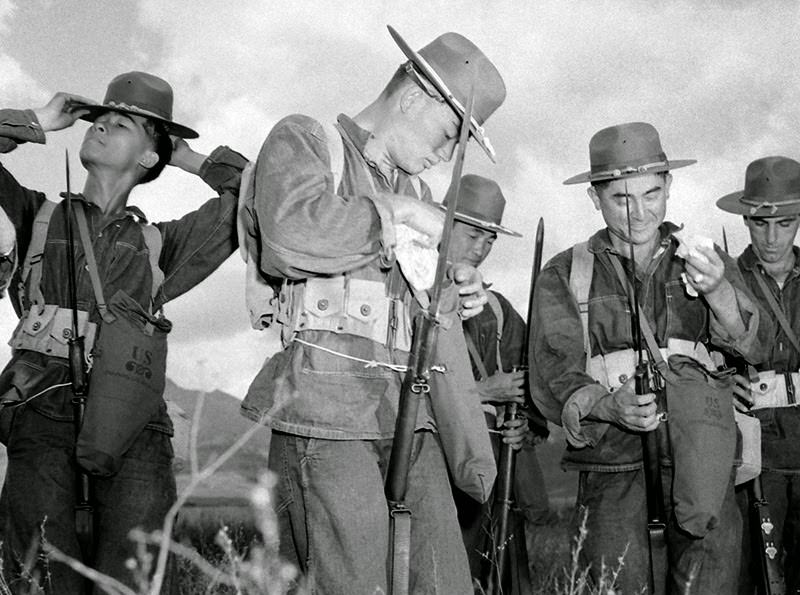
American troops stationed in Hawaii in the days immediately after the attack were put to work. They dug trenches, reinforced coastal positions, and established defensive perimeters across the island. The work was physical, grueling, and done with full knowledge that another strike was possible at any moment.
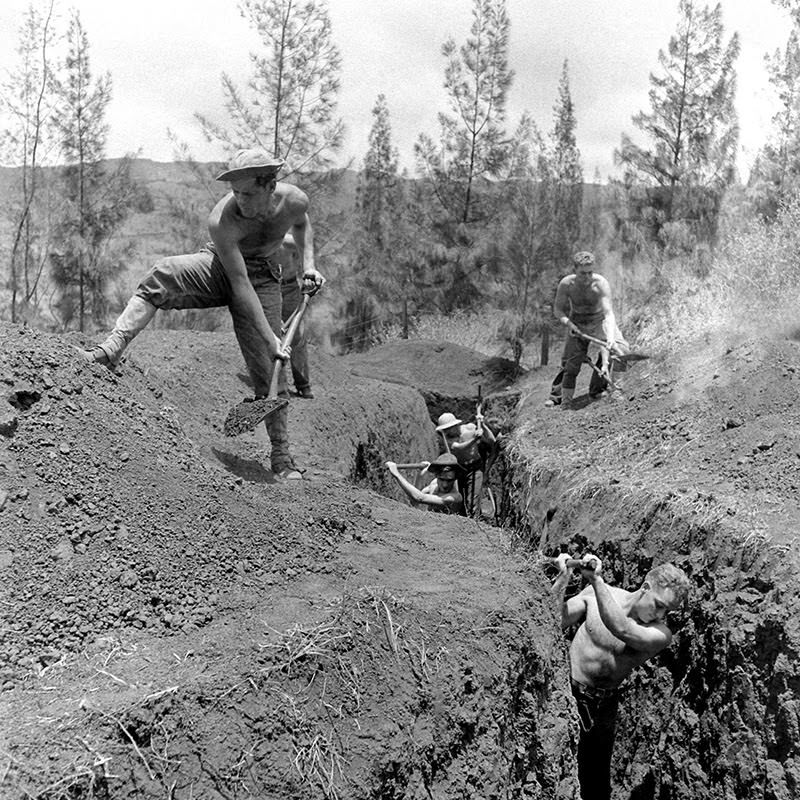
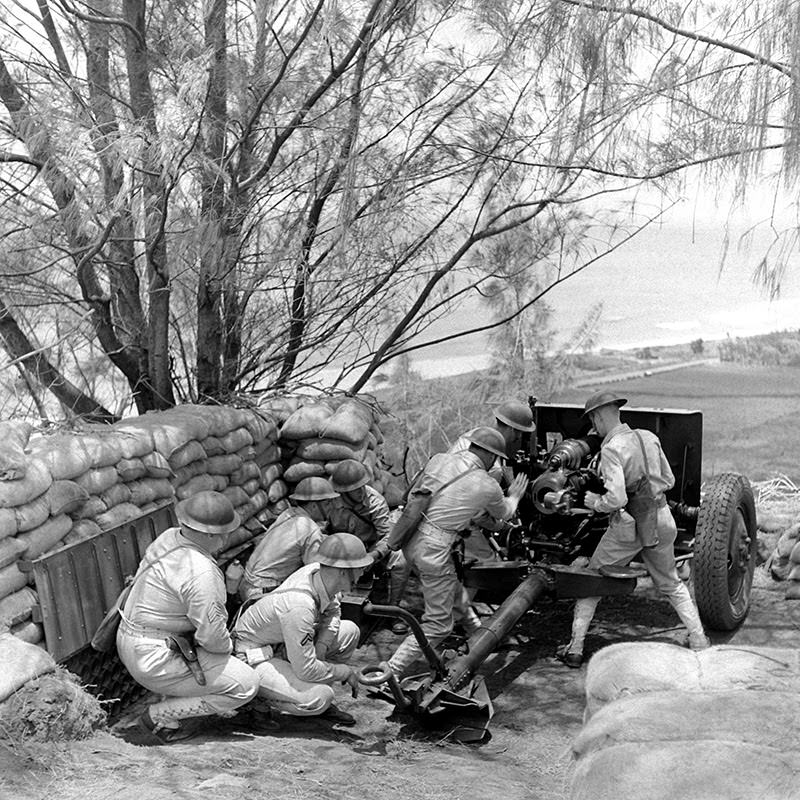
Throughout December and into early 1942, the defensive build-up across Hawaii continued at a relentless pace. Machine gun nests were set up at key positions. Patrols swept beaches and hillsides. The territorial government and the U.S. military worked in close coordination to prepare the population and the landscape for whatever came next.
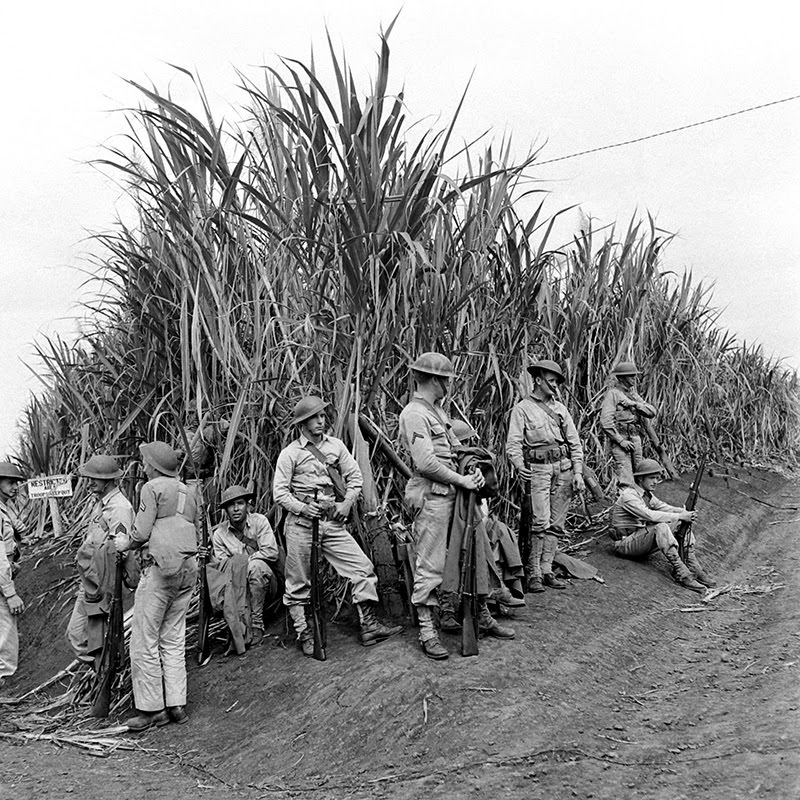
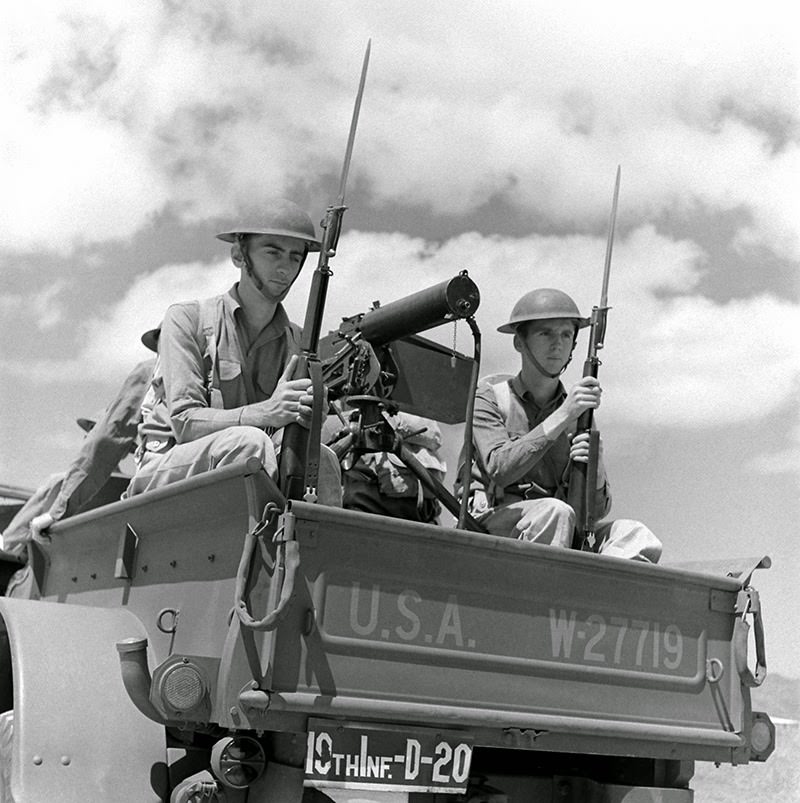
Many of the soldiers manning these new defenses were young — some barely out of their teens. They had enlisted or been drafted into a military that, just weeks earlier, had been blindsided by the most destructive surprise attack in American history. Now they stood guard at machine gun emplacements overlooking the Pacific, watching the horizon.
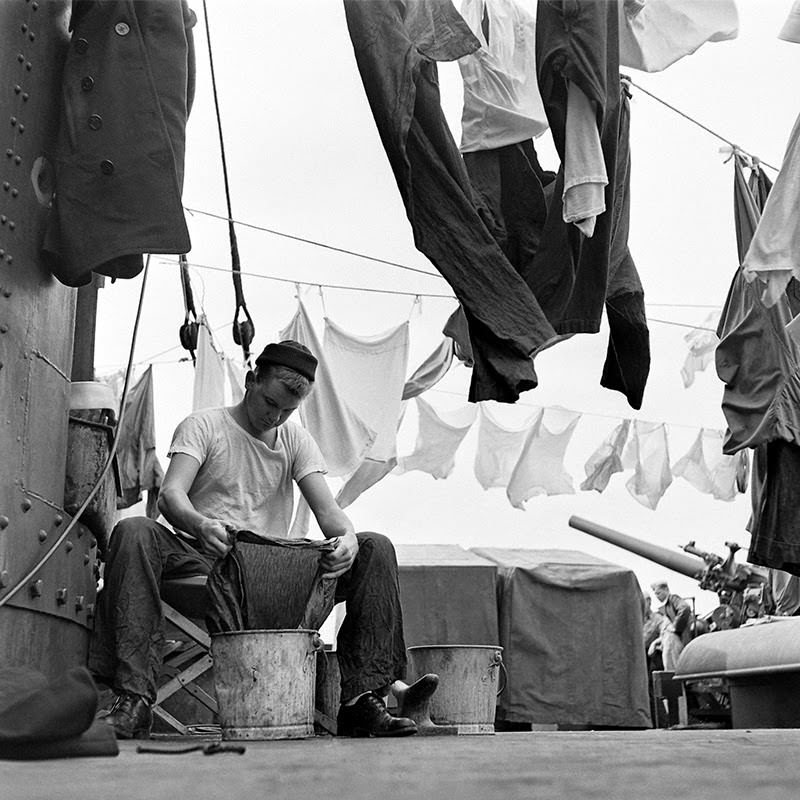
Aboard the surviving warships at Pearl Harbor, crews worked to restore their vessels to fighting condition. The mood was a mix of grief, anger, and determination. A message chalked on the side of one ship captured that spirit directly — words sent from the Office of the Chief of Naval Operations to the men still standing after the attack.
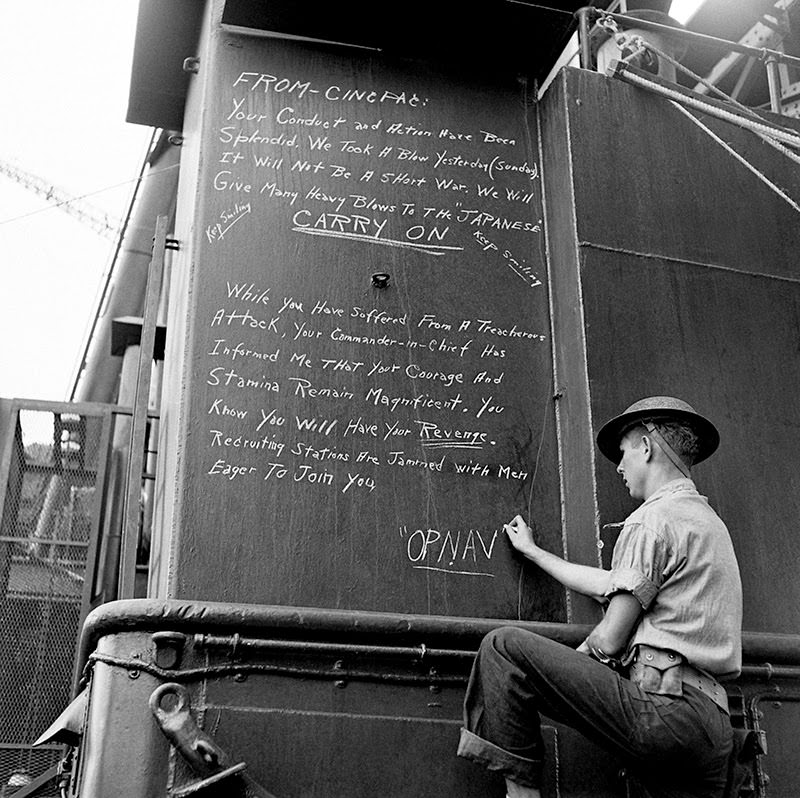
The message read: “Your conduct and action have been splendid. While you have suffered from a treacherous attack, your commander-in-chief has informed me that your courage and stamina remain magnificent. You know you will have your revenge. Recruiting stations are jammed with men eager to join you.” It was not a speech. It was a direct, unvarnished acknowledgment of what these men had endured — and a statement of what was coming.
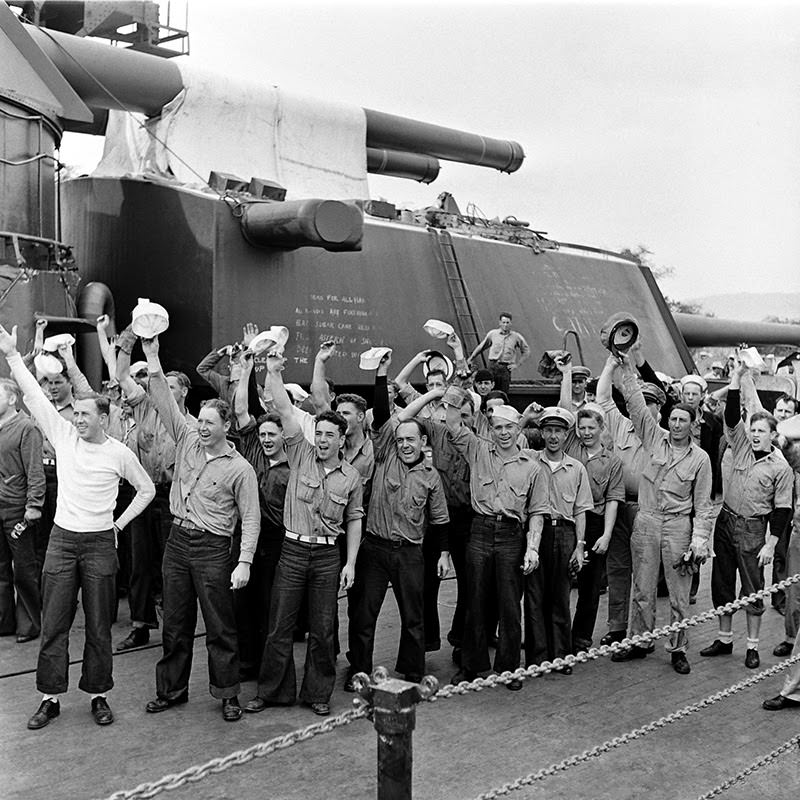
Bob Landry’s photographs from Hawaii and the mainland do what no official report could do on its own — they put faces and places to the days immediately after December 7, 1941. They show the wreckage and the response, the grief and the resolve, the soldiers digging trenches and the workers building warships, all of it unfolding in real time across two very different corners of a nation that had just been dragged into the largest war in human history.