Pablo Picasso painted himself more honestly than he painted almost anything else. Across nearly eight decades of work, his self-portraits tracked every shift in his style, his thinking, and his sense of who he was. They were not vanity projects. They were records — raw, evolving, and sometimes unsettling. To look at them in sequence is to watch one of history’s most restless artistic minds at work on its most personal subject.
Picasso made his first self-portrait in 1896, when he was just 15 years old. The painting shows a young man with long, wavy hair and a still, thoughtful expression. The brushwork is careful and conventional — the kind of technique a diligent student produces after years of academic training. But even here, something sharper is visible beneath the surface. The composition holds a confidence that most teenage artists simply do not have.
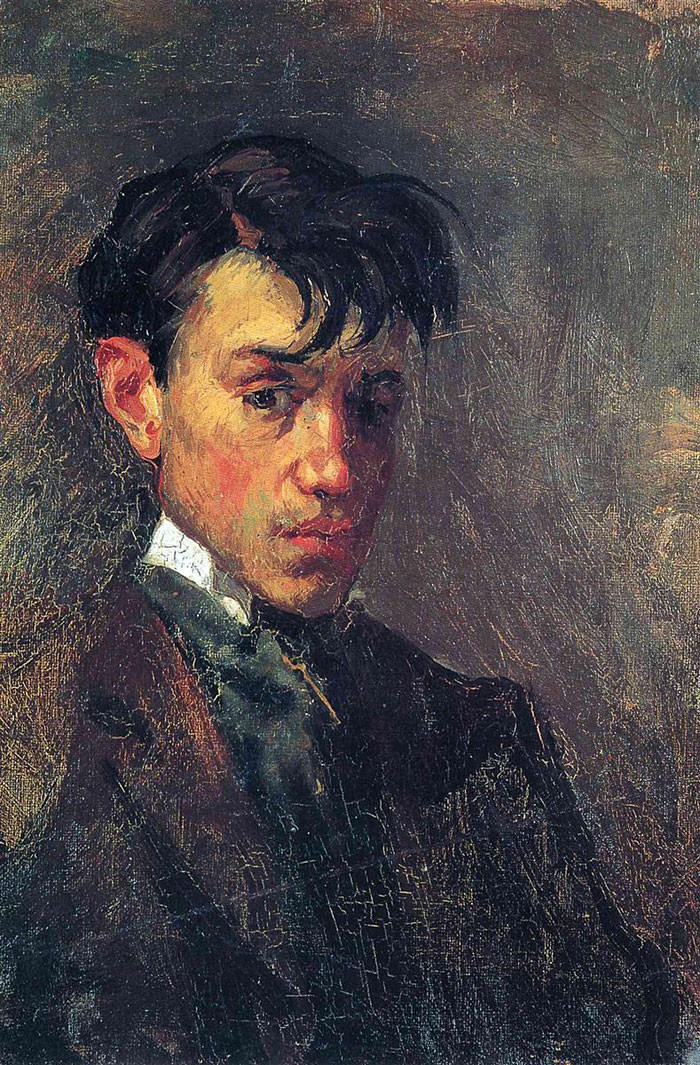
By 1900, Picasso had moved to Paris for the first time, and the change in environment showed immediately in his work. His 1900 self-portrait is darker in mood and looser in execution. He was absorbing the influence of Post-Impressionist painters like Toulouse-Lautrec and Van Gogh, and his brushstrokes became more expressive and less controlled. The young man in the painting looks outward with a directness that was already becoming a signature trait.
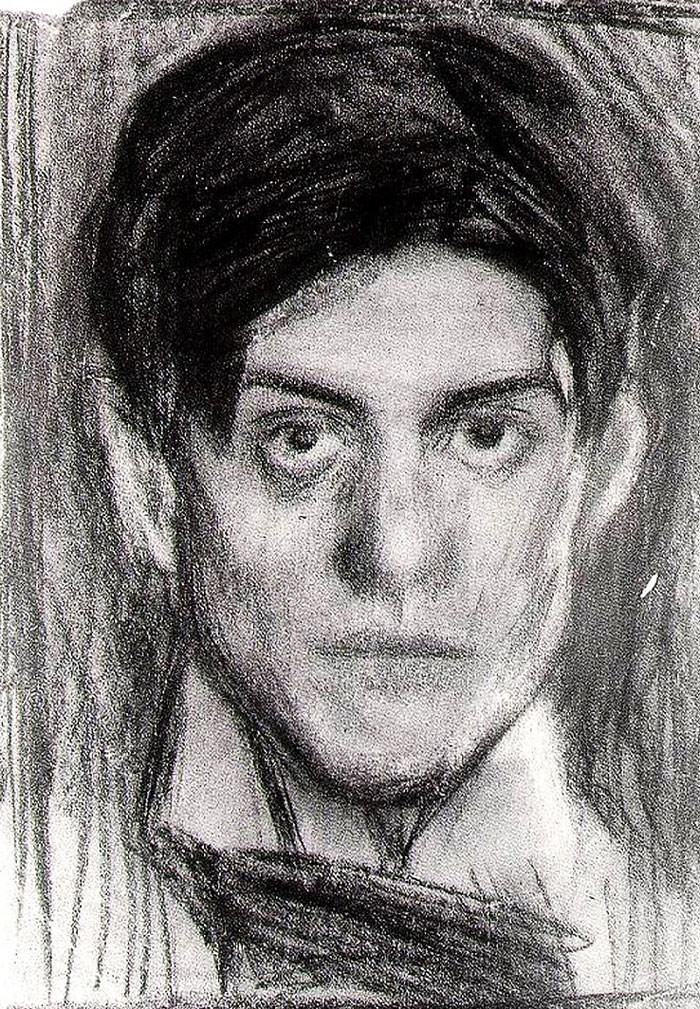
At 20, Picasso was living in poverty in Paris and cycling through one of the most emotionally turbulent periods of his life. The 1901 self-portrait, painted during the early stages of his Blue Period, shows a gaunt face with sunken eyes and a heavy coat pulled close. The palette is cold. The expression is guarded. His close friend Carlos Casagemas had died by suicide earlier that year, and the grief was written directly into Picasso’s work during this time.
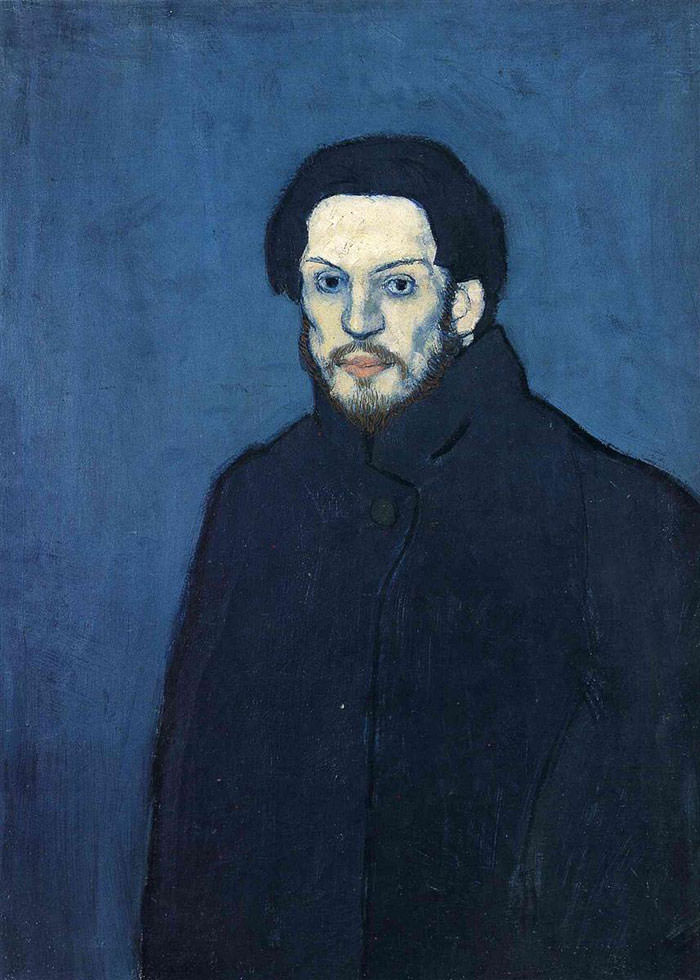
The 1906 self-portrait marks a turning point. Picasso was 24, and he was beginning to move away from the emotional weight of his Blue and Rose periods toward something more structural and stripped down. He had been studying ancient Iberian sculpture, and its influence is clear — the face is simplified, almost mask-like, with almond-shaped eyes and a flattened nose. The painting sits at the edge of what would become one of the most radical shifts in the history of Western art.
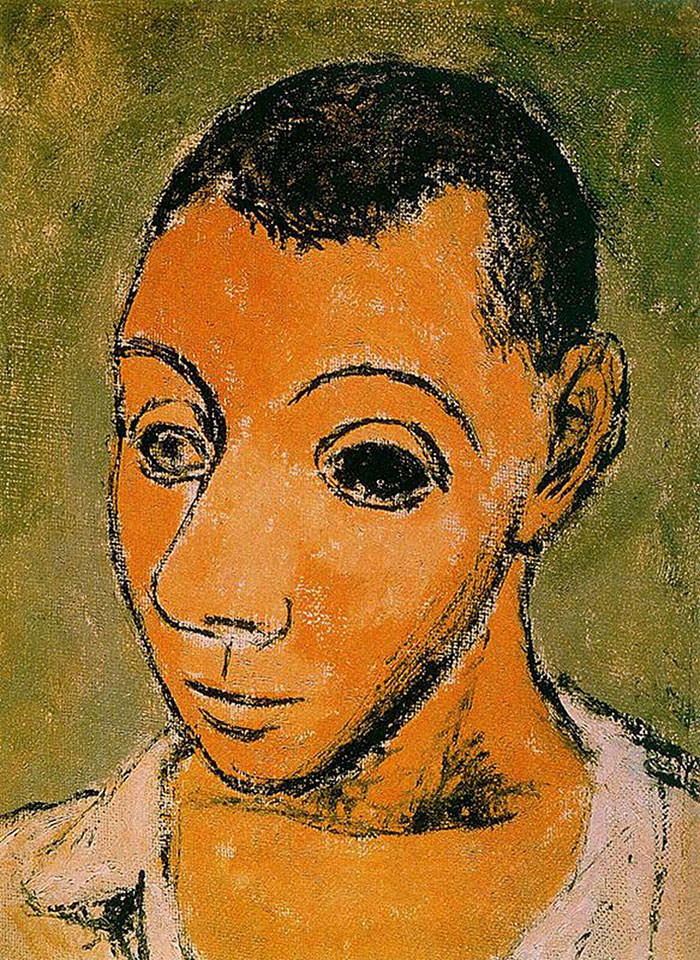
One year later, in 1907, Picasso completed Les Demoiselles d’Avignon and launched Cubism into the world. His self-portrait from that same year reflects the full force of that revolution. The face is fractured into angular planes. The eyes sit at different levels. The forms overlap in ways that reject any single viewpoint. This was not a portrait in the traditional sense — it was a statement about how vision itself works, and how a face contains more than any single moment can show.
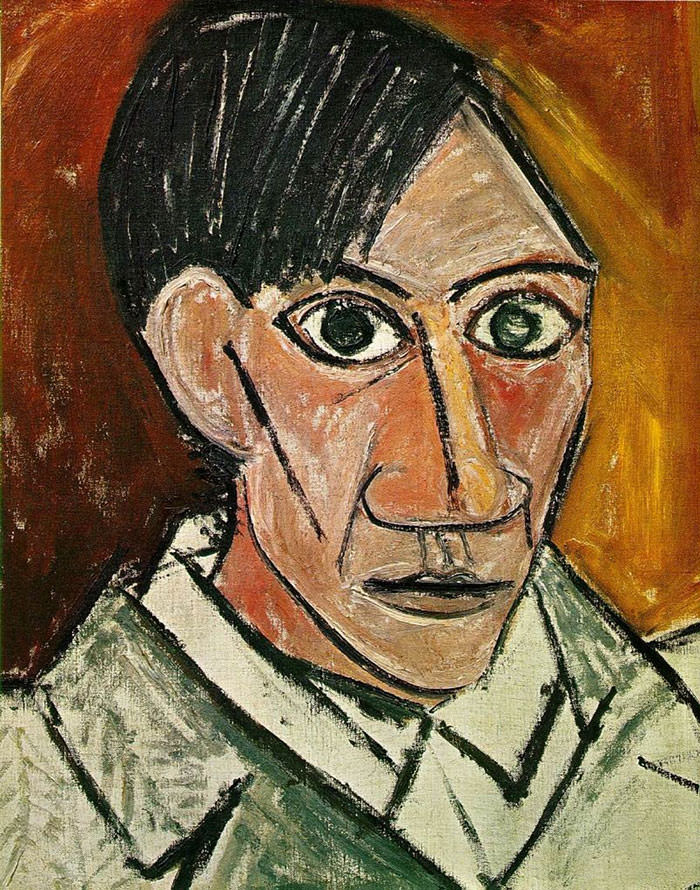
By 1917, Picasso was 35 and had entered a new phase. His work was pulling back from the most extreme forms of Cubism toward a more classical style, partly inspired by a trip to Italy and his work with Sergei Diaghilev’s Ballets Russes. The 1917 self-portrait reflects this shift — the forms are more recognizable, the lines cleaner. He looked like a man who had tested the outer limits of abstraction and was now choosing, deliberately, to work closer to the figure.
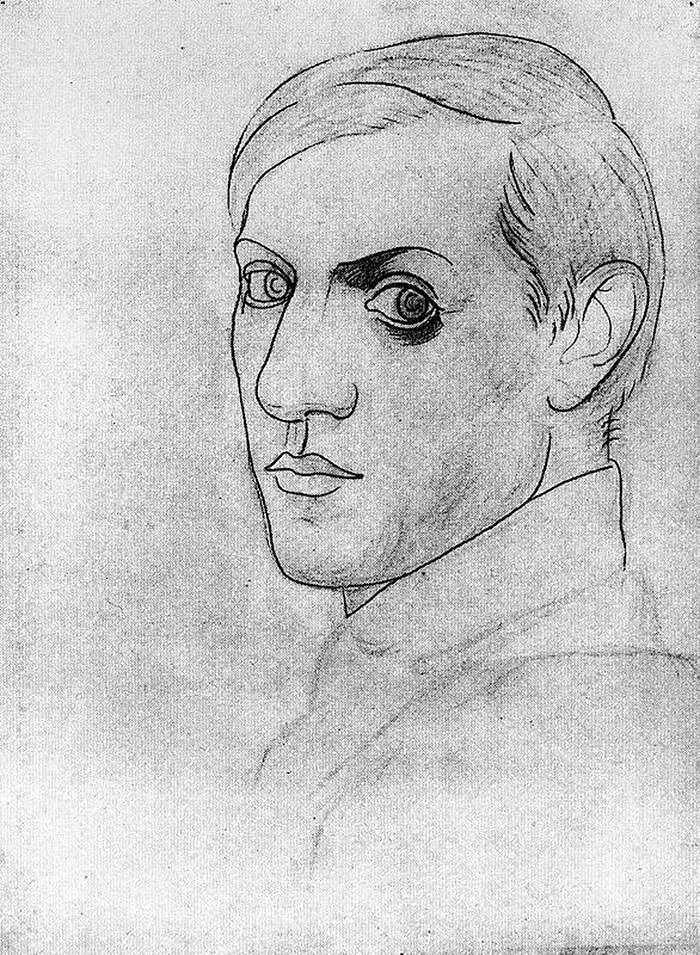
More than two decades later, the 1938 self-portrait shows Picasso at 56, in the middle of a deeply troubled period in both his personal life and the world at large. Spain was tearing itself apart in civil war. He had painted Guernica the previous year. The face in the 1938 portrait is distorted and restless, with eyes that seem to occupy the same socket and features pushed to the edges of the canvas. It is the face of someone under pressure — creative, political, and personal all at once.
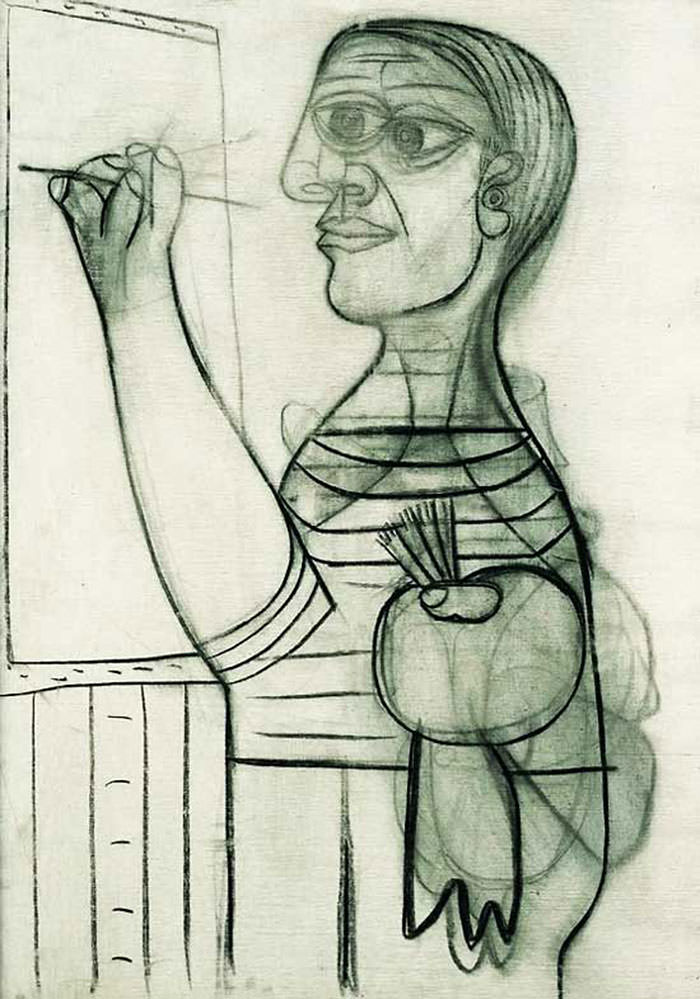
Picasso did not return to serious self-portraiture in large numbers until very late in his life, when old age brought the subject back with urgency. His 1965 self-portrait, made at 83, is leaner and more economical than his earlier work. The line is confident but spare. He was not decorating — he was documenting.
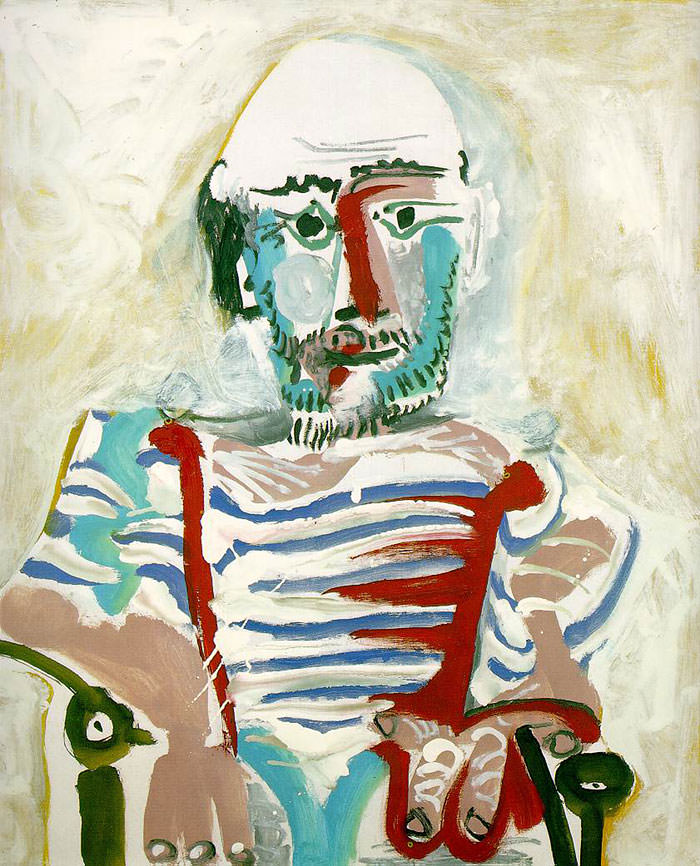
The 1966 portrait, made at 85, pushes further into abstraction while keeping the face fully legible. The eyes are wide and intensely present. Picasso had always used his eyes as the anchor of his self-portraits, and here they dominate the image completely — two dark points that seem to be examining the viewer as much as the artist examined himself.
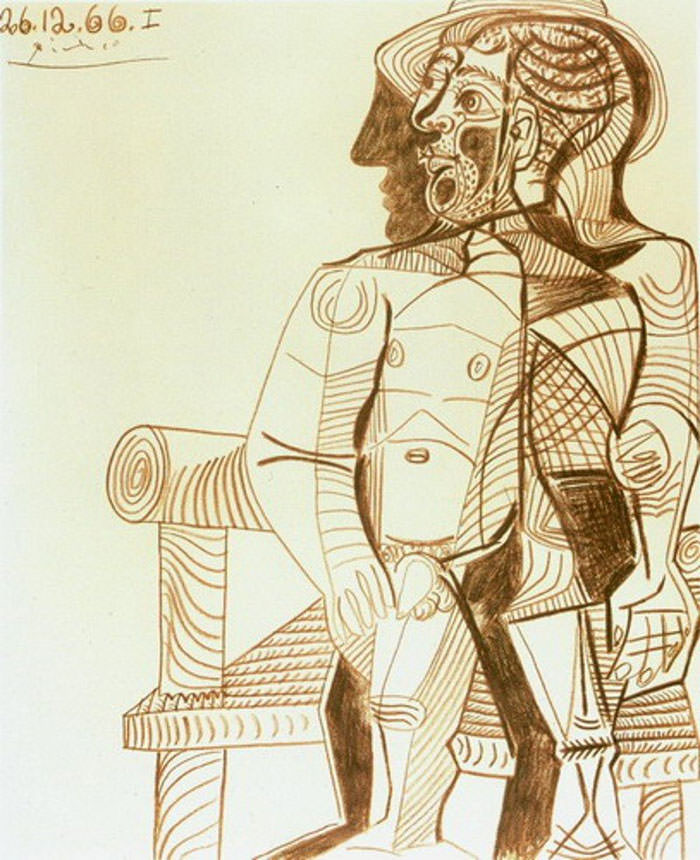
At 89, in 1971, Picasso was still producing work at a pace that startled the art world. The 1971 self-portrait is bold and direct, with flat planes of color and hard outlines. There is no attempt to soften or idealize the aged face. The painting looks at old age without flinching.
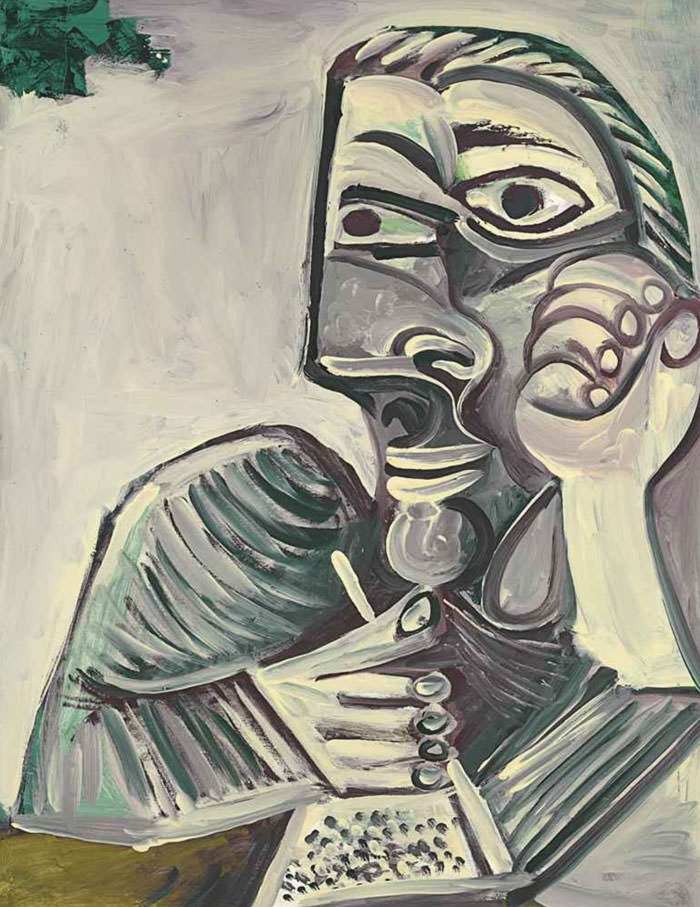
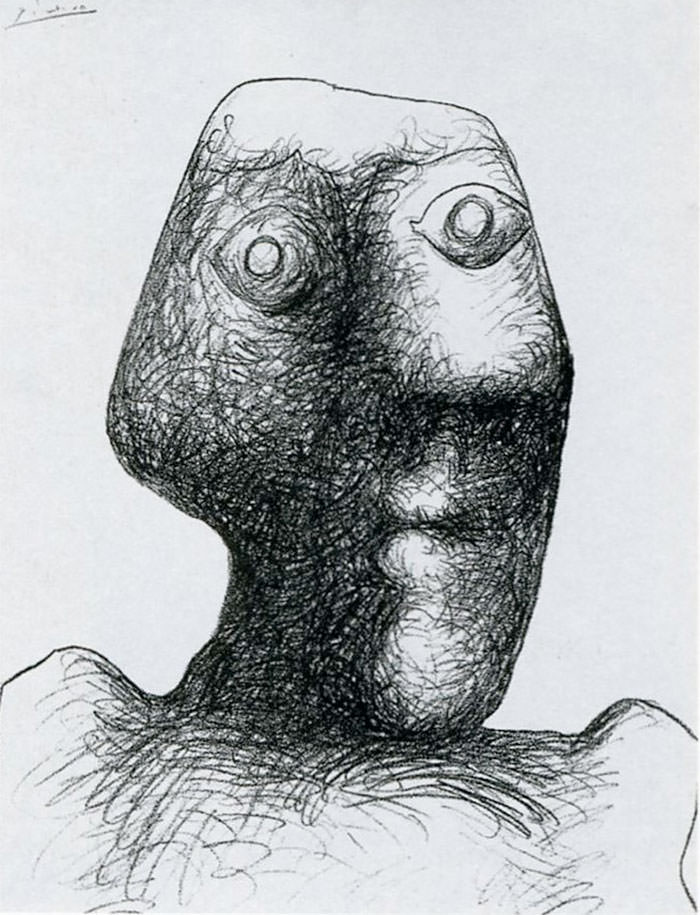
In the final year of his life, Picasso produced a concentrated series of self-portraits over just a few days in late June and early July of 1972, when he was 90 years old. These works are among the most discussed of his entire career. They are spare, almost skeletal, with wide, staring eyes that dominate skull-like faces. Picasso knew he was looking at death. He did not turn away.
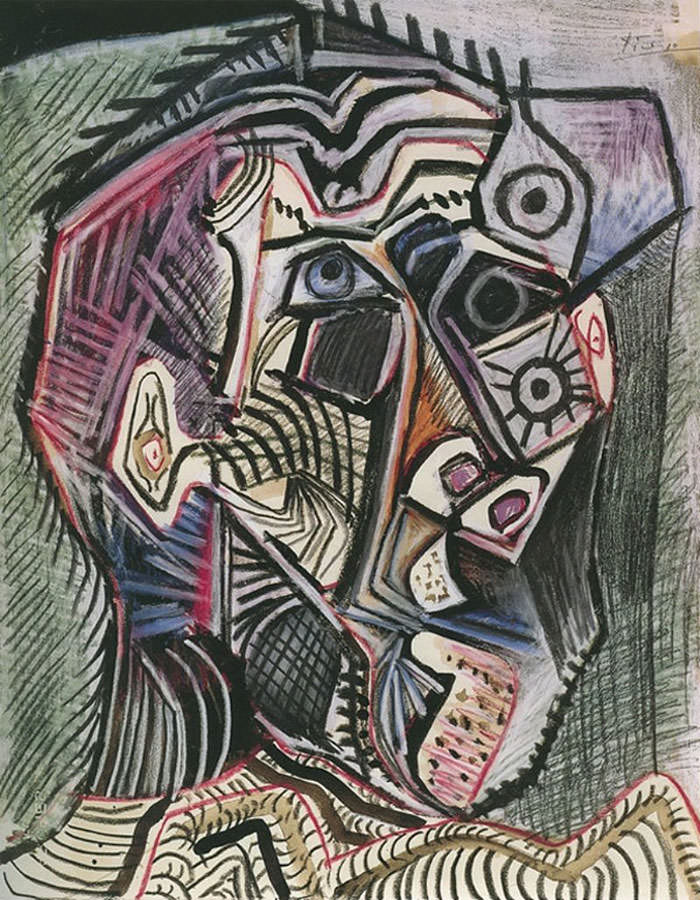
The June 30 portrait, made just two days later, continues in the same vein but with subtle shifts in angle and intensity. Each sitting produced something slightly different, as though Picasso was circling the same subject from multiple directions, trying to pin down something that kept moving.
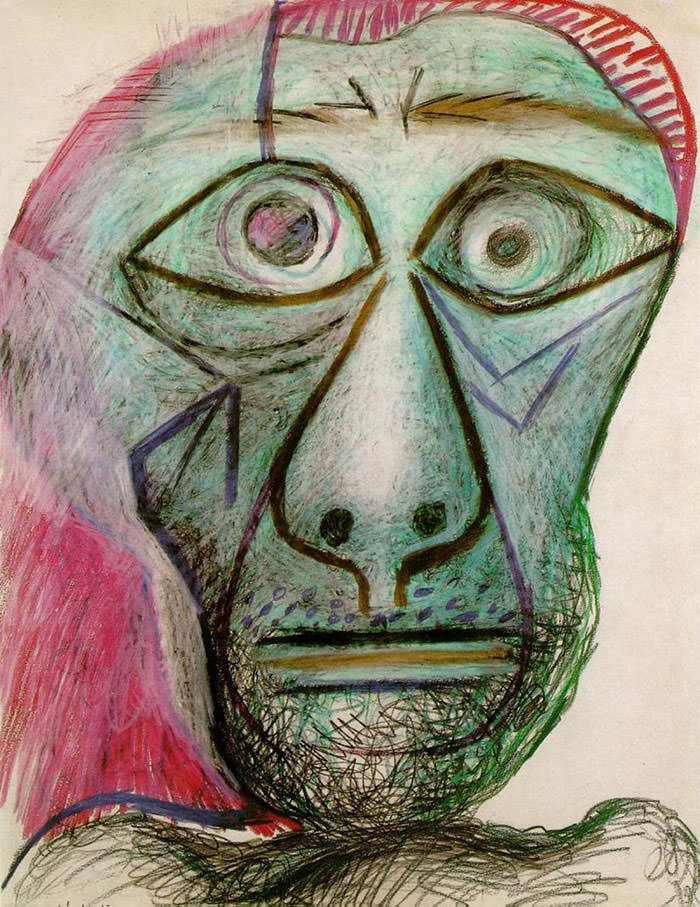
By July 2, the forms had become even more stripped down. The face in this portrait is almost geometric in its simplicity — a few lines and shapes that somehow still read unmistakably as a human being confronting his own reflection. Picasso died on April 8, 1973, less than a year after completing this series.
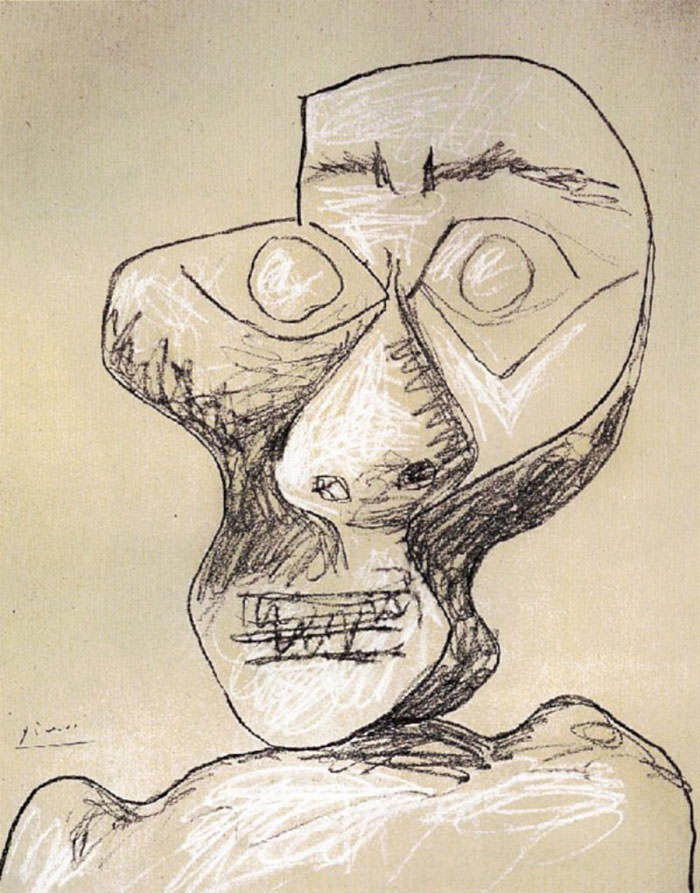
The July 3 portrait closes the series. The eyes are still the focal point — enormous, unflinching, and very much alive. From a 15-year-old in Barcelona painting himself with careful strokes in 1896 to a 90-year-old in the south of France staring down the end of his life in 1972, Picasso’s self-portraits form one of the most complete and unguarded records any artist has ever left behind. Every decade brought a different face, a different style, and a different set of questions — but the act of looking at himself honestly never stopped.