
On the night of November 13, 1985, a volcanic mudflow buried the Colombian town of Armero under thick, heavy sludge. More than 23,000 people died. Among the survivors who were pulled from the debris, one story stood apart from all the others — a thirteen-year-old girl named Omayra Sánchez, who spent nearly three days trapped neck-deep in water and debris, watched by rescuers who could not free her.
Nevado del Ruiz is a snow-capped volcano standing 17,500 feet above sea level in the central Andes of Colombia. The town of Armero sat about 30 miles east of the volcano’s crater, home to roughly 31,000 people. The volcano had a long history of activity. It first erupted in 1845 and had shown renewed signs of life since the early 1980s. Two months before the disaster, the Colombian government published an official hazard map and issued warnings to nearby communities. The warnings were not acted upon in time.
The events of November 13 began in the afternoon. At 3:00 P.M., black ash columns rose from the Arenas Crater. Colombia’s geological department called for evacuation, and official orders were issued at 7:00 P.M. But a chain of failures kept the message from reaching the people who needed it most. Electrical outages cut off emergency communications to local authorities. Residents who could see the ash were told it was not a serious threat. Many went to bed that night believing they were safe.
At 9:09 P.M., the volcano exploded. The eruption itself was relatively modest — it melted between five and ten percent of the ice cap covering the crater. But that was enough. The meltwater mixed with volcanic rock, ash, and soil to form a lahar: a fast-moving river of volcanic mud and debris. The lahar cascaded down the mountain, filling river valleys and channeling directly toward Armero. When it arrived, it covered 85 percent of the city. Houses, streets, and thousands of people were buried under the flow within minutes.
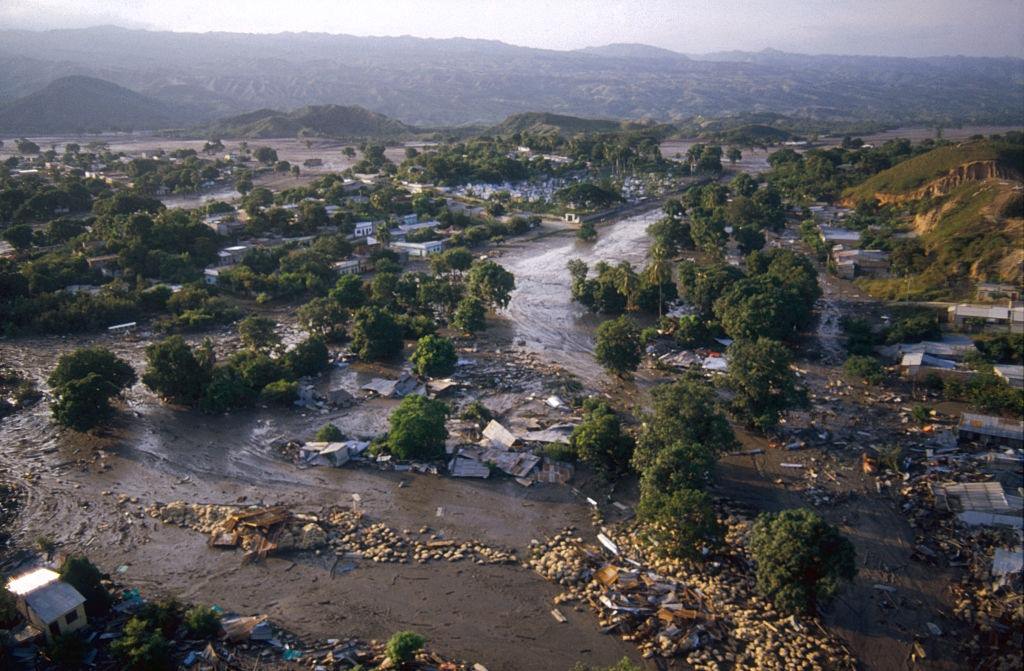
The destruction was total in most of the city. Thirteen villages beyond Armero were also destroyed. The final death toll reached 23,000, making the Armero disaster one of the deadliest volcanic events in recorded history. Residents who had tried to flee were caught by the flood mid-escape. The debris moved fast and with enormous force, and many had no time to react.
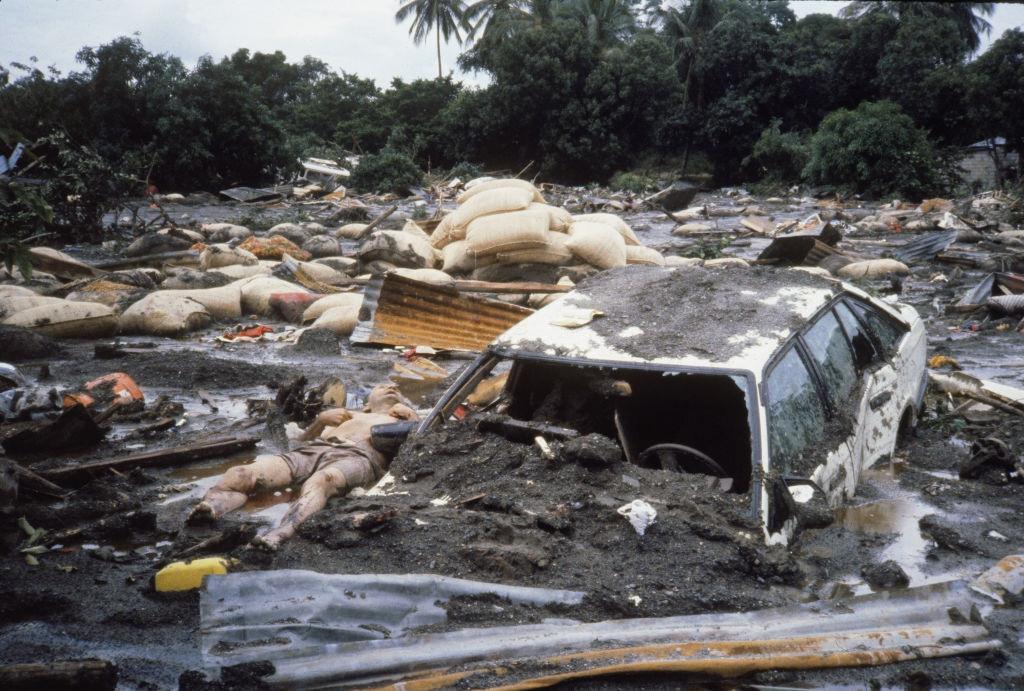
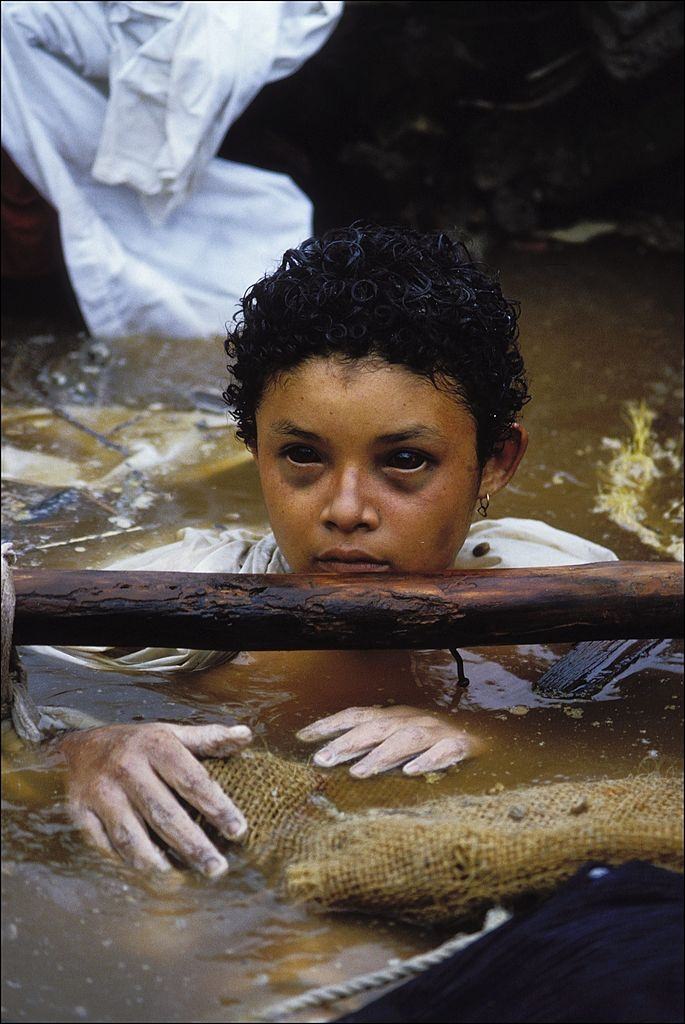
Omayra Sánchez was thirteen years old and lived in Armero with her family. When the lahar struck, it destroyed her home. Her father and her aunt were buried in the debris. Omayra survived the initial flow, but she was not free. She was trapped from the waist down in a tangle of wreckage, submerged in neck-deep water. Her legs were pinned beneath what rescuers eventually determined was the roof of her family’s house, with her aunt’s body pressing against her feet from below. She was locked in place and could not move.
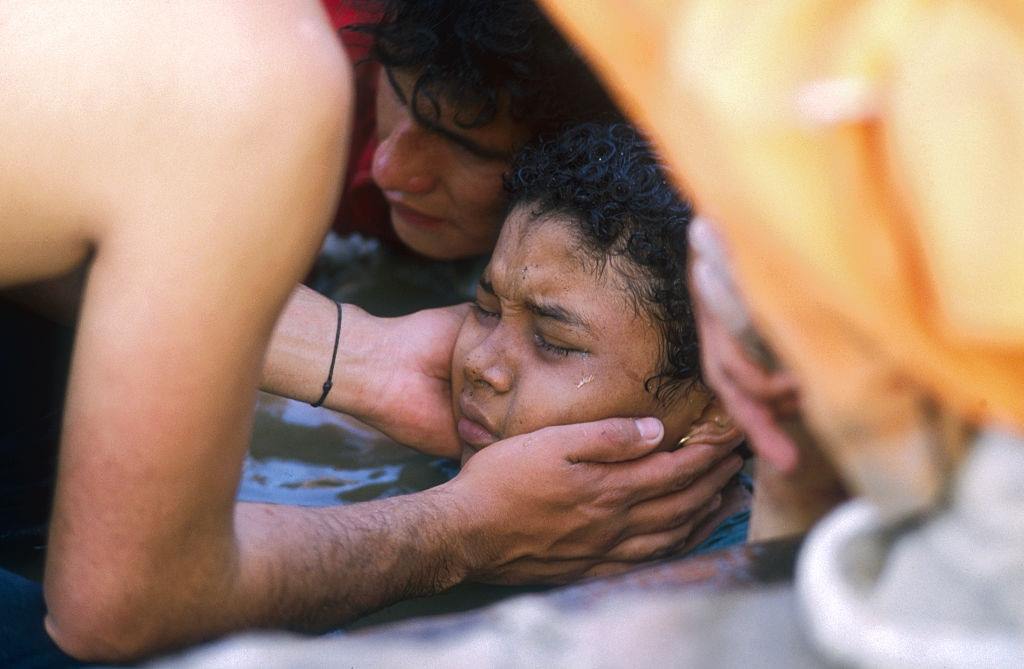
Red Cross volunteers and local residents reached her and immediately began trying to pull her free. To keep her head above water and prevent her from drowning, rescuers placed a rubber tire around her upper body. It held her upright while they worked. Teams took turns trying to find a way to loosen the debris around her legs. They brought in a pump to drain the water from around her. Nothing worked. Her legs were bent under heavy concrete in a kneeling position, and the structure around her could not be safely moved.
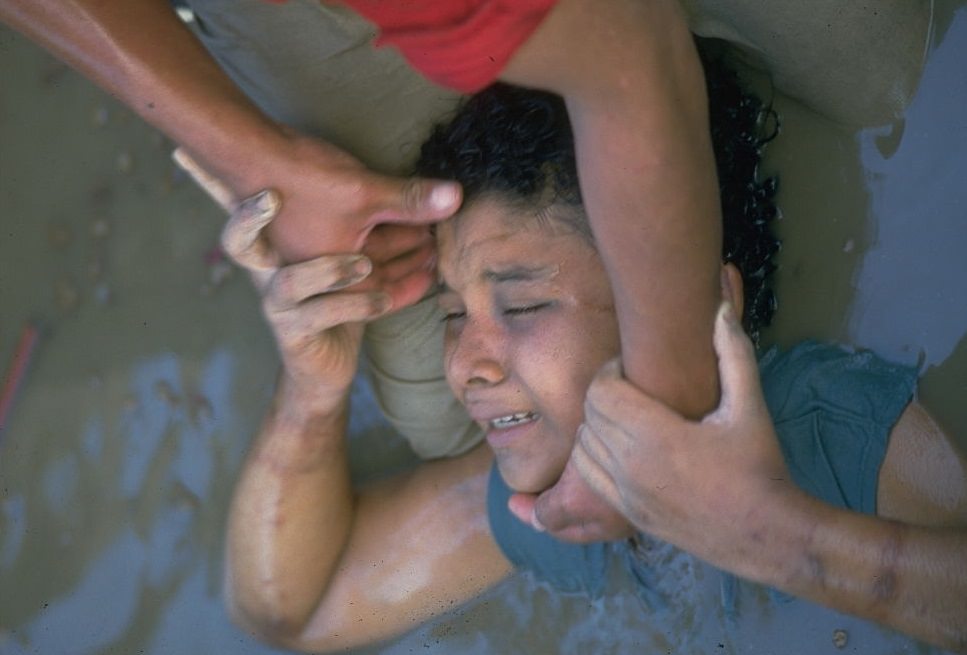
Amputation was considered as a last option. But the medical team on site did not have the equipment needed to safely perform the procedure in those conditions. The water surrounding her was contaminated, and her body had already been exposed for hours. Doctors and rescue workers agreed that attempting an amputation would most likely kill her faster than leaving her in place. With no viable options remaining, the decision was made not to operate.
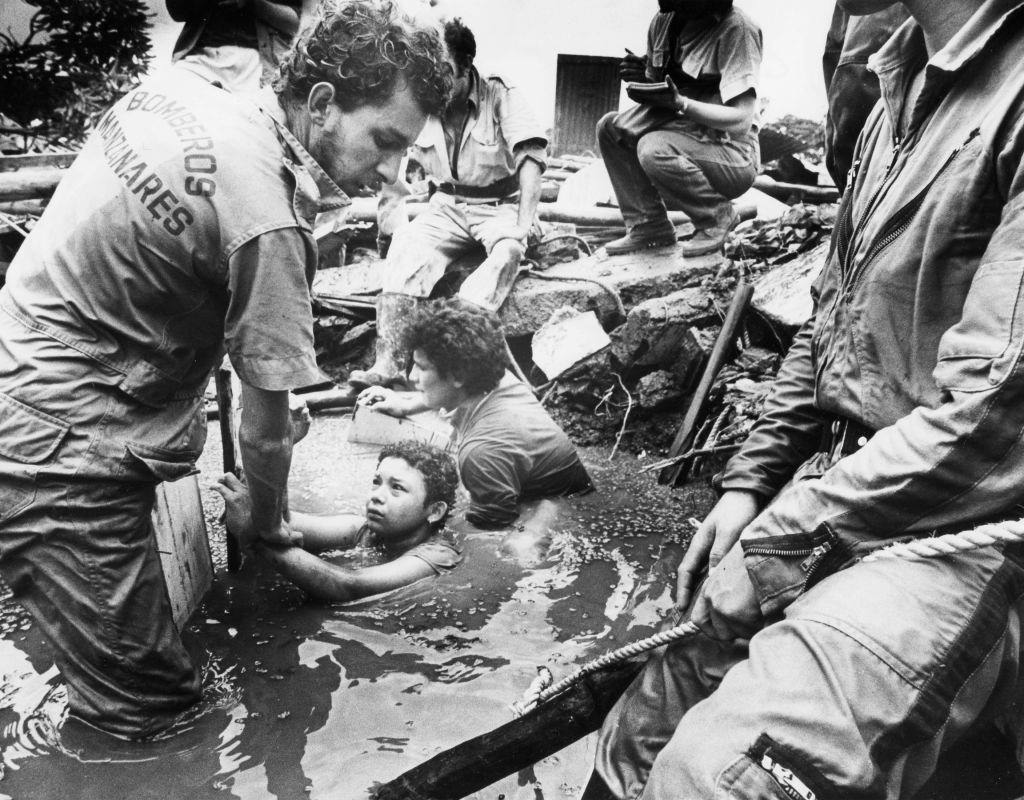
Through all of this, Omayra remained remarkably composed. She spoke to the people around her, sang songs, and asked for sweet things to eat. She drank soda that rescuers passed to her. She gave interviews to journalists who gathered at the scene. In one exchange with German Santamaria, a reporter from the Colombian newspaper El Tiempo, she said, “I’m going to miss a year because I haven’t been to school for two days.” She was worried about falling behind in class. She also asked rescuers to let her know when they needed to rest, not wanting them to exhaust themselves on her behalf.
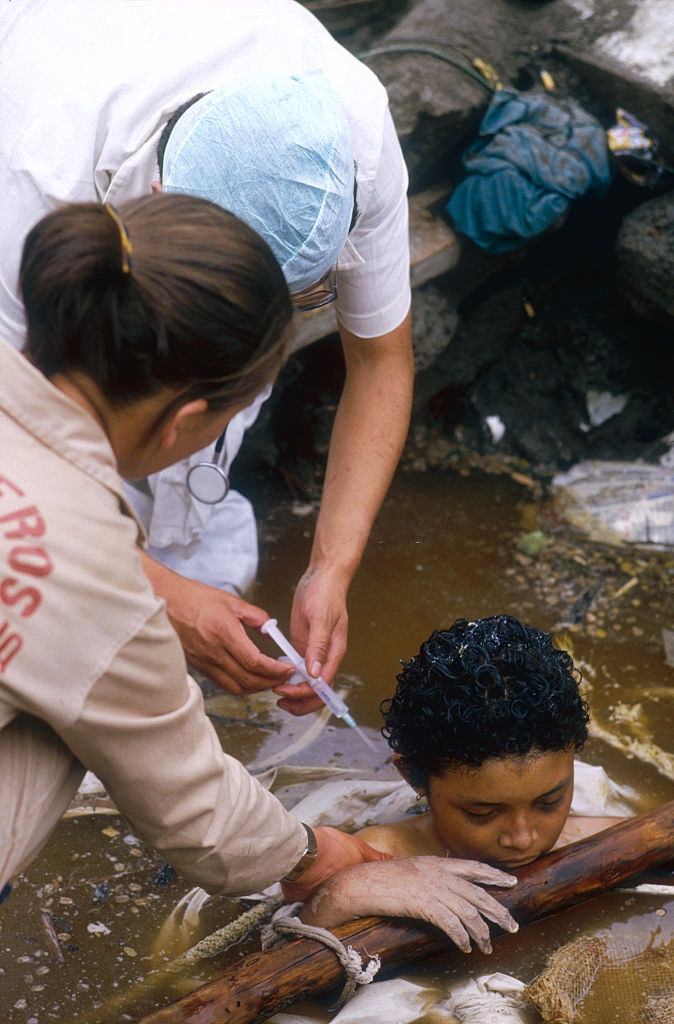
There were moments when the fear broke through. She prayed. She cried. At times she asked the people around her to simply leave her alone so they could rest. But she kept talking, kept engaging with the world around her, even as her body began to fail. Rescuers and medical workers stayed by her side throughout the three days she remained trapped.
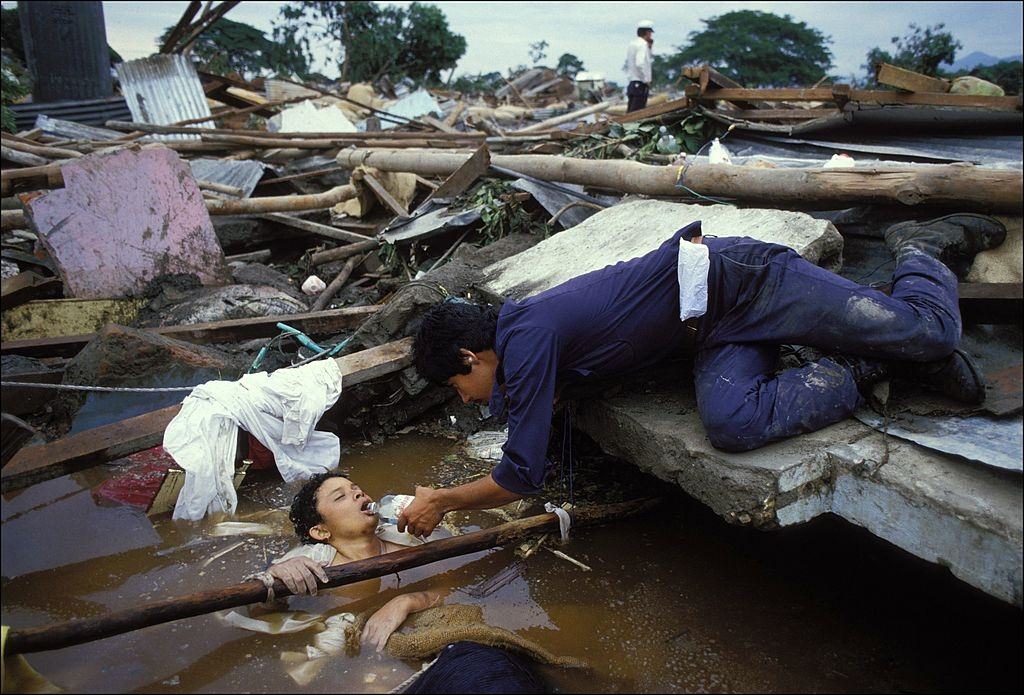
By the final hours, the physical signs of her deterioration were clear. Her eyes turned red. Her face swelled. Her hands became a bleached, deathly white — the result of prolonged exposure to cold, contaminated water. The damage to her body was extensive and irreversible. Three hours before she died, she asked the volunteers around her to let her rest. She said goodbye to her mother.
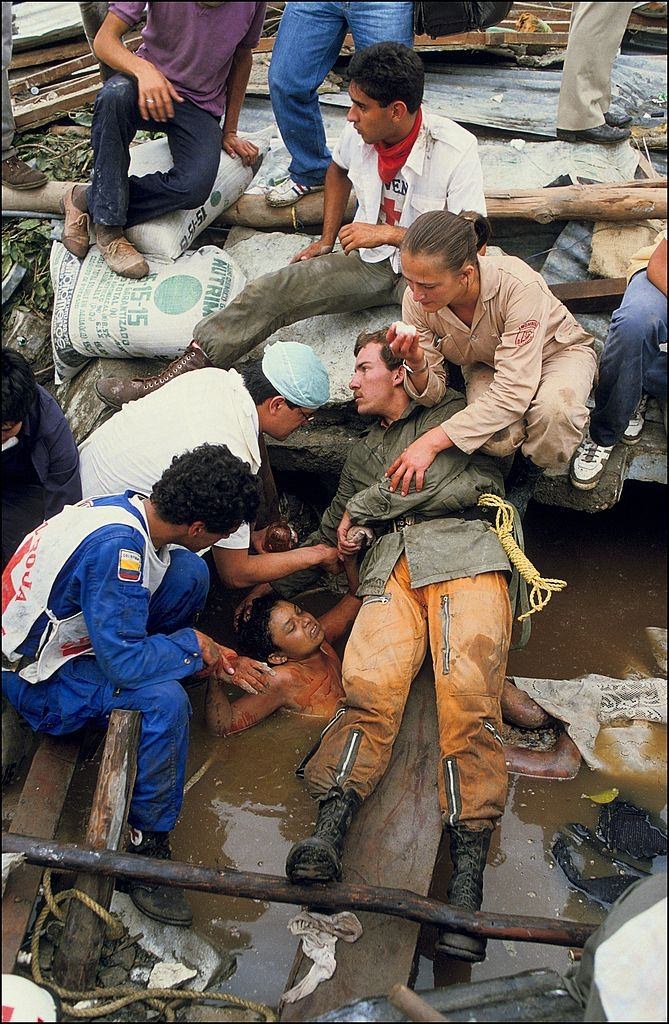
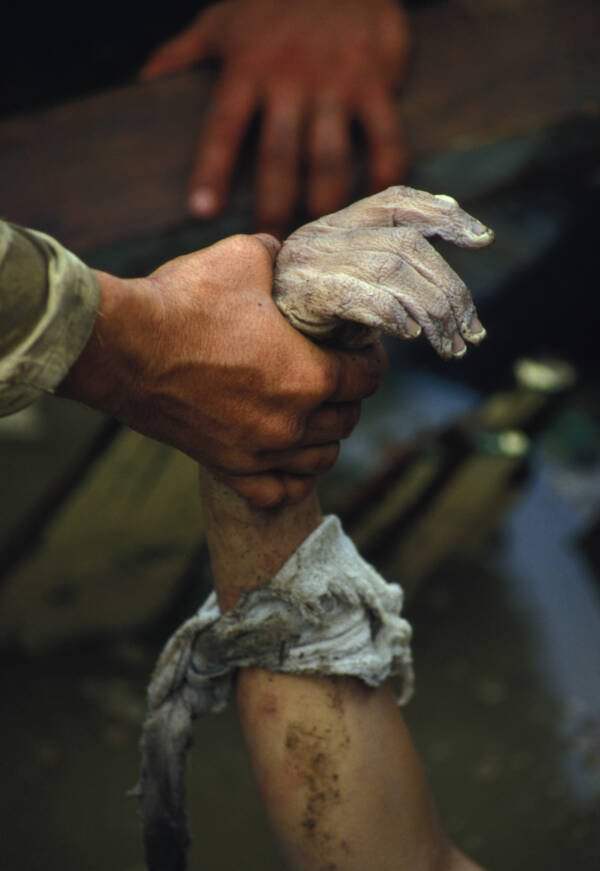
Omayra Sánchez died at 9:45 A.M. on November 16, 1985, roughly 60 hours after the volcano erupted. The cause of death was exposure — most likely a combination of gangrene and hypothermia brought on by days spent submerged in contaminated floodwater. She was thirteen years old.
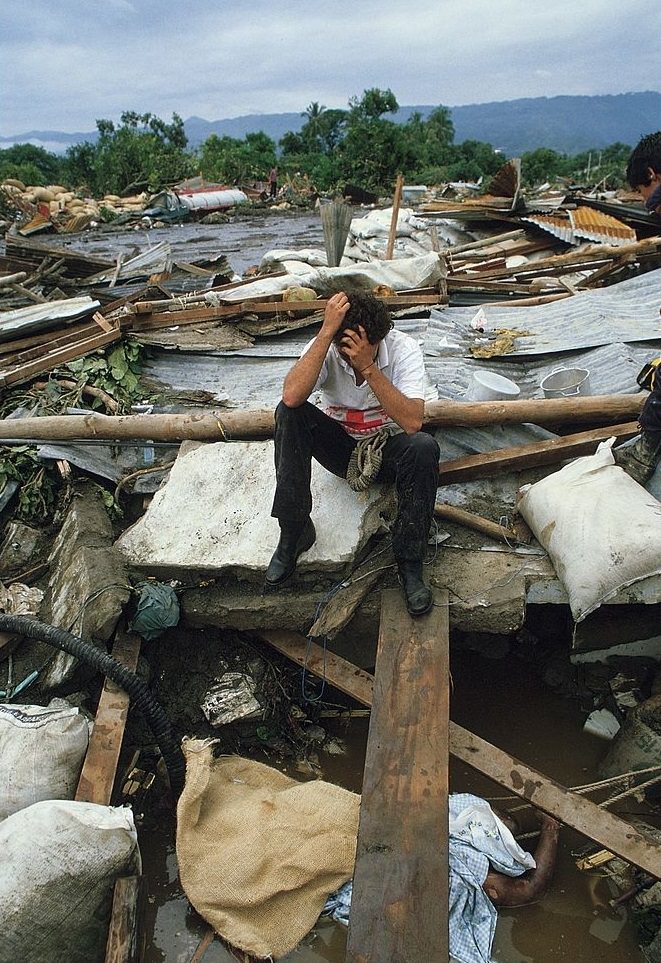
Her mother, Maria Aleida, was a nurse. She learned of her daughter’s death while being interviewed live on Caracol Radio. She wept quietly as the hosts asked their listeners to observe a moment of silence. The photographs taken of Omayra during the three days she was trapped were published six months after her death. The images, taken by photographer Frank Fournier, were seen around the world and drew widespread public attention to both the disaster and the failures of response that surrounded it. Fournier’s most well-known photograph of Omayra later won the World Press Photo of the Year award for 1985.
The Armero tragedy exposed serious breakdowns in disaster preparedness and emergency response. The hazard map had been drawn. The warnings had been issued. But the systems meant to act on those warnings failed at nearly every level — from communication infrastructure to the speed of evacuation orders. By the time the lahar reached Armero, tens of thousands of people had no idea how close the danger was.

It’s a horrible situation. She could not amputate her legs safely, so the doctors decided it was the most humane thing to let her die. I could not imagine going through that alone, so she was lucky to have people by her side throughout.
It would have been more humane to give her an overdose of morphine than to let her suffer for three days.
They didn’t know if/when relief would arrive. With what they had on hand, they could not free her, but can you imagine what would have happened if they decided to euthanize her and then an hour later, supplies and personnel arrived that could have saved her life? Since she was not mortally wounded, killing her when she had a chance was not easy to make but is very easy to judge retrospectively.
I think that’s fair. According to what I’ve read, the authorities were woefully unprepared, and the rescue effort was at best haphazard. The little girl had no family to comfort her because her mother was away from home, and her father and aunt both perished in the lahar that trapped her. Better than being alone and afraid, I suppose. Still not good.
The government failed terribly. This is terrible for that girl and the first responders who had to sit and wait for help that never came.
I remember seeing that picture of her with black eyes hanging over a stick. I never knew her whole story. I can’t imagine going through such a long experience of suffering.
Imagine the mud as sinking sand; it created a suction when she was trying to free herself. Her legs were bent underneath the doorway to the house (her aunt’s body was trapped beneath her too-horrific). Her legs were bent, so they couldn’t just pull her out, but the conditions were too dirty for them to attempt an amputation.
There are people who lose limbs in accidents and the conditions are dirty. Why, please I wish someone would explain, why couldn’t they sever her legs quick, pull her out and then rush her to a trauma tent for cleaning and surgery. Maybe I don’t understand well enough. Just seems a 10% chance is better than 0%.
I’ve seen the photos of this girl but never heard the story behind it. It’s so sad that I didn’t realize the whole story behind it. I’m still unsure why they didn’t just dig a huge hole next to her and try to free her.
When they moved stuff, it caused the water around her to fill up faster.
It is difficult to get equipment to the right place in time in many natural disasters. I don’t know if that was the case here, but it’s possible.
Poor child, we would never let a dog suffer like that for so long; they would have put it down right away. But we stood by and watched as she died from exposure.
Her injuries were not fatal. She died because the proper relief equipment was not available in time. When a truck or helicopter could arrive at any minute with life-saving equipment, would you be so quick to end her suffering if you were there? Would you be able to live with yourself if it had arrived after you had decided to kill her? Looking back, it’s easy to judge.
Third world countries exist, whether you believe it or not. They lacked the proper equipment/resources/infrastructure to reach this rural town. The national guard couldn’t just fly over and rescue someone as it did somewhere in Kansas.
Of course, it would be hard to euthanize a conscious, talking little girl trapped in a situation that is not actively dangerous. It was near impossible to get her out, but it also didn’t seem hopeless.
I know I am not a doctor or an expert, but I just can’t make sense of this story and why decisions were made to do this. Chainsaws to remove the debris, water pumps, antibiotics, even the amputation idea. 100% chance of death if she stays, 90% chance of death if we amputate. Last time I checked 10% is greater than 0%. And, the final complaint, when they knew that there was no hope, why 3 nights of suffering? Give her a shot of a medicine and let her die peacefully. I don’t get it. I wish I had more info.
I don’t know how long ago you posted this reply. But I only came across this story last week and it’s haunting me… It really is.. I agree with you also
..
This one is right up there with Nutty Putty. Such a long time to anticipate certain death.
Holy crap these images have been in my head since seeing them on the news when I was a kid but I had no idea what they were until now. Thank you.
I’ve looked over this so many times but had never seen photos from earlier in the event. Only the later ones with her eyes having blackened. I was wondering if it was her when I clicked on the article. Tragic.
We never forgot.
I always think this when she pops up. Heartbreaking but she’s not forgotten poor little angel x
I wasn’t alive when it happened, but it’s an important part of the story of our country.
These people didn’t have to die, the government failed them.
I remember this, Colombia was already on utter chaos when the volcano erupted due to a hit of the Palacio de Justicia (the seat of the judicial branch on colombia) by the M-19 guerrilla group (ironically the current president was a member of said group).
Her resting place, she was buried in-situ since her body was not possible to remove, is now a pilgrimage place and there’s a lot of persons asking the Vatican for her beatification.
That one, 1985 and 1989 I think that they were the worst years in the history of Colombia. With all its problems, I admire how that country has not reached those levels of violence. I went to colombia this year and I felt very safe. It’s a beautiful country
Sadly some statistics show the country is slowly returning to the 90s era of violence.
People rarely bring up the fact that her Aunt’s body was trapped under the water with Omayra’s legs. Not only did this little girl die slowly, she had to do it next to the bloated rotting body of a woman who cared for her and loved her. This story haunts me. I can only imagine how much it haunts the people who desperately tried to rescue her.
I think the only solace is that she was delirious in her final days and probably didn’t know. She was worried she was gonna be late for school 🙁
The one shot when her eyes turned black. Seared into my memory. RIP
I haven’t heard of this. That’s heartbreaking.
I didn’t even know they had more images 🙁
I remember when this happened (I was 11) picture #10 was everywhere. Her eyes were absolutely haunting but she looked so stoic. I’ve never seen the other pictures before and they make it so much worse, especially #5- instead of a person facing death with a brave face you see a terrified child who just wants someone to help her. My heart is breaking all over again for her.
Her eyes, at the end, have haunted my heart since the first time I saw her picture. So many “Couldn’t they have…? What if they…?” questions always go through my thoughts. Poor, sweet girl.
I think about this one often. So heartbreaking
Shouldn’t have seen the pics and news coverage….this is so heartbreaking. Almost appeared anyone can pull her out any moment..
Here is the Wikipedia page about her: https://en.wikipedia.org/wiki/Omayra_S%C3%A1nchez
I can’t speak for others but this link doesn’t work for me. Says Wiki doesn’t have an article for that exact name.
When I google that name the real wiki shows up.
It’s because her last name has a accented character and the other user’s browser is set to ANSI and cannot parse these characters correctly
https://en.m.wikipedia.org/wiki/Omayra_Sánchez
That’s weird, it says the famous photo was from shortly before she died. I always thought it was after.
How horrible that all they could do was take photos as she died in agony over days