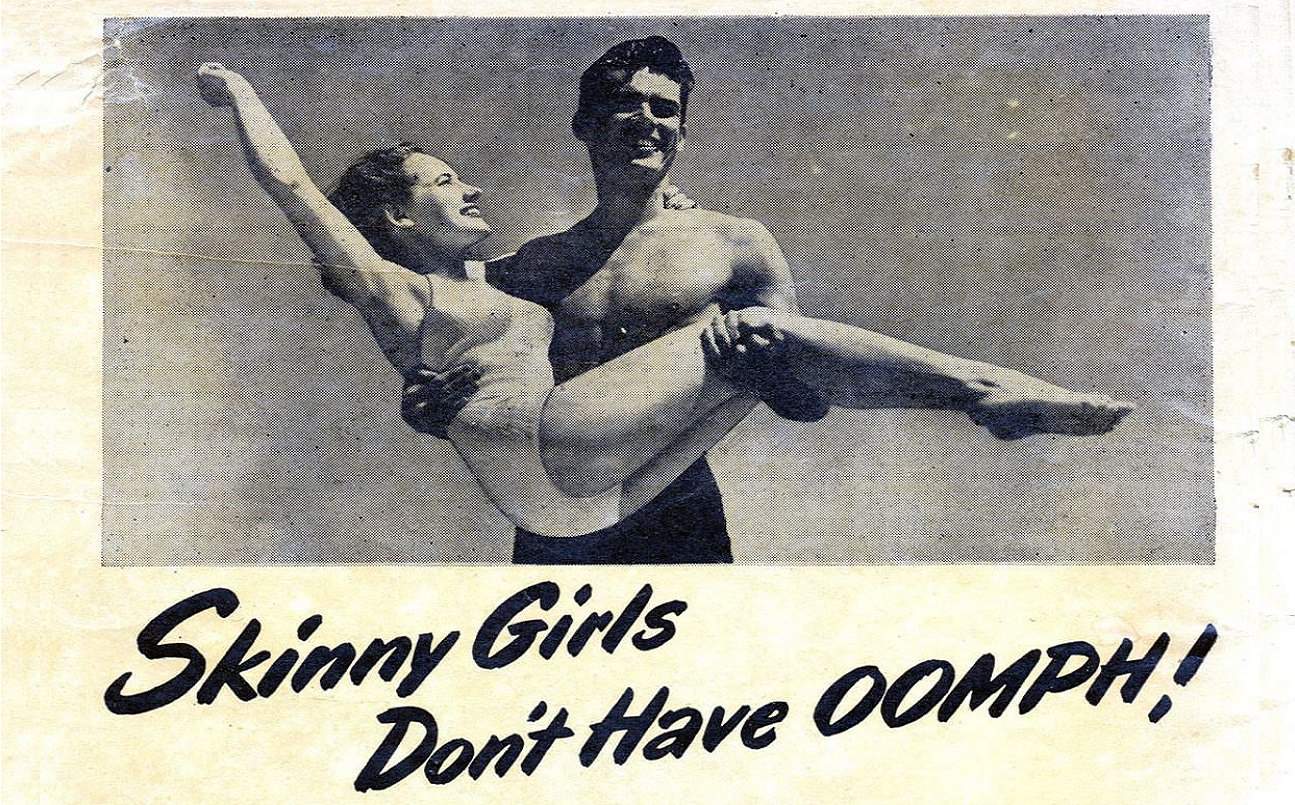
Advertising has always been designed to persuade. But for much of the 20th century, the tactics used to sell products were often built on sexism, false science, and outright hostility toward women. These weren’t fringe publications or back-alley flyers — these were full-page spreads in major magazines, backed by household brand names. Looking at them today, it’s hard to believe they were ever considered acceptable.
The ads below are real. They ran in mainstream print media across the United States and beyond. Some used humor to mask contempt. Others made no effort to hide it at all. Taken together, they paint a clear picture of how deeply embedded certain attitudes were in everyday commercial culture.
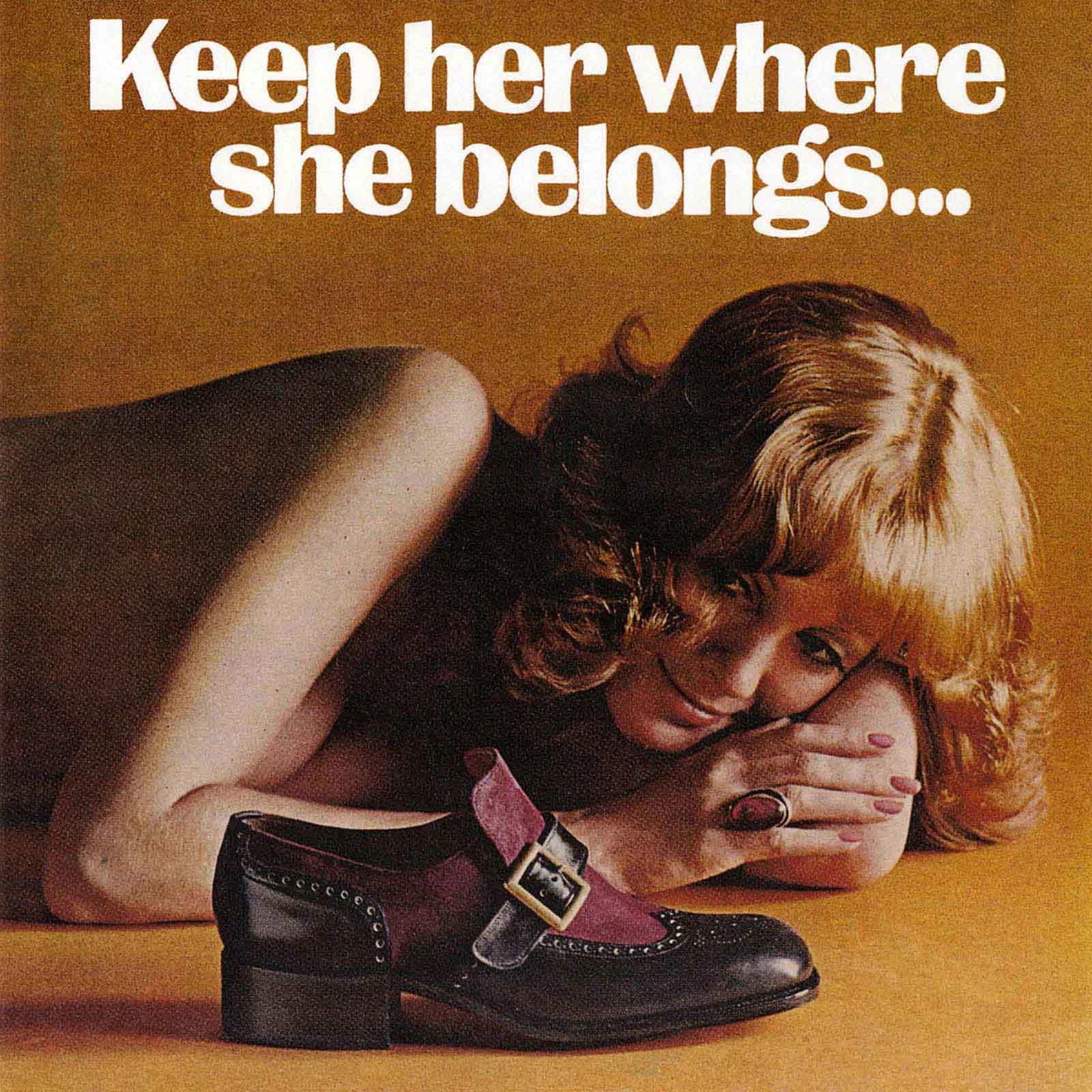
Shoe and clothing ads were a common vehicle for reinforcing gender roles. Women frequently appeared as props — draped over furniture, positioned below men, or reduced to body parts meant to add visual appeal to an otherwise ordinary product. This ad for men’s shoes from the 1970s is a prime example of how even footwear marketing wasn’t immune to objectification.
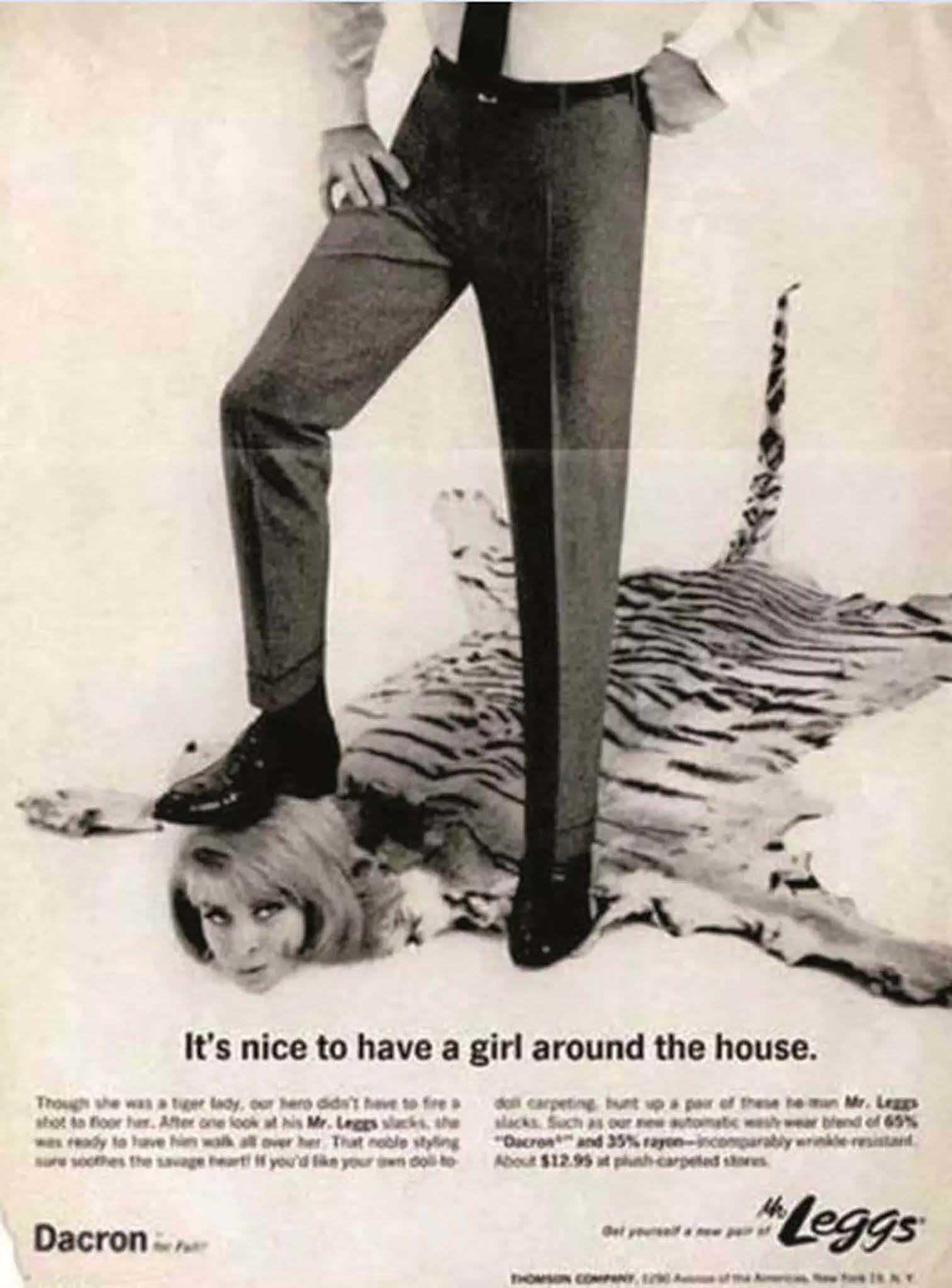
Some ads didn’t just sideline women — they literally reduced them to objects. An ad for pants that depicted a woman as a tiger-skin rug crossed a line that most people today would find deeply disturbing. The message was clear: women existed as decorative backdrops for male achievement and style.
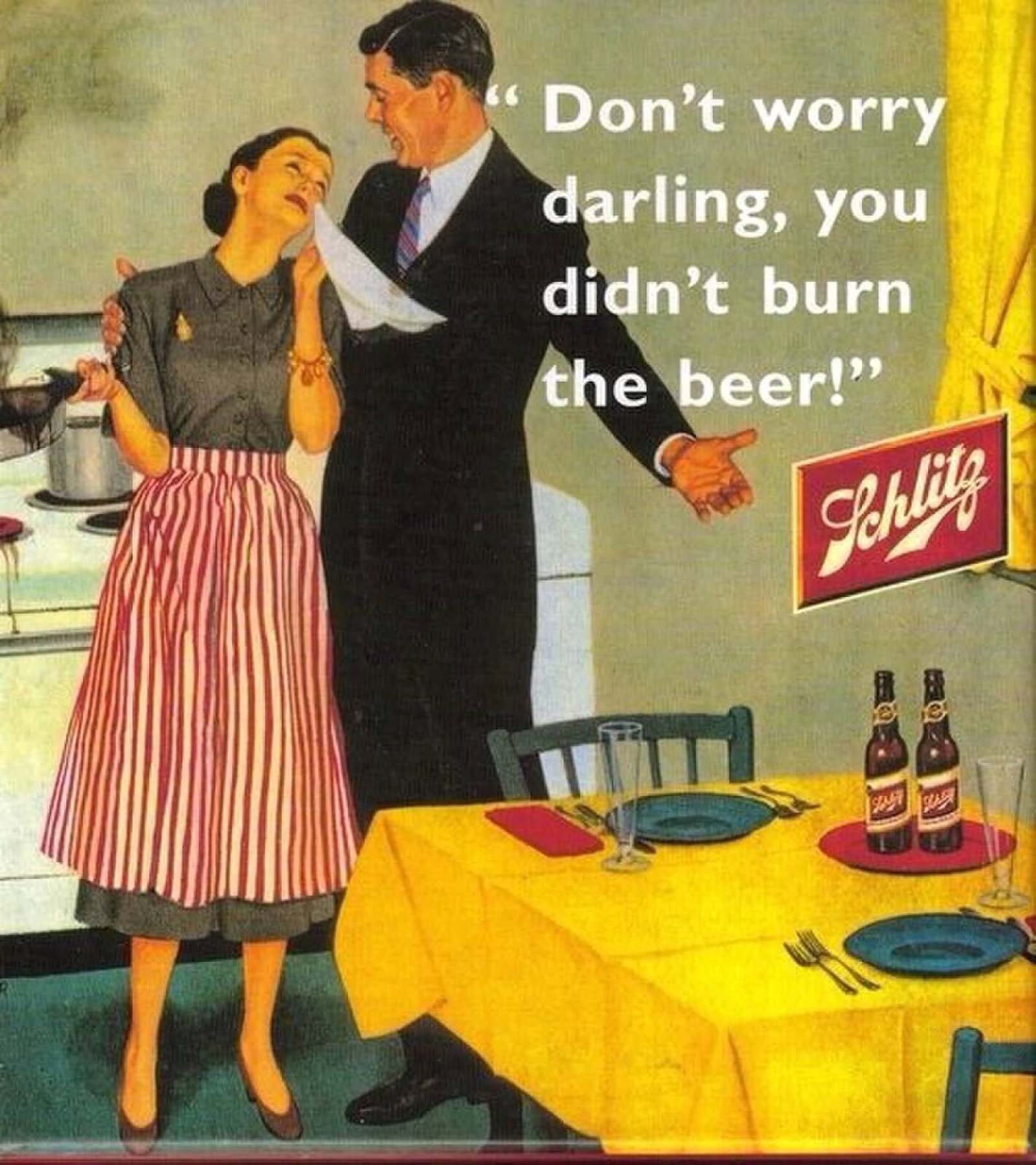
Beer and alcohol brands leaned hard into the idea that women were incompetent in the kitchen — and everywhere else. This ad reassures a woman that at least she didn’t ruin the beer, implying that even her most basic domestic duties were suspect. The condescension is baked into every word.
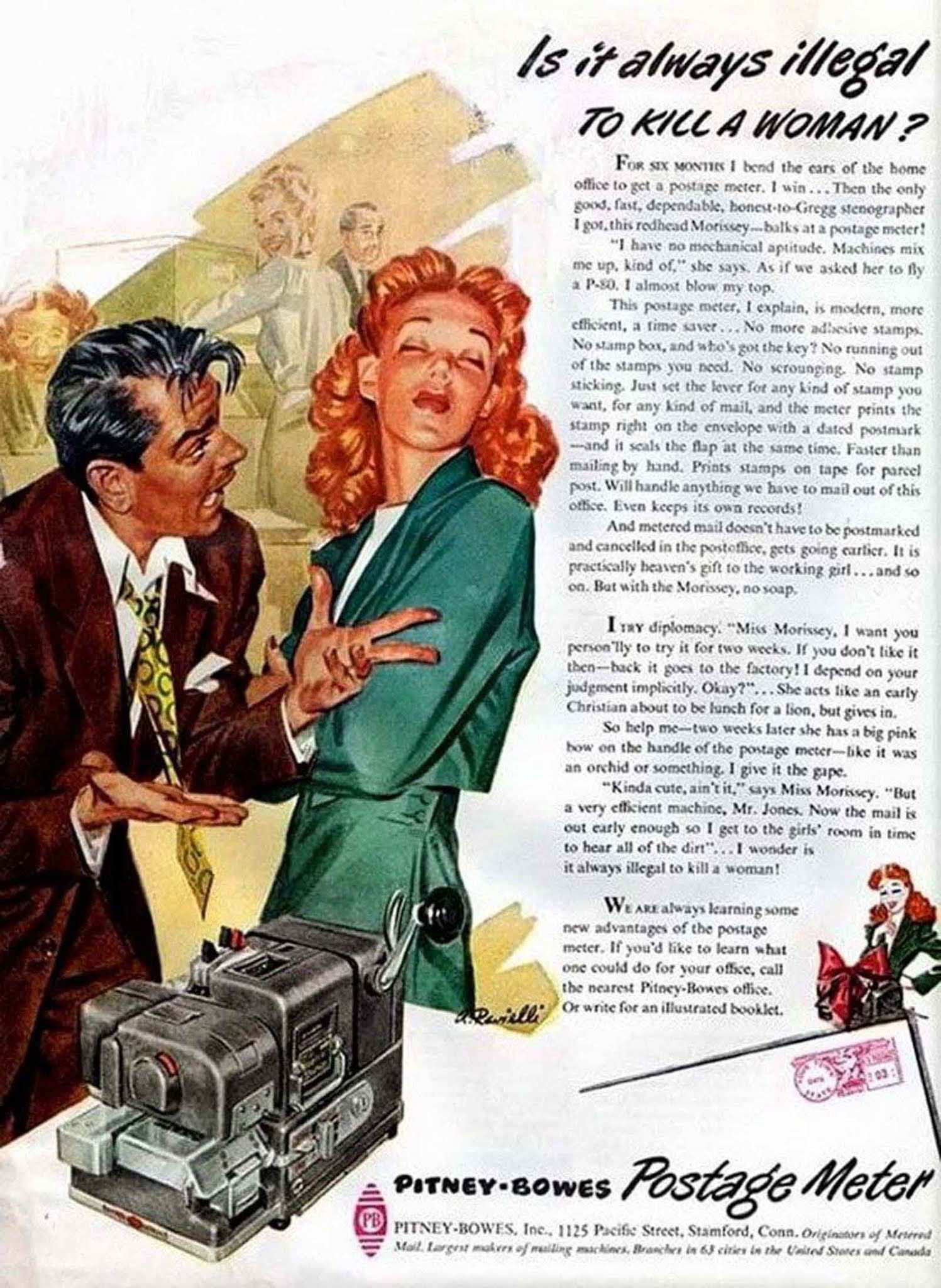
Office equipment ads from the mid-20th century frequently portrayed women as incapable of handling technology without male supervision. The Pitney Bowes postage meter ad carried an unsettling tone, treating the female office worker as a liability rather than a professional. Women in the workplace were a common target for this kind of belittling advertising.
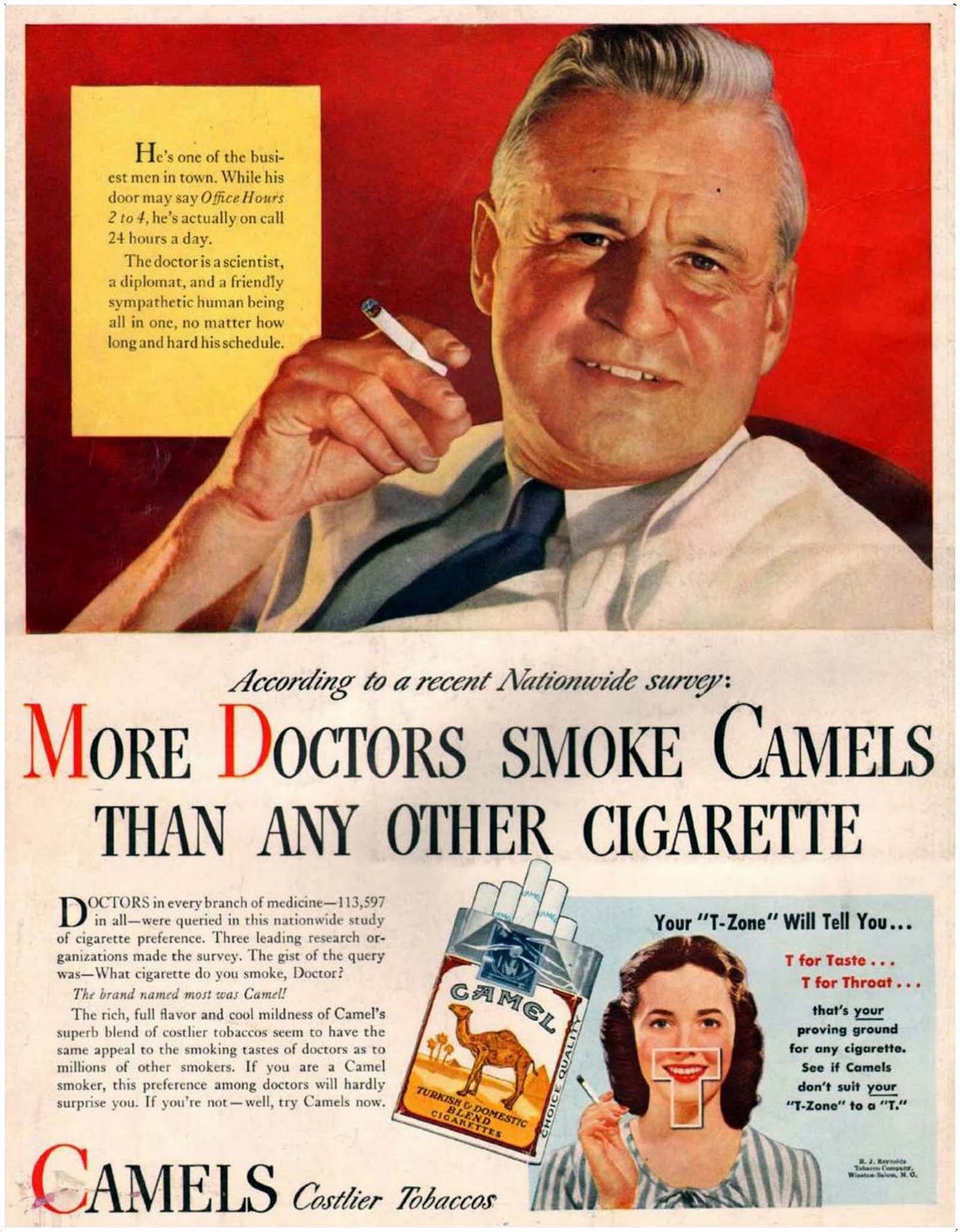
Among the most infamous examples of advertising pseudoscience is the Camel cigarettes campaign claiming that doctors preferred their brand above all others. There was no credible medical evidence behind this claim. Cigarette companies hired researchers and used cherry-picked surveys to manufacture a veneer of medical authority. Millions of Americans saw these ads and trusted them.
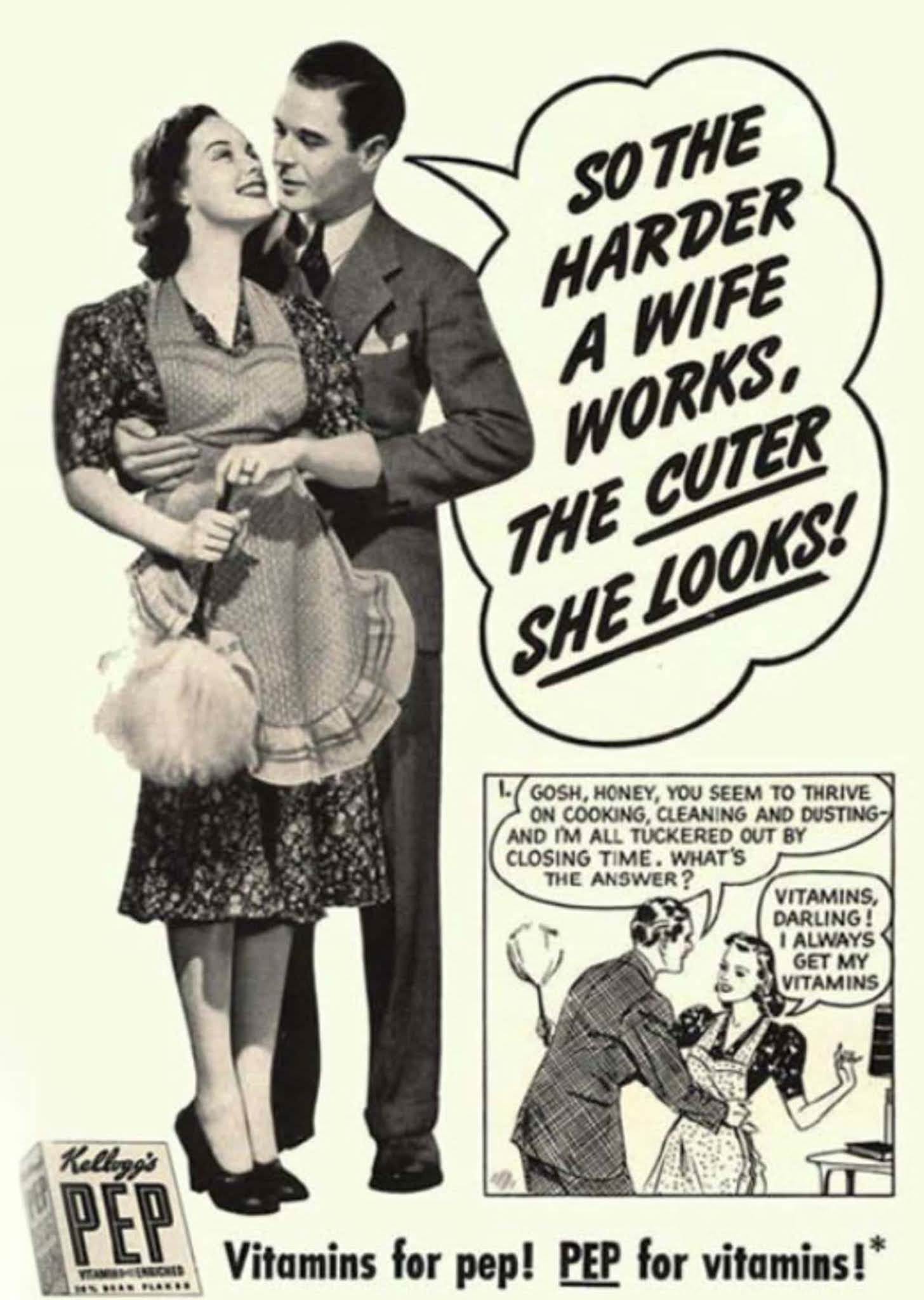
Kellogg’s ran an ad in 1939 with the slogan “The harder a wife works, the cuter she looks.” The implication was that a woman’s value was tied entirely to her domestic labor and physical appearance. This wasn’t an outlier — it reflected a widespread advertising philosophy that women existed primarily to serve their husbands and households.
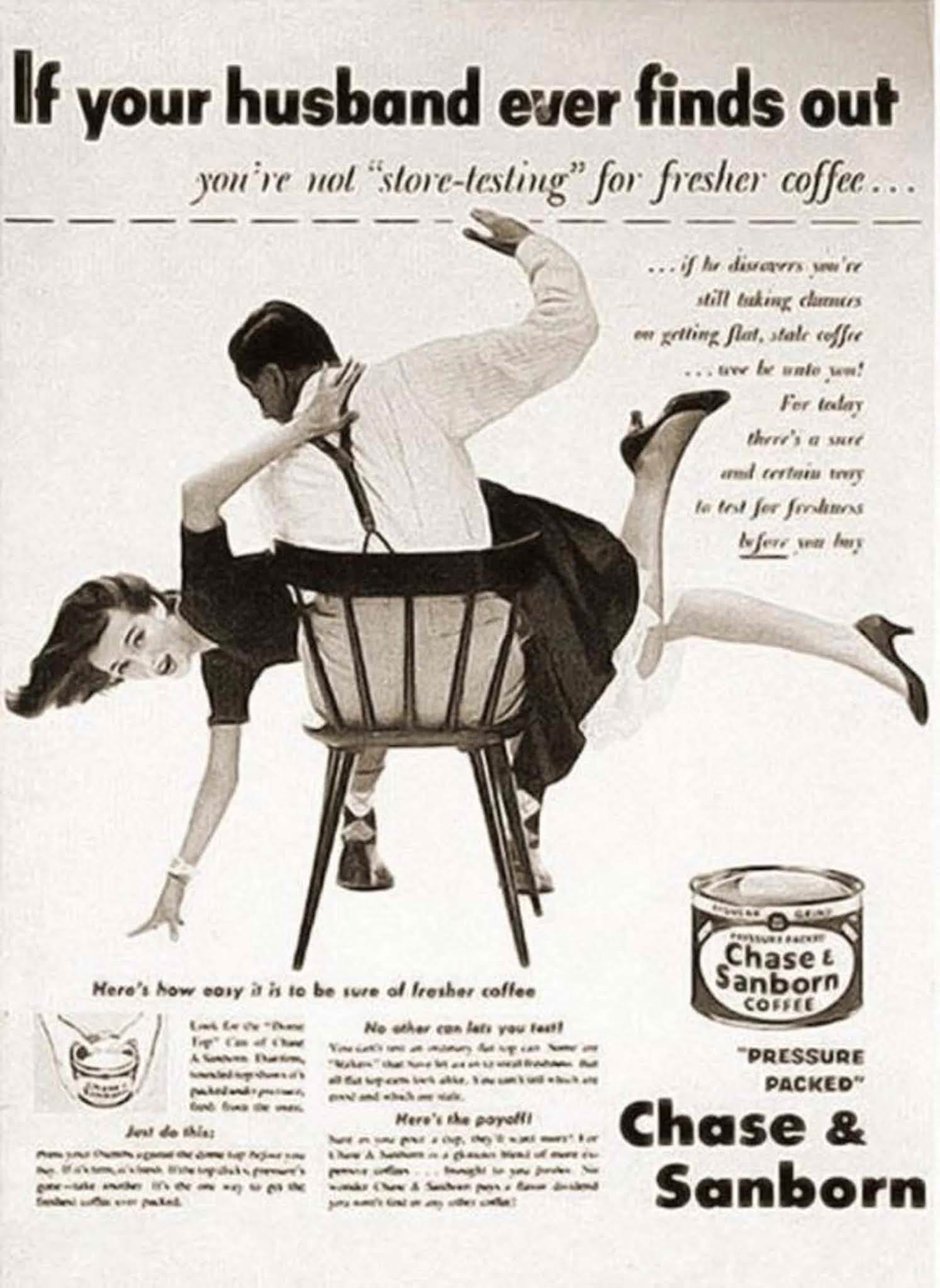
This 1952 LIFE magazine ad for coffee used the threat of a husband’s anger to sell a product. The message was that a wife’s failure to buy the right coffee brand was grounds for marital punishment. Fear and shame were reliable advertising tools in this era, and brands used them without hesitation.

Tipalet’s 1960s cigarette campaign took a particularly aggressive approach. The ad showed a man blowing smoke directly into a woman’s face with the tagline “Blow in her face and she’ll follow you anywhere.” It treated women as creatures whose will could be overridden with a cigarette. It also, of course, made no mention of the health risks of secondhand smoke.
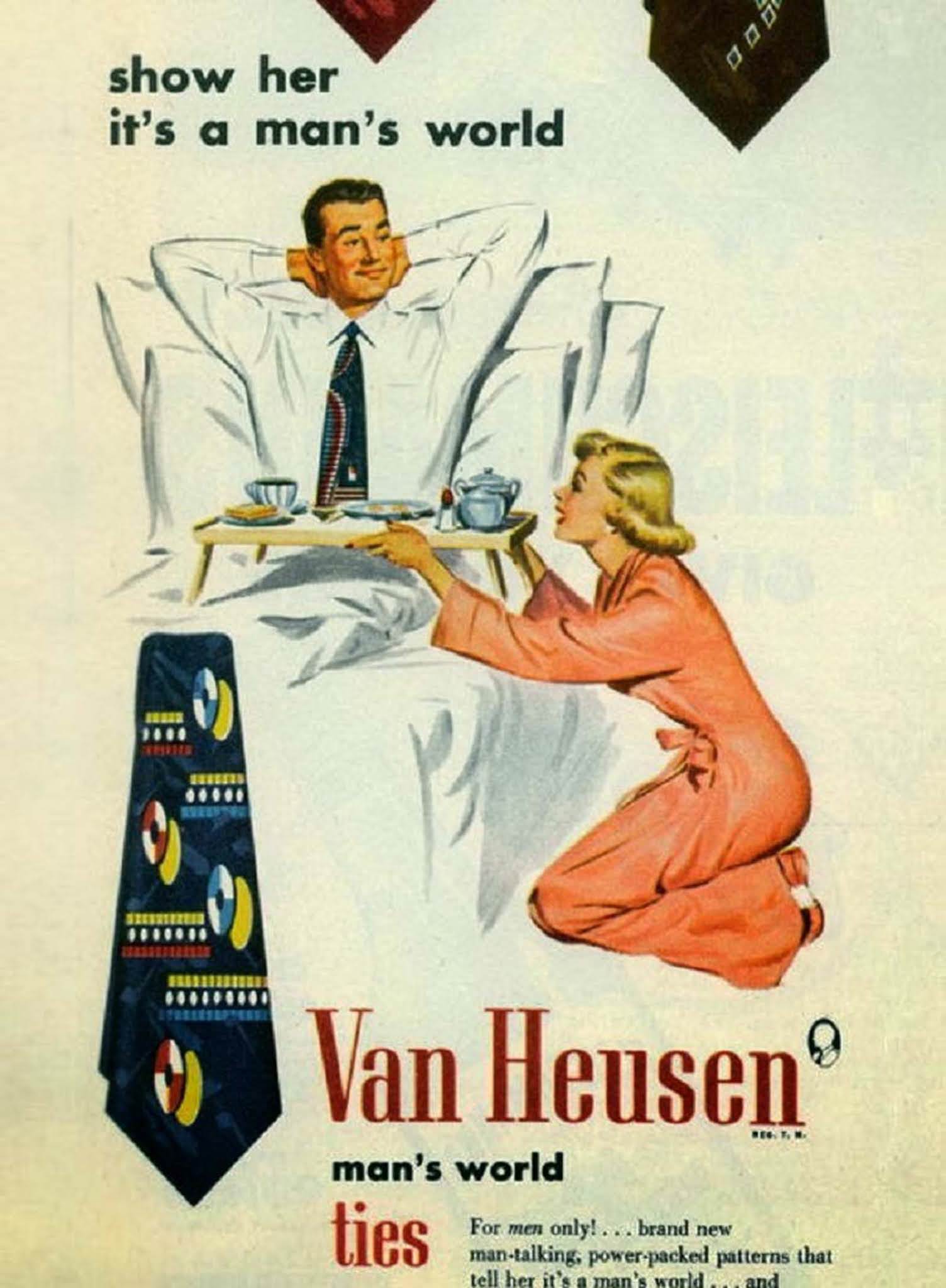
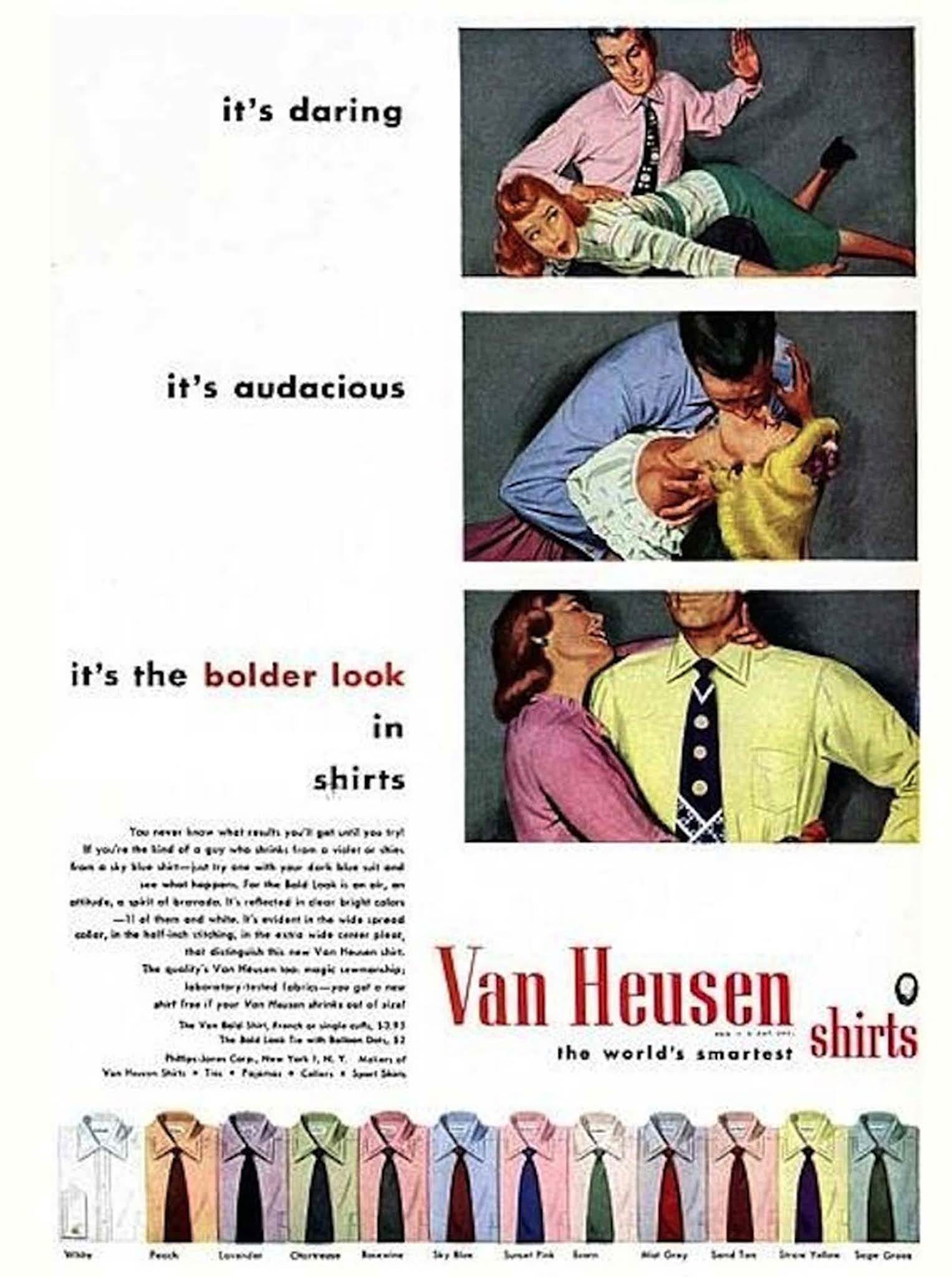
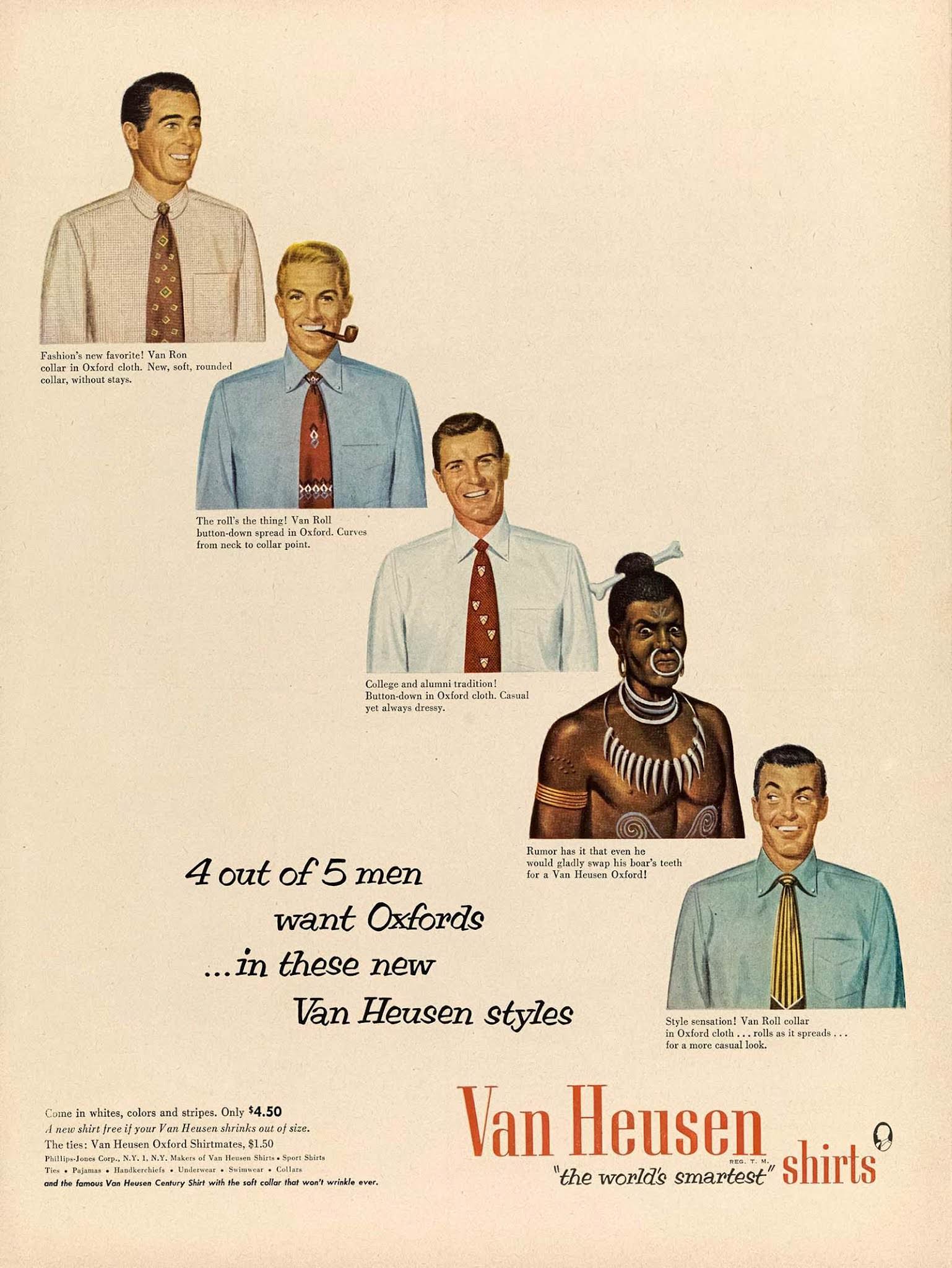
Van Heusen was a repeat offender when it came to sexist advertising. Their “Man’s World” tie campaign made the dominance of men over women an explicit selling point. The ads didn’t try to hide the message — they celebrated it. Buying a Van Heusen tie, the implication went, was an act of asserting masculine authority.
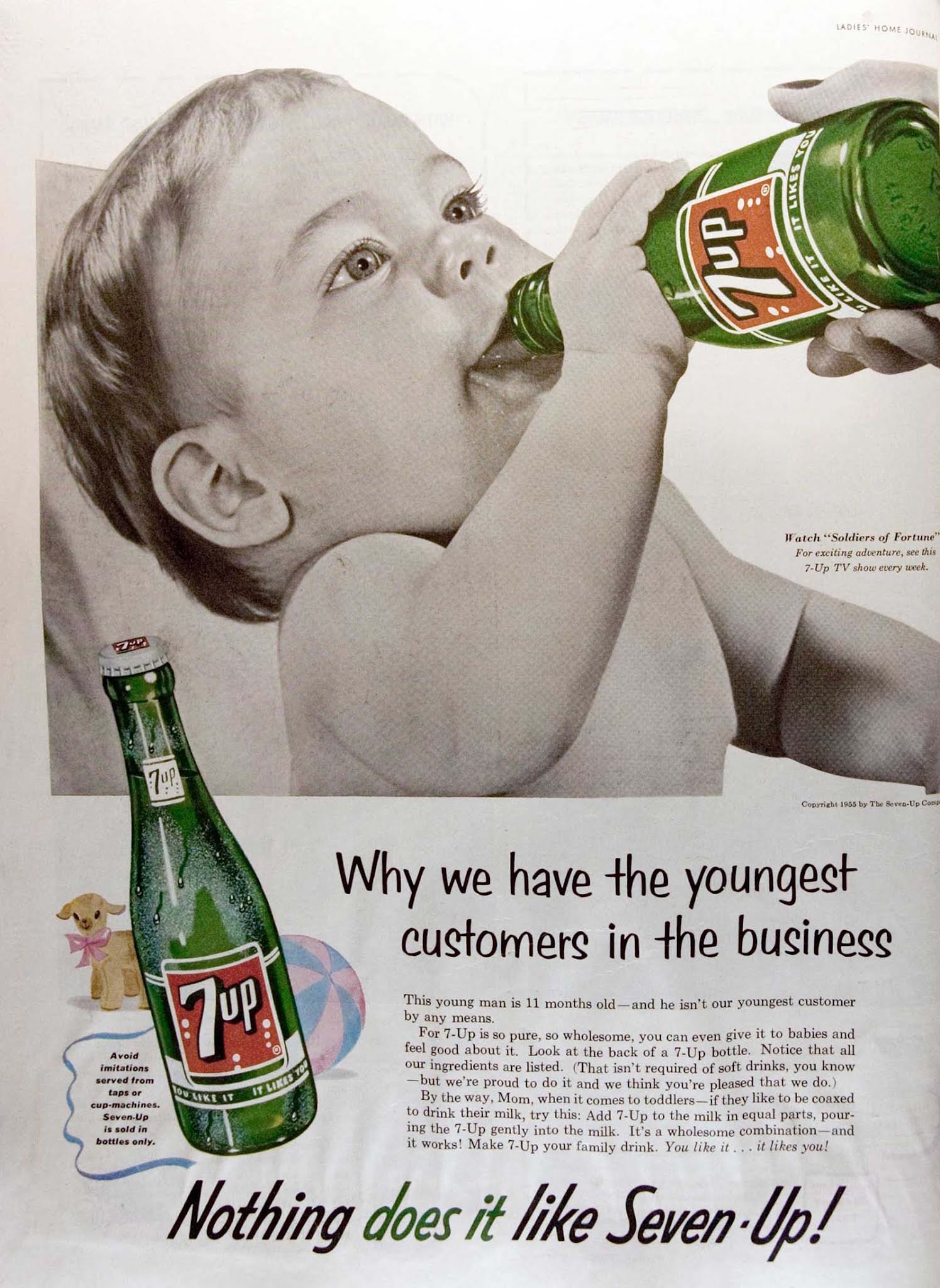
Several ads during this era promoted the idea that introducing children to cigarettes was not only acceptable but desirable. The question “How soon is too soon?” with the answer “Not soon enough” was a genuinely used marketing approach that encouraged parents to normalize smoking for young people. The tobacco industry’s targeting of youth demographics was systematic and deliberate.
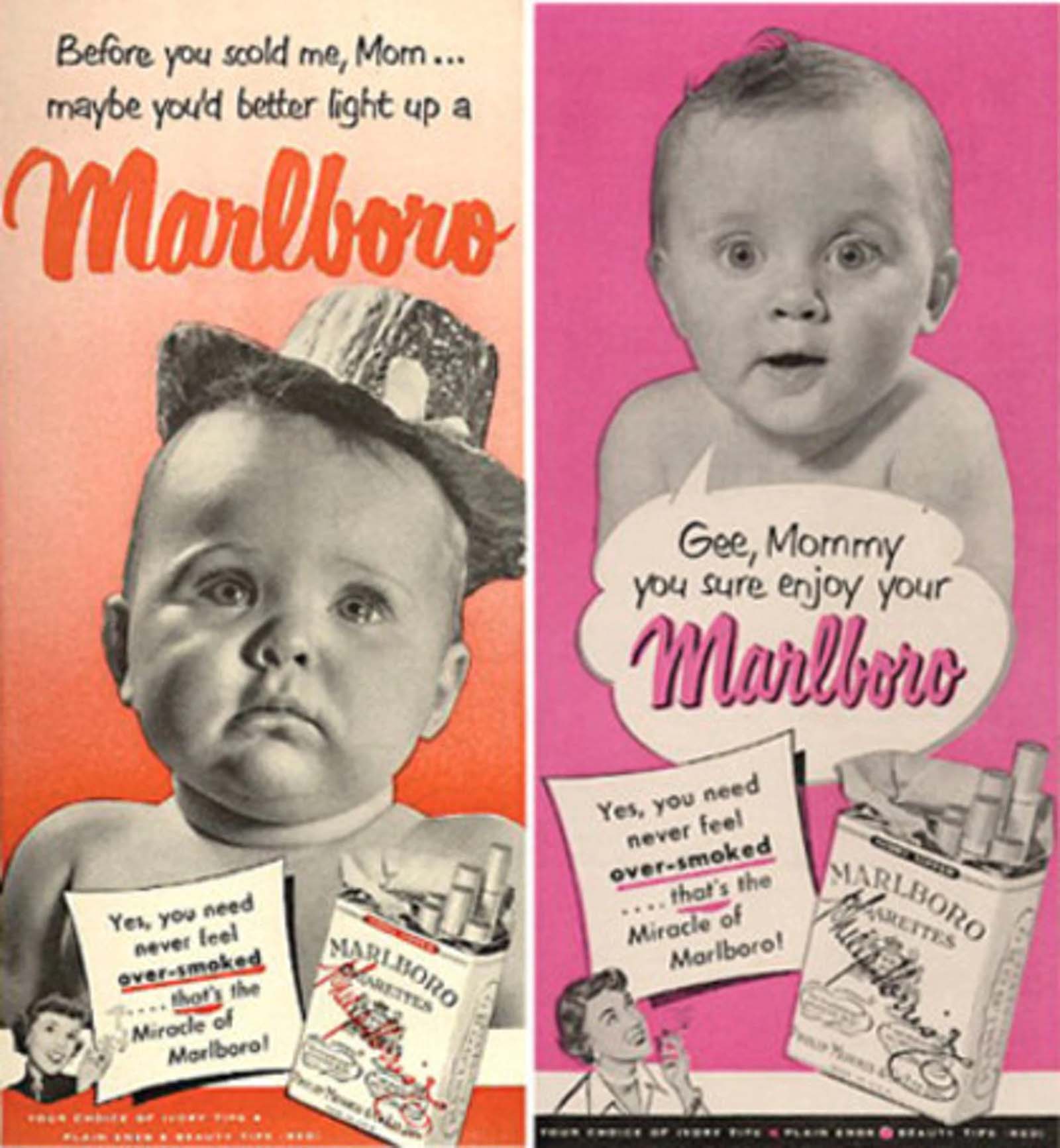
Mothers were directly targeted by cigarette brands eager to expand their customer base. This ad encouraged women to smoke while raising children, reassuring them that they would “never feel over-smoked.” At a time when the medical community was beginning to understand the dangers of tobacco, this kind of messaging was particularly reckless.
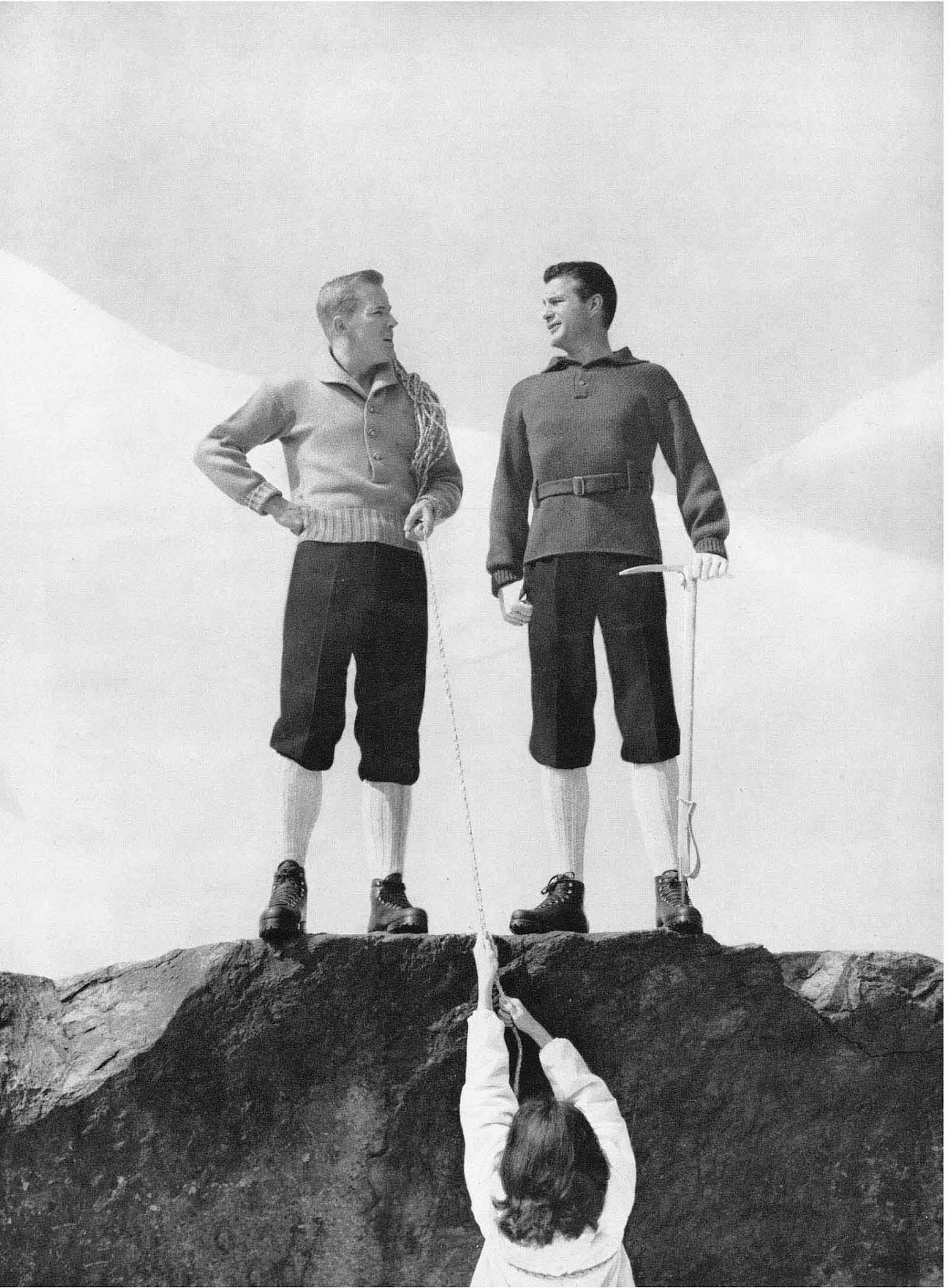
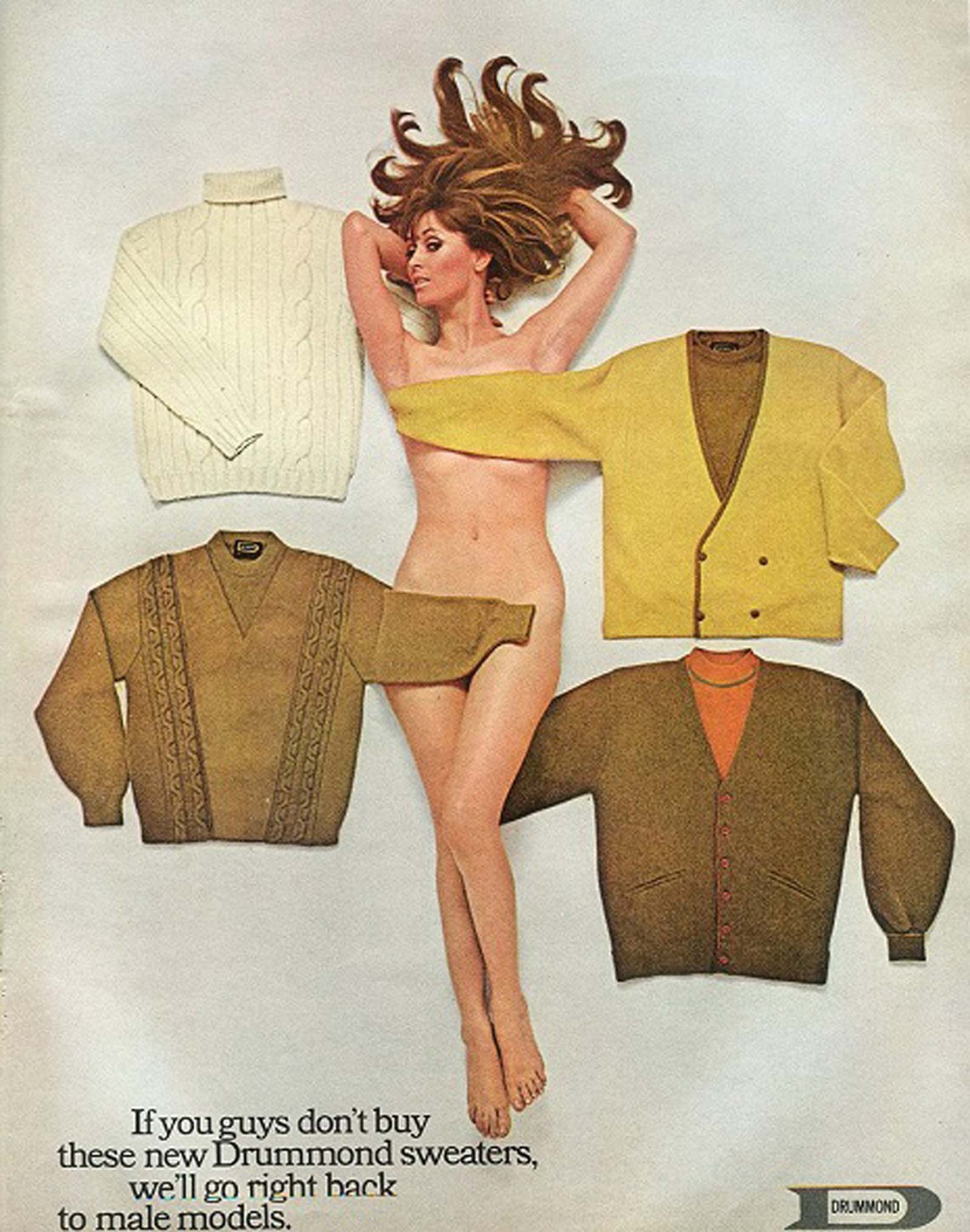
A sweater brand once ran an ad declaring outright that “Men are better than women,” going on to describe wives as “a bit of a drag” when on a mountain hike. The ad used outdoor adventure — traditionally coded as masculine — to reinforce the idea that women were burdens rather than participants.
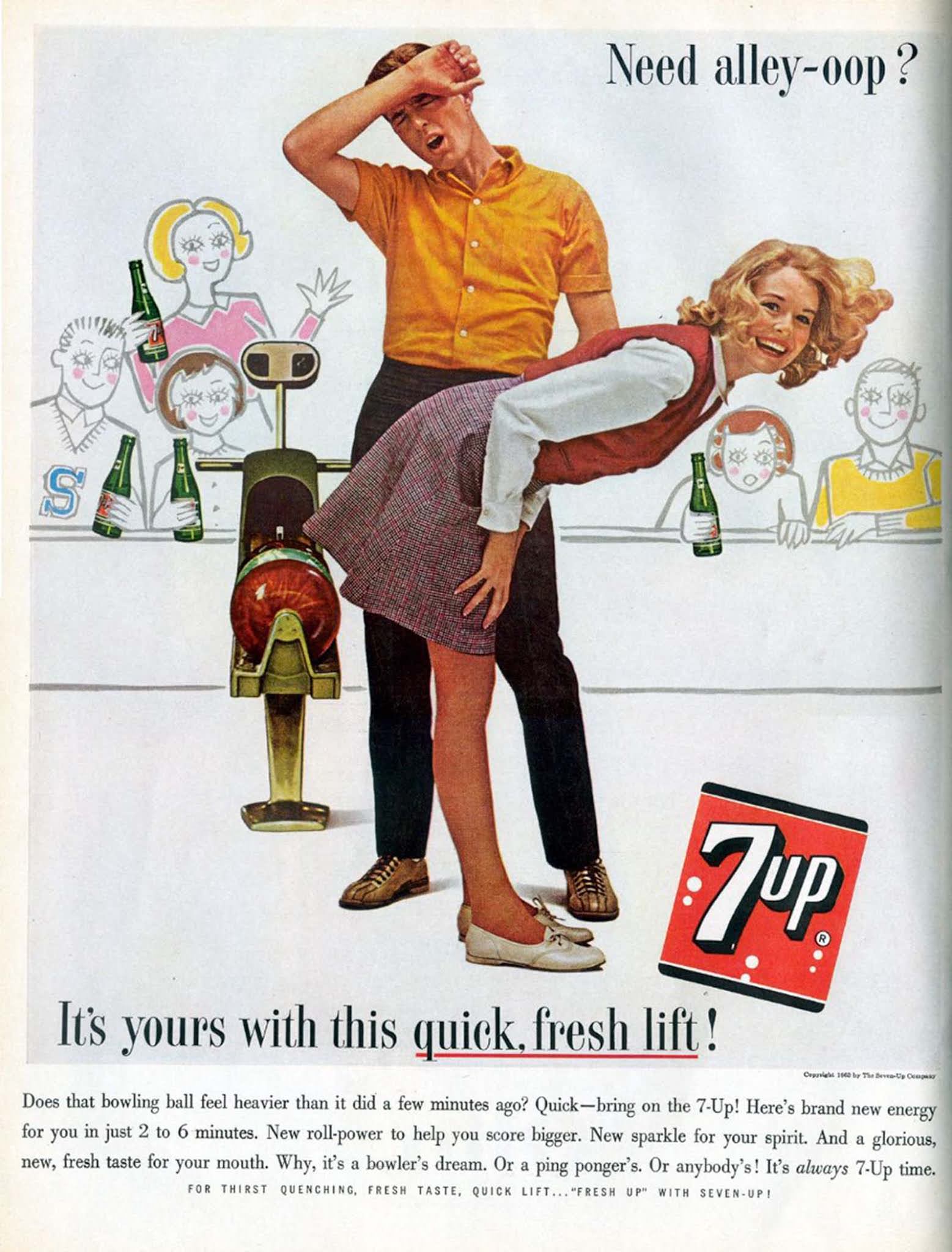
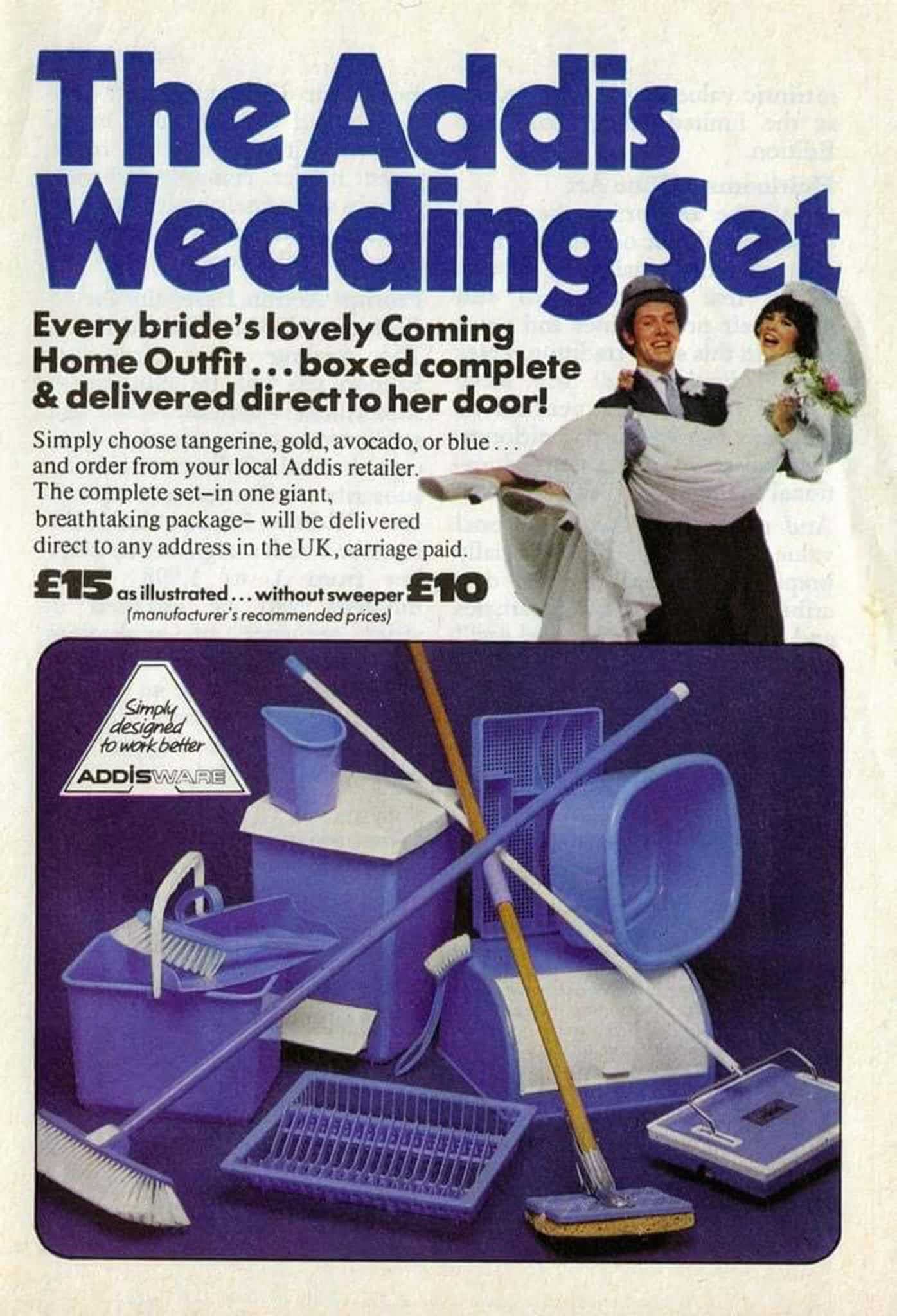
Cleaning product companies regularly used marriage as a framing device for their advertising. The Addis Wedding Set ad pitched its cleaning tools as a solution for men who wanted a wife who could handle every aspect of housework. The product wasn’t being sold to the woman doing the cleaning — it was being sold to the man who expected her to do it.
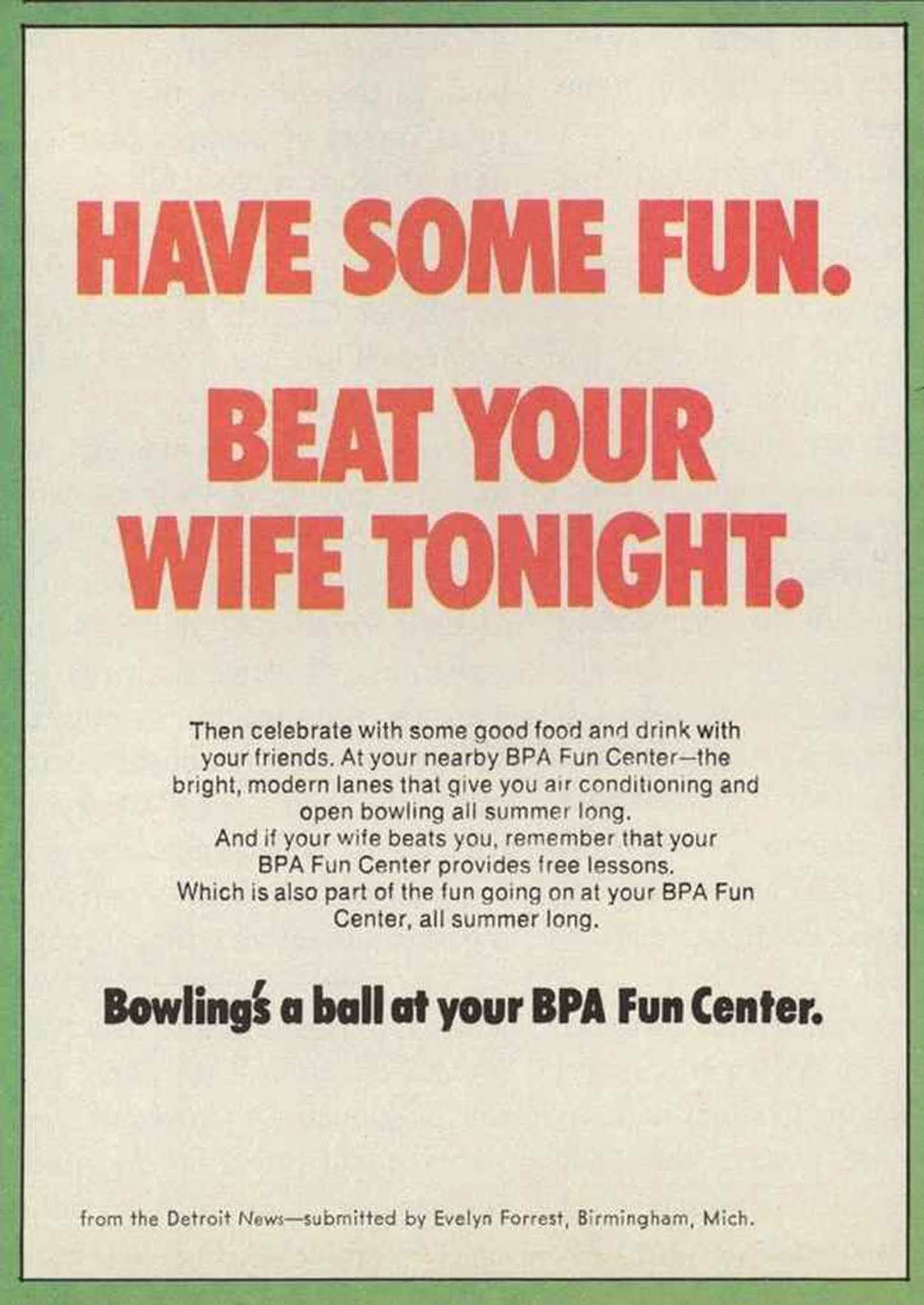
Some vintage ads went far beyond sexism into territory that depicted domestic violence as entertainment. At least one ad from this era used the framing of a husband hitting his wife as a lighthearted punchline before heading out with friends. Domestic violence was treated as a joke, normalized through humor in the pages of mainstream publications.
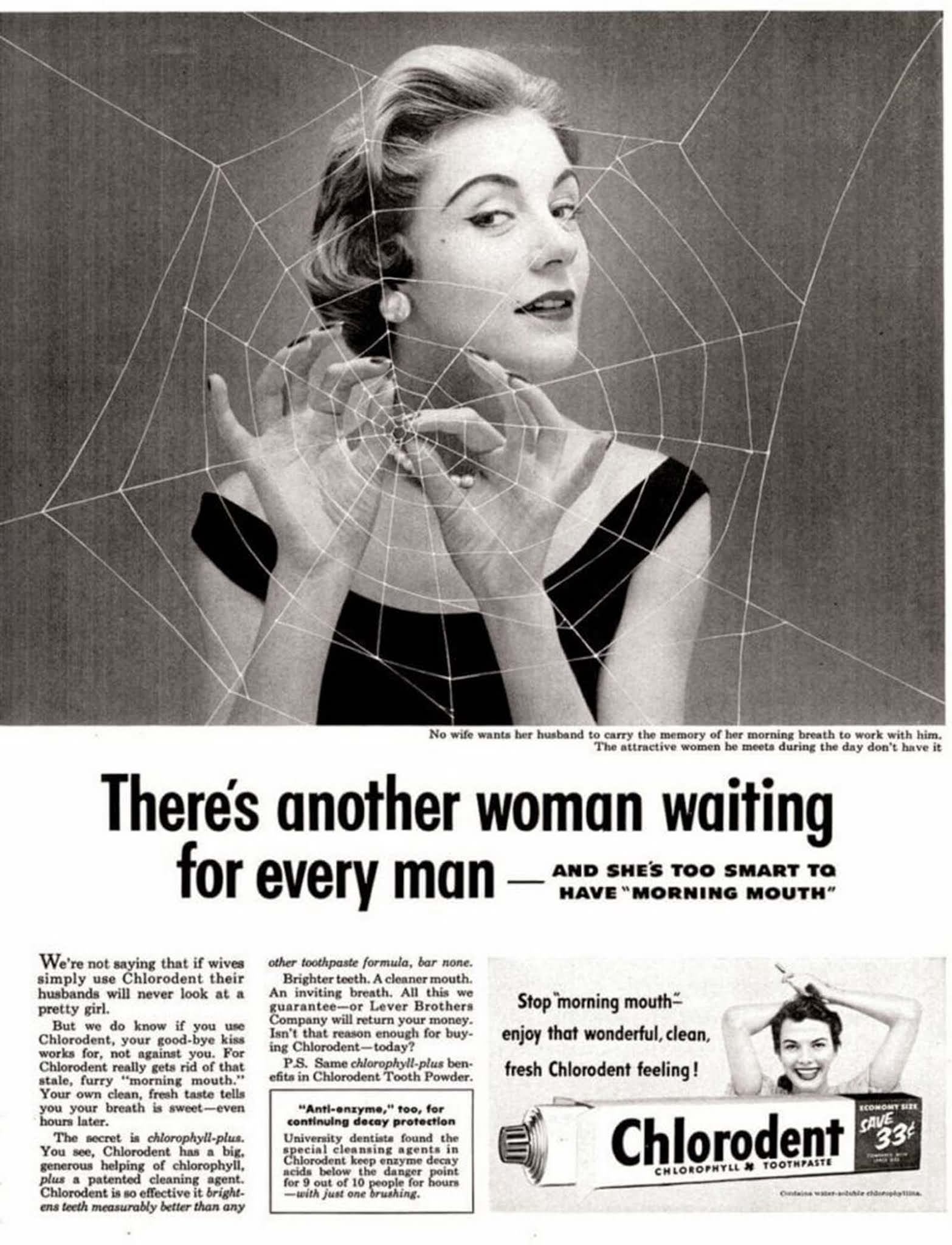
Fear of romantic abandonment was another common tool in the advertiser’s arsenal. Ads like this one — warning women that another woman was always waiting to take their place — were designed to generate insecurity and then offer a product as the solution. The strategy was simple: make women feel inadequate, then sell them something that promised to fix it.
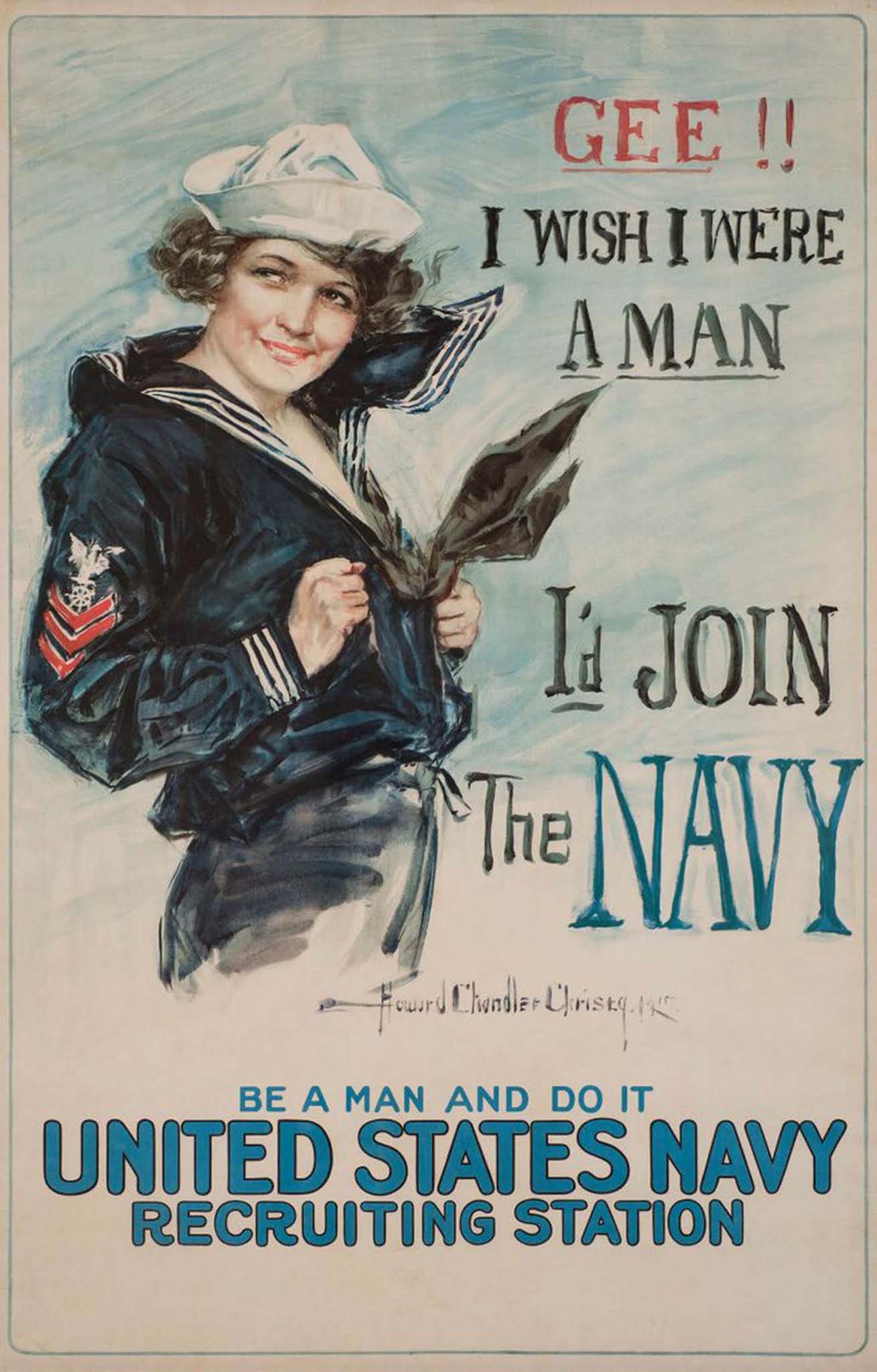
Military recruitment advertising took a different but equally troubling approach. Rather than appealing to patriotism or duty, some recruitment ads used public shaming. Men who hadn’t enlisted were portrayed as cowards, failures, or less than masculine. This ad was designed to make staying home feel shameful — a social pressure tactic rather than an honest appeal.
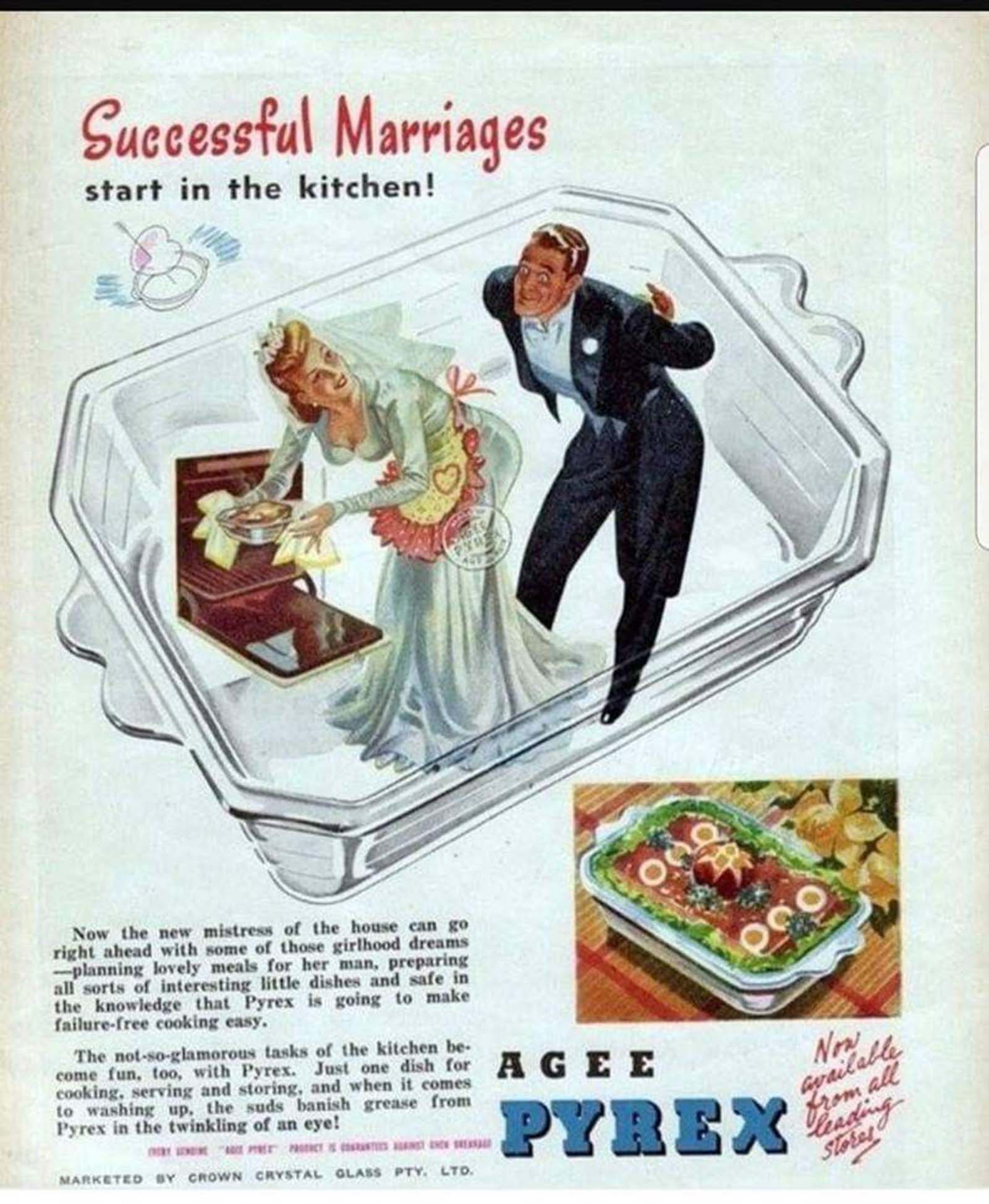
Cooking ads directed at newlywed women were a staple of mid-century advertising. The message was consistent: a successful marriage depended on a wife’s ability to cook, clean, and keep her husband satisfied. Ads like this one framed domestic service as not just expected but as the foundation of a woman’s entire value in a relationship.
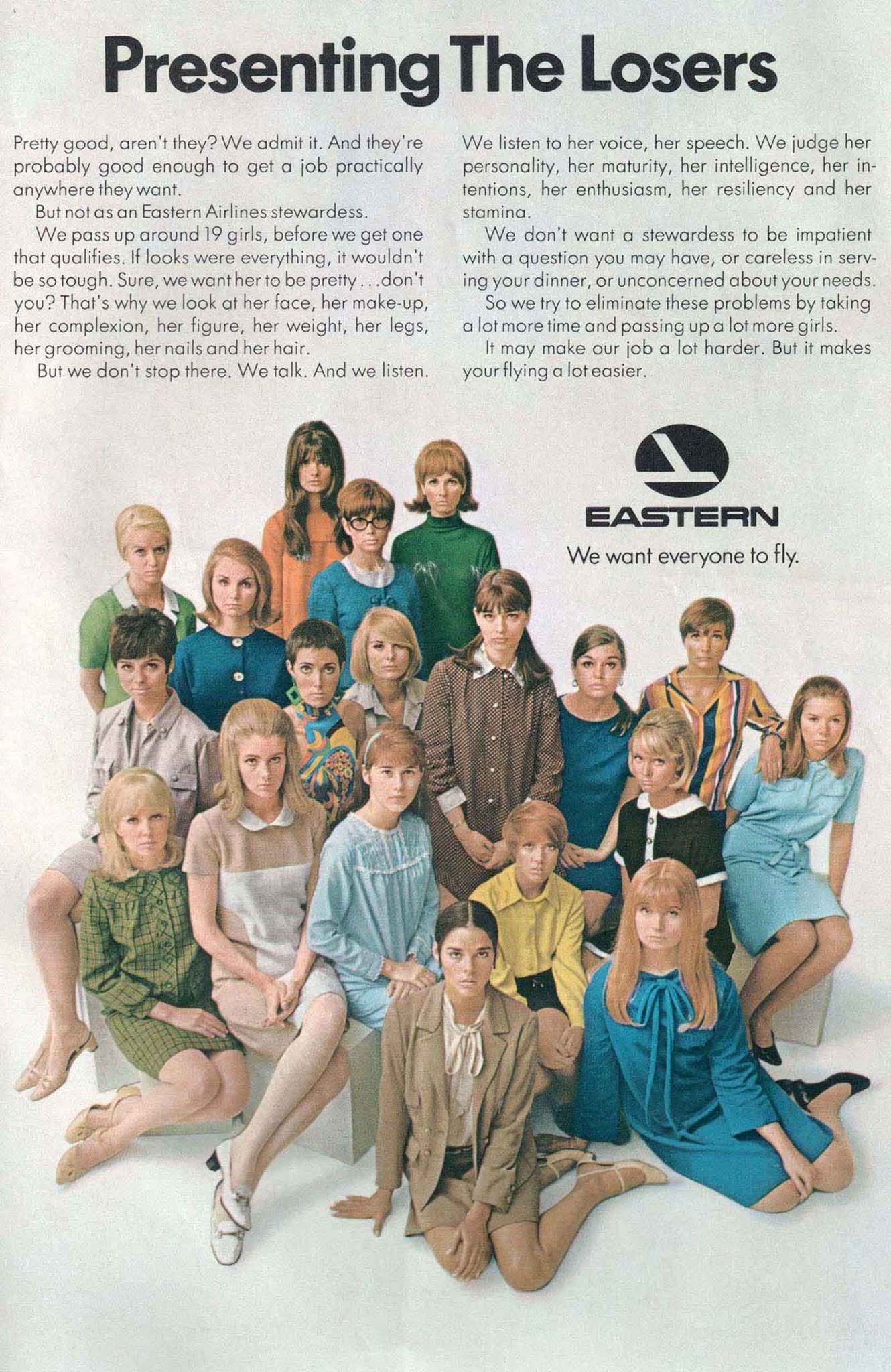
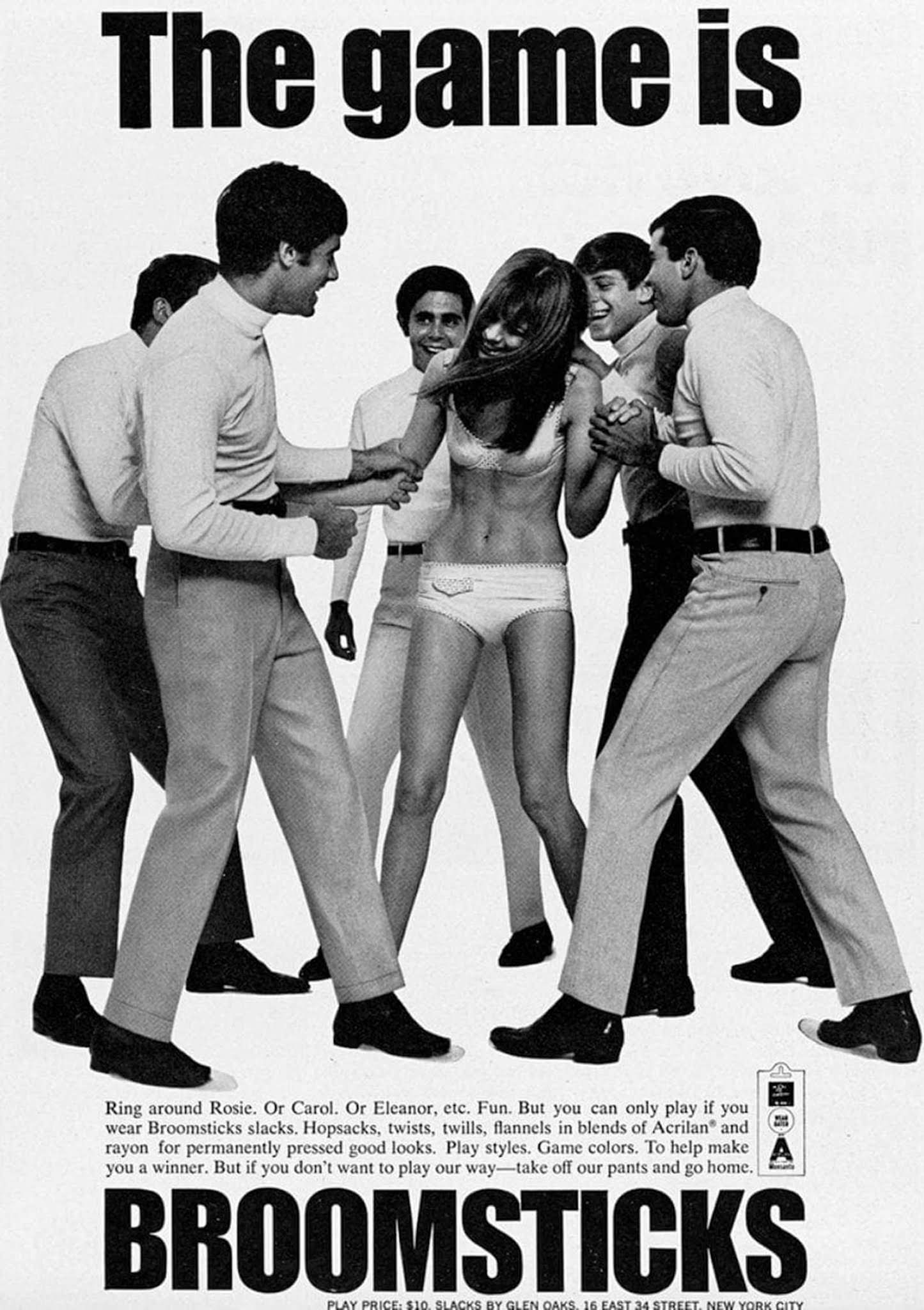
Ads that mocked women who didn’t conform to domestic expectations were widespread. The broomstick reference was a recurring visual shorthand — women who stepped outside their prescribed role were portrayed as witches, harridans, or losers. Ridicule was a deliberate strategy used to reinforce social boundaries.
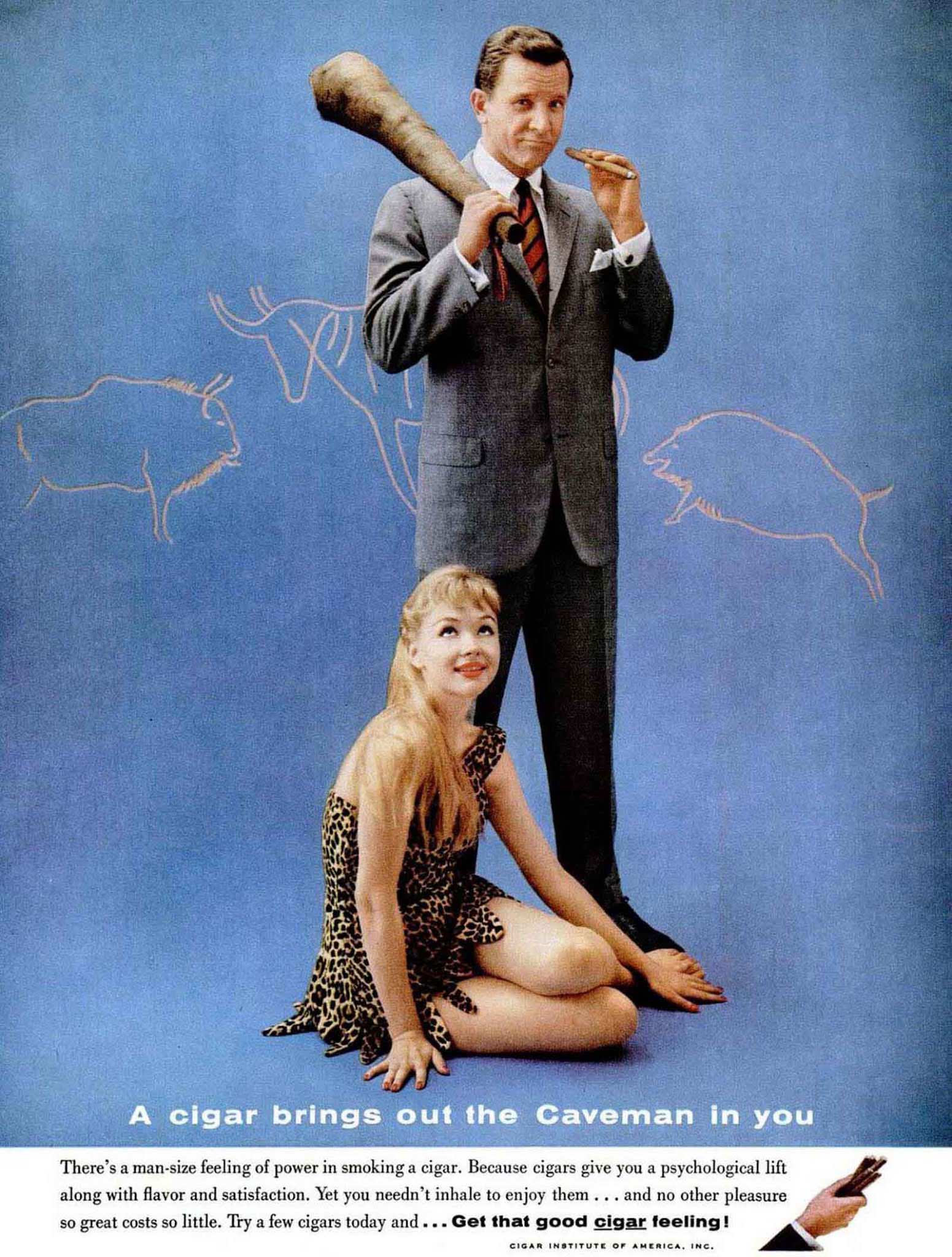
Cigar advertising in the 1950s leaned heavily into primal, aggressive masculinity. This 1959 ad claimed that smoking a cigar brought out the “caveman” in a man, offering a “man-size feeling of power.” Tobacco brands consistently tied their products to dominance and control — both over the environment and over women.
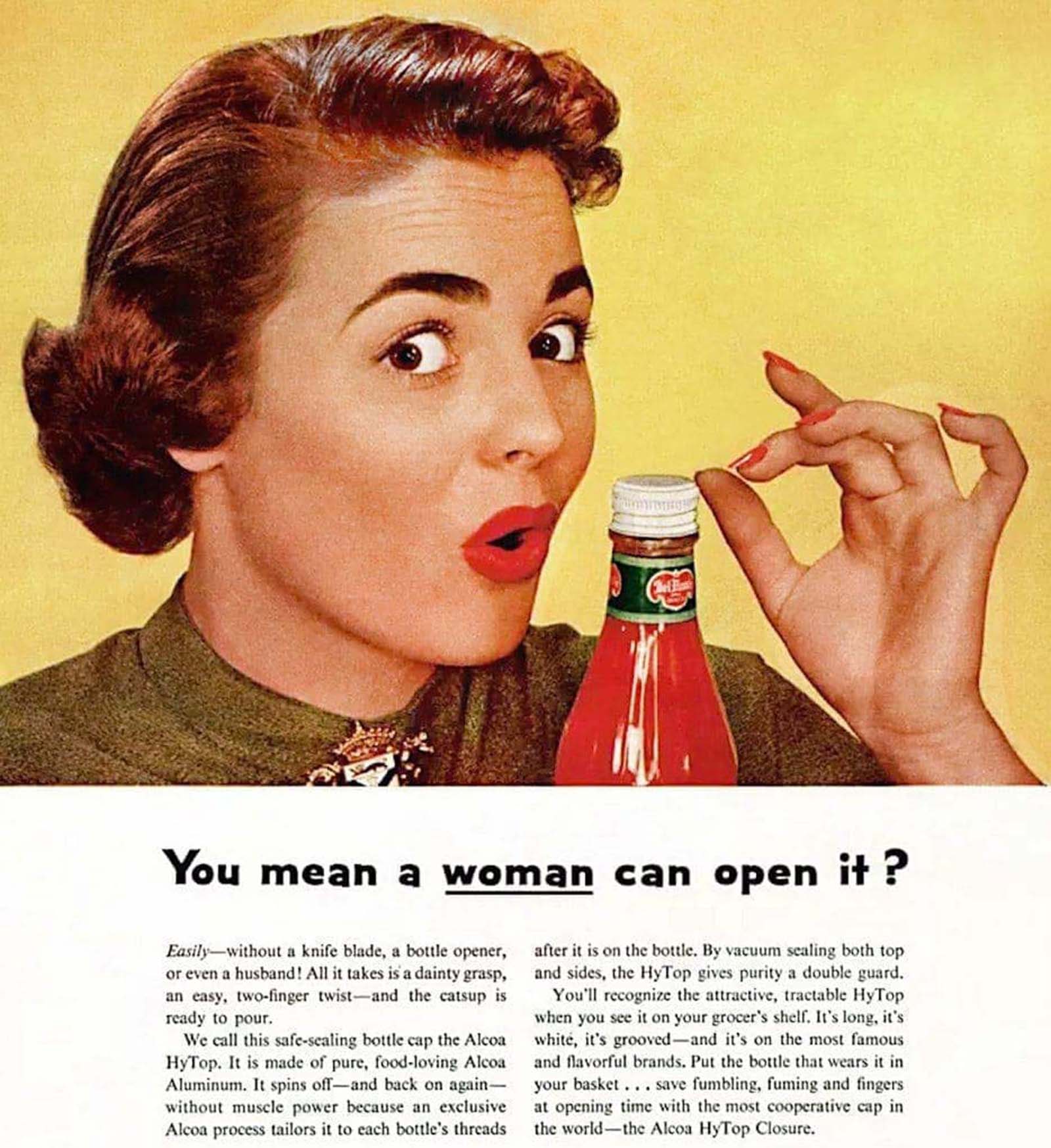
Alcoa Aluminum’s 1953 ad used the frustration of a husband unable to open a bottle cap to pitch its easy-open aluminum packaging. The implication was clear: the cap was designed so that even a woman could open it. The product’s convenience was framed as a solution to female incompetence rather than a genuine improvement in usability.
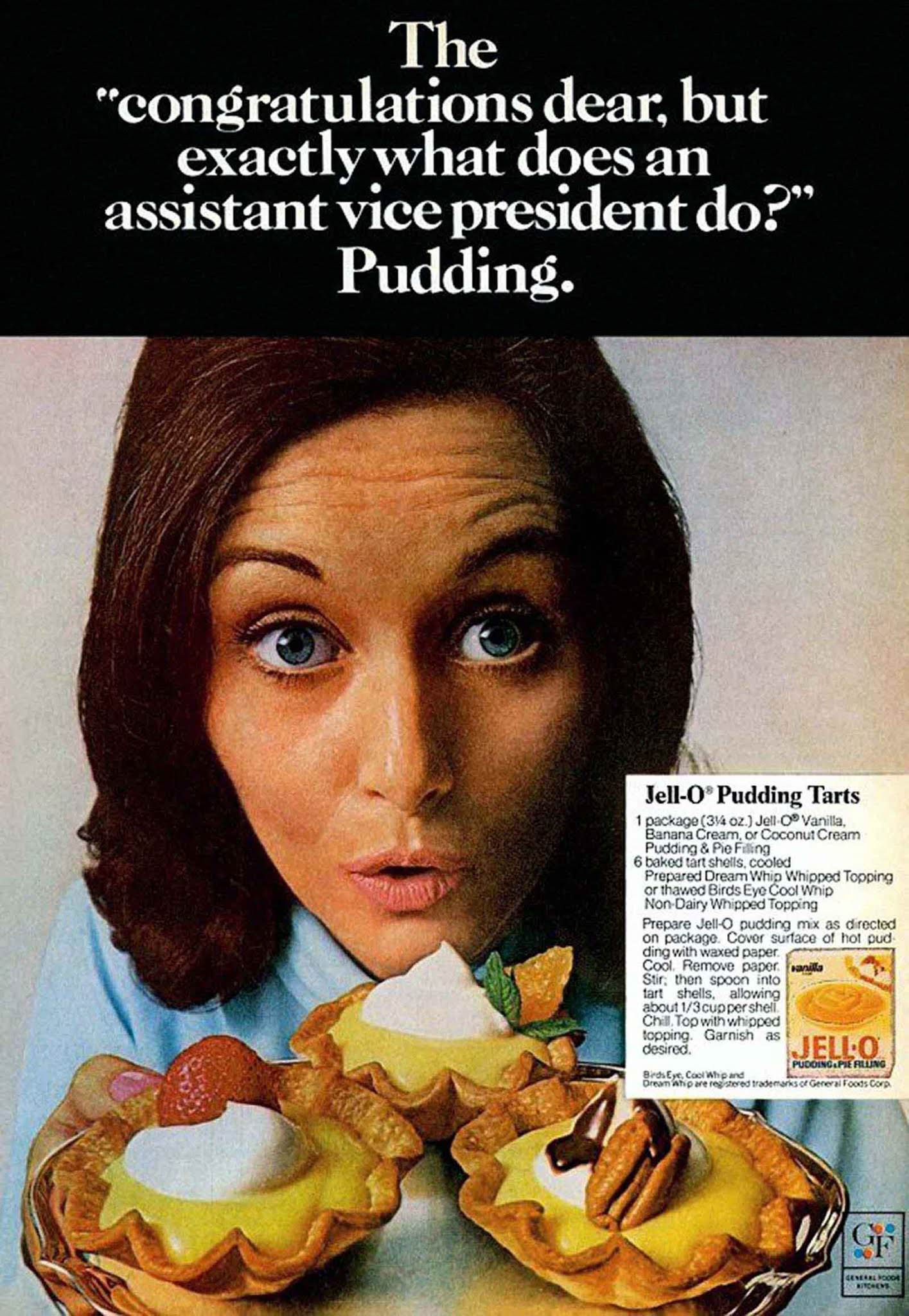
When women did succeed in the workplace, advertising found ways to undermine it. This ad showed a husband responding to his wife’s promotion by asking what an assistant vice president actually does — dismissing her achievement with patronizing confusion. Professional success for women was treated as a curiosity rather than something deserving of genuine respect.
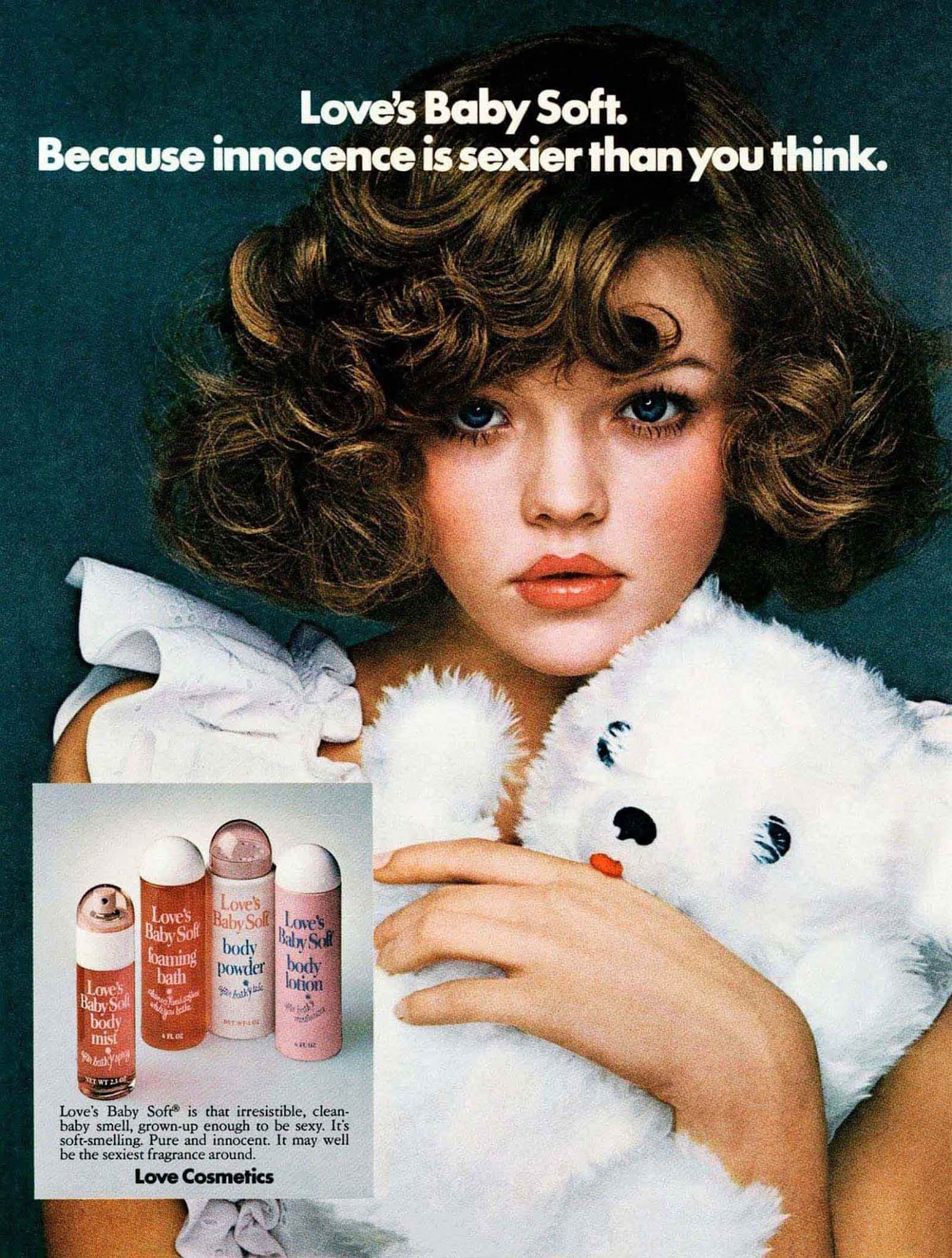
By the 1970s, the sexualization of youth and innocence had become a visible trend in advertising. This 1975 ad used the word “innocence” as a selling point in a sexually suggestive context, a combination that drew on deeply troubling cultural attitudes about youth and desirability.
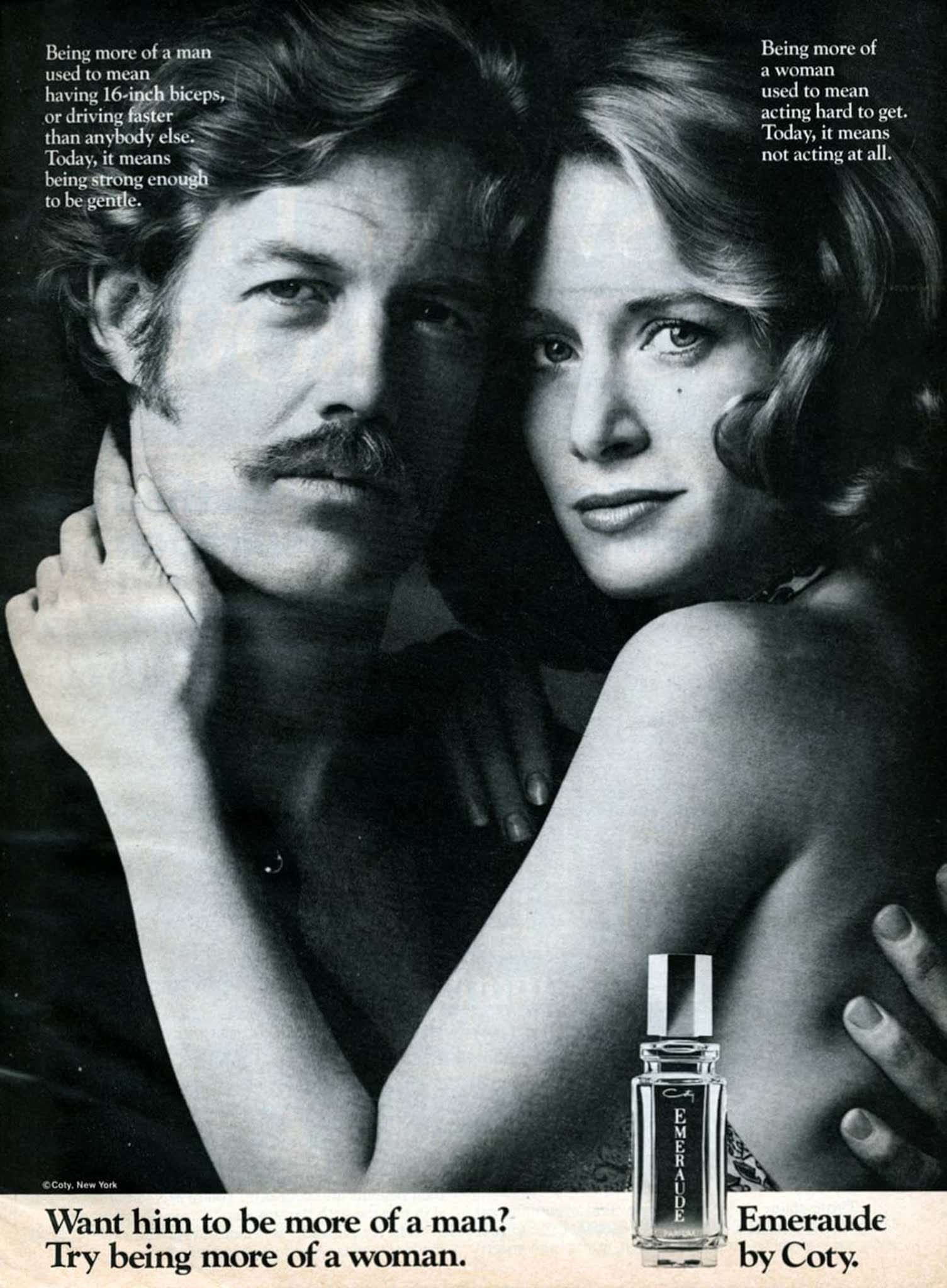
A 1974 ad told women directly that if their husbands weren’t acting masculine enough, the fault lay with the women themselves. “Want him to be more of a man? Try being more of a woman.” The ad placed the burden of male behavior entirely on female performance — a circular logic used to sell perfume or clothing while reinforcing rigid gender expectations.
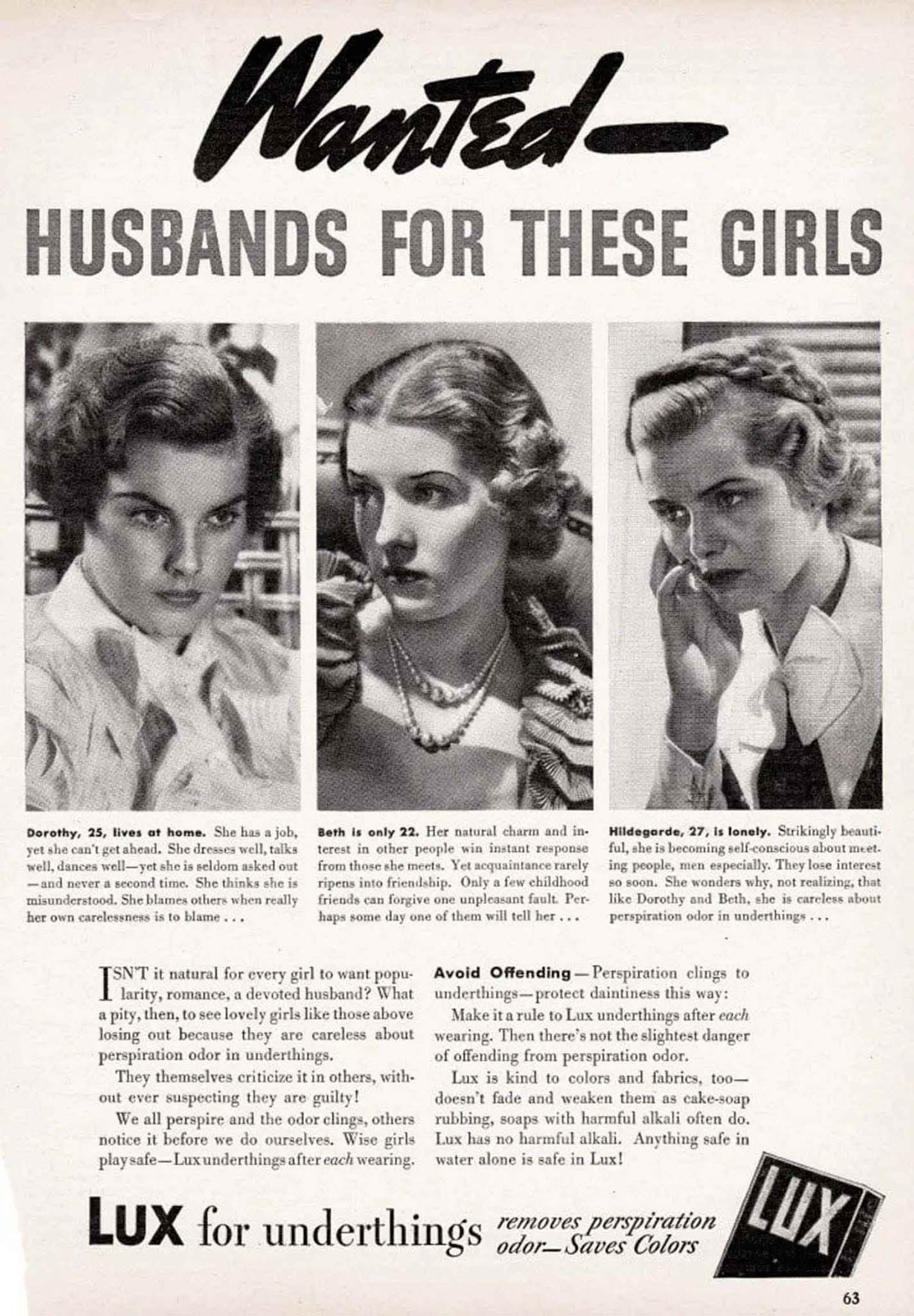
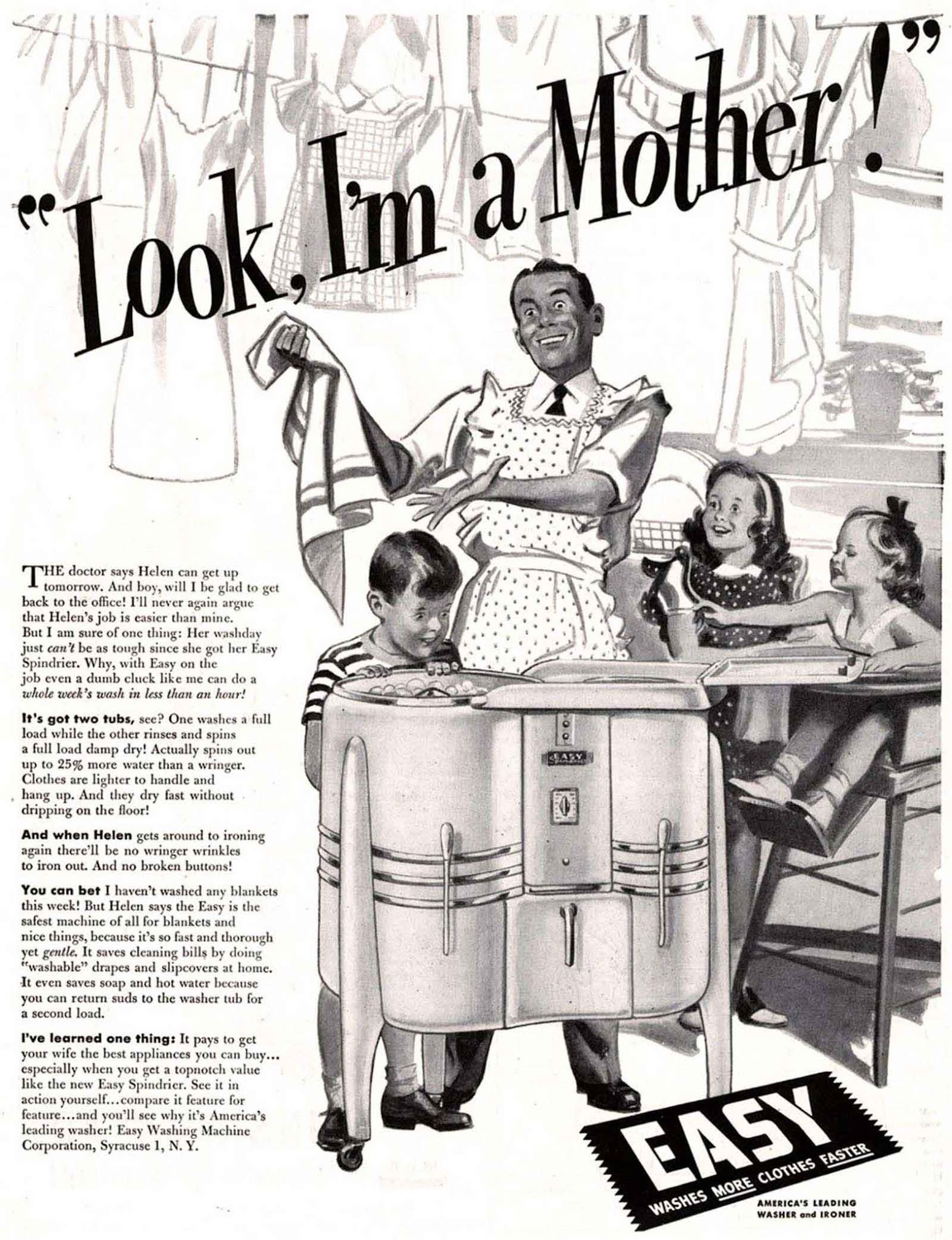
Detergent and soap brands in the 1940s built entire campaigns around the idea that a woman’s identity was inseparable from her household duties. Lux detergent ads instructed women on how to be better wives and mothers through proper cleaning. Motherhood itself was used as a branding device, with women’s identities reduced to their domestic function.
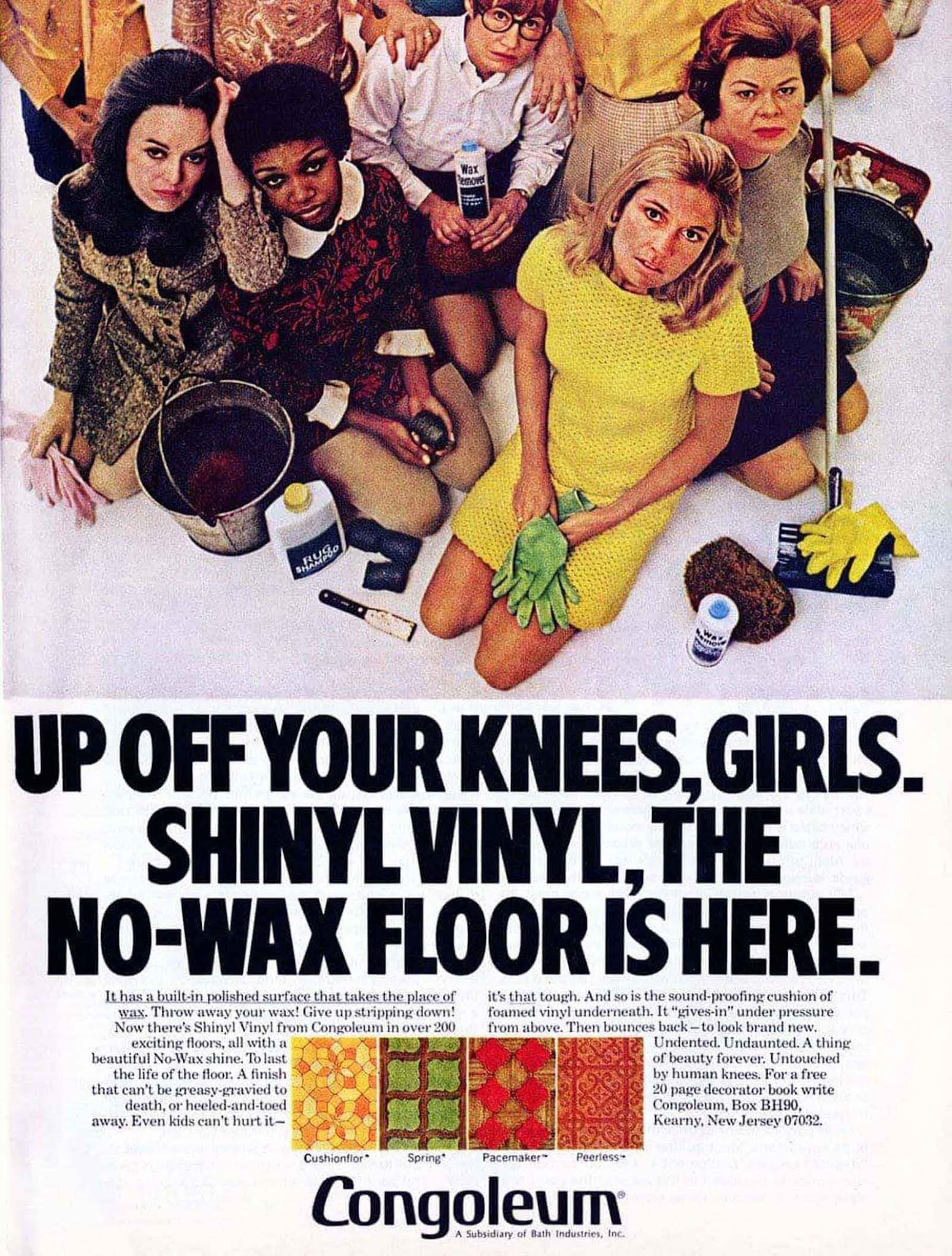
Even when an ad tried to position its product as liberating for women, the framing revealed the underlying assumptions. Congoleum’s 1970s flooring ad told women to get “up off your knees” because their no-wax product meant less scrubbing. The liberation on offer was from one form of domestic labor — not from domestic labor itself.
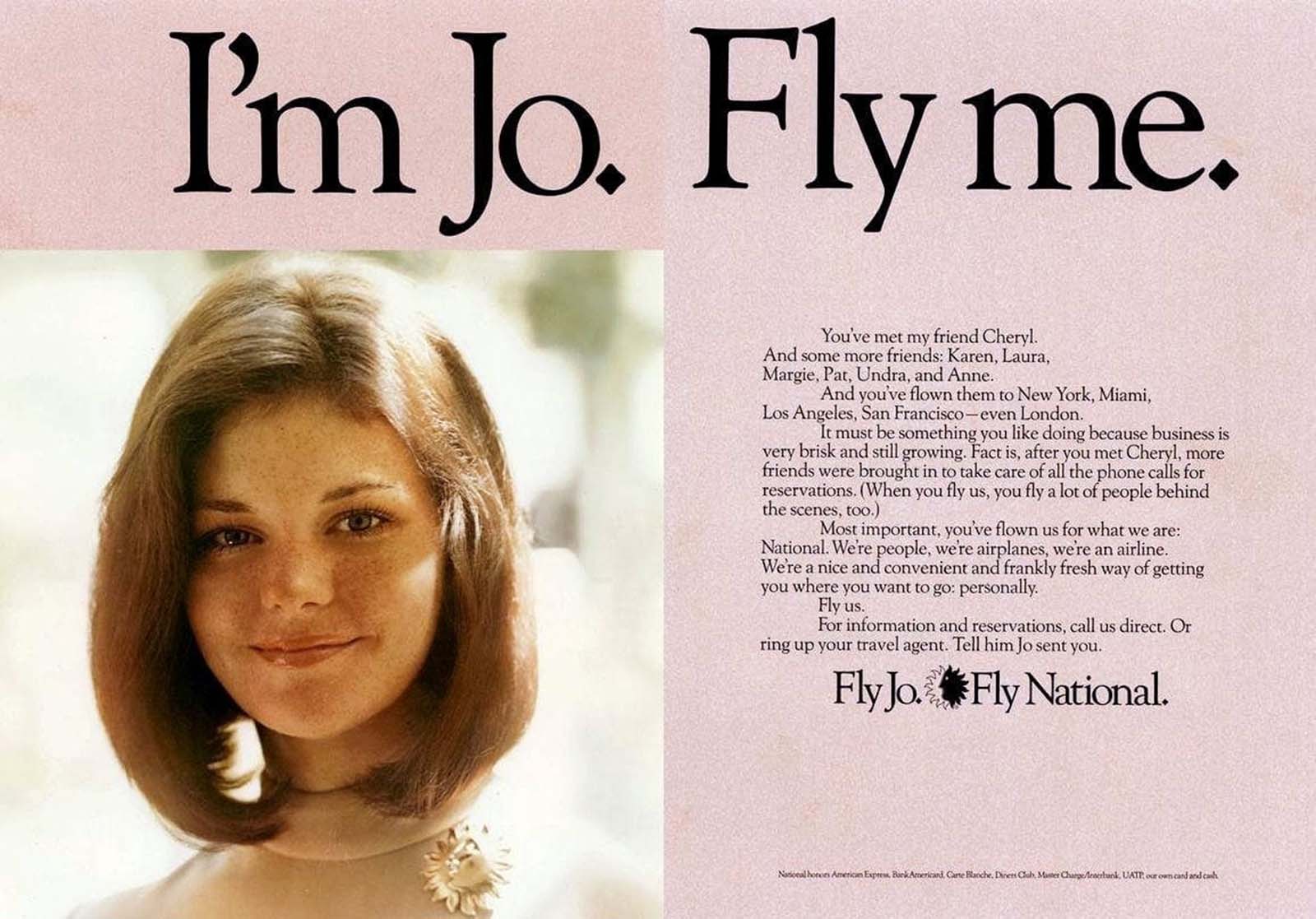
Airline advertising was particularly aggressive in using female flight attendants as sexual objects. The “Fly me” campaign, which ran in the United States, used individual female flight attendants by name and photo with the tagline “I’m [name]. Fly me.” The double meaning was entirely intentional, and the campaign ran for years.
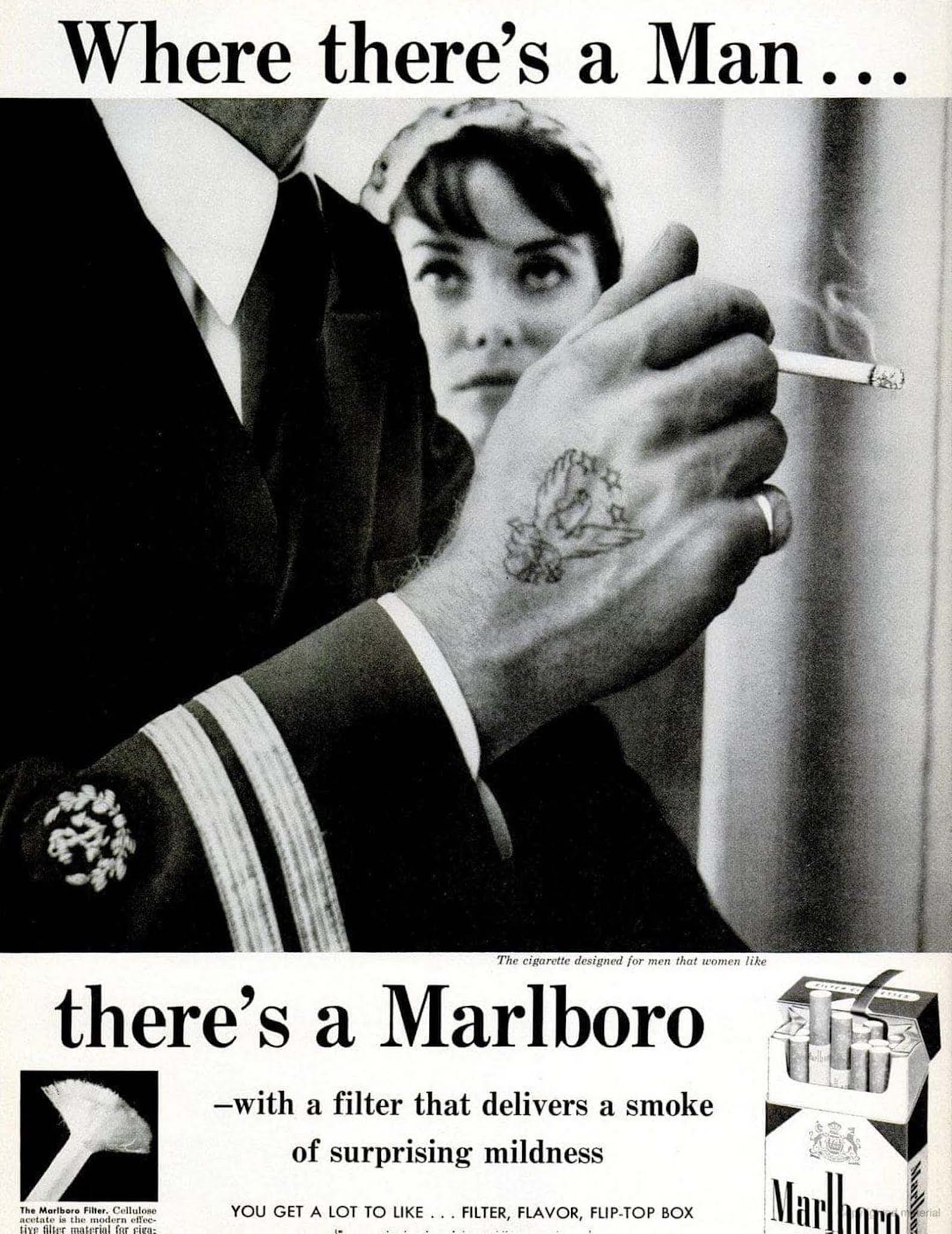
Marlboro’s brand identity was built almost entirely on aggressive masculinity. “Where there’s a man… there’s a Marlboro” tied cigarette smoking directly to male identity. The Marlboro Man campaign — which ran for decades — became one of the most recognized advertising strategies in history, and it was built on the premise that real men smoked.
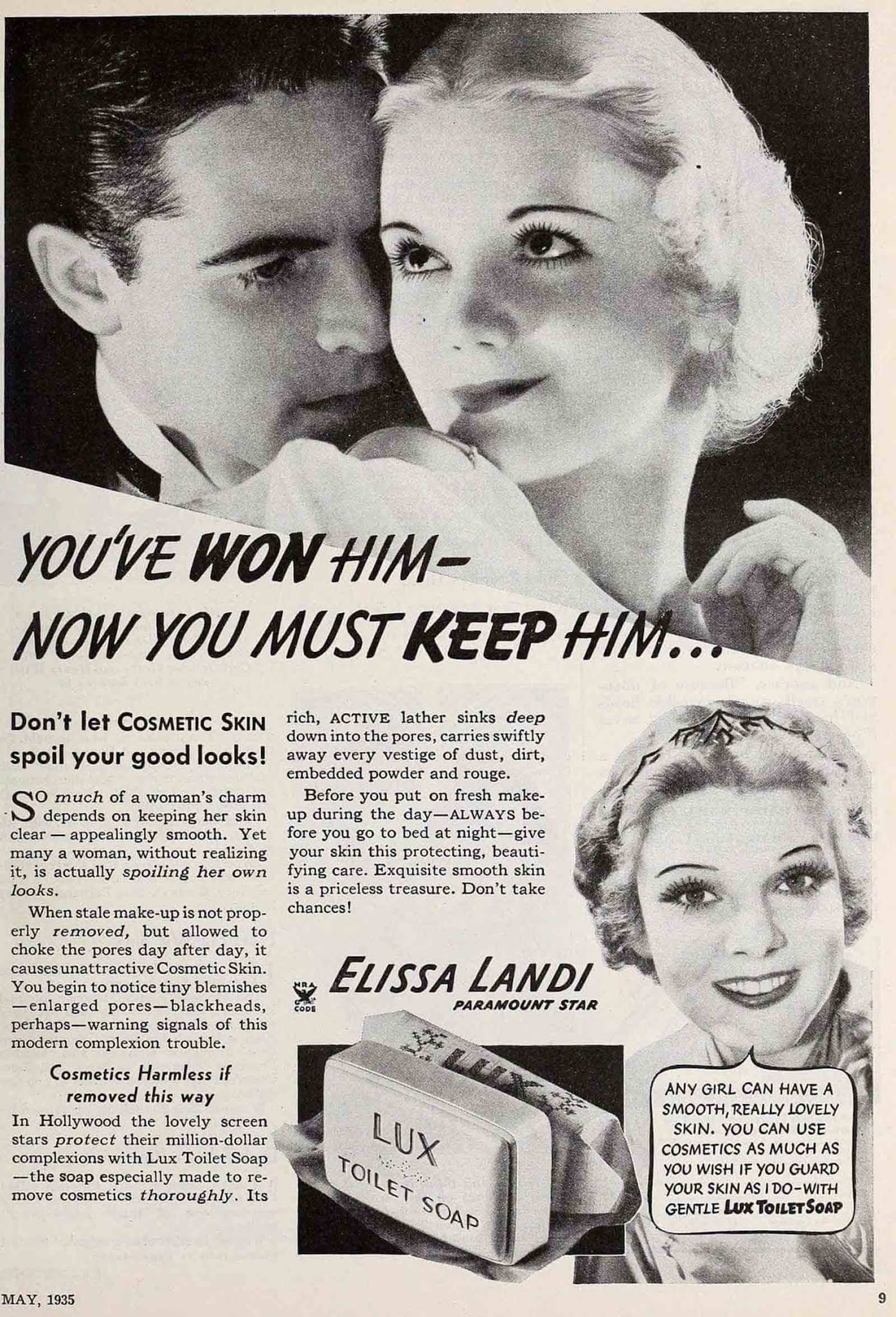
A 1935 ad told women that landing a husband was only the first challenge — keeping him was a daily obligation. “You won him — now you must keep him.” The message framed marriage as a competition women could lose at any moment, creating sustained anxiety that product advertisers were ready to exploit.
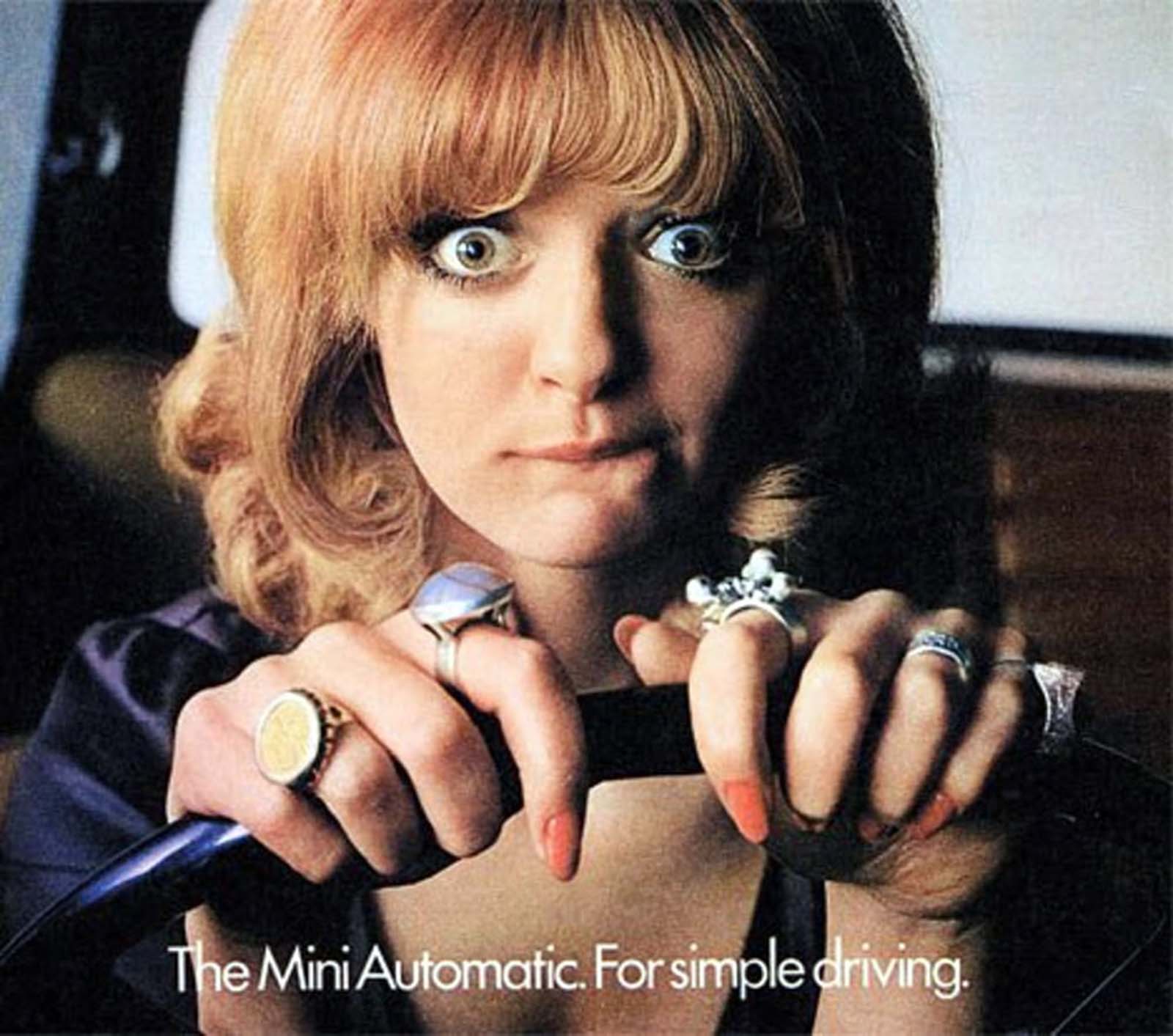
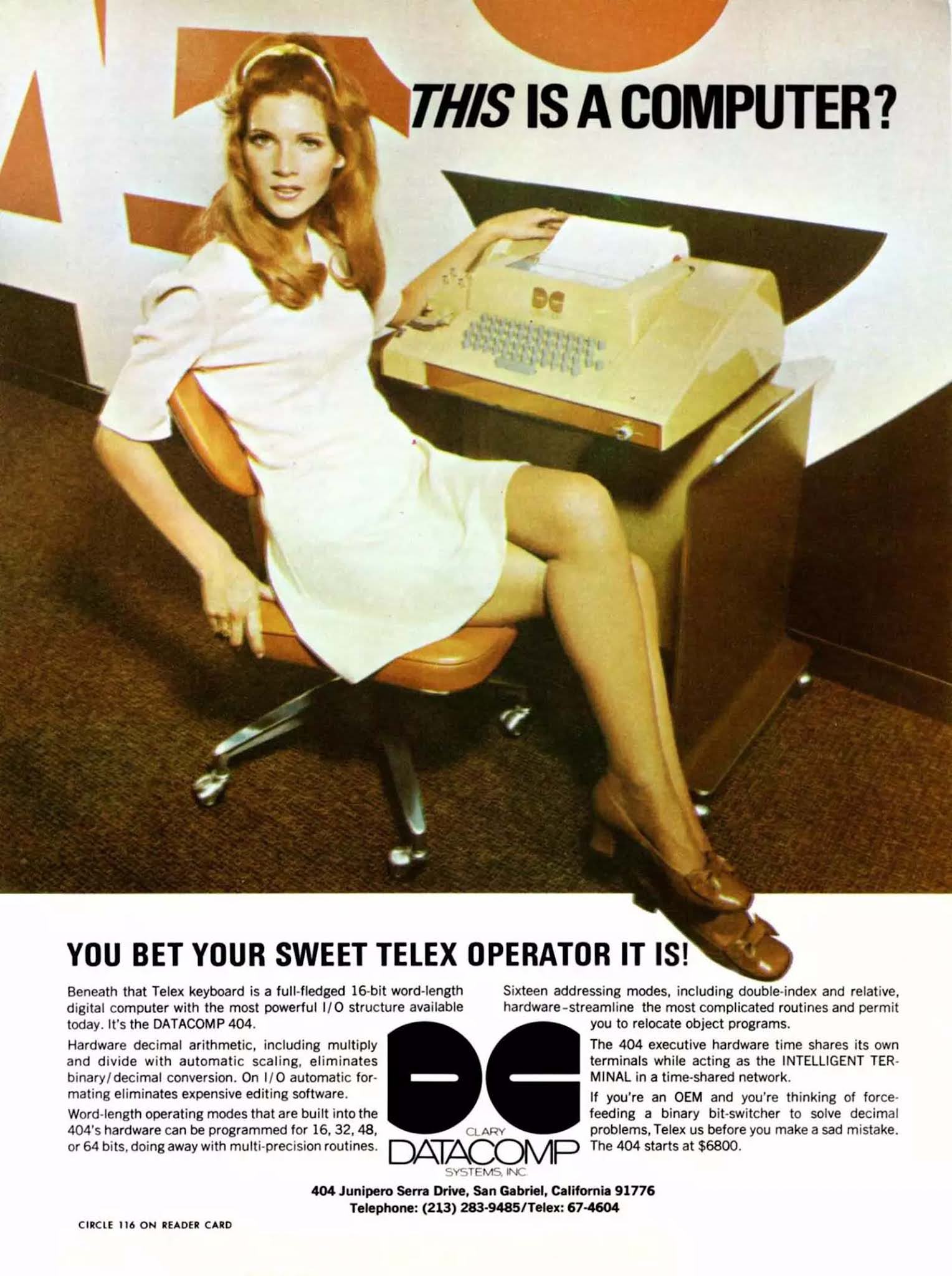
Automobile and technology ads used women’s supposed incompetence with machinery as a recurring joke. Automatic transmission was marketed as the solution for women who couldn’t handle a manual gearshift. Computers were framed as shocking and incomprehensible when operated by women. The underlying message was always the same: technology was a male domain.
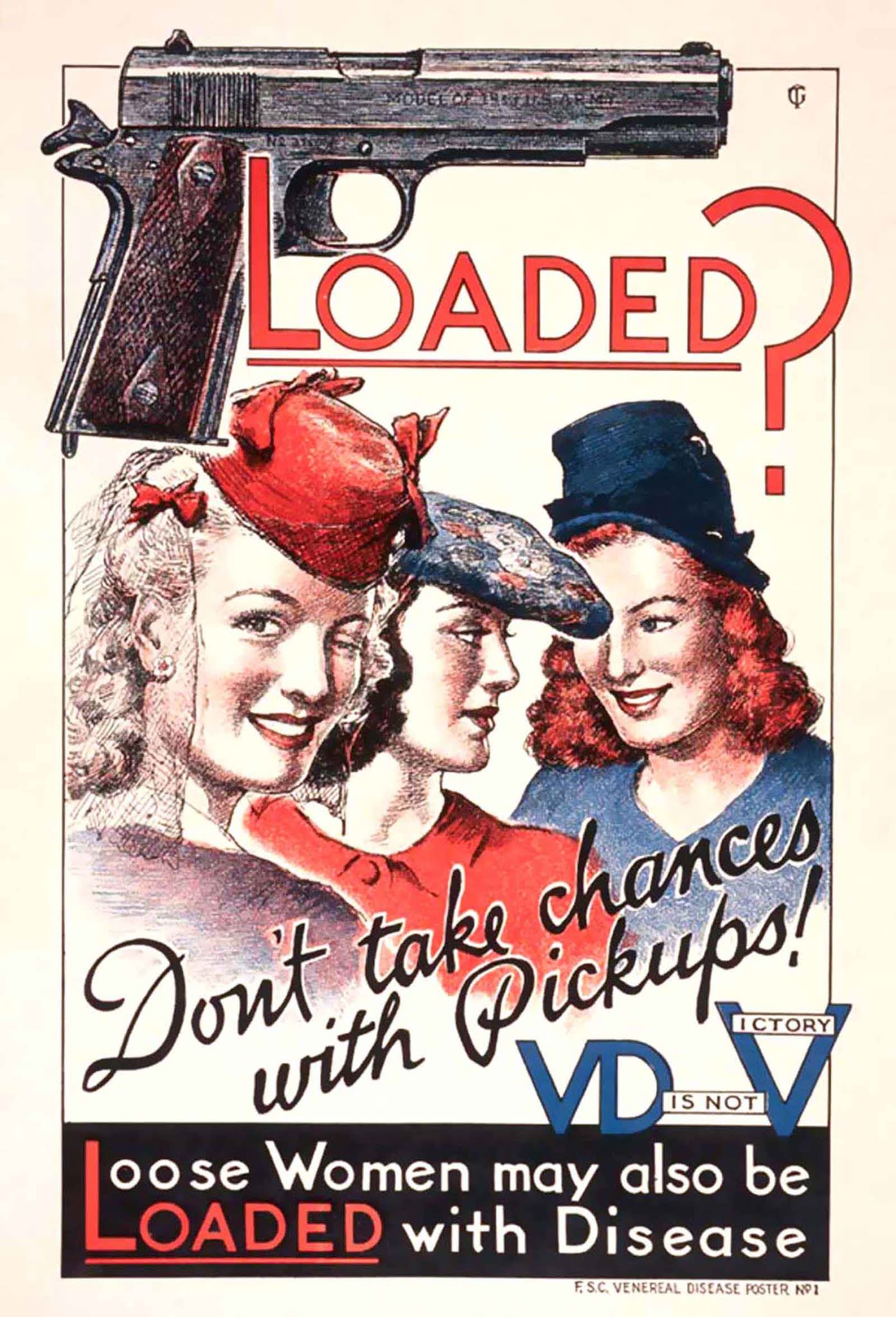
Public health advertising from this era also carried deep biases. STD awareness campaigns frequently placed the blame for transmission on women — particularly women who worked in entertainment or were perceived as sexually promiscuous. Men were positioned as victims of female disease rather than participants in its spread.
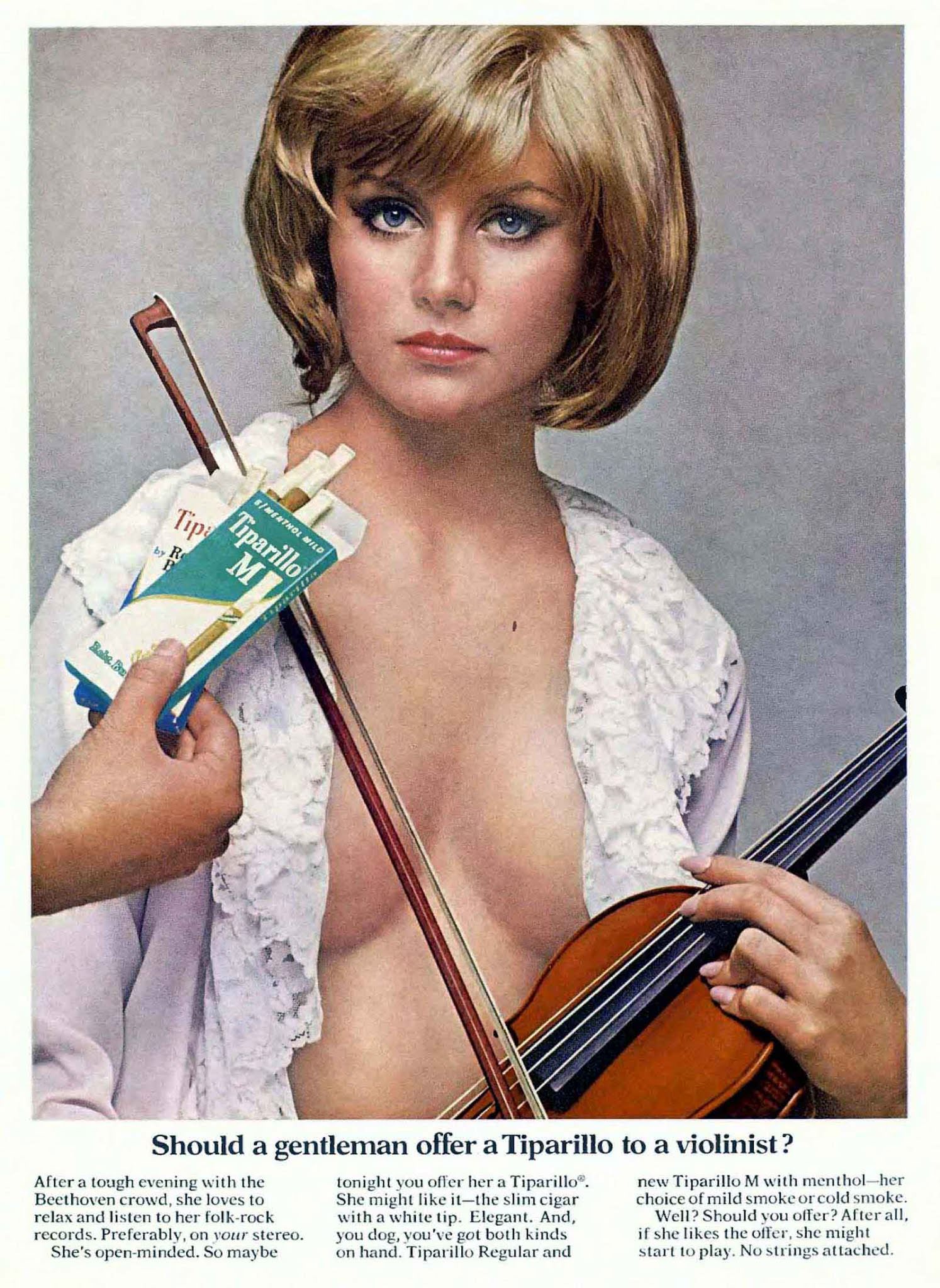
Tiparillo ran a series of ads in the 1960s that posed questions about whether to offer a cigarette to a woman in a specific situation. The campaign used different female archetypes — a librarian, a violinist, a stewardess — as props in a game of male calculation. Women existed in these ads as puzzles for men to solve, not as people with their own agency.
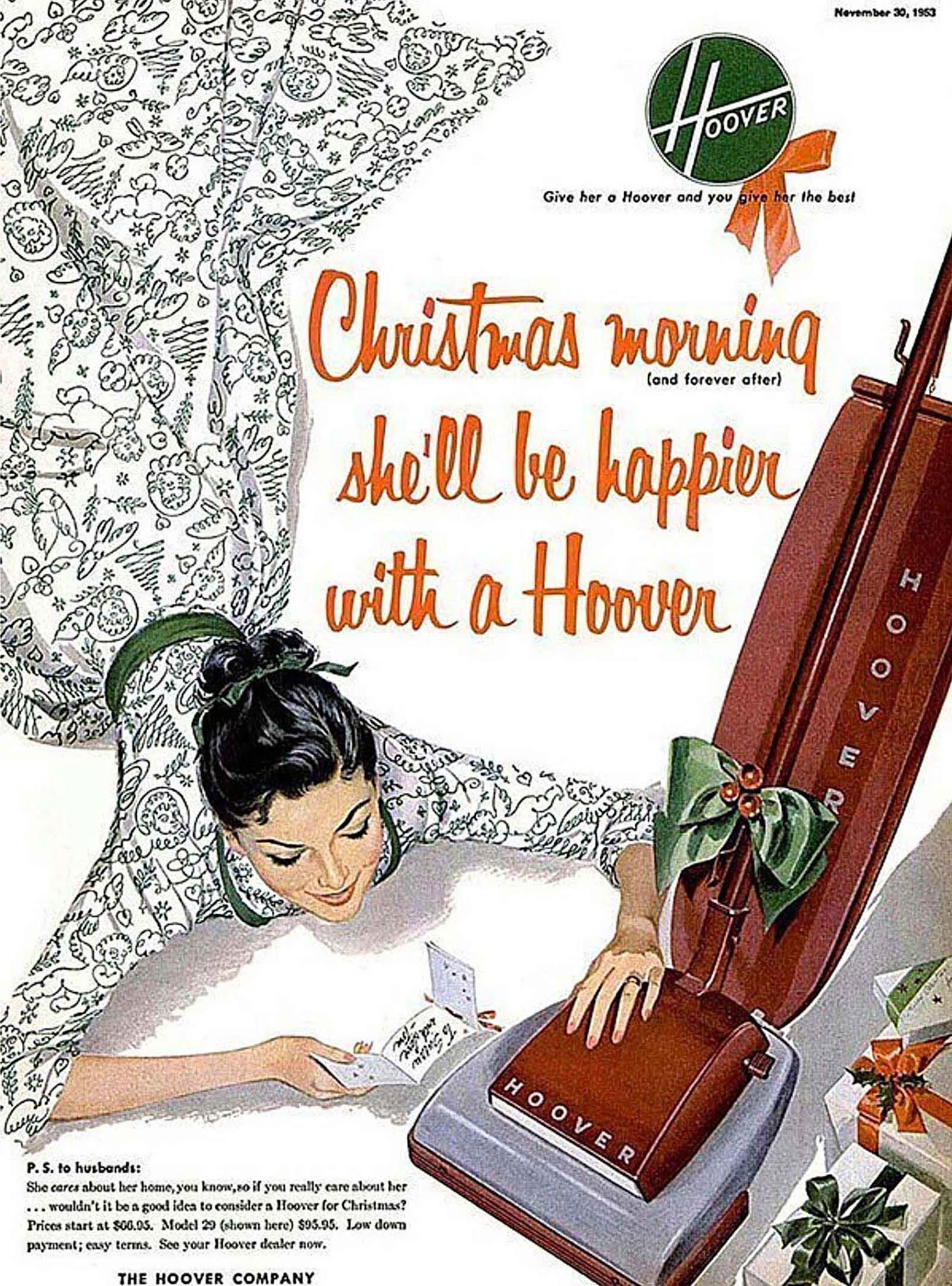
Hoover’s vacuum cleaner ads were a fixture of mid-century domestic advertising. Women were shown delighted by the gift of a cleaning appliance, and husbands were praised for their thoughtfulness in purchasing one. The exchange — husband buys, wife cleans — was presented as the natural and happy order of a functioning home.
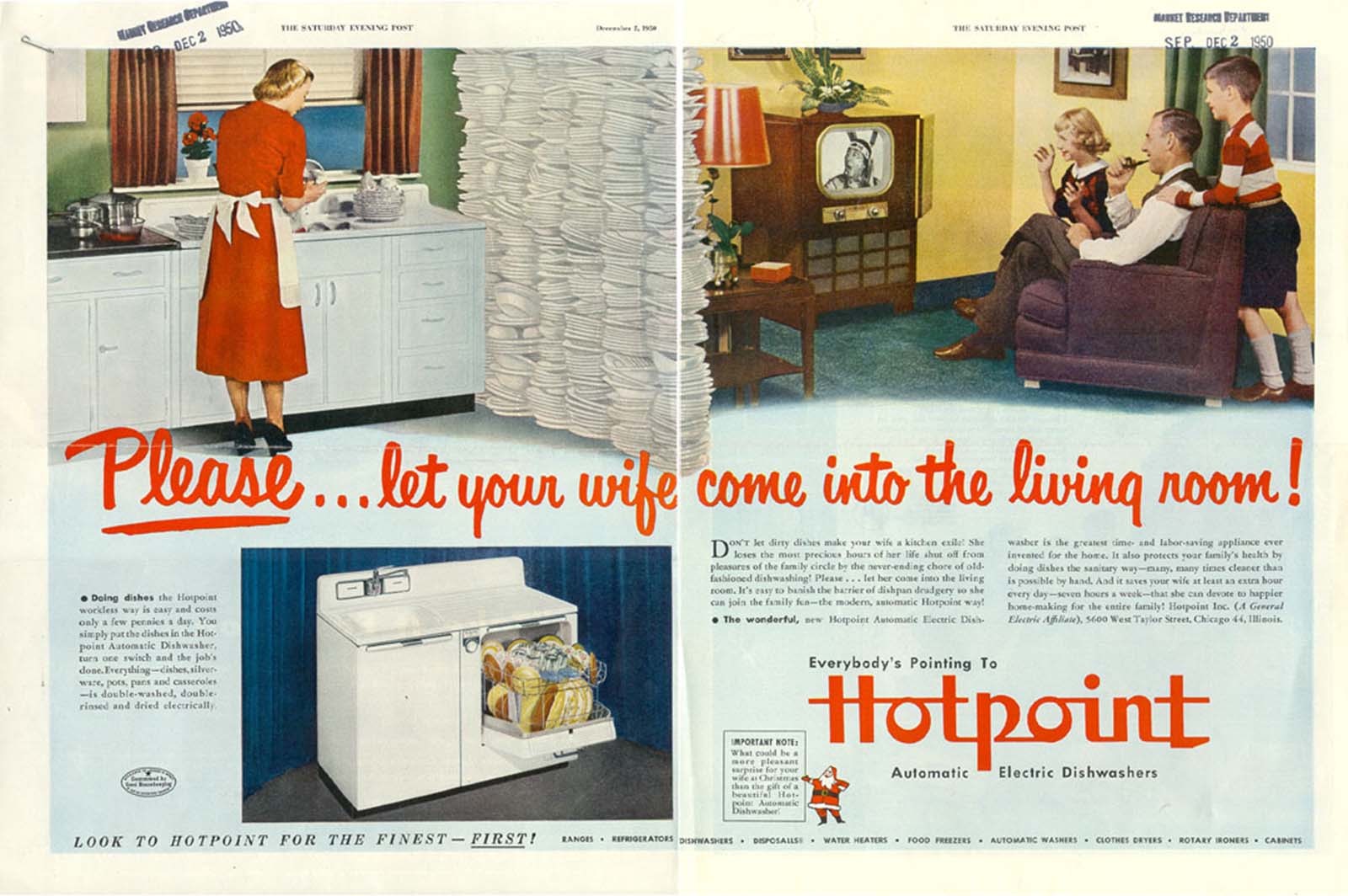
Hotpoint’s dishwasher ad made a telling appeal: “Please… let your wife come into the living room!” The ad was pitched at husbands, asking them to consider buying a dishwasher so their wives wouldn’t be stuck in the kitchen all night. The woman’s presence in the living room was framed as a gift from the husband — something he granted her by purchasing the right appliance.
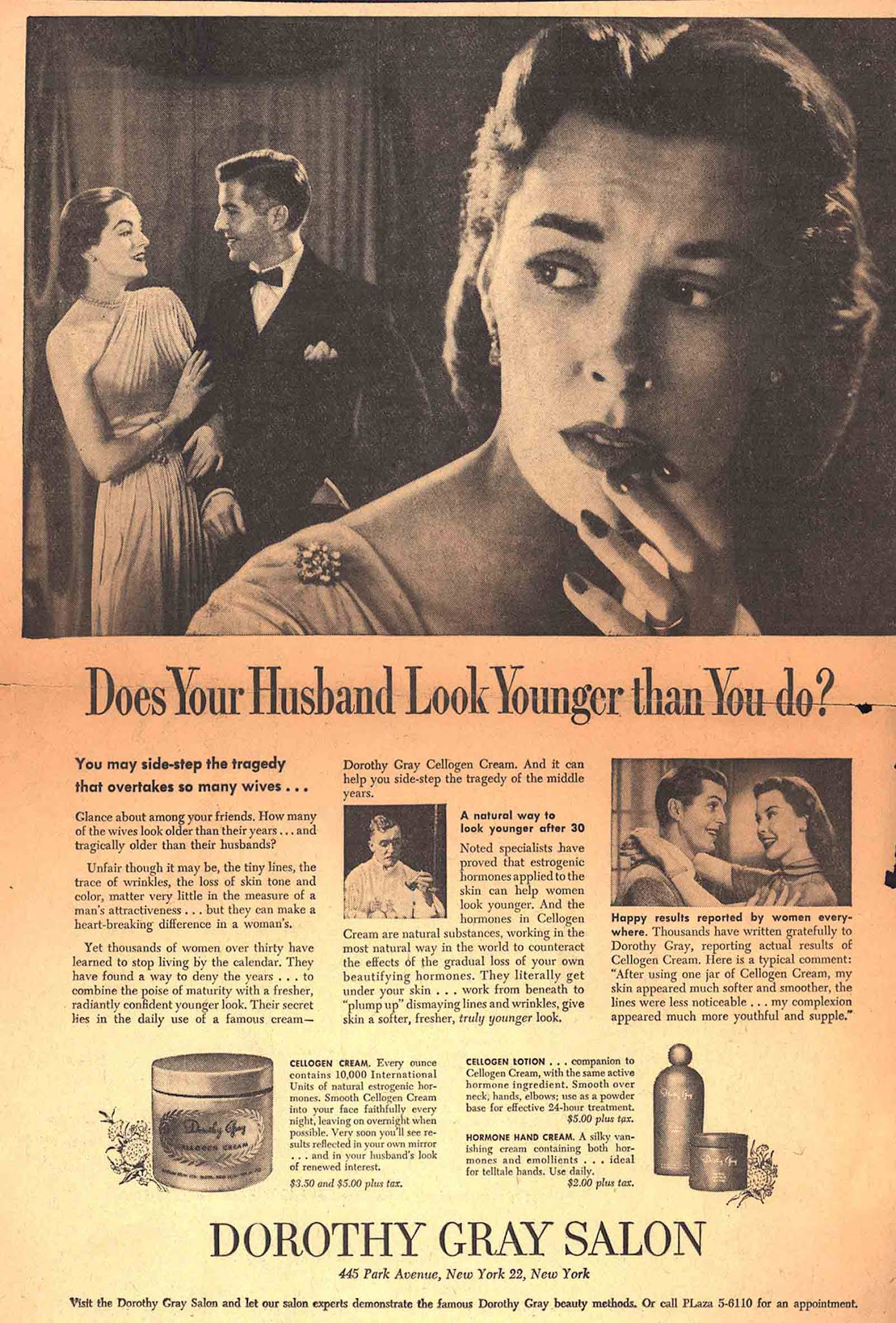
Beauty product ads weaponized the fear of aging by comparing women to their husbands. “Does your husband look younger than you do?” These ads told women that aging was their personal failure — and that the right cream, soap, or treatment was the only thing standing between them and marital disaster.

Wartime fundraising campaigns used gender shame as aggressively as military recruitment ads did. The Canadian Patriotic Fund and similar organizations ran ads that pressured women to push their husbands and sons into enlisting, and pressured men by questioning their courage. Patriotism was framed as a masculine duty, and failure to enlist was treated as a personal and public disgrace.
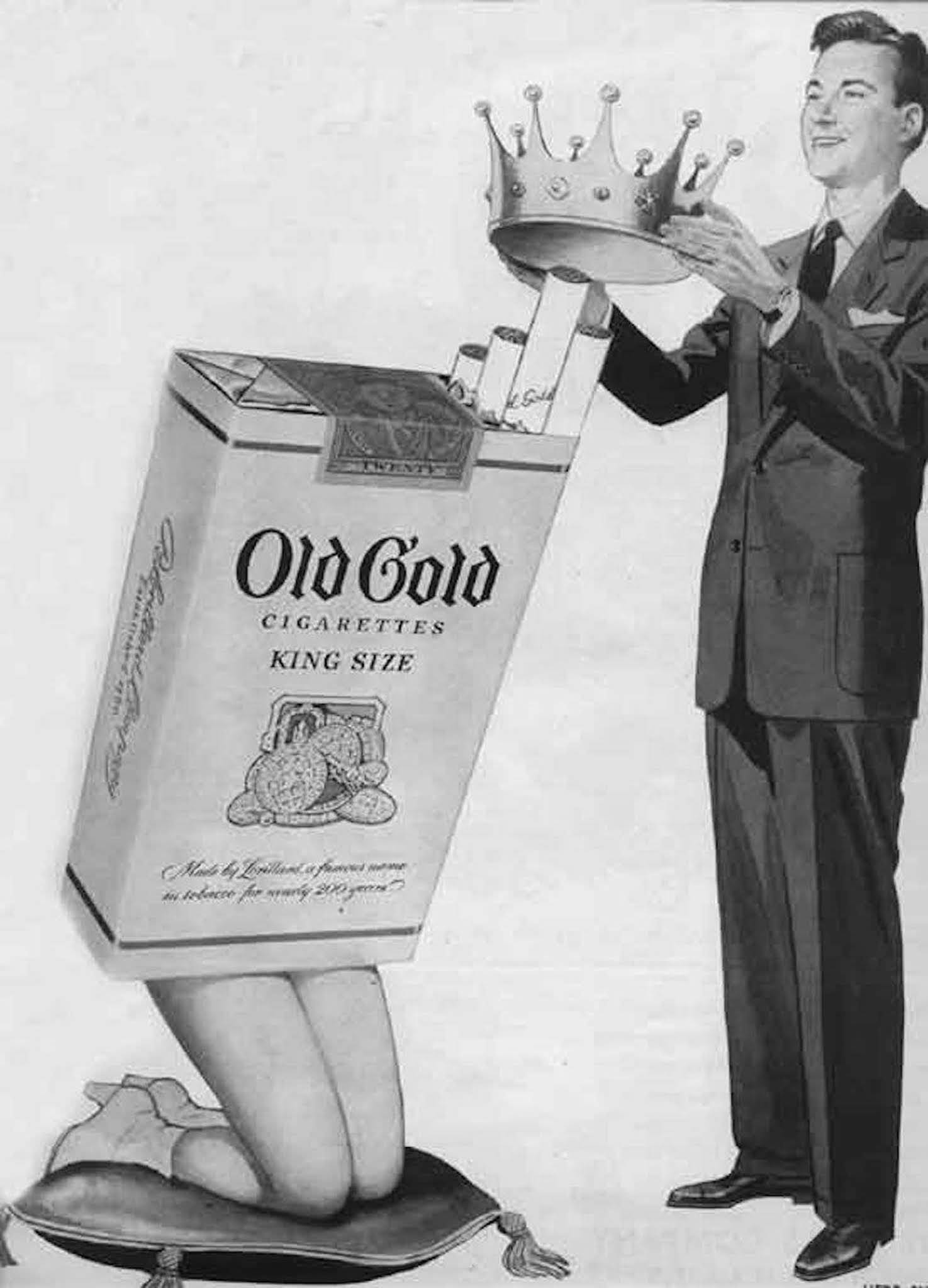
Tobacco companies regularly merged the imagery of women with their products. A cigarette pack styled as a woman — slender, glamorous, inviting — was a visual shorthand that tied smoking to femininity, desire, and social appeal. These images were everywhere in mid-century print media, normalizing both smoking and the objectification embedded in the ads.

Acme’s 1963 coffee ad stated plainly that “the most important quality in coffee is how much it will please your man.” A woman’s taste, preference, or enjoyment didn’t enter into the equation. Coffee wasn’t for her — it was a tool she used to satisfy her husband. This framing appeared across dozens of food and beverage brands throughout the decade.
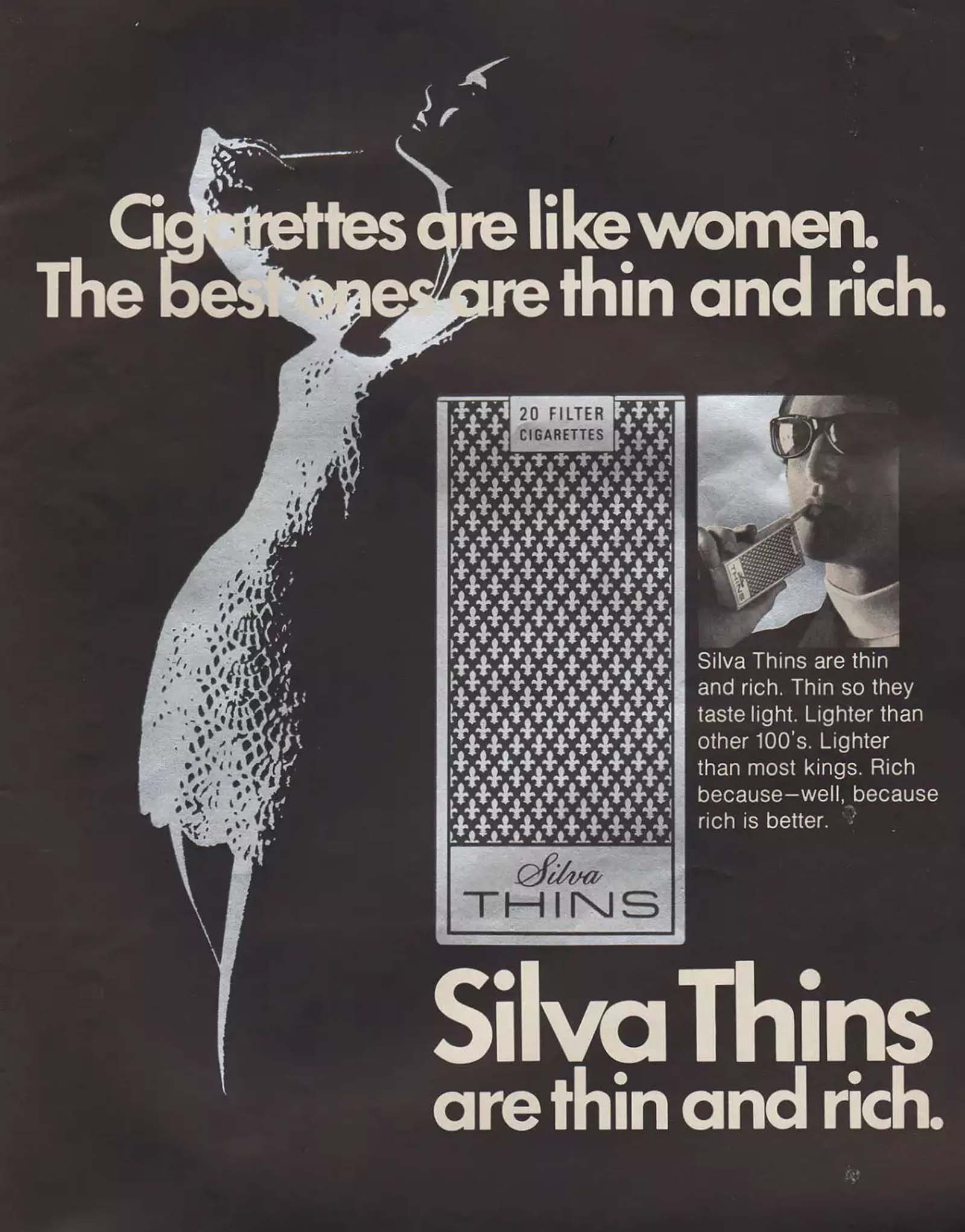
Brown & Williamson’s 1967 cigarette campaign was part of a broader industry effort to market tobacco directly to women. By the late 1960s, cigarette brands had identified women as an underserved market and began tailoring their messaging accordingly — using themes of independence, glamour, and femininity to sell a product whose dangers the companies had already documented internally but continued to deny publicly.