
Long before air conditioning was a common luxury, millions of New Yorkers beat the summer heat in public pools. The story of how those pools came to exist goes back further than most people realize — all the way to the tenements of the late 1800s.
In the late 19th century, the New York State Legislature passed a law requiring cities with populations over 50,000 to provide accessible bathhouses. The cities that fell under this law, New York City chief among them, were packed with residents living in overcrowded tenements where access to basic sanitation was a daily struggle. Bathhouses weren’t just for cleanliness — they quickly became places of recreation, too.
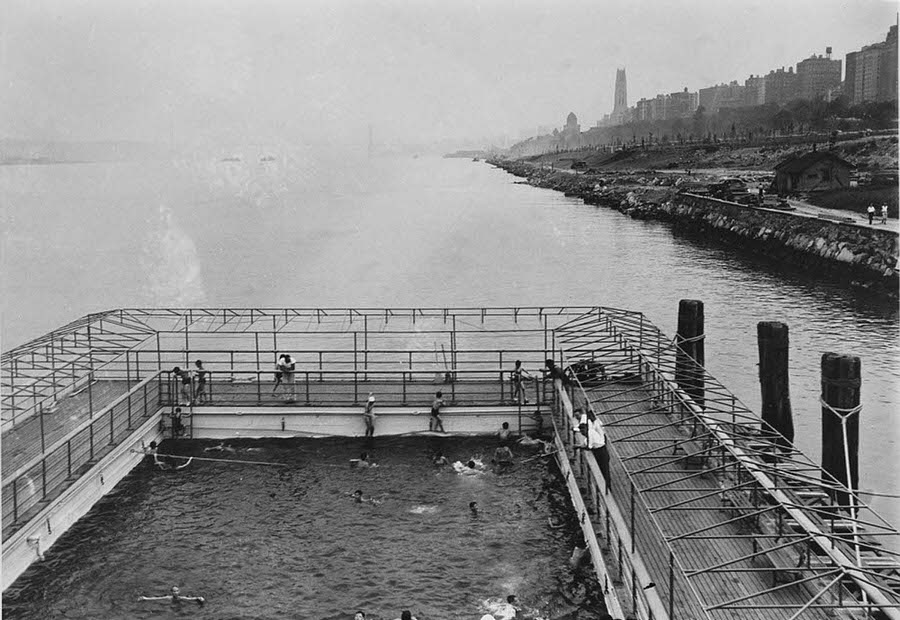
Alongside the bathhouses, New York City operated floating baths along the East and Hudson Rivers. These were wooden structures anchored by pontoons and filled directly with river water. They included separate dressing rooms for men and women. The concept worked for a time, but growing concerns about river pollution and the short usable season eventually ended the floating bath era.
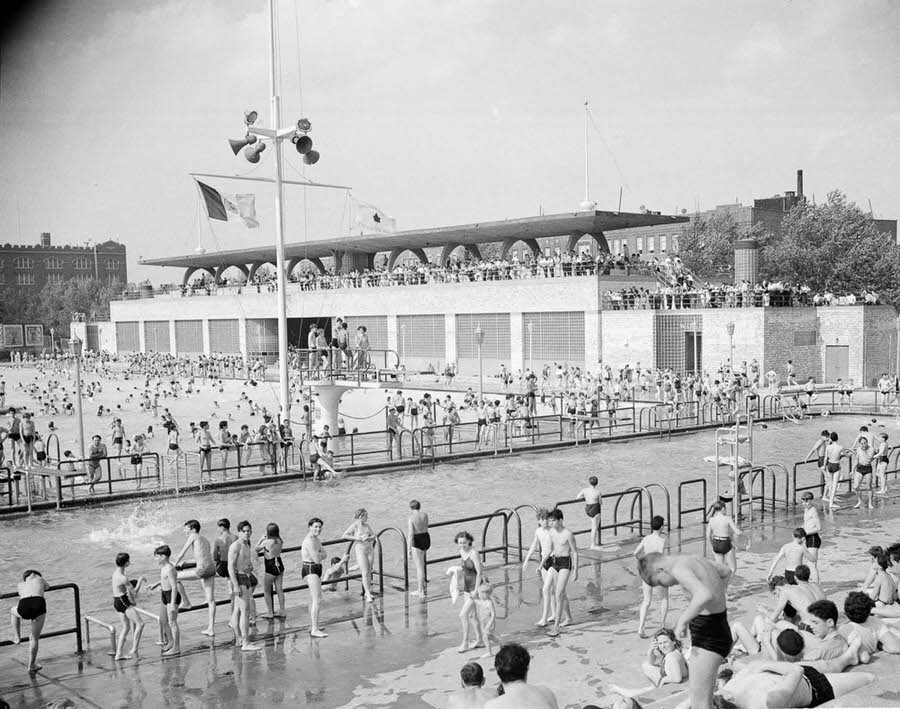
The most dramatic chapter in New York City pool history unfolded in the 1930s. Under the Works Progress Administration (WPA), the Parks Department launched a sweeping construction effort that produced some of the most impressive public pools in the country. Architect Aymar Embury led a team that designed a series of distinct complexes, each one carefully matched to its site’s natural landscape. The pools featured substantial filtration systems, heating units, underwater lighting, and chlorination technology that made them far safer than any river or harbor swim. Architectural styles ranged from Romanesque Revival to Art Deco, built primarily from brick, concrete, and cast stone.
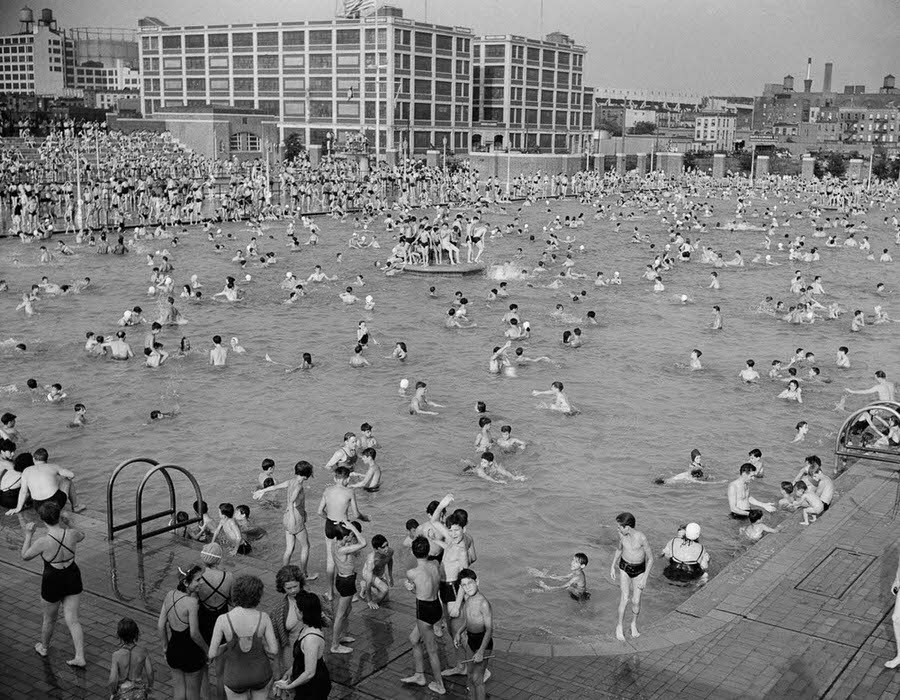
The summer of 1936 marked a turning point. Eleven pools opened within just a few weeks of each other, drawing enormous crowds across the five boroughs. Parks Commissioner Robert Moses and Mayor Fiorello La Guardia attended packed dedication ceremonies. At the opening of Thomas Jefferson Pool, over 10,000 people showed up. Mayor La Guardia addressed the crowd directly: “Here is something you can be proud of. It is the last word in engineering, hygiene, and construction that could be put into a pool.”
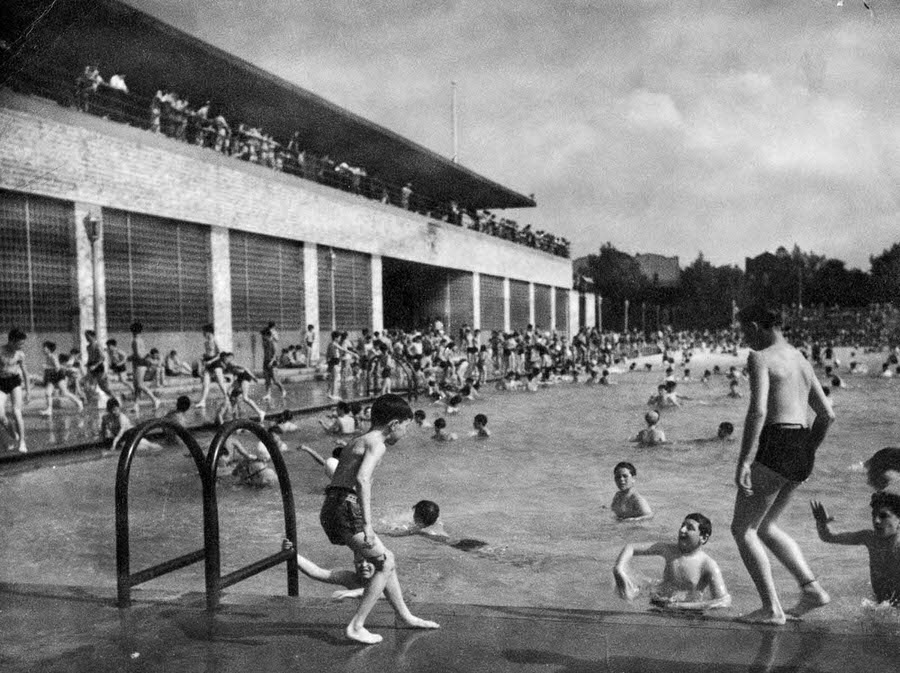
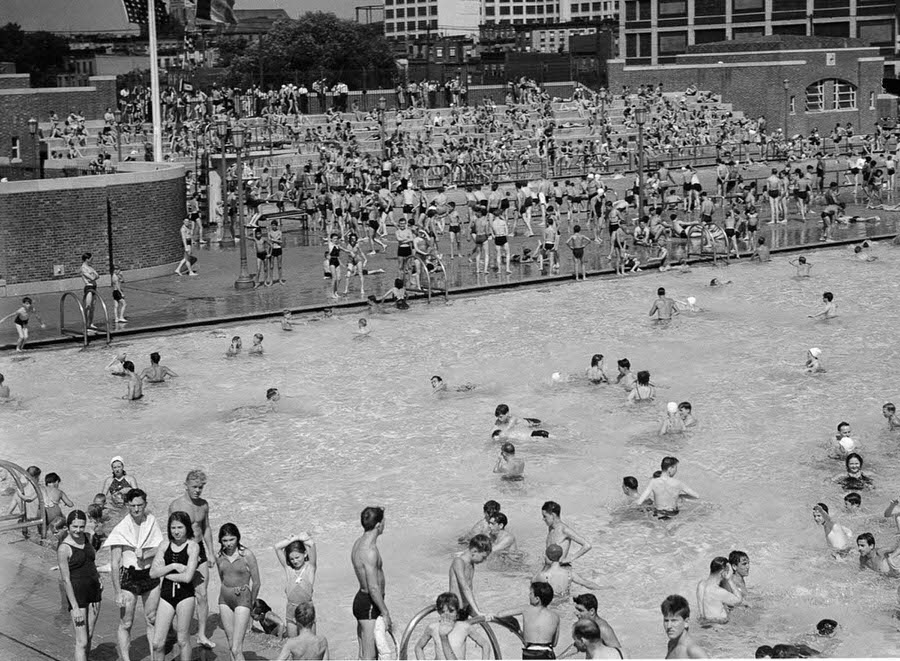
These pools weren’t just for swimming. The WPA complexes were built with year-round use in mind. When summer ended, the facilities hosted paddle tennis, shuffleboard, volleyball, basketball, and handball. Locker rooms became boxing gyms in the off-season. On summer evenings, teenagers filled the changing rooms for dances. The pools served as true community hubs, not simply places to cool off.
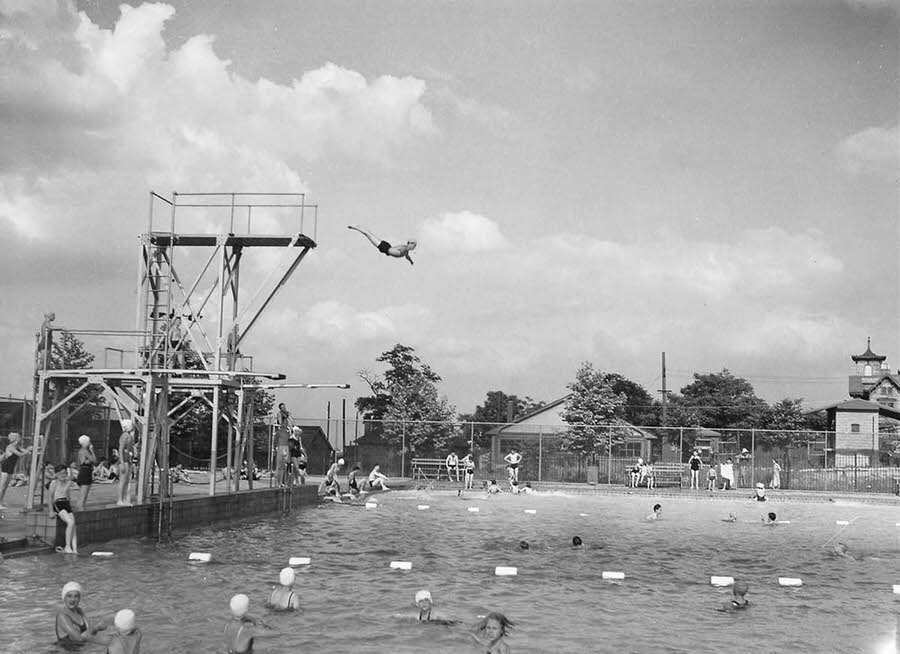
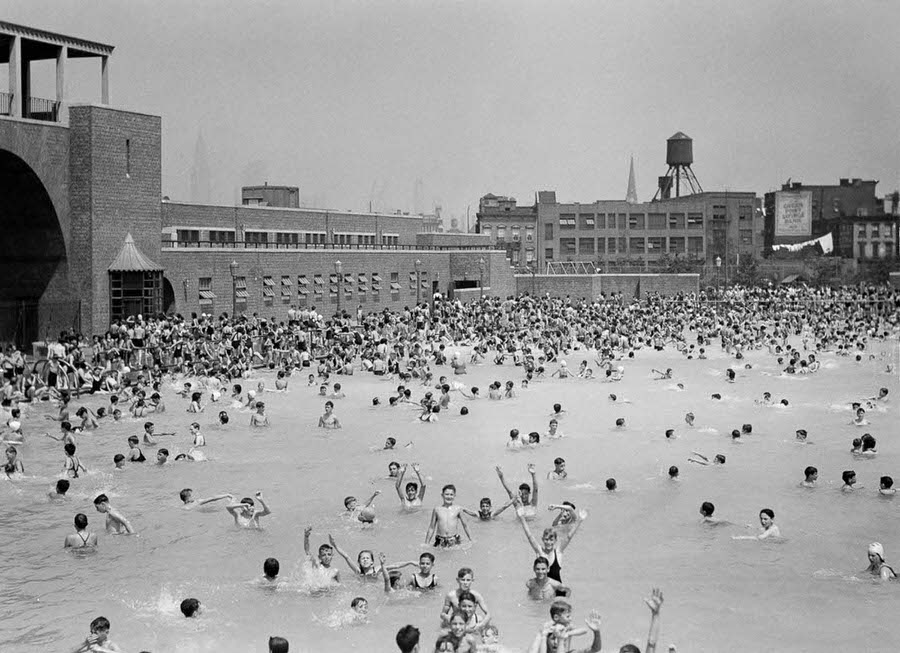
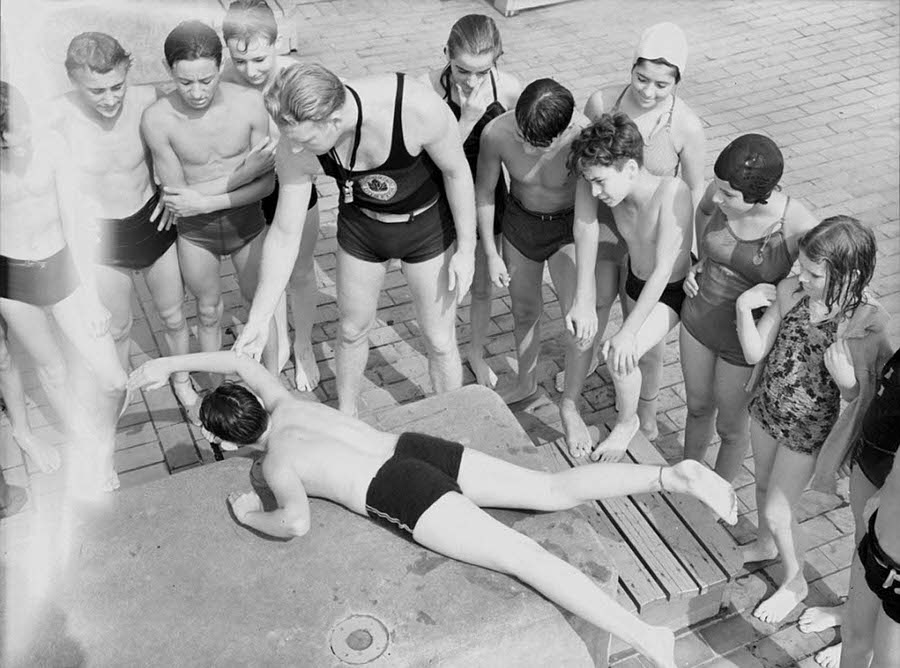
The 1936 openings drew athletes and neighborhood children alike. Swimming competitions became a regular feature at pools like Astoria Park, where crowds lined the edges to watch divers and racers compete. The city also offered free swimming lessons at its public pools, making aquatic skills accessible to generations of young New Yorkers who would otherwise never have learned.
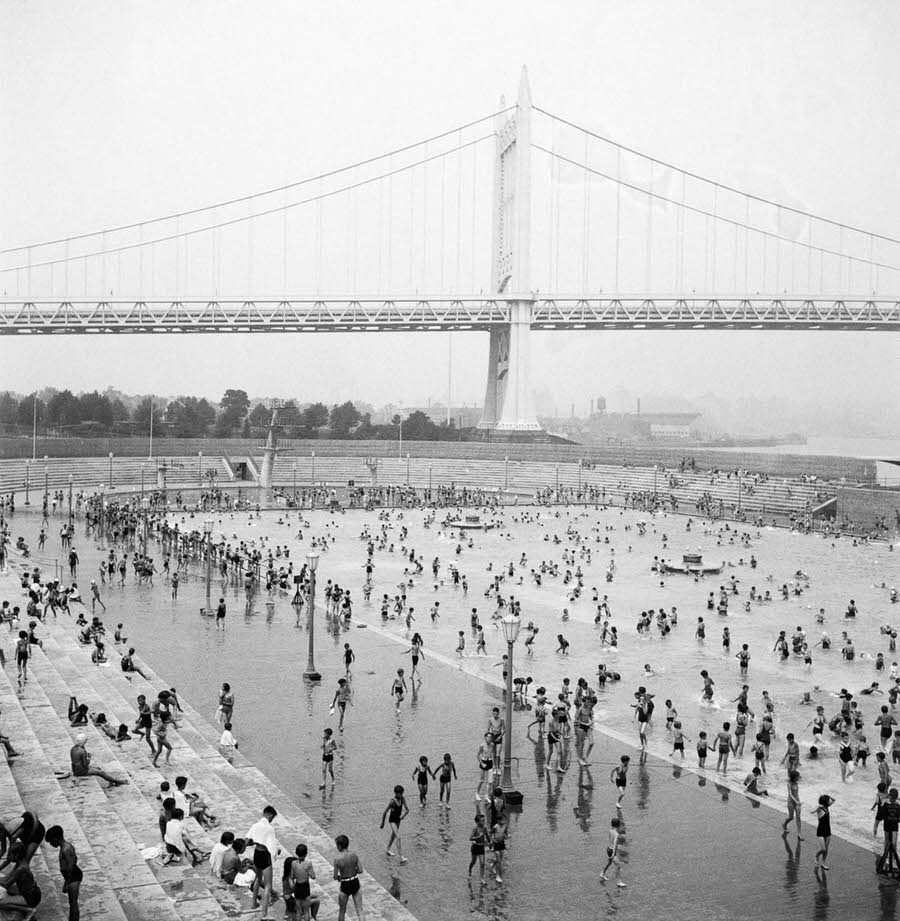
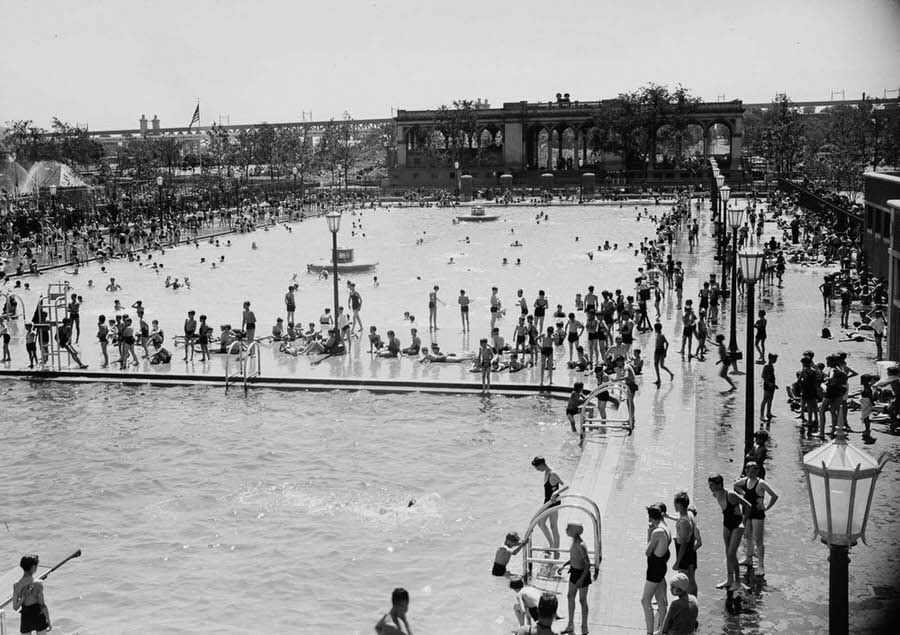
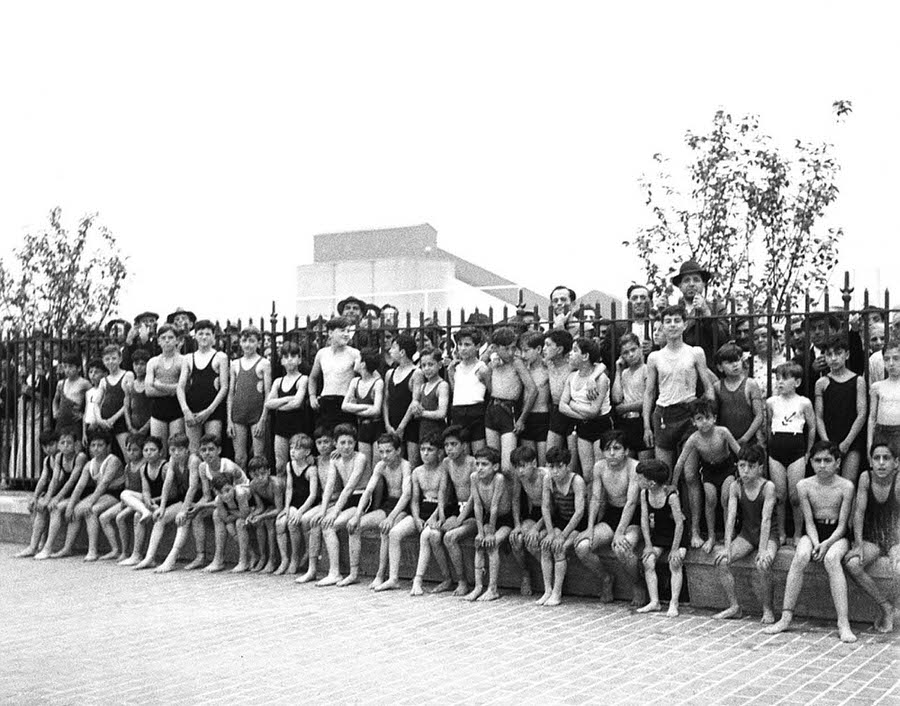
Colonial Park Pool — today known as Jackie Robinson Park — opened the same summer, drawing Harlem residents in massive numbers. These pools weren’t just engineering achievements; they were central gathering places for entire neighborhoods during the peak summer weeks.
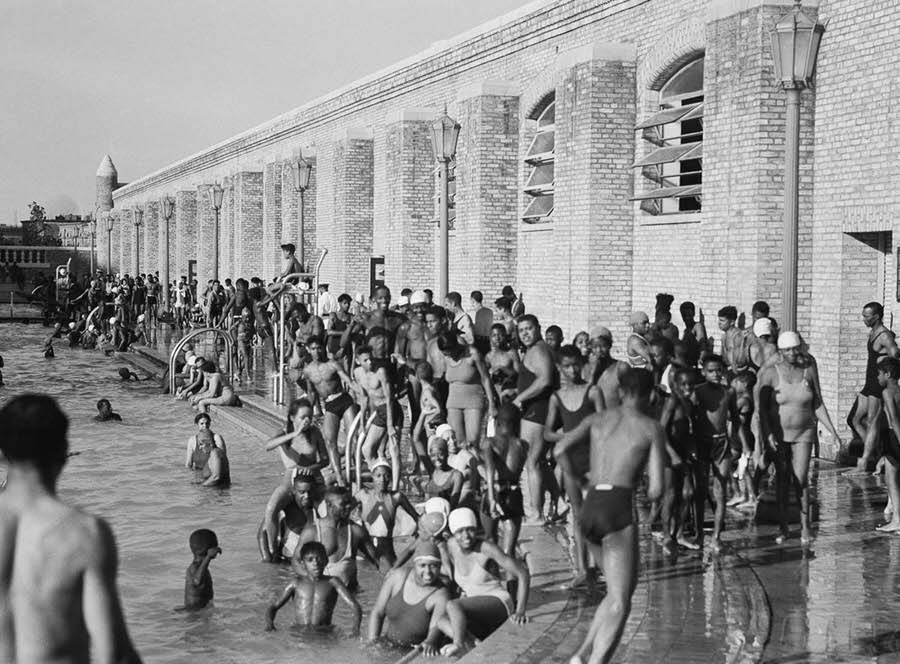
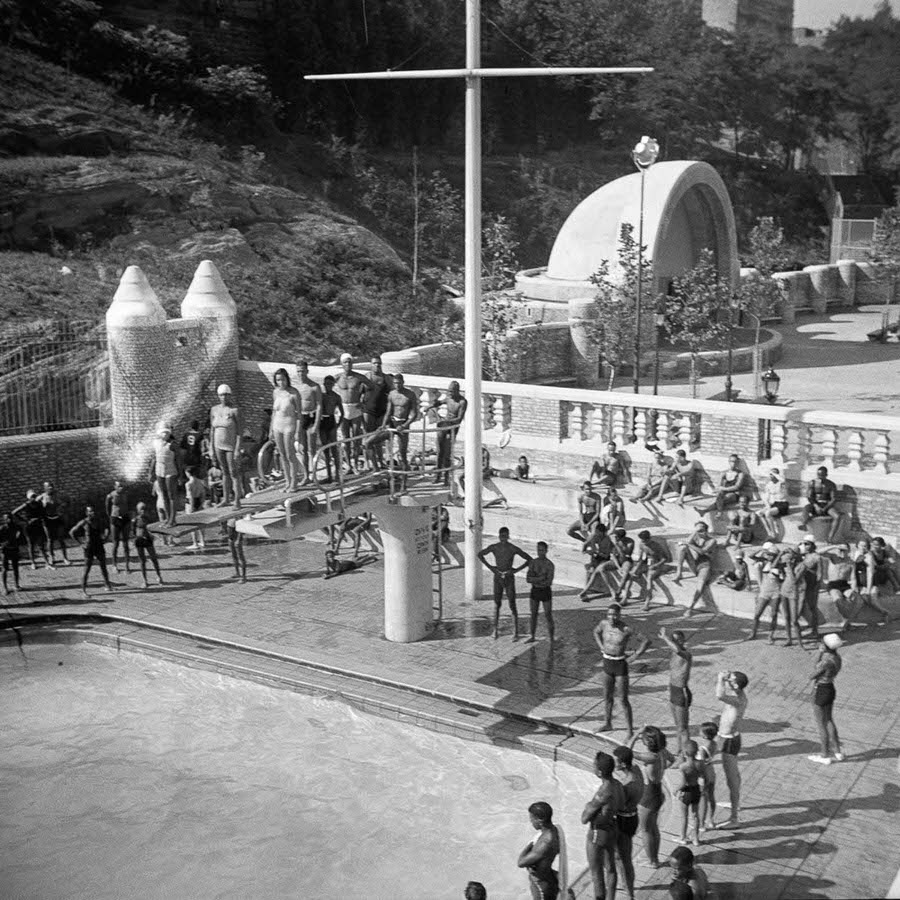
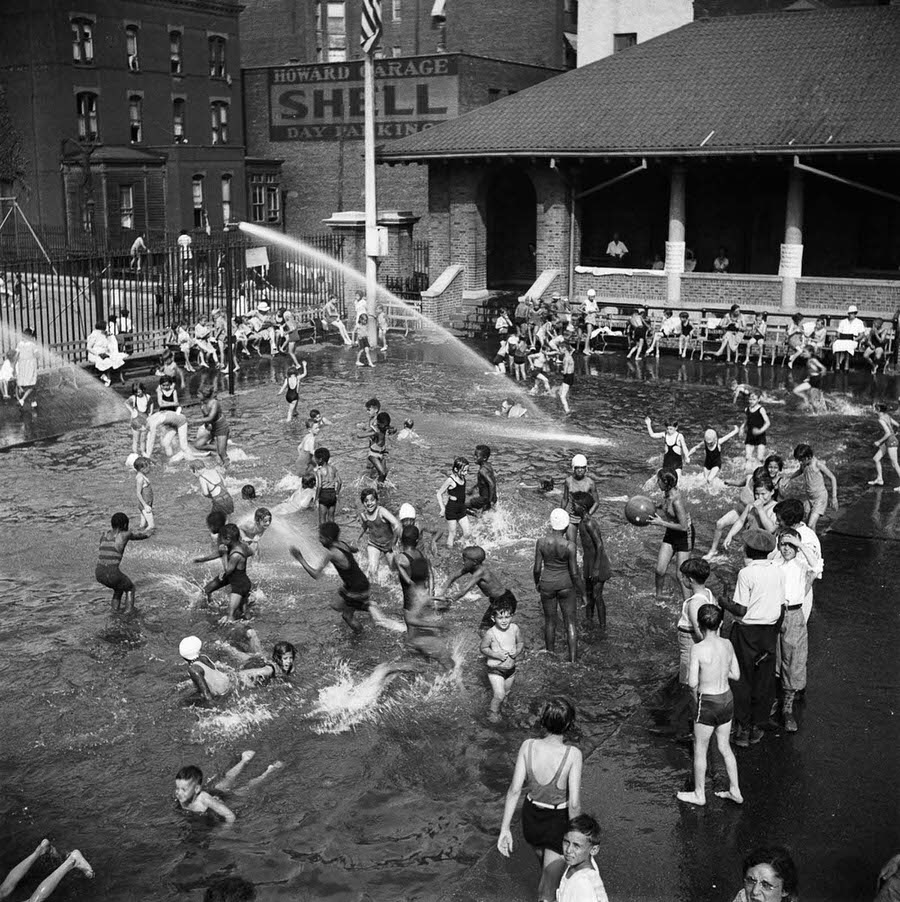
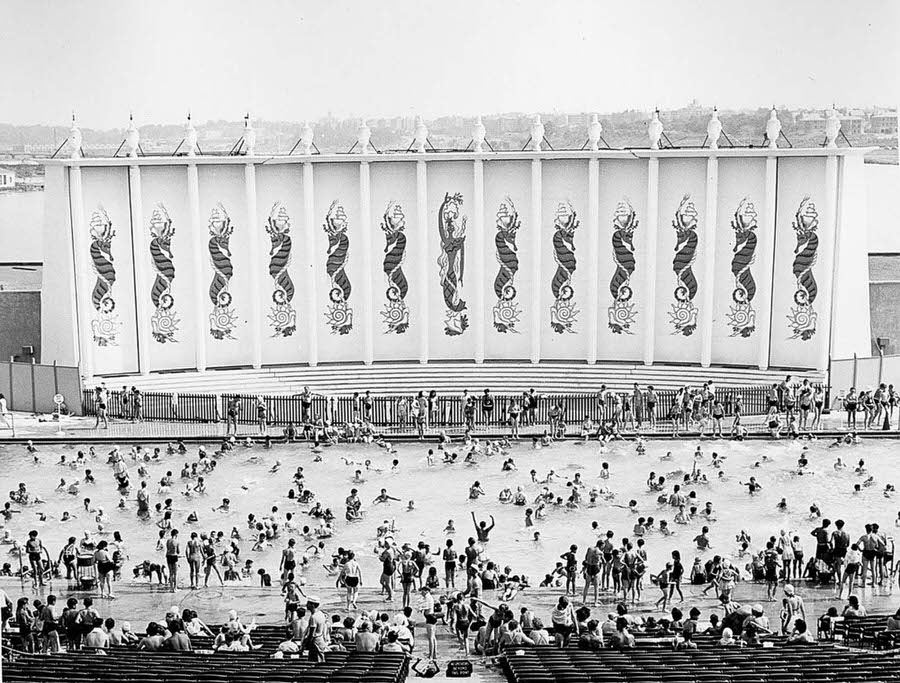
McCarren Park Pool in Brooklyn became one of the most iconic sites of the era. Photographs from 1937 show the pool packed wall to wall, with barely an inch of water visible beneath the crowd. The pool and its surrounding park still exist today.
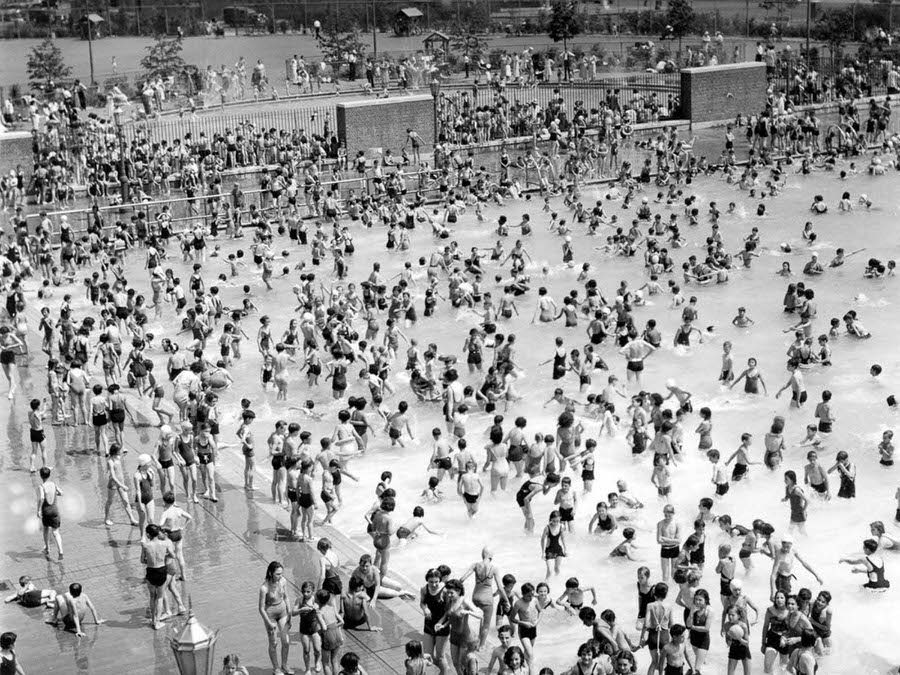
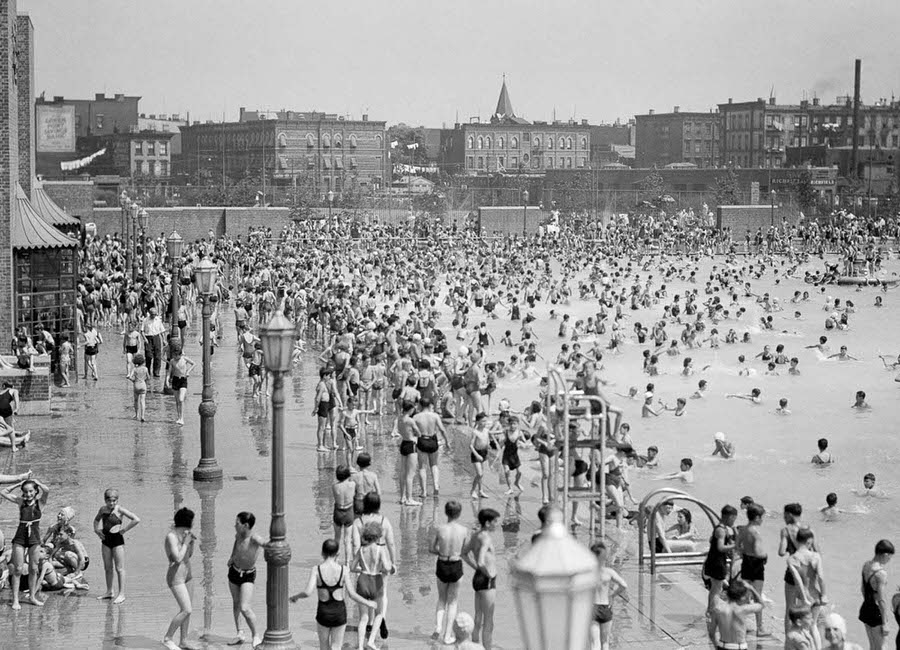
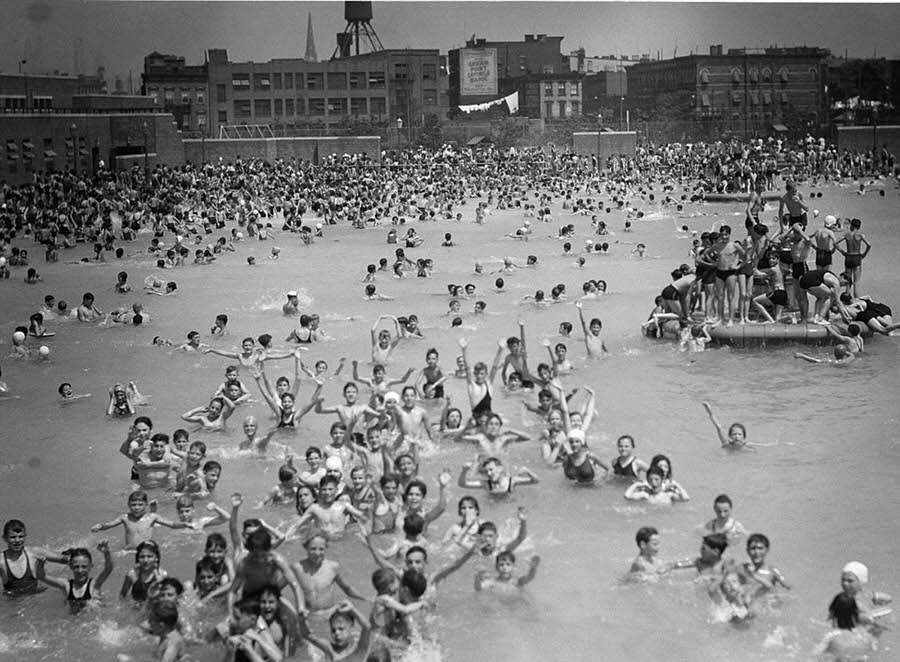
Competitions at Astoria Pool drew some of the city’s most talented young swimmers and divers. In August 1936, thousands of New Yorkers gathered along the pool’s edge for a swim meet. Seven years later, in 1943, the pool was still hosting elite-level diving competitions.
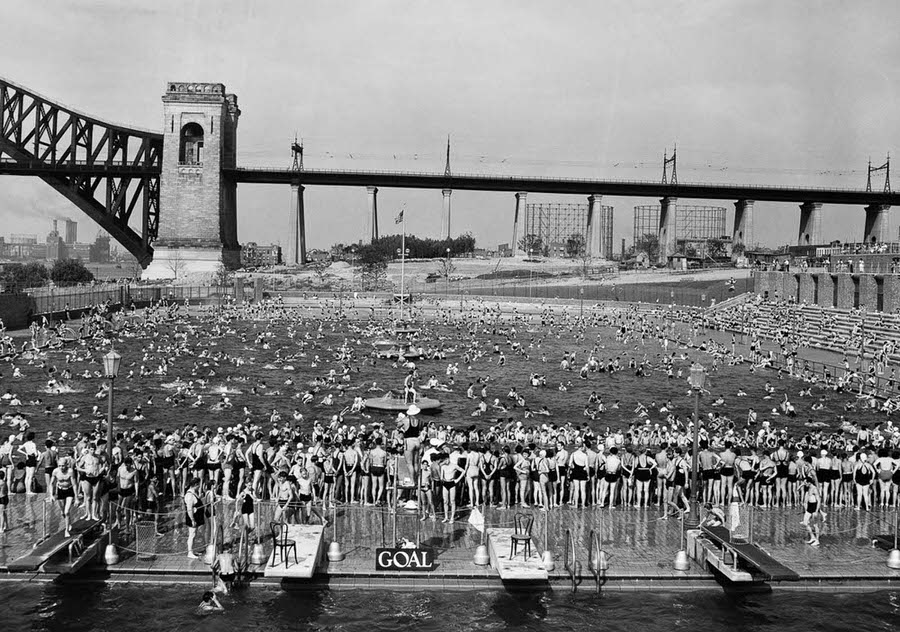
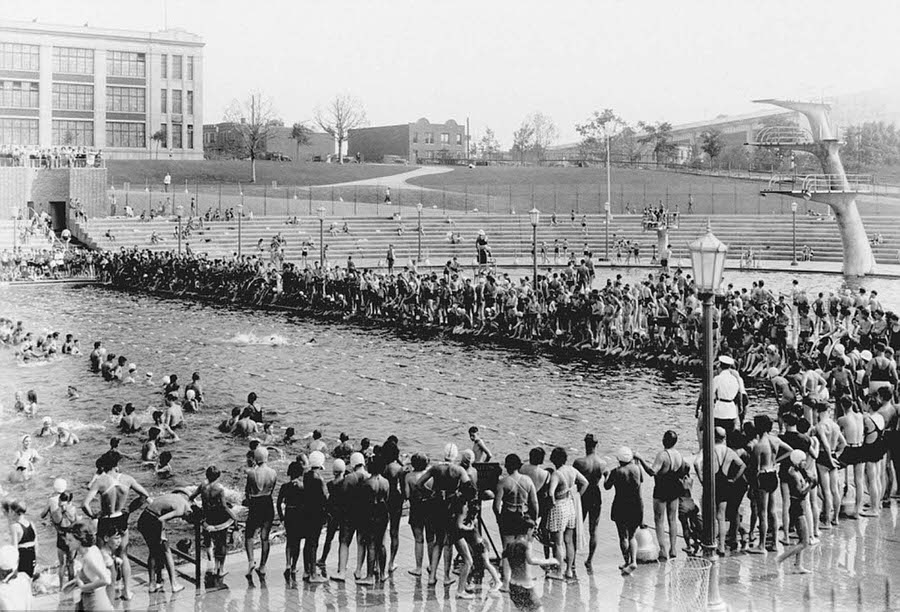
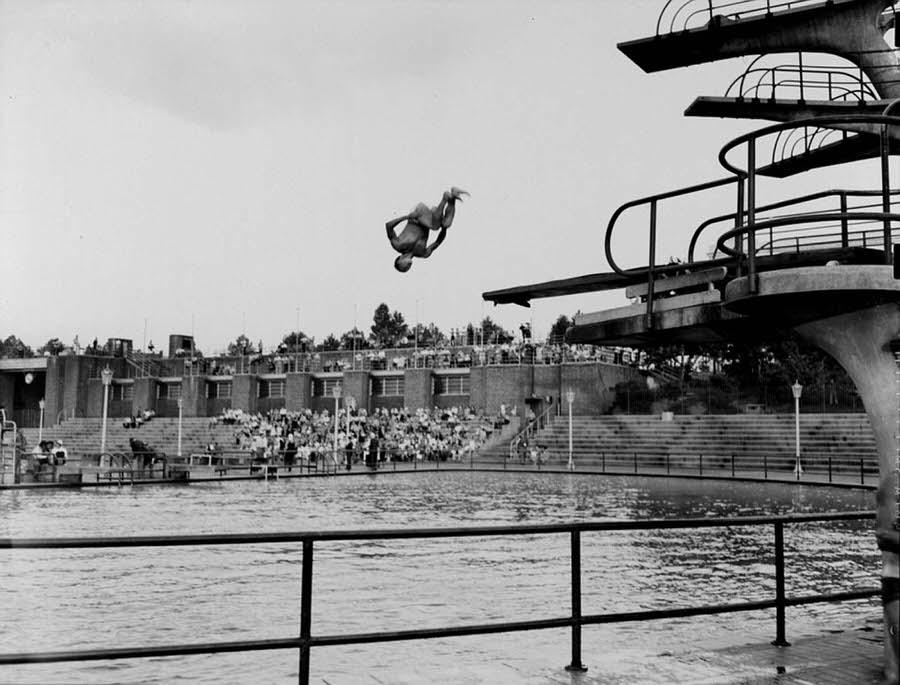
Free swim lessons were another key part of the public pool program. At Astoria Pool and others across the city, instructors taught children basic water safety and swimming technique at no cost. These classes reached thousands of kids each summer who had no access to private pools or swim clubs.
By the mid-1960s, New York City recognized that many neighborhoods — particularly lower-income communities — still lacked adequate pool access. In 1966, the city launched the portable pool program. These were pre-engineered, prefabricated above-ground pools measuring 20 by 40 feet, with six-foot-wide wooden decks attached. Each pool was three to three-and-a-half feet deep and cost about $25,000. They were open from early July to mid-August for children 14 and younger who stood over four feet tall. There were no changing areas — kids were expected to arrive in their swimsuits. The pools were deliberately designed to be relocated as neighborhood needs shifted, functioning much like portable classrooms in the city’s school system.
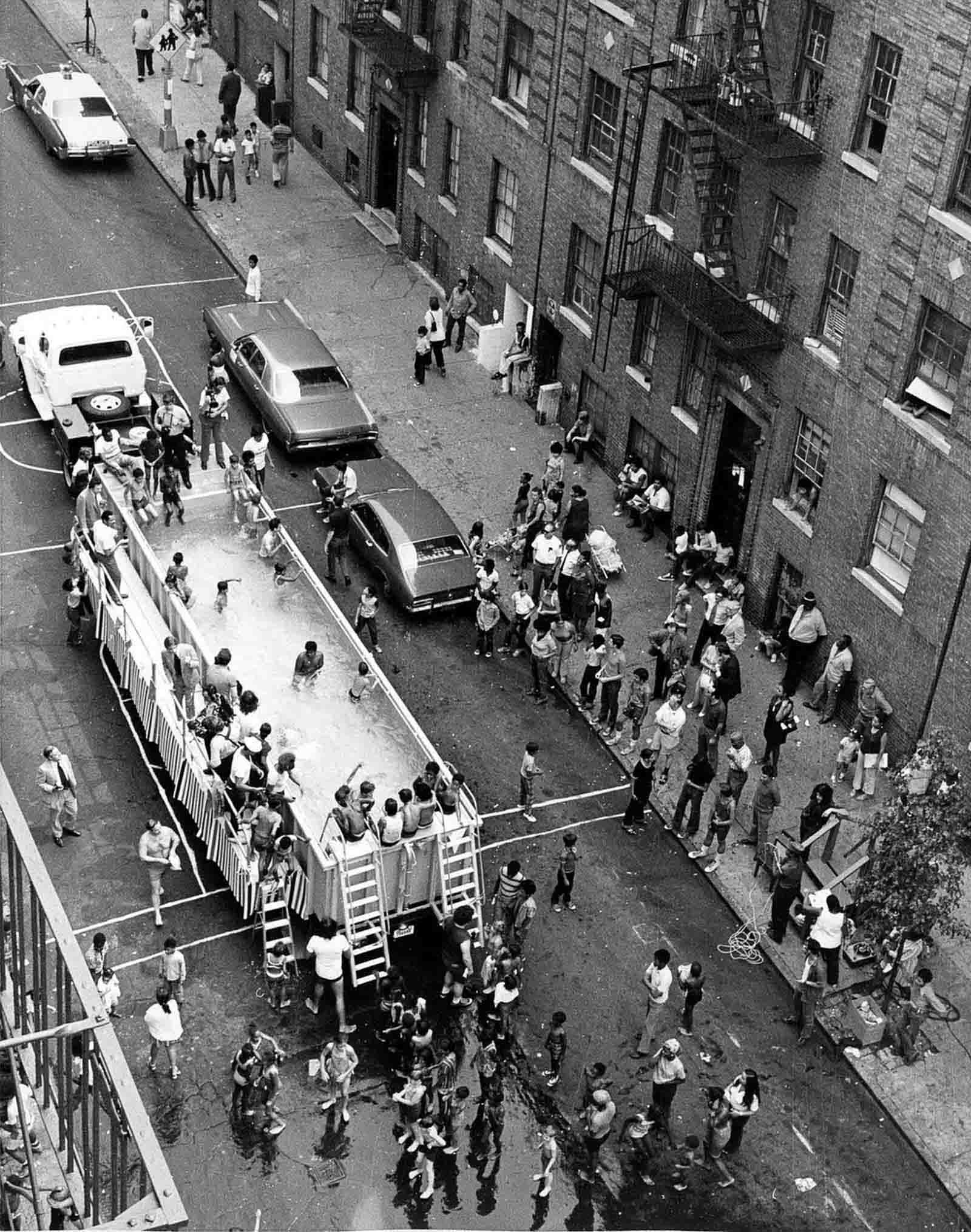
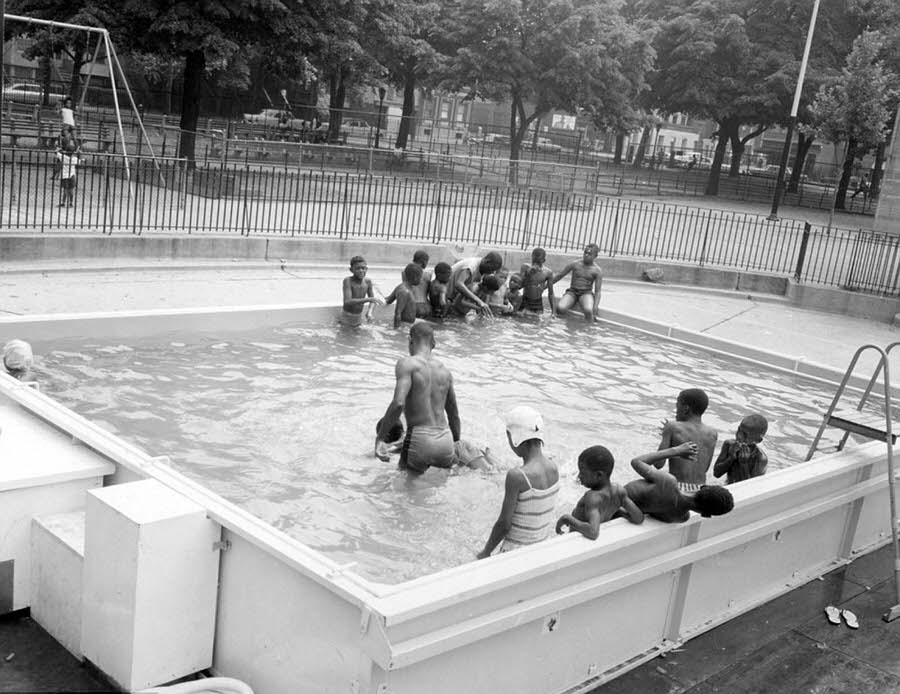
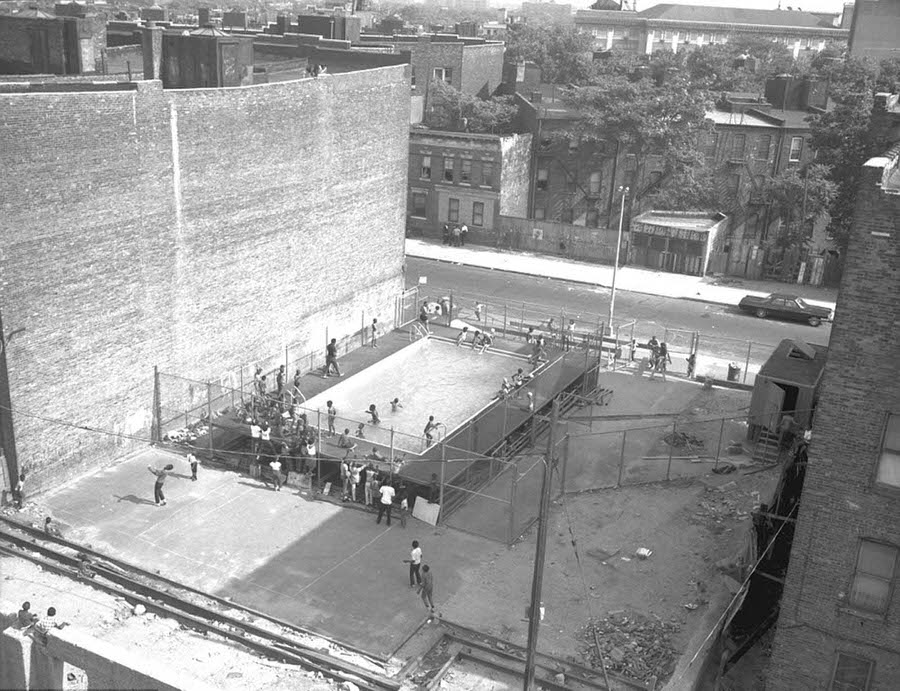
Below is a collection of historical photographs documenting New York City’s public pool culture across the 20th century — from the grand WPA complexes of the 1930s and 1940s to the portable pools installed in Brooklyn neighborhoods in the late 1960s.





That’s awesome! Thanks for sharing!
Red Hook pool is still there too
Really neat article, I love the photos. Thank you for posting. My mother remembered several summers of not being allowed to swim due to the polio epidemic and her mother’s fears of it being spread in the water. The fact my mom remembered this into her 80’s I took as a testament of how loved those pools were to kids. (Also her mom was usually unflappable so seeing her scared was new). My mom was born in 1941 in Queens.
It’s wild how huge some of those pools were