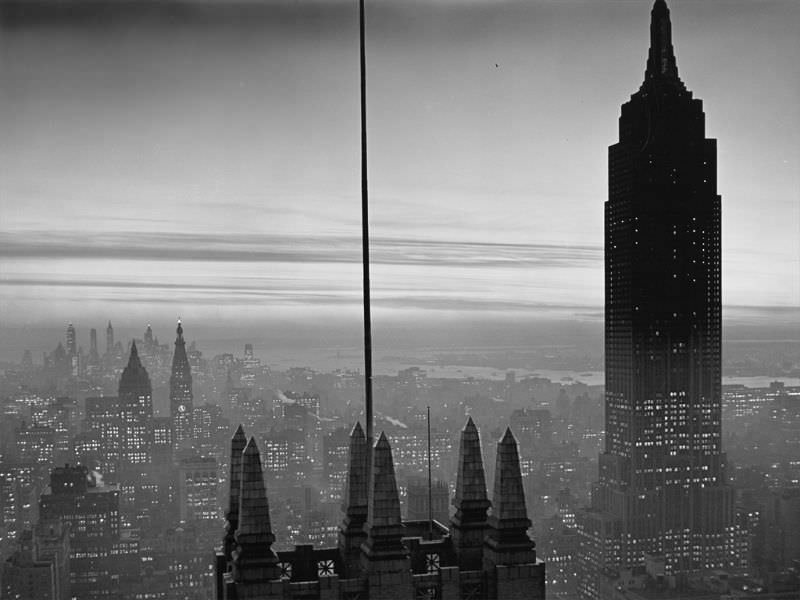
Samuel Herman Gottscho was born in Brooklyn in 1875 and spent his early decades far from the darkroom. For twenty-three years, he worked as a traveling salesman, selling lace and fabric across the country. He picked up his first camera in 1896 and shot his first photograph at Coney Island, but photography remained a part-time passion for the next two decades. He focused on houses, gardens, and rural landscapes — quiet subjects that suited a man who genuinely loved nature. It wasn’t until he attended several architectural photography exhibitions that he began seeking out architects and landscape architects as subjects. At age 50, he made the leap to full-time commercial photography, one of the more unusual career pivots in American photographic history.
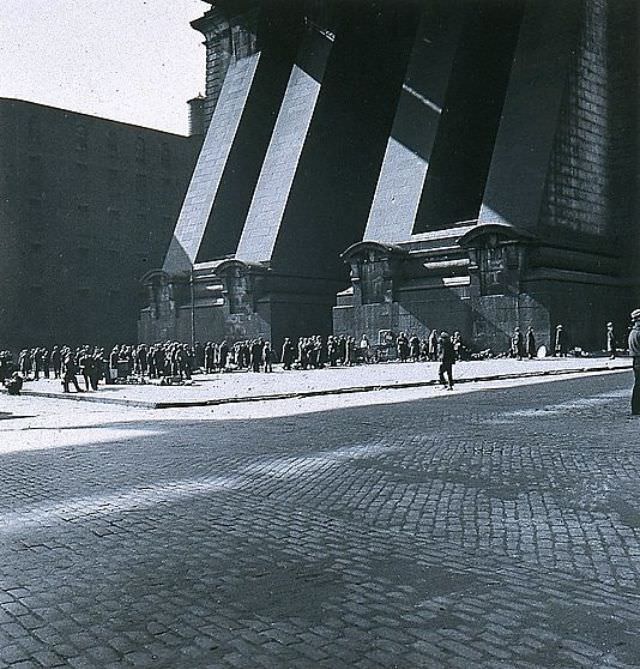
By the time Gottscho turned his lens on New York City in the early 1930s, the city was in the middle of a building boom that would define its skyline for generations. His photographs appeared regularly in publications like American Architect and Architecture and Architectural Record. The New York Times featured his portraits and architectural work. He photographed private homes in New York and Connecticut suburbs, and those images filled the pages of home decor magazines. But it was the city itself — its towers, bridges, waterfronts, and nighttime glow — that produced some of his most compelling work.
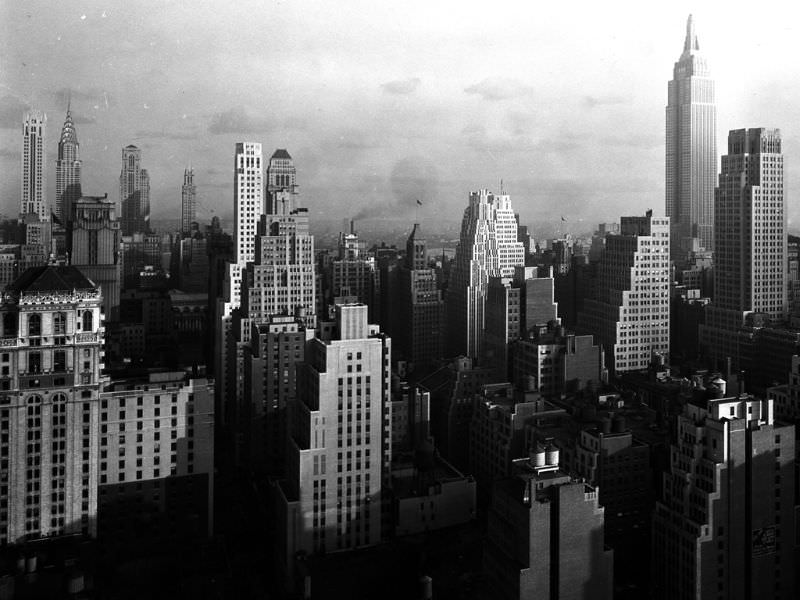
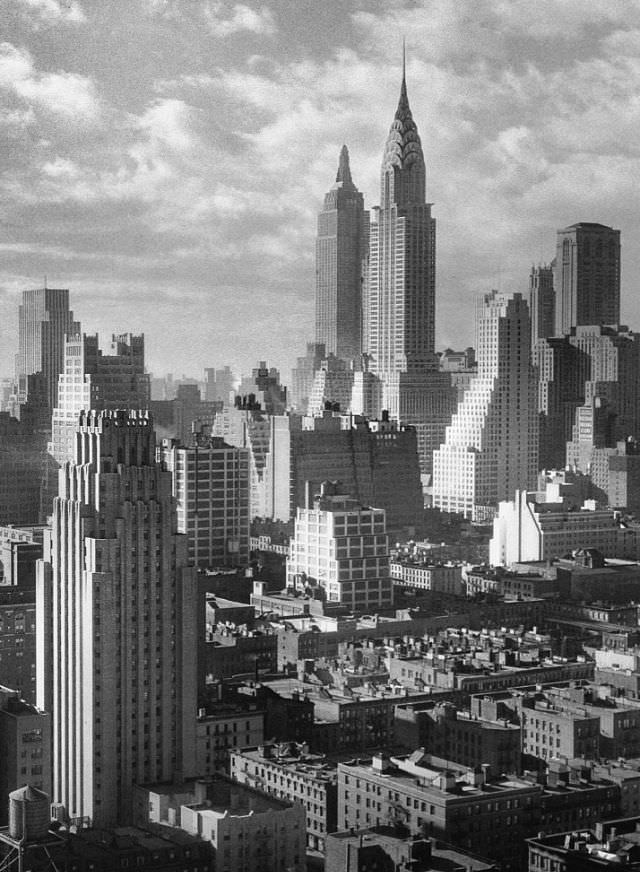
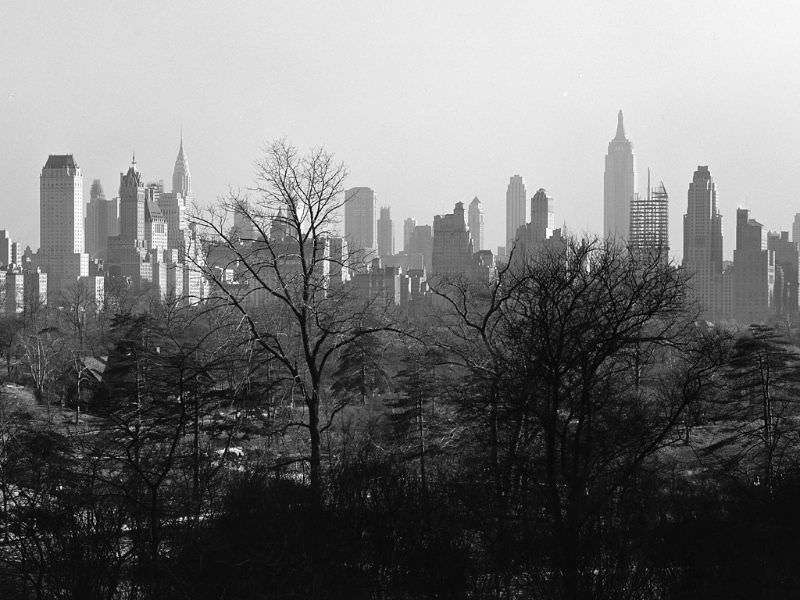
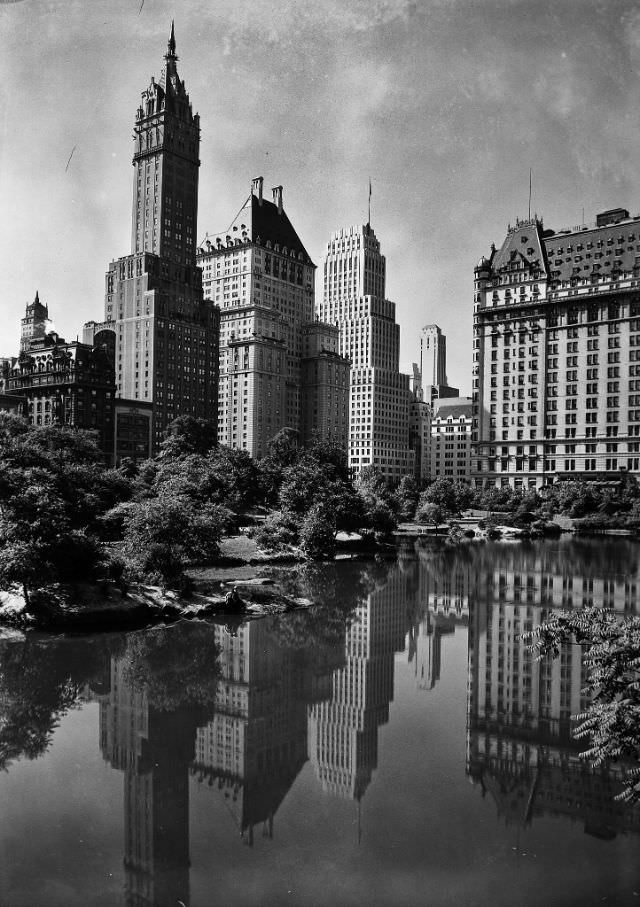
The year 1931 was especially productive. Gottscho documented Midtown Manhattan from multiple vantage points, including sweeping rooftop views that placed individual skyscrapers in the context of a rapidly changing horizon. He climbed to elevated positions across the borough, from Central Park at 85th Street to the upper floors of newly completed residential towers. Each photograph was precisely dated, giving historians a reliable timeline of how the city looked as its most iconic structures were rising.
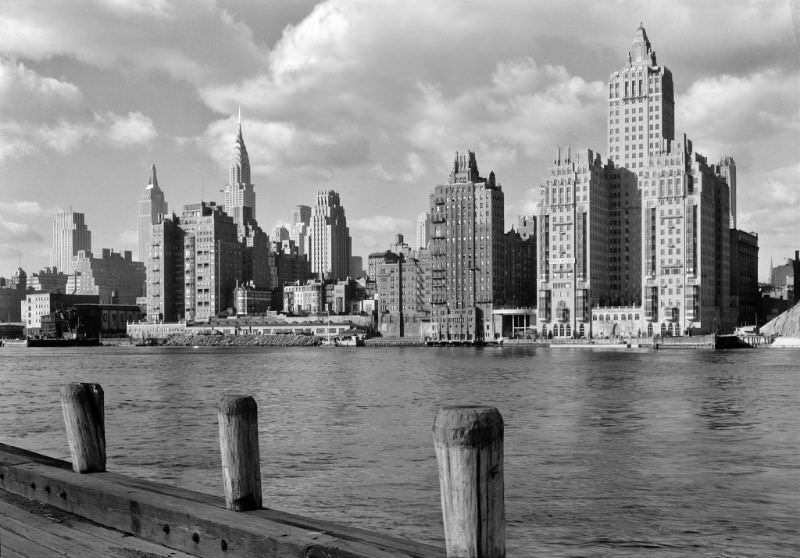
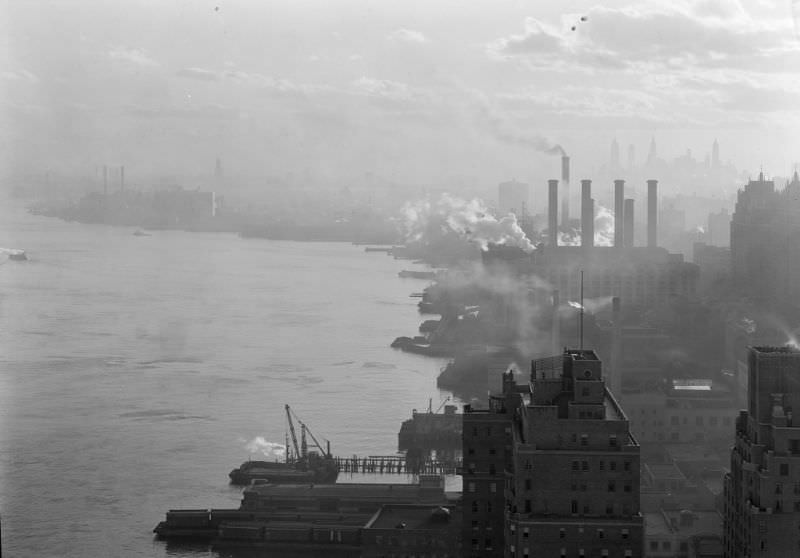
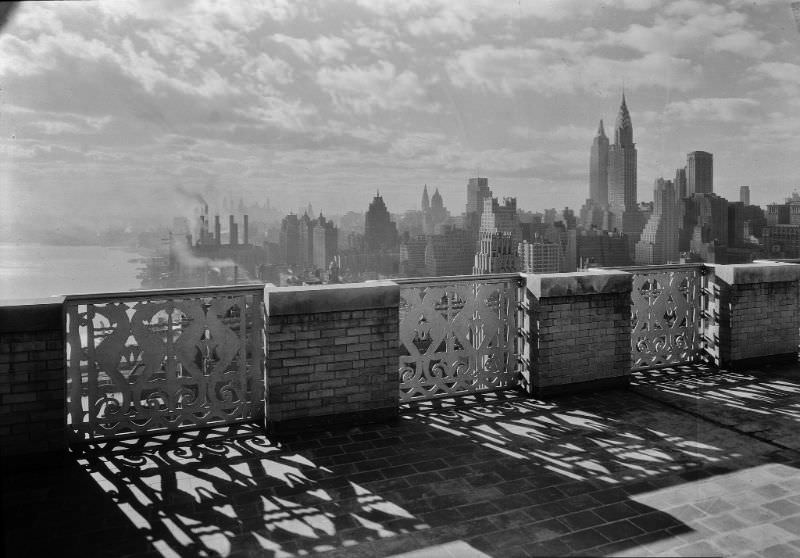
River House, completed in late 1931 at 52nd Street and the East River, became a particular focus for Gottscho in December of that year. The luxury apartment building featured a private dock and was one of the most prestigious addresses in the city. Gottscho photographed its shoreline, its power house, and the dramatic views from its 27th floor, capturing both the building’s architectural details and its relationship to the water and surrounding cityscape.
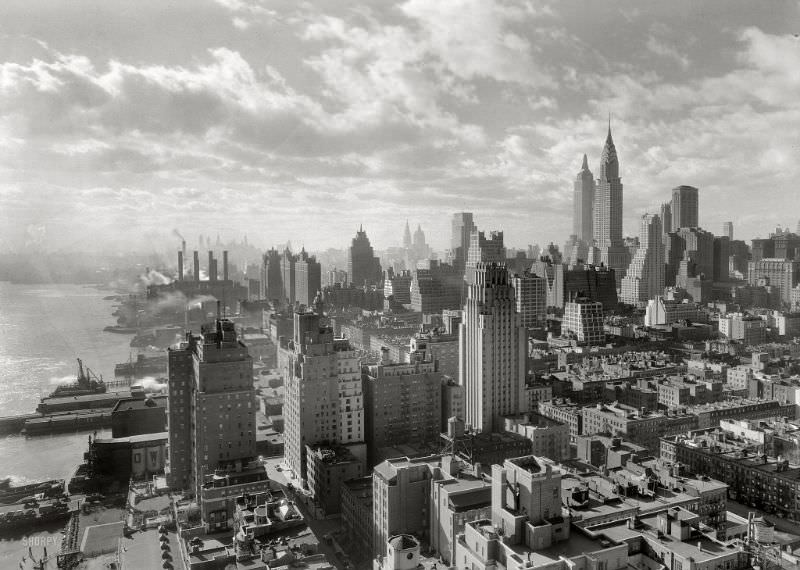
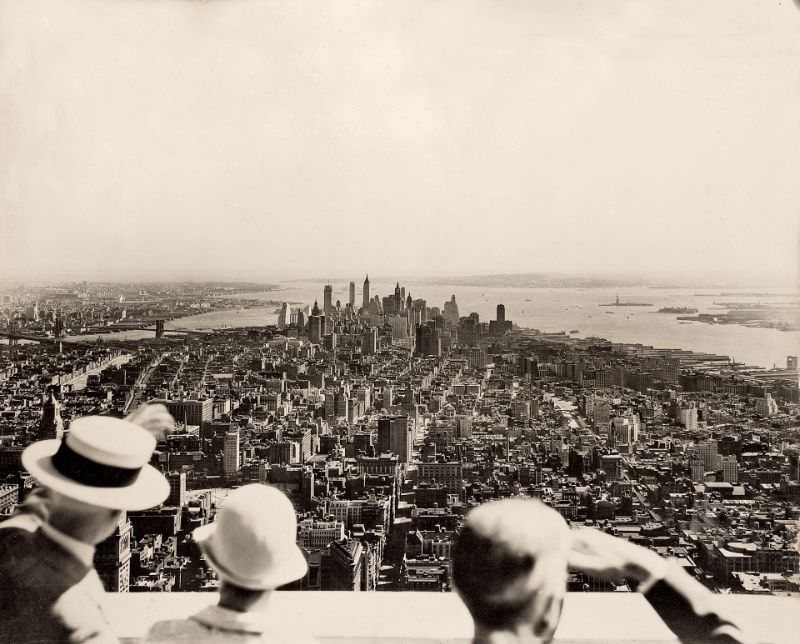
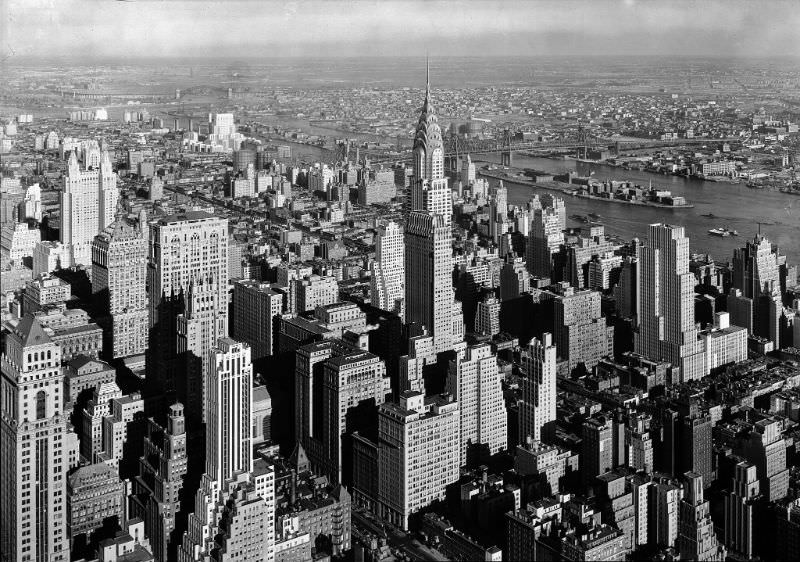
That same year, Gottscho was on hand for one of the most celebrated events in New York’s architectural history. The Empire State Building opened in 1931, and he photographed it on its opening day. The building had surpassed the Chrysler Building to become the tallest structure in the world, and Gottscho captured it from street level and from the air, including a remarkable low-angle view from the Empire State Building itself looking toward the Chrysler Building and the Queensboro Bridge.
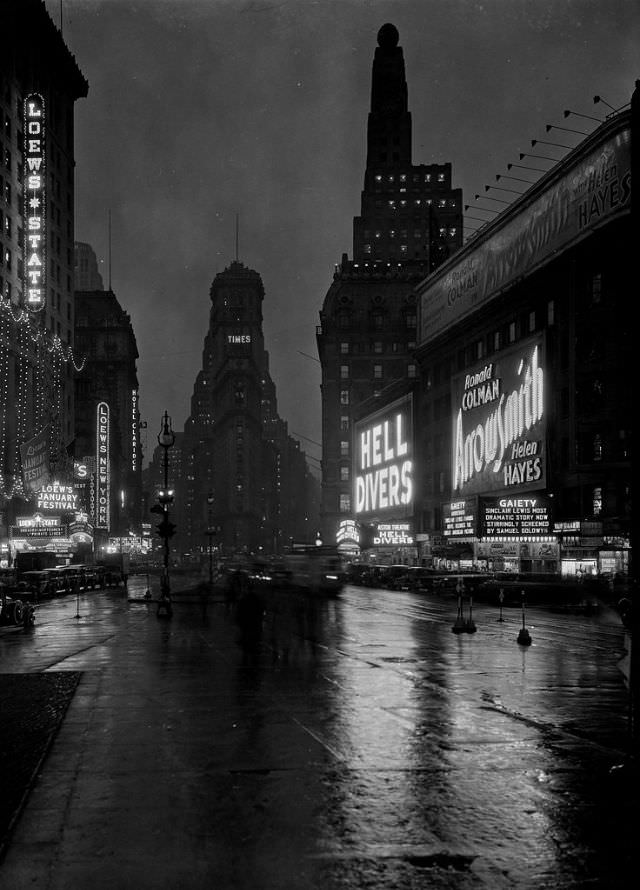
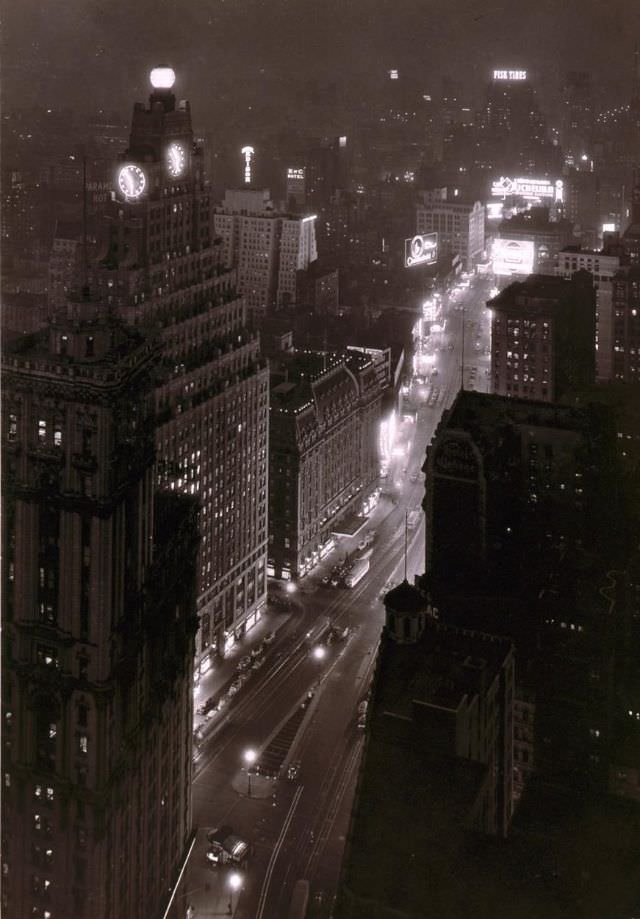
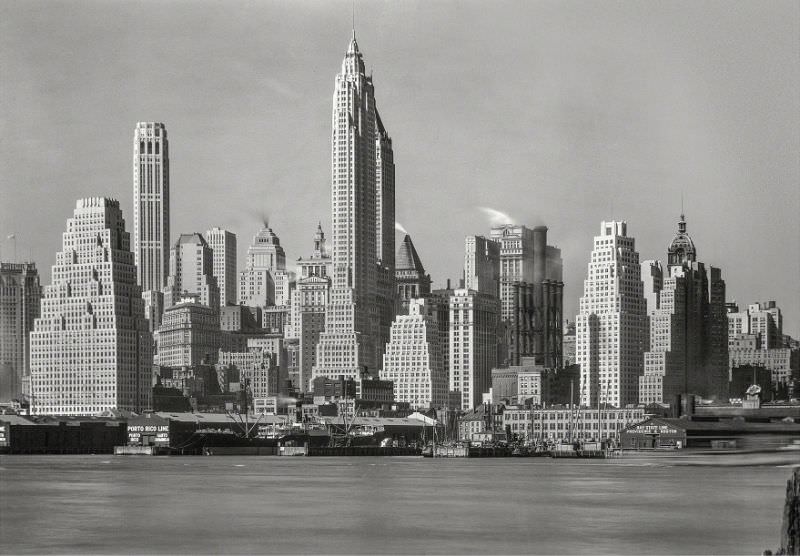
In 1932, Gottscho turned his attention to the street-level energy of the city. Times Square at dusk, photographed from 47th Street looking south in January of that year, showed the district already blazing with electric signage. He returned to shoot Times Square from above the following month, revealing the geometric grid of Midtown’s streets packed with traffic. He also documented Lower Manhattan from the foot of the Brooklyn Bridge, framing the financial district’s dense cluster of towers against the sky.
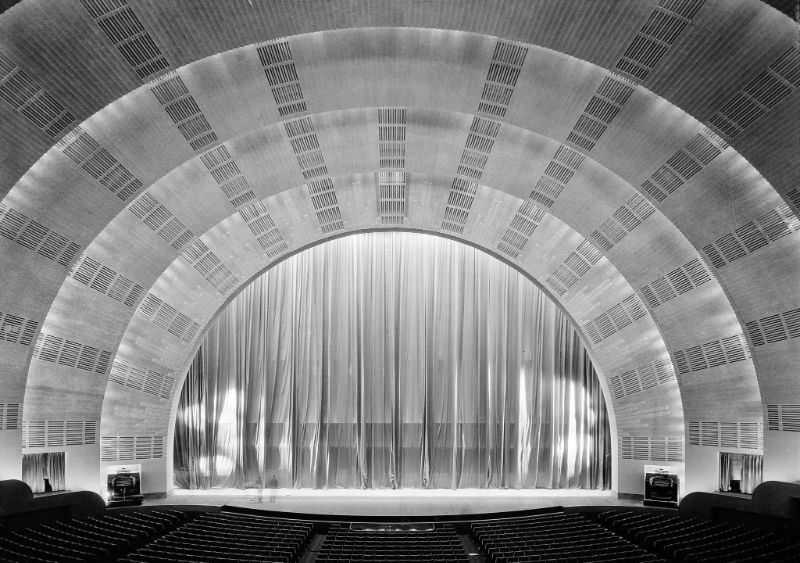
December 1932 brought Gottscho inside Radio City Music Hall, just days after it opened. He photographed the International Music Hall from the main orchestra level with the curtain down, documenting the vast interior of what was then the largest indoor theater in the world. The photograph captures the scale and Art Deco design of the space in careful detail.
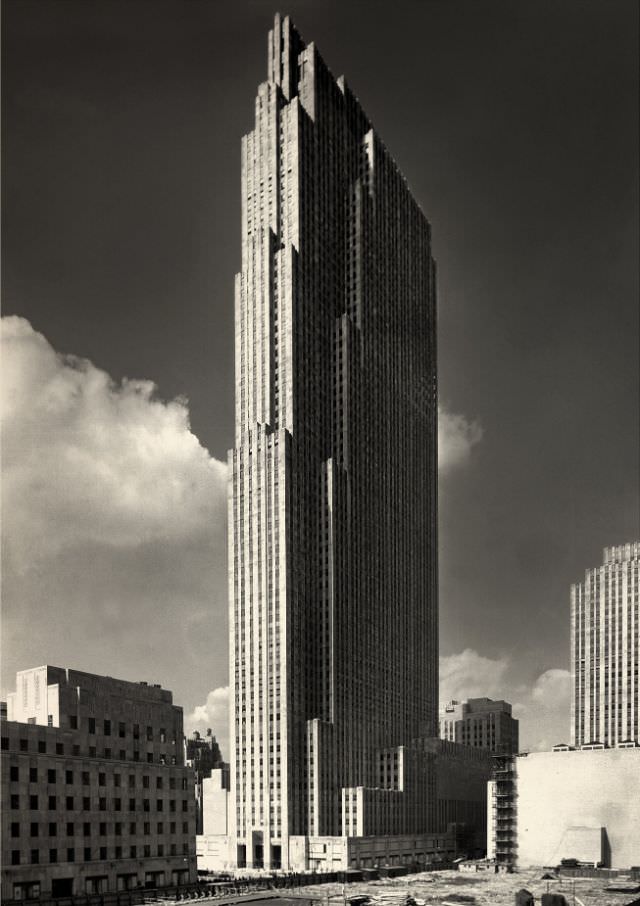
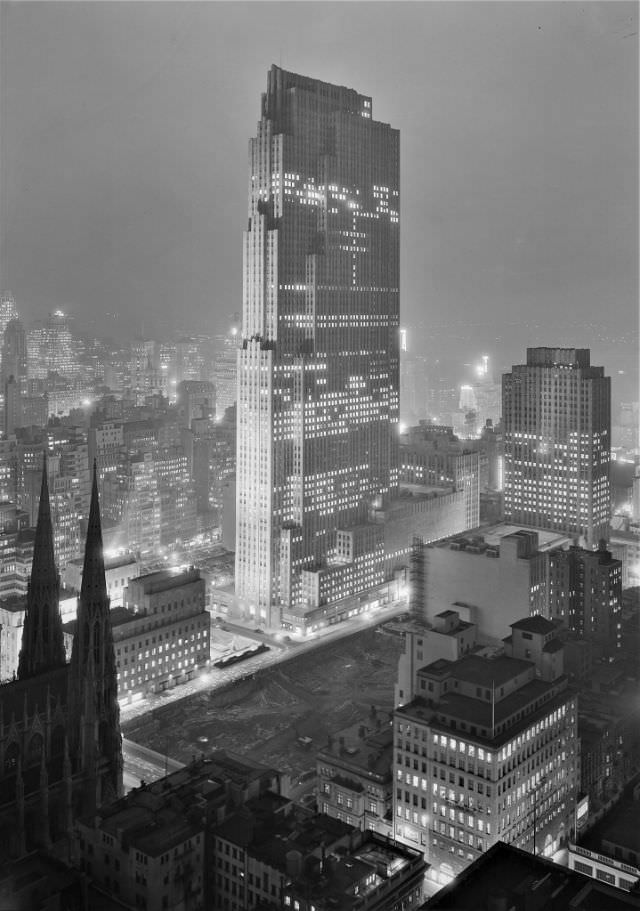
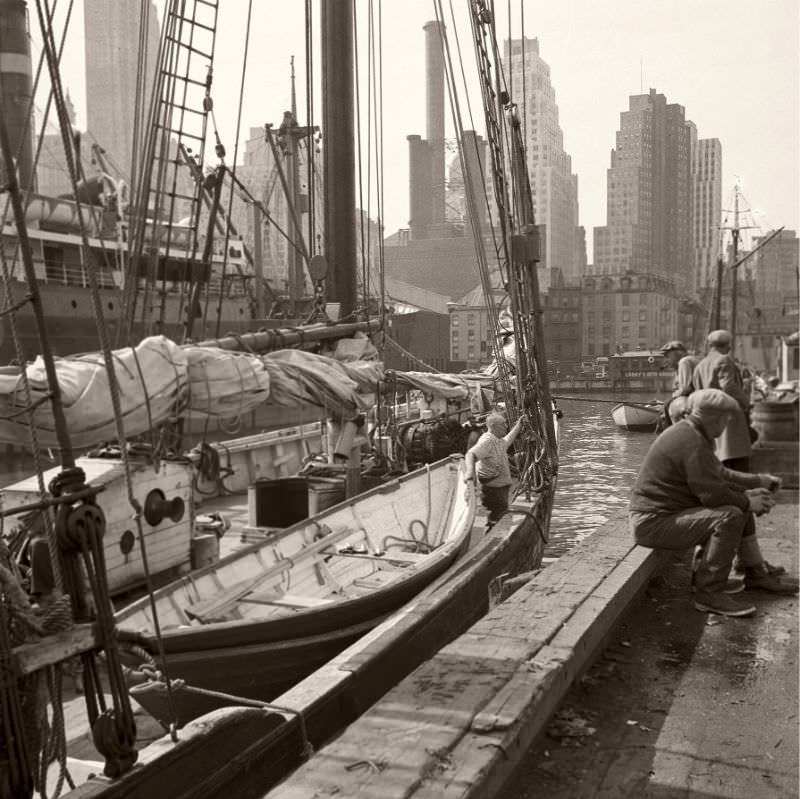
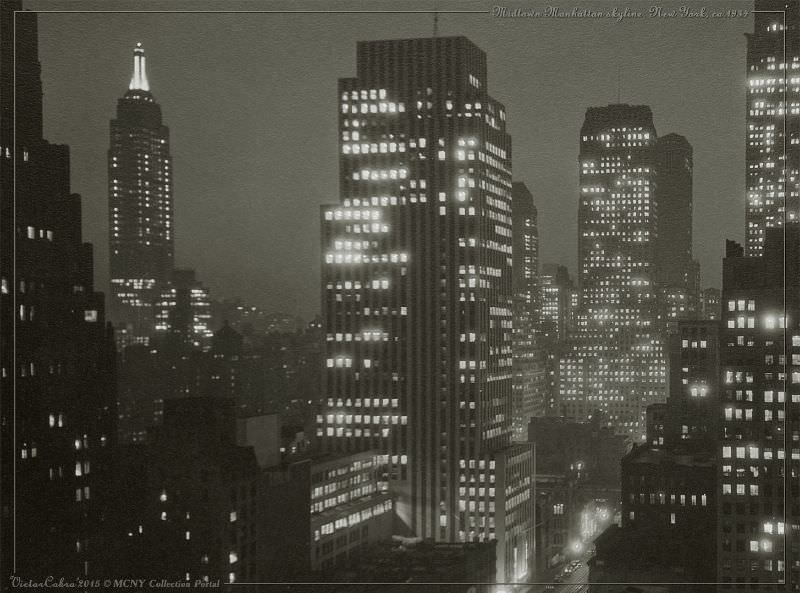
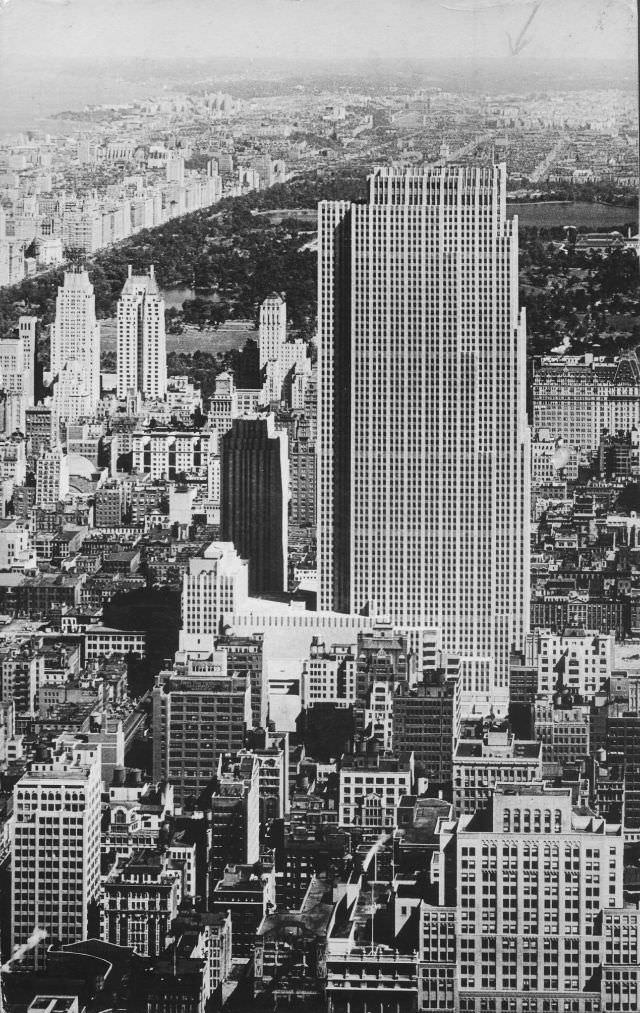
Throughout 1933, Gottscho ranged across all five boroughs and beyond. He photographed Central Park in winter, the financial district from the Hotel Bossert in Brooklyn, a fishing boat at the Fulton Market Pier, South Street looking north, and New York Hospital from Madison Avenue. He shot the RCA Building at Rockefeller Center as it neared completion in September, and returned in December to photograph the full Rockefeller Center complex from 515 Madison Avenue. Night photography was another strength — his nighttime views of Midtown from the RCA Building and of the financial district from the St. George Hotel are studies in artificial light against urban darkness.

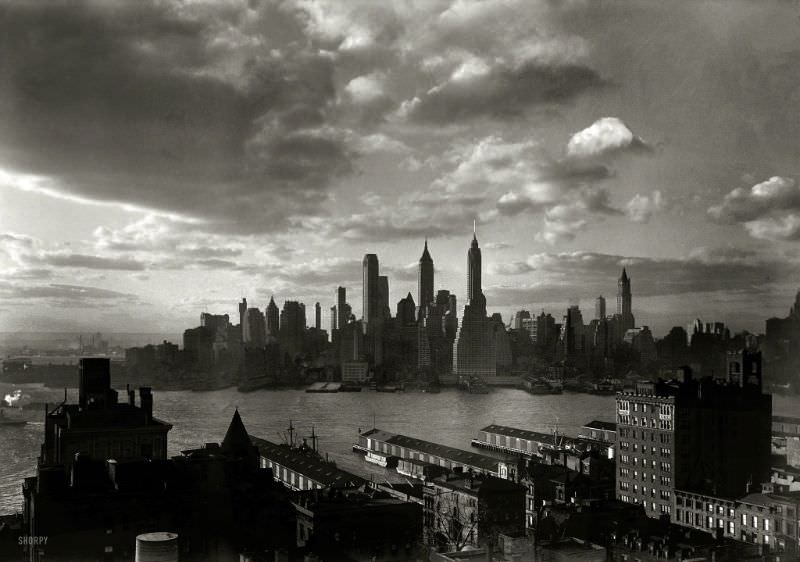
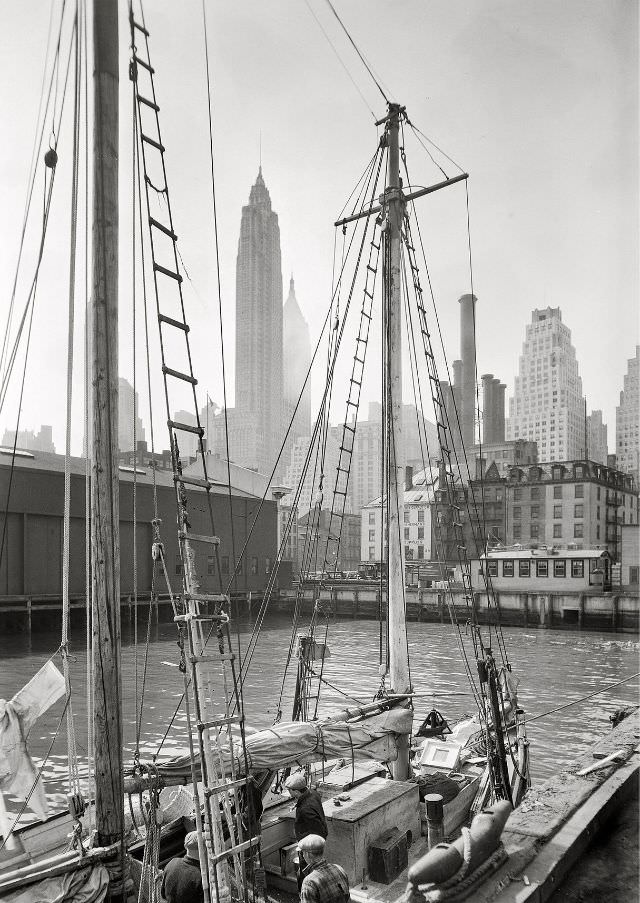
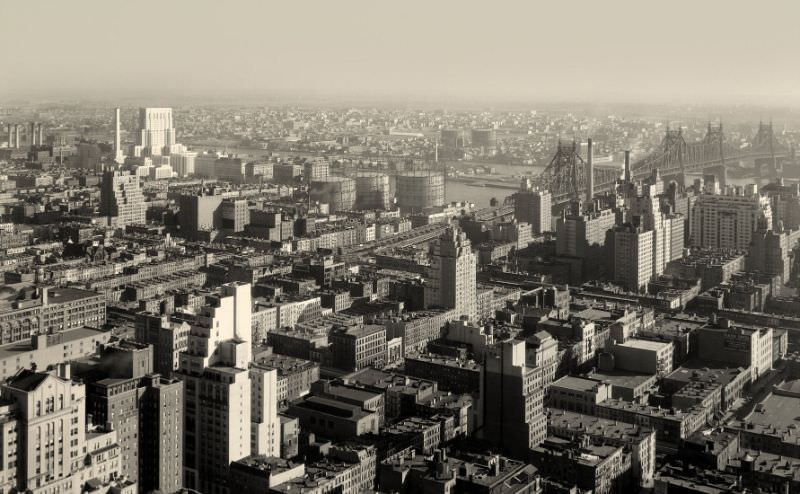
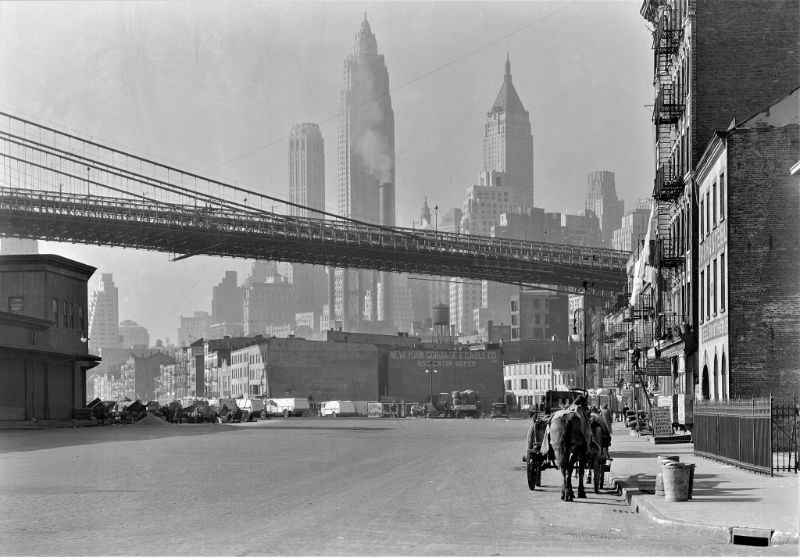
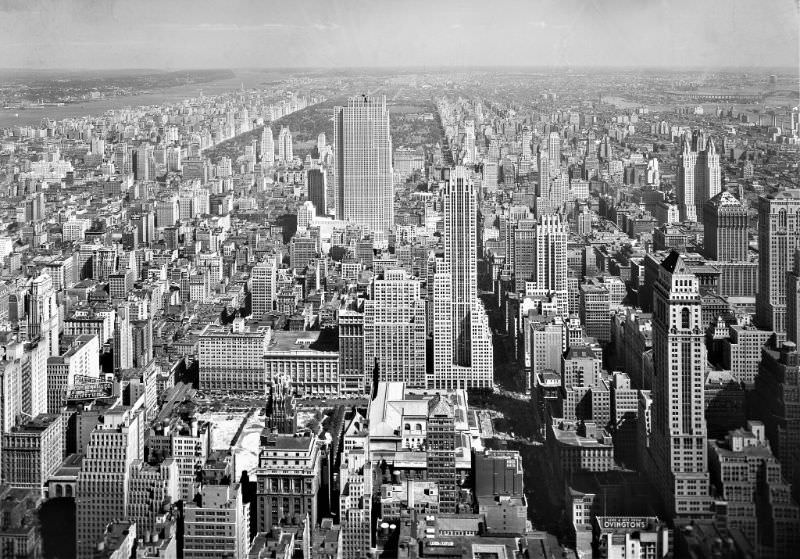
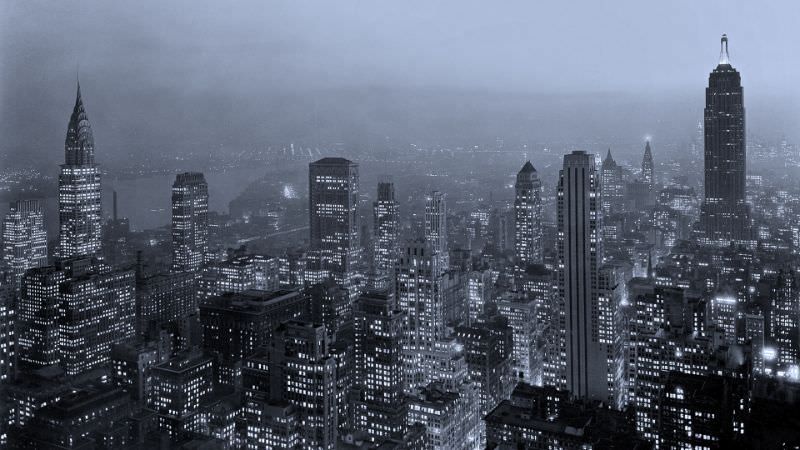
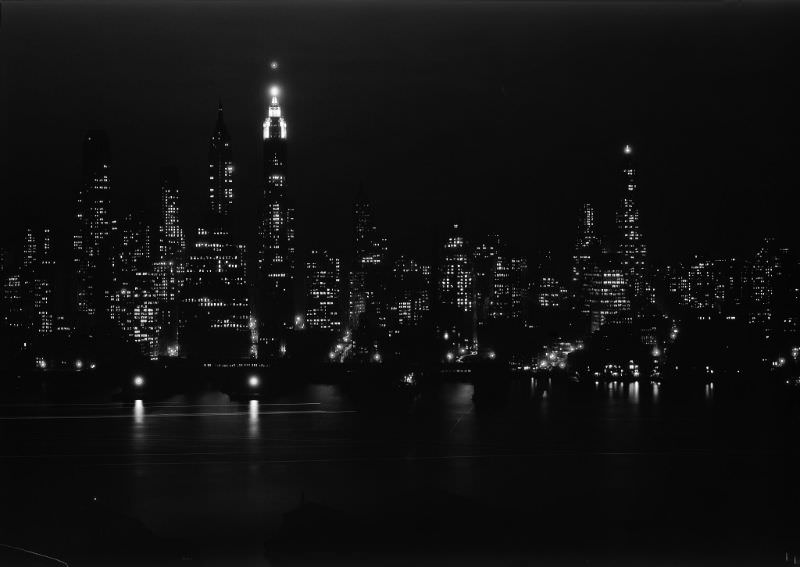
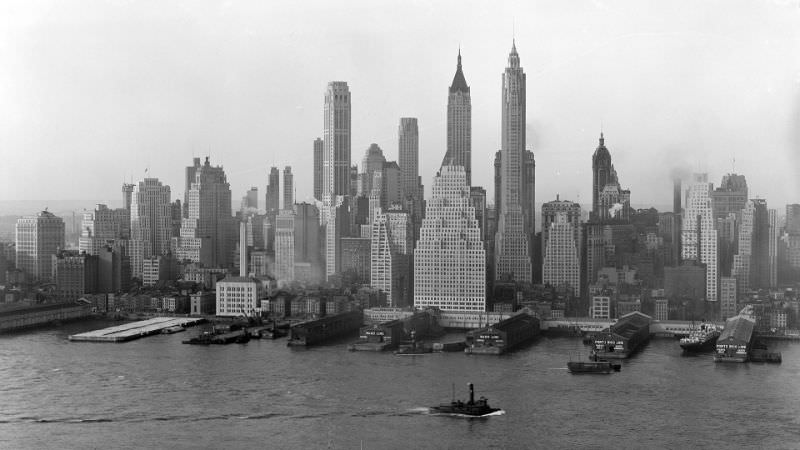
By 1934, Gottscho was shooting the Brooklyn waterfront, photographing Manhattan’s skyline from across the East River at the docks. The view from Brooklyn gave the Manhattan towers a different kind of weight — distant and monumental rather than close and vertical. His nighttime photograph of Midtown from around the same period shows the city’s lights reflected in a way that makes the skyline feel almost suspended in darkness.
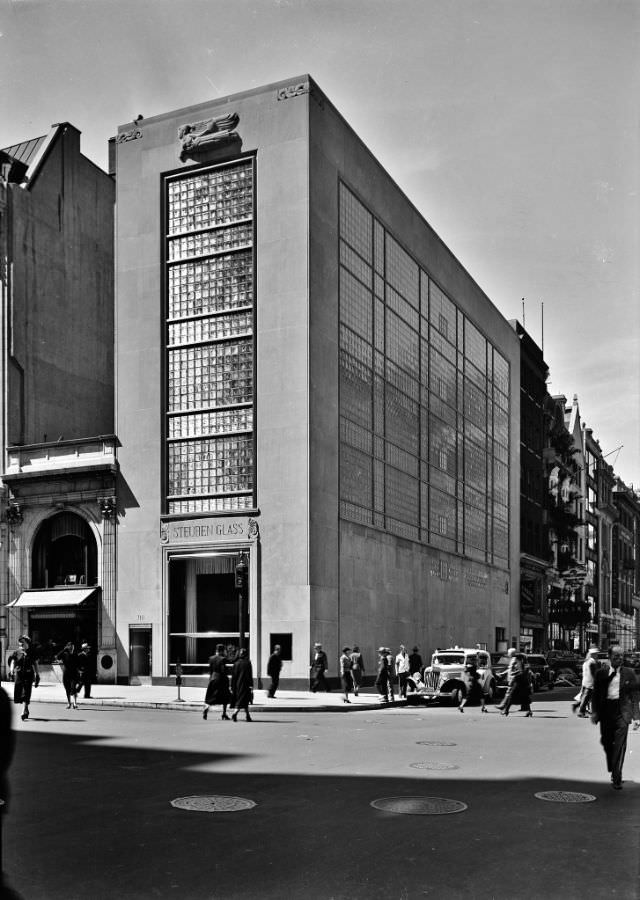
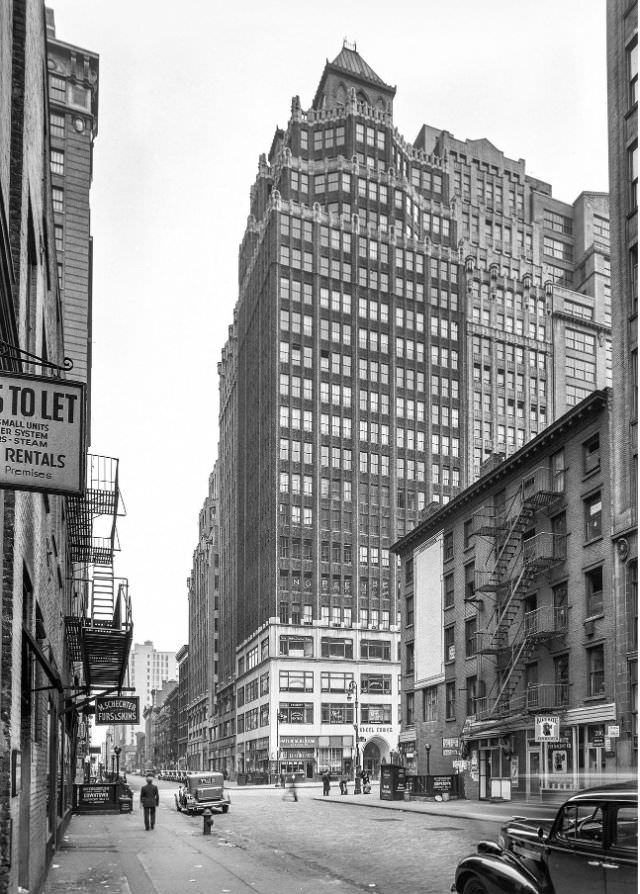
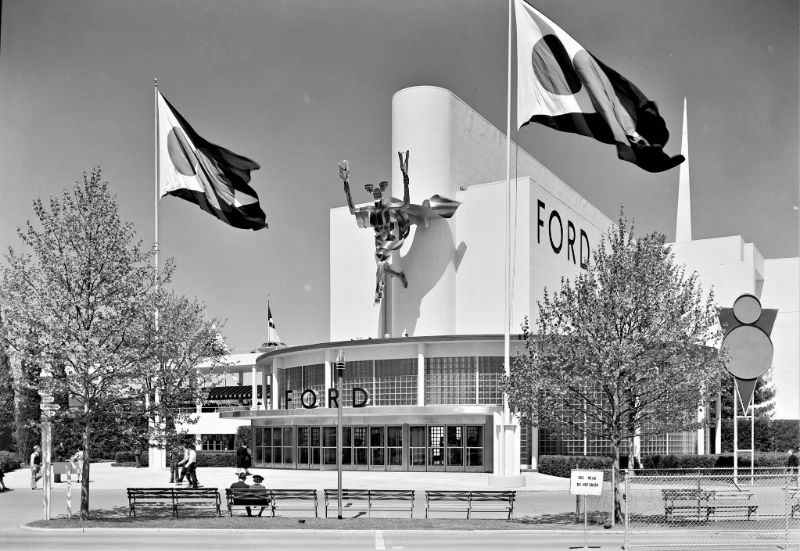
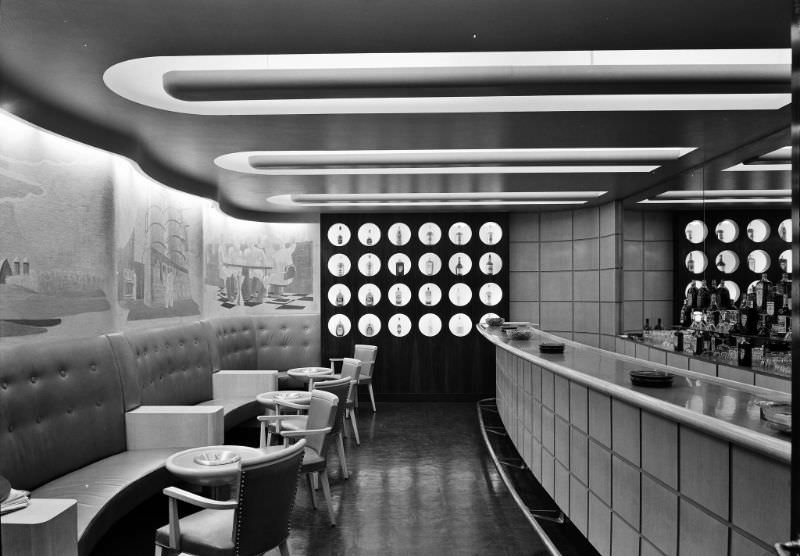
The later years of the decade brought a different range of subjects. In 1937, he photographed the exterior of Steuben Glass at 718 Fifth Avenue, documenting one of Midtown’s noted retail storefronts. By 1938, he was back at Rockefeller Center, this time shooting the complex from the south. In 1939, the New York World’s Fair gave him a new set of architectural subjects — the Ford Motor Building entrance, the House of Glass pavilion — alongside commercial interiors like the Seagram’s Distillers Corp. barroom inside the Chrysler Building, and the sharp Art Deco facade of William Hohauser’s 315 Seventh Avenue.
Gottscho believed he produced some of his best work at age 70. He continued contributing illustrated articles on wildflowers to the New York Times throughout the 1940s and 1960s. In 1967, the New York Botanical Garden awarded him its Distinguished Service Medal for his botanical photography. He died in Jamaica, Queens. The Museum of the City of New York holds over 40,000 of his photographs from the period 1925 to 1940, which were displayed in November 2005 as part of the exhibition “The Mythic City: Photographs of New York by Samuel H. Gottscho, 1925–1940.” The United States Library of Congress holds approximately 29,000 images in the Gottscho-Schleisner collection, and Columbia University’s Avery Architectural and Fine Arts Library maintains an additional archive of his work.