Before forensic science set strict rules about preserving evidence, New York City crime scenes were chaotic. Detectives in trench coats and fedoras crowded around bodies without gloves. Curious bystanders leaned out of tenement windows or pressed in from the sidewalk. Photographers captured everything. What they left behind is a raw, unfiltered record of murder in one of the world’s most dangerous cities across the 20th century.
Many of the victims were tied to organized crime — mob bosses, hitmen, and gang enforcers who met violent ends on restaurant floors, barbershop chairs, and city streets. Others were ordinary people caught in the wrong place at the wrong time. Together, these photographs document a city where violence was frequent and law enforcement was still learning how to respond to it.
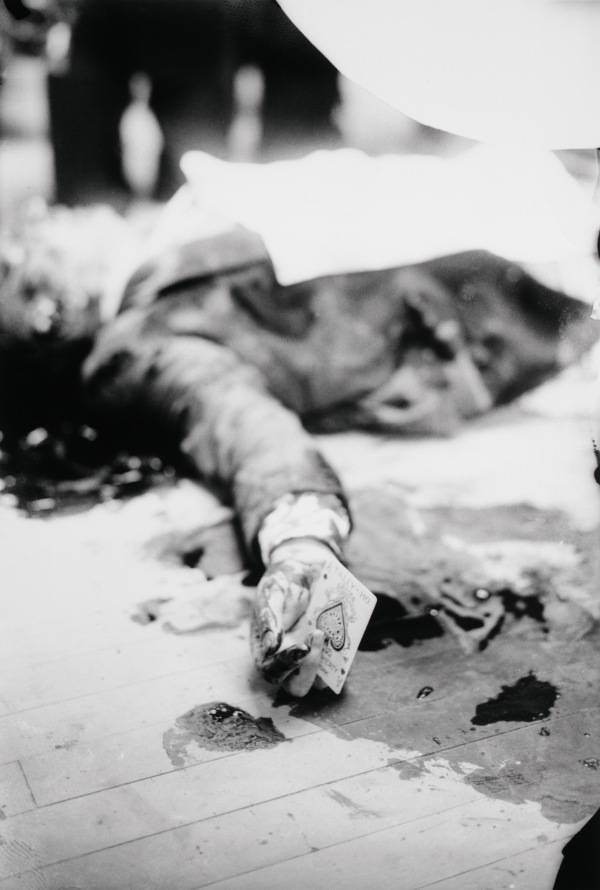
Joe Masseria was one of the most powerful Mafia bosses in New York. In April 1931, he was shot dead inside a Coney Island restaurant on the orders of his own associate, Charles “Lucky” Luciano. The image of him slumped at the table, clutching the ace of spades, became one of the most iconic mob photographs ever taken. His death marked a turning point in American organized crime, clearing the way for Luciano to reorganize the entire Mafia structure.
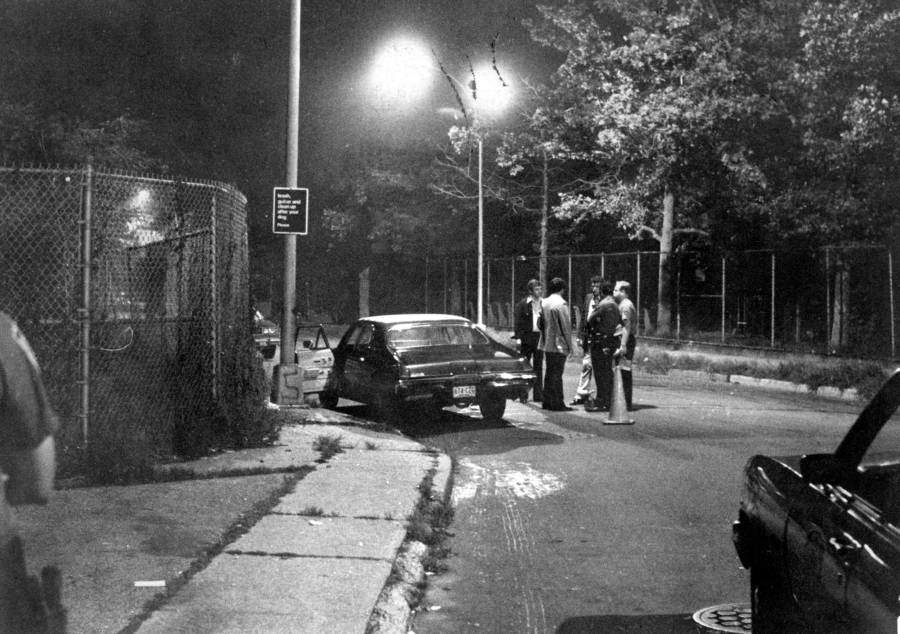
The Son of Sam killings gripped New York City in 1976 and 1977. David Berkowitz targeted young couples and women sitting in parked cars at night. He shot Stacy Moskowitz and Robert Violante in Bath Beach, Brooklyn, in July 1977. Moskowitz died from her wounds. Violante survived but lost most of his vision. Berkowitz was arrested weeks later after a parking ticket near one of the crime scenes placed him at the scene.
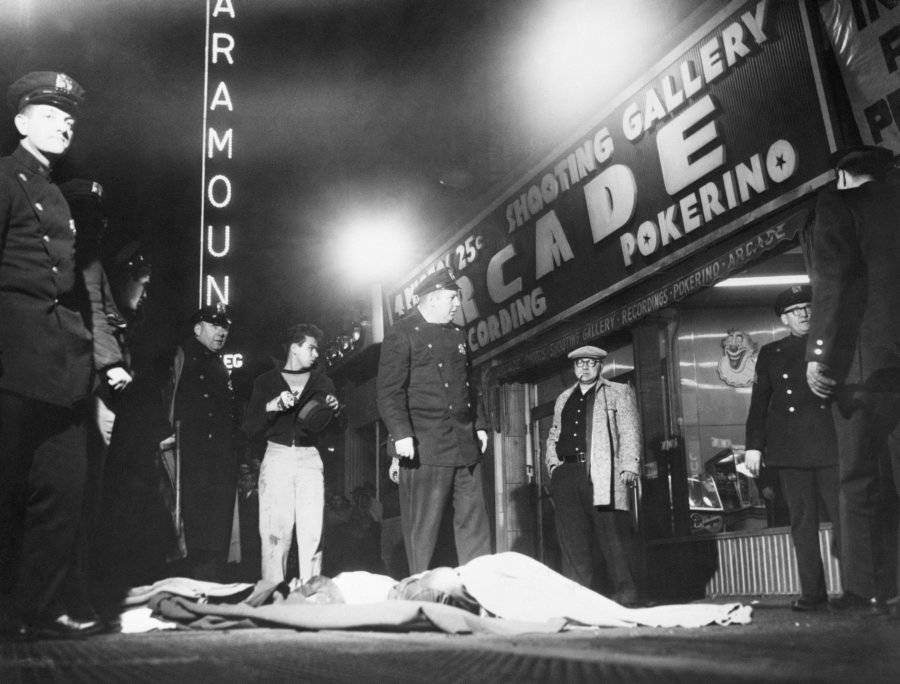
Street killings in mid-century Brooklyn were rarely isolated events. Many were connected to territorial disputes between rival gangs, debts owed to criminal organizations, or personal vendettas that spilled out onto public sidewalks. Crime scenes outside businesses — bars, arcades, restaurants — were common, and bystanders often arrived before police.
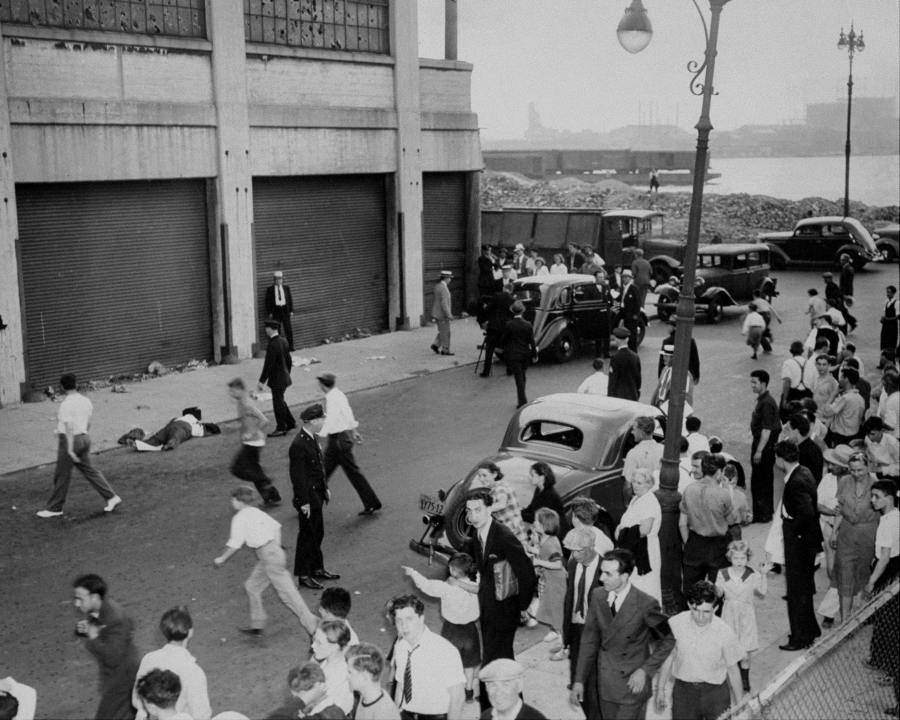
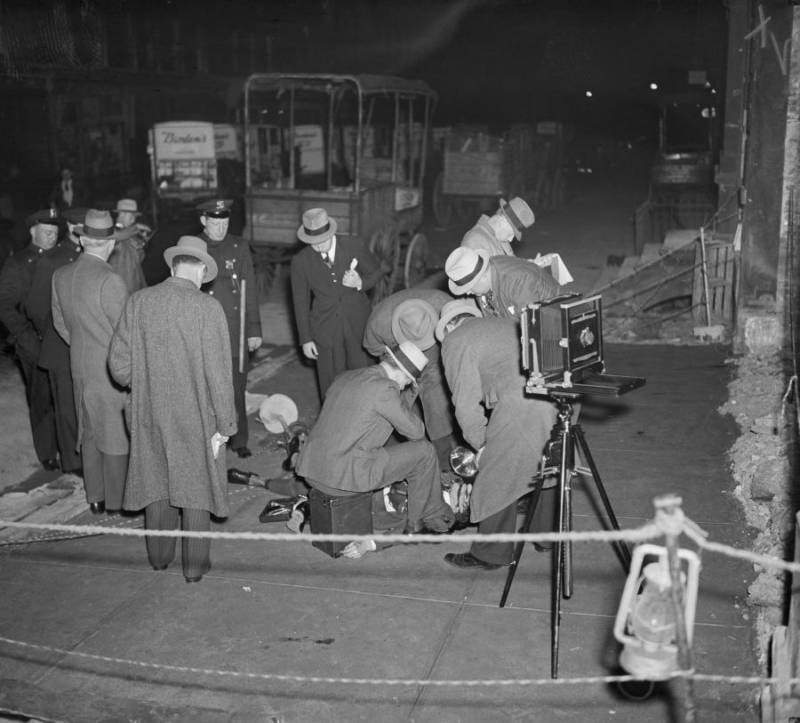
1937 was a violent year on New York’s streets. Gang killings appeared regularly in newspapers, and the NYPD was often photographed arriving at scenes already surrounded by crowds. The murders on East 102nd Street and 19th Street that year reflected how openly organized crime operated — bold enough to kill in broad daylight on residential blocks.
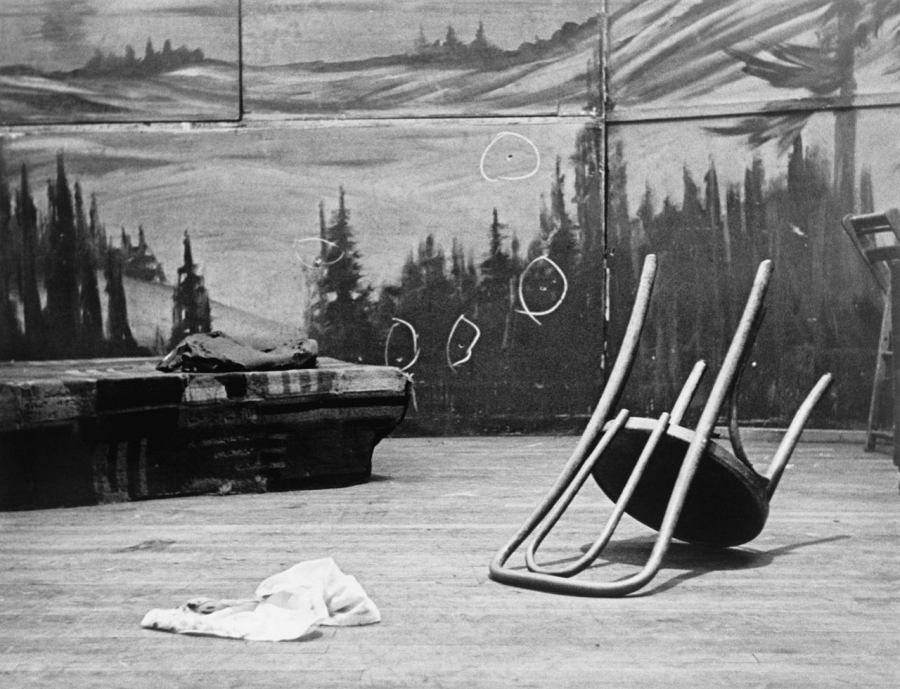
On February 21, 1965, Malcolm X was shot 21 times while speaking at the Audubon Ballroom in Washington Heights, Manhattan. He was rushed to Columbia Presbyterian Hospital but was pronounced dead on arrival. Three members of the Nation of Islam were convicted for the assassination. The bullet holes photographed on the stage wall stand as physical evidence of the violence that ended his life.
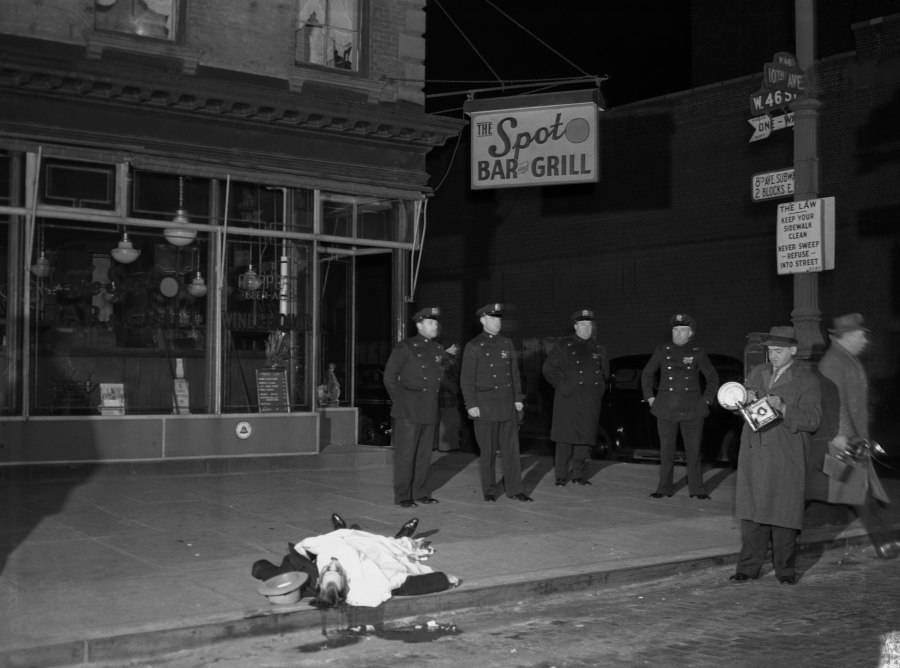
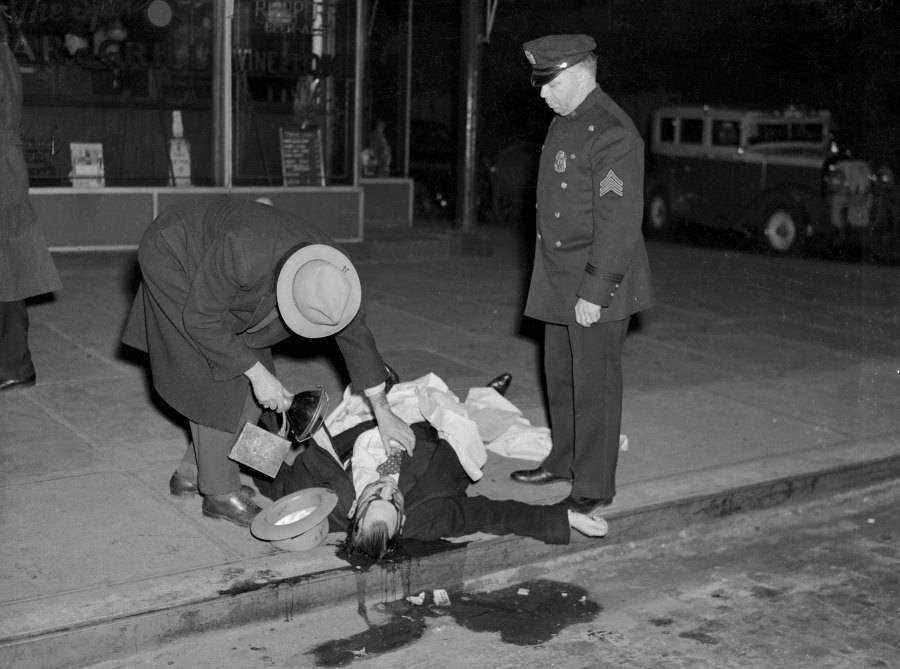
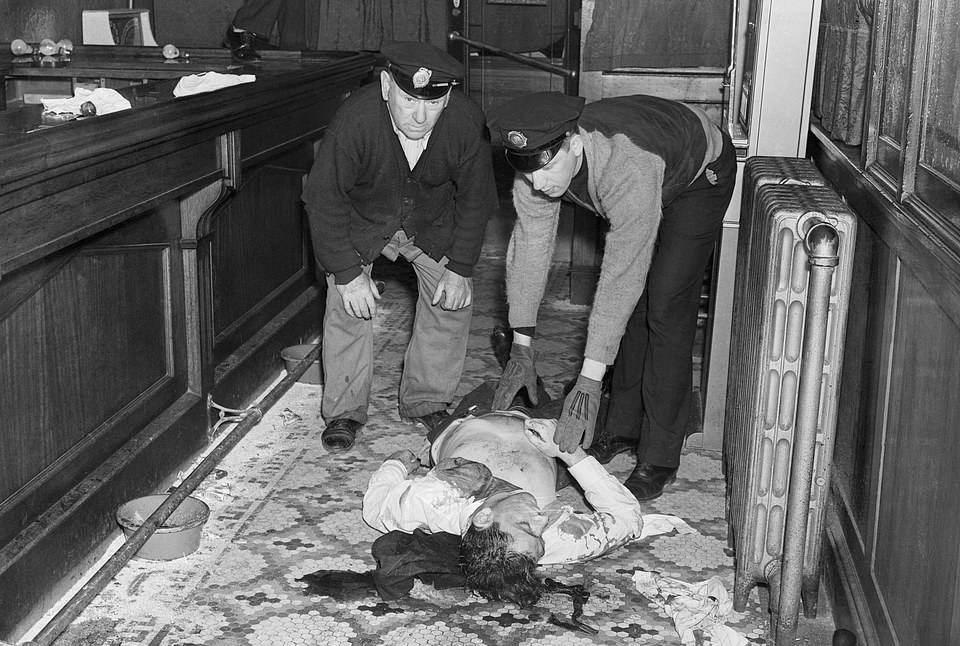
David Beadle, known on the street as “David the Beetle,” was shot dead in front of the Spot Beer Tavern in Manhattan in 1939. His death was one of dozens of gangland killings that year. The photographs of his body, taken from multiple angles, show how thoroughly crime scene photographers documented these murders — even when detectives on the scene paid little attention to preserving evidence.
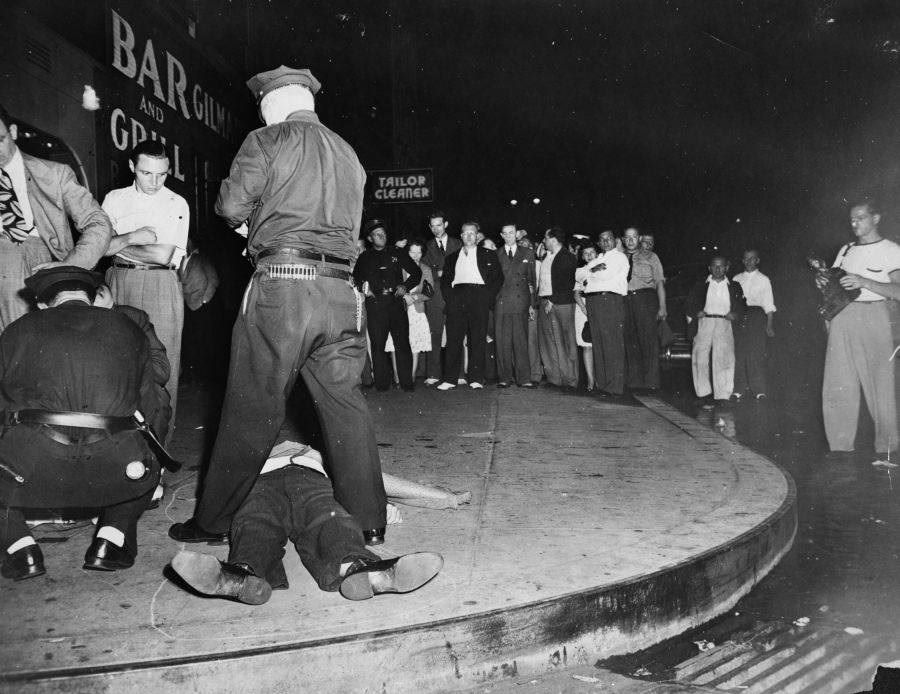
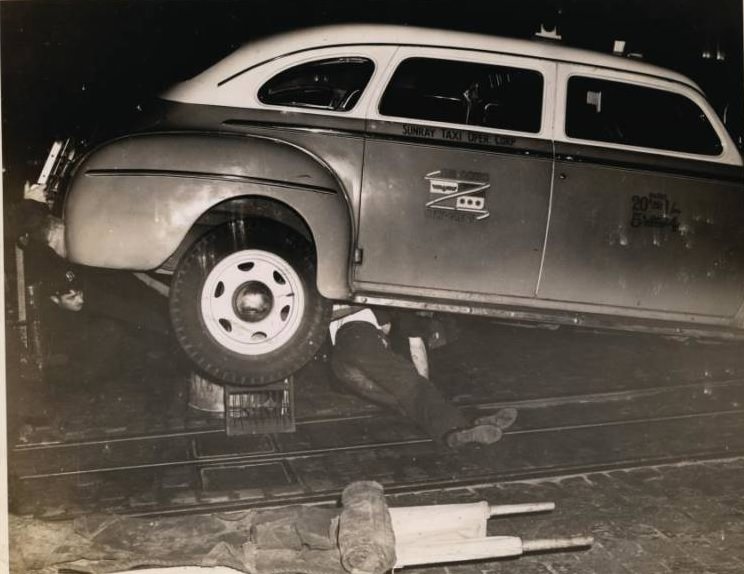
Not all violent deaths in mid-century New York were mob-related. Accidents, street fights, and opportunistic crimes claimed lives just as regularly. A body beneath a taxi, crowds forming around a man outside a bar — these were scenes that photographers captured without hesitation, and police handled without the protective equipment or careful protocols that became standard decades later.
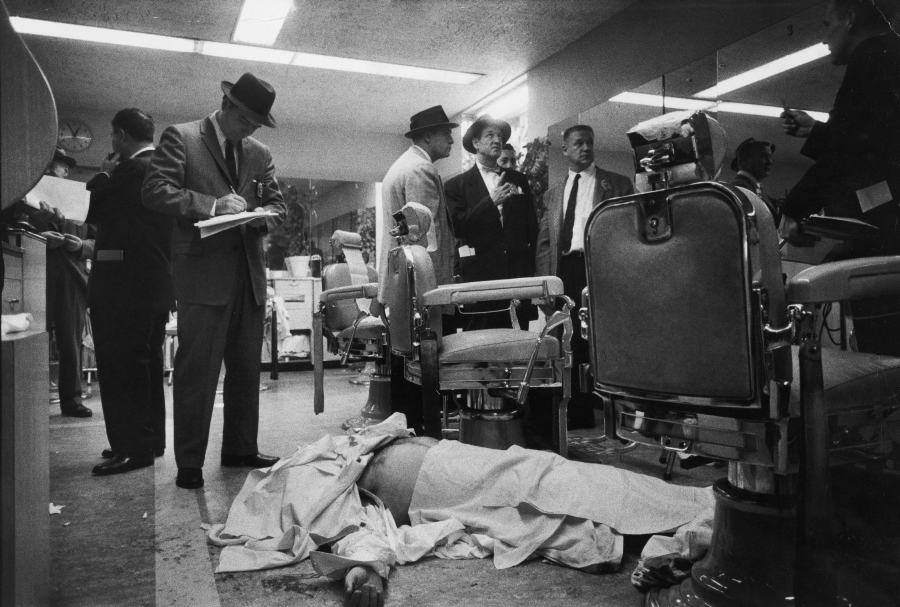
Albert Anastasia was one of the most feared men in American organized crime. He was a founder of Murder, Inc. — the enforcement arm of the Mafia responsible for hundreds of contract killings. On October 25, 1957, two gunmen entered the barbershop of the Park Sheraton Hotel in Midtown Manhattan and shot Anastasia dead while he sat in the barber’s chair. His murder was ordered by rival mob bosses Vito Genovese and Carlo Gambino.
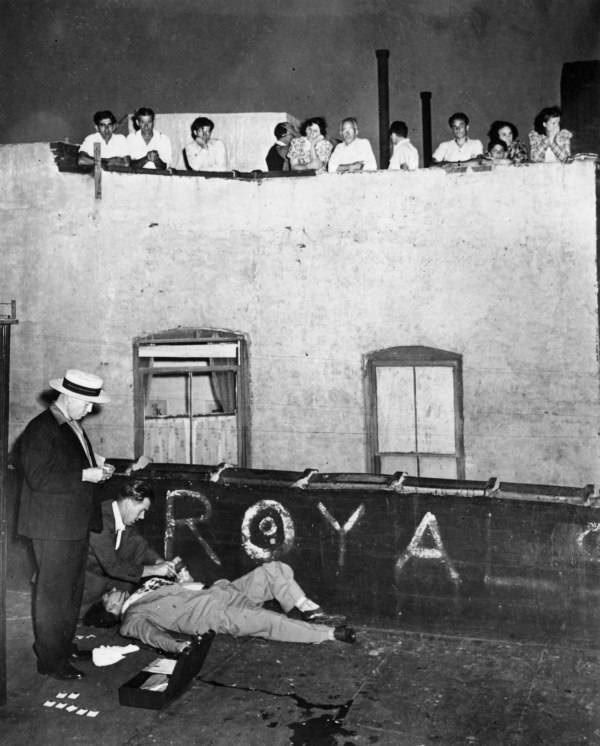
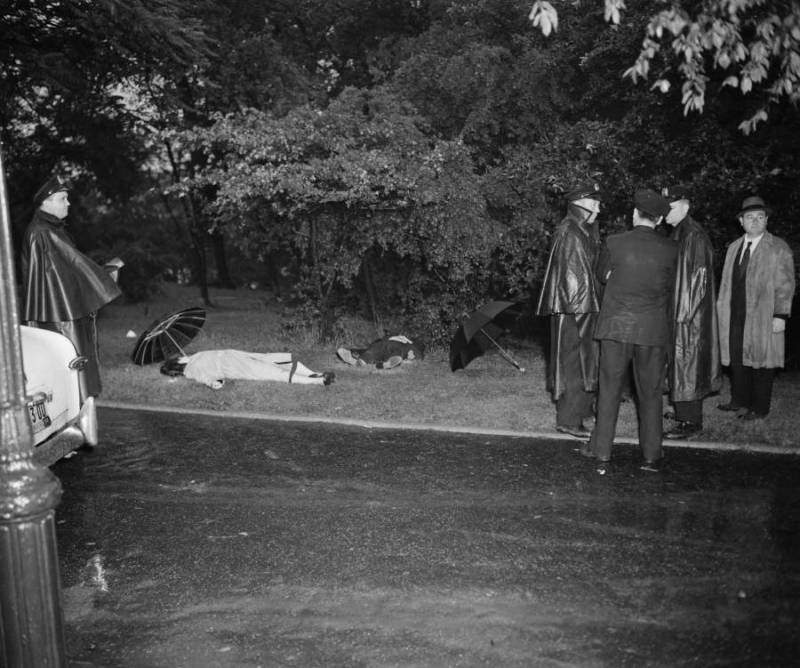
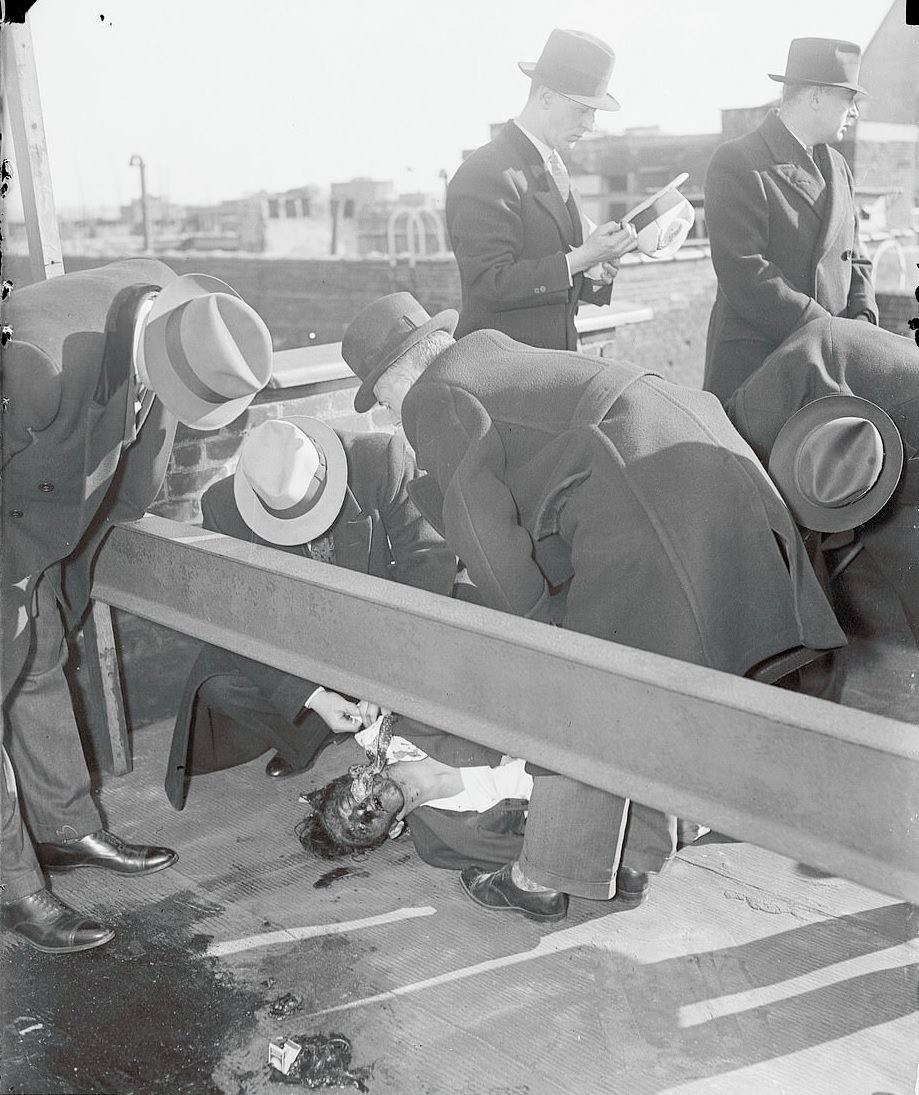
The murder of Joseph Gallichio on a rooftop in East Harlem in 1941, found beside his racing pigeons, illustrated how intimately violence touched everyday life in New York’s neighborhoods. Central Park, too, was not immune — a .45-caliber pistol found near the bodies of two men on the East 106th Street end of the park showed that even public green spaces became crime scenes.
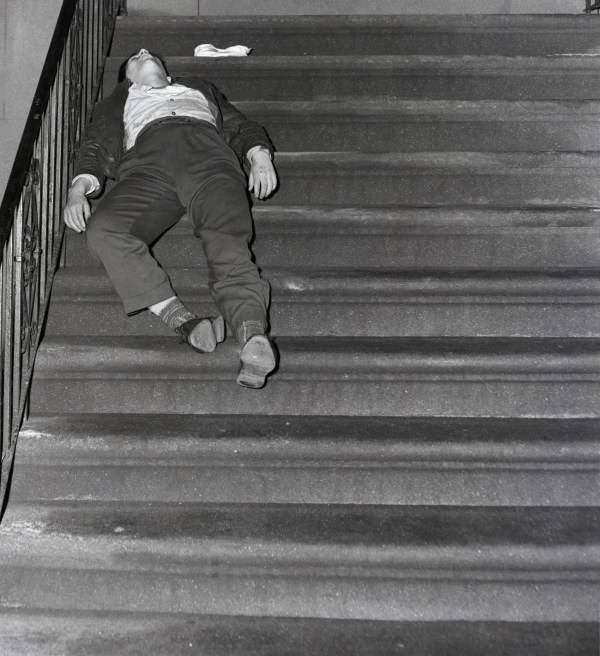
The heroin epidemic that spread through New York’s poorer neighborhoods in the 1950s left a trail of young victims. George Silva was 19 years old when he died on the steps of a rooming house in 1954. His death was one of many that year that police and medical examiners documented as drug-related fatalities.
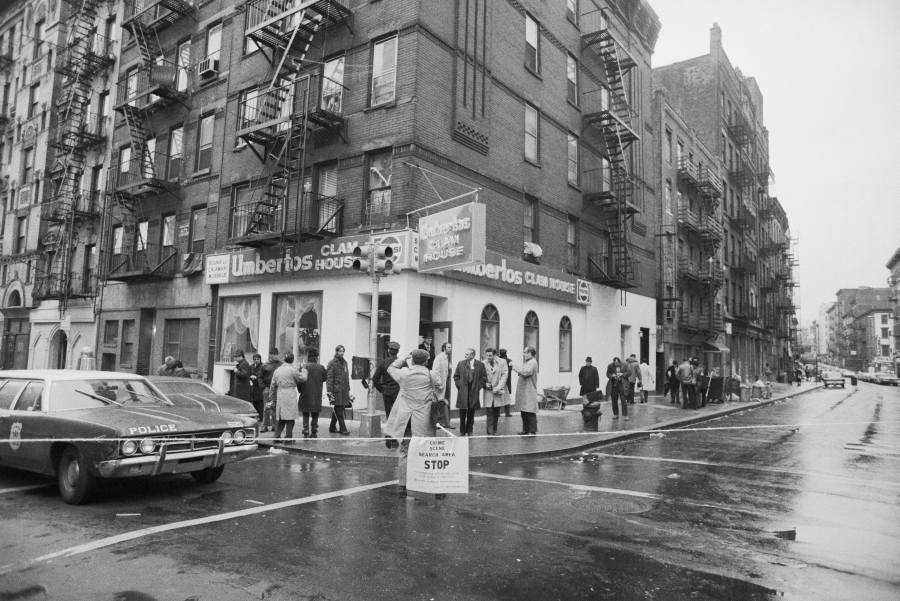
Joseph “Crazy Joe” Gallo was shot dead at Umberto’s Clam House in Little Italy on April 7, 1972, during his 43rd birthday celebration. Gunmen entered the restaurant and opened fire. Gallo was hit multiple times and died on the street outside. The killing was widely believed to be retaliation for his alleged involvement in the murder of rival boss Joe Colombo the year before.
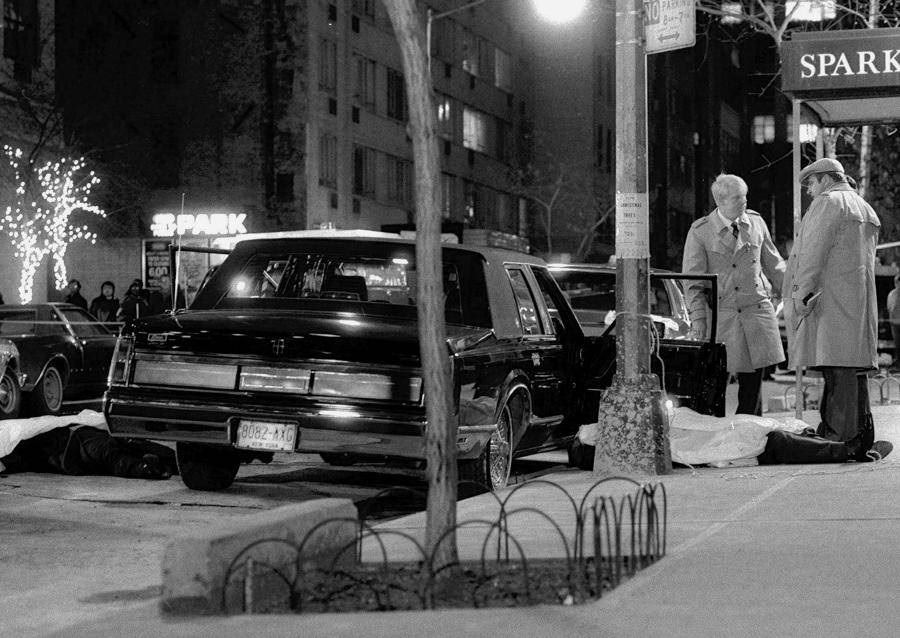
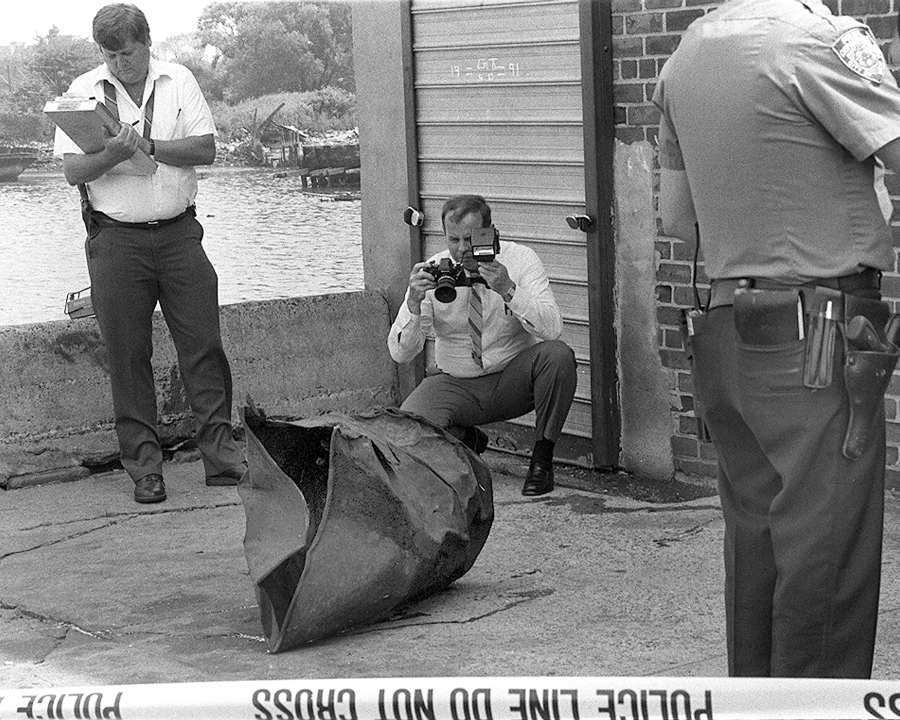
Paul Castellano, the head of the Gambino crime family, was shot dead outside Sparks Steakhouse in Midtown Manhattan on December 16, 1985. The hit was arranged by John Gotti, who took over the family after Castellano’s death. That same year, Castellano’s bodyguard and associate Thomas Bilotti was also killed in the attack. Seven years later, serial killer Joel Rifkin was caught after a traffic stop led police to the body of one of his victims inside an oil drum in the bed of his pickup truck.
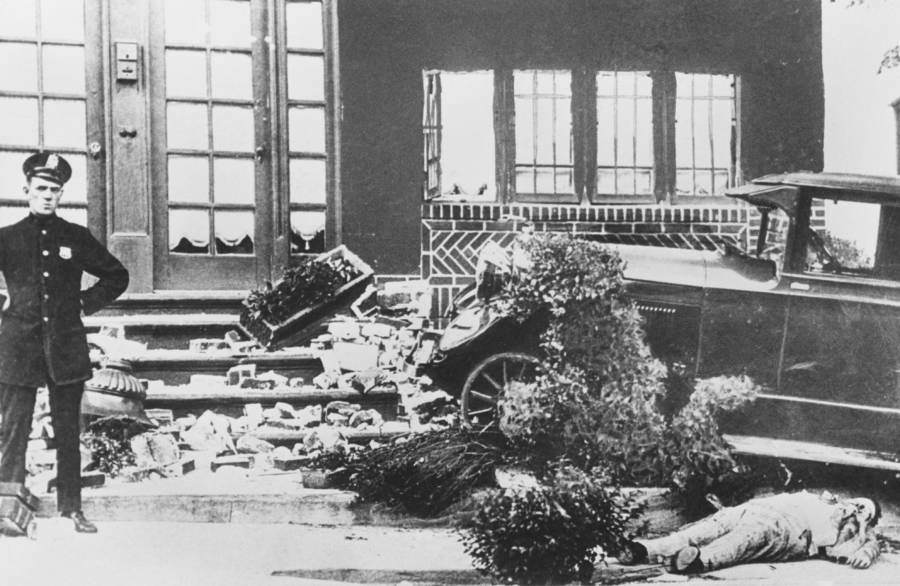
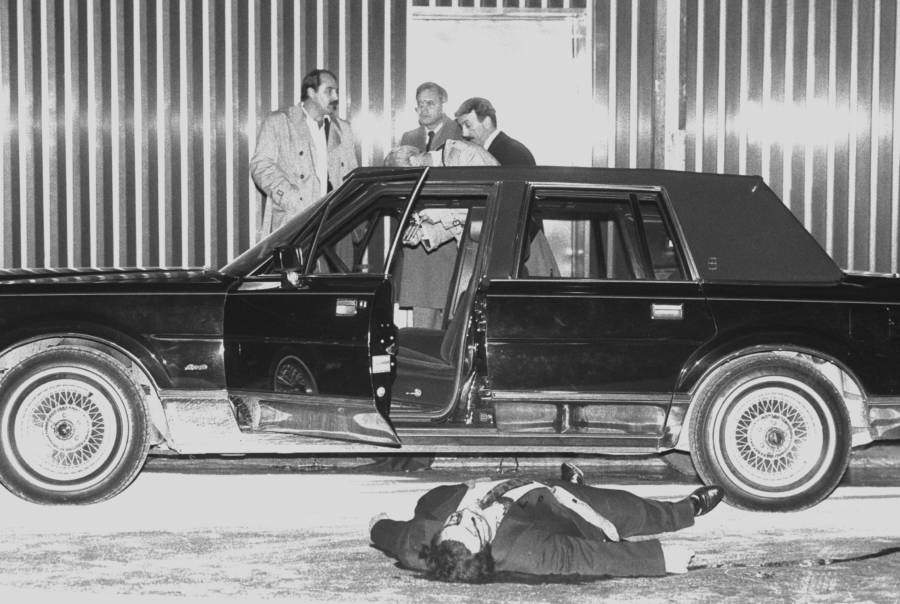
Frankie Yale was a powerful Brooklyn mobster and one-time mentor to Al Capone. He was killed on July 1, 1928, shot while driving through the streets of Brooklyn — the first recorded use of a Thompson submachine gun in a New York City murder. The Castellano and Bilotti killings 57 years later were carried out with similar precision, demonstrating how organized and methodical mob assassinations remained throughout the century.
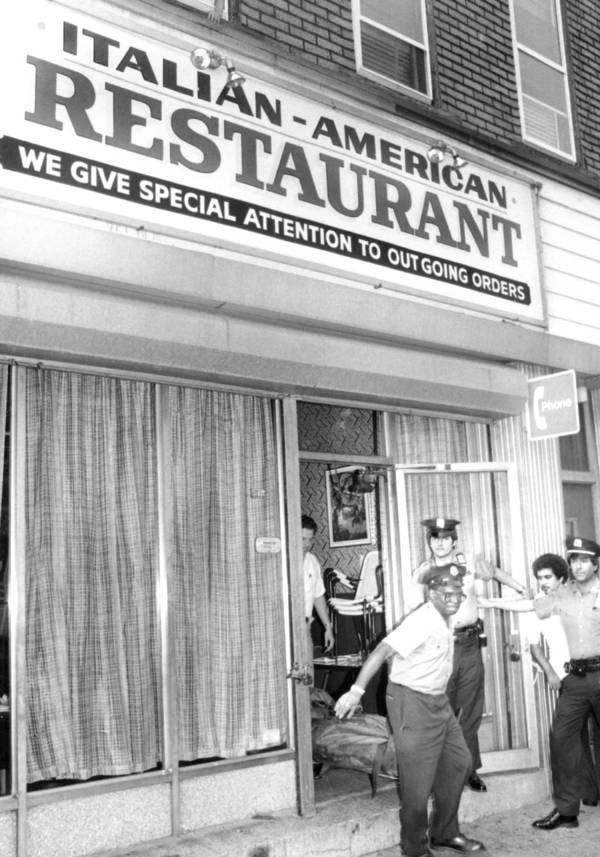
Carmine Galante, the boss of the Bonanno crime family and one of the most ruthless drug traffickers in the American Mafia, was shot dead while dining at Joe & Mary’s Restaurant in Bushwick, Brooklyn, on July 12, 1979. He was eating lunch on the patio when three masked gunmen opened fire. The photograph of morgue attendants removing his body — a cigar still clenched between his teeth in earlier shots taken at the scene — became one of the most recognizable mob crime scene images of the era.
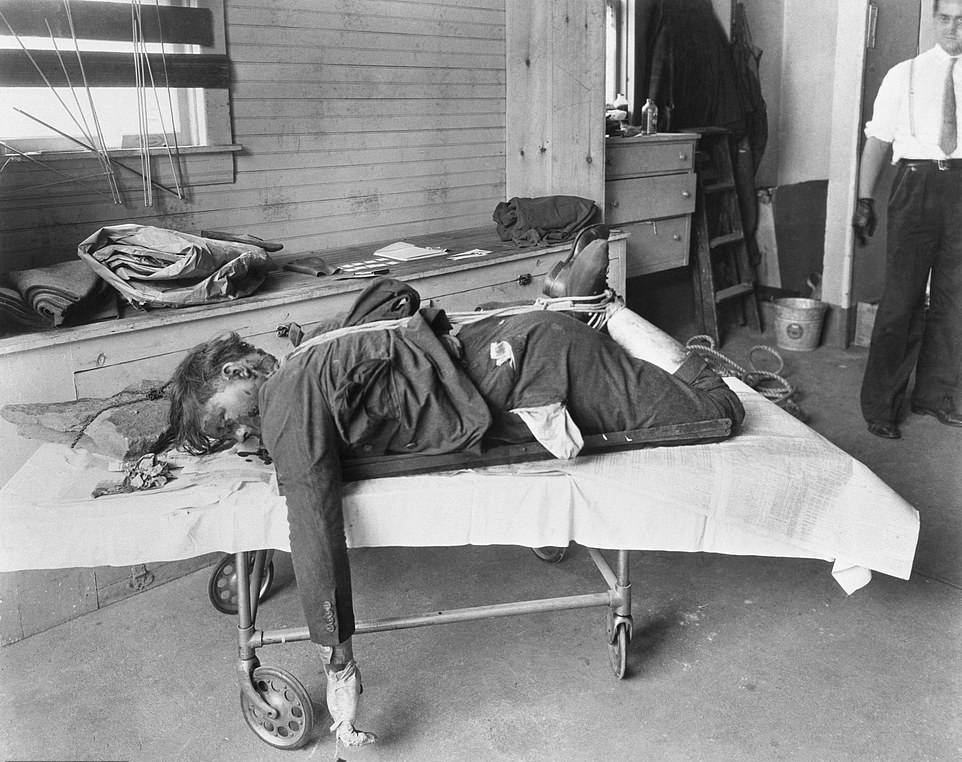
Walter Sage worked as a hitman for Murder, Inc., the organized crime enforcement group that carried out contract killings across New York and New Jersey throughout the 1930s. Sage was bound and stabbed repeatedly before being thrown into Swan Lake in the Catskills. He had been skimming money from the mob’s slot machine operations. His killers weighted his body to keep it submerged, but it surfaced anyway.
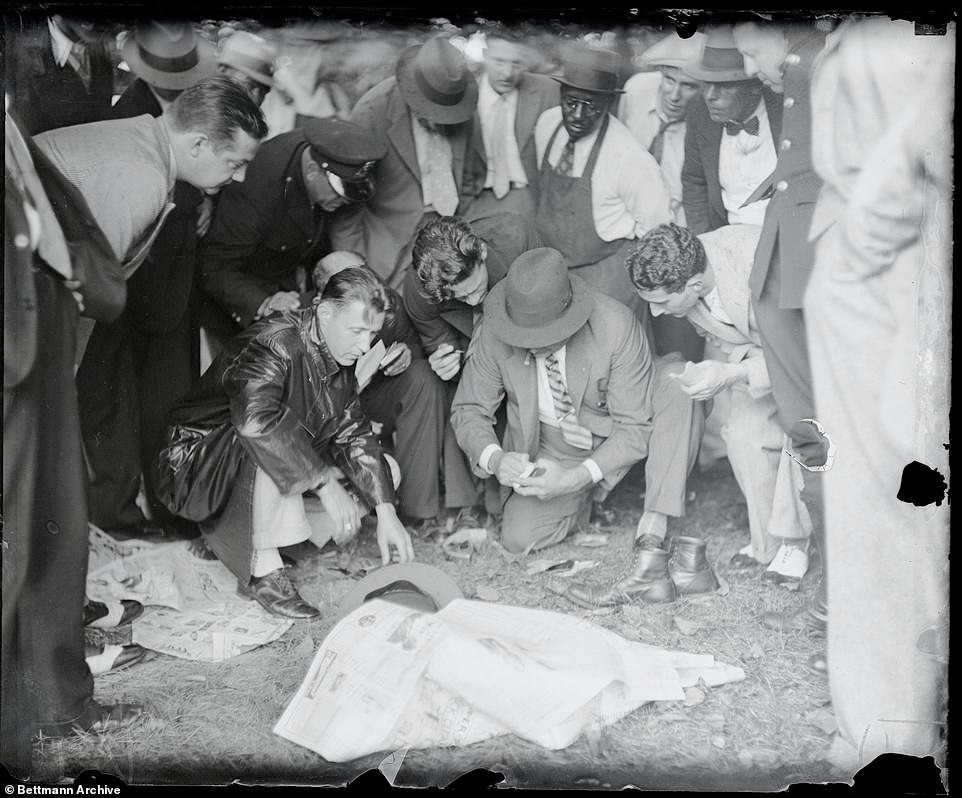
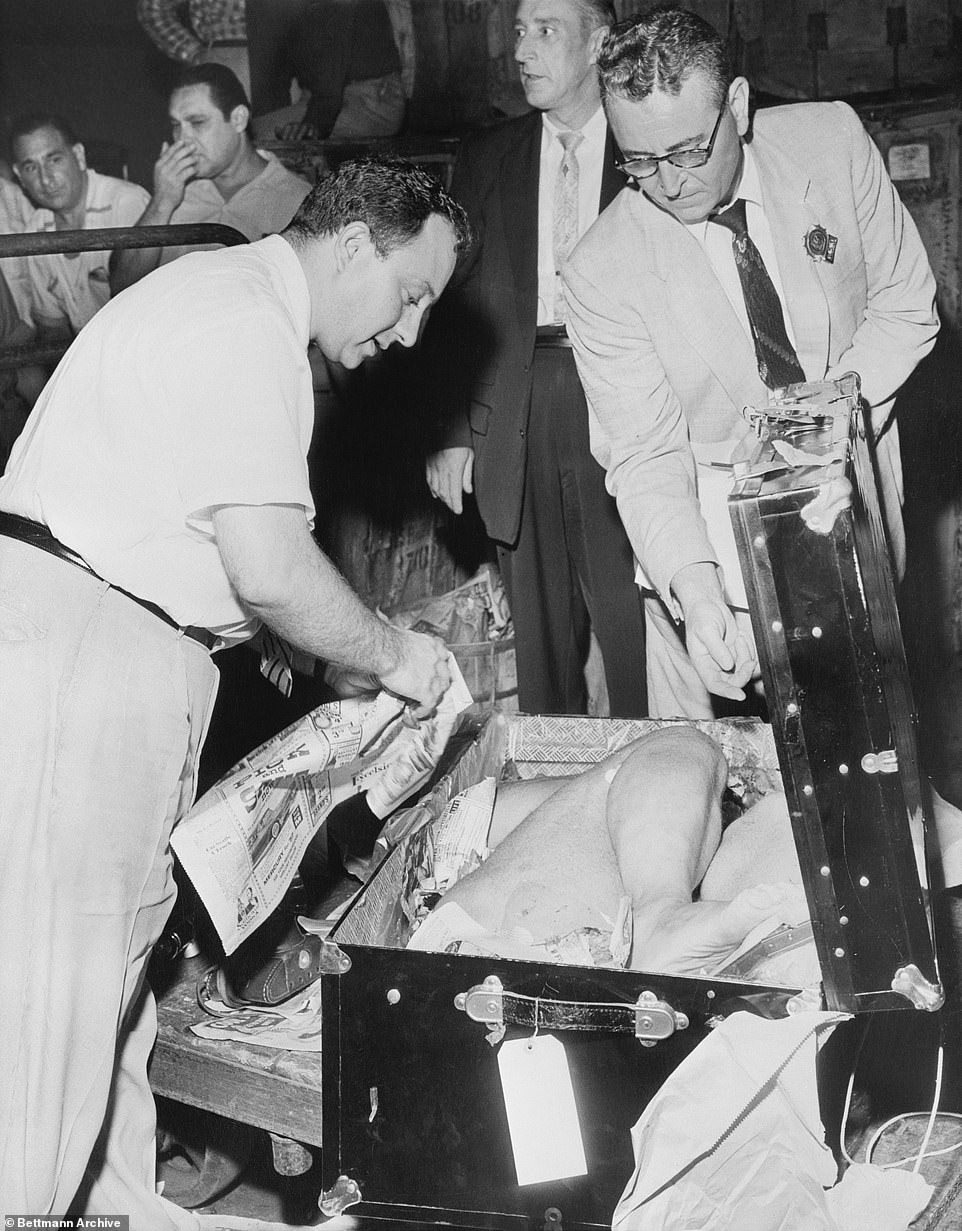
The handling of evidence in these early crime scene photographs is striking to a modern eye. Officers sifted through a dead man’s belongings without gloves while spectators watched over their shoulders. Bodies stuffed into suitcases were examined with bare hands. There was no concept of contaminating a crime scene — photography itself was often the only formal documentation method used.
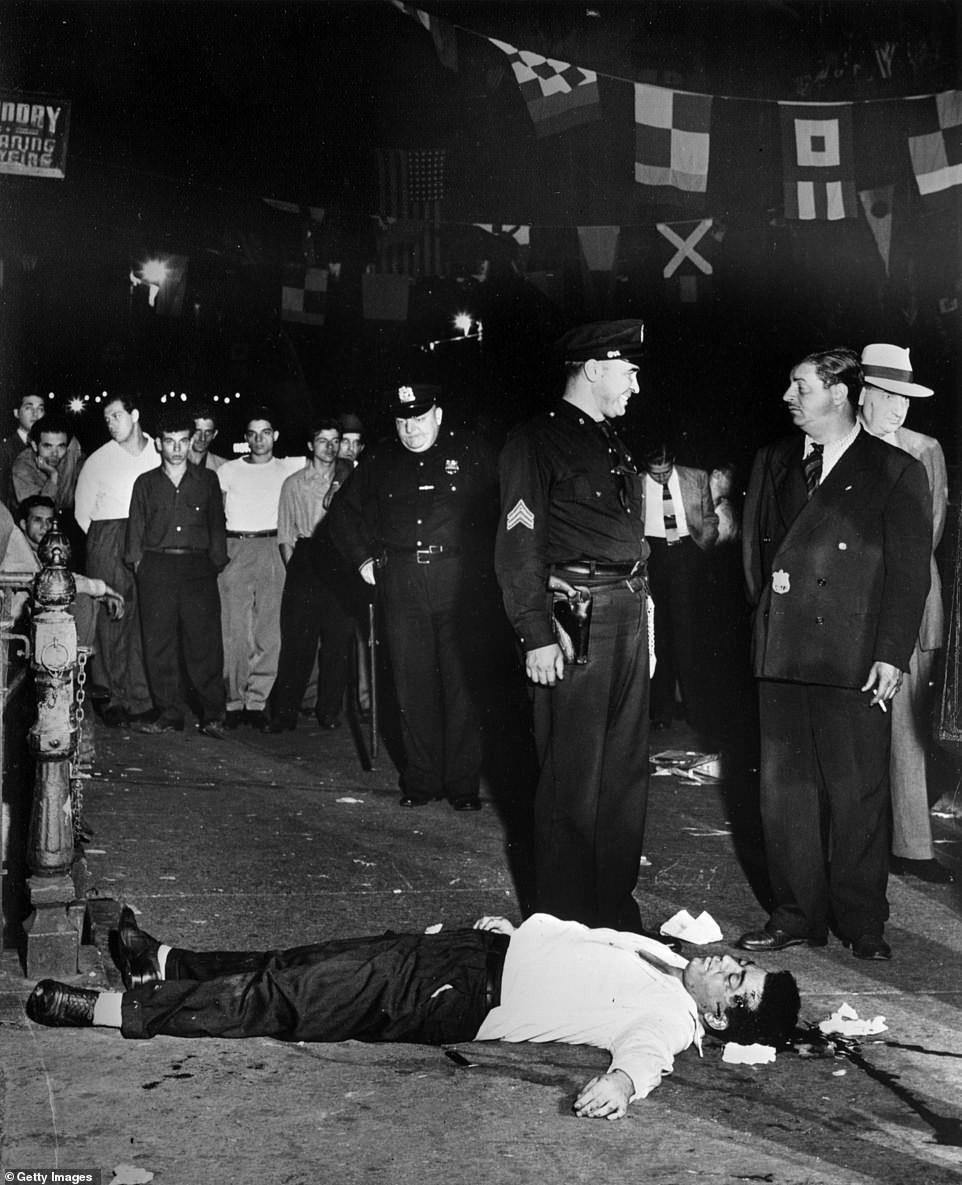
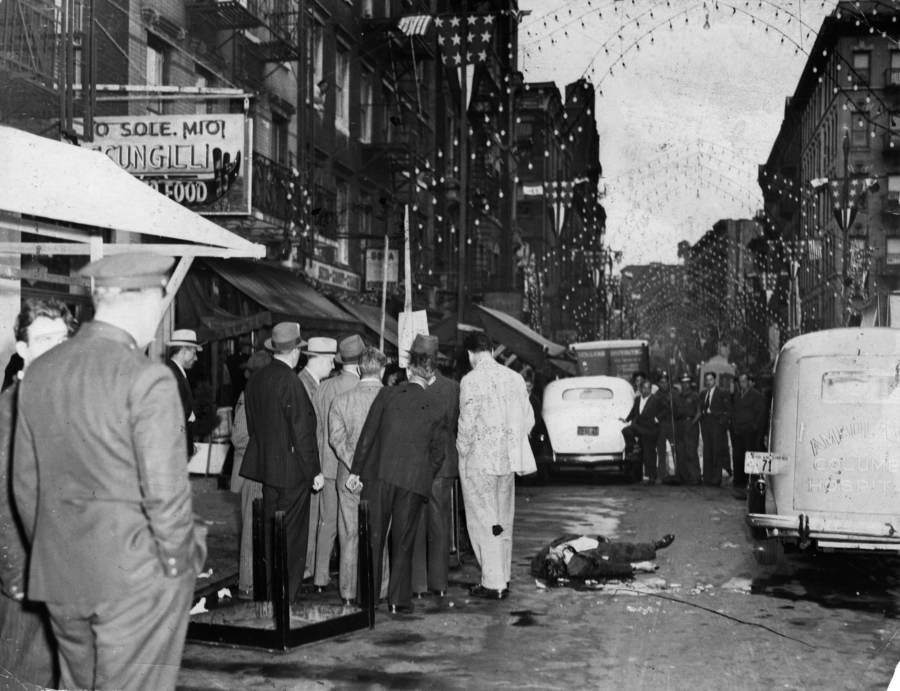
The Feast of San Gennaro in Little Italy was one of New York’s largest annual street festivals. In 1939, mob violence reached into the celebration itself. Joseph “Little Joe” La Cava and Rocco “Chickee” Fagio were both shot dead on Mulberry Street during the event. The killings were a stark reminder that organized crime respected no boundaries — not even a neighborhood street festival.
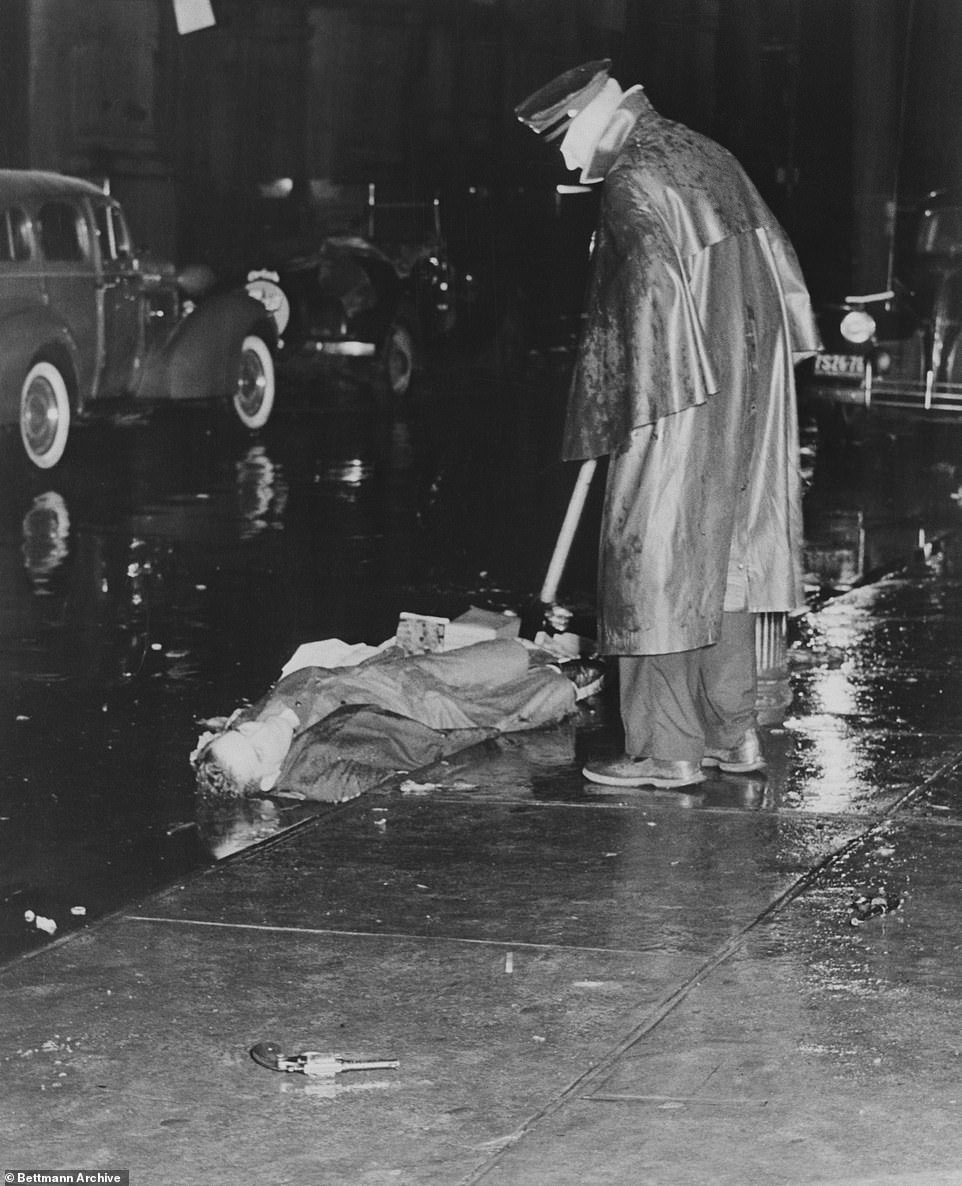
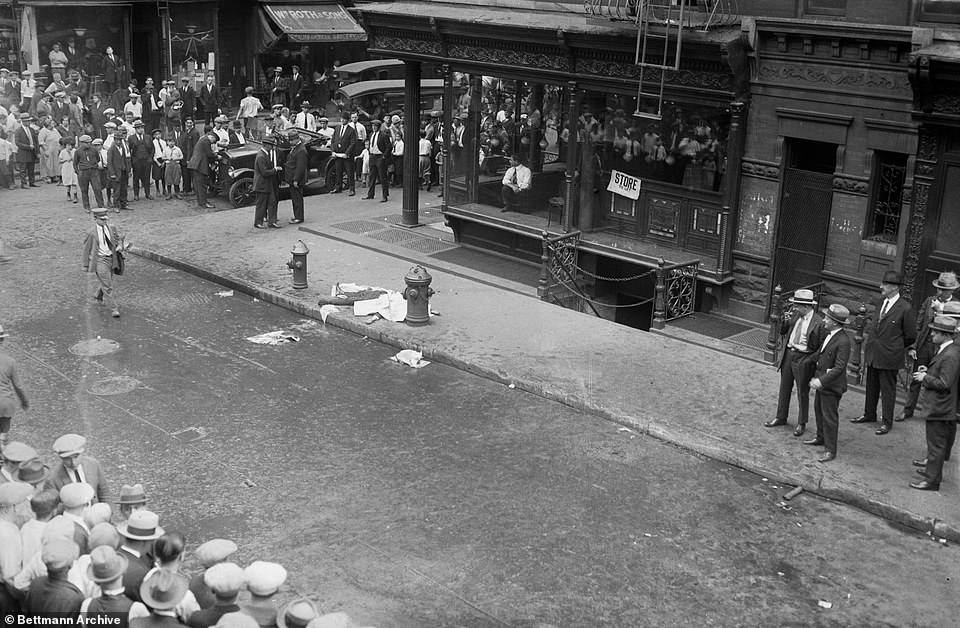
Mulberry Street and Mott Street ran through the center of Little Italy and were repeatedly the sites of mob-related killings. Louis Riggiona was found dead in the gutter with two bullets in his heart, the murder weapons discarded right next to the body. Killers in this era regularly left guns behind — fingerprinting technology was in use, but many weapons were untraceable.
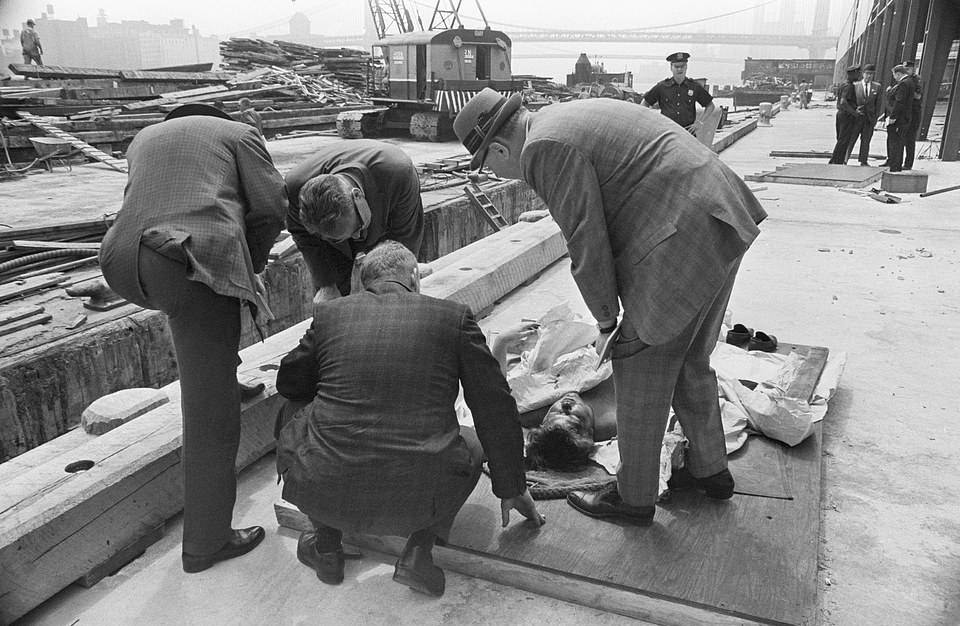
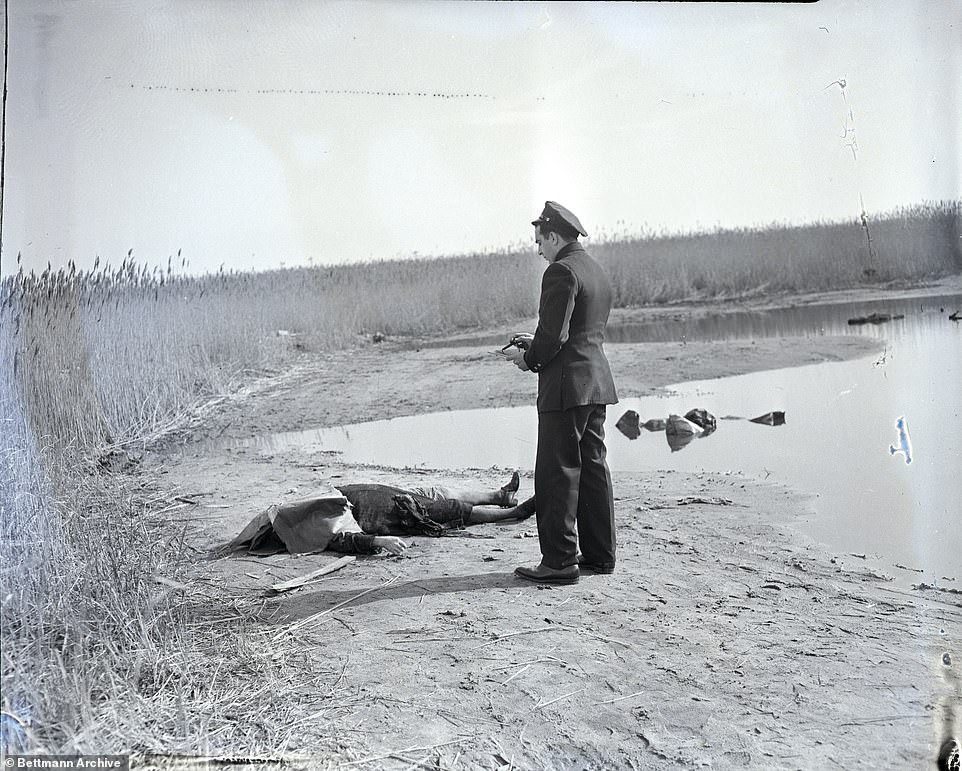
New York’s waterways were frequently used to dispose of murder victims. Bodies recovered from the East River and Brooklyn’s marshlands often bore signs of execution-style killings — bullet wounds to the head, bound hands, weighted clothing. The 1963 East River victim had been shot in the head before being put in the water. The woman found in the Brooklyn marshes in 1947 was one of many whose identities were never confirmed.
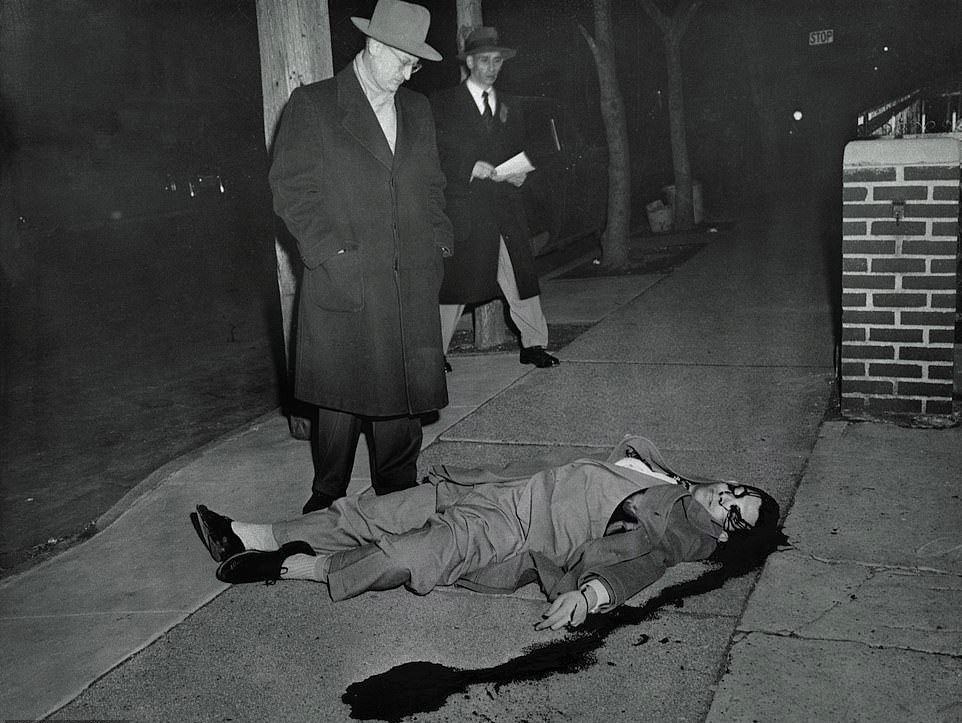
Arnold Schuster was 24 years old when he recognized bank robber Willie Sutton on a New York City subway in February 1952 and alerted police. Sutton was arrested, and Schuster appeared on television to talk about the encounter. Three weeks later, Schuster was shot dead on a Brooklyn street. Mob boss Albert Anastasia reportedly saw Schuster on television and ordered the killing — not because Schuster had anything to do with the Mafia, but simply because Anastasia despised informants.
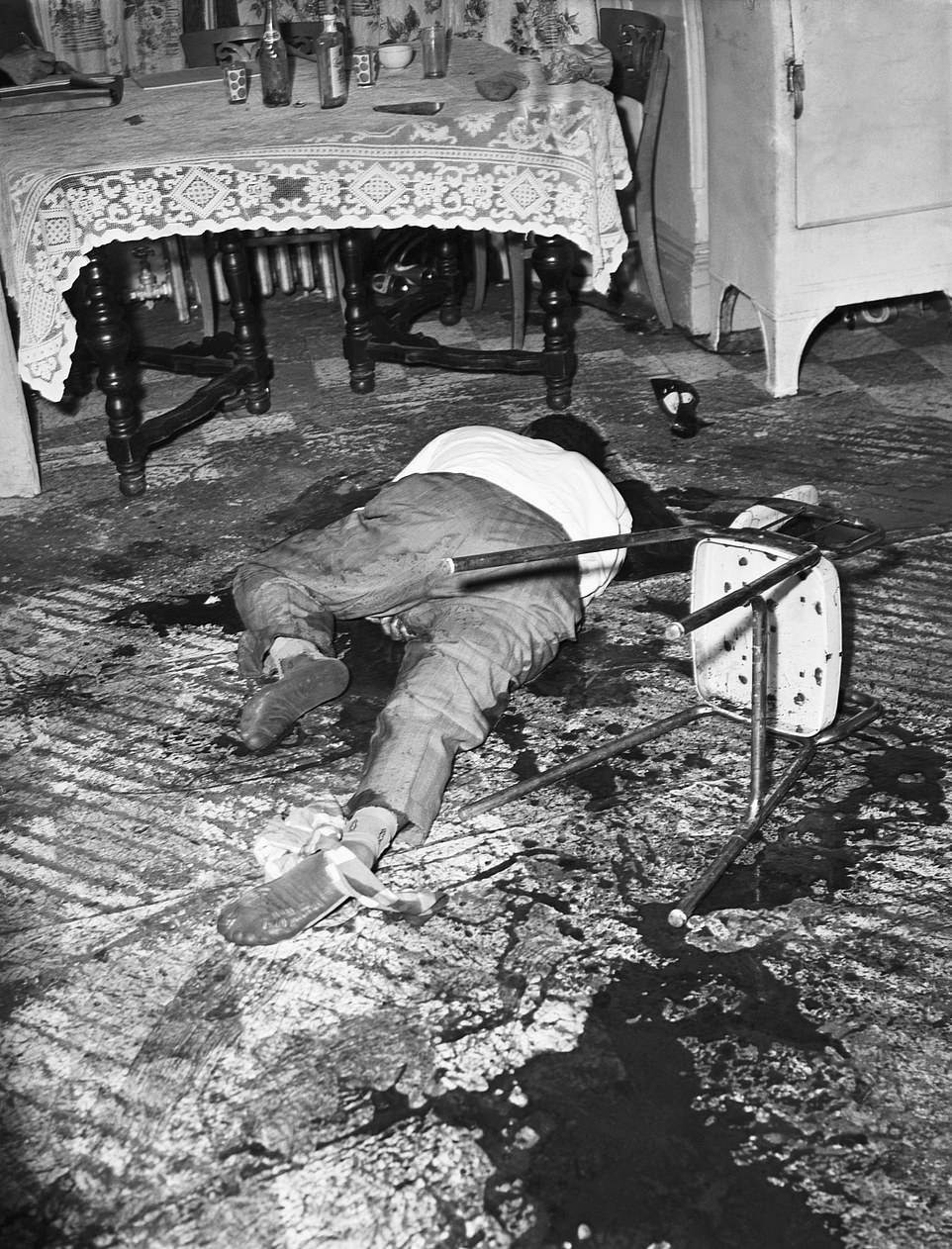
Killings inside bars and private residences were common throughout the century. Louis Lombardy was shot while drinking at a bar on Third Avenue. The 1962 Bronx victim was found in a living room, still in his chair, having been shot while at home. The intimacy of these settings — a neighborhood bar, a family apartment — made the violence feel especially stark.
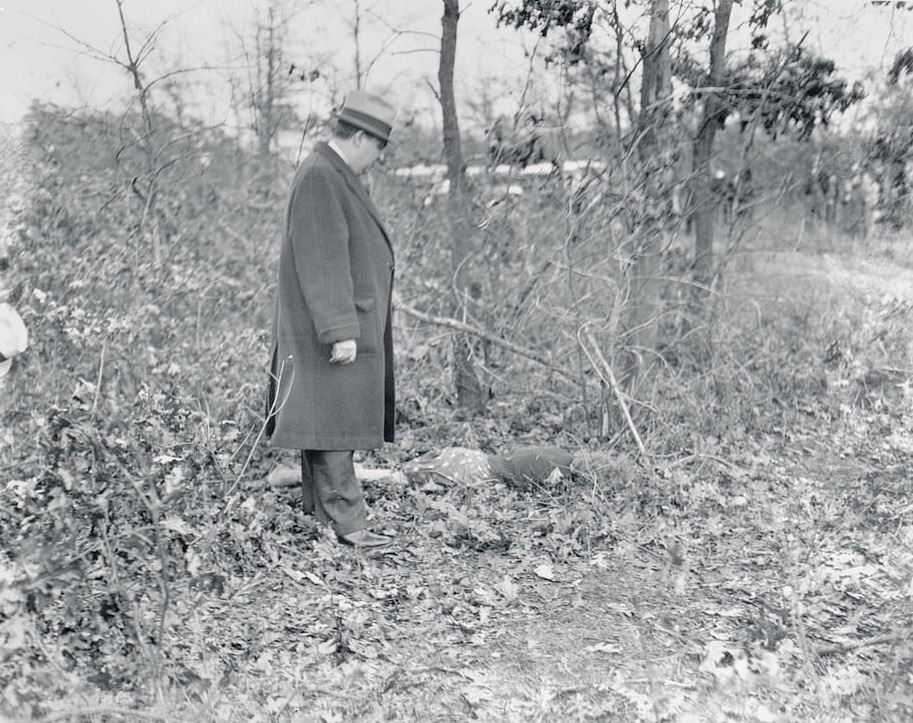
Not every victim in this archive was connected to crime. Ellen O’Connor was 15 years old when she disappeared from her home. Her body was later found in the woods in Massapequa, Long Island. Cases like hers showed that the violence documented in these photographs extended far beyond gang warfare — it reached into the lives of children and ordinary families.
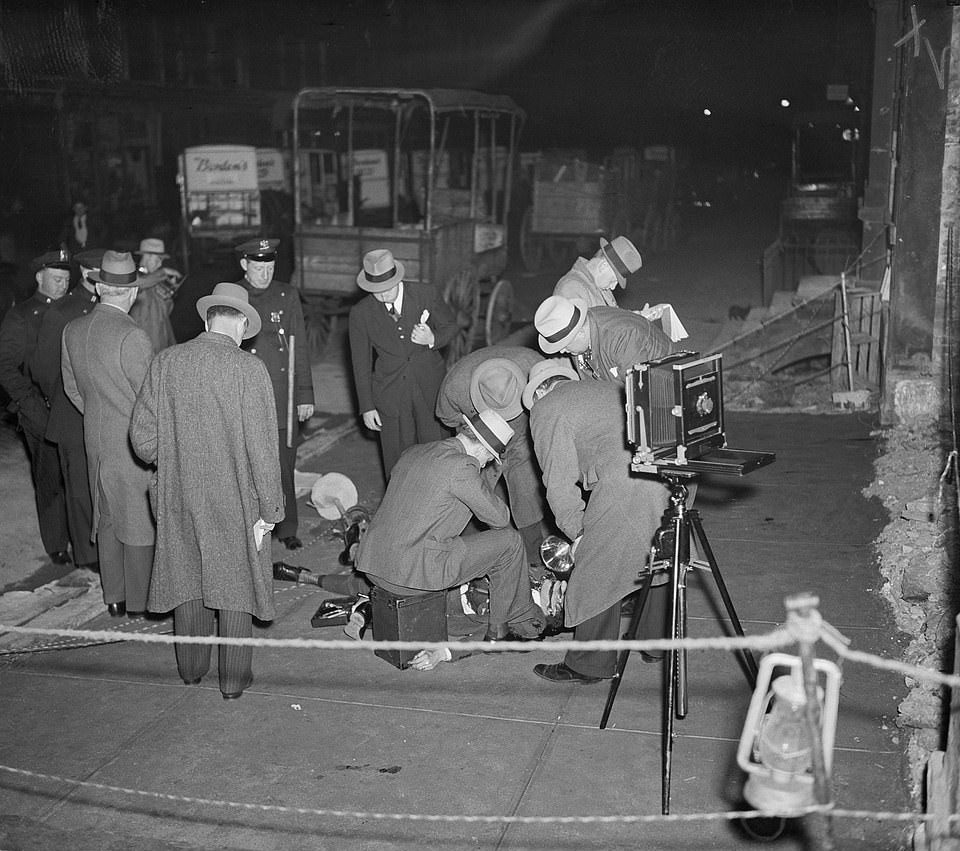
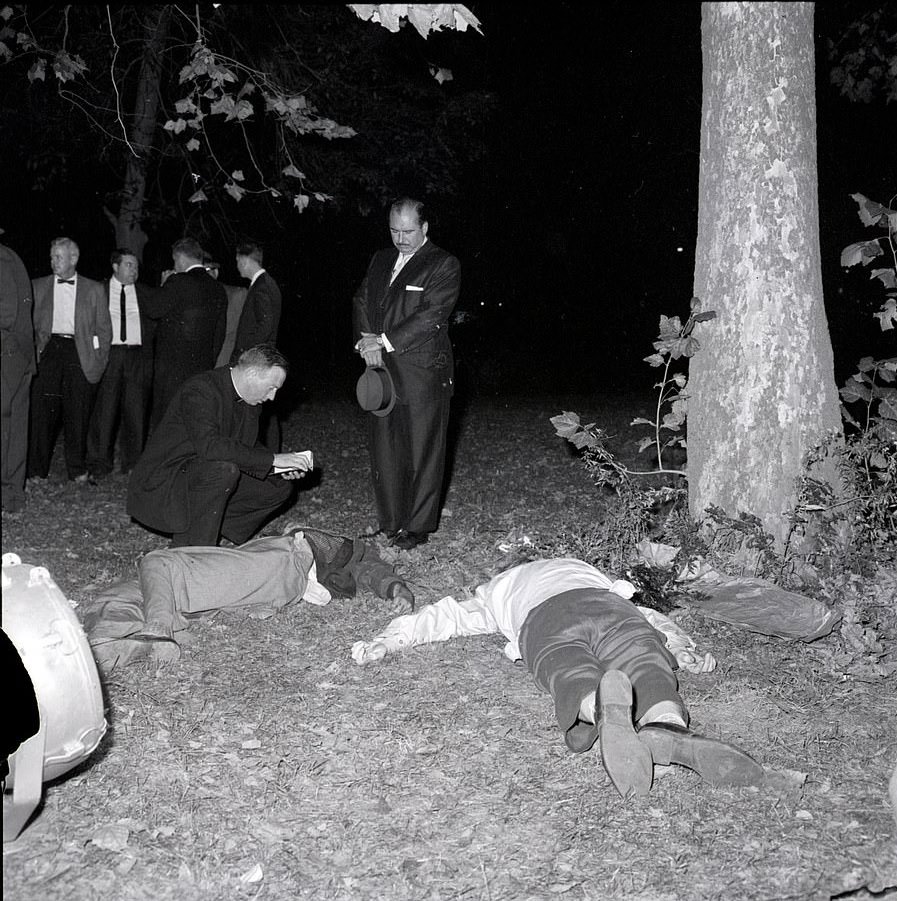
Murder-suicides appeared in crime scene photography just as frequently as mob killings. In 1961, Thomas J. Hogan shot Fred Romer dead before turning the gun on himself. A priest attended the bodies at the scene. The image of a clergyman kneeling among the dead captures how religion and violent death intersected in mid-century New York neighborhoods.
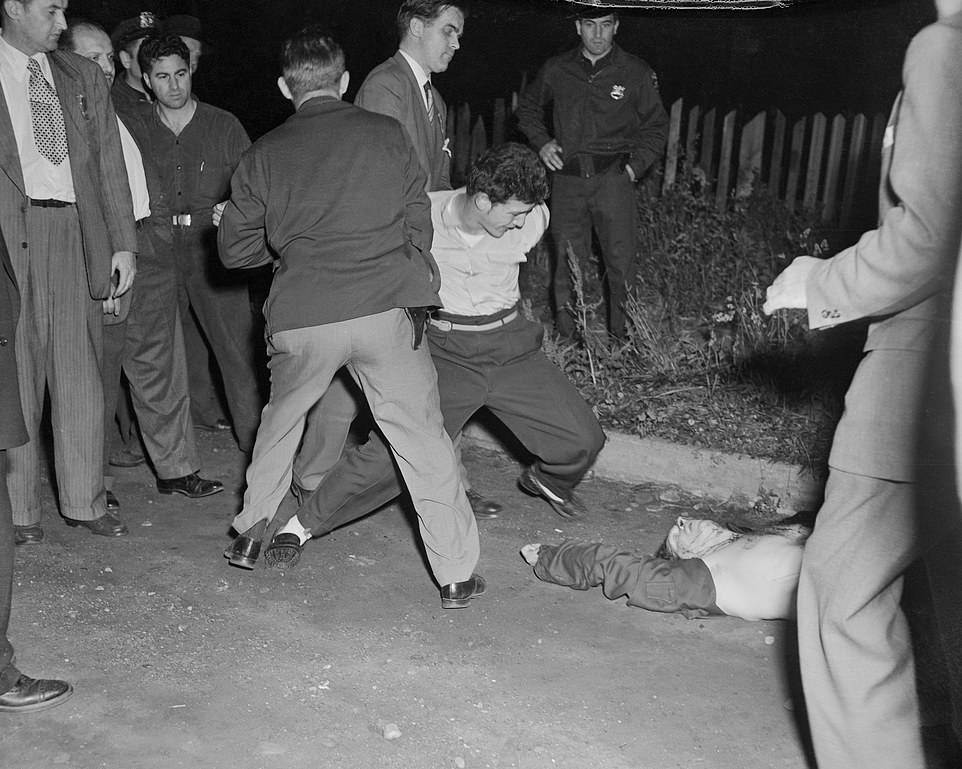
Vincent Emmino, 18, is pictured moments after discovering the body of his older brother and serial robber Ralph “Buck” Emmino. The younger Emmino swore vengeance when he saw his brother’s corpse.
Crime scene photographers captured more than just bodies. They documented the grief that followed. Eighteen-year-old Vincent Emmino was photographed moments after identifying the body of his older brother Ralph, known as “Buck,” a serial robber. Vincent swore vengeance on the spot. The image is one of the few in this collection that places human emotion at the center of the frame.
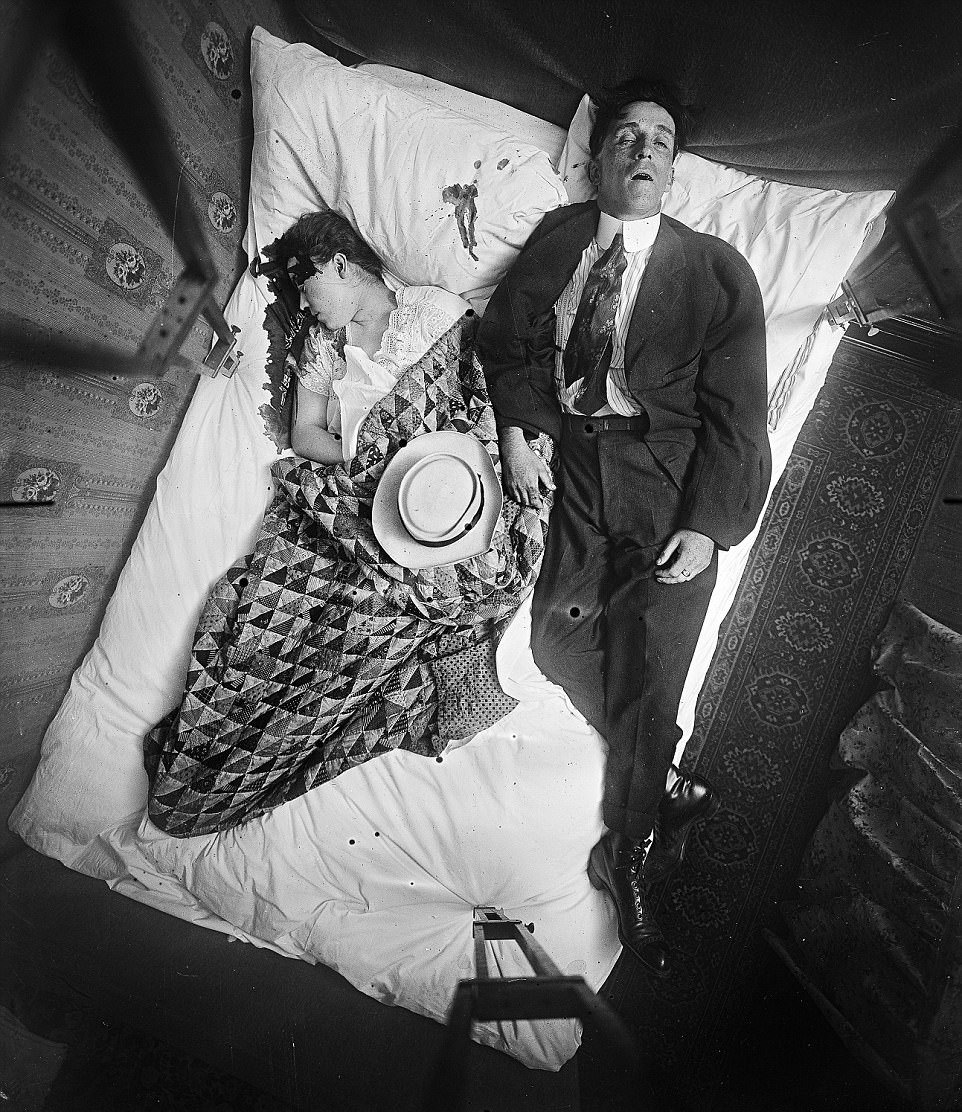
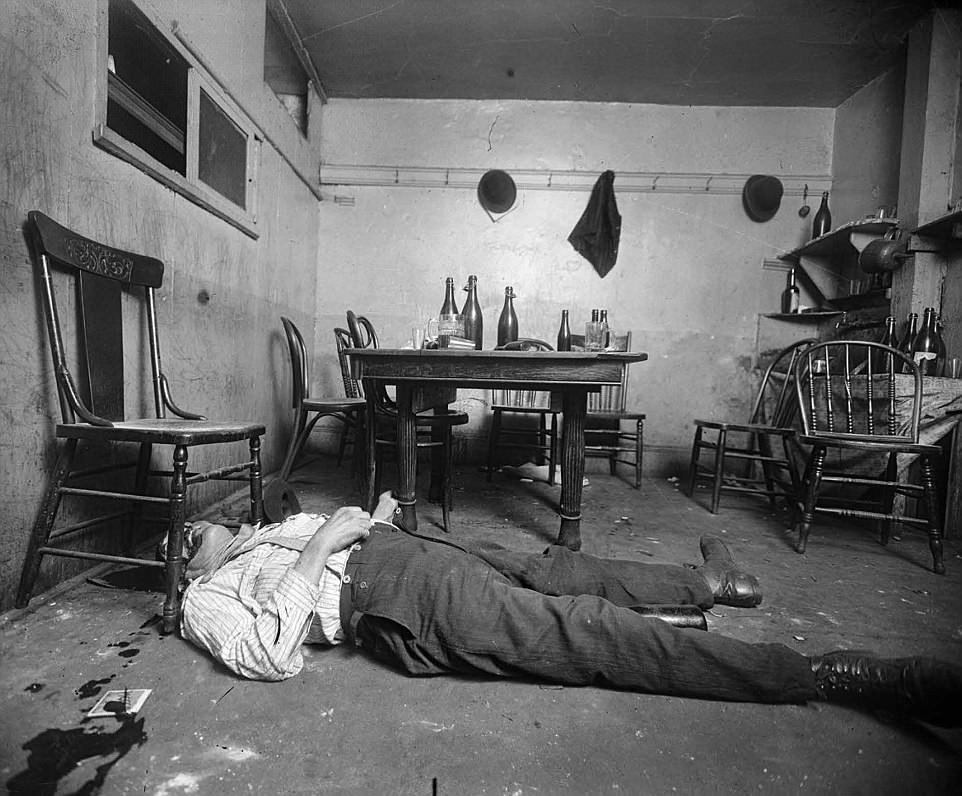
Some of the earliest crime scene photographs in this collection date to the 1910s and were discovered during renovations of the former NYPD headquarters in 2012. These images — a couple shot dead in bed, a man slumped in a bar — predate modern forensic practice entirely. They were stored for nearly a century before being compiled in the book “Murder in the City, New York, 1910–1920.”
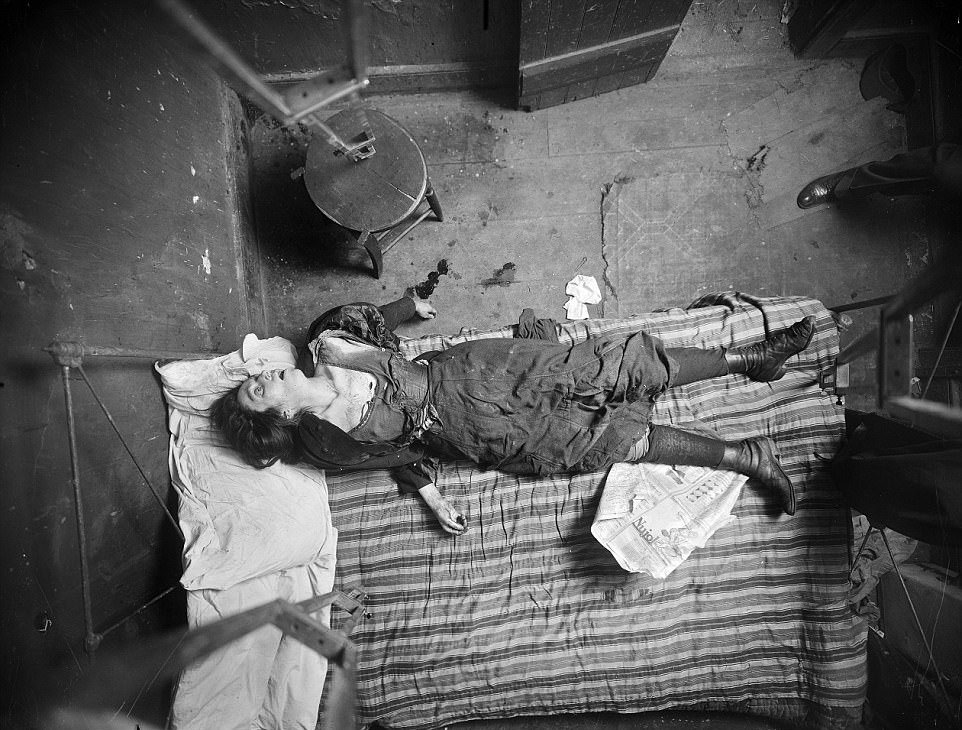
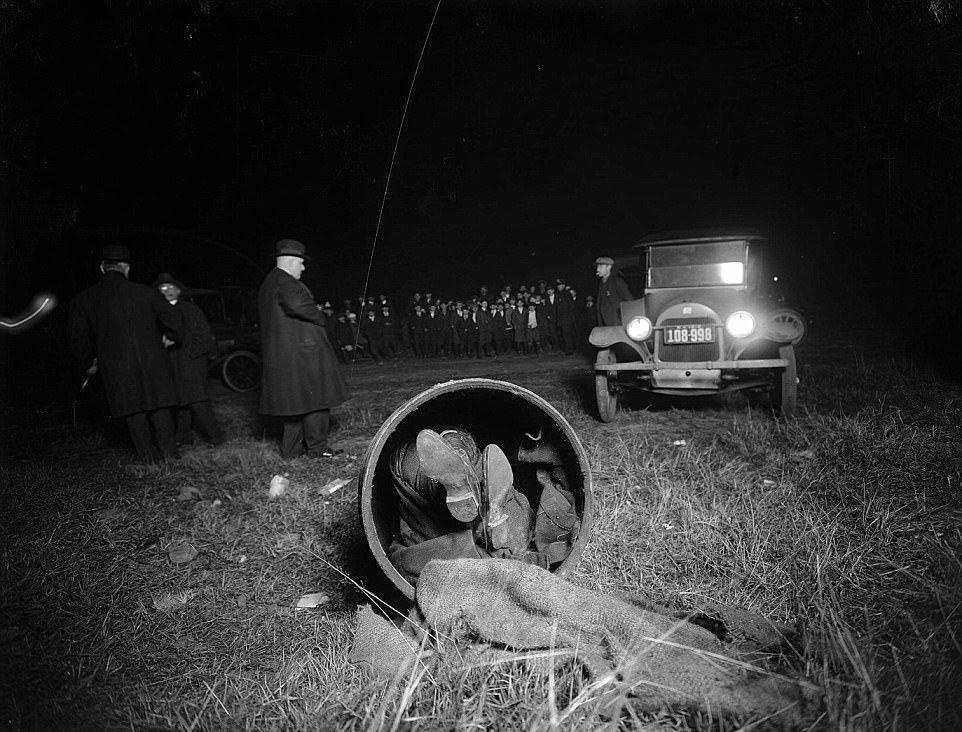
Victims found in barrels were a signature of early Mafia killings in New York. The so-called “barrel murders” were associated with the Black Hand, an extortion racket that terrorized Italian immigrant communities in the early 1900s. A body stuffed into a barrel and left on a street or in an alley sent a message — one that few in the neighborhood were willing to ignore.
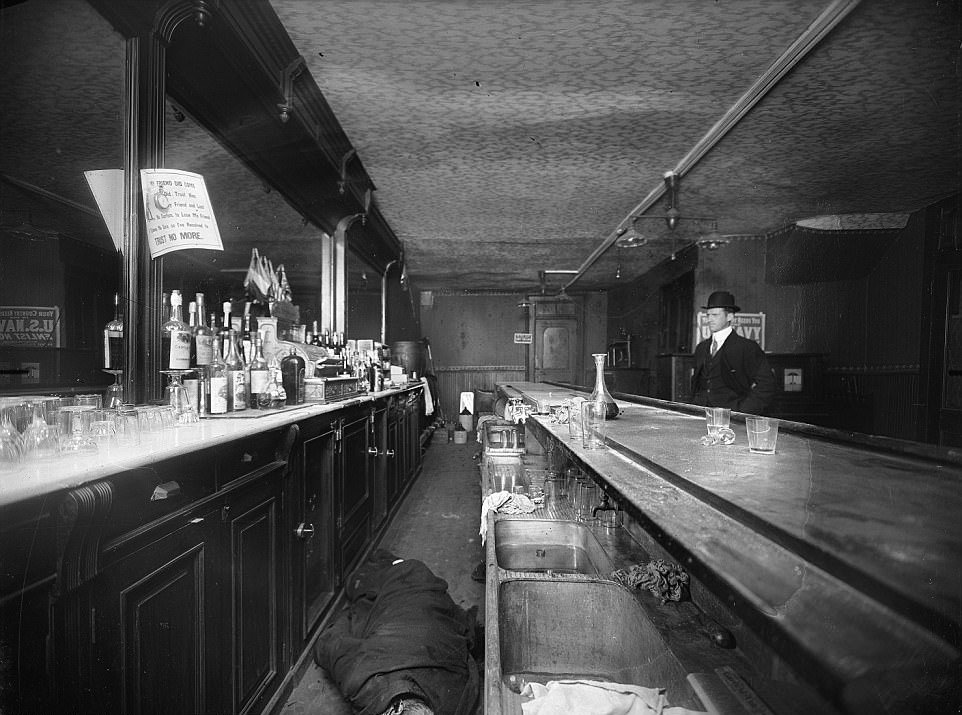
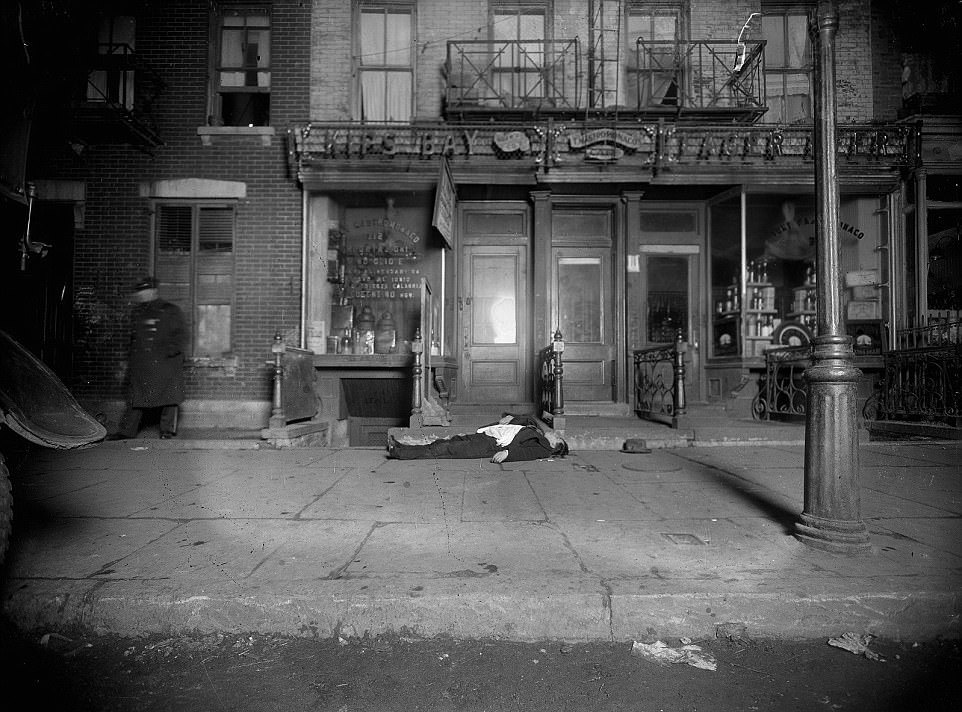
A handwritten note reading “trust no more” placed over a dead man’s body in a bar tells its own story about the culture of betrayal and retribution that defined early 20th-century street crime. In Kips Bay, Manhattan, around 1910, a man was shot dead outside a cafe — one of countless killings in a city where dense immigrant neighborhoods and fierce territorial competition created constant violence.
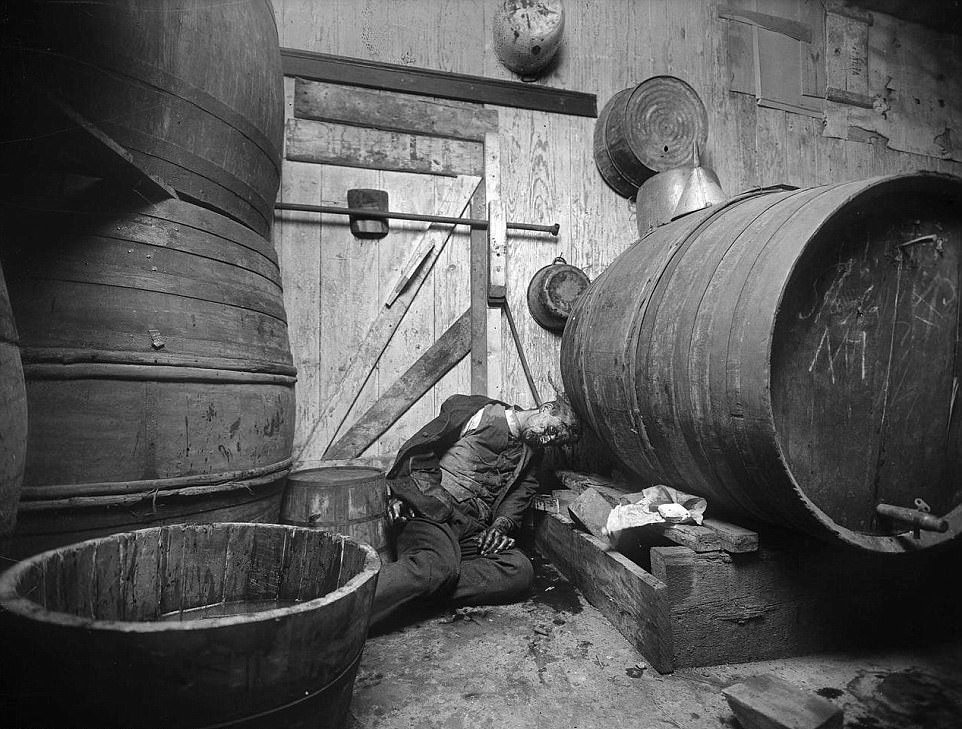
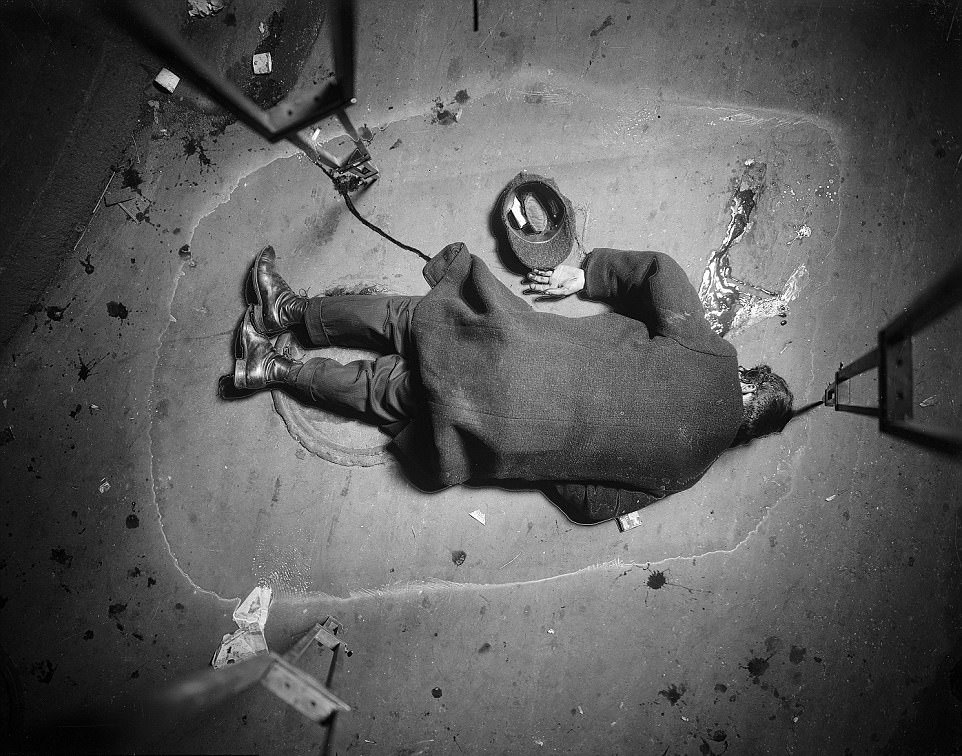
Domenico Mastropaolos was stabbed and slashed to death inside a wine cellar on Elizabeth Street. Knife killings in enclosed spaces — cellars, hallways, back rooms — were common in the early 1900s, particularly in neighborhoods where disputes over money, loyalty, or territory were settled without involving outside authorities. Residents in these areas rarely went to the police.
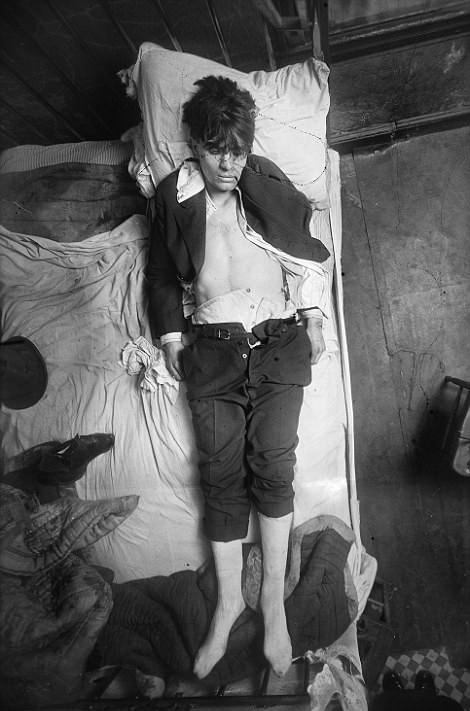
Antonio Pemear was murdered in his own home on Hudson Avenue in Brooklyn on December 19, 1915. Killings inside private residences were documented with the same detached precision as those on public streets. The camera made no distinction between a victim in a hallway and one on a sidewalk. Both were treated as evidence to be recorded.
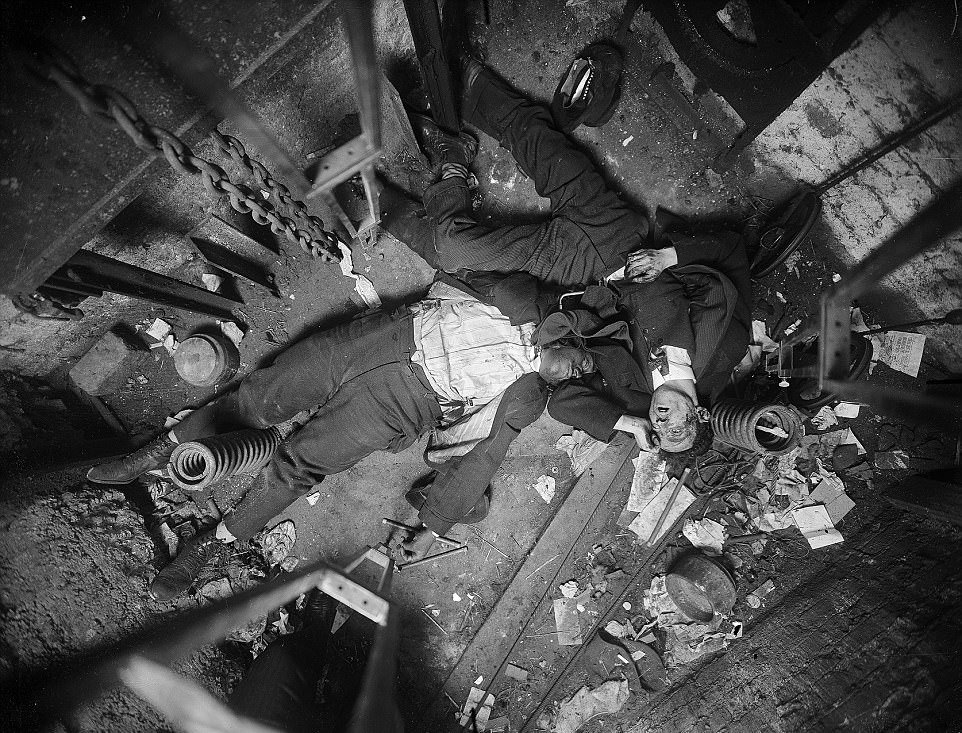
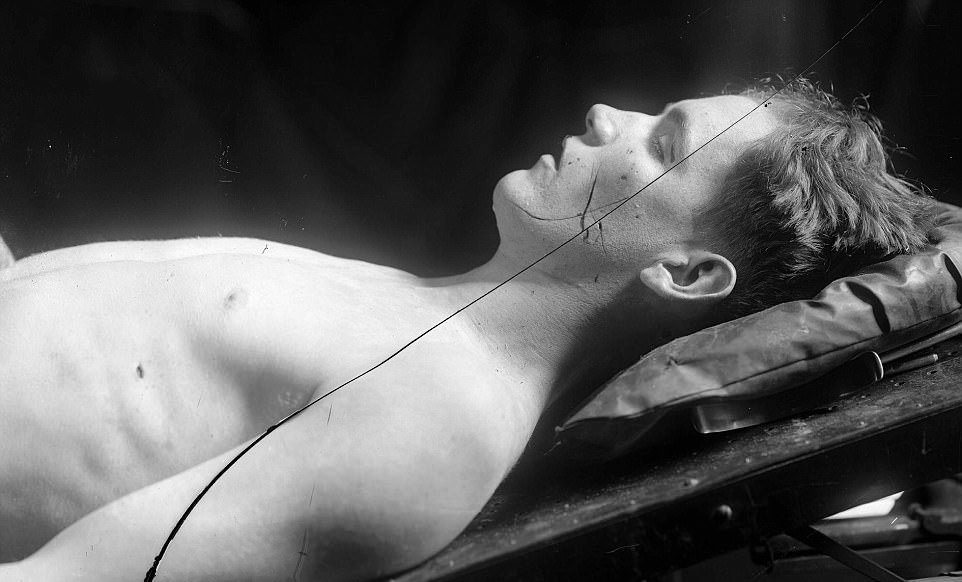
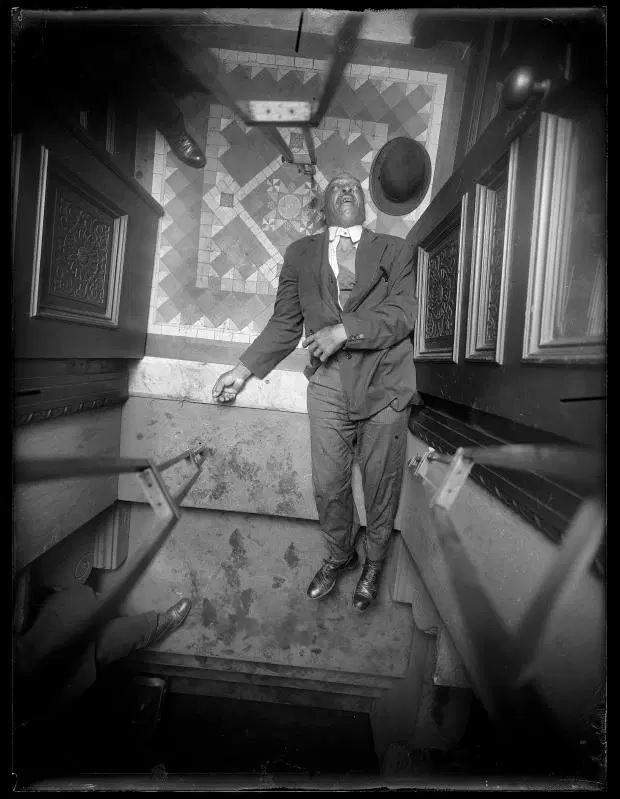
On November 24, 1915, elevator operator Robert Green and building engineer Jacob Jagendorf were found dead at the bottom of an elevator shaft following what investigators described as a failed robbery attempt. The close-up crime scene photographs from this era show injuries in graphic detail — slashed faces, bullet wounds, blunt force trauma — captured without any attempt to frame or soften the image.
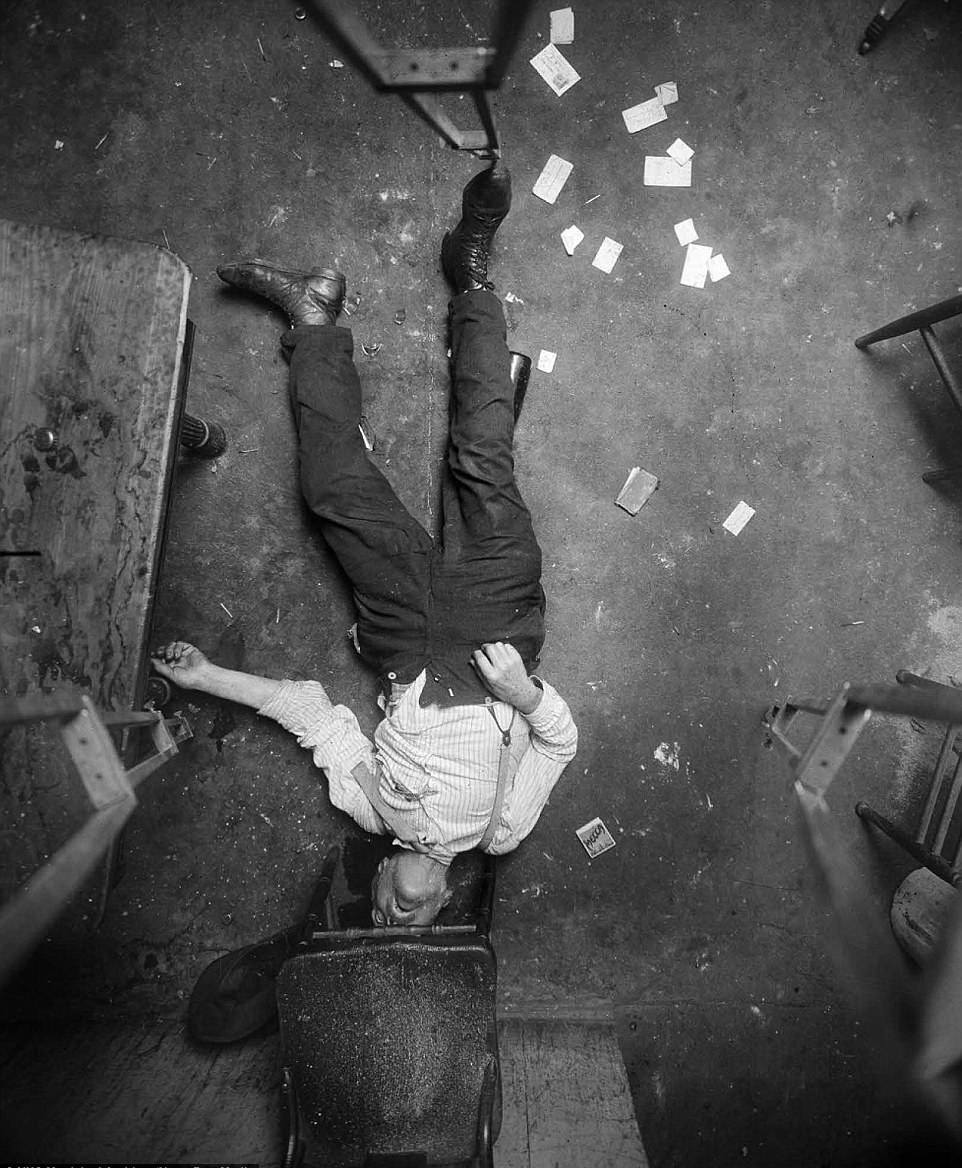
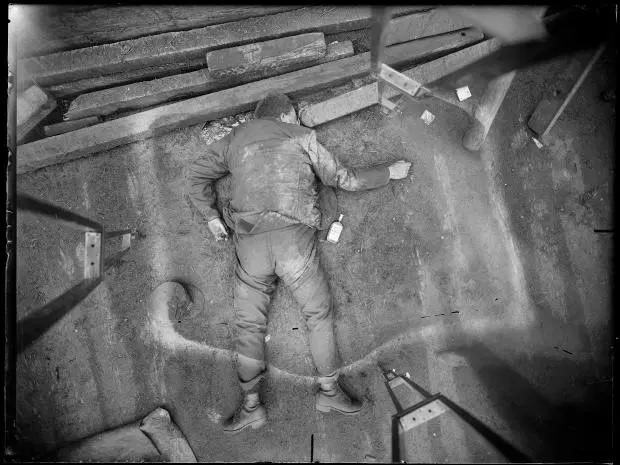
Owen Owen was found dead on May 2, 1917, on a Brooklyn street with a bottle of whisky beside him. The detail is mundane but specific — the kind of detail that made early crime scene photography both useful as a legal record and strangely personal as a historical document. Bars and restaurants appear repeatedly in these photographs as the last locations where victims were seen alive.
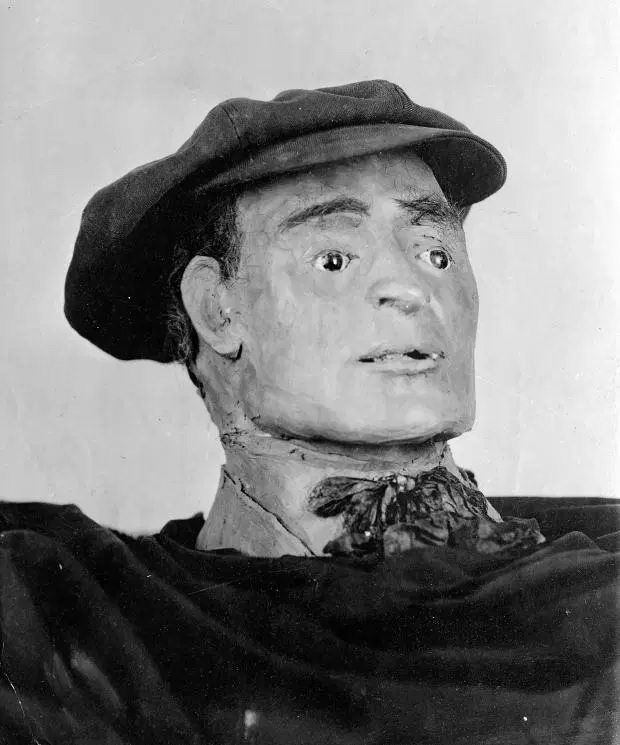
When a body was too decomposed to identify through conventional means, detectives turned to reconstructive techniques. A wax-covered skull — built up with approximate facial features — was used to help witnesses identify victims whose faces could no longer be recognized. The method was primitive but represented an early effort at forensic facial reconstruction, decades before modern techniques made the process more accurate.
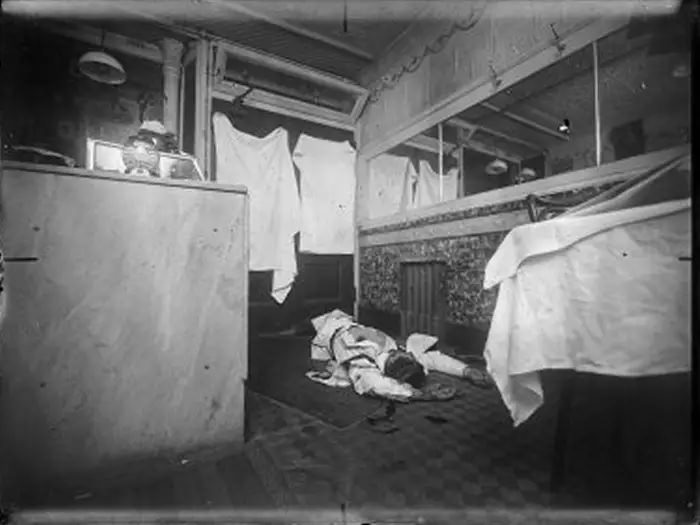
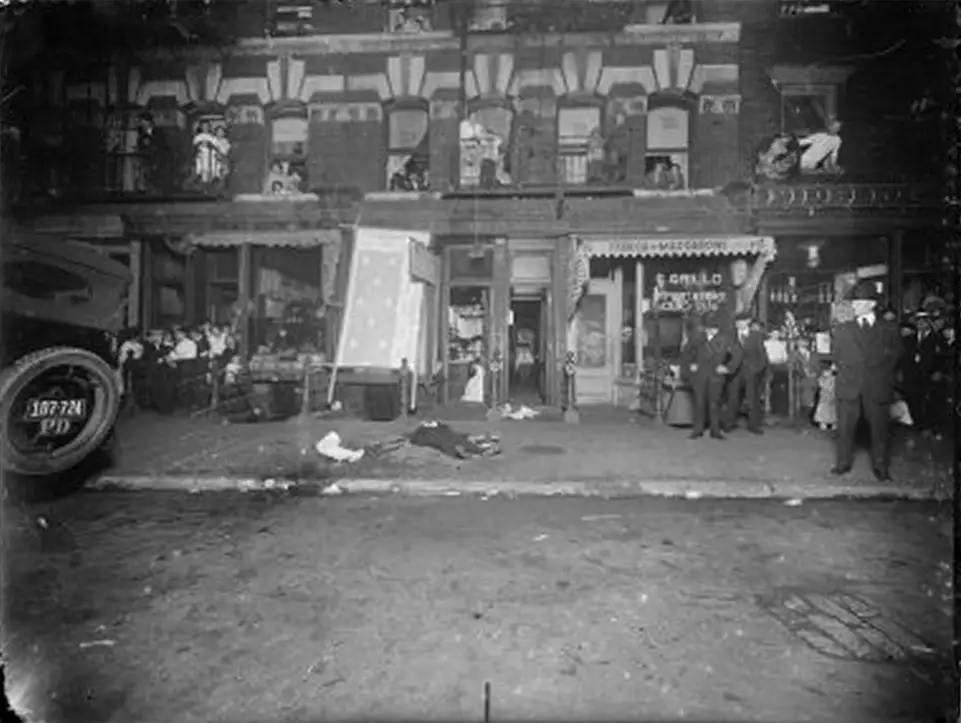
The response of ordinary New Yorkers to street violence is captured just as clearly as the crimes themselves in these photographs. Tenement residents leaned out of windows to get a better look at bodies on the sidewalk below. Crowds pressed in around police officers at restaurant doorways. Death in public was not a rare occurrence — it was something people witnessed firsthand in their own neighborhoods.
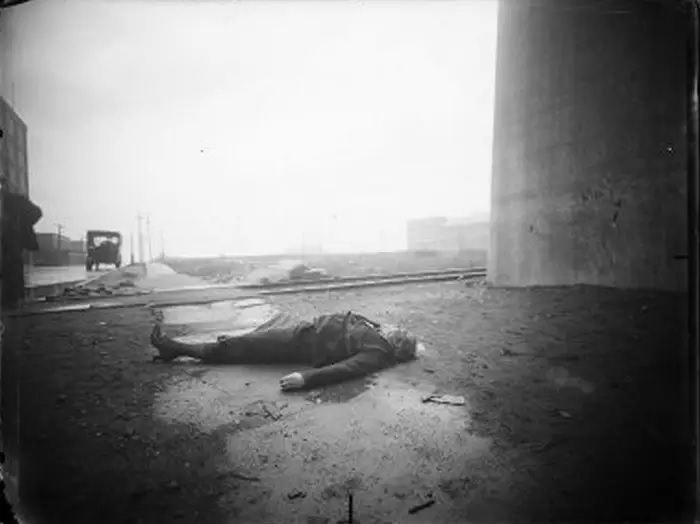
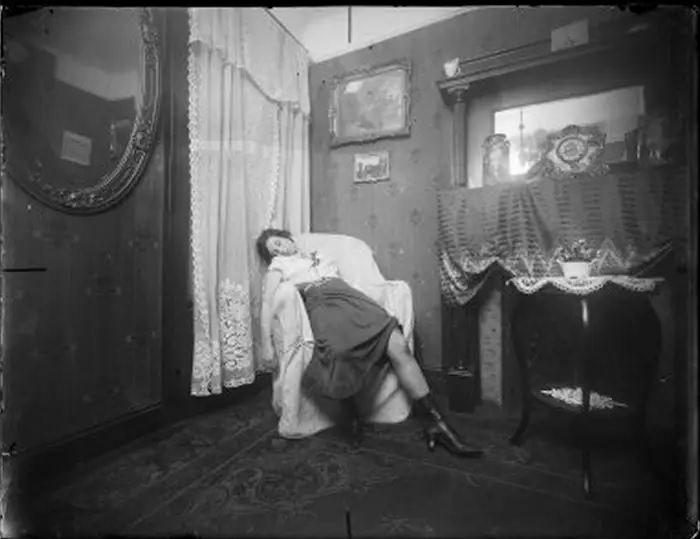
Women were among the victims documented throughout this collection. A woman’s body found beside a concrete structure in the Bronx in June 1917, with trolley tracks visible in the background. Another photographed slumped in a parlor chair between 1916 and 1920. In neither case are suspects or circumstances identified in the record — only the evidence of what was done.
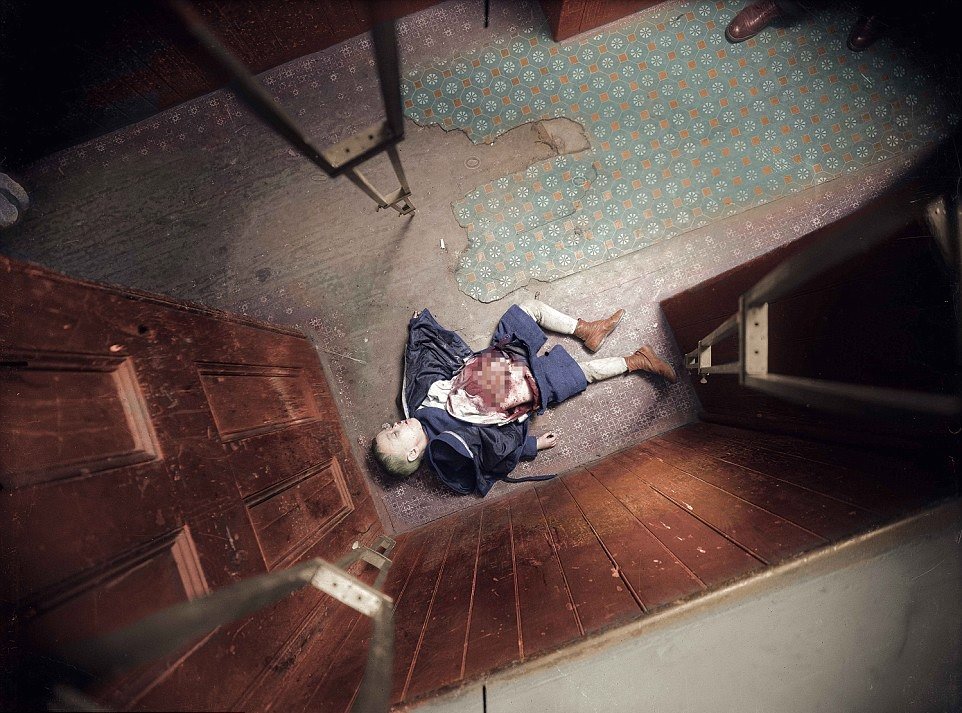
Among the most disturbing photographs in this collection is the image of a young boy who was disemboweled in a run-down apartment. The photograph was taken without any softening of the scene. Early crime scene photographers operated under no editorial restrictions — their job was to document, and they did so with clinical completeness regardless of the victim’s age.
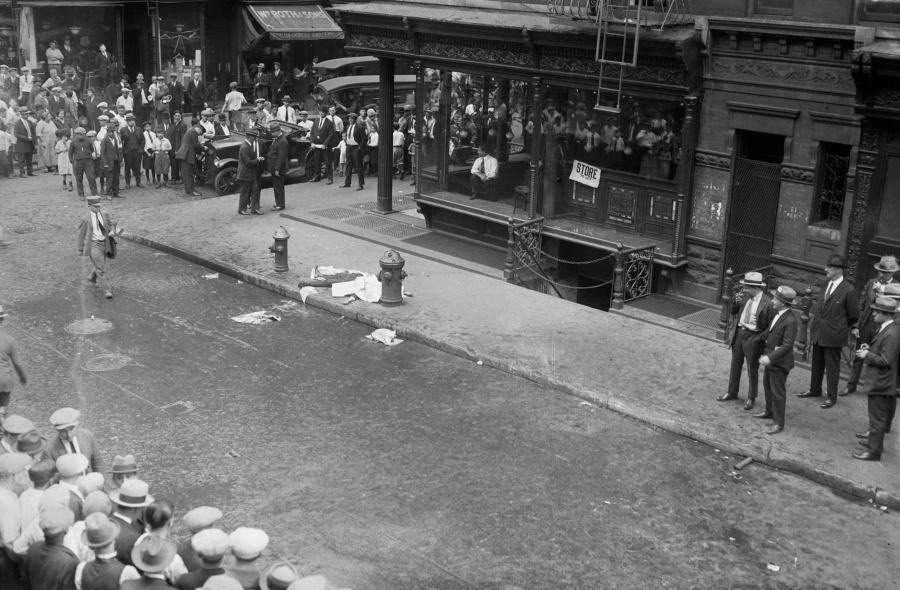
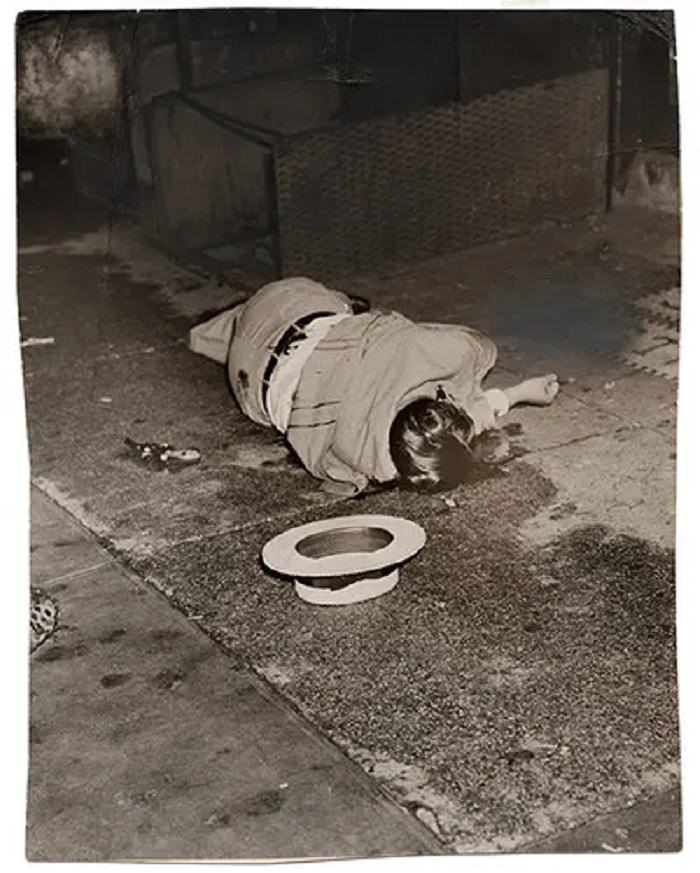
Mott Street in 1925 and Elizabeth Street in 1936 — two of the most photographed blocks in New York’s violent history. Dominick Didato, whose body was photographed on Elizabeth Street, was a figure in the city’s underworld. His murder on August 7, 1936, was one of dozens committed on these few blocks of Lower Manhattan over the course of the decade.
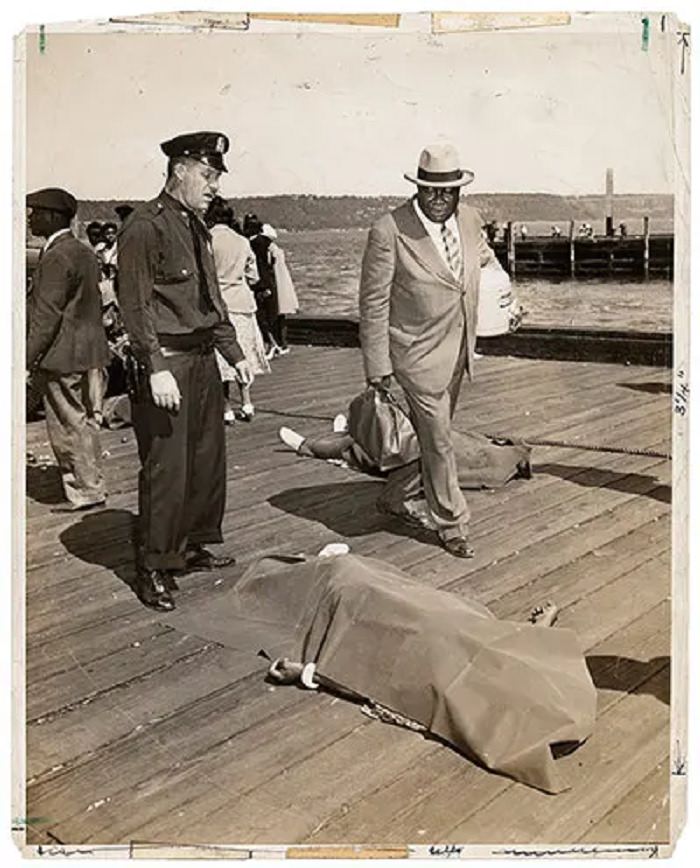
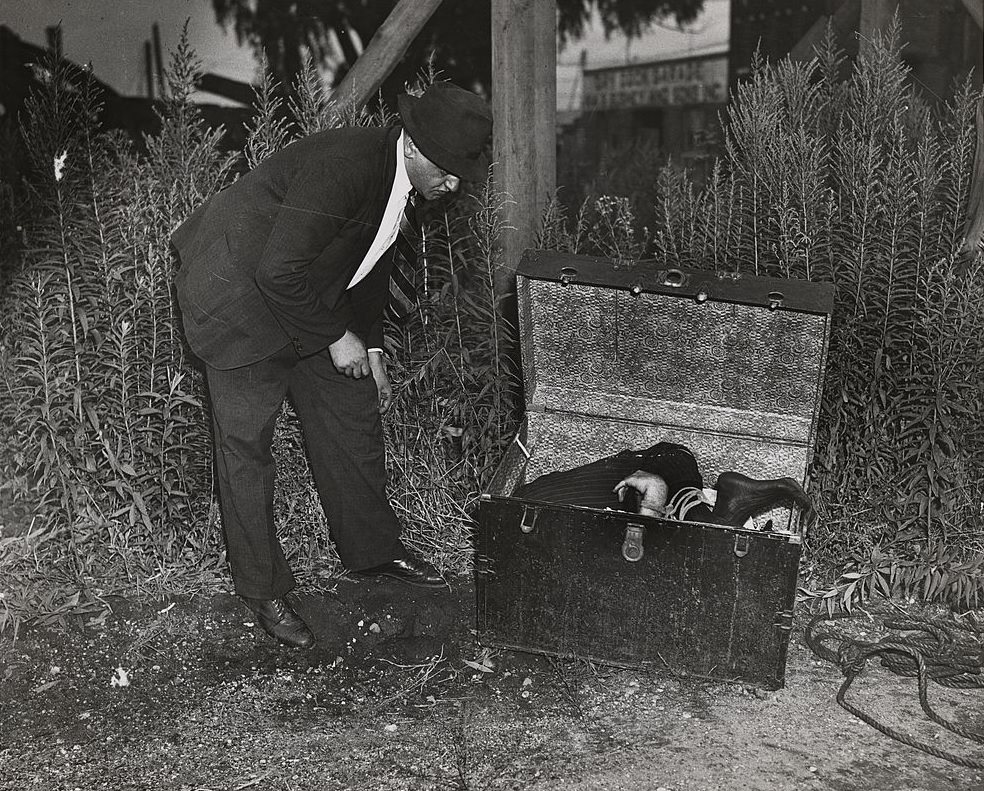
Not every death captured by crime scene photographers was a homicide. On August 18, 1941, a woman was trampled to death during a stampede aboard an excursion ship. Her blanket-covered body was photographed by police on the dock. William Hessler met a more deliberate end — stabbed to death, his body stuffed into a trunk, a disposal method used often enough that NYPD photographers had a practiced routine for documenting it.
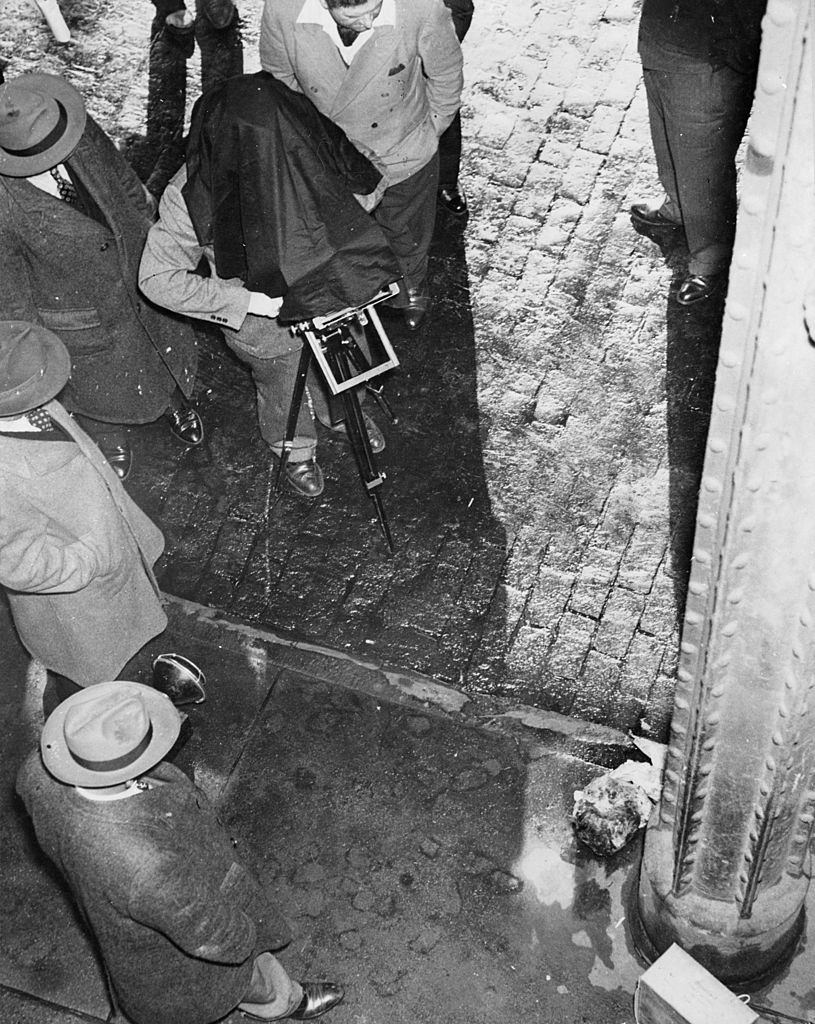
Weegee — the street name of press photographer Arthur Fellig — was one of the most prolific crime scene photographers in New York City history. He monitored police radio and often arrived at murder scenes before detectives. In 1945, he was photographed documenting a severed human head at a murder scene. Weegee treated death as a subject worthy of serious photographic attention, and his work helped define what crime scene photography looked like for decades.
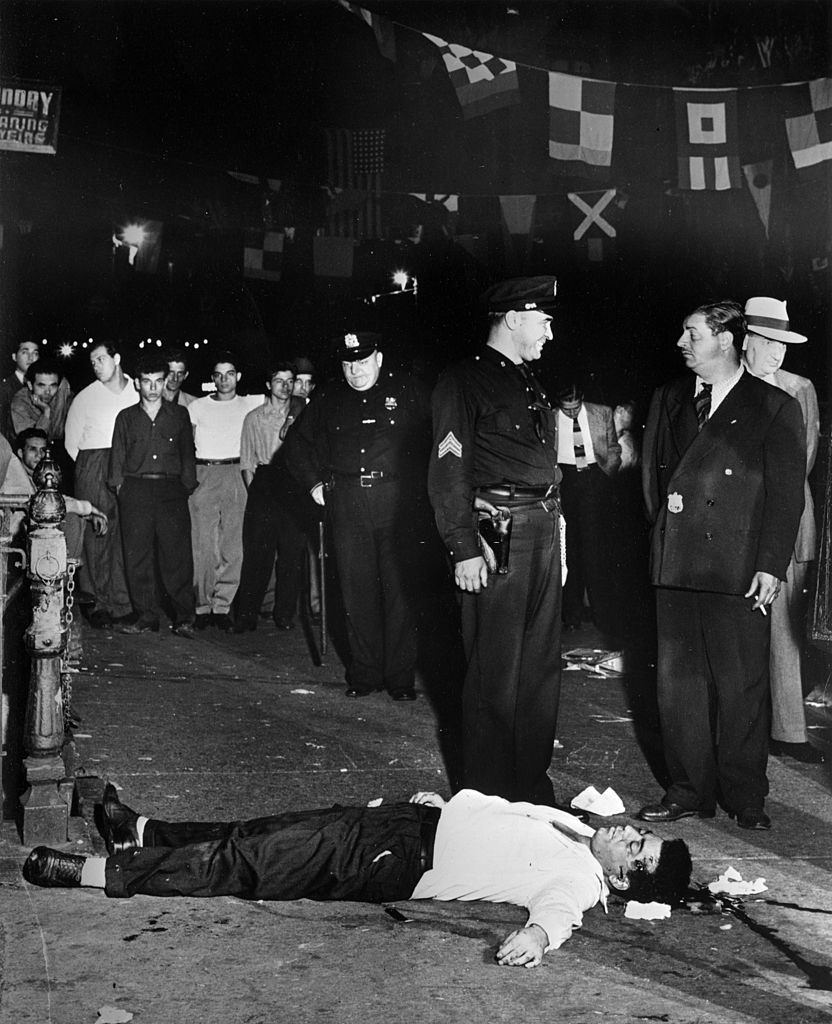
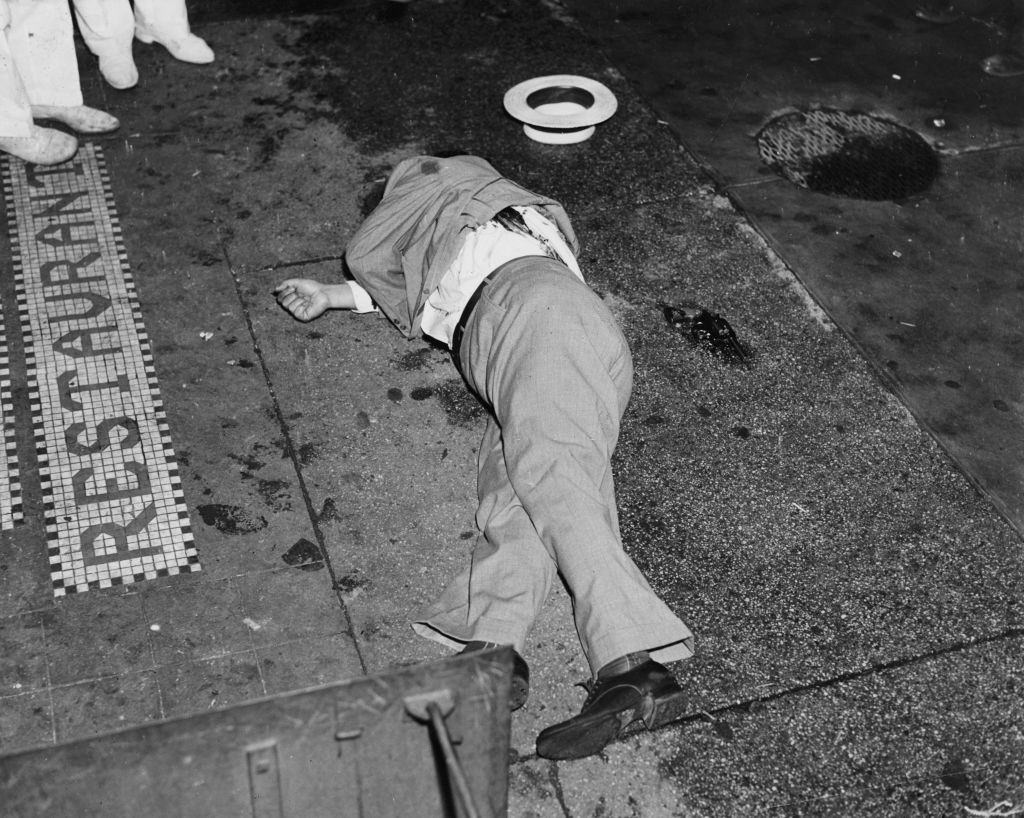
The 1939 San Gennaro murders of La Cava and Fagio on Mulberry Street are captured from multiple angles in this collection, showing both the crowd response and the police investigation that followed. Didato’s killing the year before, outside a restaurant on Elizabeth Street, followed the same pattern — a body on the sidewalk, officers in hats and long coats, and a street full of onlookers watching from a short distance.
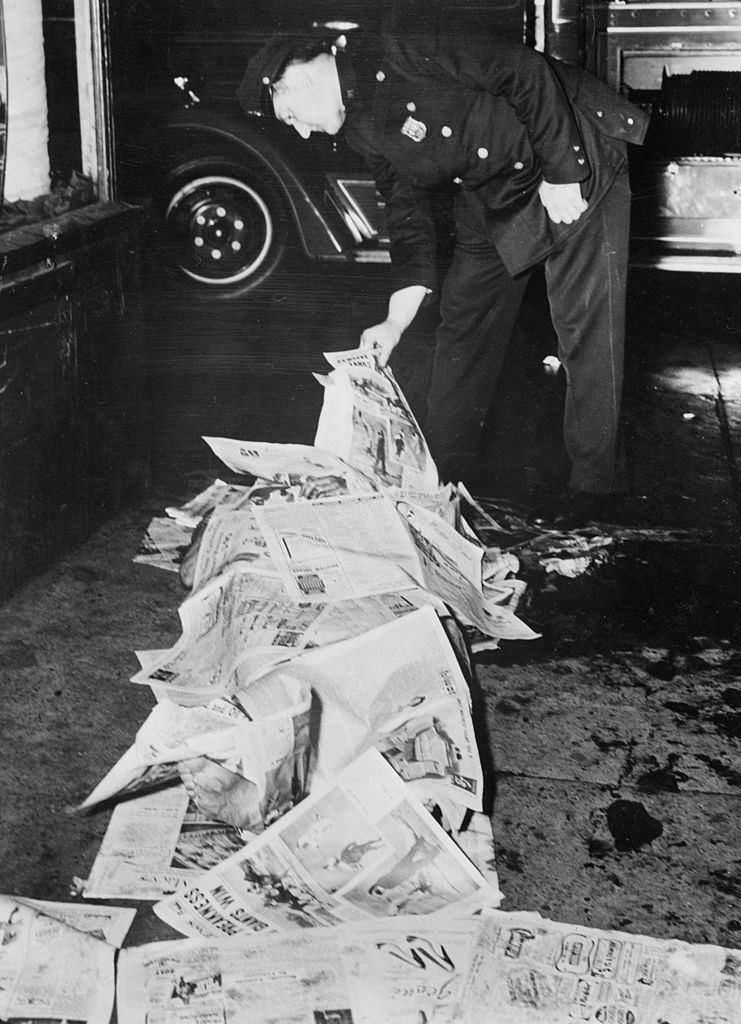
A body covered with newspaper on a New York City sidewalk in 1943 — the newspaper serving as a makeshift shroud while a lone officer inspects the scene. It is a fitting final image for this collection. Across five decades and hundreds of crime scenes, New York’s dead were documented with the same unflinching camera, in the same crowded streets, by photographers who treated the city’s violence as a matter of historical record.