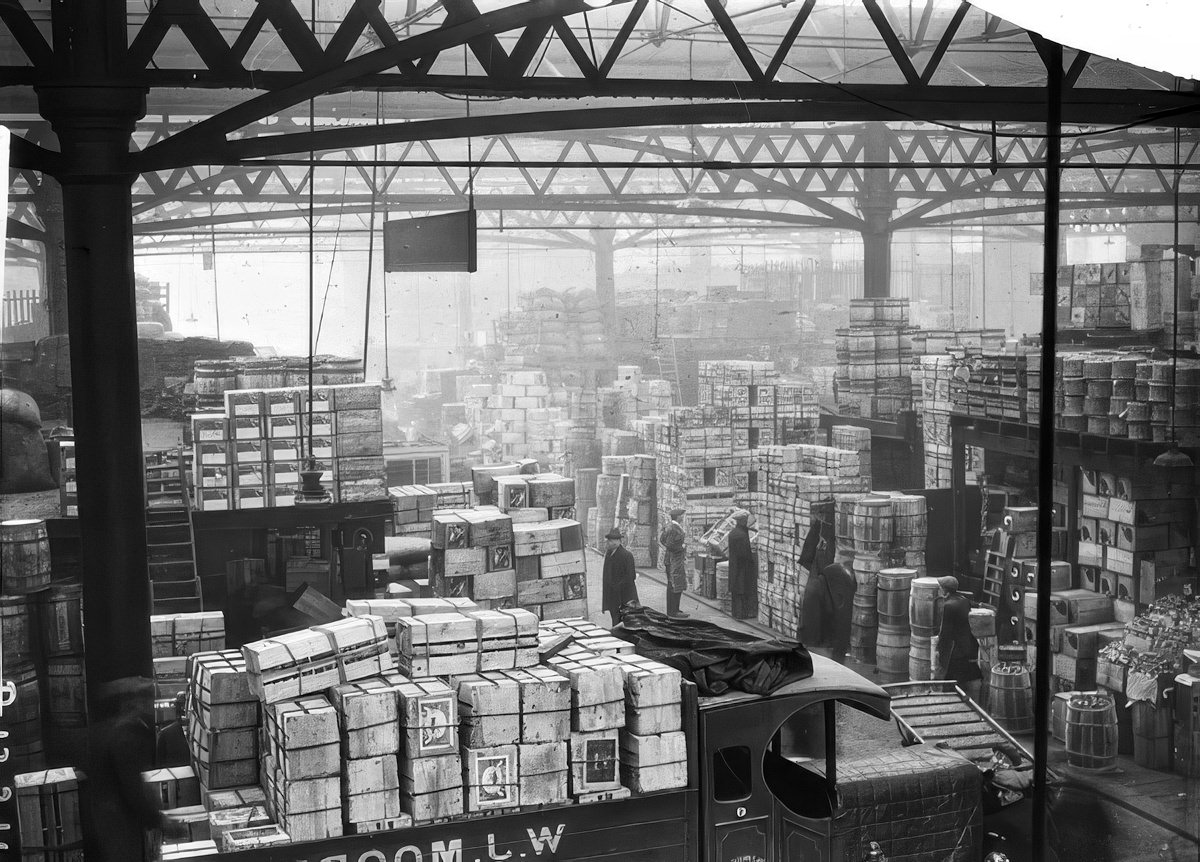

London’s markets in the early 1900s were not simply places to shop — they were the beating heart of neighbourhood life. Many had existed for centuries, originally set up to feed a rapidly growing city. By the turn of the 20th century, they had split into two distinct types: large wholesale markets and the street markets that most ordinary Londoners knew and depended on daily.
The wholesale markets were enormous operations. Billingsgate, near the Thames, handled the city’s fish trade. Smithfield dealt in meat, with porters hauling carcasses through its grand iron halls before dawn. Covent Garden and Spitalfields managed the bulk of London’s fruit and vegetables, supplying smaller shops across every borough. These were not places for the average shopper — they ran on bulk orders, early hours, and hard physical labour.
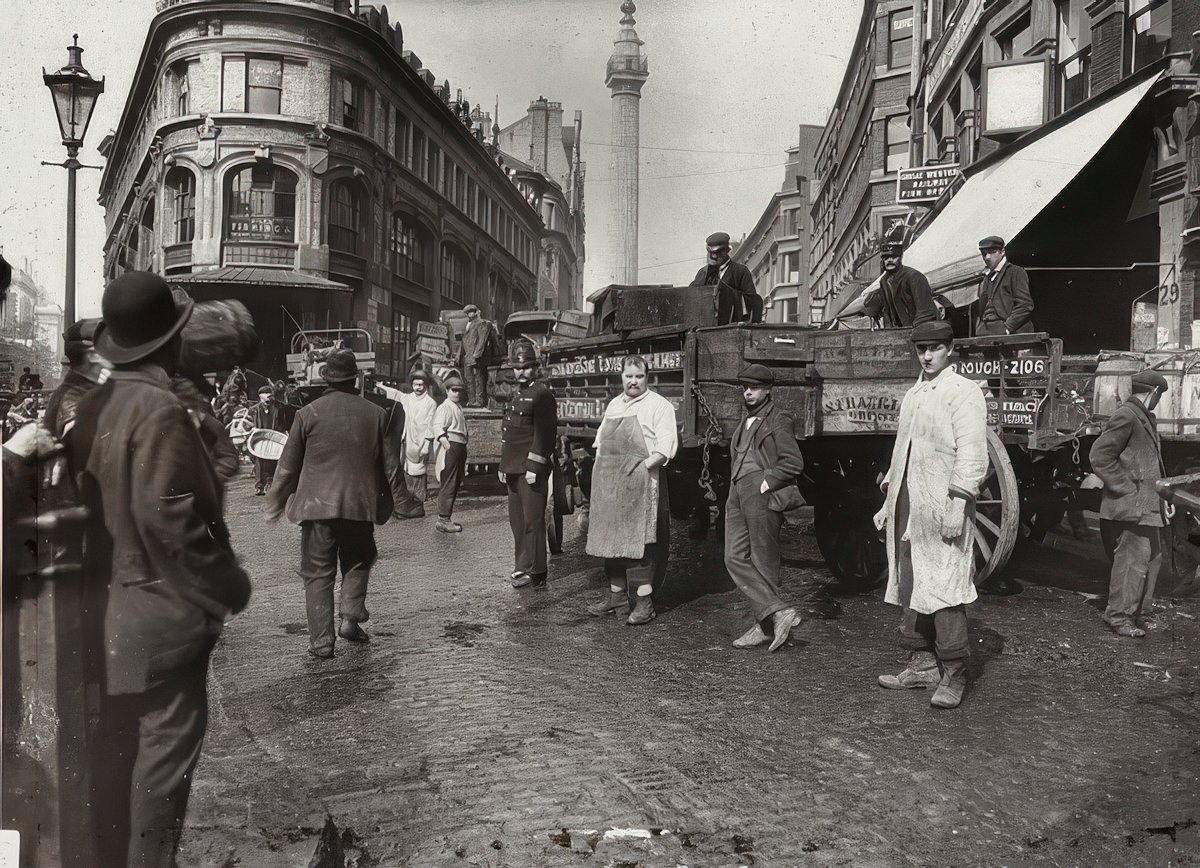
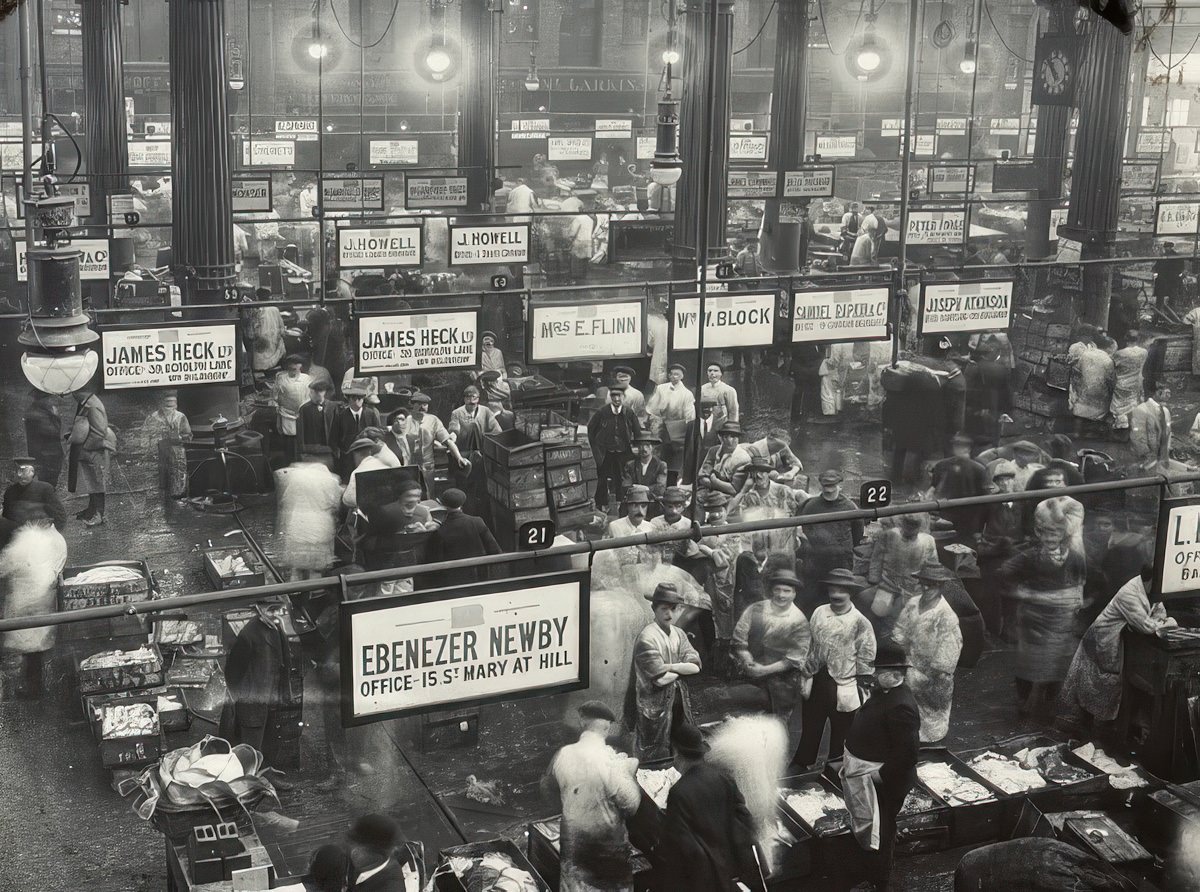
Billingsgate, London’s dedicated fish market, had operated on the north bank of the Thames since the 17th century. By 1910, it was handling hundreds of tonnes of fish each week. Porters wore distinctive flat-topped leather hats designed to balance heavy loads on their heads as they moved crates rapidly across the market floor.
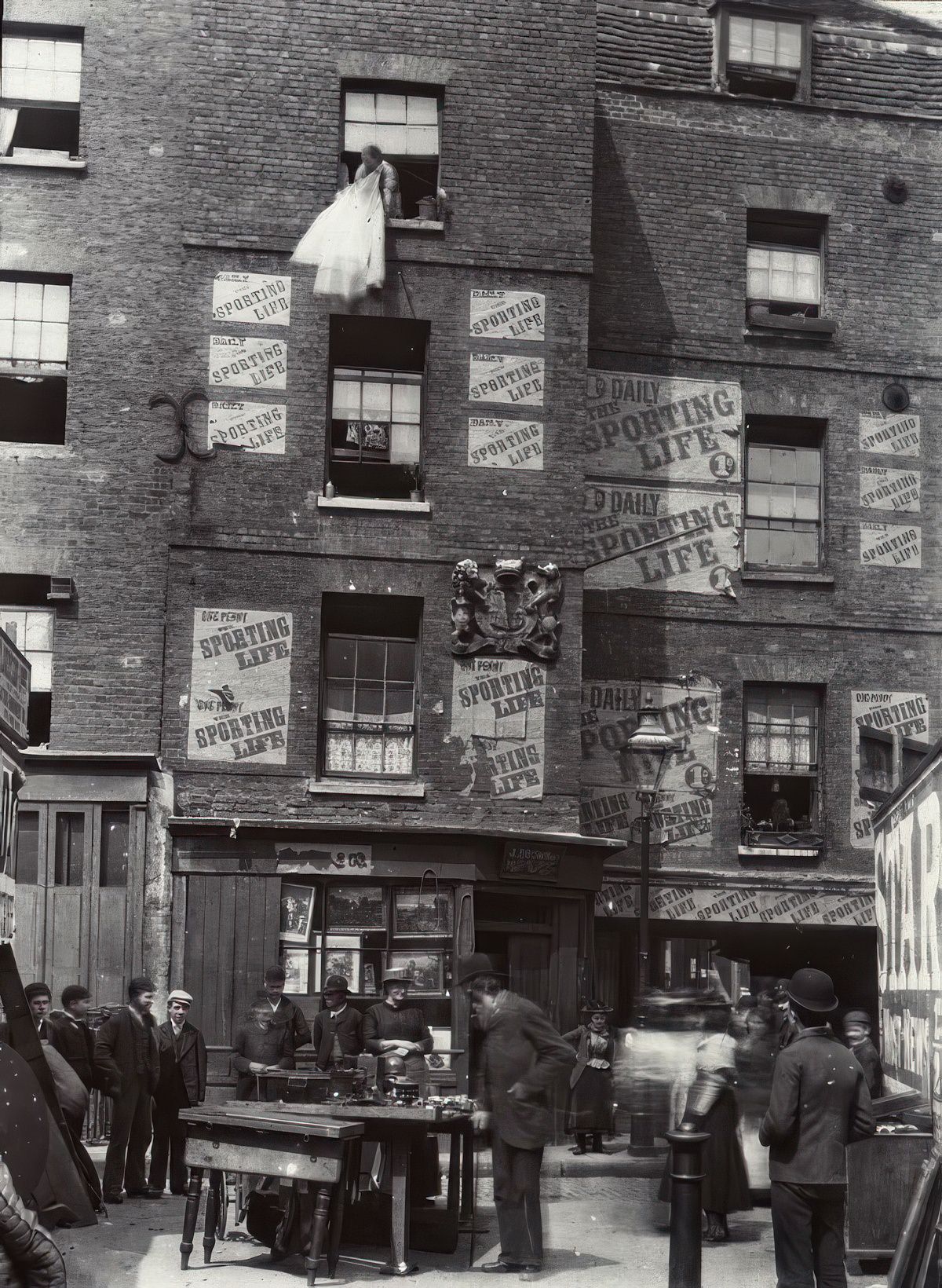
Clare Market, tucked between the Strand and Lincoln’s Inn Fields, was one of London’s older neighbourhood markets. By 1900 it was a cramped, lively place selling meat, fish, and general goods to working-class residents. It was eventually cleared away as part of urban redevelopment that created the Aldwych area.
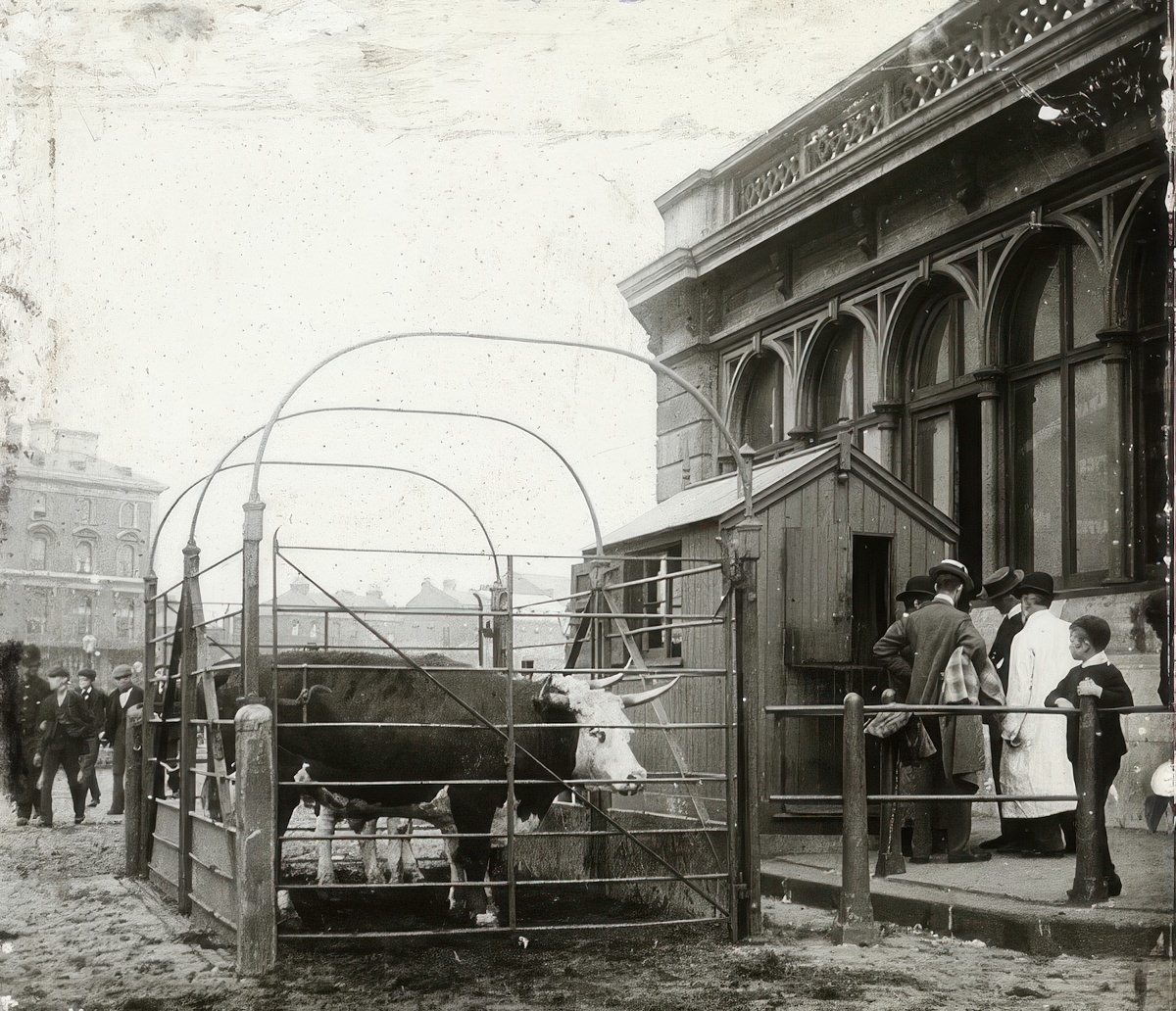
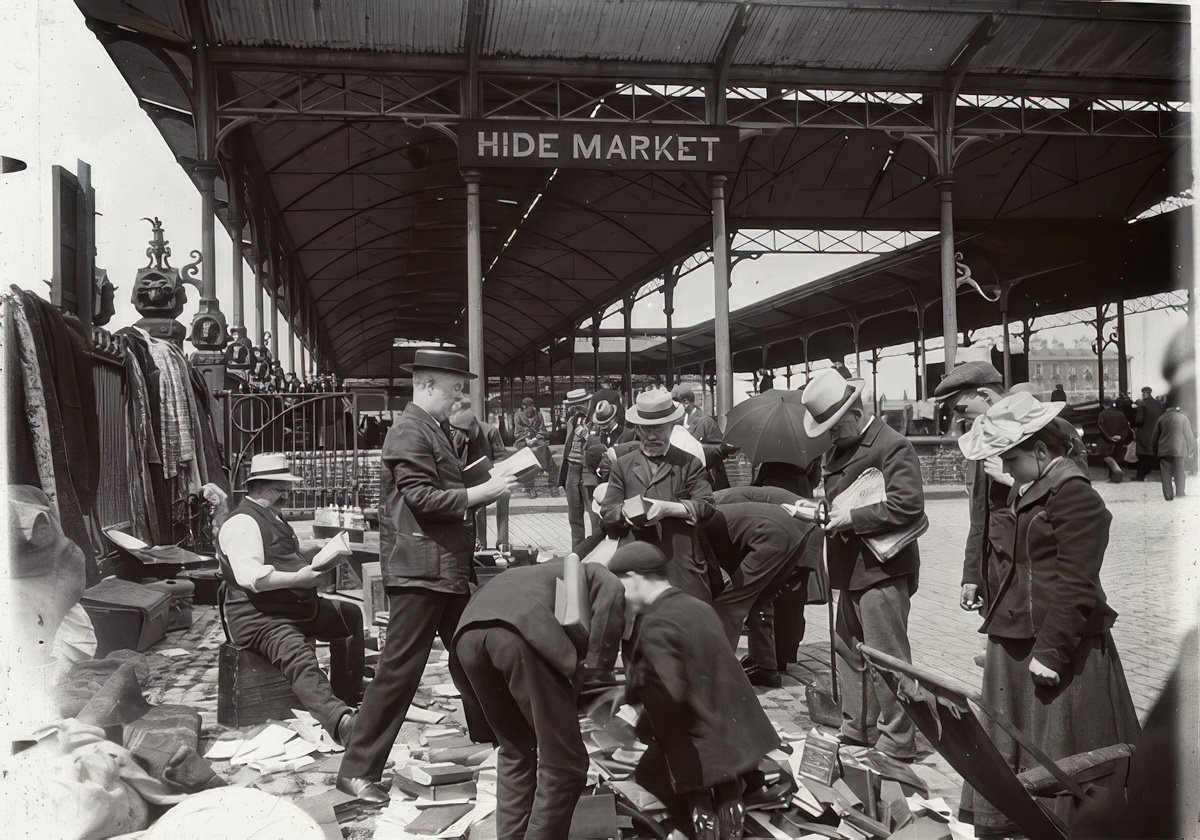
The Caledonian Road Market in Islington was a different kind of attraction. Known widely as the ‘Caley,’ it spread across a large open site and was famous for secondhand goods, antiques, and curiosities. Dealers and bargain hunters alike turned up in large numbers, and the book stalls drew a particular crowd of browsers.
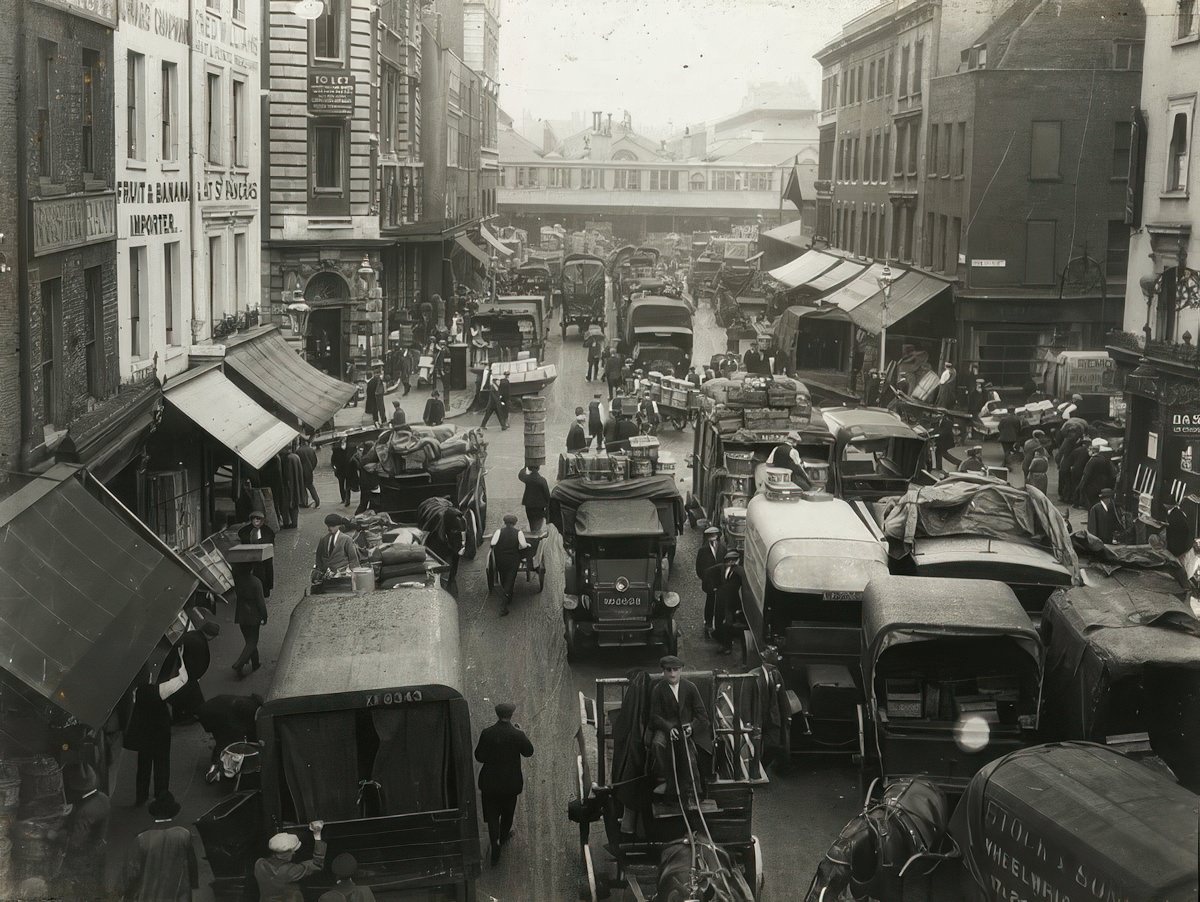
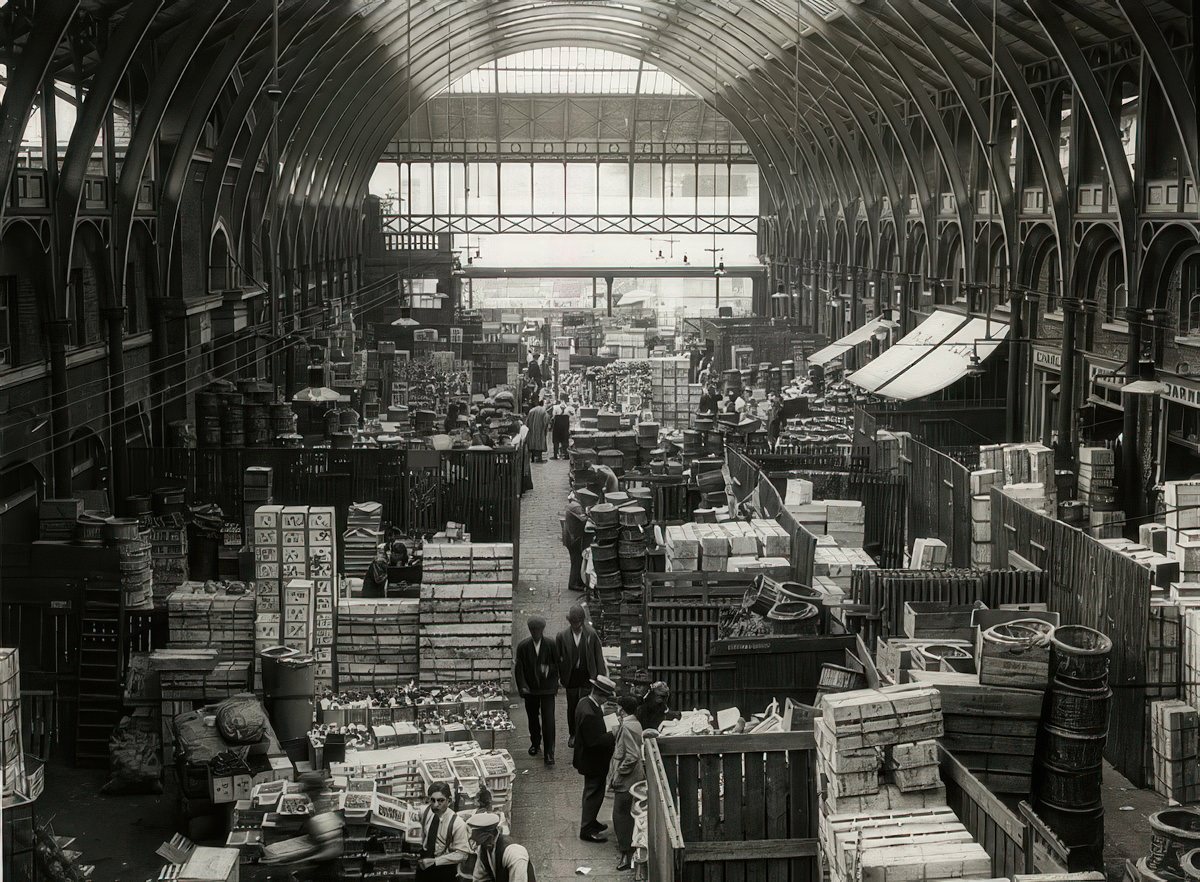
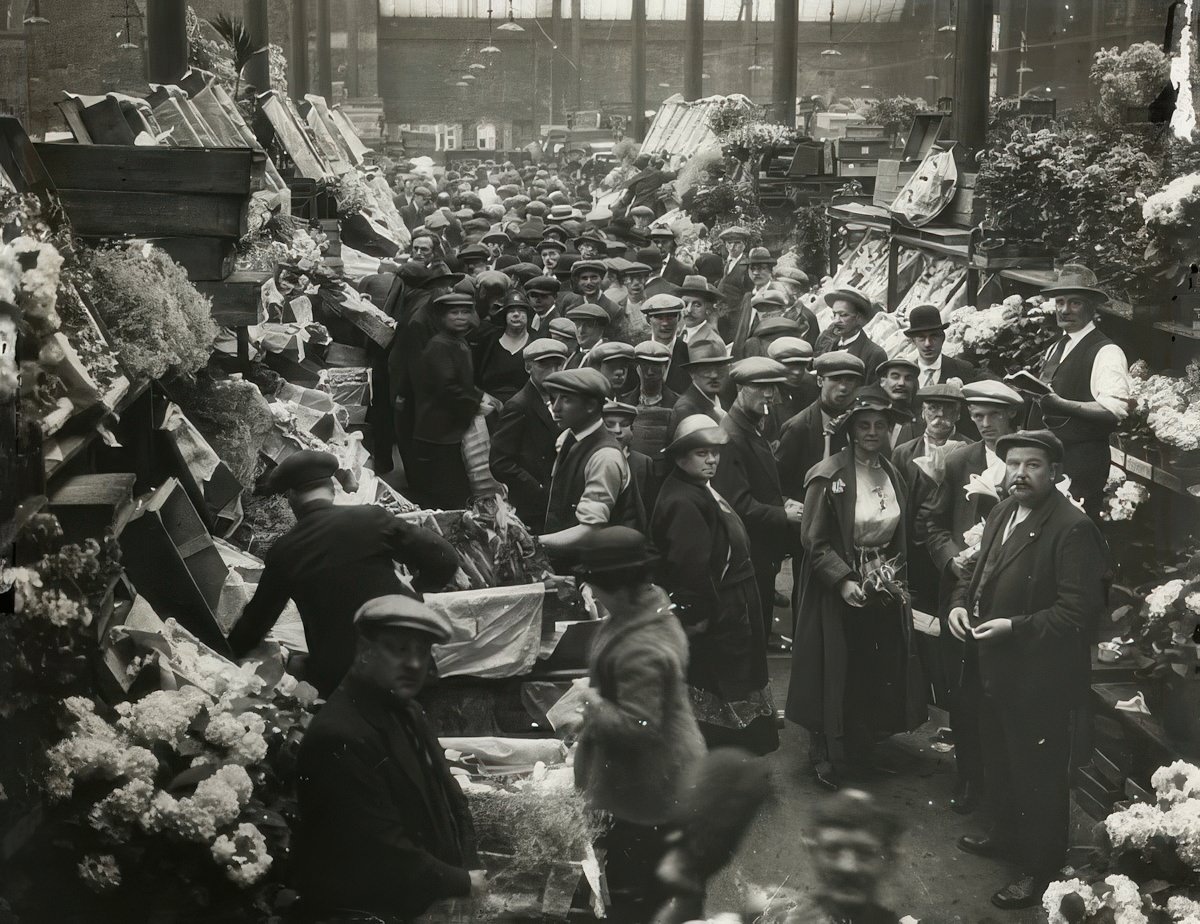
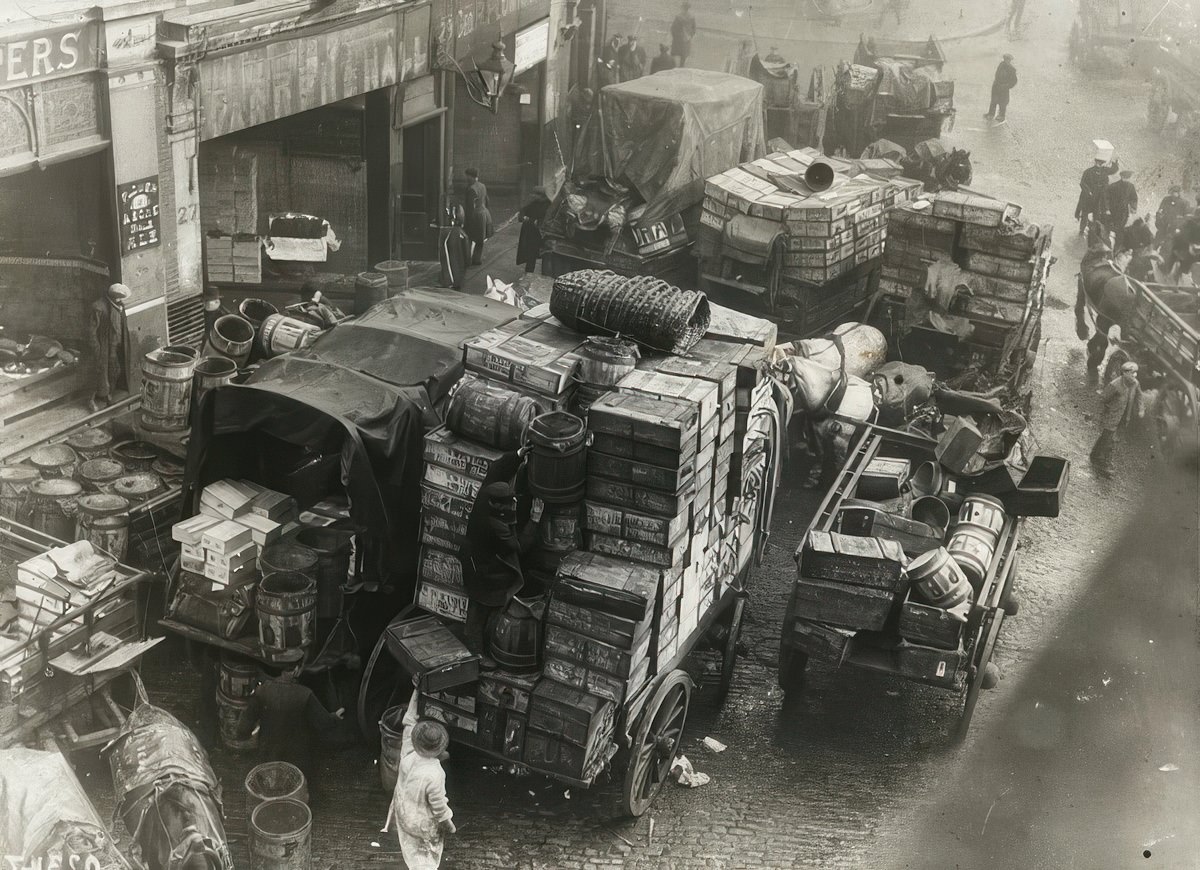
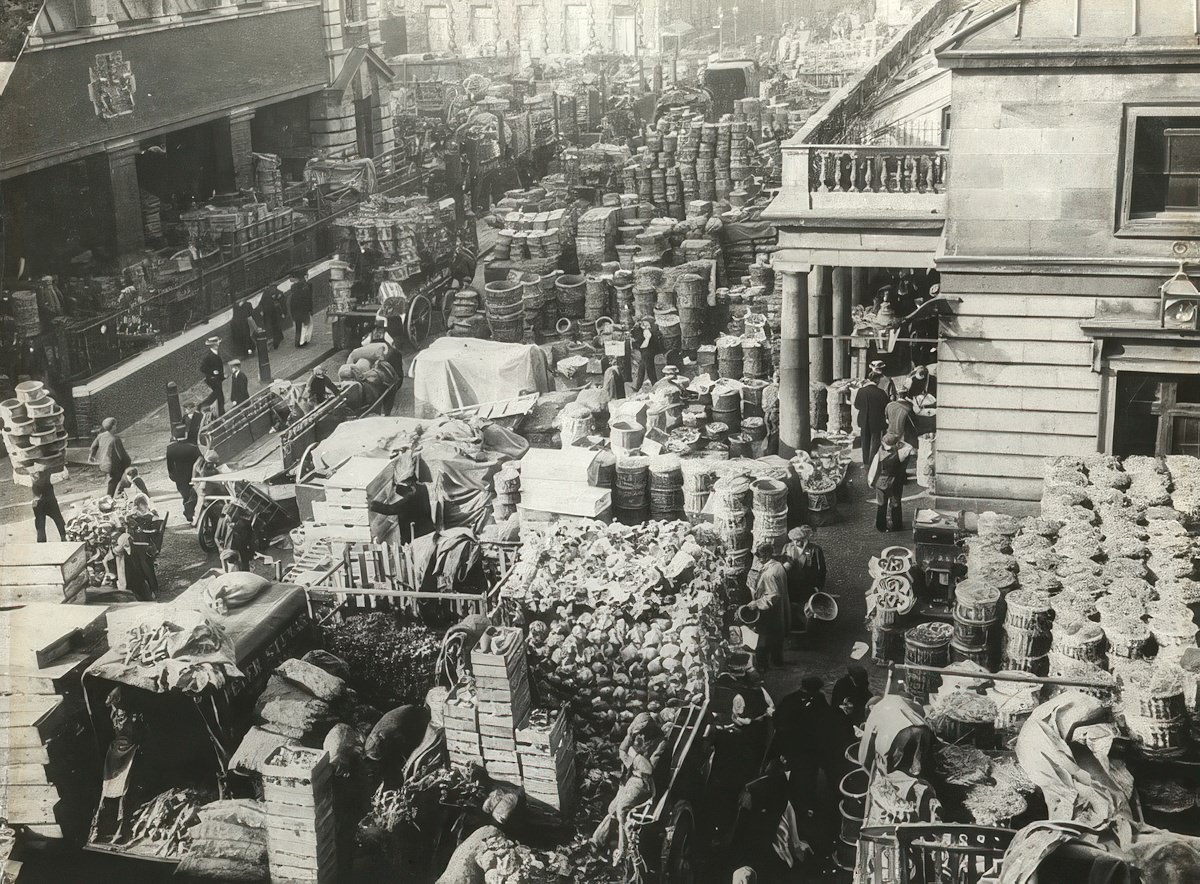
Covent Garden was London’s most famous fruit and vegetable wholesale market. Traders arrived in the early hours, and by morning the piazza was stacked high with crates of produce. The market’s Floral Hall, built in the 1860s, handled cut flowers and plants, adding colour and scent to the already chaotic scene.
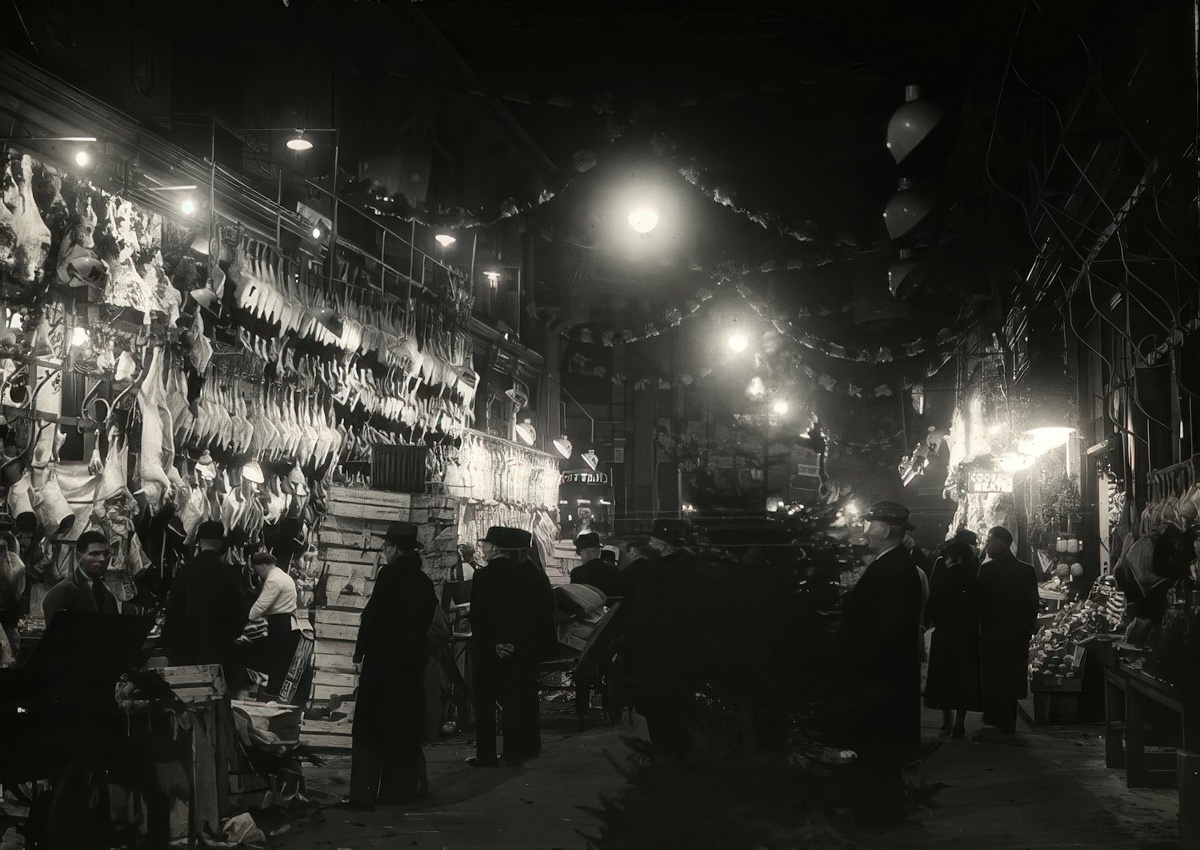
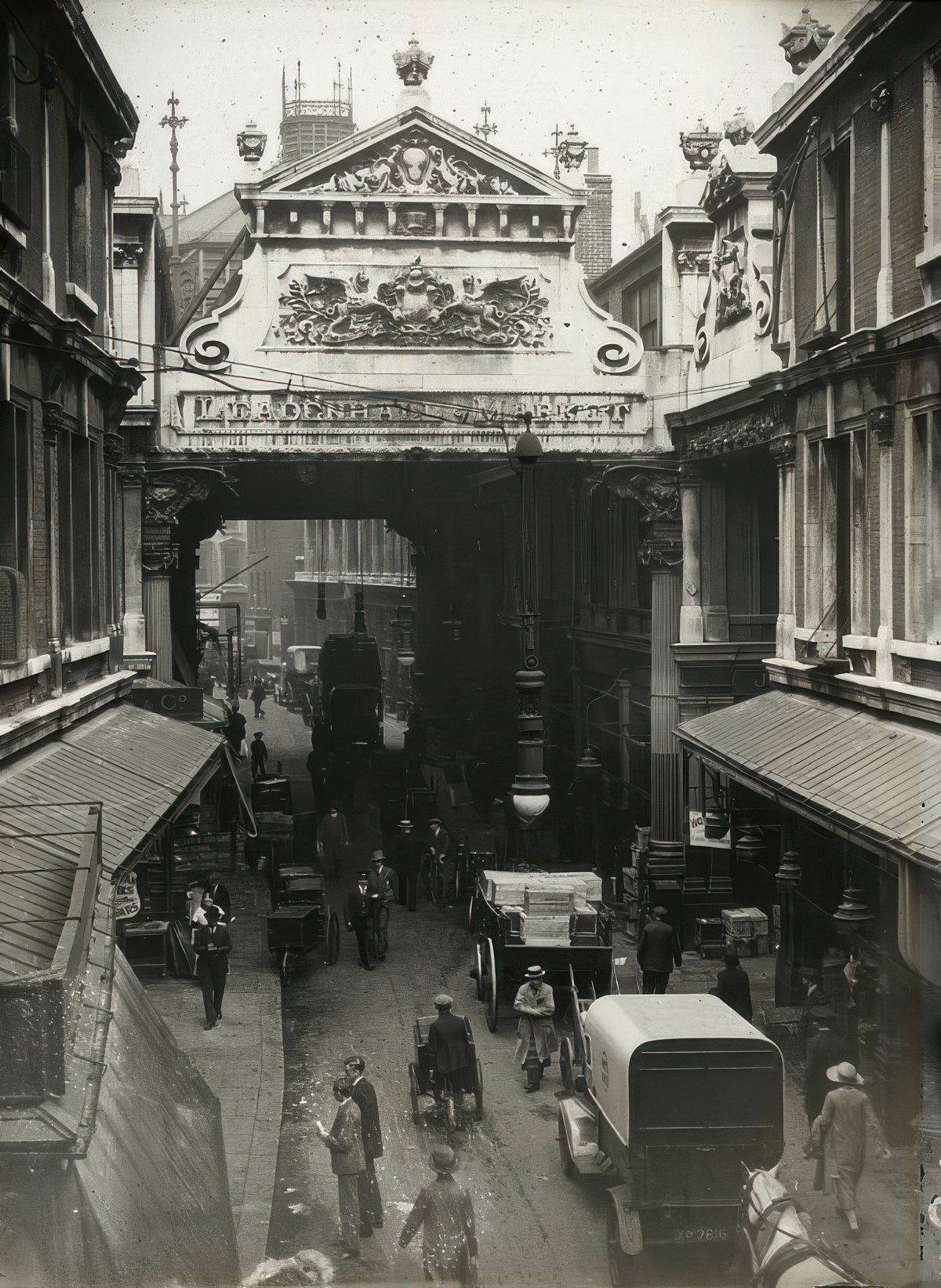
Leadenhall Market in the City of London stood out for its architecture. Its ornate Victorian iron-and-glass roof covered stalls selling meat, poultry, and game. At Christmas, the market transformed into a spectacle of hanging birds and dressed carcasses, drawing shoppers from well beyond the immediate neighbourhood.
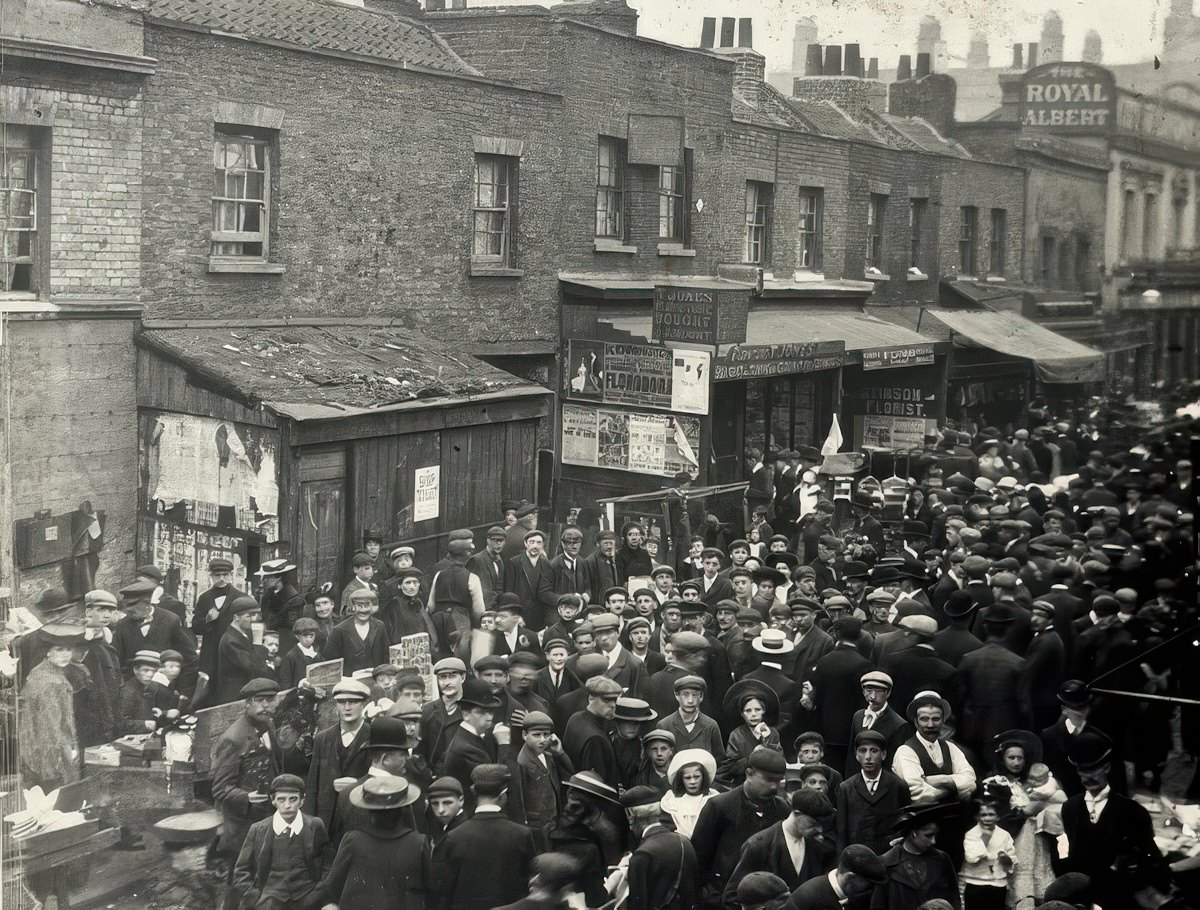
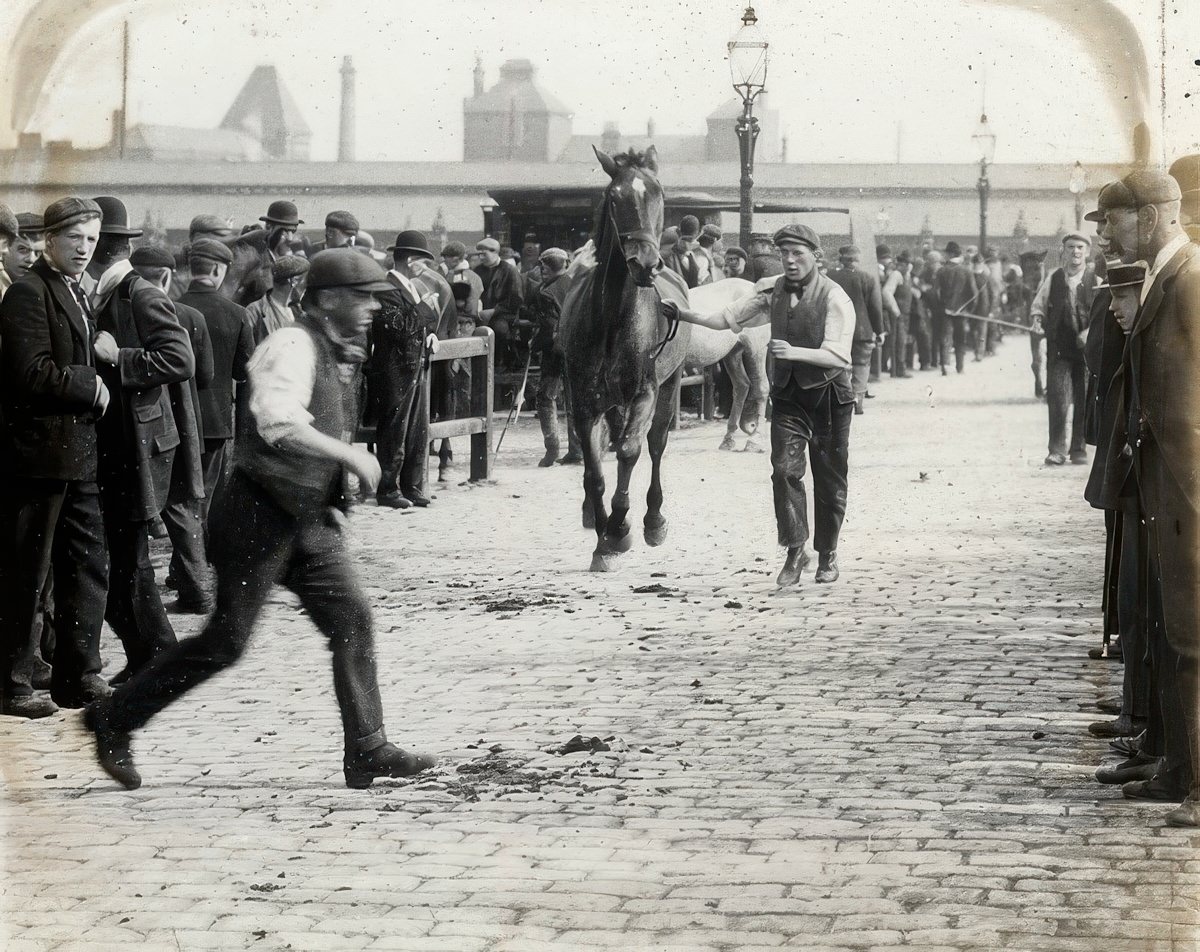
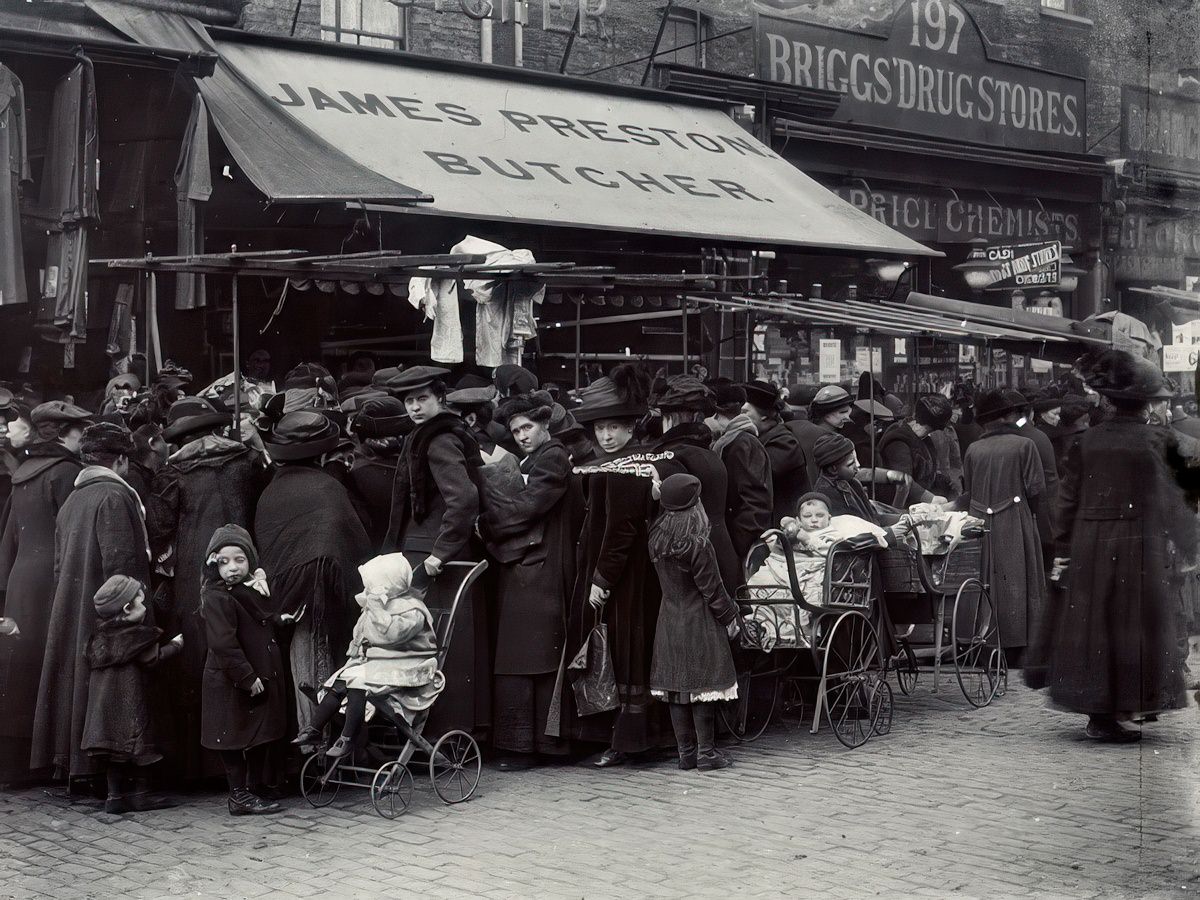
Street markets in working-class districts operated at a faster, louder pace. East Street Market in Walworth, south London, was one of the busiest. Costermongers — the street traders who pushed barrows and ran open stalls — lined the road selling fruit, vegetables, fish, clothing, and household goods. Their shouted prices and sales patter filled the air from morning to dusk.
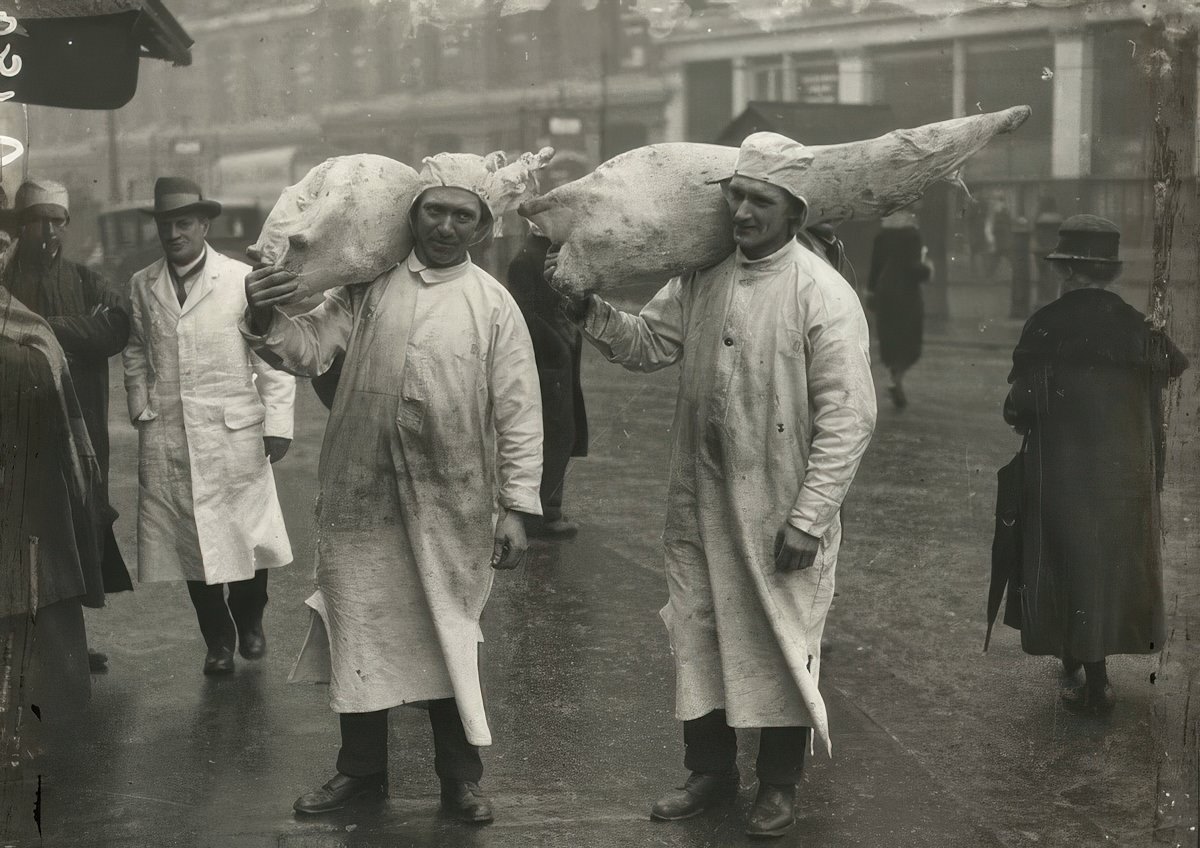
Smithfield’s meat porters worked some of the most physically demanding jobs in the city. Operating through the night and into the early morning, they moved vast quantities of beef, pork, and lamb through the market’s covered halls to supply butchers across London.
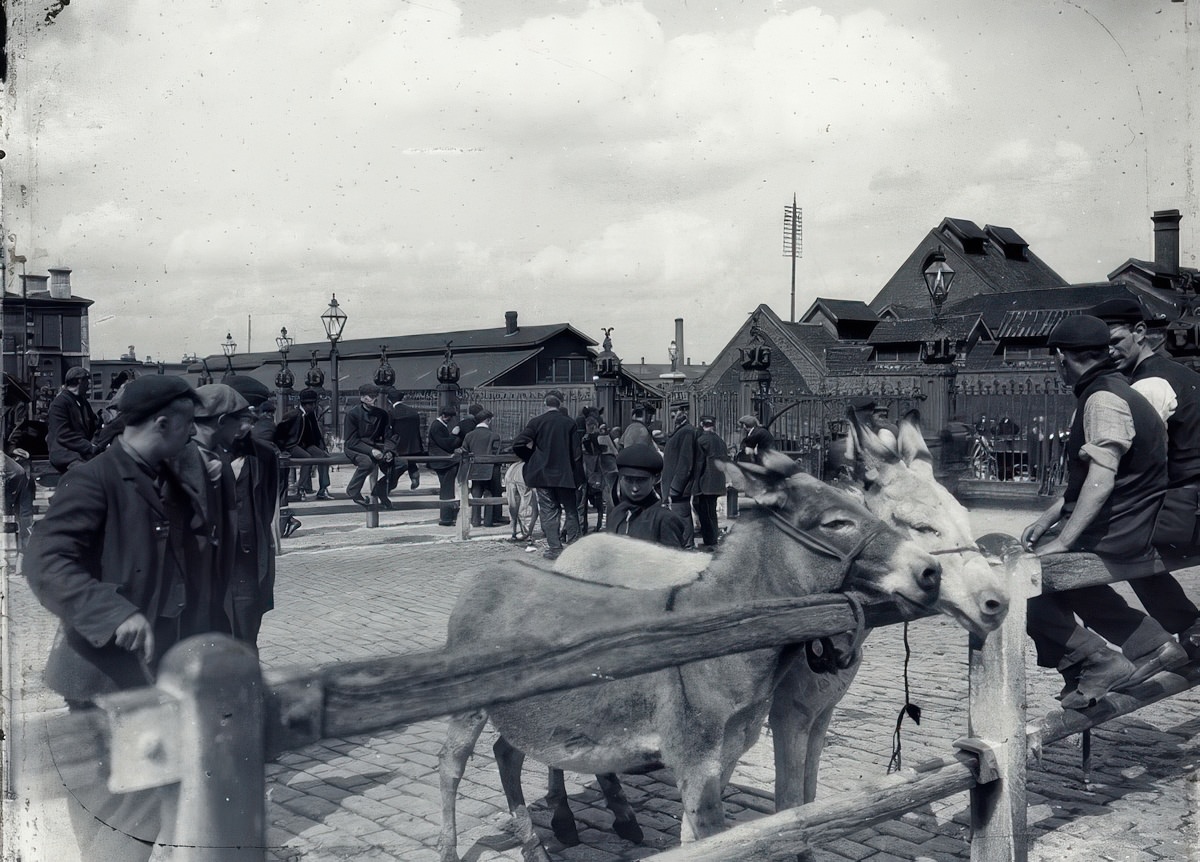
The Whitechapel Hay Market served a practical need that is easy to forget today. With horses still central to London’s transport network in the 1920s, hay and straw were essential commodities. The market ran along Whitechapel Road, with large bales traded openly on the street.
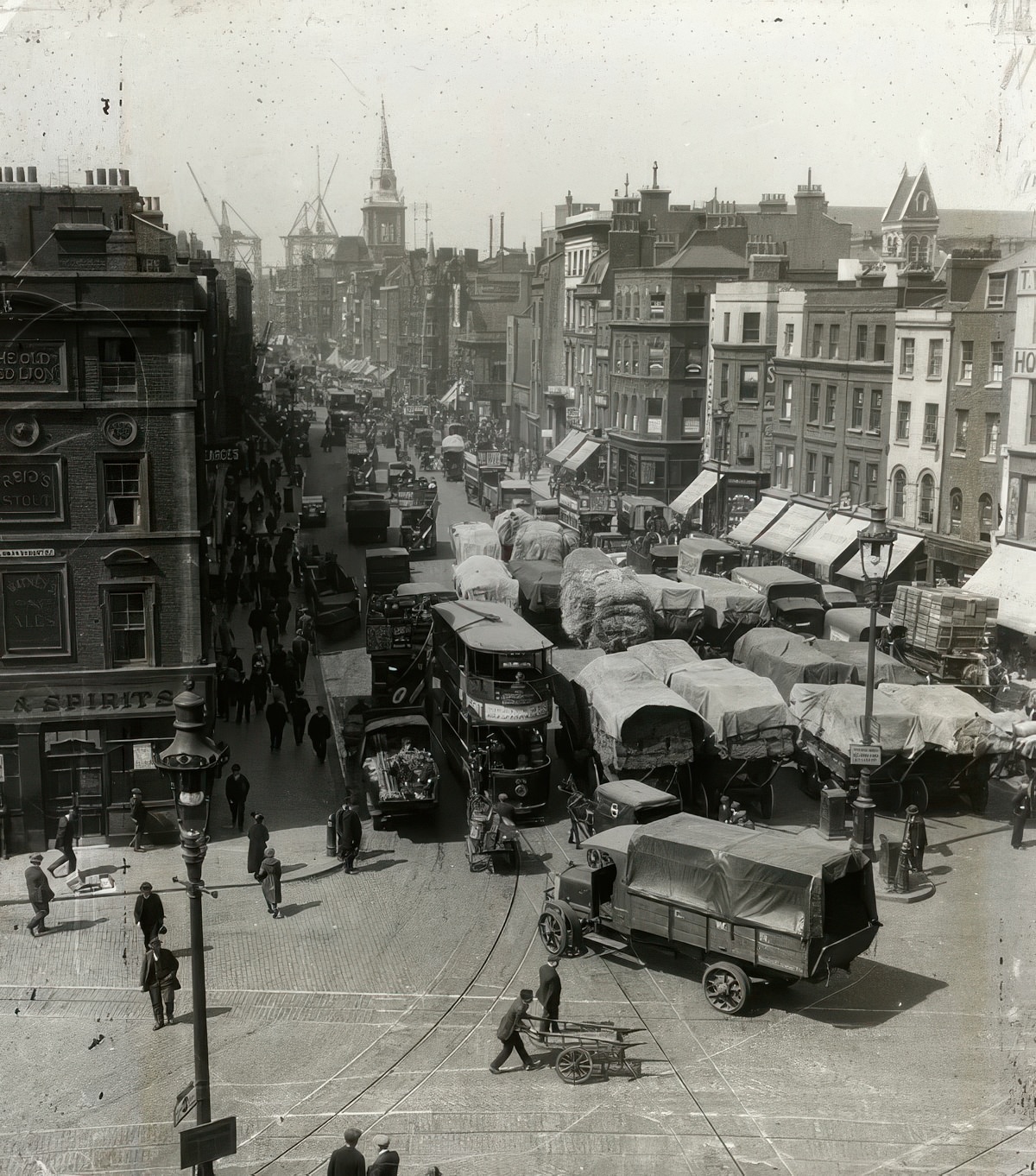
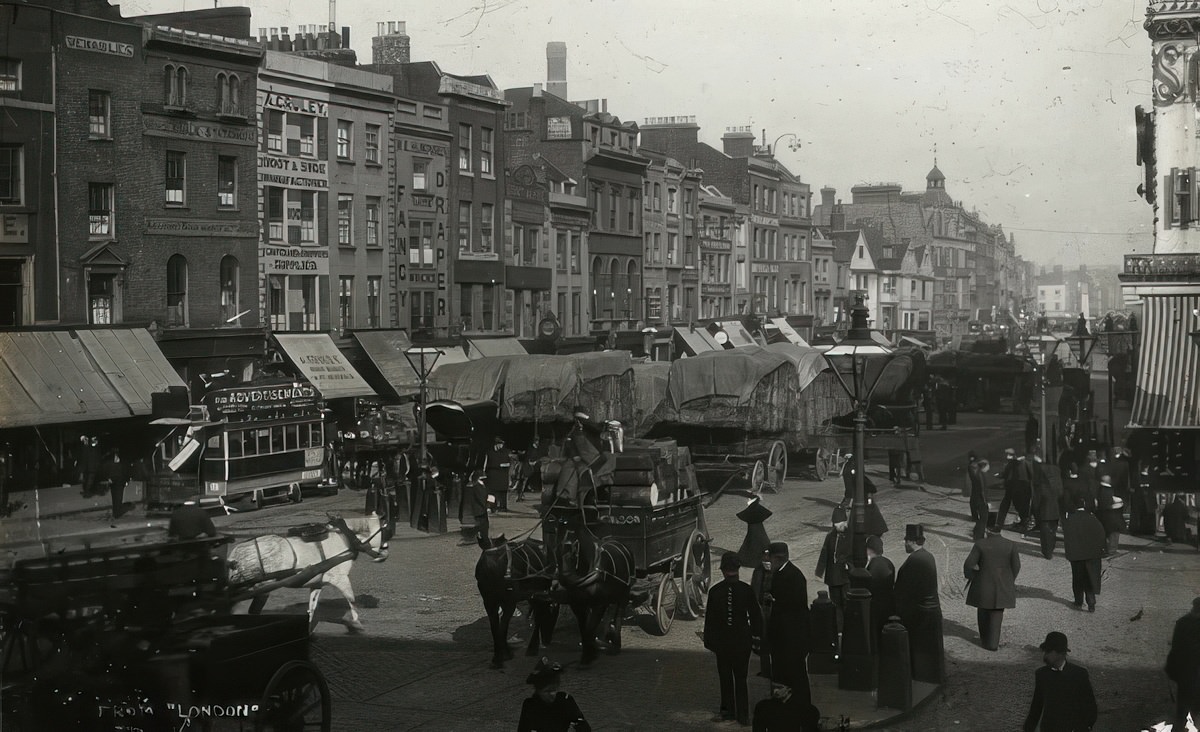
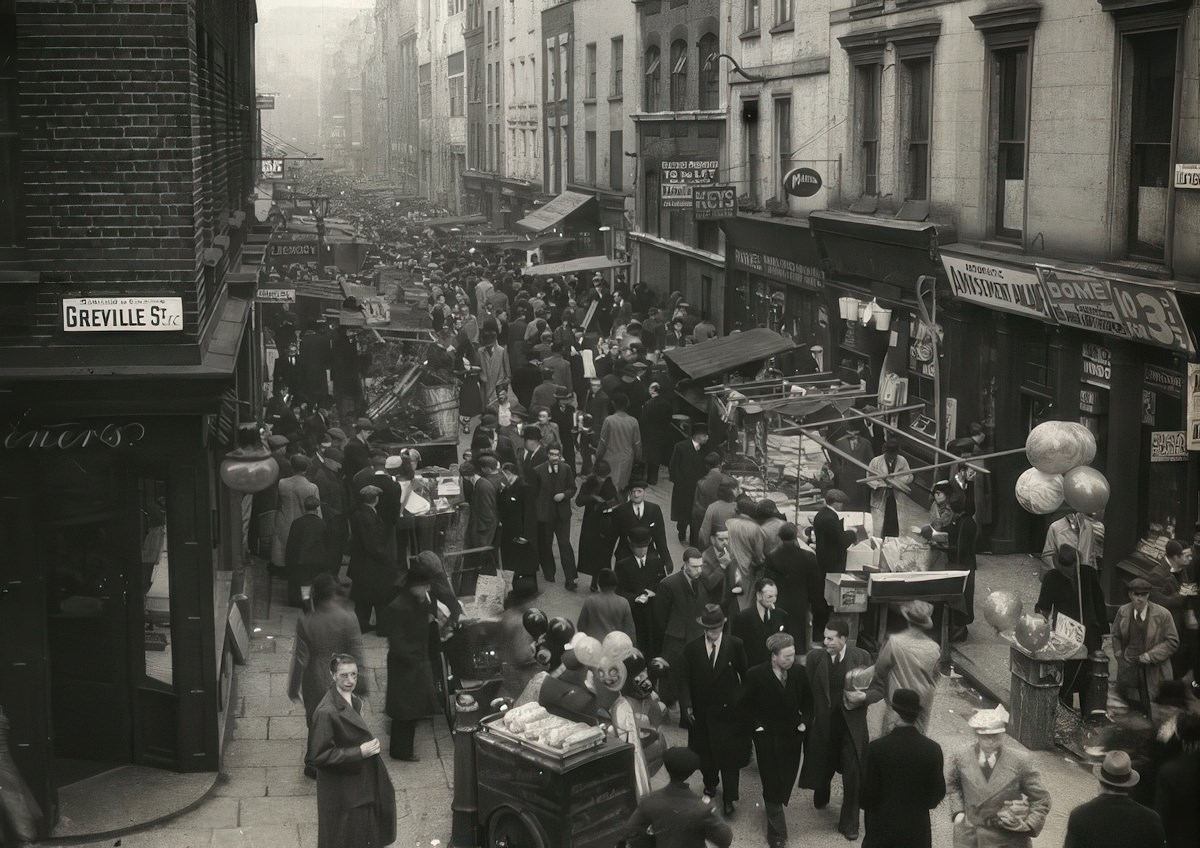
As London modernised, electric trams and motor vehicles began to crowd the main roads. Some street markets were pushed off busy thoroughfares and into side streets or purpose-built covered halls. Leather Lane in Holborn managed to survive this shift, continuing as an open street market well into the mid-20th century.
Hoxton Market in Shoreditch served one of London’s densest working-class communities. Its stalls provided the basics — food, cheap clothing, and household goods — to residents who had little money to spare and no access to department stores. Markets like this one were not a convenience; they were a necessity.
Spitalfields Market in the East End handled fruit, vegetables, and flowers on a massive scale. The area around it was home to large immigrant communities, and the market reflected that mix — a dense, noisy, multilingual trading floor that operated at full intensity six days a week.