Marilyn Monroe remains one of the most photographed celebrities in history. Thousands of photographs of her exist, spanning her earliest days as a model in the mid-1940s all the way through her final photo session in 1962. She was more than the image Hollywood sold to the public. Behind the platinum hair and the red lips was a woman with an IQ of 168, a passion for literature, a love of cooking, and a deeply personal life that played out constantly in front of cameras and reporters.
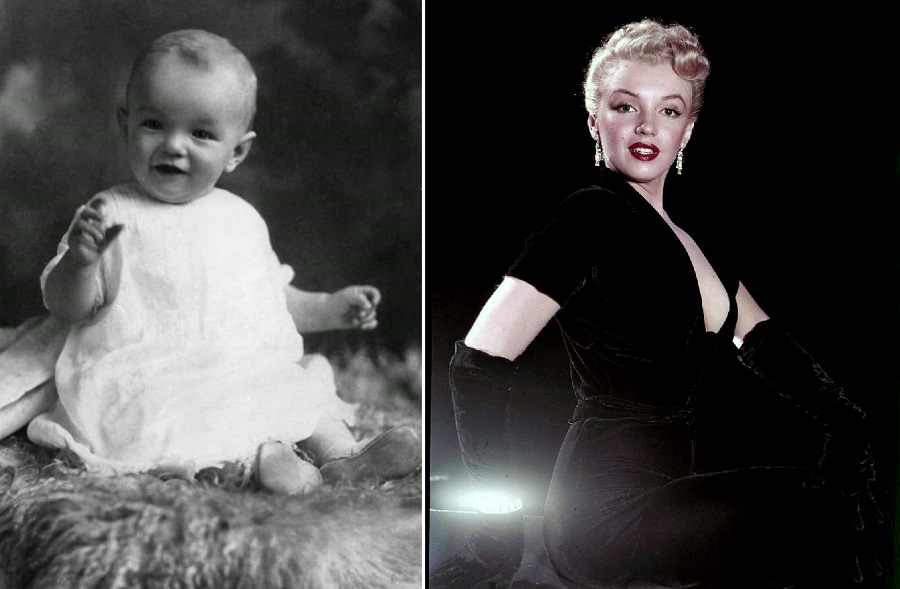
Born Norma Jeane Mortenson in 1926, she spent much of her childhood in foster care and orphanages before breaking into modeling in Los Angeles. By the late 1940s, she had signed with a major studio and was taking acting classes to sharpen her skills. Her early work in small roles and photo shoots laid the groundwork for one of Hollywood’s most extraordinary careers.

One of her earliest signature looks came in 1946, when she had her hair straightened and bleached for the first time. That transformation marked the beginning of the Marilyn Monroe the world came to know — though the woman underneath never changed.

Throughout the late 1940s, Monroe worked steadily to build her career. She appeared in small film roles and continued modeling. In 1948, she was already on set at Columbia Studios, preparing for her part in “Ladies of the Chorus.”


Even in those early years, Monroe was focused on self-improvement. She took acting and dance classes seriously and practiced yoga — a habit she kept up long before it was common in Hollywood.


By 1949, Monroe was becoming a recognizable face. She appeared in “Love Happy” that year and spent time at Tobay Beach on Long Island — one of many candid moments captured away from studio lights.


The early 1950s saw Monroe’s career accelerate rapidly. She was photographed hiking in the woods, posing alongside a Pontiac, and even sitting in Griffith Park reading a book — a habit that revealed her genuine intellectual curiosity. She was frequently seen with serious literary works, something that clashed sharply with the “dumb blonde” roles studios pushed her toward — a persona she openly resented.


In 1951, a photographer challenged Monroe to look glamorous in the least glamorous outfit possible. She pulled it off in a burlap potato sack, proving that her screen presence had nothing to do with expensive costumes.

By 1952, Monroe was a full-fledged star. She worked out at the Beverly Carlton Hotel, appeared in “Monkey Business” alongside Cary Grant, and attended Ray Anthony’s party in a show-stopping hot pink gown. That same year, she was photographed with a Rolleiflex camera, showing a curiosity about the craft that captured her image so often.


The year 1953 was one of Monroe’s busiest. She starred in “Gentlemen Prefer Blondes” and filmed “Niagara,” both of which cemented her status as Hollywood’s biggest female star. Wardrobe tests for both films were extensively documented. She also left her handprints in concrete outside Grauman’s Chinese Theatre alongside Jane Russell — one of Hollywood’s most storied traditions.


That same year, photographer Alfred Eisenstaedt captured Monroe at home in a more relaxed setting — a glimpse of the private woman behind the public spectacle. She was also photographed performing a headstand on the beach, showing the playful, athletic side of her personality.


After appearing on the Jack Benny Show in 1953, Monroe was gifted a Cadillac — a token of the enormous entertainment value she brought to every project she touched.

In 1954, Monroe did something few Hollywood stars of her stature would do: she flew to Korea to entertain U.S. troops. She performed for tens of thousands of soldiers over several days in freezing temperatures, wearing a low-cut sequined dress on an outdoor stage. She later said it was one of the most meaningful experiences of her life.

Her marriage to baseball legend Joe DiMaggio ended that same year. After just nine months, Monroe filed for divorce. She was photographed waving to fans as she left court — composed and dignified in the middle of a very public split. The filming of “River of No Return” the previous year had added physical strain to personal turmoil; Monroe suffered a leg injury on set during production.


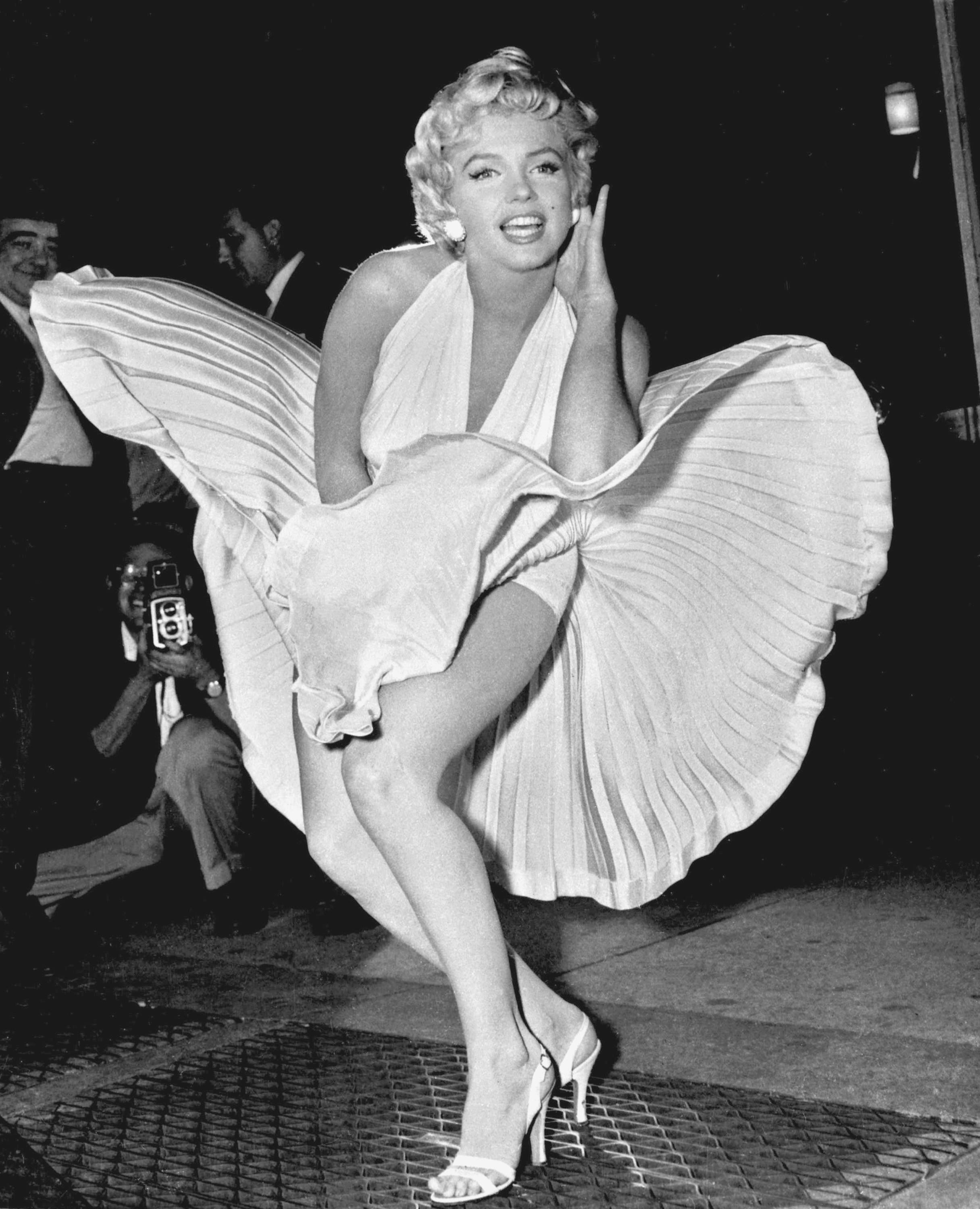
“The Seven Year Itch” in 1955 gave the world one of the most iconic images in cinema history — Monroe standing over a subway grate as her white dress billows upward. Filmed on location in New York City, the scene drew a massive crowd and became the defining image of Monroe’s career. The film also starred Tom Ewell, who appeared alongside her in key scenes.



In 1955, Monroe relocated to New York, where she studied at the Actors Studio under Lee Strasberg. She was photographed on the balcony of the Ambassador Hotel and, in one of the most memorable images of the decade, reading James Joyce’s “Ulysses” at a playground in the city — a book few casual readers attempt, let alone finish.


Monroe married playwright Arthur Miller in 1956. The two were photographed cycling together, riding in a black Thunderbird, and eating hot dogs from a New York street cart — ordinary moments that humanized Hollywood’s biggest star. That same year, Monroe traveled to London for a four-month stay to film “The Prince and the Showgirl” with Laurence Olivier. She was photographed shopping in London and meeting Queen Elizabeth II at a film premiere.


In 1956, Monroe also starred in “Bus Stop,” another milestone role. Behind-the-scenes sessions from that production were documented by photographer Joshua Greene, producing some of the most candid images of Monroe at work.


The year 1957 brought more candid glimpses of Monroe’s private life. She vacationed in Amagansett, New York, attended an All-Star Soccer Game at Ebbets Field, and posed for the now-famous “Red Dress Sitting” series in January of that year.


Monroe had desperately wanted children. She suffered three miscarriages, each one reported in the press. In 1960, photographers captured her visibly pregnant — one of the rare, intimate glimpses into a deeply painful chapter of her personal life.

Her final years were filled with professional activity even as her personal life grew more difficult. In 1960, she rehearsed for “Let’s Make Love” alongside Gene Kelly and Yves Montand and filmed “The Misfits” — her last completed film — with Montgomery Clift. The production was grueling, and it would prove to be the final completed film for both Monroe and co-star Clark Gable.


In 1962, Monroe performed one of the most memorable moments in American entertainment history — singing “Happy Birthday” to President John F. Kennedy at Madison Square Garden on May 19th. Wearing a flesh-colored, rhinestone-studded gown designed by Jean Louis, she delivered the breathy, iconic rendition to a packed crowd.

That same year, Monroe attended the Golden Globe Awards with Mexican screenwriter Jose Bolanos and was photographed teaching Pat Kennedy Lawford how to dance the Swing. She was also shot for Vogue magazine in a series styled after Jackie Kennedy.


Her final film, “Something’s Got to Give,” was left unfinished. Monroe was fired from the production in June 1962 due to absences linked to illness, though she had still delivered striking footage. Three weeks before her death, she sat for what became her final photo session — a series of images that are now among the most studied photographs in Hollywood history.


Hundreds of books have been written about Monroe. She has been the subject of films, plays, operas, and songs. Artists from Andy Warhol to Madonna have cited her as a direct influence. But beyond all of that, the photographs tell a story no biography fully captures — of a woman who was funny, athletic, intellectual, tender, and endlessly curious. Below is a collection of more rare and iconic images spanning her entire life.