Every year, New Orleans transforms into something unlike any other city in America. Mardi Gras is not a single event—it is a season, built from parades, masked balls, elaborate costumes, and streets packed with people from every corner of the world. Across the 20th century, the celebration grew, shifted, and adapted, but never lost the energy that makes it distinctly New Orleans.
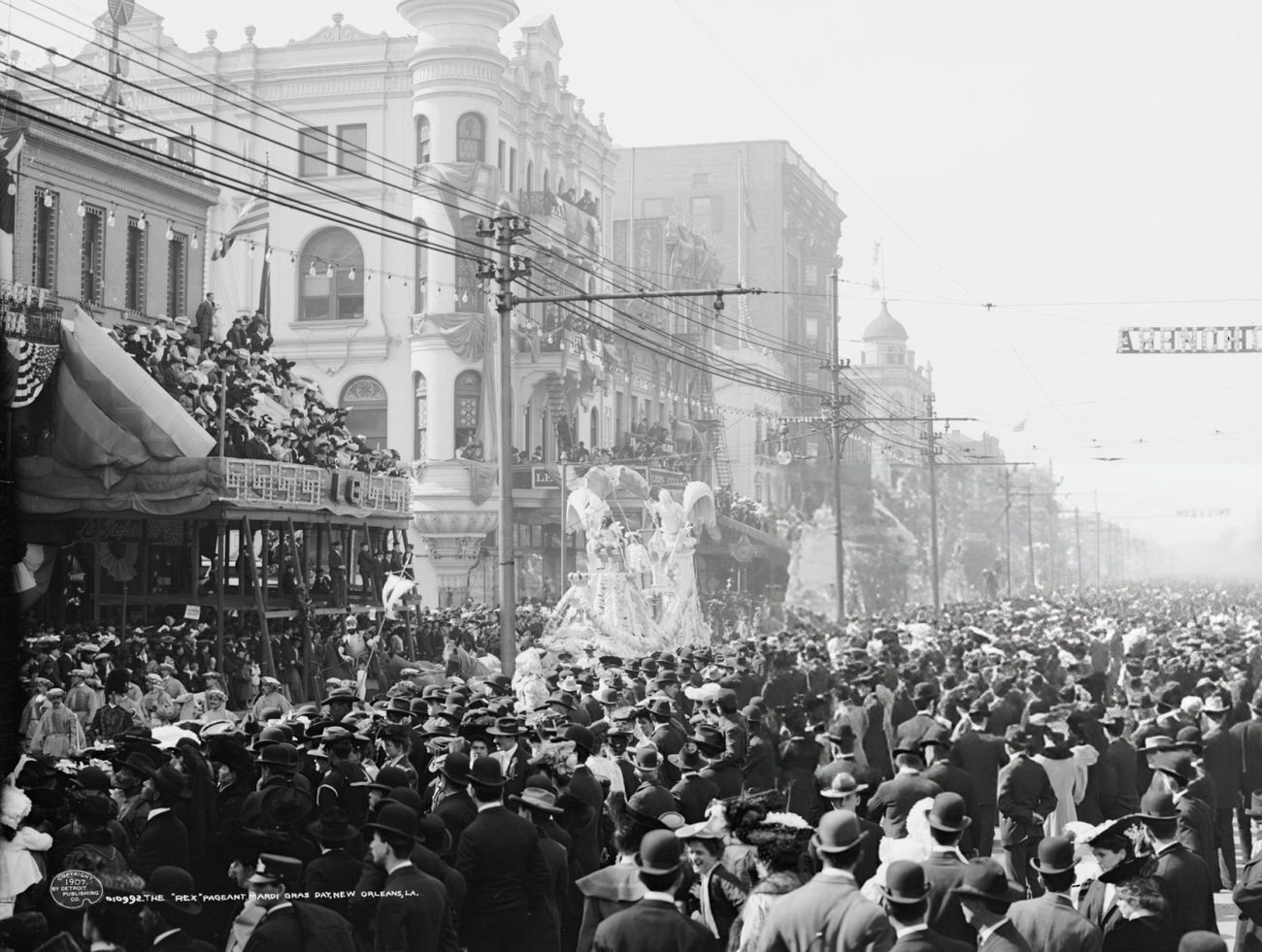
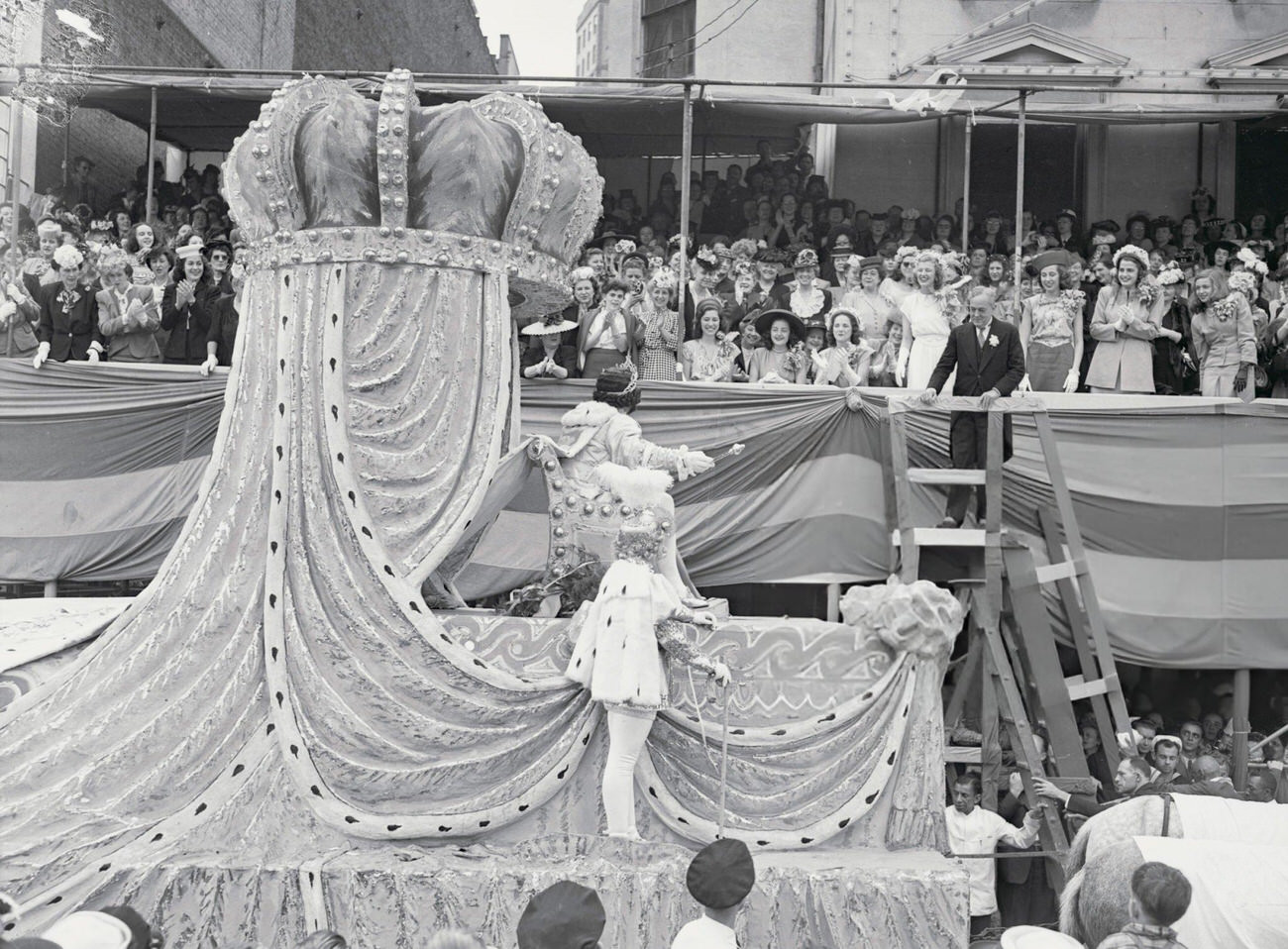
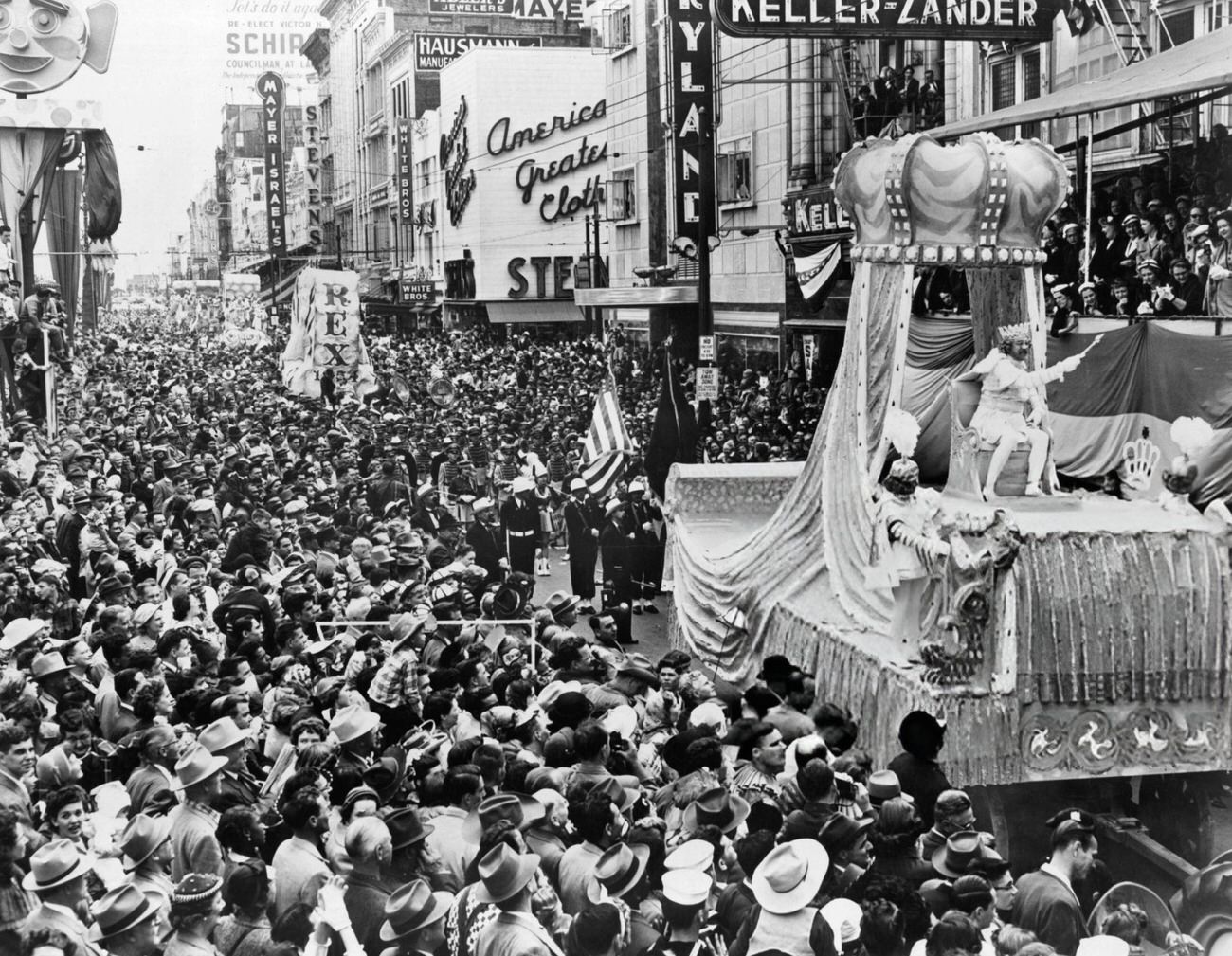
At the center of early 20th-century Mardi Gras were the krewes—private social clubs that organized the parades and balls. The Krewe of Rex, founded in 1872, was the most prominent. Its King of Carnival rode at the head of lavish processions that set the standard for every other krewe. As the new century took hold, horse-drawn carriages gave way to motorized floats, allowing for larger structures and more theatrical displays. The parades grew taller, wider, and more dramatic with each passing decade.
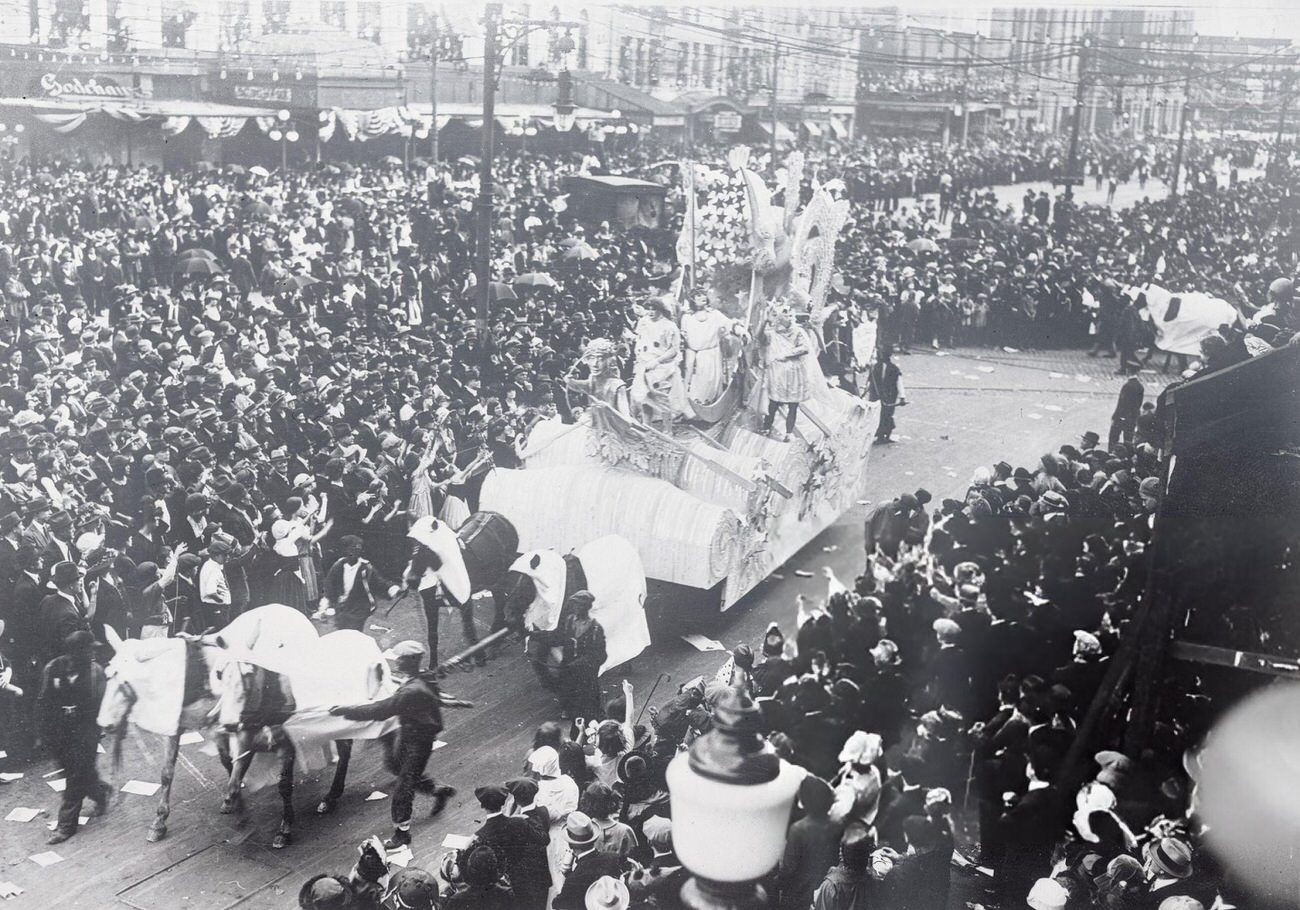
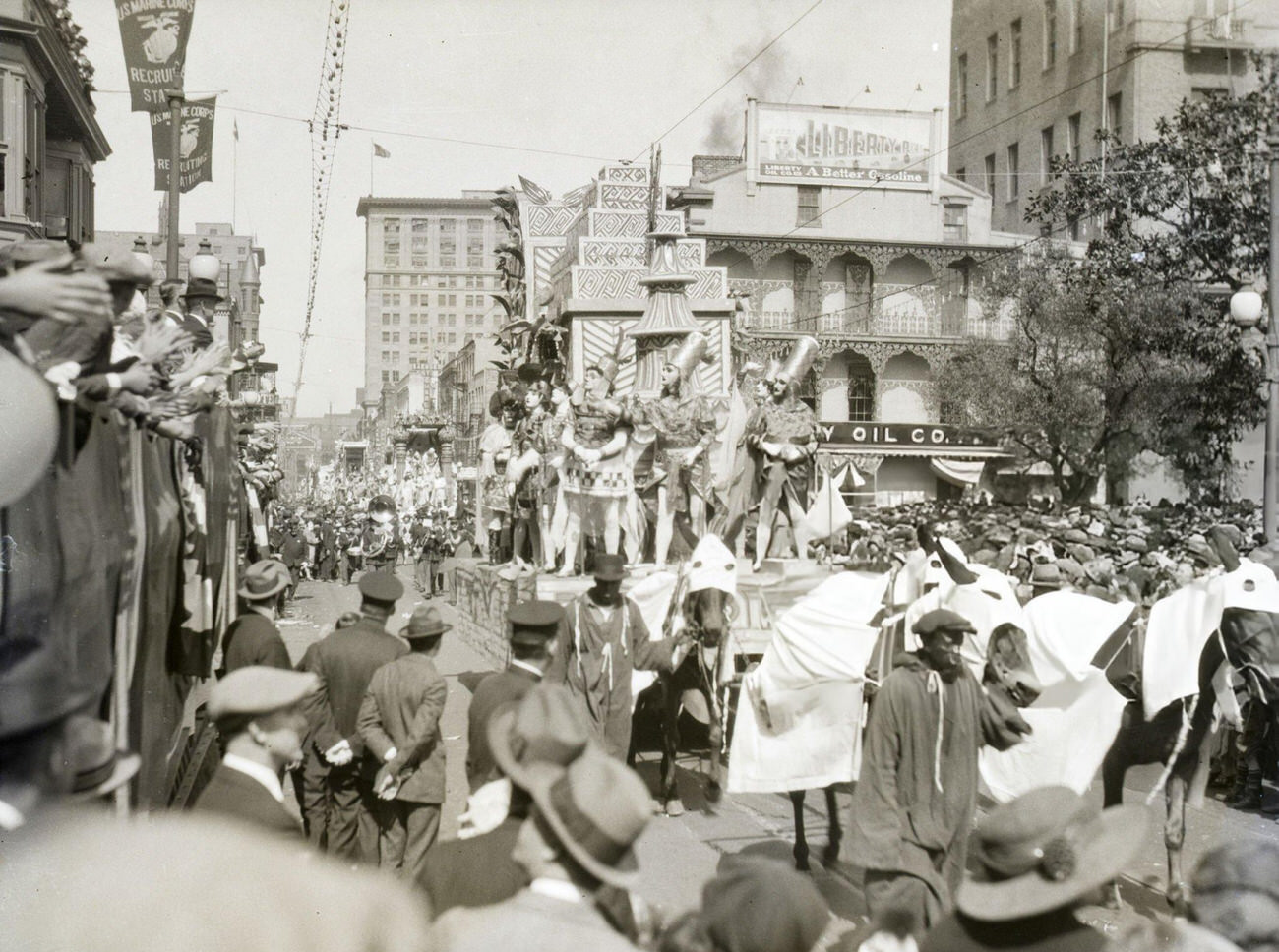
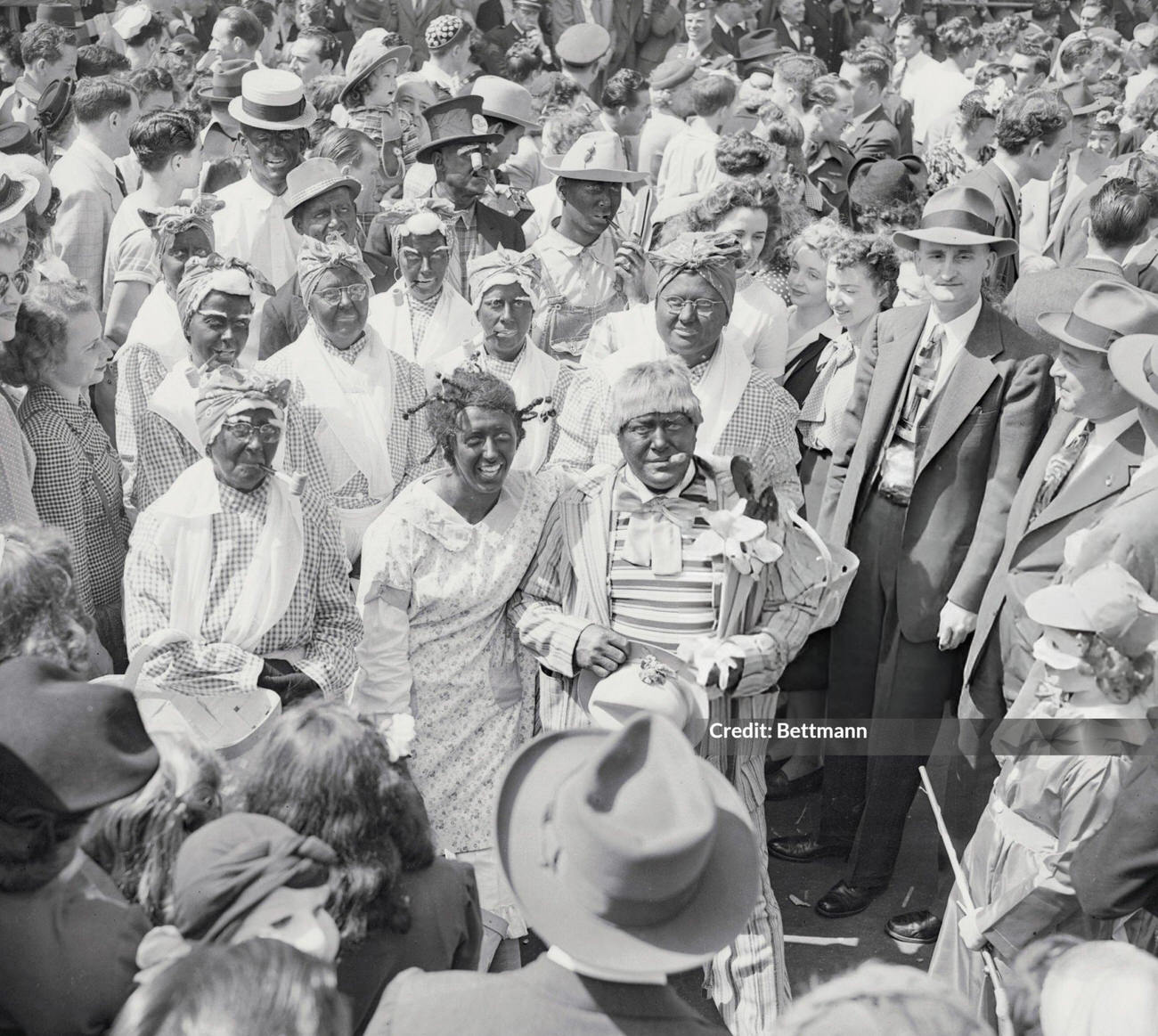
The 1920s brought a particular energy to the streets. Jazz spilled out of every doorway, and revelers in bright costumes packed the parade routes from curb to curb. The era’s broader mood of celebration found a natural home in New Orleans, where Mardi Gras had always been a reason to let loose. Flappers, musicians, and masqueraders filled Canal Street, making the 1920s celebrations some of the most vivid in the city’s history.
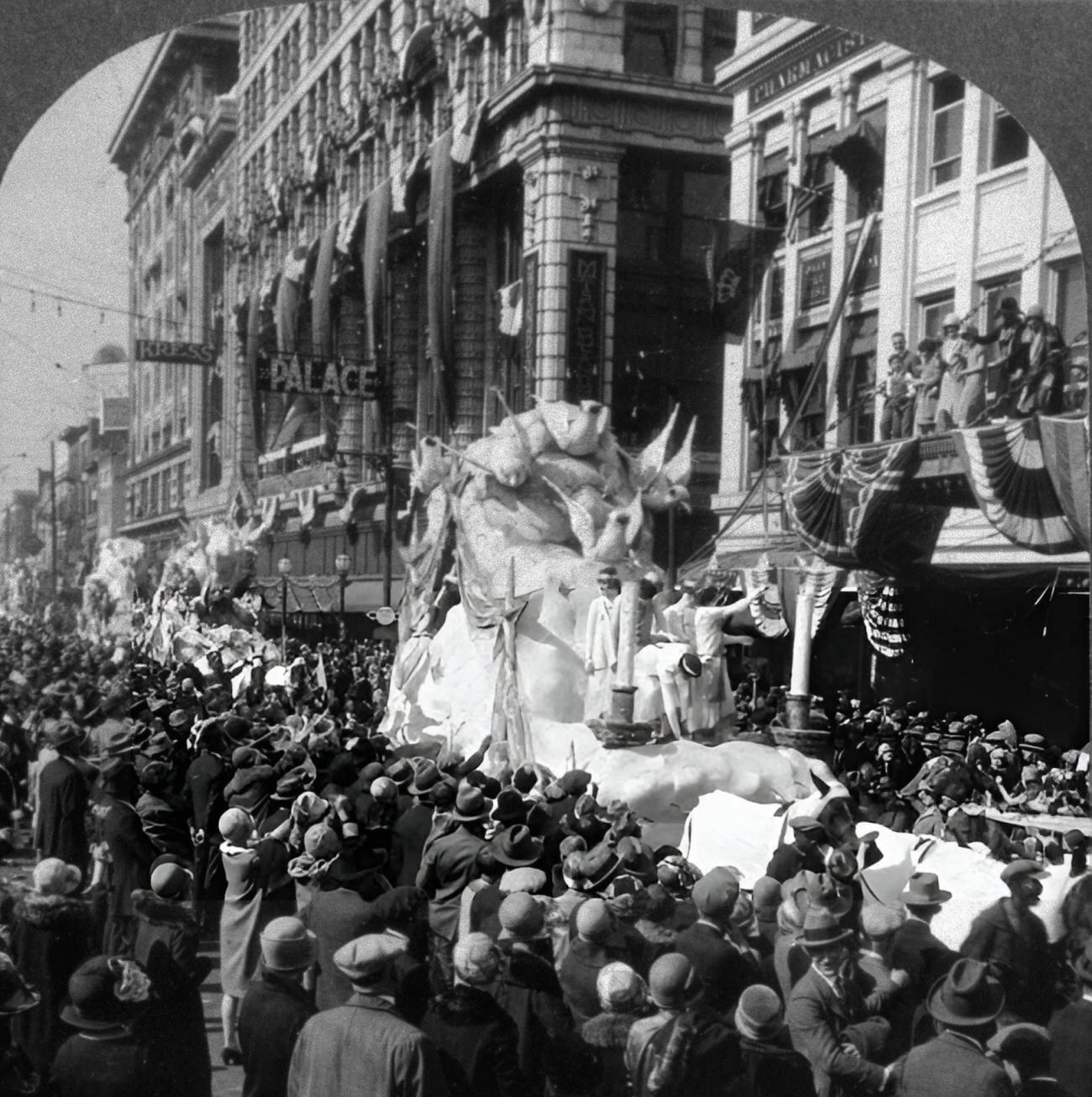
The Great Depression hit New Orleans hard, but it did not silence Mardi Gras. Even as money grew scarce, people turned out for the parades. The Krewe of Rex continued its famous procession, and crowds still lined the streets to watch the floats roll by. There was something deliberate in keeping the celebration alive—a collective refusal to let hard times take everything.
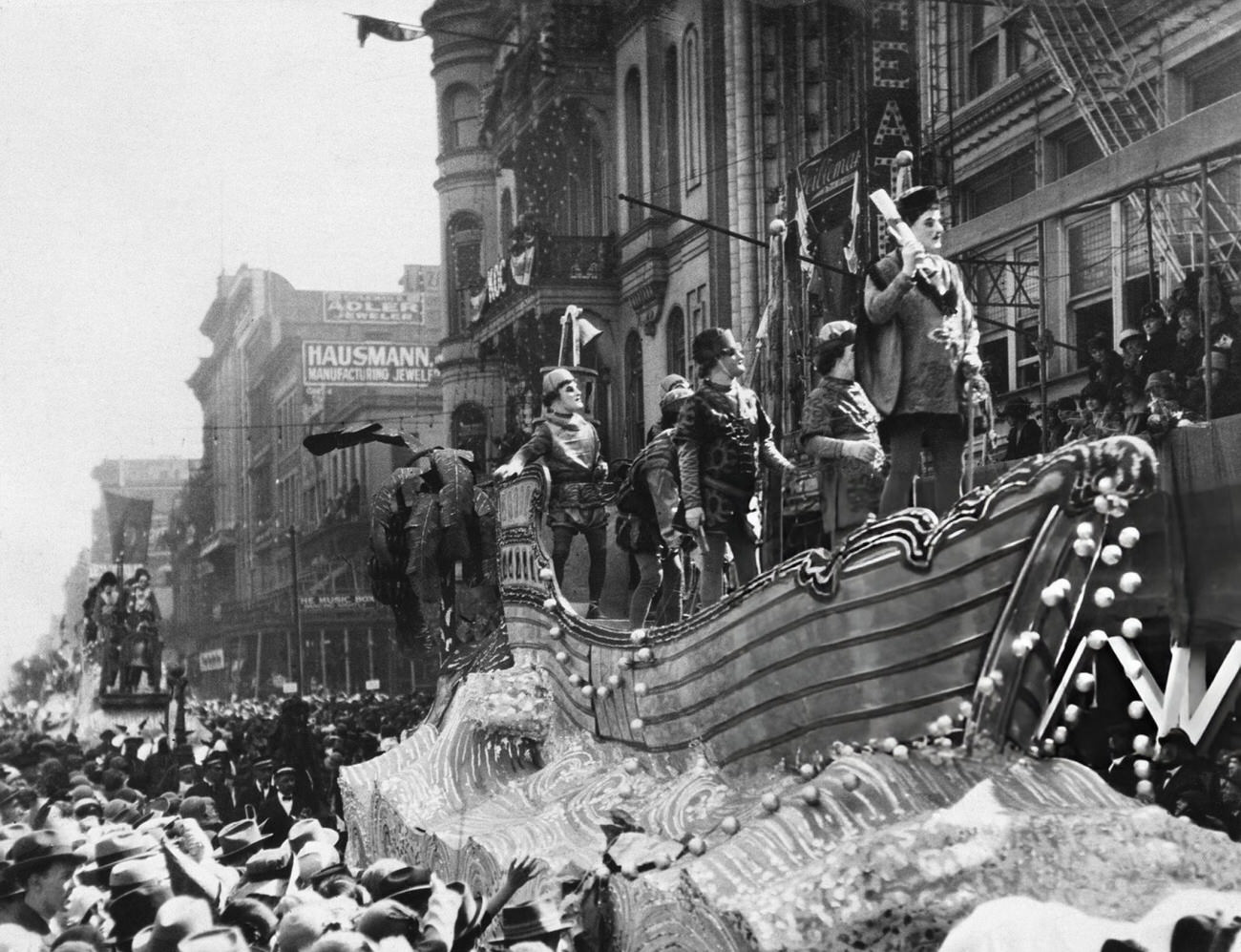
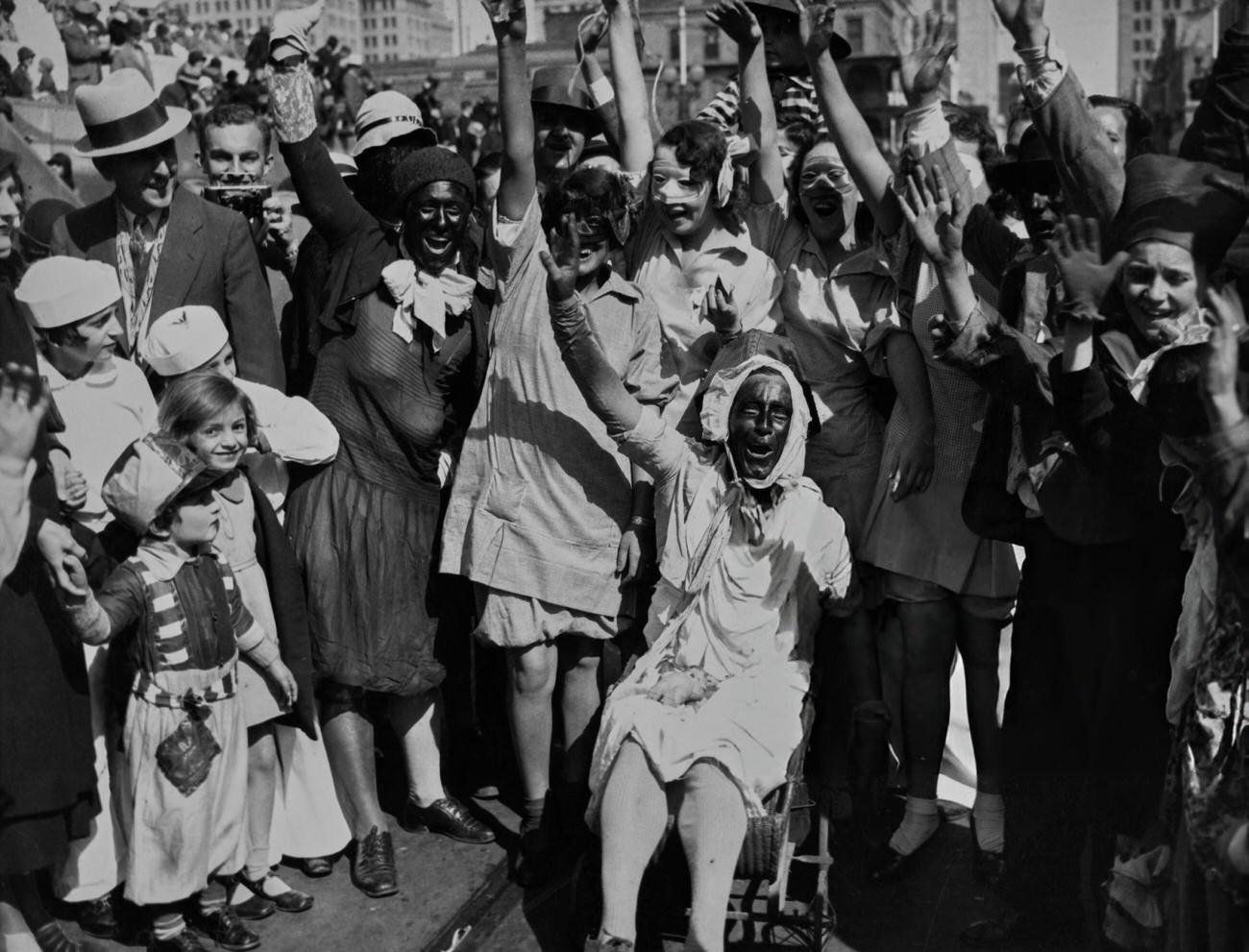
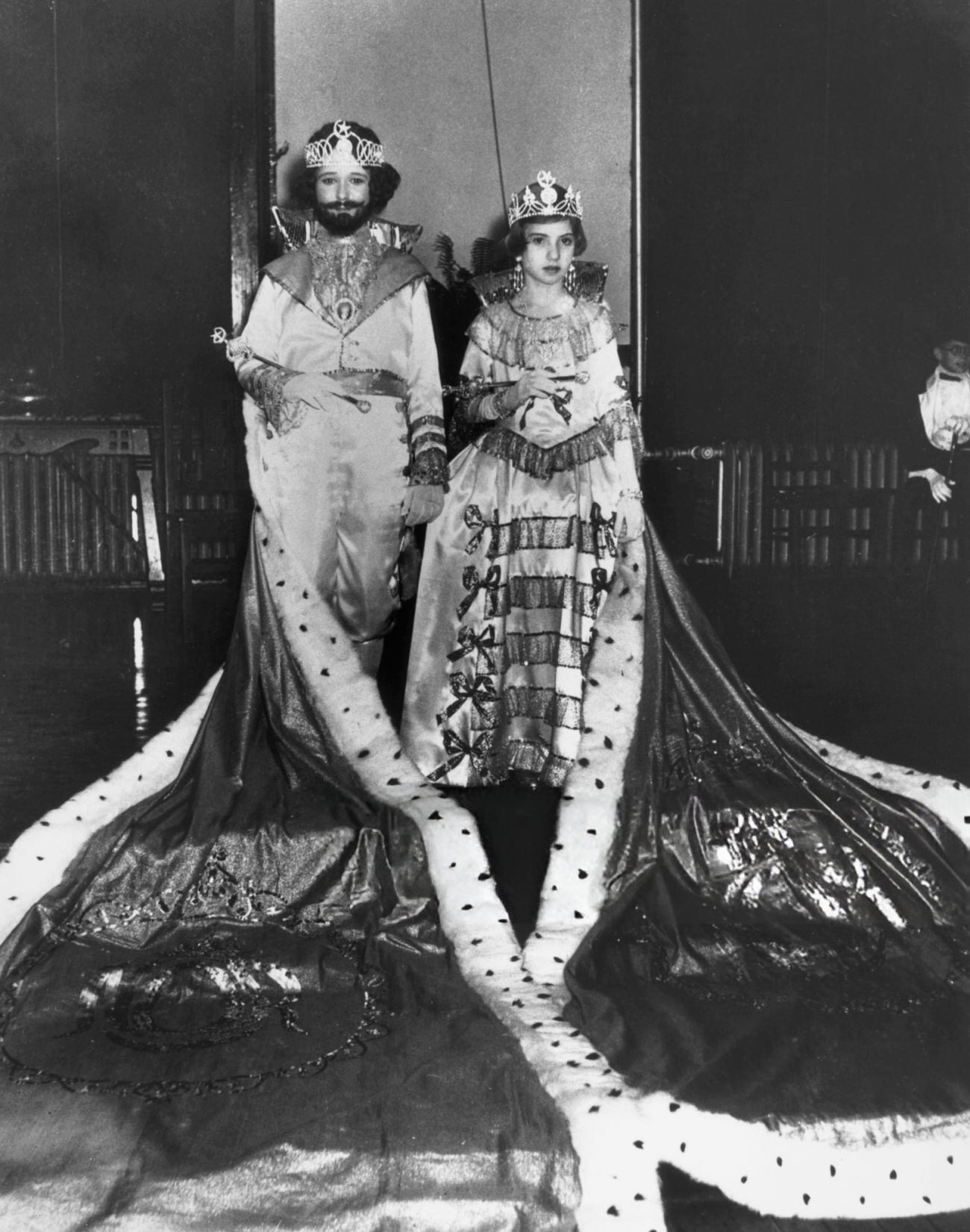
The balls of the 1930s were grand affairs. Krewe royalty was crowned each season, with a king and queen presiding over the evening’s festivities. These events were formal, exclusive, and highly choreographed, reflecting the social hierarchies of the time. Attending a Mardi Gras ball was a mark of status in New Orleans society.
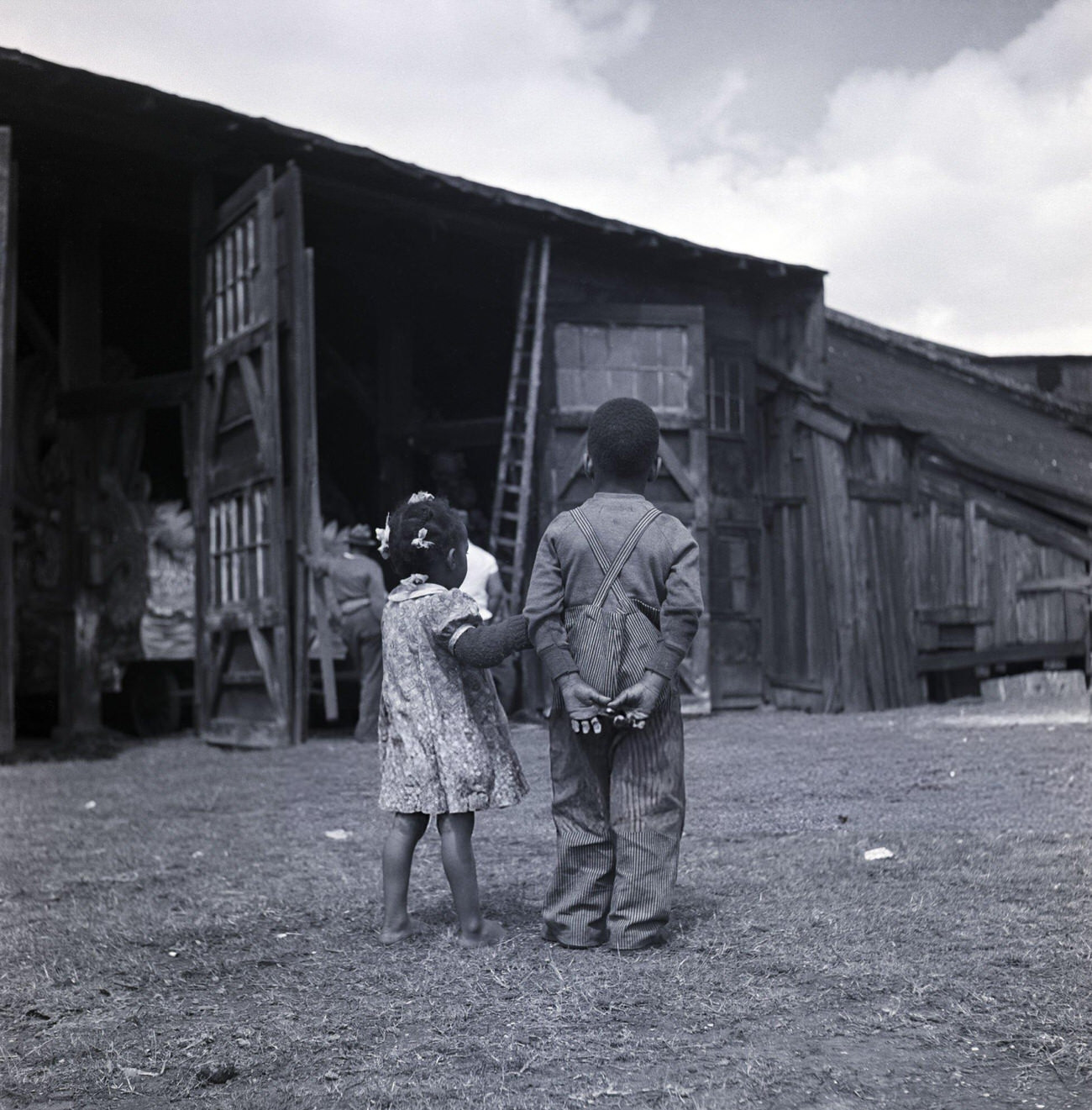
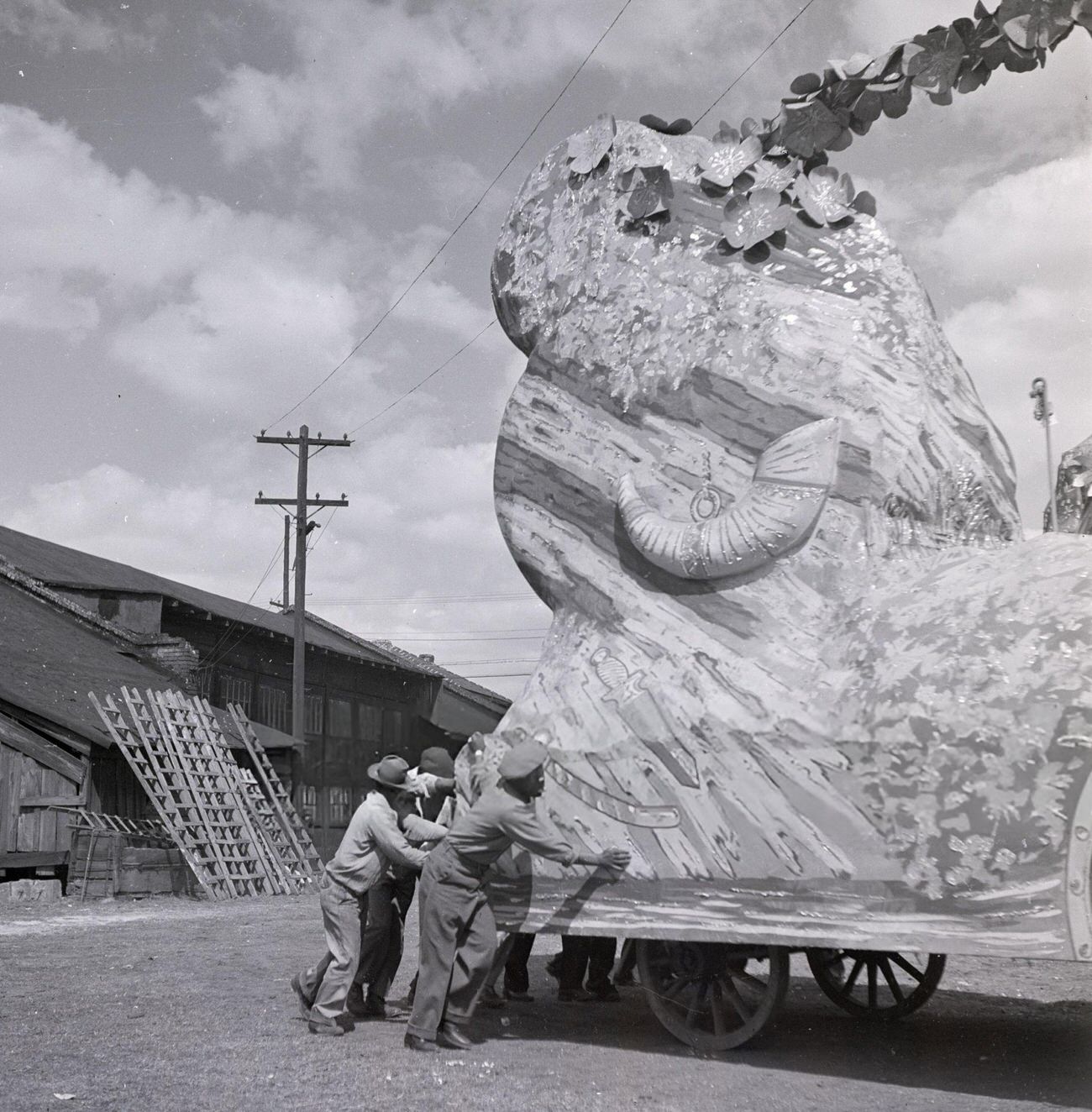
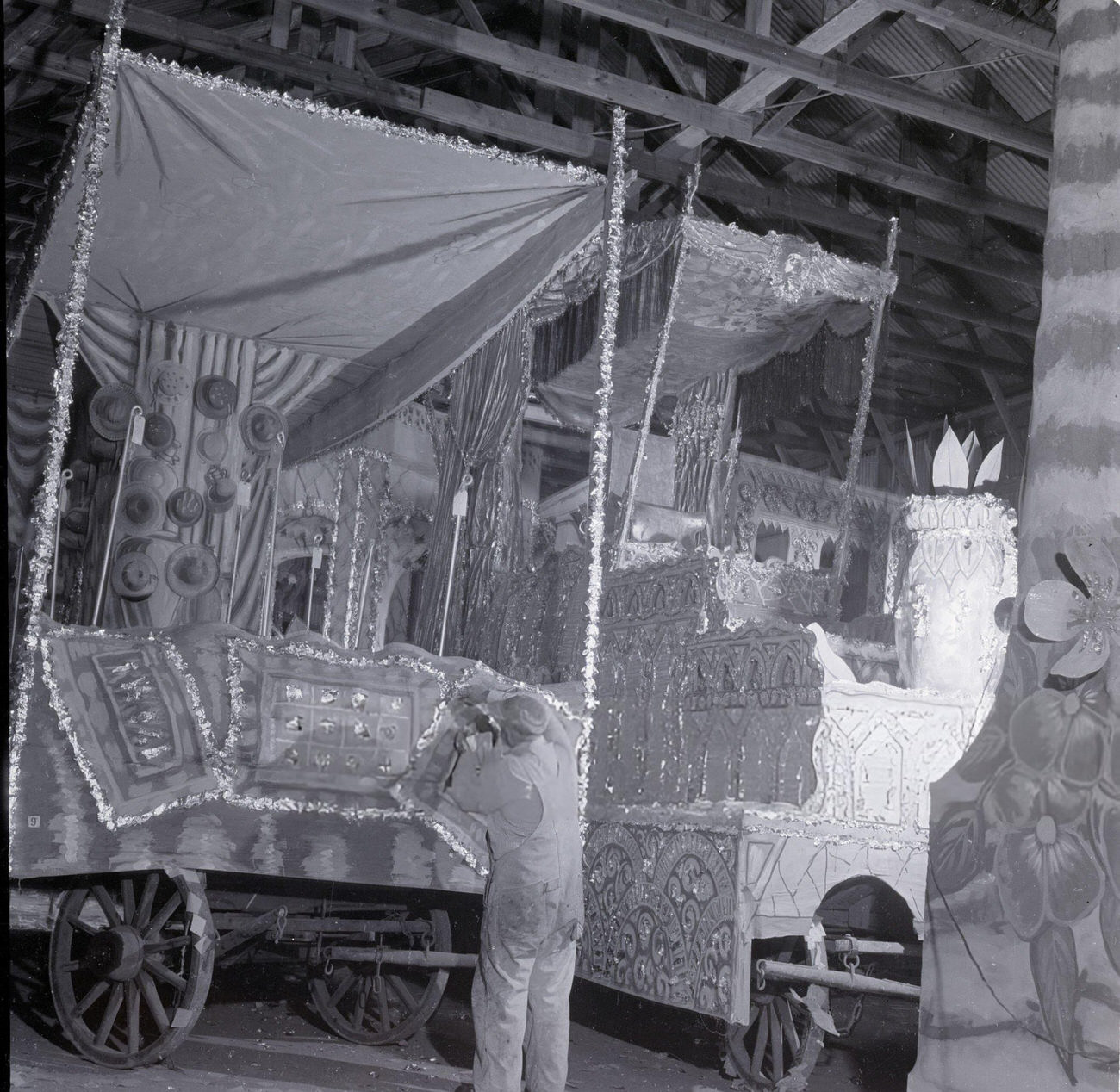
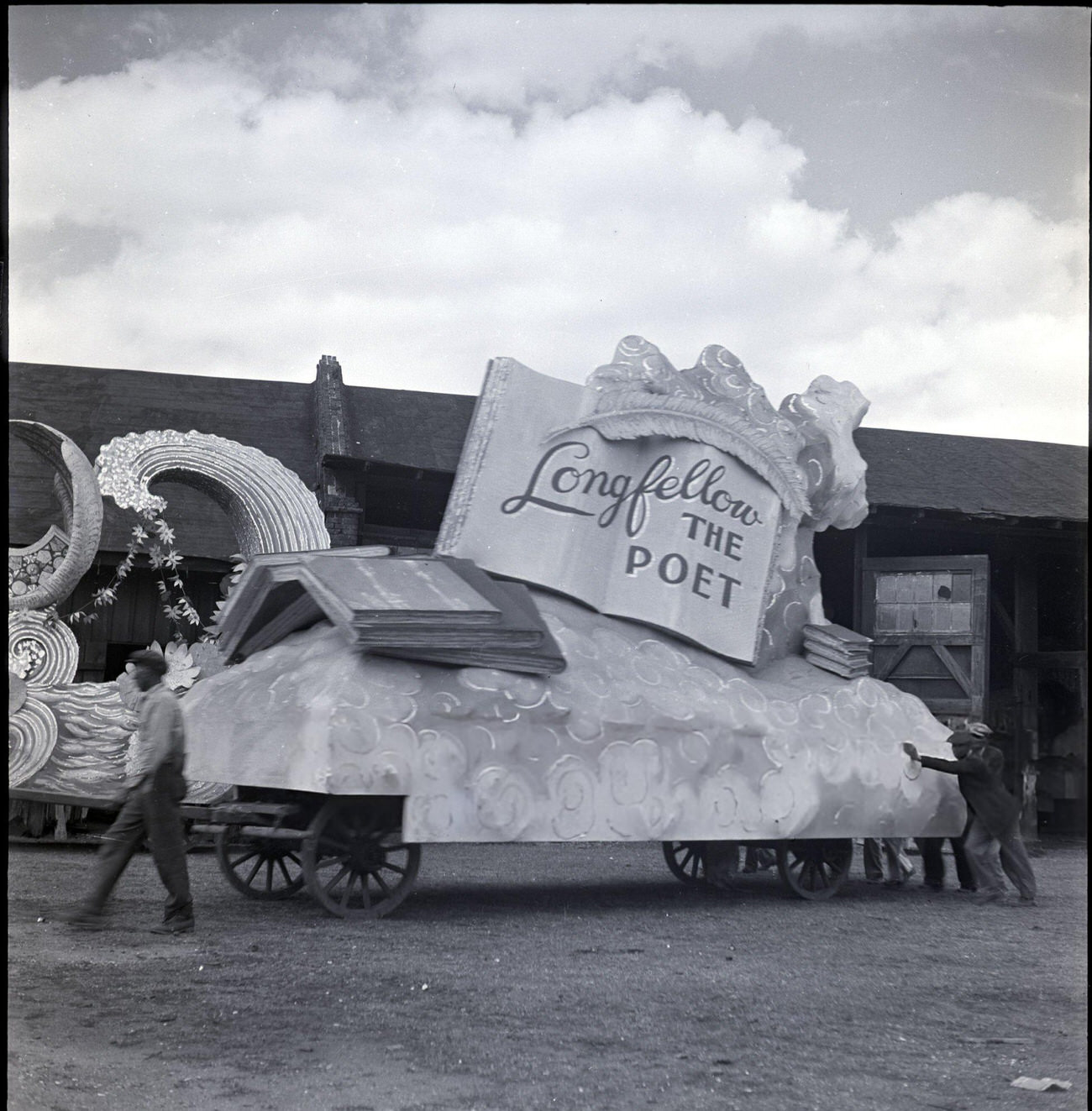
Behind every parade was an enormous amount of preparation. Float construction happened in warehouses across the city, where teams of workers built the massive structures by hand. Children gathered outside to watch as the finished floats were pulled into daylight, their painted surfaces catching the sun before being hauled to the parade route.
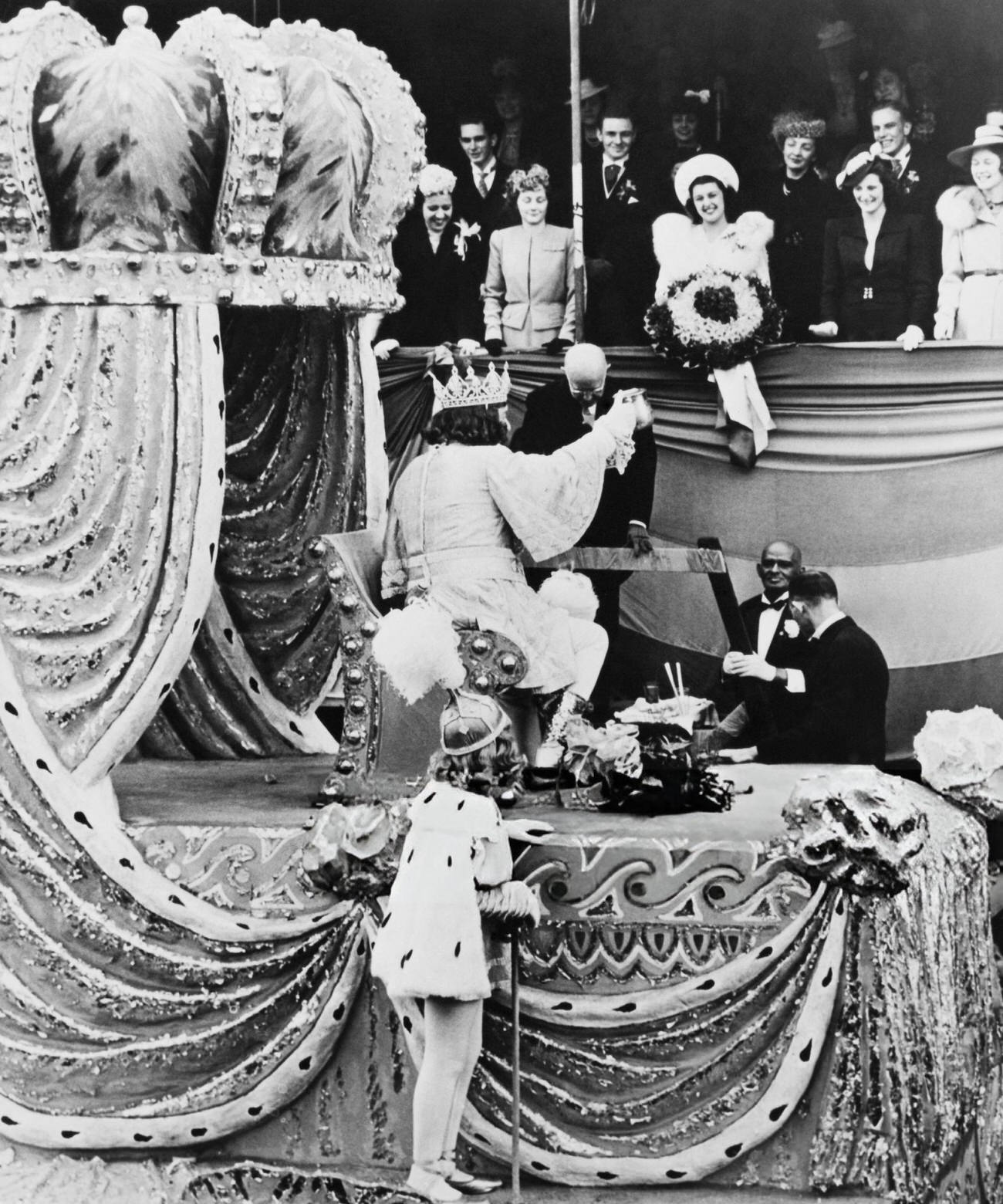
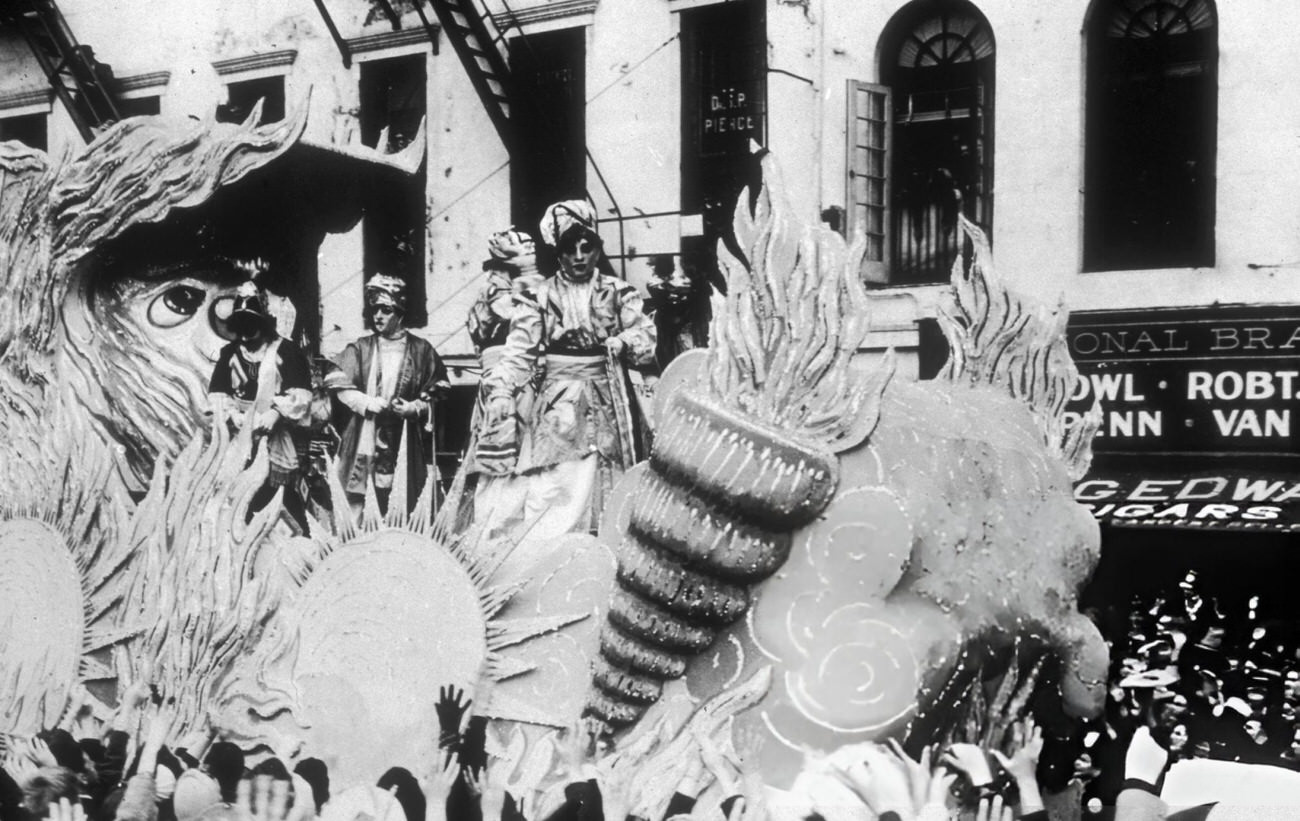
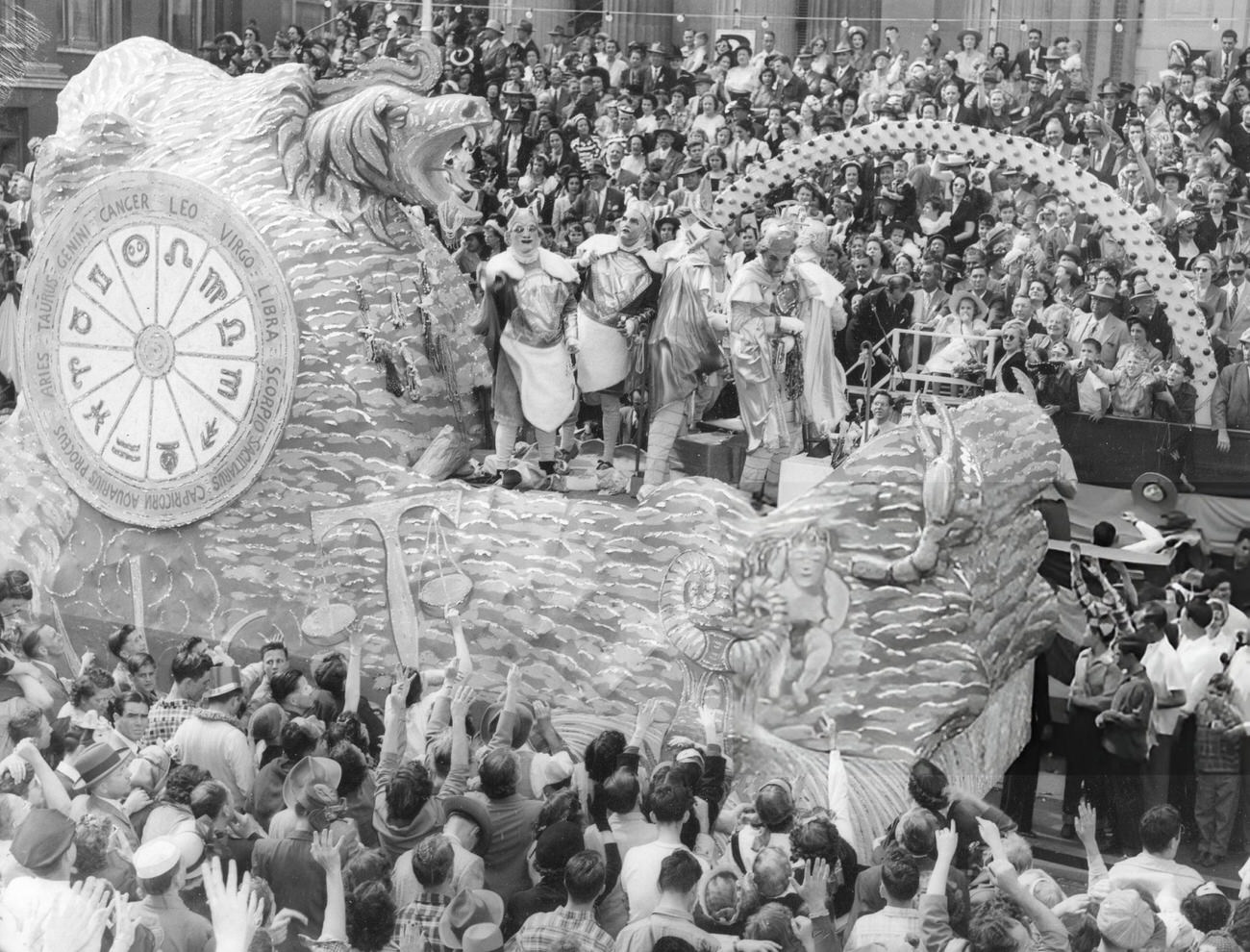
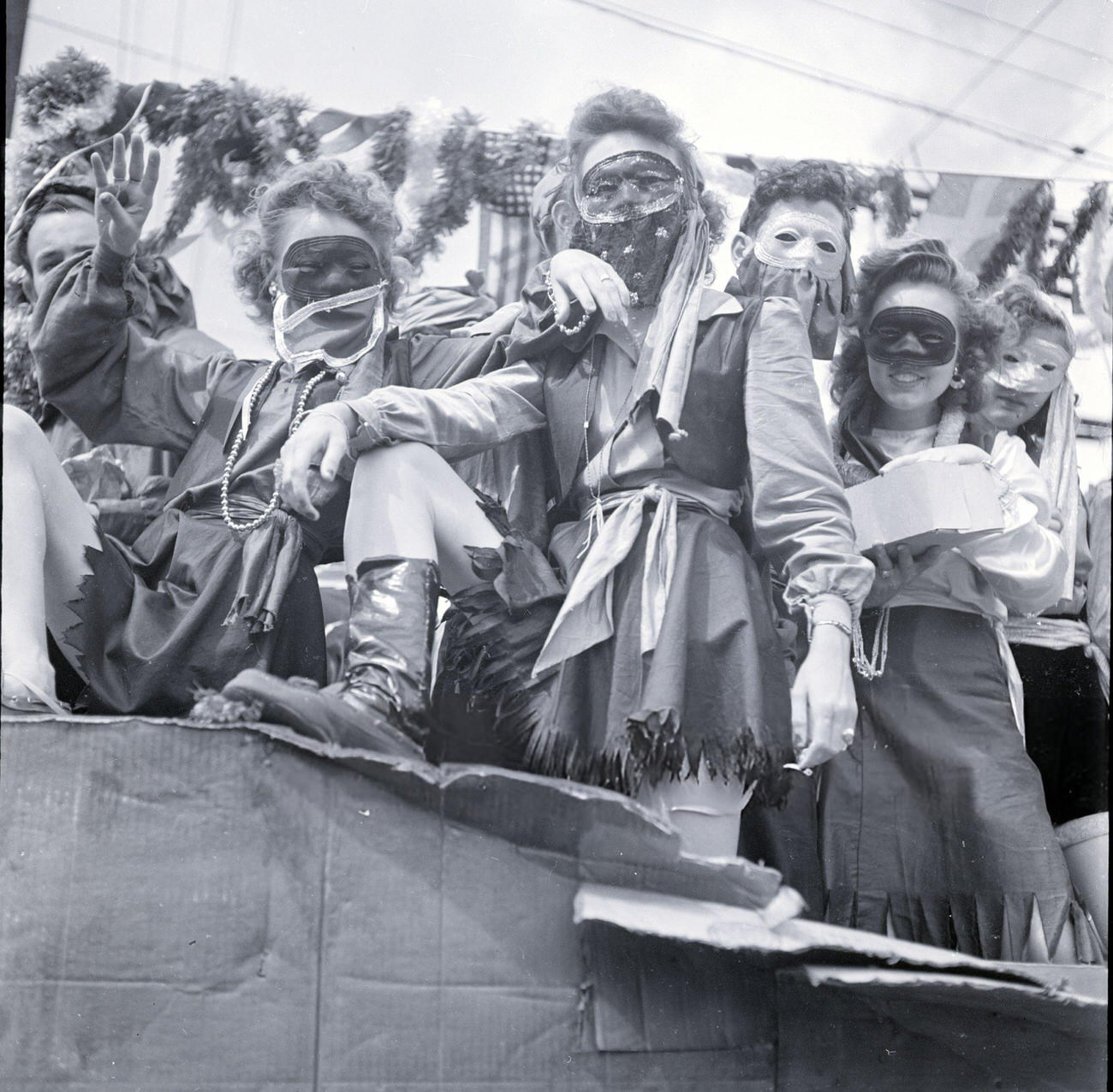
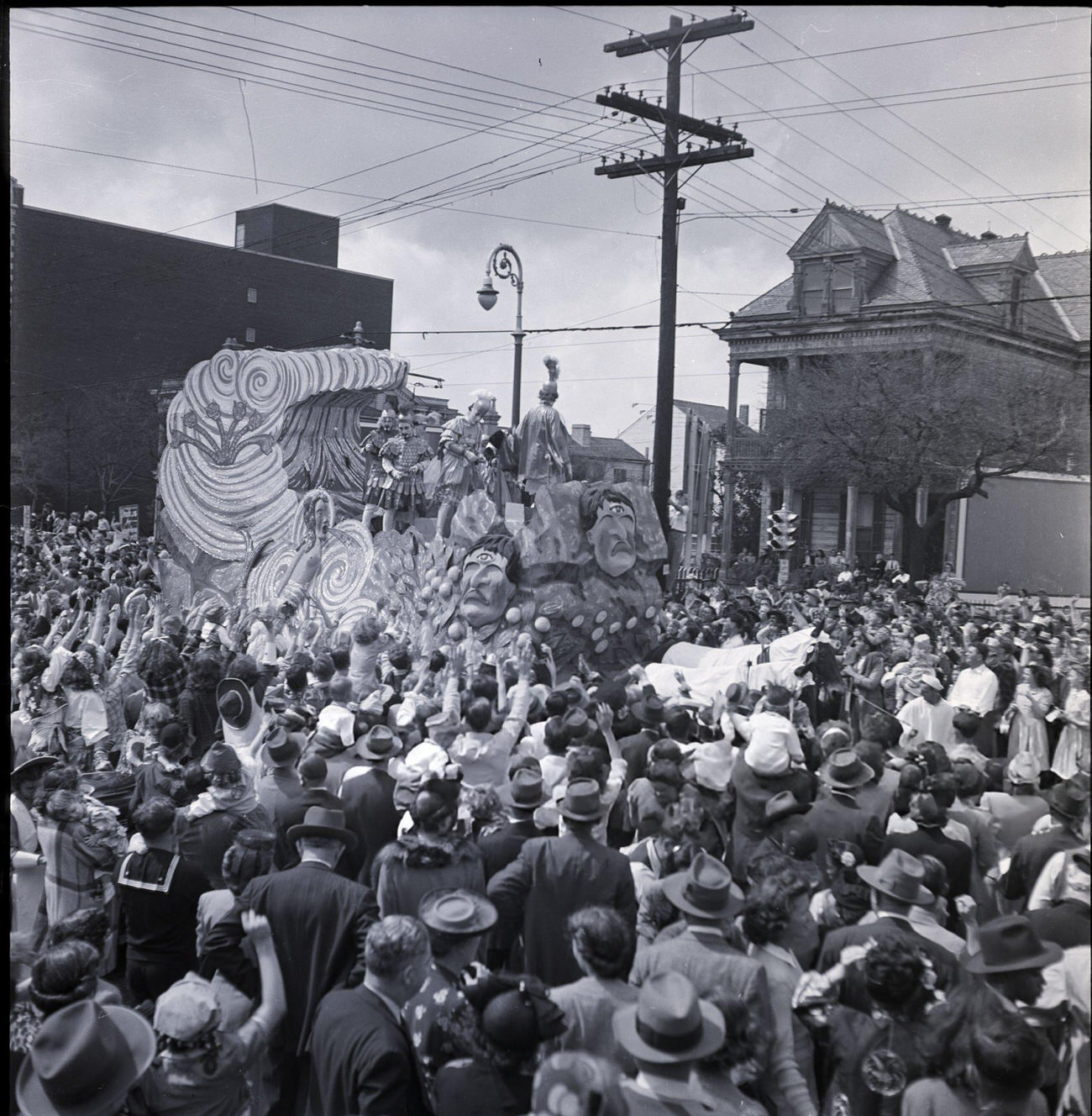
By the 1940s, the tradition of throwing prizes and trinkets from floats was firmly established. Costumed riders tossed candy, beads, and small gifts into outstretched hands below. It made the parade an active experience—spectators were not just watching but competing and celebrating at the same time.
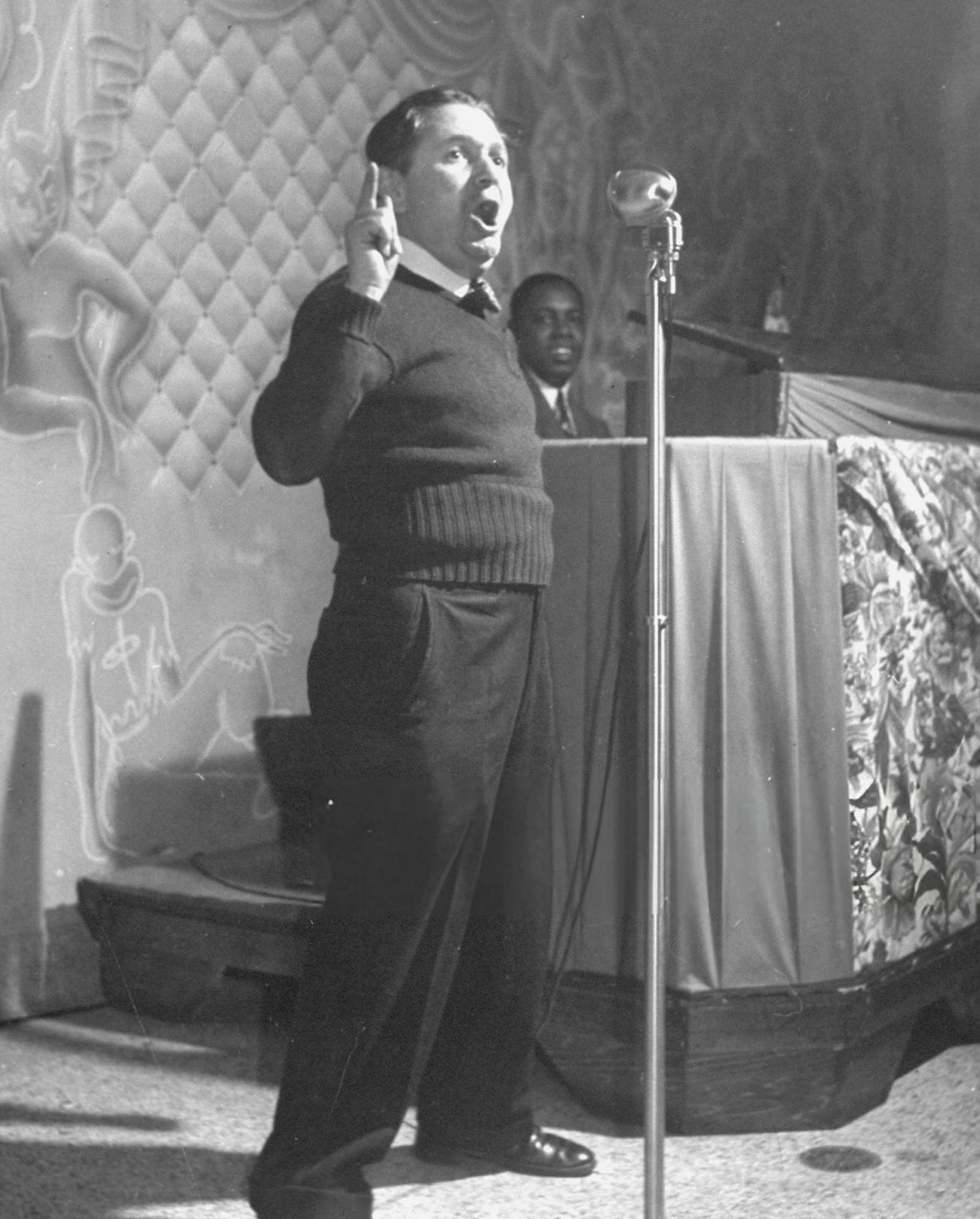
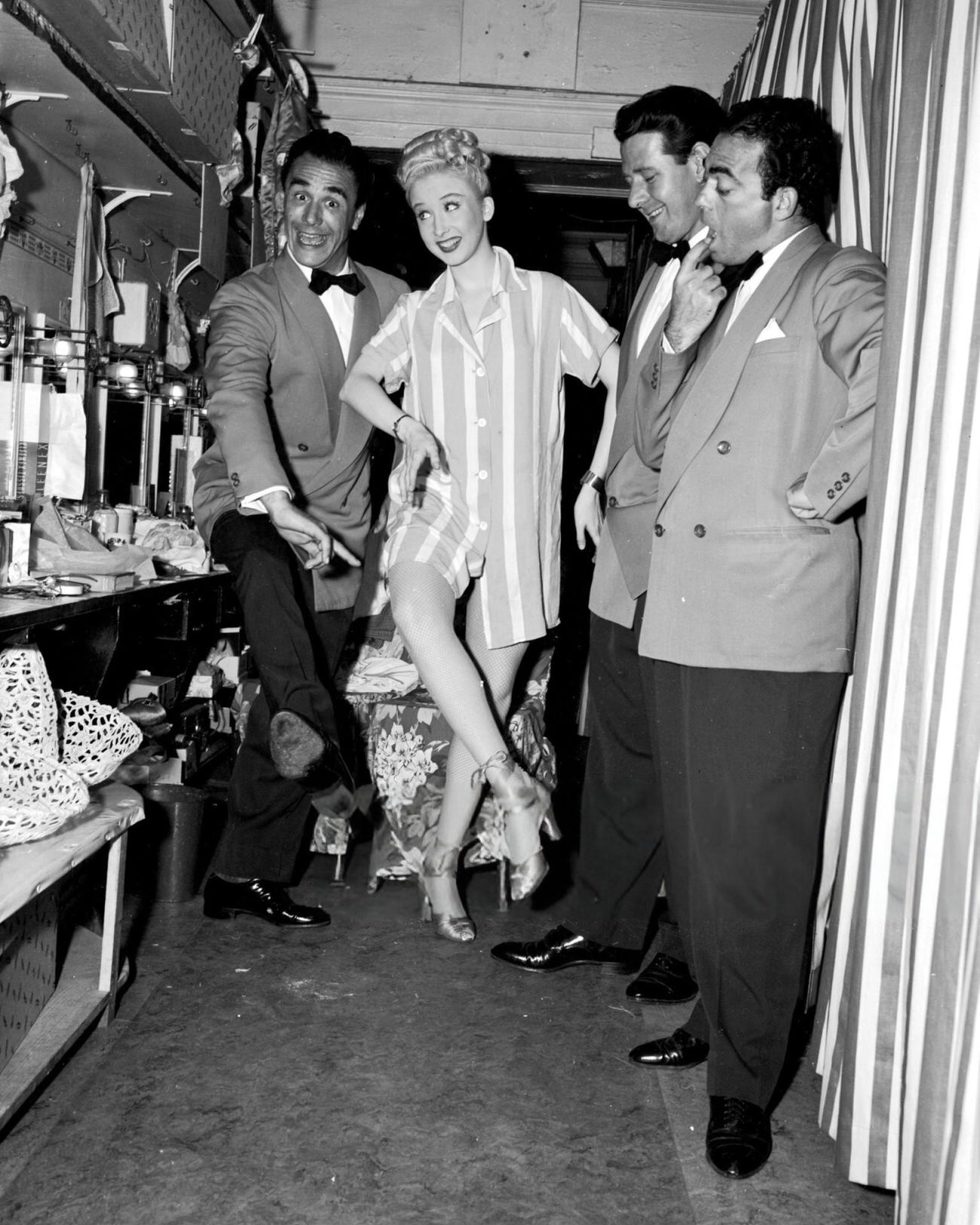
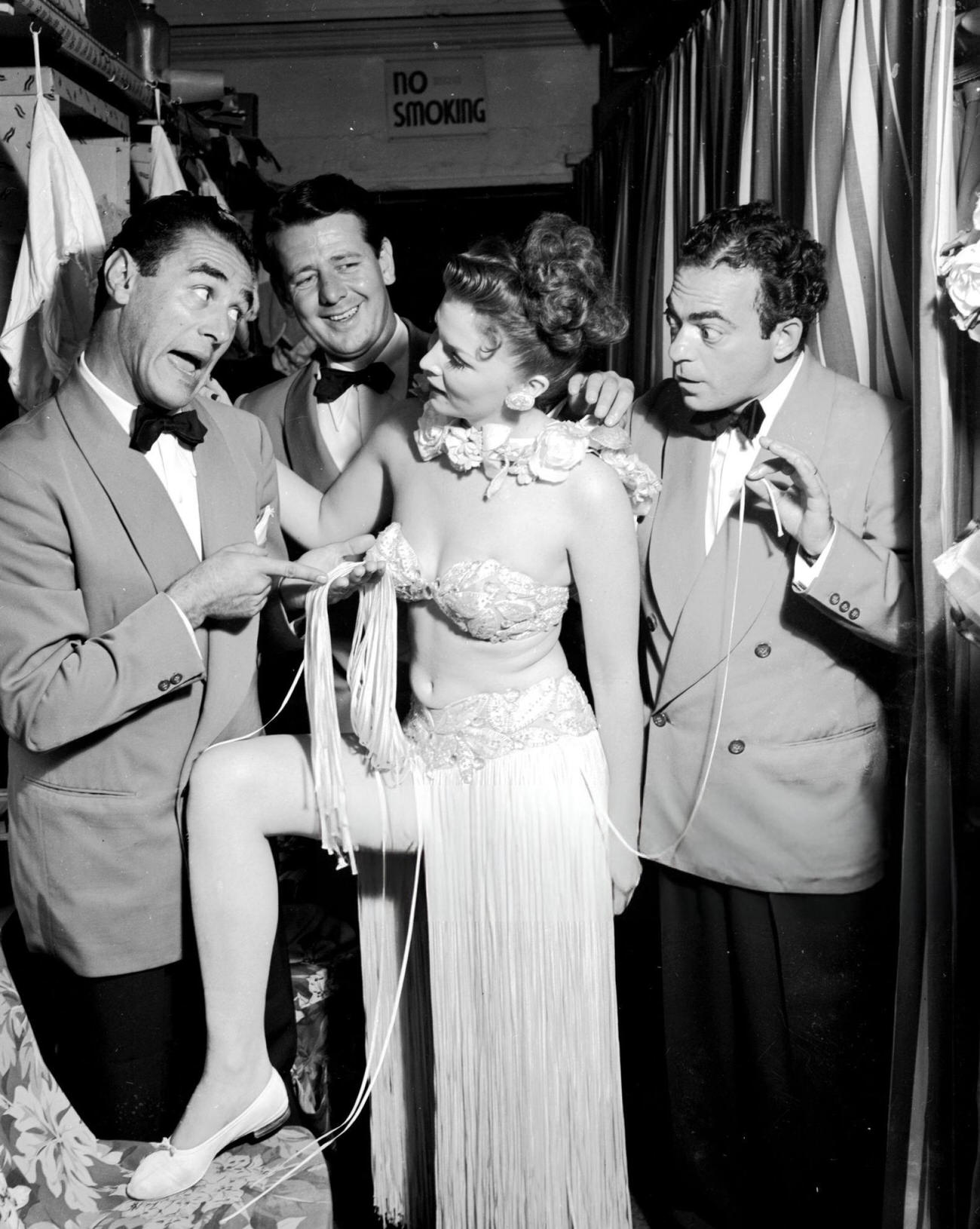
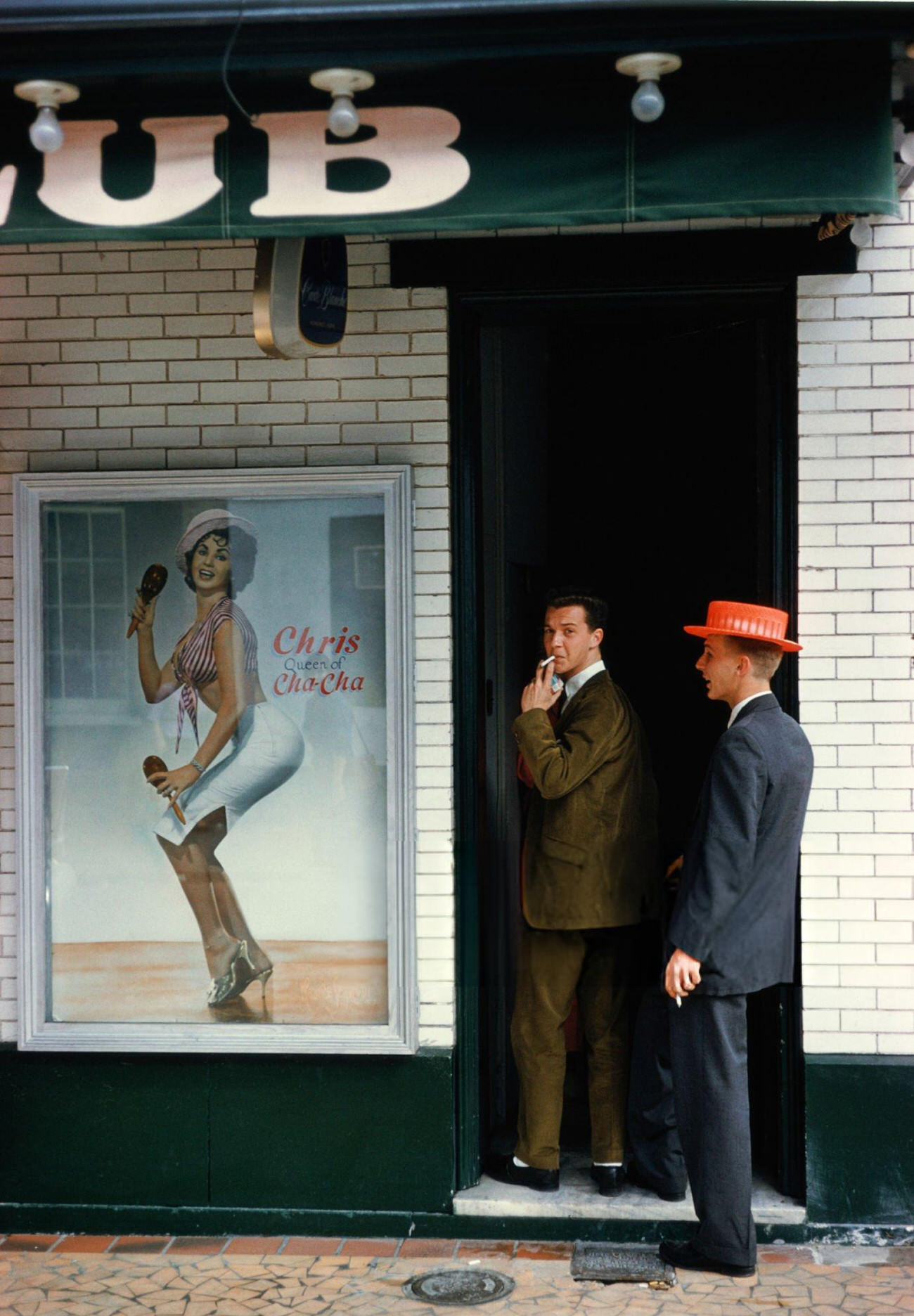
The 1940s also saw Mardi Gras extend beyond the streets. Lounges and clubs hosted live music acts throughout the season. Singers performed for packed rooms, and masquerade events in venues like the Latin Quarter drew their own crowds of costumed guests. Entertainers prepared elaborate looks and stage personas just for the occasion.
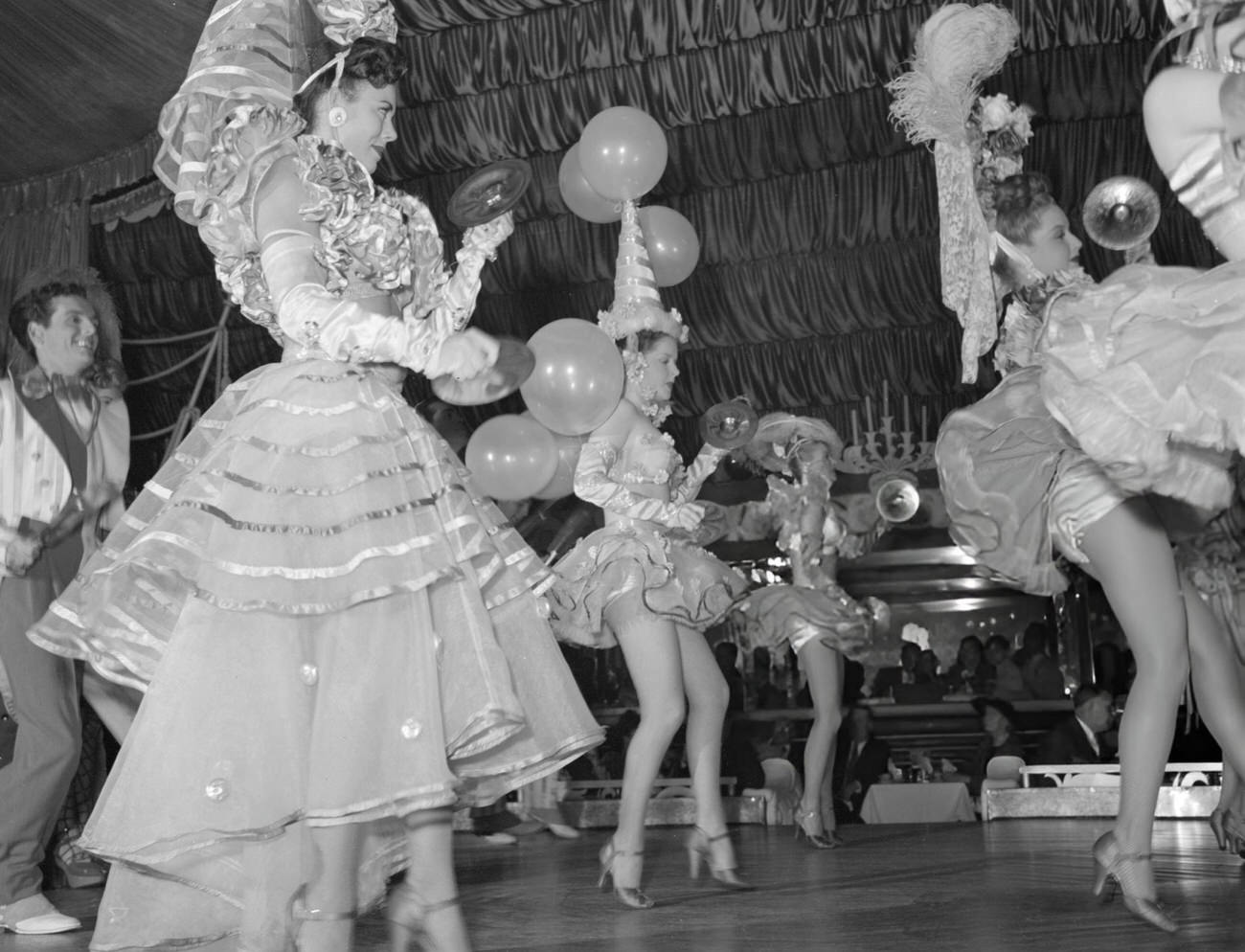
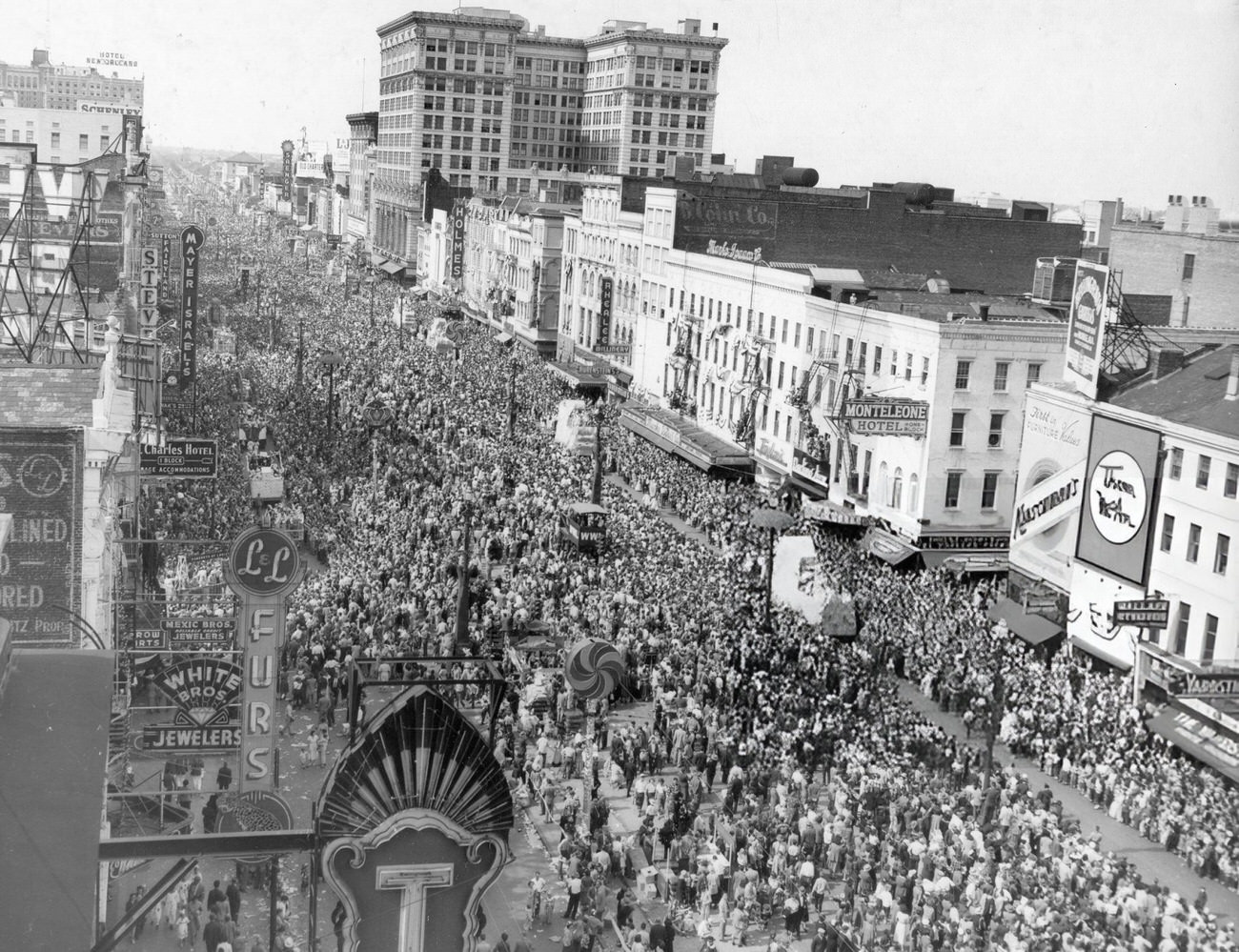
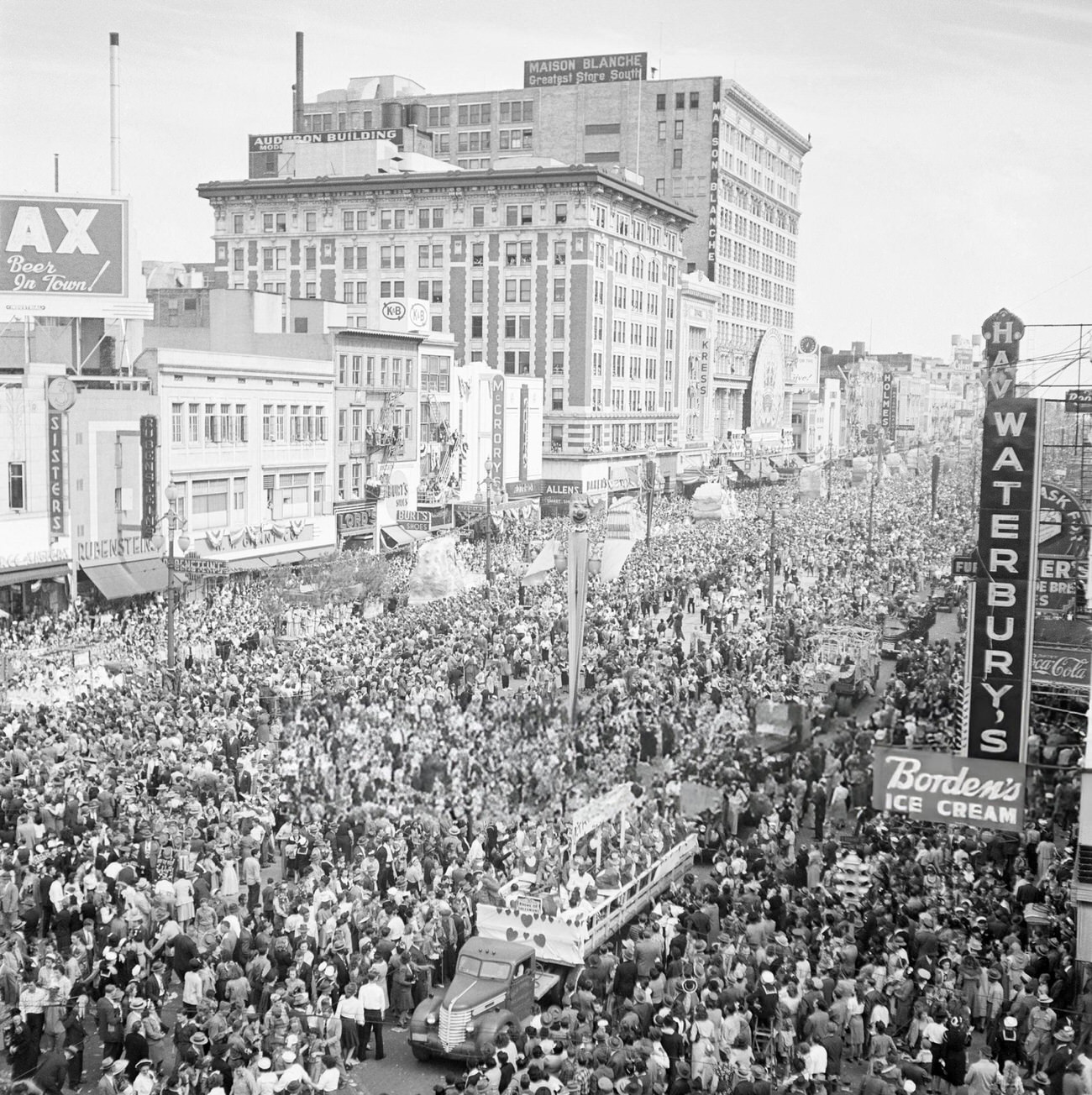
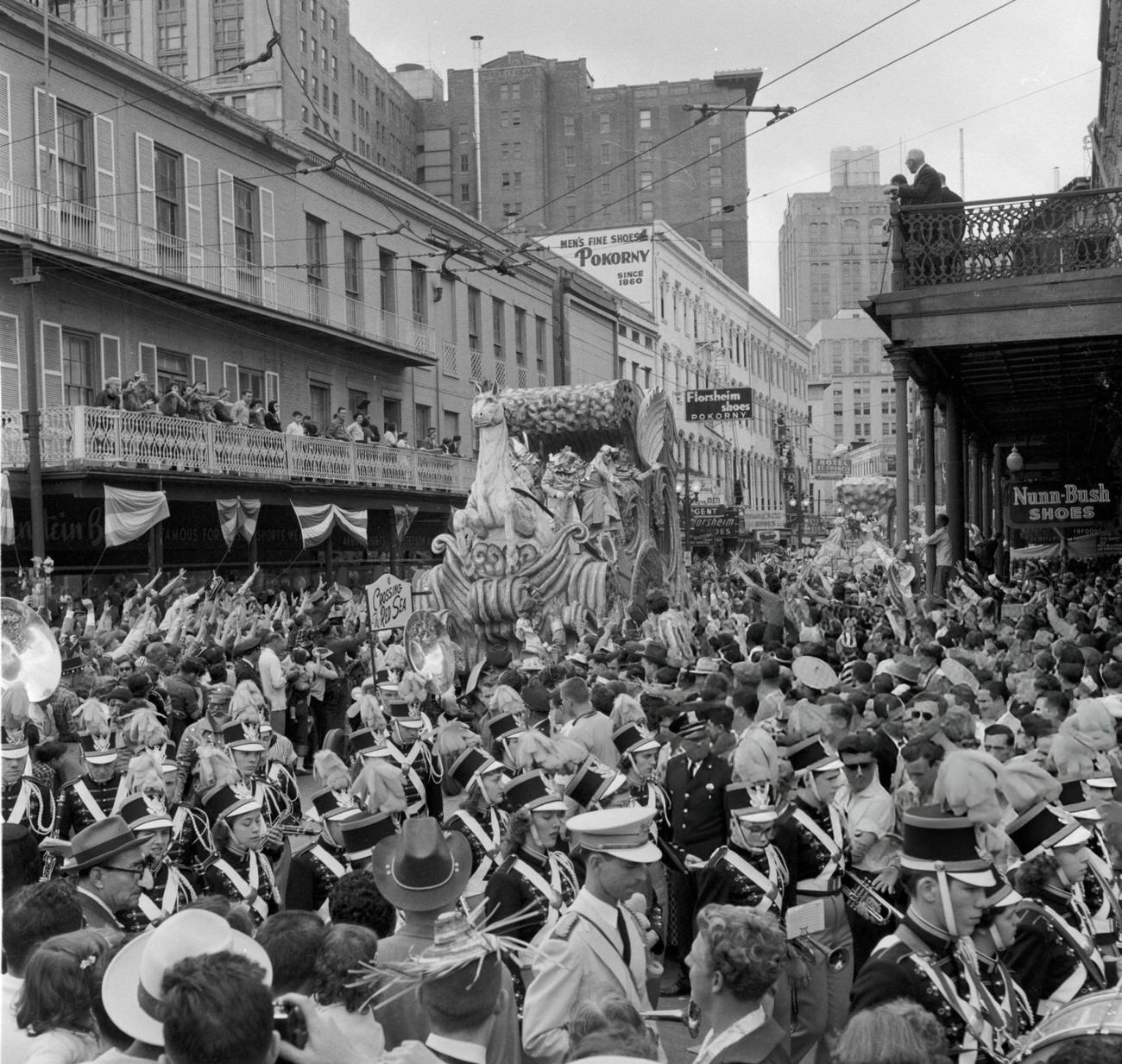
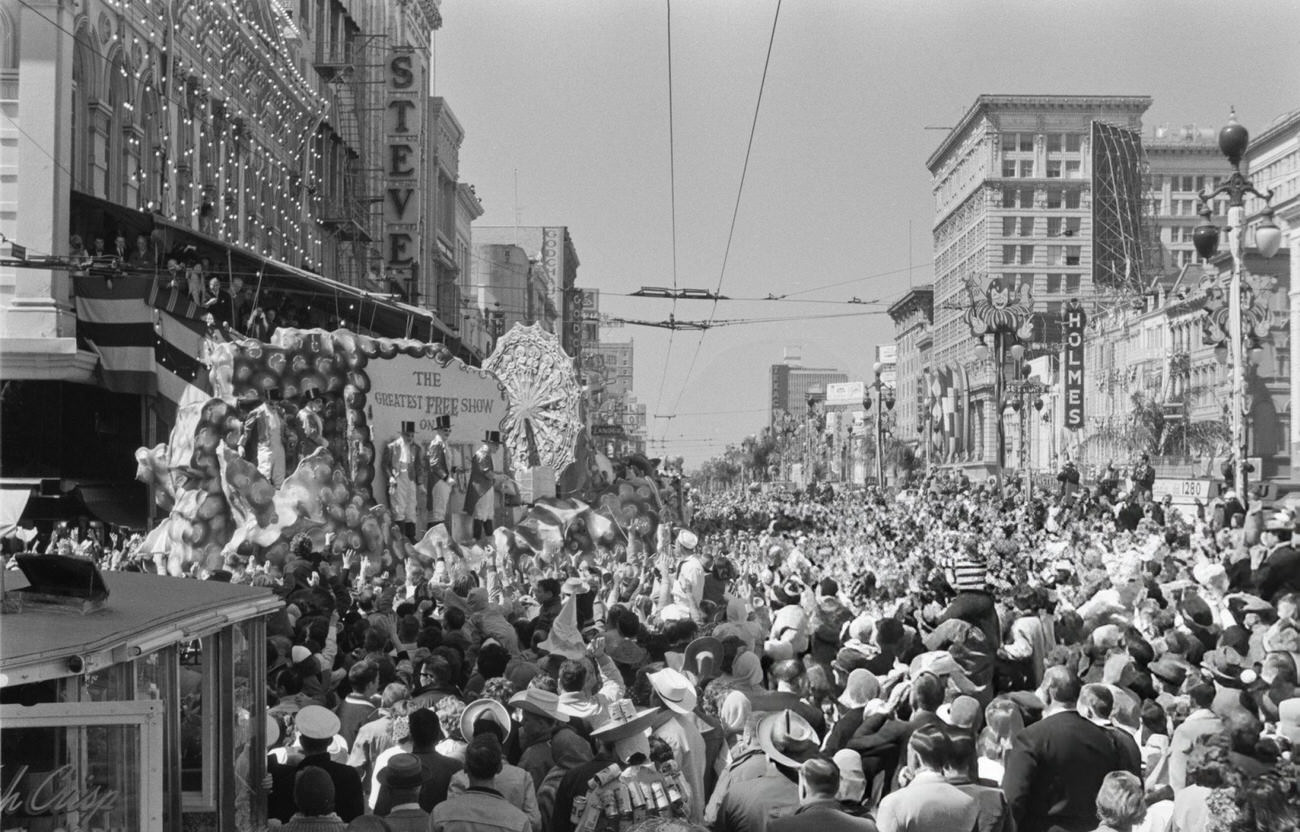
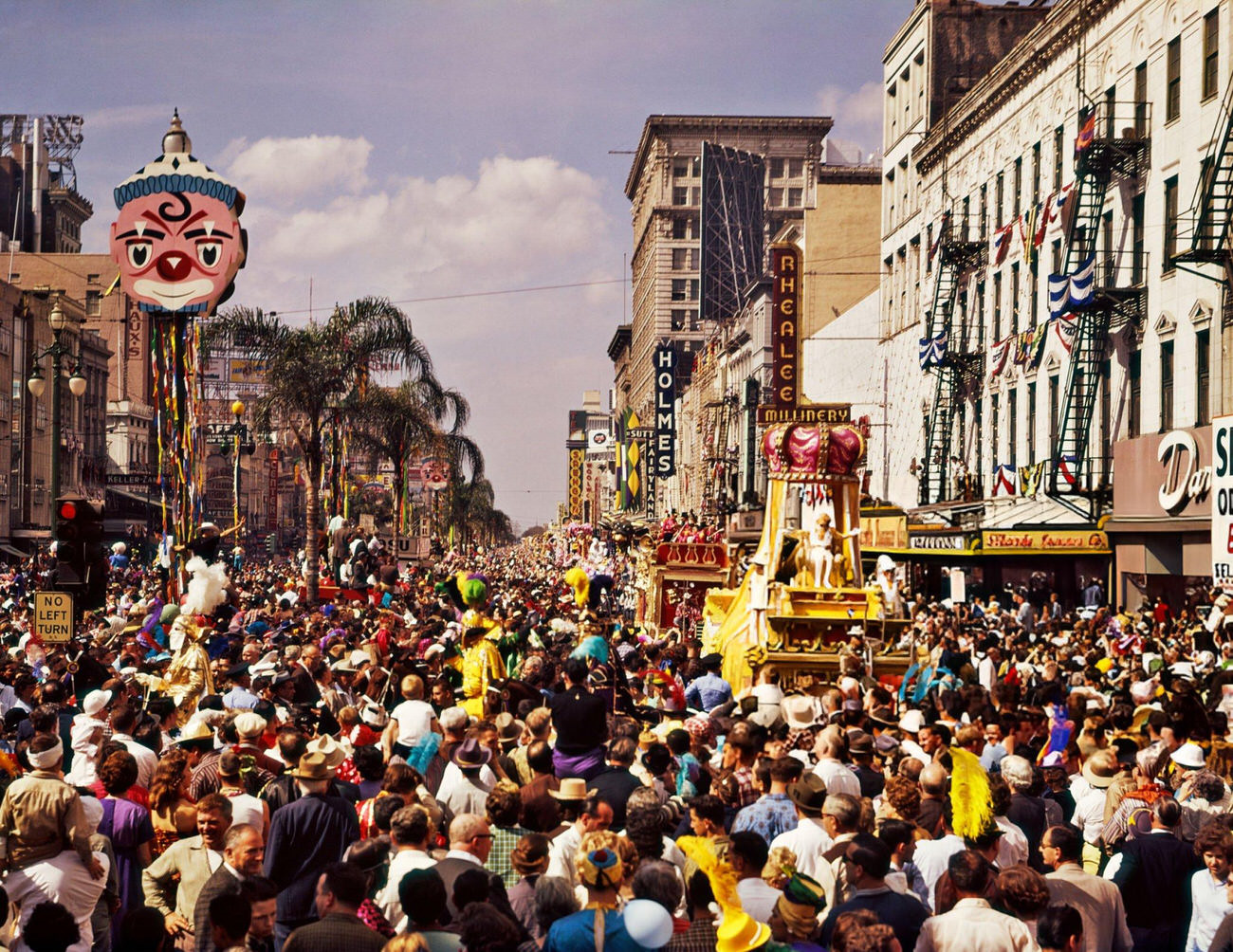
The 1950s marked a period of rapid growth for Mardi Gras. New krewes formed and brought fresh themes to the parade routes. Canal Street became the main artery for the celebrations, packed with spectators for the full length of the processions. Television began broadcasting the festivities to national audiences, making Mardi Gras a household name far beyond Louisiana.
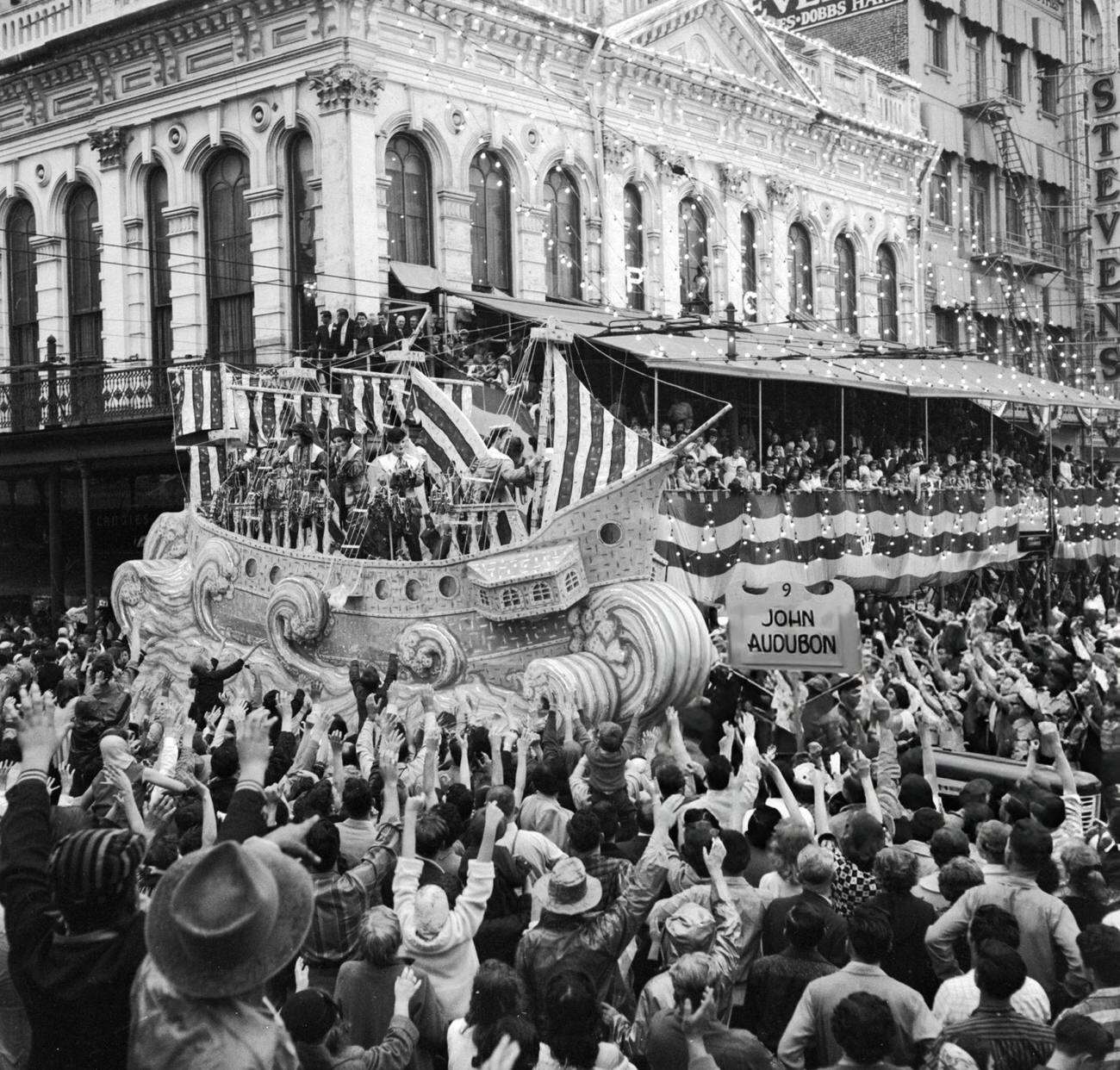
Float themes in the 1950s ranged widely. One float depicted the signs of the zodiac, another illustrated the biblical story of Moses parting the Red Sea, and a third honored the naturalist John James Audubon. Builders spent weeks in warehouses finishing each piece, with individual craftsmen putting detailed work into every surface before the floats were rolled out for the public.
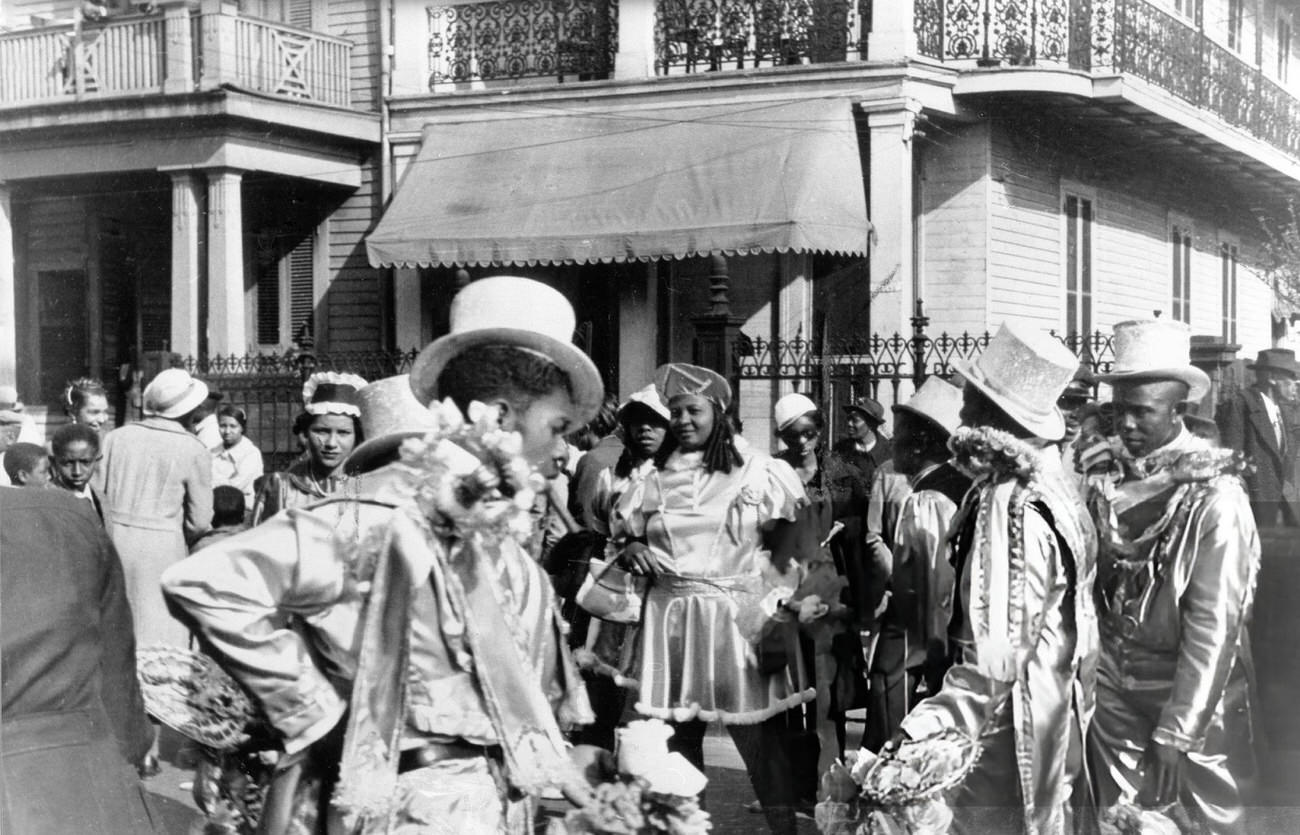
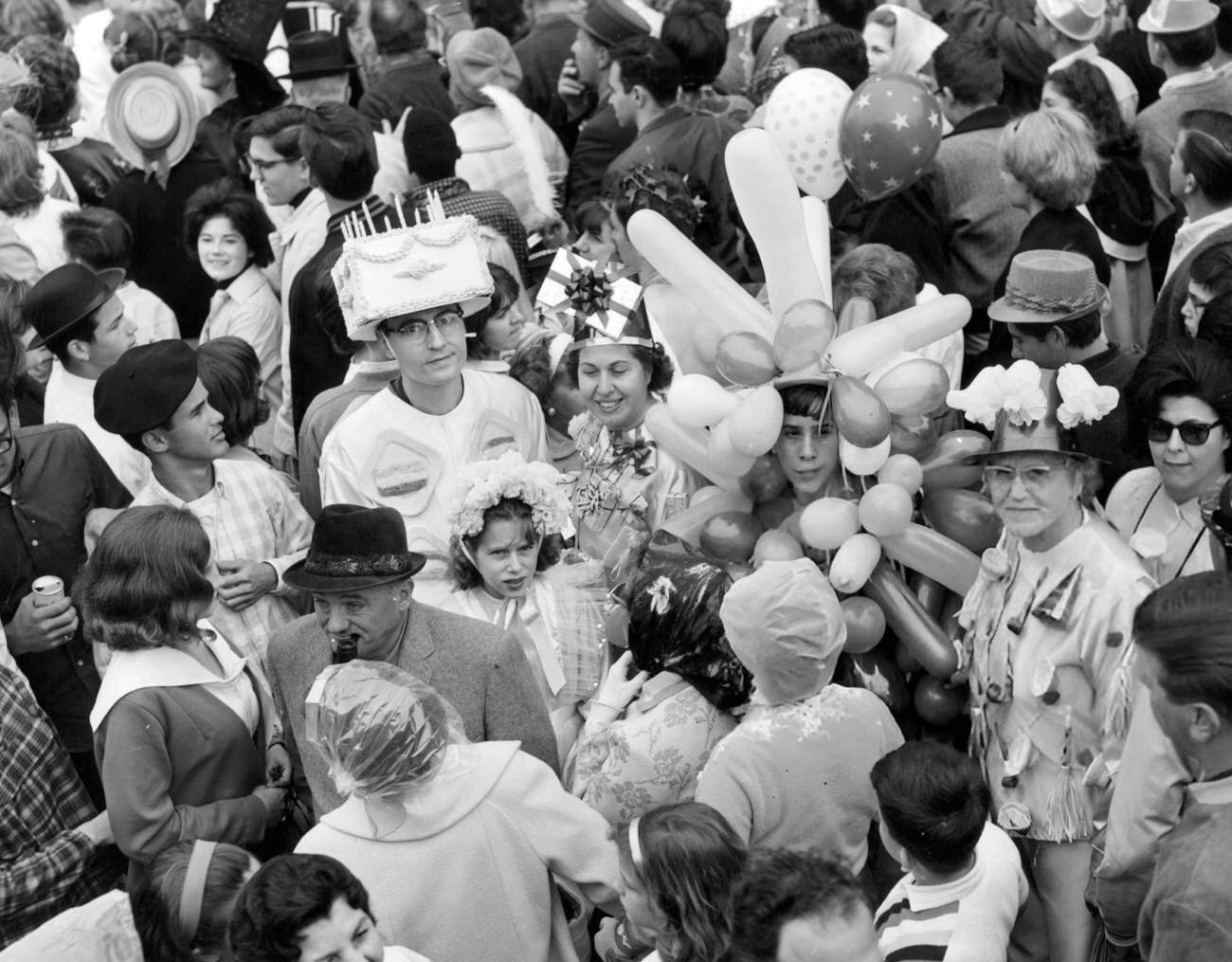
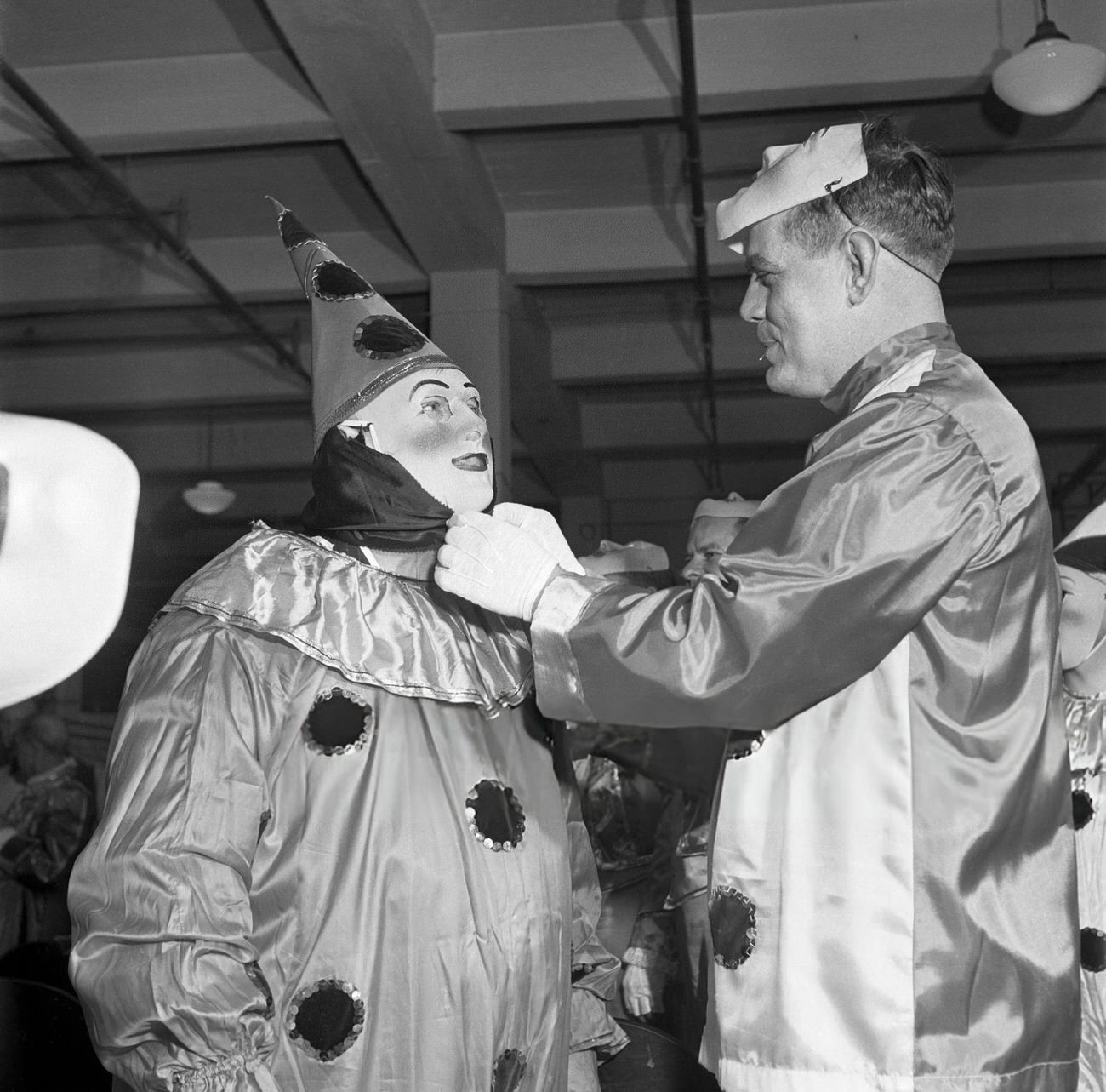
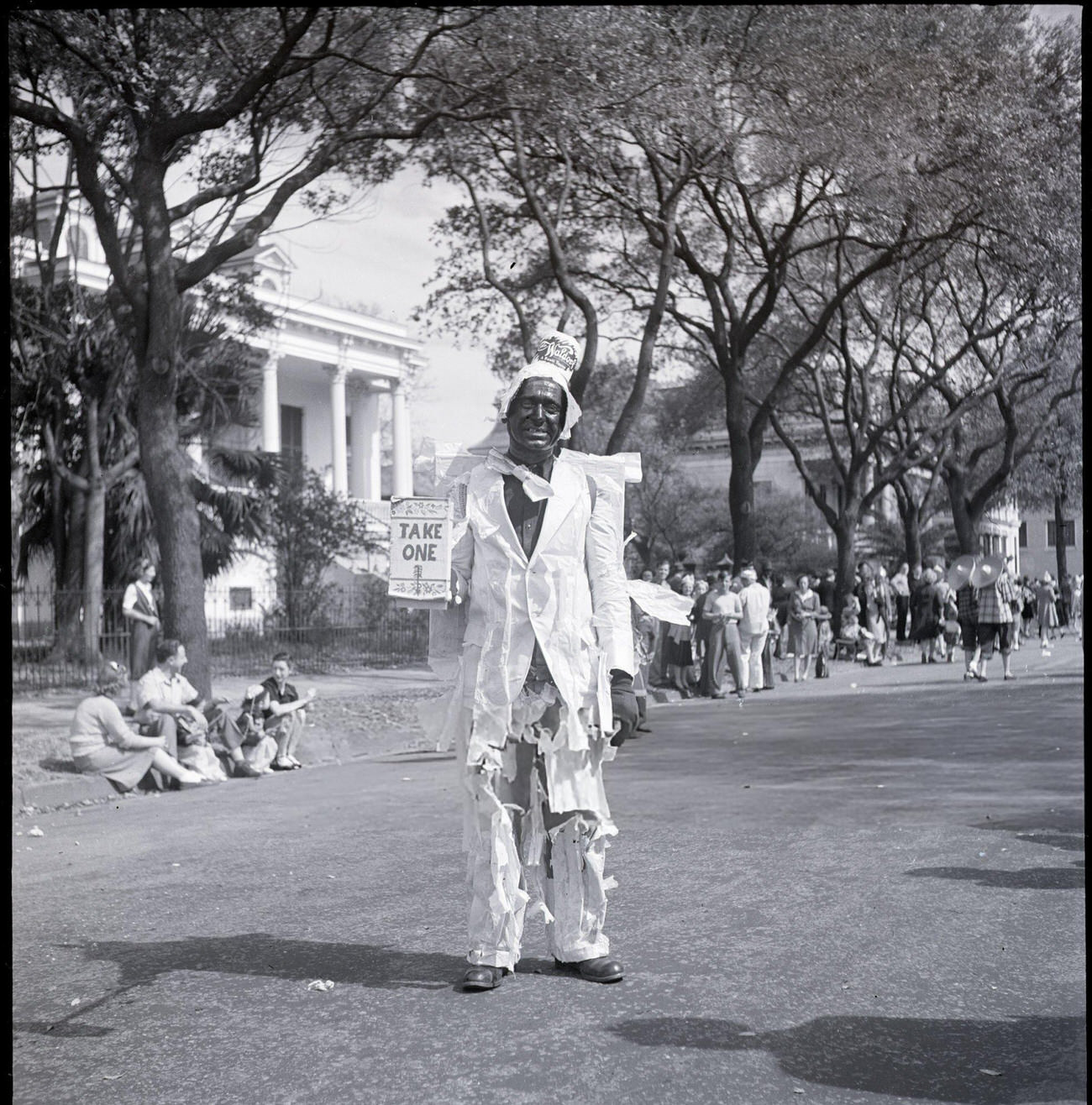
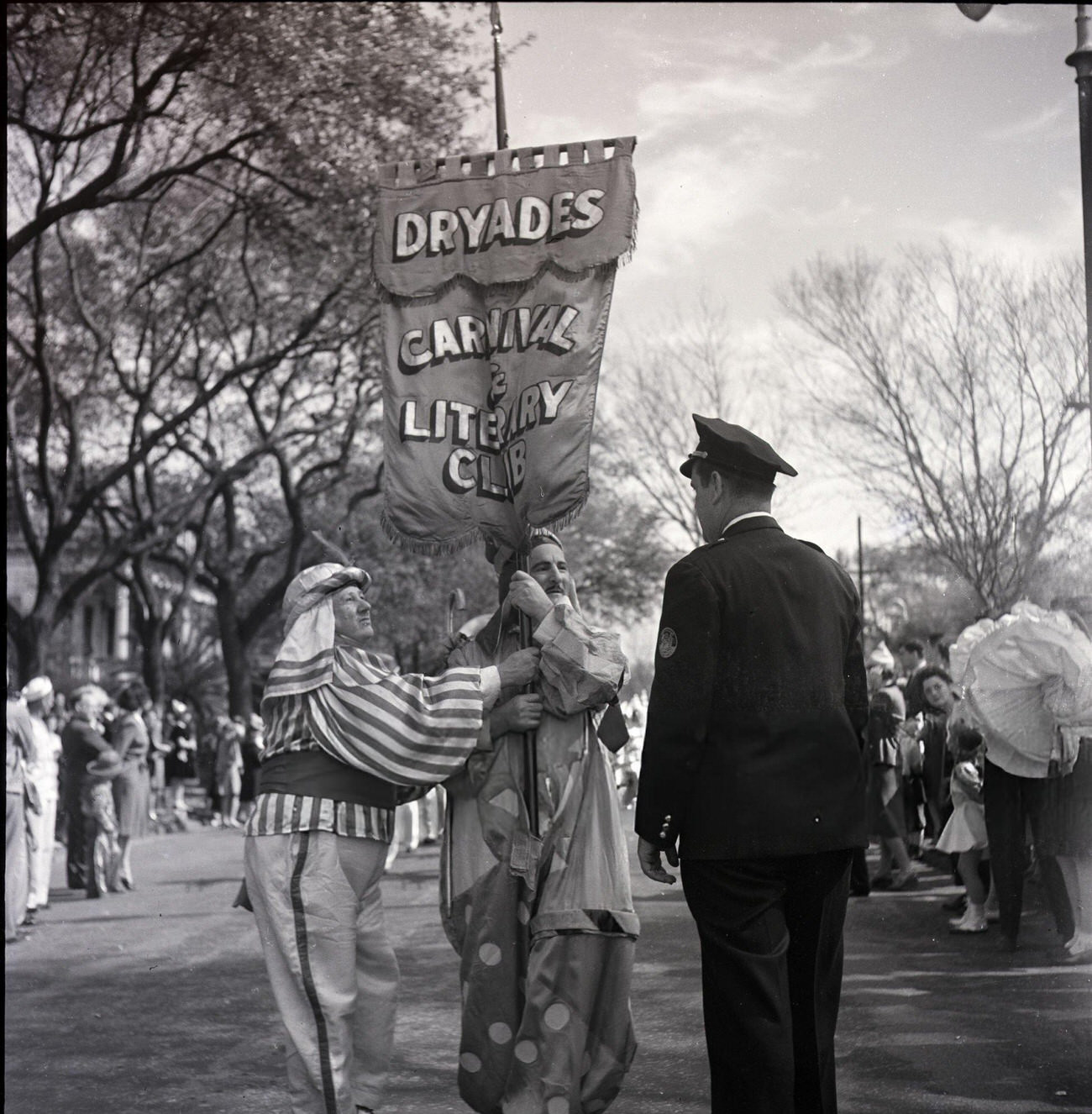
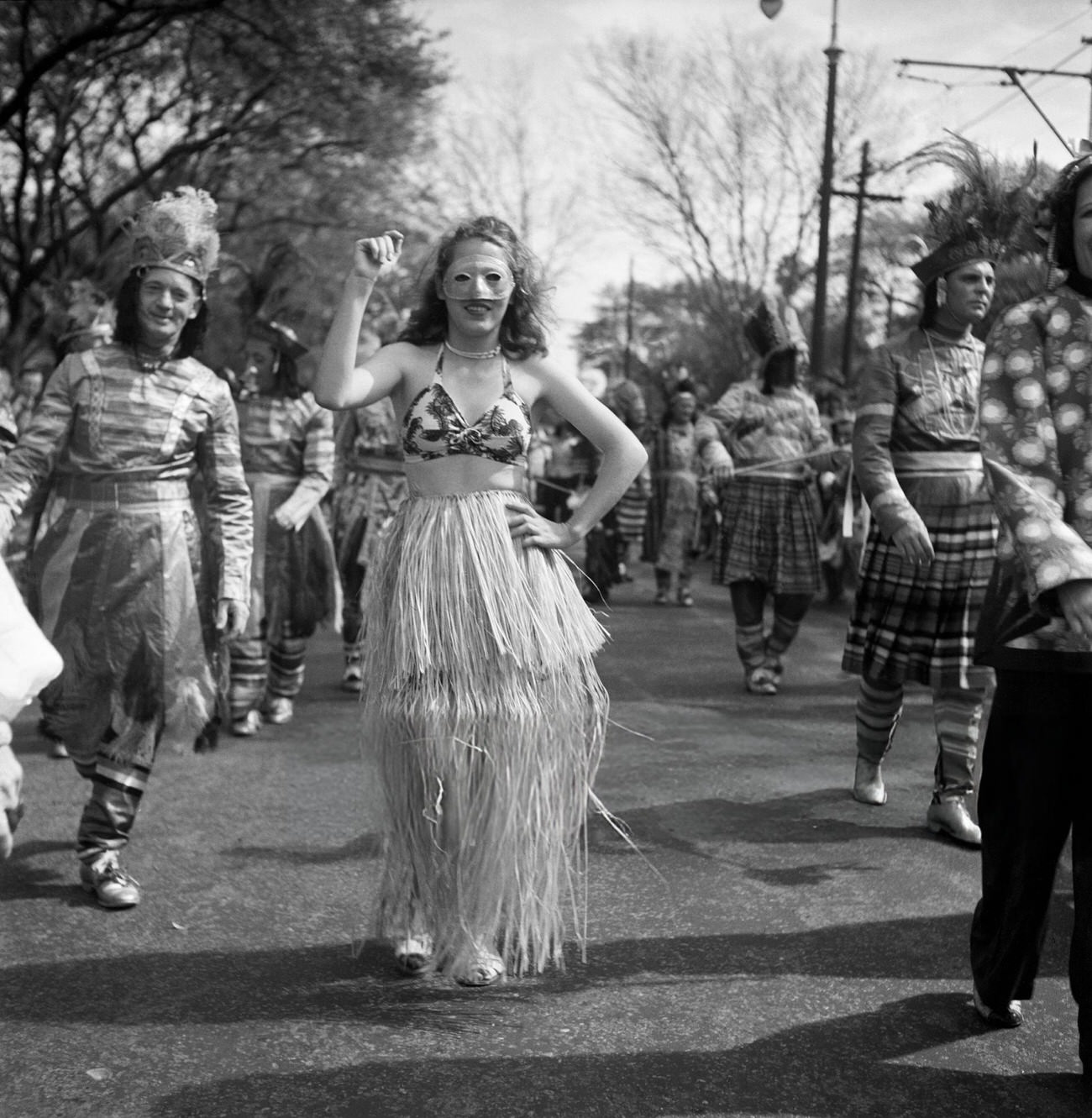
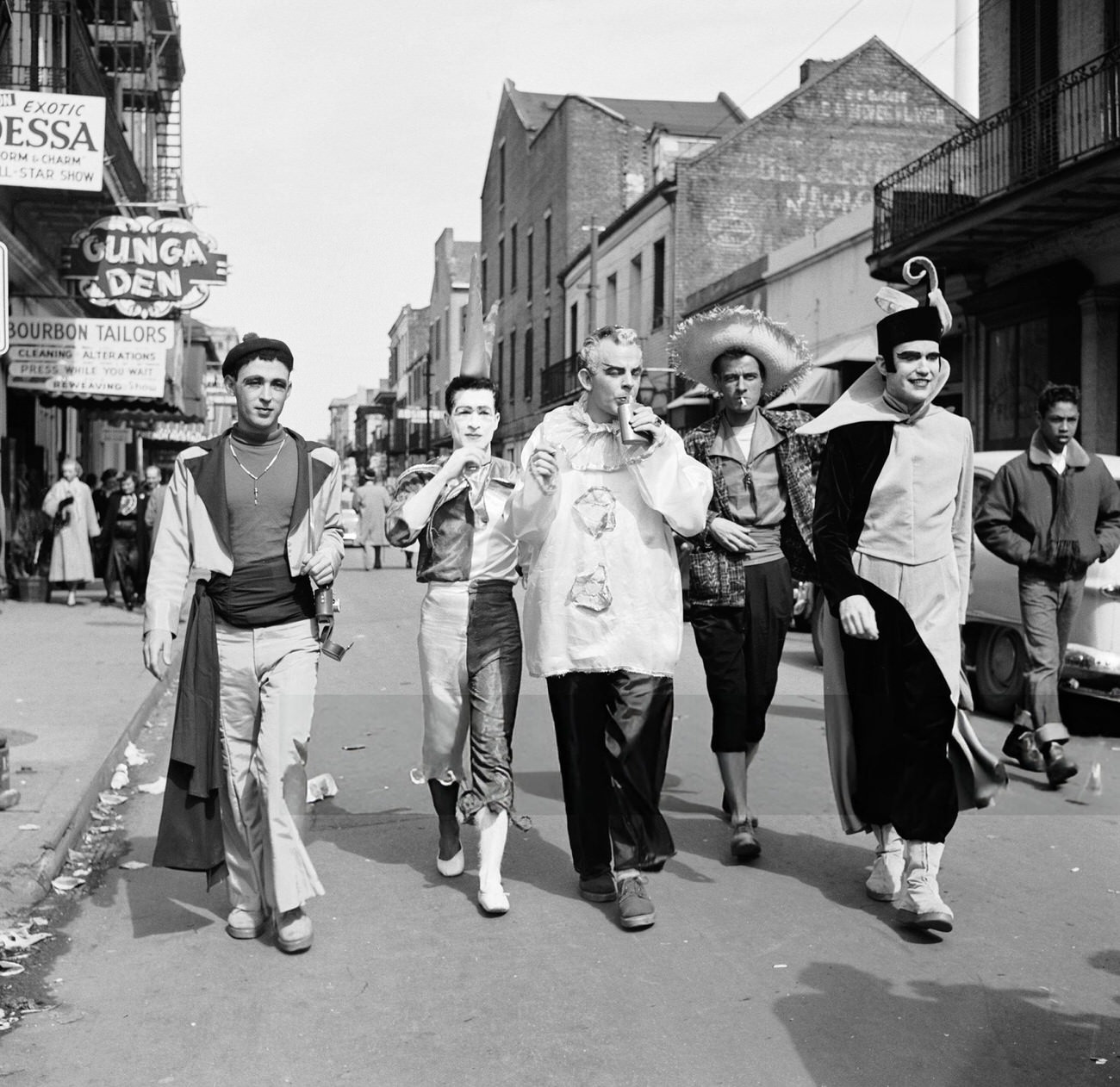
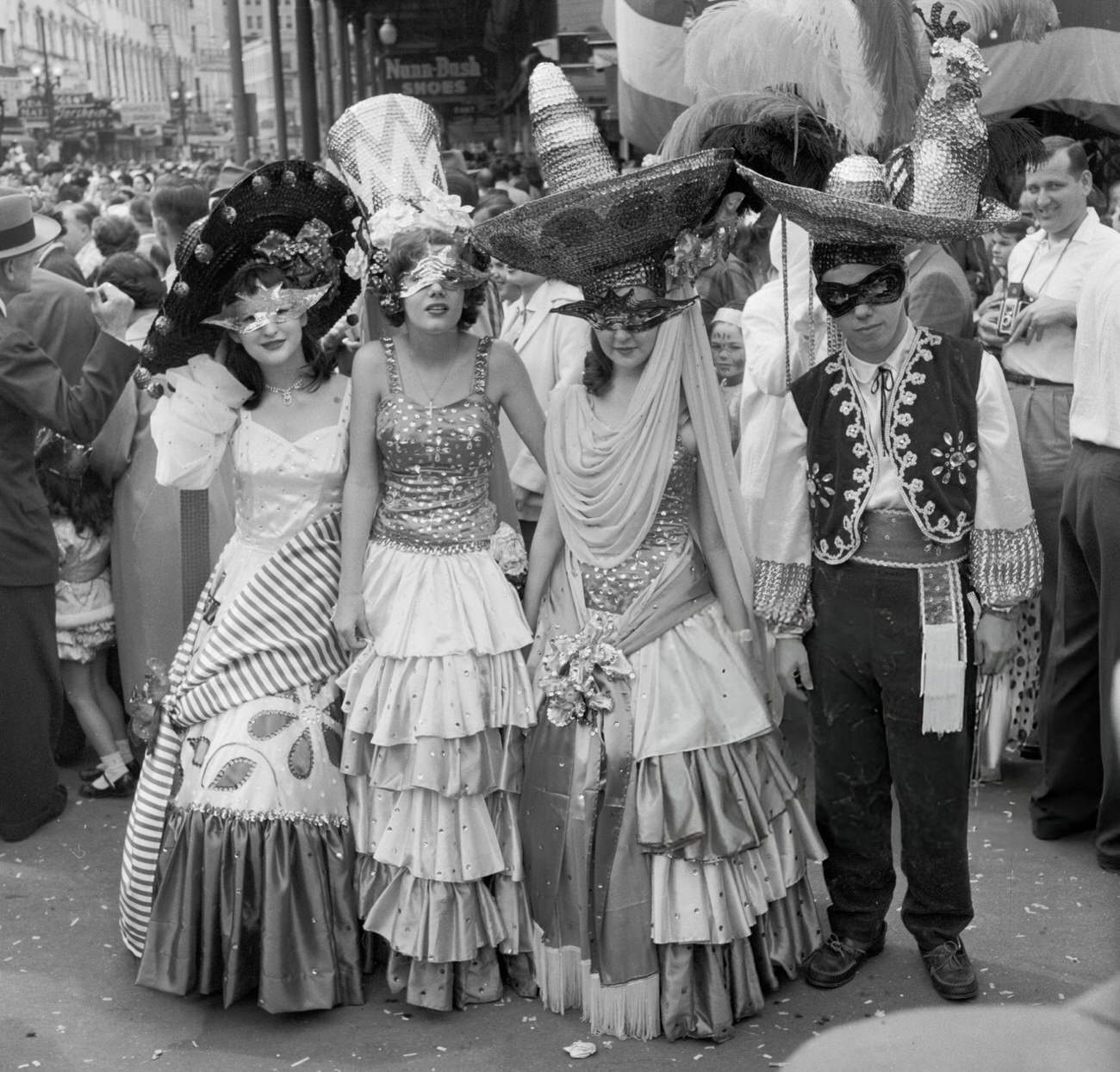
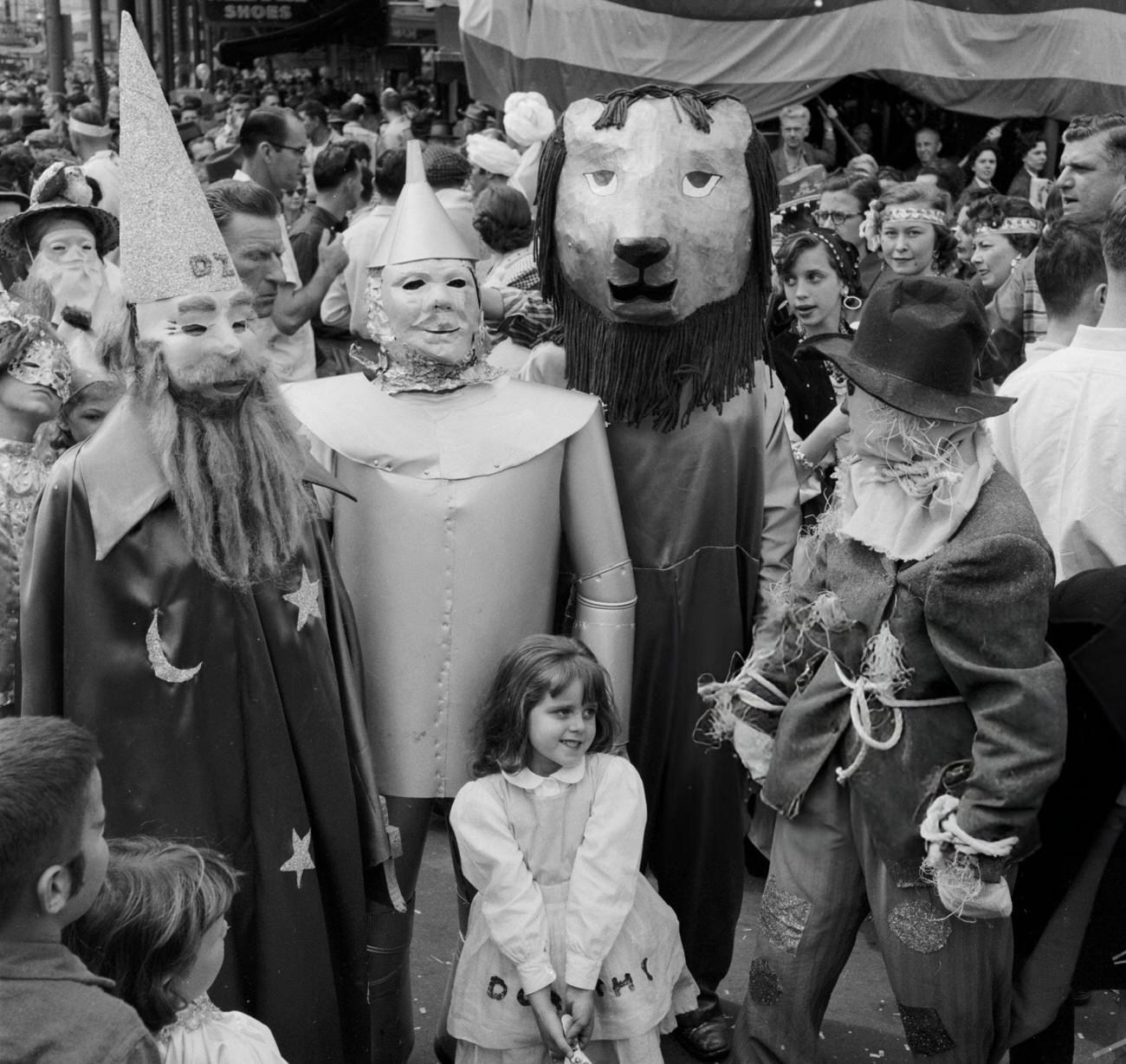
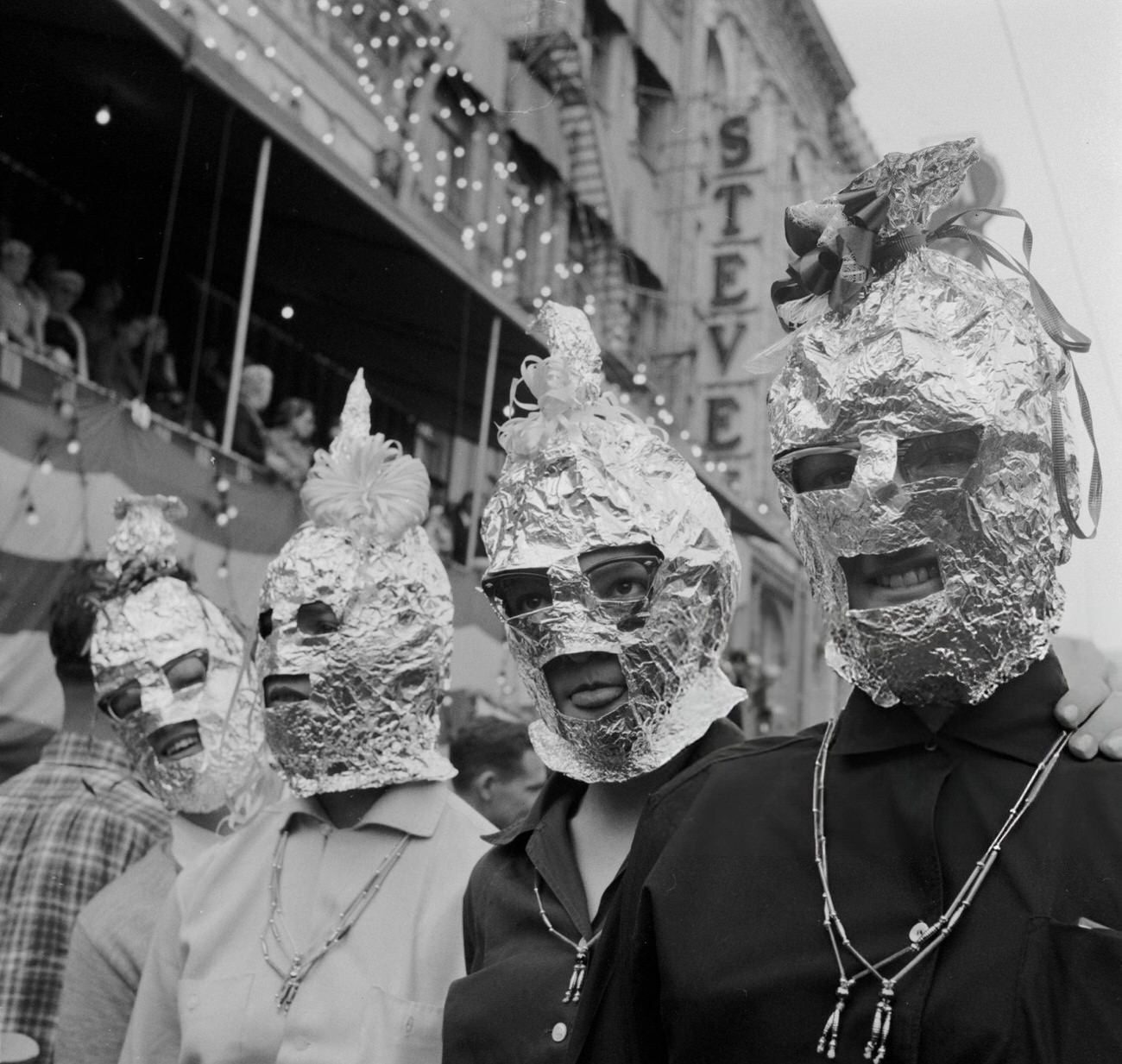
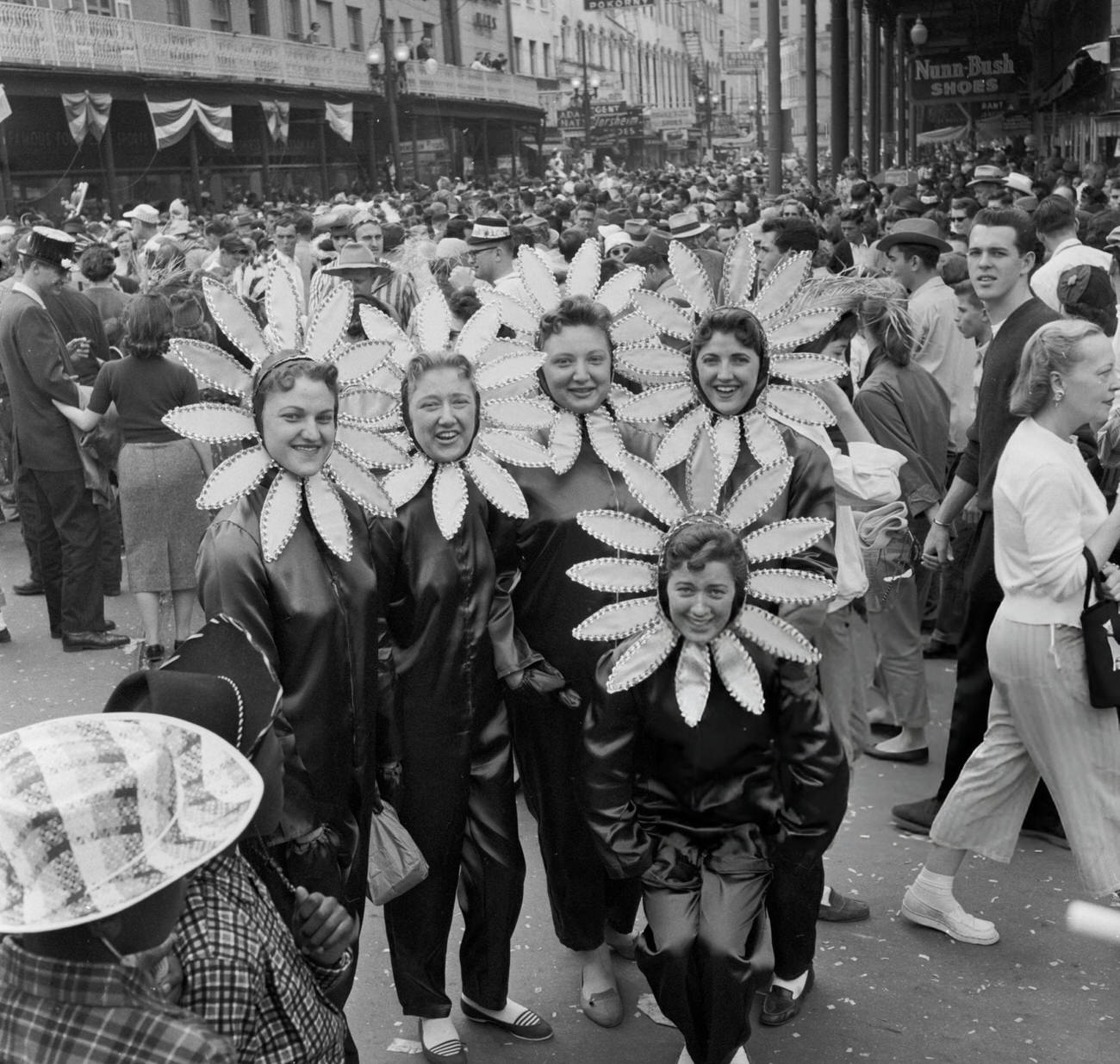
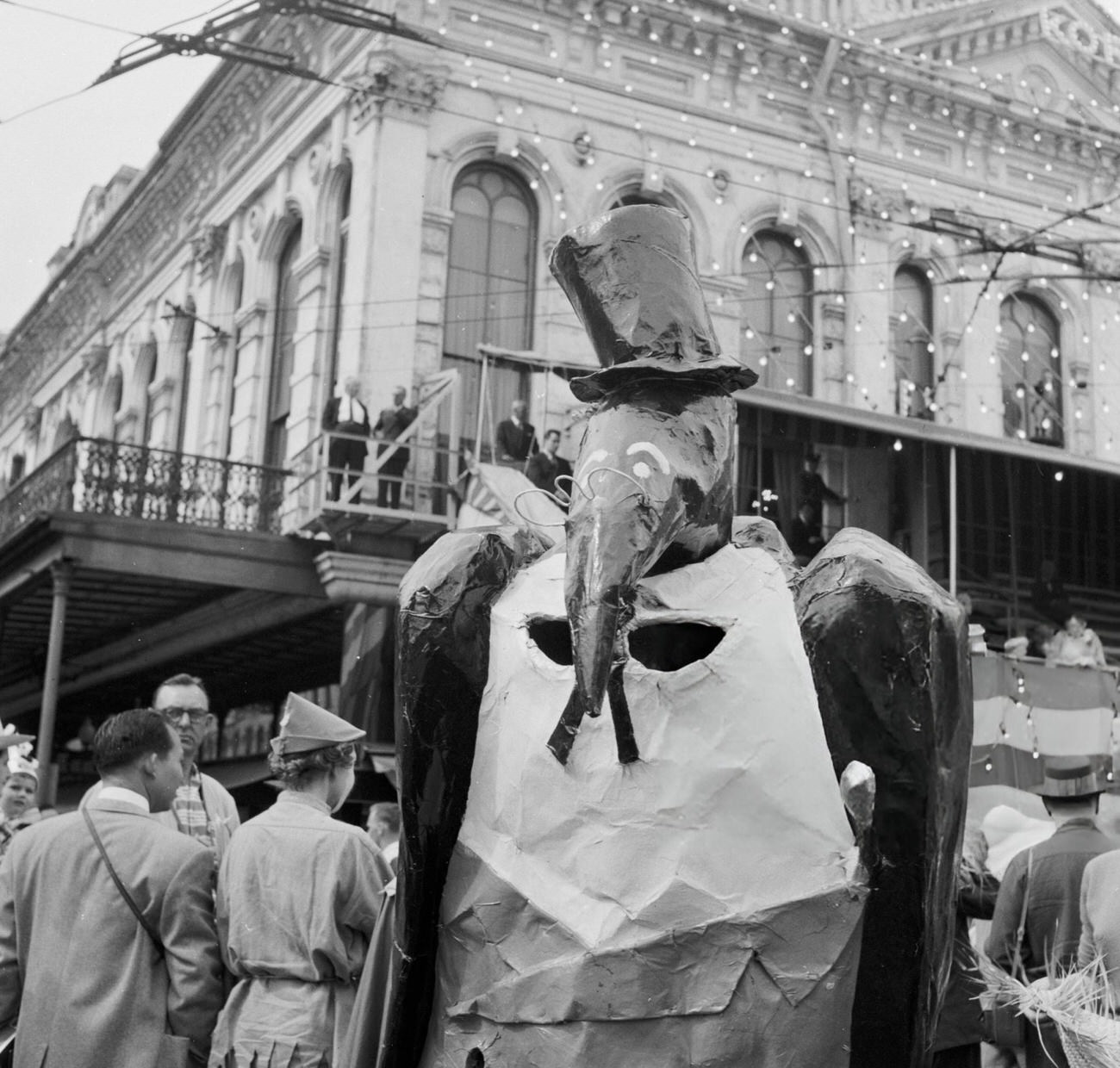
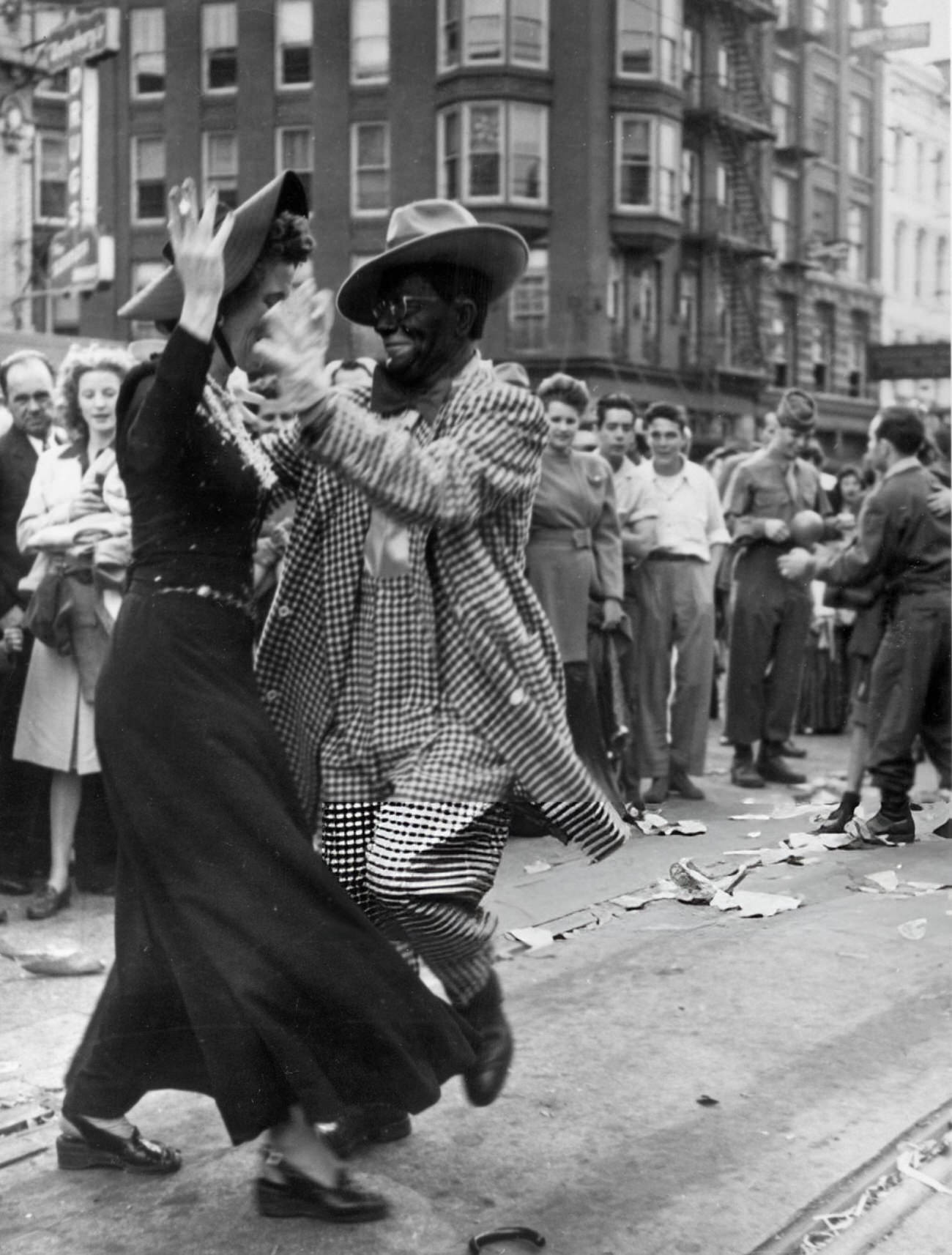
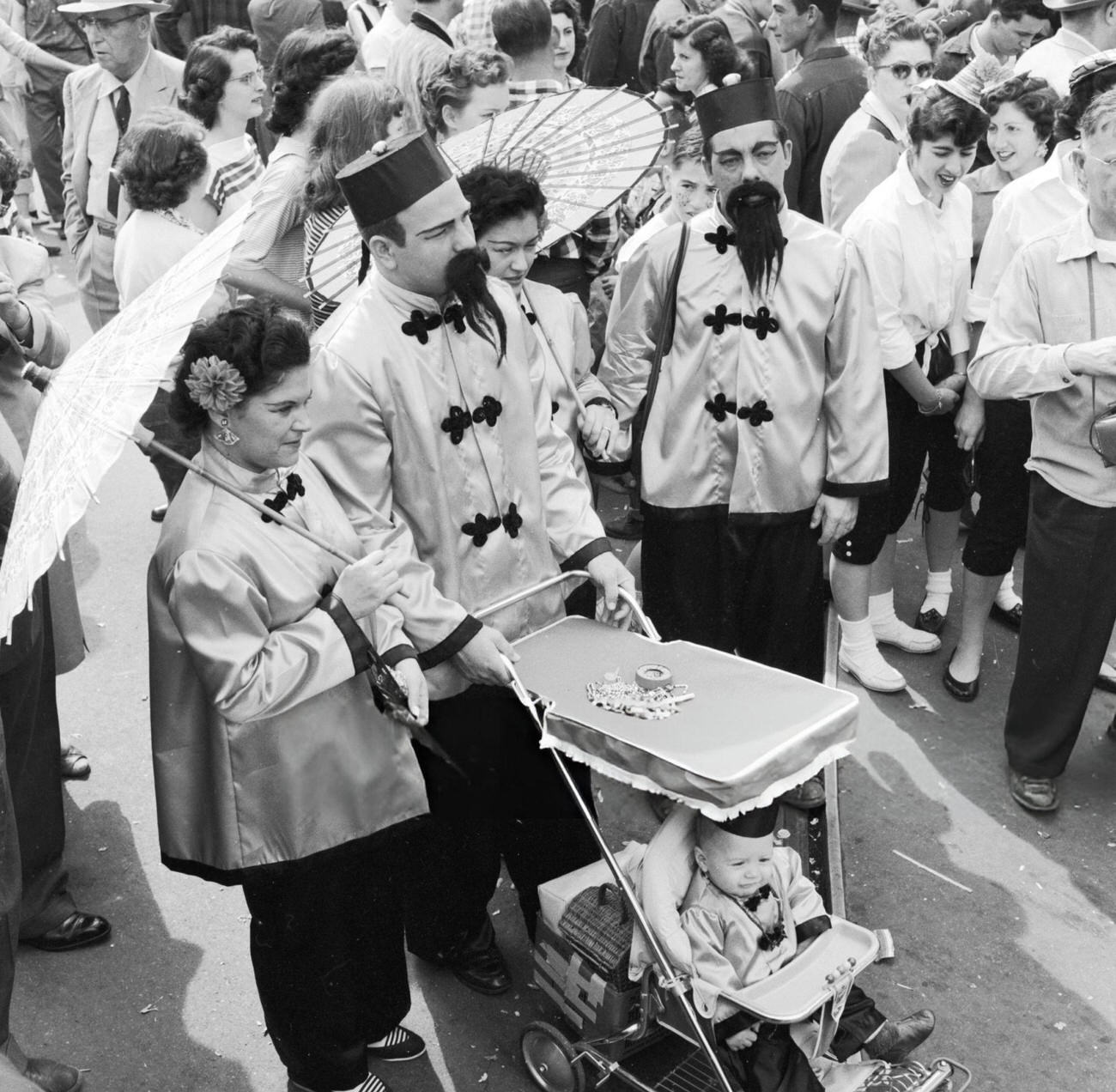
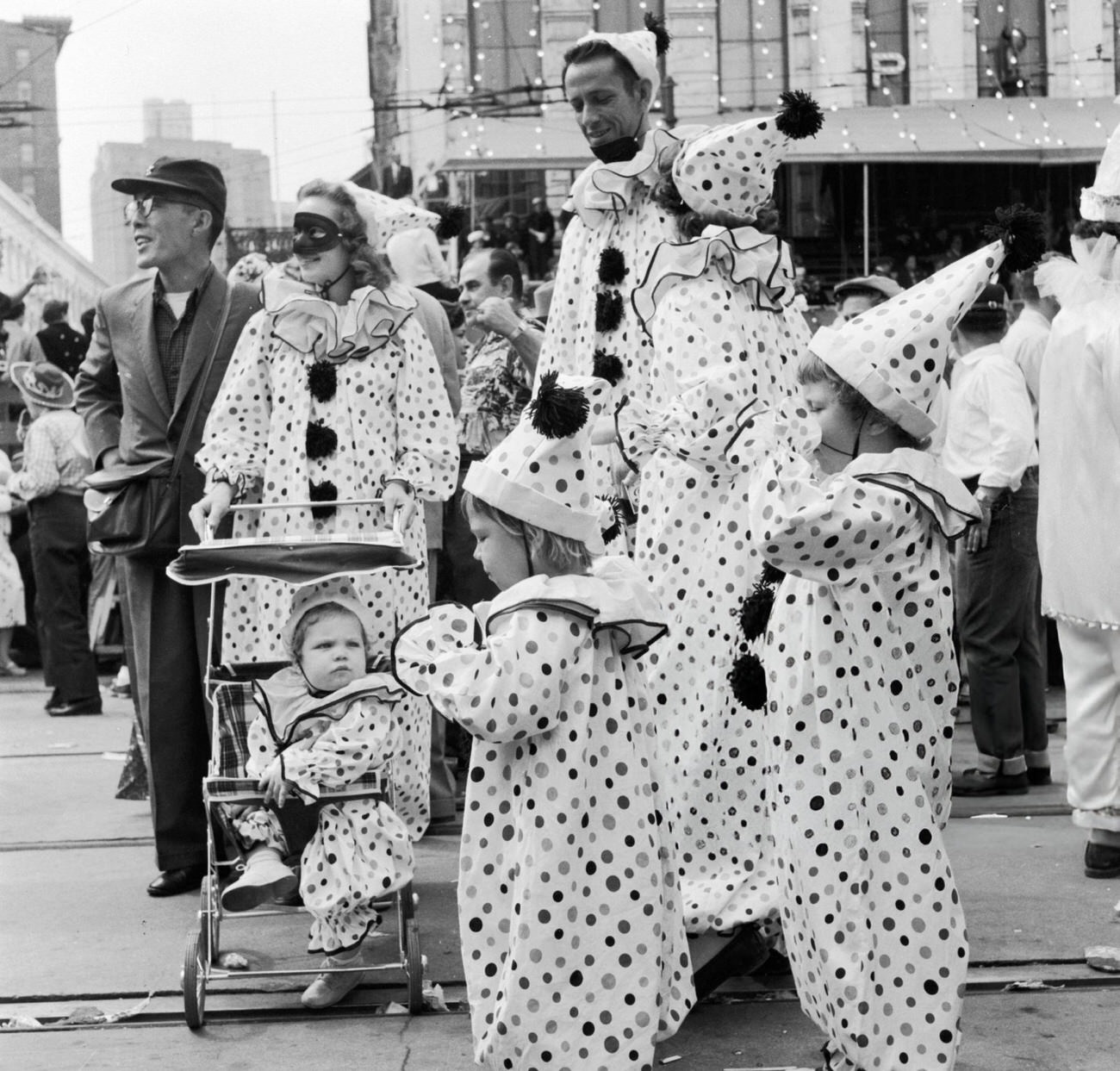
Costuming in the 1950s reflected the full range of New Orleans imagination. Groups arrived dressed as pirates, cowboys, princesses, Wizard of Oz characters, sunflowers, clowns, Chinese mandarins, and 18th-century nobility. Some people wore elaborate handmade outfits while others improvised with tin foil balaclavas. A man dressed as a pelican in a top hat drew as much attention as anyone in silk and sequins.
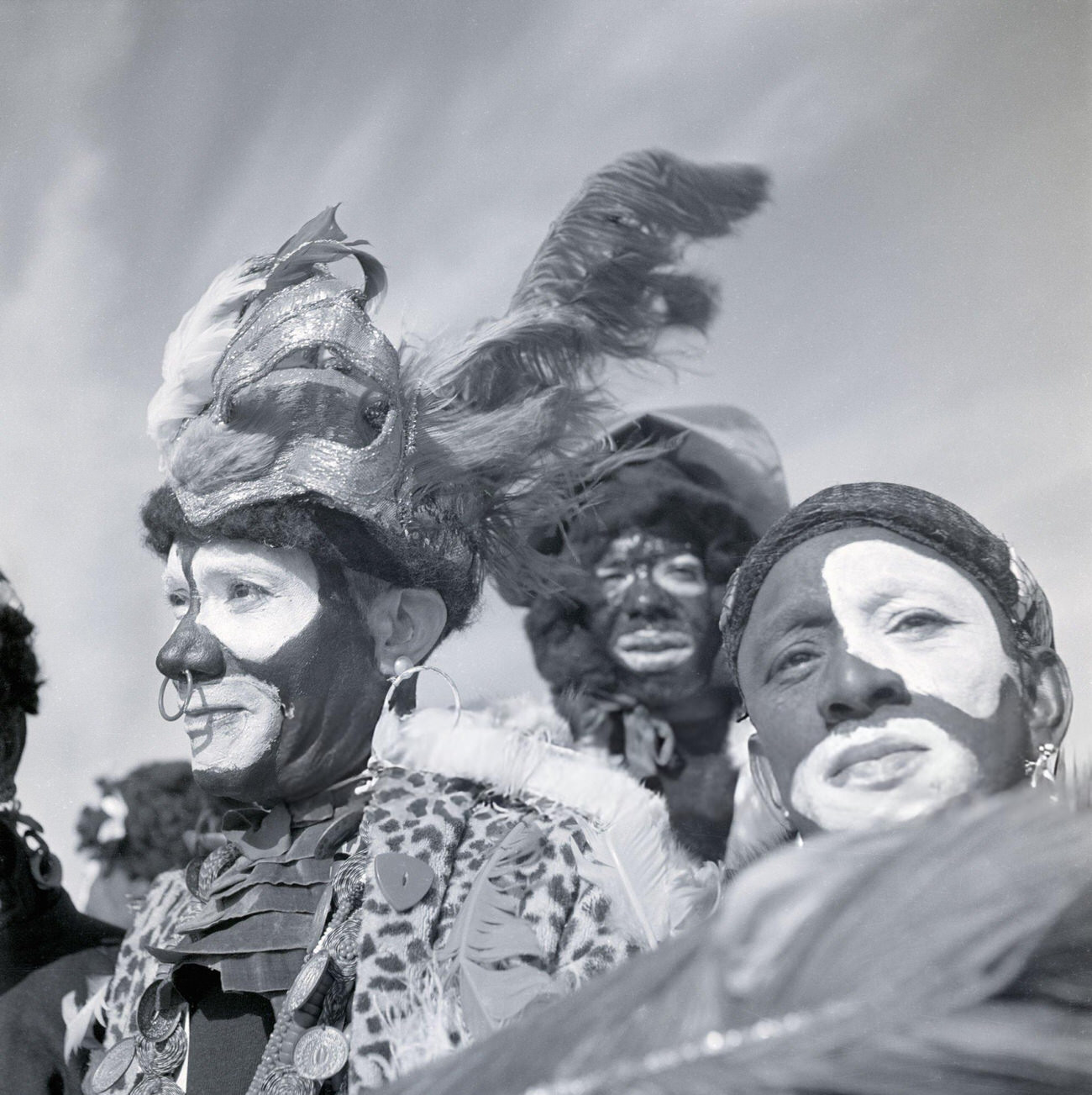
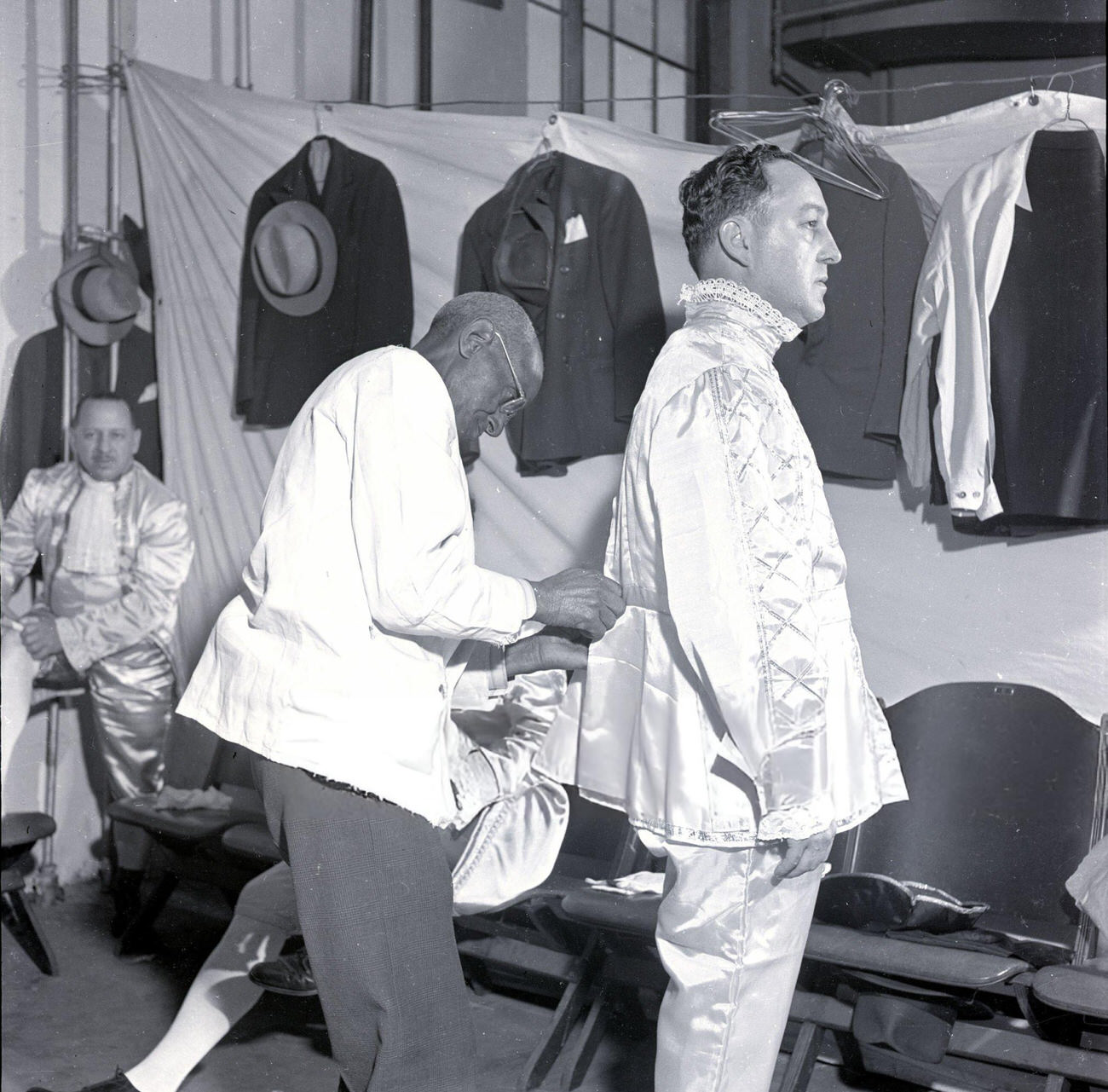
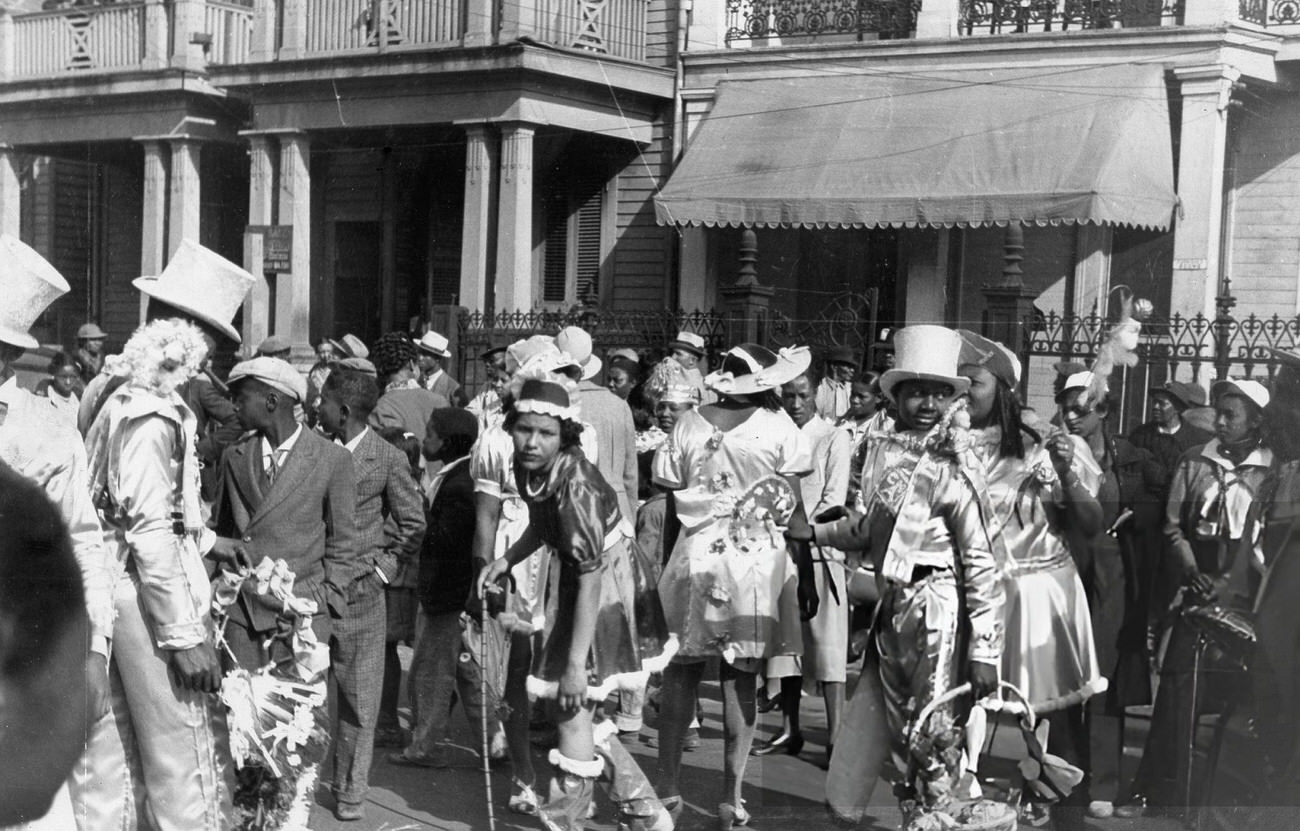
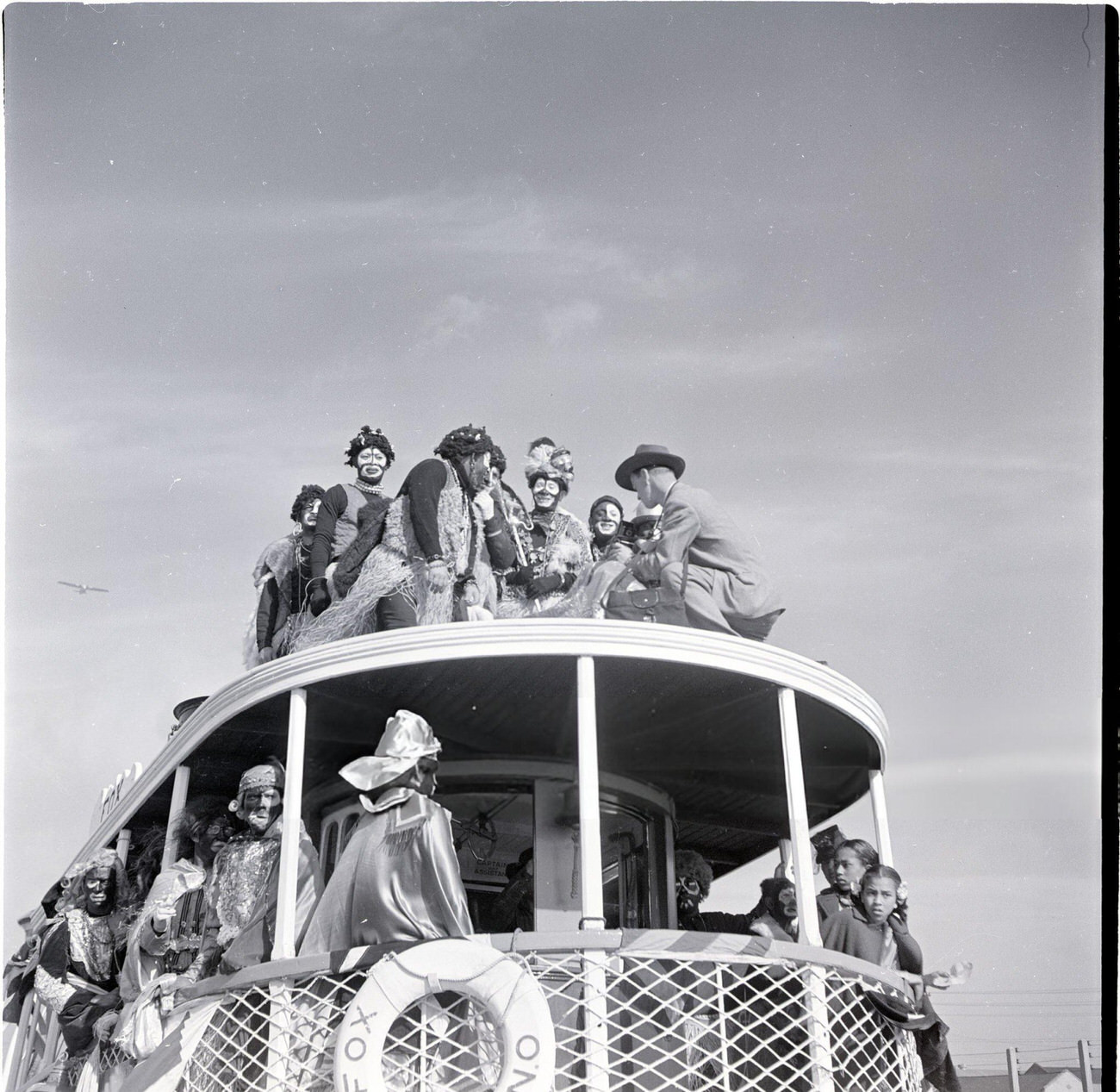
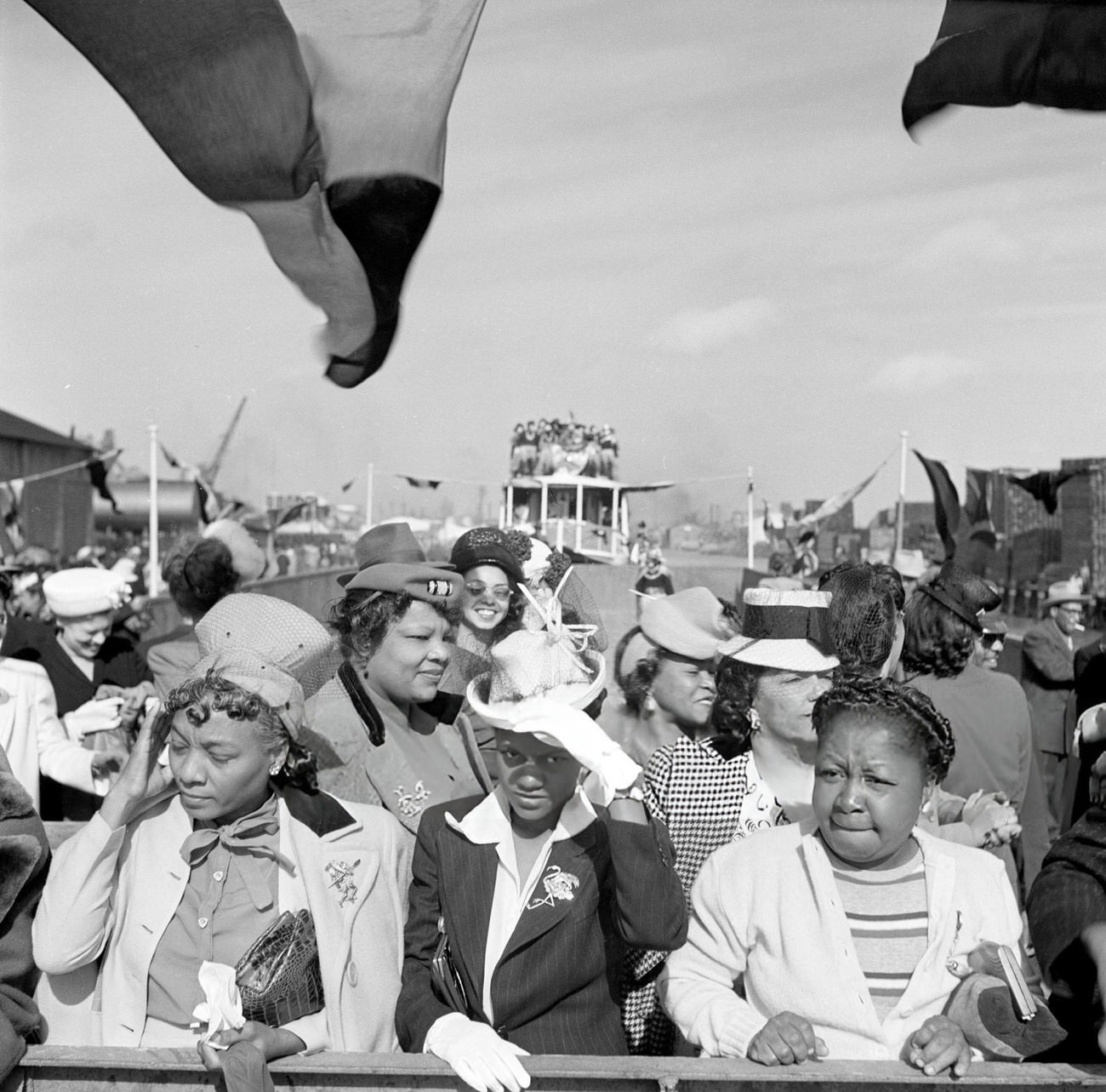
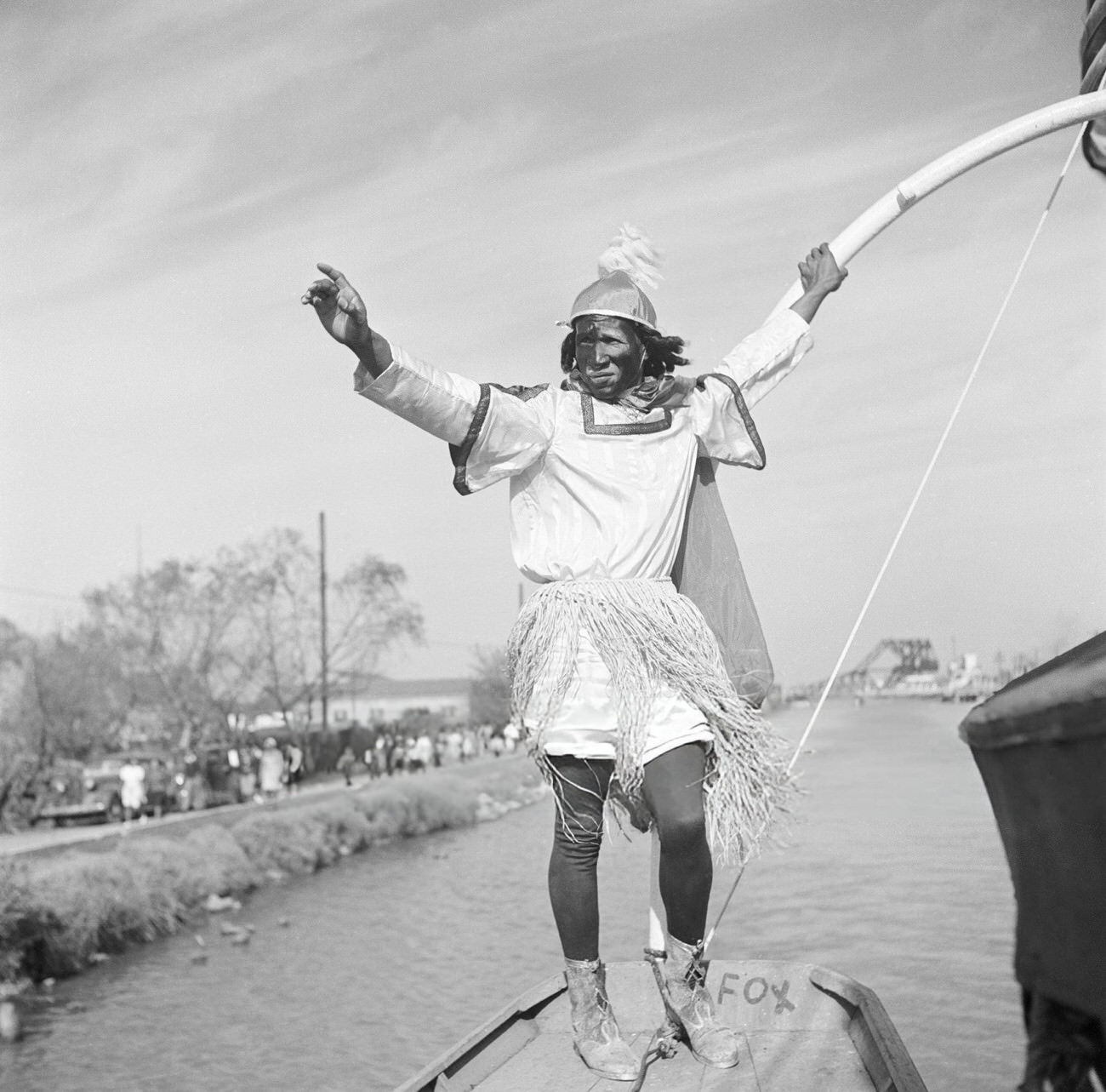
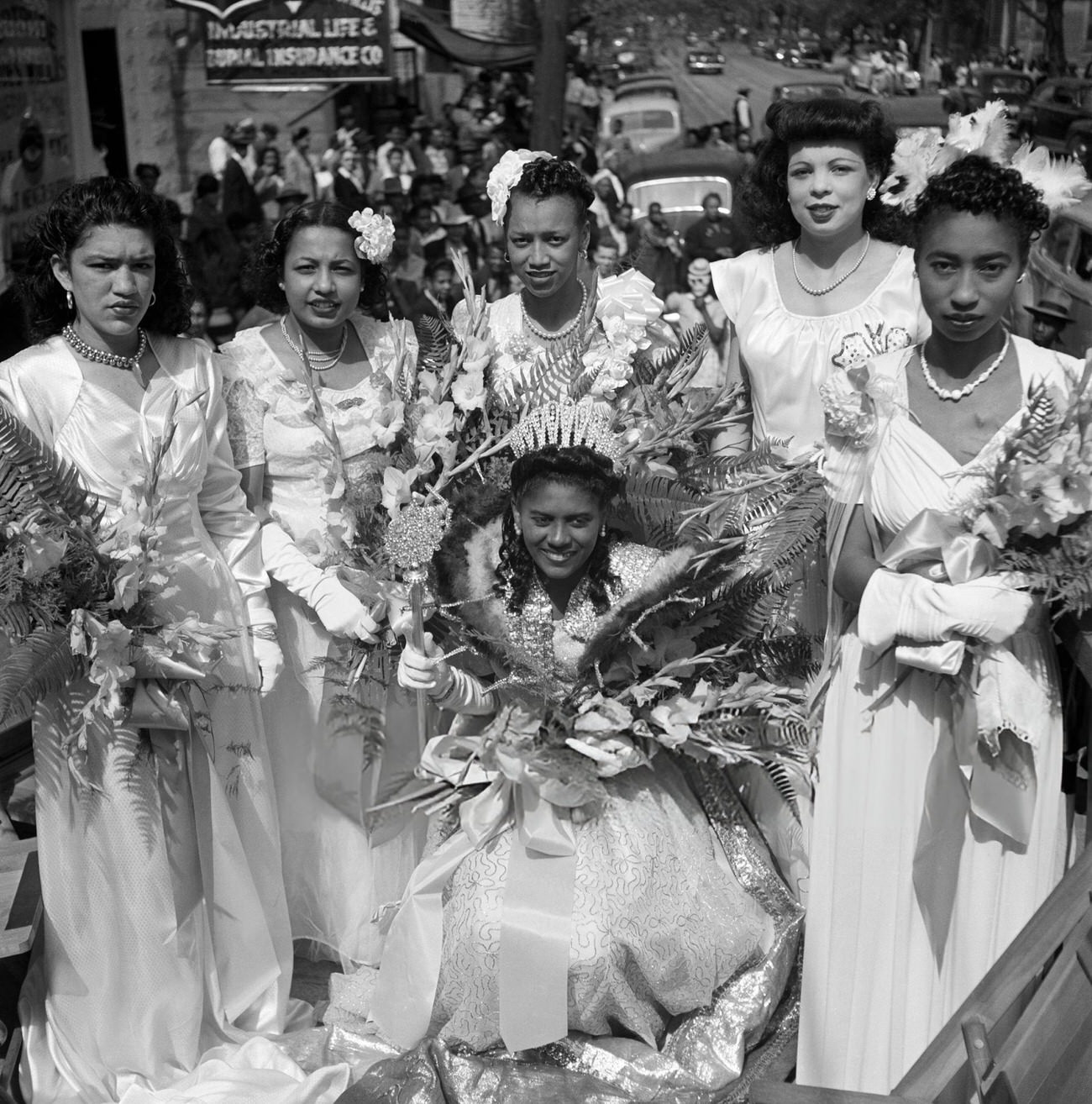
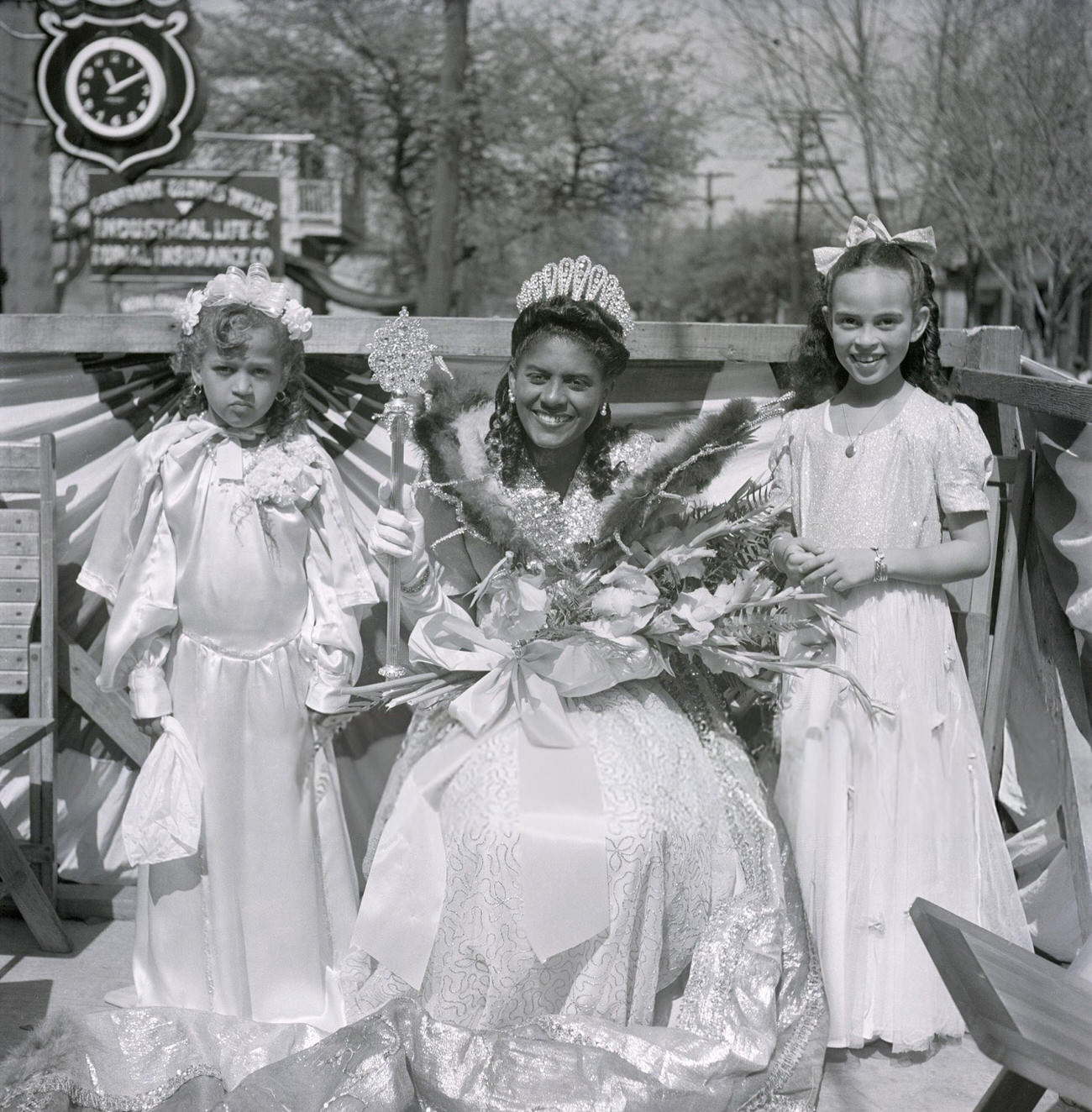
Mardi Gras in the 1950s was not a single, unified event. African American communities in New Orleans organized their own parades and boat celebrations, with groups performing on barges and canals separate from the main processions. African American krewes crowned their own royalty, with princesses riding floats in formal gowns. These parallel celebrations reflected the city’s deeply segregated social structure during the era.
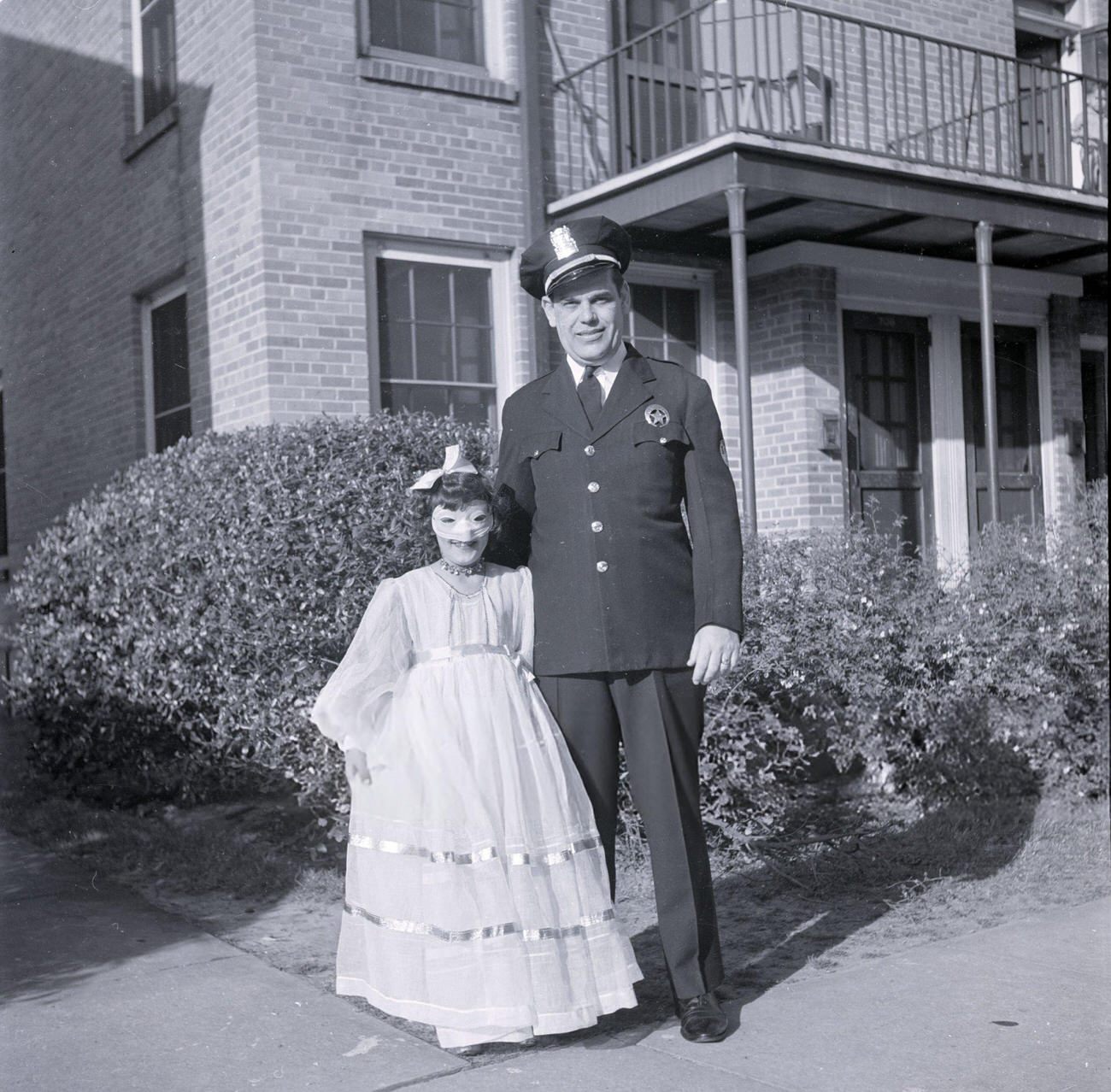
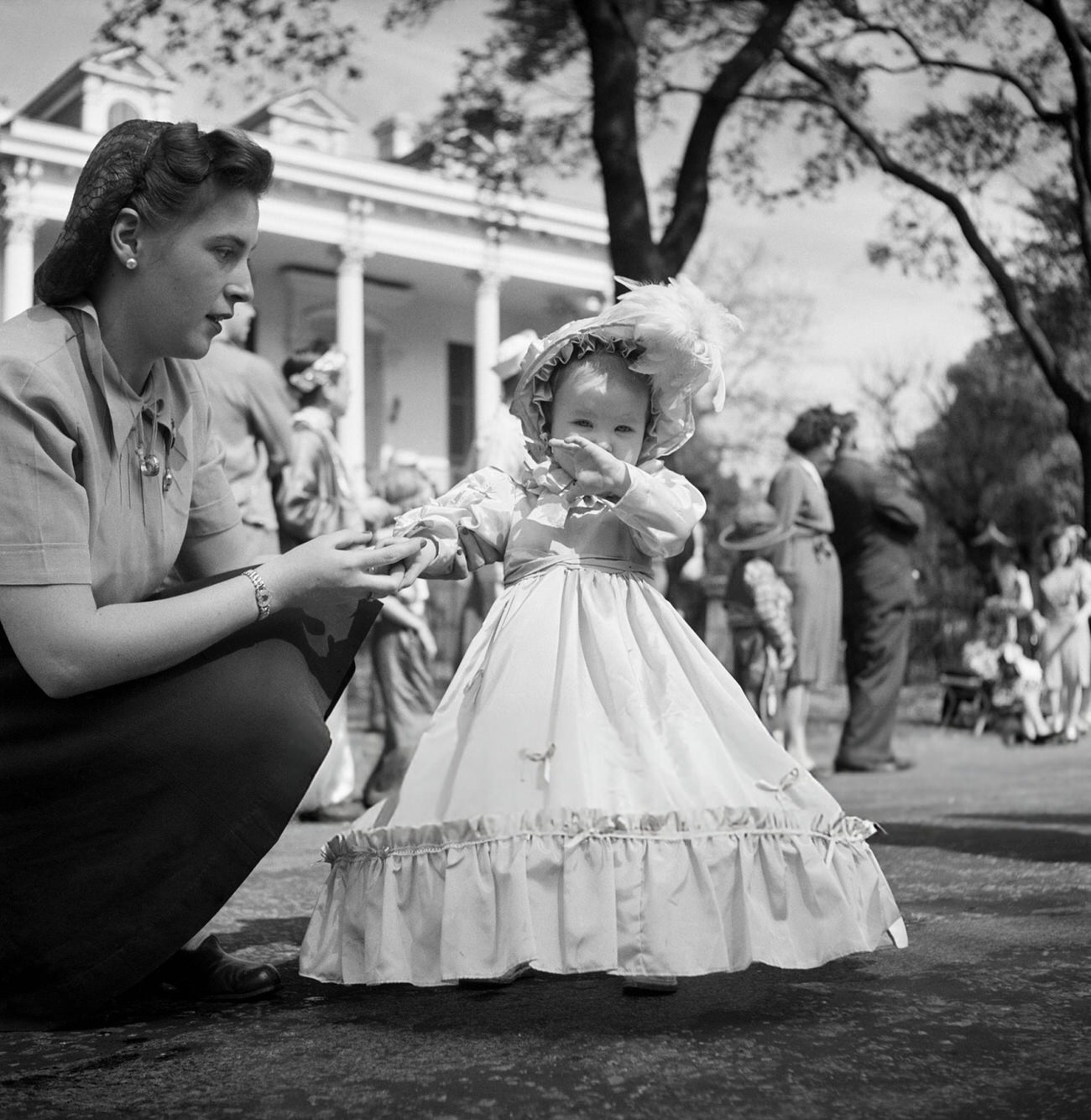
Children were fully included in the season’s festivities. Families dressed their kids in elaborate gowns and costumes, some participating in their own school or neighborhood parades. Photographers captured toddlers in Mardi Gras bonnets, groups of children in pirate and cowboy gear, and young ones perched on curbs watching the floats roll past.
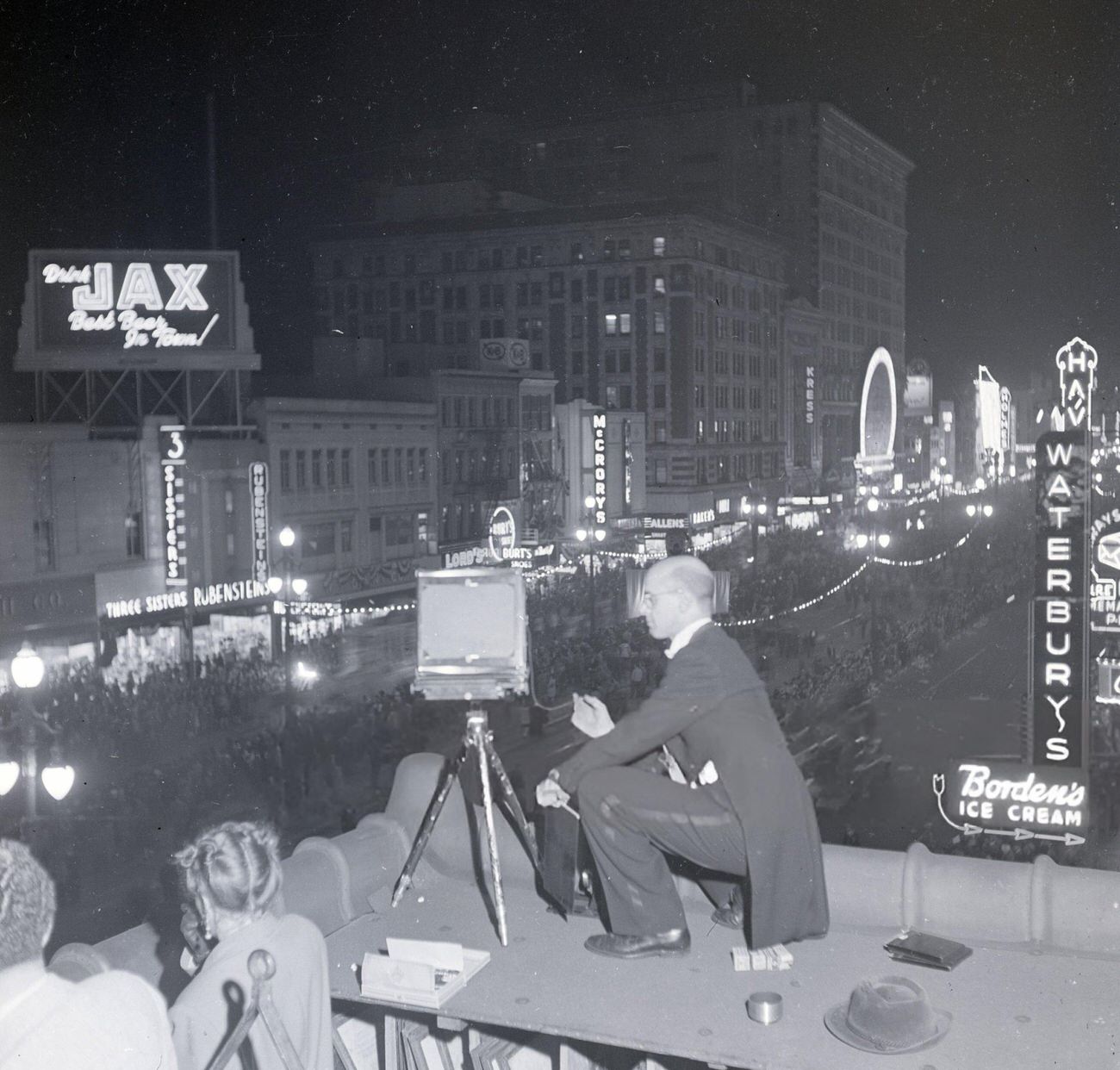
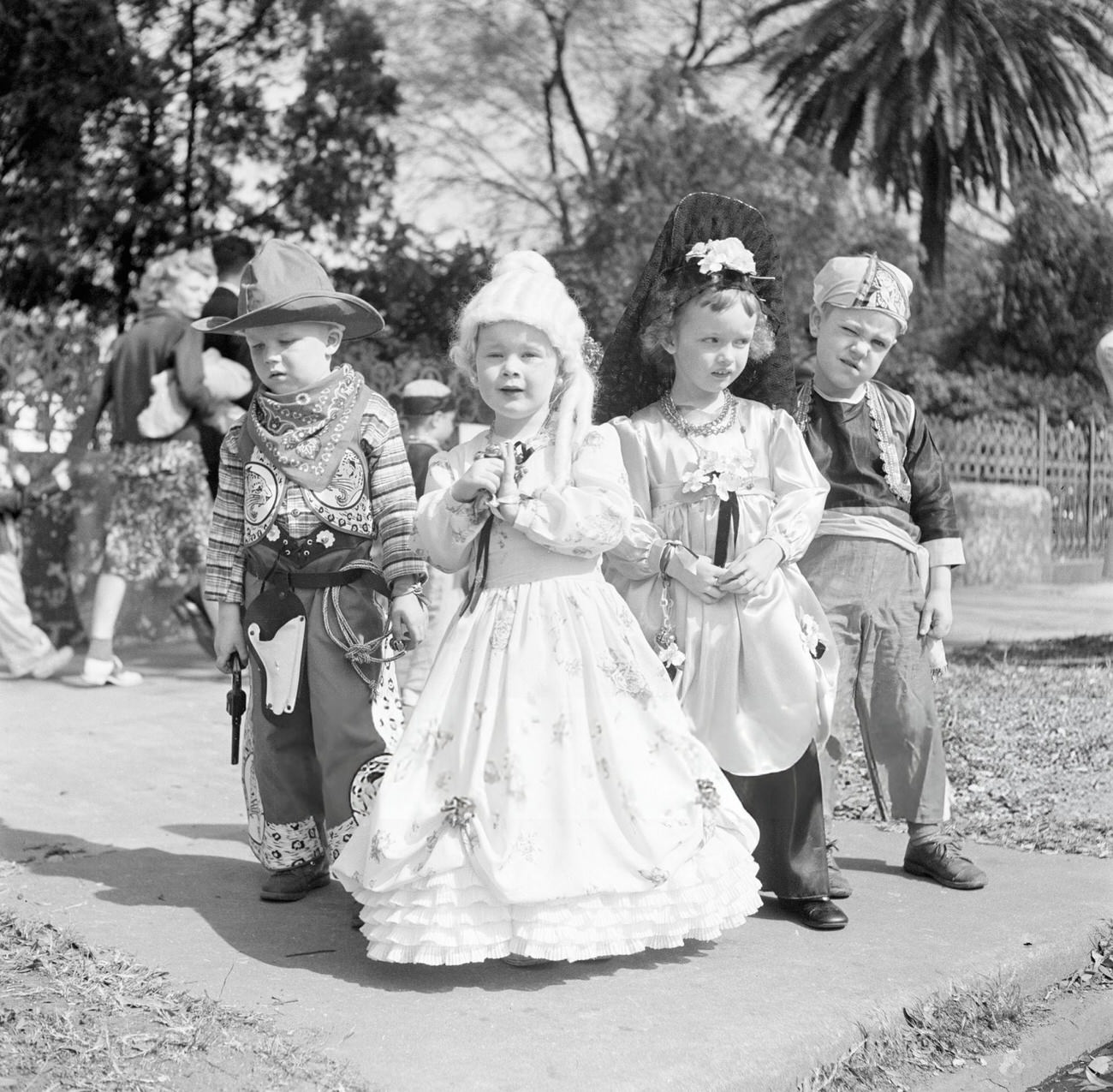
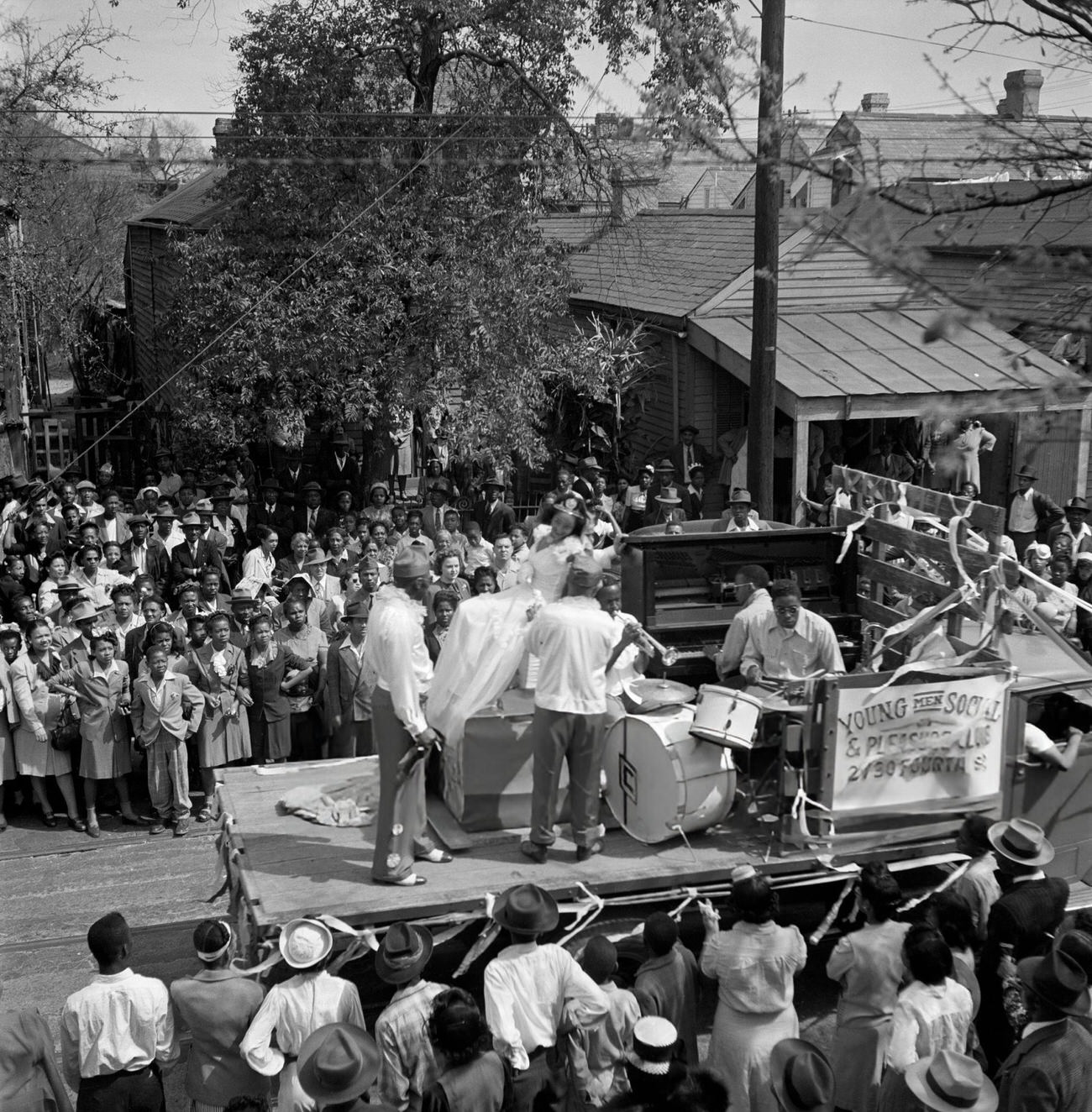
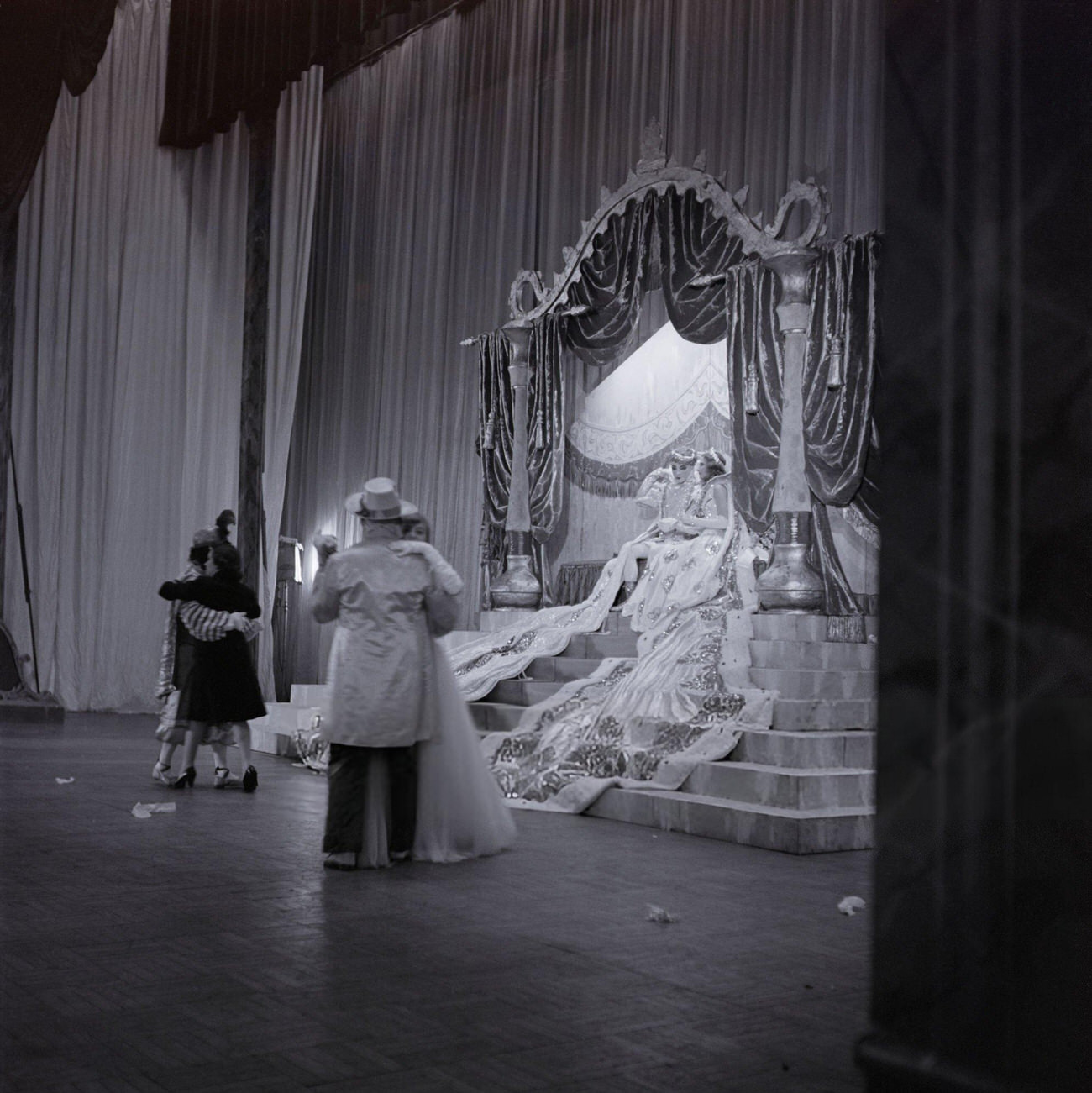
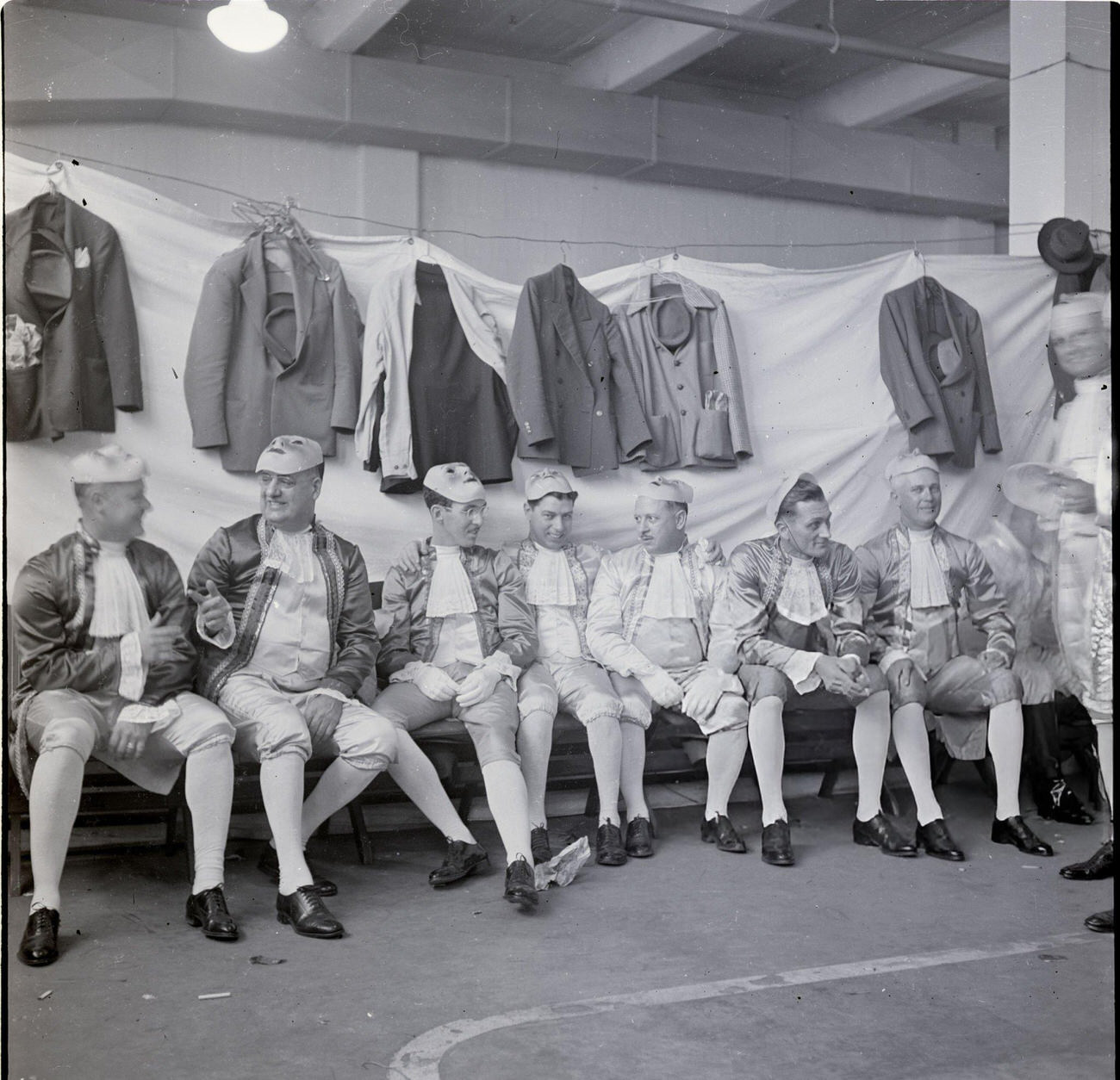
The formal balls of the 1950s remained a cornerstone of the season. Couples dressed in their finest and danced through the evening at krewe-sponsored events held across the city. These gatherings maintained the sense of ritual and ceremony that had defined Mardi Gras balls since the 19th century, even as the street celebrations grew louder and more crowded outside.
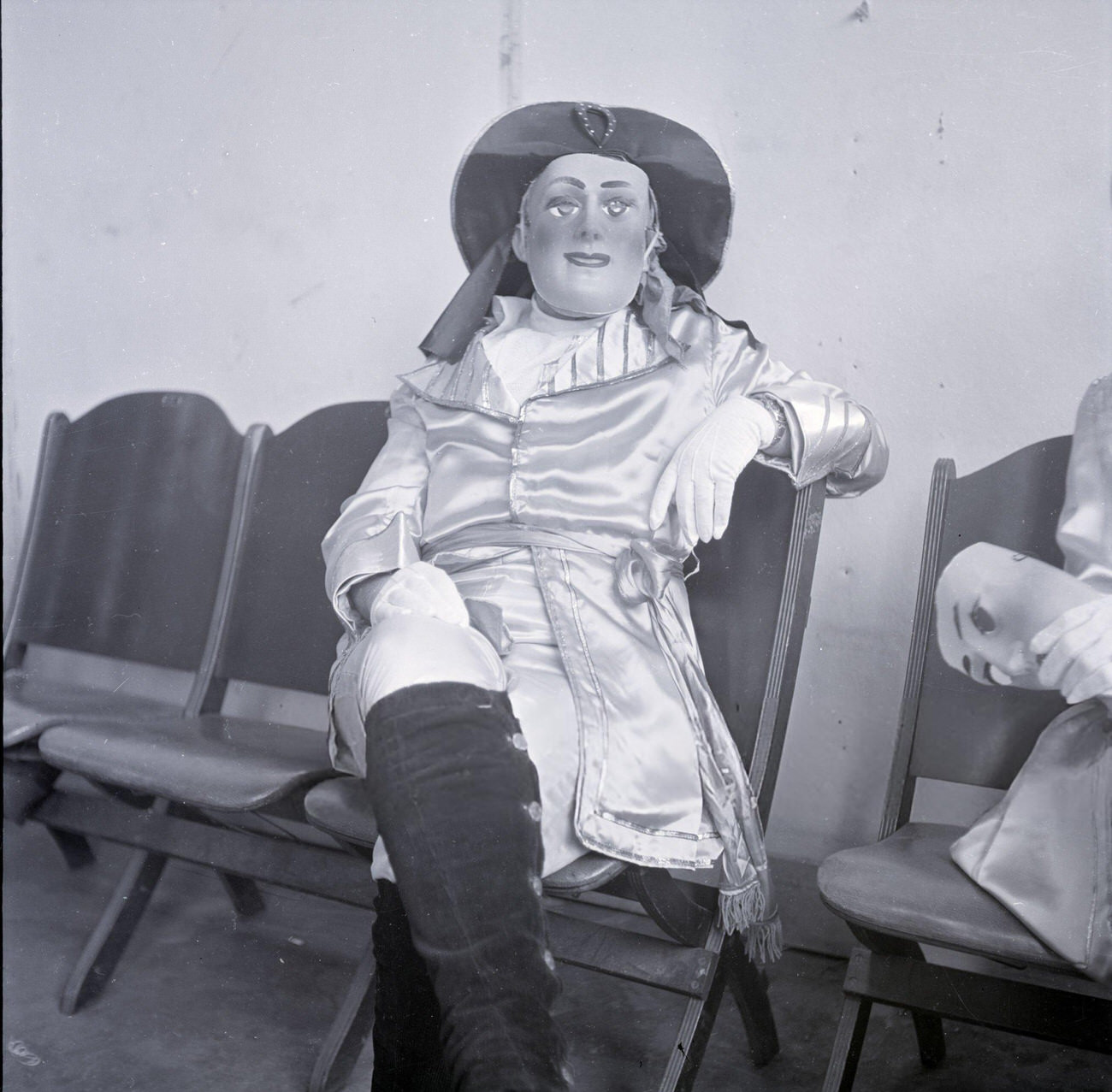
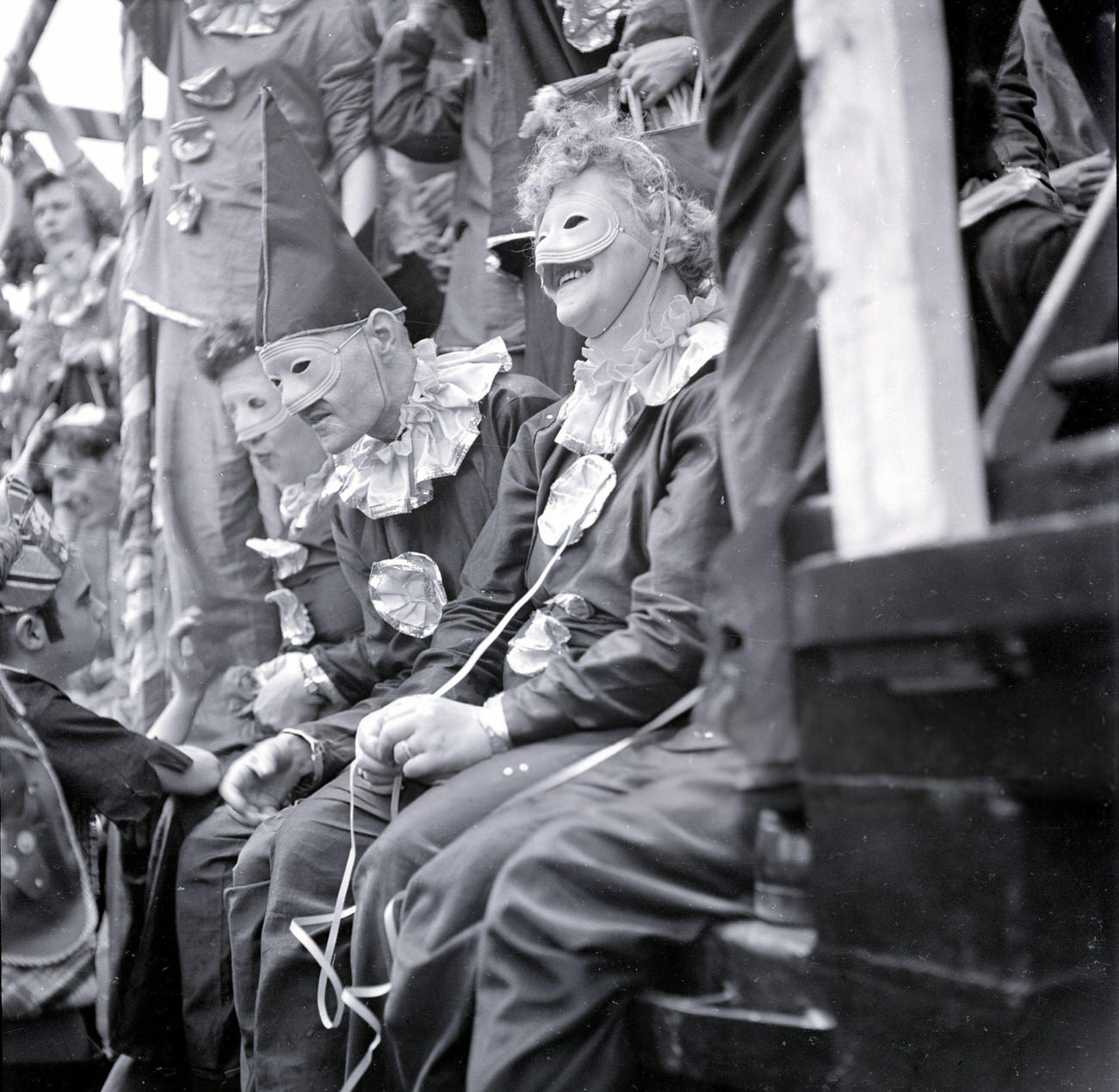
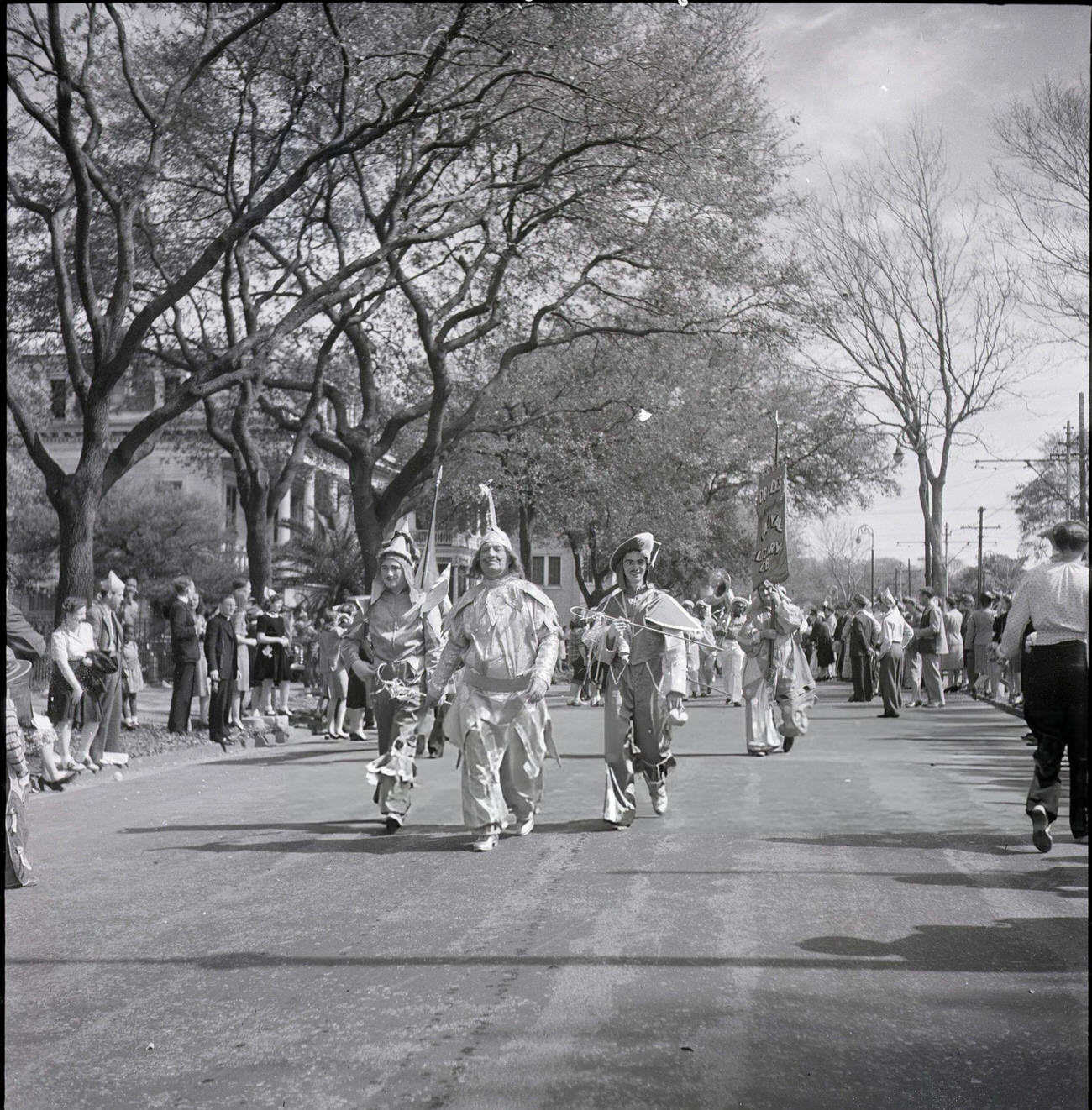
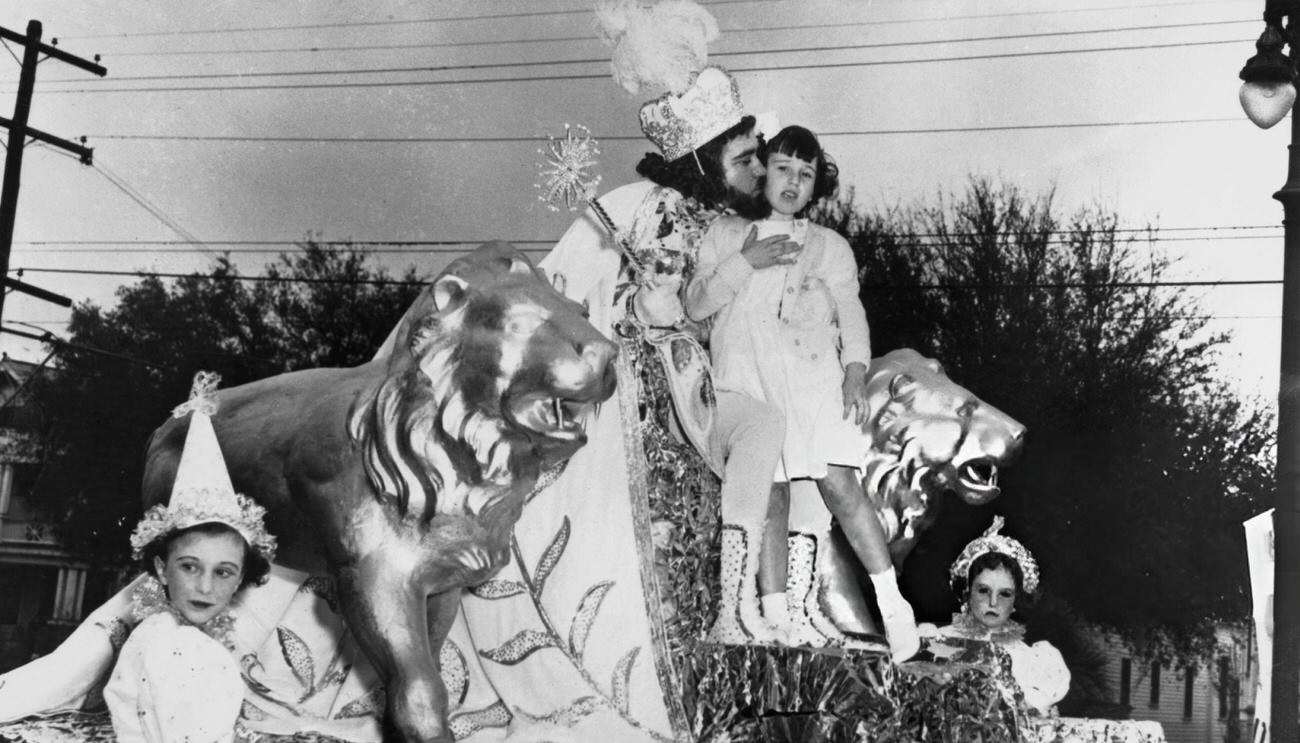
In 1952, King Mid-City XV received the symbolic keys to New Orleans from six-year-old Valerie Combe of the Sacred Heart Orphanage during Mardi Gras Week—a ceremonial exchange that showed how deeply Mardi Gras royalty was woven into city life, even touching charitable institutions. These symbolic gestures gave the season a sense of civic belonging that extended beyond any single parade or ball.
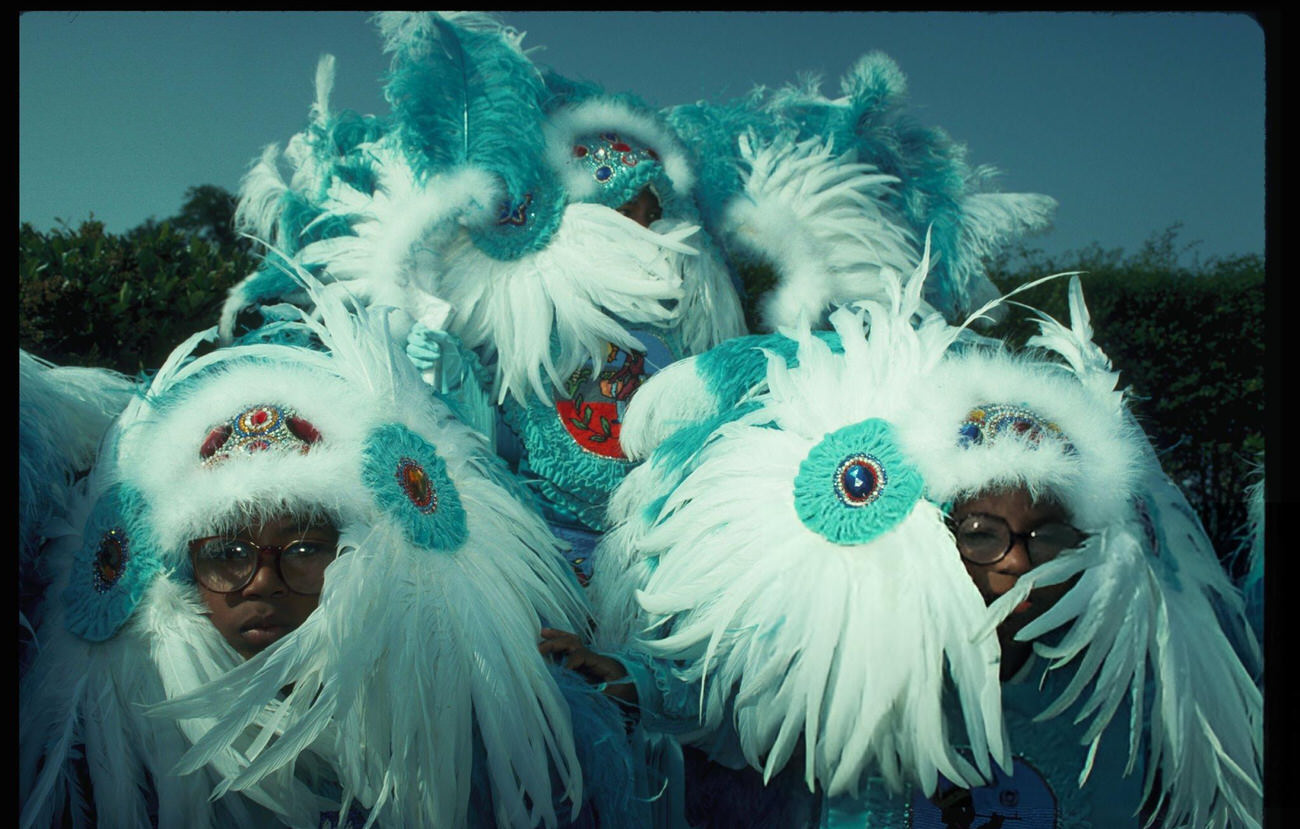
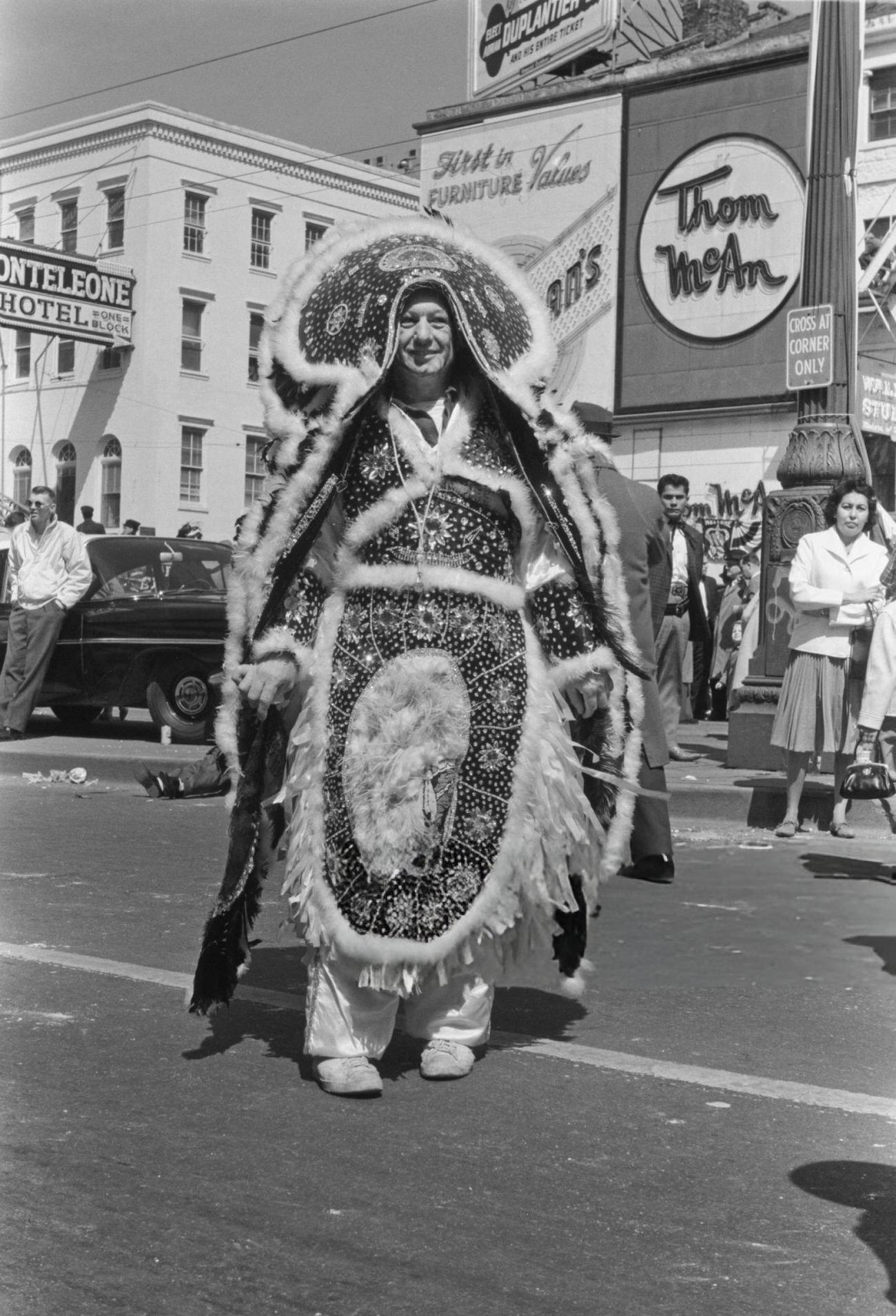
The 1960s brought the Civil Rights movement directly into the social fabric of Mardi Gras. Krewes had long operated as exclusive, segregated clubs. During this era, pressure mounted on those organizations to integrate. Some krewes began admitting Black members, though the change was slow and uneven. Meanwhile, the Mardi Gras Indians—Black New Orleanians who had long created their own elaborate traditions outside the mainstream krewe system—continued to gather in their own celebrations, dressed in handmade feathered and beaded suits of extraordinary detail.
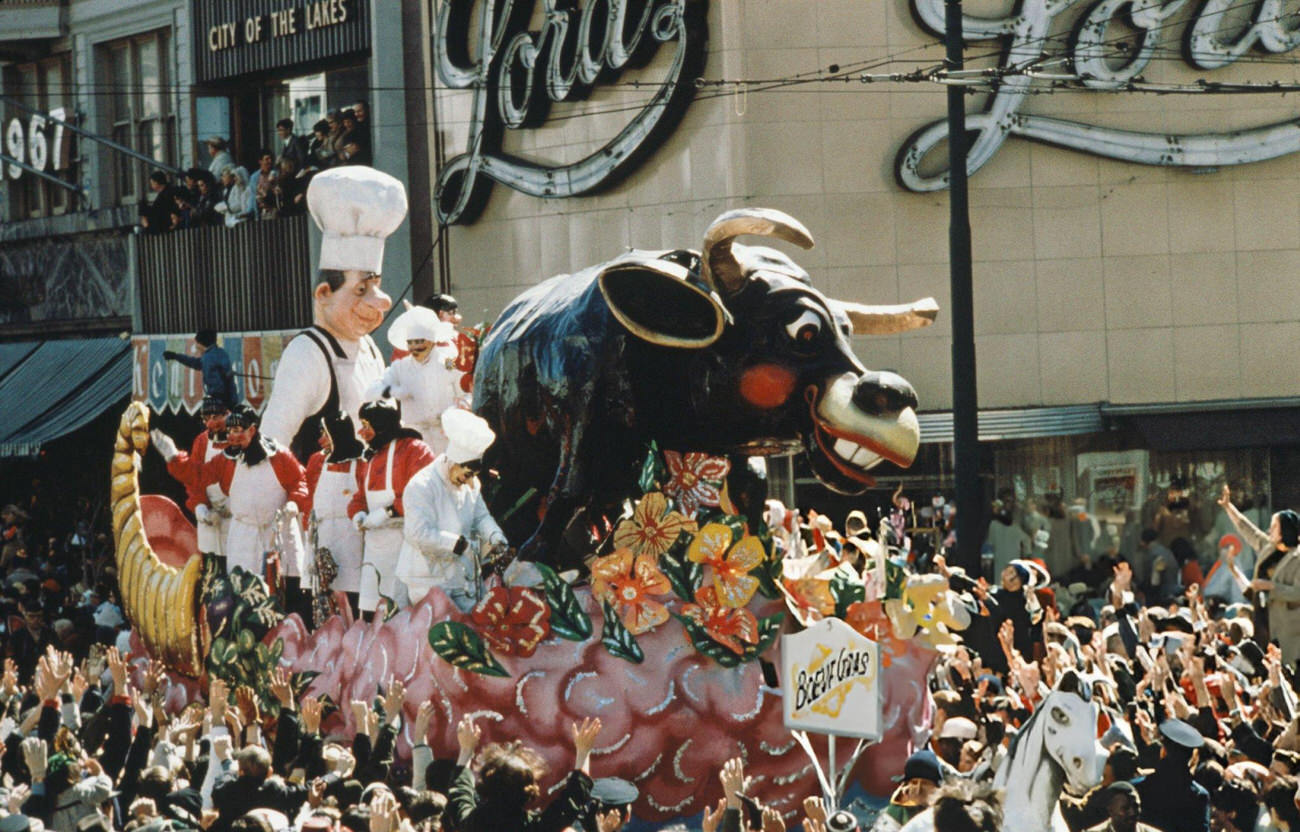
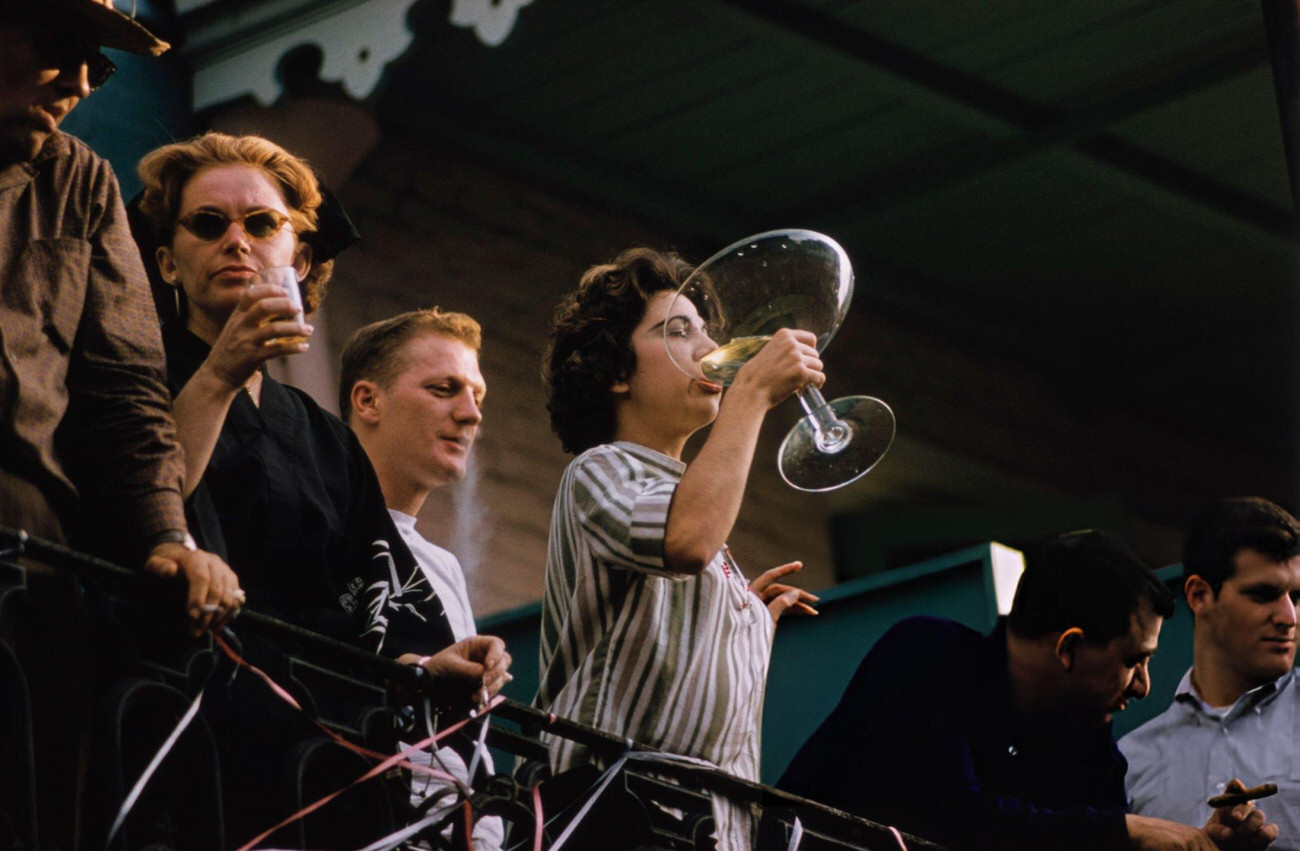
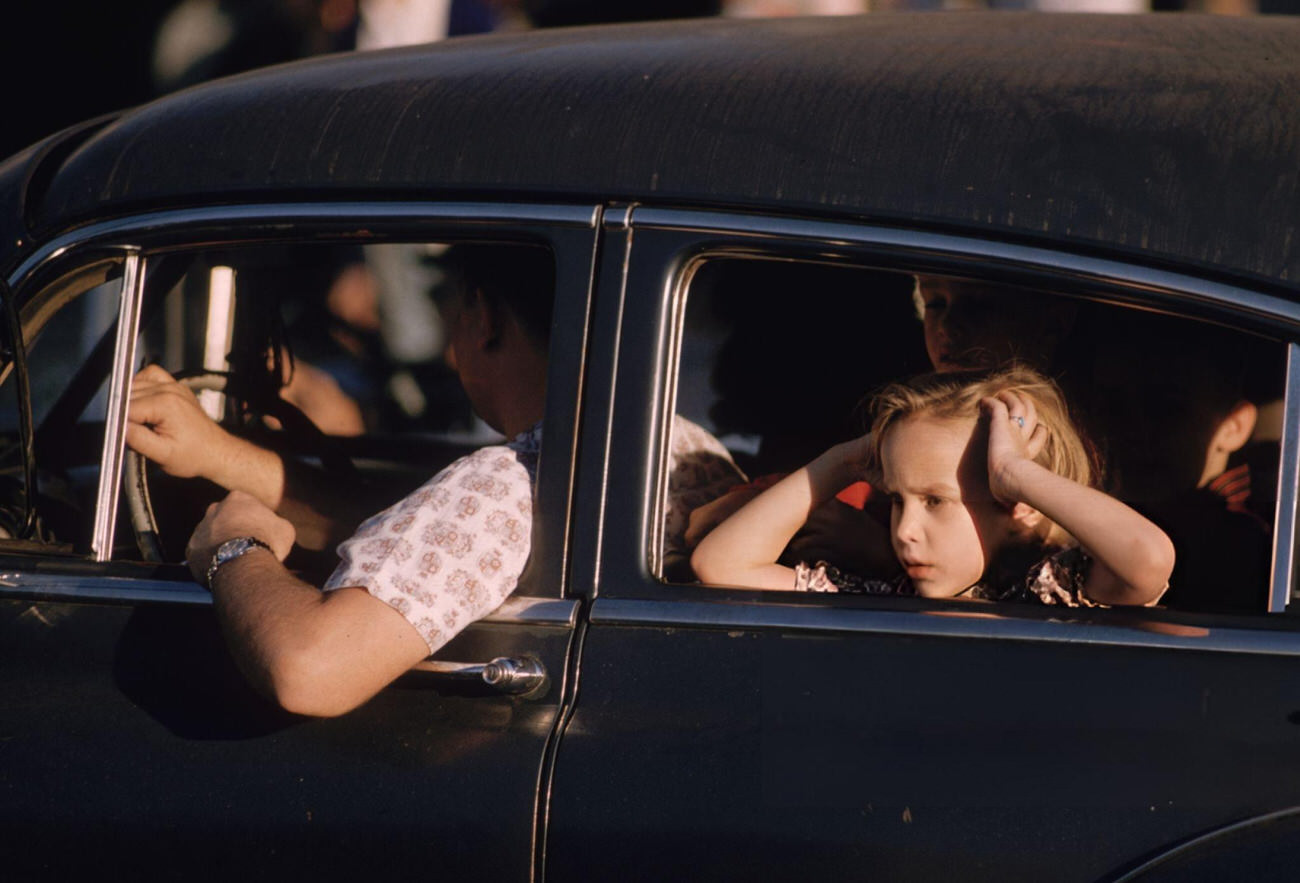
The street scenes of 1961 show a Mardi Gras in full swing—balconies crowded with revelers, floats moving through dense audiences, and a young girl watching it all from the back seat of a car. Canal Street was barely navigable on parade days, and venues along Bourbon Street drew their own crowds of costumed visitors. The Rex Parade remained the centerpiece, filling the street with floats and marchers year after year.
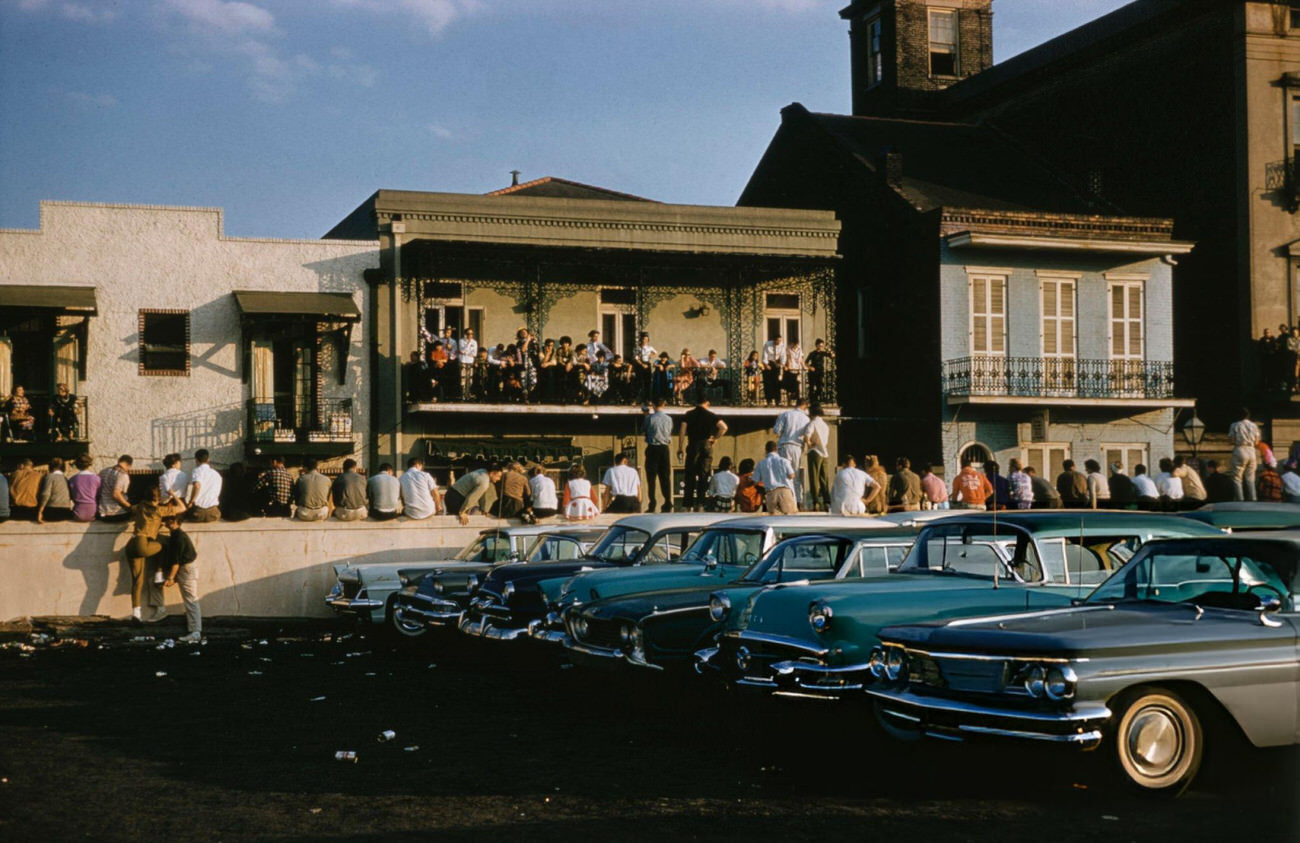
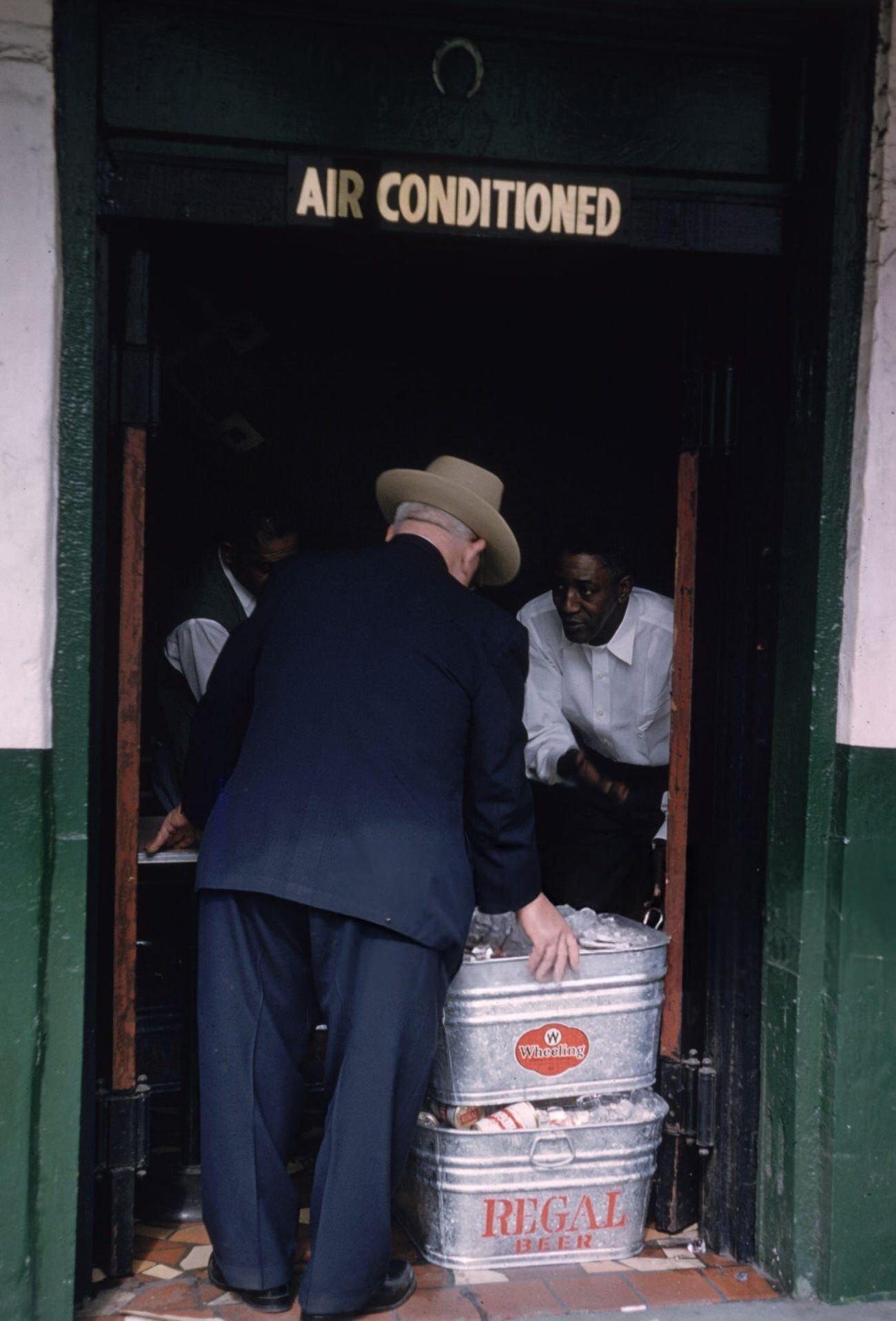
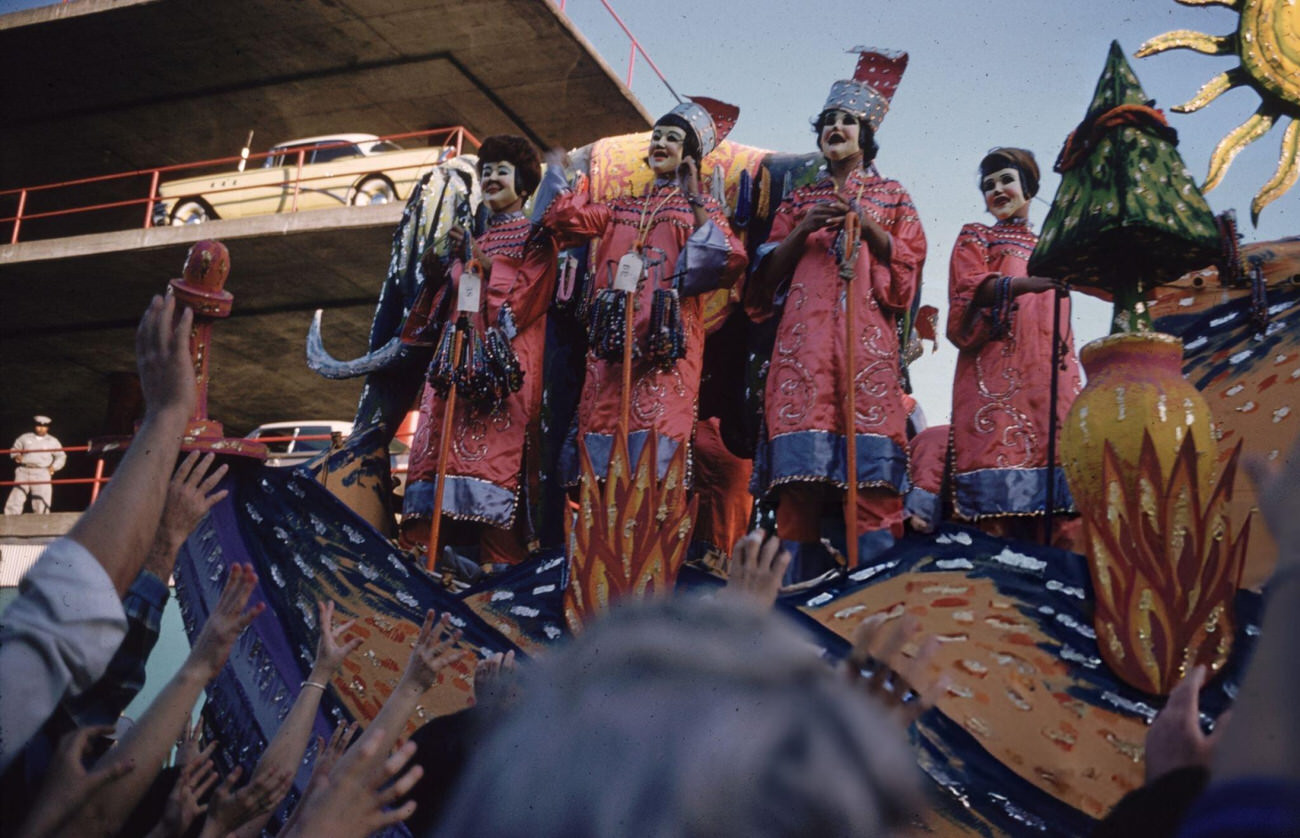
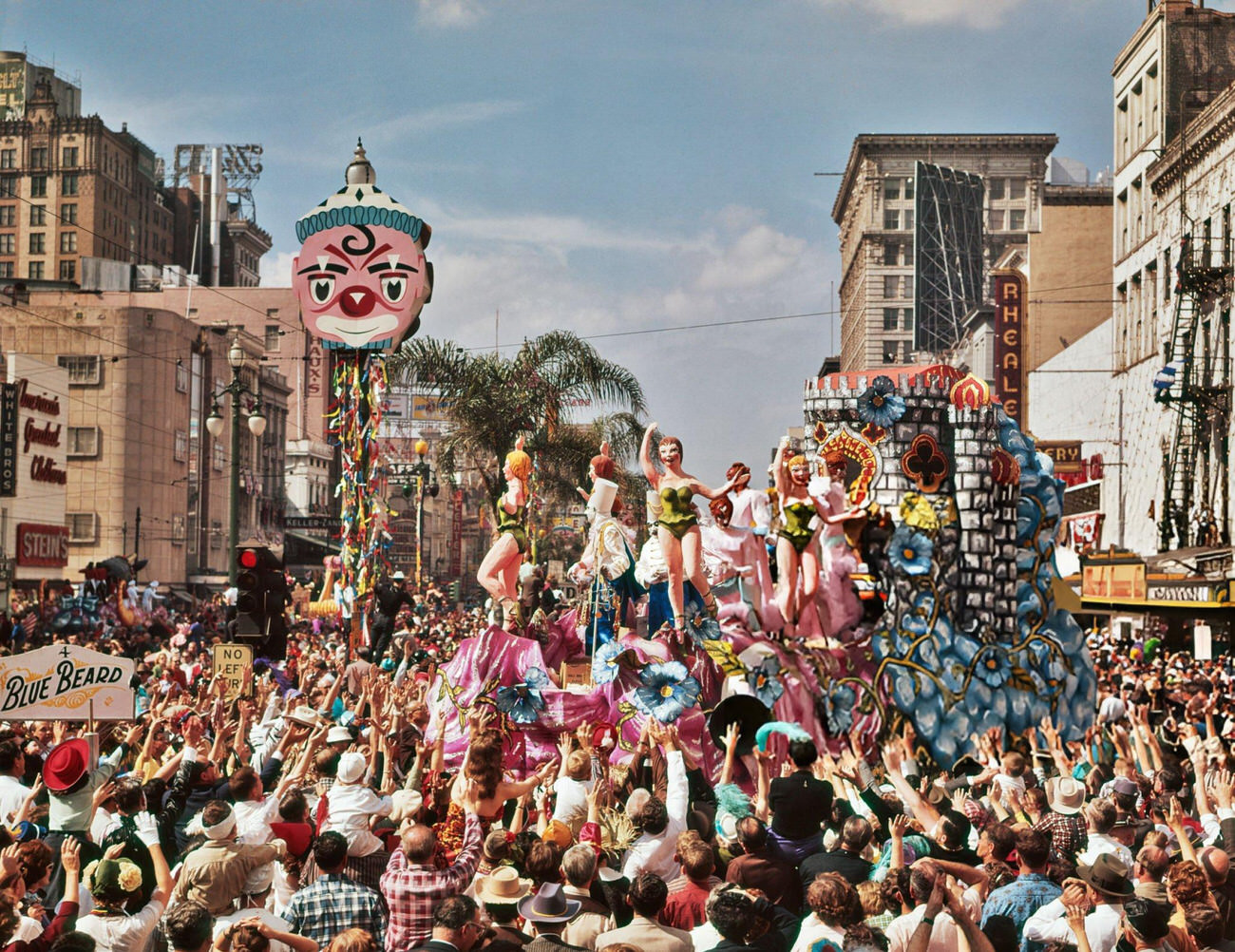
The Rex Parade in 1962 continued its long-running role as the most prominent procession of the season. Riders in ornate embroidered costumes moved down Canal Street as crowds pressed in from both sides. Photographs from that year capture the scale of the event—floats stretching the full width of the street, flanked by thousands of onlookers.
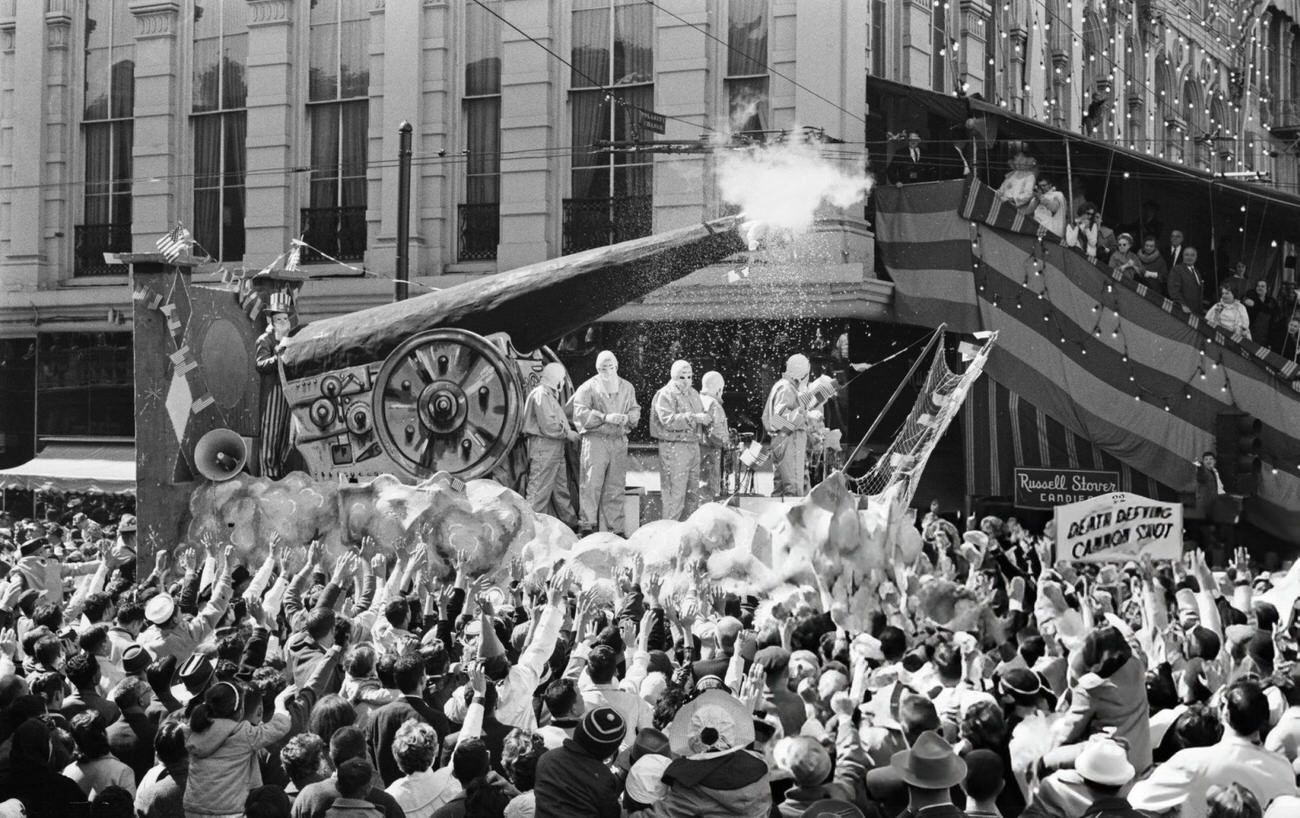
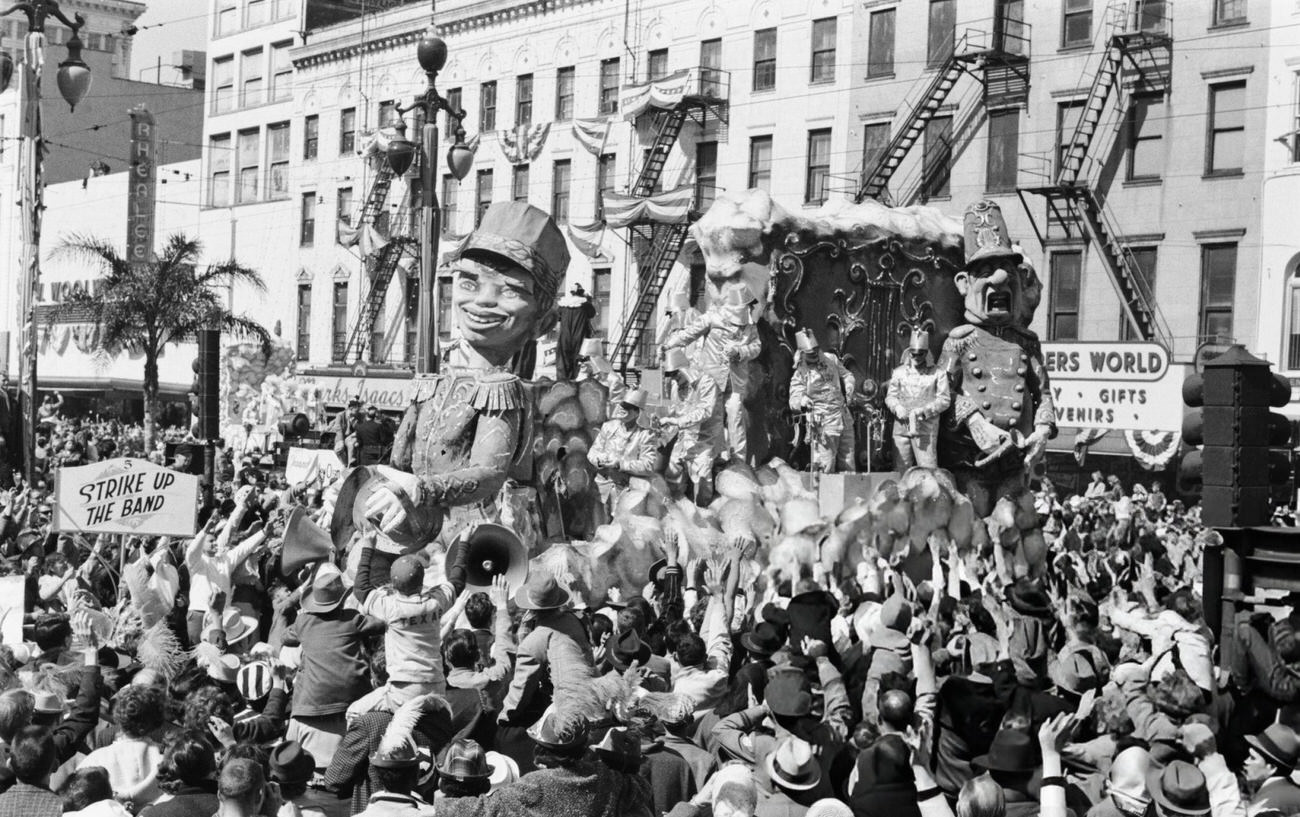
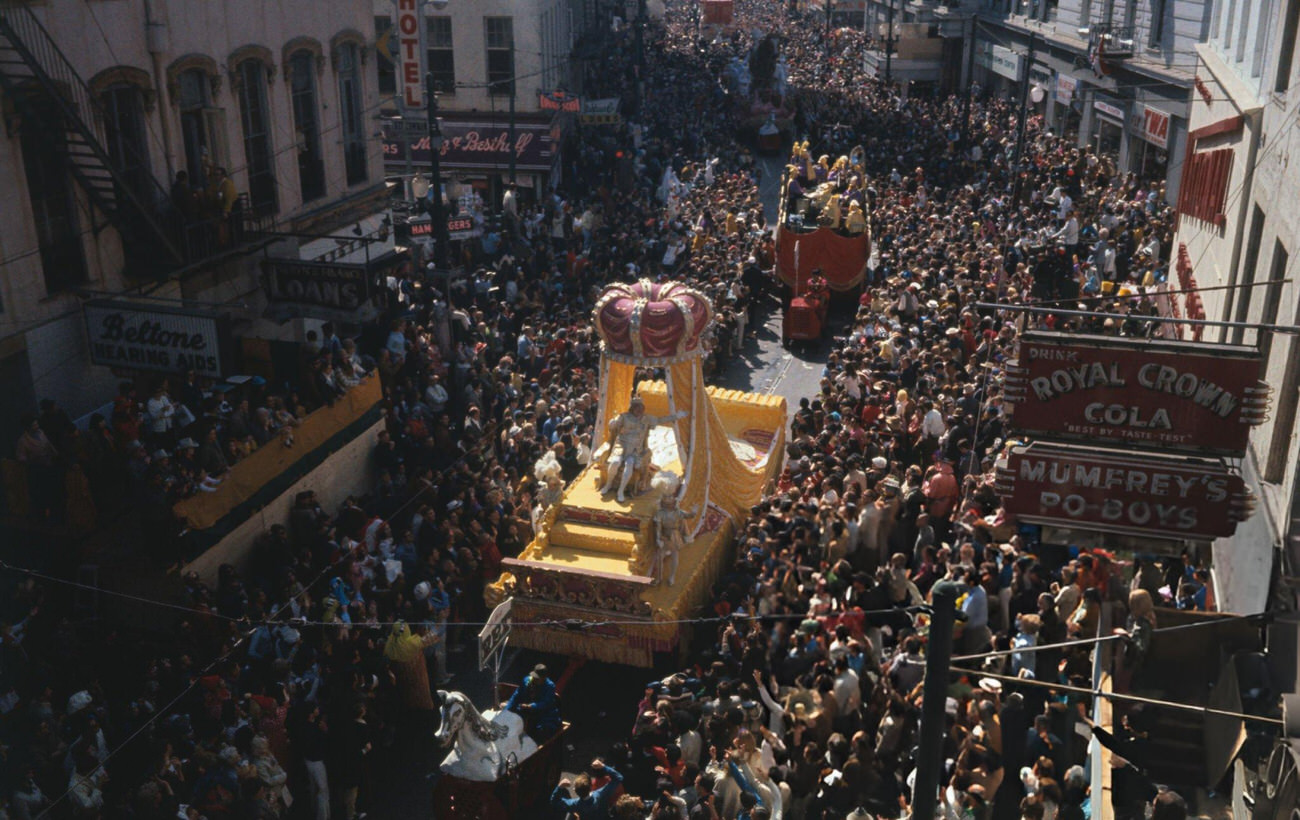
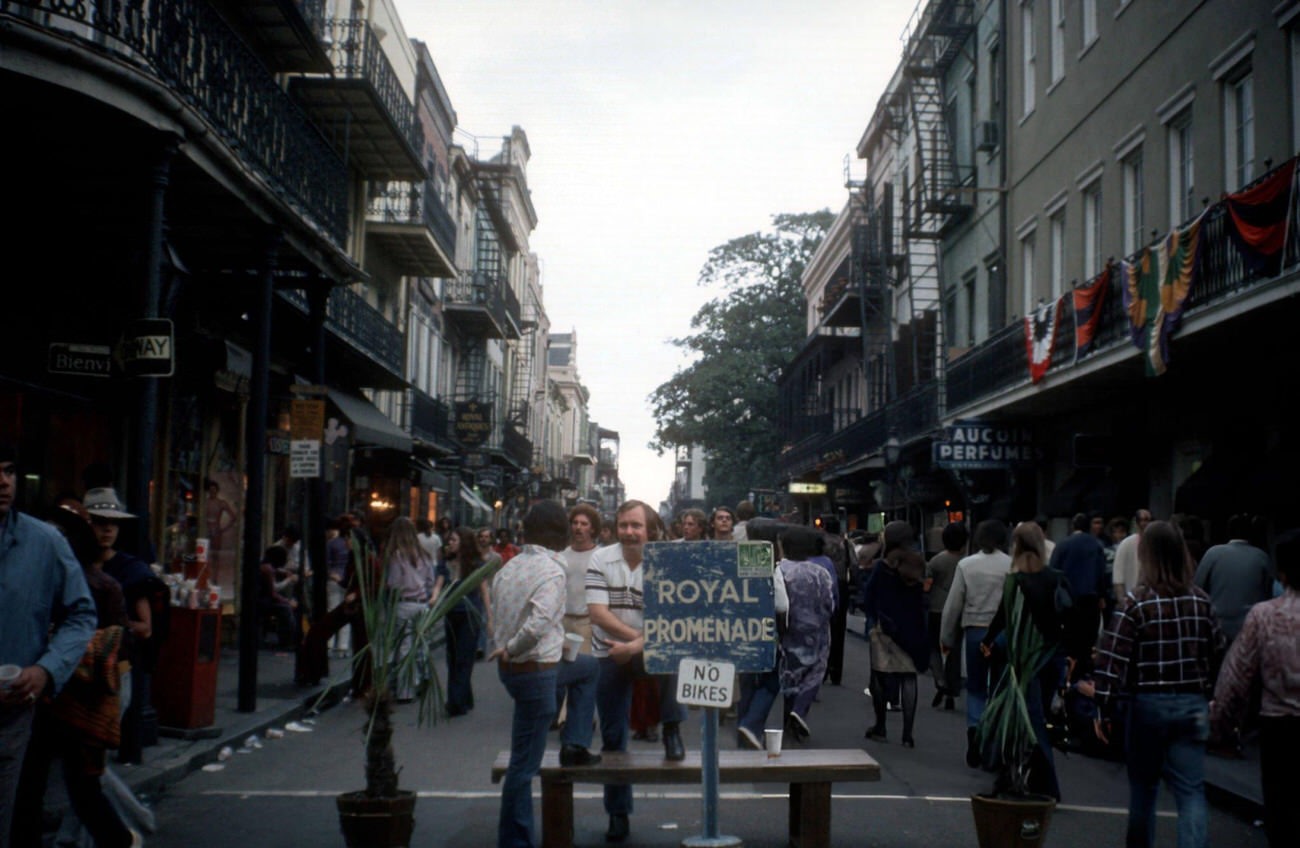
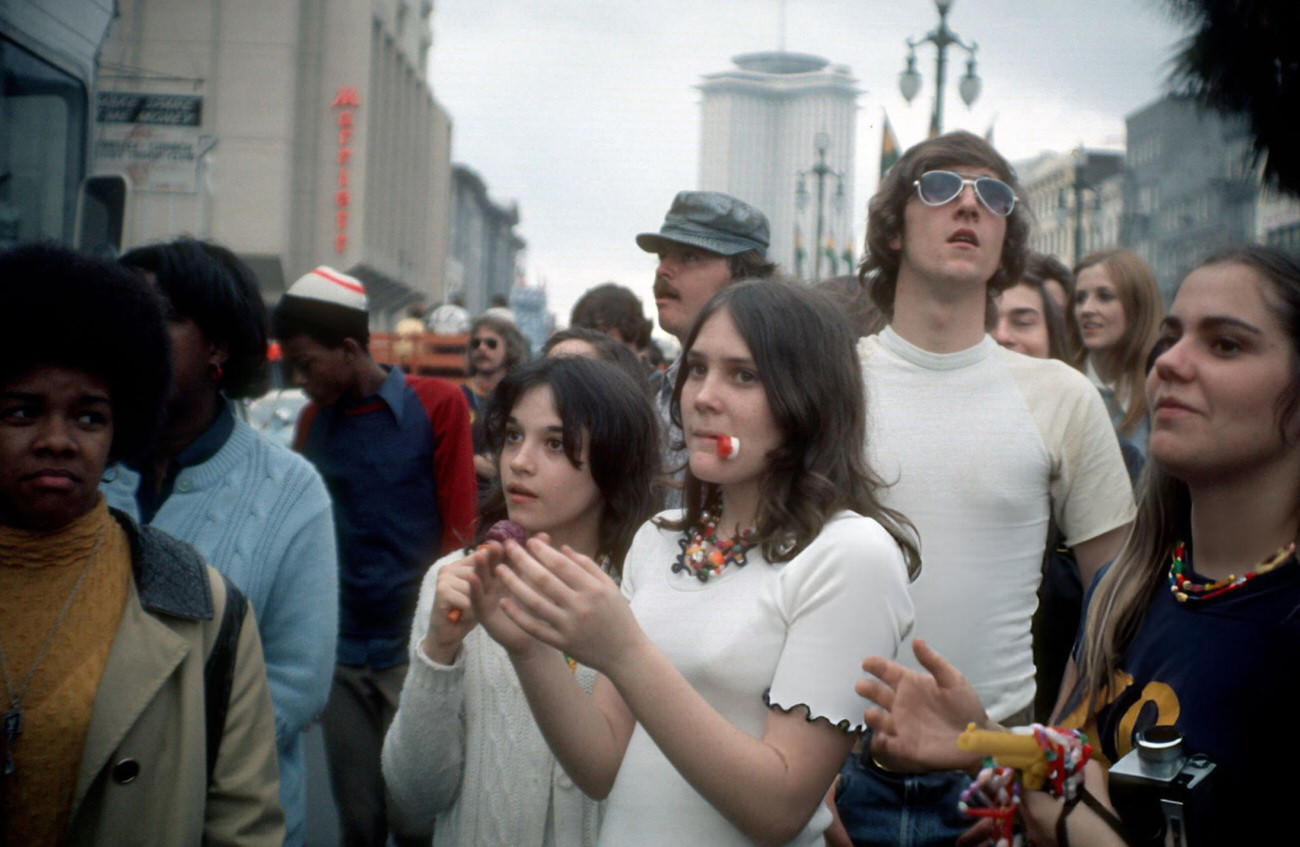
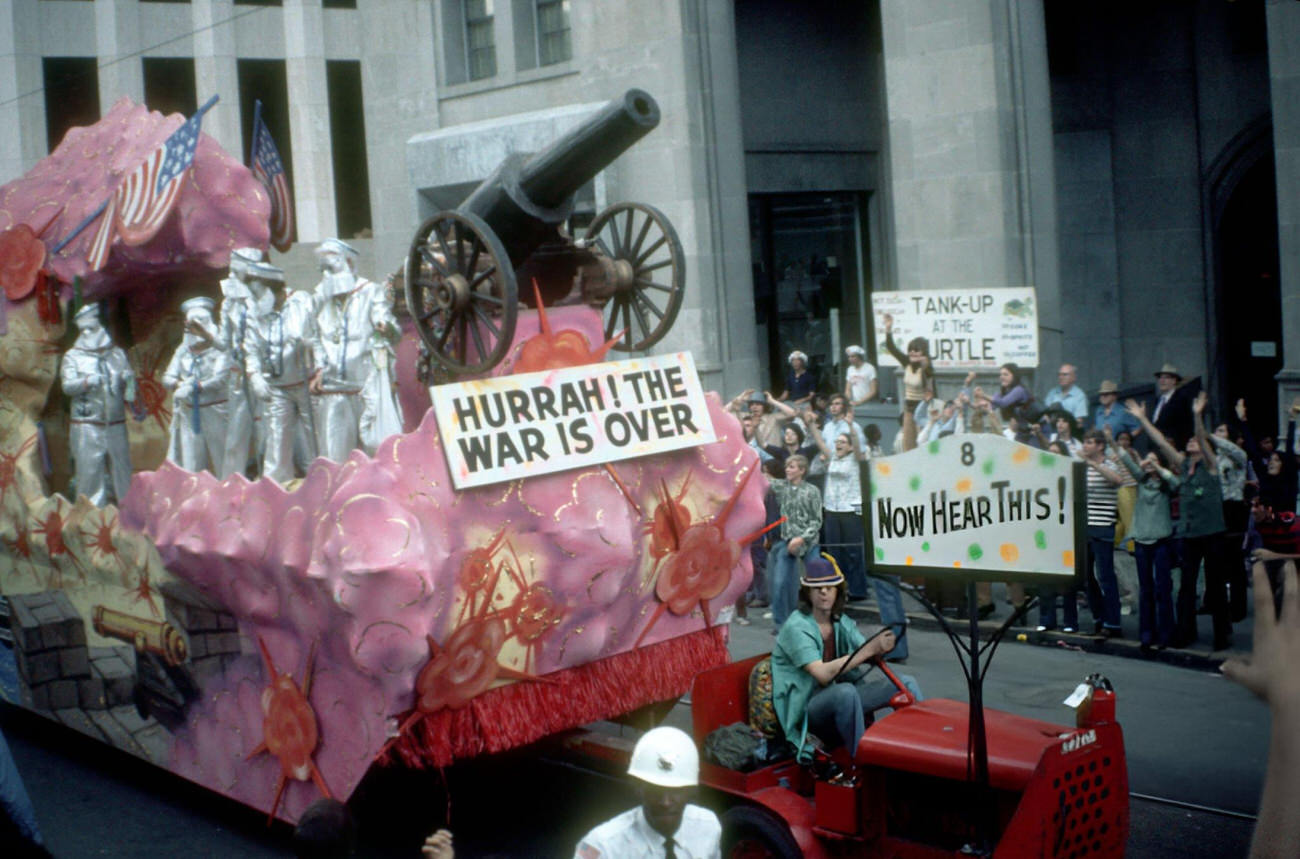
By 1973, the parade crowds had grown larger than ever. Closed streets filled wall to wall with people on foot, while onlookers claimed every inch of curb space. One float that year carried a cannon and a sign reading “Hurrah! The War is Over”—a pointed reference to the recent end of U.S. involvement in Vietnam, showing that Mardi Gras floats had always been a place for social commentary alongside spectacle.