In November 1948, photojournalist Bert Hardy stepped inside HM Prison Manchester — better known as Strangeways — and documented daily life behind its walls. His photographs show a rigid, tightly controlled world where every hour of a prisoner’s day was accounted for, from the early morning wake-up bell to the serving of evening meals. The images offer a rare, unfiltered look at one of Britain’s most formidable prisons during the postwar years.
Strangeways opened in 1868, built alongside the now-demolished Manchester Assize Courts. Both structures were designed by Alfred Waterhouse, the architect also responsible for Manchester Town Hall. The prison was built on the principles of the “separate system,” which aimed to keep prisoners isolated from one another to prevent what authorities saw as the corrupting influence of fellow inmates. Its striking ventilation tower made it one of the most recognisable buildings on Manchester’s skyline.
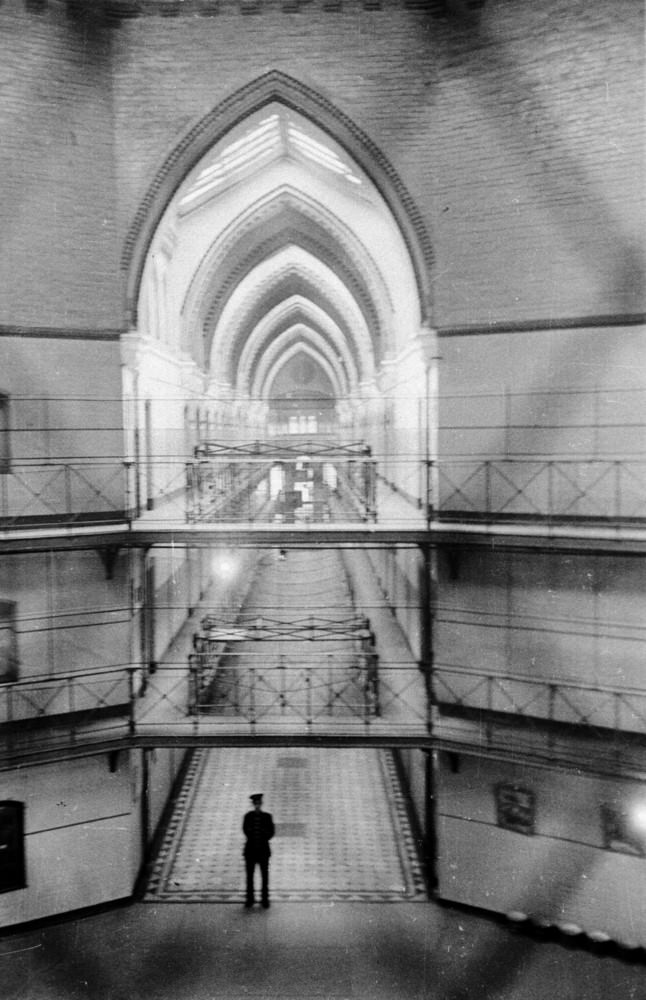
The day inside Strangeways began before most of the city was awake. Officers were already at their posts by 6:30 in the morning, walking the landings in the minutes before the wake-up bell rang. One of Hardy’s photographs captures this quiet before the storm — a lone officer standing watch over the empty tiers of cells, the prison not yet stirring.
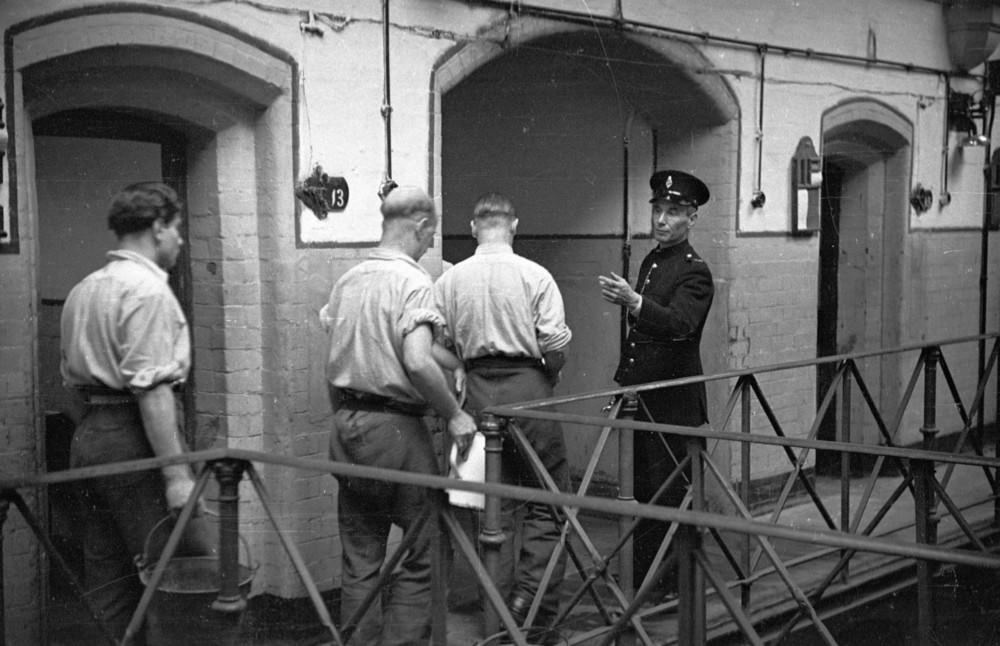
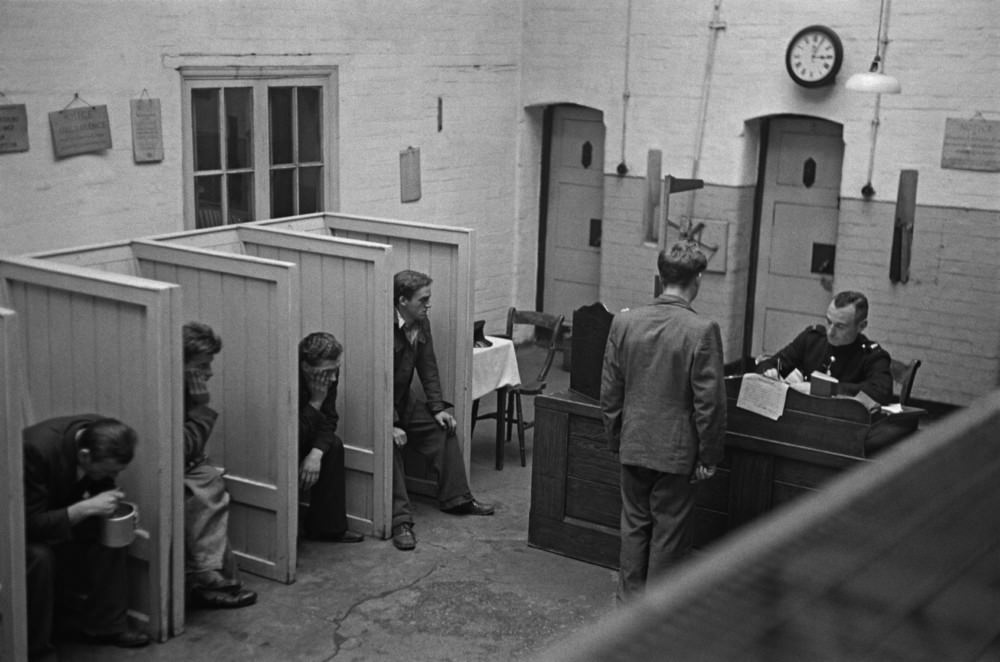
One of the first duties of the morning was removing night-slops — the waste buckets kept in cells overnight, as indoor plumbing was not available to prisoners. Officers supervised this task closely, maintaining order from the moment the day began. New arrivals went through a formal intake process, meeting with officers in the reception room before being assigned to the general population.
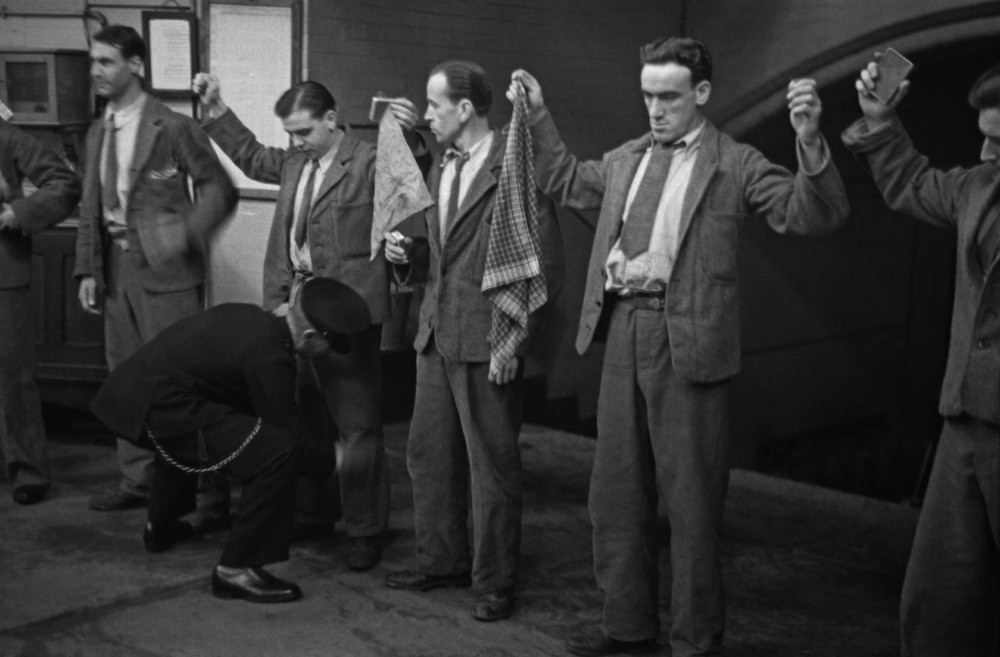
Security checks were a constant part of life at Strangeways. Officers conducted “rub-down” searches to find any contraband items a prisoner might be hiding on their body. These searches were routine and thorough, carried out with matter-of-fact efficiency. Hardy photographed one such search in detail, showing the physical closeness of the process and the total authority officers held over those in their care.
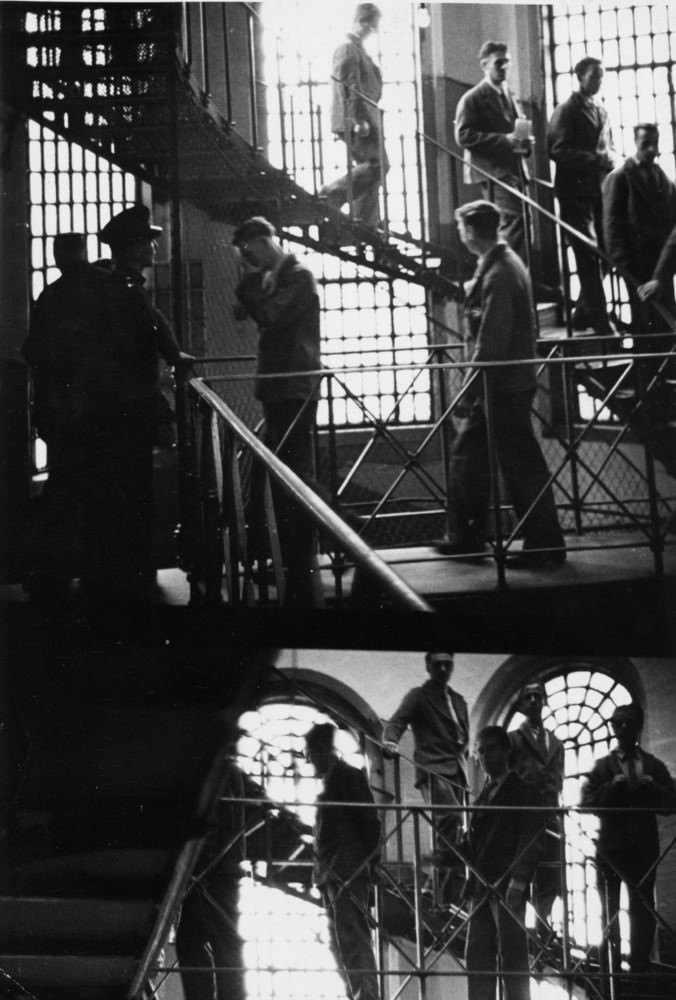
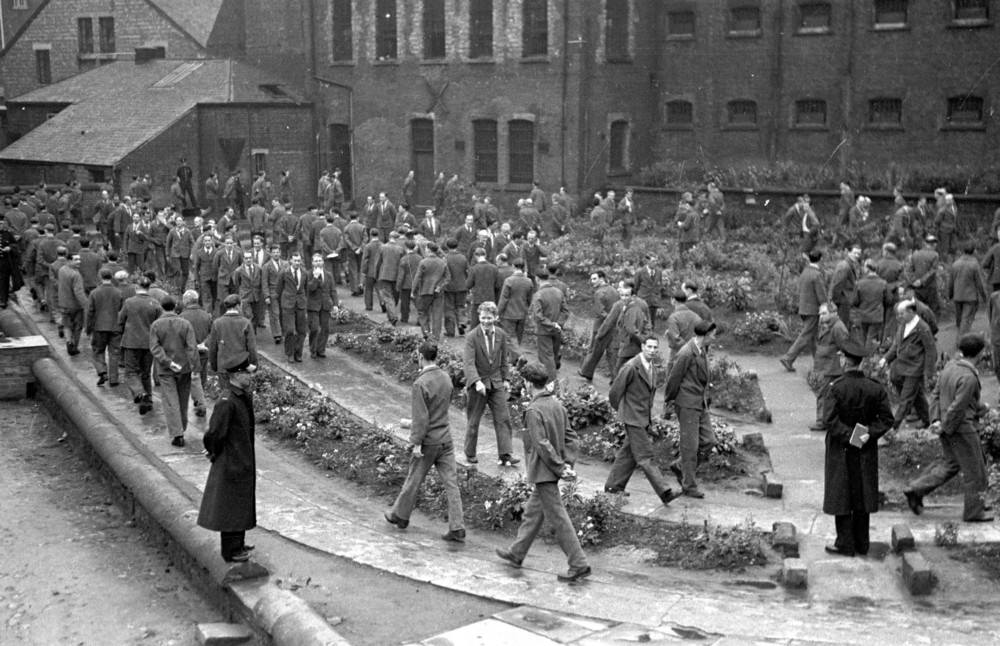
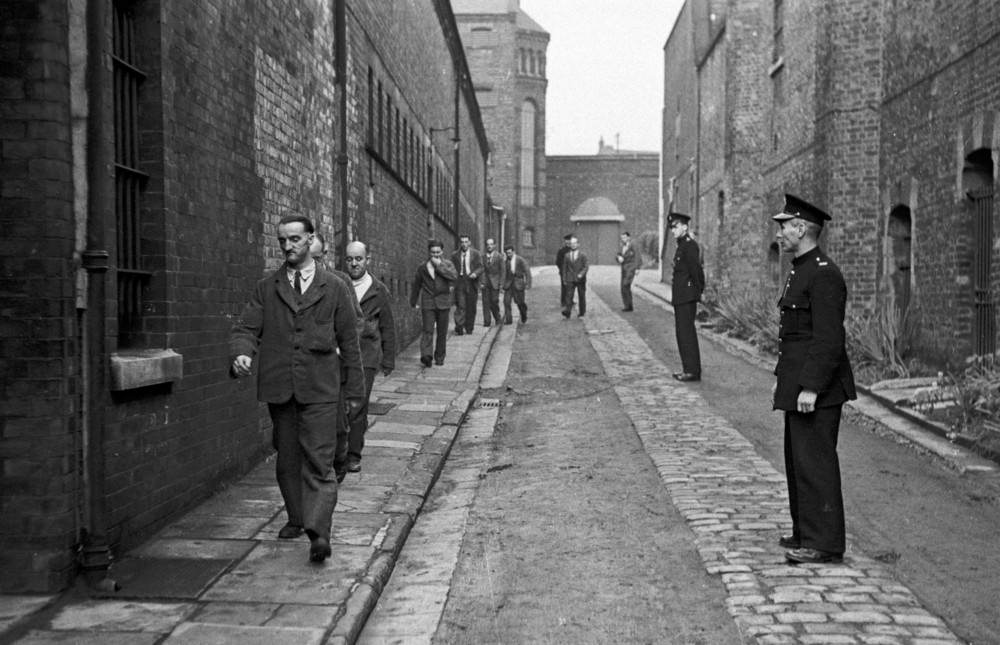
Prisoners were required to take one hour of outdoor exercise each day. They walked in silence, in circles, under the watch of officers stationed around the yard. This brief window outside was one of the few breaks from the monotony of the cell. Hardy captured both the exercise in progress and the moment prisoners were marched back inside, their supervised freedom measured in minutes.
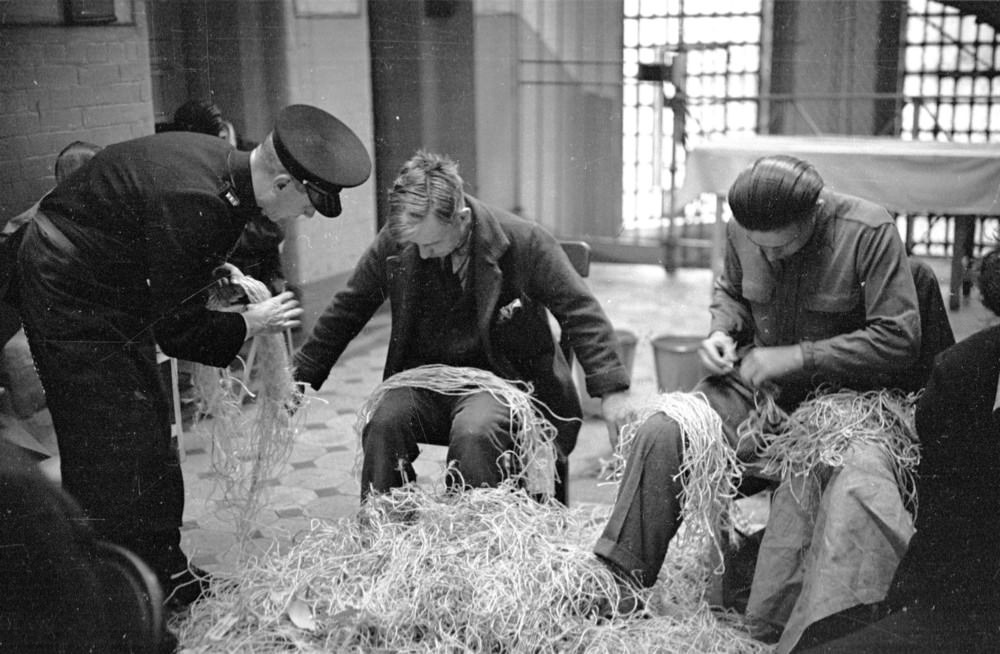
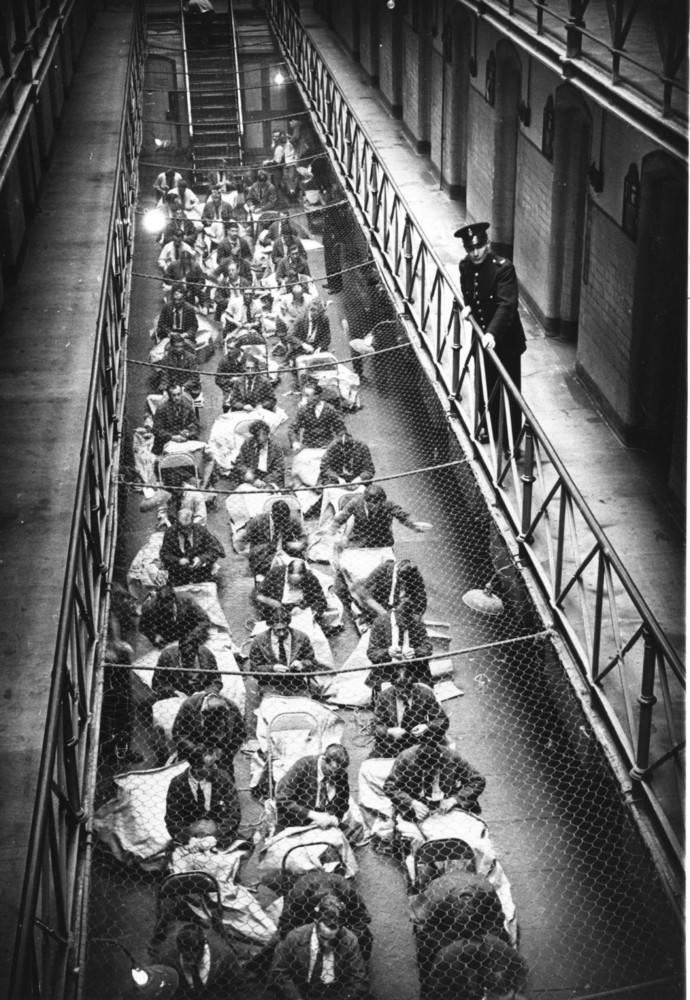
Labour occupied a large part of the prison day. Strangeways held a contract with the Post Office, and prisoners spent hours untangling knots from reused string — a slow, repetitive task. Others were put to work sewing mailbags by hand, a form of prison labour common across British jails at the time. Officers stood watch throughout, ensuring the work continued without disruption.
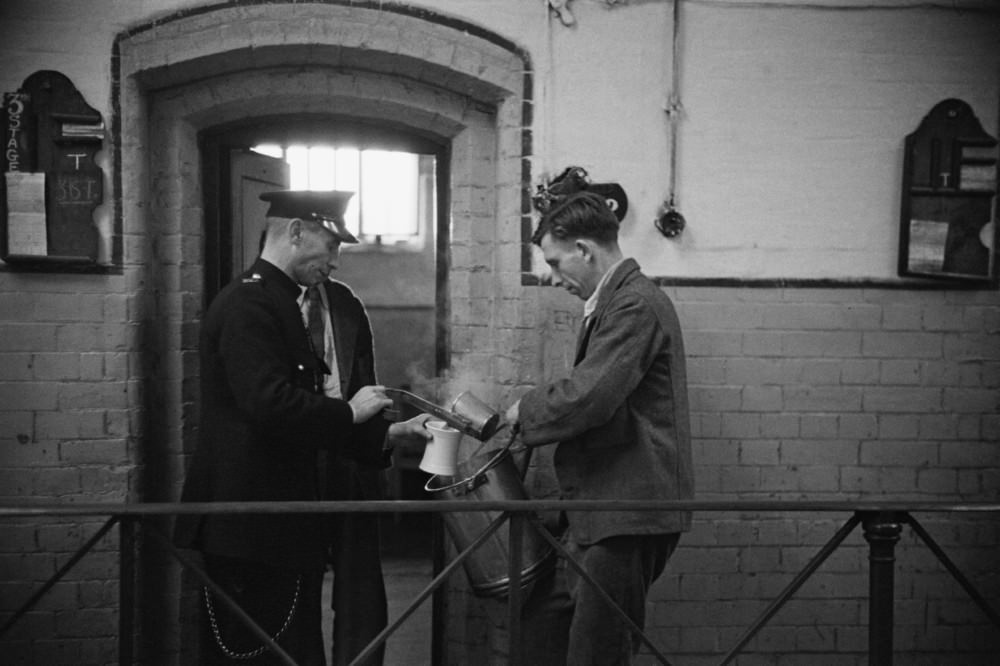
Mealtimes were also strictly managed. Officers served food directly to prisoners, with no element of the process left unsupervised. Hardy photographed officer Davidson — one of the named officers who appears throughout the series — handing a meal to a prisoner, a simple exchange that nonetheless took place entirely on the prison’s terms.
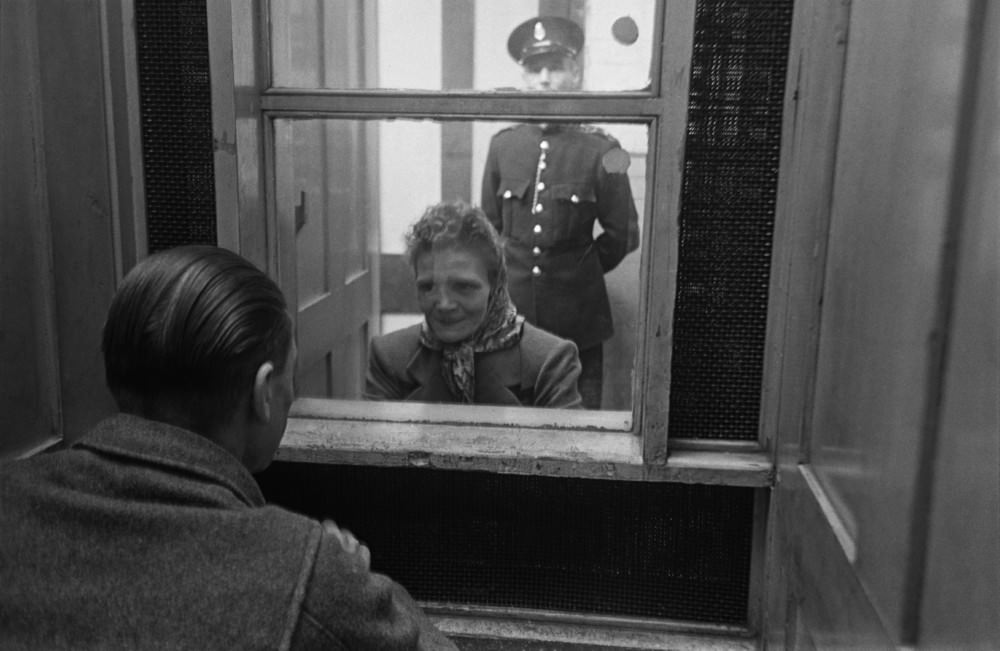
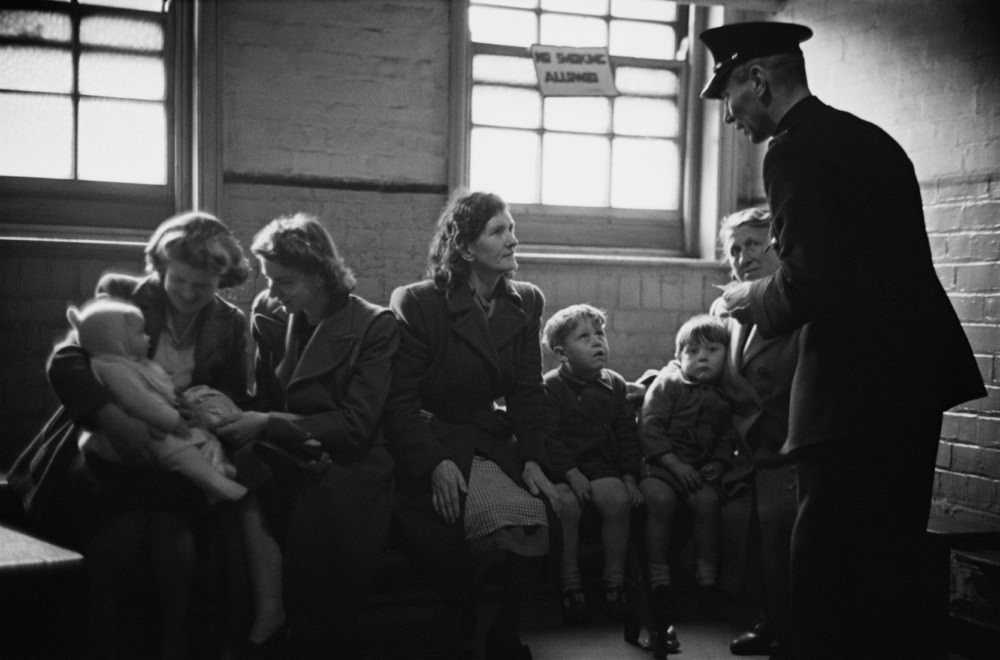
Visits from the outside world were permitted, but they were closely monitored. Officer Davidson appears in Hardy’s photographs overseeing prisoner interactions with visitors, standing within earshot of every conversation. No moment of contact with the outside was left unwatched. The prison controlled not just what prisoners did, but who they spoke to and what could be said.