Hey There! Before You Go. 😧
Get the best vintage content straight into your inbox!

Don't worry, we don't spam

What Manchester Looked like in the 1910s through these Fascinating Historical Photos

By the early 1900s, Manchester had grown into one of the most important cities on the planet. It ranked as the ninth most populous city in the world, a staggering achievement for a city in the north of England. Its streets were busy, its factories were full, and its institutions were earning global reputations. The photographs from this era capture a city at the height of its ambition — before the First World War reshaped everything.

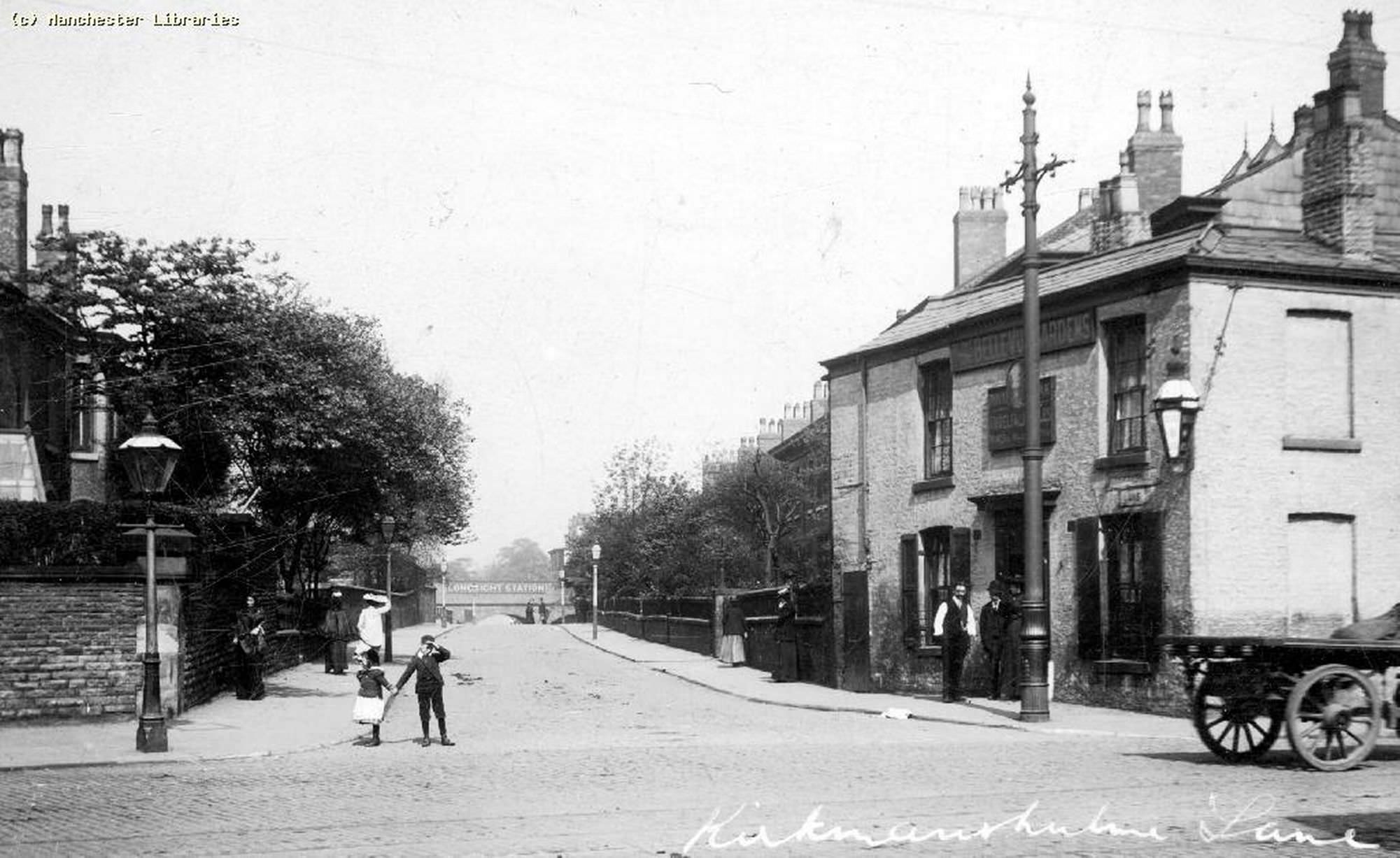
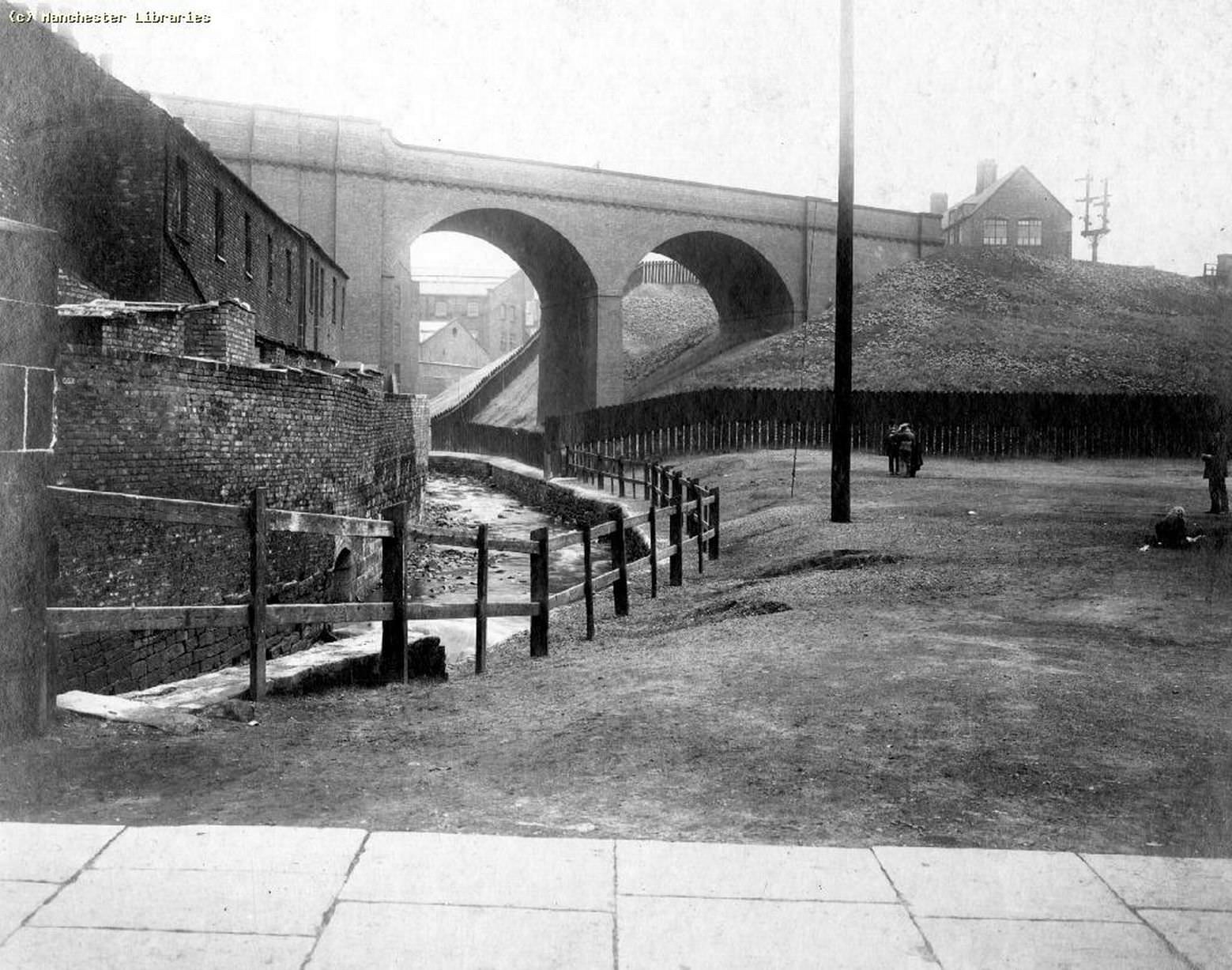
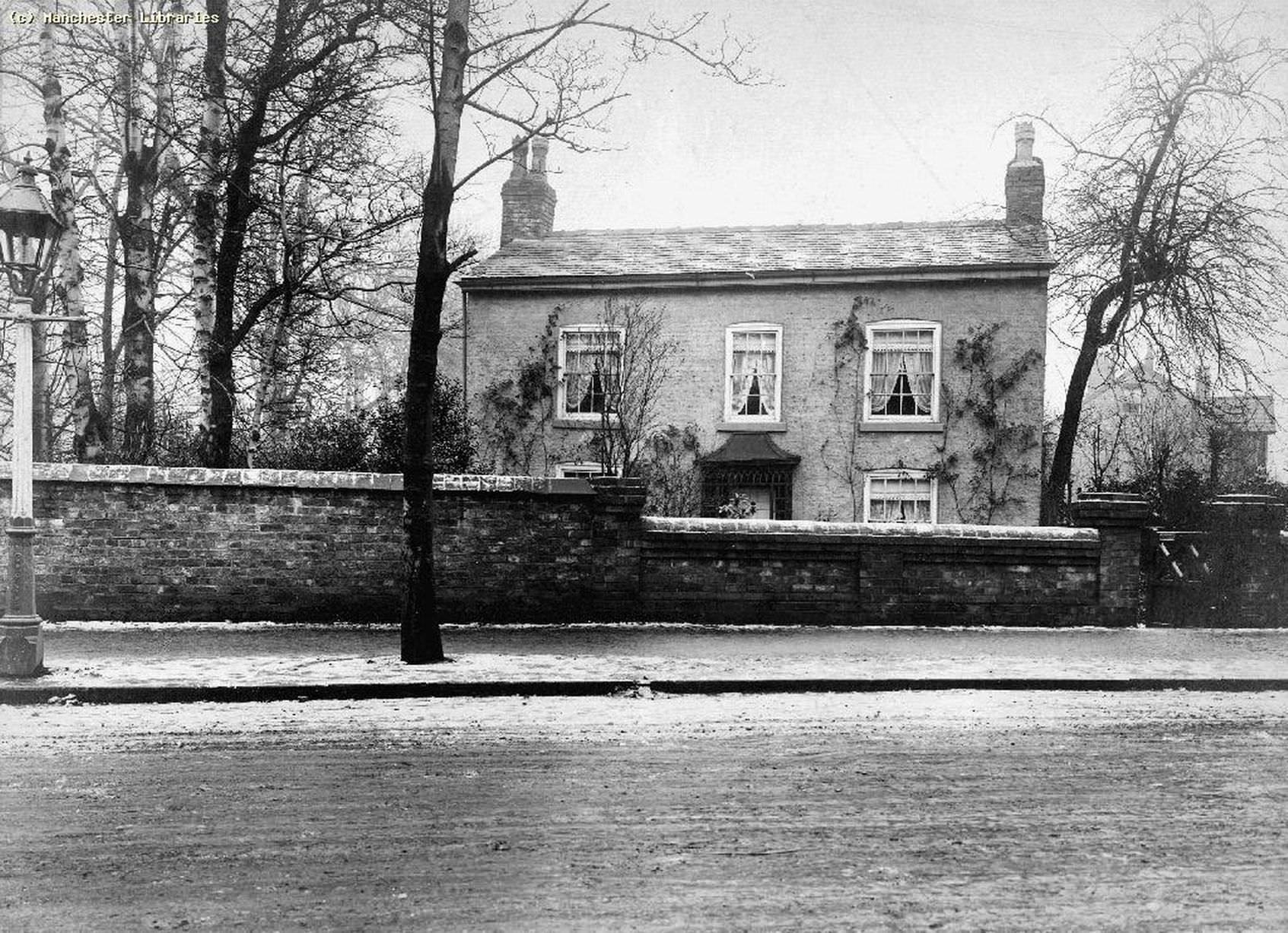
Longsight, Kirkmanshulme Lane

Manchester’s economy in the 1910s was built on a wide mix of industries. Cotton had once been the undisputed backbone of the city, but by this point it was in a steady decline. In its place, newer trades stepped forward — flour milling, biscuit production, and breakfast cereal manufacturing all grew during this period. Engineers, chemical manufacturers, and electrical companies filled the gaps and kept Manchester’s economy moving.
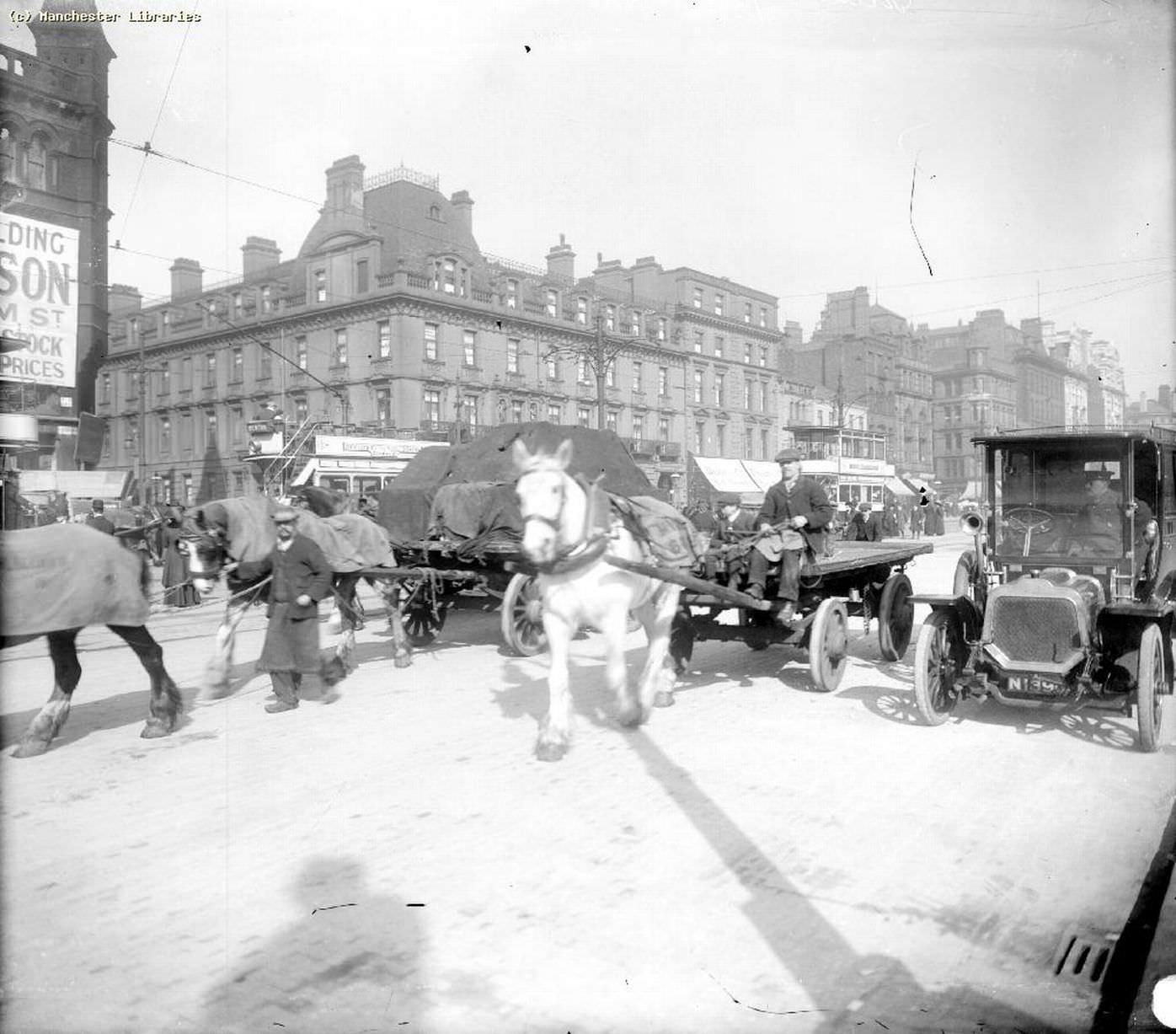
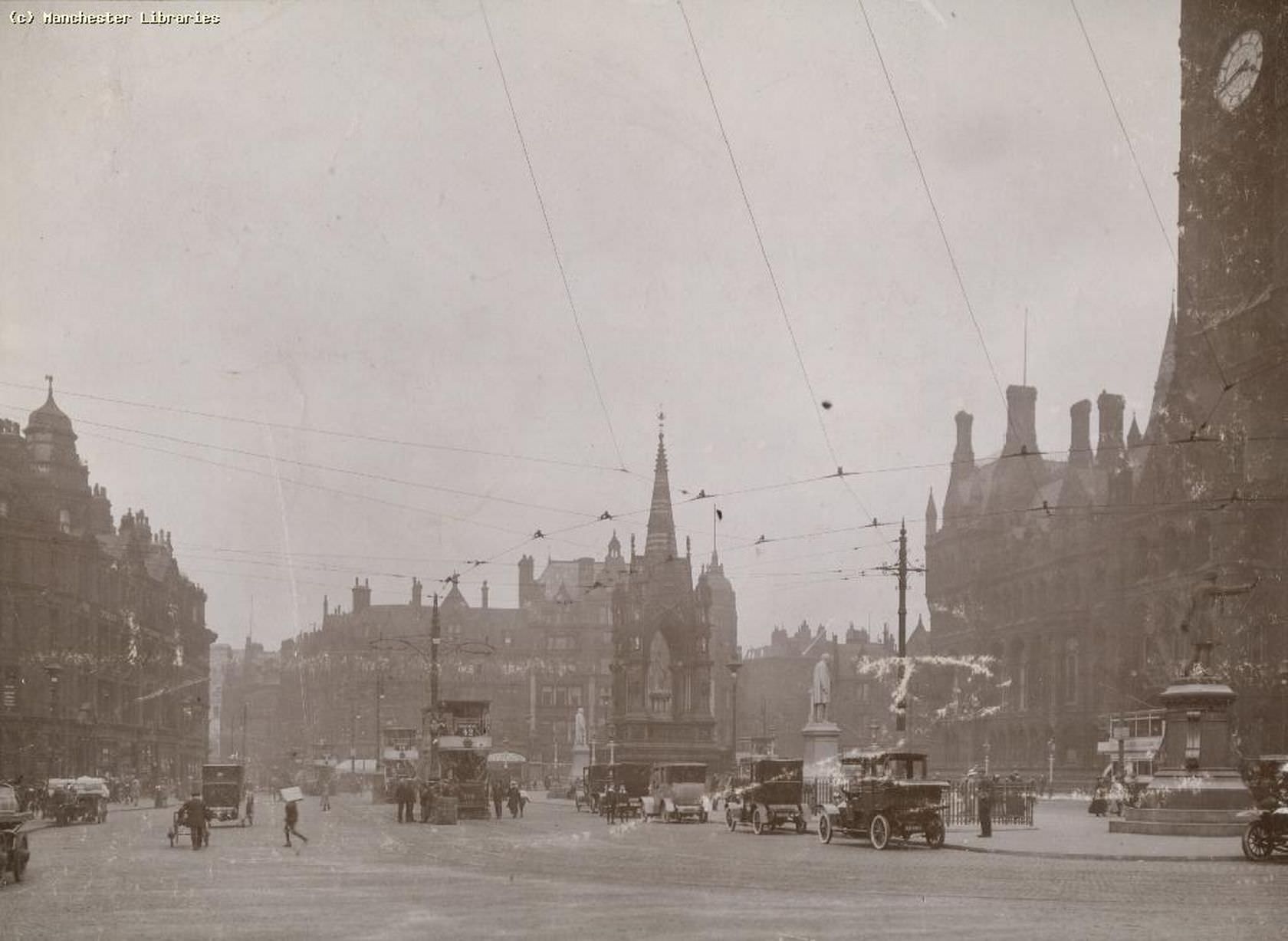
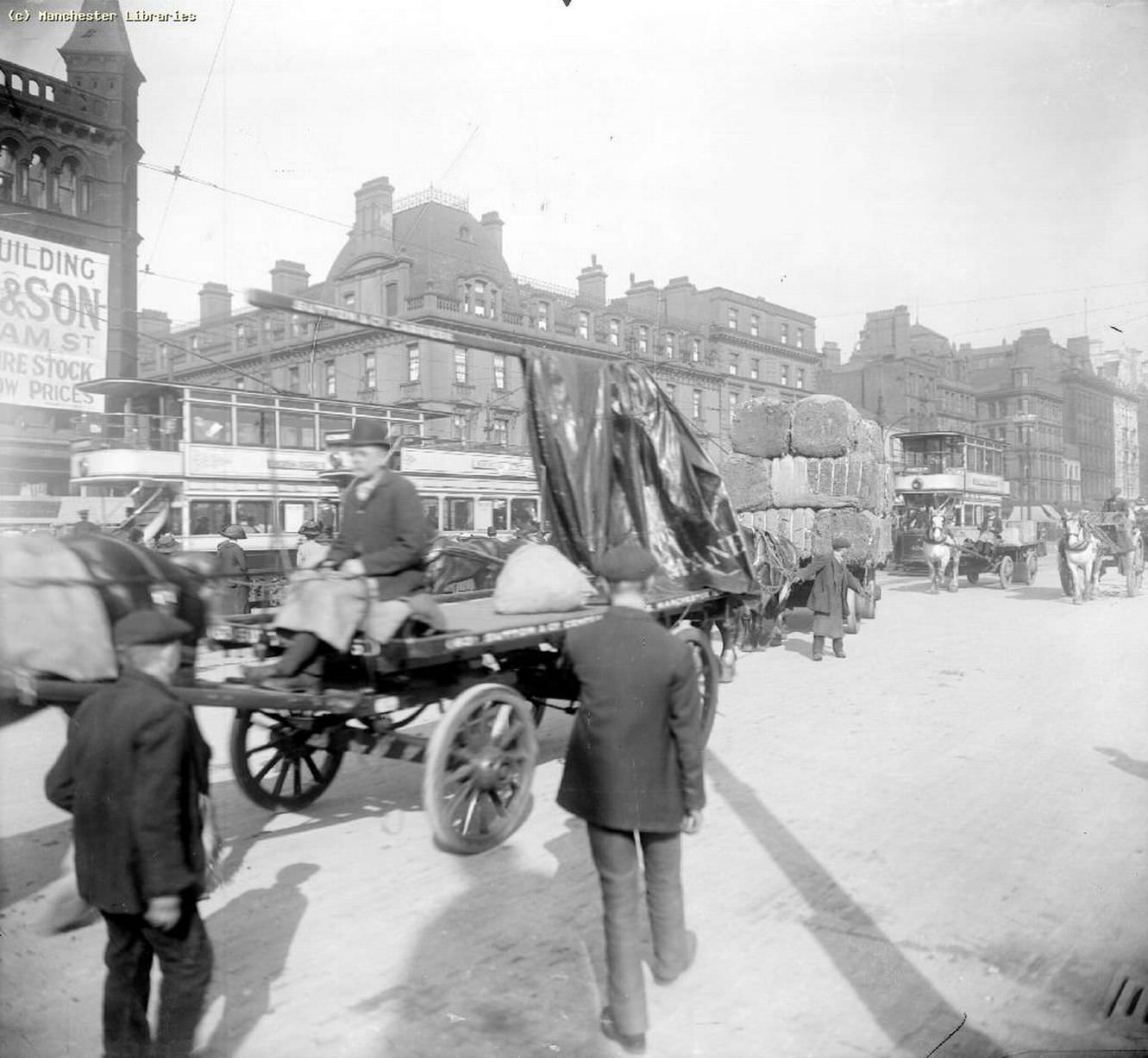
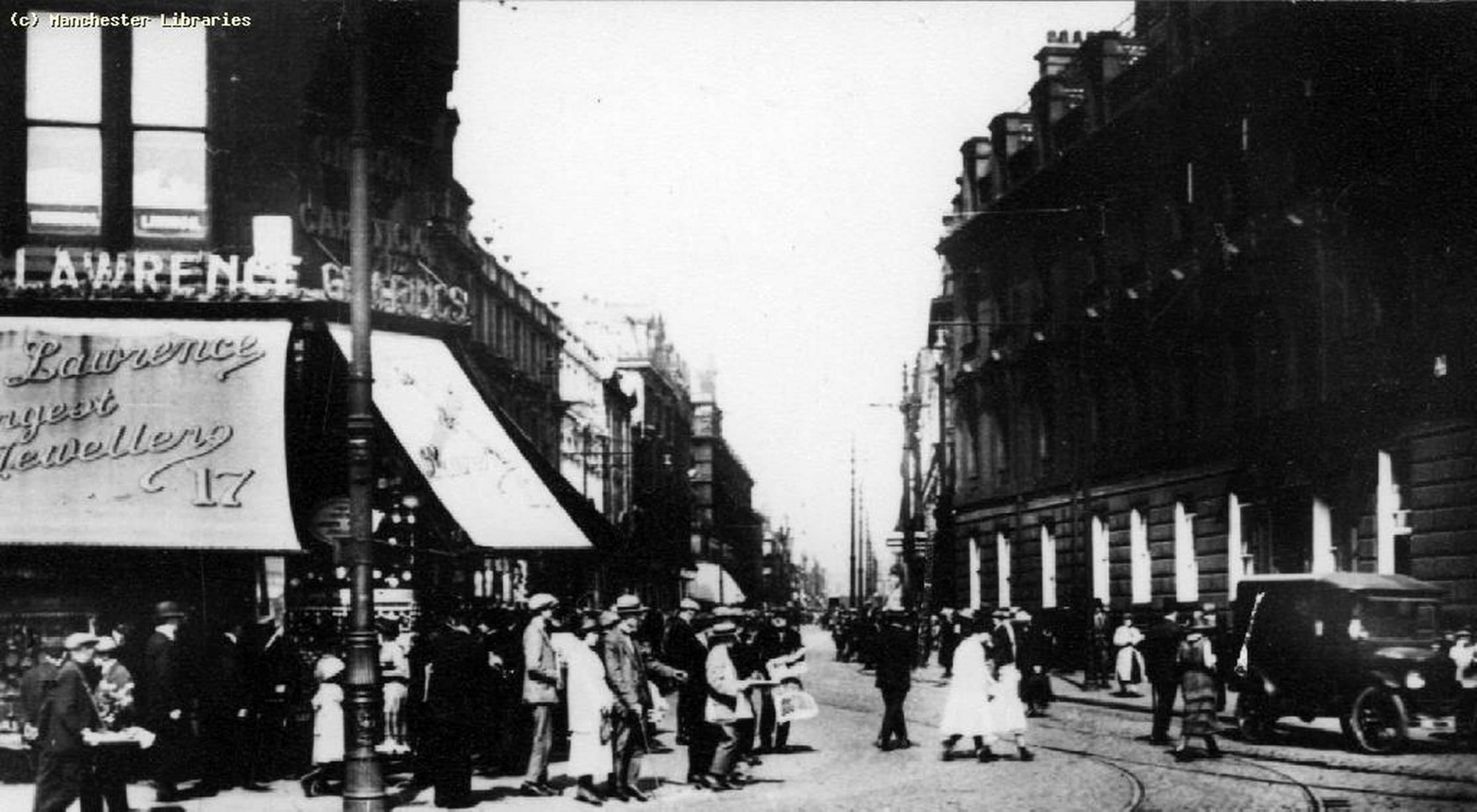
Piccadilly
Piccadilly

One of the most significant developments of the era was the rise of Trafford Park. Established in 1910 alongside the Manchester Ship Canal, it became the world’s first planned industrial estate — and also the largest in Britain. The ship canal had transformed Manchester into the fourth-busiest port in Britain by 1910, a remarkable feat for a city sitting miles inland.

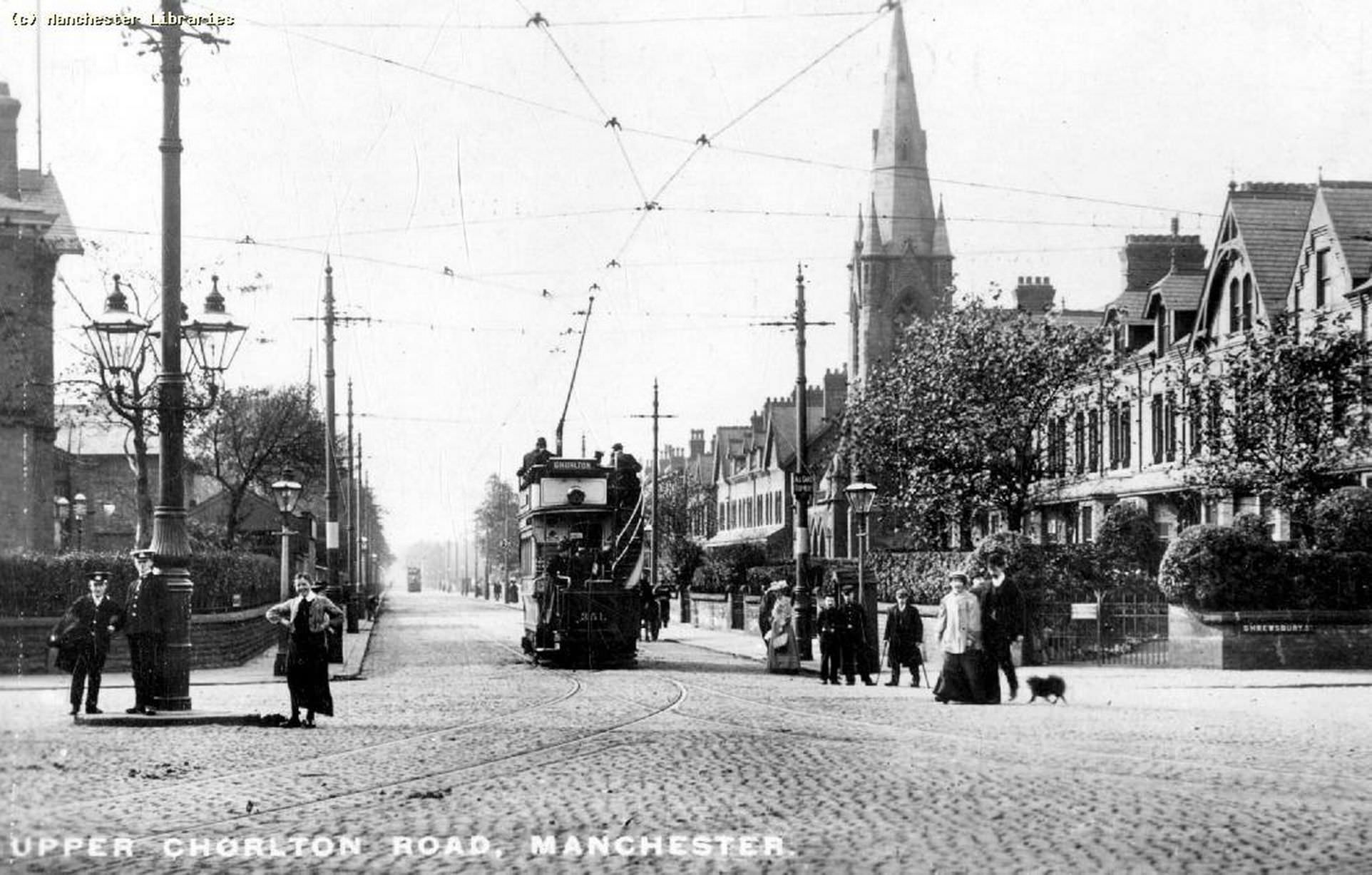
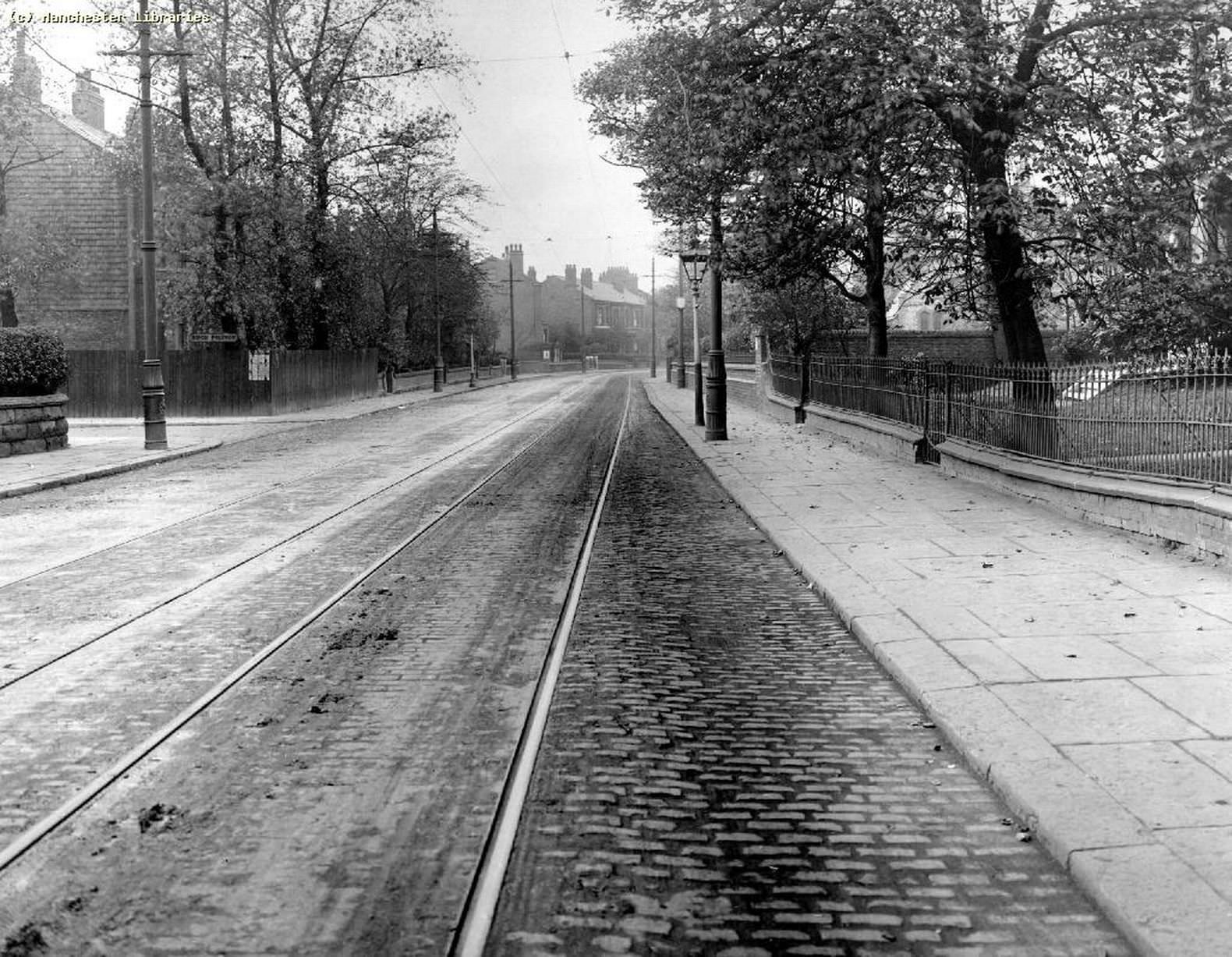
Whalley Range, Upper Chorlton Road

Trafford Park attracted major companies from across the Atlantic. Both the Ford Motor Company and Westinghouse Electric Corporation relocated from the United States to set up operations there. At its peak, more than 50,000 workers were employed within the estate’s factories. Ford later moved to Essex in 1929, but Westinghouse left its mark on the area permanently — “Westinghouse Road” still carries the company’s name today, and the grid-like numbering of streets and avenues reflects the American-style planning that came with it.
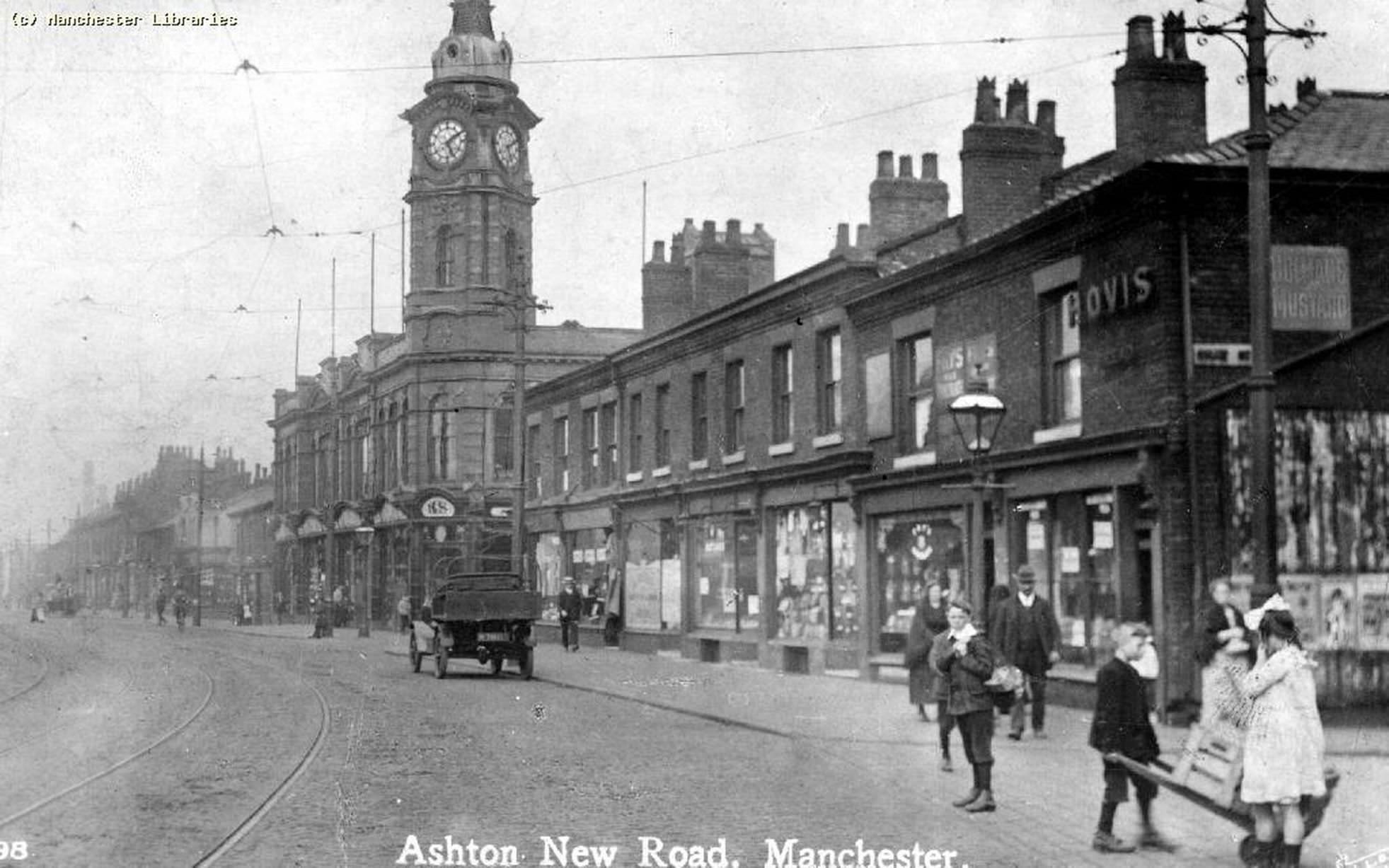
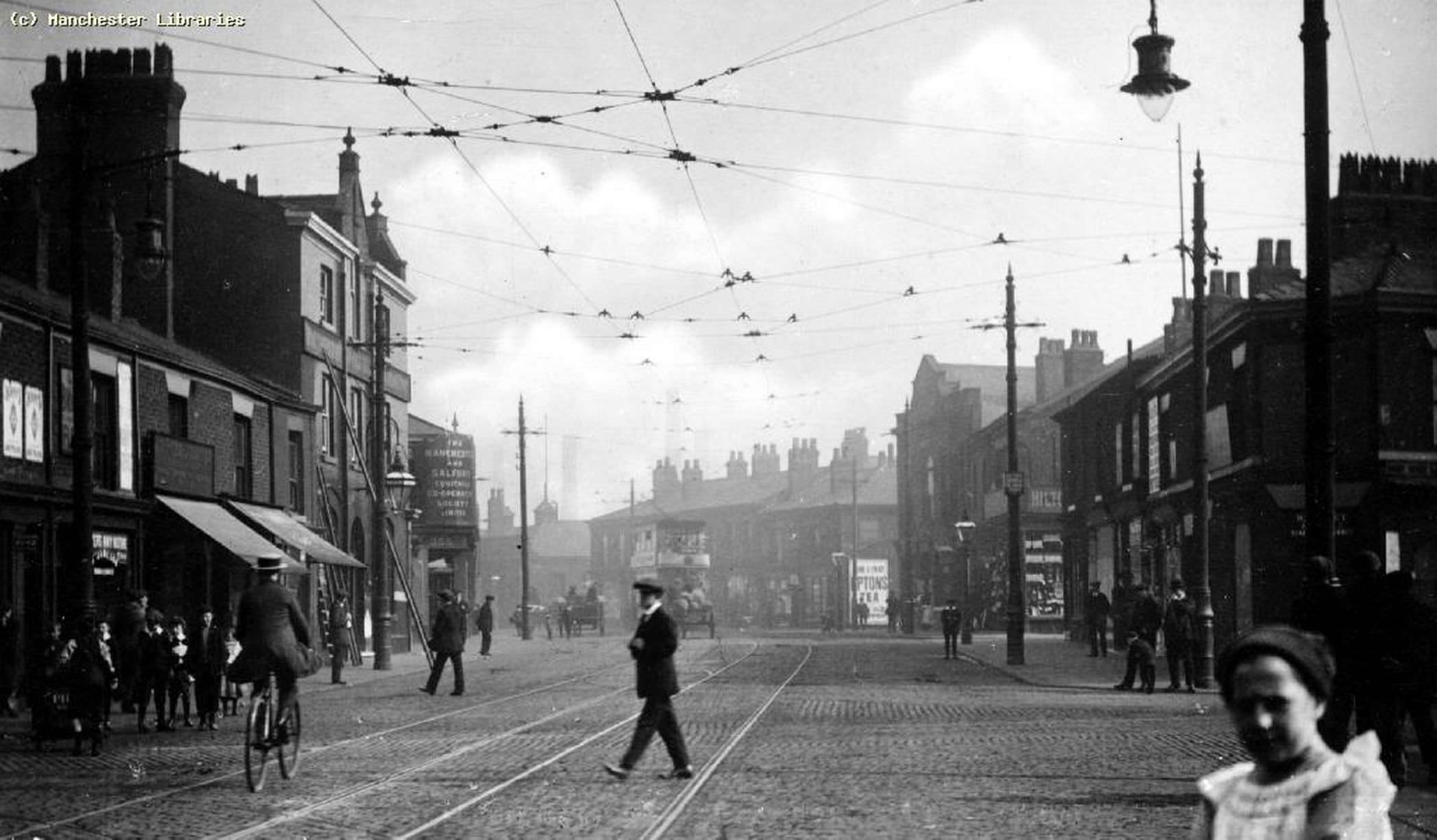
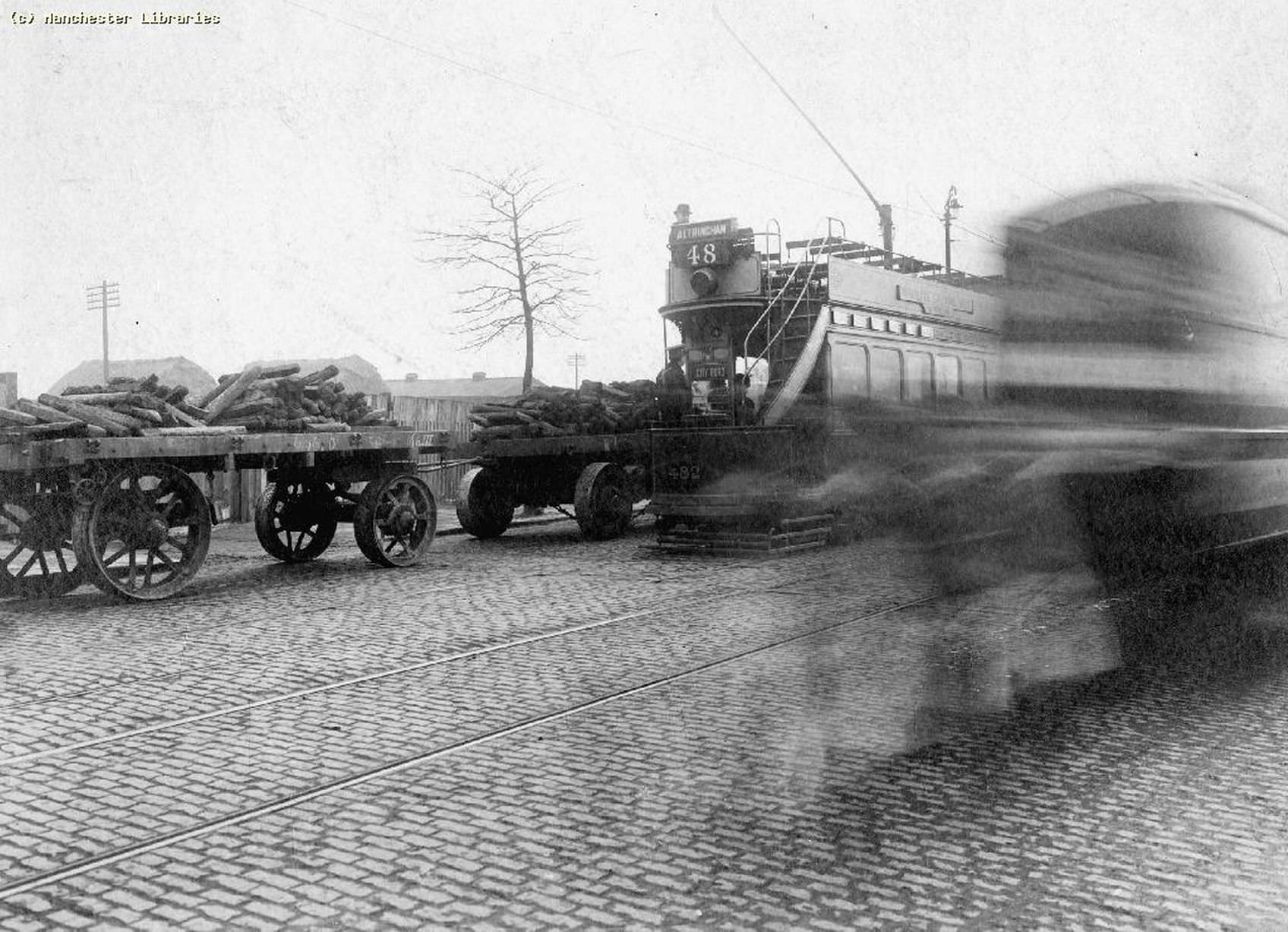
Ashton New Road
Ashton New Road
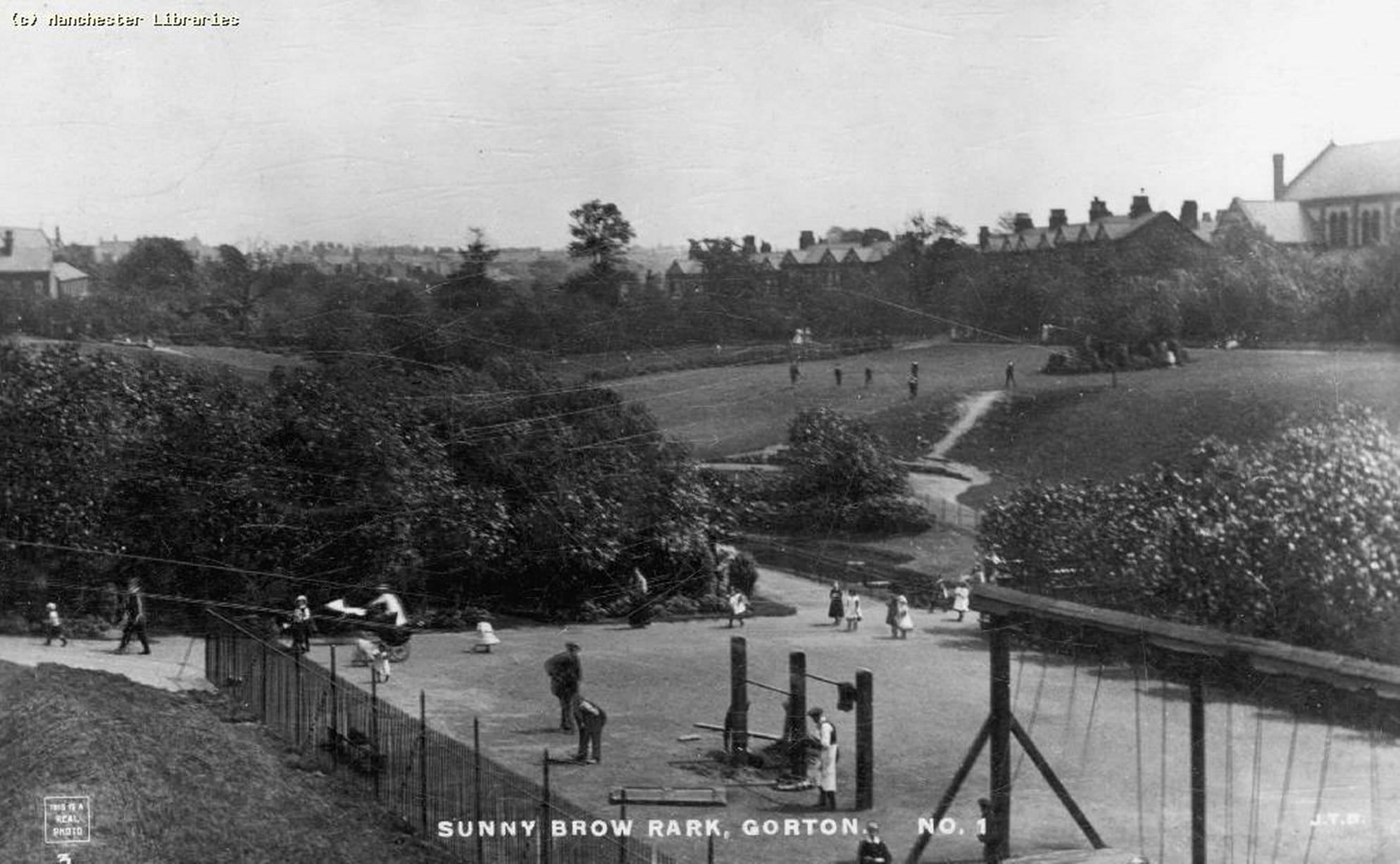
Sunny Brow Park, Gorton

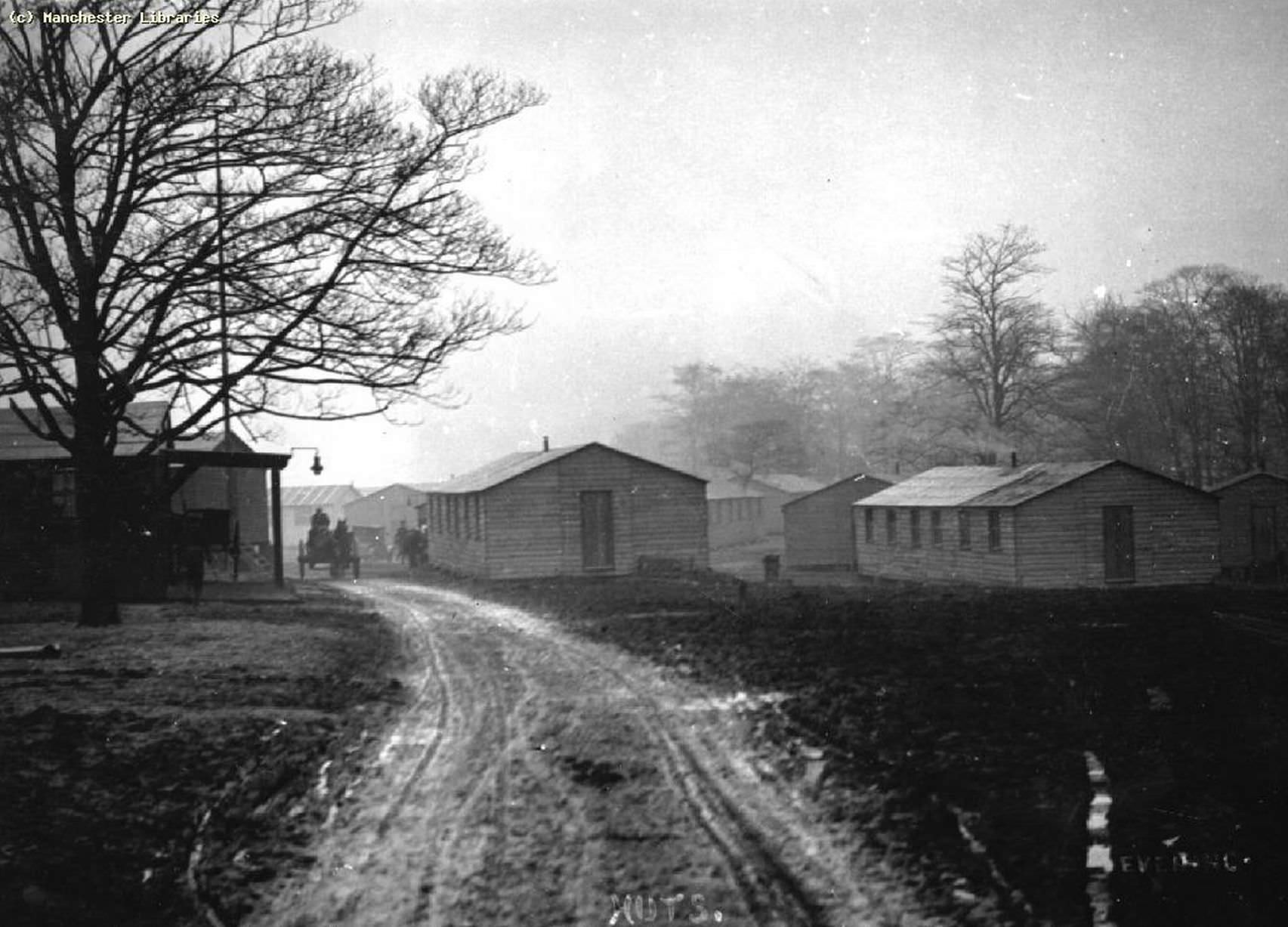
Away from the factories, Manchester was also investing in public life. The Manchester City Council purchased Heaton Park in 1903, giving residents one of the largest municipal parks in Europe. The park served many purposes over the years — and during World War I, it took on a very different role as a military camp and training ground for local regiments.
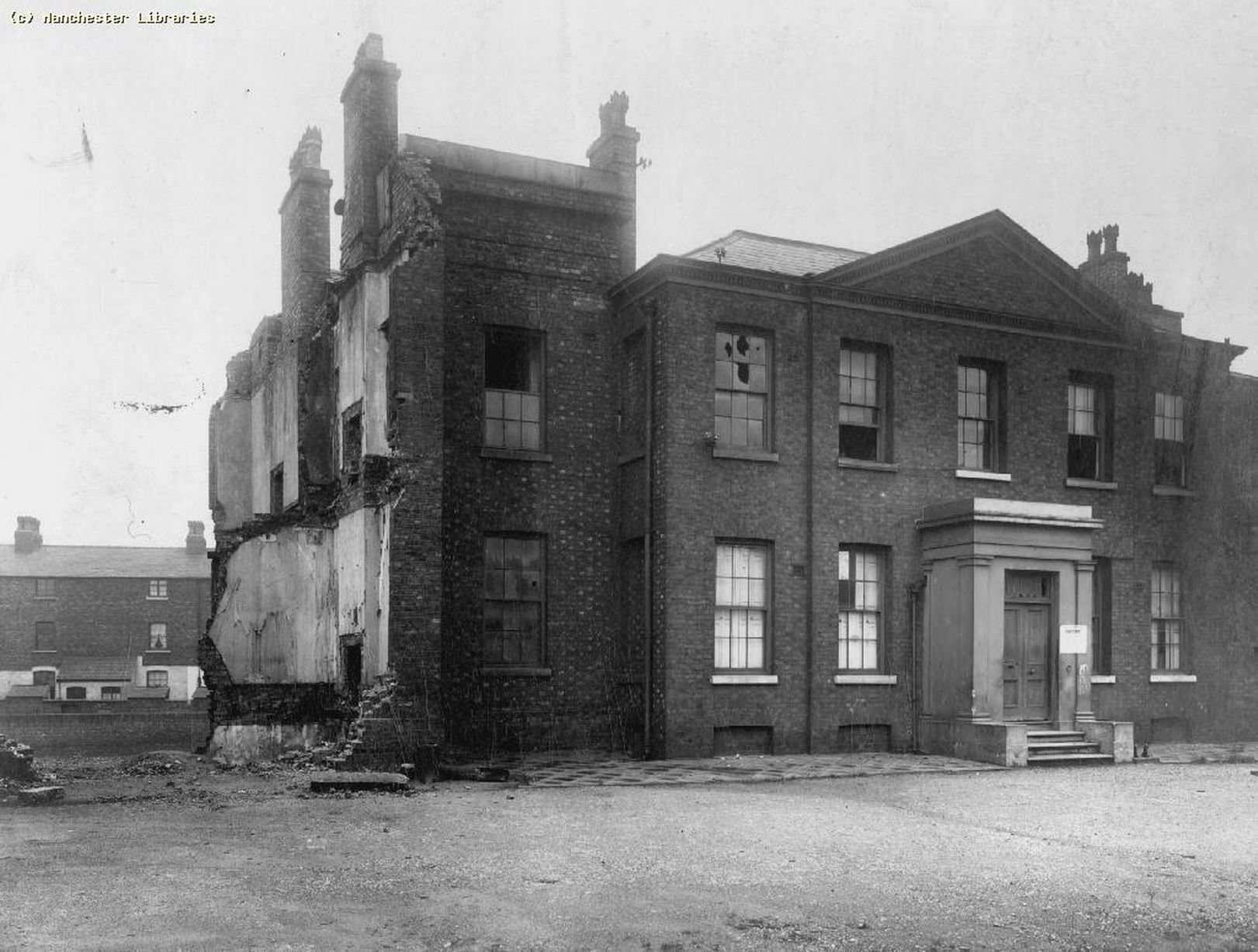
Hulme Barracks
Hulme Barracks
Hulme Barracks
Hulme Barracks

The John Rylands Library had opened its doors in 1900, just a decade before these photographs were taken. It stood as one of the finest neo-Gothic buildings in the country and housed an extraordinary collection of rare books and manuscripts. The University of Manchester had also been formally established in 1903, building on the foundations of Owens College, which had long served as the intellectual center of civic university education in England.
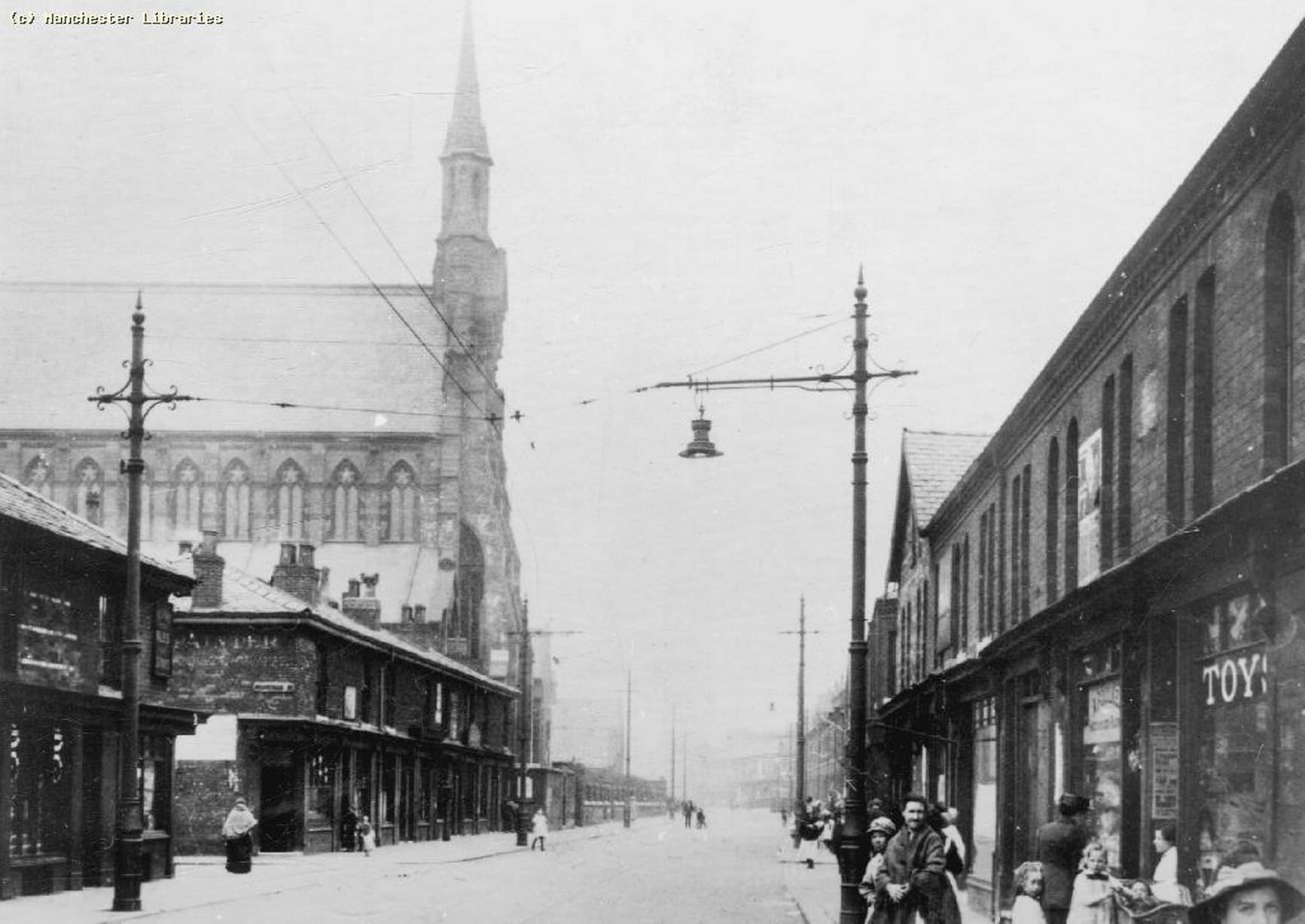
Gorton Monastery, Gorton Lane
Bradford, Ashton New Road

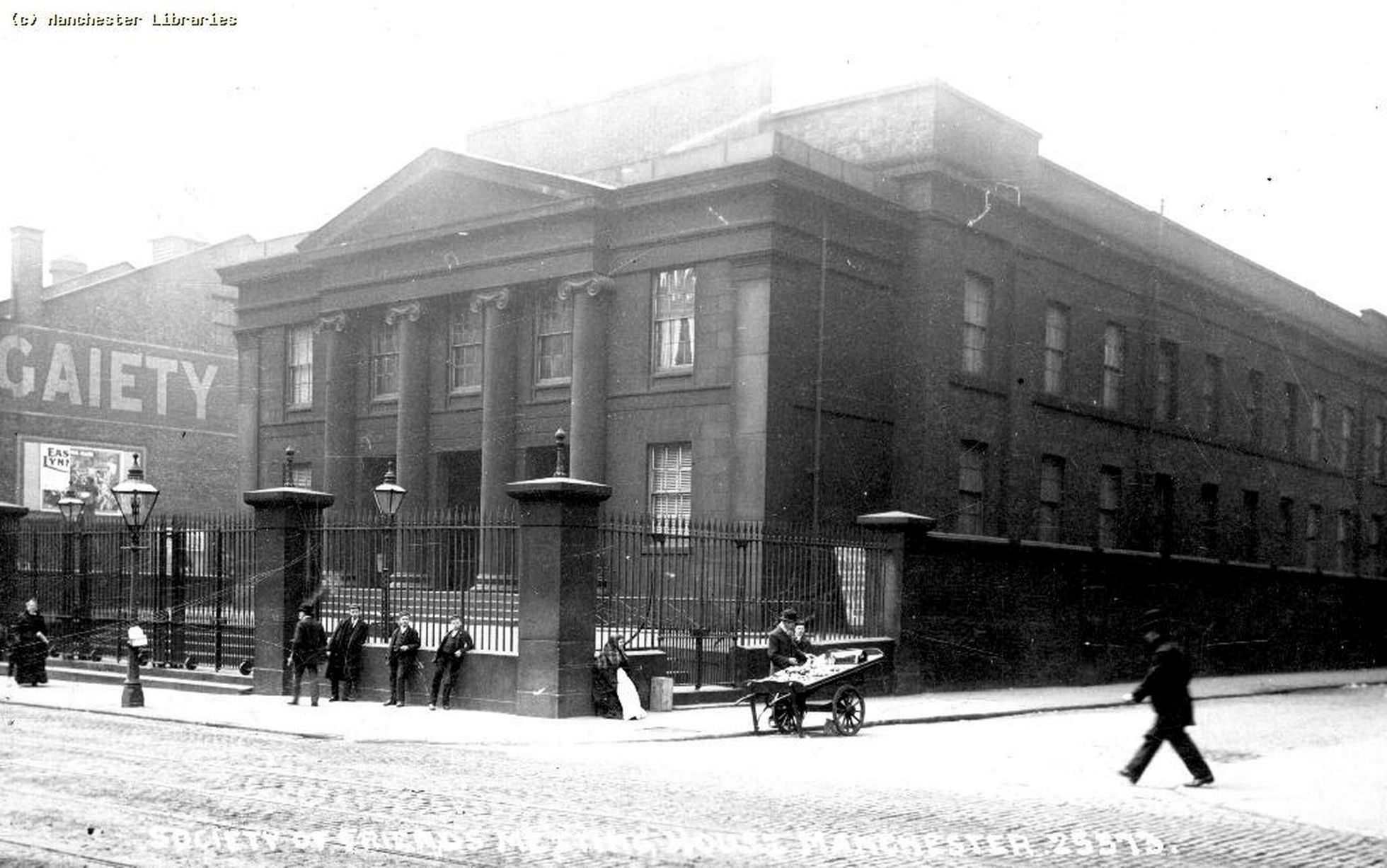
Religion and community life were central to the city’s identity. Churches, meeting houses, and monasteries dotted every neighborhood, from the grand Gorton Monastery to the quieter Quaker gathering places in the city center. These buildings were not just places of worship — they were community anchors that organized charity work, education, and social events.

Friends' Meeting House, Mount Street, Quakers, Manchester
Friends’ Meeting House, Mount Street, Quakers, Manchester

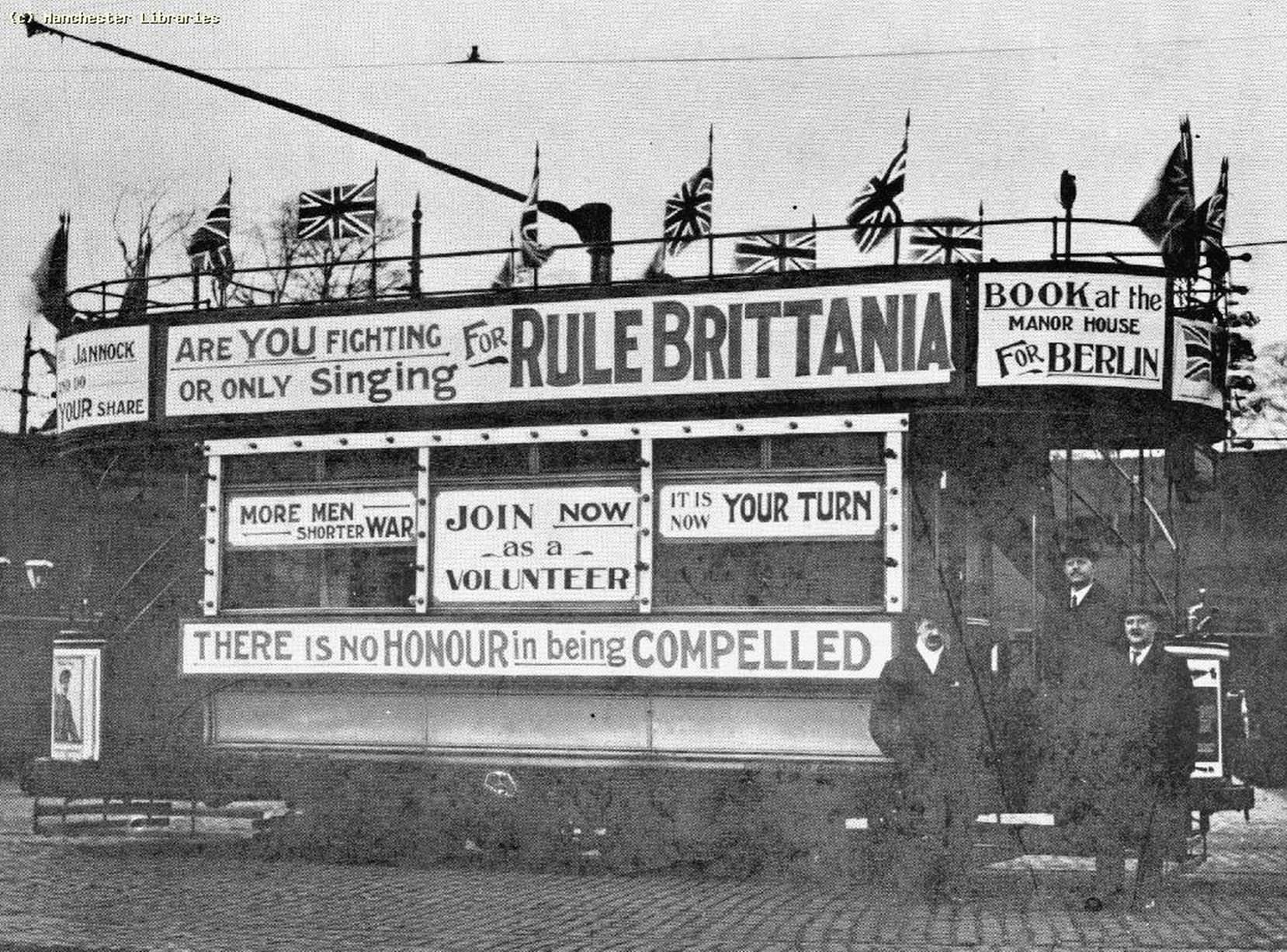
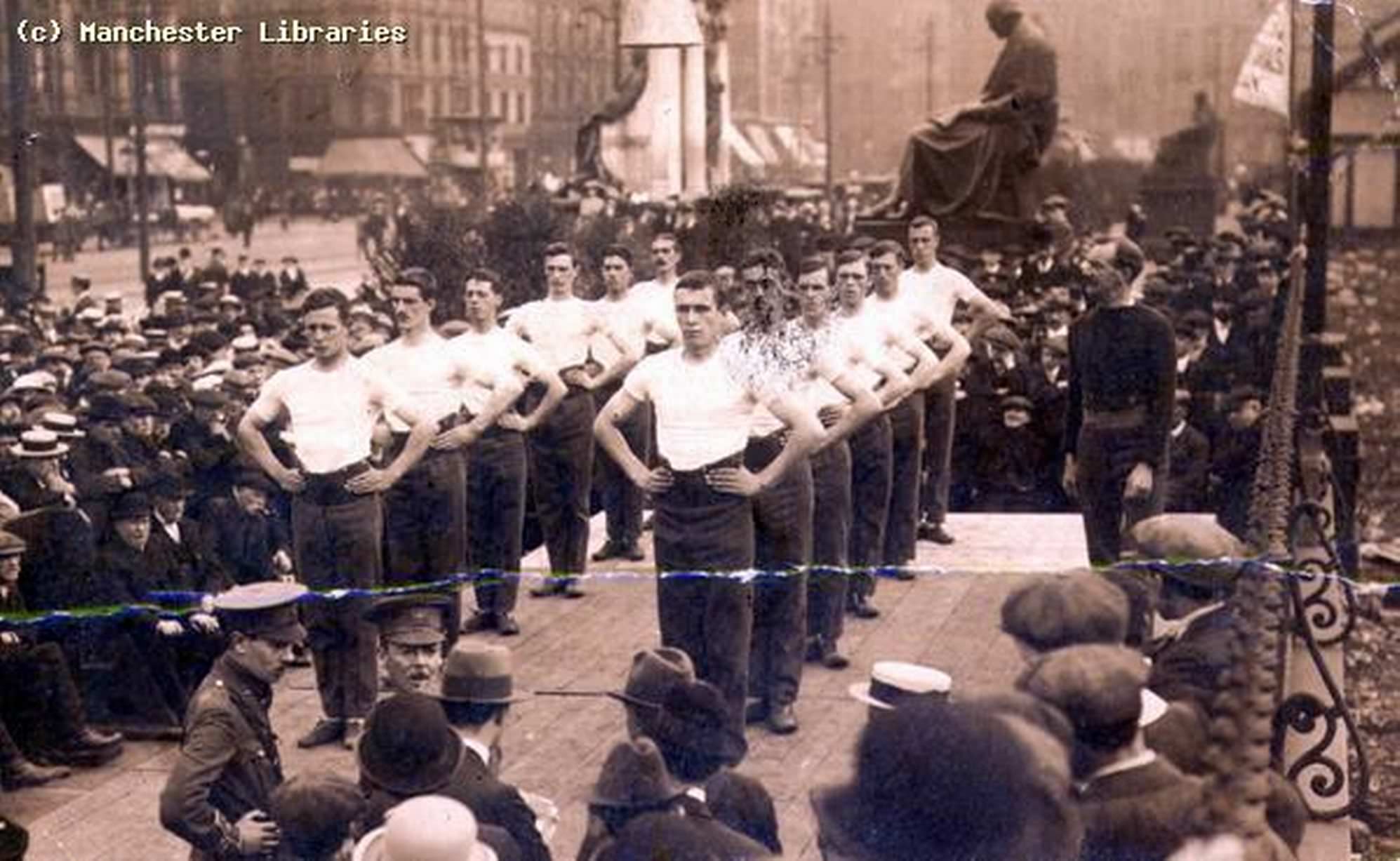
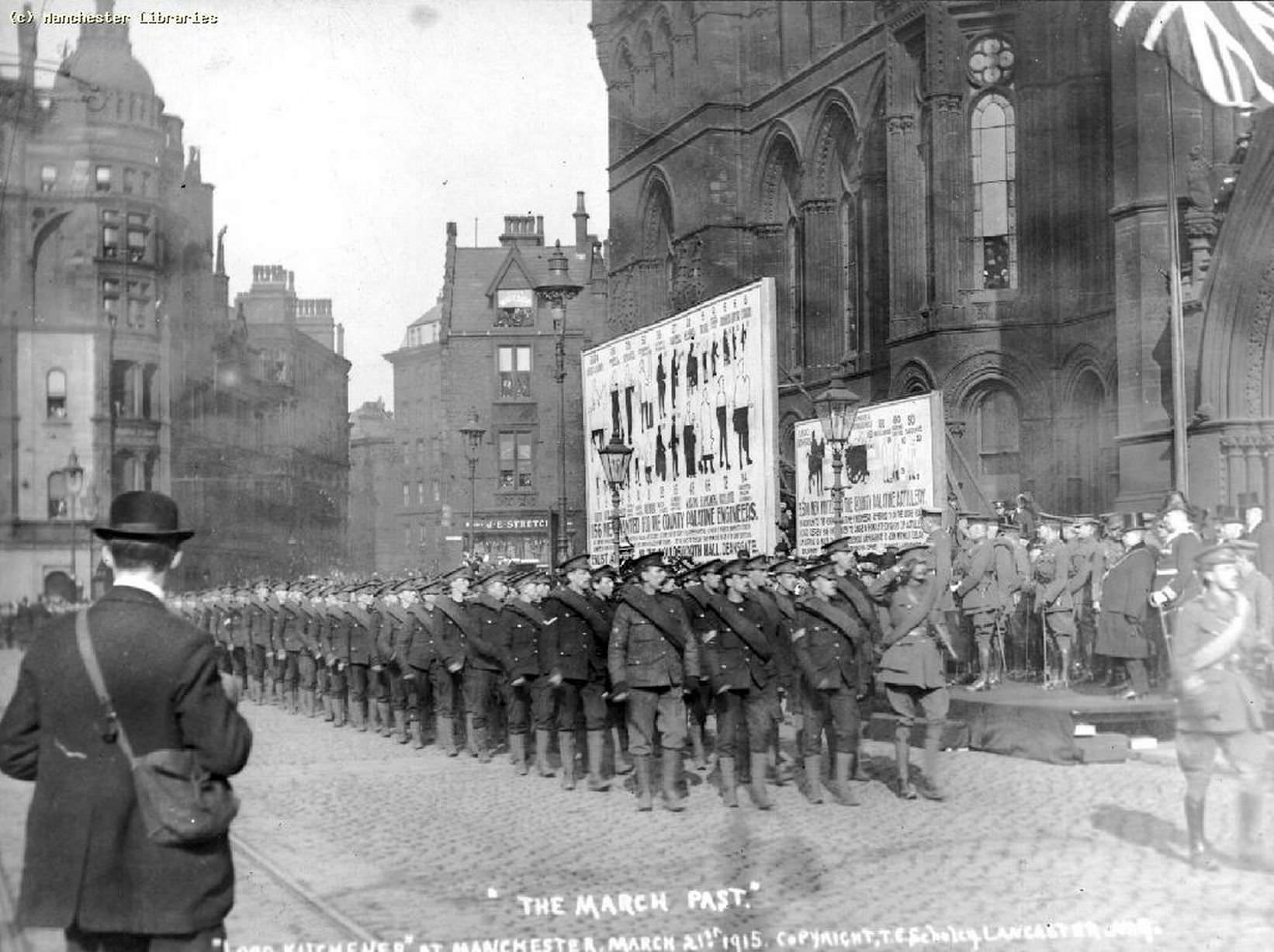
When World War I broke out, Manchester threw itself into the war effort with force. Recruitment drives ran across the city — trams were plastered with enlistment posters, and Piccadilly Gardens hosted public campaigns to draw men into service. Lord Kitchener himself visited Manchester for a march past at the Town Hall in Albert Square, a moment that drew enormous crowds and press attention.

Lord Kitchener visit to Manchester for March Past, Town Hall, Albert Square, Manchester
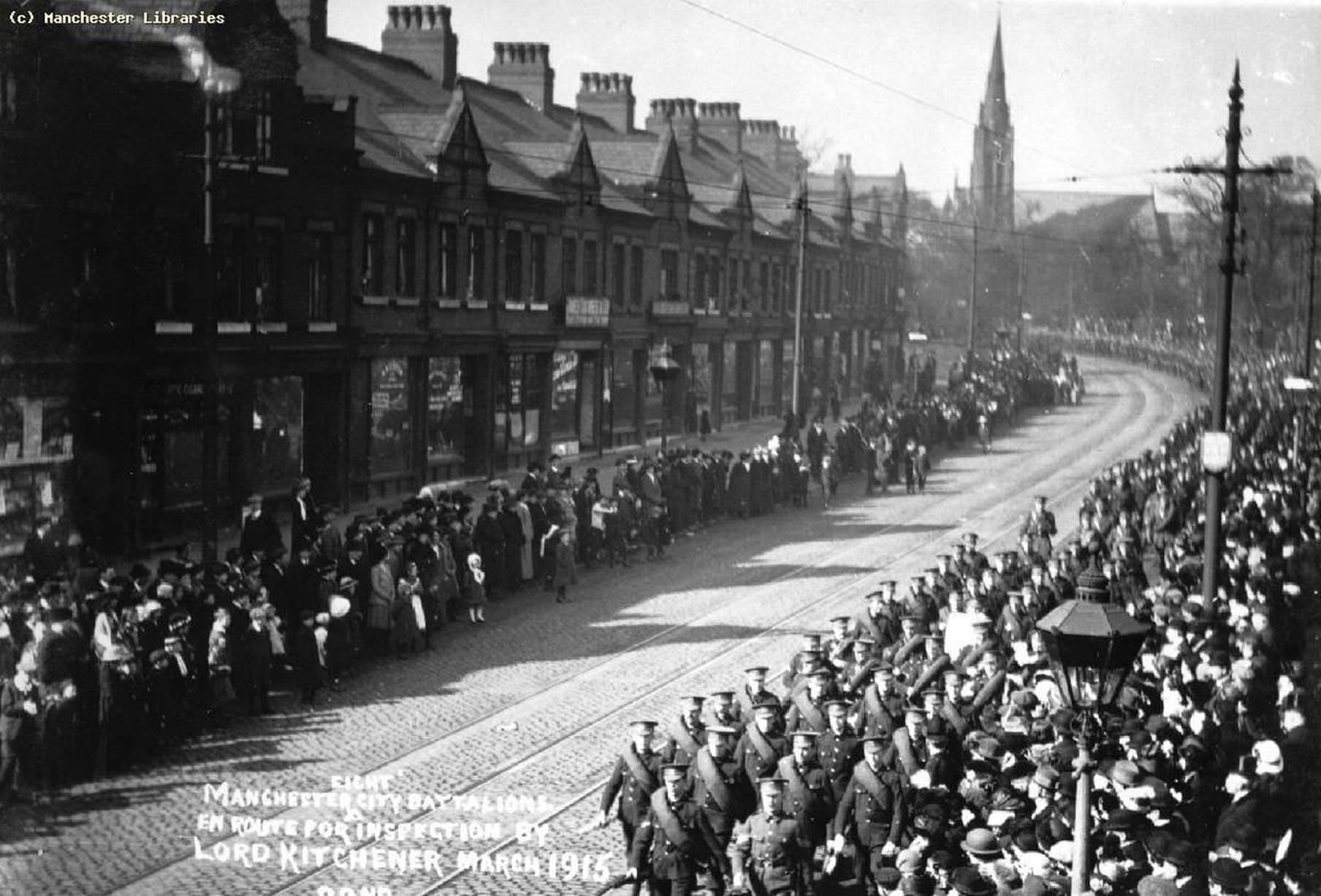
City Battalions of the Manchester Regiment marching from Heaton Park

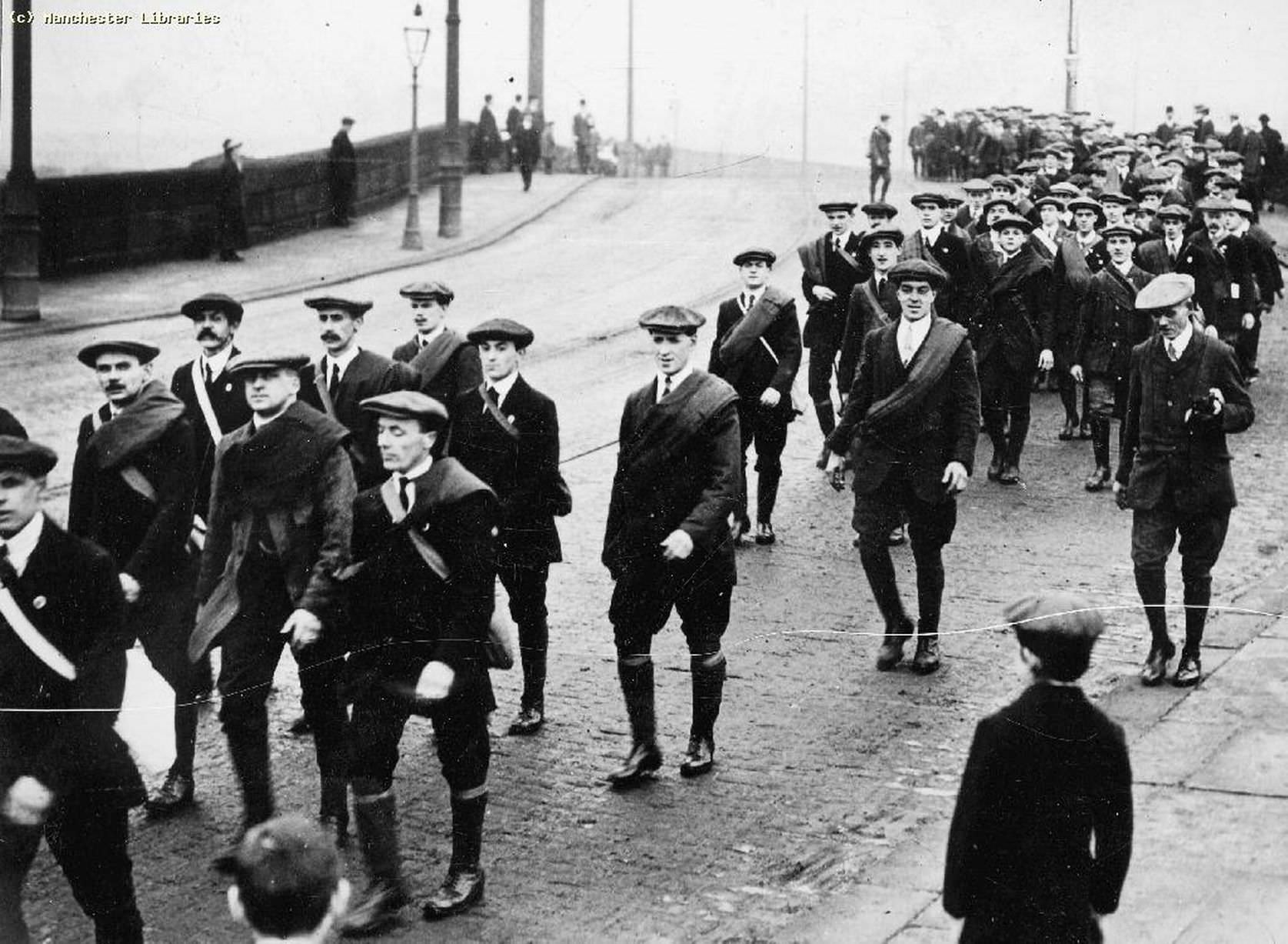
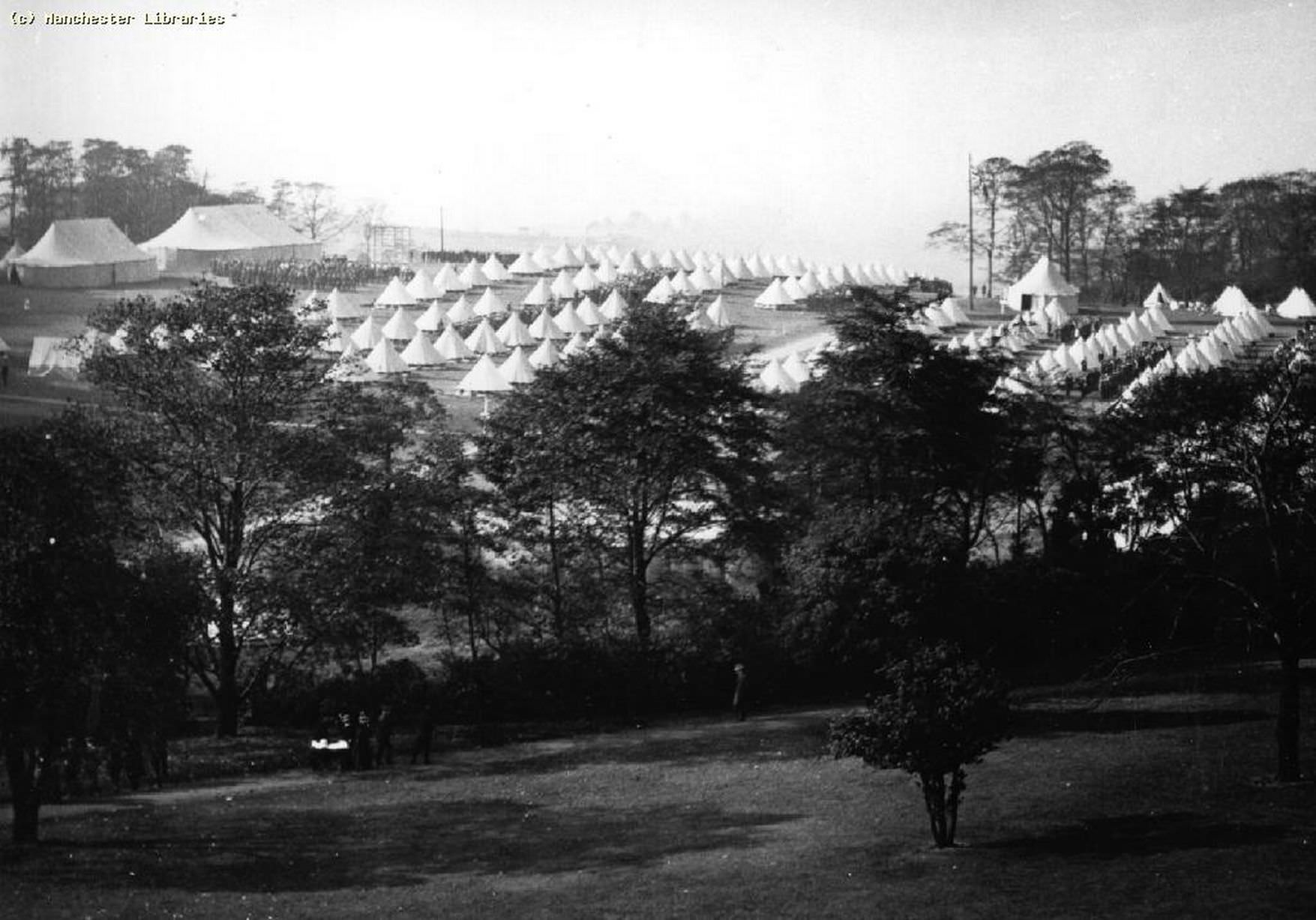
Prospective recruits trained on practice route marches through the surrounding area, including along Longford Bridge on Chester Road in Stretford. Heaton Park became a full military camp for the Manchester Regiment, with rows of tents replacing the parkland that families had strolled through just years before. The transformation of peacetime spaces into military ones was felt across every part of the city.

Prospective recruits on practice route march, Longford Bridge, Chester Road, Stretford
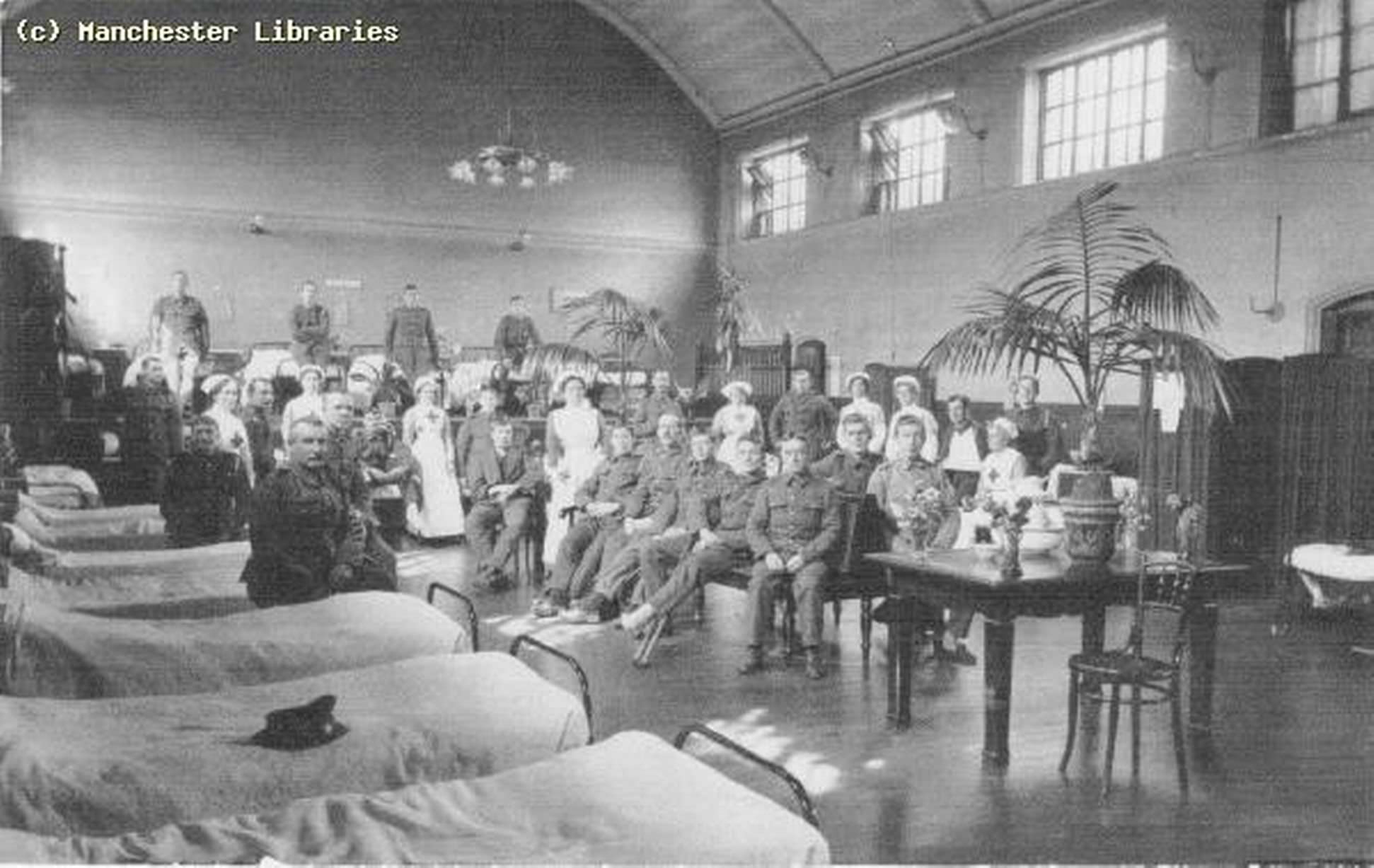
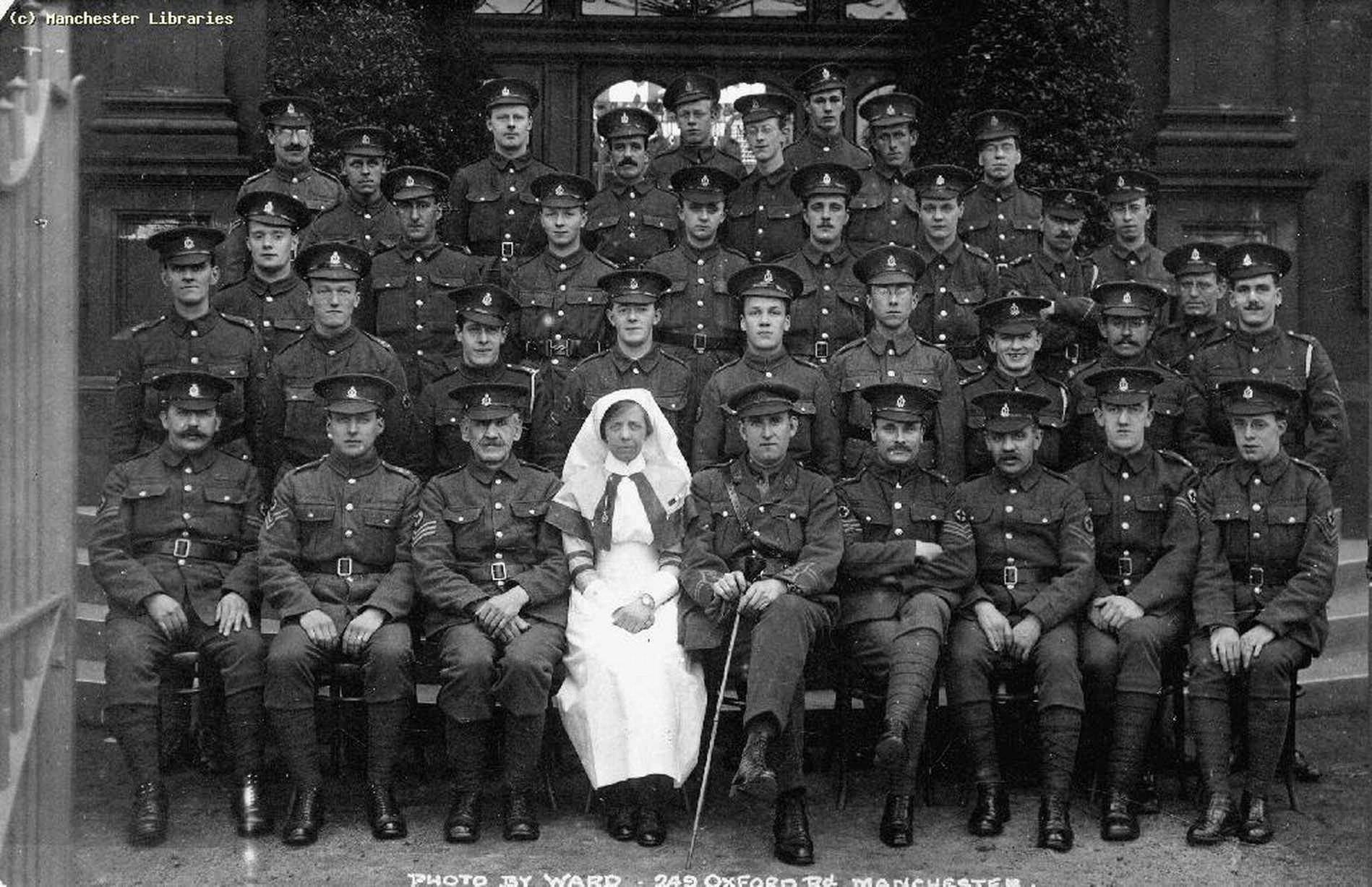
Soldiers and Nurses at Blackley Institute Military Hospital
Manchester Regiment Convalescent Camp, Heaton Park

The city’s hospitals and public buildings were repurposed to care for the wounded. Blackley Institute became a military hospital, with nurses and soldiers photographed together in its wards. St Mary’s Hospital also took in patients during the war years. These images offer a direct and unflinching look at what wartime medical care looked like on the home front.

Tram with World War I recruitment posters
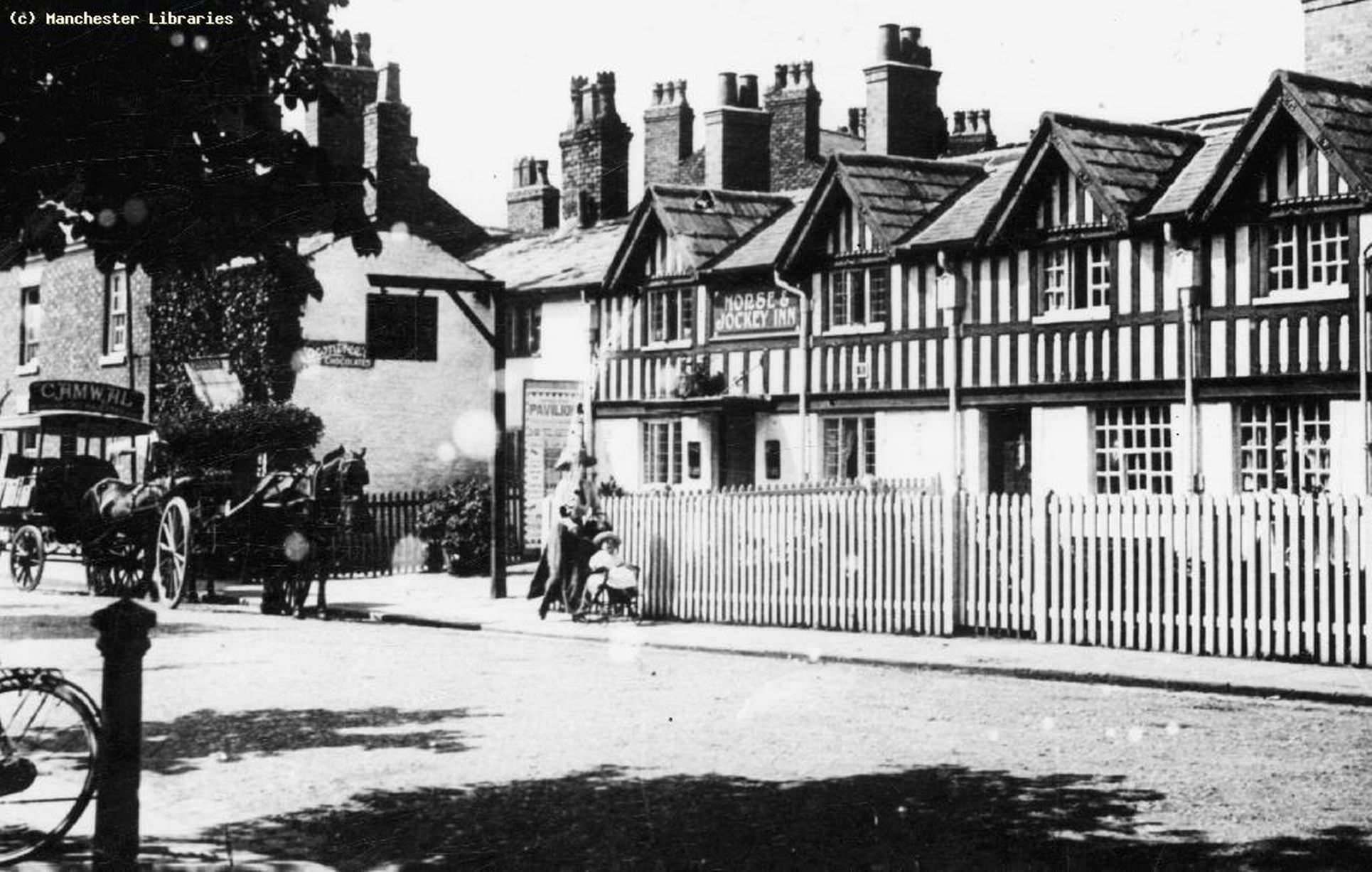
The Horse and Jockey Inn, Chorlton Green

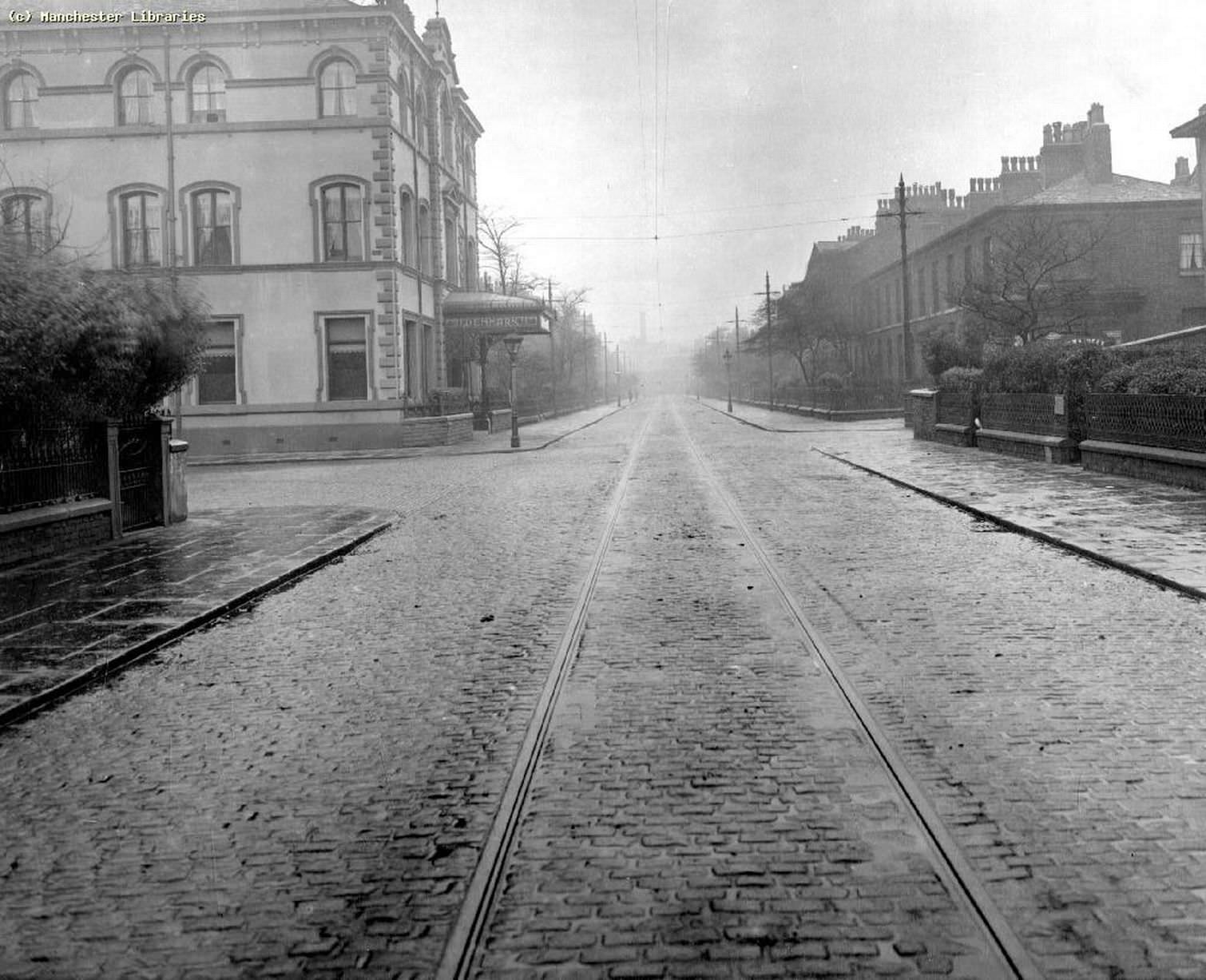
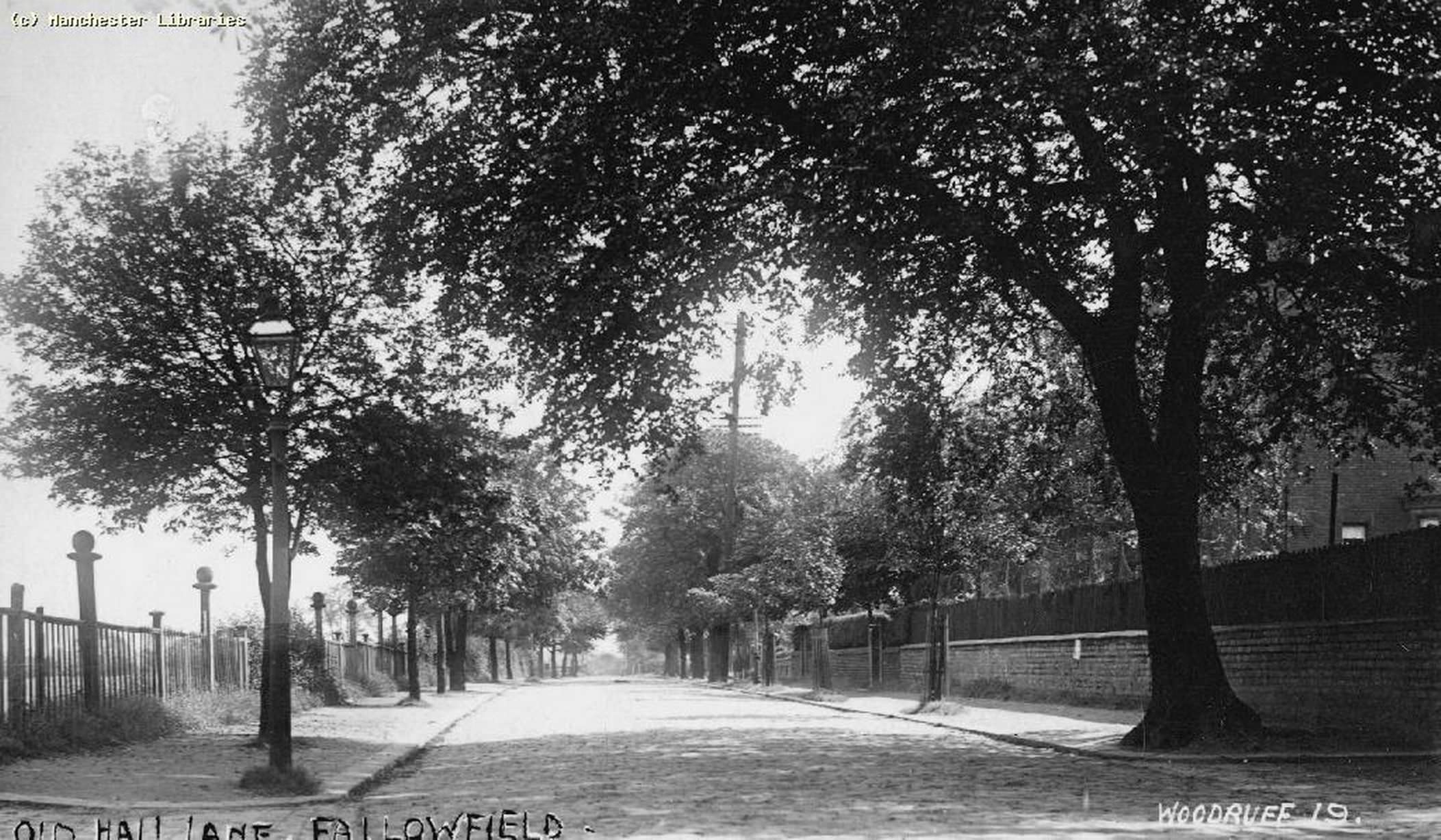
Despite the pressures of war, daily life in Manchester’s neighborhoods continued. Streets like Dickenson Road in Rusholme, Collyhurst Road in Moston, and Old Hall Lane in Fallowfield show rows of terraced houses, corner shops, and the occasional pub that formed the backbone of working-class life. Chorlton Green’s Horse and Jockey Inn was typical of the local pubs that served as social hubs for residents.

Dickenson Road, Rusholme
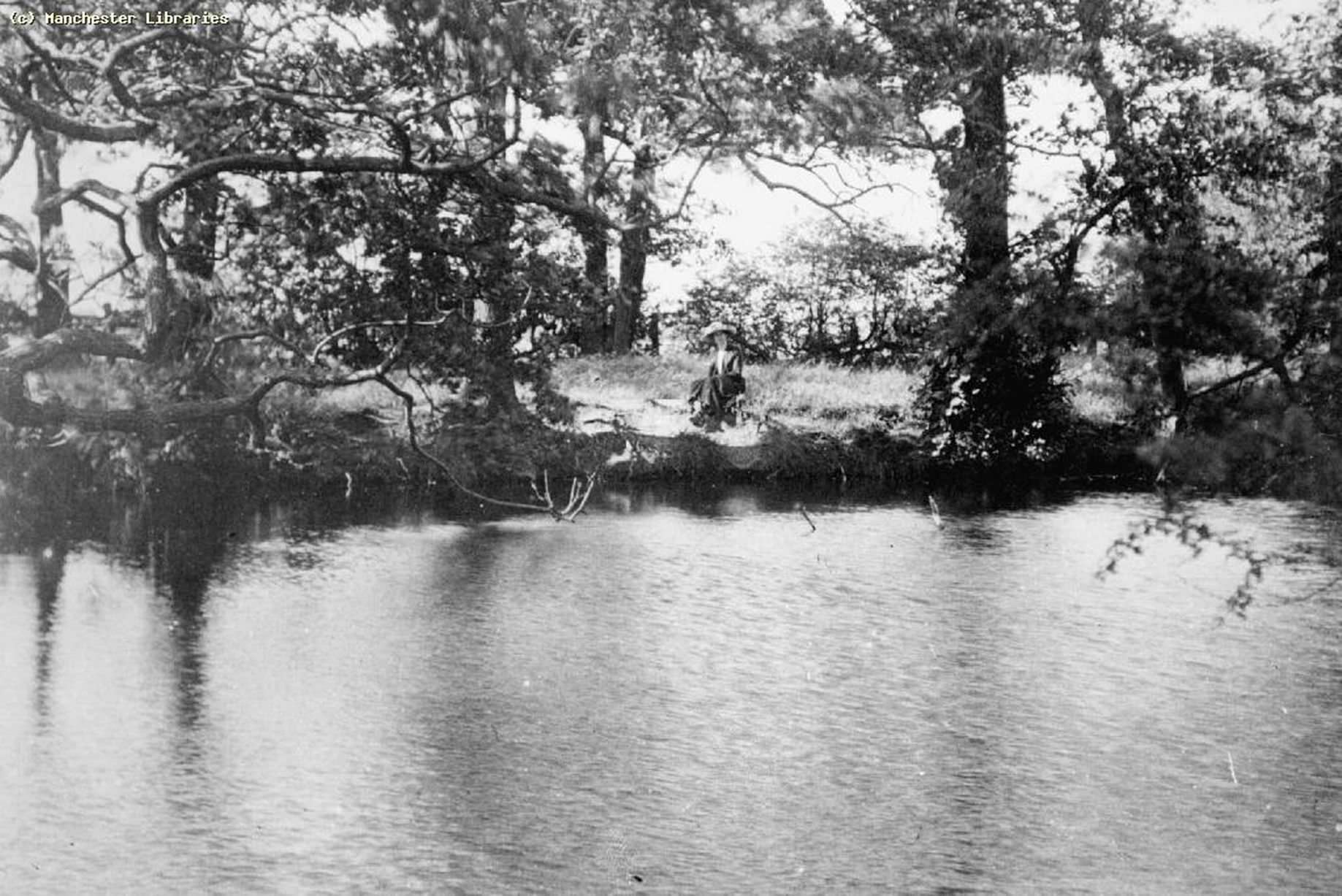
The River Mersey at Northenden
Collyhurst Road, Moston

The city’s outer neighborhoods each had their own distinct character. Moss Side’s Lloyd Street, Ancoats’ Lostock Street, and Didsbury’s Fog Lane all look strikingly different from one another, reflecting the mix of working-class districts, middle-class suburbs, and industrial zones that made up Manchester’s geography. The River Mersey at Northenden offered a calmer, almost rural scene just a short distance from the city’s smoking chimneys.

Moss Side, Greenheys, Lloyd Street from Denmark Road
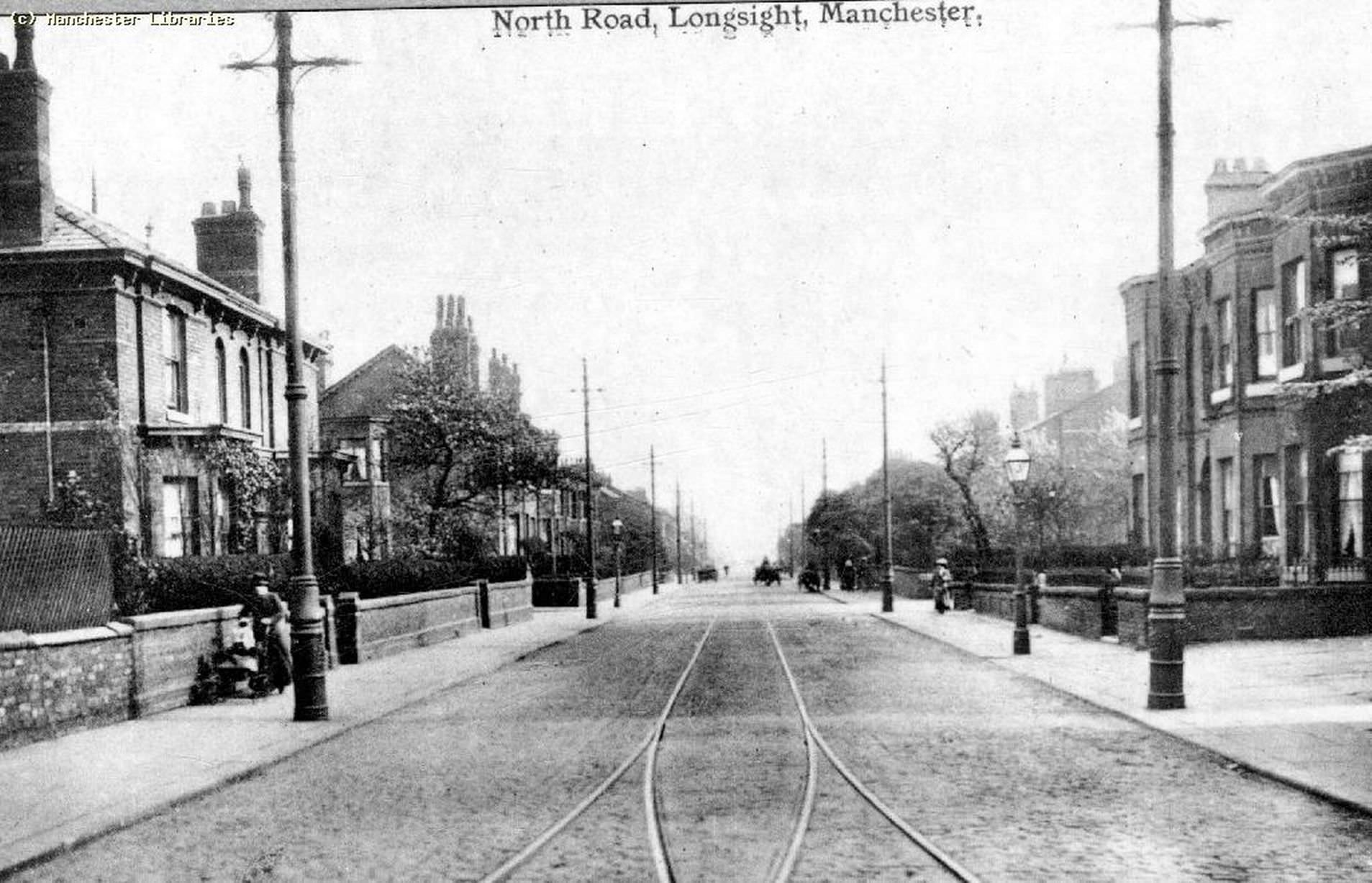
North Road, Longsight
Old Hall Lane, Fallowfield
Fog Lane, Didsbury
Fog Lane, Didsbury

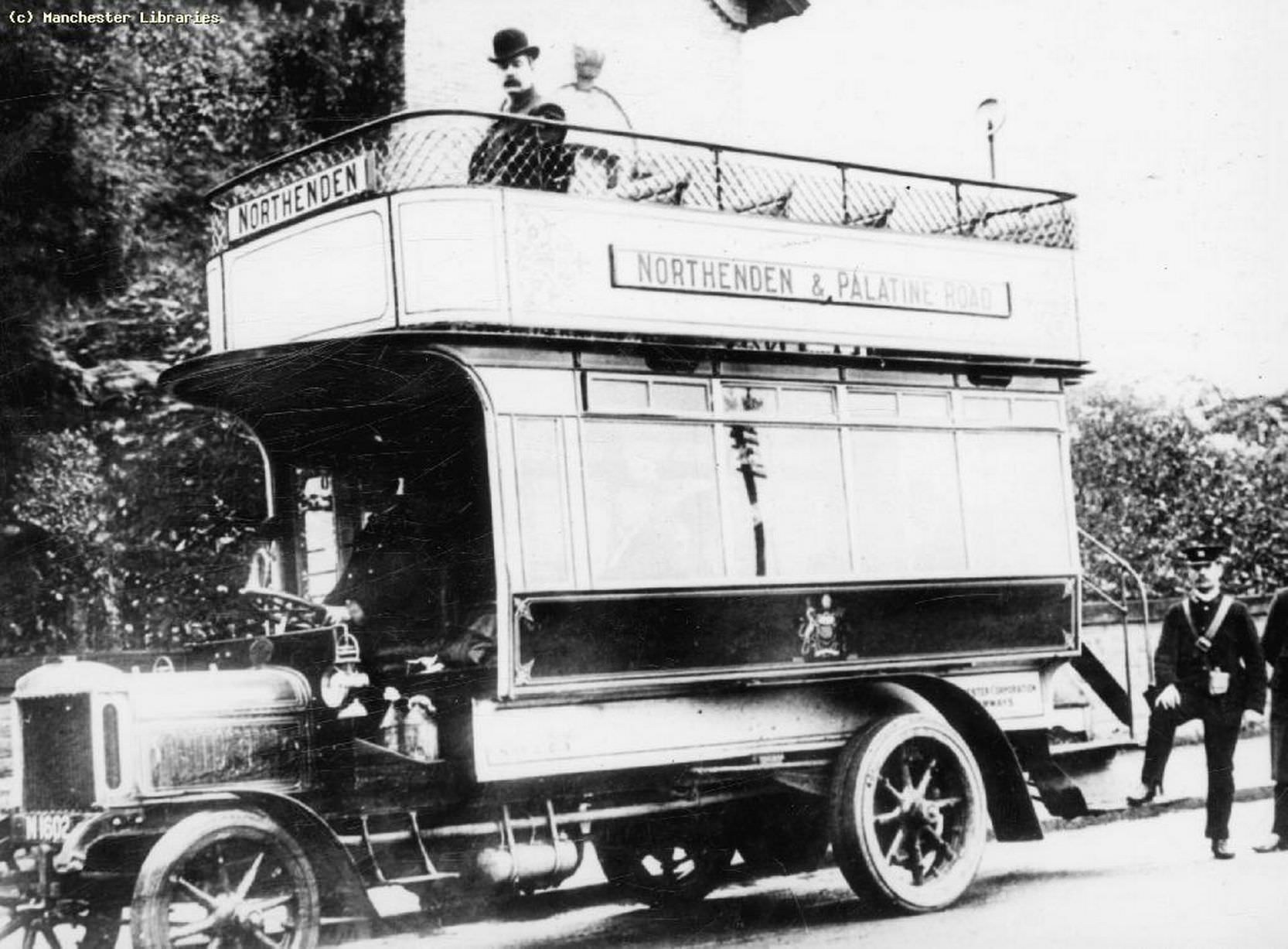
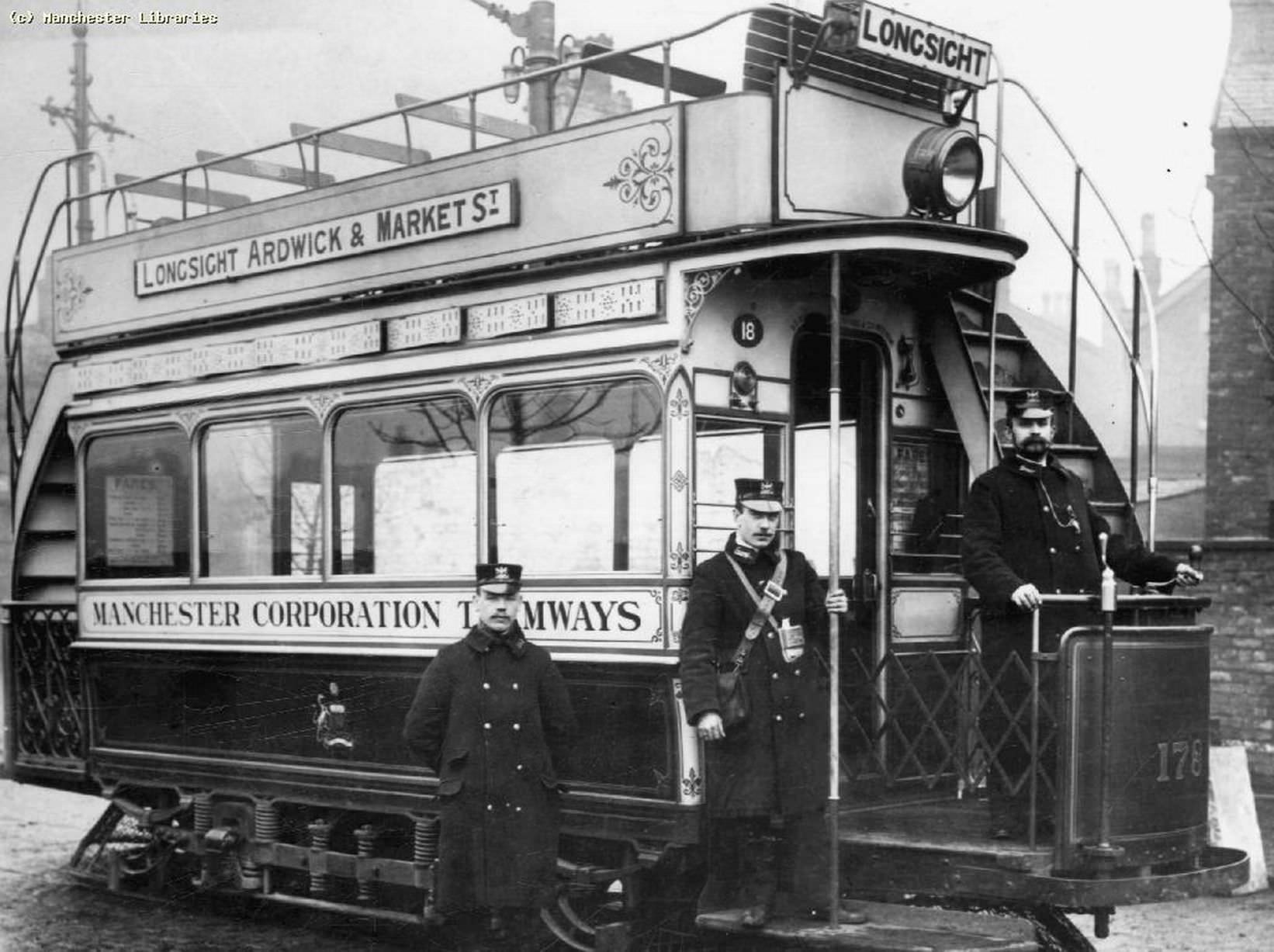
Public transport was a defining feature of 1910s Manchester. Trams were the dominant form of transit, running routes across the city and its surrounding areas. The number 178 tram and the Northenden and Palatine Road bus both appear in the photographs, showing the network that kept workers moving between home and factory. Chester Road in Hulme was one of the busiest arteries, connecting the city center with Trafford Park and beyond.

Chester Road, Hulme
Chester Road, Hulme
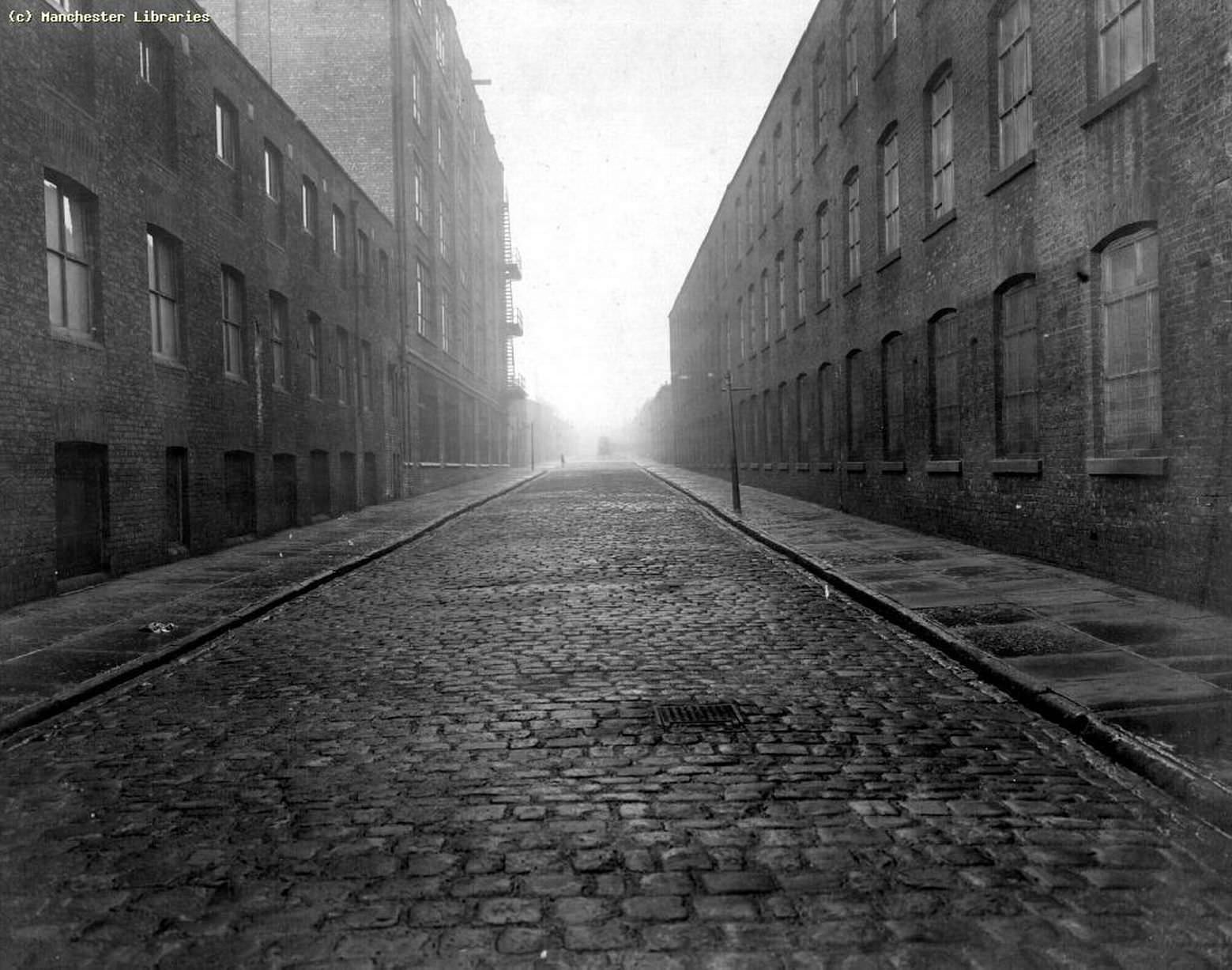
Lostock Street, Ancoats
Street scene in Manchester

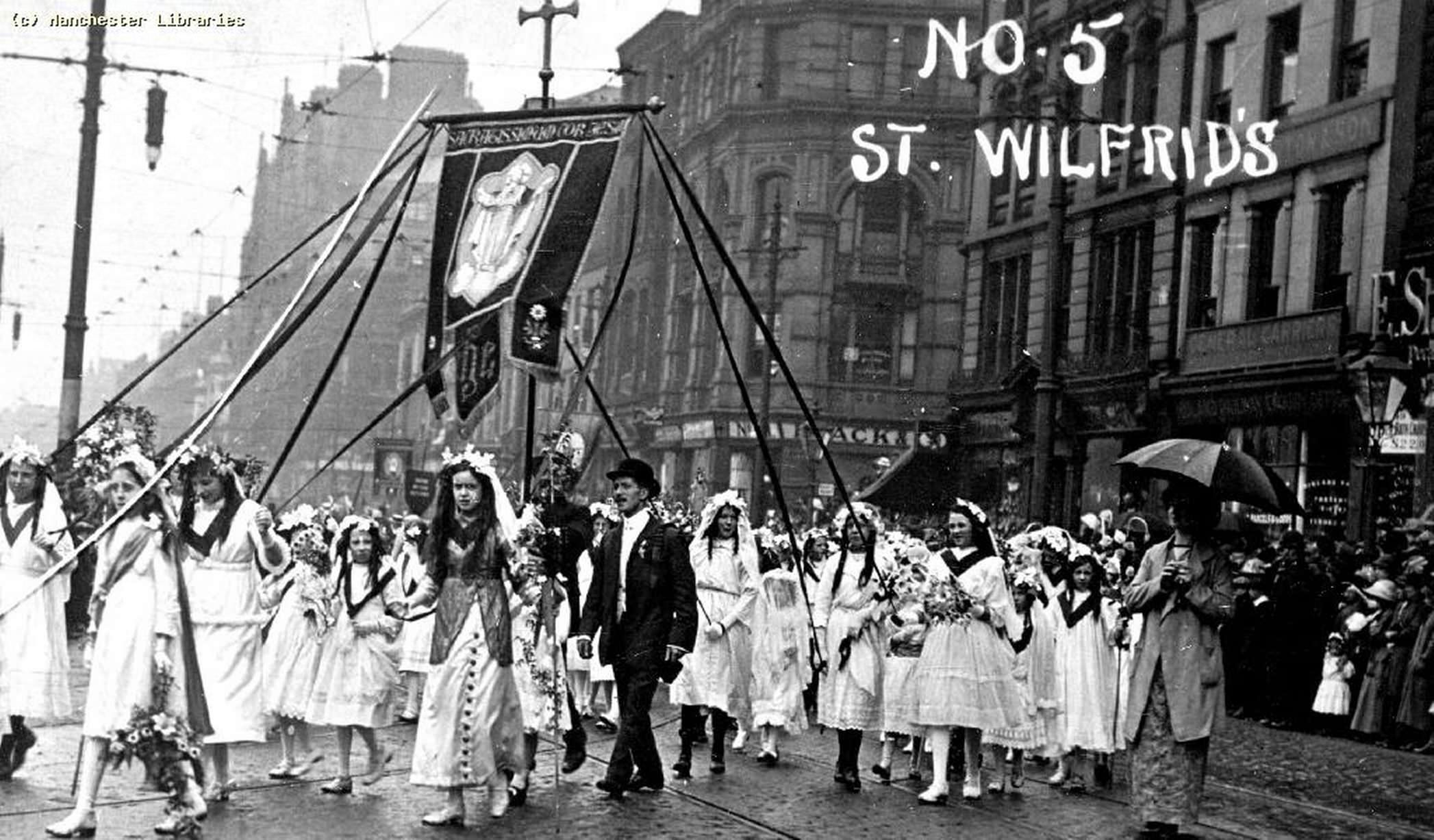
Religious processions and community celebrations were a regular part of Manchester life. The Whit Walks — annual walking processions organized by local churches — brought entire neighborhoods onto the streets. St Gabriel’s Church’s Whit Walk and the gathering at Holy Trinity Platt Church in Rusholme are captured in these photographs, showing thousands of residents dressed in their finest clothes, marching together through the streets.

St Gabriel's Church, Whit Walk, Manchester
St Gabriel’s Church, Whit Walk, Manchester
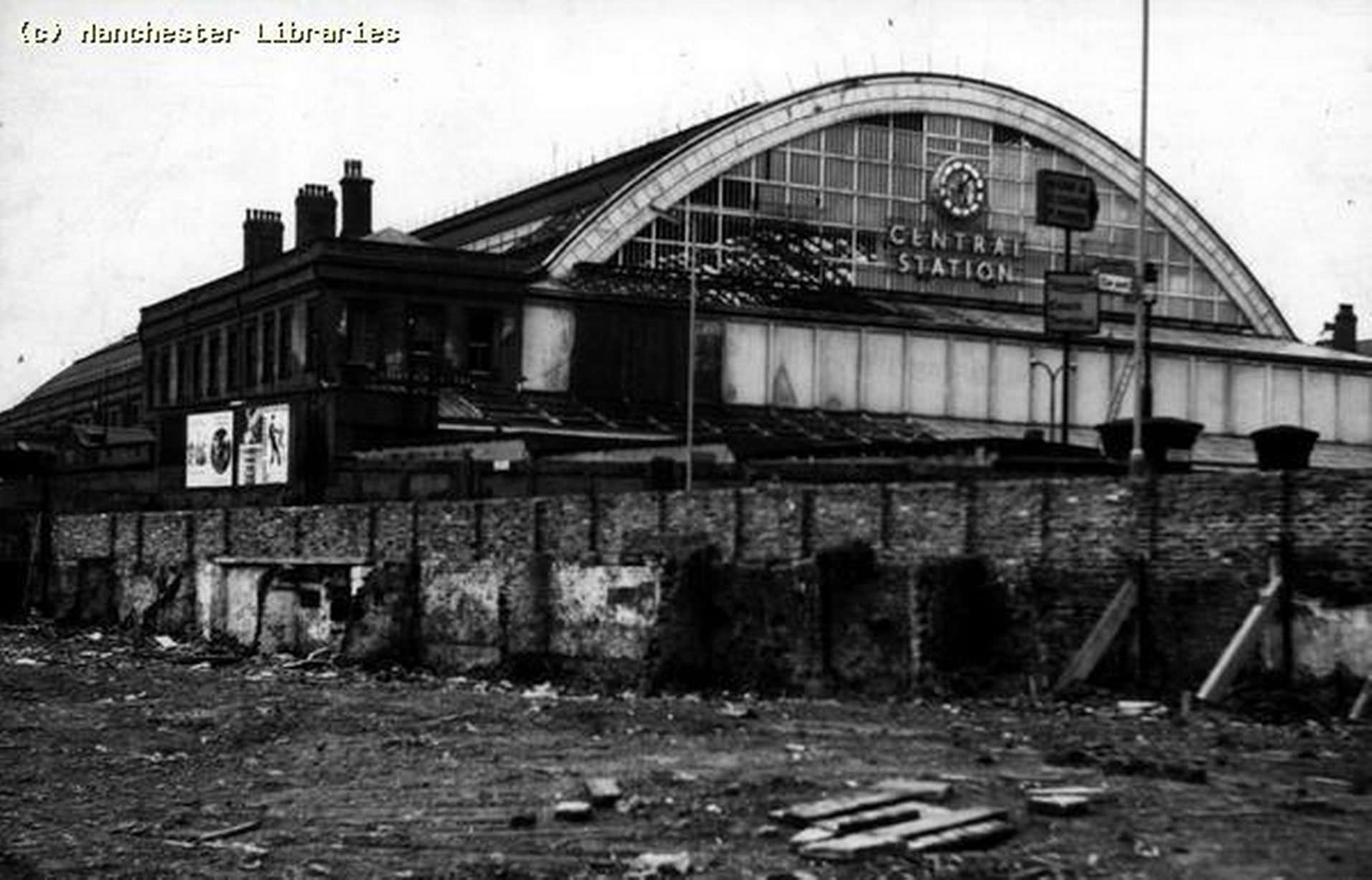
Central Station
Central Station

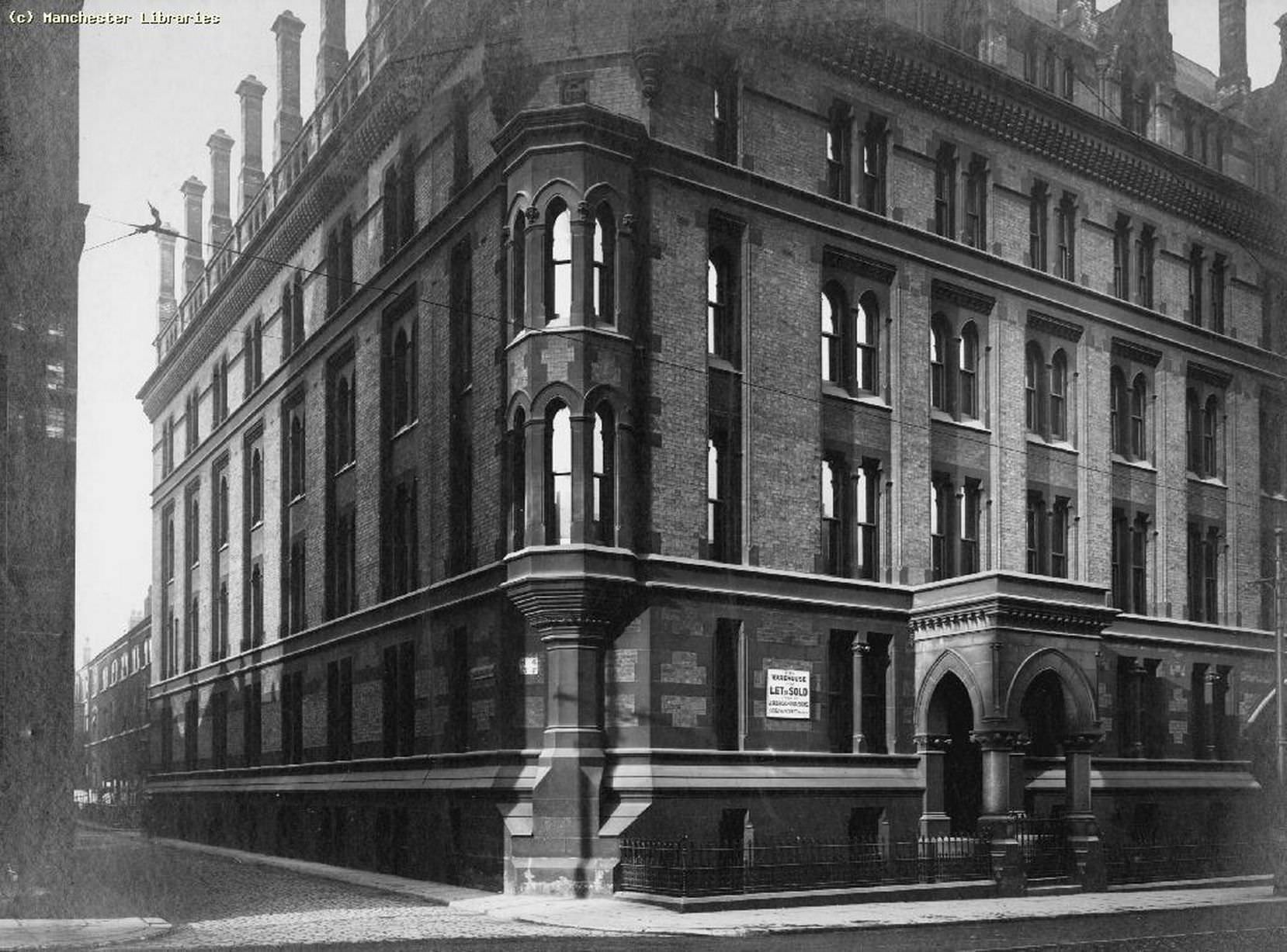
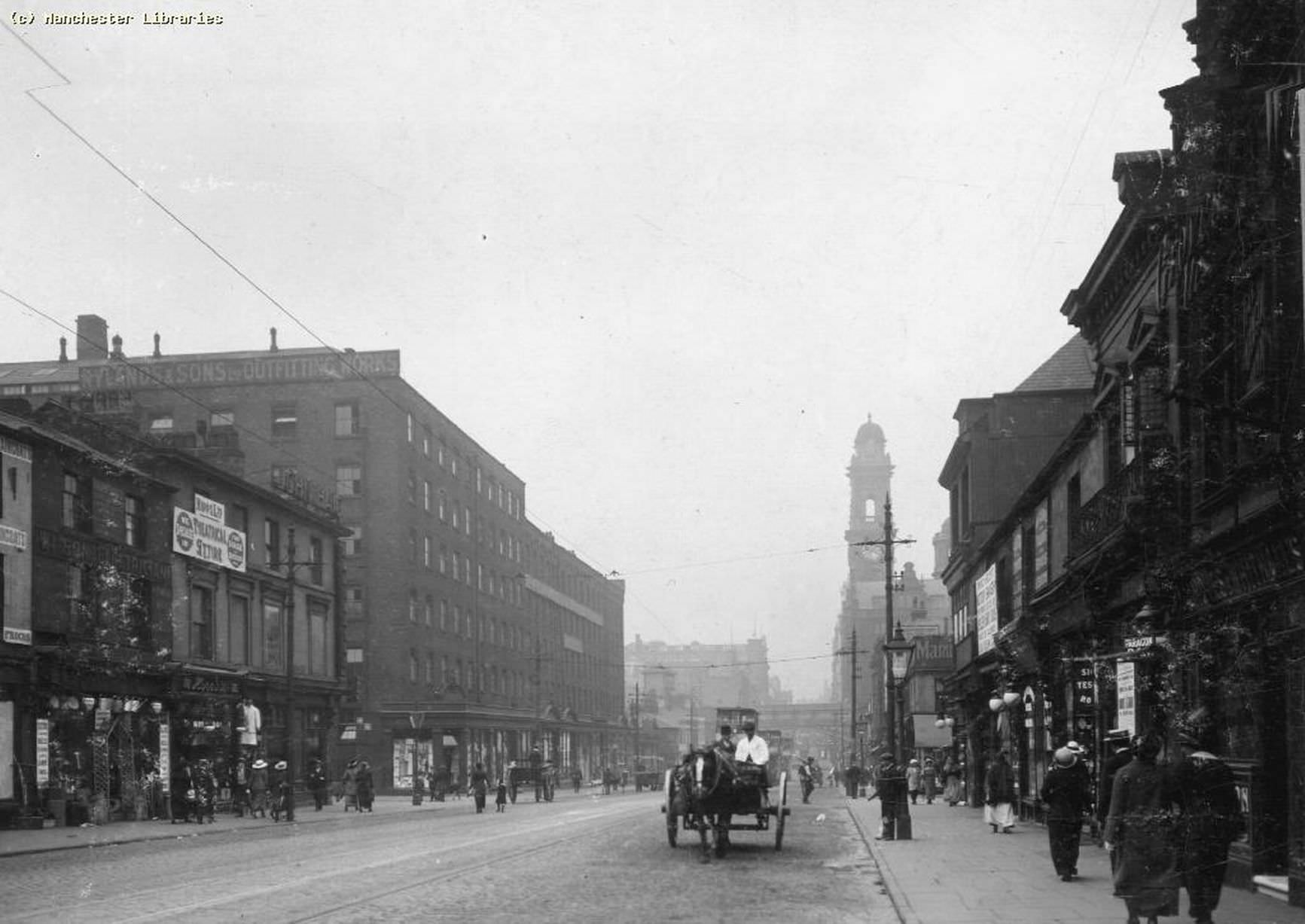
Manchester’s commercial center was a place of serious business. The Reiss Brothers warehouse on Quay Street, the busy storefronts of Oldham Street, and the grand scale of Oxford Street all reflect a city with significant commercial muscle. Central Station served as a major rail hub, connecting Manchester to the rest of Britain and channeling the goods and people that kept the economy turning.

Reiss Brothers warehouse, Quay Street
St Mary's Hospital patients and nurses, Manchester
St Mary’s Hospital patients and nurses, Manchester
Northenden and Palatine Road bus
The number 178 tram
The number 178 tram

Heaton Park, by the mid-1910s, was no longer just a leisure ground. The Manchester Regiment used it as a full camp, with soldiers training, drilling, and resting there before deployment. The contrast between its pre-war role as a public park and its wartime identity as a military base is one of the sharpest examples of how the war reshaped every corner of the city.

Manchester Regiment, Heaton Park camp
Oxford Street
Oxford Street
Oldham Street
Oldham Street

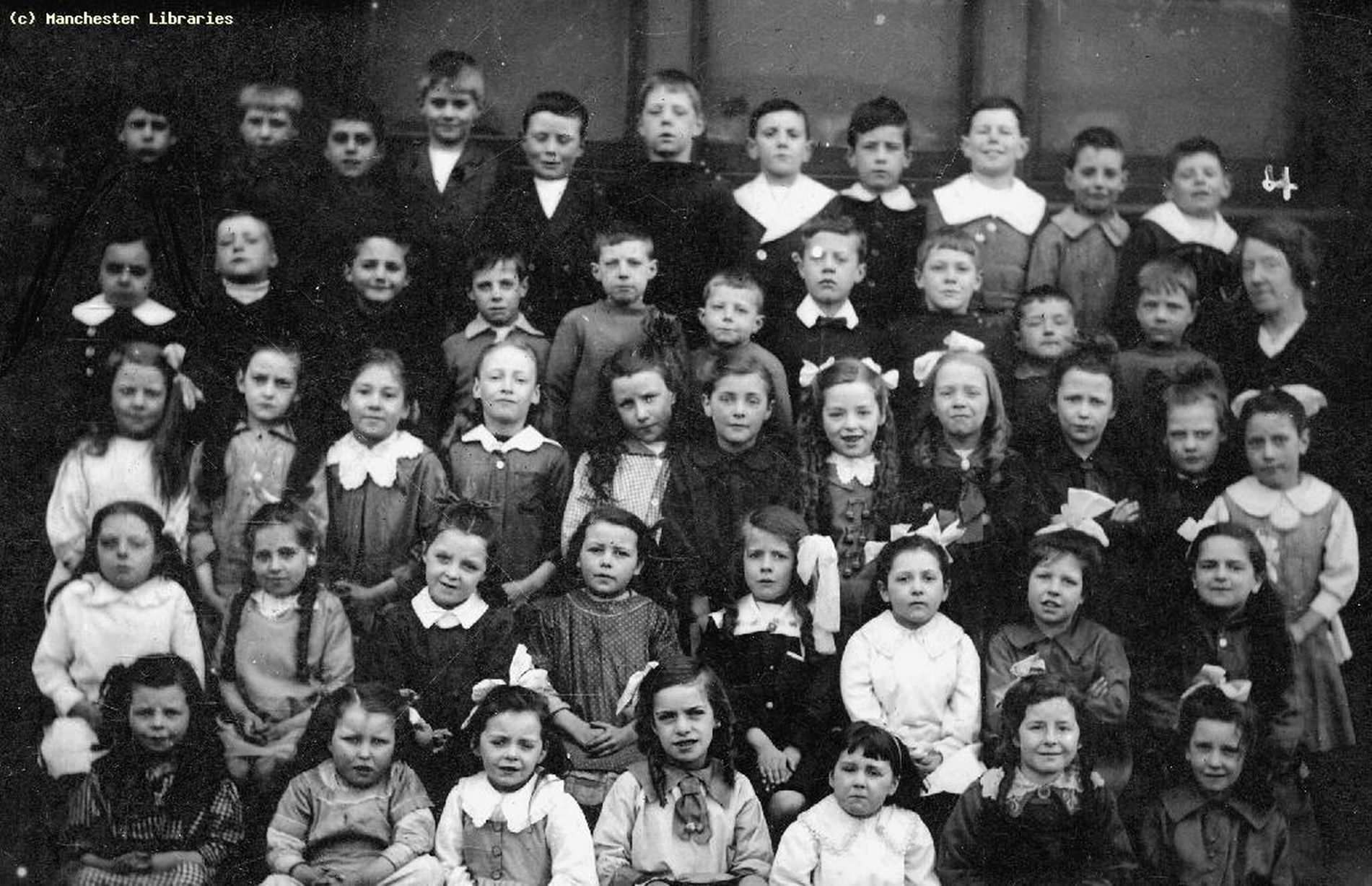
Education was a priority across the city. Manchester Grammar School was a nationally recognized model for selective secondary education in England. The children photographed outside Upper Lloyd Street School in Moss Side represent the thousands of young Mancunians who passed through the city’s schools during this decade. The Manchester Guardian — one of Britain’s leading newspapers — was also shaping public thought and earning an international readership from its base in the city.

Children of Upper Lloyd Street School, Moss Side
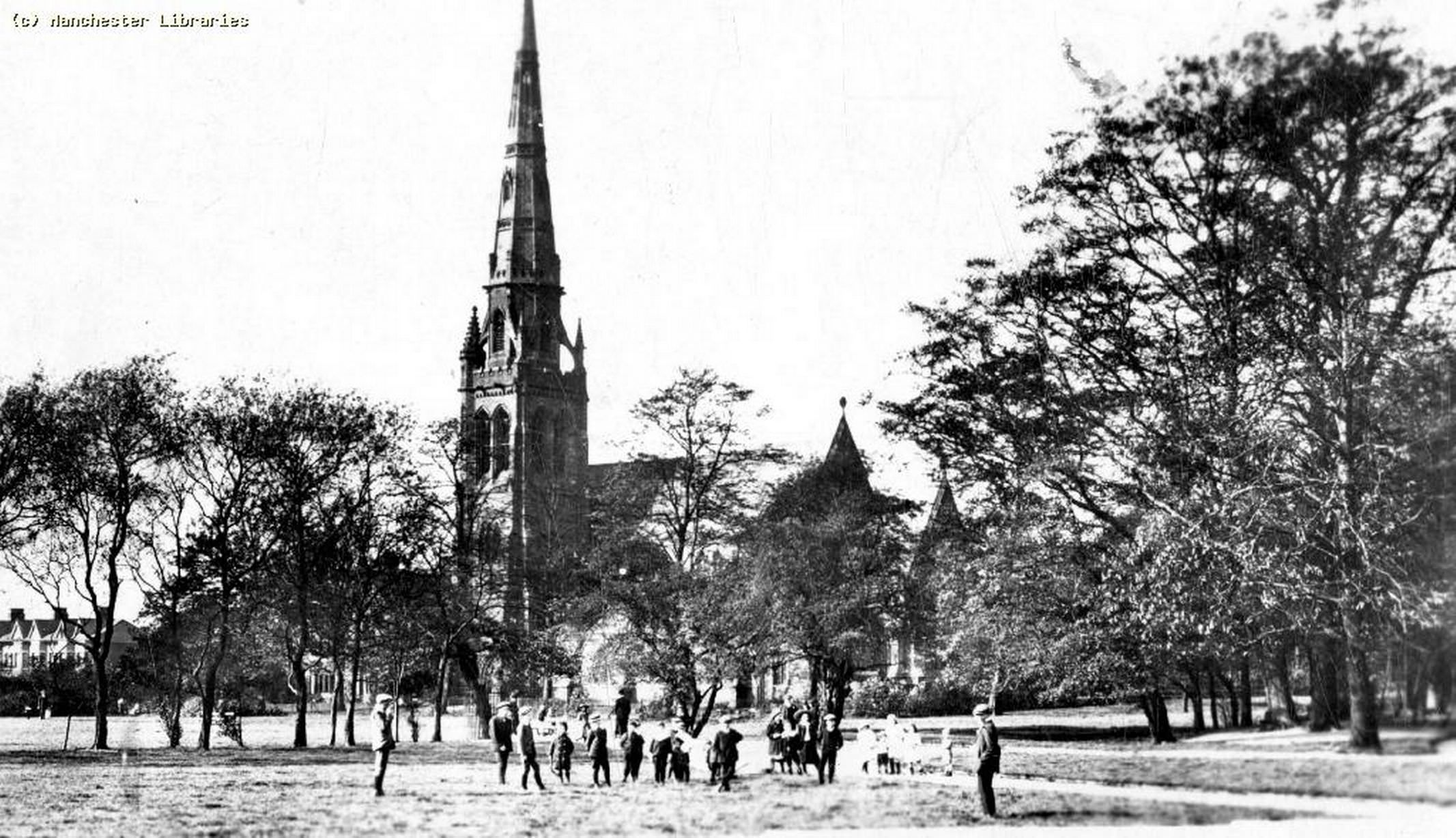
Holy Trinity Platt Church, Platt Fields, Rusholme

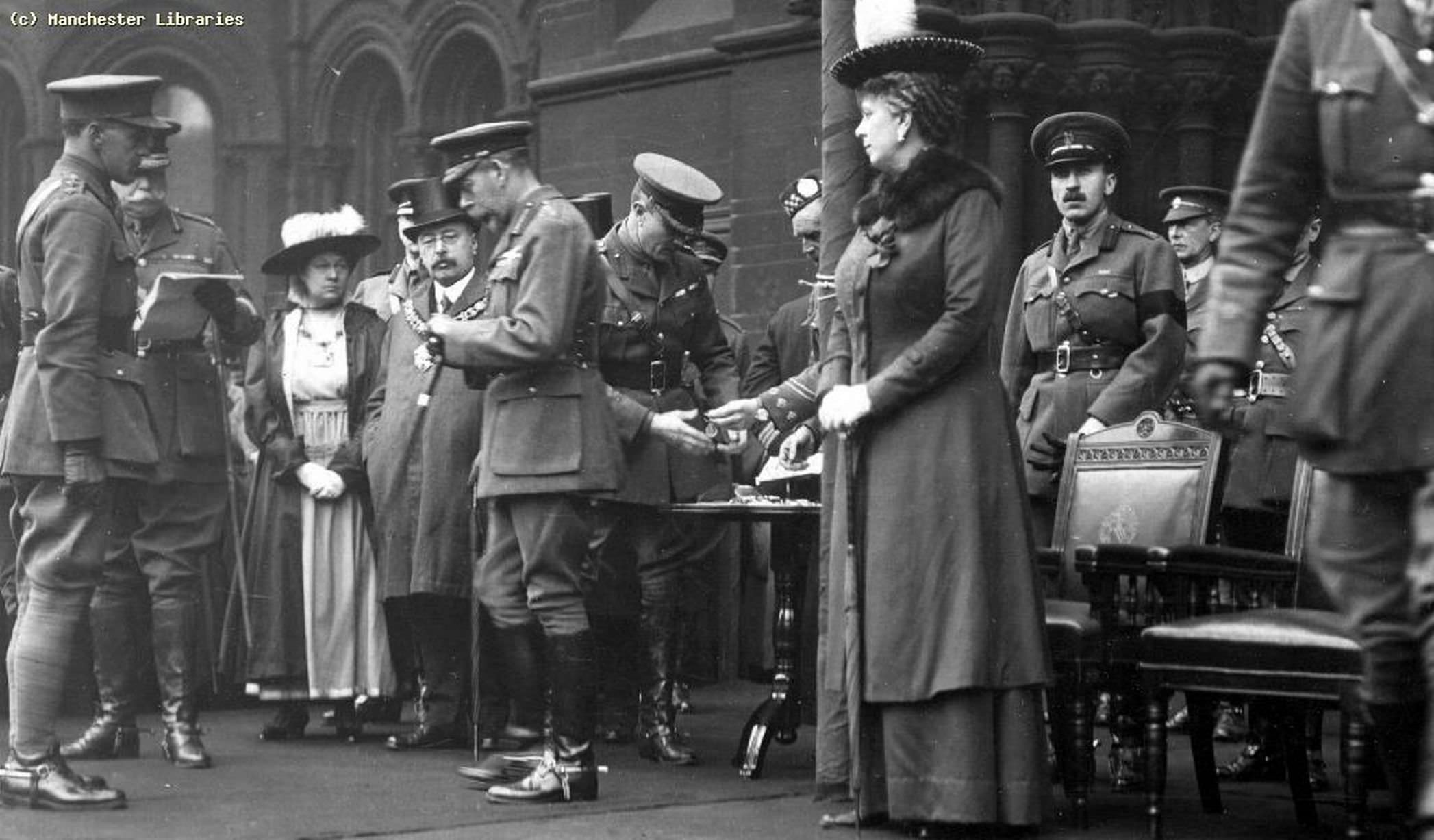
Albert Square remained the civic heart of Manchester throughout the decade. King George V visited Manchester Town Hall, a visit that drew significant public attention and reinforced the city’s status as one of Britain’s most important urban centers. The square’s Victorian grandeur — the town hall itself, the statues, the surrounding streets — gave Manchester a monumental quality that matched its industrial reputation.

Albert Square
Albert Square
King George V at Manchester Town Hall

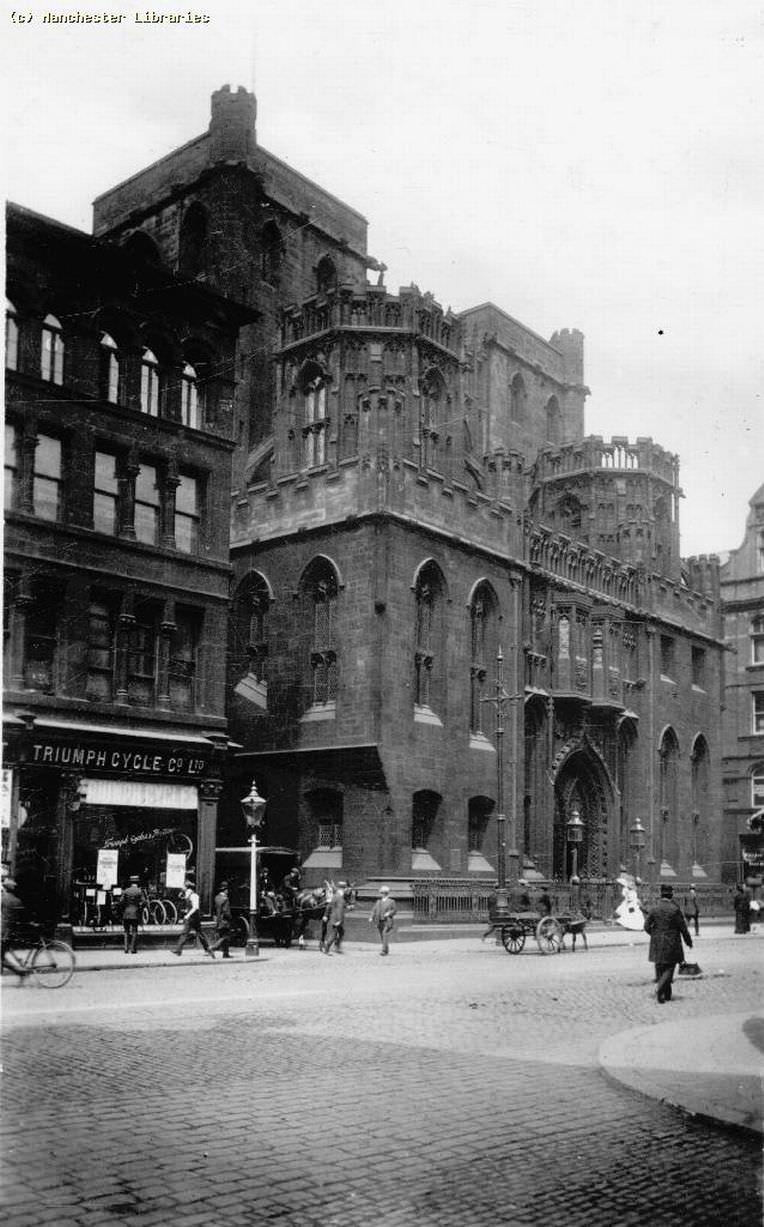
The John Rylands Library on Deansgate stood as one of the city’s most admired buildings. Opened in 1900, it was built as a memorial to the textile merchant John Rylands by his widow, Enriqueta. Its reading rooms and vaulted Gothic architecture drew comparisons to the great cathedral libraries of Europe. It would eventually merge with the University of Manchester’s library in 1972, but in the 1910s it was still a standalone institution of considerable prestige.

John Rylands Library
Piccadilly Gardens - recruitment campaign for World War I
Piccadilly Gardens – recruitment campaign for World War I

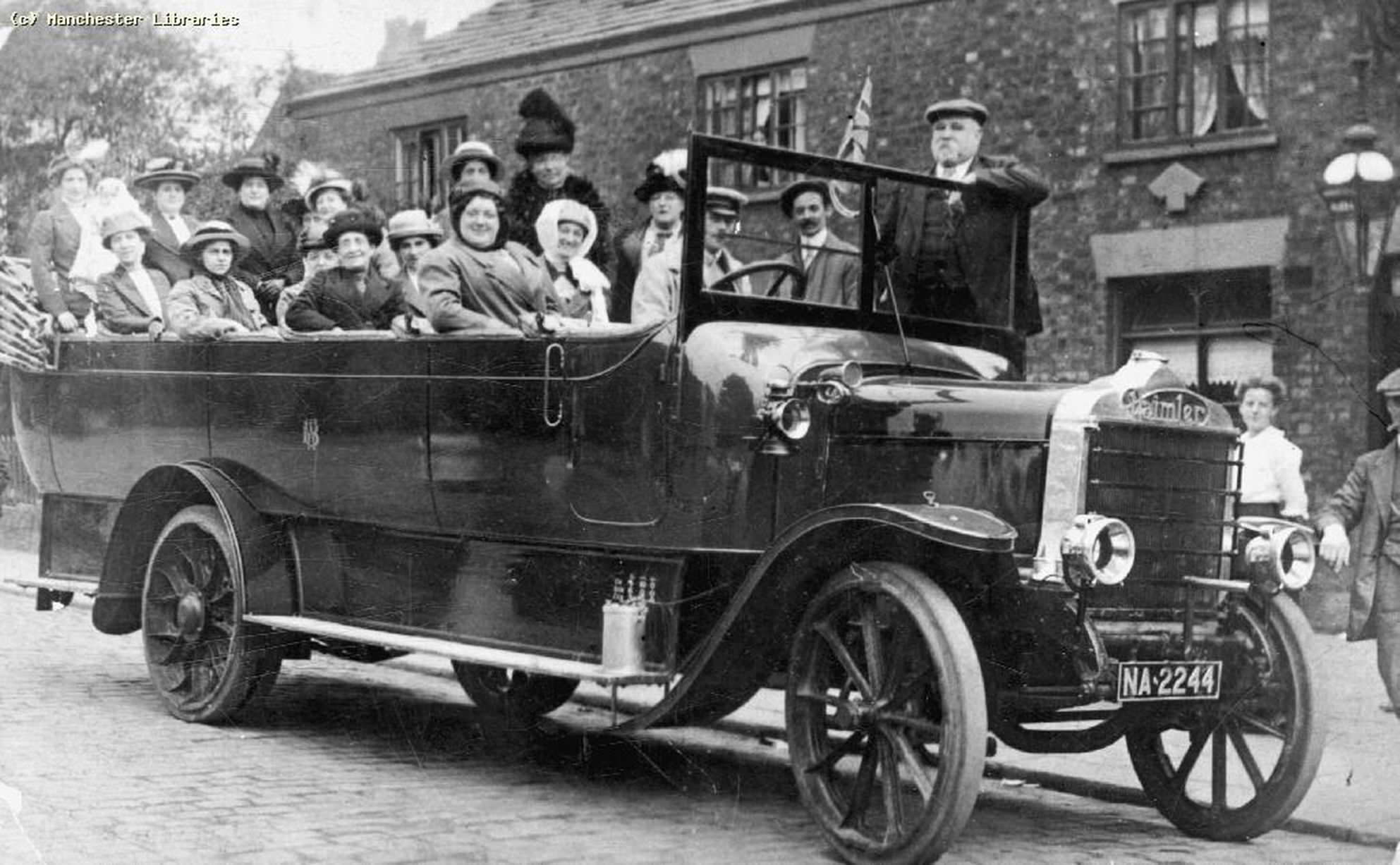
Not everything in 1910s Manchester was defined by industry or war. Day trips and leisure outings were popular among working families when time and money allowed. A charabanc — an open-topped motor coach — was one of the most exciting ways to travel, and trips to the seaside were a welcome escape from the city’s noise and grime. These moments of ordinary joy are just as much a part of Manchester’s story as its factories and its marching regiments.

A charabanc trip to the seaside
Enjoyed this post? Get new ones in your inbox.

4 thoughts on “What Manchester Looked like in the 1910s through these Fascinating Historical Photos”

  1. The history of Manchester is so rich. It has given the world so much and continues to do so today. According to Disraeli, “What Manchester does today, the rest of the world does tomorrow.”

Leave a Comment

Your email address will not be published. Required fields are marked *

Share this Post 🥺

Please take a moment to share this content. Your support is greatly appreciated! 🙌🙏

Share this Post 🥺

Please take a moment to share this content. Your support is greatly appreciated! 🙌🙏
Scroll to Top
 
Hey Friend, Before You Go.. Please like & follow for more interesting content