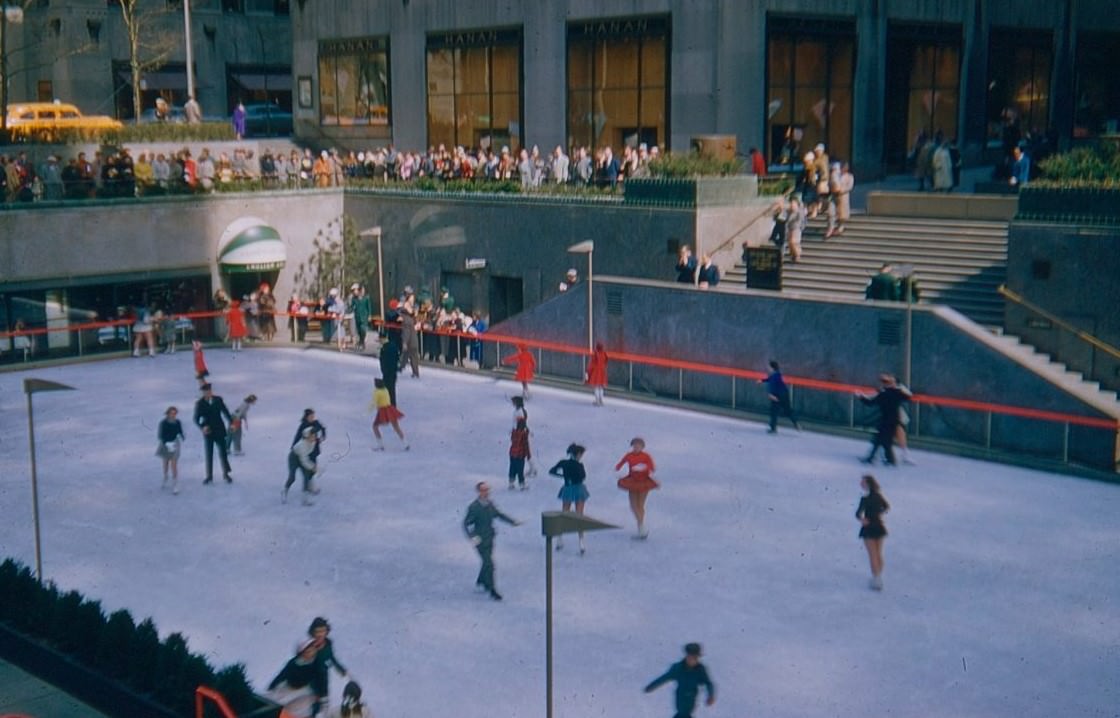
In the 1980s, Jan Wein was living in Manhattan when he made an extraordinary find on trash day — a collection of Kodachrome slides documenting New York City across the 1950s and 60s. The photographer was never identified. The slides carried no labels, no names, no dates beyond what the scenes themselves revealed.
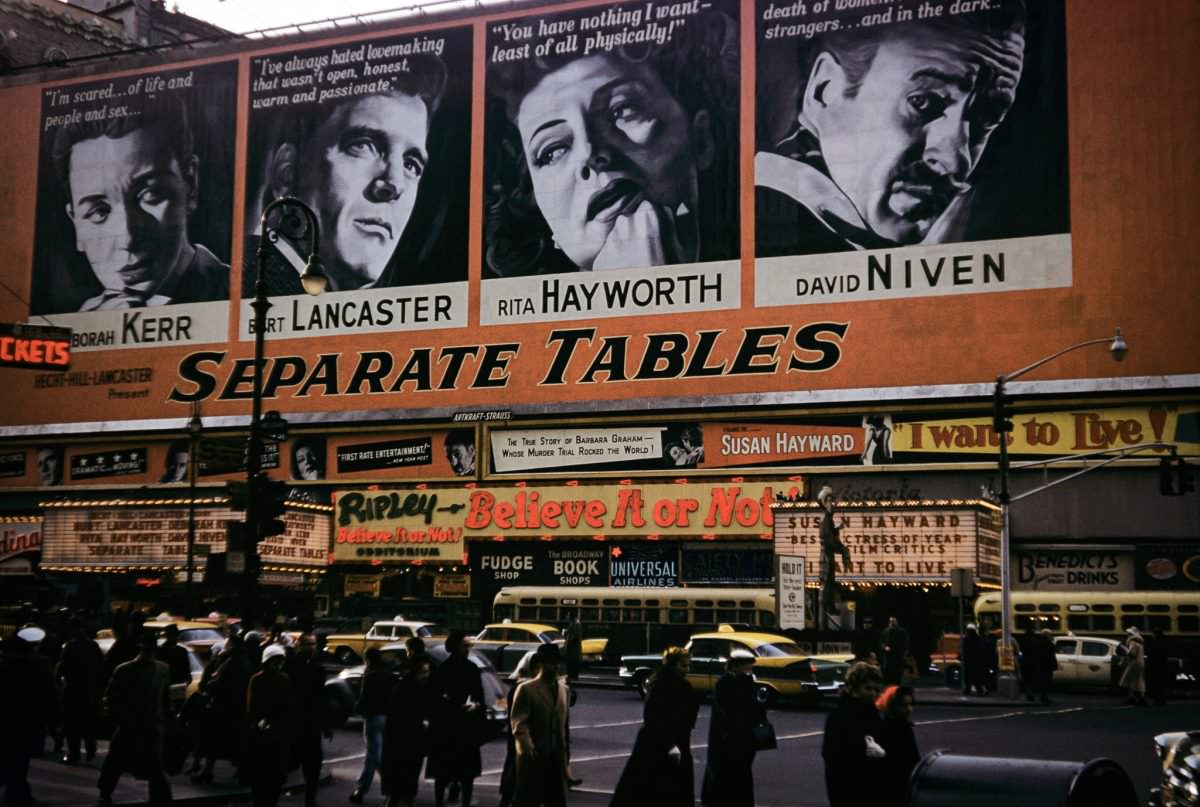
Kodachrome was no ordinary film. Introduced in 1935, it was the first commercially successful color film and was prized for its vivid, true-to-life color reproduction. The slides Wein rescued show exactly why photographers loved it — the hues are rich and stable, preserving street life with startling clarity.
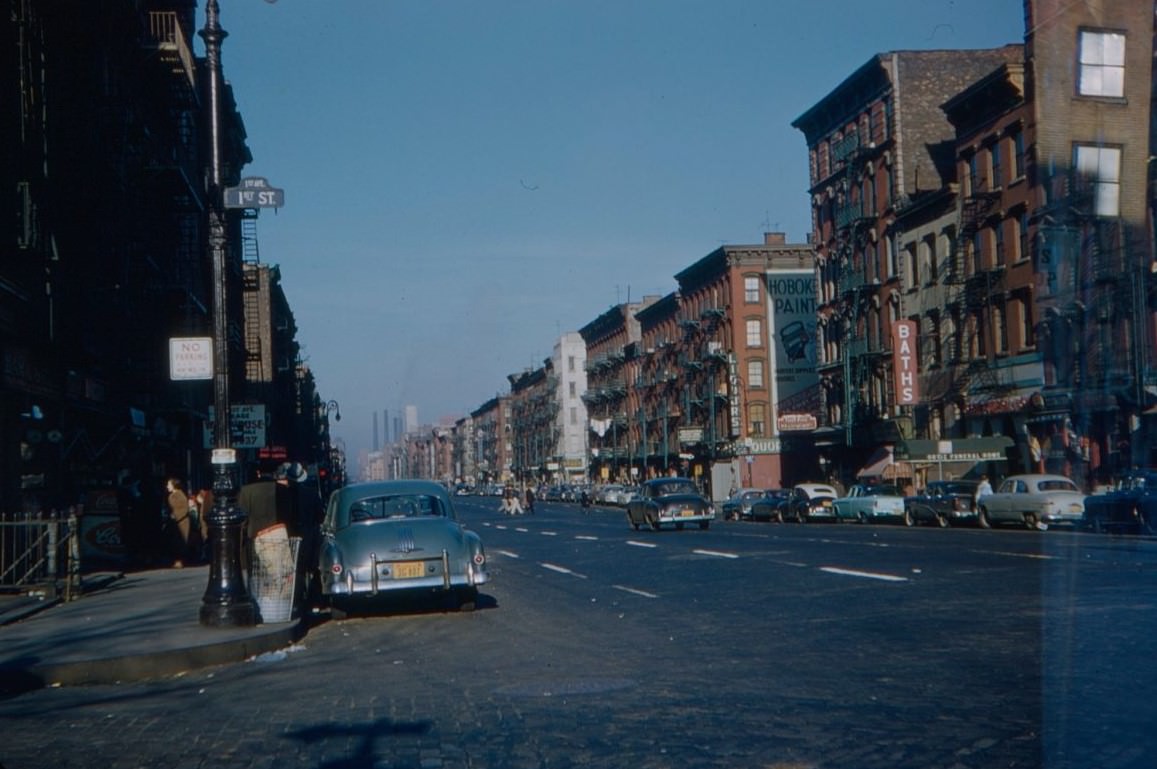
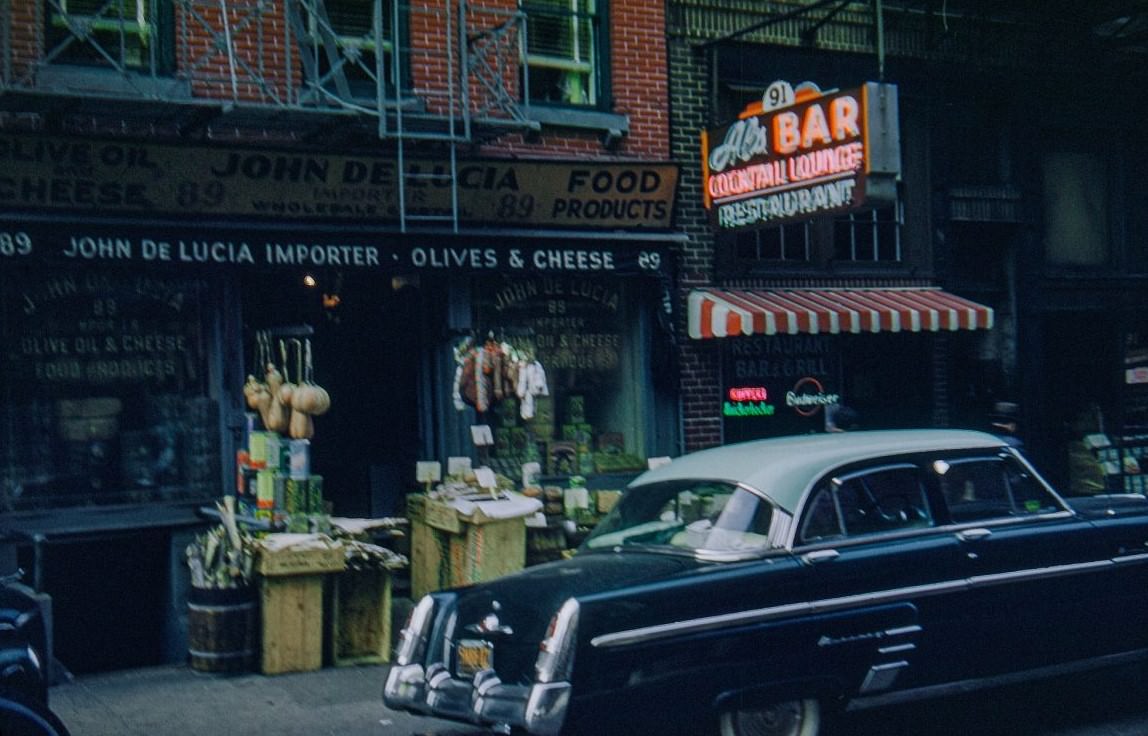
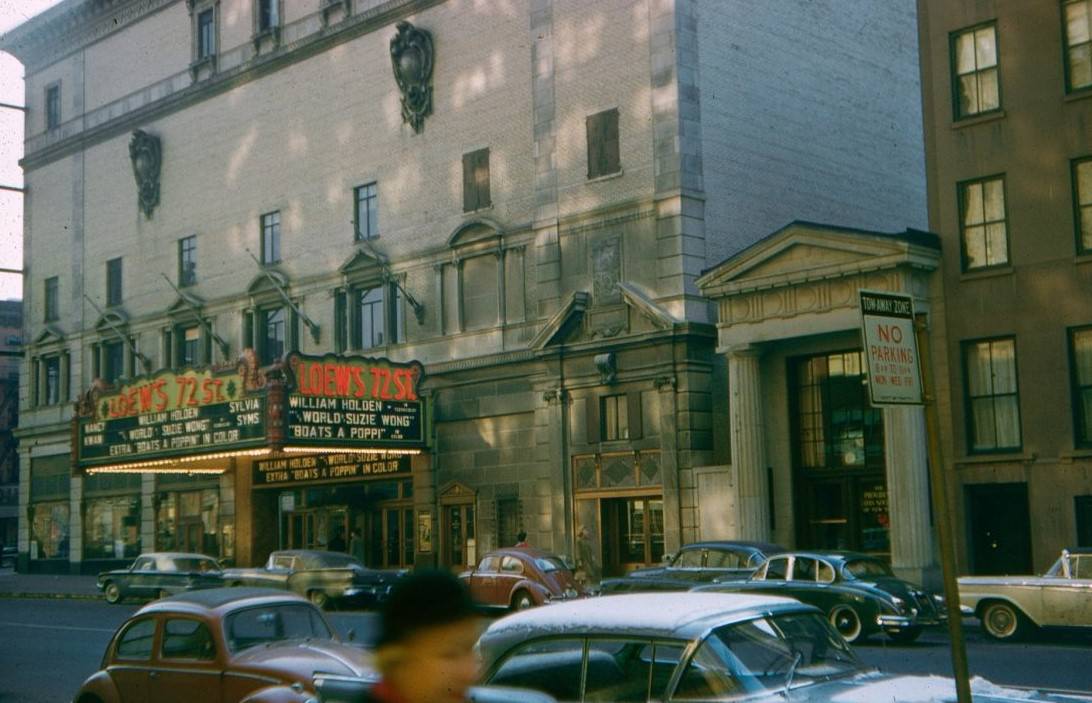
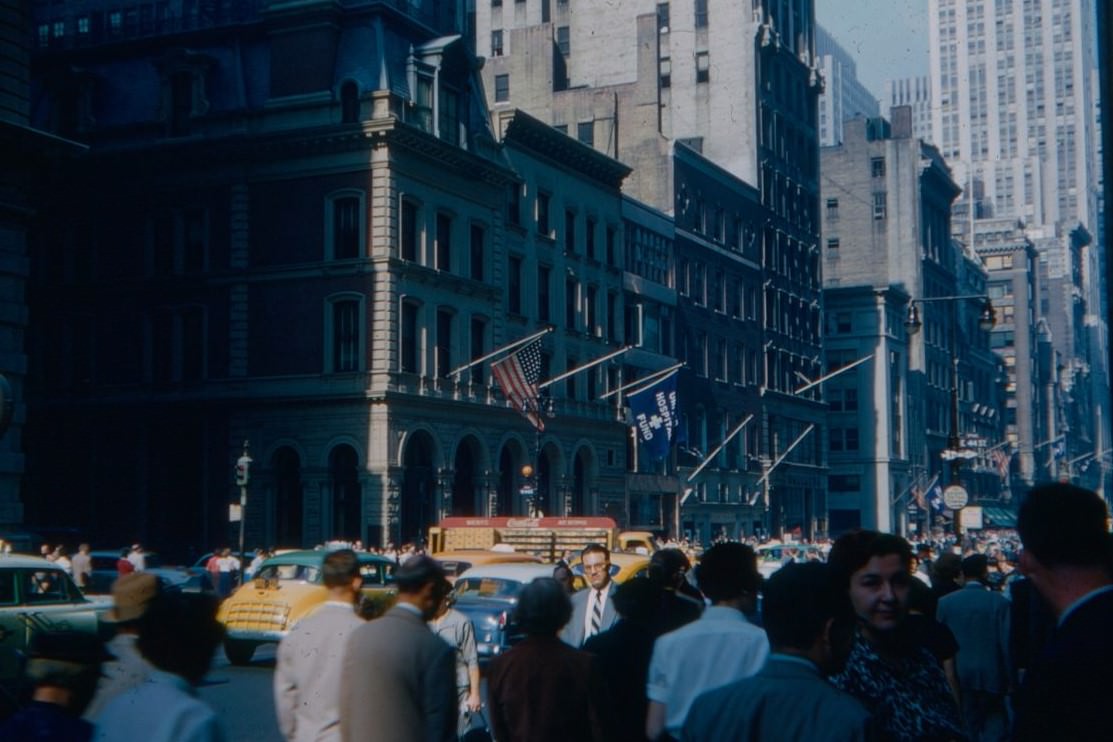
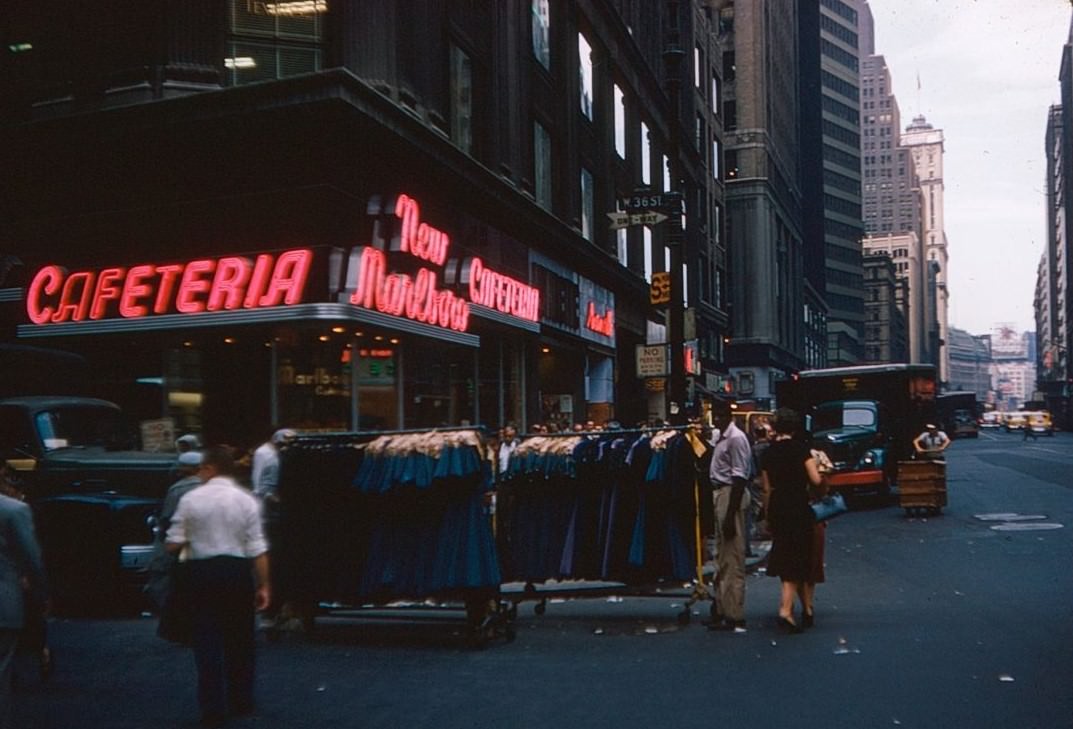
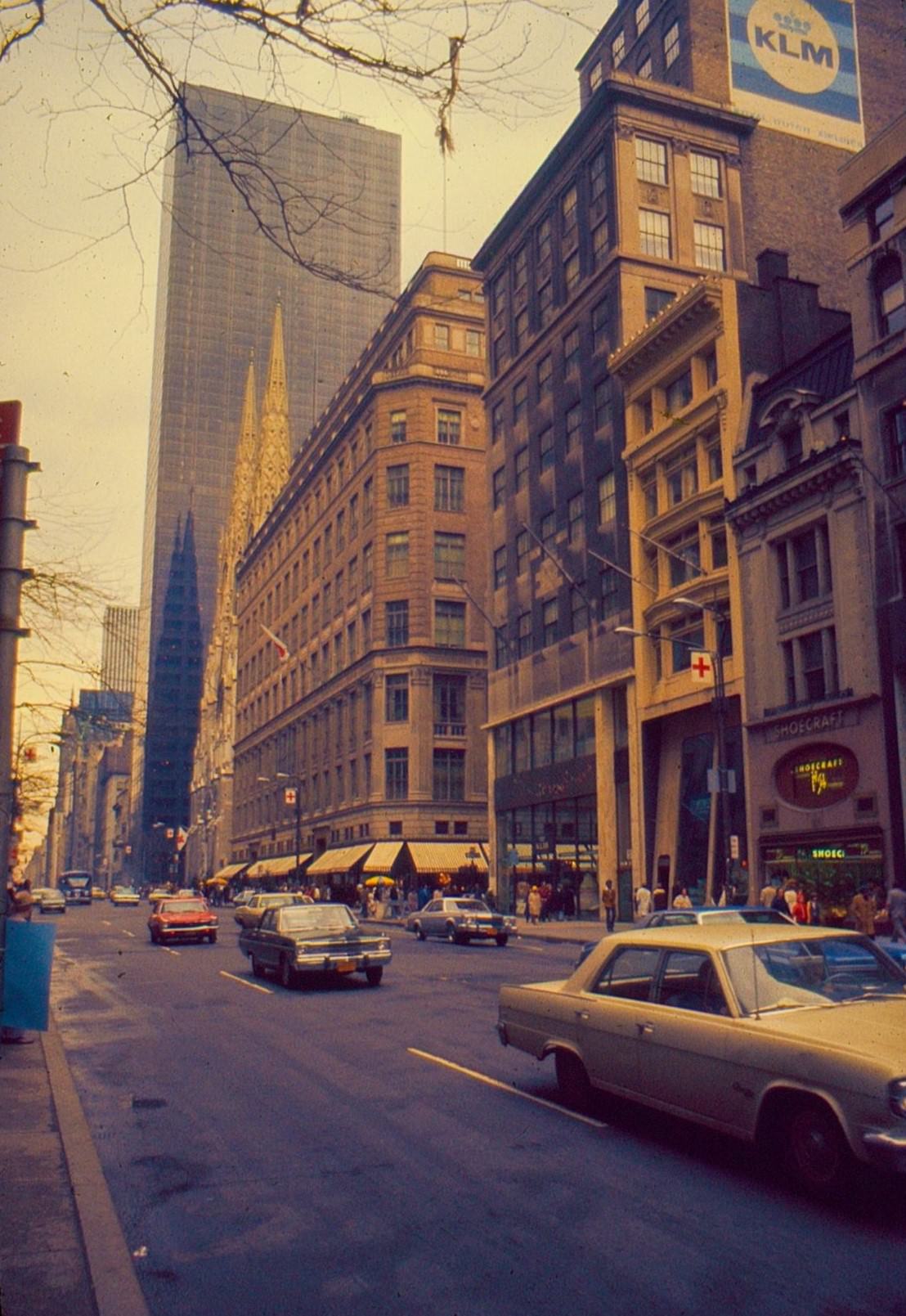
The streets in these images are packed with classic American cars, yellow cabs, and pedestrians dressed in the sharp fashions of the era — men in suits and fedoras, women in tailored dresses and gloves. Every block tells its own story.
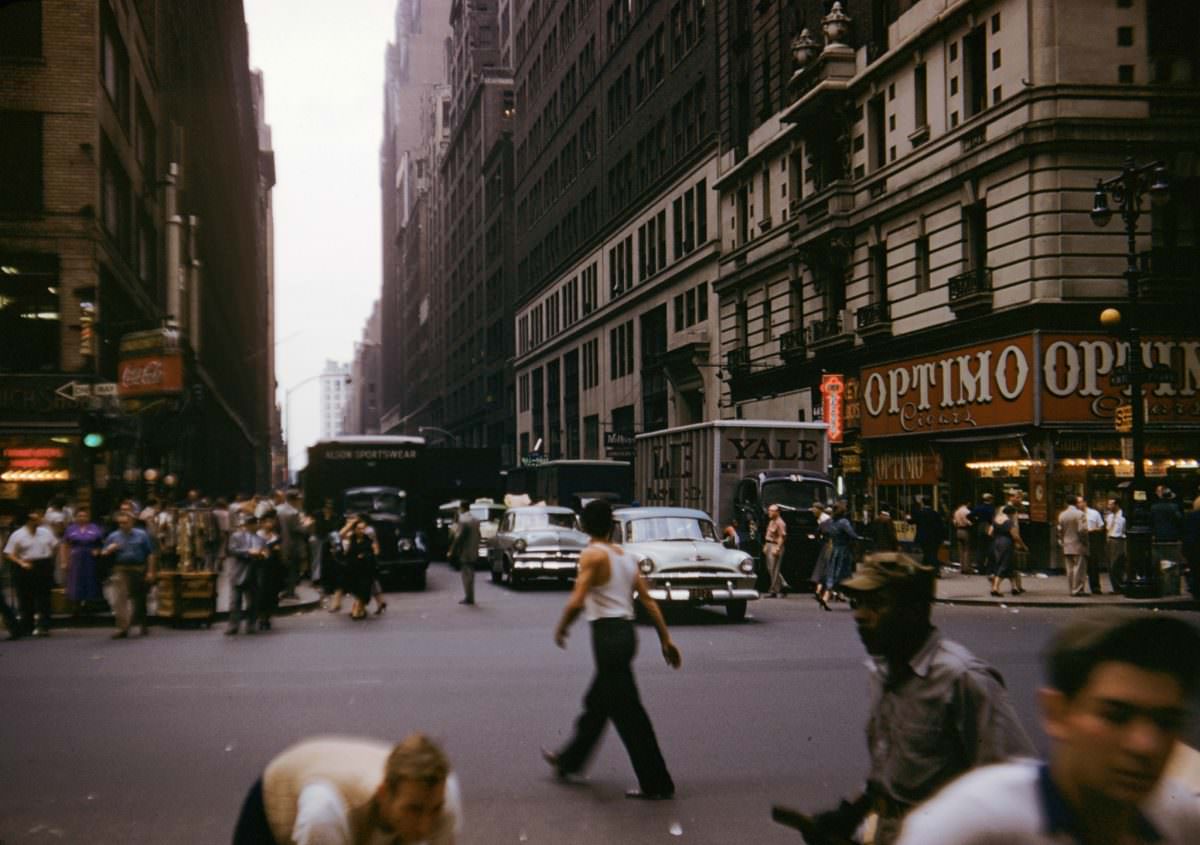
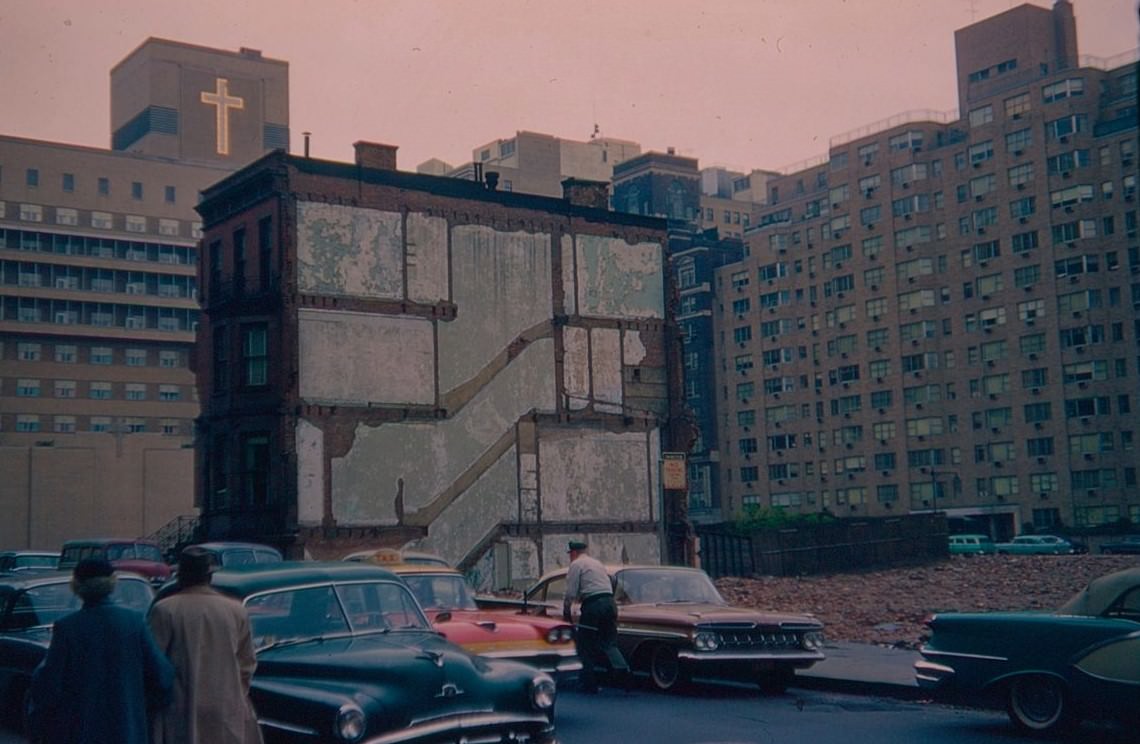
Downtown Manhattan appears in several frames, showing the Financial District’s dense canyon of buildings and the working neighborhoods that surrounded it. Vendors, storefronts, and foot traffic fill the sidewalks.
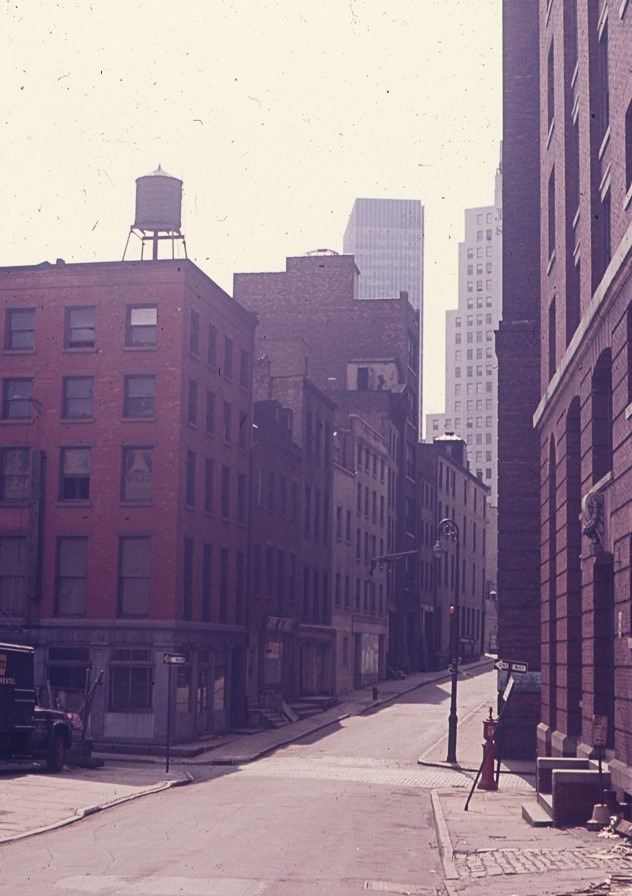
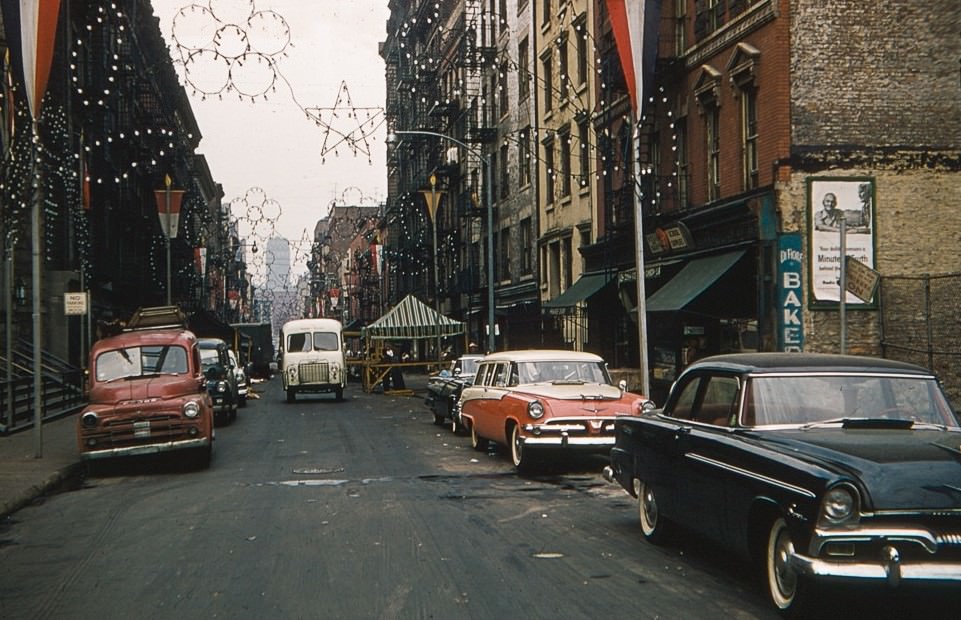
Community life pulses through many of the slides. Street festivals, neighborhood theaters, and public gathering spots were central to daily life in mid-century New York.
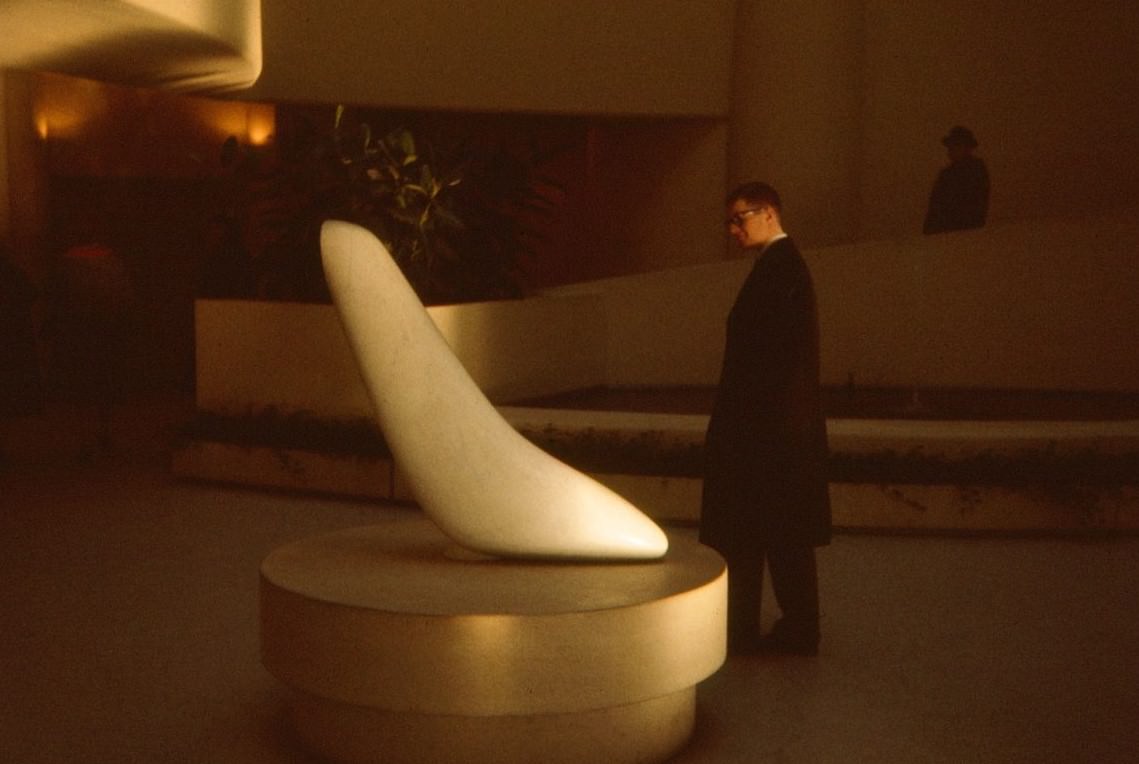
Some slides document specific cultural landmarks at notable moments. The Guggenheim Museum, designed by Frank Lloyd Wright, opened in October 1959 on Fifth Avenue. One slide catches it shortly after its debut, still fresh to the city’s skyline.
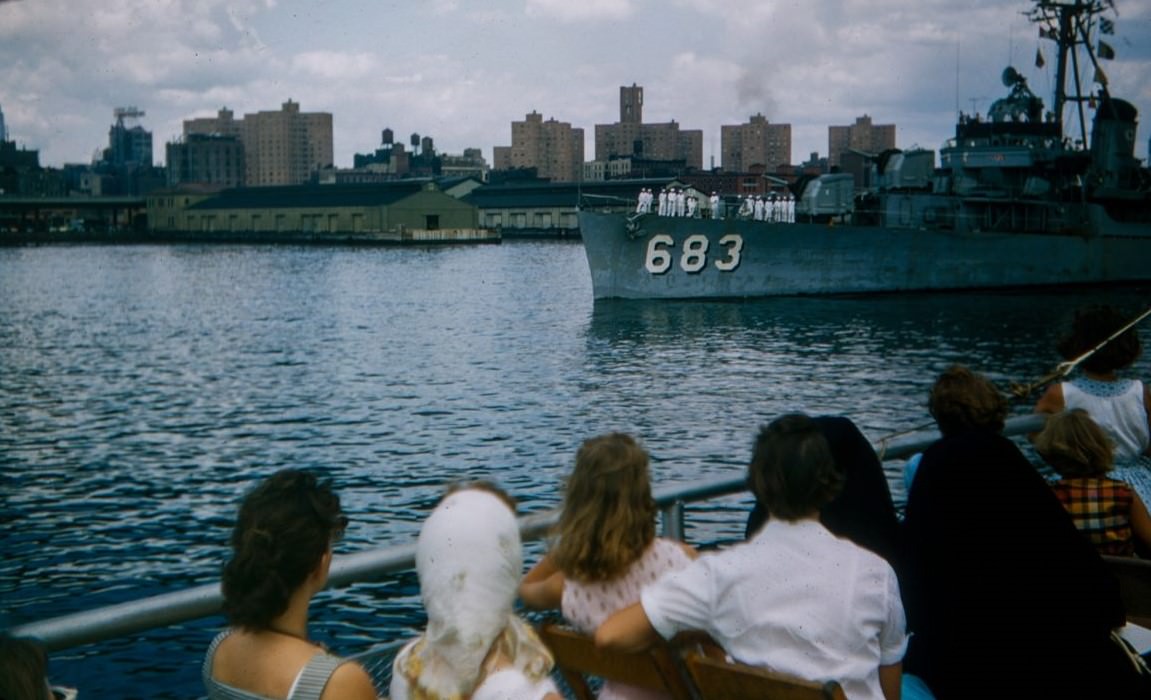
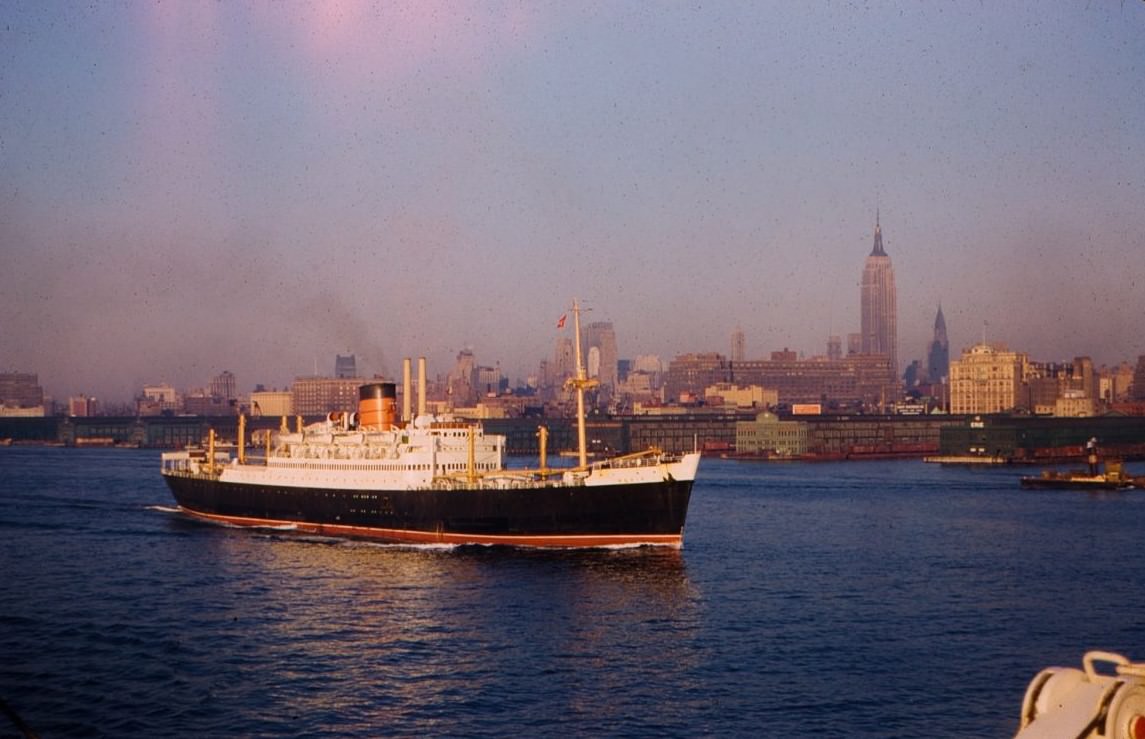
The collection also includes images of the waterfront, where naval vessels once docked alongside commercial traffic in the busy Hudson and East River ports.
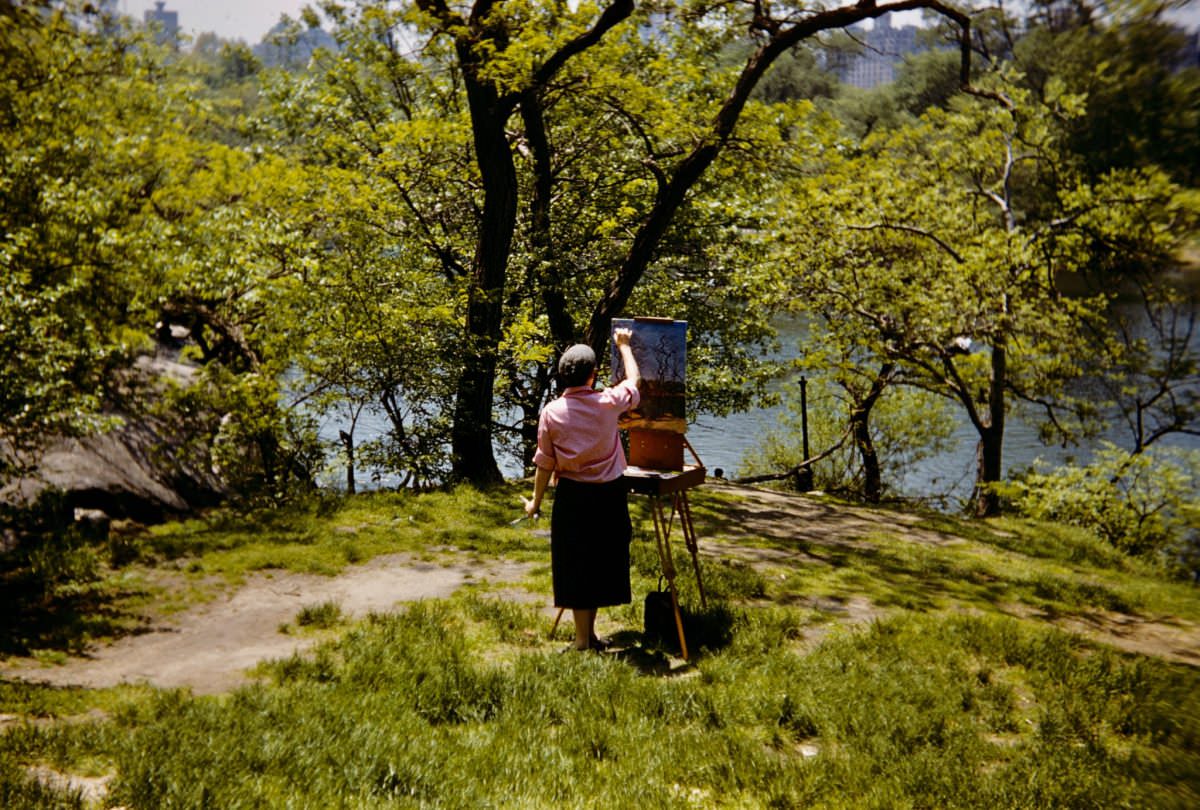
Quieter moments appear too. Central Park offered New Yorkers an escape from the concrete grid — a place to sketch, stroll, and spend unhurried afternoons.
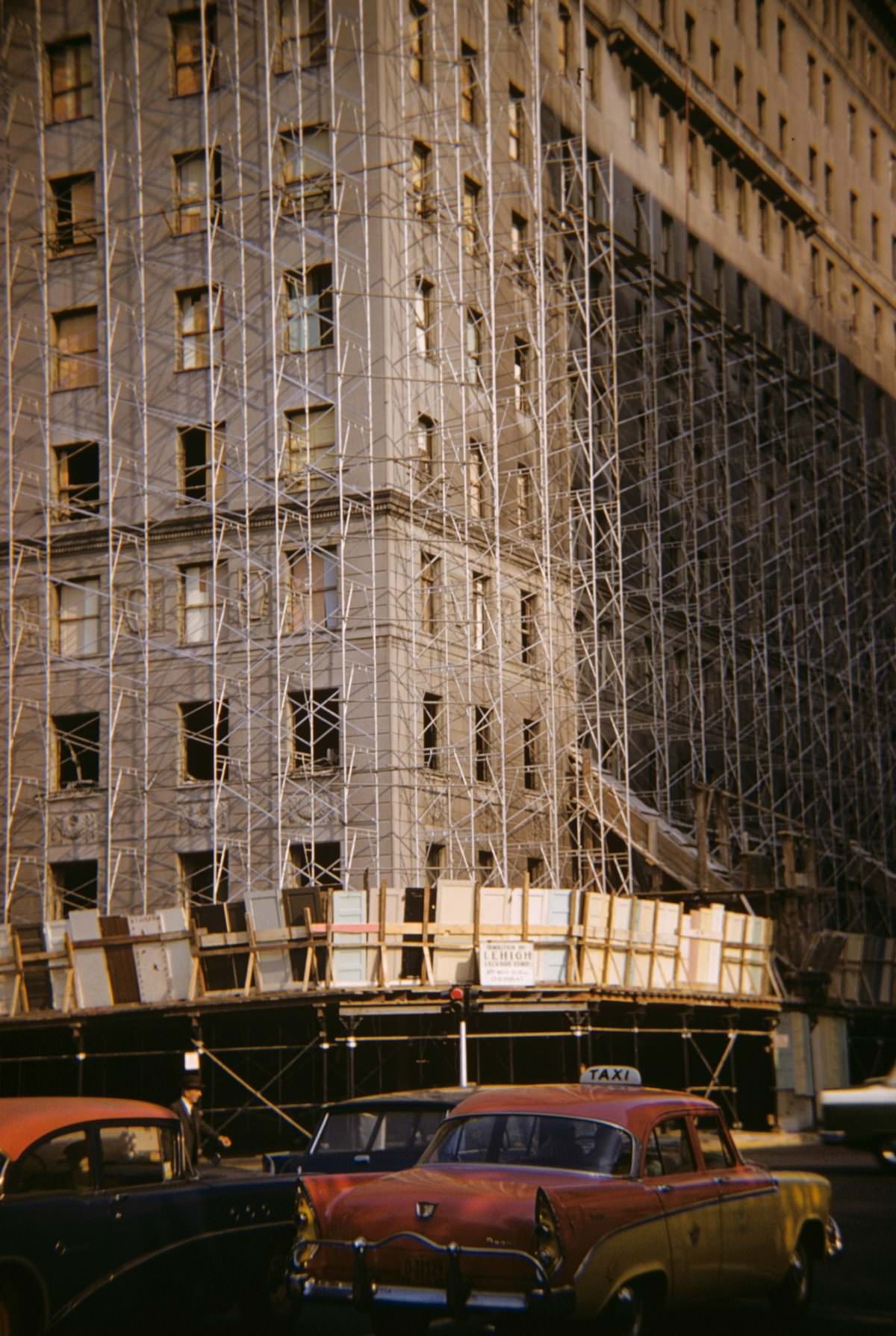
Across dozens of frames, the unknown photographer moved through the city with a clear eye for ordinary life — capturing signage, storefronts, and seasonal scenes that most people walked past without a second glance.
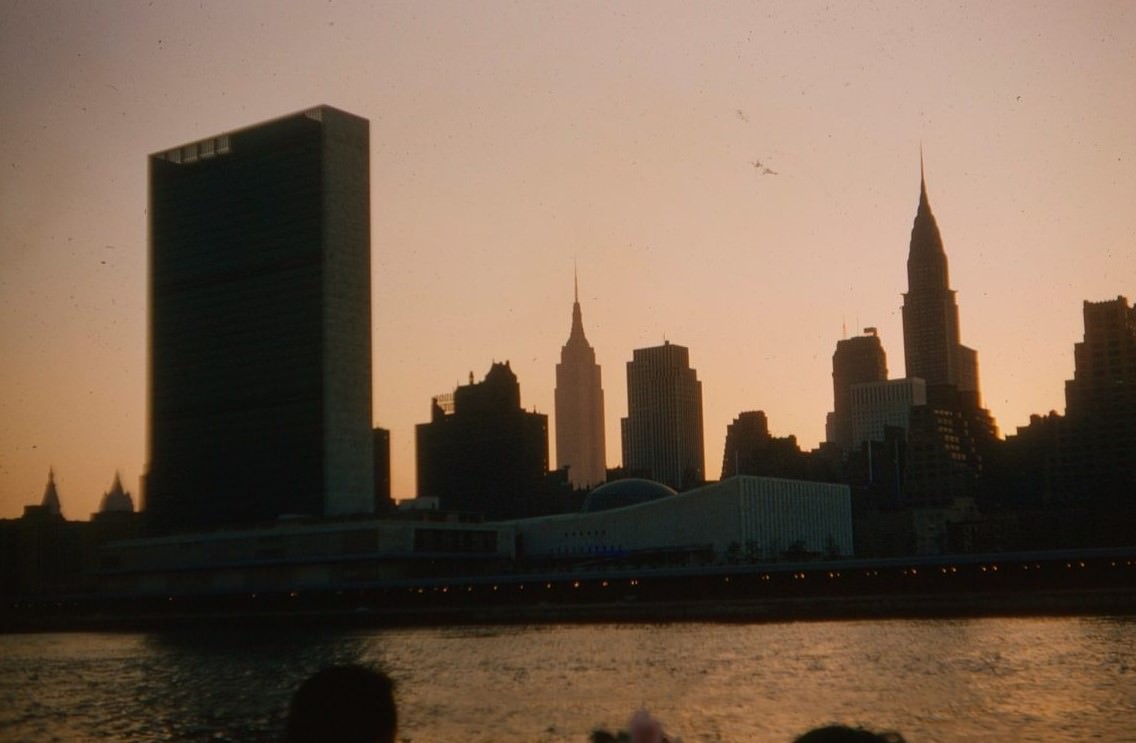
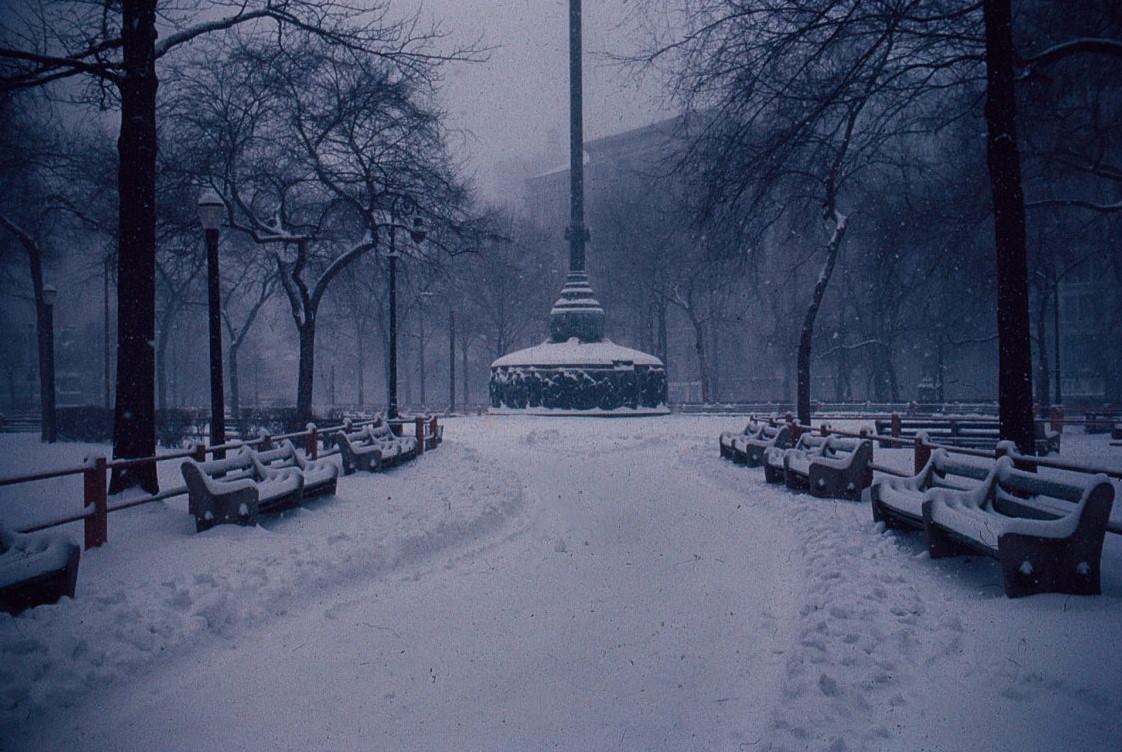
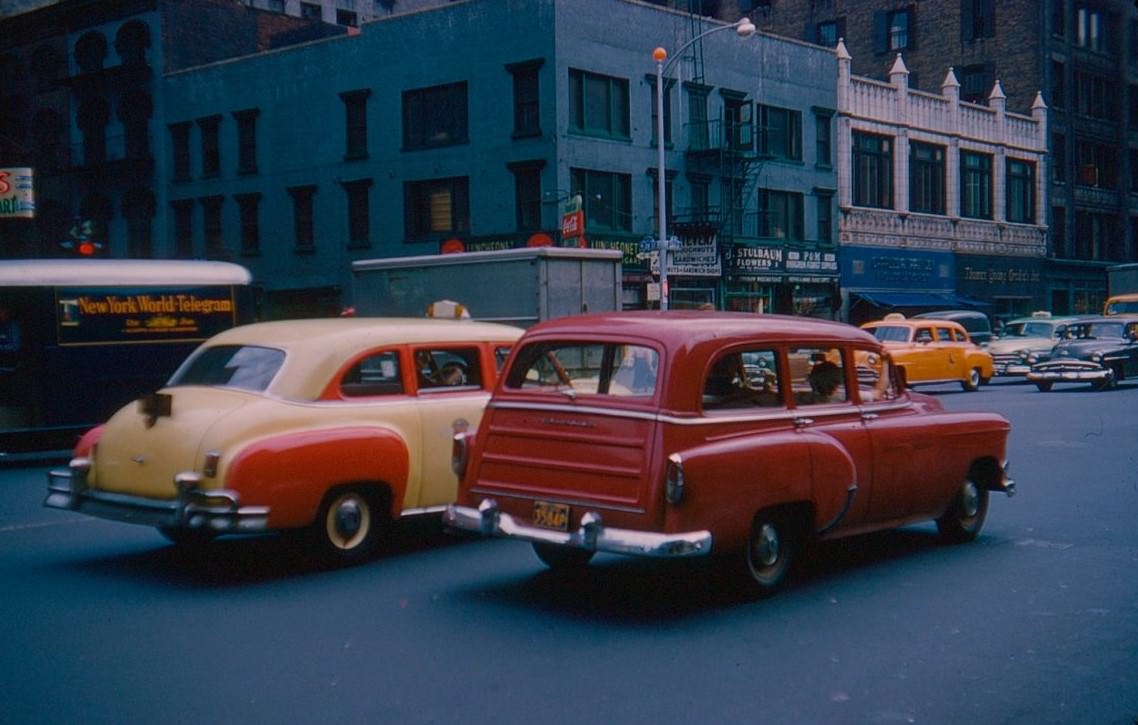
The press was a fixture of mid-century New York. Papers like the World-Telegram were sold on nearly every corner, and Fifth Avenue’s Midtown stretch was one of the most photographed corridors in the world.
One of the most iconic winter traditions in the city makes an appearance as well — the Rockefeller Center skating rink, which opened in 1936 and has drawn crowds every winter since.