Hey There! Before You Go. 😧
Get the best vintage content straight into your inbox!

Don't worry, we don't spam

Fourth of July in 20th Century Los Angeles: A Look Back Through Historical Photos

The Fourth of July was one of the biggest days on the Los Angeles calendar throughout the 20th century. From early morning parades to late-night fireworks, Angelenos threw themselves into Independence Day celebrations that reflected the city’s sunshine, open spaces, and mix of communities. The traditions shifted decade by decade, but the energy around the holiday never faded. In the early 1900s, public displays of patriotism set the tone for the day. Neighborhoods organized parades with marching bands, decorated wagons, veterans’ groups, and schoolchildren waving flags. American flags hung from homes, storefronts, and civic buildings. Community leaders gave speeches in parks and plazas about liberty and democracy.
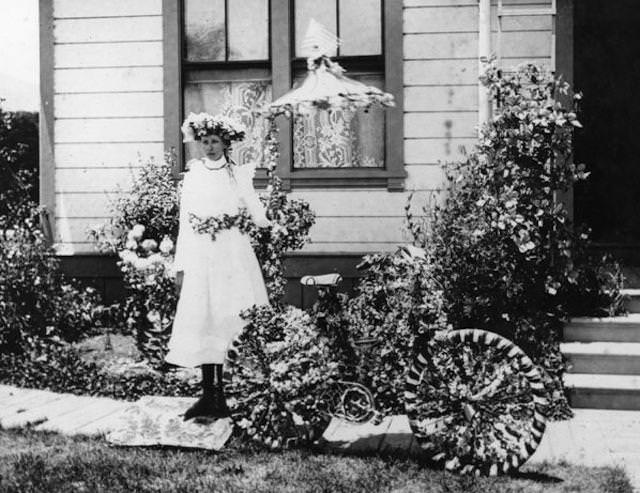
Leela McAdam (McCabe), winner of the best decorated bicycle for the 1900 Fourth of July parade in Lompoc, stands outside her home at 137 S. J. Street. Her bicycle, her belt, and her hat were decorated with sweet peas.

Parades weren’t limited to downtown streets. Across Southern California communities, residents found creative ways to join in. Decorated bicycles, foot races, and costumed performances all became part of local Fourth of July traditions.
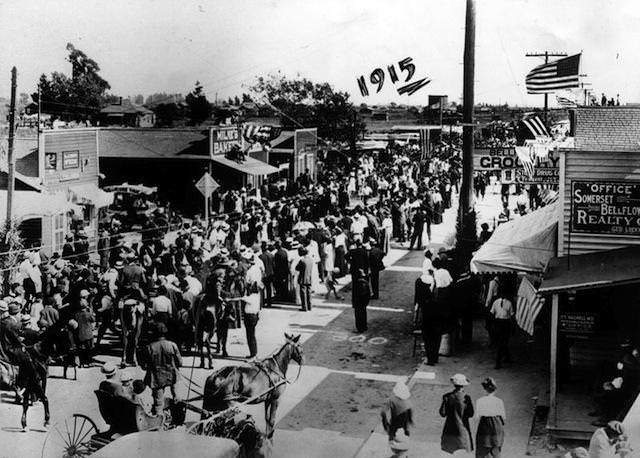
Independence Day in Bellflower, 1915. The folks in the street are watching men run a foot race. That street is now Bellflower Boulevard.

Los Angeles was already a city of many cultures by the early 20th century, and Fourth of July celebrations reflected that. Community organizations brought together immigrant and first-generation American families to take part in the holiday. In neighborhoods like Boyle Heights, groups celebrated with performances and costumes that blended American patriotism with their own cultural identities.
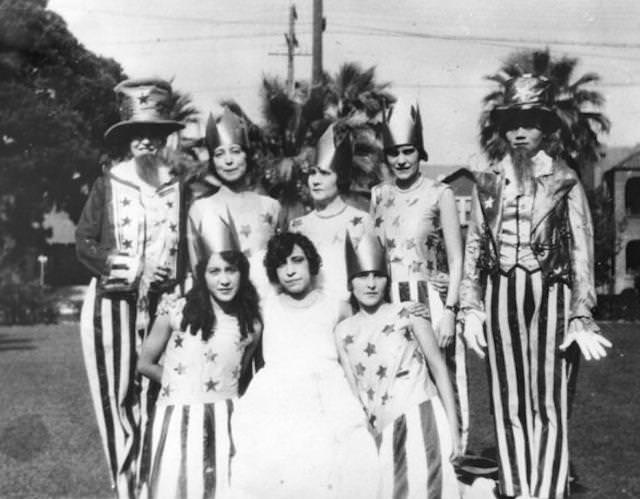
A group in costume at the International Institute's Fourth of July celebration in 1923 in Boyle Heights. Shades of L.A.: Mexican American Community.
A group in costume at the International Institute’s Fourth of July celebration in 1923 in Boyle Heights. Shades of L.A.: Mexican American Community.

Korean American families were also active participants in the holiday. Photos from the 1920s show families dressed up and gathered together, fully embracing Independence Day as their own celebration.
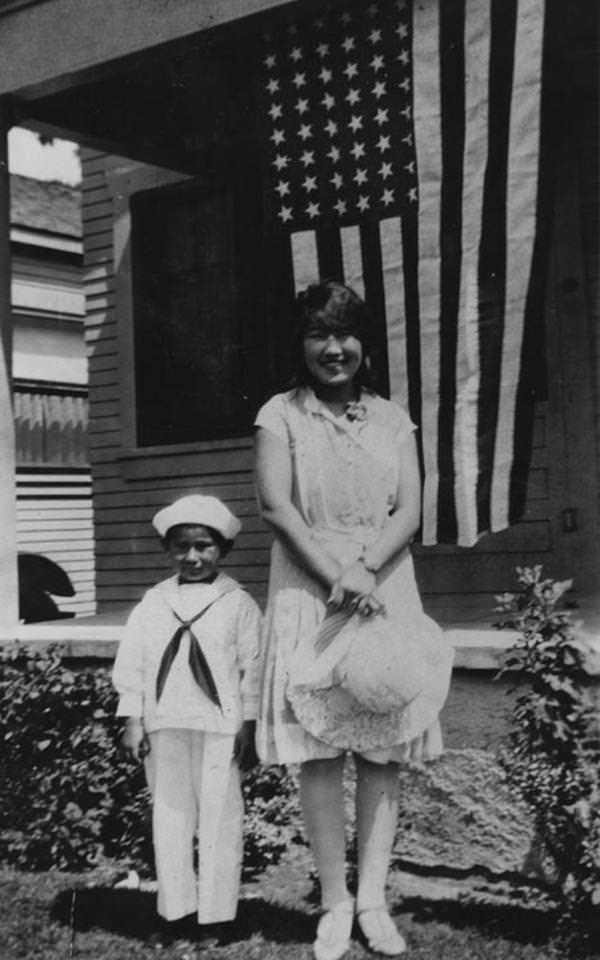
Enhe, on the right, next to a boy in a sailor outfit. Fourth of July, 1928. Shades of L.A.: Korean American Community.

Being a coastal city, Los Angeles always had one clear advantage on a hot July day — the beach. Thousands headed to Venice, Santa Monica, and other shoreline spots to swim in the Pacific, play volleyball, and relax in the sand. For many families, the beach was simply the best place to spend the holiday.
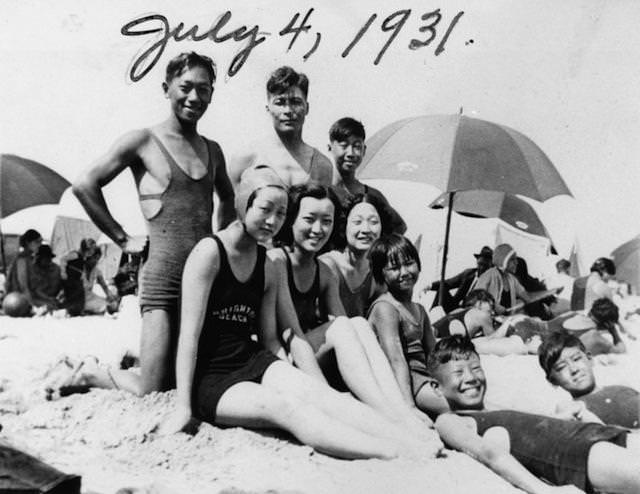
A group of friends at the beach in Venice on the Fourth of July, 1931. The three women at the center are, from left, Alice, Helen and Mary. Shades of L.A.: Korean American Community.

Hollywood was never far from the action. In 1932, as the Summer Olympics came to Los Angeles, the city buzzed with an extra layer of excitement. Even movie stars got into the Fourth of July spirit.
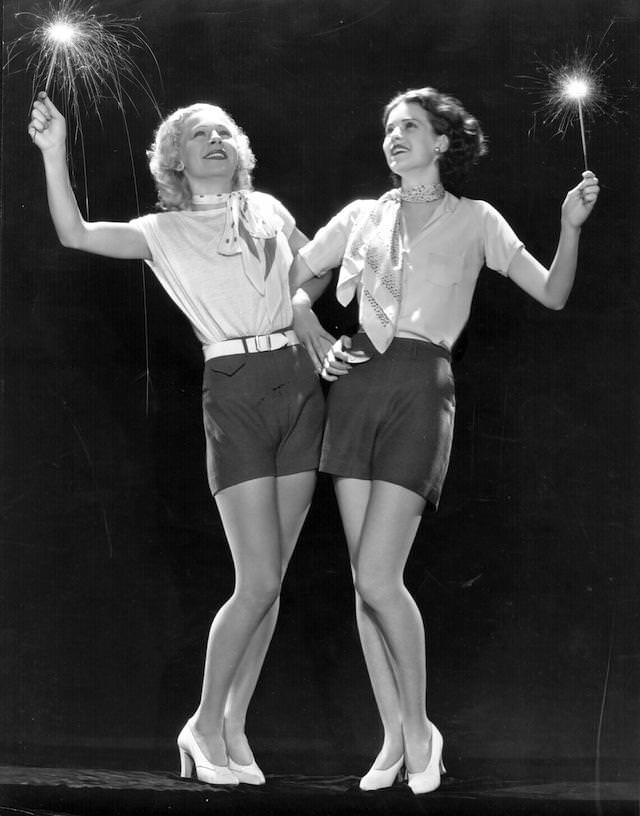
July 4th, 1932: Elizabeth Young, a Paramount player of the '30s is celebrating Independence Day with Lyda Roberti, the German-Polish leading lady.
July 4th, 1932: Elizabeth Young, a Paramount player of the ’30s is celebrating Independence Day with Lyda Roberti, the German-Polish leading lady.

Kids found their own ways to mark the day. Dressing up, putting on backyard performances, or gathering with friends to play patriotic games were all common sights in LA neighborhoods heading into the 1940s.
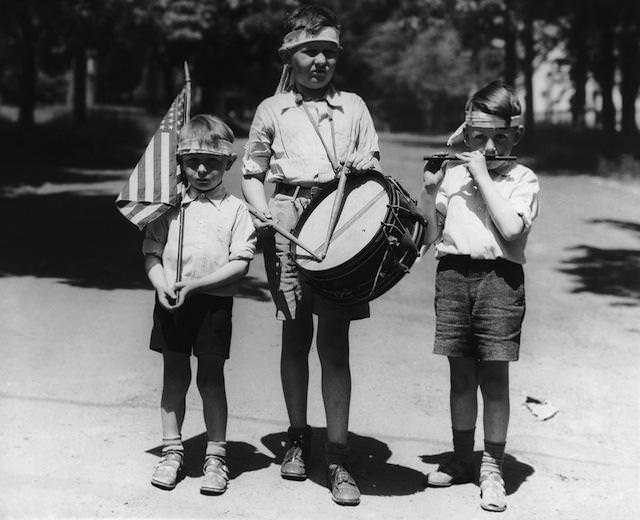
Three boys dressed as a patriotic band to celebrate Independence Day on July 4th, circa 1940.

By 1942, the United States was deep into World War II, and the Fourth of July took on a charged meaning. Downtown Los Angeles hosted a major parade along Broadway, with patriotism running especially high as the country fought on two fronts.
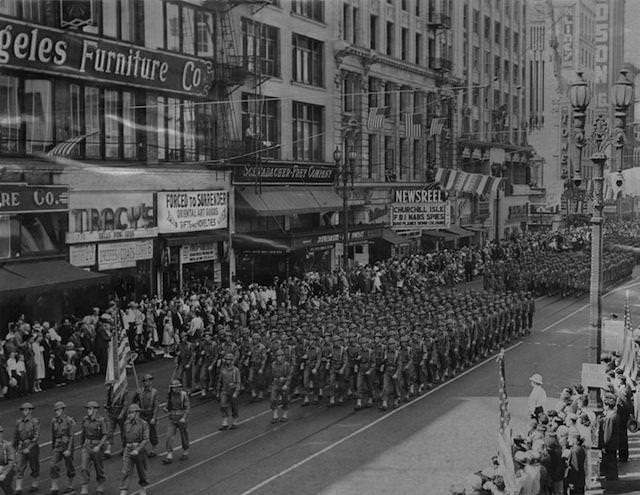
Patriotism was at an all-time high: The Fourth of July parade in Downtown Los Angeles along Broadway, 1942.

After the war, the beach remained central to LA’s Fourth of July culture. Couples strolled the shoreline with picnic baskets, and families spread out across the sand for the day. The California sun and the Pacific Ocean made for a setting no inland city could match.
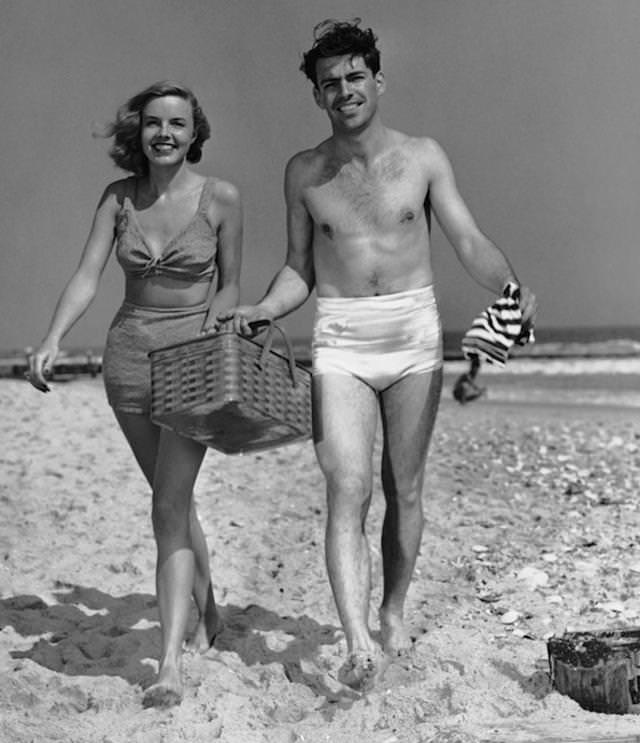
Circa 1950s: Couple walking with picnic basket on beach.

The postwar years brought new suburban neighborhoods and more backyard barbecues, but beach culture thrived just as strongly. Suntan lotion became a staple of the holiday, as Angelenos spent long hours under the summer sun.
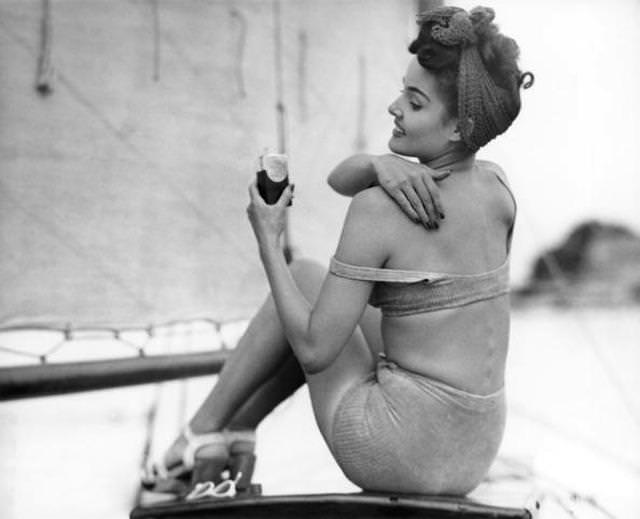
Circa 1950s: Woman applying suntan lotion.

The Cold War added a different dimension to the 1951 celebration. That July 4th, air raid sirens wailed across Los Angeles at noon — both as part of the holiday and as a nationwide civil defense test. For many families, the sound was impossible to ignore.
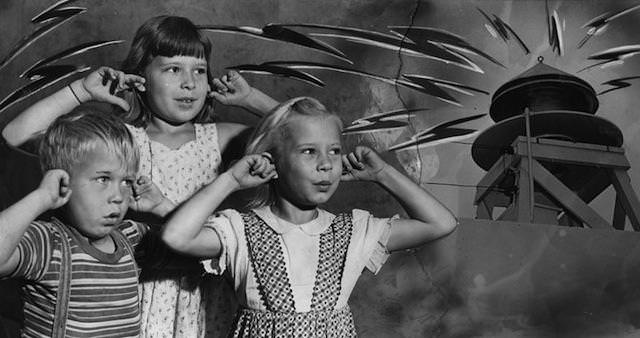
The Hubik children—Julius, 6; Suerita, 10, and Margie, 7— voiced their reaction today to the wailing of Los Angeles' air raid sirens and ringing of church bells at noon as Fourth of July was celebrated. The blast also served as a country-wide test for the air raid sirens. July 4, 1951.
The Hubik children—Julius, 6; Suerita, 10, and Margie, 7— voiced their reaction today to the wailing of Los Angeles’ air raid sirens and ringing of church bells at noon as Fourth of July was celebrated. The blast also served as a country-wide test for the air raid sirens. July 4, 1951.

By the late 1950s, homemade fireworks and rockets were a common sight in LA backyards. Older kids built their own multi-stage rockets, while younger children stuck with sparklers and firecrackers. Safety regulations were far looser than they would become in later decades.
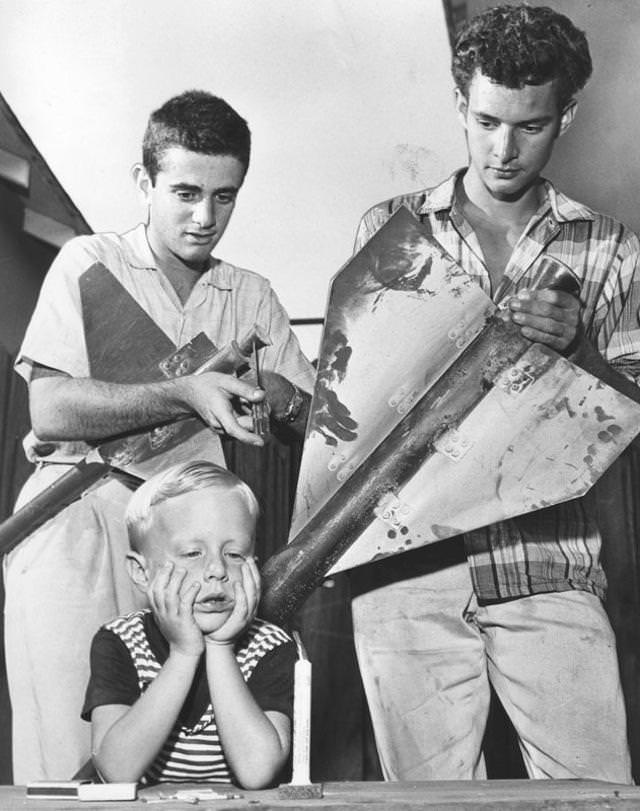
Four-year-old Mark Malone of Burbank sticks to old-fashioned firecracker as his buddies, Myron Lieberman, 18, center, of Burbank, and Leston Newbill, 17, of Burbank, prepare to launch three-stage rocket they built for July Fourth celebration. 1959.

Large organized fireworks shows grew in scale throughout the mid-century. The Los Angeles Memorial Coliseum hosted a popular annual display run by the American Legion, drawing huge crowds and crowning a queen for the event each year.
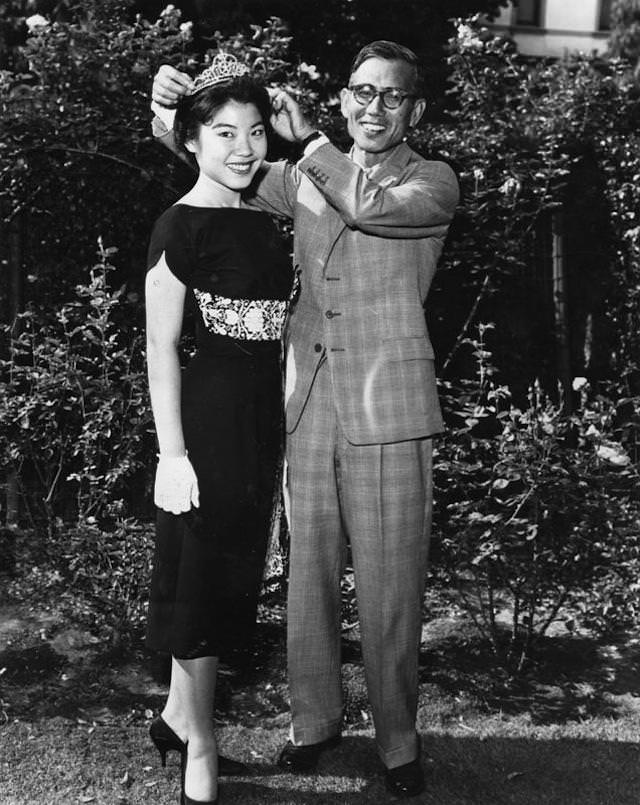
Ayleen Ito, 18, is crowned as queen of 27th annual American Legion Fourth of July fireworks show at Coliseum by Yukio Hasumi, consul-general of Japan in Los Angeles. June 24, 1959.

The Rose Bowl in Pasadena was another major venue for Fourth of July fireworks. In 1959, with Hawaii and Alaska newly admitted as the 49th and 50th states, performers at the Pasadena firemen’s annual show marked the historic moment by representing the new states in a patriotic display.
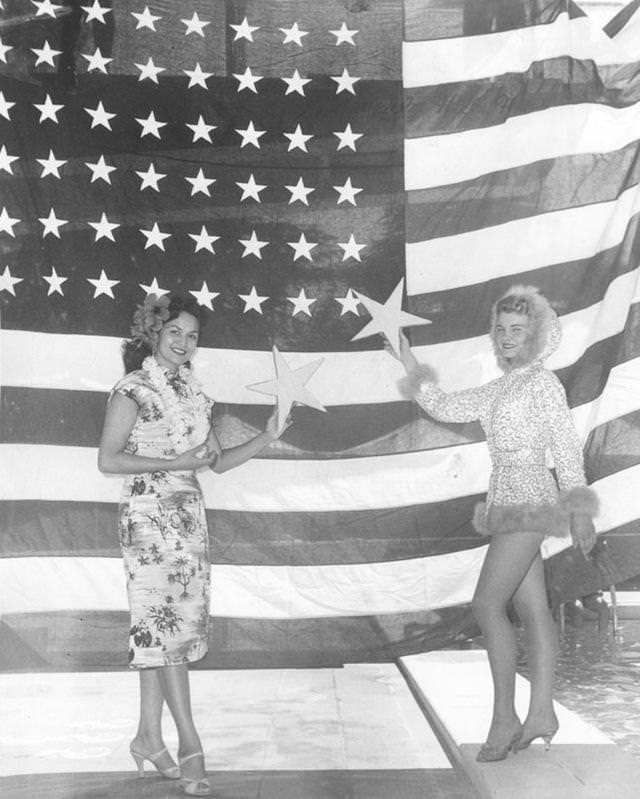

Dell-Fin Thursday, Miss Hawaii, and Patty Ireland, portraying Alaska, try out a star pattern for the new states on a conventional 48 state star flag. The girls will represent the new states in a patriotic tableau during the Pasadena firemen's 33rd annual Fourth of July Rose Bowl circus and fireworks display. July 3, 1959.
Dell-Fin Thursday, Miss Hawaii, and Patty Ireland, portraying Alaska, try out a star pattern for the new states on a conventional 48 state star flag. The girls will represent the new states in a patriotic tableau during the Pasadena firemen’s 33rd annual Fourth of July Rose Bowl circus and fireworks display. July 3, 1959.
Enjoyed this post? Get new ones in your inbox.

Leave a Comment

Your email address will not be published. Required fields are marked *

Share this Post 🥺

Please take a moment to share this content. Your support is greatly appreciated! 🙌🙏

Share this Post 🥺

Please take a moment to share this content. Your support is greatly appreciated! 🙌🙏
Scroll to Top
 
Hey Friend, Before You Go.. Please like & follow for more interesting content

