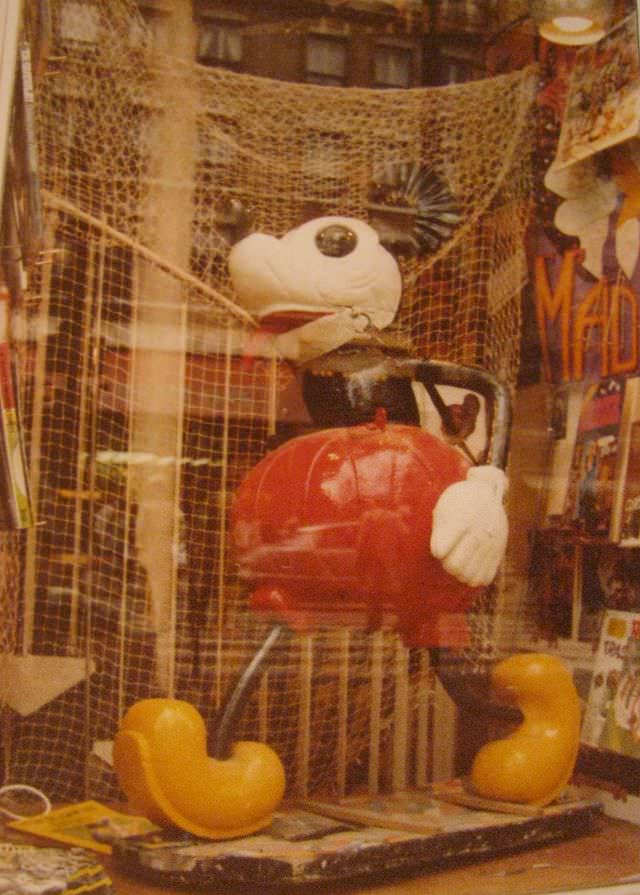
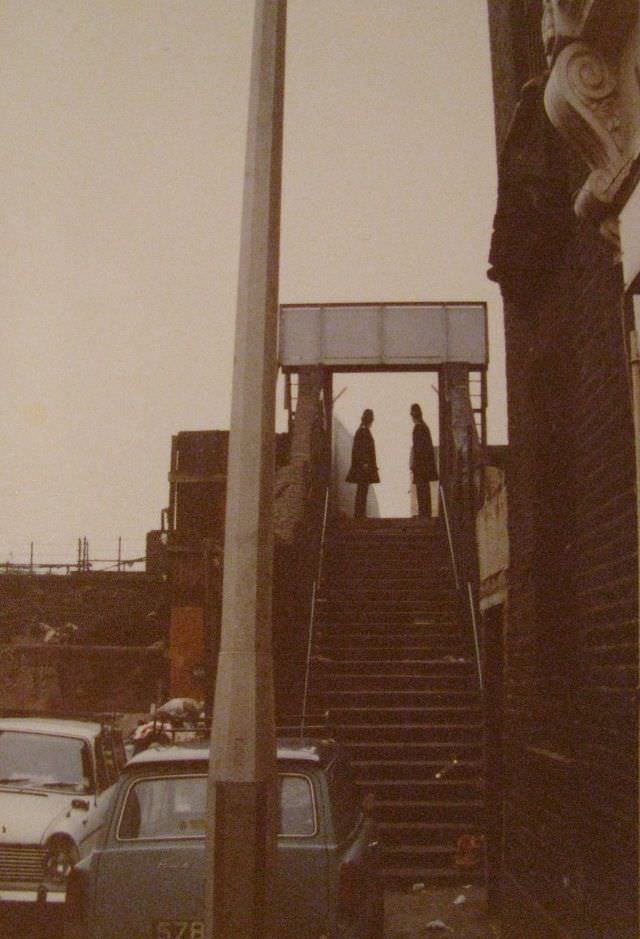
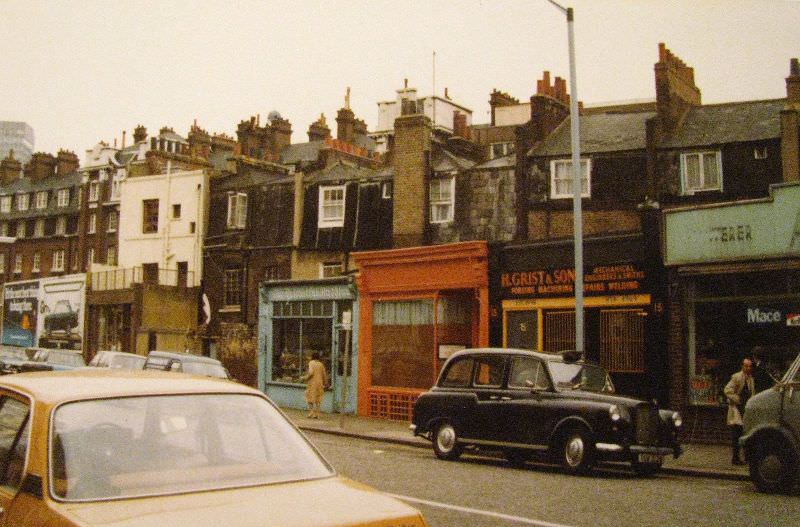
In 1978, Dutch couple Ed Sijmons and his wife Louise made a trip to London and brought their camera with them. What they captured was a raw, unfiltered look at a city under economic pressure. Britain had been hit hard by the recessions of the mid-1970s, and another downturn was just around the corner. For many Londoners, money was tight and daily life was a grind. Ed and Louise walked the streets and photographed what they saw — shops, markets, vans, pubs, and the people living through it all.
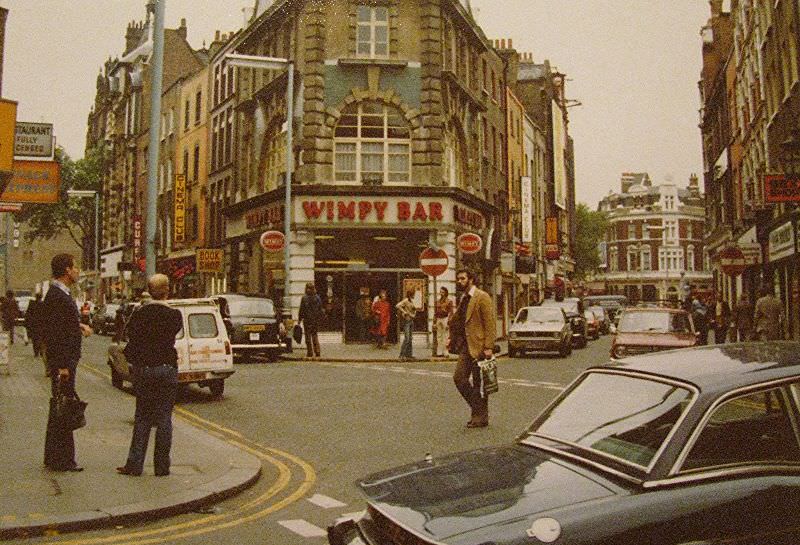
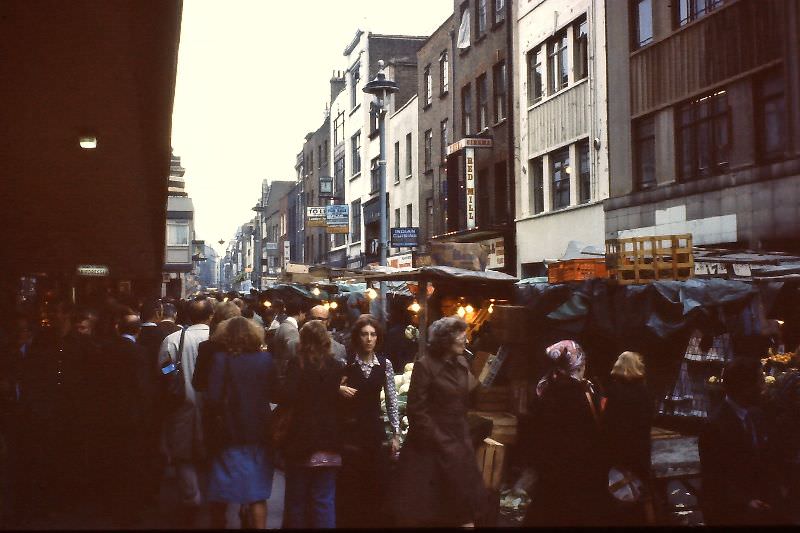
Soho was a neighbourhood full of contrasts in 1978. At the corner of Old Compton Street and Moor Street, the Wimpy Bar stood as one of Britain’s most recognisable fast food chains long before American chains dominated the high street. Nearby, the streets of Soho offered a different kind of commerce. The area’s open-air market was a lively hub where traders sold fresh produce and goods to locals and passers-by alike.
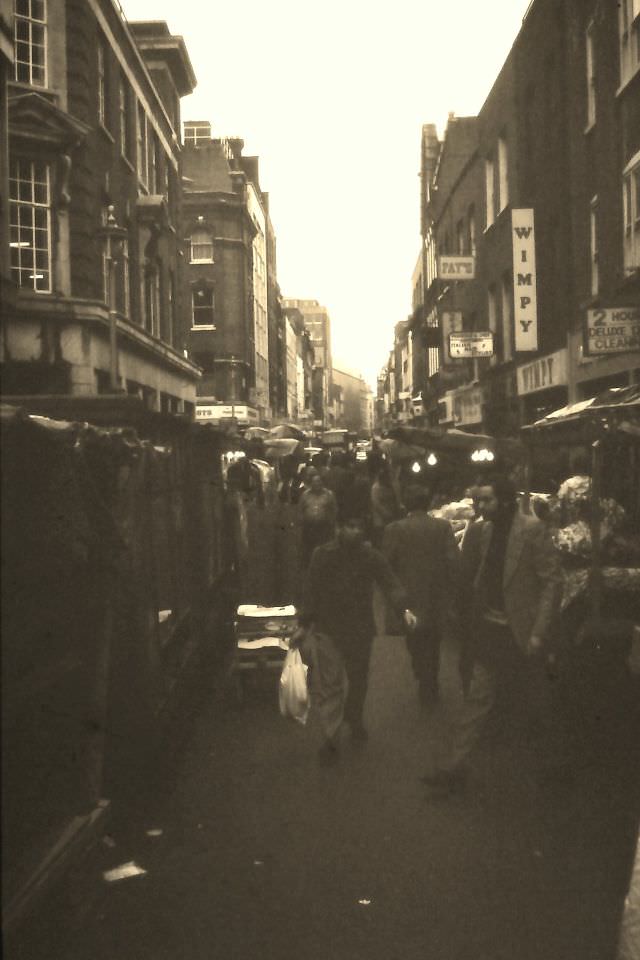
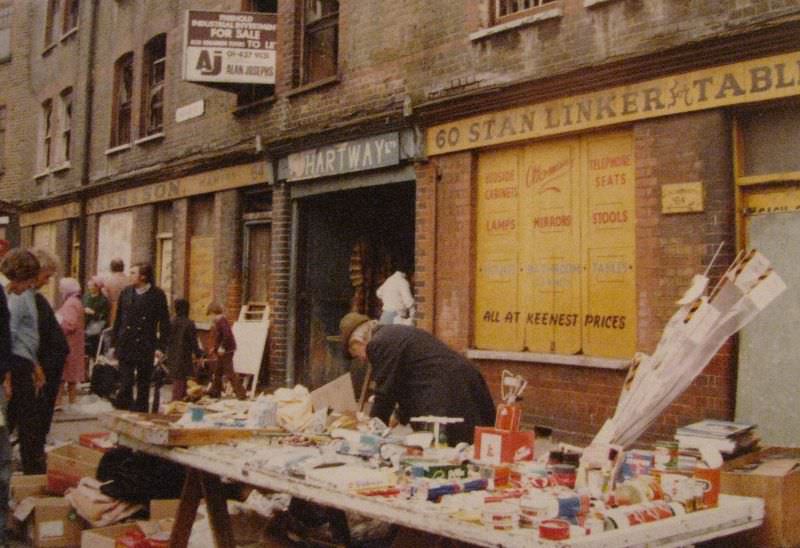
Away from the West End, the East End told a different story. Cheshire Street in E2 was home to a well-known Sunday market, where second-hand goods, salvage, and cheap clothing were bought and sold on the pavement. Berwick Street in Soho hosted its own famous street market, one of the oldest in London, where fruit and vegetable stalls had traded for generations.
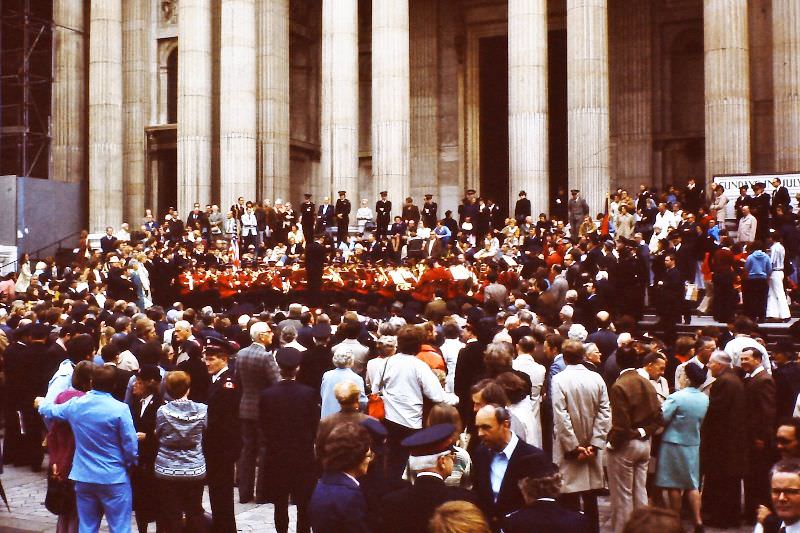
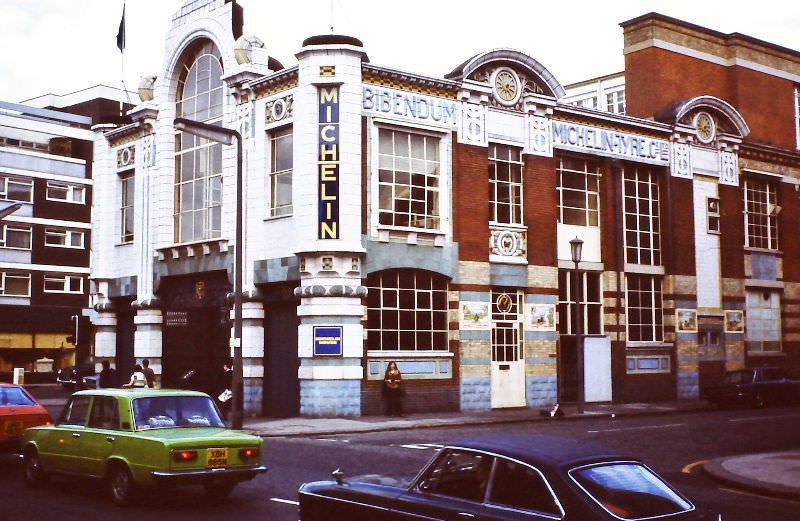
London’s iconic landmarks were just as present in 1978 as they are today. St. Paul’s Cathedral rose above the city skyline, largely unchanged since Christopher Wren completed it in 1711. On Fulham Road, the Michelin Building — built in 1911 for the French tyre company — stood as one of London’s most distinctive pieces of early 20th-century architecture, with its colourful tiled facade and art nouveau design.
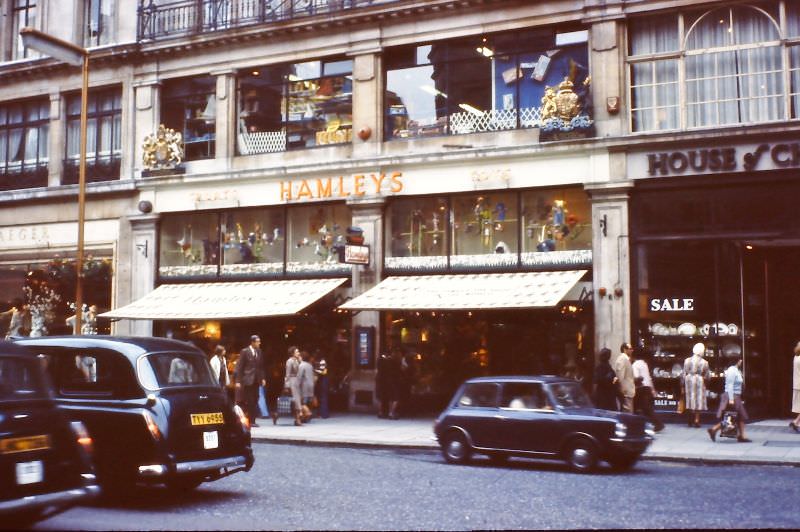
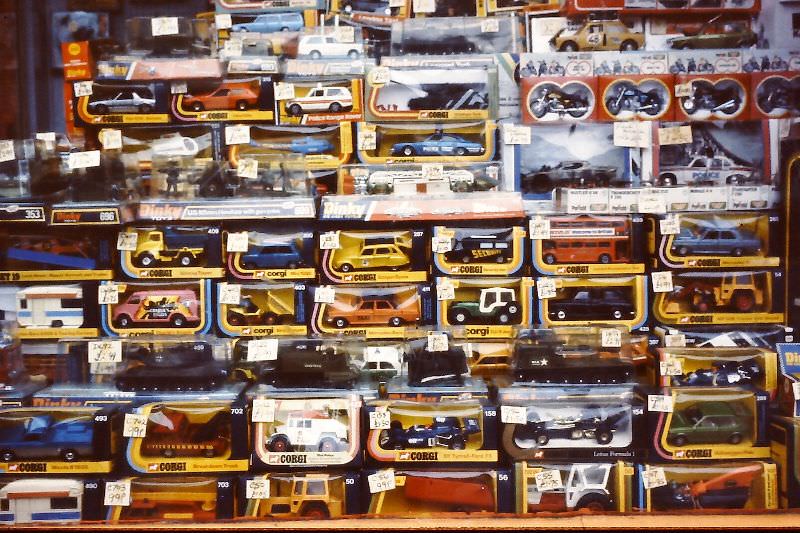
Regent Street was home to Hamleys, the famous toy shop that had been trading since 1760. A window display nearby showed shelves stacked with Corgi Toys and Dinky Toys — die-cast model cars and vehicles that were among the most popular children’s toys of the era. For many kids in 1978, these small metal models were a prized possession.
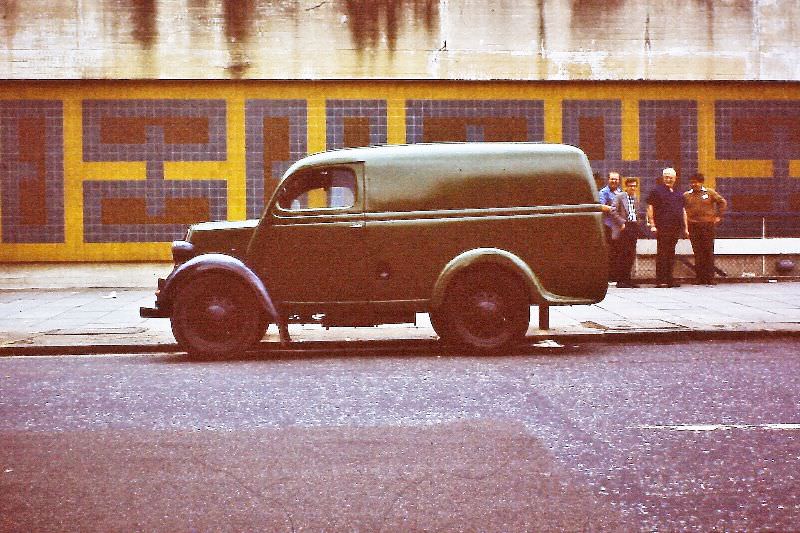
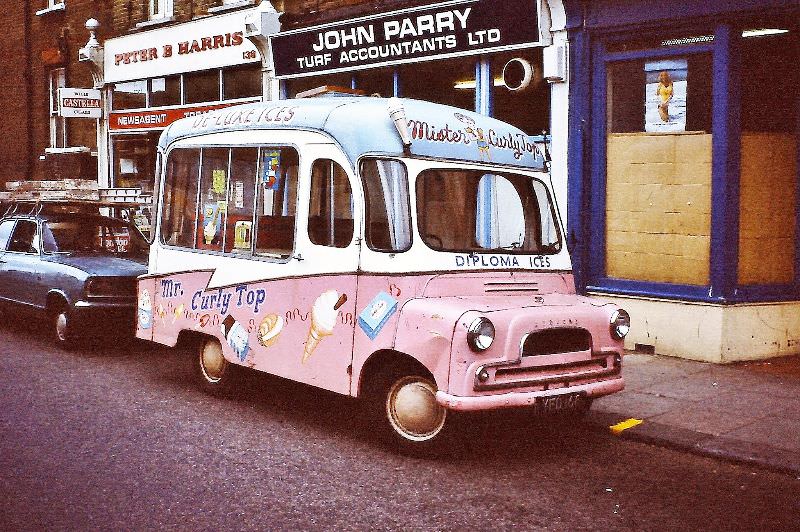
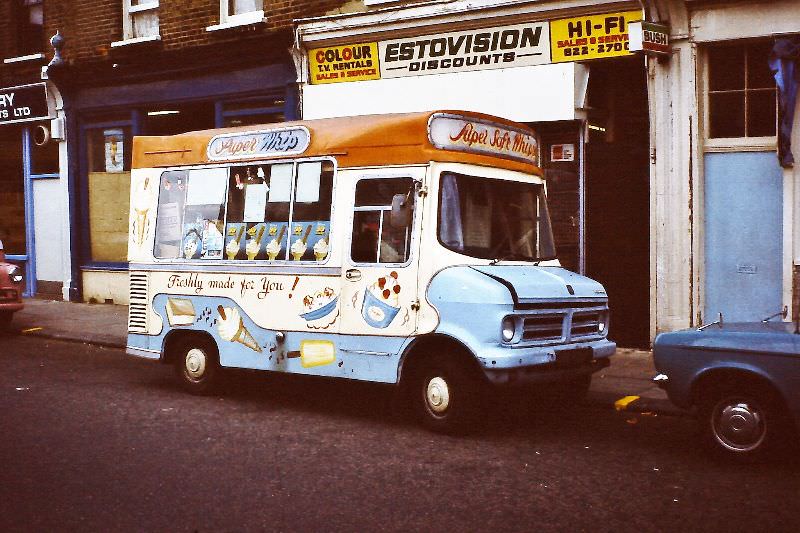
The streets themselves were full of working vehicles typical of the period. A Ford Thames Van and a Bedford Van advertising “Mister Curly Top” — a soft-serve ice cream brand — were both common sights on London roads in the late 1970s. An ice cream vendor offering Super Soft Whips was another snapshot of everyday street trading that defined the era.
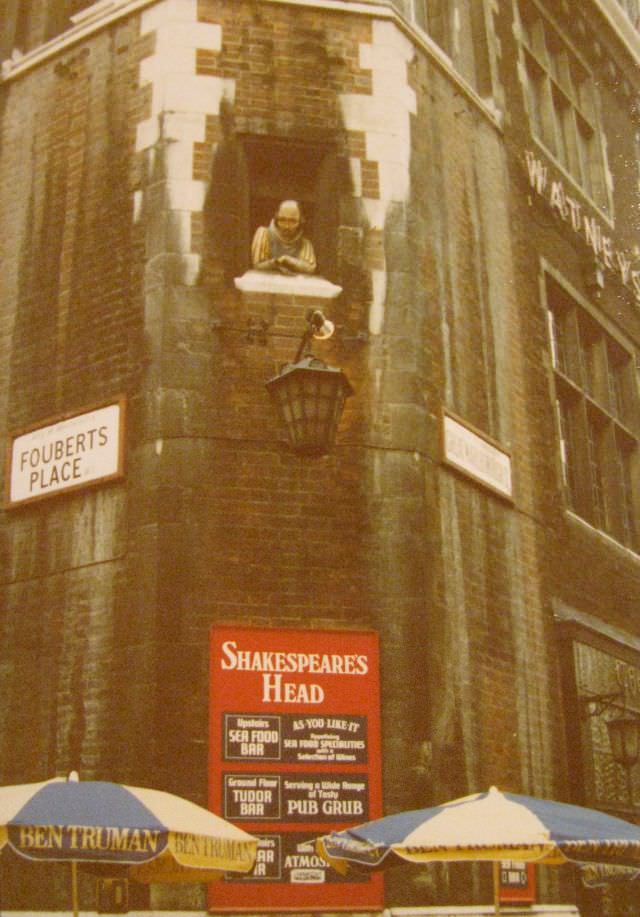
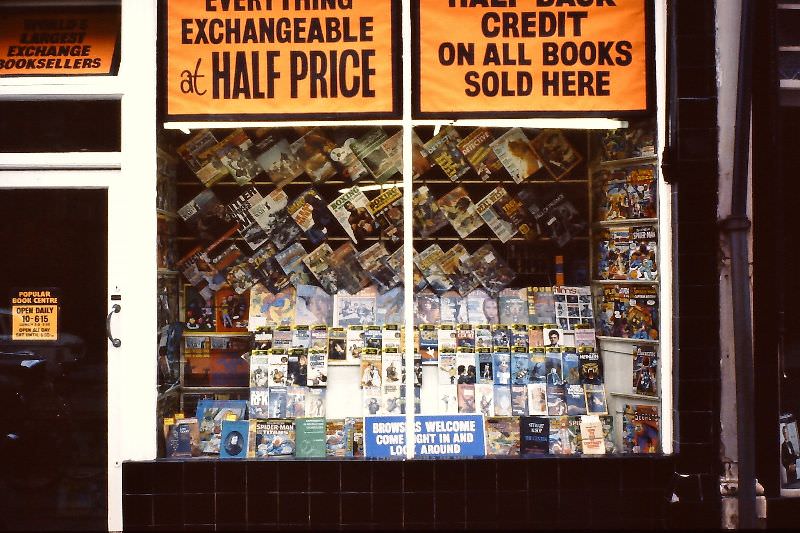
The Shakespeare’s Head pub and the neighbourhood streets of Upper Tachbrook Street and Rochester Row gave a sense of quieter, residential London. The Popular Book Centre on Rochester Row was the kind of small independent shop that lined many London streets at the time. Outside the Victoria and Albert Museum in South Kensington, visitors gathered as they always had, drawn to one of the world’s great collections of art and design.
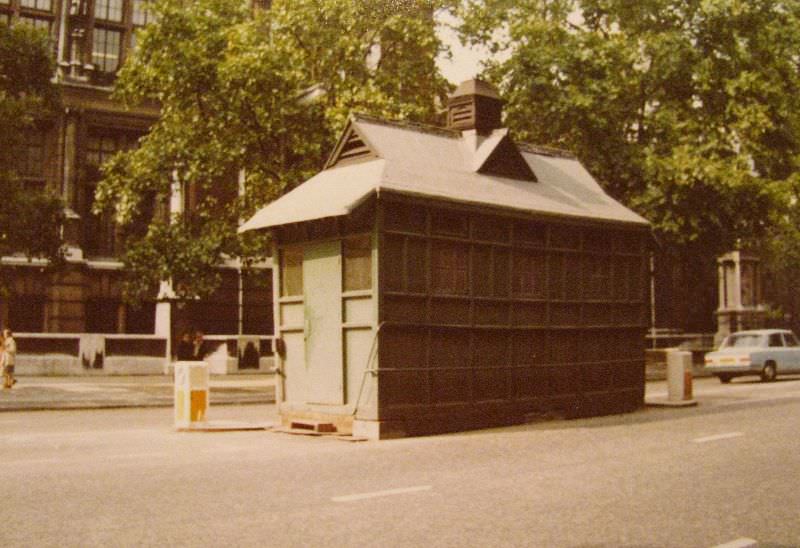
Even Disney’s Mickey Mouse made an appearance somewhere on the streets, a reminder that popular culture was very much part of city life. A Victorian railway bridge entrance, weathered and functional, represented the industrial bones still visible across London. These photographs, grainy and honest, show a city that was working hard just to keep moving.